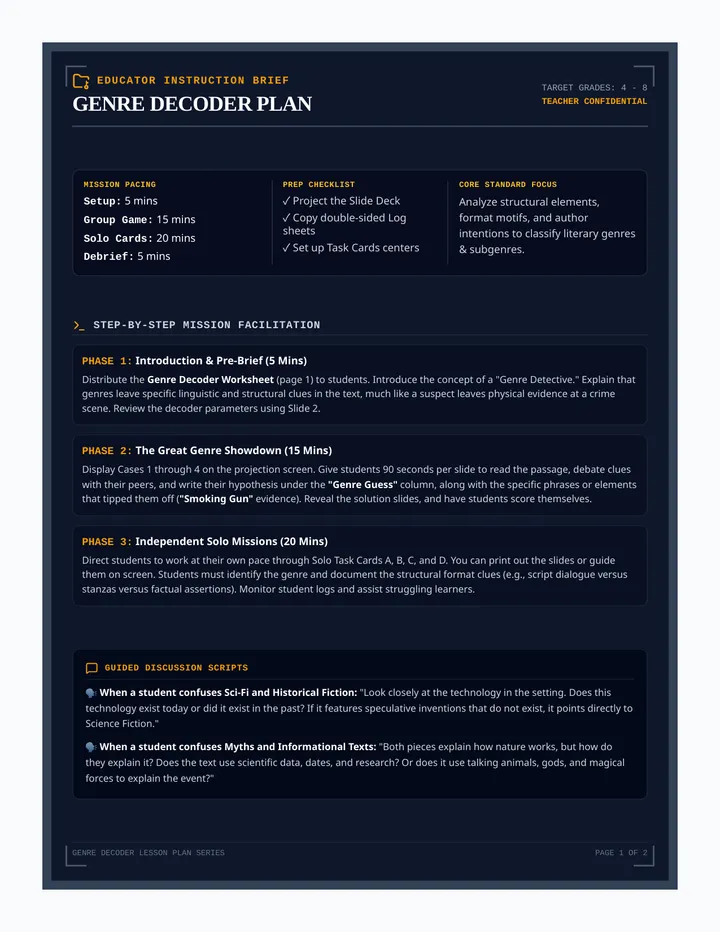
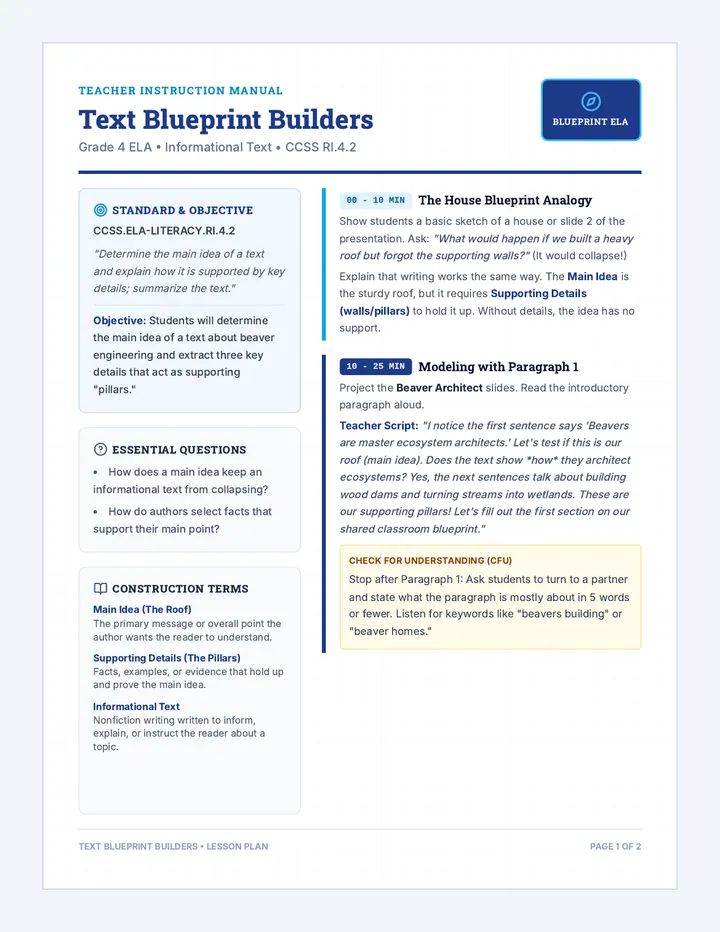
Double Take Teacher Guide
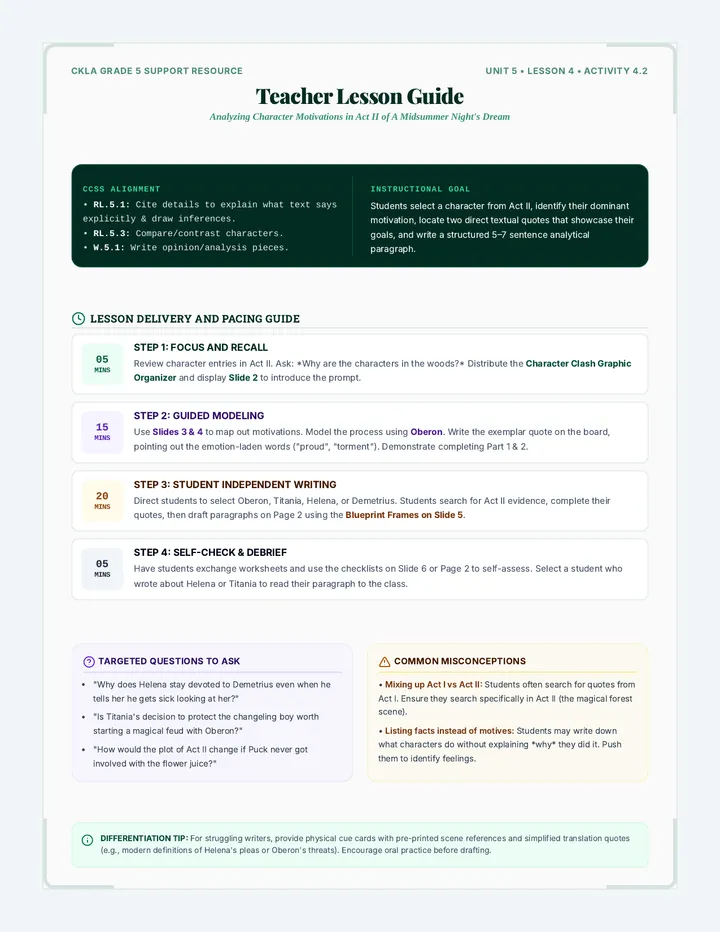
A teacher facilitation guide for the 'Double Take' game series, providing instructions for the board game, bingo, and scavenger hunt activities focused on RI.9 standards.
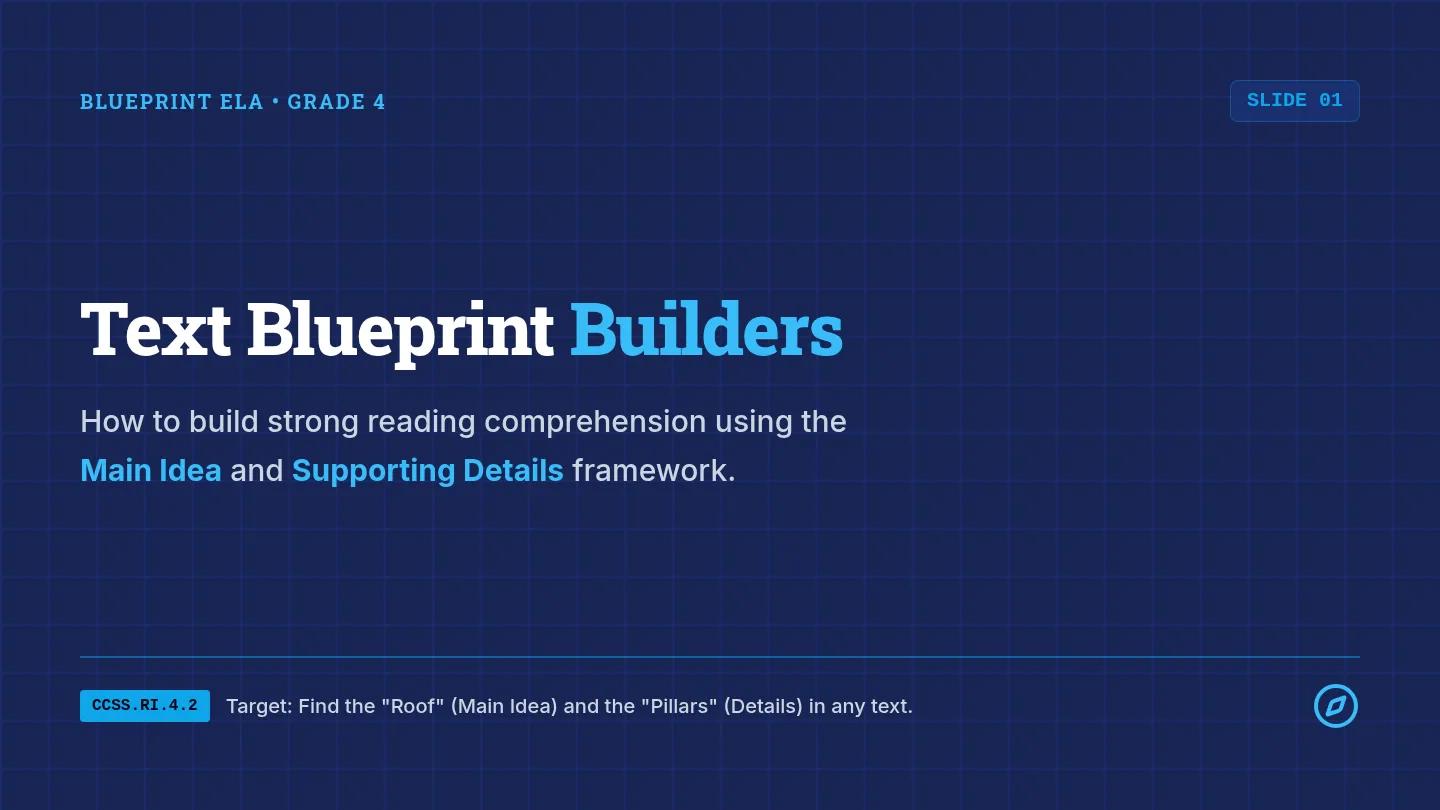
Double Take Slides
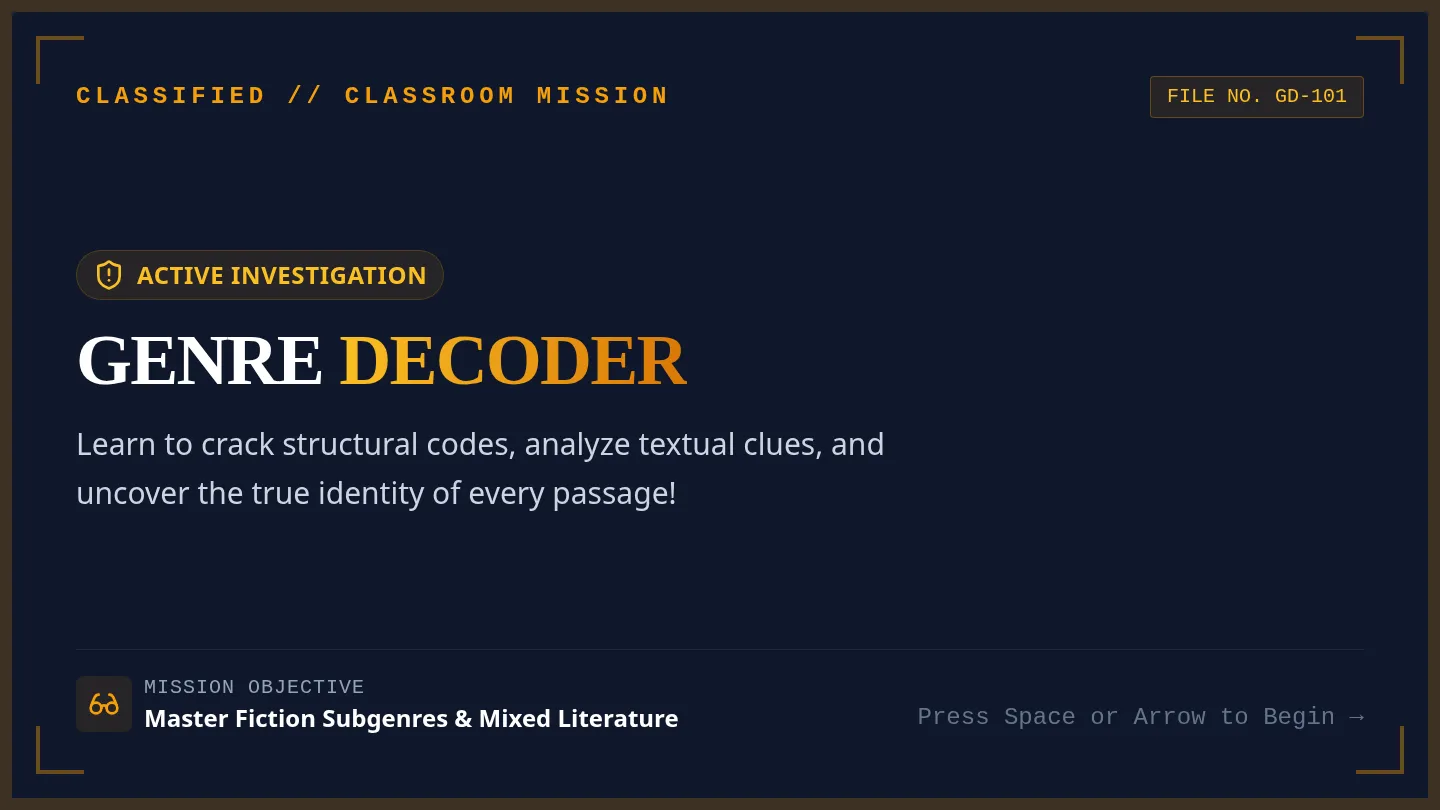
A visually engaging presentation that introduces students to the 'Double Take' games, explaining the rules and objectives for the comparison board game, bingo, and scavenger hunt.
Comparison Quest Board Game
A printable board game designed for students to practice RI.9 standards by comparing and contrasting two non-fiction texts. Includes challenge spaces focused on author's purpose and evidence selection.
Fact Finder Bingo Card
A bingo-style game board for RI.9 practice, where students search for specific similarities and differences across multiple non-fiction texts to claim squares. Requires citation of evidence.
Text Trek Scavenger Hunt Log
A scavenger hunt worksheet where students act as 'text agents' to find and log specific comparisons and interpretive differences between non-fiction texts.
Double Take Reading Passages
A set of two contrasting non-fiction articles about lab-grown meat, specifically written with varying statistics, tones, and expert quotes to facilitate the 'Double Take' comparison games.
Comparison Quest Answer Key
An answer key and teacher reference sheet providing specific evidence and analysis for the 'Lab-Grown Meat' reading passages as they relate to the comparison board game and bingo activities.
Shamrock Reading Passages
A set of two contrasting 3rd-grade level non-fiction articles about shamrocks, written with scientific vs. historical perspectives to facilitate RI.9 comparison games.
Shamrock Answer Key
An answer key and teacher reference sheet for the Shamrock-themed 3rd-grade reading passages, providing evidence for the comparison games.
Shamrock Reading Passages Extended
An expanded set of two 3rd-grade non-fiction articles about shamrocks, featuring scientific data vs. historical folklore to support comparative analysis.
Shamrock Quest Board Game 3rd Grade
A shamrock-themed board game specifically tailored to 3rd-grade students, featuring prompts that align with the expanded shamrock reading passages for RI.9 practice. The layout has been optimized to fit the board and challenge guide on a single page.
Shamrock Answer Key Extended 3rd Grade
An updated answer key for the 3rd-grade Shamrock Quest board game, providing specific evidence from the extended reading passages.
Shamrock Quest Rules Handout
A student-facing instruction sheet for the Shamrock Quest board game, providing clear steps for setup, gameplay, and winning the RI.9 comparison challenge.