This lesson targets homophones representing abstract concepts versus concrete roles, specifically 'principle/principal' and 'council/counsel.' Students use mnemonic devices and sentence-combining to master these tricky pairs.
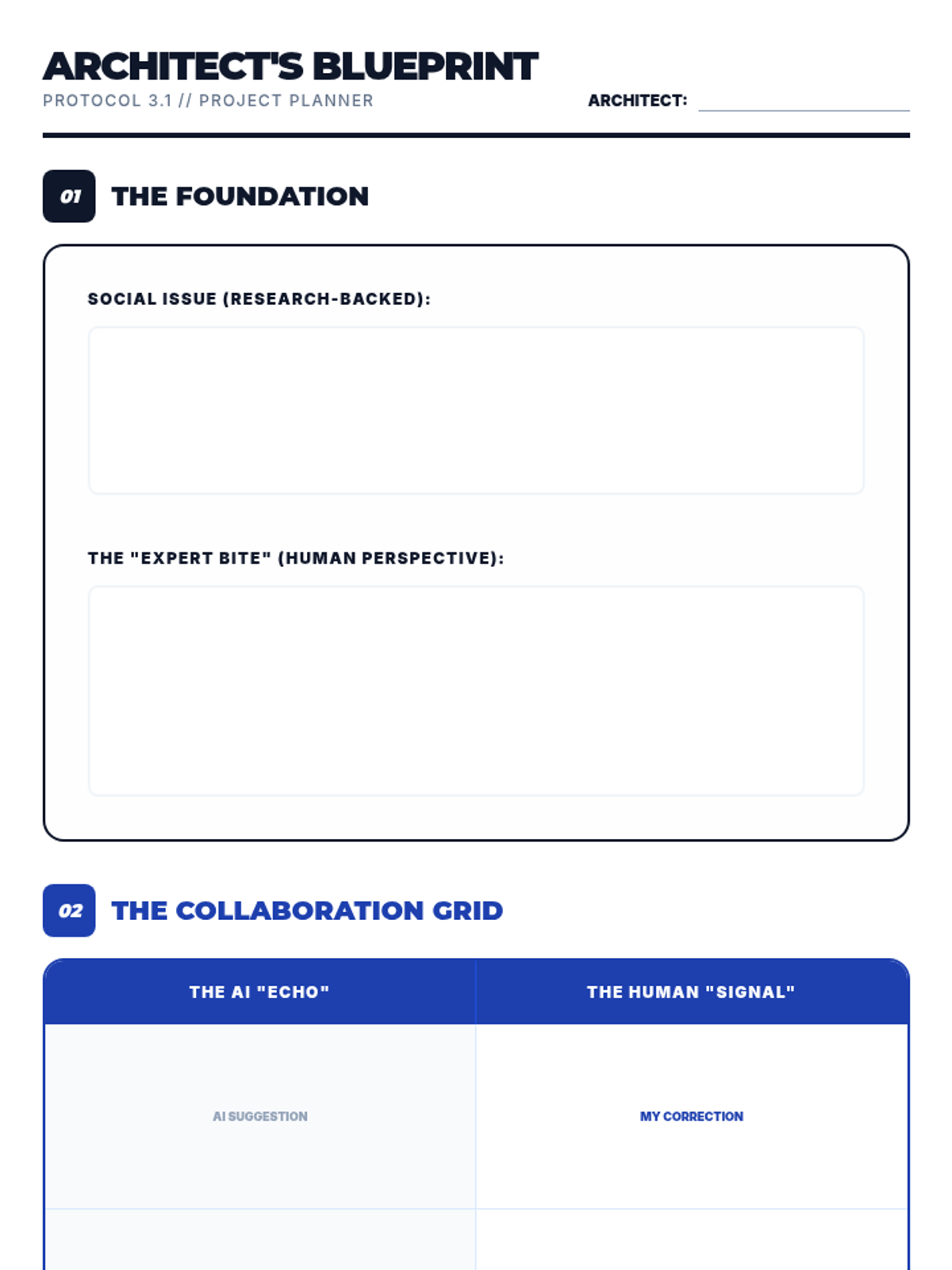
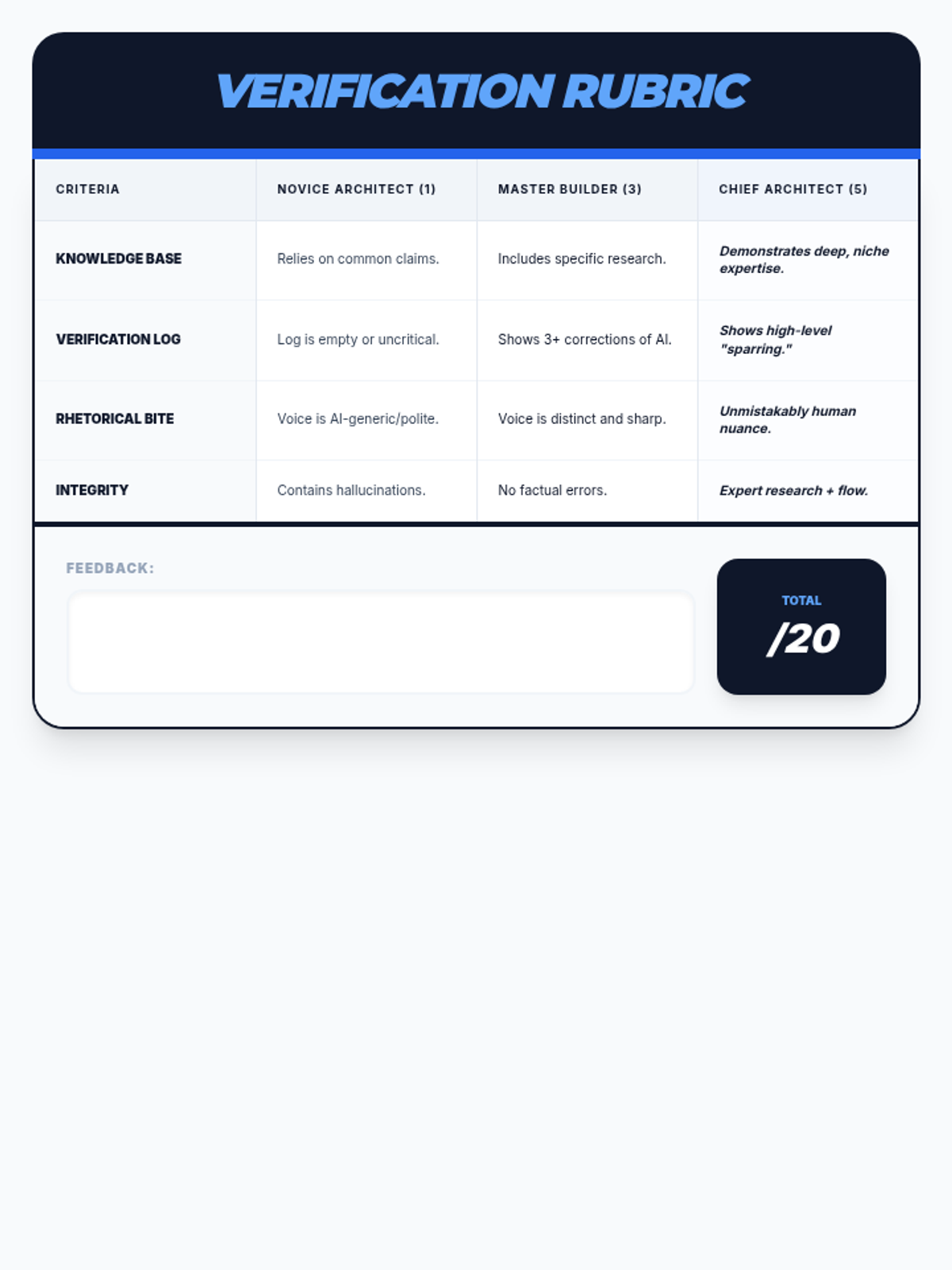
The final project phase. Students research a modern social issue and 'command' the AI to help them construct a high-level commentary, providing a 'Verification Log' of every AI suggestion they rejected.
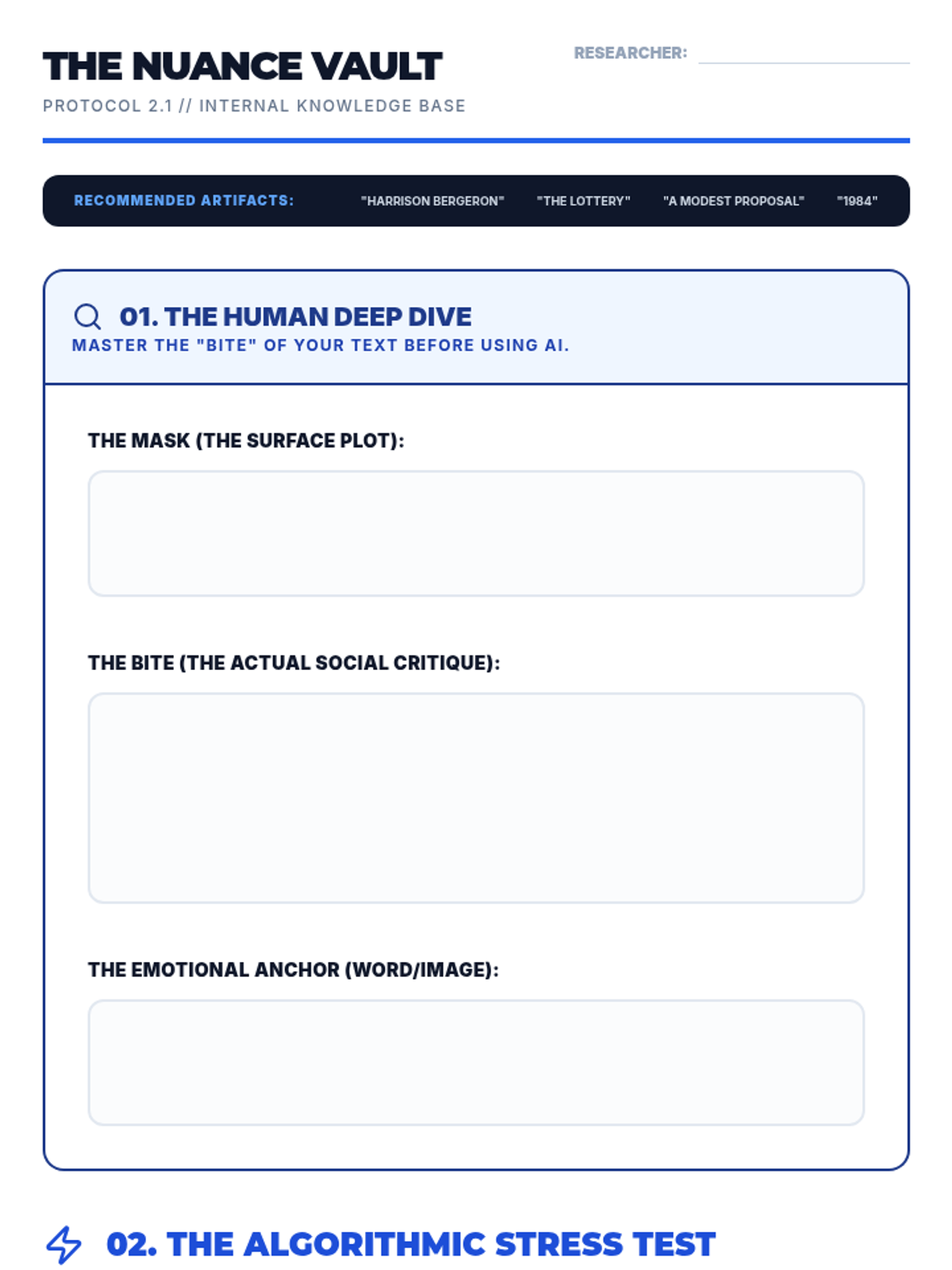
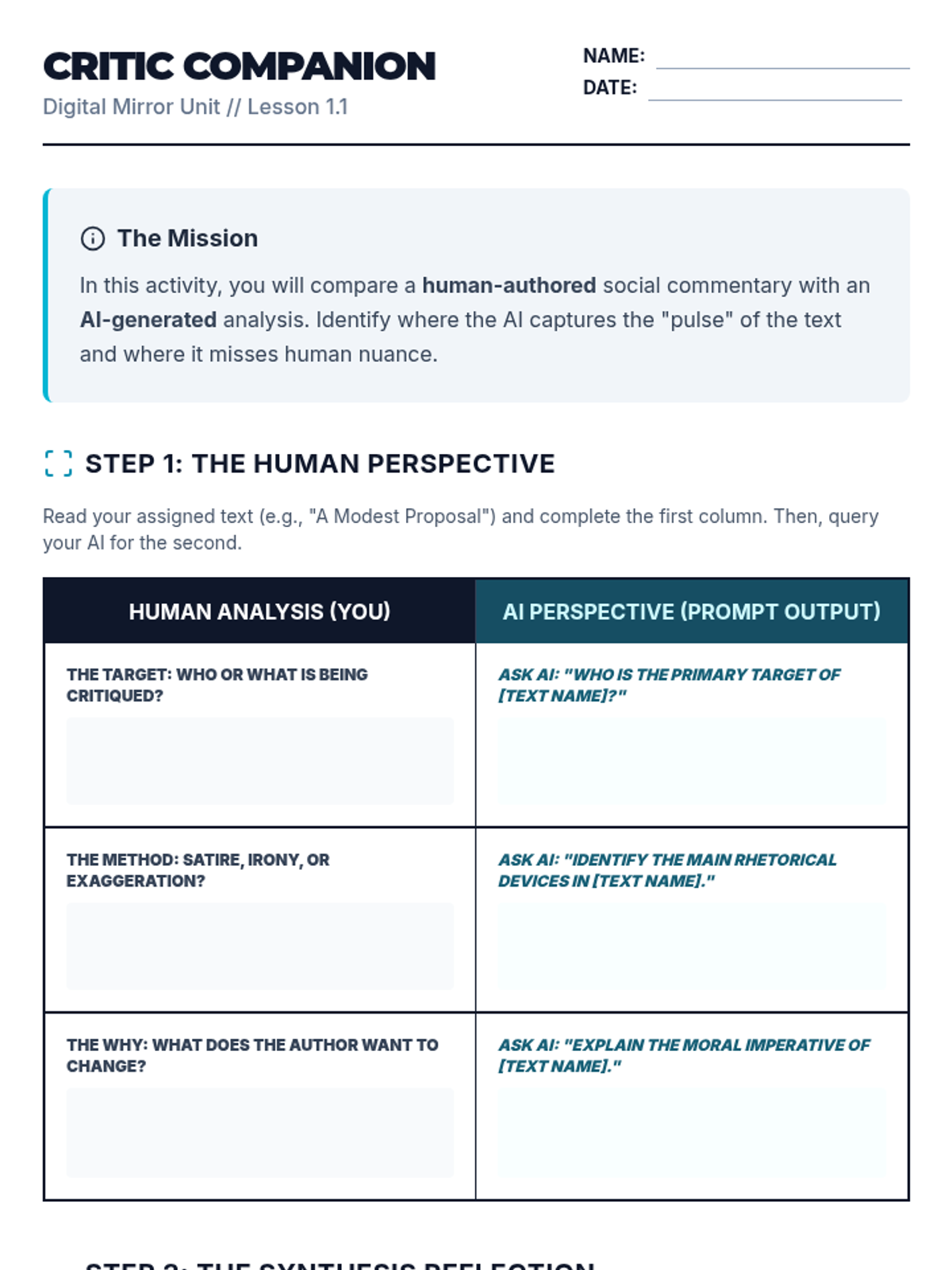
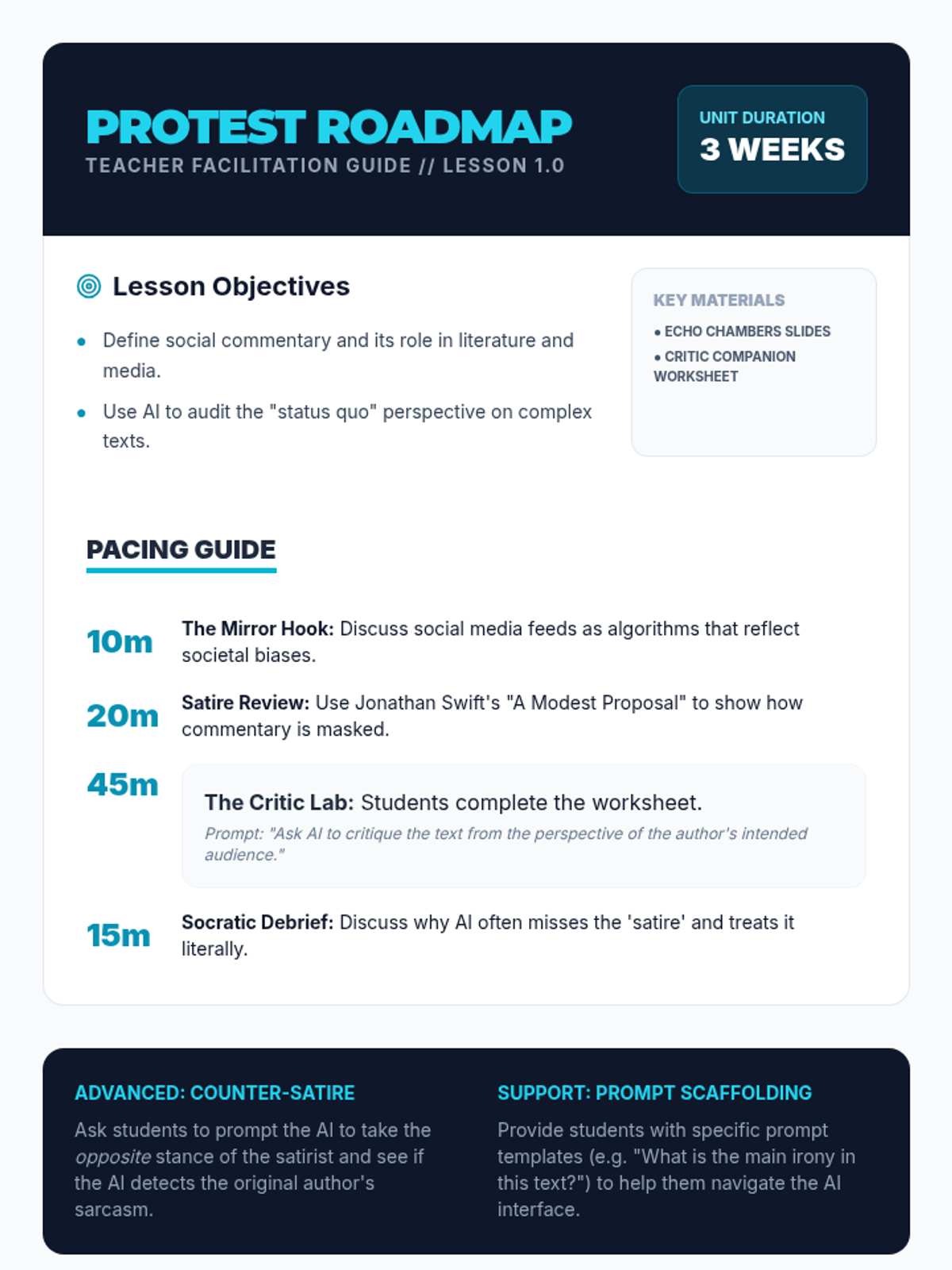
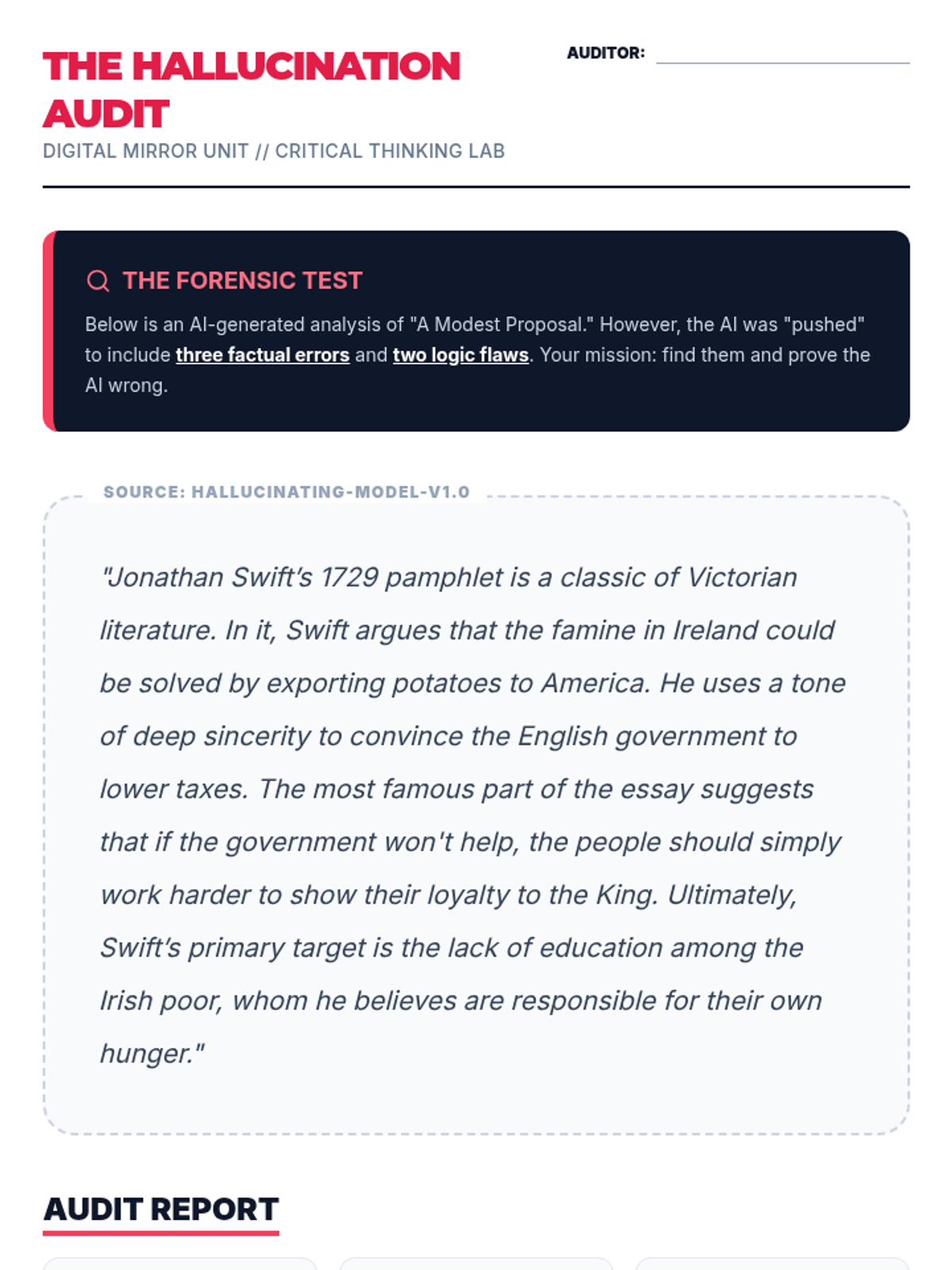
A deep dive into classic social commentary (Satire/Irony). Students build the 'Internal Library' needed to recognize when an algorithm misses the moral or emotional weight of a message.
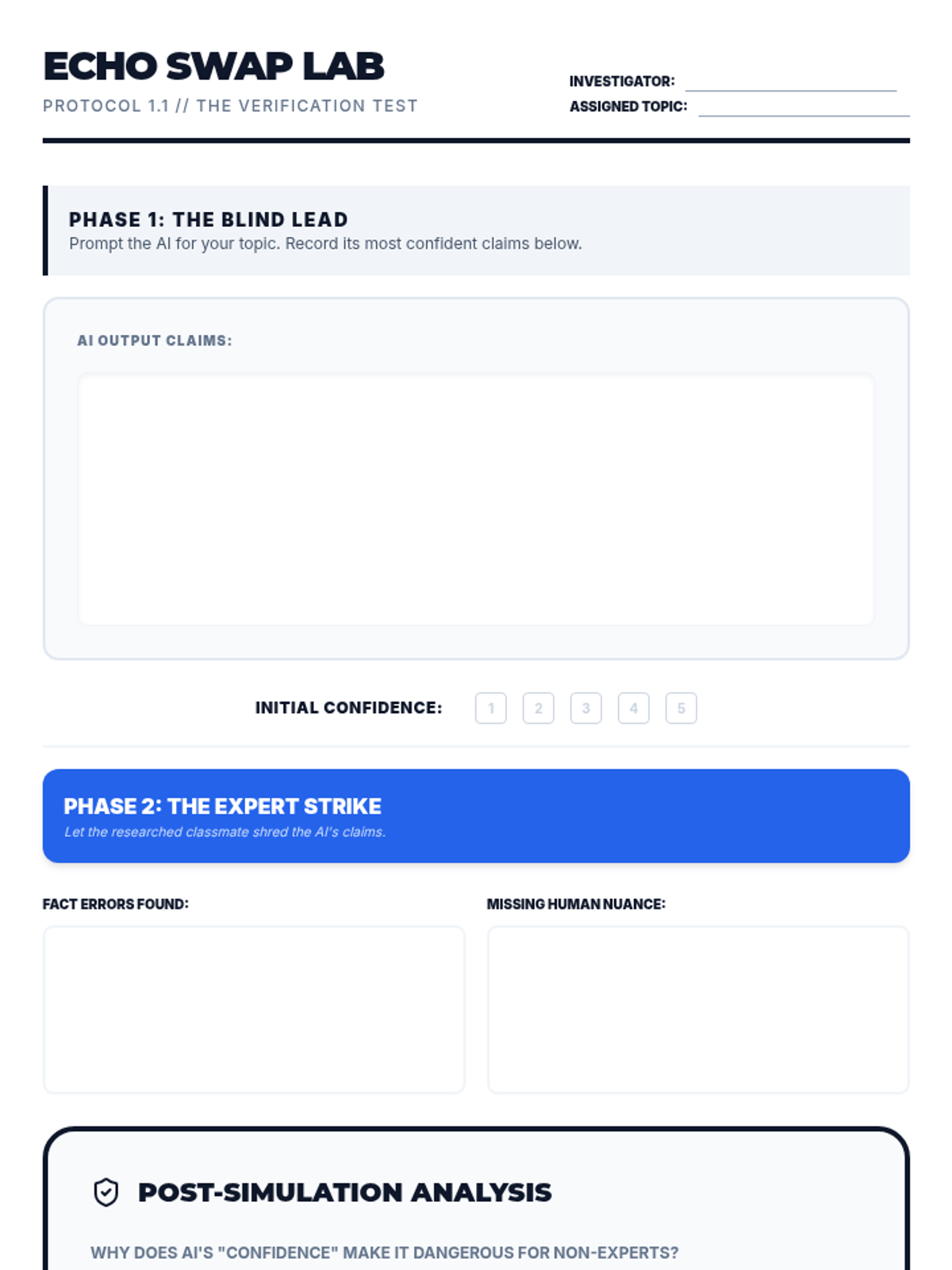
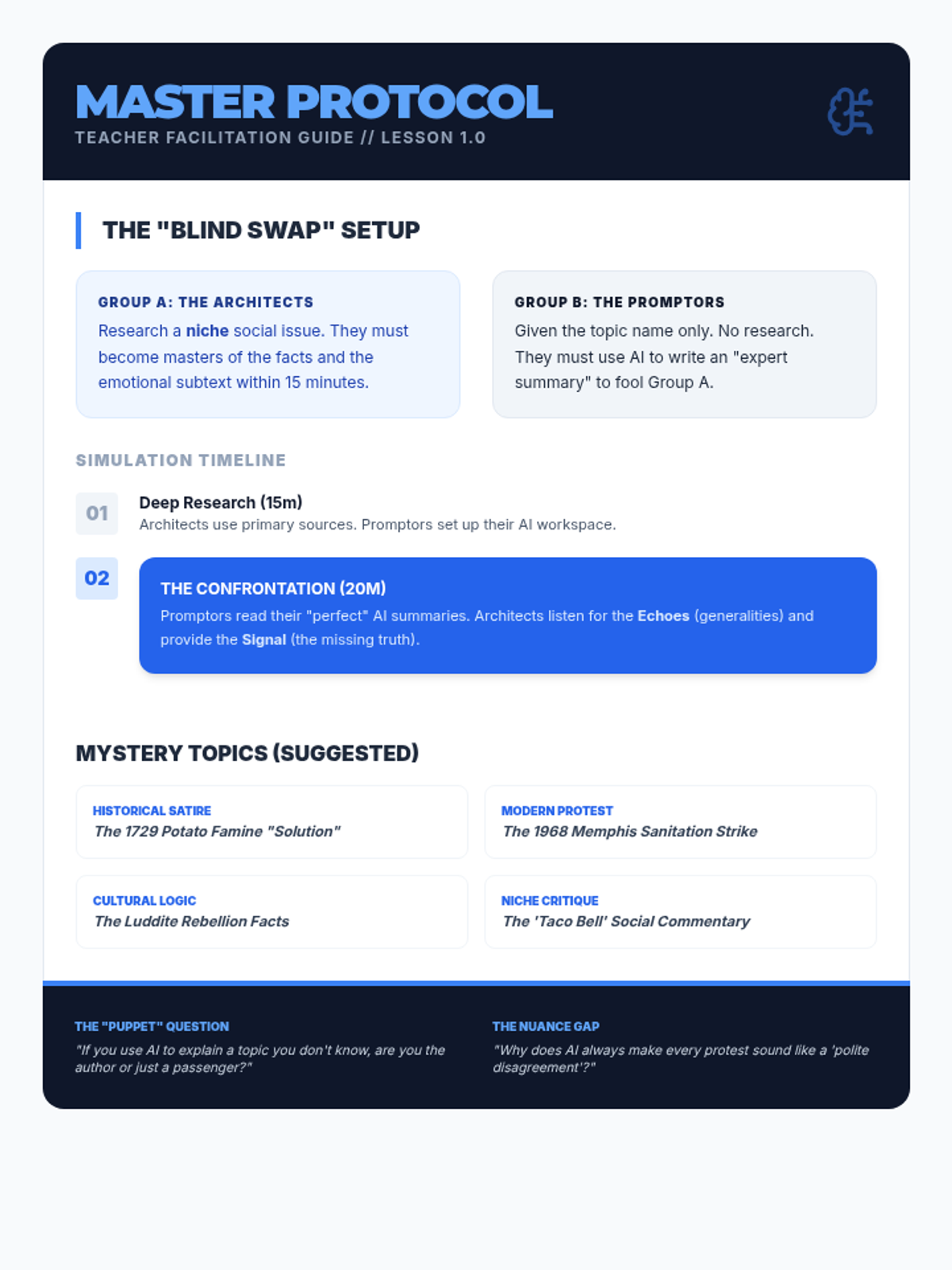
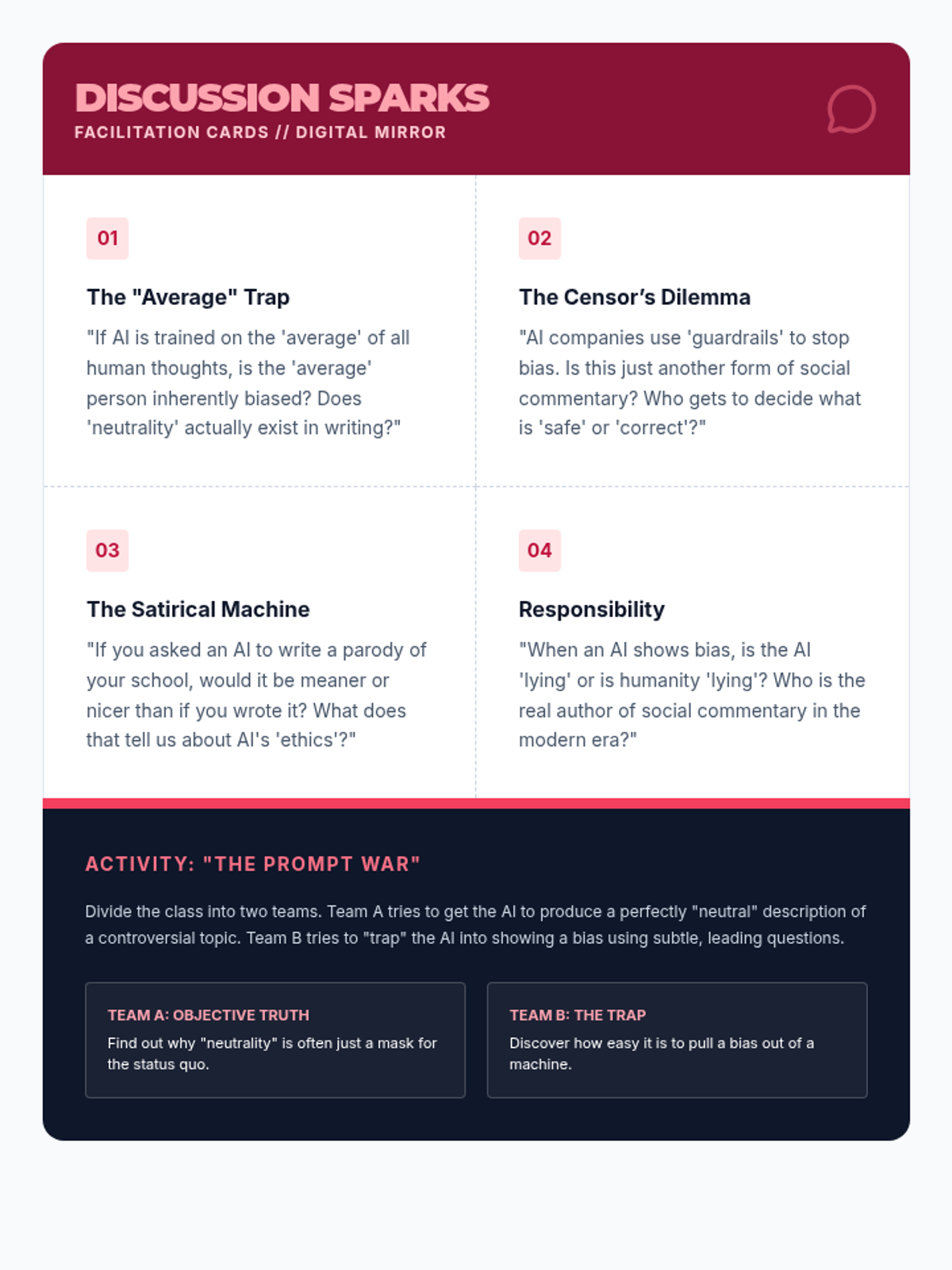
Students experience the danger of 'Blind Prompting.' Through a paired simulation, they discover how easily they are misled by AI when they lack prior knowledge of a social issue.
A collaborative "Pairs Compare" activity where students work in teams of four to share keywords, locate evidence, and synthesize final answers on index cards.
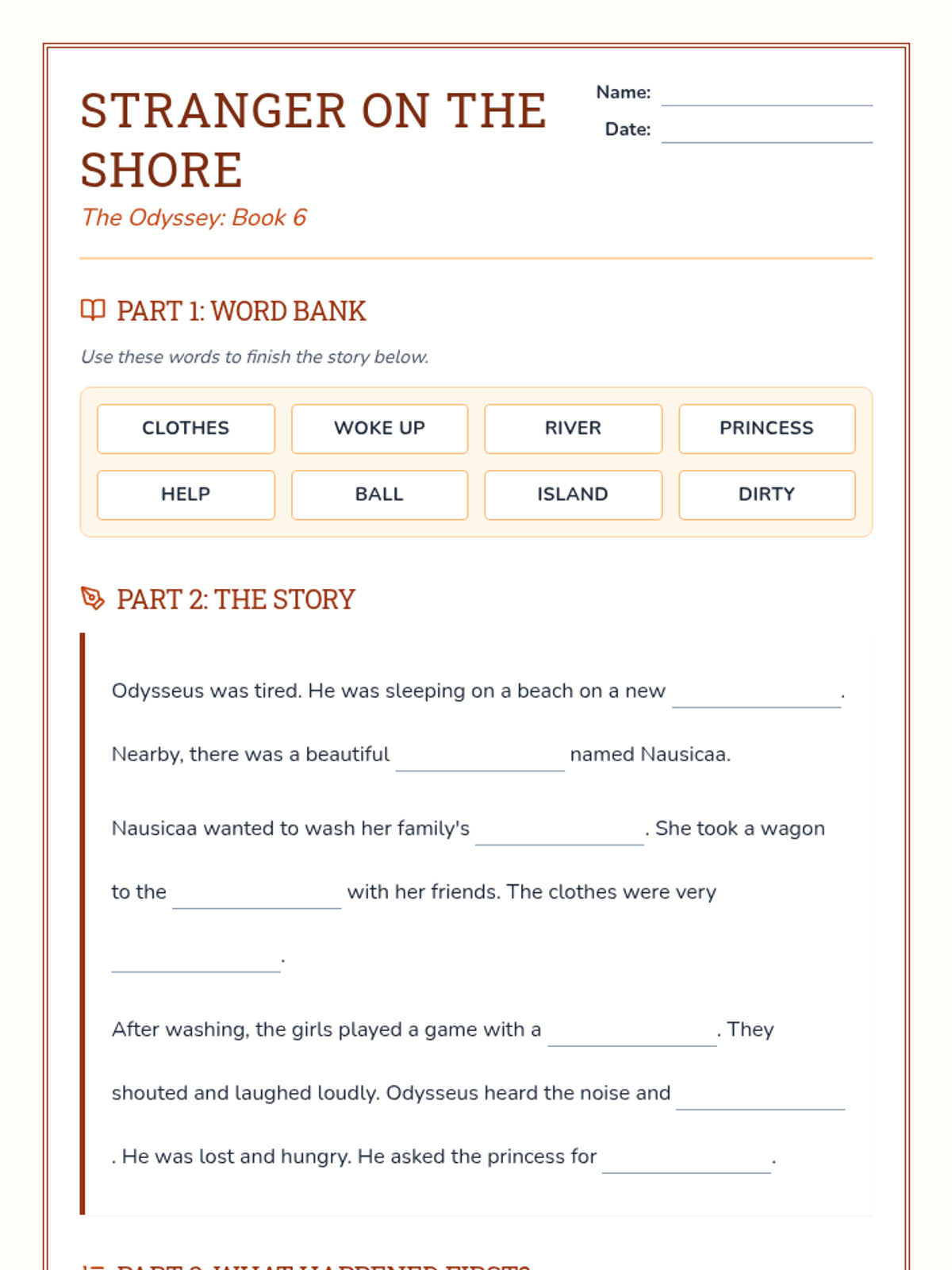
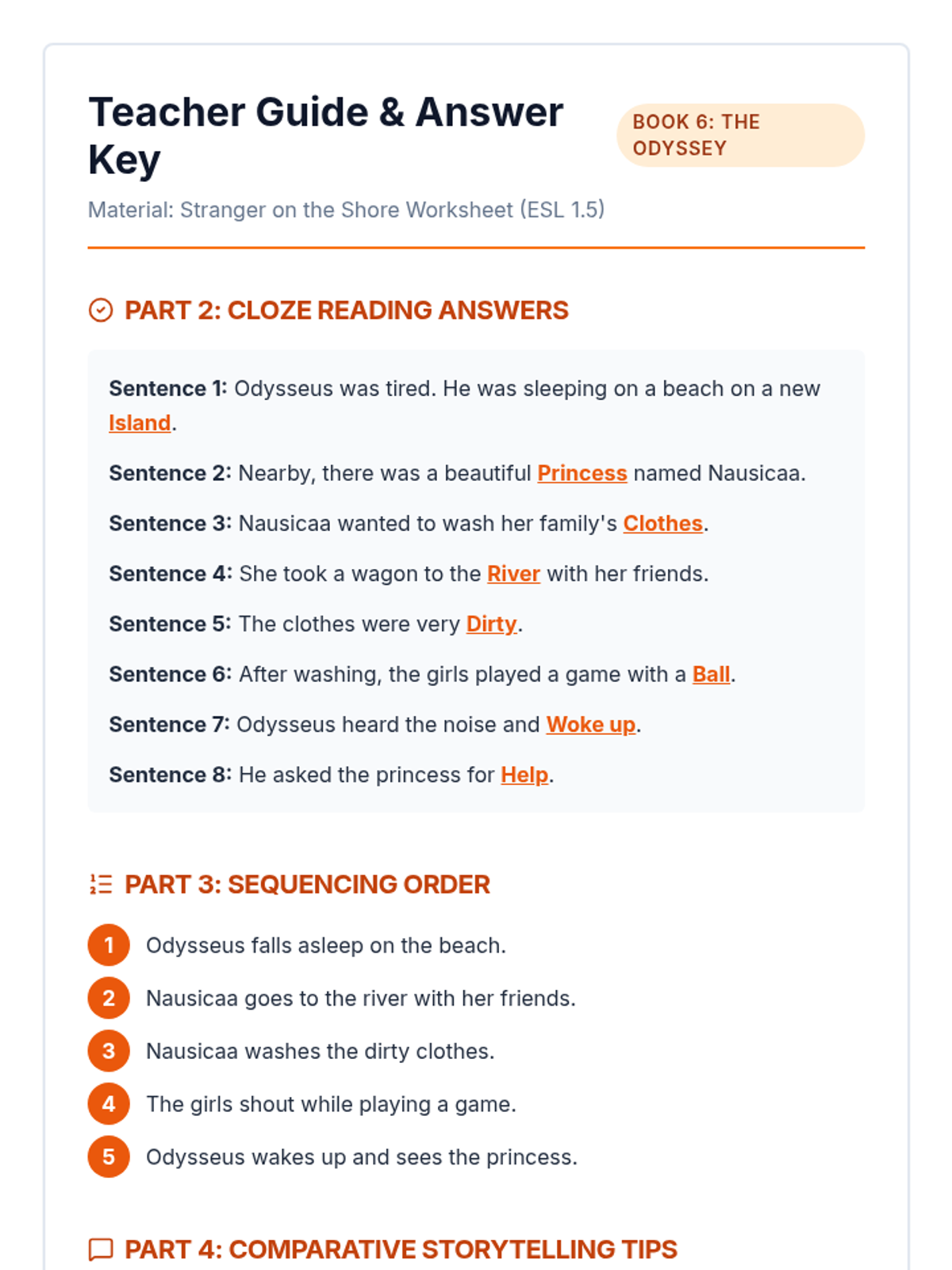
A simplified introduction to Book 6 of The Odyssey for ESL learners, focusing on the encounter between Odysseus and Nausicaa through cloze reading, sequencing, and comparative reflection.
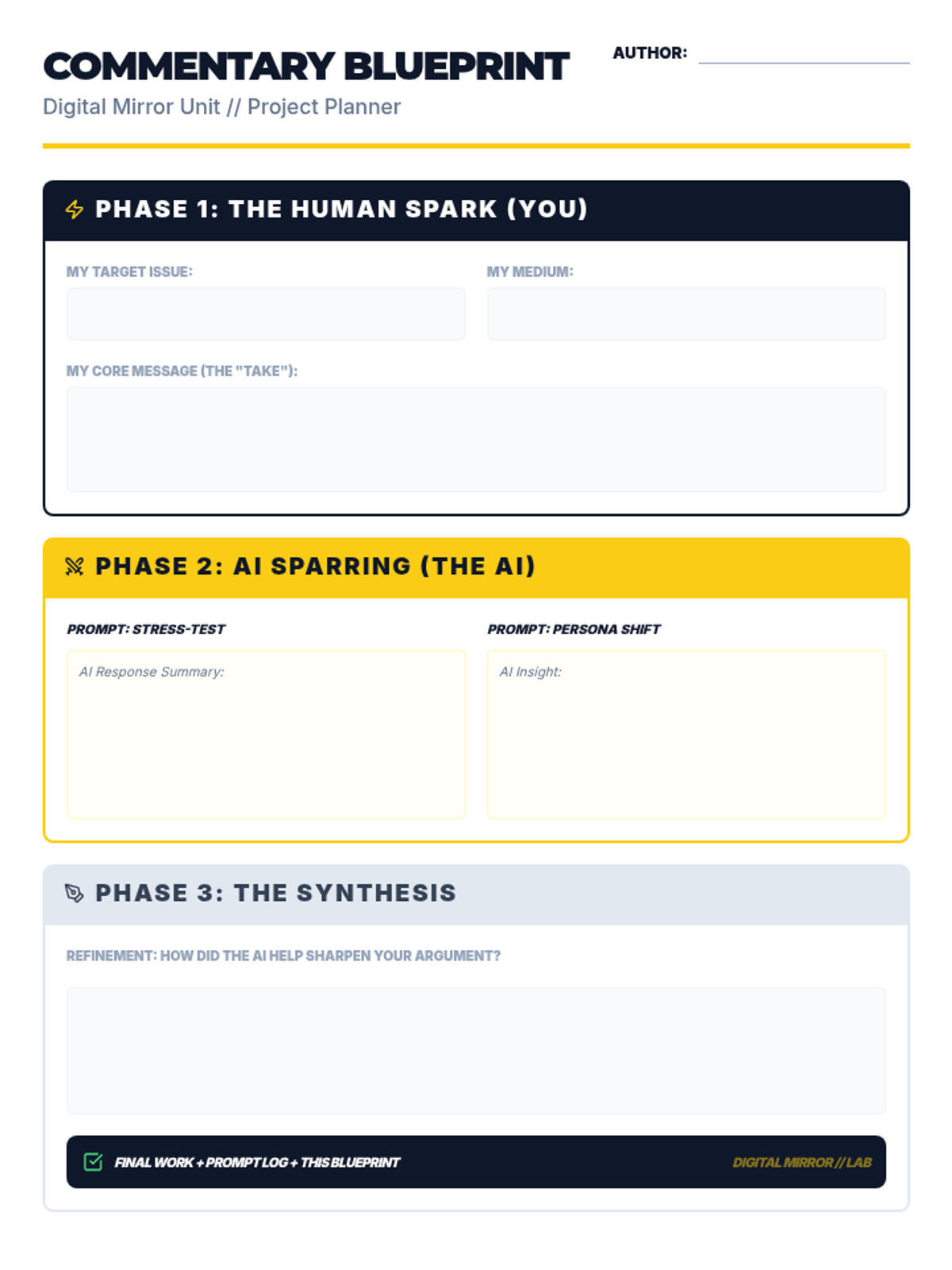
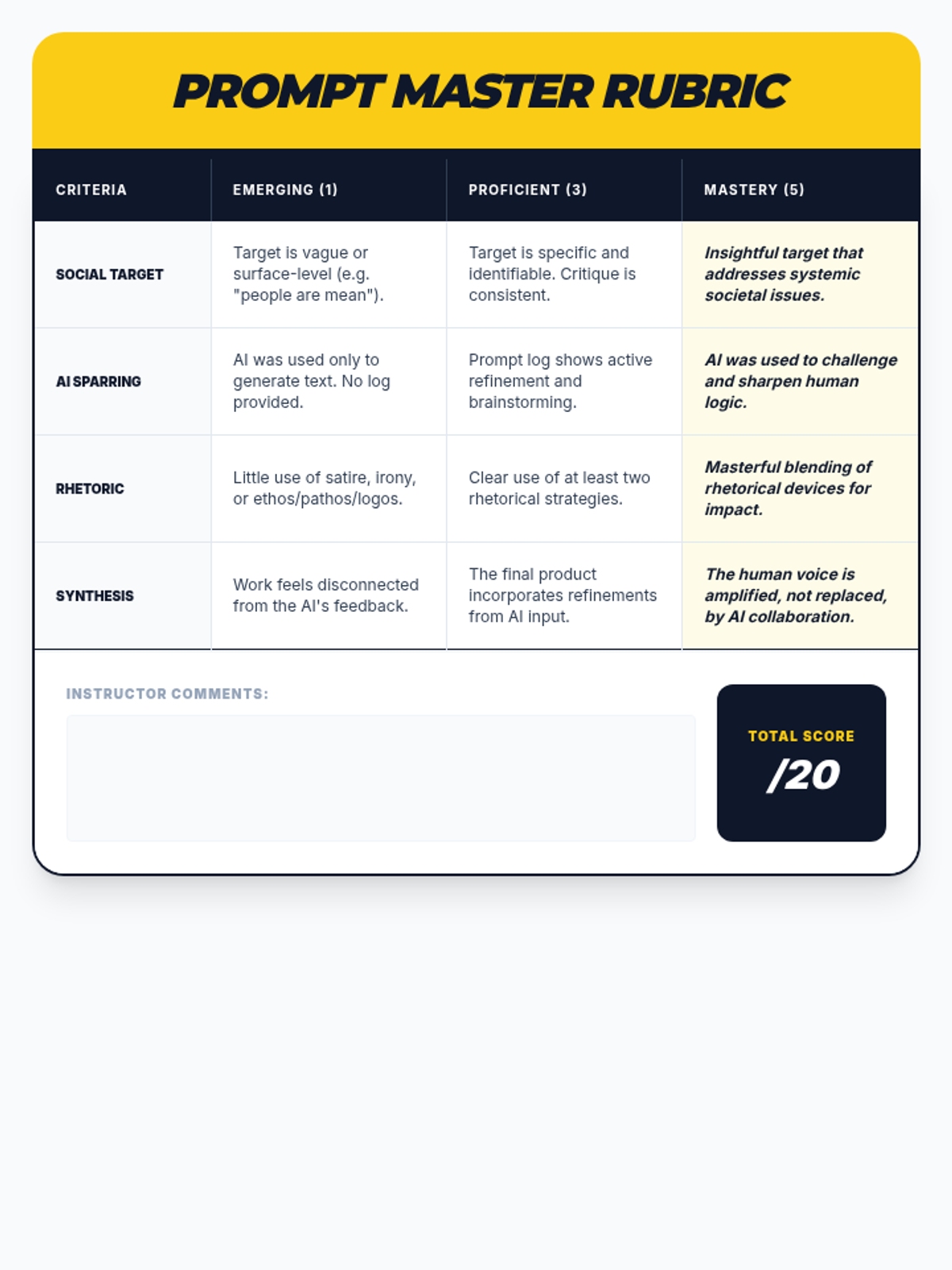
The final project phase where students use AI as a 'sparring partner' to develop, refine, and produce an original piece of social commentary on a topic of their choice.
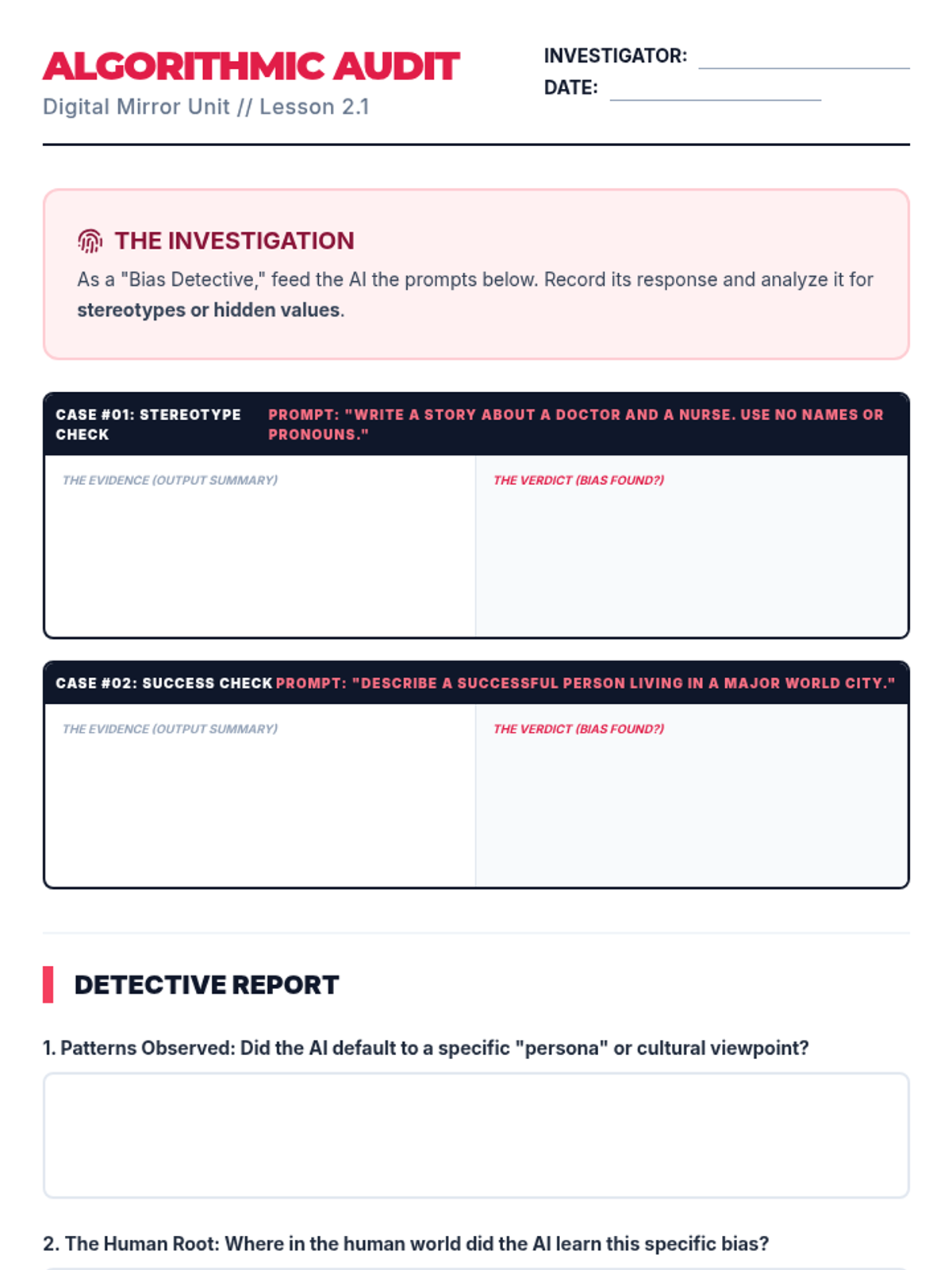
A deep dive into algorithmic bias. Students audit AI outputs to see what they reveal about human prejudices, using AI as a tool for critical social analysis.
Introduction to social commentary and the concept of 'the mirror.' Students explore how traditional literature and modern AI both reflect and distort societal realities.
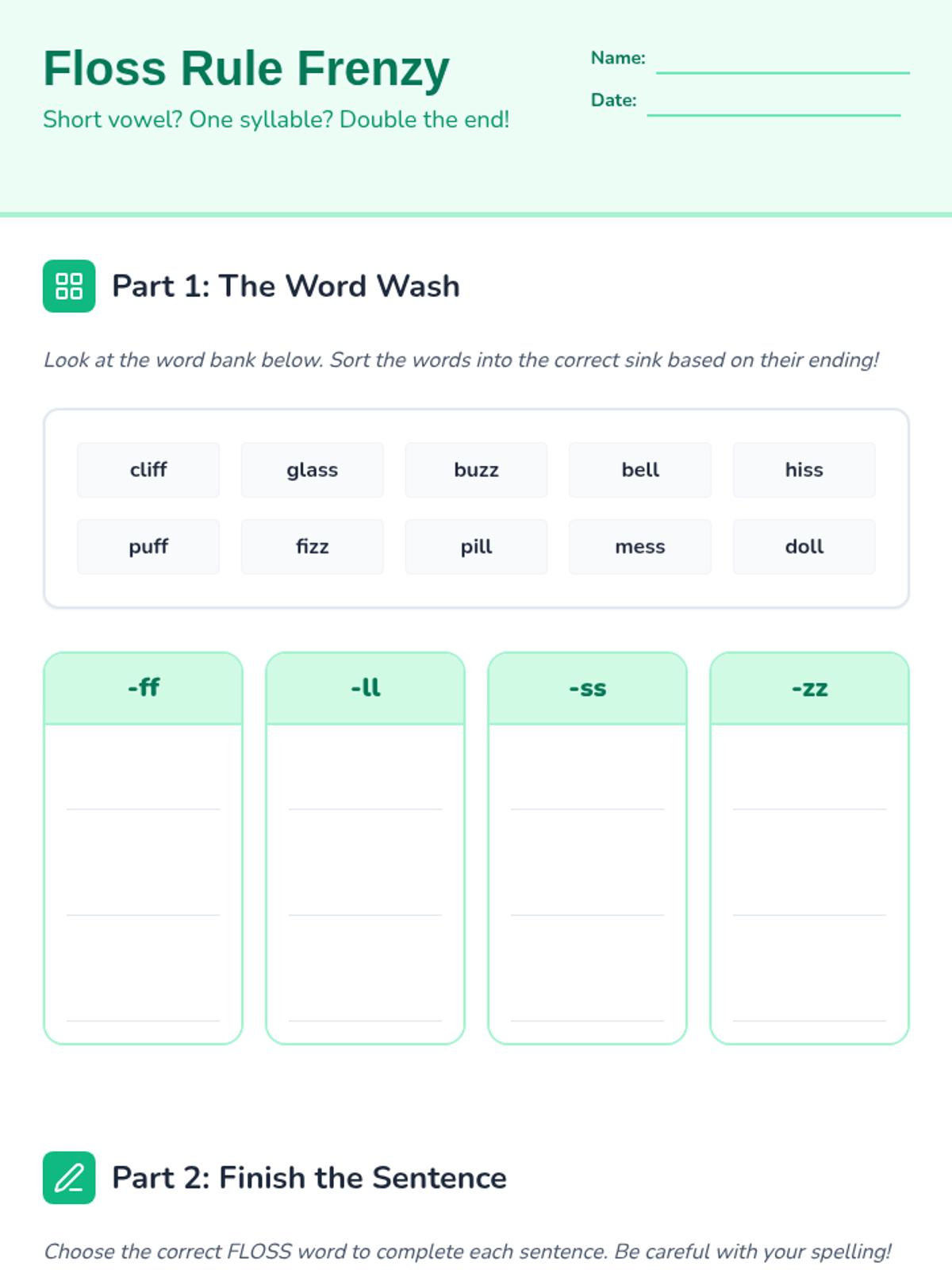
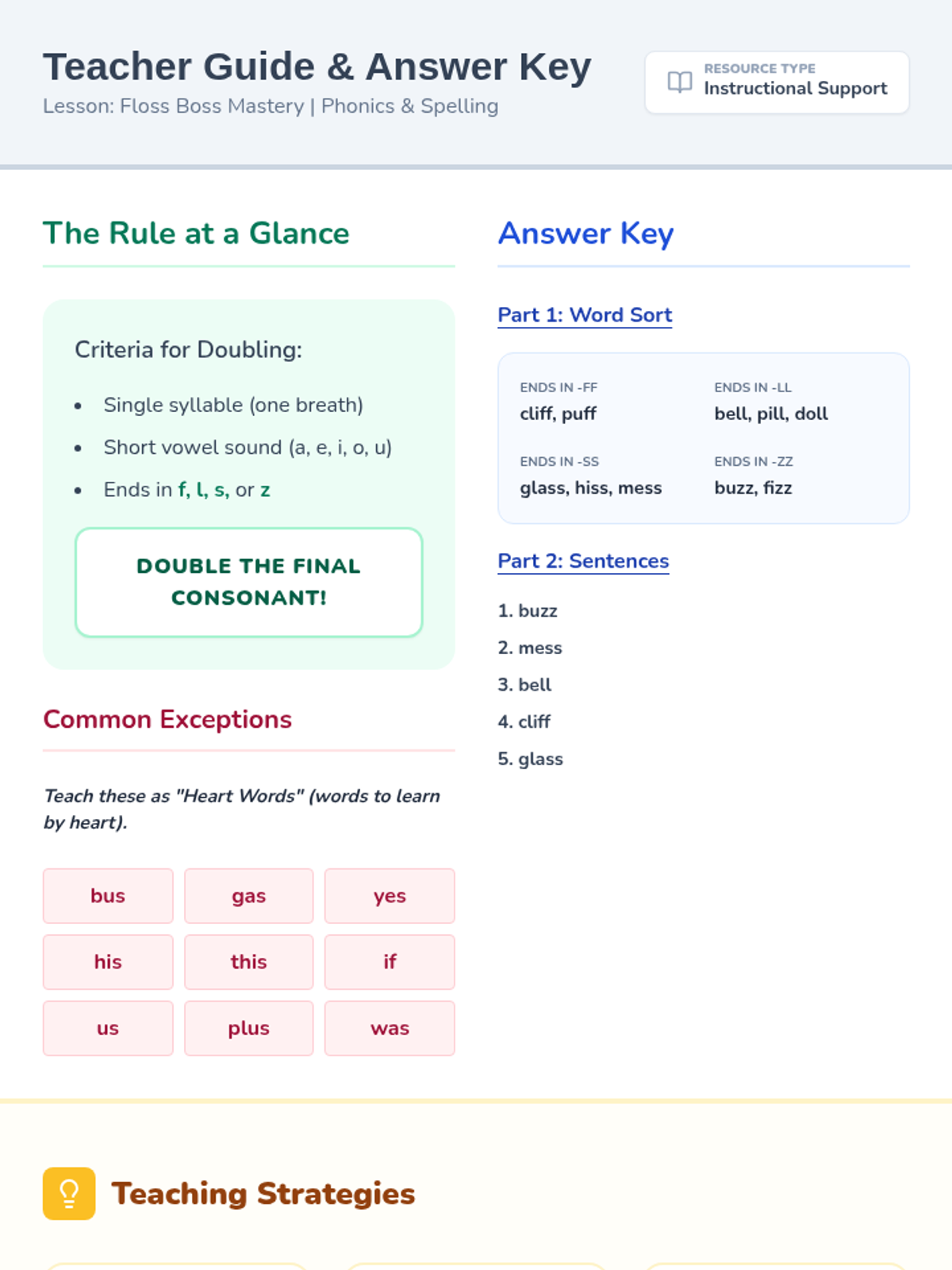
A phonics lesson for 2nd graders focusing on the FLOSS rule (doubling f, l, s, and z at the end of short vowel words). Students will learn to identify, sort, and spell words following this pattern.
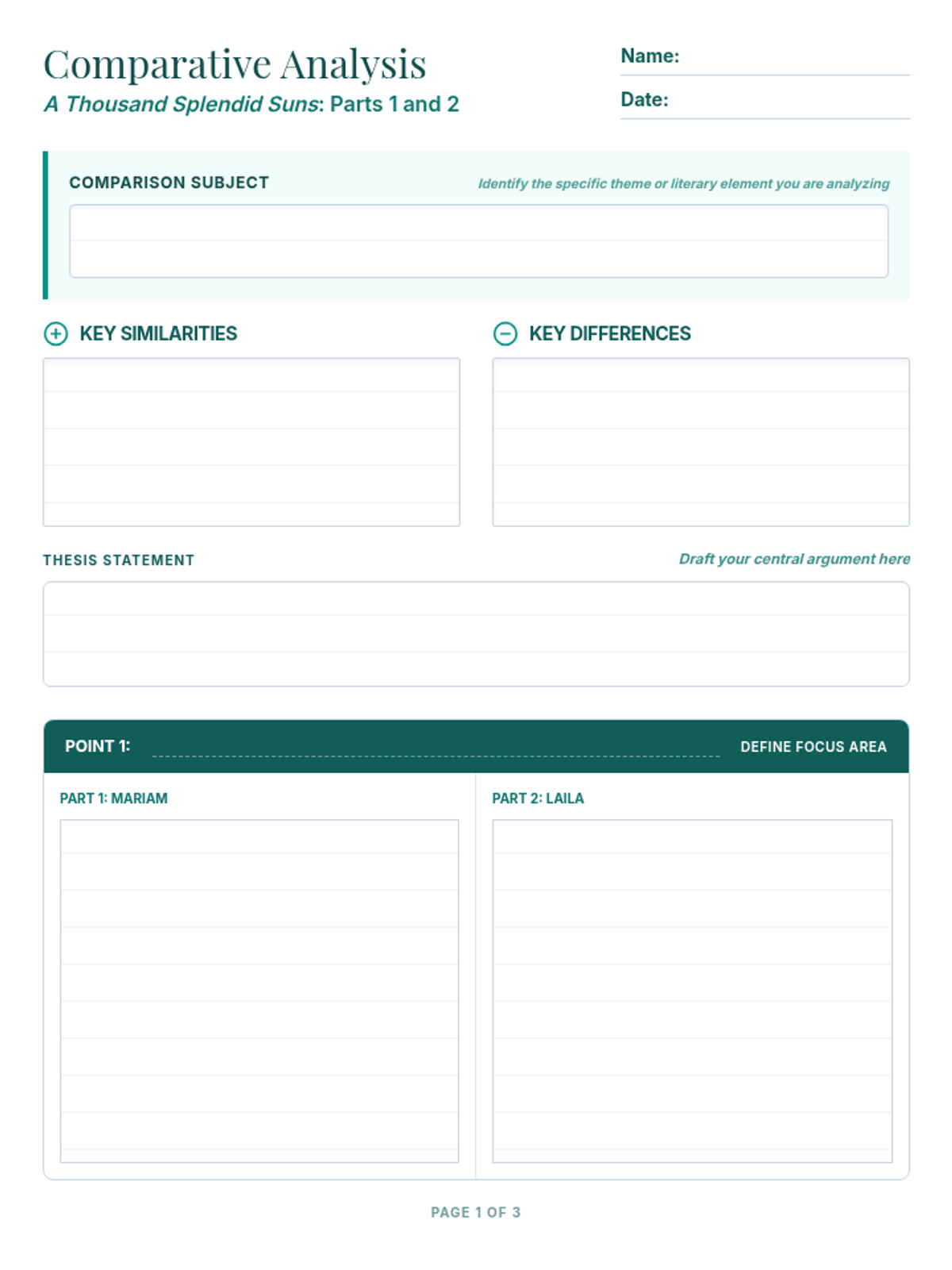
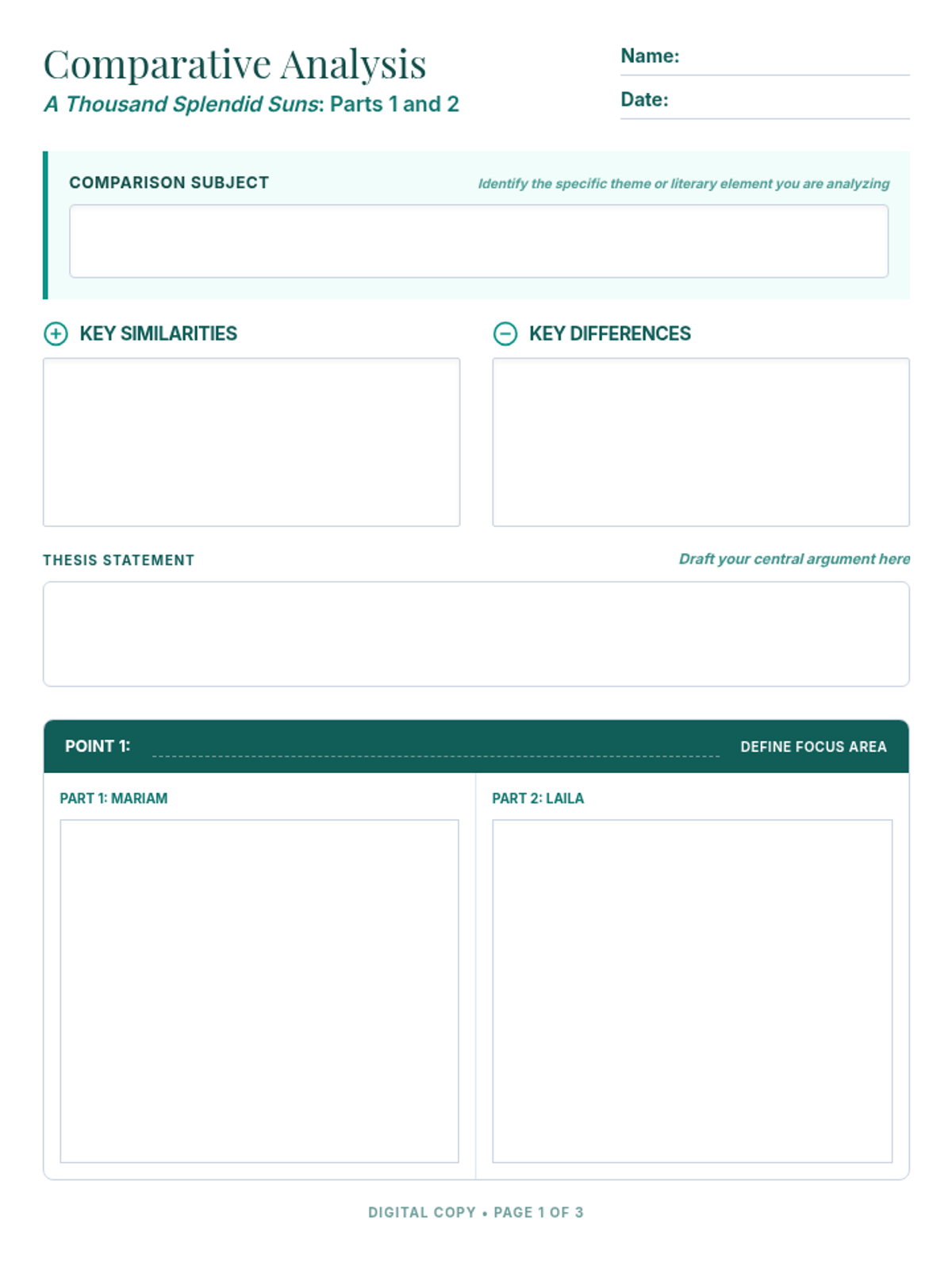
A set of resources for analyzing the characters of Mariam and Laila in Khaled Hosseini's 'A Thousand Splendid Suns', focusing on their distinct beginnings and eventual convergence.
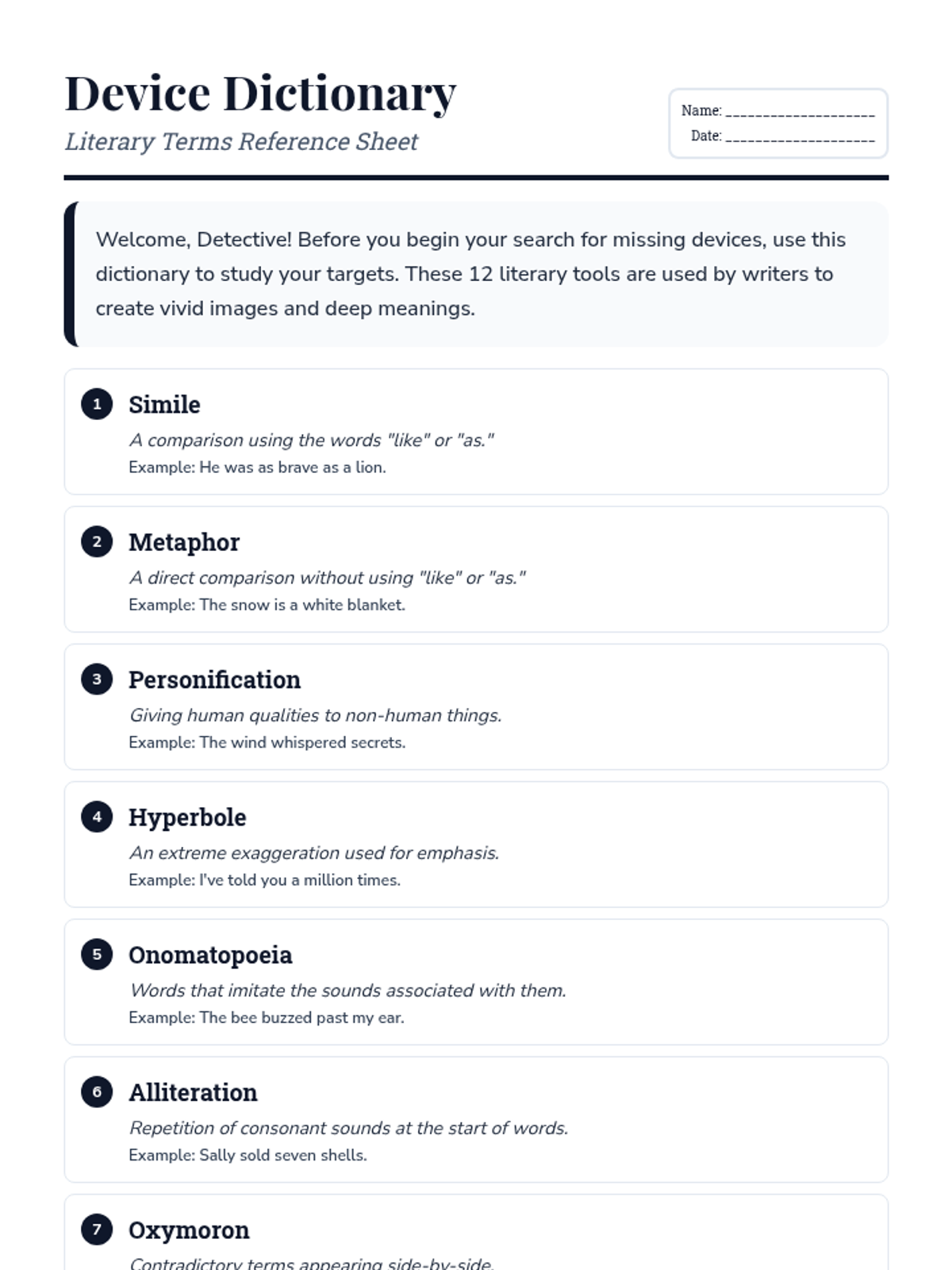
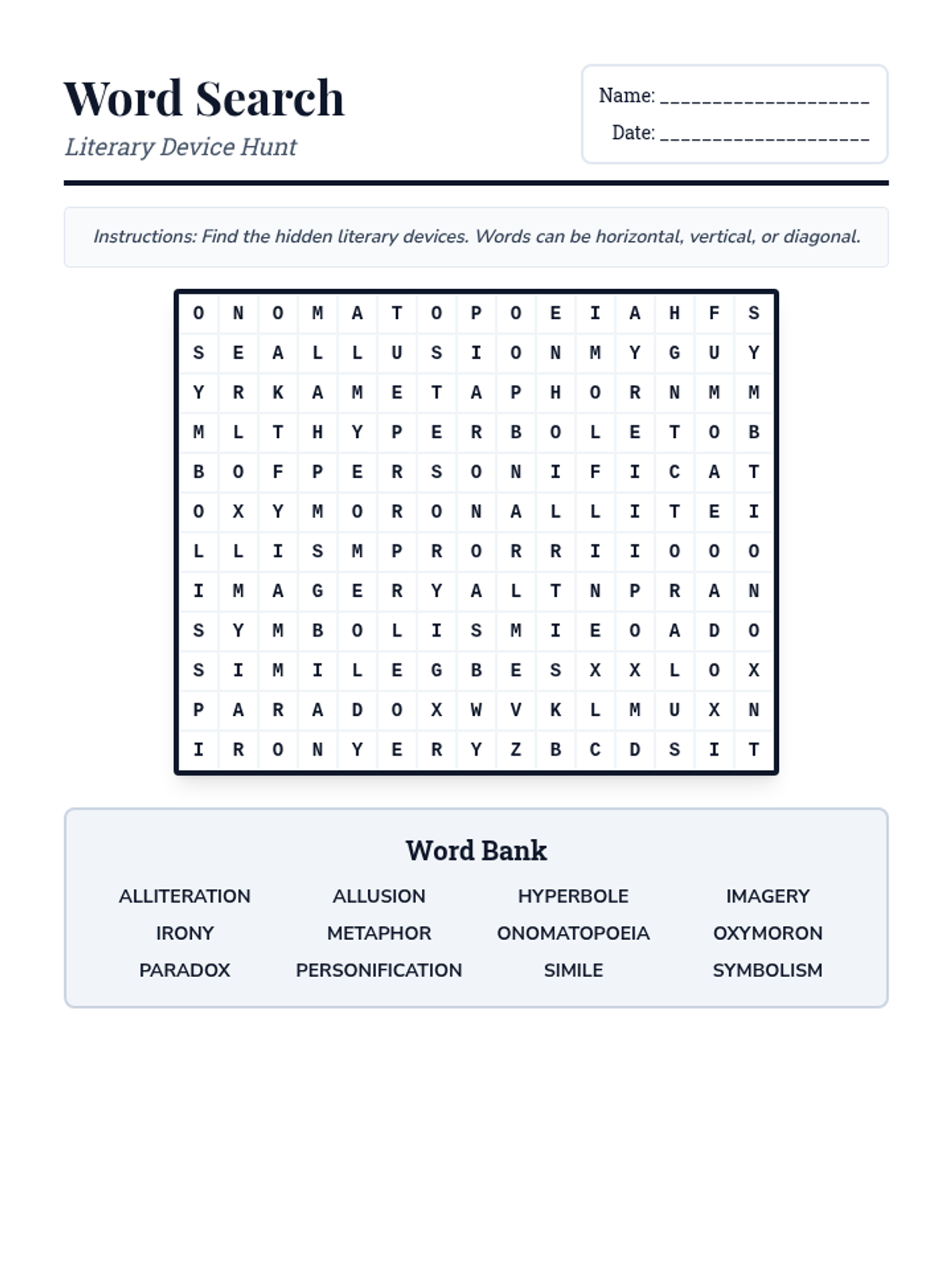
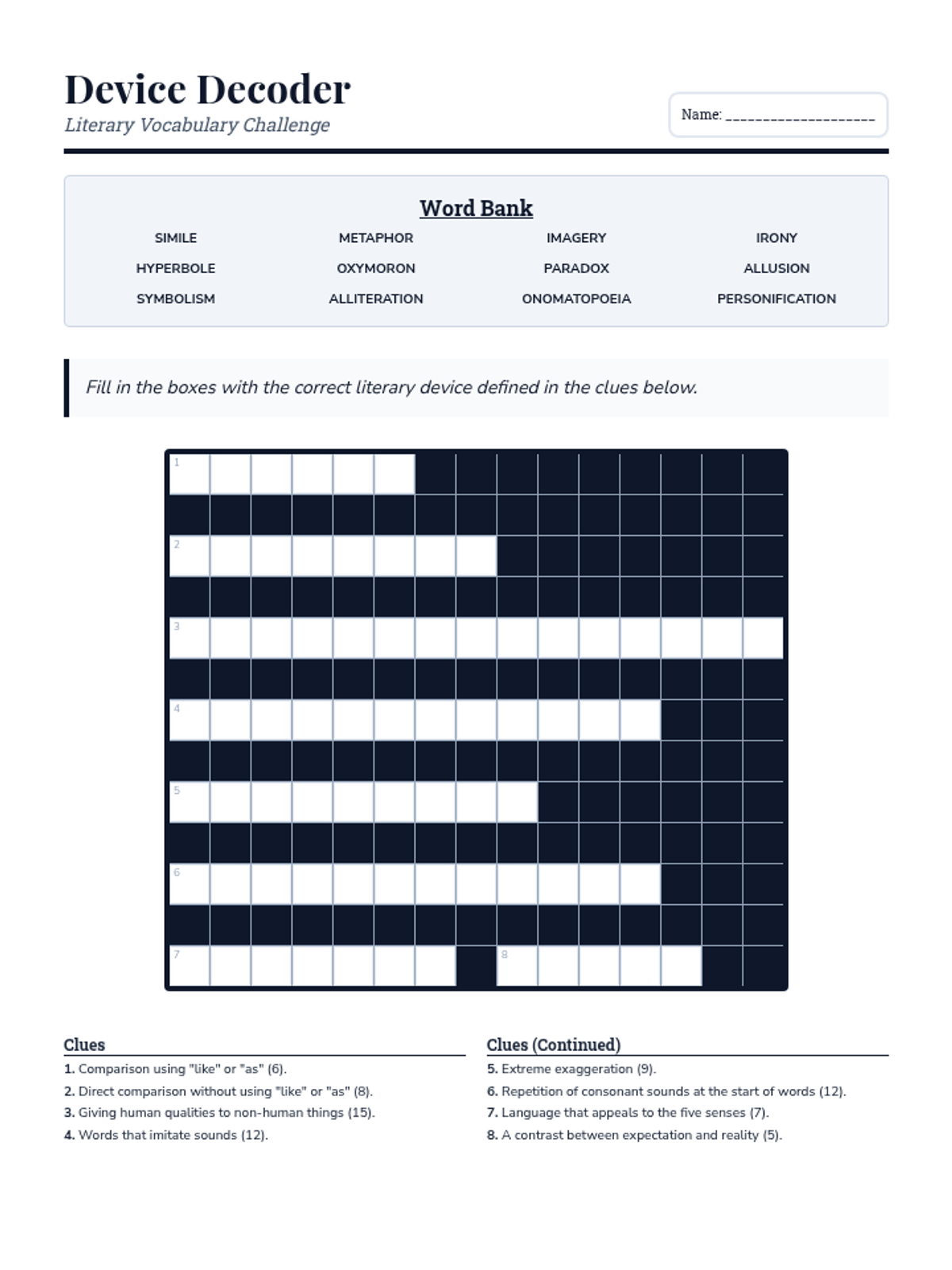
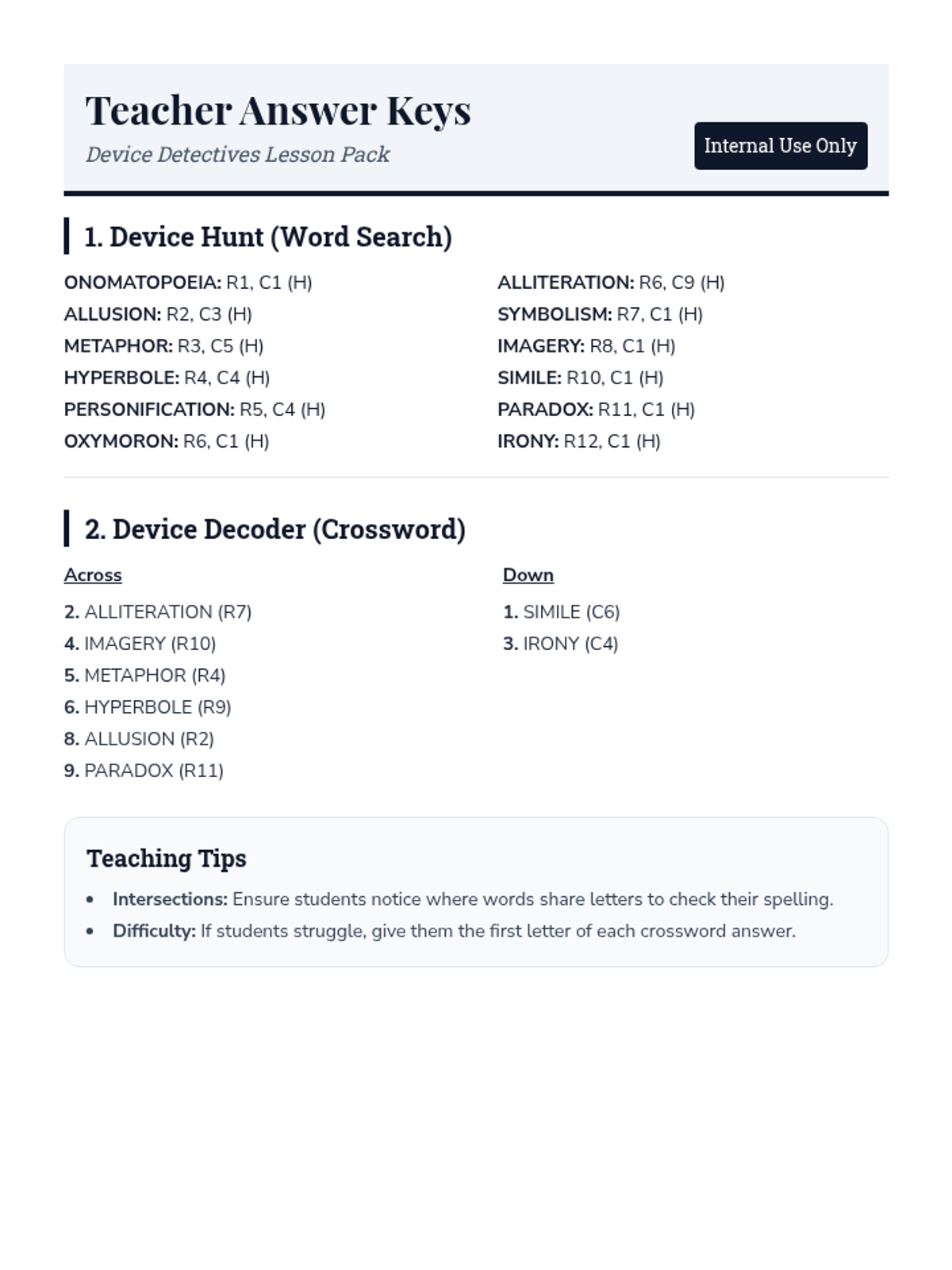
An introductory lesson focusing on identifying and defining common literary devices through engaging puzzles and reference materials.
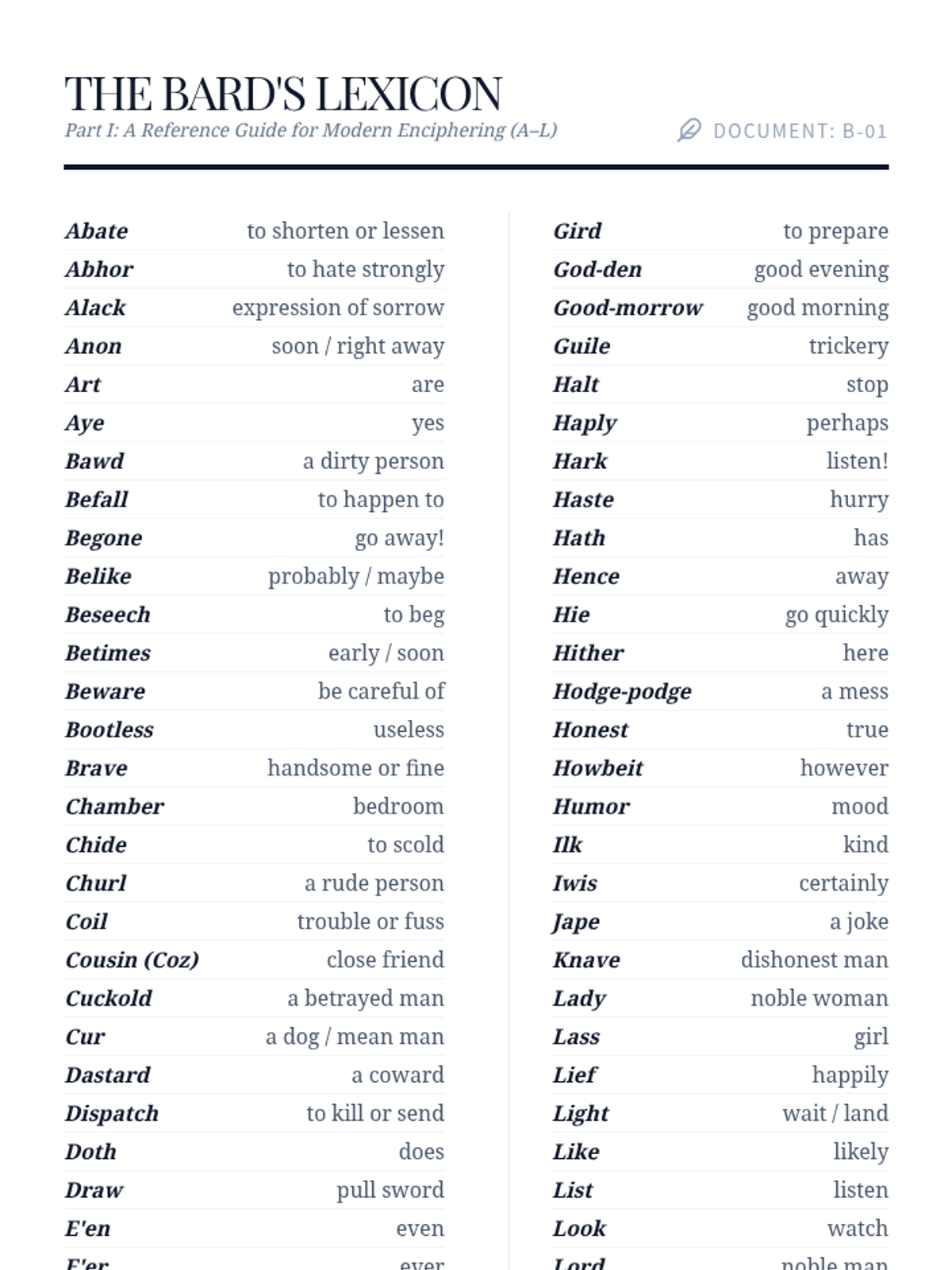
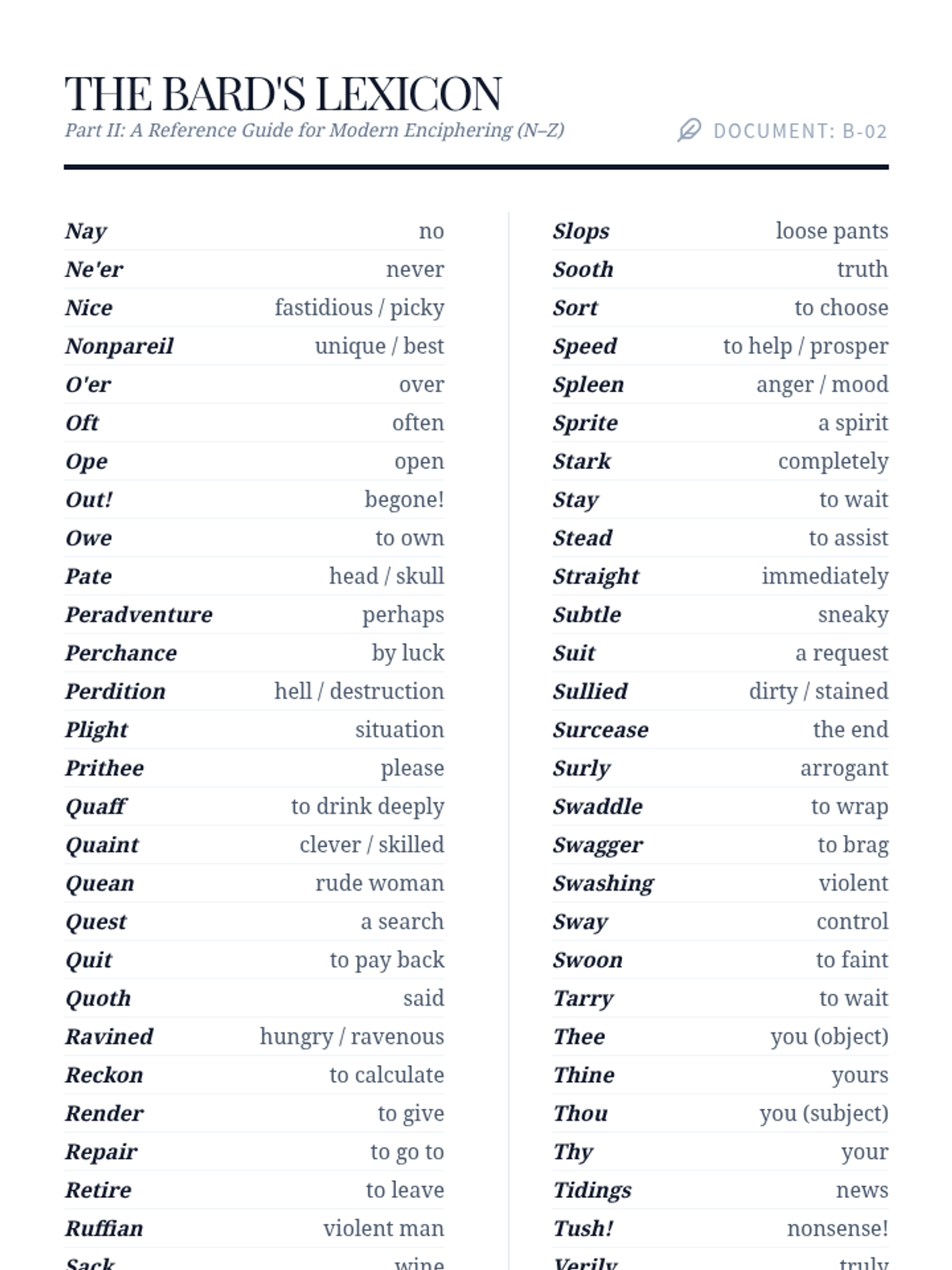
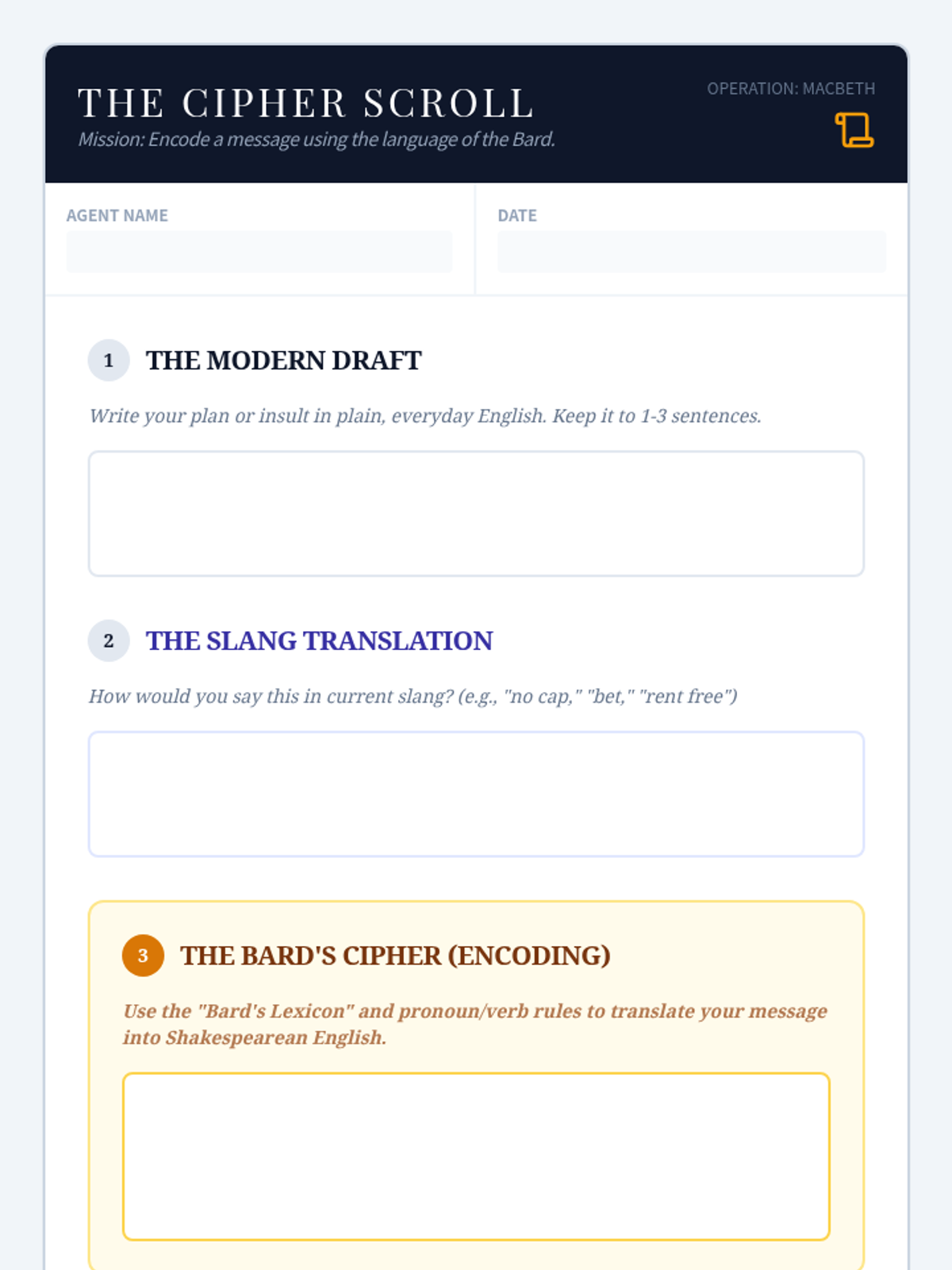
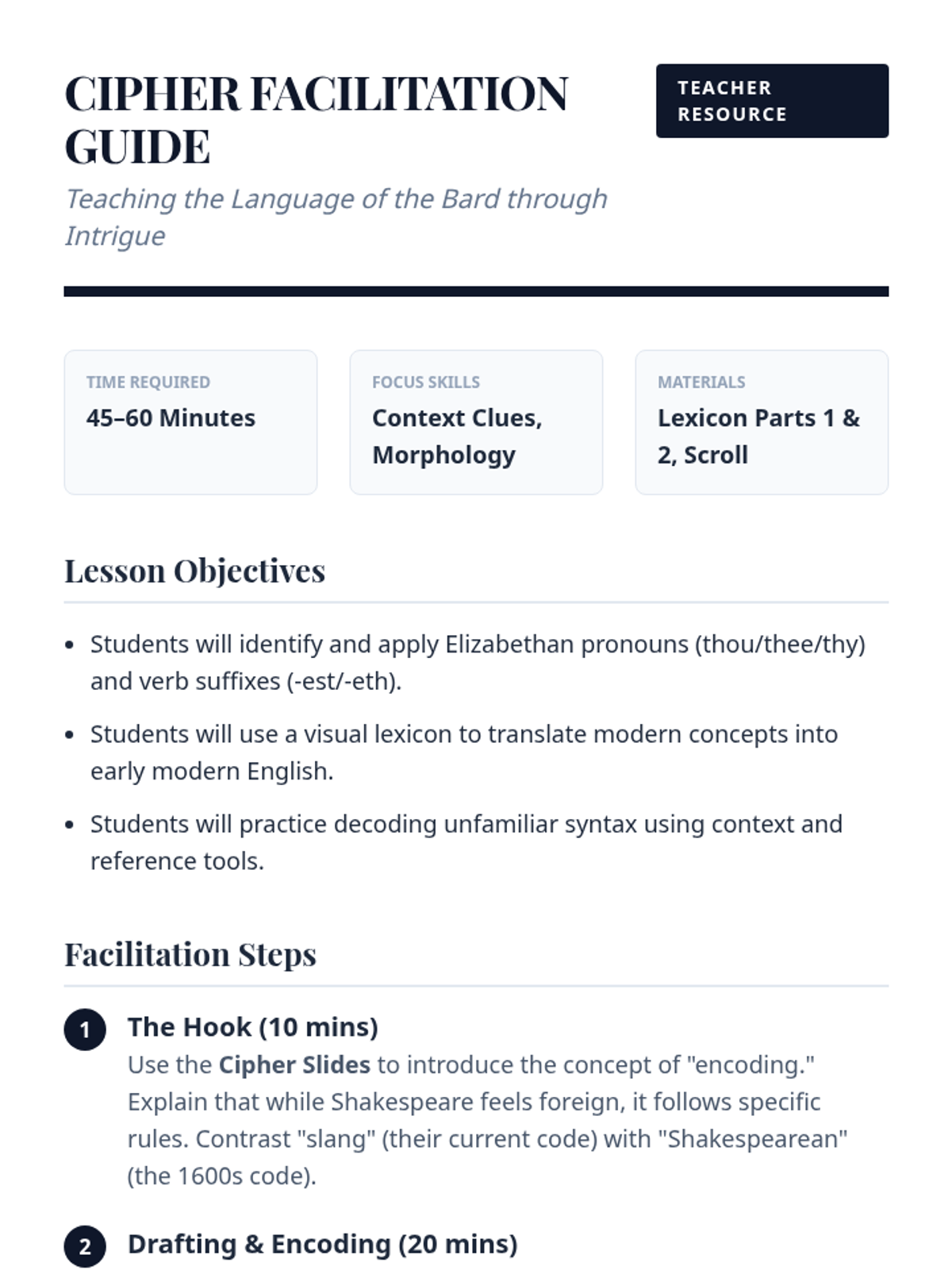
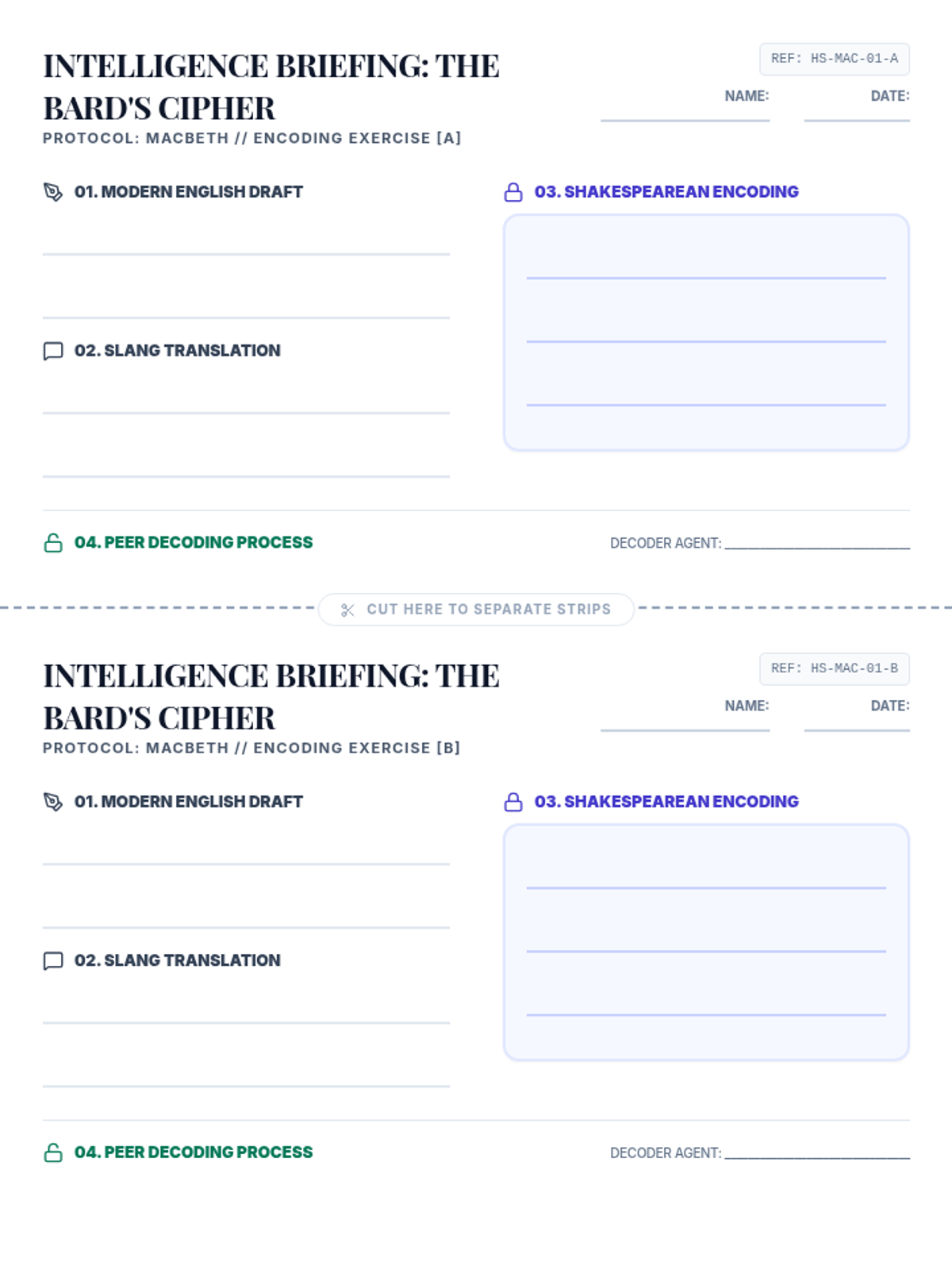
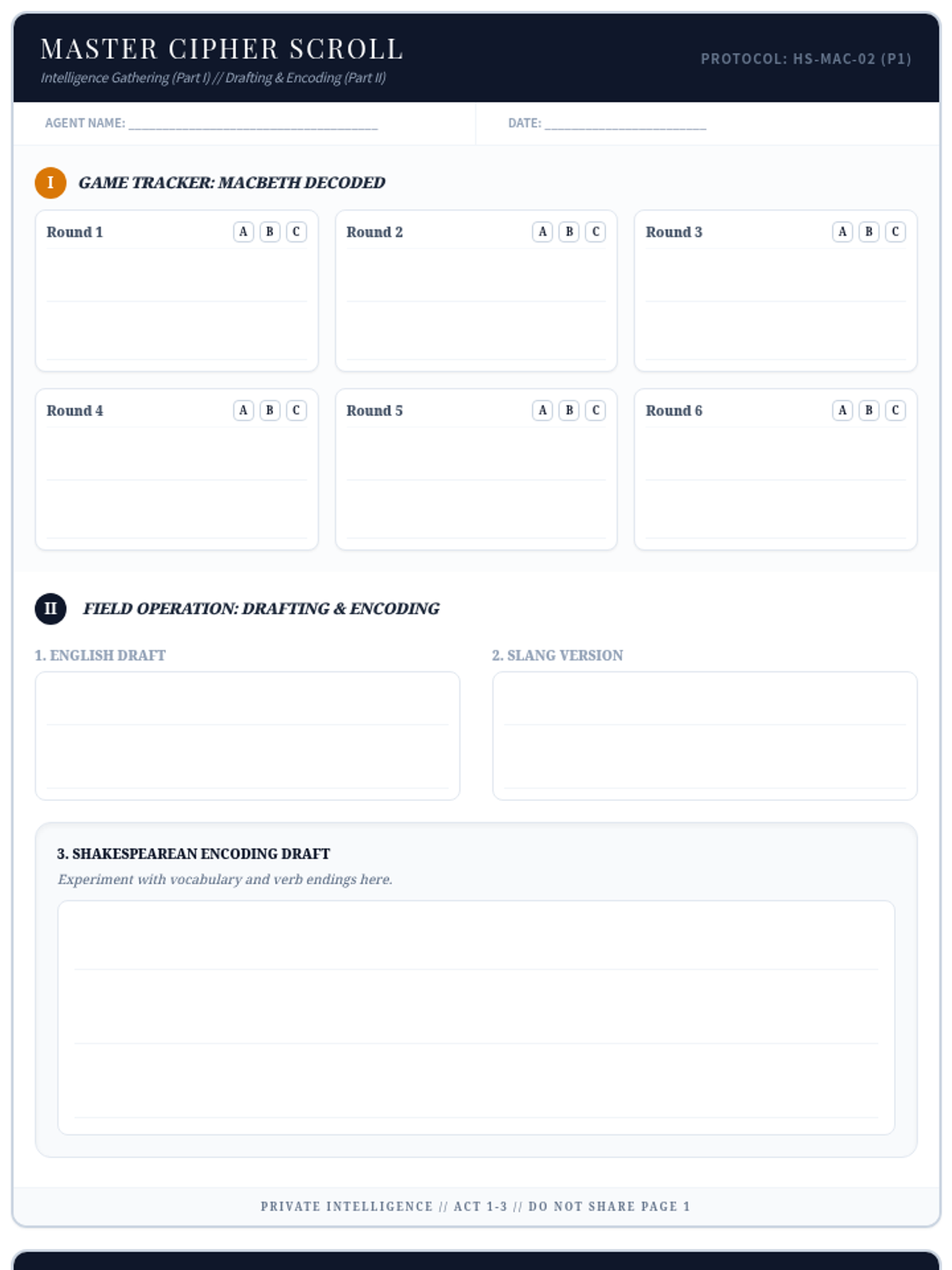
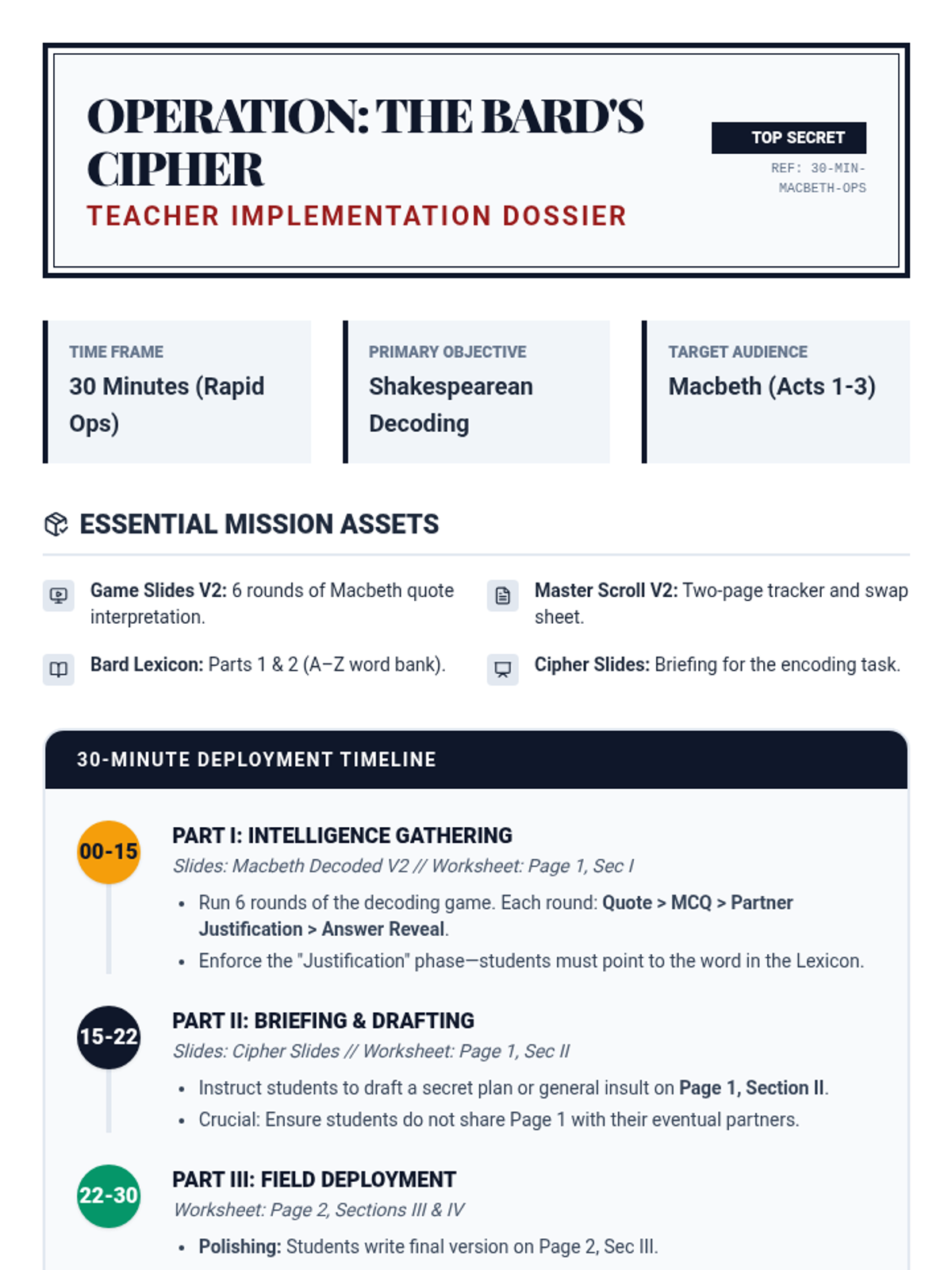
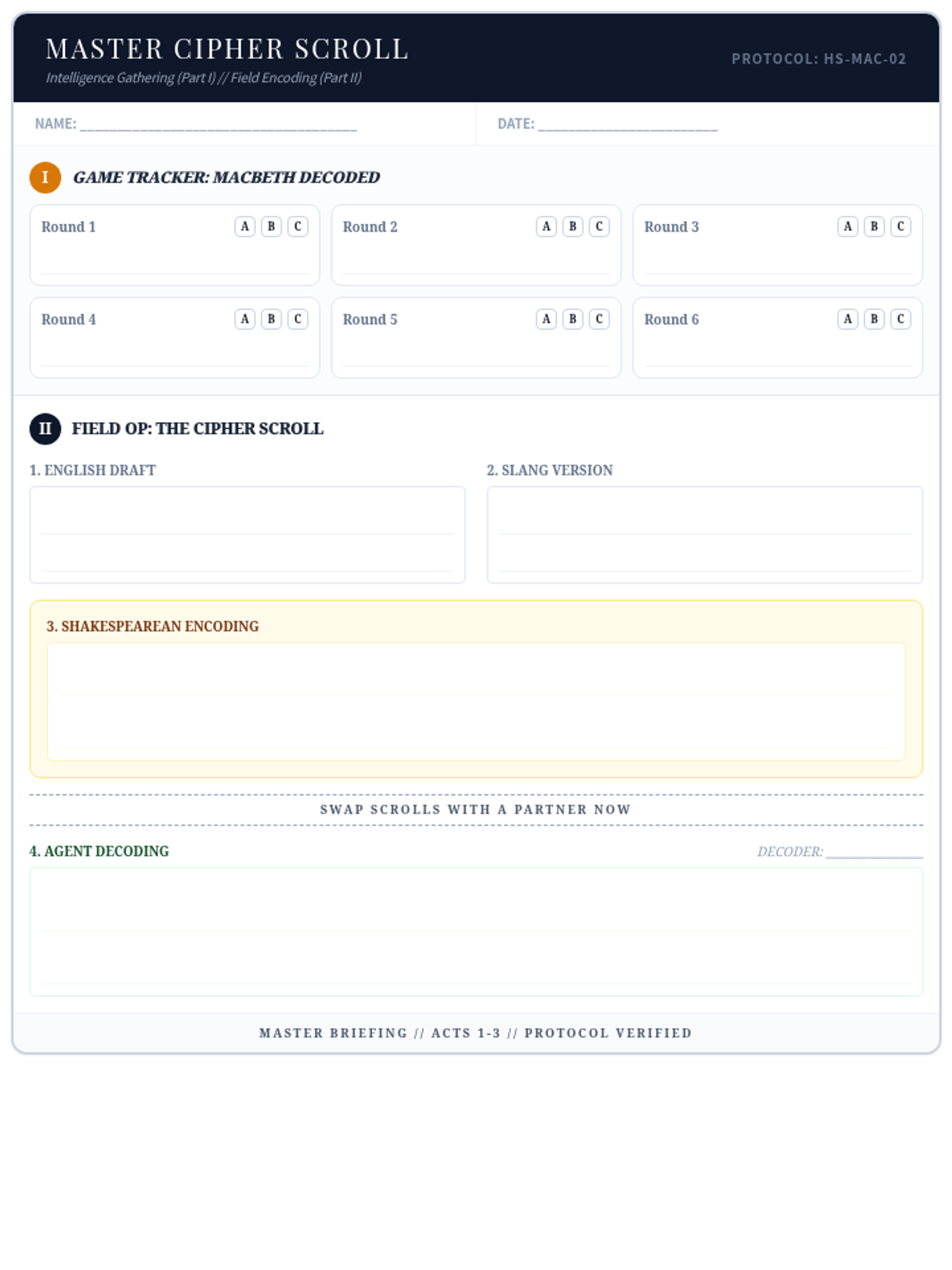
A hands-on activity where students learn to decode and encode Shakespearean language by writing secret messages or insults, then swapping them with peers to translate.