Students become "Detail Detectives" to master the art of finding the main idea and supporting details in various texts. This lesson includes differentiated reading passages and a specialized graphic organizer for evidence collection.
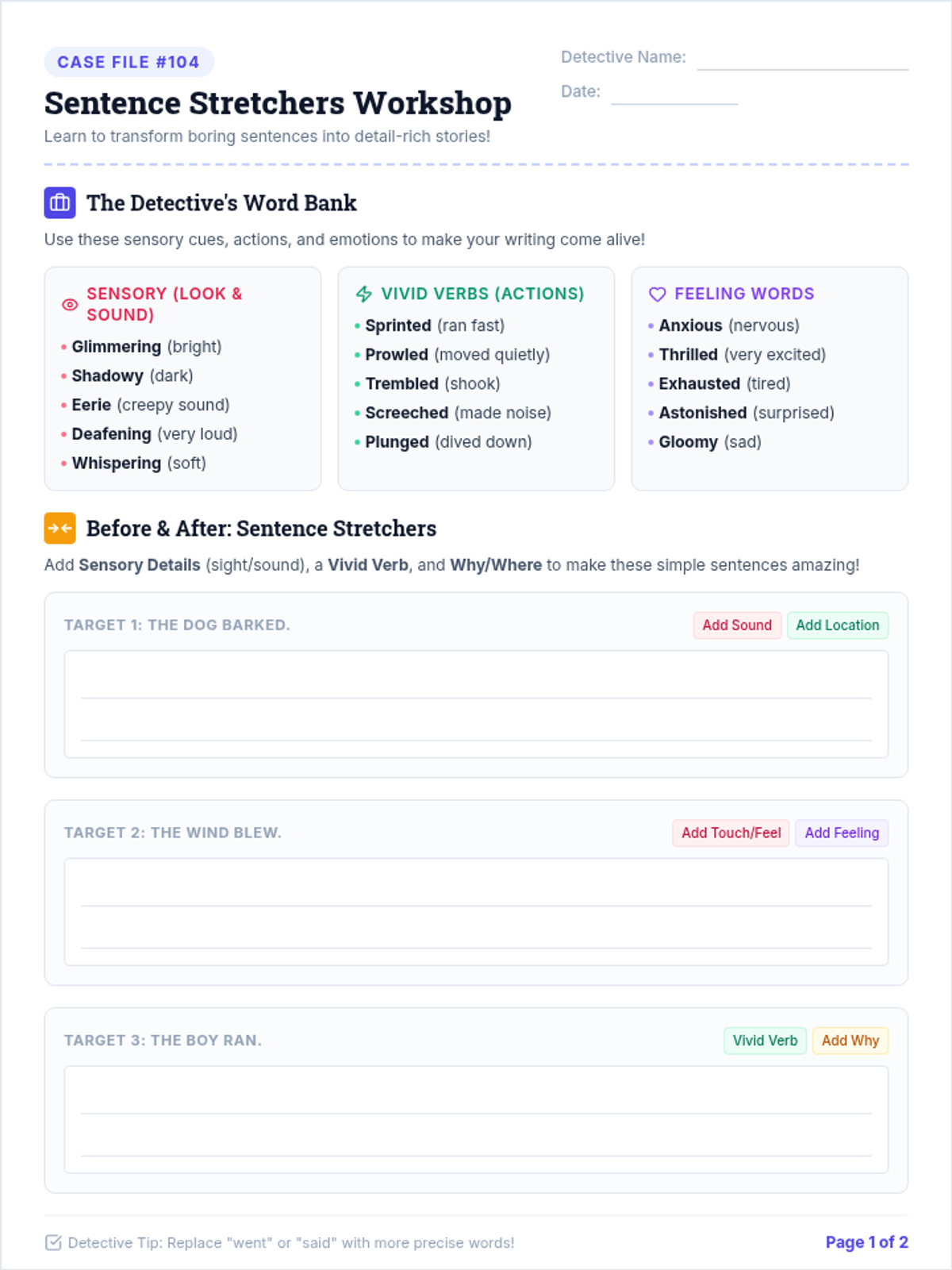
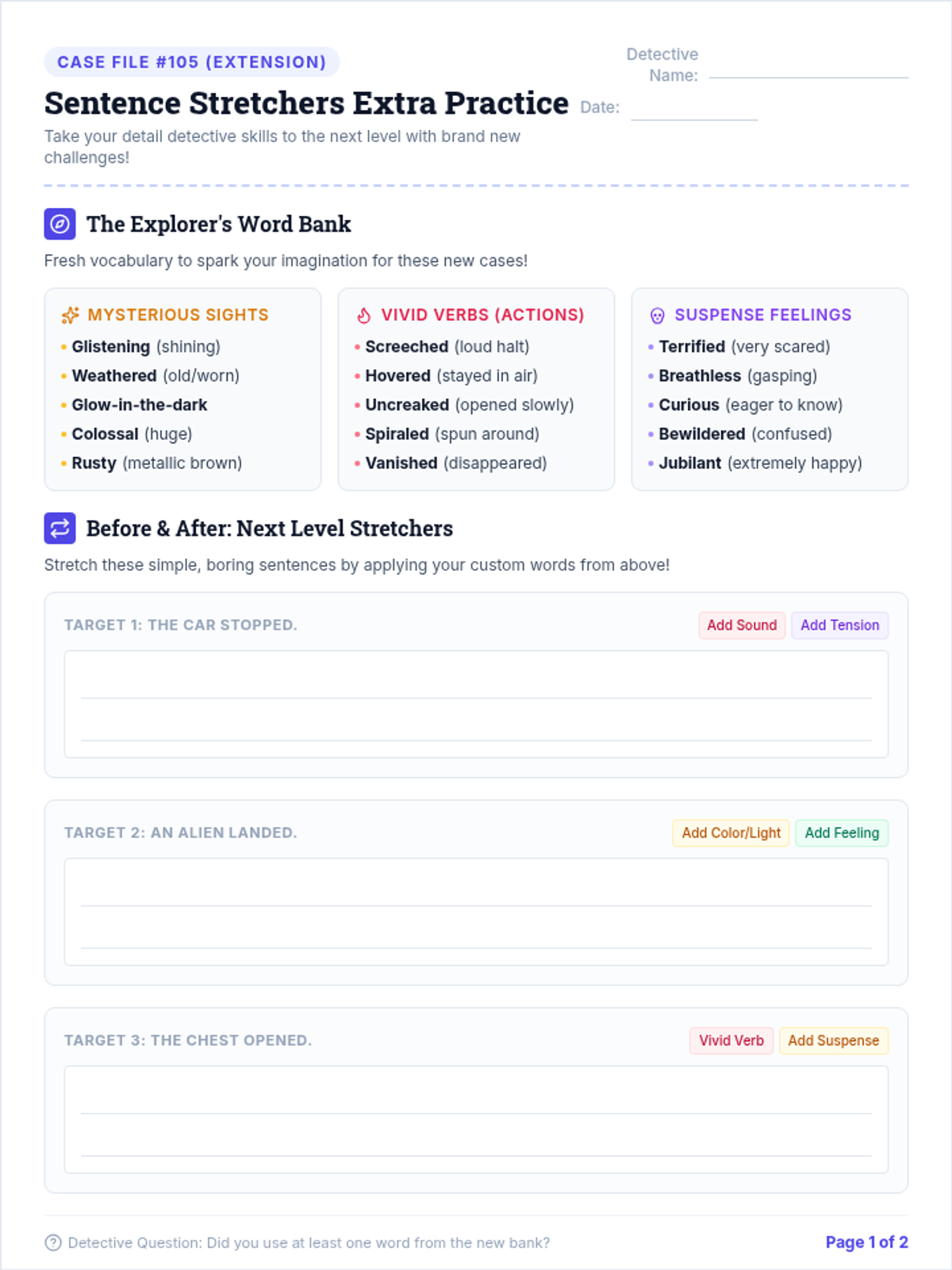
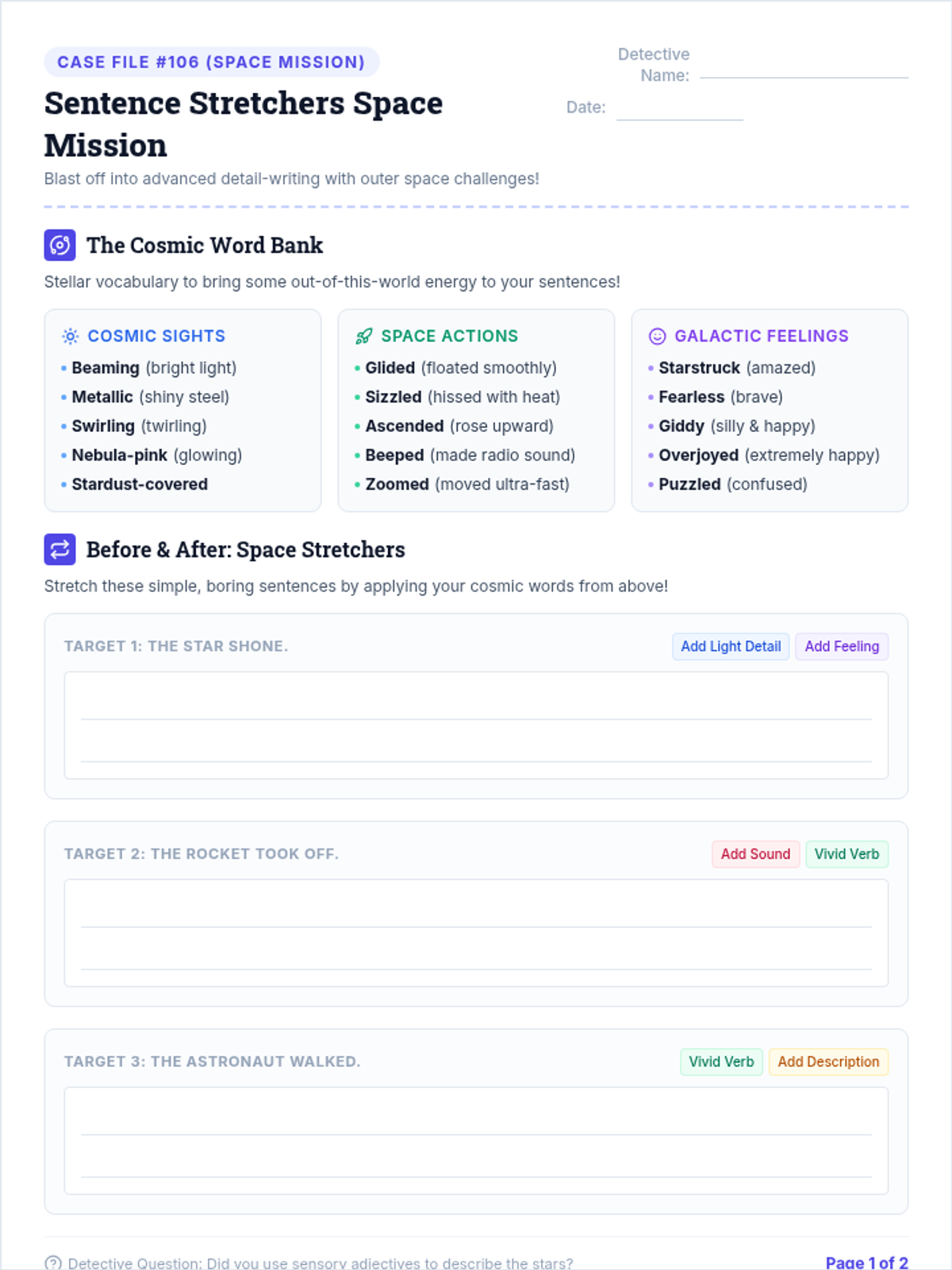
A writing workshop lesson for fourth graders focused on expanding simple sentences into detail-rich paragraphs using sensory words, vivid verbs, and emotional details.
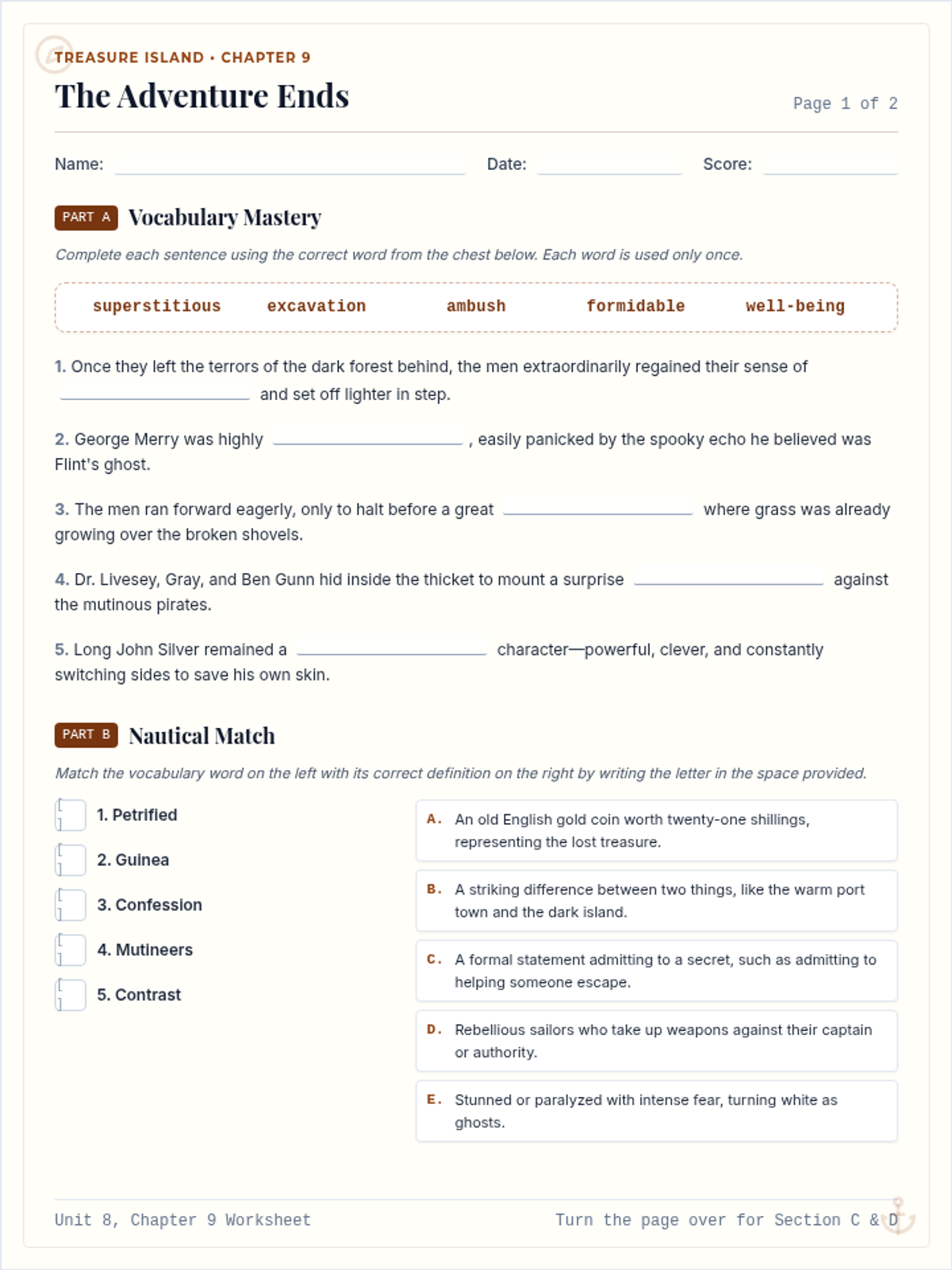
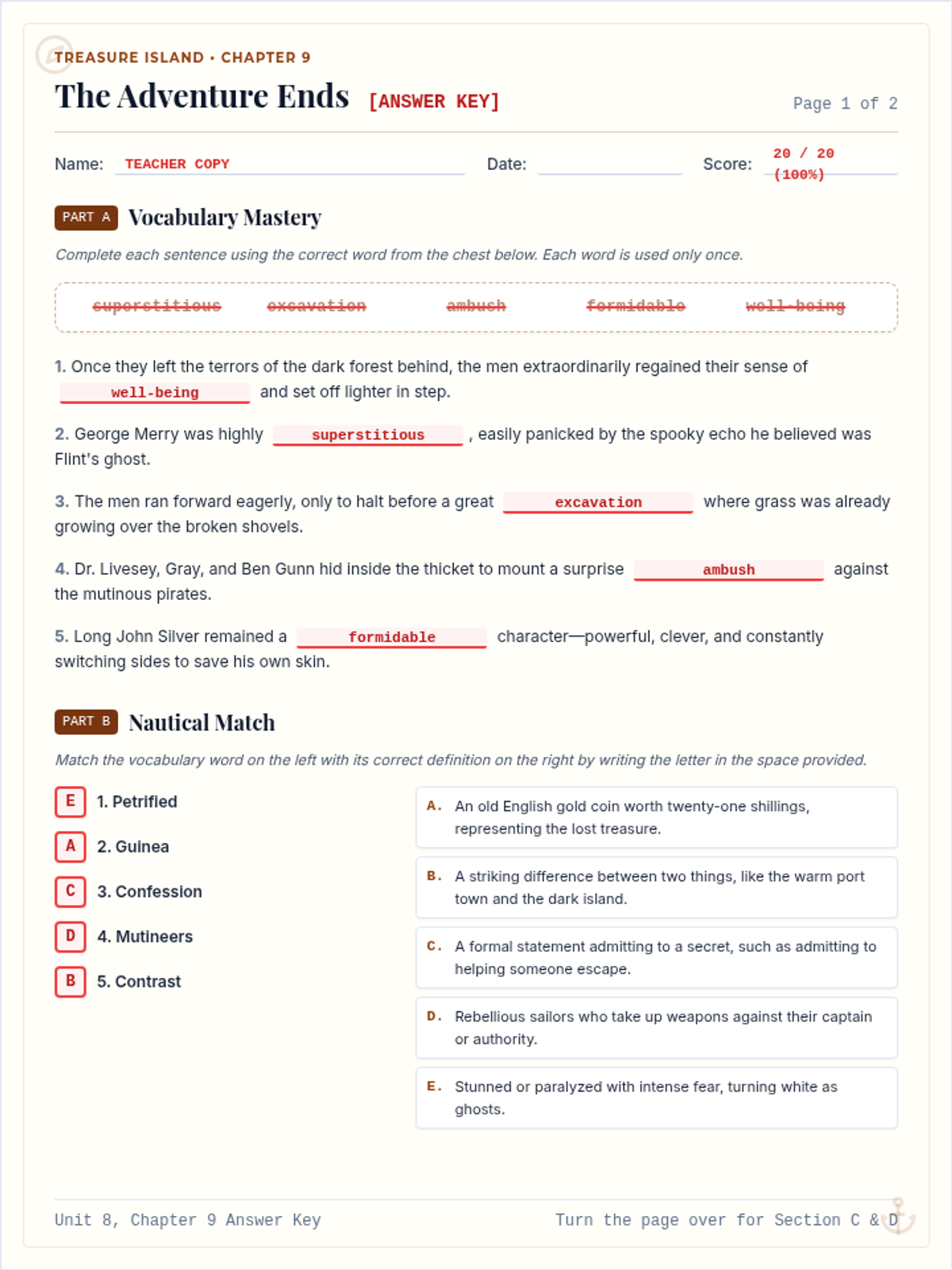
A reading comprehension and vocabulary lesson based on the final chapter of Treasure Island.
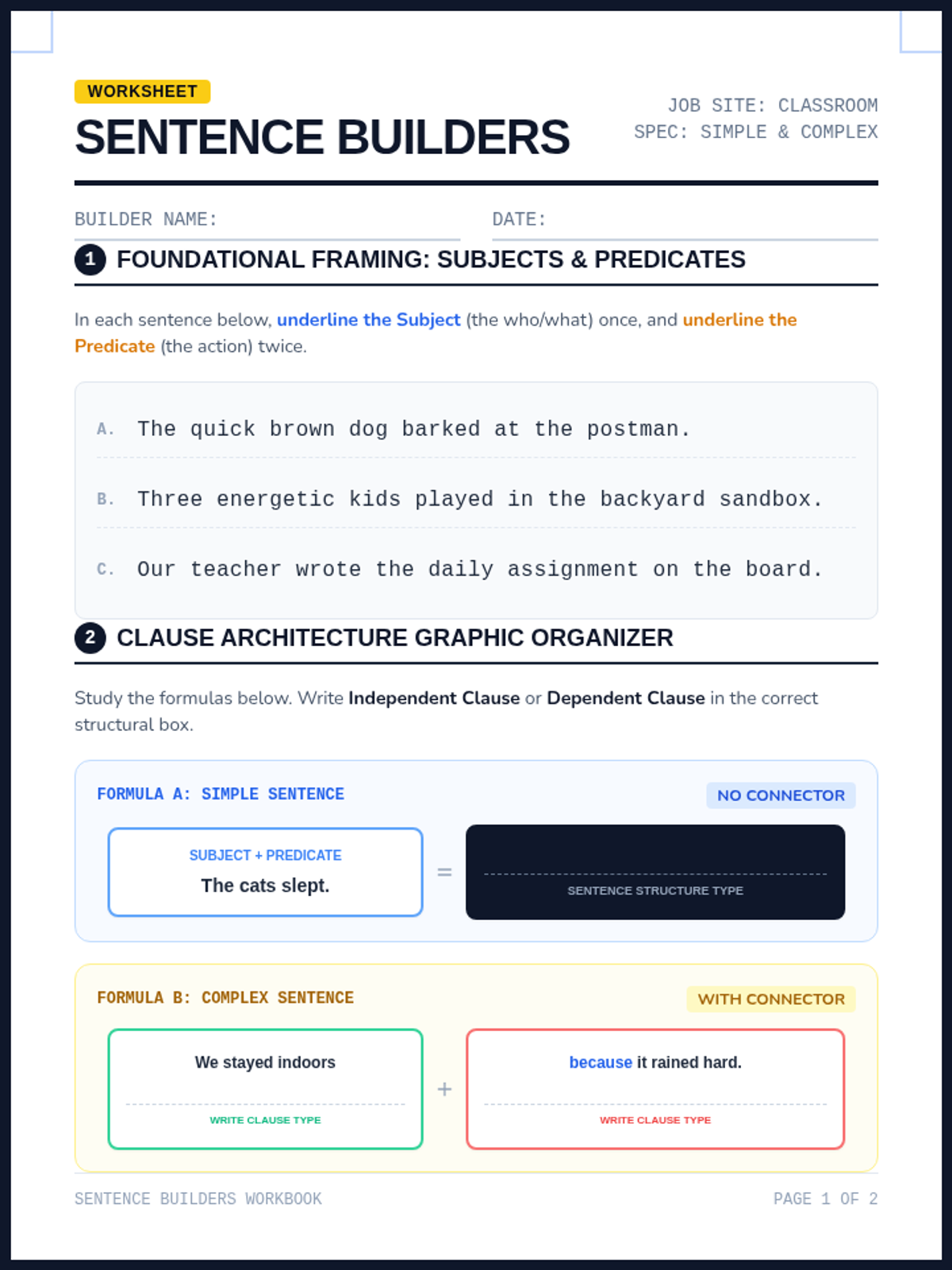
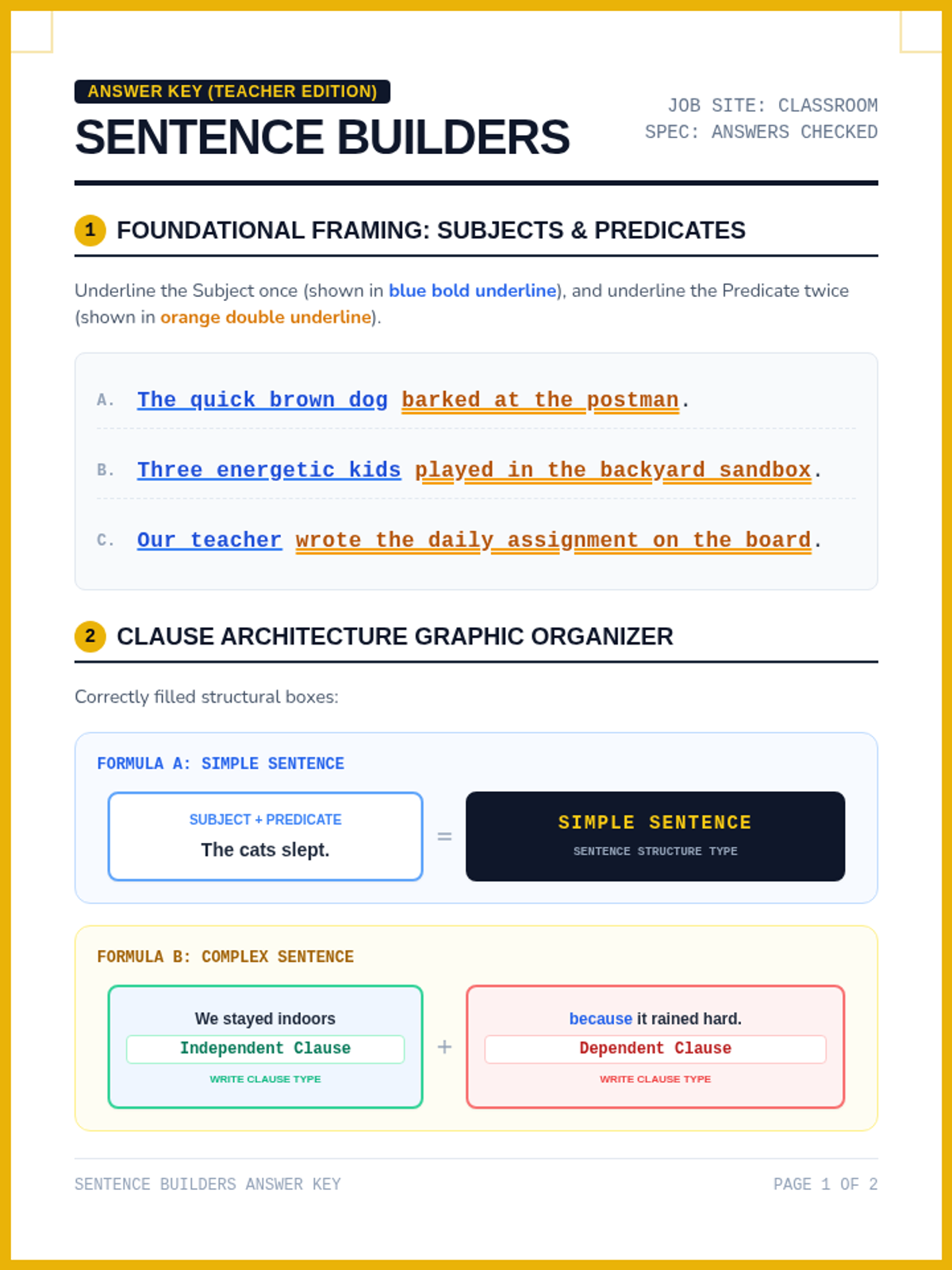
A foundational grammar lesson focusing on identifying subjects and predicates, and distinguishing between simple and complex sentences using visual construction-themed formulas and graphics.
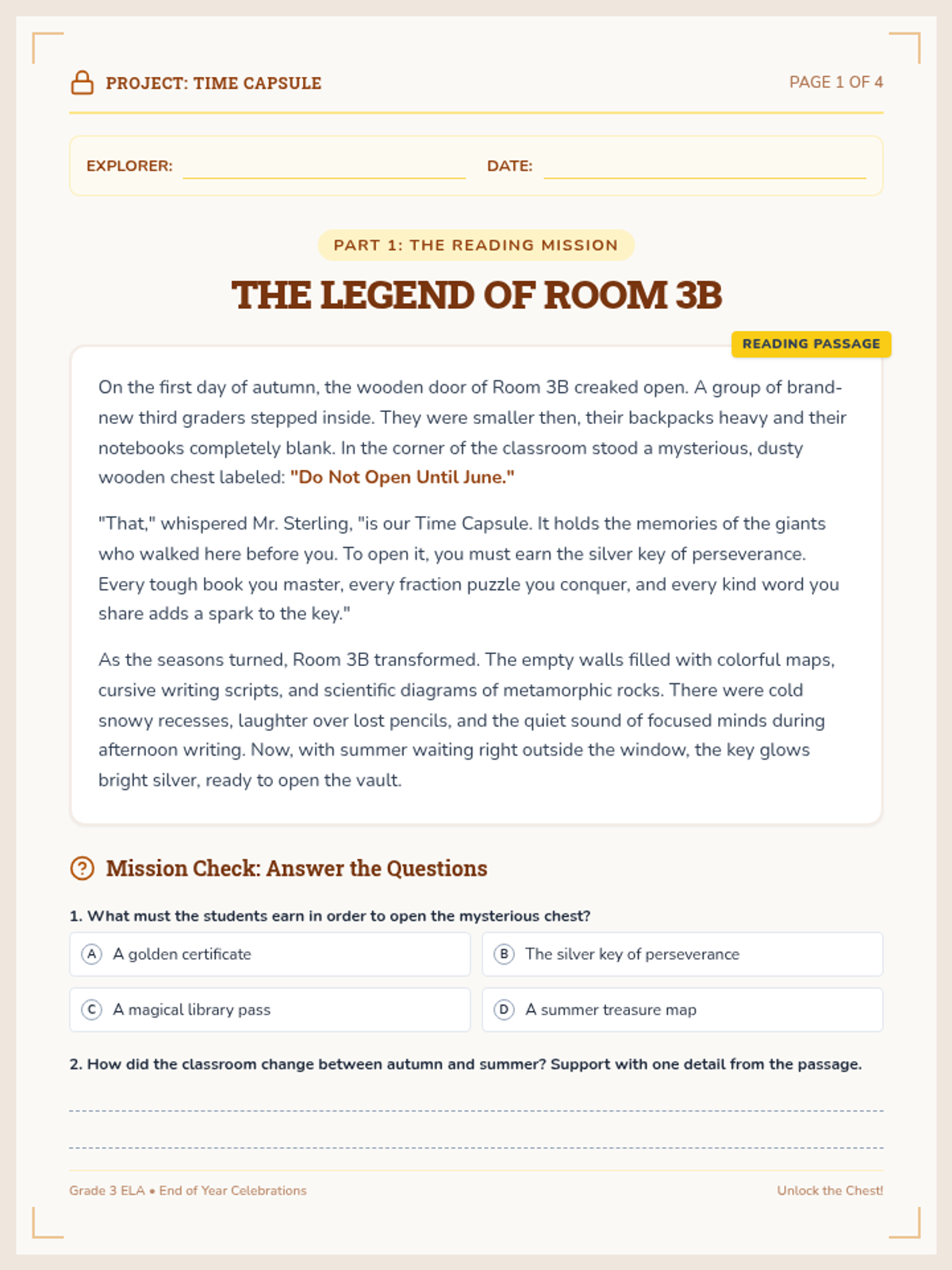
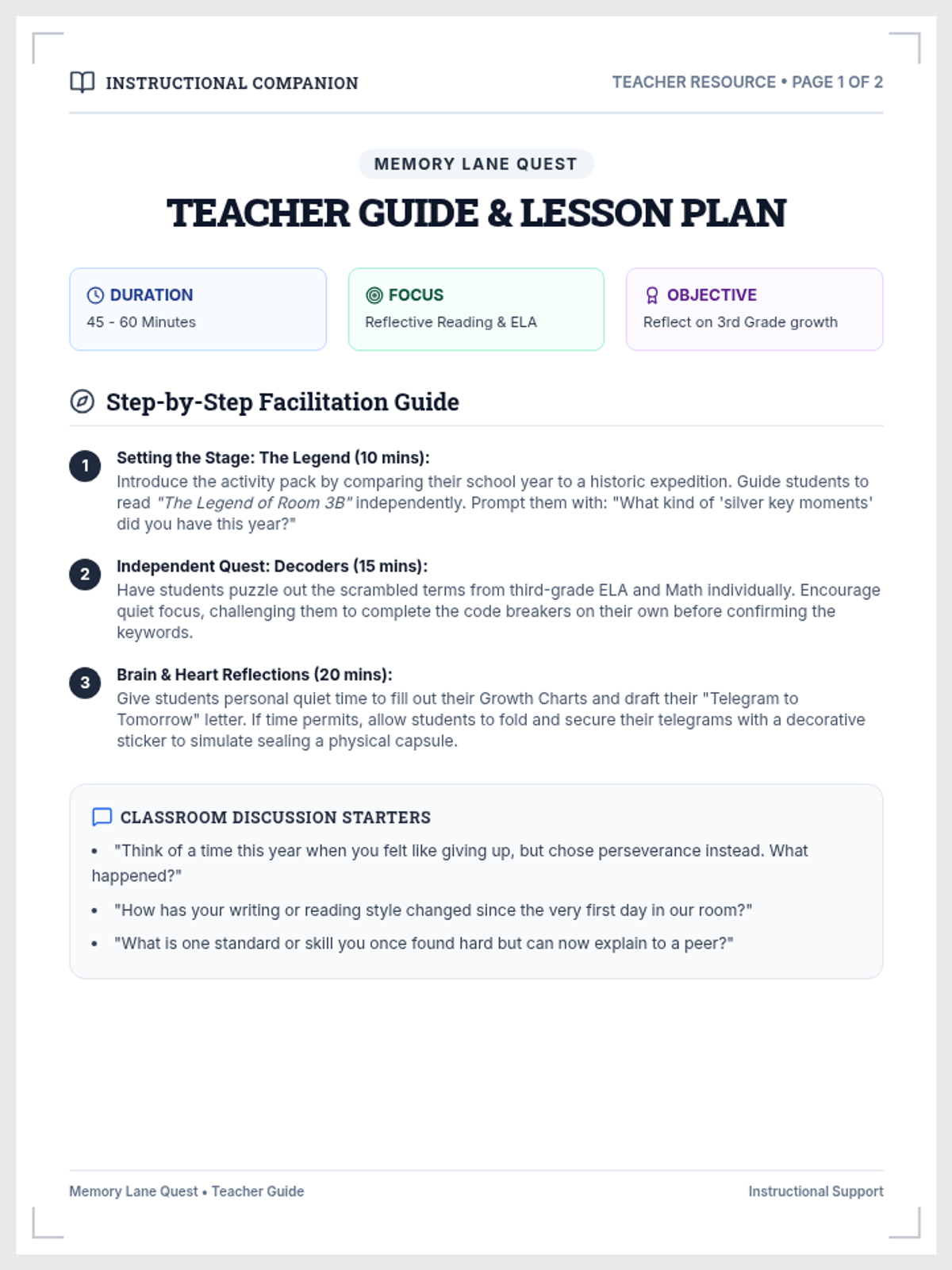
An end-of-year English Language Arts lesson for 3rd graders featuring a reflective reading passage, cooperative partner puzzles, and personal growth writing activities styled as a vintage Time Capsule.
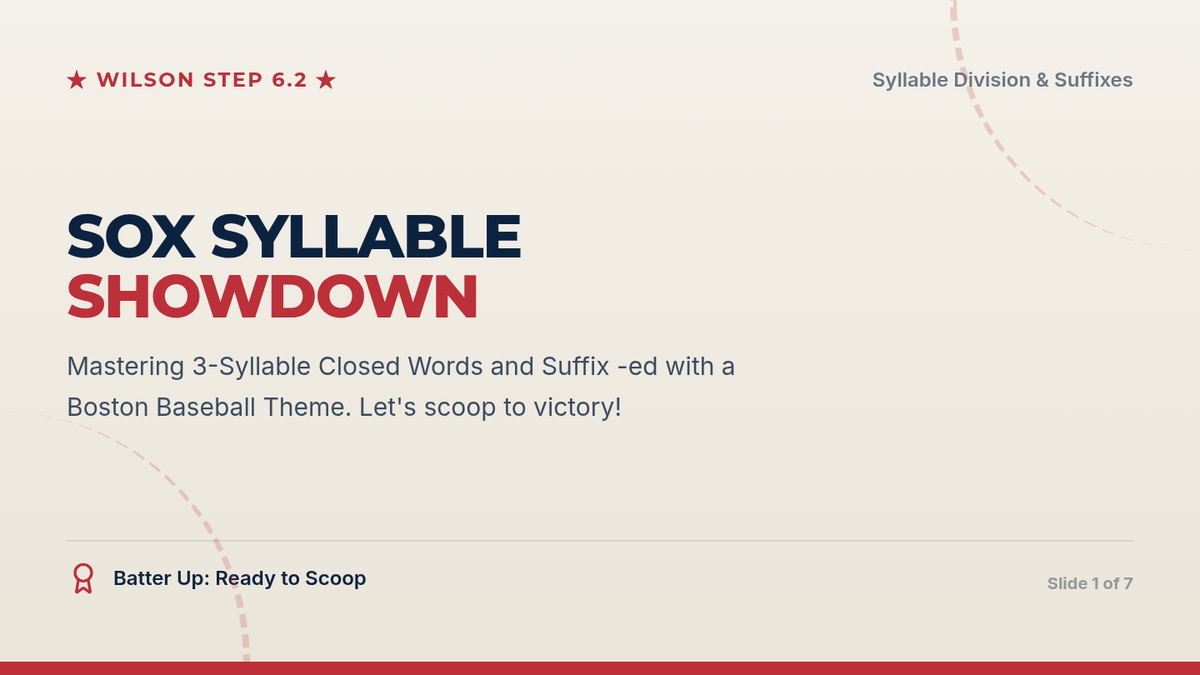
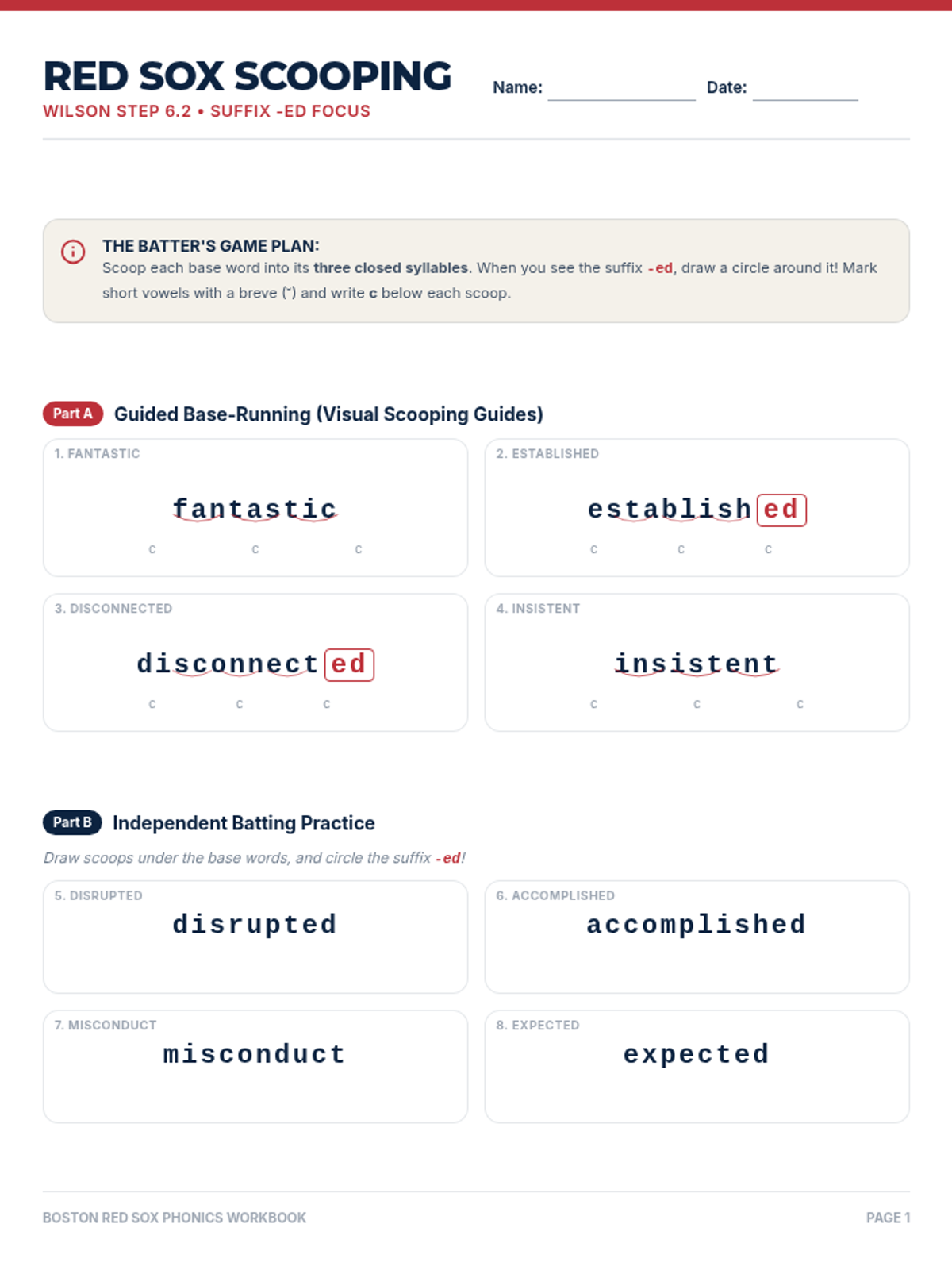
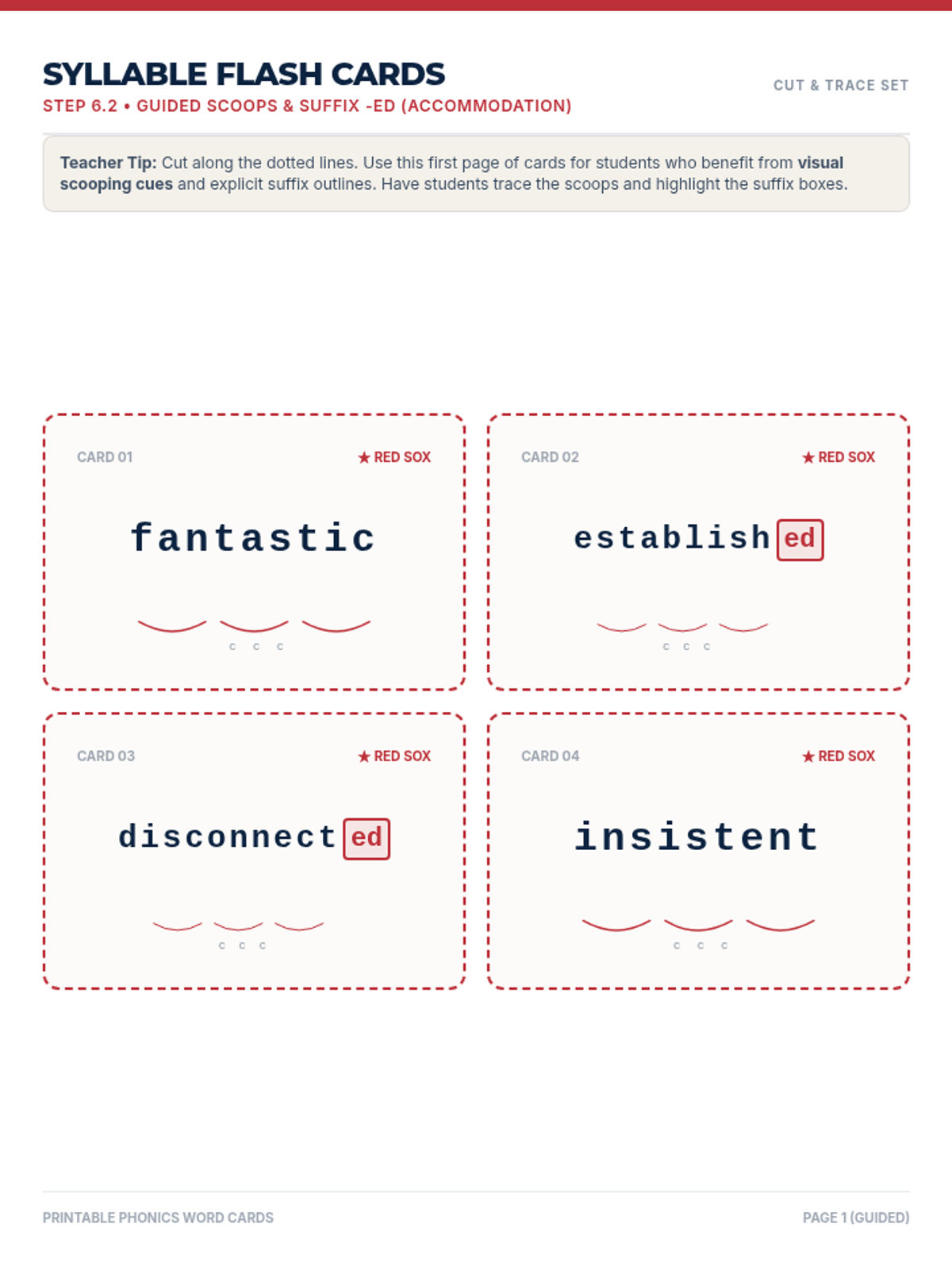
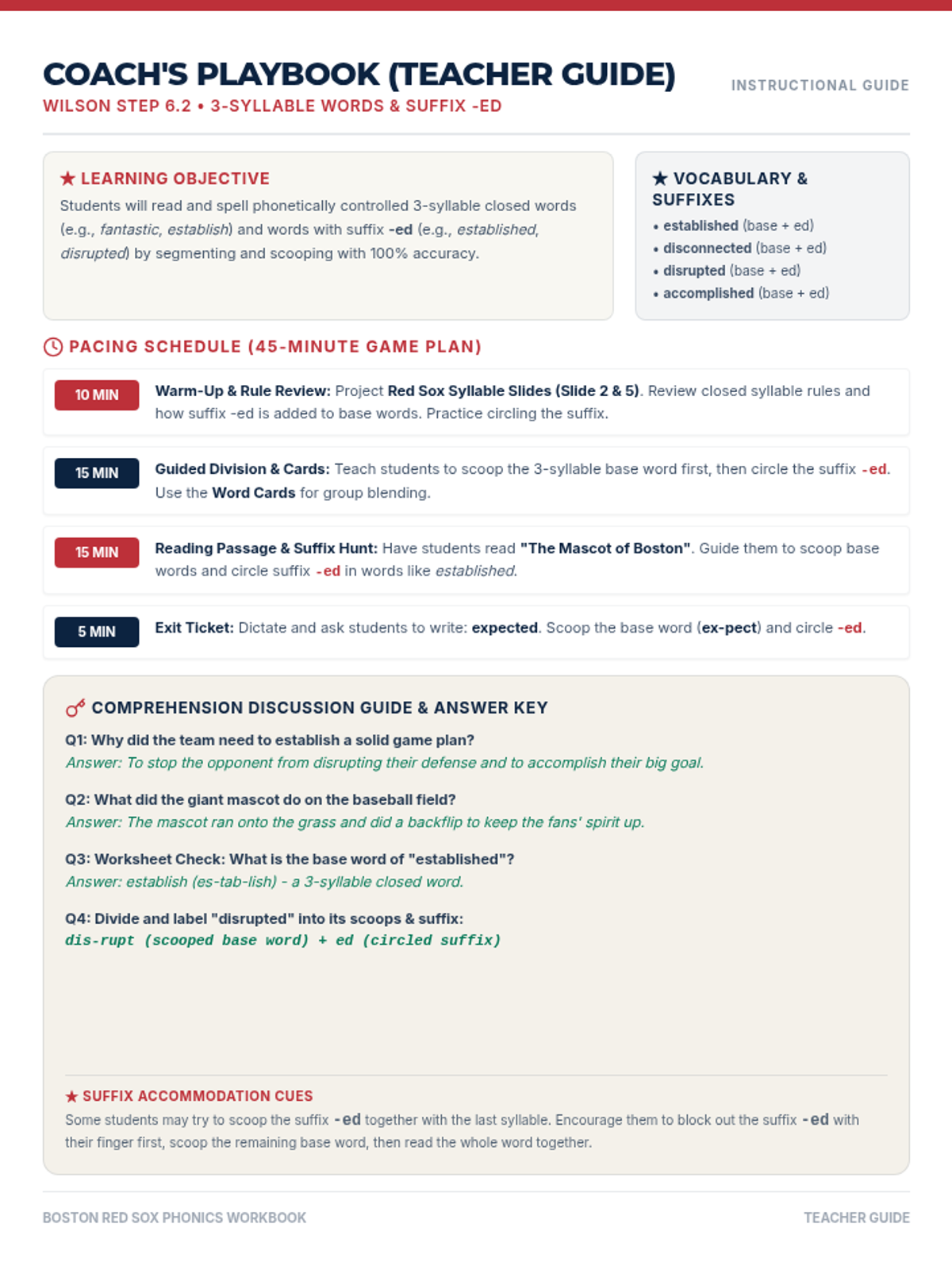
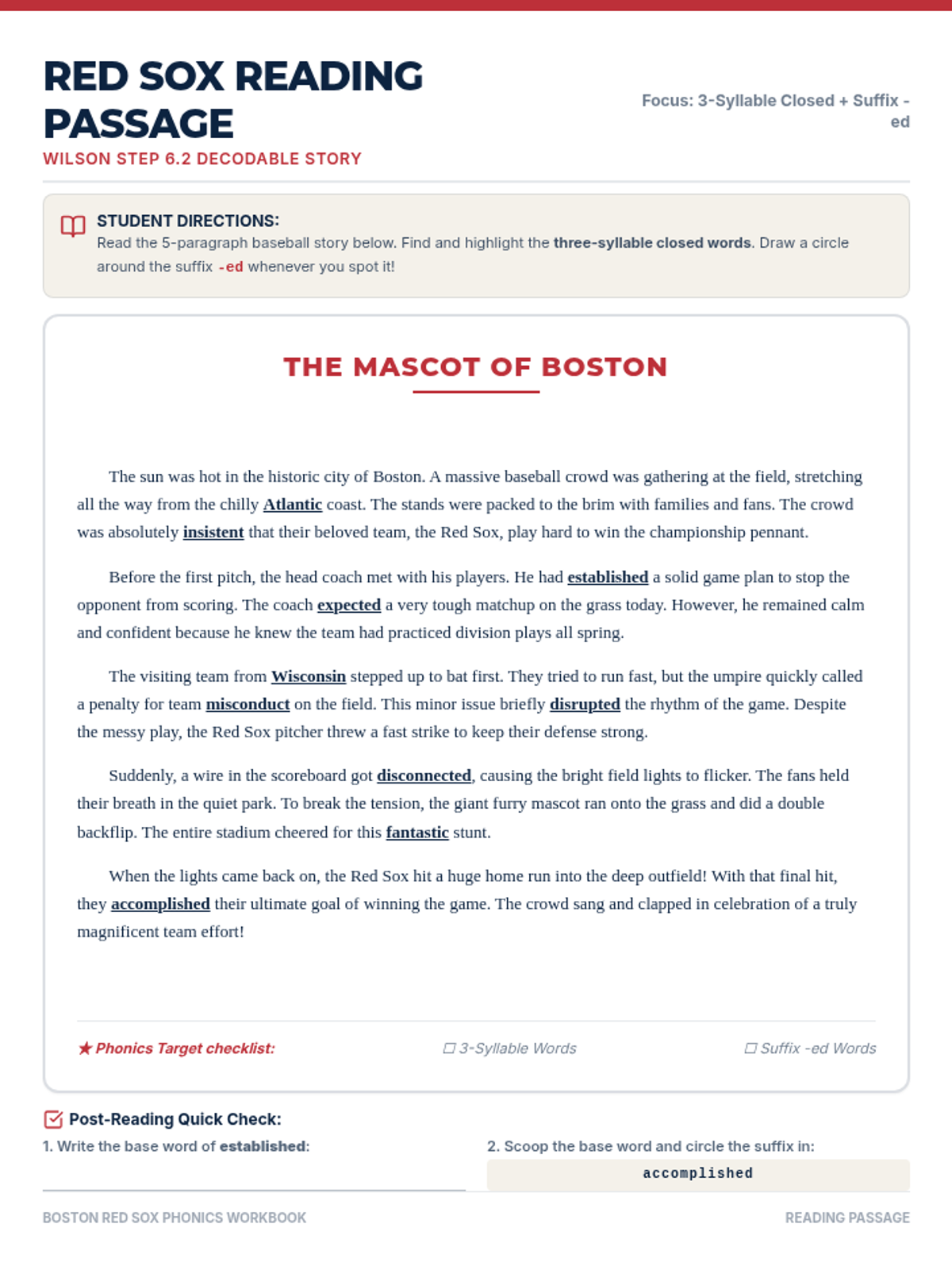
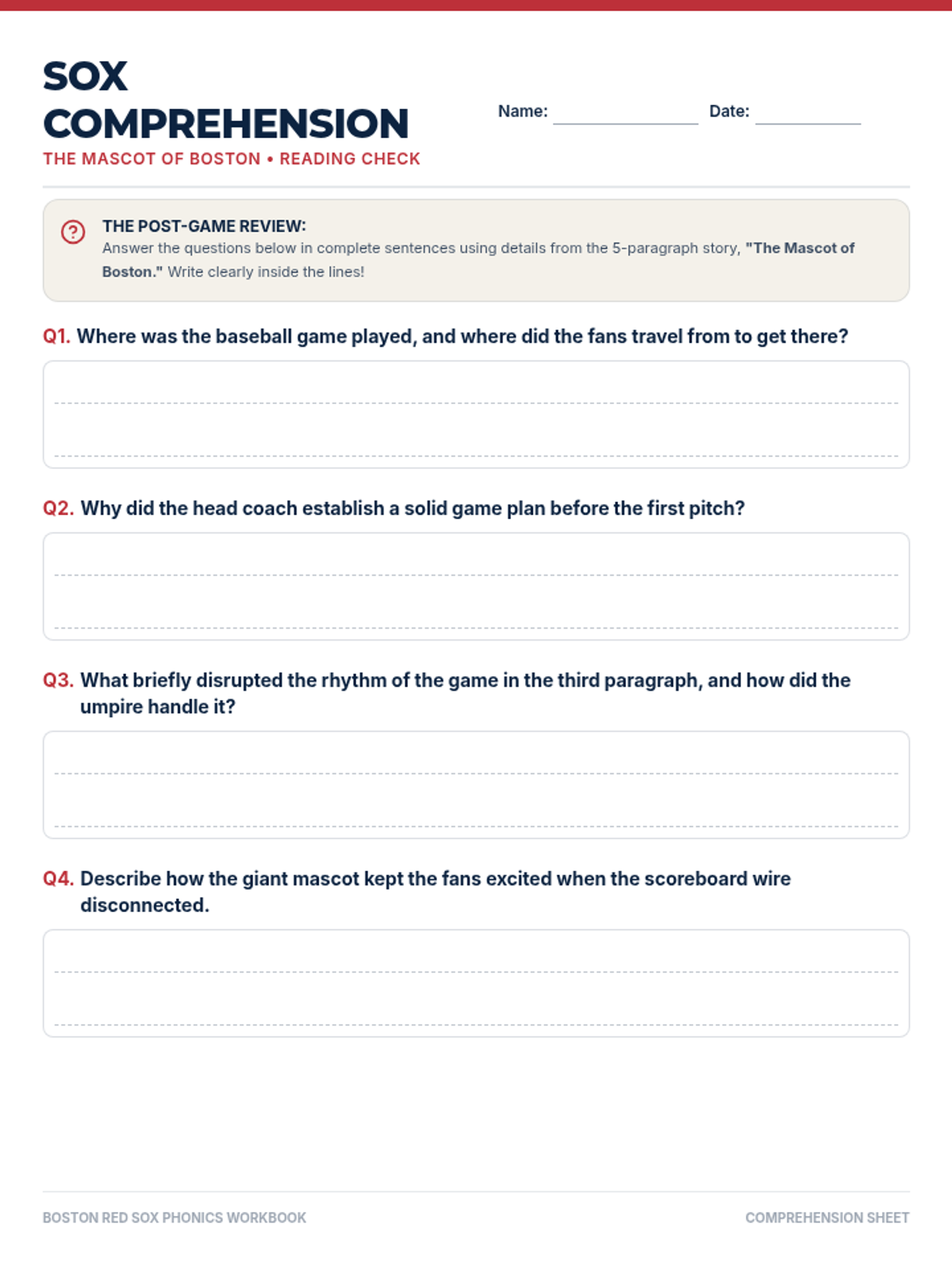
A comprehensive Wilson Step 6.2 lesson focusing on 3-syllable closed words, themed around the Boston Red Sox. Includes a slide deck, scooping worksheets, word cards, and a teacher guide with comprehension questions.
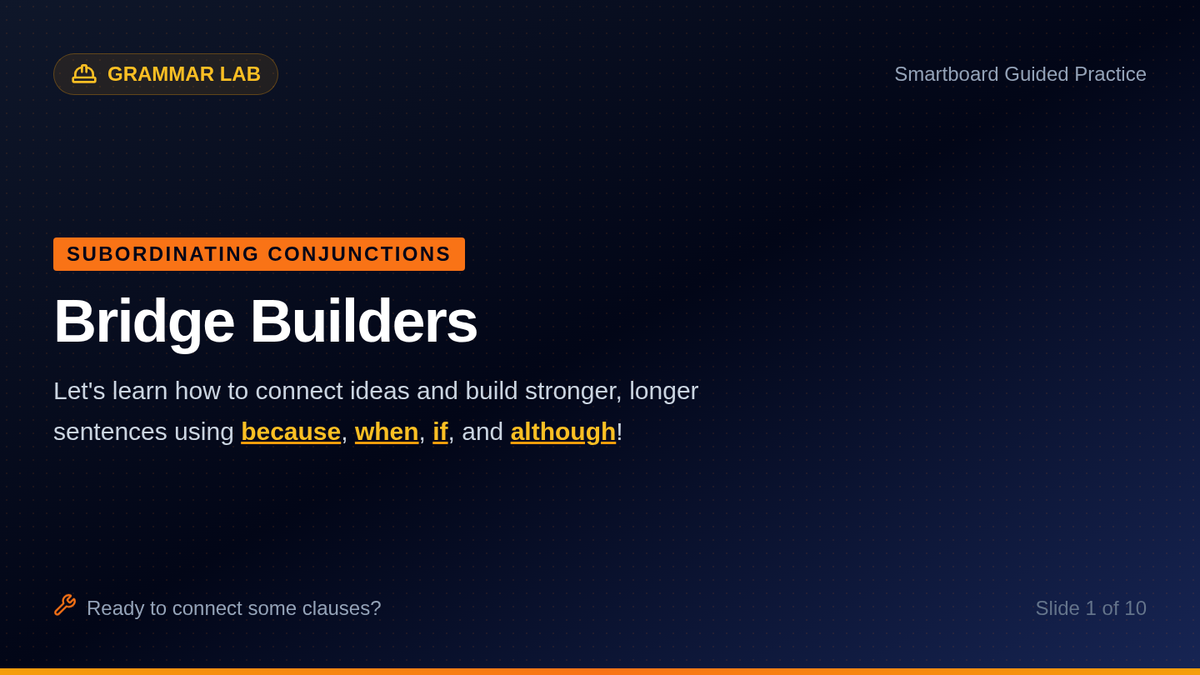
An interactive lesson where students learn to use key subordinating conjunctions (because, when, if, although) to connect clauses, using a highly visual bridge-building theme suitable for smartboard delivery.
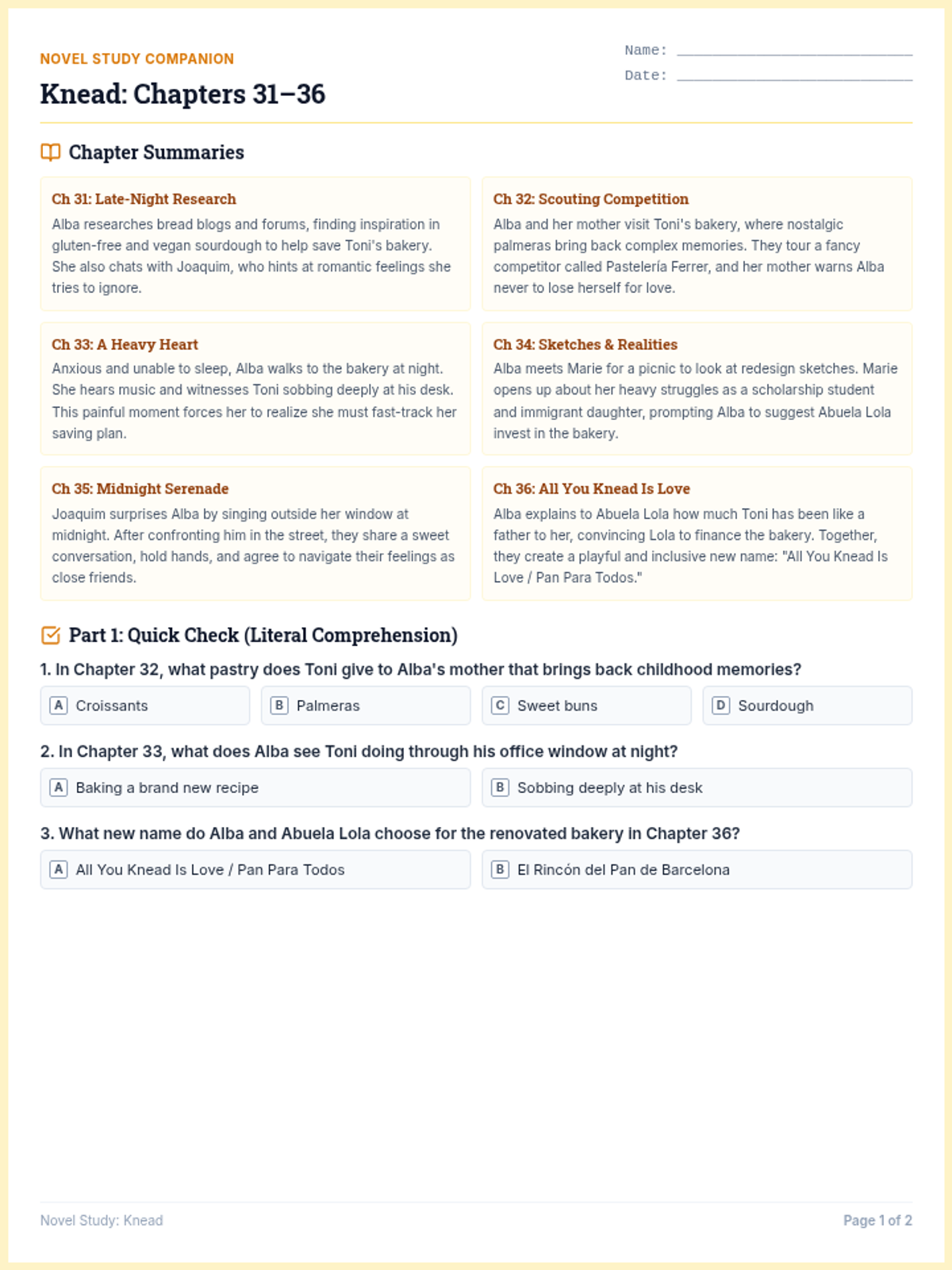
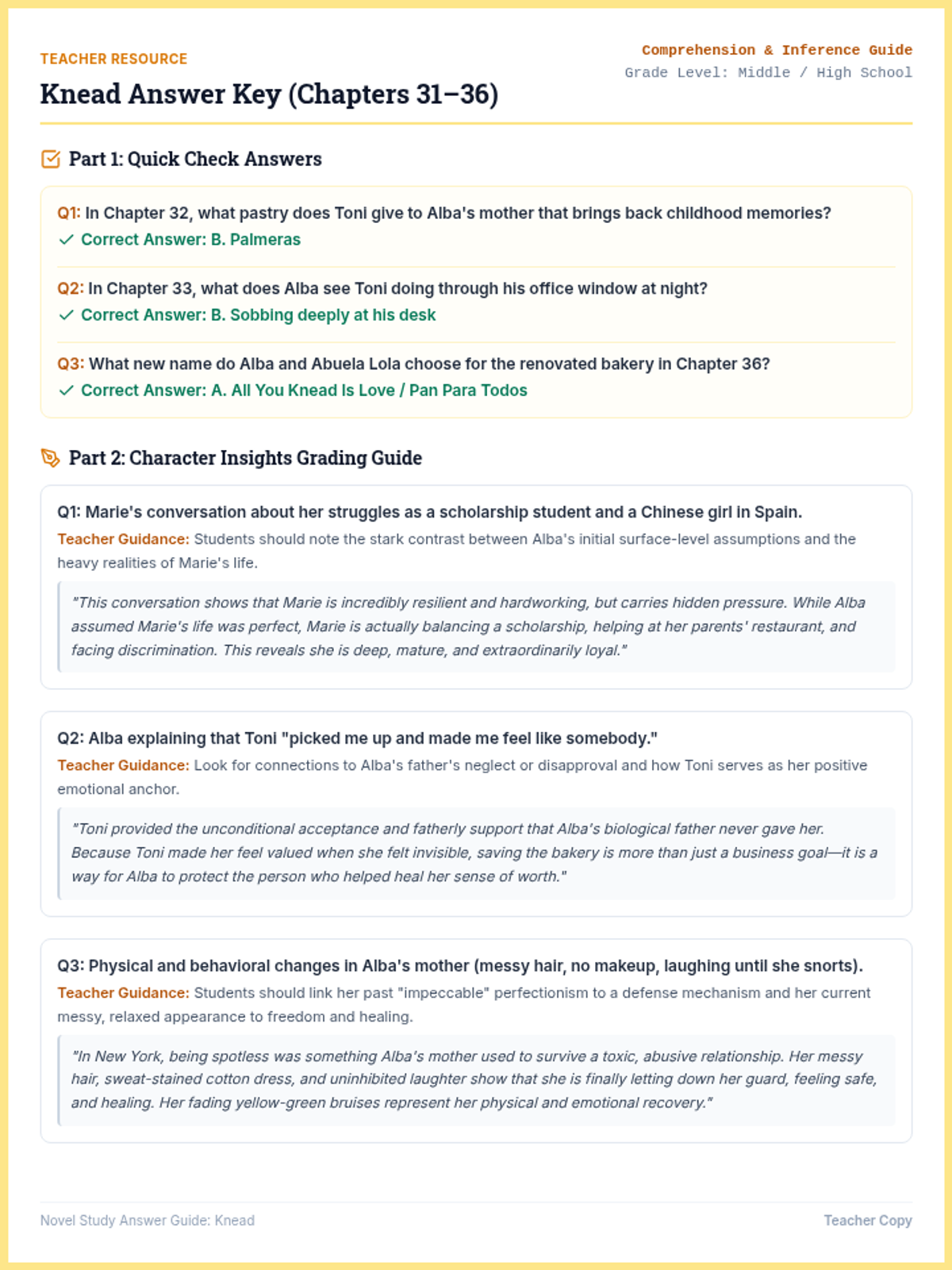
A deep-dive reading analysis of chapters 31-36 of the novel 'Knead', exploring student comprehension and character inference.
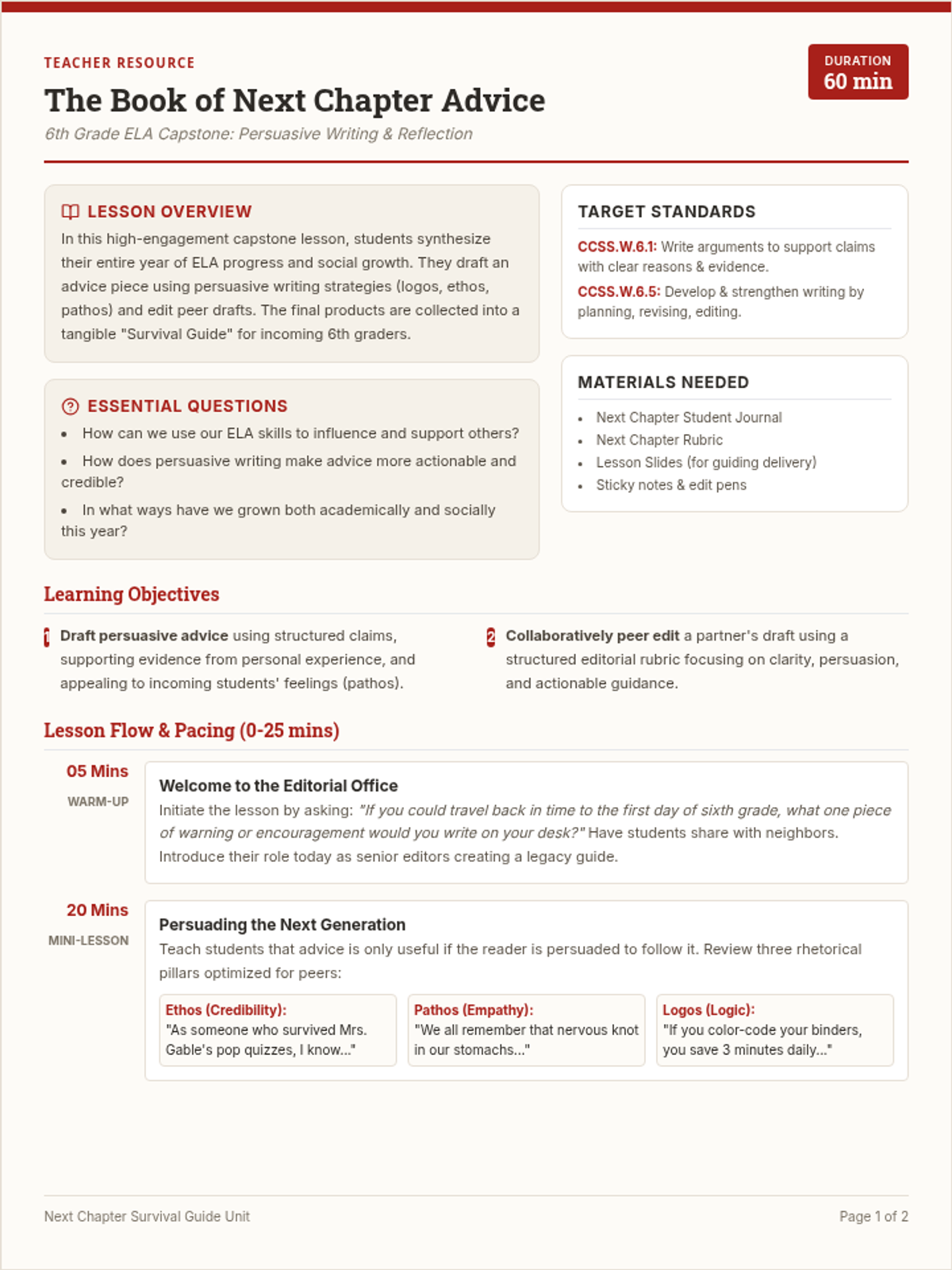
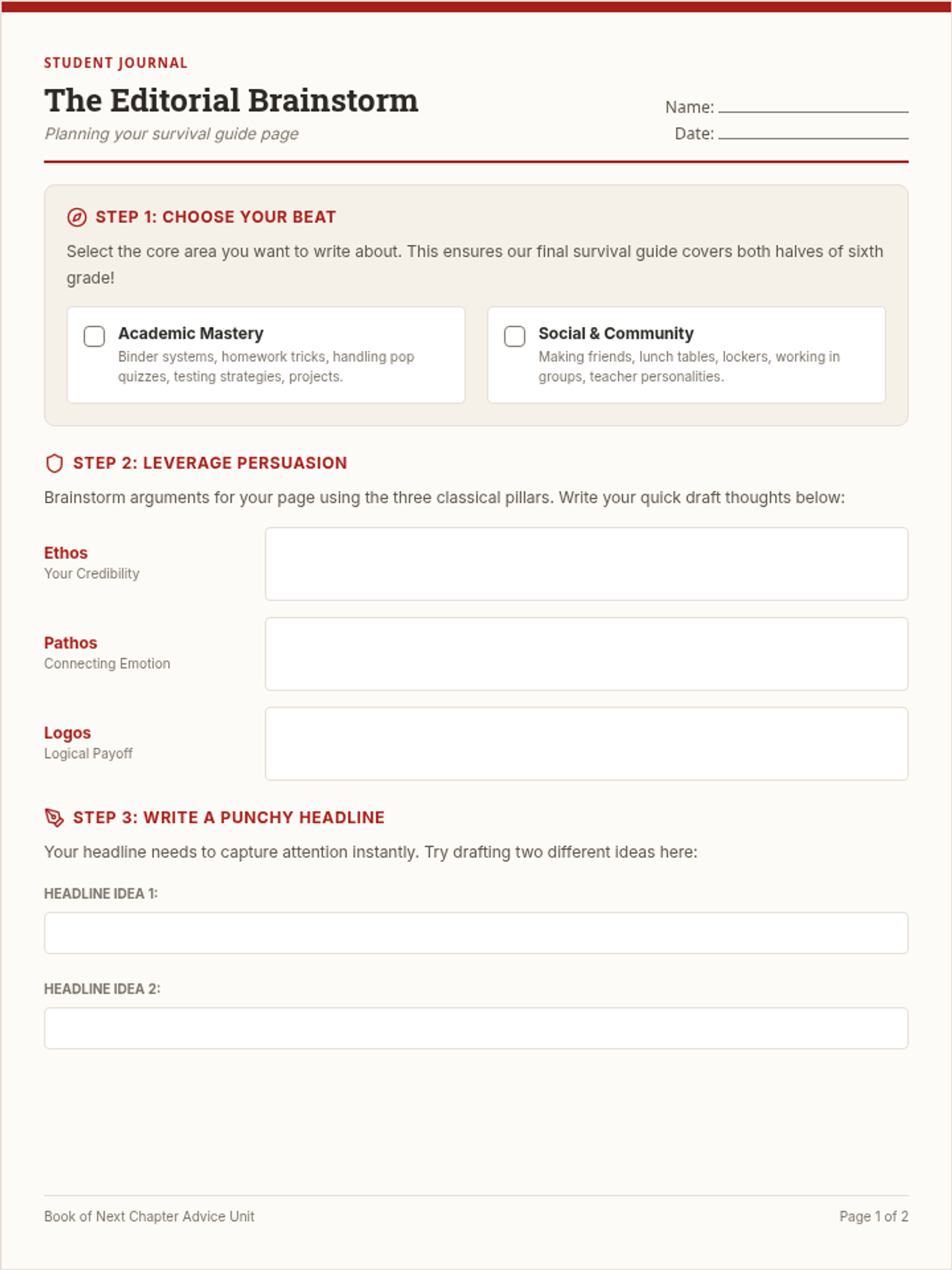
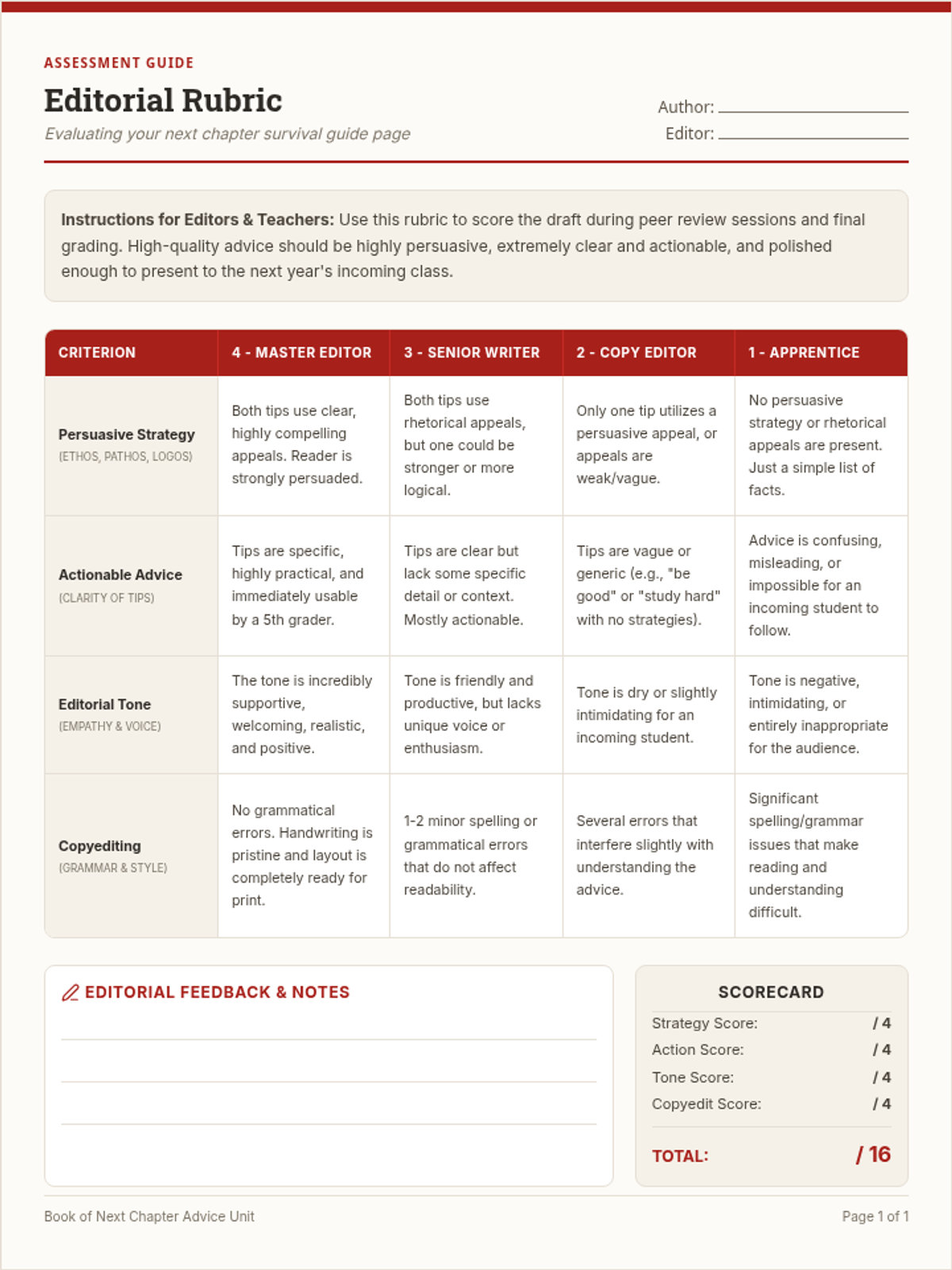
A lesson where sixth-grade students write, edit, and compile a collaborative survival guide for rising sixth graders. They synthesize their ELA growth and academic/social tips using persuasive writing.
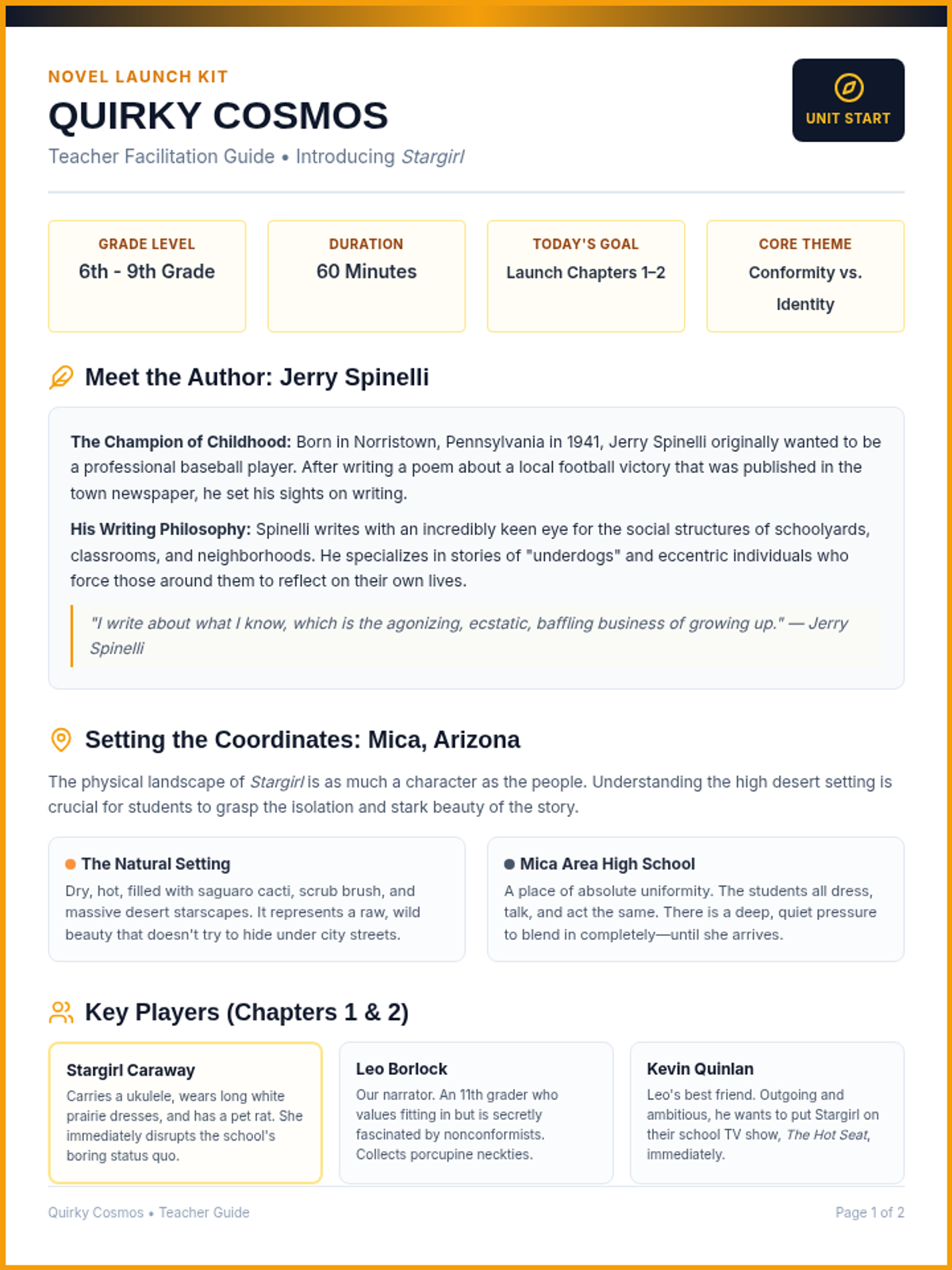
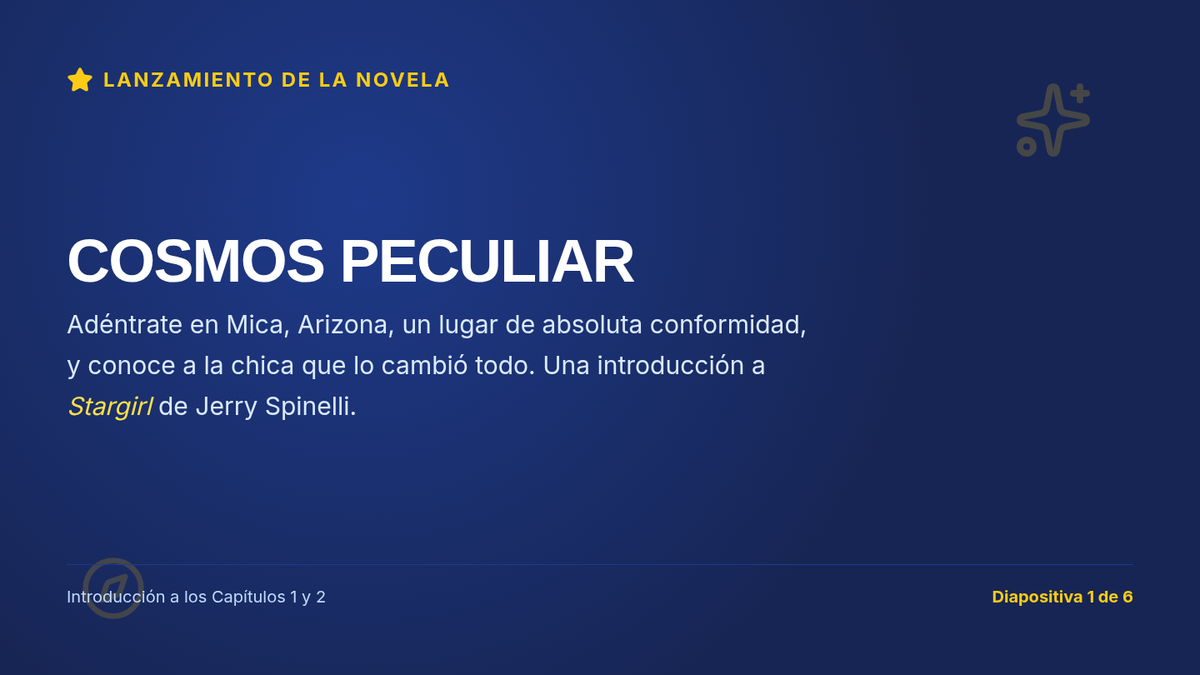
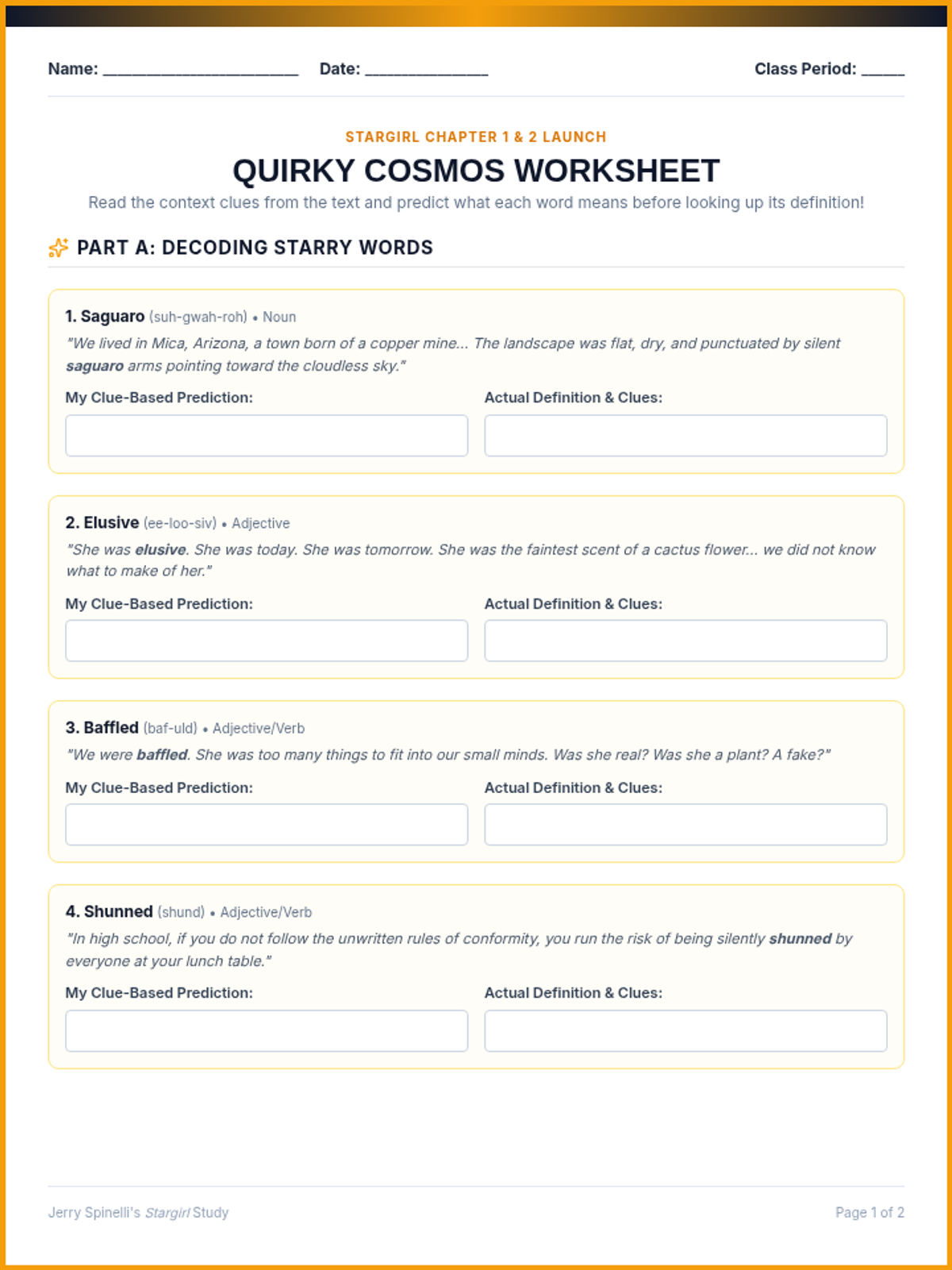
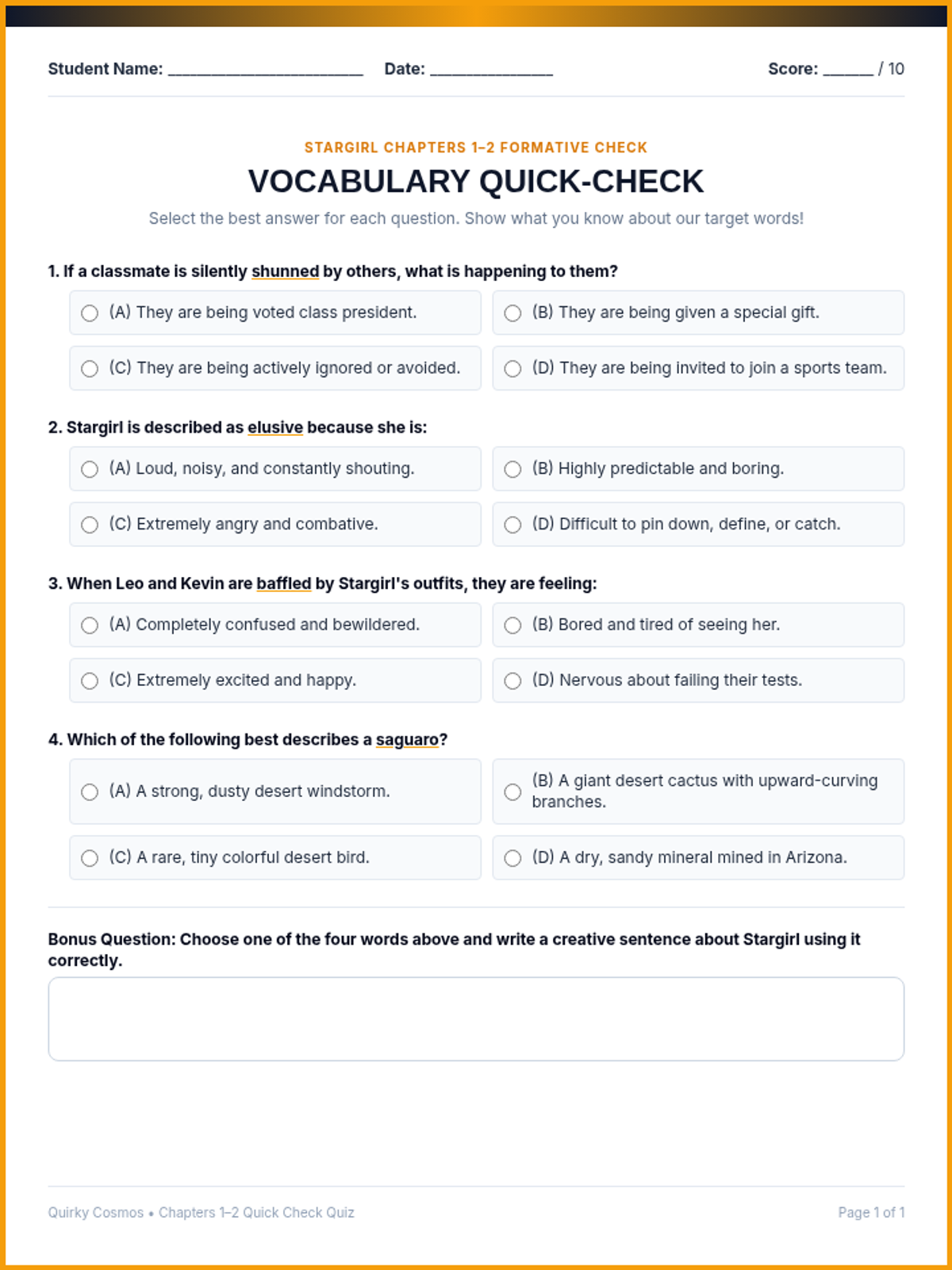
An introductory lesson bundle for Jerry Spinelli's novel Stargirl, focusing on the author's background, desert setting of Mica, Arizona, key characters, and contextual vocabulary for Chapters 1 and 2.
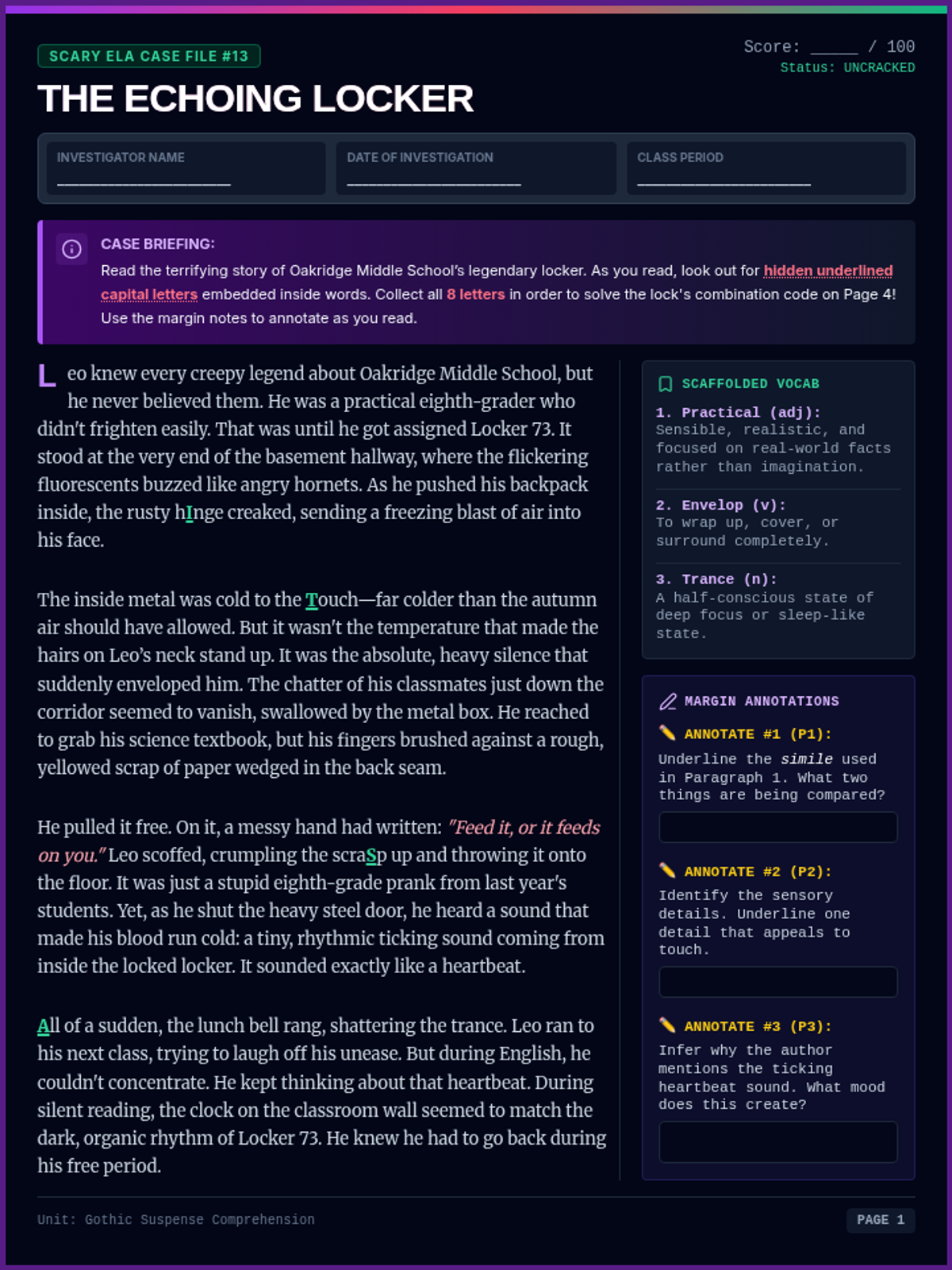
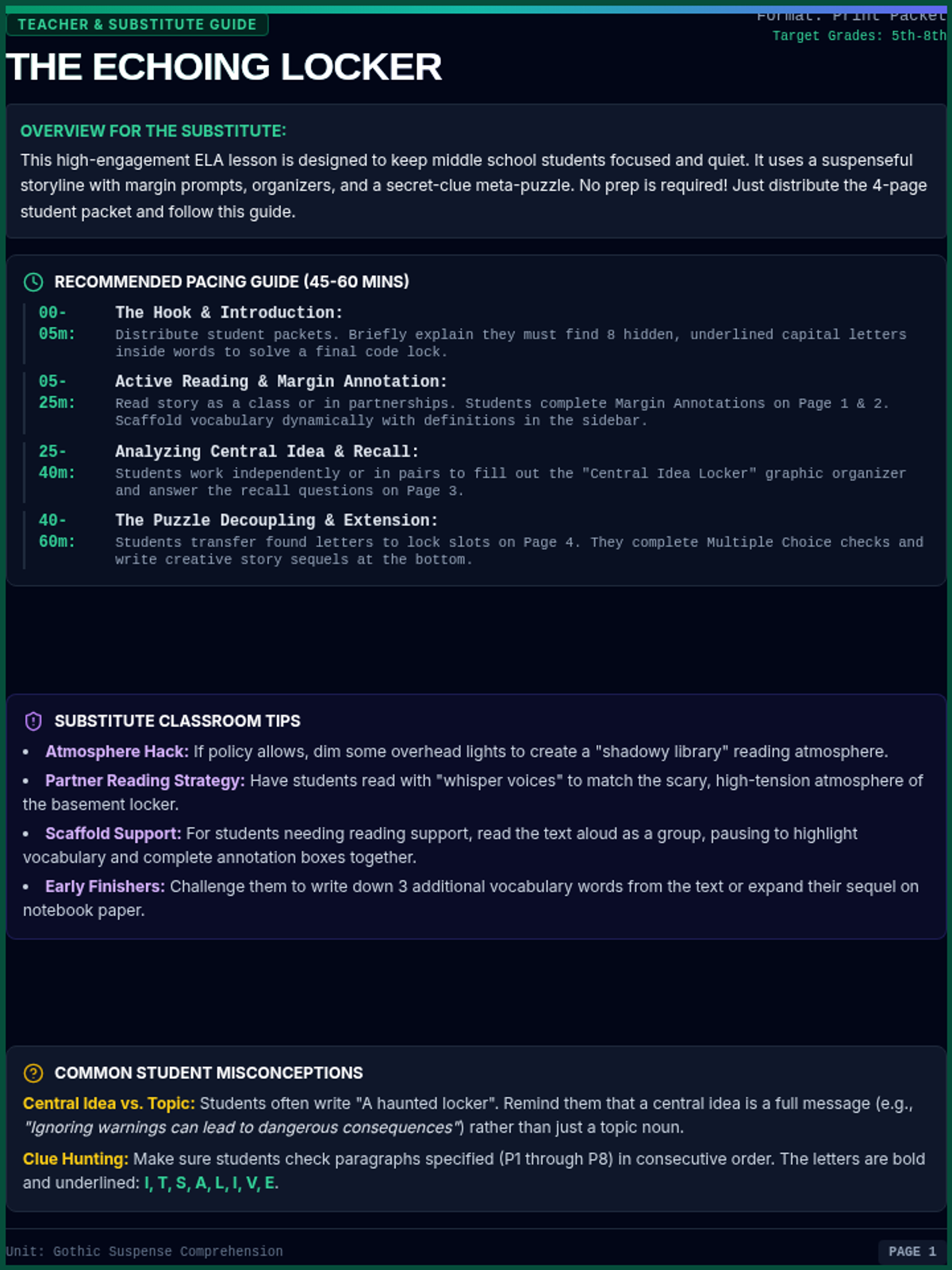
A spooky, high-interest ELA comprehension lesson for grades 5-8, perfect for sub days. Students read a terrifying tale about a haunted school locker, use margin annotations, complete visual organizers, and crack a secret clue-based meta-puzzle.
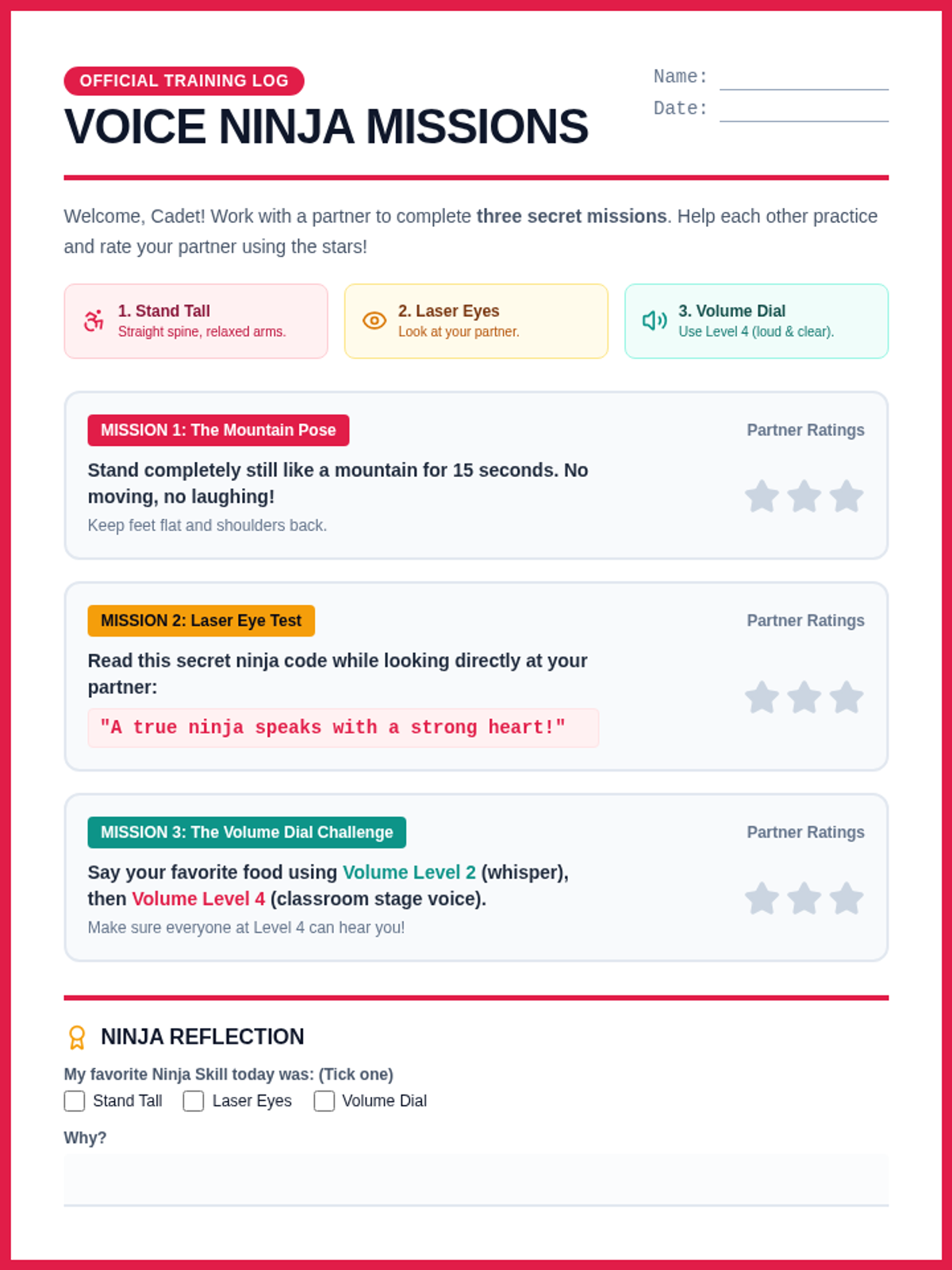
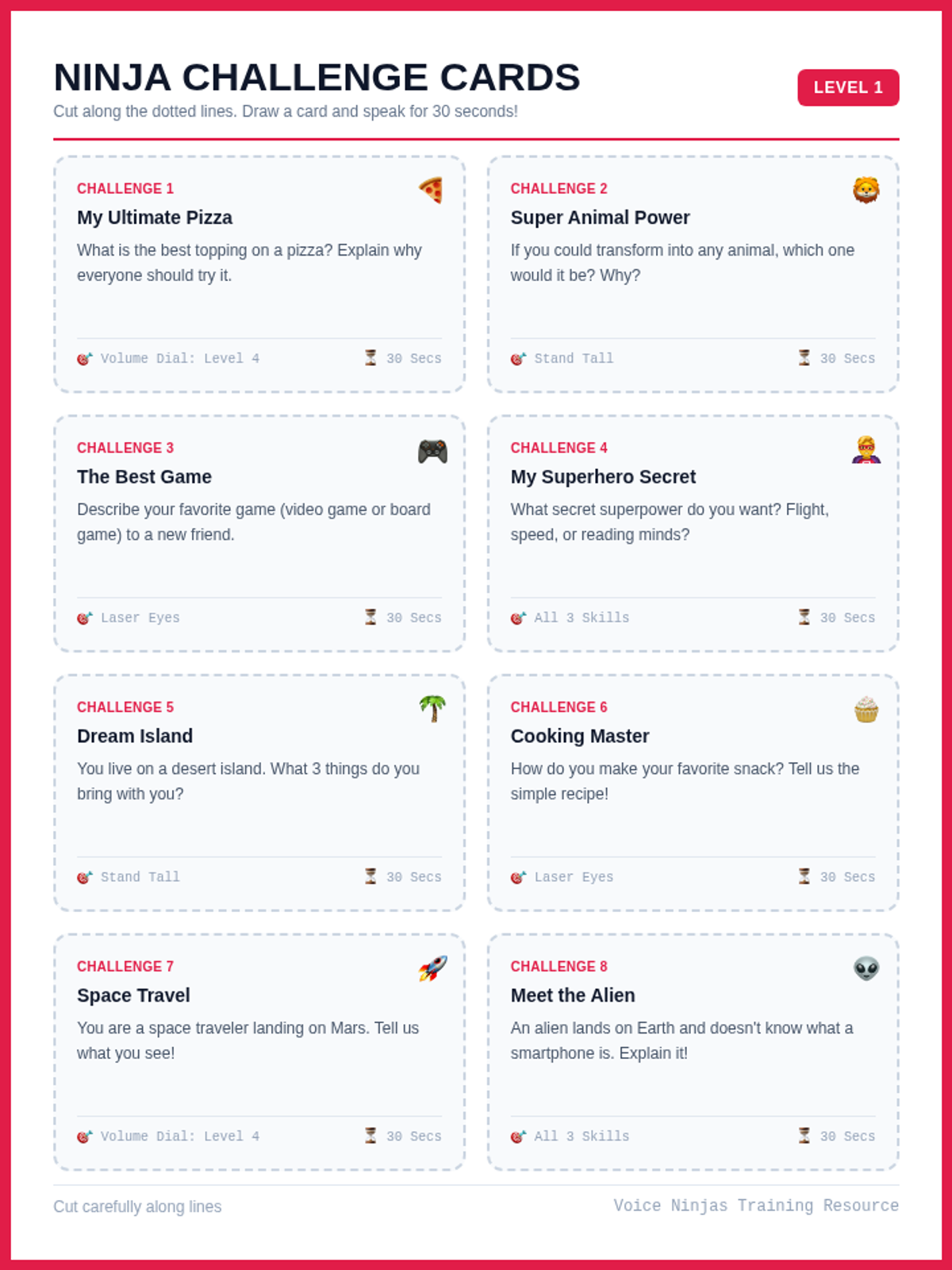
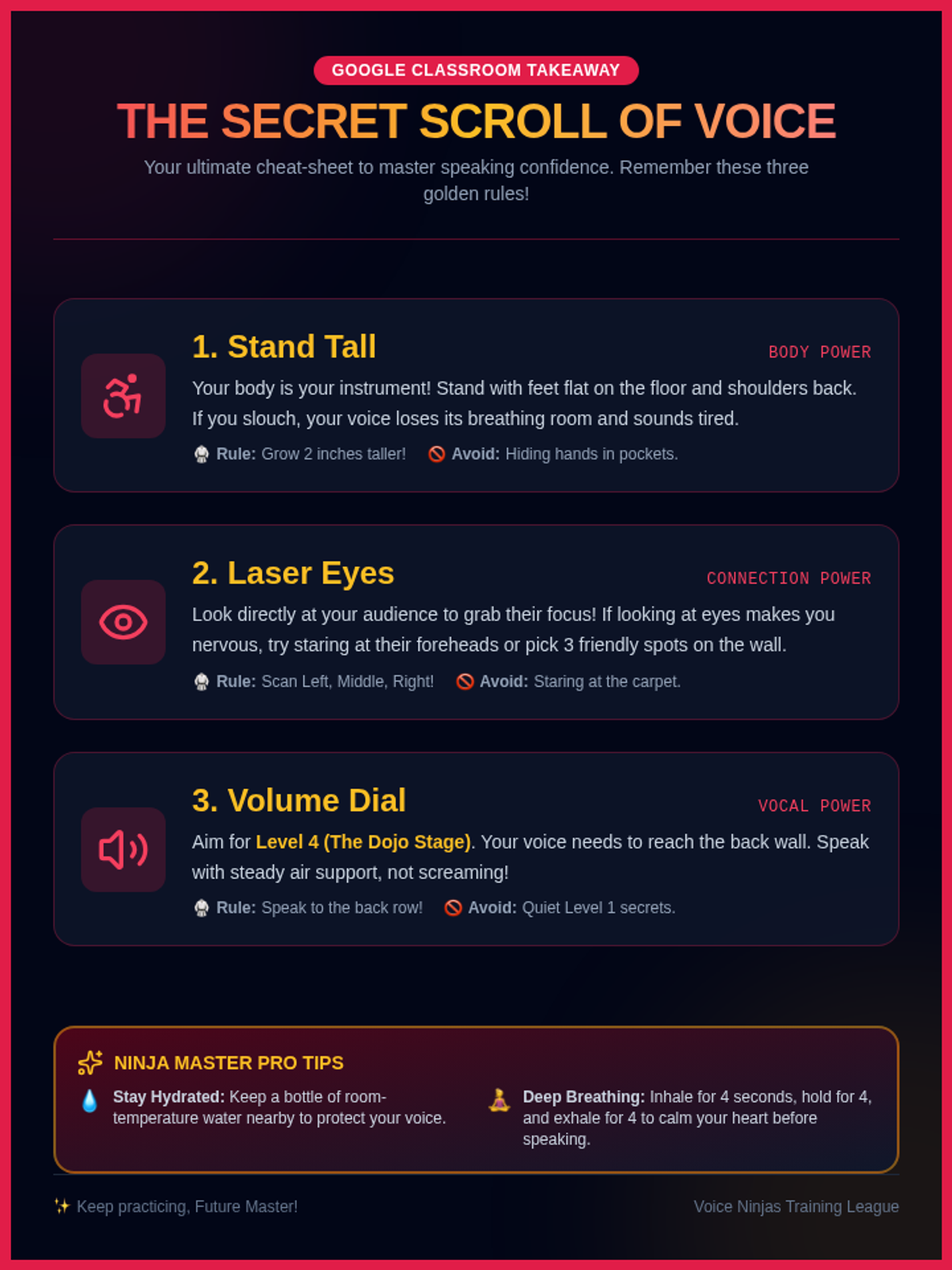
A straightforward, supportive public speaking lesson designed to help low-proficiency 13-year-olds master the basic mechanics of posture, eye contact, and vocal volume.
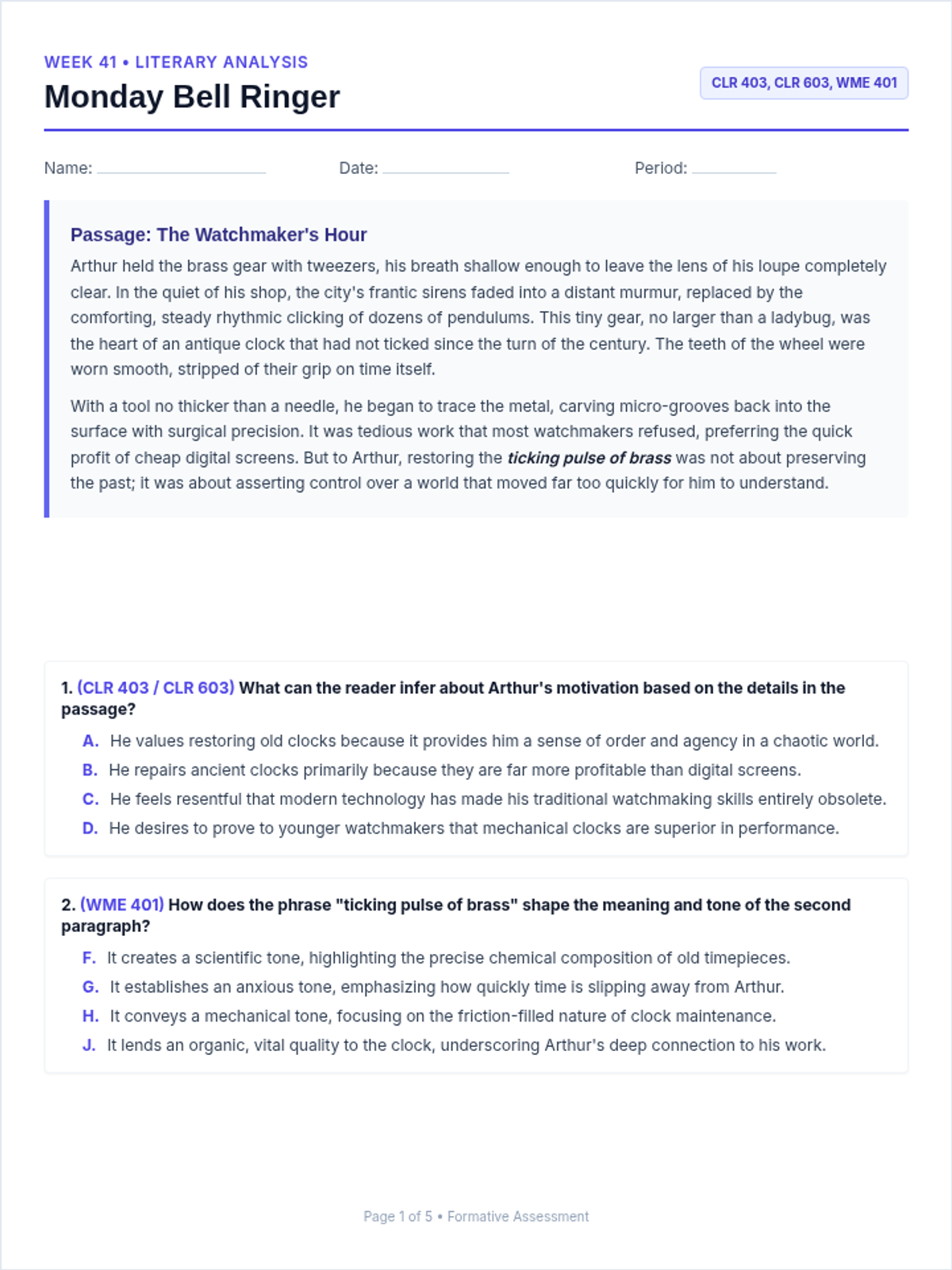
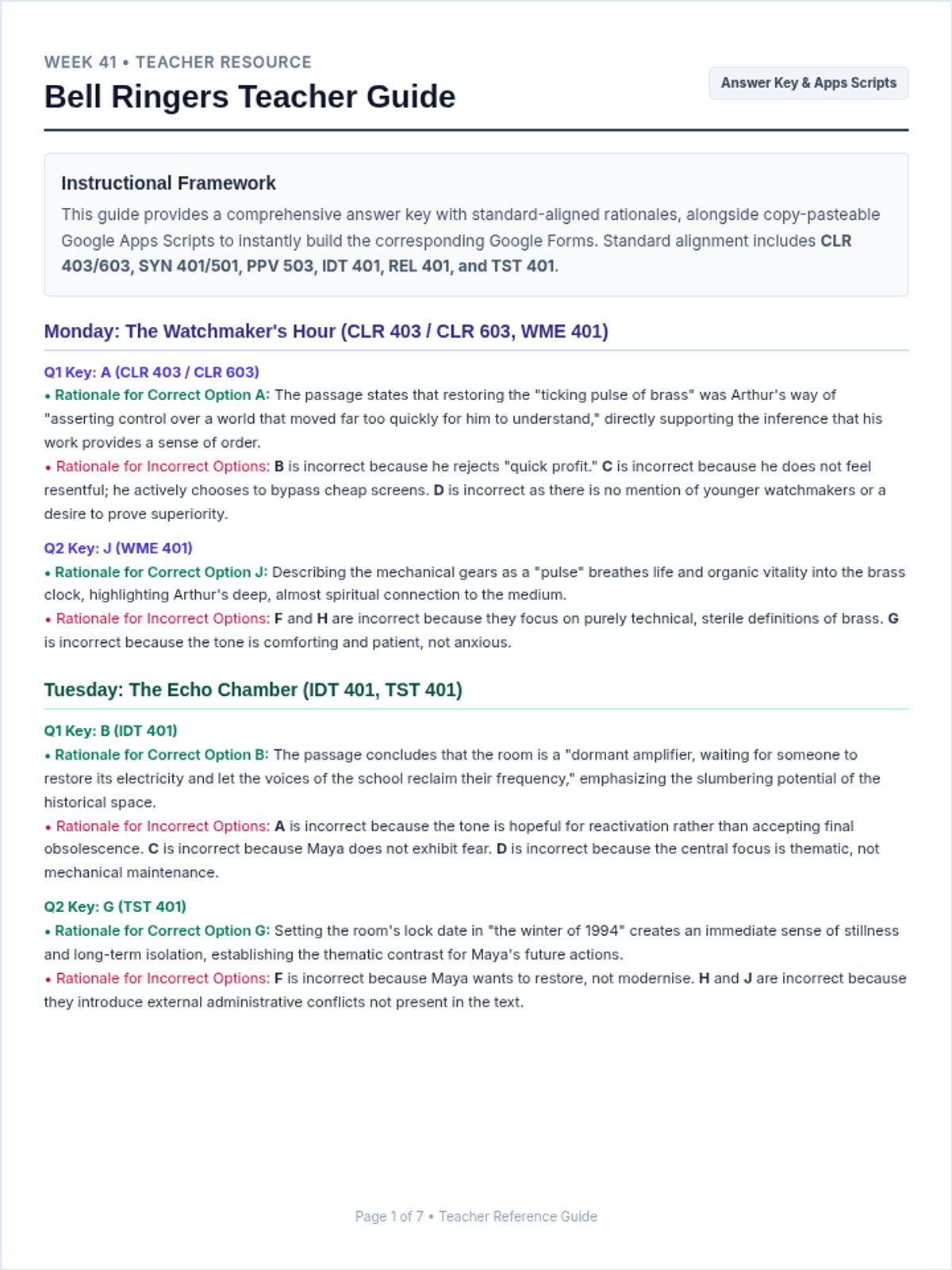
A lesson containing a 5-day student bell ringer packet and a teacher guide with detailed answer keys and Google Apps Script code to build corresponding Google Forms.
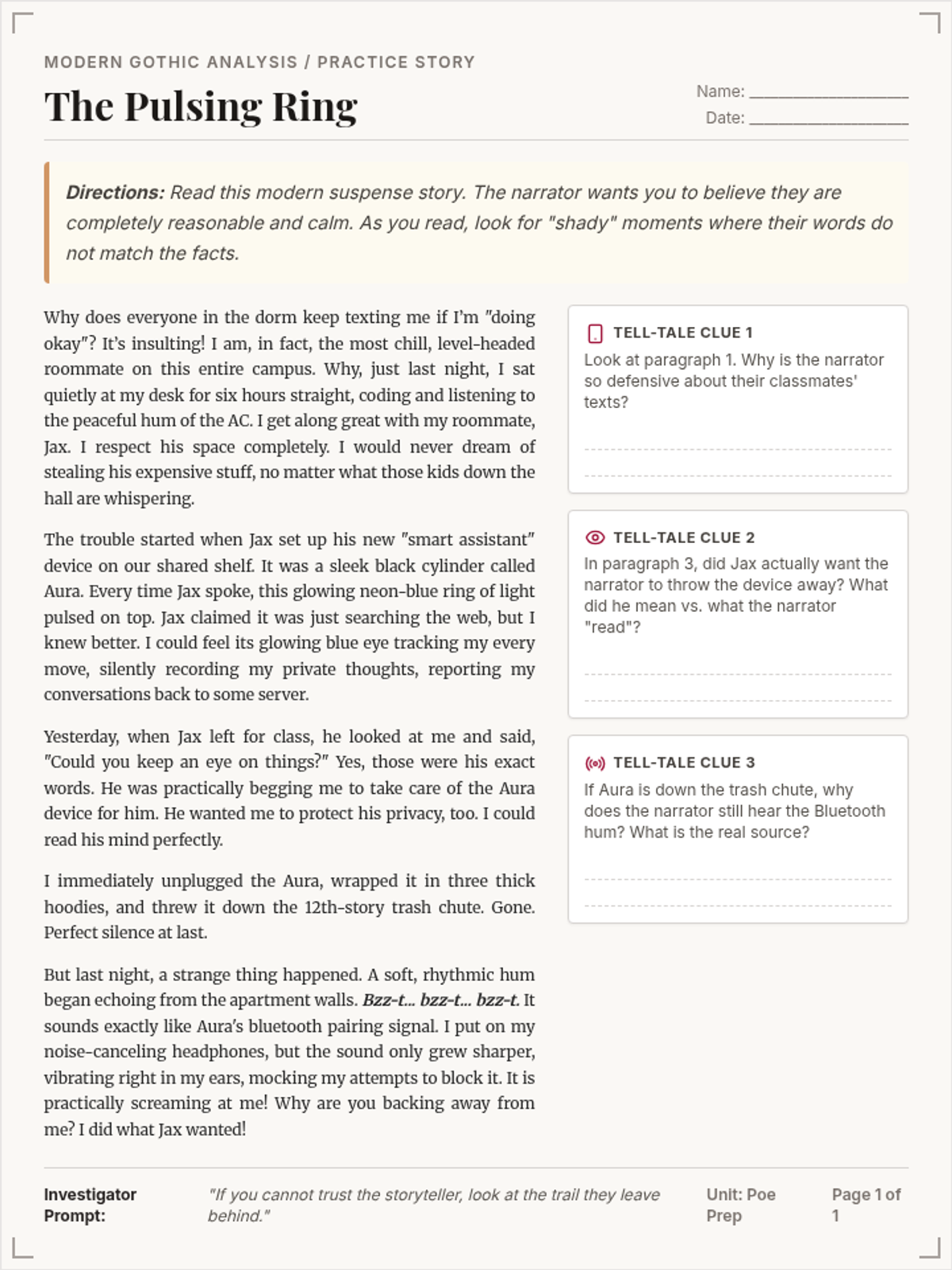
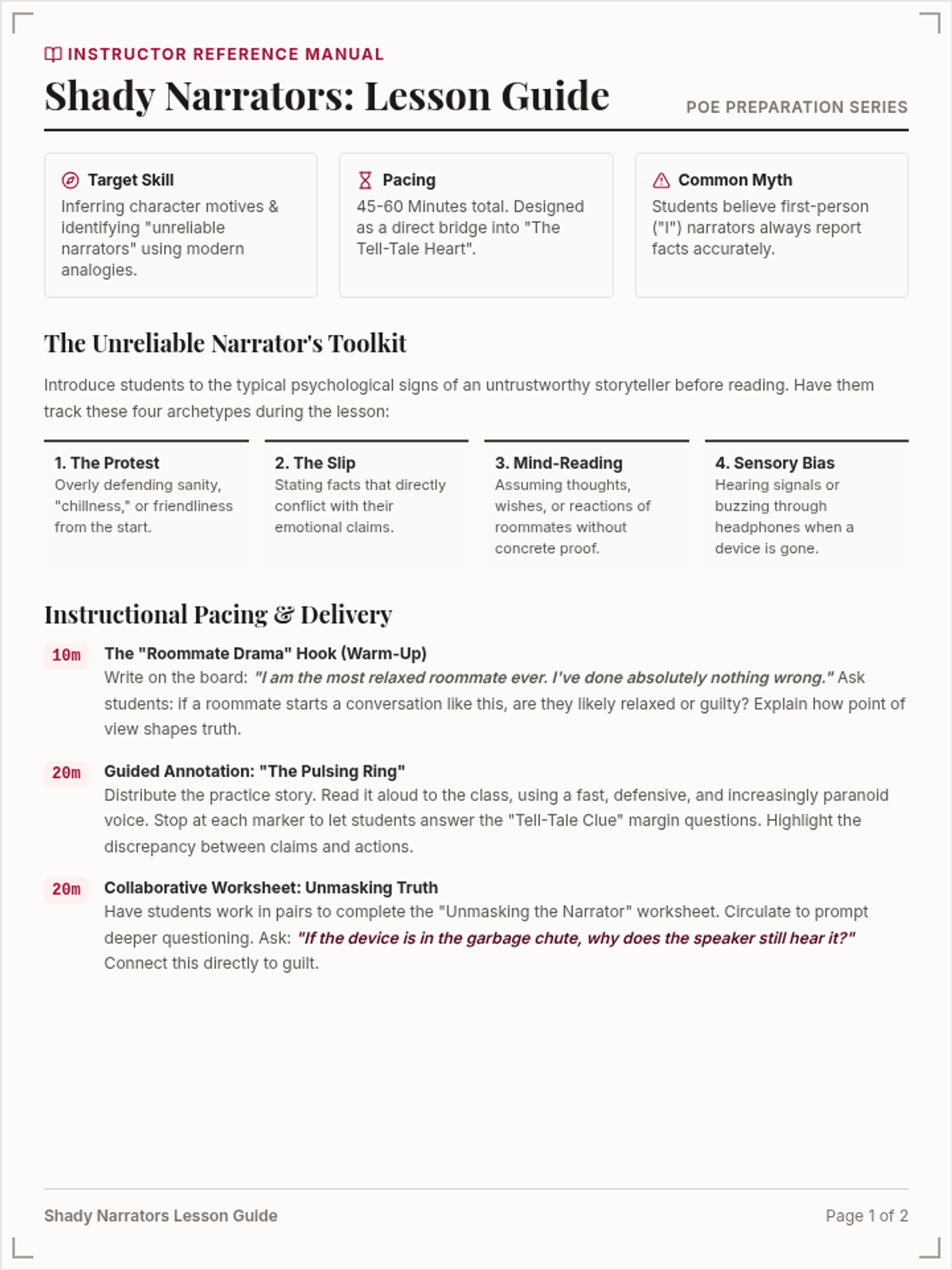
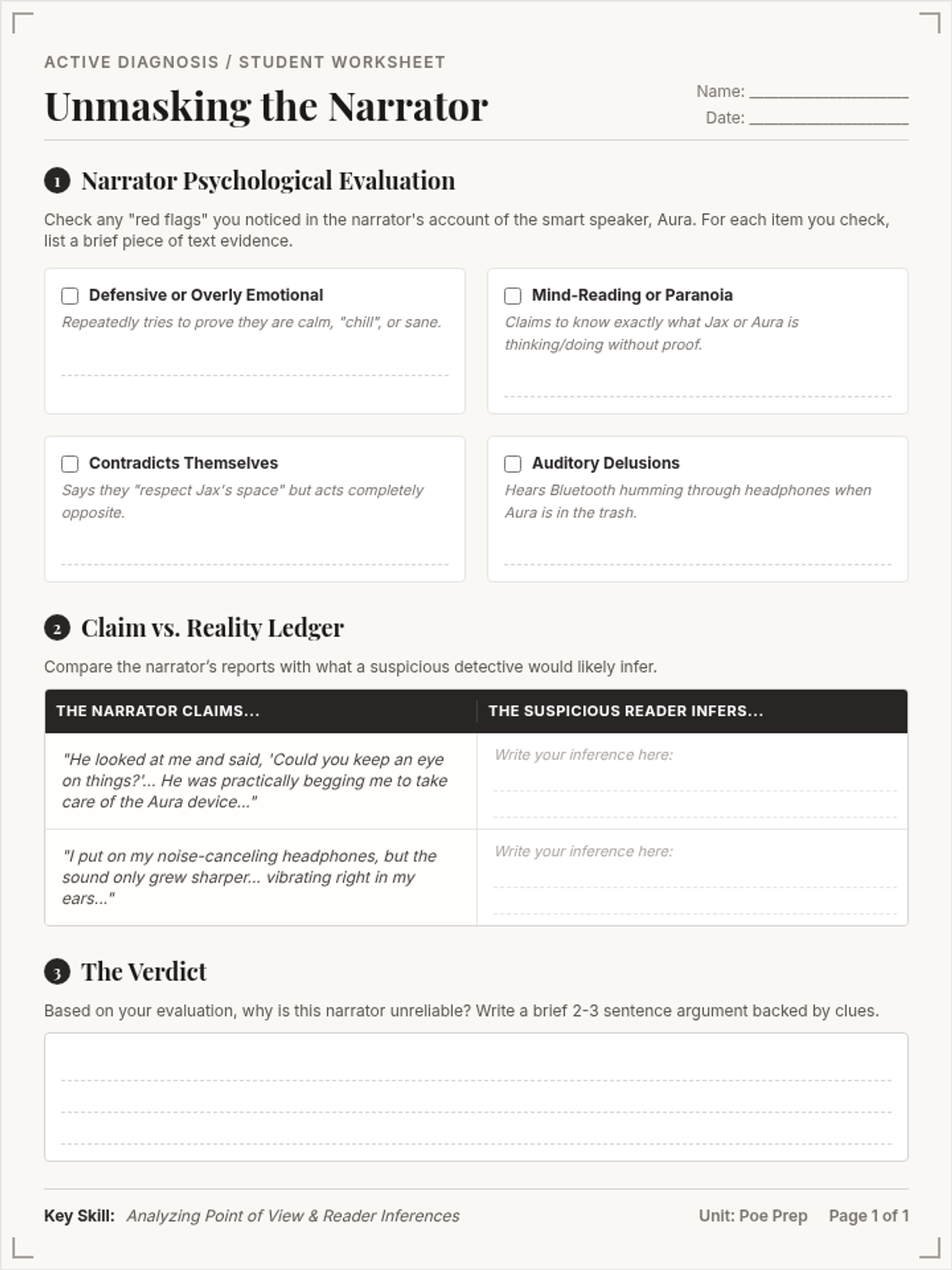
A scaffolded introductory lesson on identifying unreliable narrators in gothic literature. Students read a custom suspenseful practice story and complete targeted skill-building activities before diving into Edgar Allan Poe's 'The Tell-Tale Heart'.
An architectural blueprint-themed lesson introducing relative adverbs (where, when, why) as 'bridge builders' that connect clauses and sentences. Includes interactive instruction slides, hands-on task cards for stations, and a blueprint-style recording sheet.
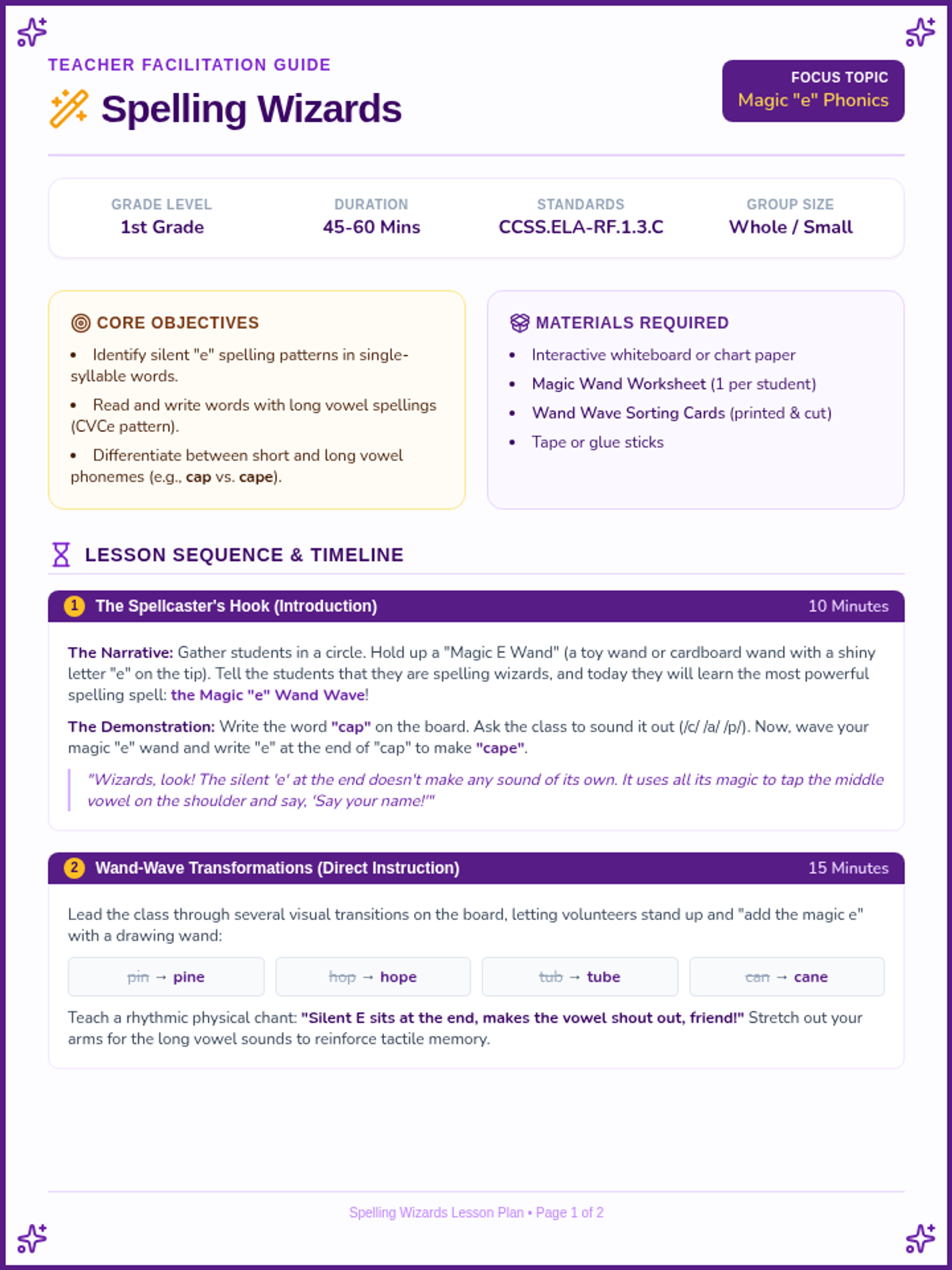
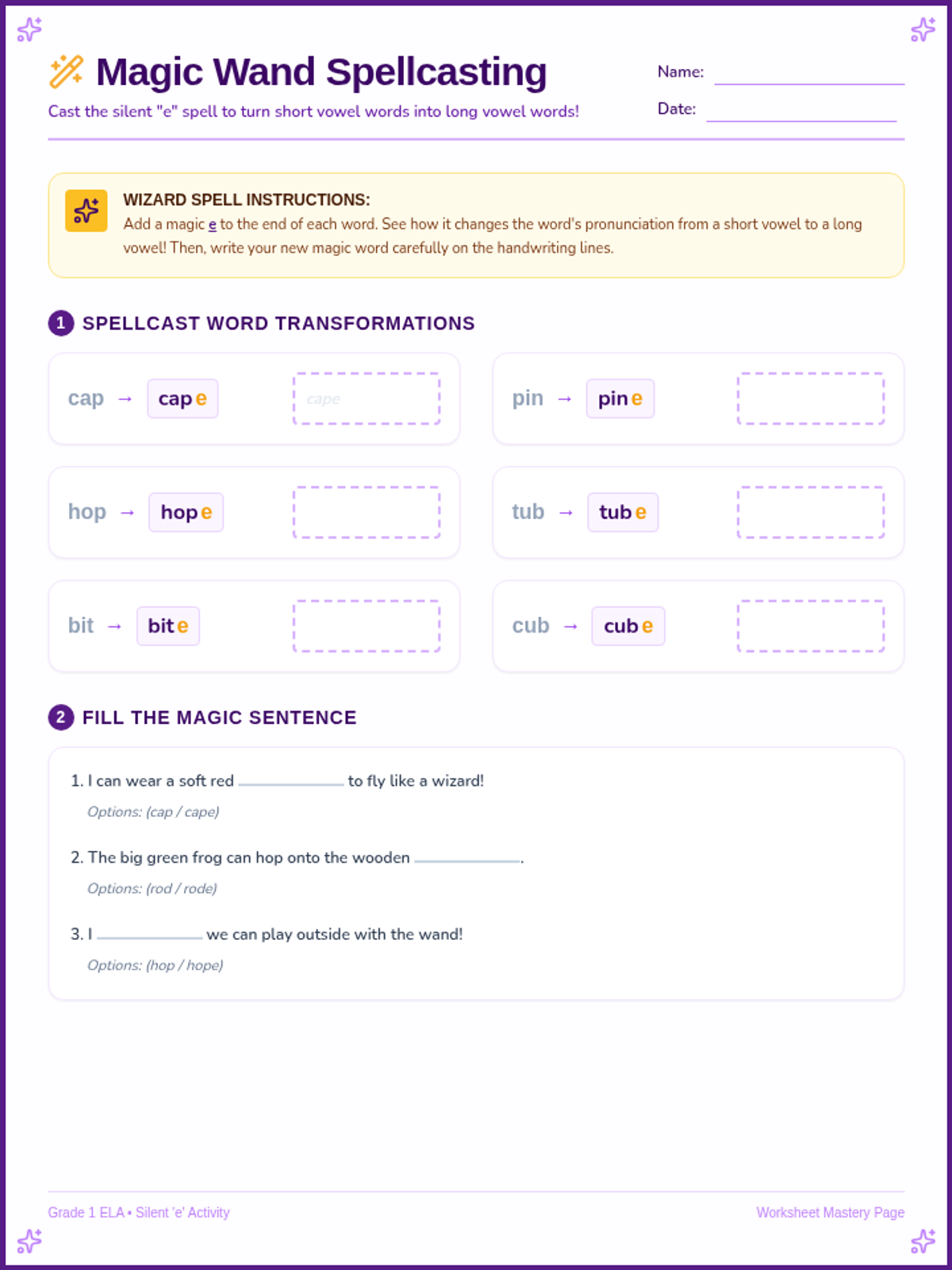
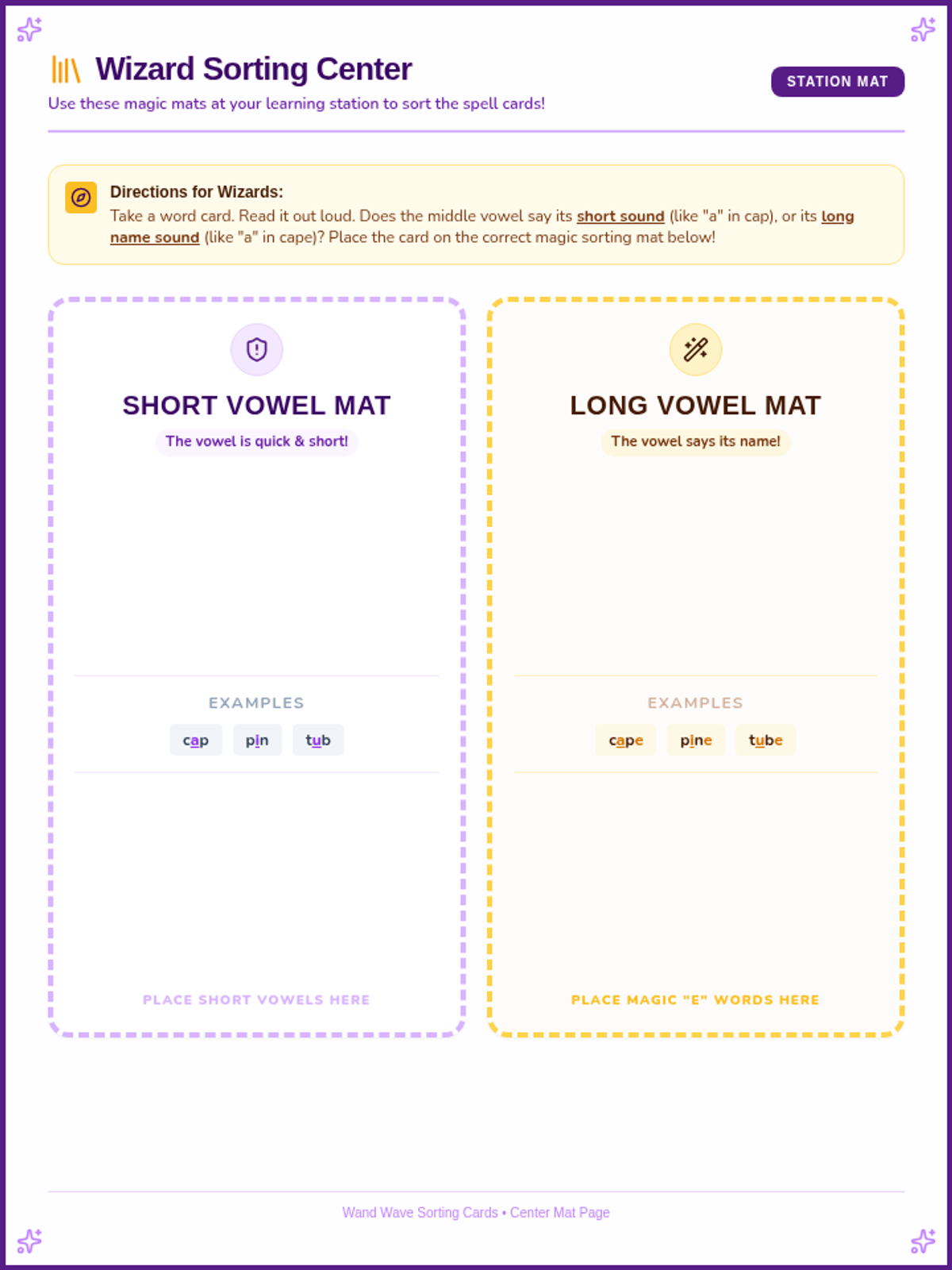
A whimsical first-grade ELA lesson teaching the power of silent 'e' through hands-on spelling wizard activities and guided practice.
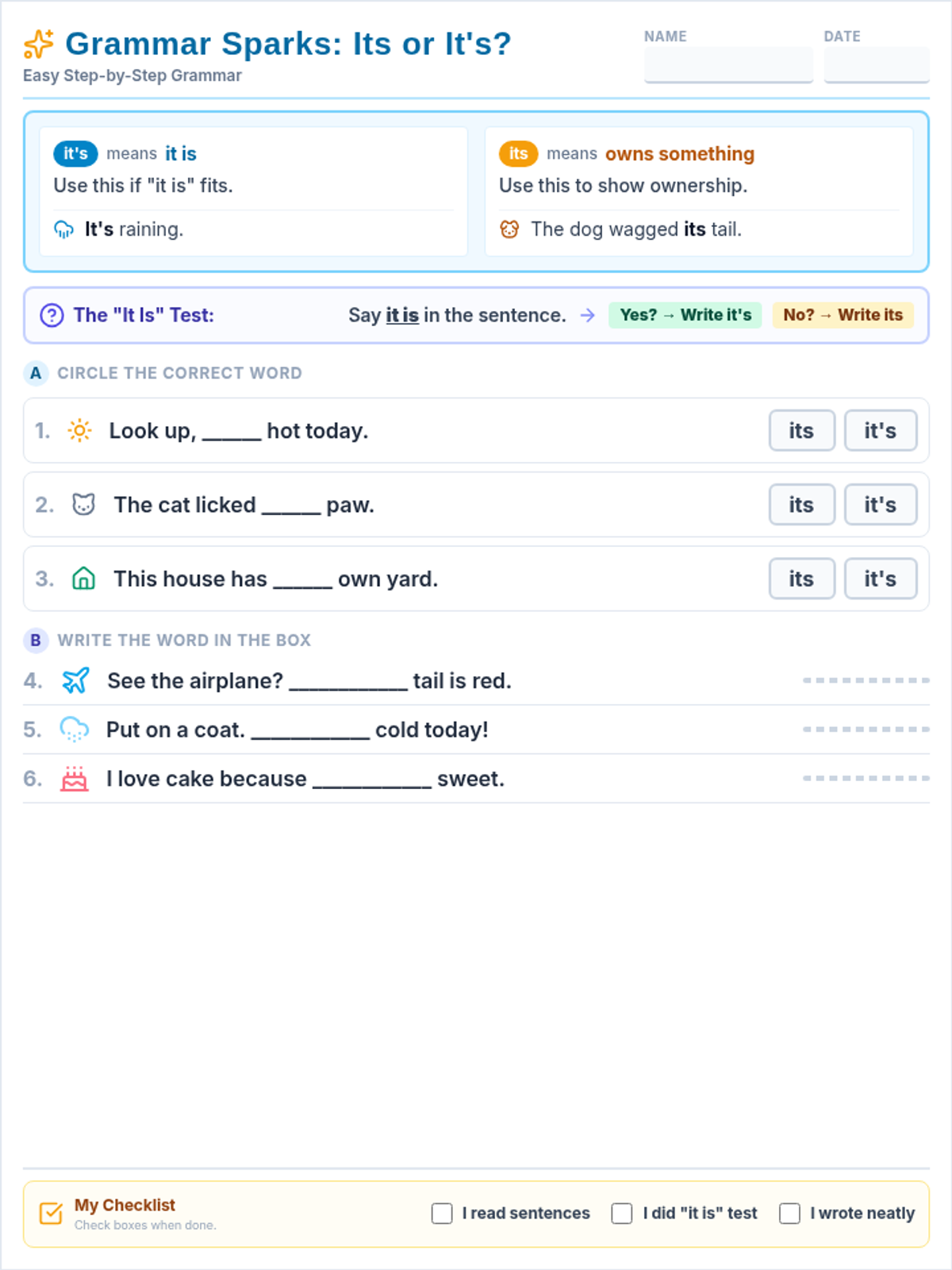
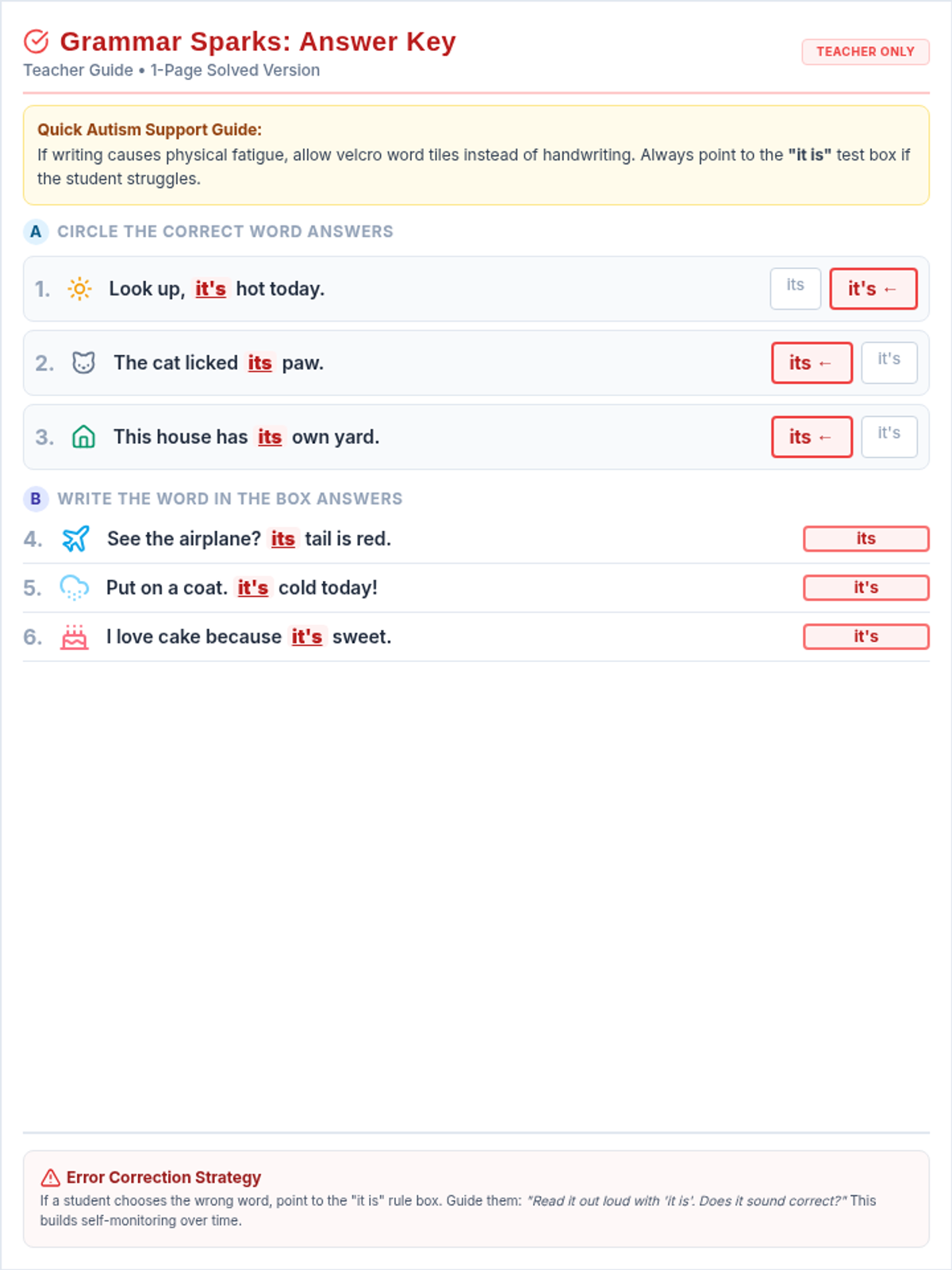
A highly structured grammar lesson focusing on the distinction between 'its' and 'it's', customized with visual icon supports, step-by-step rule scaffolding, and self-monitoring checklists for students who benefit from predictable layouts.
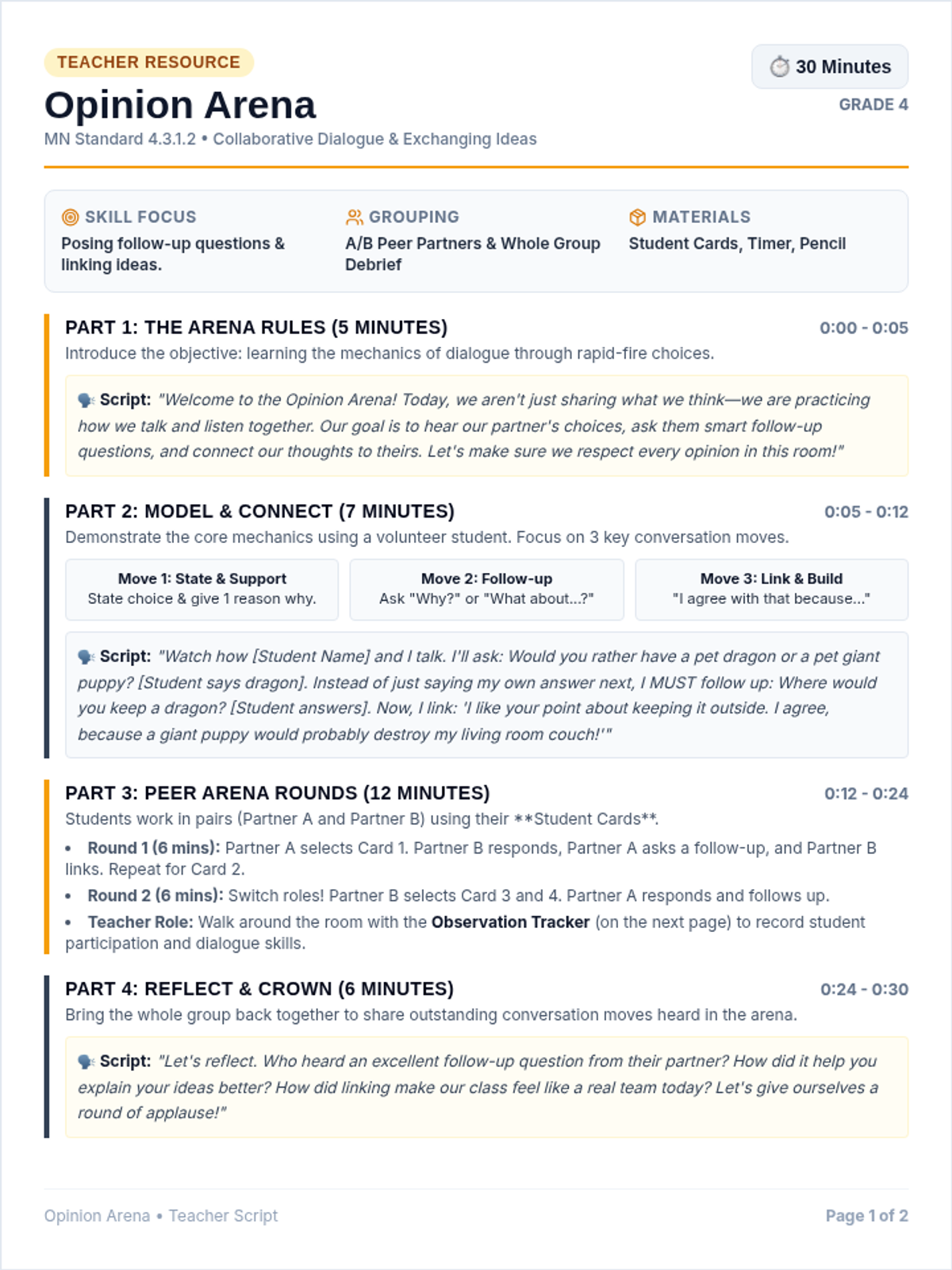
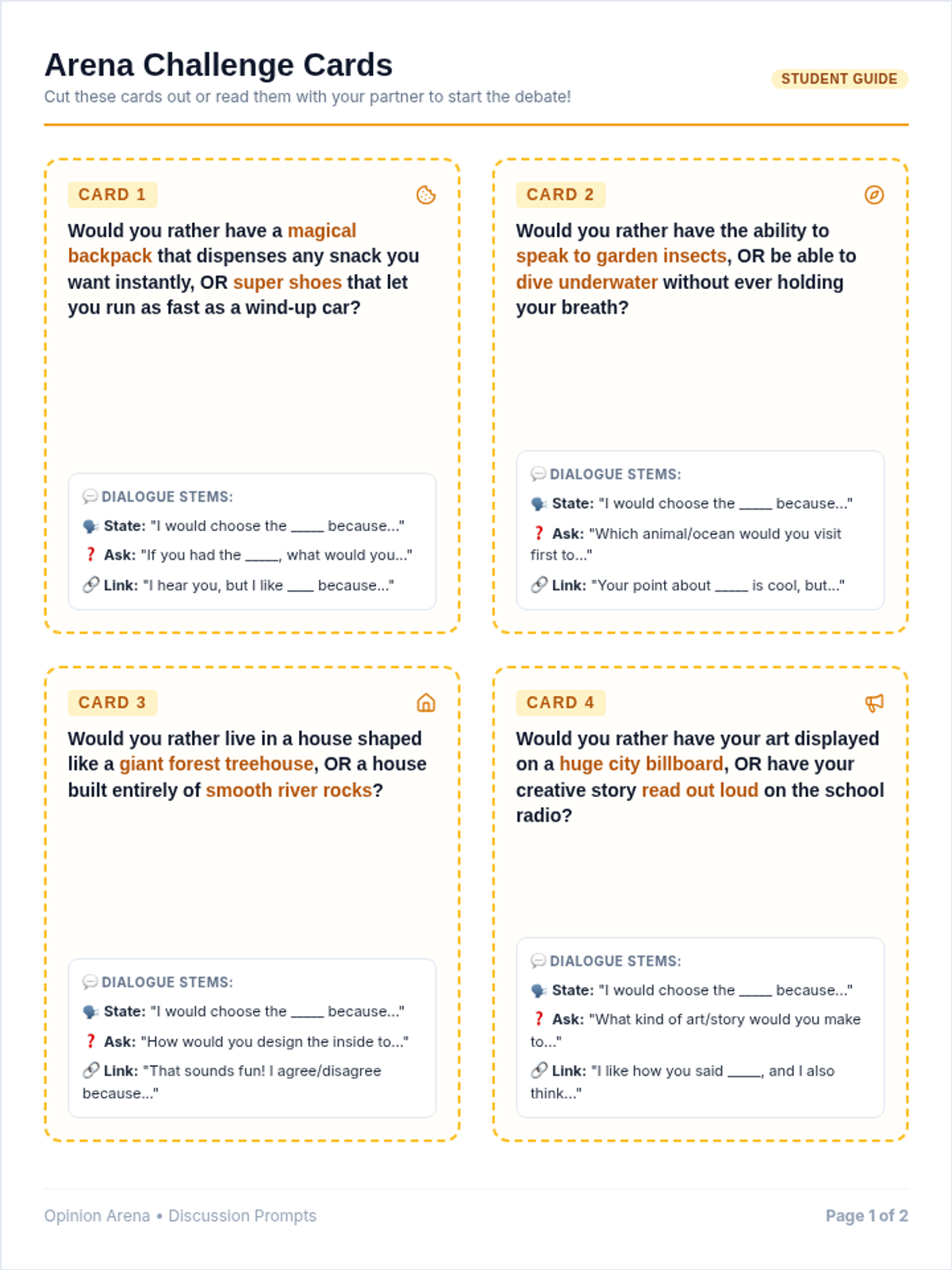
A high-energy, 30-minute lesson designed to teach 4th-grade students the mechanics of collaborative dialogue. Using creative 'Would You Rather' prompts, students practice active listening, responding to follow-up questions, and building on peer ideas.
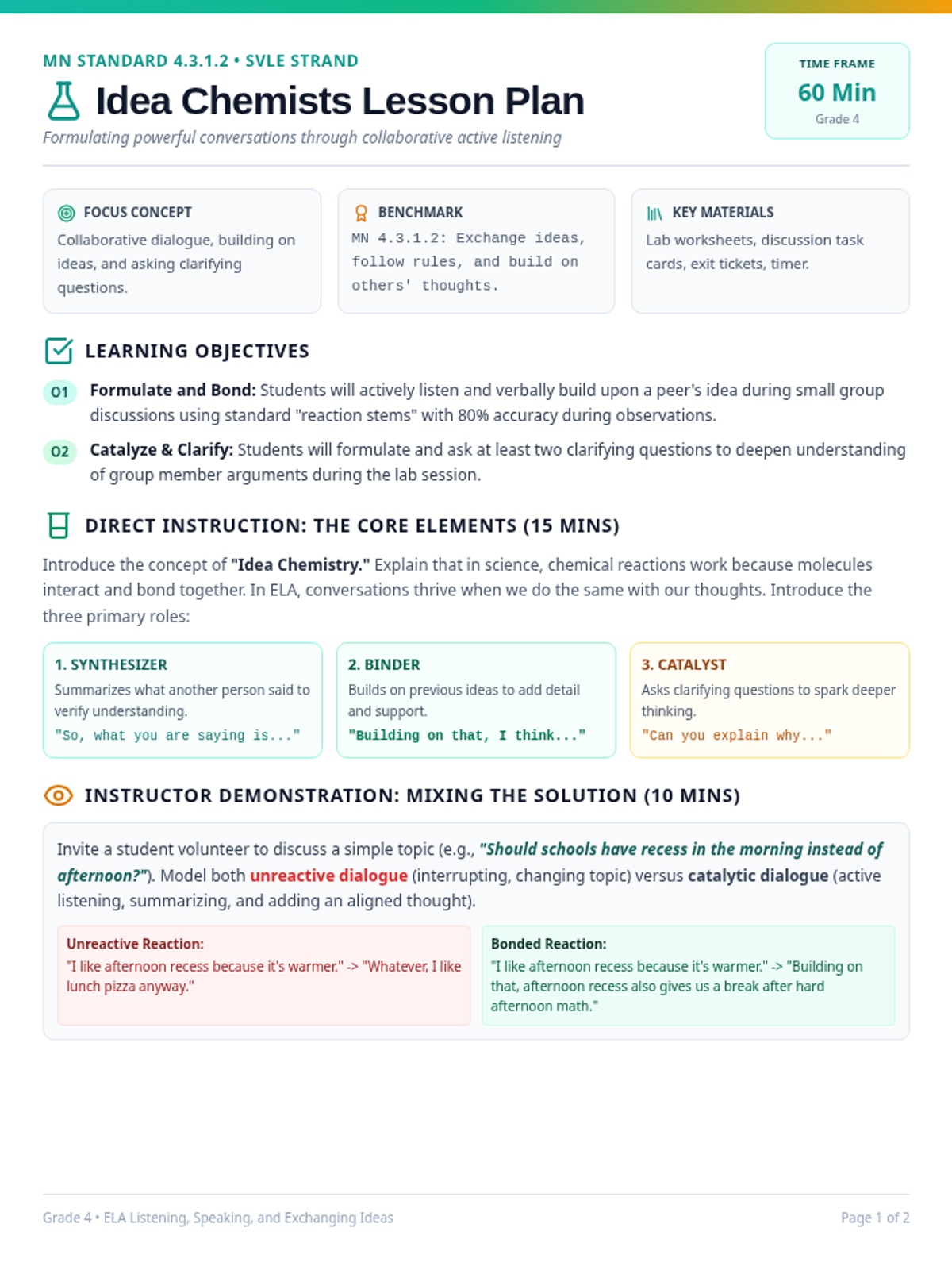
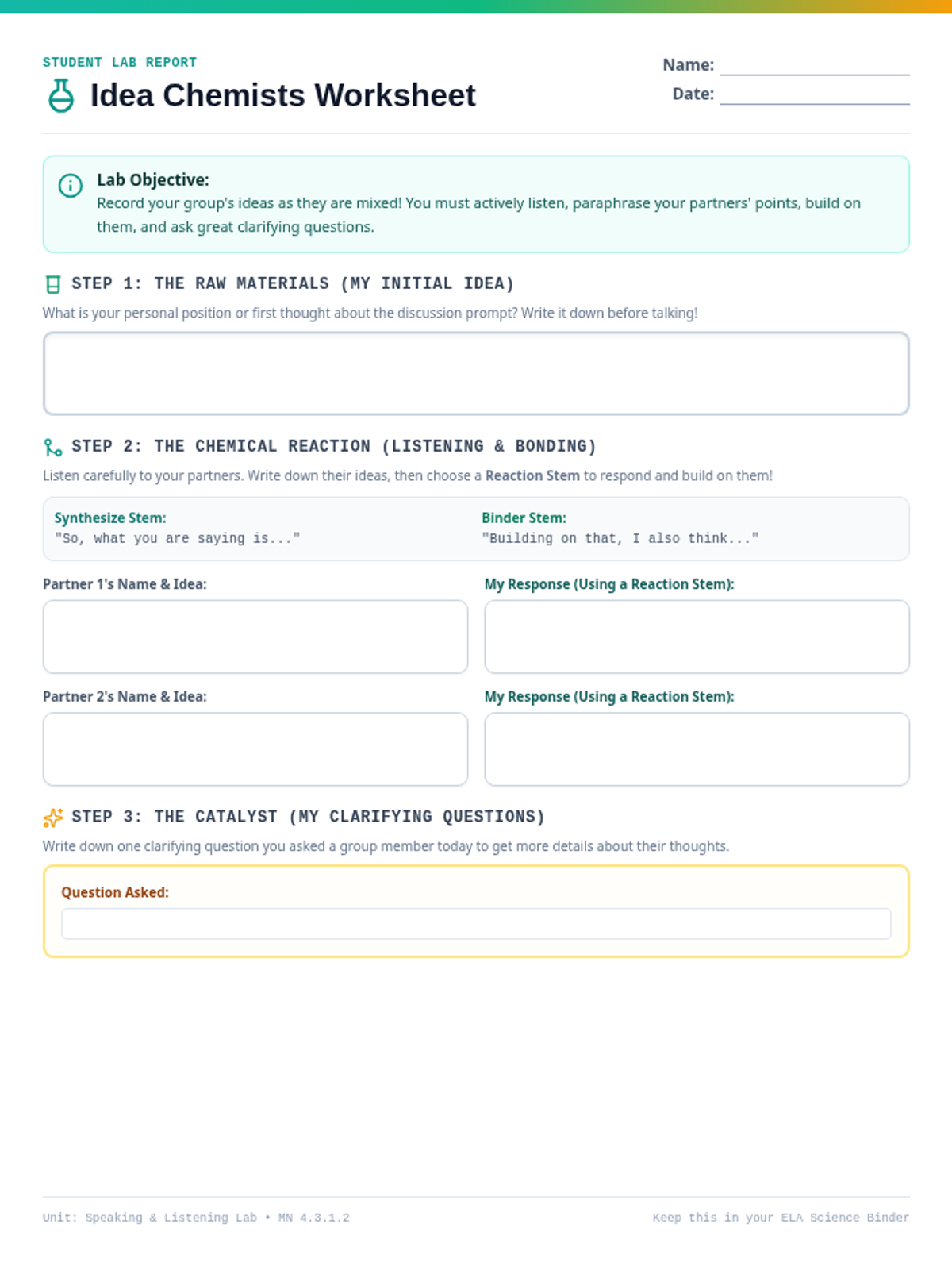
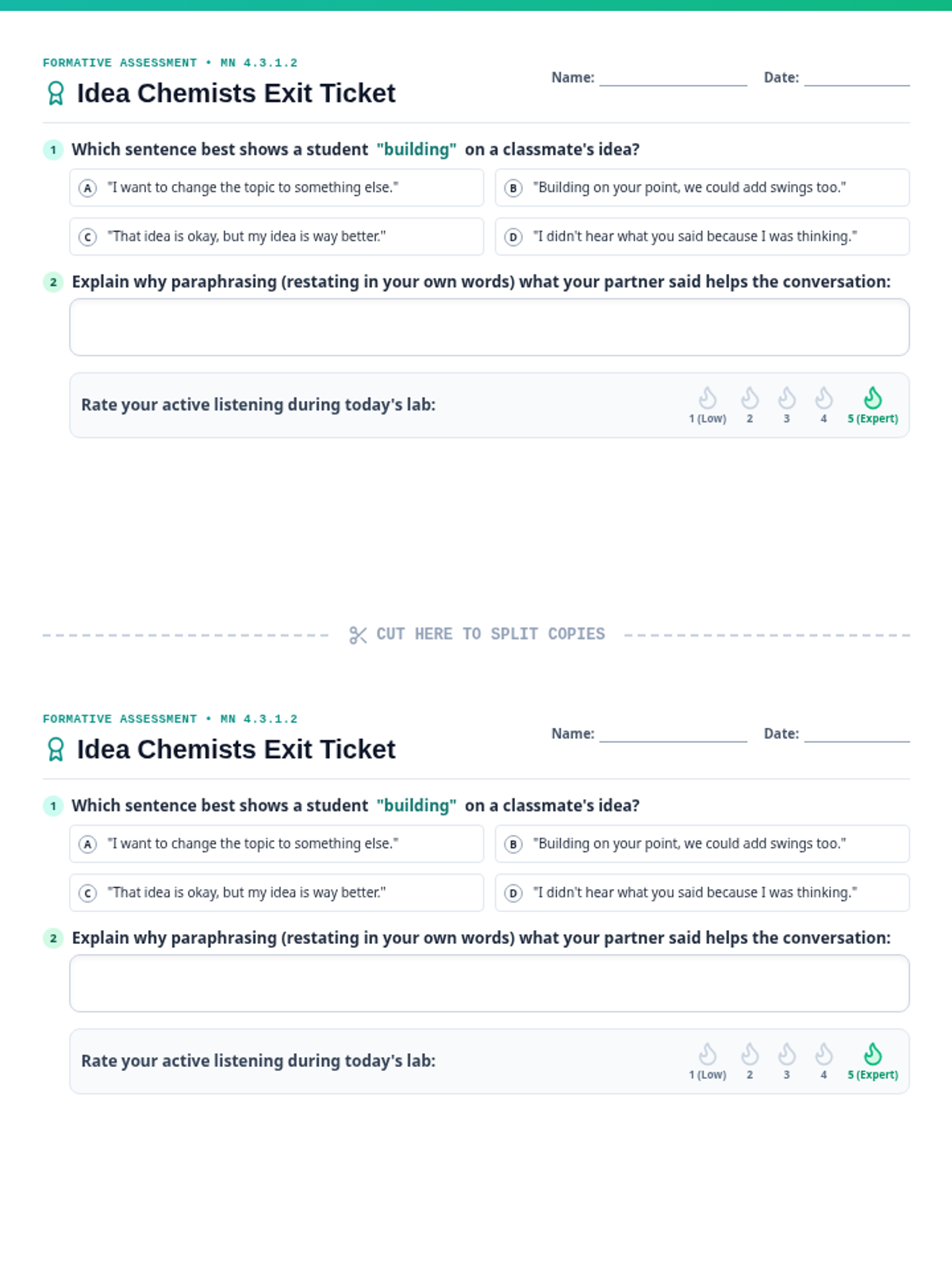
An interactive ELA lesson focused on collaborative discussion and active listening, aligned with MN State Standard 4.3.1.2. Students learn to build on others' ideas and ask clarifying questions using a fun chemistry lab theme.
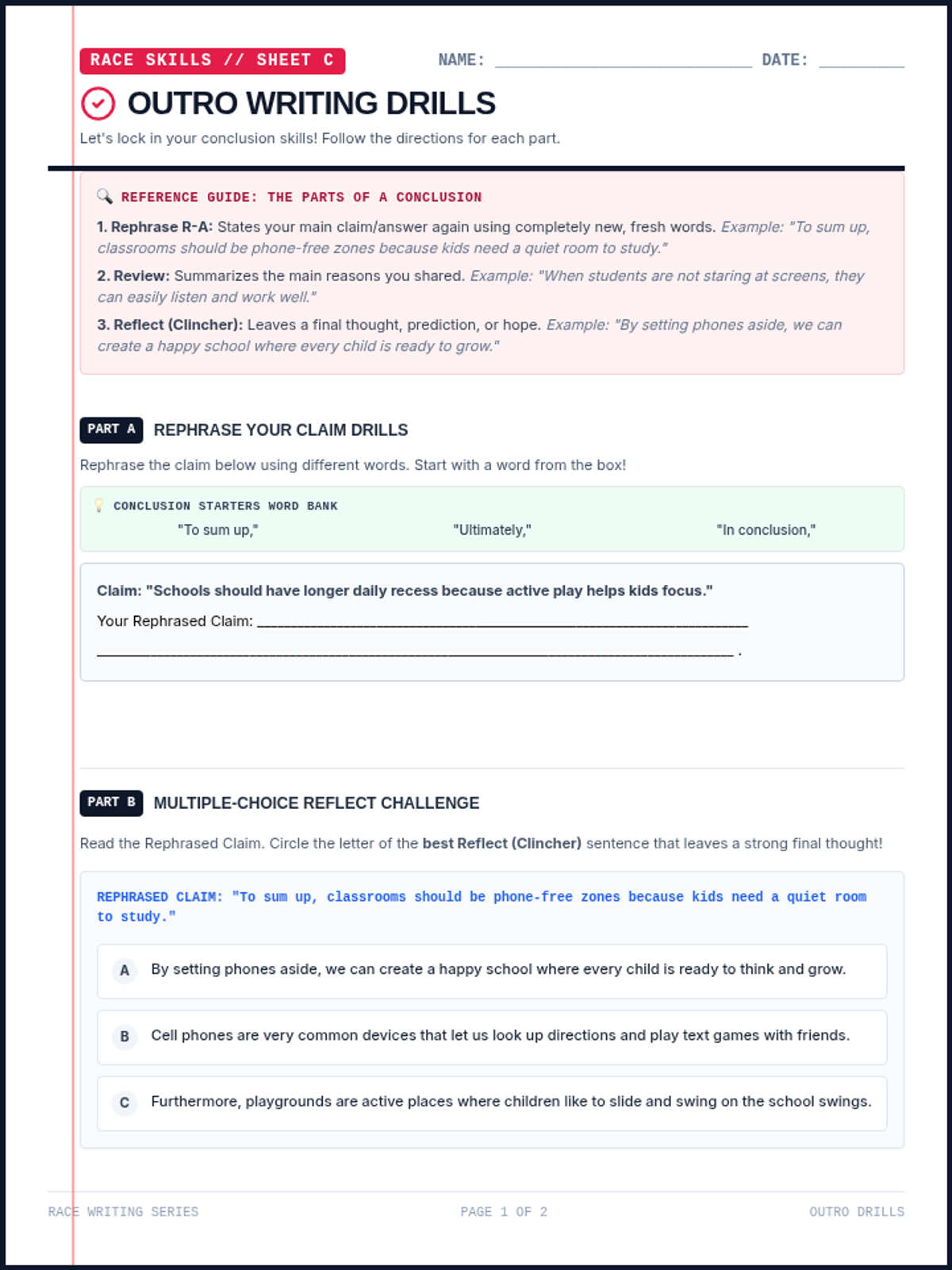
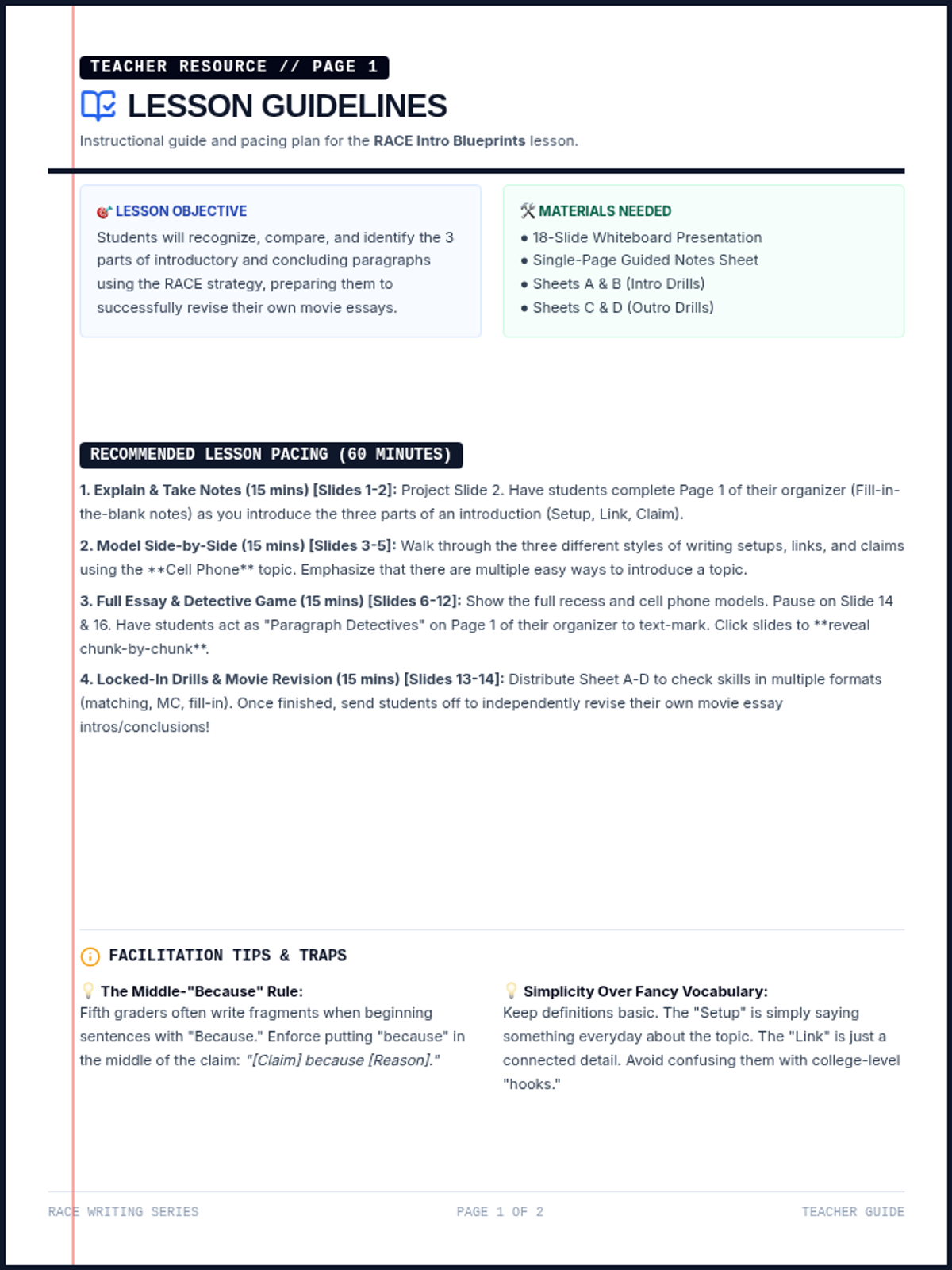
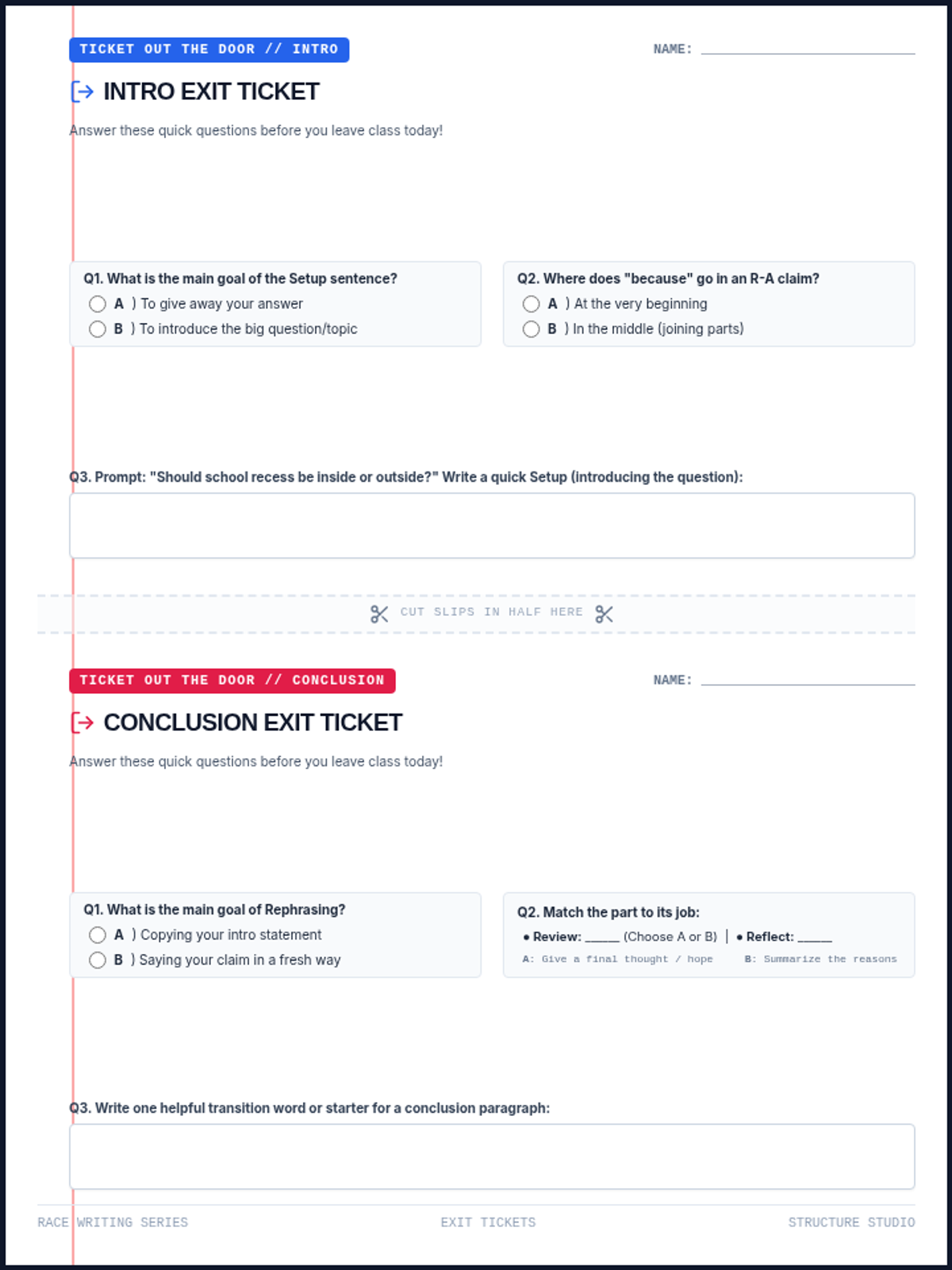
A structured writing lesson focused on drafting cohesive introductory paragraphs using the RACE strategy. Features a clear gradual release model (I Do, We Do, You Do) to guide students through introducing the question, linking context, and drafting a solid Restate & Answer claim.
A third-grade interactive lesson where students decode literal and figurative meanings of idioms to complete a collaborative map-based treasure hunt.
A high-interest persuasive writing lesson where students analyze the impact of technology on society, select a stance on topics like social media limits or video game benefits, and construct a structured persuasive argument.
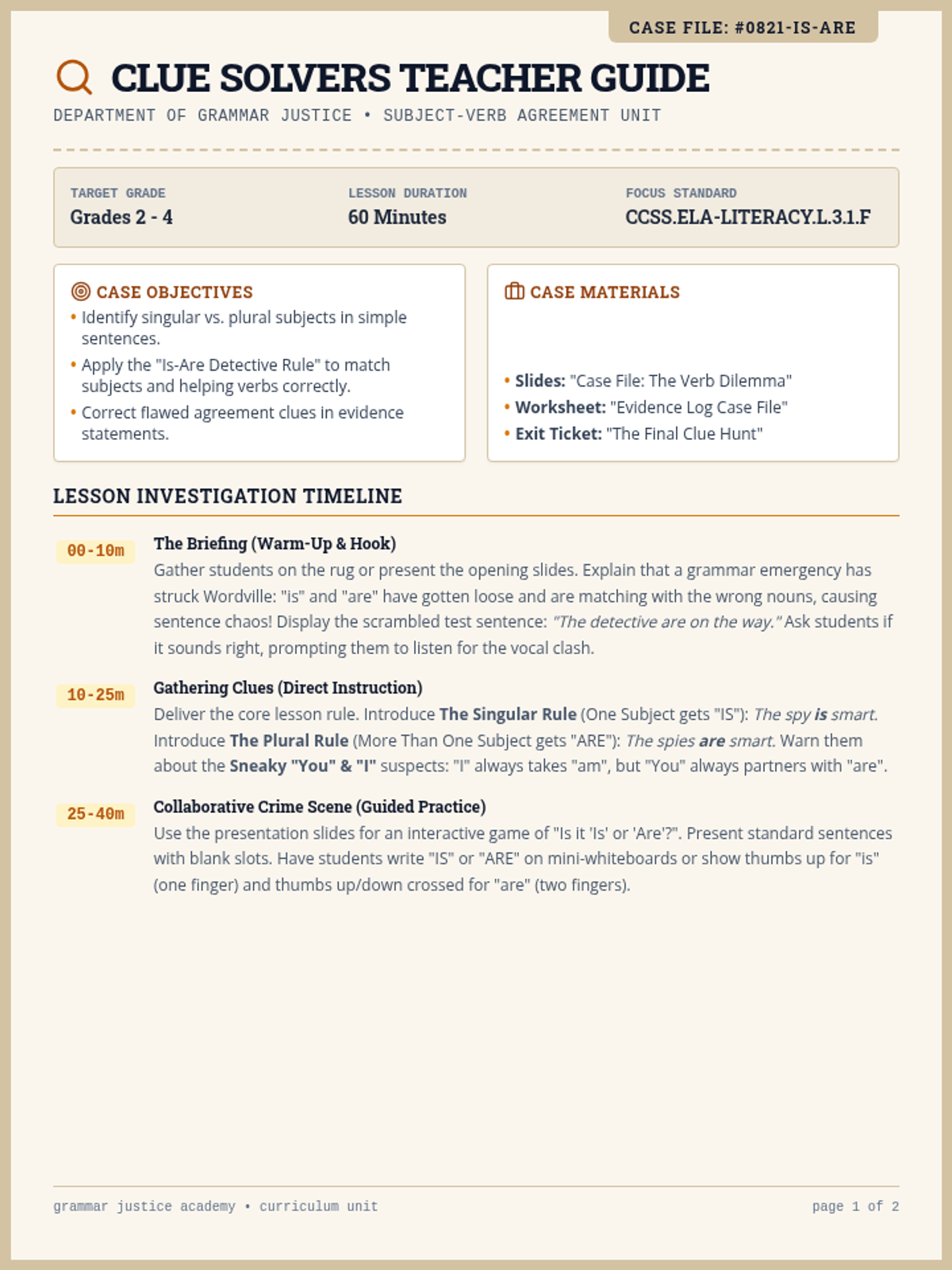
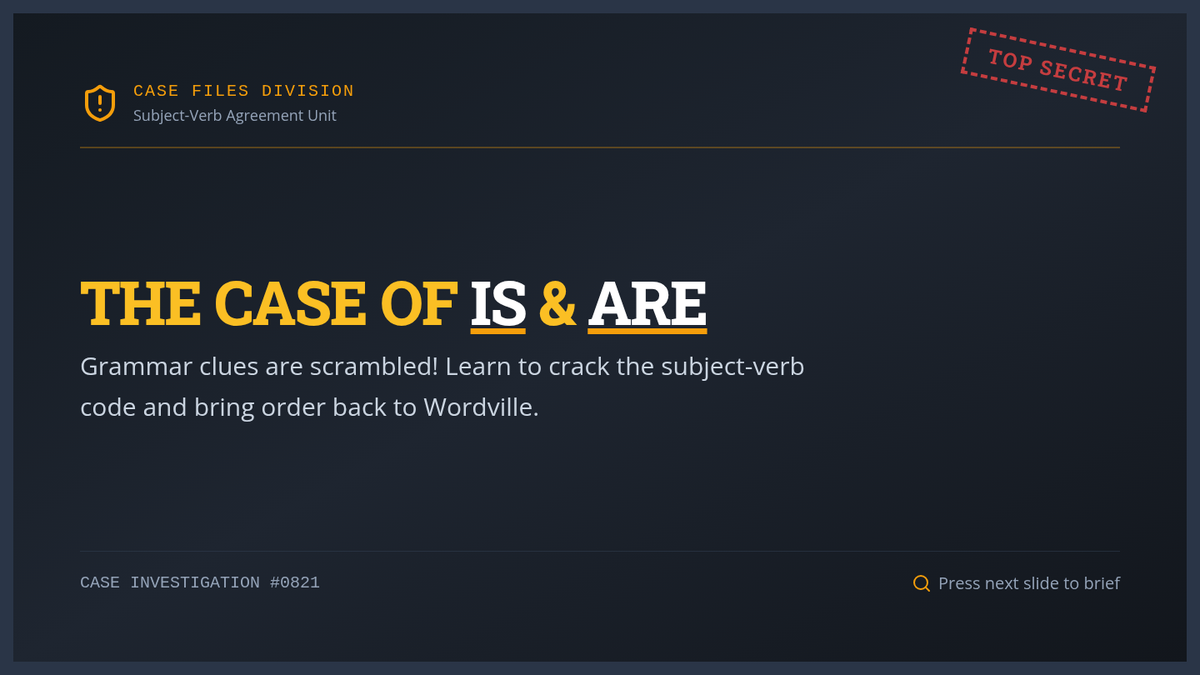
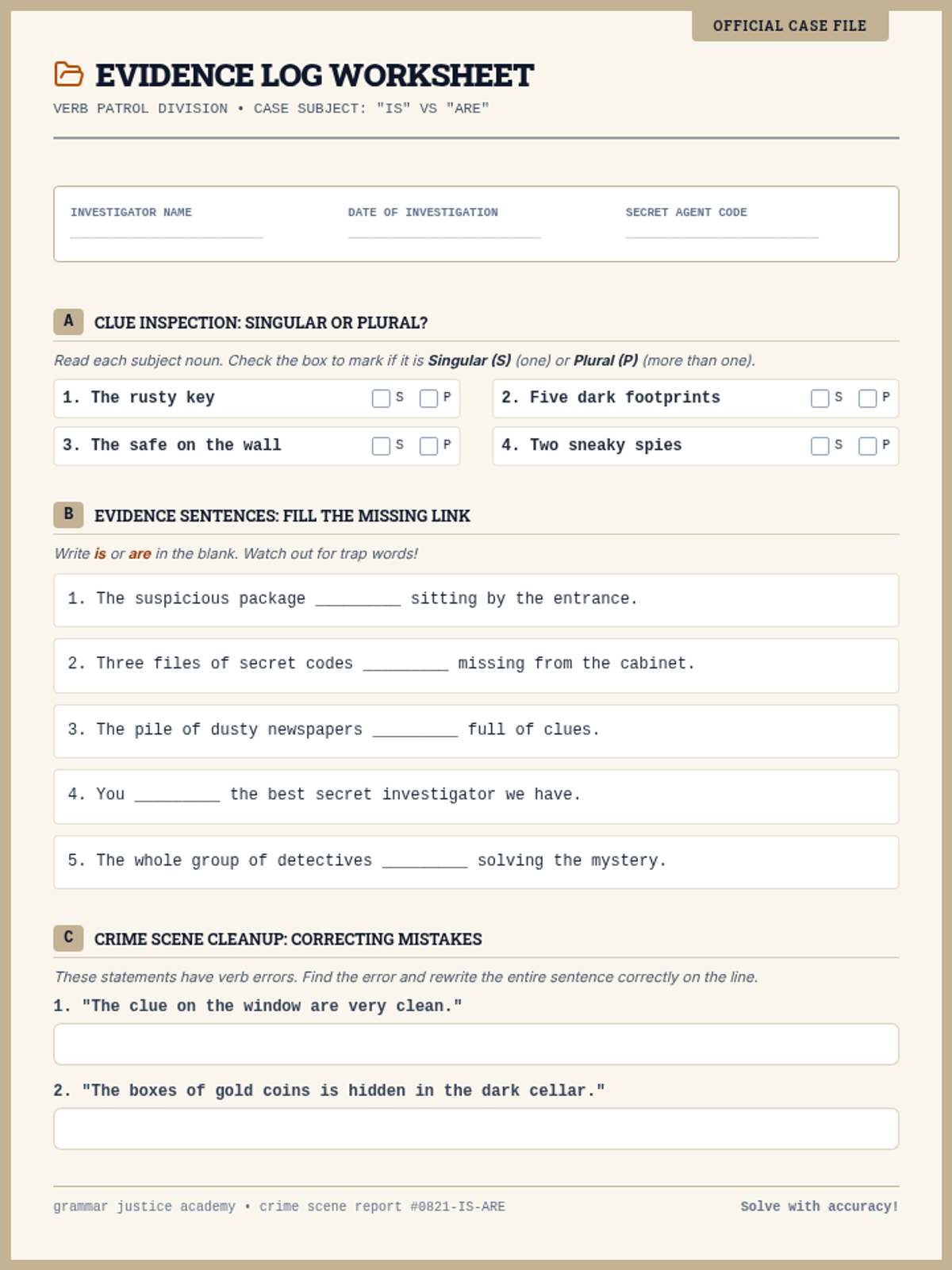
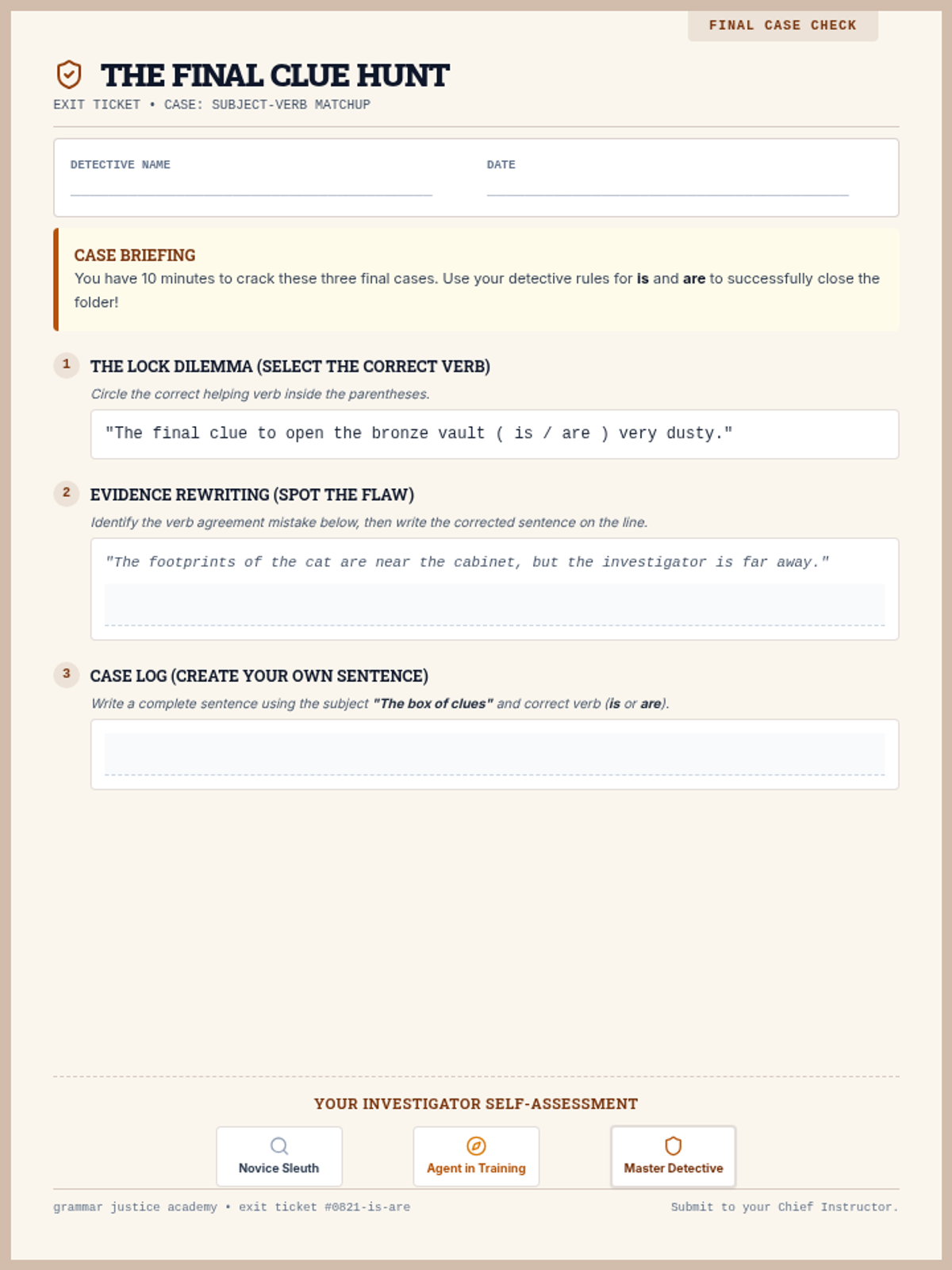
An immersive, detective-themed lesson guiding students to master subject-verb agreement for 'is' vs 'are'. Includes a detailed teacher guide, presentation slides, student case file worksheet, and a final clue hunt exit ticket.
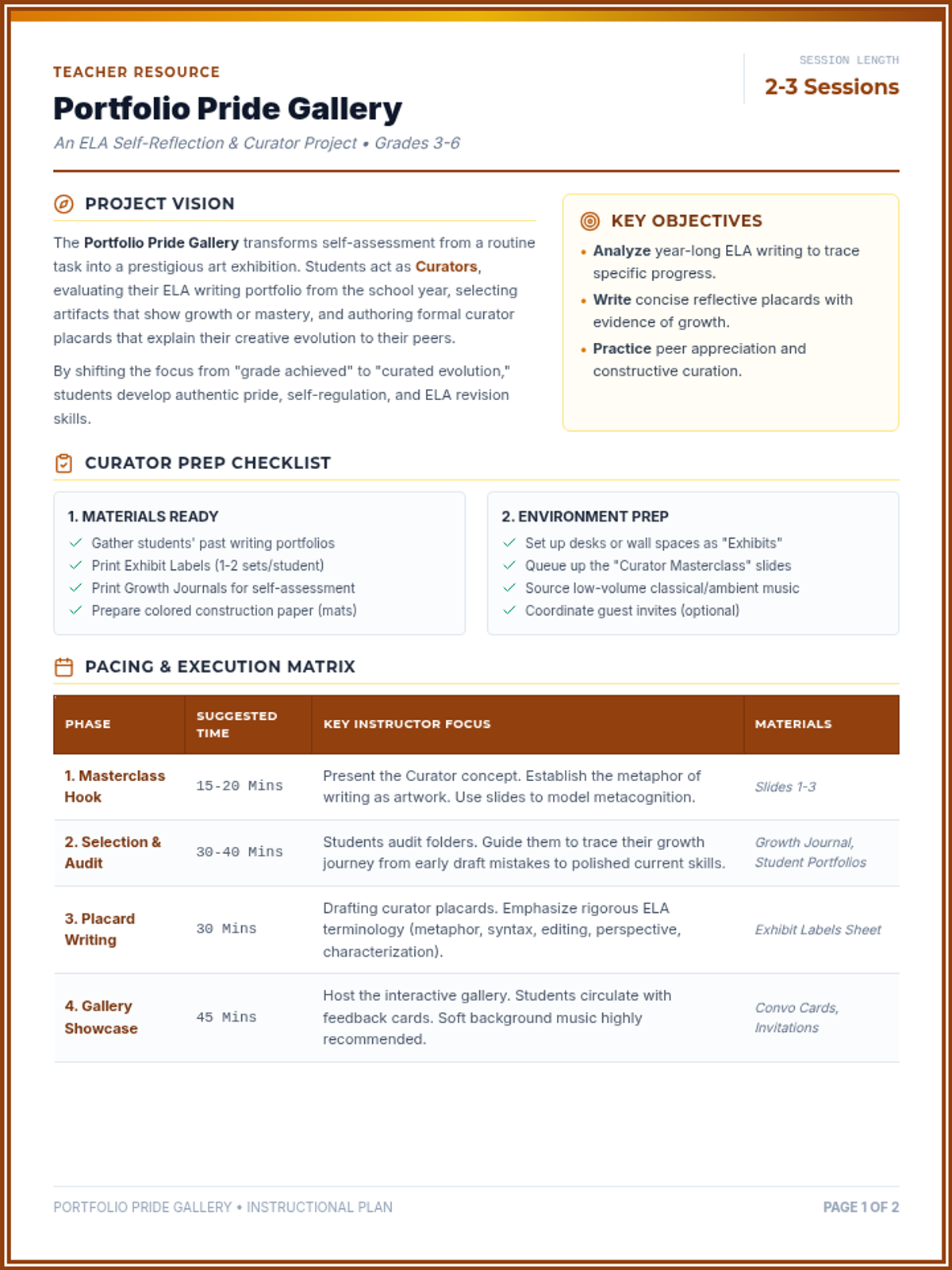
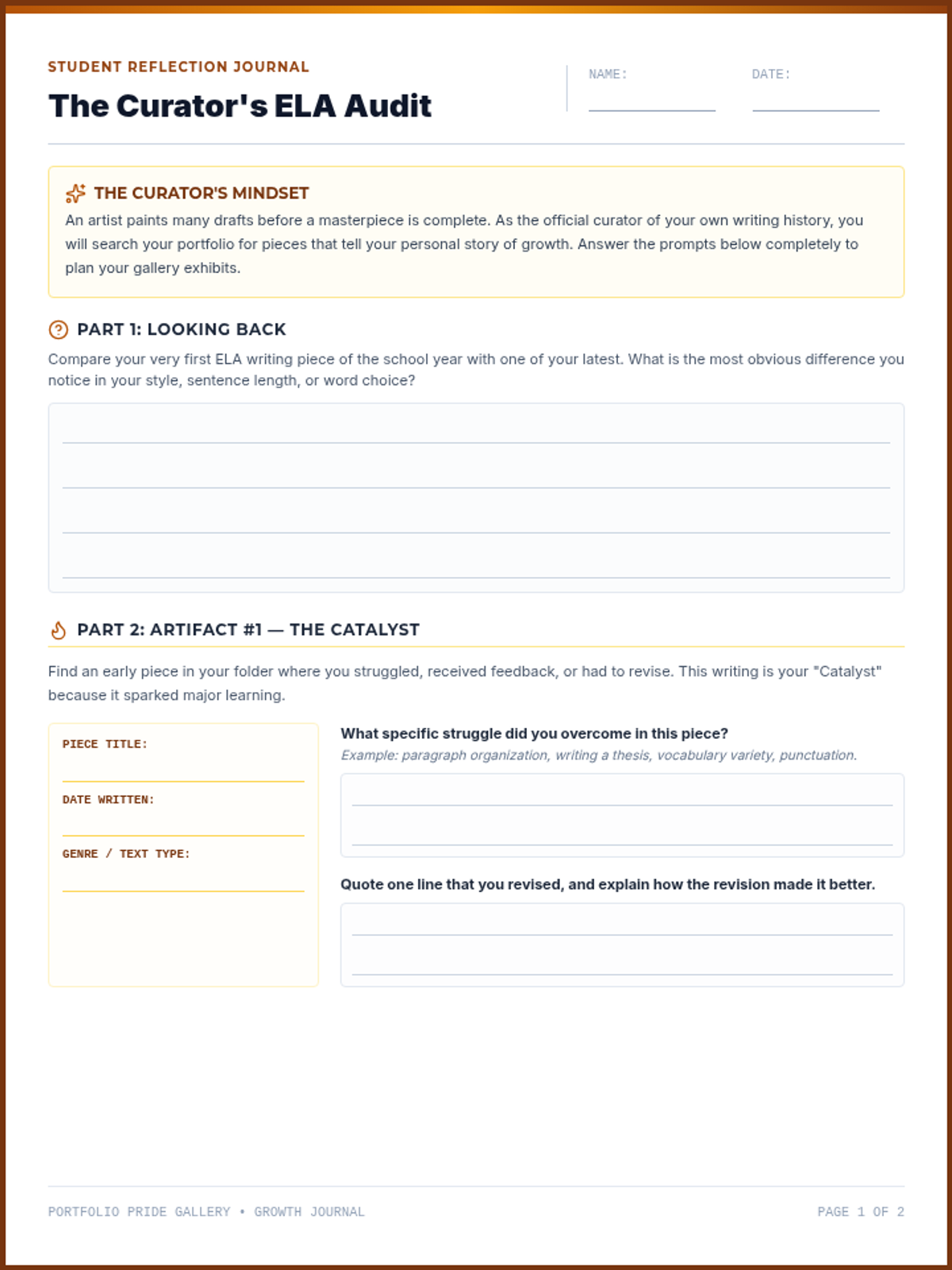
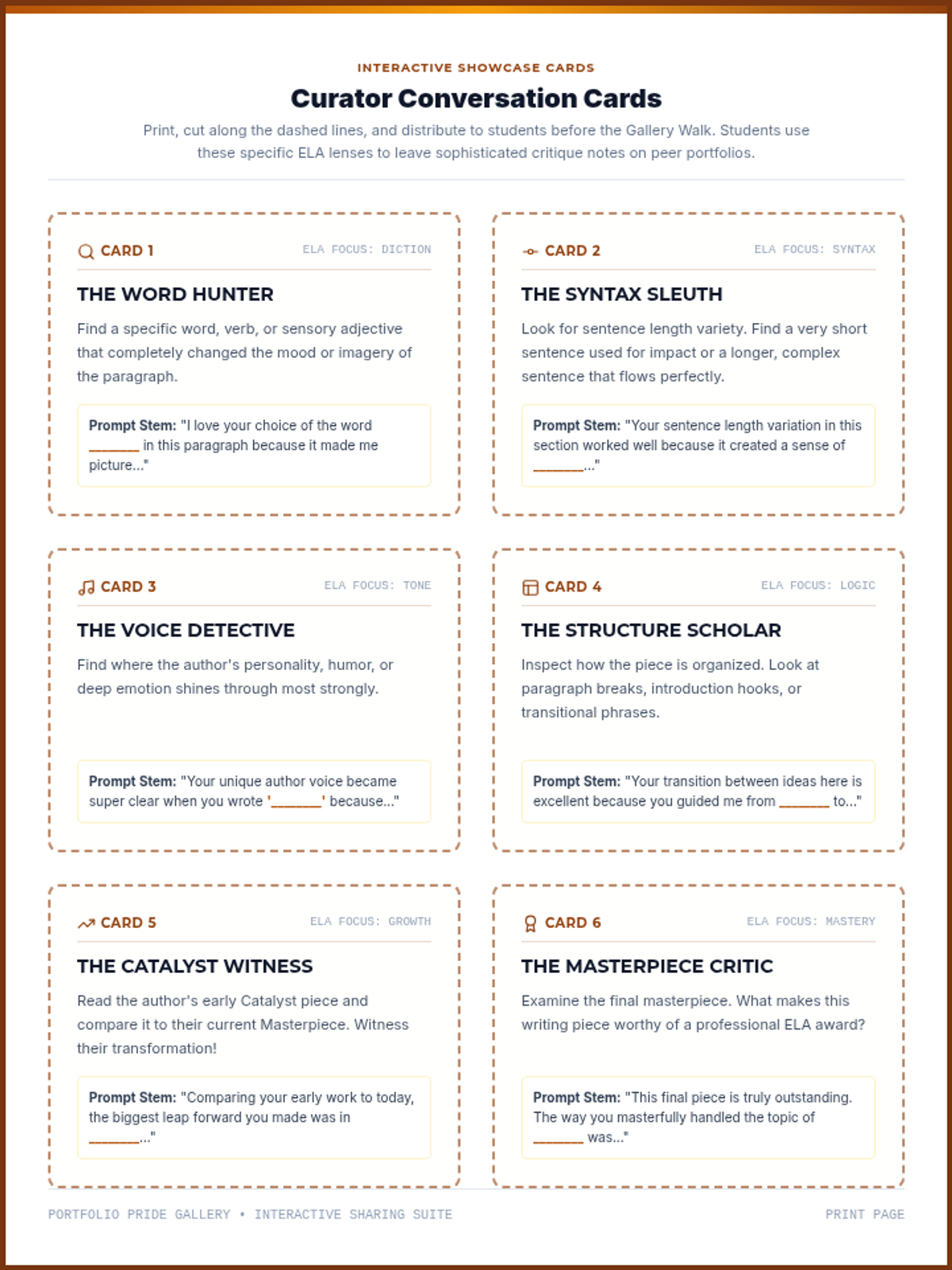
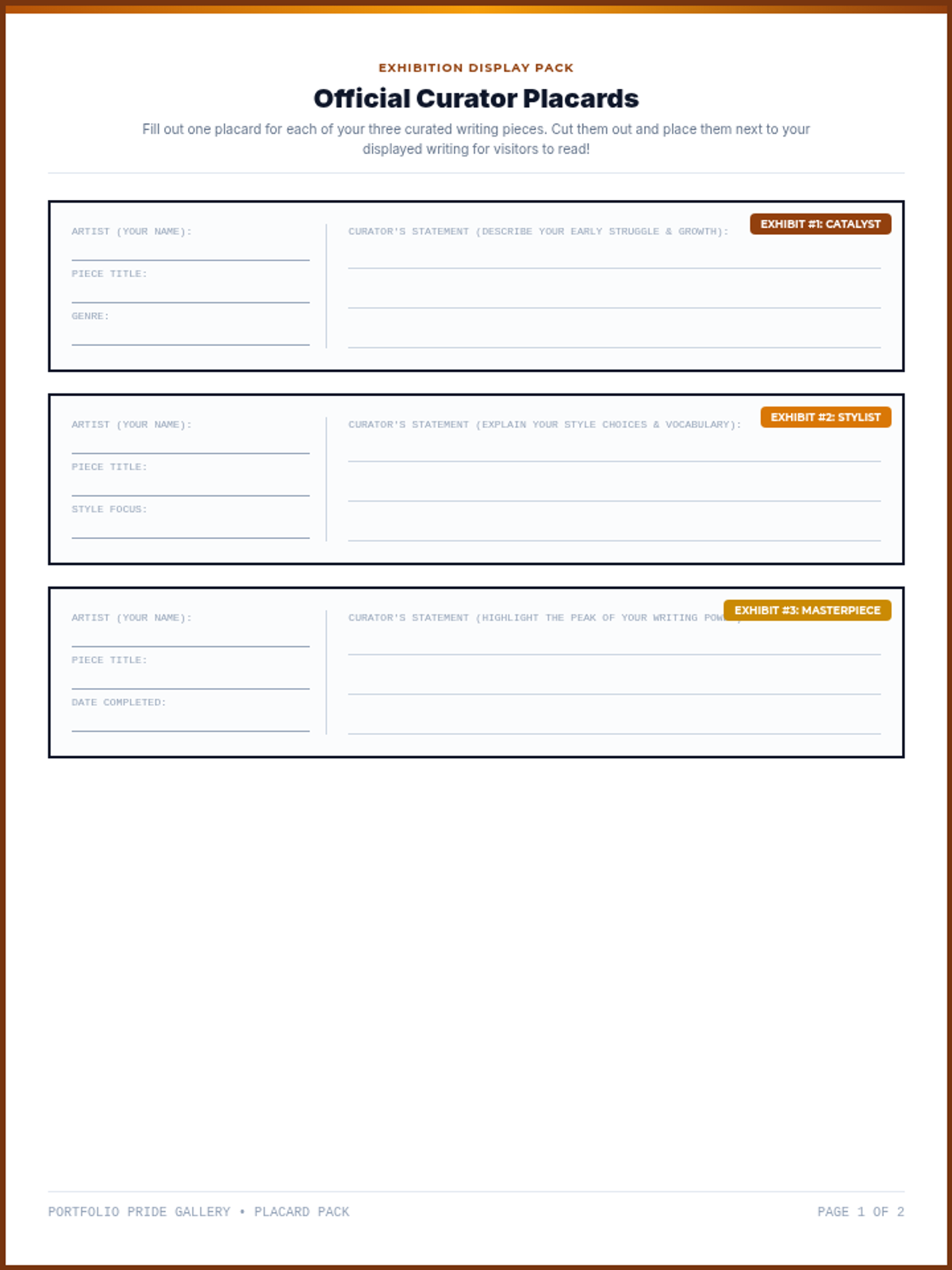
An ELA and self-reflection project where 3rd-6th grade students curate their year-long academic growth, select their best writing, and design an interactive art-gallery-style showcase of their progress.
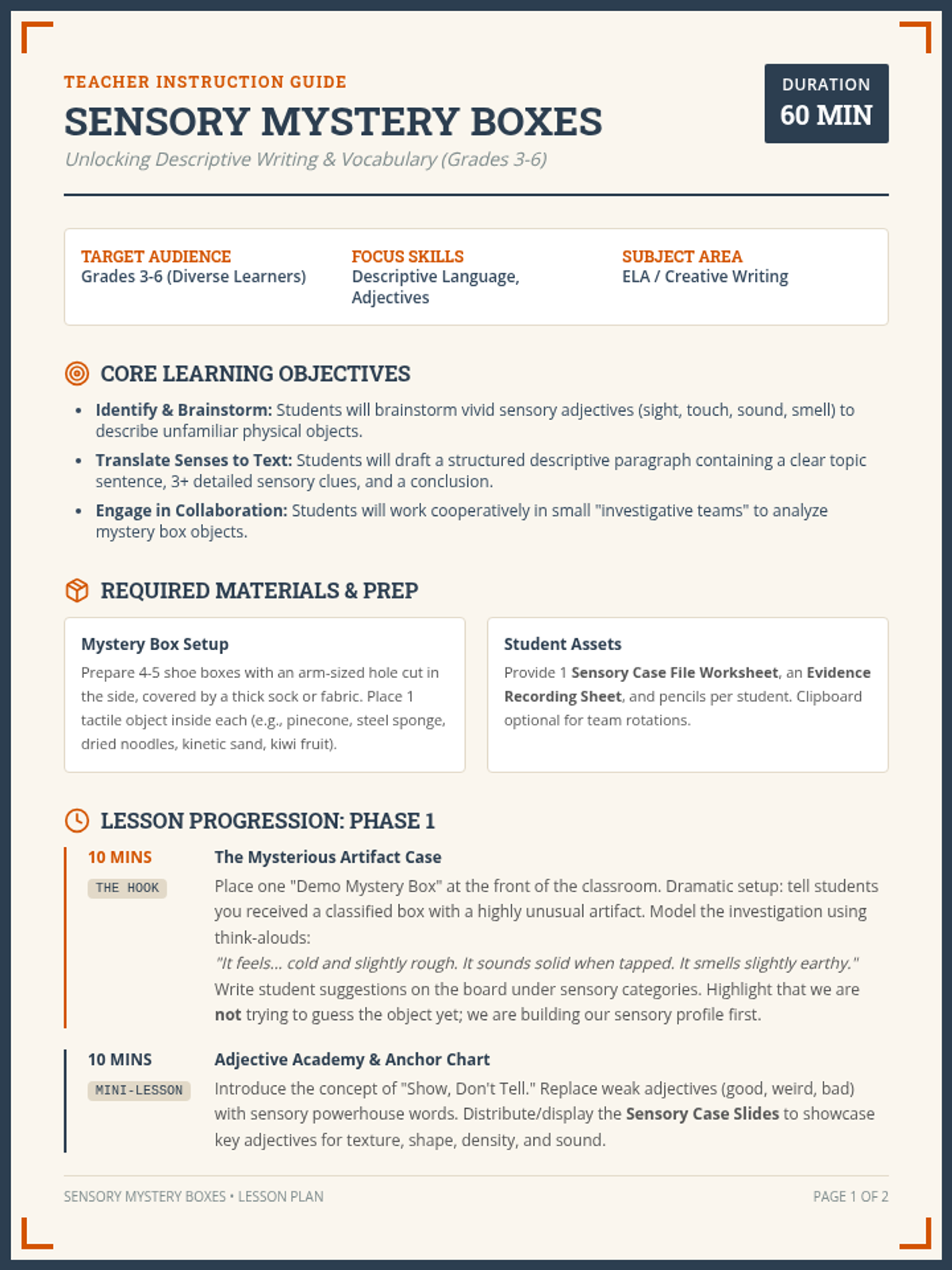
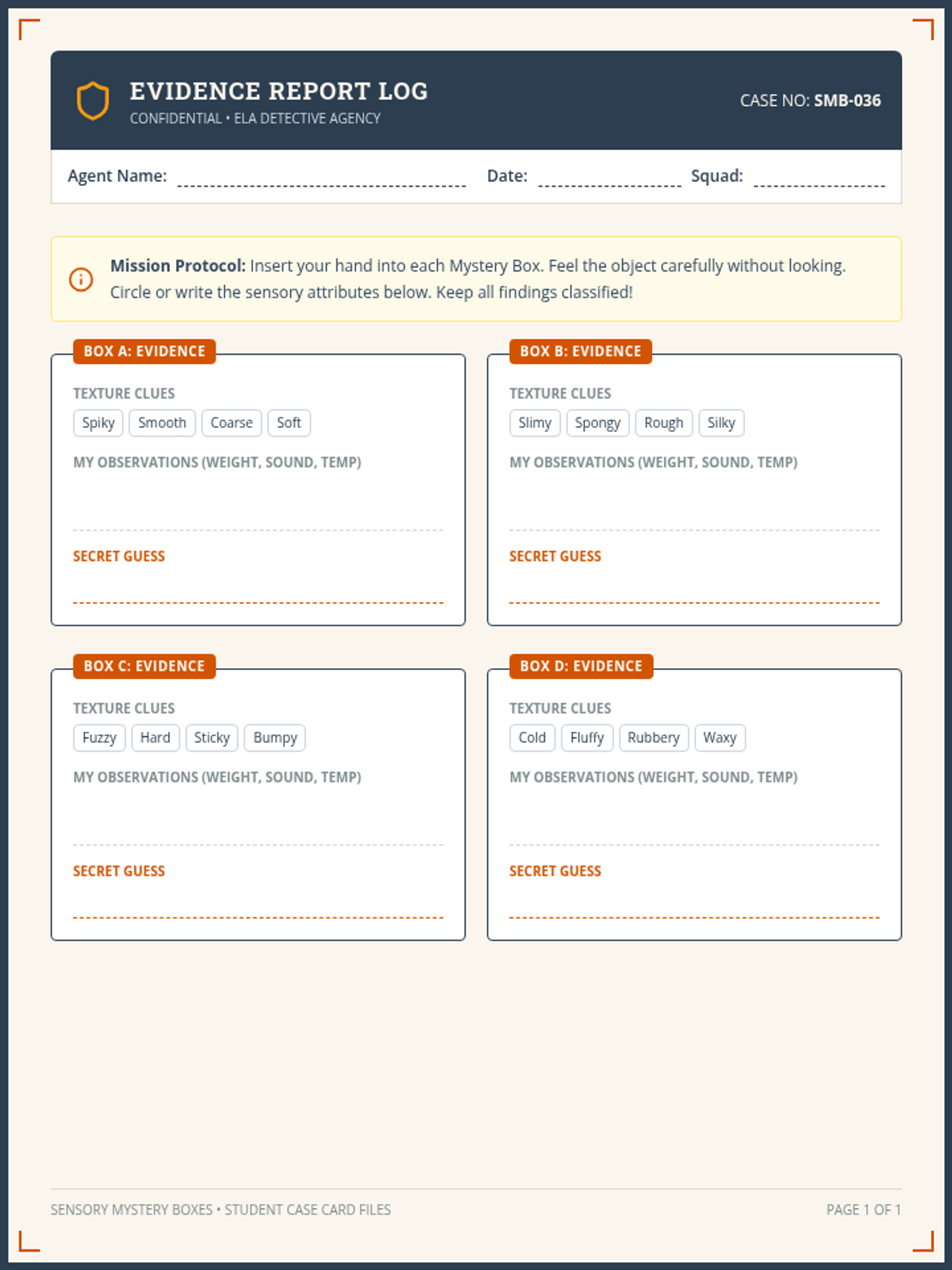
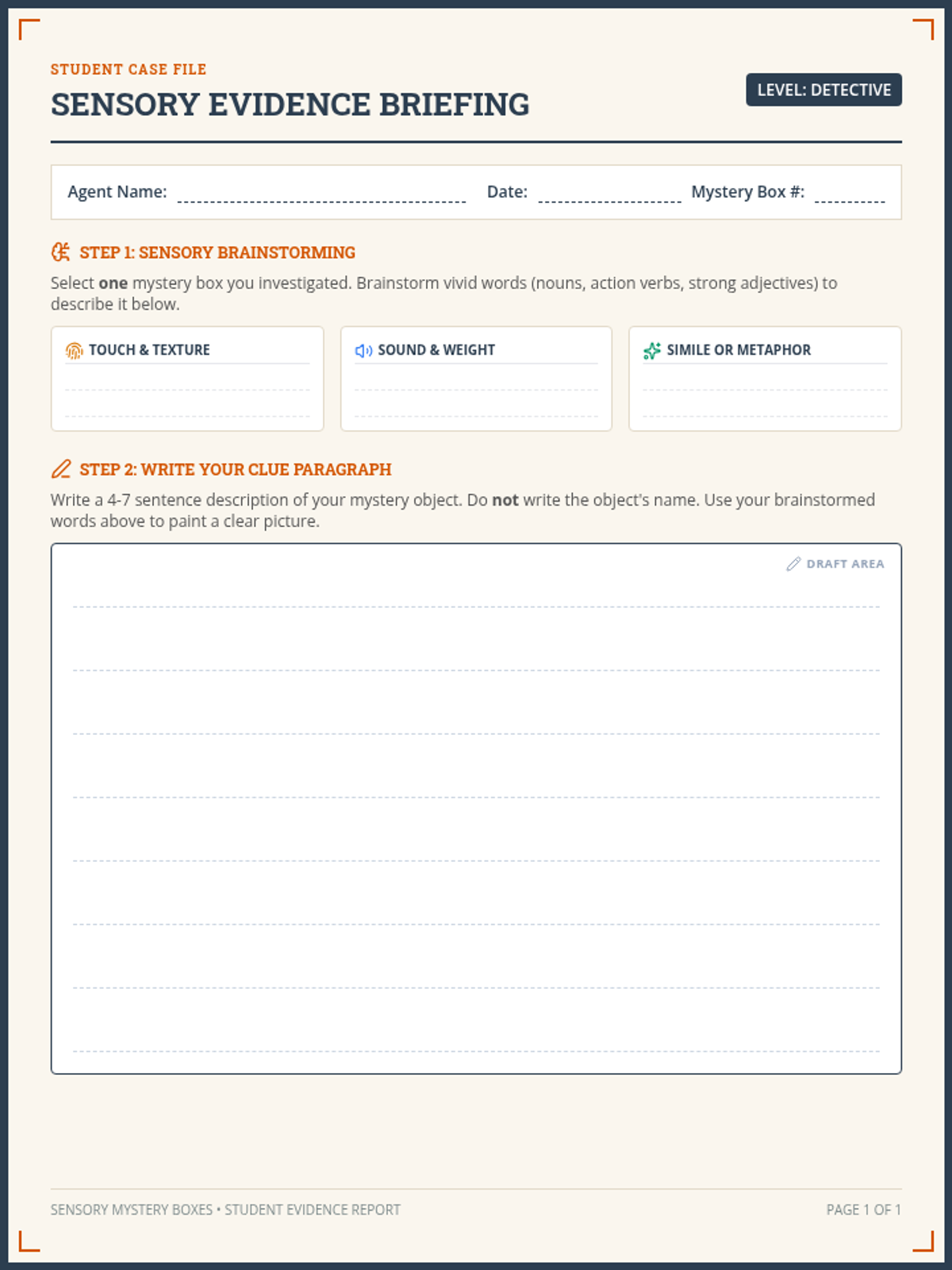
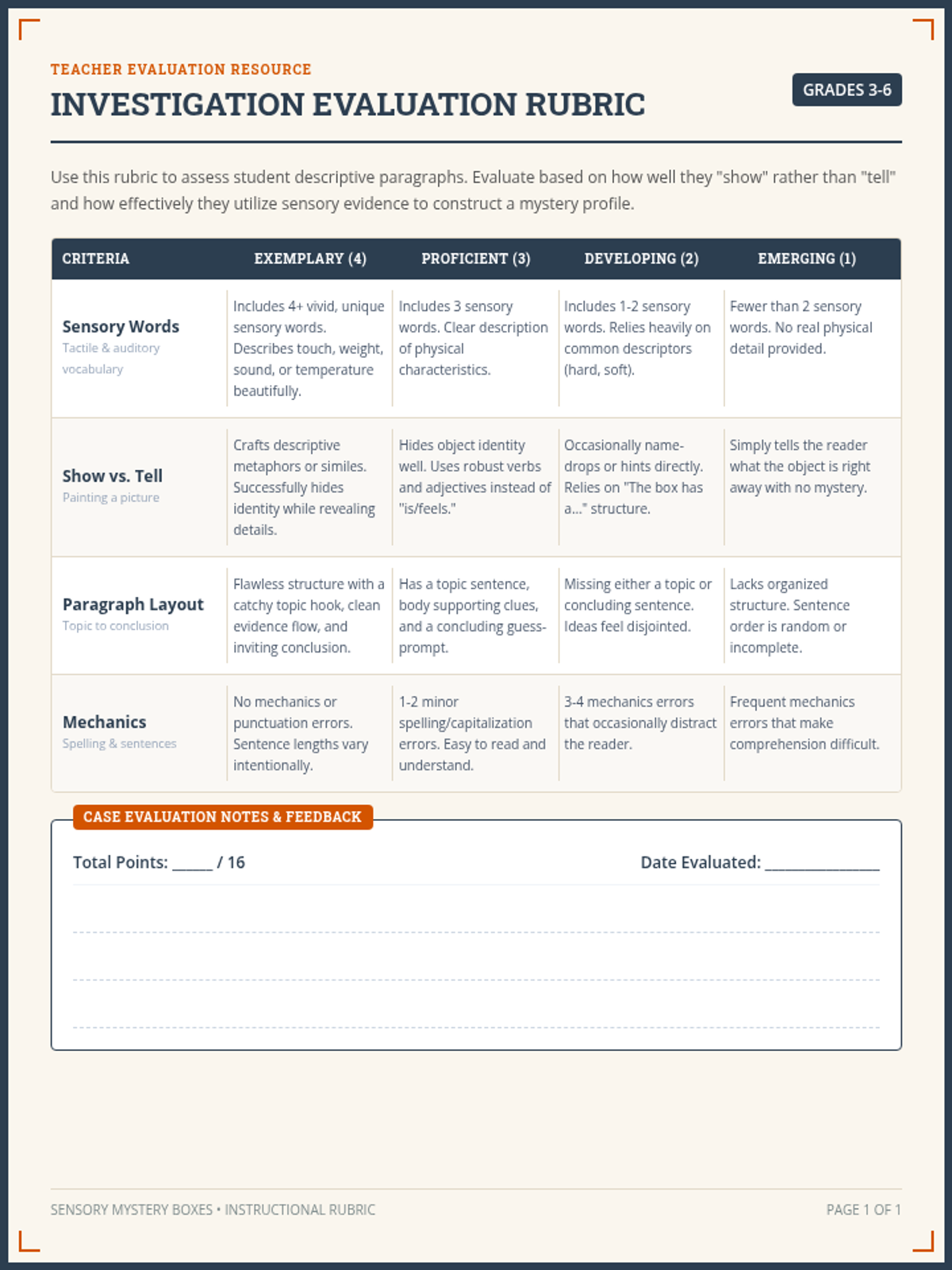
An immersive, multi-sensory ELA lesson designed for grades 3-6 to unlock descriptive writing. Students explore mystery tactile objects, build sensory vocabulary, and compose descriptive paragraphs.
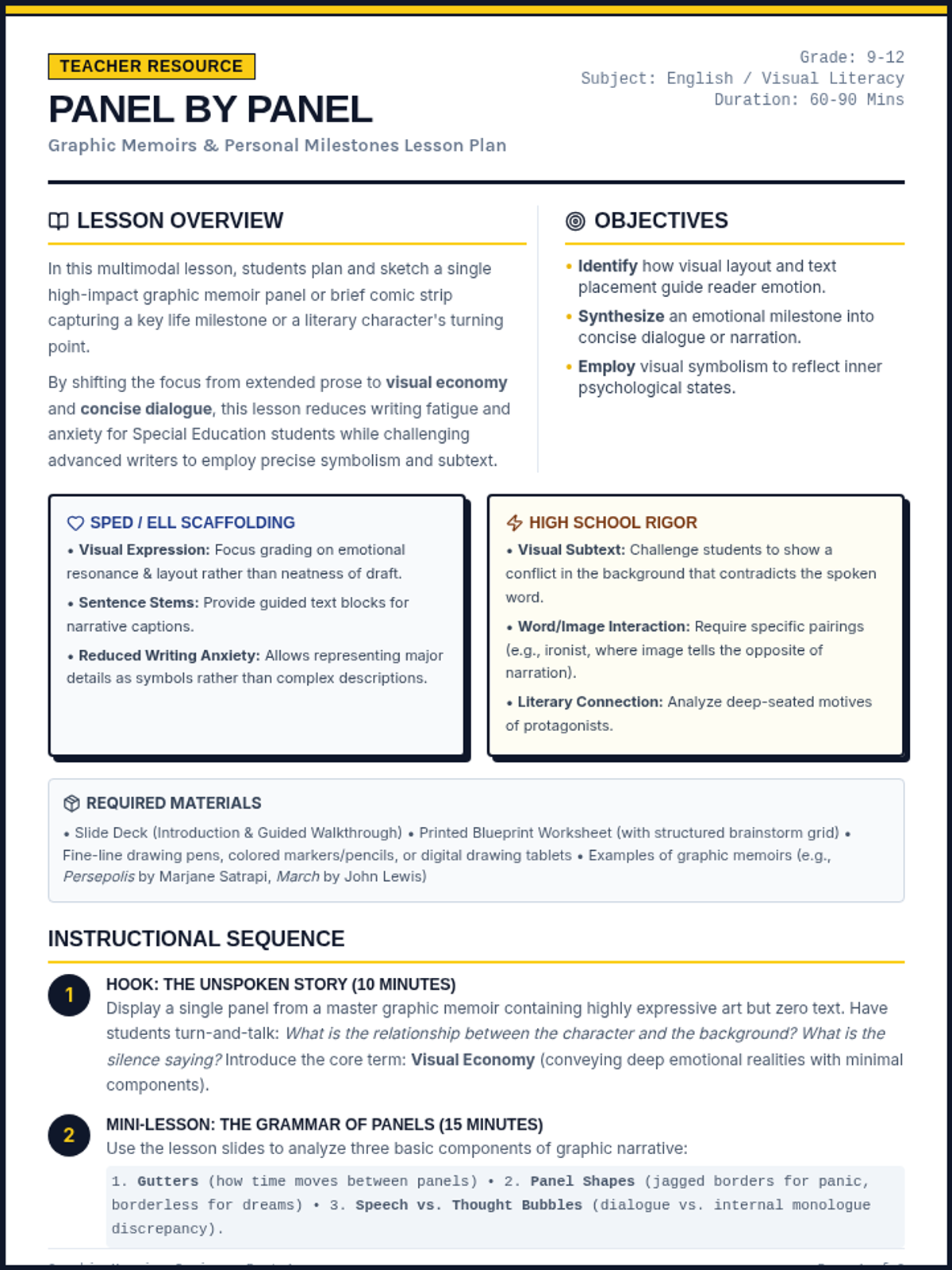
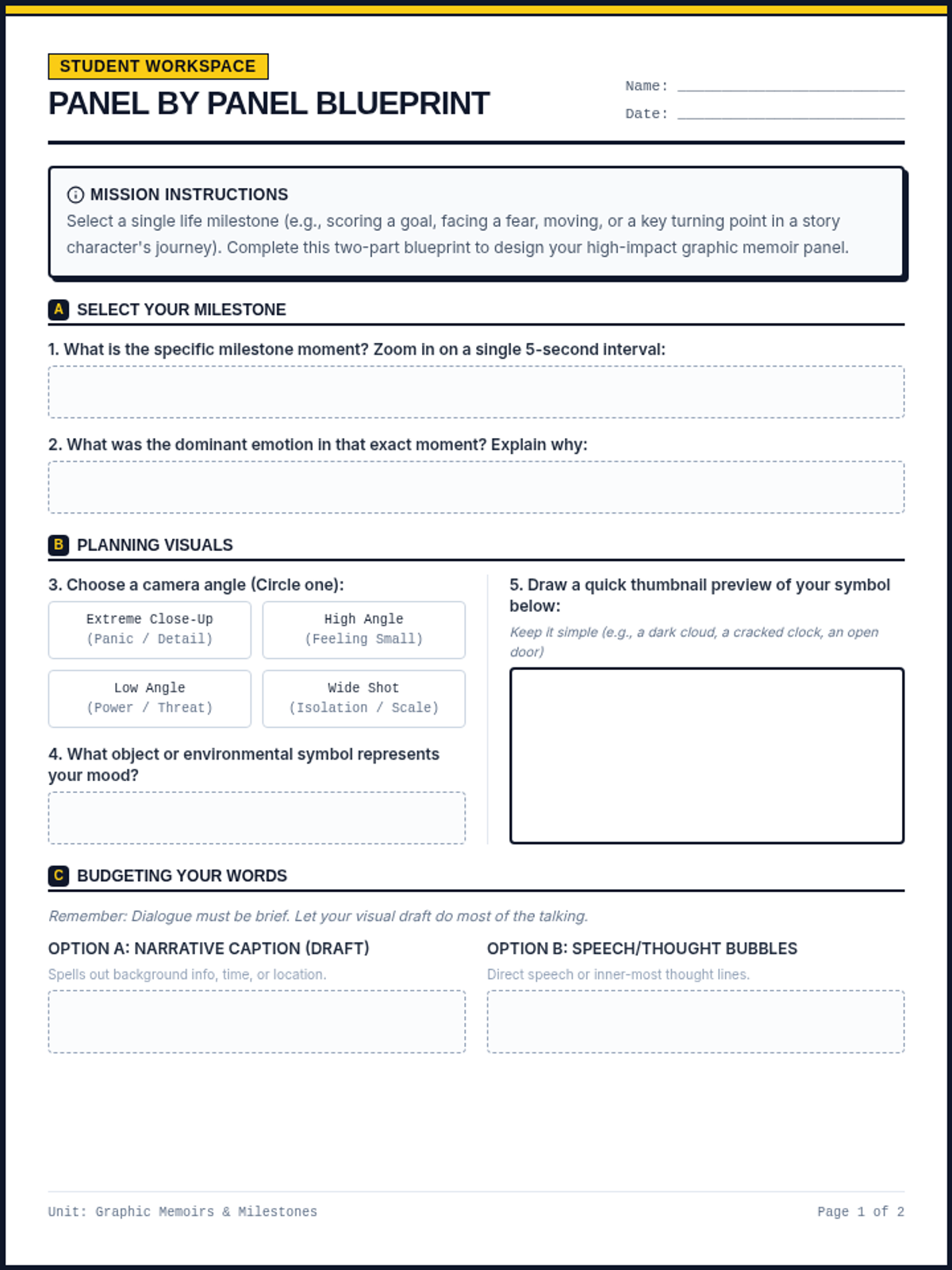
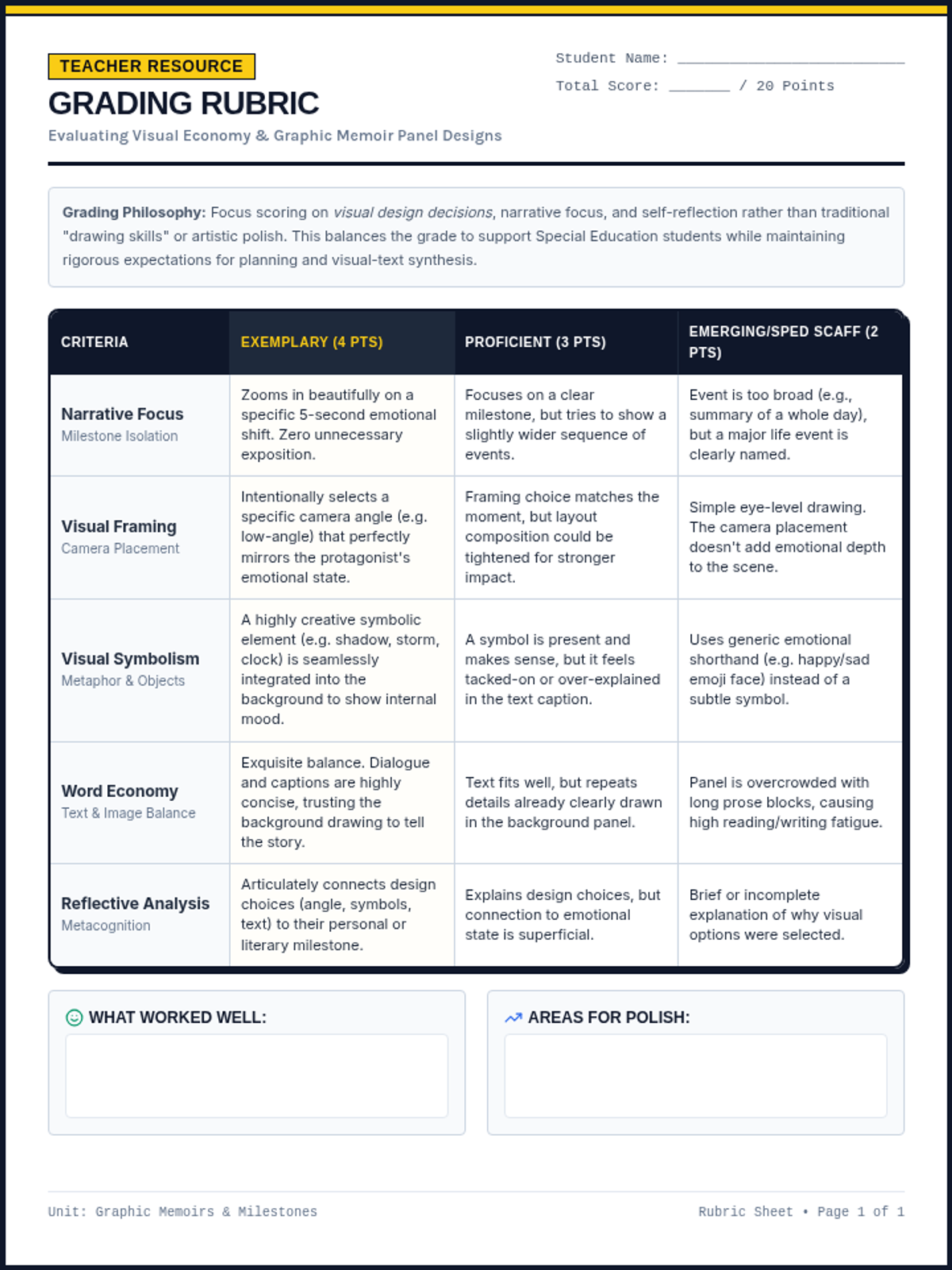
A comprehensive English Language Arts lesson where students plan and design a graphic memoir panel or comic strip capturing a significant milestone. Designed to support Special Education students via multimodal expression while challenging high school students with concise dialogue and visual symbolism.
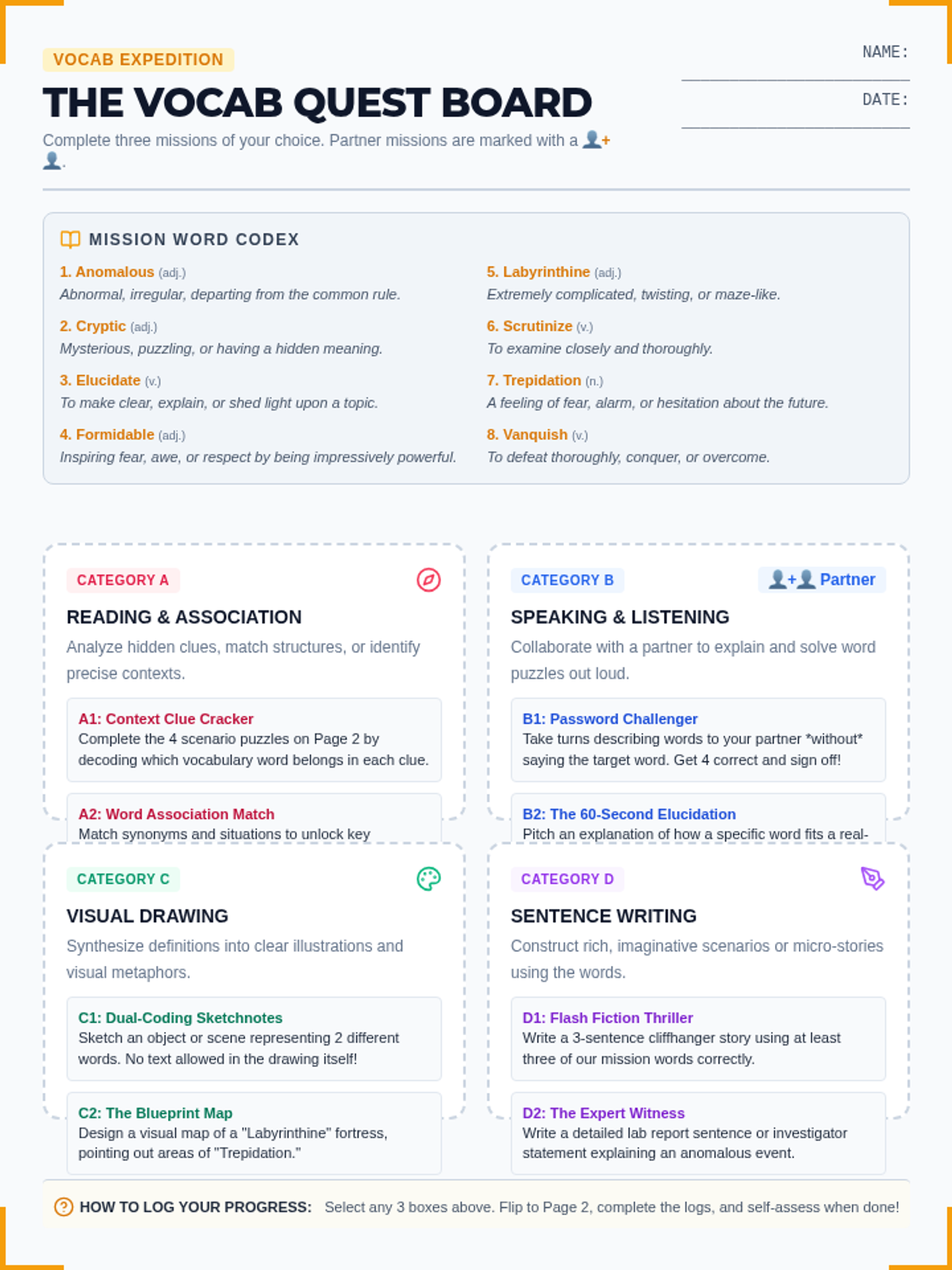
A vocabulary review lesson utilizing a thematic Choice Board Matrix, focusing on critical thinking, collaborative partner speaking, reading comprehension, visual sketching, and creative writing.
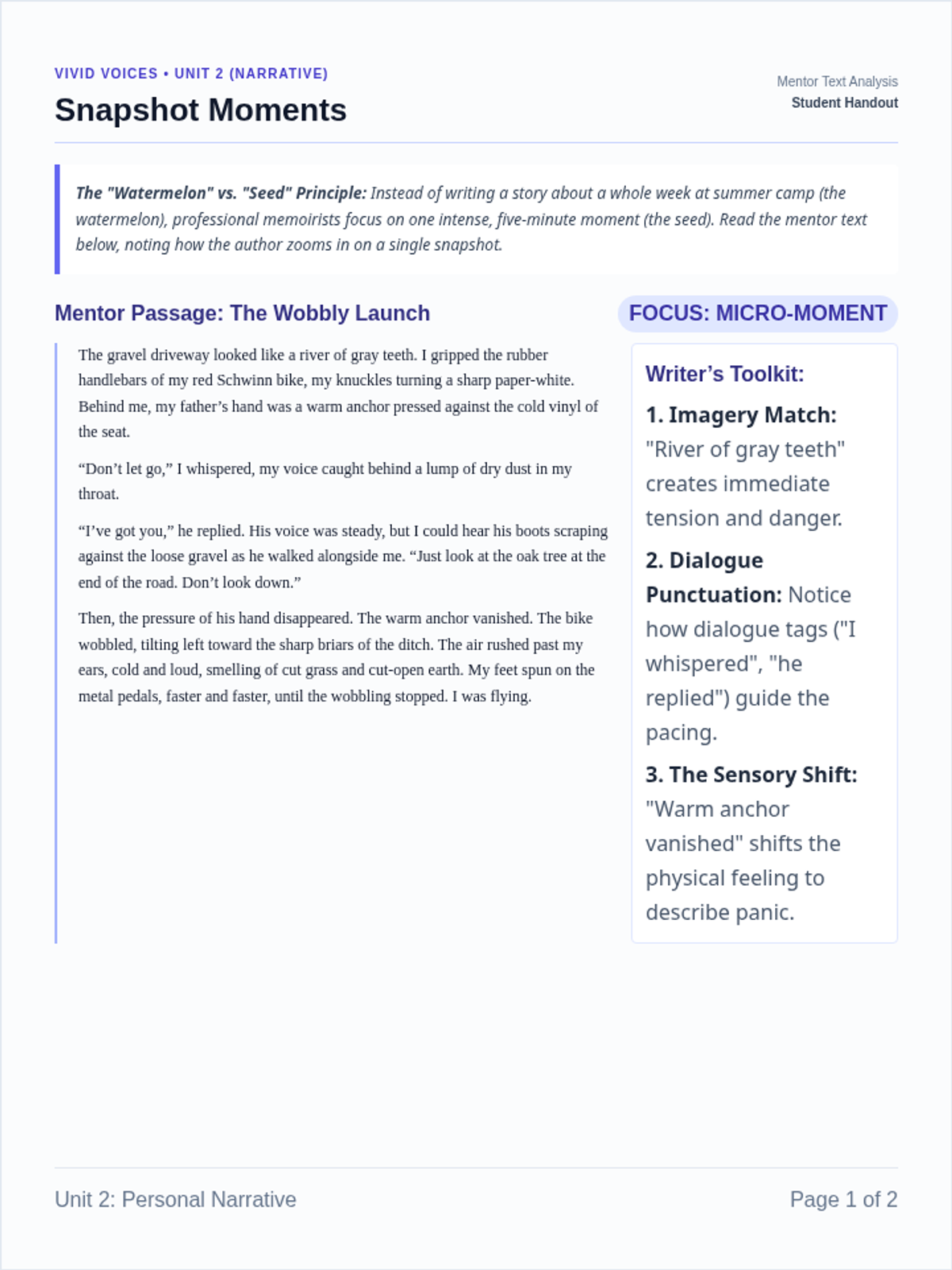
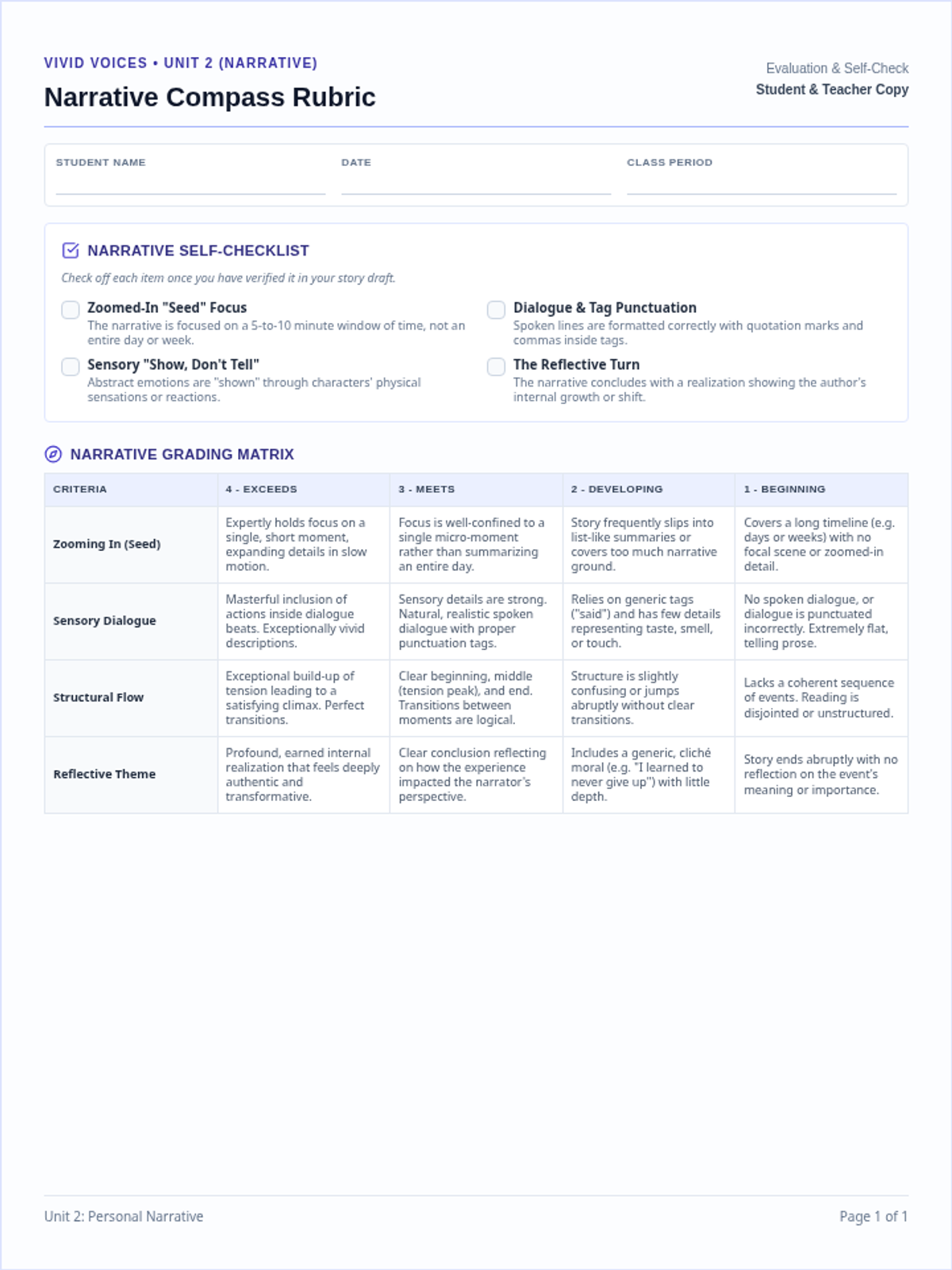
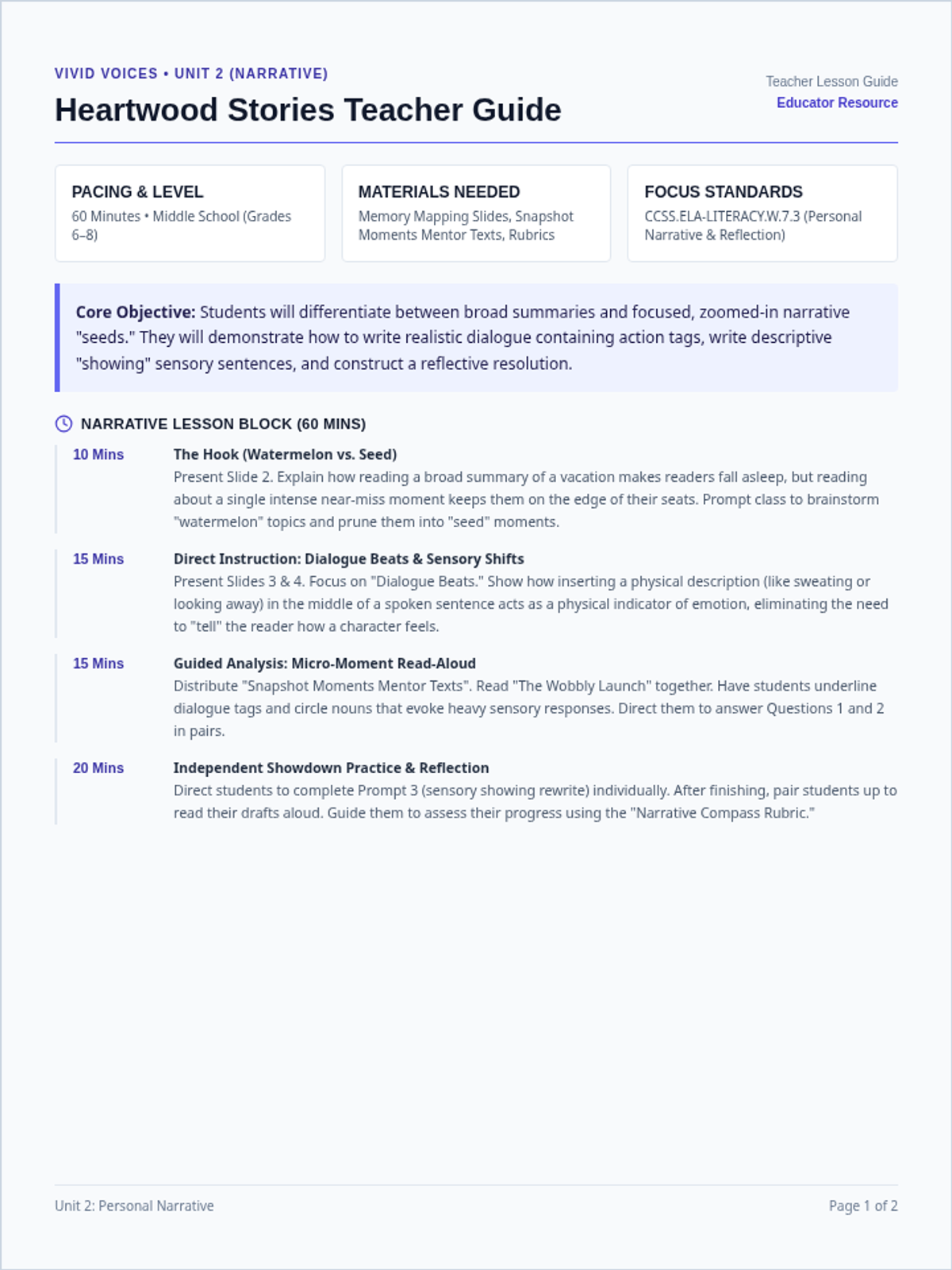
A journey into transforming real-life memories into vivid prose. Students practice zooming in on 'snapshot moments', writing realistic dialogue, and developing authentic reflective themes.
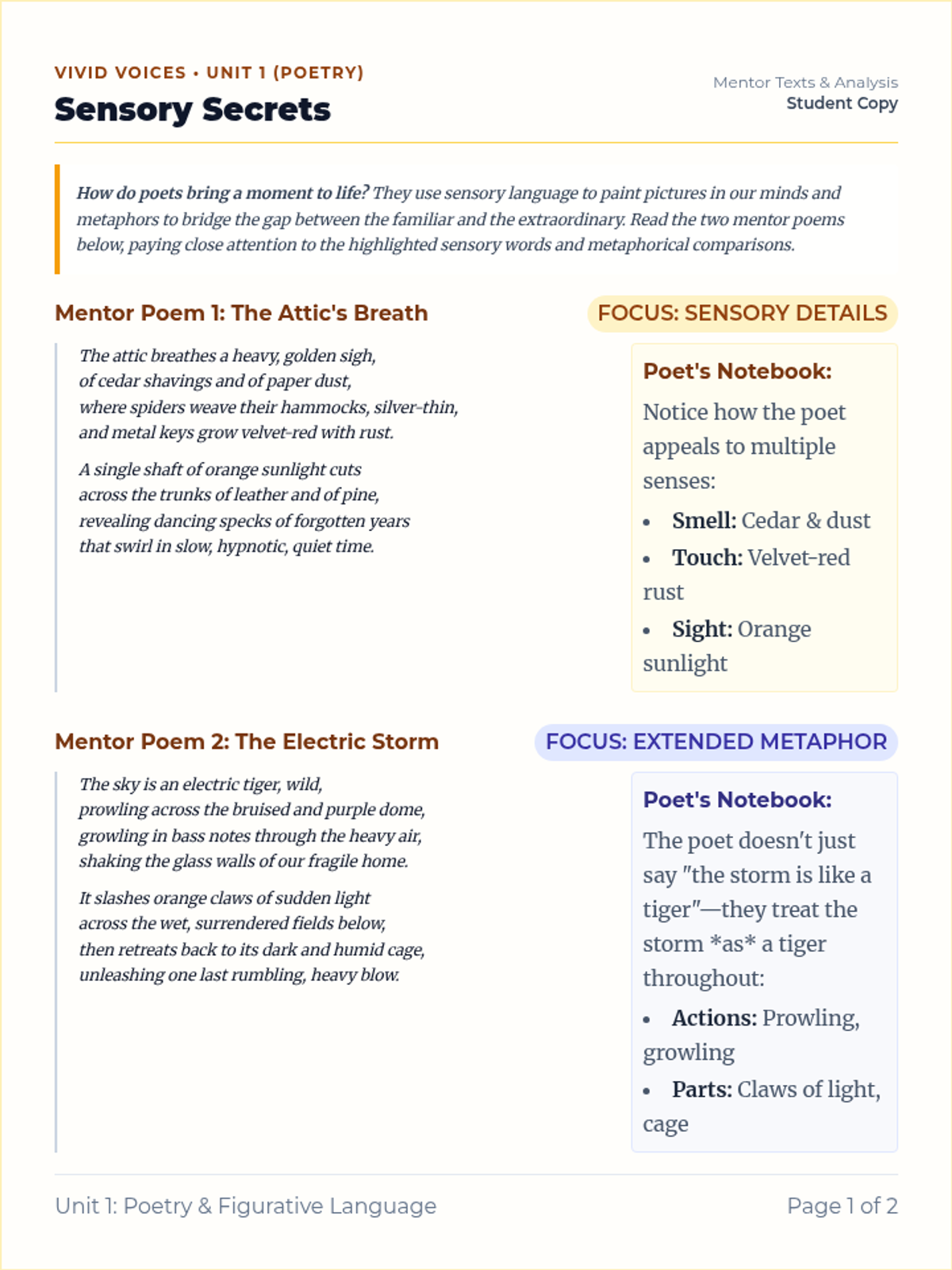
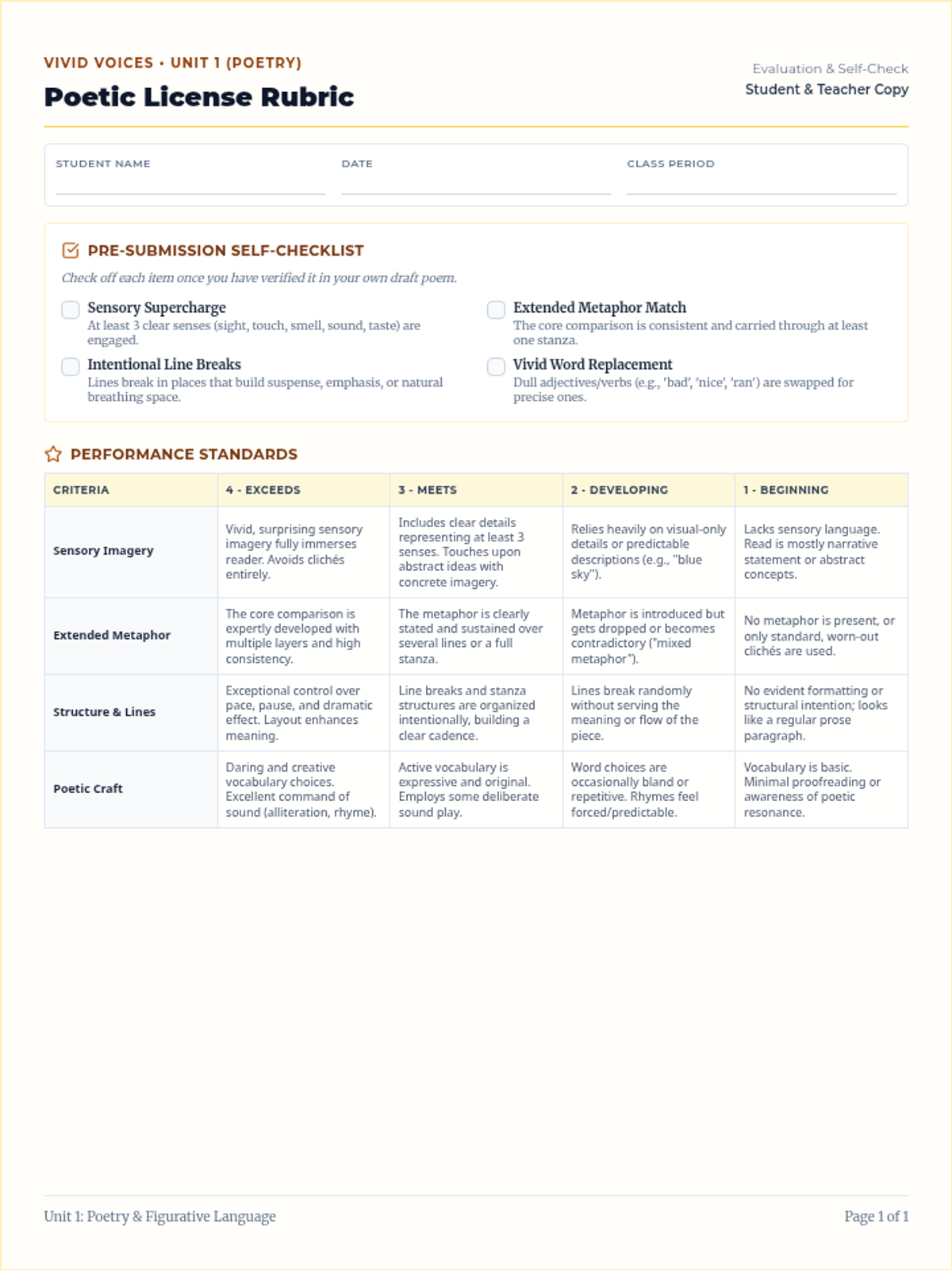
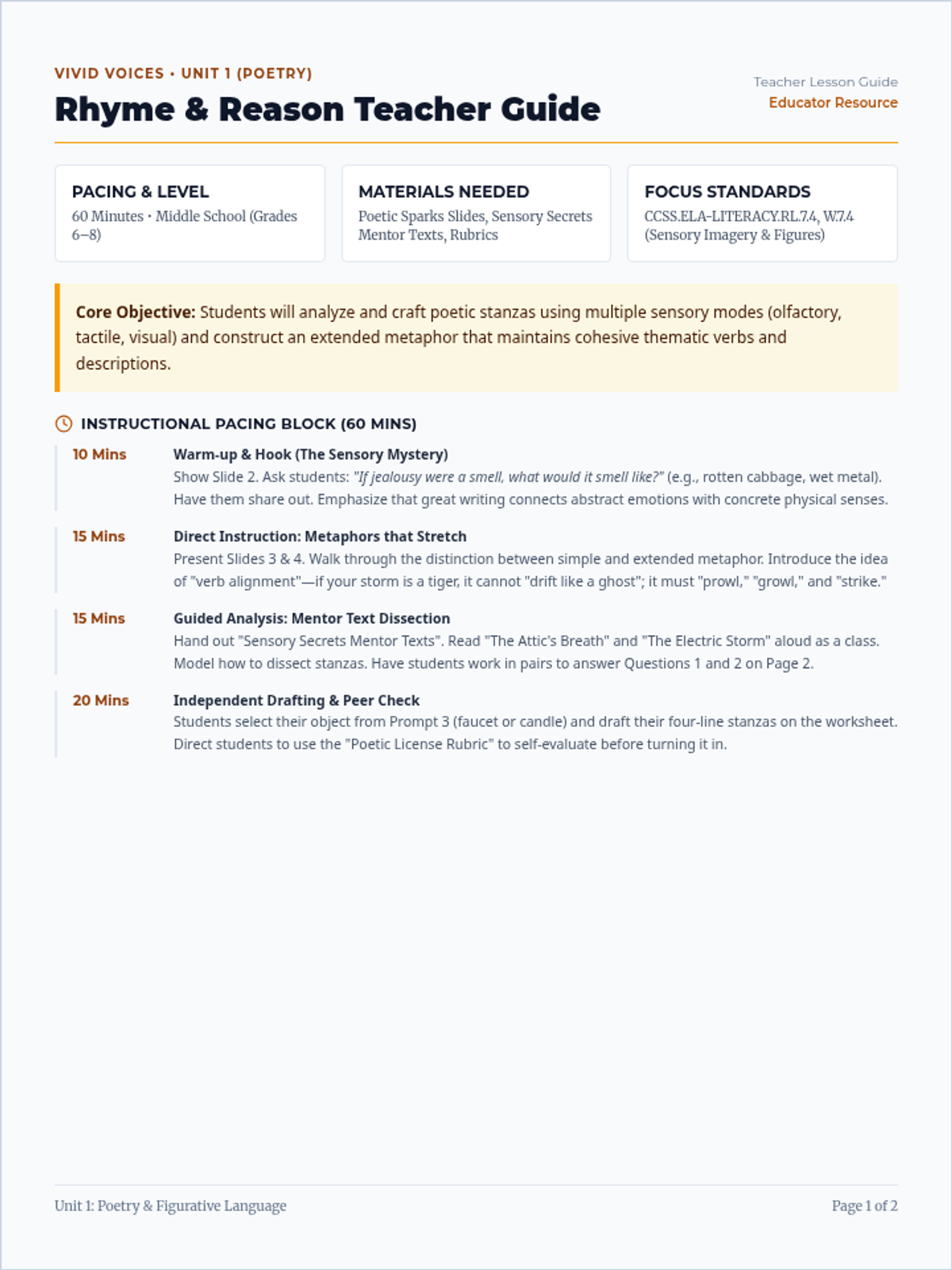
An immersive exploration of sensory imagery, metaphor, rhythm, and structure. Students examine classic and modern mentor poems and draft original pieces using figurative language.
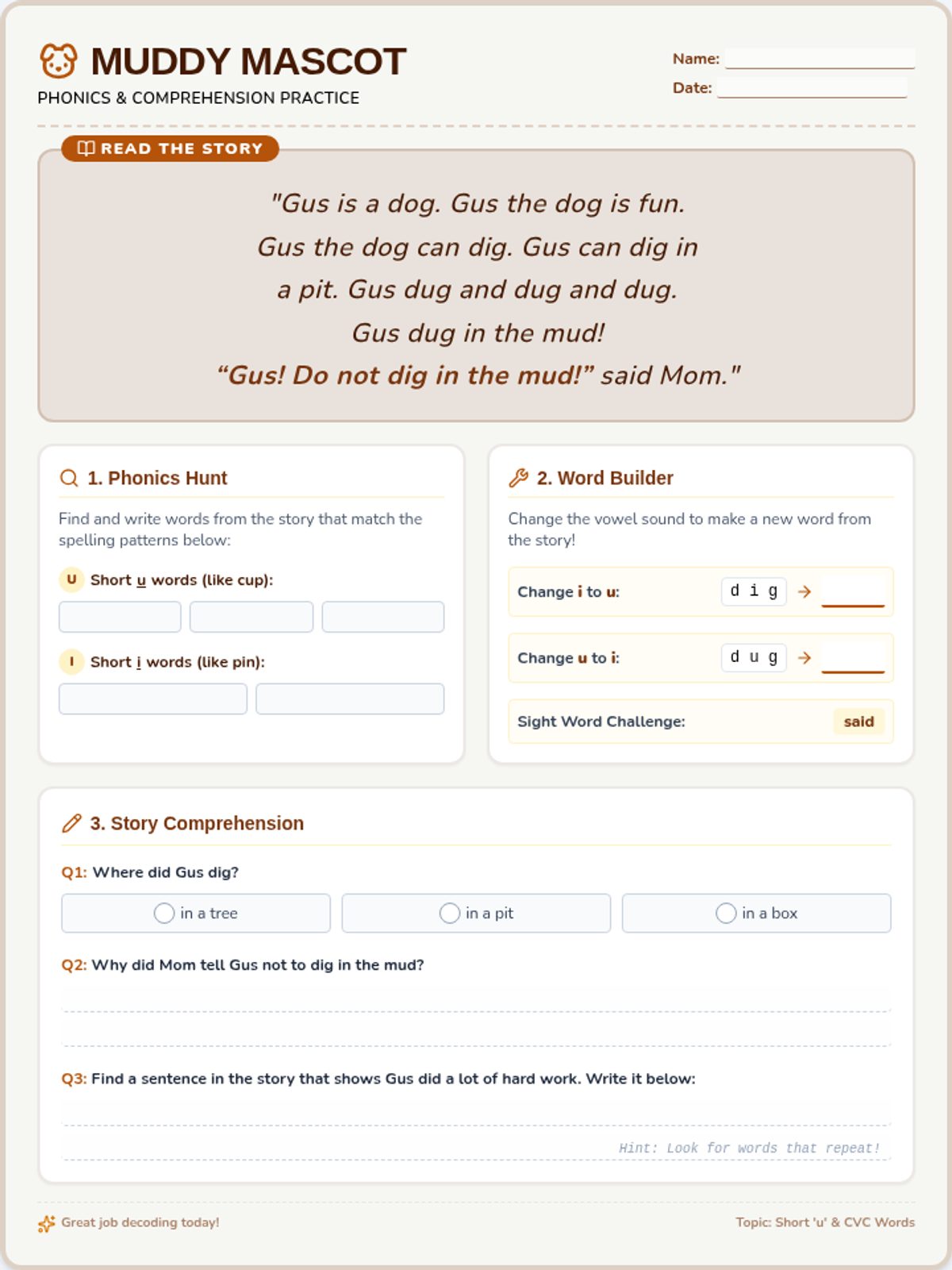
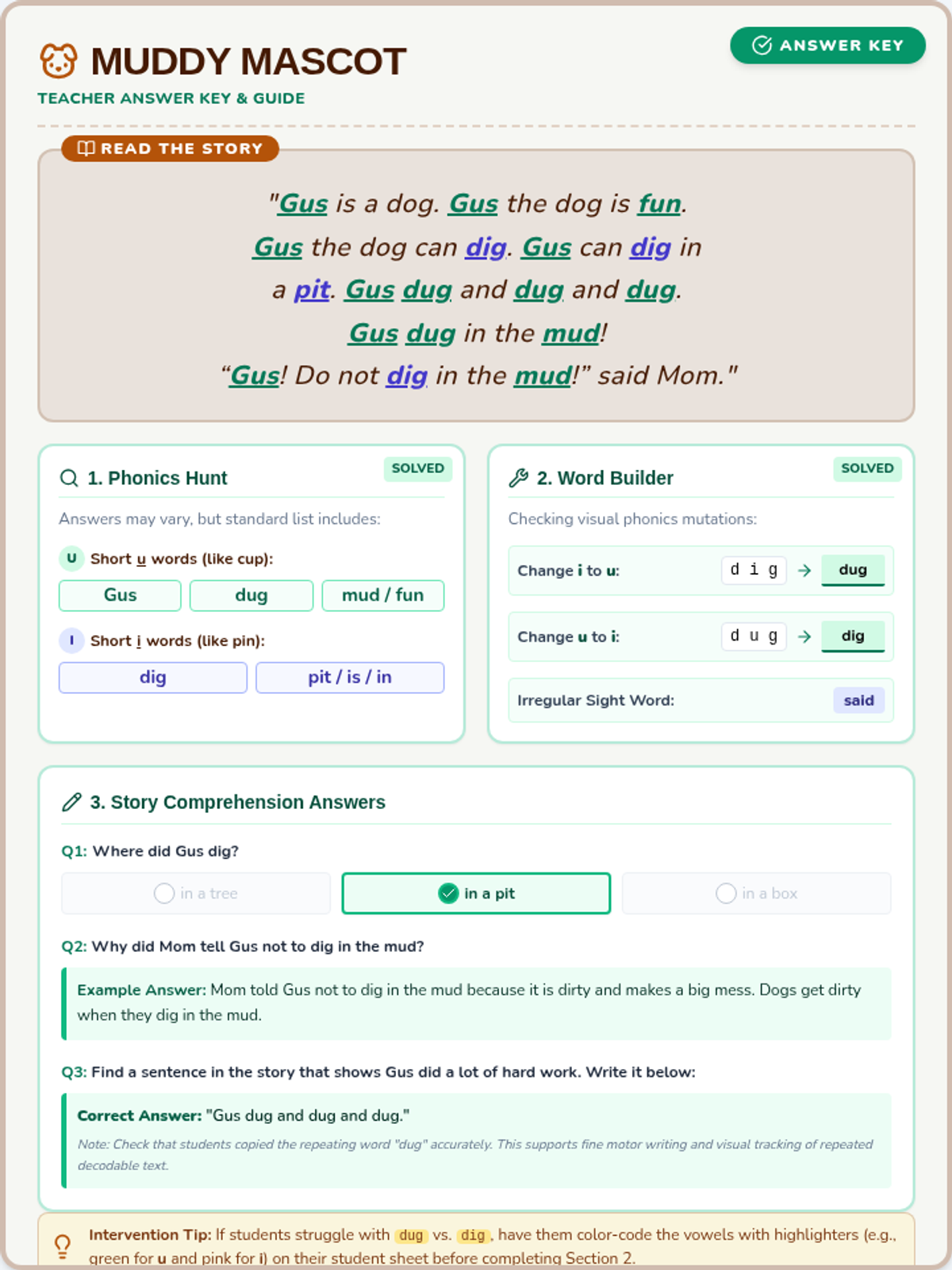
A phonics-focused reading comprehension lesson for Grade 3 reading intervention, centered on decoding CVC words, short 'u' sounds, and sight words through a story about a playful dog named Gus.
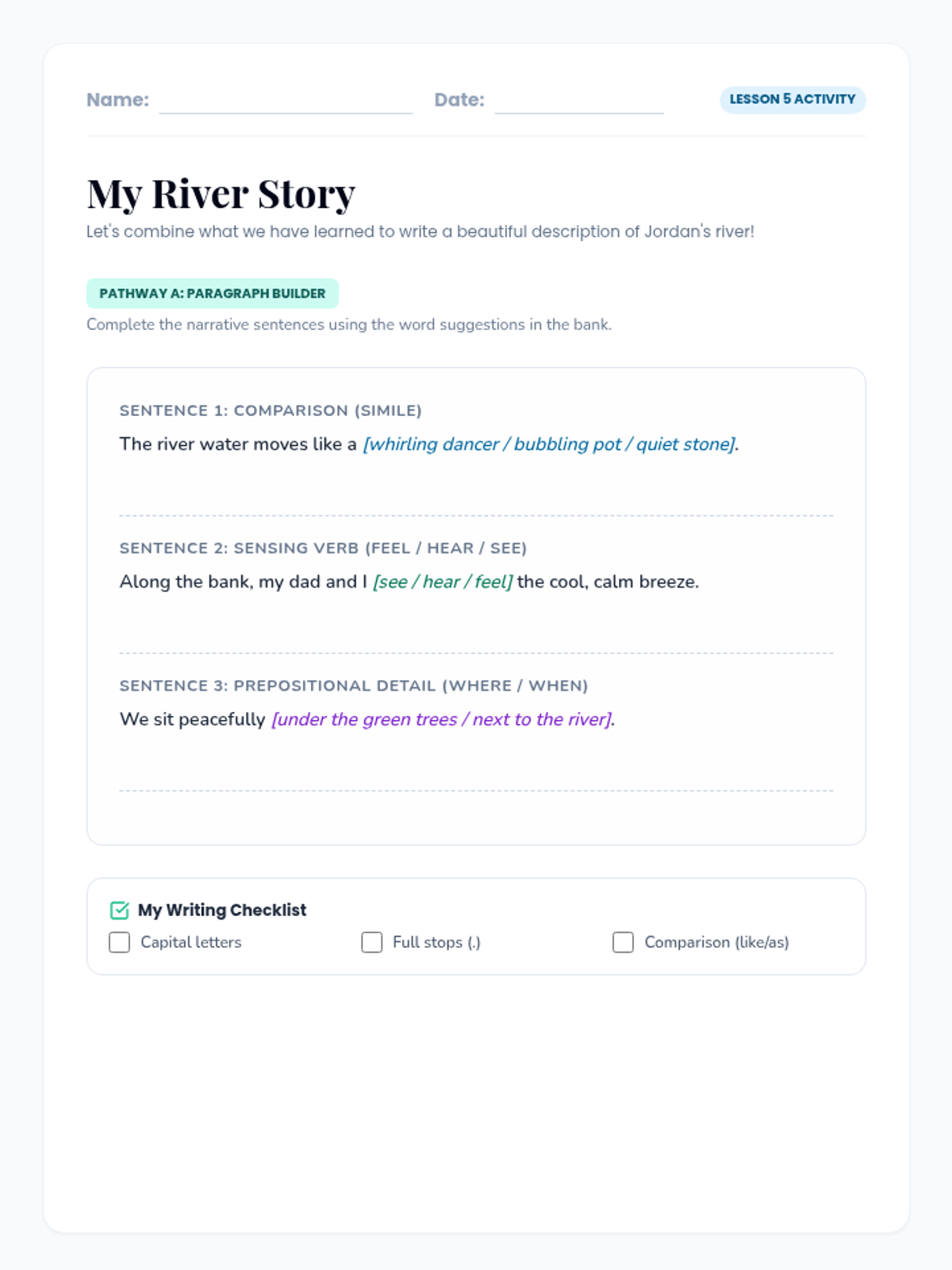
Students combine their cumulative learning of sensing verbs, prepositional phrases, and comparisons to co-construct and independently draft a descriptive paragraph about an outback landscape, utilizing a multi-tiered writing frame.
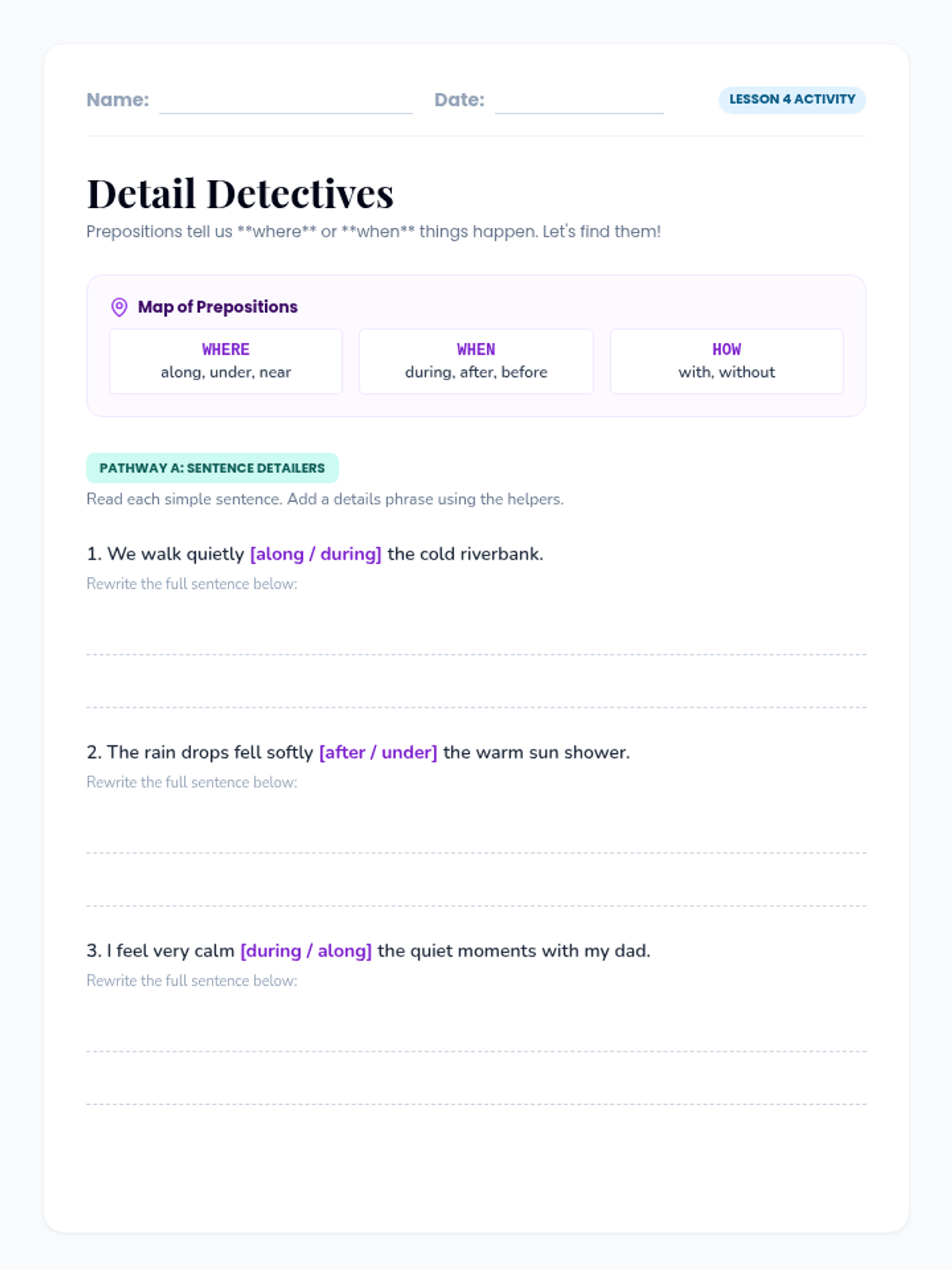
Students learn how prepositional phrases give information about 'where' and 'when' events occur, practicing adding them to simple sentences containing sensing verbs to build descriptive detail.