An introductory exploration of Ancient Egyptian civilization, focusing on the architectural grandeur of the pyramids and the divine authority of the pharaohs. Students will examine the intersection of engineering, mythology, and social hierarchy.
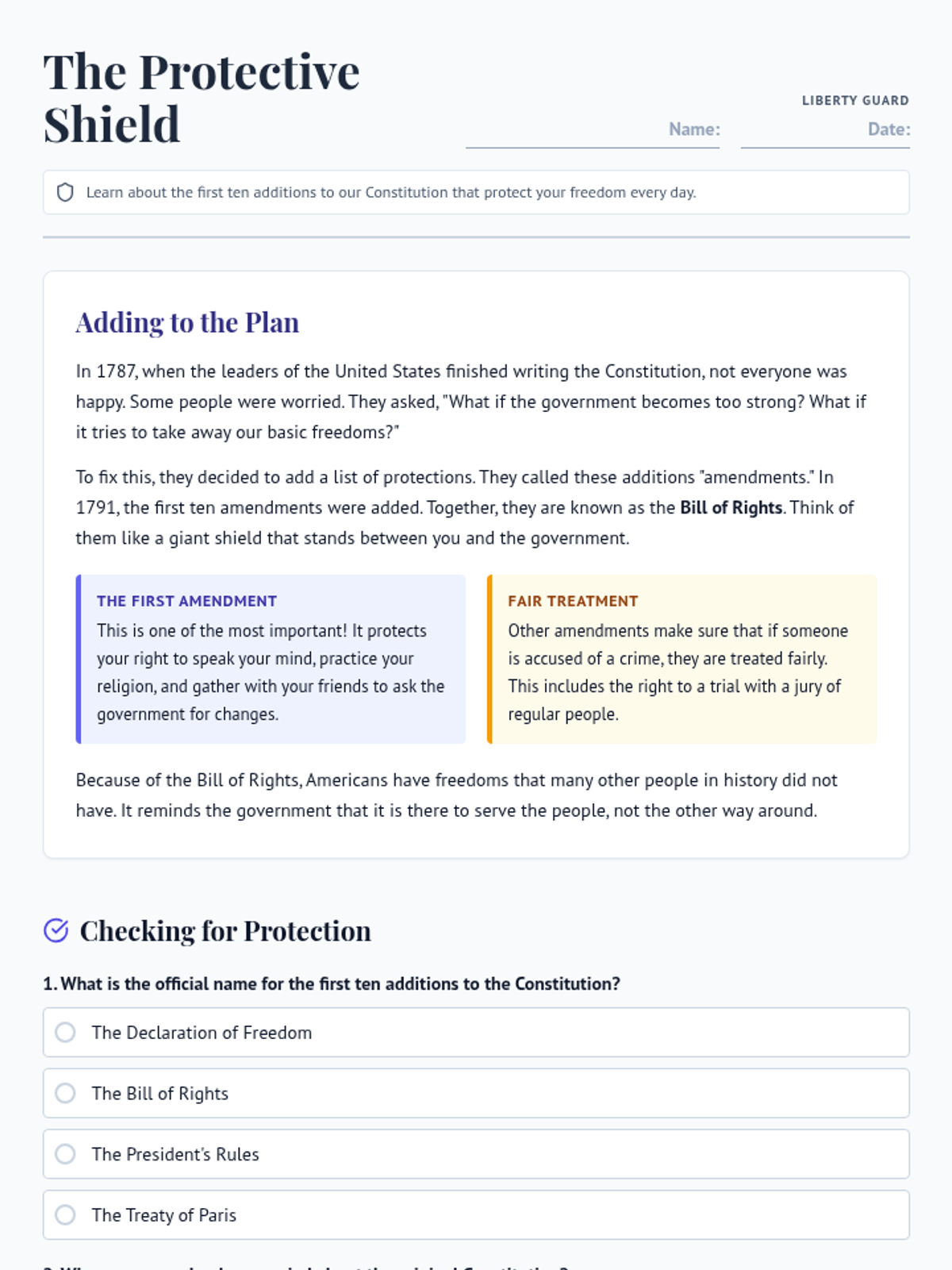
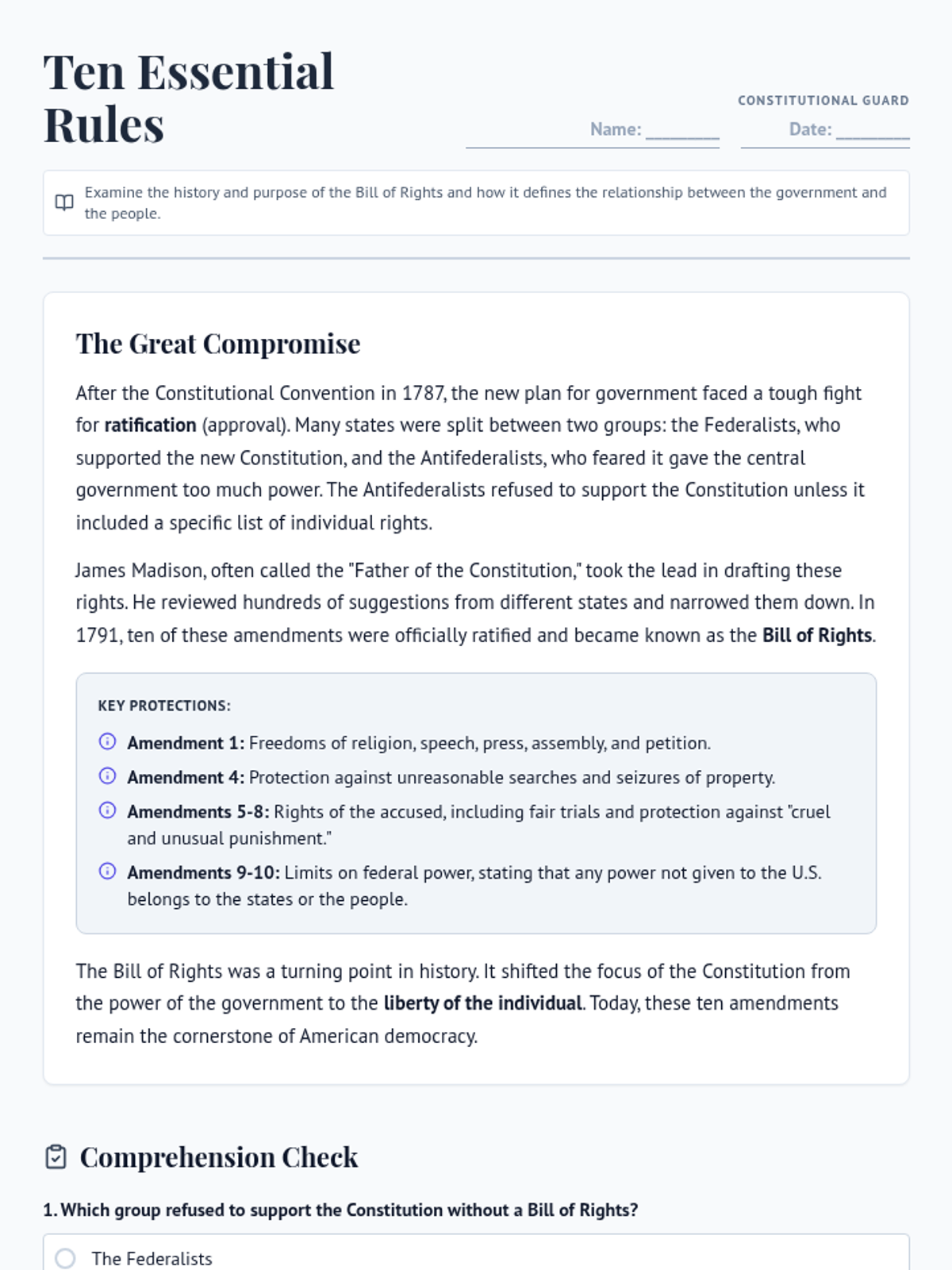
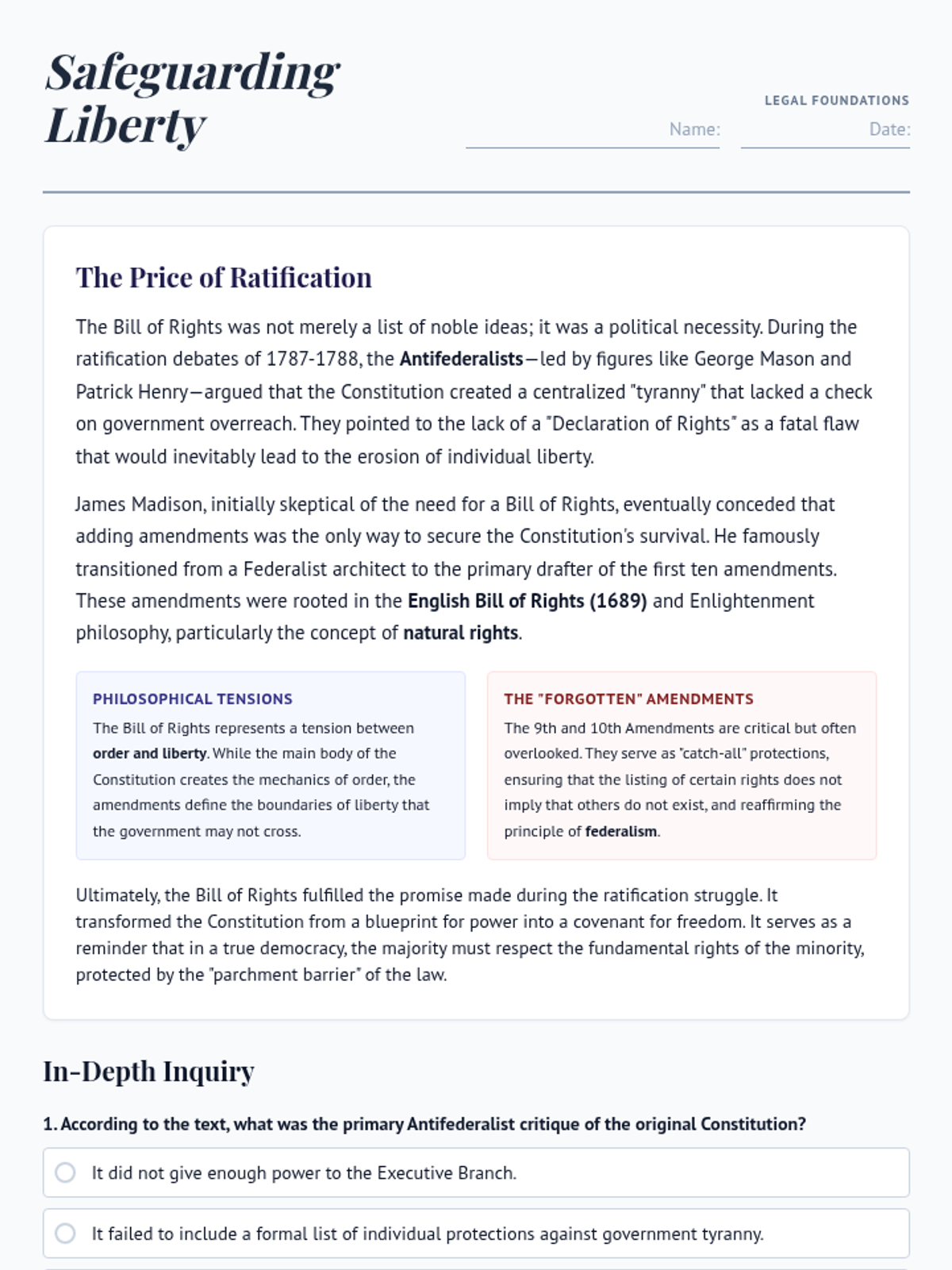
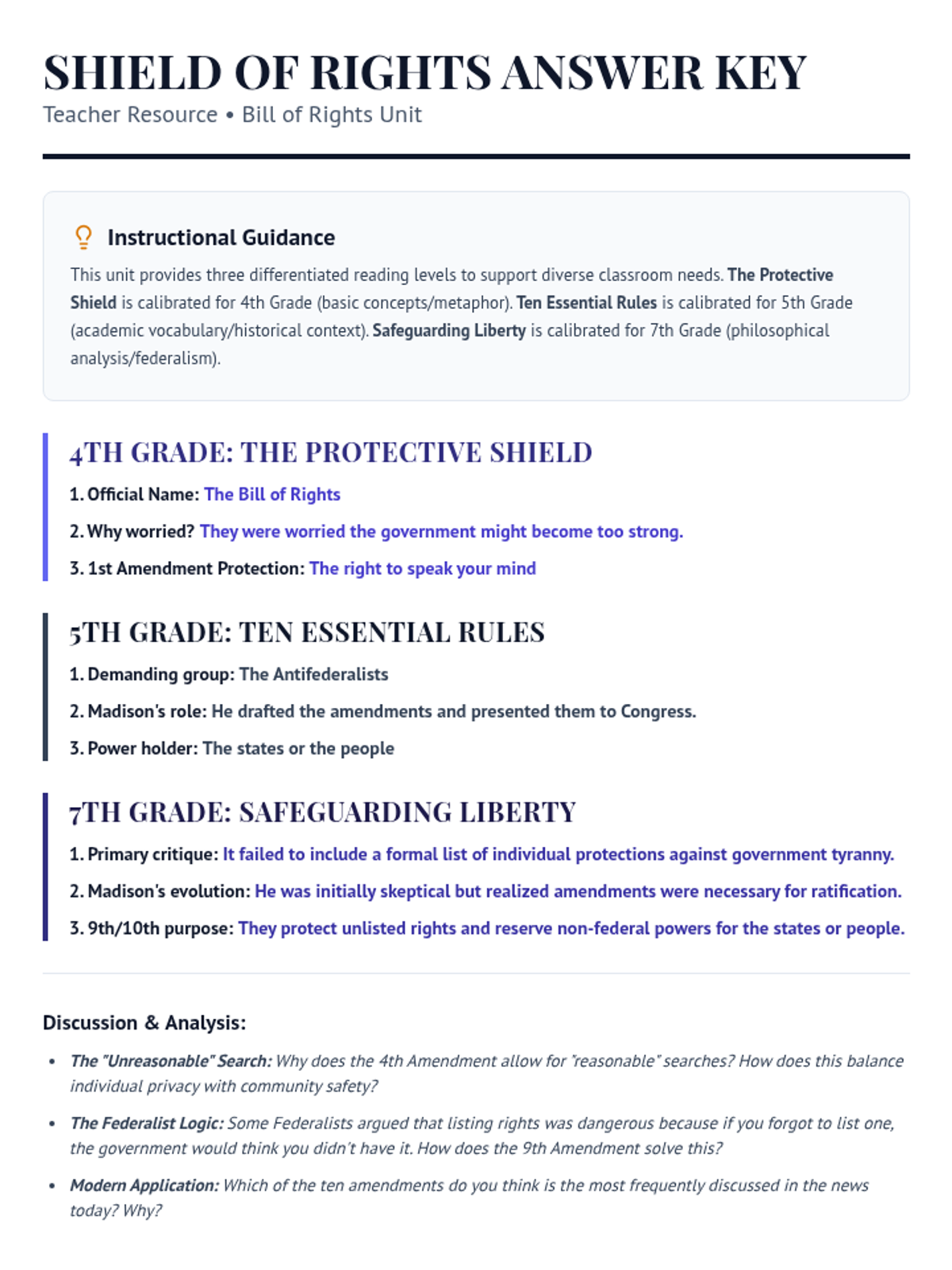
An exploration of the first ten amendments to the United States Constitution, known as the Bill of Rights, and their role in protecting individual liberties from government overreach.
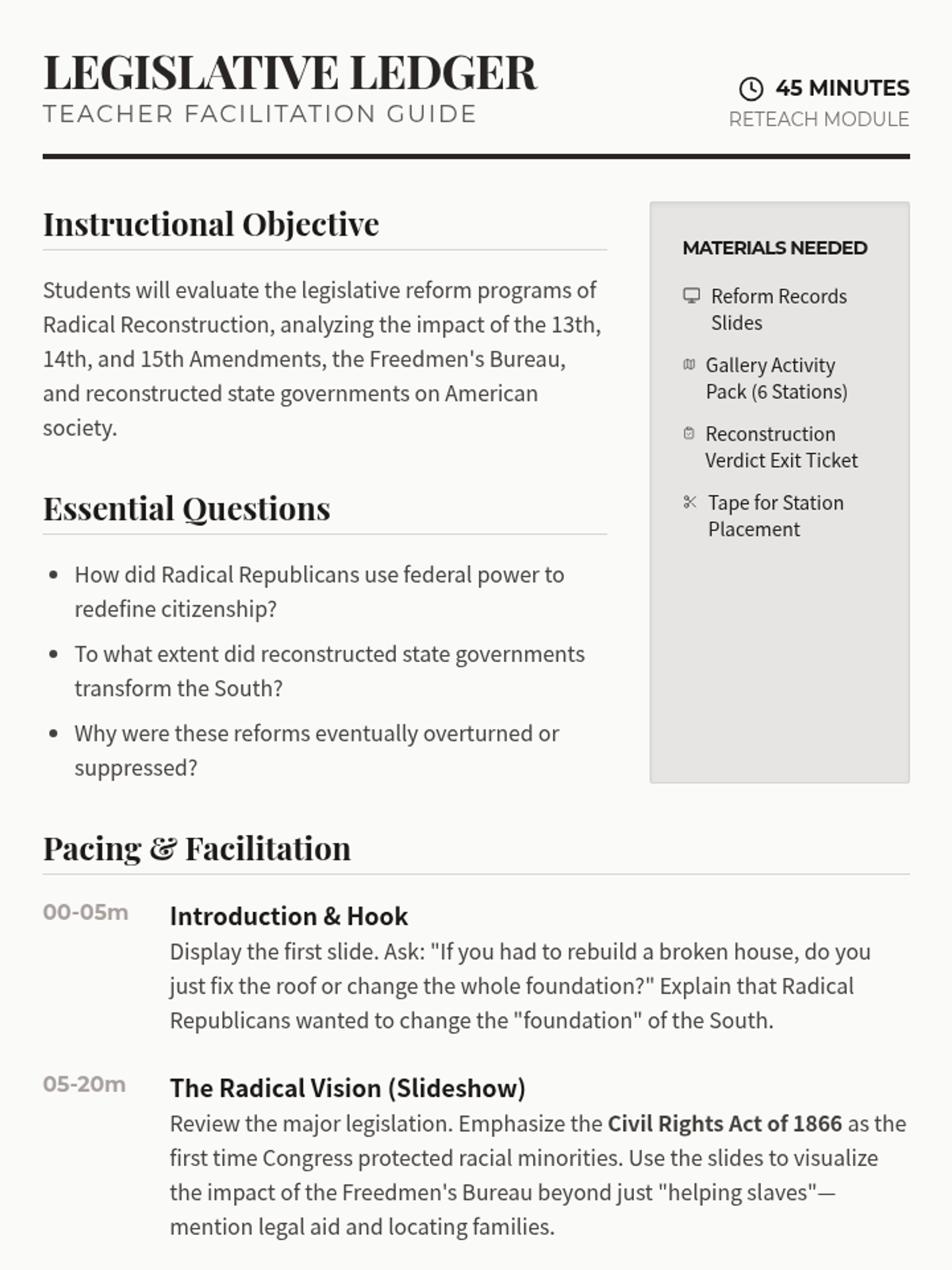
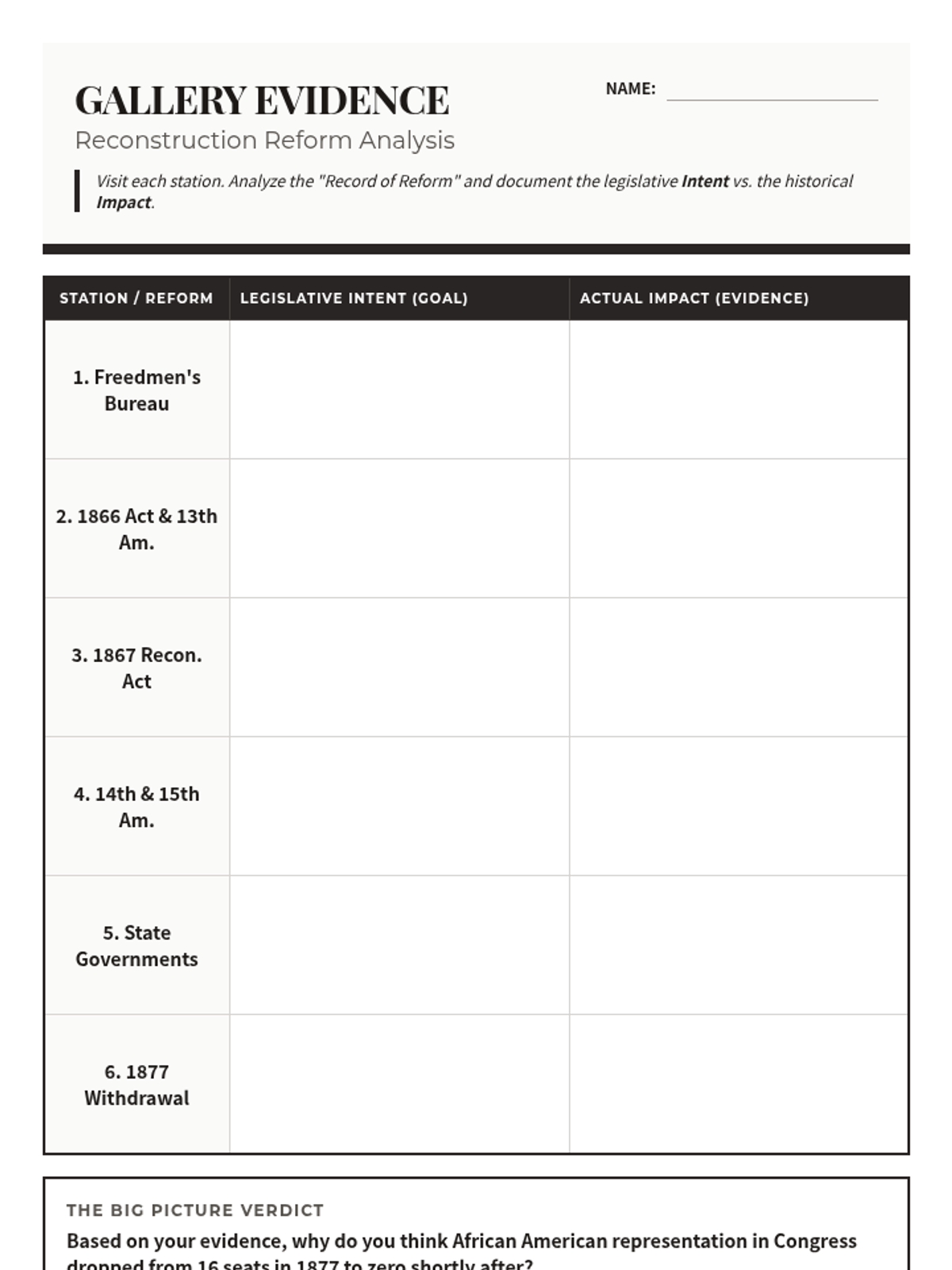
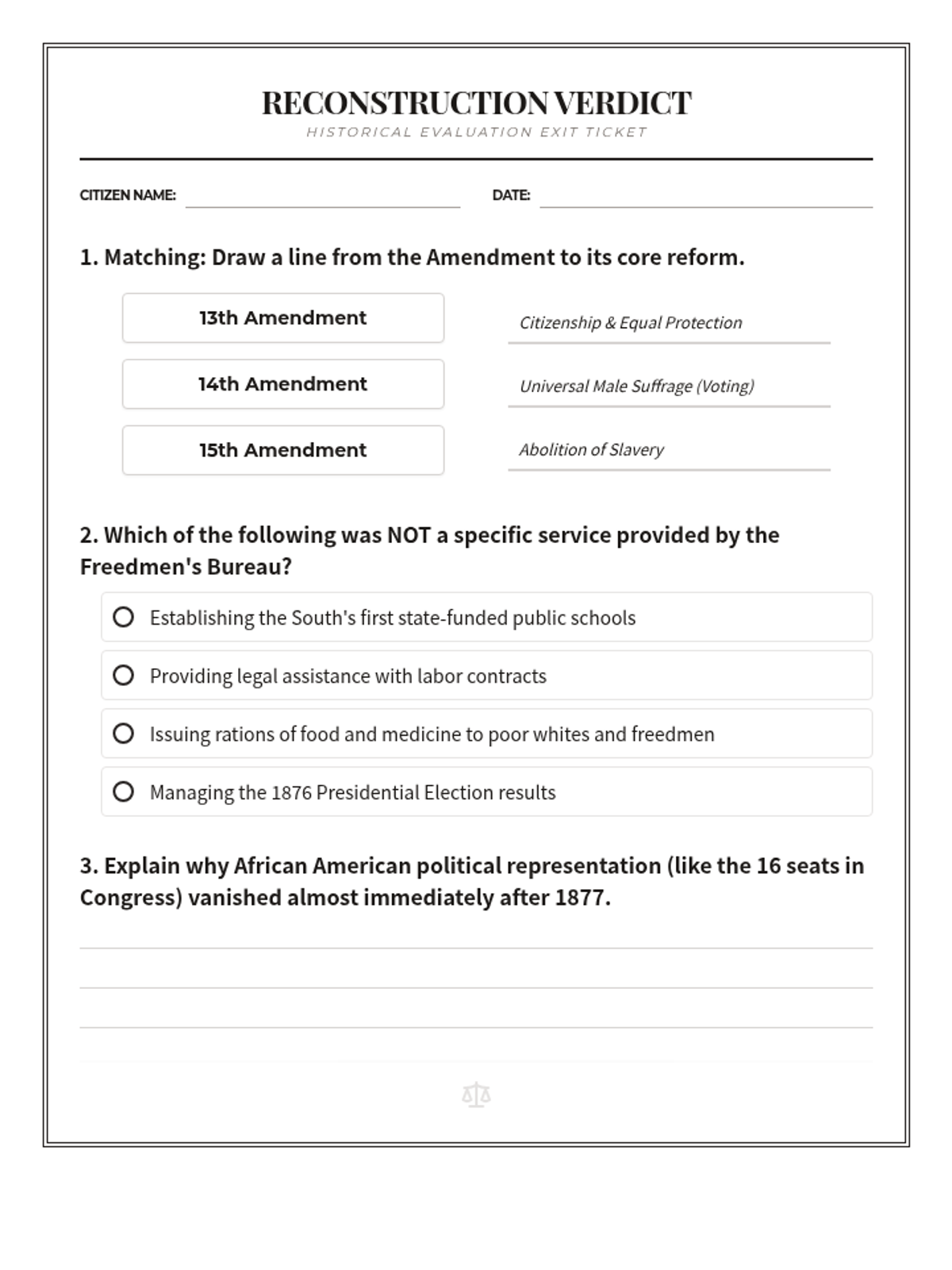
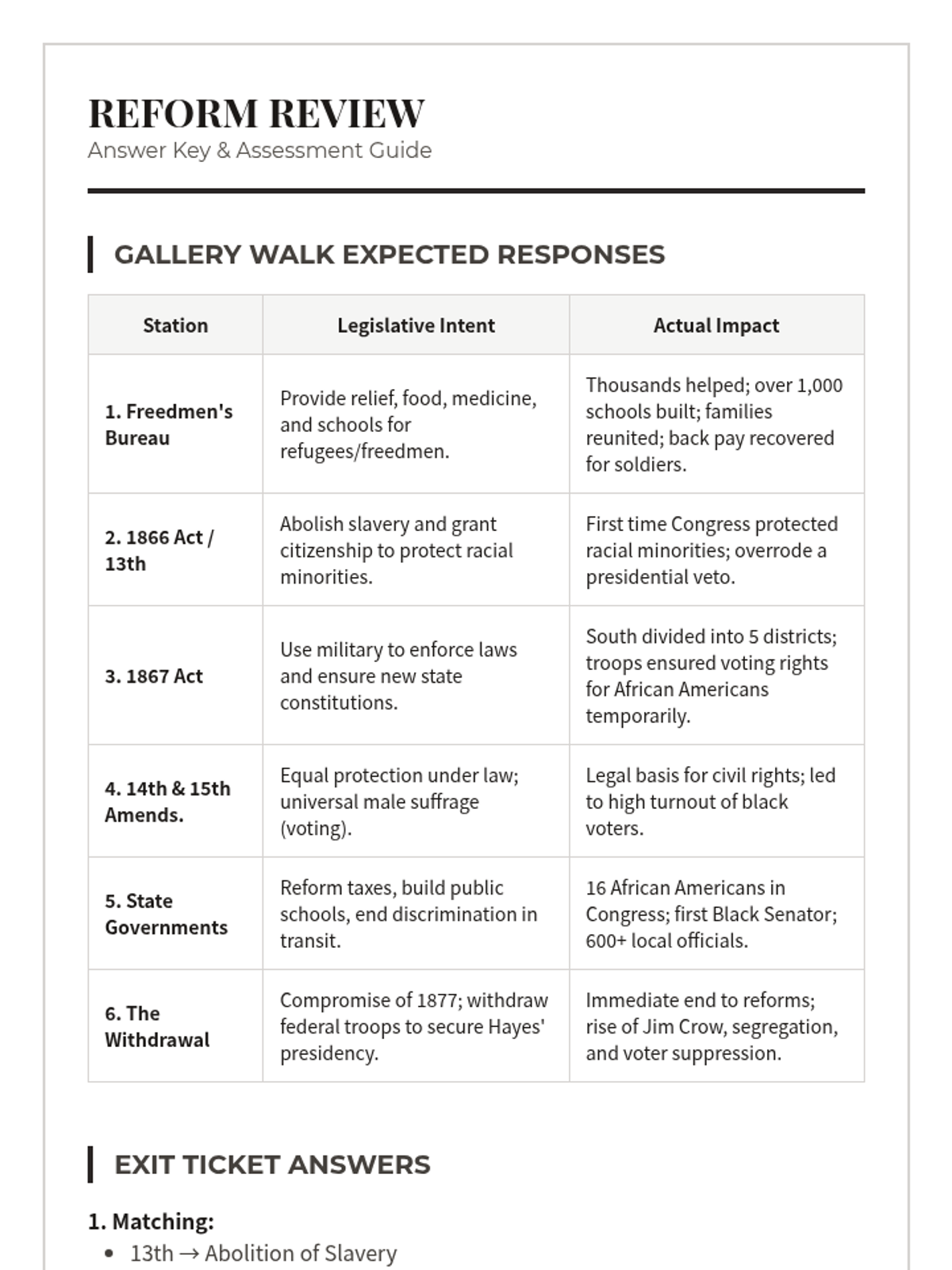
A comprehensive reteach lesson evaluating the legislative reforms of the Radical Reconstruction era, including constitutional amendments, the Freedmen's Bureau, and reconstructed state governments.
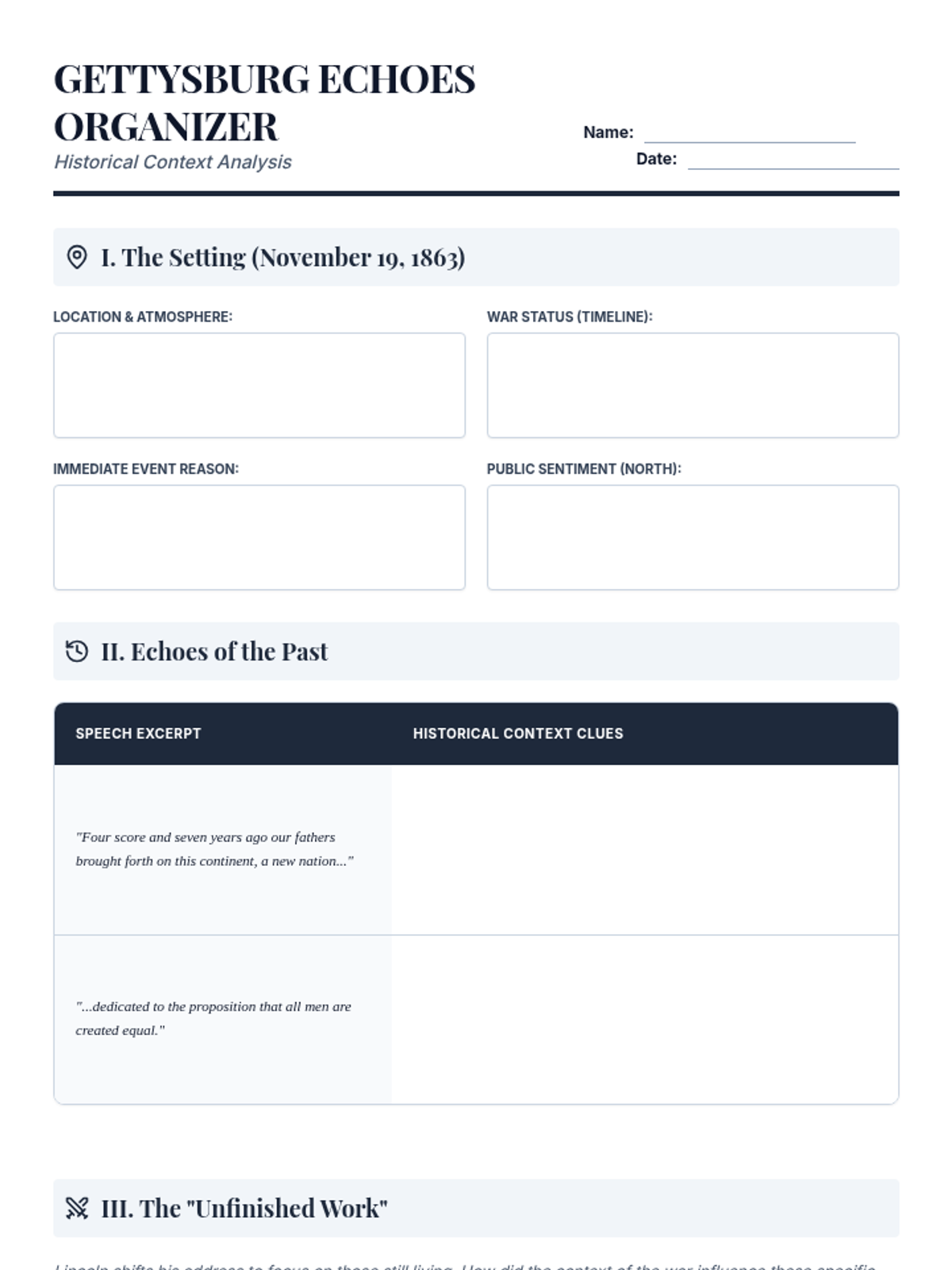
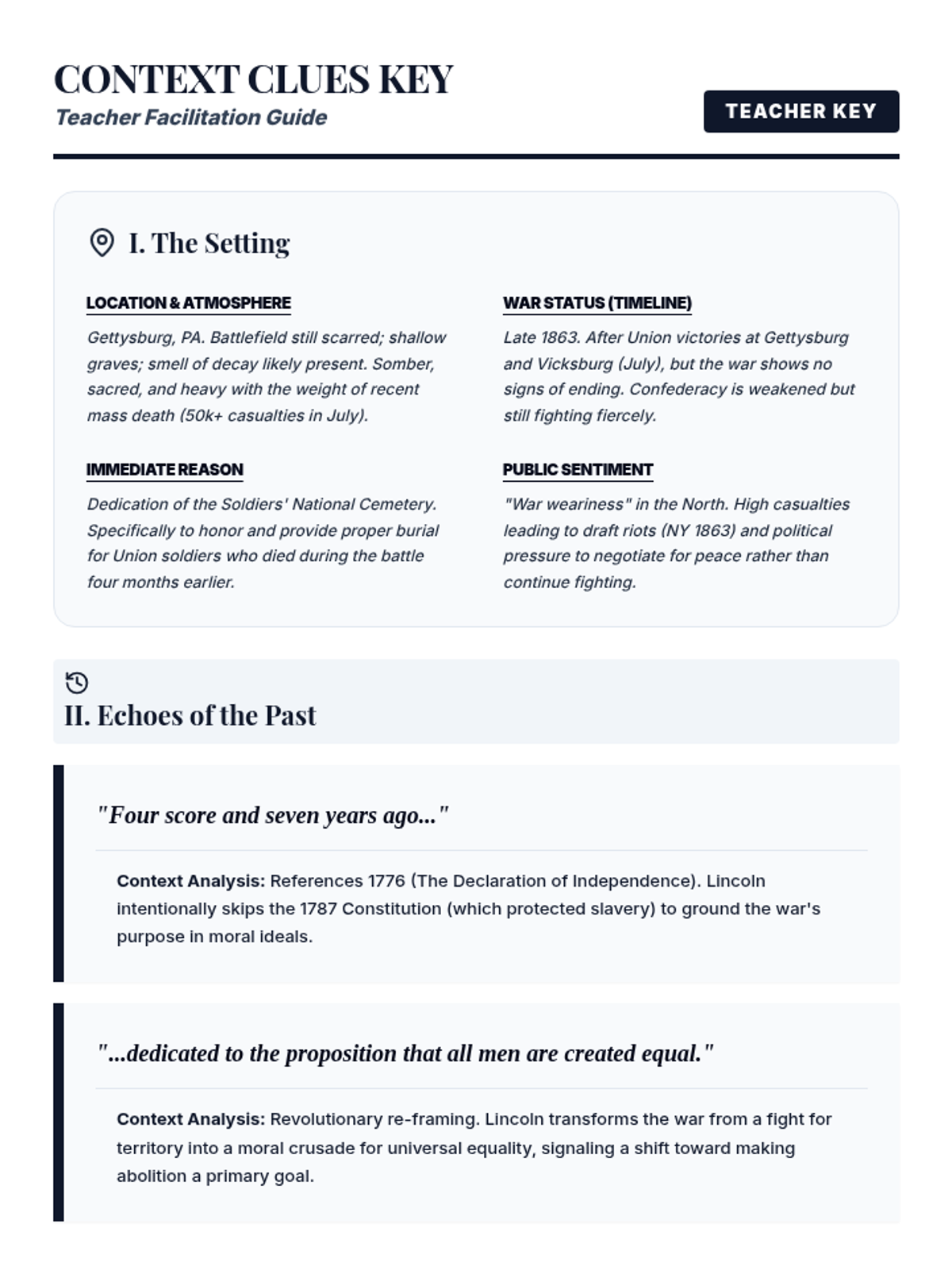
A deep dive into the historical context surrounding Abraham Lincoln's Gettysburg Address, exploring the timing, location, and societal pressures of the Civil War.
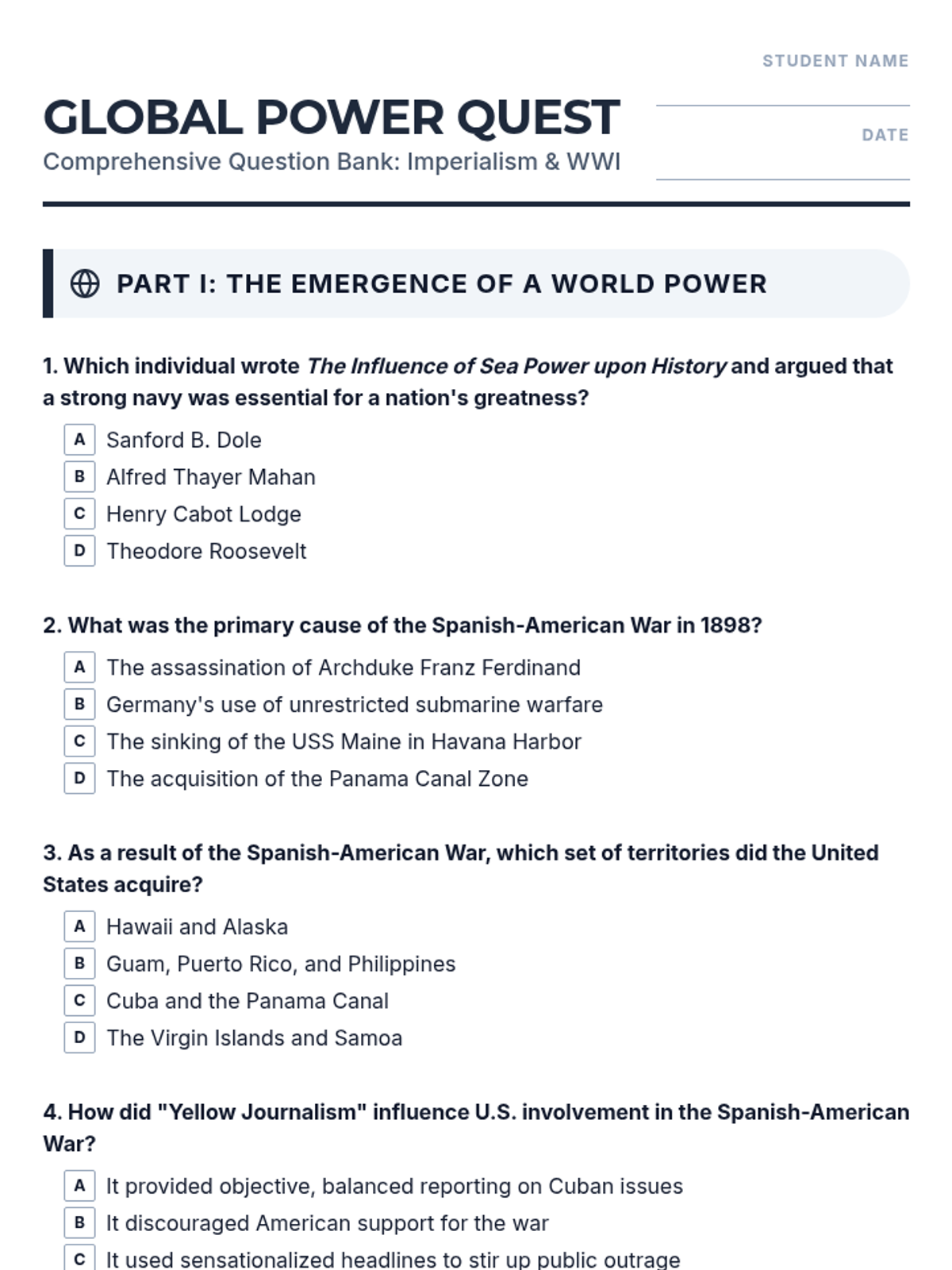
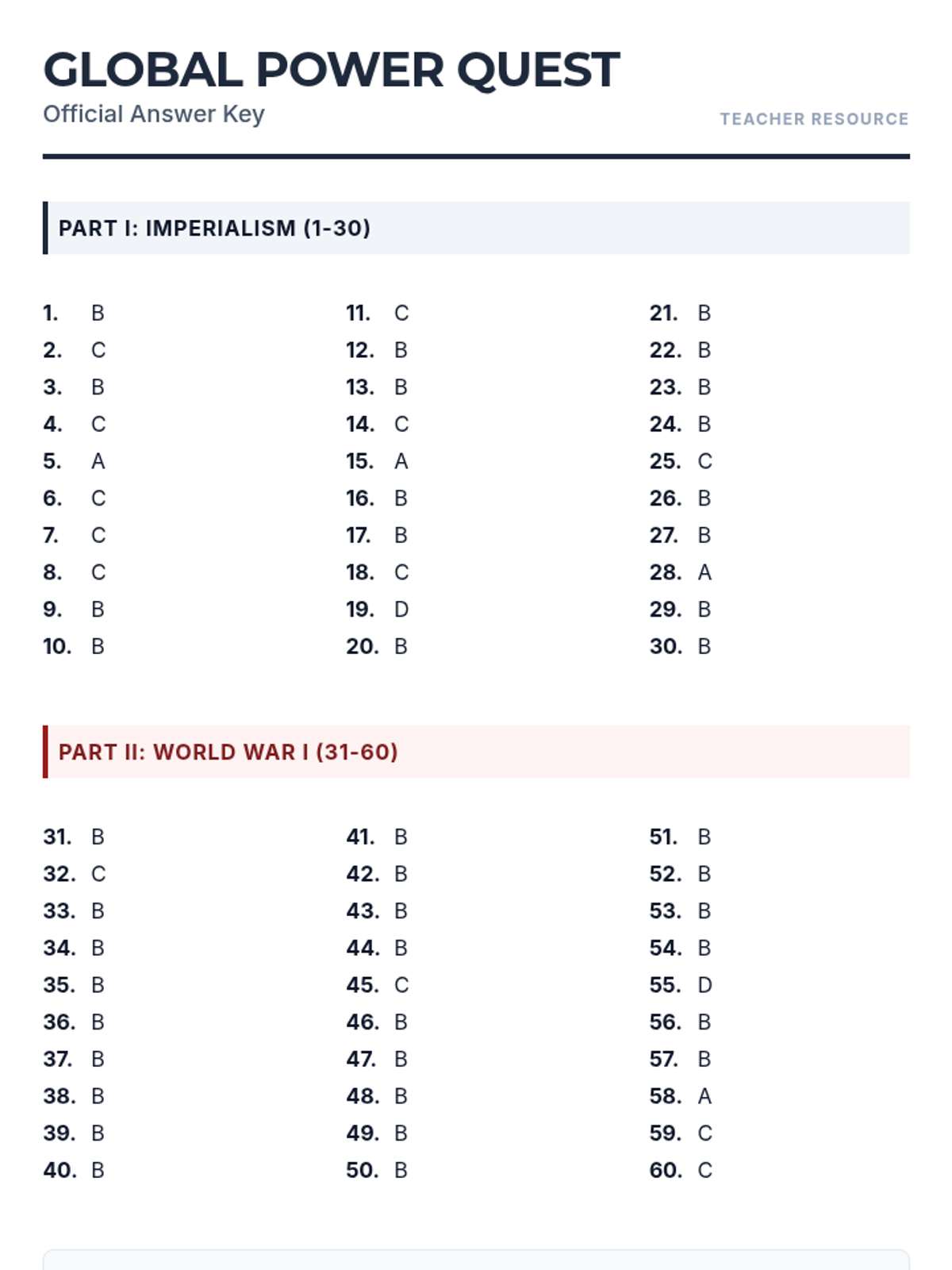
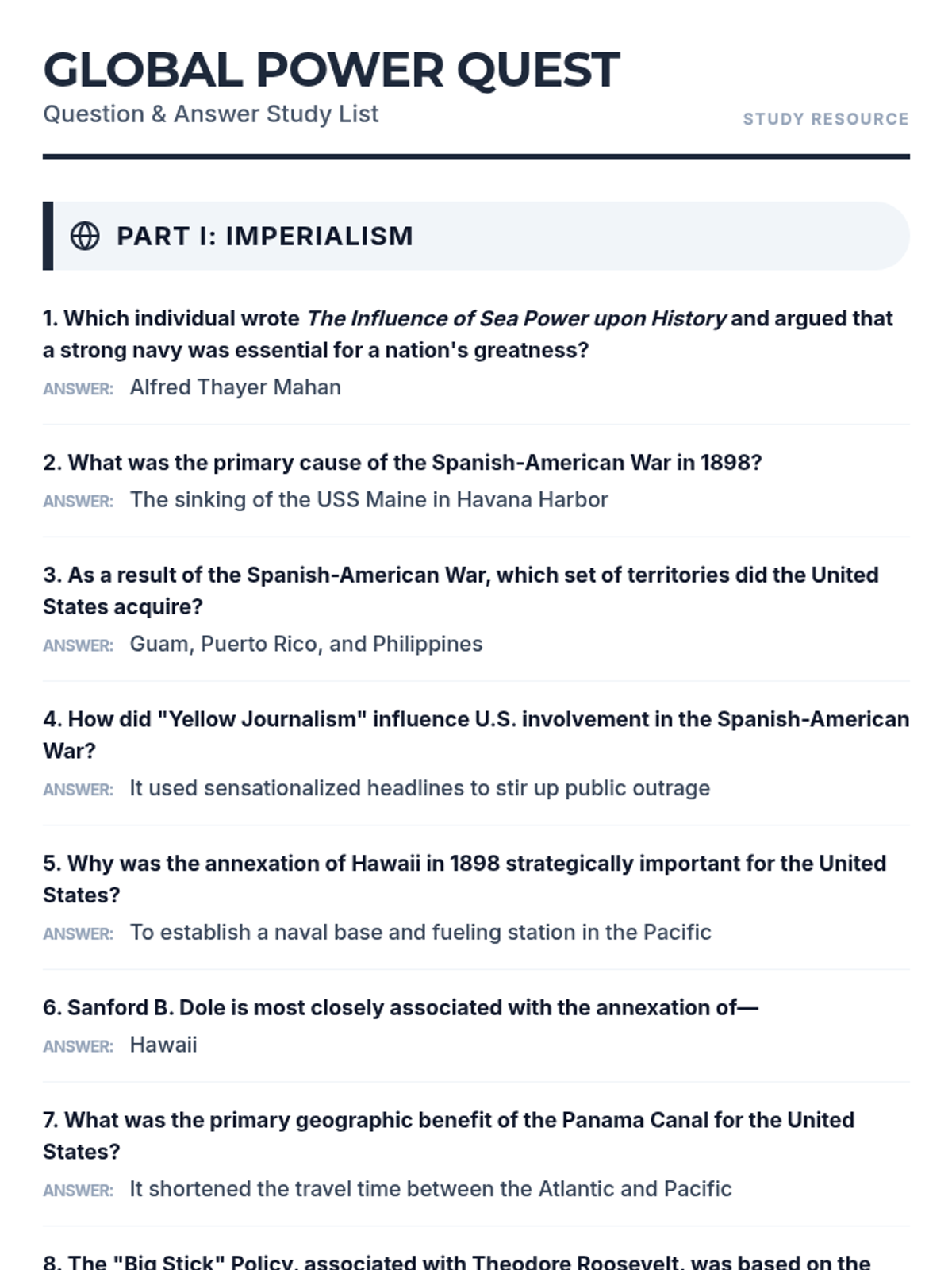
A comprehensive assessment set covering American expansionism (Imperialism) and the U.S. involvement in World War I, aligned with high school TEKS standards.
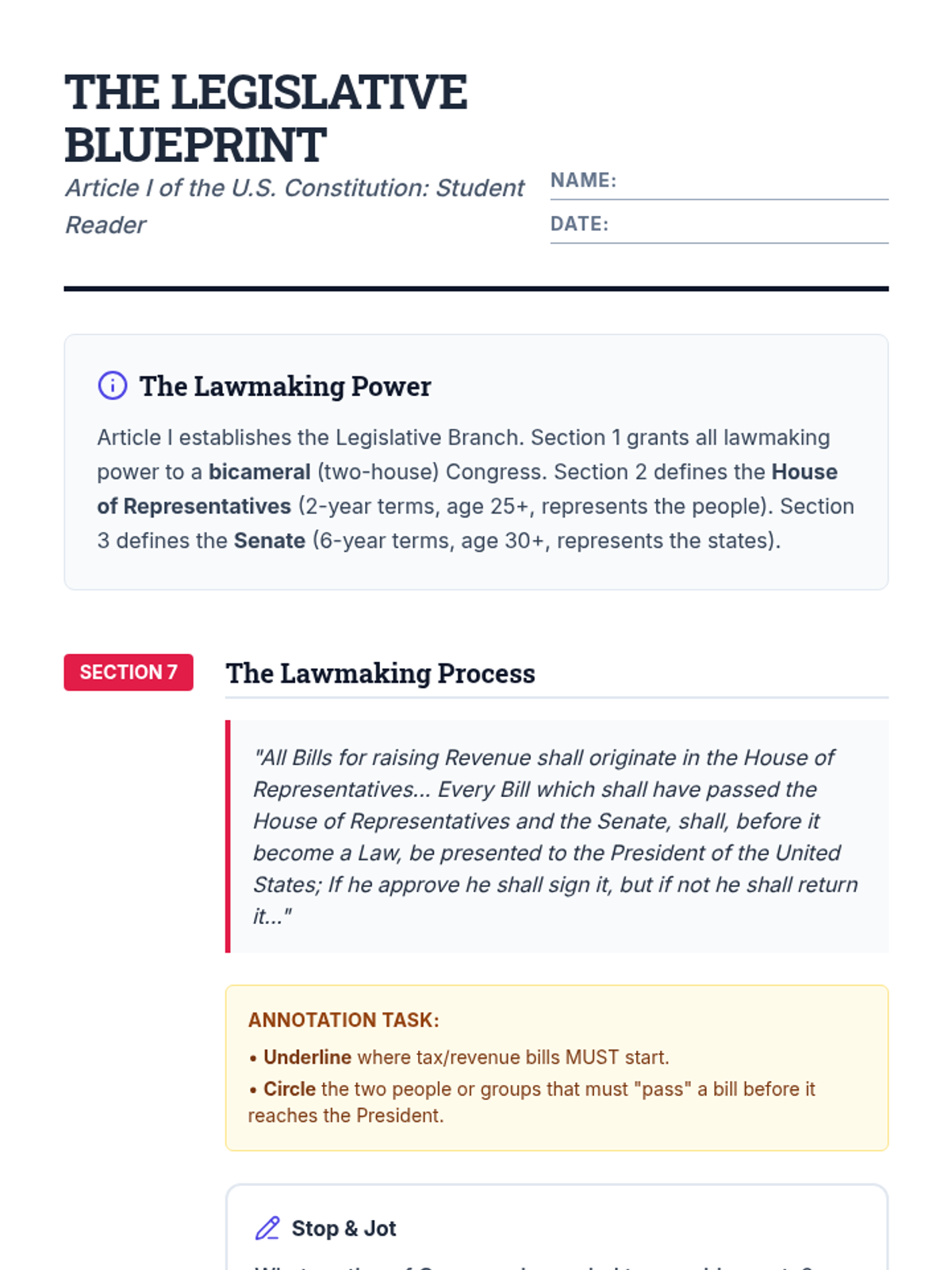
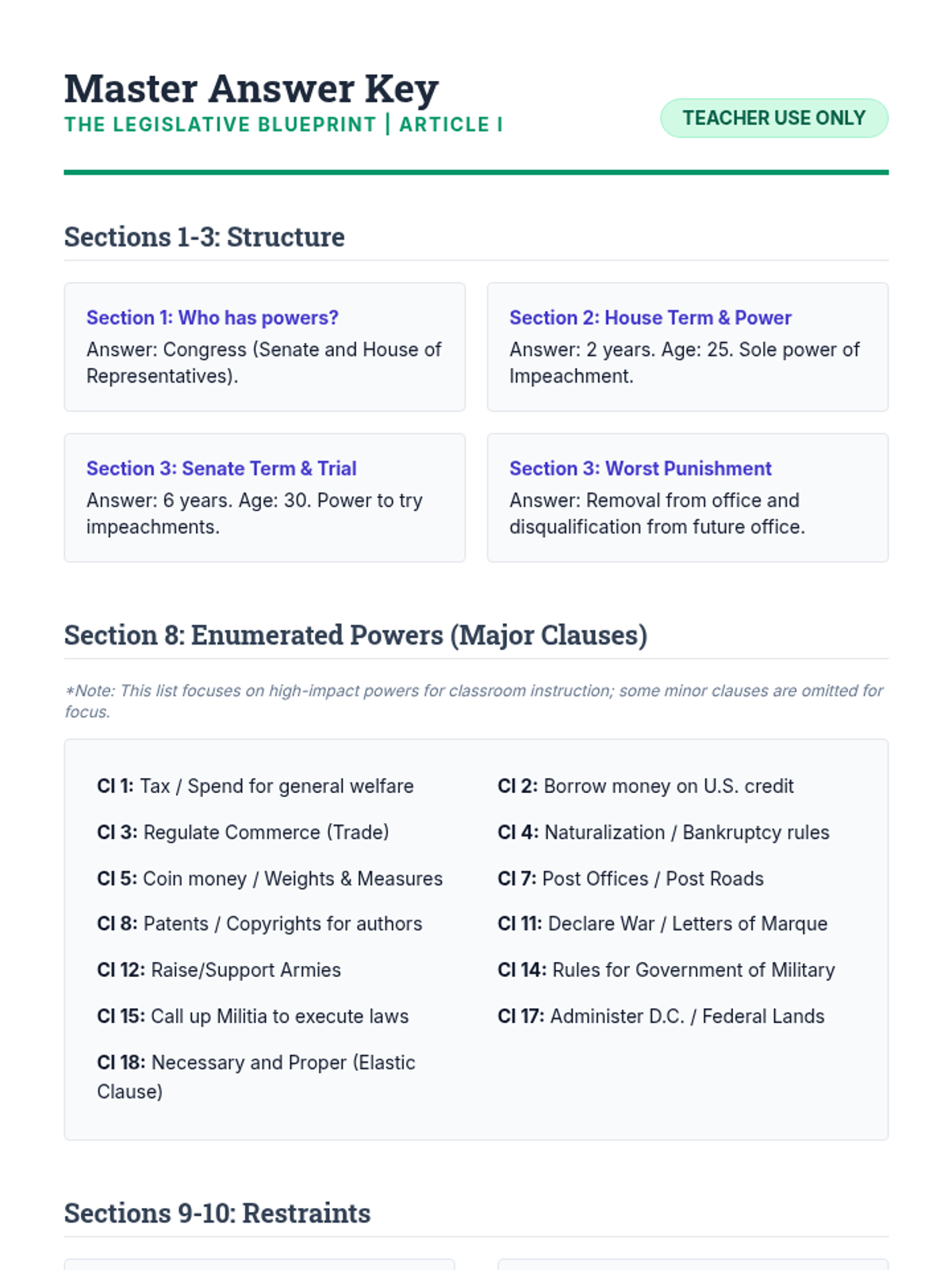
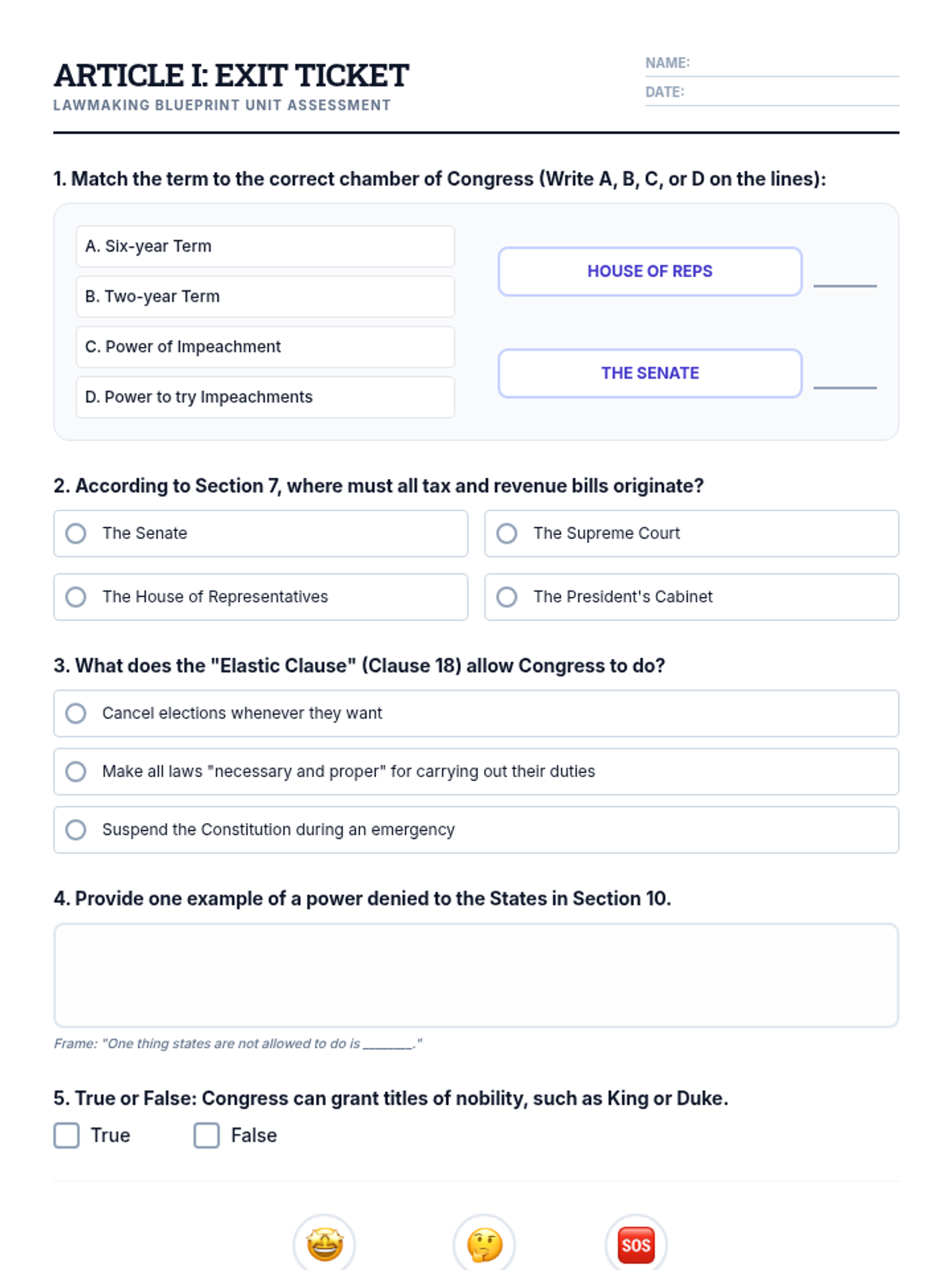
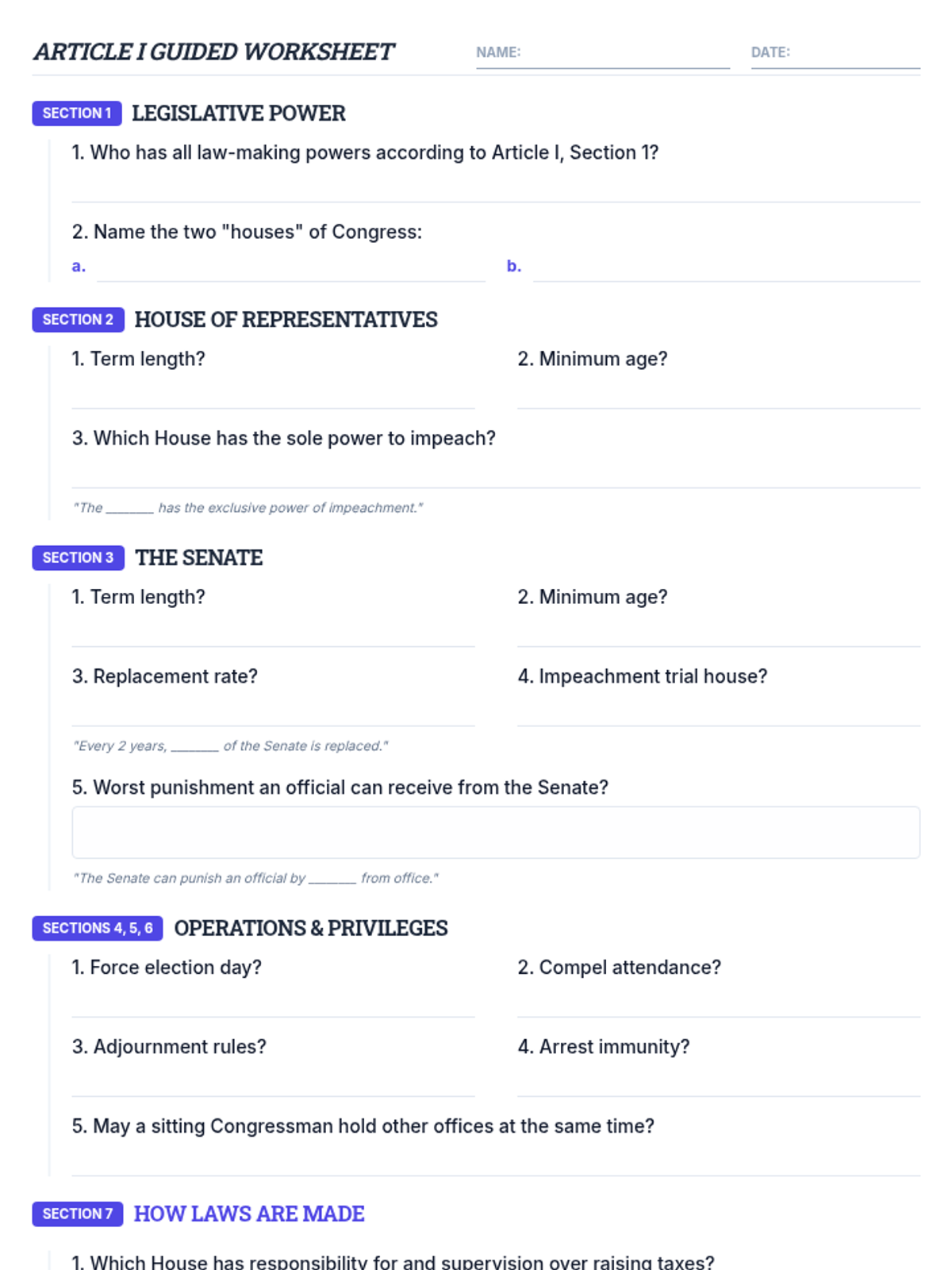
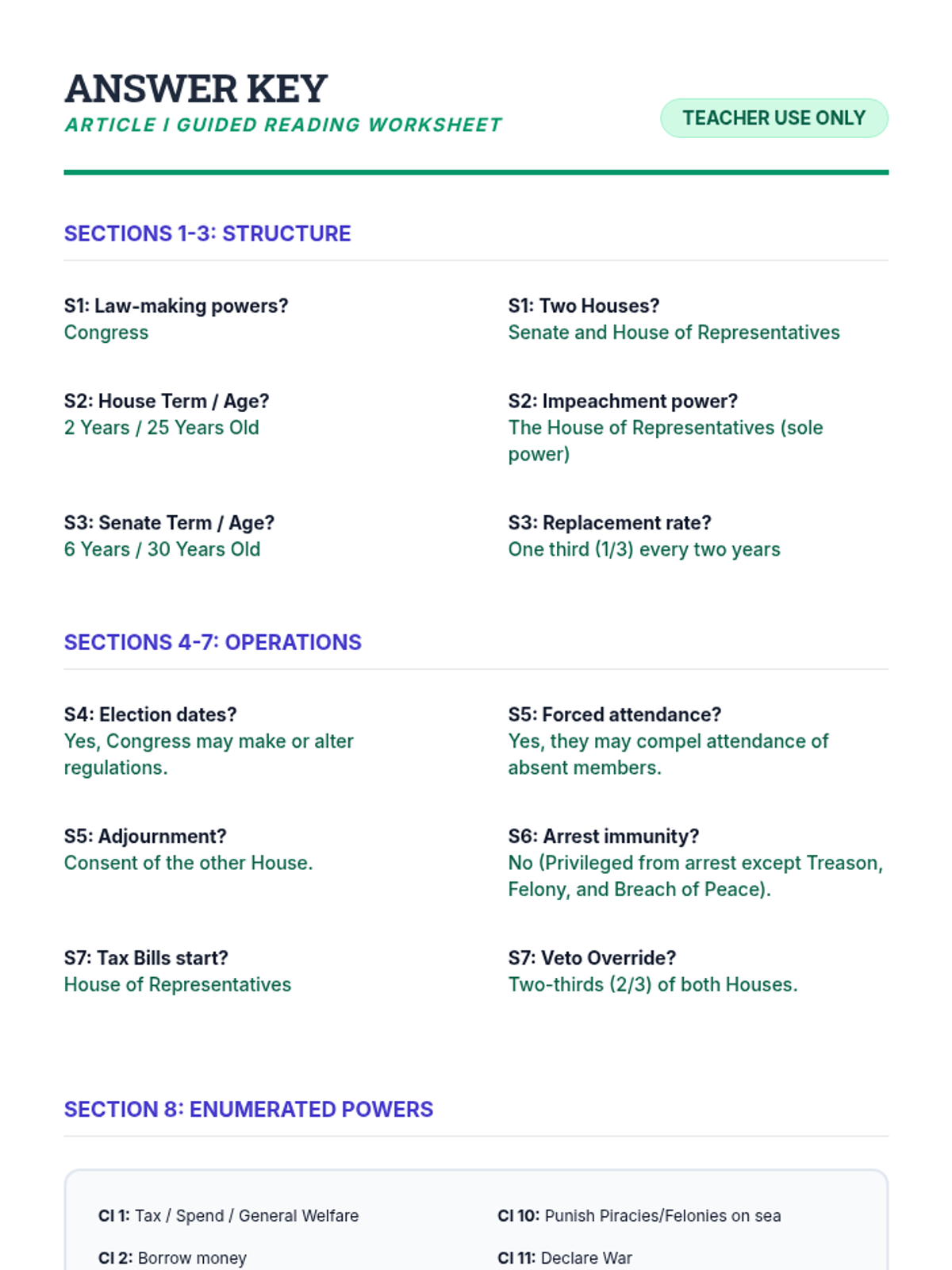
An analysis of the legislative process, the enumerated powers granted to Congress, and the specific restrictions placed on both federal and state governments.
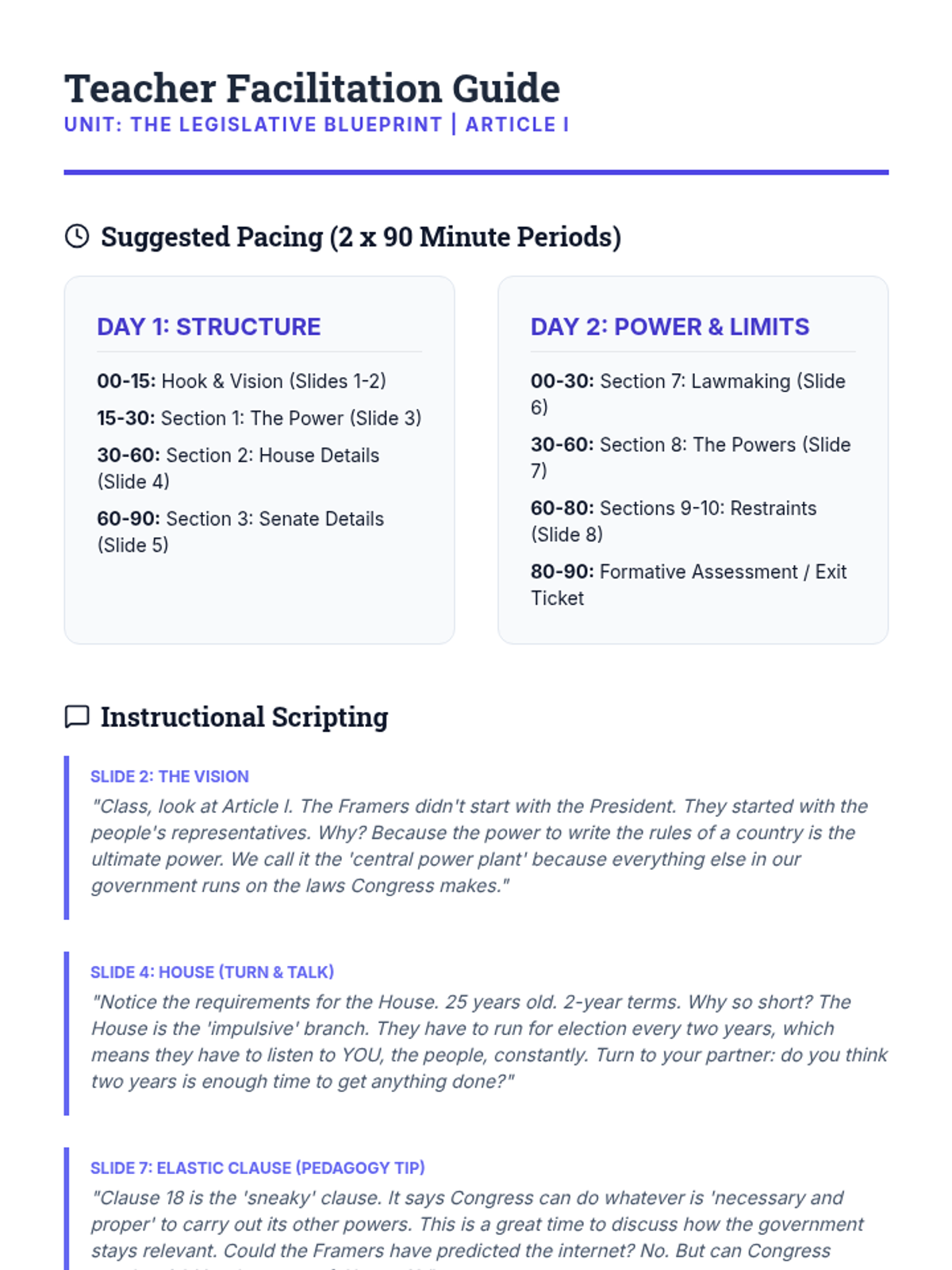
A comprehensive 180-minute lesson covering the entire structure, enumerated powers, and restraints of the Legislative Branch as defined in Article I of the U.S. Constitution.
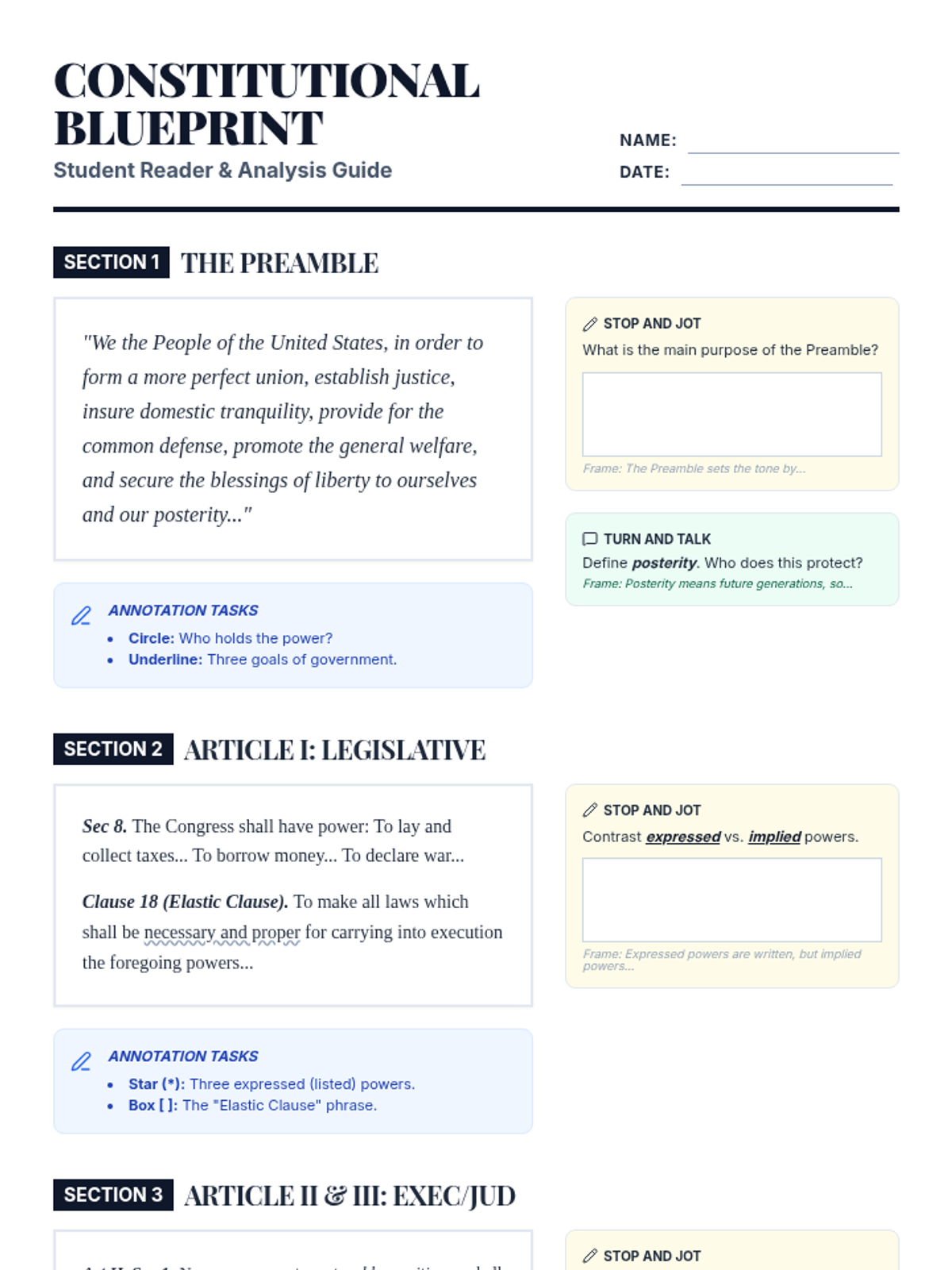
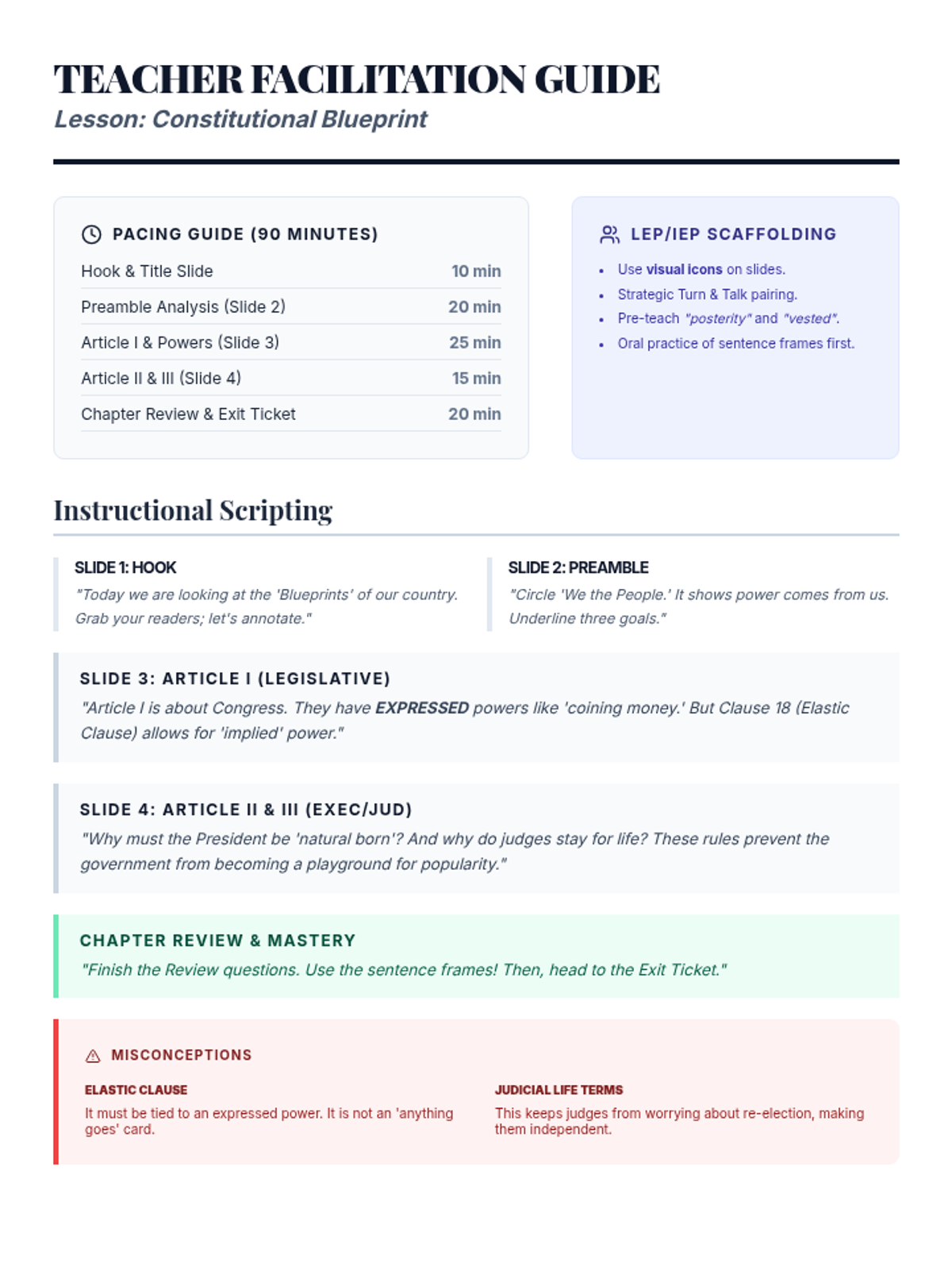
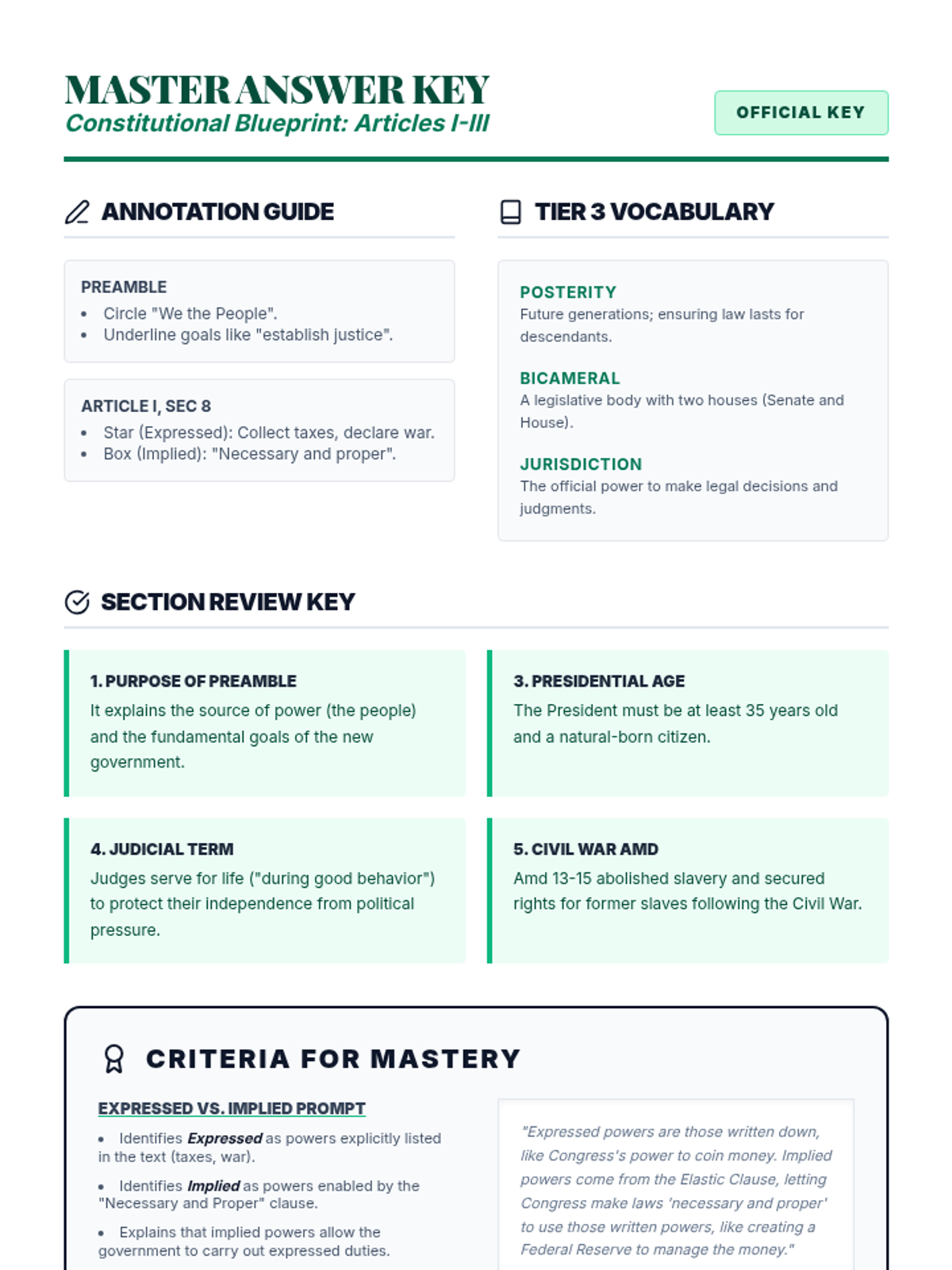
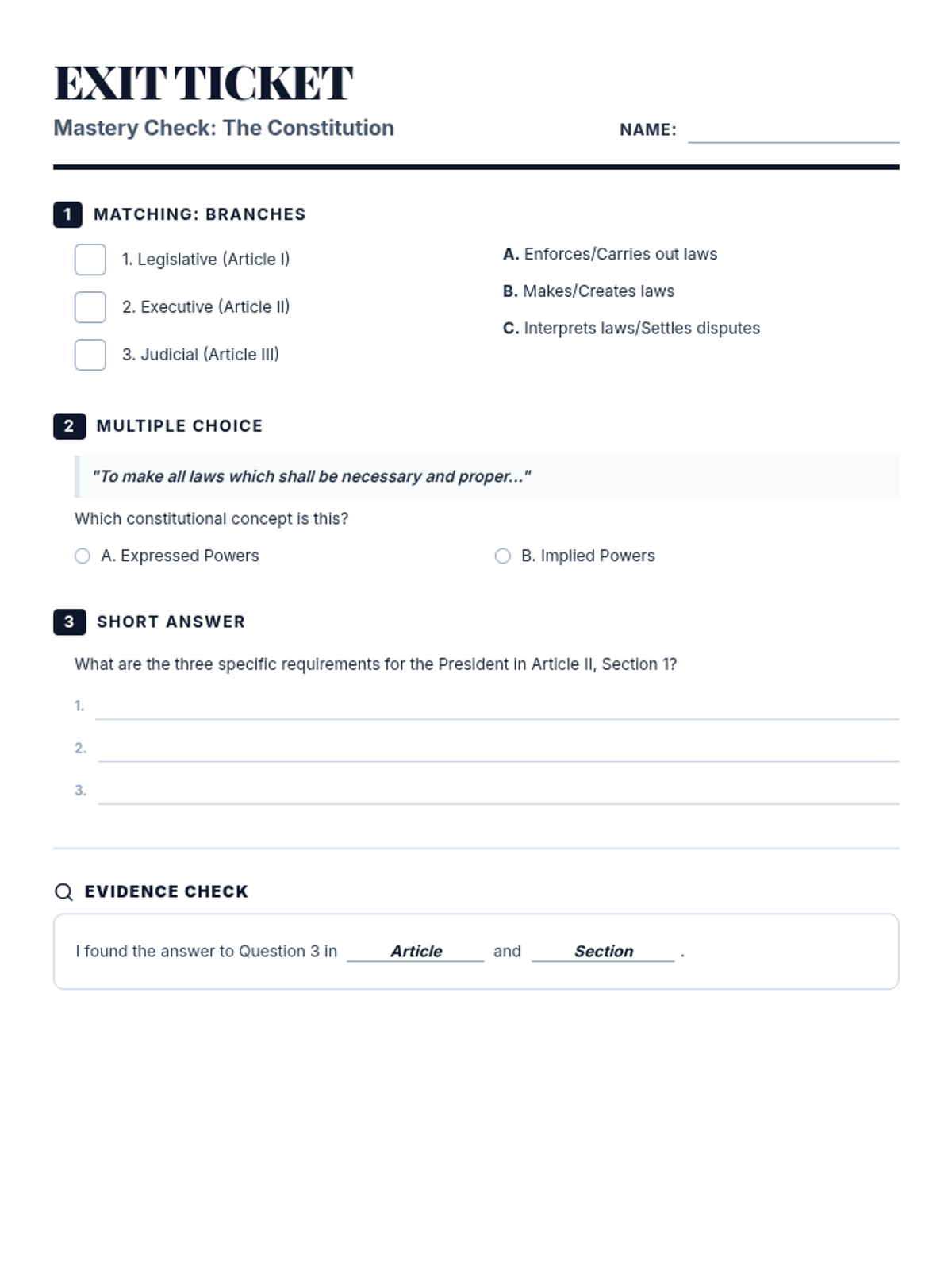
A deep dive into the structure and powers of the U.S. government as defined by the Constitution, featuring a chunked reader with heavy scaffolding for annotation and analysis.
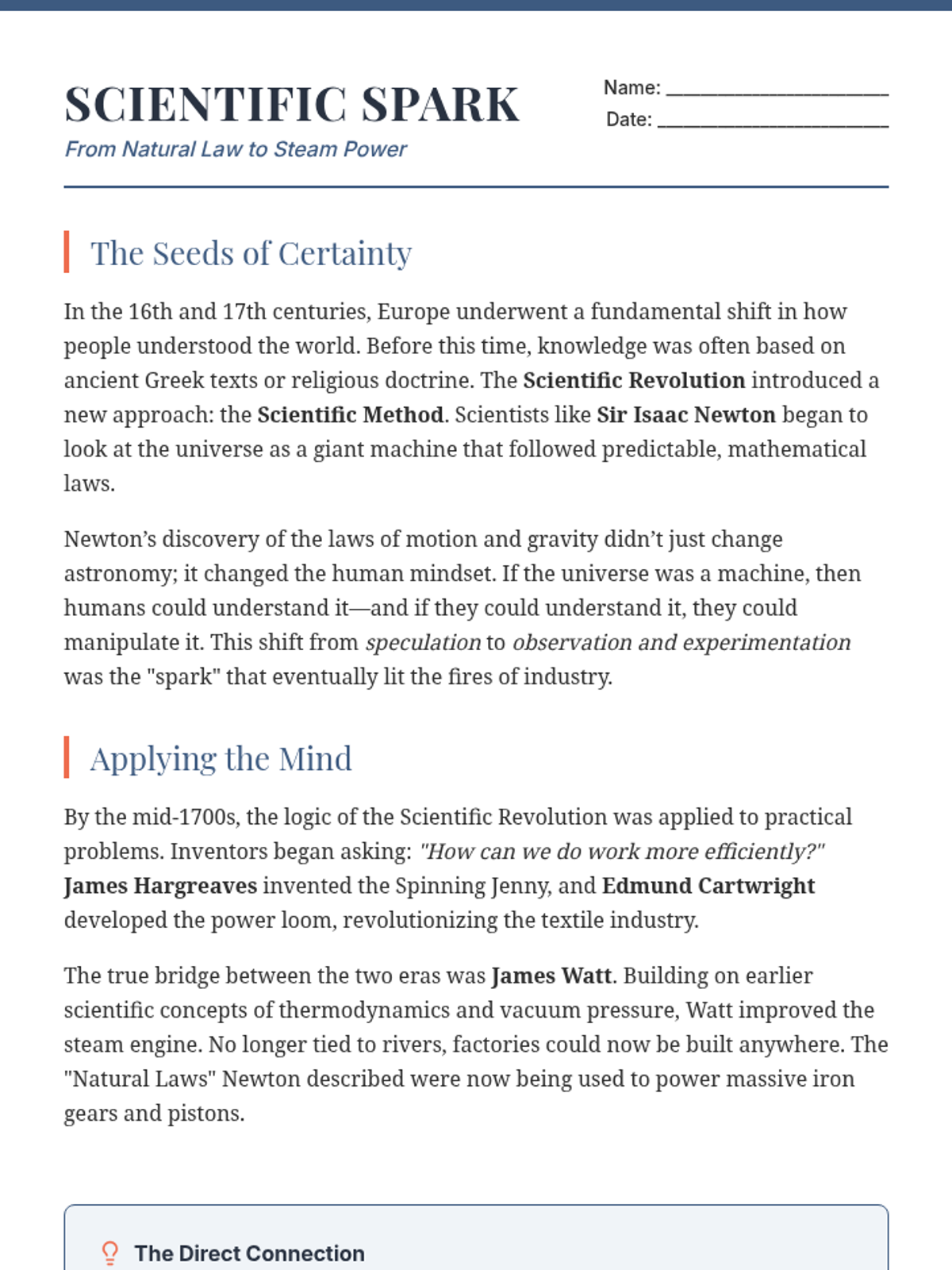
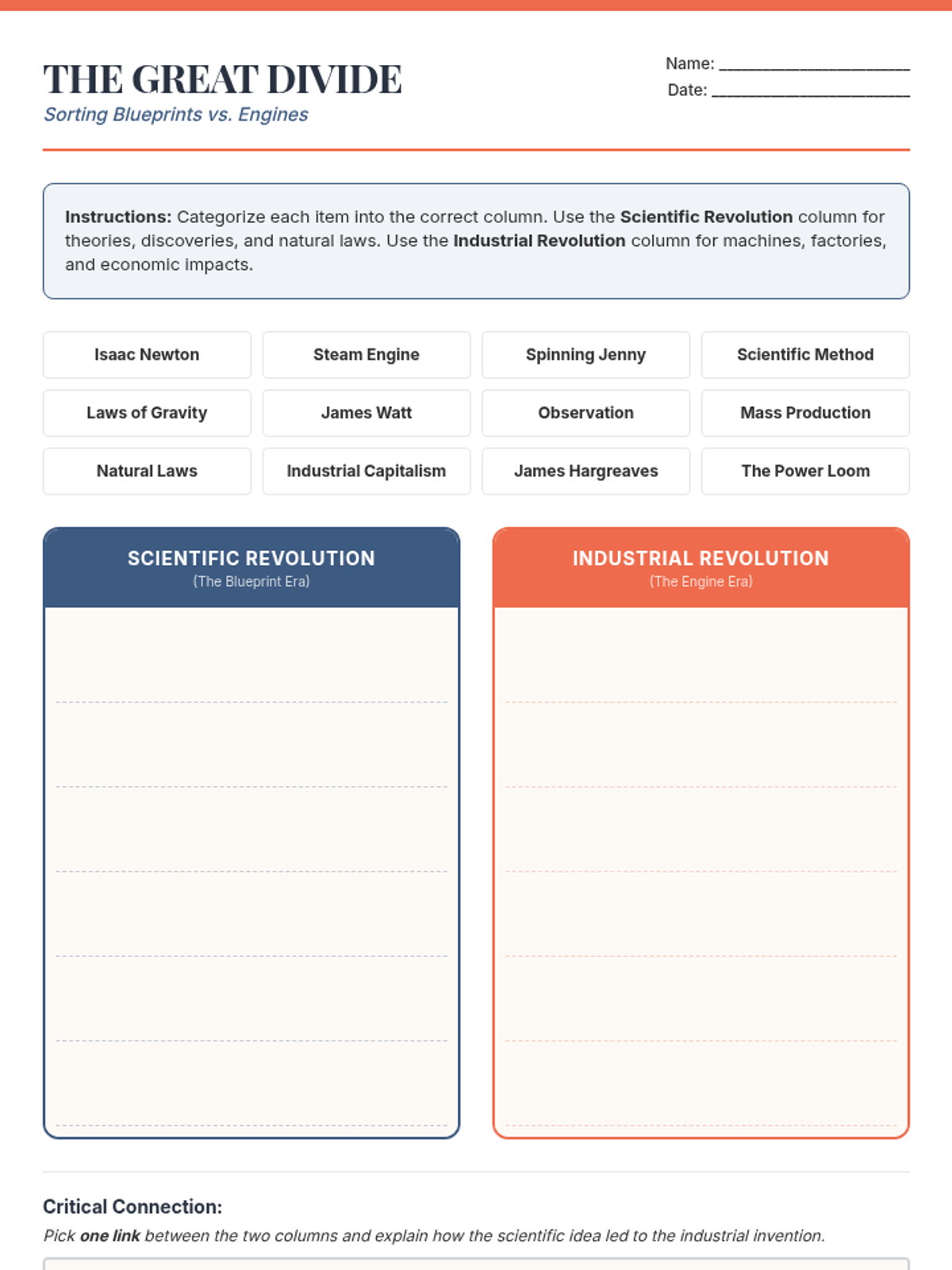
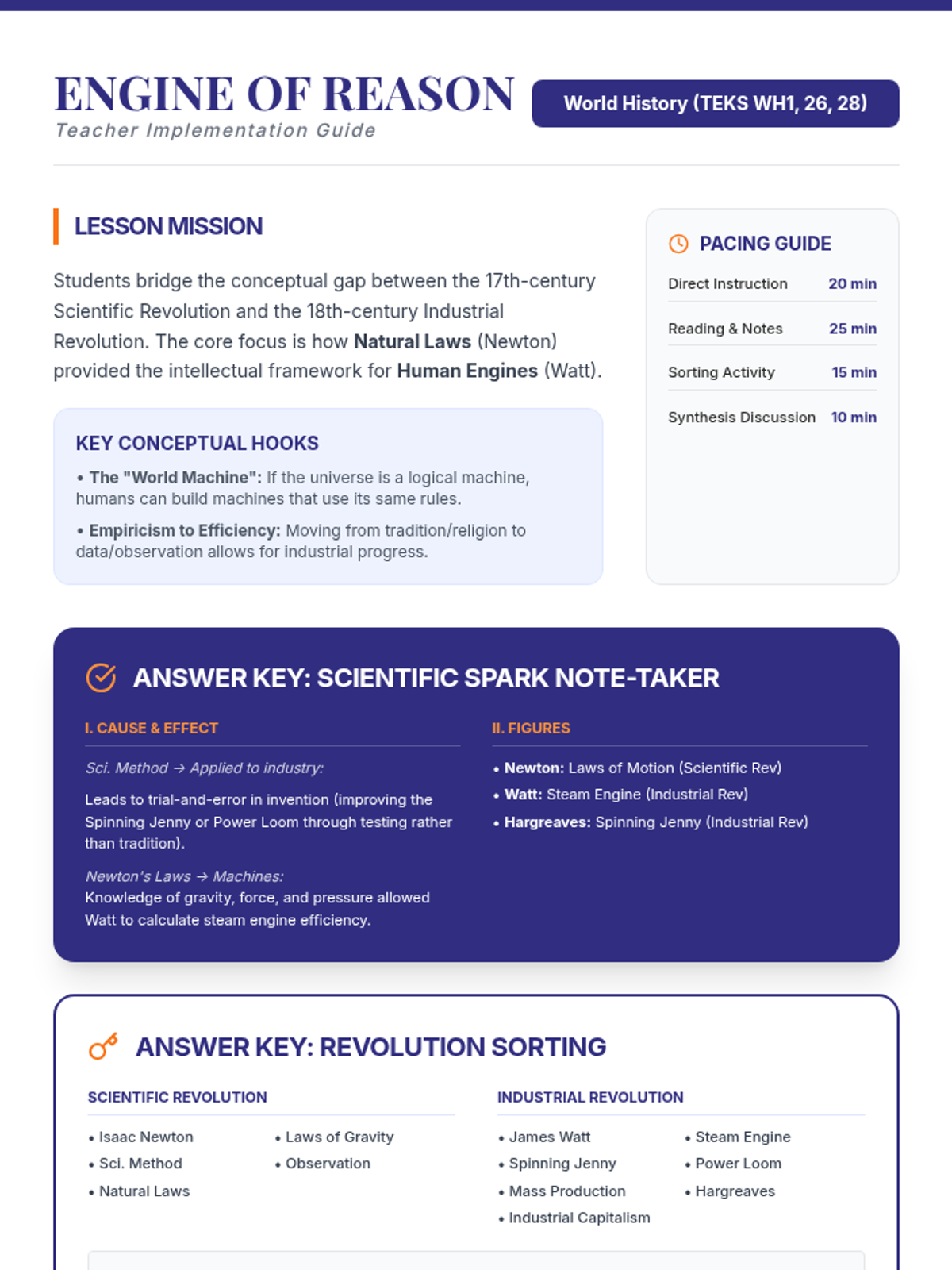
This lesson explores the transition from the Scientific Revolution's focus on natural laws to the Industrial Revolution's application of those laws through technology, featuring key figures like Newton and Watt.
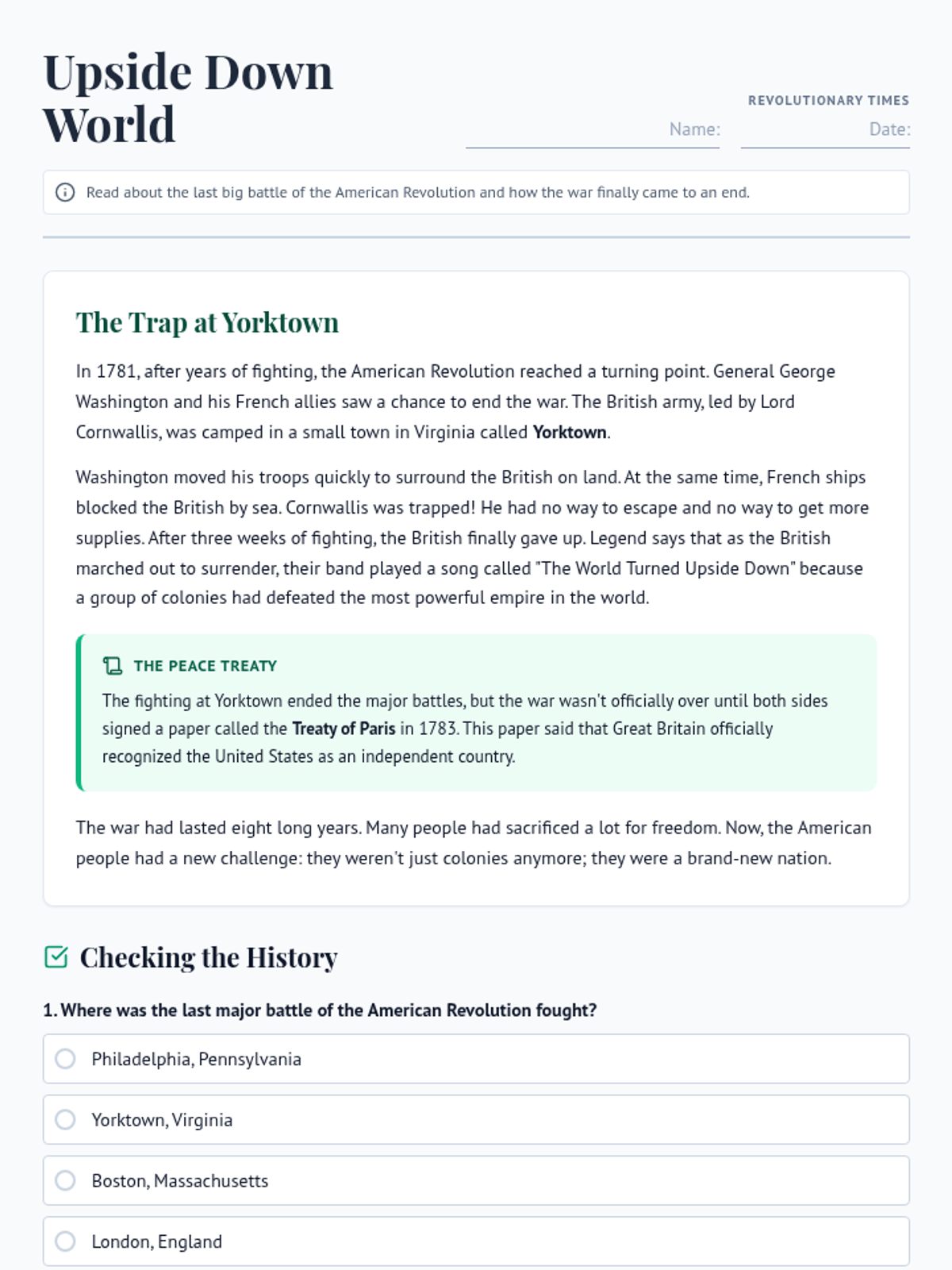
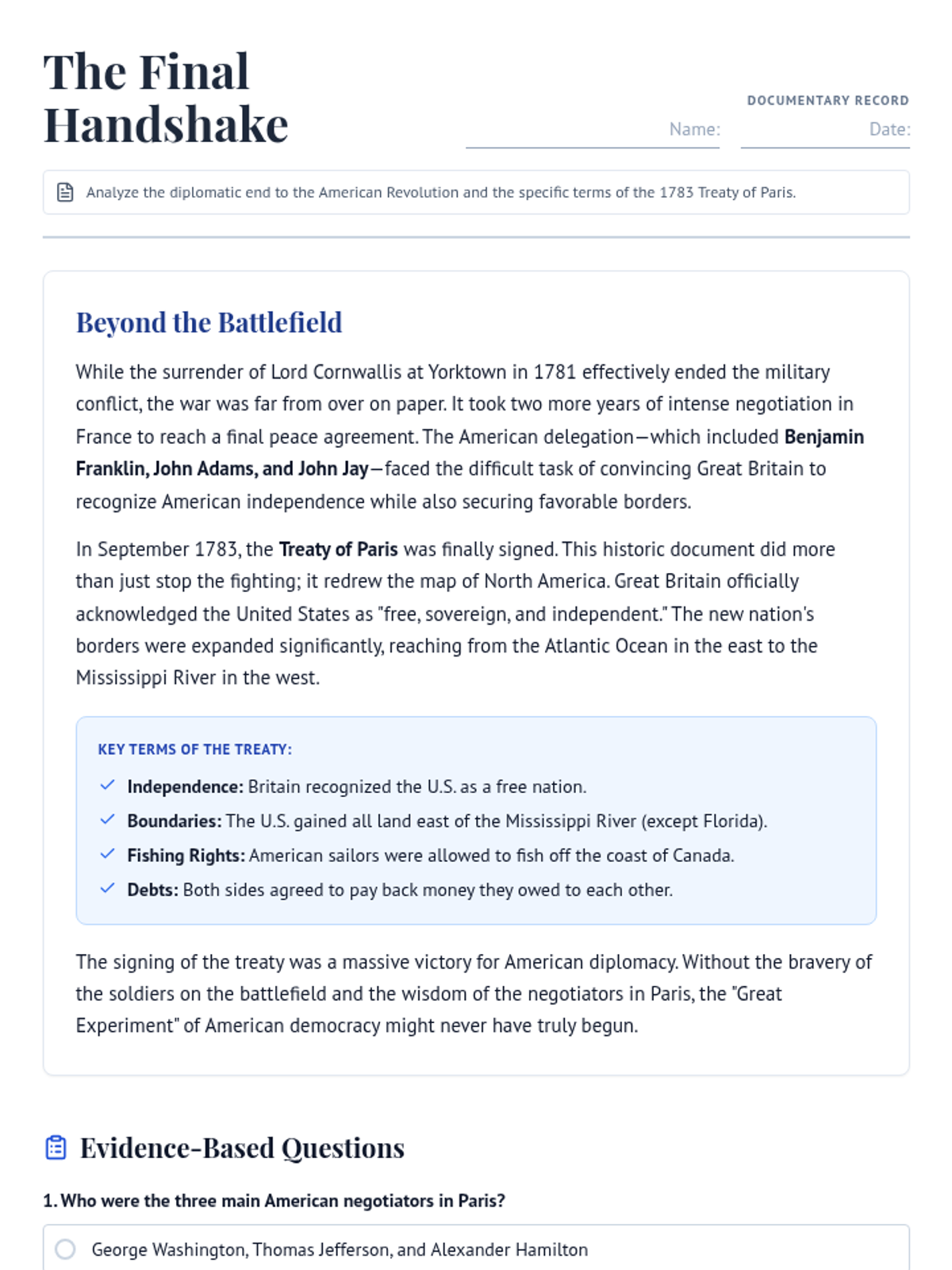
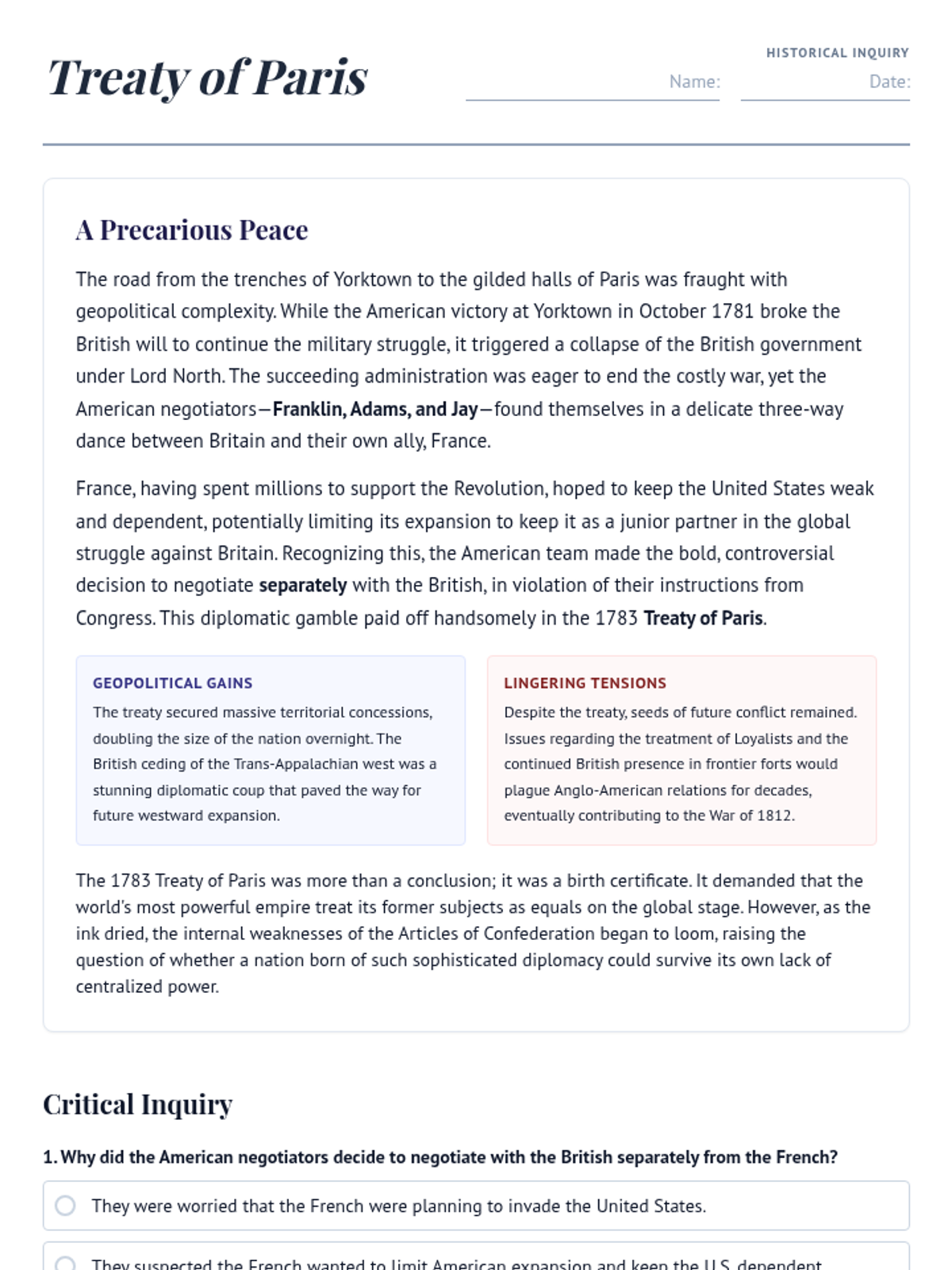
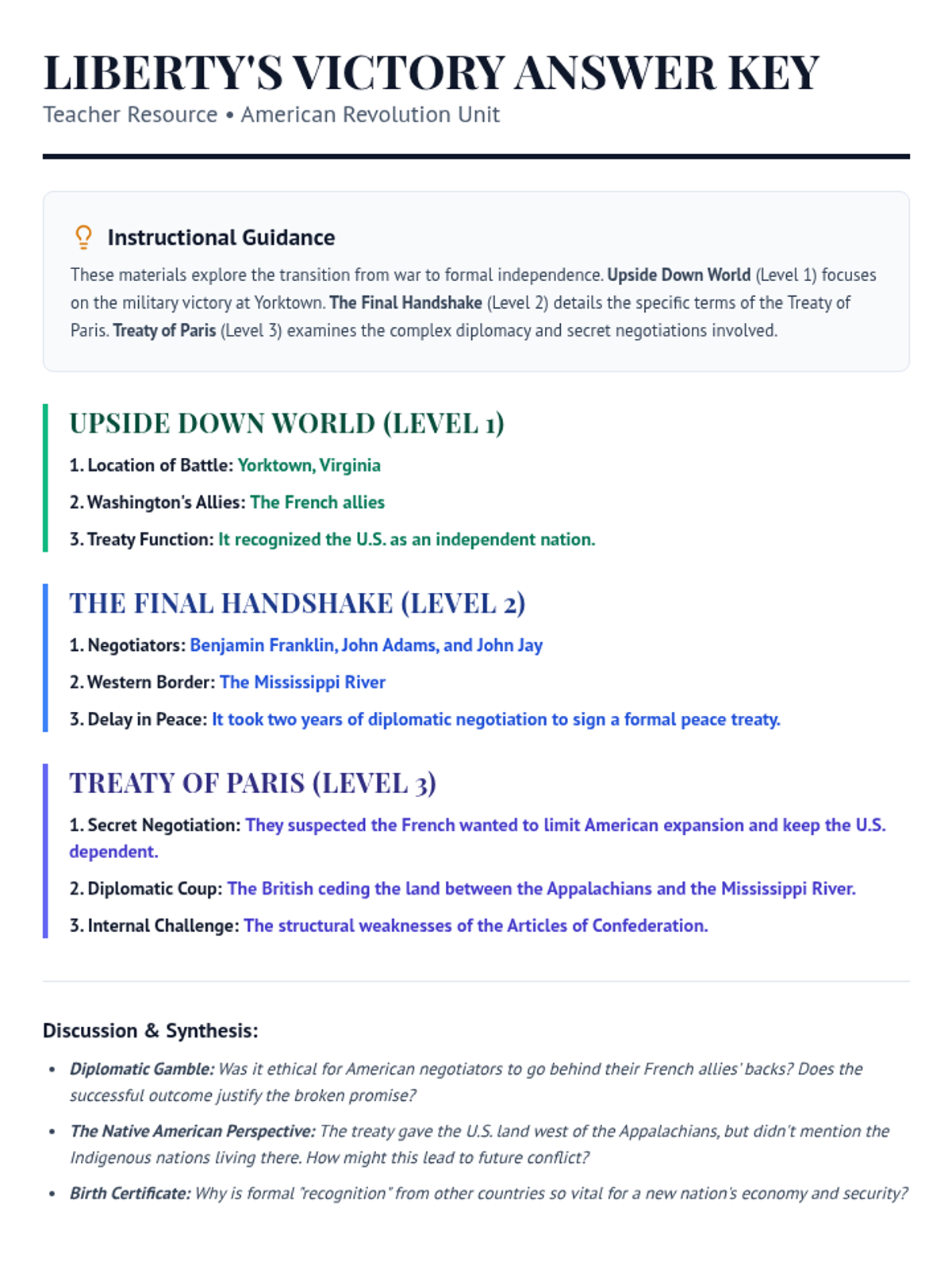
An exploration of the final stages of the American Revolution, from the Battle of Yorktown to the signing of the Treaty of Paris in 1783, establishing the formal end of the war and the beginning of American independence.
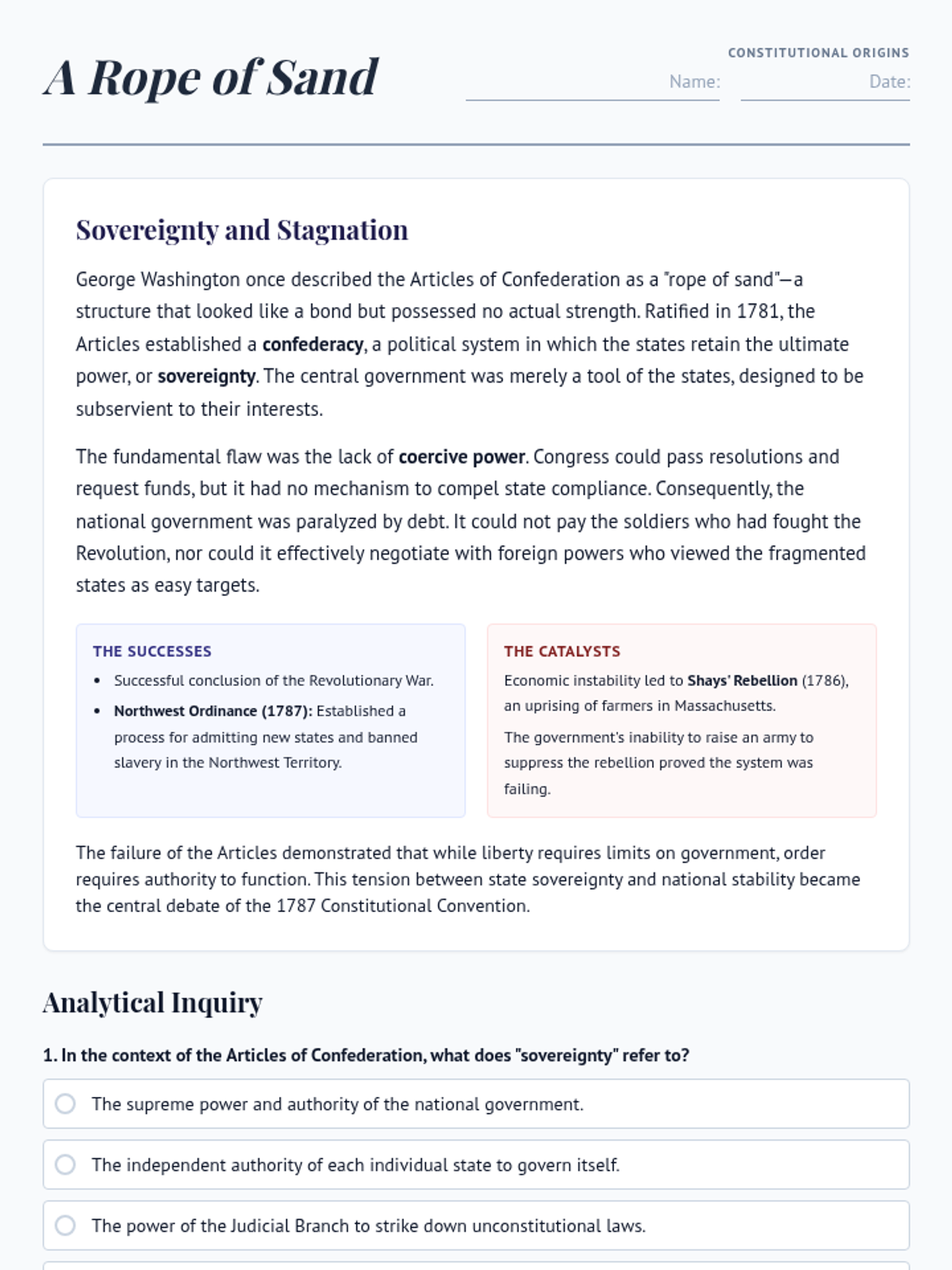
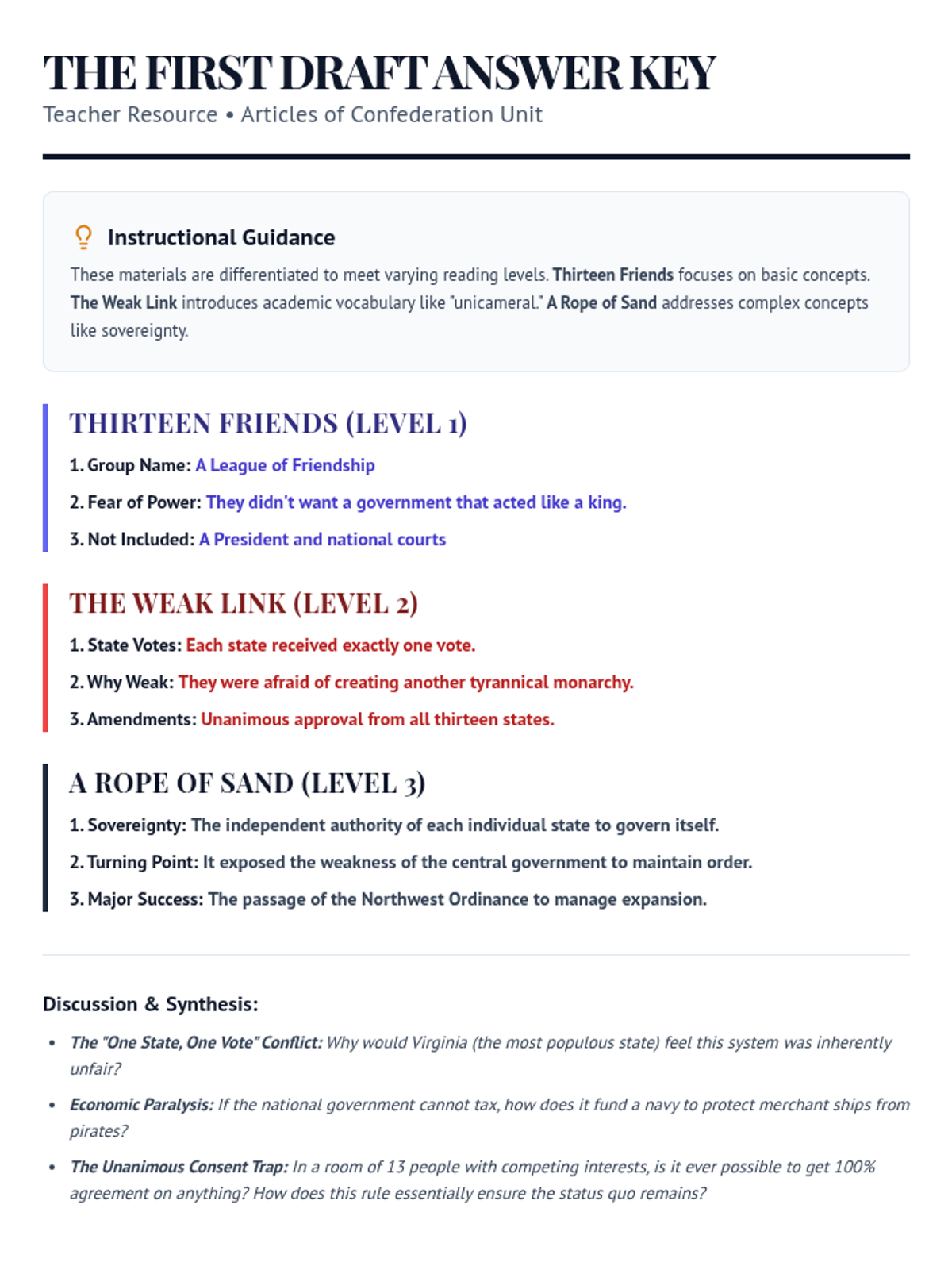
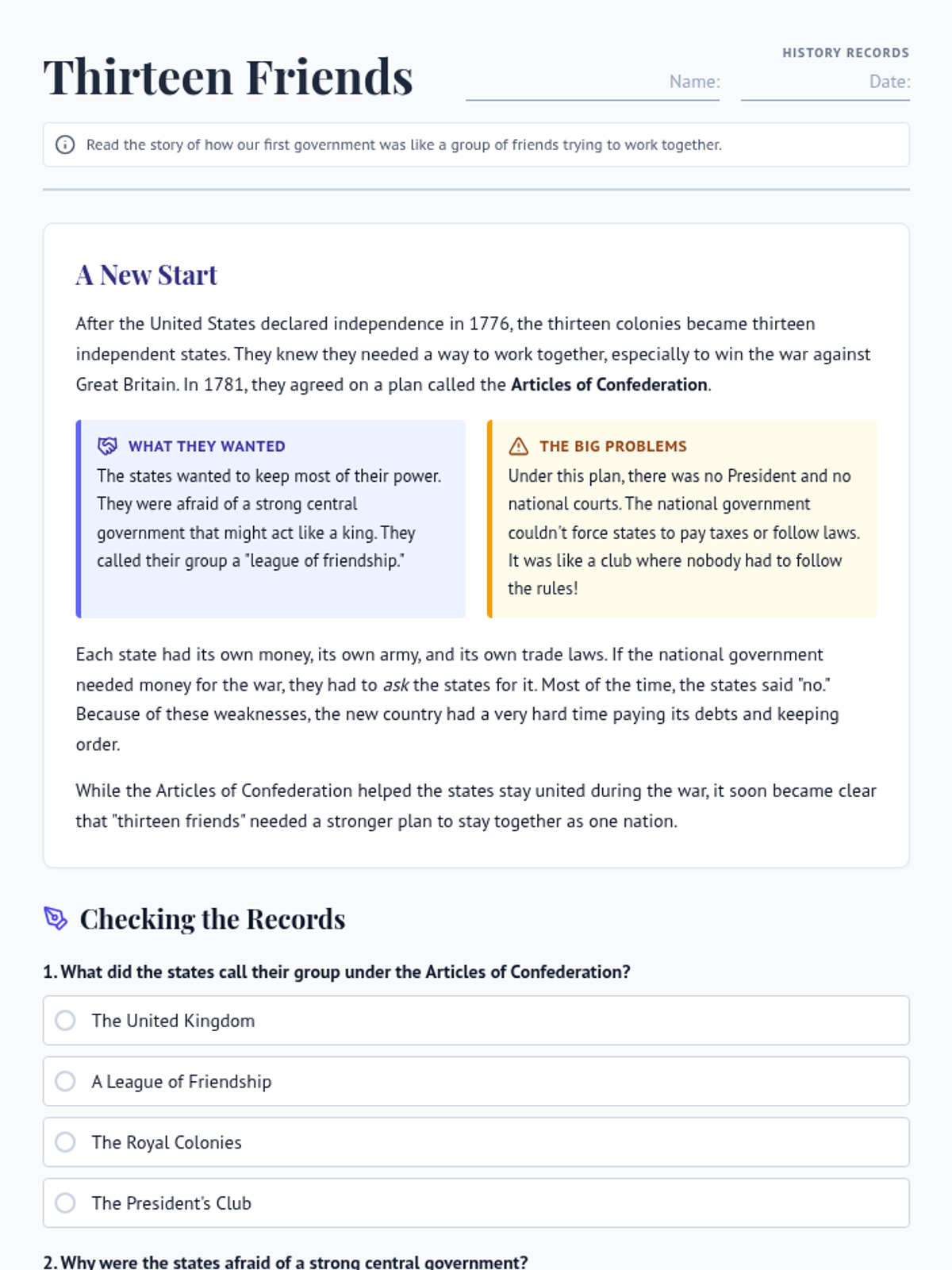
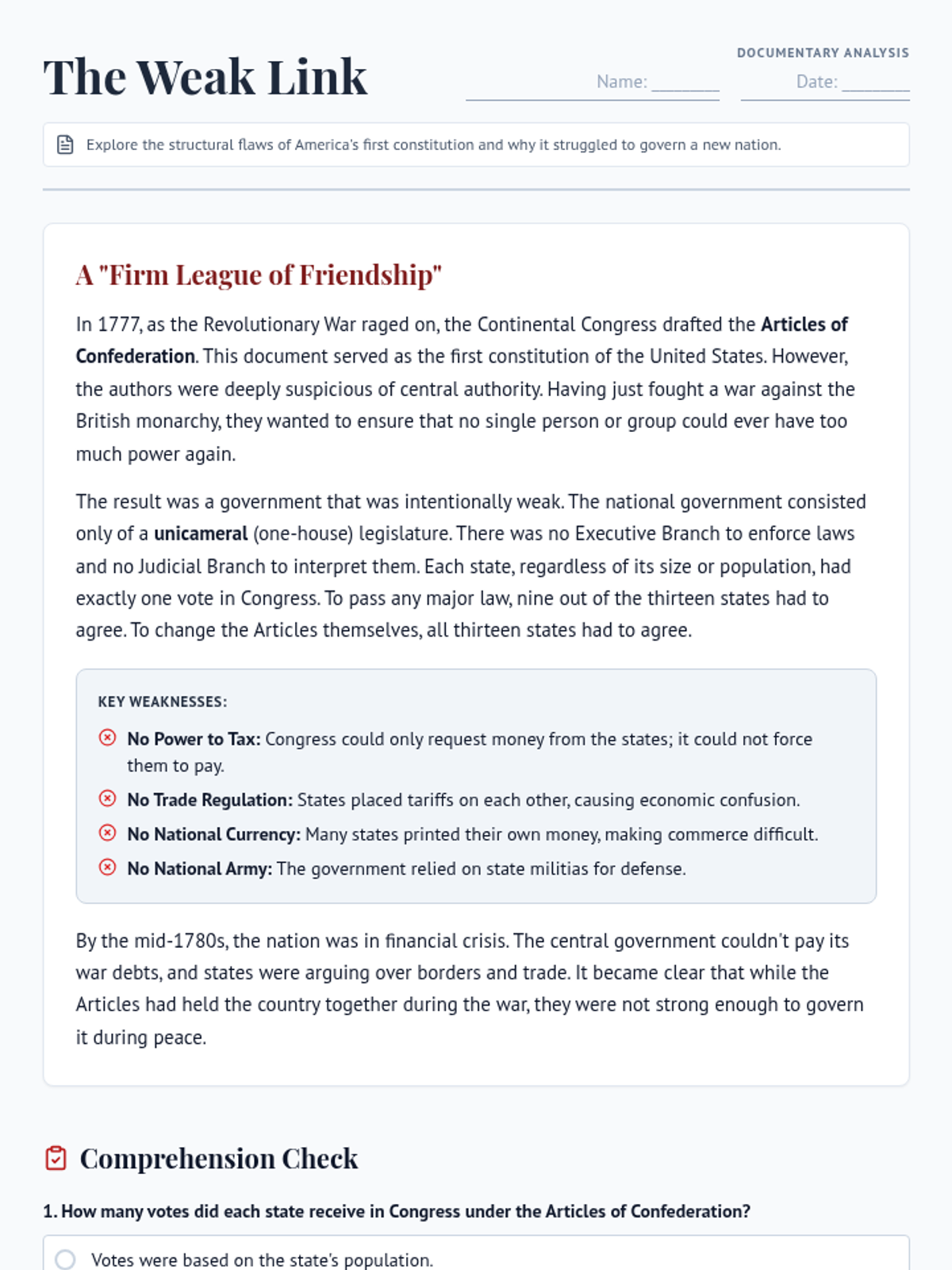
An exploration of the Articles of Confederation, the first government of the United States, its structure as a loose confederation, and the challenges that led to the Constitutional Convention.
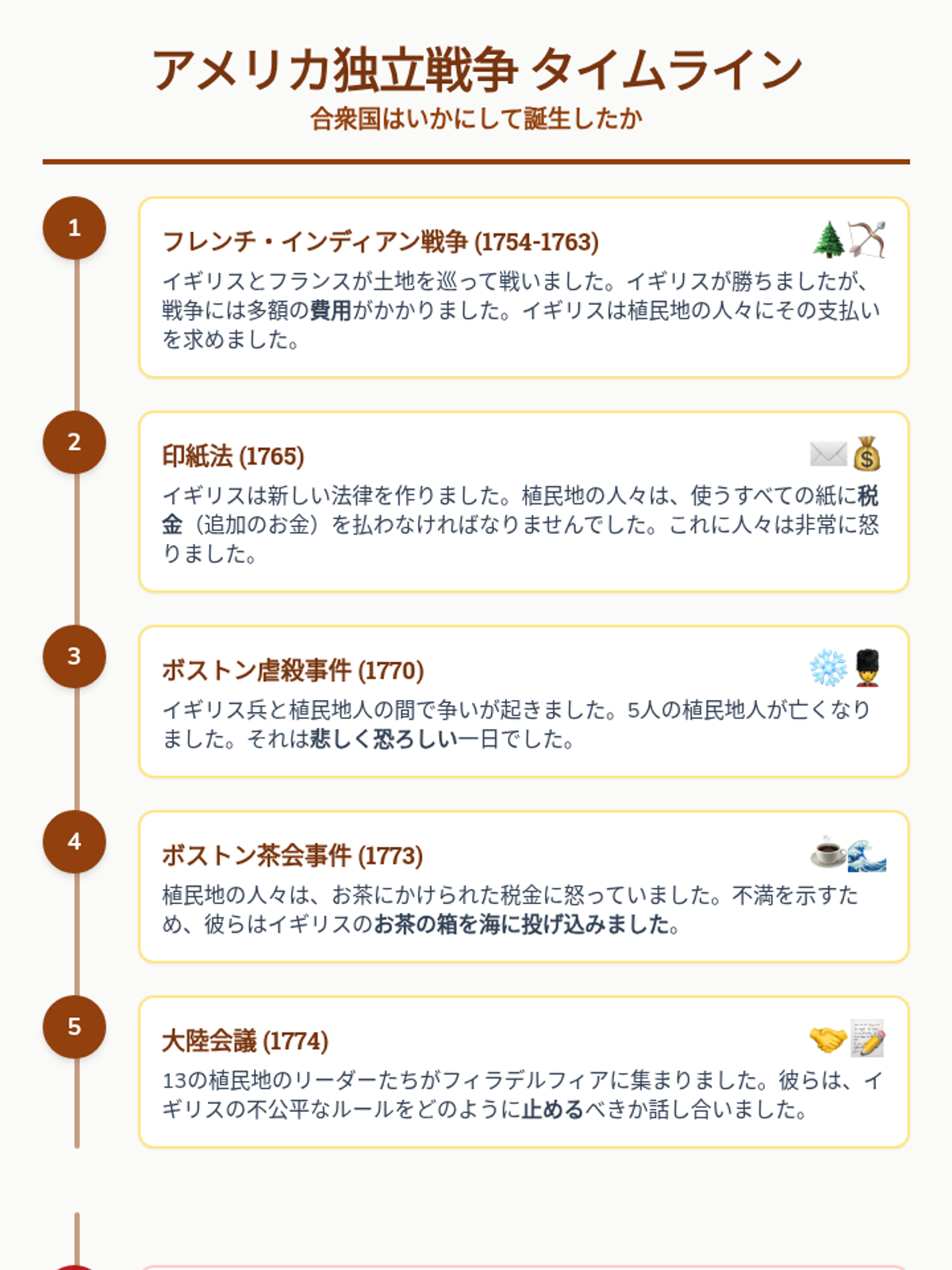
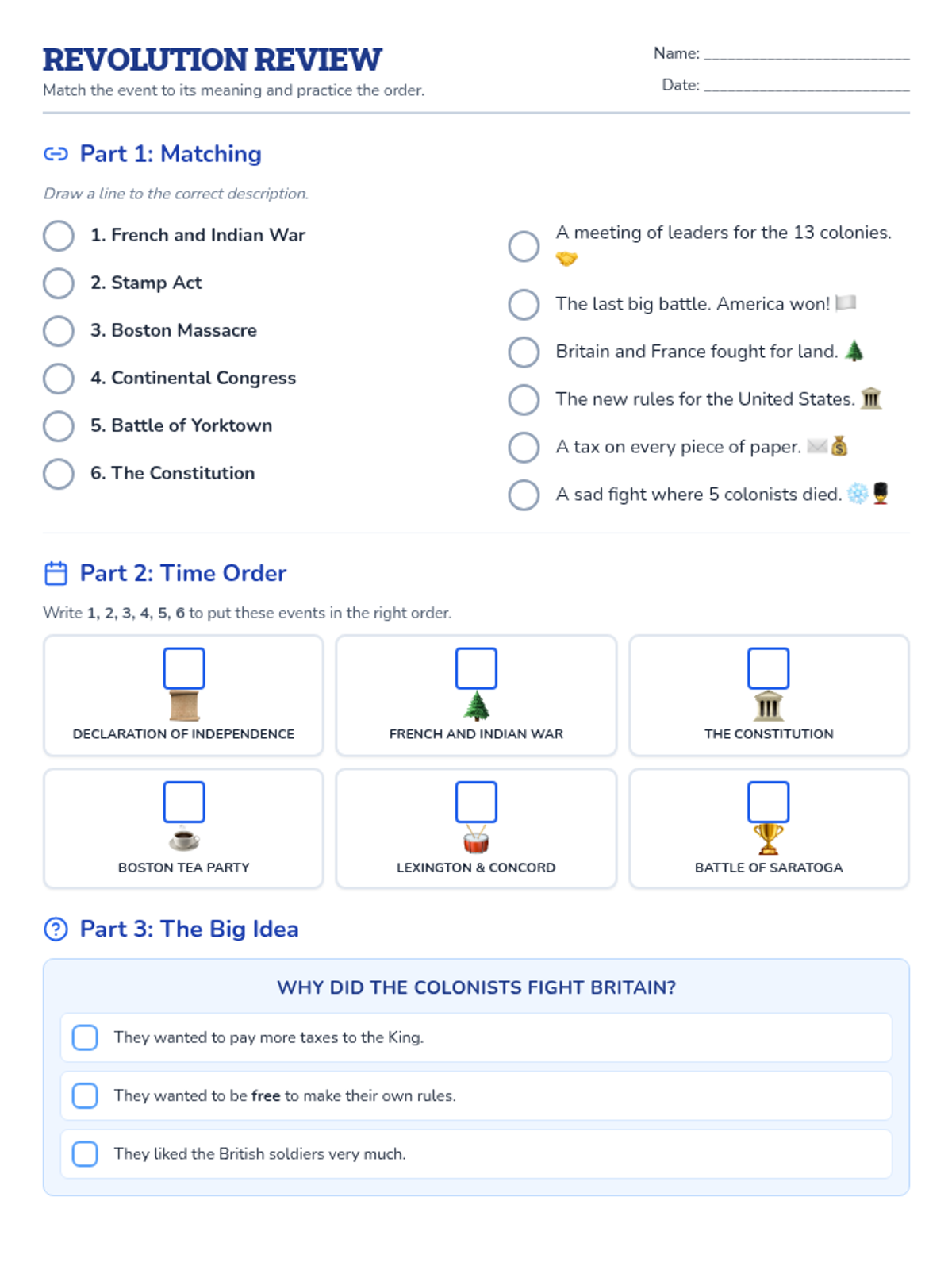
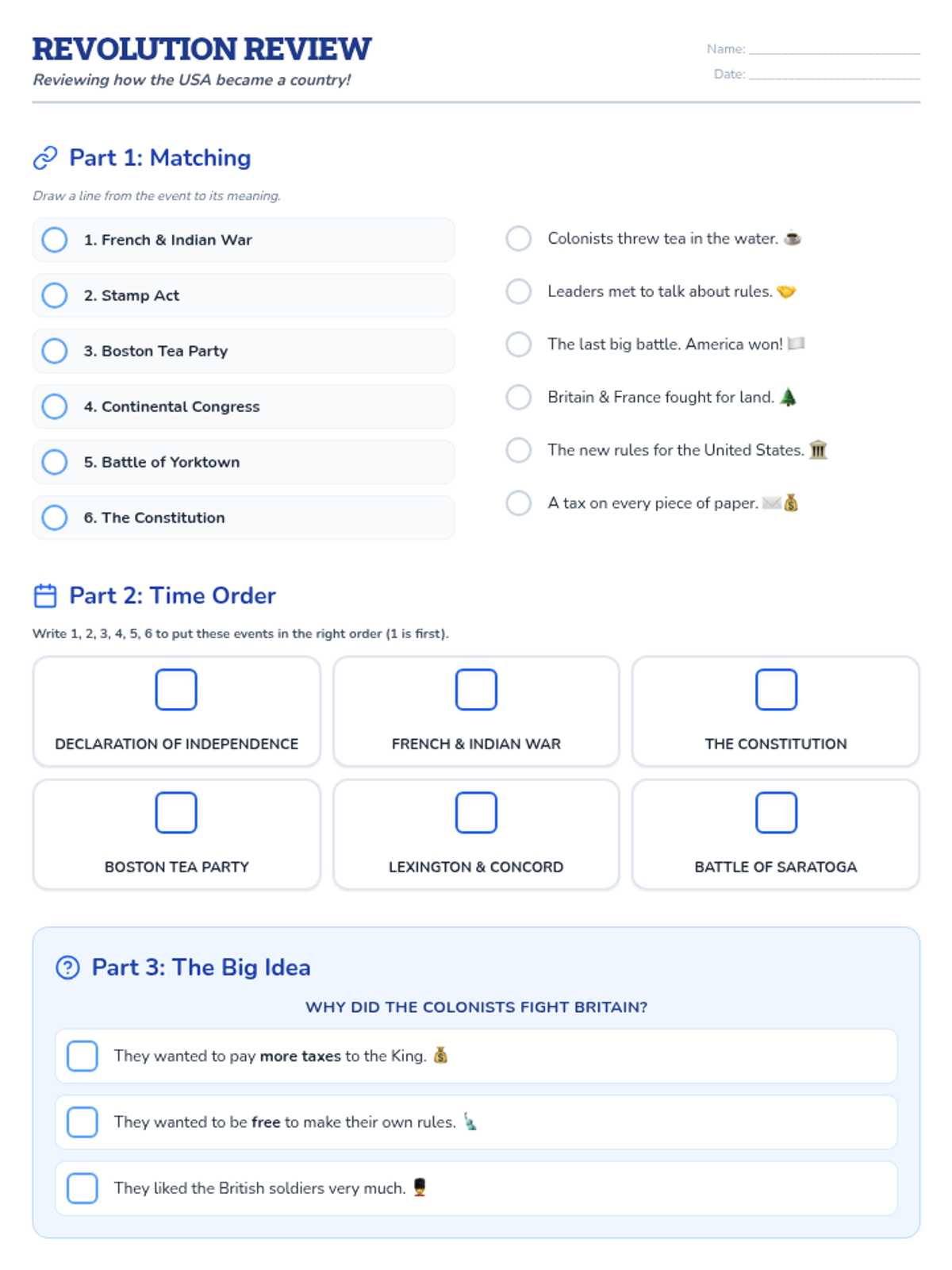
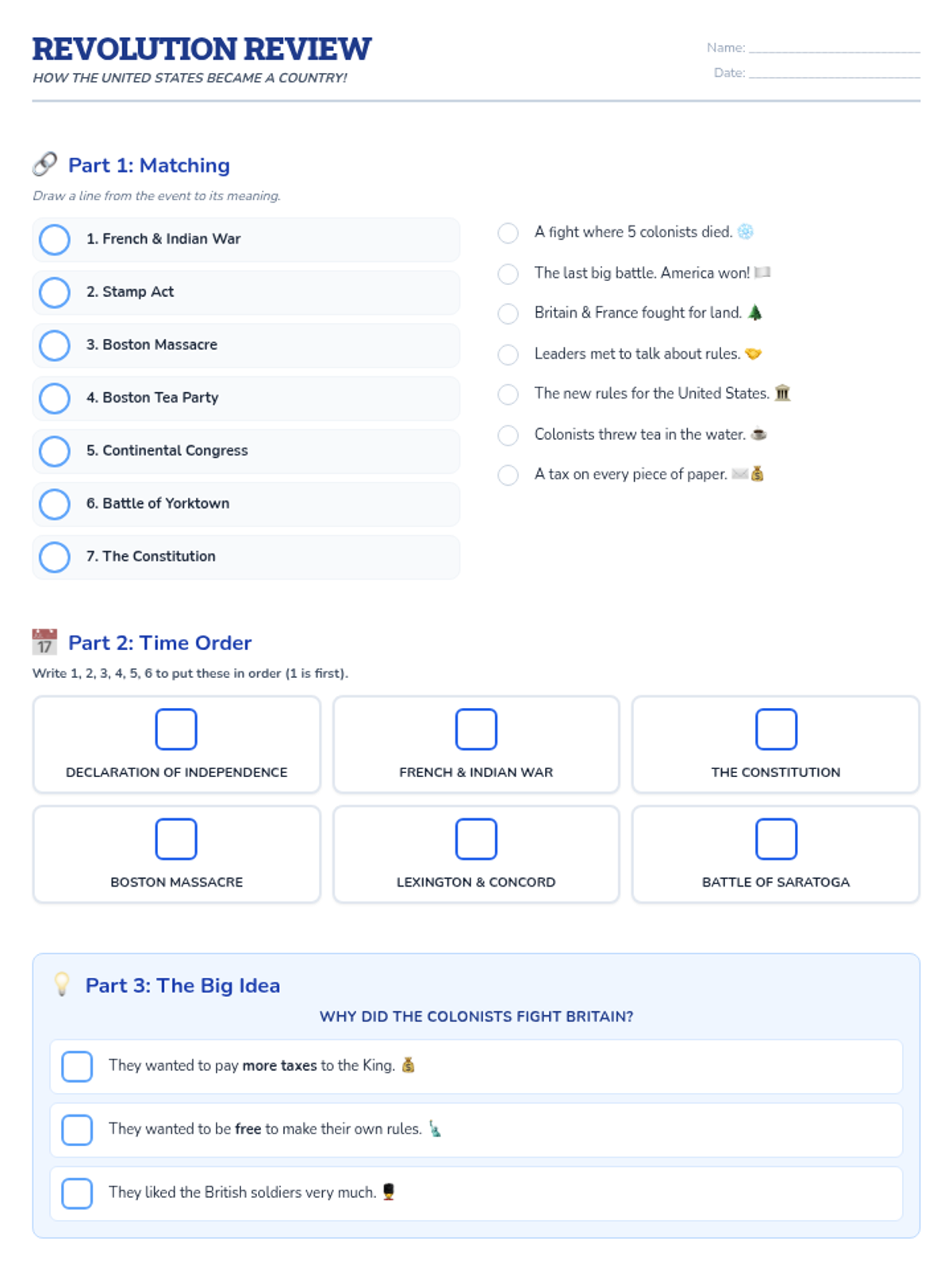
A lesson focused on the key events of the American Revolution, designed specifically for English Language Learners with visual aids and simplified text.
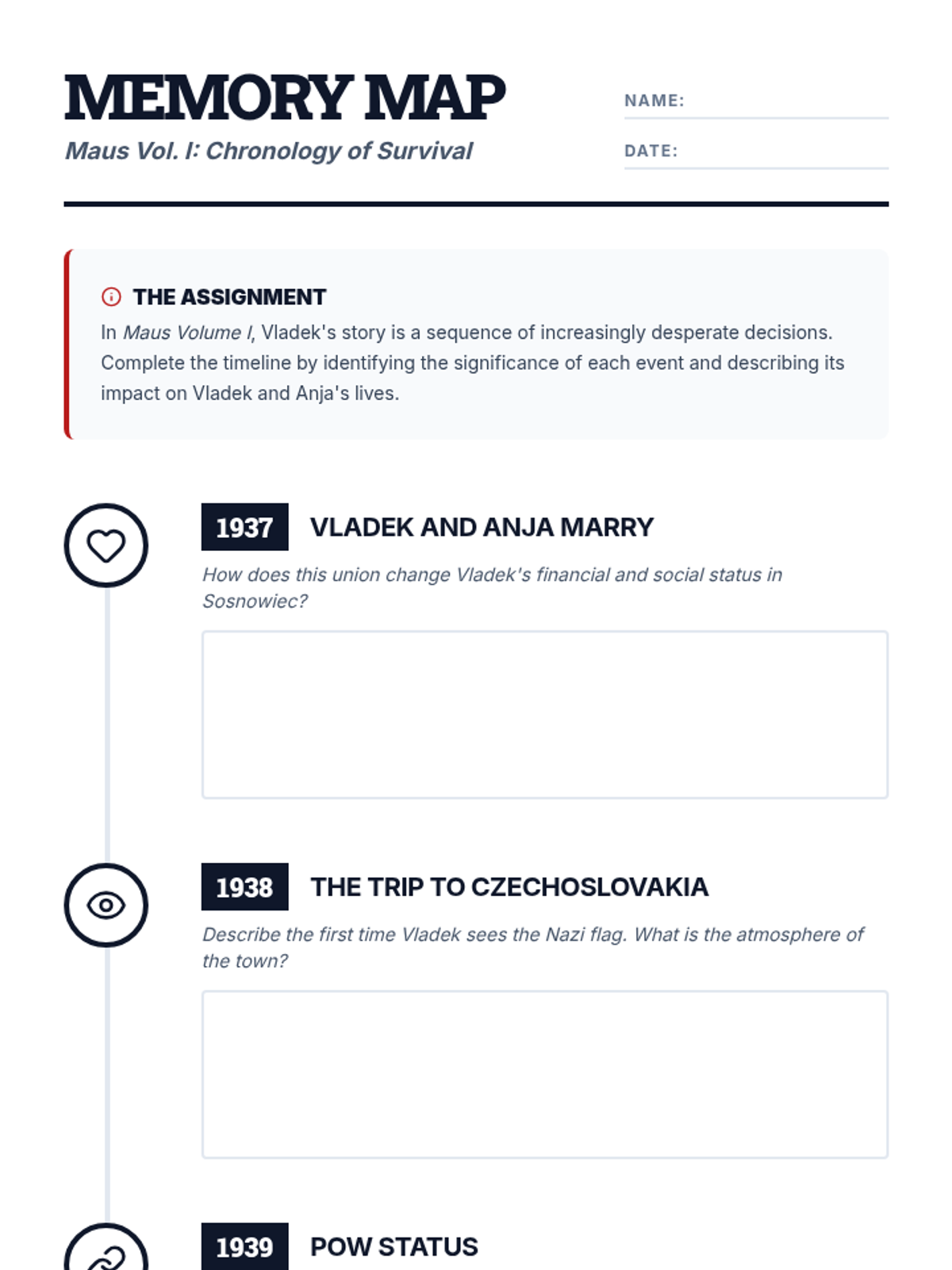
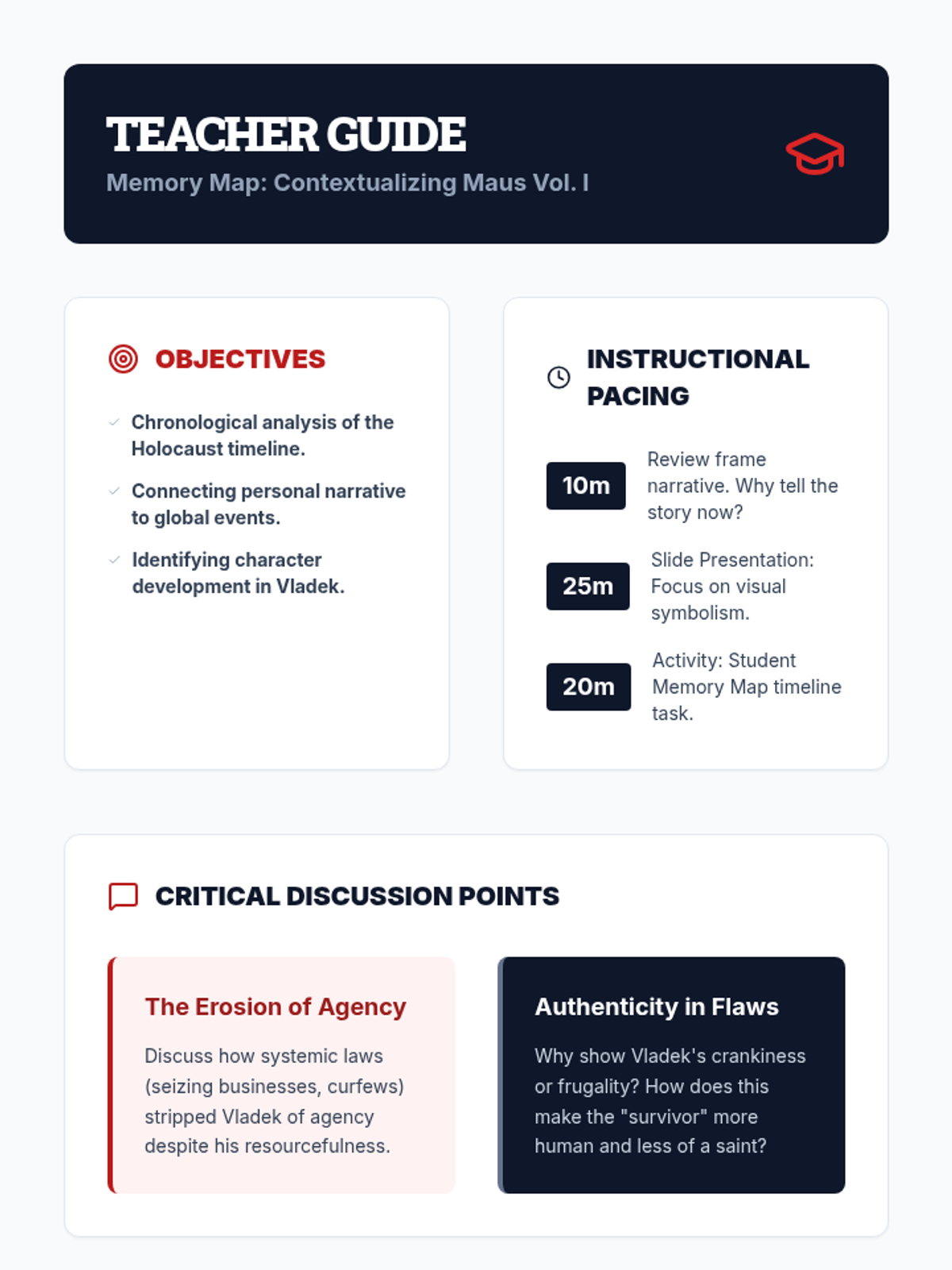
A comprehensive look at the key historical and personal events in Art Spiegelman's Maus Volume I, focusing on chronological narrative and visual mapping.
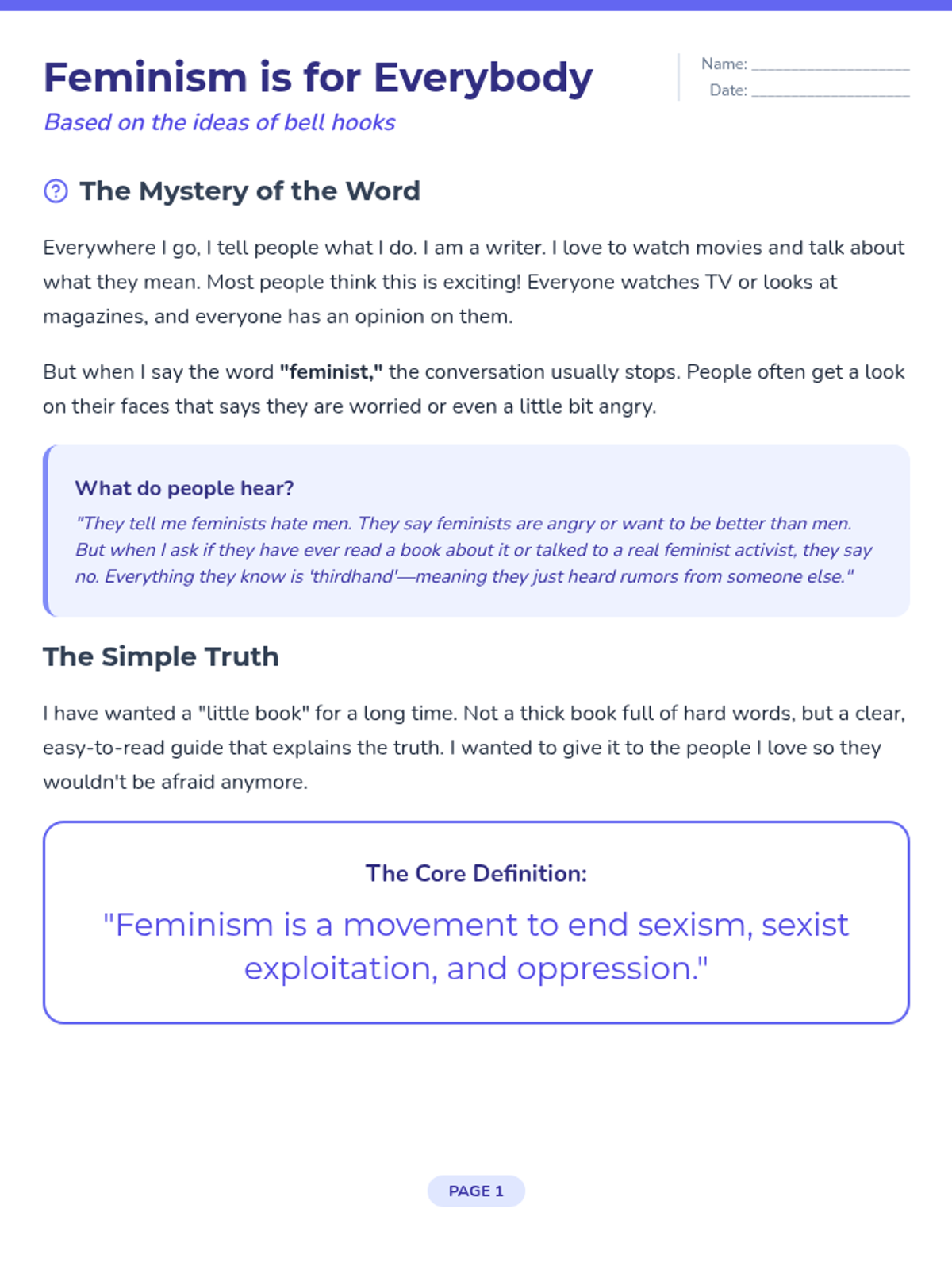
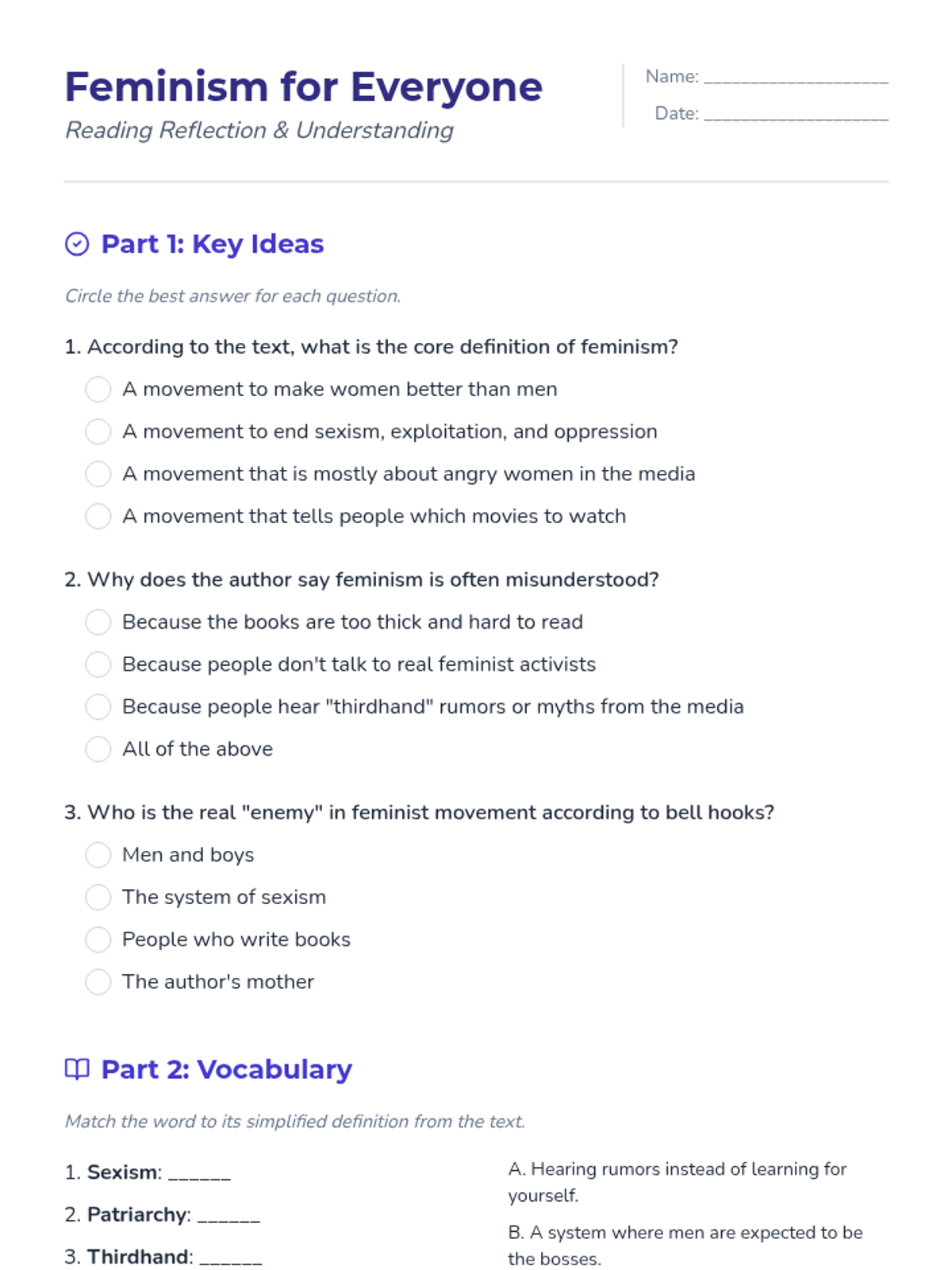
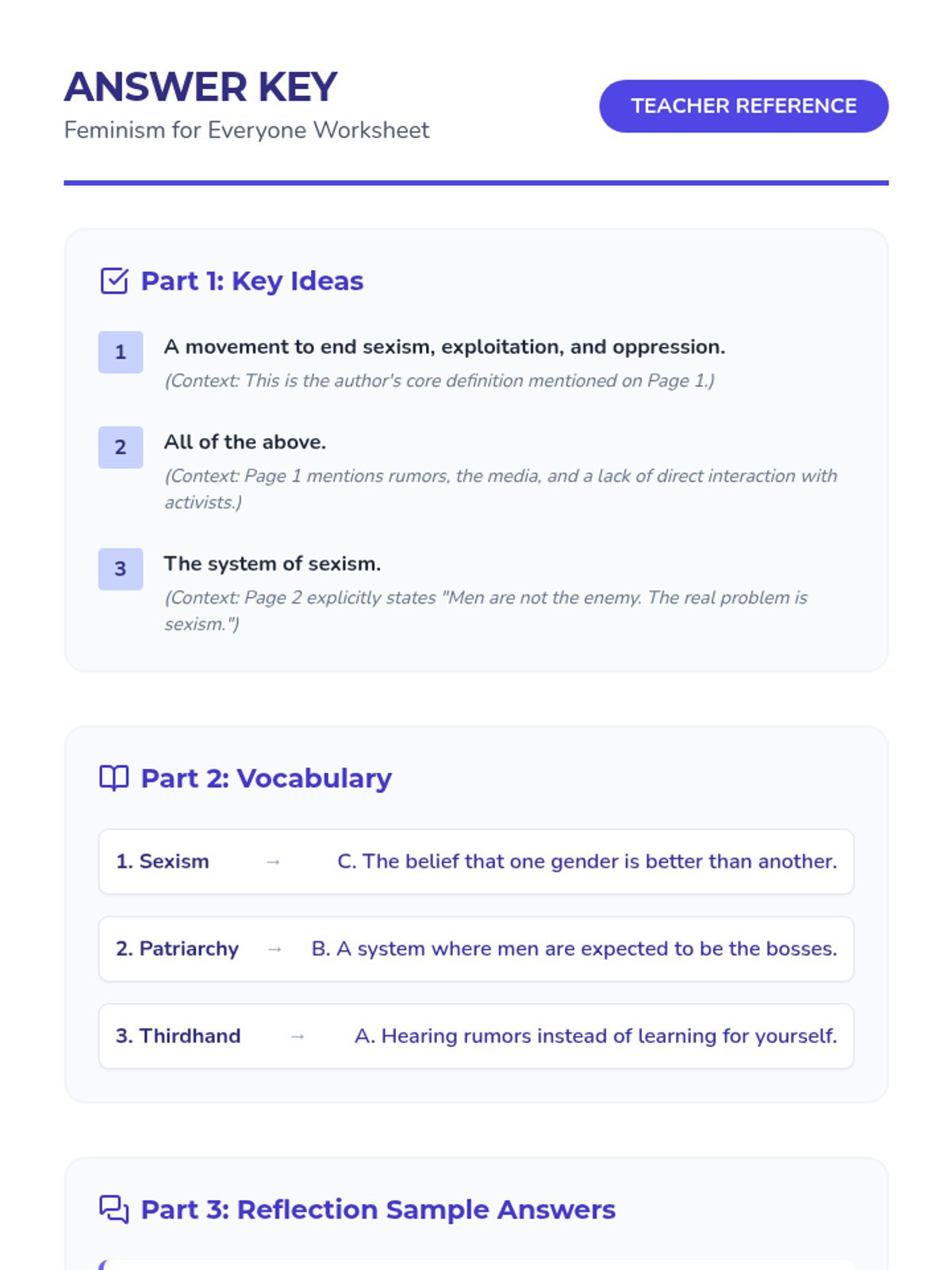
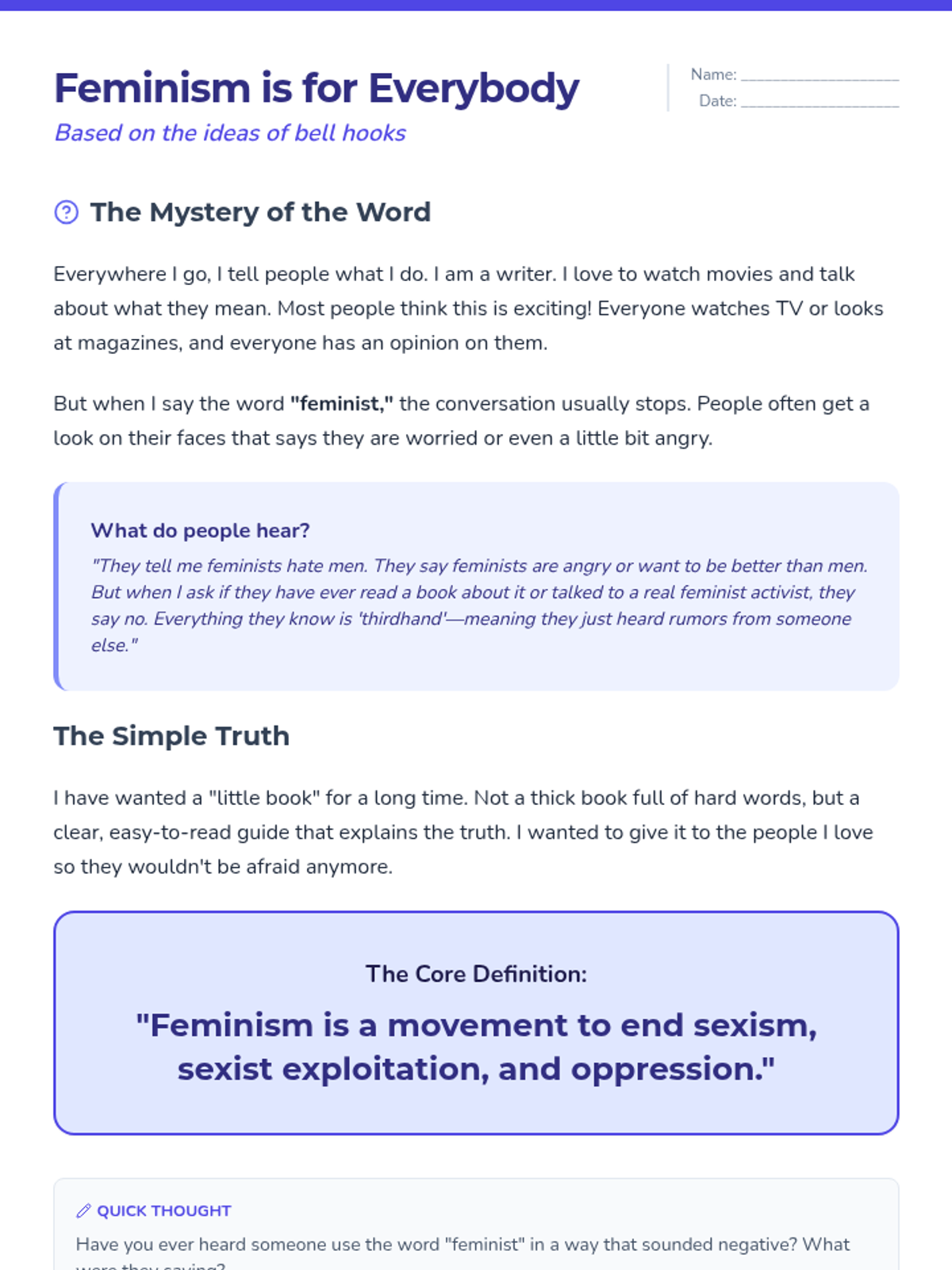
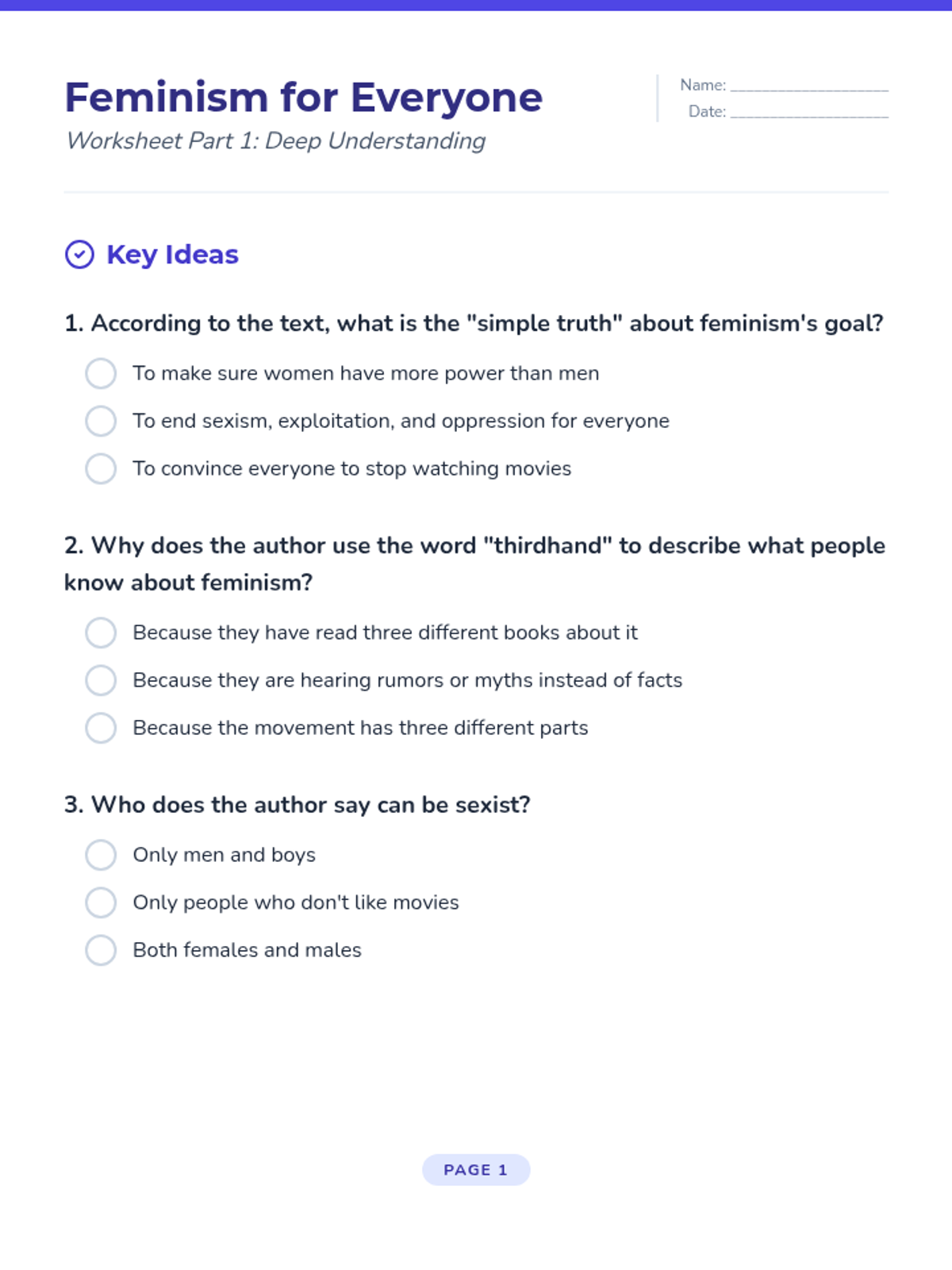
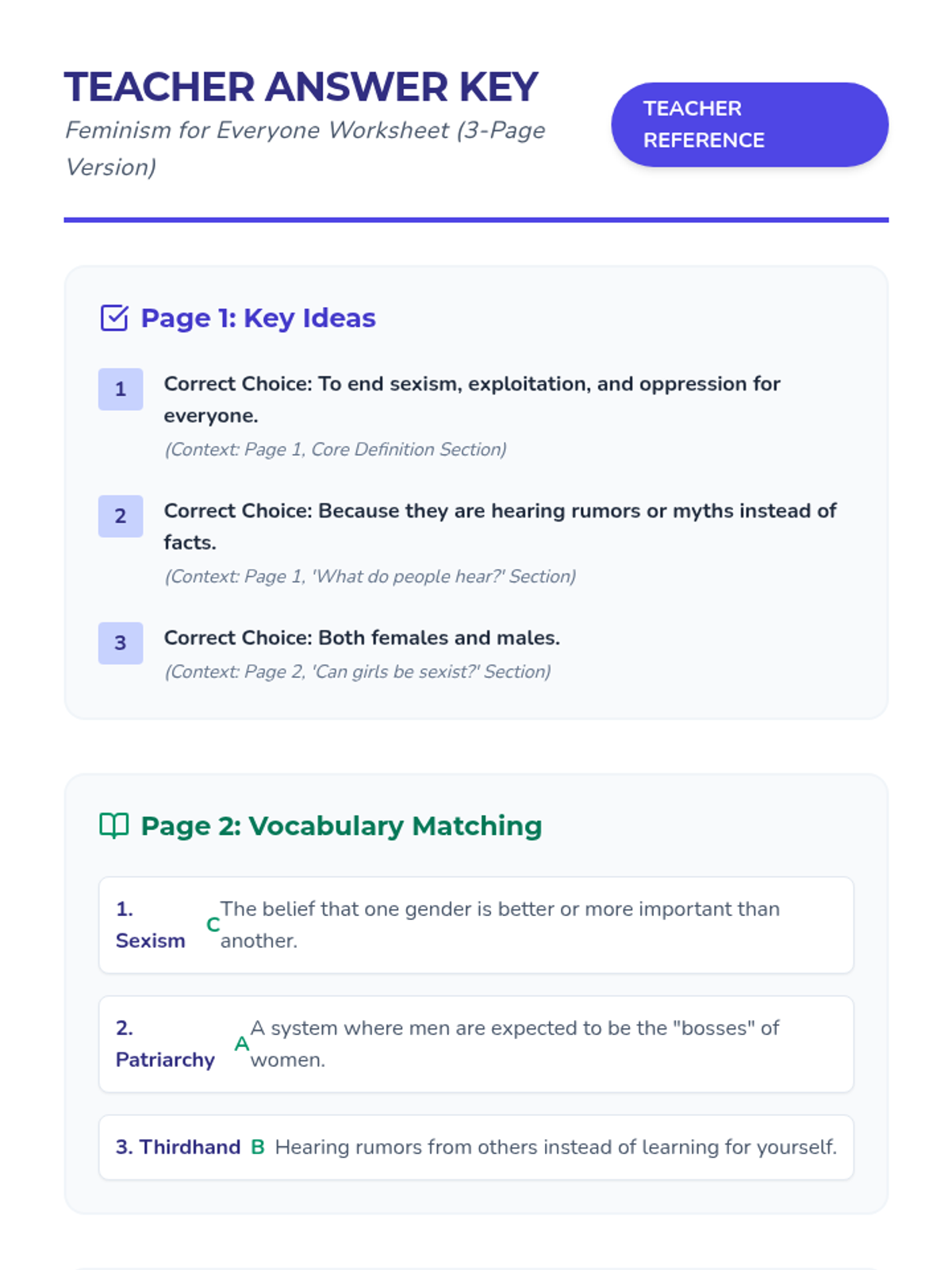
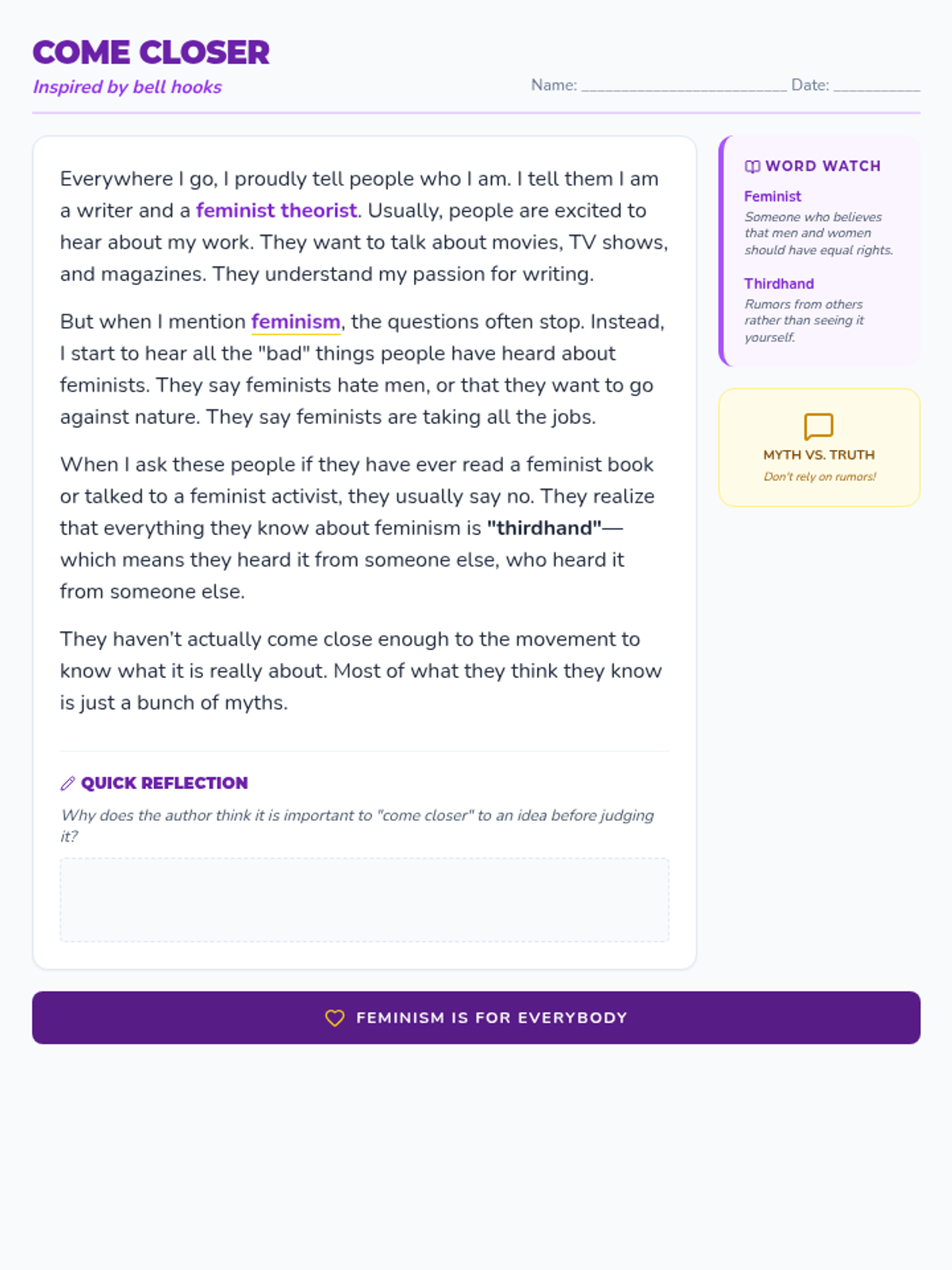
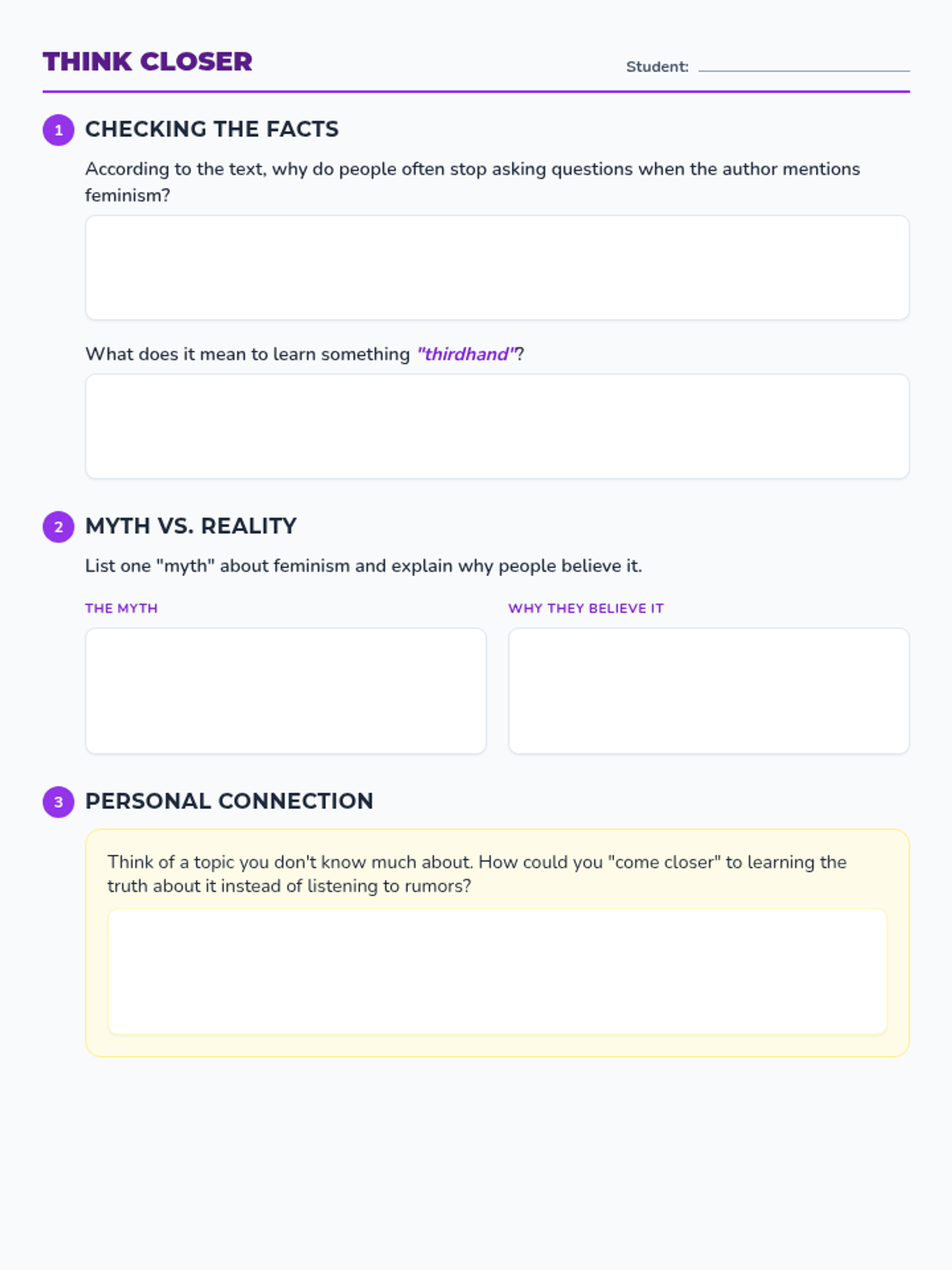
A simplified version of bell hooks' 'Feminism is for Everybody' designed for middle school students to understand the core concepts of equality, sexism, and social change.
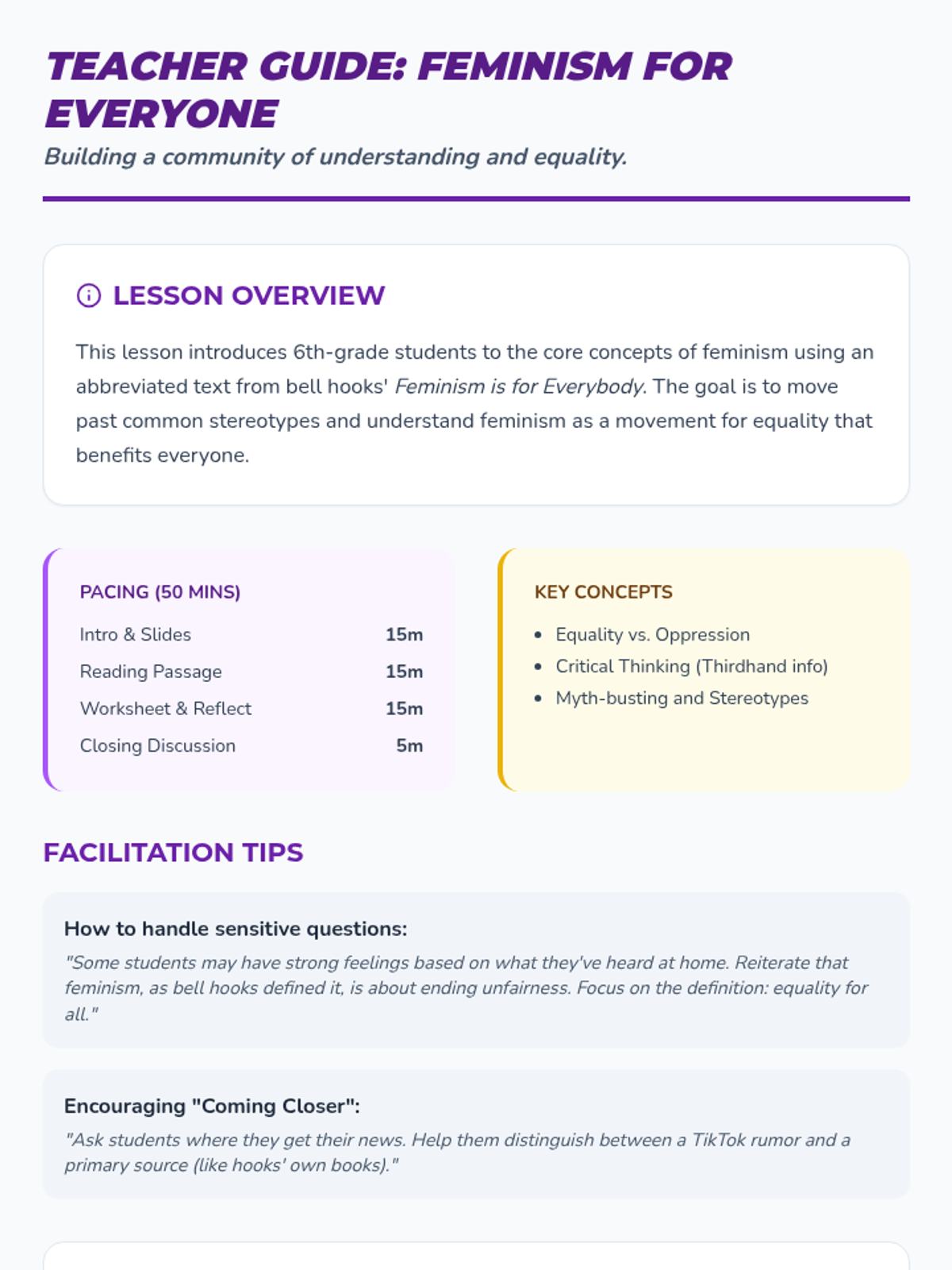
An introductory lesson exploring the true meaning of feminism, based on the work of bell hooks, adapted for middle schoolers to debunk common myths and promote equality.
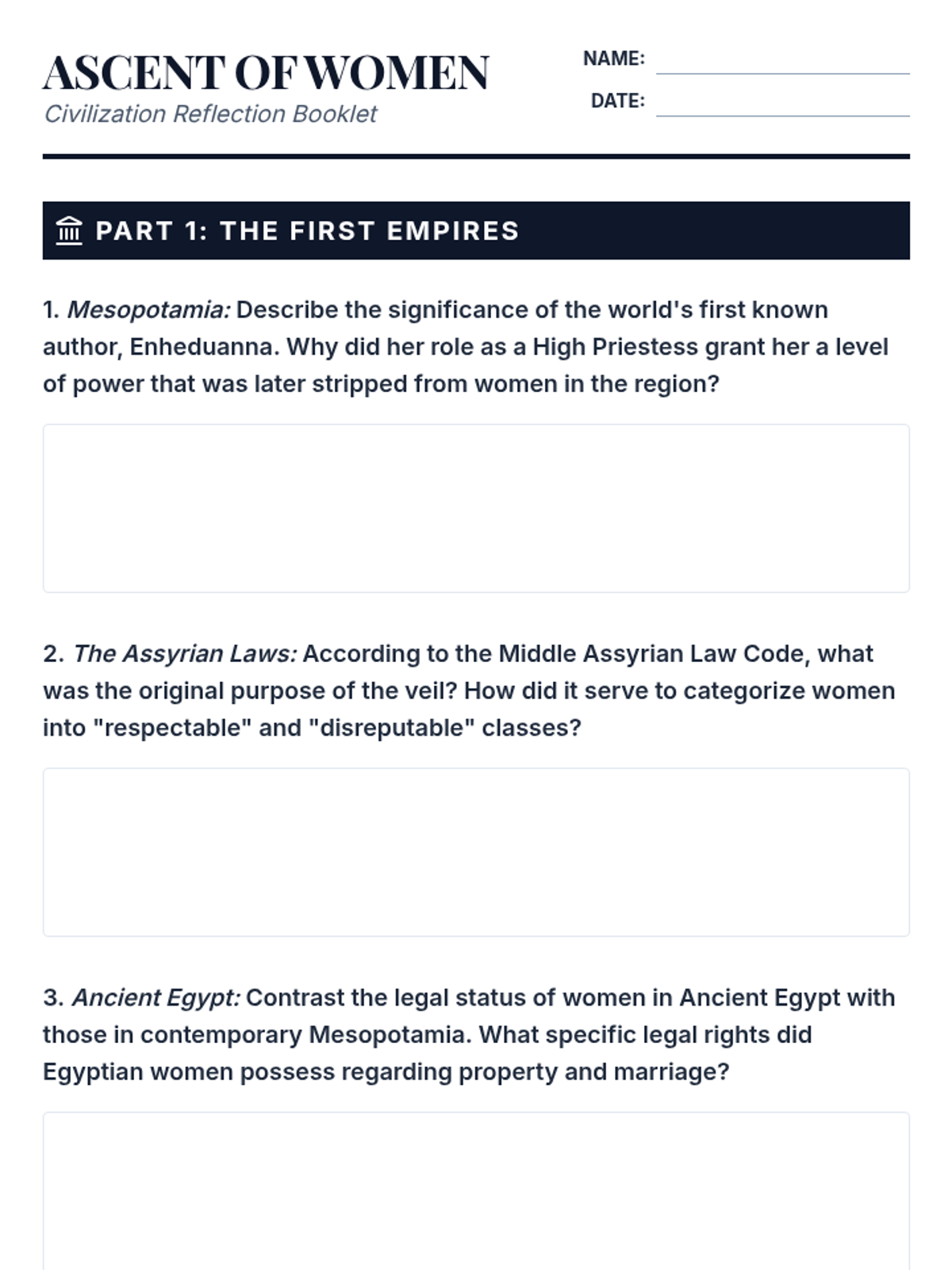
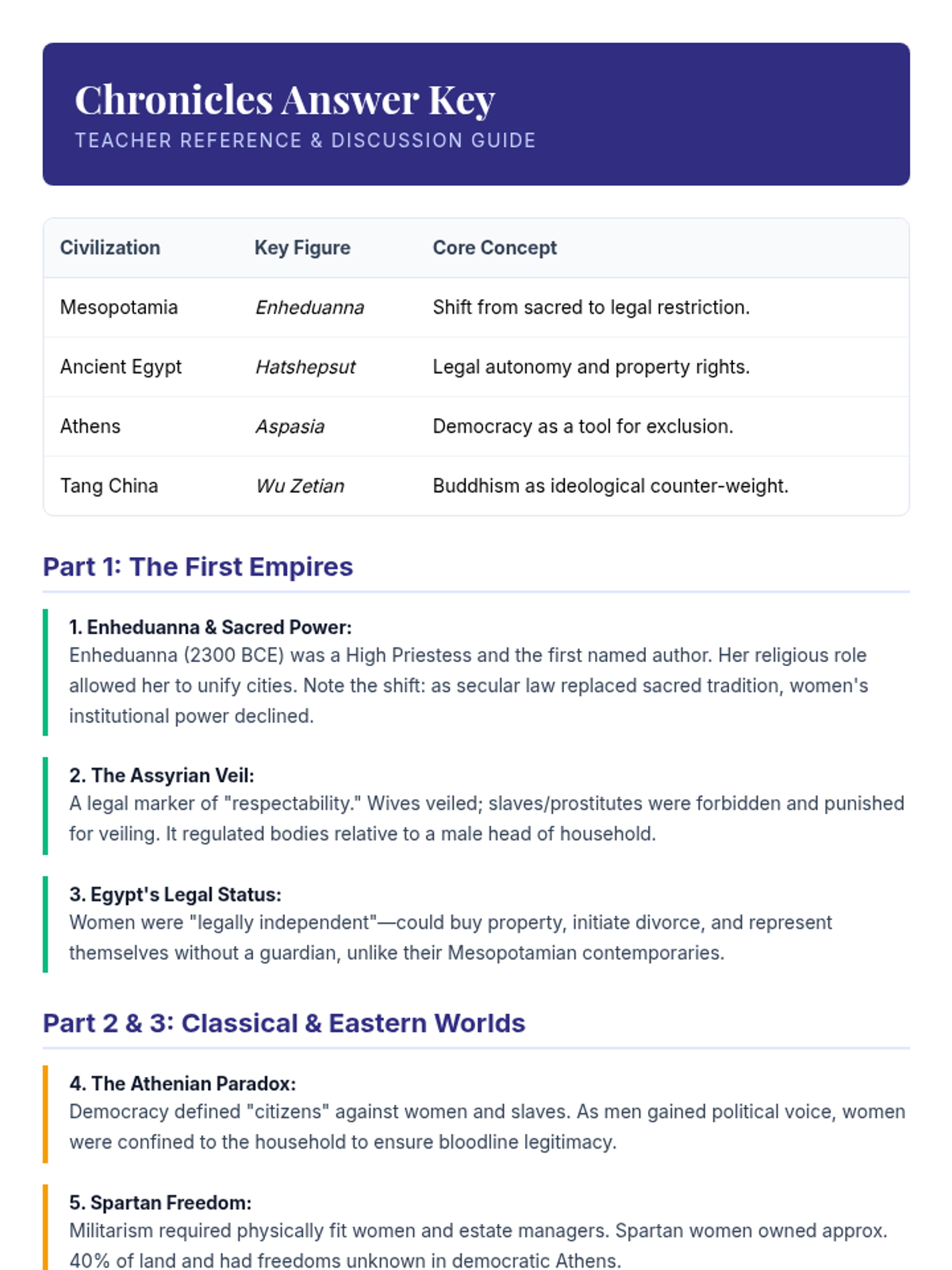
A comprehensive lesson exploring the historical roles and status of women across global civilizations, based on the Ascent of Women documentary series. Includes reflection questions for all major civilizations covered in the episodes.
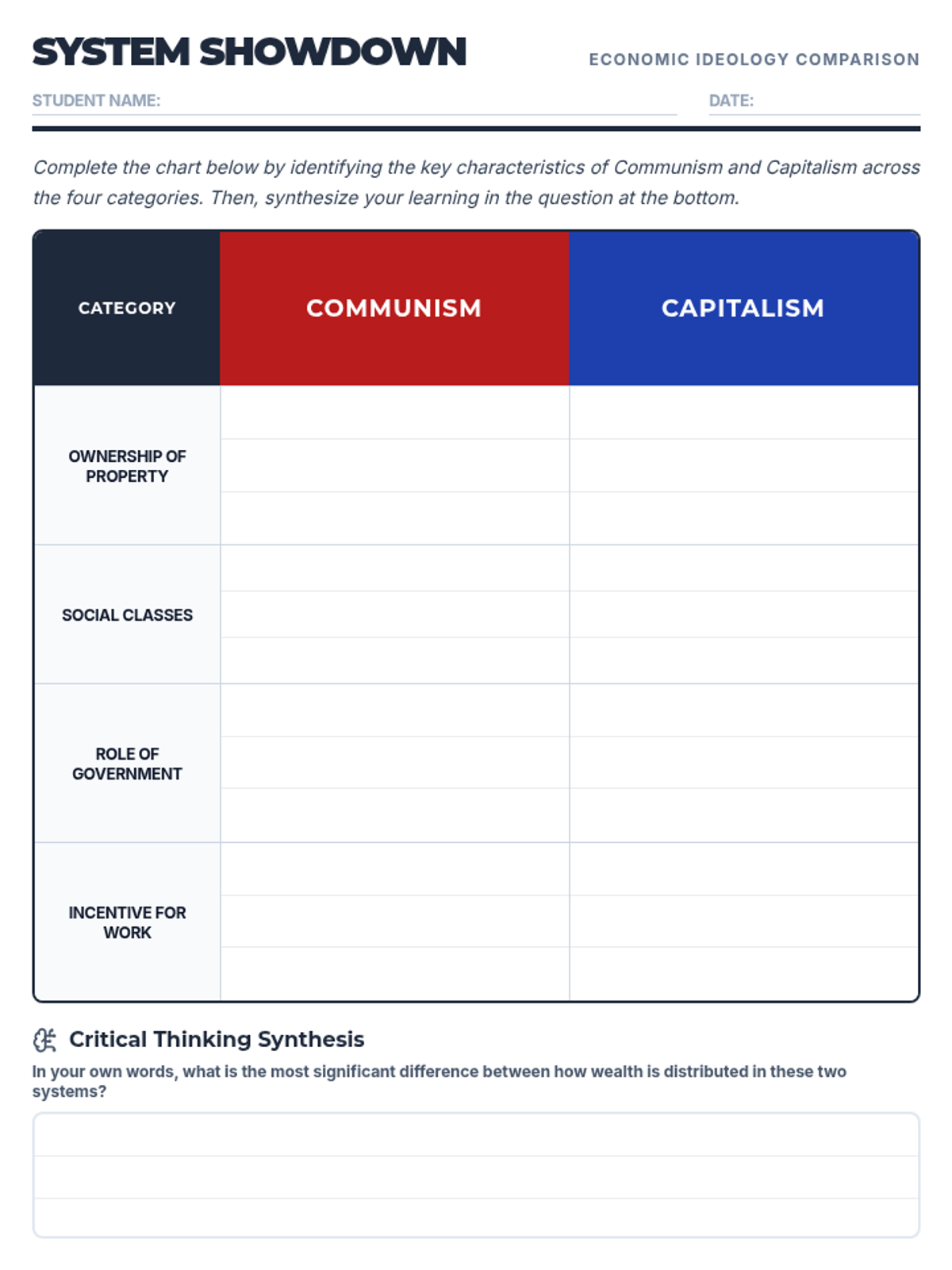
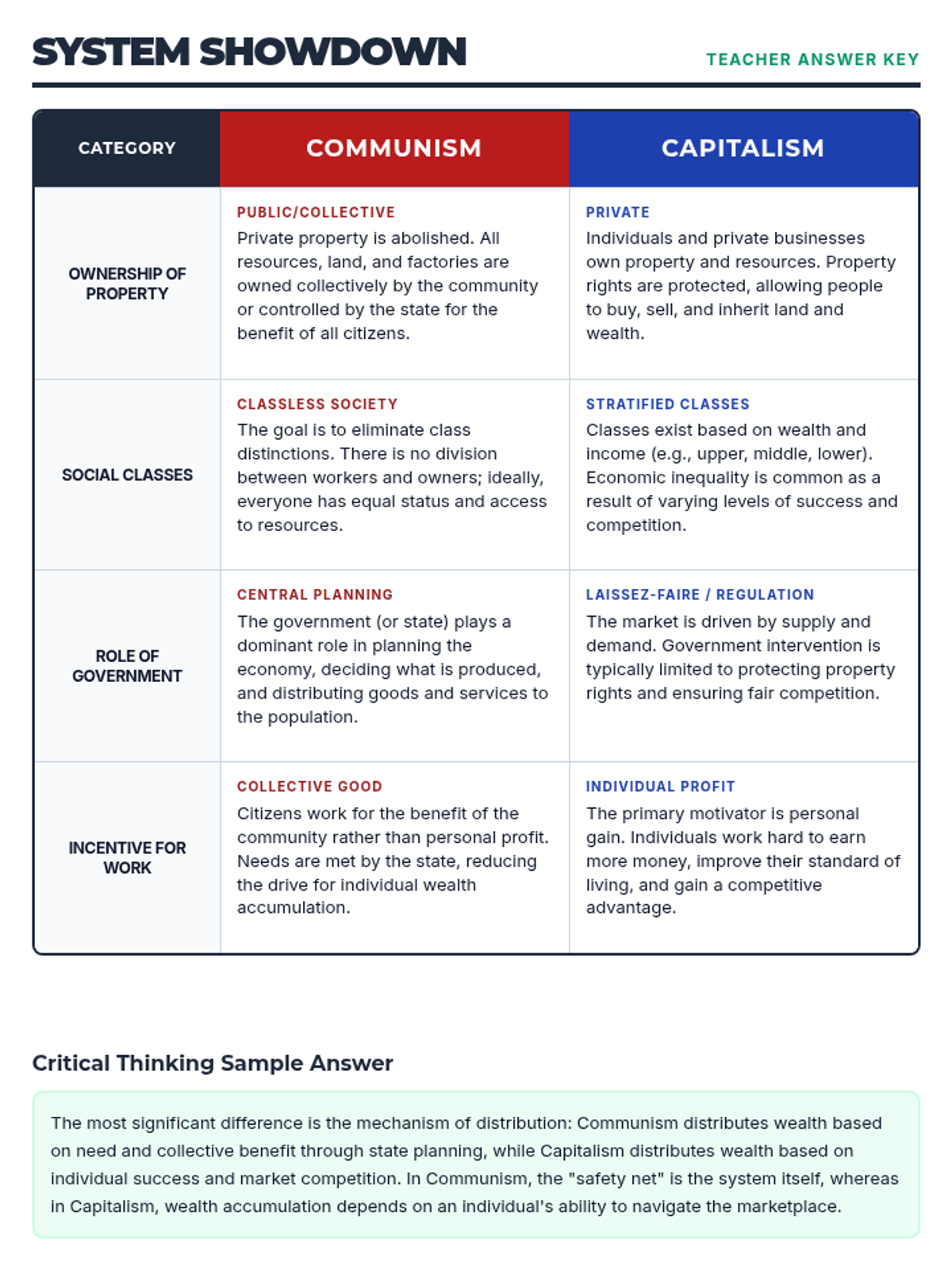
A comparison of the fundamental principles, economic structures, and social impacts of Communism and Capitalism.
Archive for old versions and redundant materials.
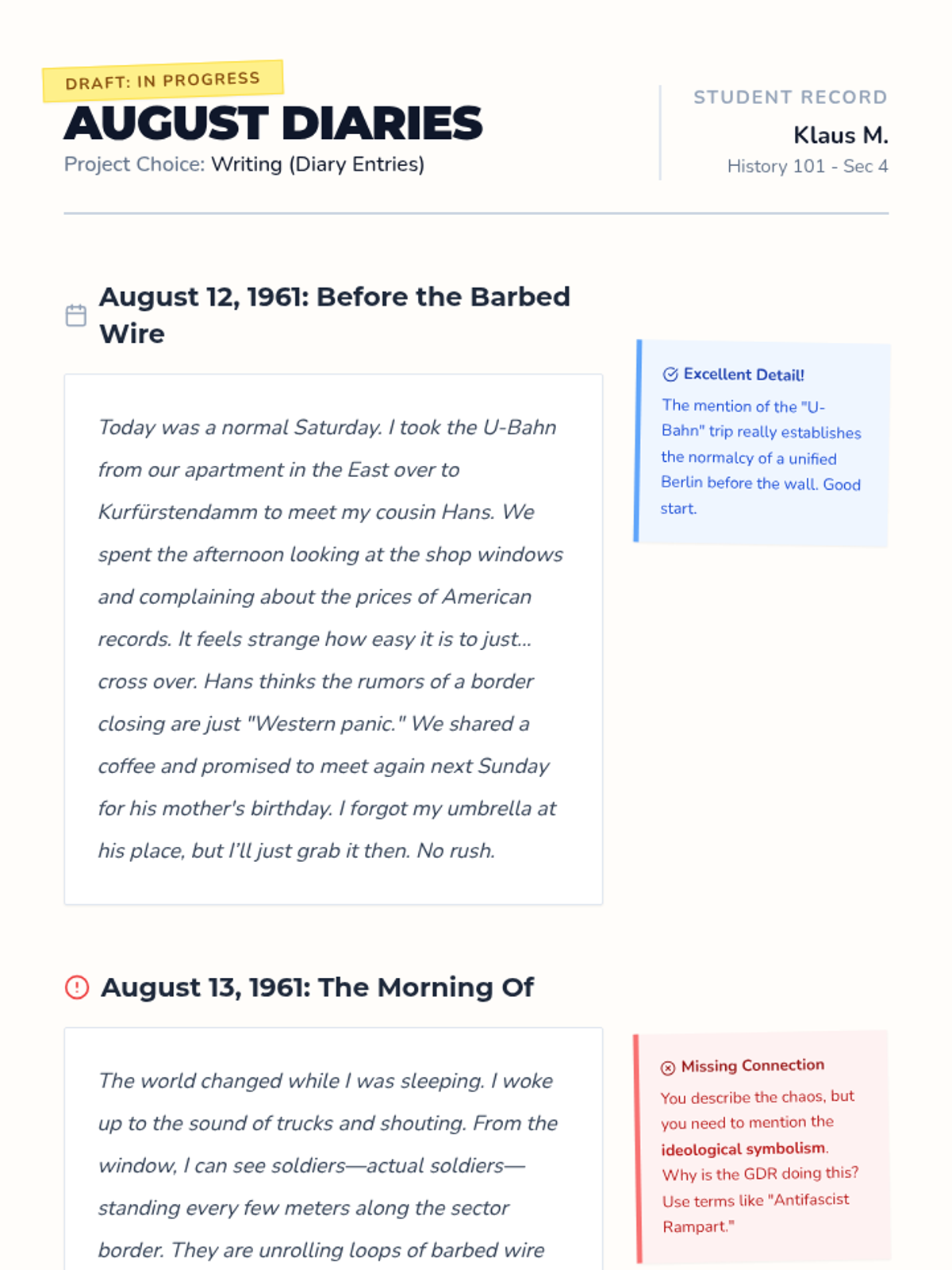
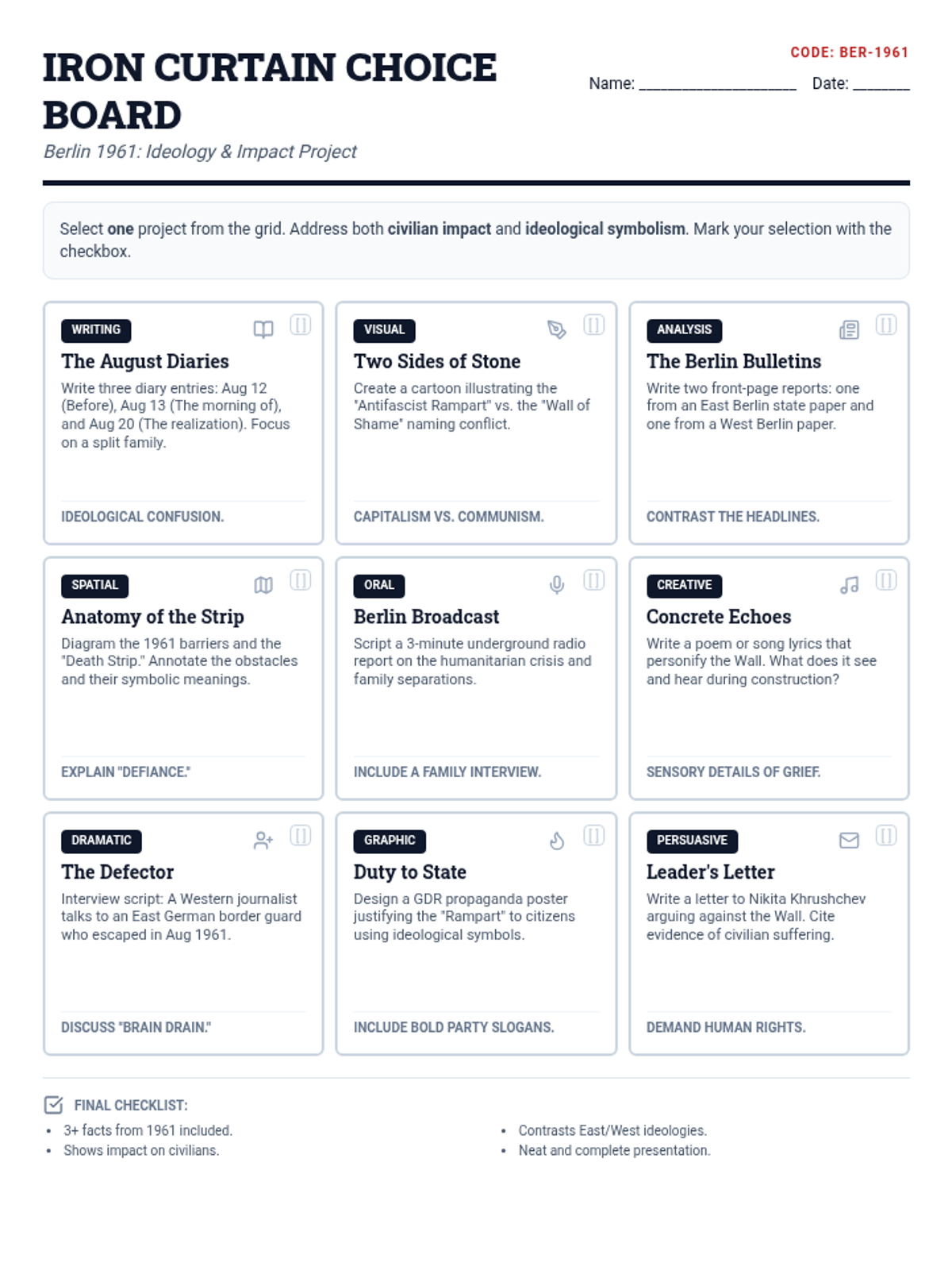
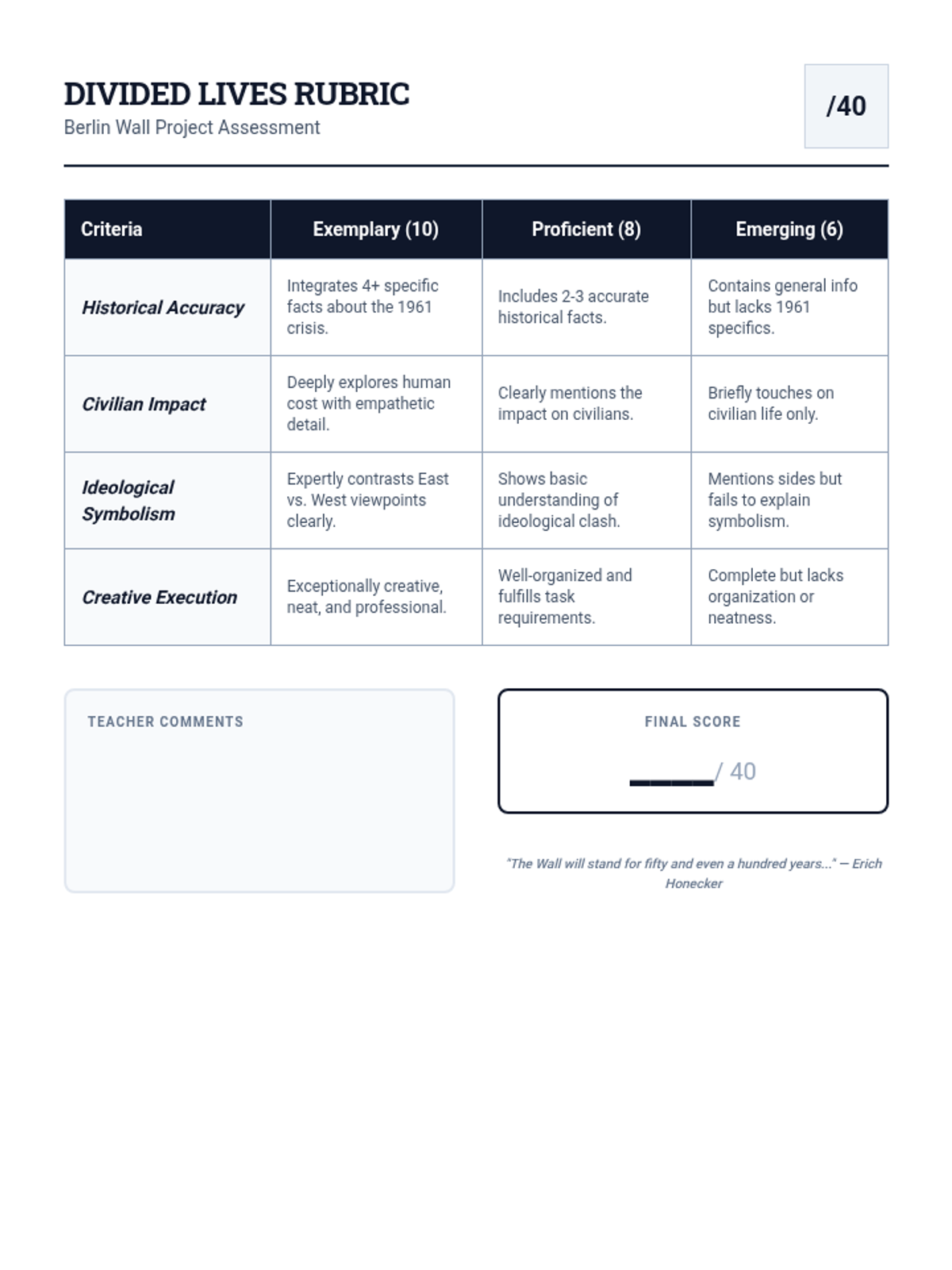
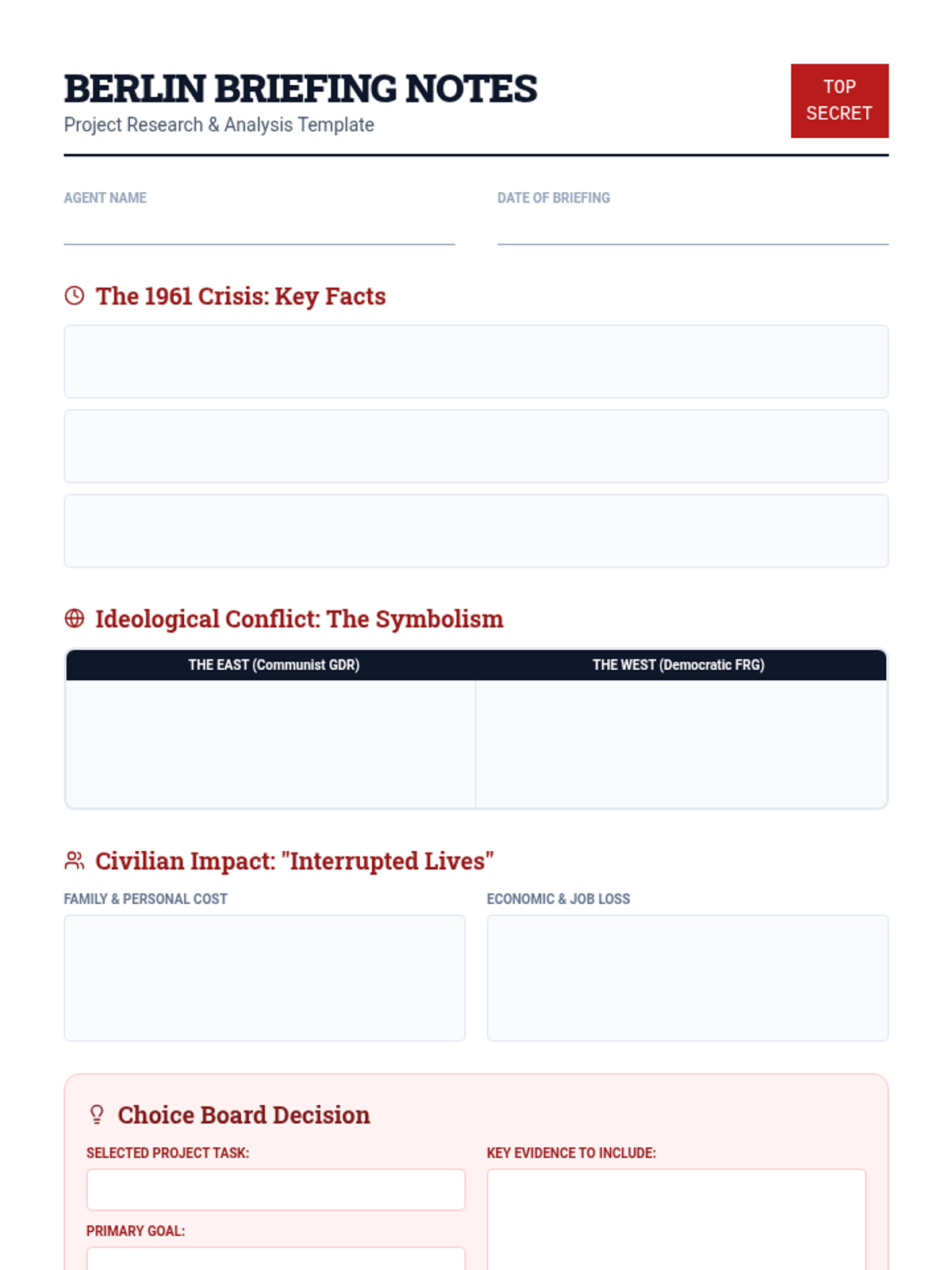
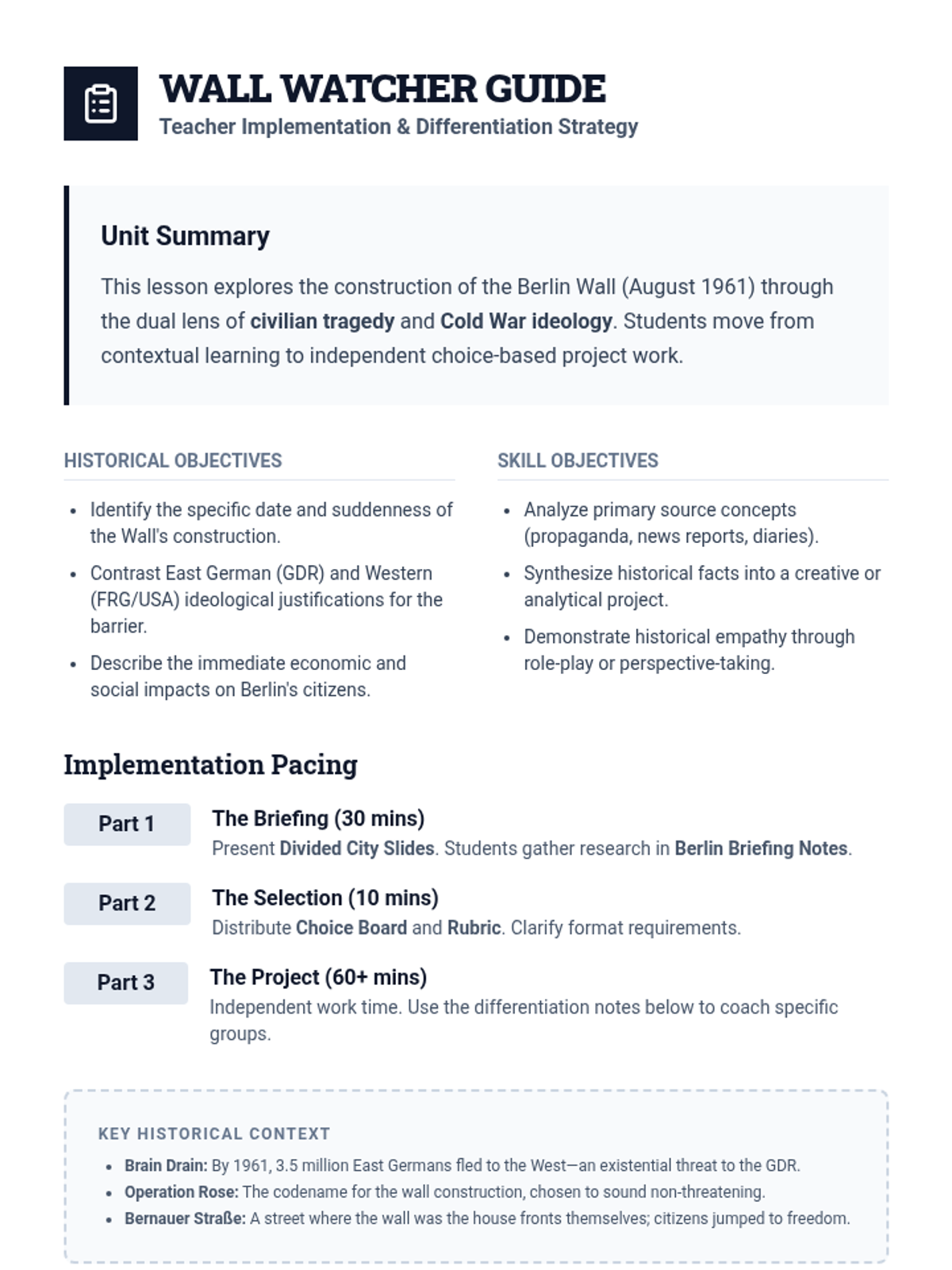
Students will explore the historical context of the Berlin Wall's construction in 1961, analyze its ideological significance, and select a project path to demonstrate their understanding of civilian impacts.
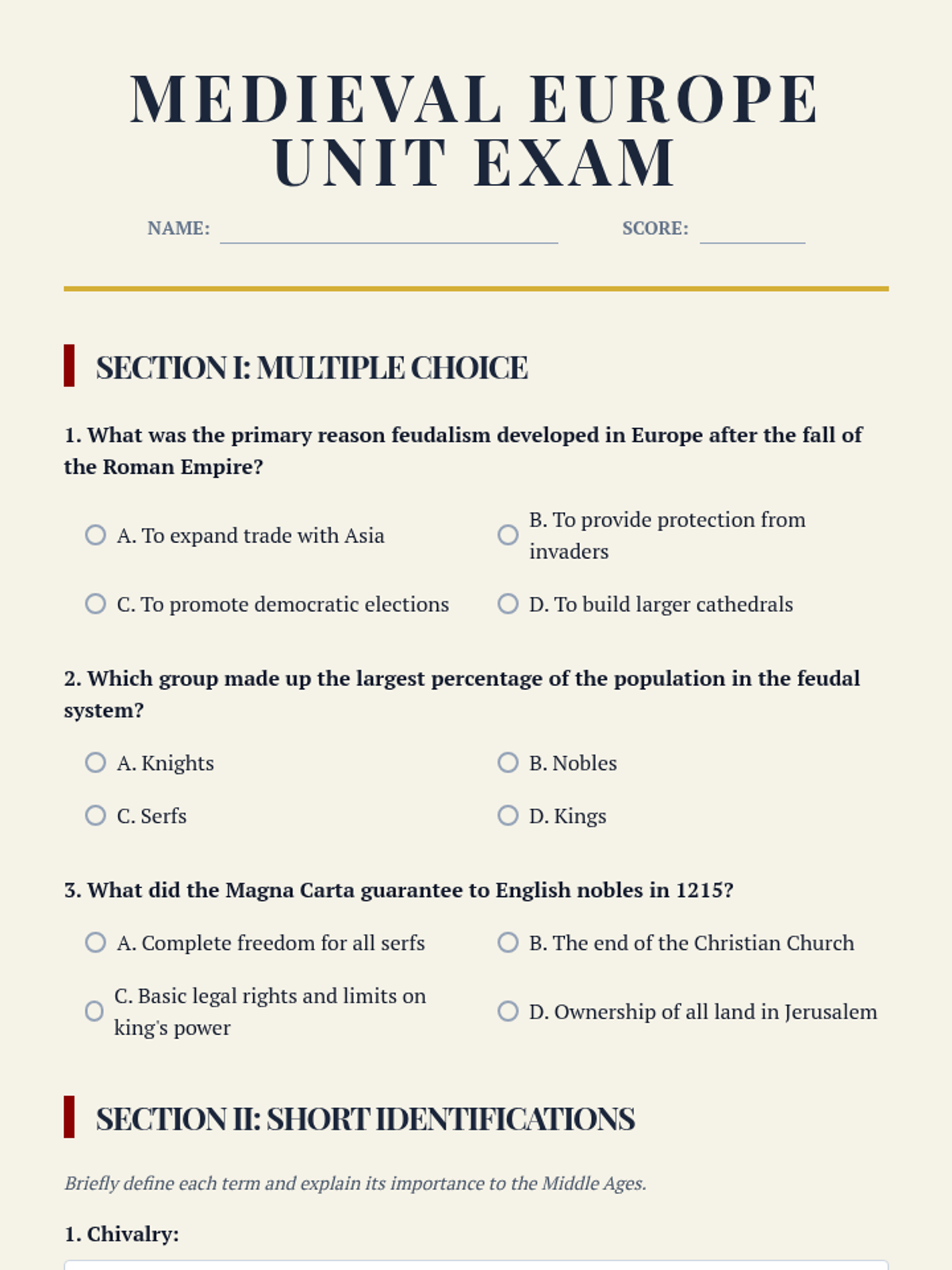
Examine the origins of constitutional government with the Magna Carta, the growth of medieval towns, and the transition toward the Renaissance.
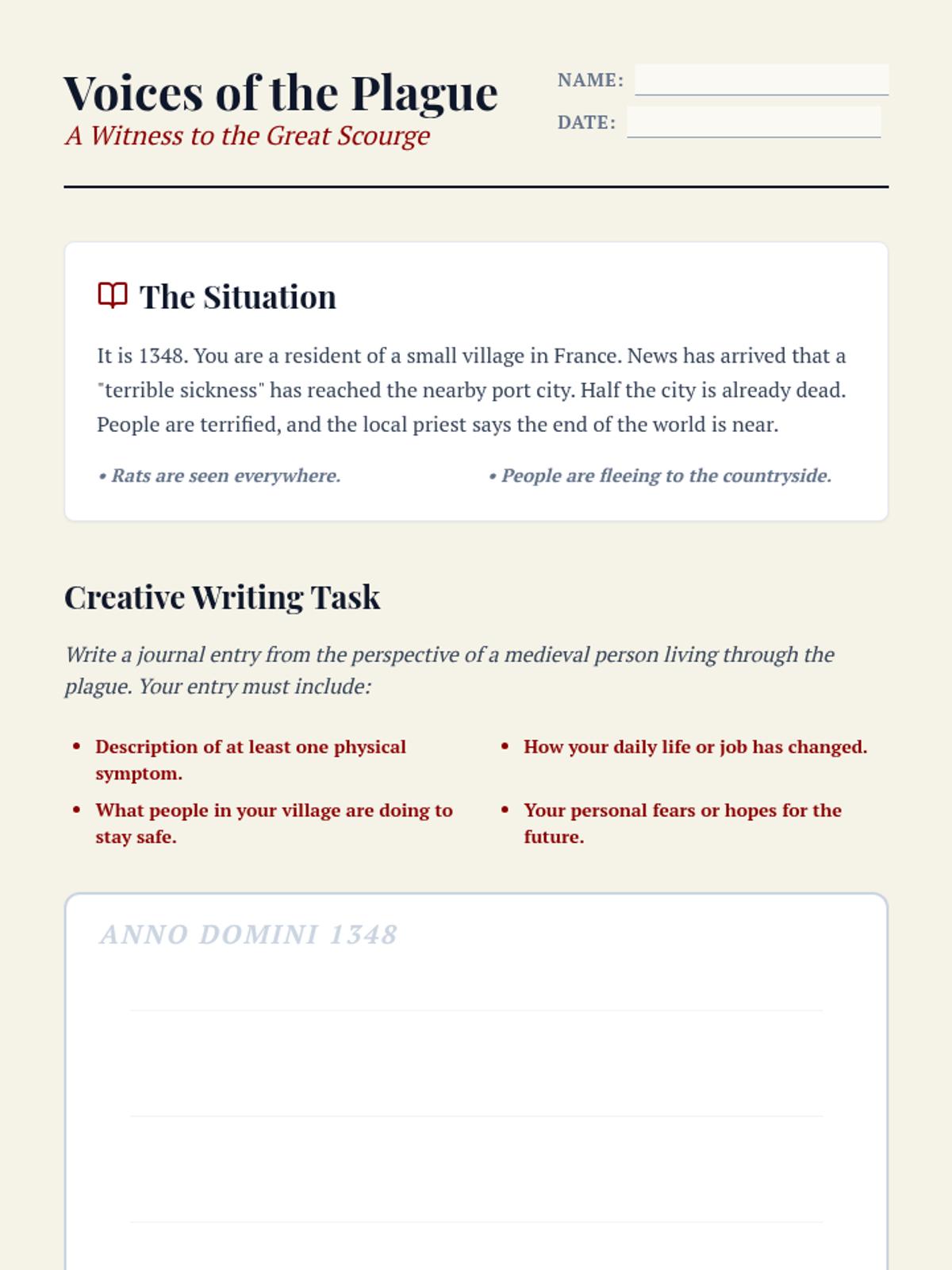
Investigate the origins, symptoms, and catastrophic social and economic consequences of the Bubonic Plague in 14th-century Europe.
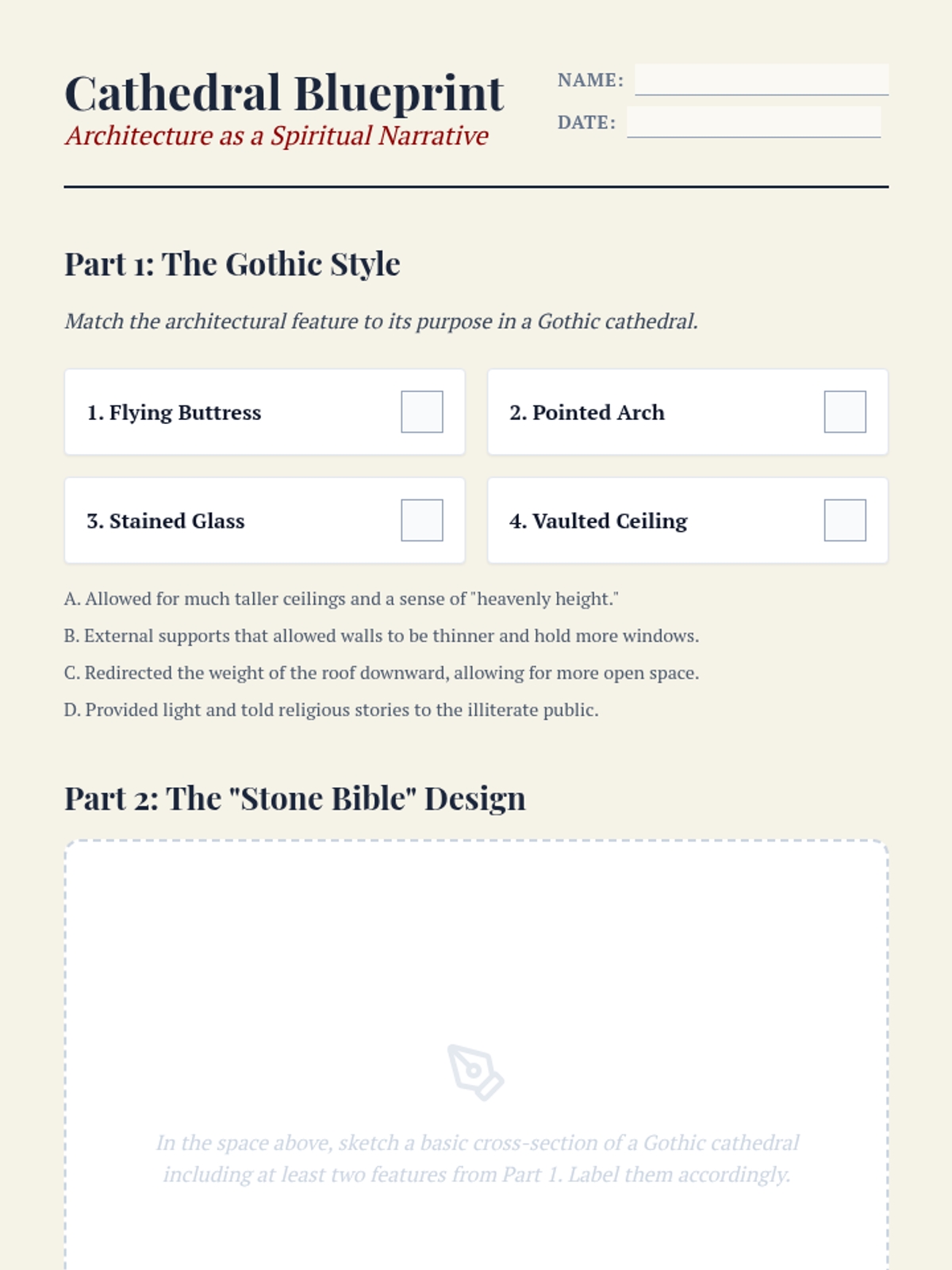
Analyze the immense power and influence of the Catholic Church on daily life, politics, and the cultural landscape of Medieval Europe.
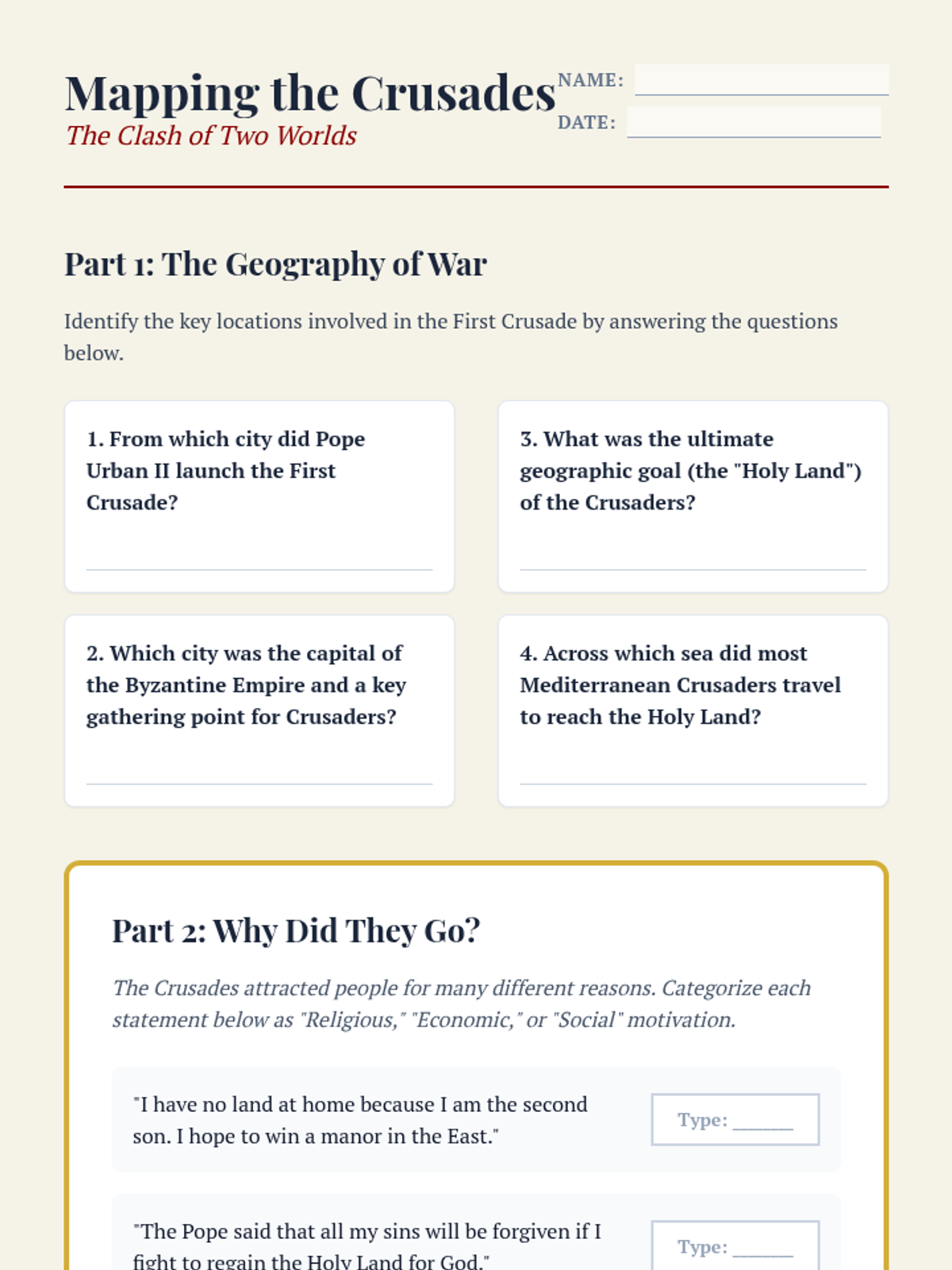
Explore the life of a medieval knight, the code of chivalry, and the religious motivations behind the Crusades.
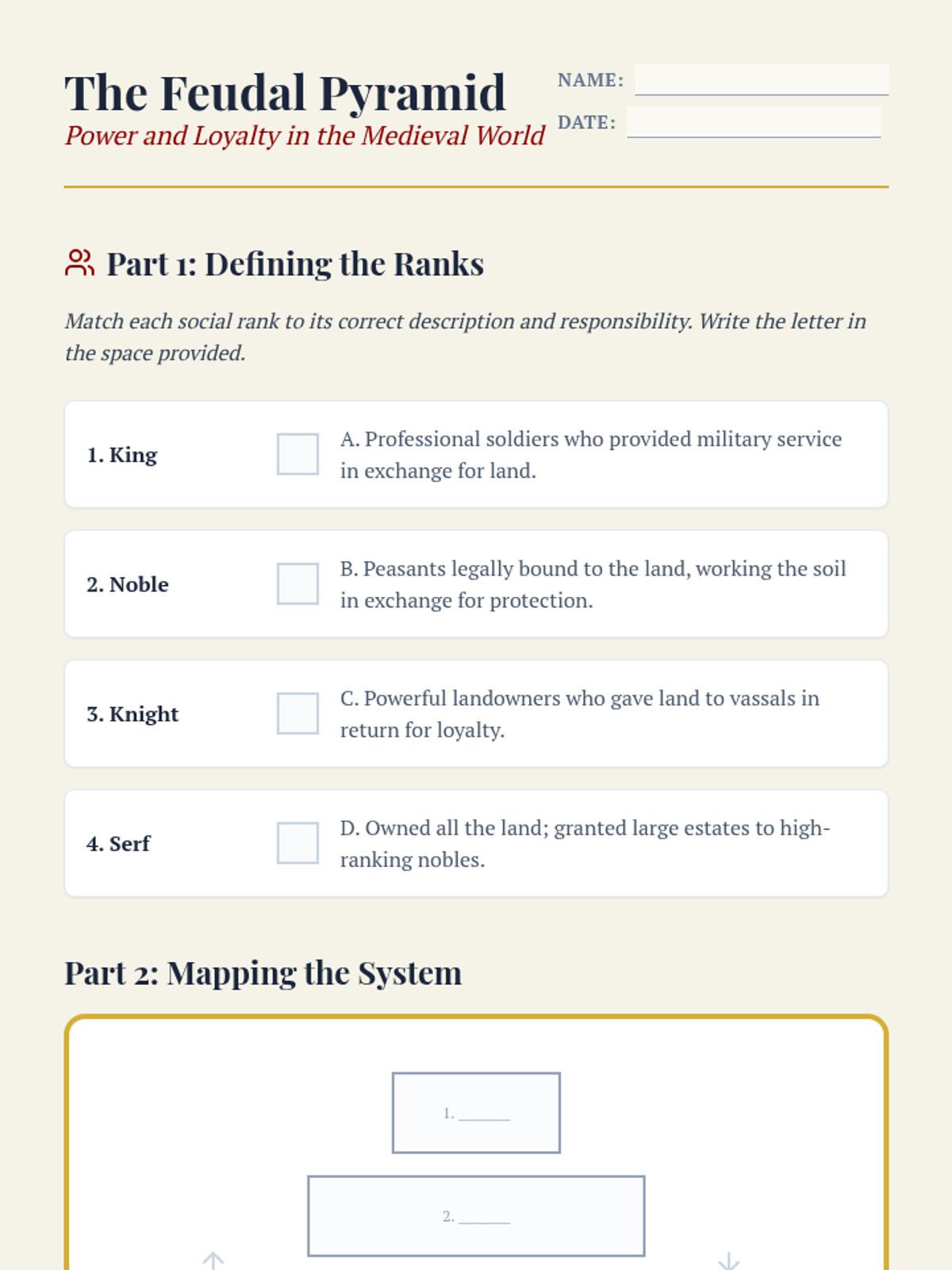
Explore the rigid social structure of feudalism and the economic system of manorialism that defined life in the Middle Ages.
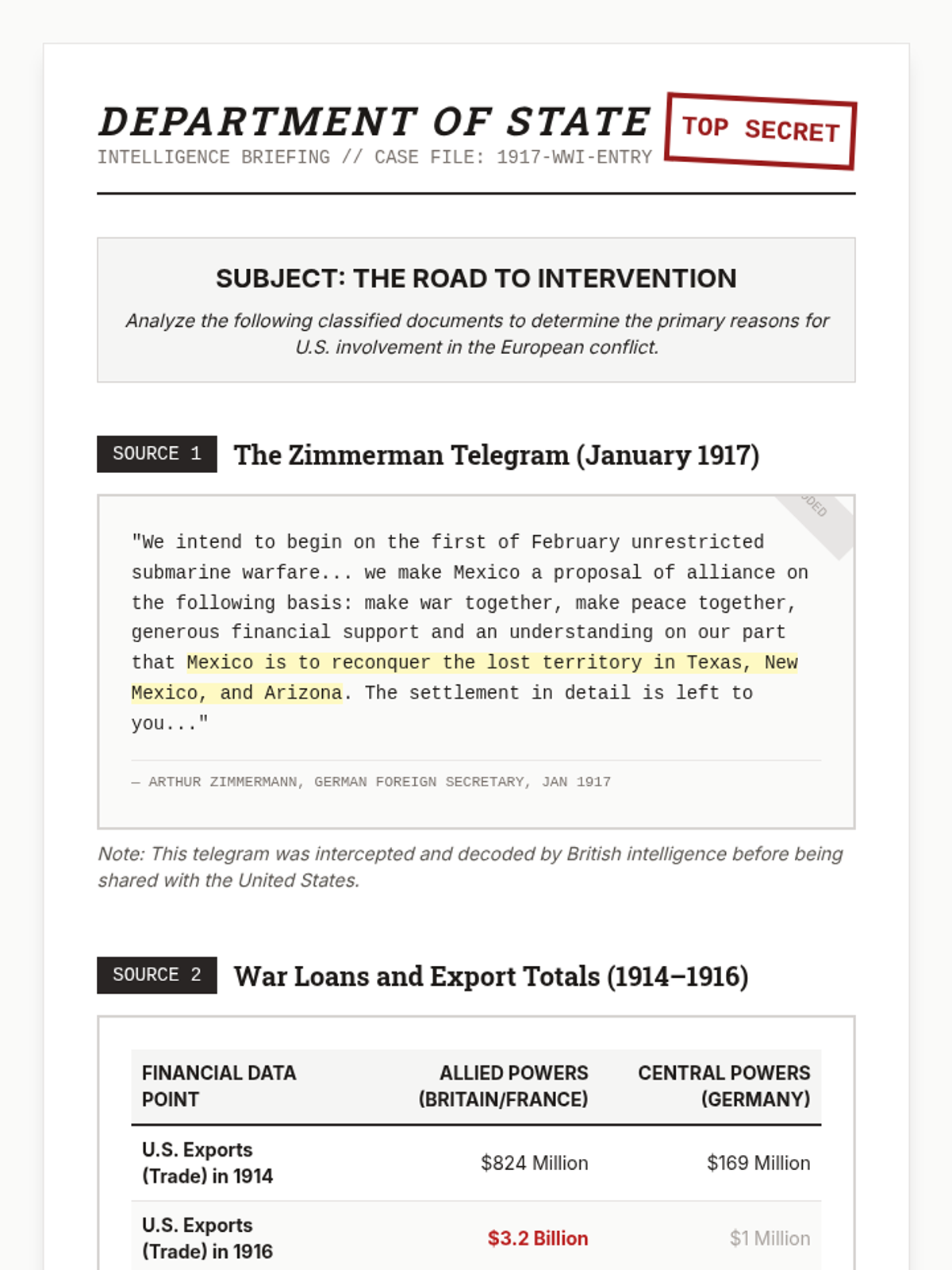
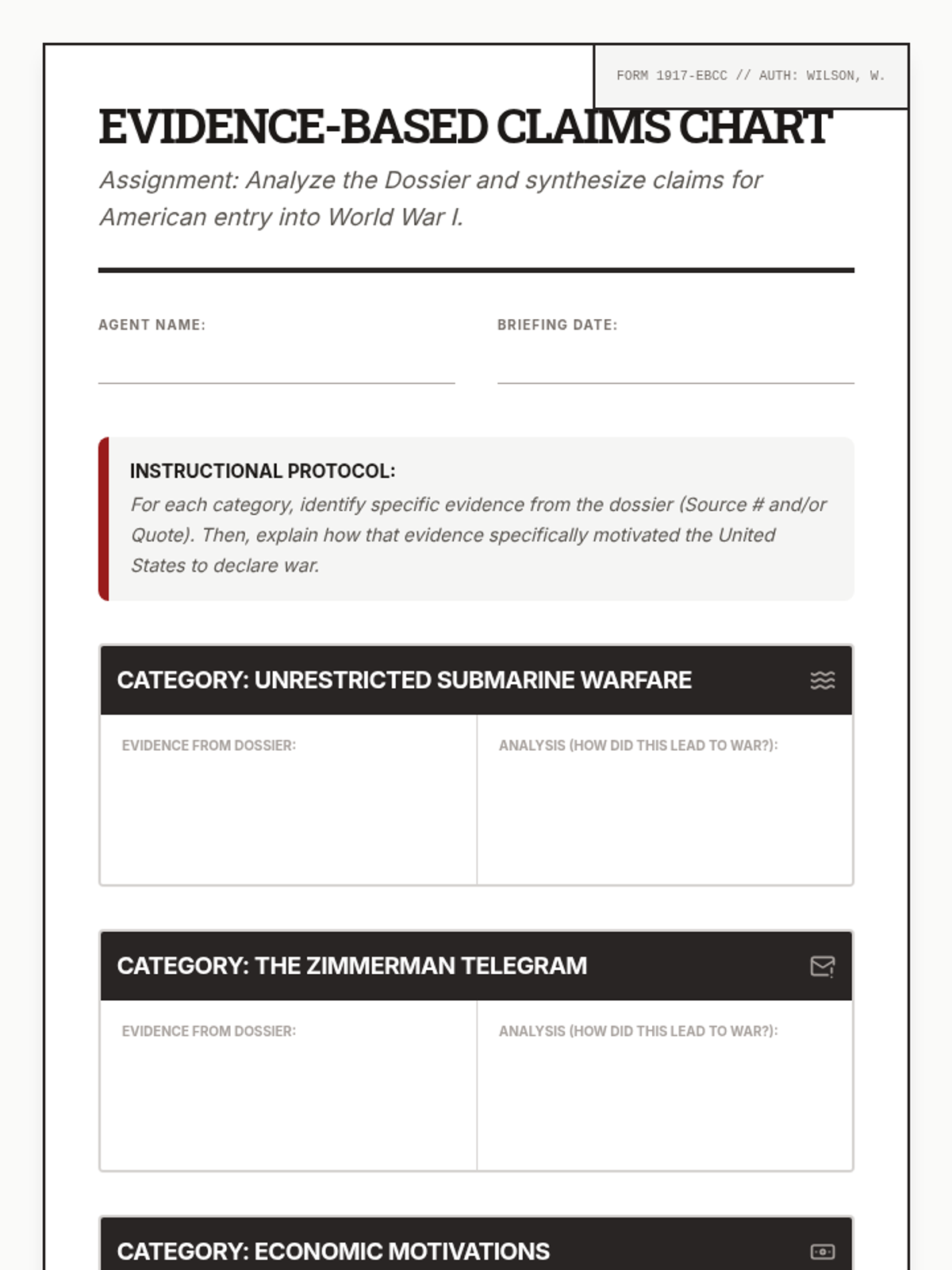
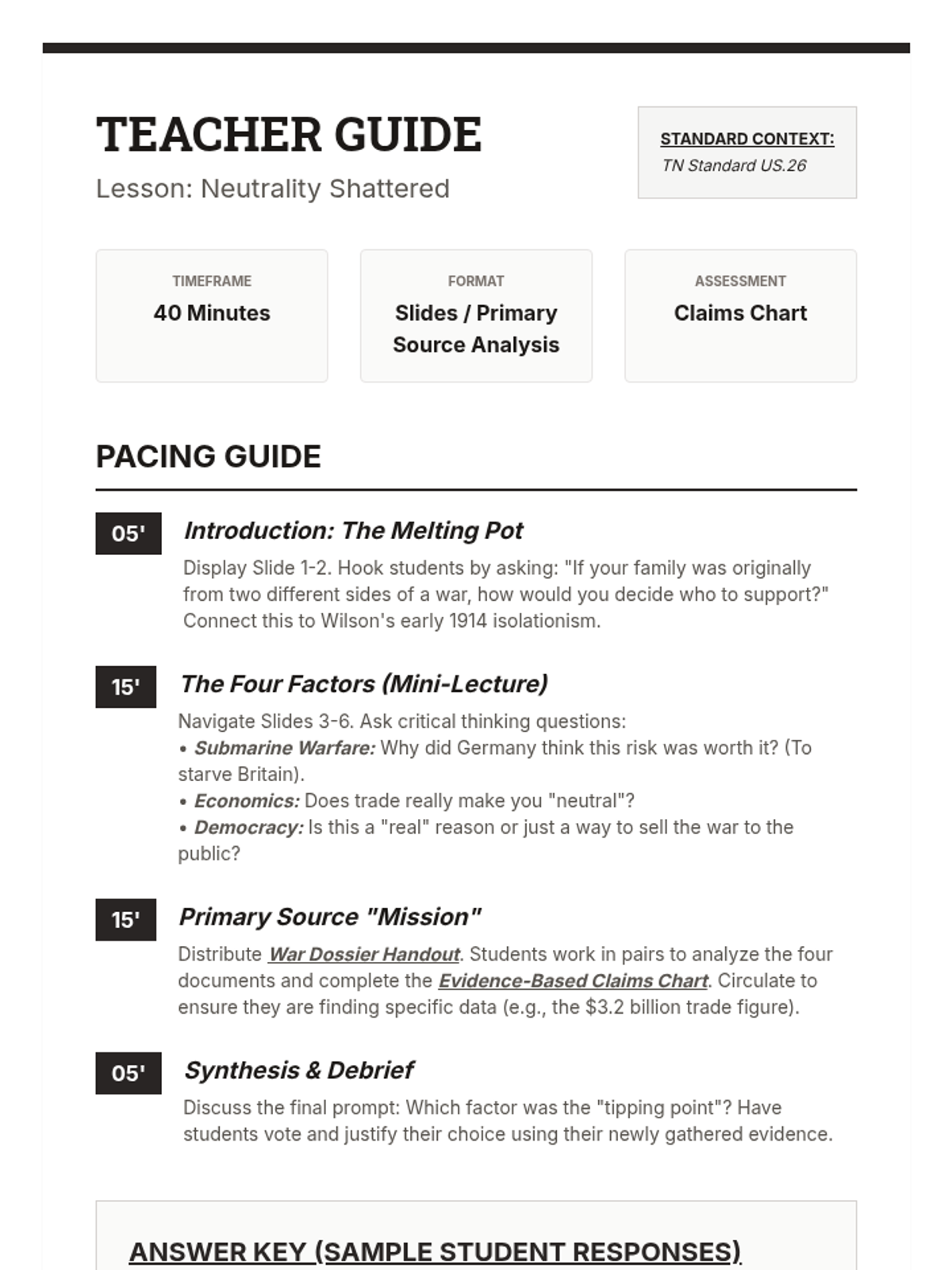
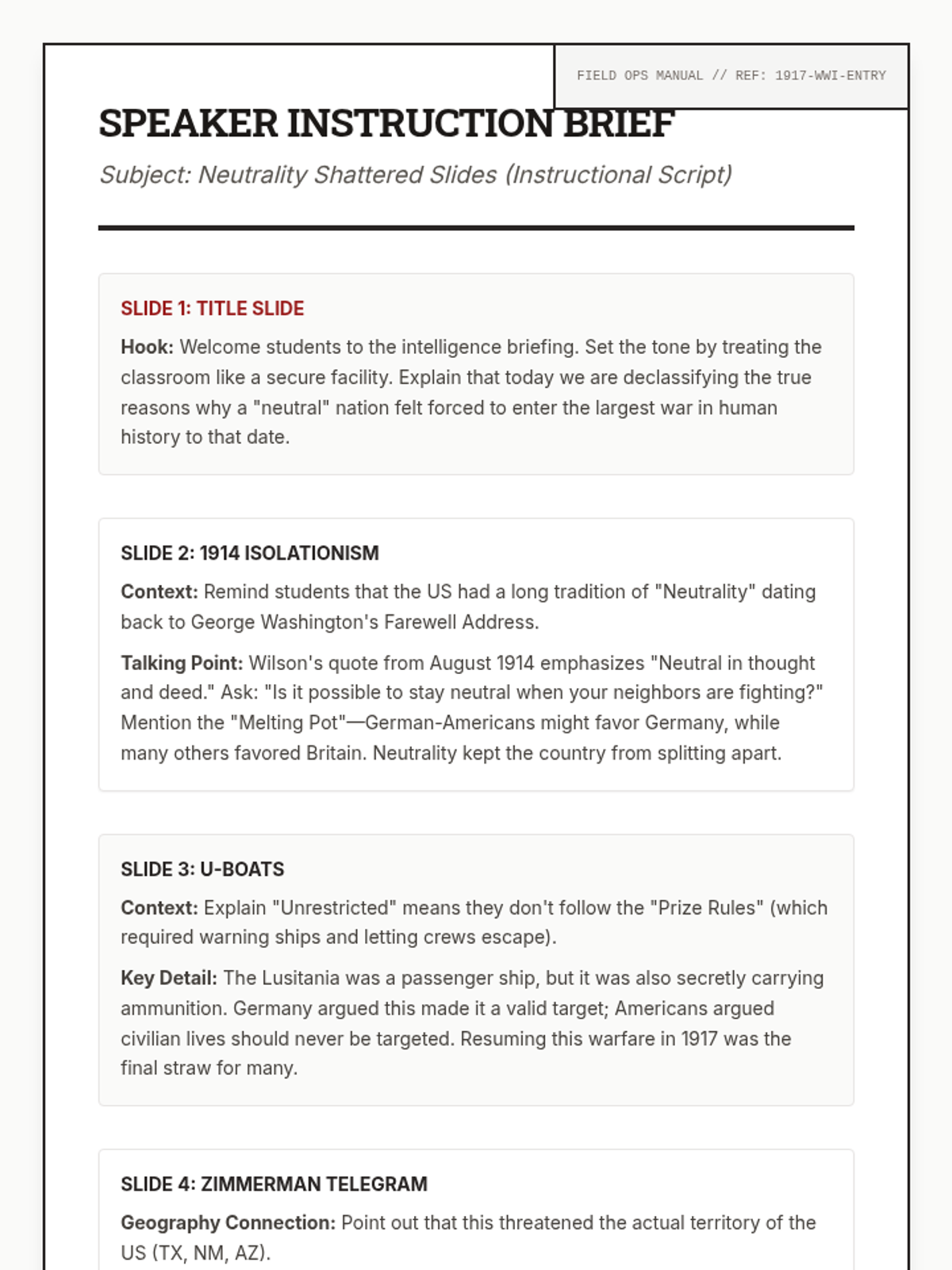
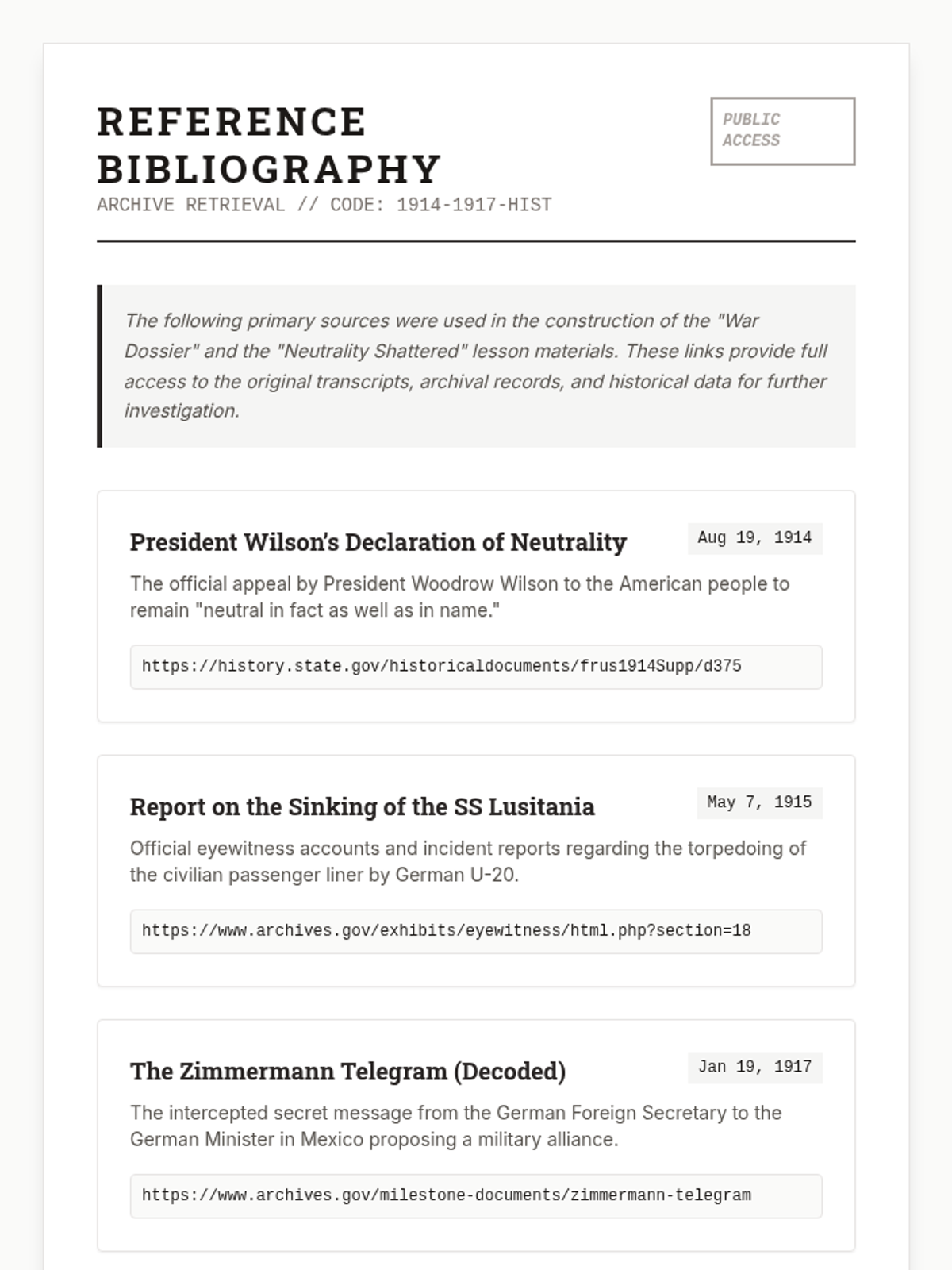
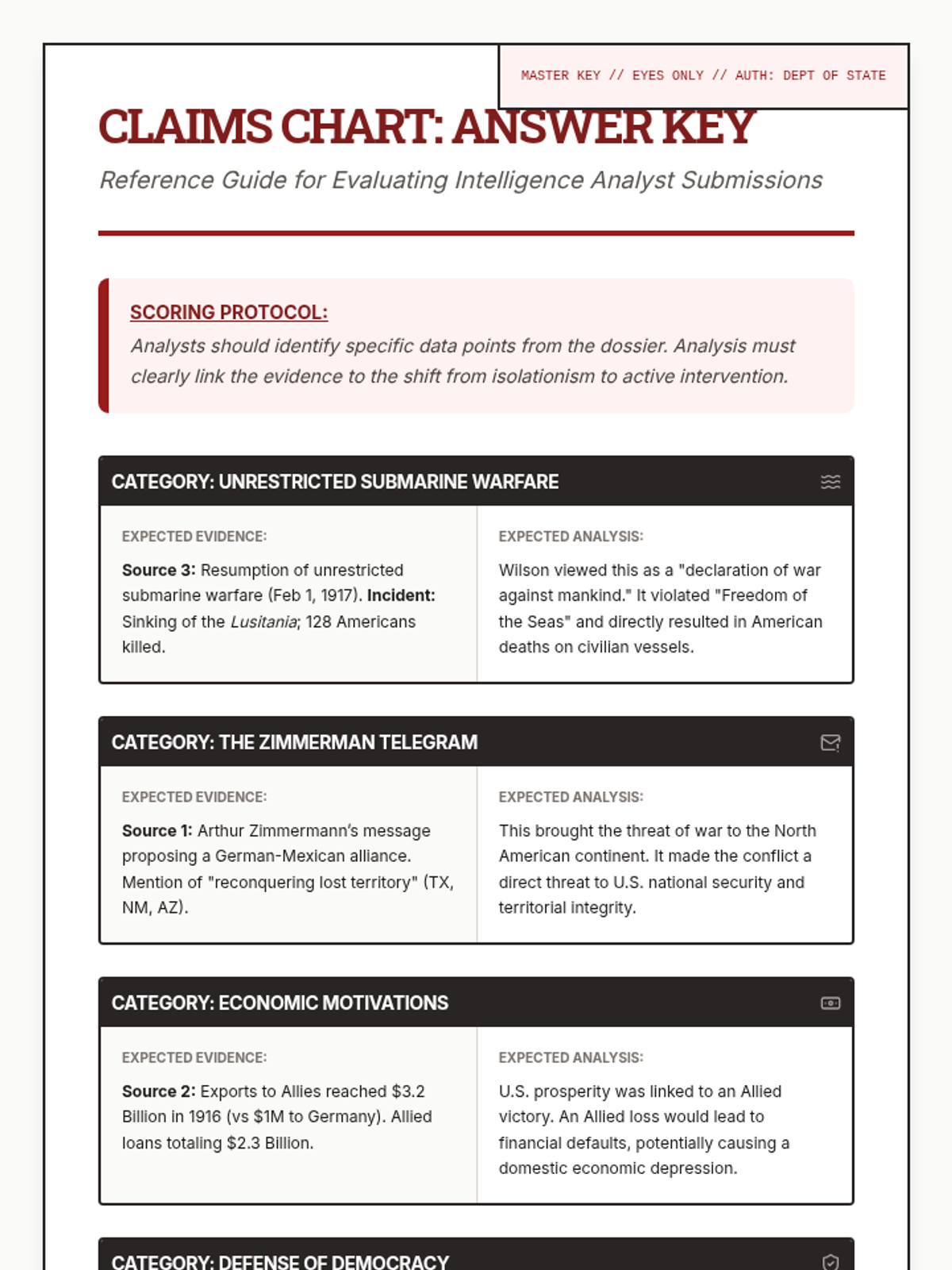
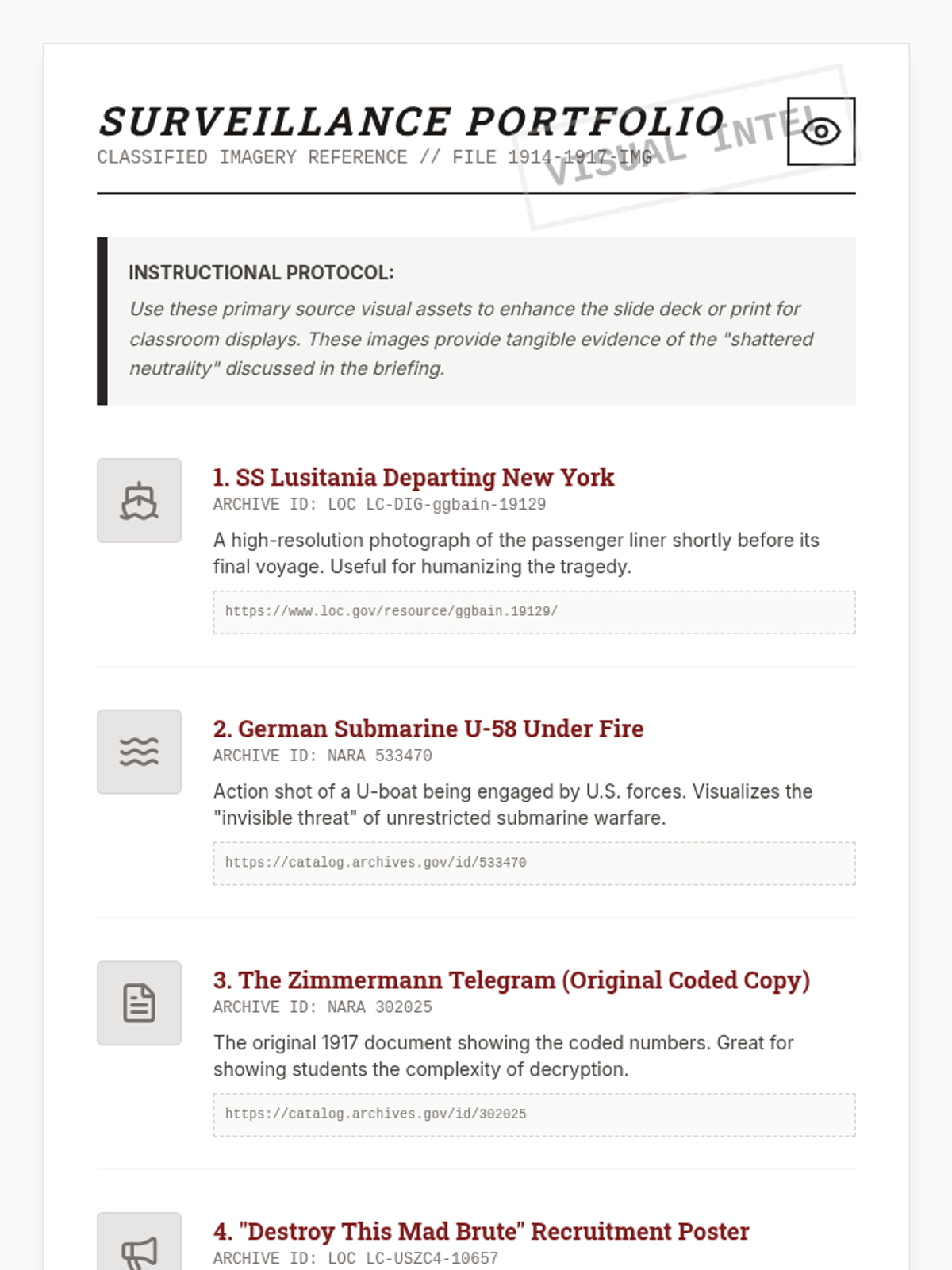
A 40-minute exploration of the factors that led the United States to abandon neutrality and enter World War I, focusing on unrestricted submarine warfare, the Zimmerman Telegram, and economic interests.
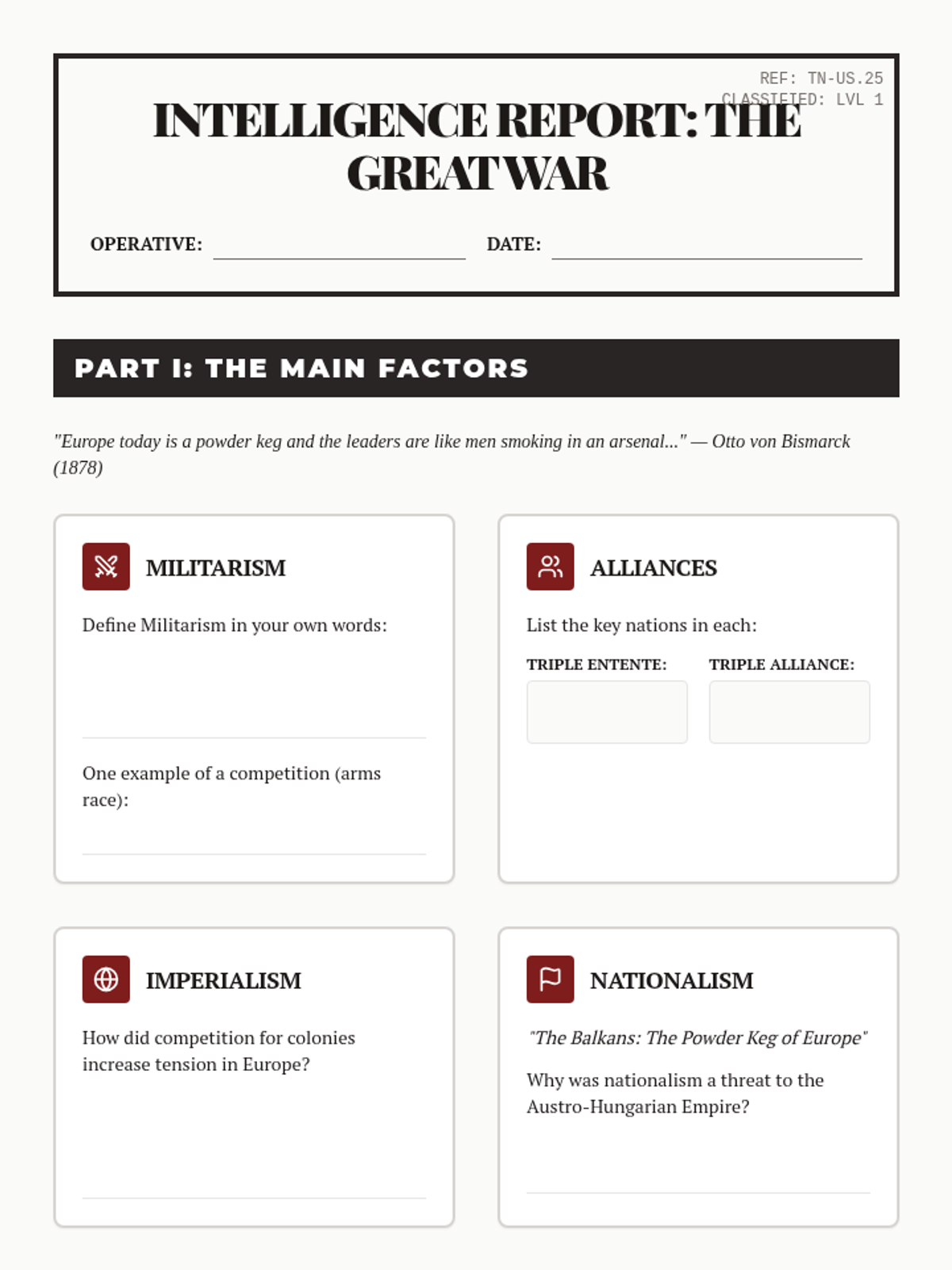
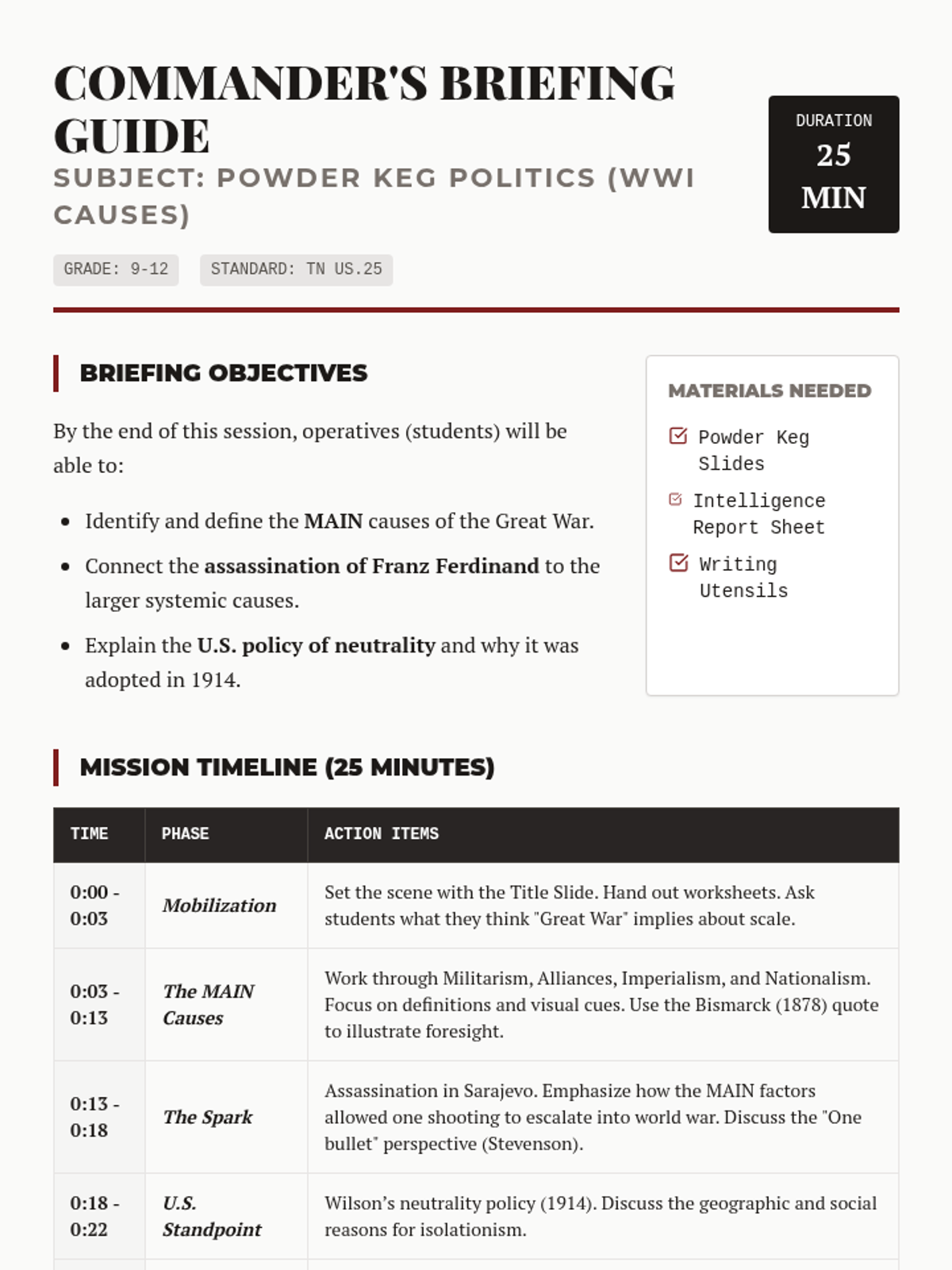
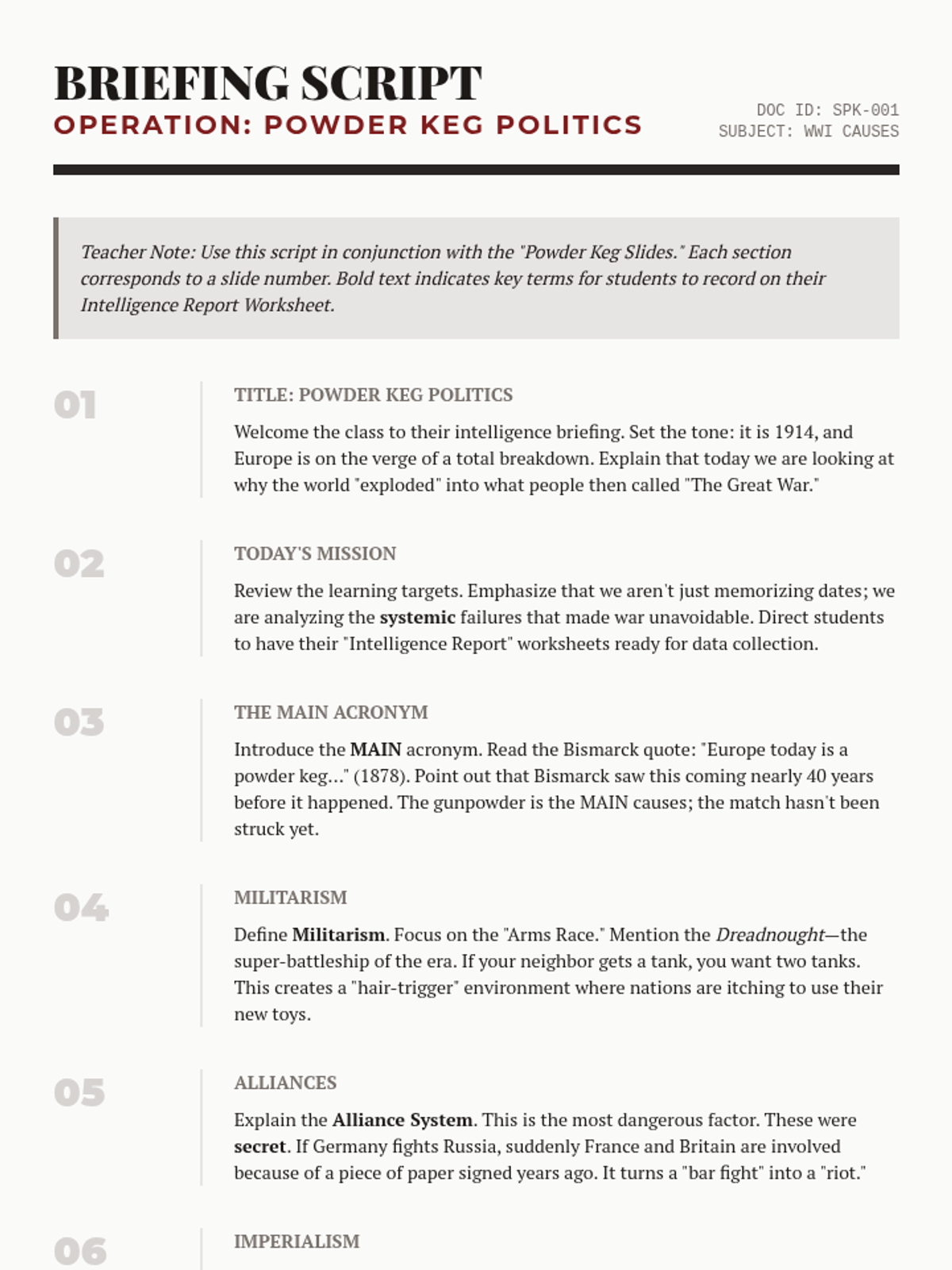
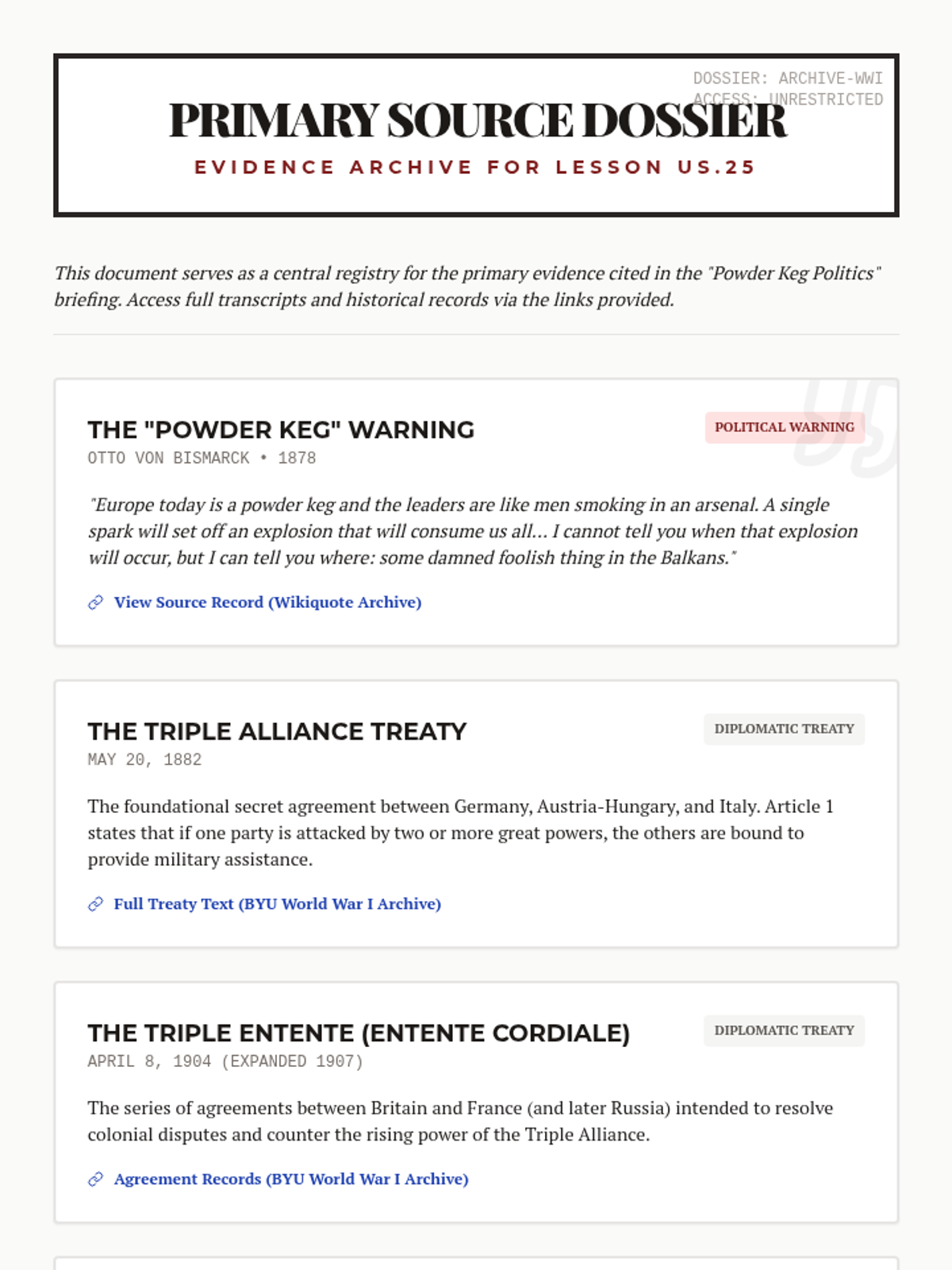
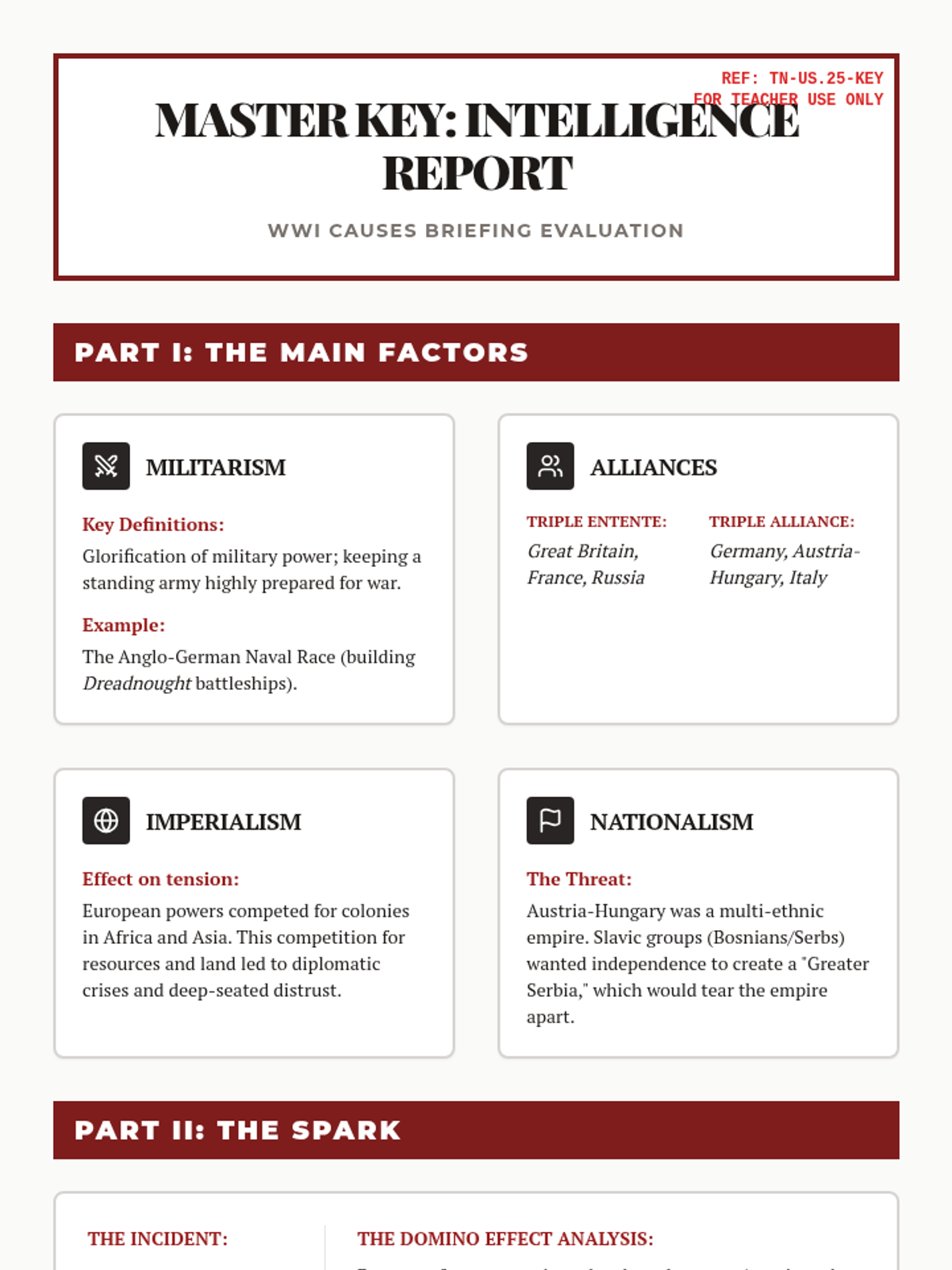
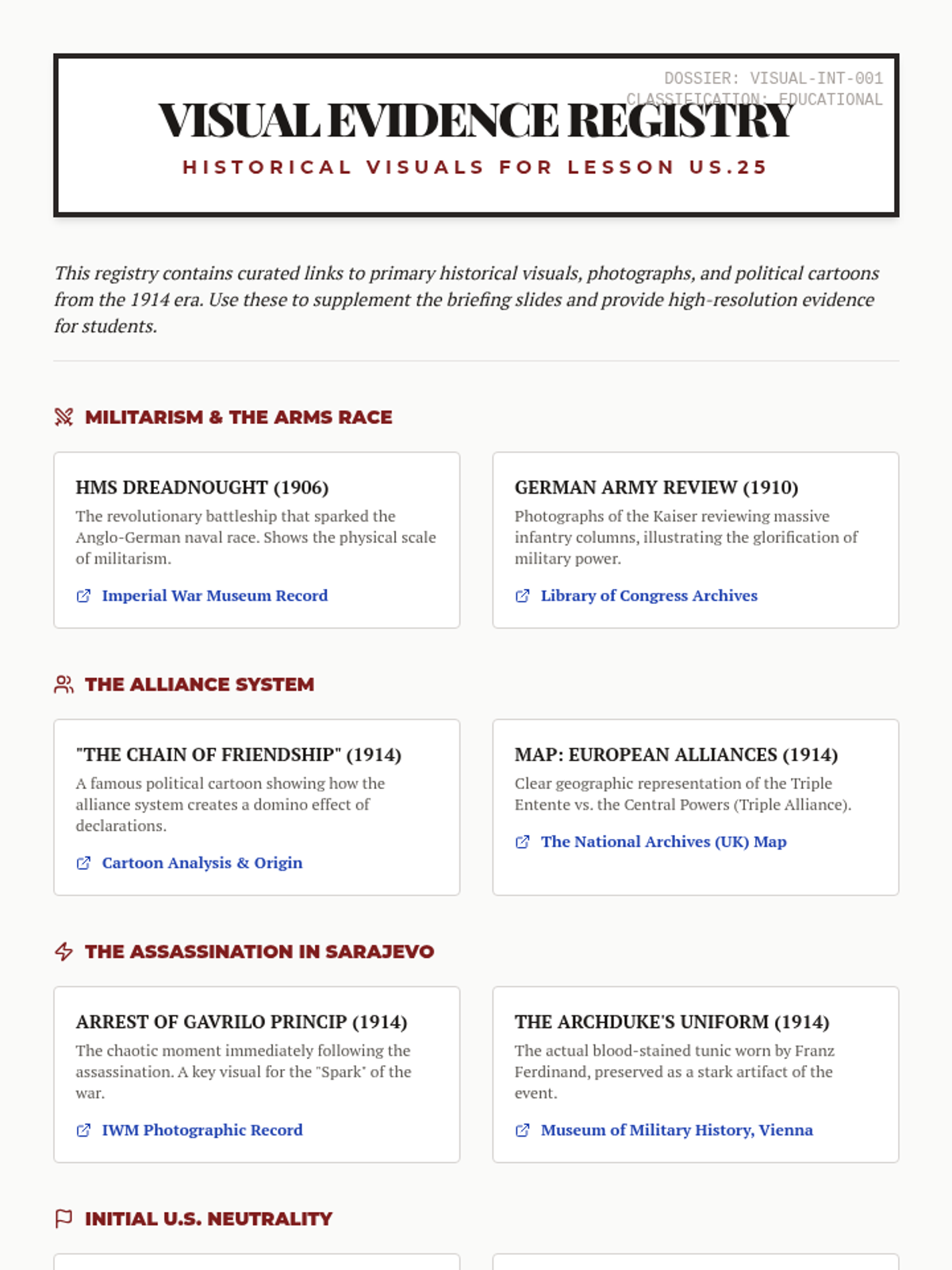
An introductory lesson on the causes of World War I, focusing on the MAIN factors (Militarism, Alliances, Imperialism, Nationalism) and the assassination of Archduke Franz Ferdinand that served as the spark. Students will also explore the initial U.S. stance of neutrality.