Students investigate how animals use 'armor' like shells, quills, and scales to protect themselves from predators.
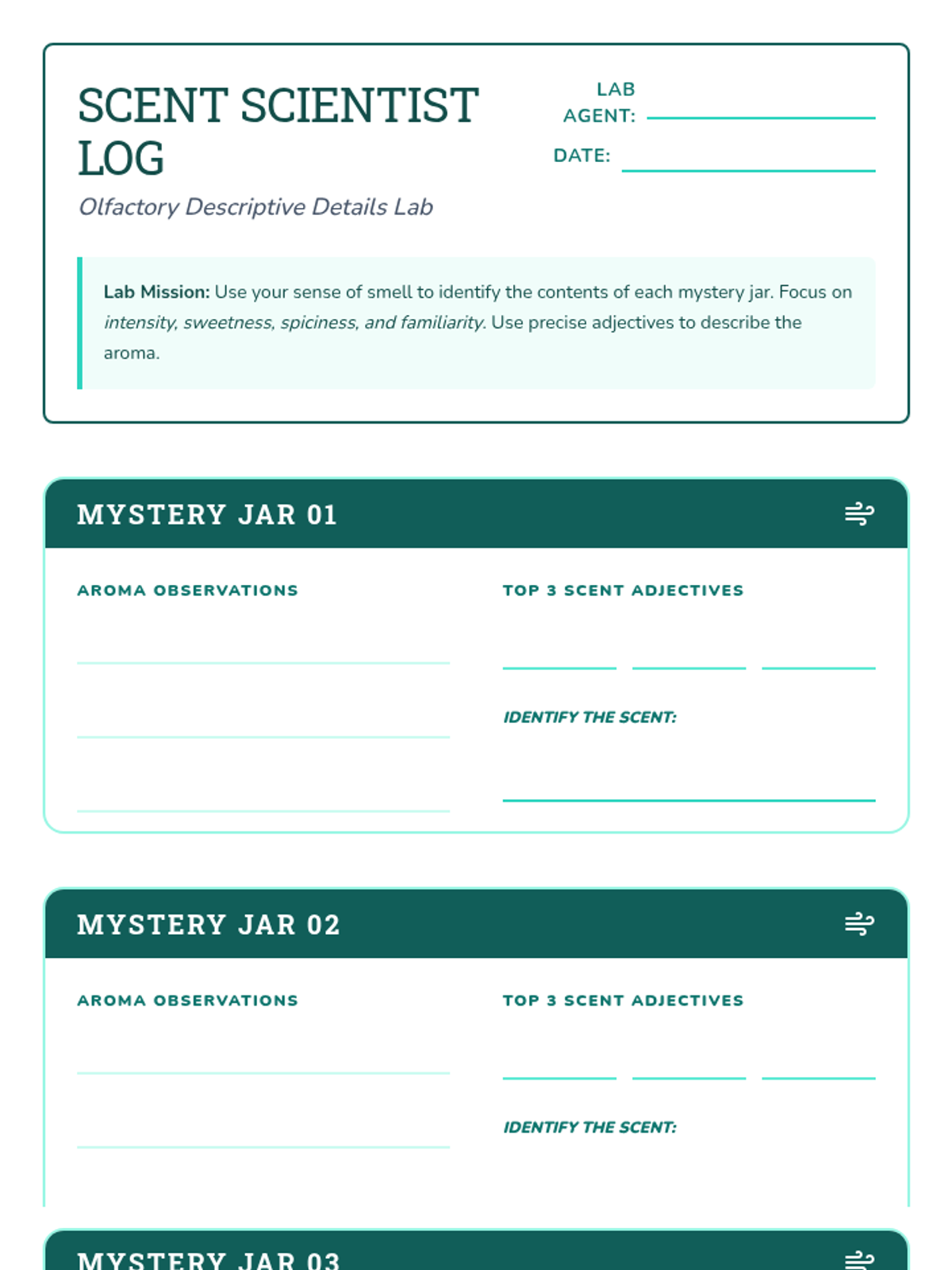
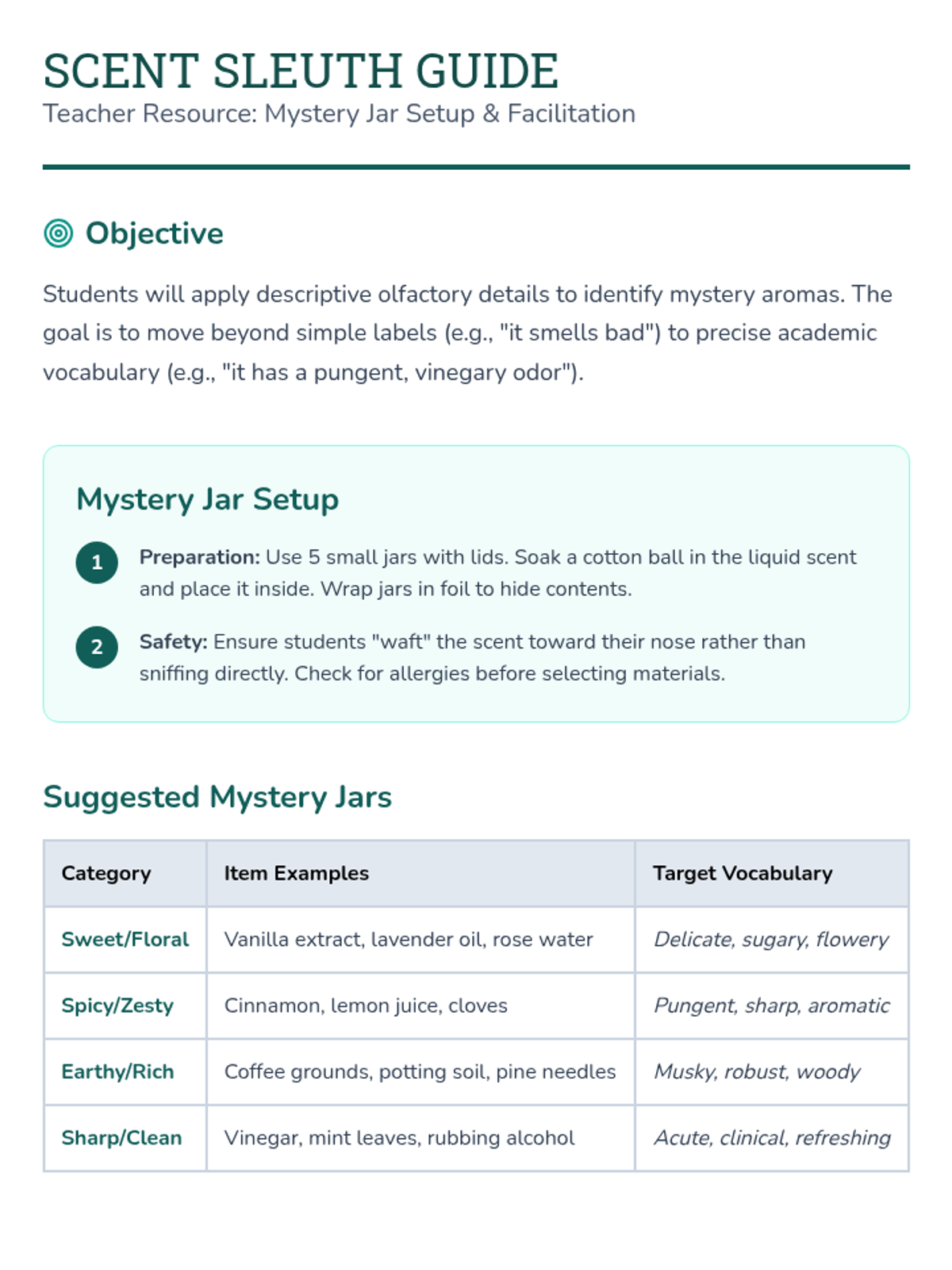
A hands-on science and ELA lesson where students explore mystery scents and use descriptive olfactory details to document their observations.
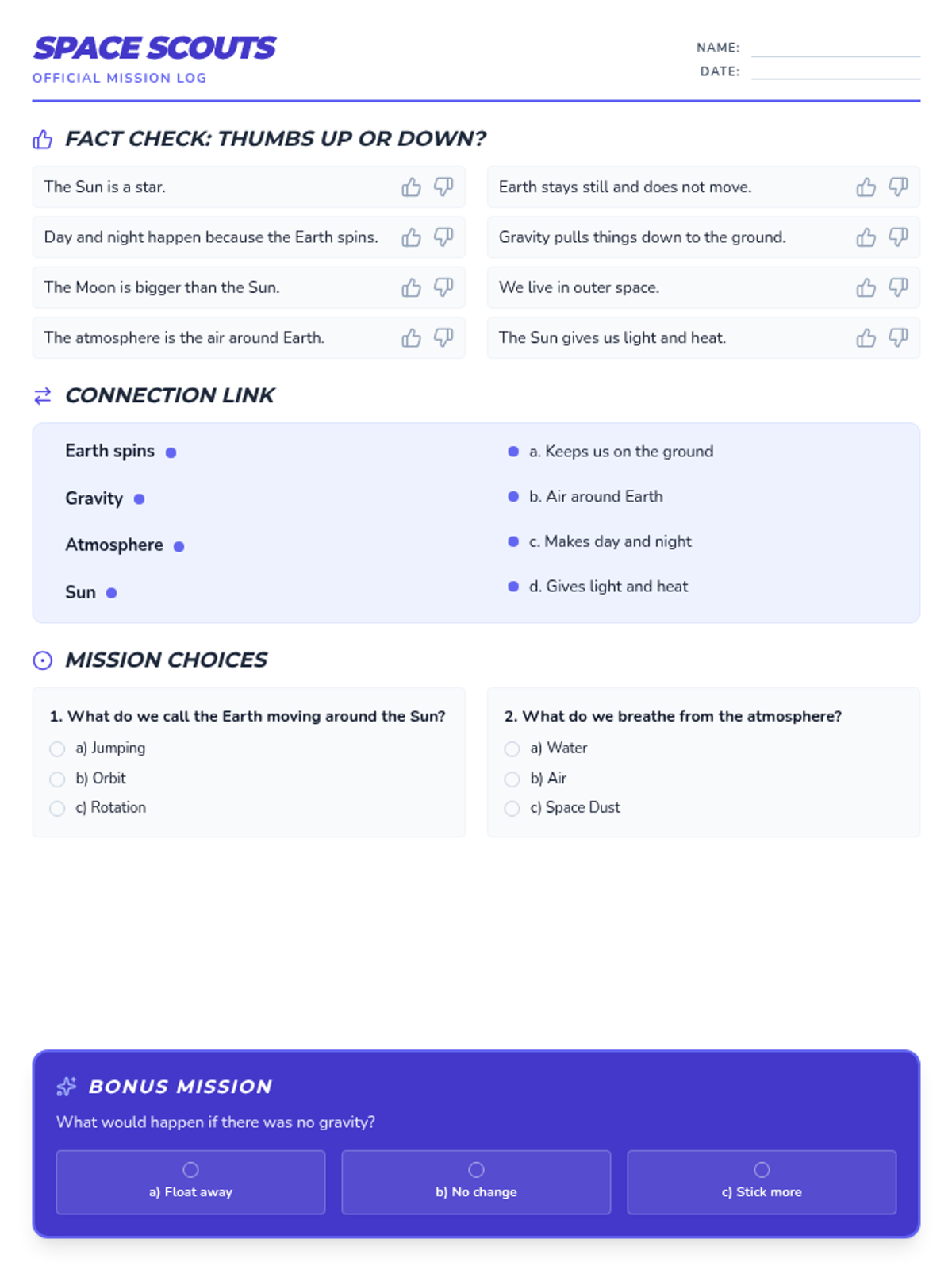
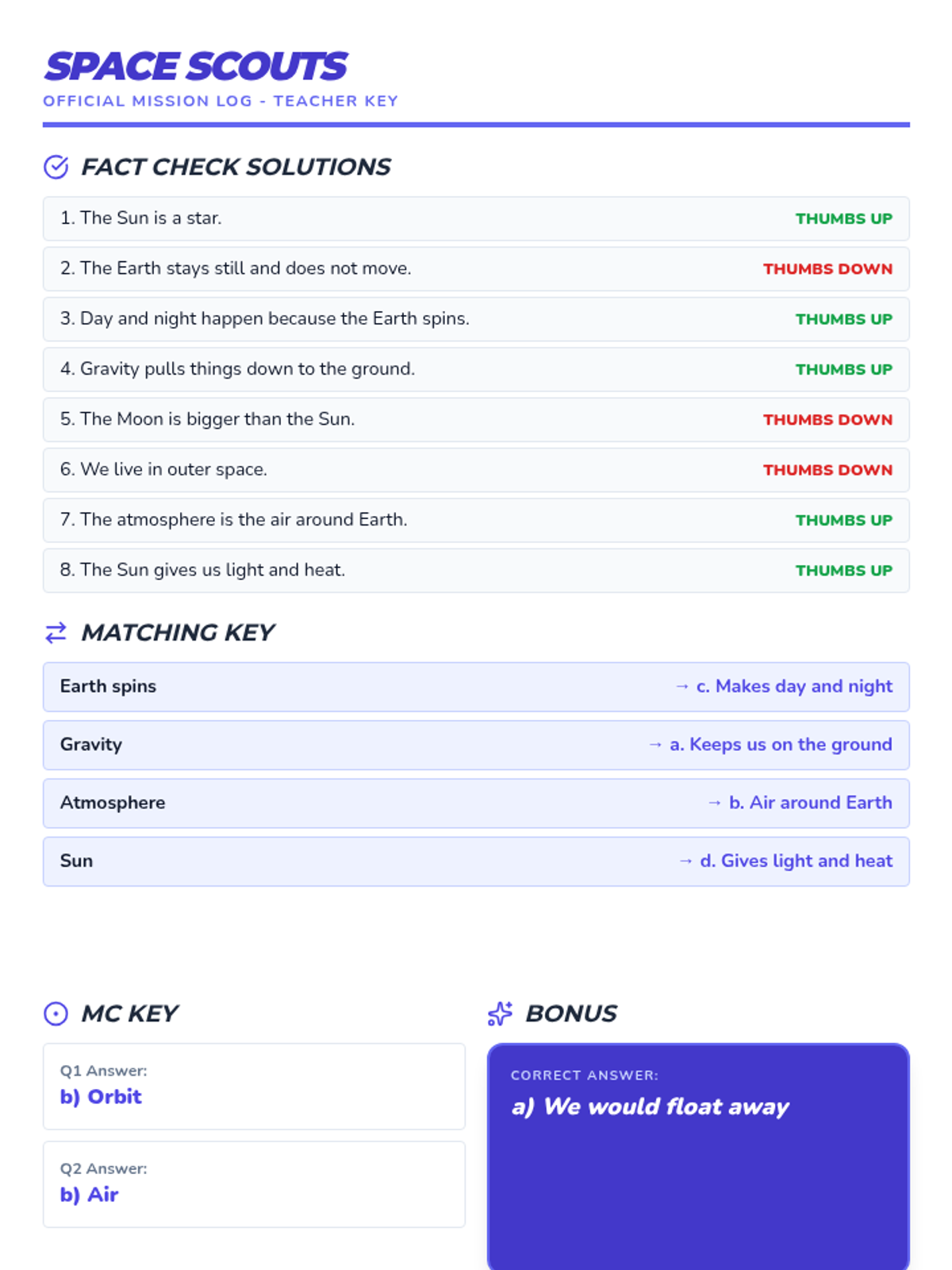
A foundational exploration of Earth's place in space, covering the Sun, gravity, atmosphere, and Earth's rotation through engaging true/false, matching, and multiple-choice questions.
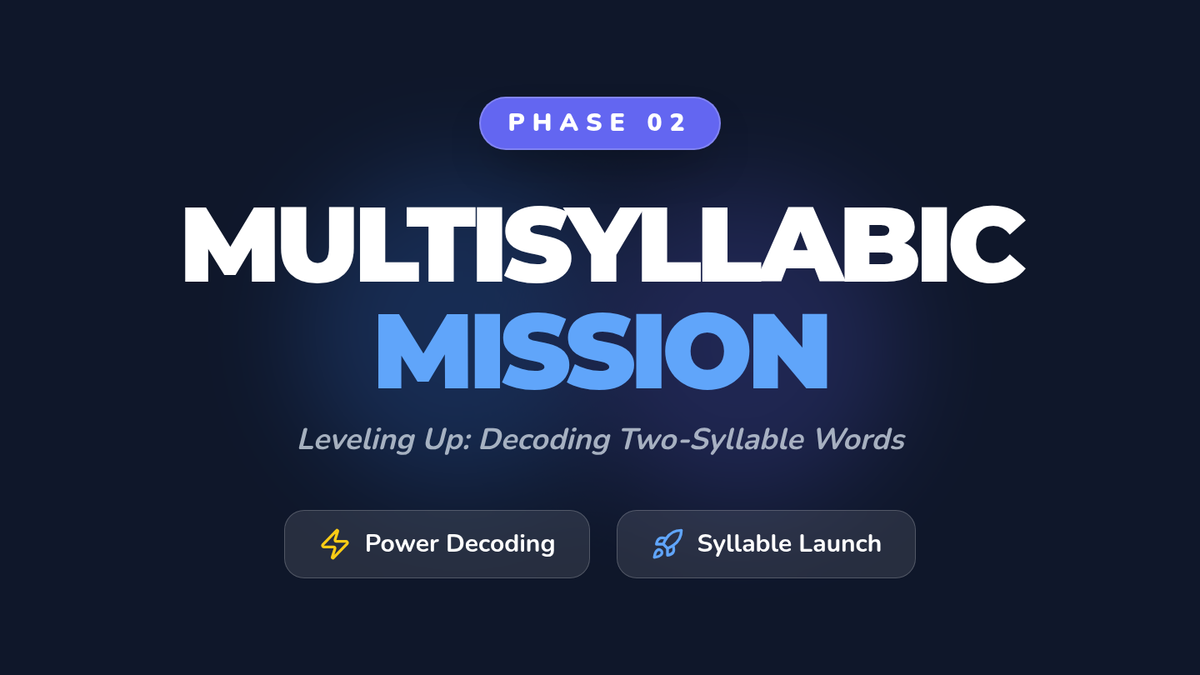
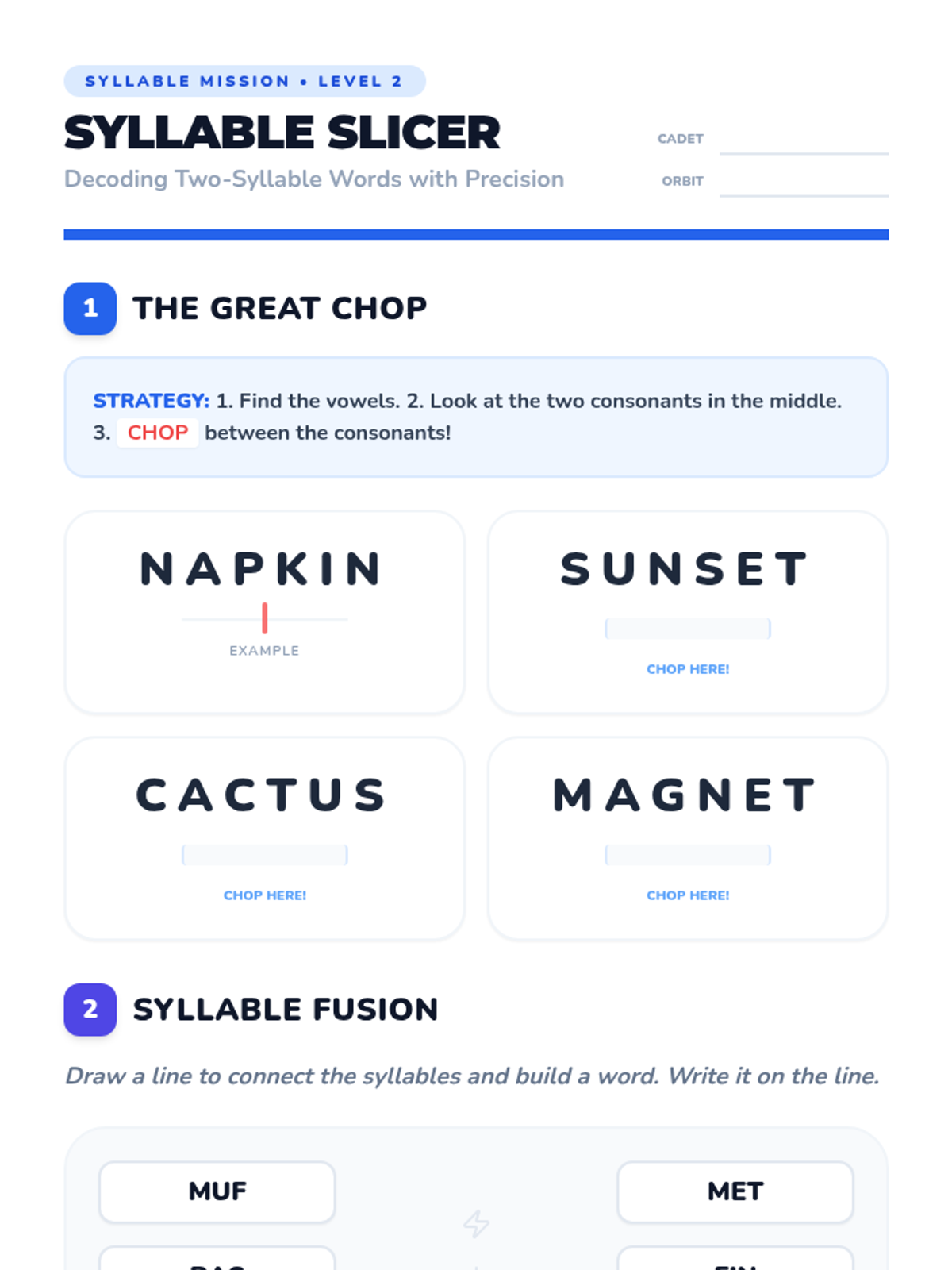
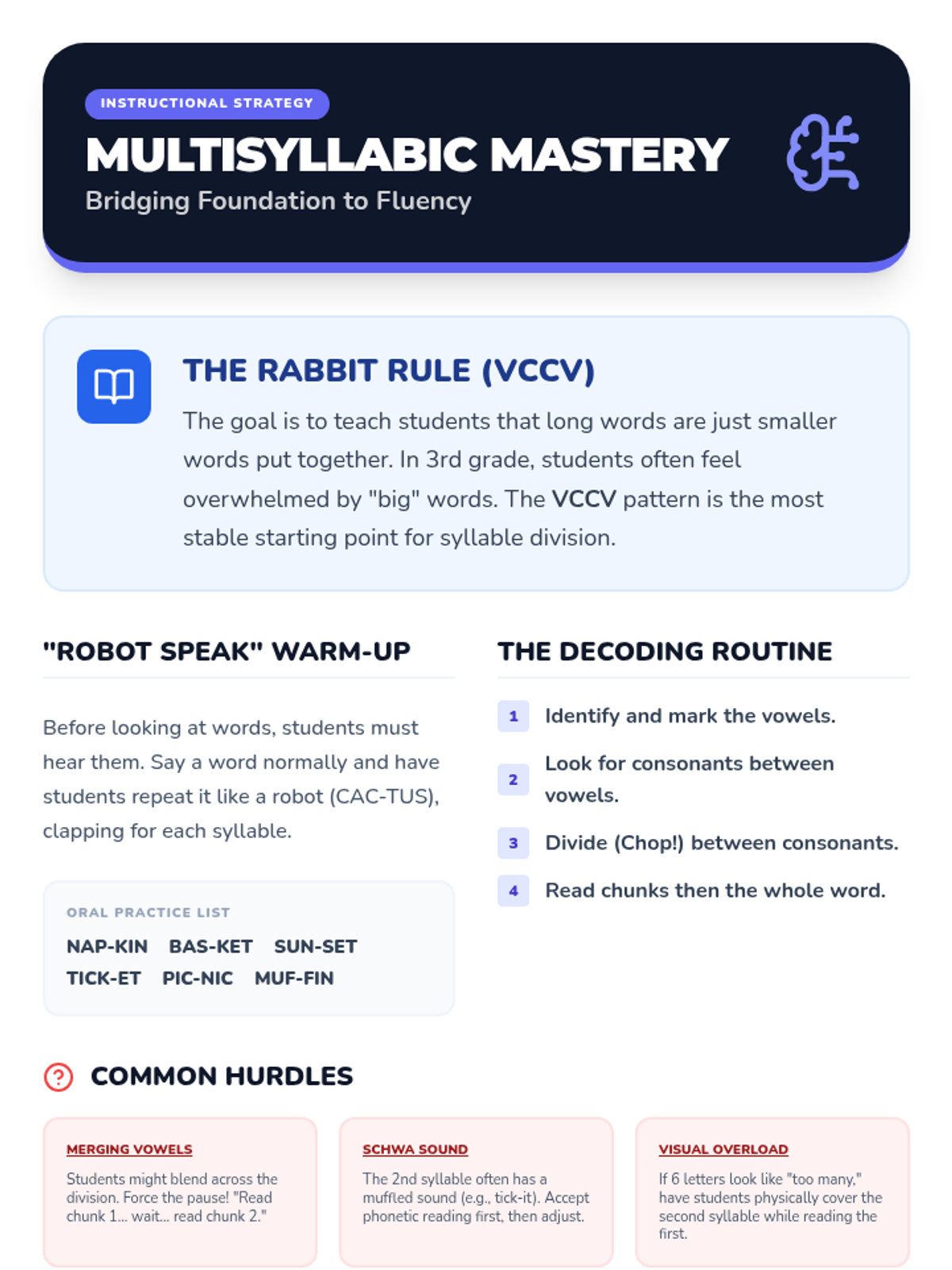
Advanced word study focusing on syllable division rules, decoding strategies for 2-syllable words, and reading multisyllabic fluency.
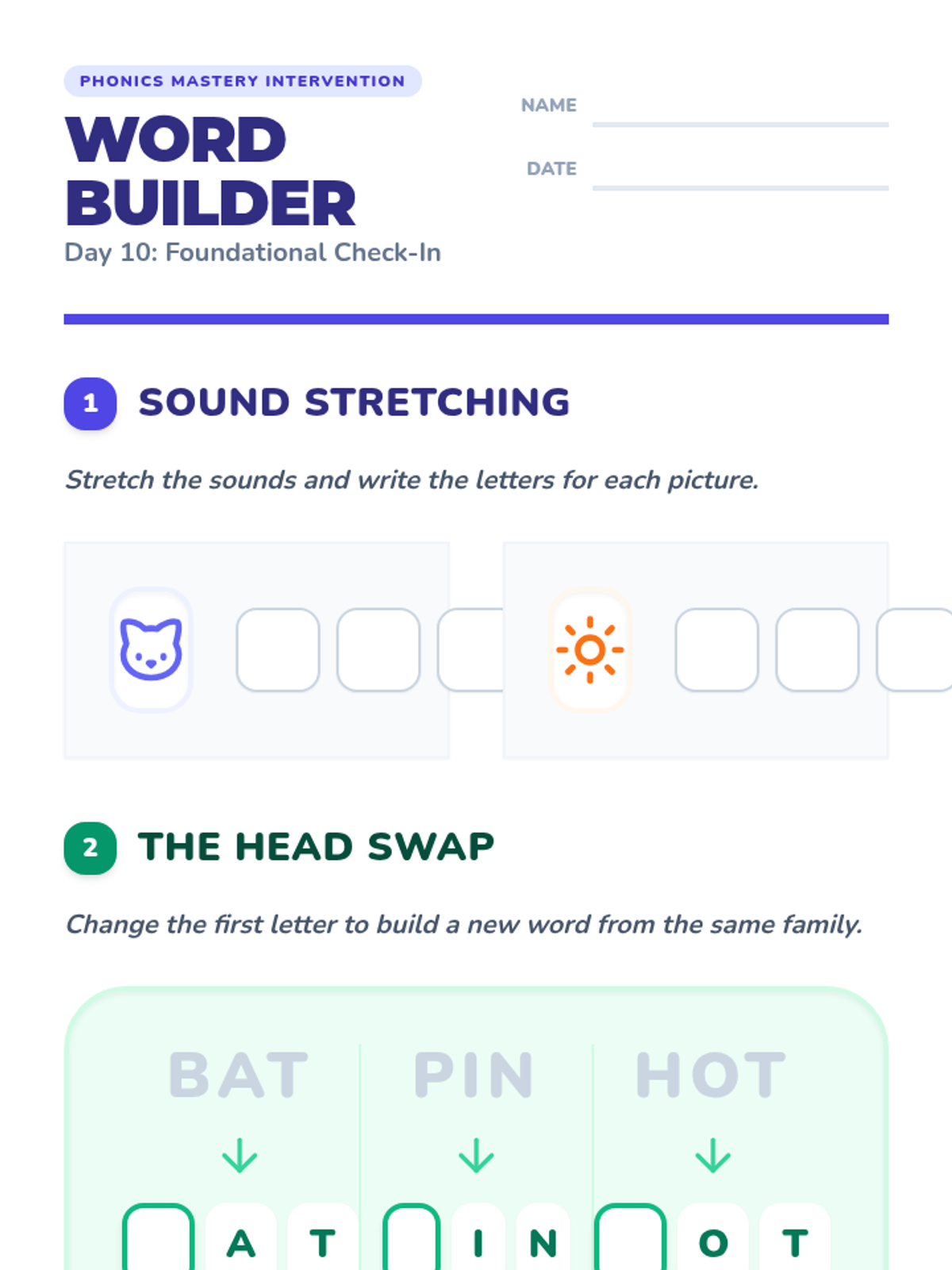
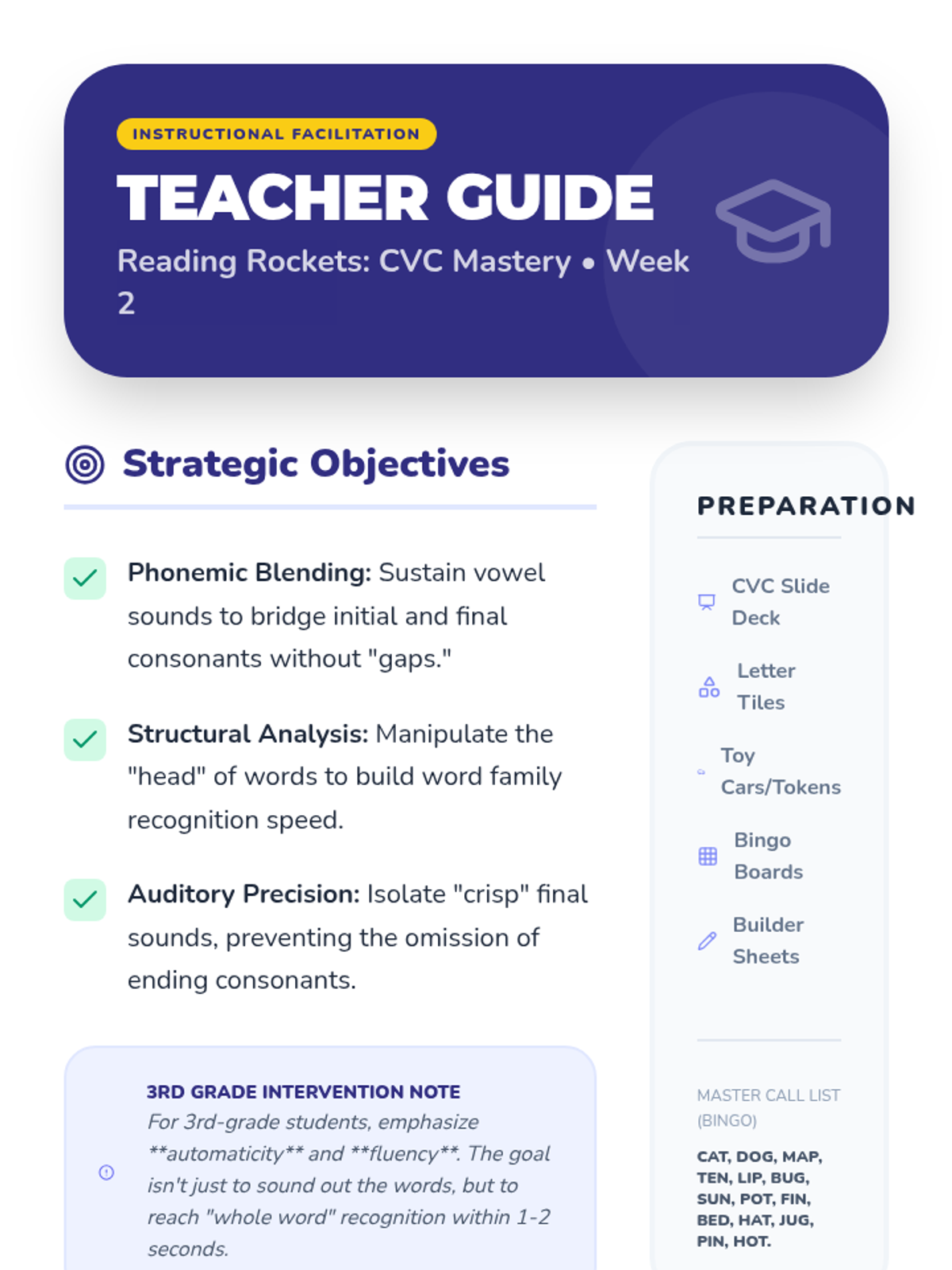
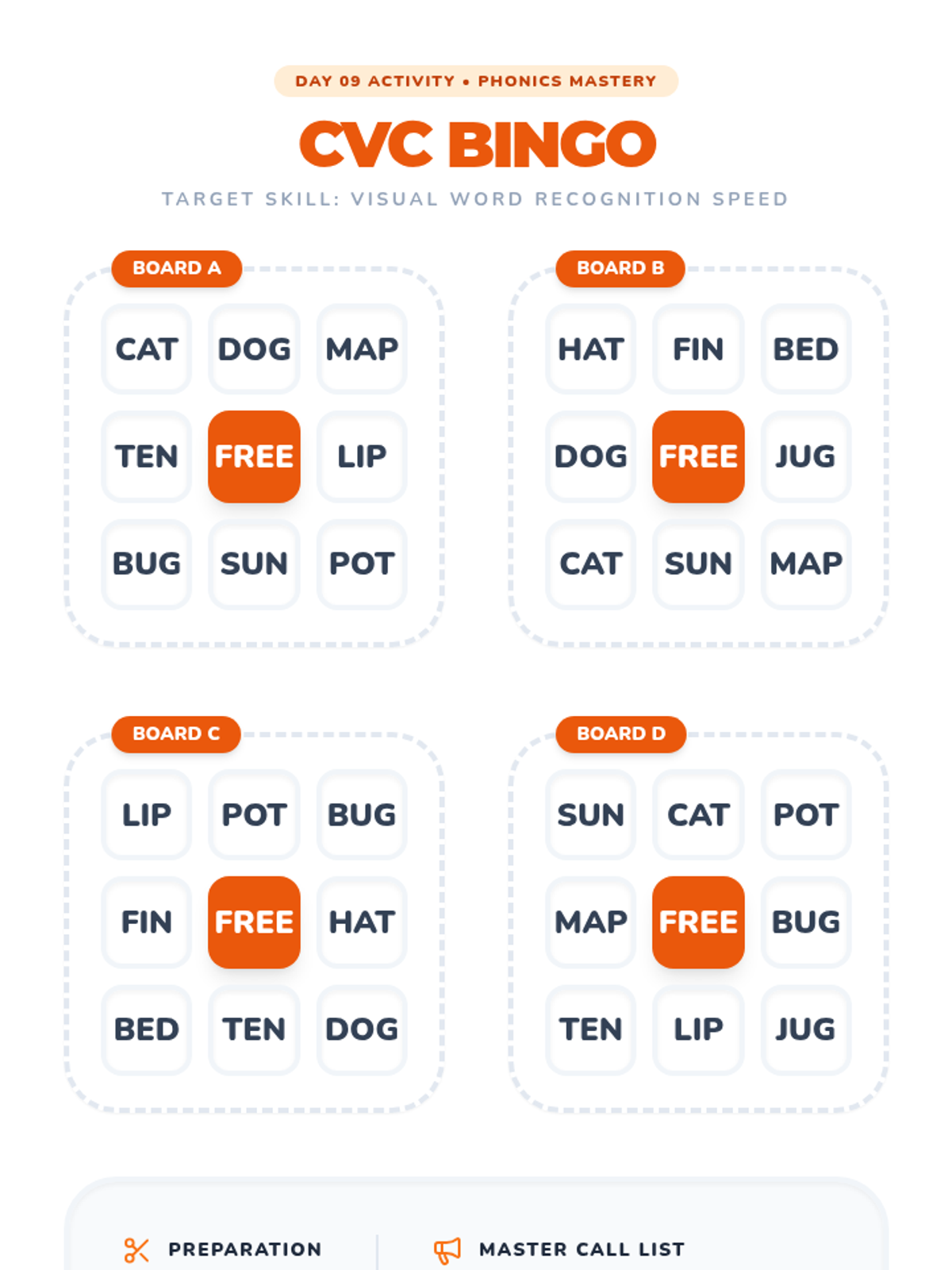
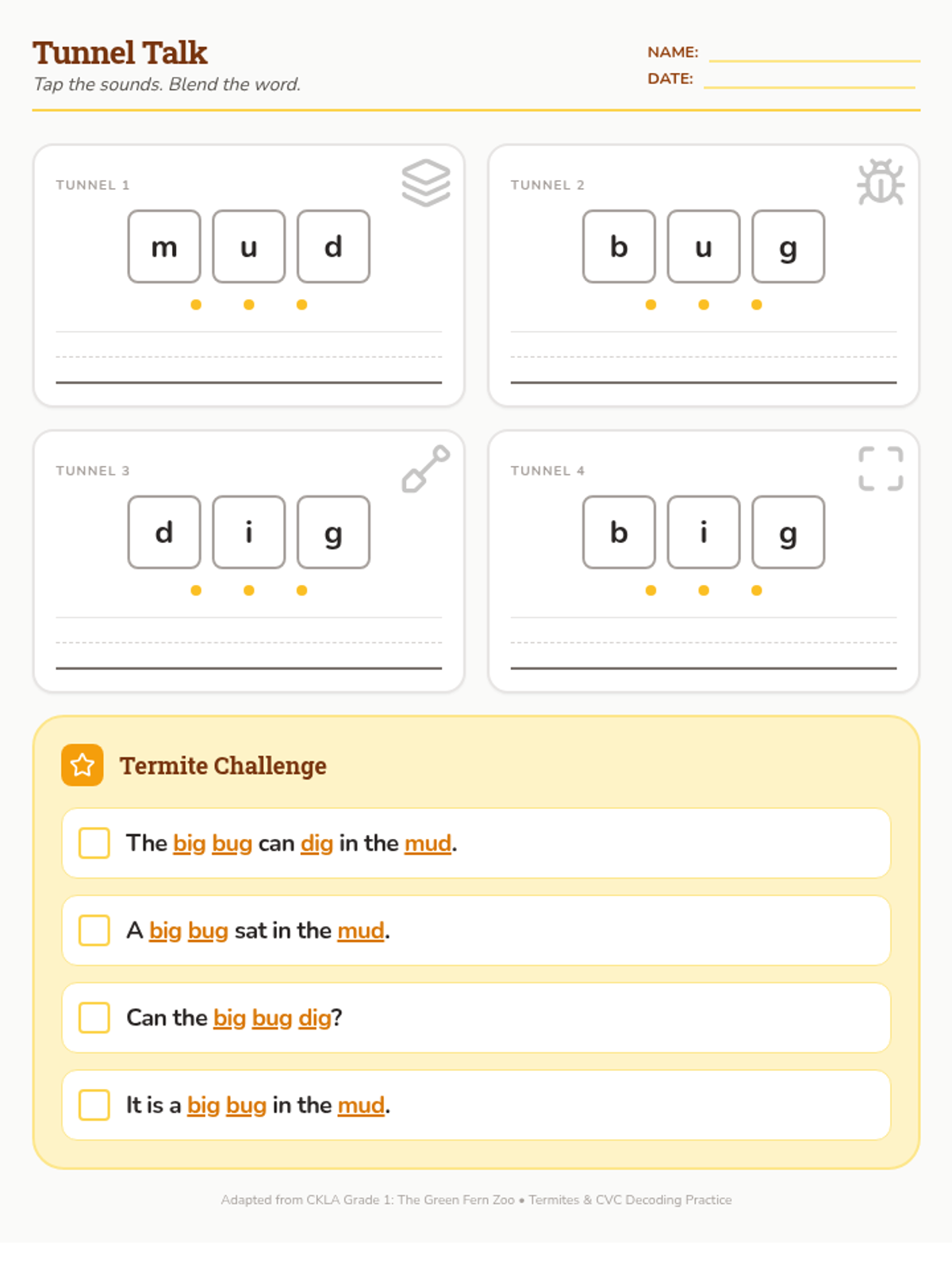
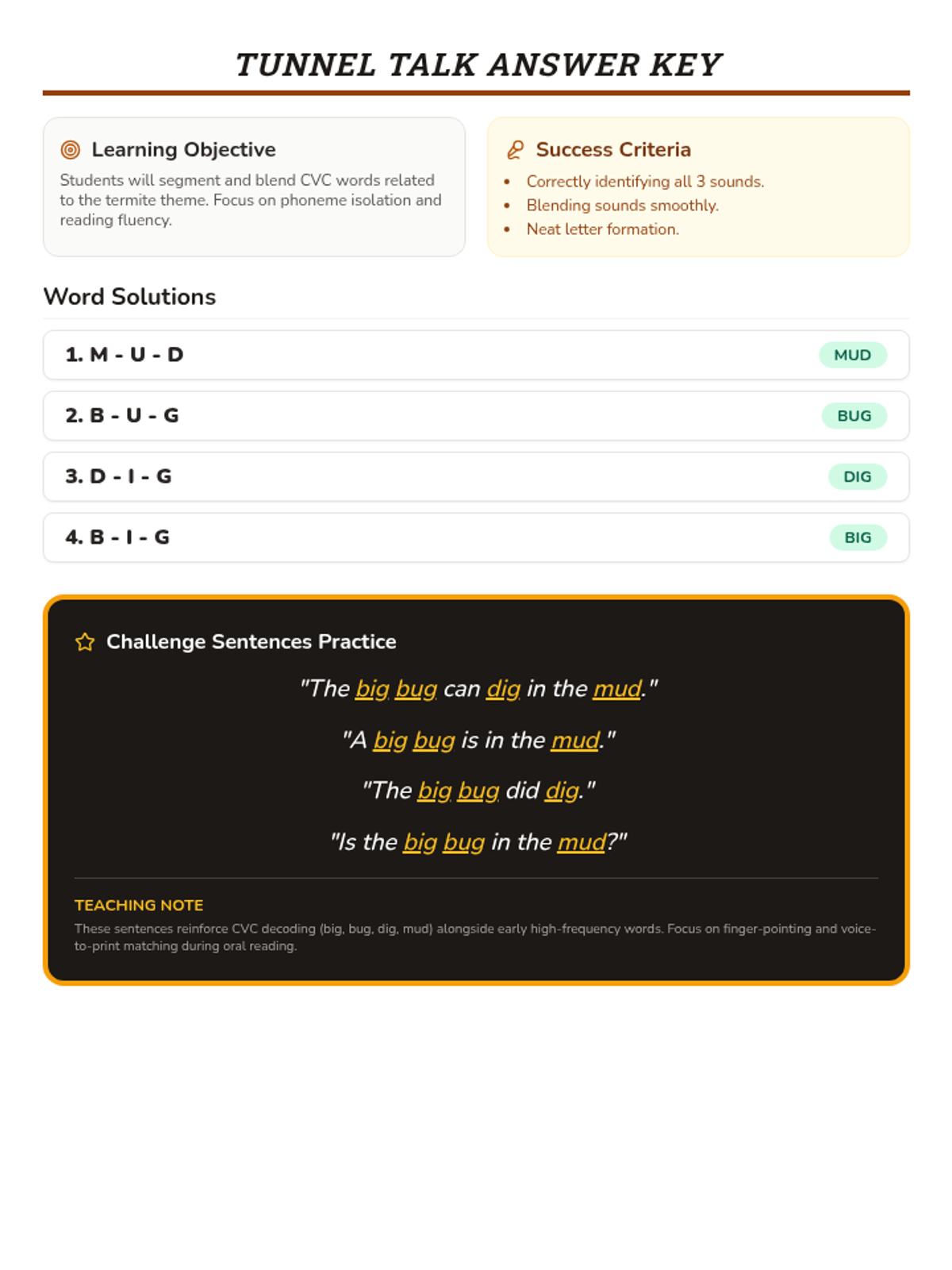
A week of targeted CVC practice covering blending, initial and final consonant changes, and automaticity.
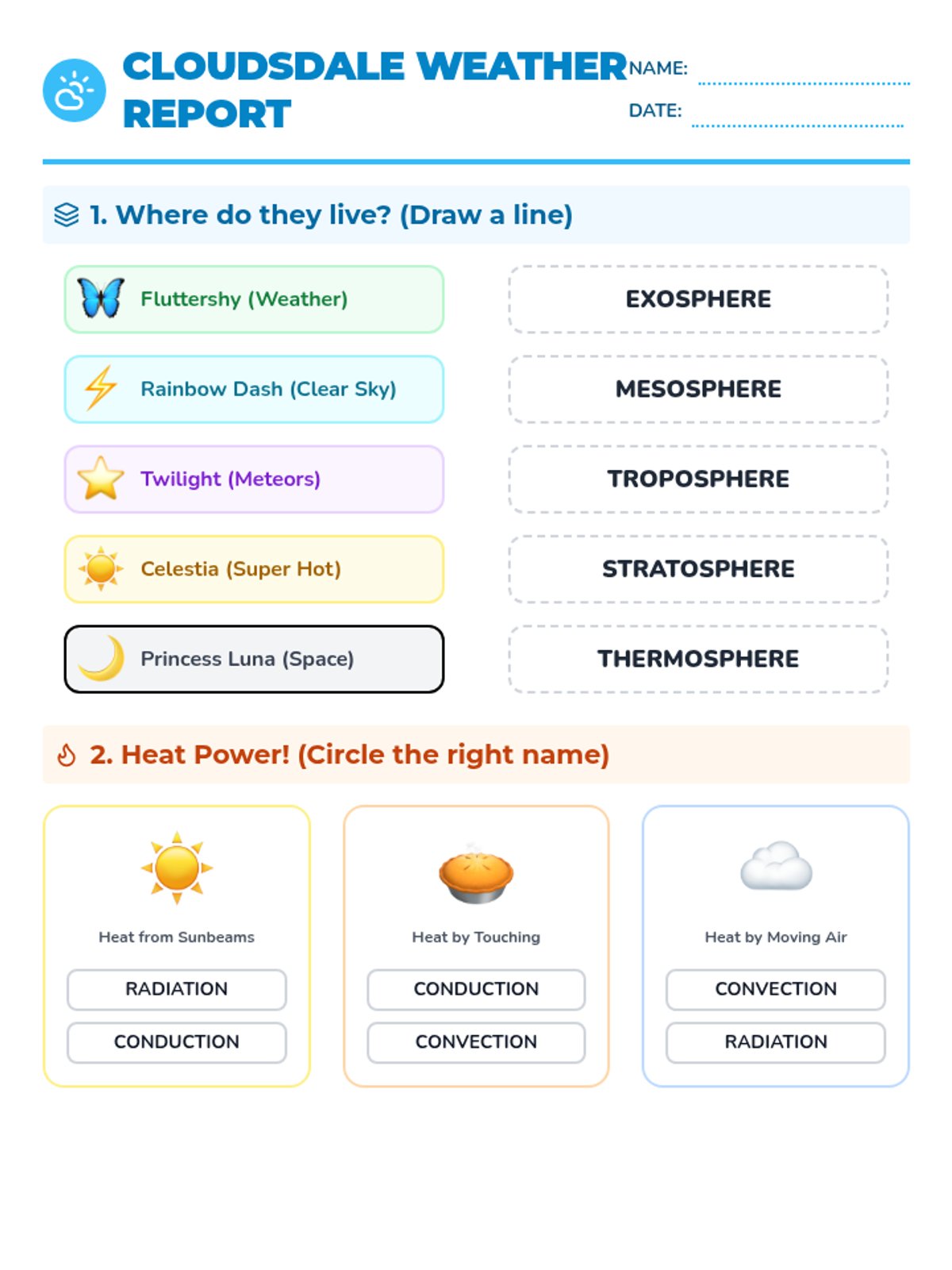
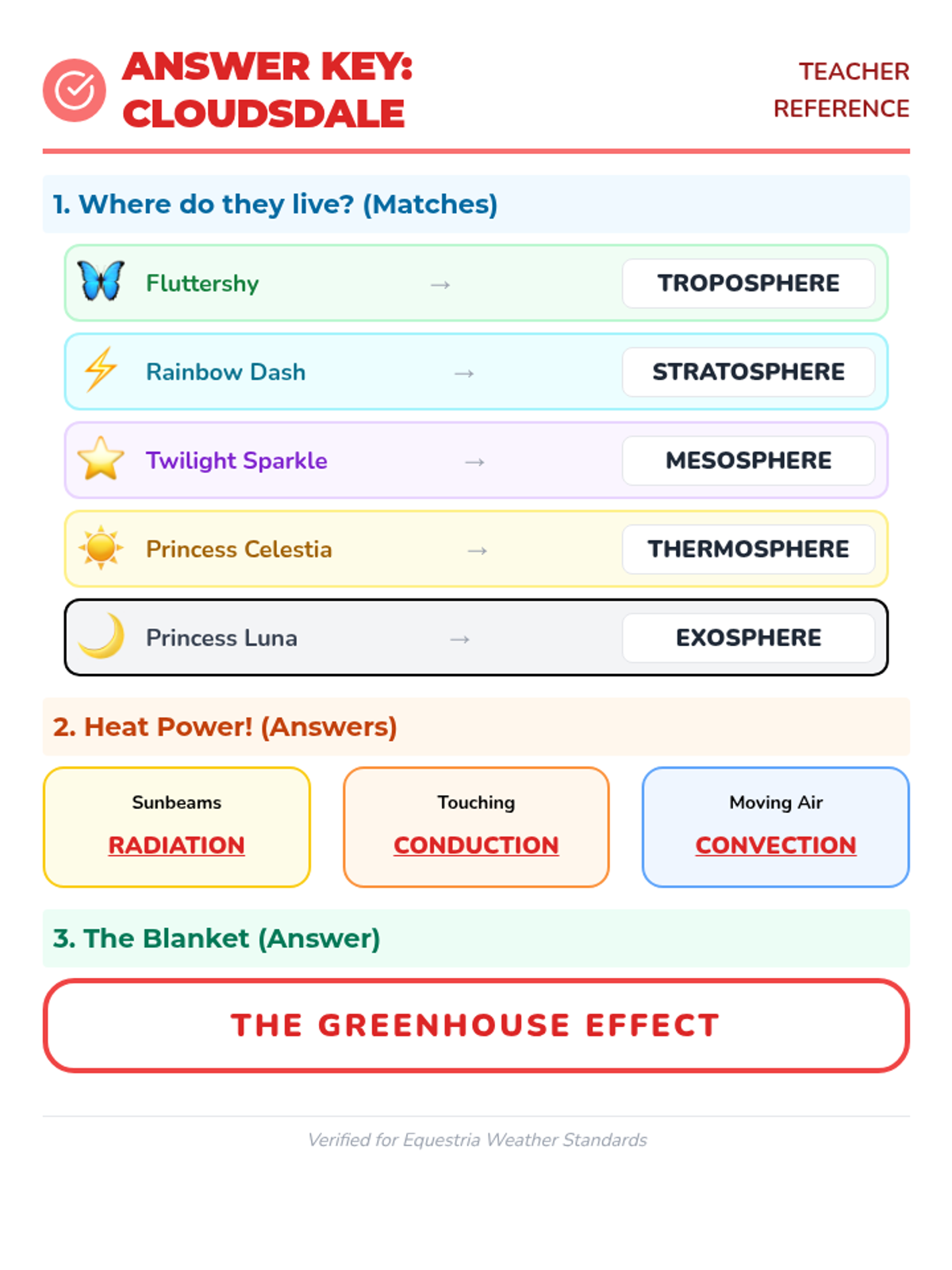
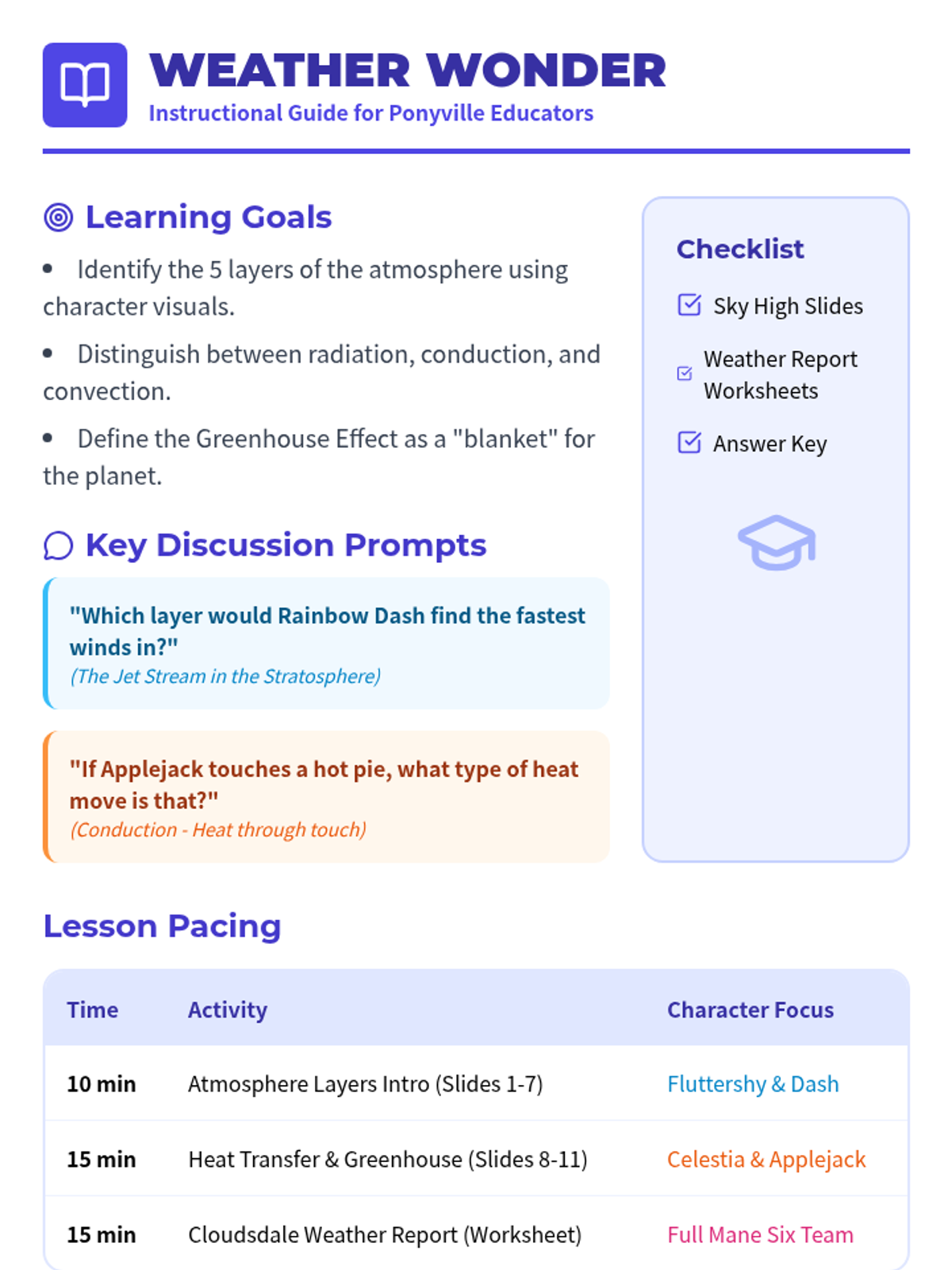
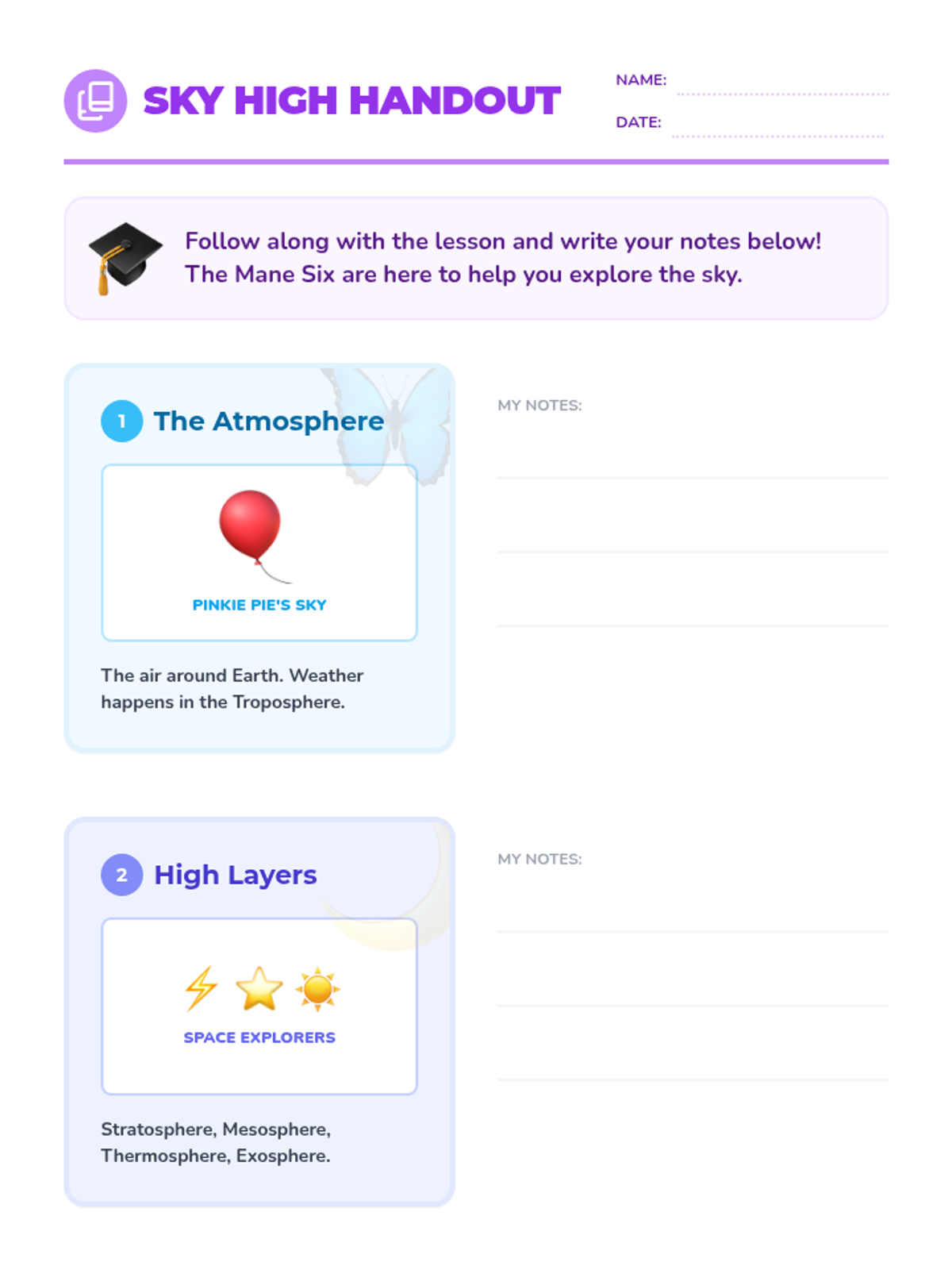
Explore the layers of the atmosphere and how heat moves through Equestria with the help of the Mane Six. This lesson covers atmospheric layers and thermal energy transfer using simplified language and visual symbols.
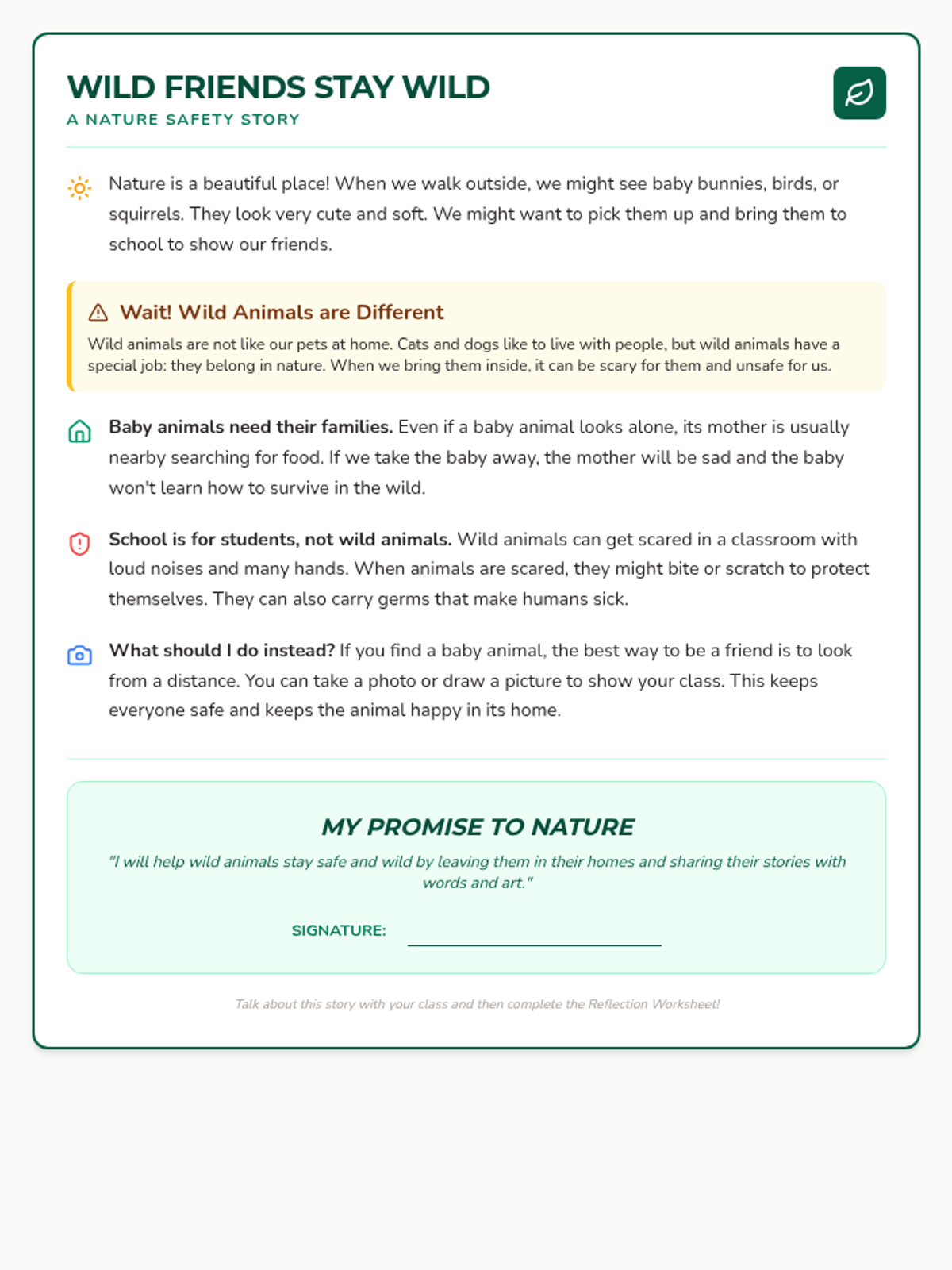
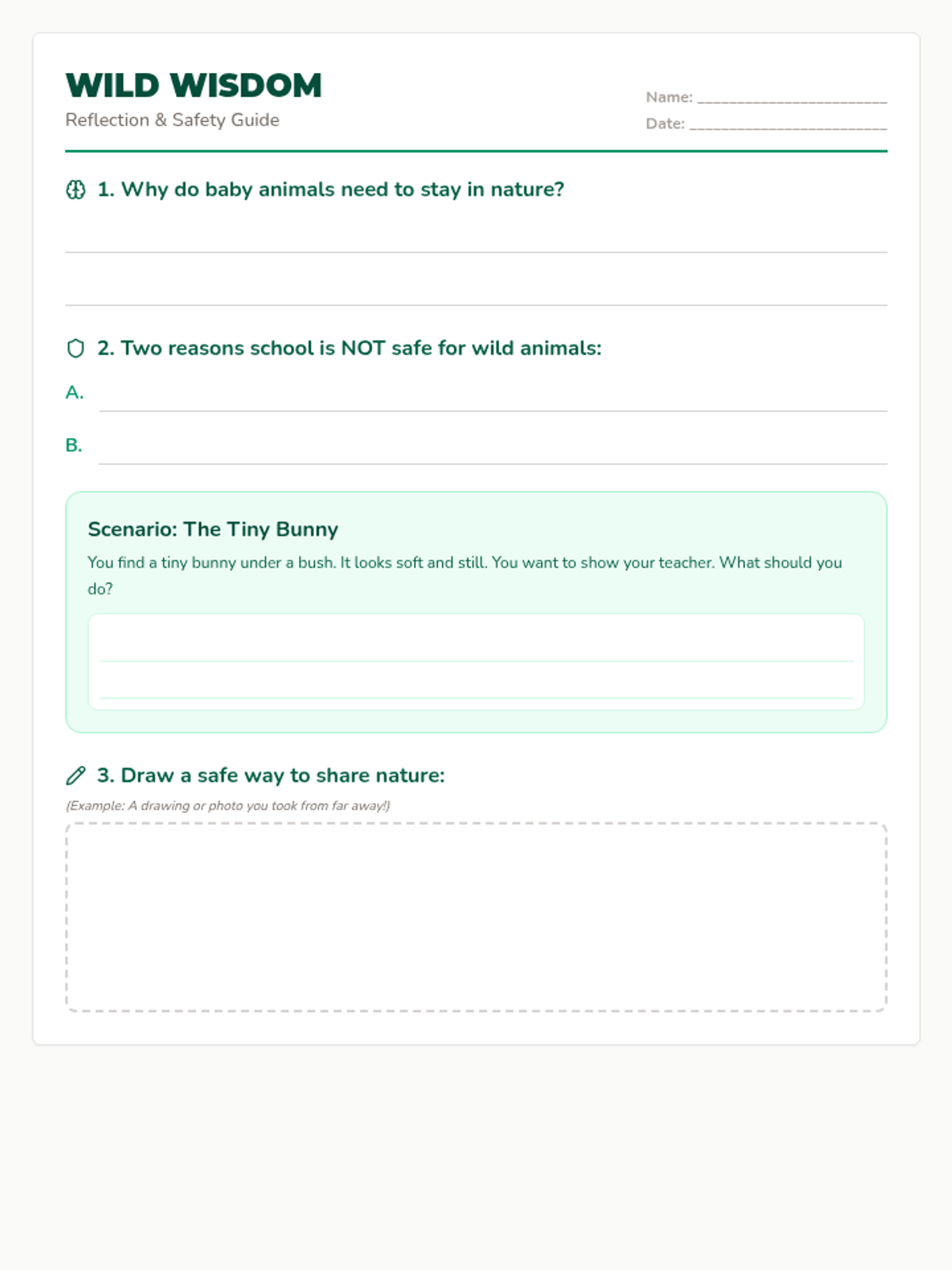
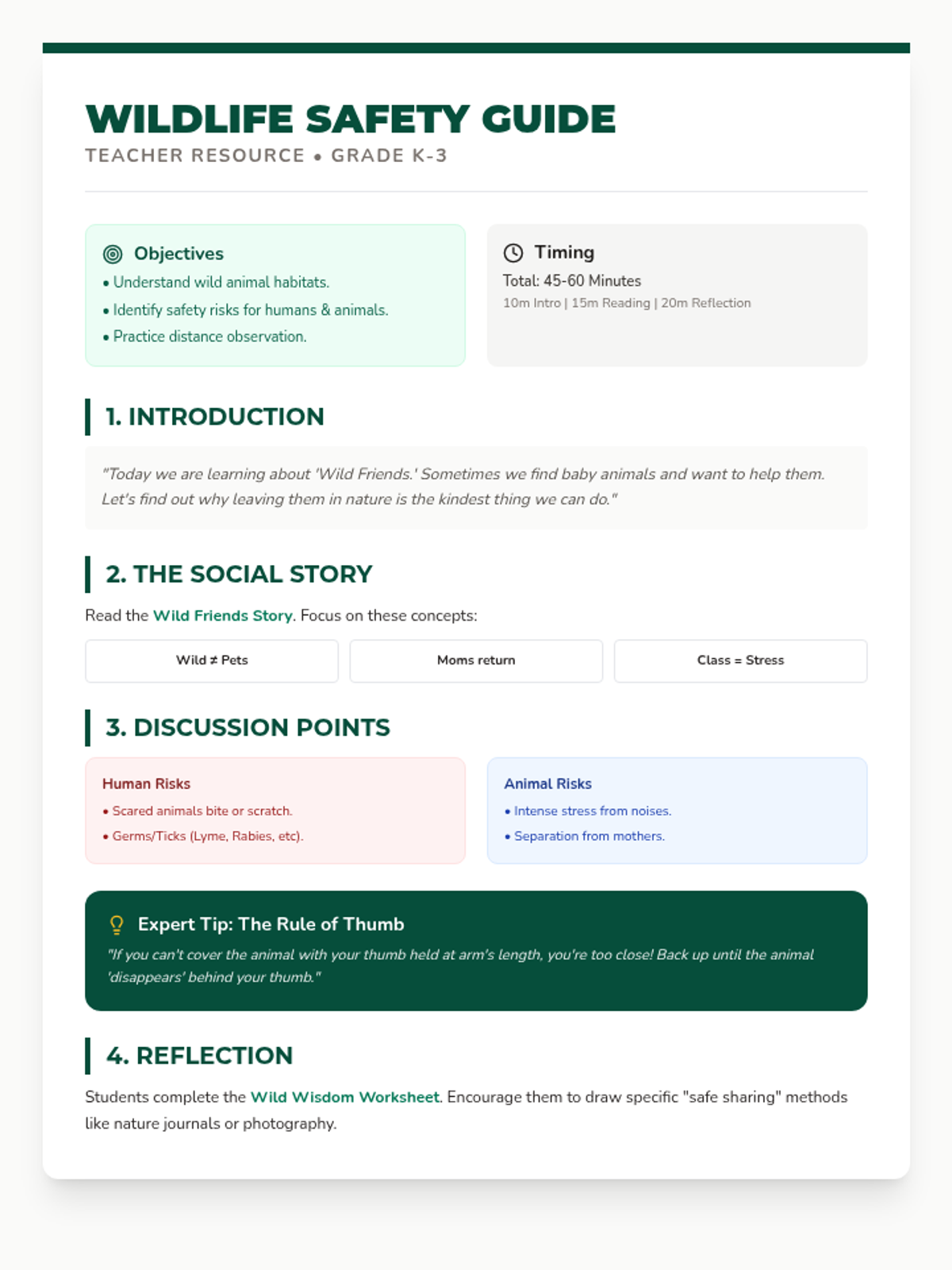
This lesson teaches students why wild animals, especially babies, should remain in their natural habitats rather than being brought to school, focusing on the safety of the animal and the classroom community.
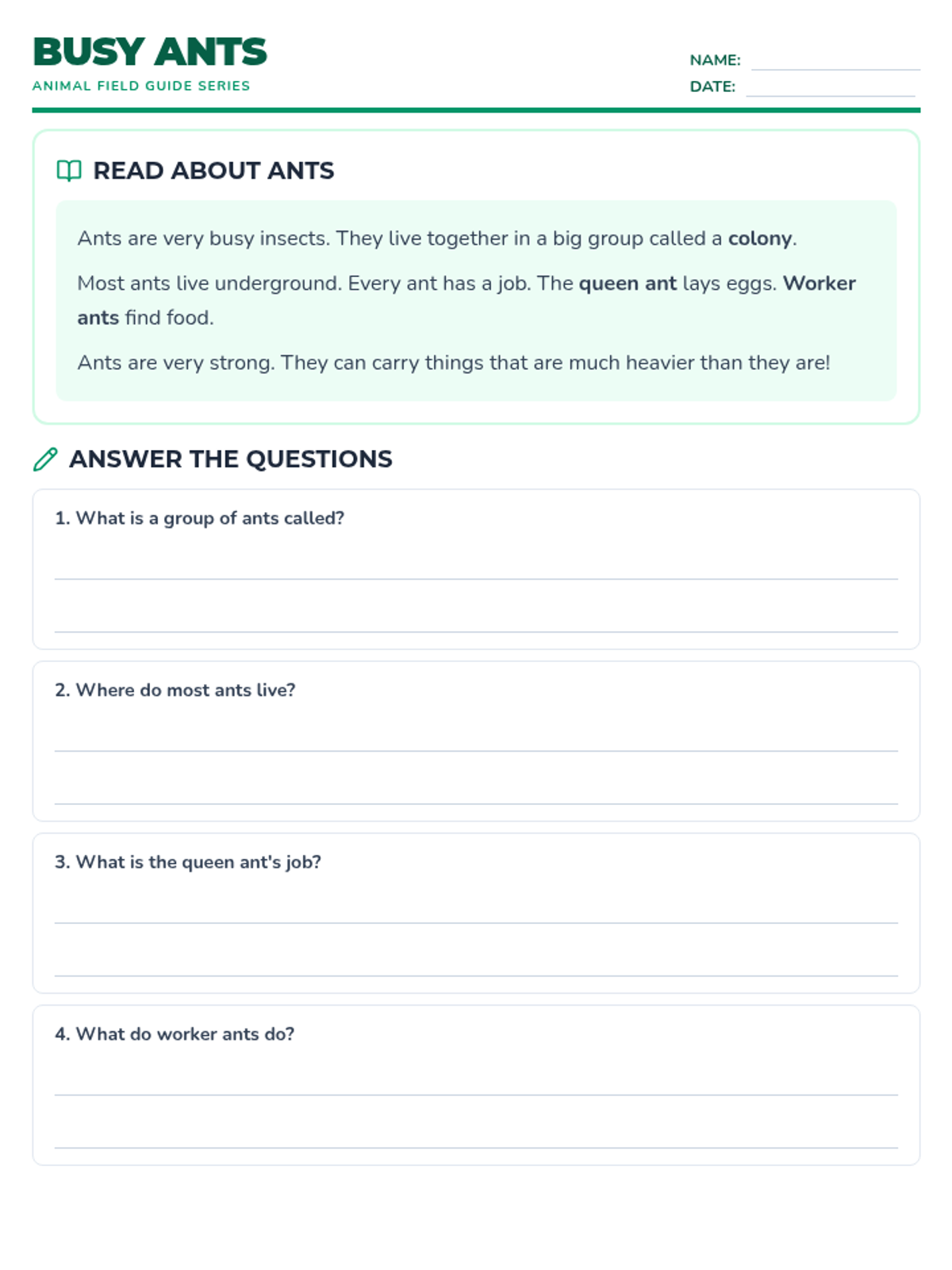
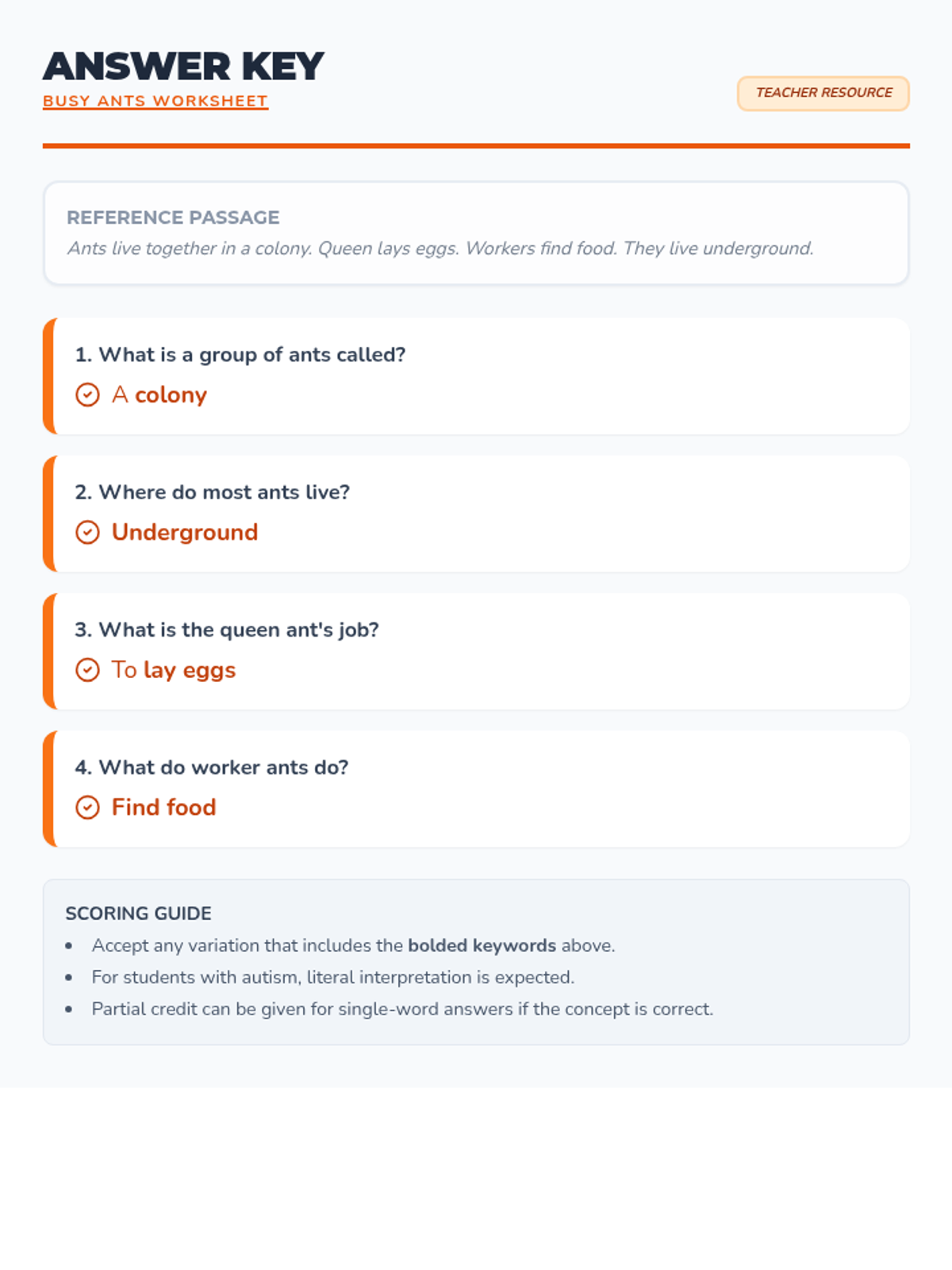
A focused reading comprehension lesson exploring the lives of ants, designed with clear structure and visual supports for 1st-2nd grade students.
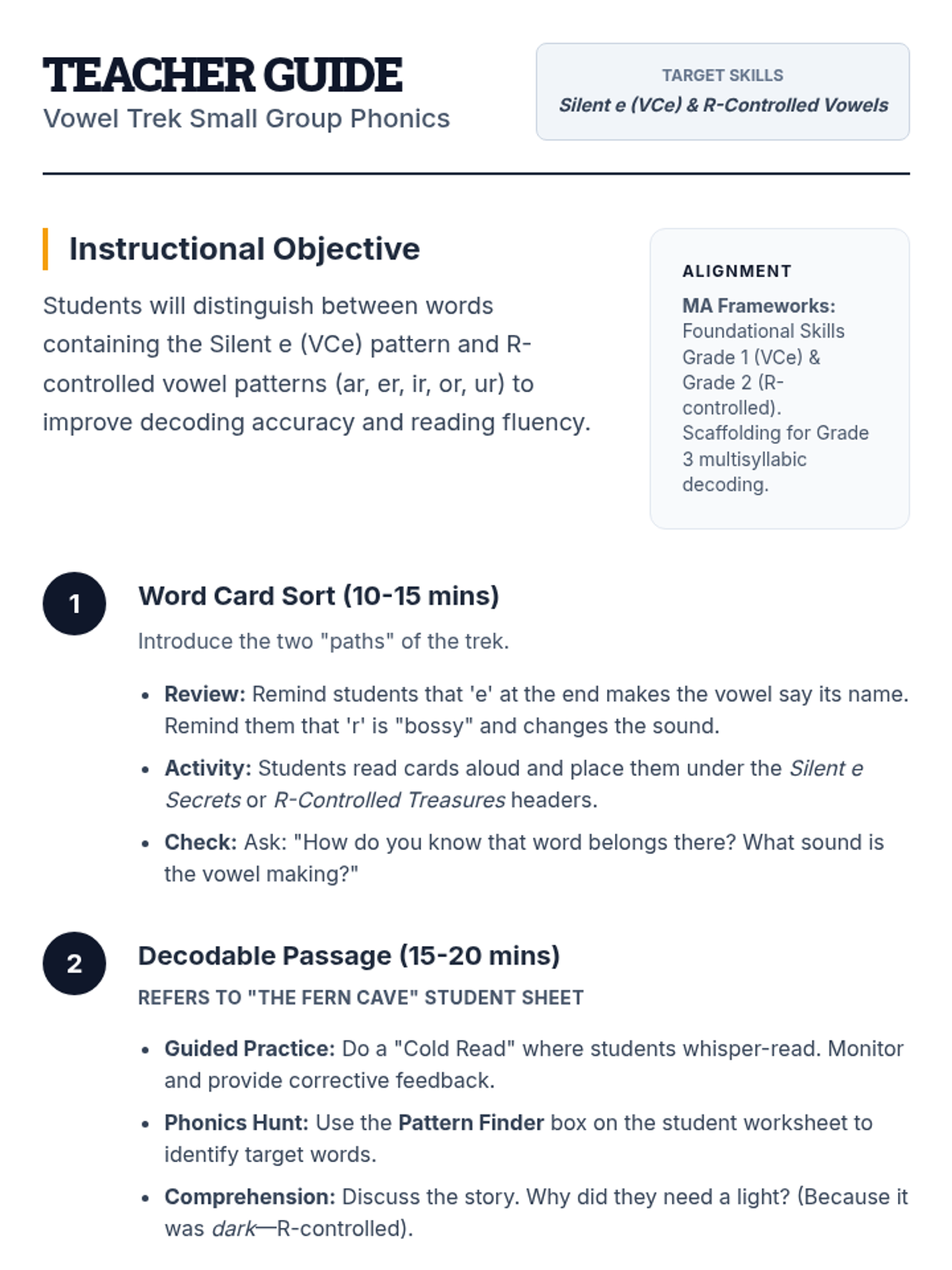
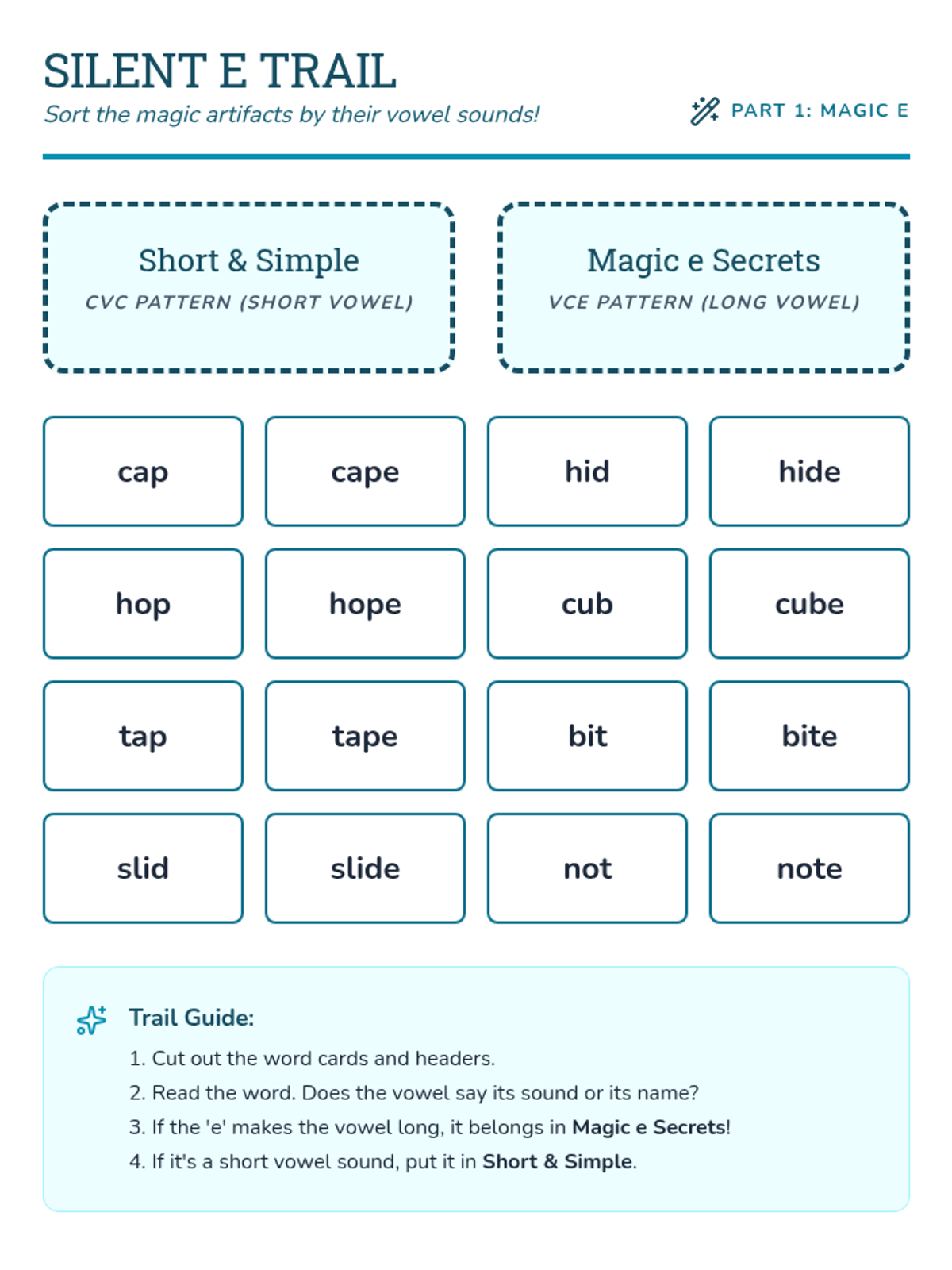
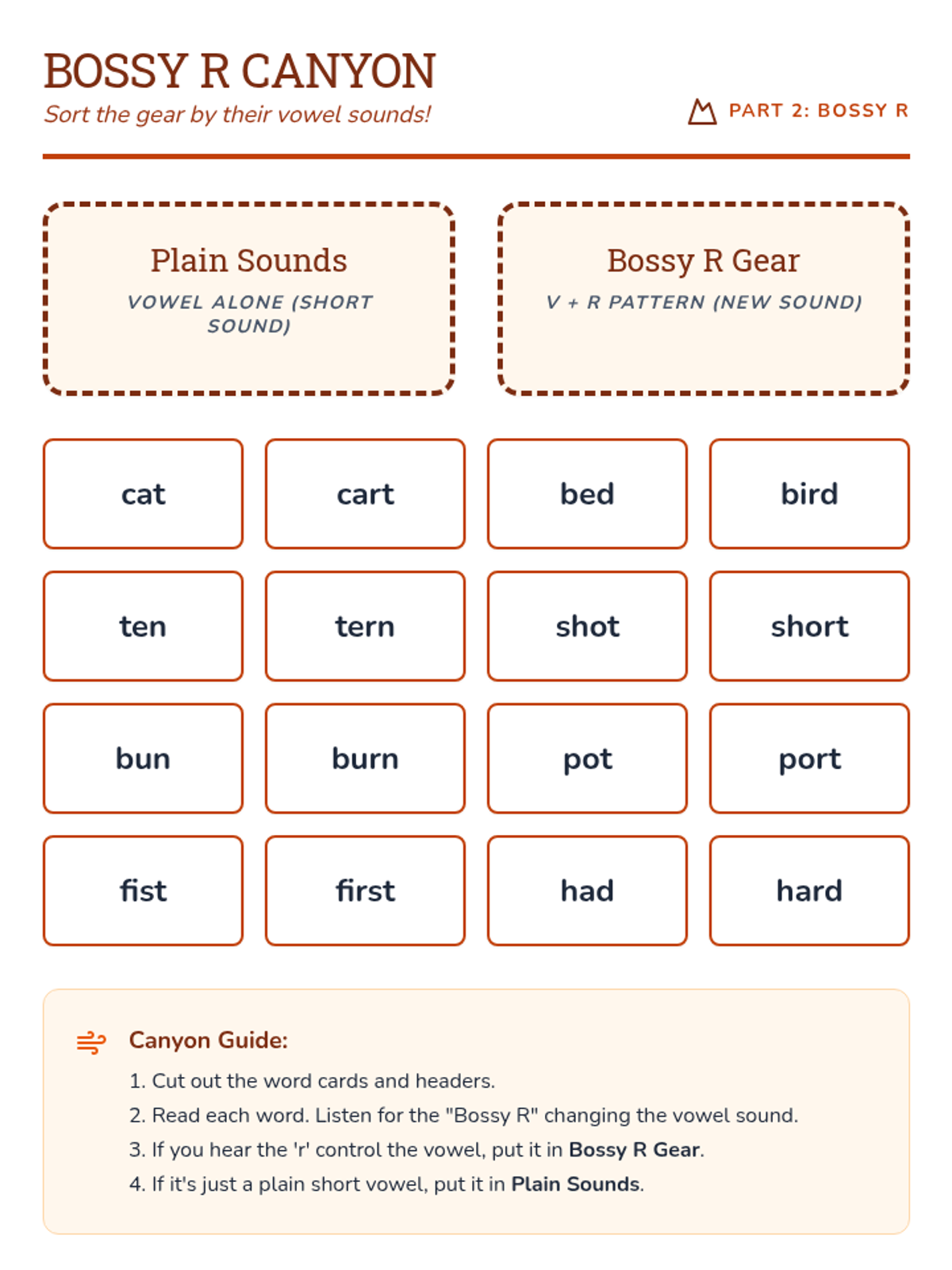
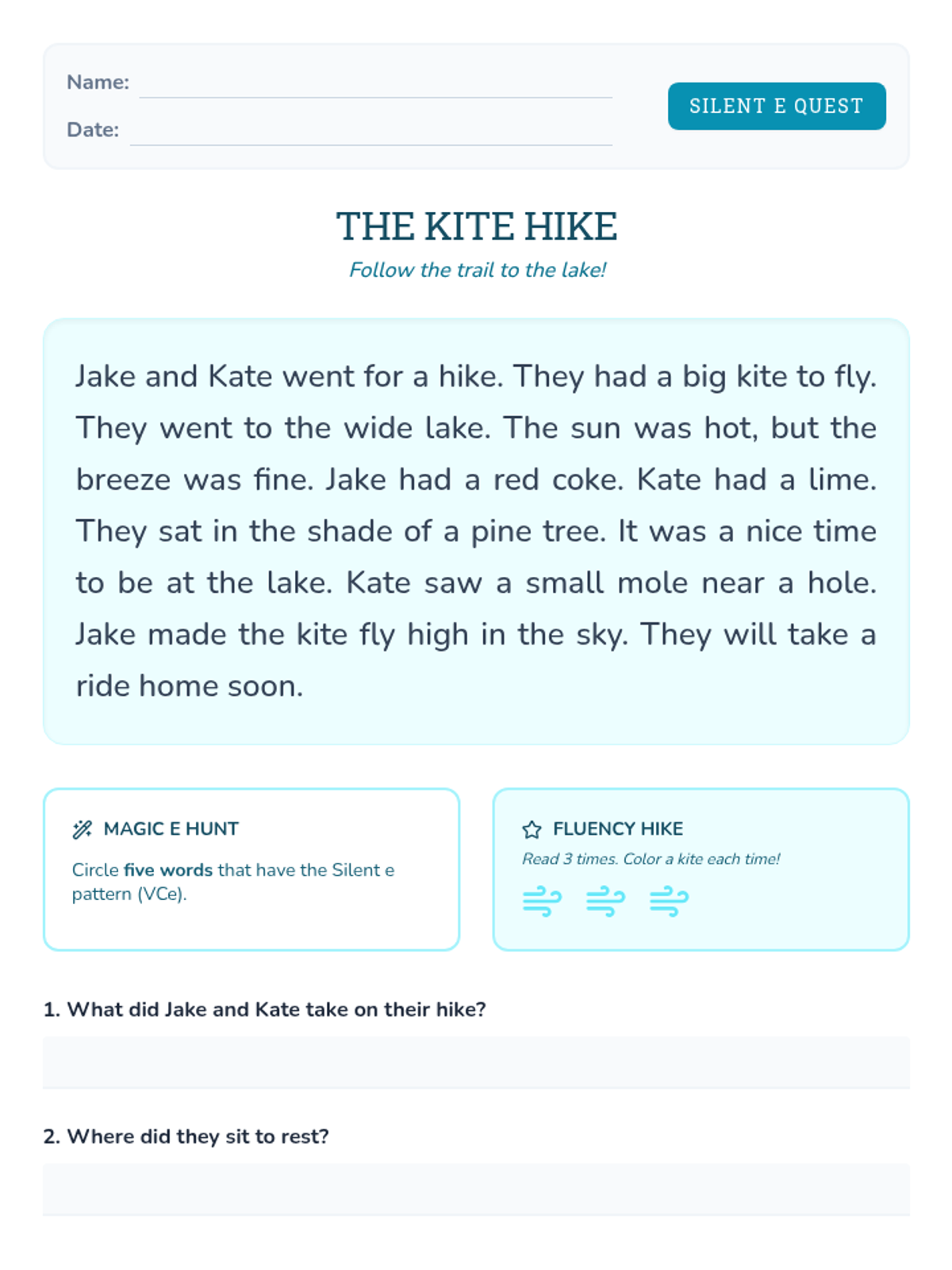
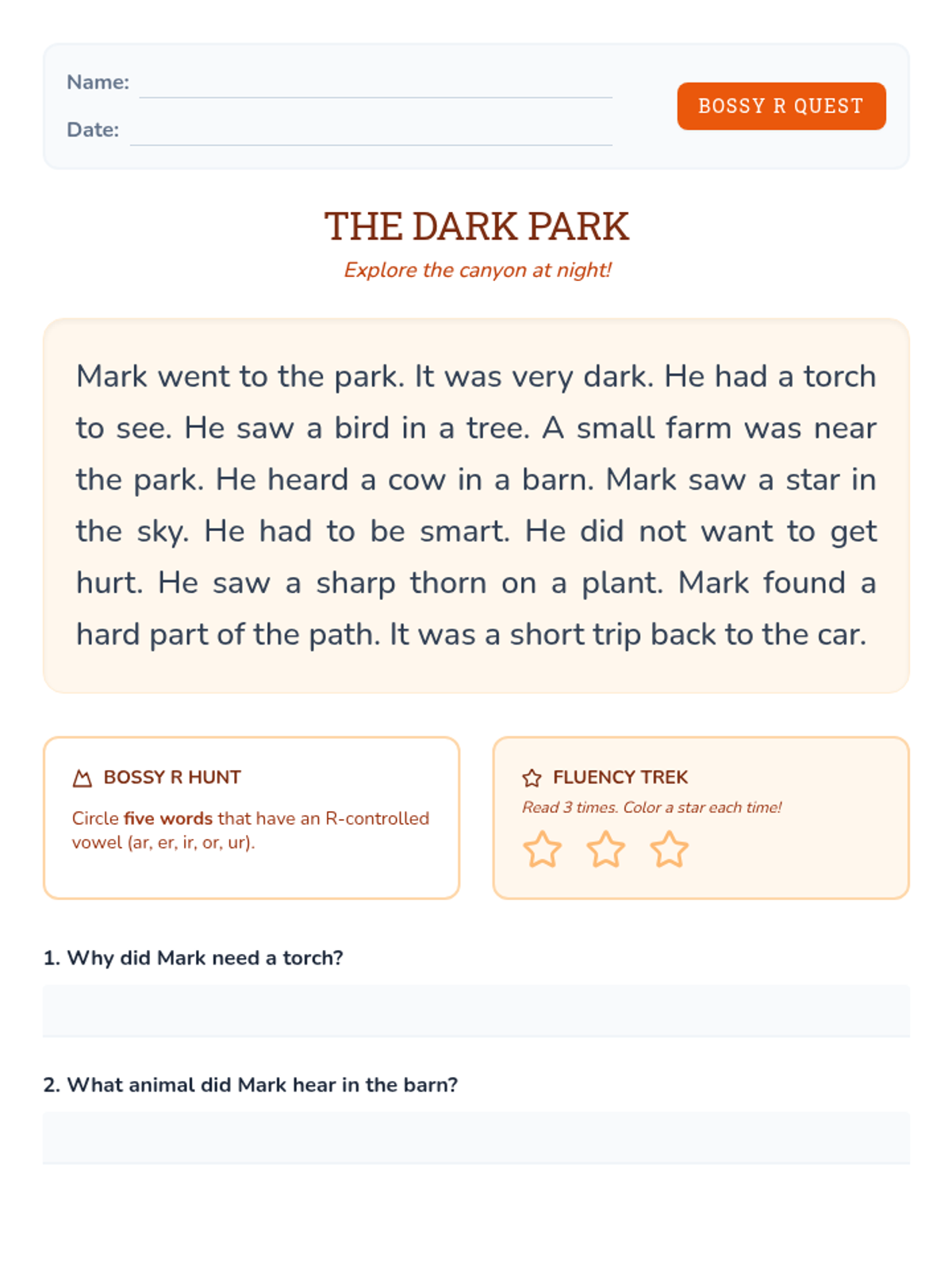
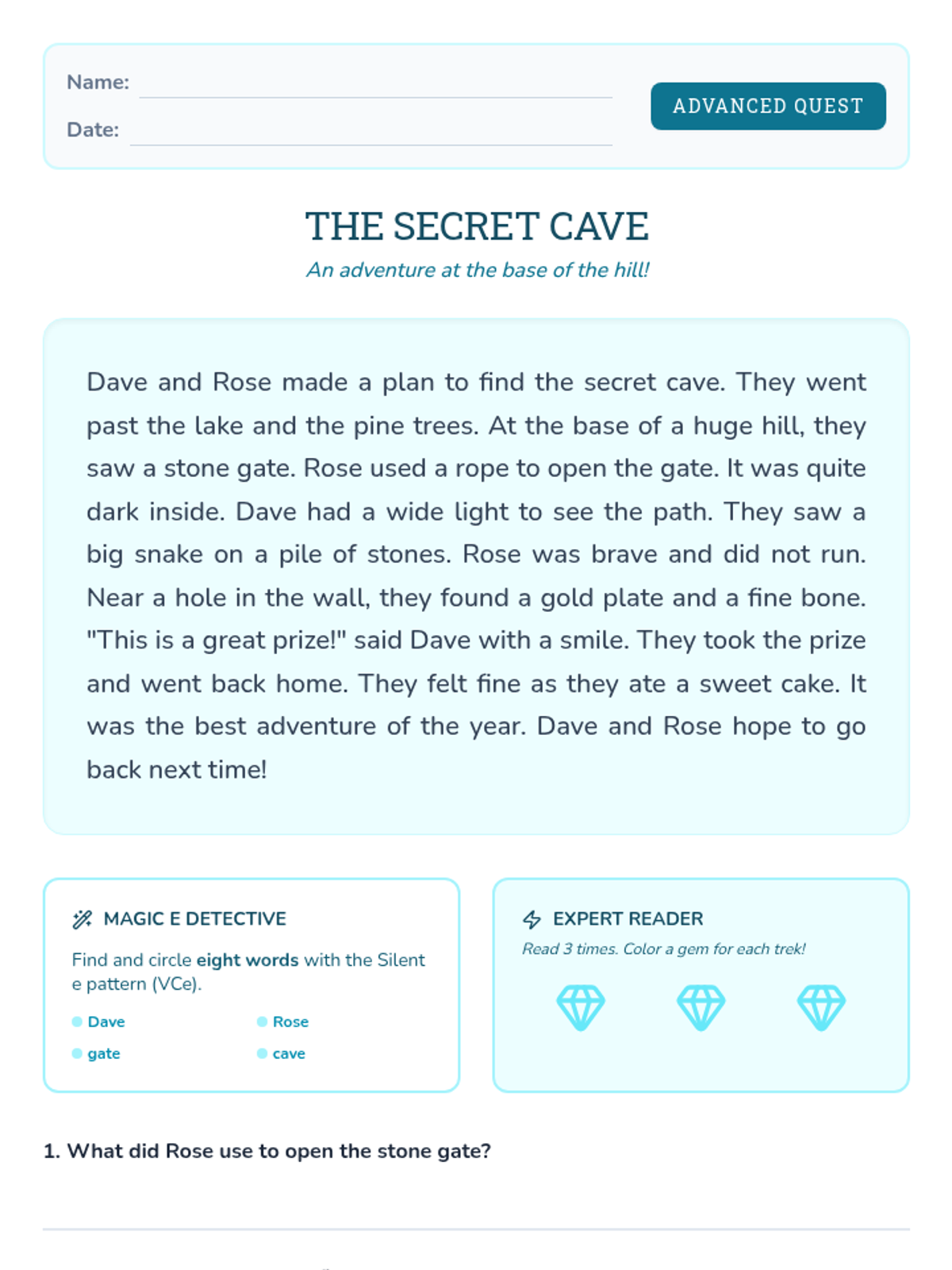
A two-part small-group phonics sequence for Grade 3 students (reading at 1st-2nd grade level). Part 1 focuses on Silent e (VCe) patterns, and Part 2 focuses on R-controlled vowel patterns.
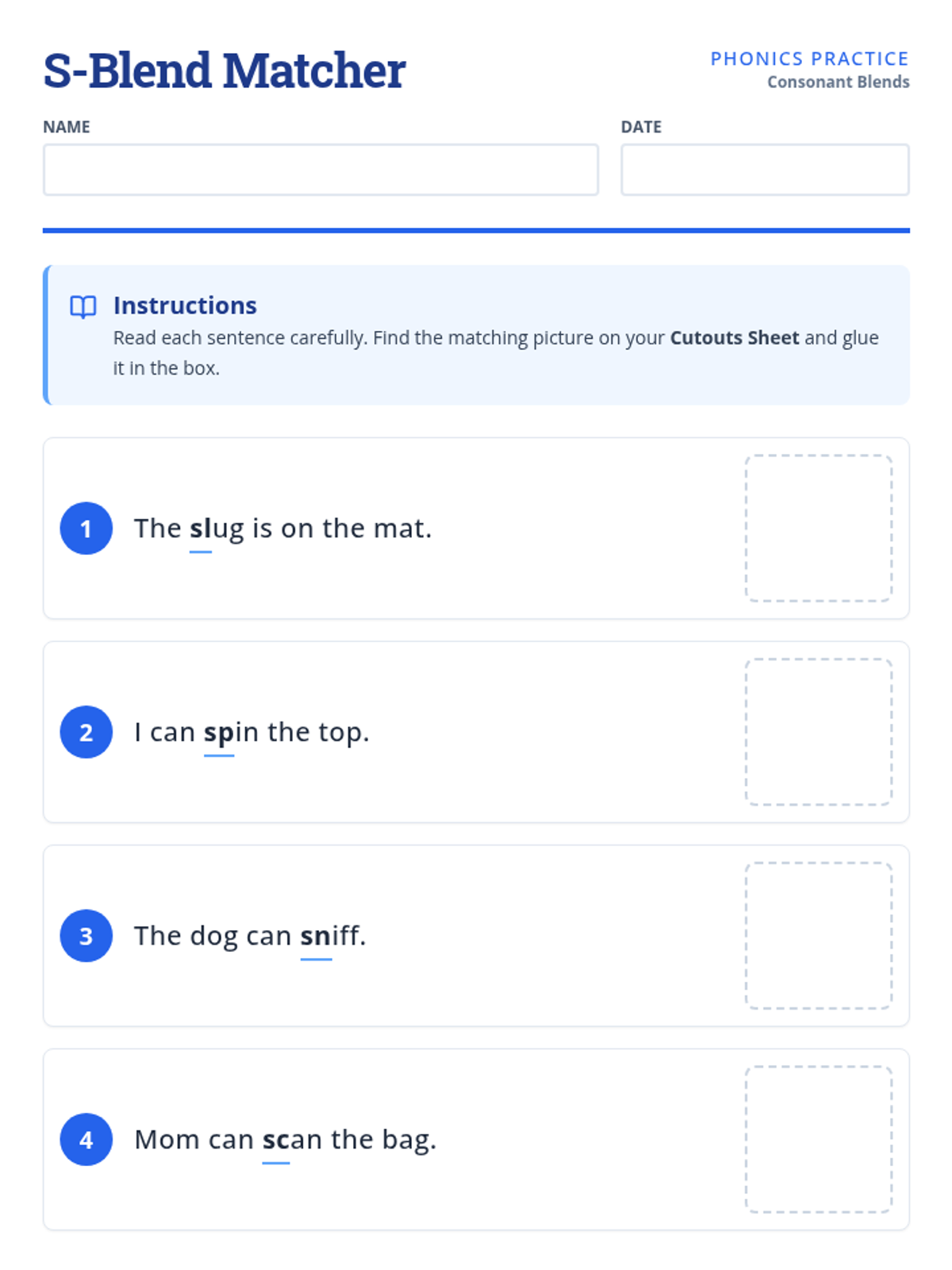
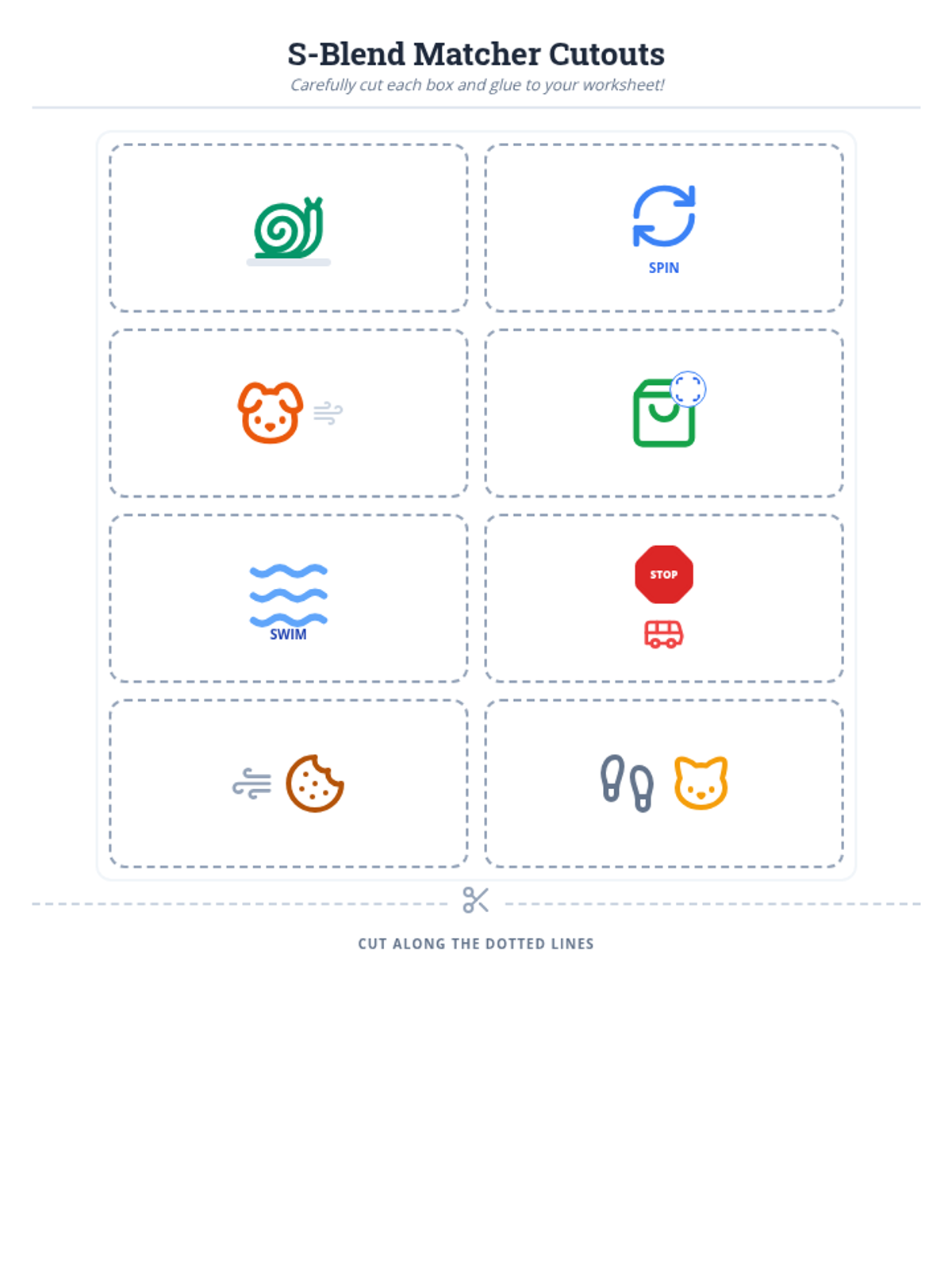
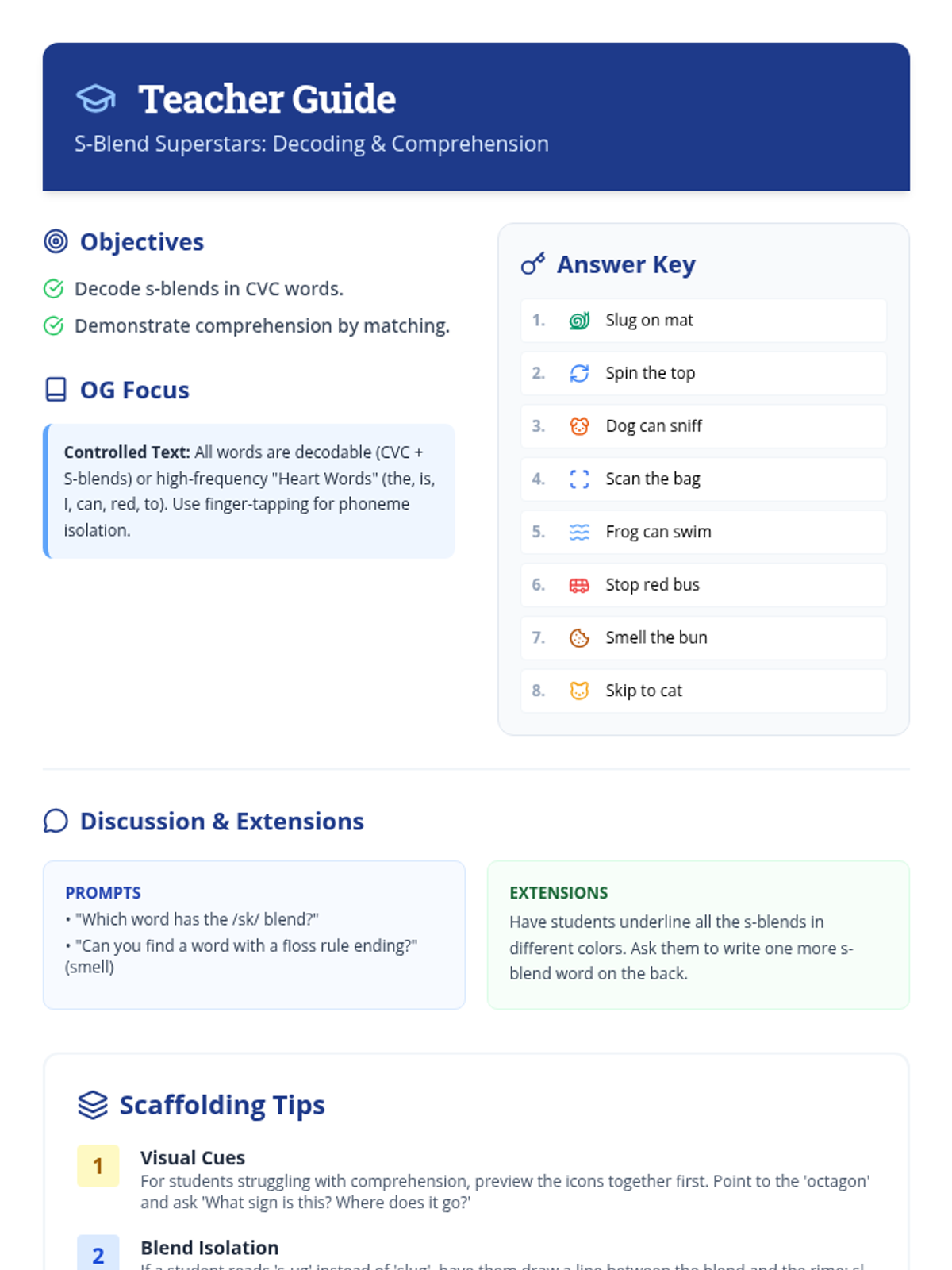
A phonics-focused lesson for kindergarteners to practice reading and comprehending initial s-blends through decodable sentences and visual matching.
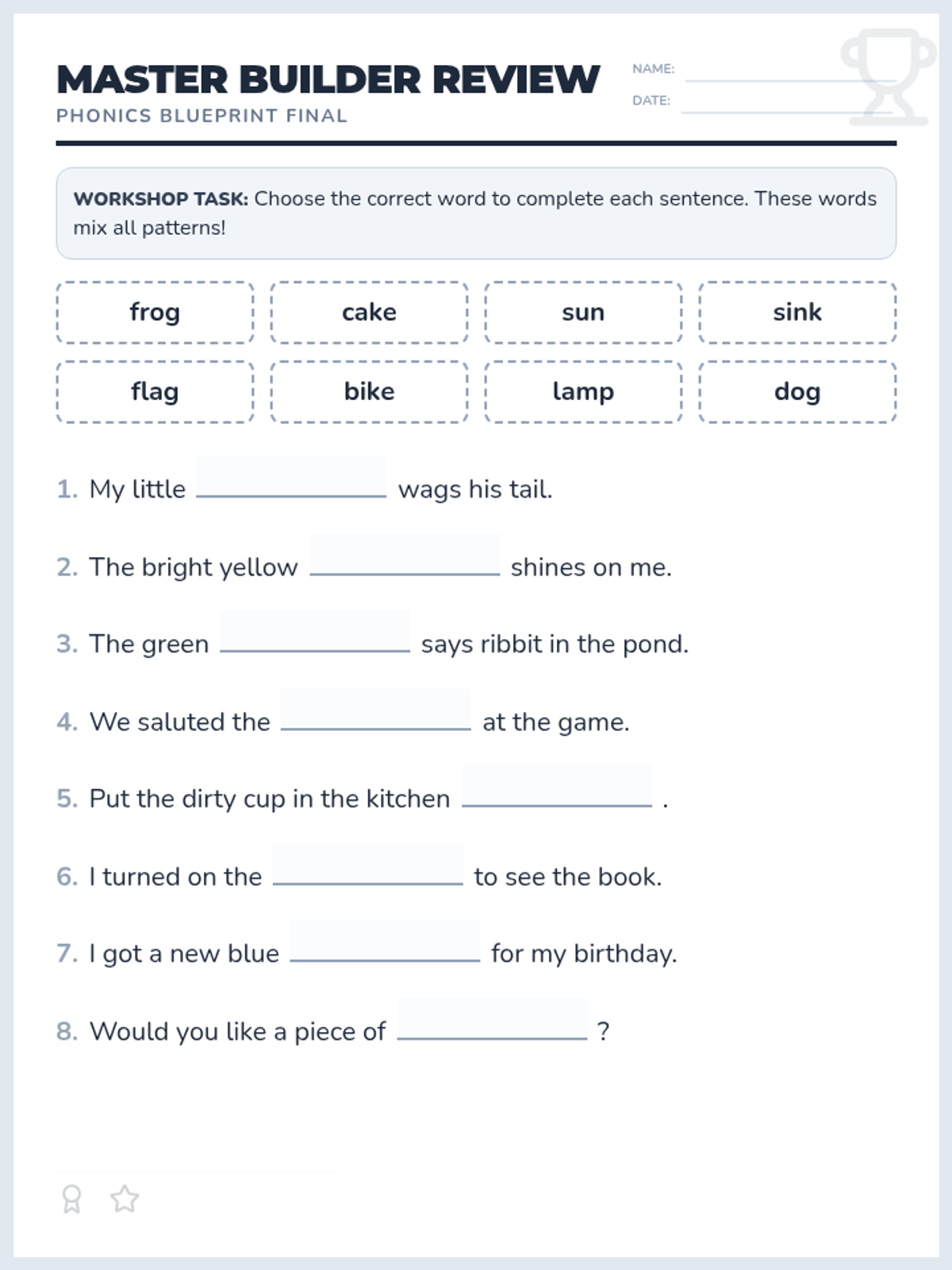
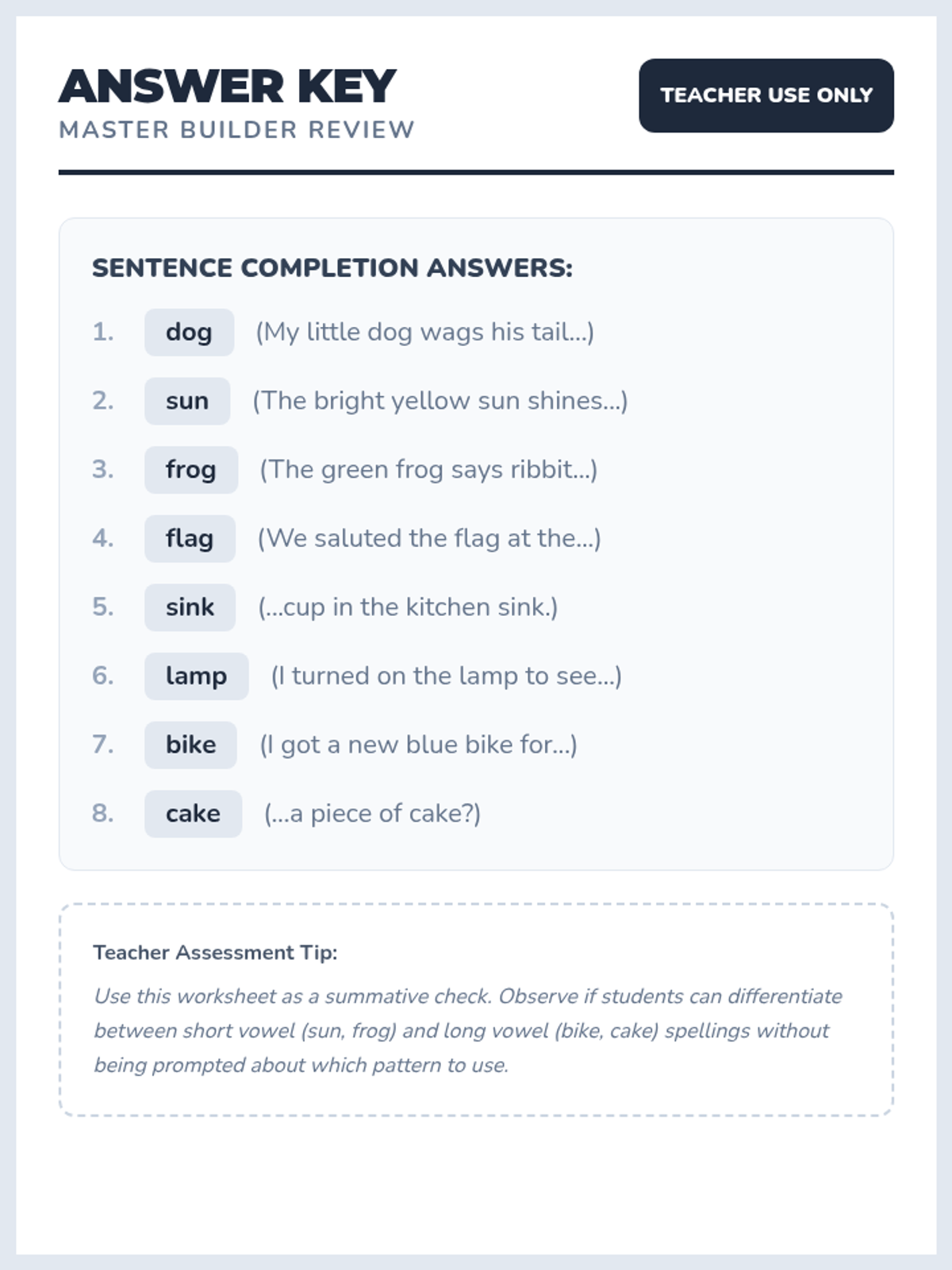
A cumulative review of CVC, CCVC, CVCC, and CVCe patterns. Students demonstrate mastery by choosing the correct word pattern to complete sentences.
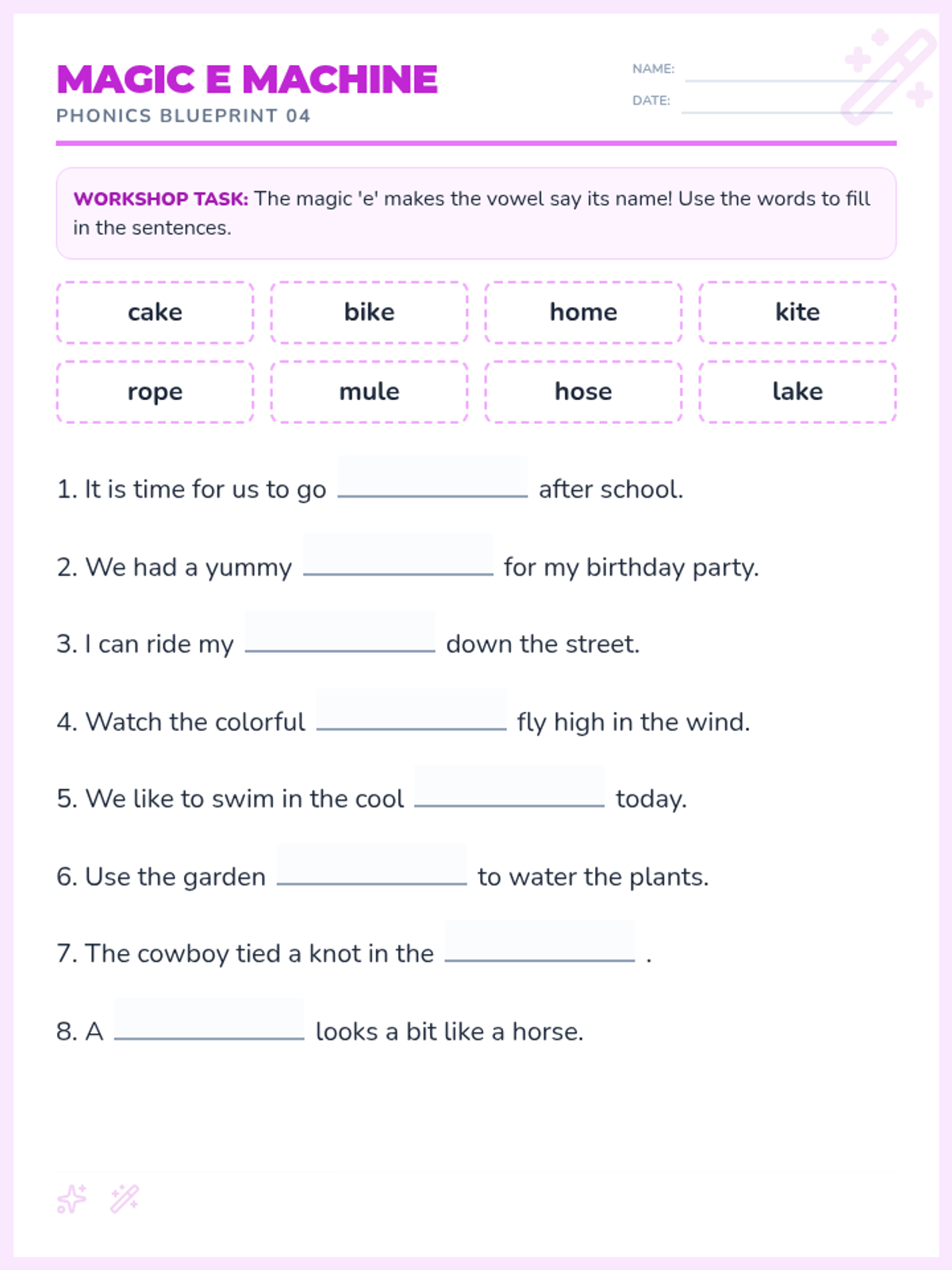
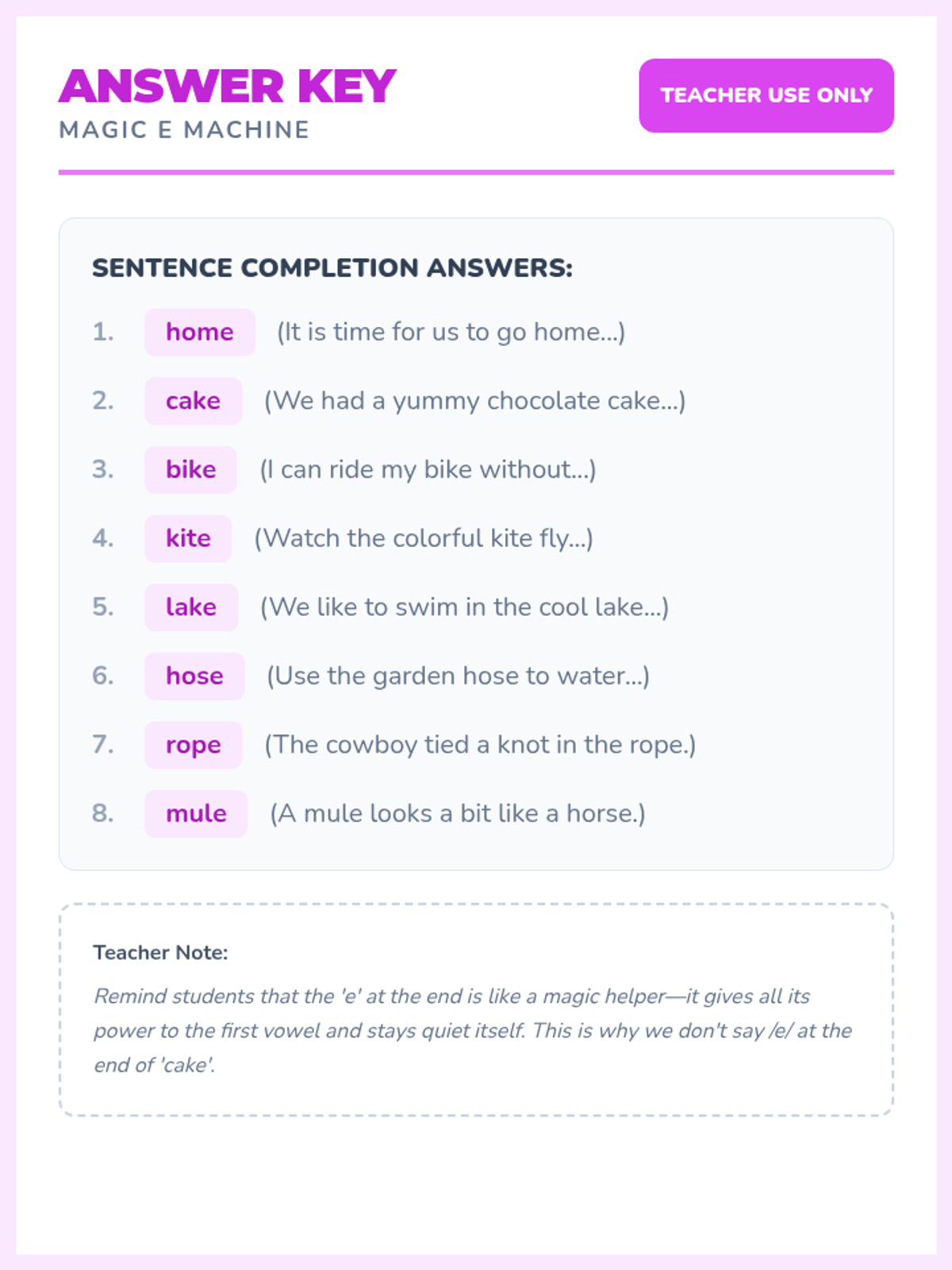
Introducing the silent e (CVCe) pattern and how it changes short vowels to long vowels. Students complete sentence fill-ins with magic e words.
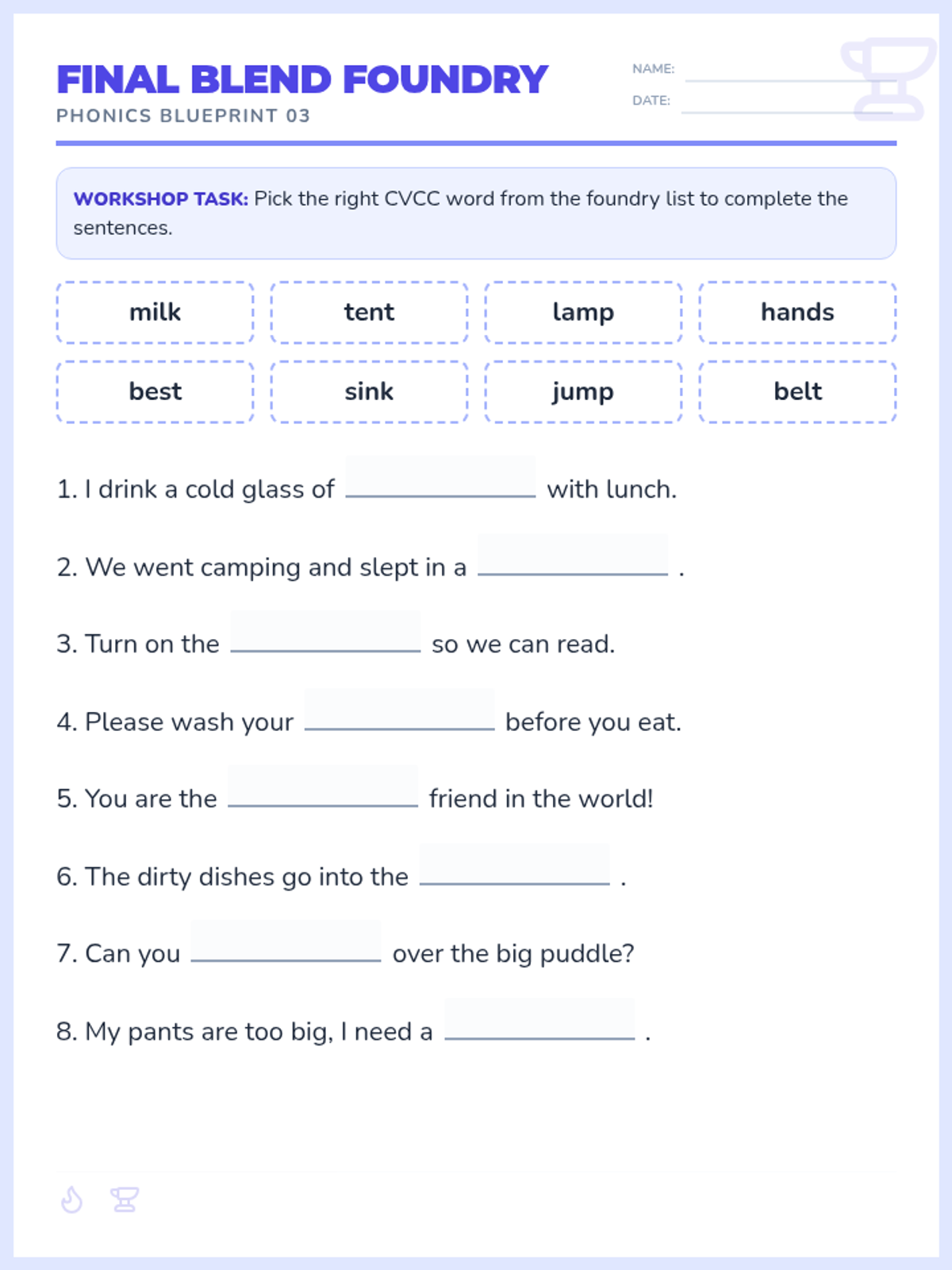
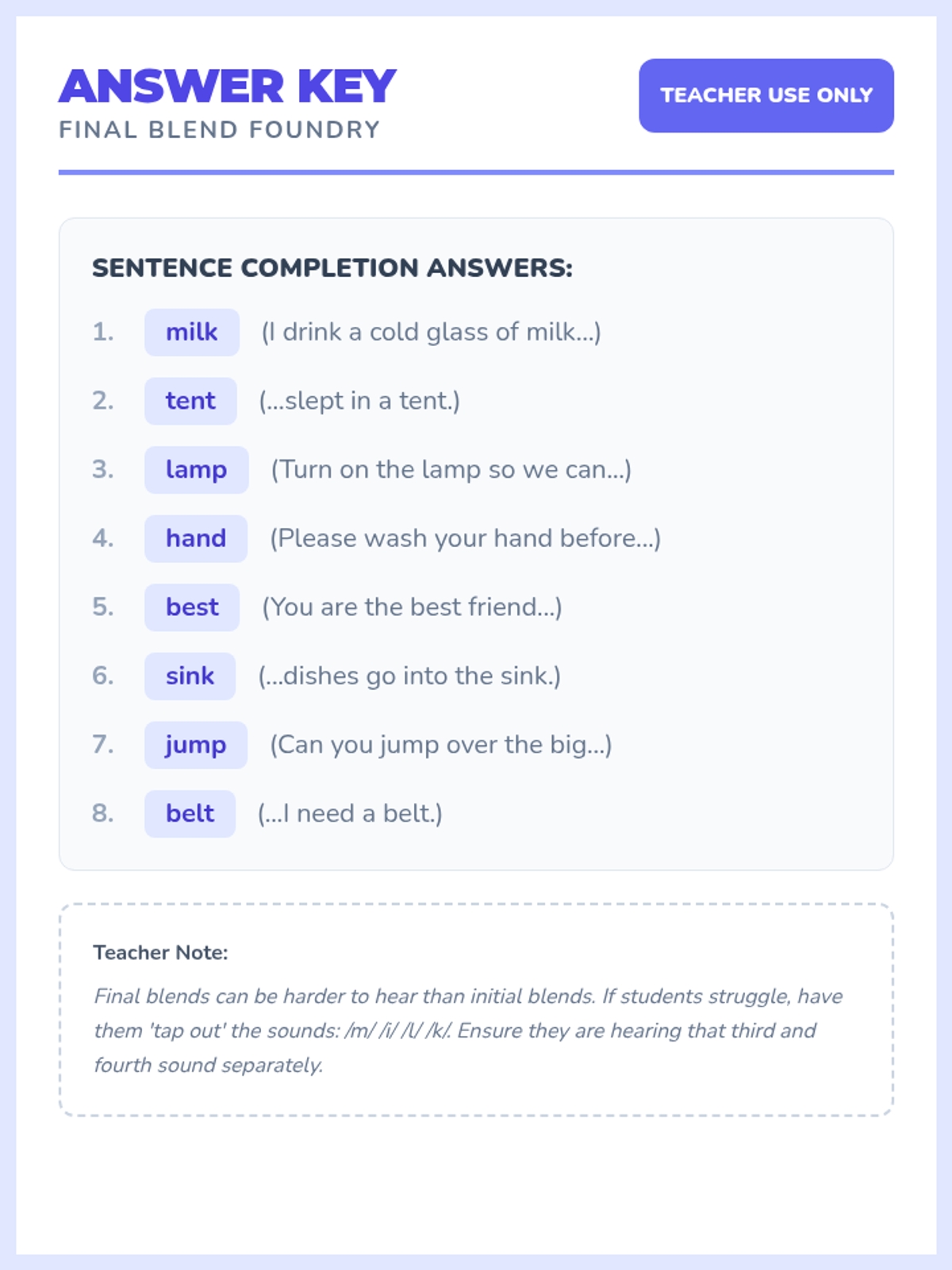
Focusing on final blends in CVCC words. Students work with ending blends like -nk, -st, and -mp within the context of sentences.
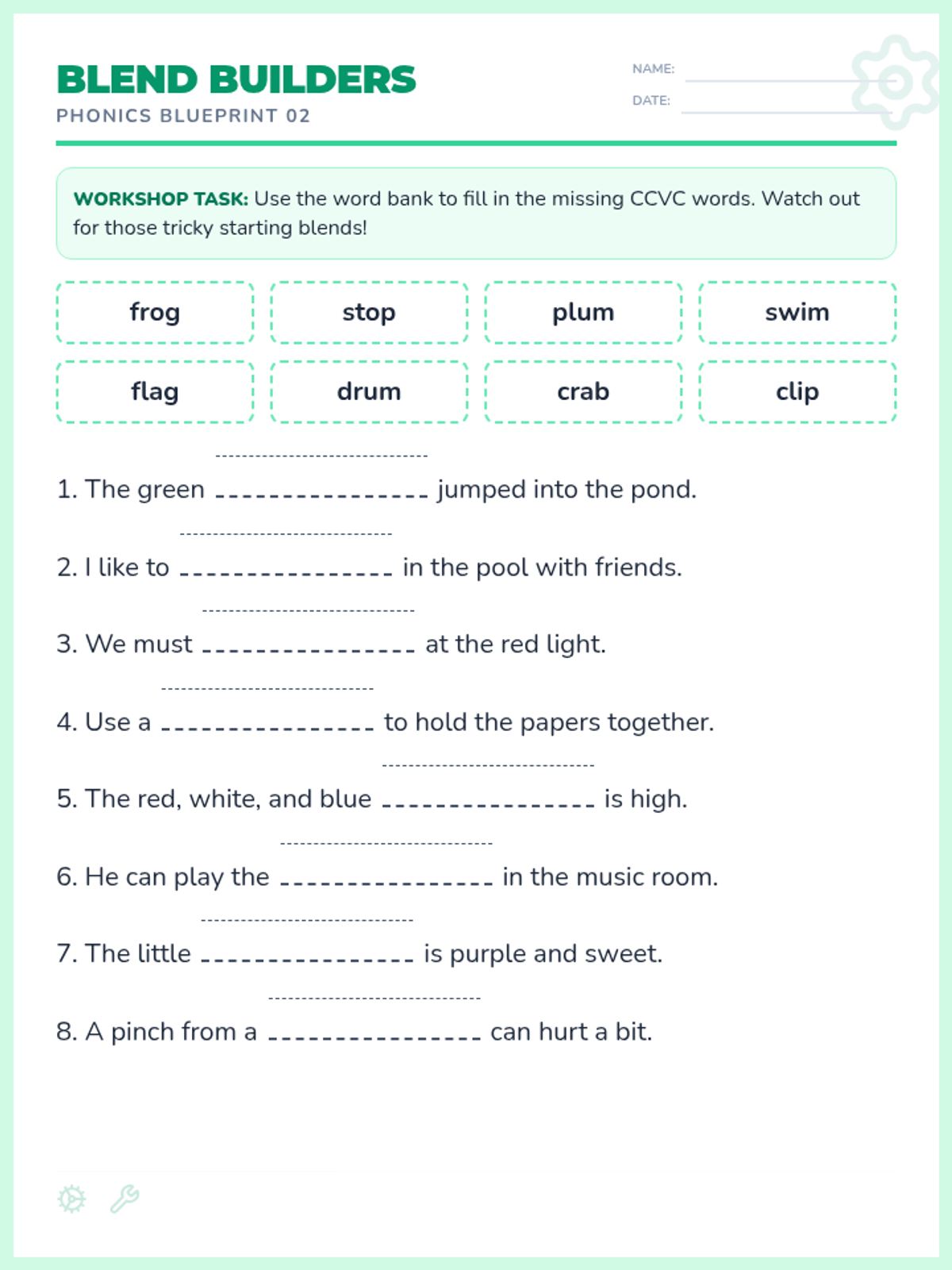
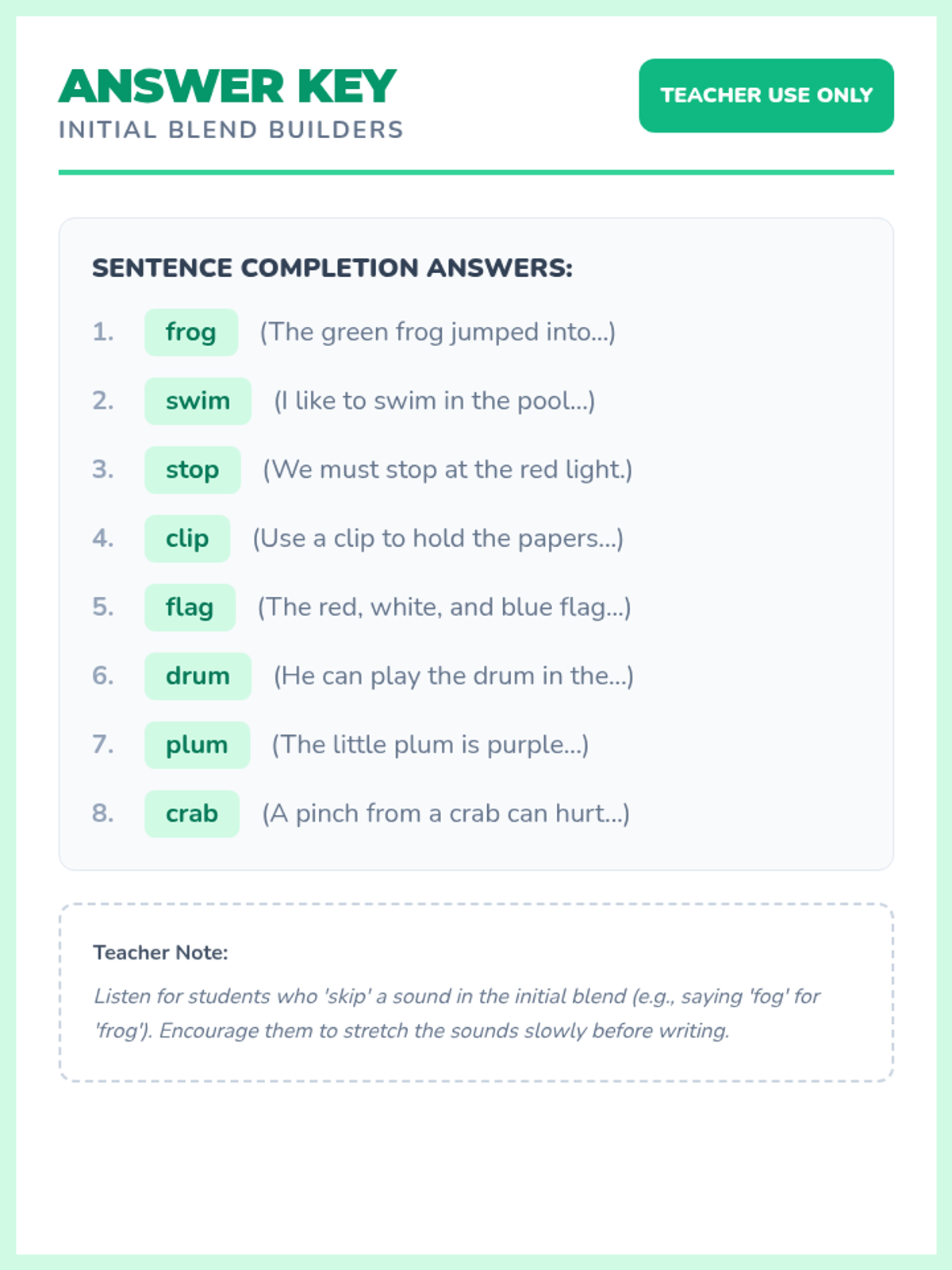
Introducing initial blends in CCVC words. Students practice reading and writing words starting with blends like bl-, st-, and fr- to fill in sentence gaps.
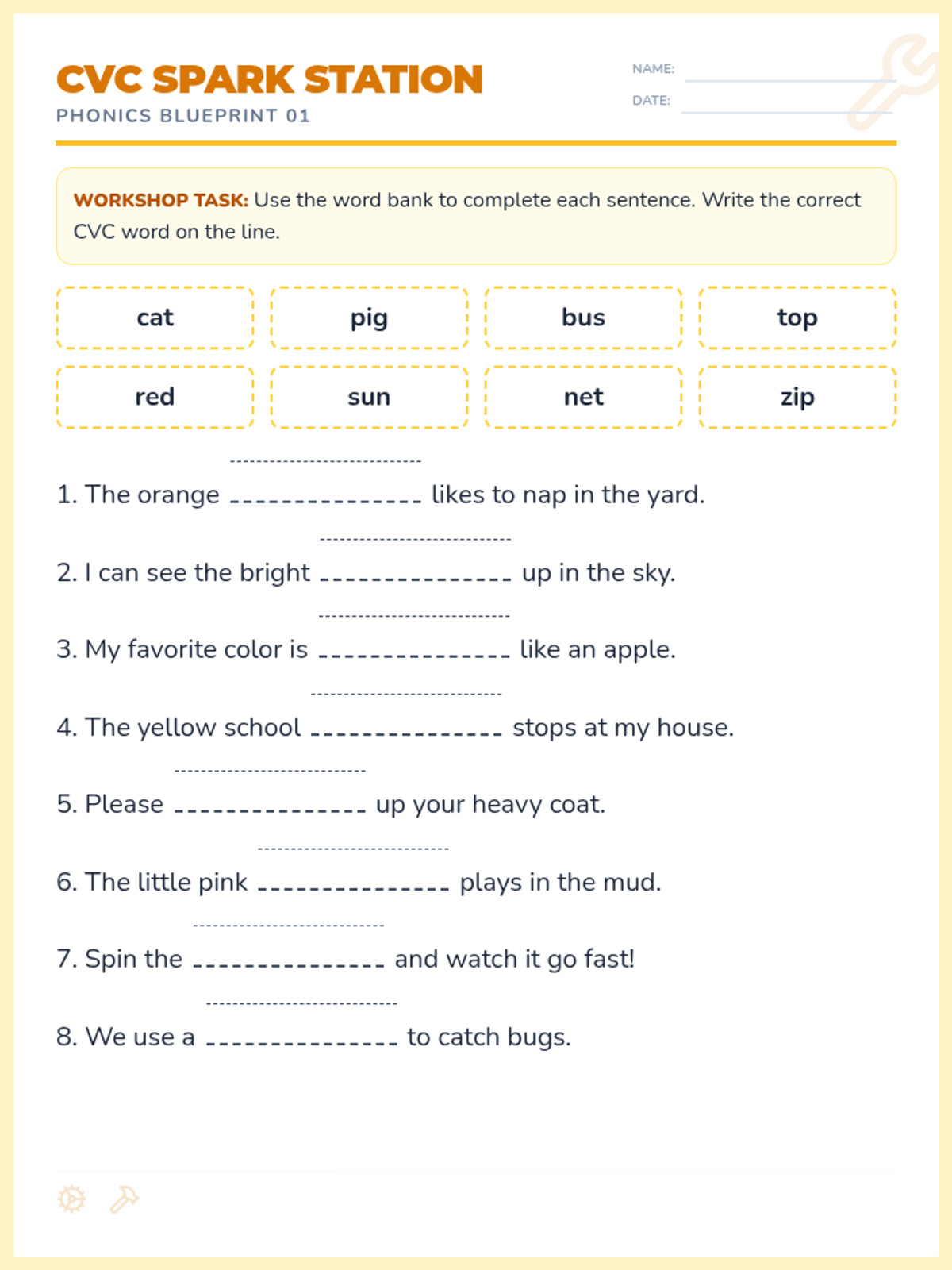
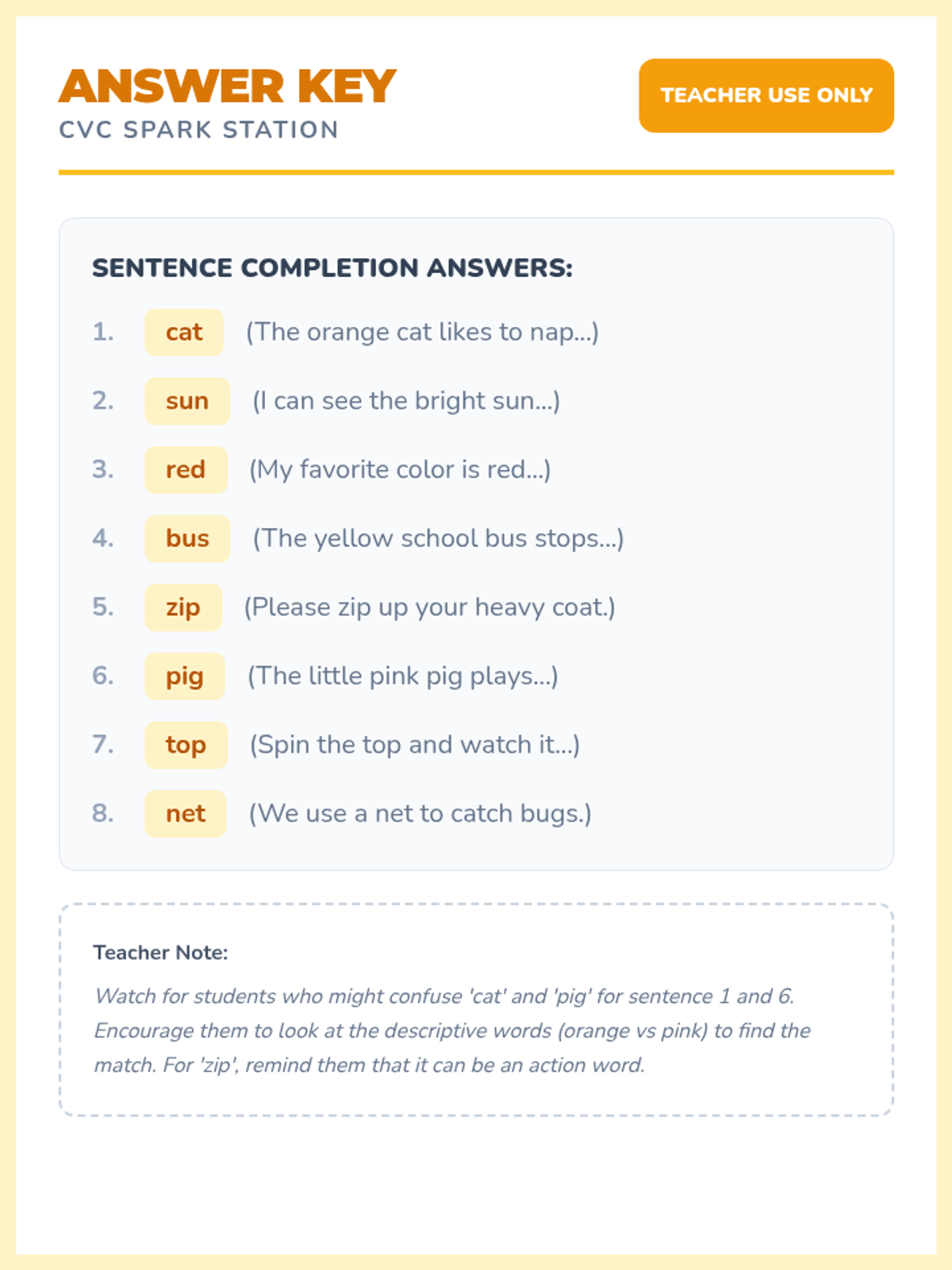
Reviewing consonant-vowel-consonant (CVC) words. Students practice identifying and writing simple short vowel words to complete sentences.
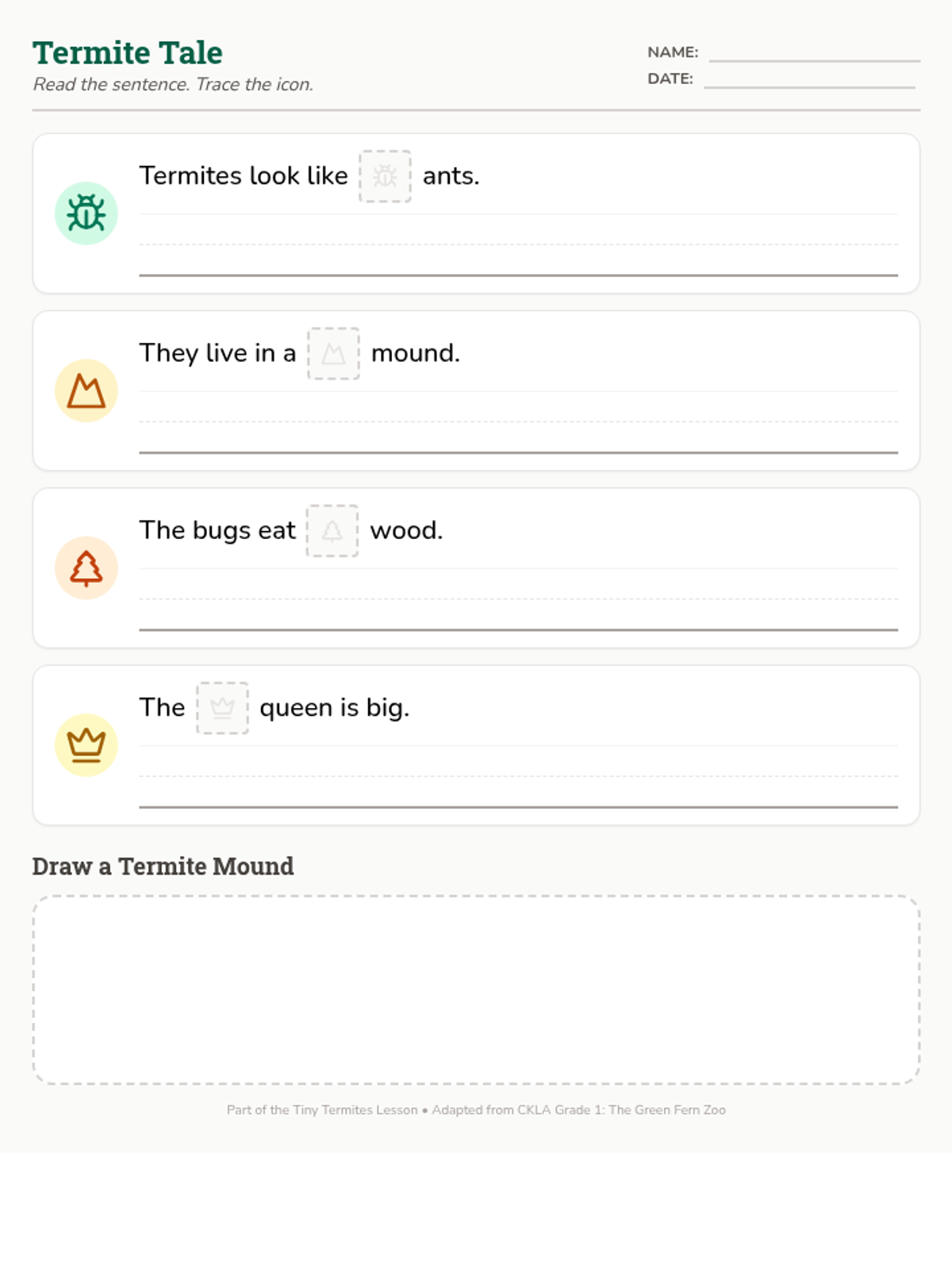
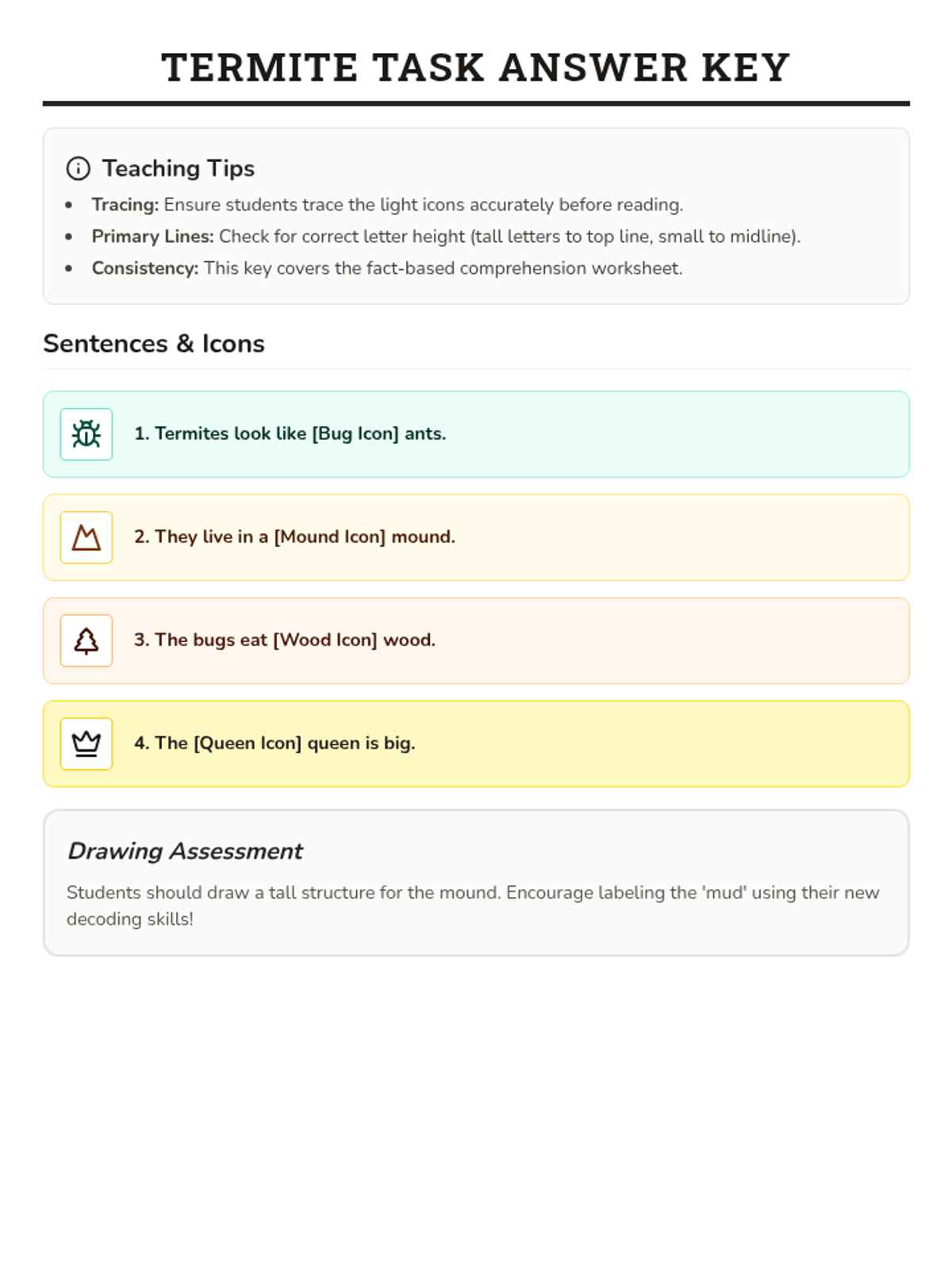
A focused lesson on termites using simplified text and visual supports for Grade 1 students, based on the CKLA reader 'The Green Fern Zoo'.
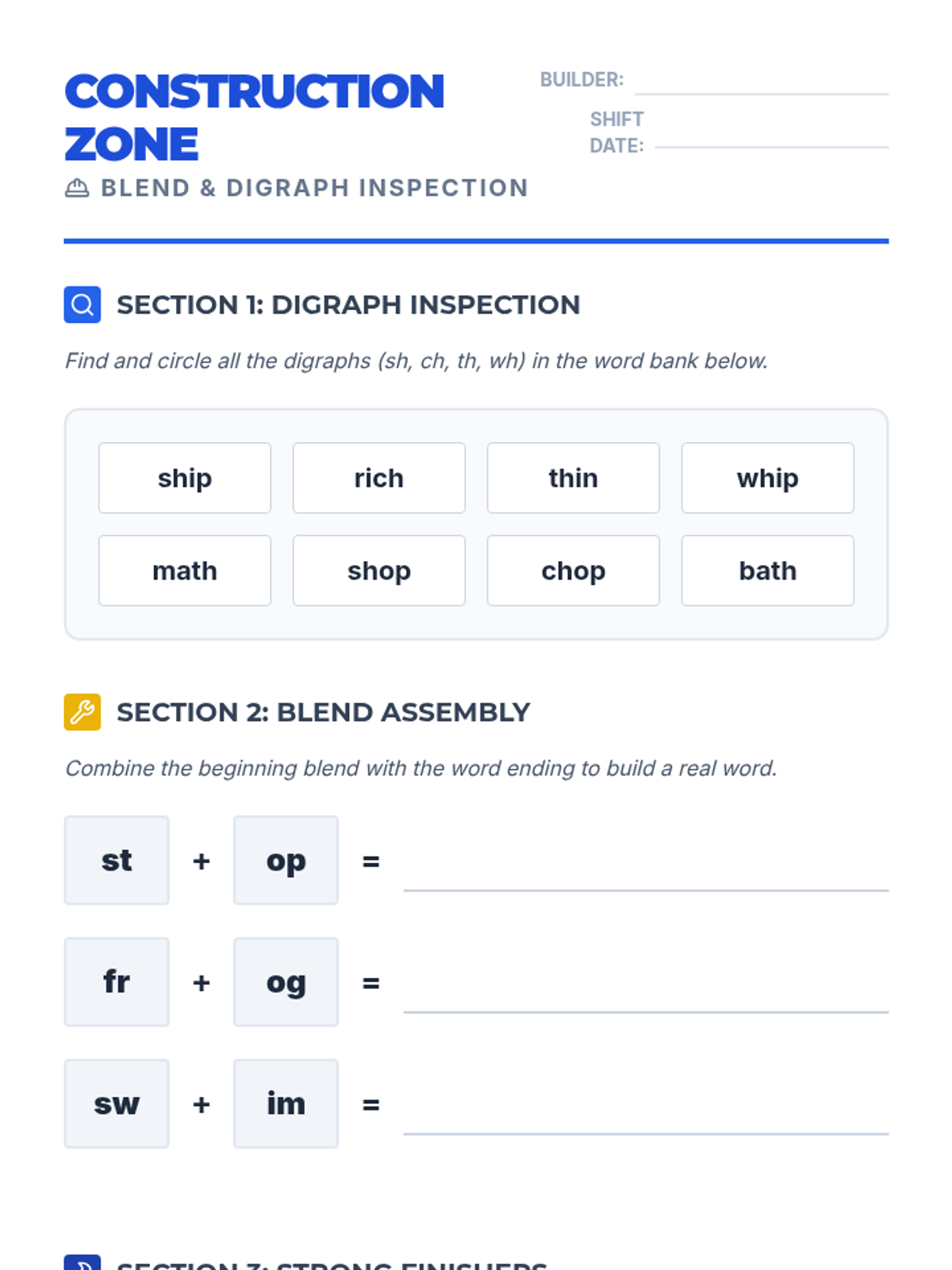
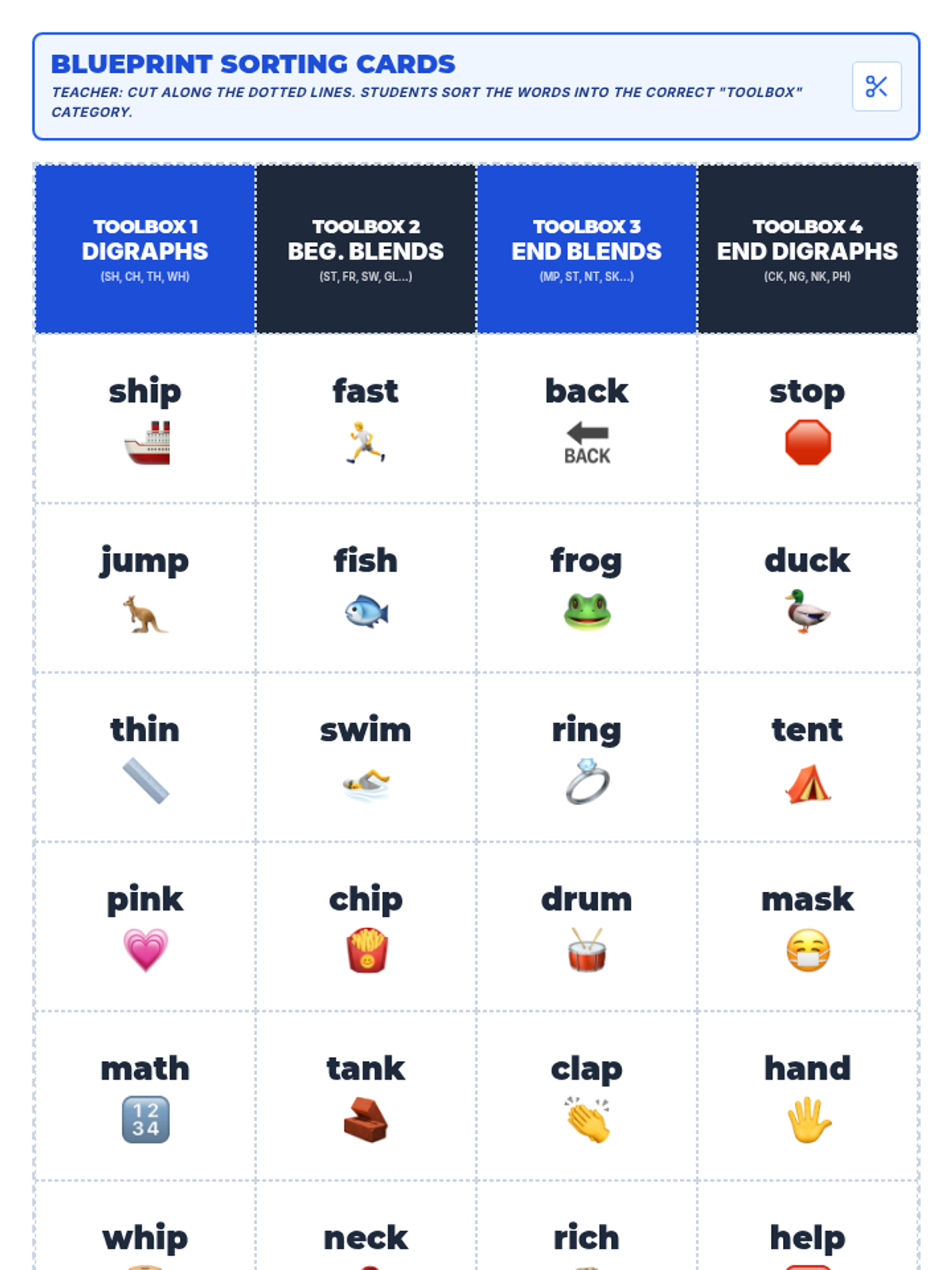
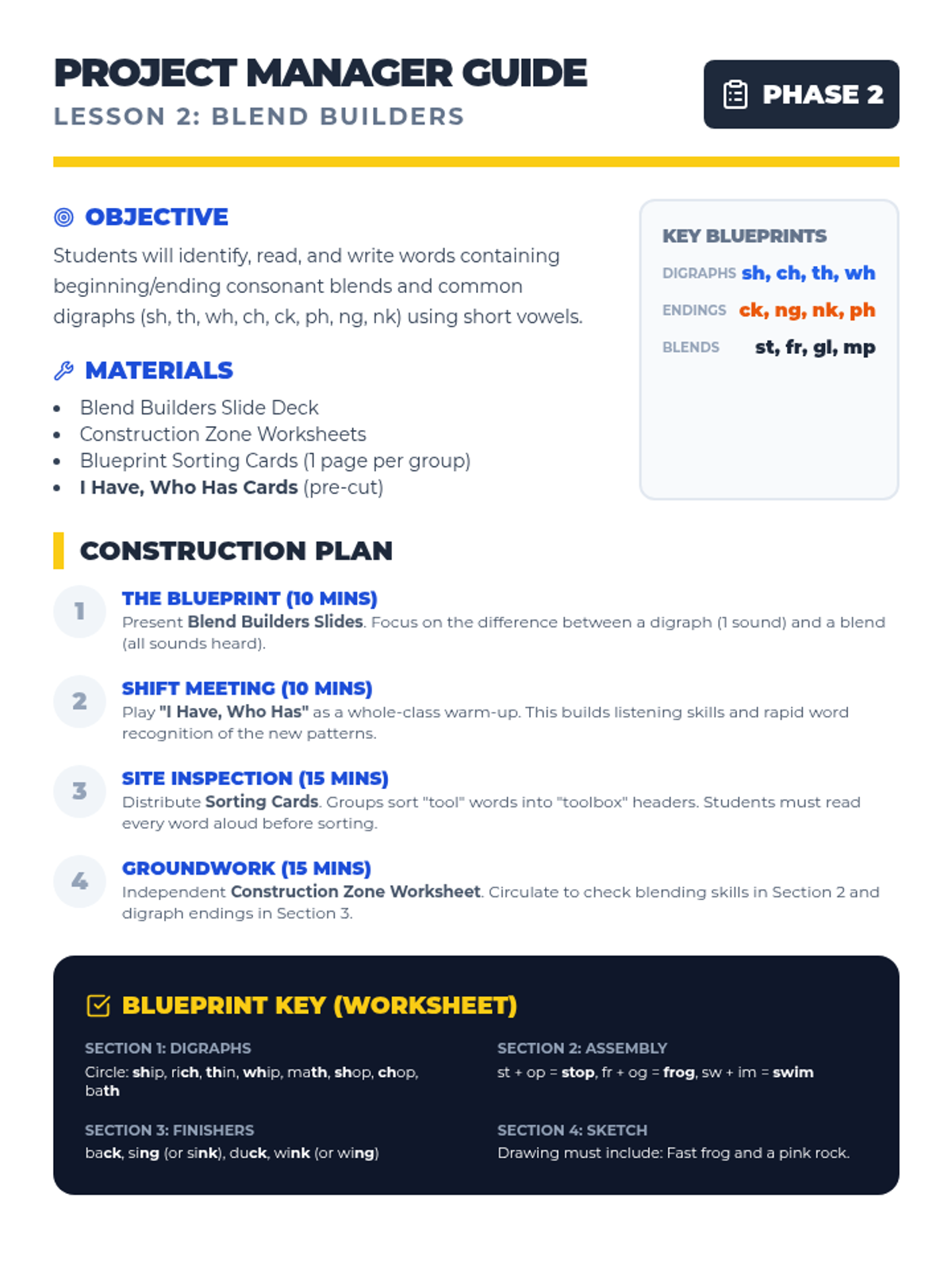
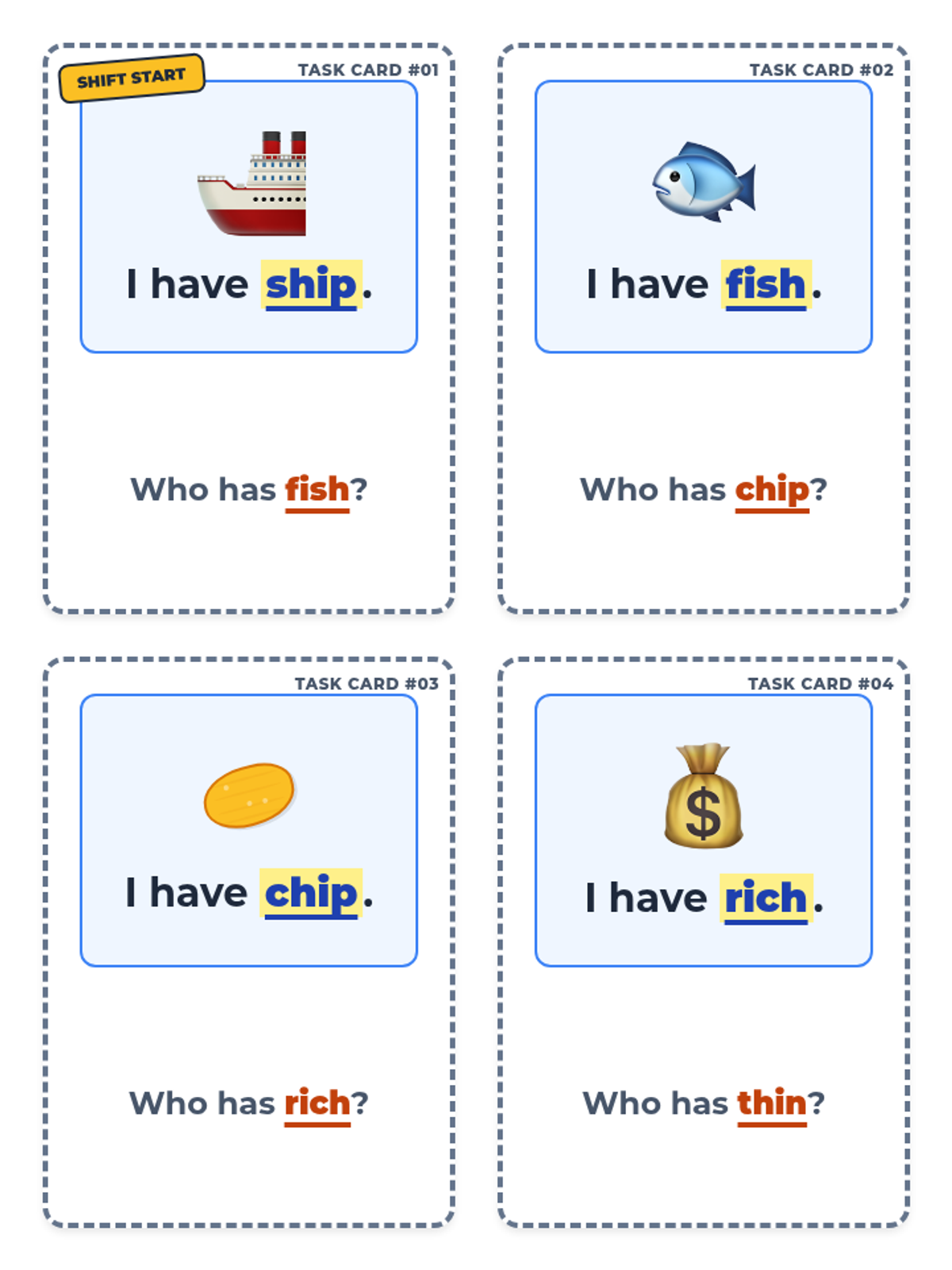
A focused lesson on beginning and ending consonant blends and common digraphs (sh, th, wh, ch, ck, ph, ng, nk) using short vowel words. Students "construct" words in a workshop-themed environment.
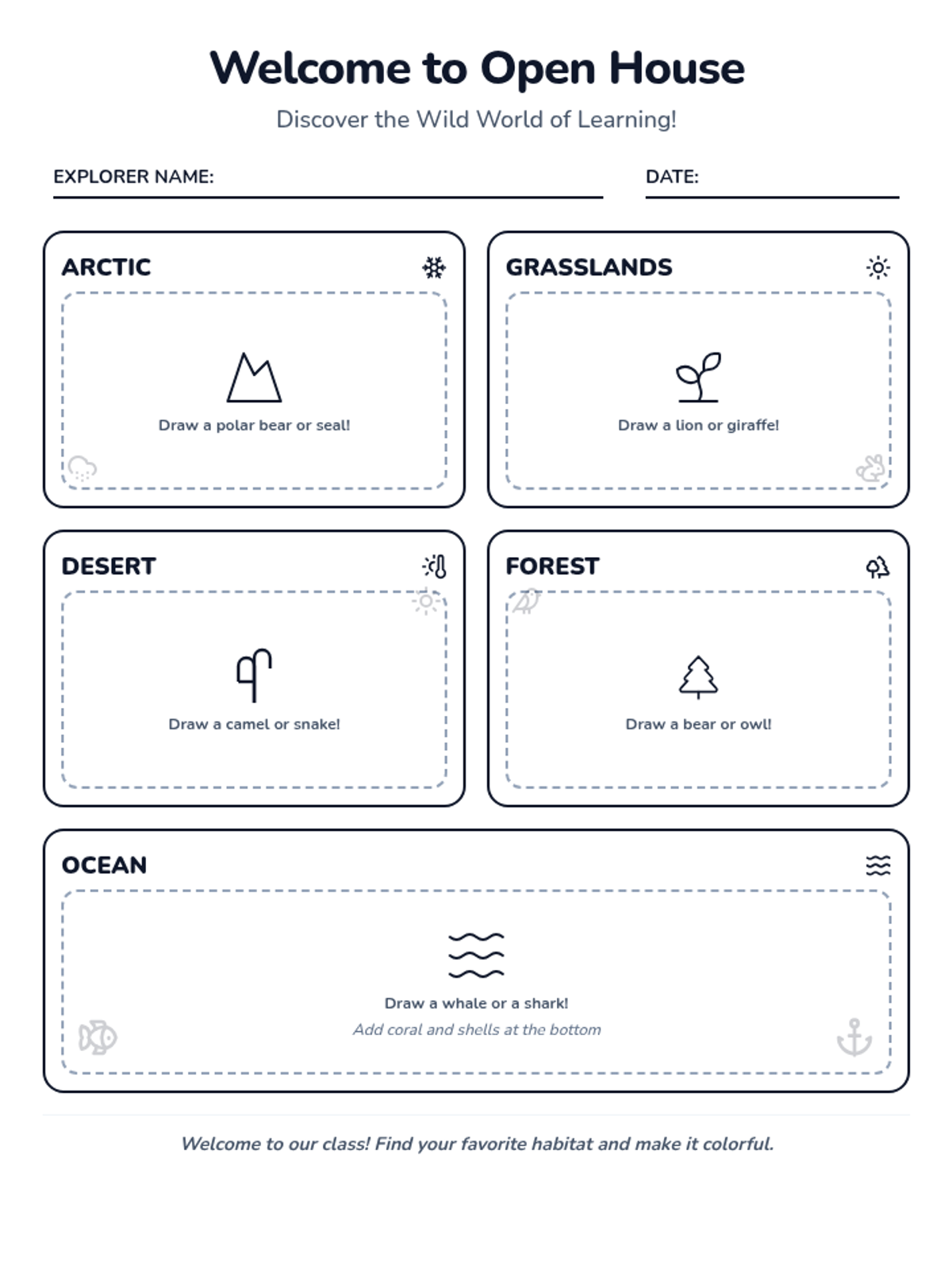
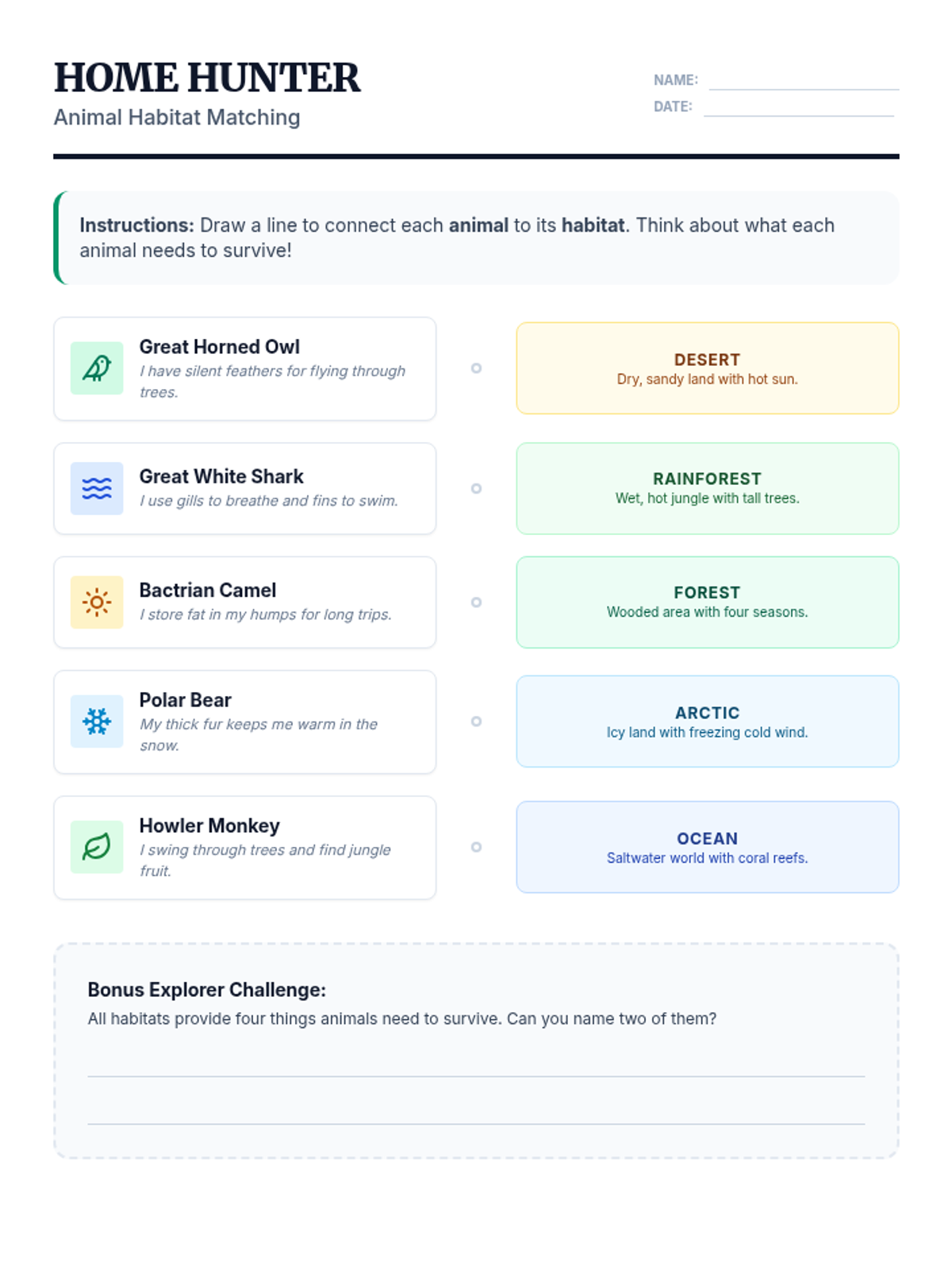
A welcoming set of resources for a school Open House, featuring a habitat-themed activity for students and families.
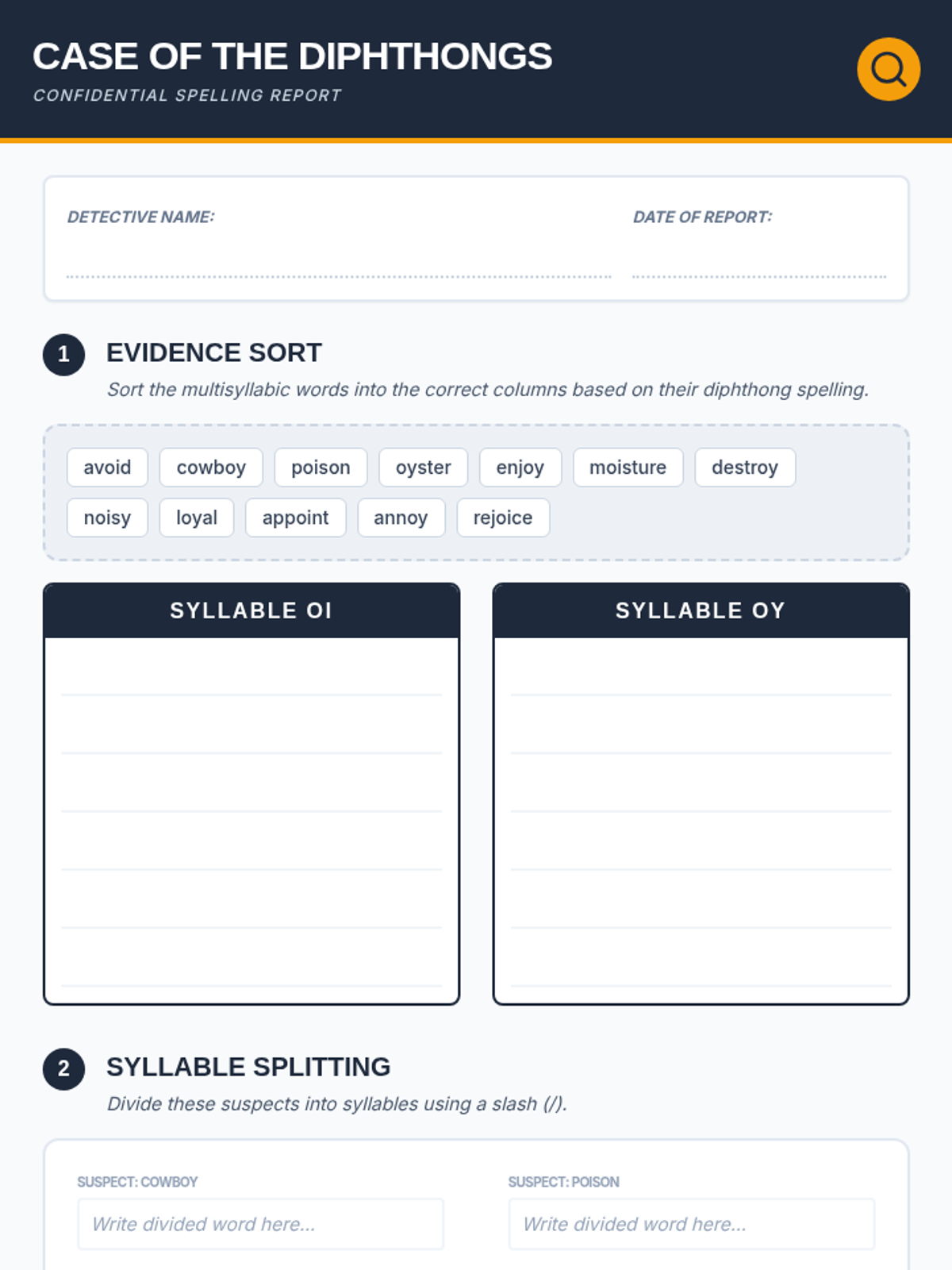
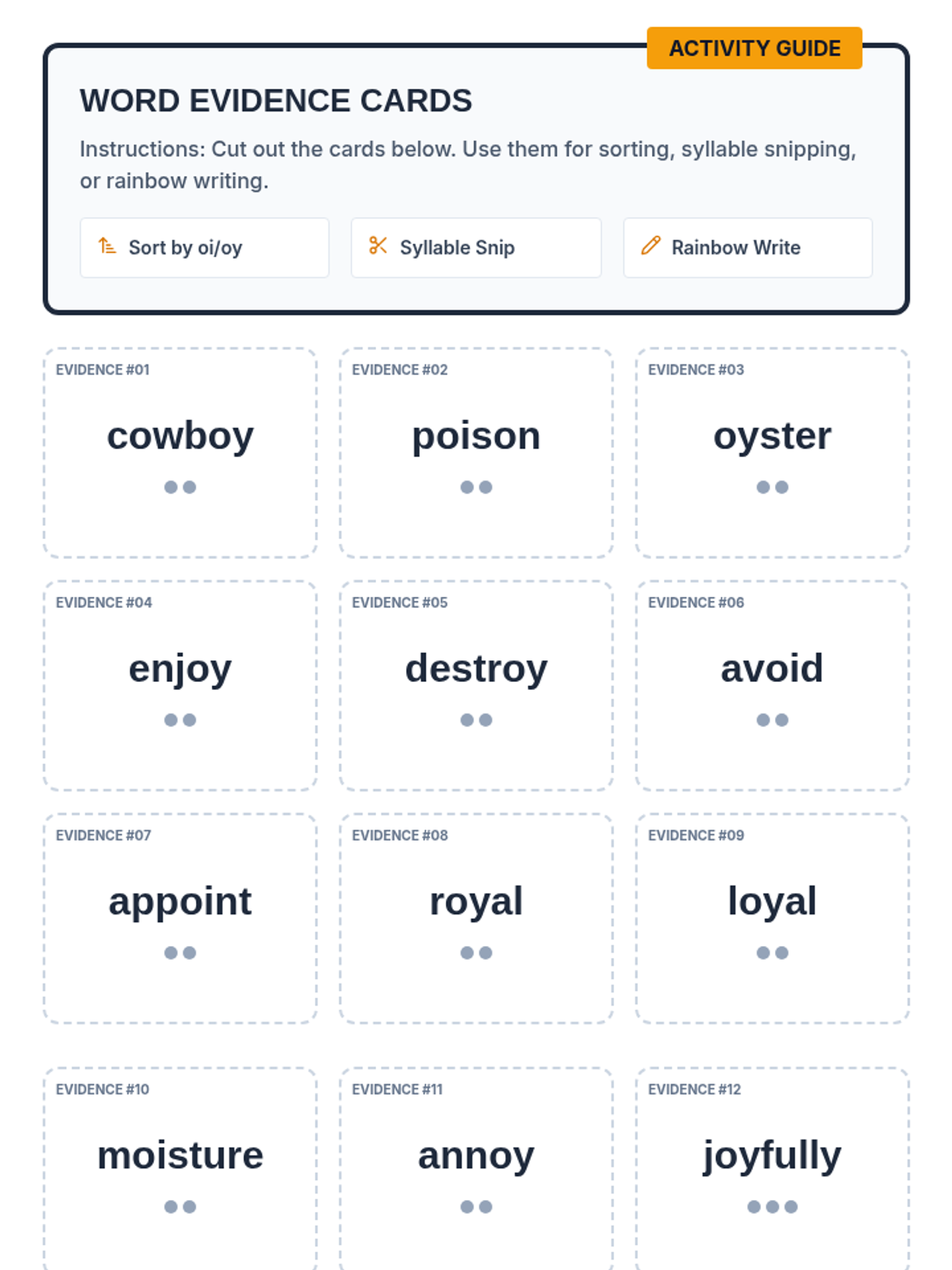
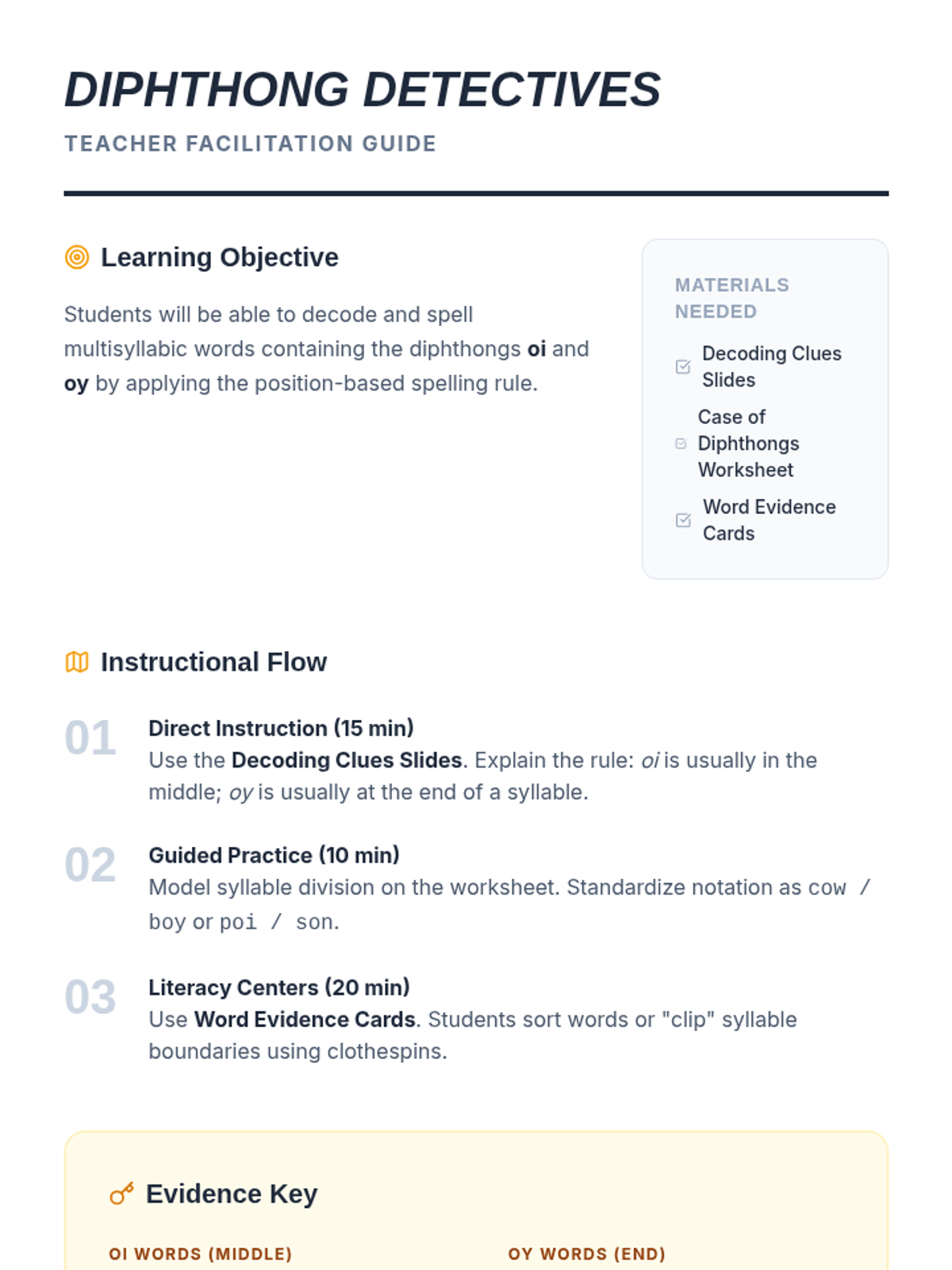
A detective-themed lesson focusing on decoding and spelling multisyllabic words with the 'oi' and 'oy' diphthongs. Students learn the placement rules for these spellings and apply them through sorting and syllable division activities.
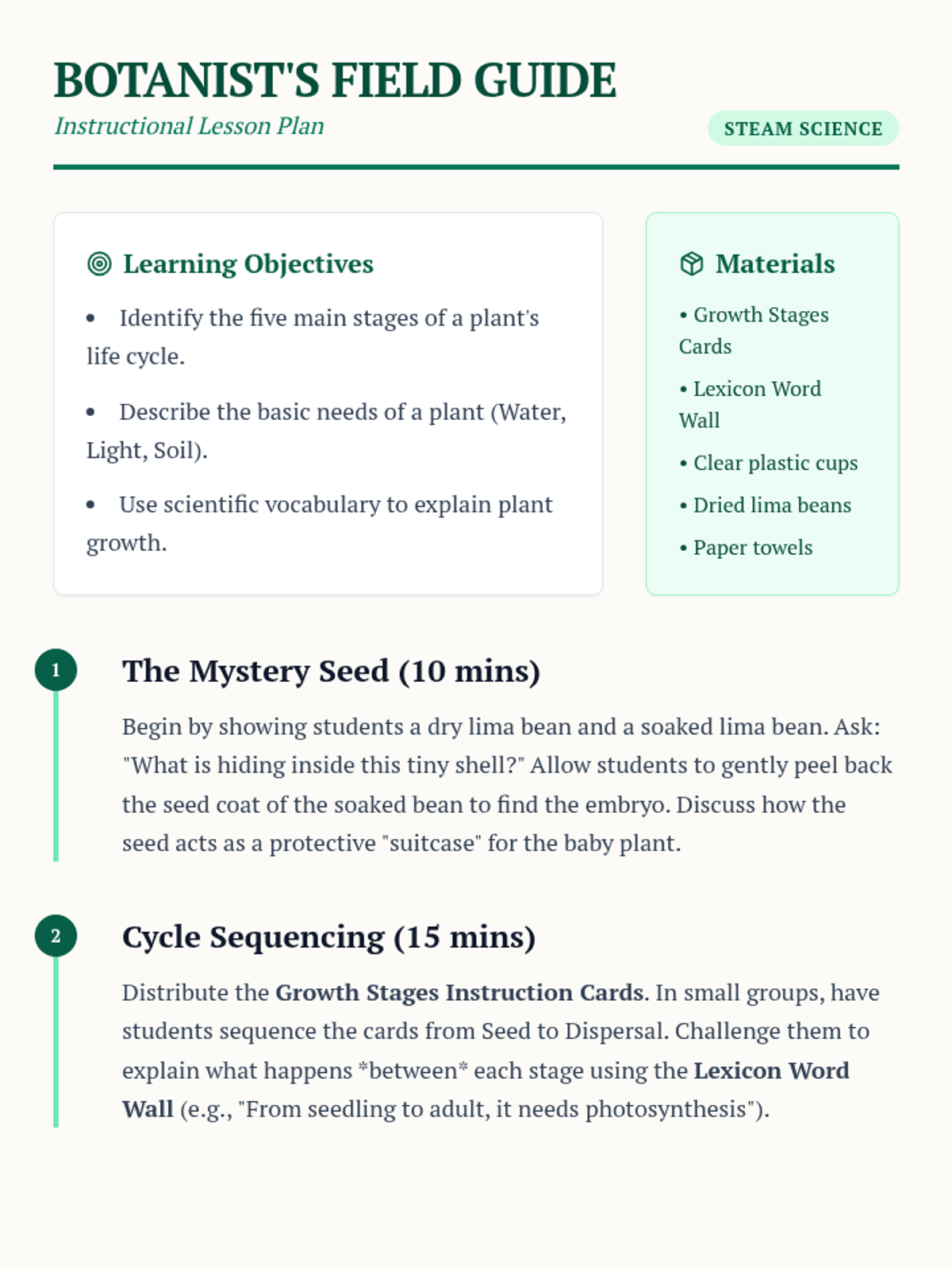
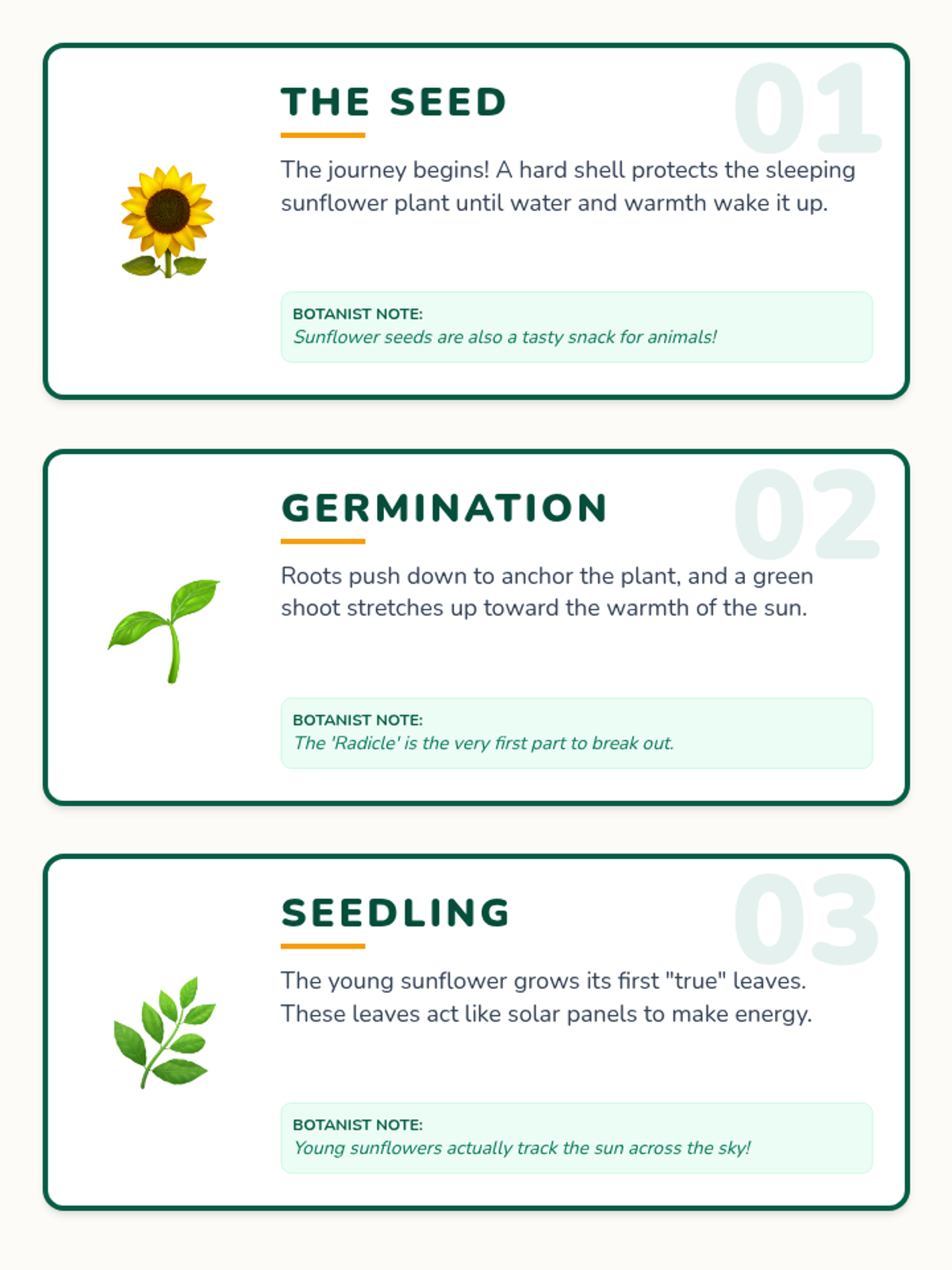
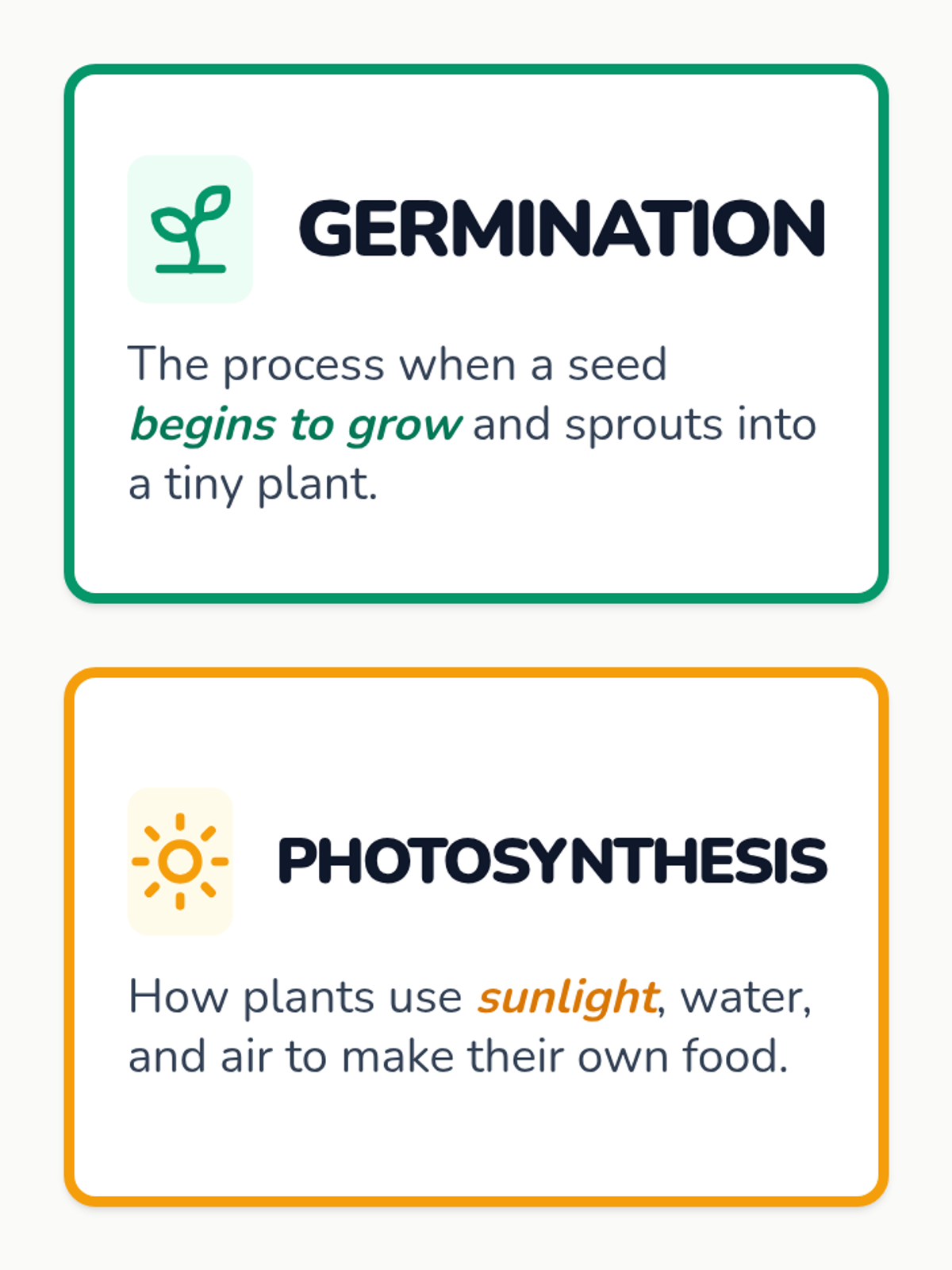
A hands-on STEAM lesson where students explore the stages of a plant's life cycle through visual aids, vocabulary building, and a planting activity.
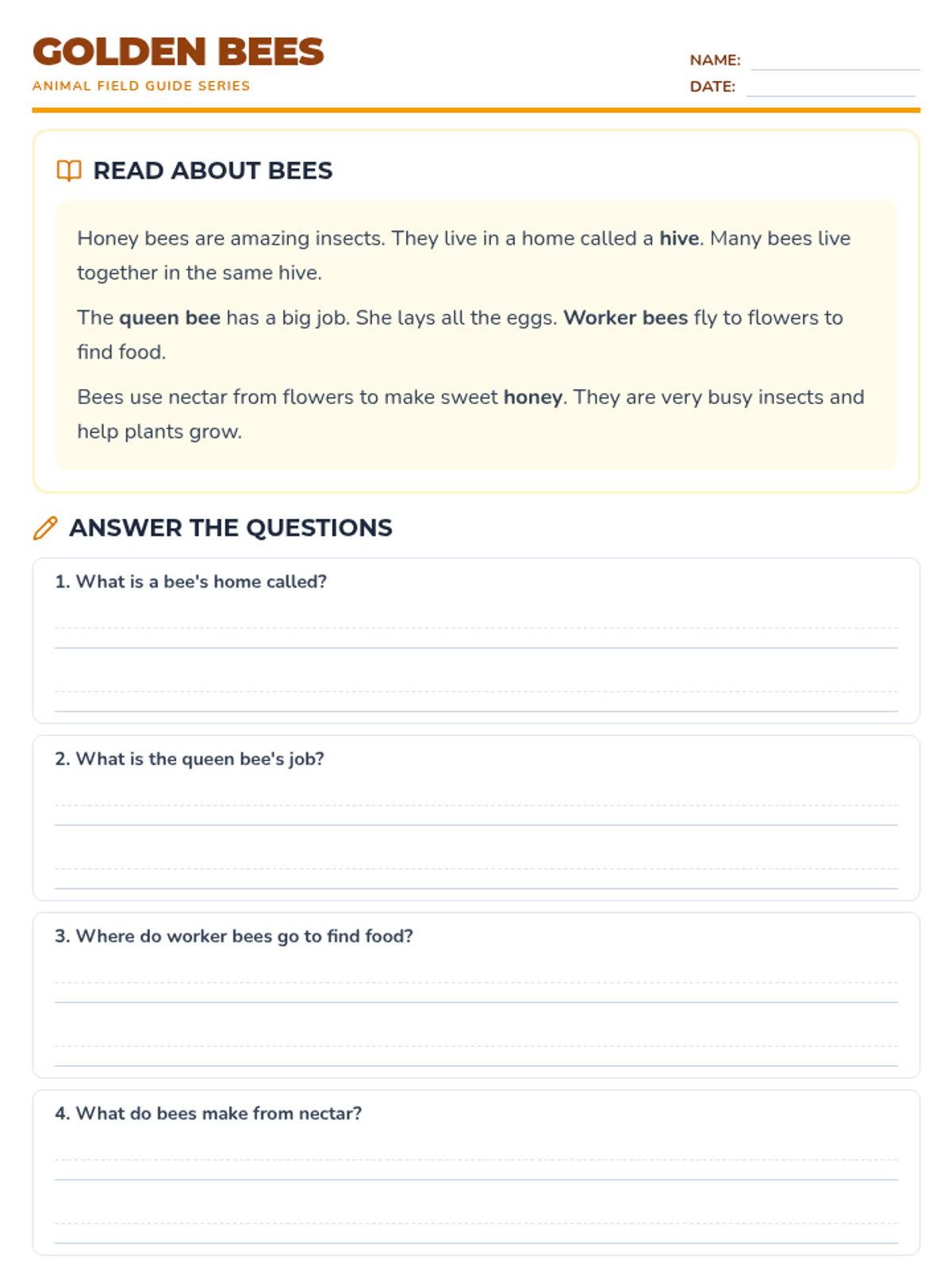
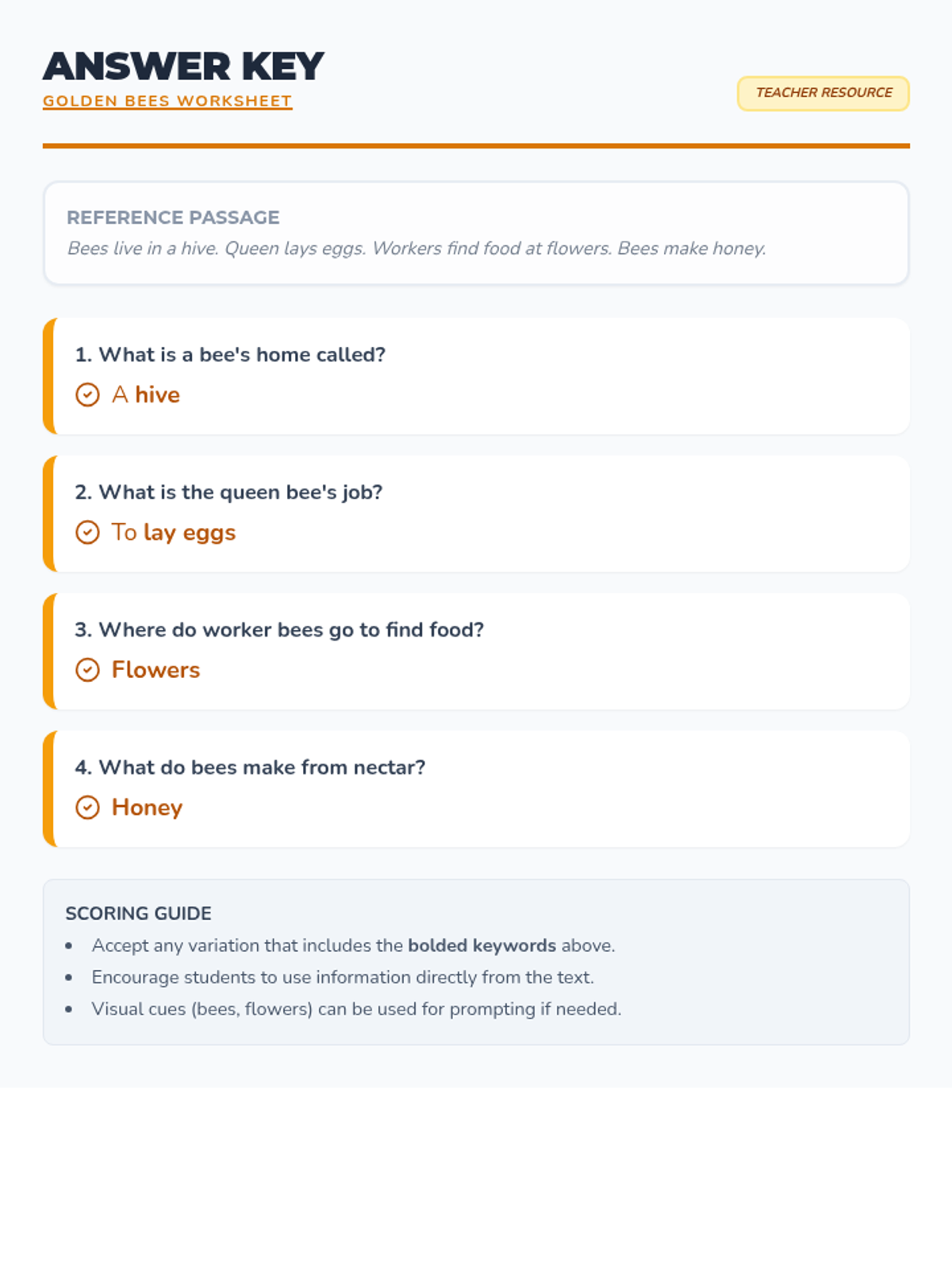
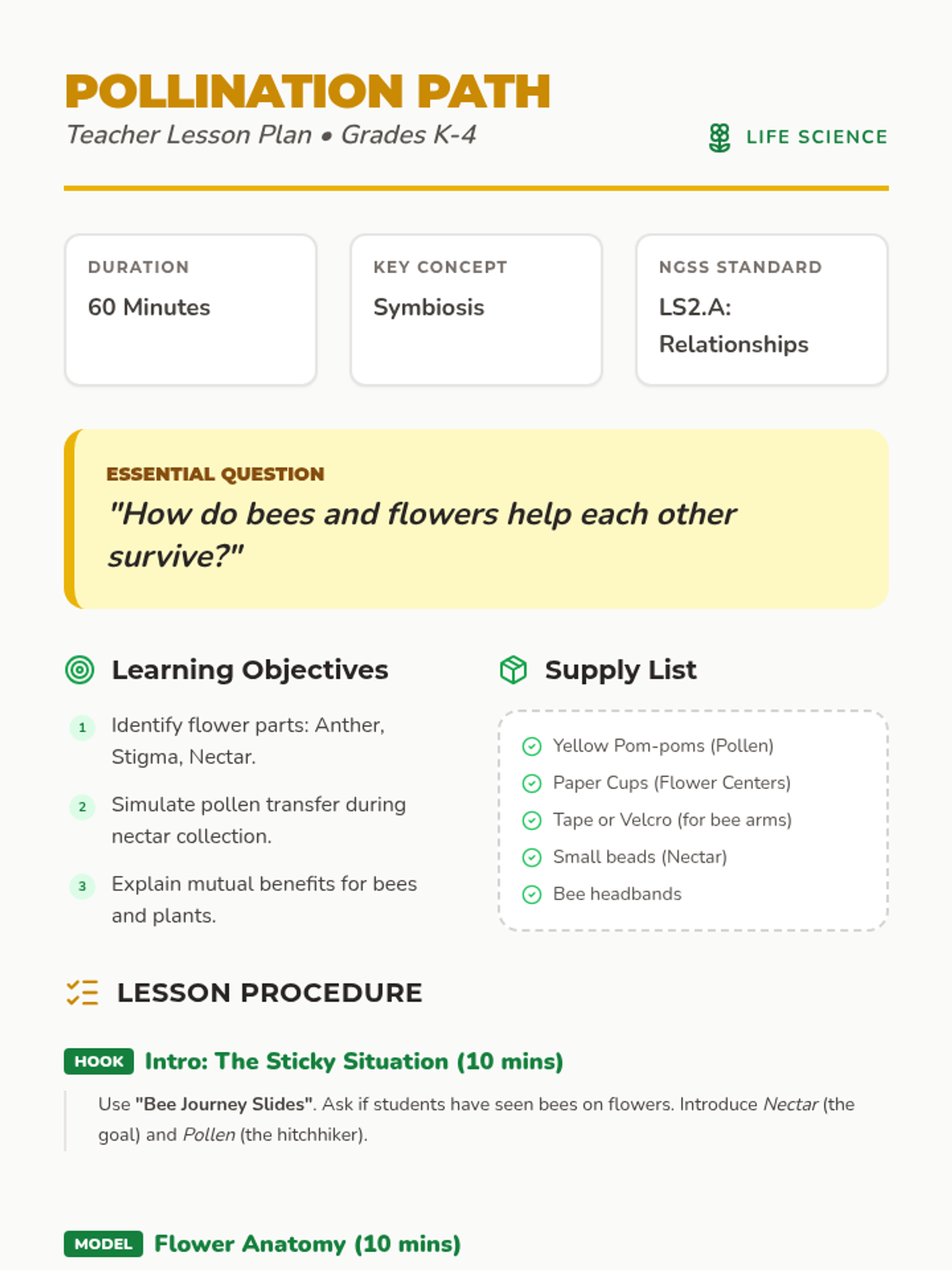
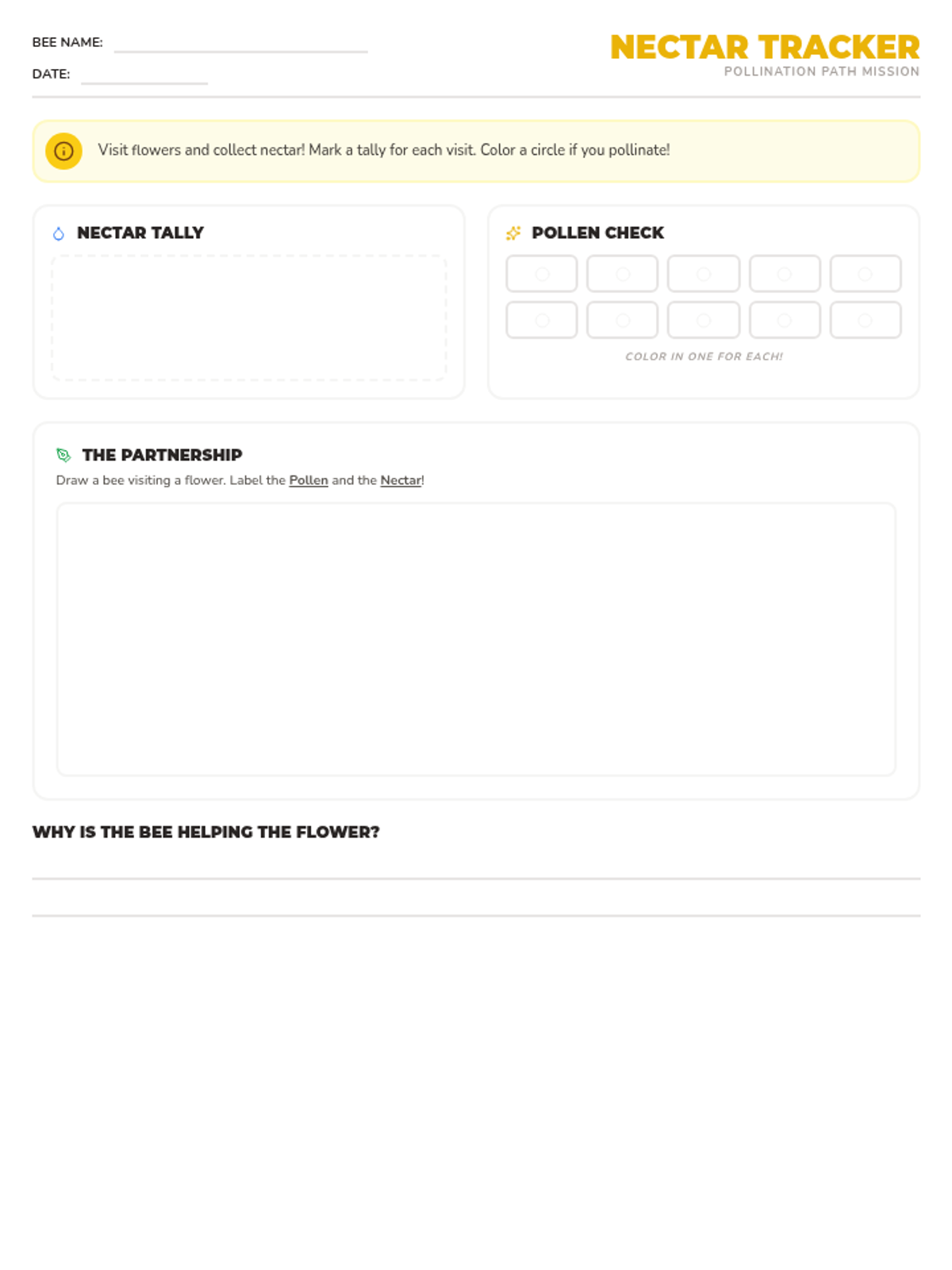
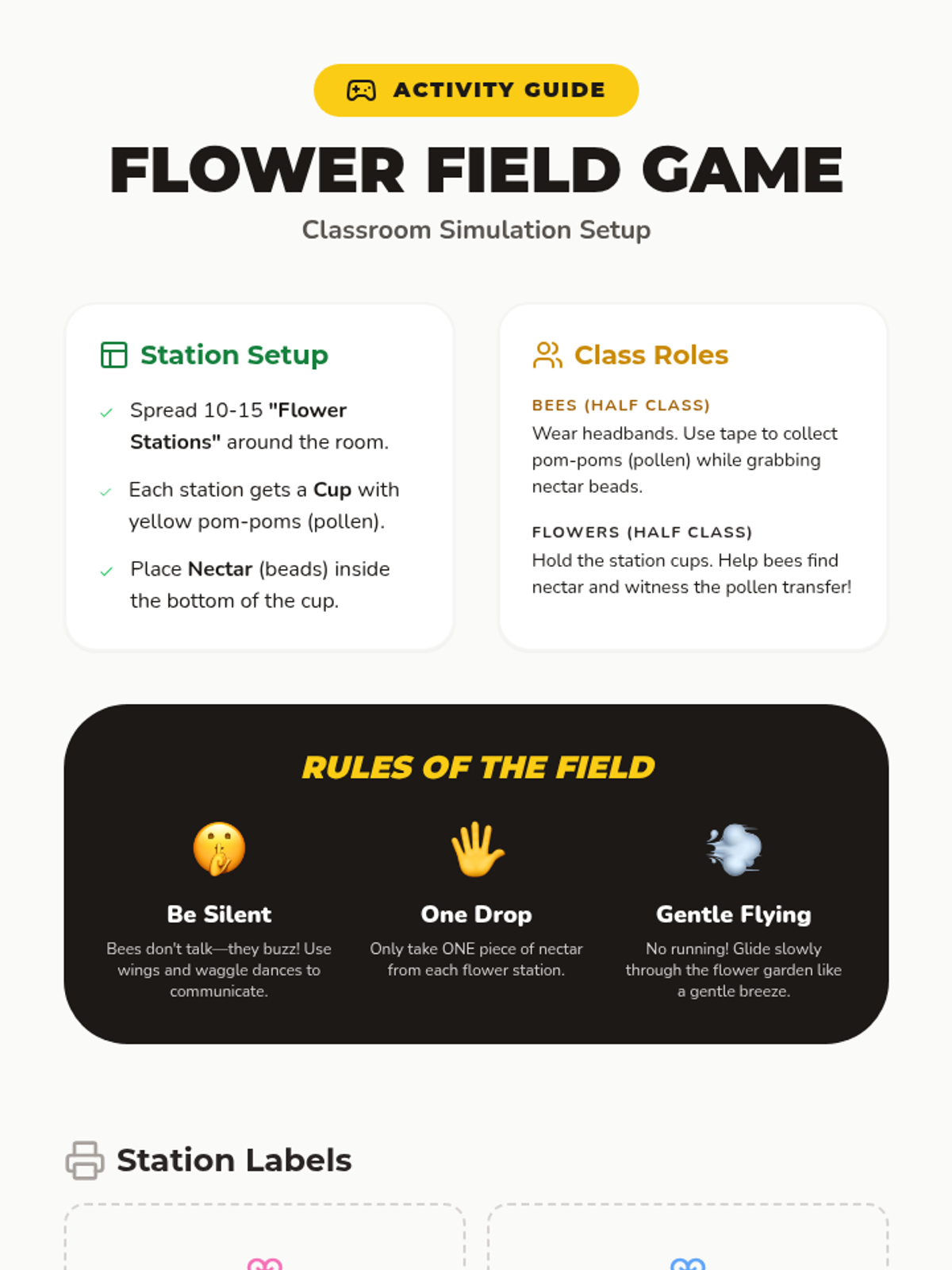
Students simulate the pollination process through a high-energy movement game, learning about the symbiotic relationship between bees and flowers and its importance to our food system.
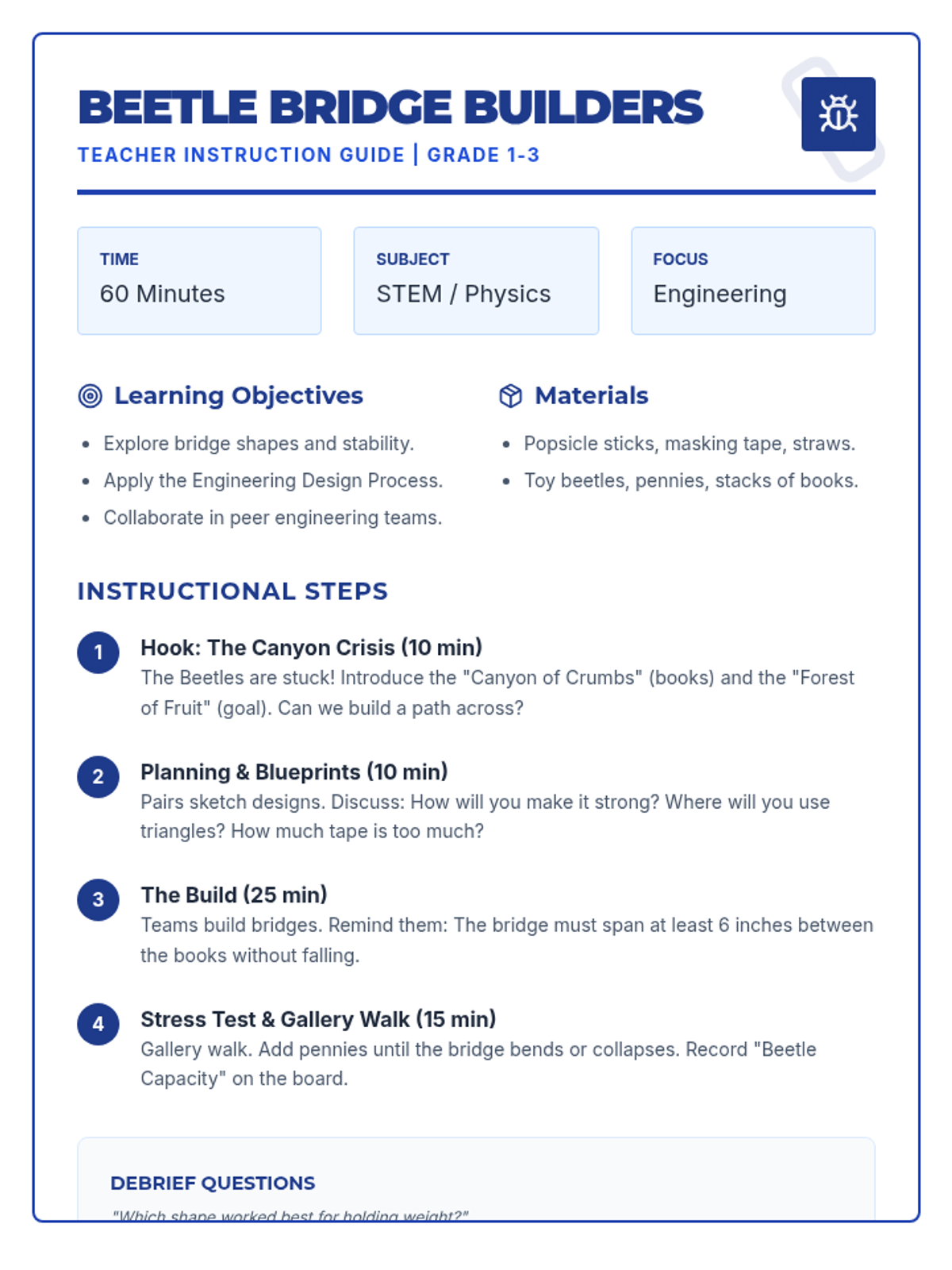
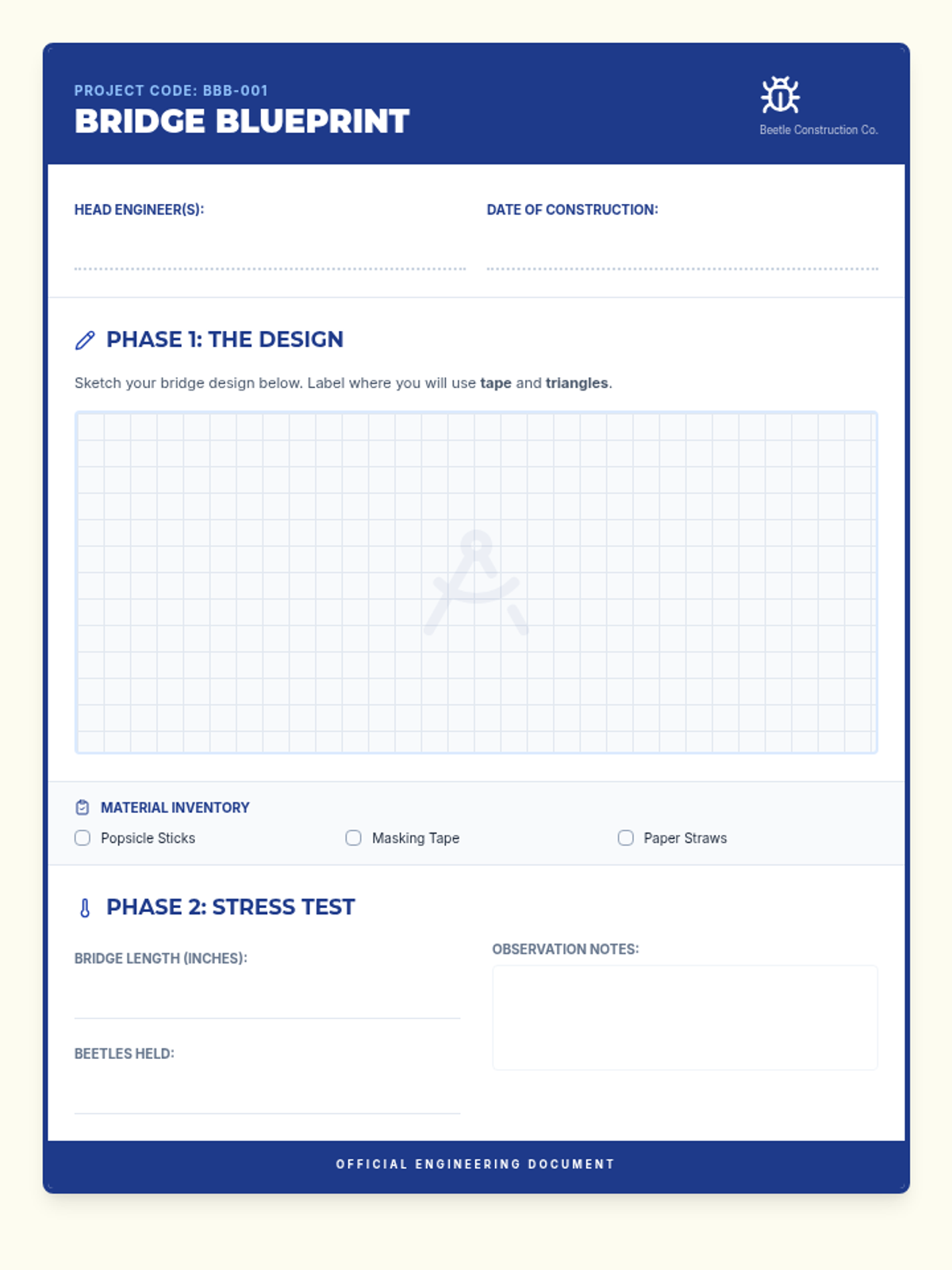
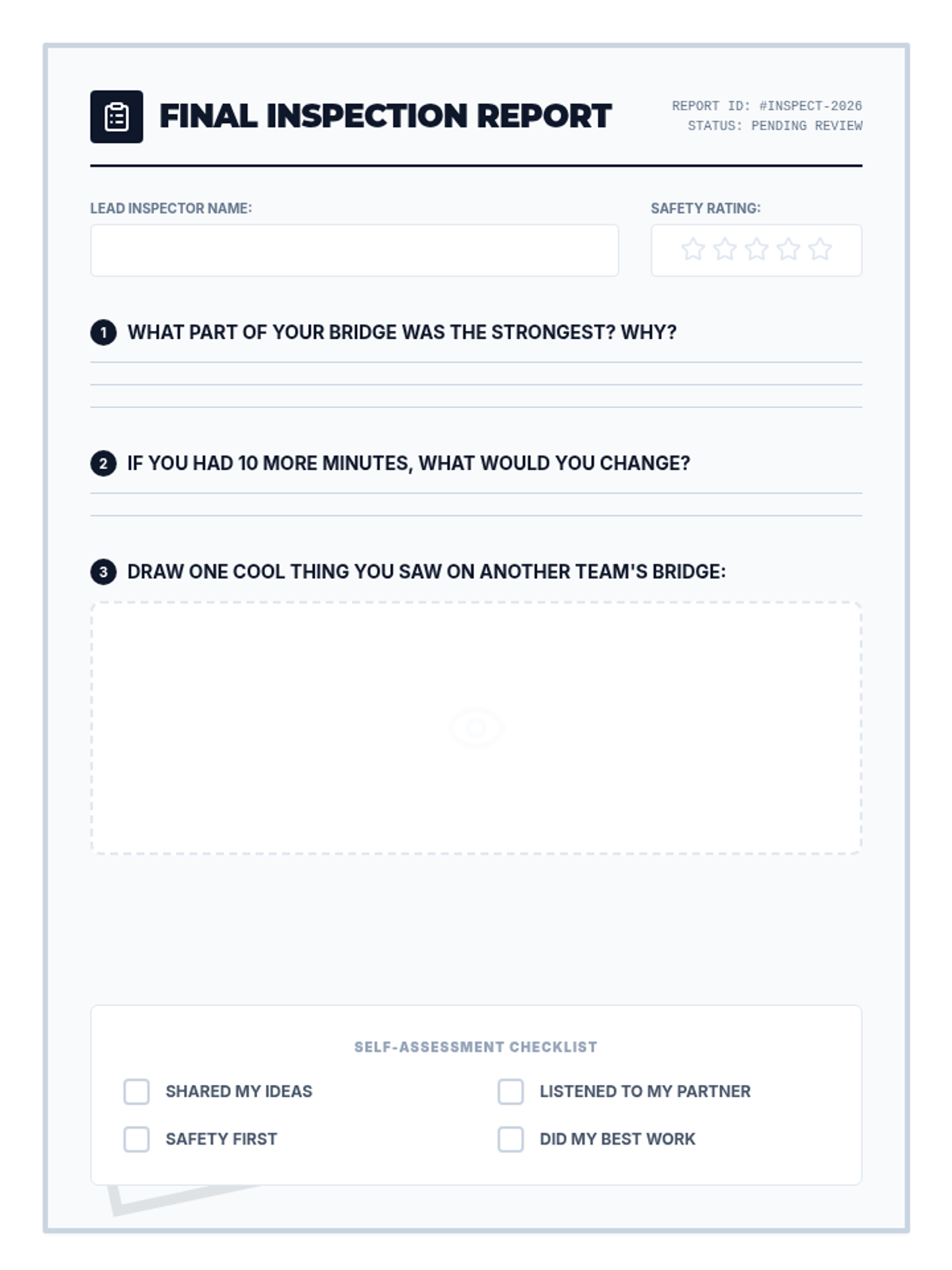
Students step into the roles of junior engineers to design, build, and test bridges for toy insects, exploring structural integrity and the engineering design process.
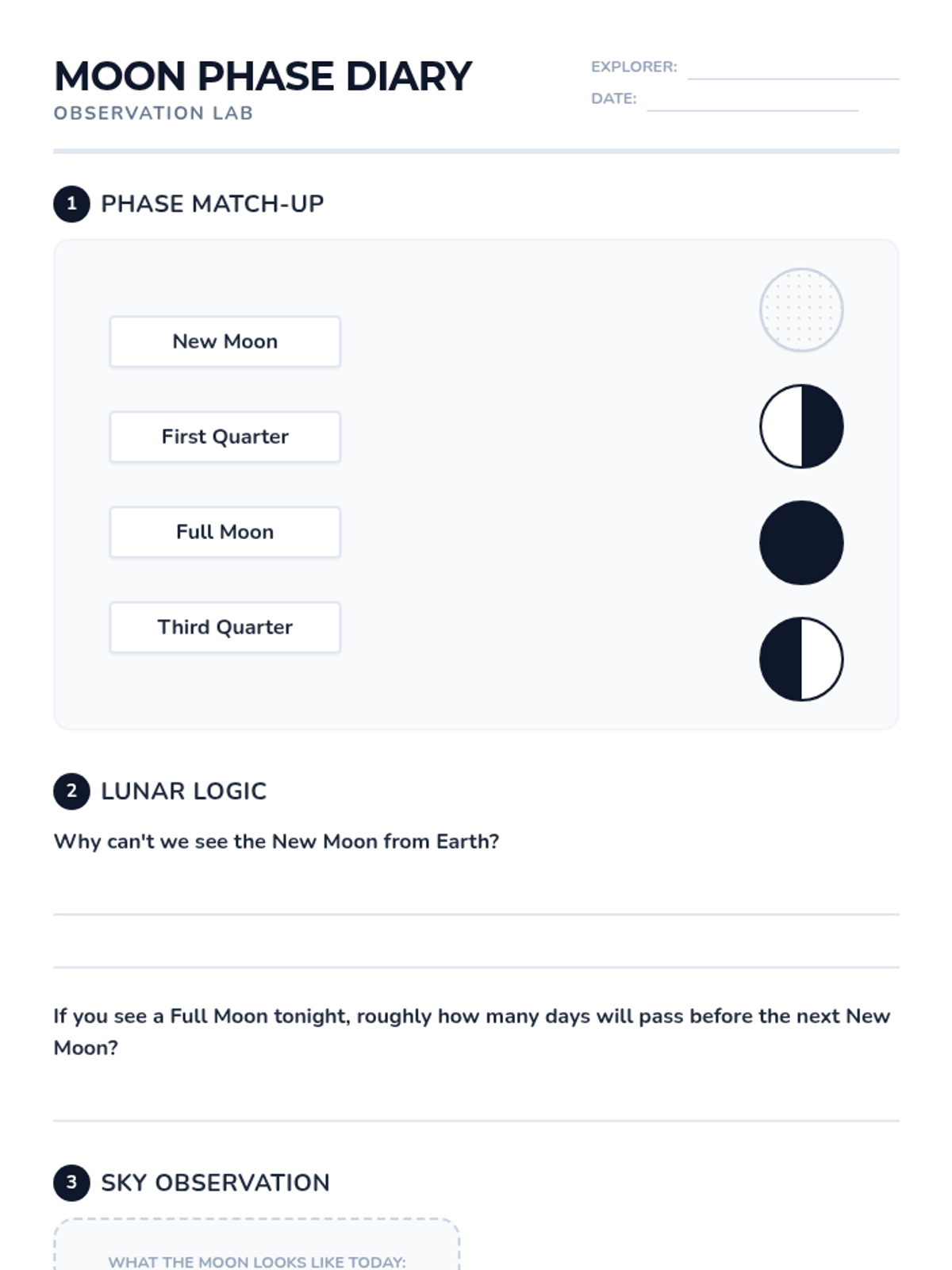
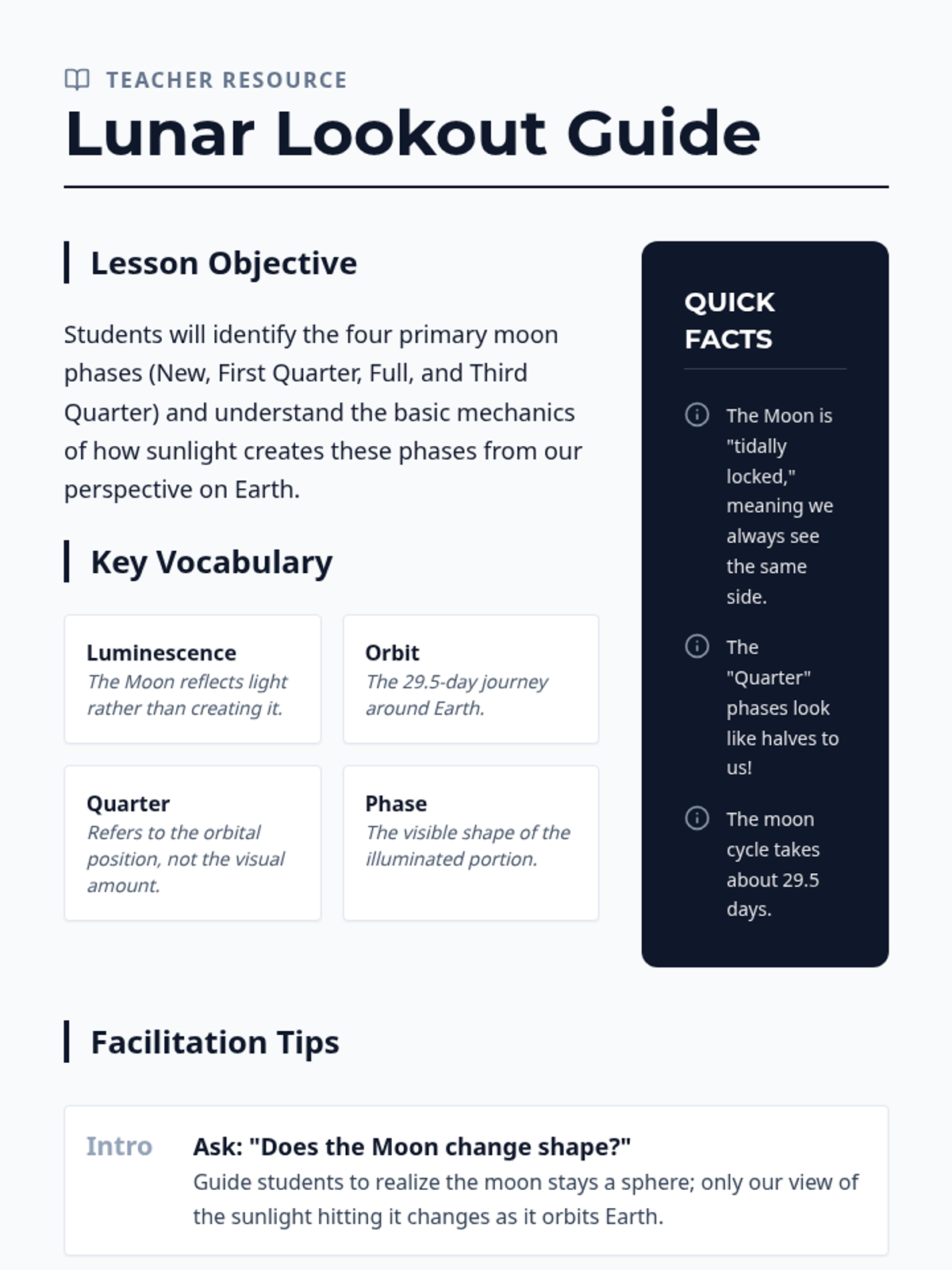
An introductory exploration of the four primary moon phases, helping students identify and understand the lunar cycle through visual observation.
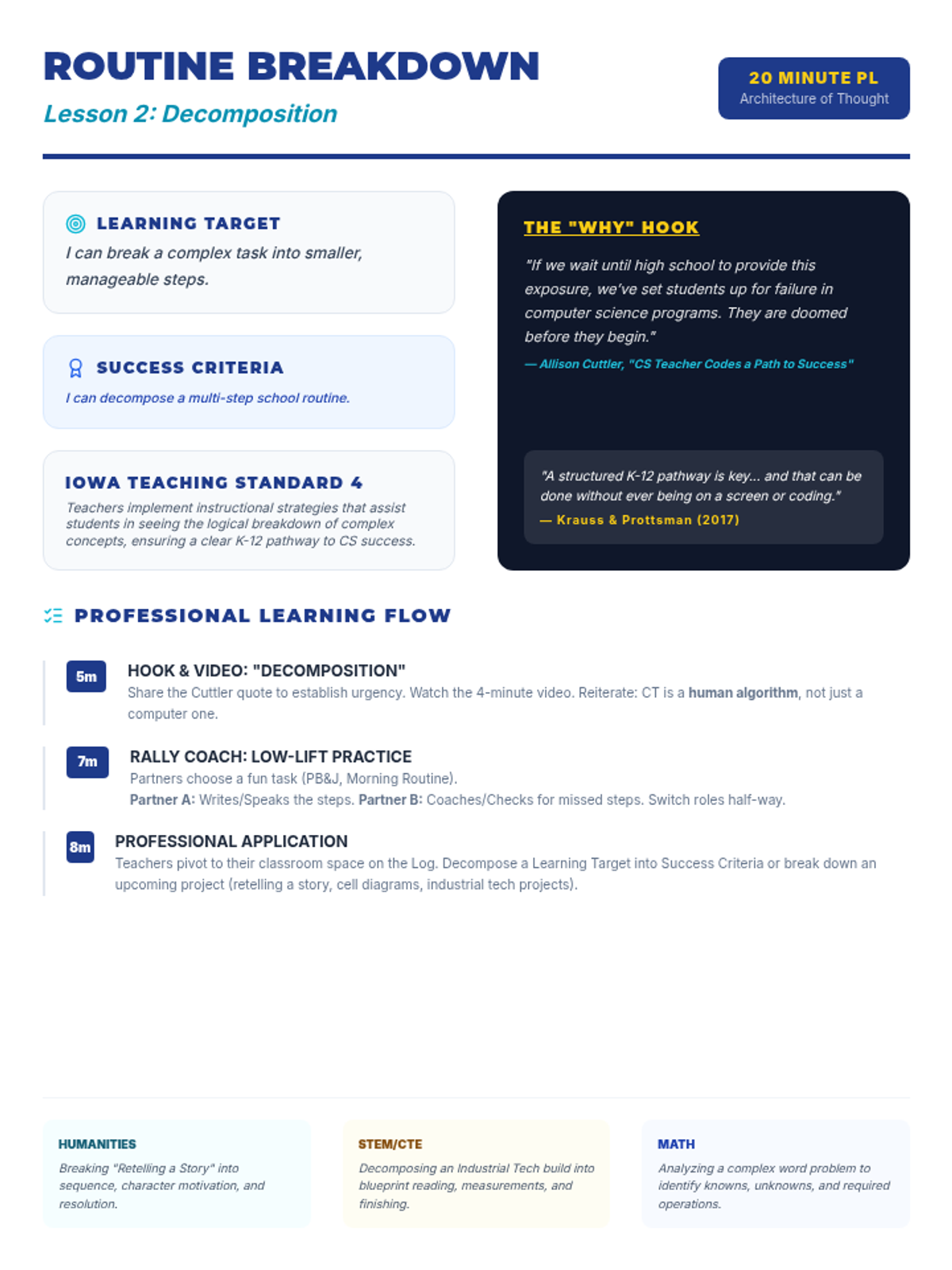
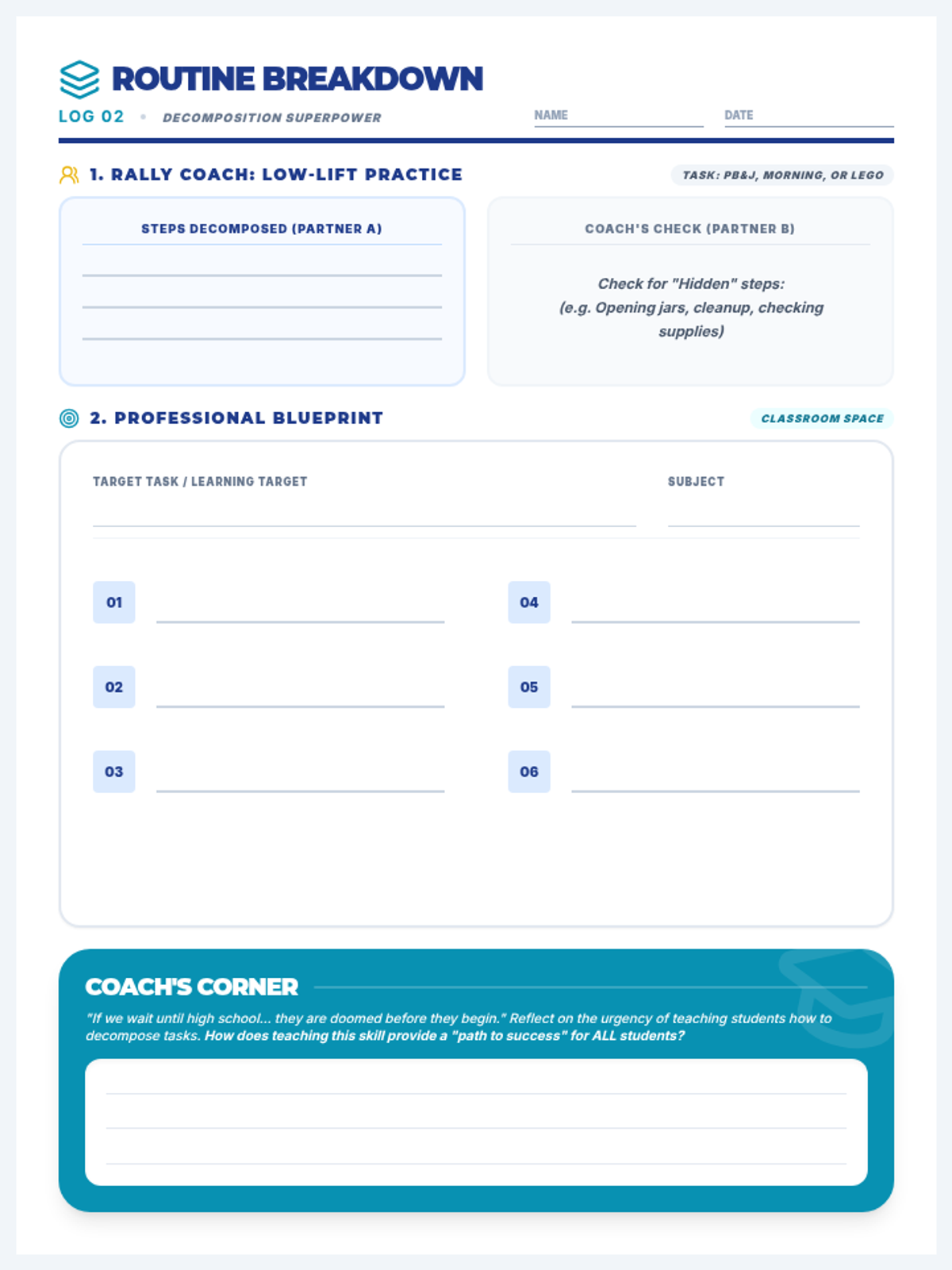
Teachers learn to break complex tasks into smaller, manageable steps using classroom routines and Iowa Core standards as examples.
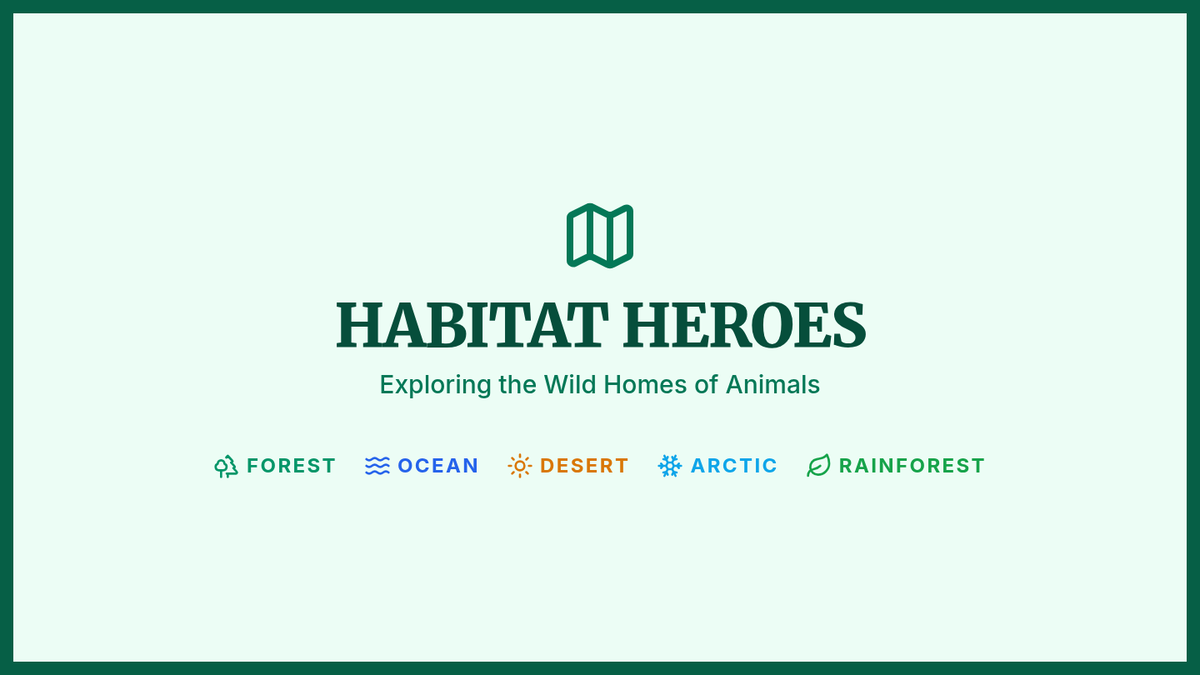
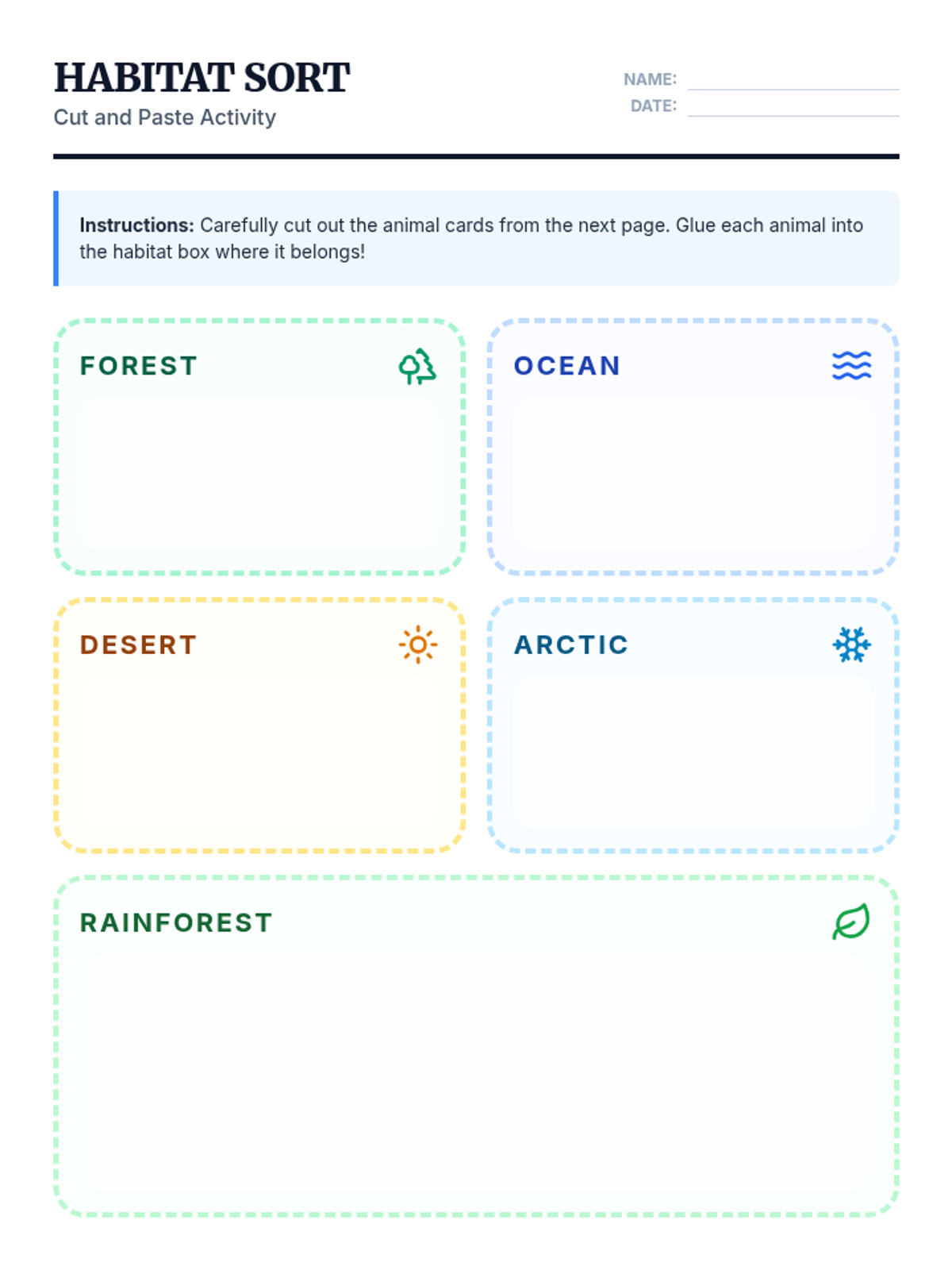
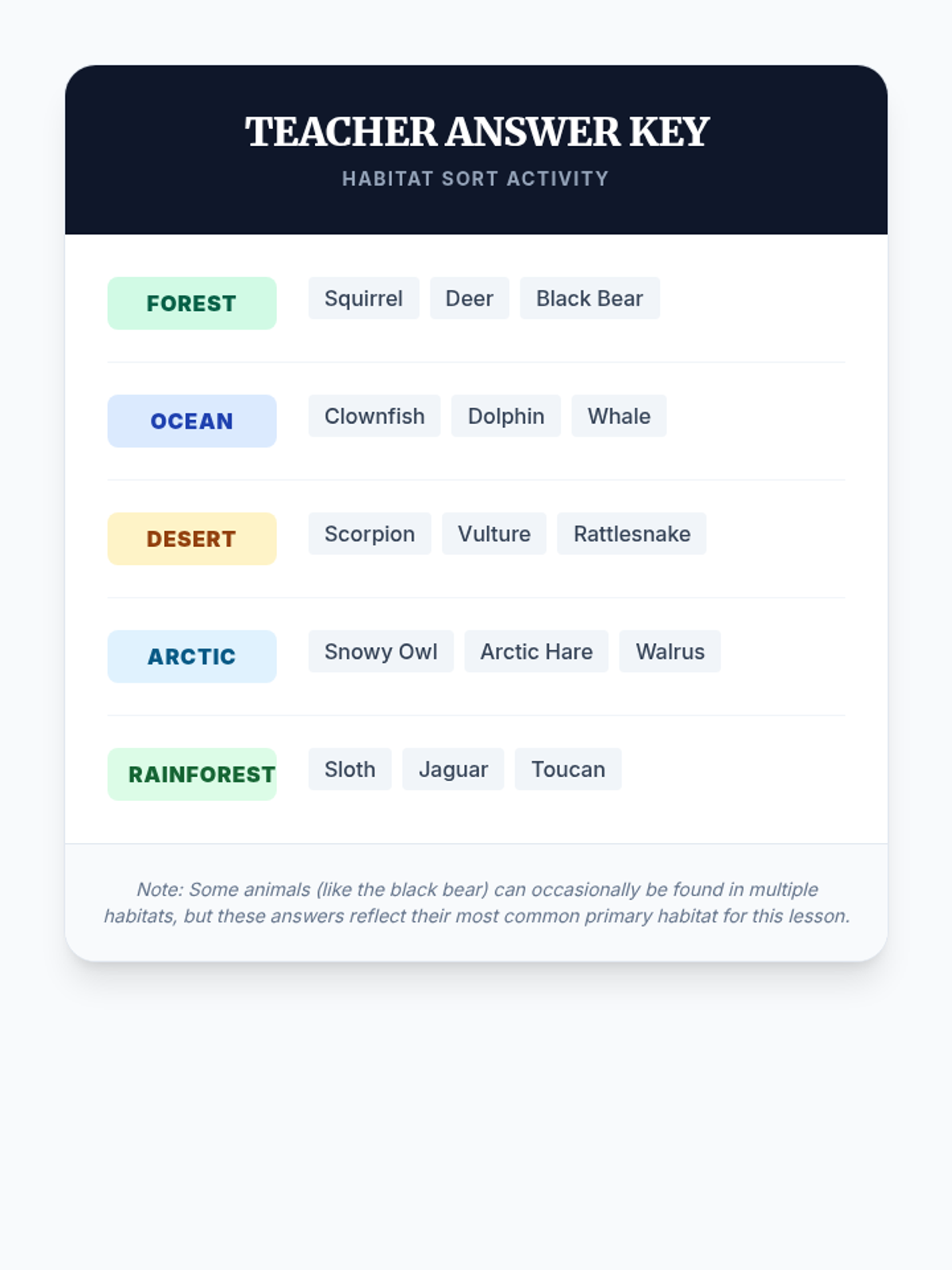
Students explore five major world habitats—Forest, Ocean, Desert, Arctic, and Rainforest—identifying key characteristics and the animals that call them home through visual presentation and hands-on sorting activities.
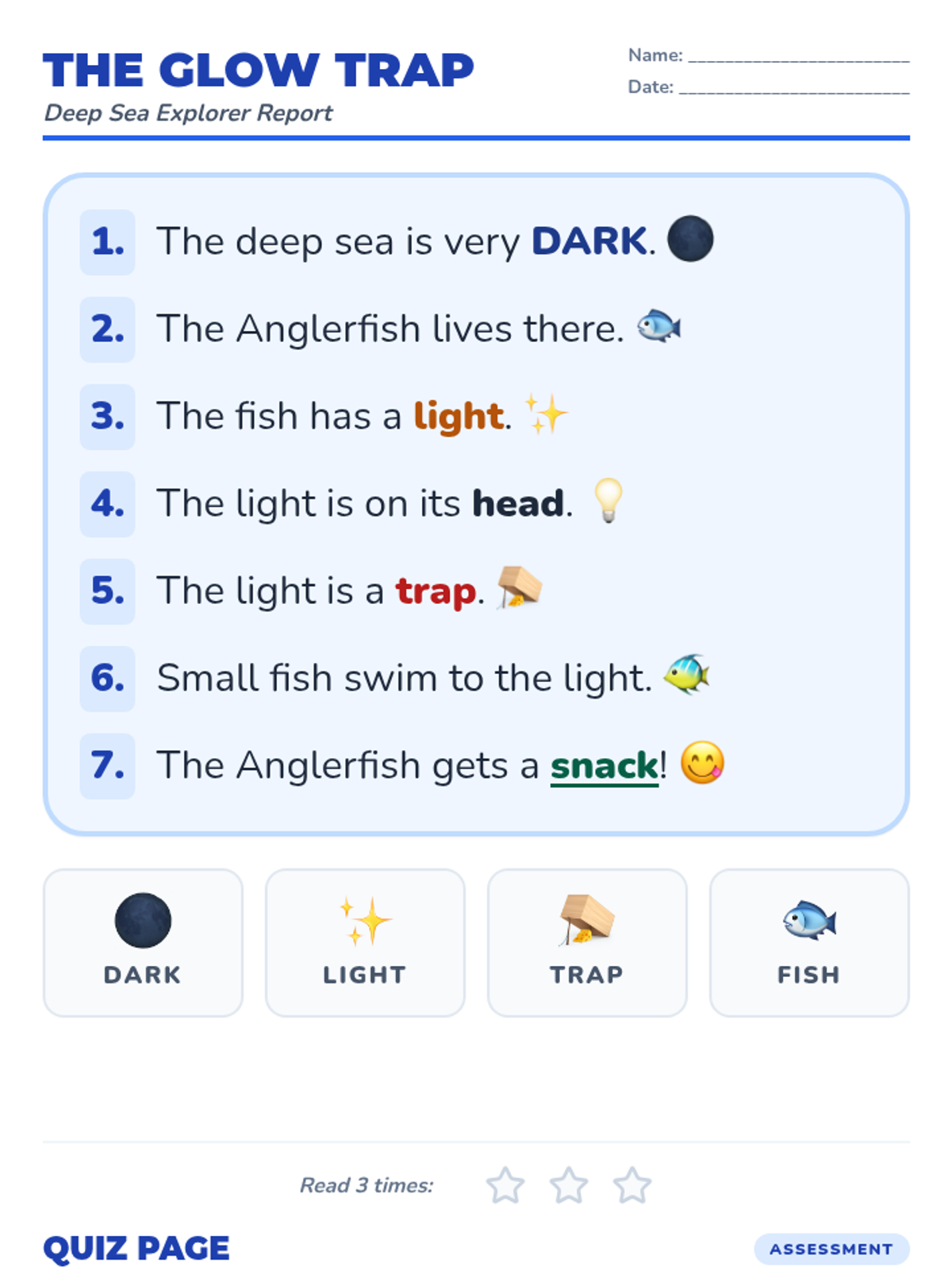
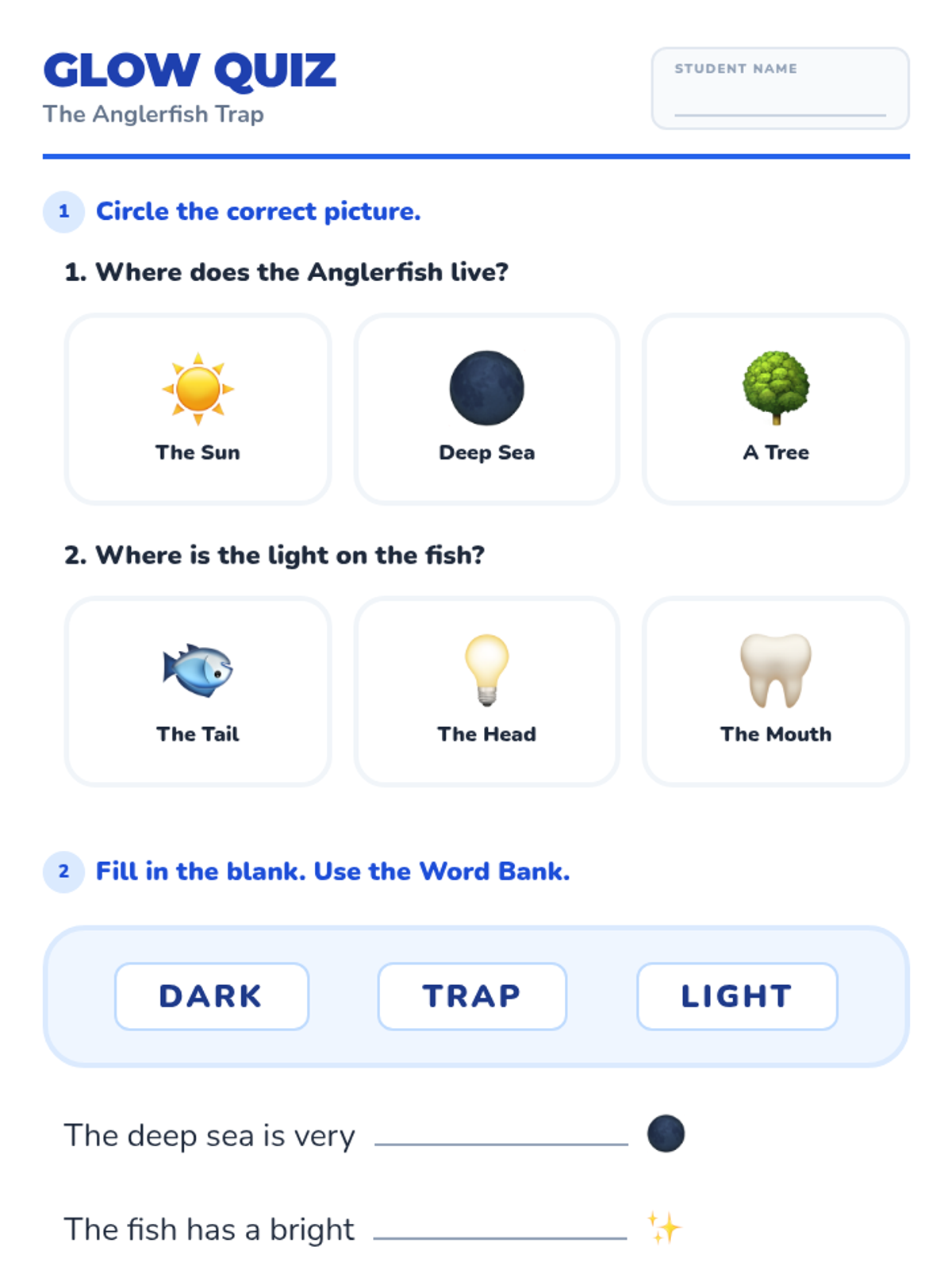
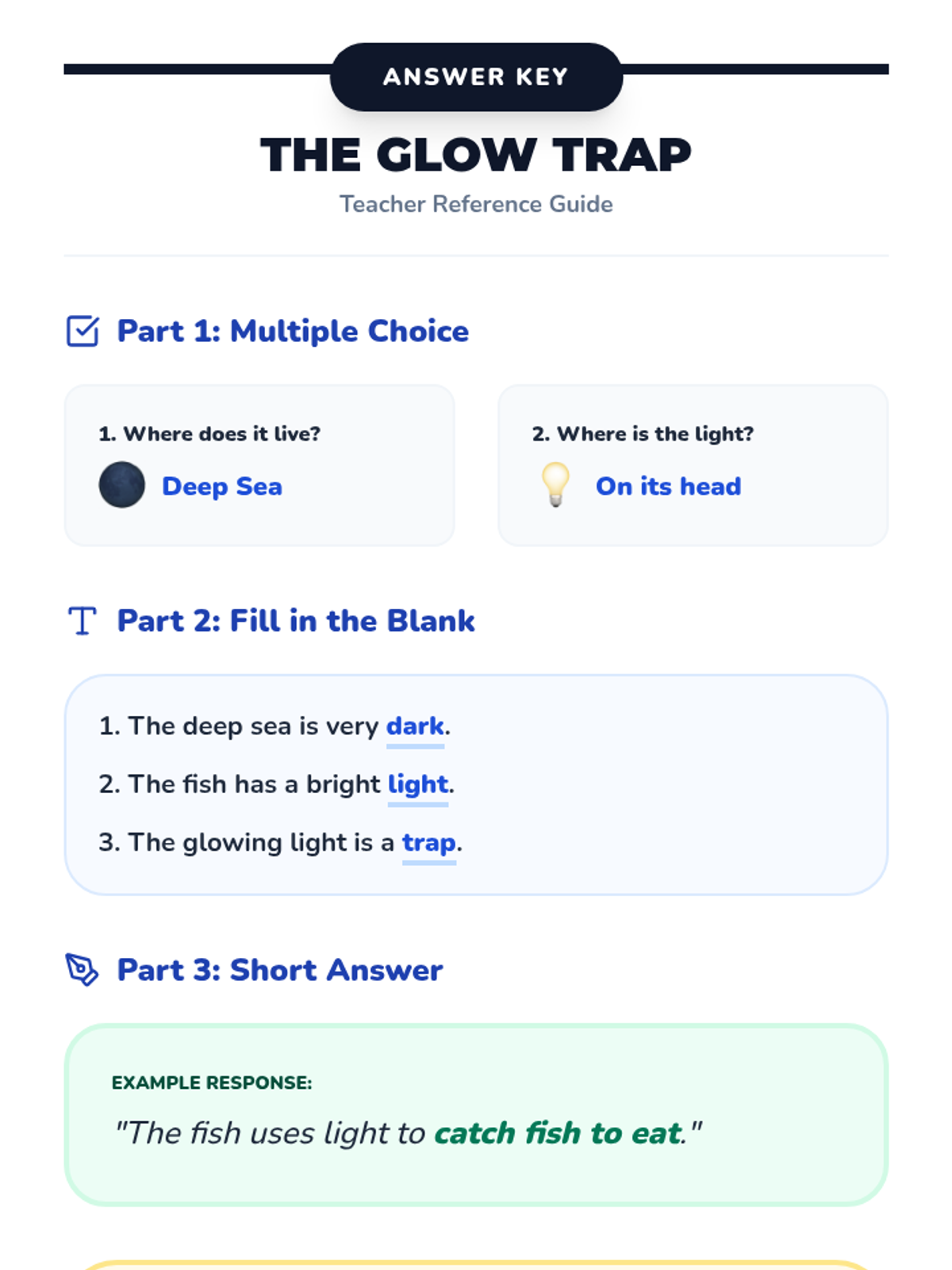
A lesson focused on the Anglerfish and its bioluminescent trap, designed for early elementary students with IEP supports. Students will learn about deep-sea adaptations through a simple reading passage and structured comprehension activities.