Students learn to navigate the formal structure of academic journal articles, focusing on IMRAD (Introduction, Methods, Results, and Discussion) to locate information quickly and efficiently.
A targeted set of practice materials for the Grade 3 Language standards: L.3.4 (Unknown and Multiple-Meaning Words) and L.3.5.a (Literal and Nonliteral Meanings). Includes a student test booklet and teacher answer key.
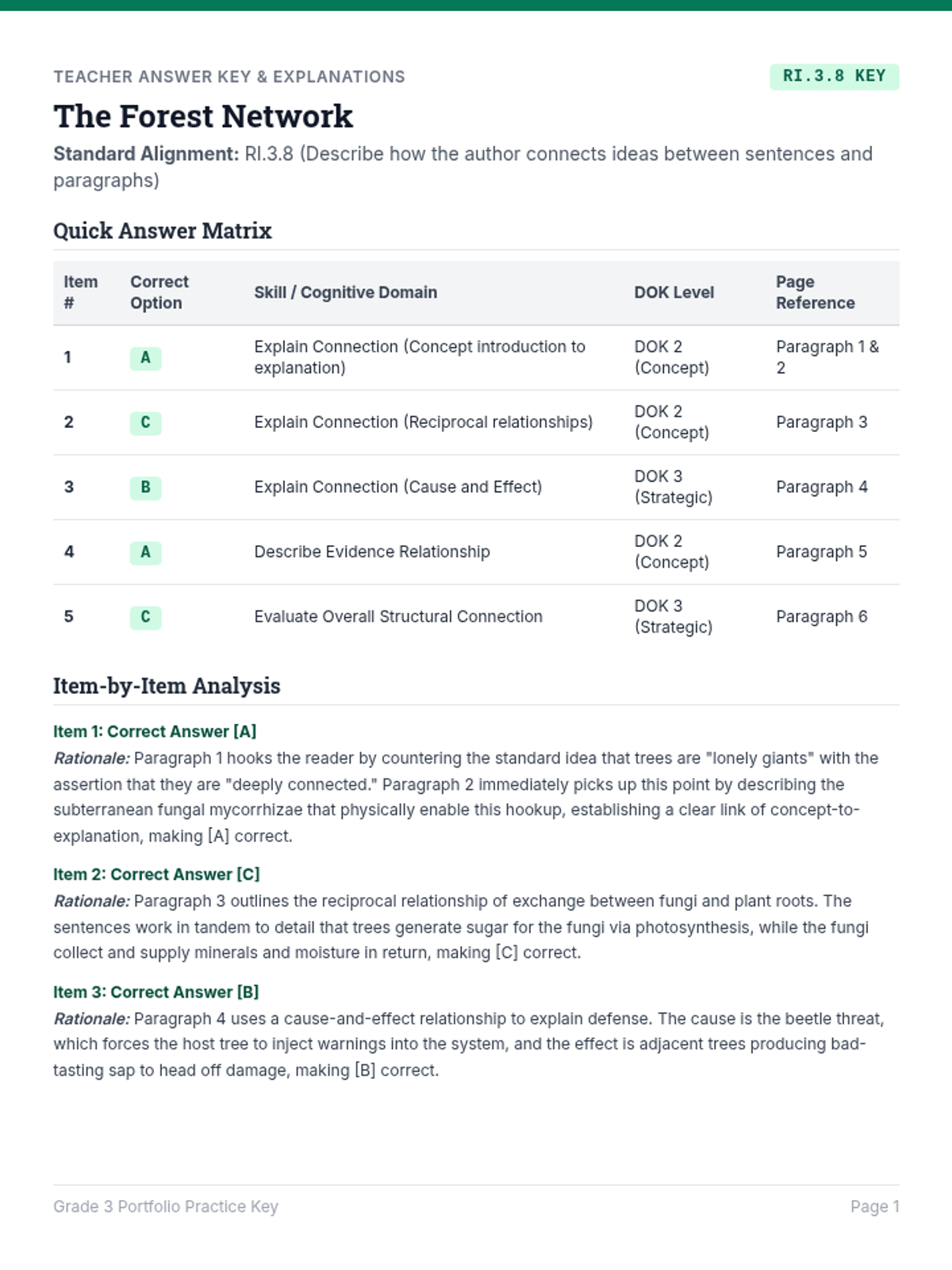
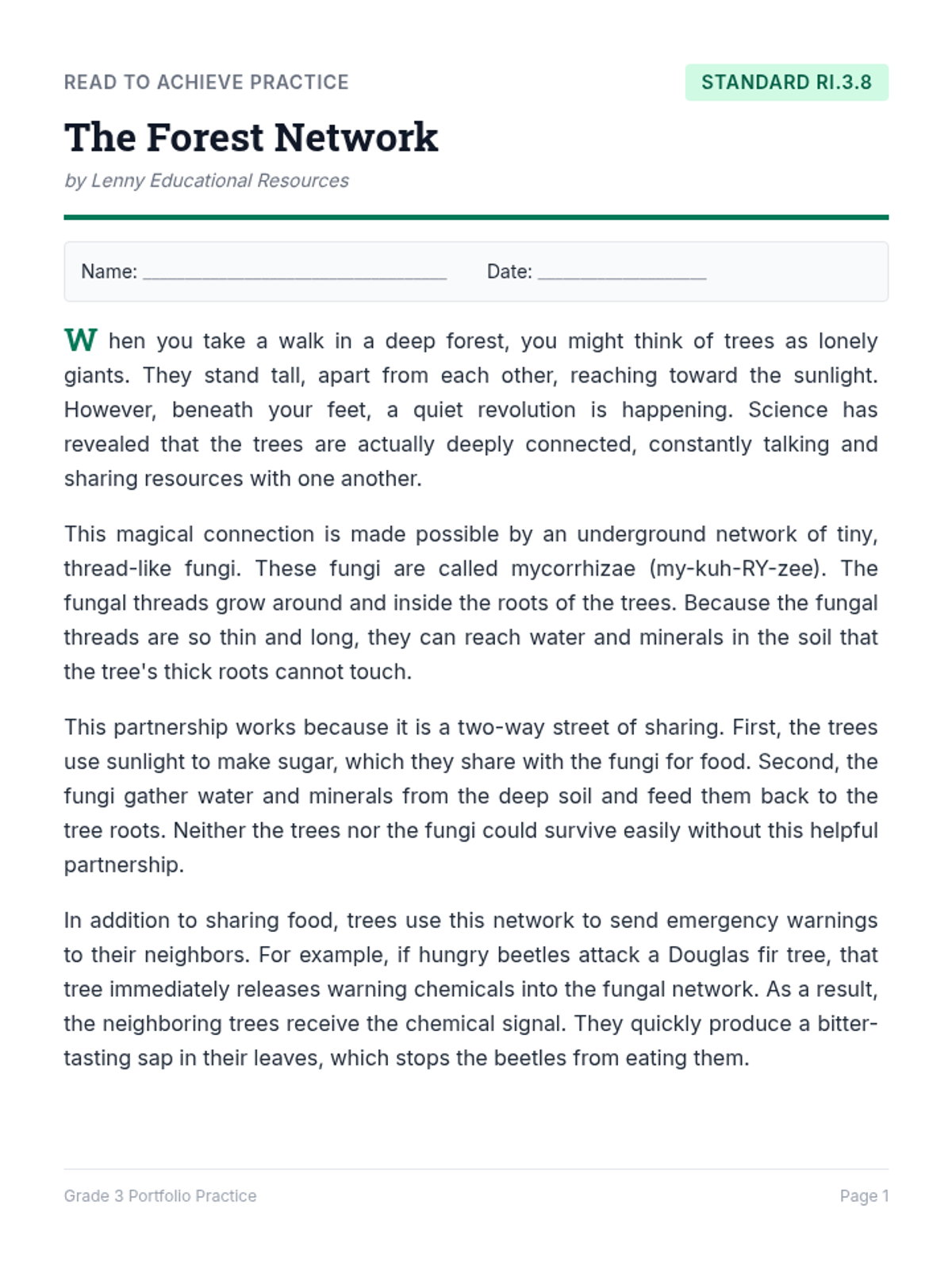
A targeted set of practice materials for the Grade 3 Informational Text standards: RI.3.1 (Evidence), RI.3.2 (Main Idea), RI.3.3 (Relationships), RI.3.4 (Academic/Domain Words), and RI.3.8 (Author's Points/Connections). Includes a comprehensive student test booklet and teacher answer key.
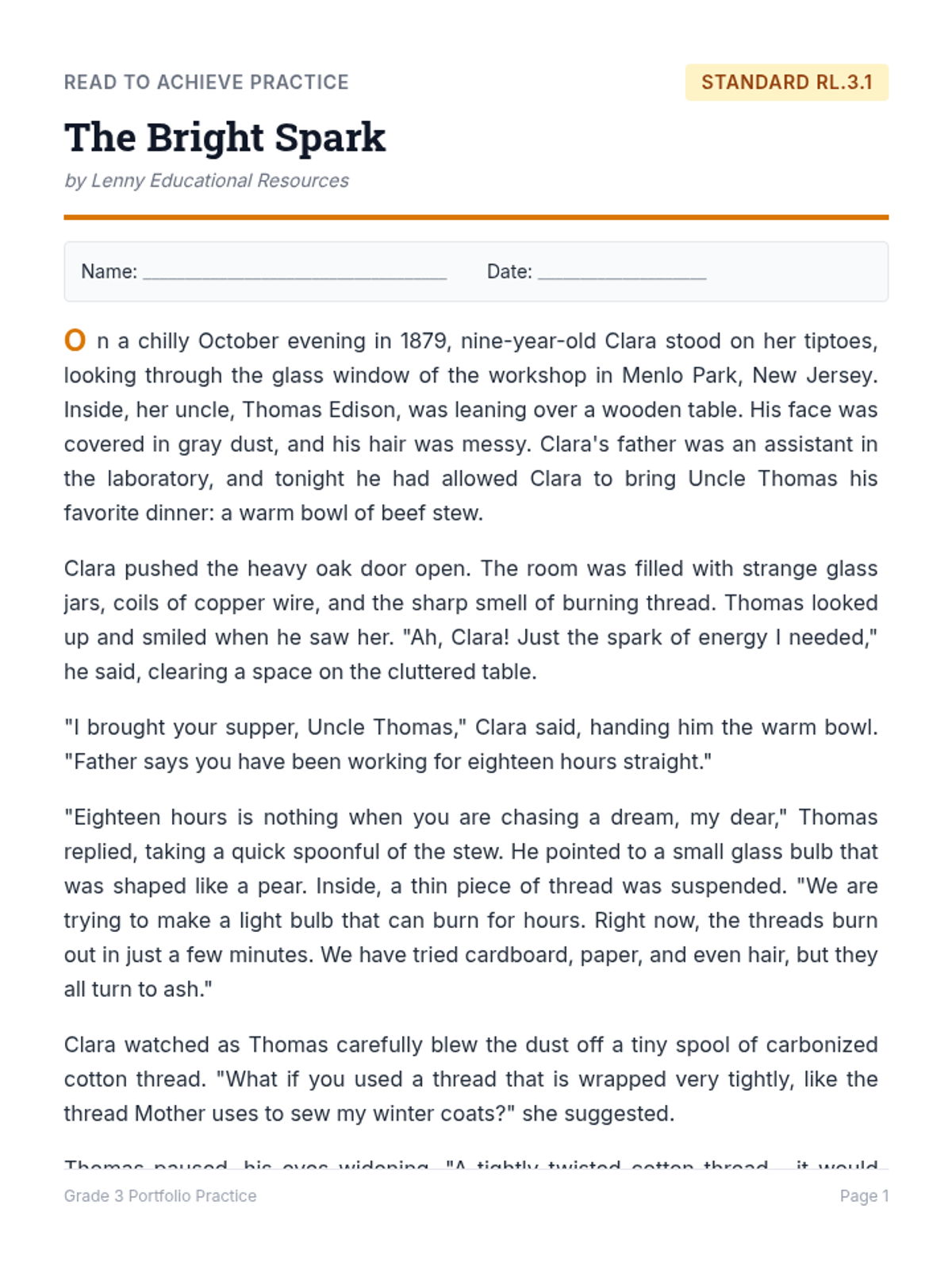
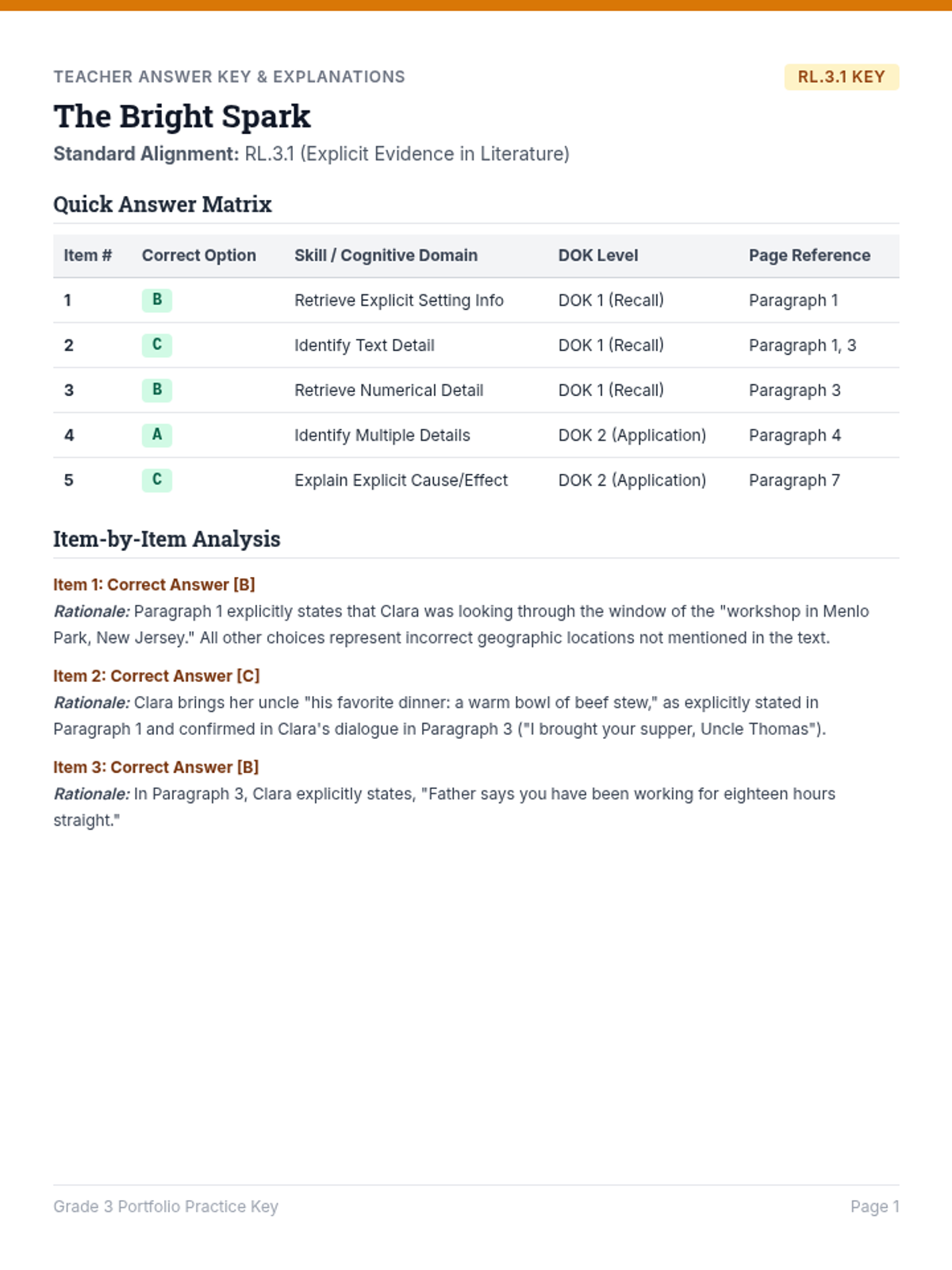
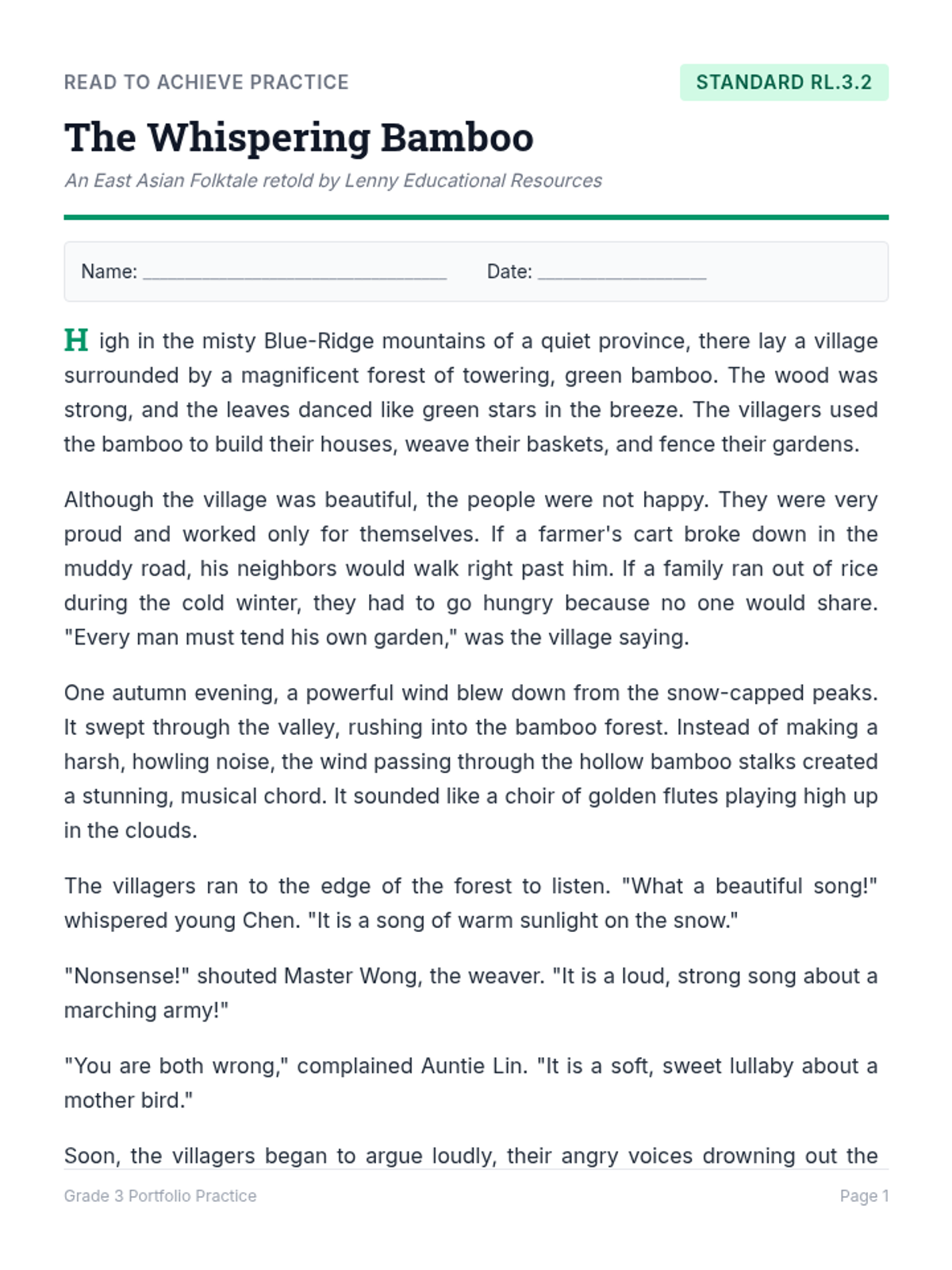
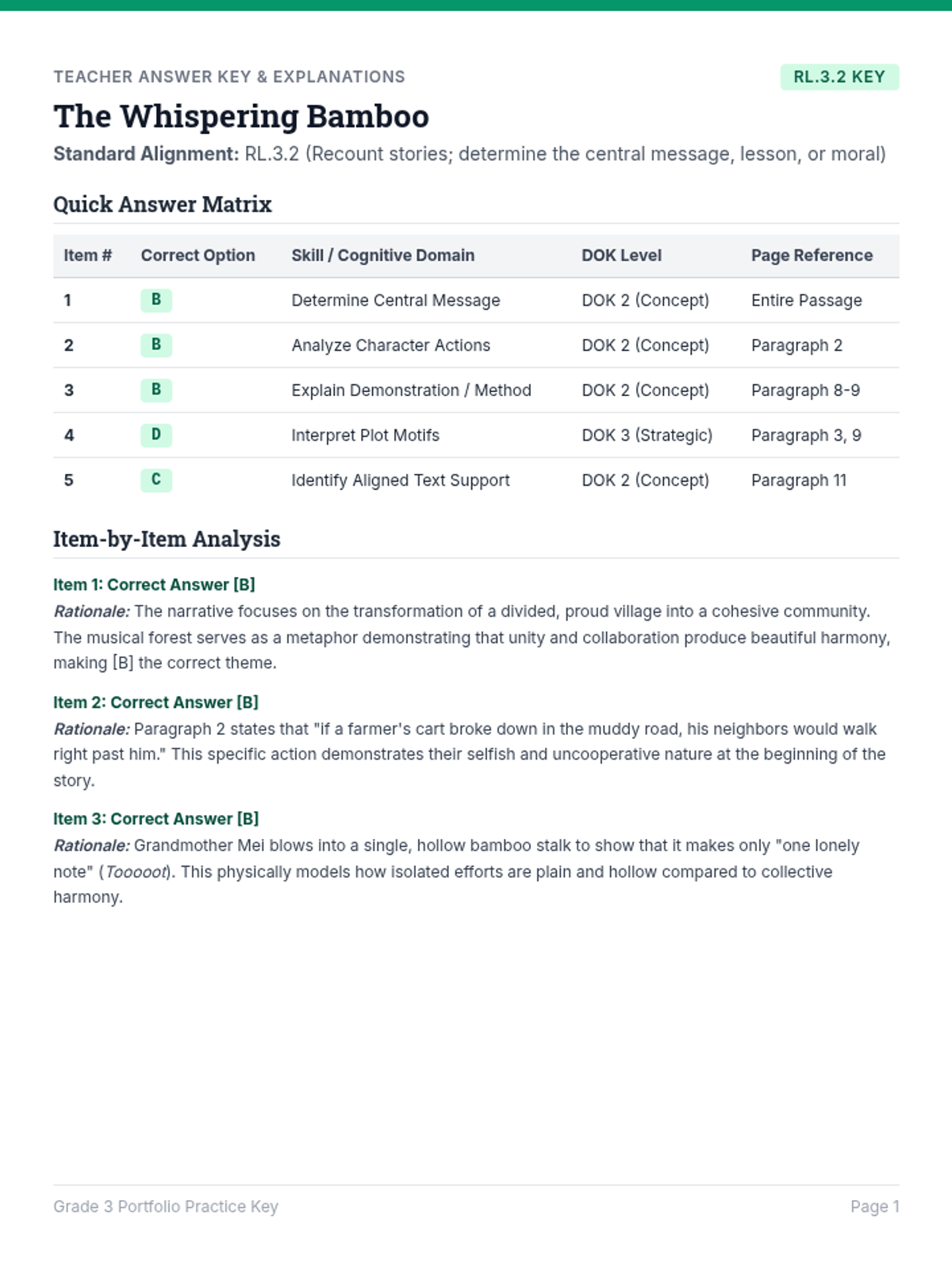
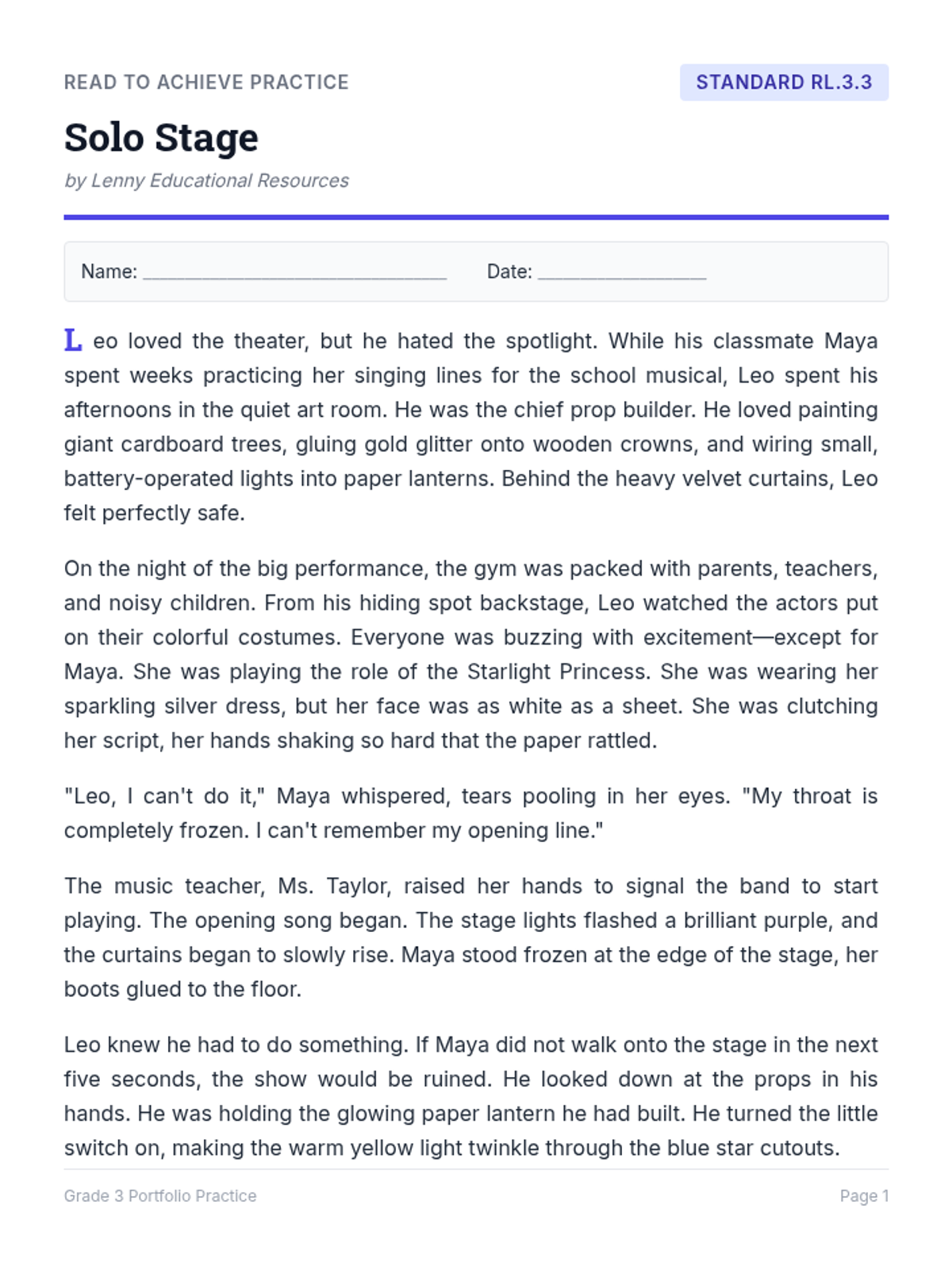
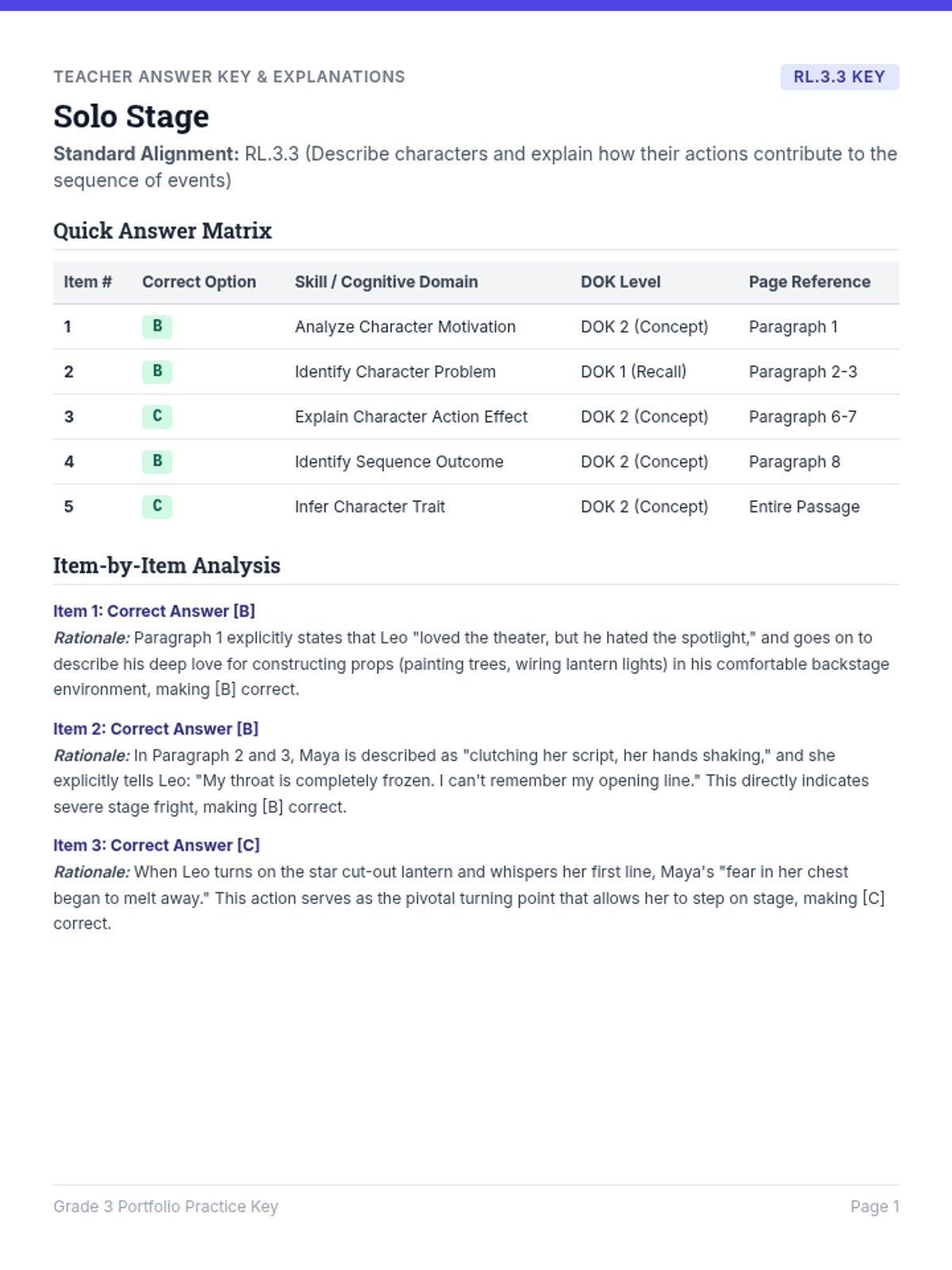
A targeted set of practice materials for the Grade 3 Literature standards: RL.3.1 (Explicit Evidence), RL.3.2 (Central Message/Moral), RL.3.3 (Character Contributions), and RL.3.4 (Words and Phrases in Context). Includes a comprehensive student test booklet and teacher answer key.
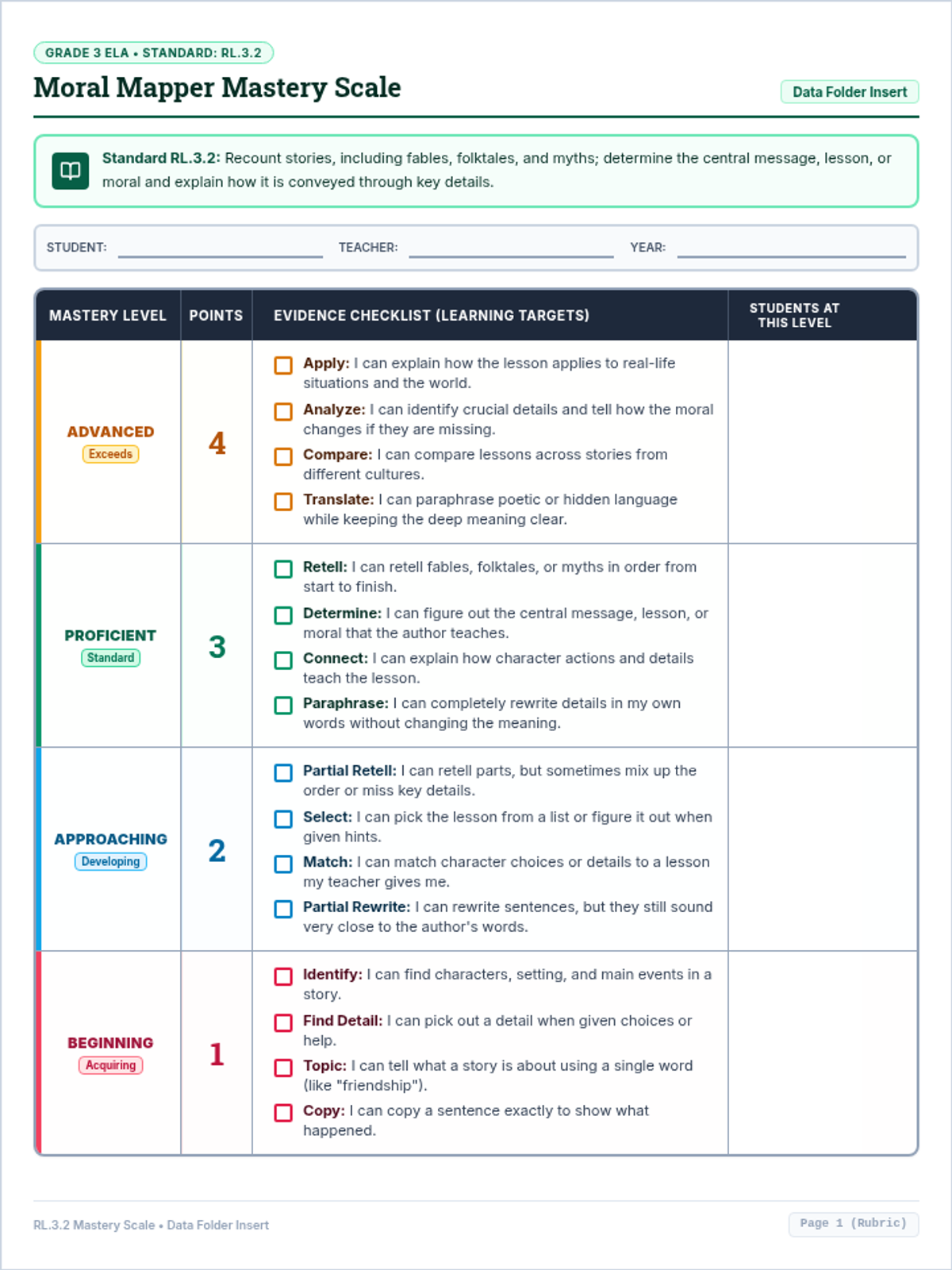
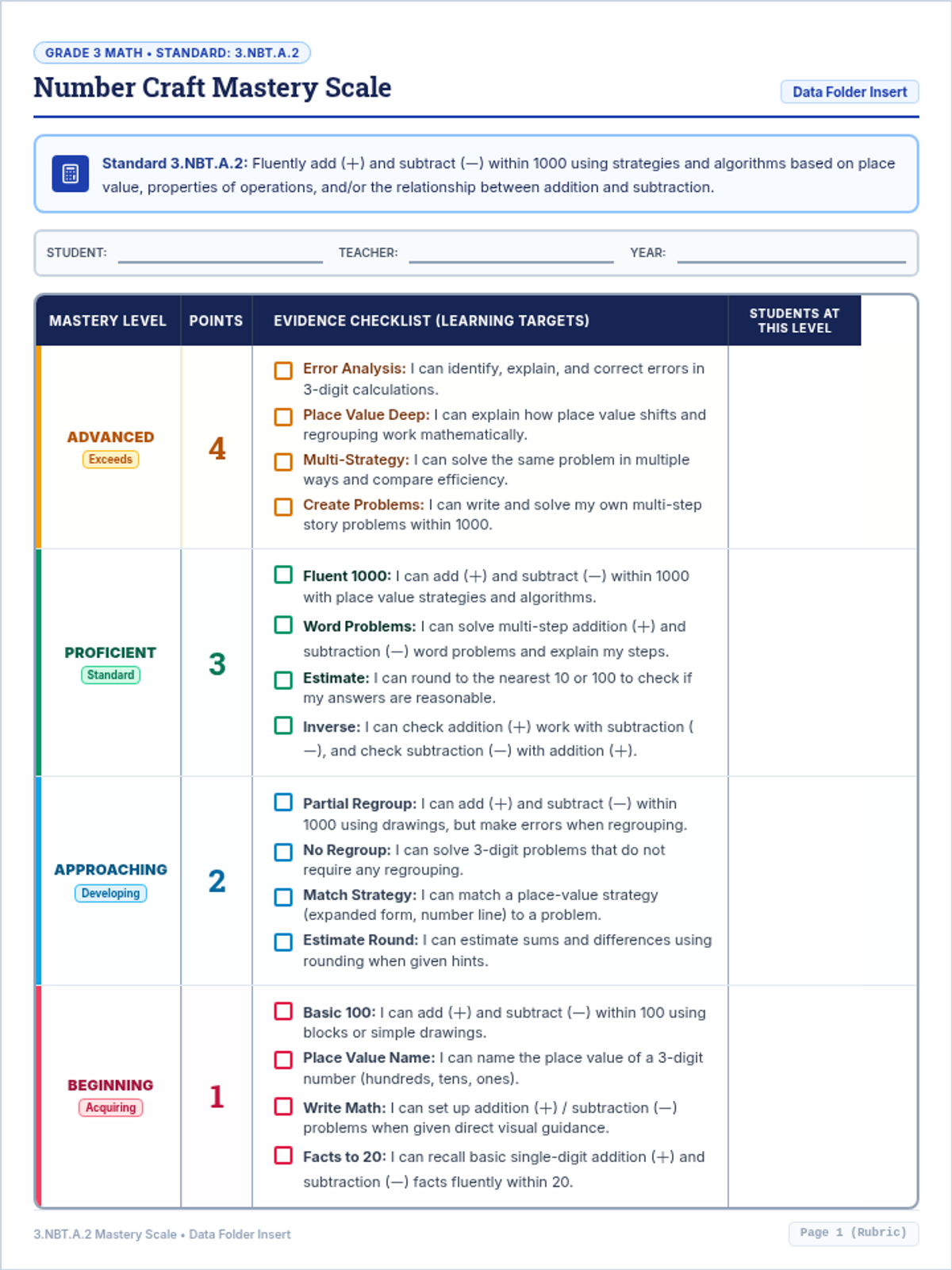
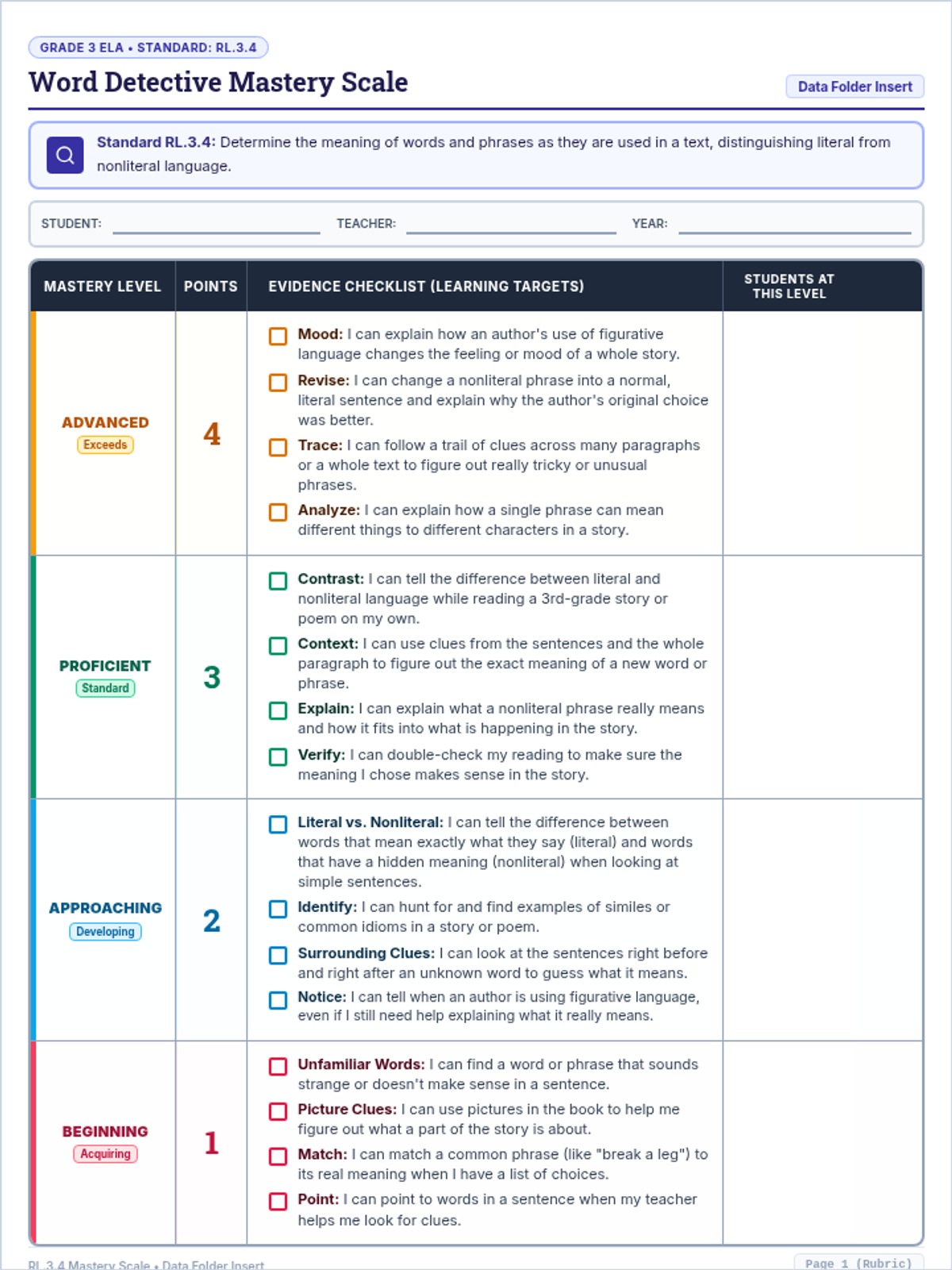
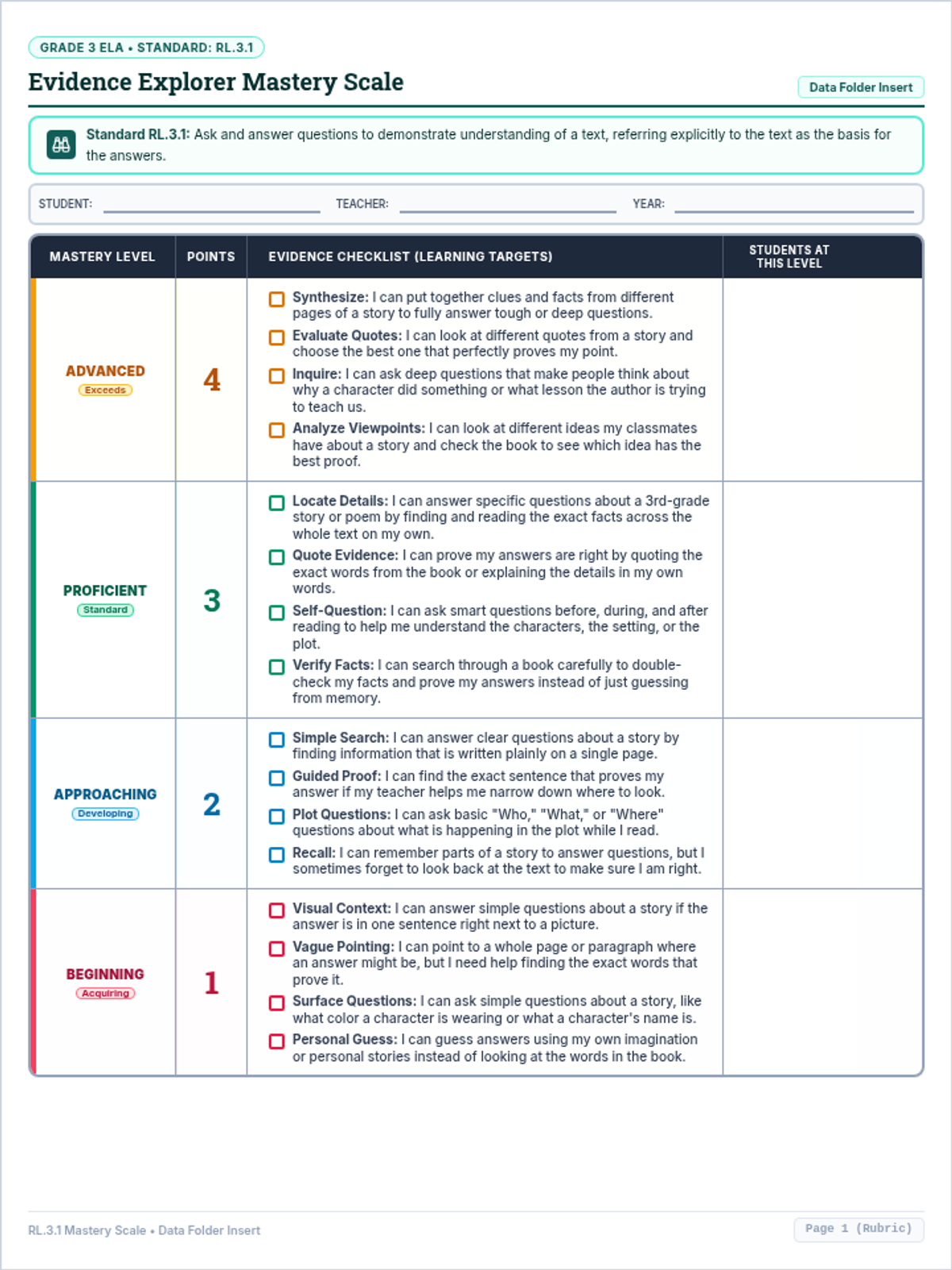
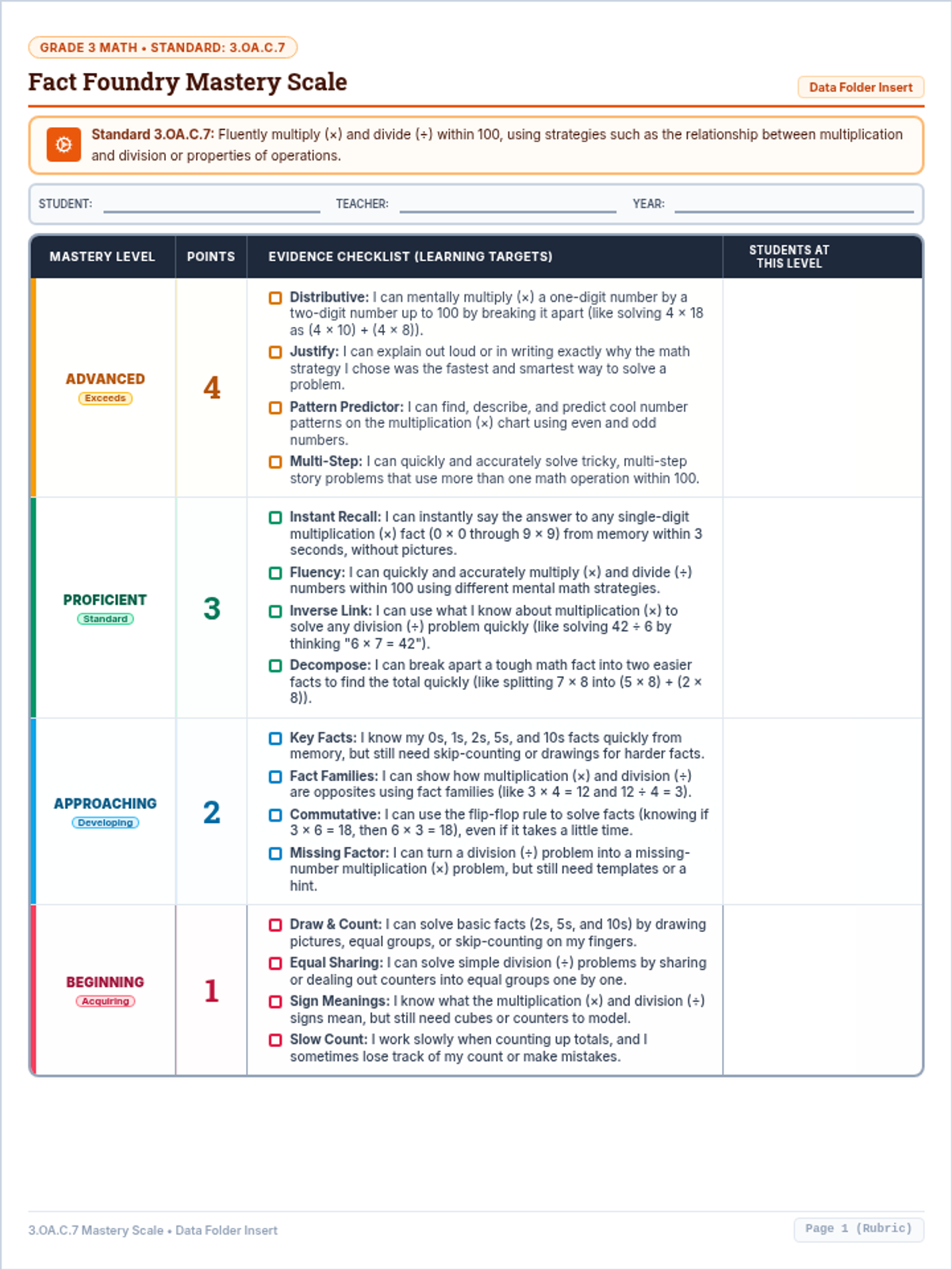
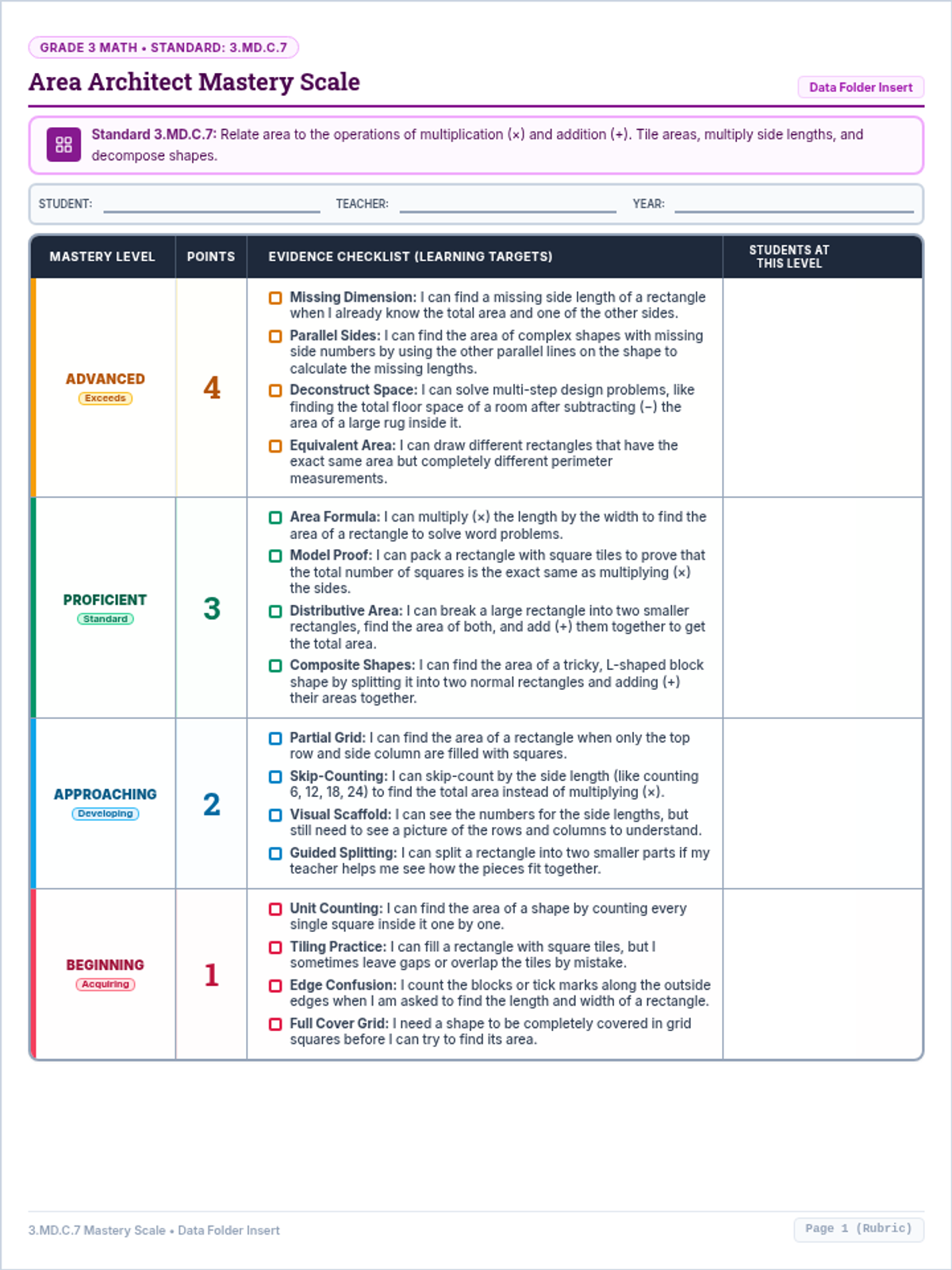
A collection of beautifully designed, compact data folder inserts featuring proficiency scale charts and progress tracking logs for Grade 3 standards.
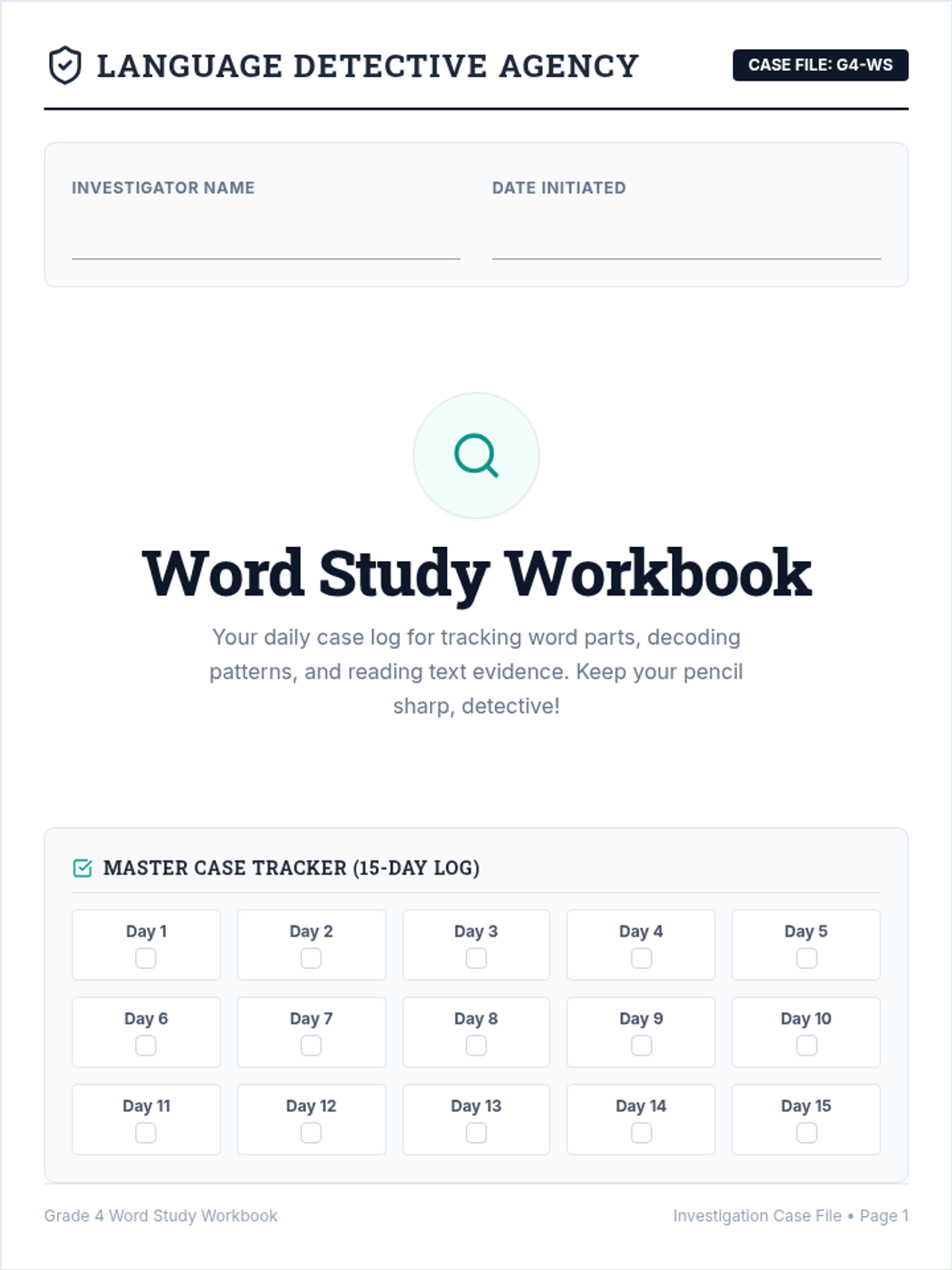
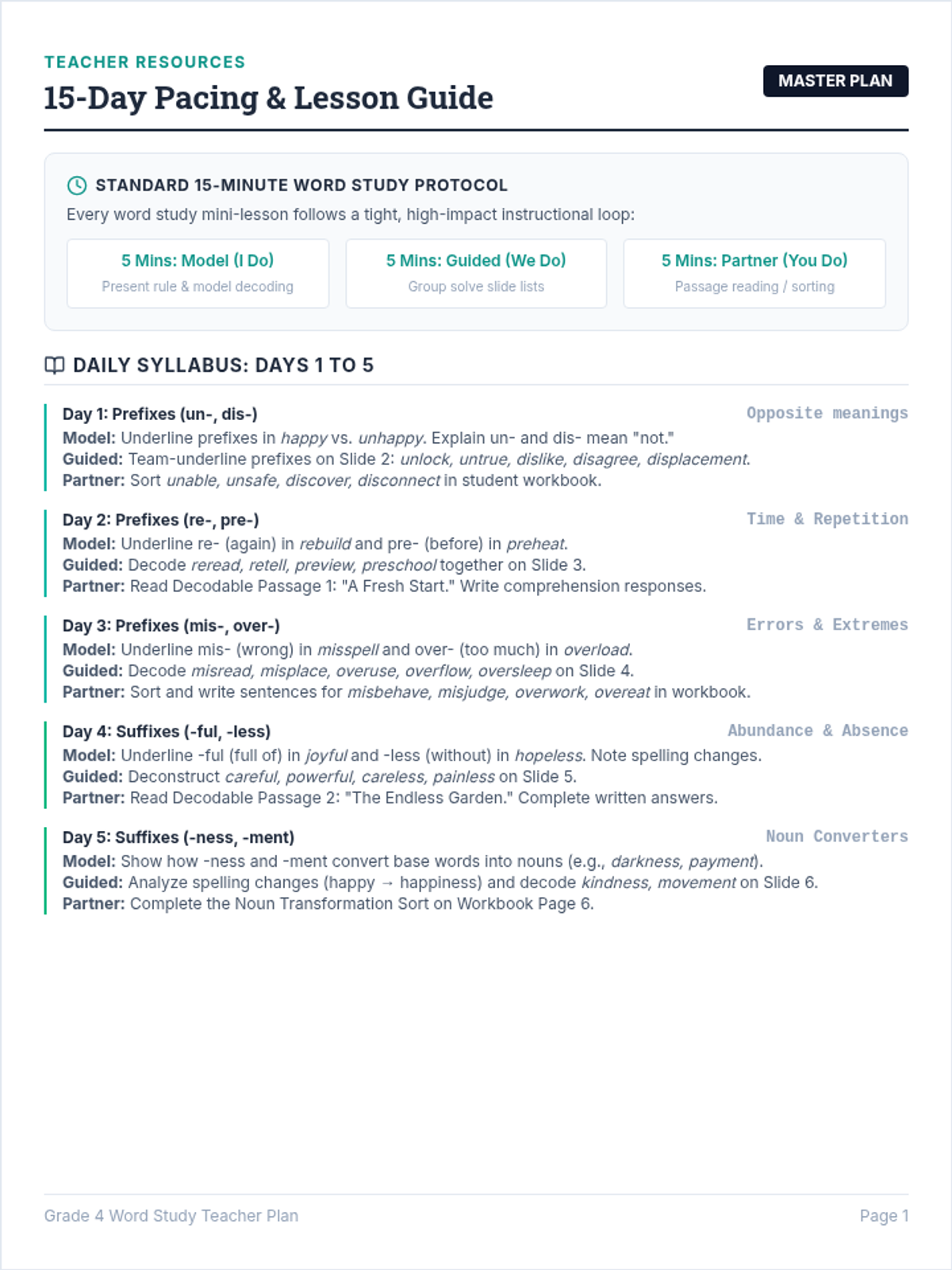
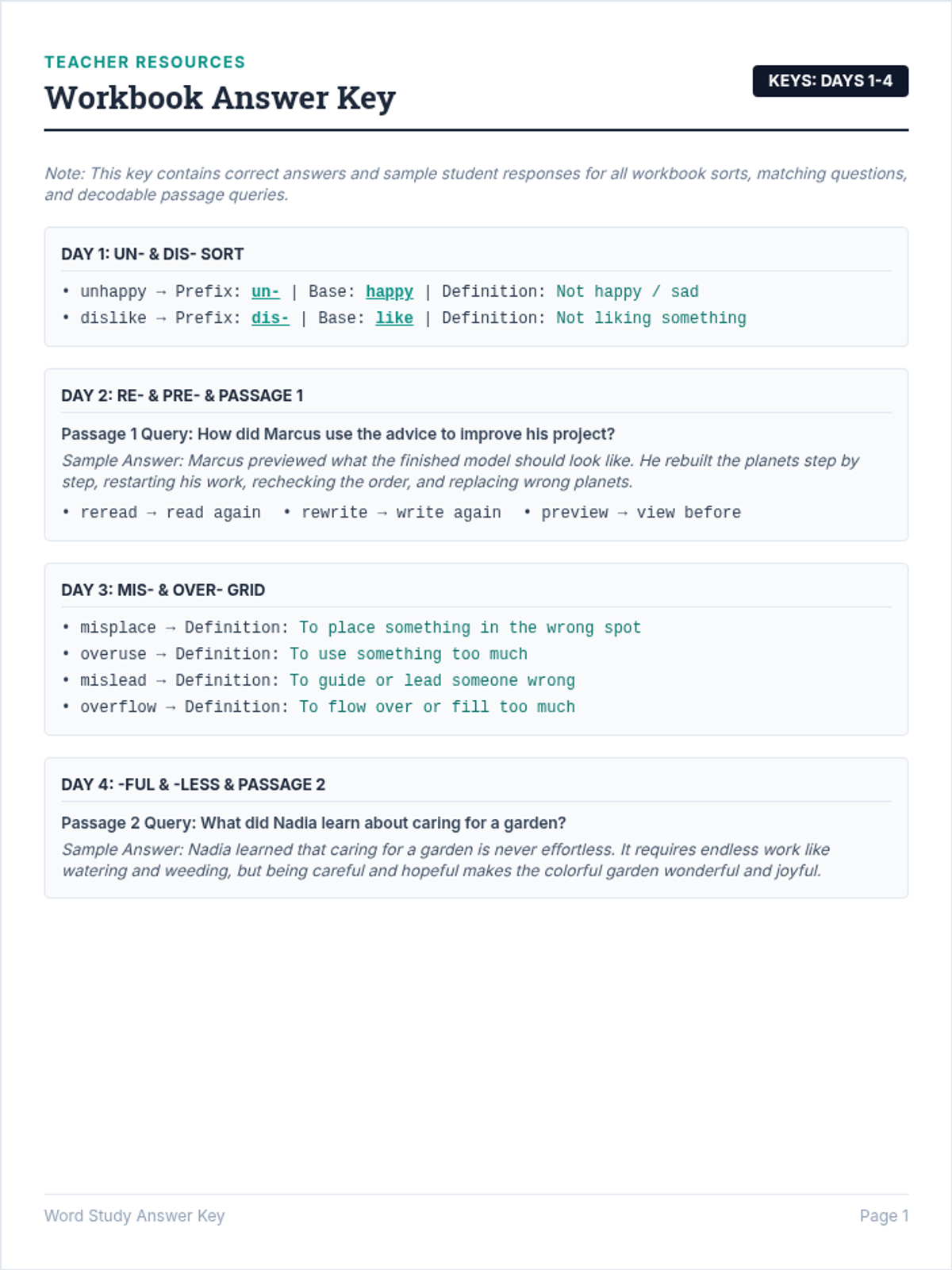
A comprehensive 15-day word study unit for Grade 4 focused on prefixes, suffixes, Latin roots, compound words, homophones, synonyms/antonyms, and context clues. Includes a master slide deck and a complete student workbook.
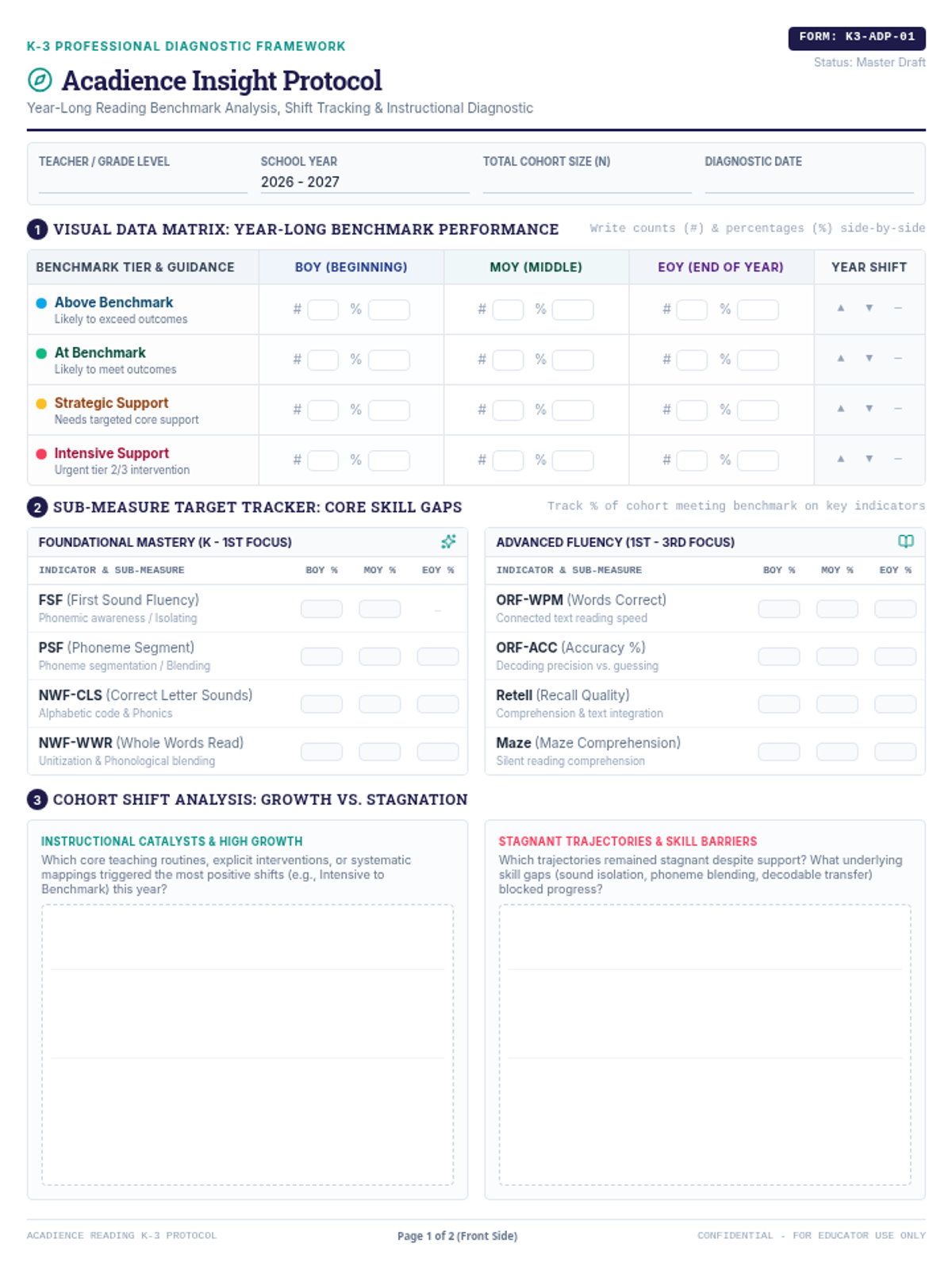
A professional data analysis lesson framework and diagnostic guide to help K-3 educators dissect Acadience Reading benchmarks, identify systemic teaching gaps, and design proactive prevention plans for the upcoming school year.
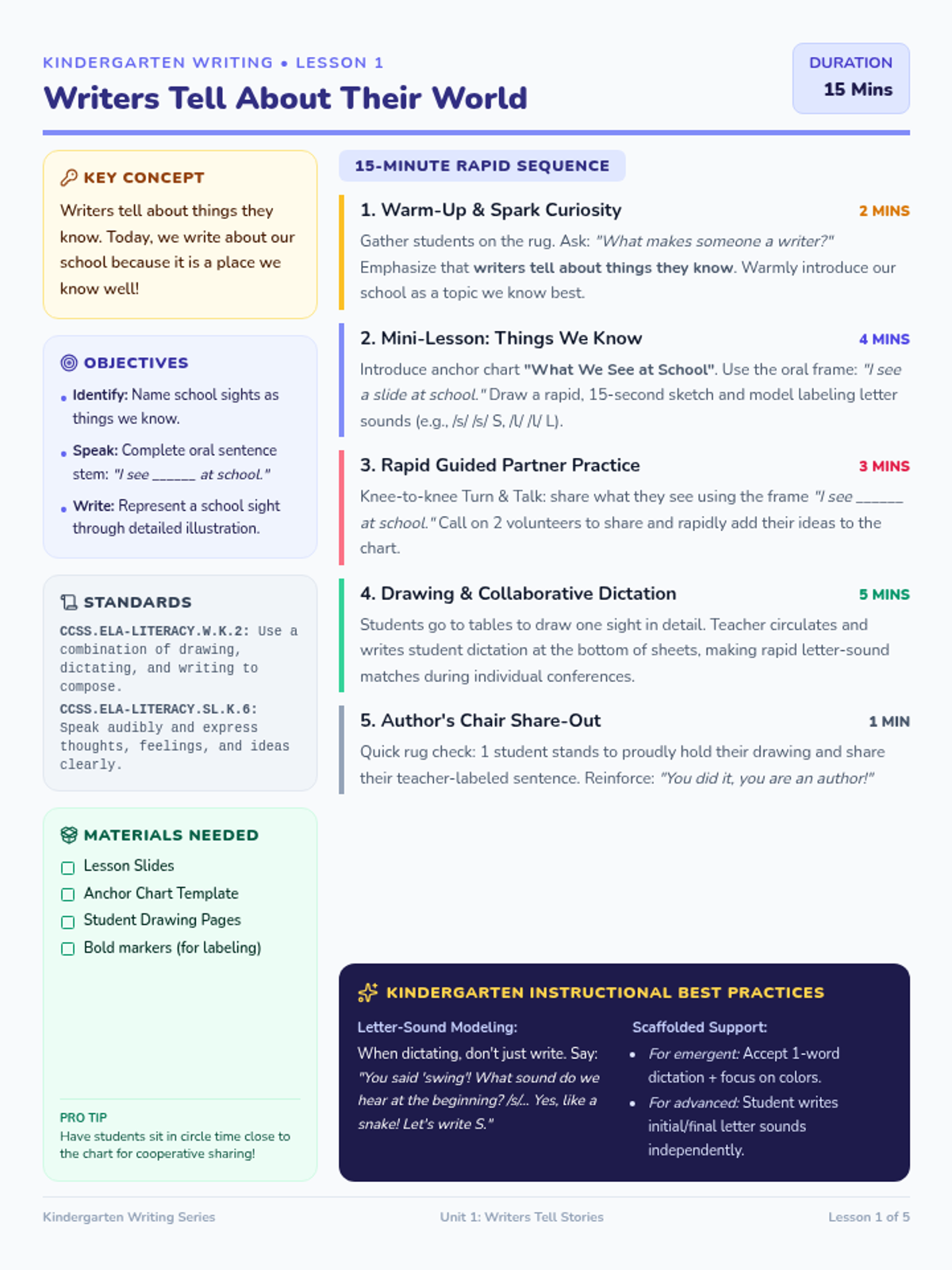
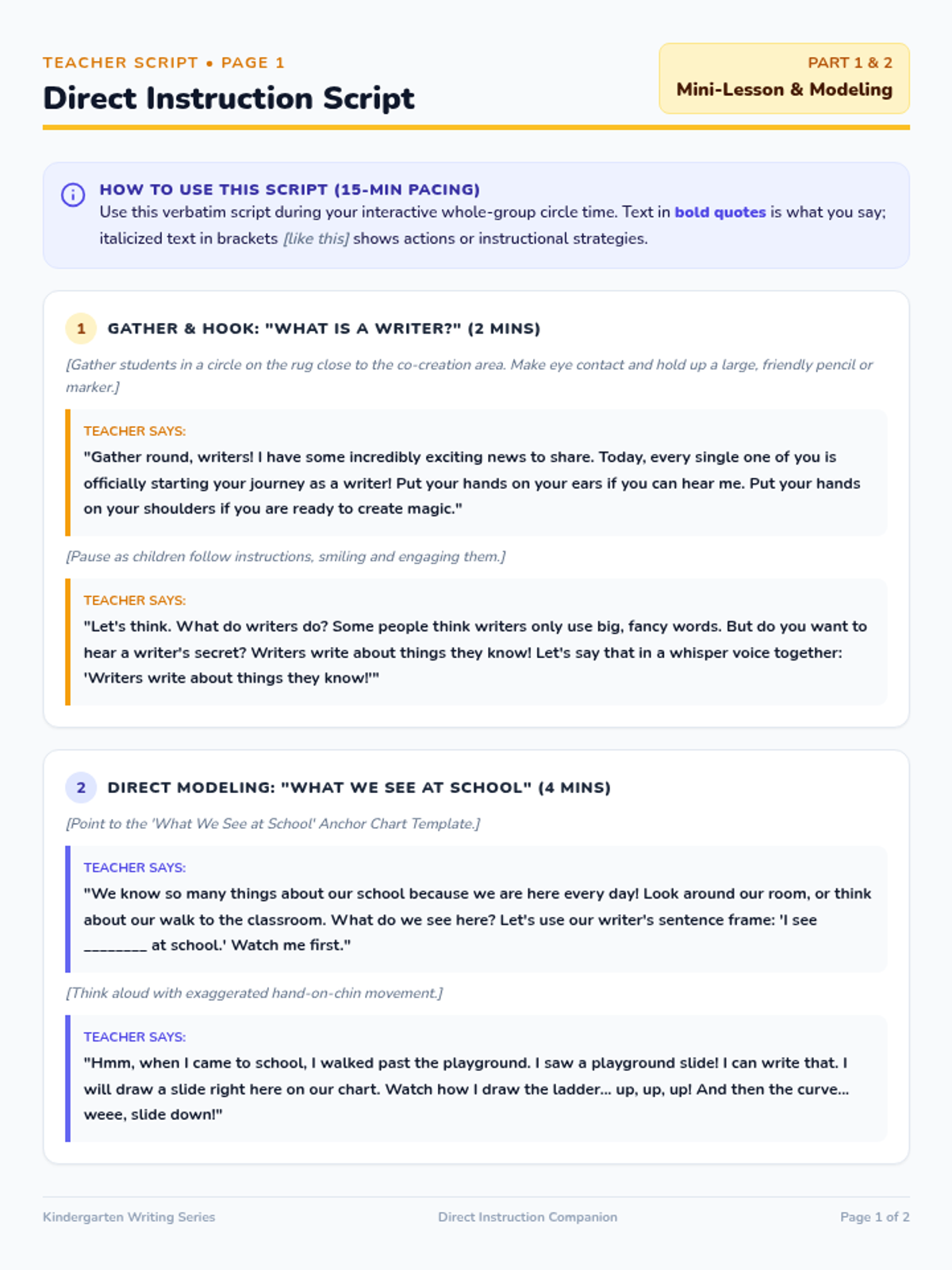
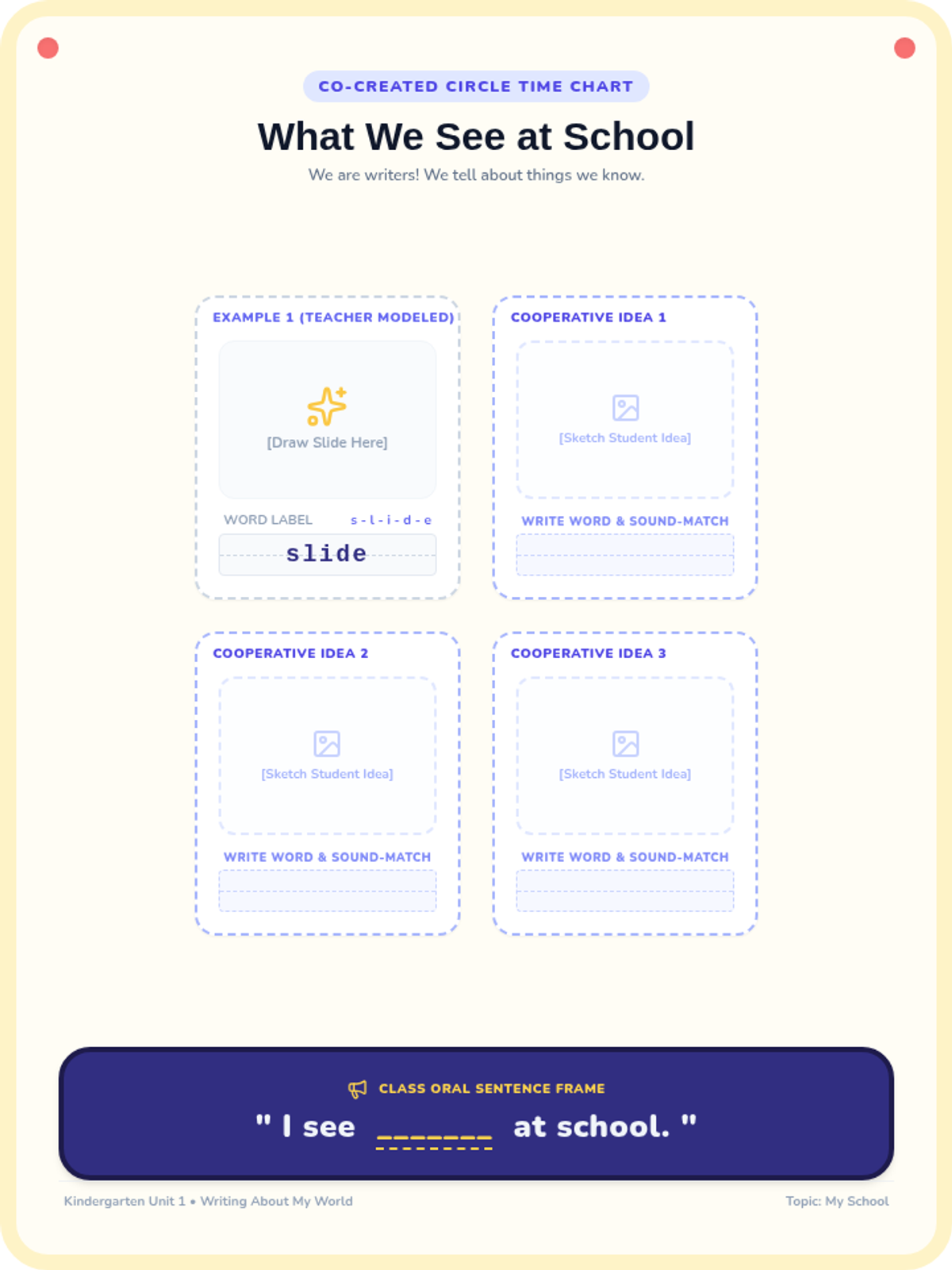
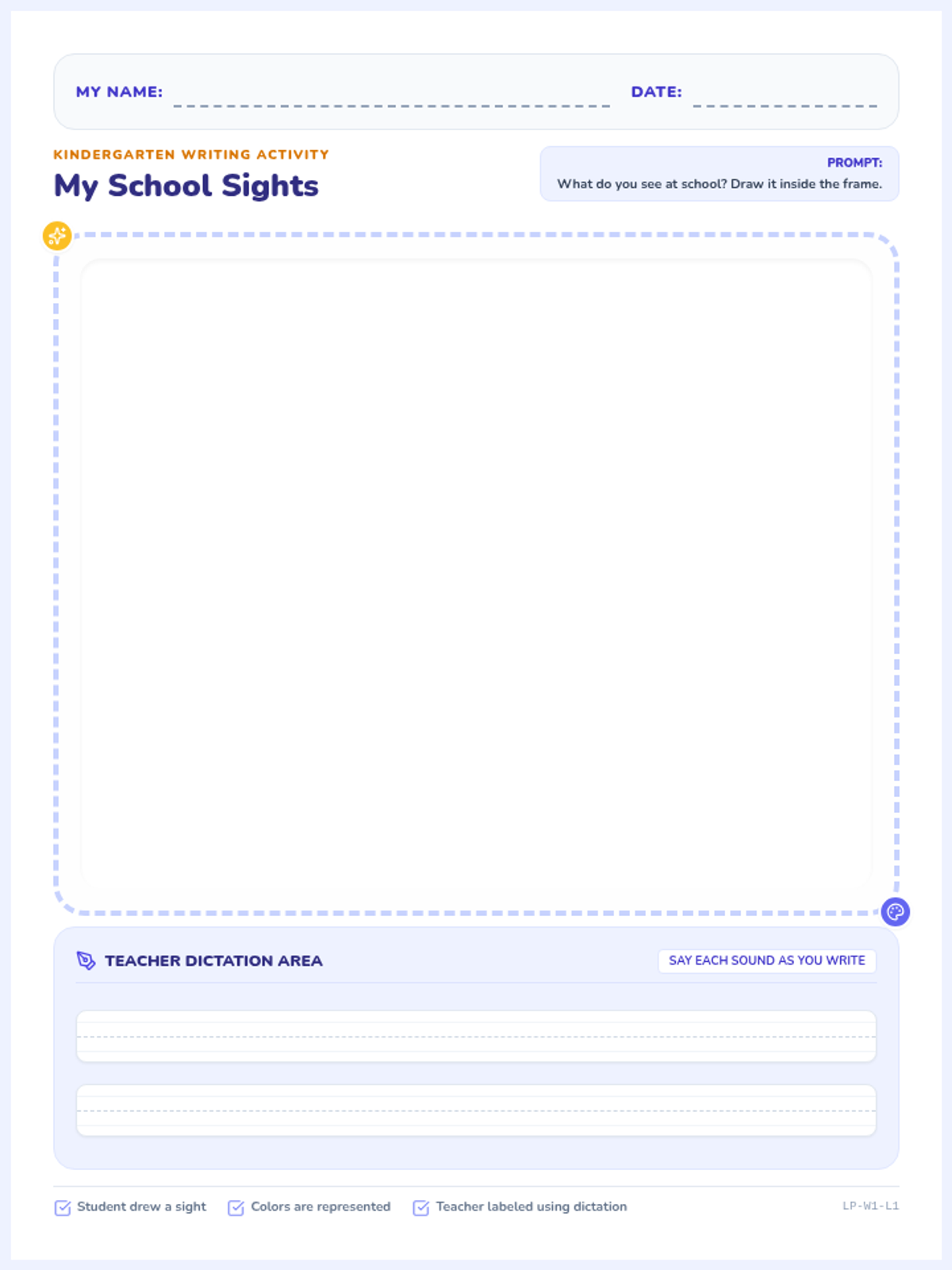
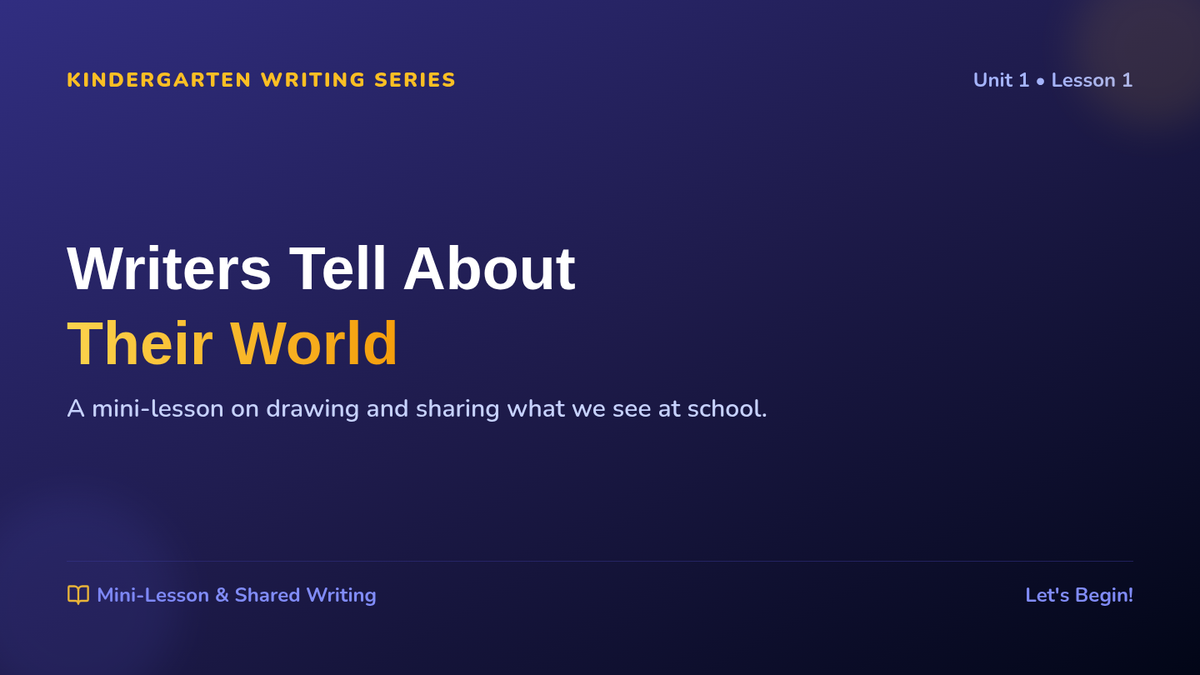
A foundational Kindergarten writing lesson where students discover that writers tell about things they know, starting with their school. Students practice oral sentence stems and create drawings representing their school environment, which teachers support by labeling using dictation.
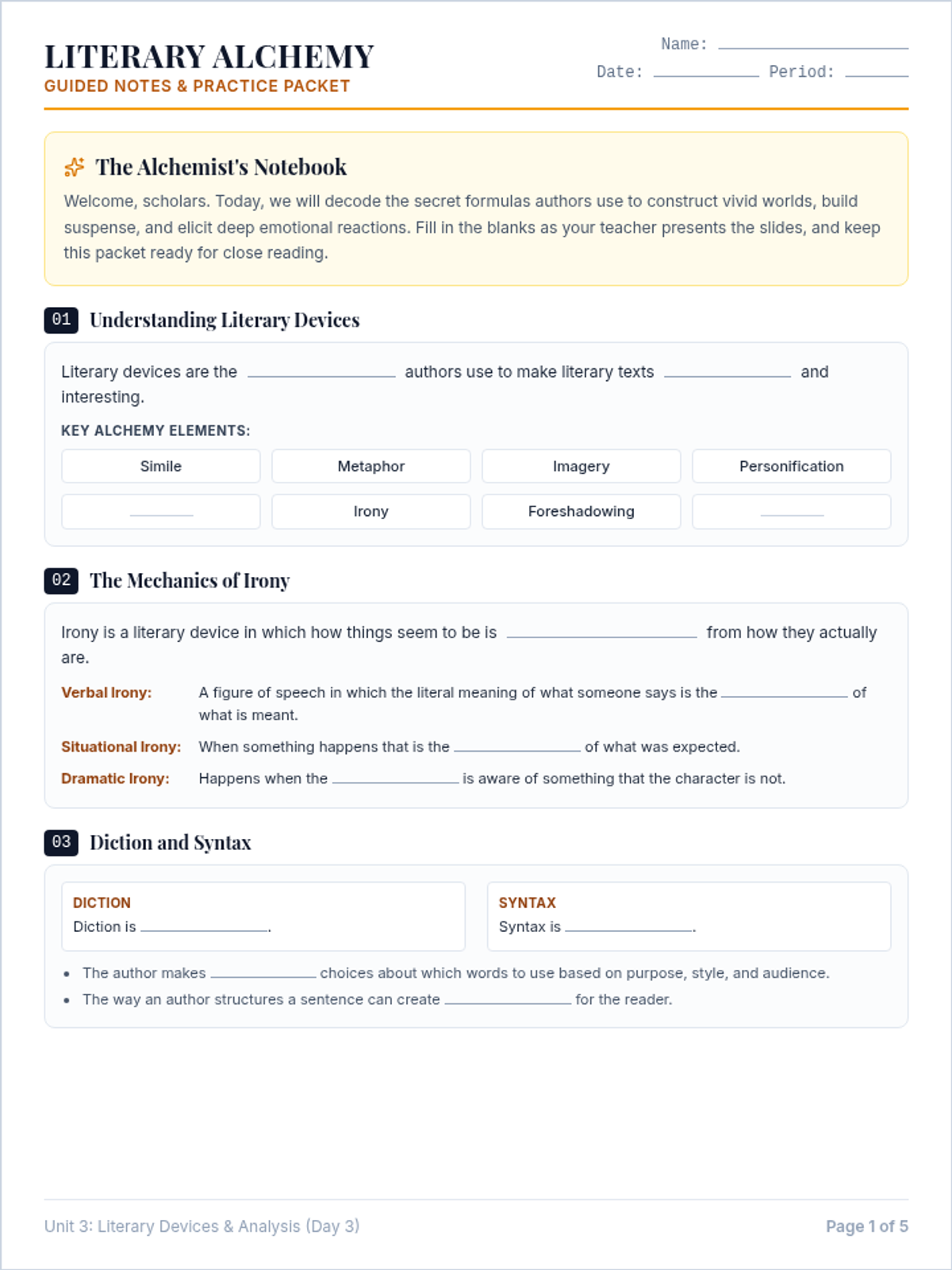
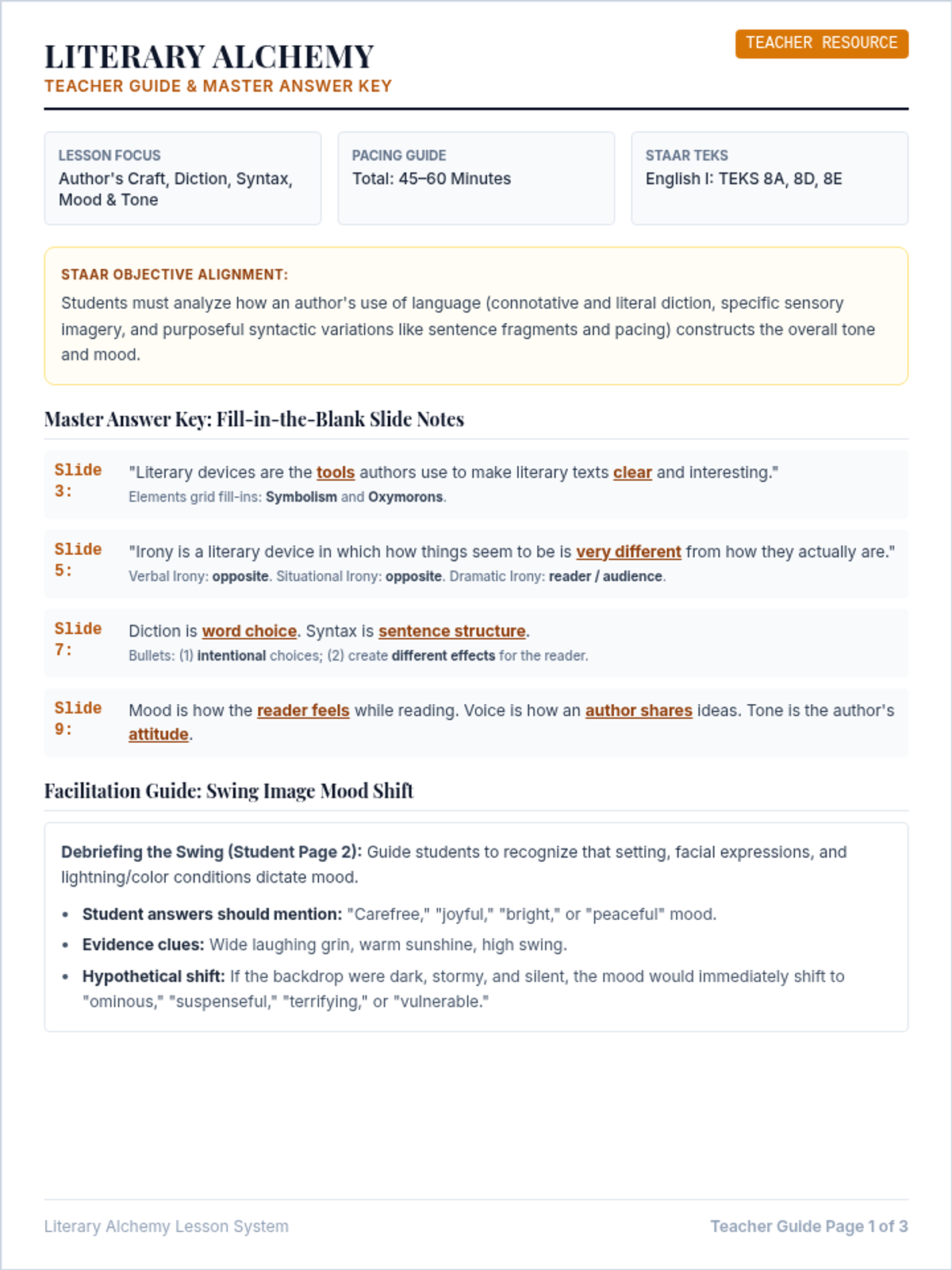
A rigorous STAAR-aligned high school English I lesson analyzing how authors employ literary devices, diction, syntax, and imagery to craft mood, voice, and tone. Students engage in interactive note-taking followed by guided close reading of Edgar Allan Poe and Delia Owens, culminating in independent passage analysis.
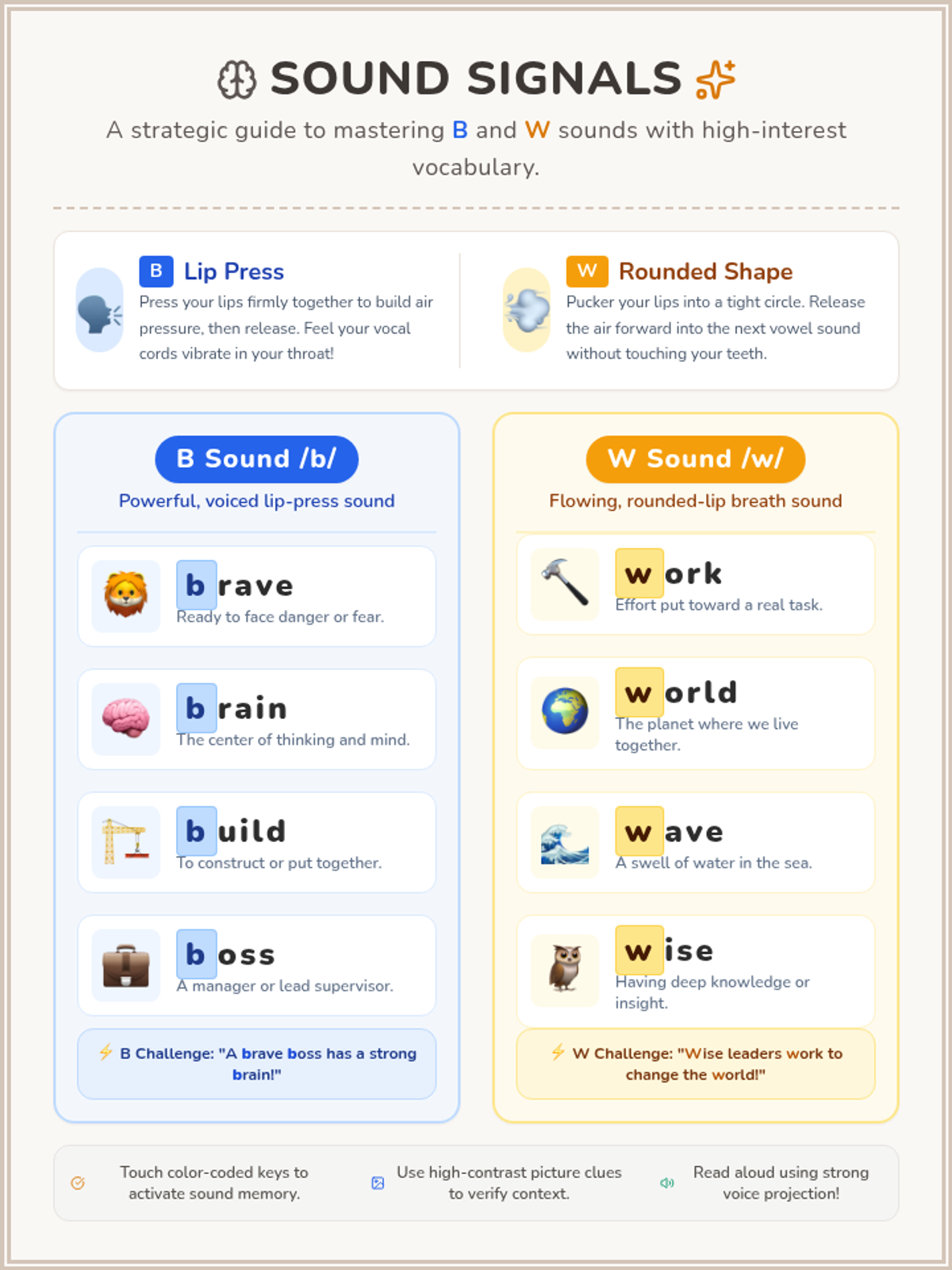
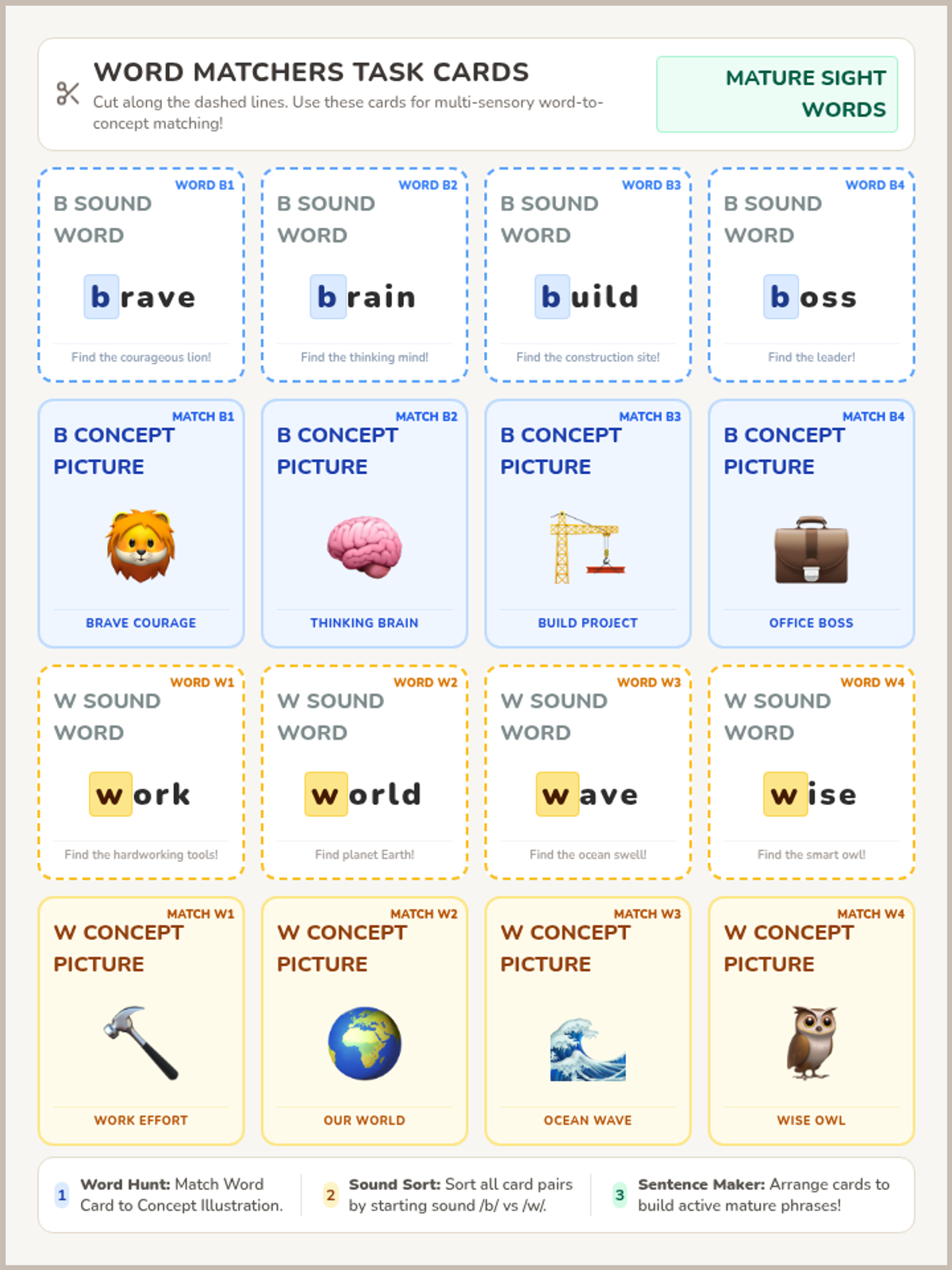
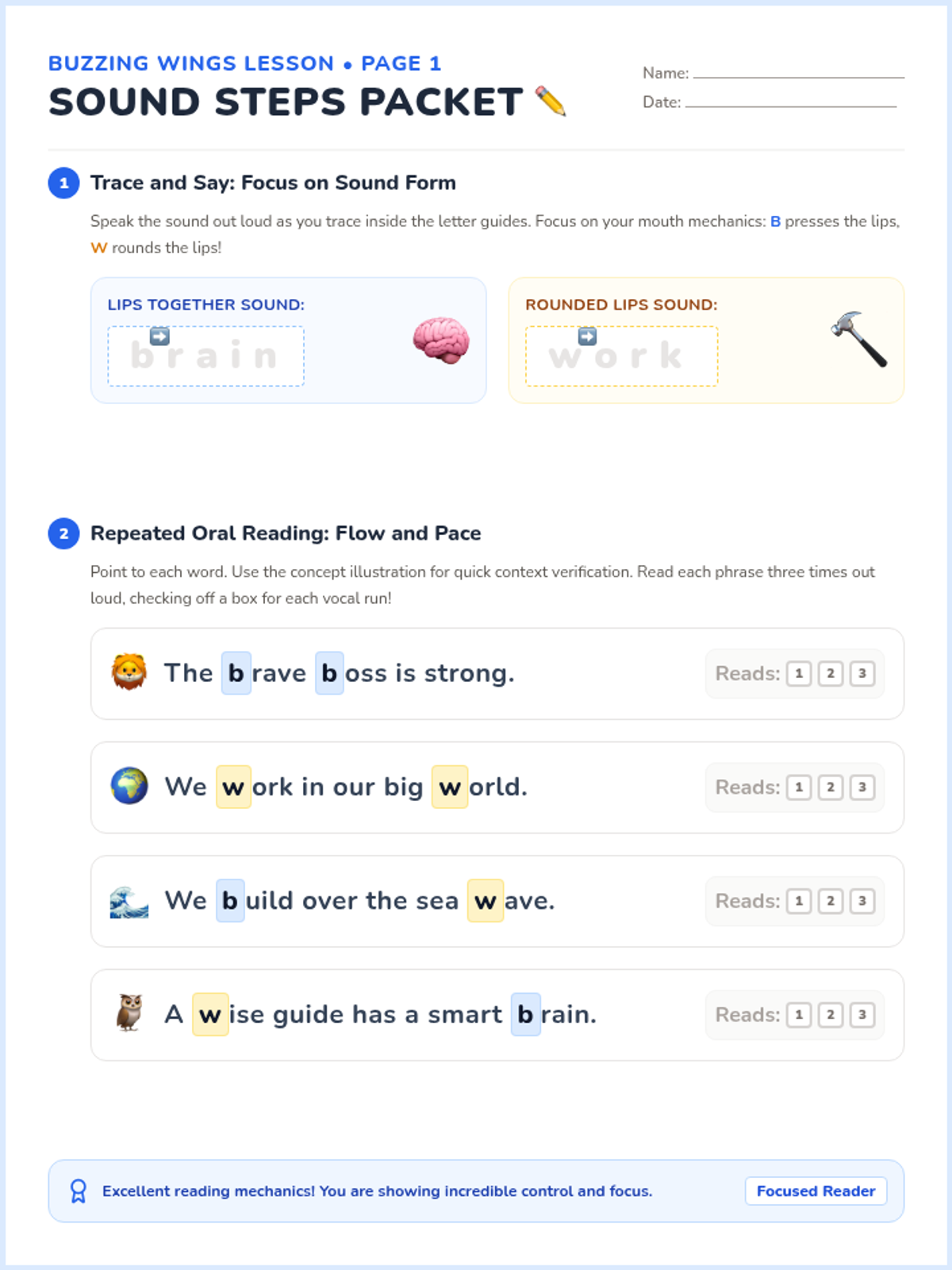
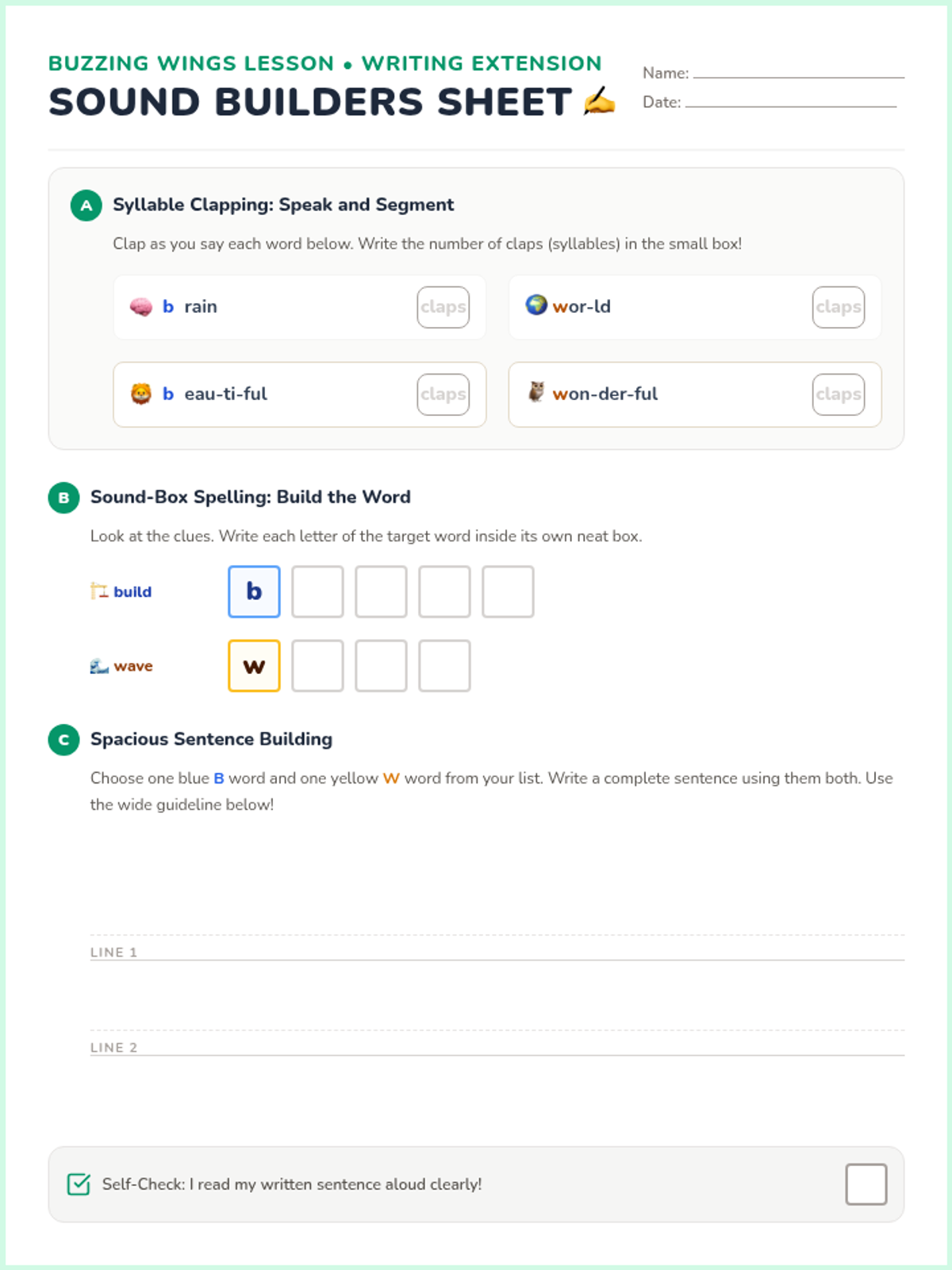
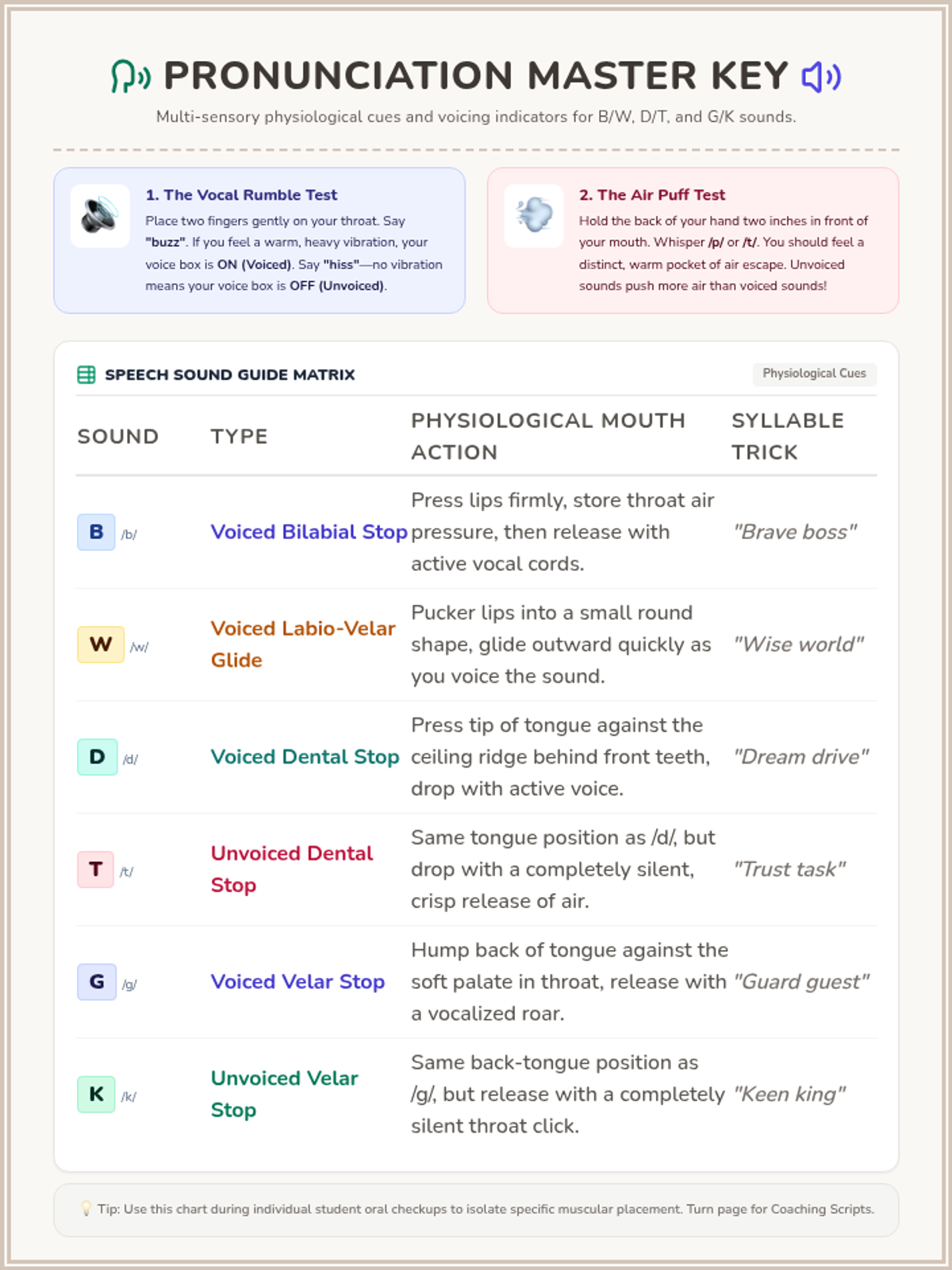
An hour-long structured reading lesson focusing on B and W letter-sound association and common sight words. Designed with dyslexia-friendly spacing, color-coded highlights, and picture scaffolding to support struggling oral readers.
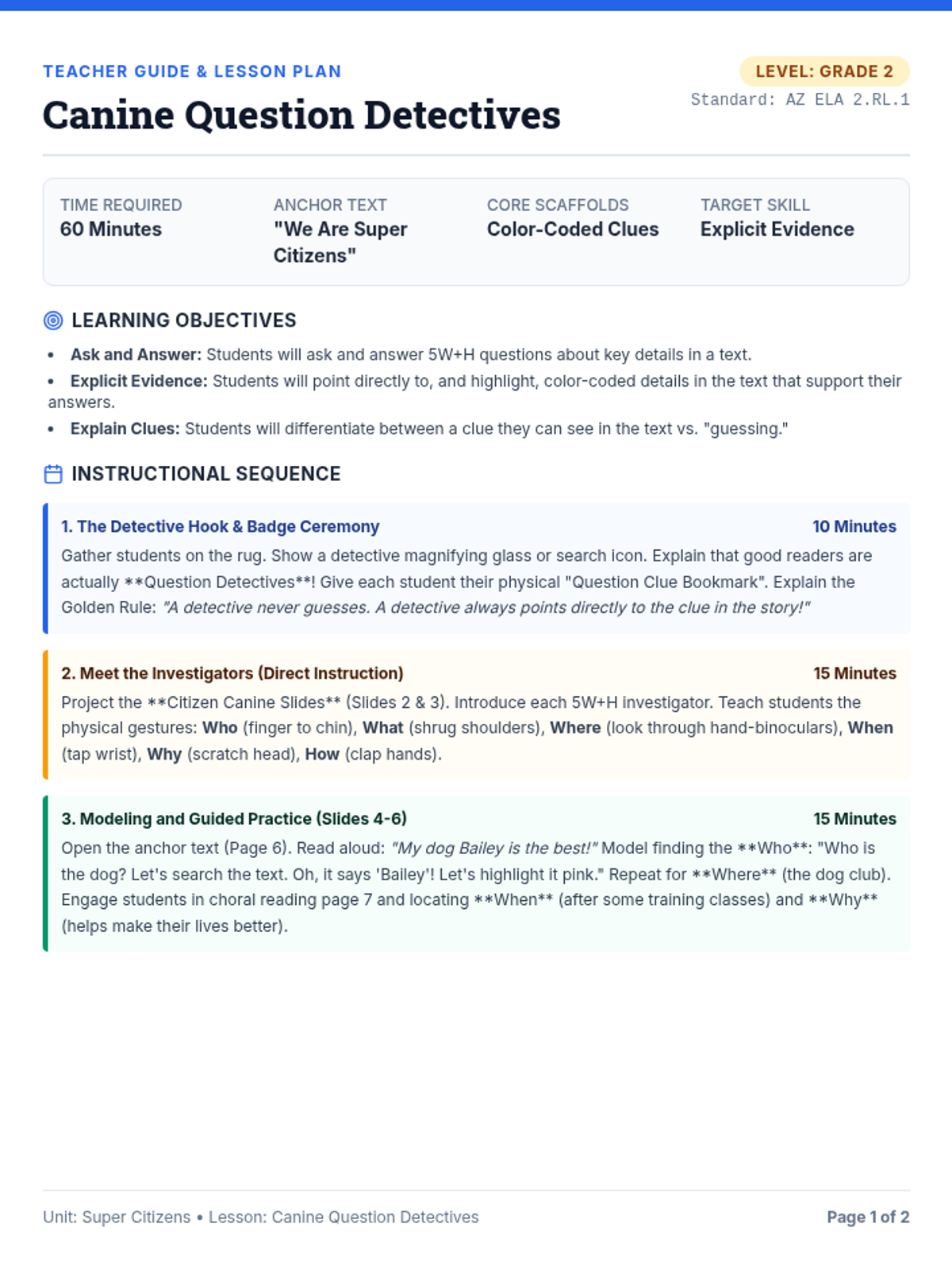
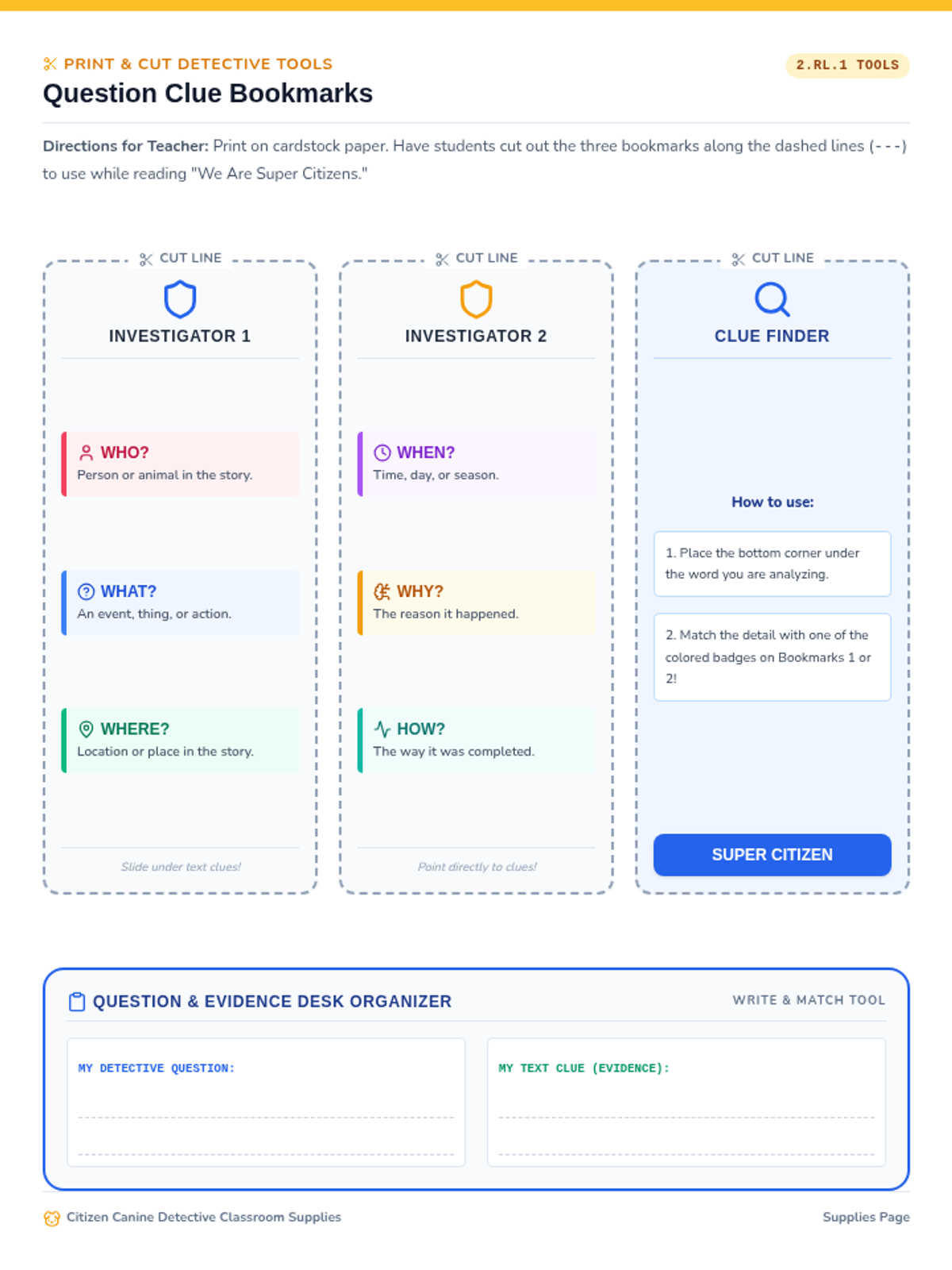
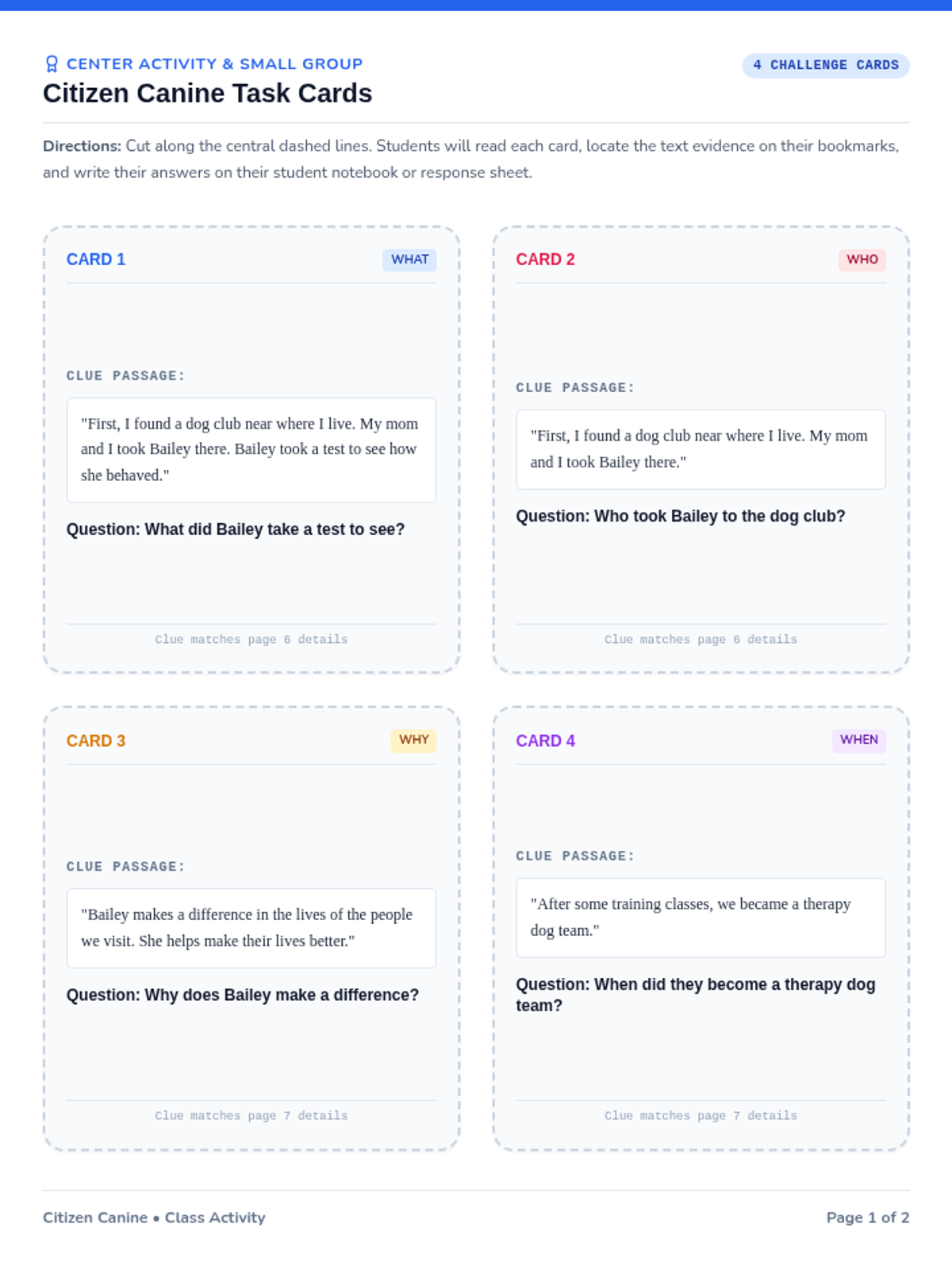
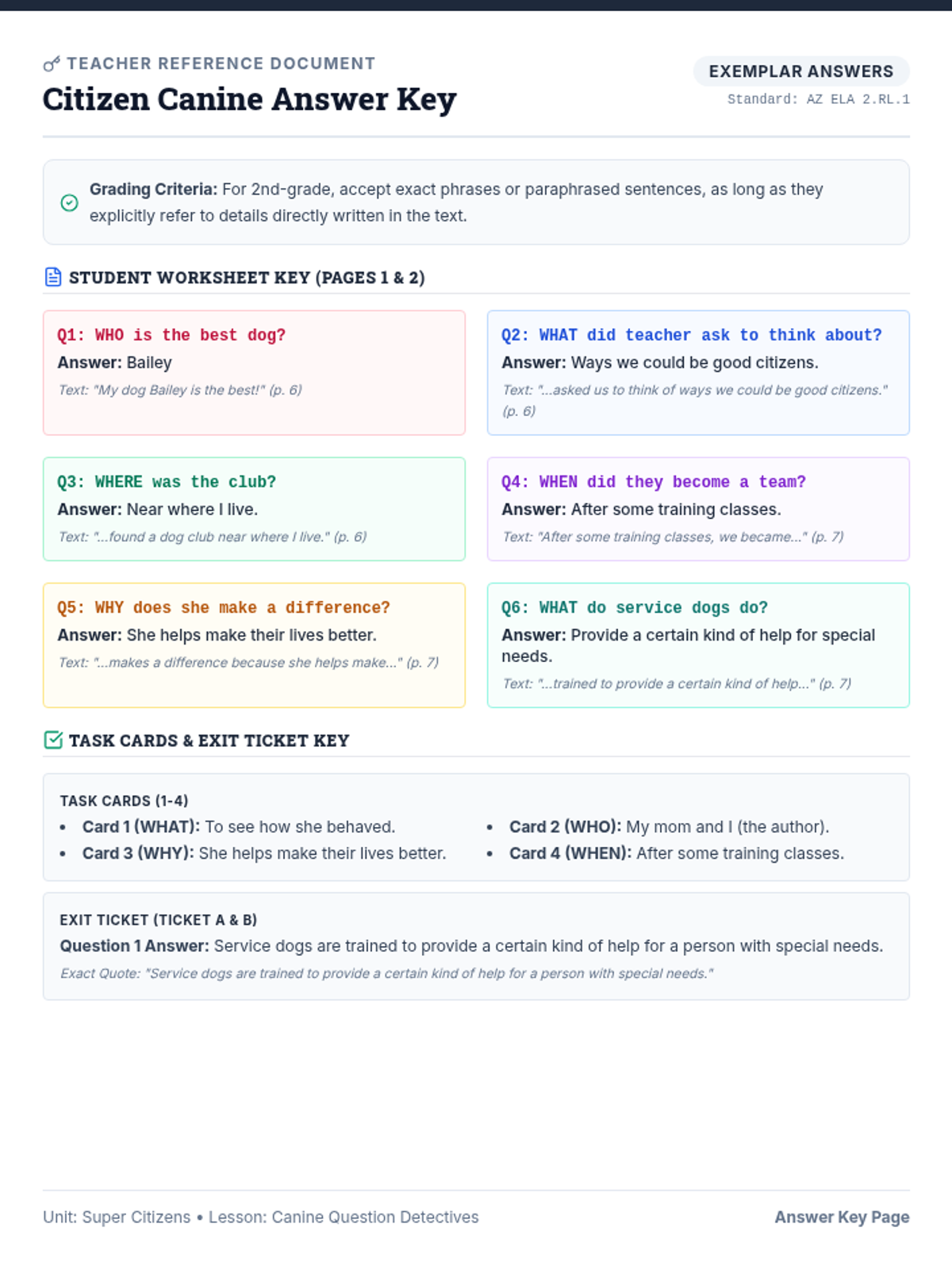
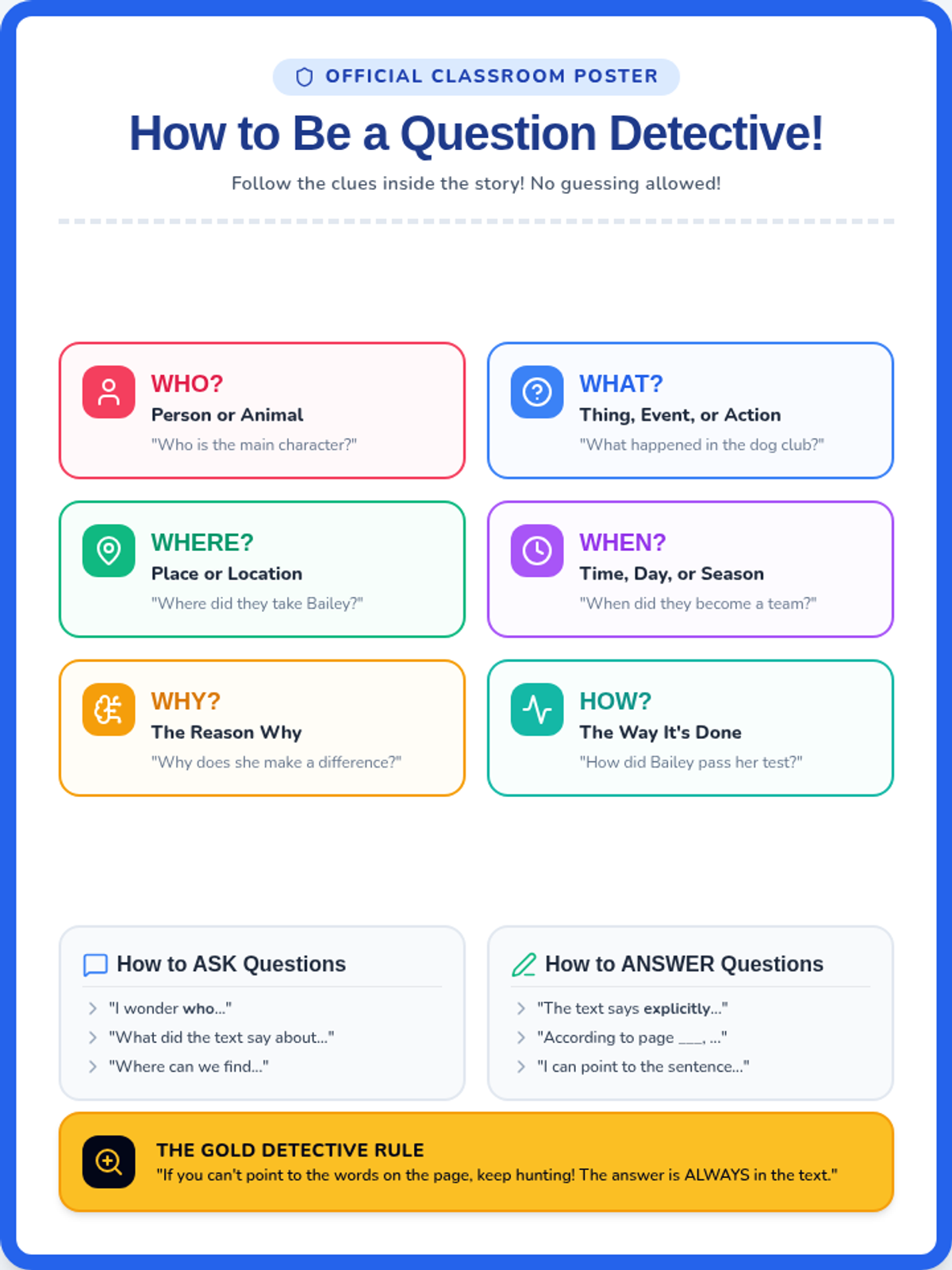
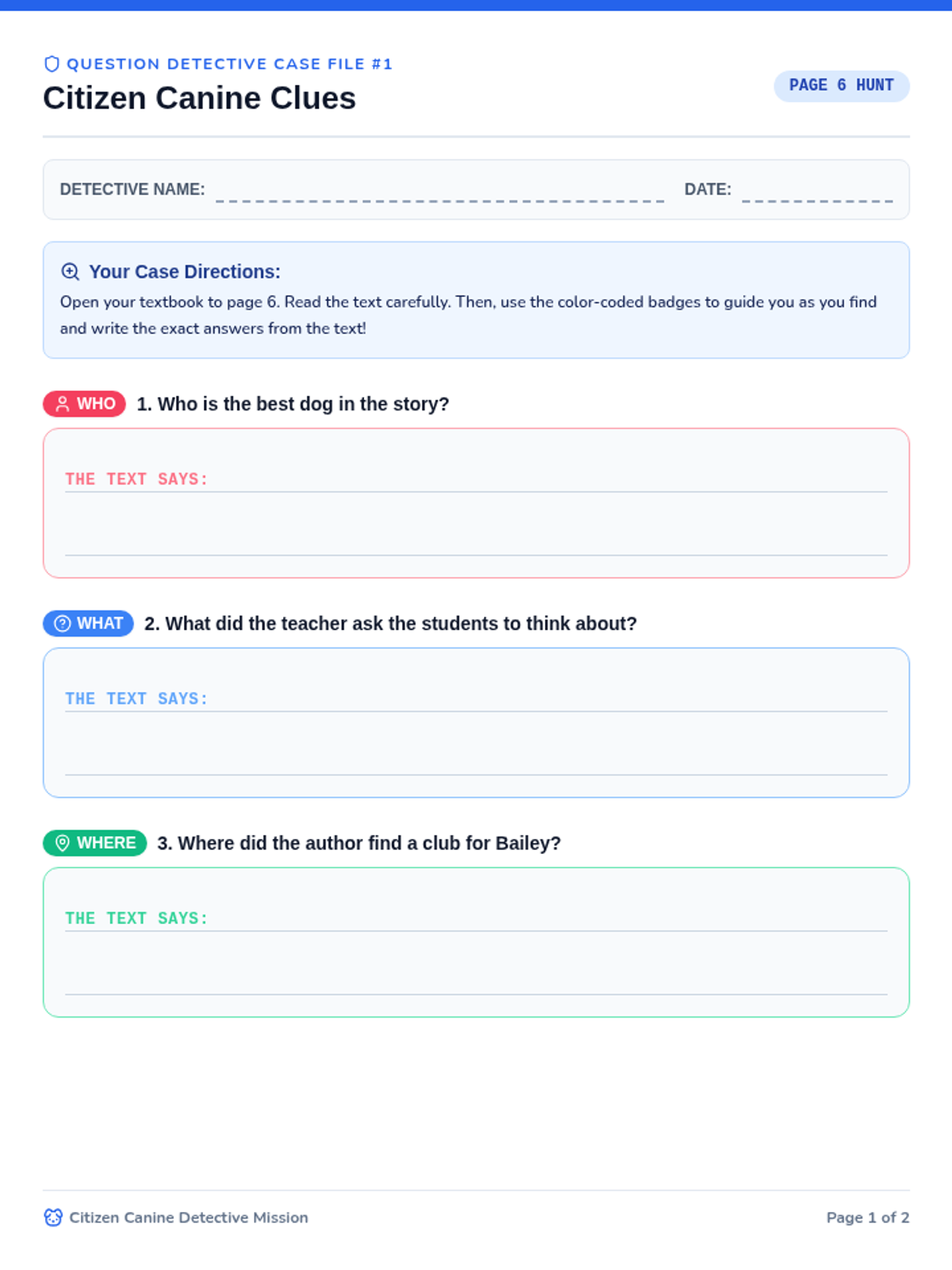
An introductory lesson teaching 2nd-grade students how to ask and answer Who, What, Where, When, Why, and How questions using the text 'We Are Super Citizens'. Students learn to find explicit clues in the story using a fun canine detective theme.
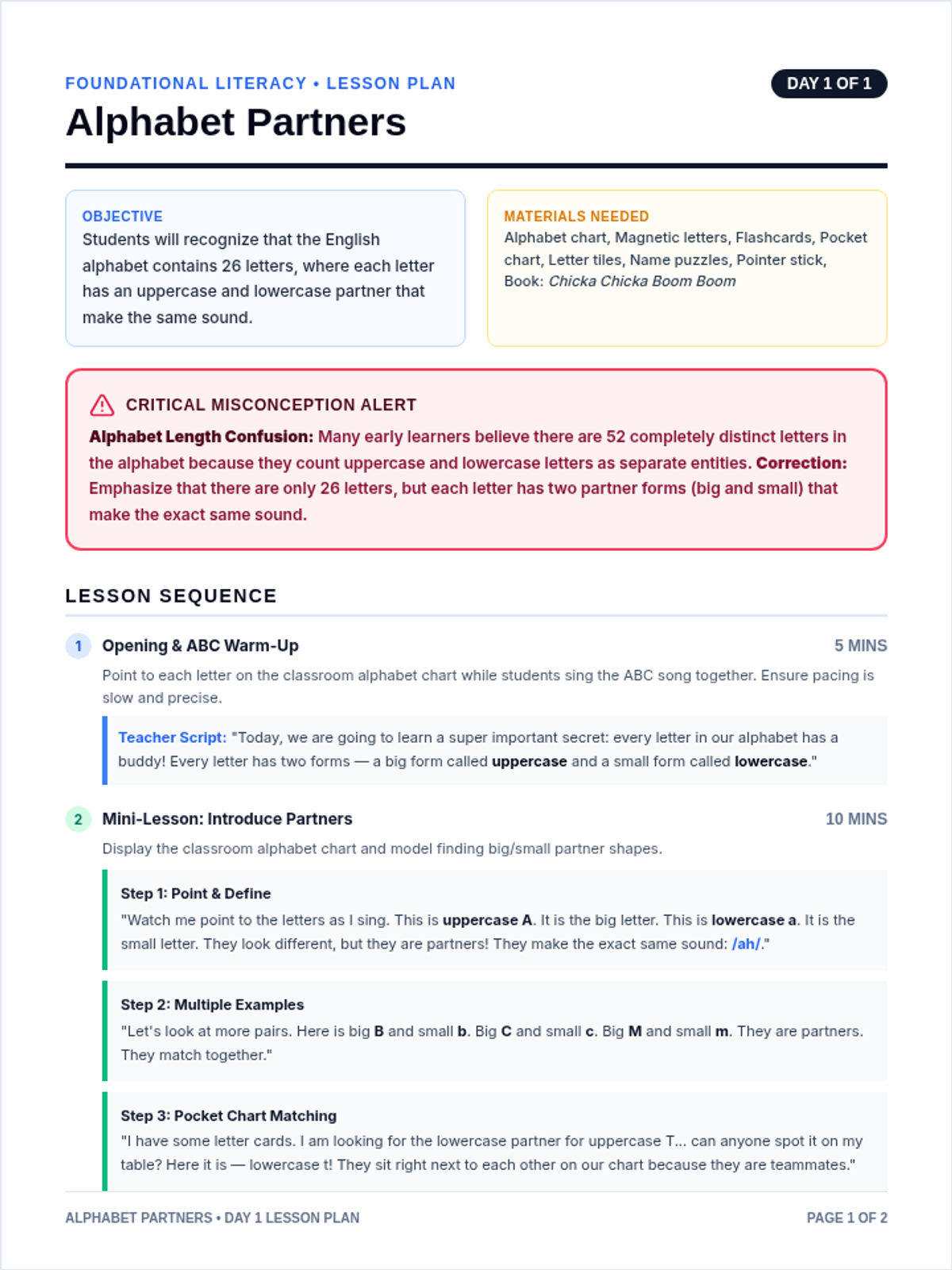
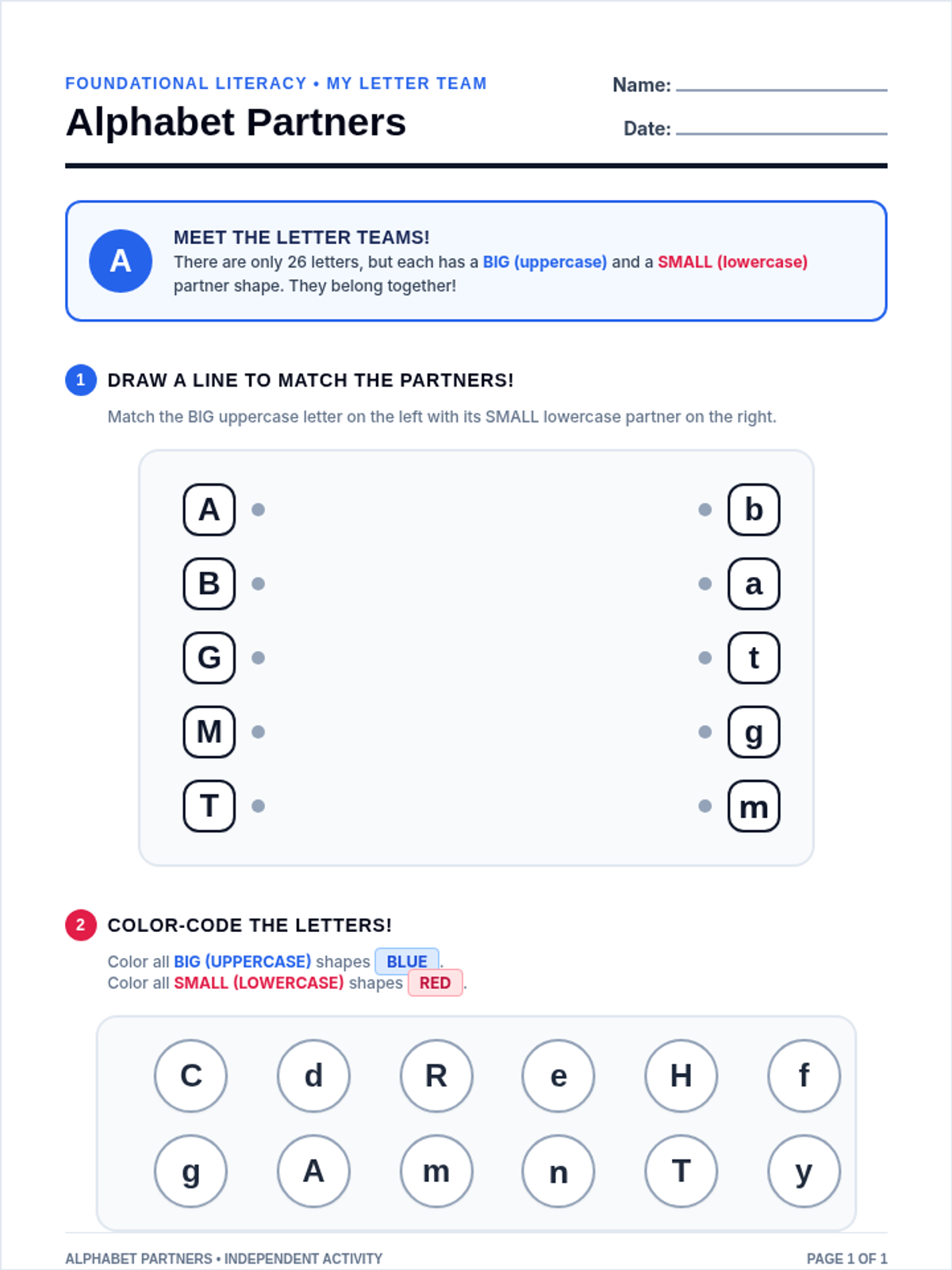
A foundational literacy lesson designed to introduce uppercase and lowercase letter partners, explicitly correcting the common misconception that the alphabet contains 52 completely independent letters by presenting them as 26 matching pairs.
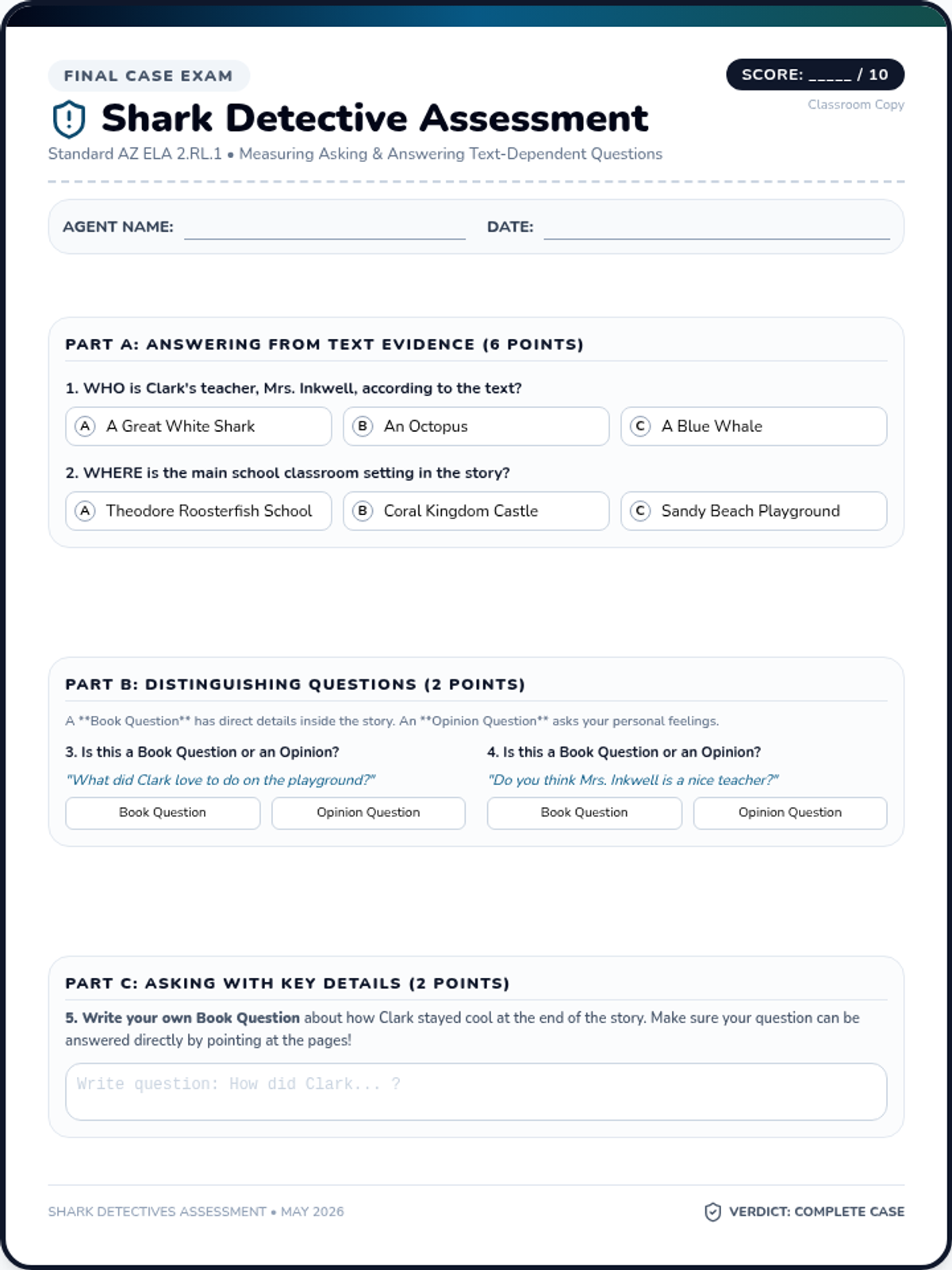
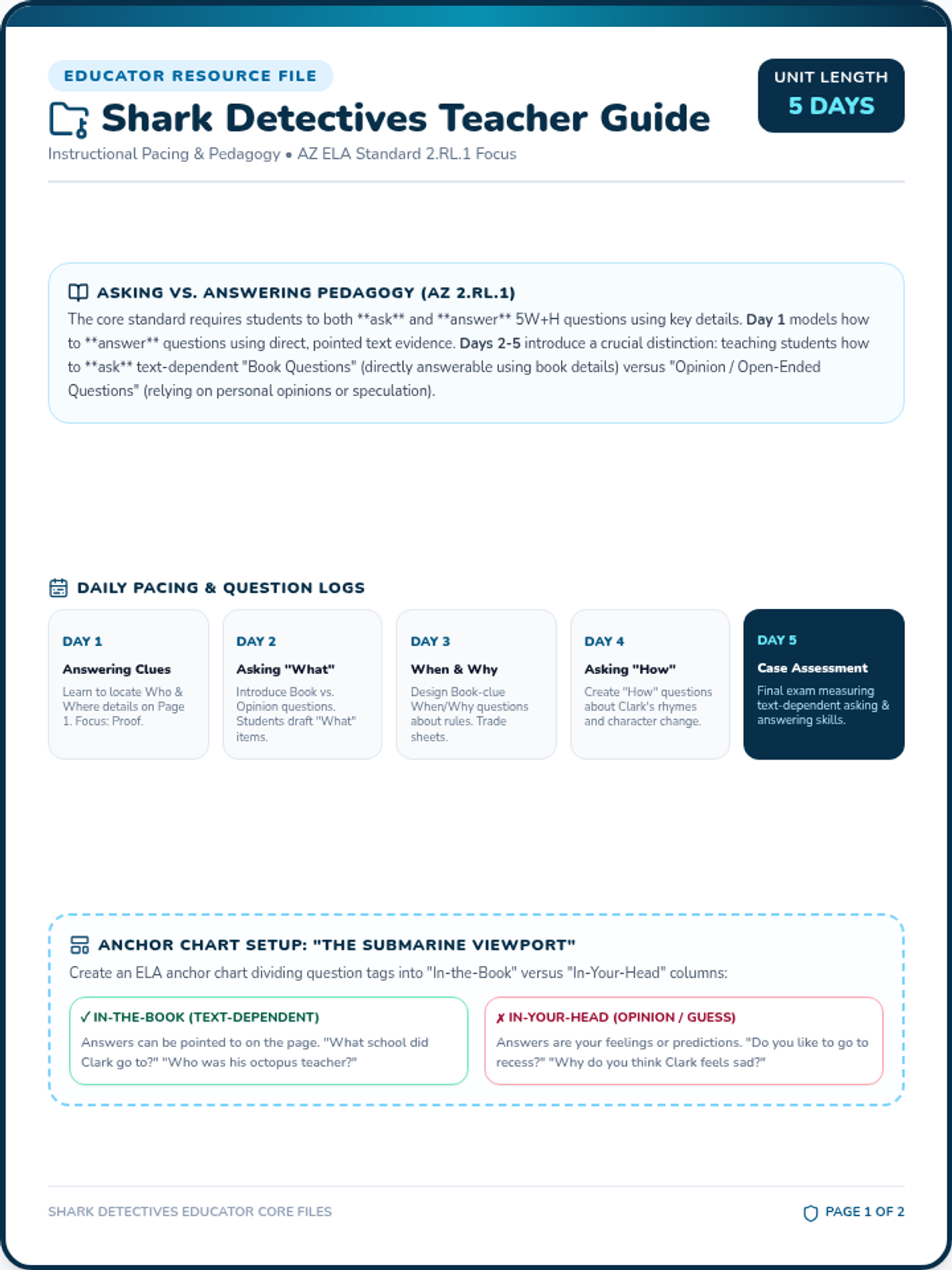
Day 5 is the final synthesis where students complete their case files, solve the mystery of Clark's transformation, and take their comprehension assessment.
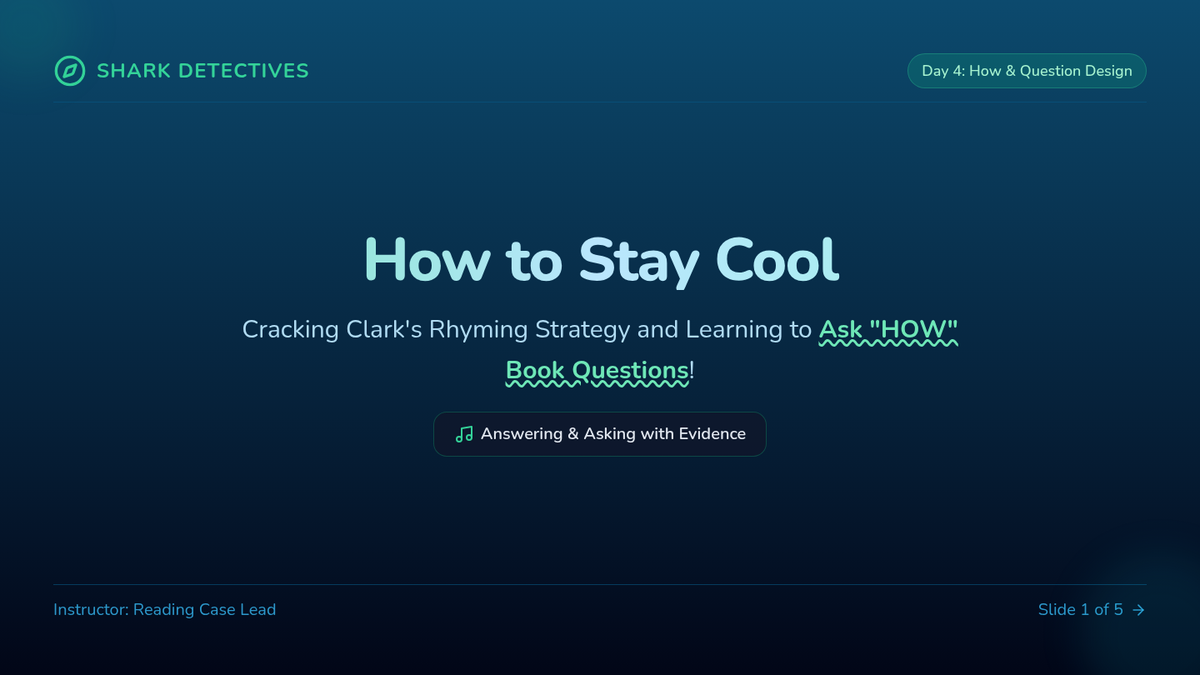
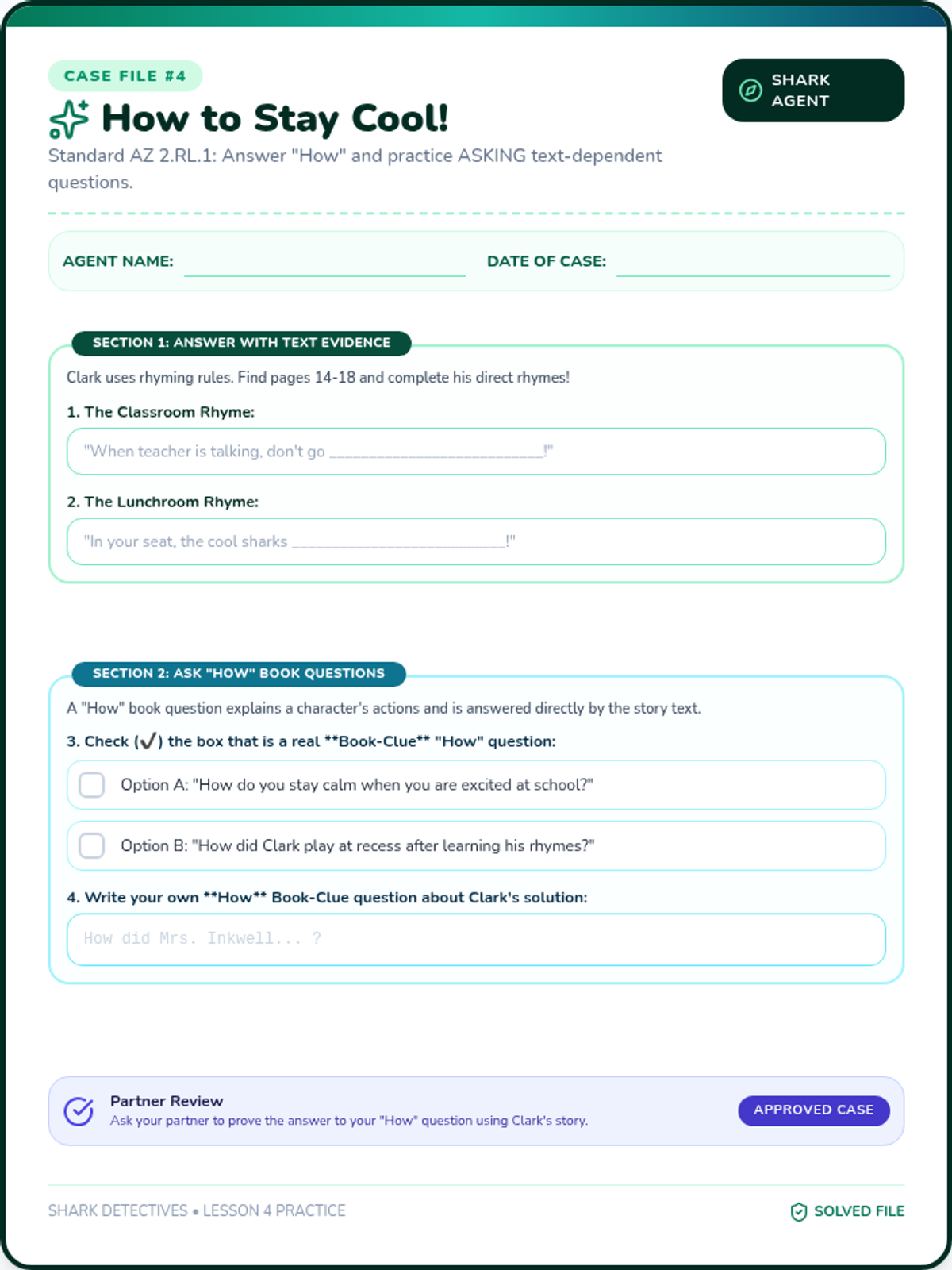
Day 4 focuses on analyzing how Clark solves his problems by creating rhyming rules, and how his character changes.
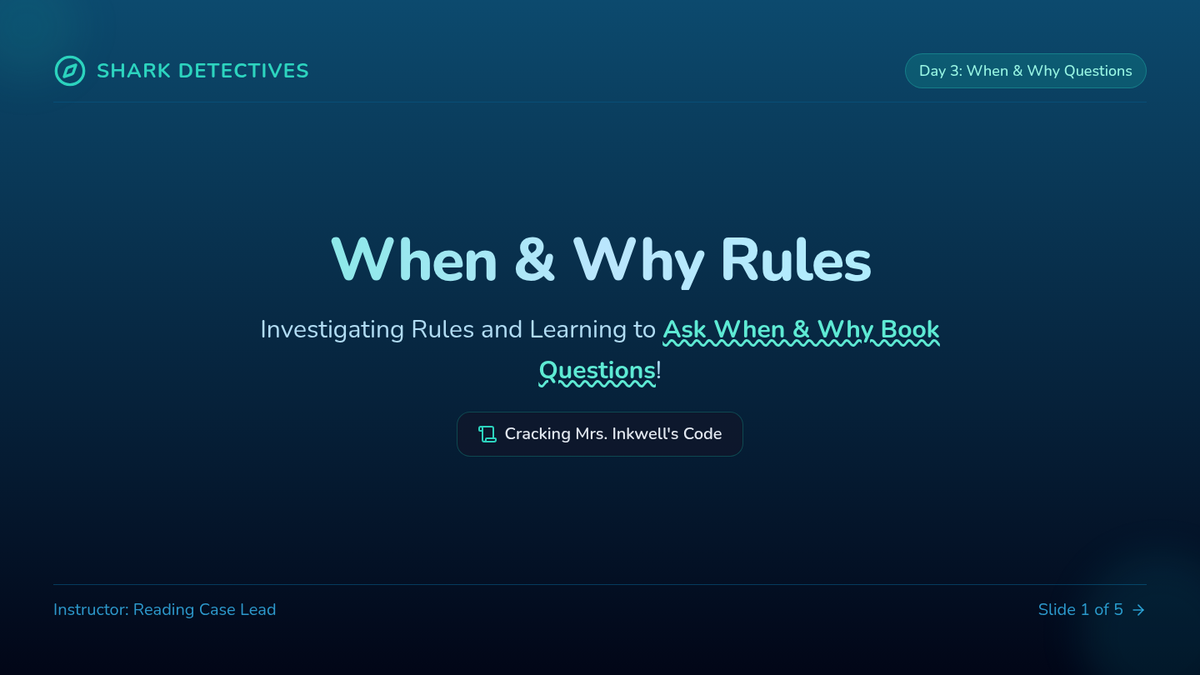
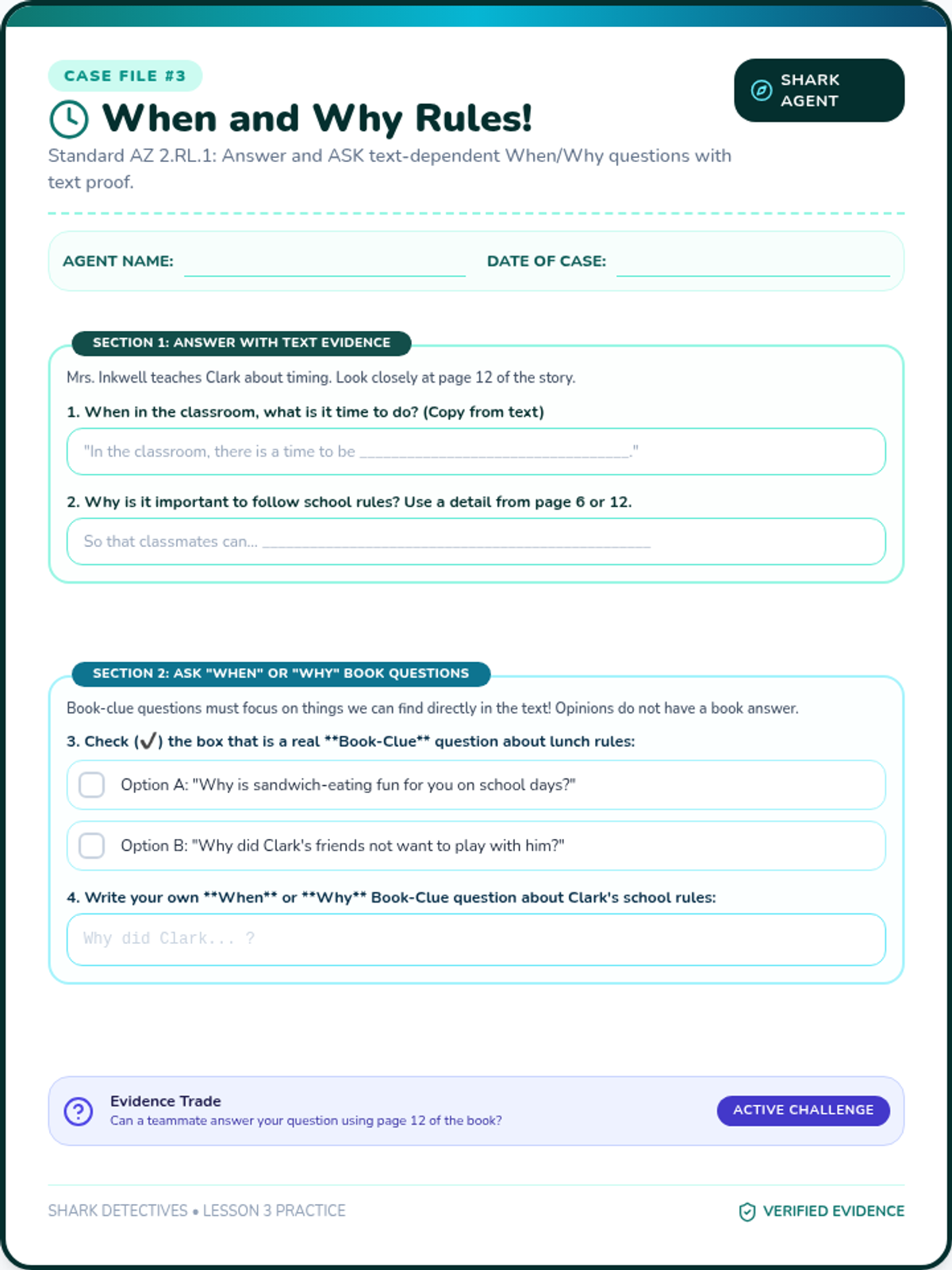
Day 3 focuses on understanding when rules apply and why they are necessary in Clark's school environment, using direct quotes and book details.
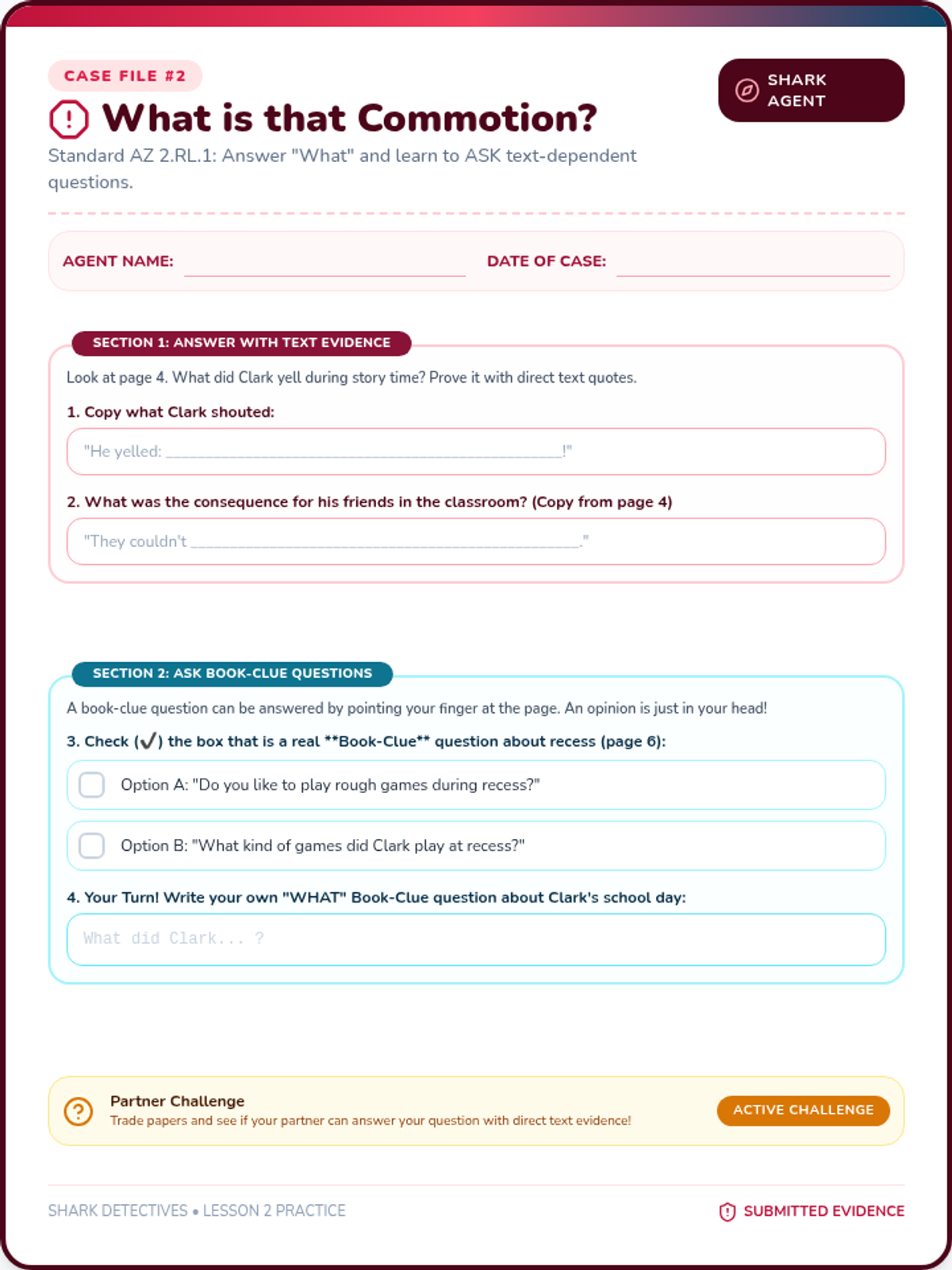
Day 2 focuses on identifying the main problem (What) that Clark causes with his loud, wild behavior, and tracking the direct text reactions from others.
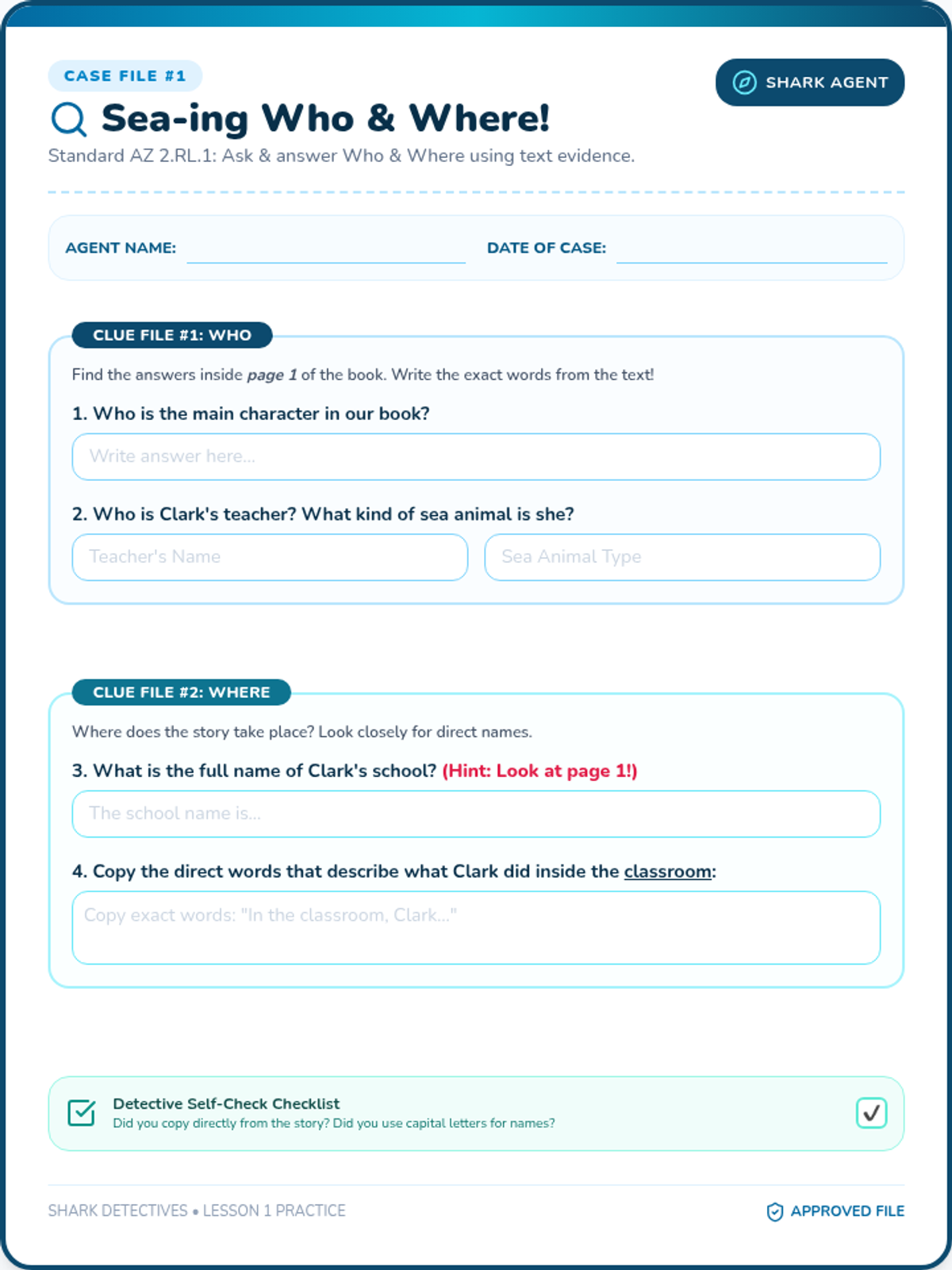
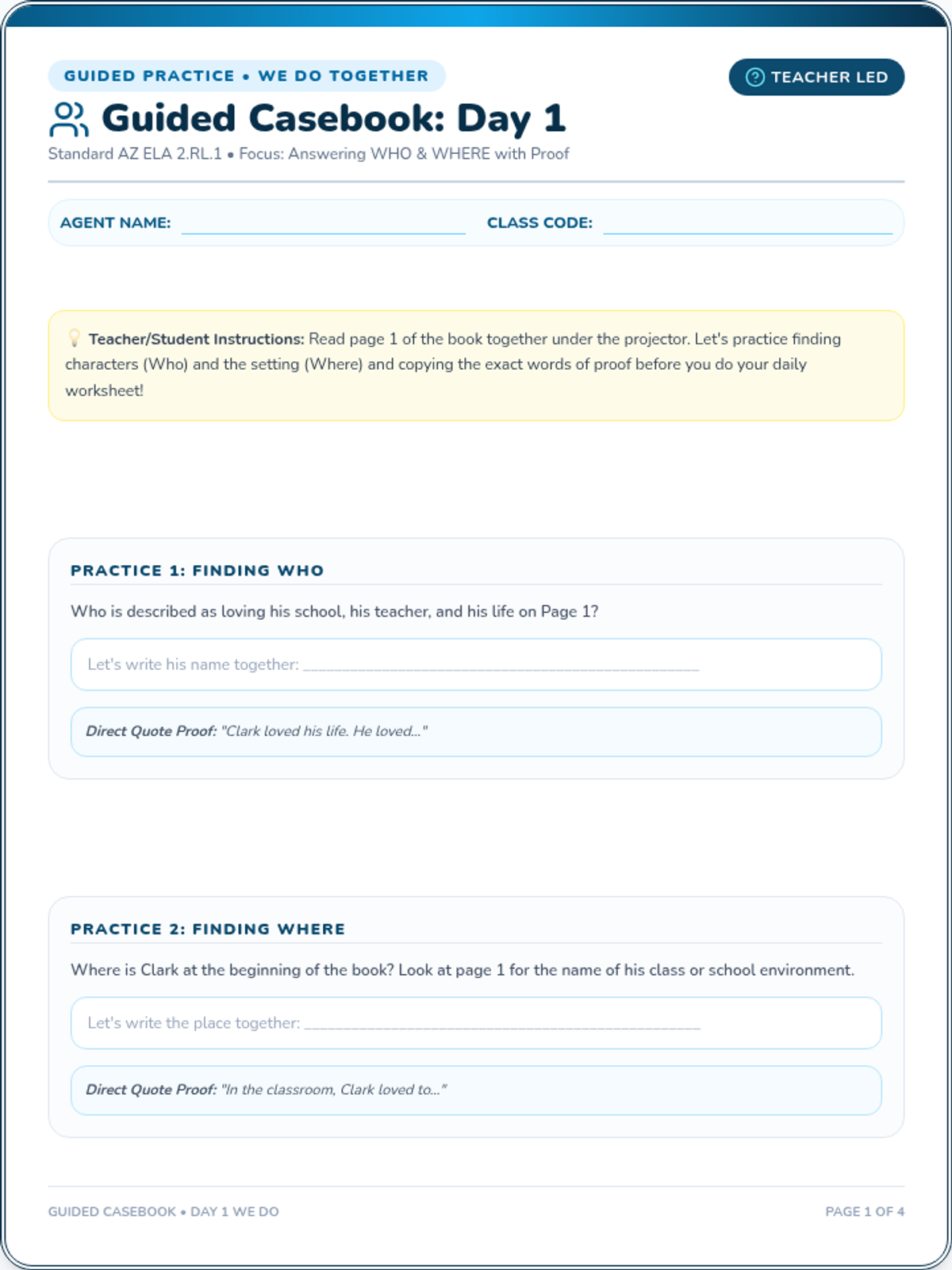
Day 1 focuses on identifying characters (Who) and setting (Where) in Clark the Shark, finding direct evidence of Clark's classroom and his classmates.