A data analysis lesson where students compare rainfall line plots to draw evidence-based conclusions. Includes a video-guided tutorial on constructing line plots with fractions and a collaborative analysis activity.
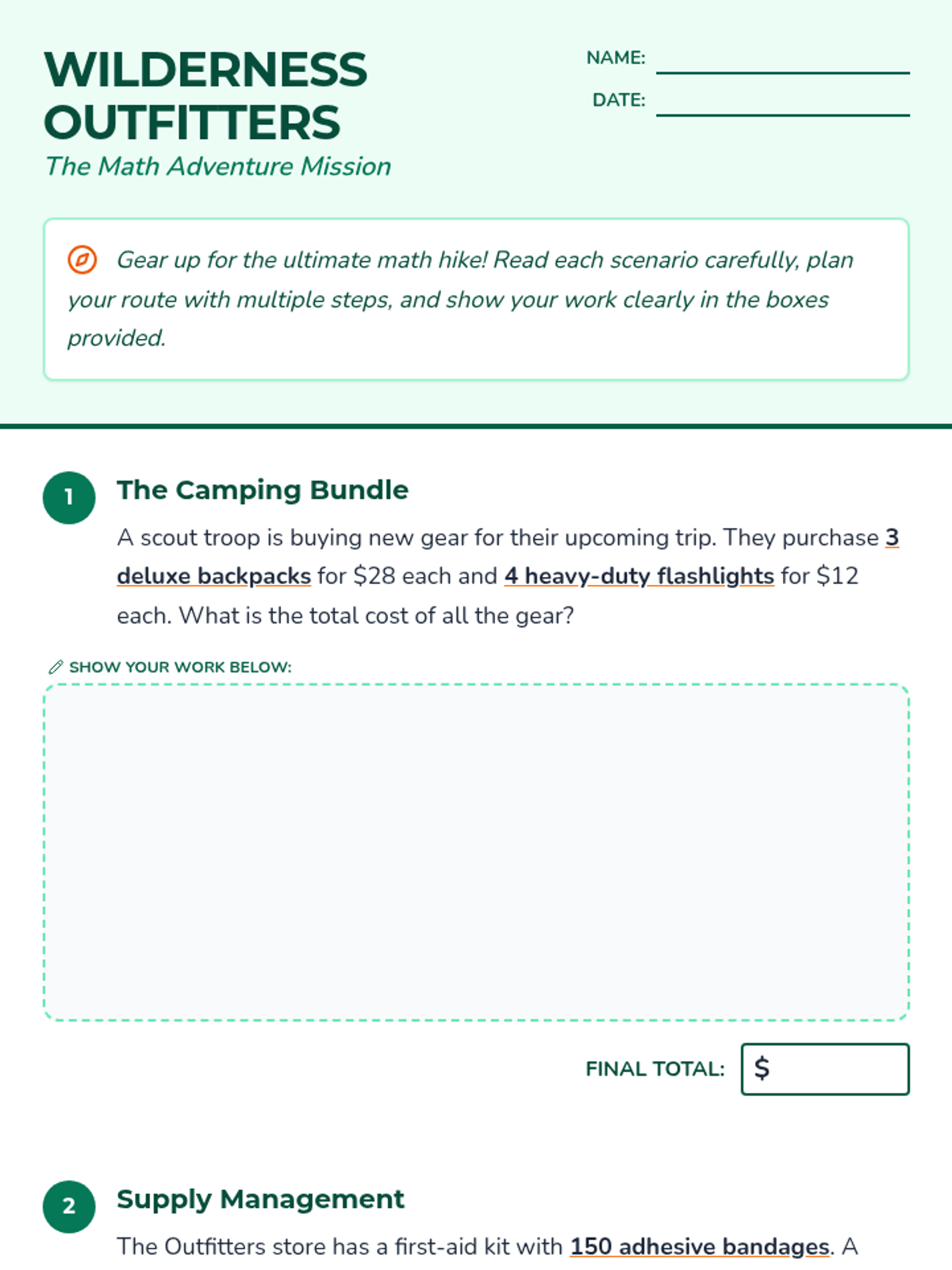
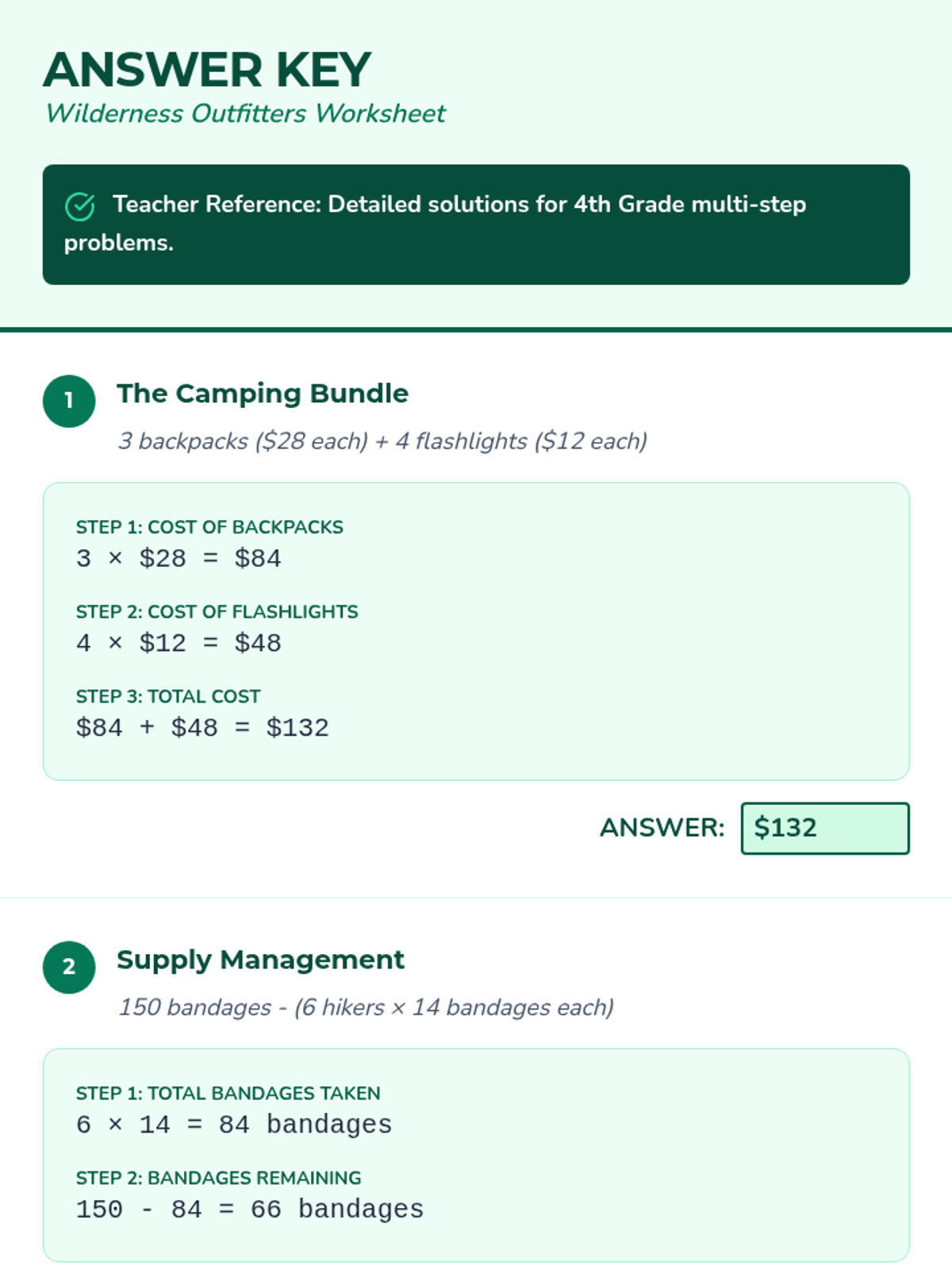
A focused practice session on solving multi-step word problems using addition, subtraction, multiplication, and division in real-world contexts.
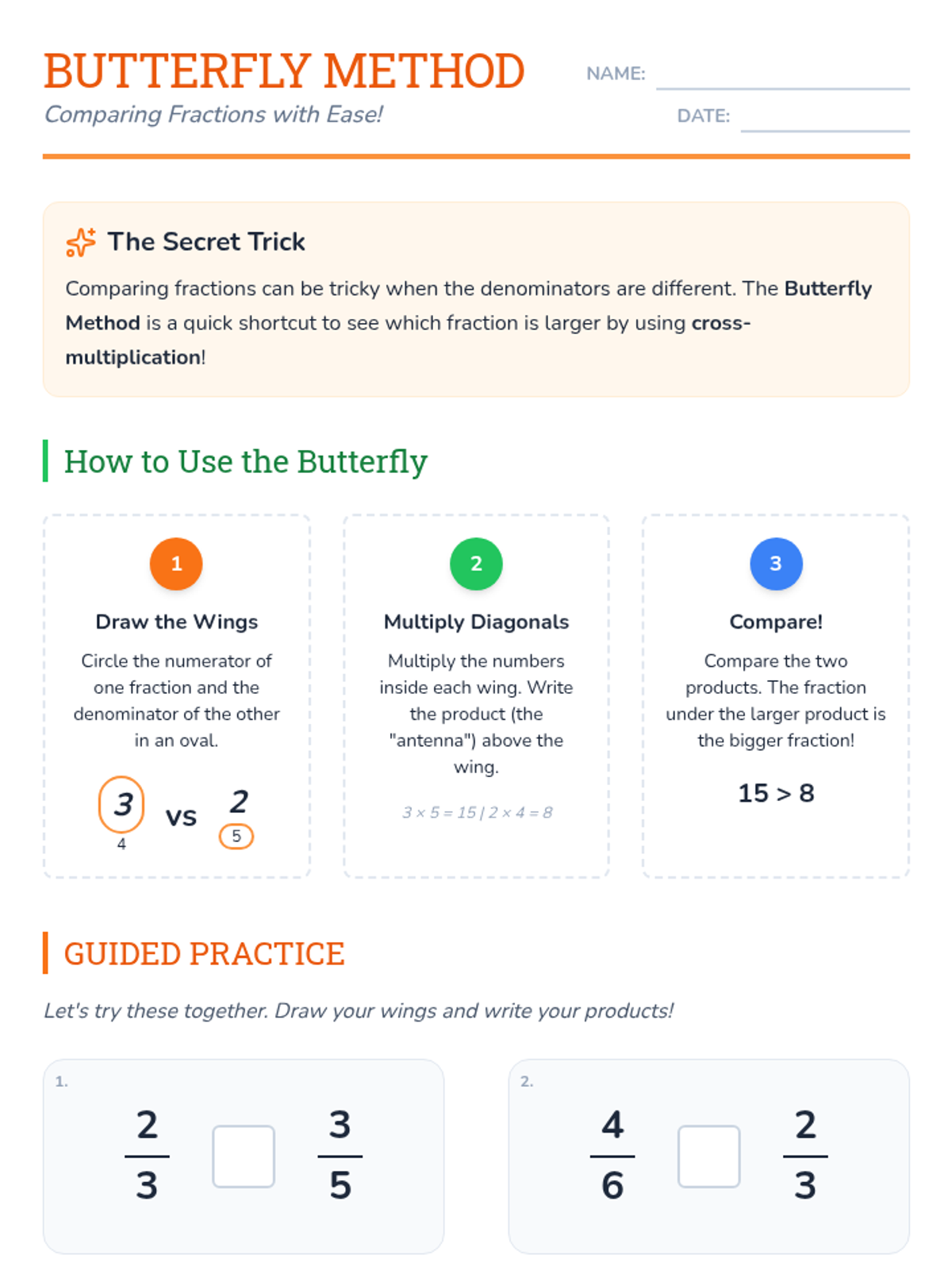
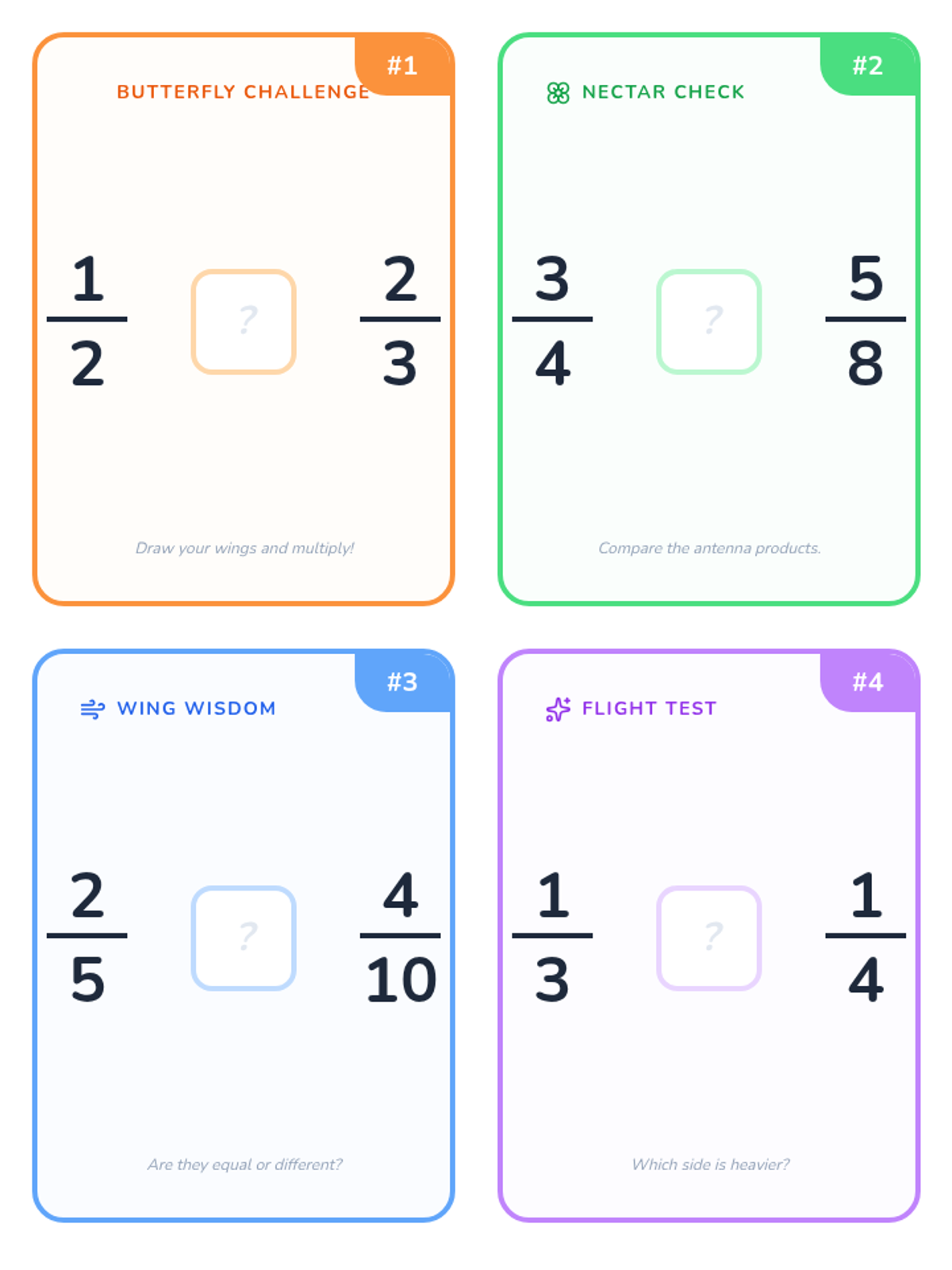
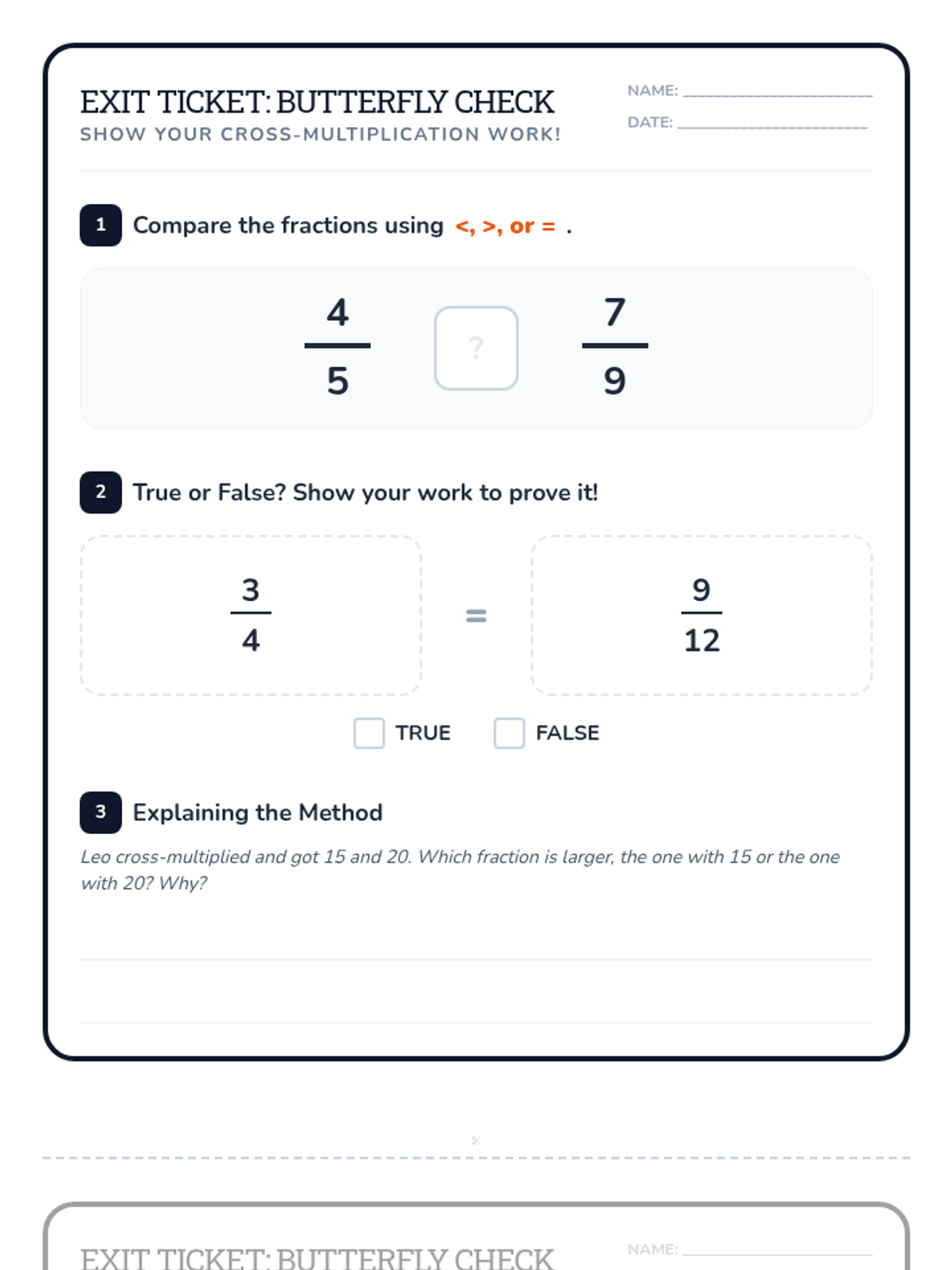
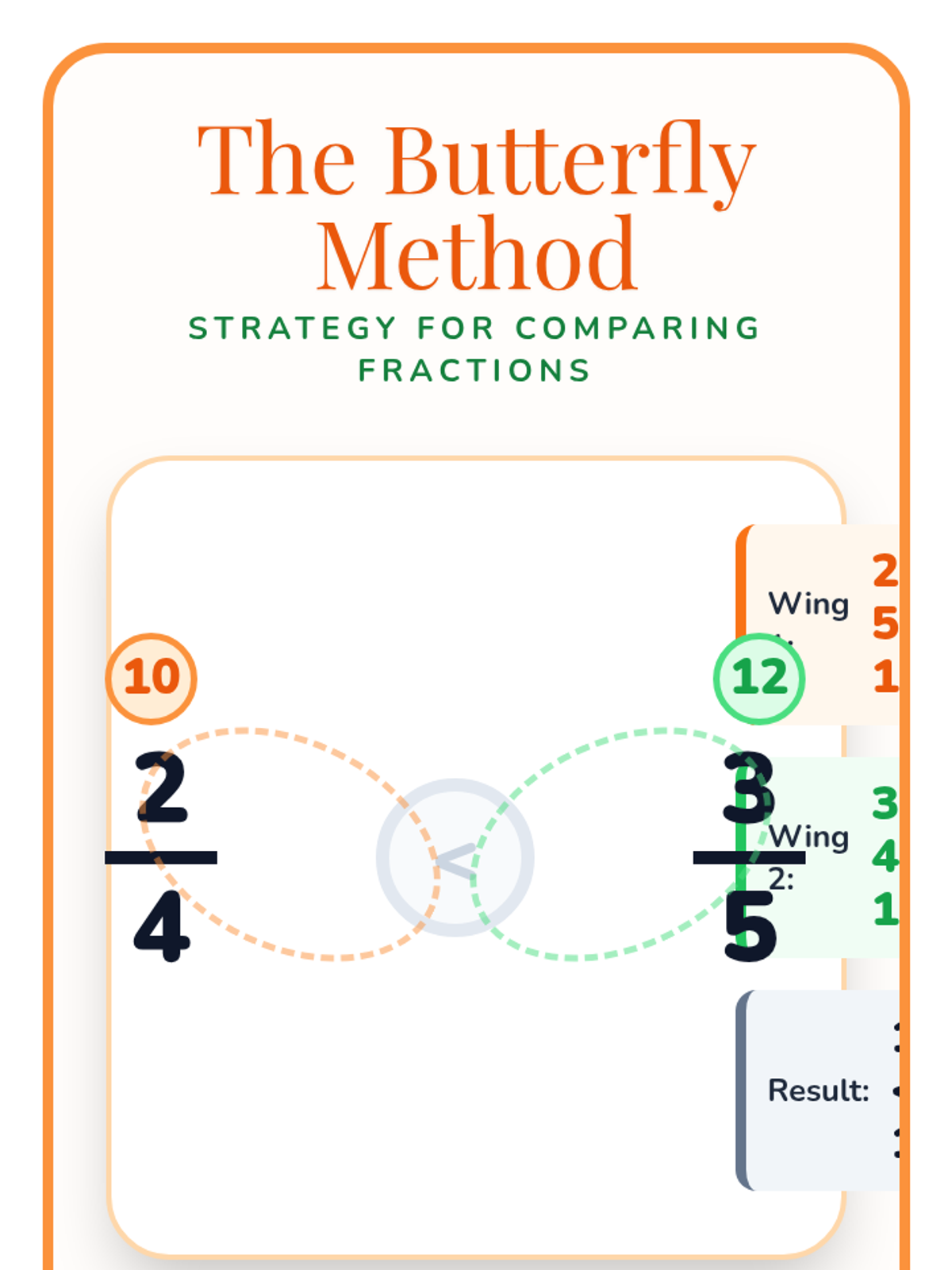
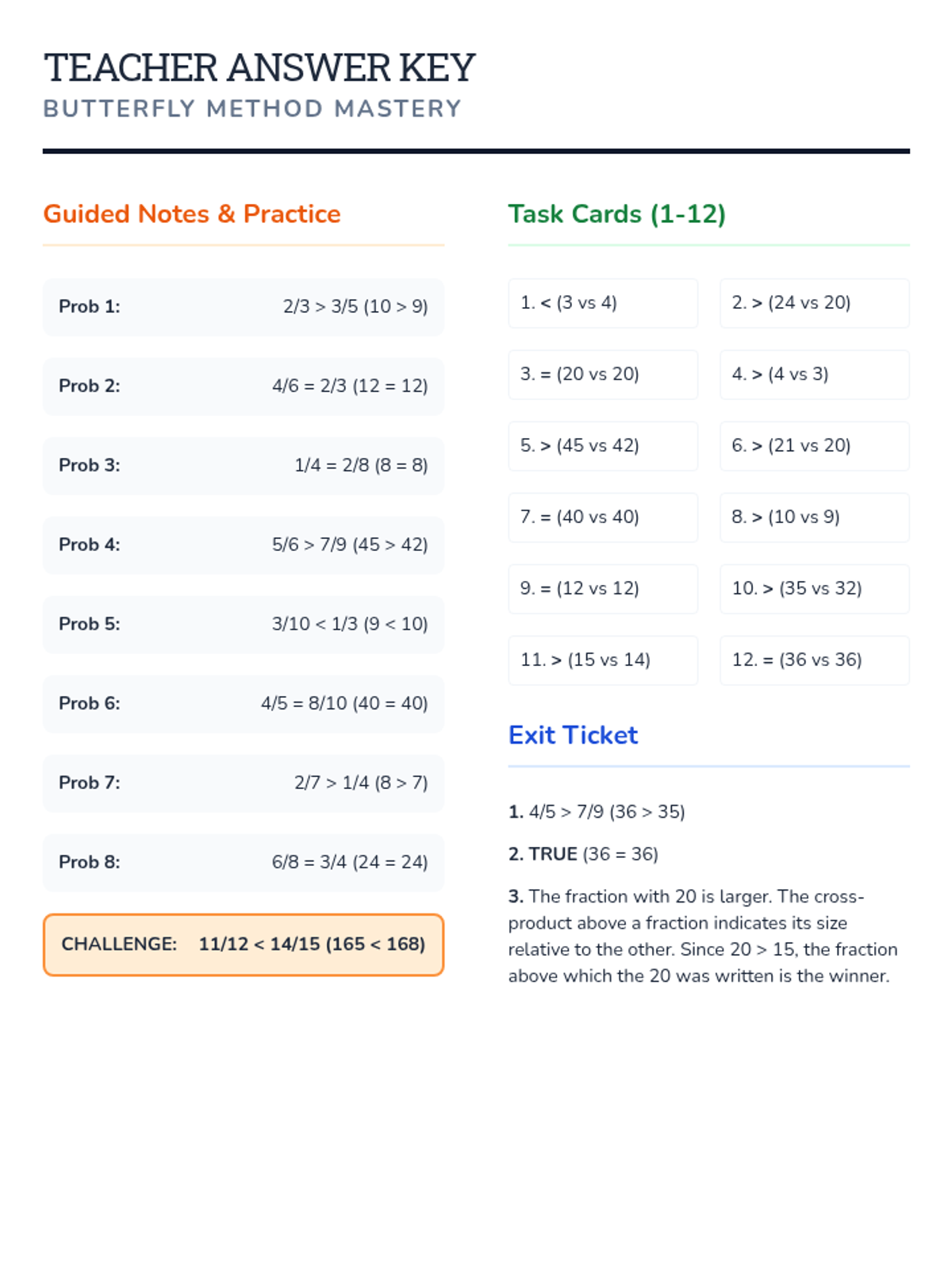
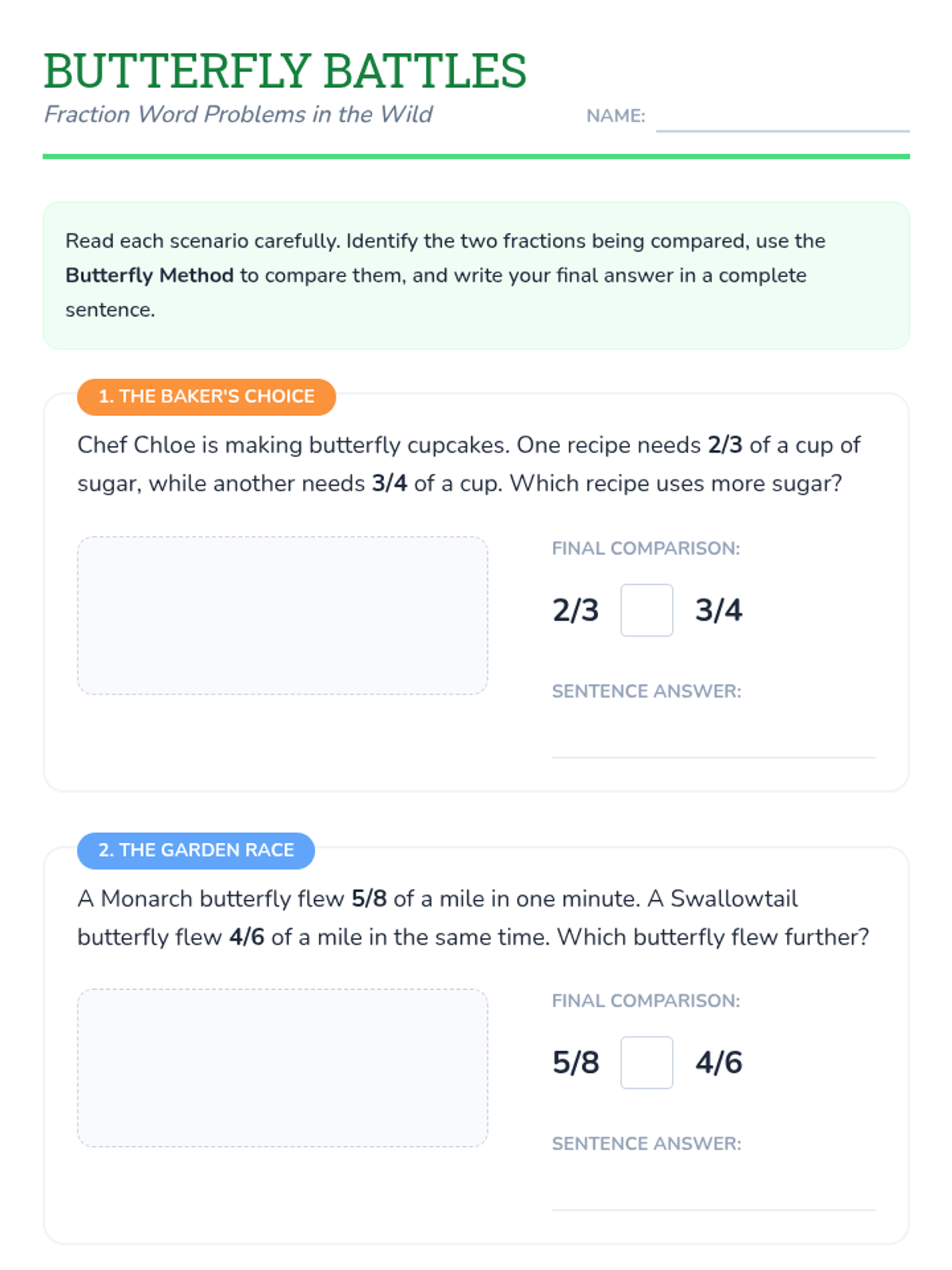
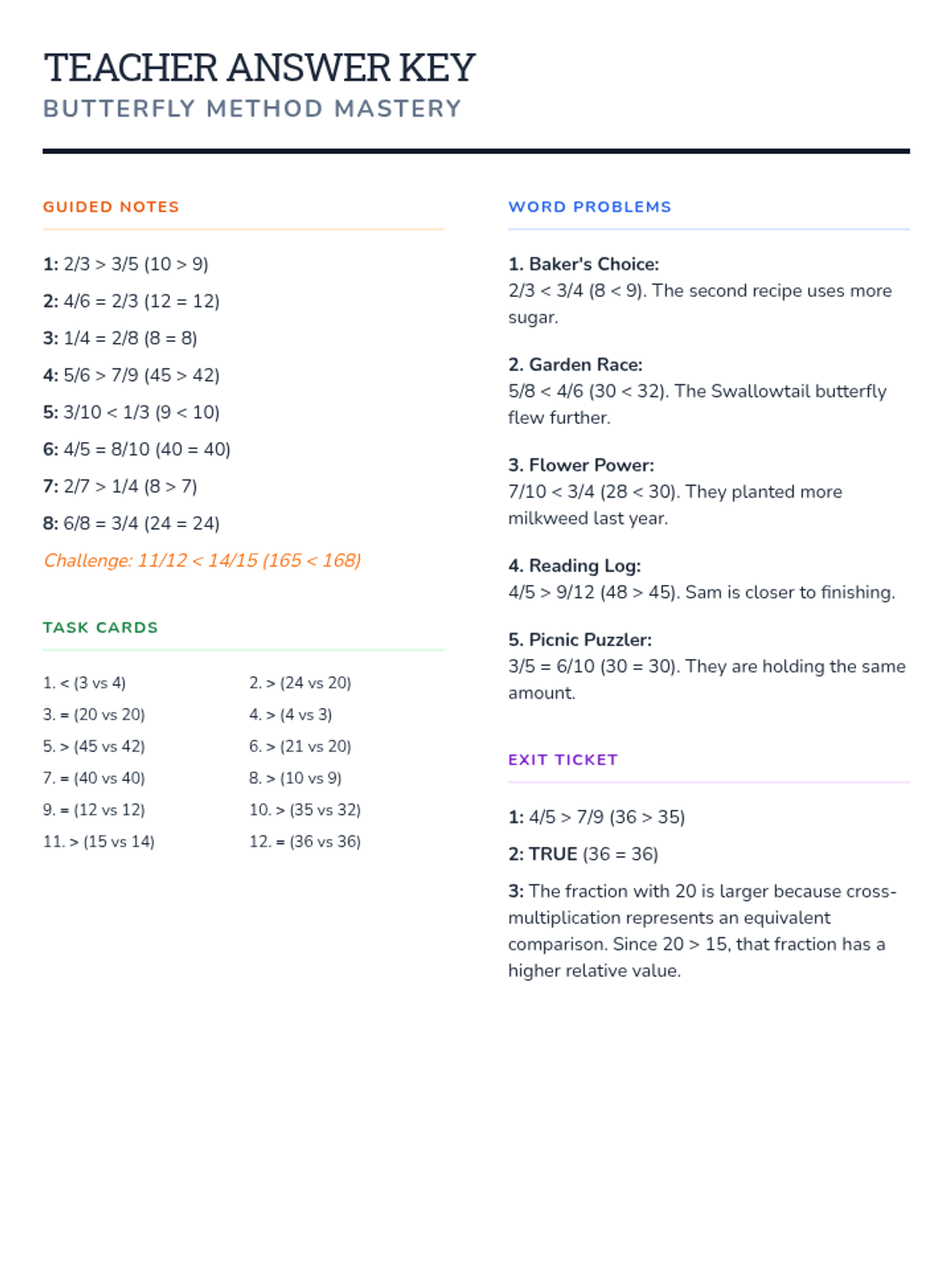
This lesson teaches students the 'Butterfly Method' (cross-multiplication) as a strategy to compare fractions with unlike denominators, including guided practice and independent application.
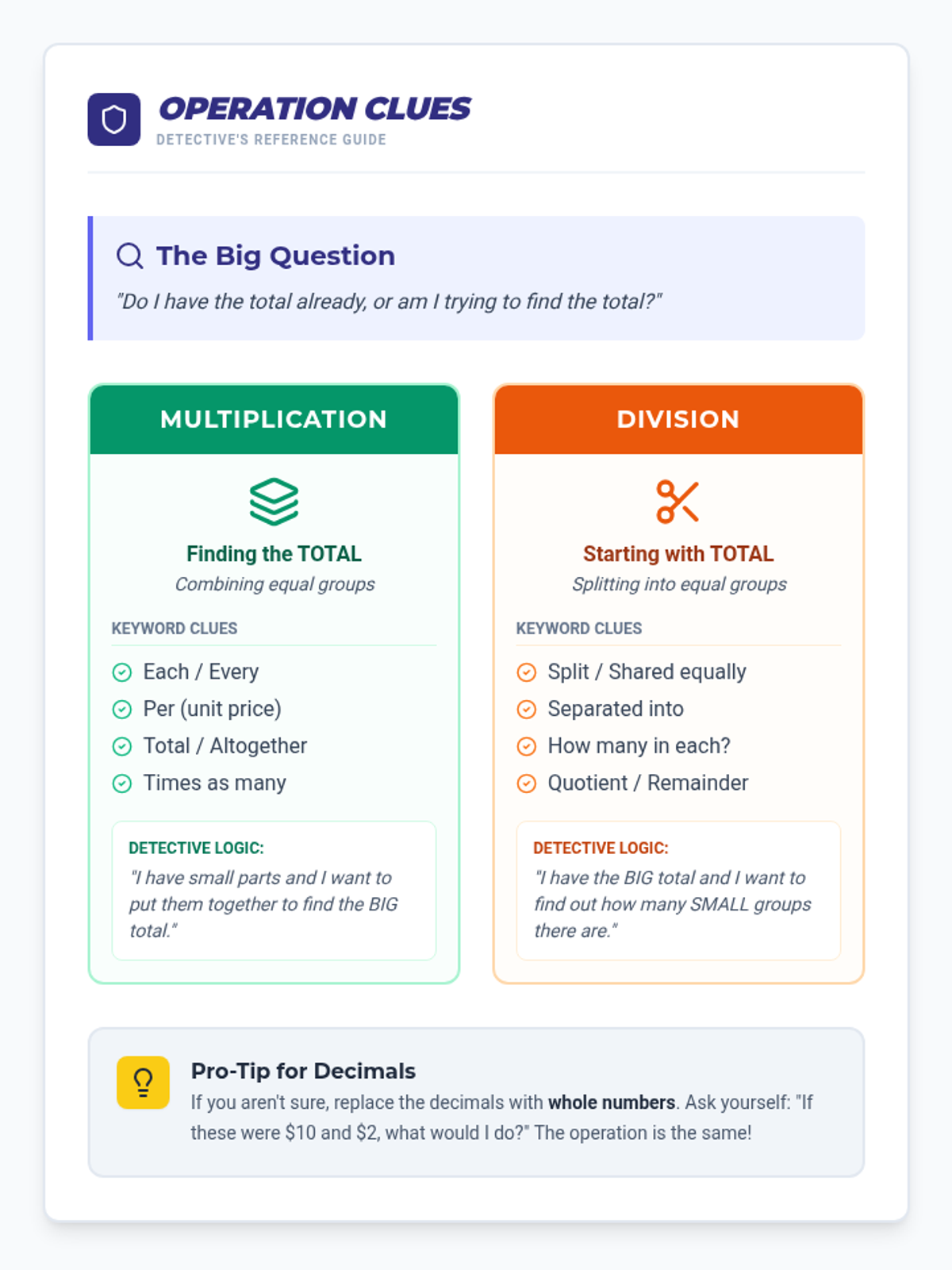
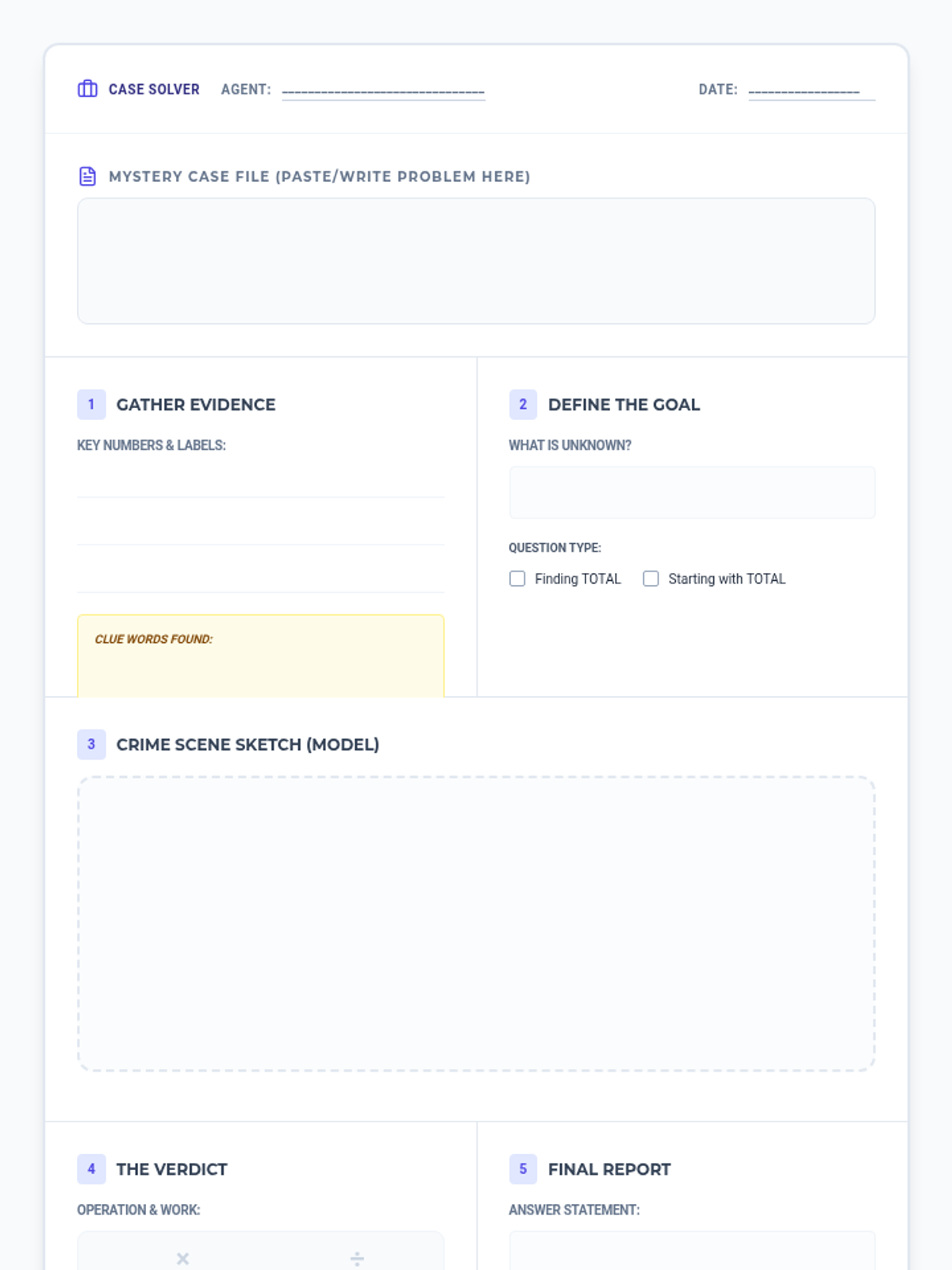
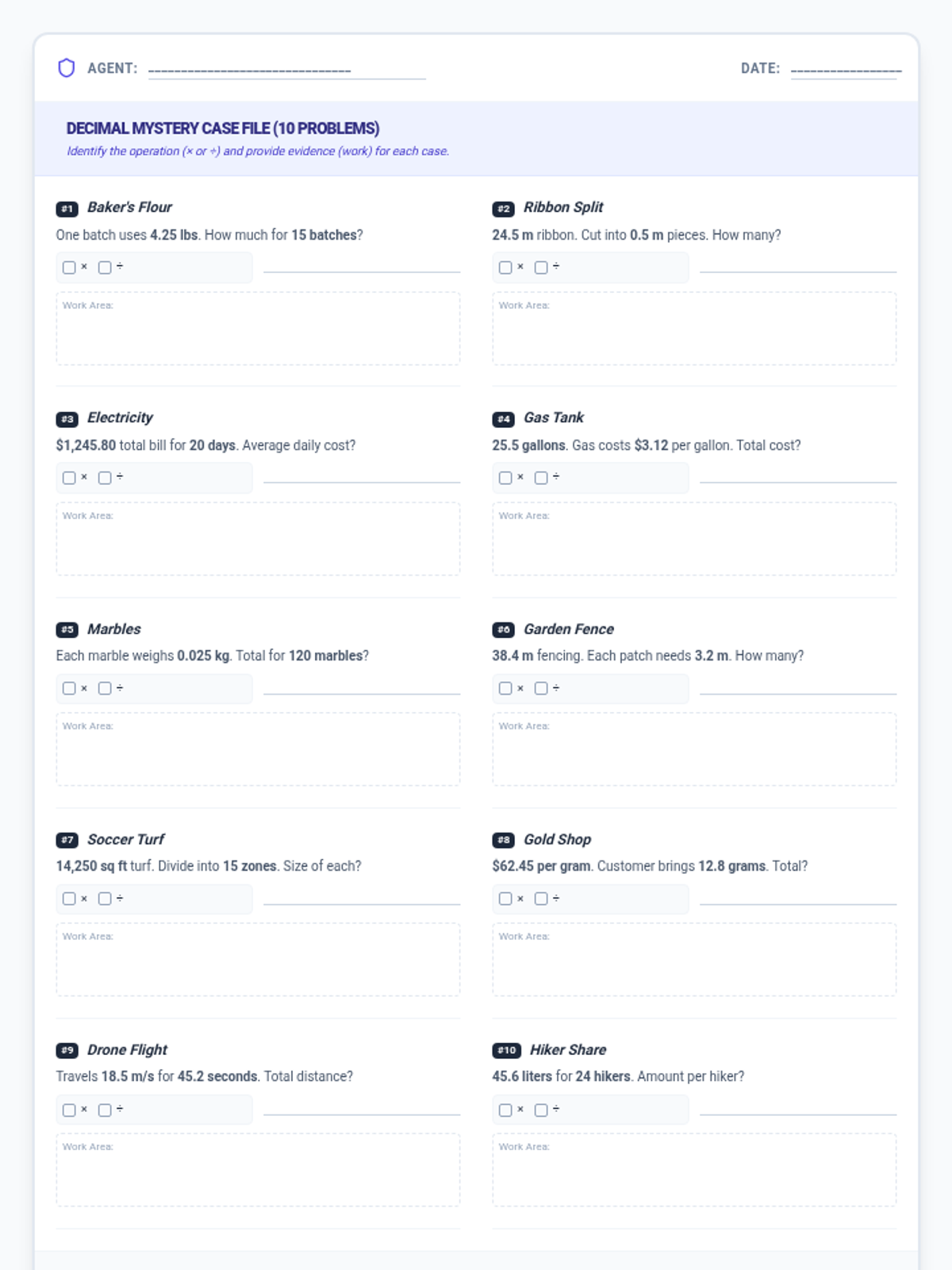
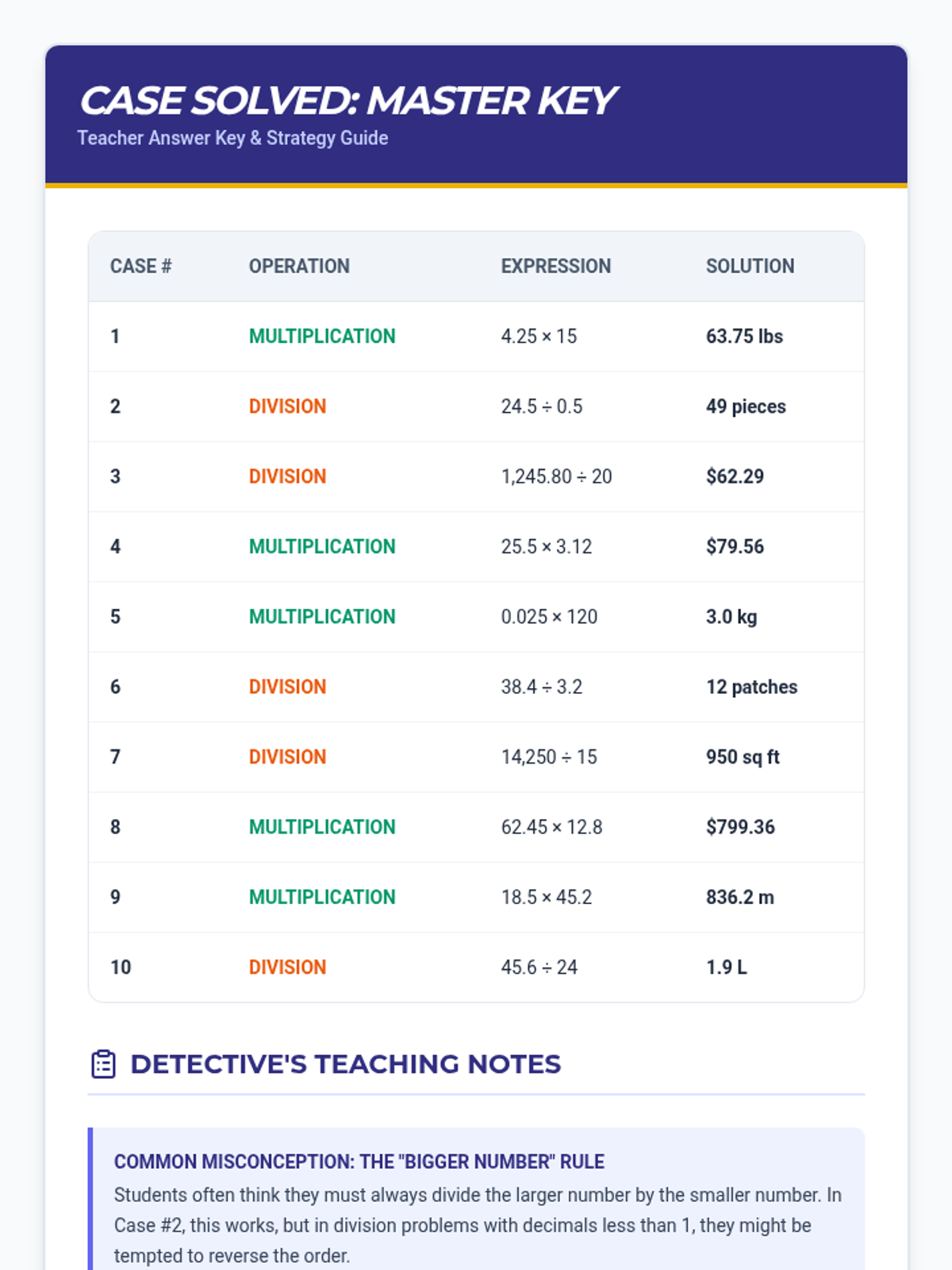
A 5th-grade math lesson focused on distinguishing between multiplication and division in multi-digit and decimal word problems using a 'Math Detective' framework.
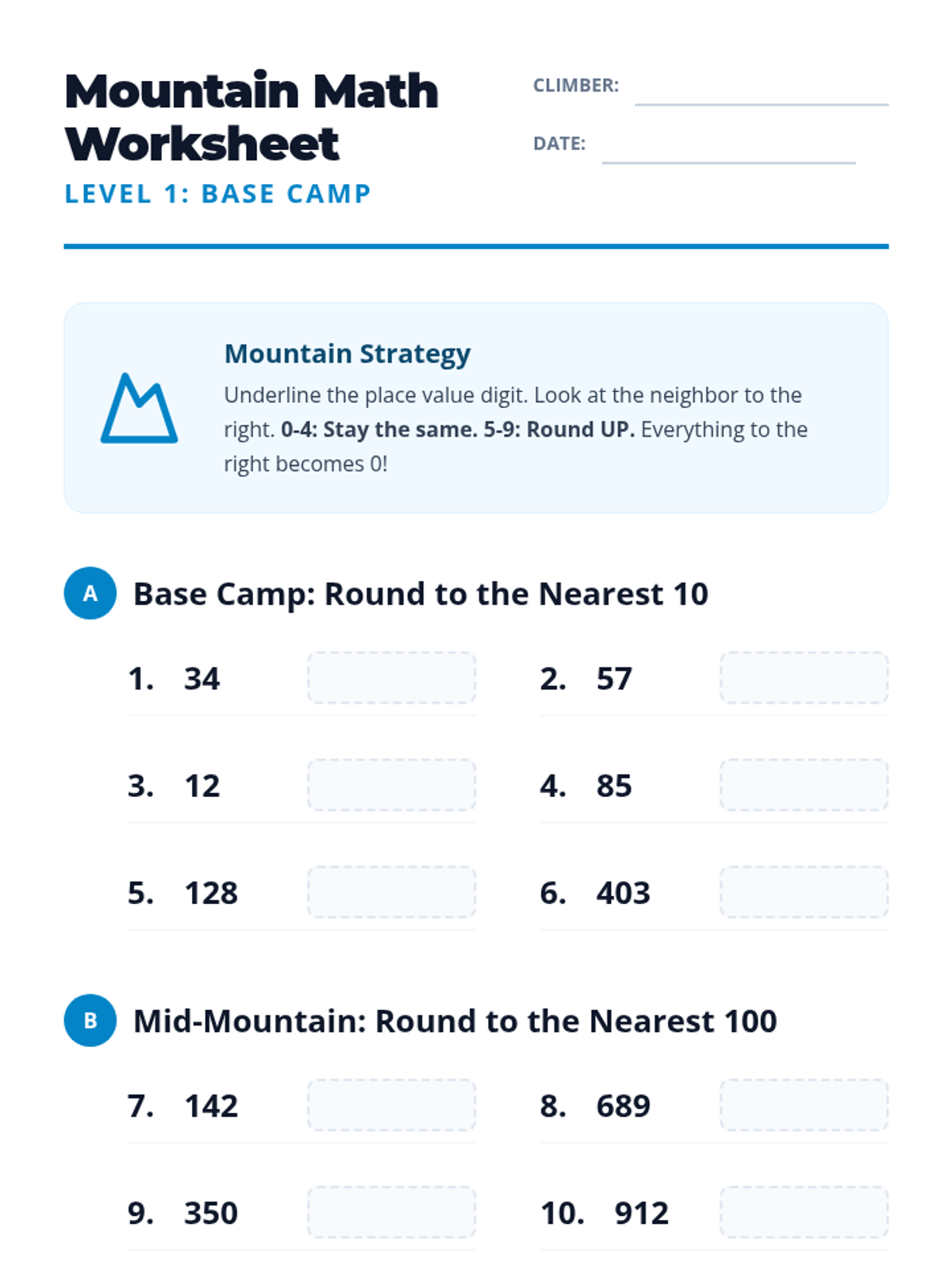
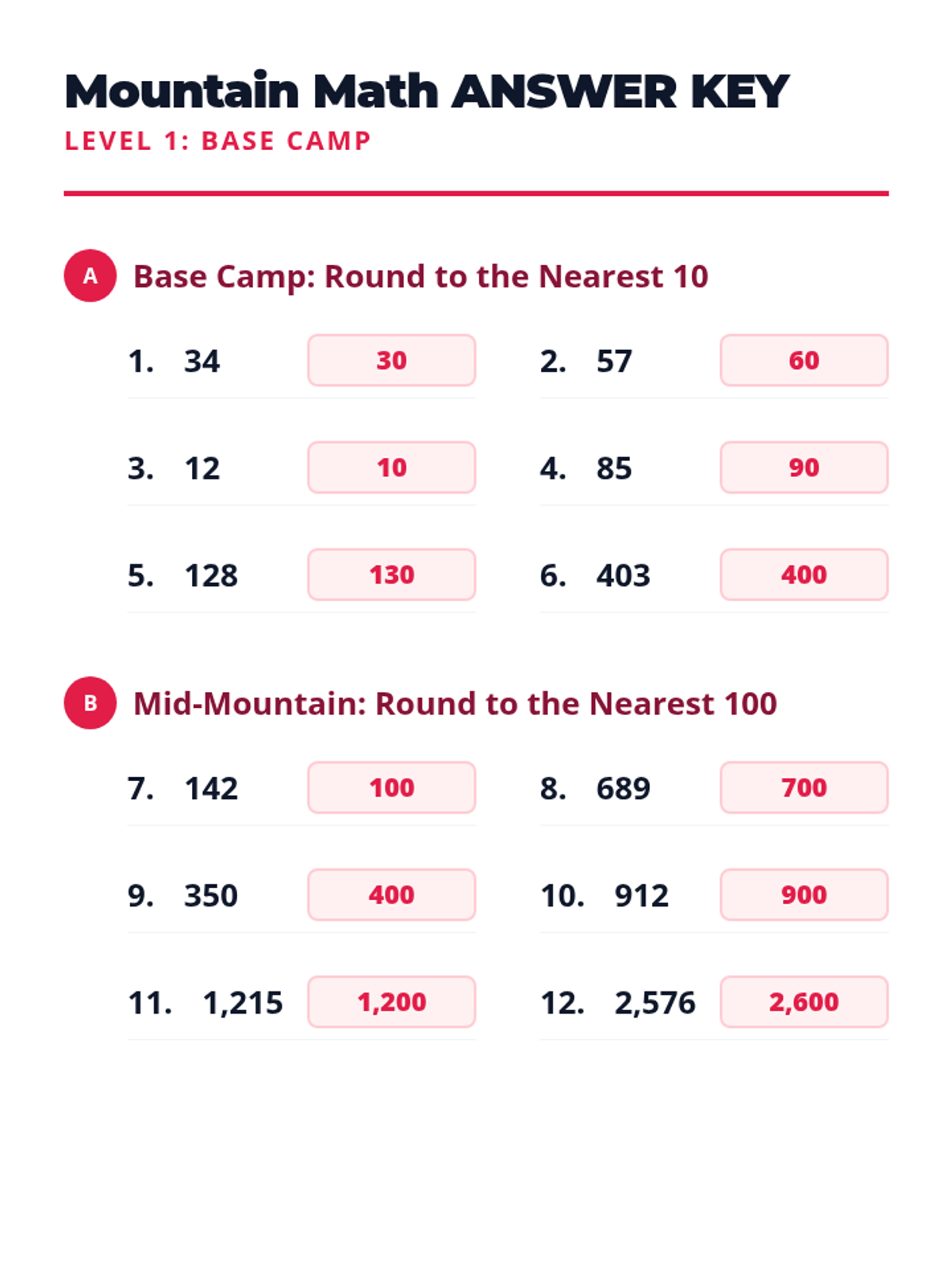
A comprehensive lesson on rounding whole numbers to the nearest 10, 100, and 1,000 using the mountain hill visual strategy. Includes guided instruction and multi-level practice.
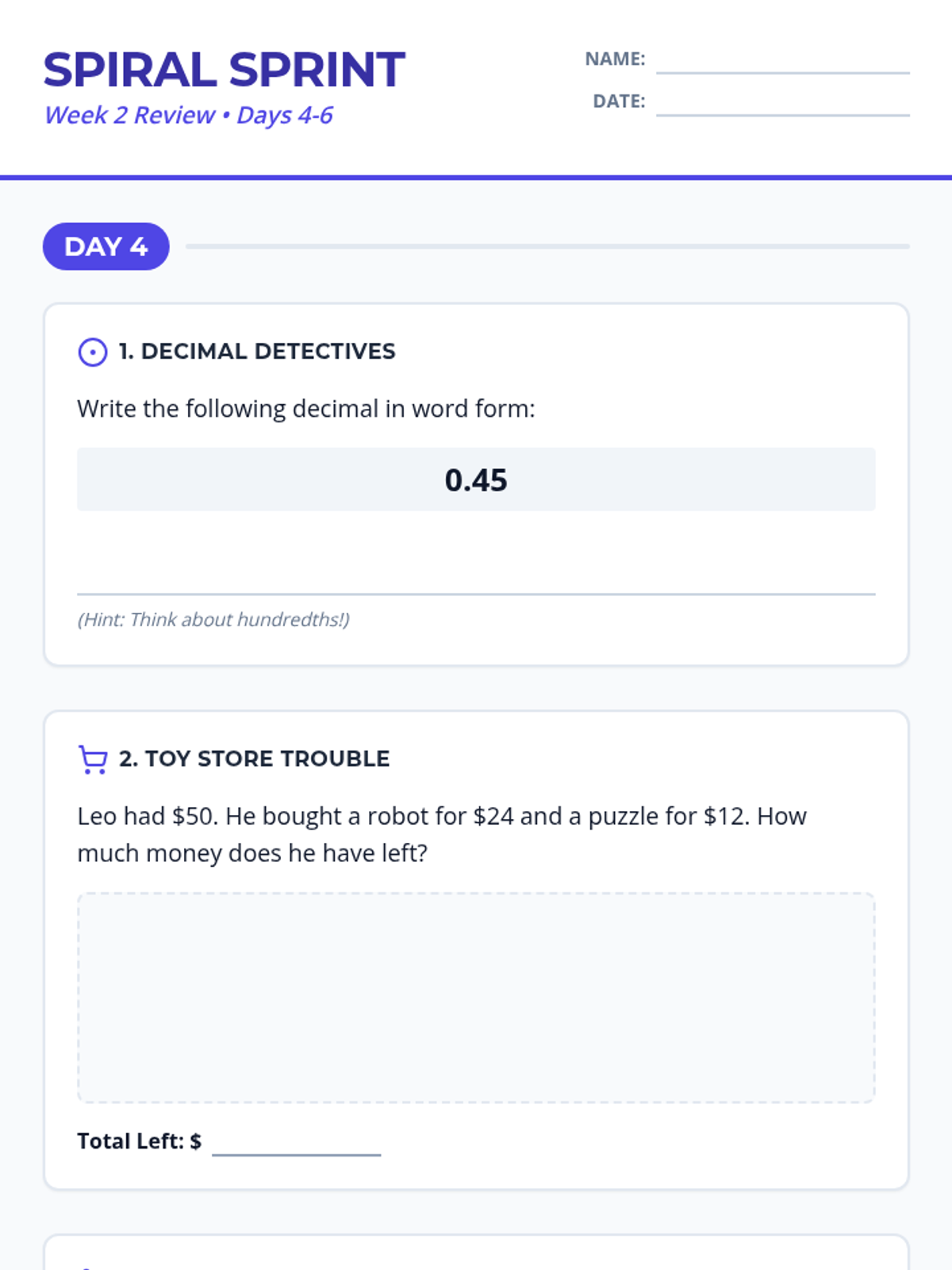
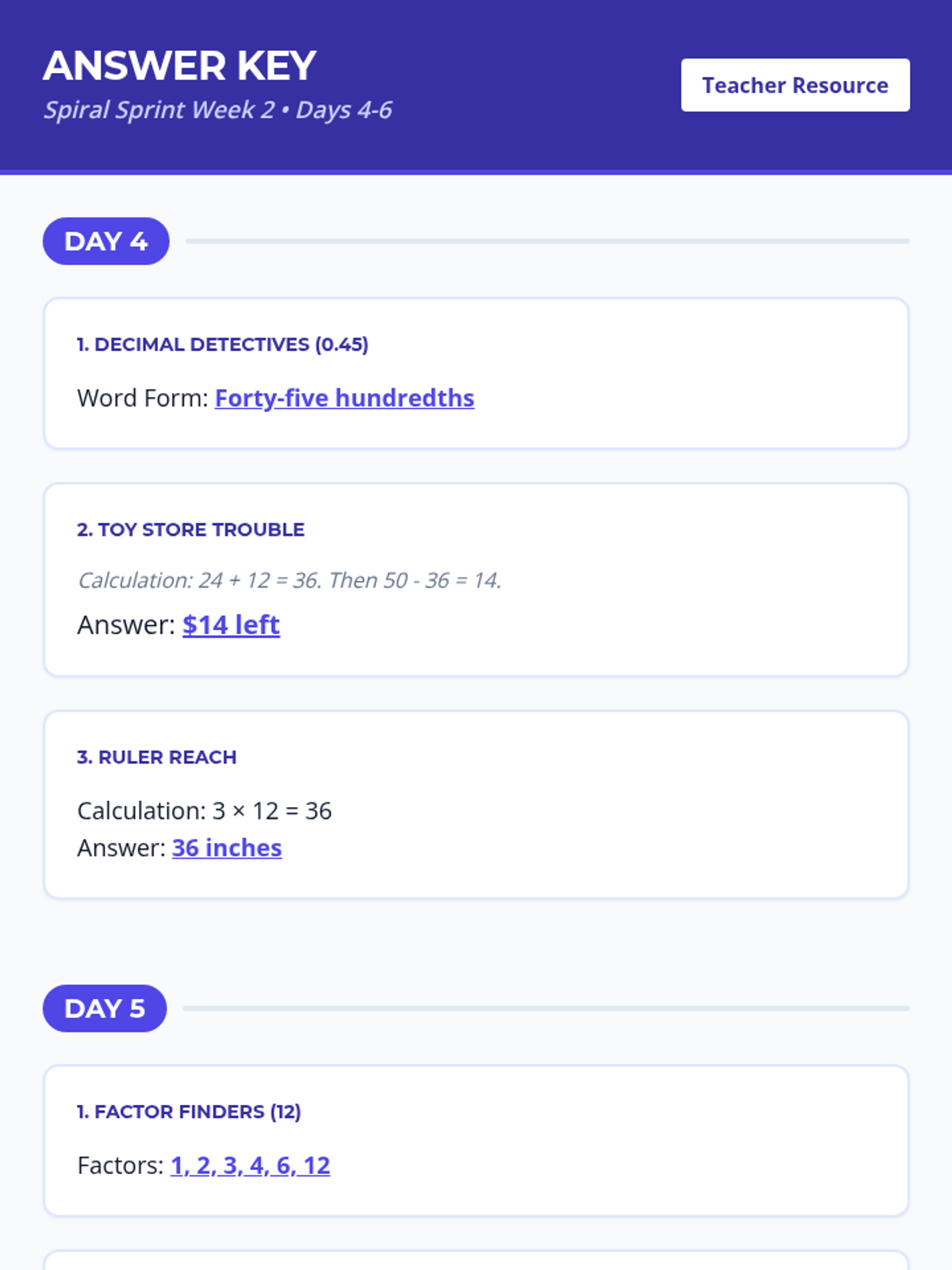
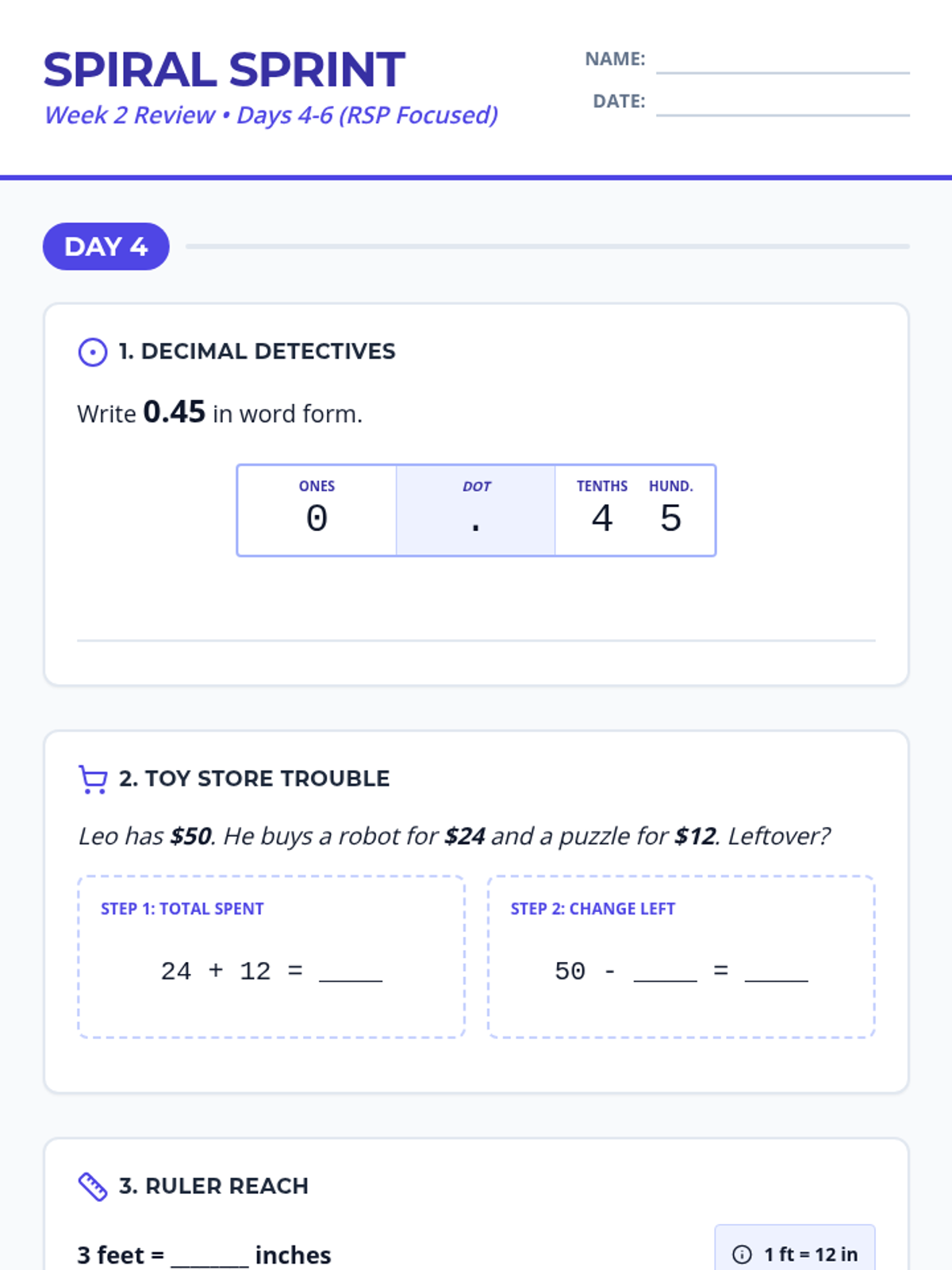
The second week of spiral review shifts towards multi-step word problems, decimal notation, and geometric properties.
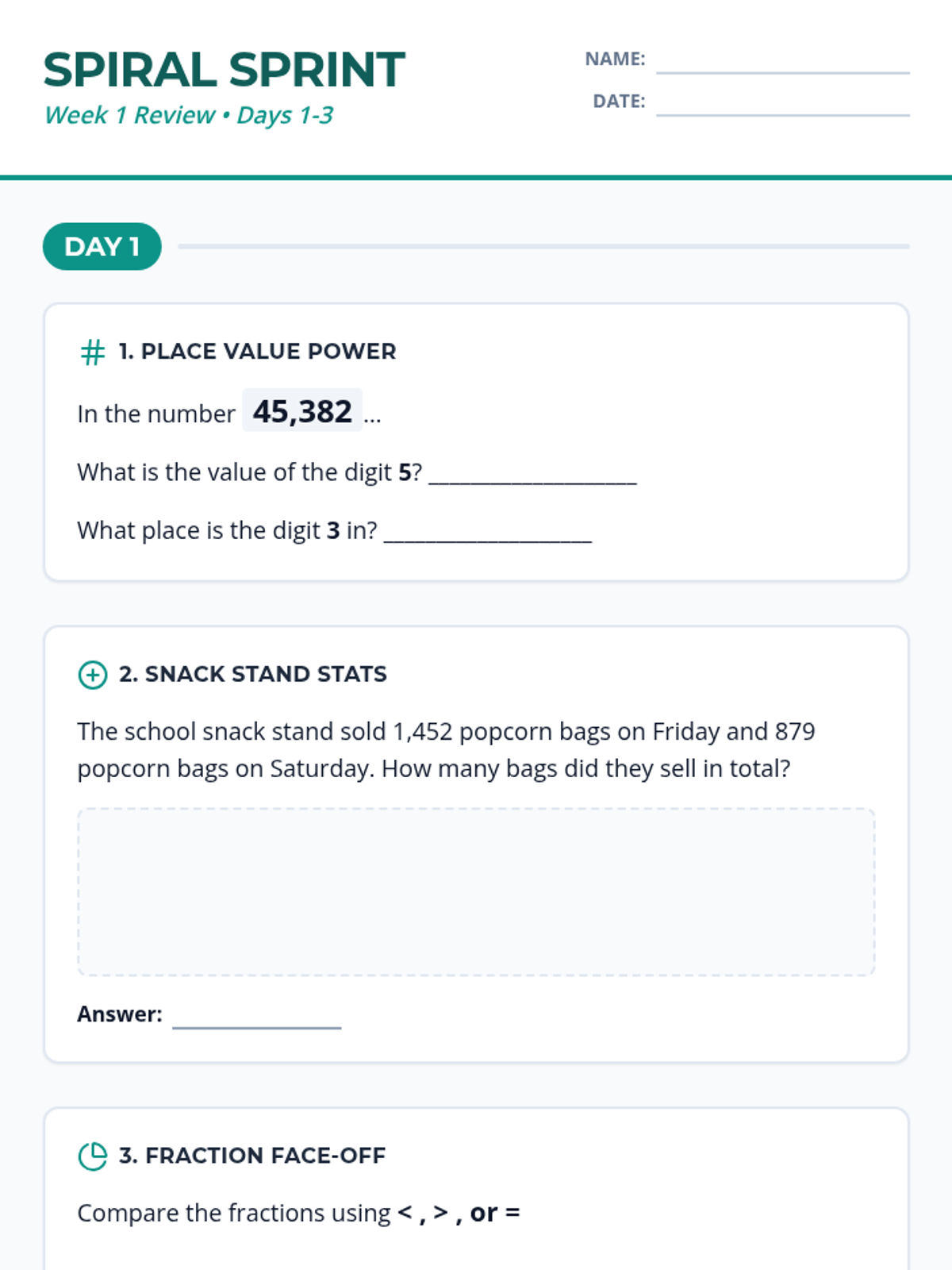
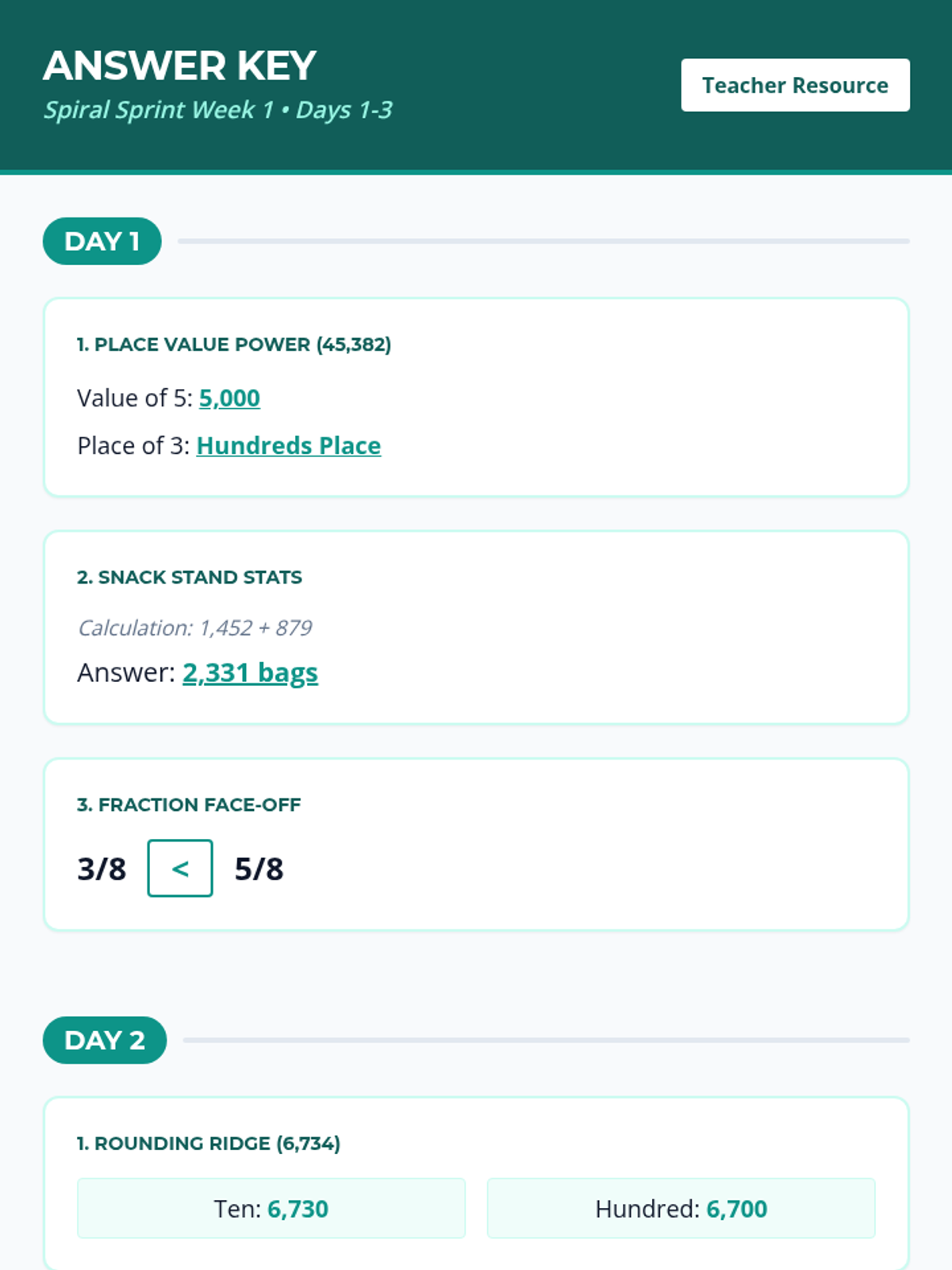
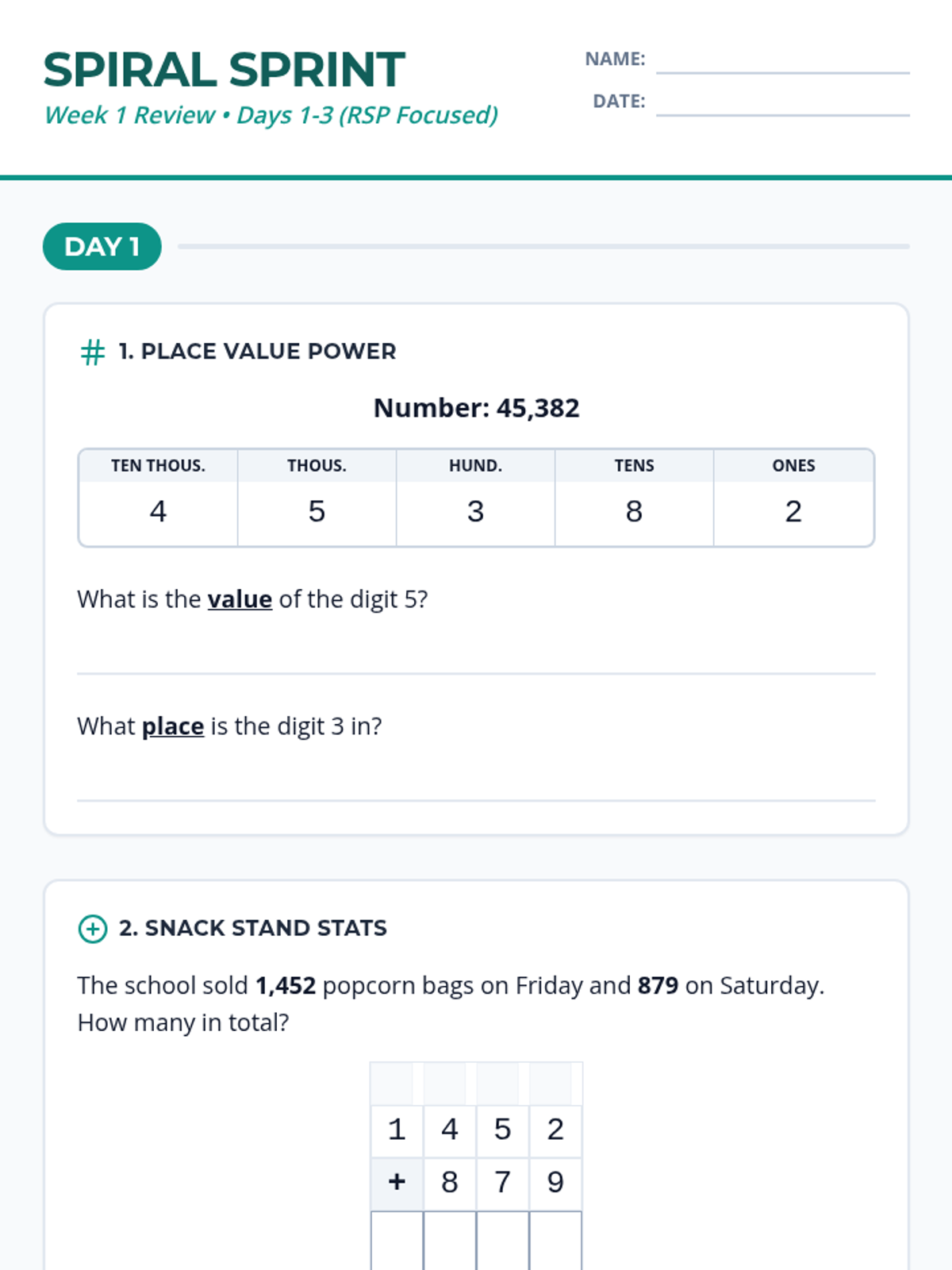
The first week of spiral review focuses on place value, basic multi-digit operations, and introductory fraction concepts.
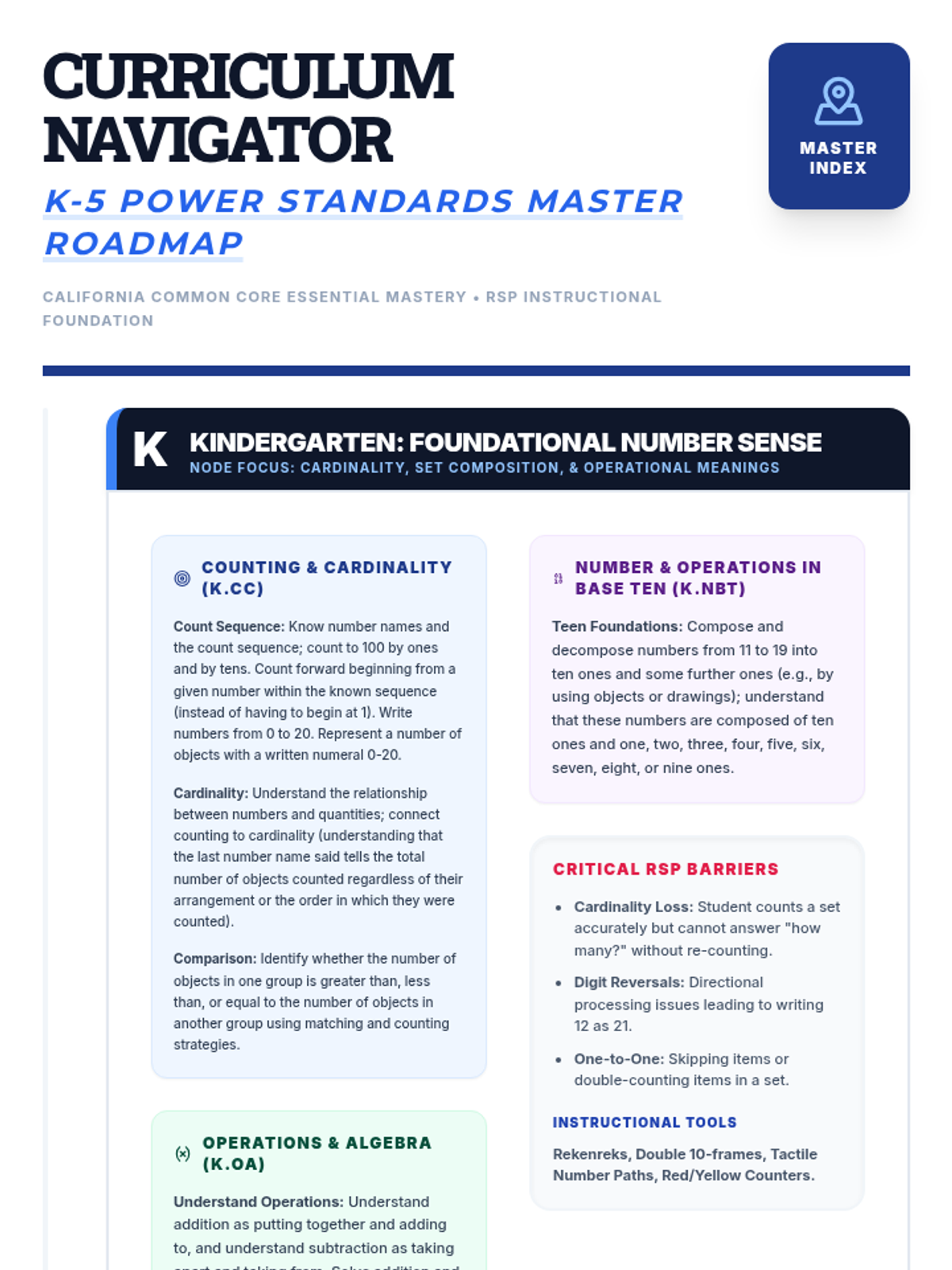
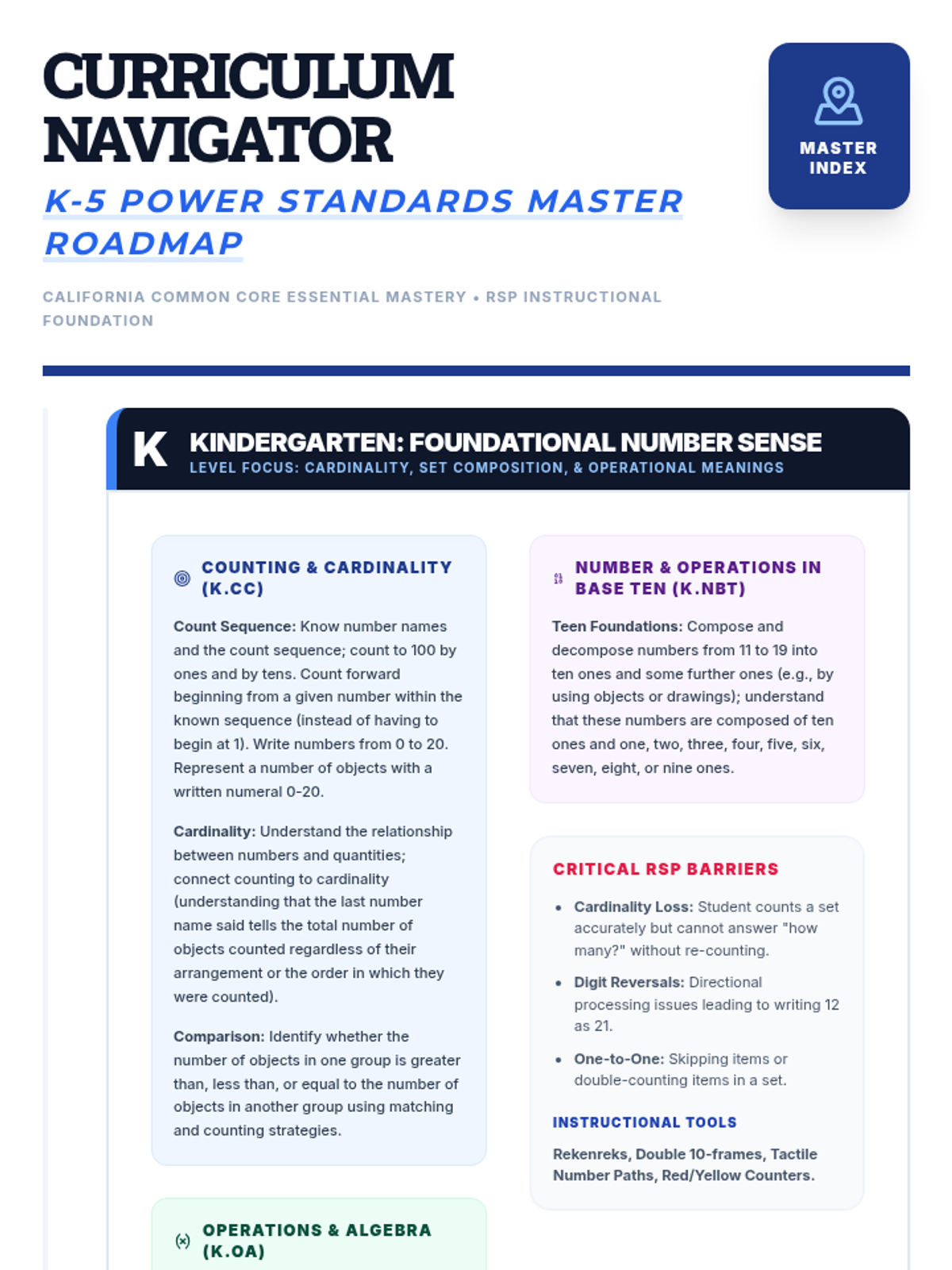
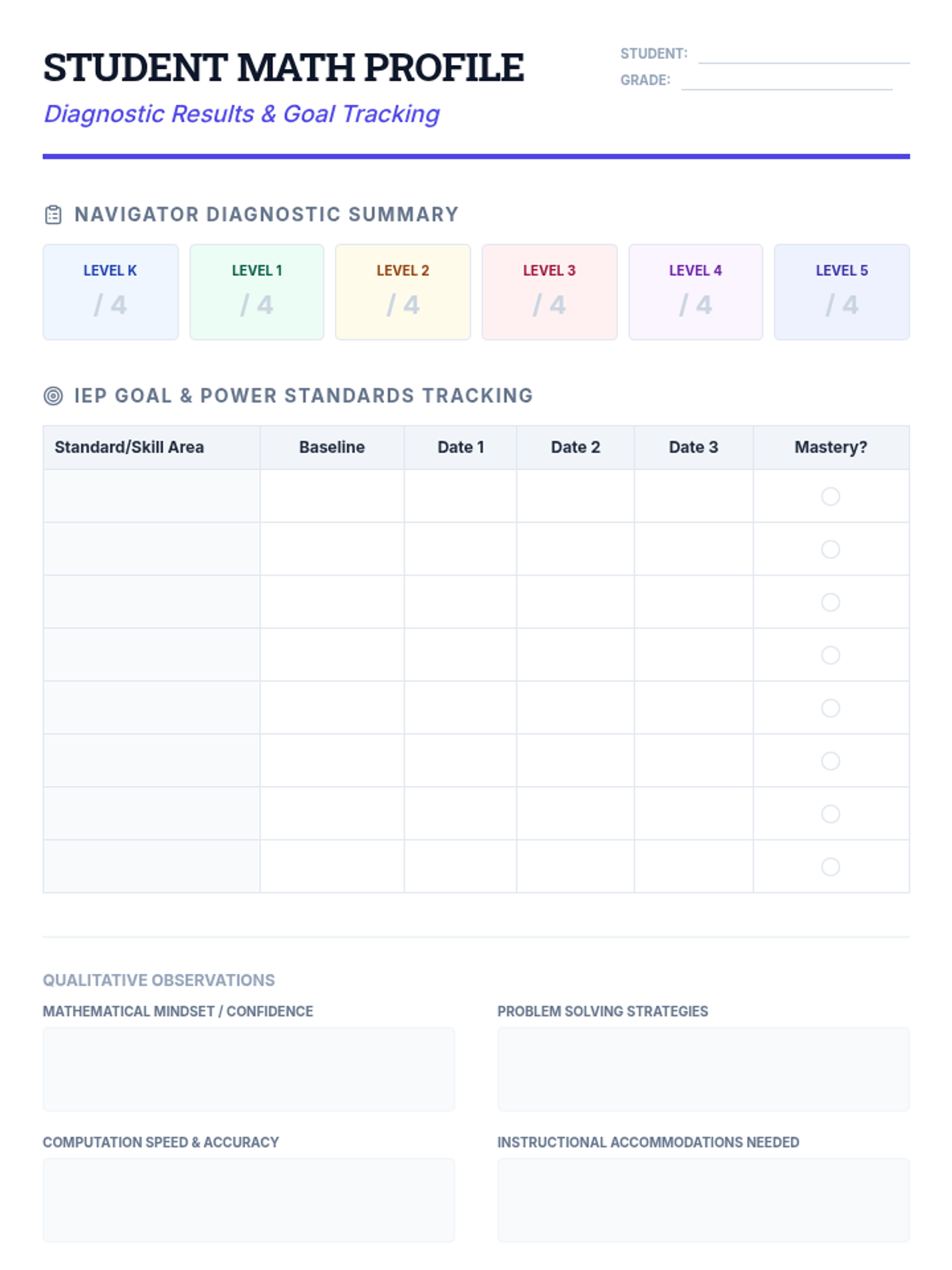
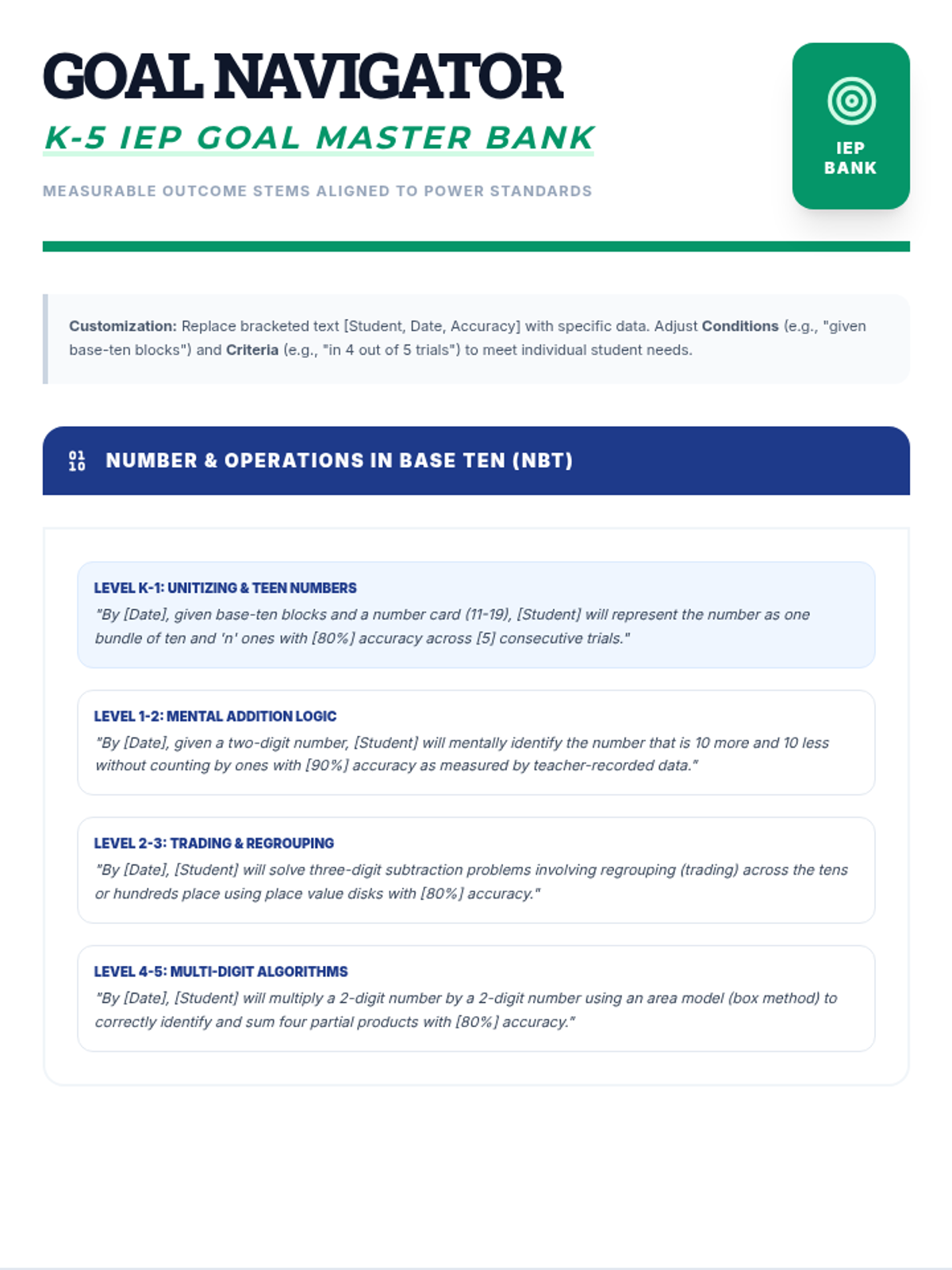
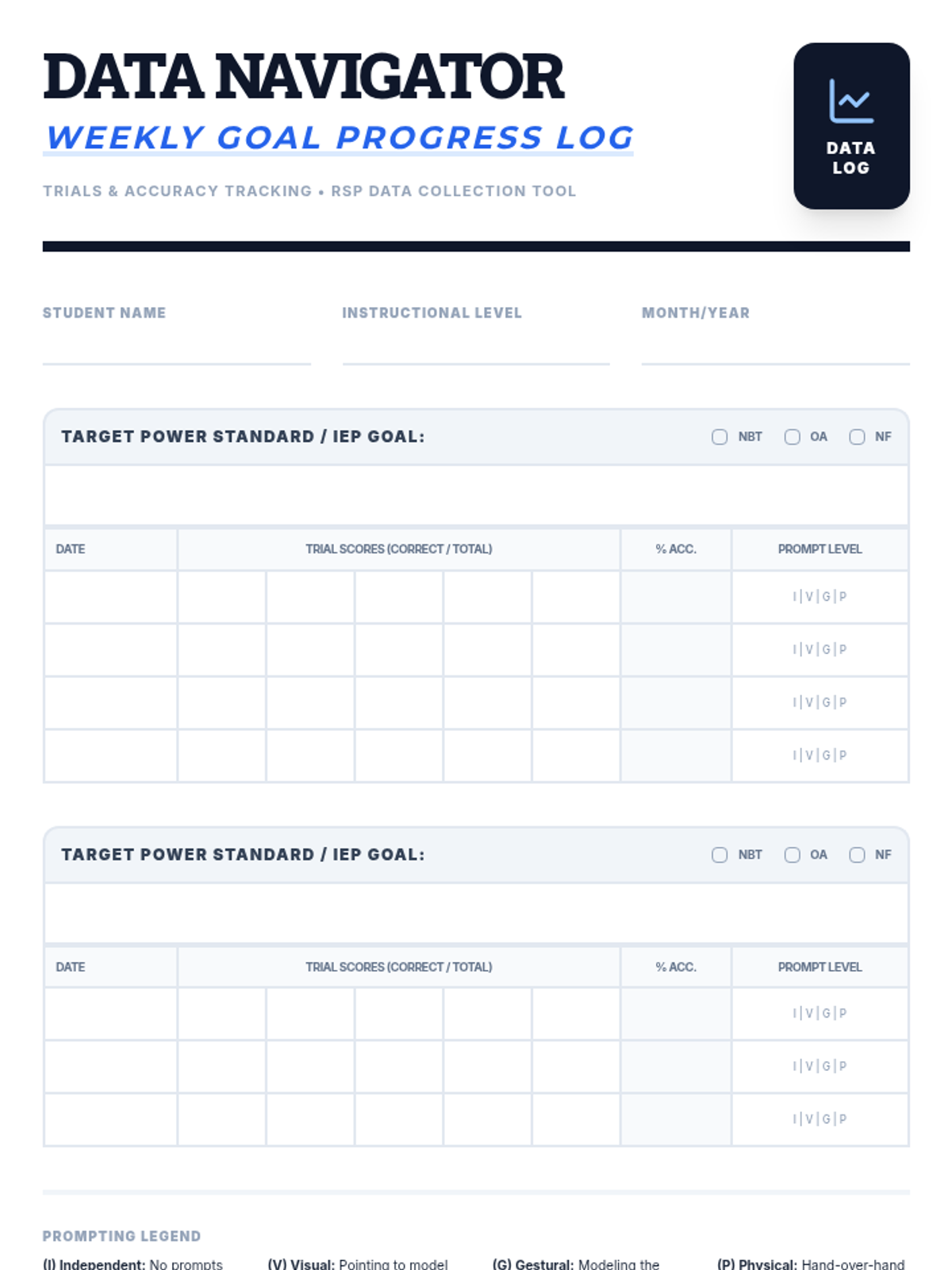
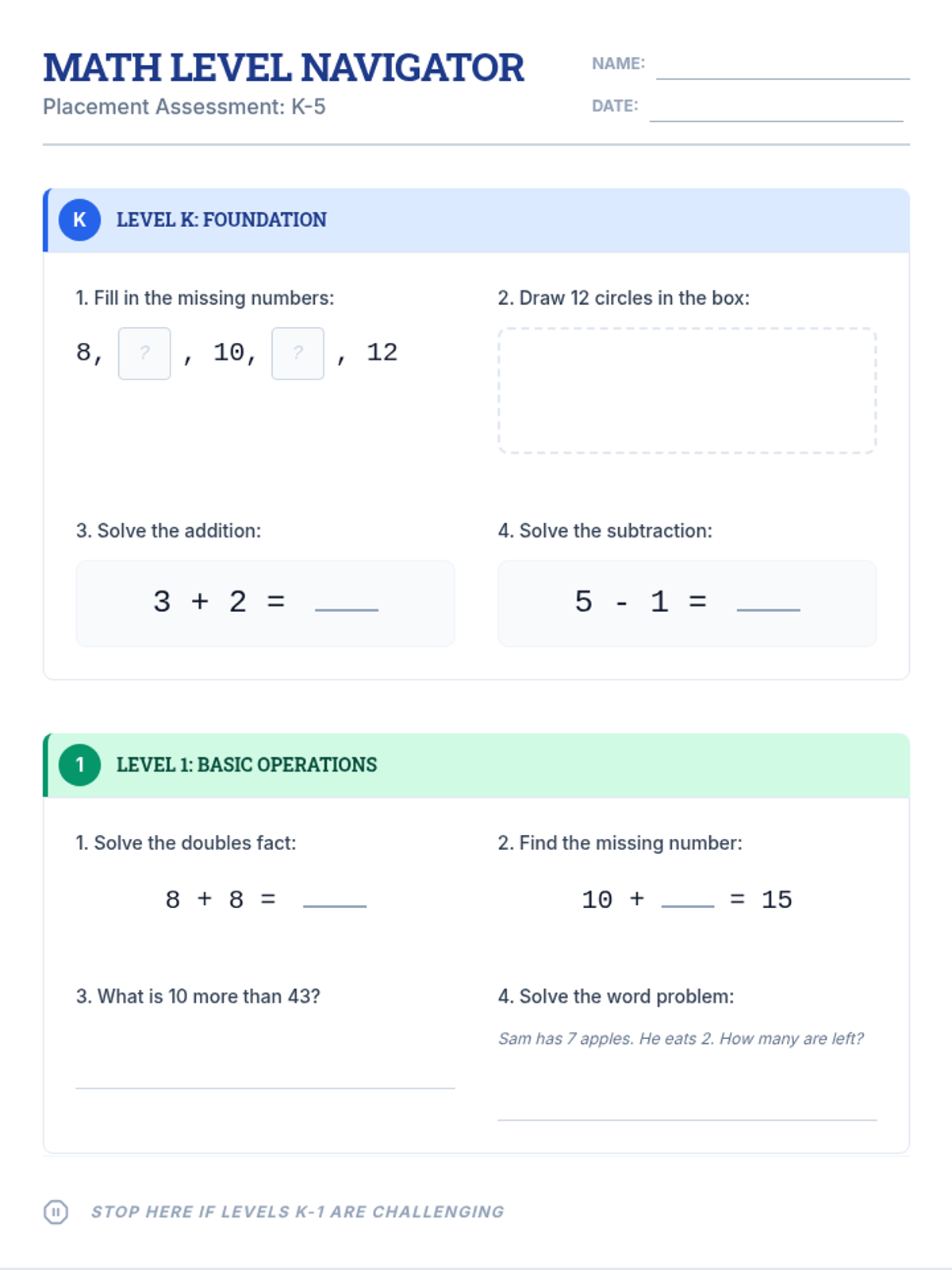
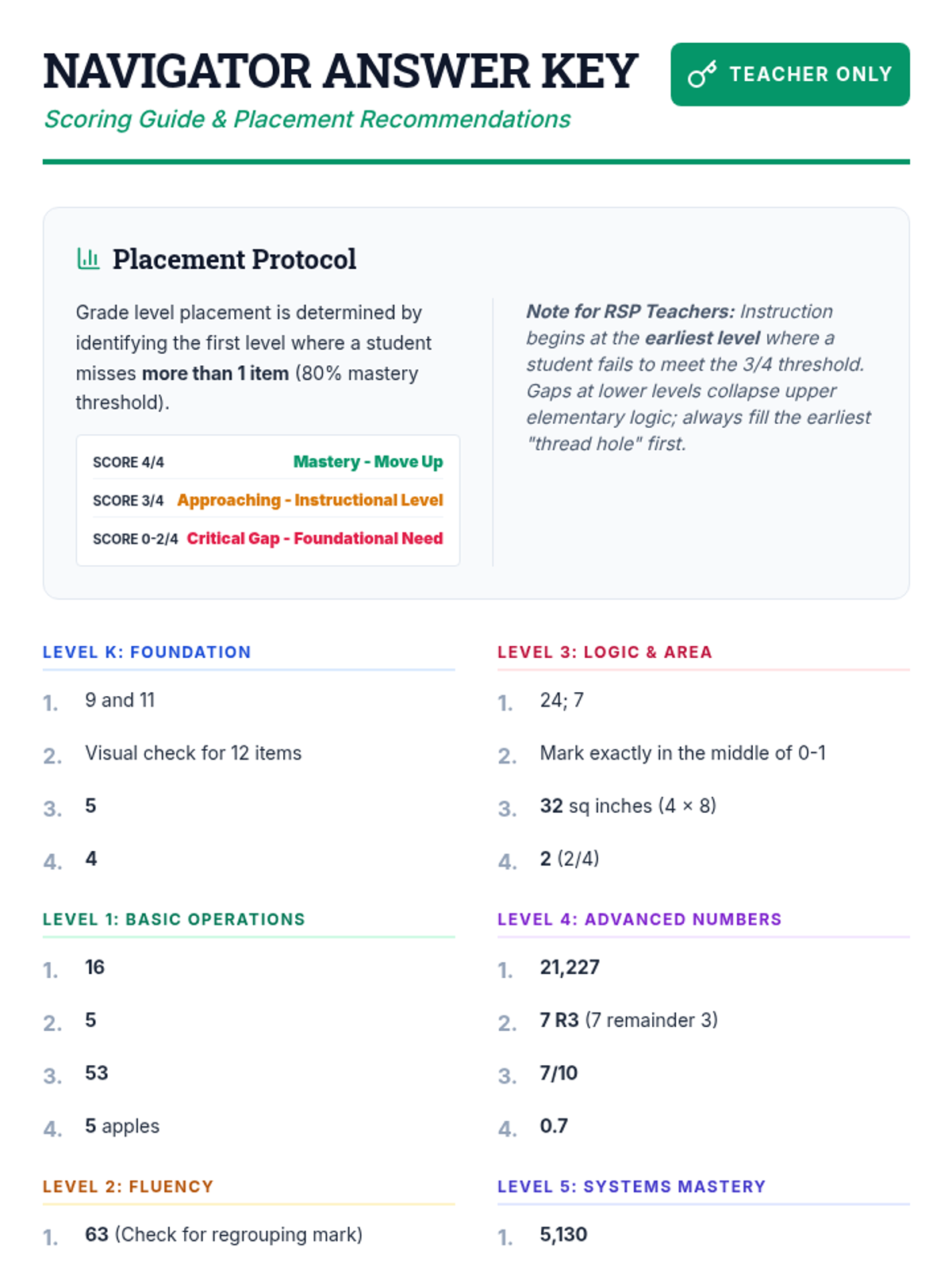
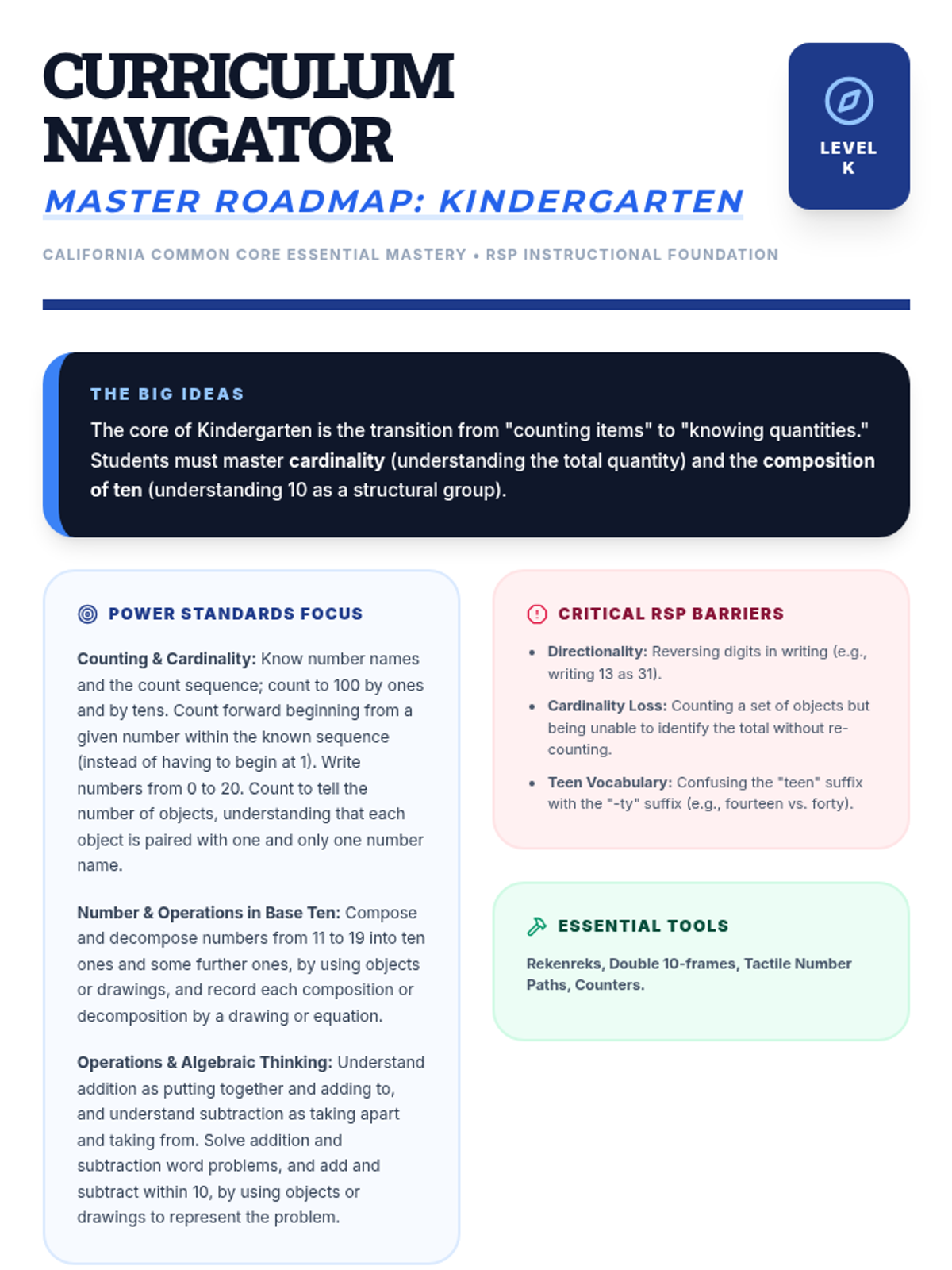
Foundational tools for assessing student levels and planning instruction based on California Power Standards across grades K-5.
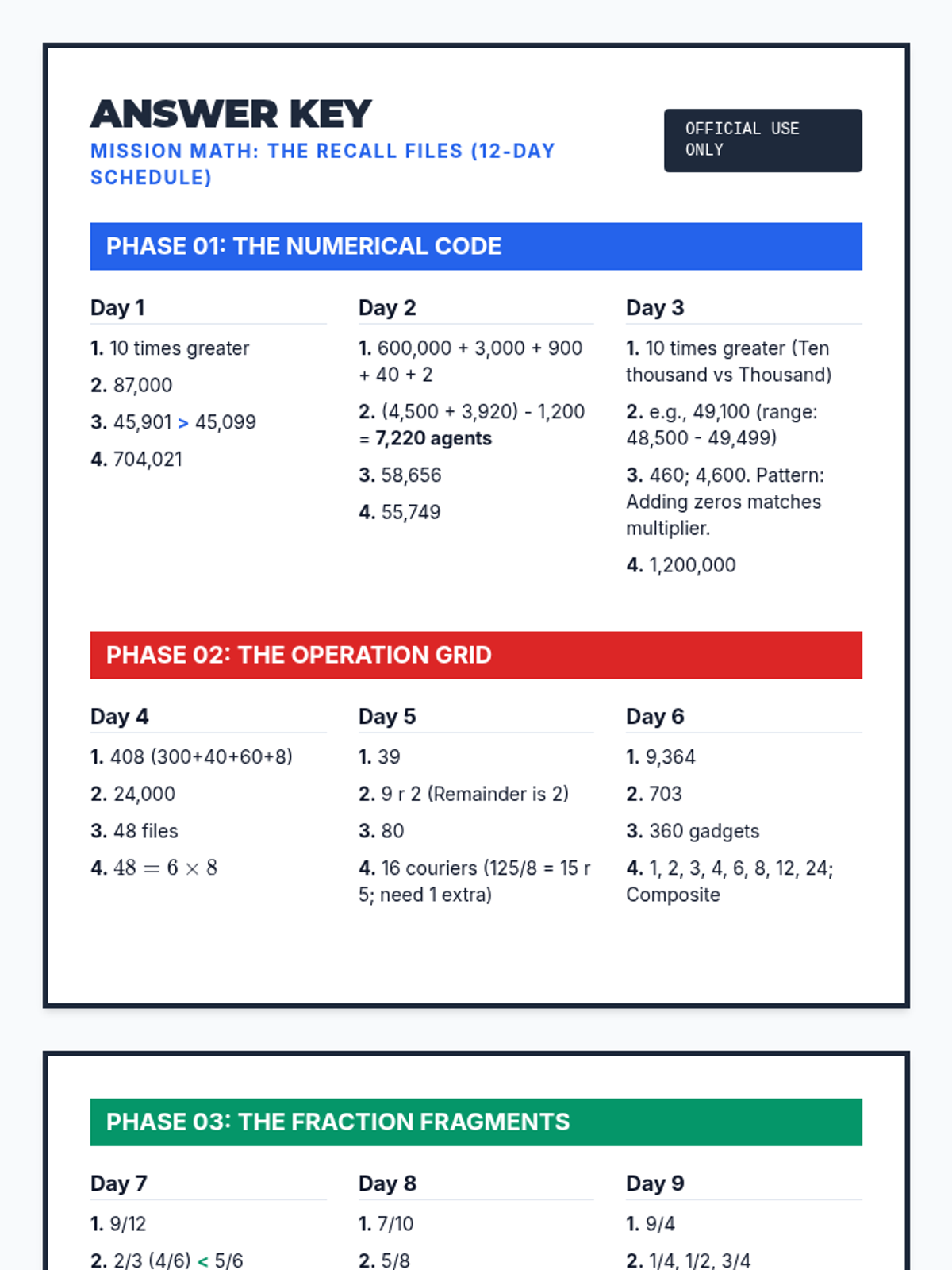
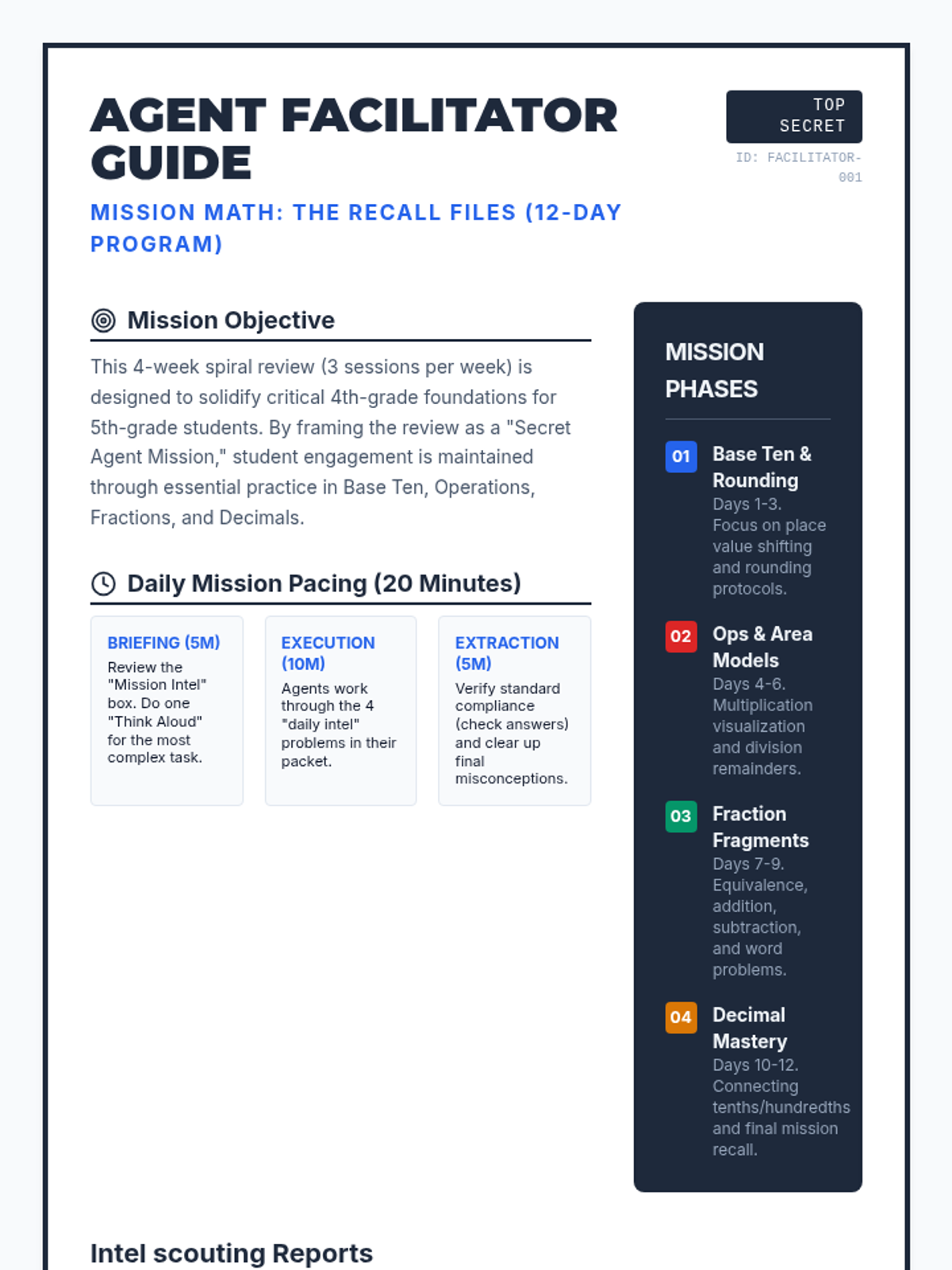
A comprehensive 4-week spiral review of 4th-grade math standards designed for 5th graders. Focuses on place value, multiplication, division, fractions, and decimals through a secret agent themed mission.
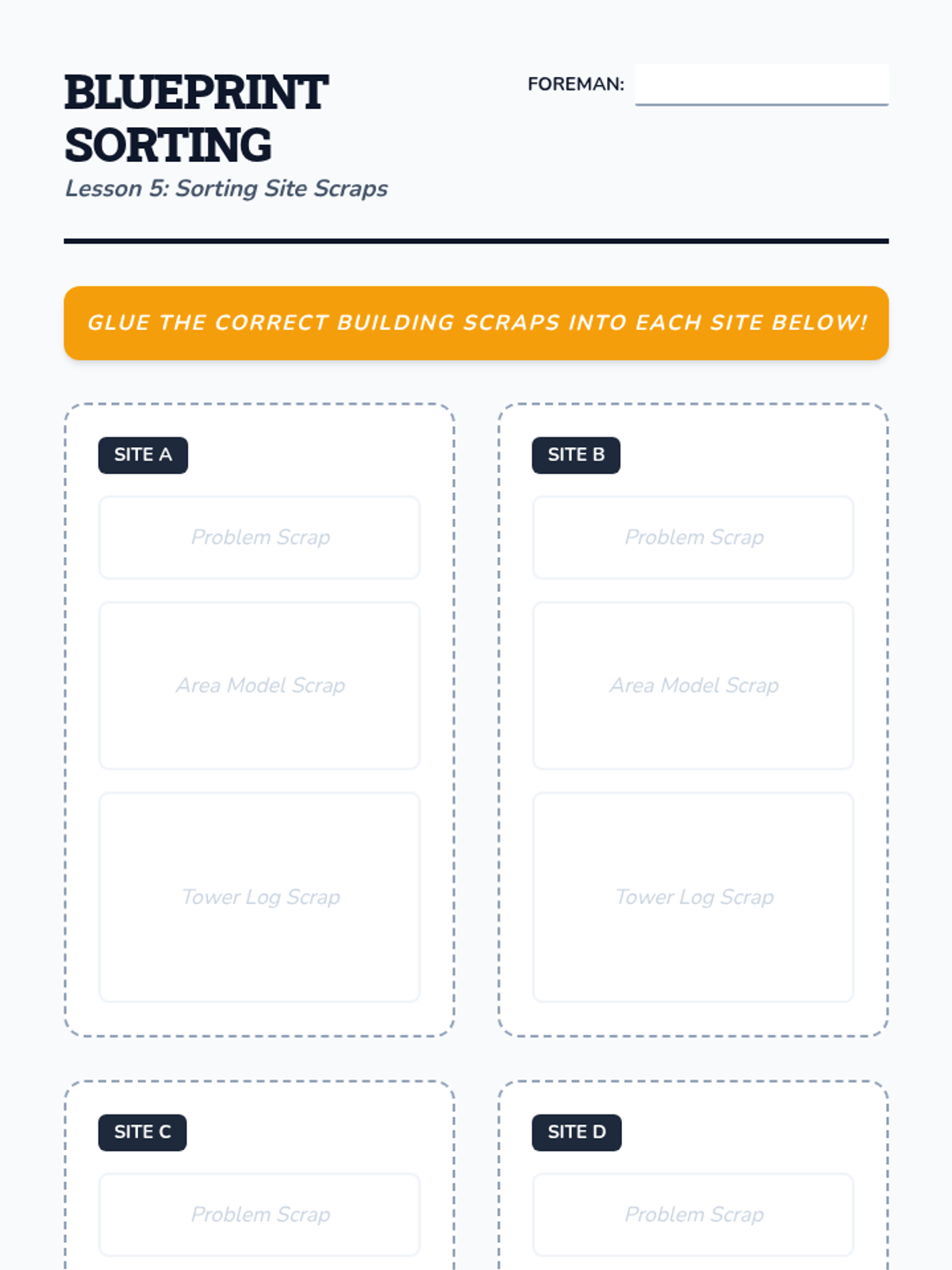
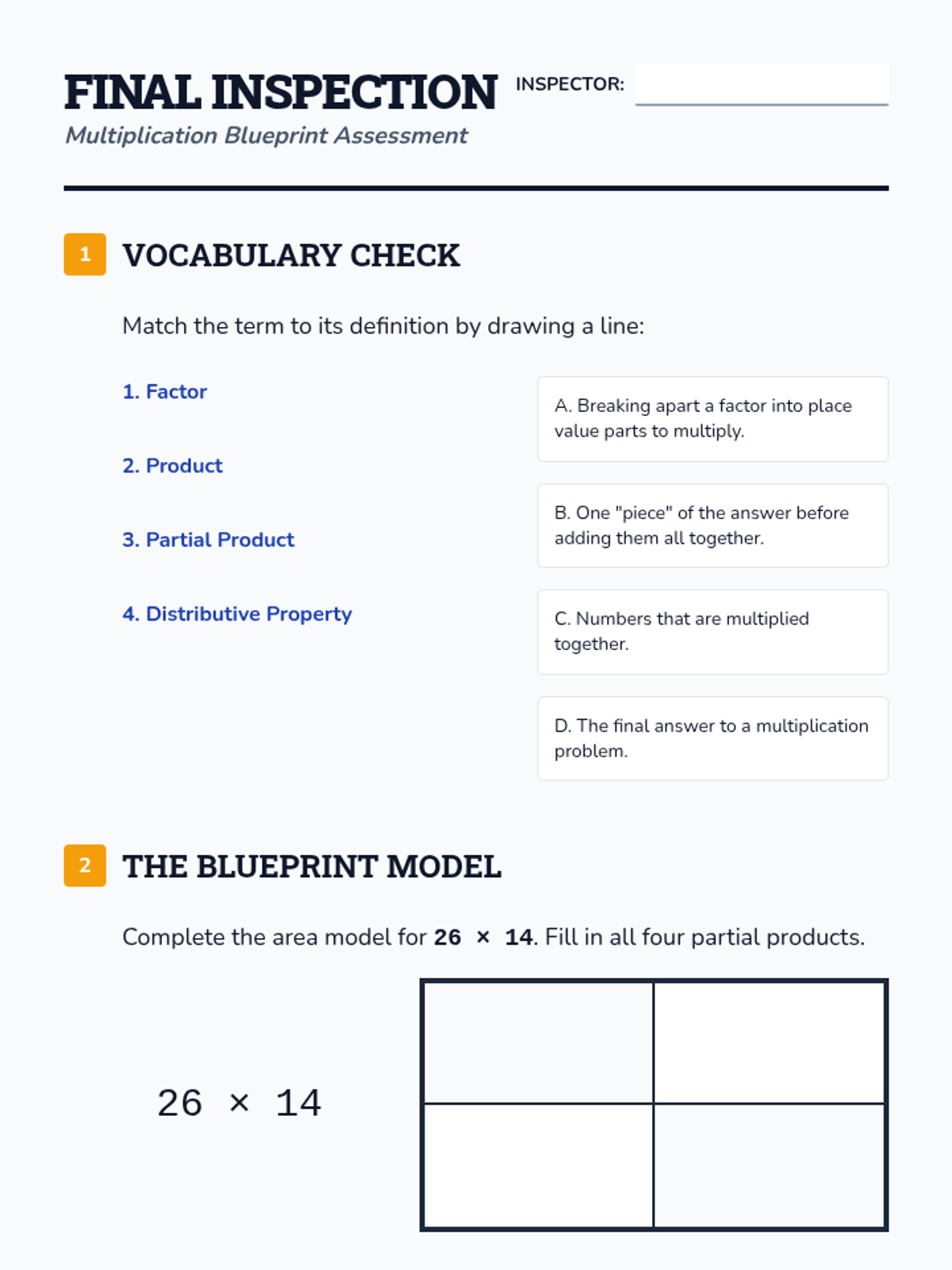
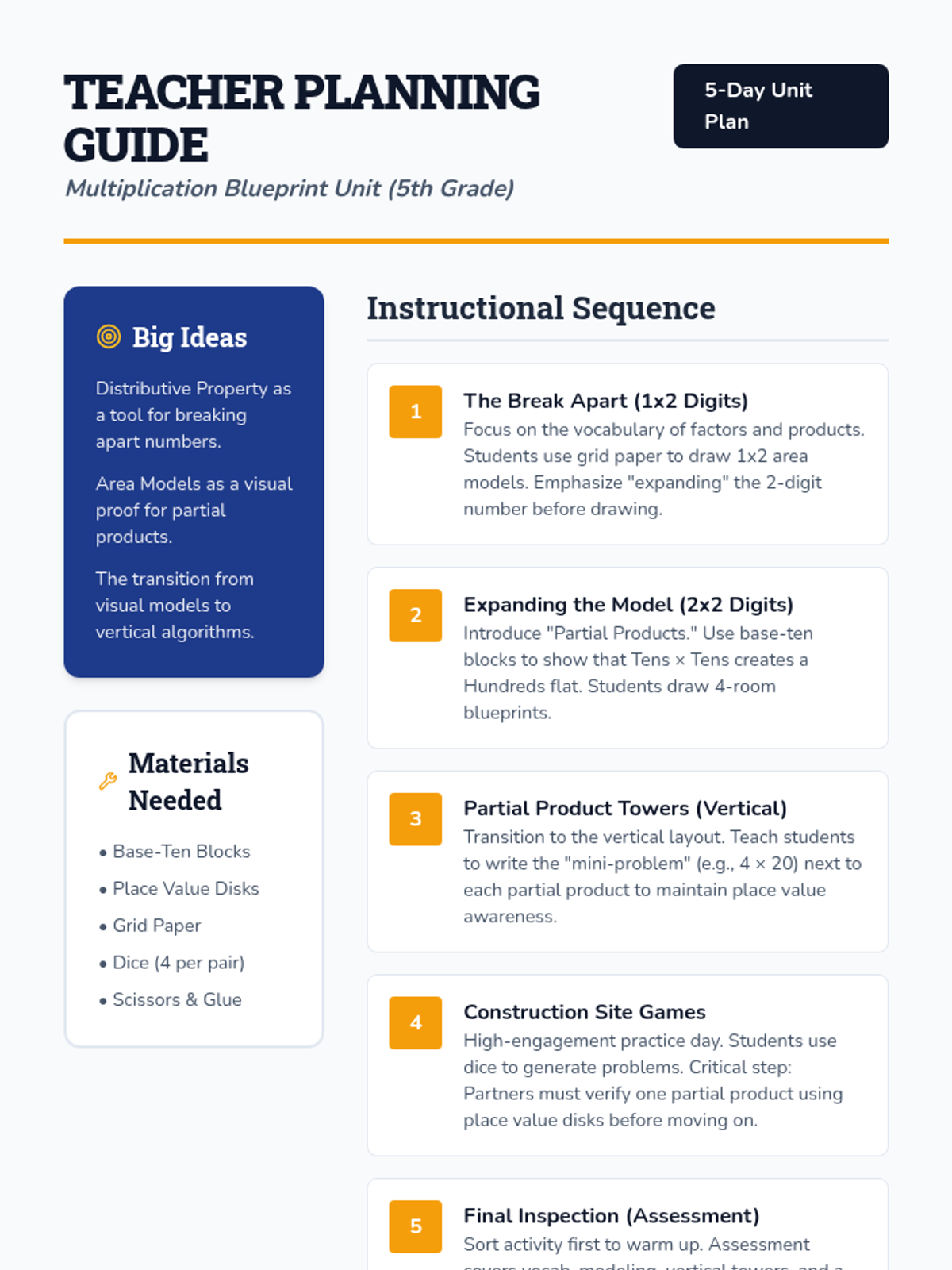
Synthesizing the week's learning with a cut-and-paste sorting activity and a final assessment on partial products and the distributive property.
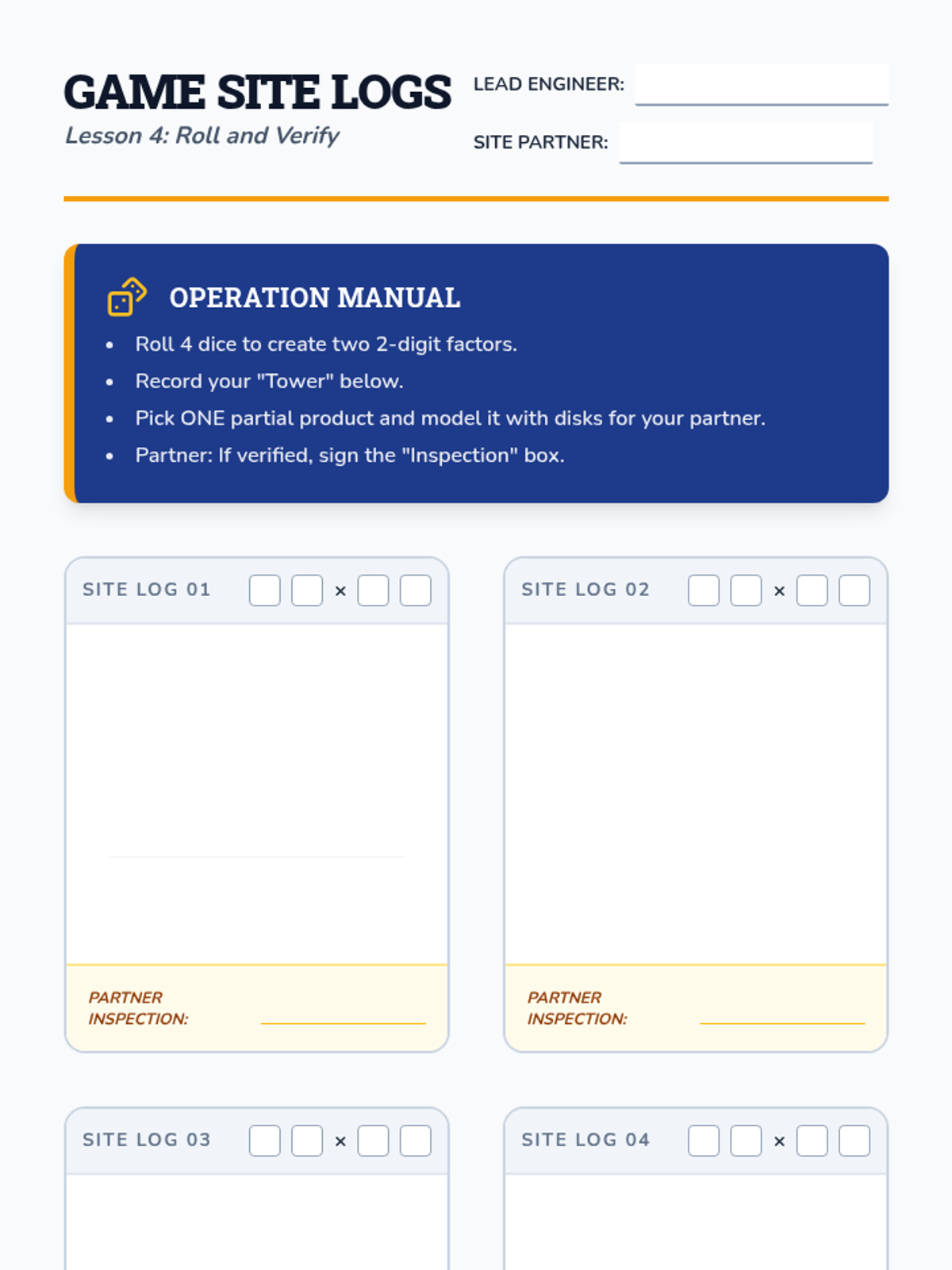
Hands-on application using dice and playing cards. Students generate their own problems and use place value disks to verify their partial product calculations.
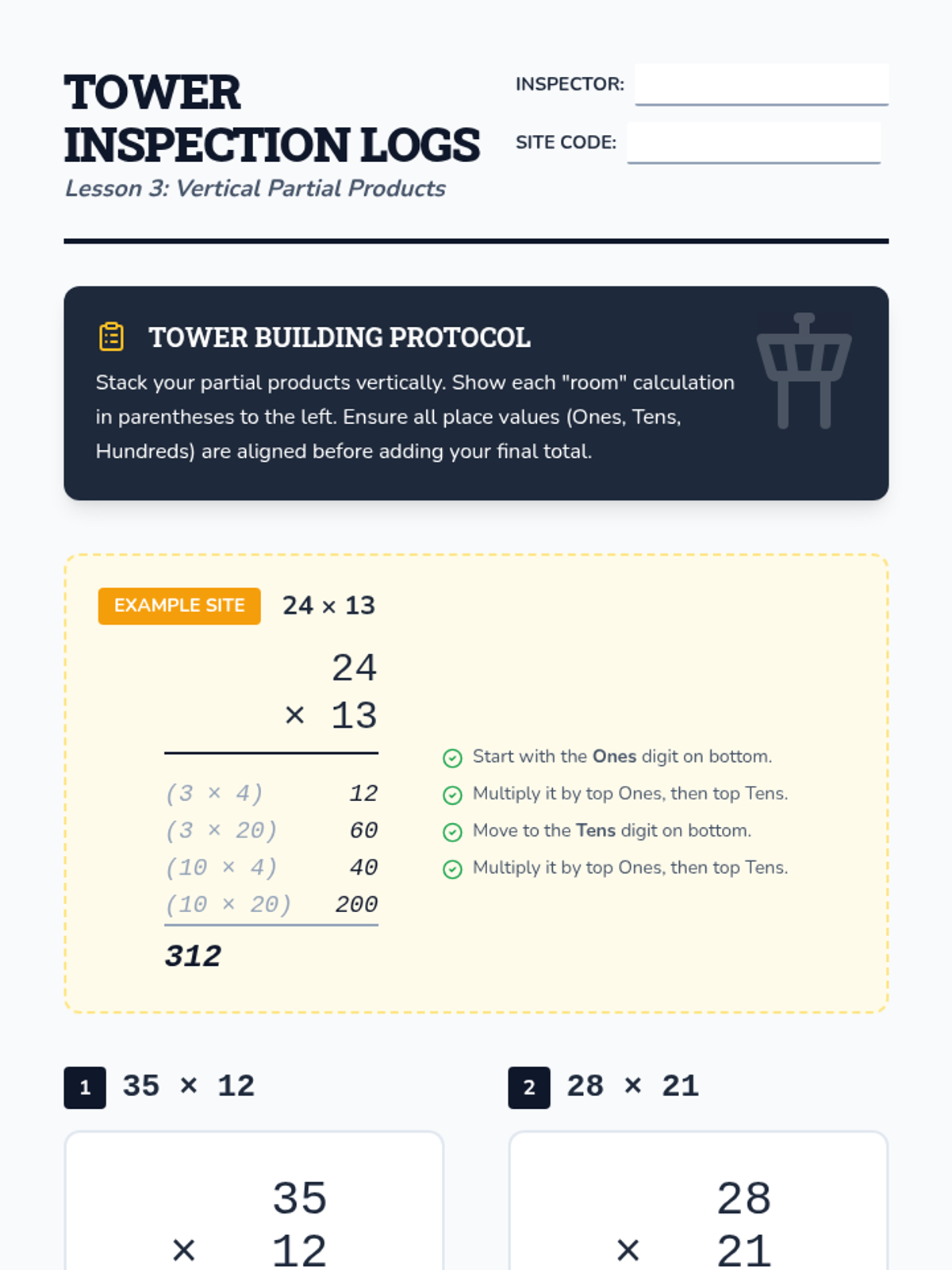
Transitioning from the visual area model to the vertical partial products algorithm. Students learn to record each calculation clearly in a "tower" format.
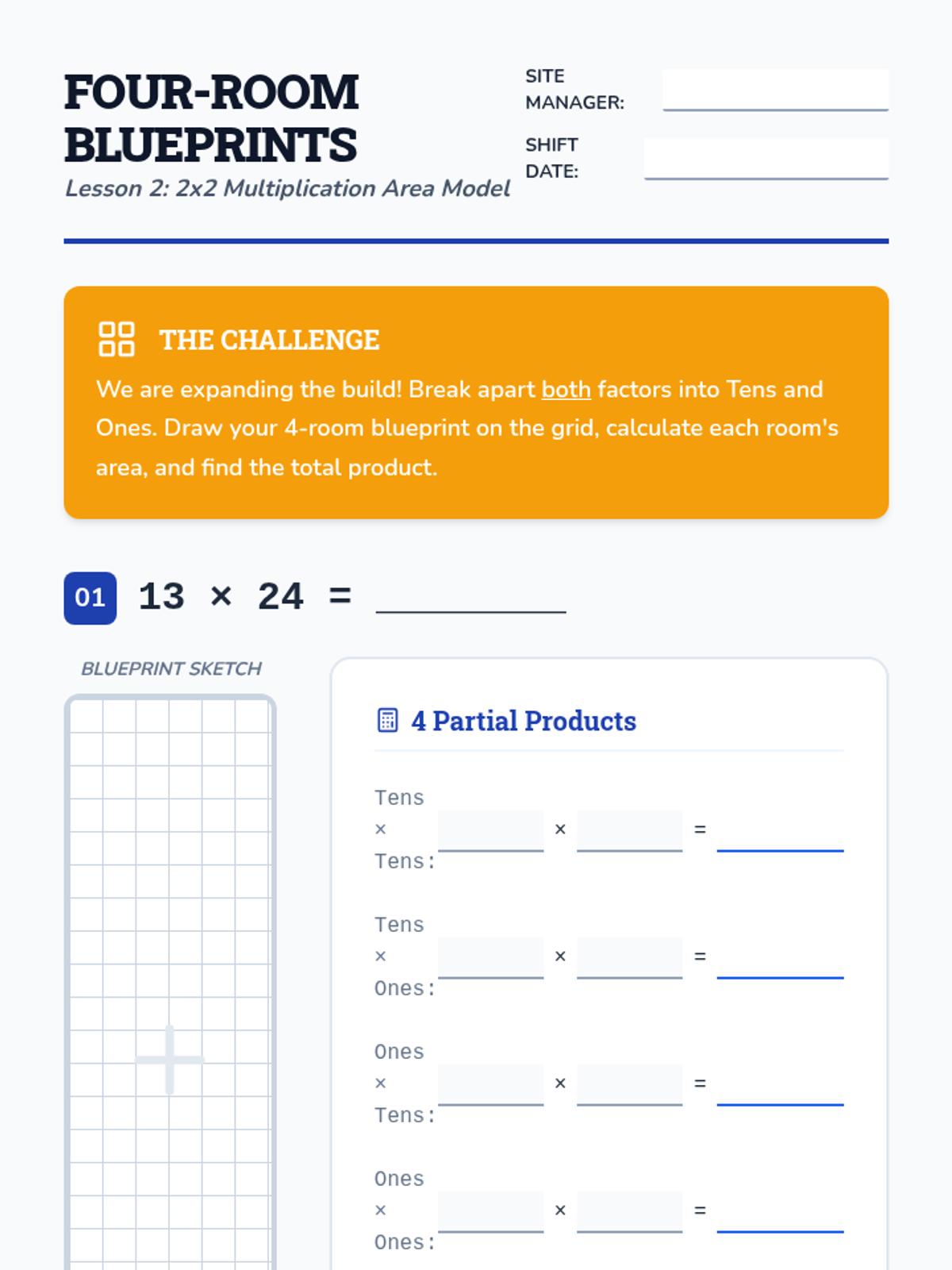
Extending the area model to 2-digit by 2-digit multiplication. Students use base-ten blocks and grid paper to visualize four partial products.
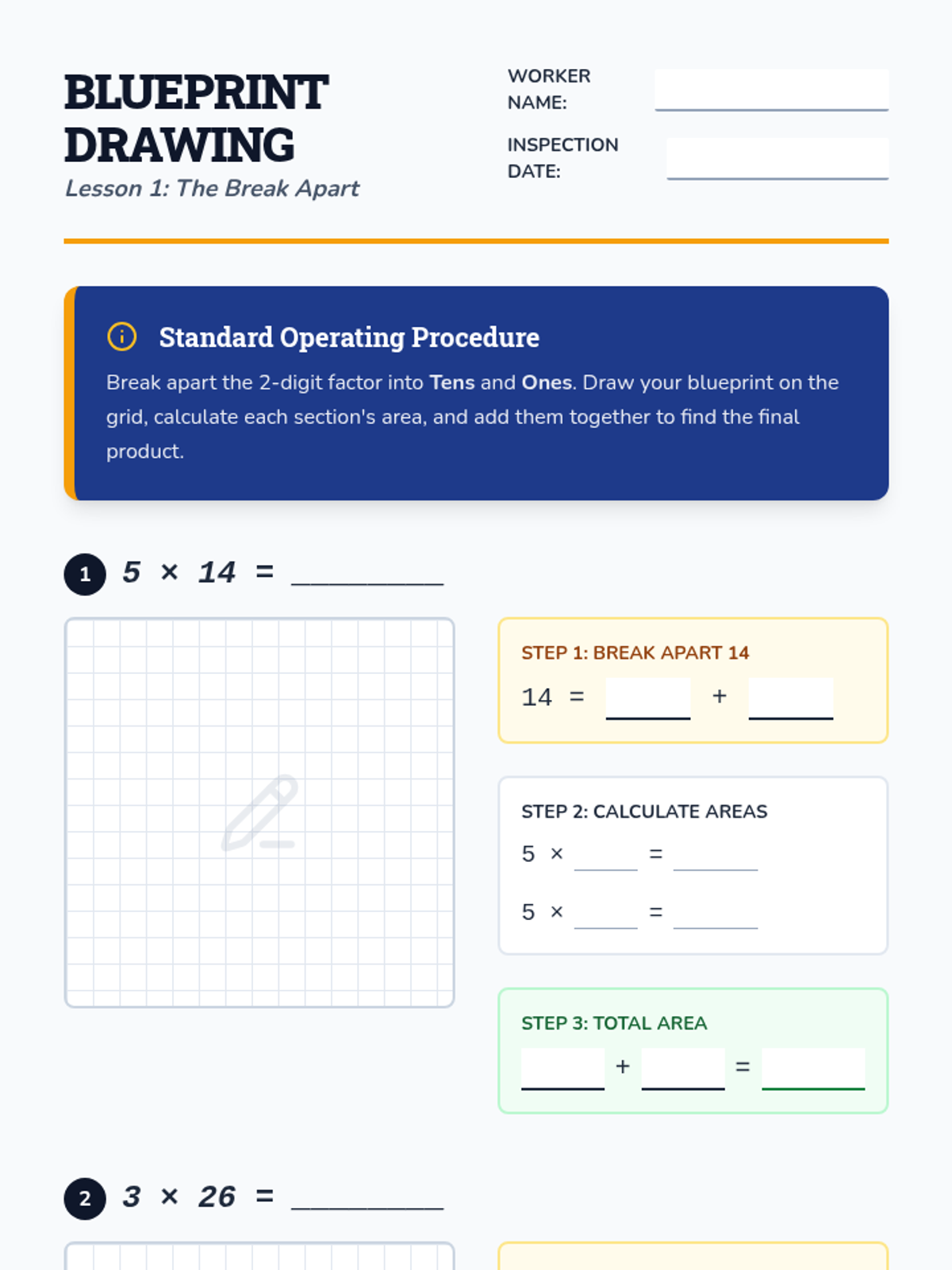
Introduction to the distributive property and area models for single-digit by double-digit multiplication. Students learn to "break apart" factors into place value components.
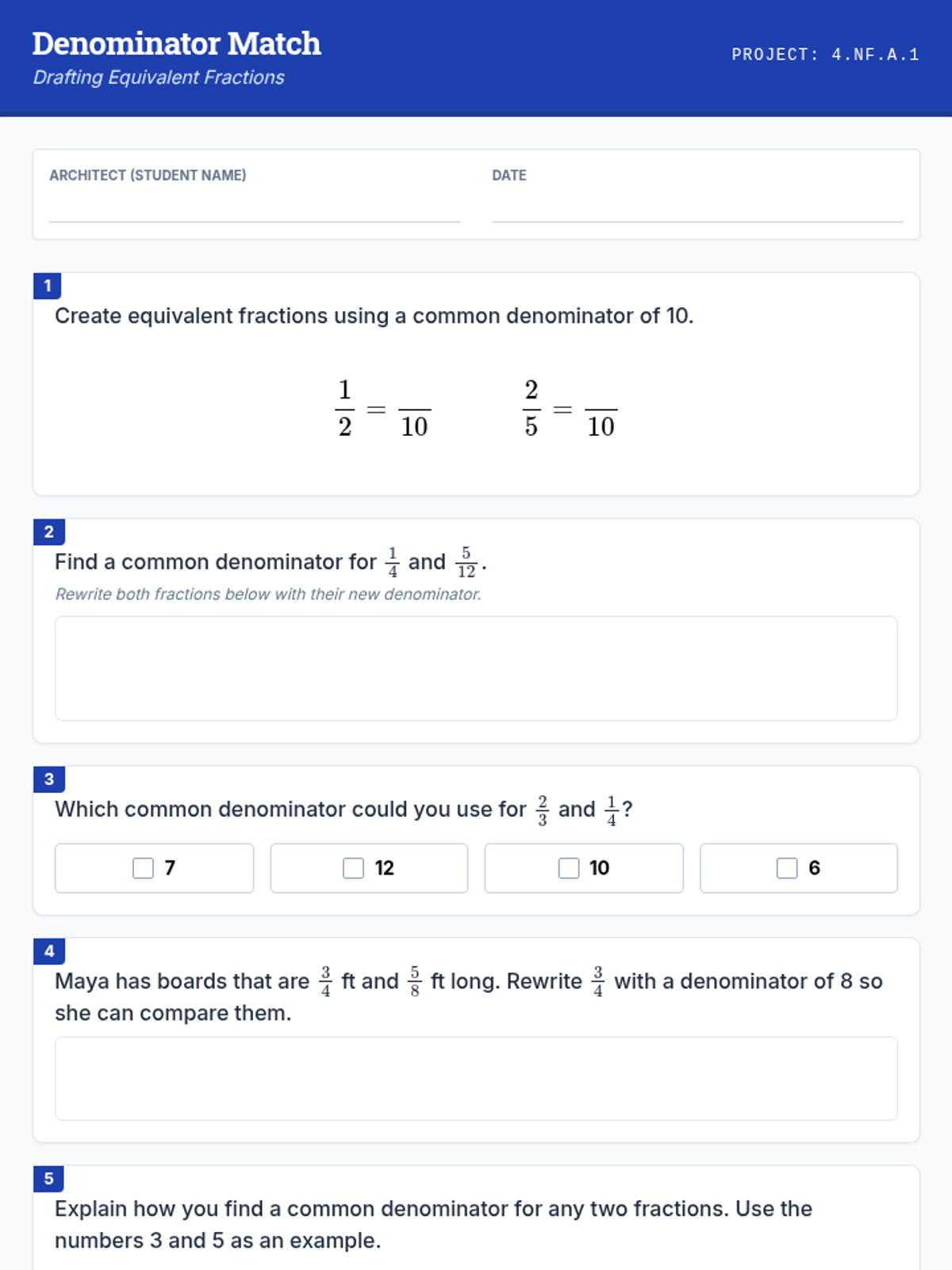
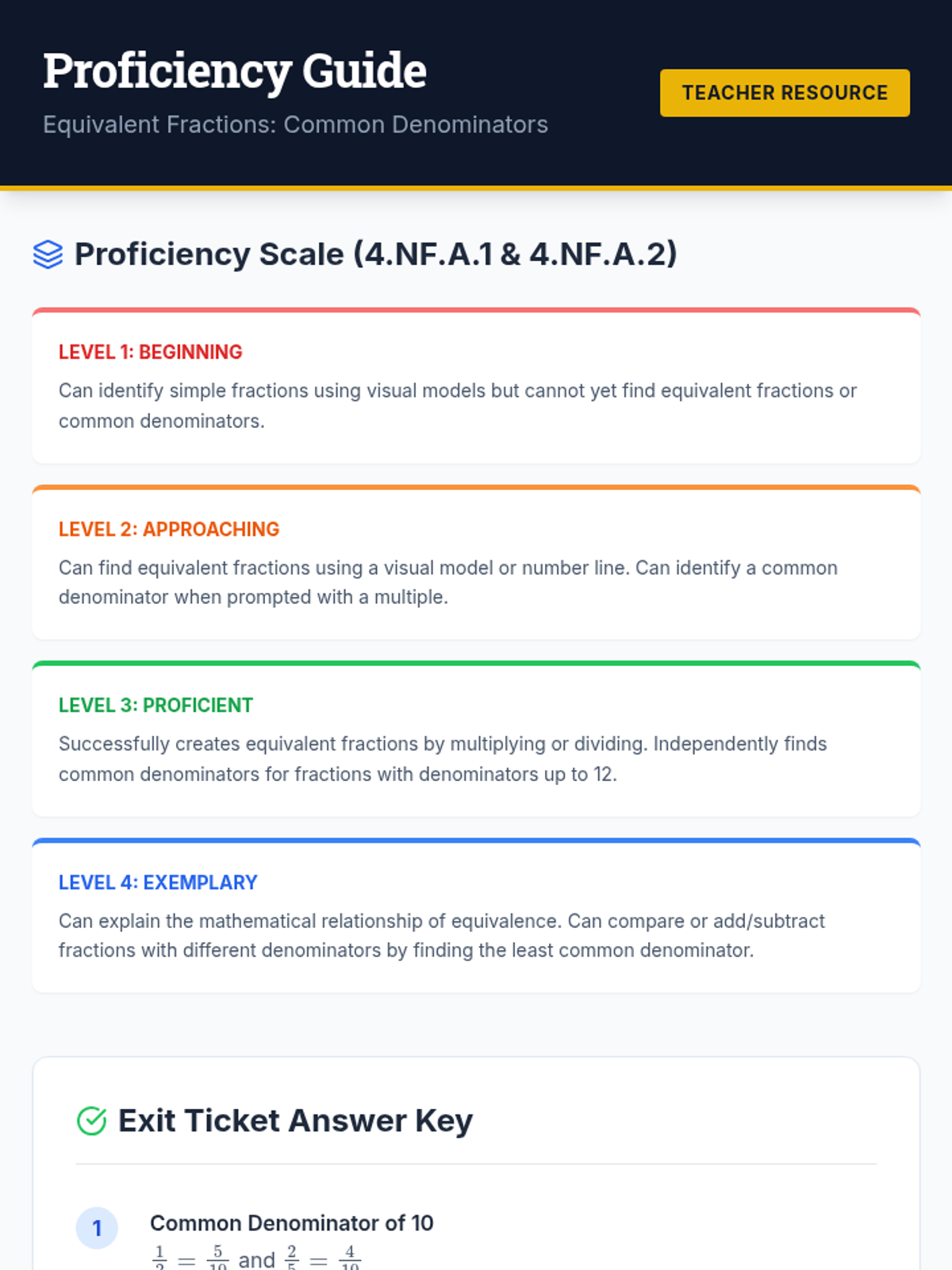
A short assessment focused on the 4th-grade skill of finding common denominators to create equivalent fractions. Includes a student exit ticket and a teacher proficiency guide.
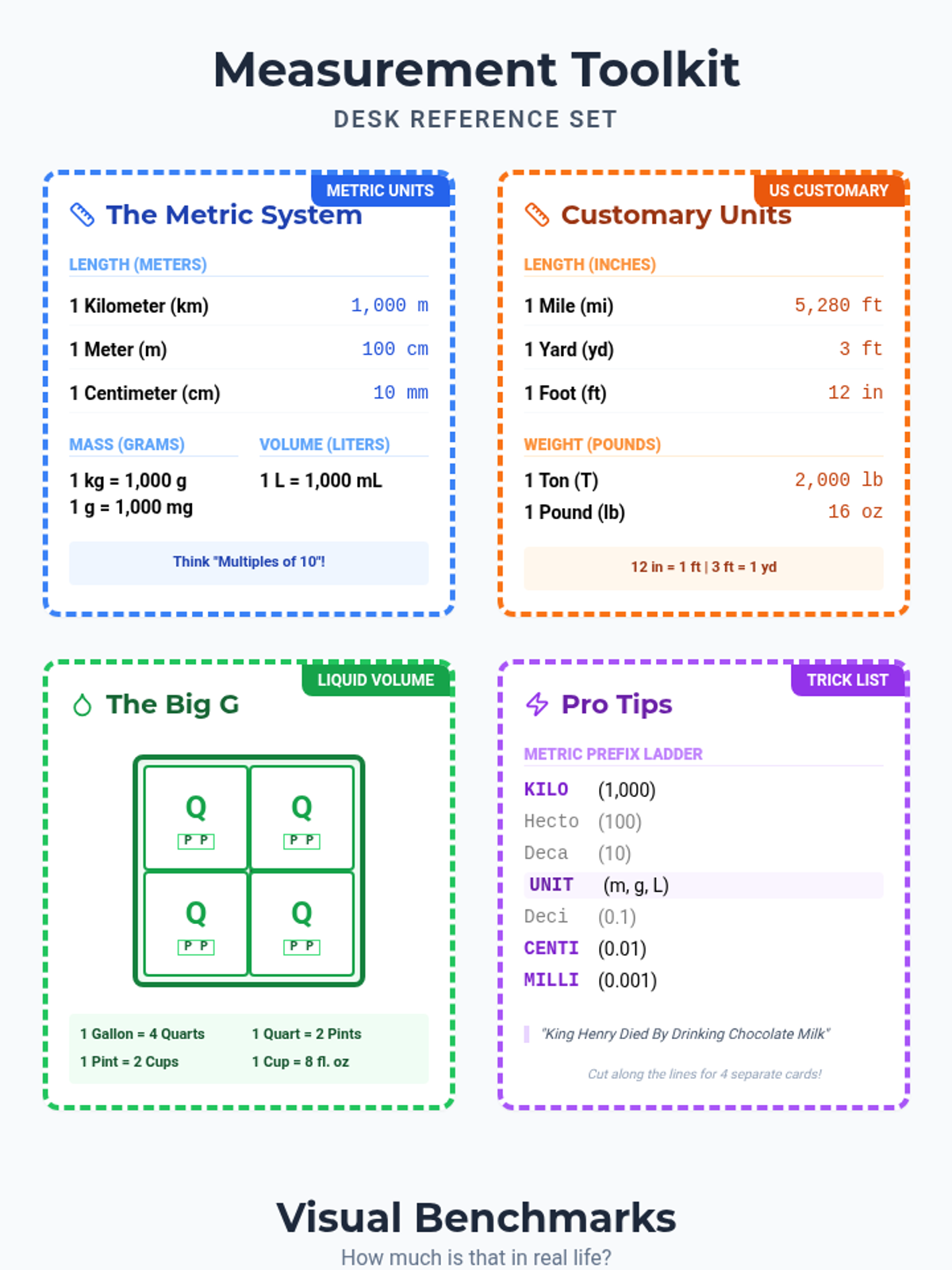
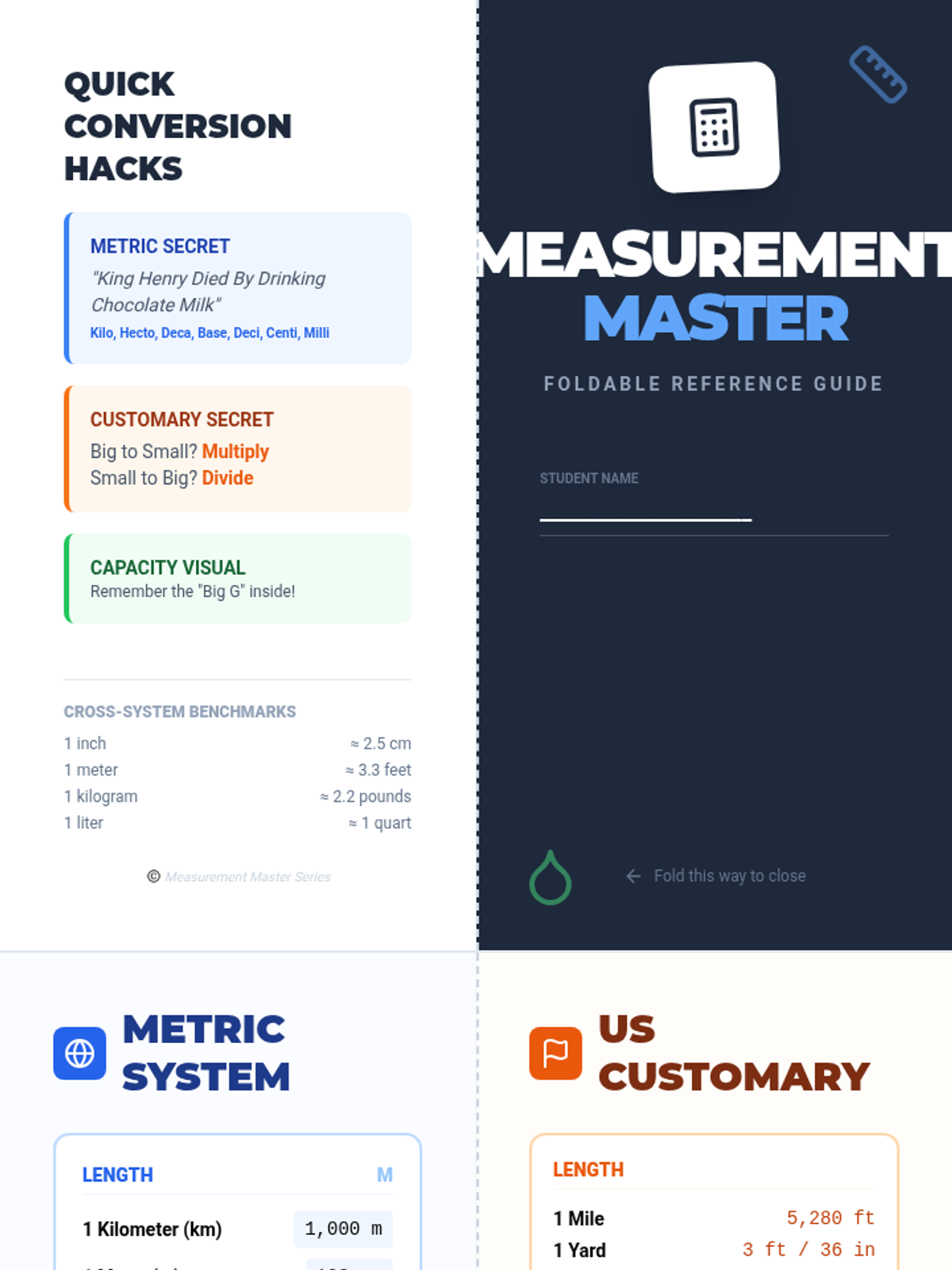
A comprehensive set of visual reference cards for both Metric and US Customary systems of measurement, designed for student desks or notebooks.
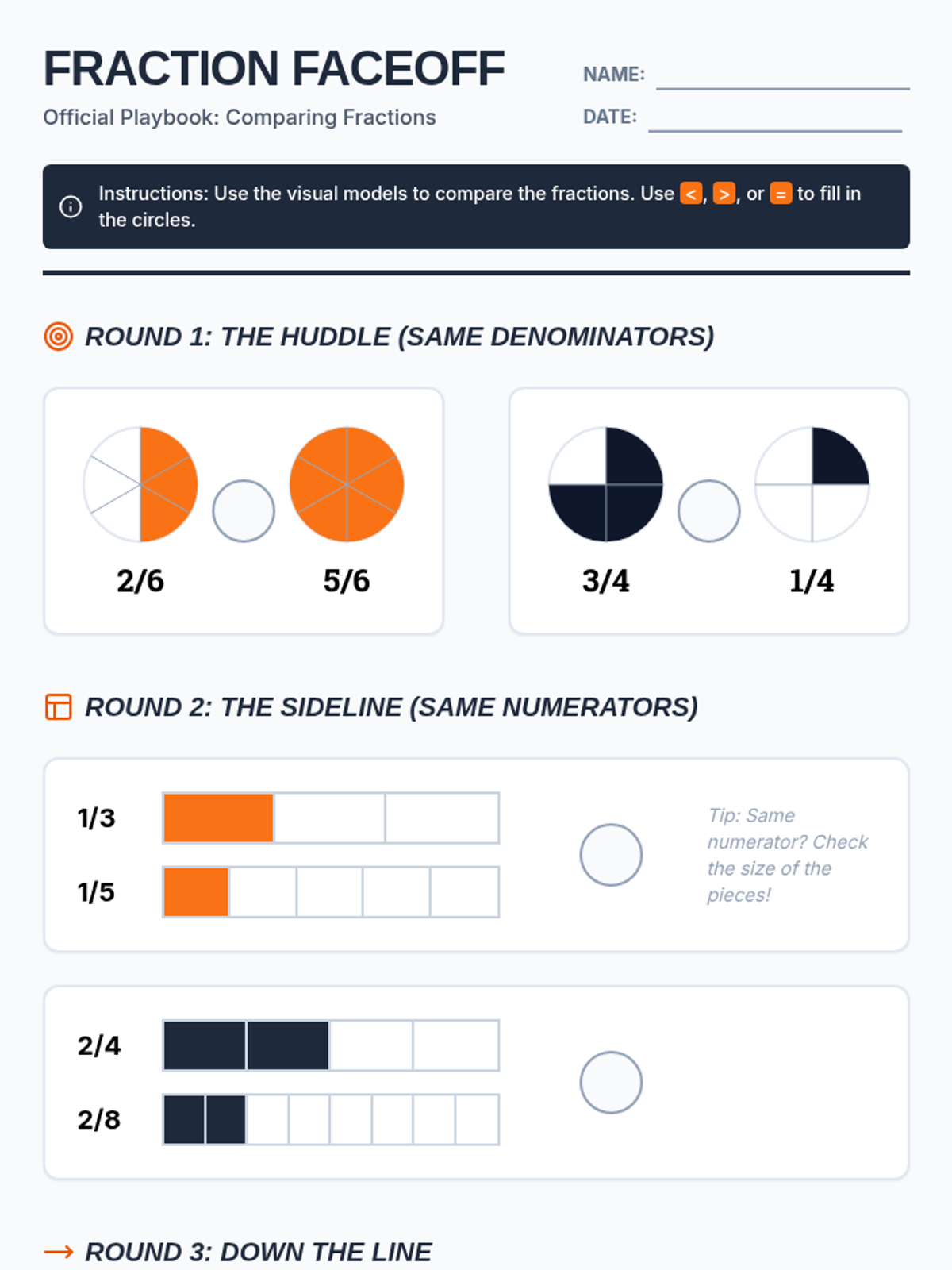
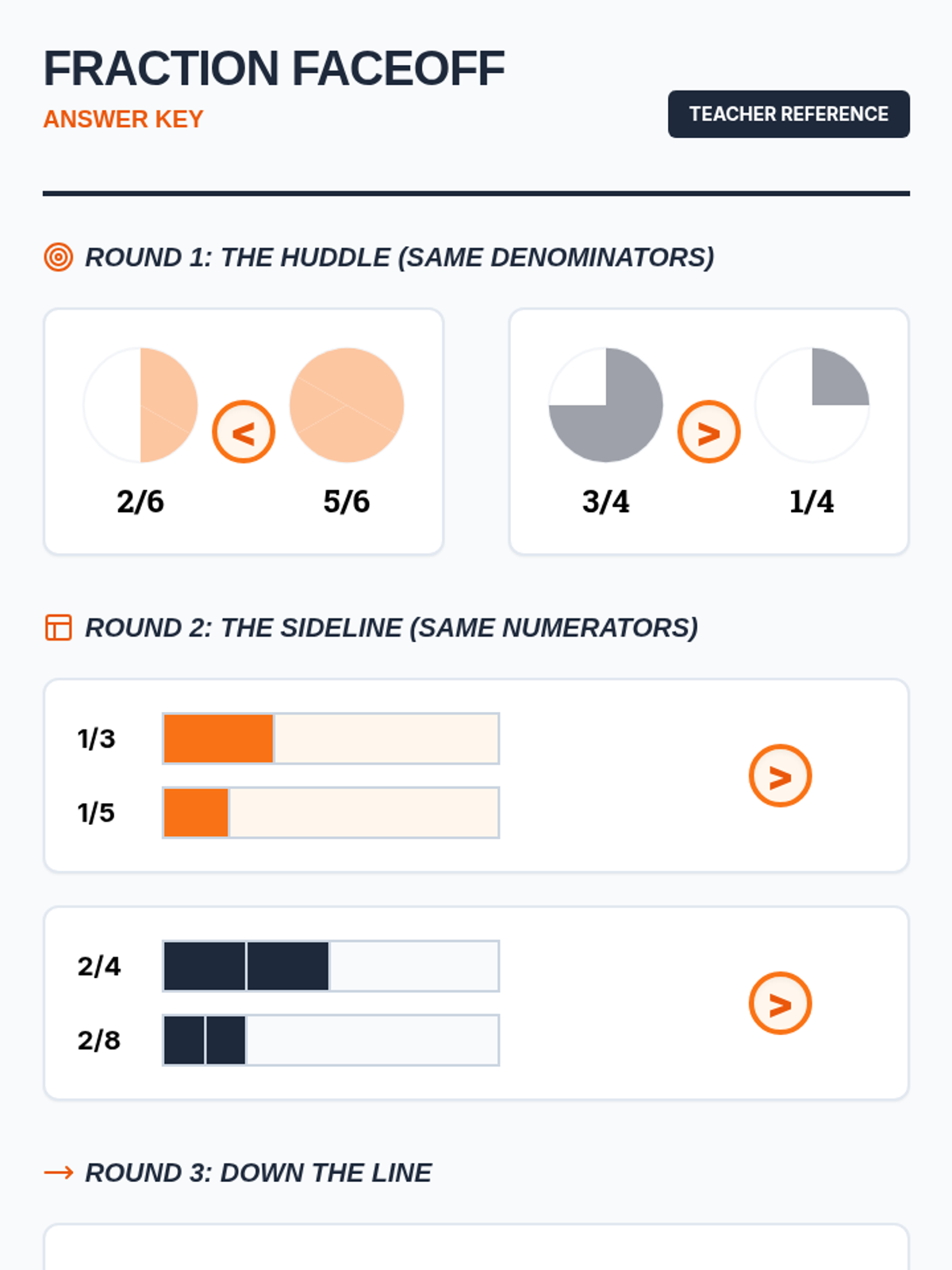
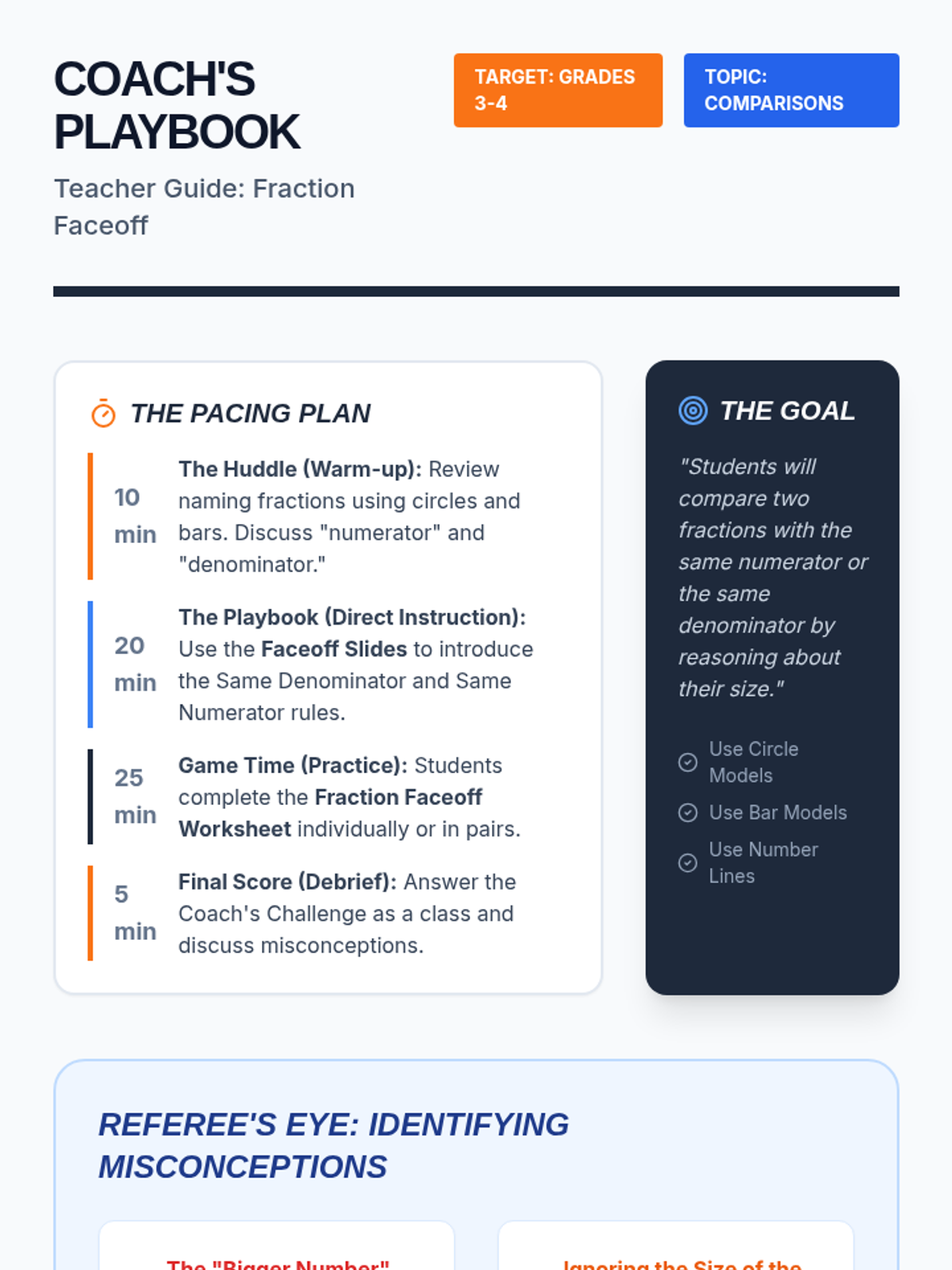
A lesson on comparing fractions with same numerators or same denominators using visual models and number lines.
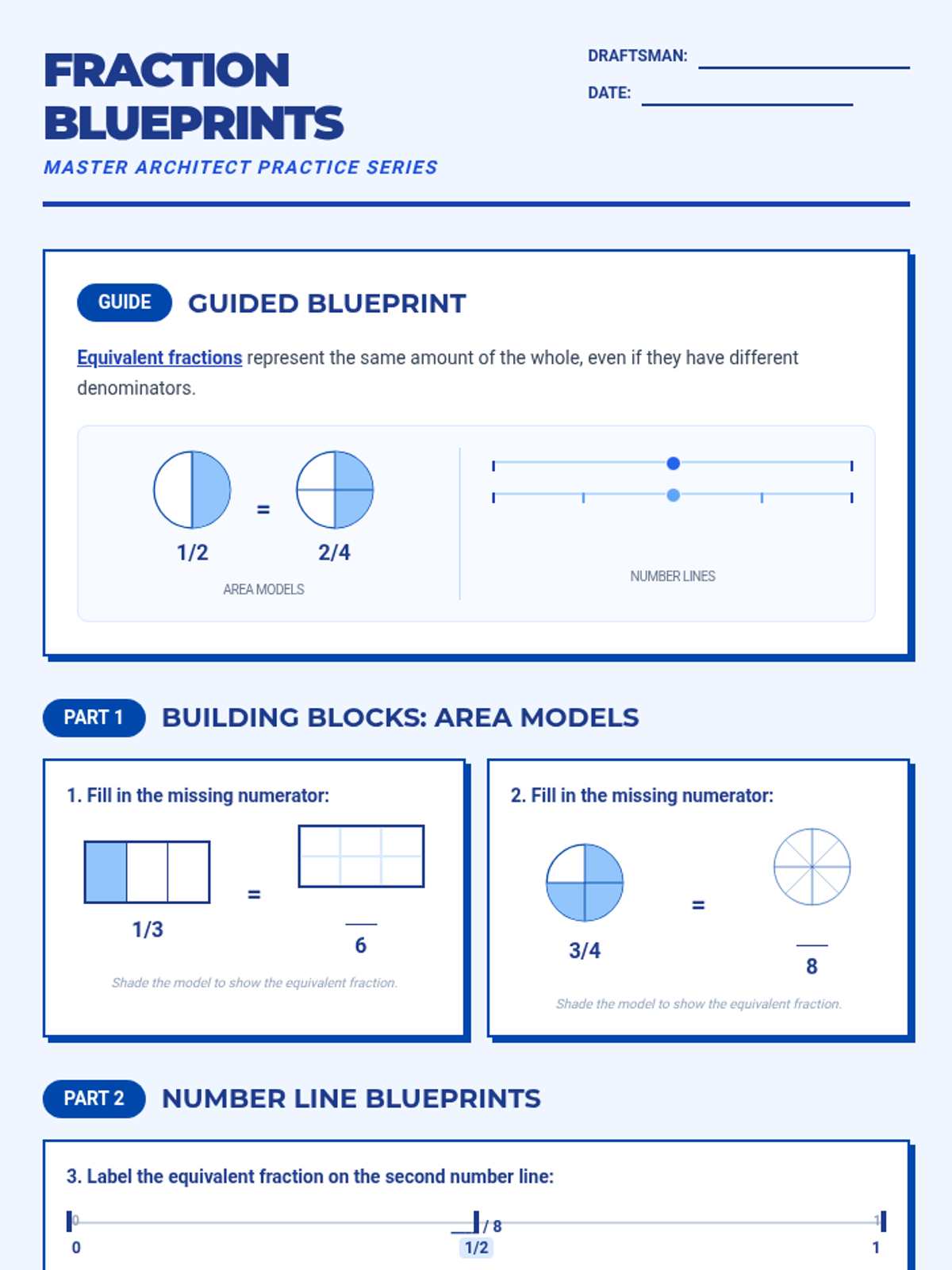
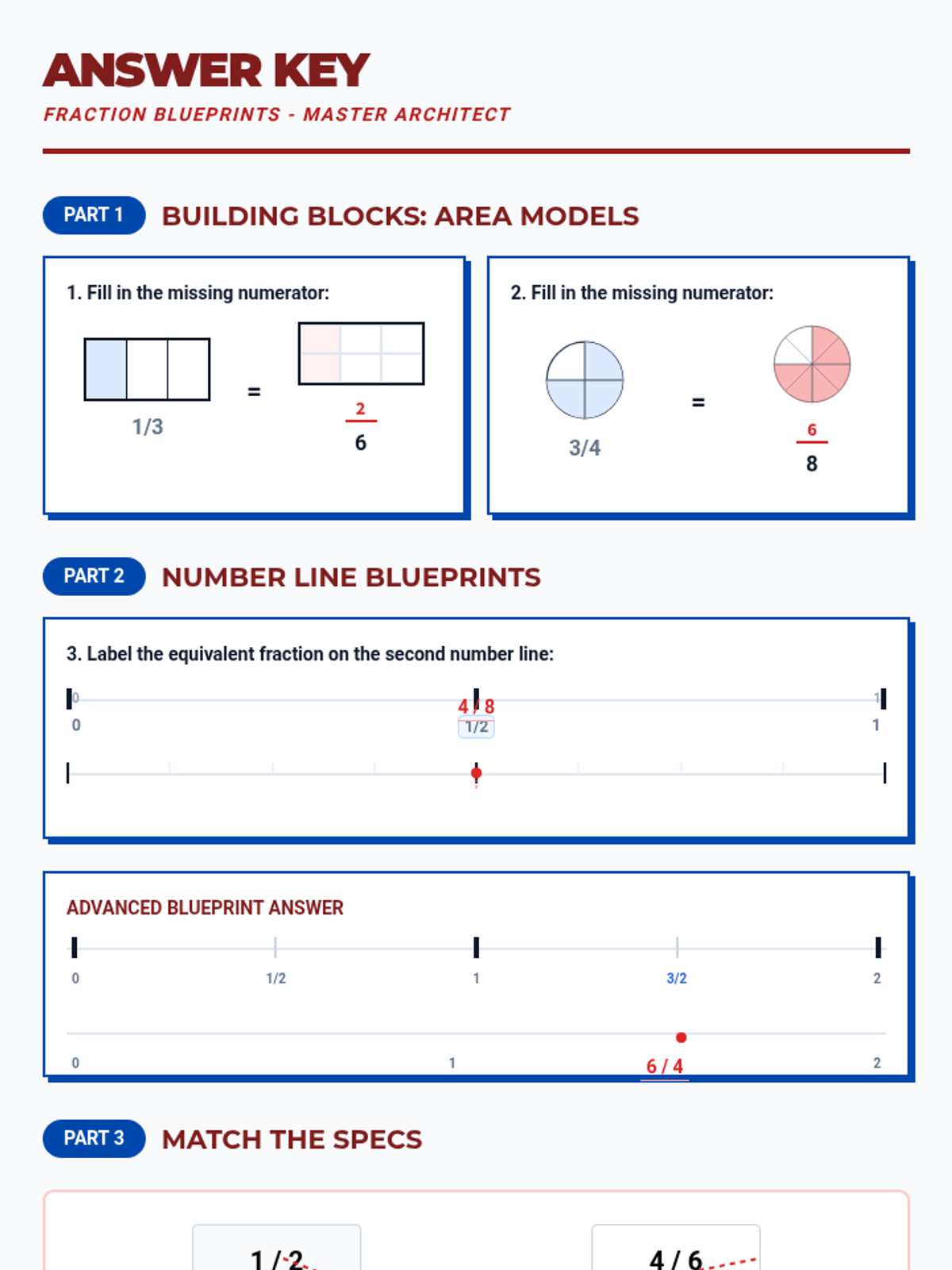
A lesson focused on identifying and creating equivalent fractions using visual models like area models and number lines, specifically for denominators 2, 3, 4, 6, and 8. Students will practice both within and beyond one whole.
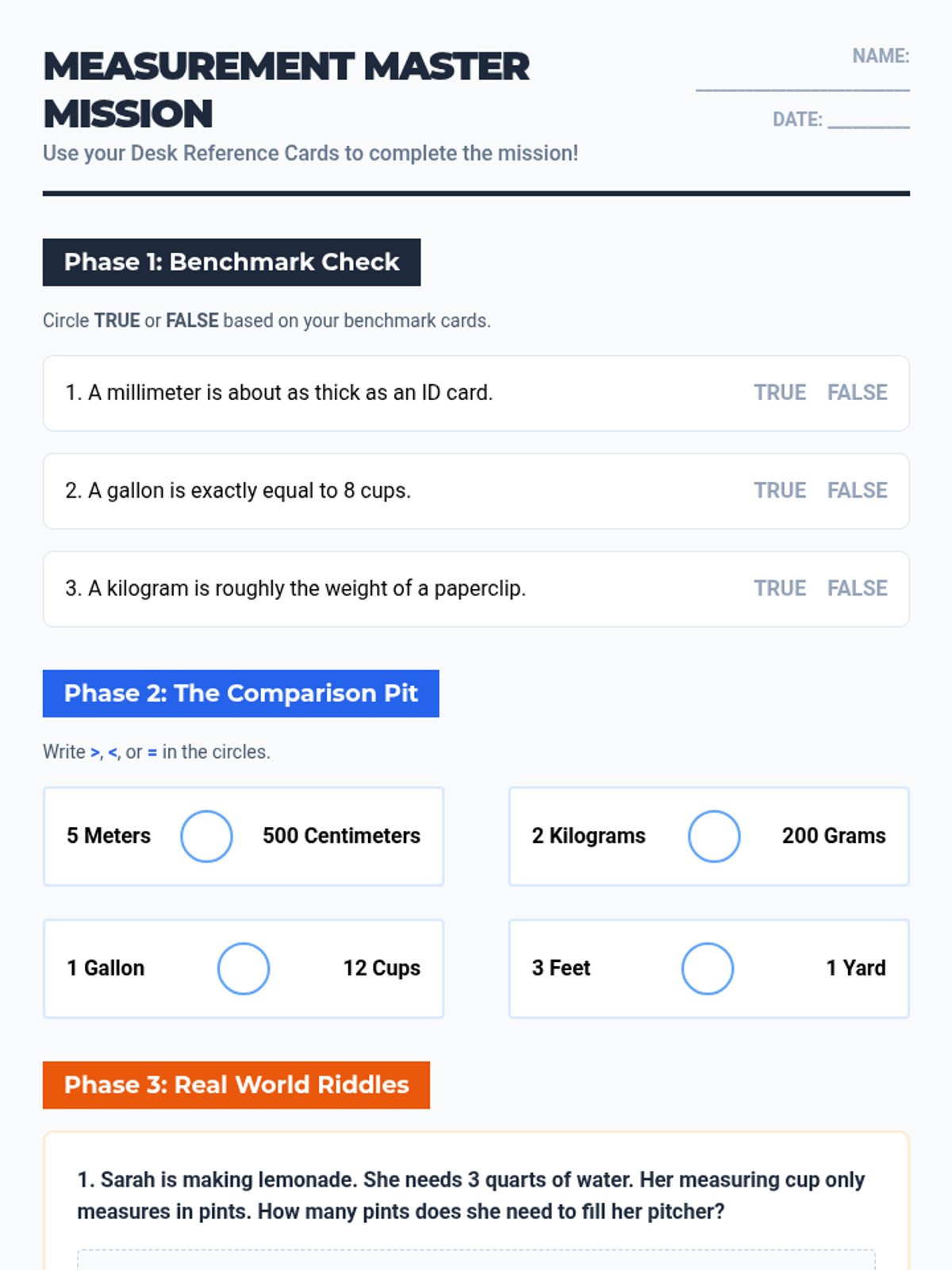
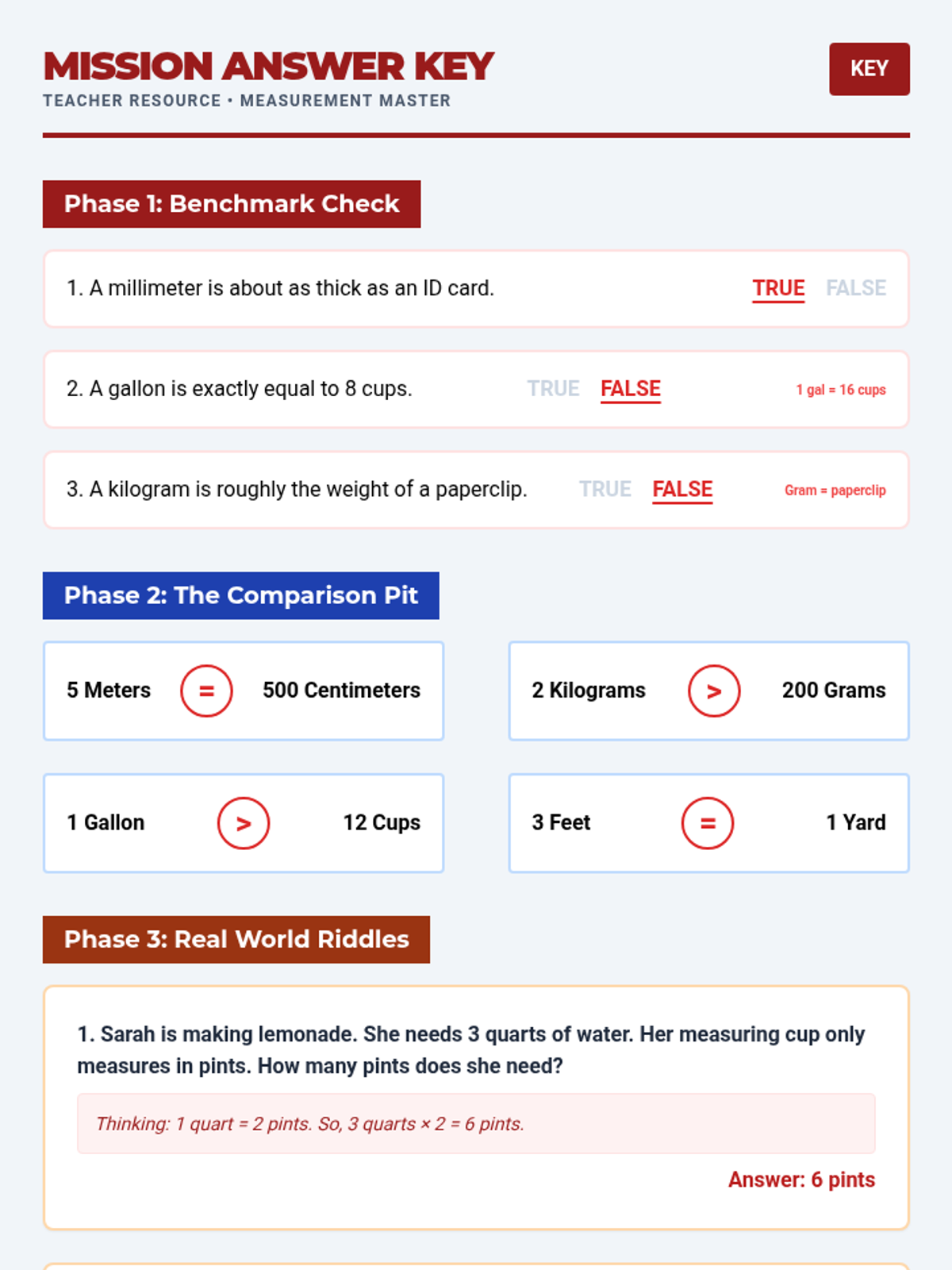
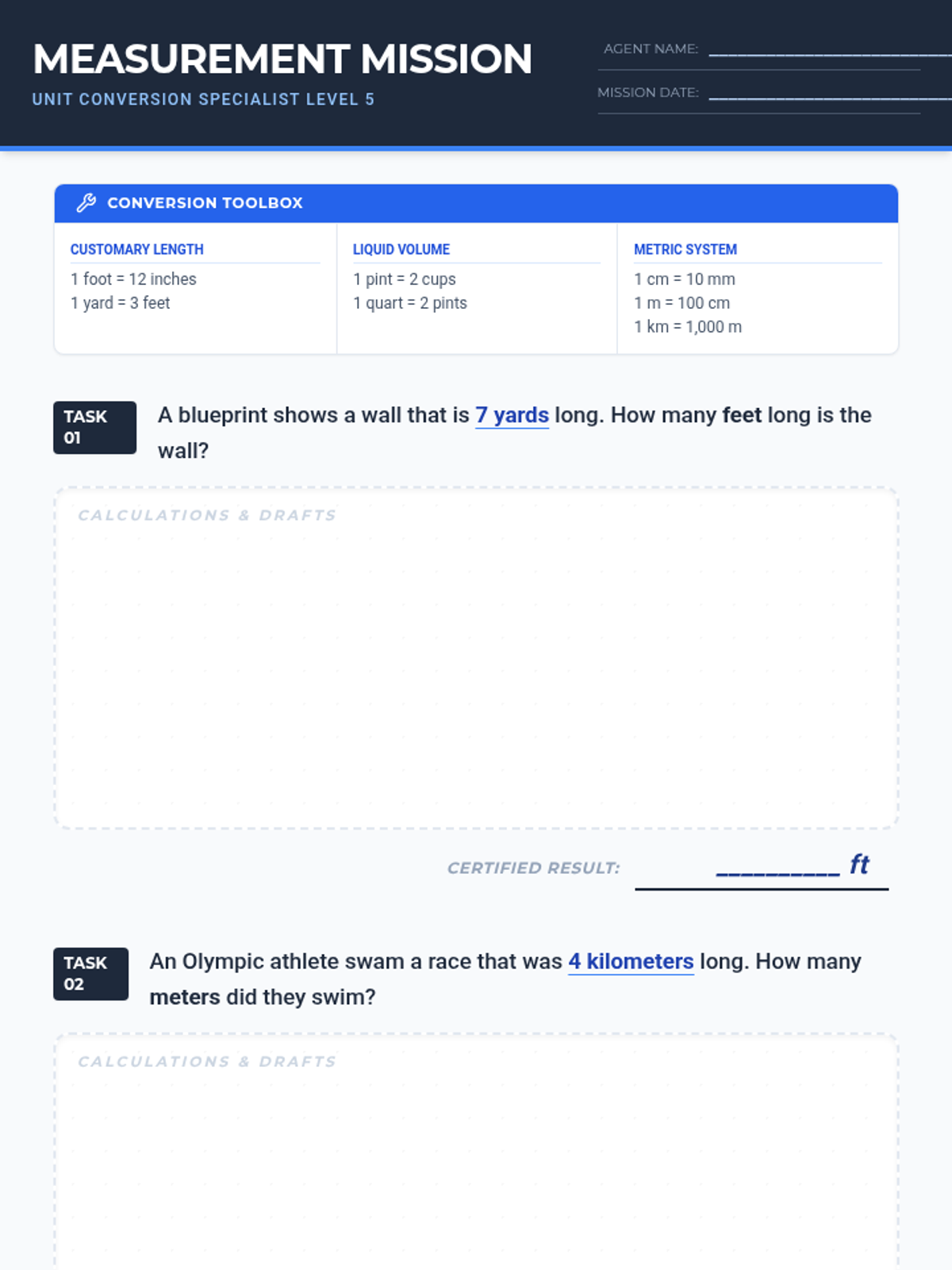
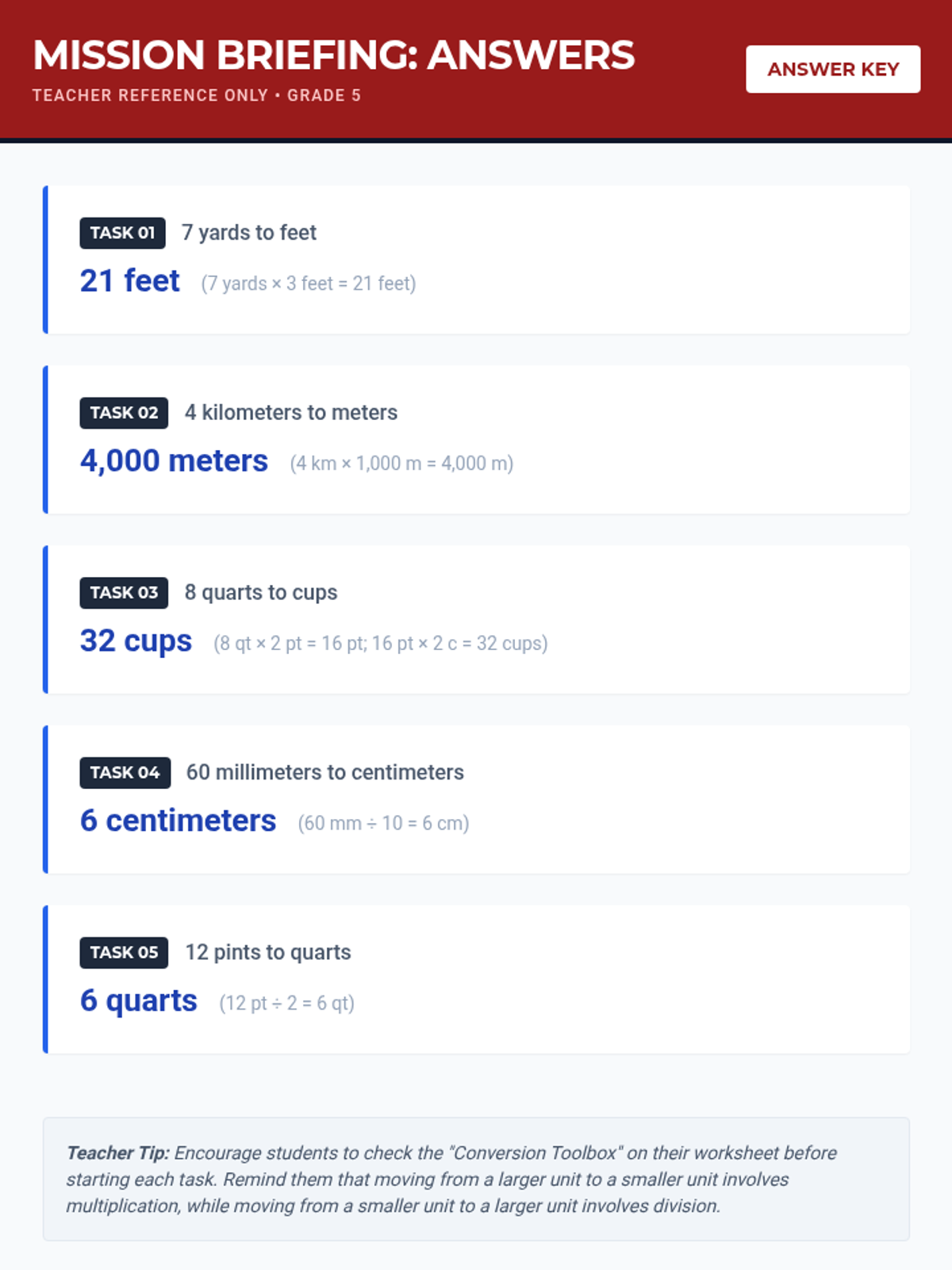
A focused practice session on converting units of measurement across liquid volume, customary length, and metric systems for 5th-grade students.
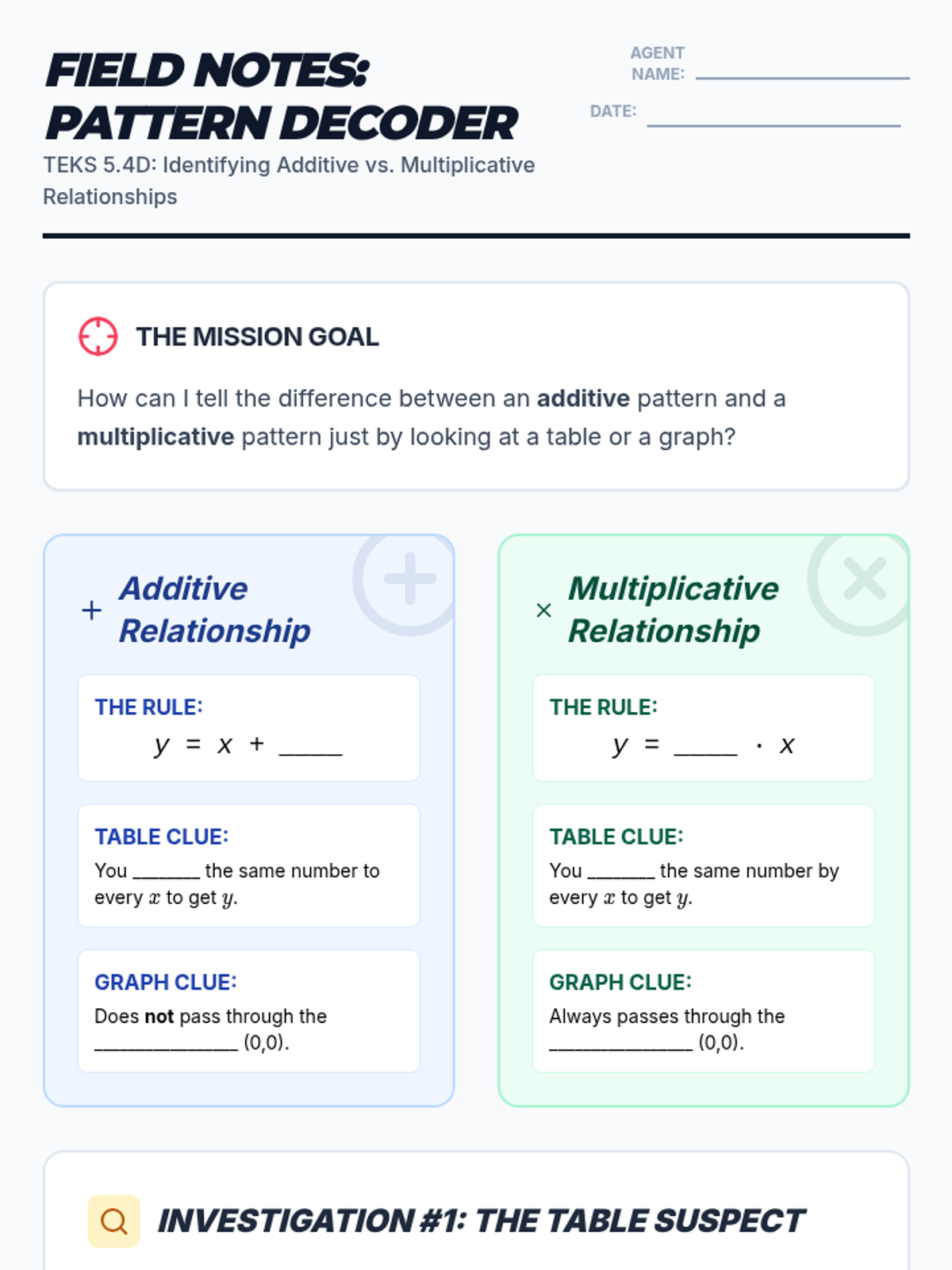
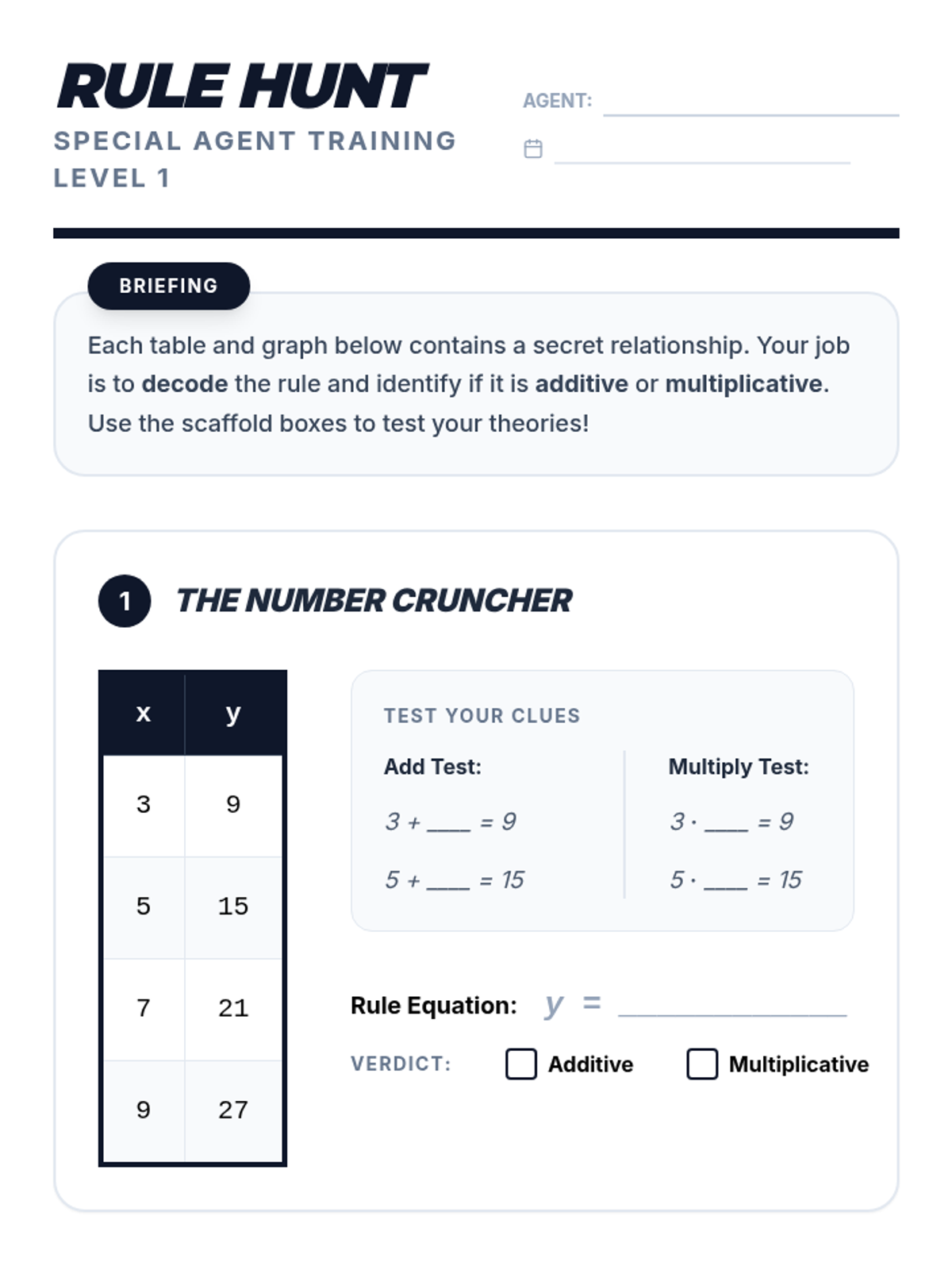
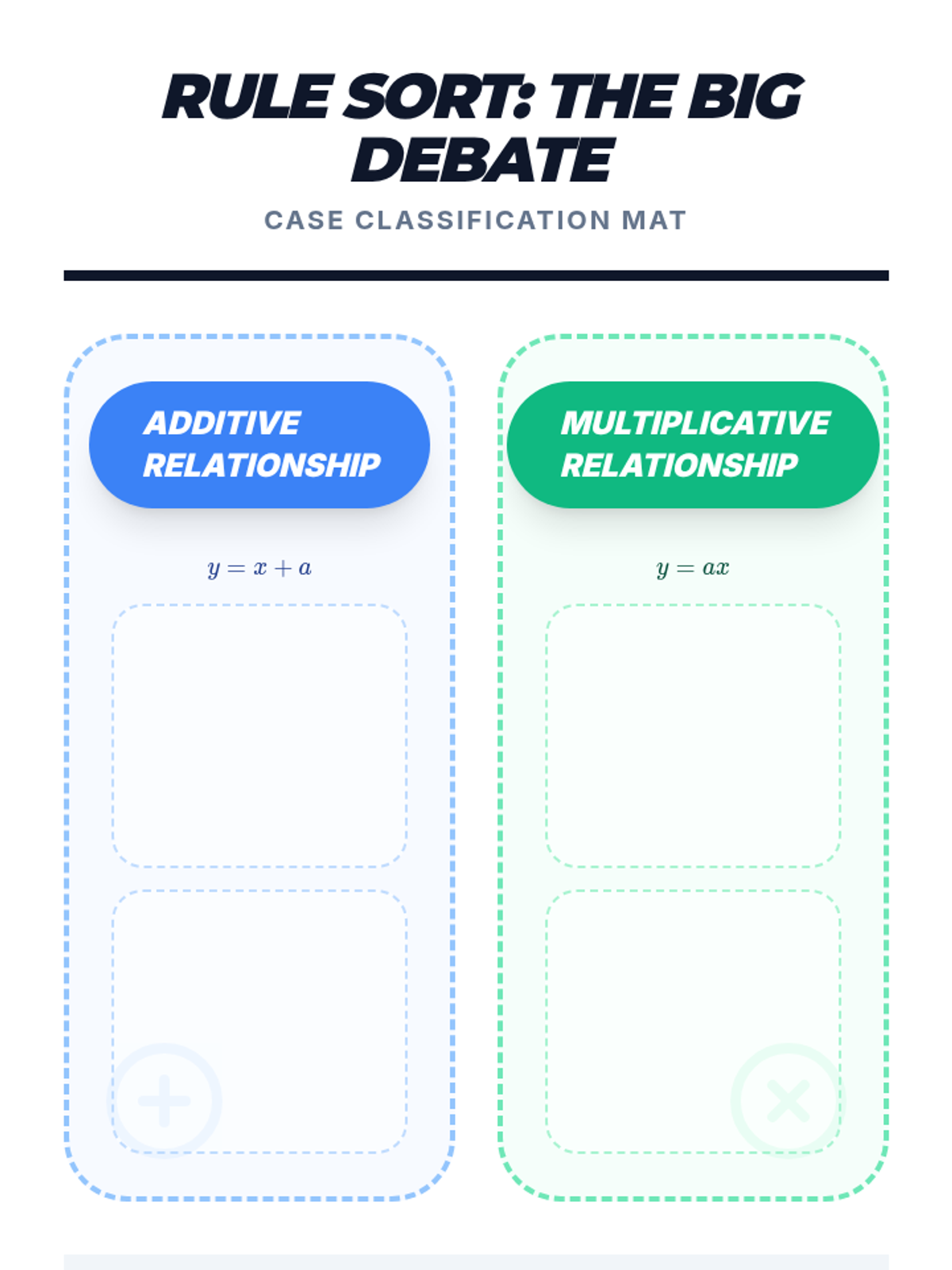
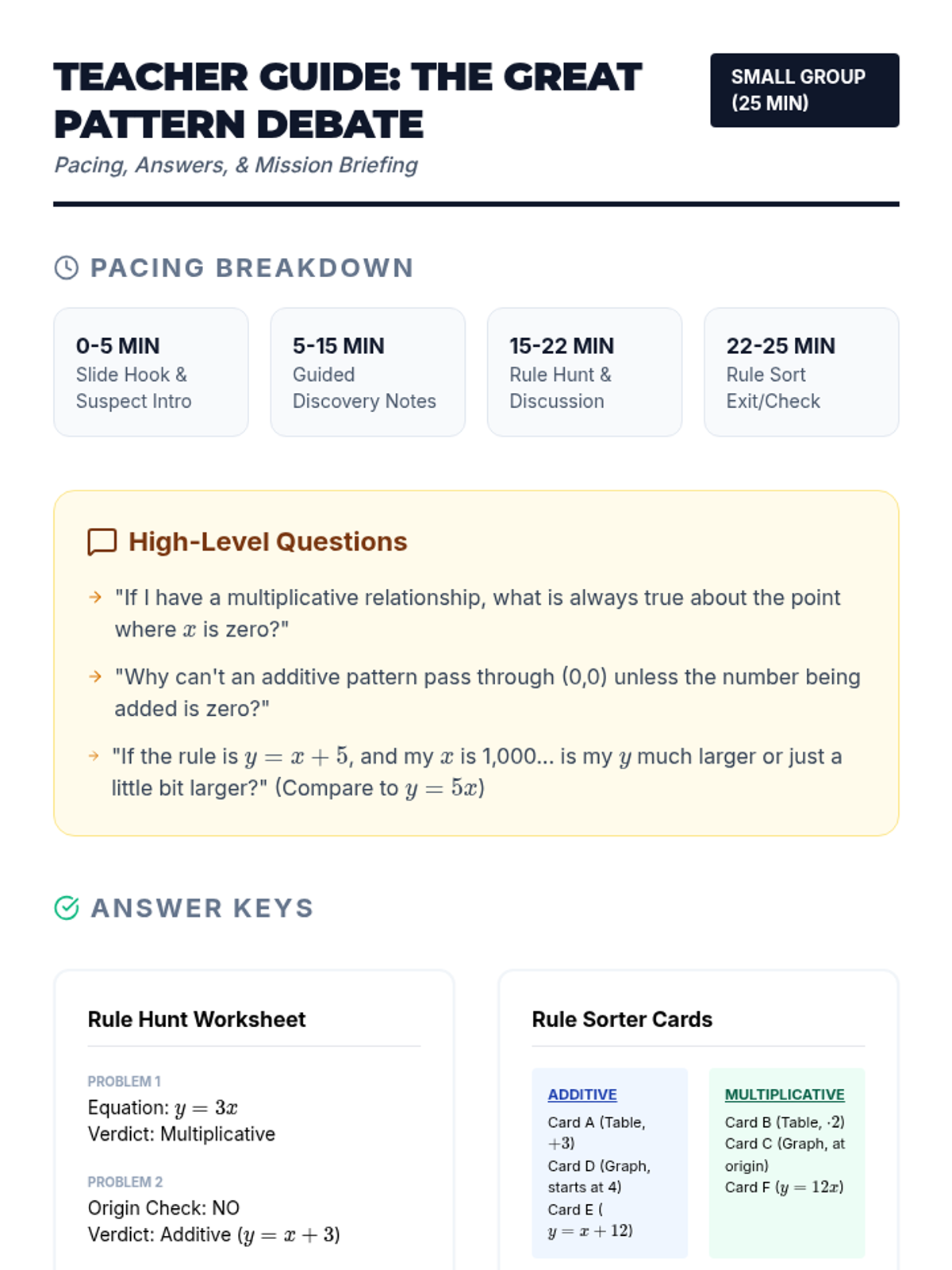
A 25-minute small group lesson focusing on identifying whether a pattern is additive ($y = x + a$) or multiplicative ($y = ax$) from tables and graphs.