Students explore the concept of volume by counting unit cubes and understanding how layers stack to fill 3D spaces. This lesson transitions from single-layer counting to multi-layer calculations.
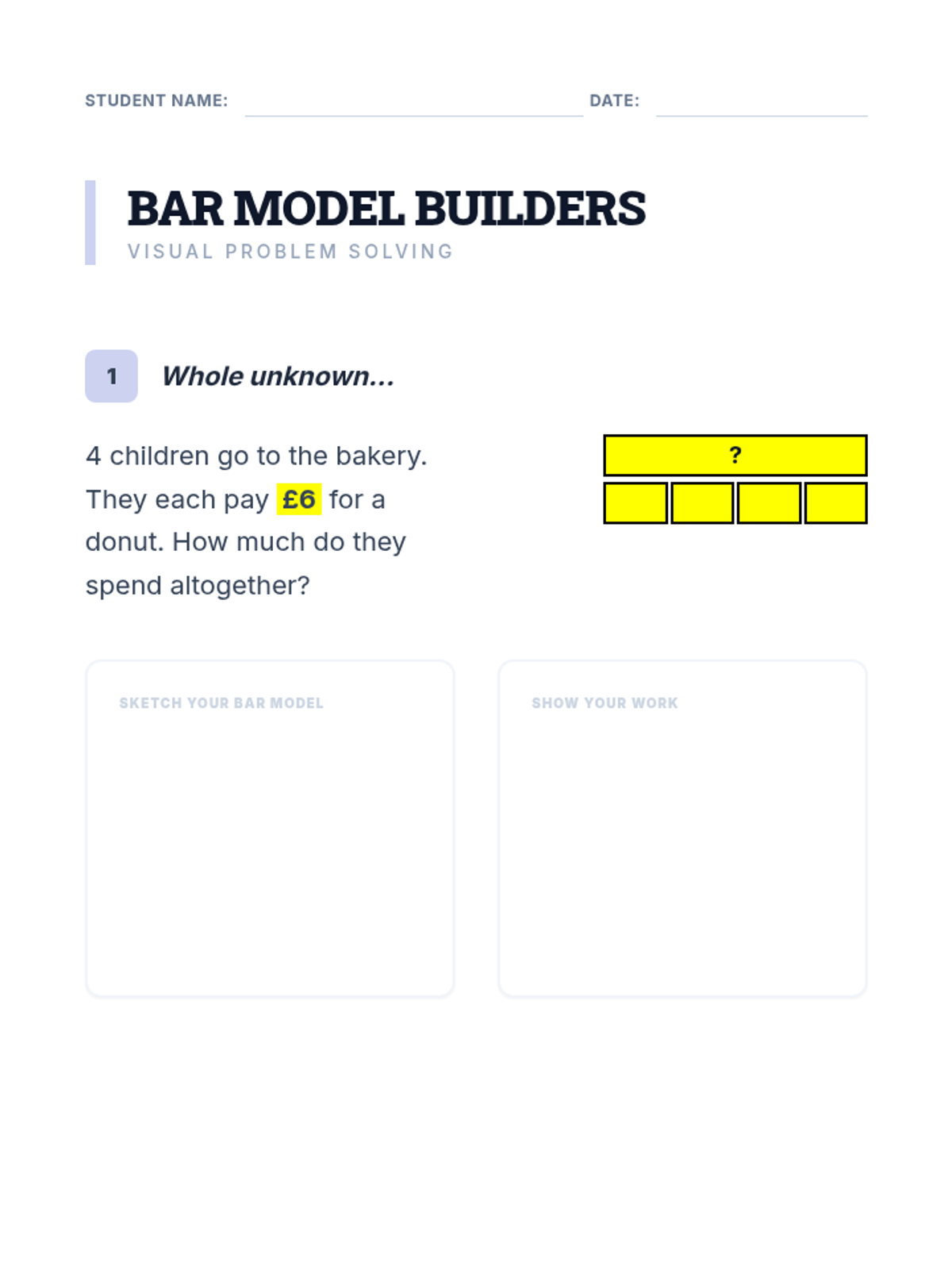
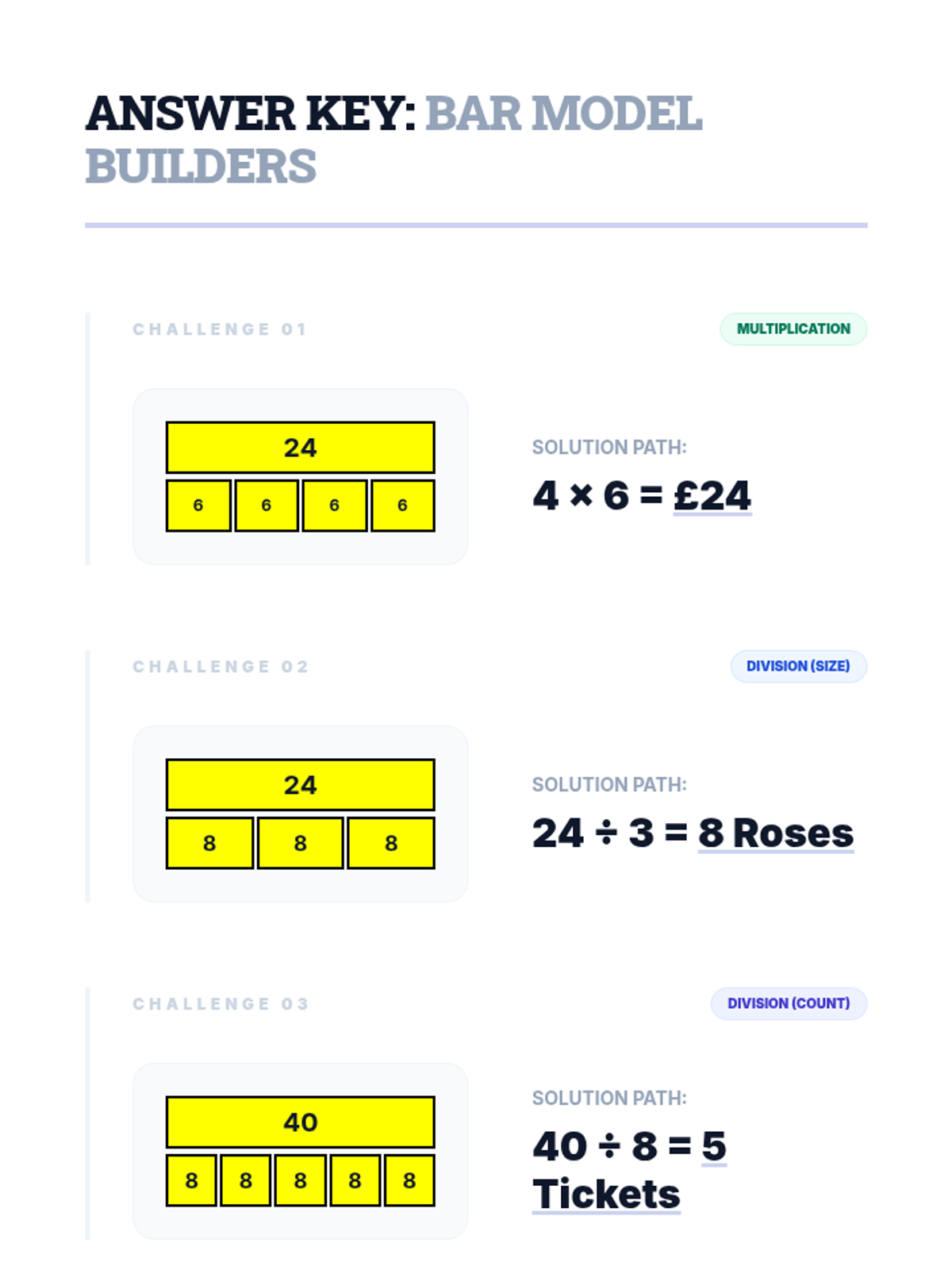
Students will learn to use bar models to visualize and solve multiplication and division word problems involving whole unknowns, group size unknowns, and number of group unknowns.
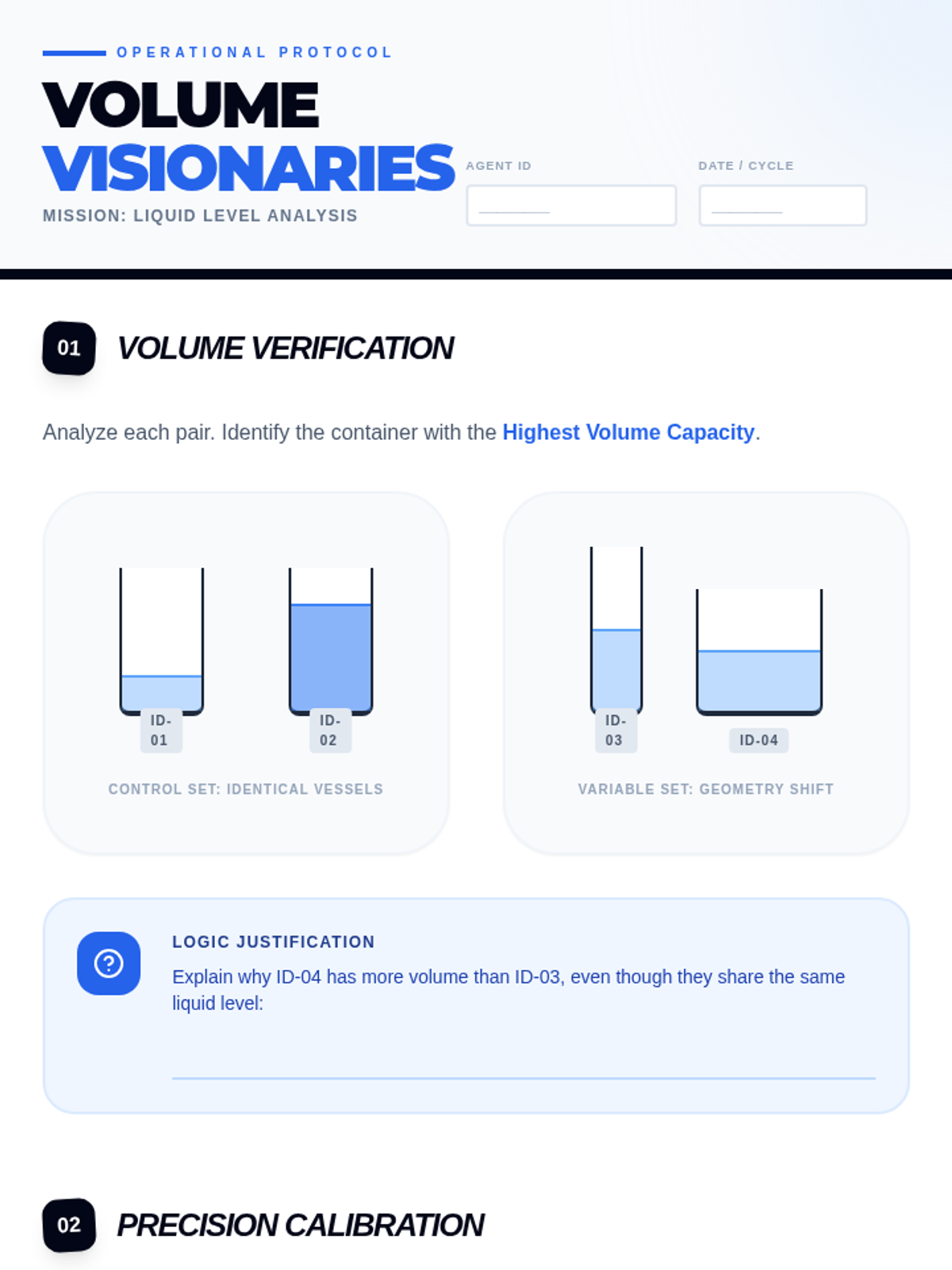
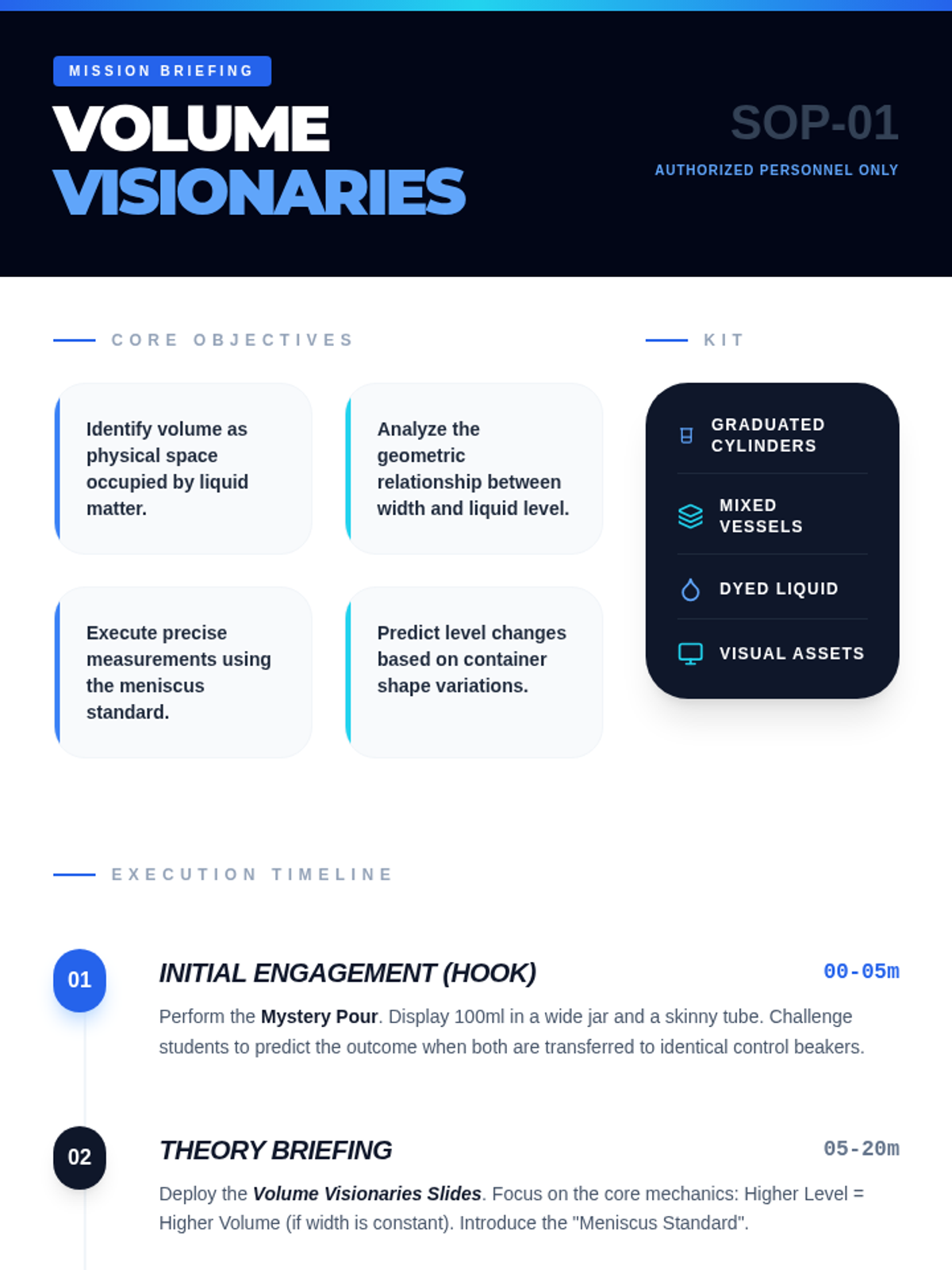
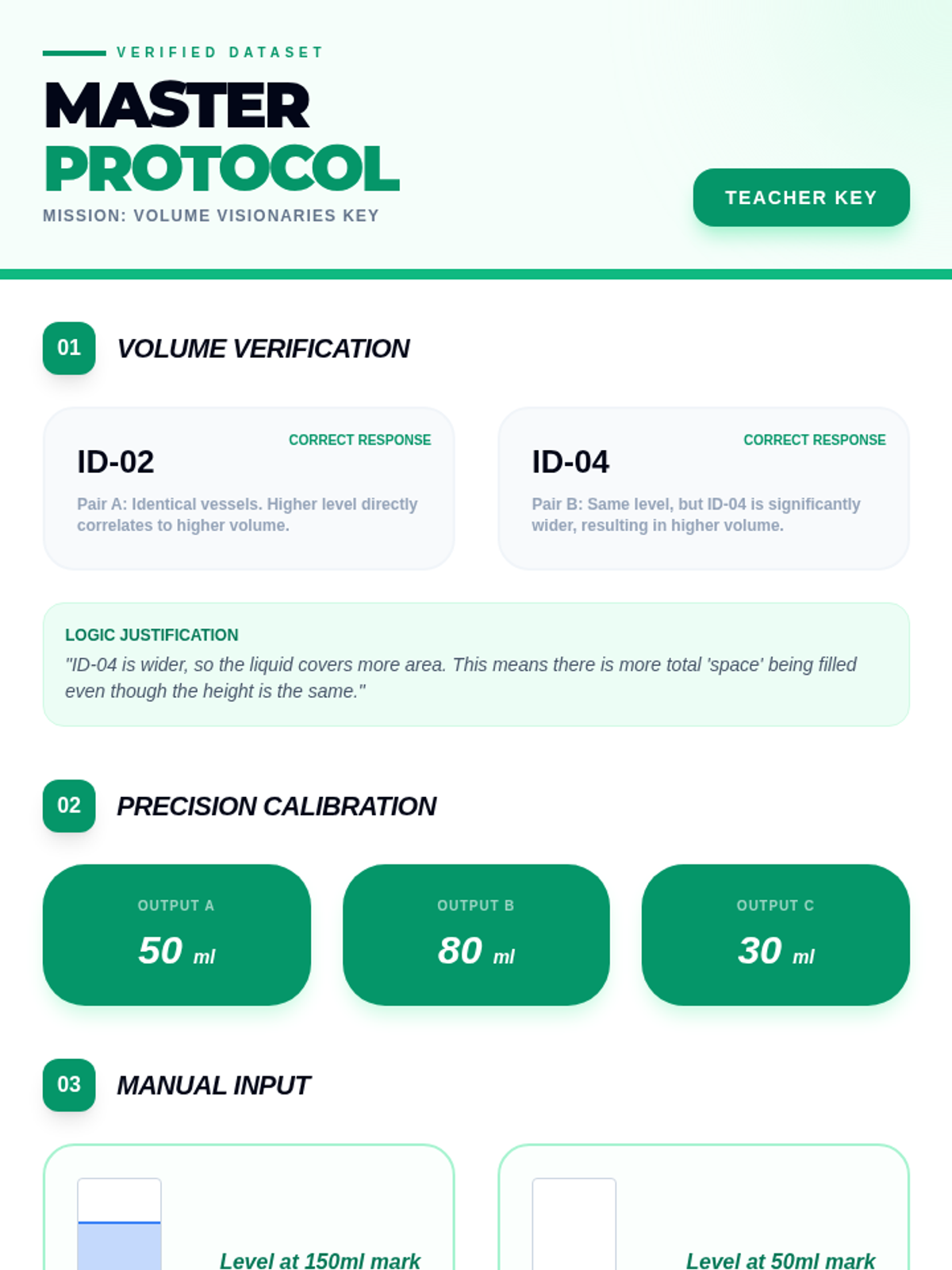
A hands-on lesson exploring the relationship between water level and volume, teaching students how to observe, measure, and compare how much liquid a container holds.

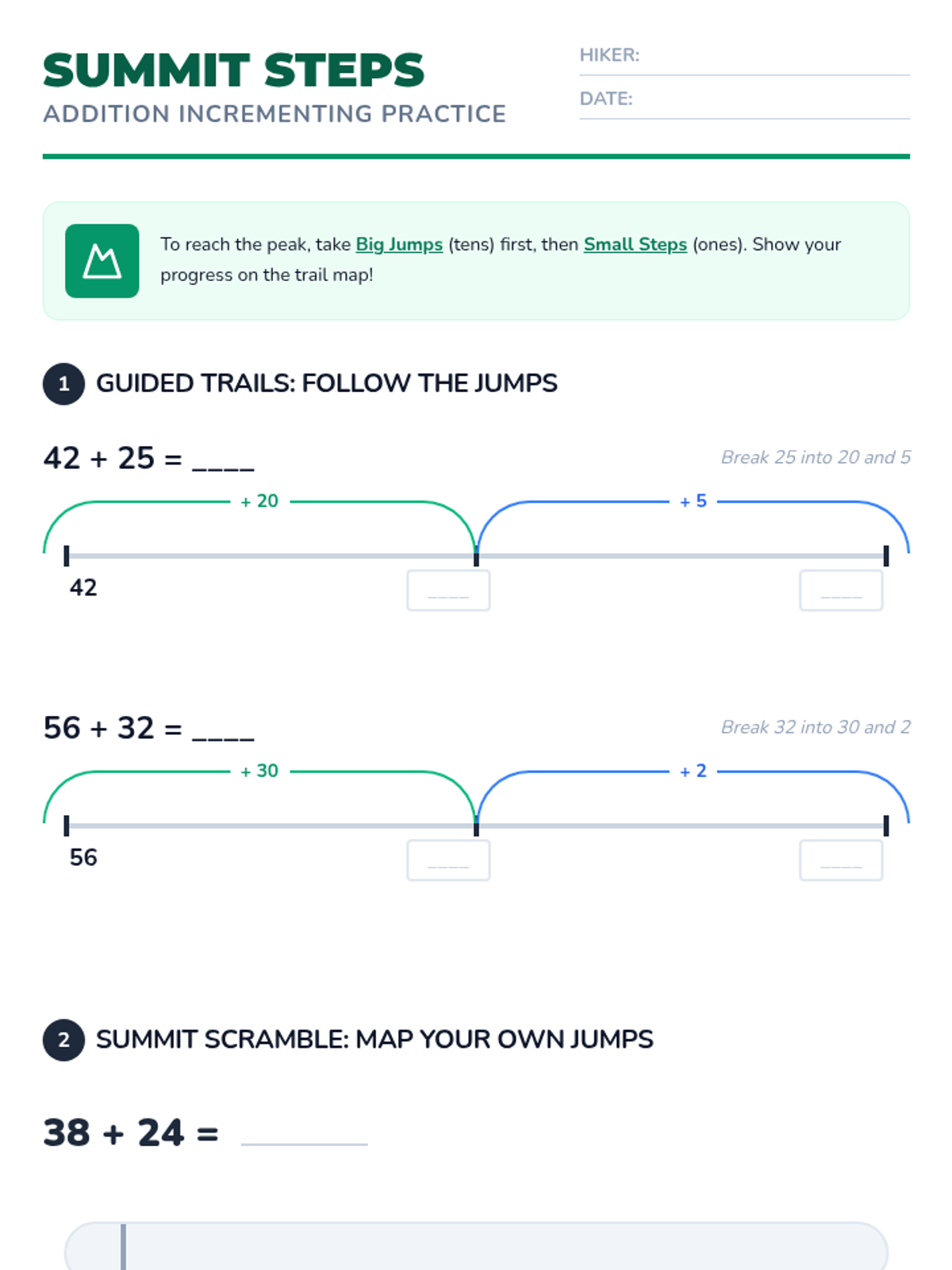
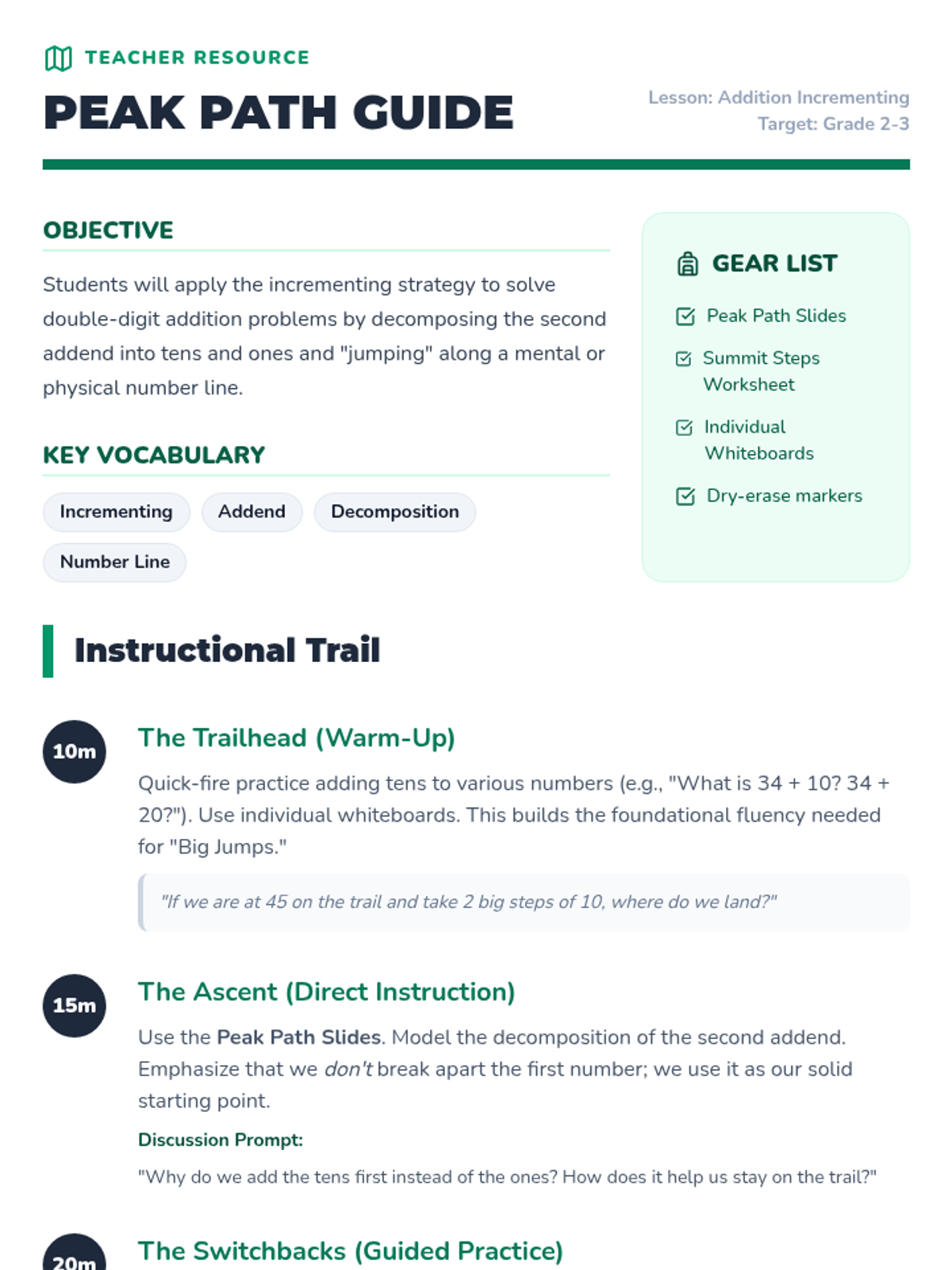
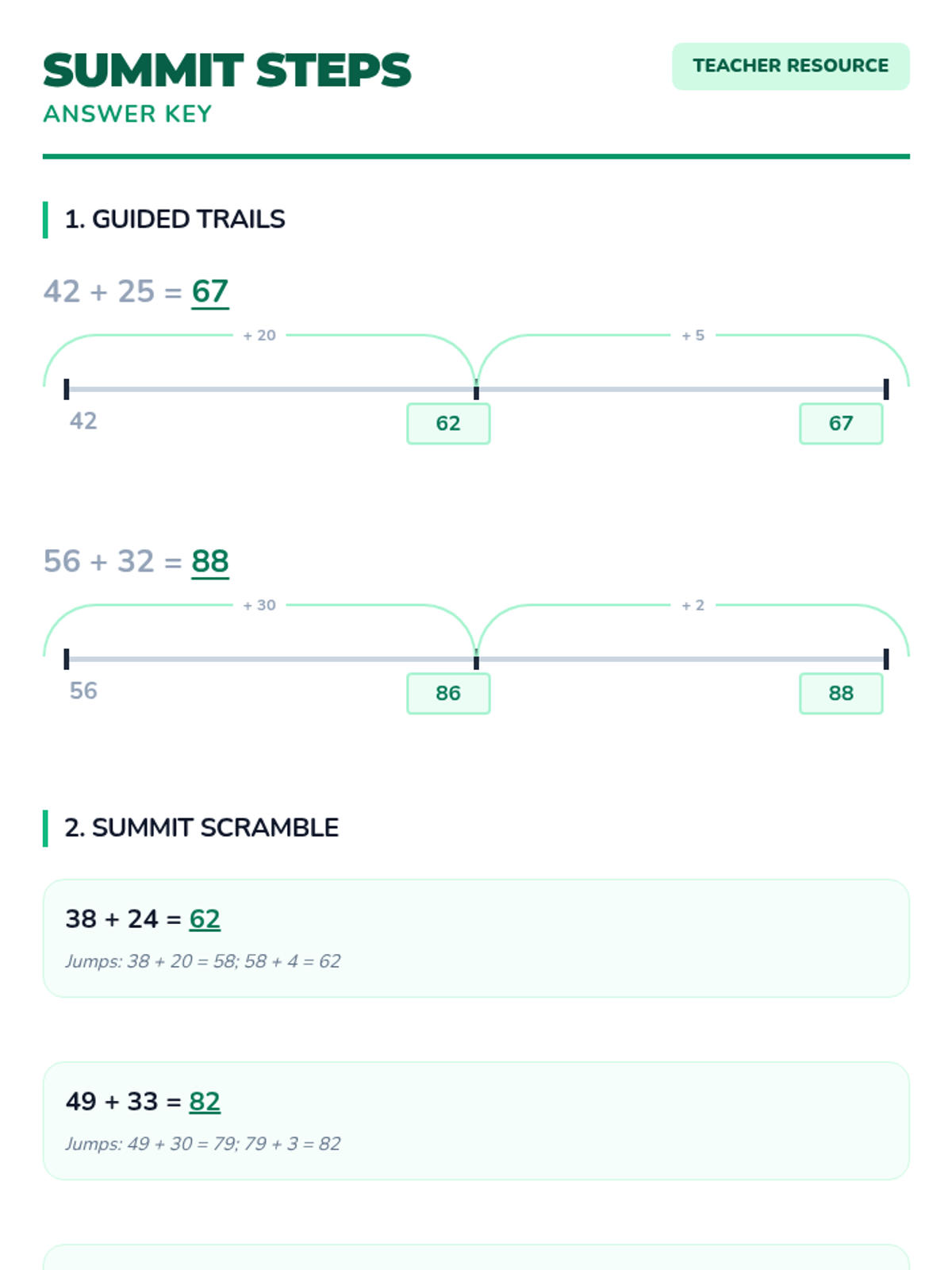
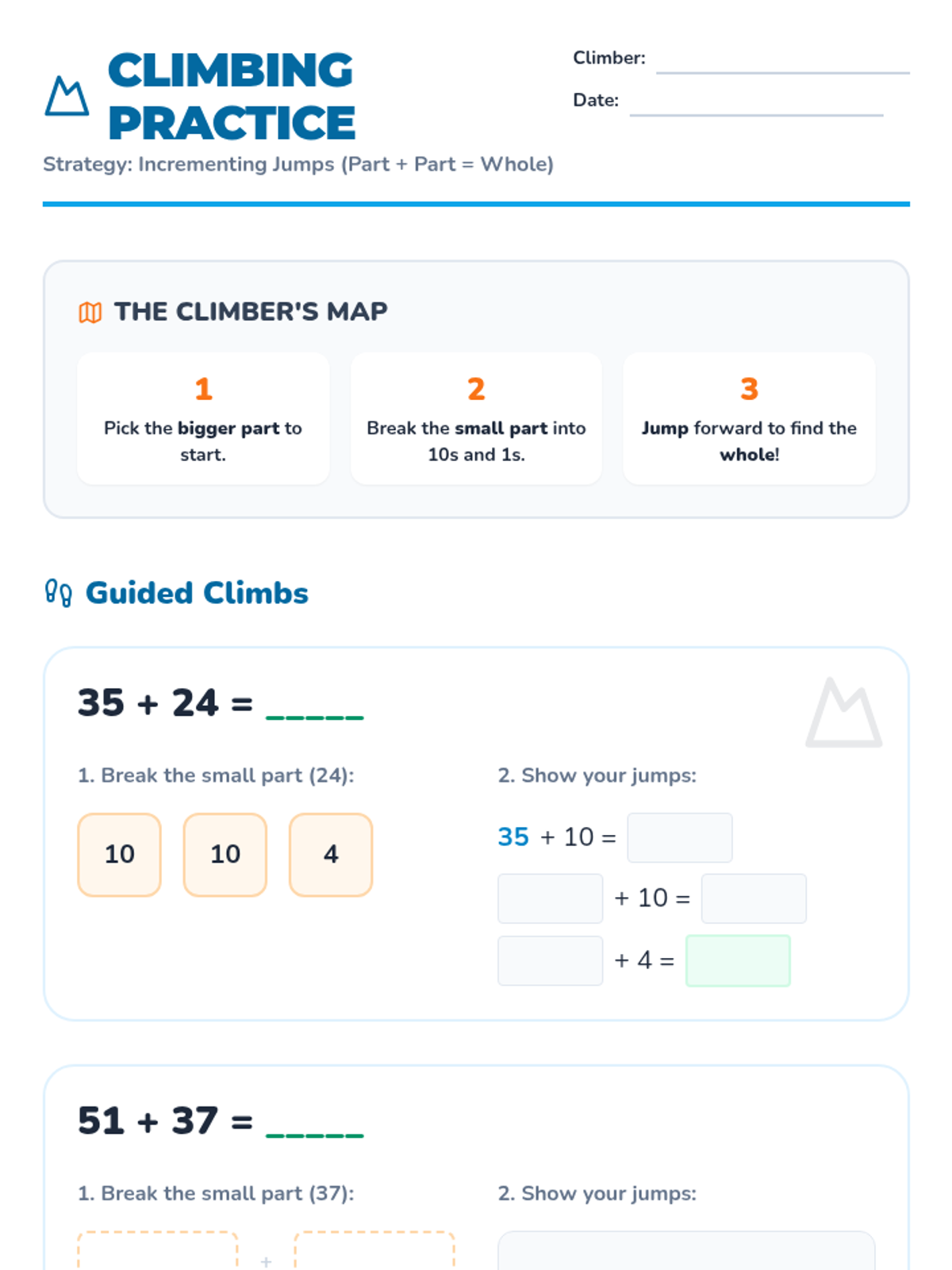
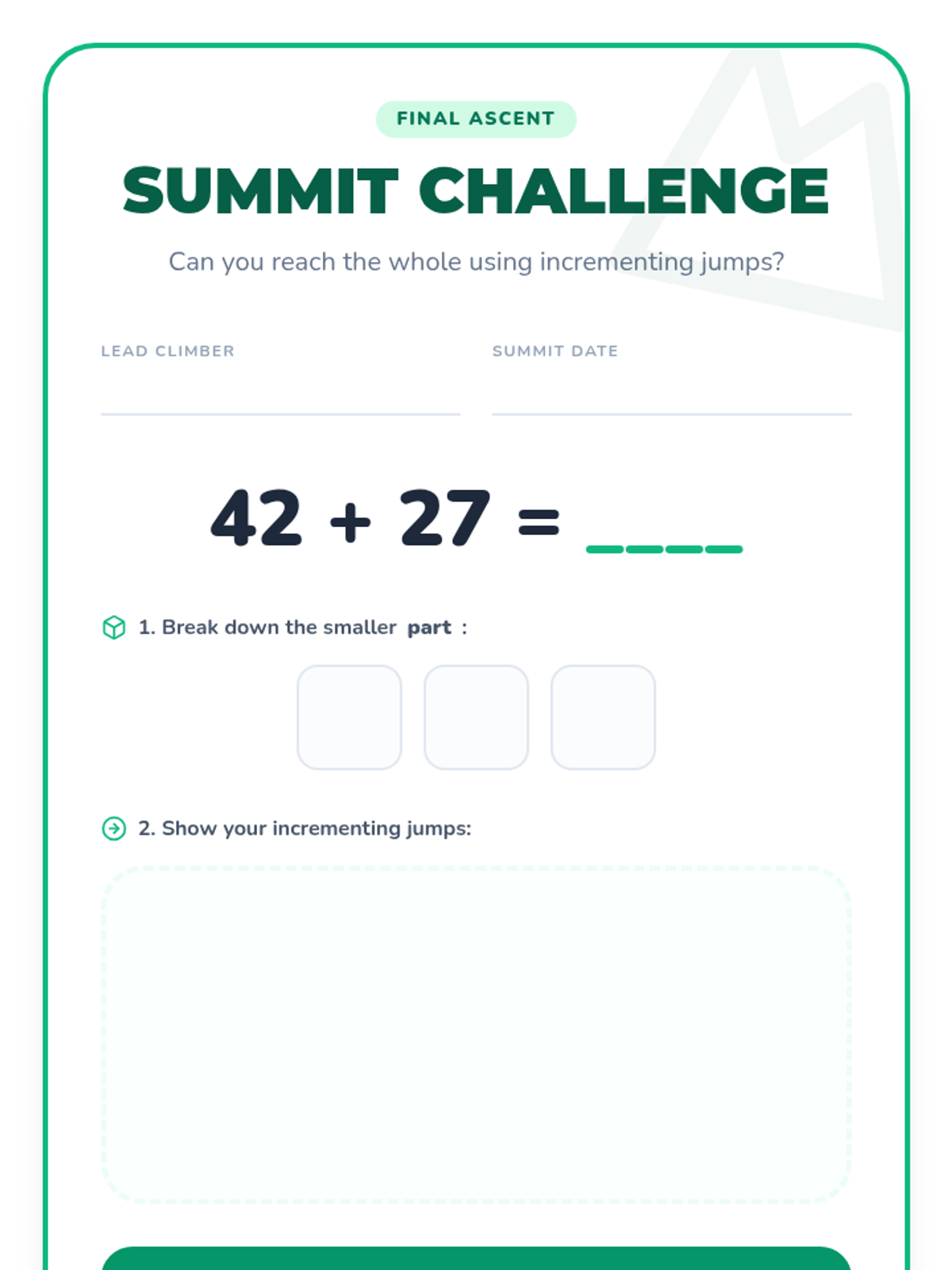
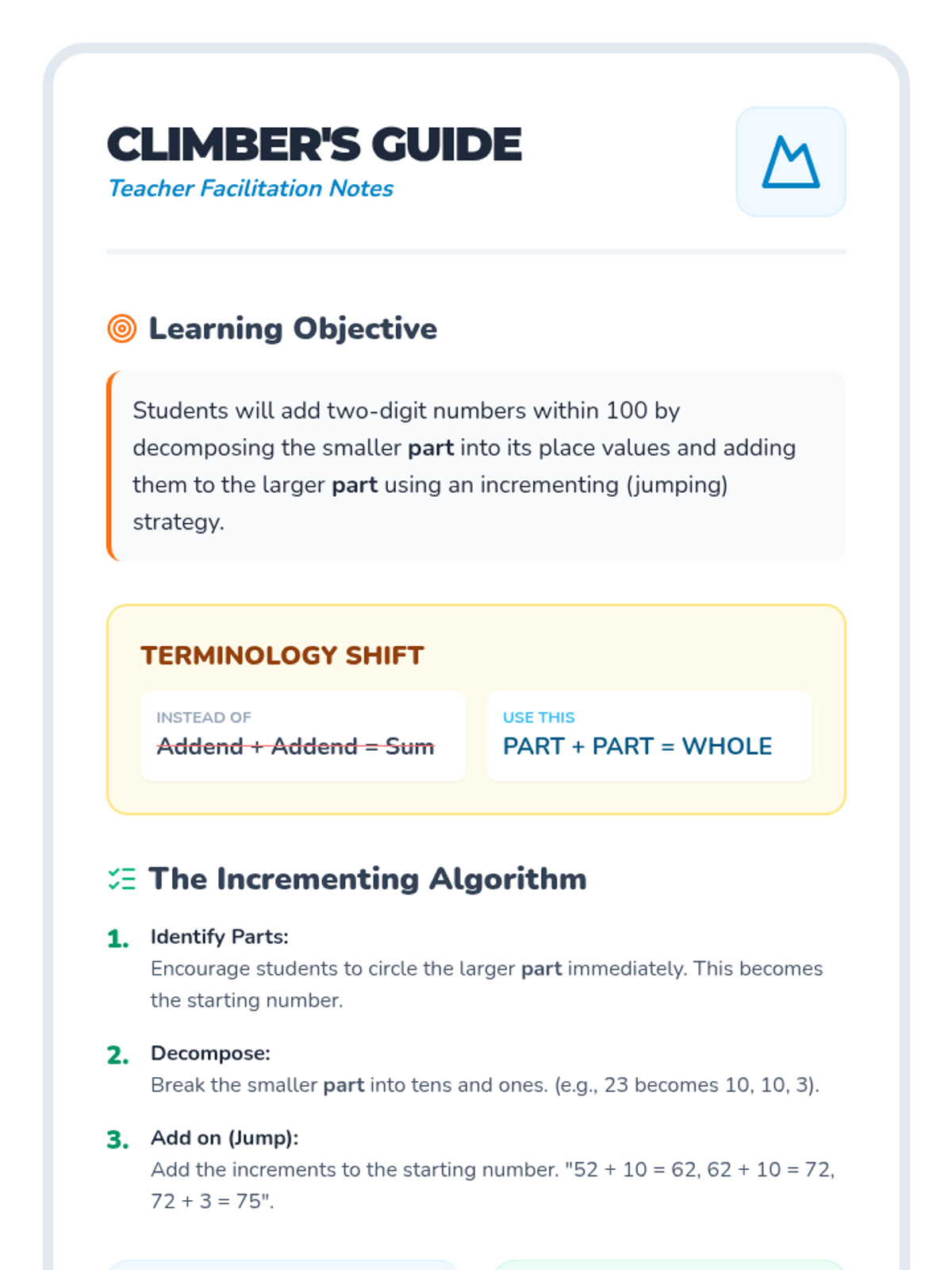
Students learn the incrementing strategy to add numbers up to 100 by breaking the second addend into tens and ones and 'jumping' along a number line. This visual approach builds mental math fluency and place value understanding.
A lesson on addition within 100 using the incrementing algorithm. Students learn to break down the smaller part into its place values and add them step-by-step to the larger part using a "mountain jumping" visual theme.
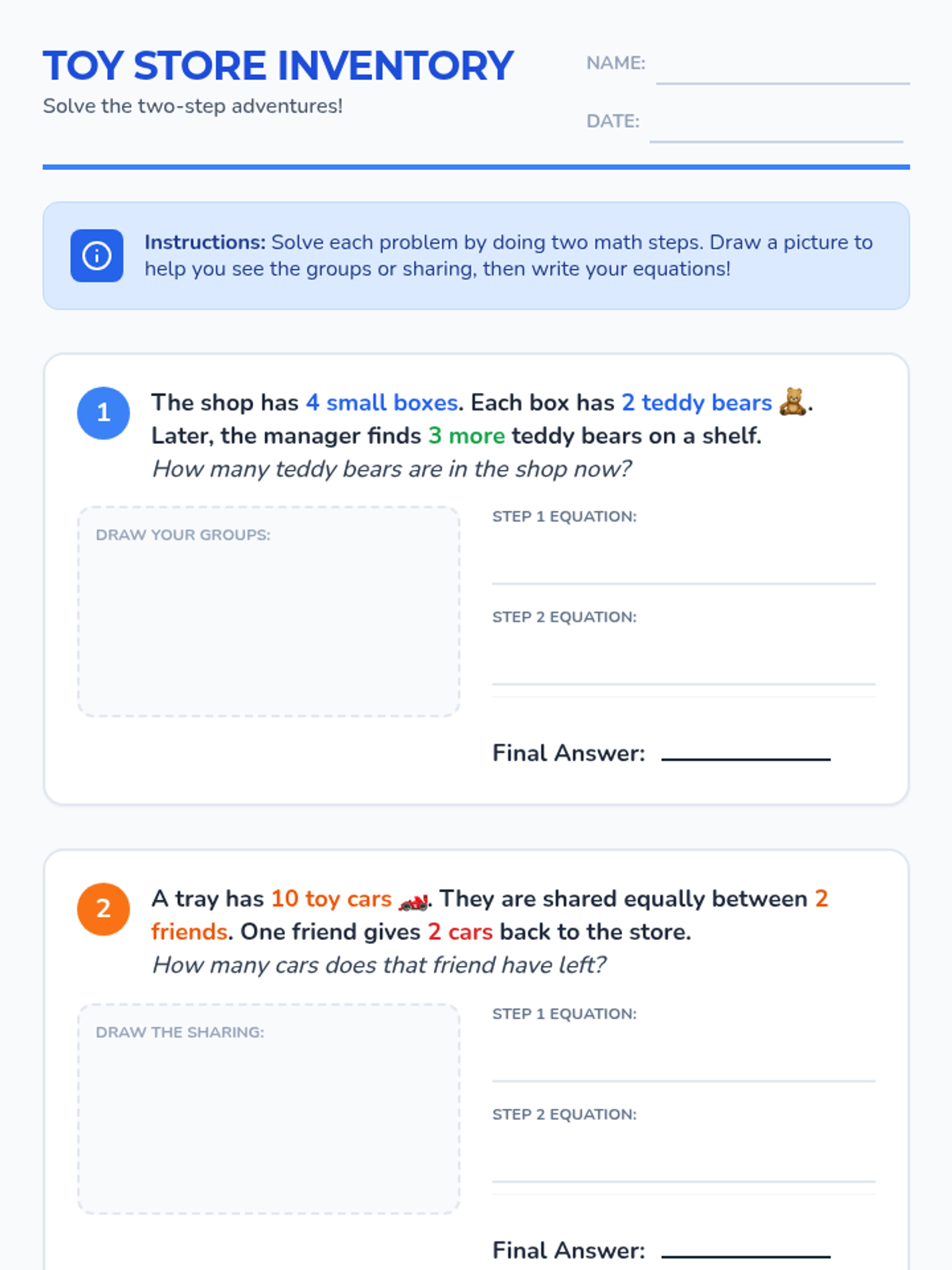
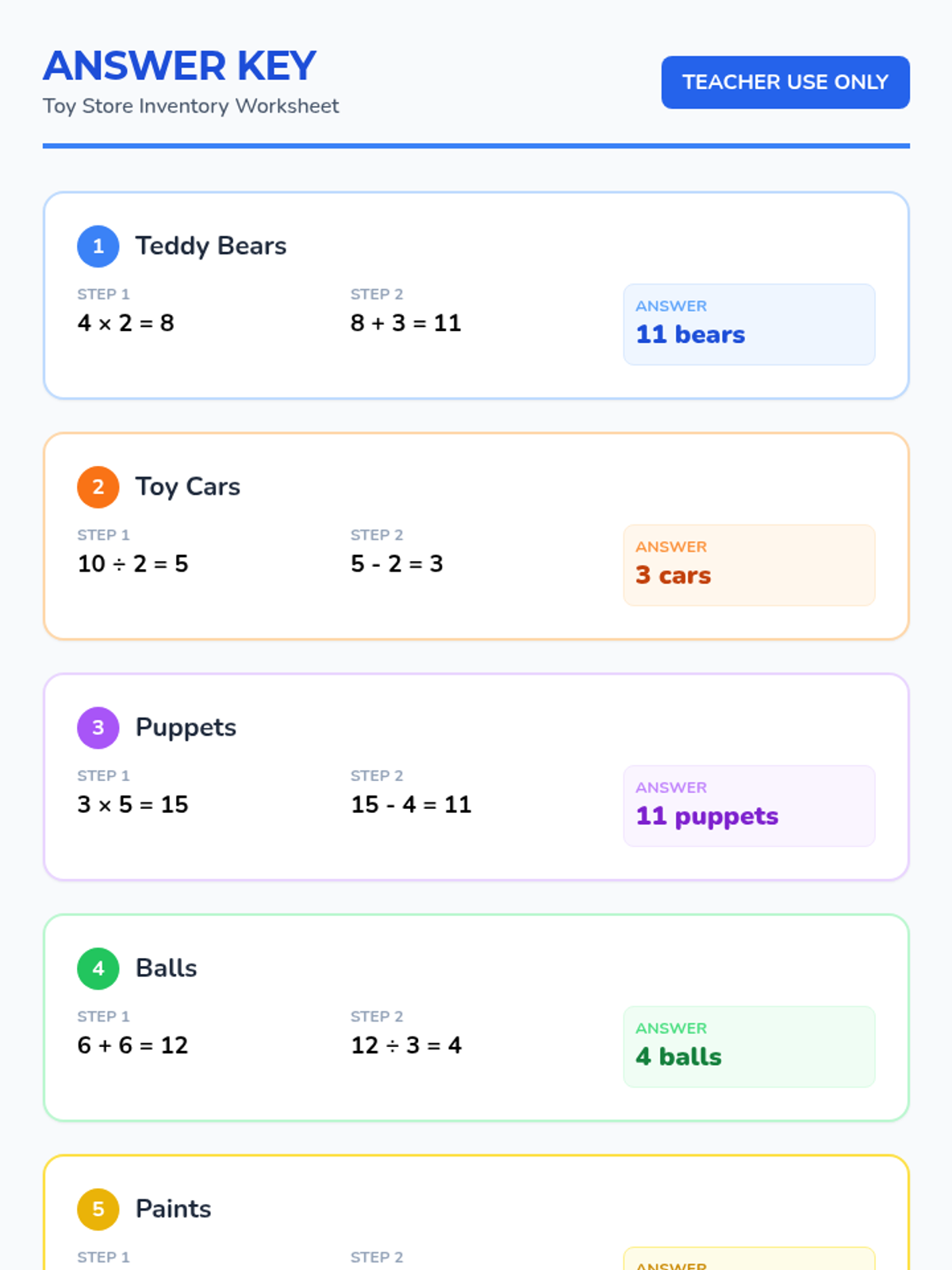
A fun, toy-themed lesson introducing second graders to two-step word problems using equal groups and sharing (foundations of multiplication and division). Students will use visual representations to solve problems involving toys in a shop inventory.
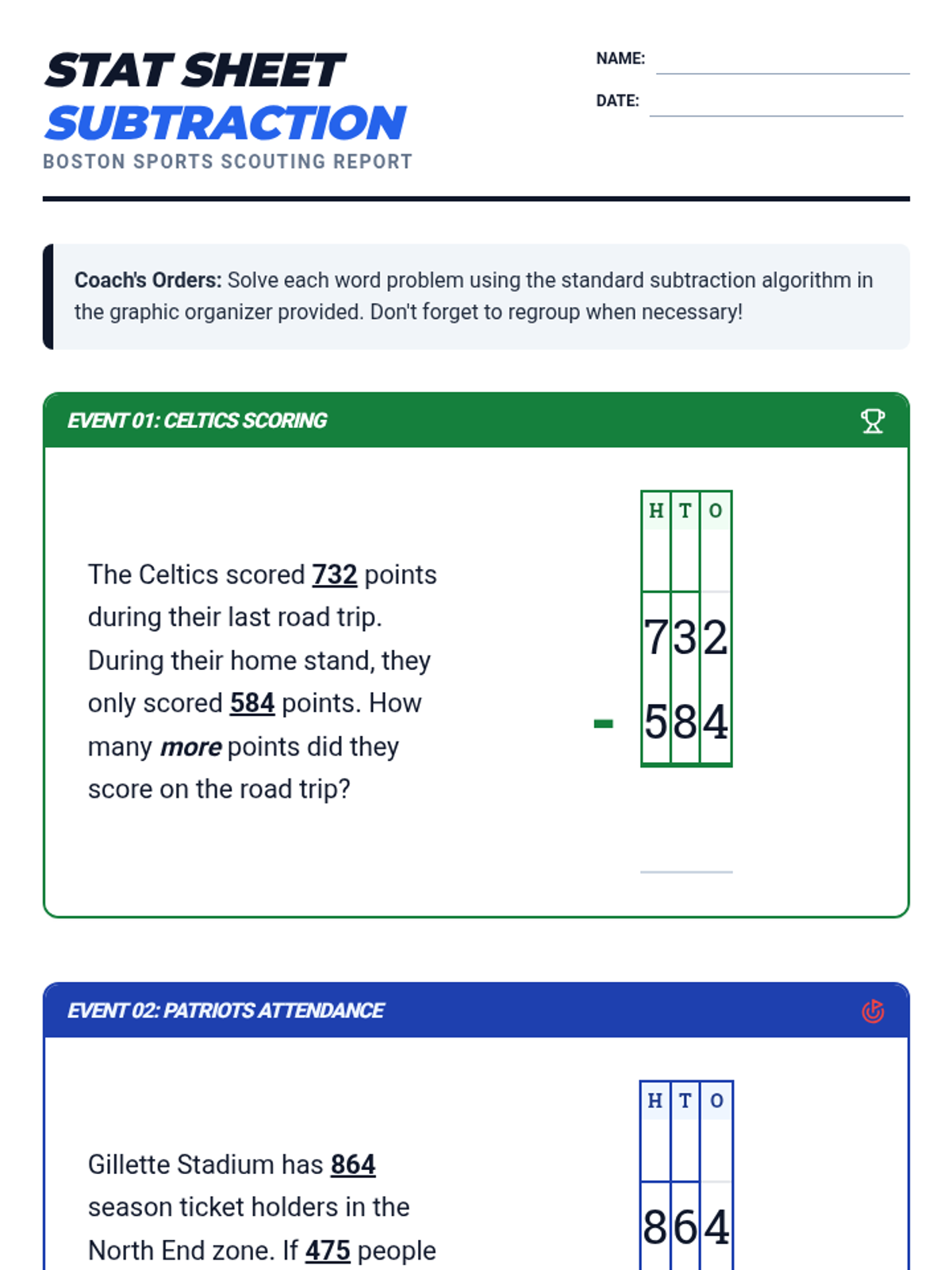
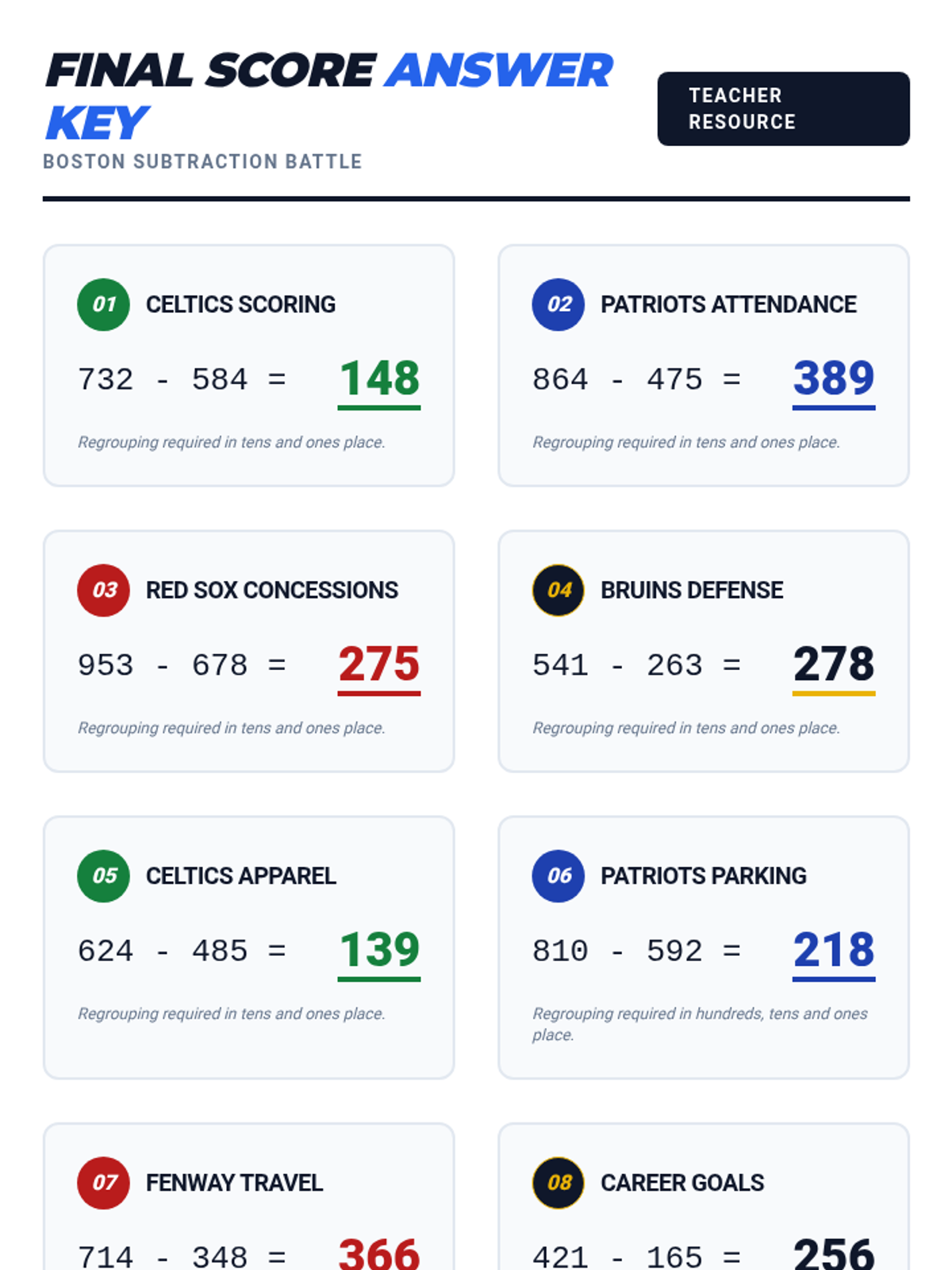
A subtraction-focused lesson themed around Boston's major sports teams, covering 3-digit subtraction with regrouping through word problems and the standard algorithm.
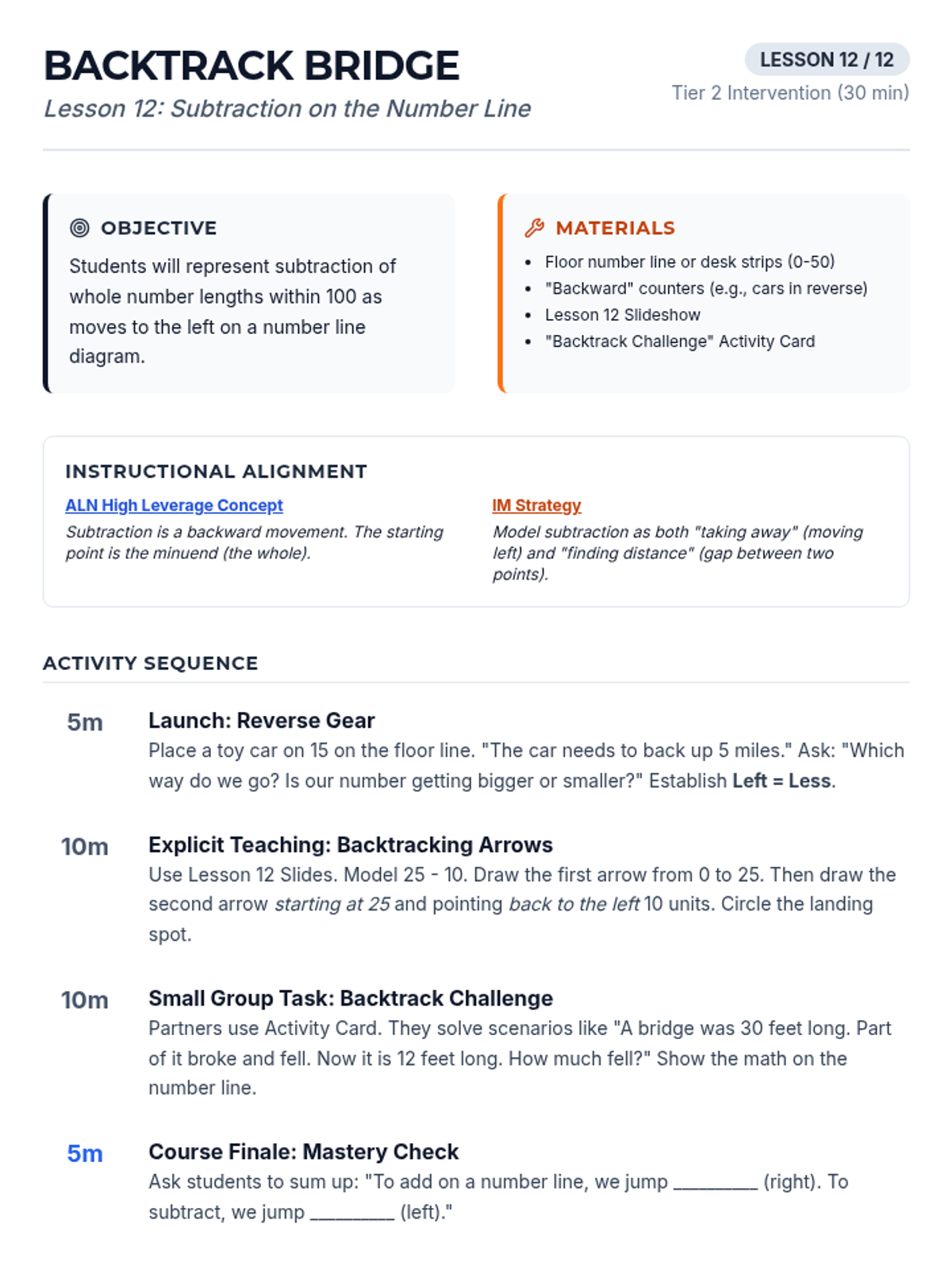
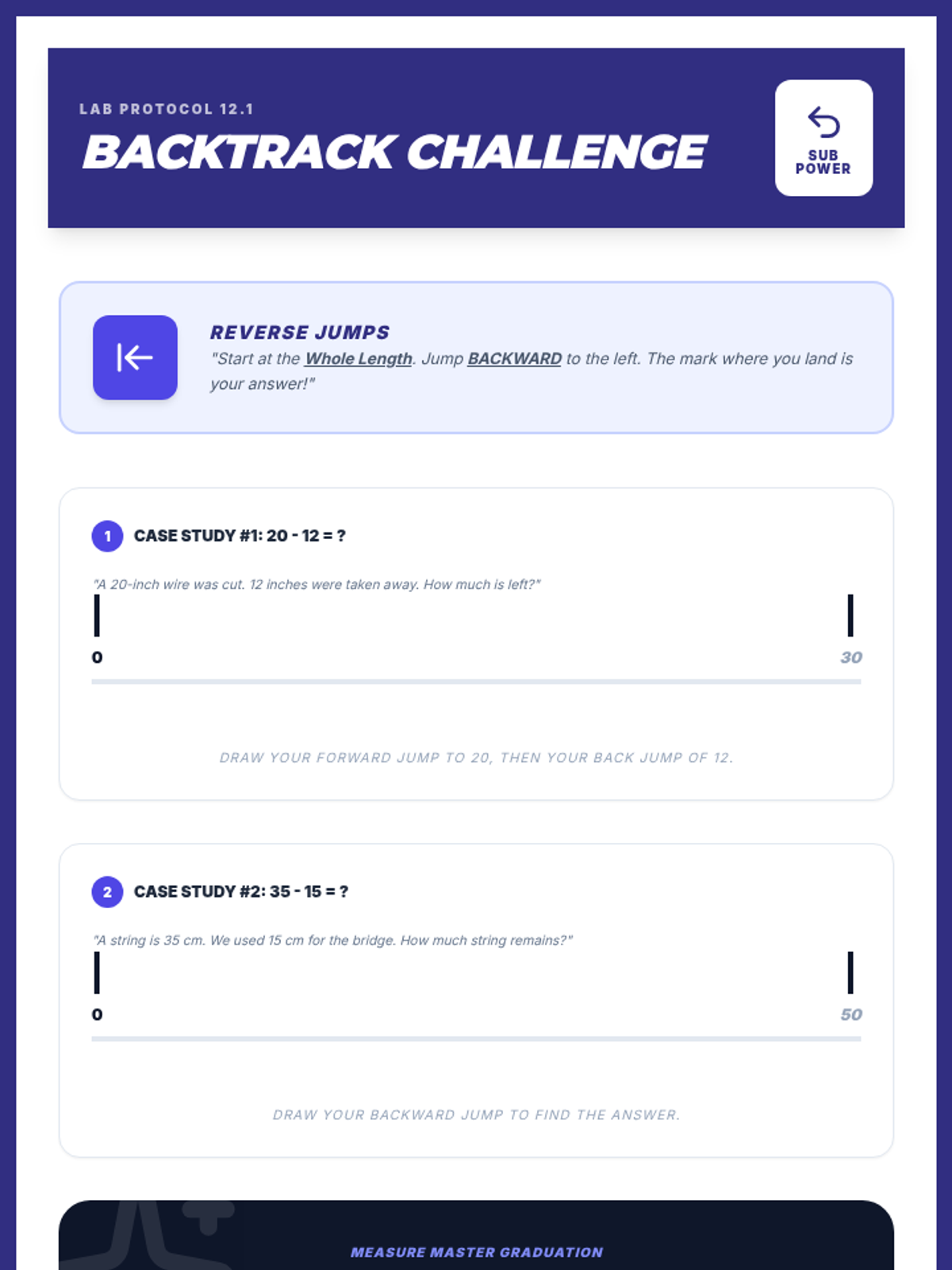
Teaches students to represent subtraction of lengths as moves to the left on a number line diagram.
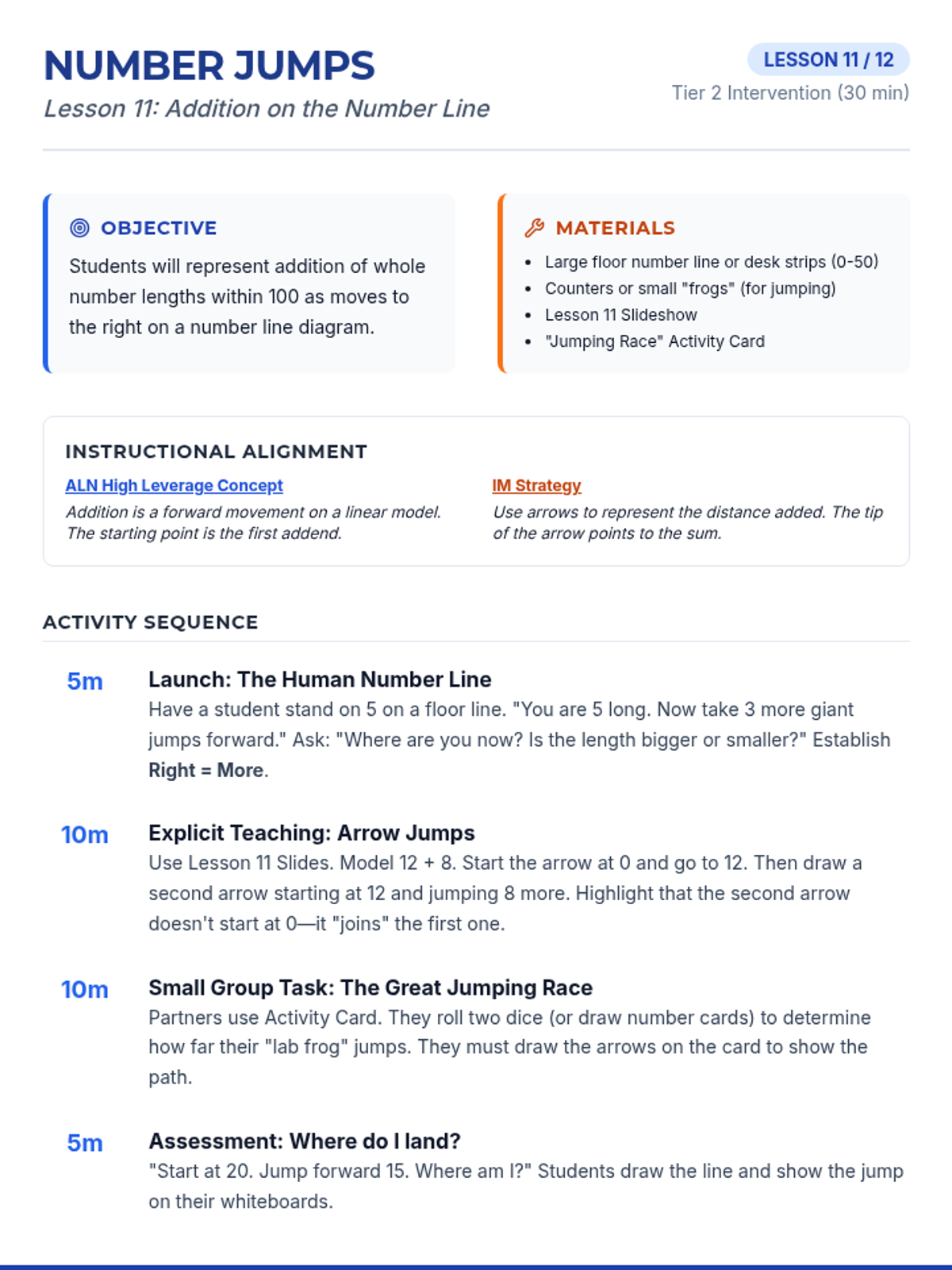
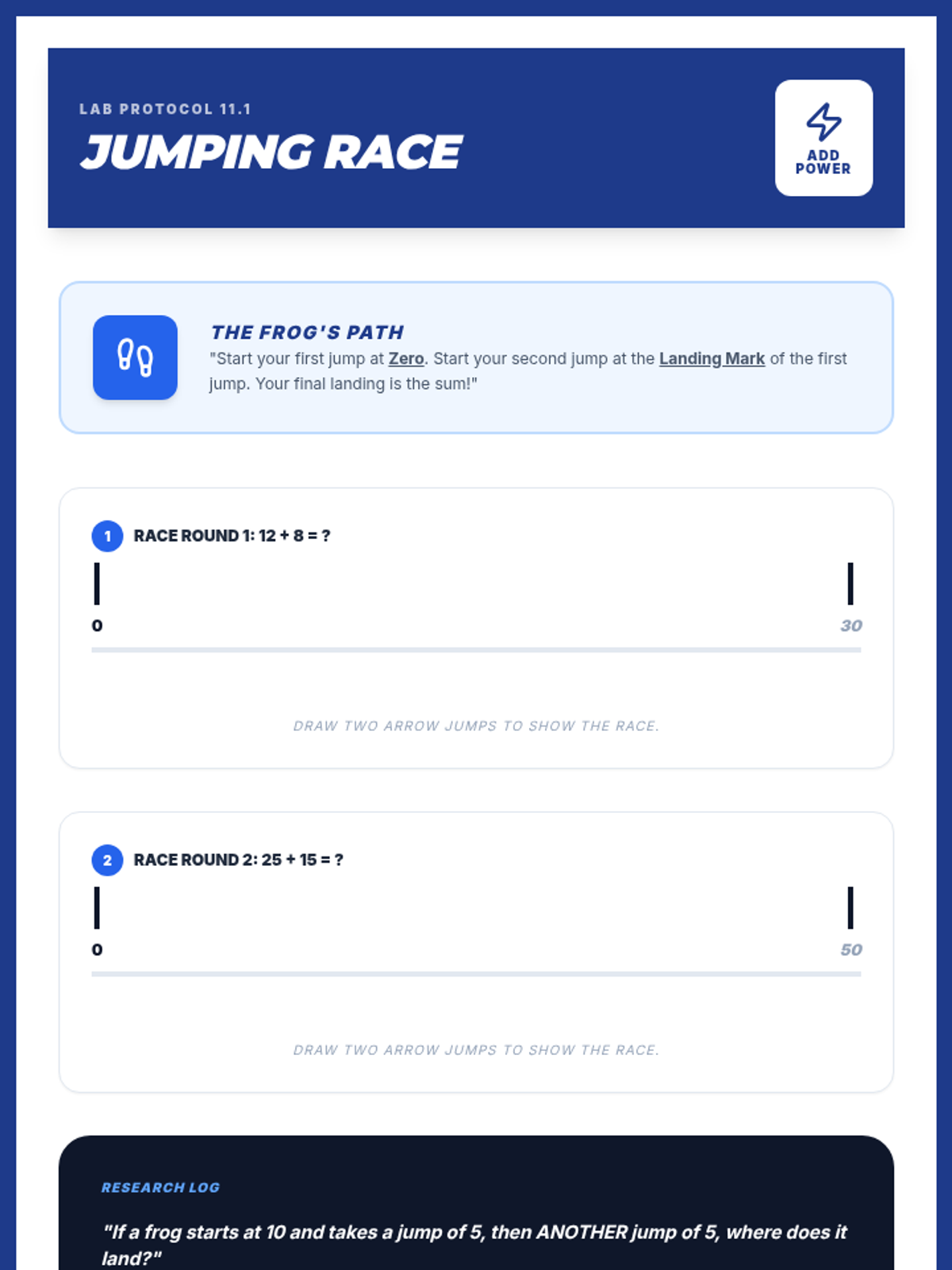
Teaches students to represent addition of lengths as moves to the right on a number line diagram.
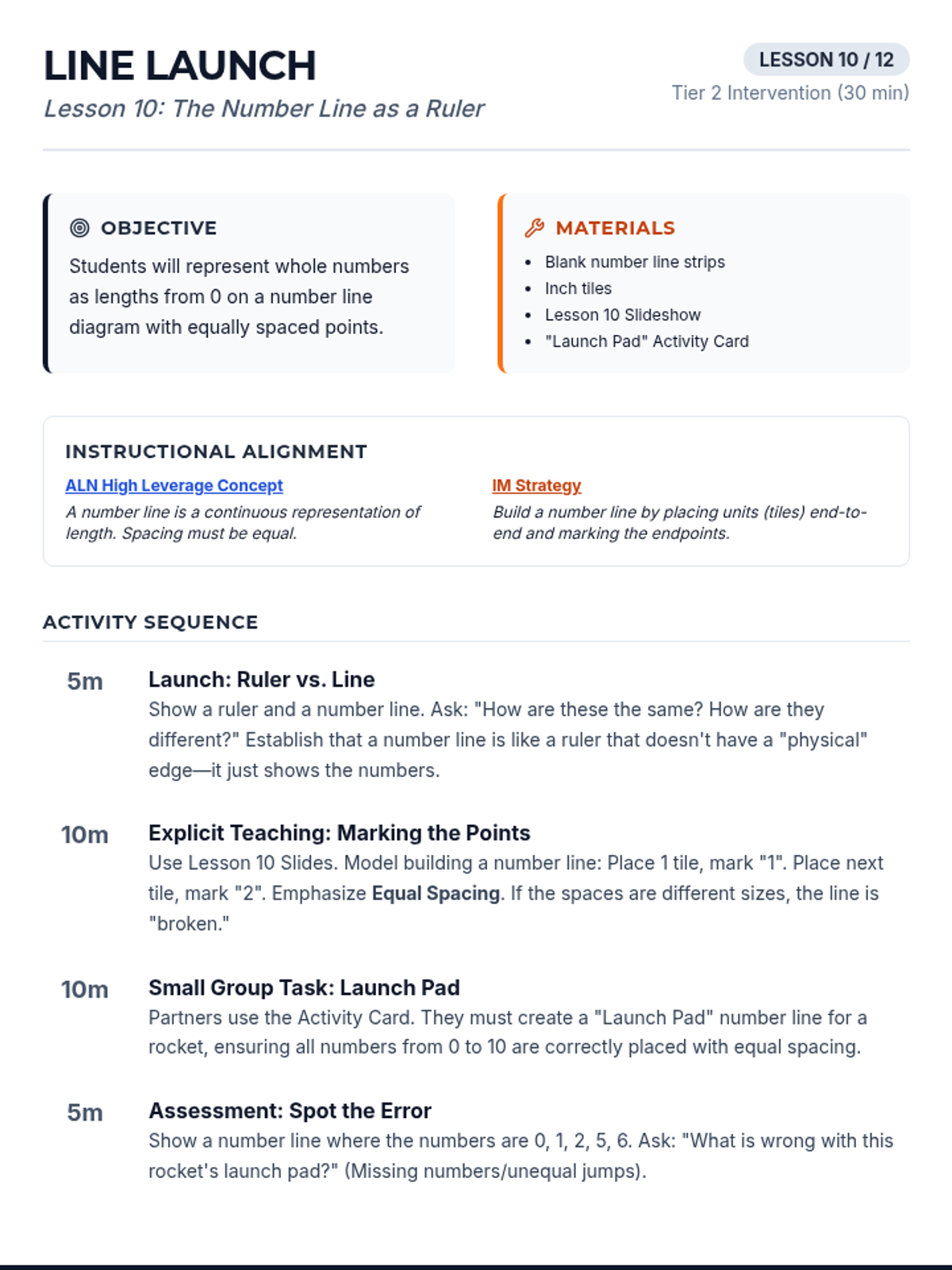
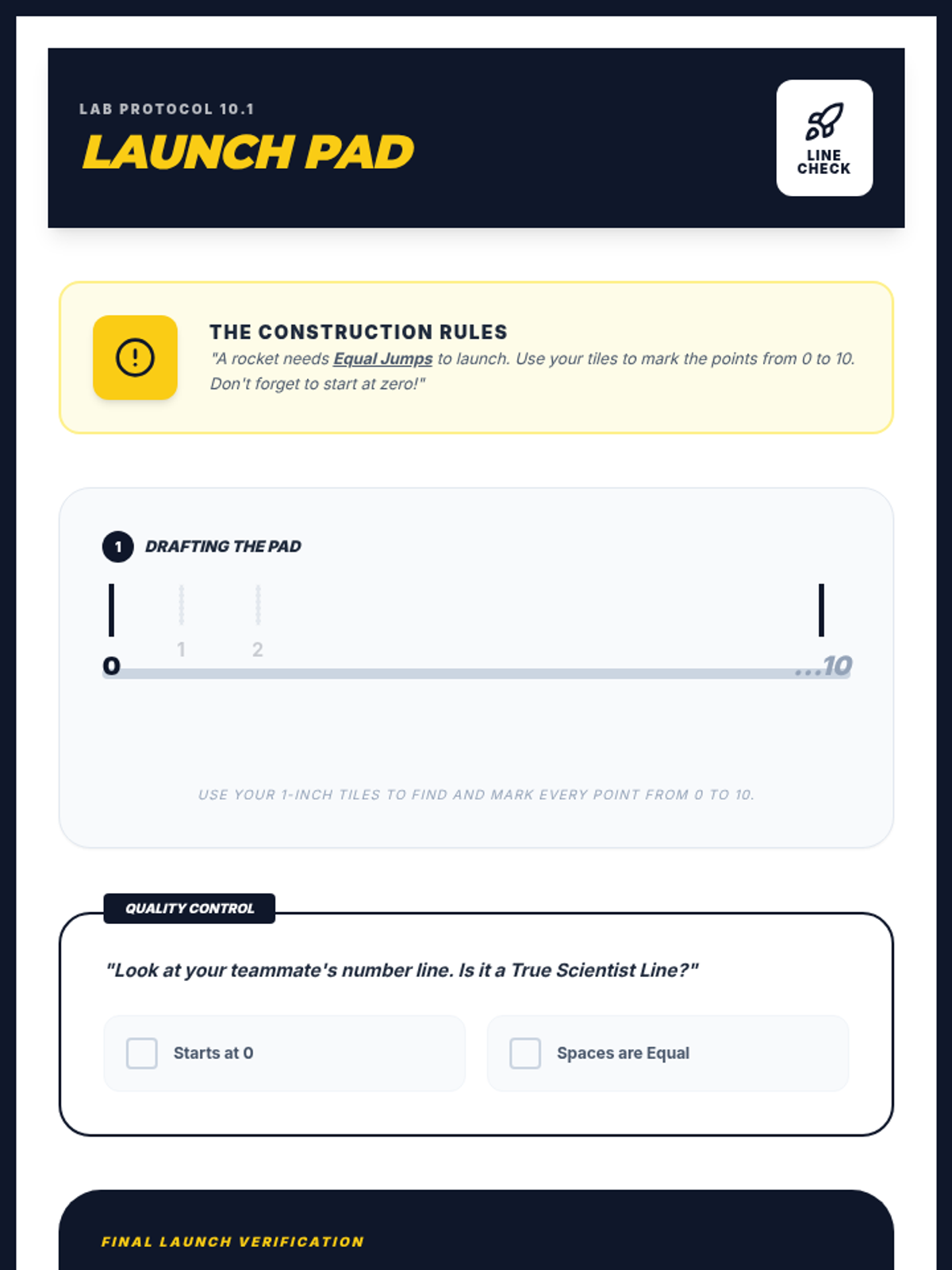
Introduces the number line as a tool for representing whole number lengths starting from zero.
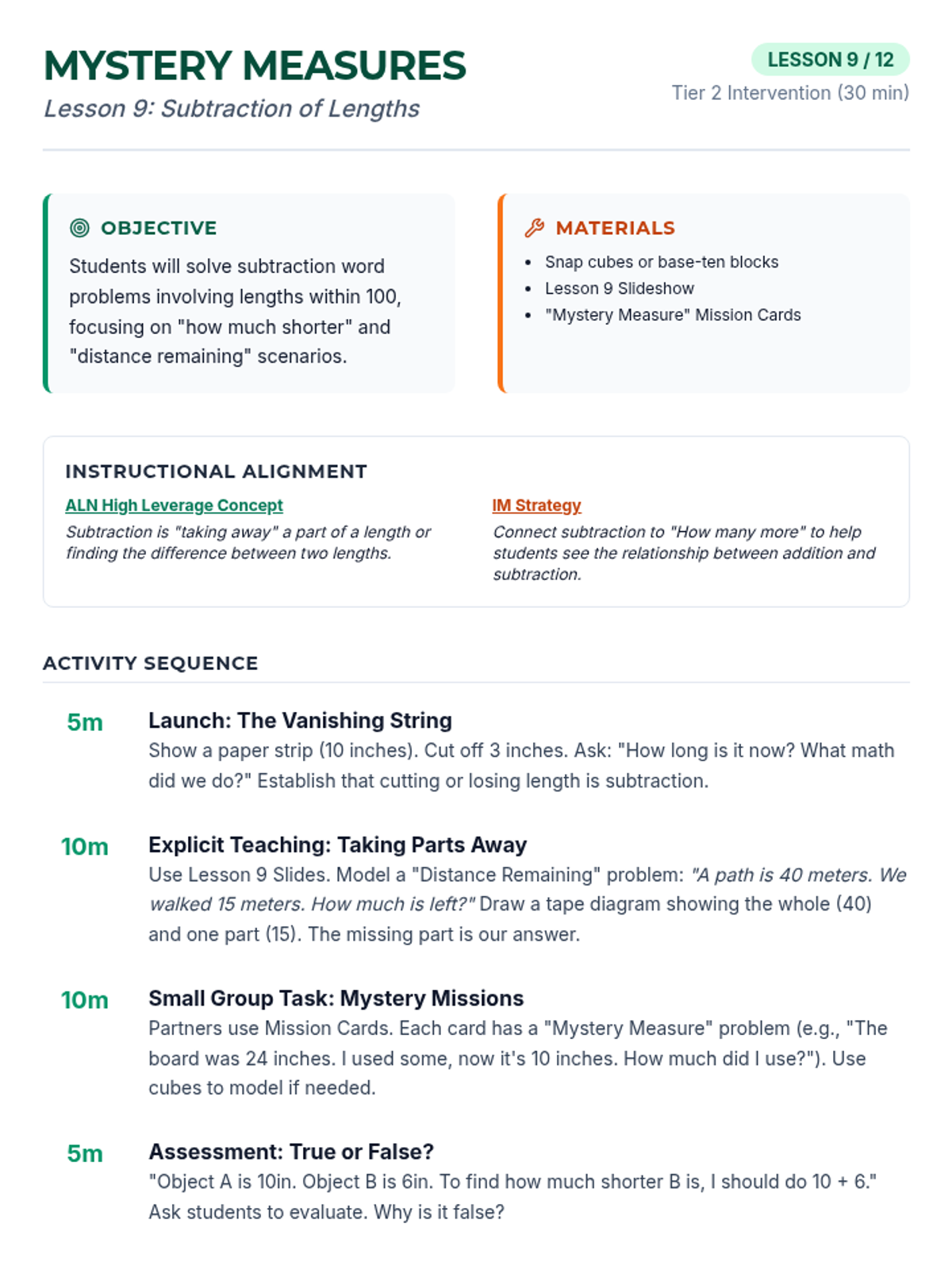
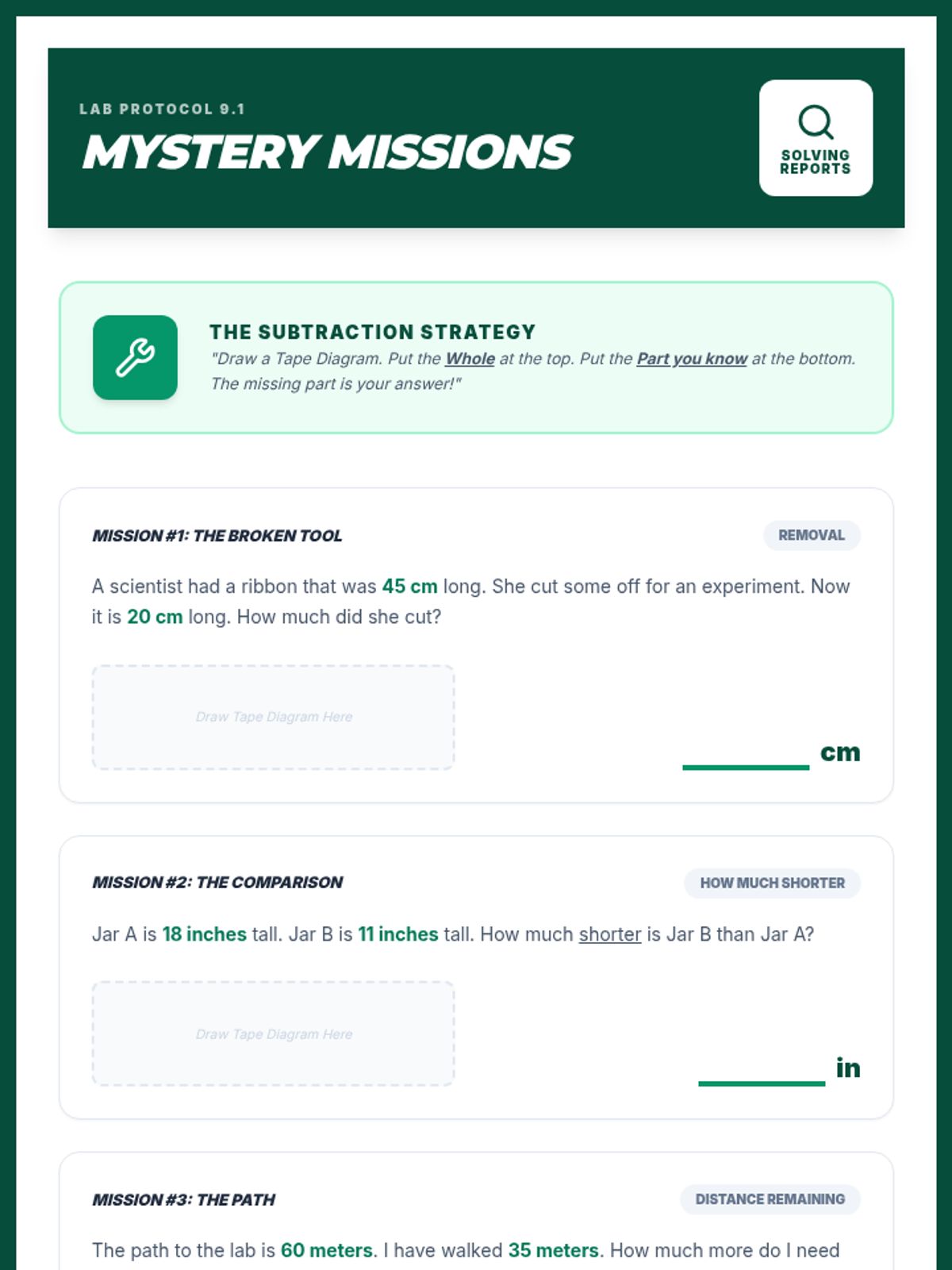
Applies subtraction within 100 to solve 'how much shorter' or 'distance remaining' word problems.
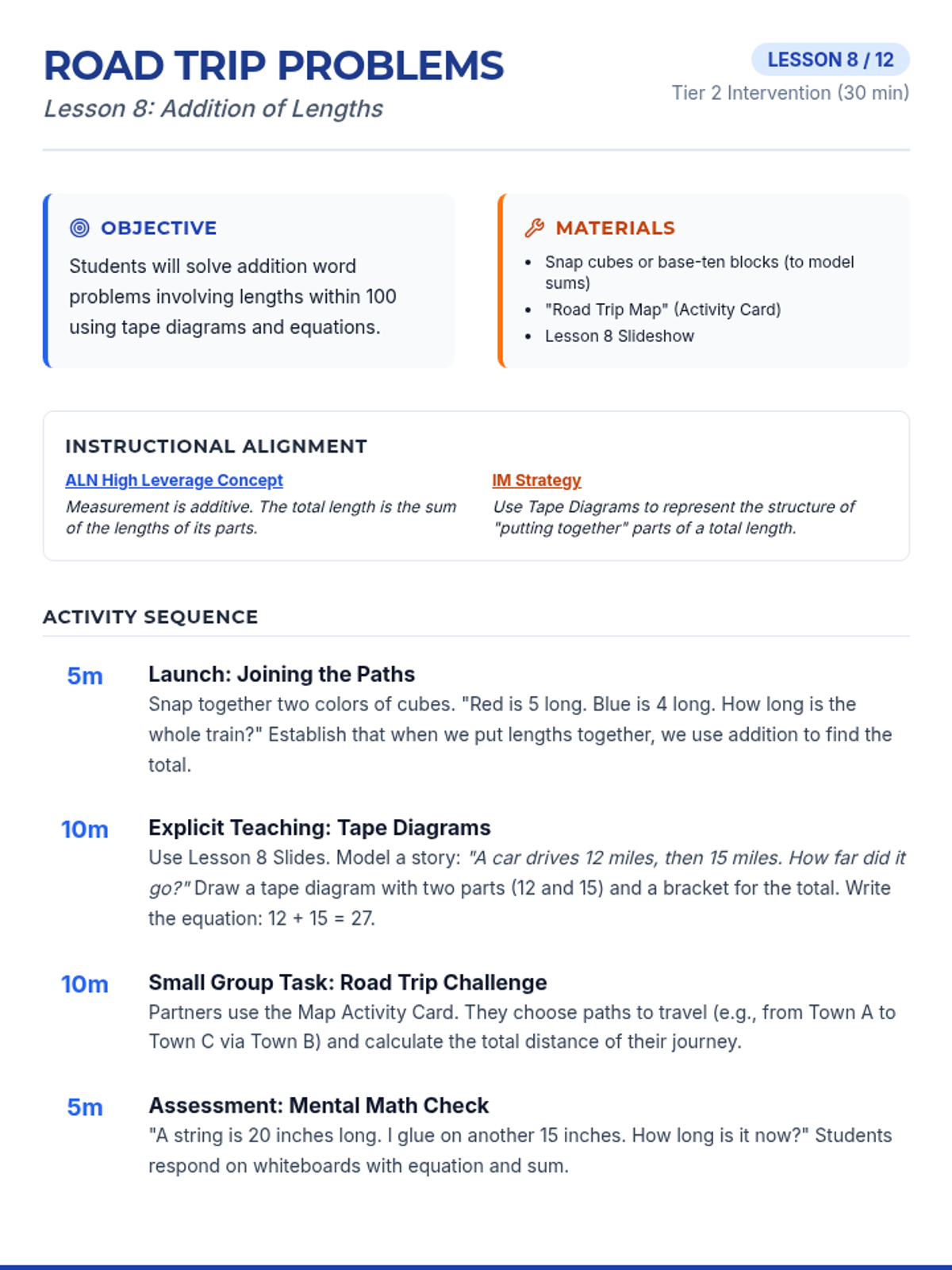
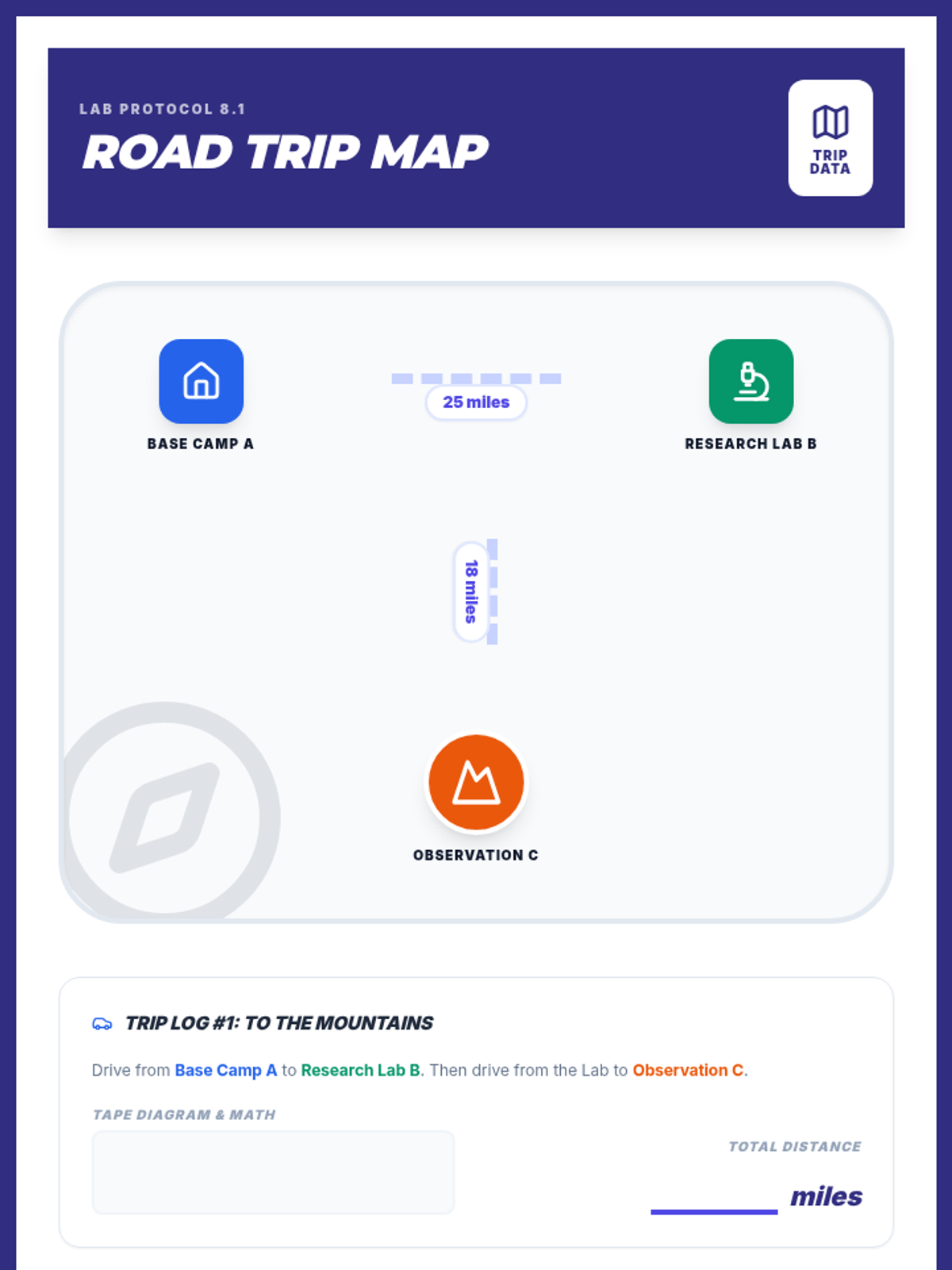
Applies addition within 100 to solve word problems involving lengths and total distances.
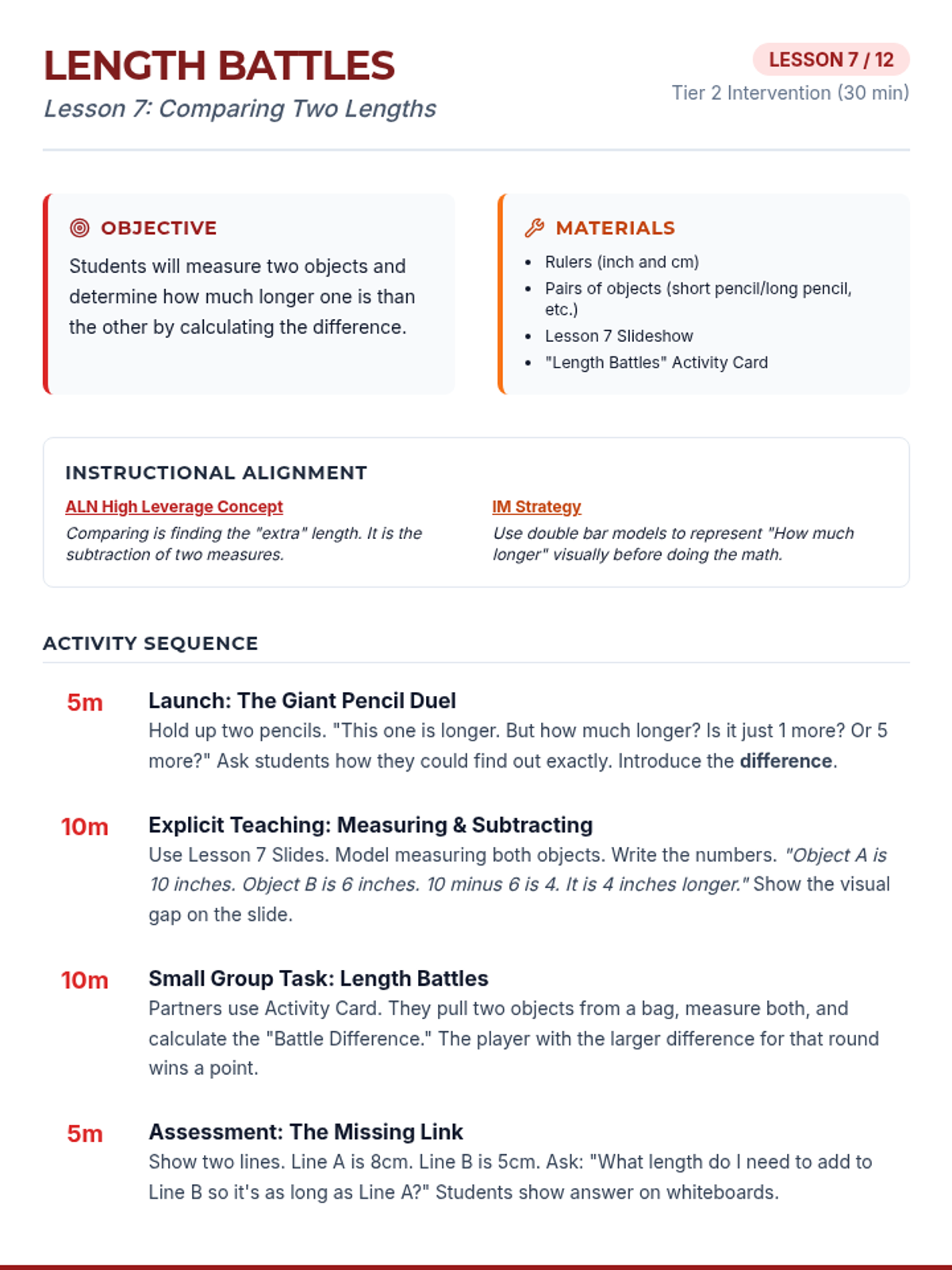
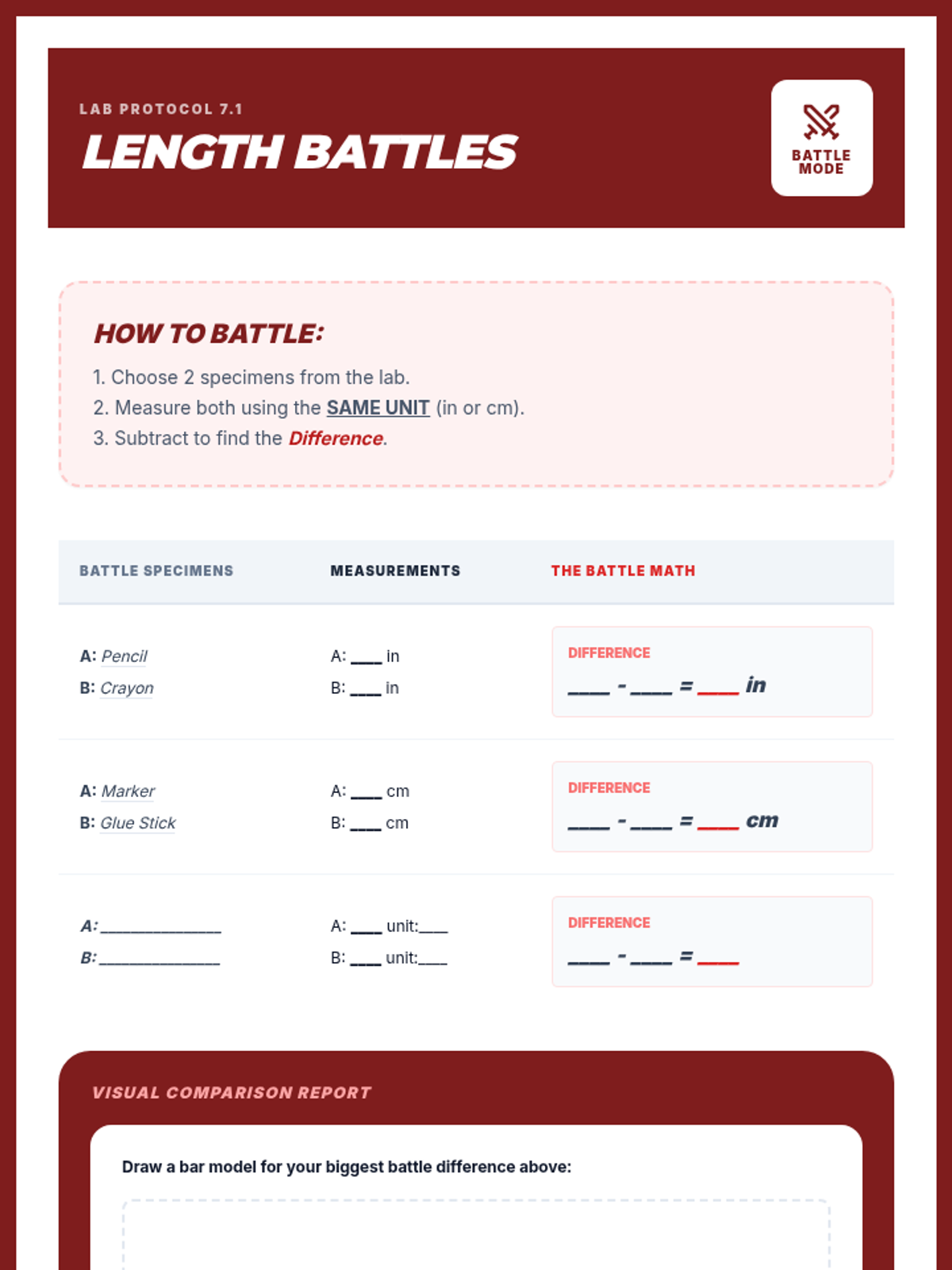
Focuses on comparing two lengths and calculating the difference to determine how much longer one object is than another.
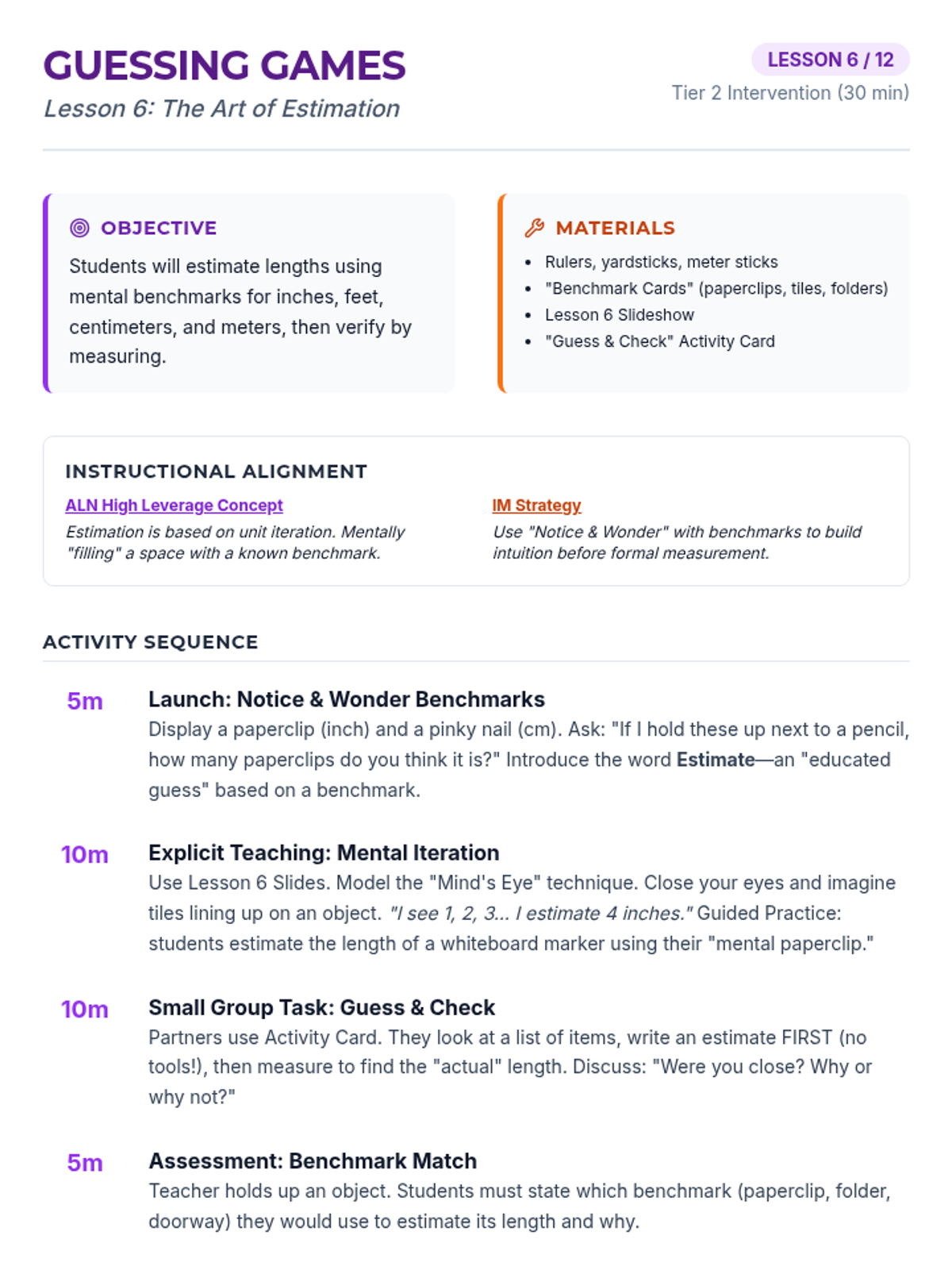
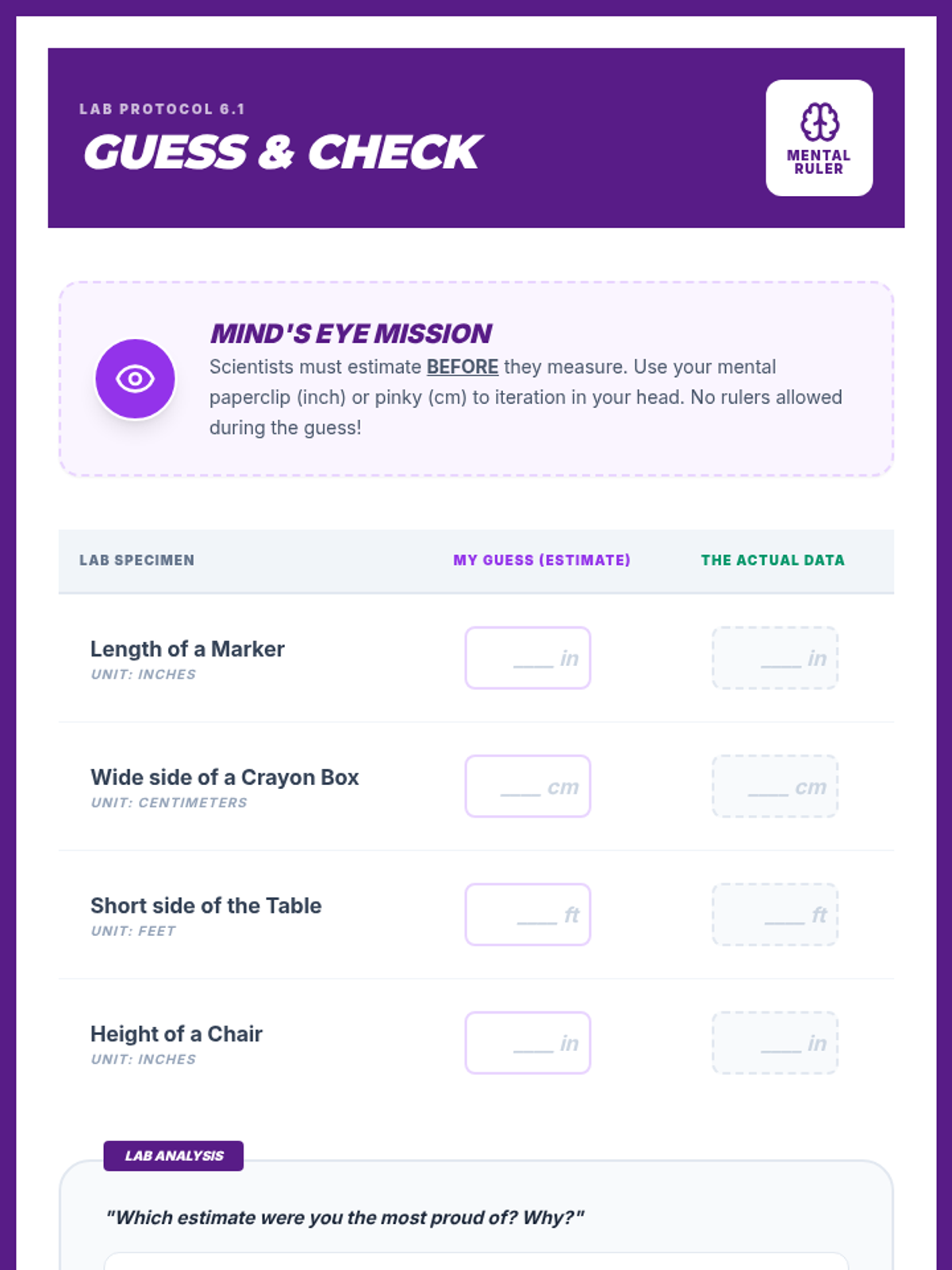
Develops mental benchmarks for standard units to improve estimation accuracy for various lengths.
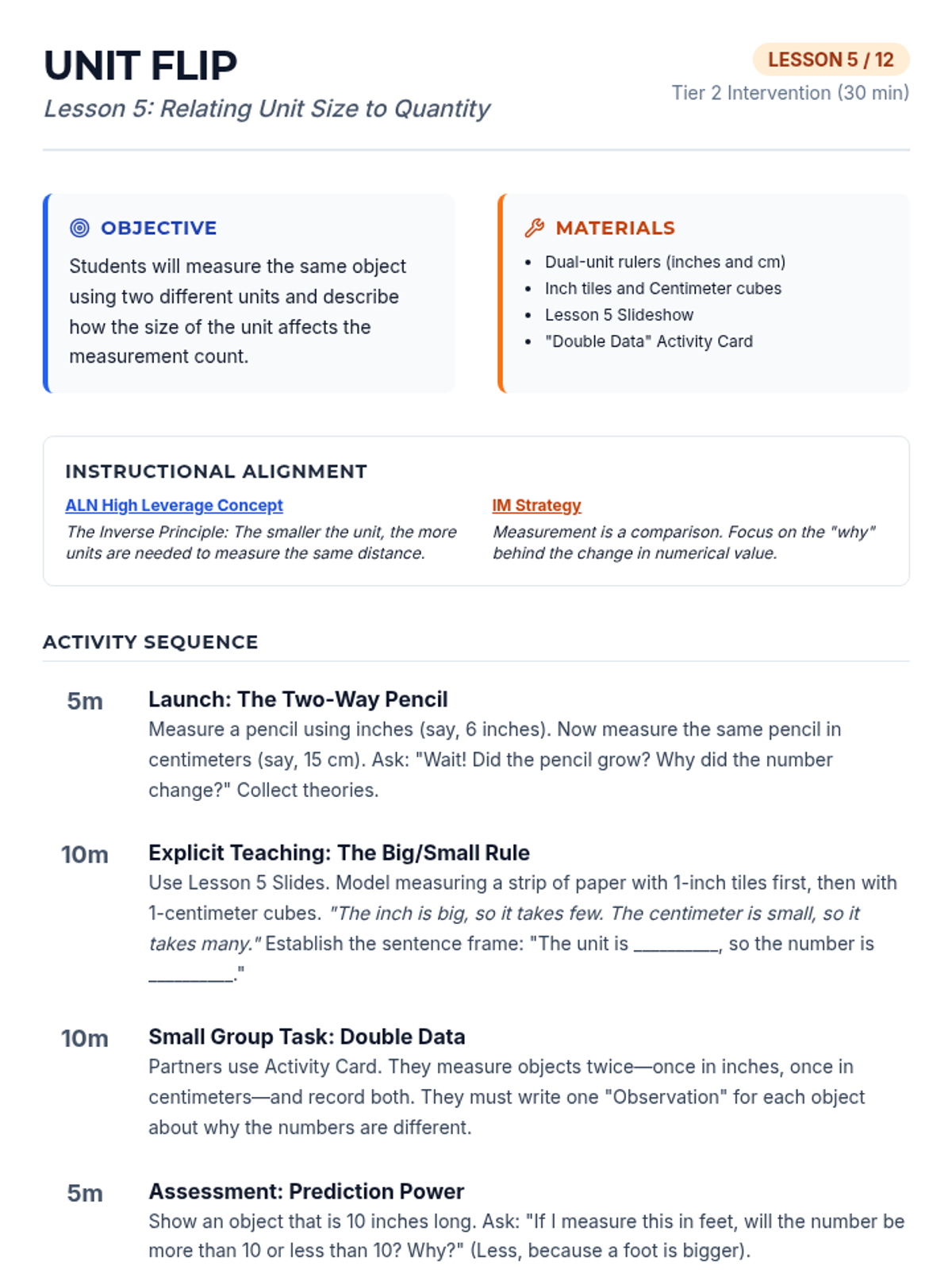
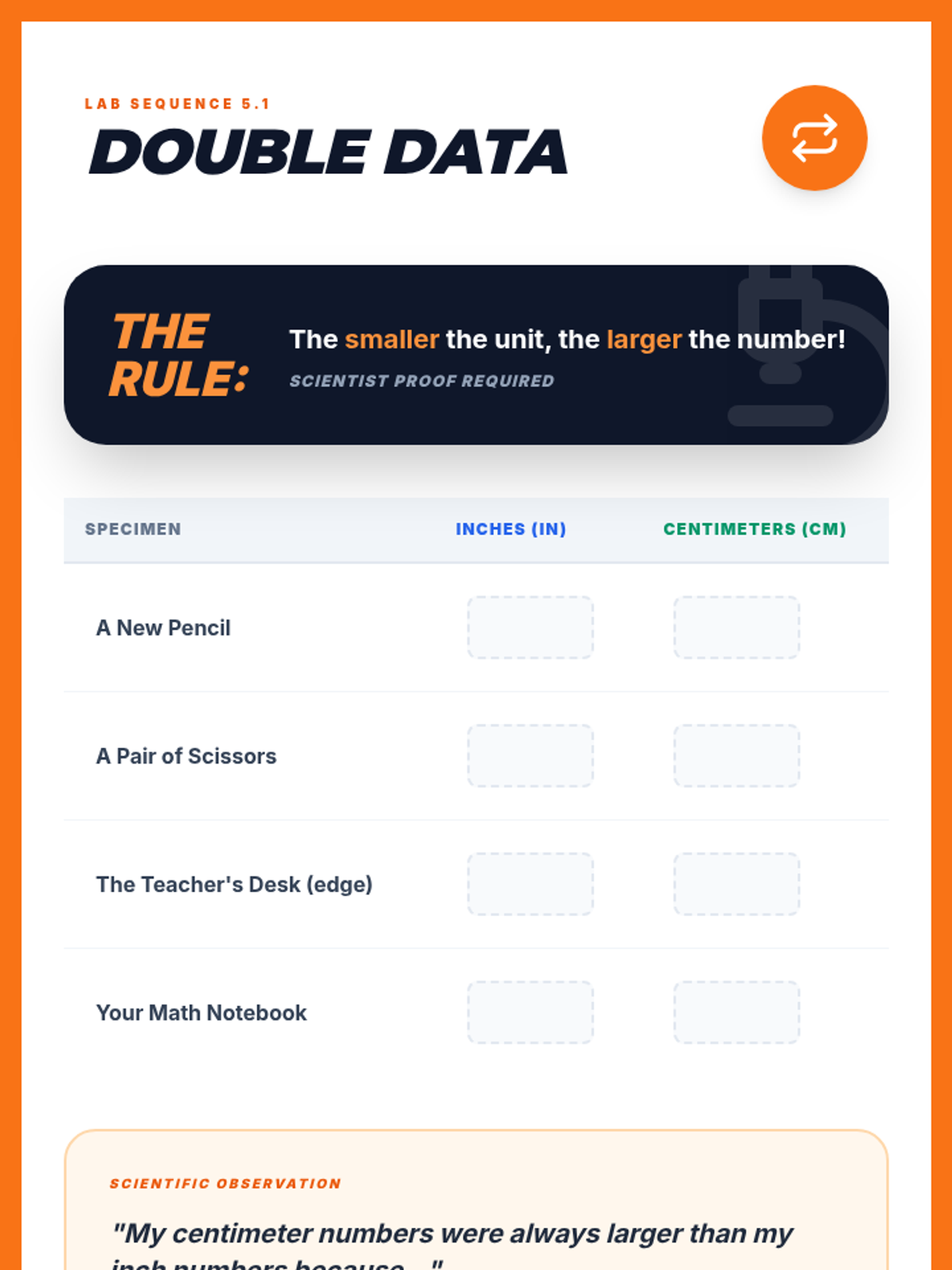
Investigates the relationship between unit size and the number of units needed to measure an object by measuring the same item twice with different units.
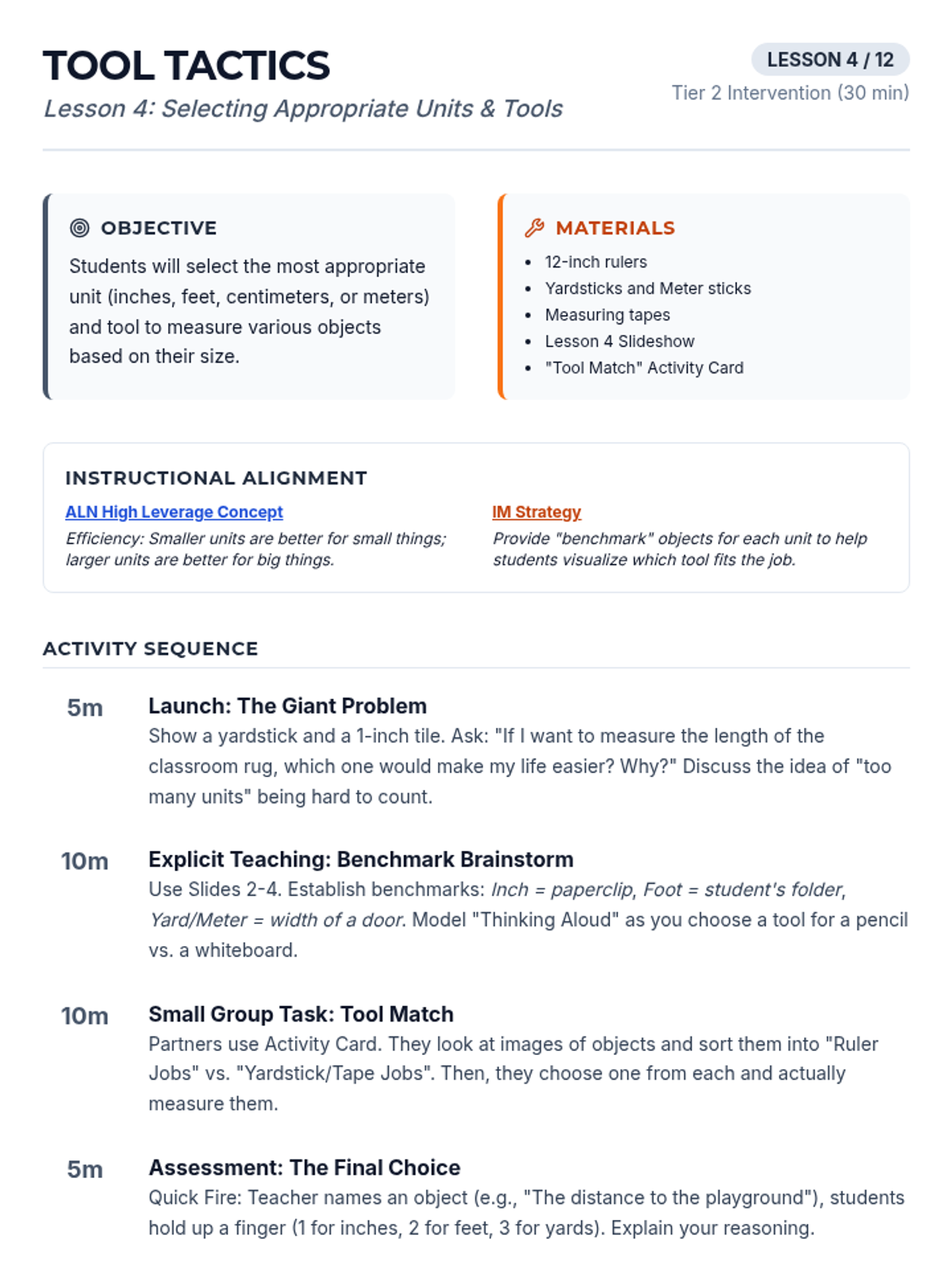
Students determine which standard unit (inches, feet, centimeters, meters) and tool are most appropriate for various measuring tasks.
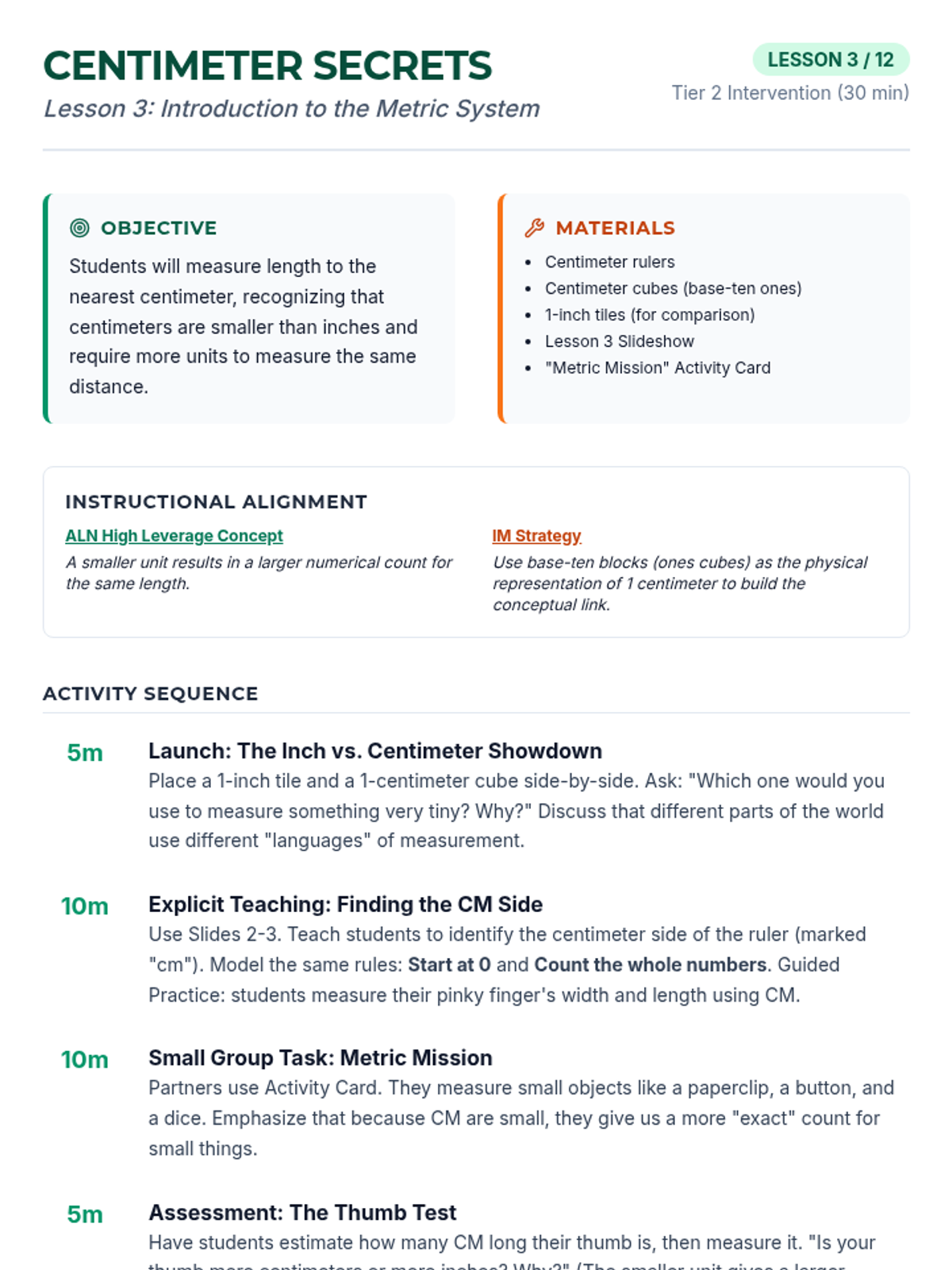
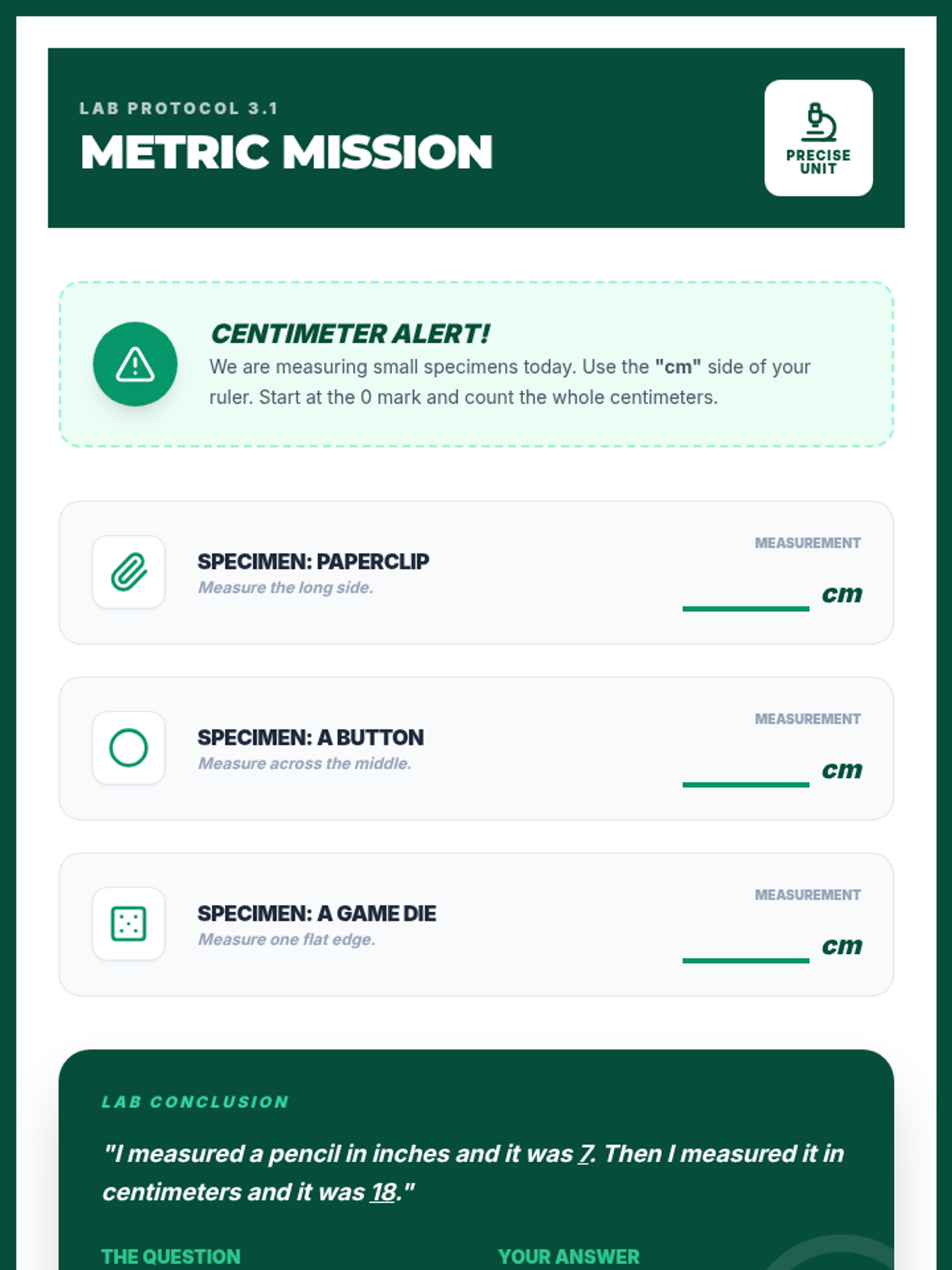
Explores the metric system with centimeters, emphasizing the smaller size of the unit compared to inches and practicing precise tool usage.
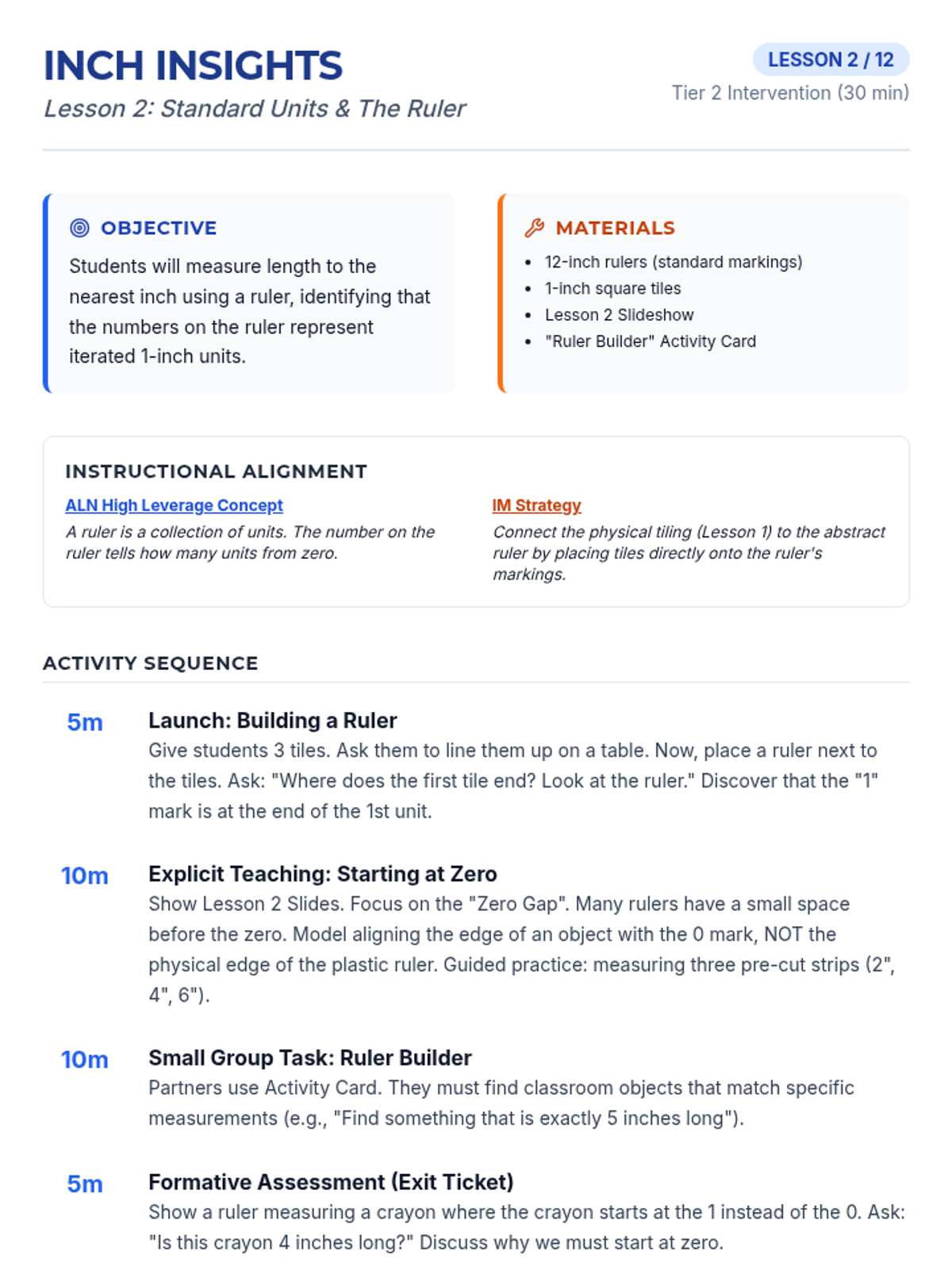
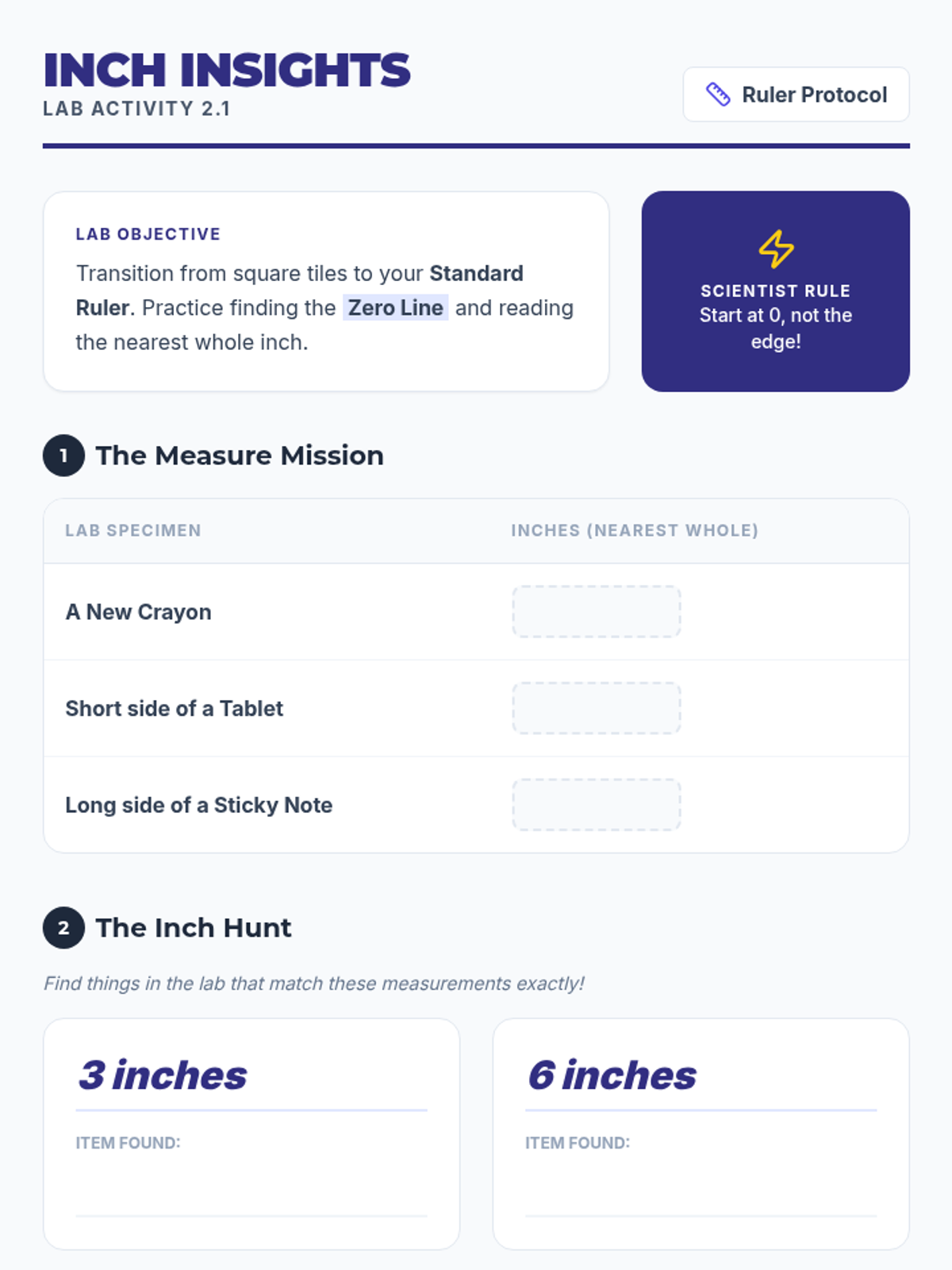
Introduces the standard inch unit and transitions from iterating individual tiles to using a ruler as a tool that represents iterated units.
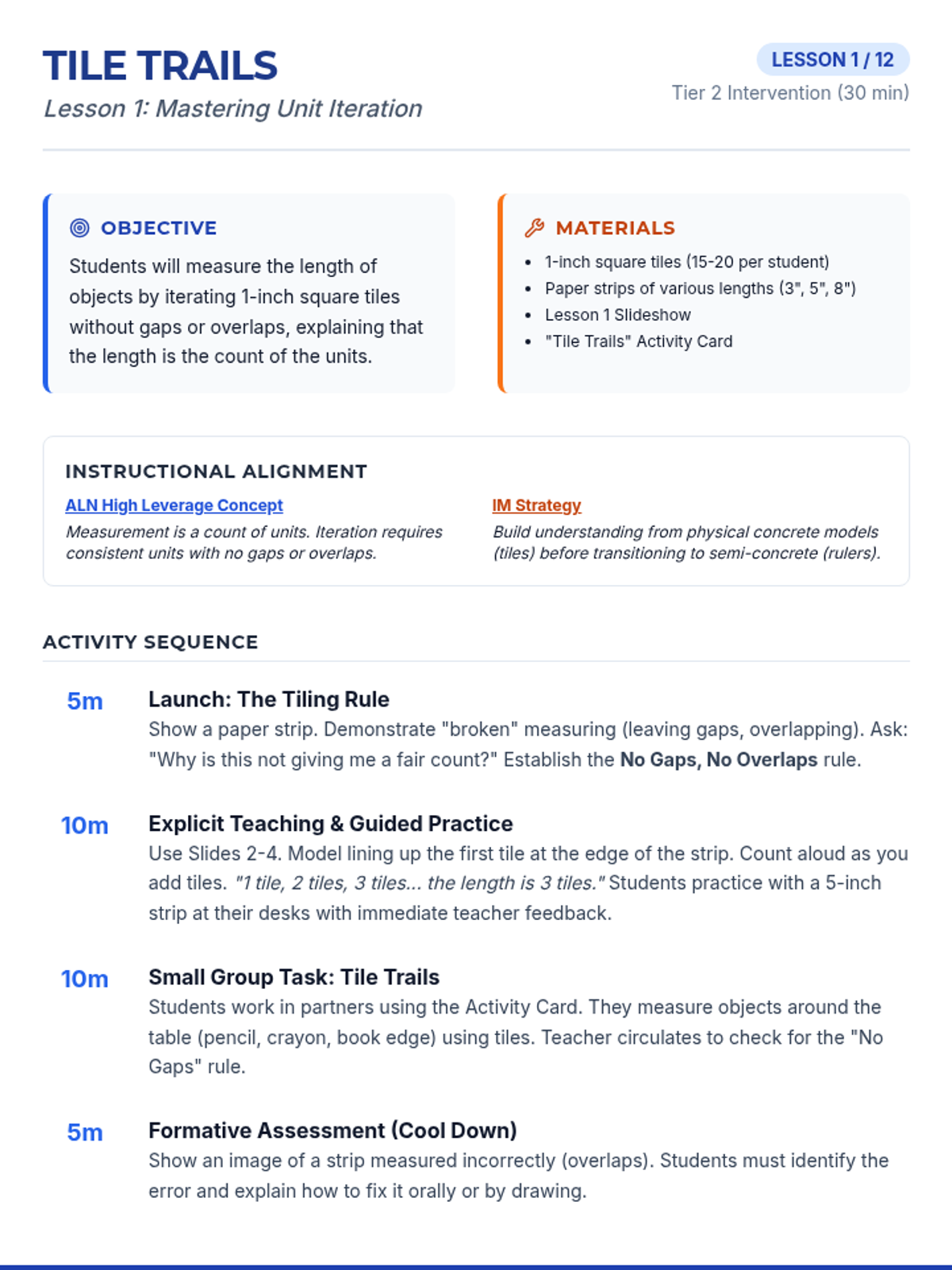
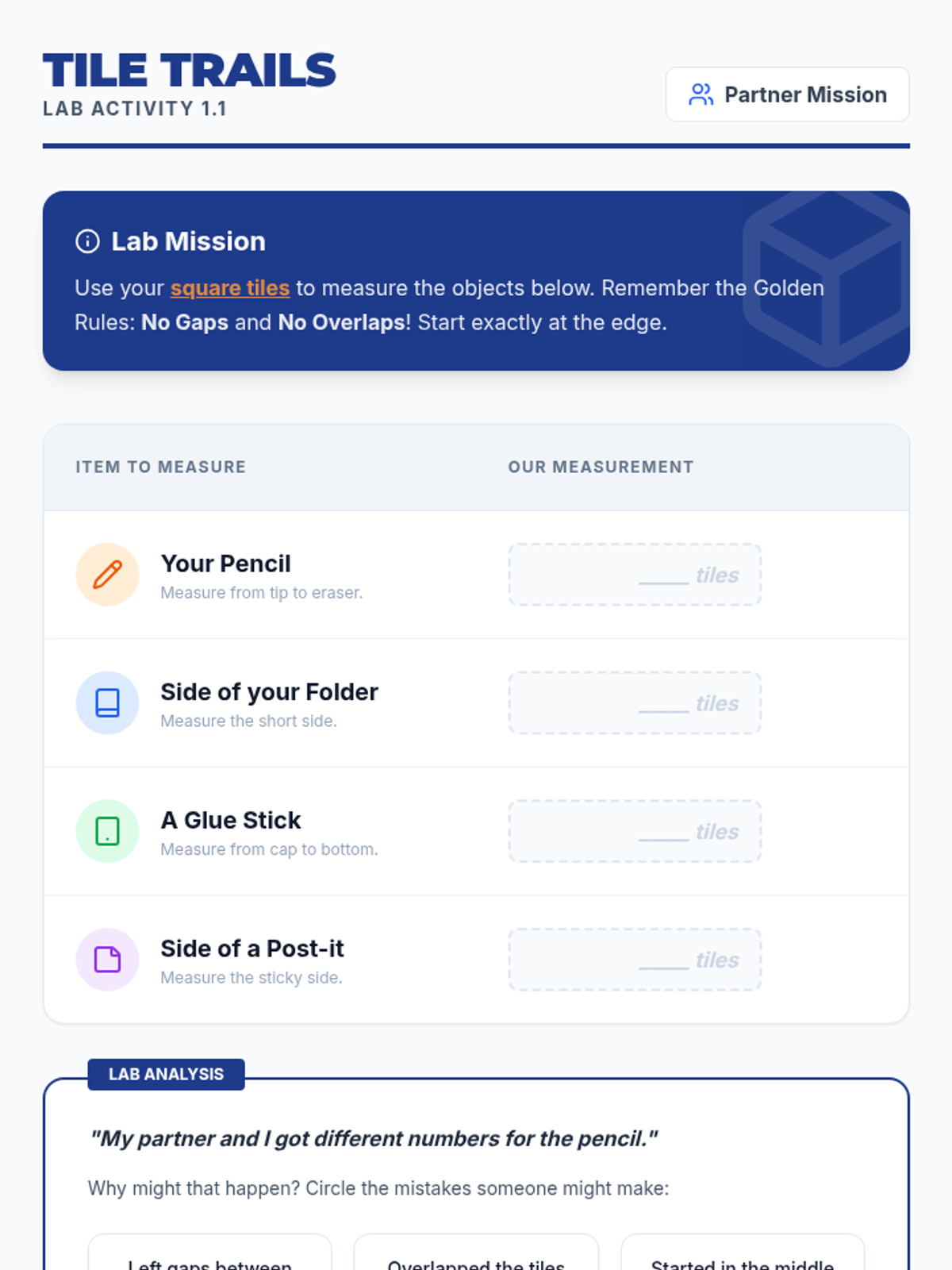
Focuses on the concept of unit iteration using non-standard units (square tiles) to understand that measurement is a count of equal-sized units without gaps or overlaps.