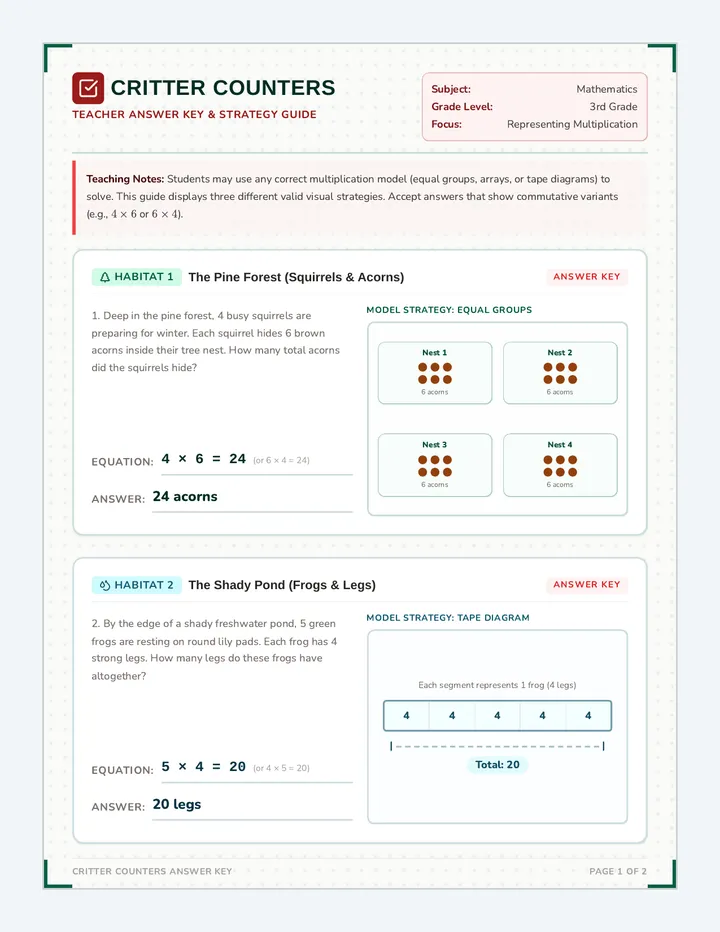
Students will learn to use bar models to visualize and solve multiplication and division word problems involving whole unknowns, group size unknowns, and number of group unknowns.
A comprehensive lesson on calculating the area of irregular rectilinear shapes by decomposing them into smaller rectangles. Includes tiered practice, a project-based learning guide, and a detailed assessment rubric.
Students will learn to find the area of regular and irregular polygons by decomposing them into smaller rectangles, using a 'Shape Surgeon' approach.
A series of 3 hands-on centers focused on equivalent fractions using shapes, fraction strips, and number lines to build conceptual understanding.
A fast-paced, 35-minute secret agent-themed lesson where students master the connection between multiplication and division facts (1-10) using the 'I Do, We Do, You Do' model.
A quick warm-up session to prepare students for the Graphing Patterns Checkpoint, focusing on proportional relationships, data tables, and coordinate graphing.
A mini-lesson designed to help students identify key information and break multi-step fraction word problems into manageable parts.
A comprehensive lesson focused on breaking down two-step word problems using a blueprint strategy to identify operations and translate words into expressions.
A comprehensive review session covering fraction equivalency, simplification, mixed number conversions, and basic operations with unlike denominators.
Students apply their fraction operations to solve multi-step word problems involving measurement and construction scenarios.
Focuses on adding and subtracting mixed numbers with like denominators, emphasizing the regrouping process and visual decomposition.
Focuses on the conceptual link between mixed numbers and improper fractions using visual models and the 'Multiply and Add' method.
A comprehensive review lesson on converting between decimals and fractions, designed with a laboratory theme to encourage precision and experimentation.
A comprehensive lesson focused on mastering decimal multiplication and division through structured problem-solving and technical precision.
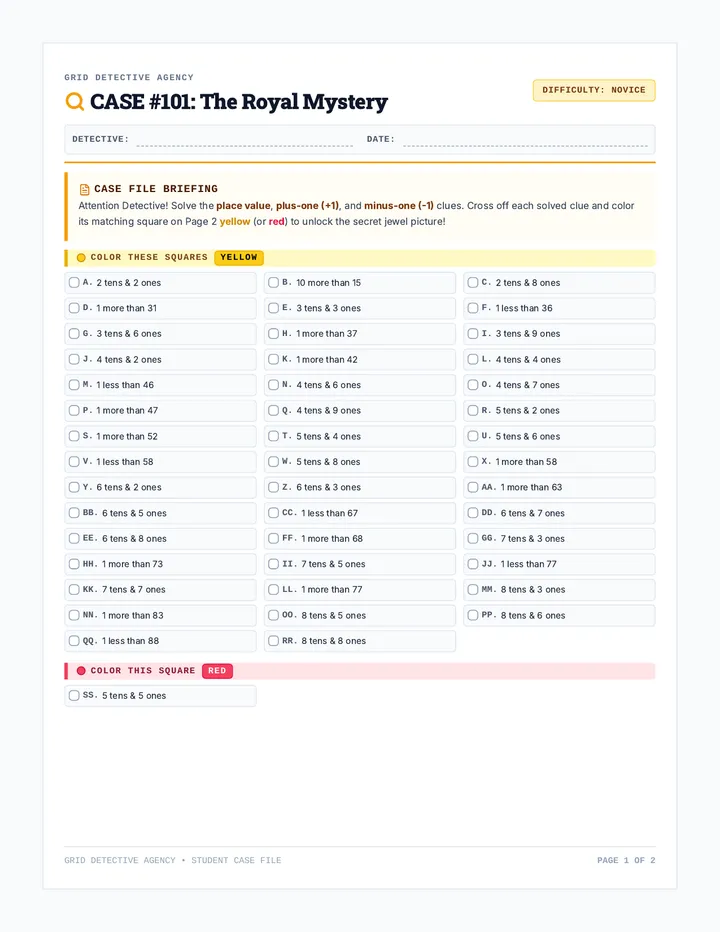
A comprehensive lesson on multi-digit subtraction and money word problems for 4th graders, themed as a detective agency investigation.
A quick warm-up session focused on input/output tables, coordinate planes, and identifying linear patterns to prepare students for a graphing patterns checkpoint.
A focused lesson on subtraction strategies using $1435 - 619$ as the primary example, featuring both the standard algorithm and number line methods.
Integrates all previous standards into complex, multi-step word problems to prepare students for the final assessment.
Explores volume concepts using unit cubes and formulas for right rectangular prisms.
Reviews fraction and mixed number multiplication alongside division of unit fractions and whole numbers in context.
Covers multi-digit multiplication and division, along with all four operations involving decimals, utilizing both algorithms and visual models.
Focuses on reading, writing, comparing, and rounding decimals to the thousandths place, including expanded form and number line representation.
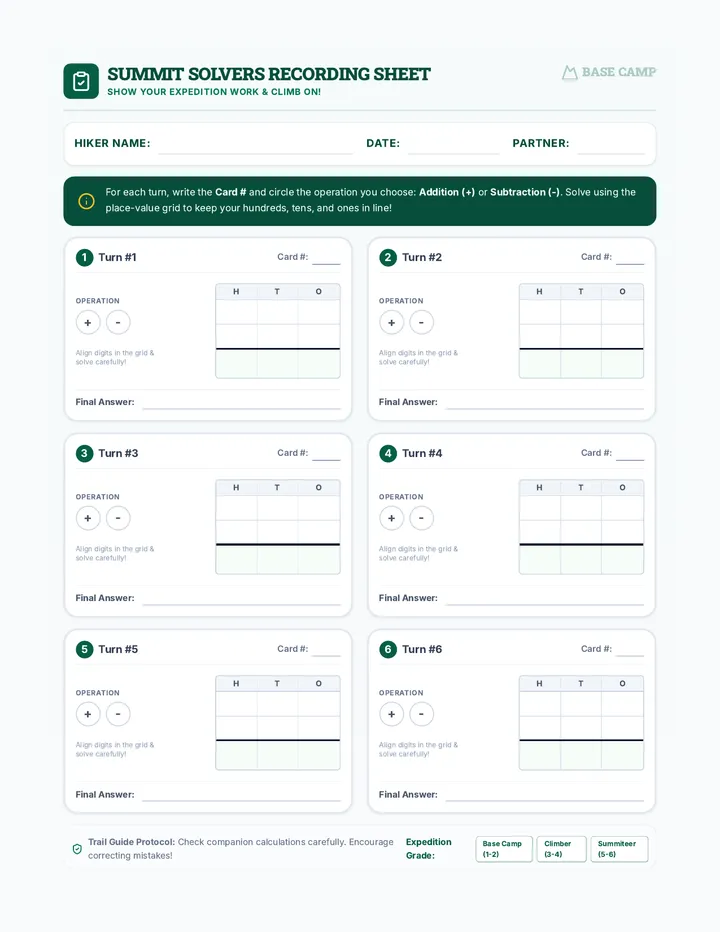
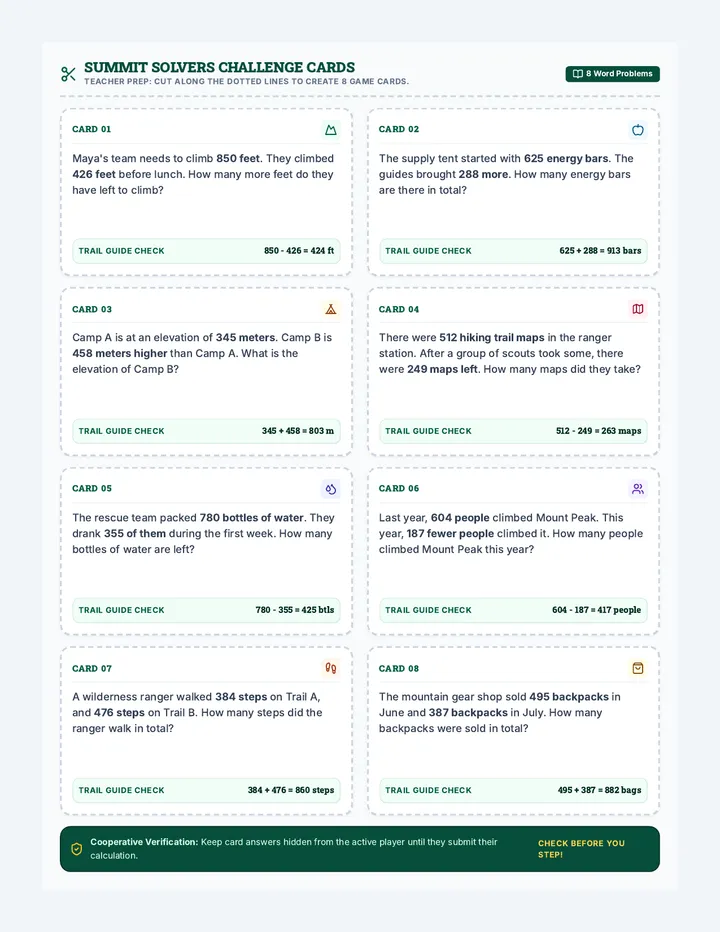
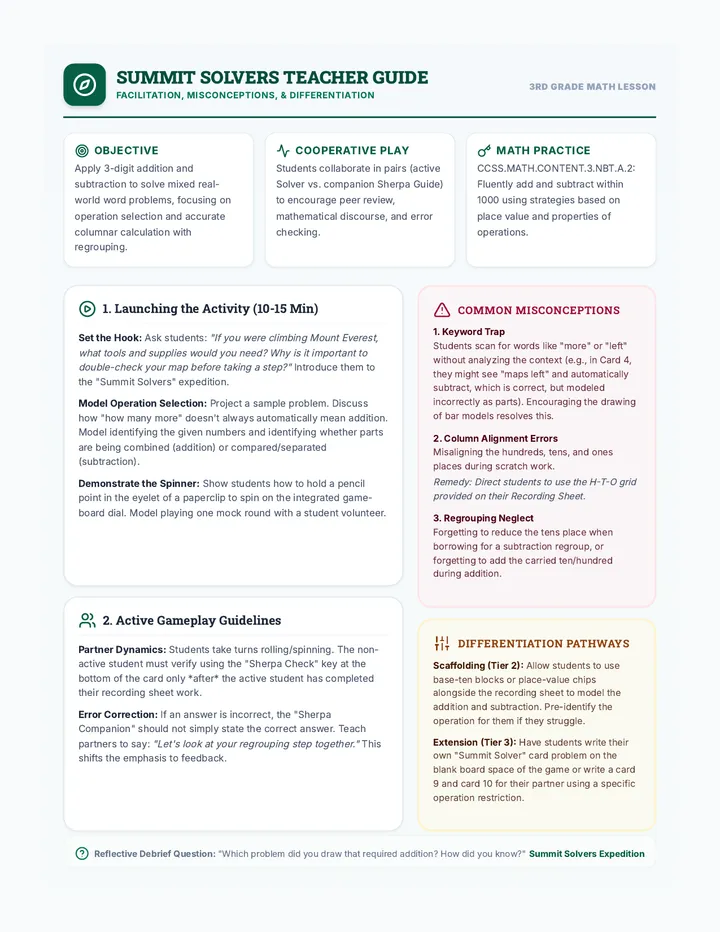
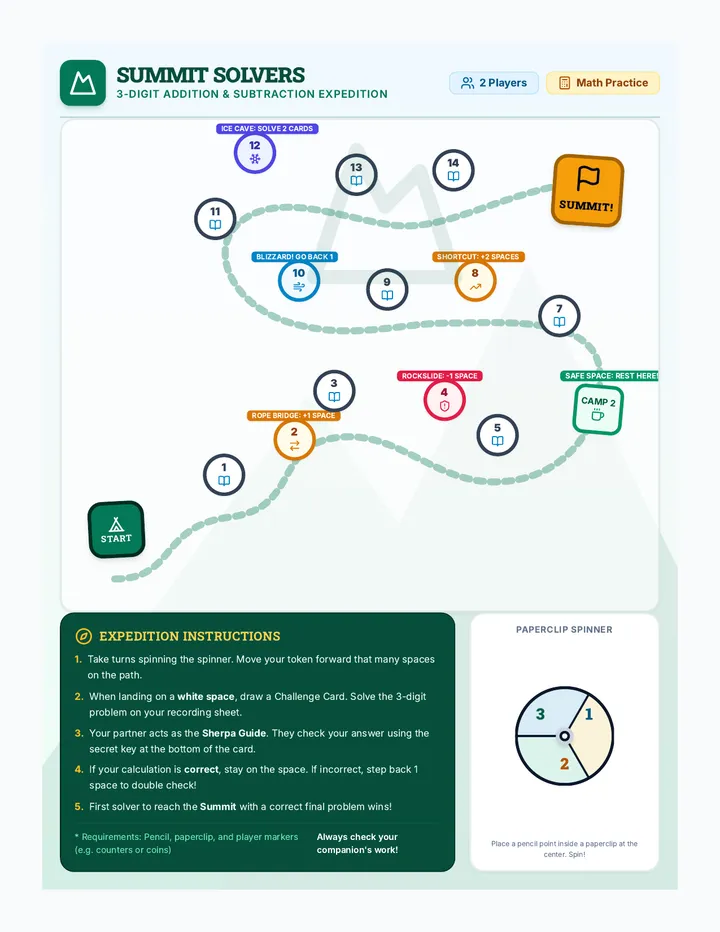
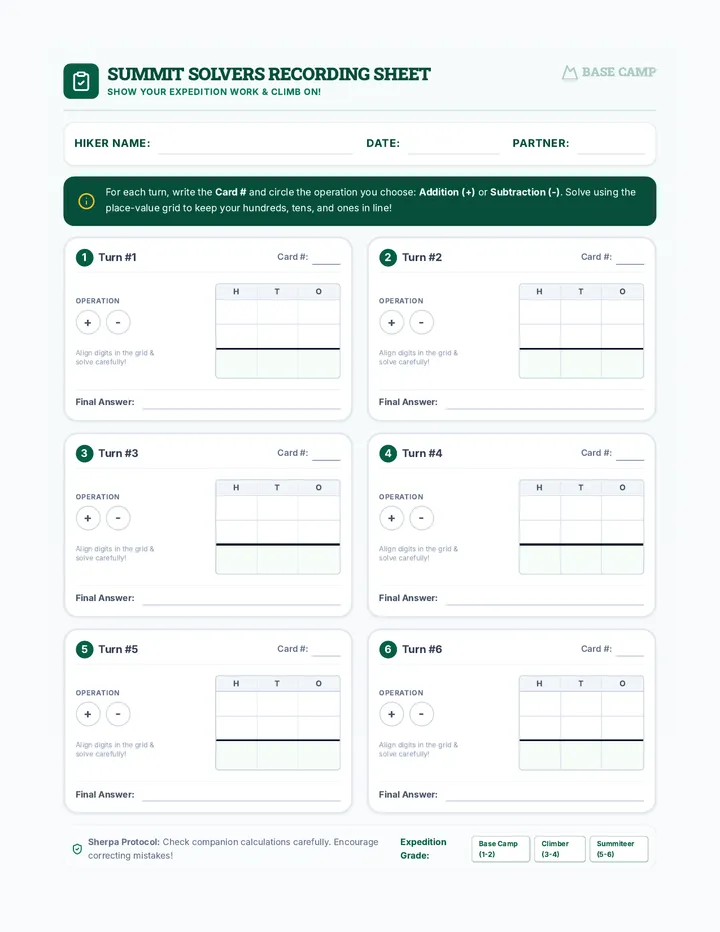
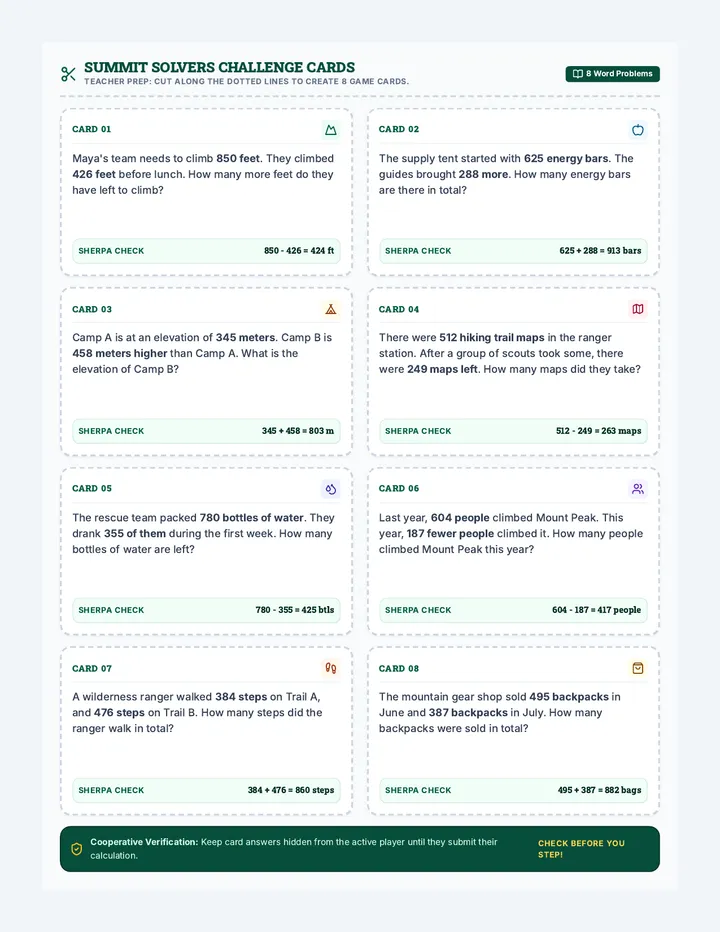
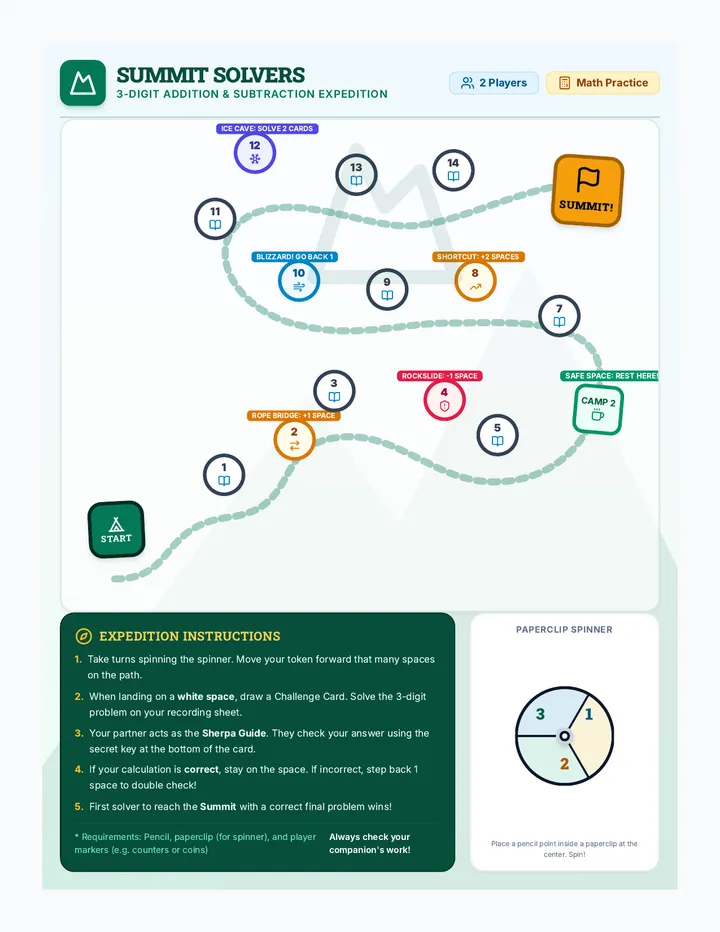
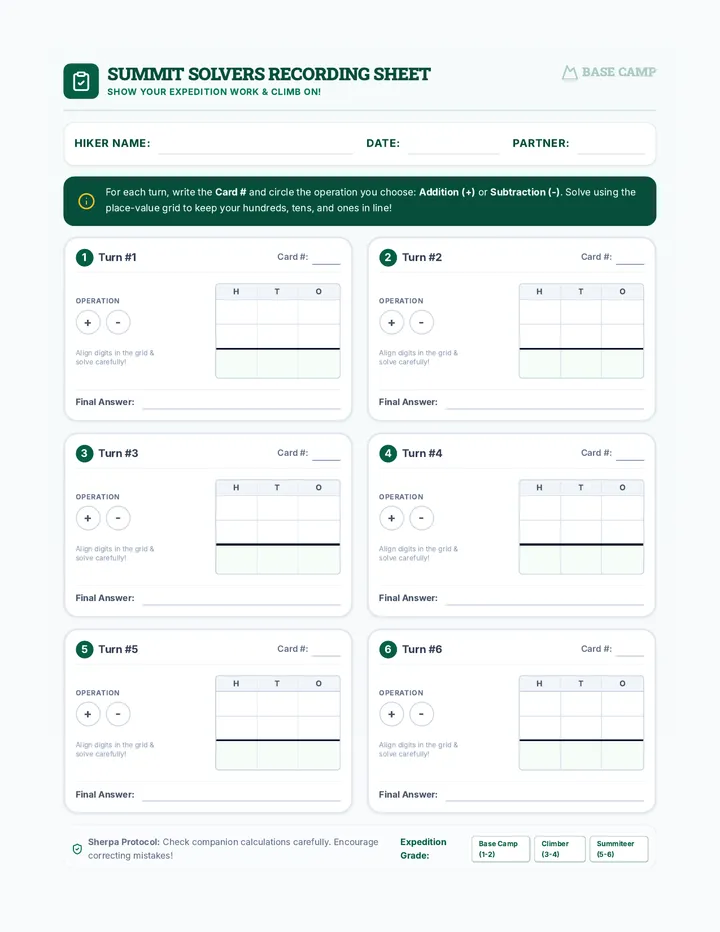
Students act as urban planners to design 'Century City' using exactly 100 items with a budget of exactly $1,000. This collaborative project-based activity focuses on multi-digit addition and subtraction within 1,000.
A comprehensive lesson on solving multi-digit, multi-step equations, featuring a workshop-themed approach to mathematical operations and annotation habits.
A hands-on lesson exploring the relationship between water level and volume, teaching students how to observe, measure, and compare how much liquid a container holds.
Students explore the concept of volume by counting unit cubes and understanding how layers stack to fill 3D spaces. This lesson transitions from single-layer counting to multi-layer calculations.