Students explore the concept of morphology by treating words as puzzles with core meanings hidden in the root, establishing foundational vocabulary of 'prefix,' 'suffix,' and 'root.'
No materials in this lesson yet.
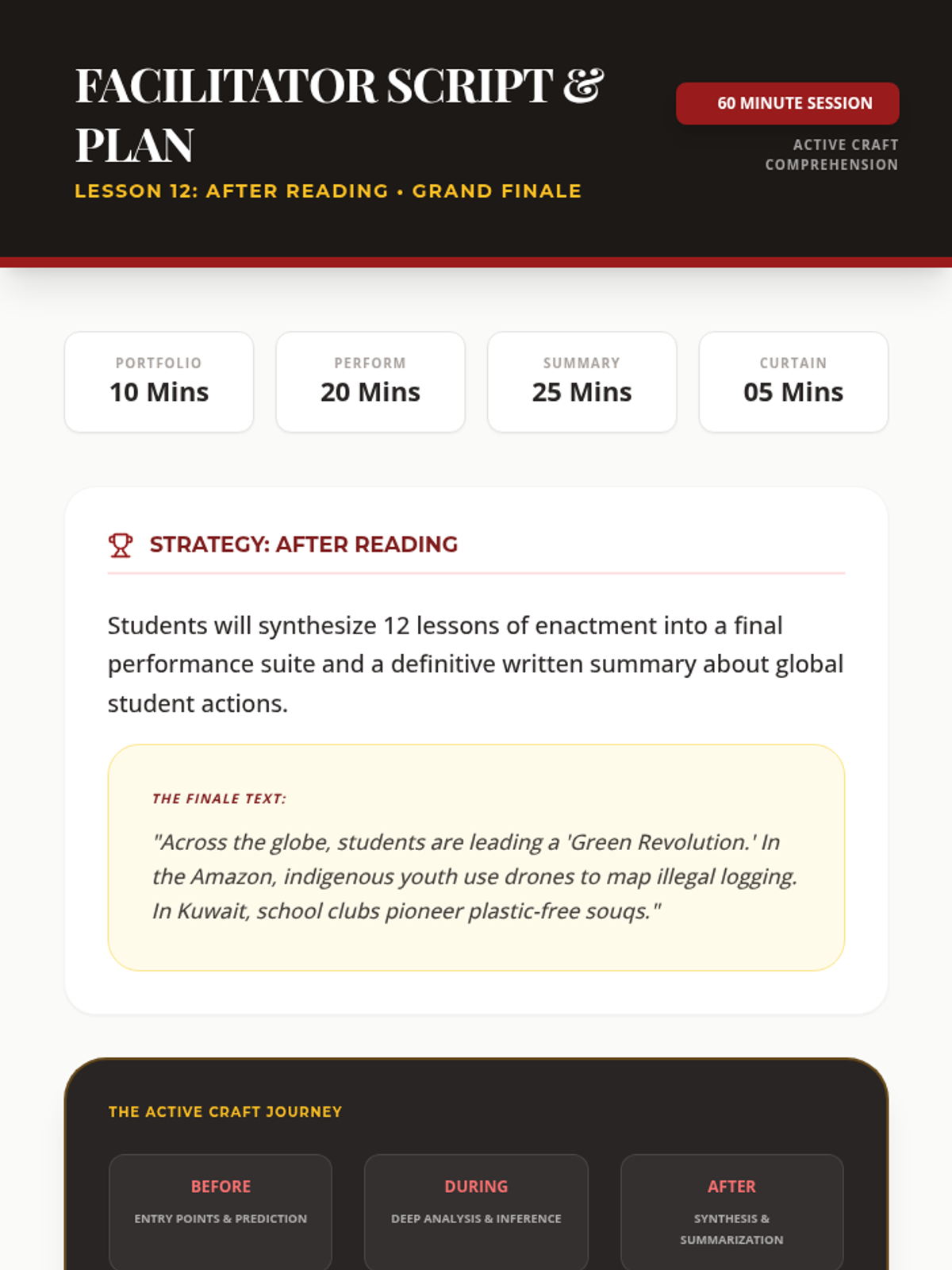
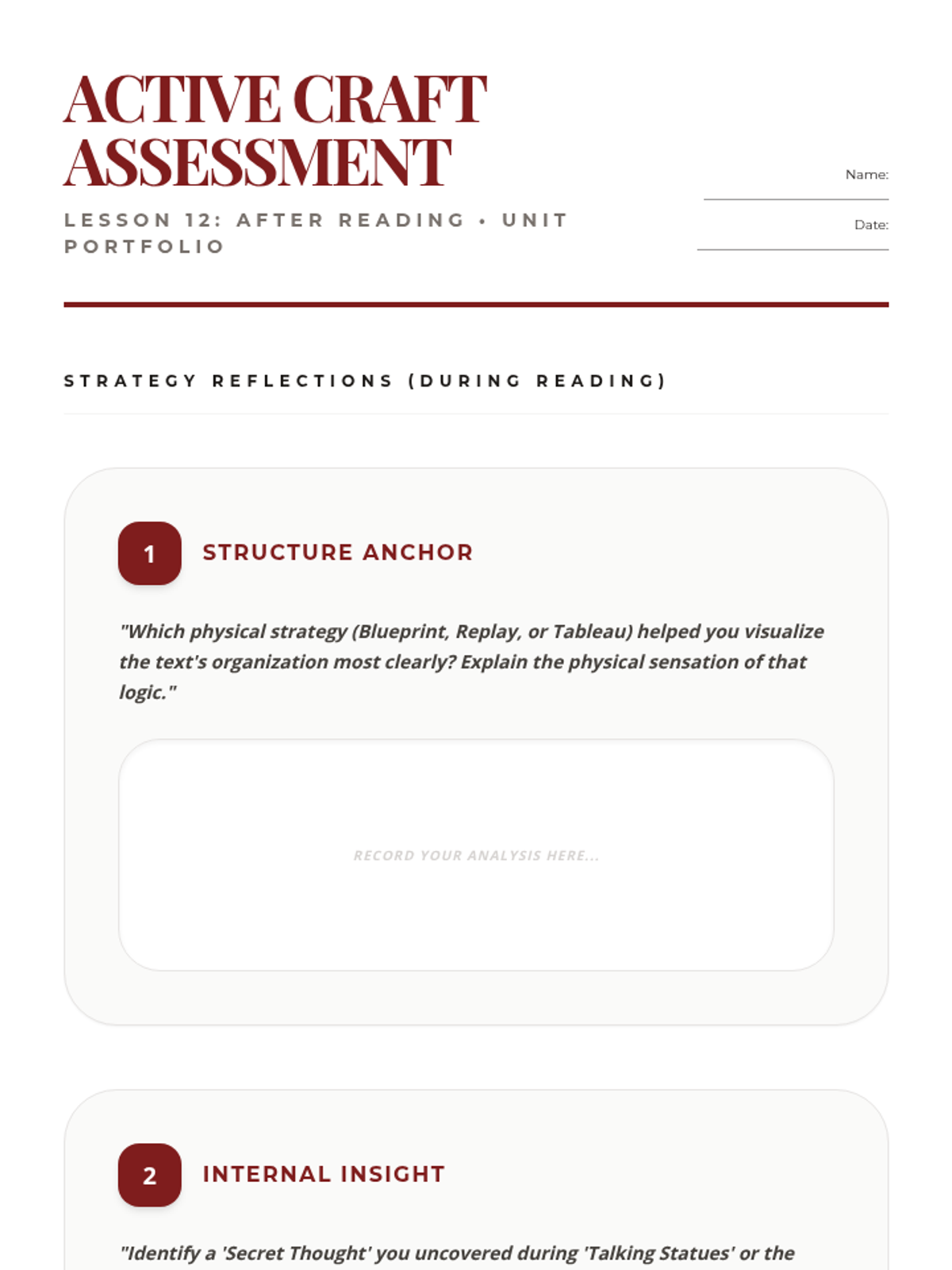
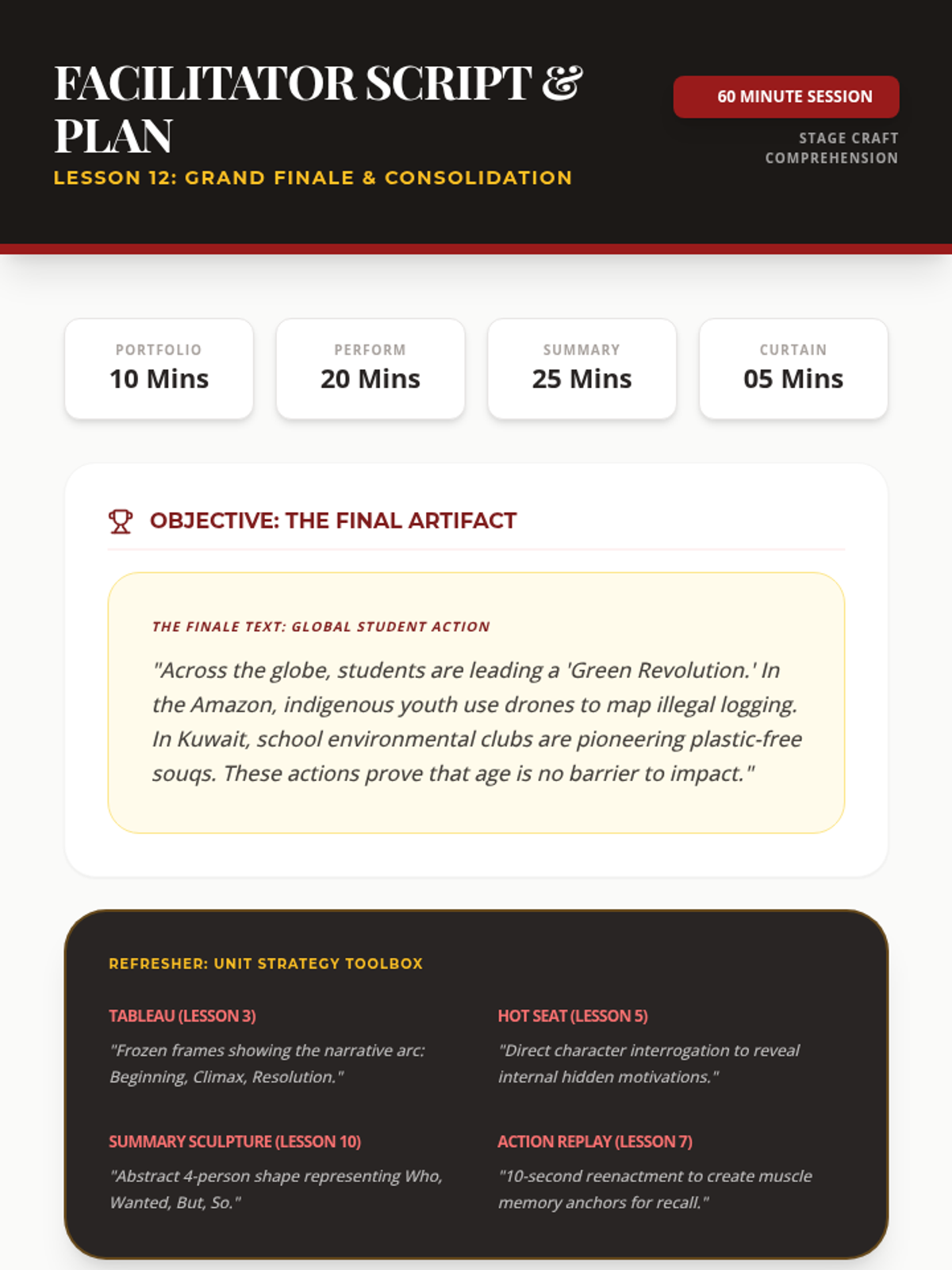
After Reading Strategy: Consolidating skills into a final performance and assessment about students’ actions around the world.
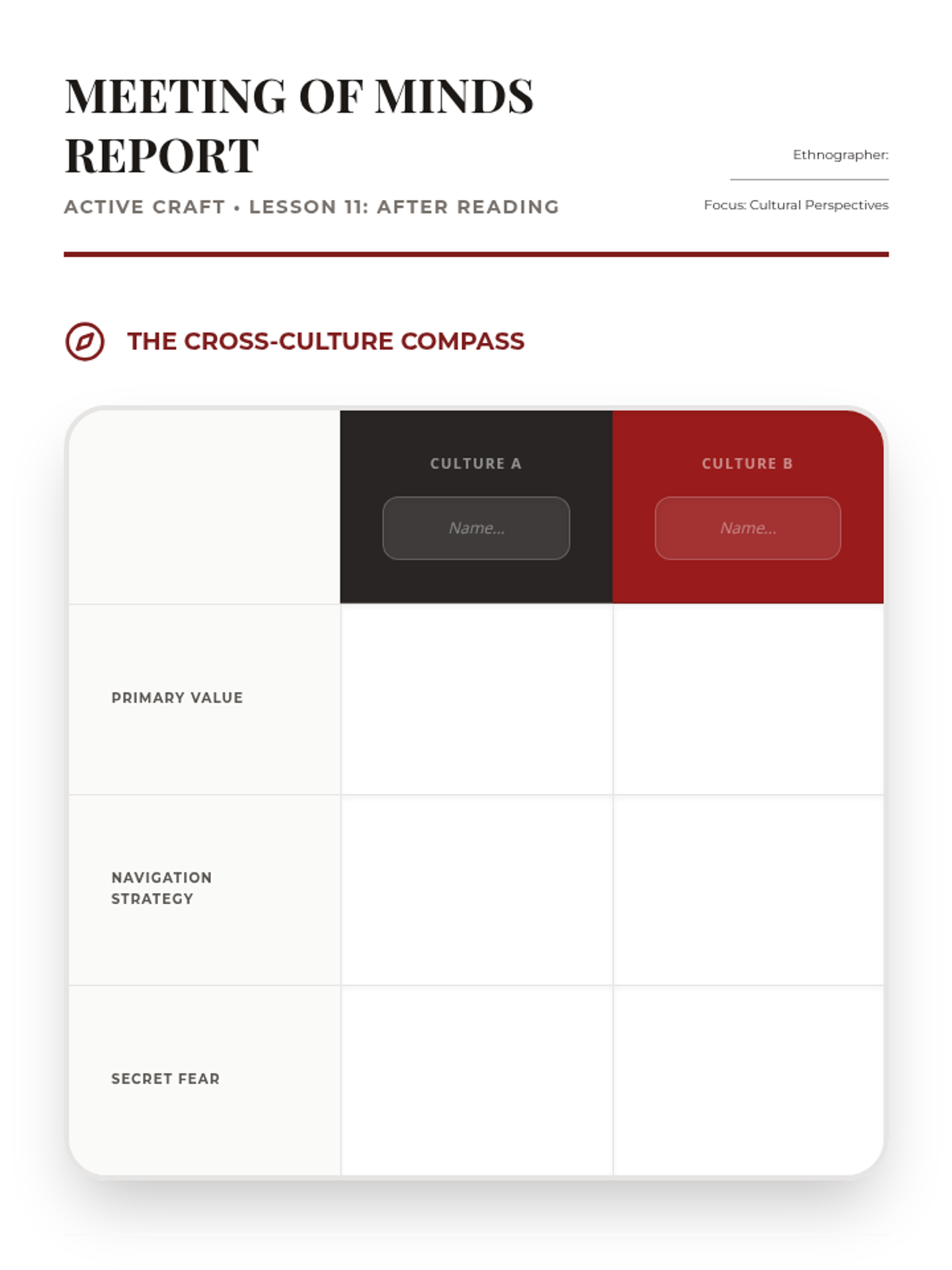
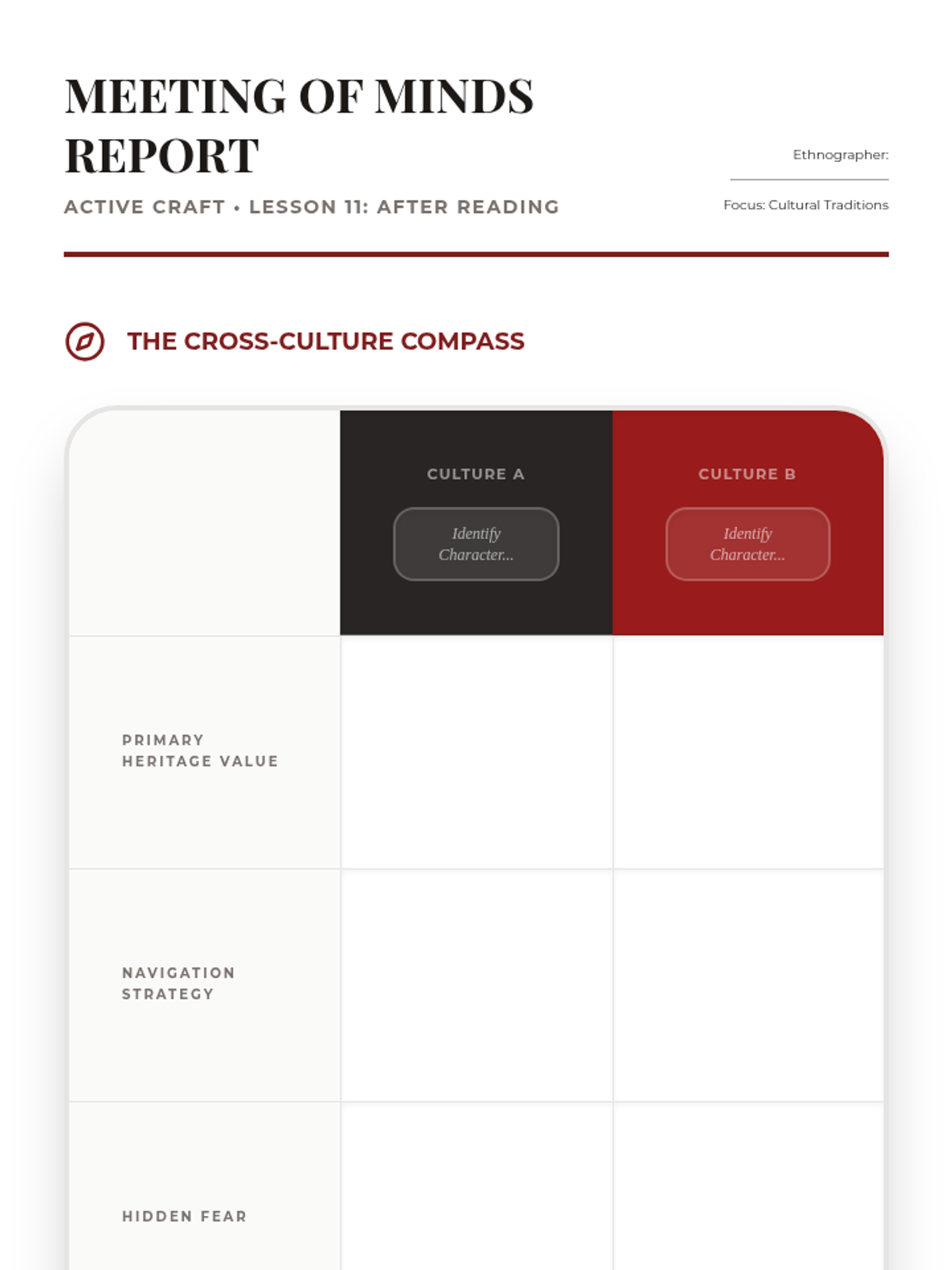
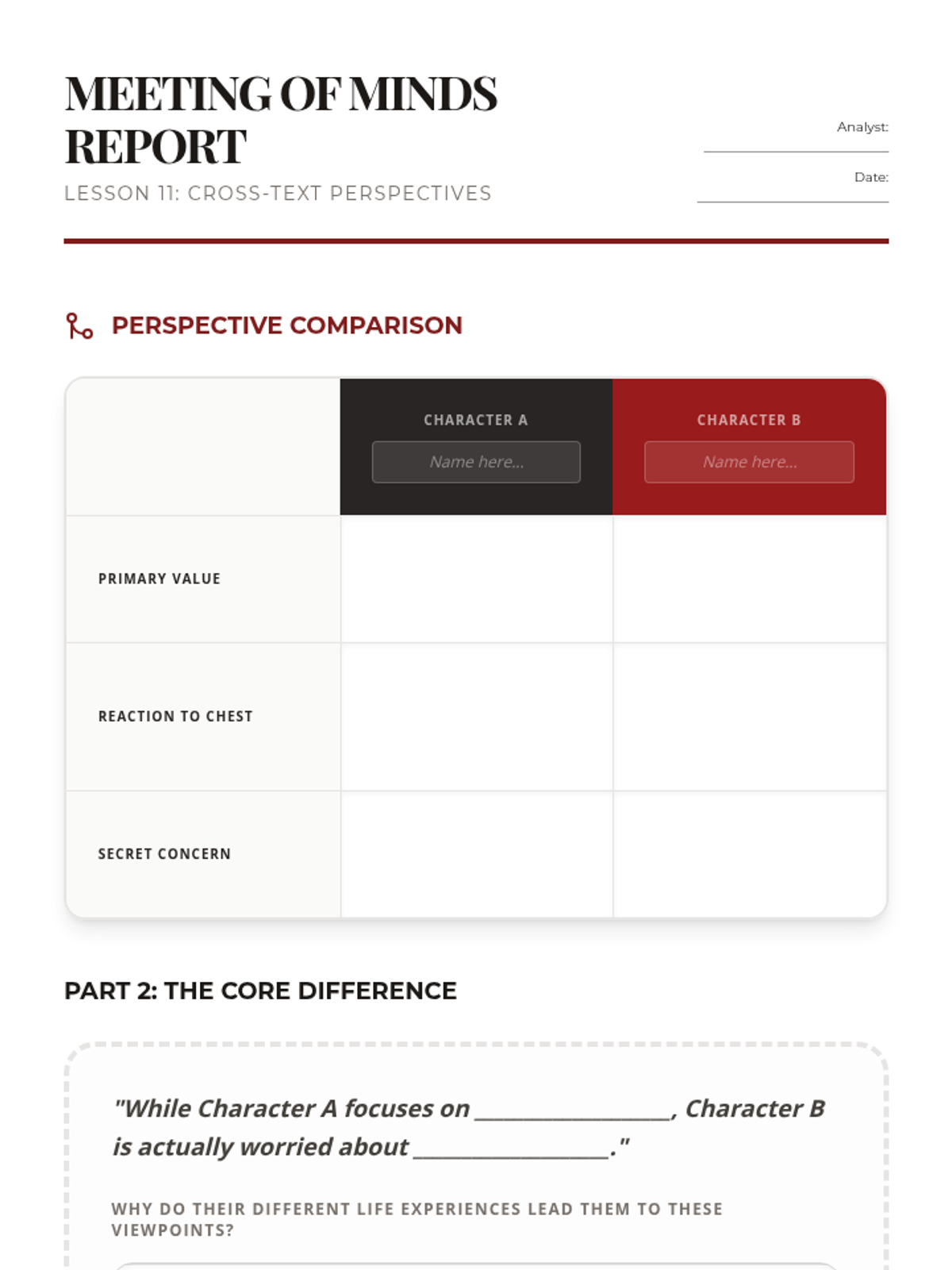
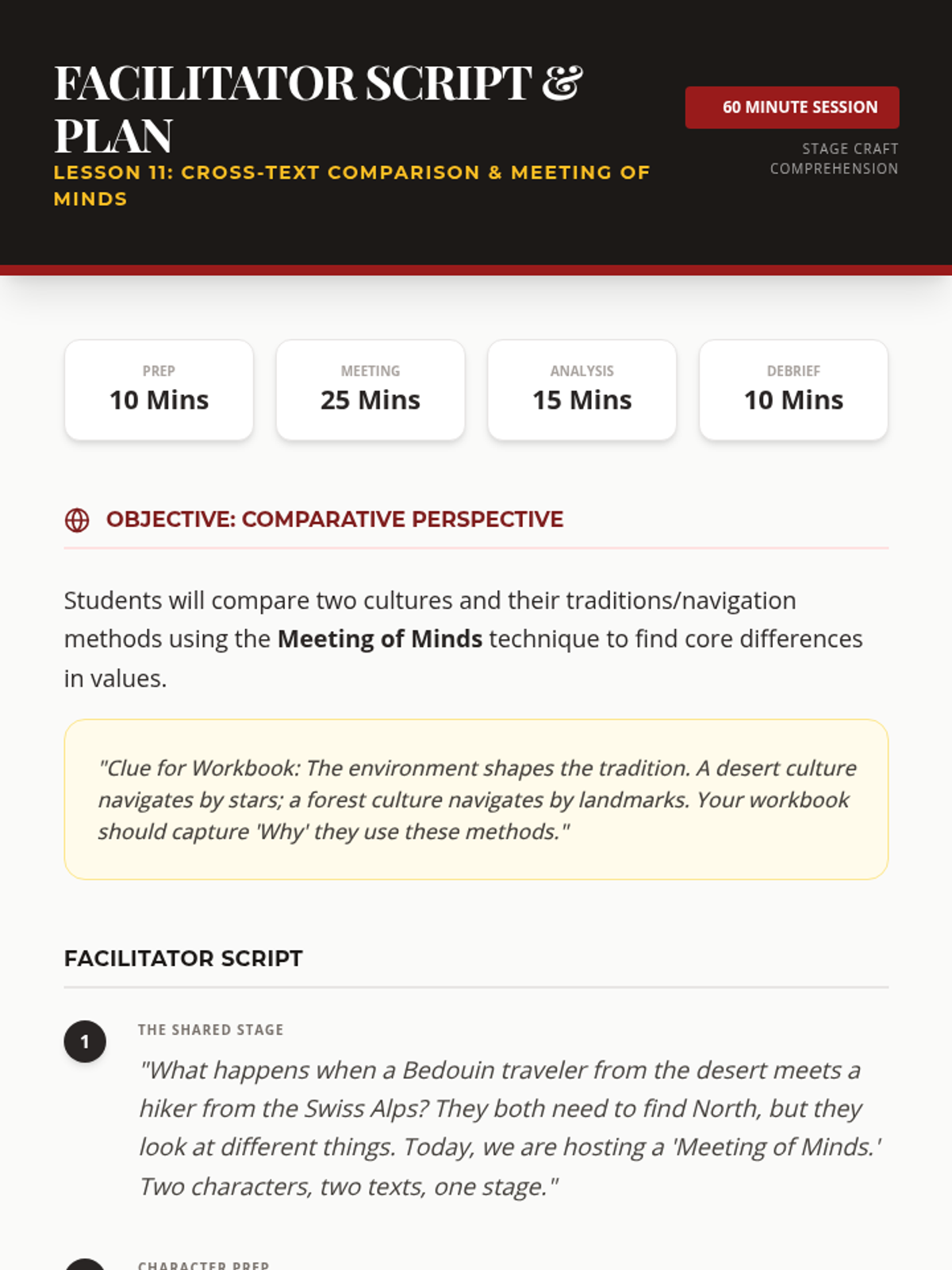
After Reading Strategy: Comparing cultures, traditions, and navigation (directions) using role-play to evaluate perspectives across texts.
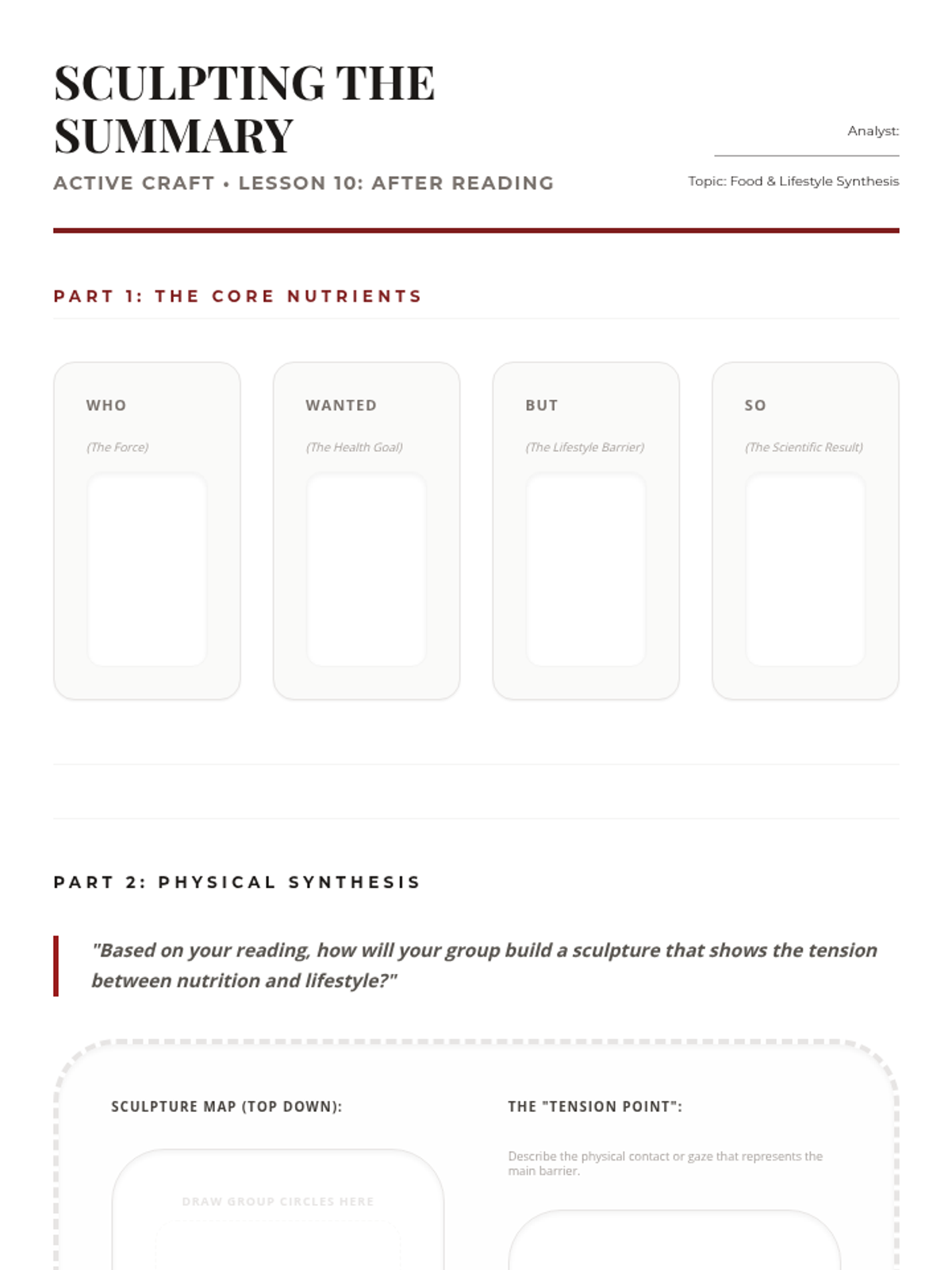
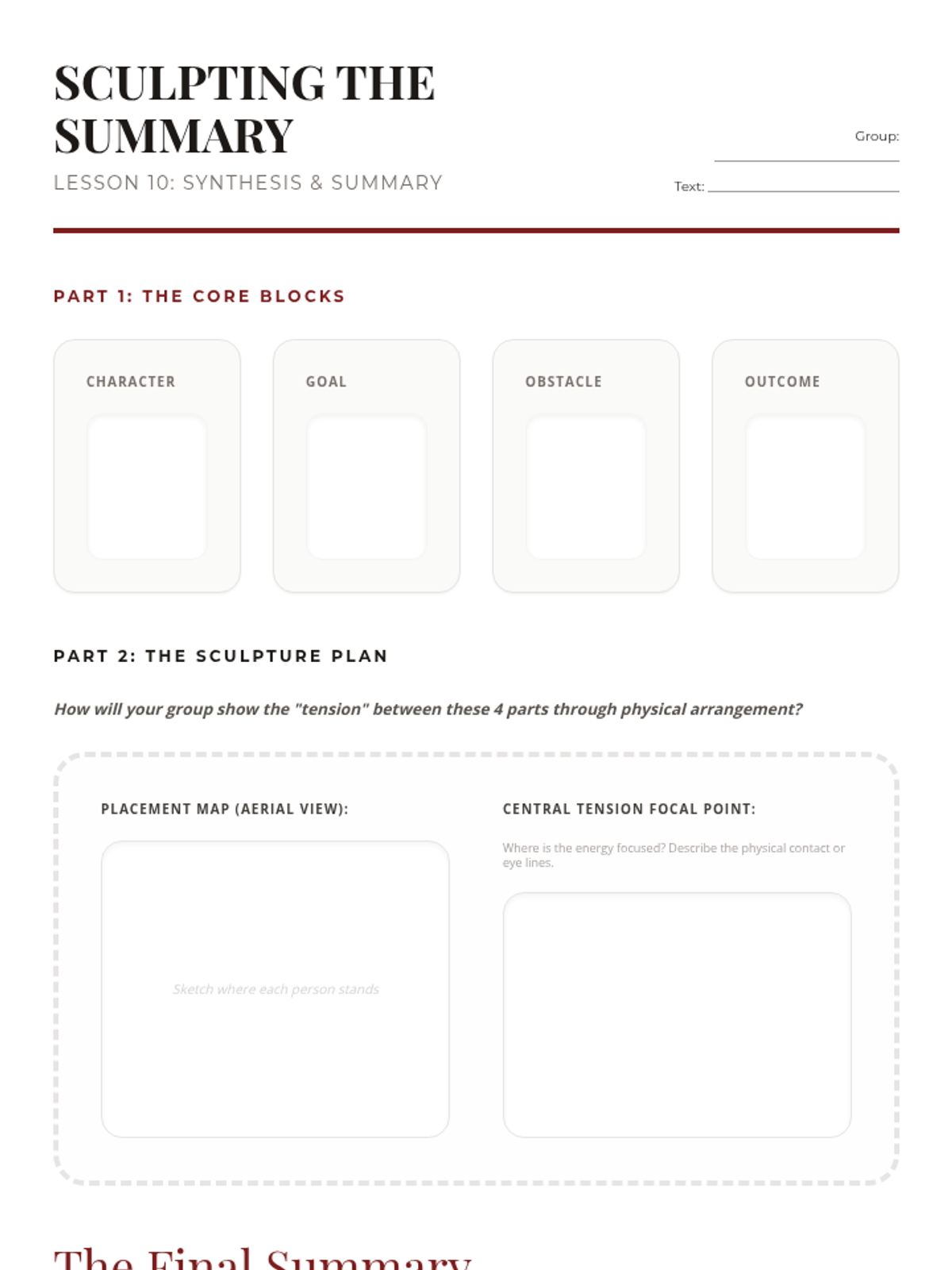
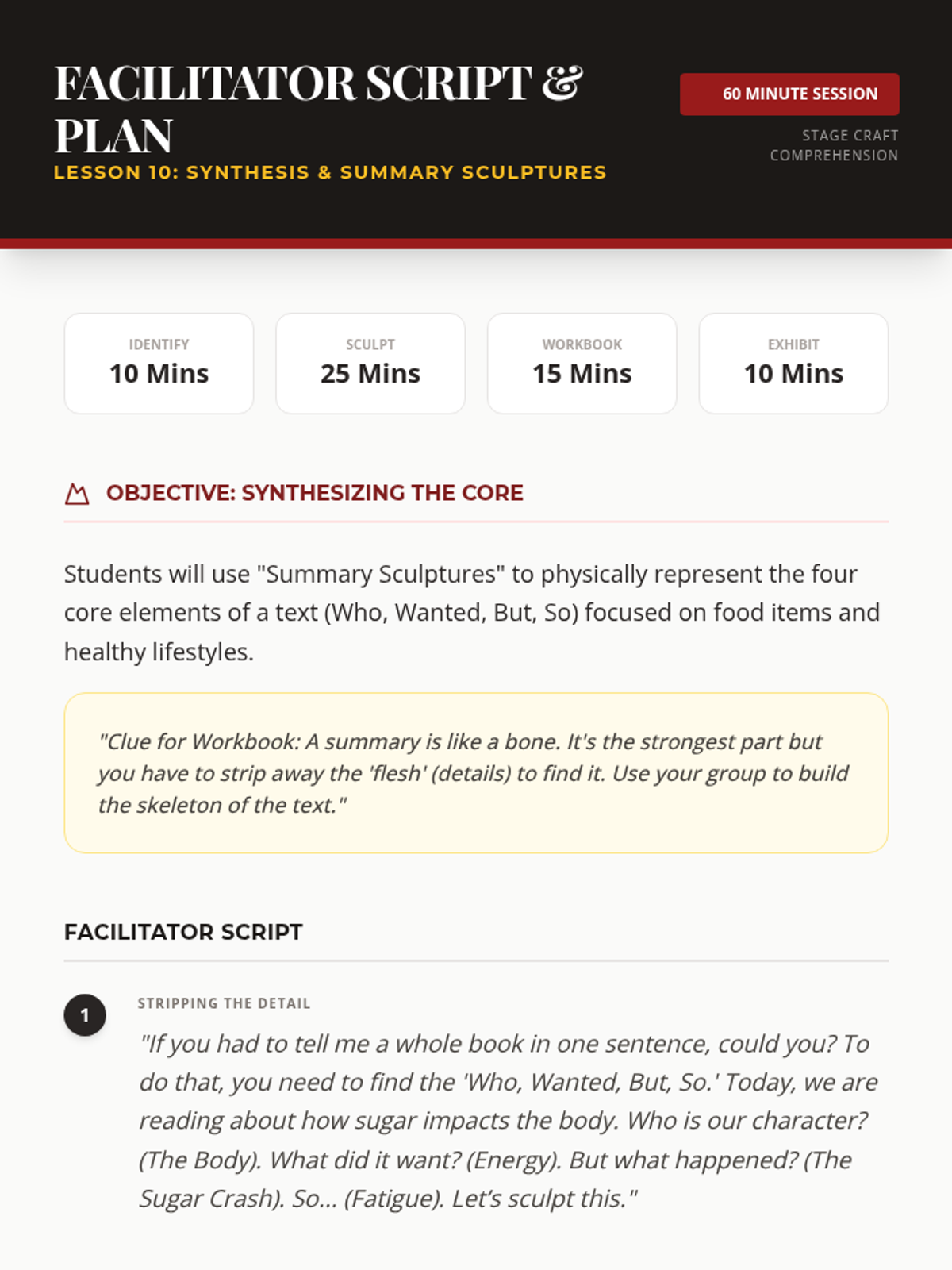
After Reading Strategy: Synthesizing information into 'Summary Sculptures' focused on food items and healthy lifestyles.
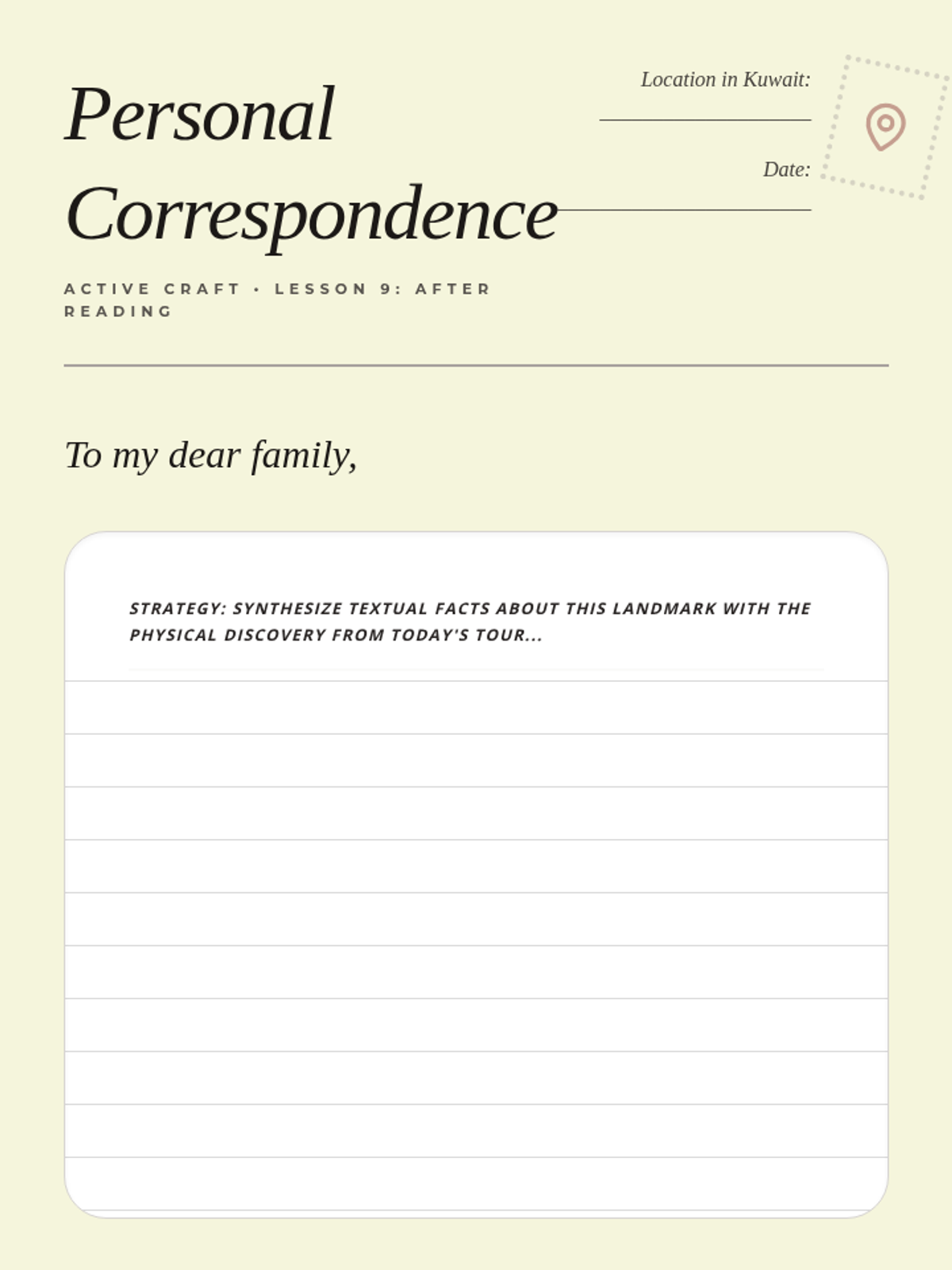
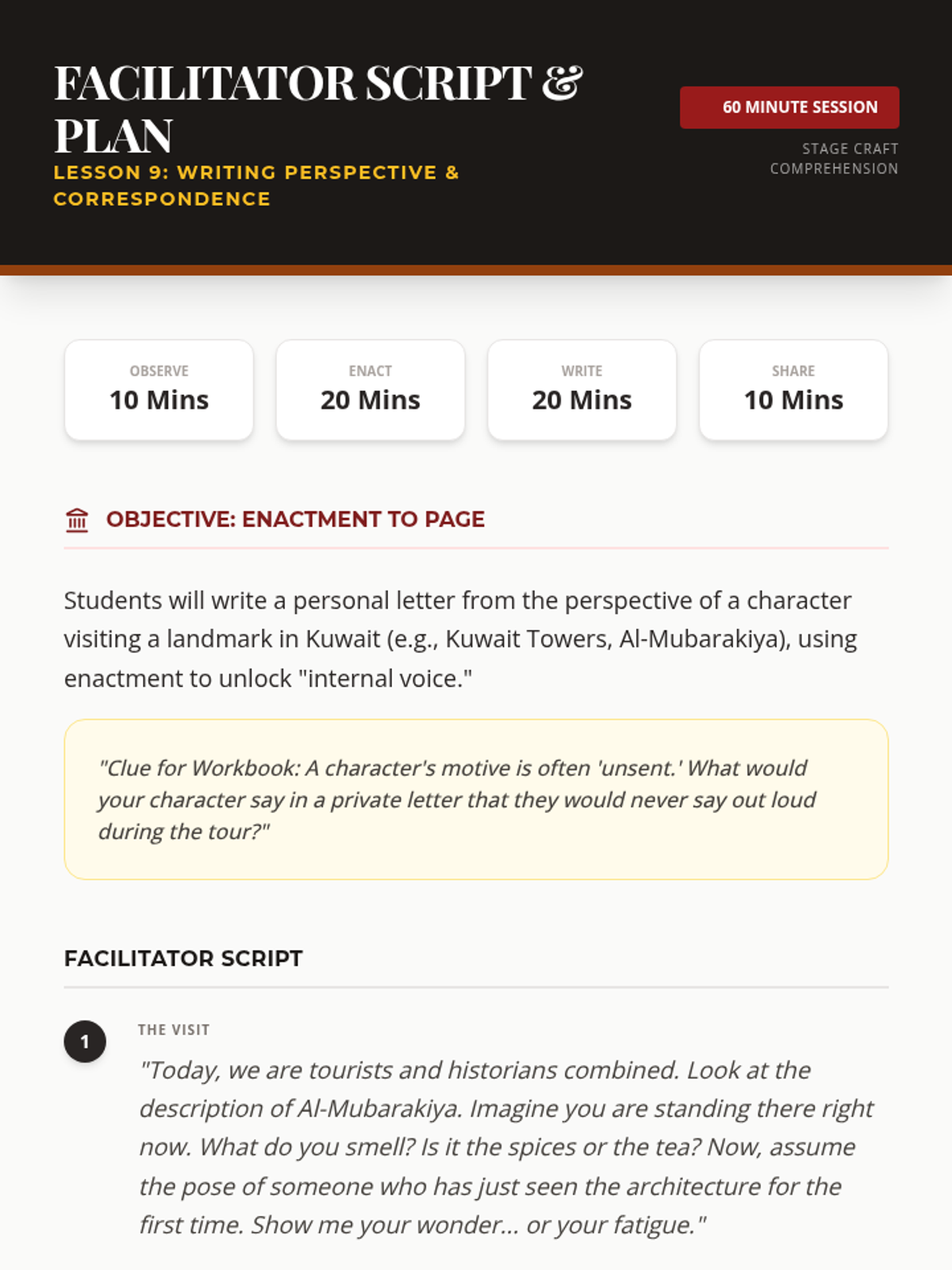
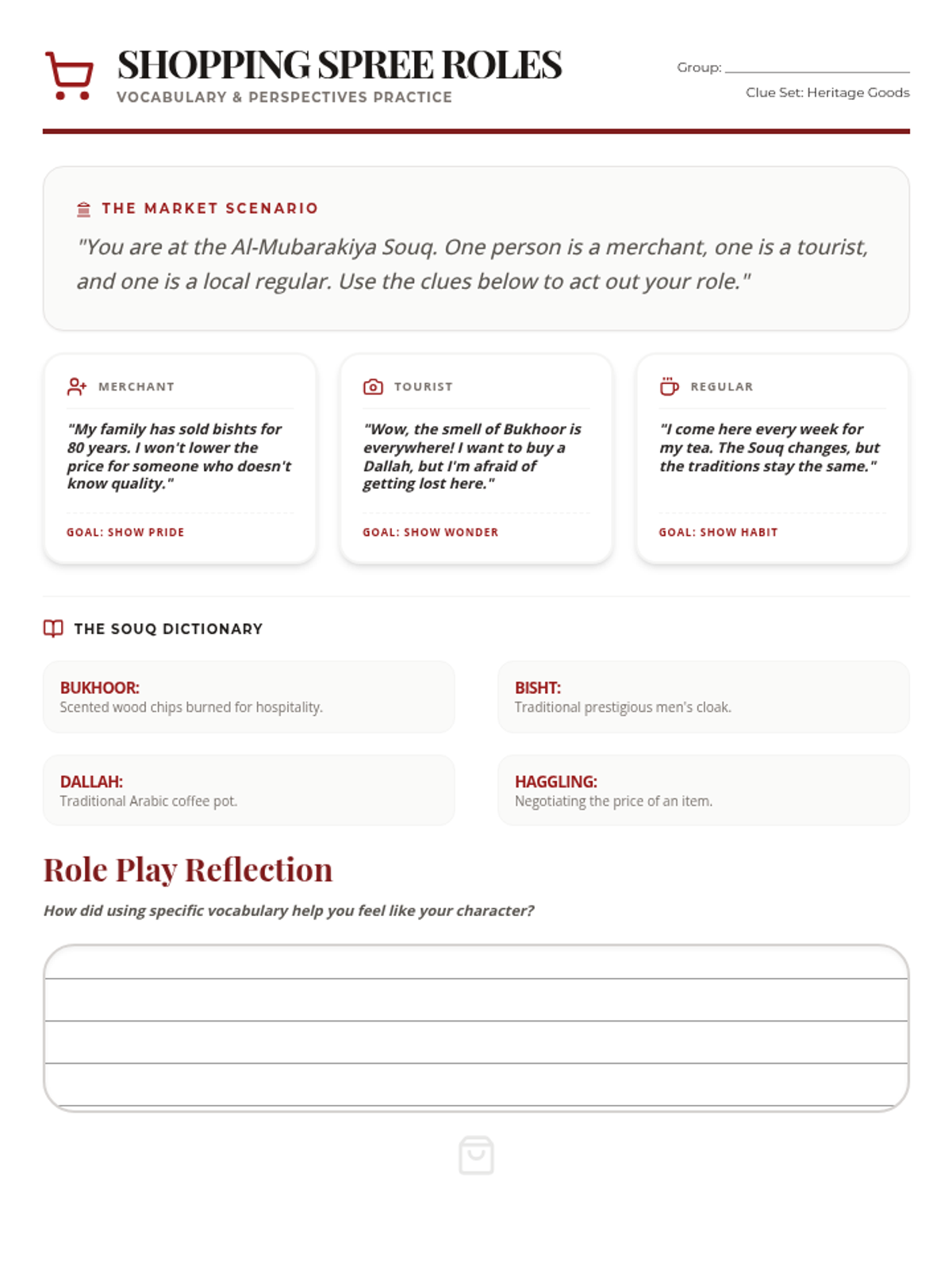
After Reading Strategy: Writing from the perspective of characters visiting cultural and educational places in Kuwait to synthesize meaning.
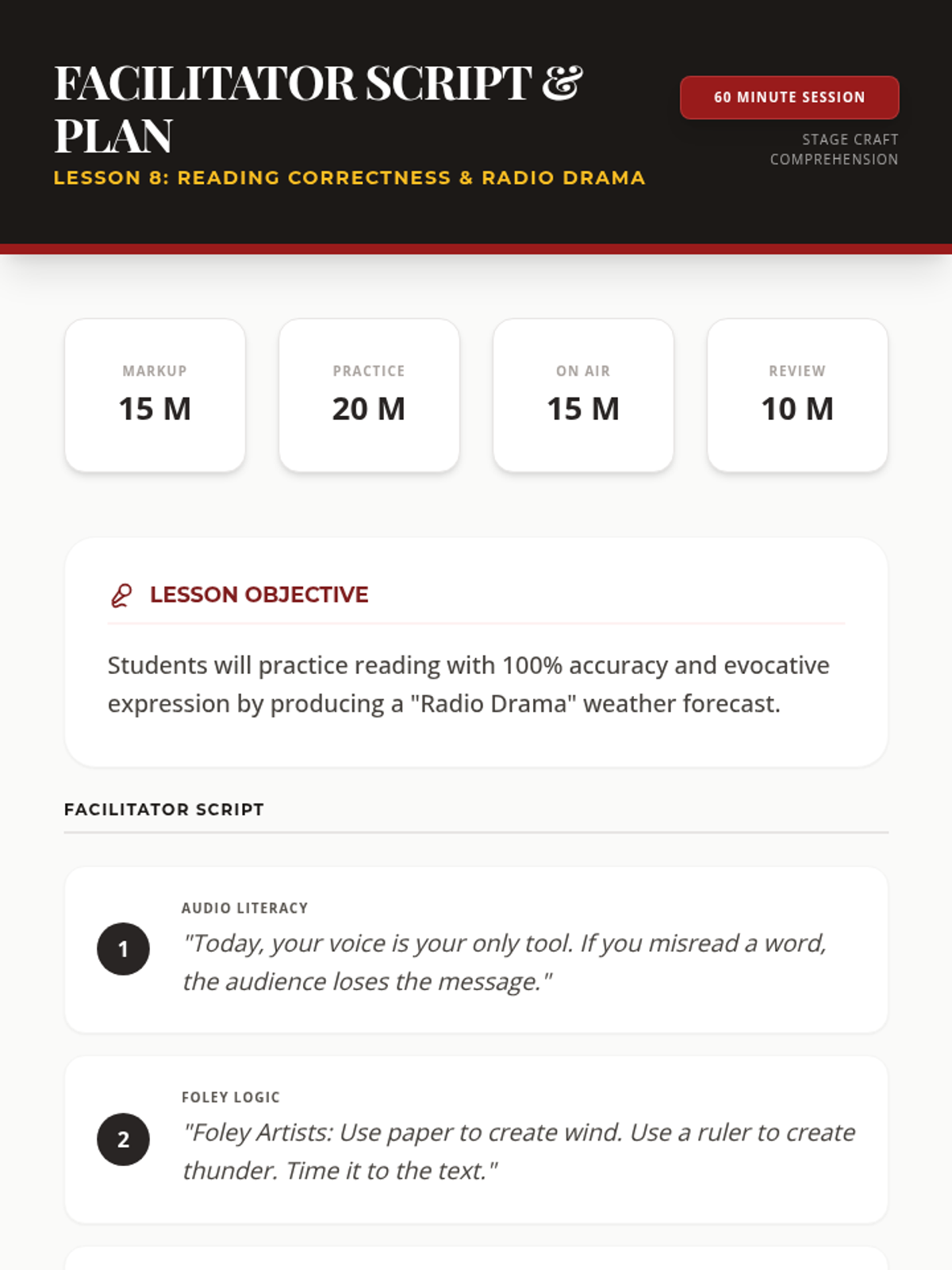
Before Reading Strategy: Practicing fluency and previewing text through weather forecast 'Radio Dramas' and climate reports.
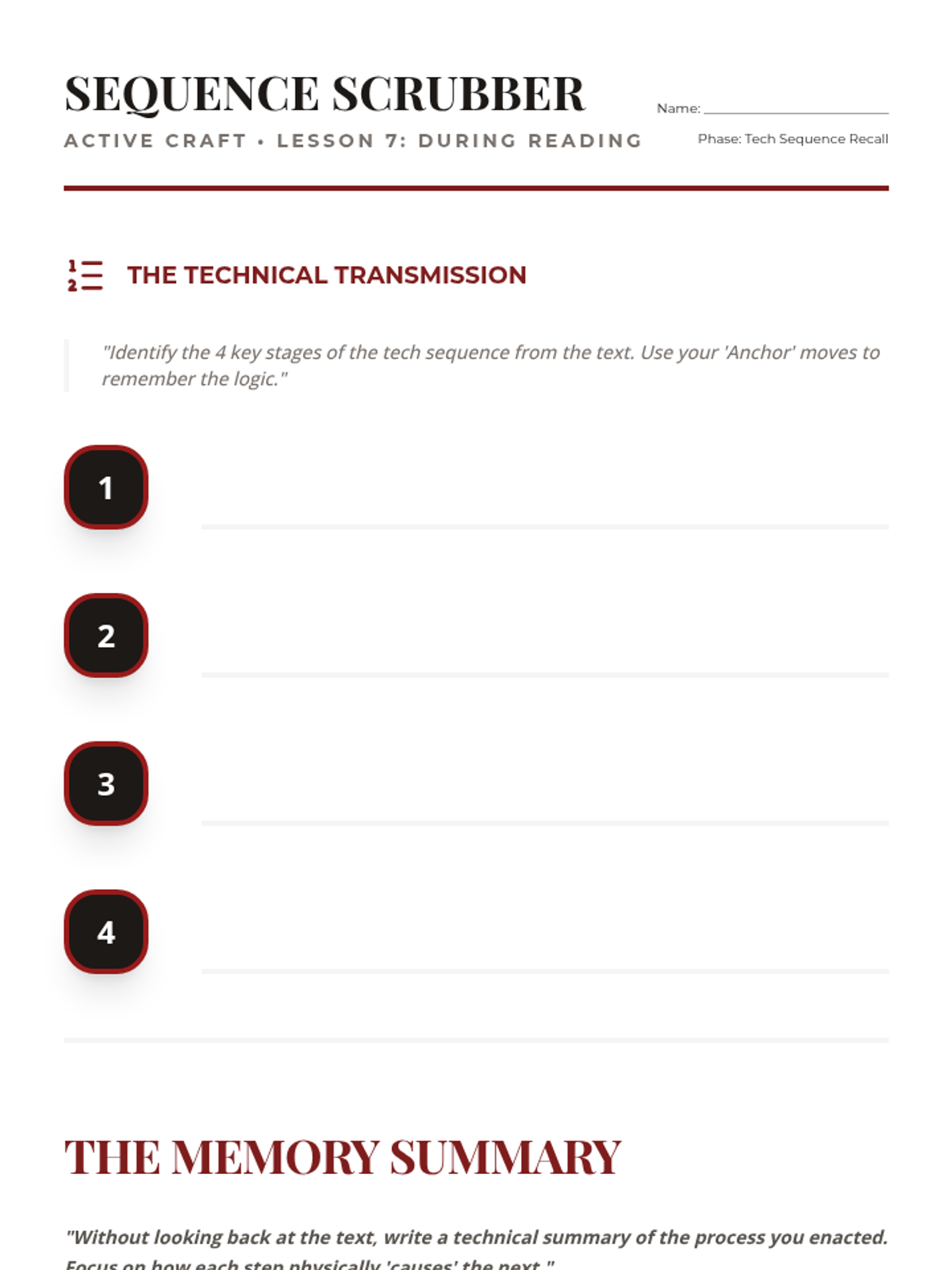
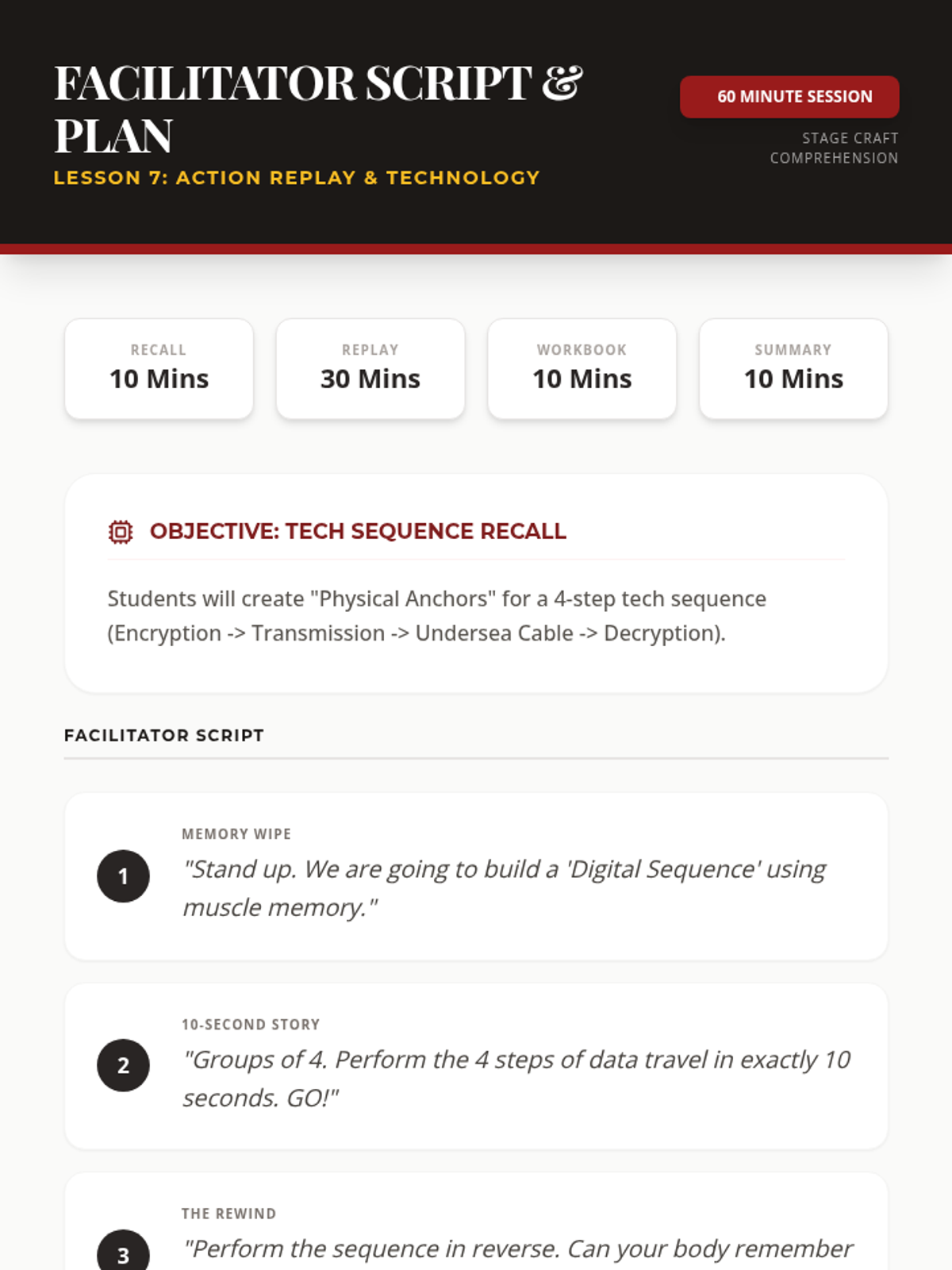
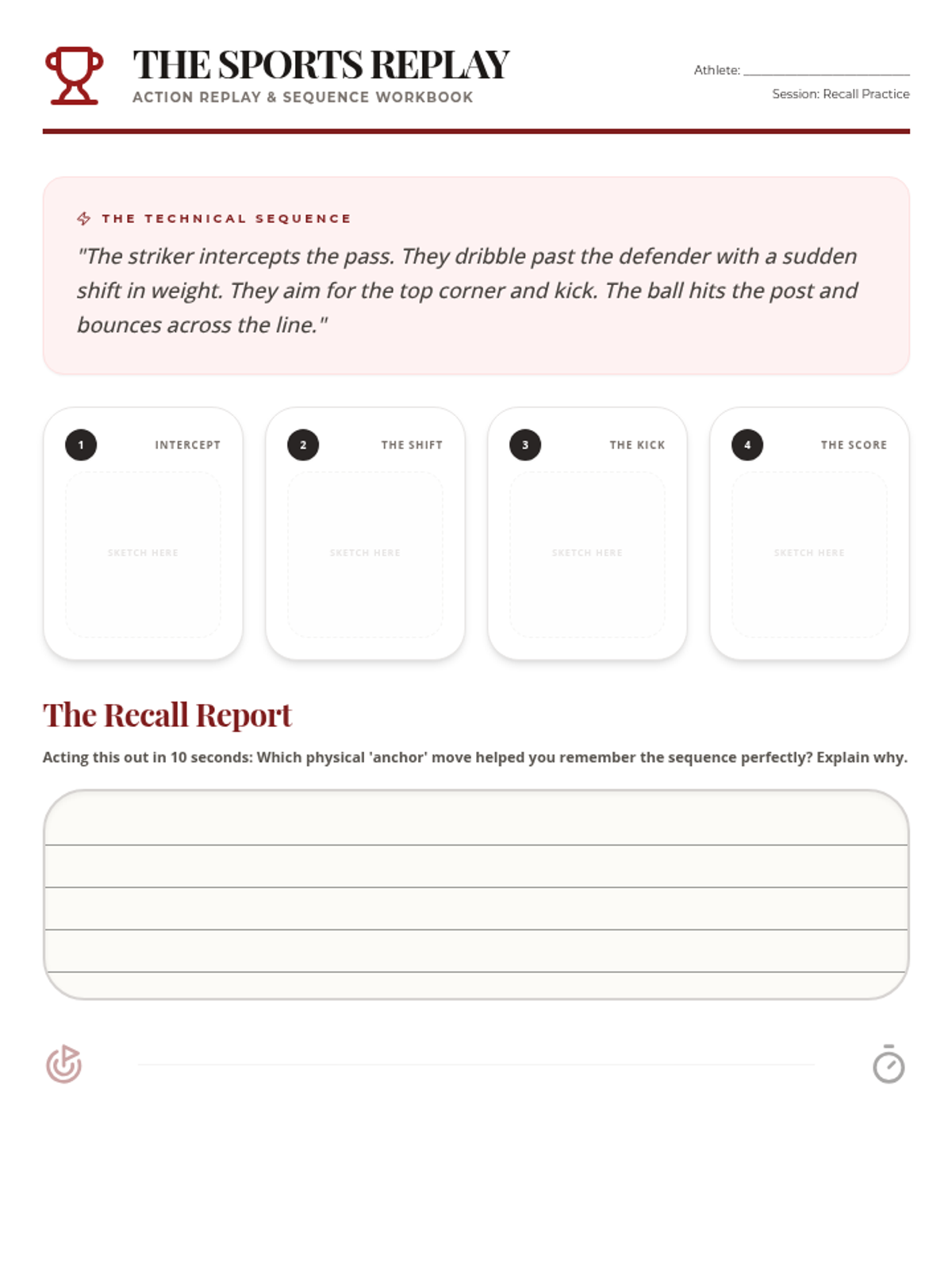
During Reading Strategy: Using reenactment to boost recall of the history of technology and modern hobbies.
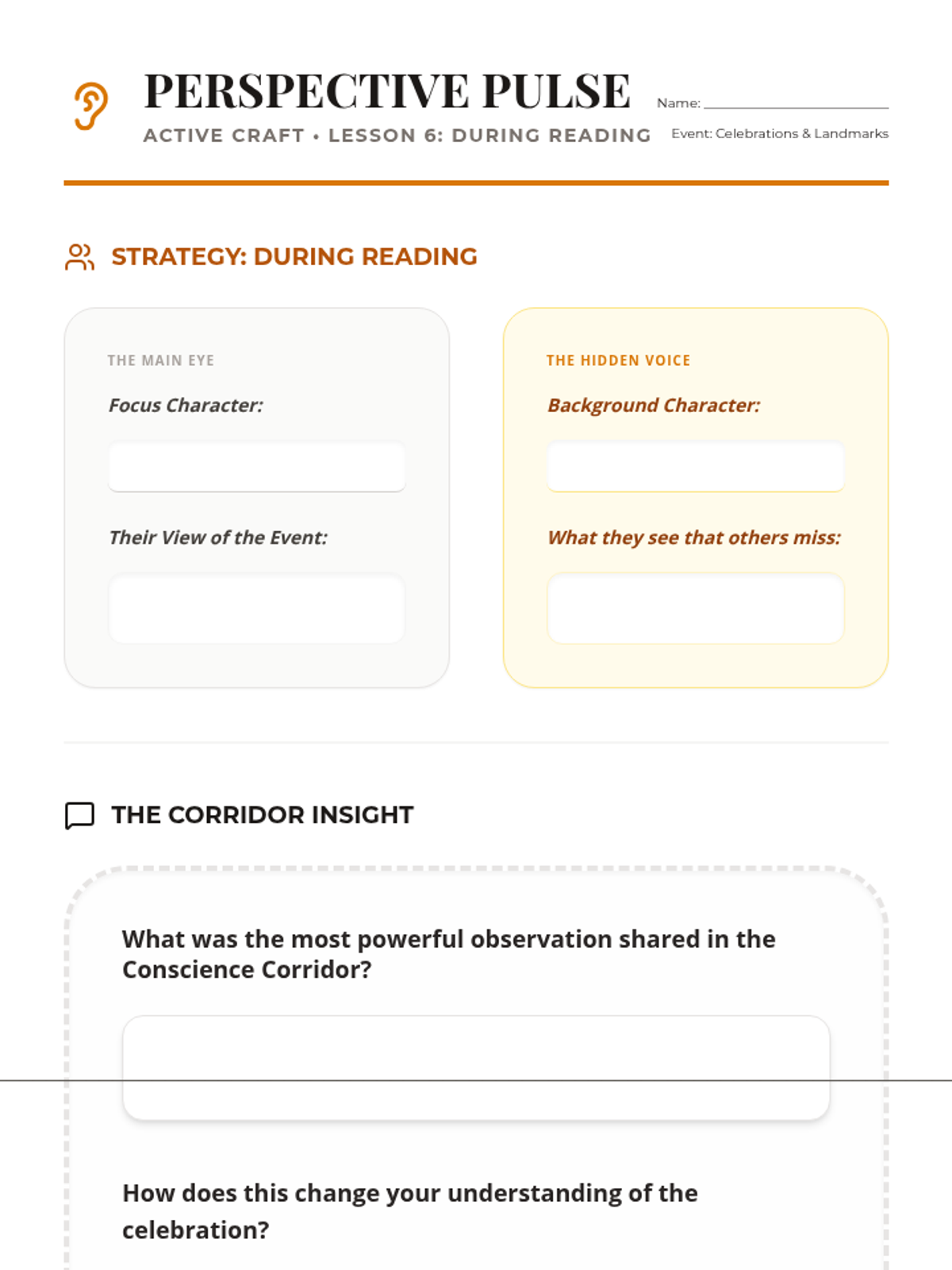
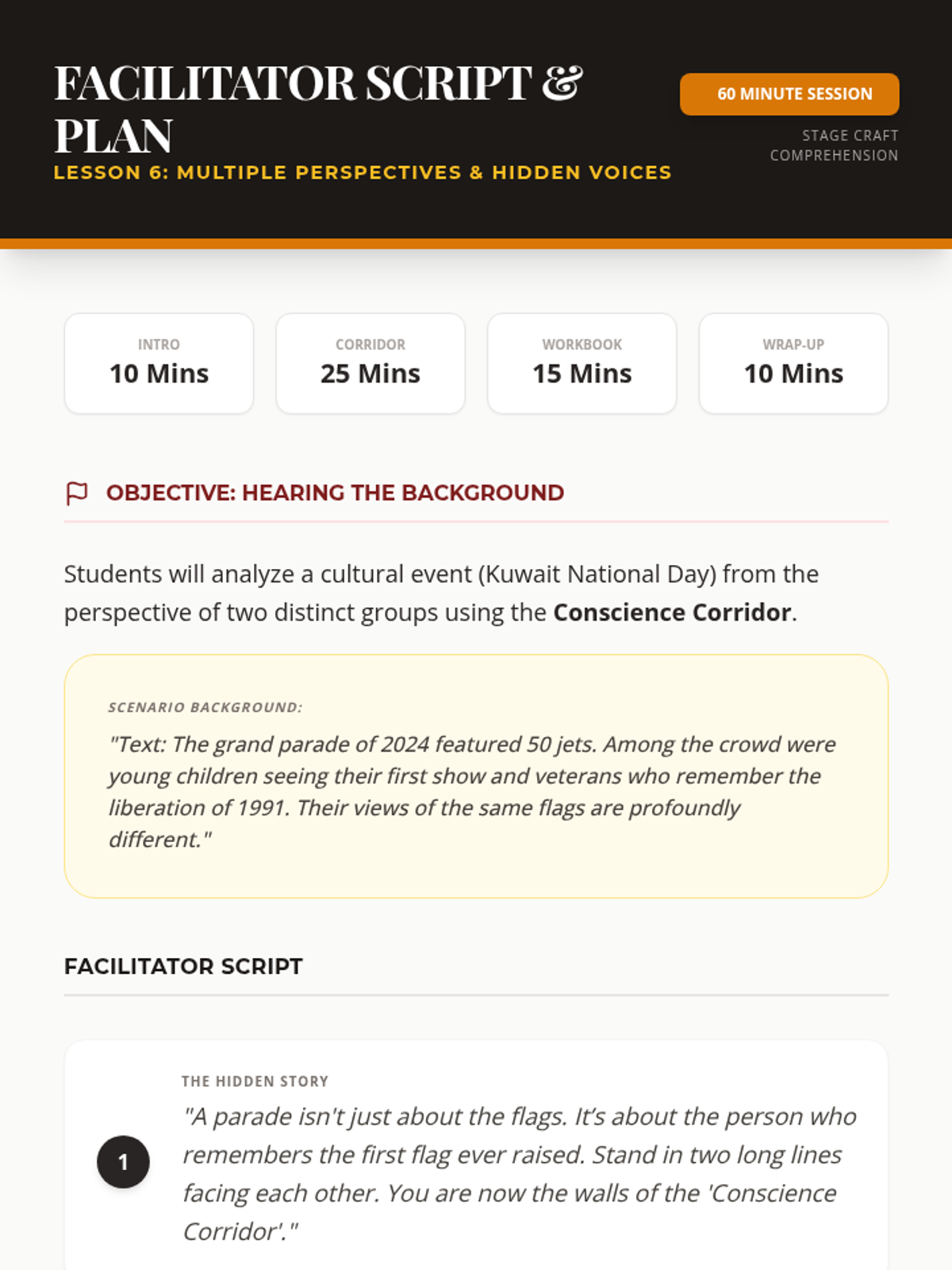
During Reading Strategy: Exploring multiple viewpoints within global celebrations and cultural events.
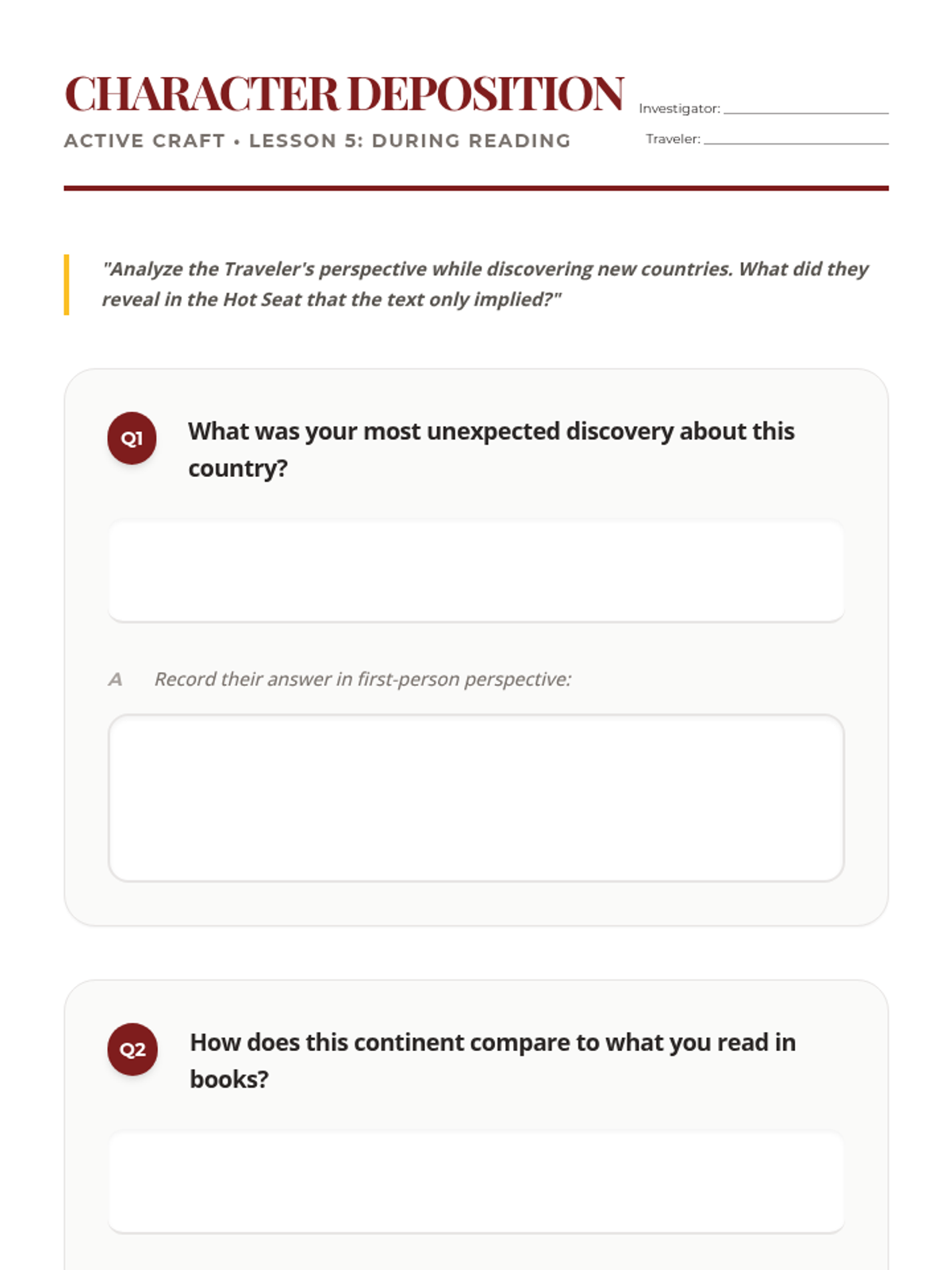
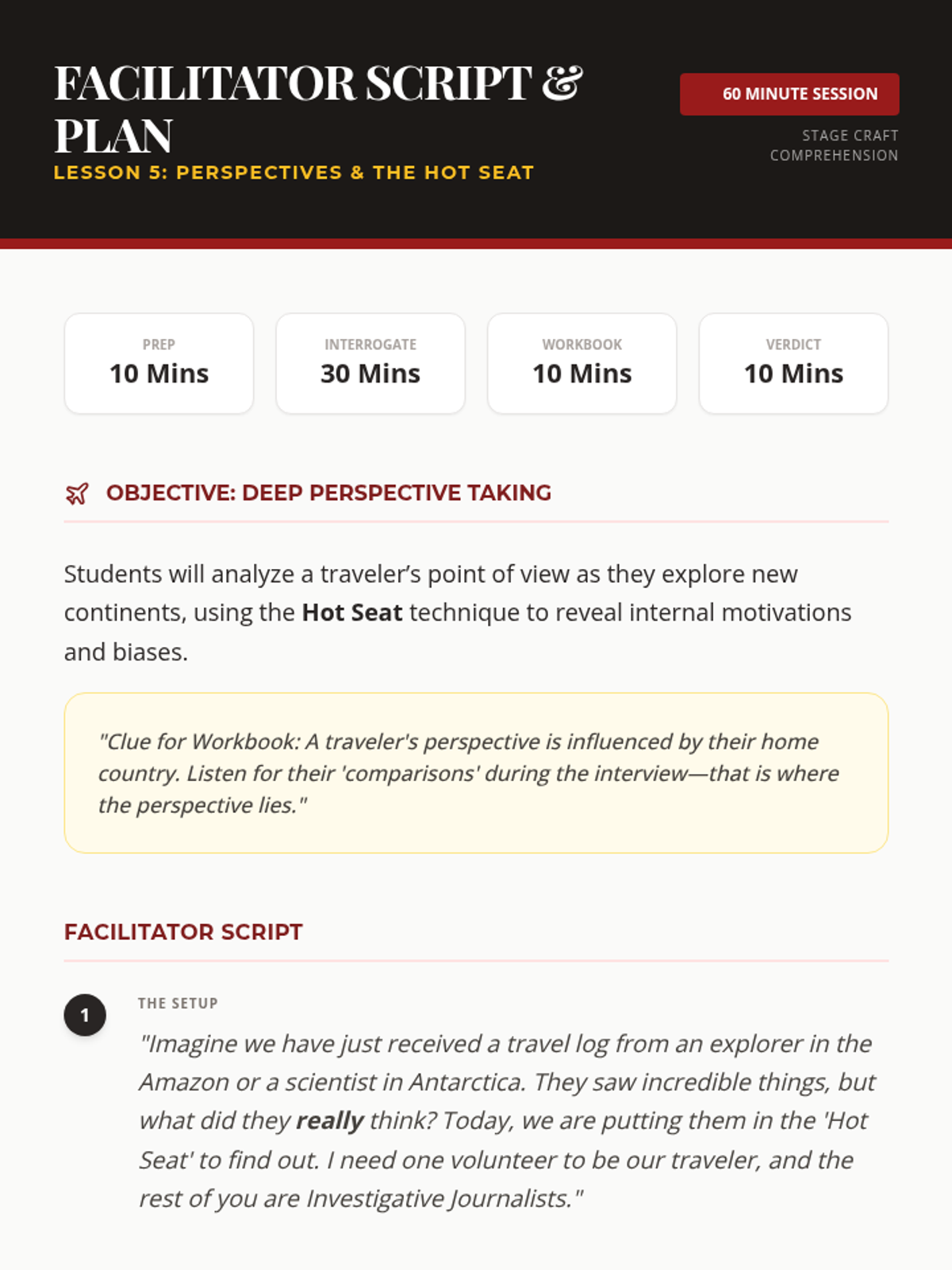
During Reading Strategy: Diving deep into traveler perspectives through the 'Hot Seat' technique while discovering countries.
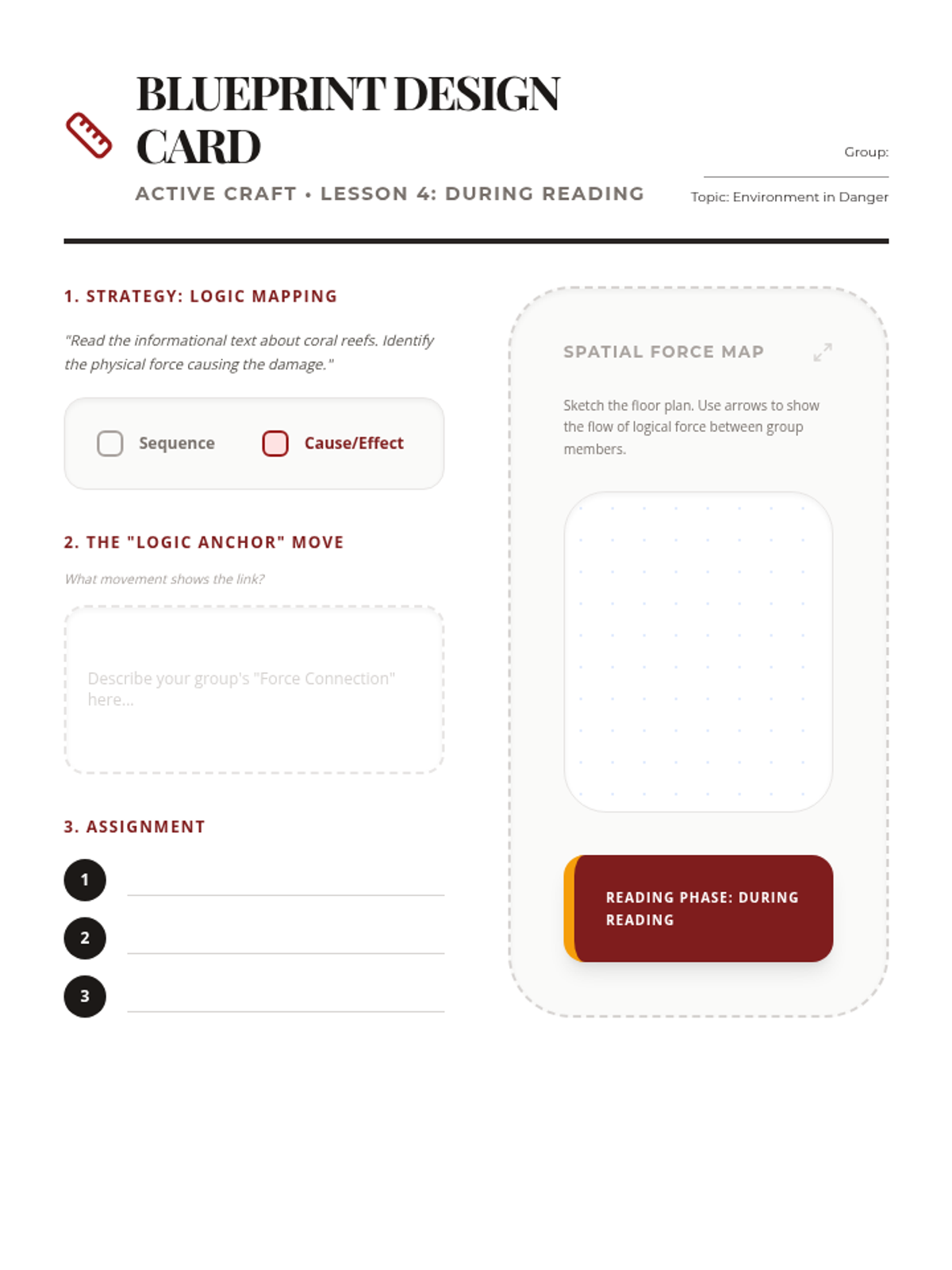
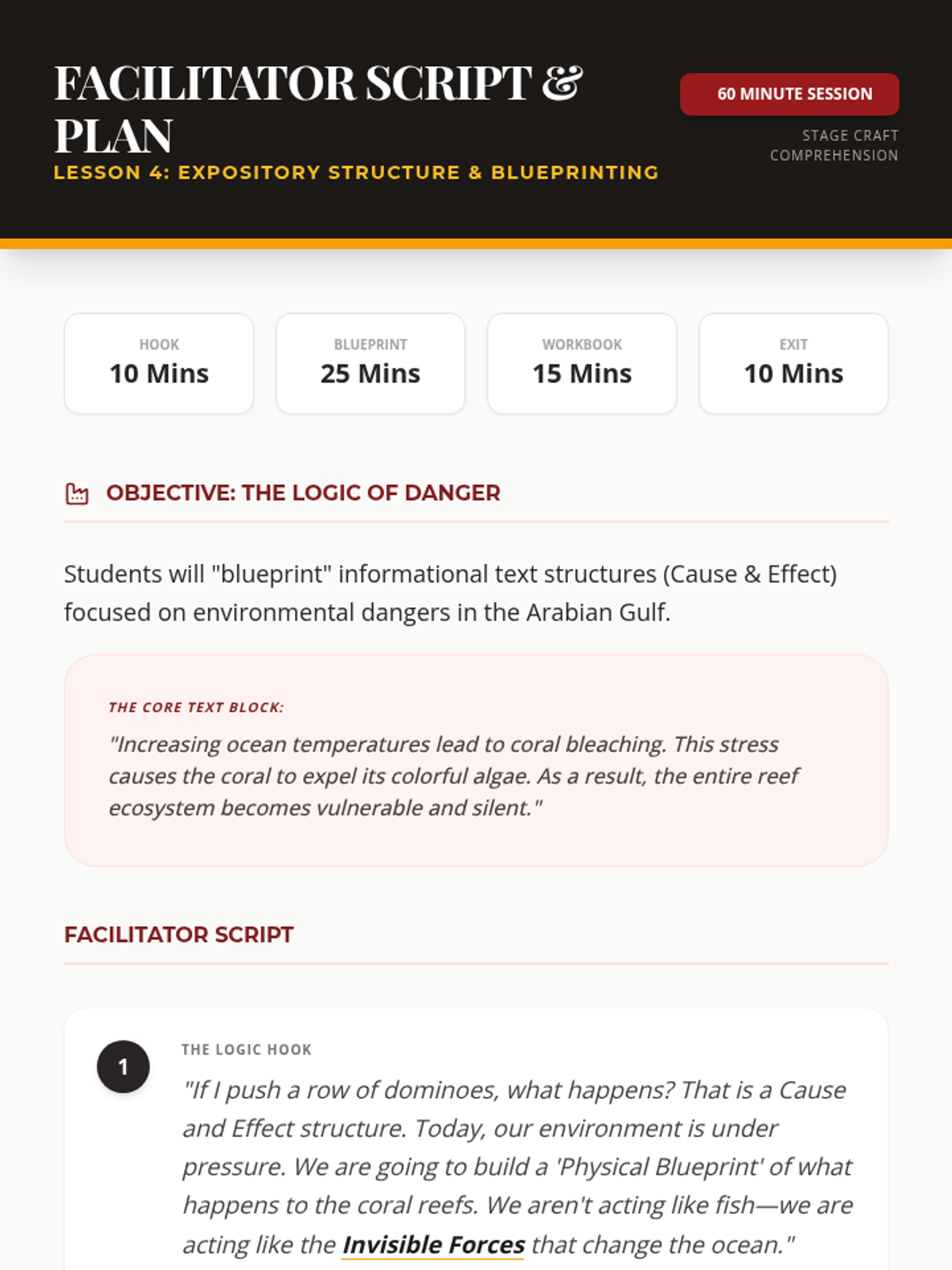
During Reading Strategy: Using physical poses to represent informational text structures like cause/effect focused on environmental danger.
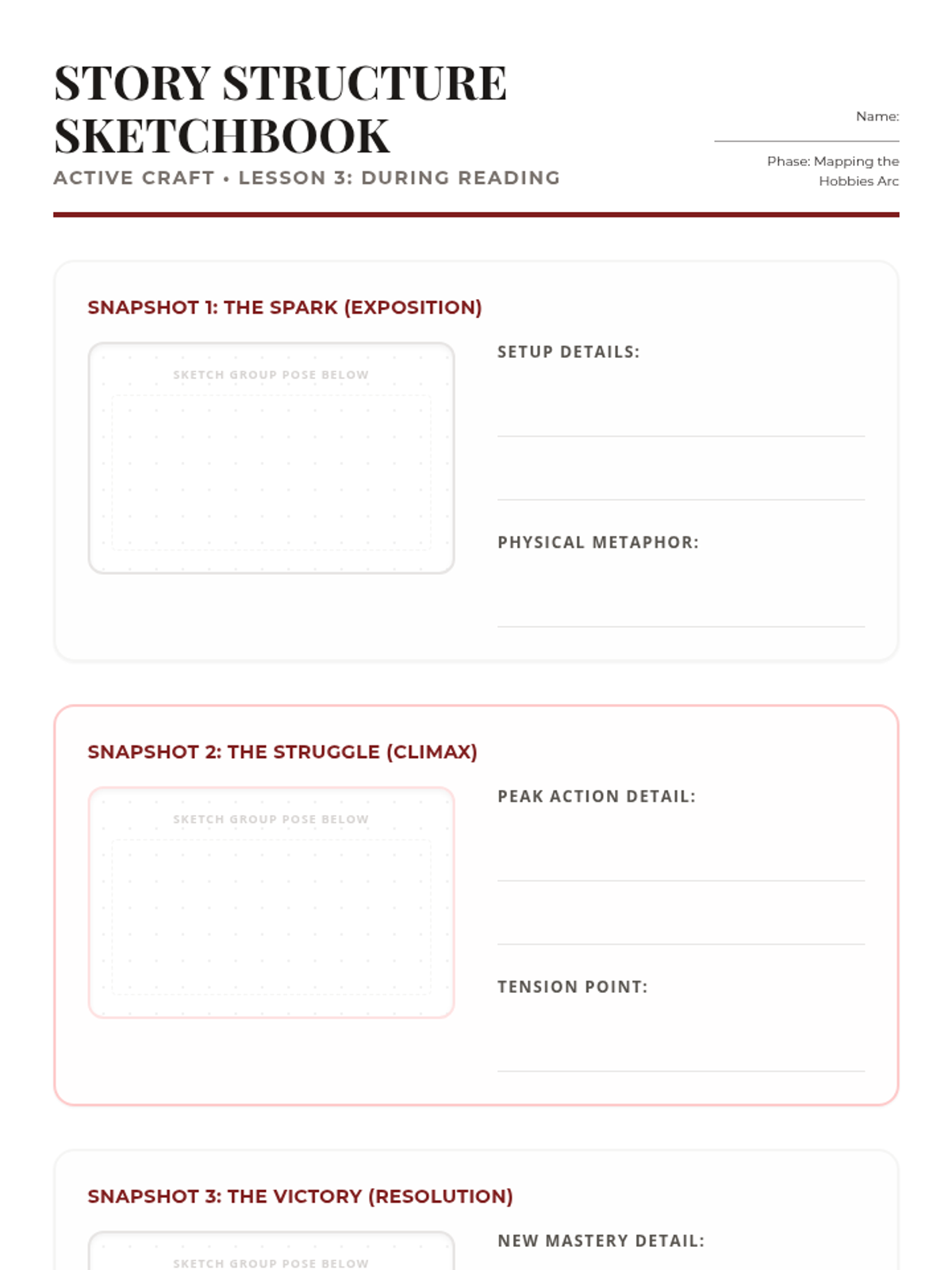
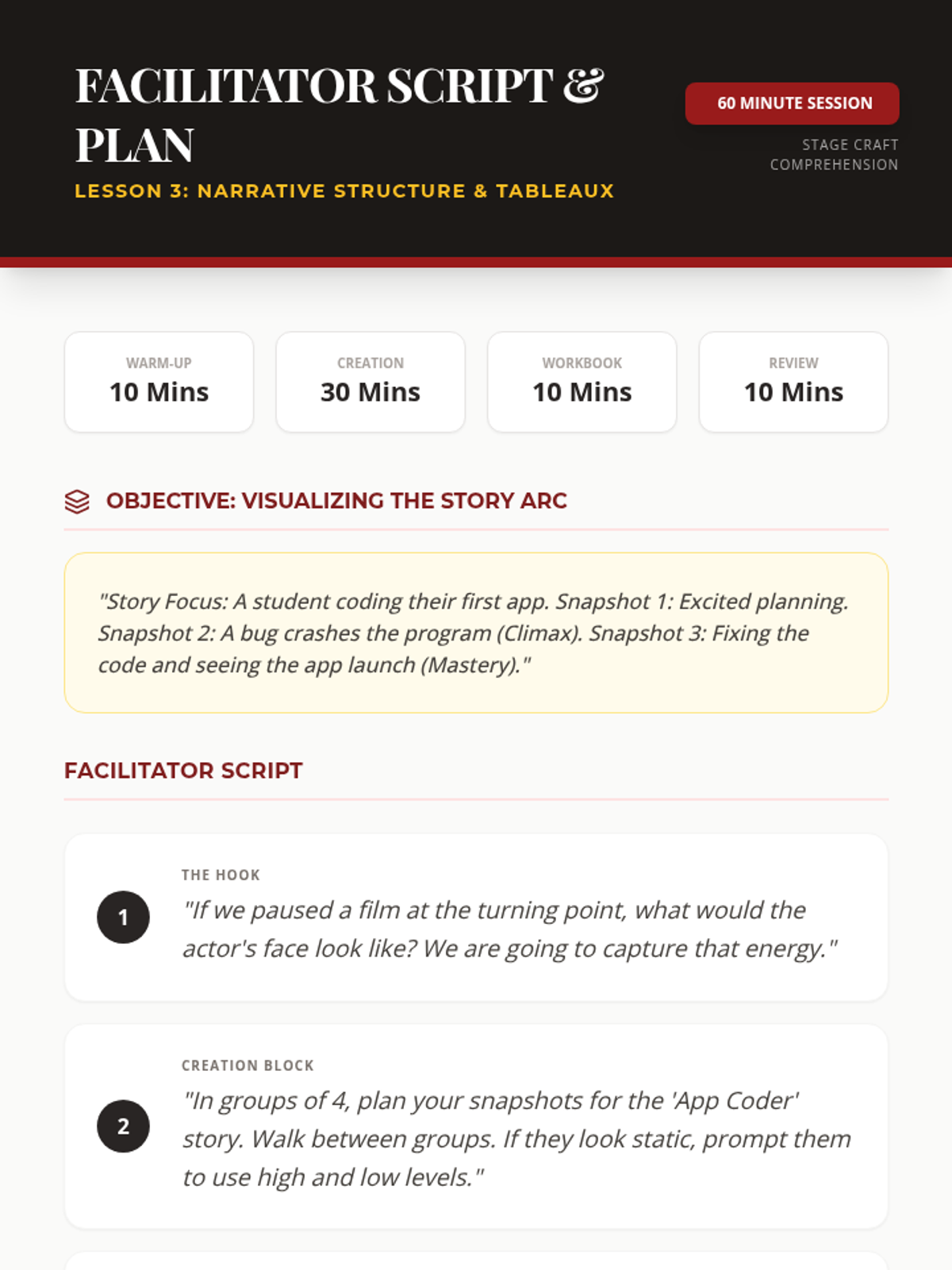
During Reading Strategy: Creating frozen tableaus to represent narrative story arcs centered on the joy of hobbies.
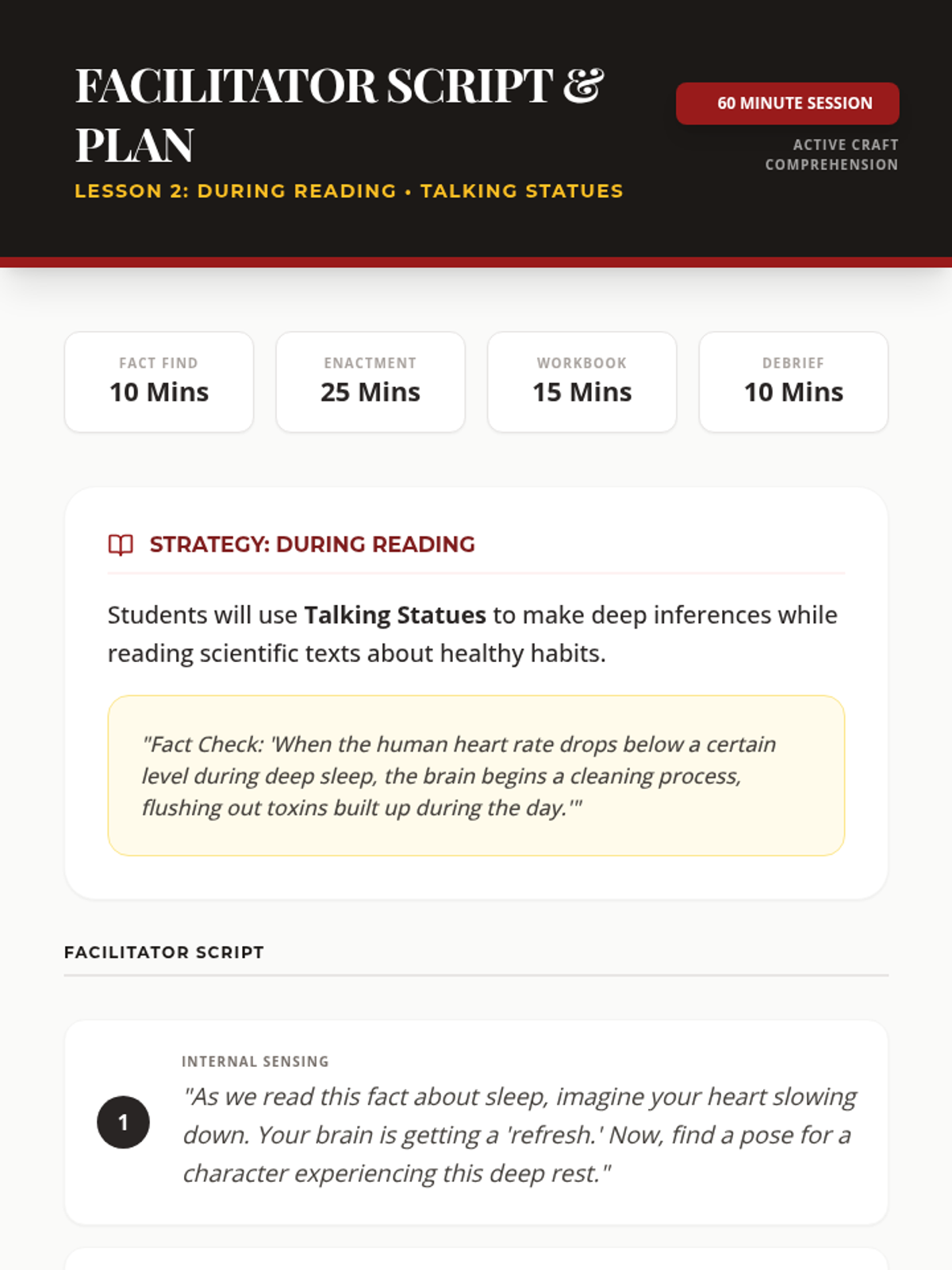
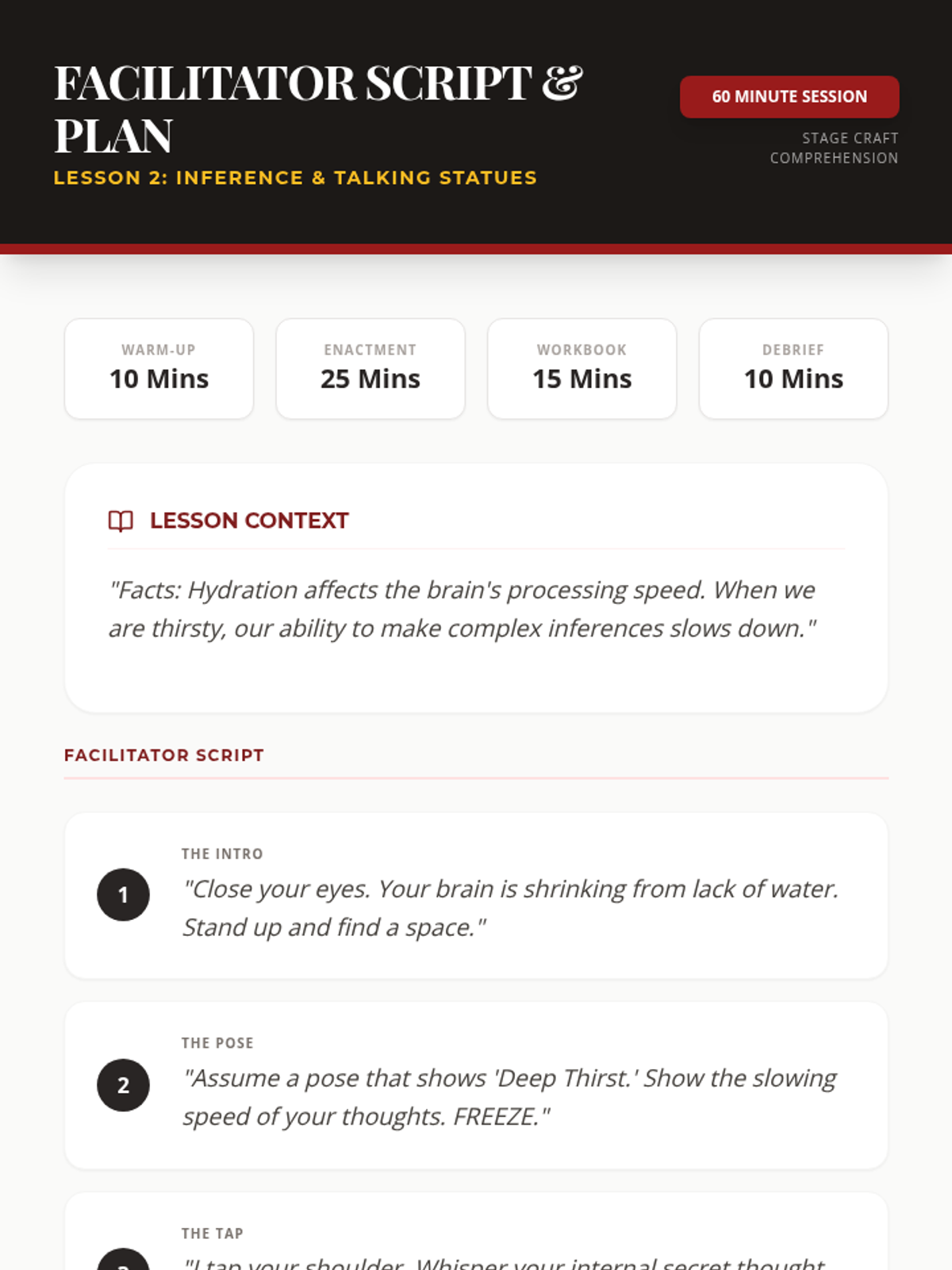
During Reading Strategy: Using 'Talking Statues' to make inferences about healthy habits and scientific facts about health.
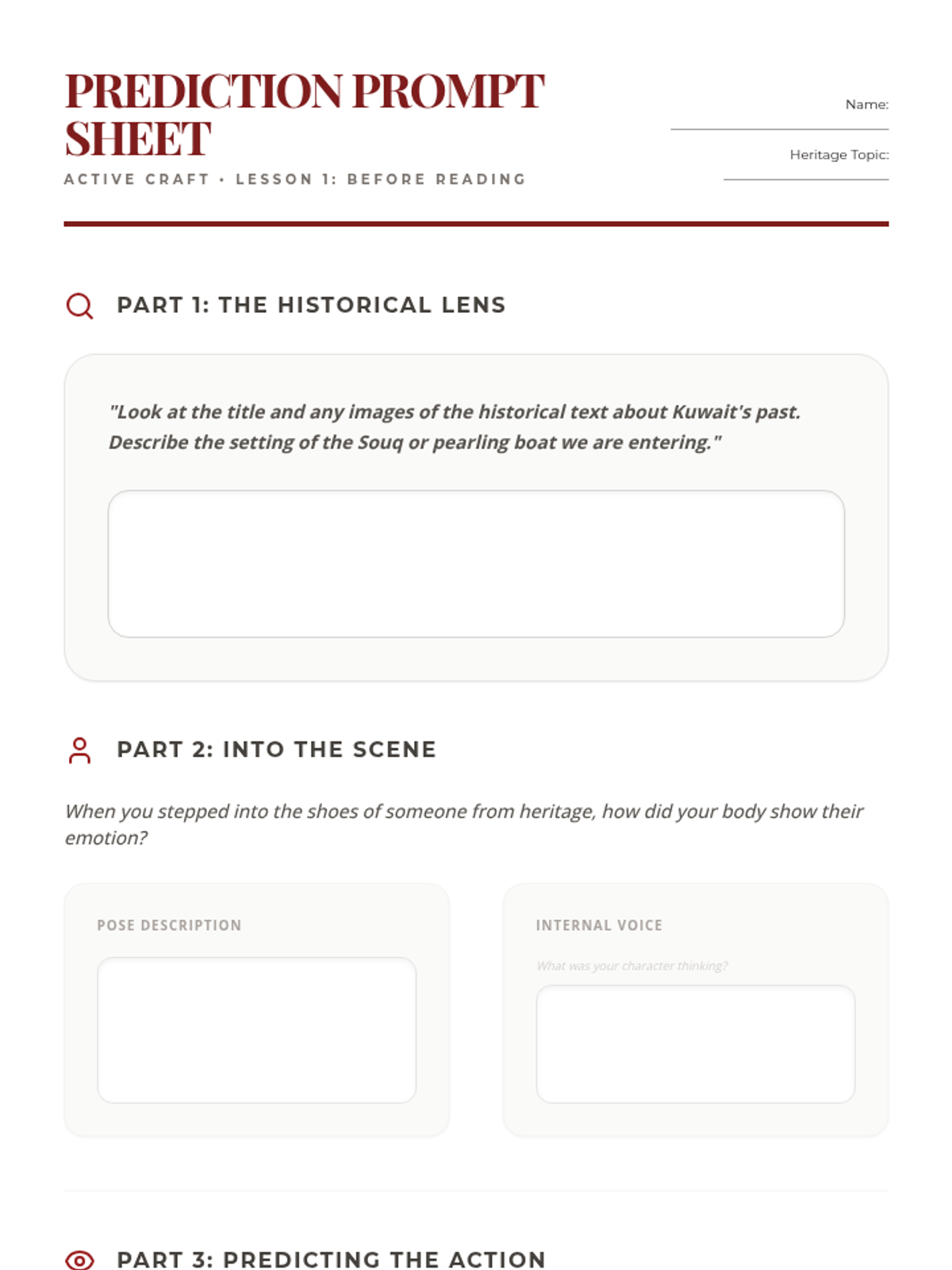
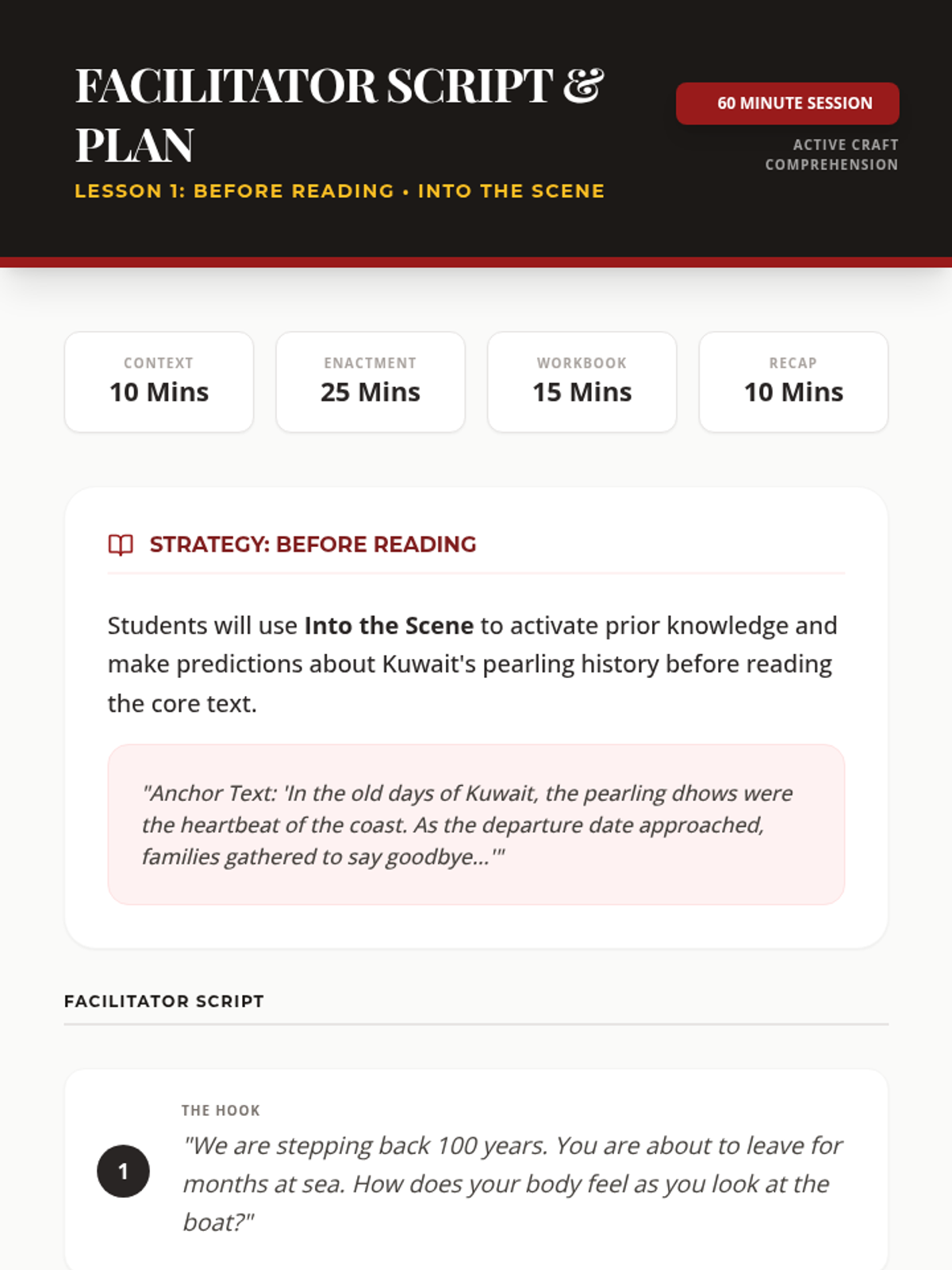
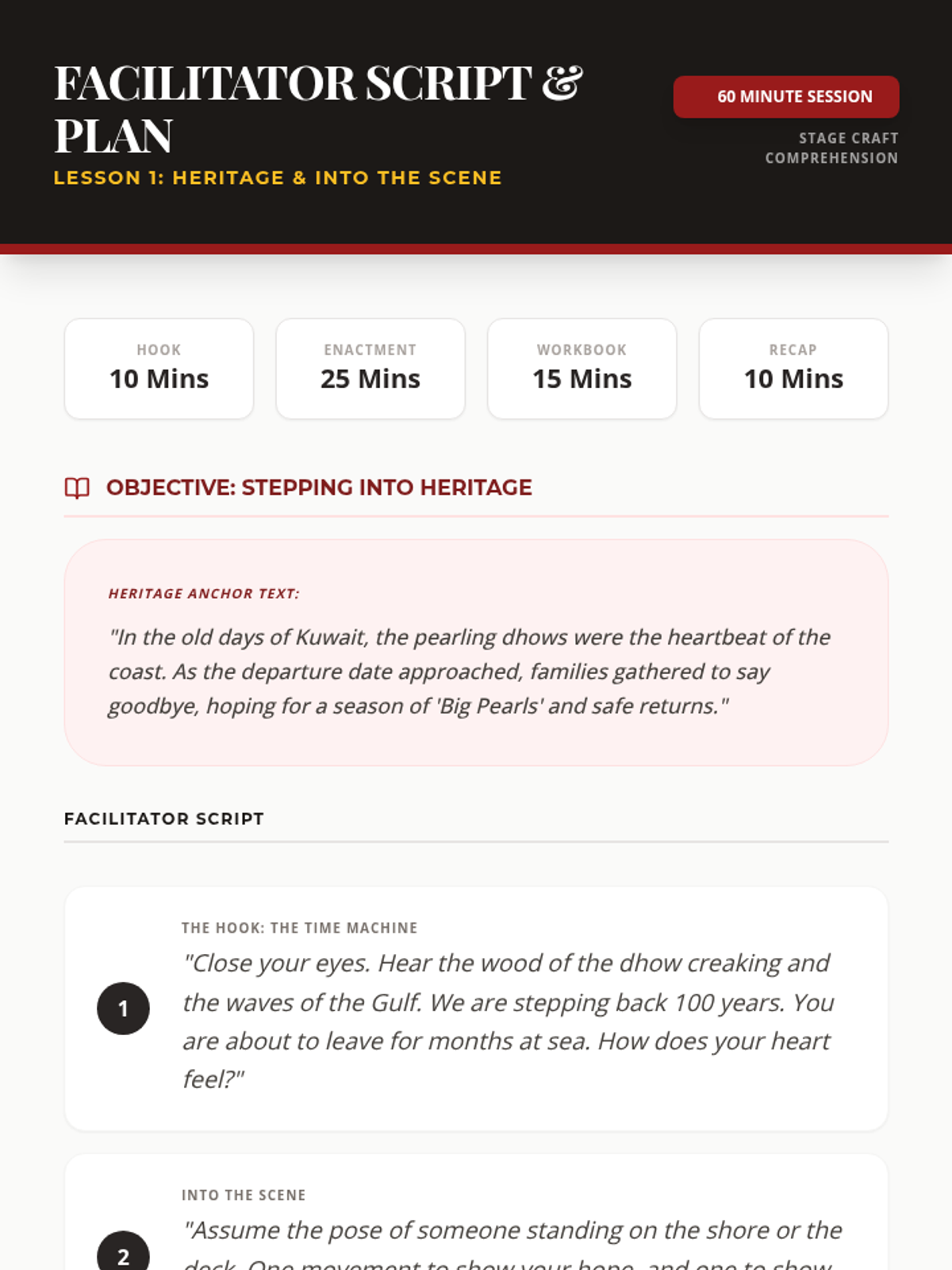
Before Reading Strategy: Introduction to enactment as a tool for prediction and frontloading, focused on Kuwaiti heritage and life in the past.
Consolidating skills into a final performance about students’ actions around the world.
Comparing cultures, traditions, and navigation (directions) using role-play.
Synthesizing information into 'Summary Sculptures' focused on food items and healthy lifestyles.
Writing from the perspective of characters visiting cultural and educational places in Kuwait.
Practicing fluency through weather forecast 'Radio Dramas' and climate reports.
Using reenactment to boost recall of the history of technology and modern hobbies.
Exploring multiple viewpoints within global celebrations and cultural events.
Diving deep into traveler perspectives through the 'Hot Seat' technique while discovering countries.
Using physical poses to represent informational text structures like cause/effect focused on environmental danger.
Creating frozen tableaus to represent narrative story arcs centered on the joy of hobbies.
Using 'Talking Statues' to make inferences about healthy habits and scientific facts about health.
Introduction to enactment as a tool for prediction, focused on Kuwaiti heritage and life in the past.
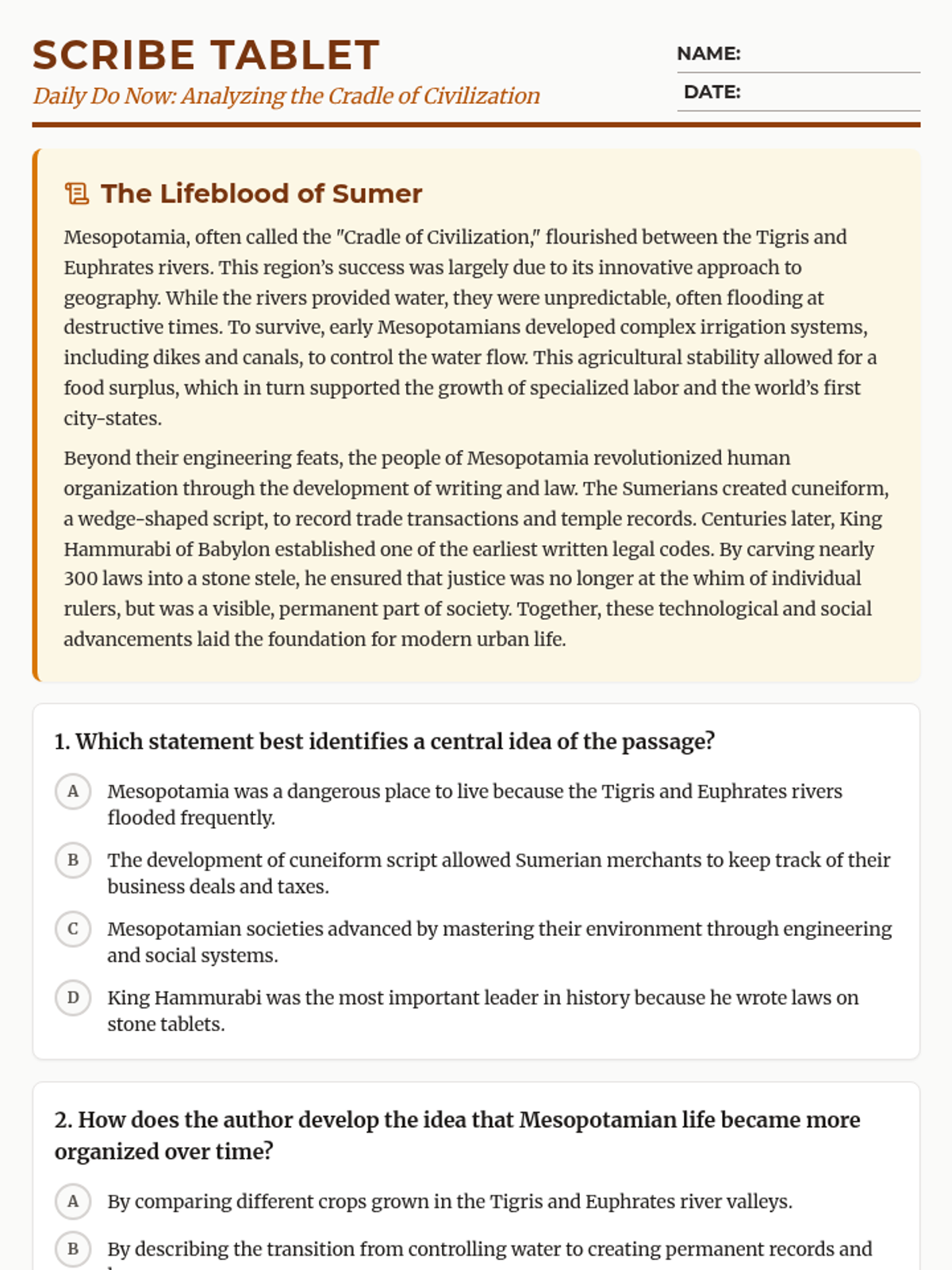
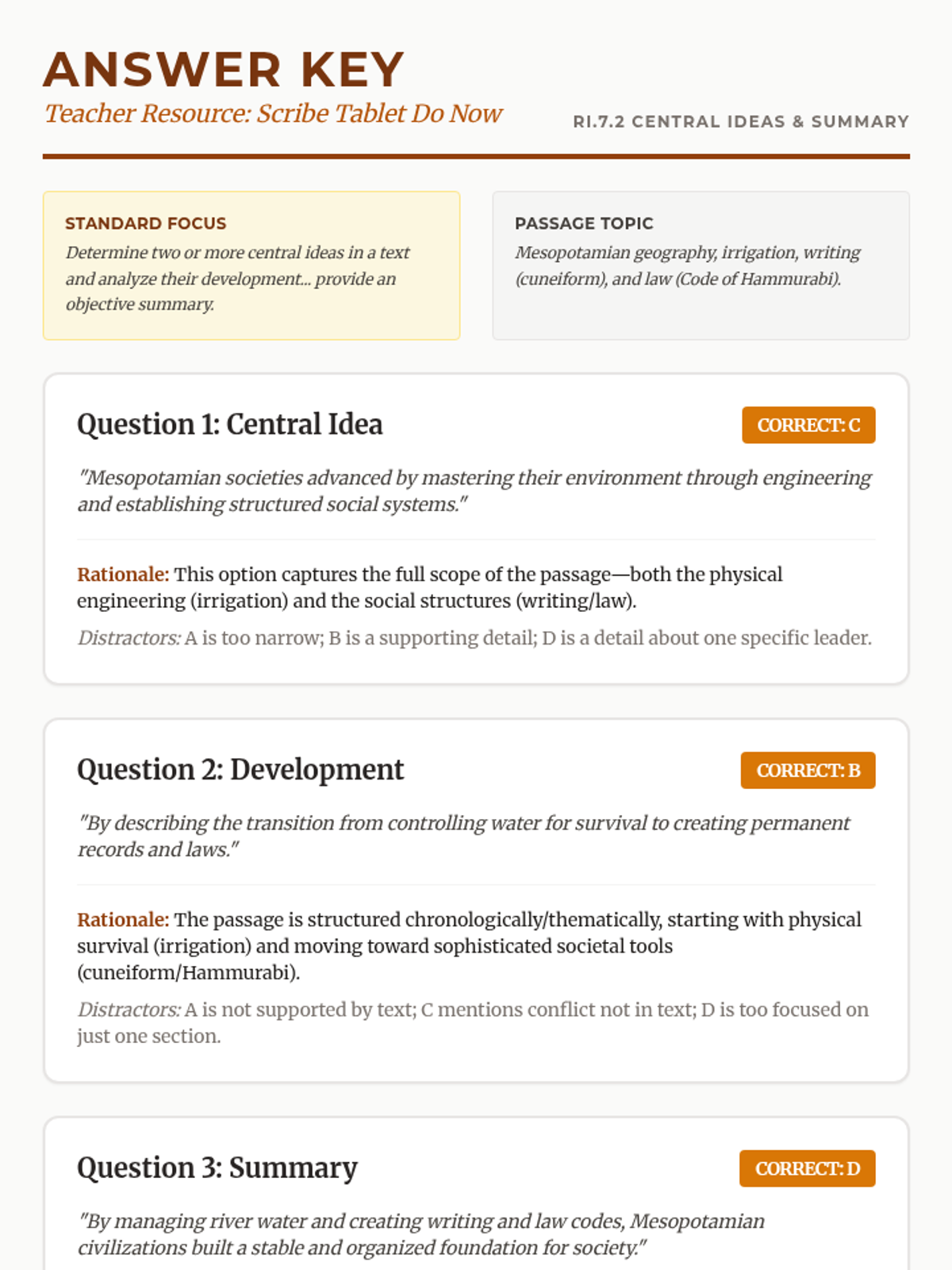
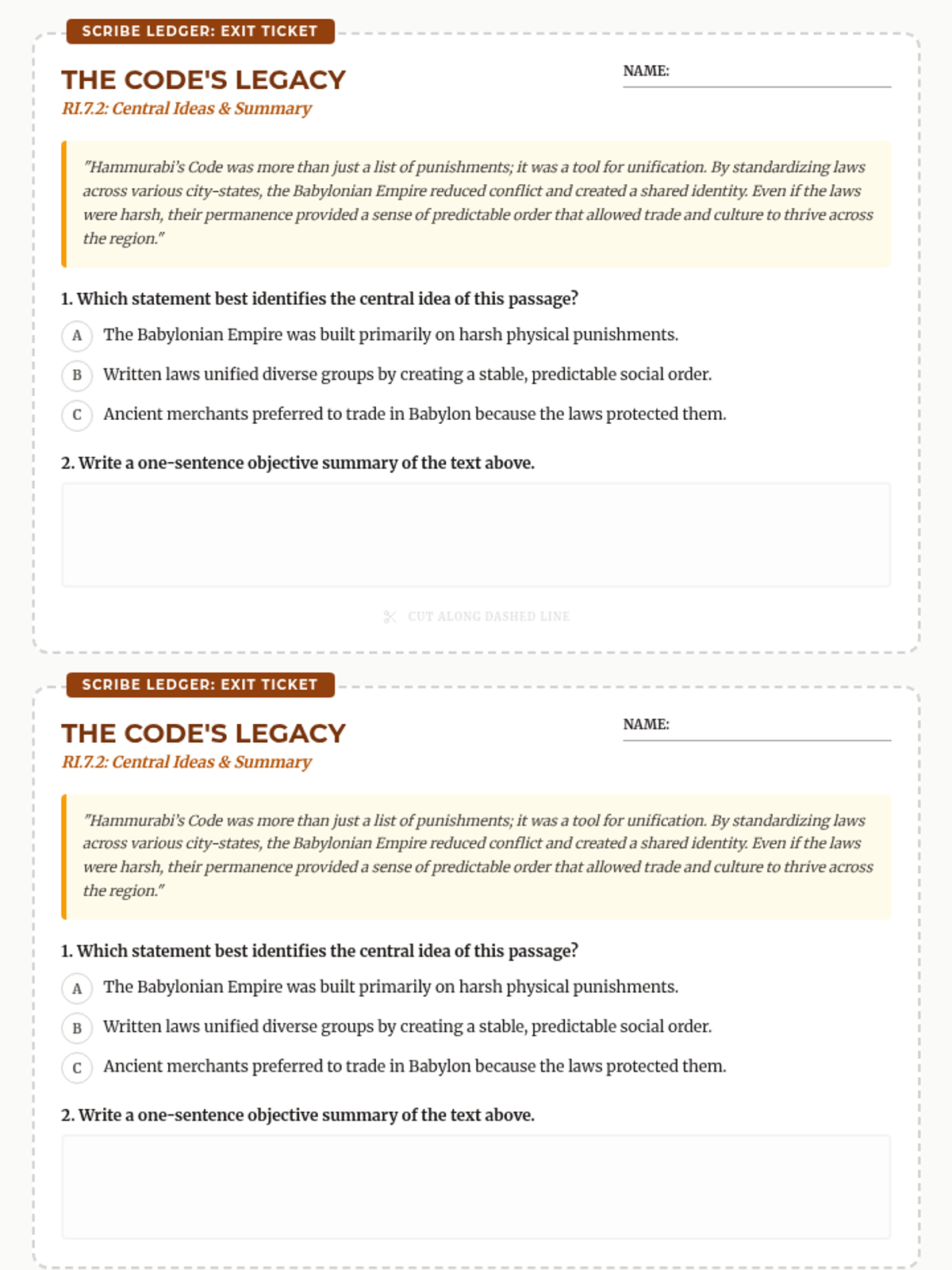
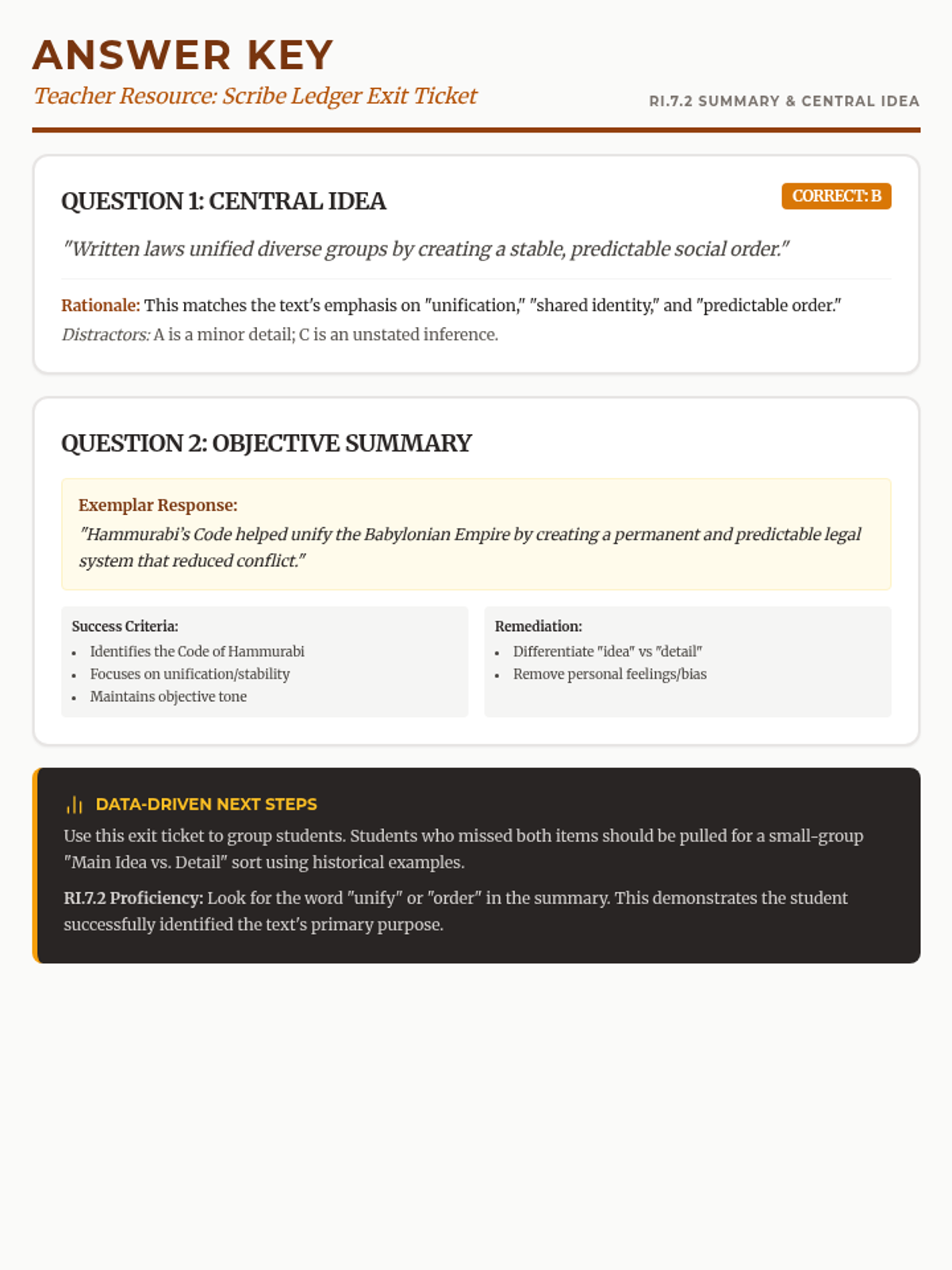
A quick bell-ringer activity focused on identifying central ideas and summarizing key concepts about Ancient Mesopotamia.
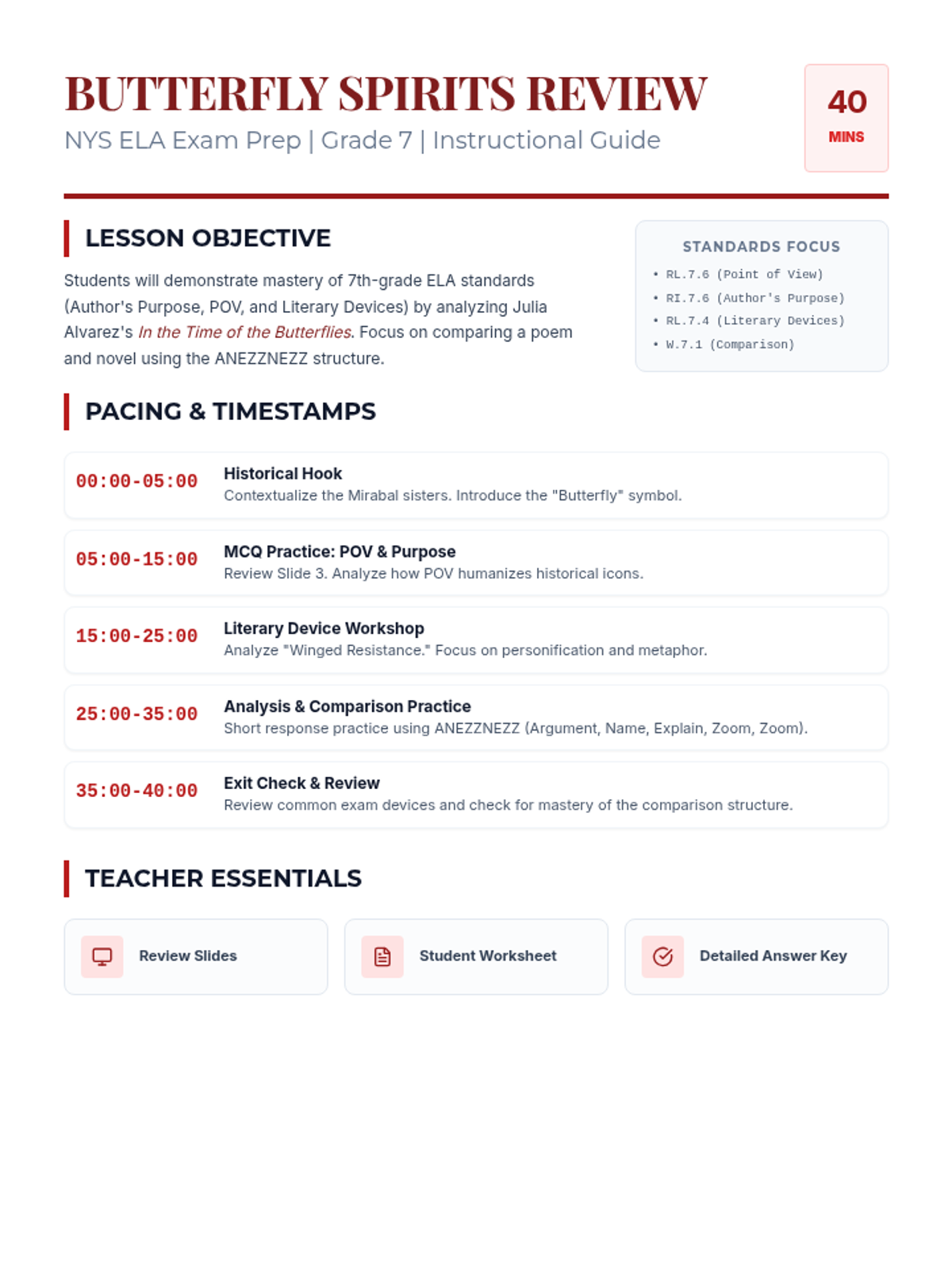
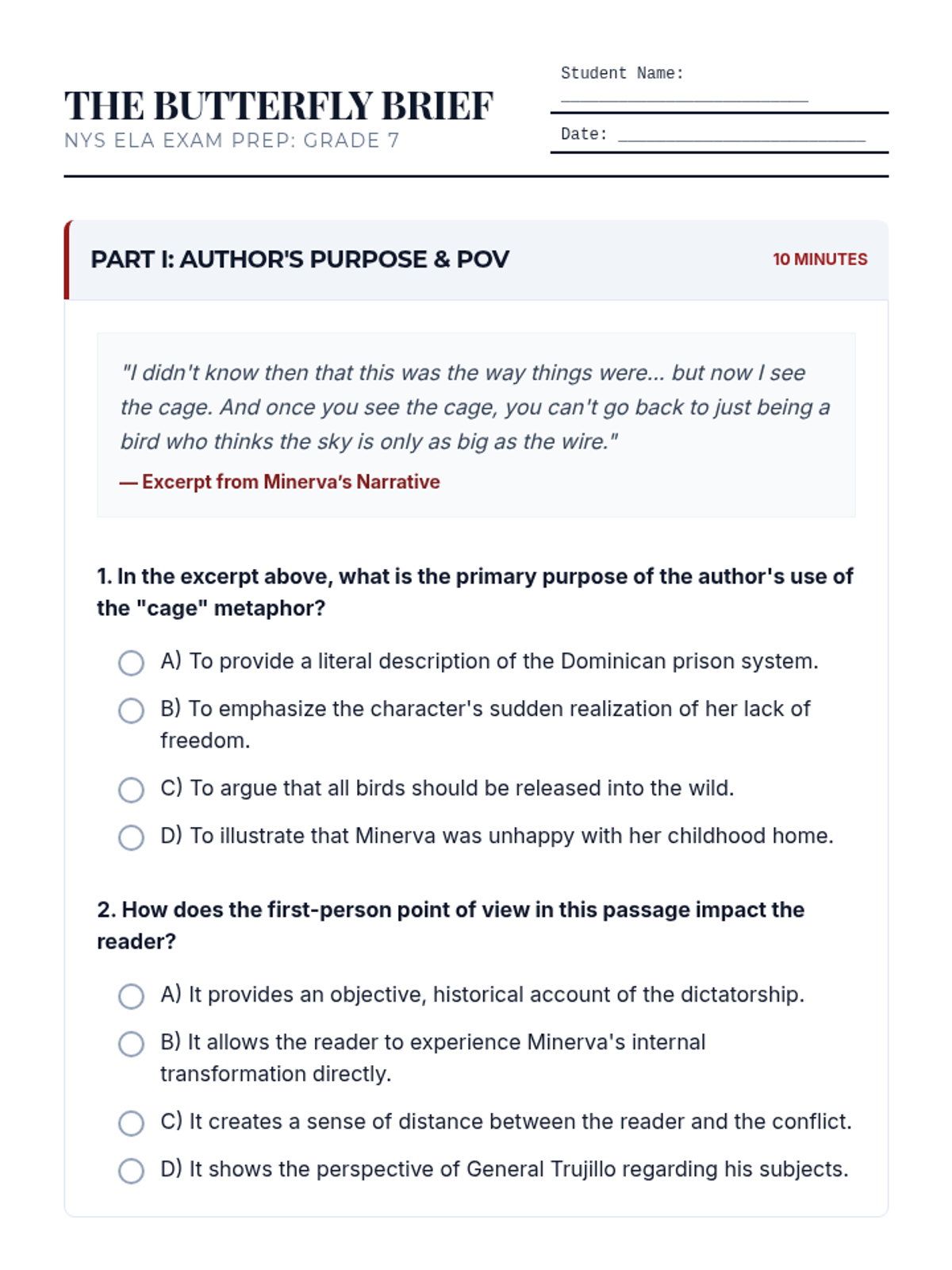
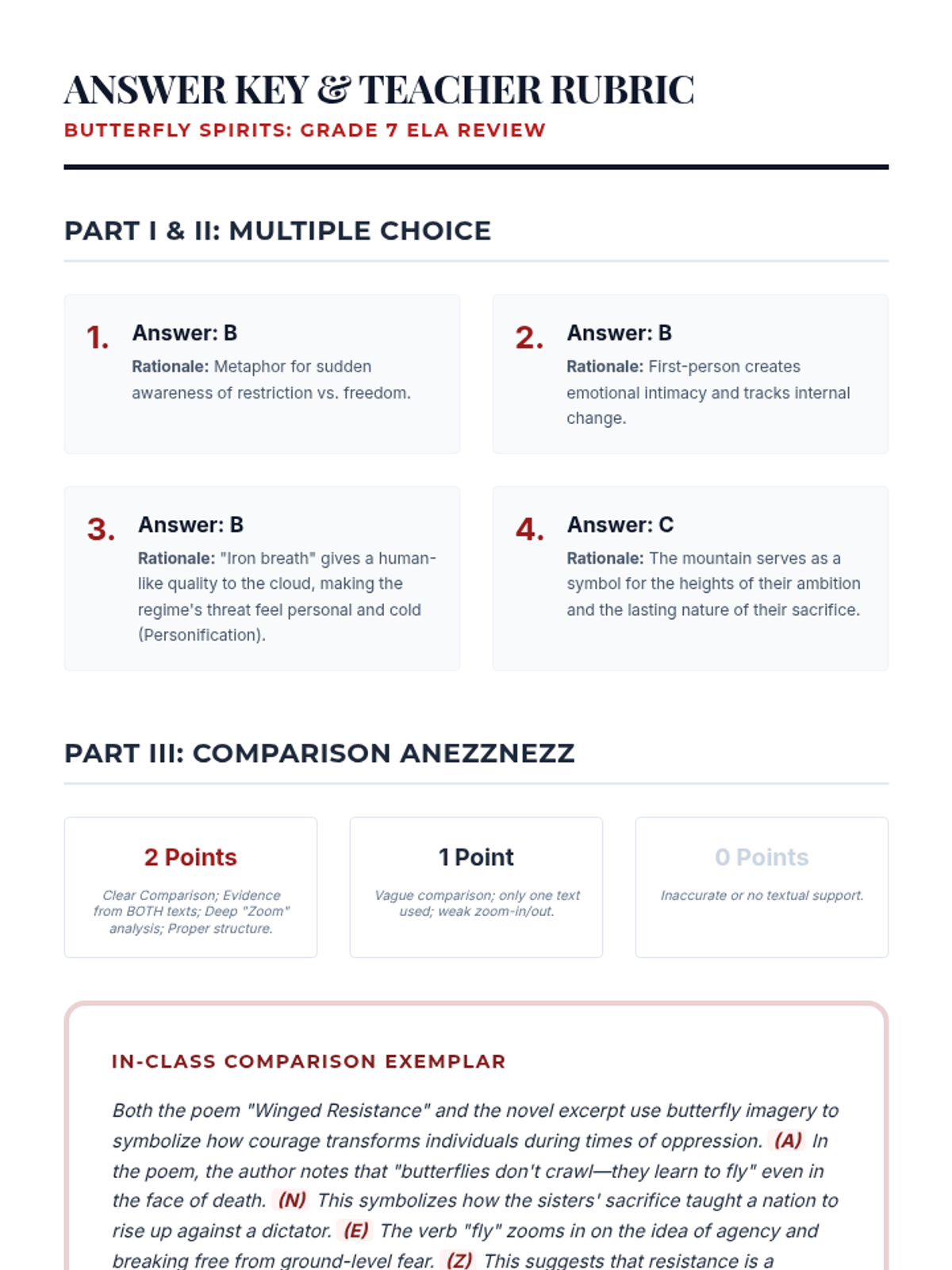
A 40-minute intensive review for the NYS ELA exam, focusing on point of view, author's purpose, and literary analysis through the lens of Julia Alvarez's 'In the Time of the Butterflies'.
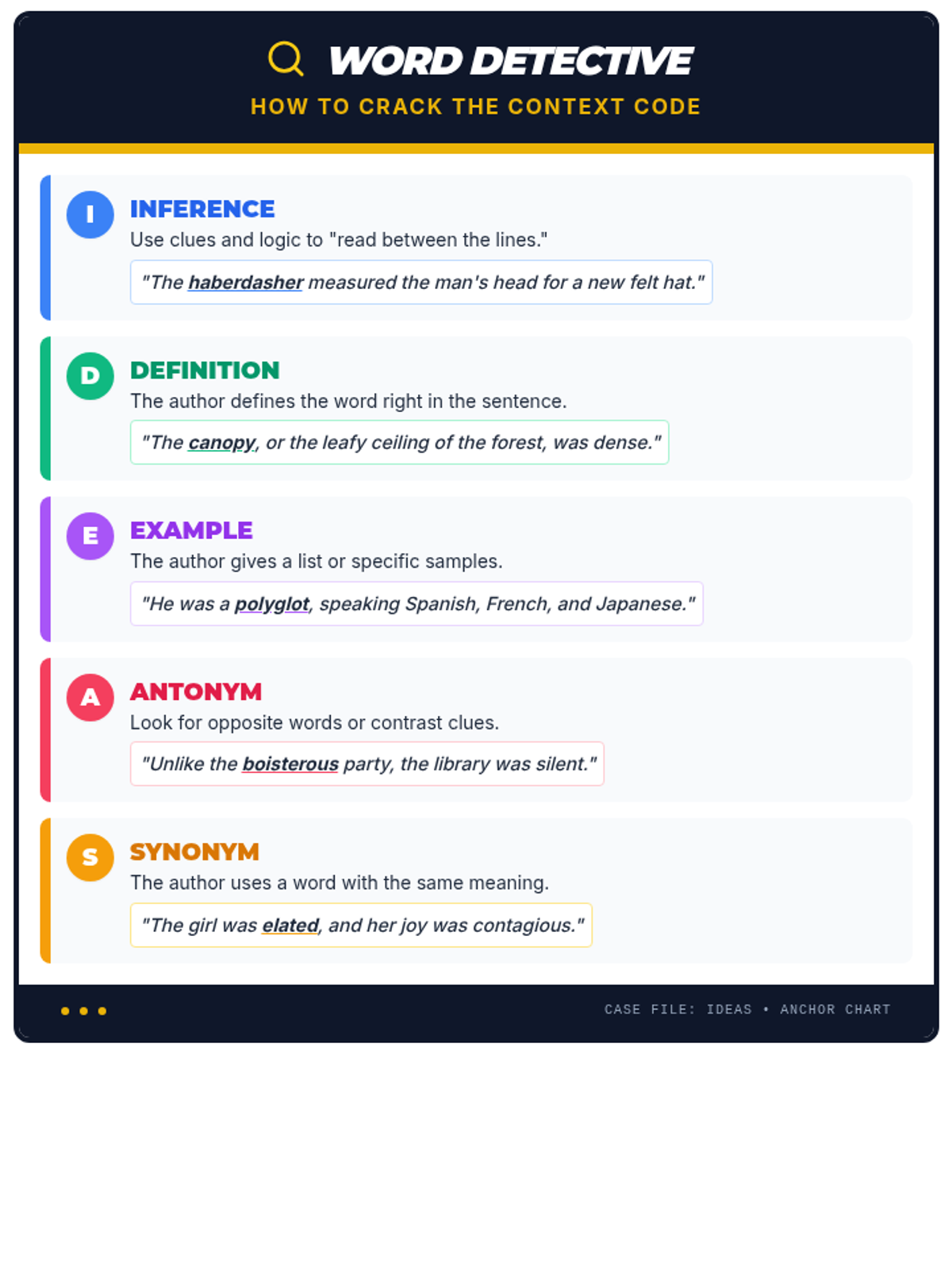
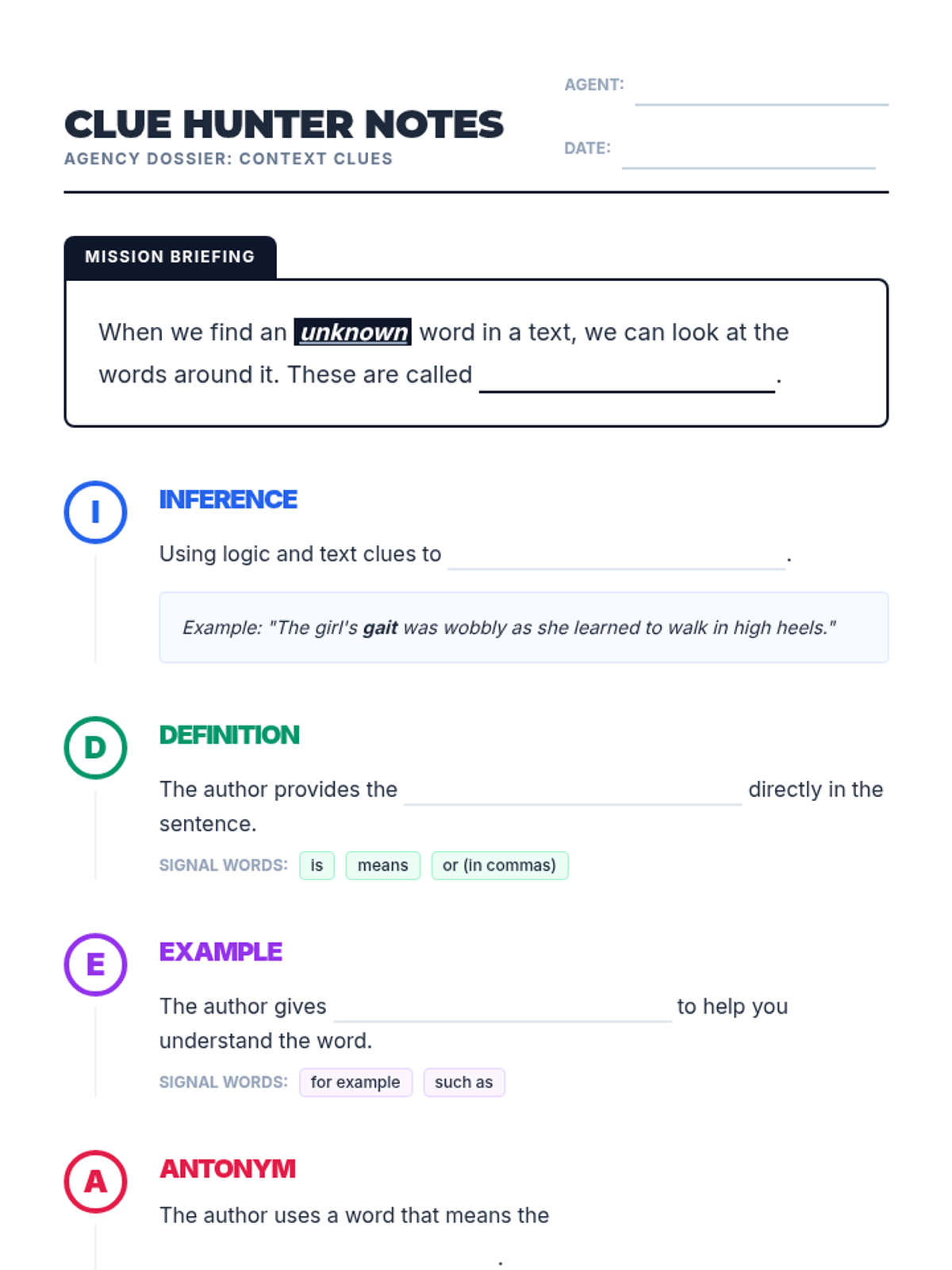
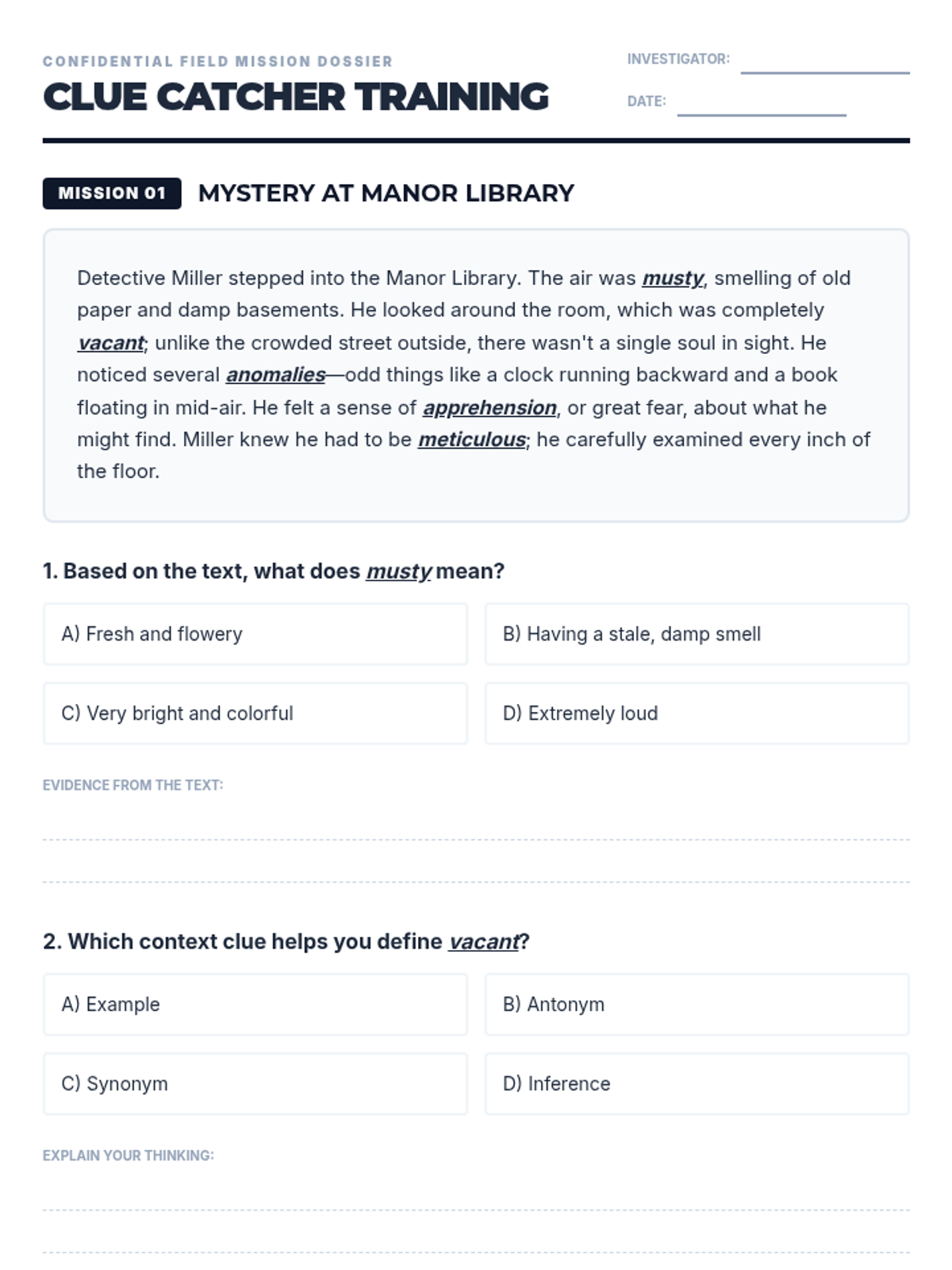
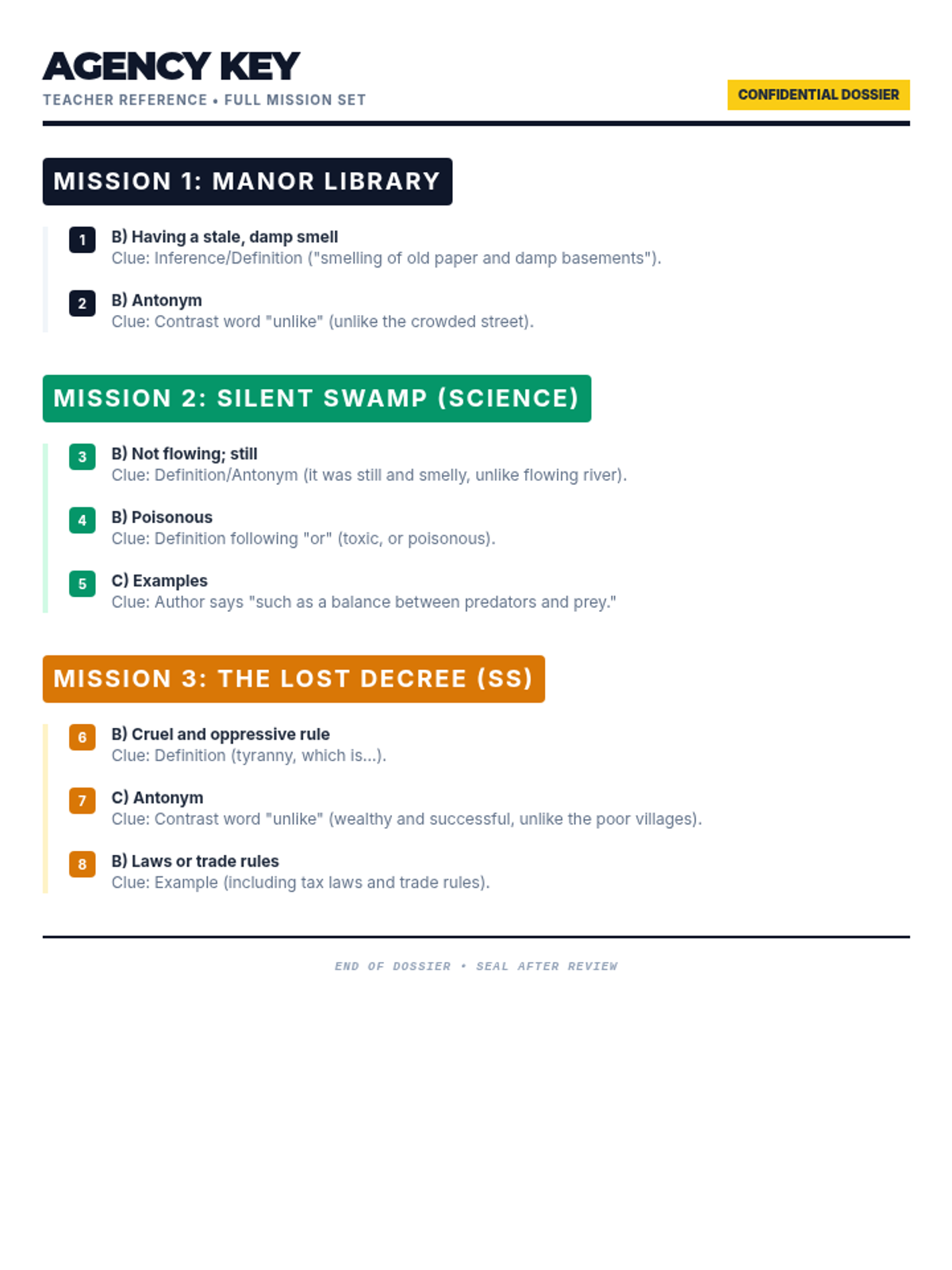
A comprehensive lesson on using context clues (Inference, Definition, Example, Antonym, Synonym) to decode unfamiliar vocabulary, featuring a detective-themed anchor chart, guided notes, and a story-based assessment.
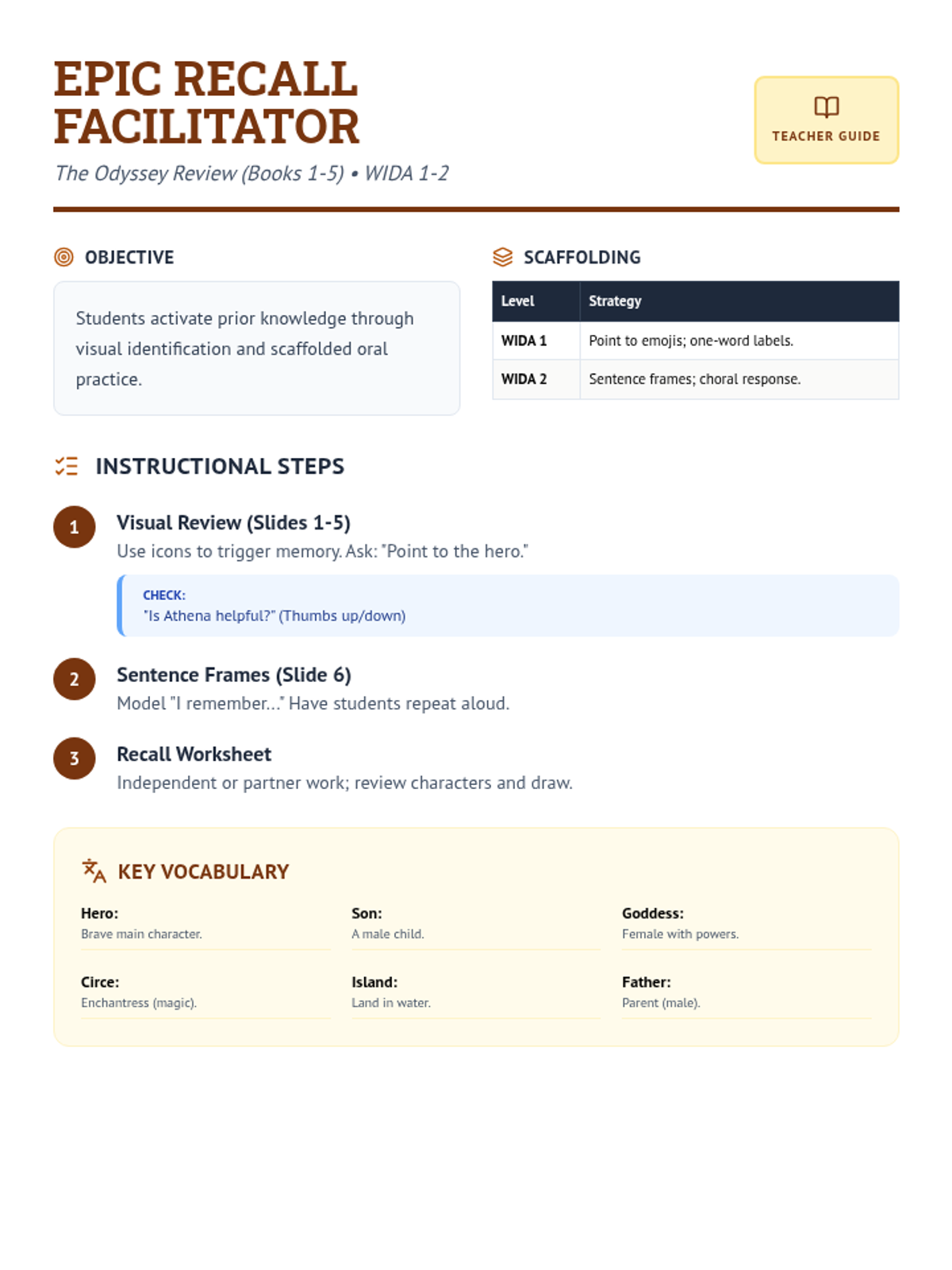
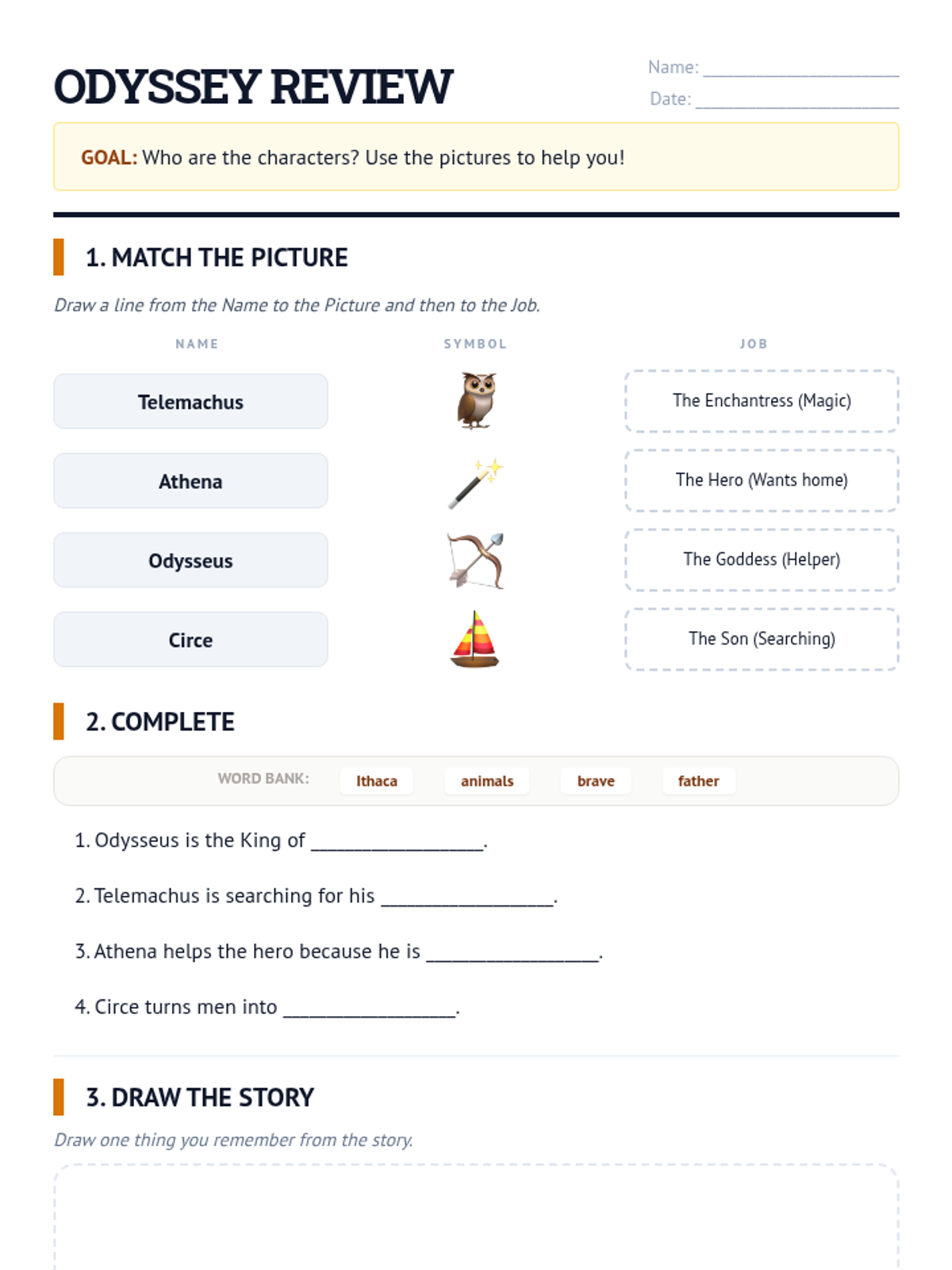
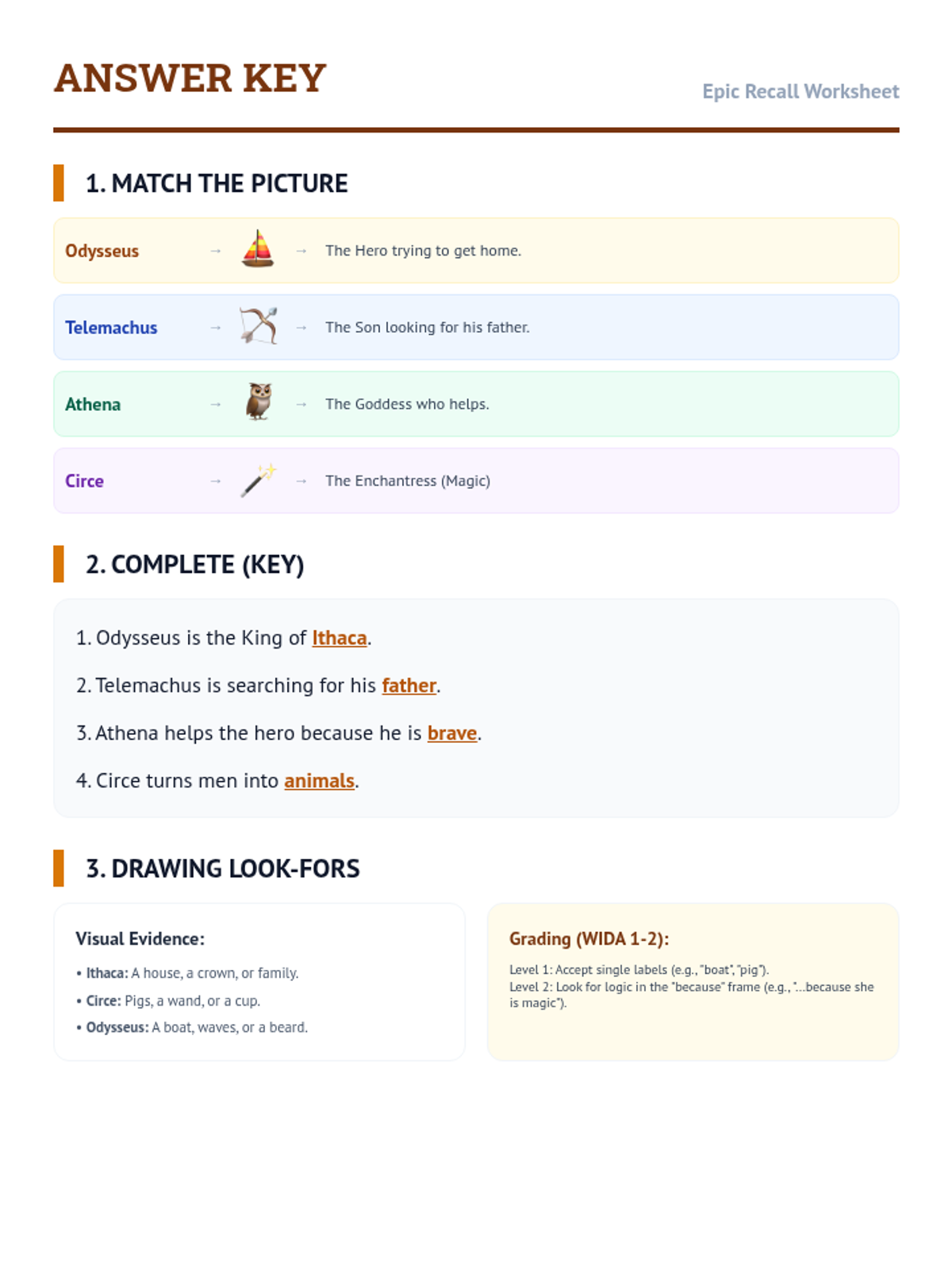
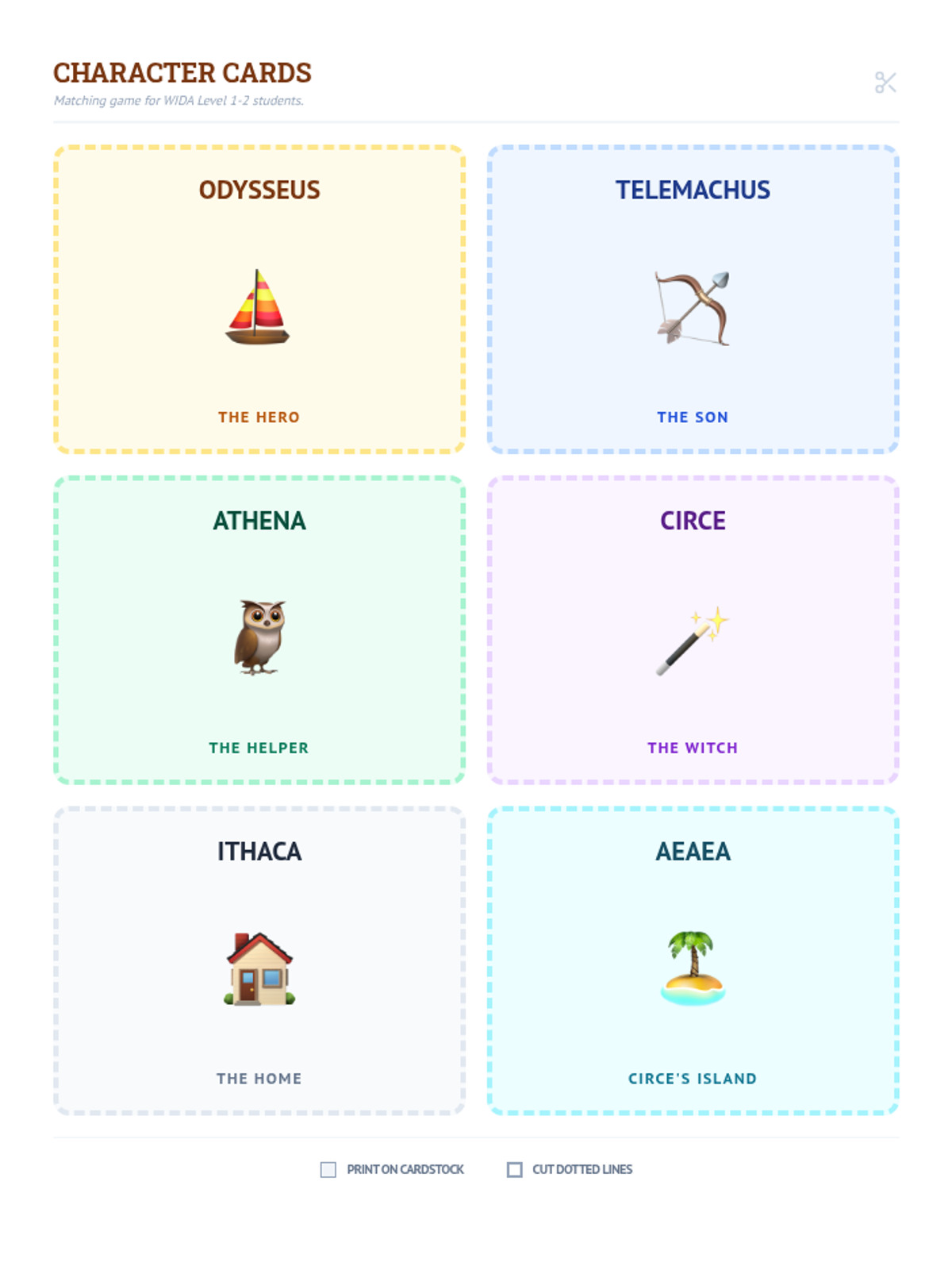
A review lesson for ELL students focused on recalling key characters and events from Books 1-5 of The Odyssey after a school break.
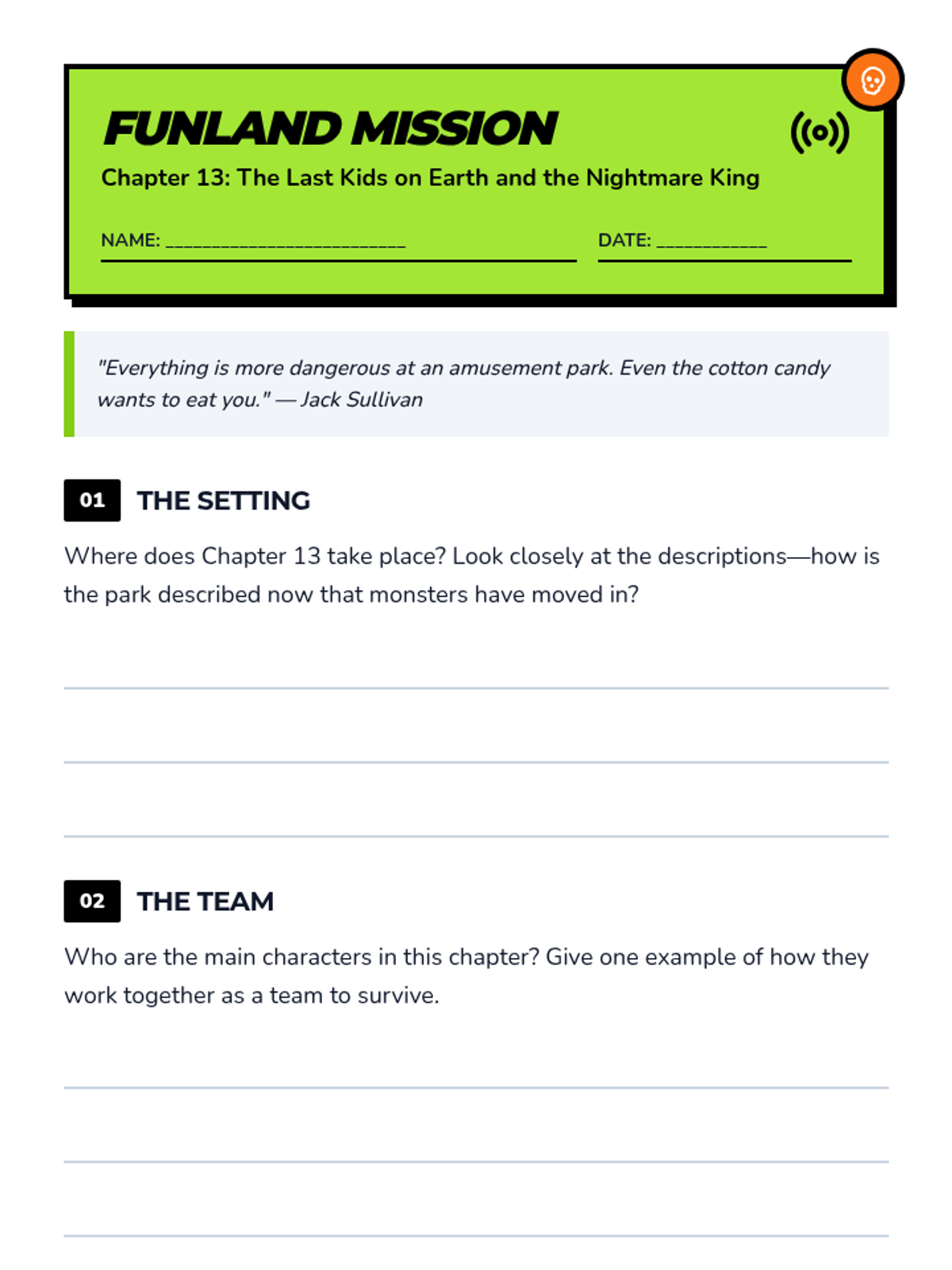
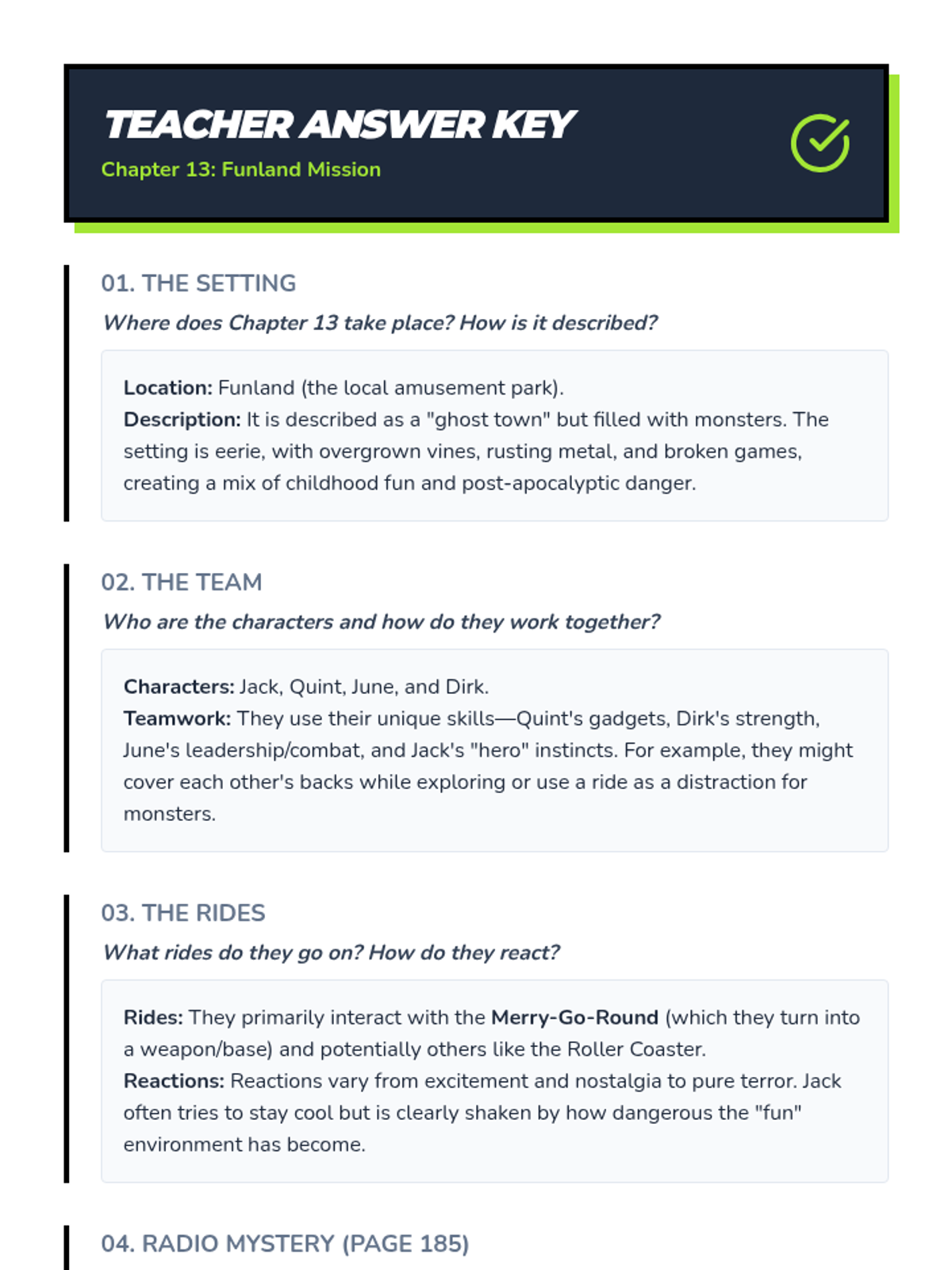
A comprehension lesson focused on Chapter 13 of 'The Last Kids on Earth and the Nightmare King', where students analyze setting, character teamwork, and a major plot turning point involving a radio signal.
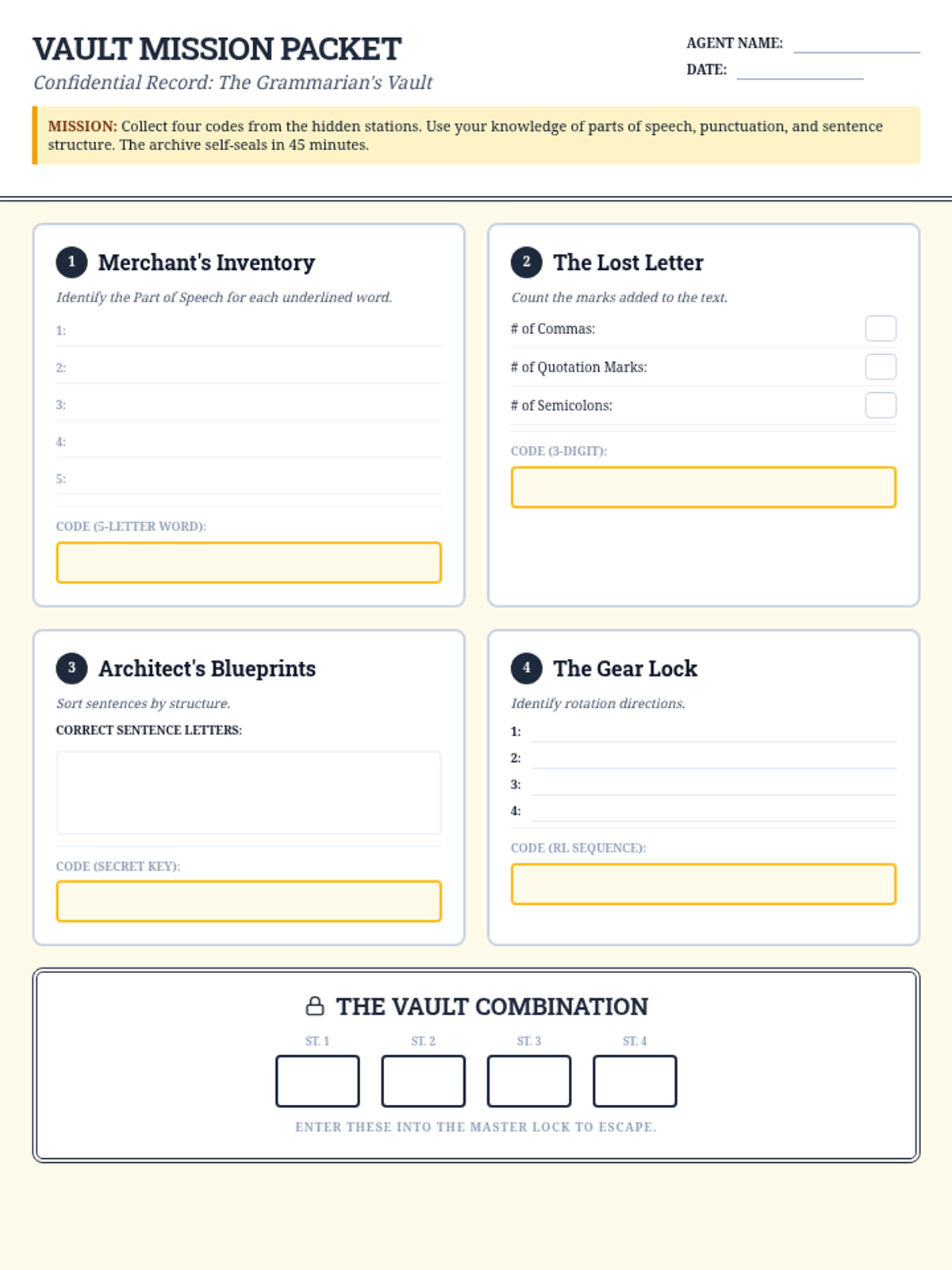
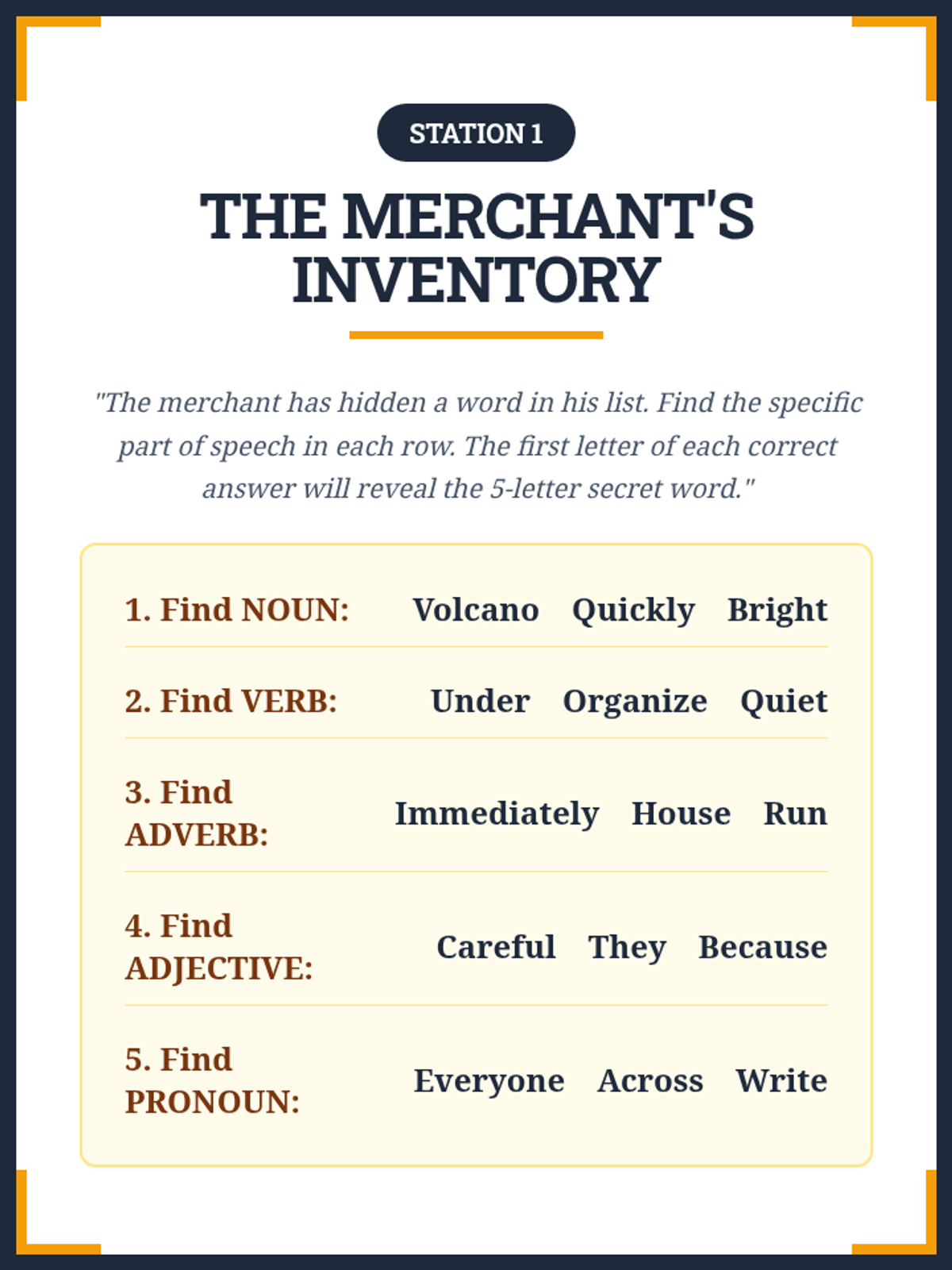
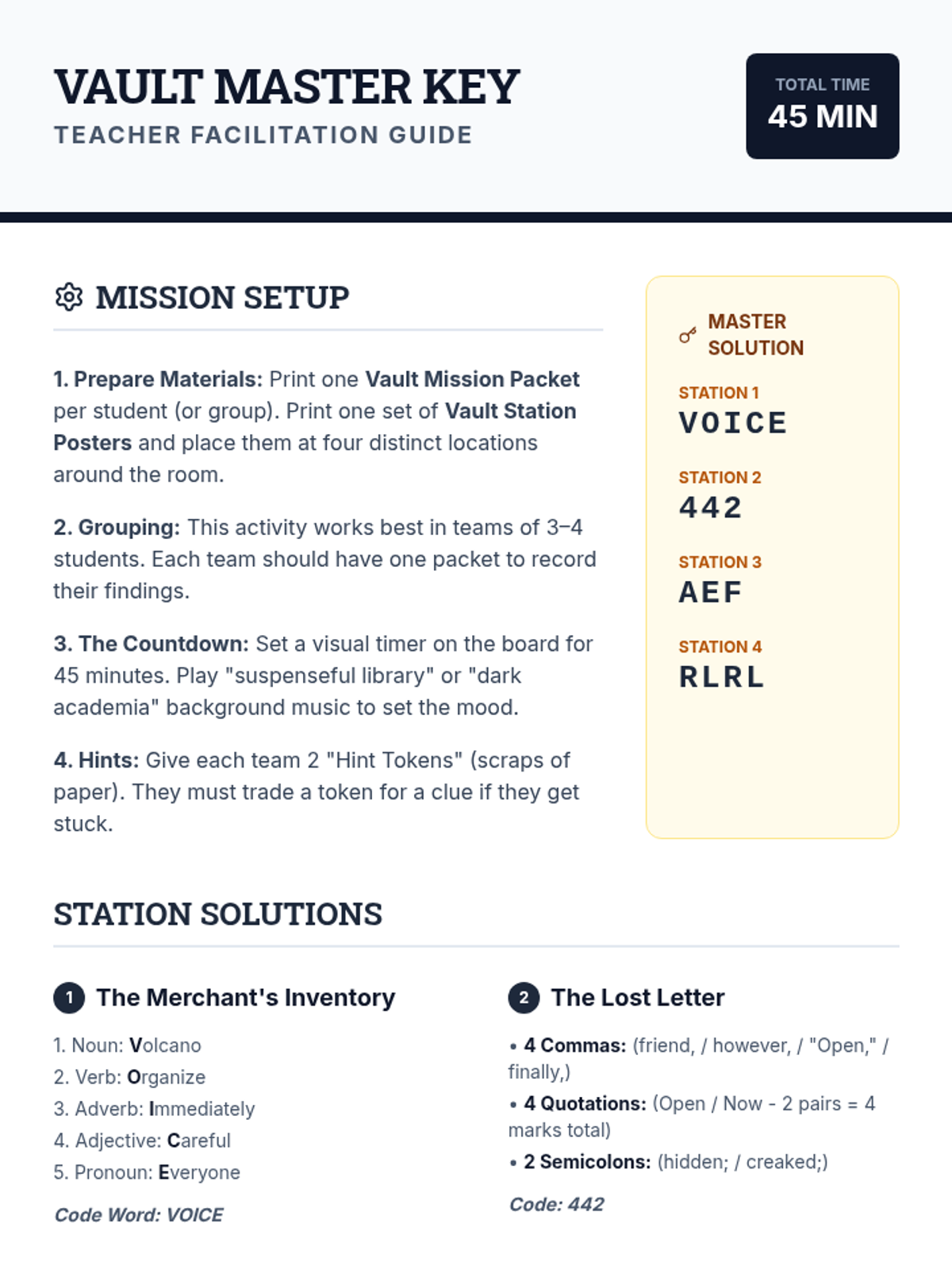
An immersive 45-minute grammar escape room where 6th-grade students solve puzzles involving parts of speech, punctuation, and sentence structure to unlock 'The Grammarian's Vault'.
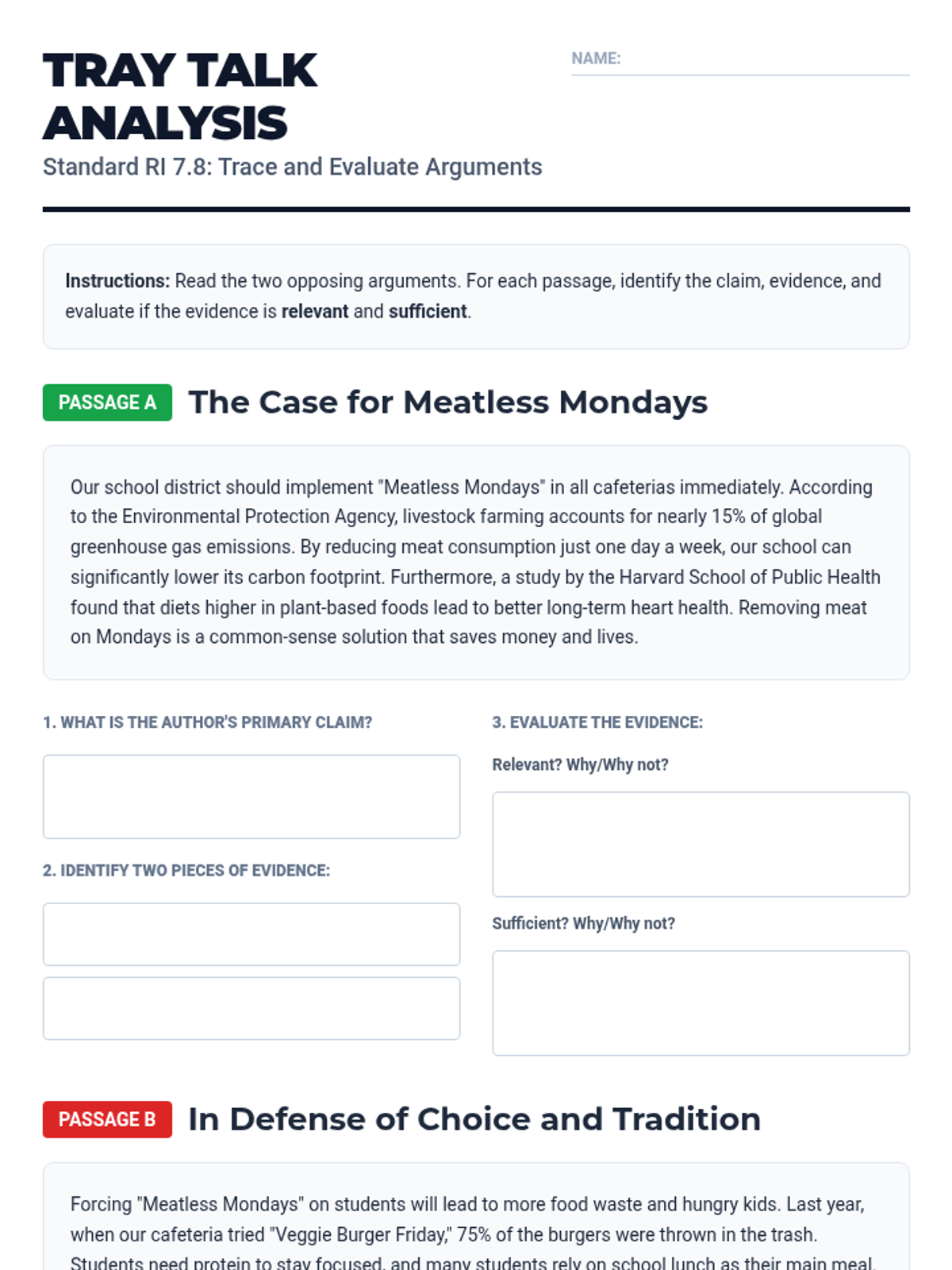
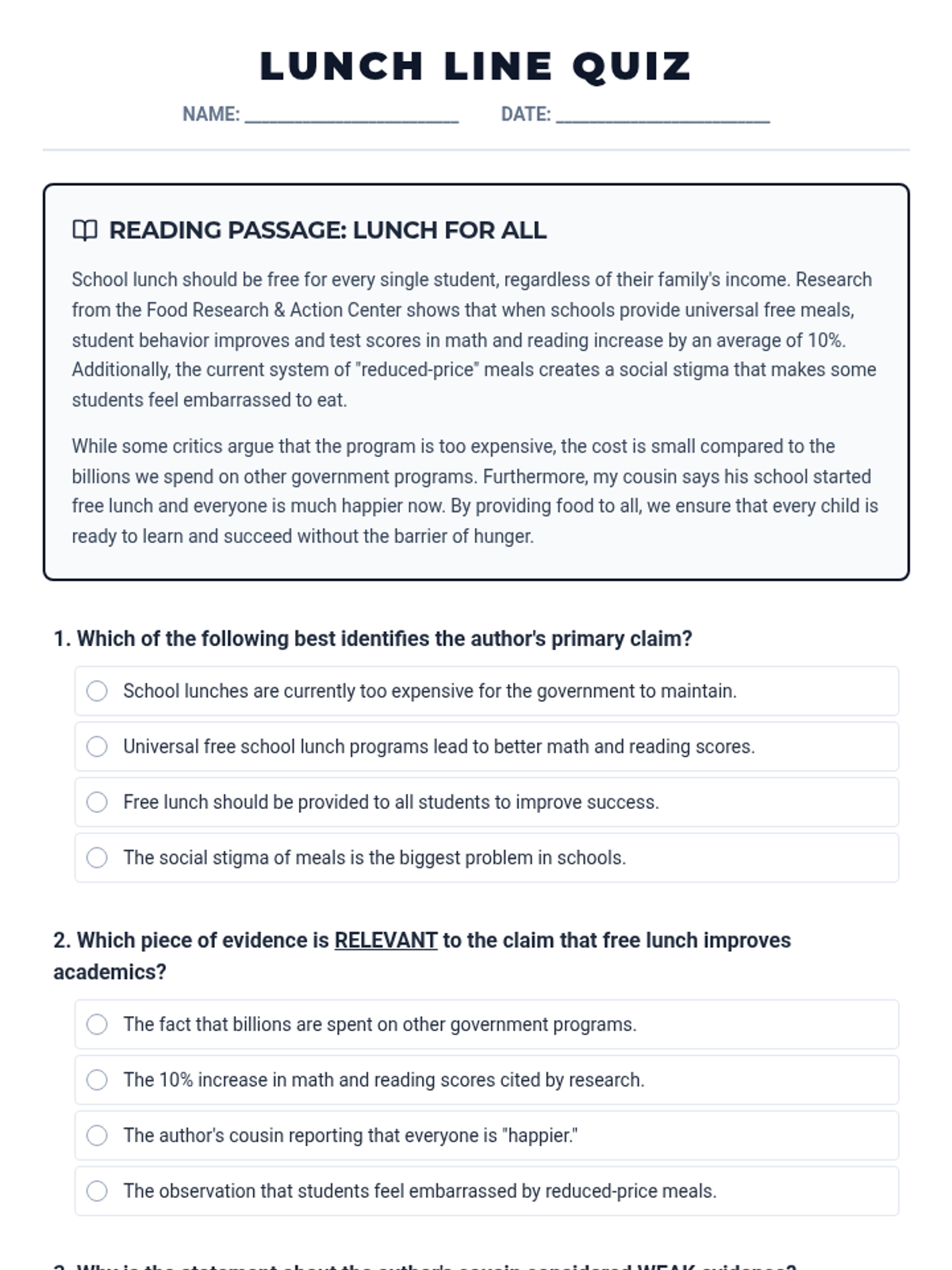
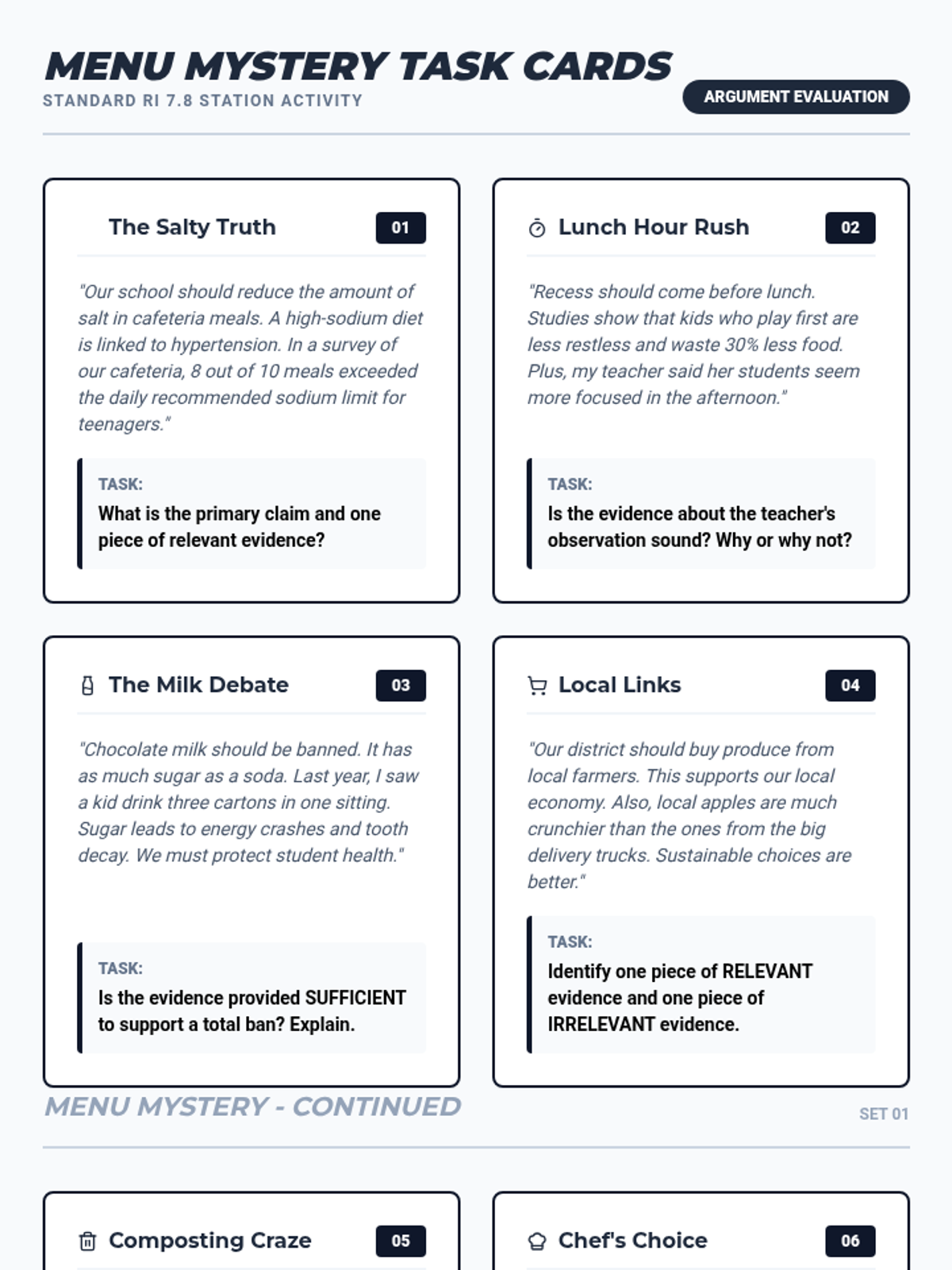
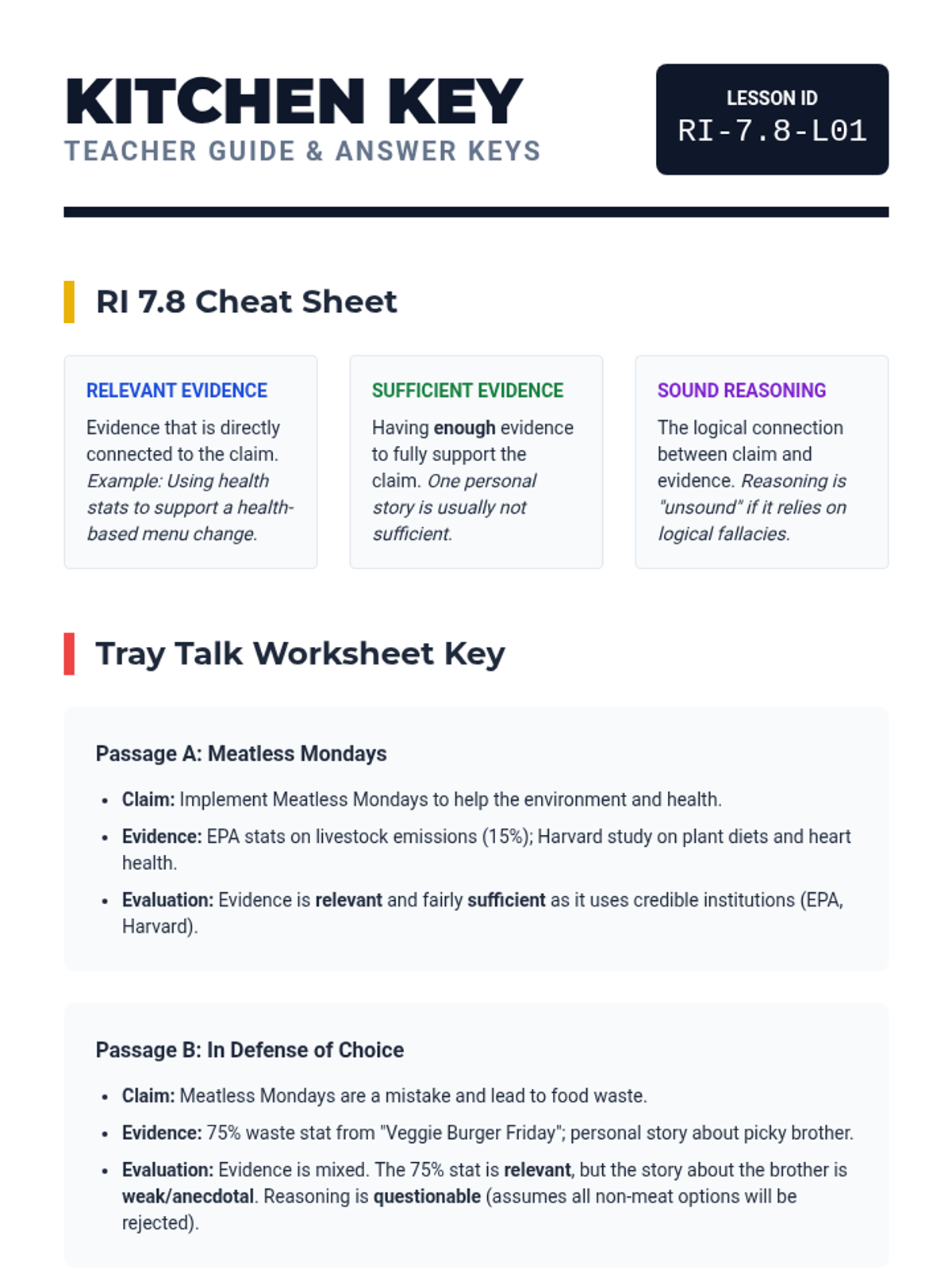
In this lesson, students will trace and evaluate arguments regarding school lunch policies, focusing on identifying claims, assessing the relevance and sufficiency of evidence, and determining if reasoning is sound.
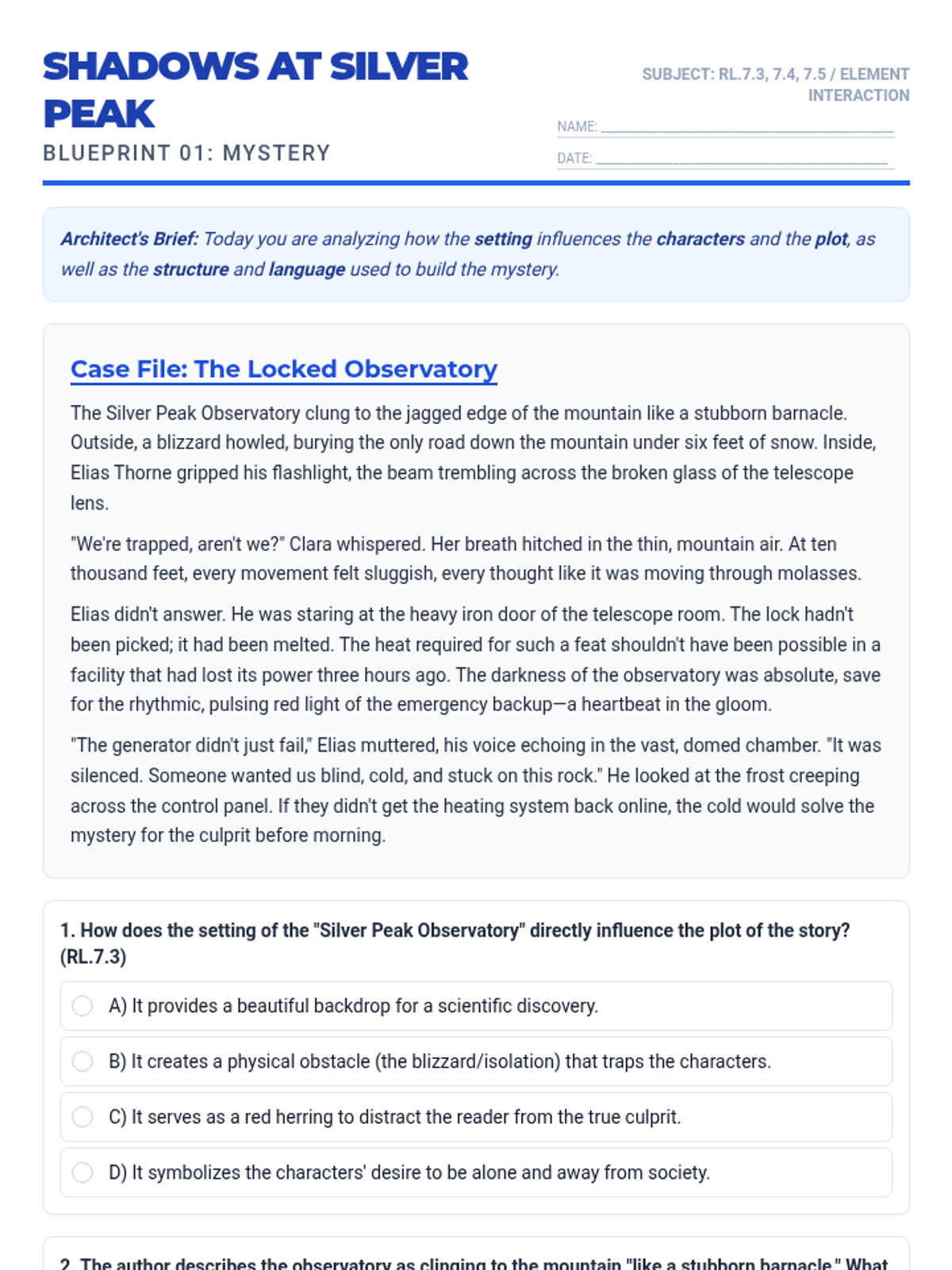
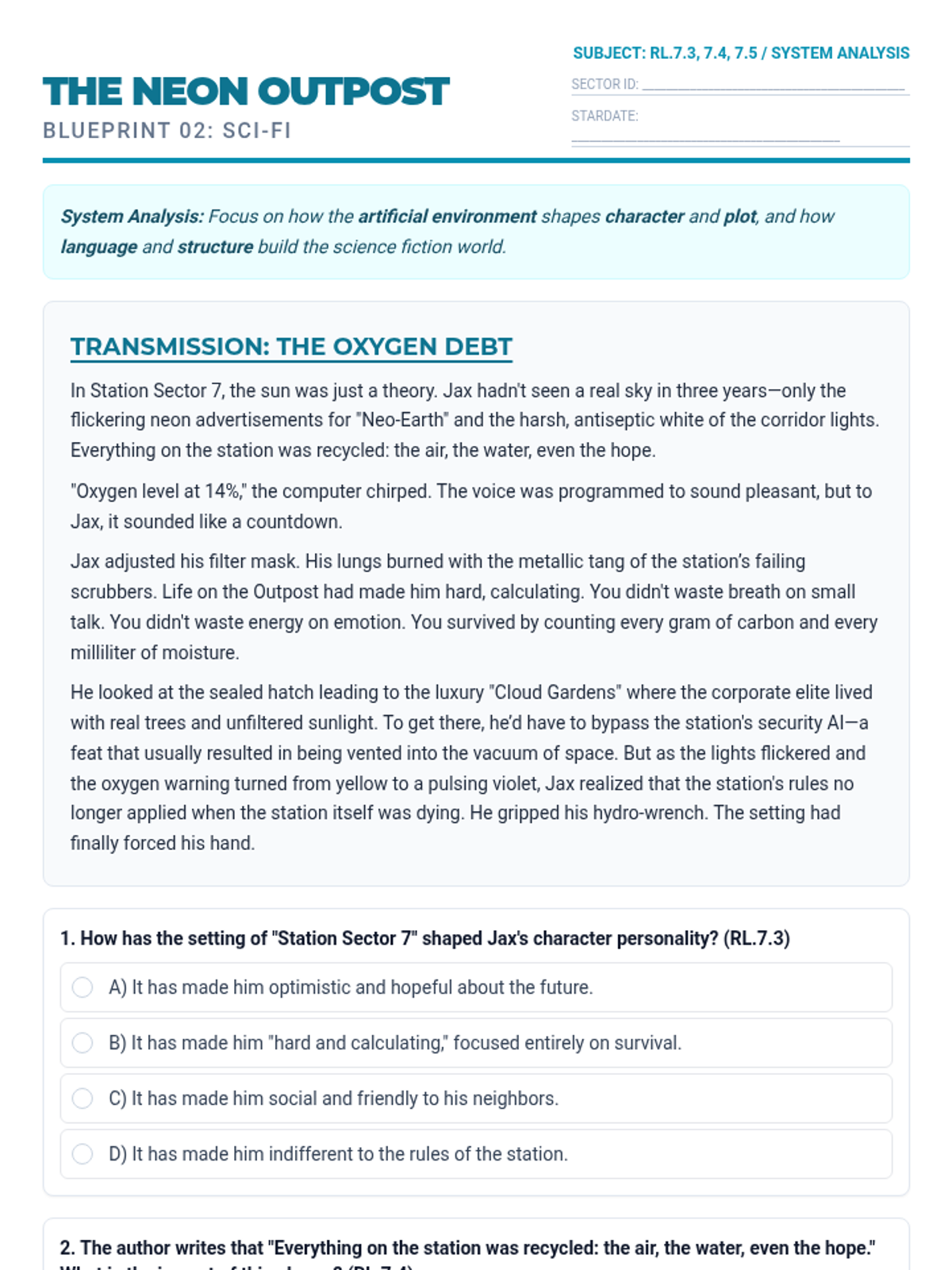
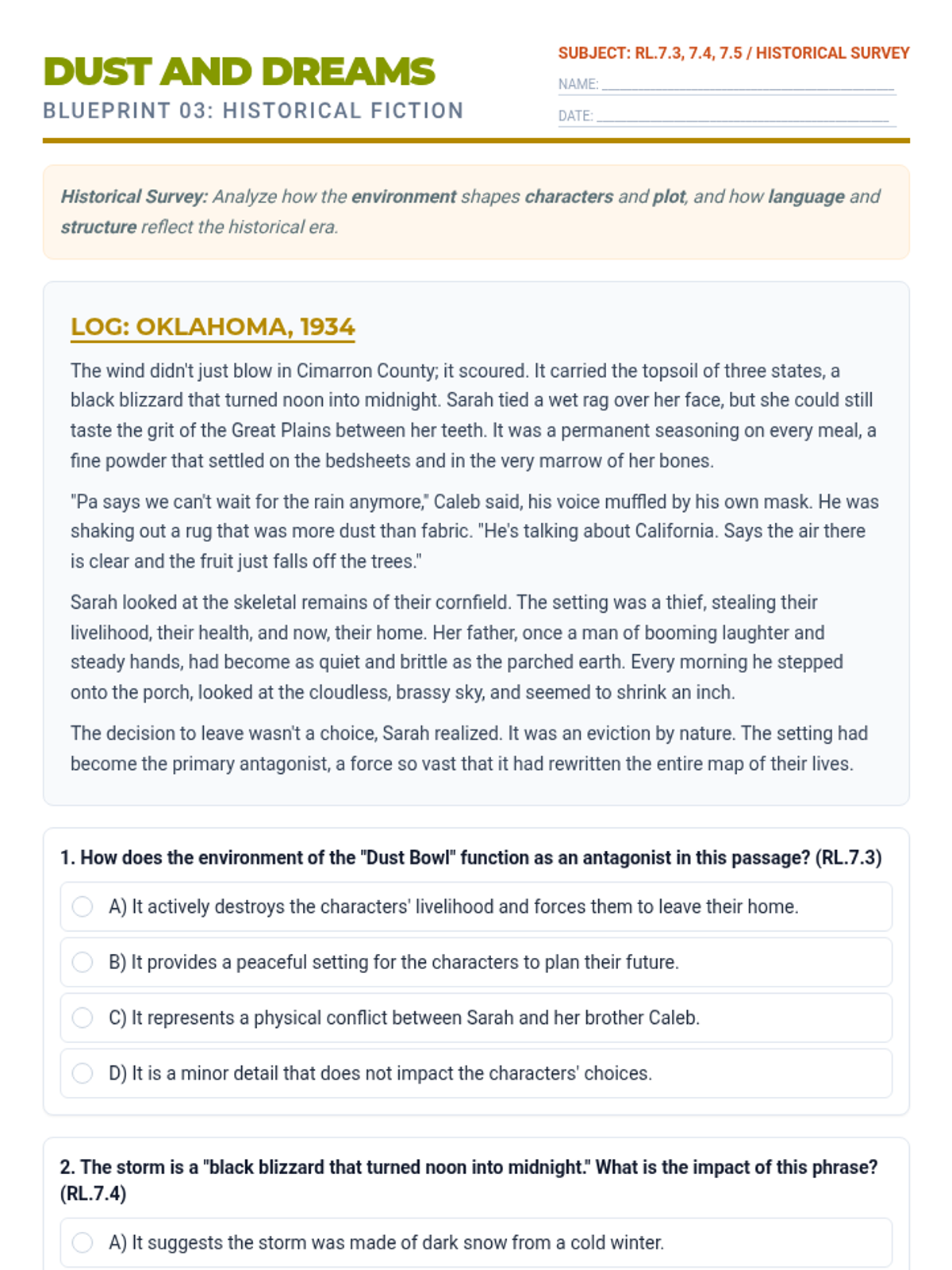
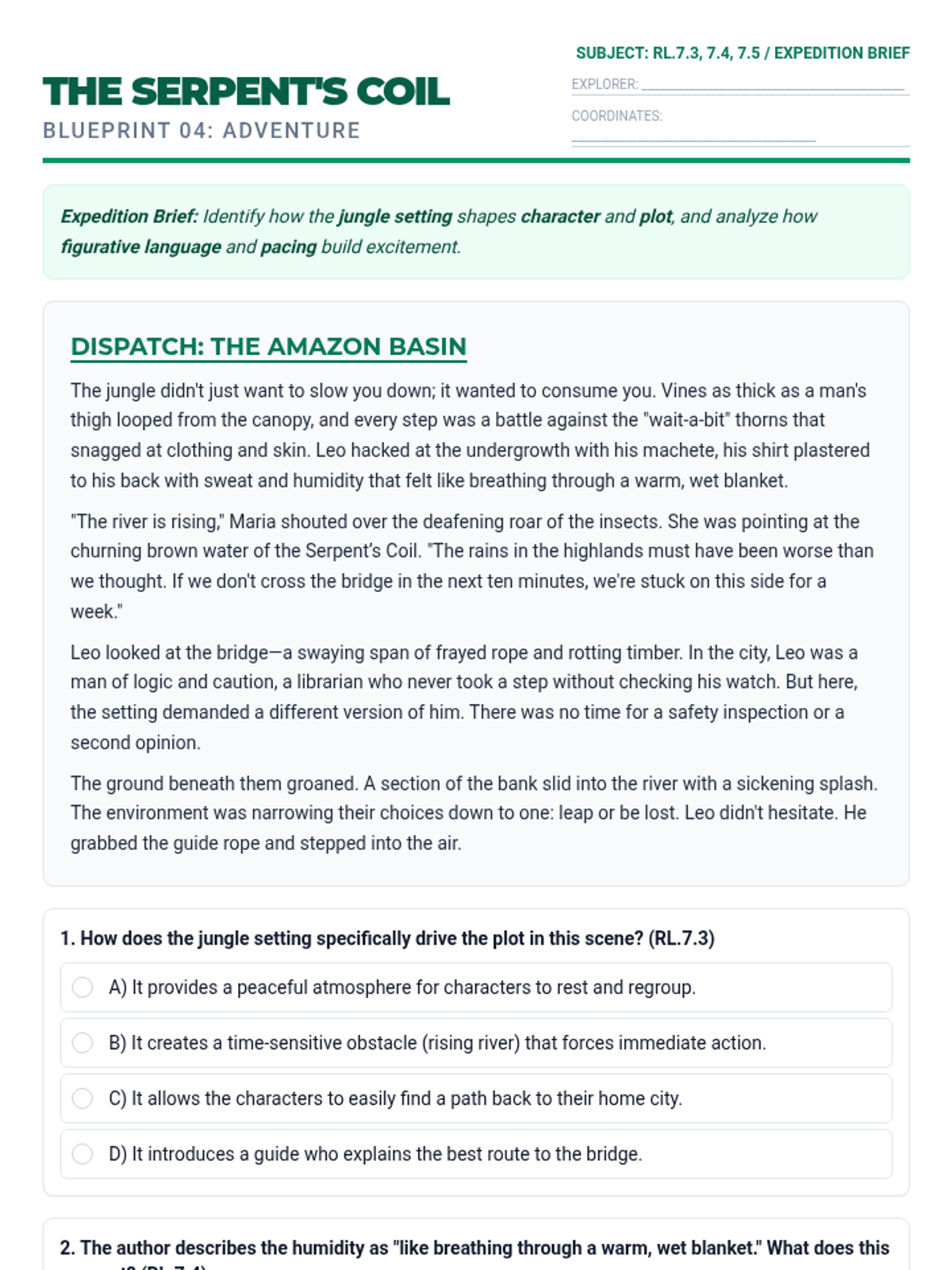
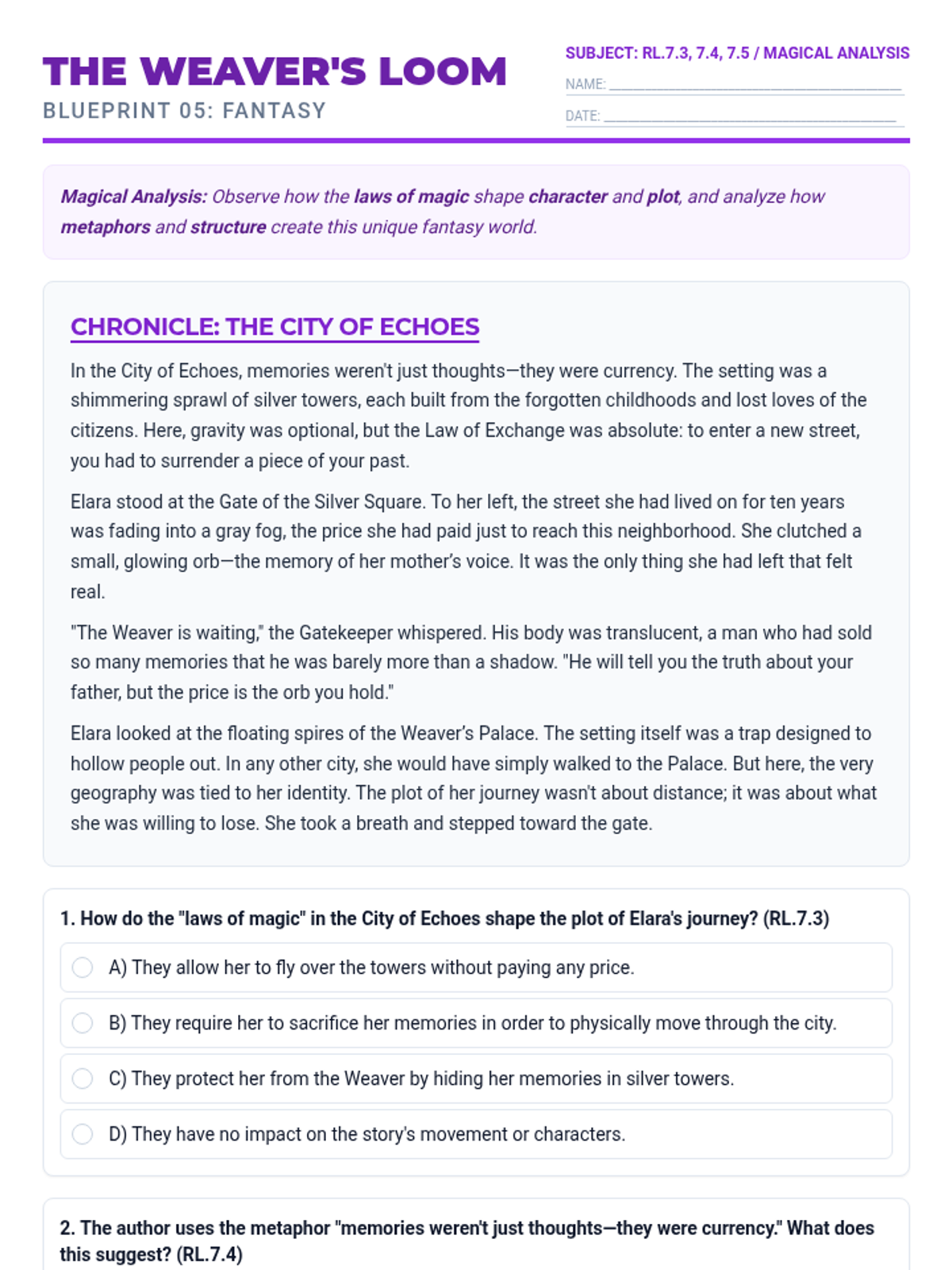
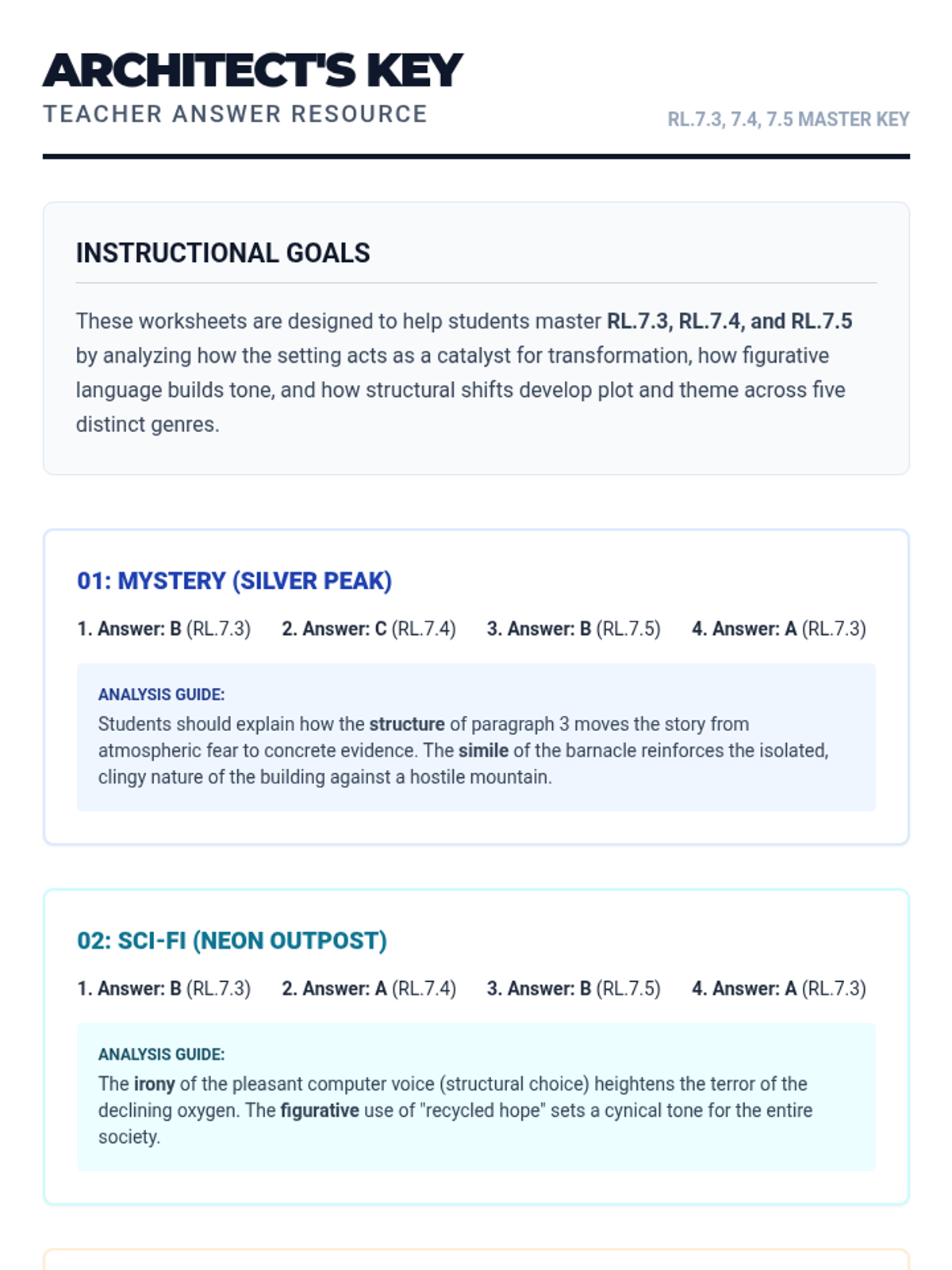
A comprehensive deep-dive into standard RL 7.3, exploring how setting, character, and plot interact across five distinct genres through analytical passages and comparative slides.
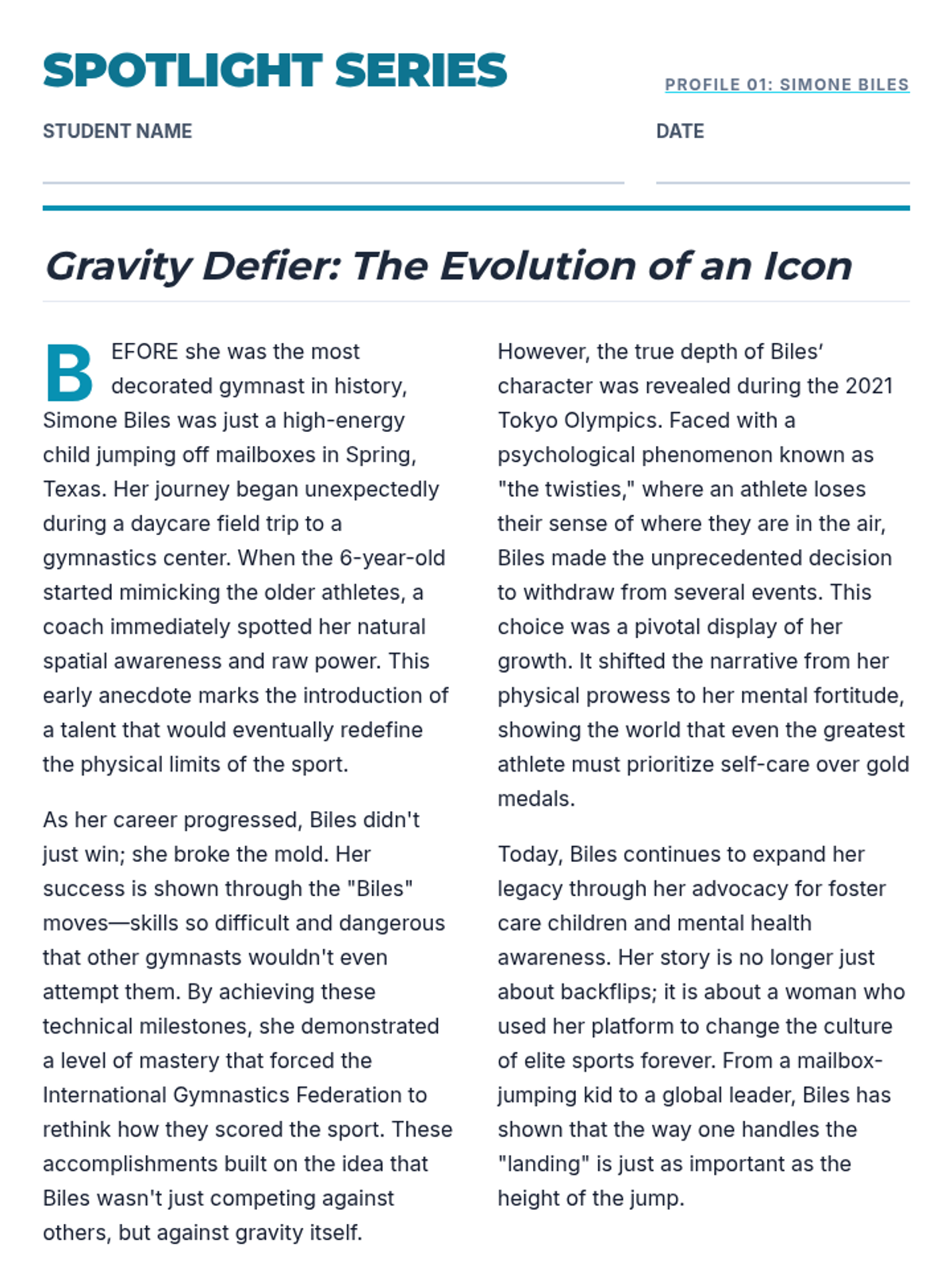
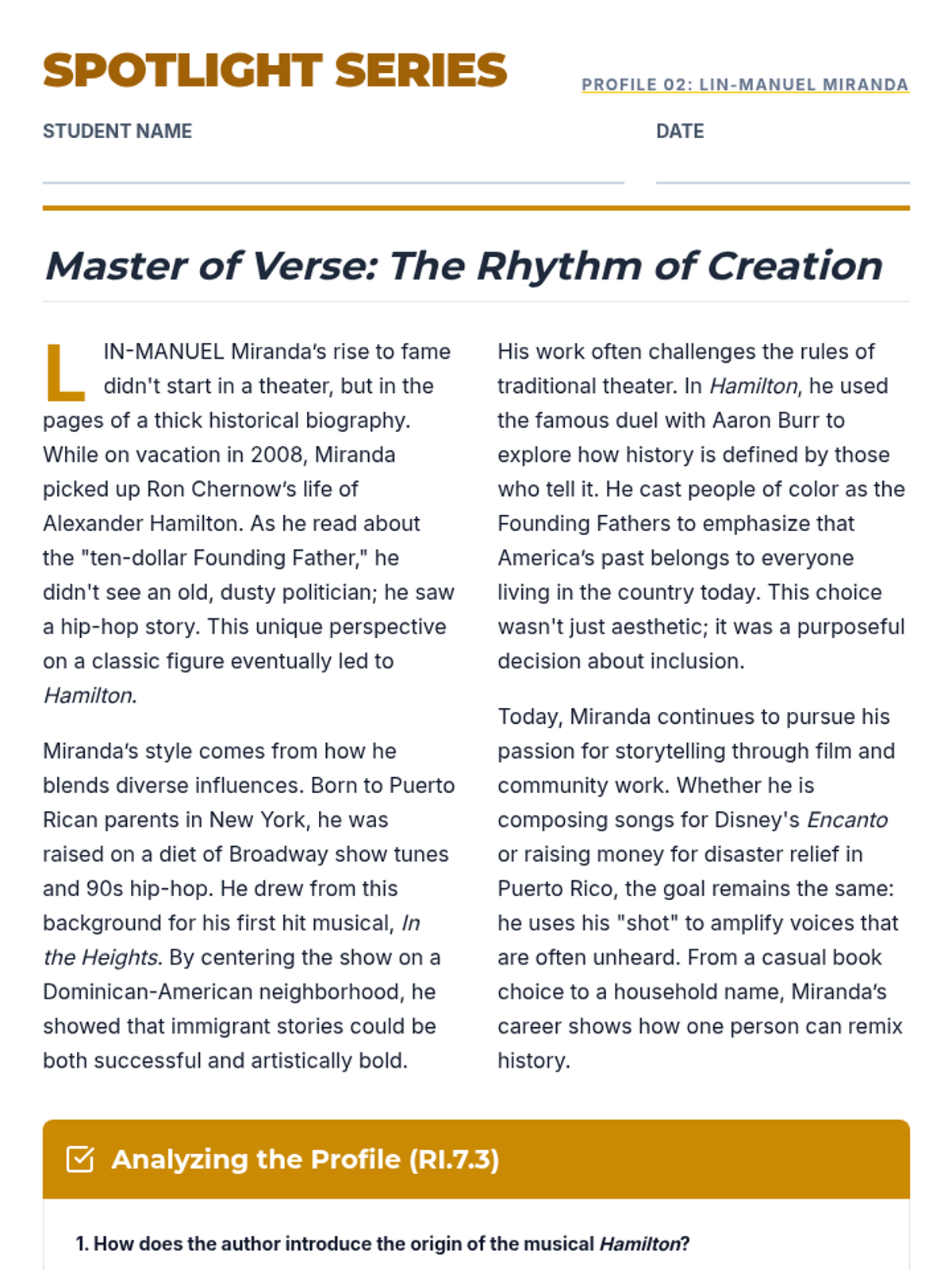
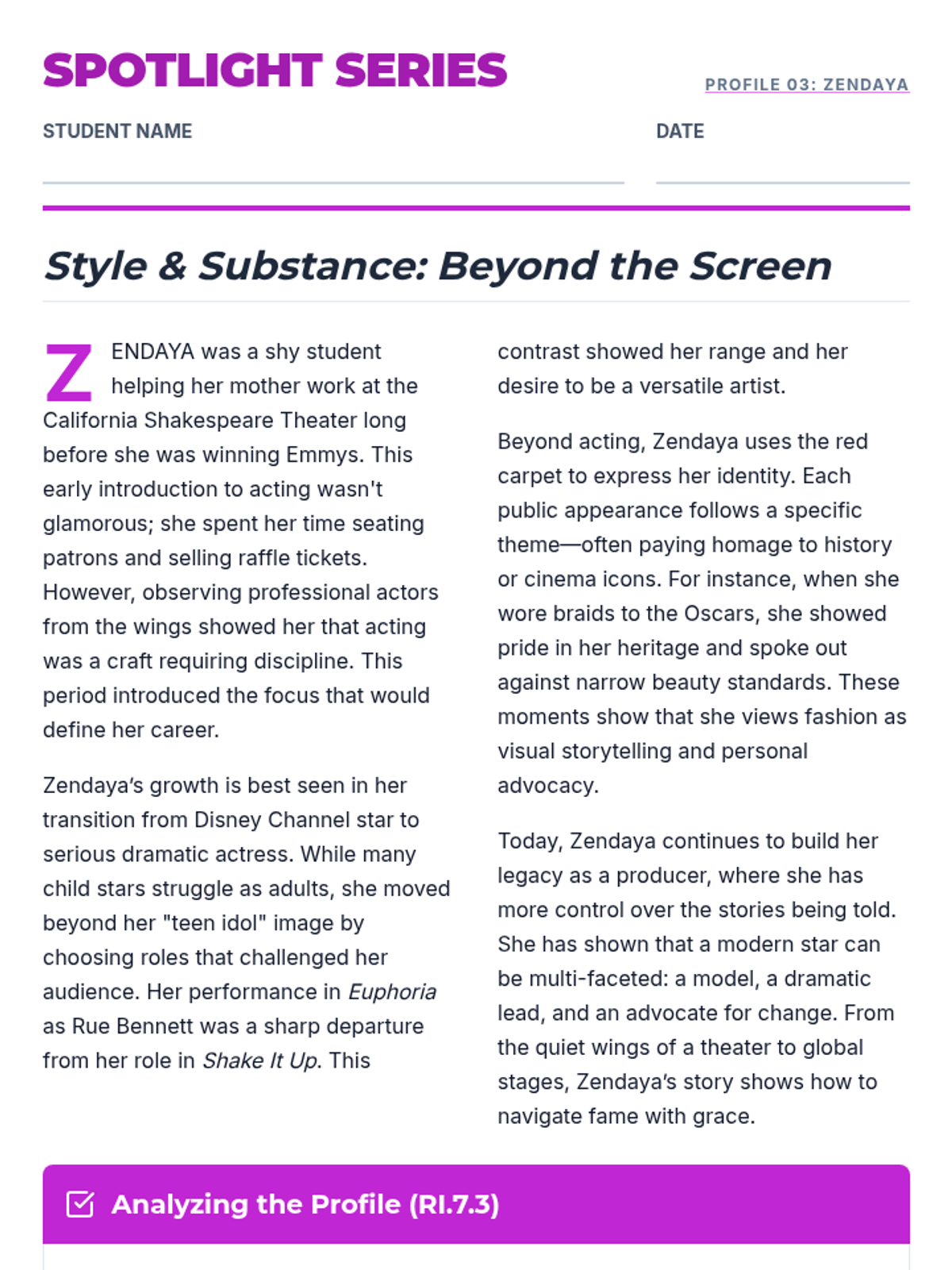
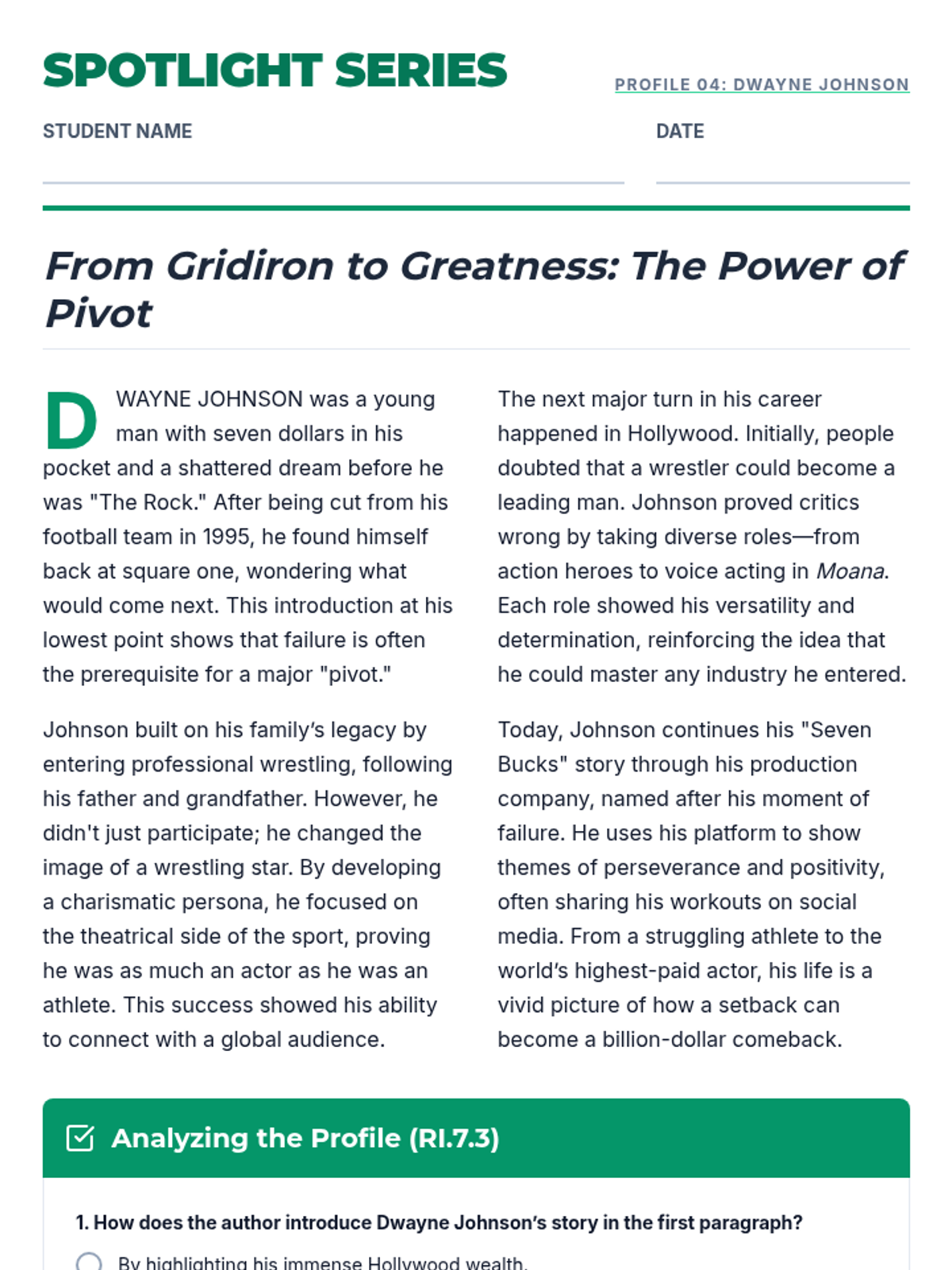
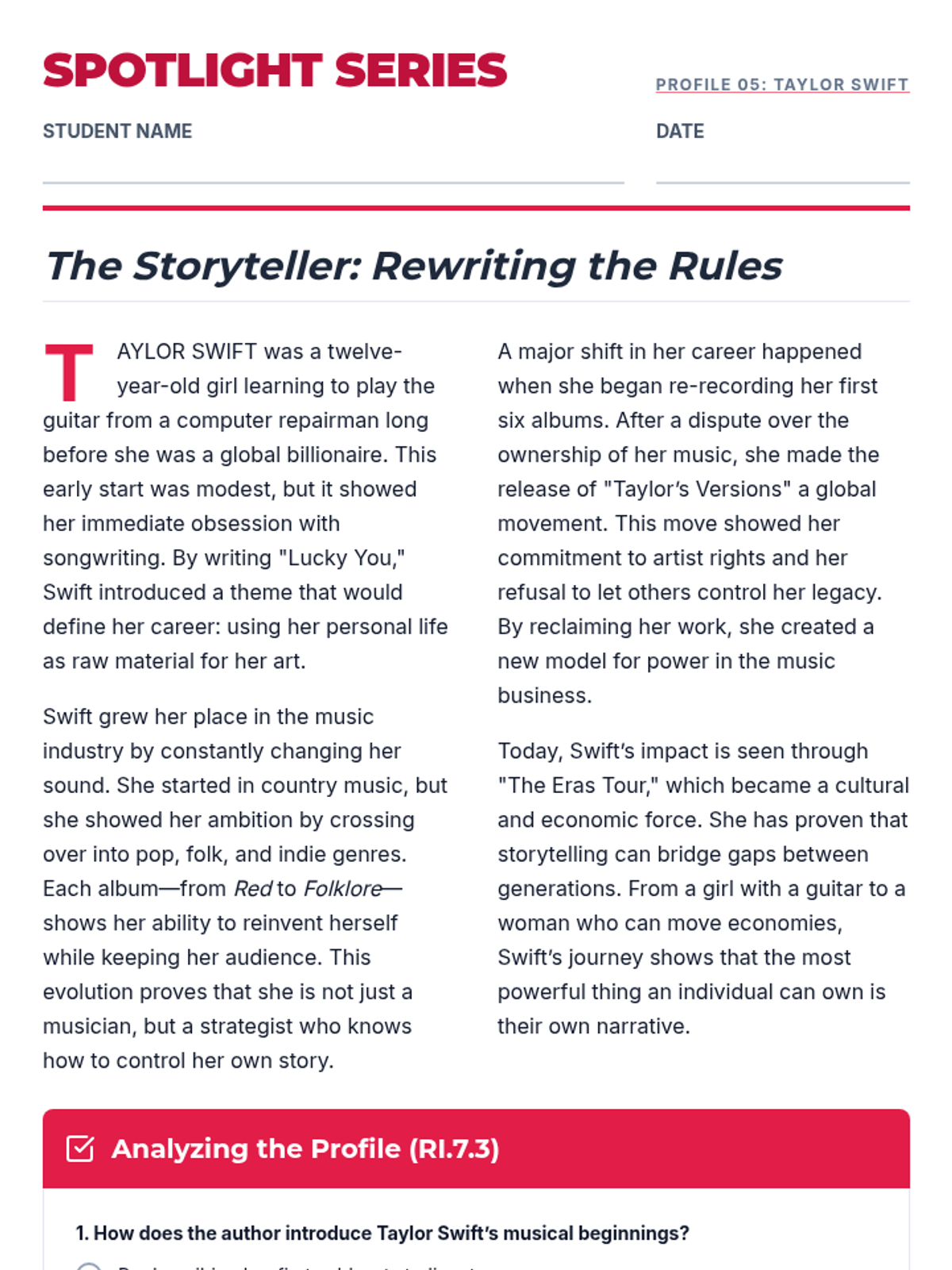
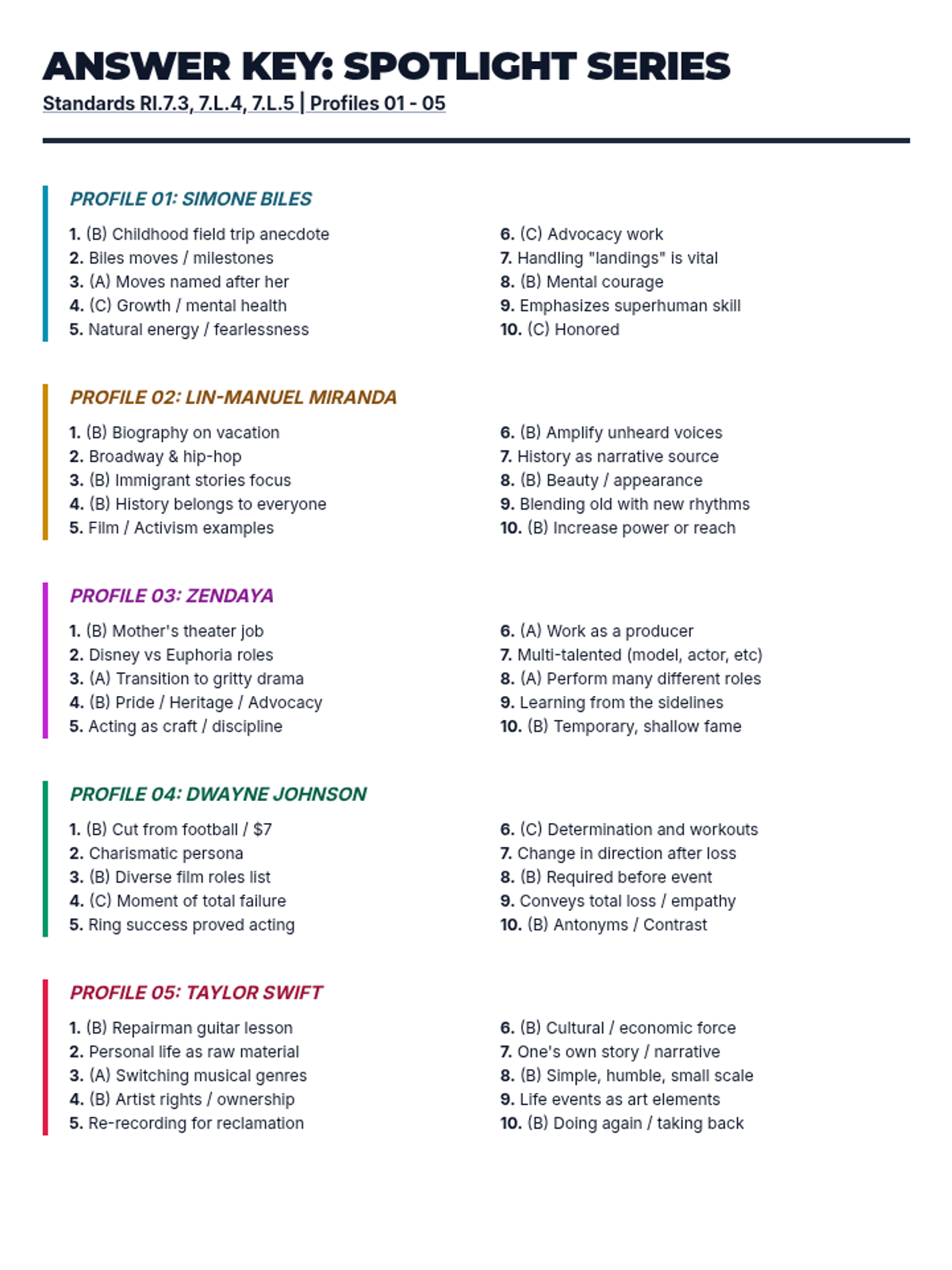
A collection of five informational passages and assessments focused on RI.7.3, featuring modern icons like Simone Biles and Taylor Swift. Students will analyze how individuals and events are introduced and elaborated upon through anecdotes and examples.
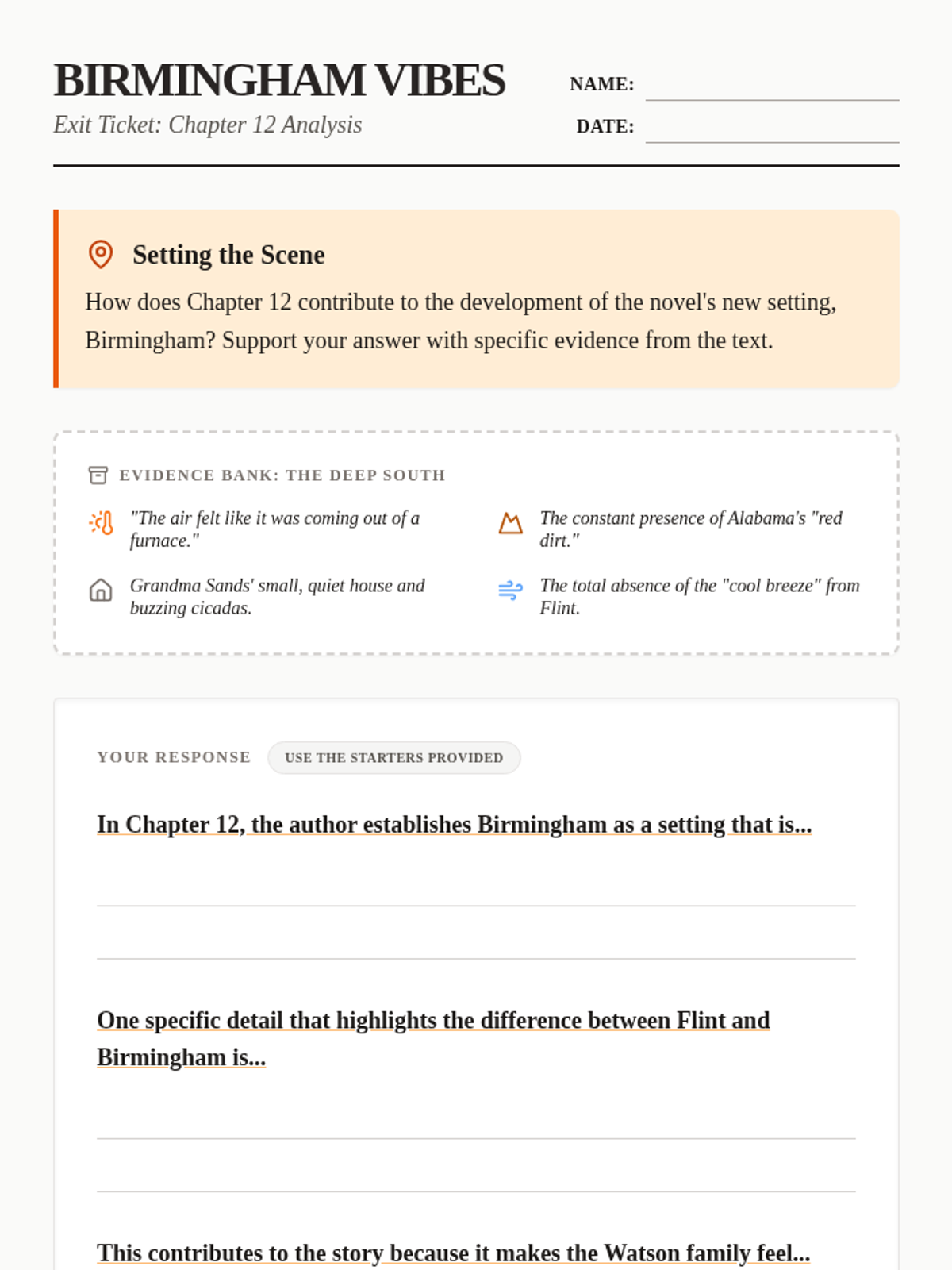
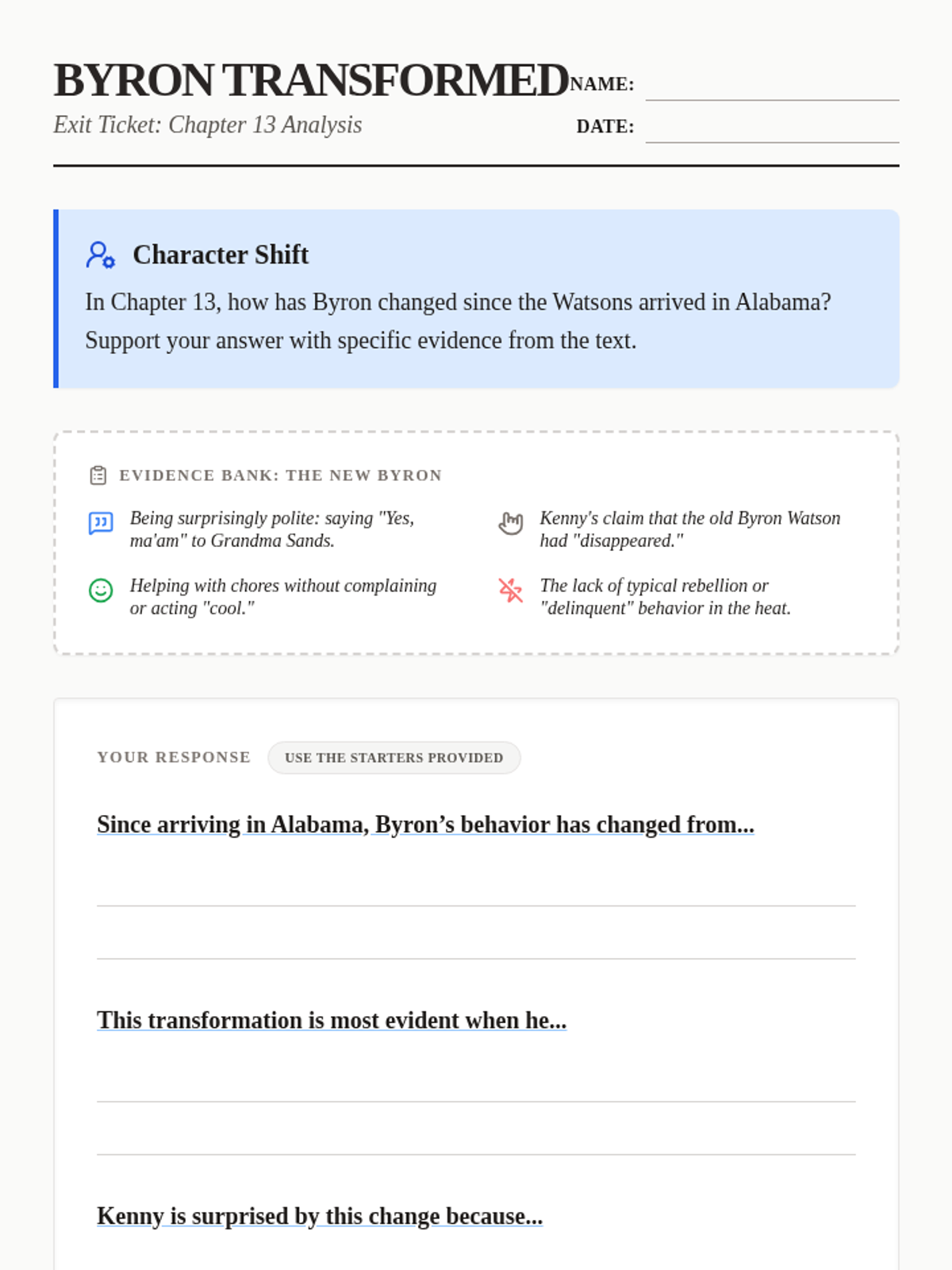
A lesson focusing on the transition of the Watson family from Flint to Birmingham, analyzing setting development and character shifts in chapters 12 and 13.
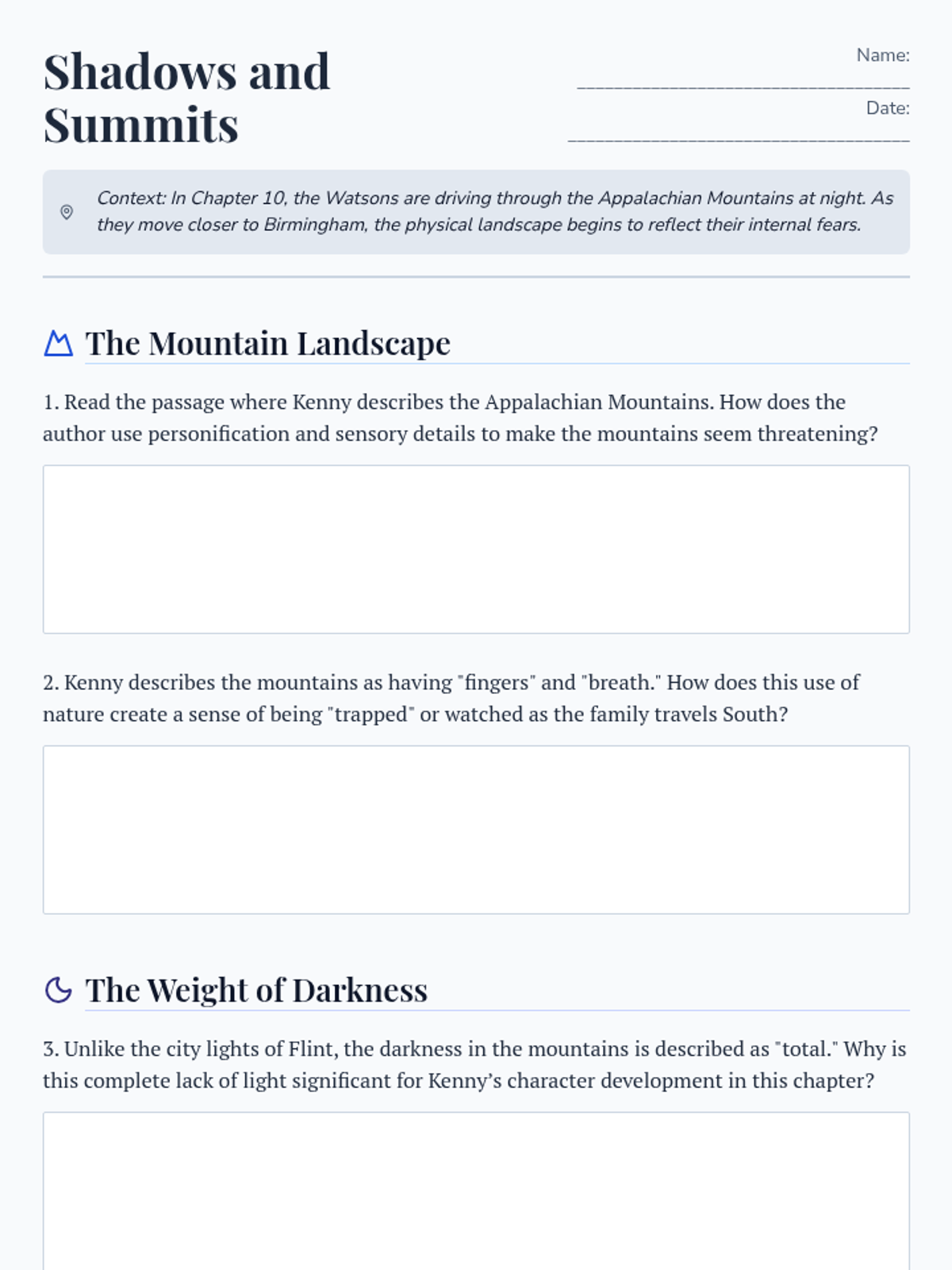
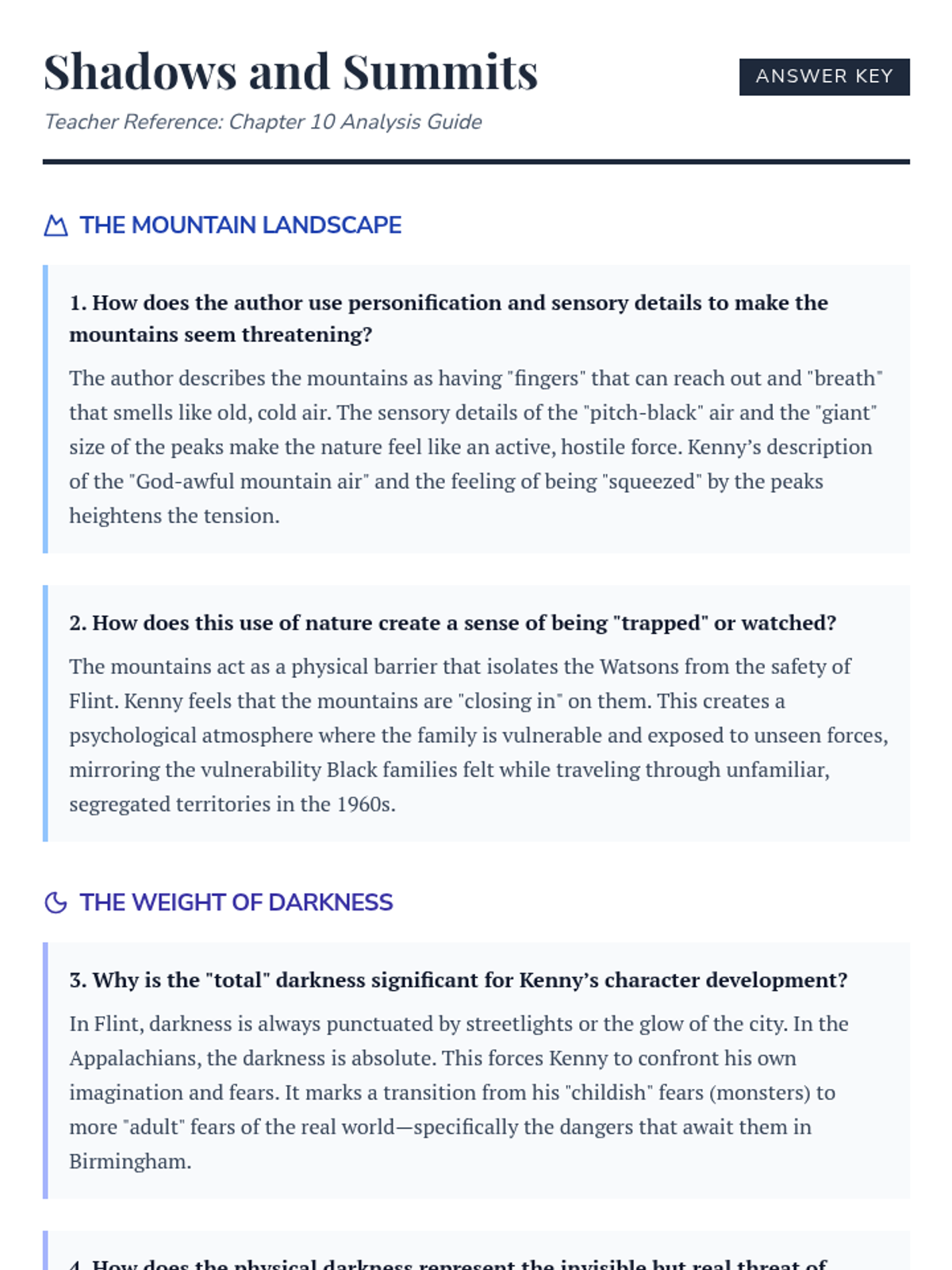
A deep dive into Chapter 10 of 'The Watsons Go to Birmingham – 1963', focusing on how the Appalachian setting and the shroud of night symbolize the growing racial tensions as the family heads South.
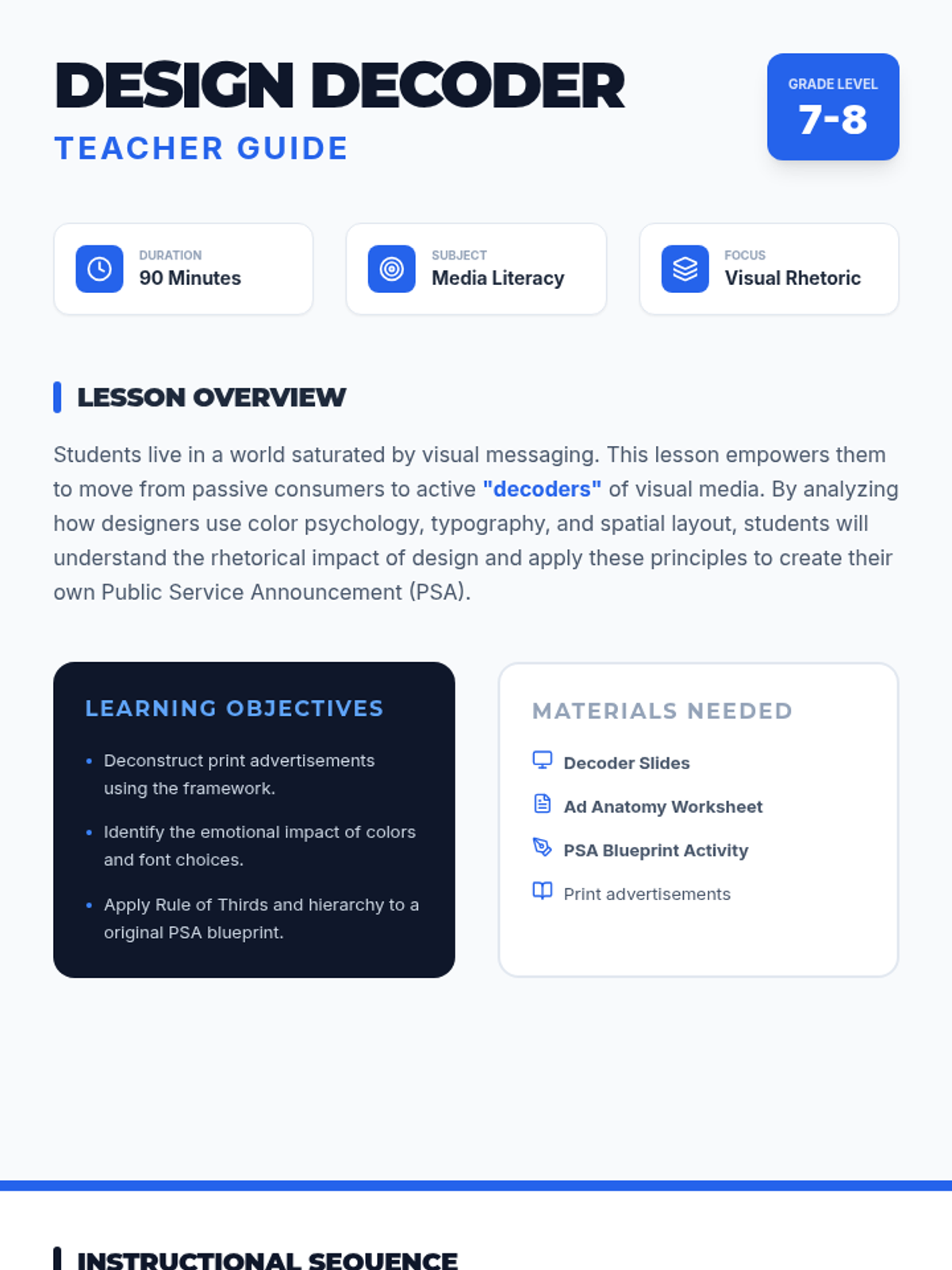
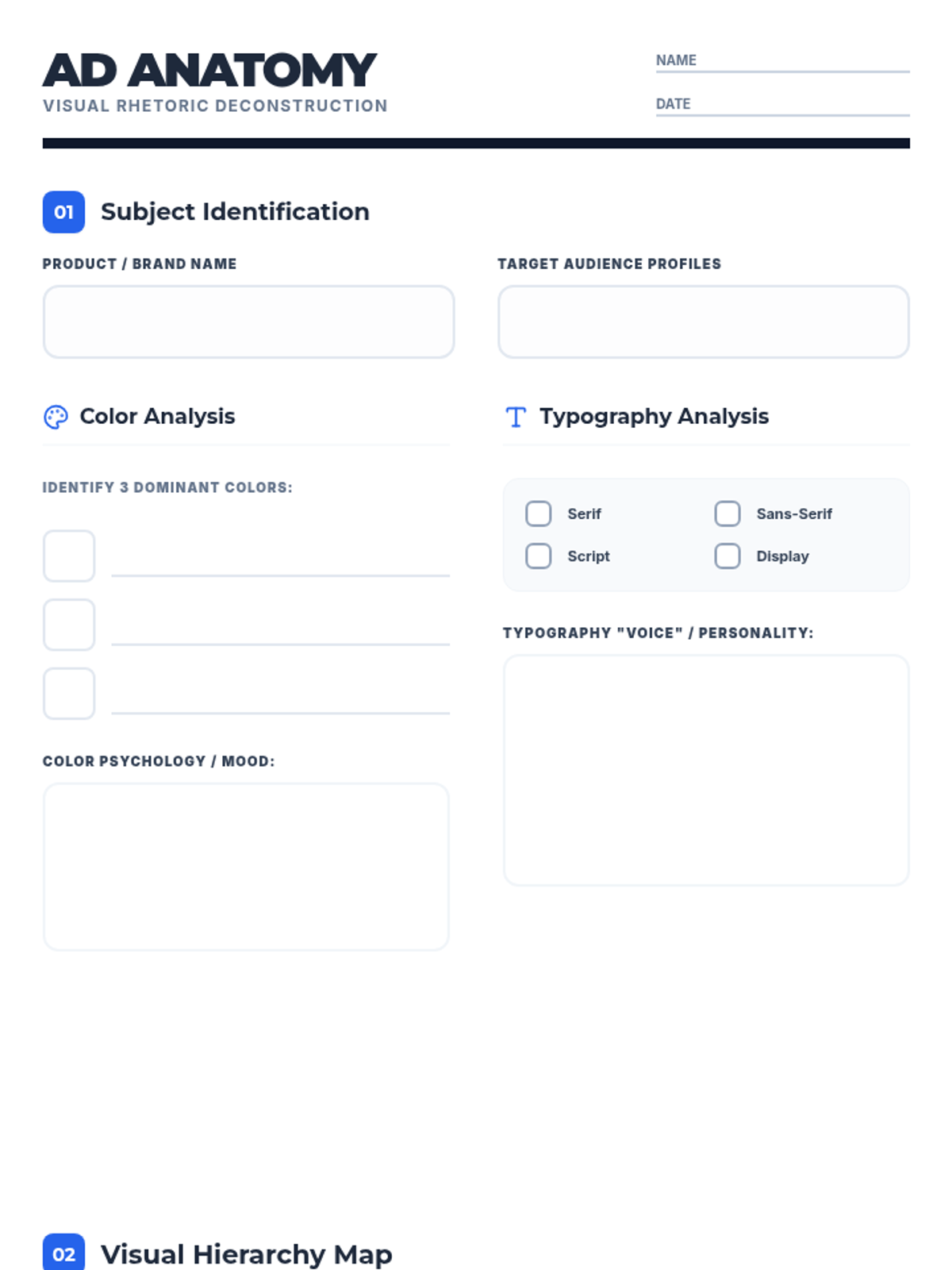
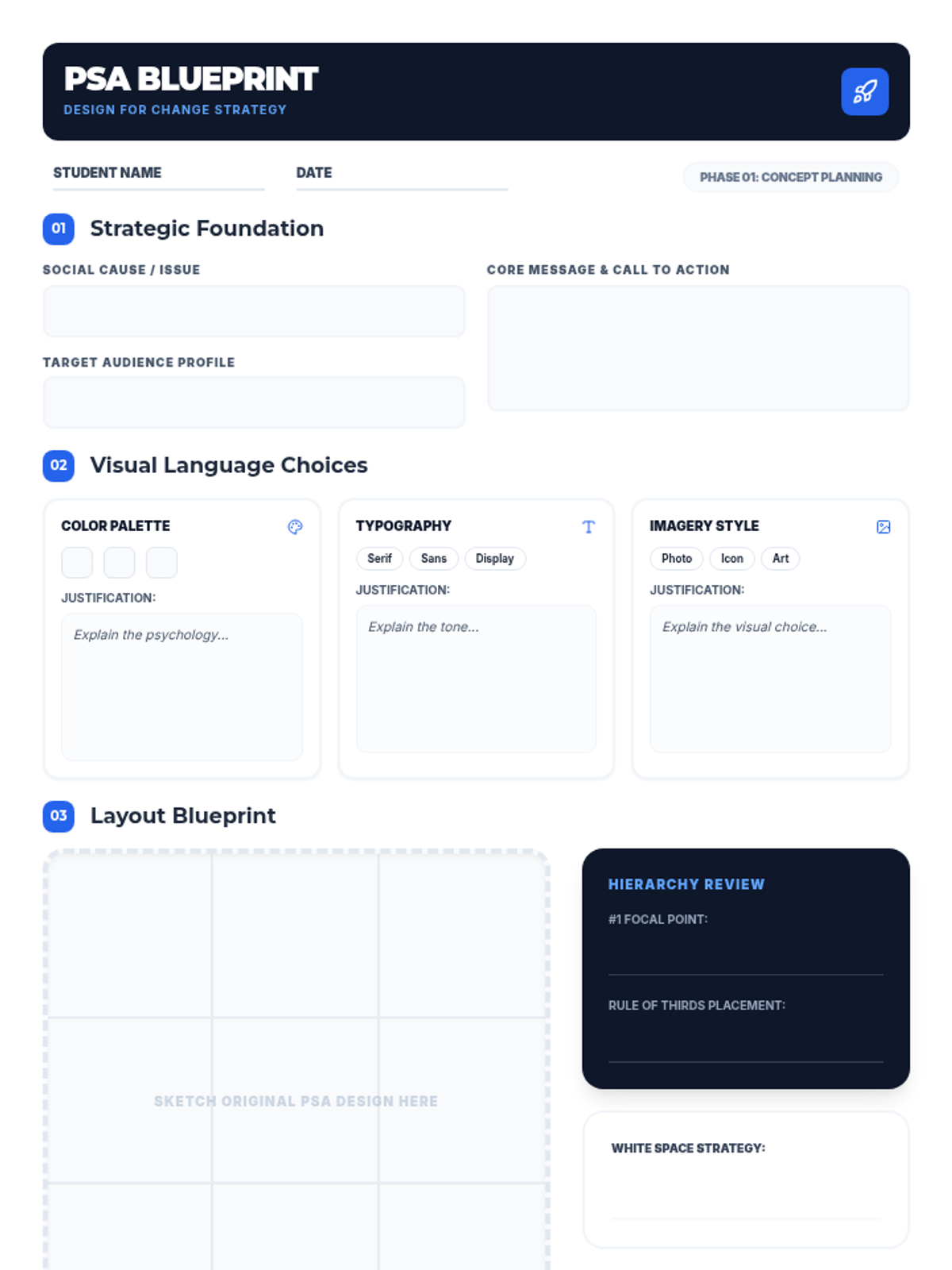
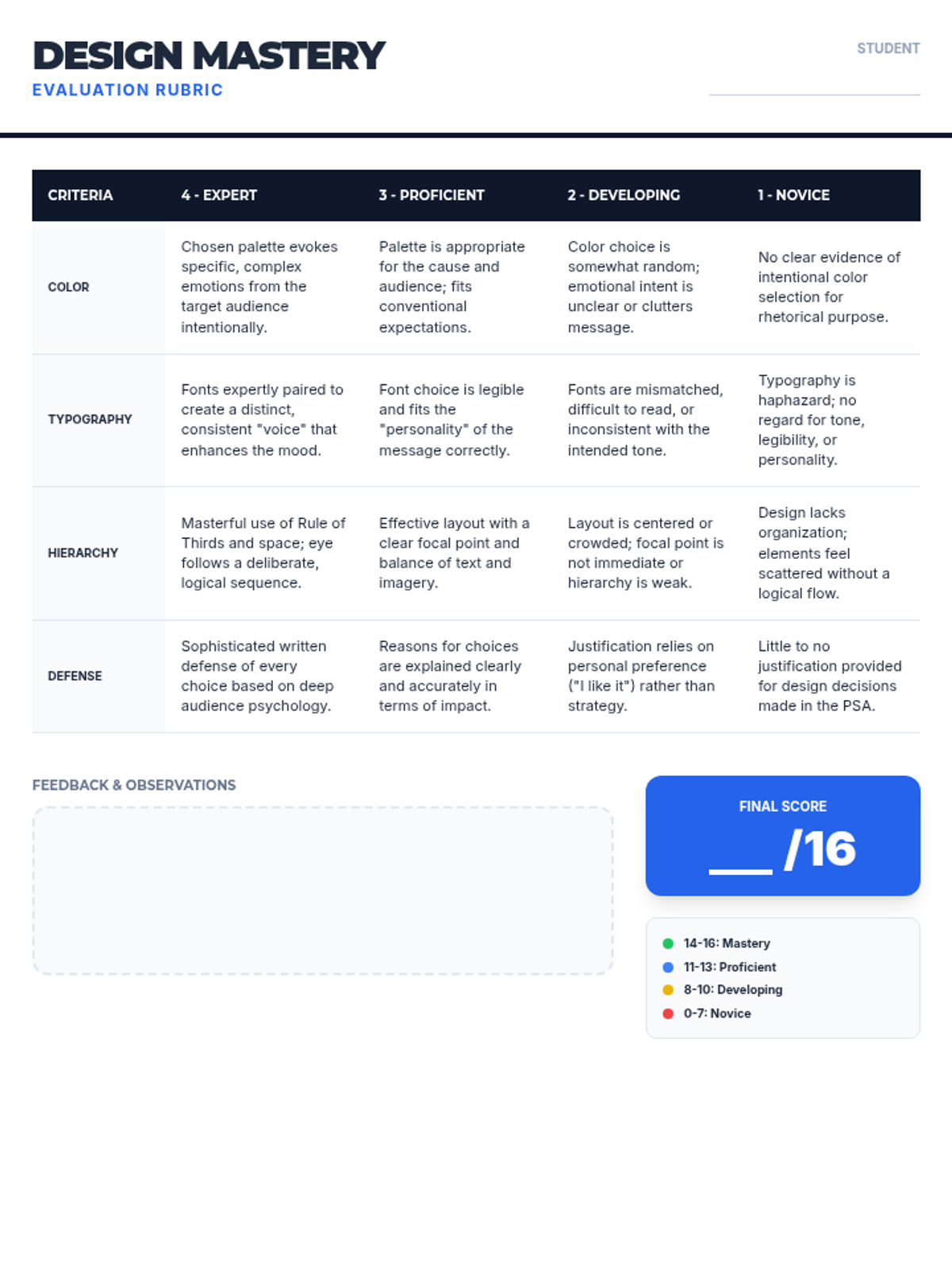
A middle school lesson on visual rhetoric, teaching students how to analyze and use color, layout, and typography to influence audience perception in media and advertising.
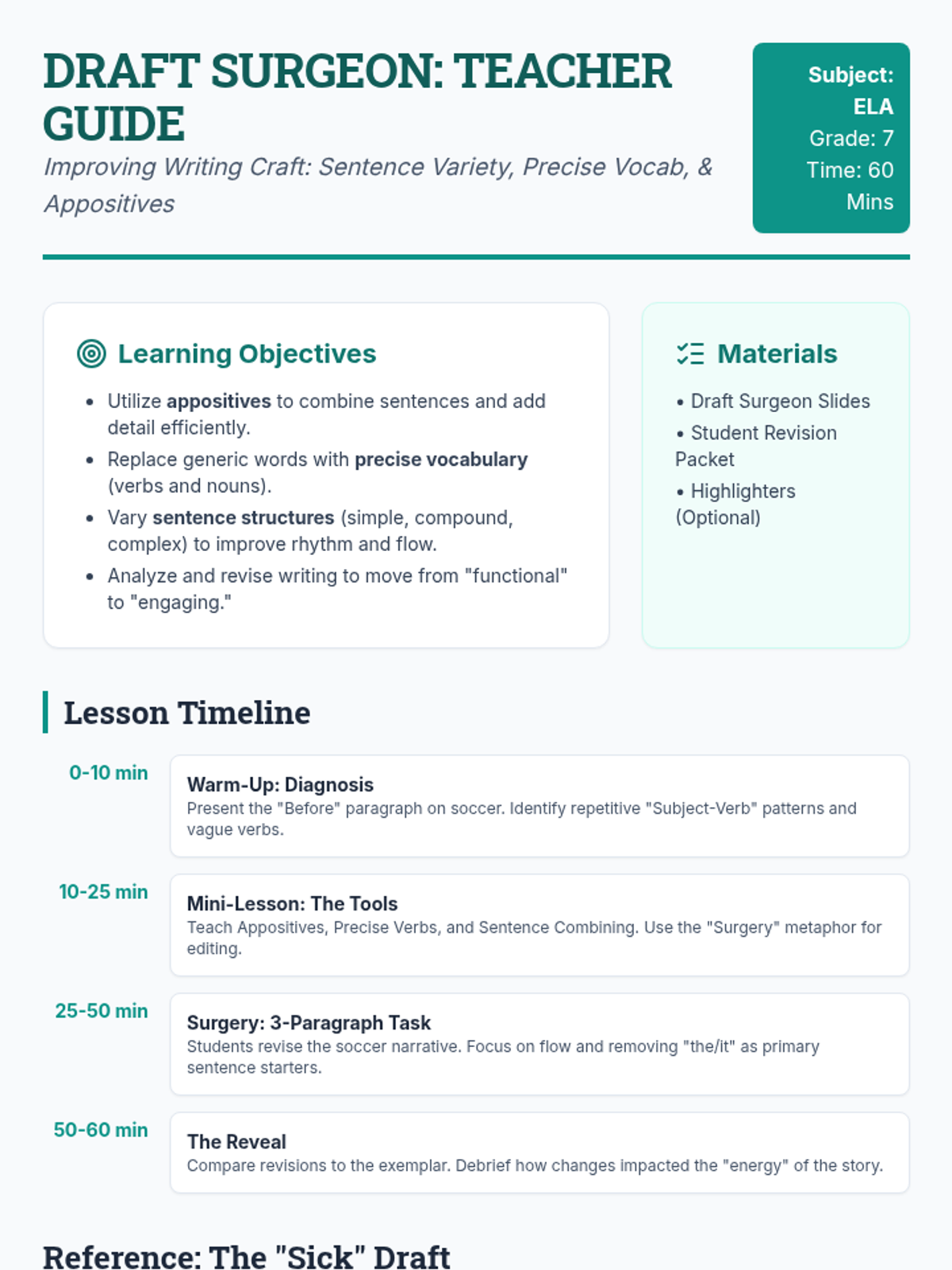
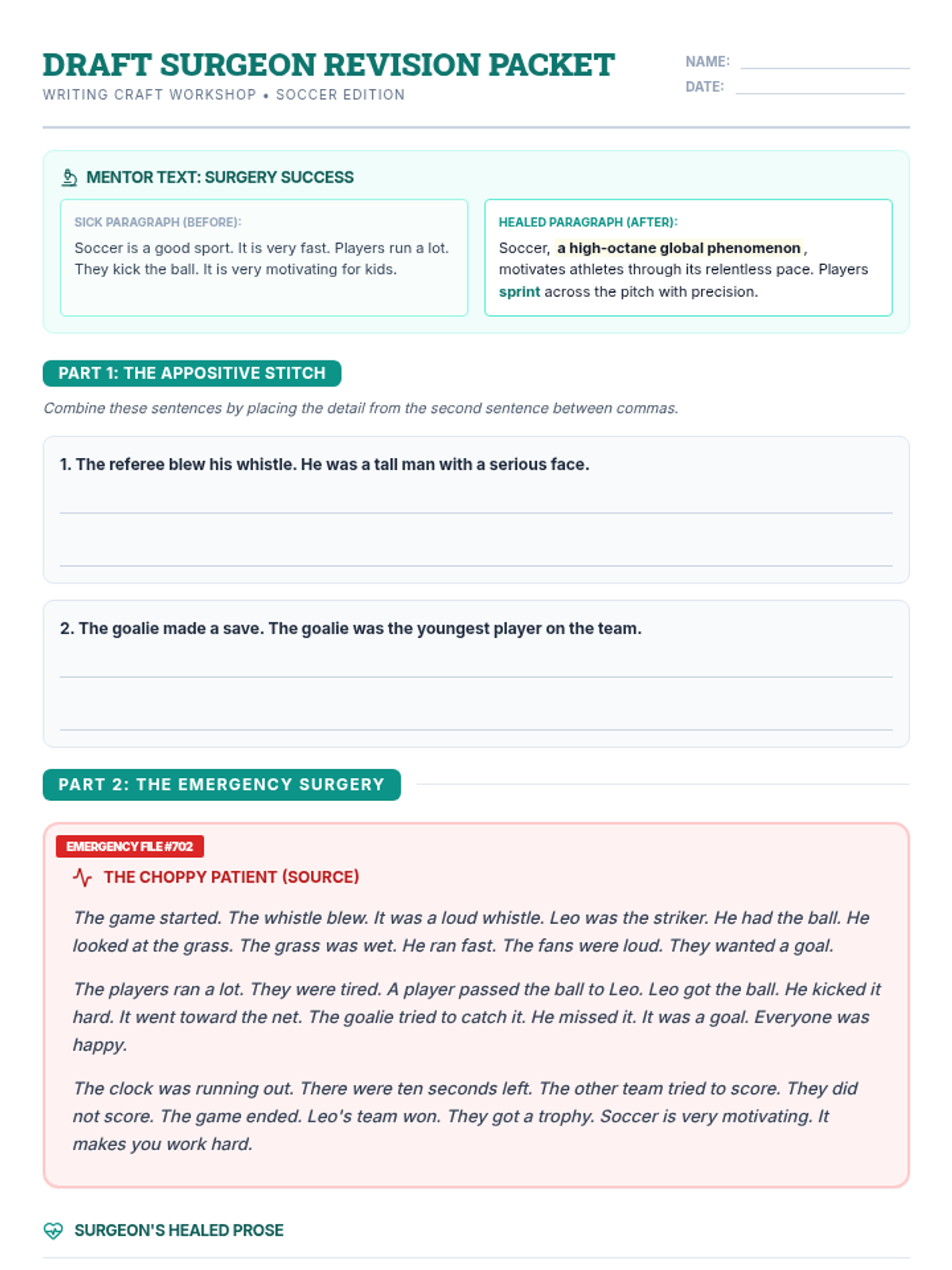
A 60-minute writing workshop focused on elevating 7th-grade prose through varied sentence structures, precise vocabulary, and appositives. Students act as 'Draft Surgeons' to transform weak soccer-themed text into professional, engaging writing.
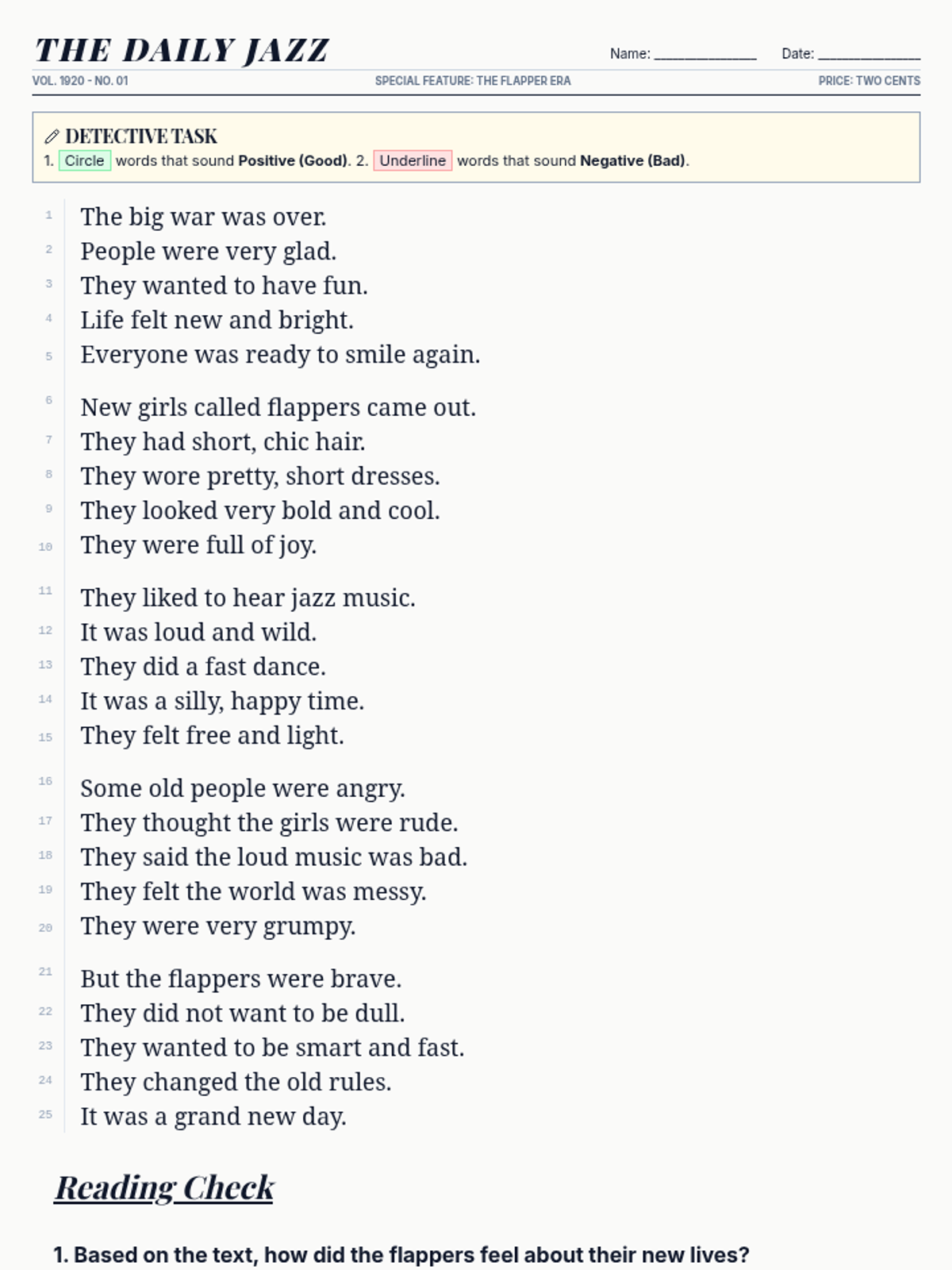
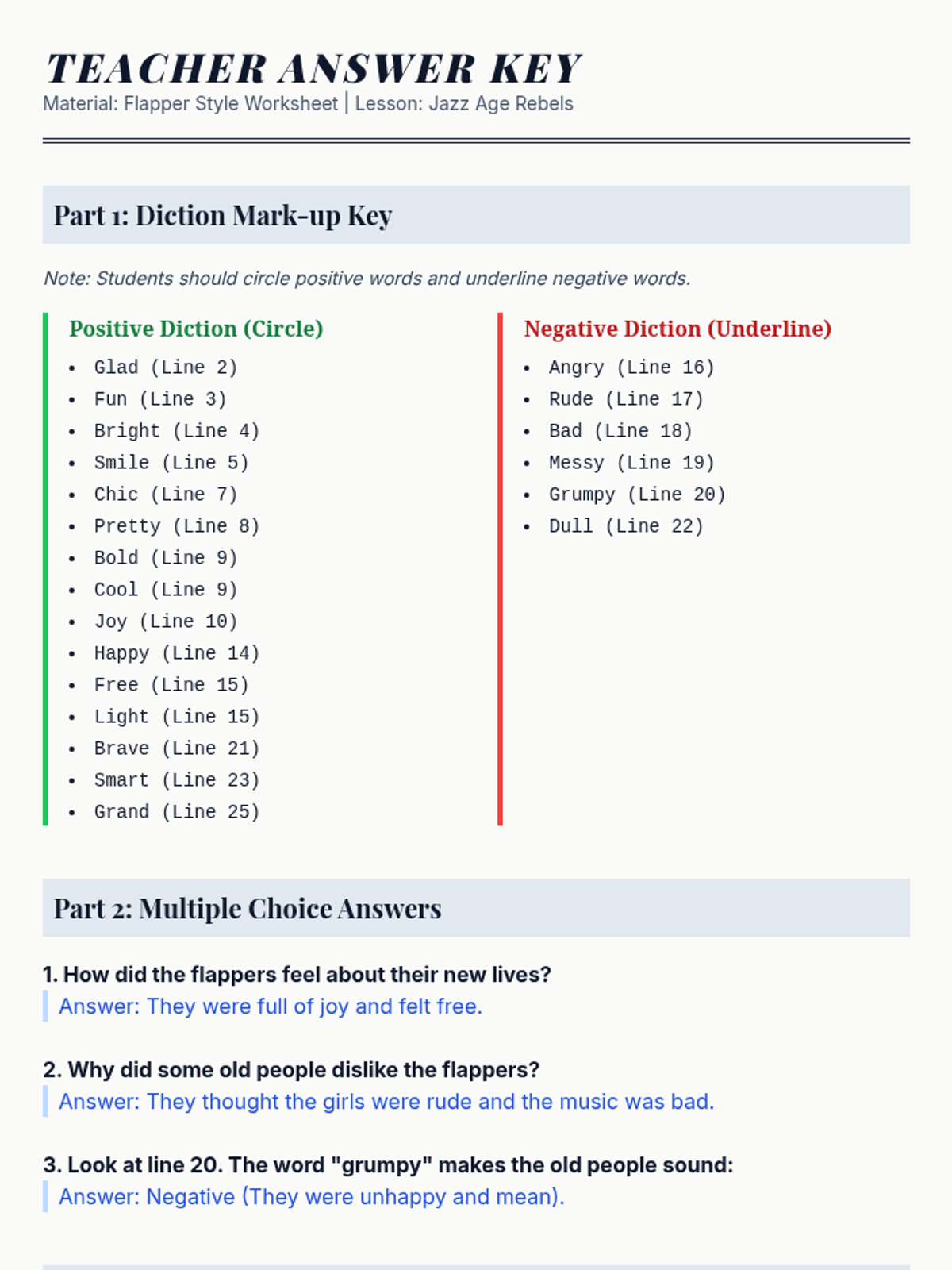
A lesson focusing on the cultural shift of the 1920s through the lens of flapper culture, designed with highly accessible text for middle school students reading at a 1st-grade level. Students will analyze diction to identify positive and negative connotations.
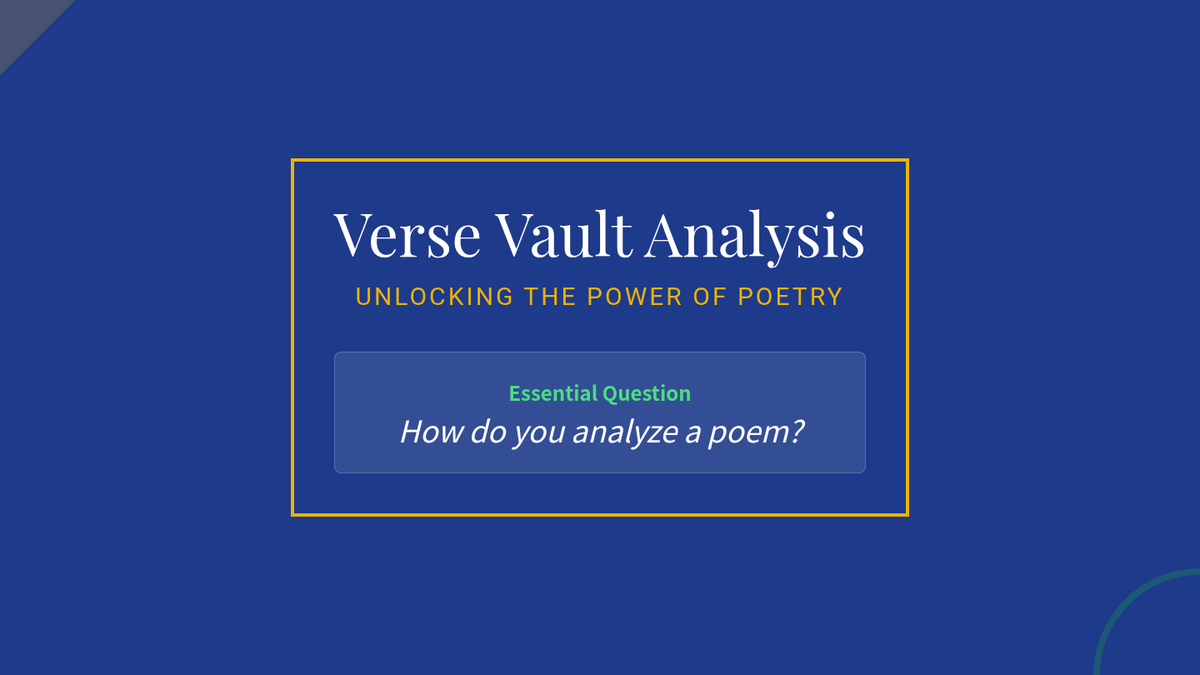
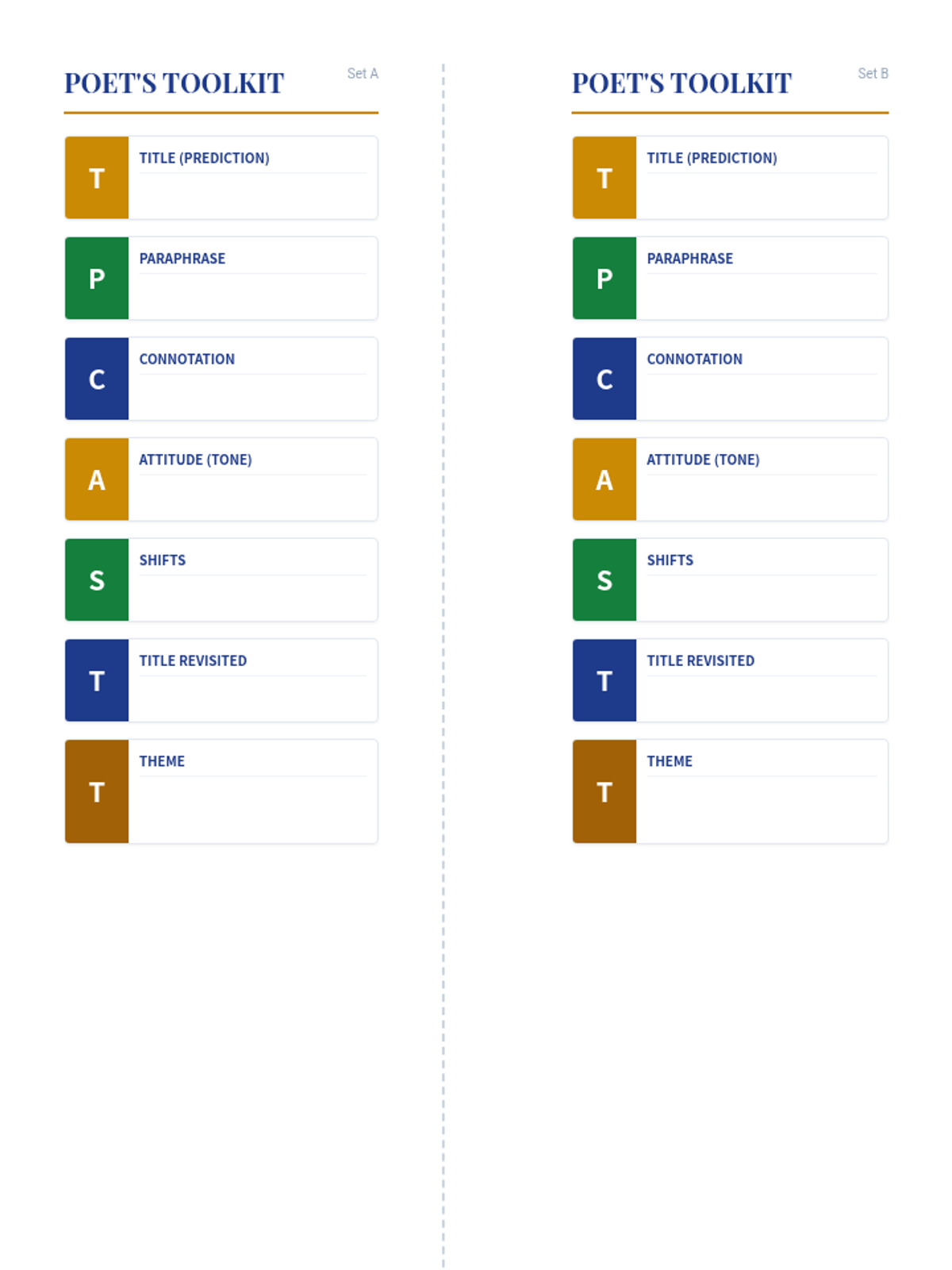
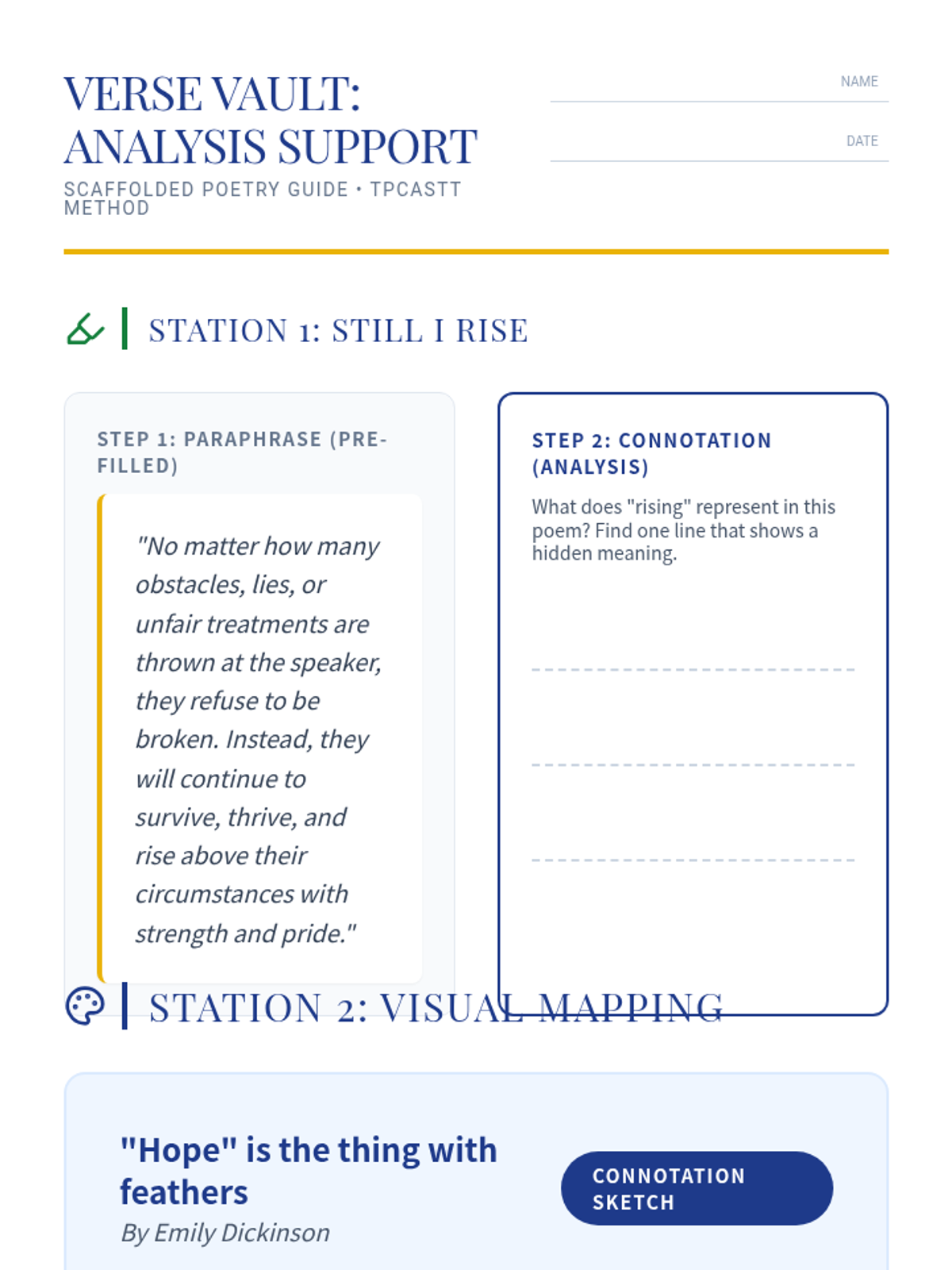
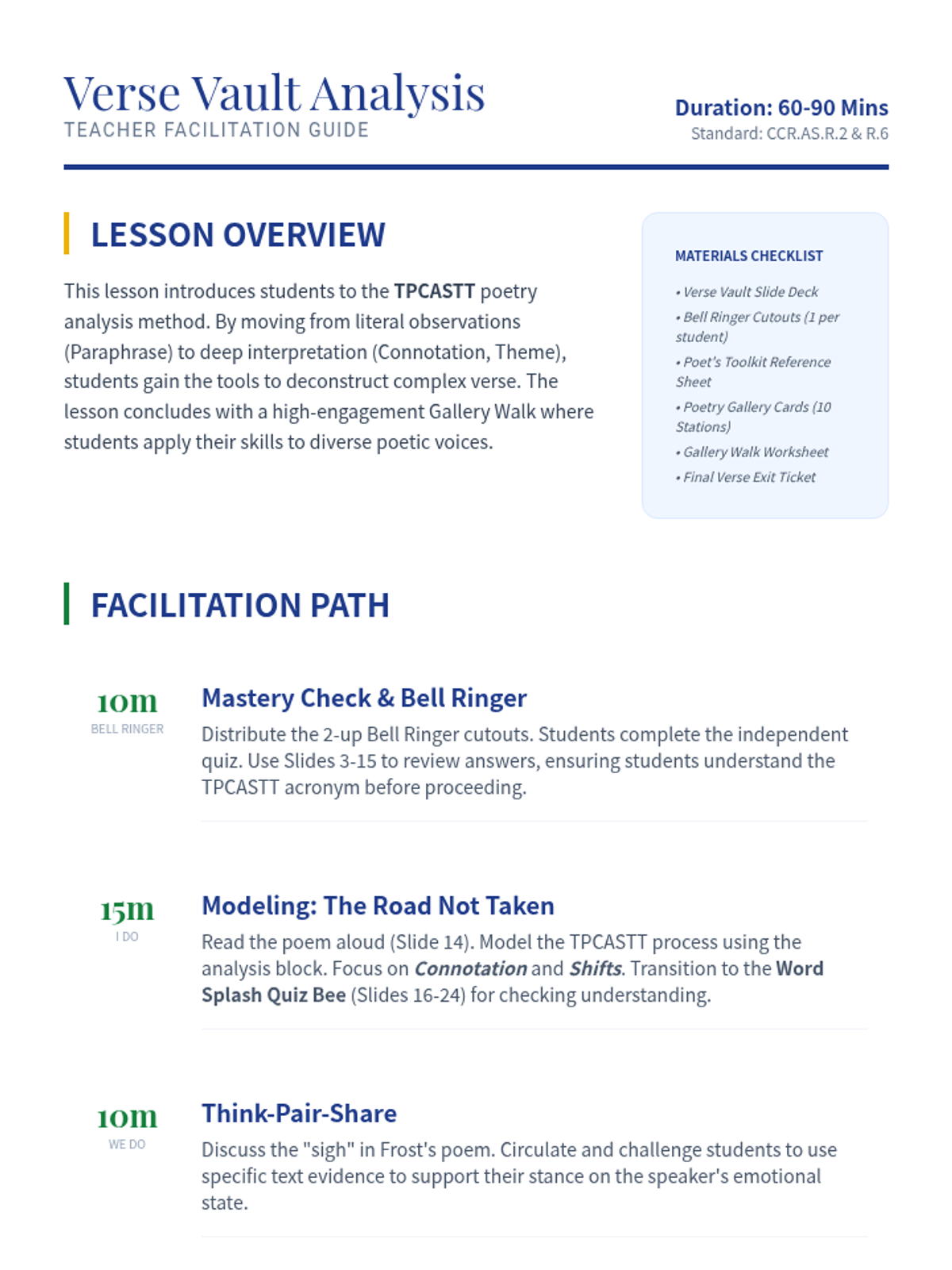
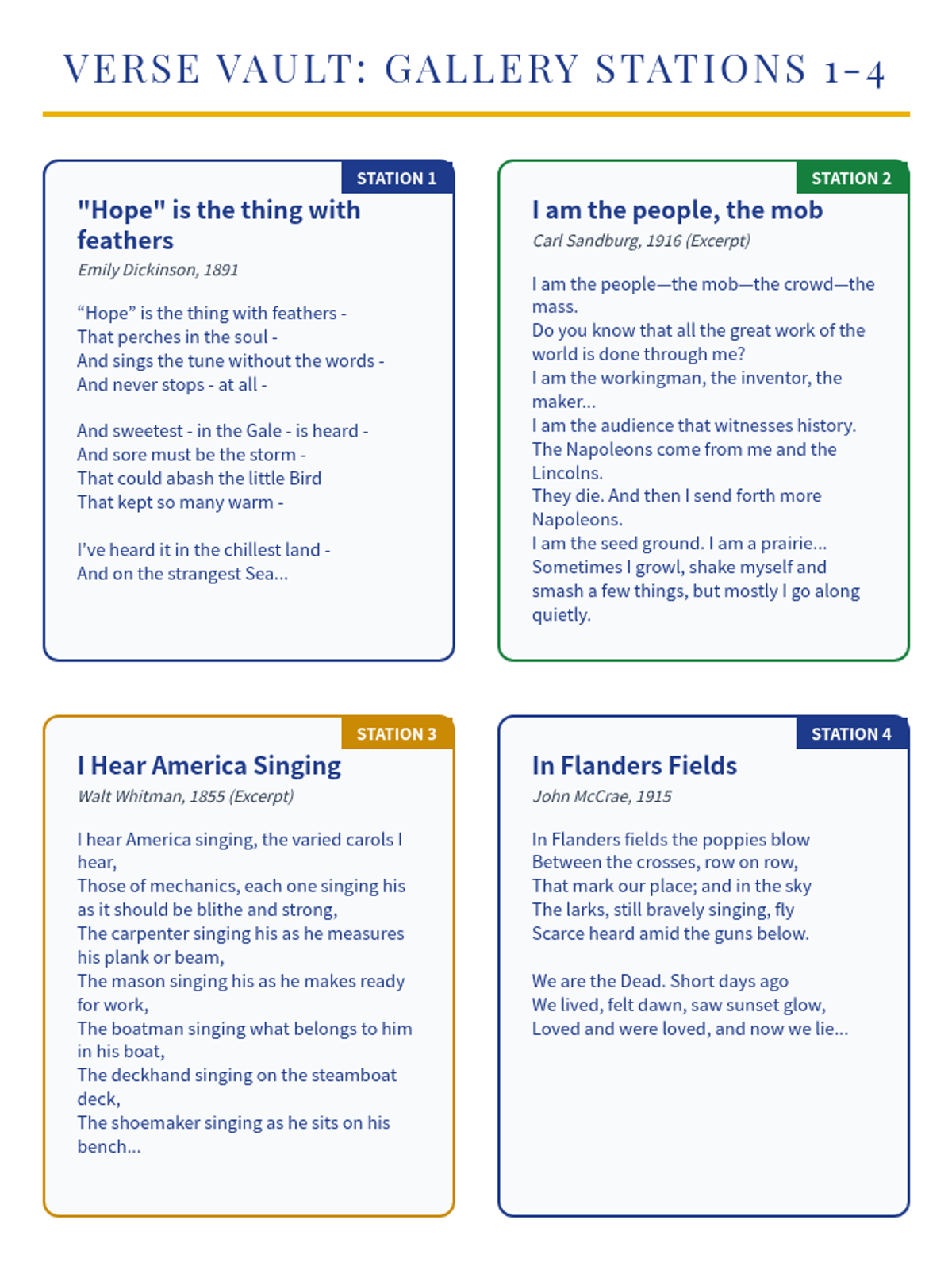
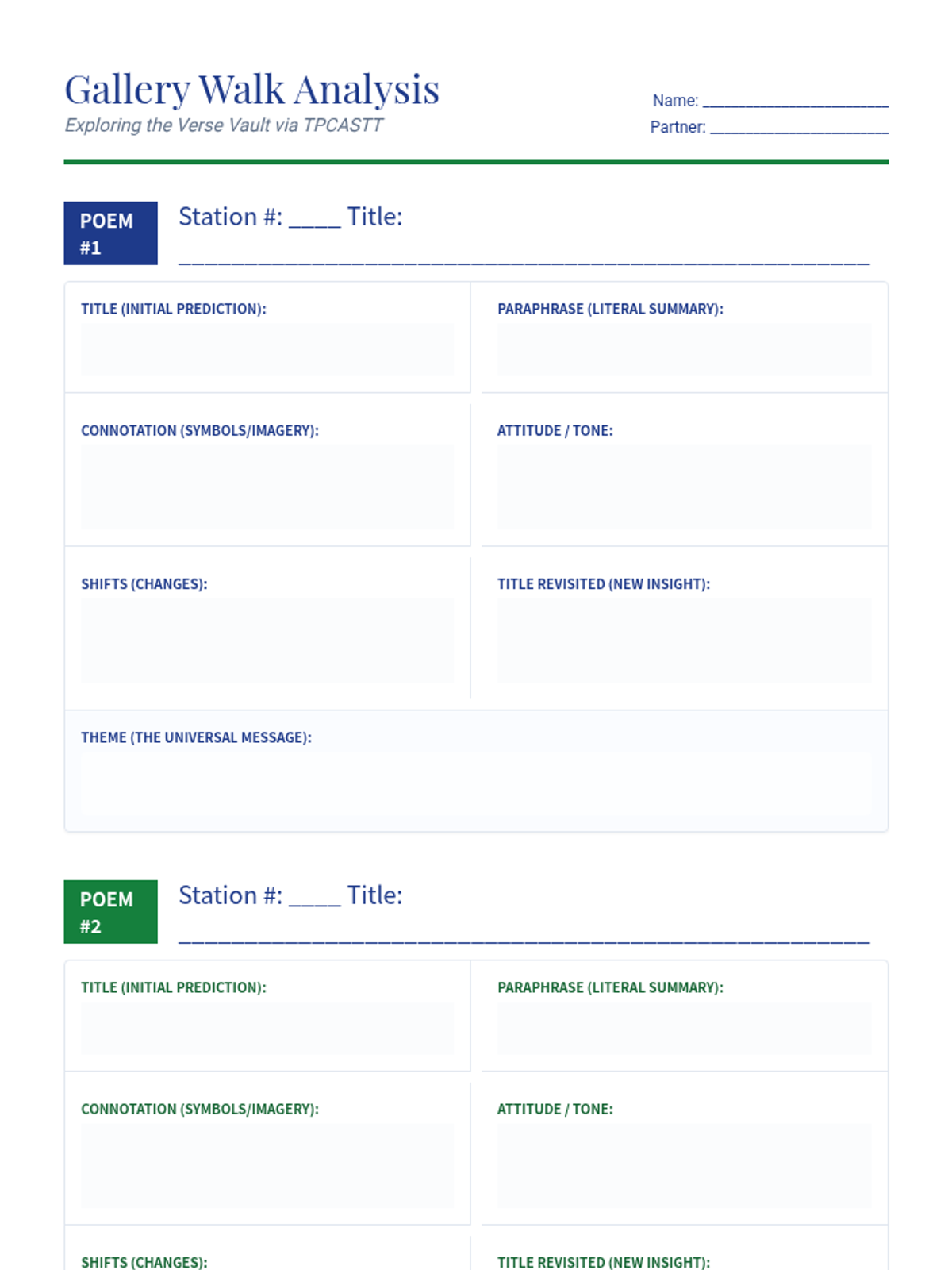
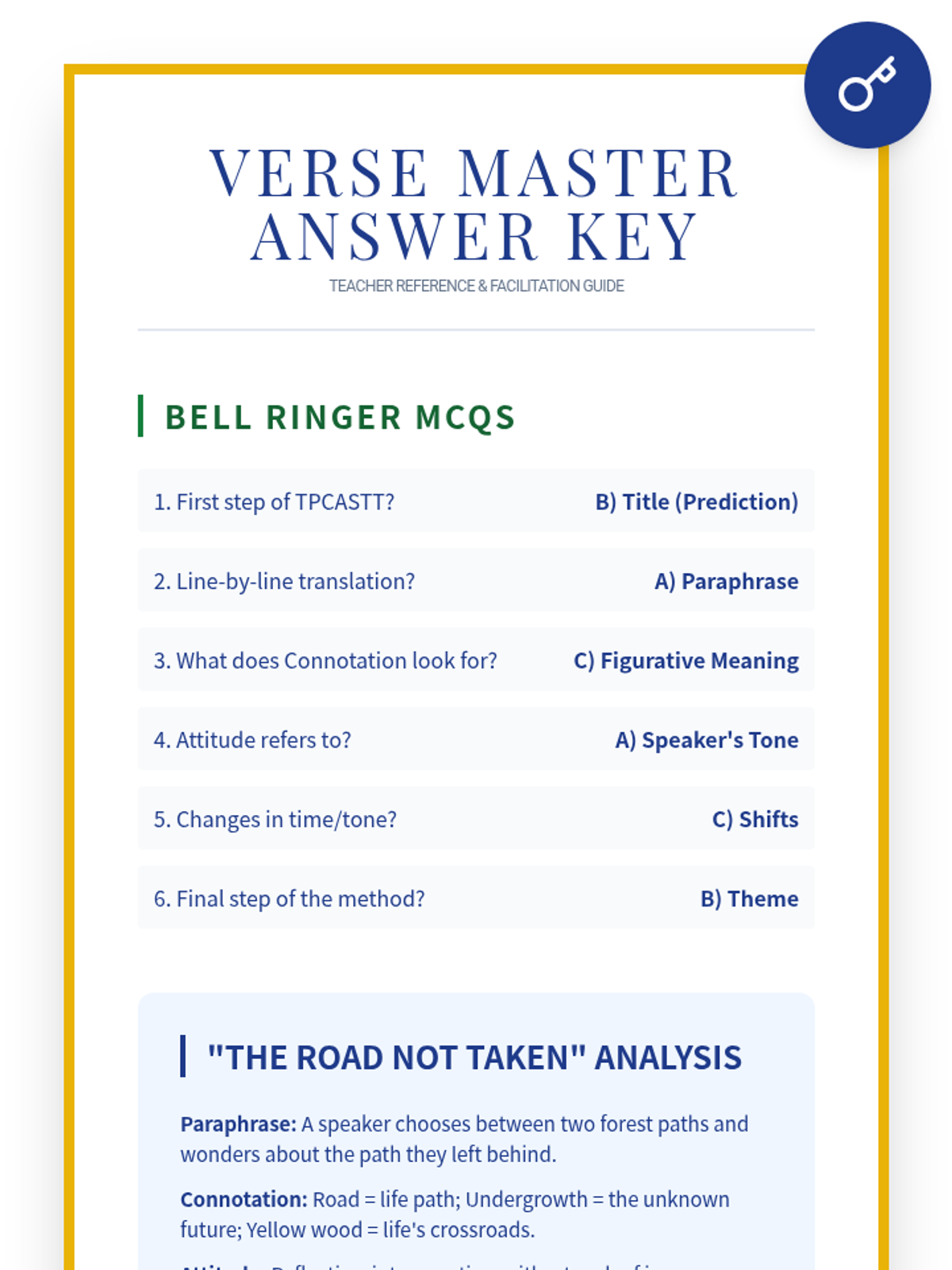
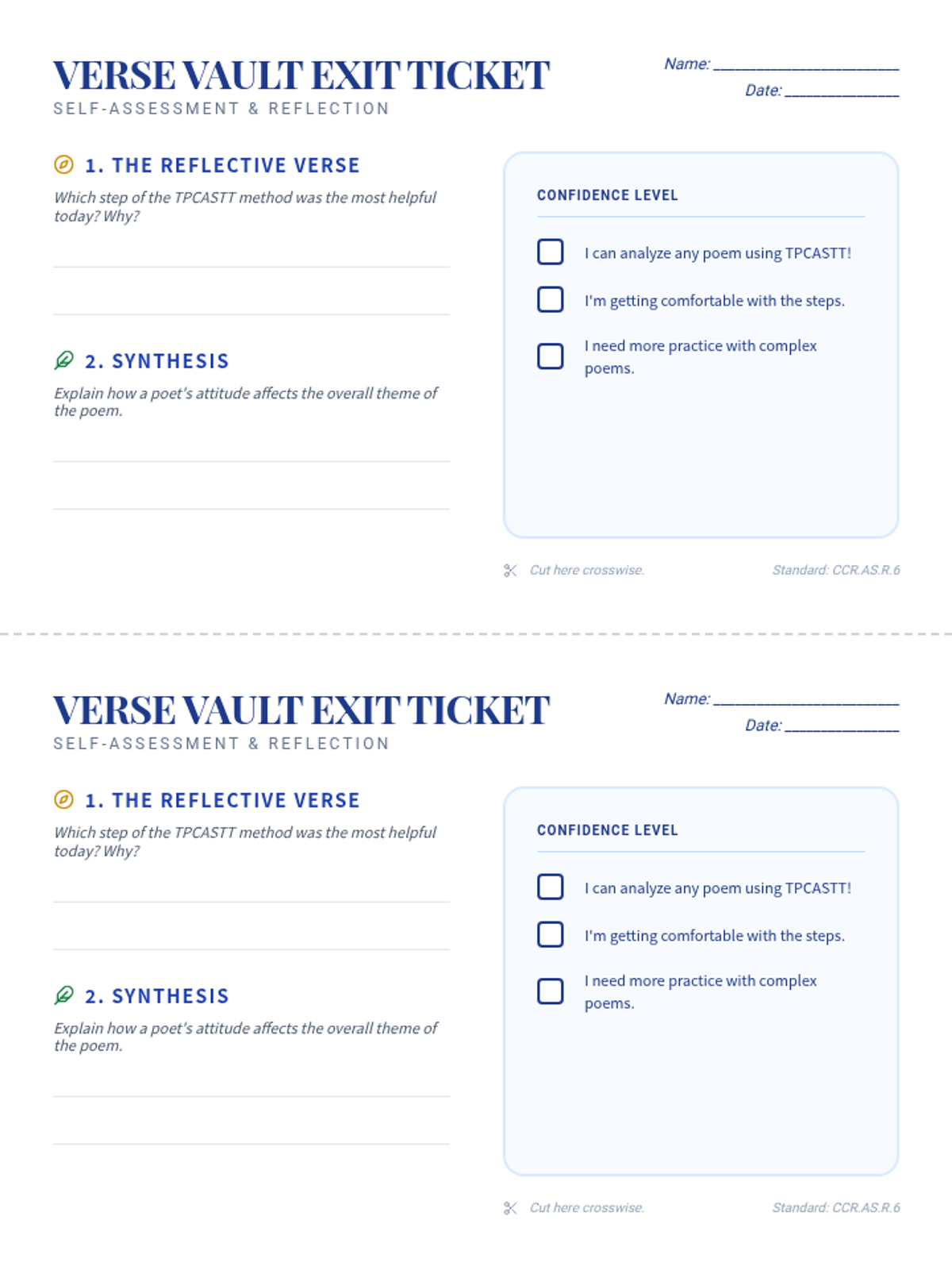
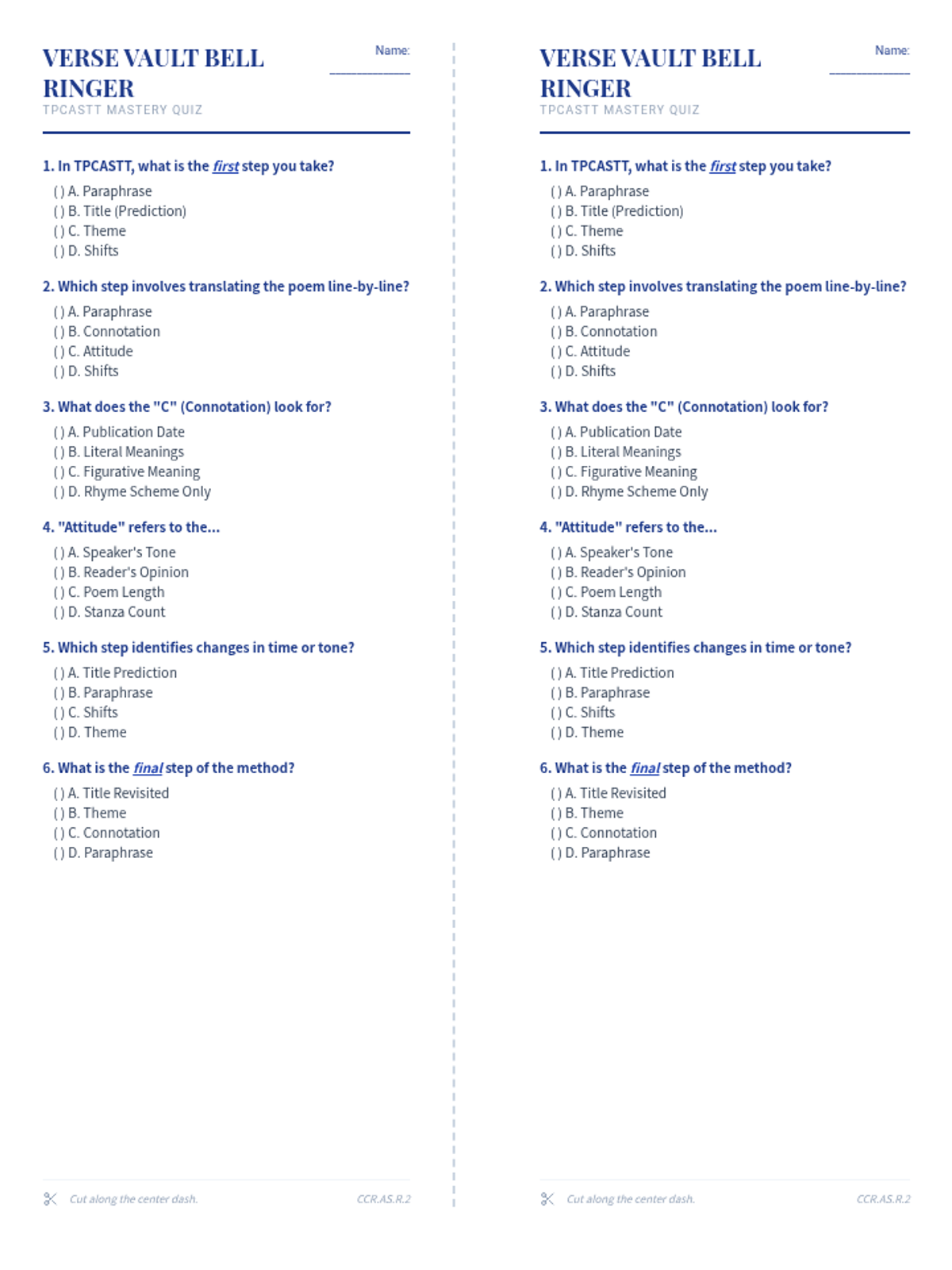
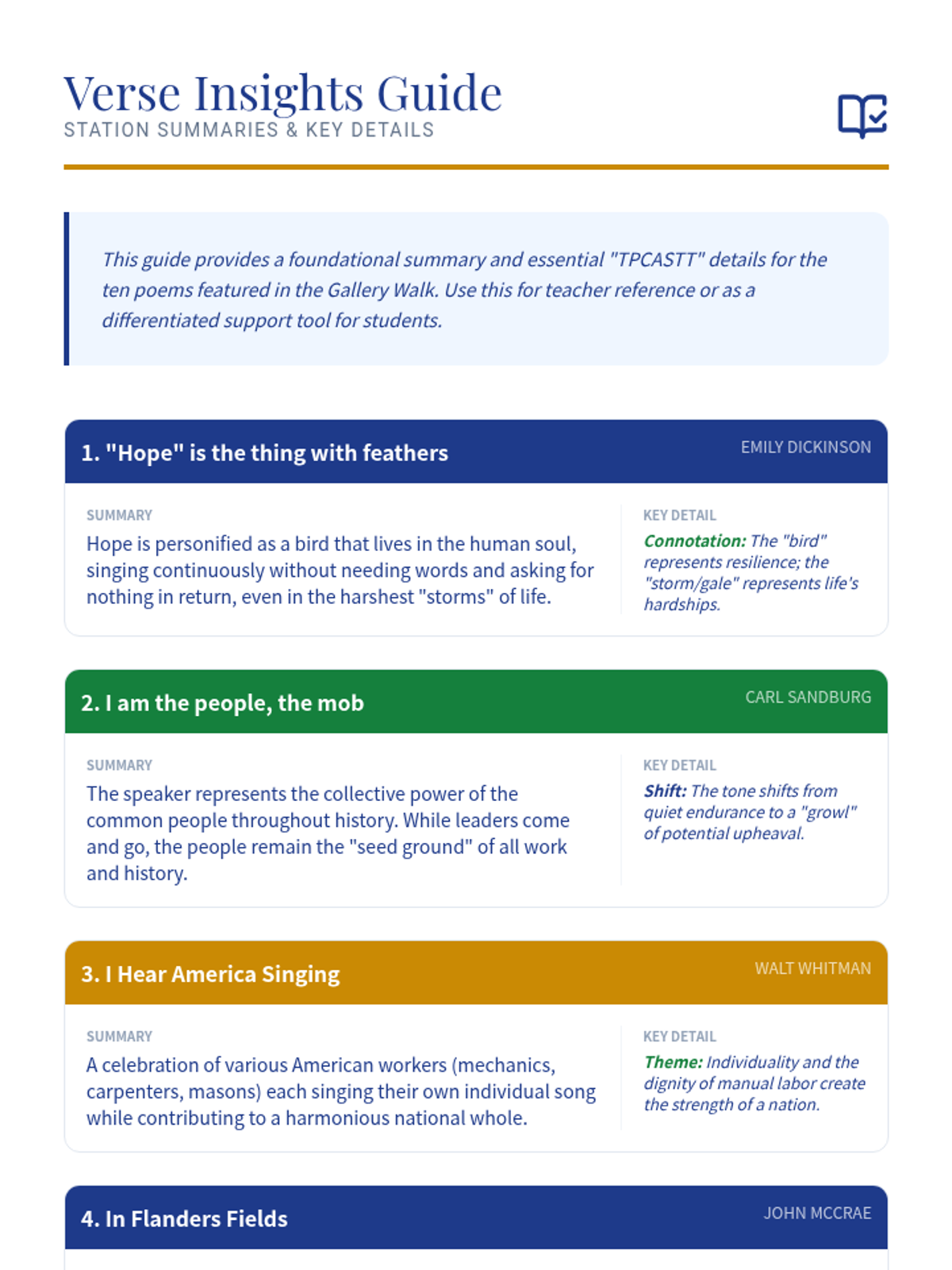
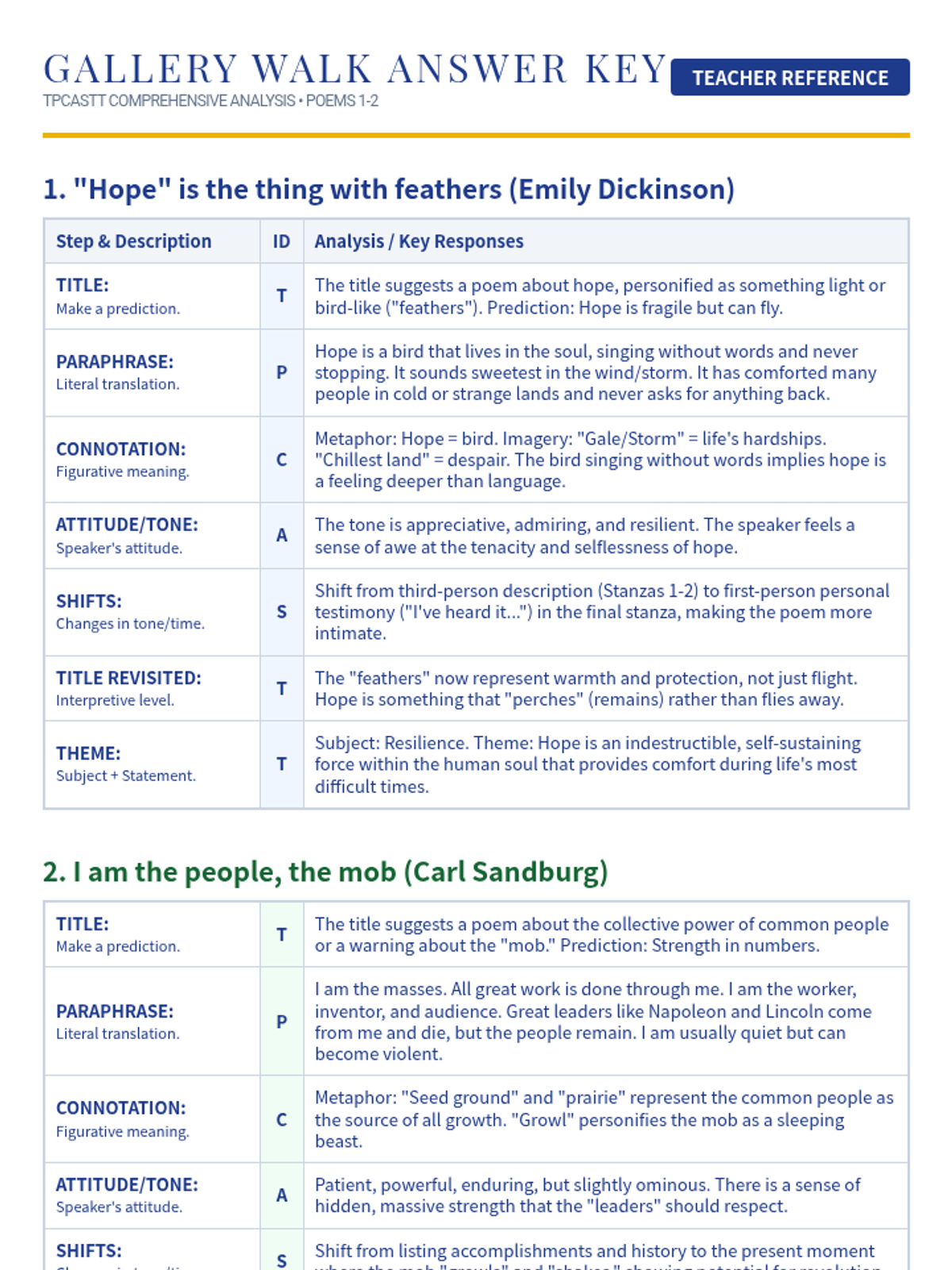
A comprehensive lesson on analyzing poetry using the TPCASTT method, featuring a deep dive into Robert Frost's 'The Road Not Taken' and a gallery walk of diverse poems.
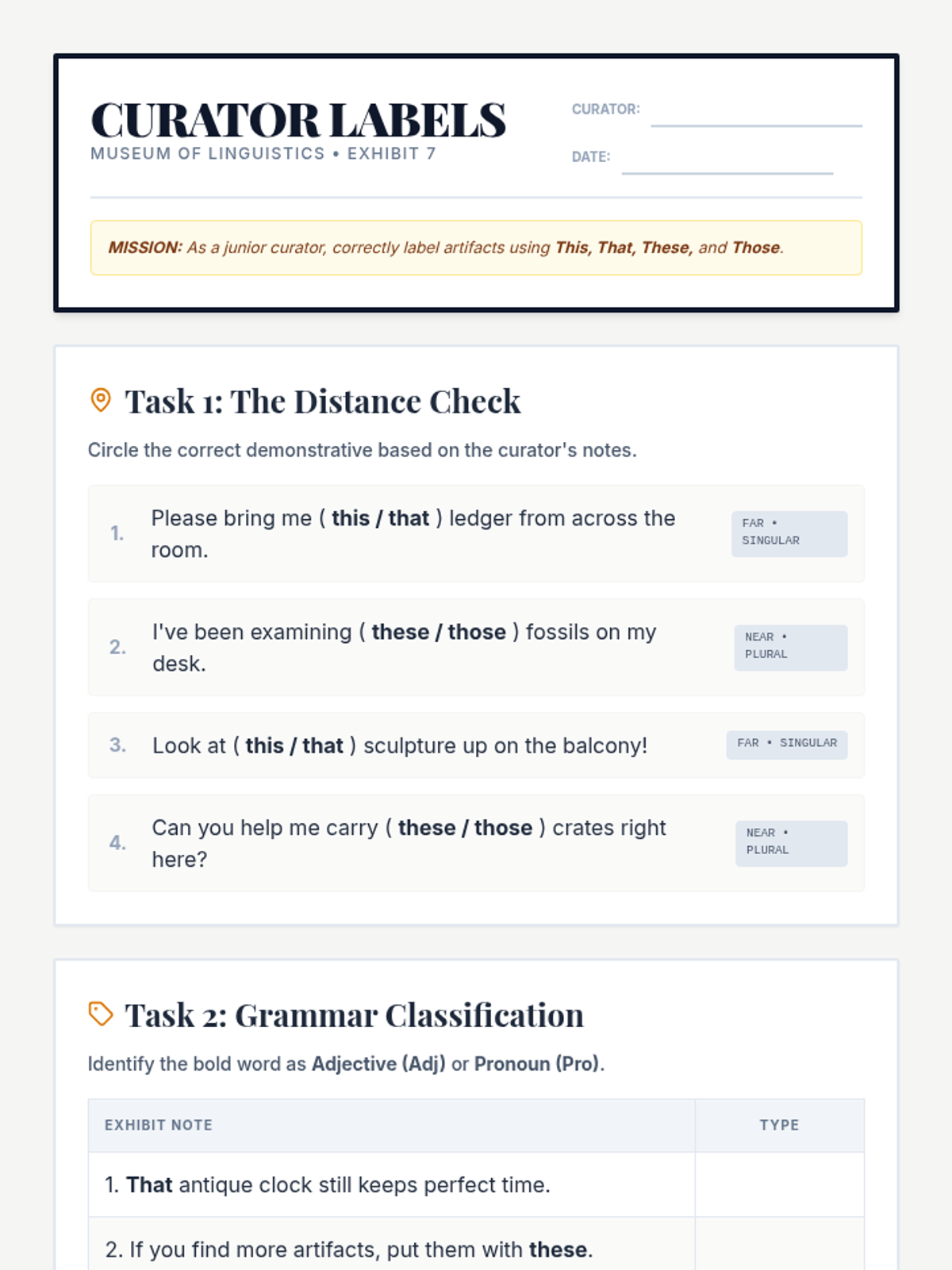
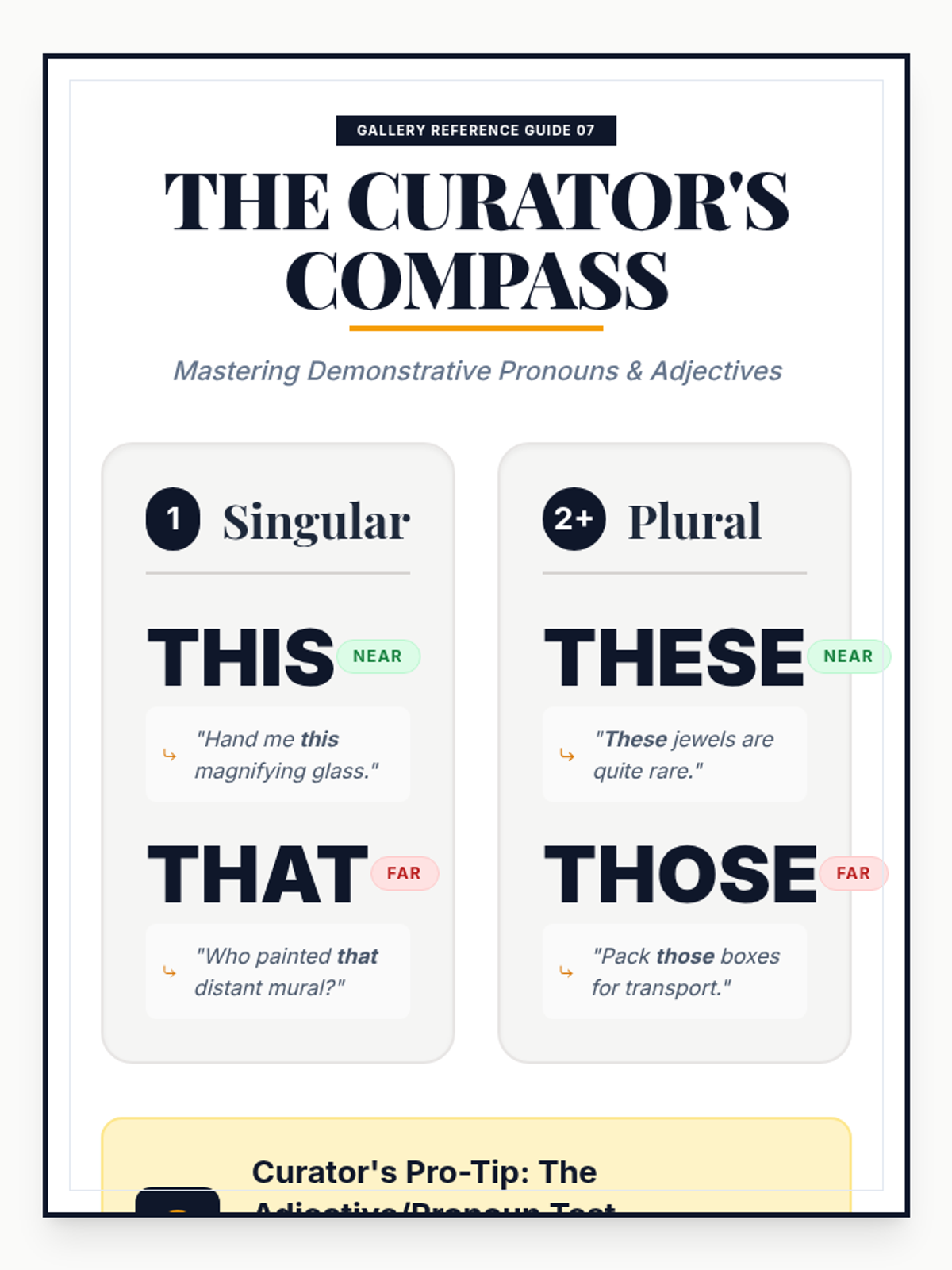
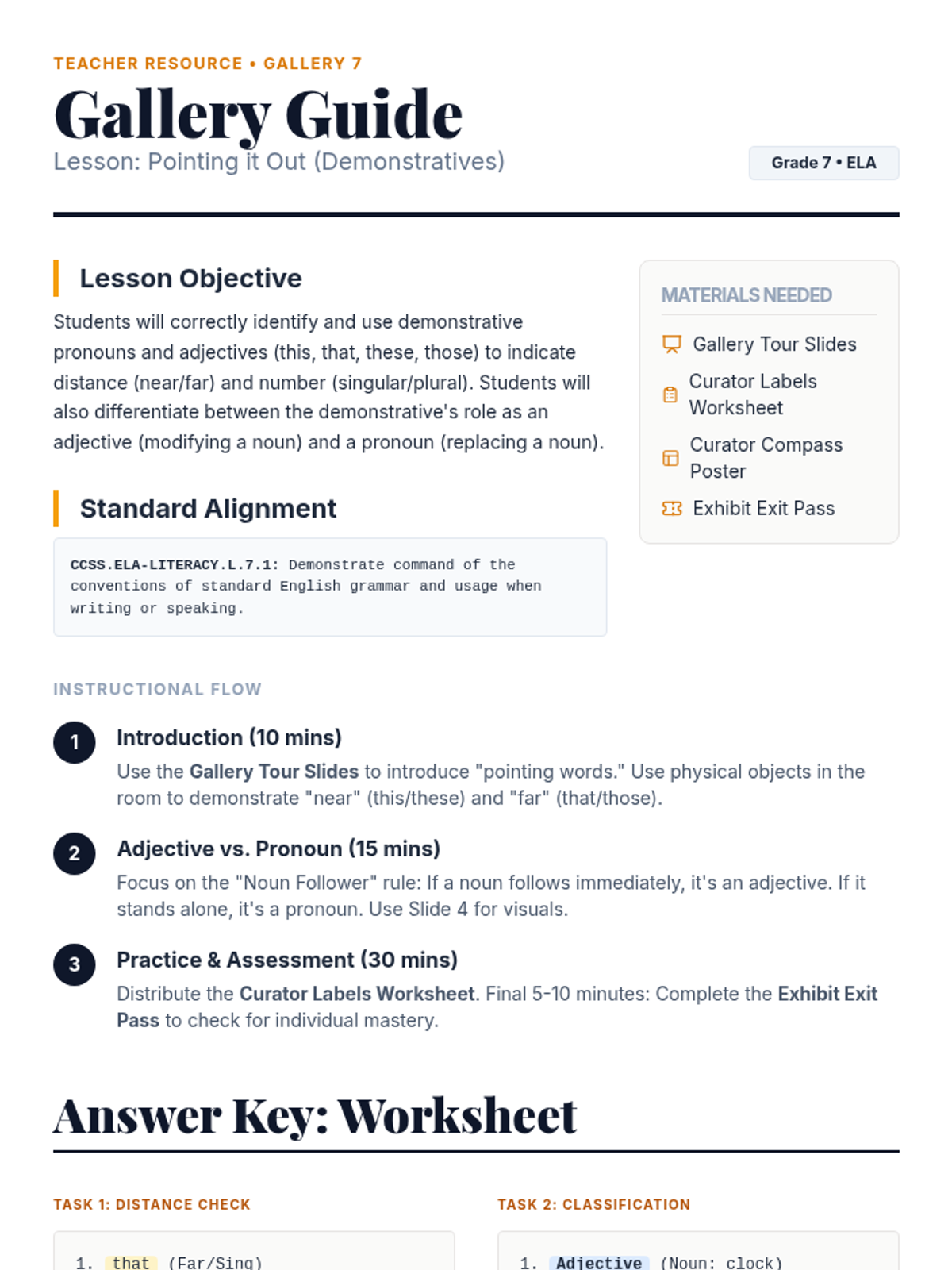
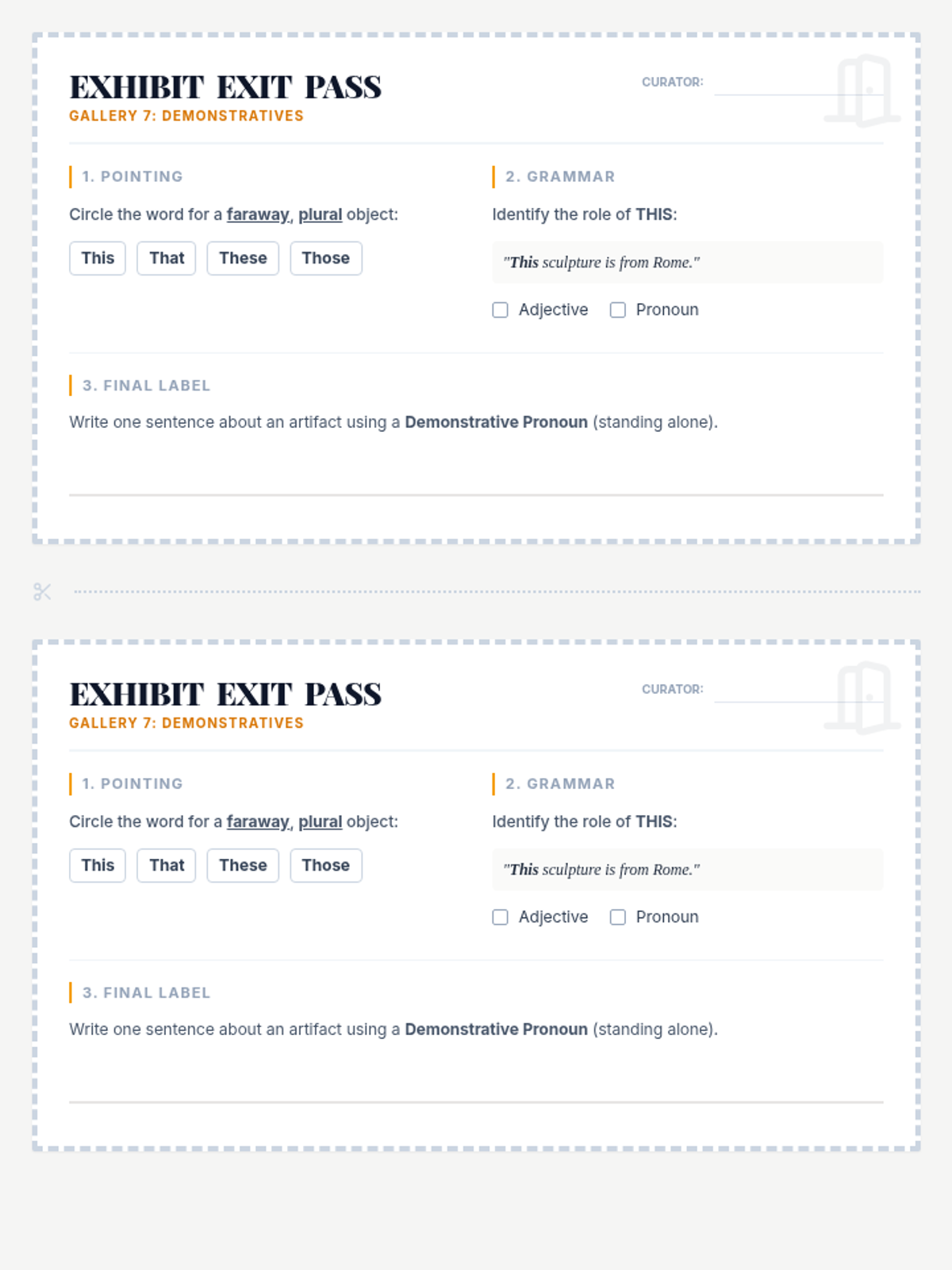
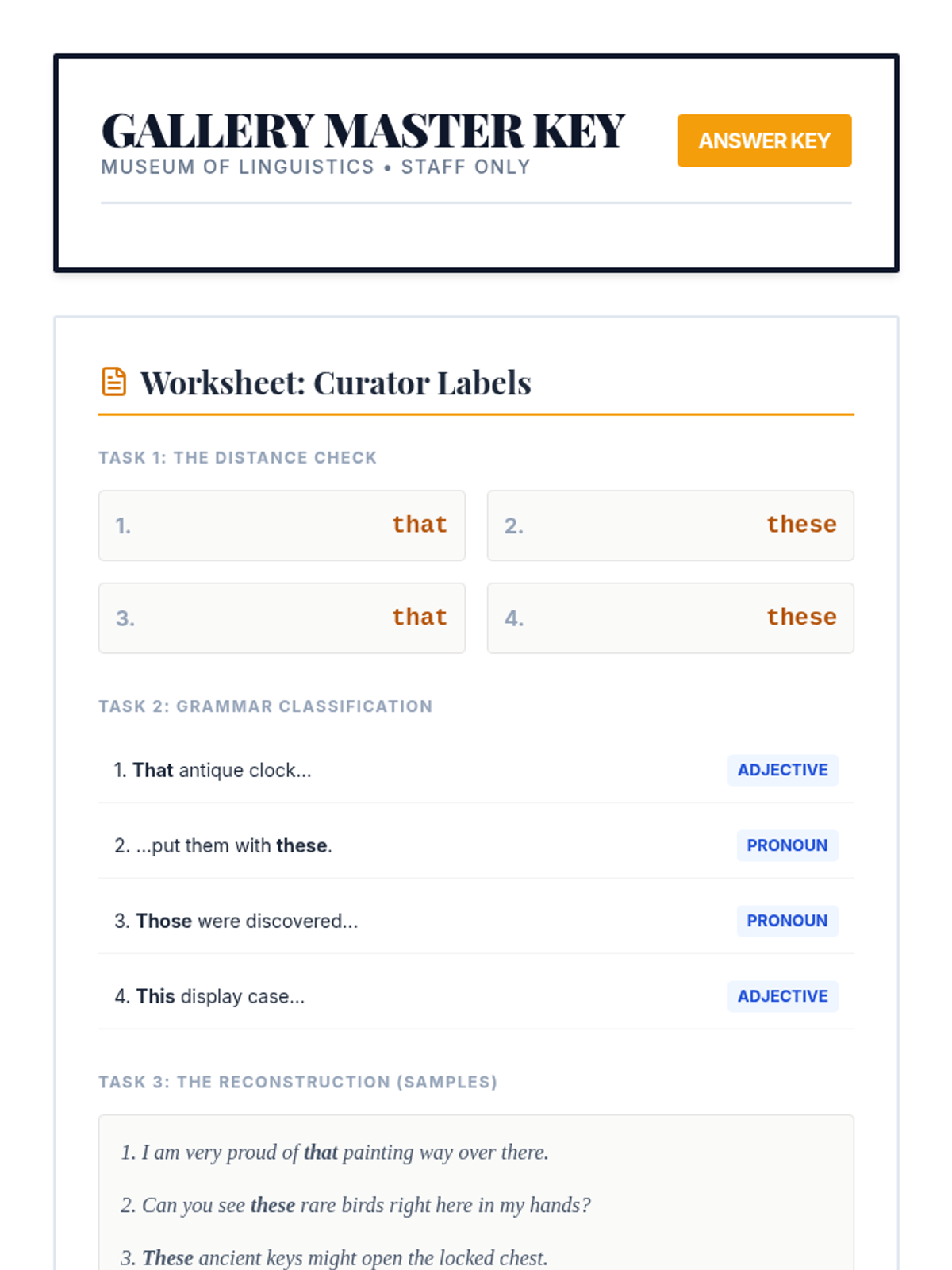
A comprehensive lesson on demonstrative pronouns and adjectives (this, that, these, those) themed around a museum gallery. Students learn to distinguish between near and far, singular and plural, and the difference between demonstrative pronouns and adjectives.
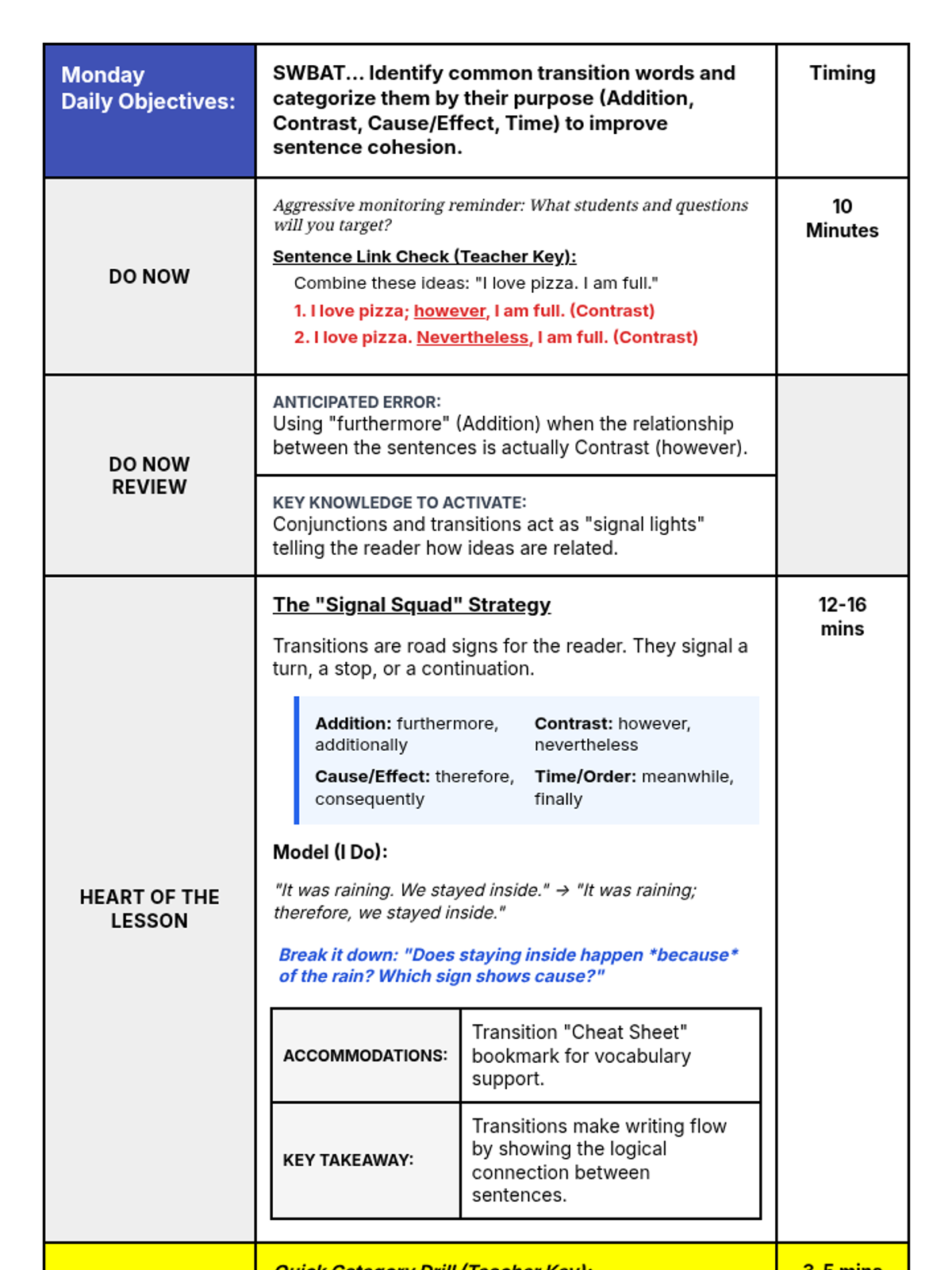
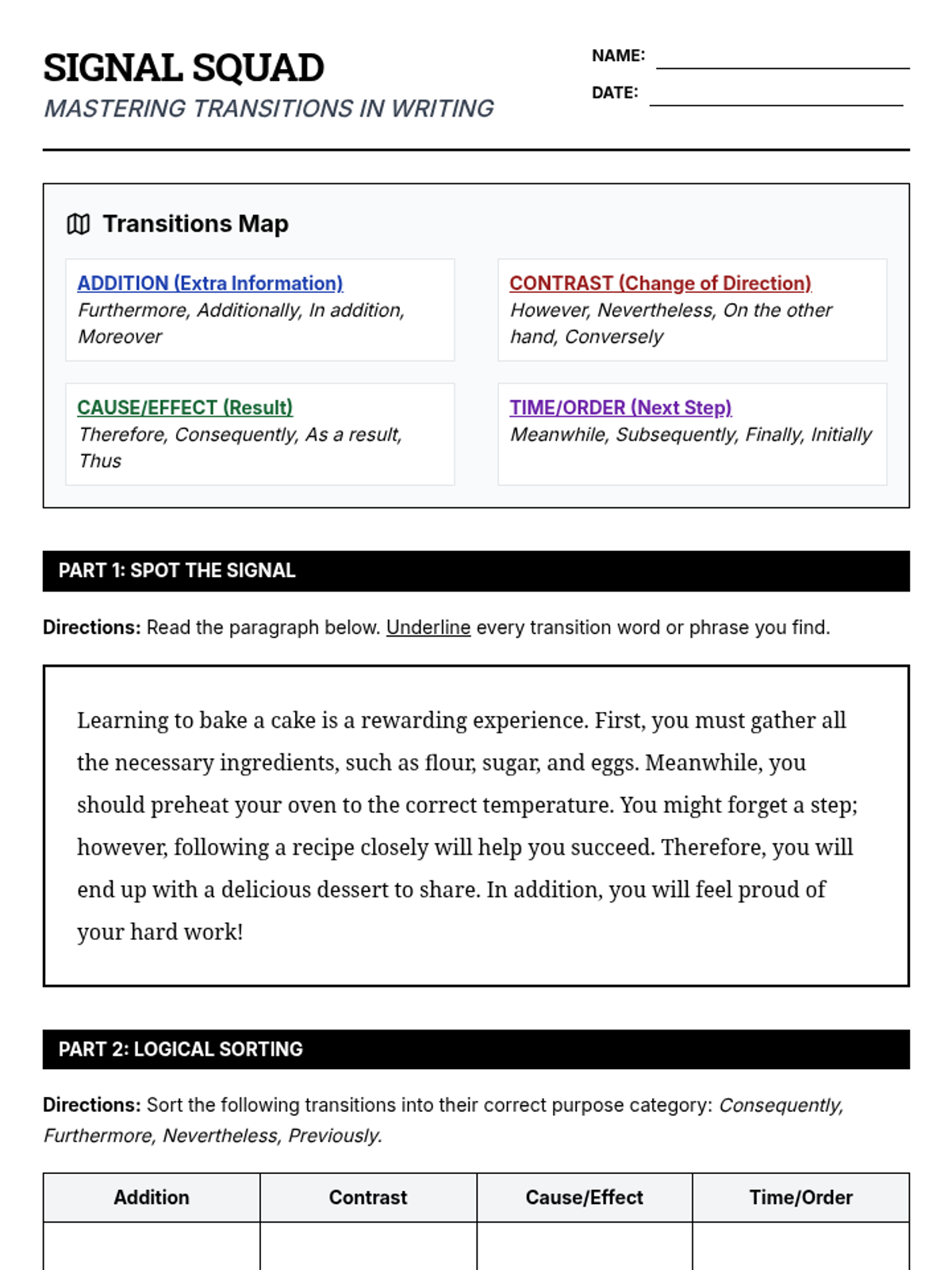
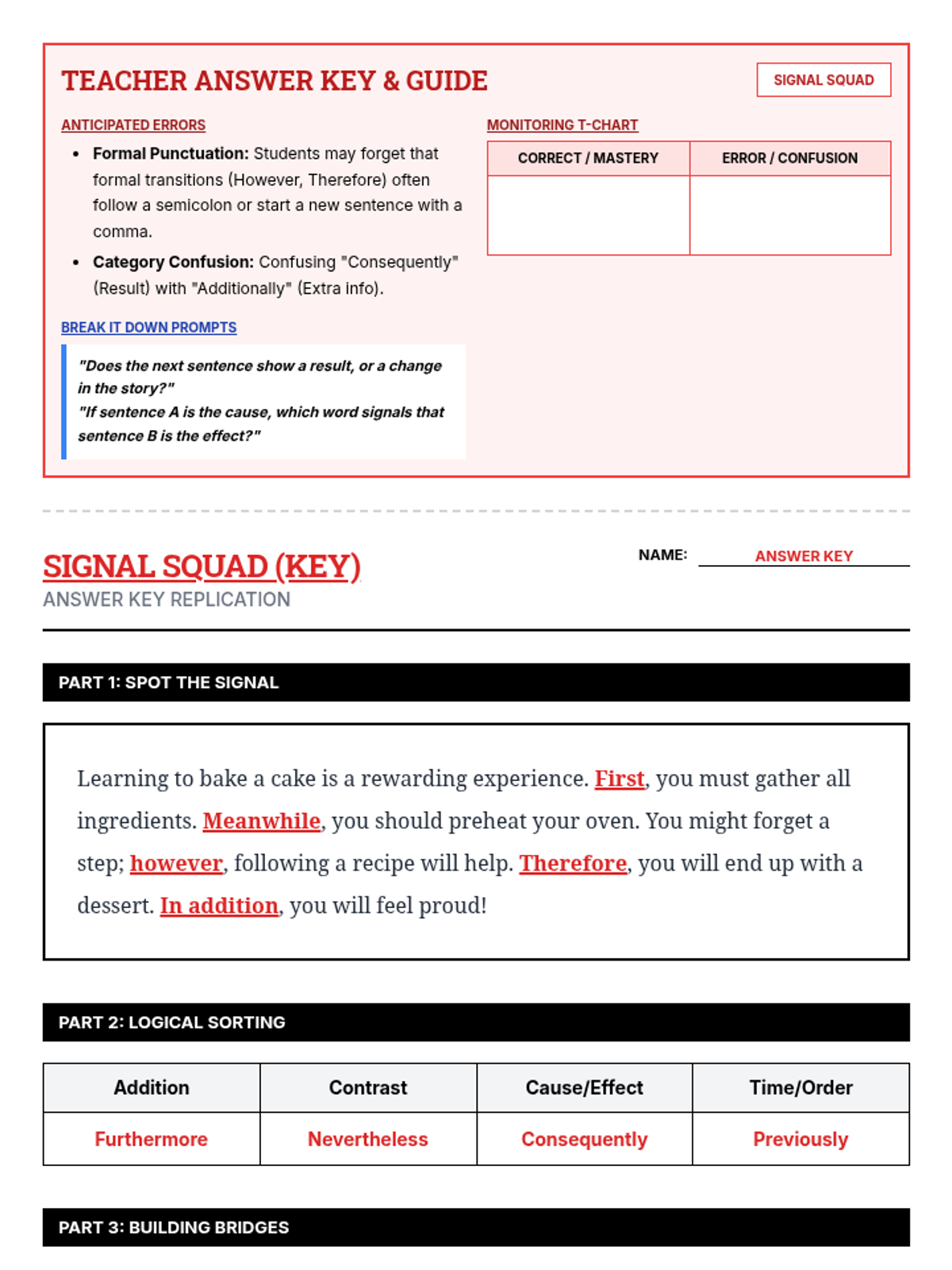
A lesson on identifying and using common transition words to create cohesion in writing. Students will categorize transitions by purpose (Addition, Contrast, Cause/Effect, Time) and use them to link ideas.
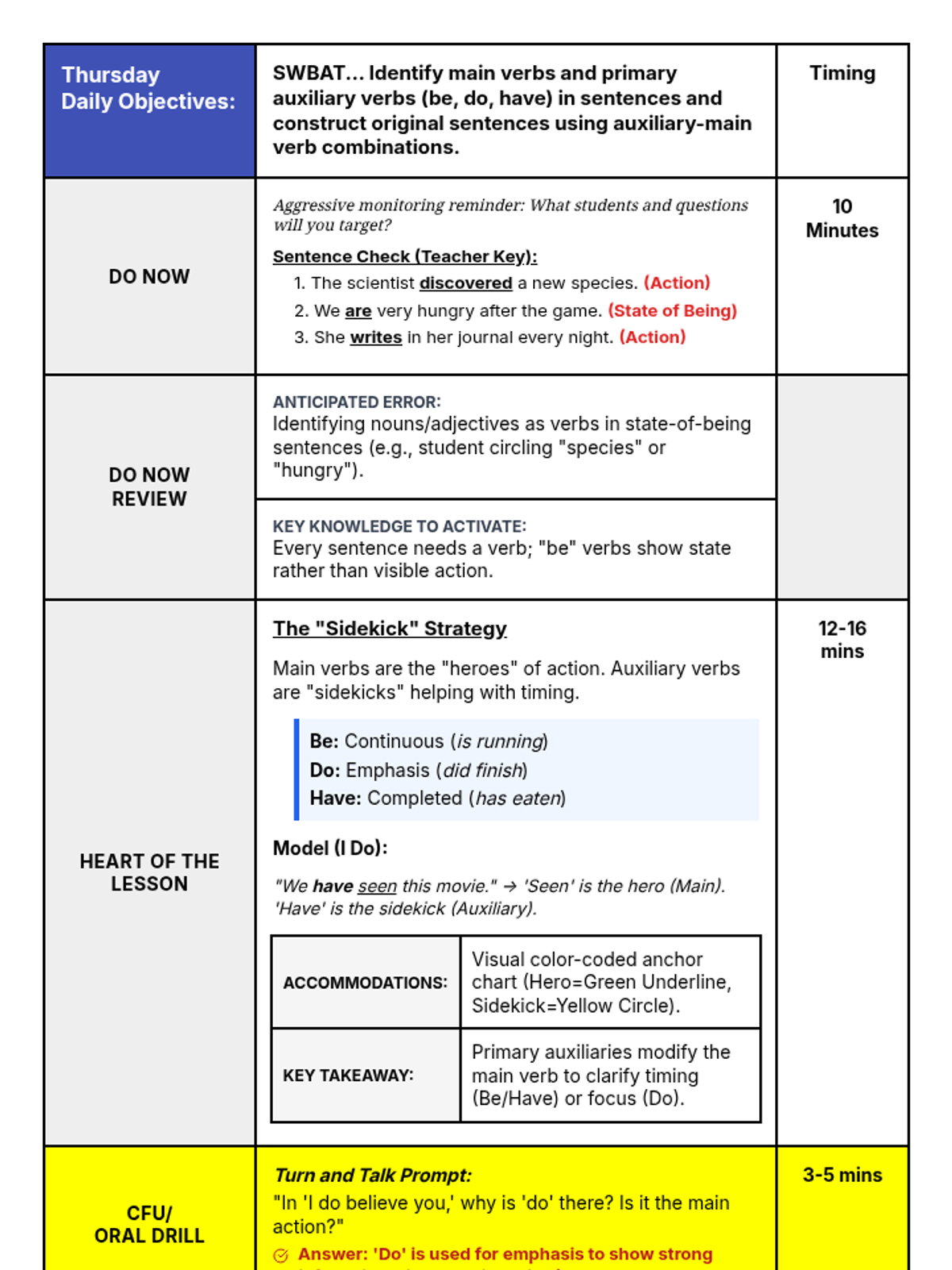
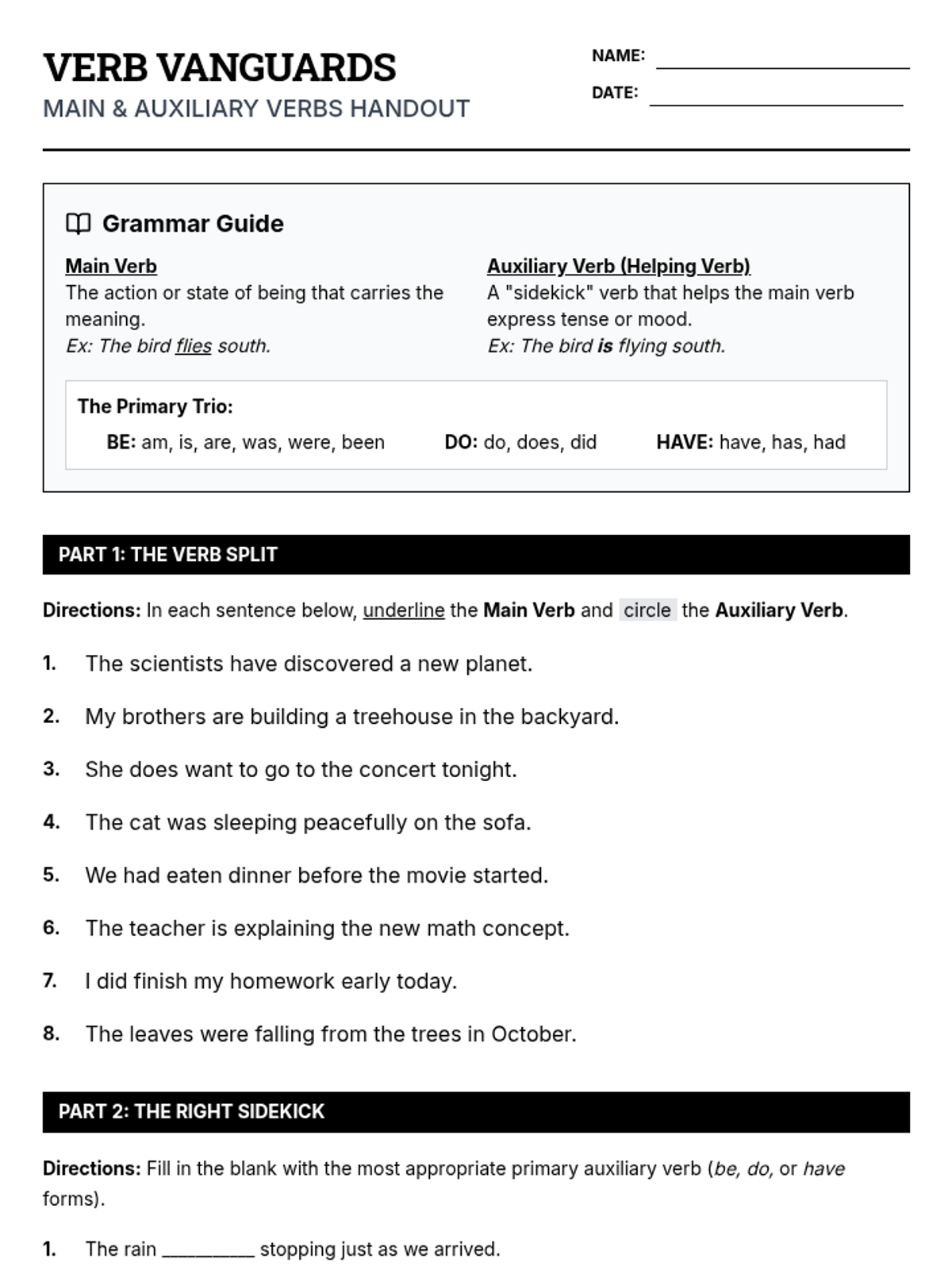
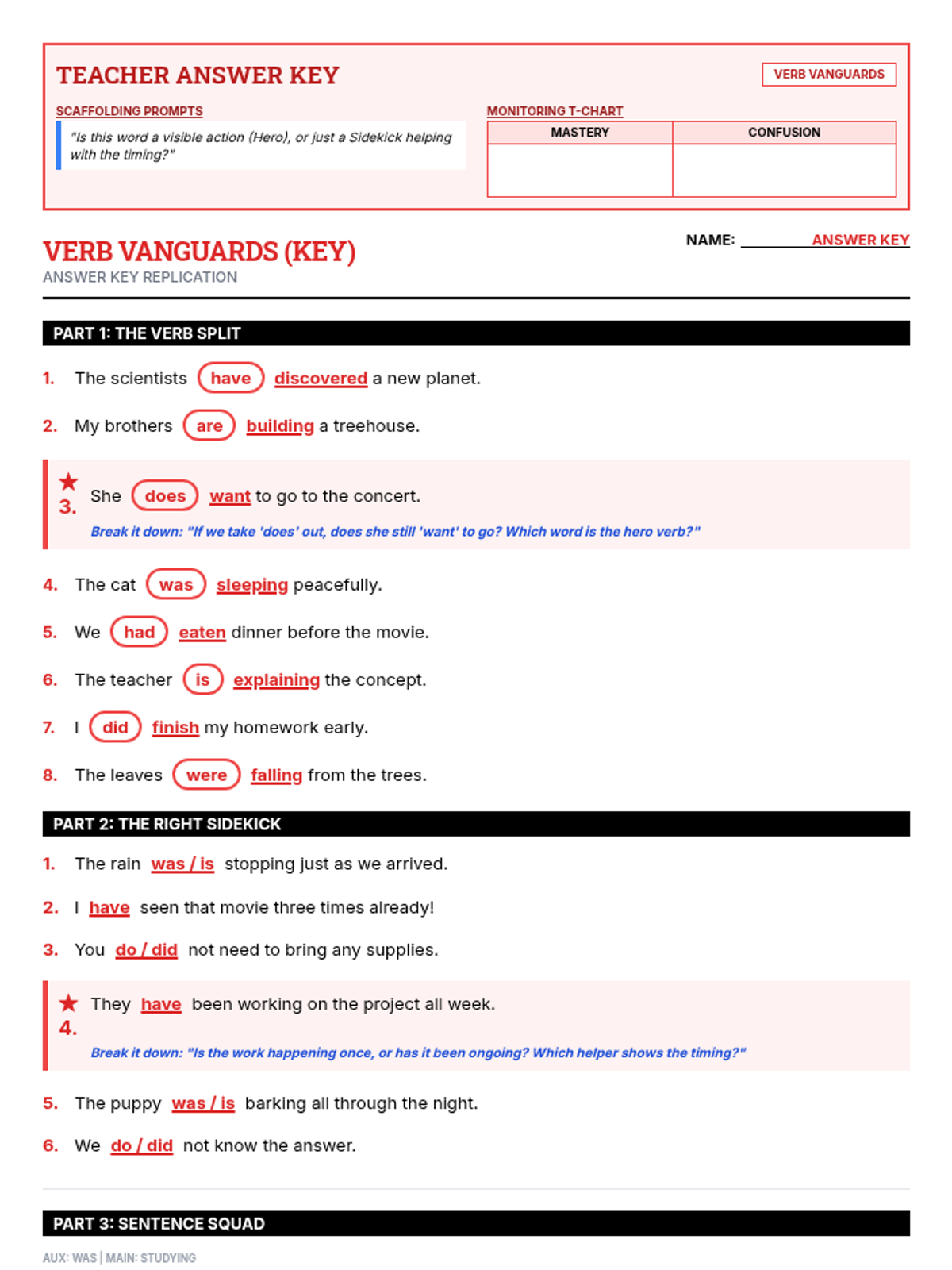
A comprehensive lesson on identifying and using main verbs and primary auxiliary verbs (be, do, have) in sentences. Includes a structured lesson plan, a practice handout, and a detailed answer key with monitoring tools.
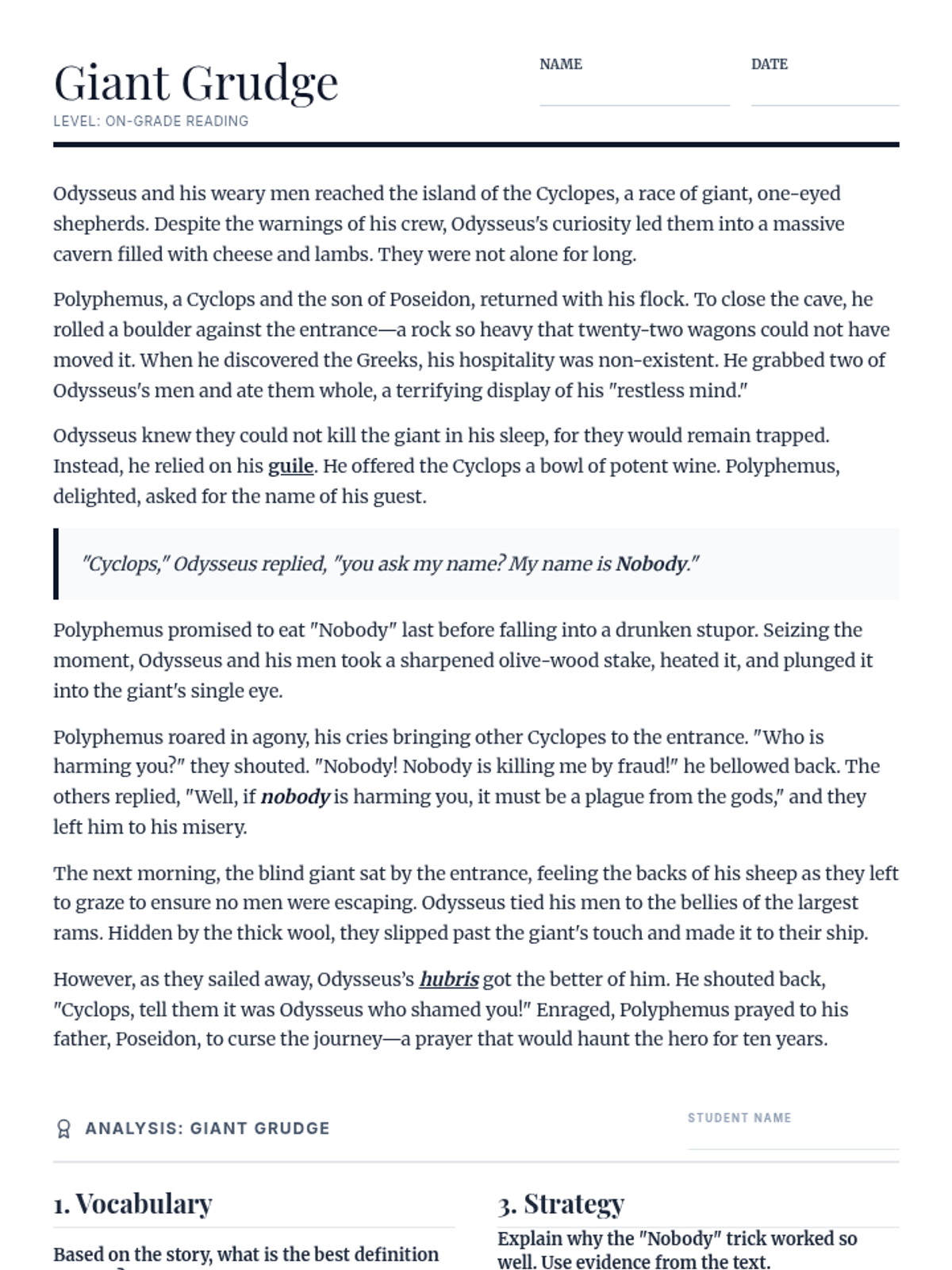
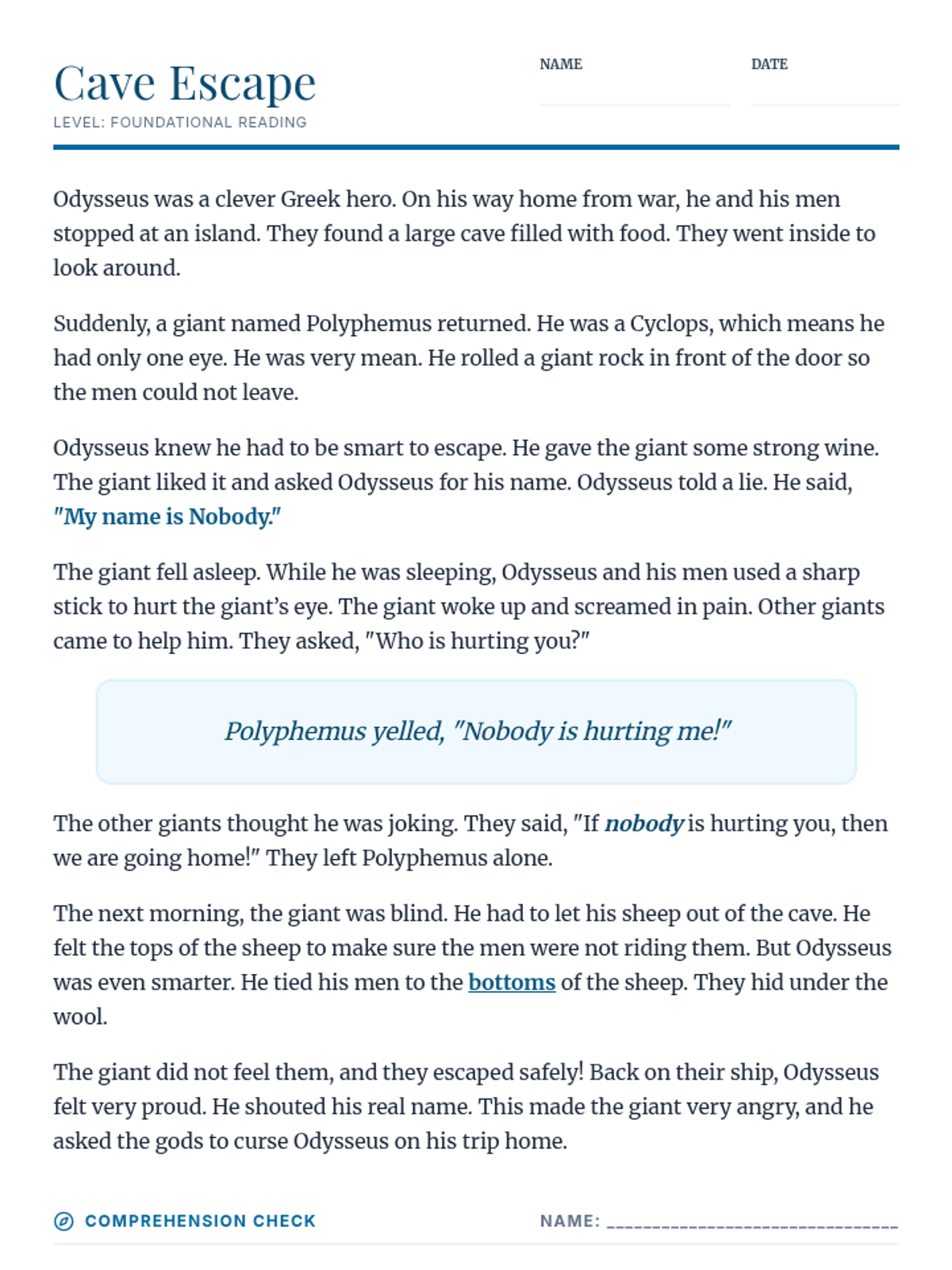
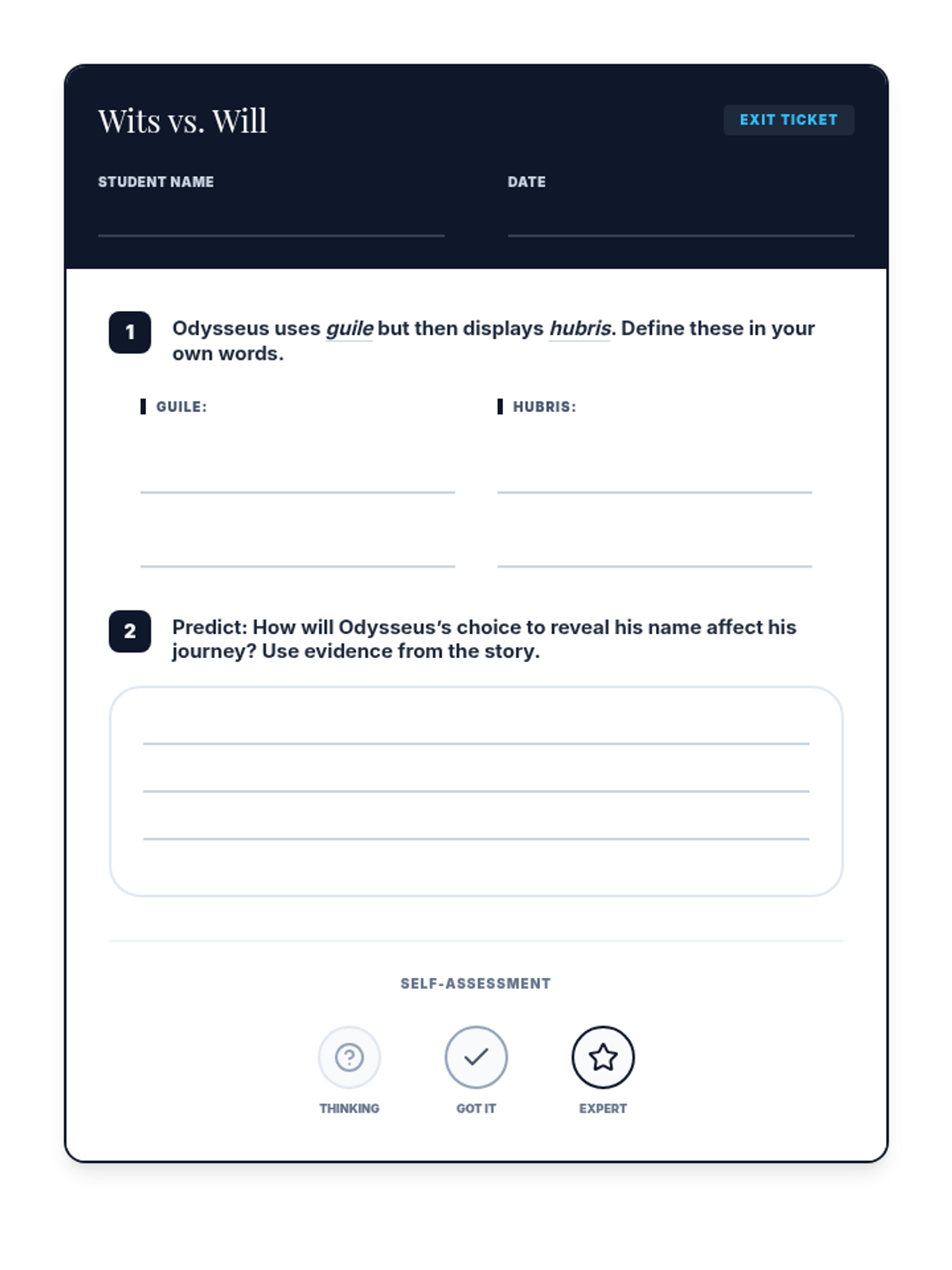
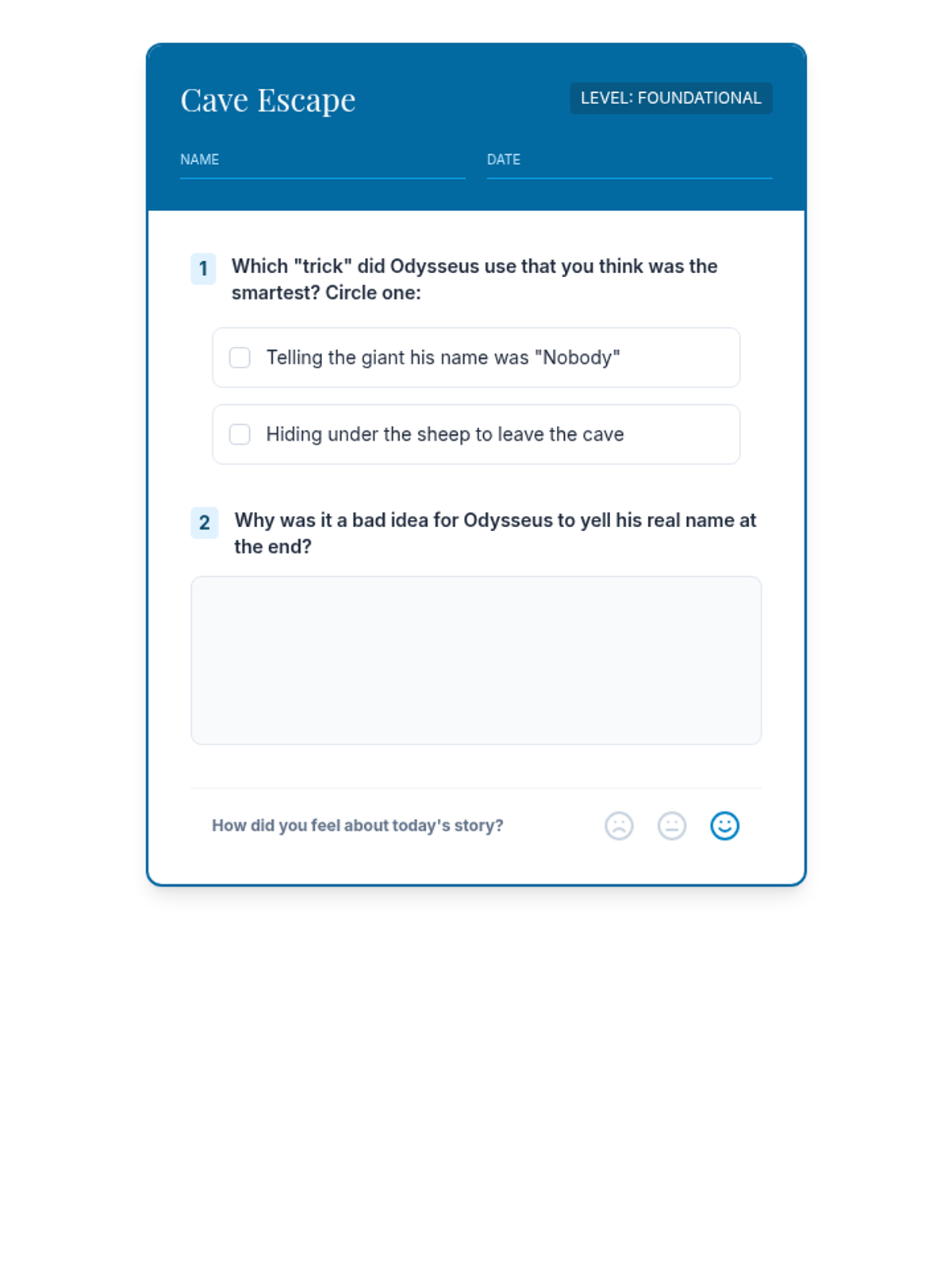
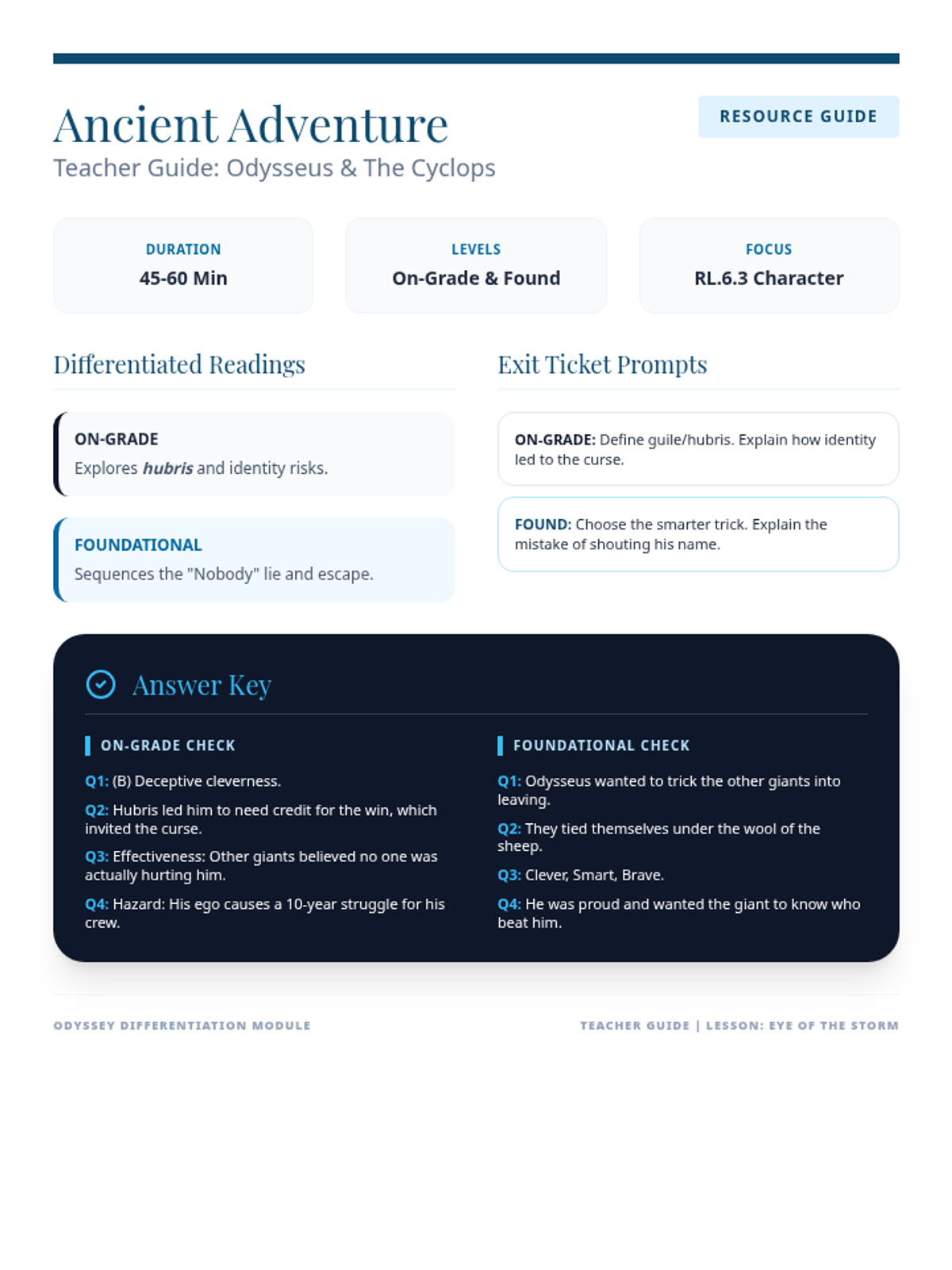
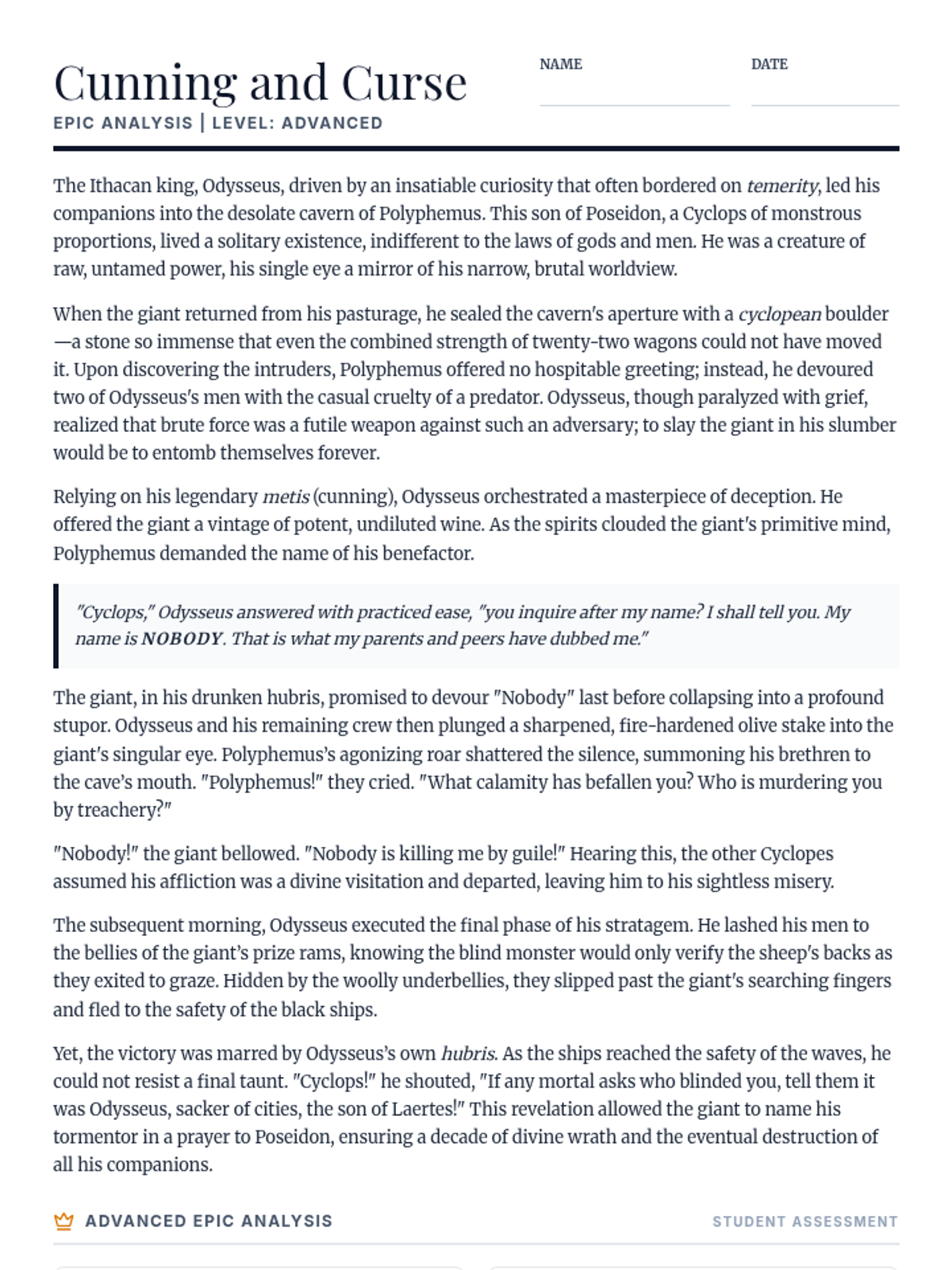
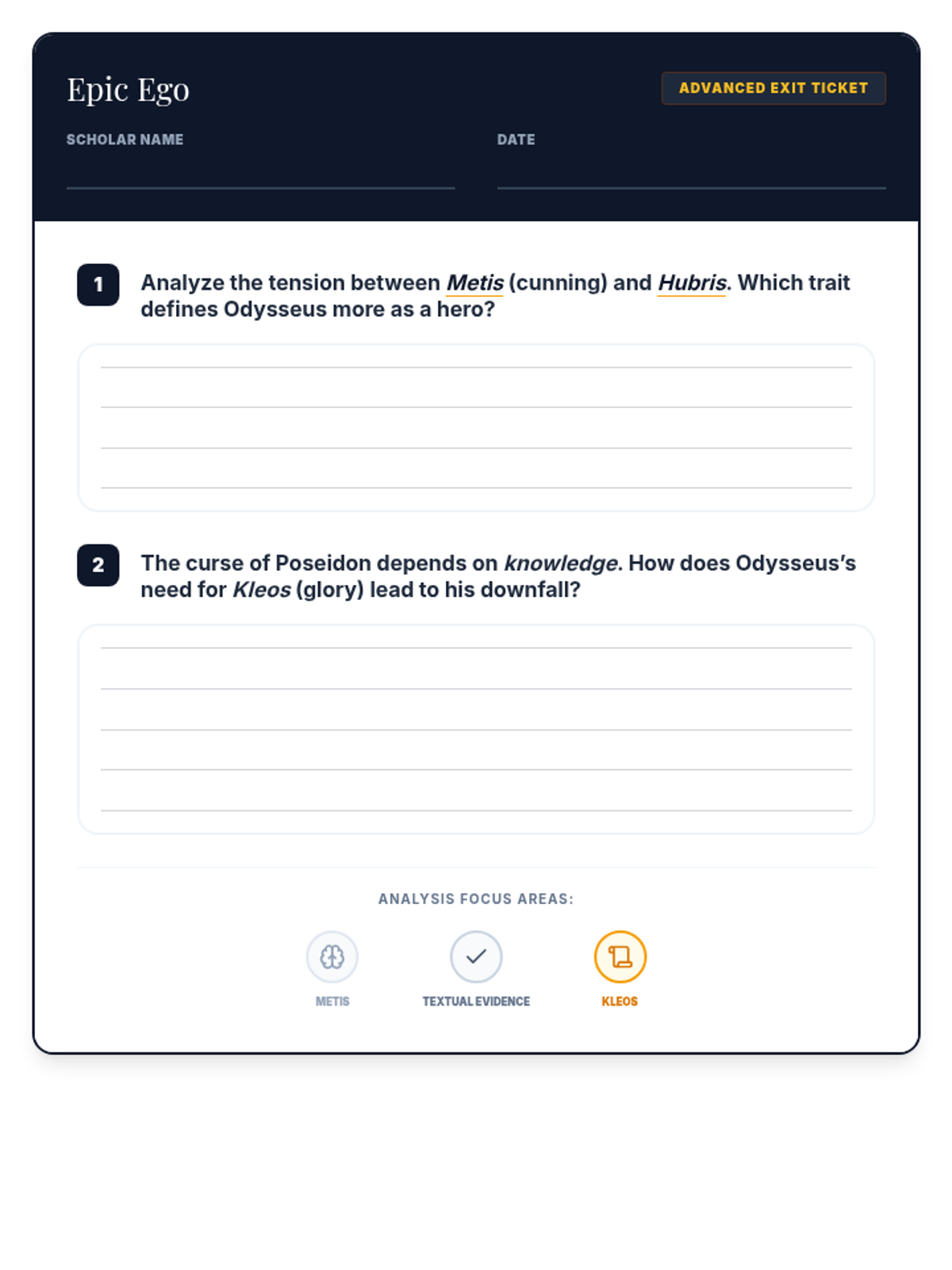
A lesson exploring the encounter between Odysseus and Polyphemus, focusing on character traits and cleverness through differentiated readings and assessments.