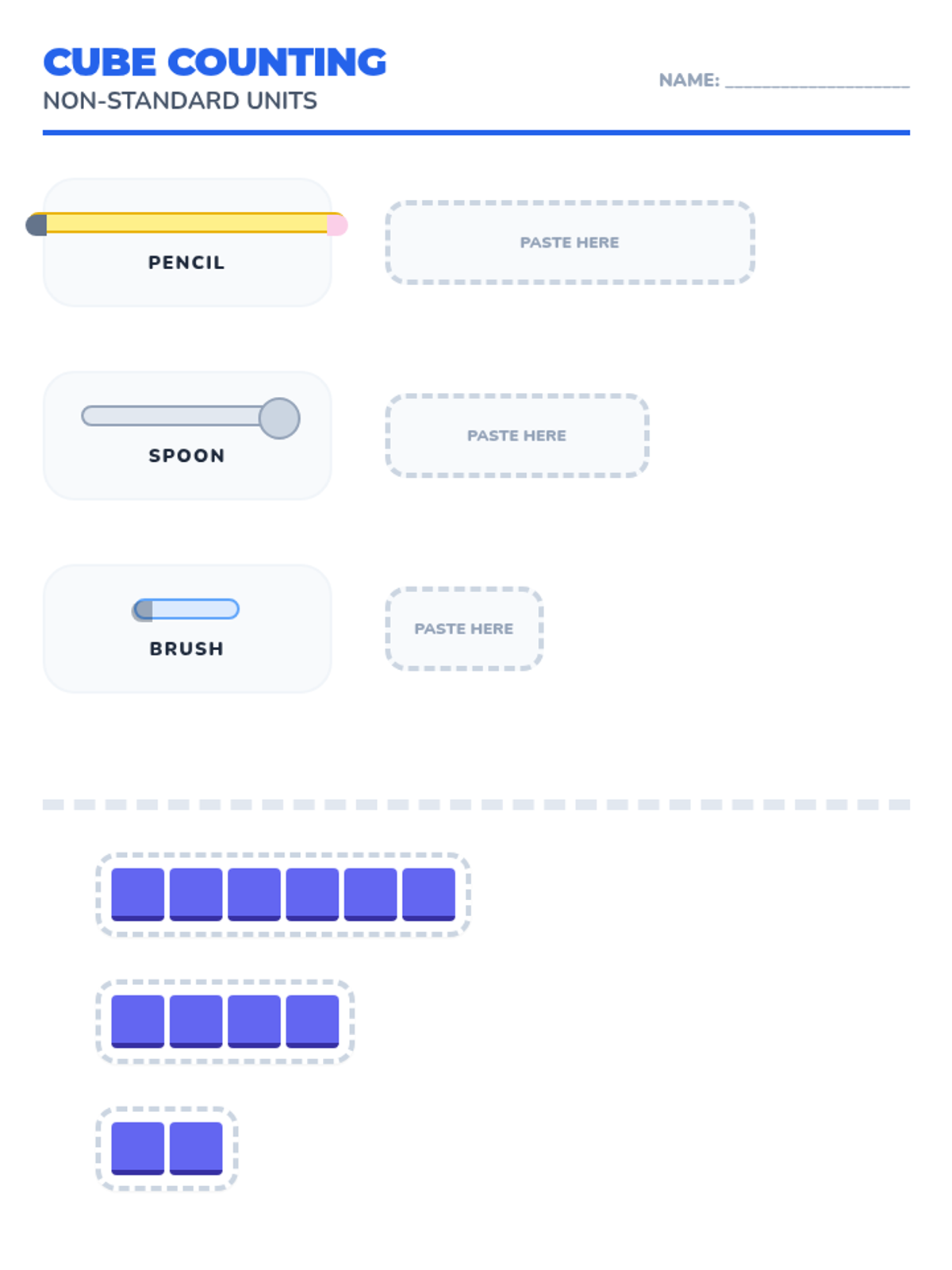
Students use connecting cubes to build trains and compare them to objects, focusing on aligning endpoints to determine 'longer' and 'shorter'.
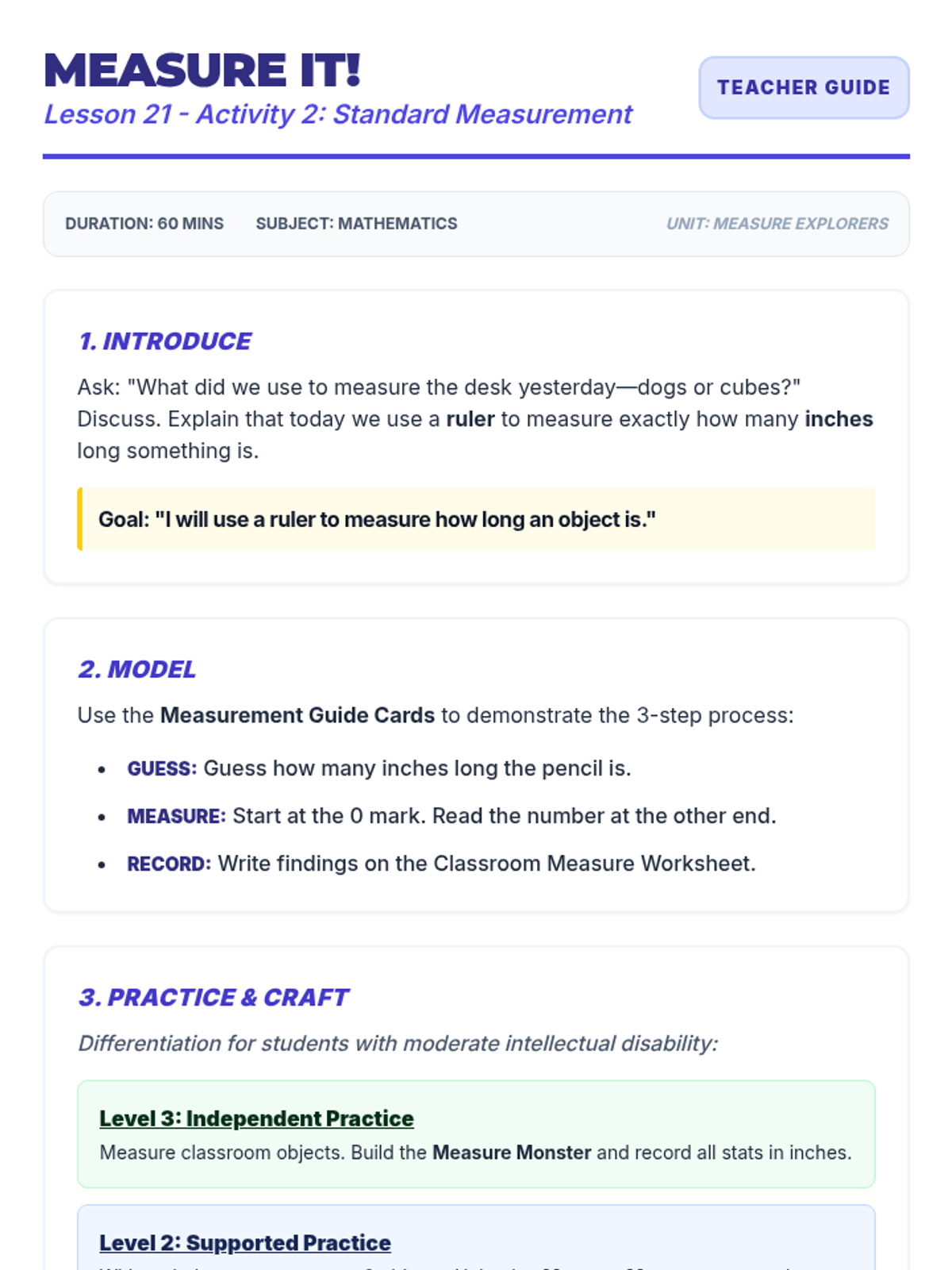
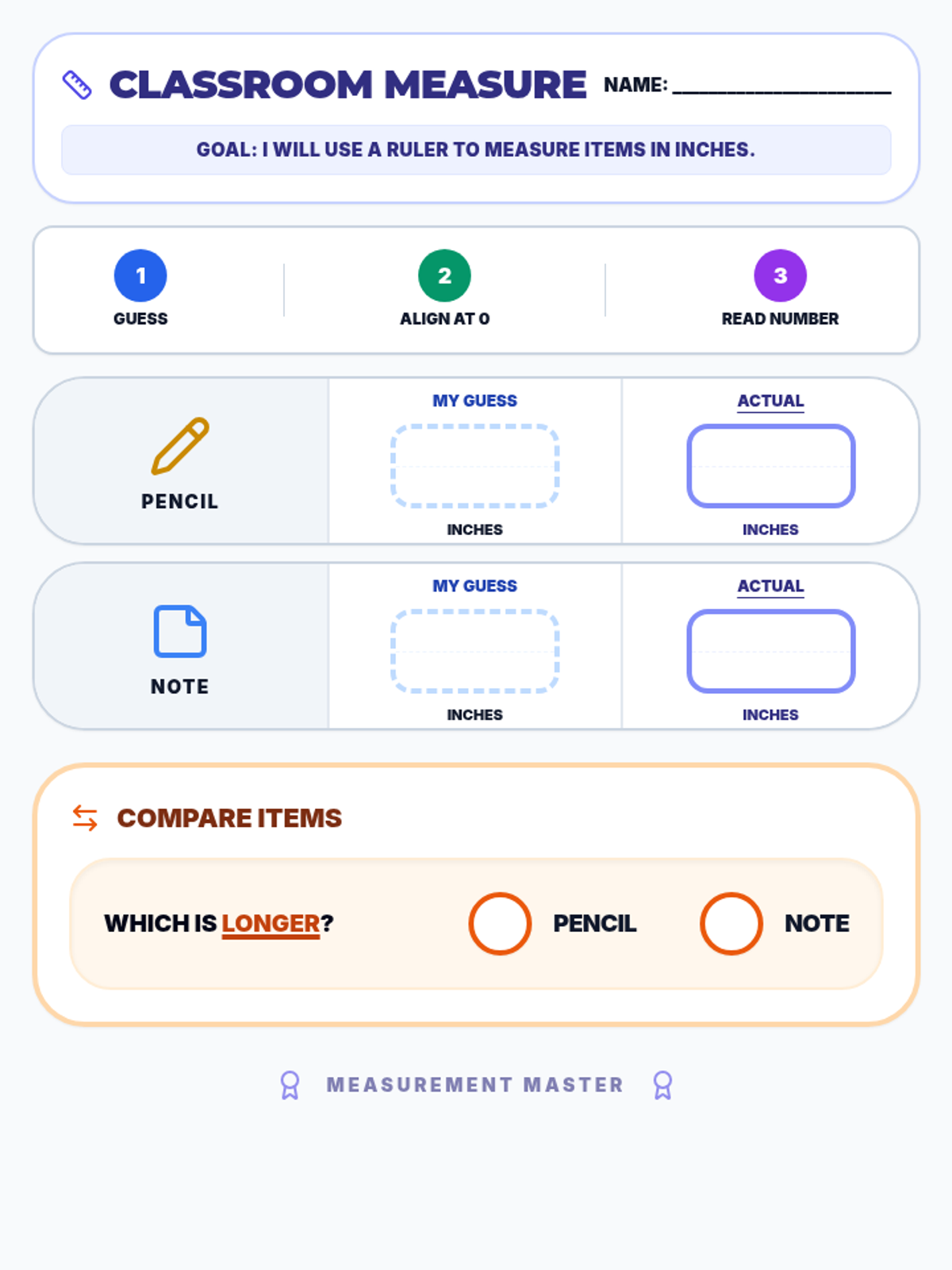
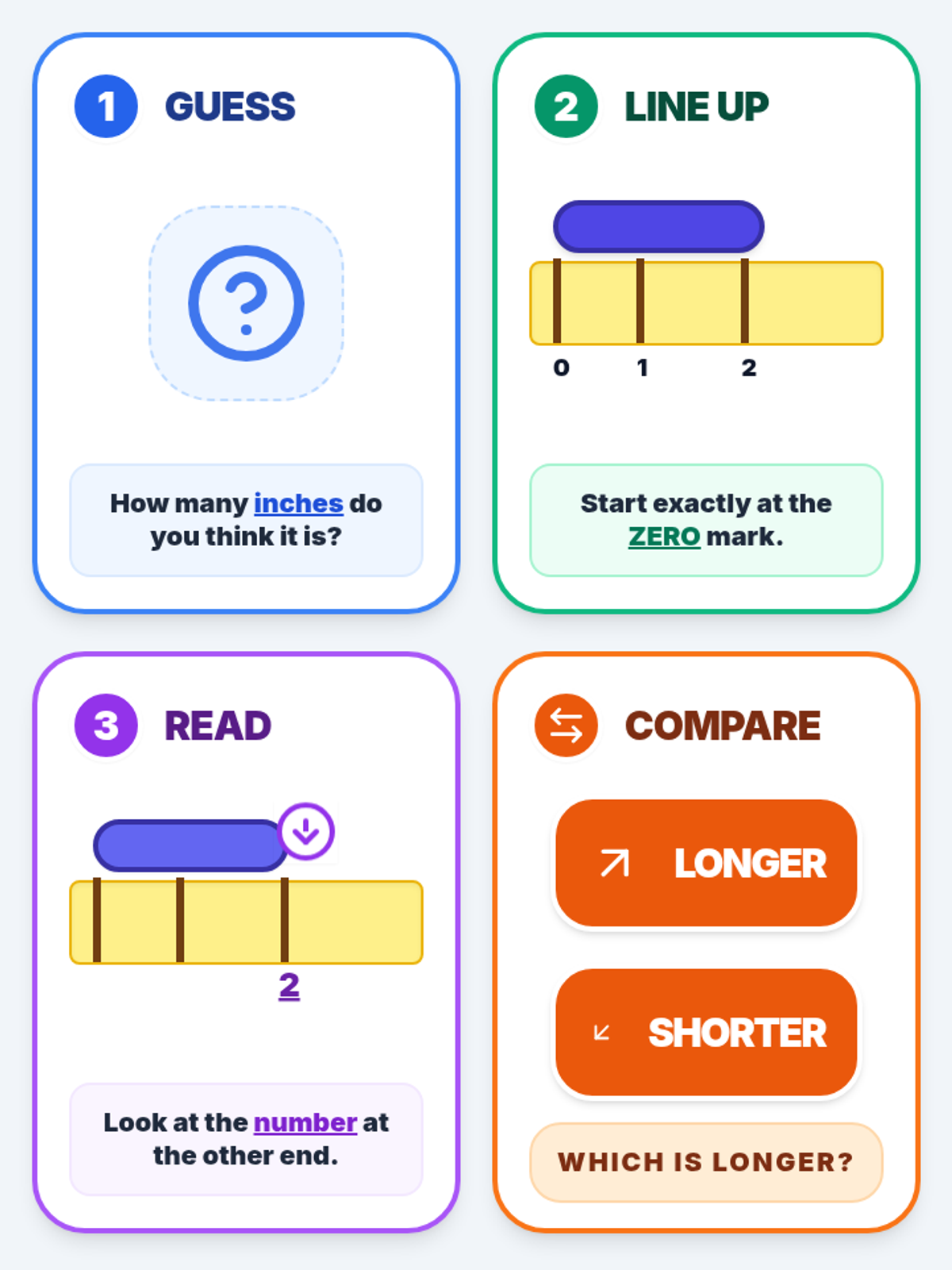
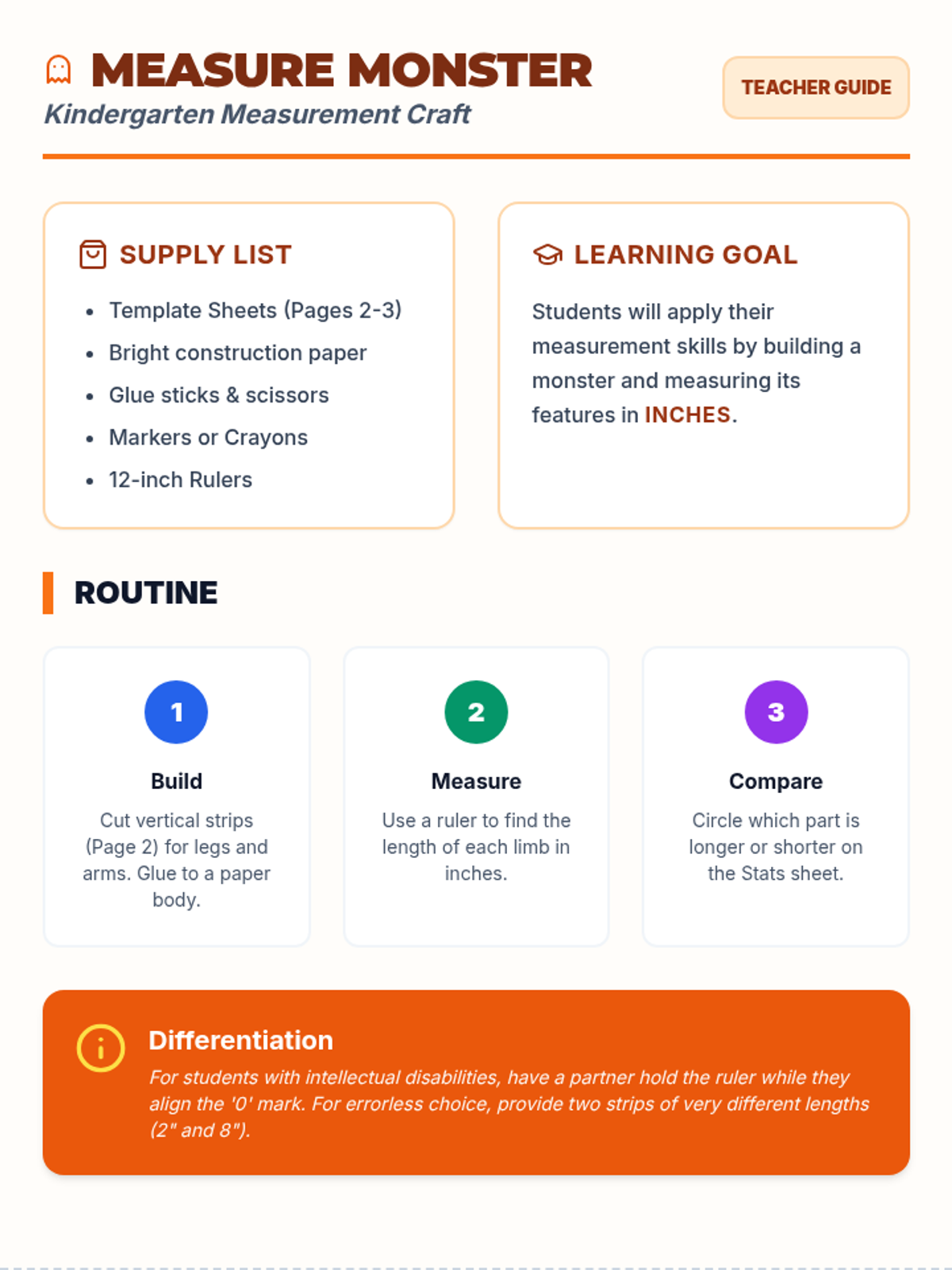
Introducing standard measurement using inches and rulers, focusing on estimating, measuring, and comparing classroom objects with tiered supports.
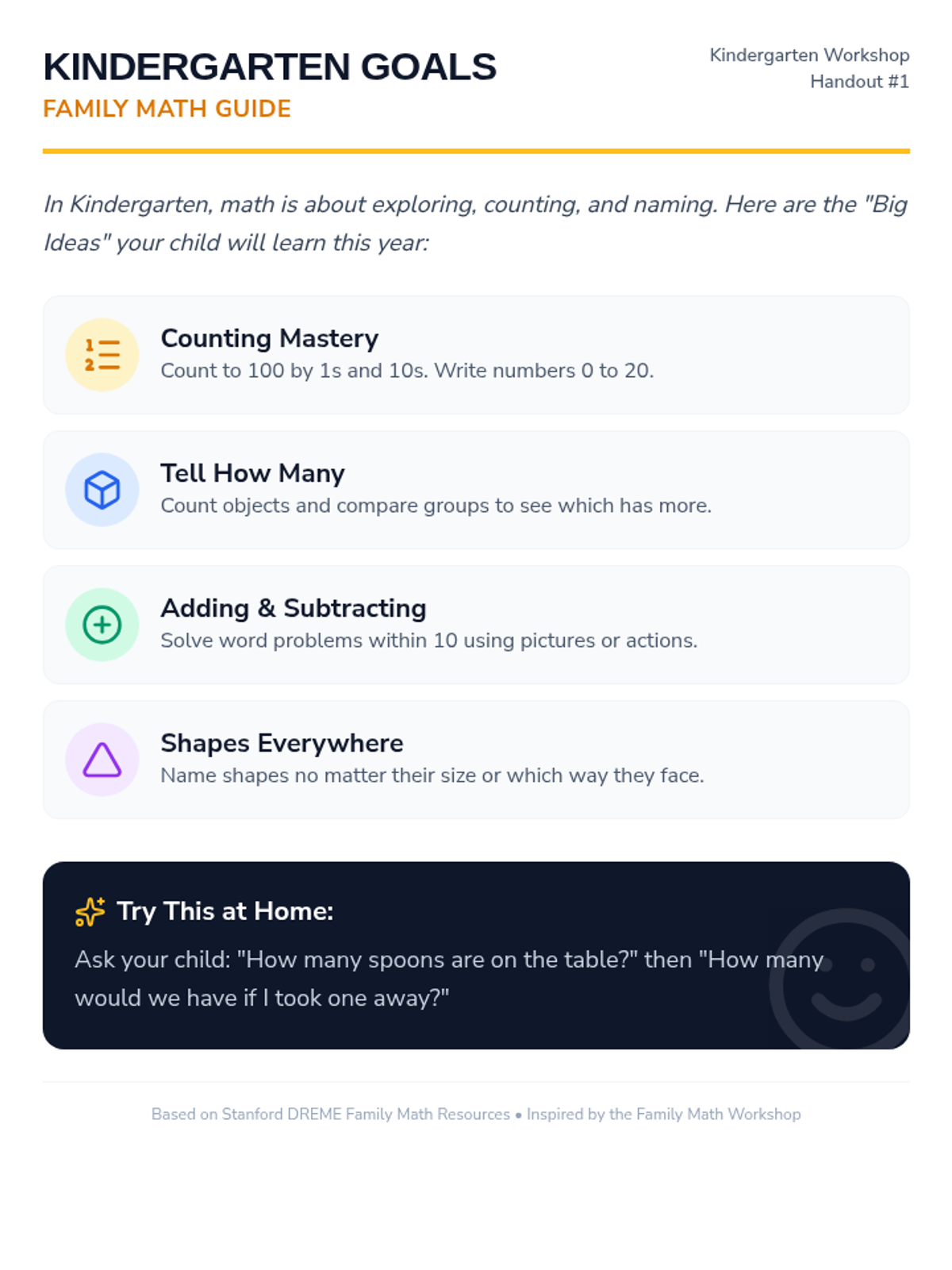
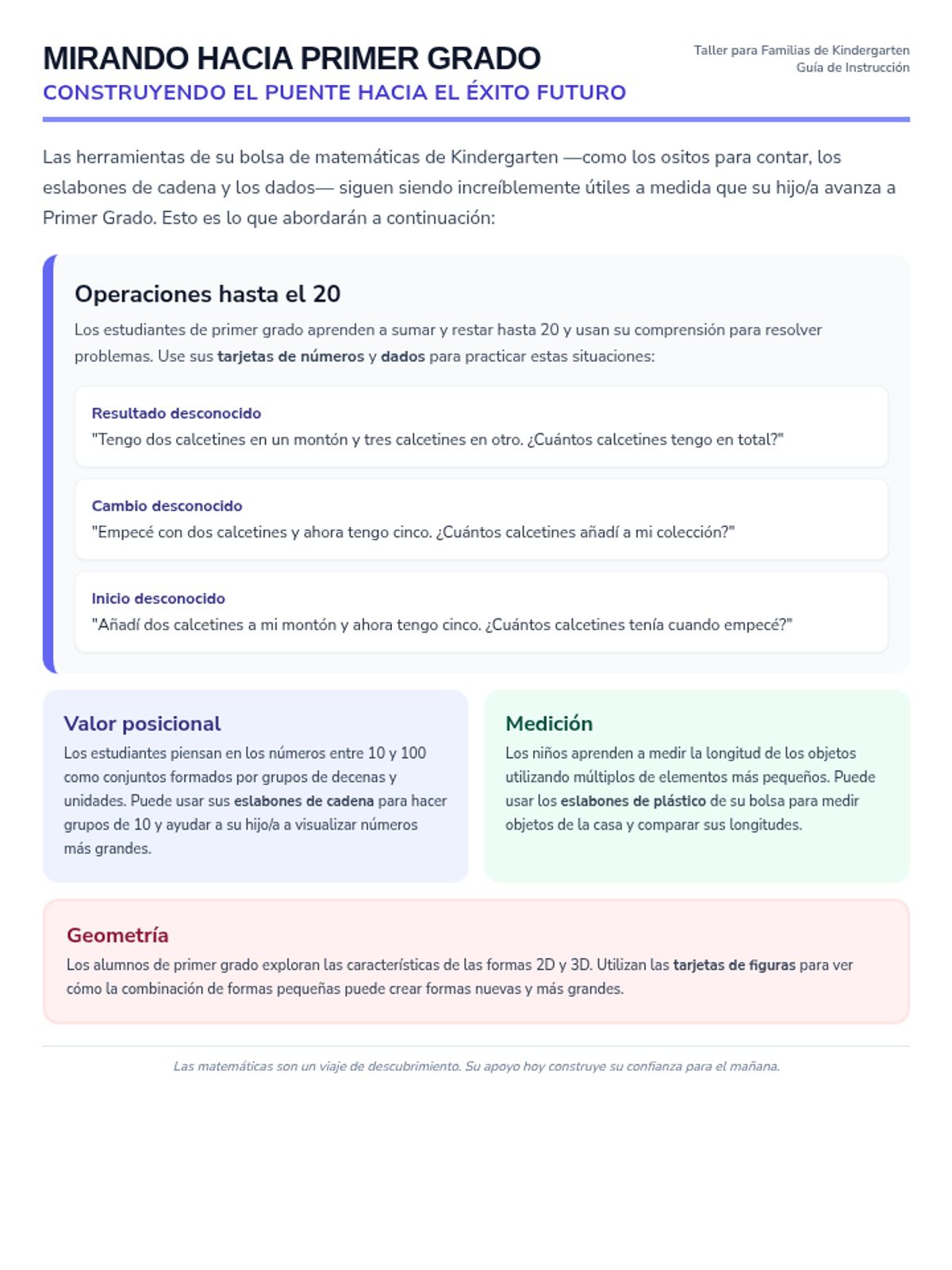
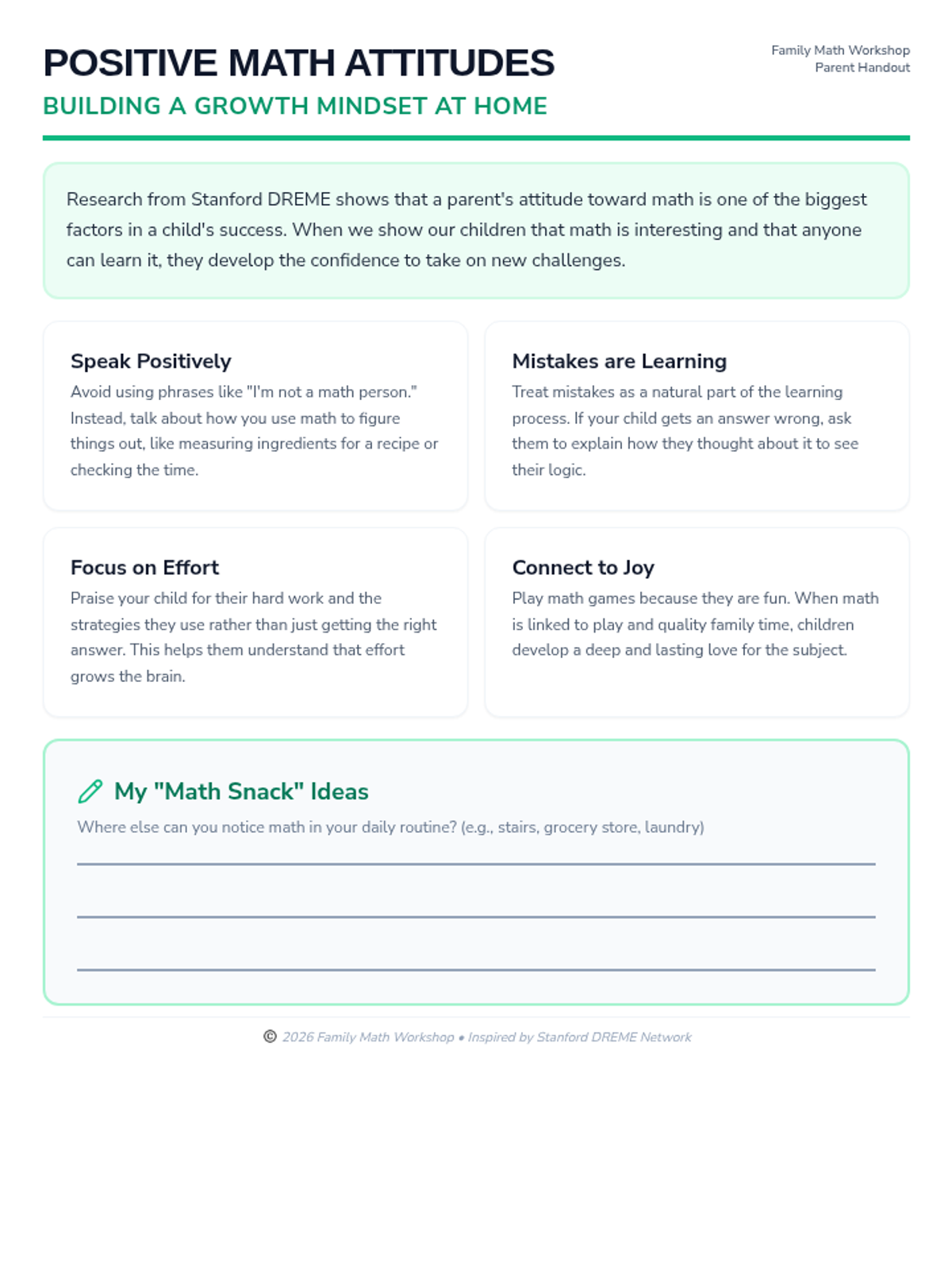
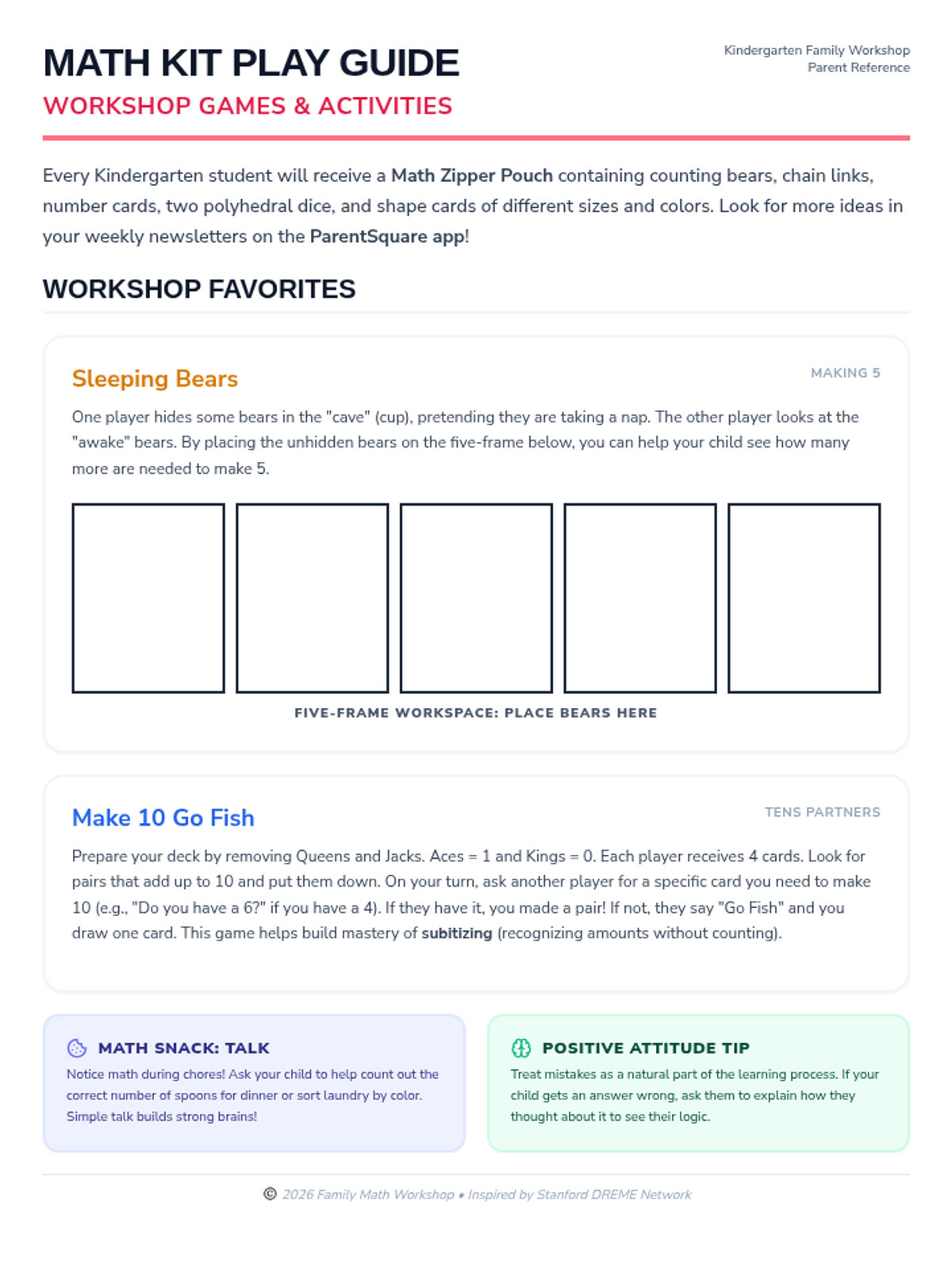
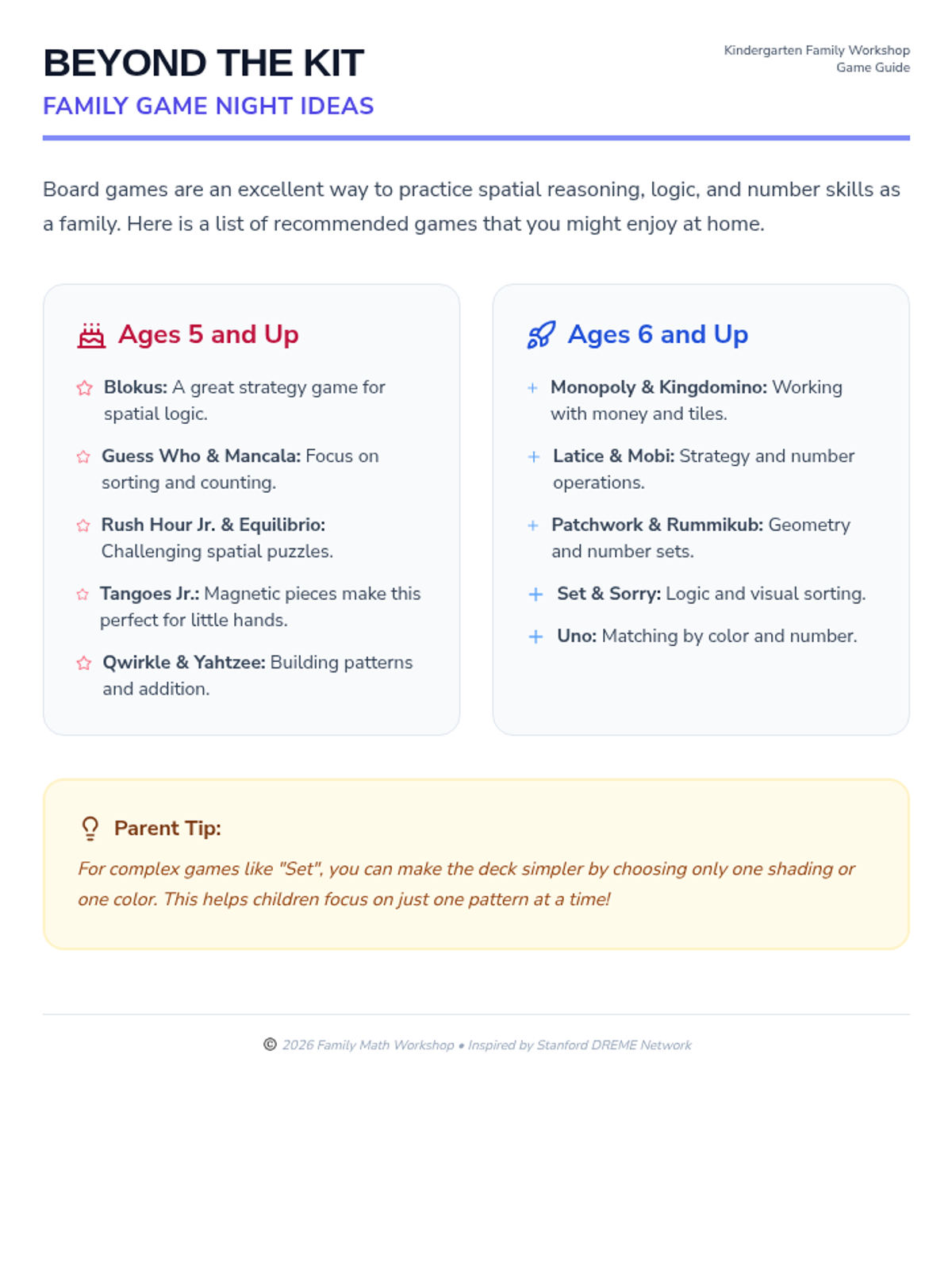
A comprehensive workshop for Kindergarten parents and guardians focused on building positive math attitudes and supporting math learning at home through play and daily routines. Based on Stanford DREME research.
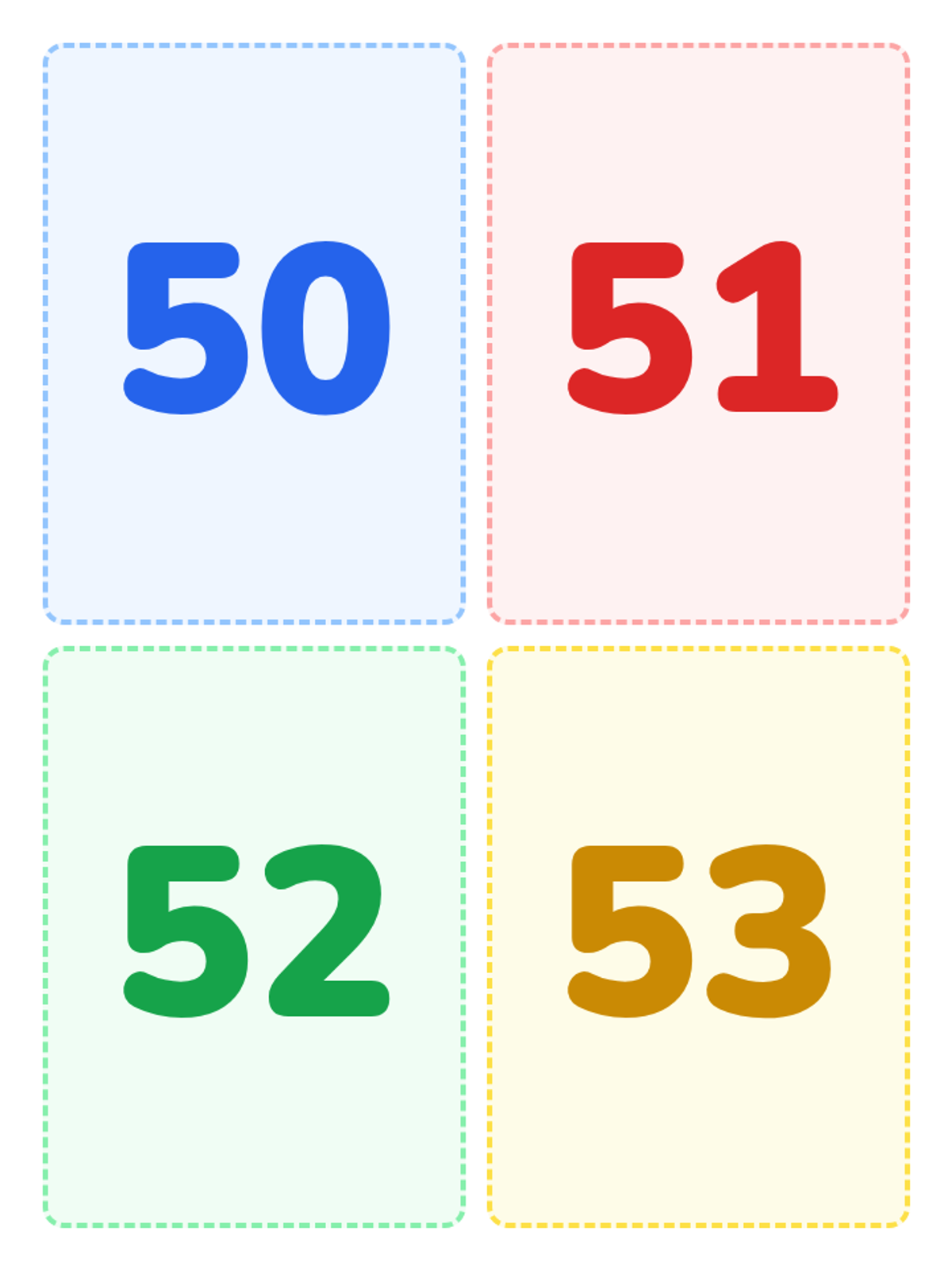
A set of resources focused on mastering numbers 50-100 through hands-on flashcard activities and games designed for kindergarten learners.
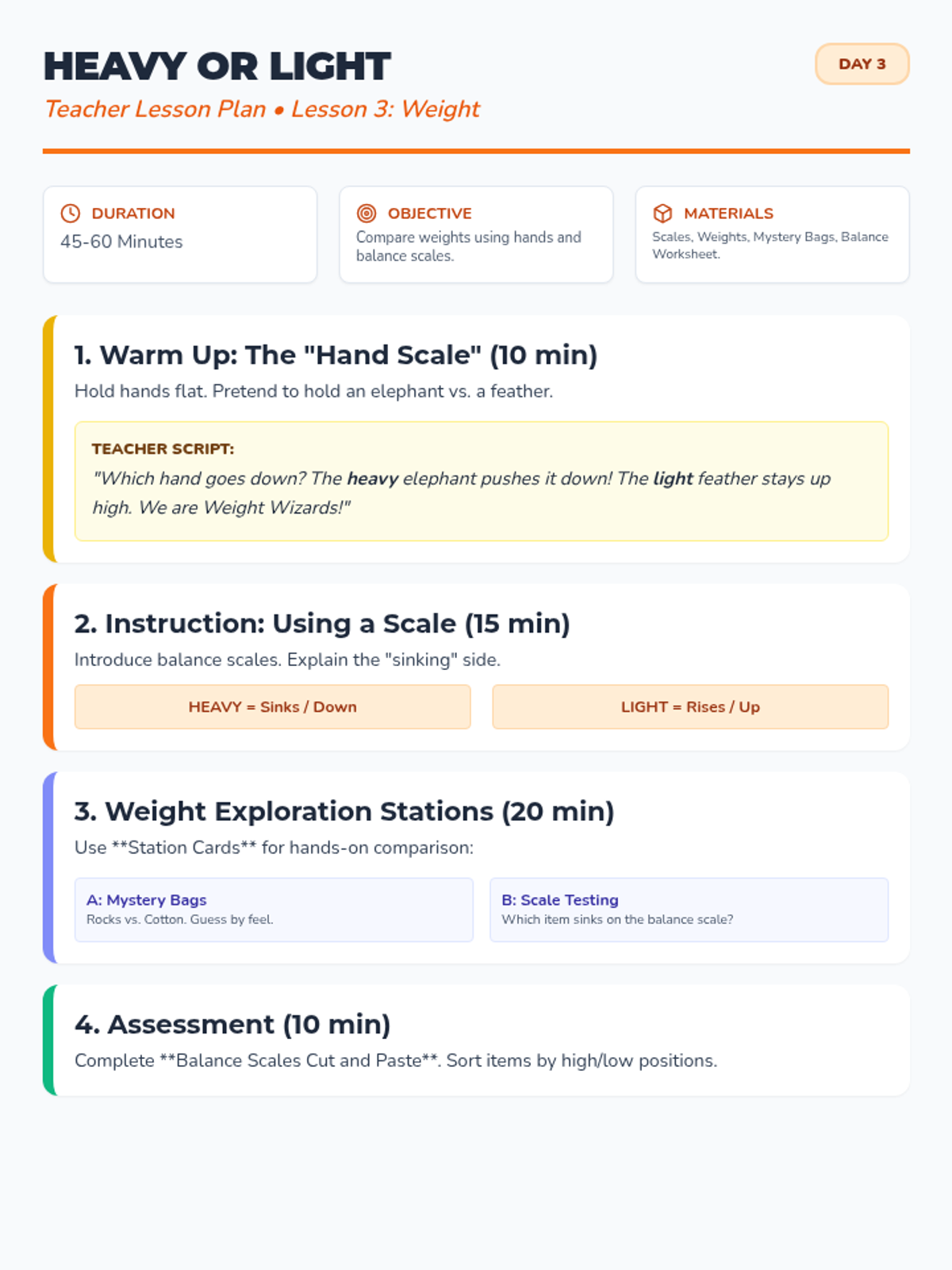
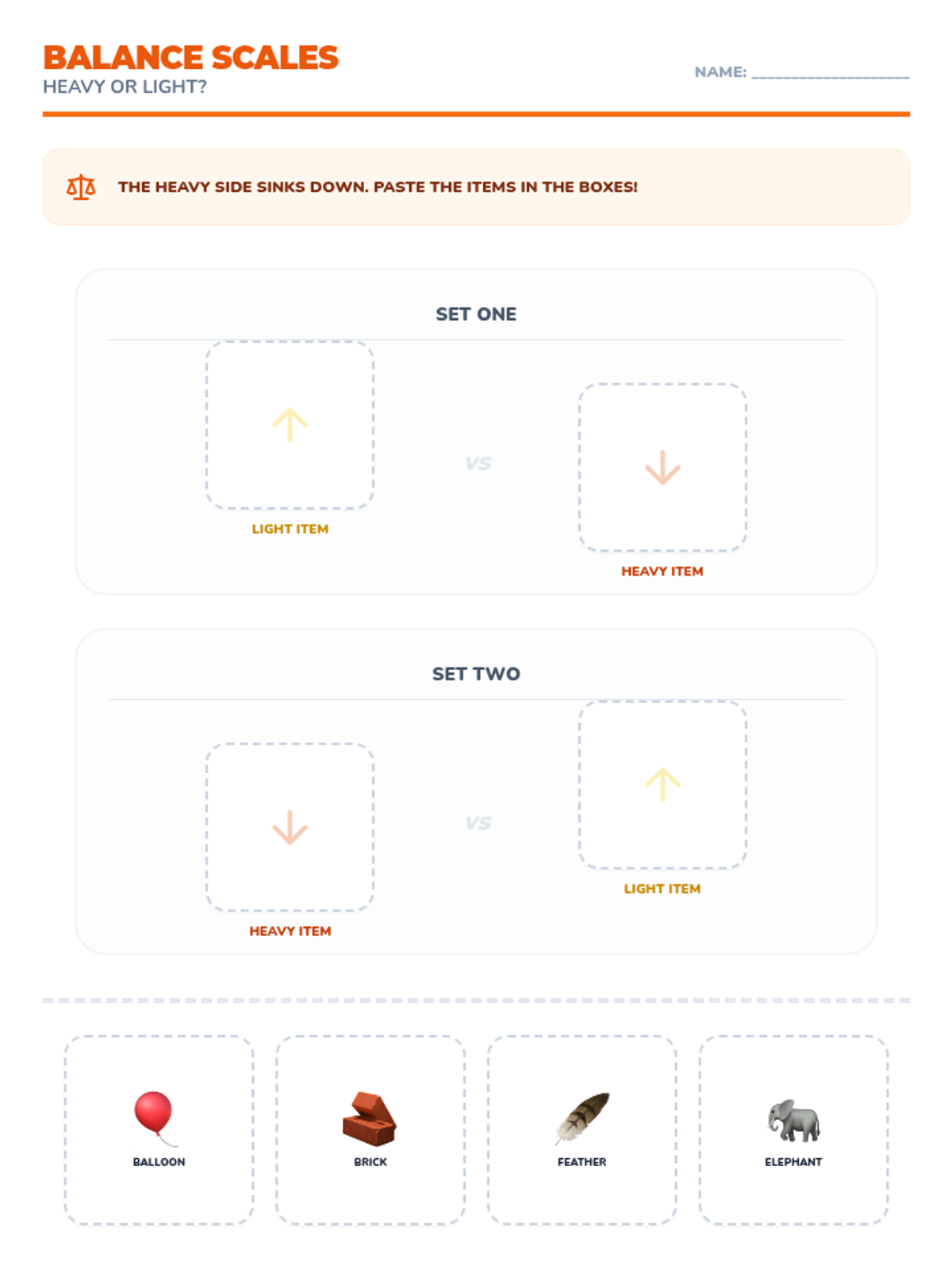
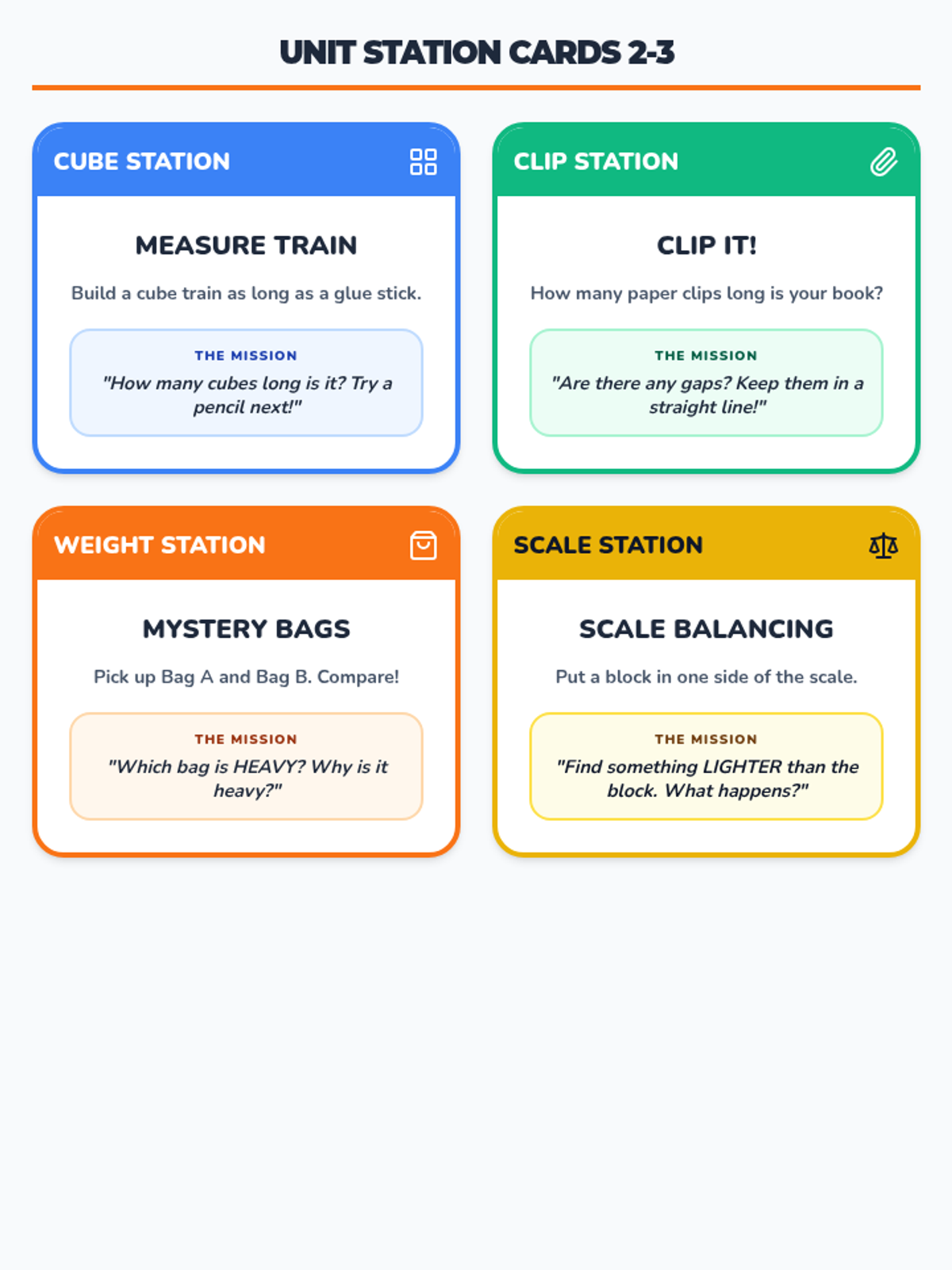
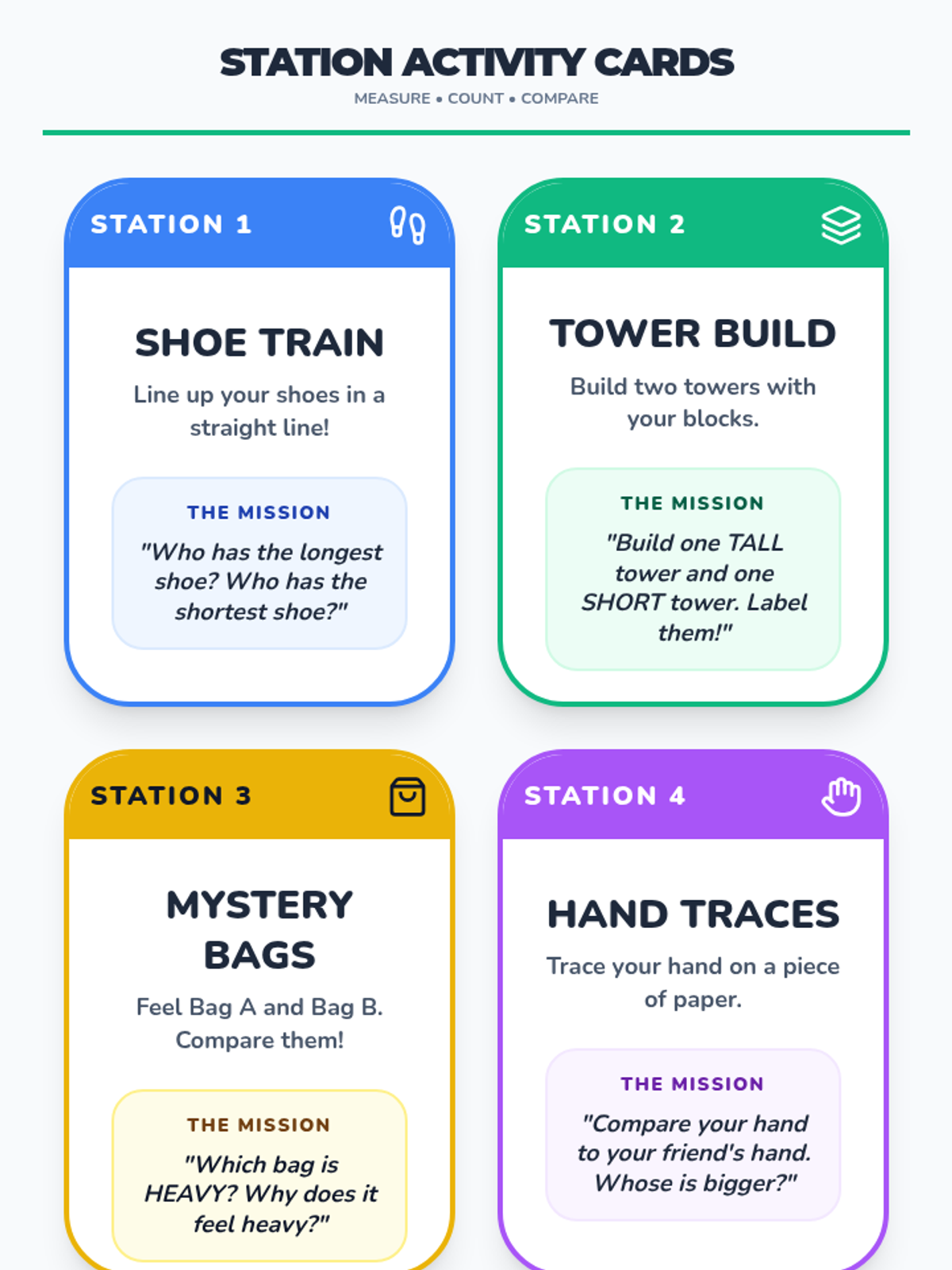
Exploring weight by comparing heavy and light objects using hands and balance scales.
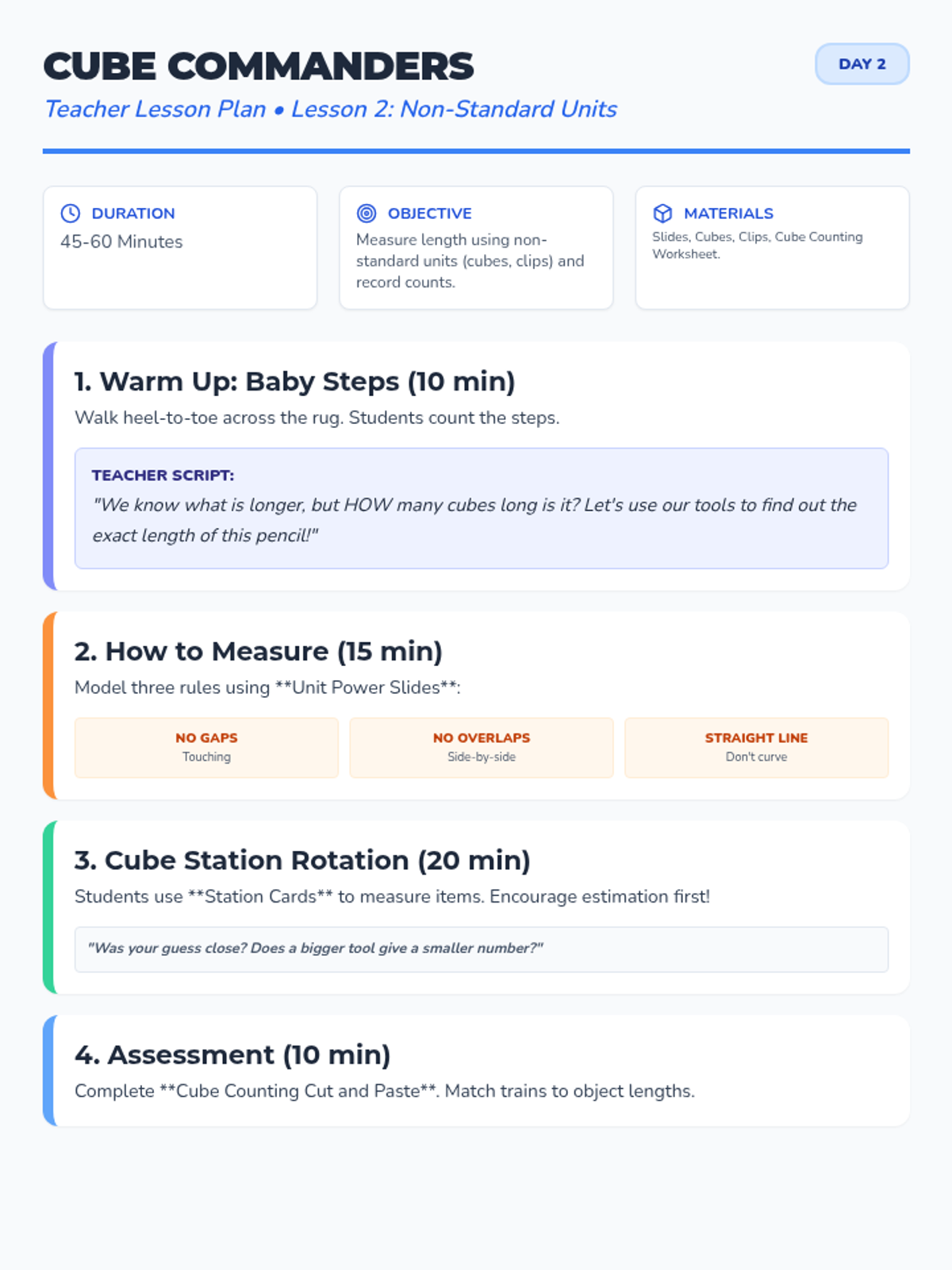
Learning to measure objects using non-standard units like snap cubes, paper clips, and handprints.
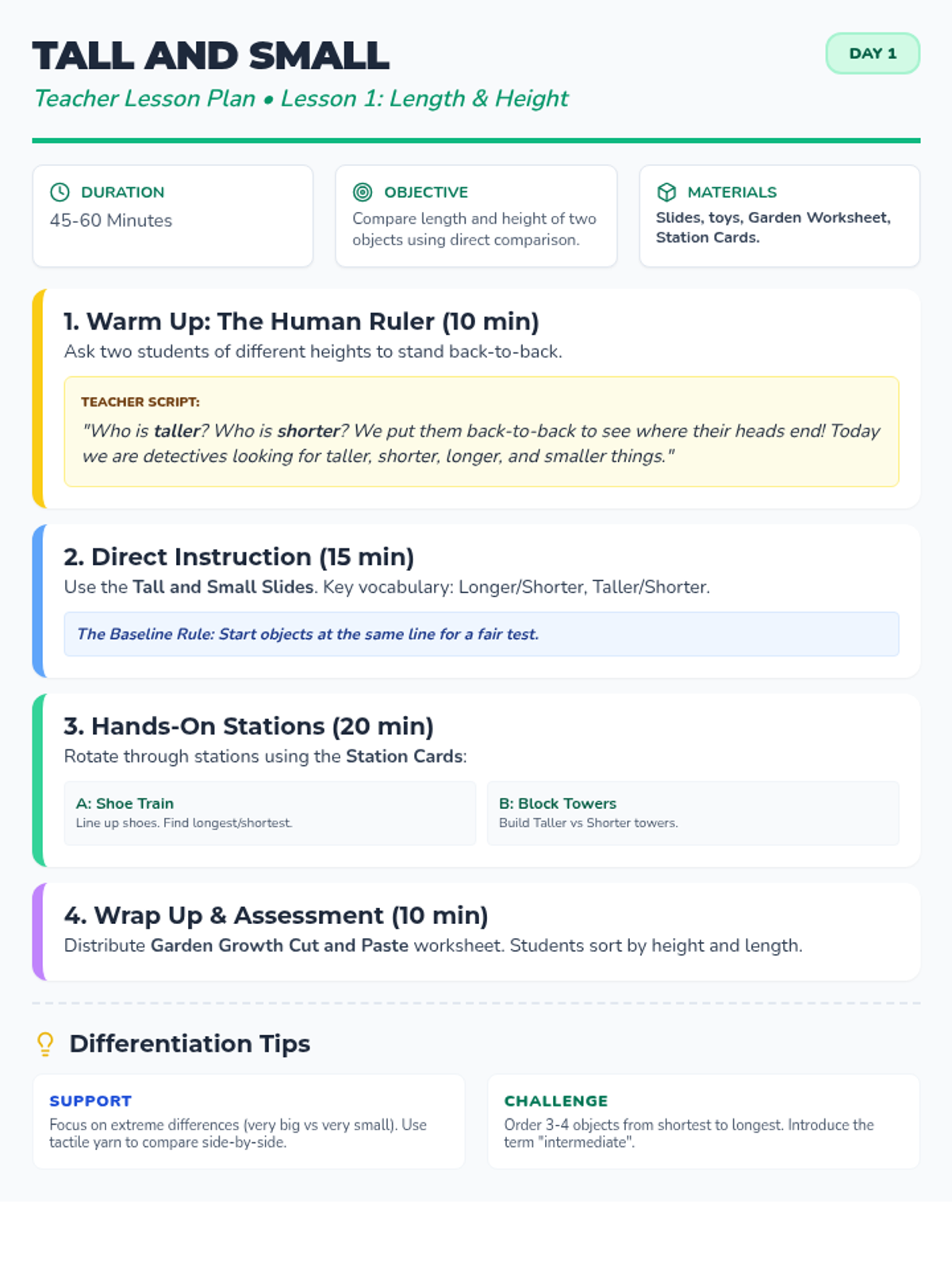
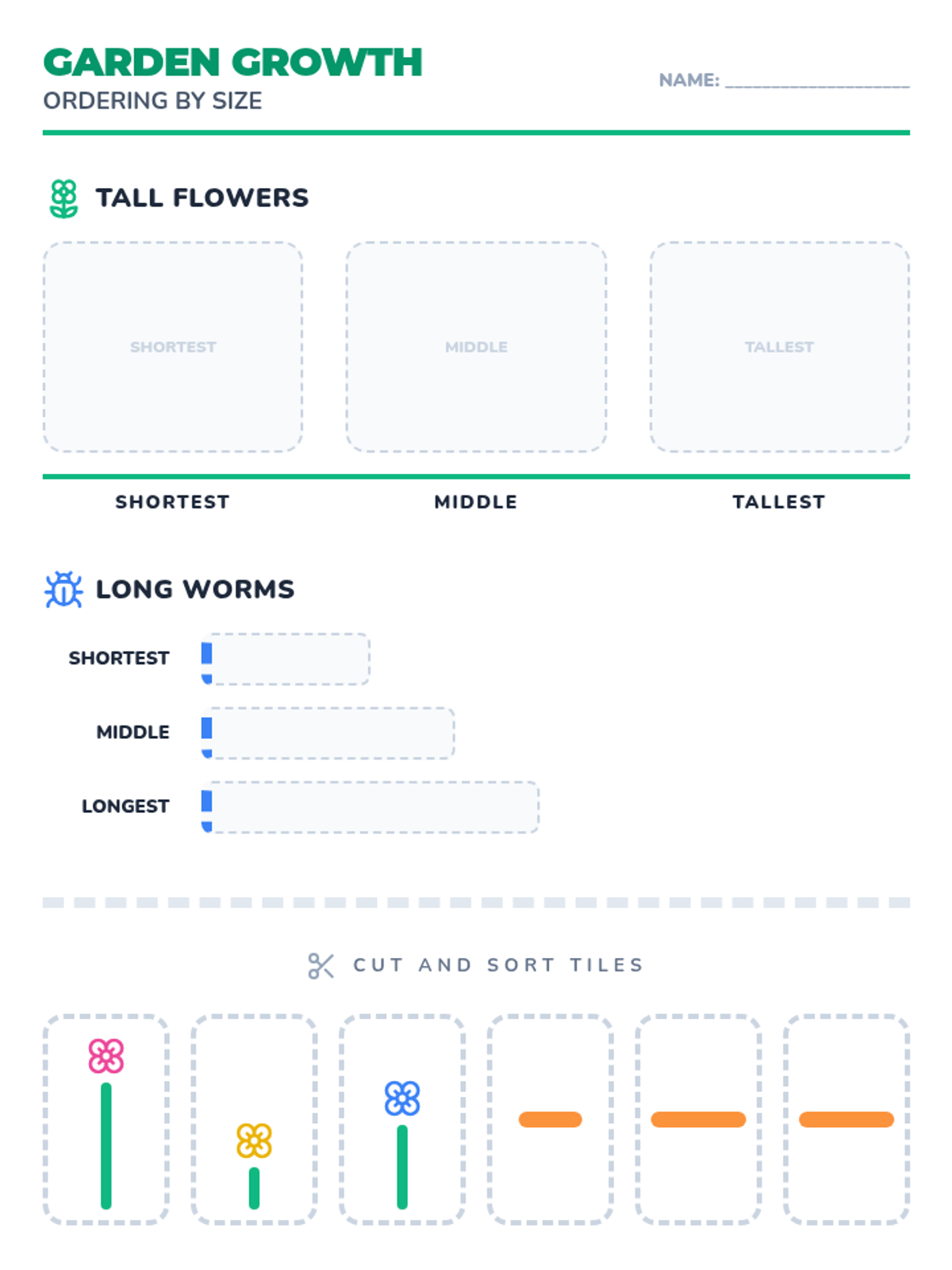
Introduction to comparing length and height using terms like 'longer', 'shorter', 'taller', and 'smaller'.
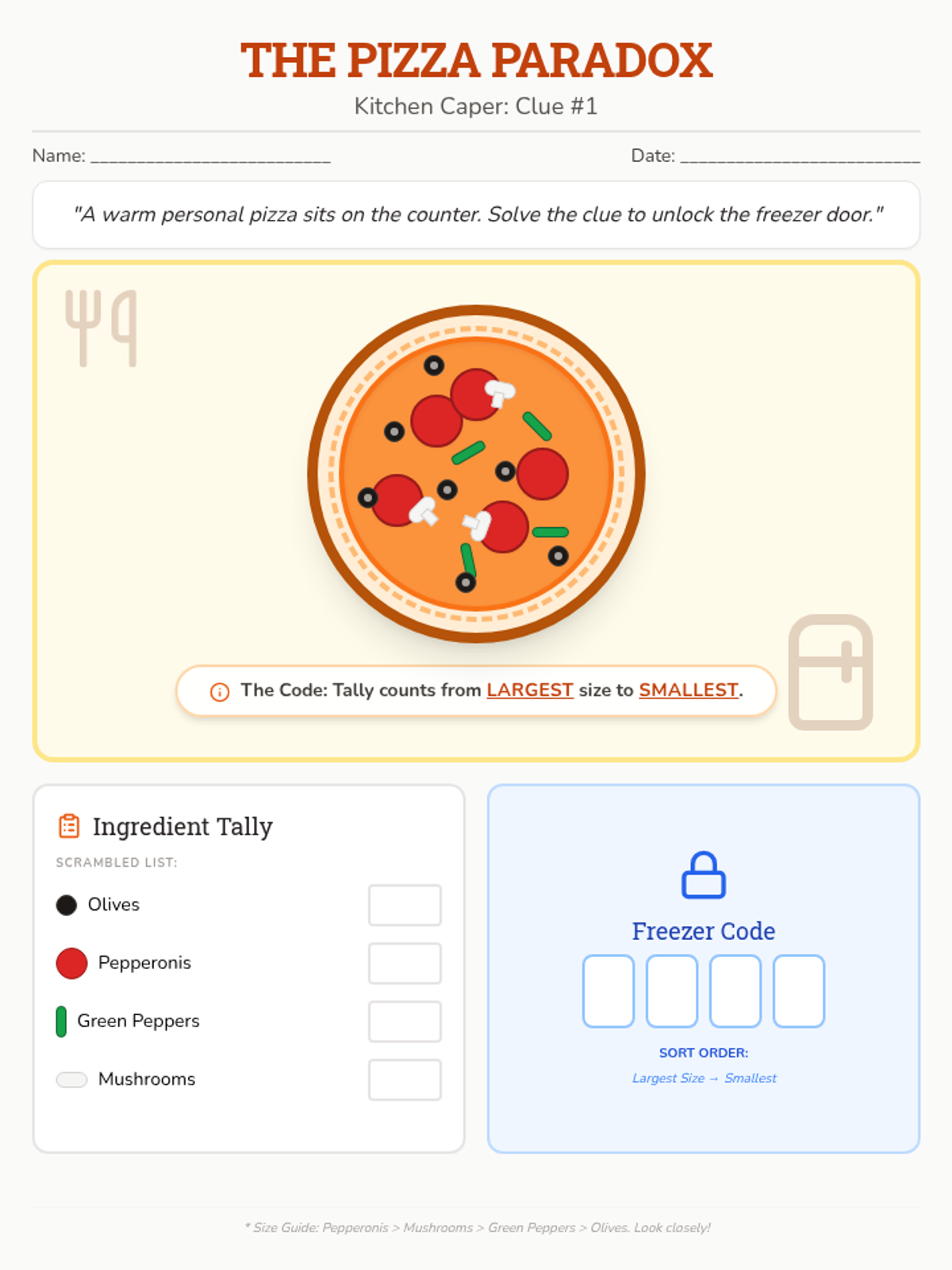
A mini-mystery centered around a kitchen scene where students use observation and logic to solve a visual puzzle.
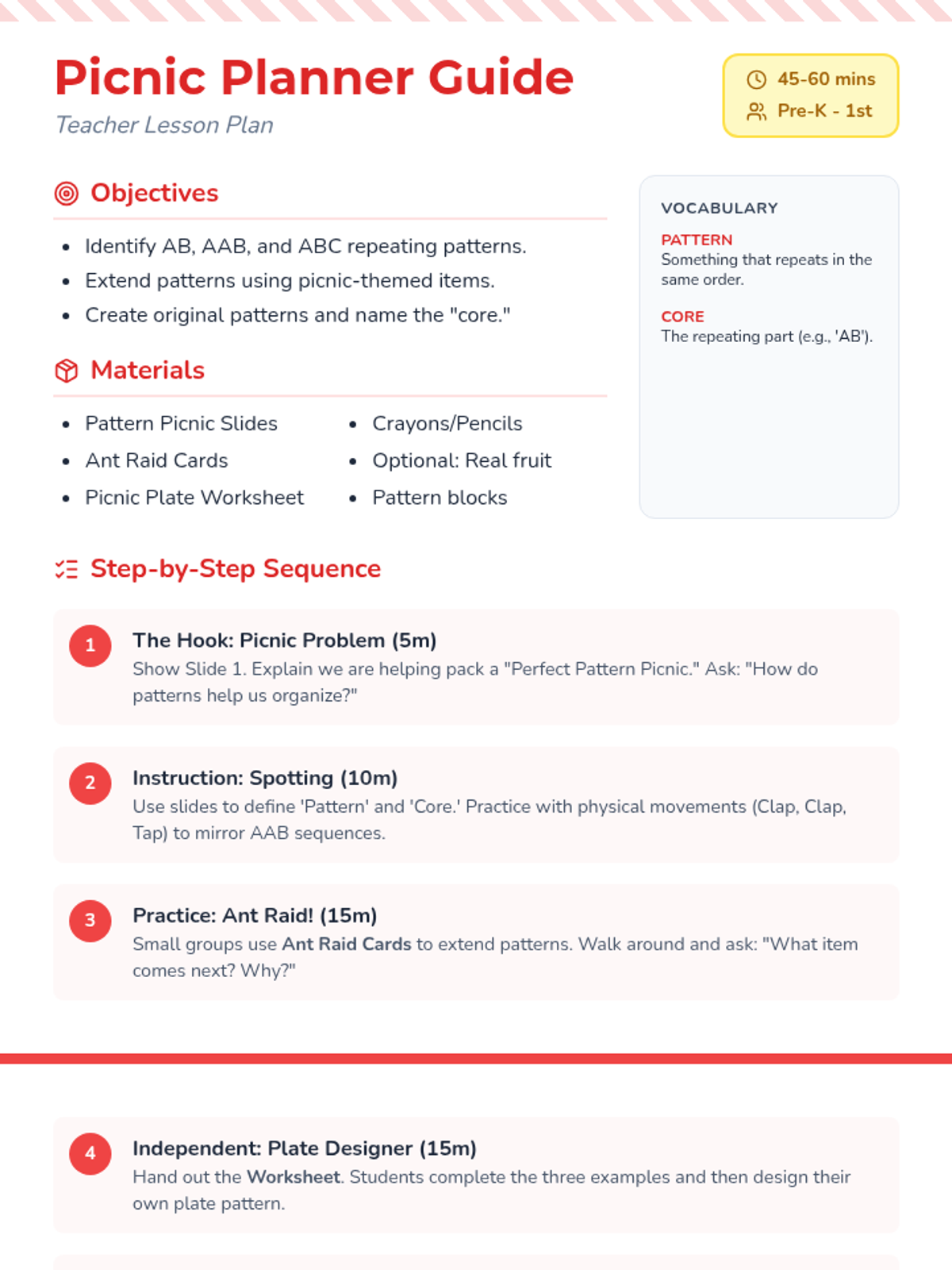
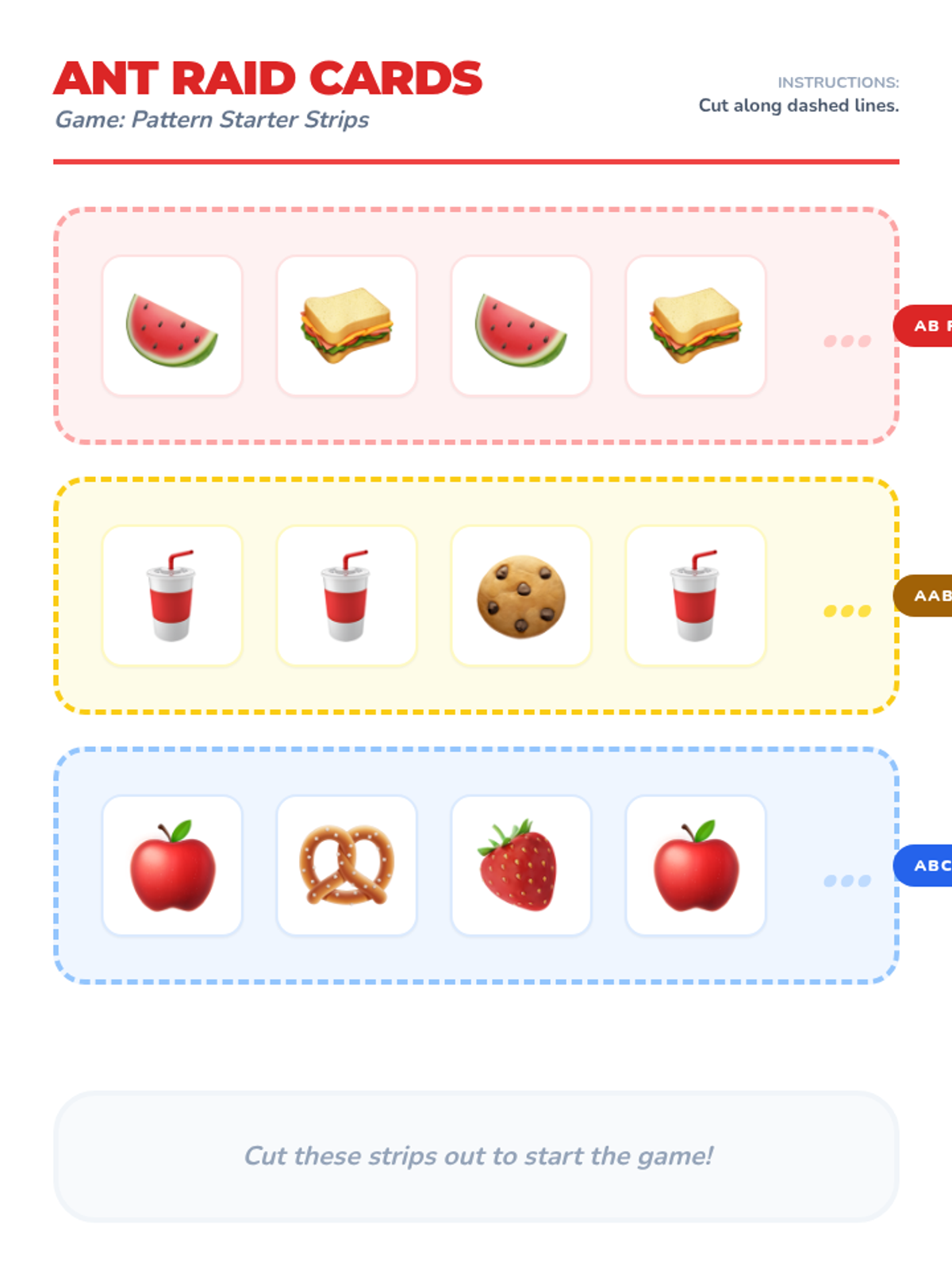
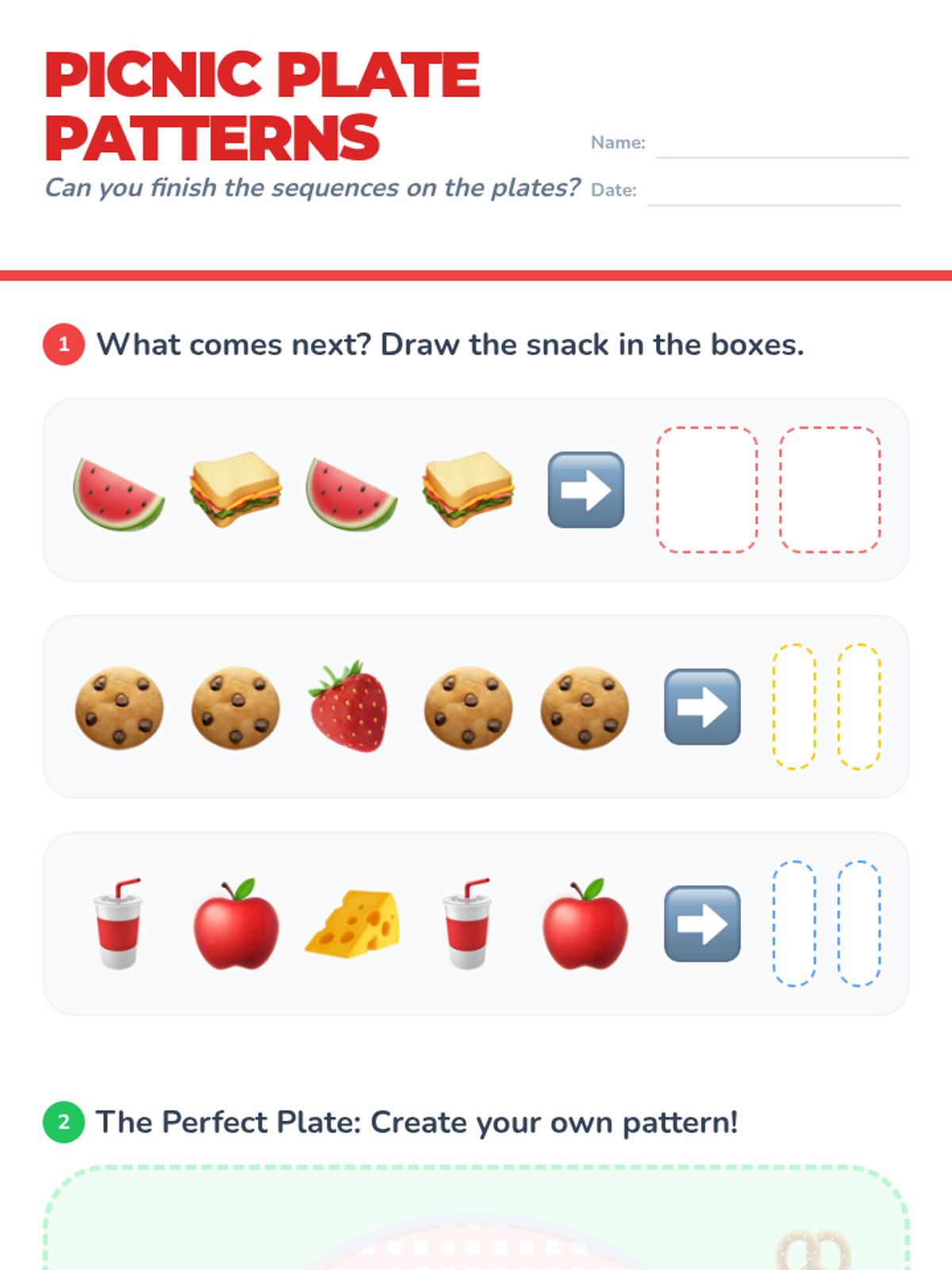
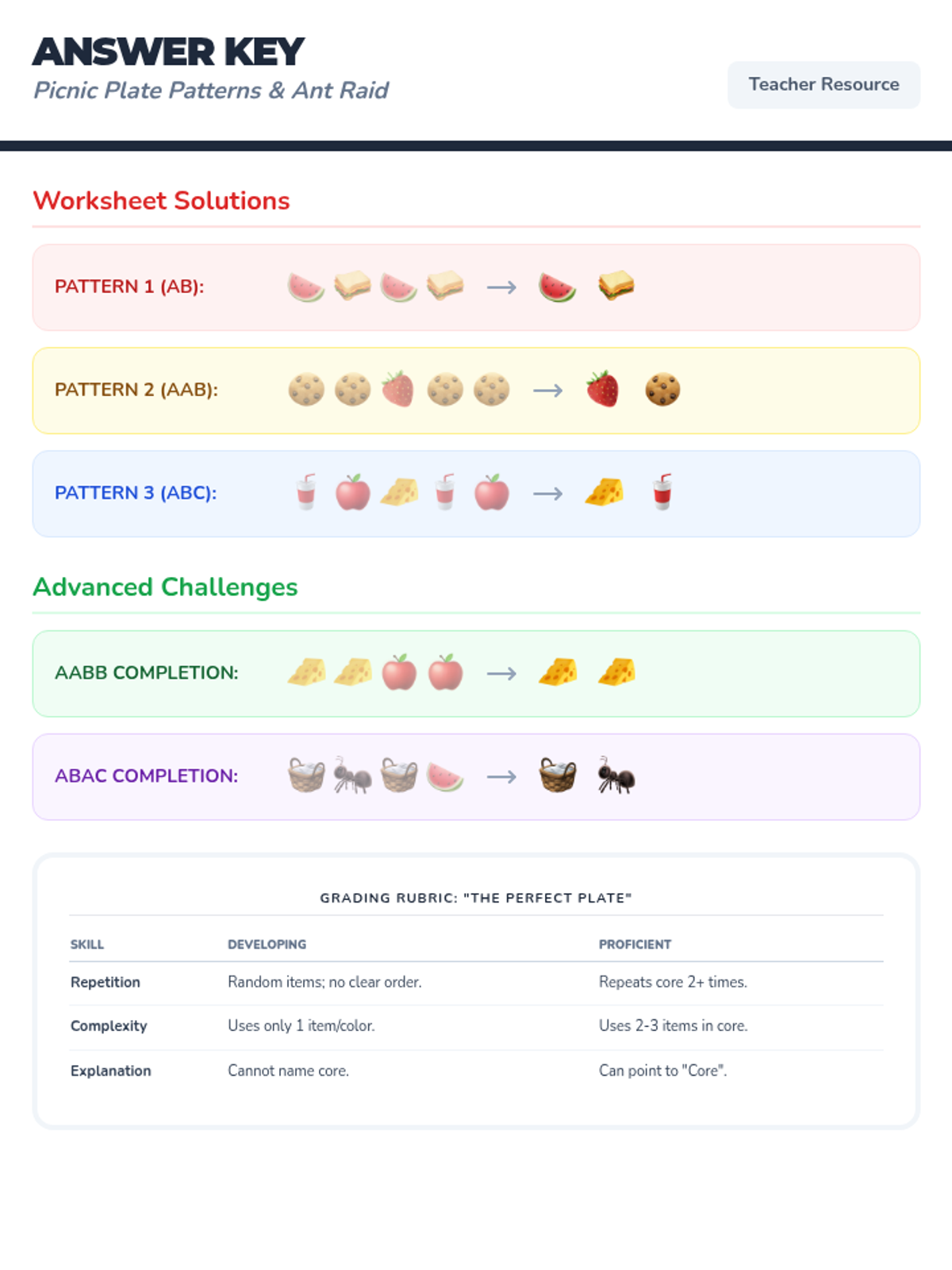
A hands-on lesson where students explore visual patterns using picnic-themed items to build early algebraic thinking skills. Students identify, extend, and create their own sequences using fruits, snacks, and picnic gear.
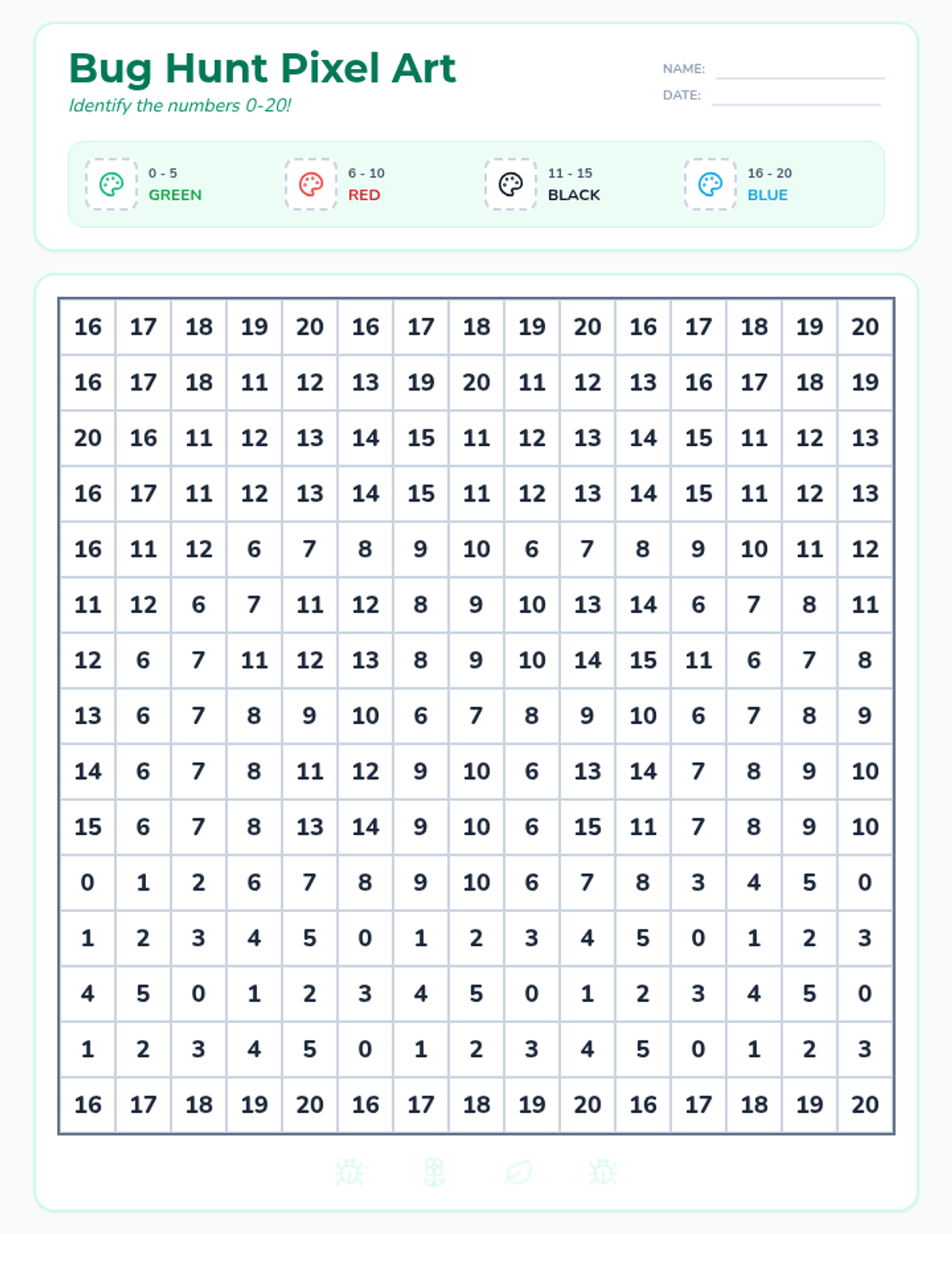
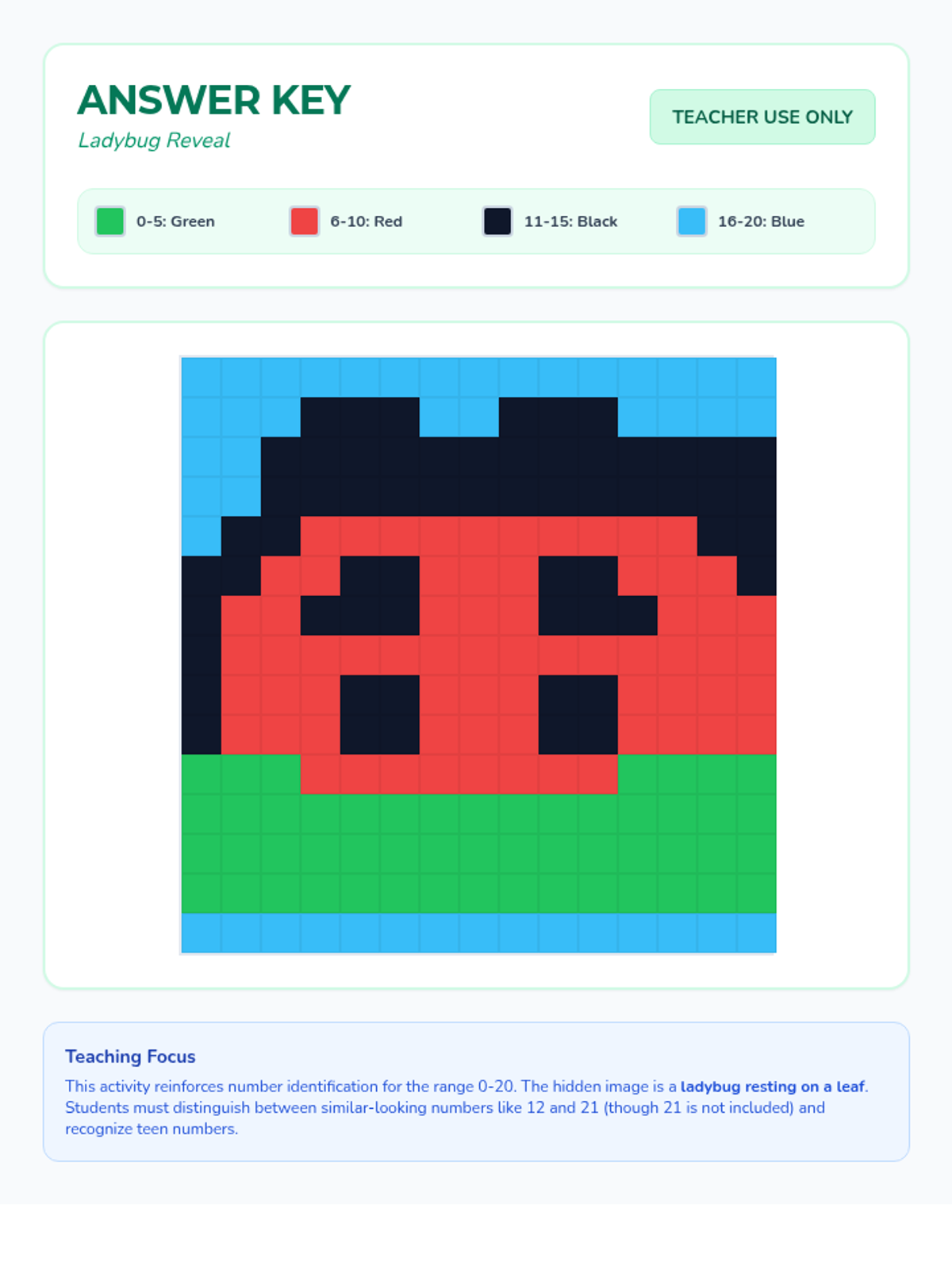
A fun, hands-on activity where students identify numbers 0-20 to reveal a hidden garden critter. Perfect for practicing number recognition and fine motor skills.
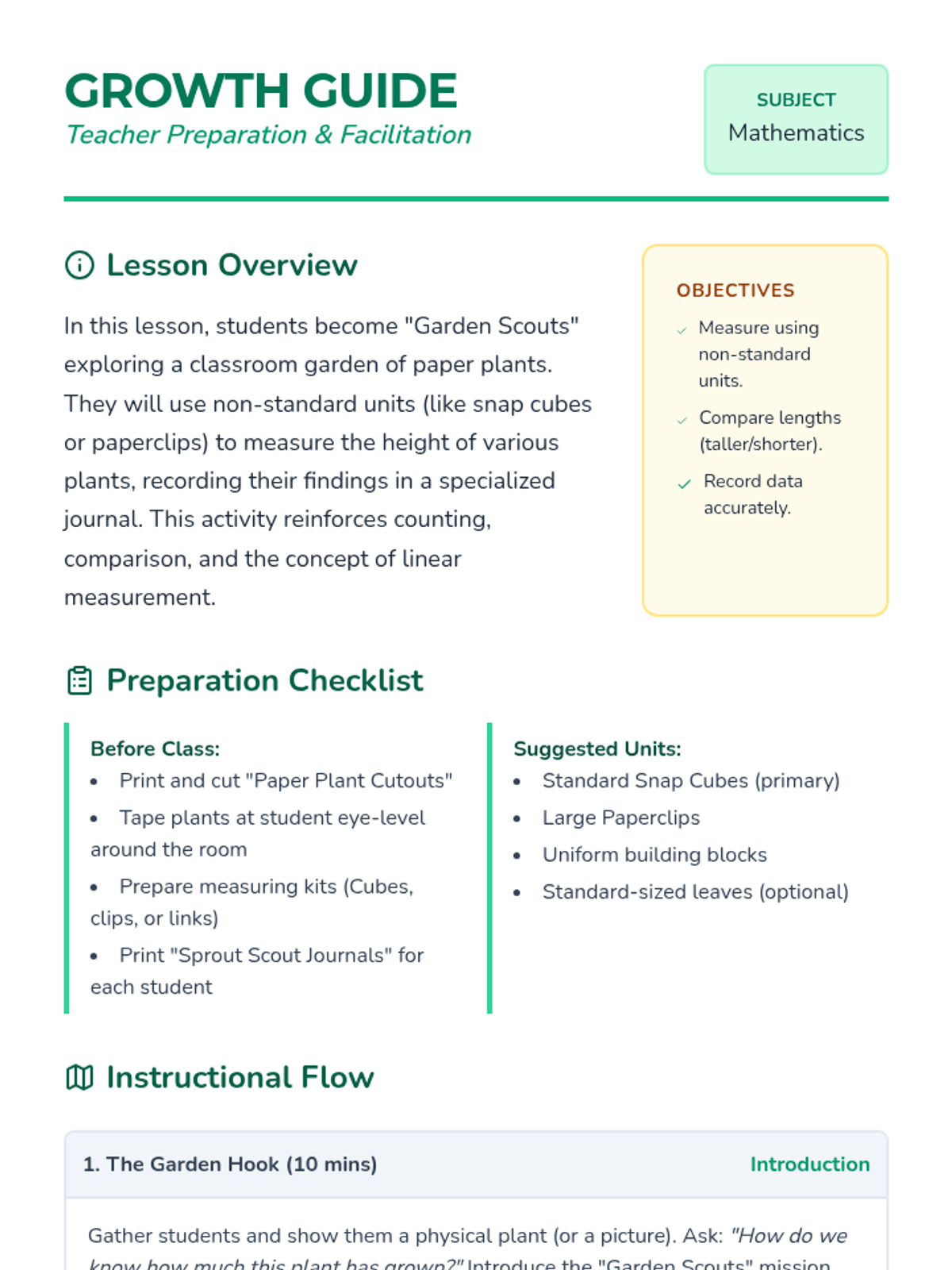
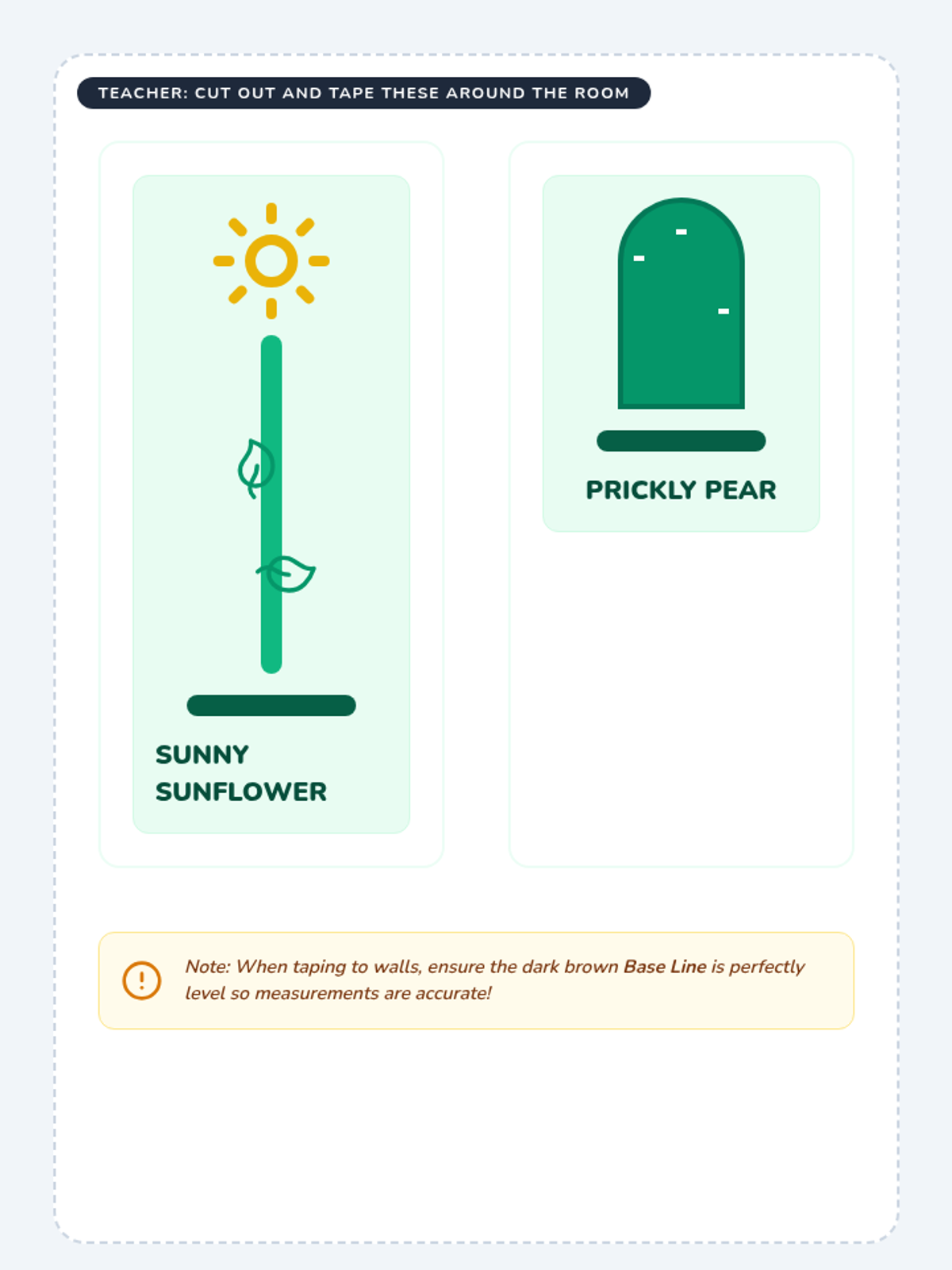
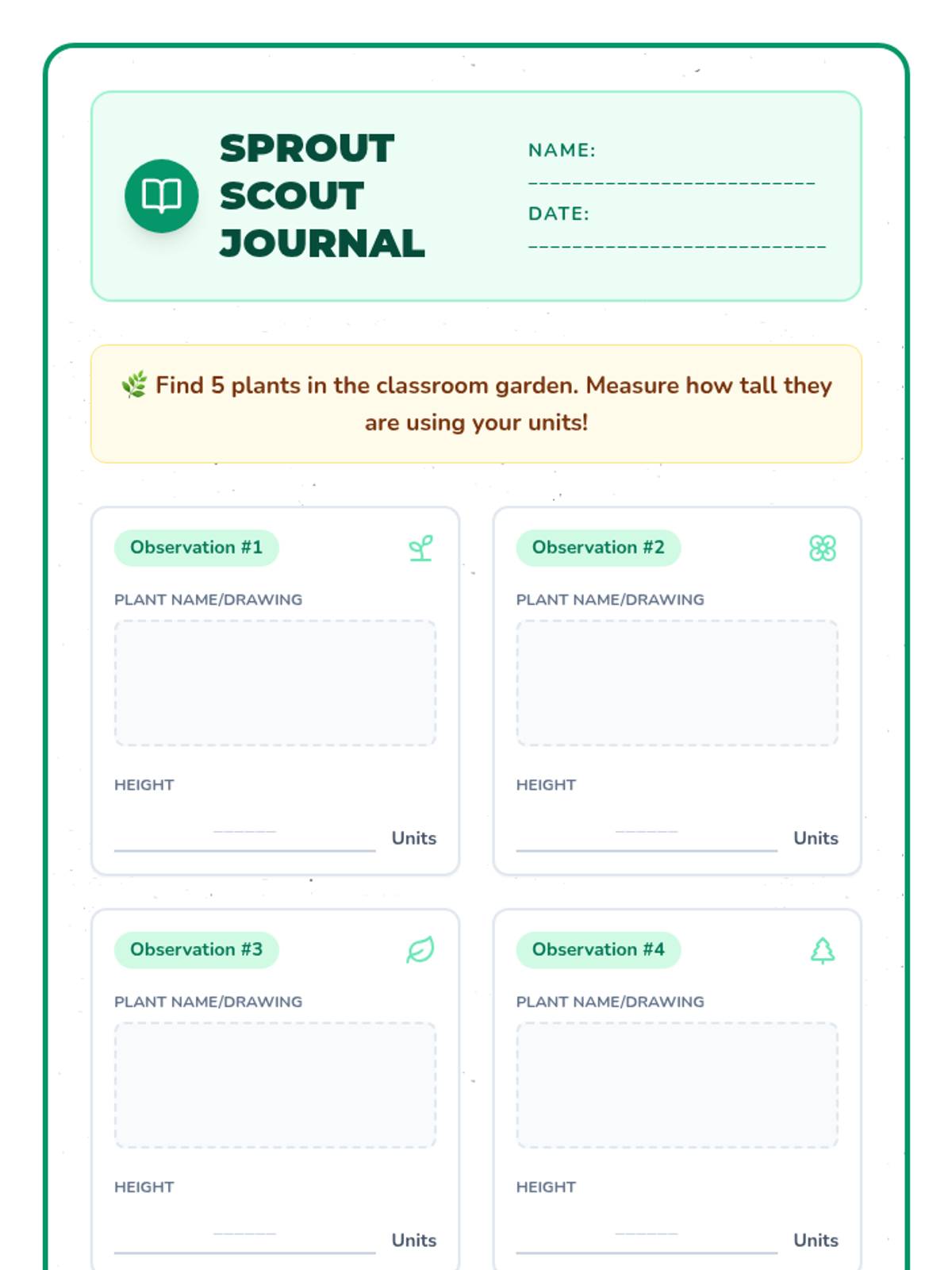
A hands-on measurement lesson where students use non-standard units to measure paper plants, fostering number sense and comparison skills through movement-based learning.
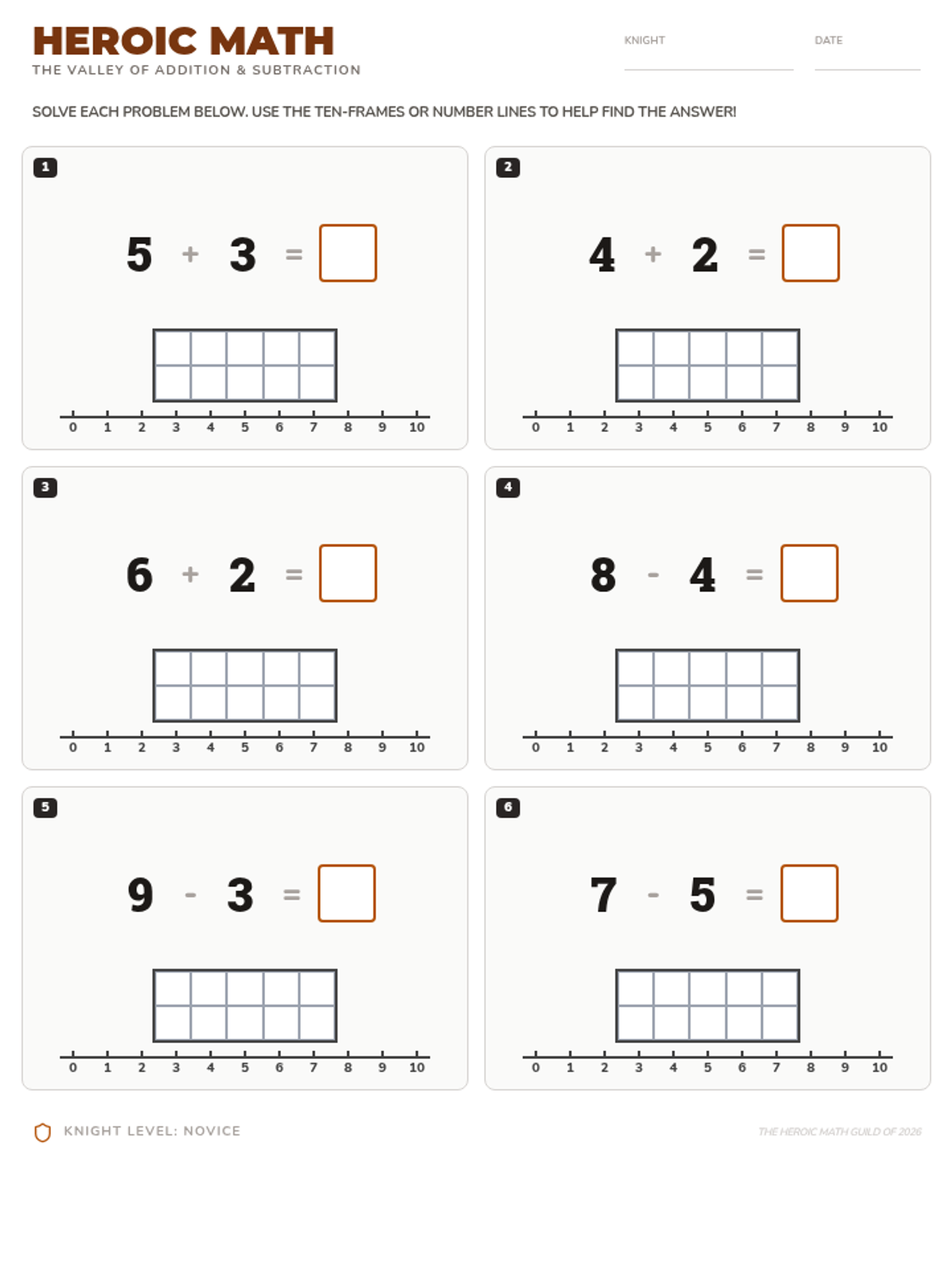
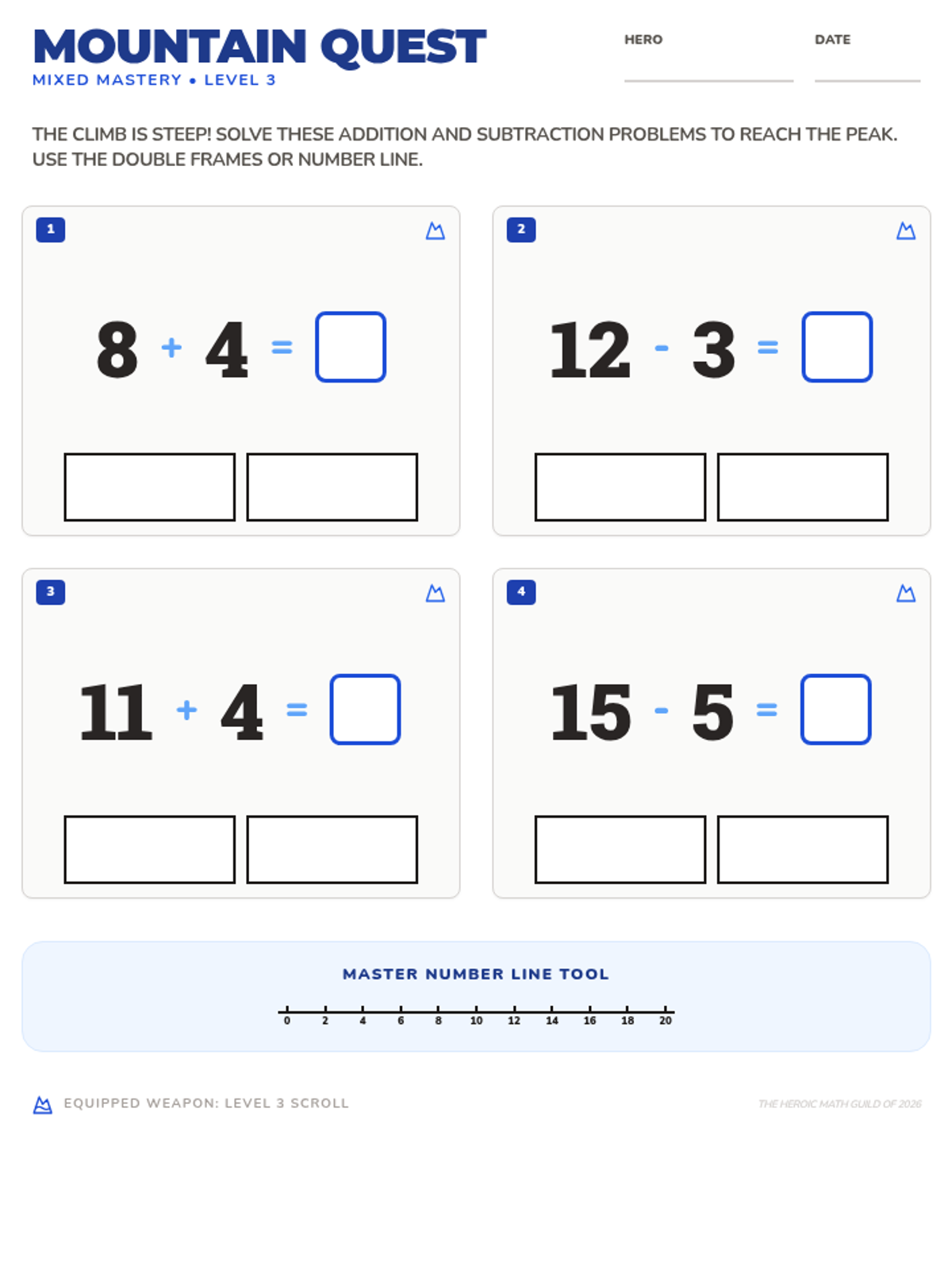
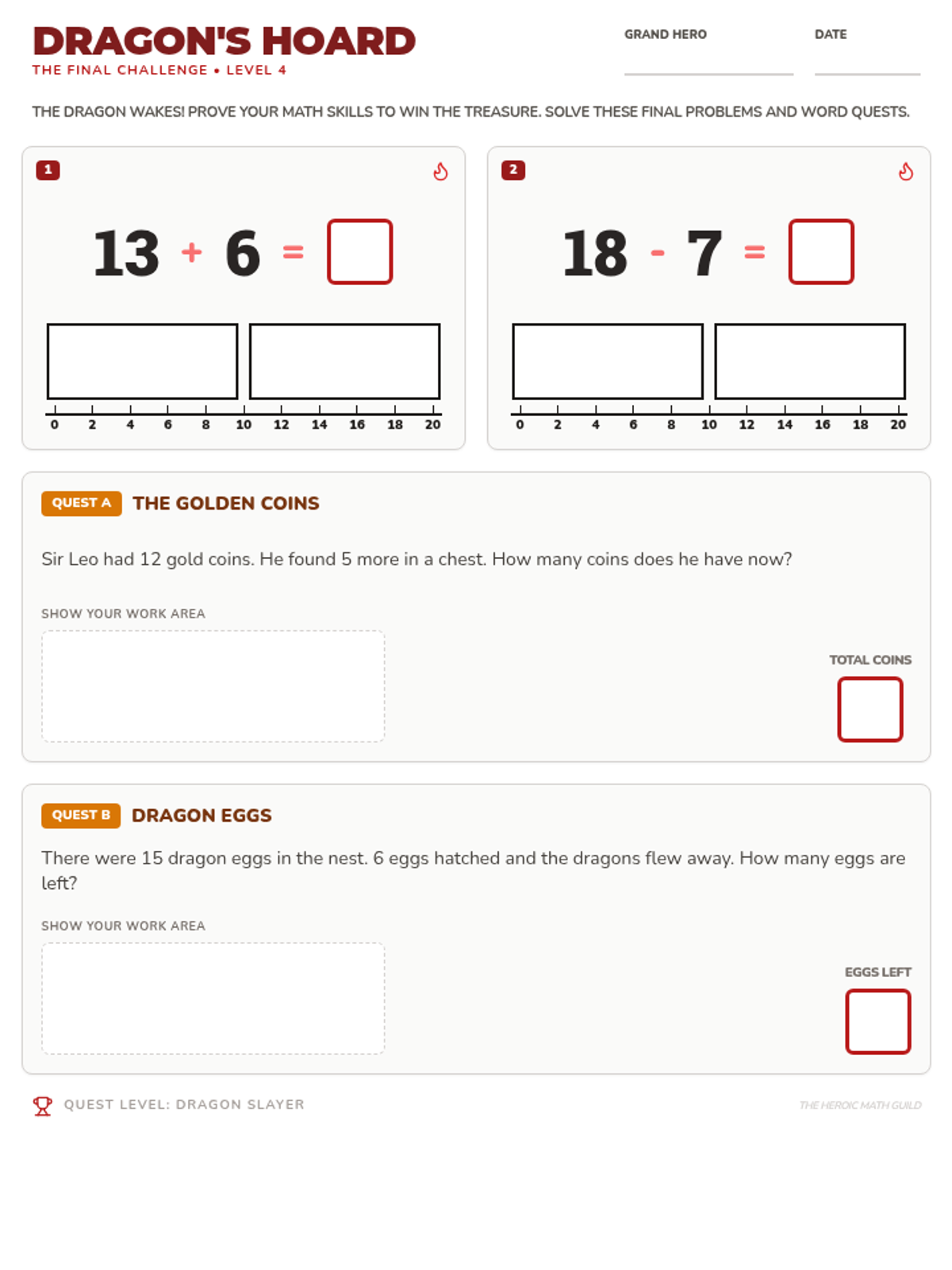
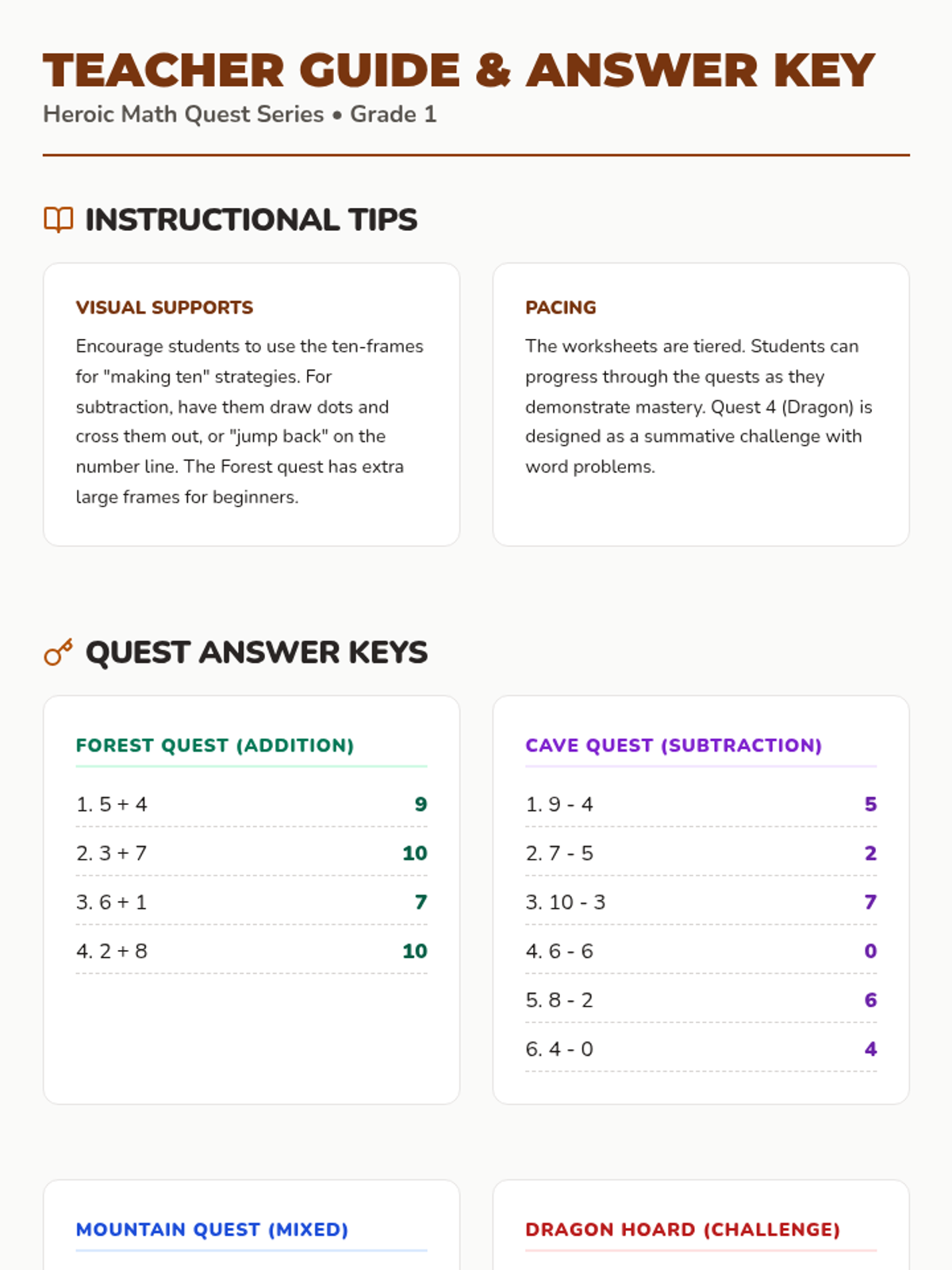
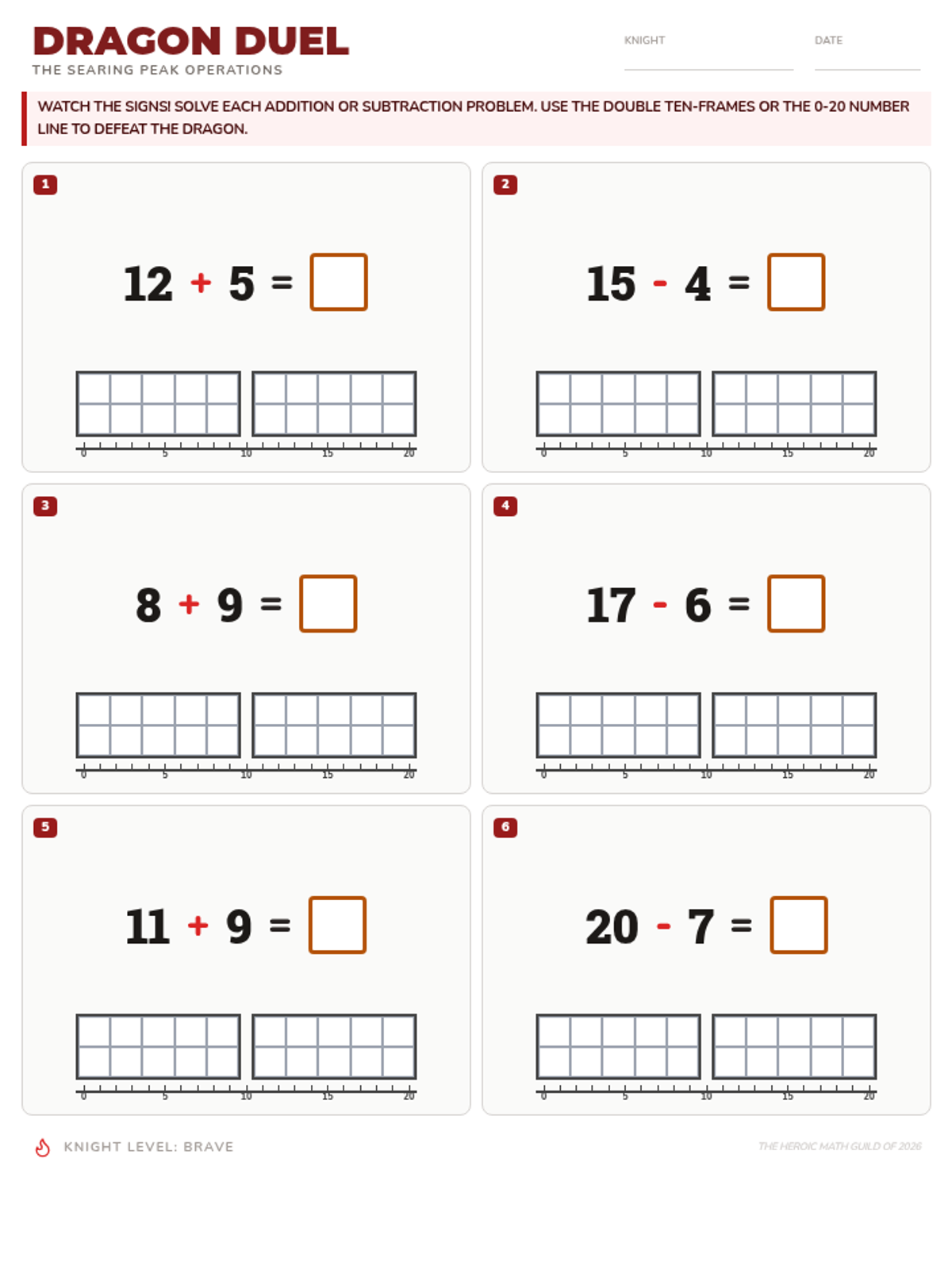
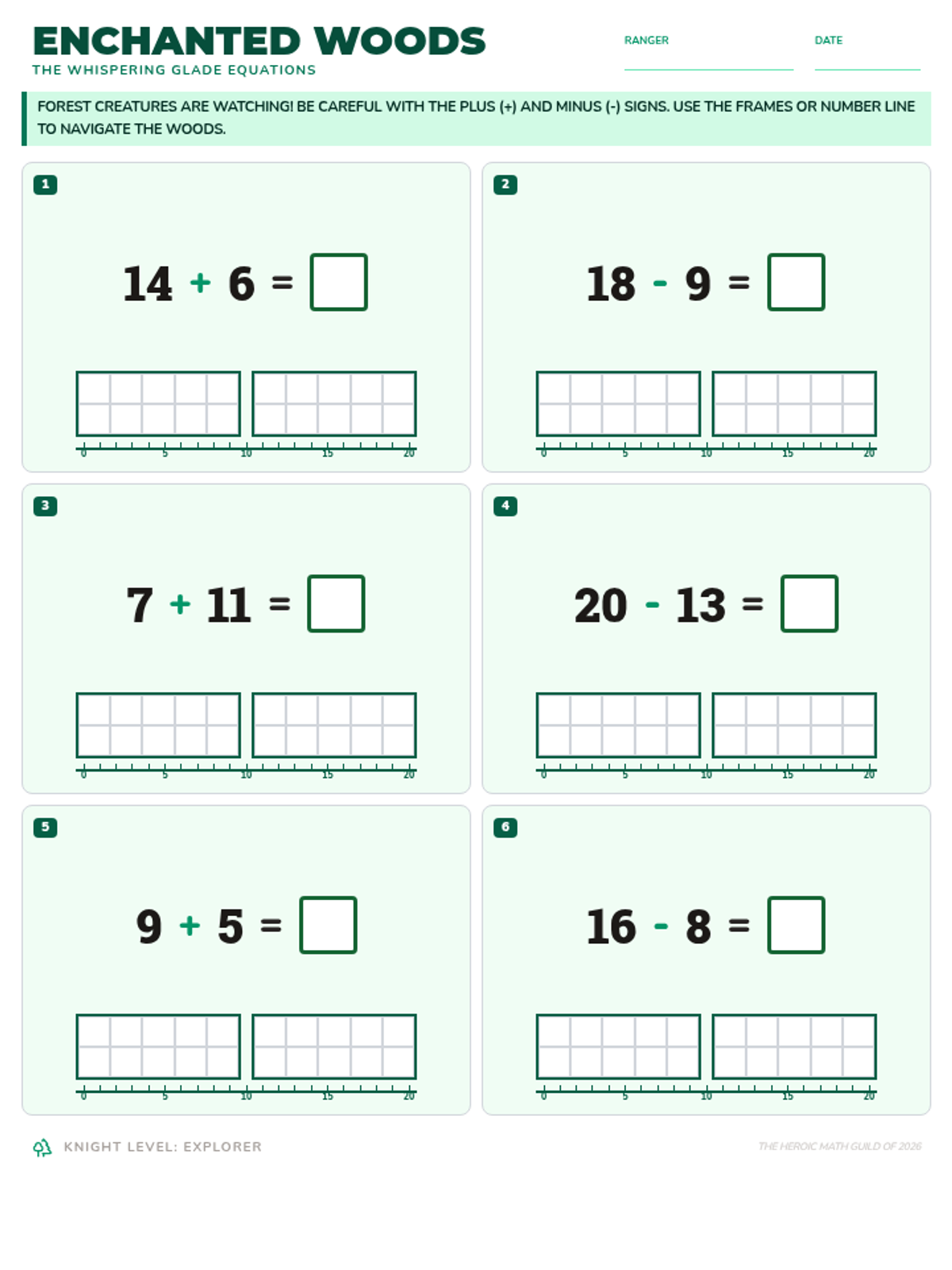
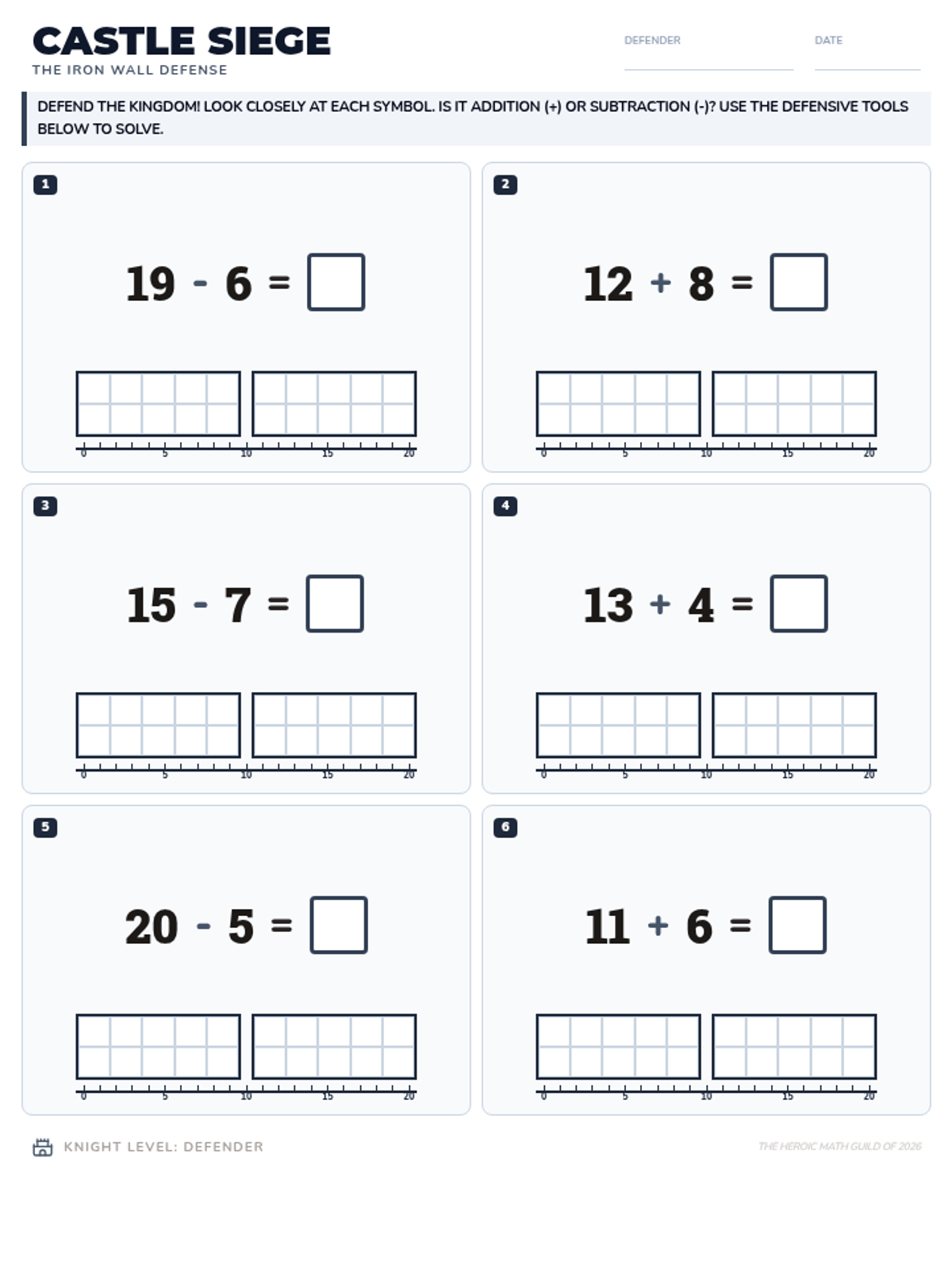
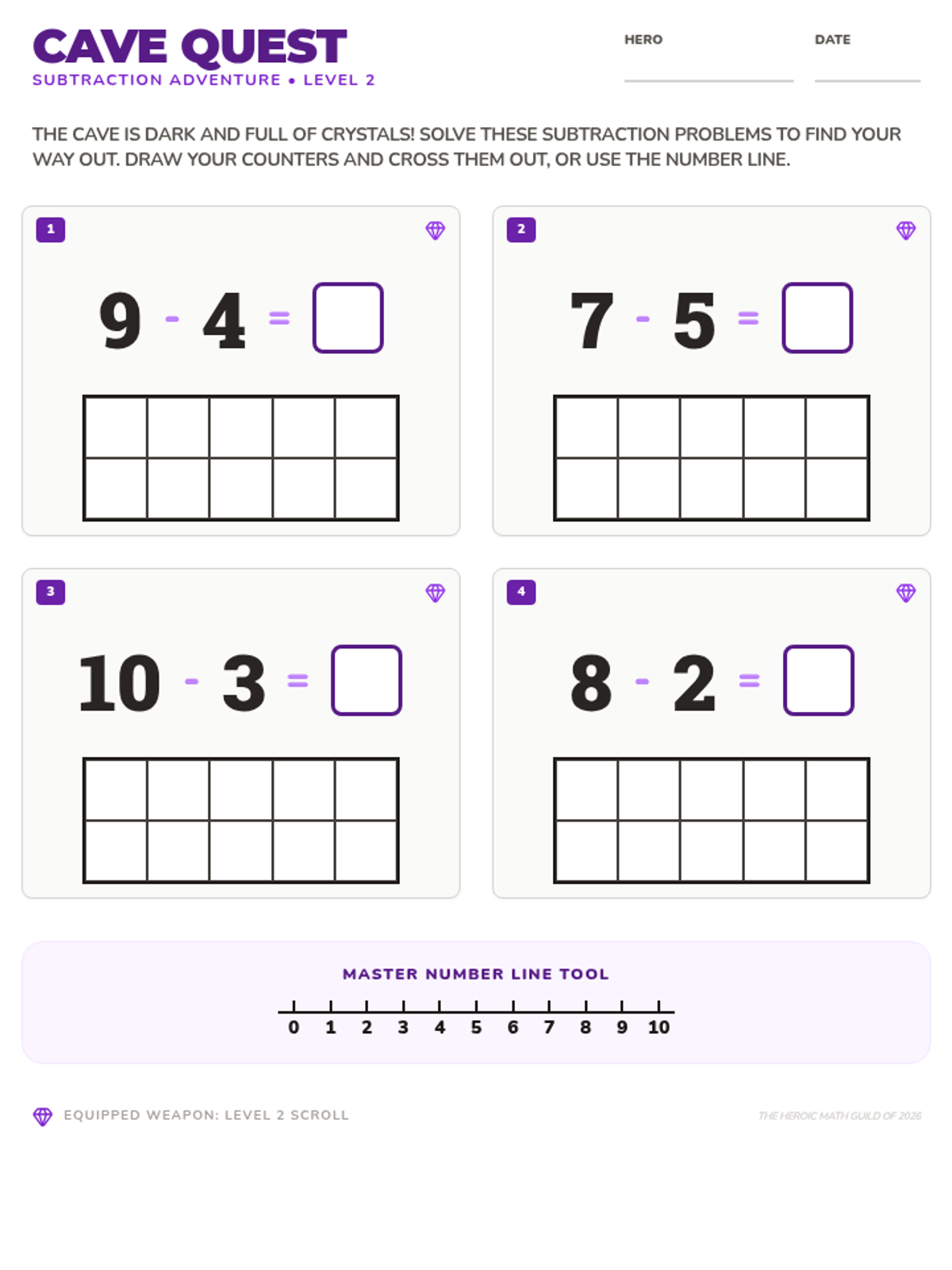
A series of math quests where students practice addition and subtraction within 20. Through medieval-themed challenges, students build fluency using ten-frames and number lines.
A series of medieval-themed math challenges focusing on addition and subtraction fluency within 20. Students use visual models like ten-frames and number lines to solve operational problems.
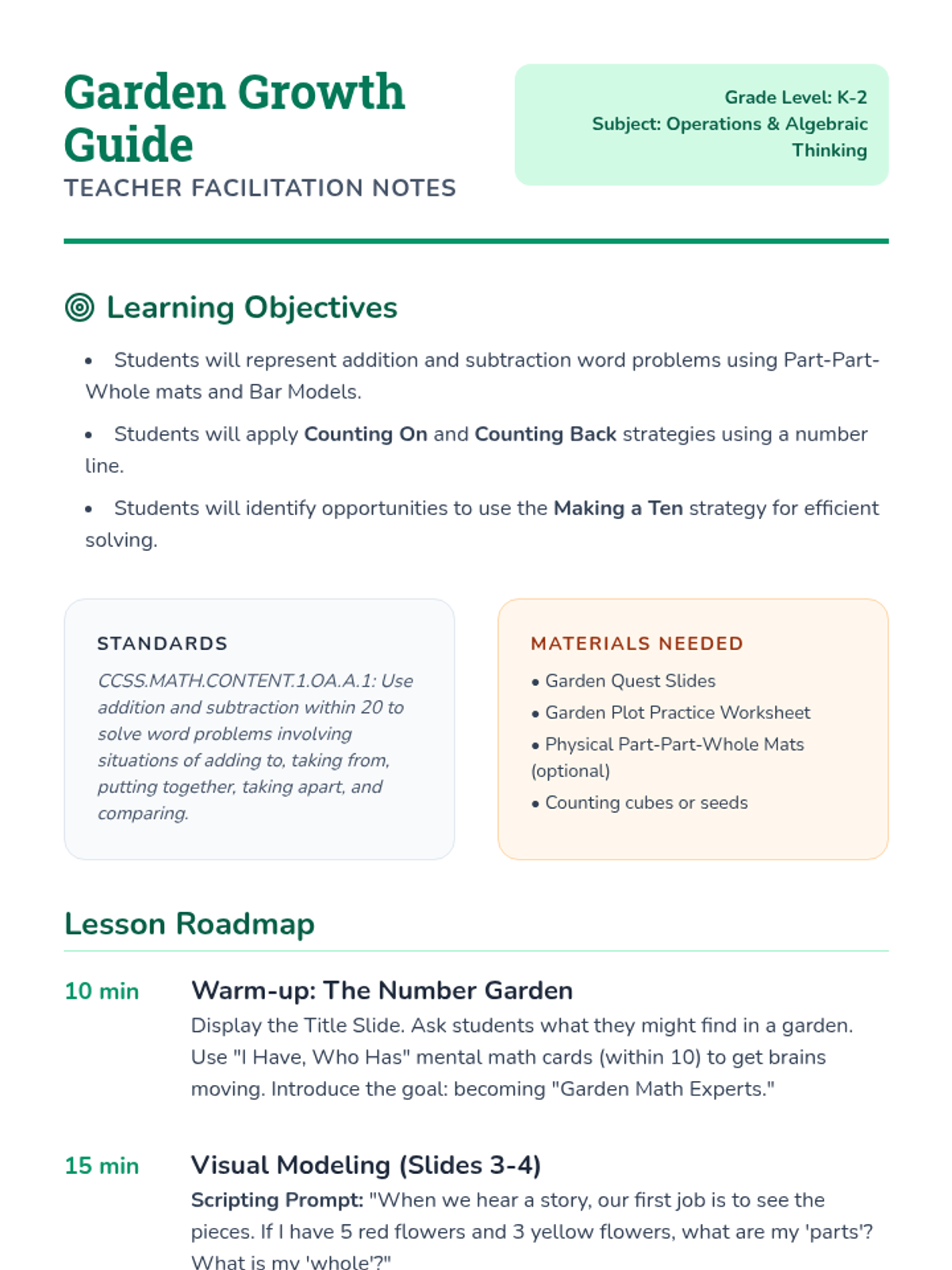
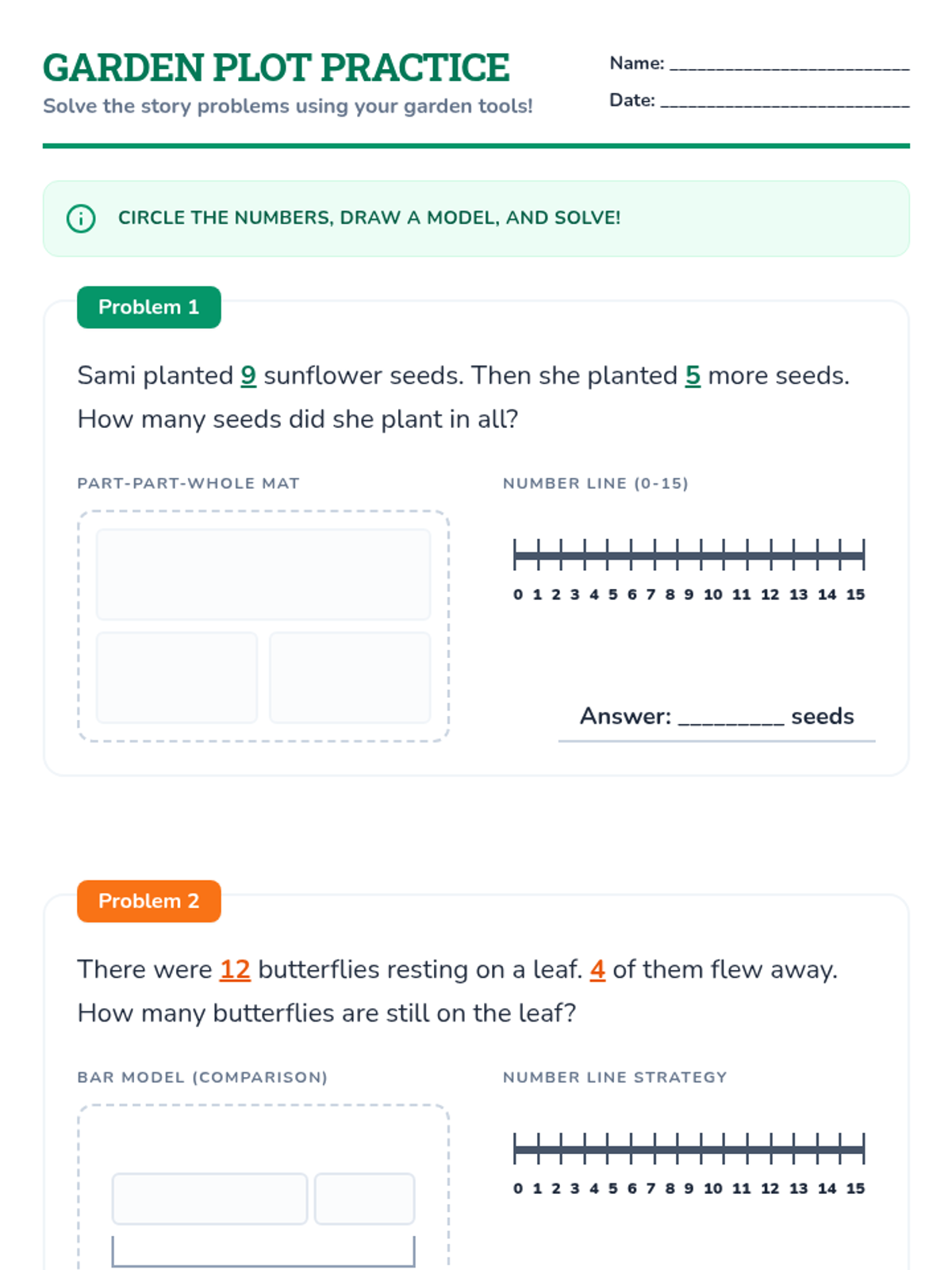
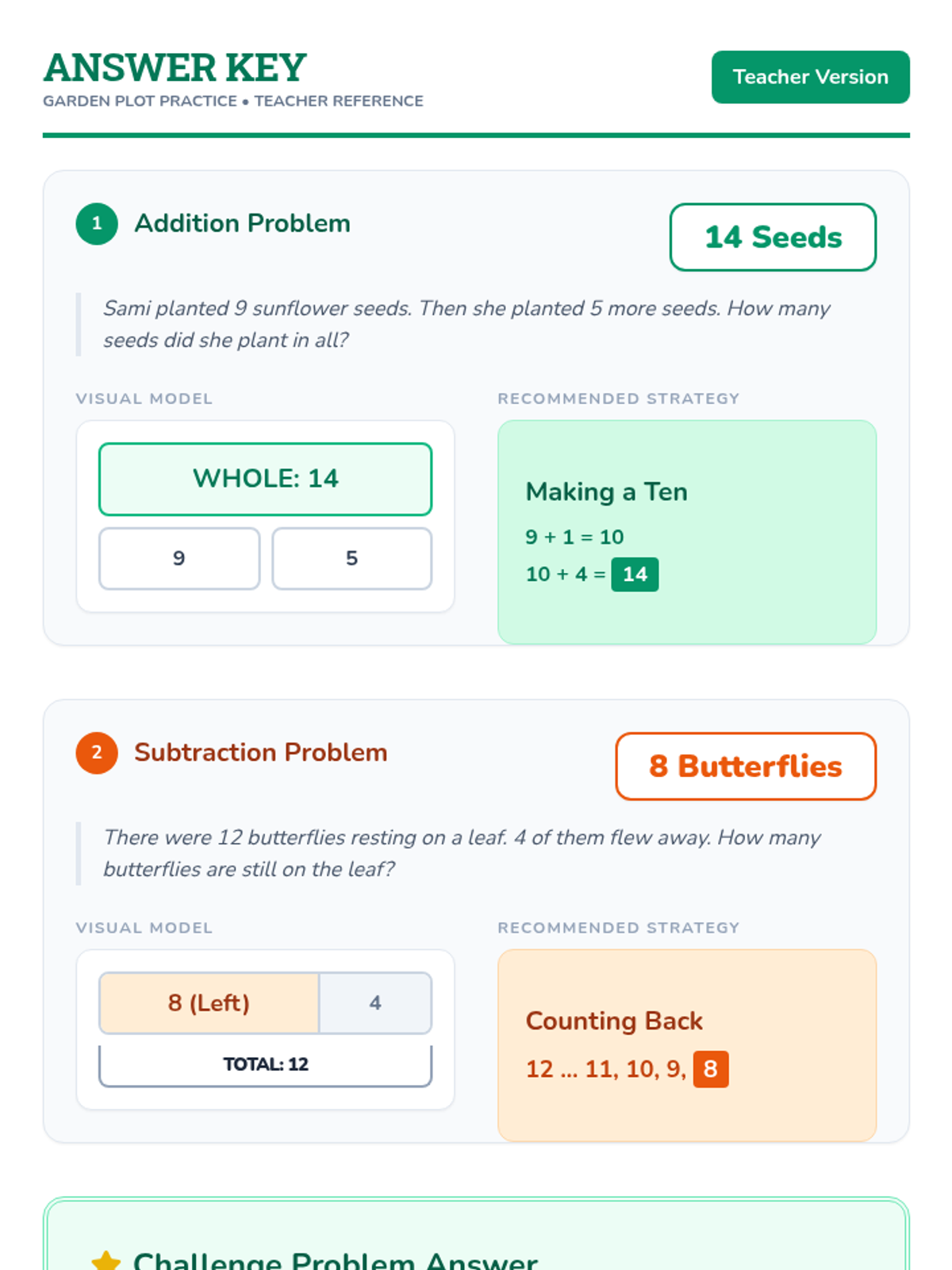
A K-2 math lesson focusing on solving addition and subtraction word problems using part-part-whole mats, bar models, and number lines, while applying counting on/back and making-a-ten strategies.
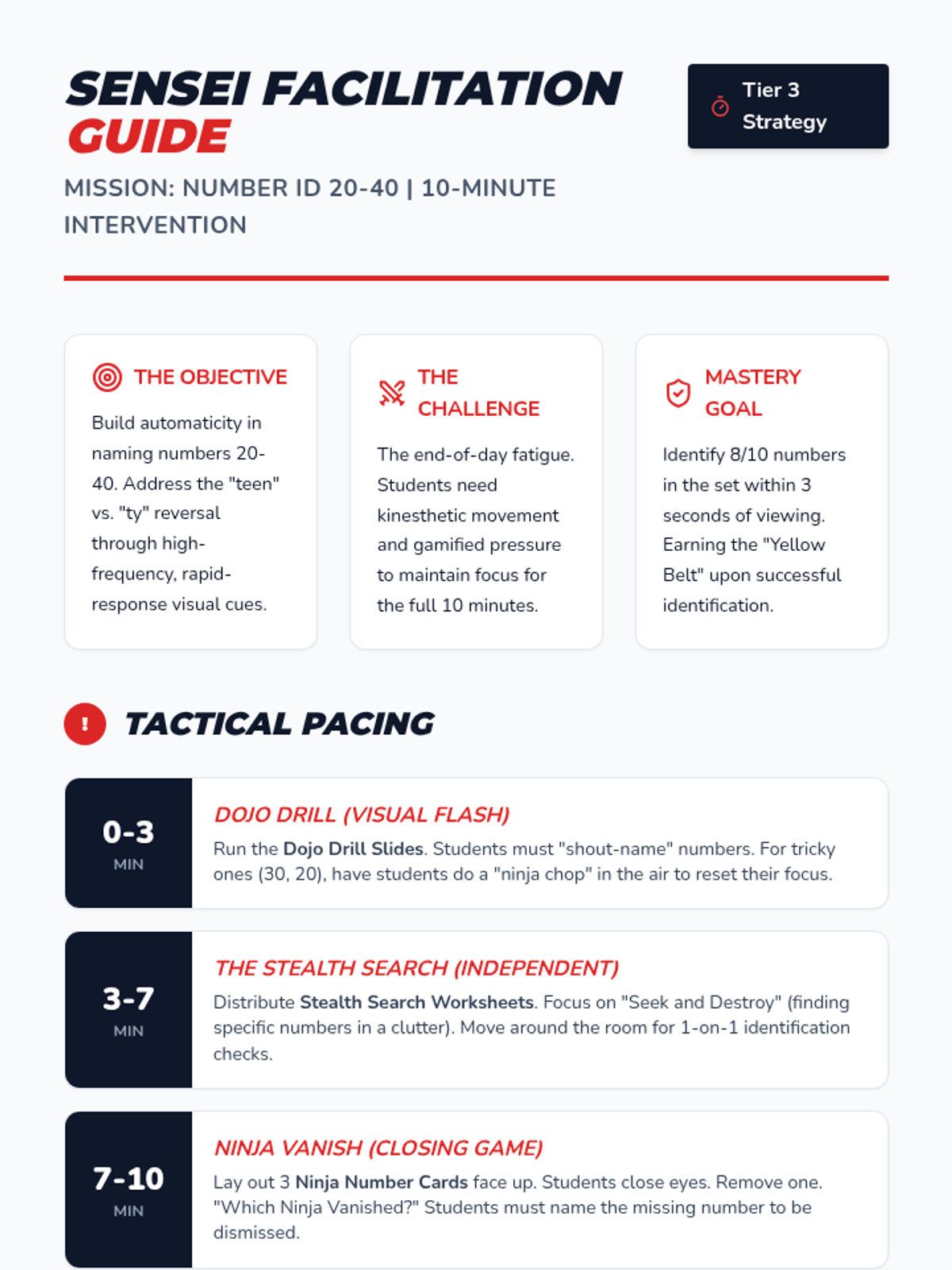
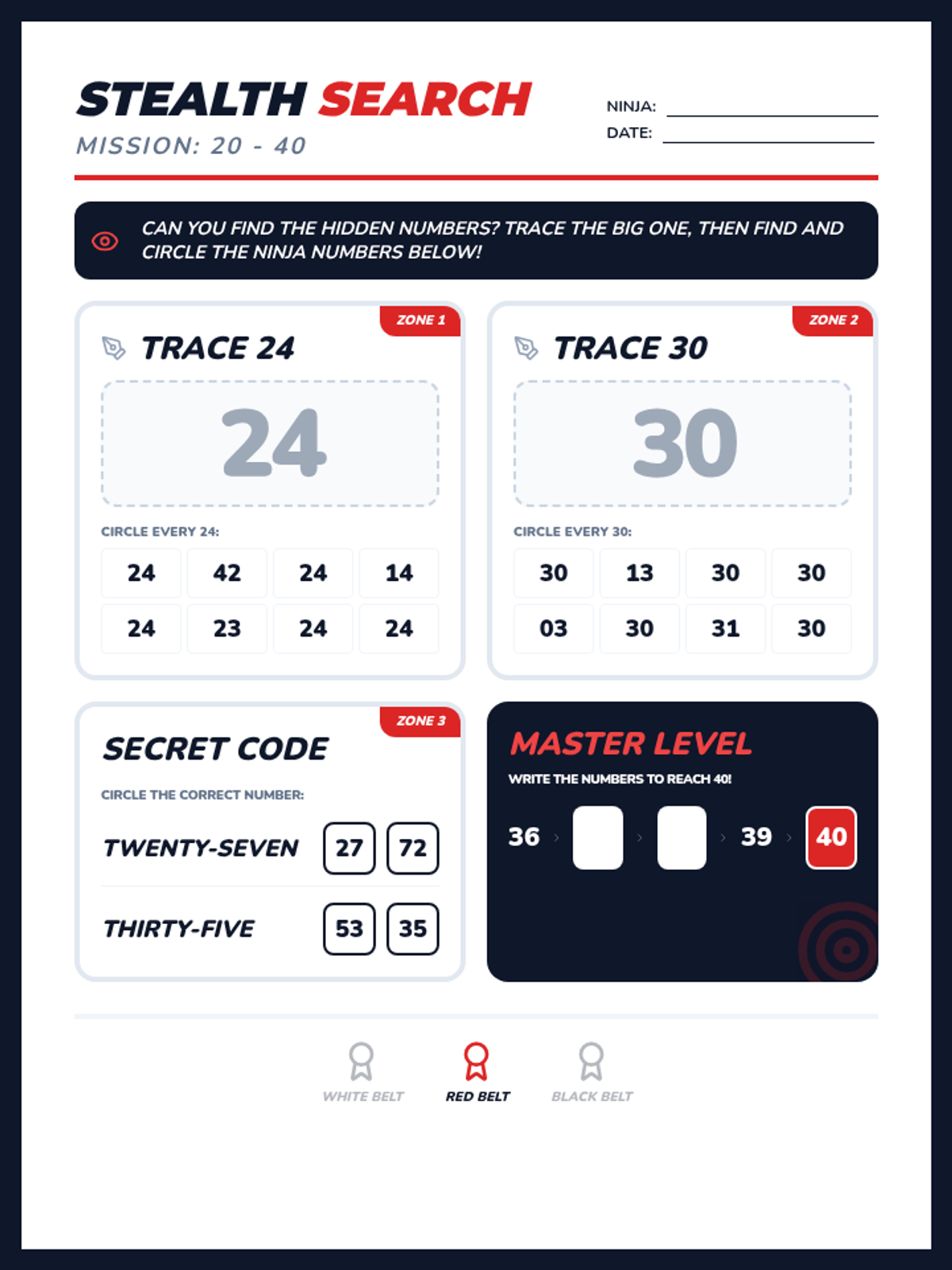
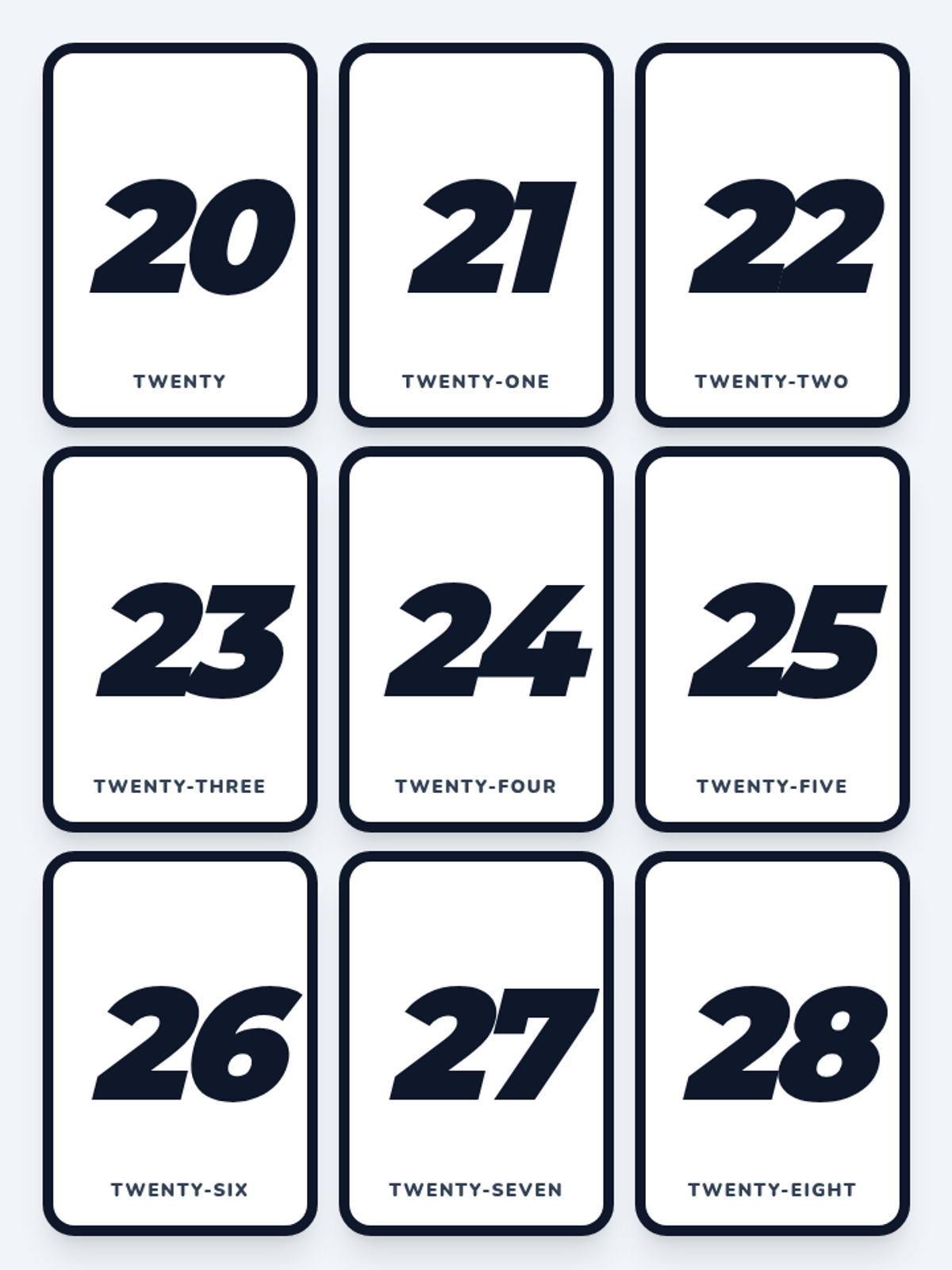
Targeted practice for identifying numbers 20-40 through rapid-fire visual drills and kinesthetic activities. Focuses on overcoming the 'teen' vs 'ty' confusion and building reliable recall.
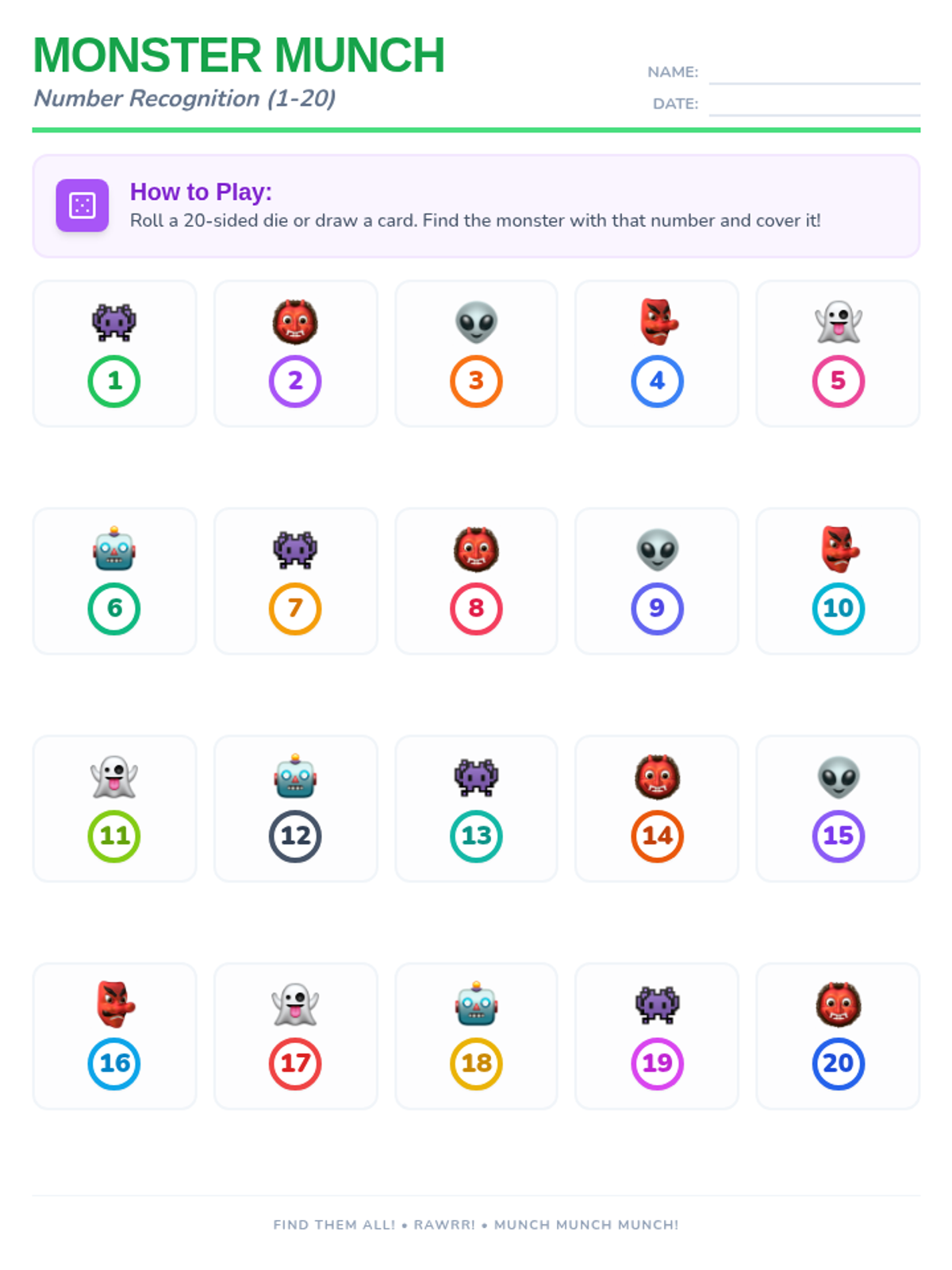
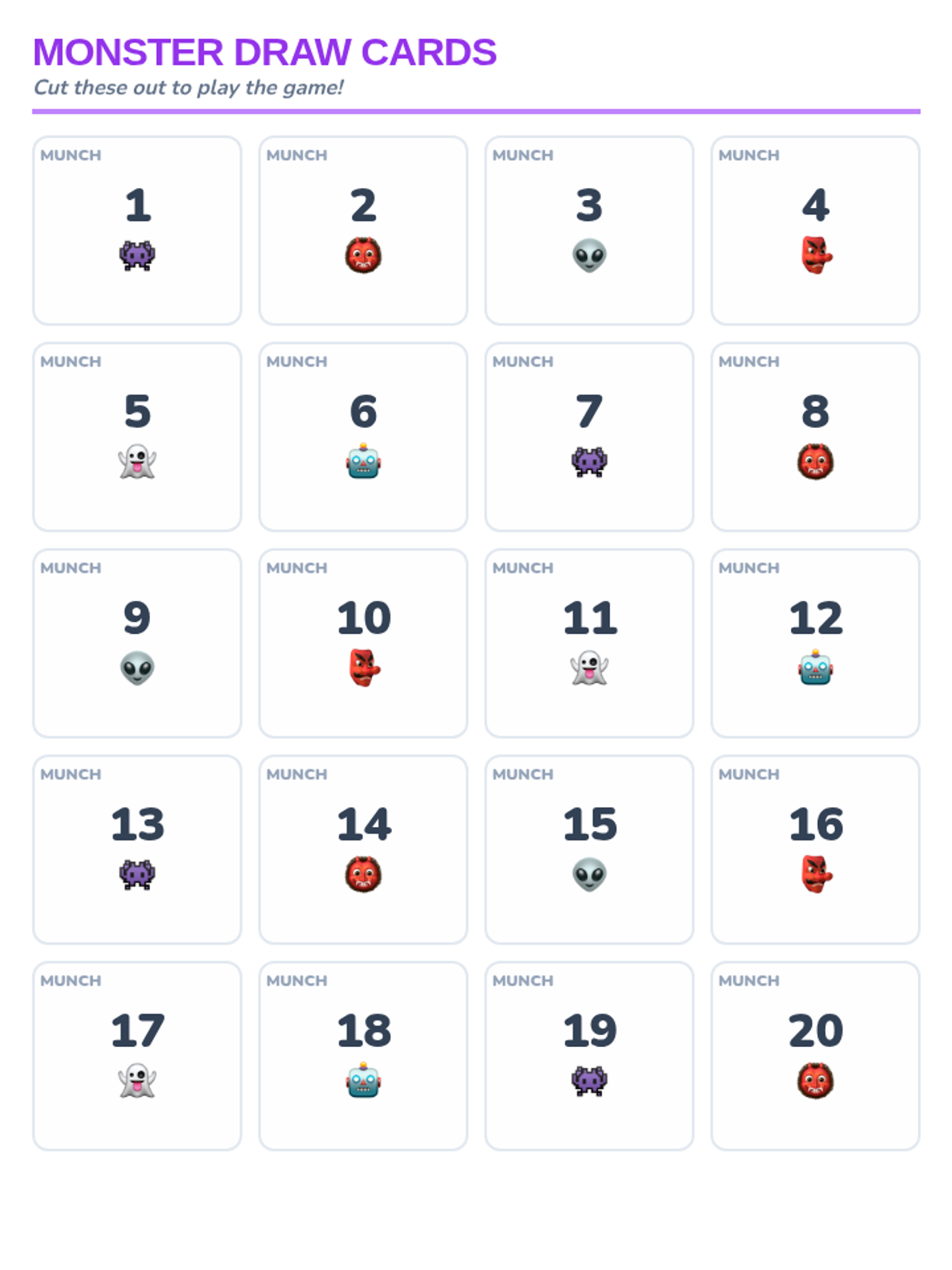
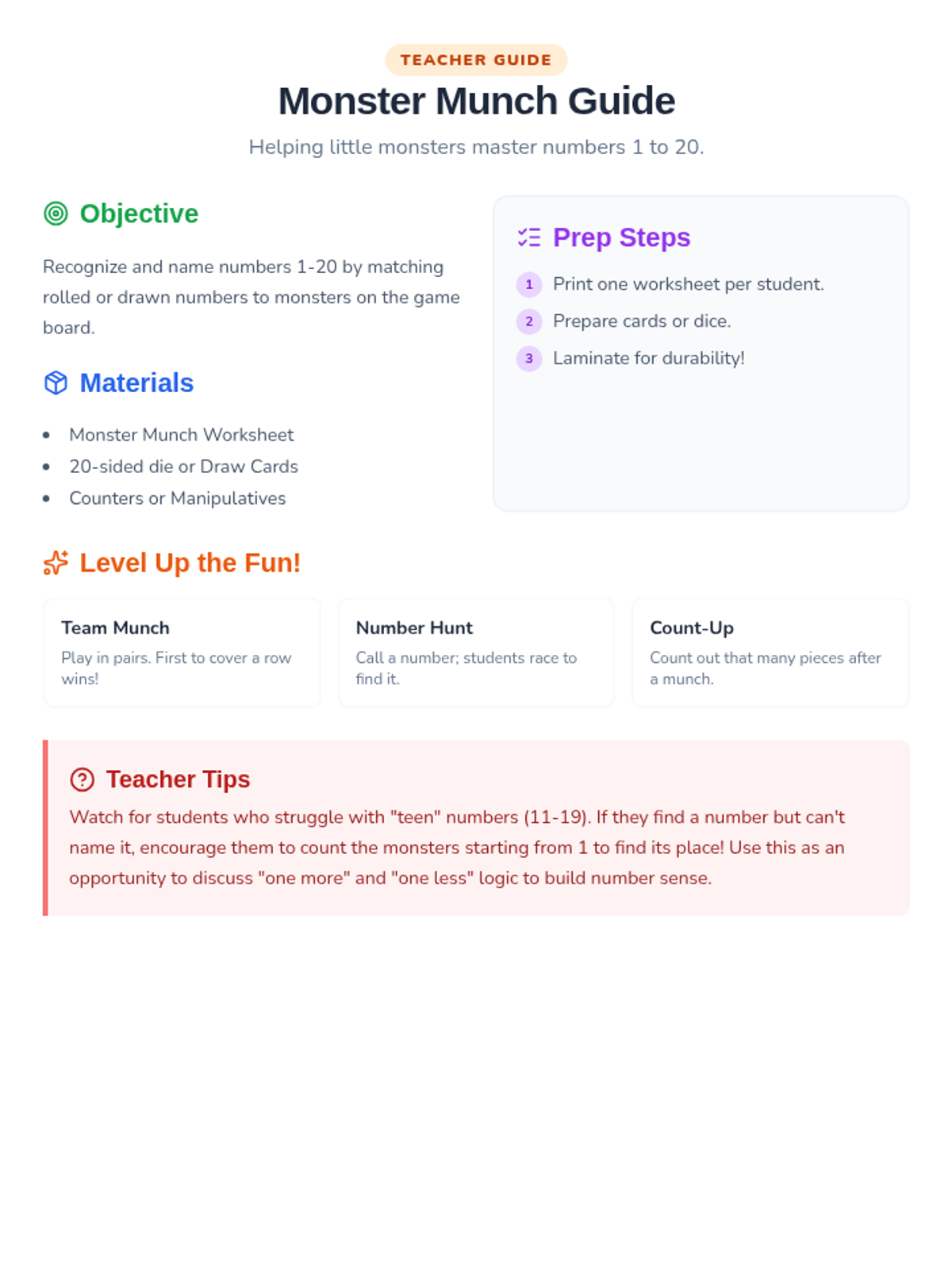
A fun, monster-themed lesson focused on identifying and naming numbers 1-20 through a hands-on 'Roll and Cover' game. Students practice subitizing and number recognition in a playful, low-stakes environment.
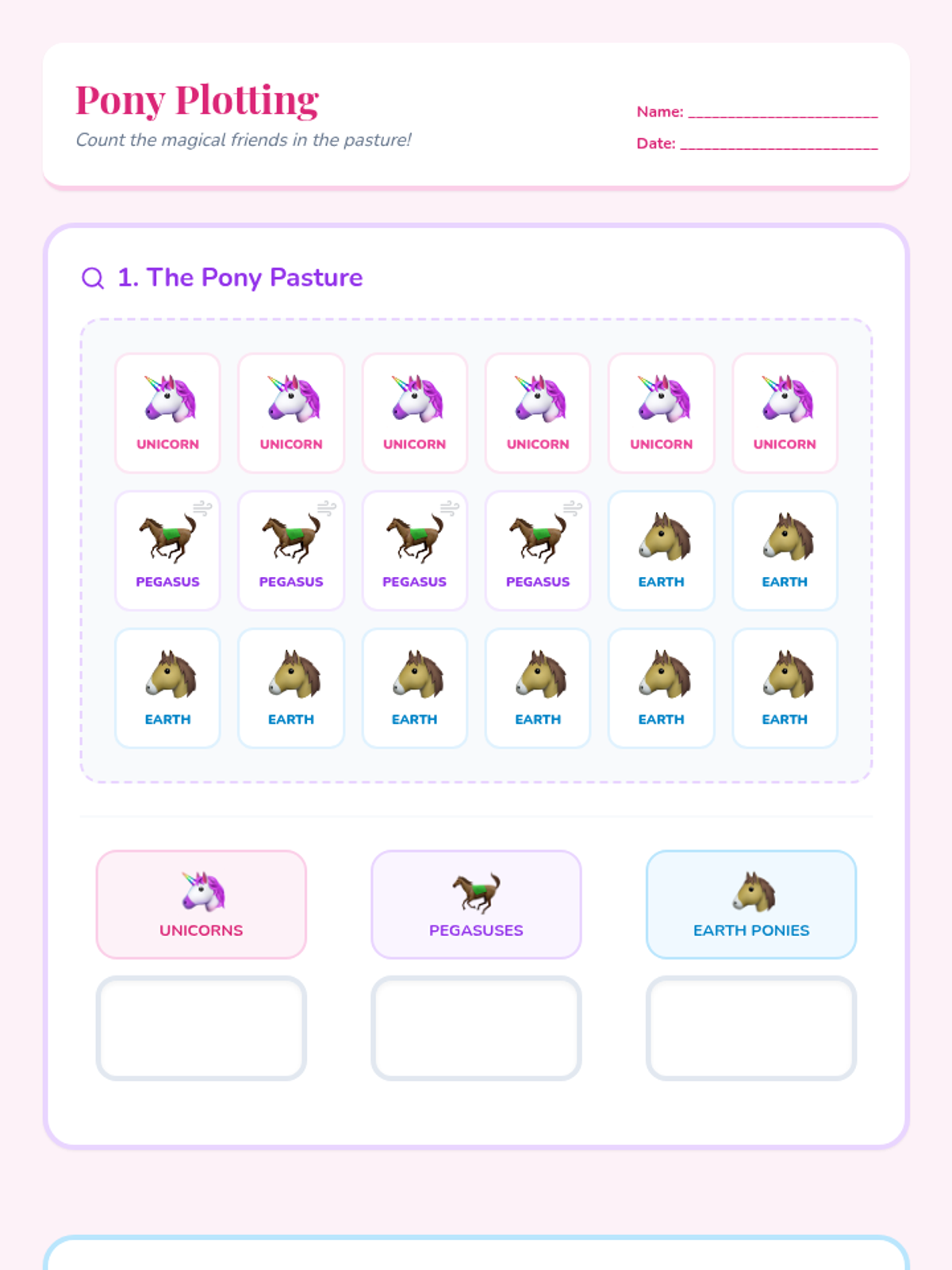
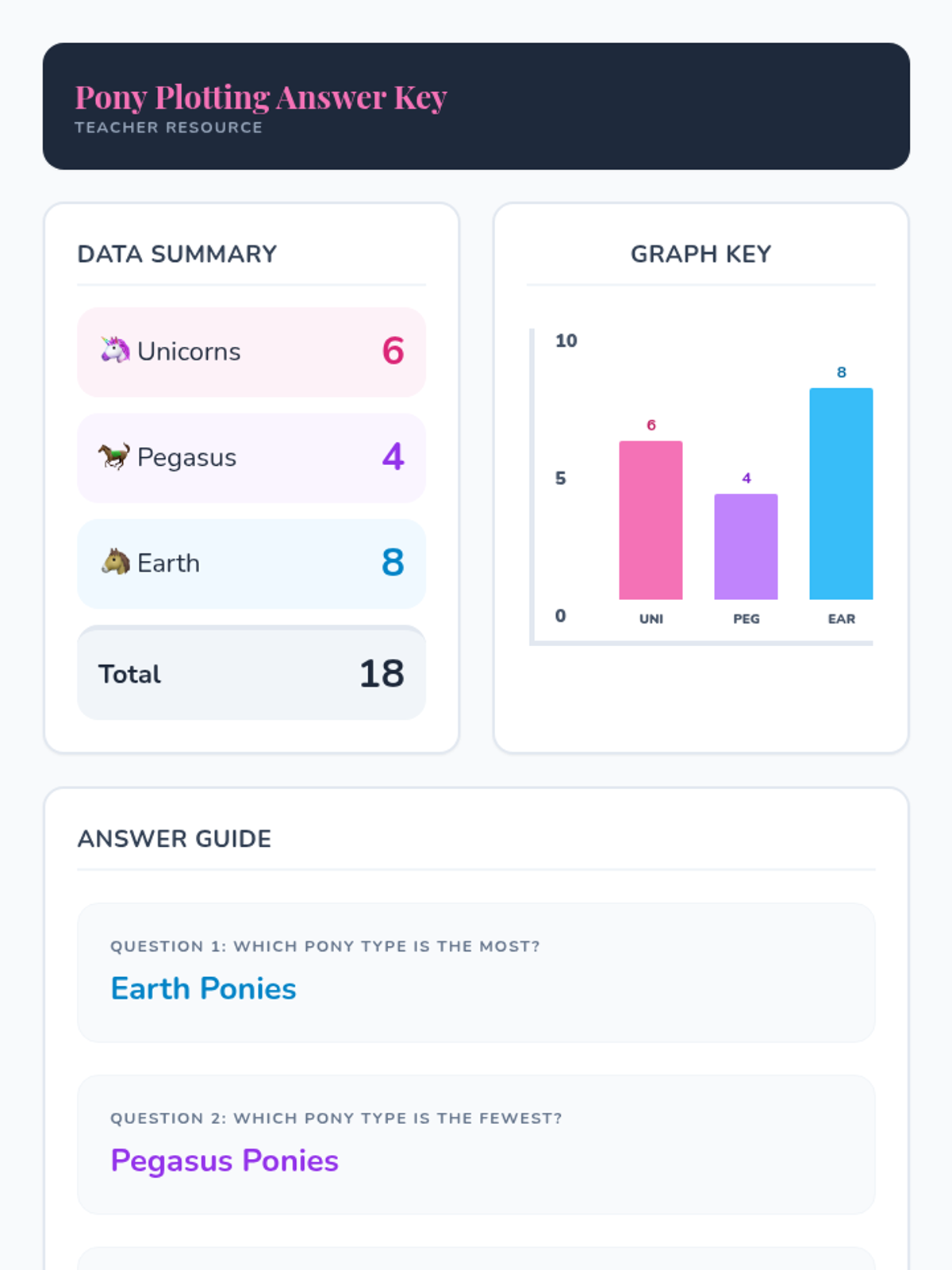
A magical math lesson where students count, sort, and graph different types of ponies to practice data representation and comparison skills.
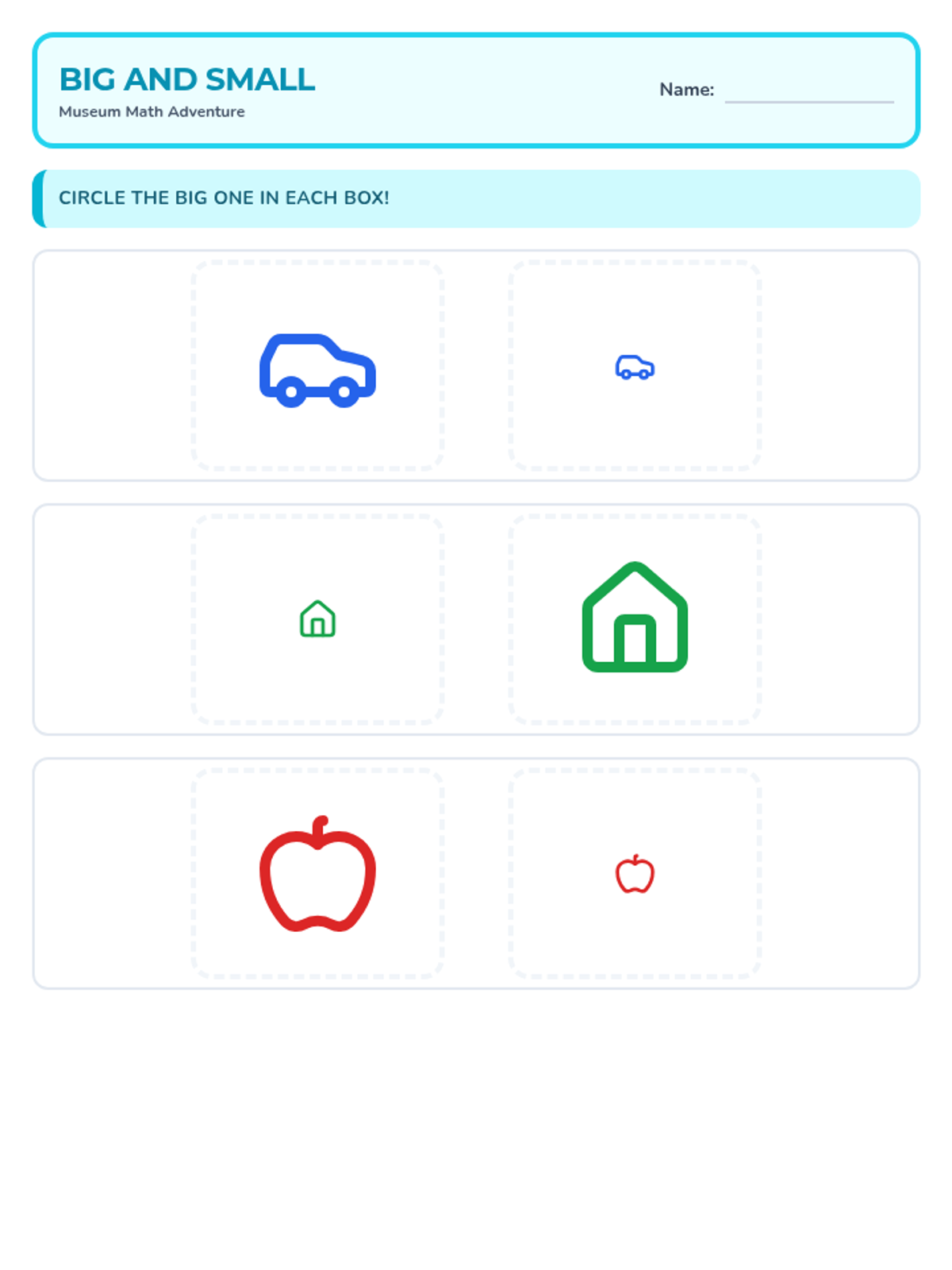
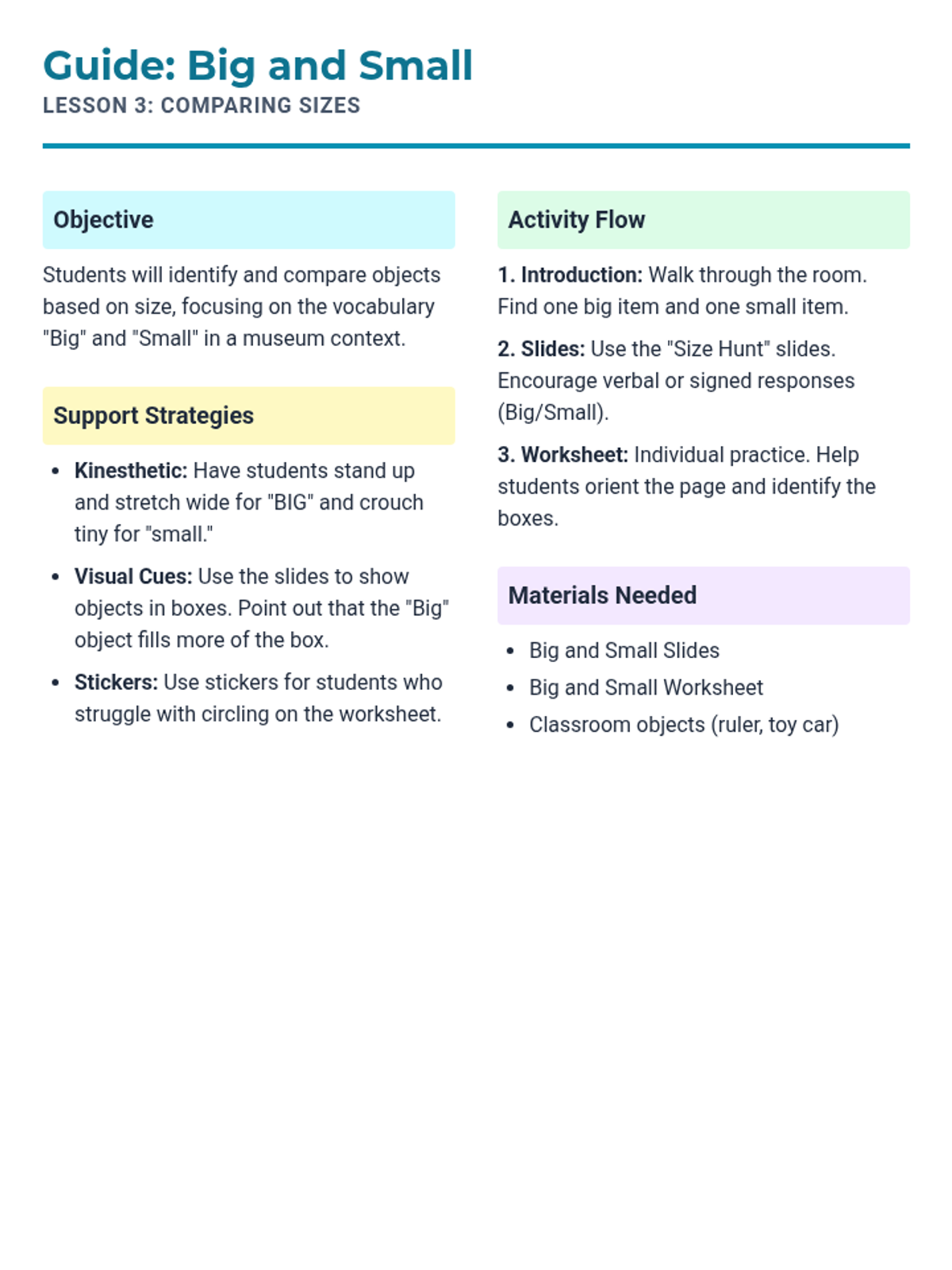
Students will explore the concepts of big, medium, and small by comparing various objects in the museum exhibits, promoting vocabulary development and visual discrimination.
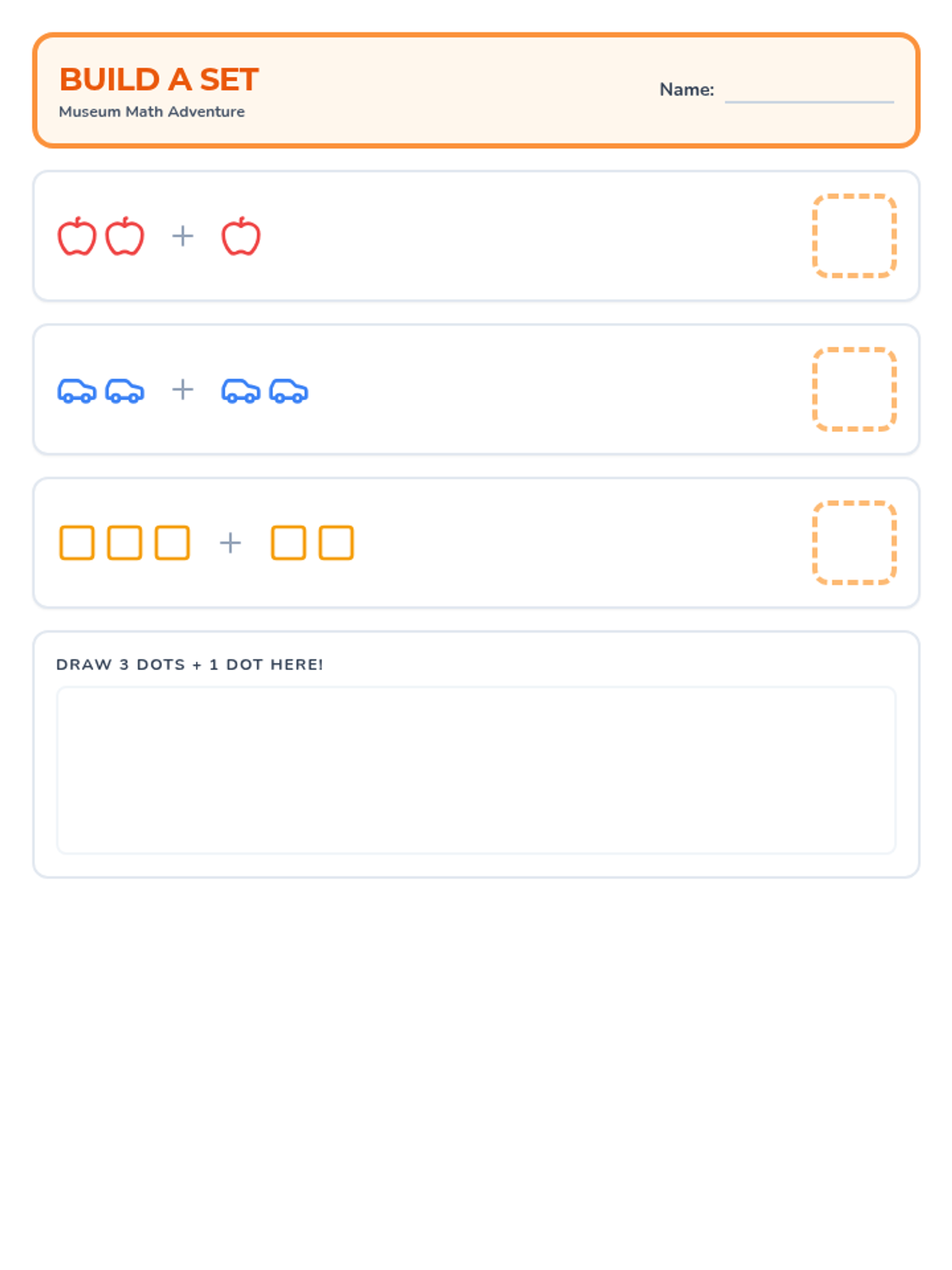
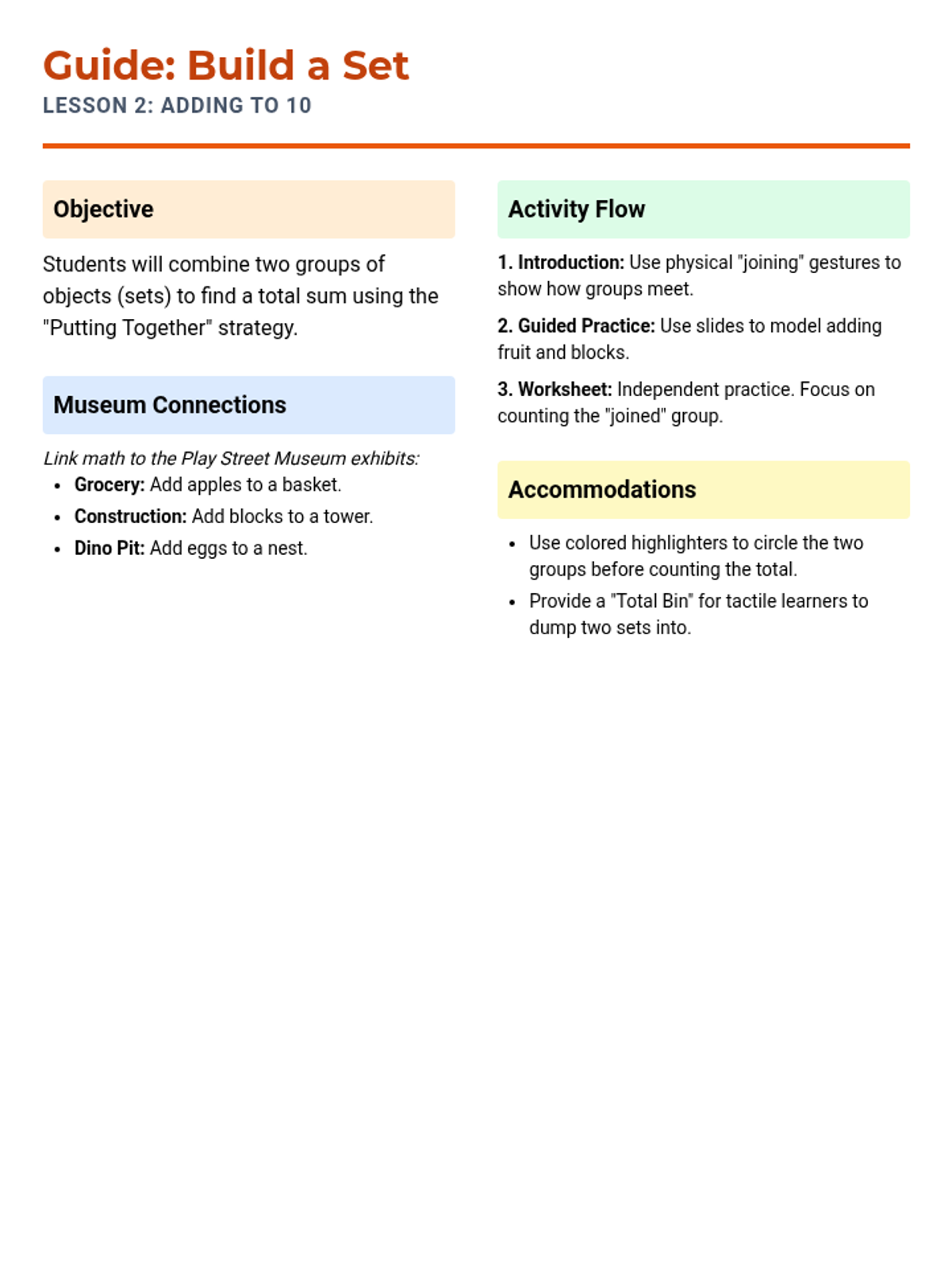
An introduction to simple addition by combining groups of museum objects, focusing on the concept of 'putting together' using visual aids and tactile play scenarios.
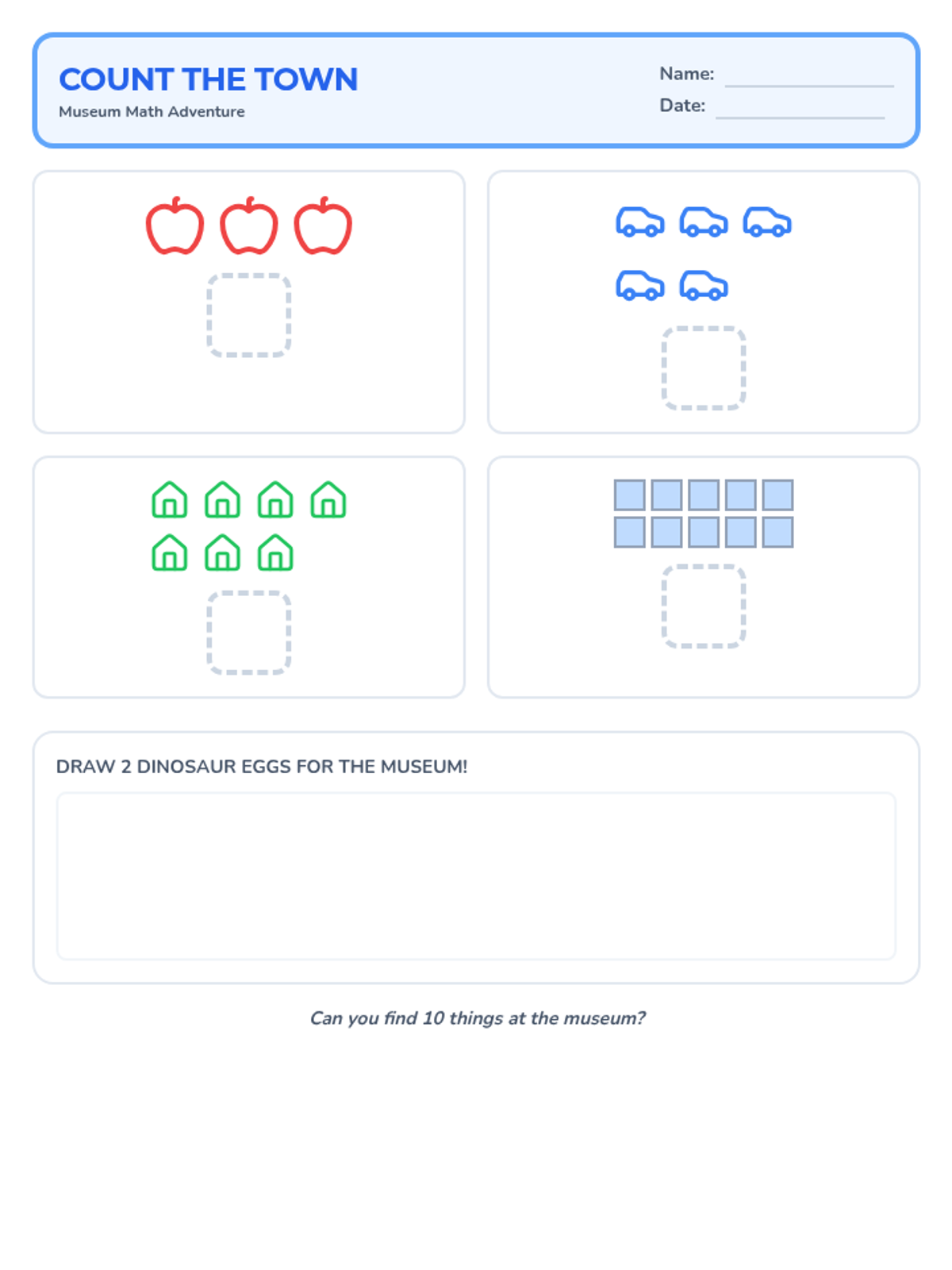
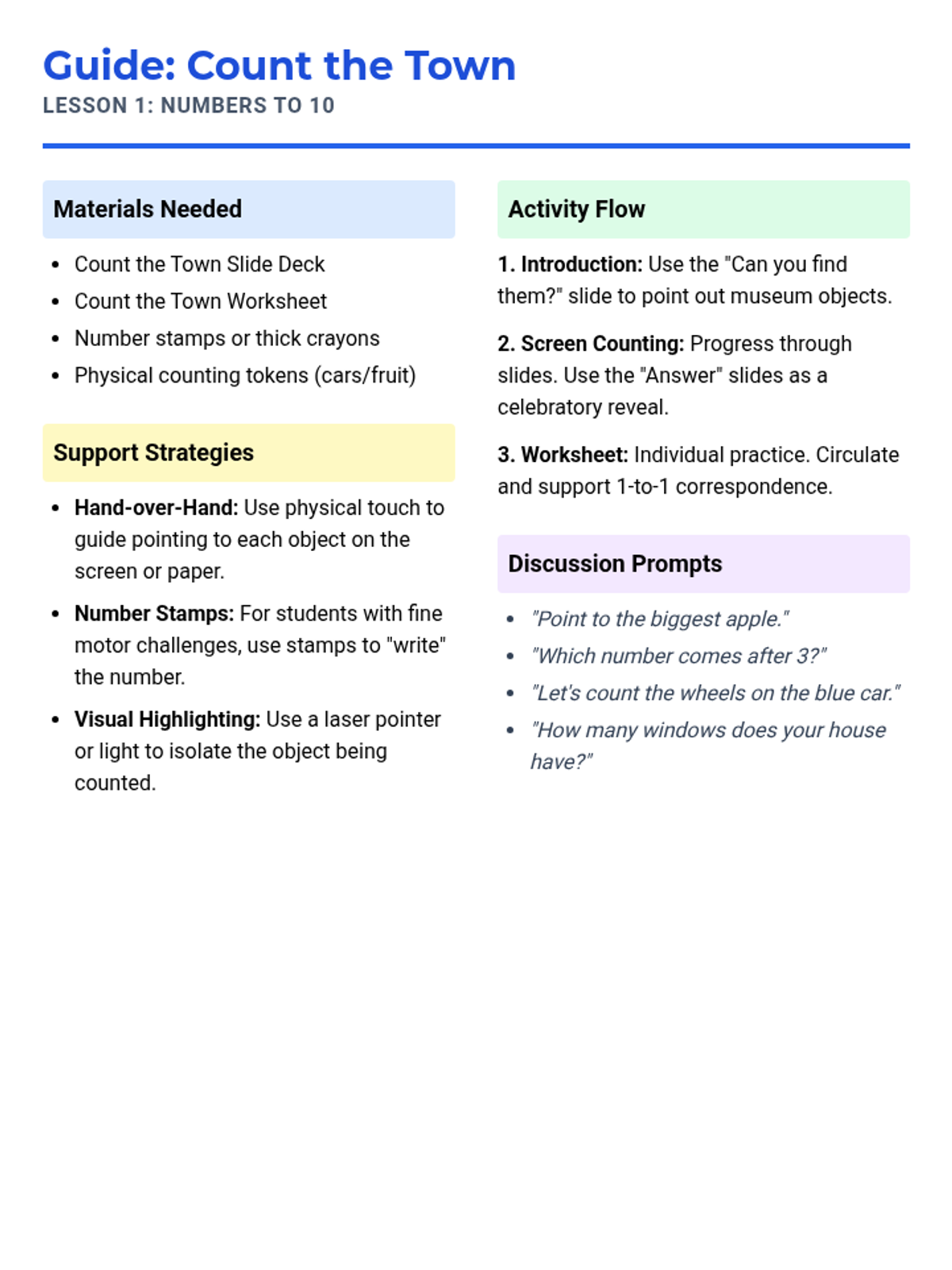
Students will practice identifying and counting numbers 1-10 using common items found in a play museum setting, such as grocery items, toy cars, and house windows.
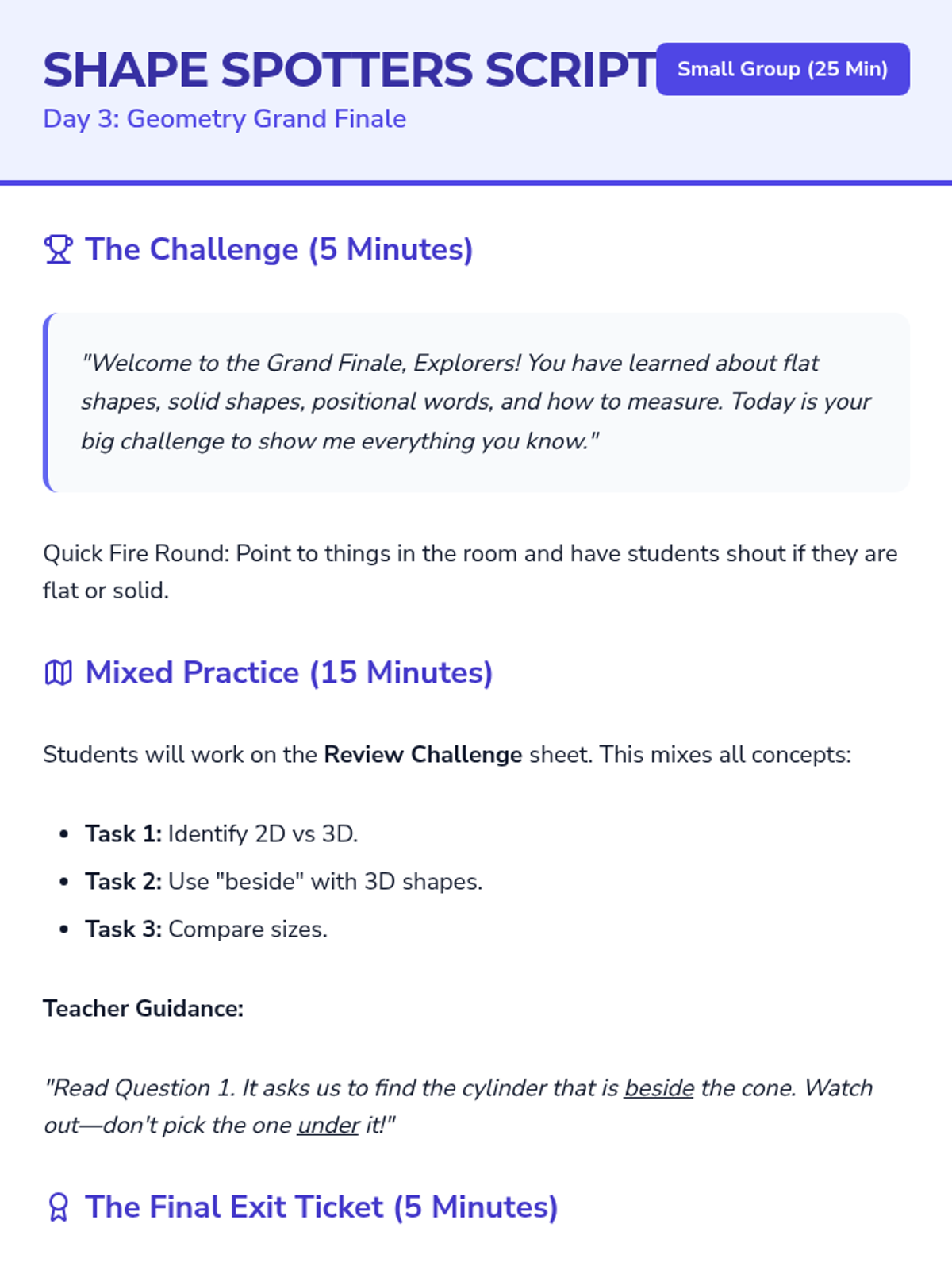
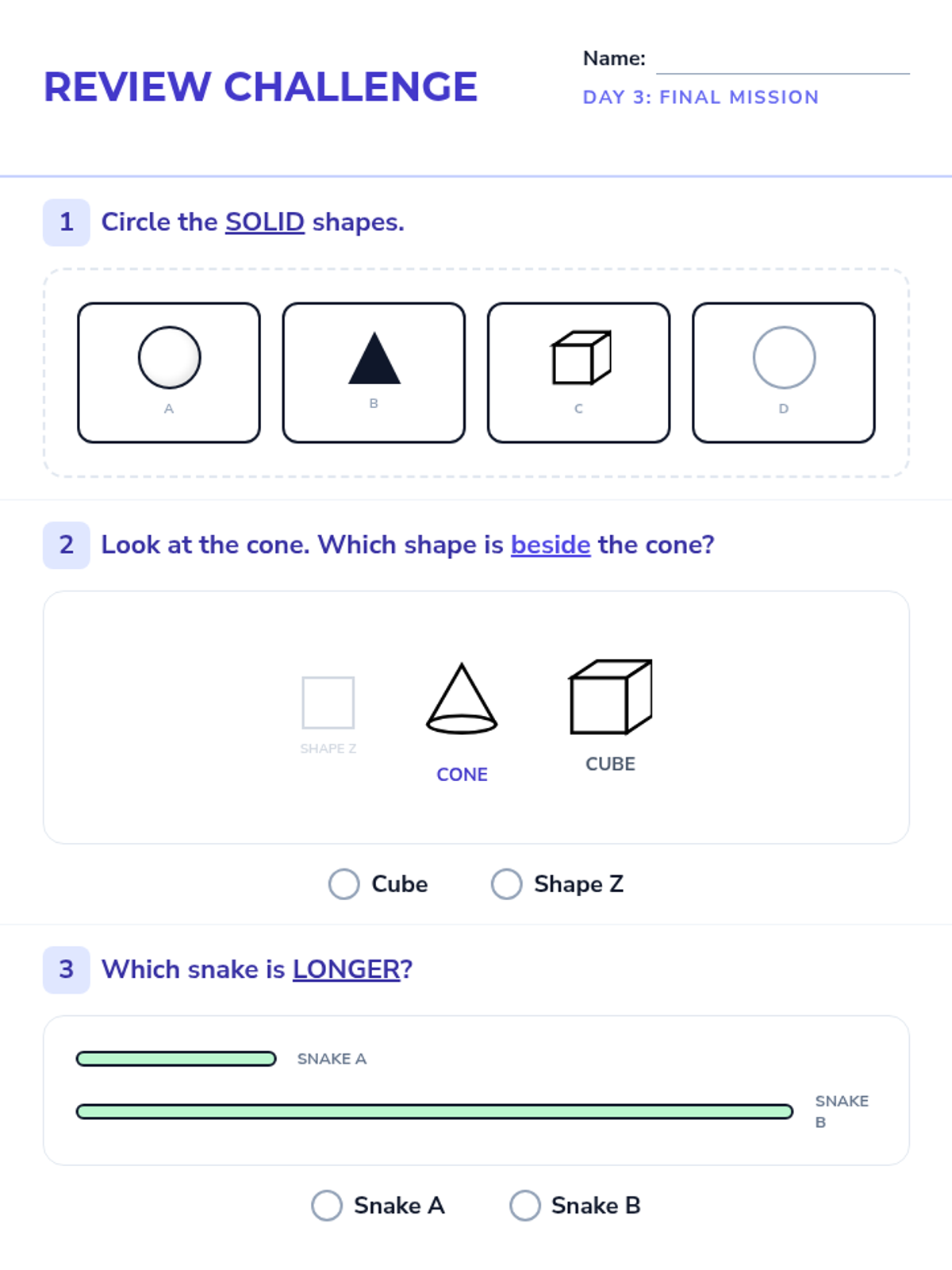
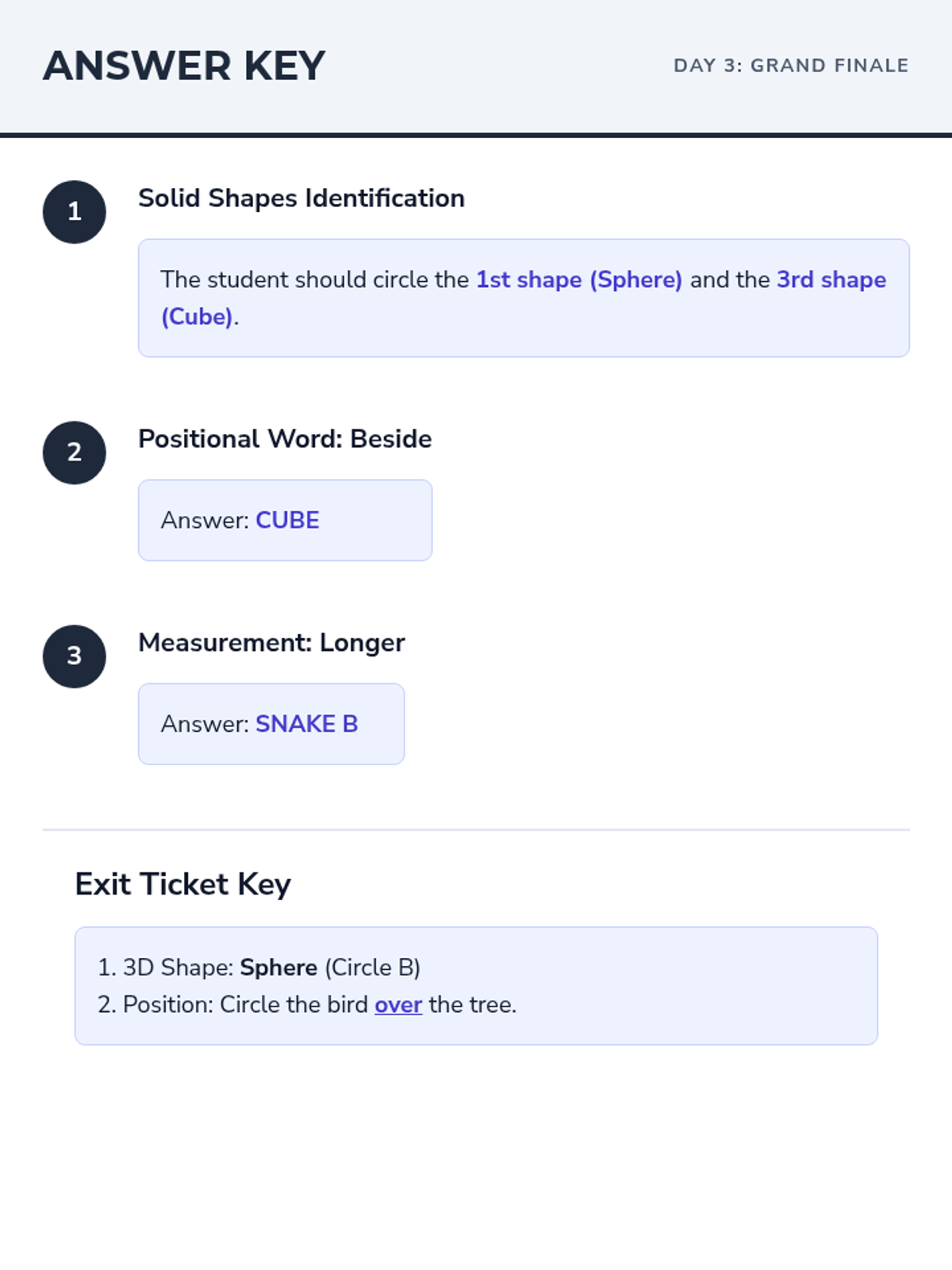
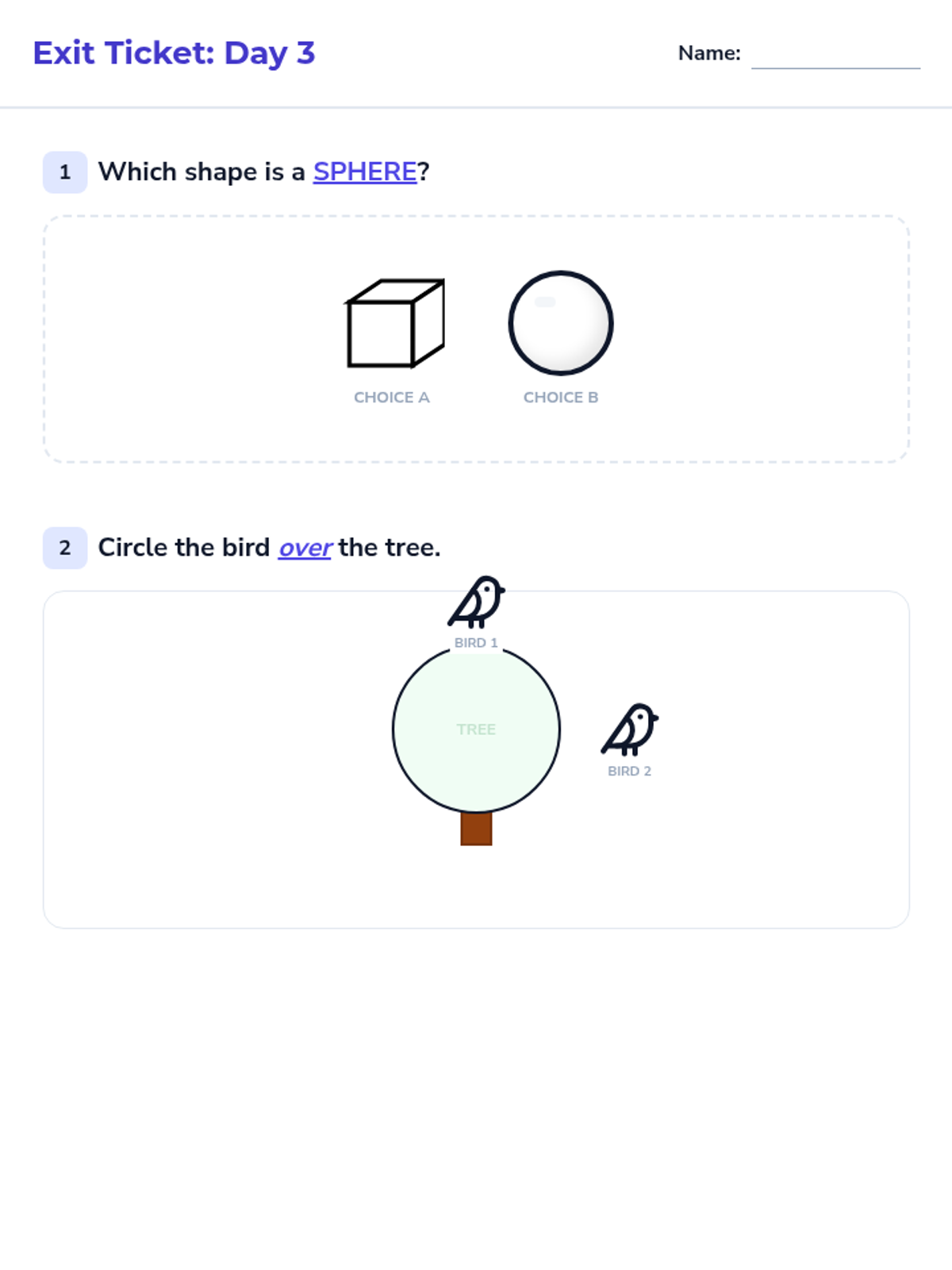
A cumulative review of 2D/3D shapes, positional words, and measurement comparisons to assess mastery.
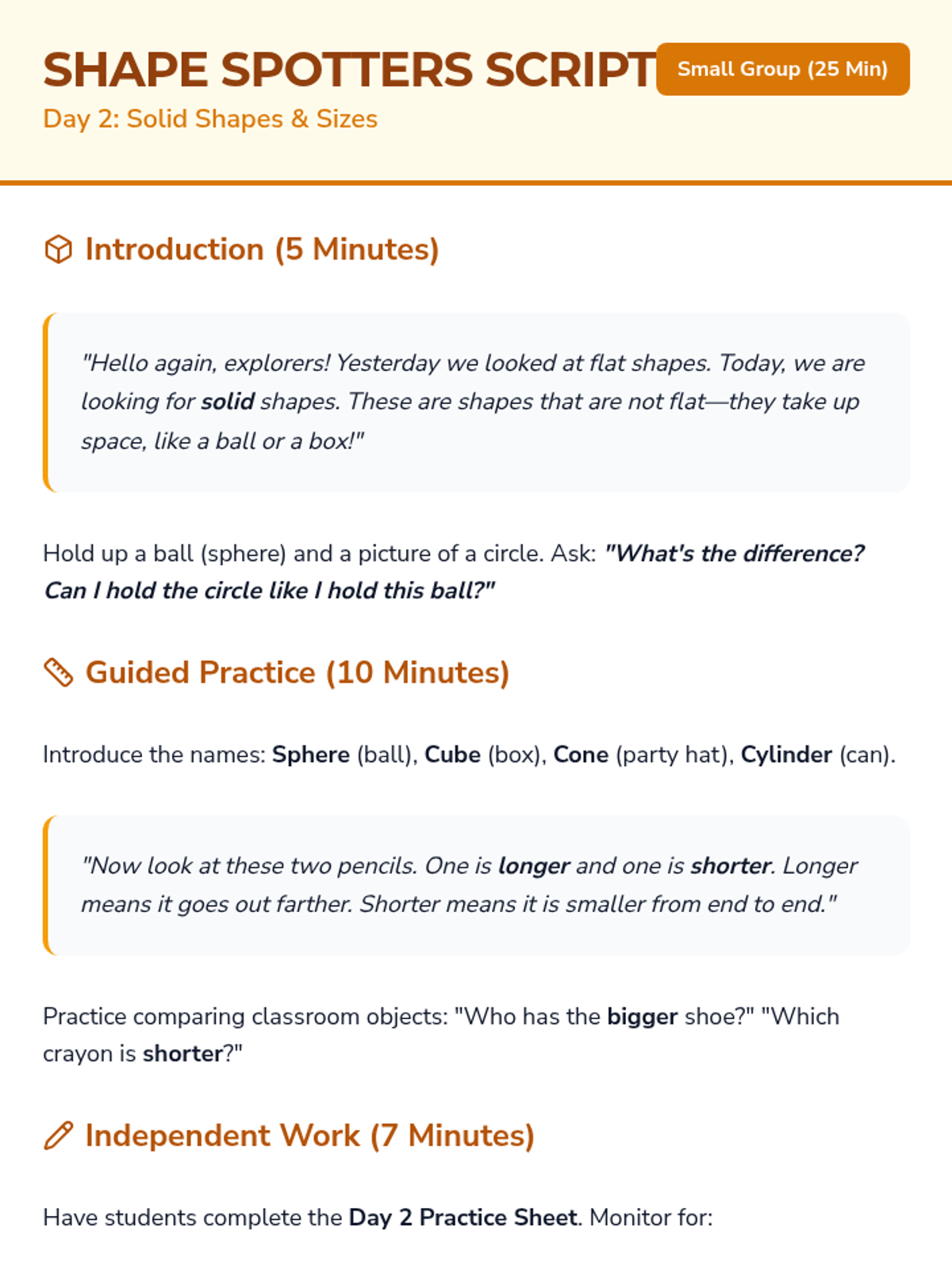
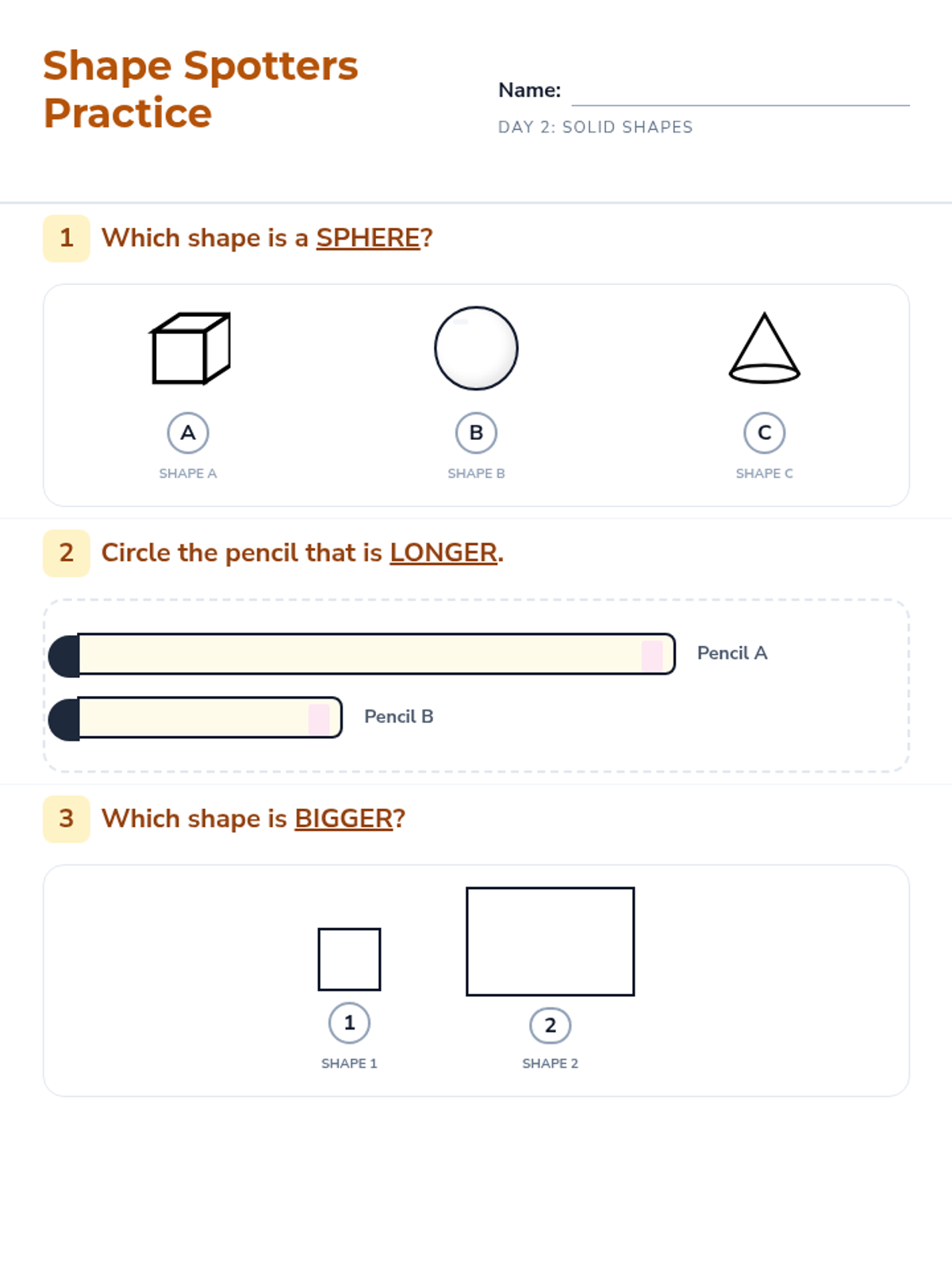
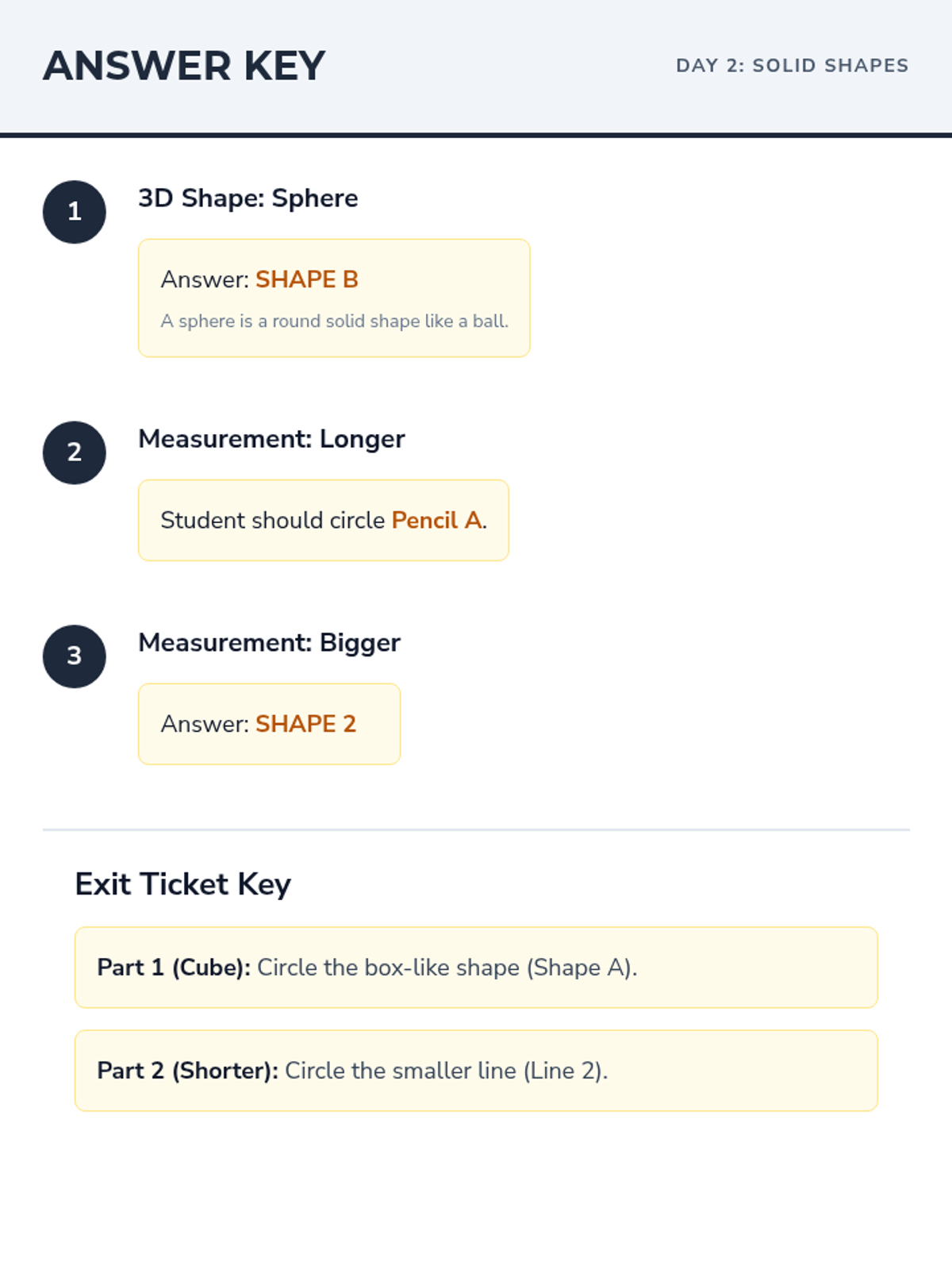
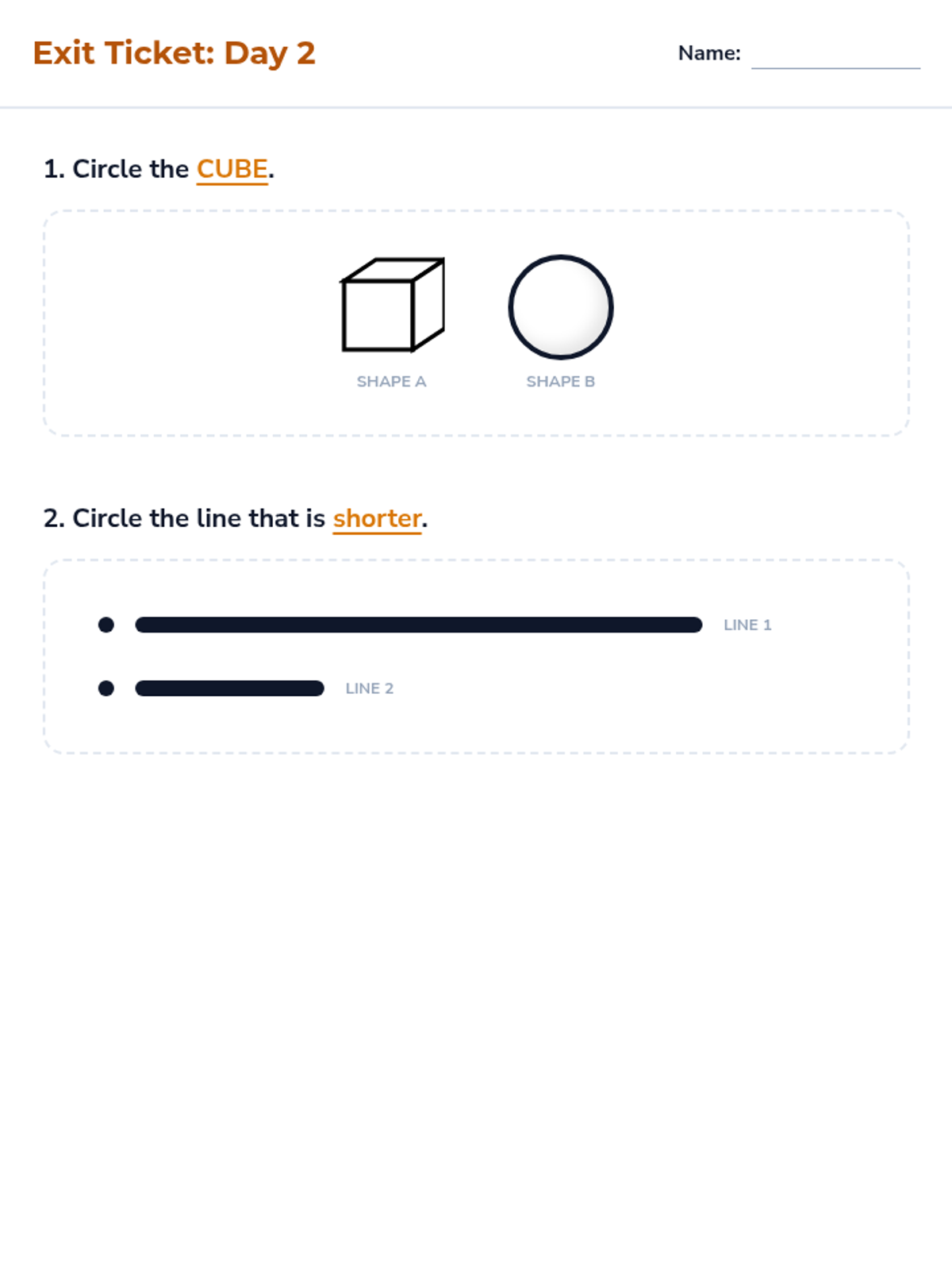
Students identify 3D shapes (cube, sphere, cone, cylinder) and compare objects based on size and length.