A 15-minute small group lesson focused on identifying the central idea and supporting evidence in informational texts, designed for 3rd-grade students.
Day 3 of the Water Worlds unit. Students explore two unique underwater ecosystems—Coral Reefs and Kelp Forests—and use a Feature Matrix strategy to compare specific environmental needs, biological roles, and inhabitants.
A reading review mystery where students use context clues, inference, and character analysis to find the school's missing mascot.
An immersive lesson exploring the mysterious 'Midnight Zone' of the ocean, focusing on reading comprehension, main ideas, and supporting details for 3rd-grade students.
A lesson focused on identifying the author's purpose (Persuade, Inform, Entertain) and the underlying author's message in short, engaging texts. Students will analyze four distinct passages to build critical reading skills.
A comprehensive lesson on identifying author's purpose and message, including how text and graphic features support the author's intent, aligned with TEKS 3.10A, 3.10B, and 3.10C.
A comprehensive writing lesson designed for adult learners working at a 2nd-3rd grade level. The lesson focuses on the structure of a narrative paragraph, including the importance of a clear topic sentence and chronological flow.
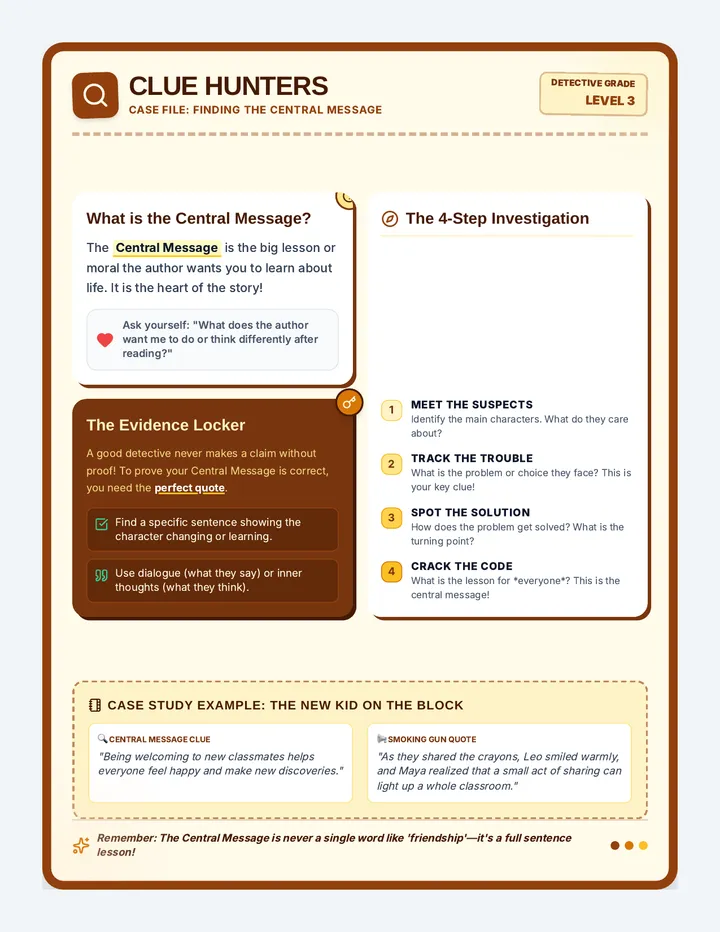
A 15-minute small group lesson focused on identifying an author's claim in persuasive texts, using a detective-themed 'case file' approach for engagement.
An introductory lesson on non-fiction text features for 3rd graders, focusing on identifying features and understanding their purpose in helping the reader.
A comprehensive 3rd-grade lesson on identifying non-fiction text features, understanding their specific purposes, and analyzing why authors choose to include them to aid reader comprehension.
A collection of vocabulary-rich riddles centered around Spring Break themes, designed to challenge elementary students' word knowledge and critical thinking.
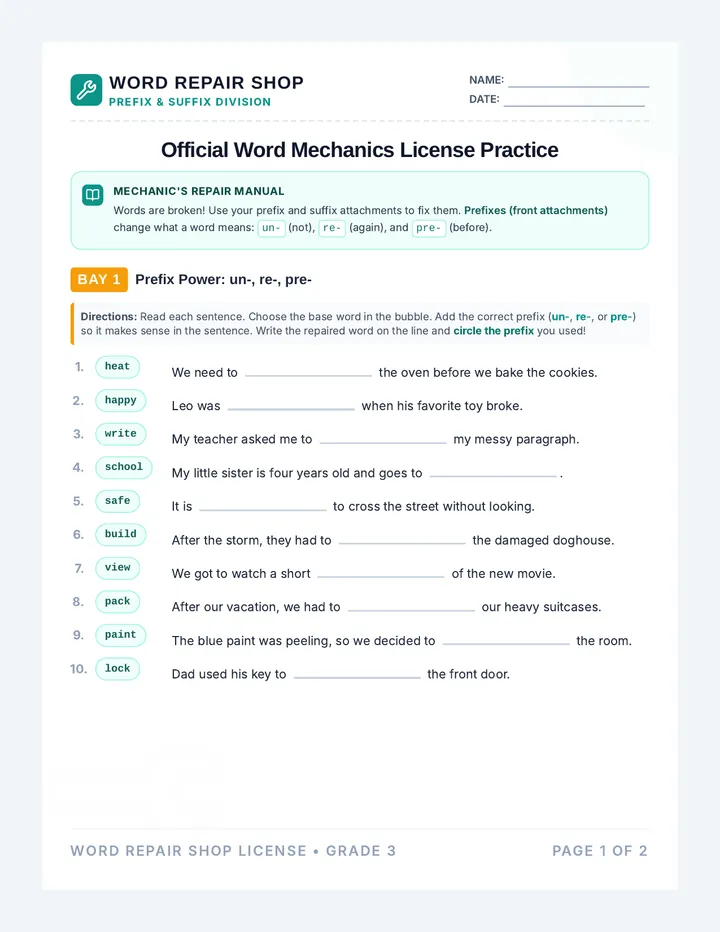
Students analyze pairs of words with identical roots but different prefixes or suffixes to determine how their meanings overlap and diverge. Includes three targeted worksheets for practice and assessment.
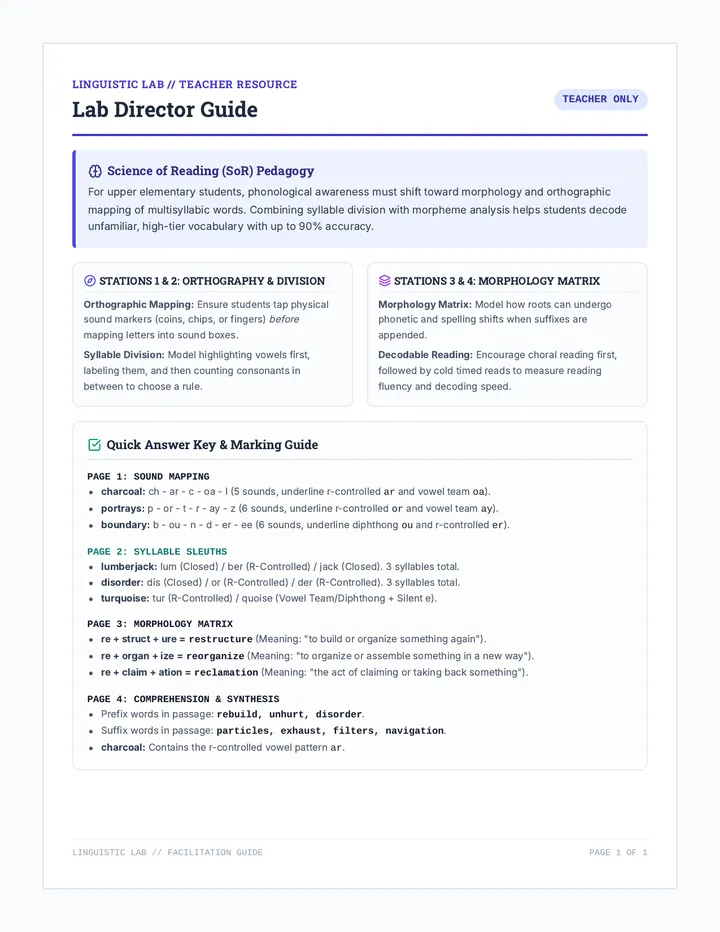
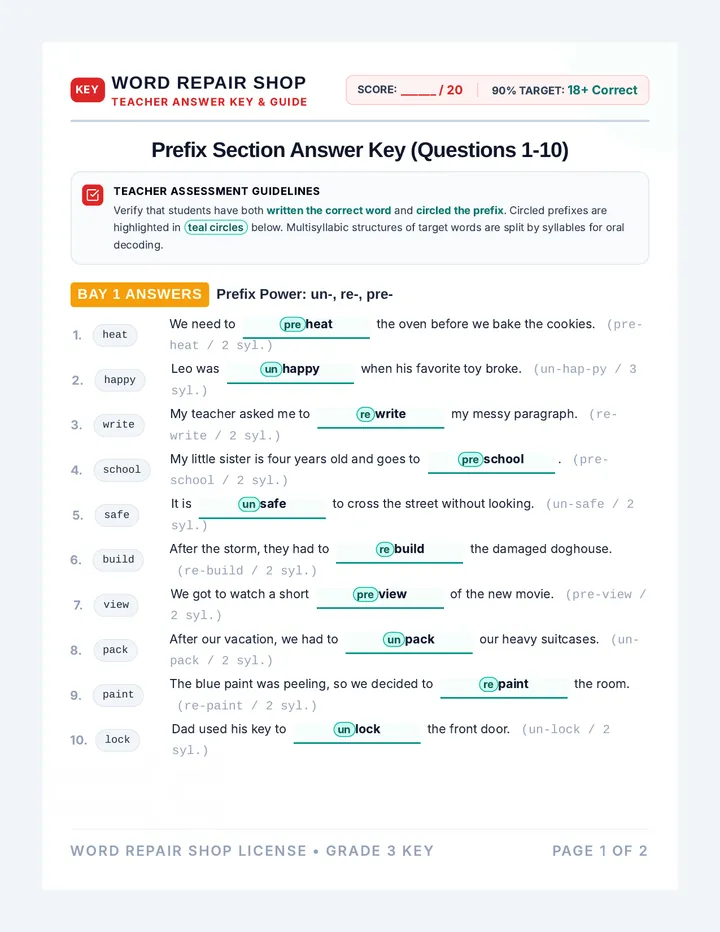
A lesson focused on common prefixes (un-, re-, pre-, dis-) and suffixes (-ful, -less, -er, -ly) using a 'Word Workshop' theme to help students understand how word parts change meanings.
A comprehensive lesson where students learn to use text evidence and background knowledge to make logical predictions about what will happen next in a story.
Day 2 of the Water Worlds unit. Students tackle longer informational texts and transition to using a Venn Diagram strategy to categorize similarities and differences in environmental zones, animal adaptations, and global importance.
A morning work resource focused on reading comprehension and multiple-choice practice within a space exploration theme.