A grammar-focused lesson set in professional and travel contexts, teaching middle schoolers to use compound-complex sentences, relative clauses, and consistent verb tenses through role-play scenarios.
This lesson compares two student presentations on the god Hermes to help students understand grading criteria and how to improve their own mythological research projects.
A comprehensive lesson on mastering the literary essay, focusing on thesis development and evidence integration using Fahrenheit 451, The Great Gatsby, and Charade as core examples.
A creative arts-integrated ELA lesson where students map the Hero's Journey using symbolic collage, supporting executive functioning through visual storytelling and metaphorical thinking.
A deep dive into Chapter 20 of 'The Westing Game', focusing on Turtle's sacrifice, the elevator bombing, and the ongoing investigation by the heirs. Students will demonstrate literal recall and summarize key plot developments.
A comprehensive novel study for 'Number the Stars' covering WWII history, character bravery, and key plot events across all 17 chapters.
A middle school lesson where students act as media scientists, deconstructing the psychological triggers and logical fallacies found in modern social media advertising. Students will learn to identify manipulation tactics and develop critical thinking skills to become savvy consumers.
A creative exploration of found poetry for middle schoolers, focusing on sourcing linguistic materials from their environment to demystify the poetic process.
A targeted grammar lesson focused on identifying and correcting run-on sentences using coordinating conjunctions (FANBOYS) within the context of Frederick Douglass's narrative.
A lesson designed to guide students through the planning phase of researching an extraordinary person. It covers selection, inquiry, source hunting, and outlining.
A lesson that uses role-play scripts of current events to teach middle schoolers comprehension skills like inference, figurative language, and main idea. Students take on roles as news anchors, reporters, and experts to engage with complex topics.
A middle school ELA lesson where students analyze narrative voice by rewriting a scene from a minor character's perspective to uncover hidden motivations and shifts in meaning.
A lesson focused on distilling the complex, dual-narrative structure of Art Spiegelman's Maus I into a concise summary using structured graphic organizers and sentence stems.
A high-energy STAAR prep lesson focused on key reading skills using a relay race game format. Students practice genre, context clues, inference, character analysis, and central idea identification while mastering the RACE strategy for constructed responses.
A 6th-grade lesson on claim and evidence where students master persuasive techniques through mini-debates on high-interest school topics. Students will learn to construct logical arguments and select the most relevant evidence to support their positions.
An introductory study of the first five chapters of 'I Am Number Four,' focusing on John Smith's arrival in Paradise and the initial development of his relationships and Legacies.
A practice session focused on identifying main ideas and supporting details in informational texts, modeled after MCAS standardized testing formats.
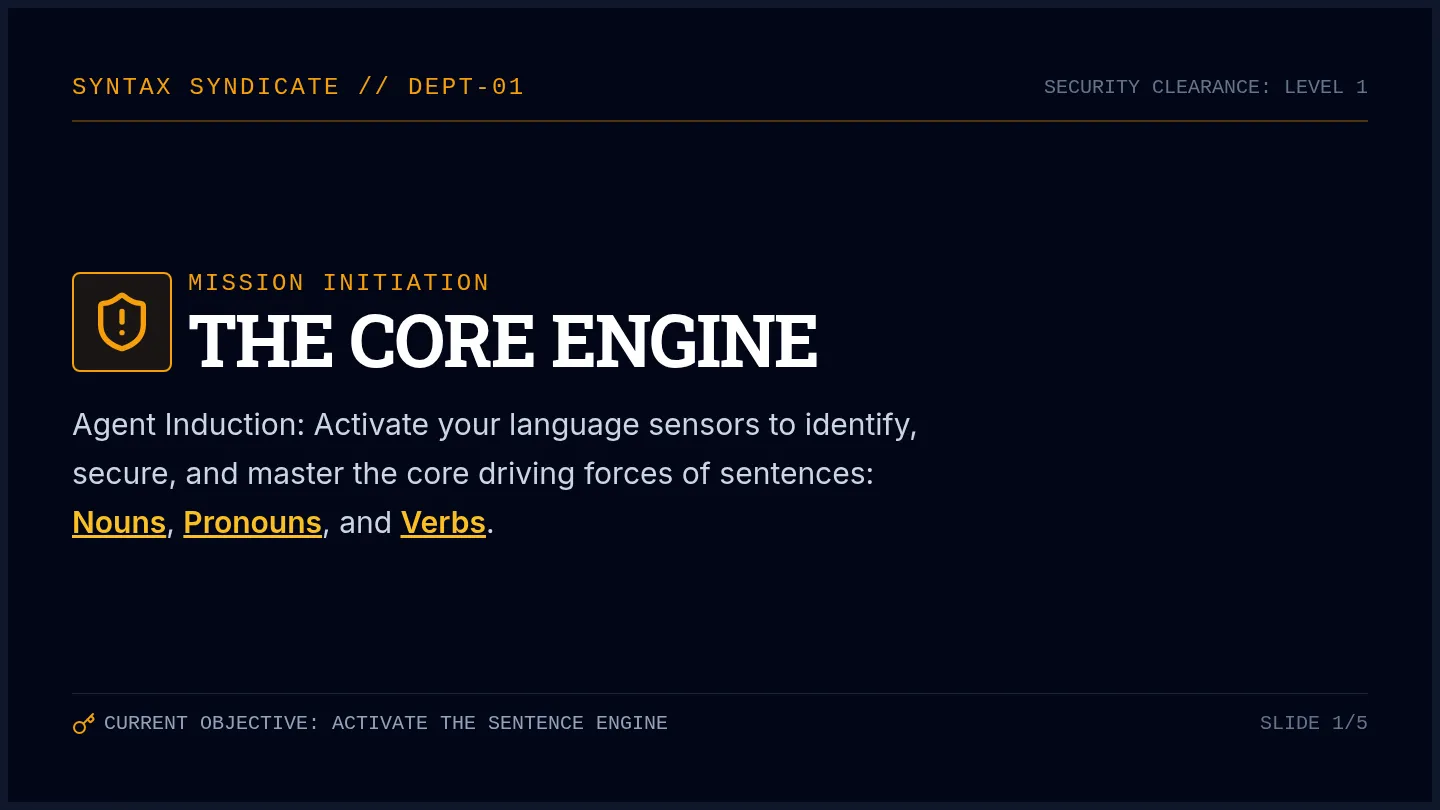
A comprehensive lesson on the eight parts of speech, using a mechanical 'Grammar Gear' theme to help 6th and 7th grade students understand how language is constructed.
A comprehensive look at the life, struggles, and eventual triumph of Zora Neale Hurston, adapted for middle school readers. Students explore her journey from Eatonville to the Harlem Renaissance and her modern-day legacy.
An introductory lesson for 6th grade students to explore the concept of extraordinary people, focusing on the unit's essential question and core academic vocabulary. Students will analyze what defines greatness and master the terminology needed for the unit.
Students take the stage as professional journalists to launch their digital magazine. This lesson guides them through the final live presentation, fielding audience questions, and demonstrating professional communication skills.
Students master the art of professional public speaking as they prepare for a high-stakes press conference, focusing on body language, vocal delivery, and audience engagement.
In this 45-minute lesson, 6th-grade students step into the role of professional editors to master house style and factual accuracy. They will learn foundational AP style rules and apply fact-checking strategies to polish their articles to a professional standard.