Students learn to identify and analyze four key informational text structures: Cause and Effect, Description, Sequence, and Problem and Solution. Includes direct instruction, guided practice with passages, and a final assessment.
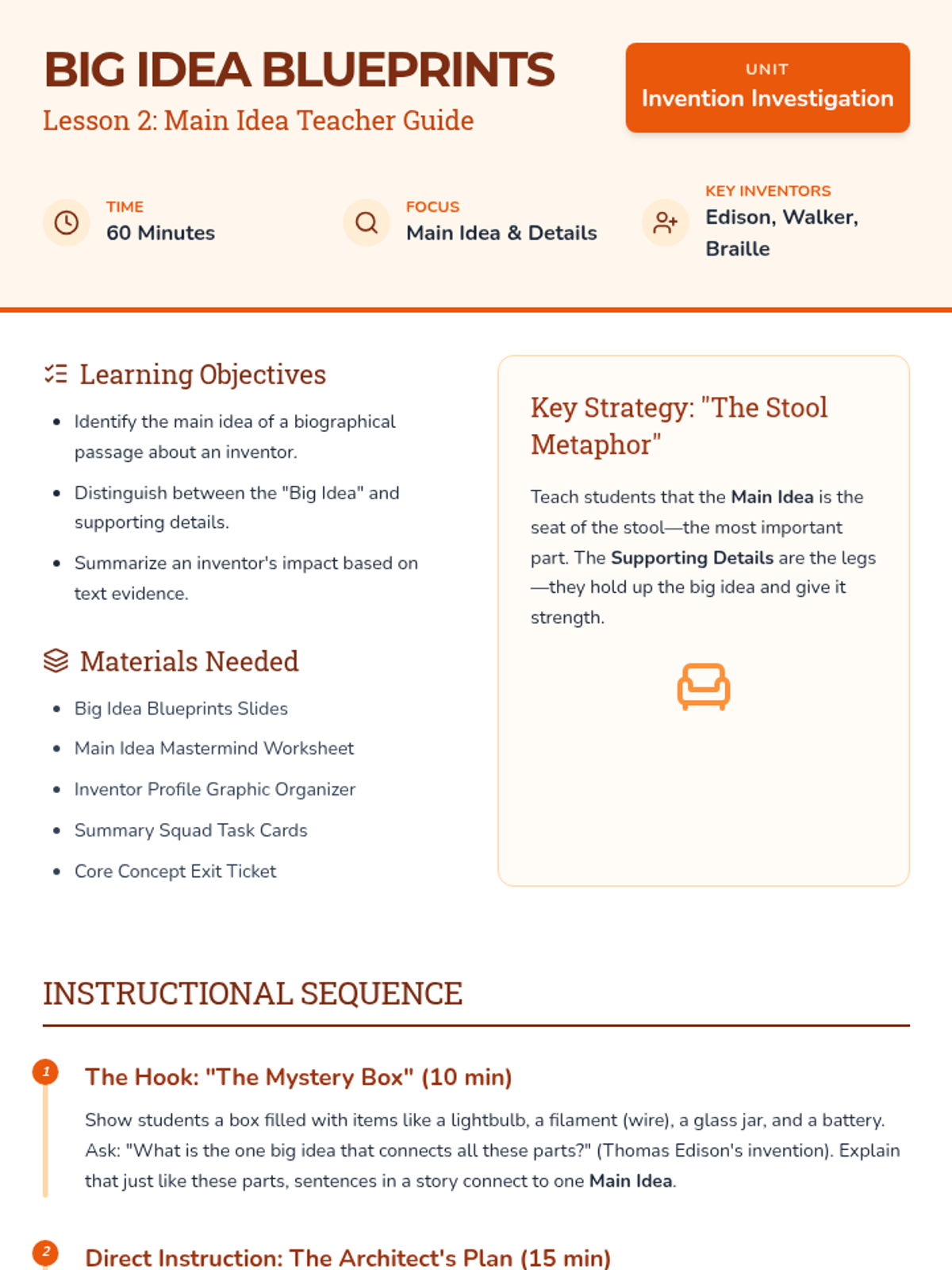
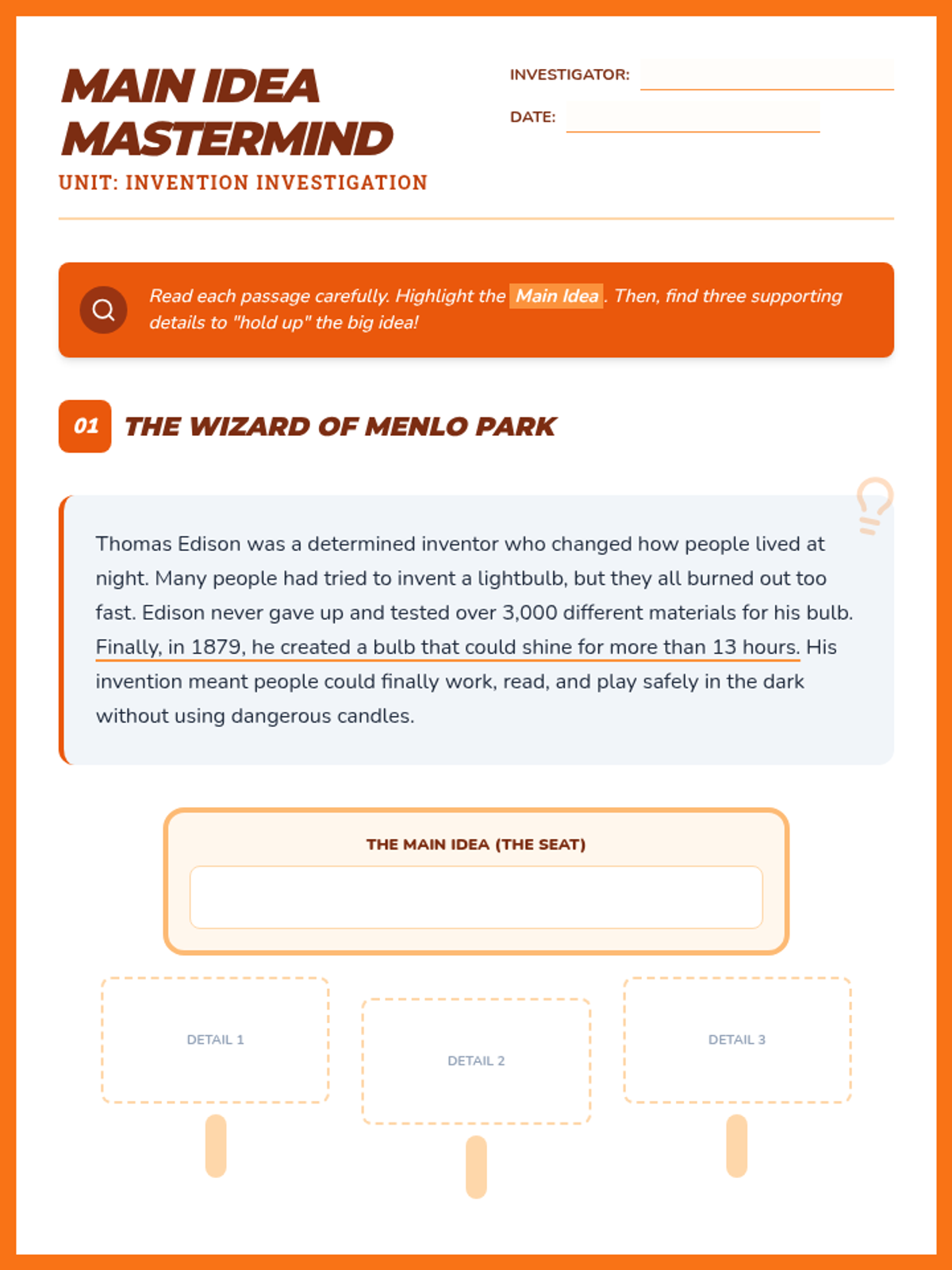
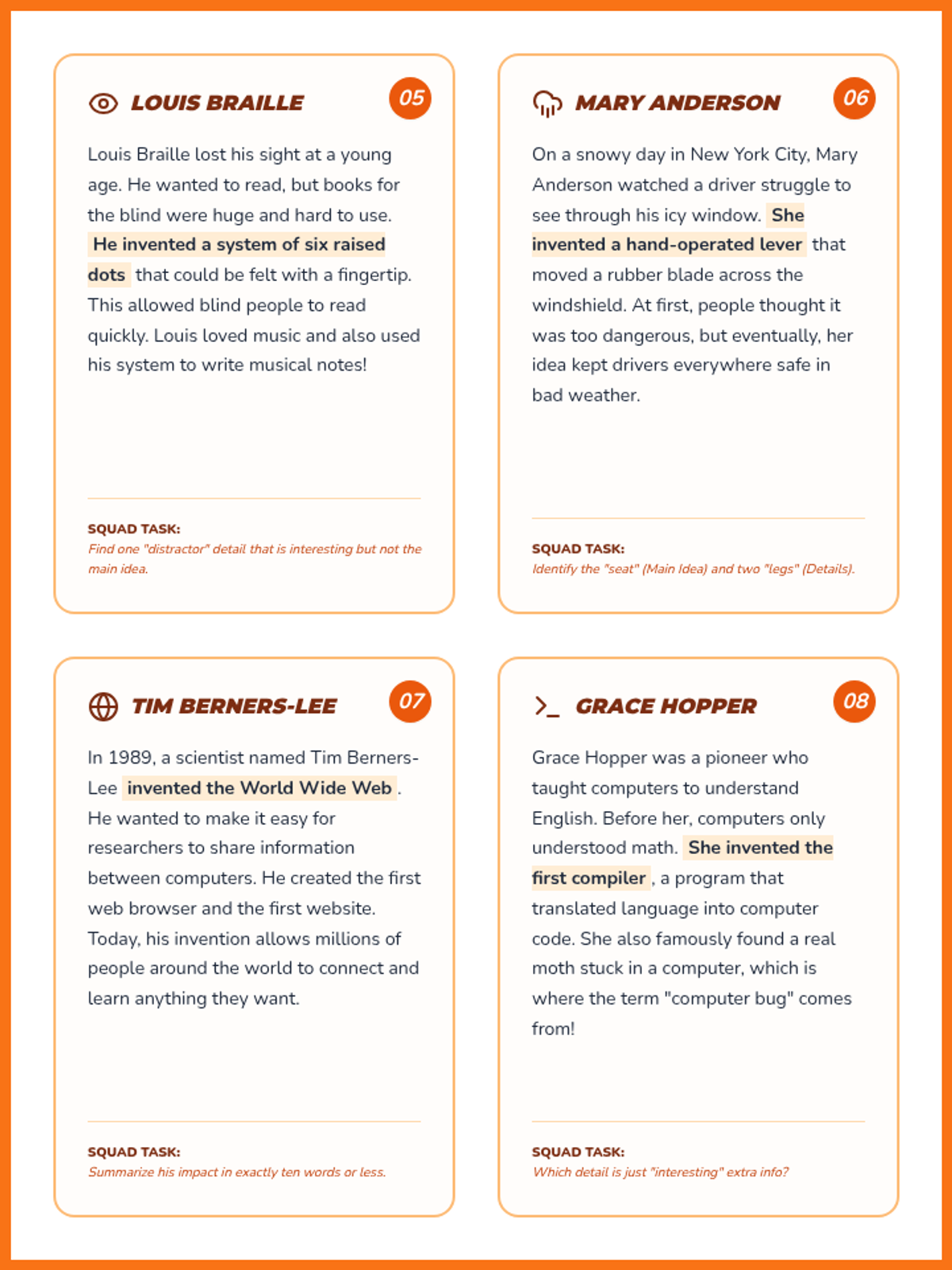
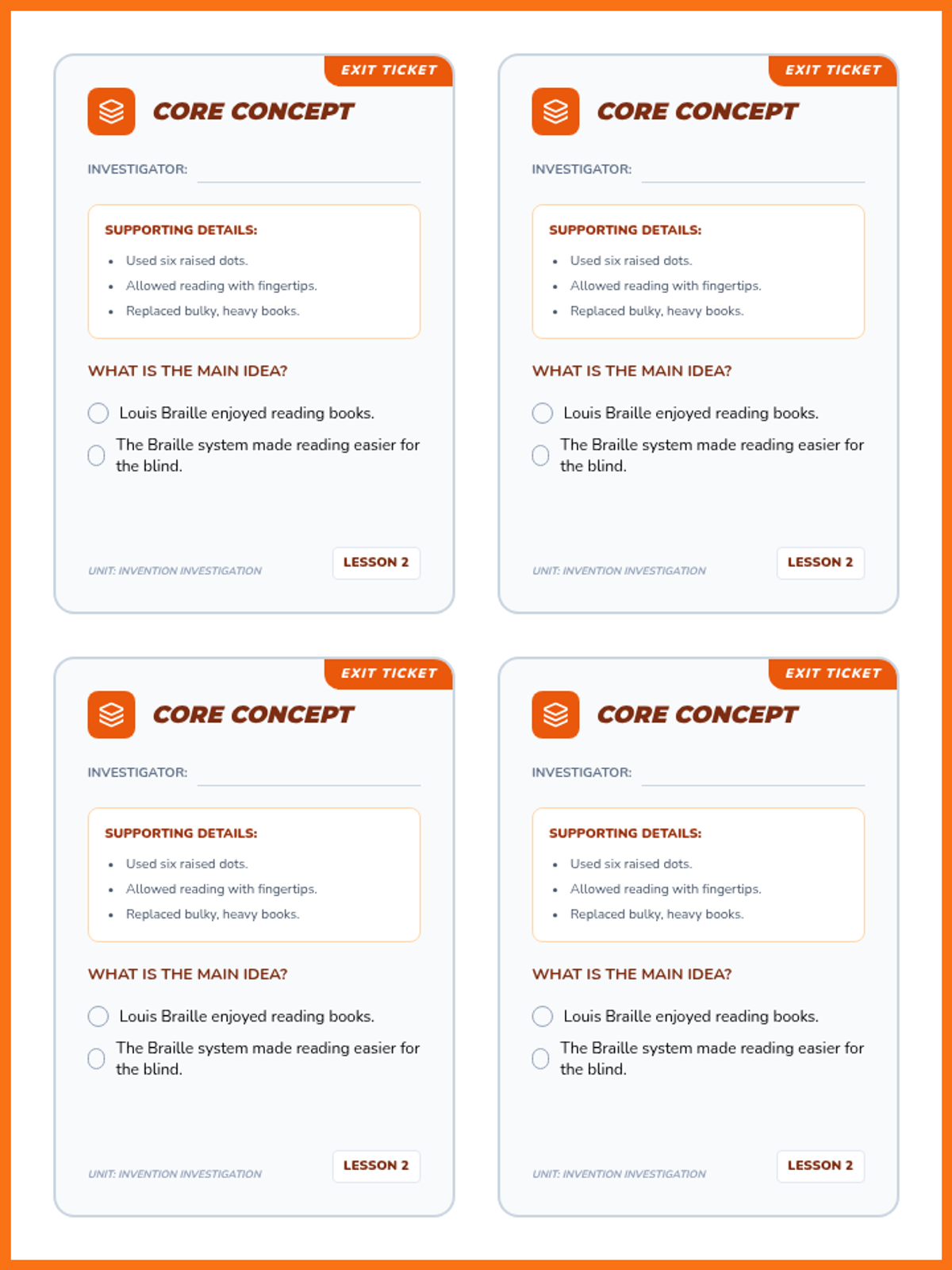
Students will learn to identify the main idea and supporting details in biographical texts about famous inventors, synthesizing information to understand their overall impact.
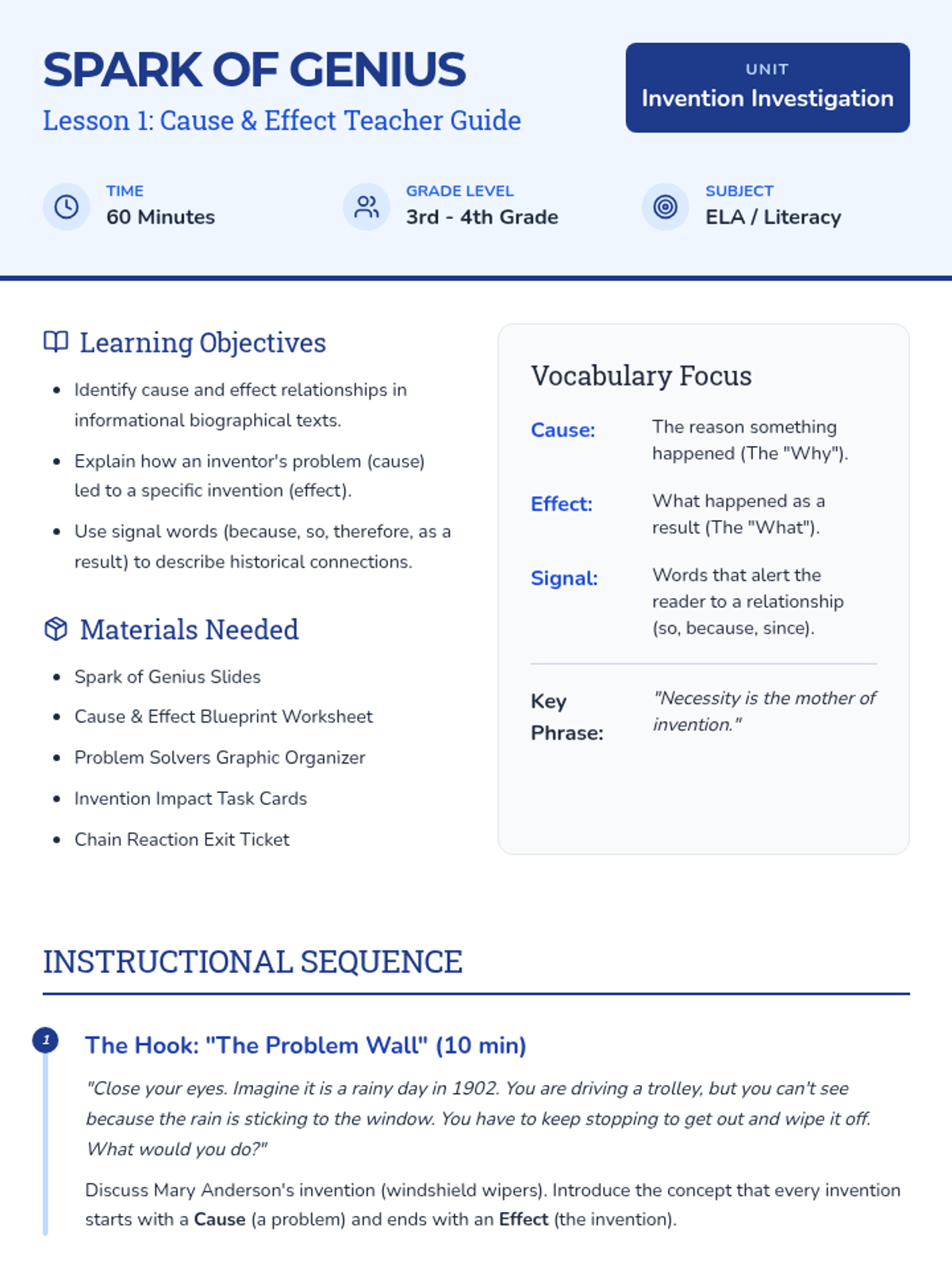
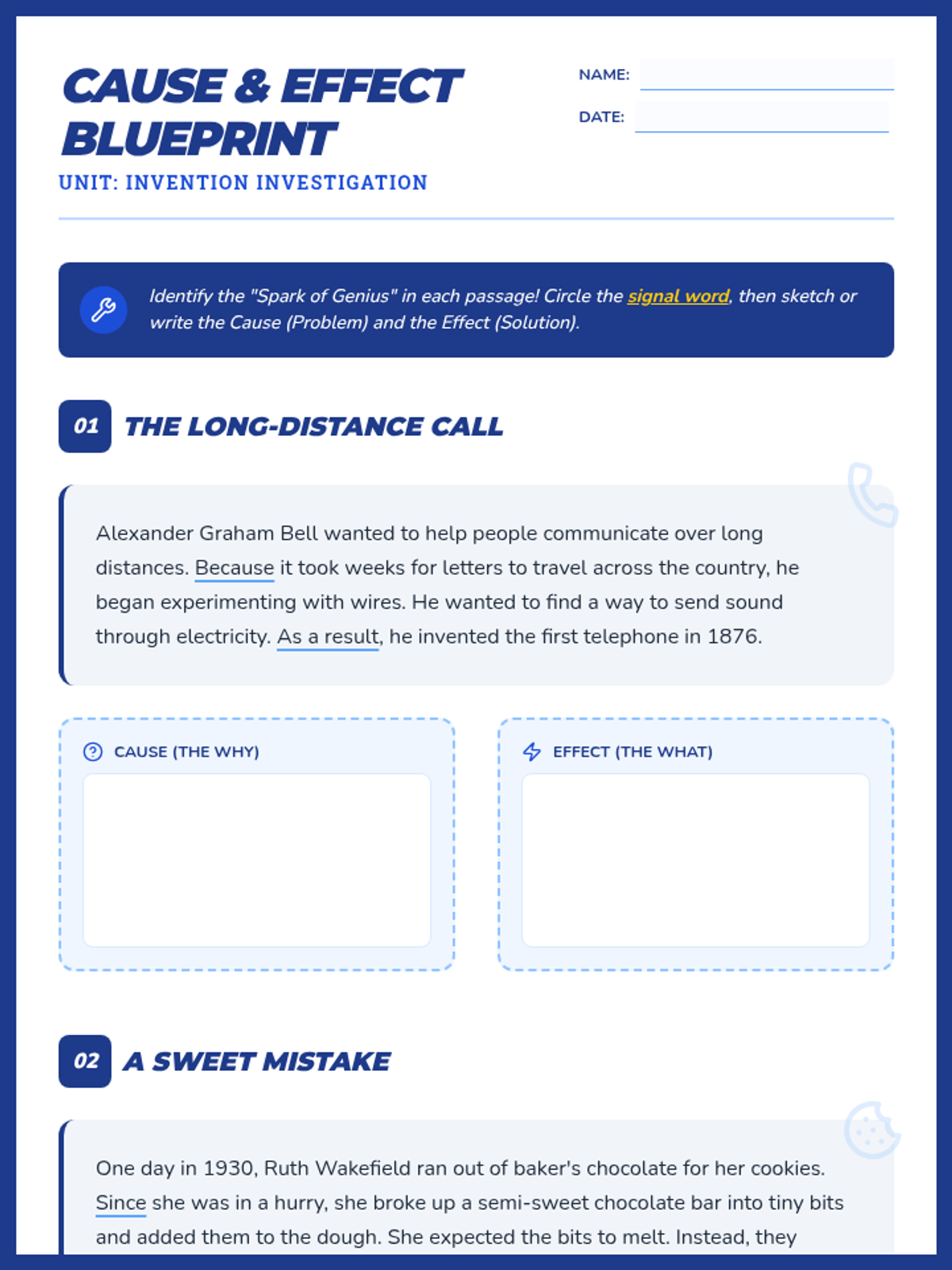
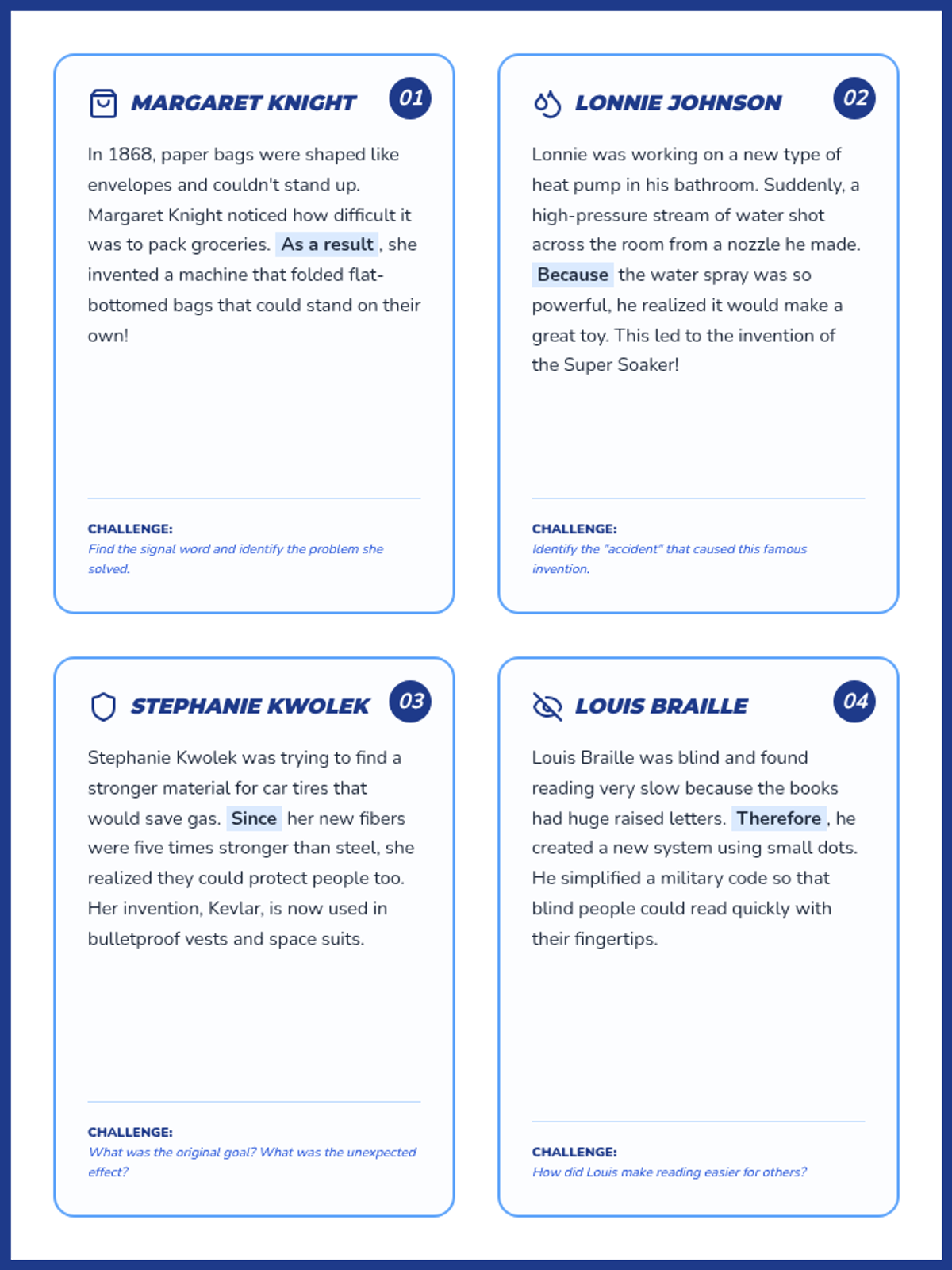
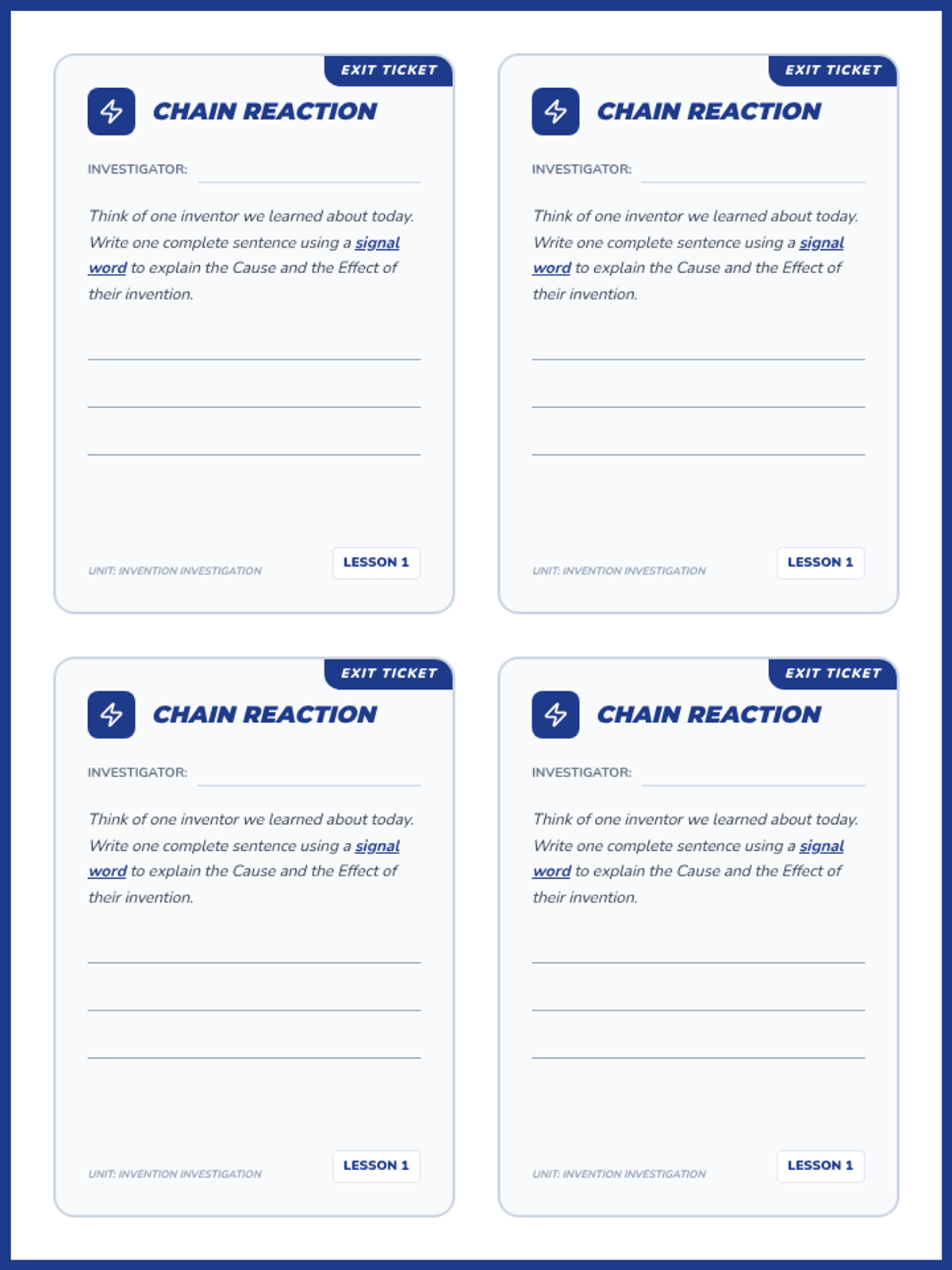
Students will explore how inventors identified problems (causes) and developed solutions (effects), using real-world examples like the lightbulb and the windshield wiper.
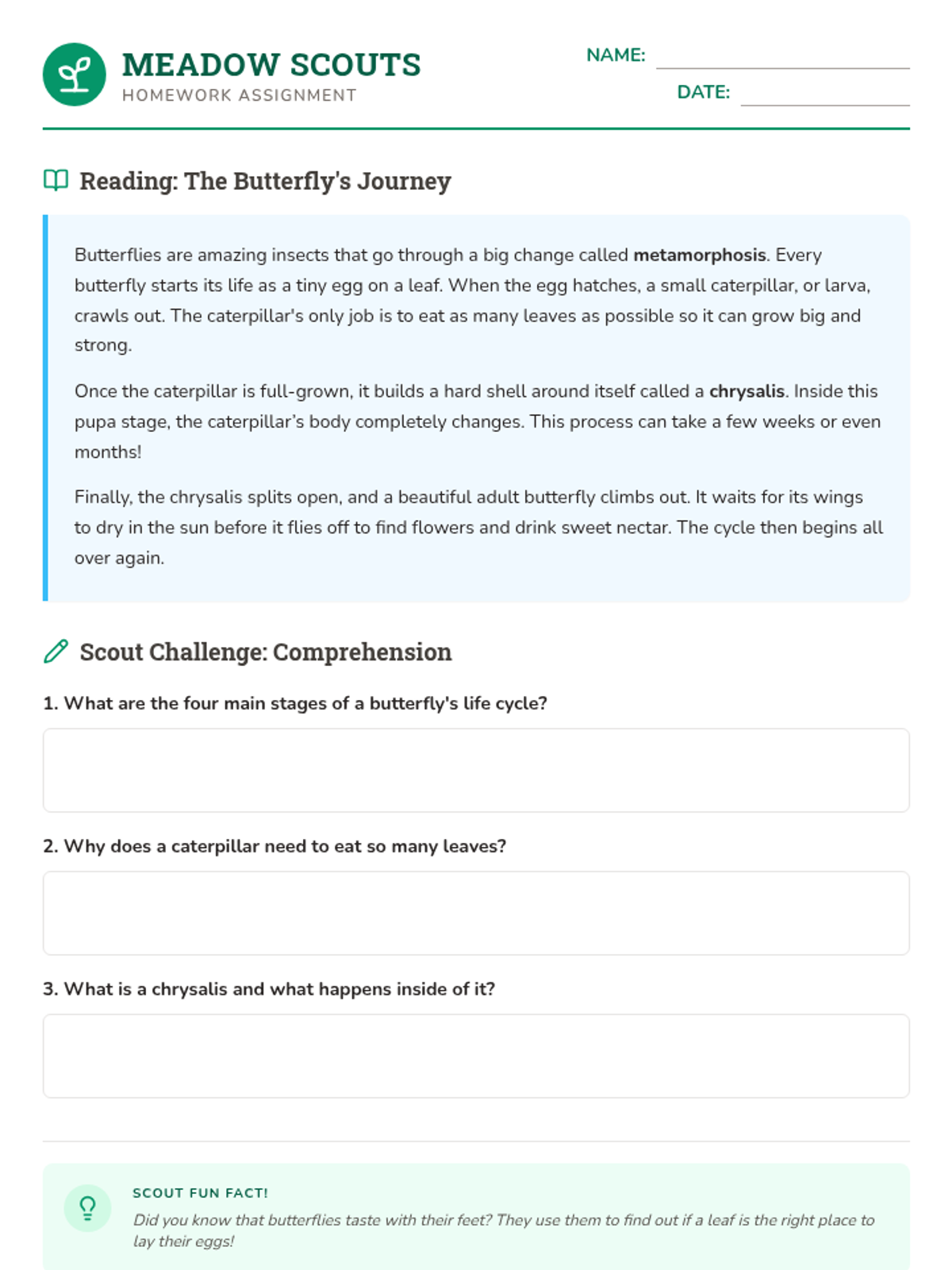
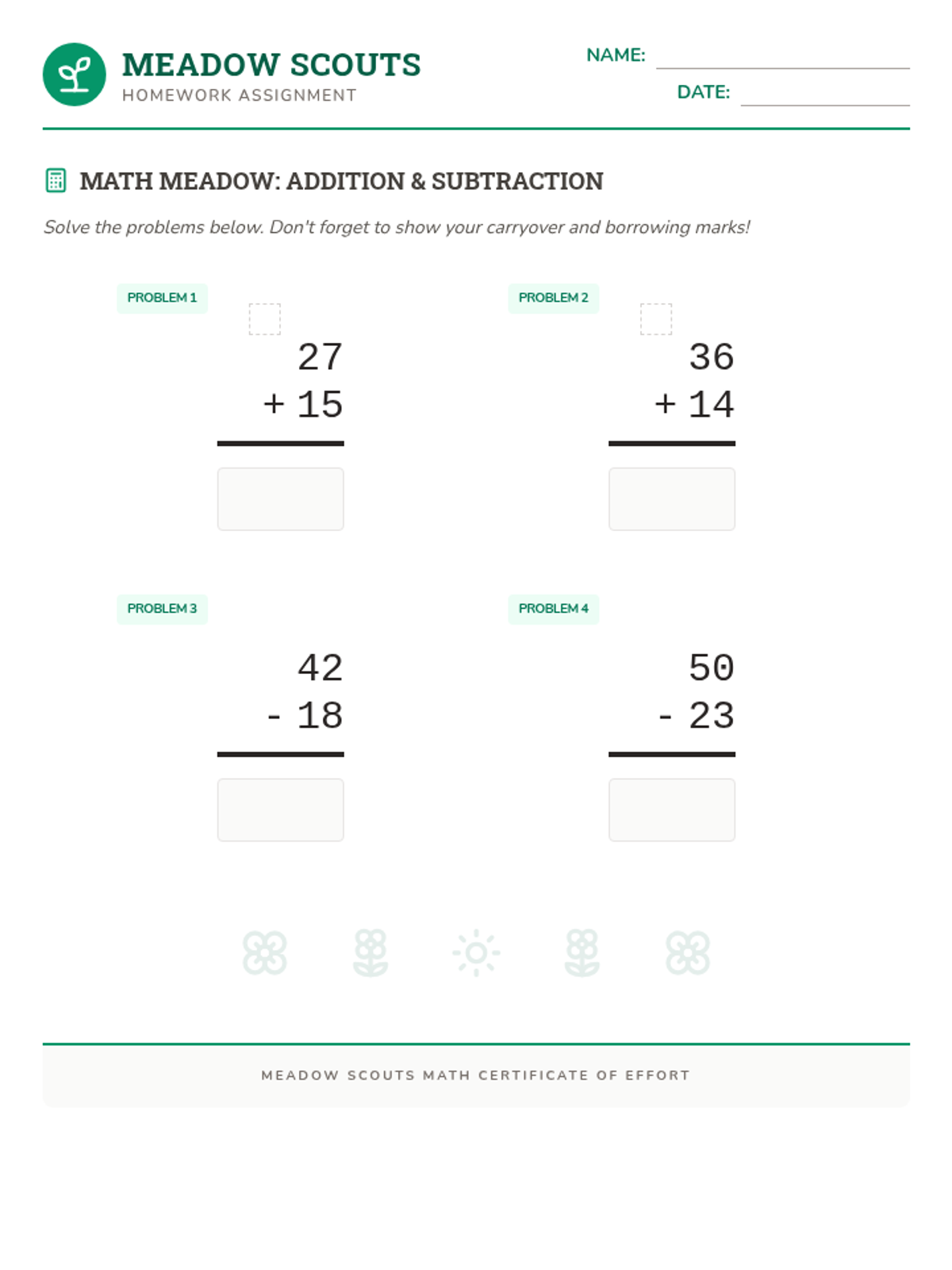
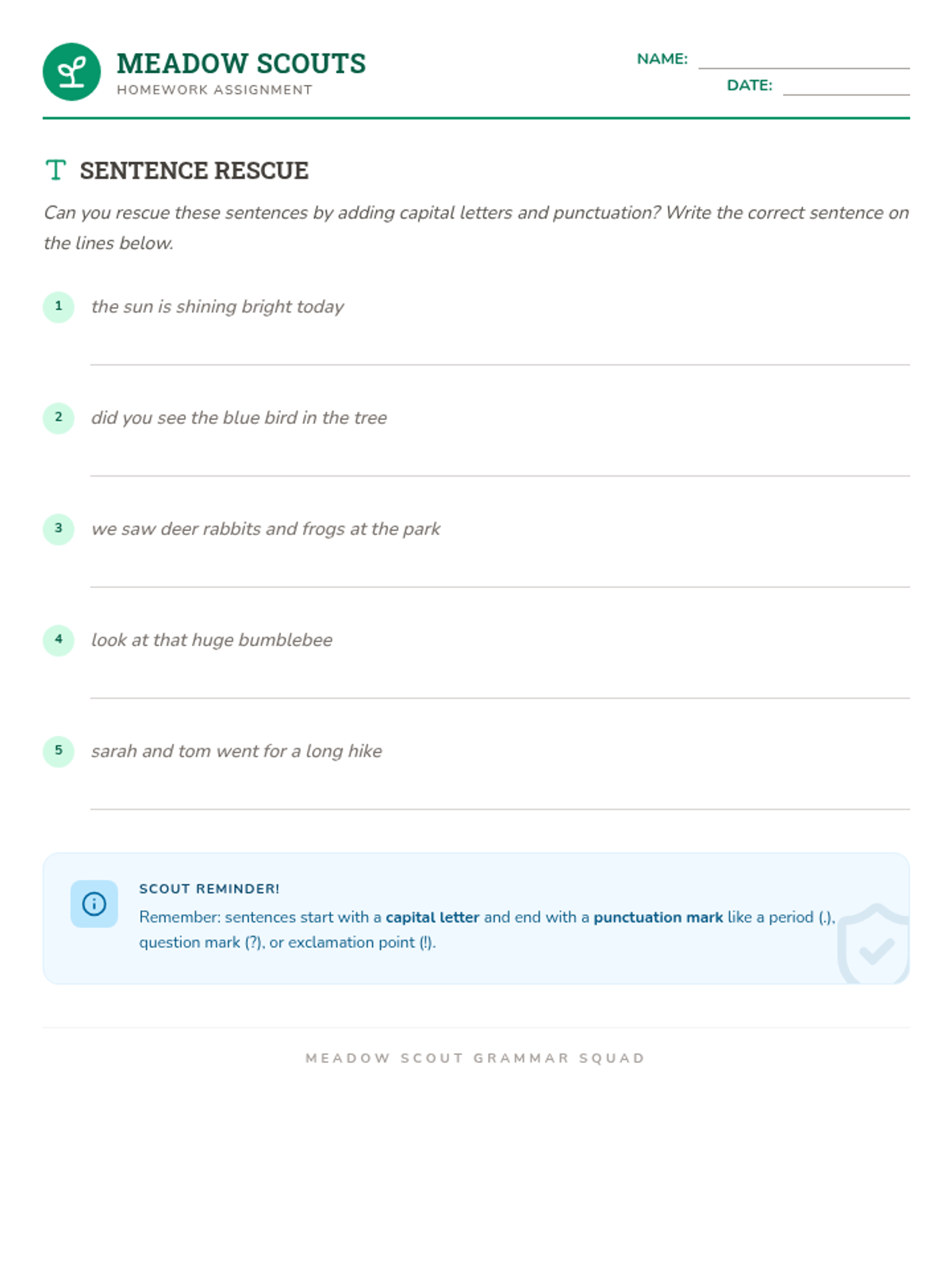
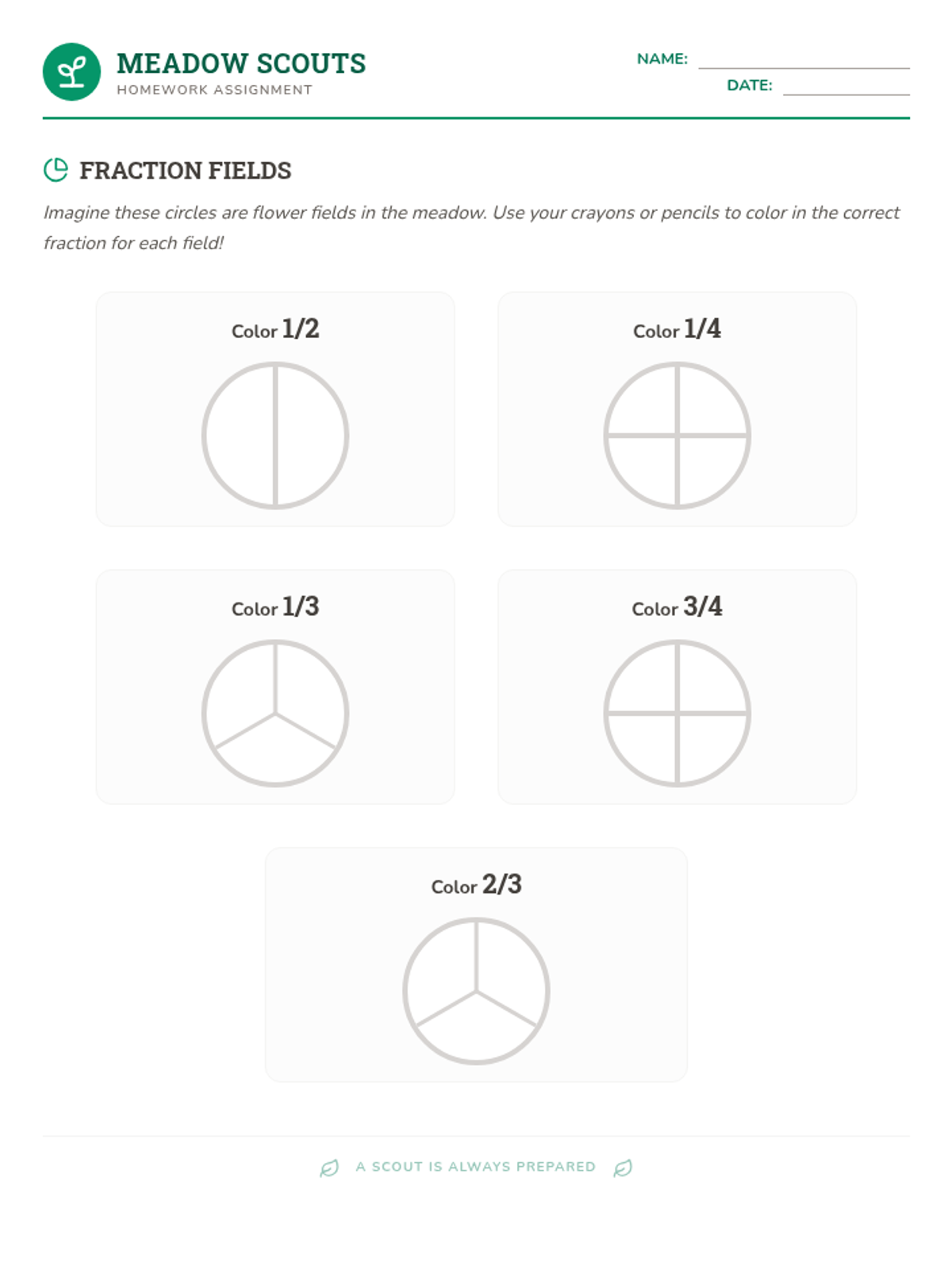
A collection of foundational homework worksheets covering reading comprehension, arithmetic, grammar, and basic fractions with a nature-inspired 'Meadow Scouts' theme.
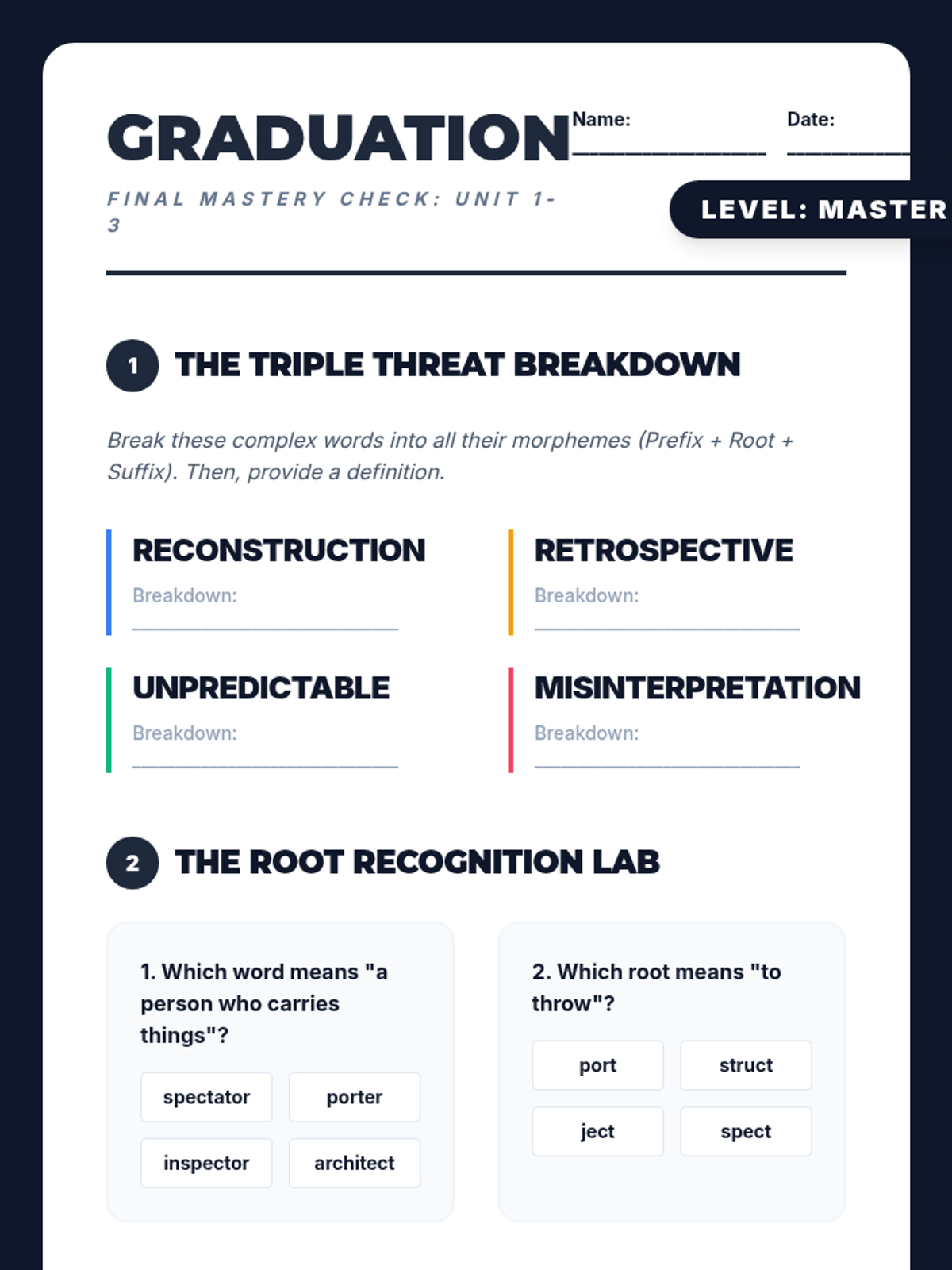
The ultimate cumulative review and graduation for the entire 20-lesson morphology sequence.
Covers the Latin root 'flex' or 'flect' (to bend), focusing on words like reflect, flexible, and deflection.
Introduces the Latin root 'tract' (to pull or drag), connecting it to words like subtract, attract, and extract.
Explores the Latin root 'script' or 'scrib' (to write), identifying it in words like describe, manuscript, and prescription.
Focuses on the Latin root 'dict' (to speak or say), exploring common words like dictate, predict, and verdict.
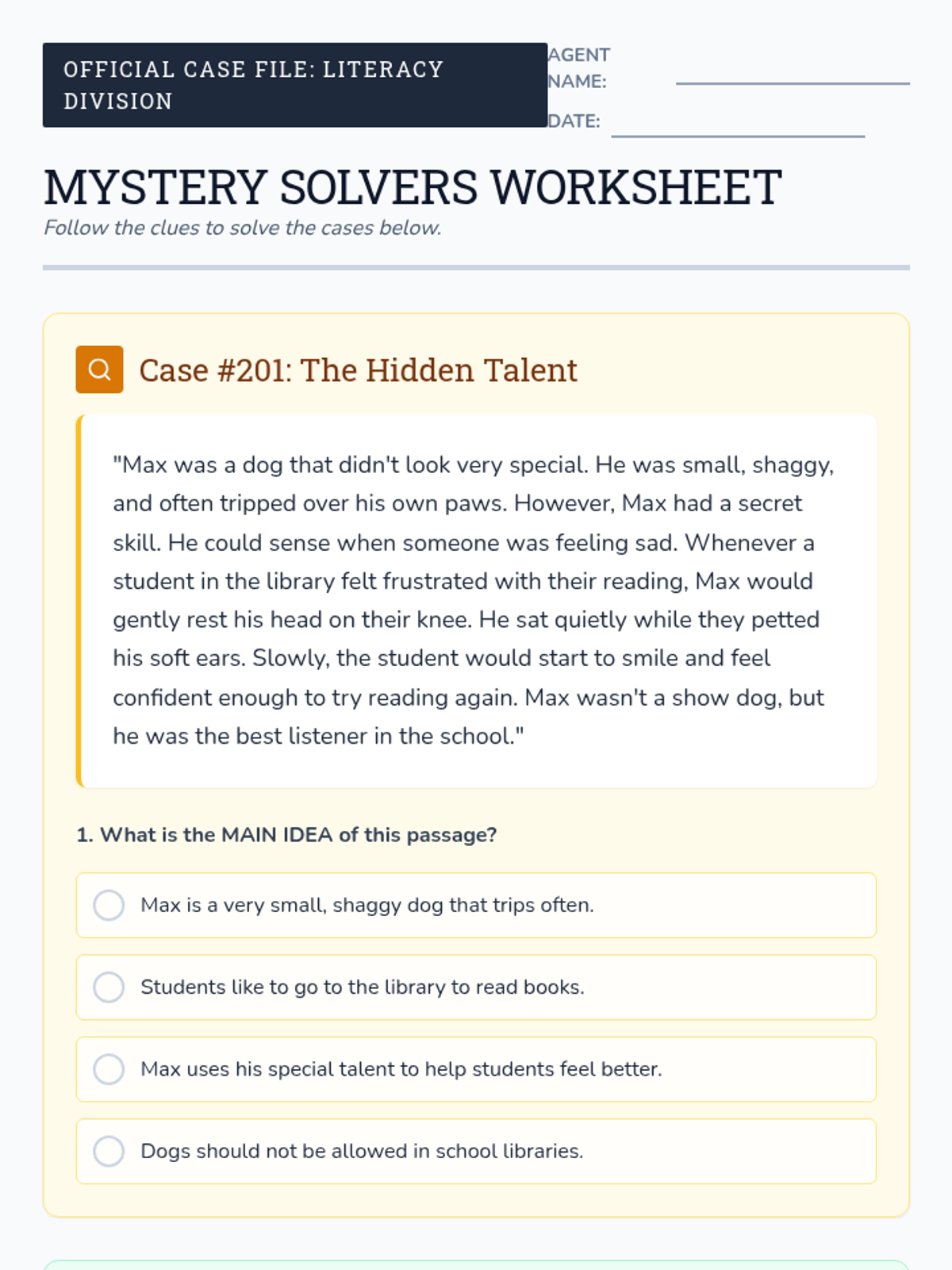
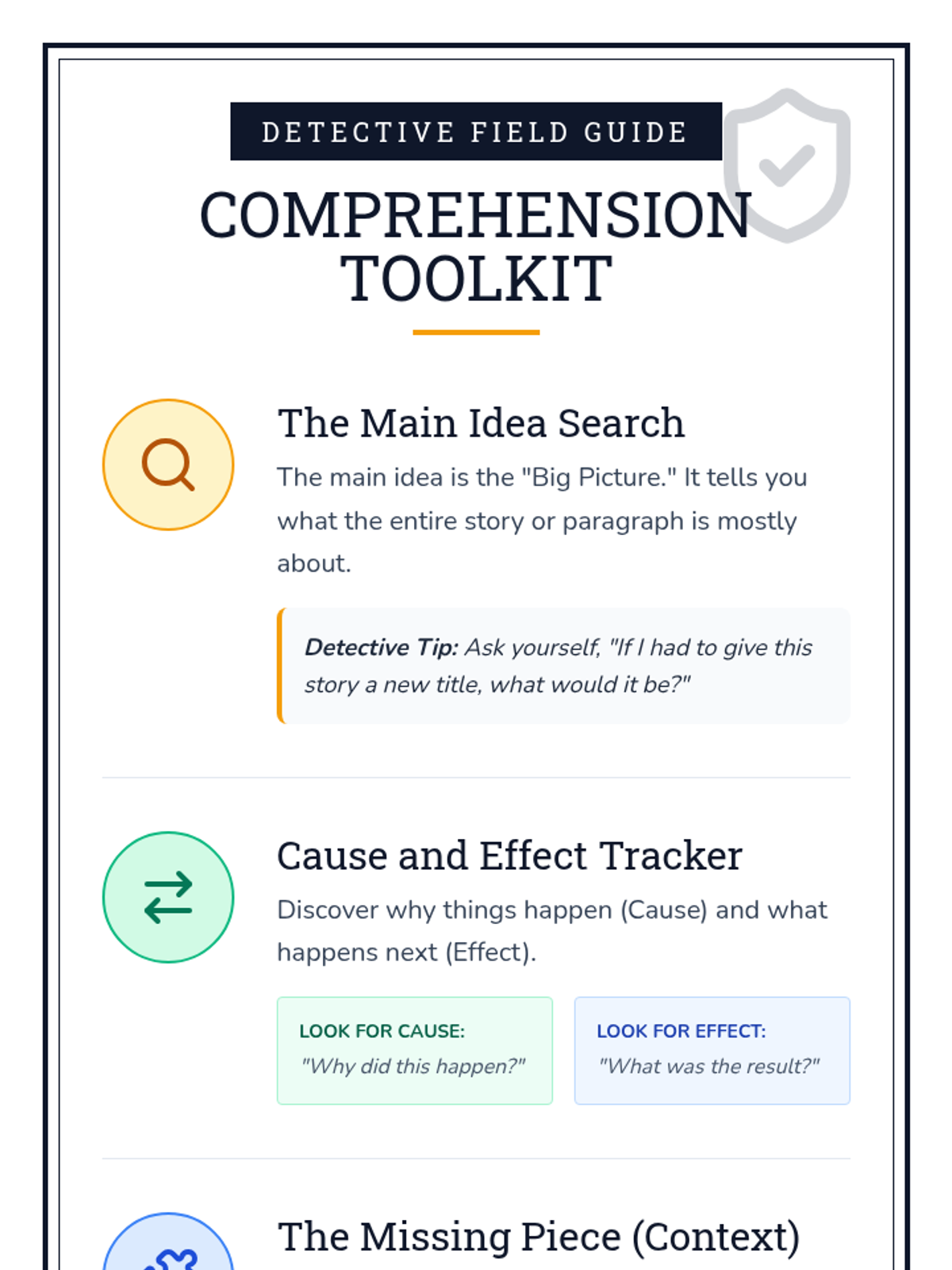
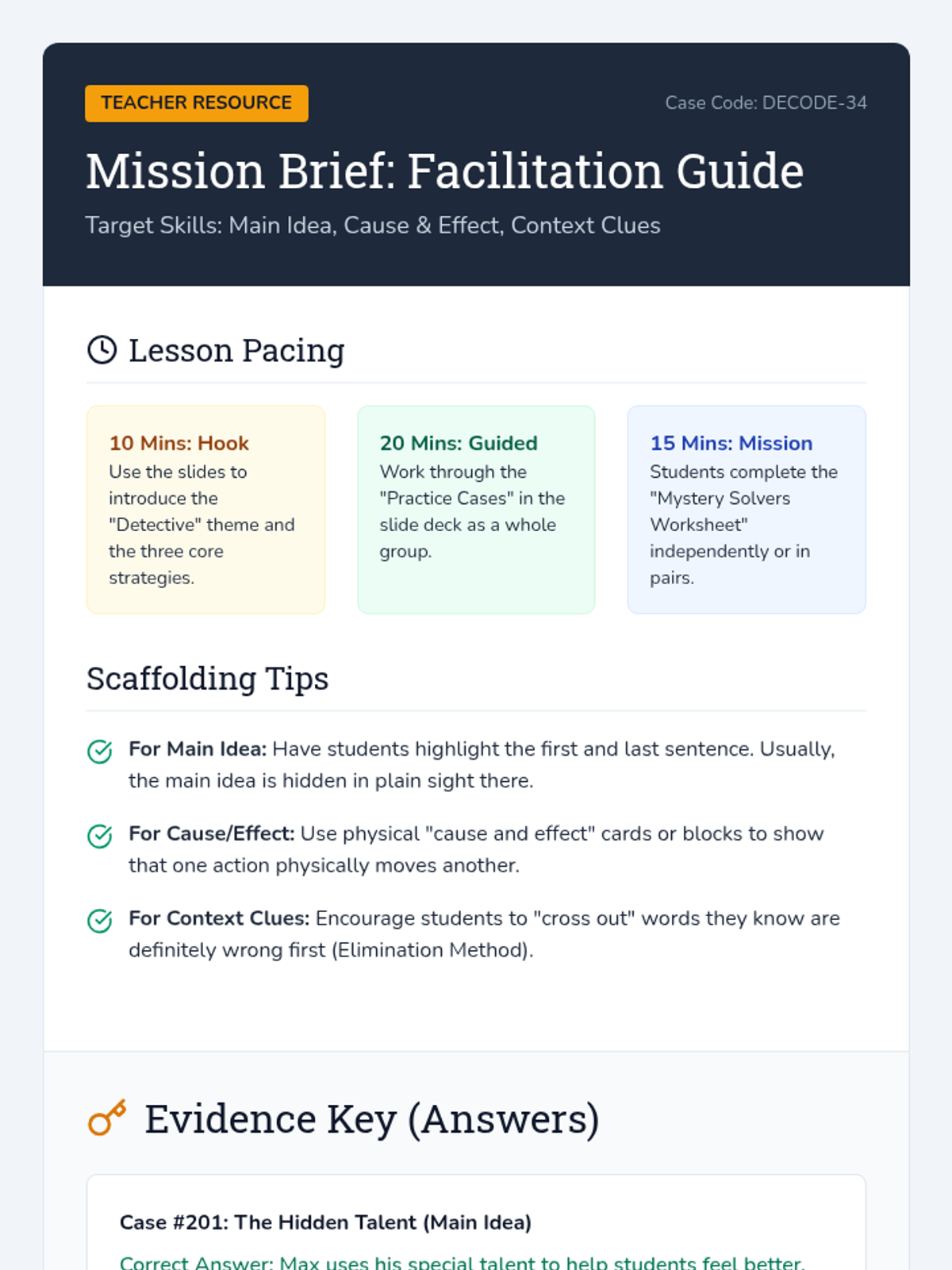
A reading intervention lesson designed to help 3rd and 4th graders master main idea, cause and effect, and sentence completion through a detective-themed series of activities. Students act as 'Reading Detectives' to uncover clues and solve literacy mysteries.
The final lesson of the sequence, reviewing all prefixes, suffixes, and roots with a cumulative assessment.
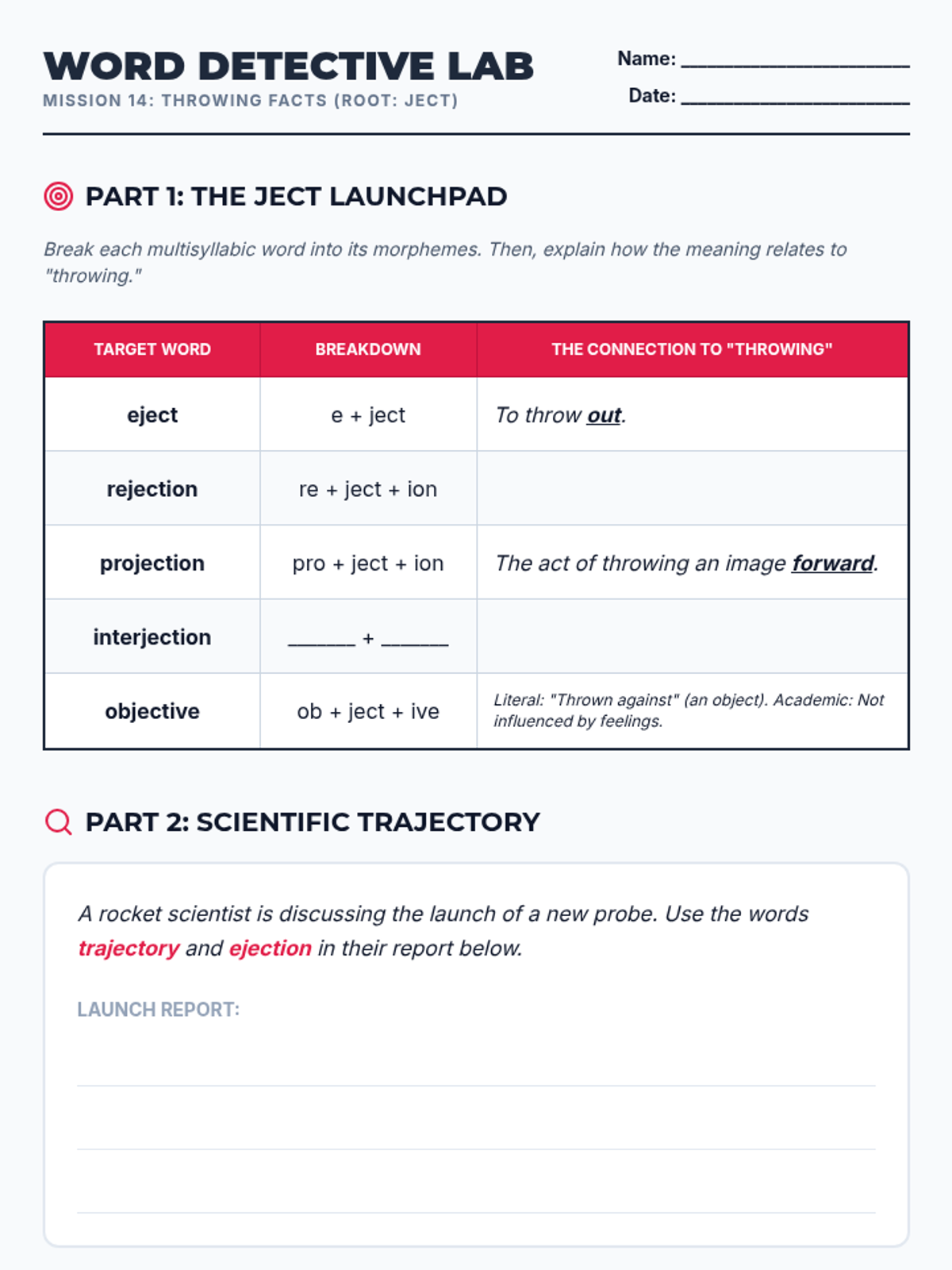
Covers the Latin root 'ject' (throw), emphasizing the physical meanings behind abstract academic terms.
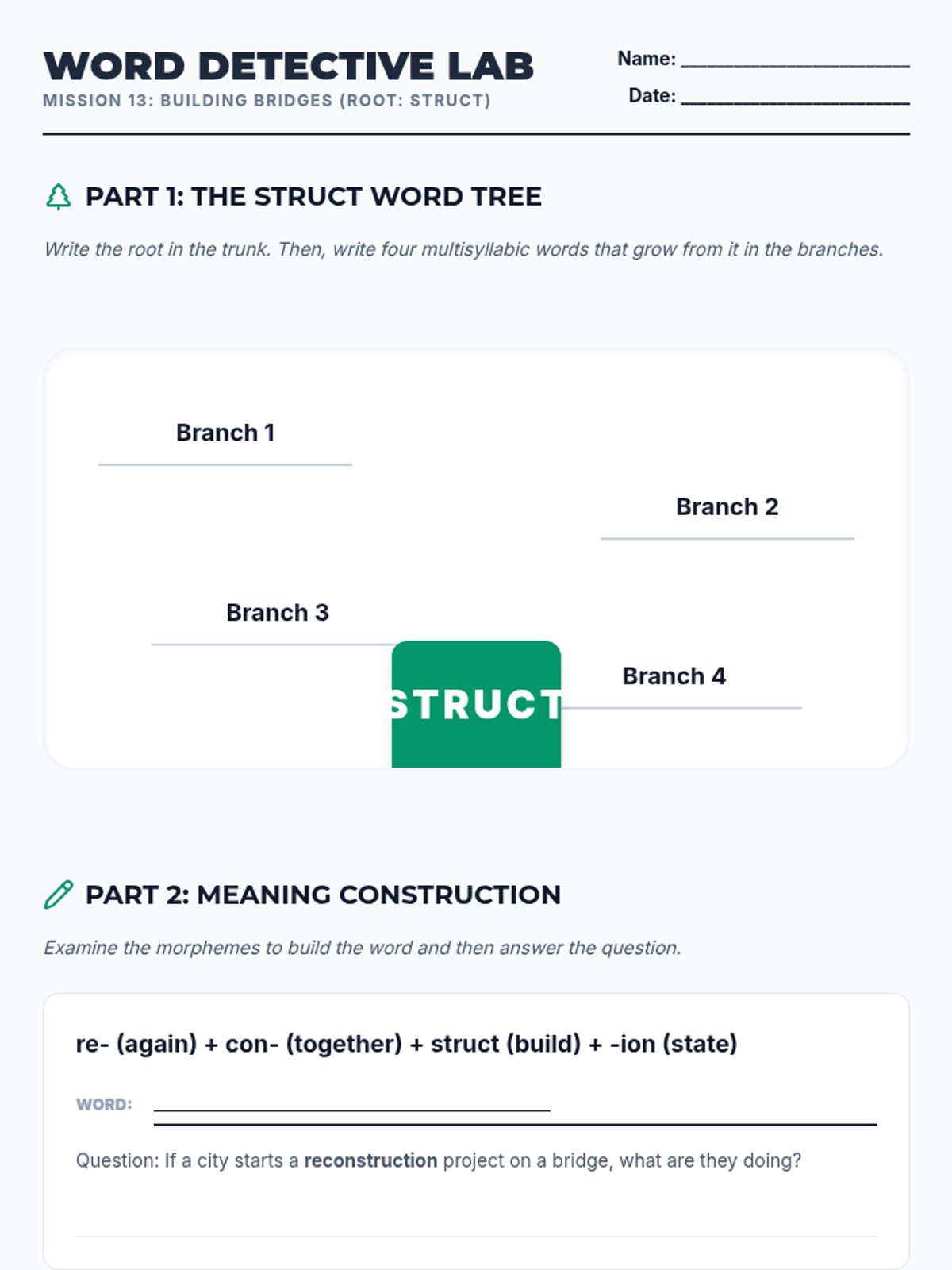
Explores the Latin root 'struct' (build), using word trees to visualize how multiple morphemes combine.
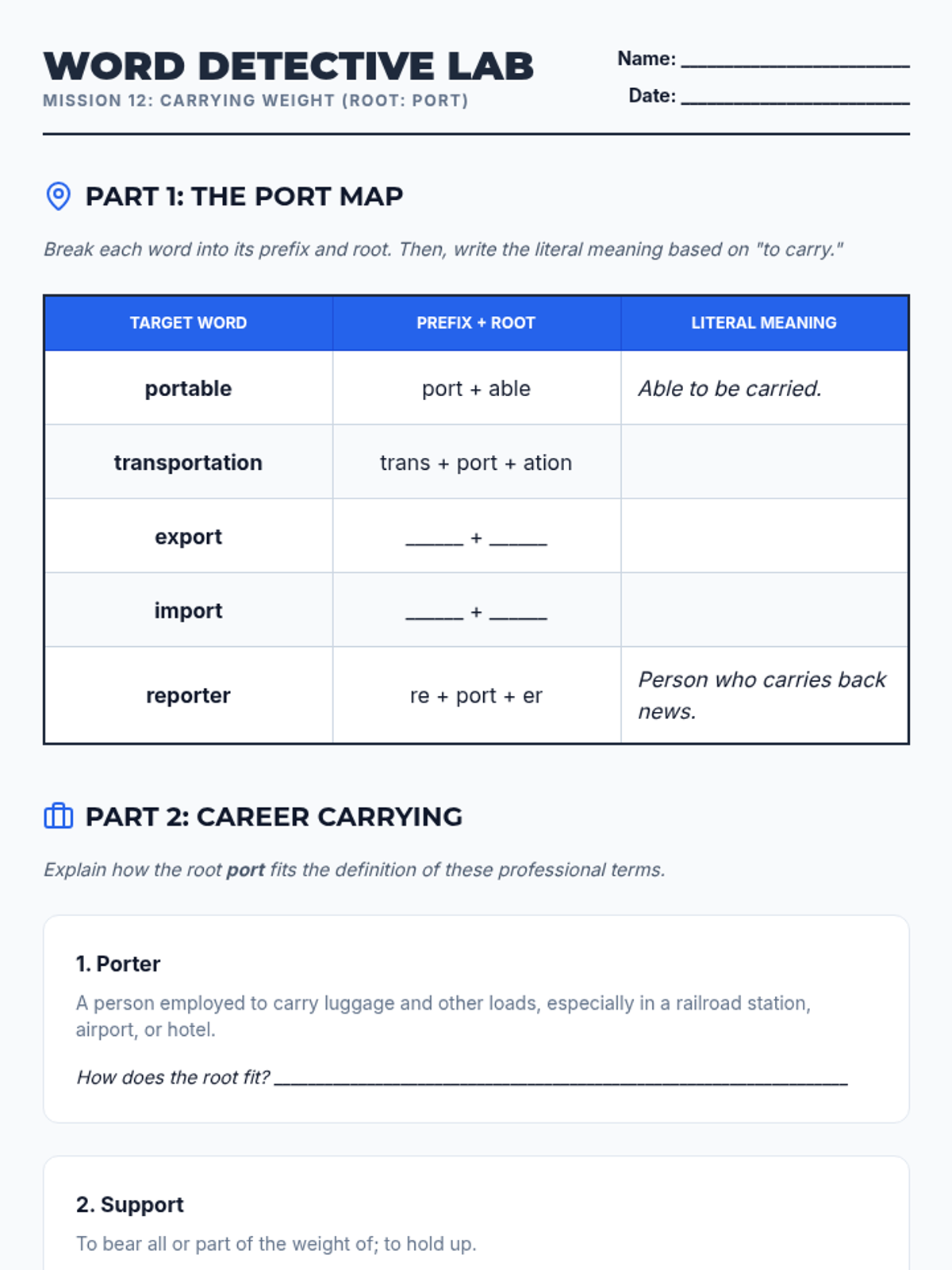
Focuses on the Latin root 'port' (carry), connecting it to familiar words like 'transport' and 'portable'.
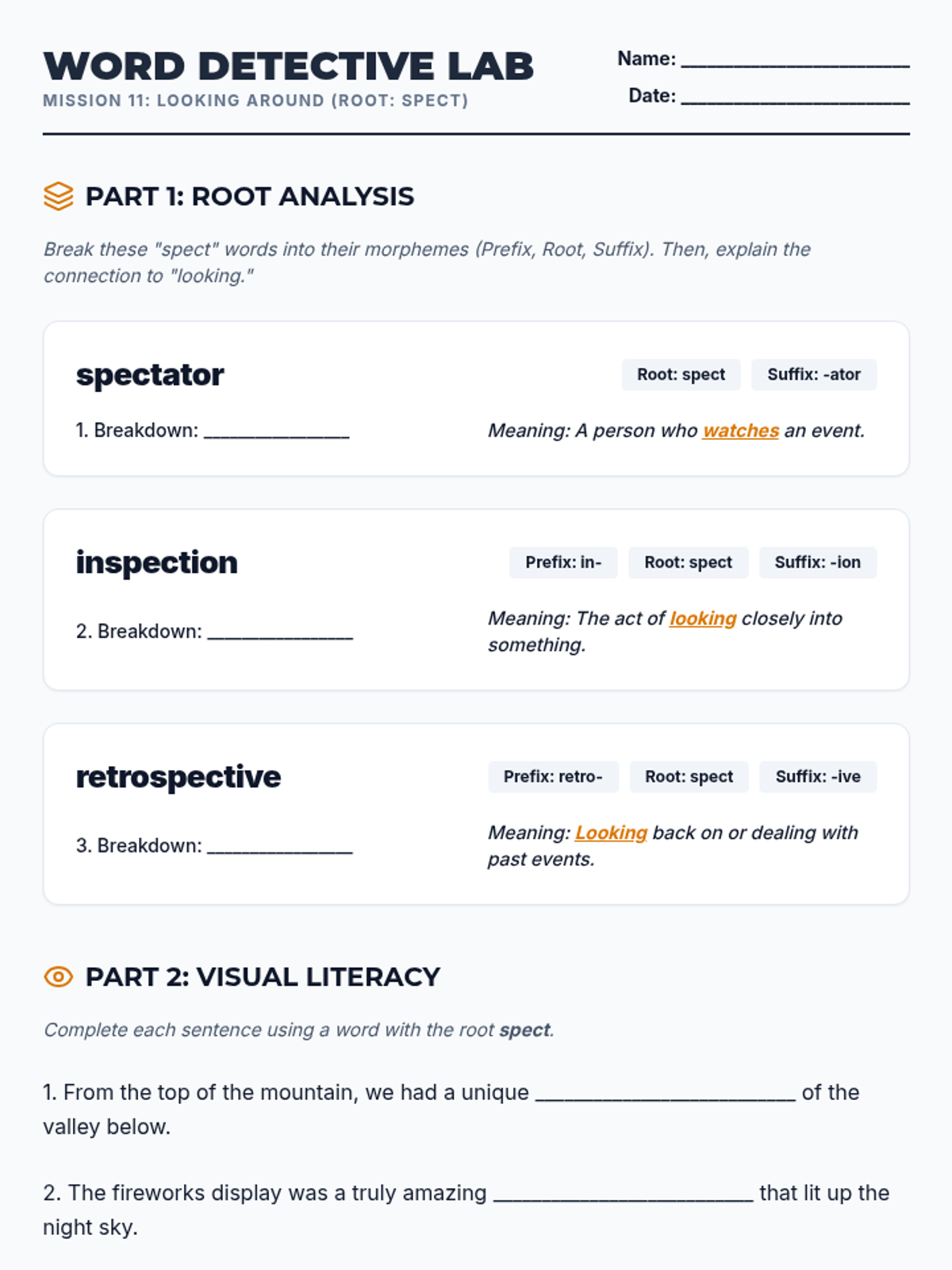
Introduces the Latin root 'spect' (look), identifying it in common multisyllabic academic words.
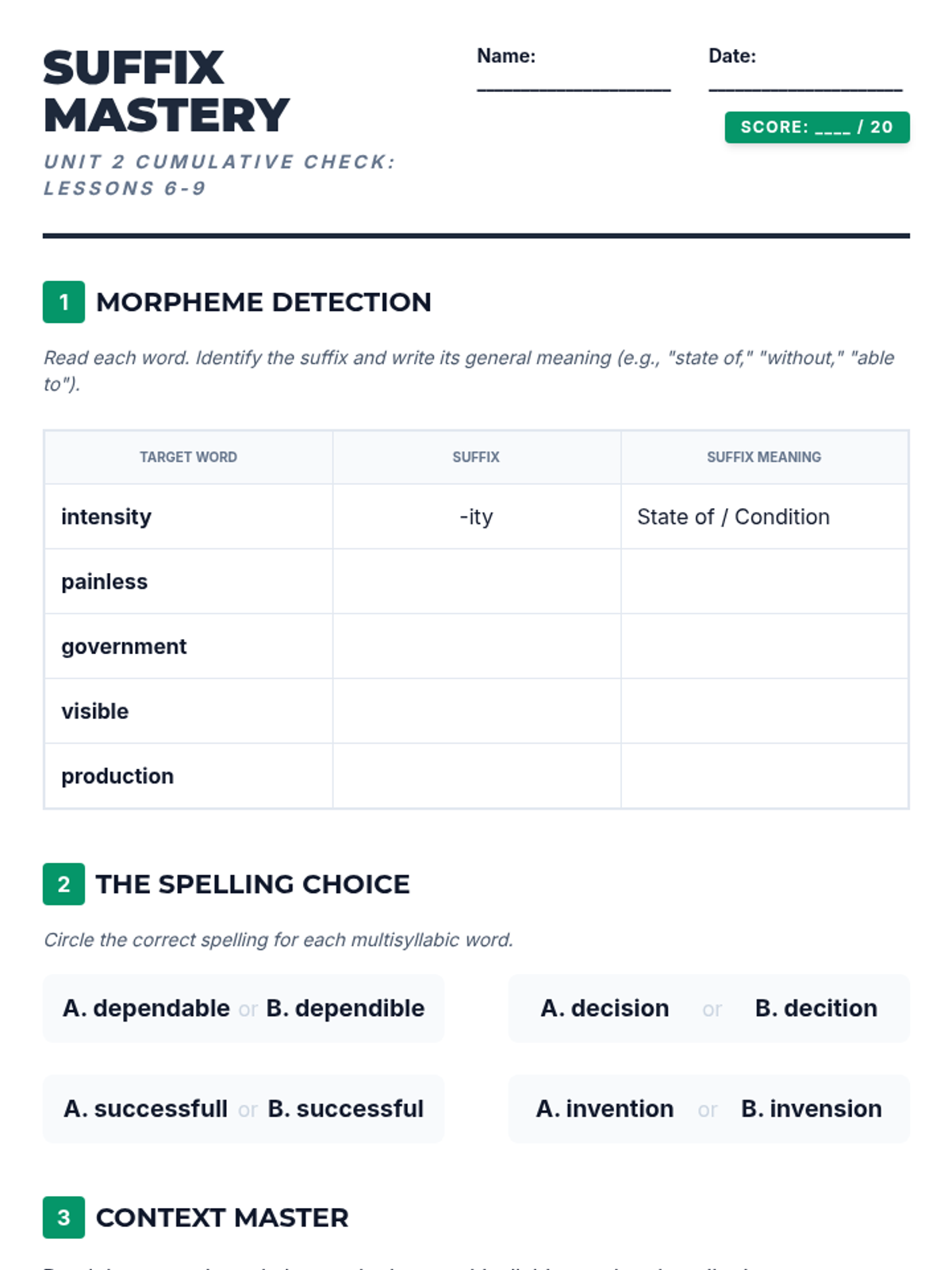
A review of all suffixes covered, featuring a 'Suffix Showdown' game and a progress monitoring check.
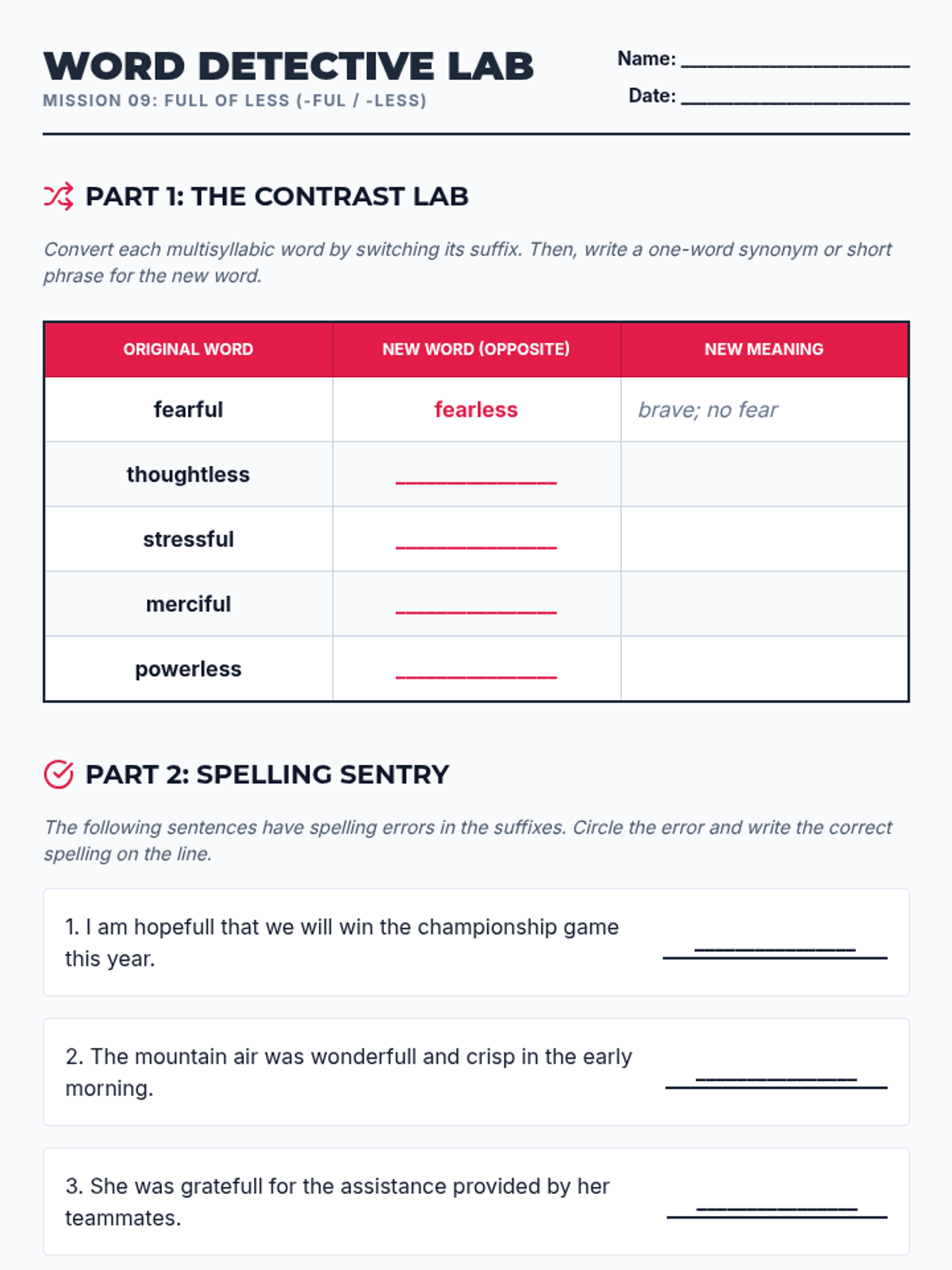
Focuses on the quantity-based suffixes -ful and -less, using contrasting word pairs to build understanding.
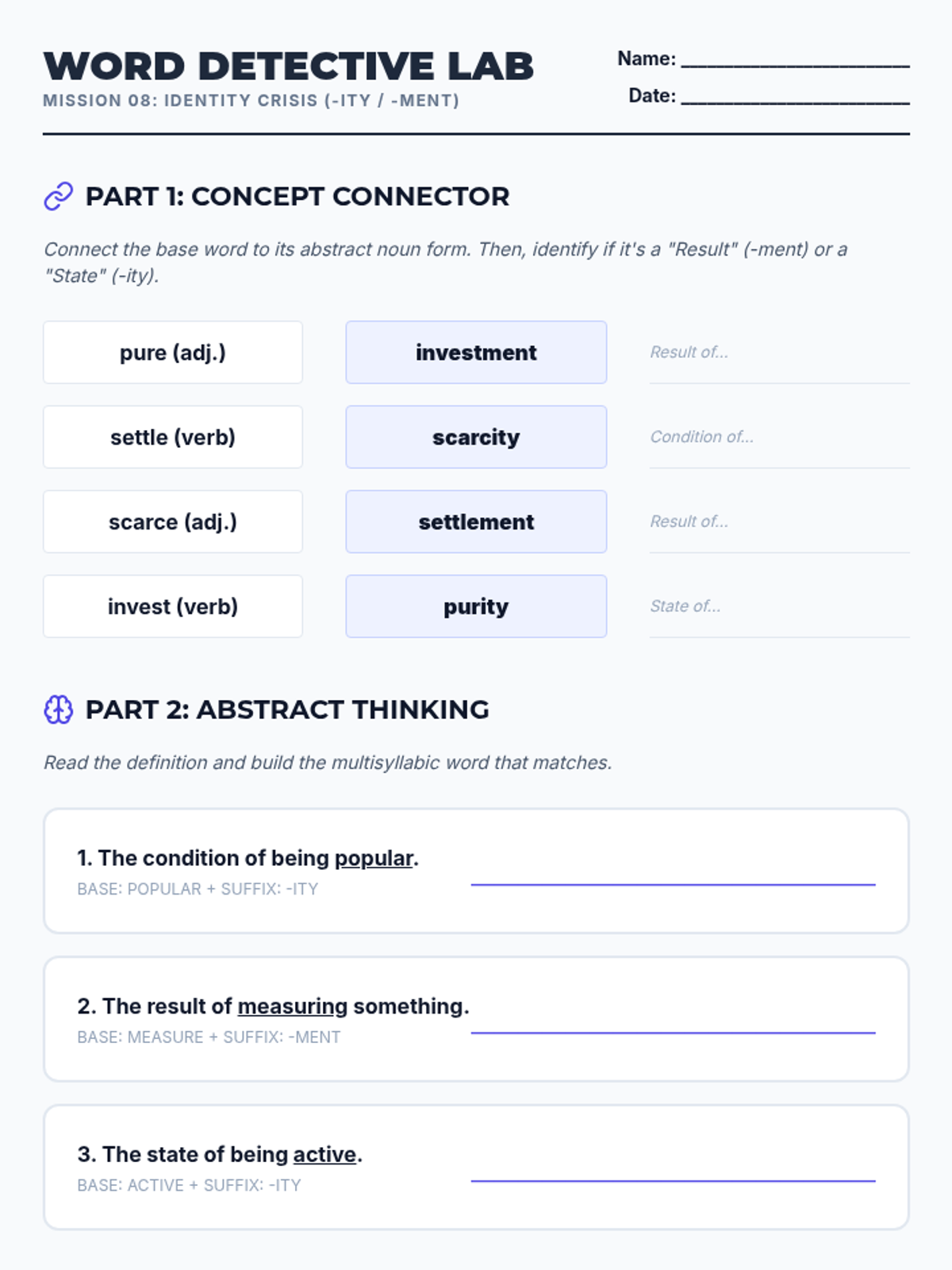
Explores suffixes -ment and -ity, emphasizing how they transform verbs and adjectives into abstract nouns.
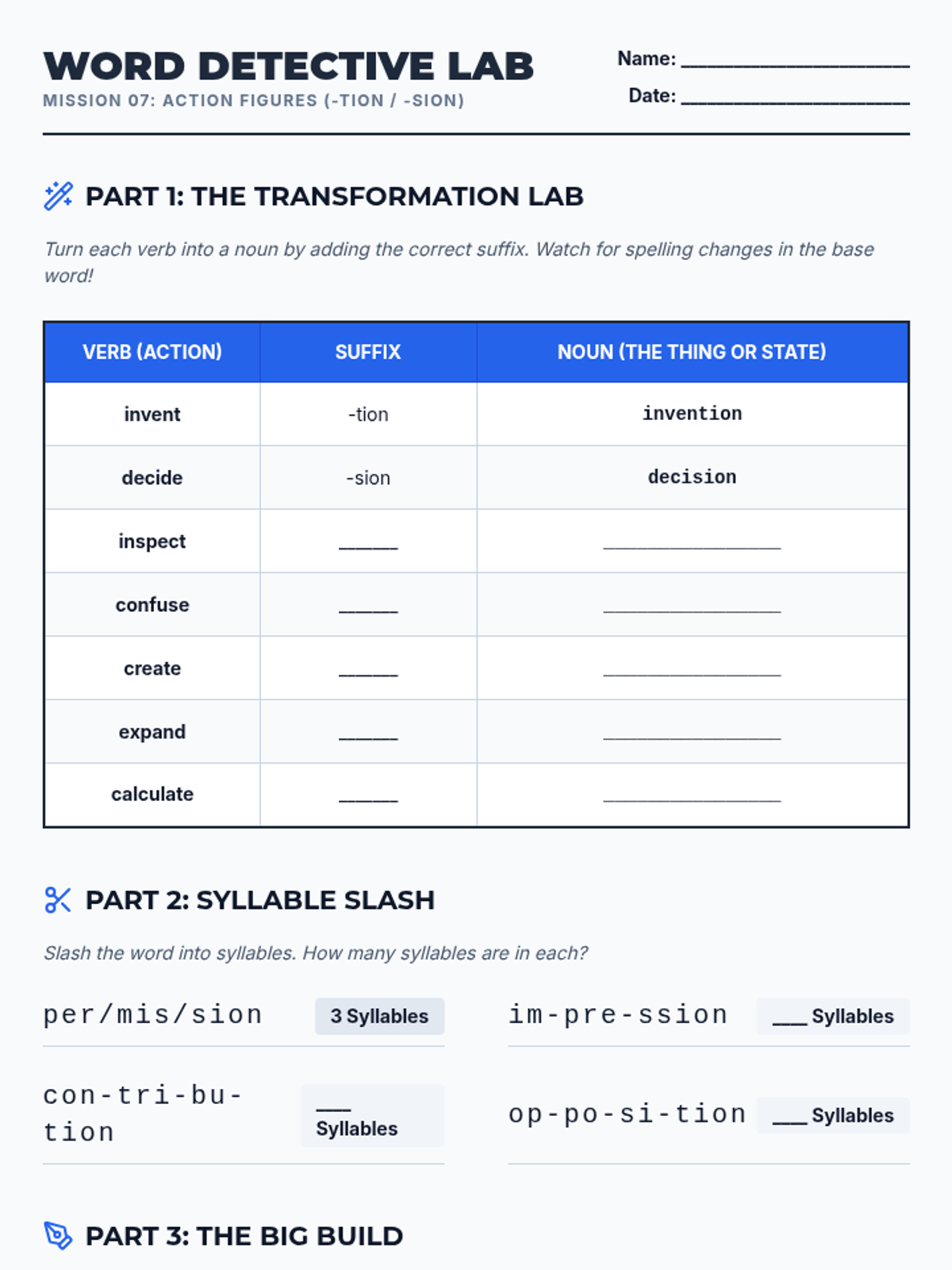
Examines noun-forming suffixes -tion and -sion, focusing on spelling patterns and syllable division.
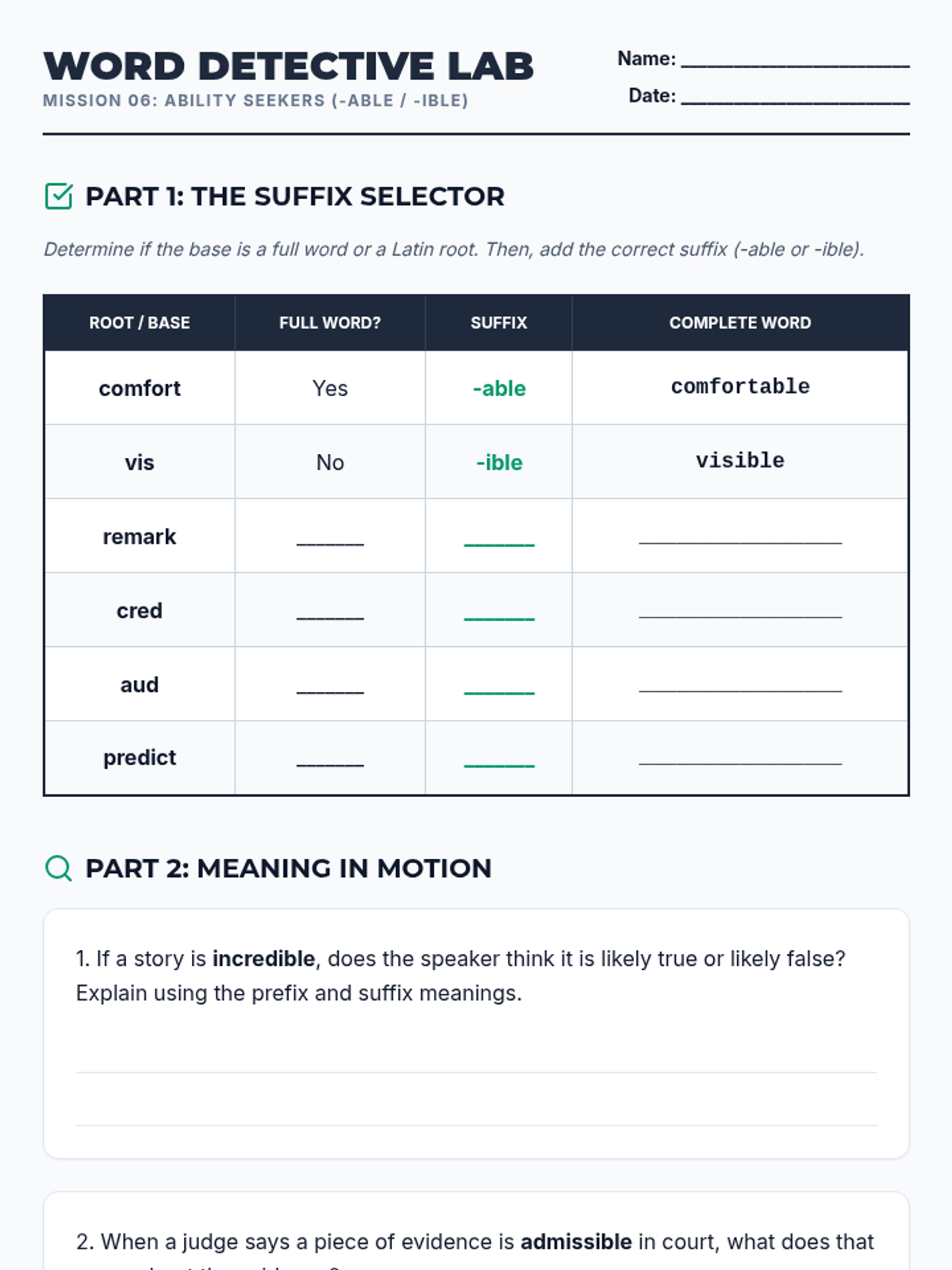
Shifts focus to suffixes -able and -ible, helping students determine when to use each based on the root word.
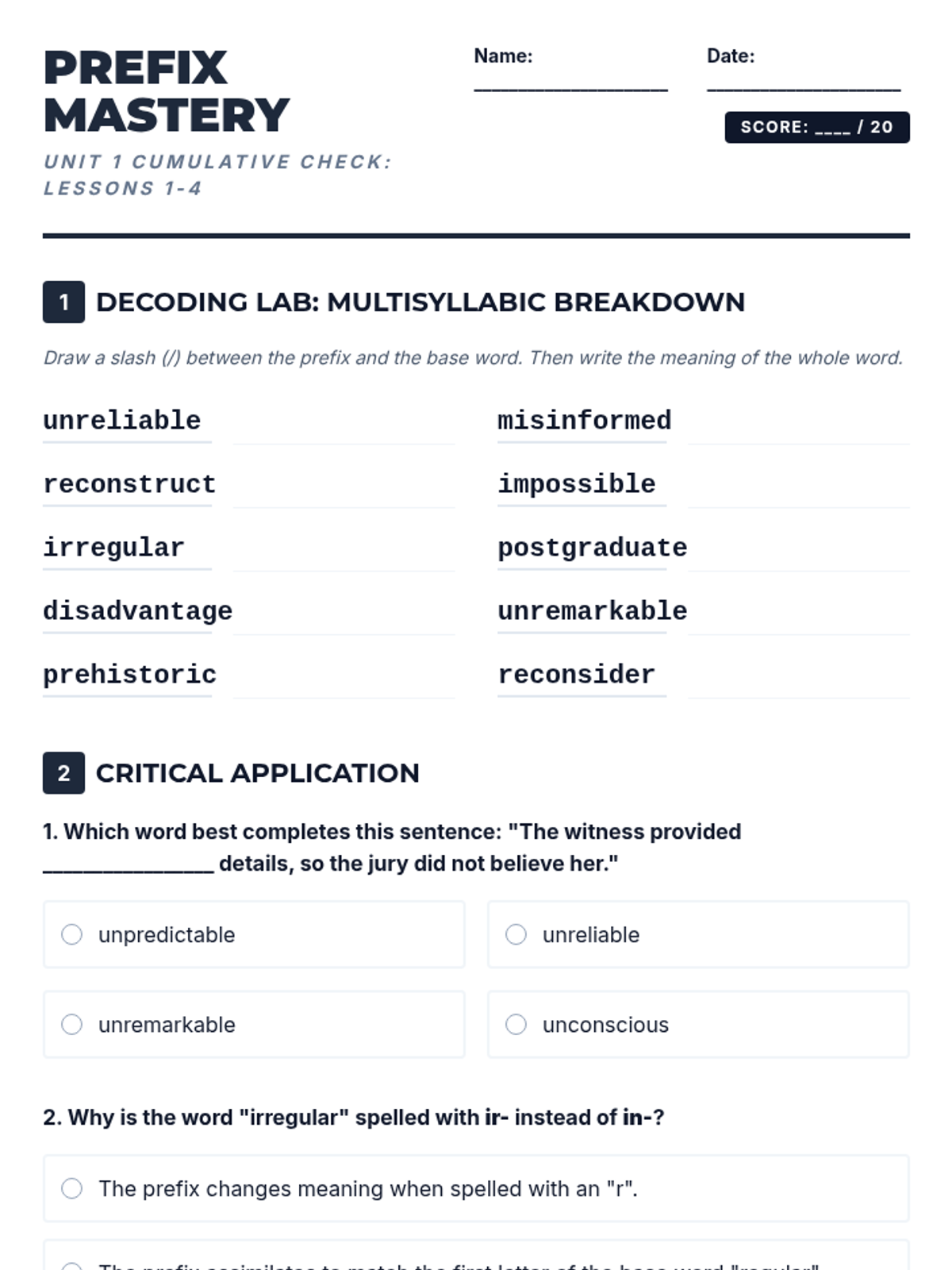
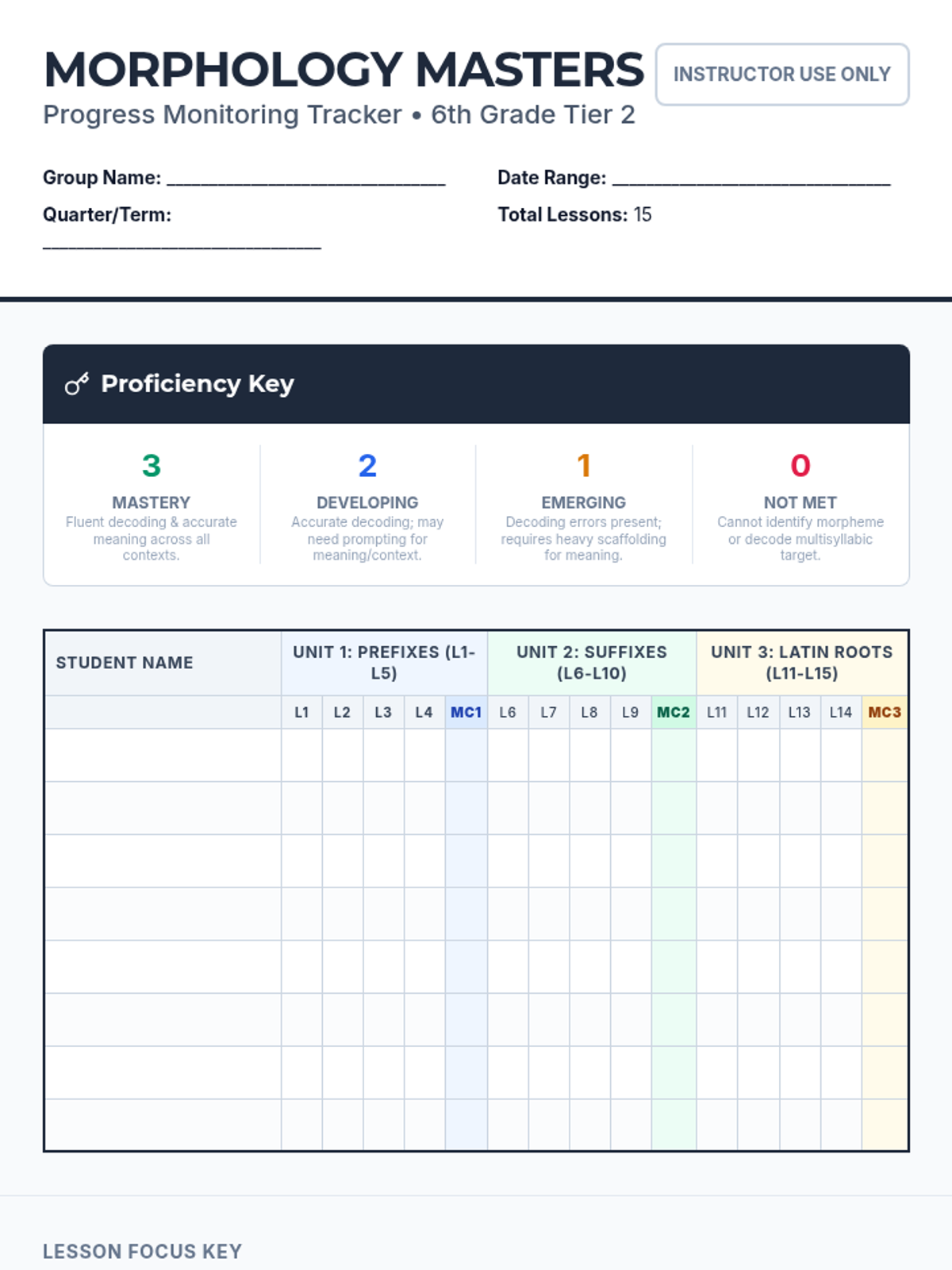
A review lesson of all prefixes covered in the first four lessons, including a quick progress monitoring assessment.

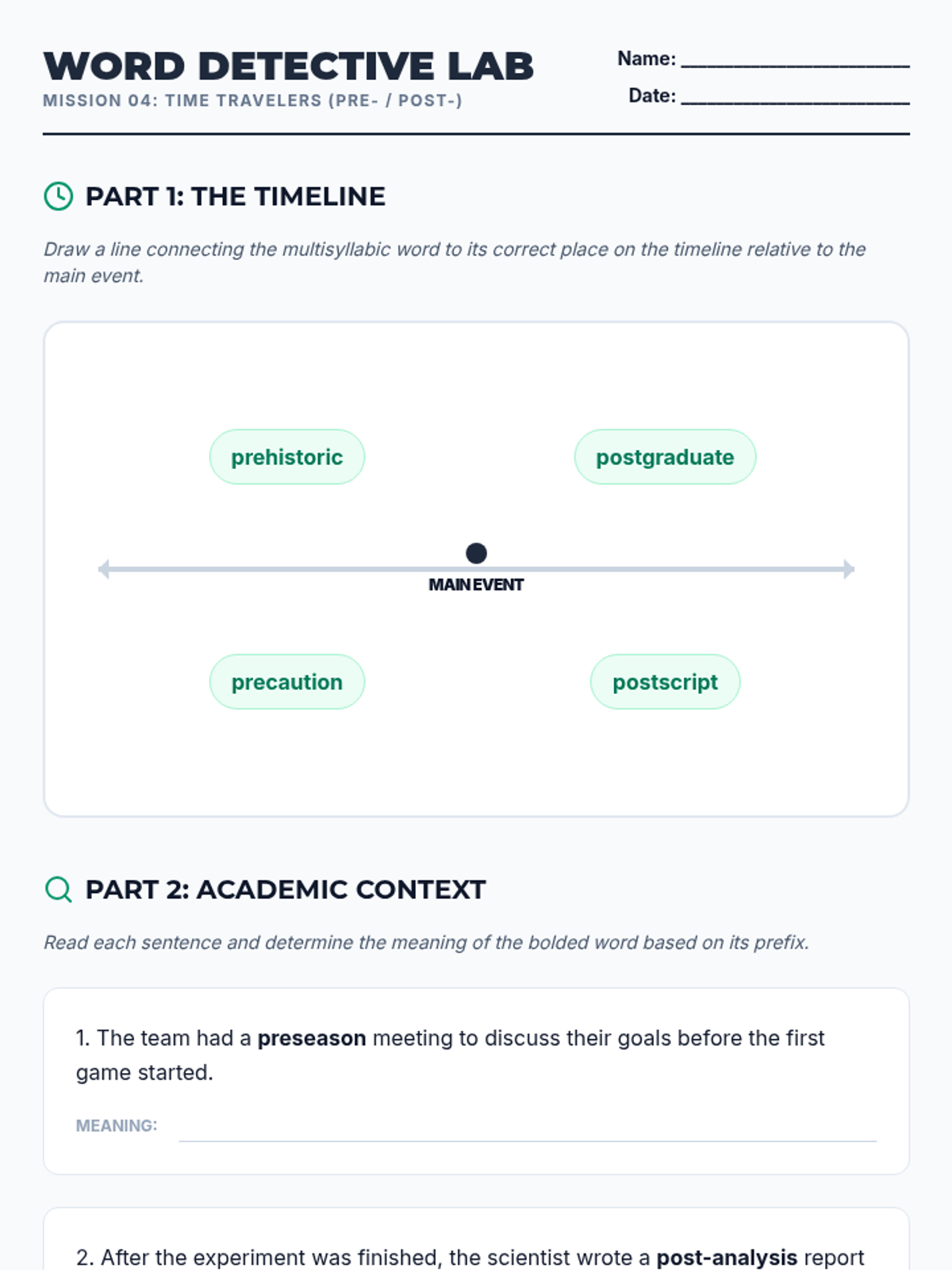
Introduces time-based prefixes pre- and post-, focusing on academic vocabulary used in history and science contexts.
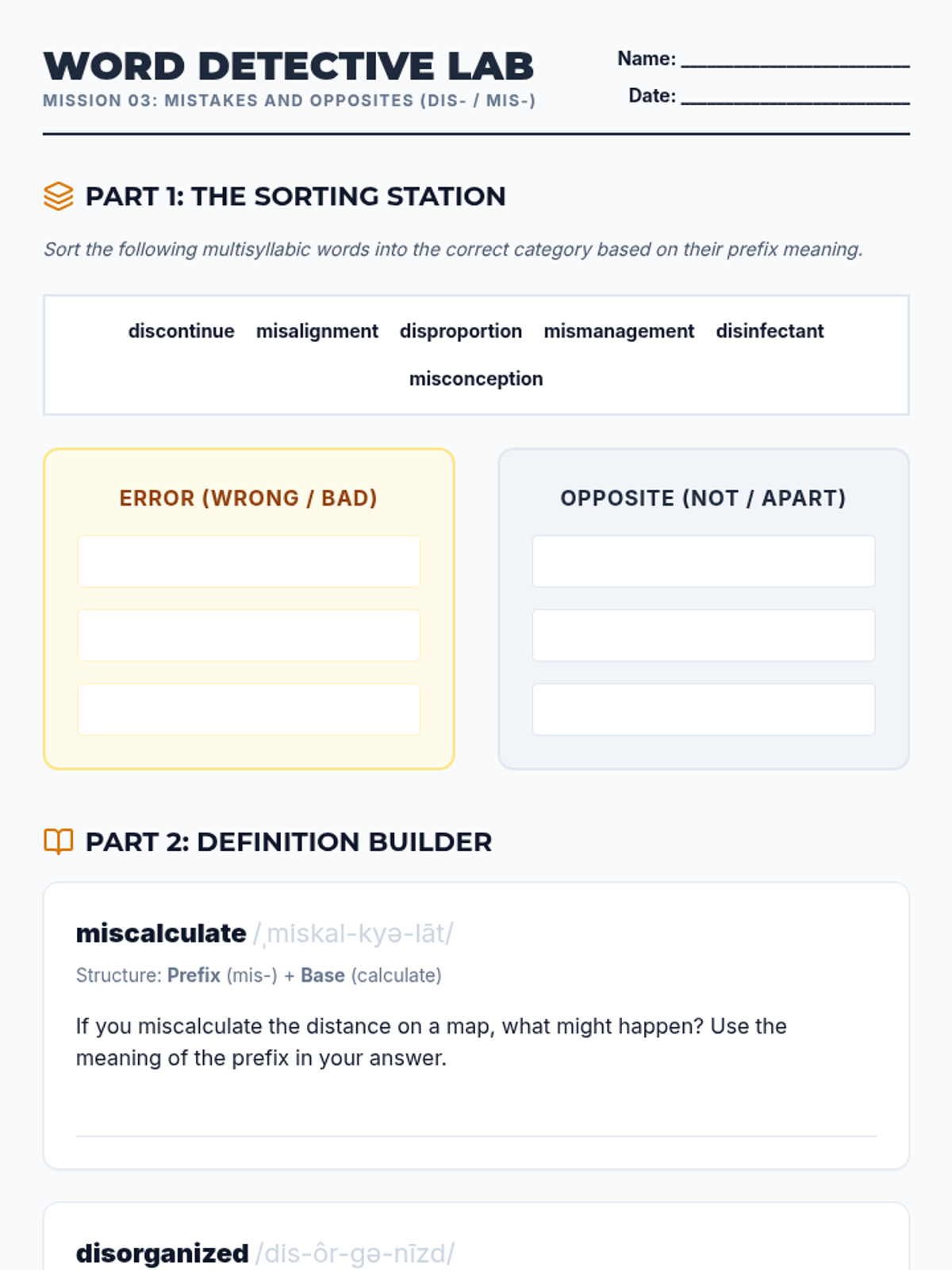
Investigates prefixes dis- and mis- to understand words related to opposites and errors, featuring word-sorting activities.
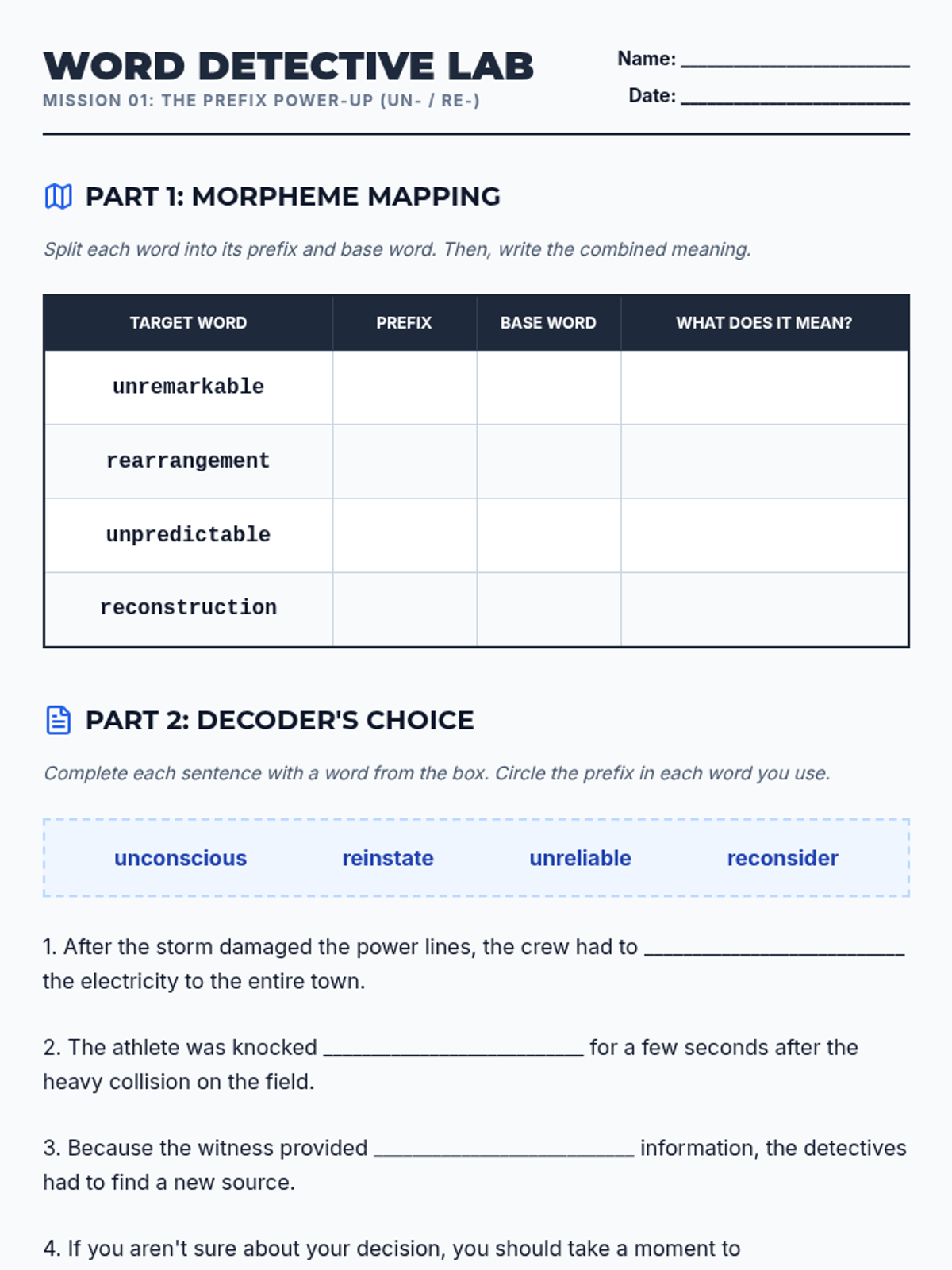
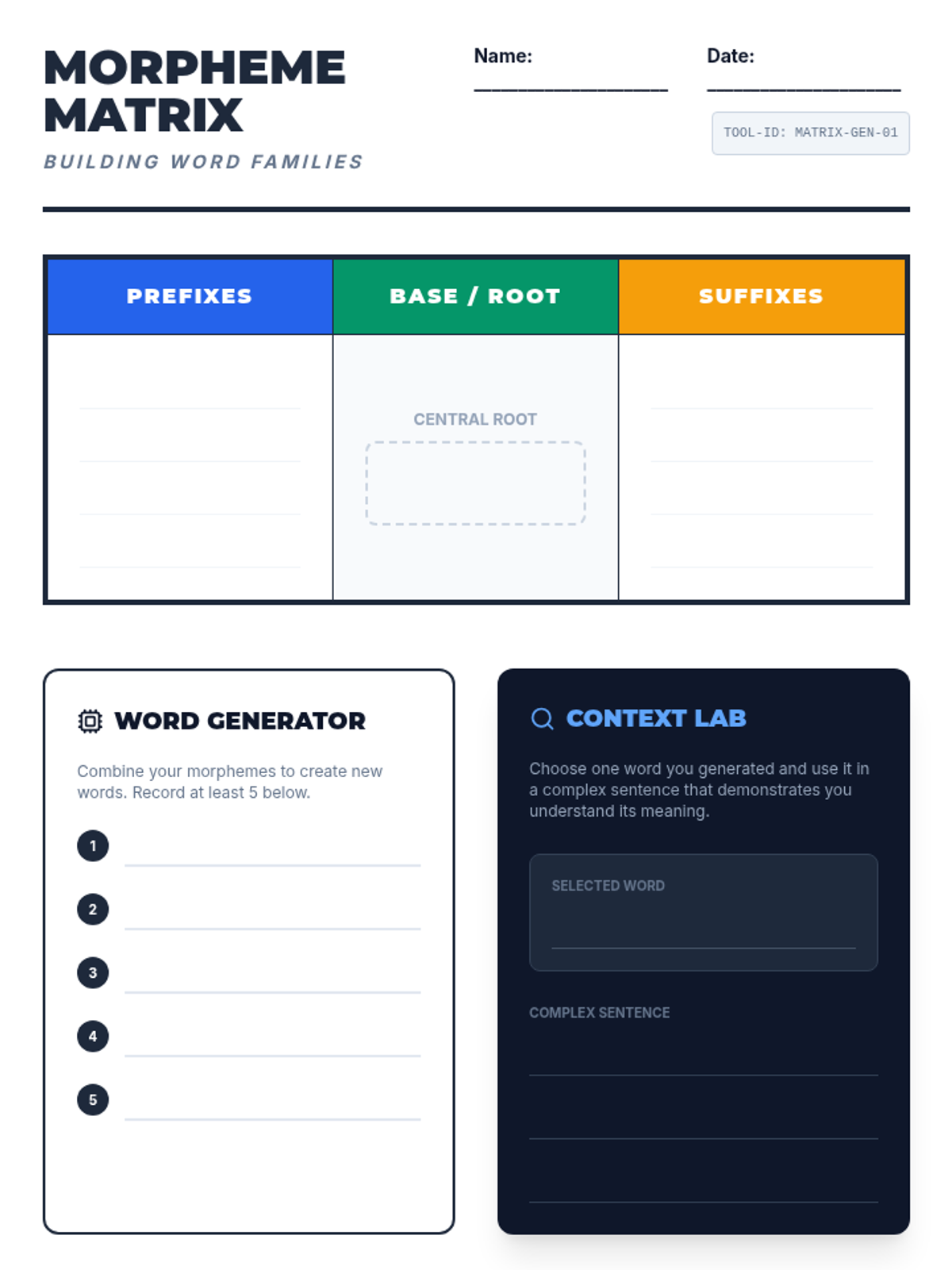
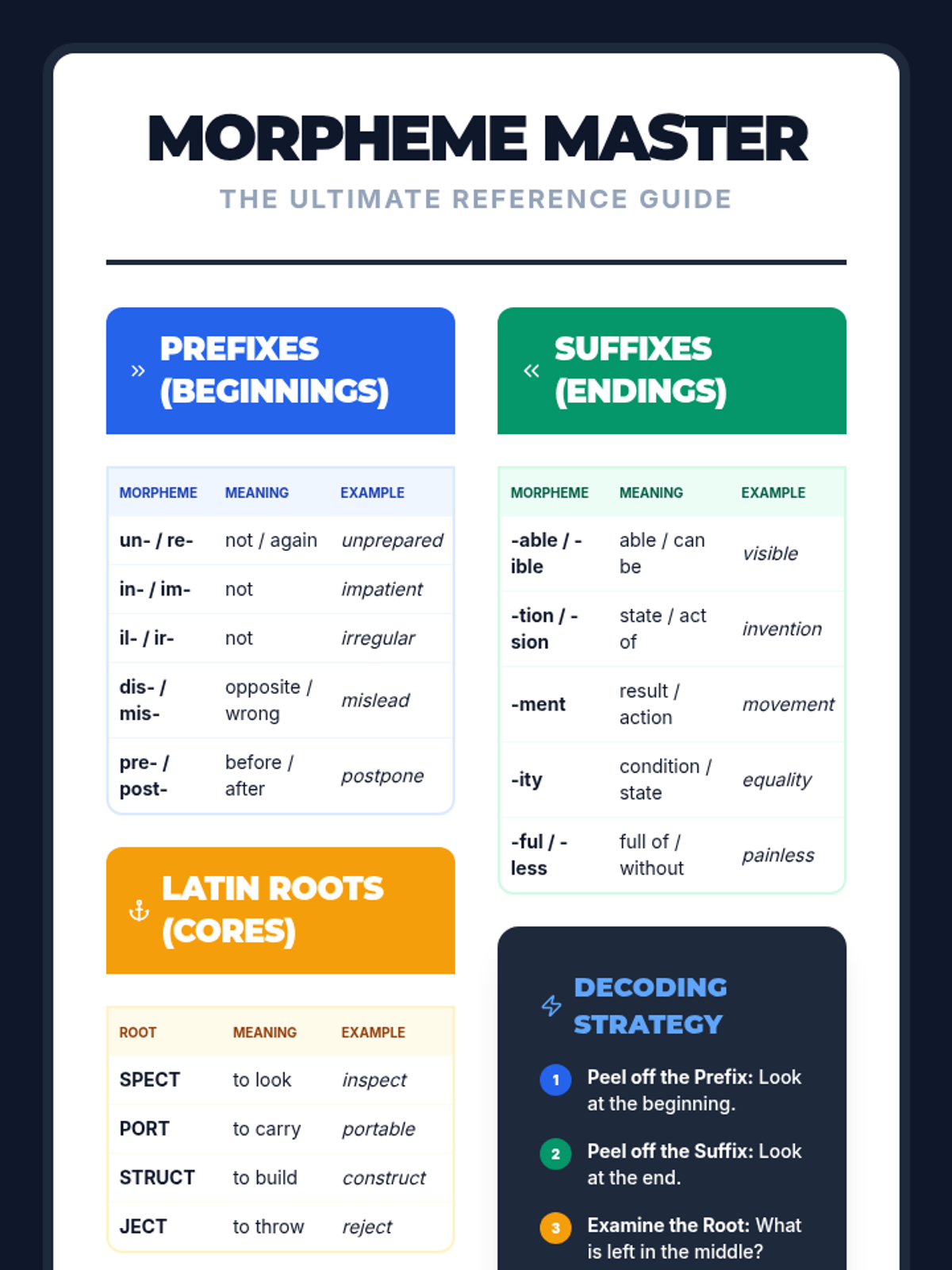
Focuses on identifying and using common prefixes like un- and re- to decode and understand multisyllabic words. Includes word building and sentence application.
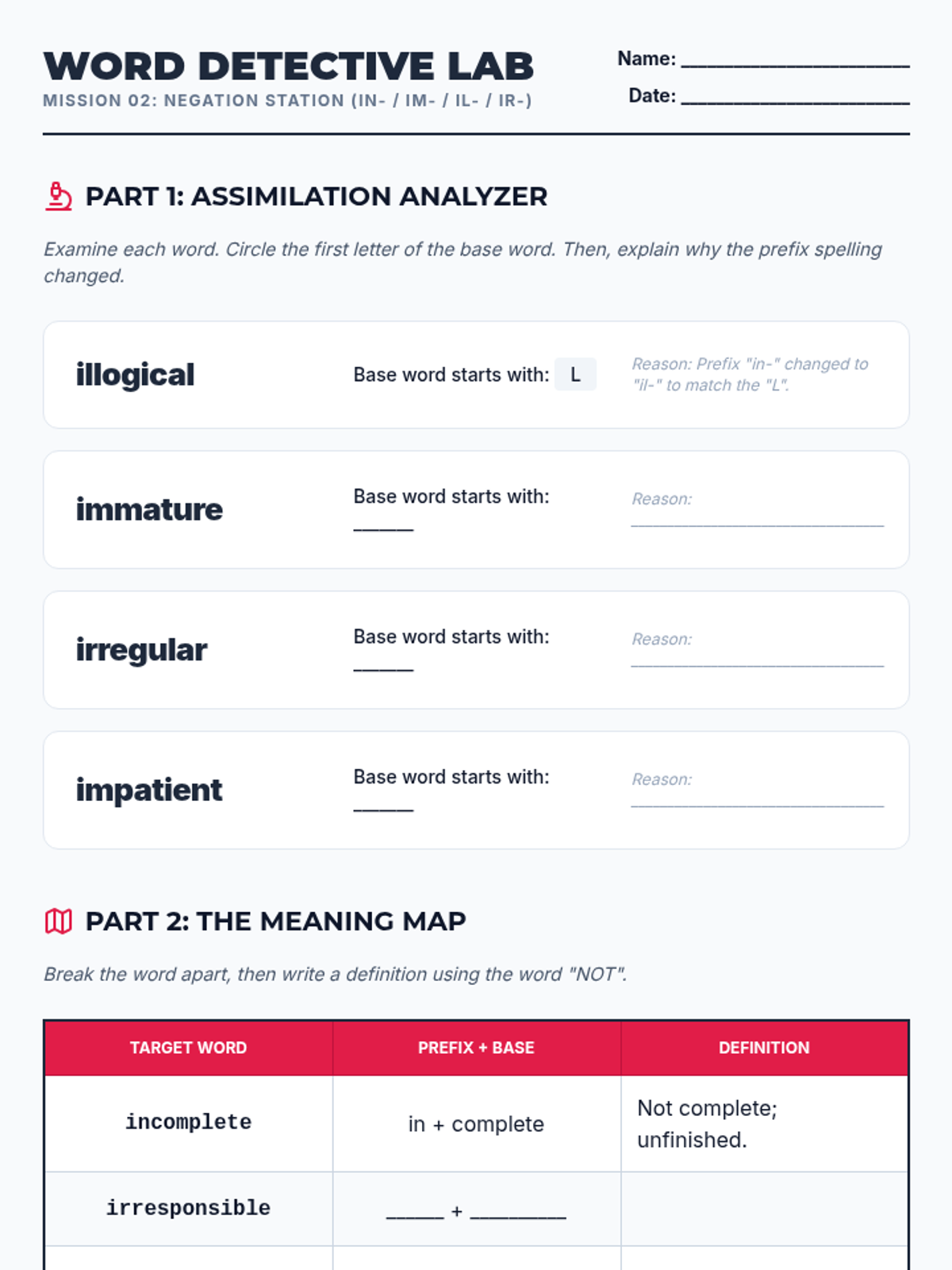
Covers the 'not' prefixes in-, im-, il-, and ir-, exploring how spelling changes based on the root word's initial letter.
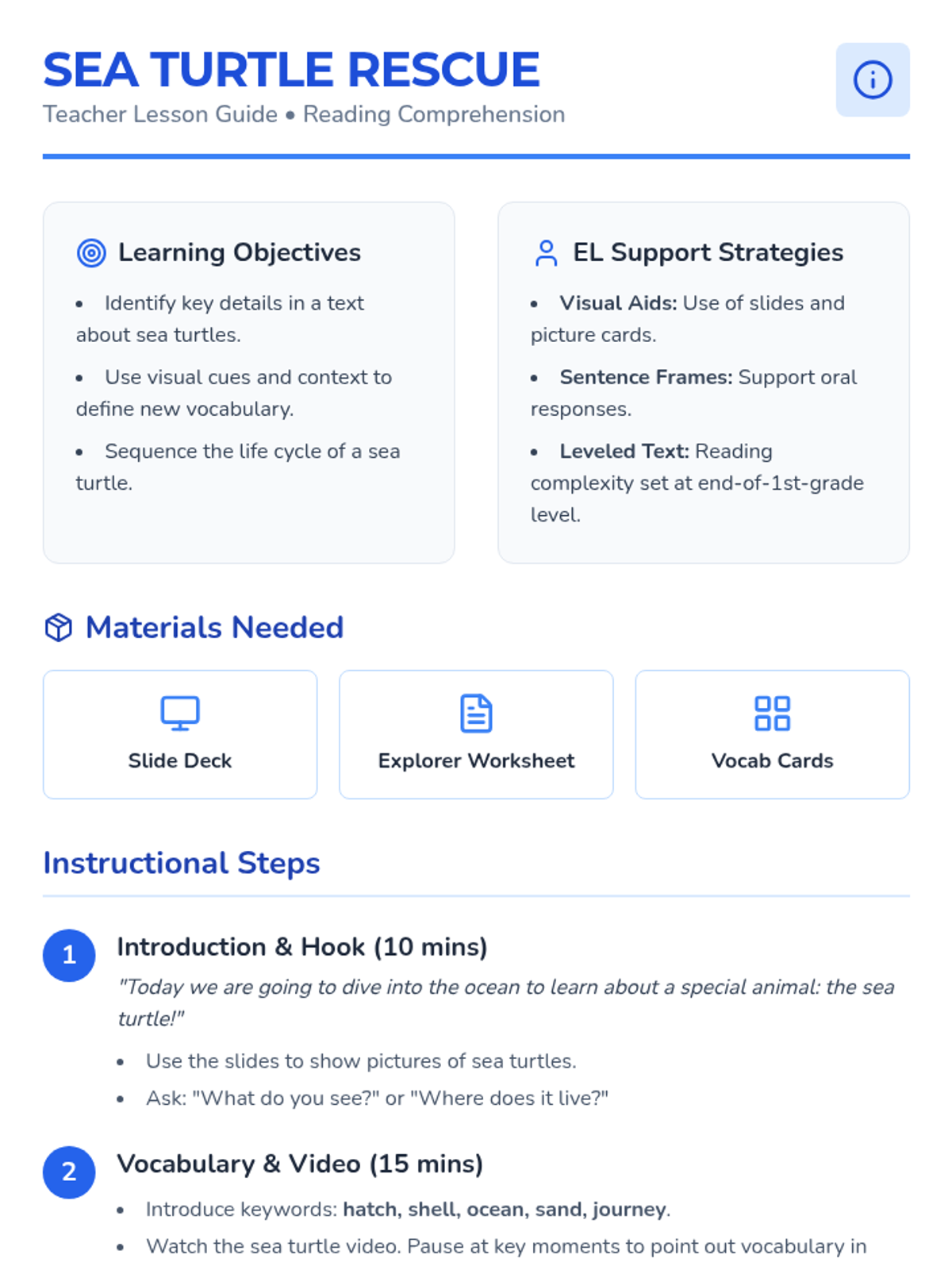
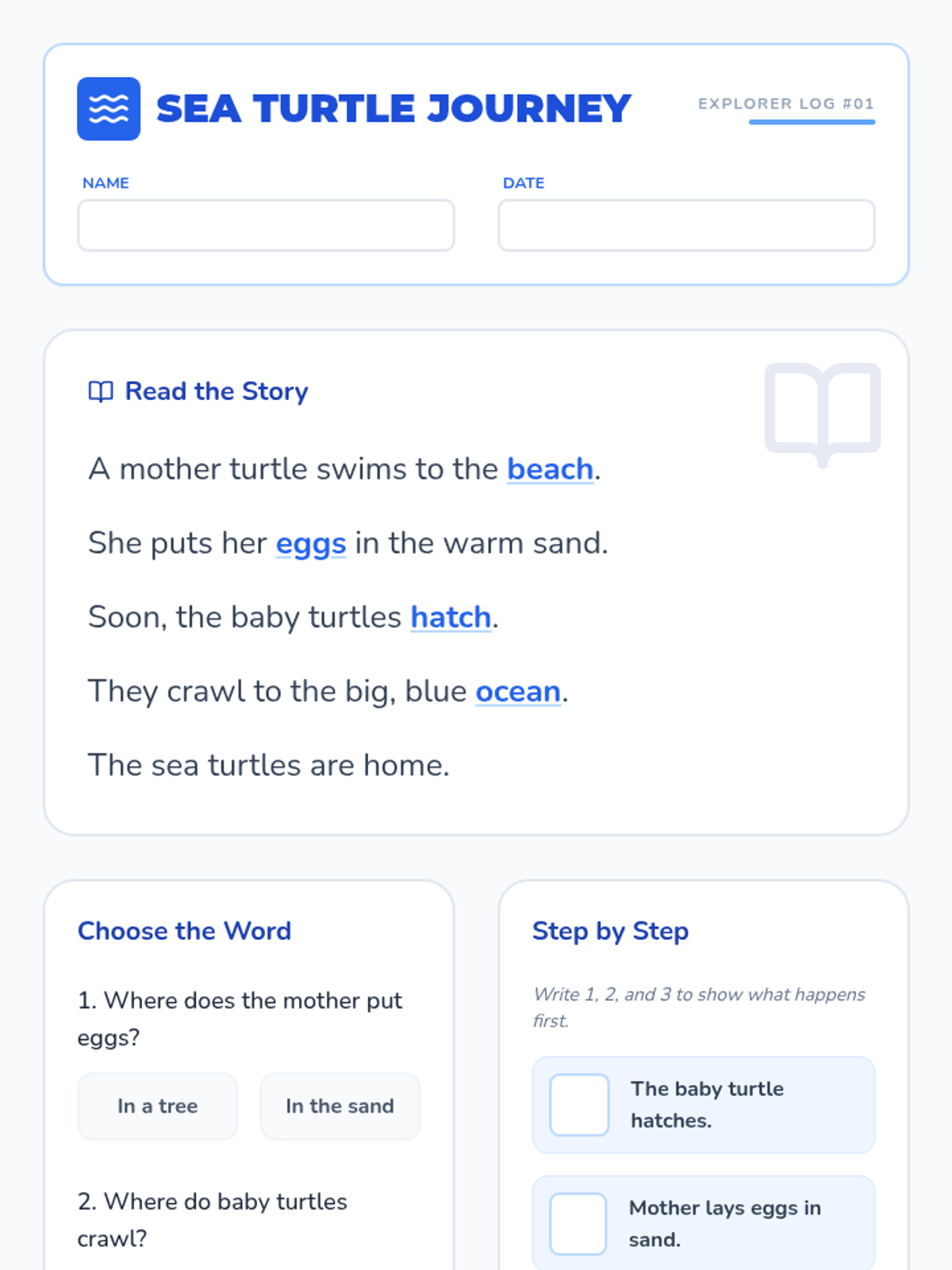
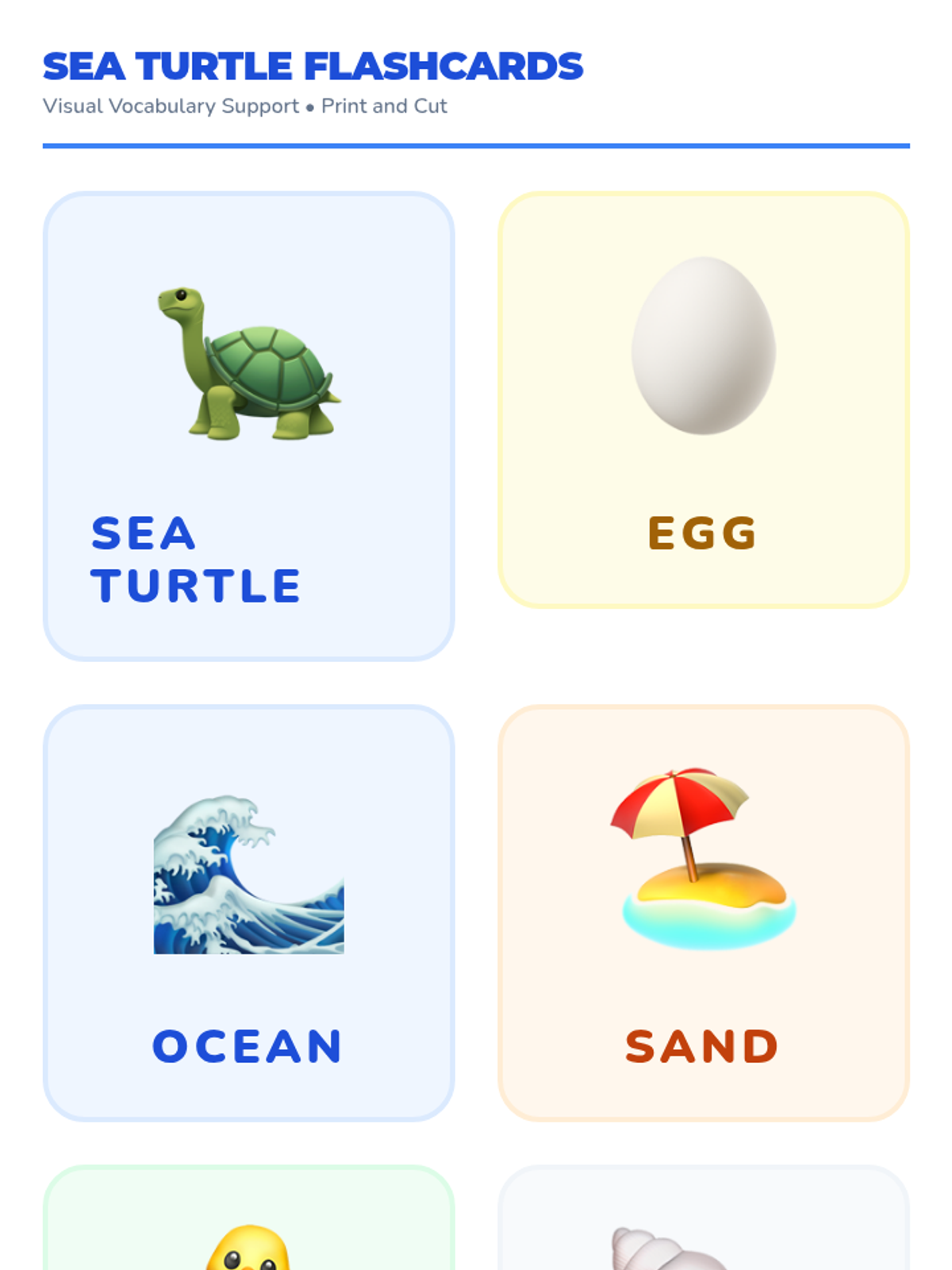
A reading comprehension lesson for 4th-grade EL students focusing on sea turtles, using visual supports and leveled text to build vocabulary and understanding of life cycles.
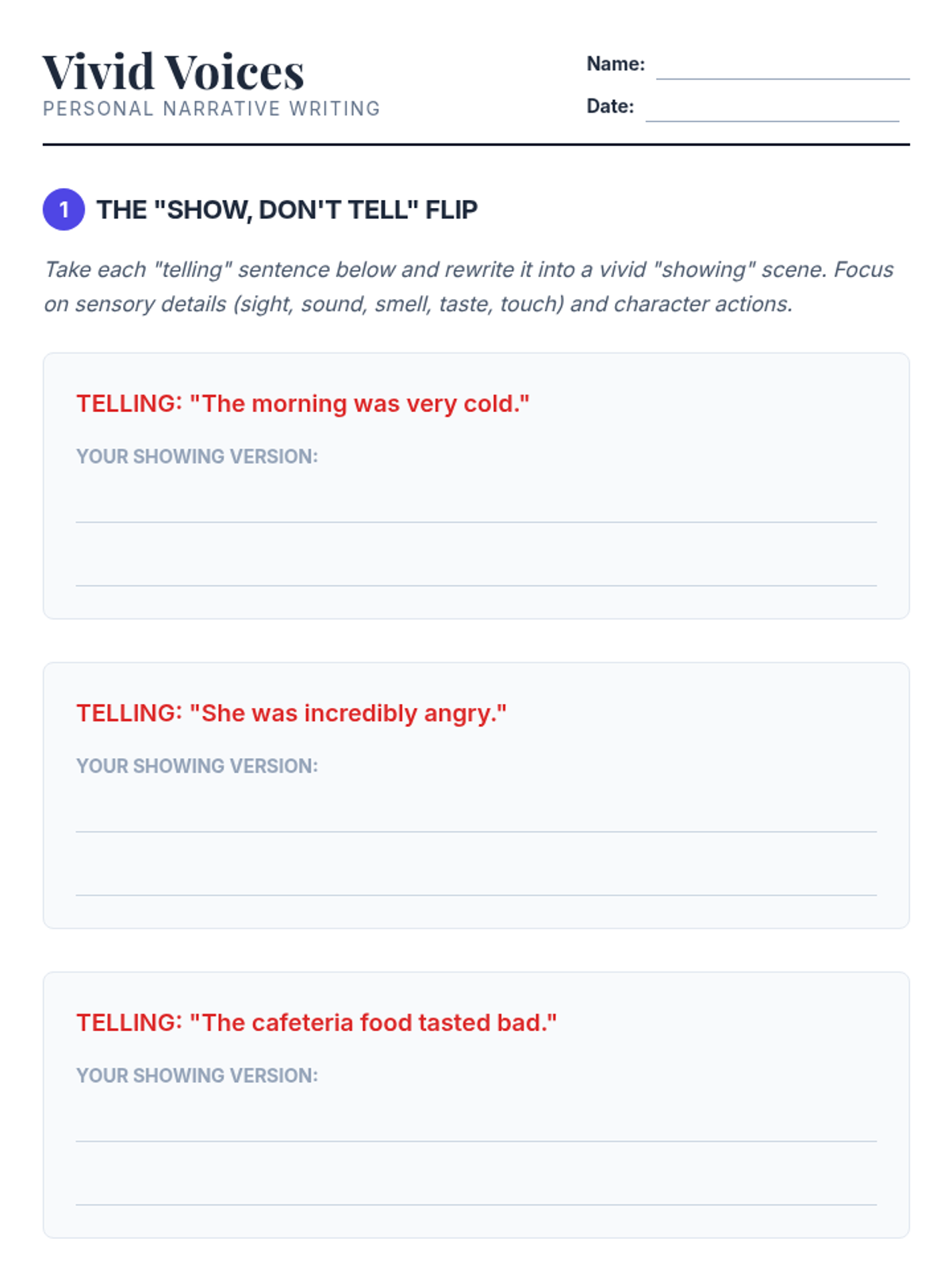
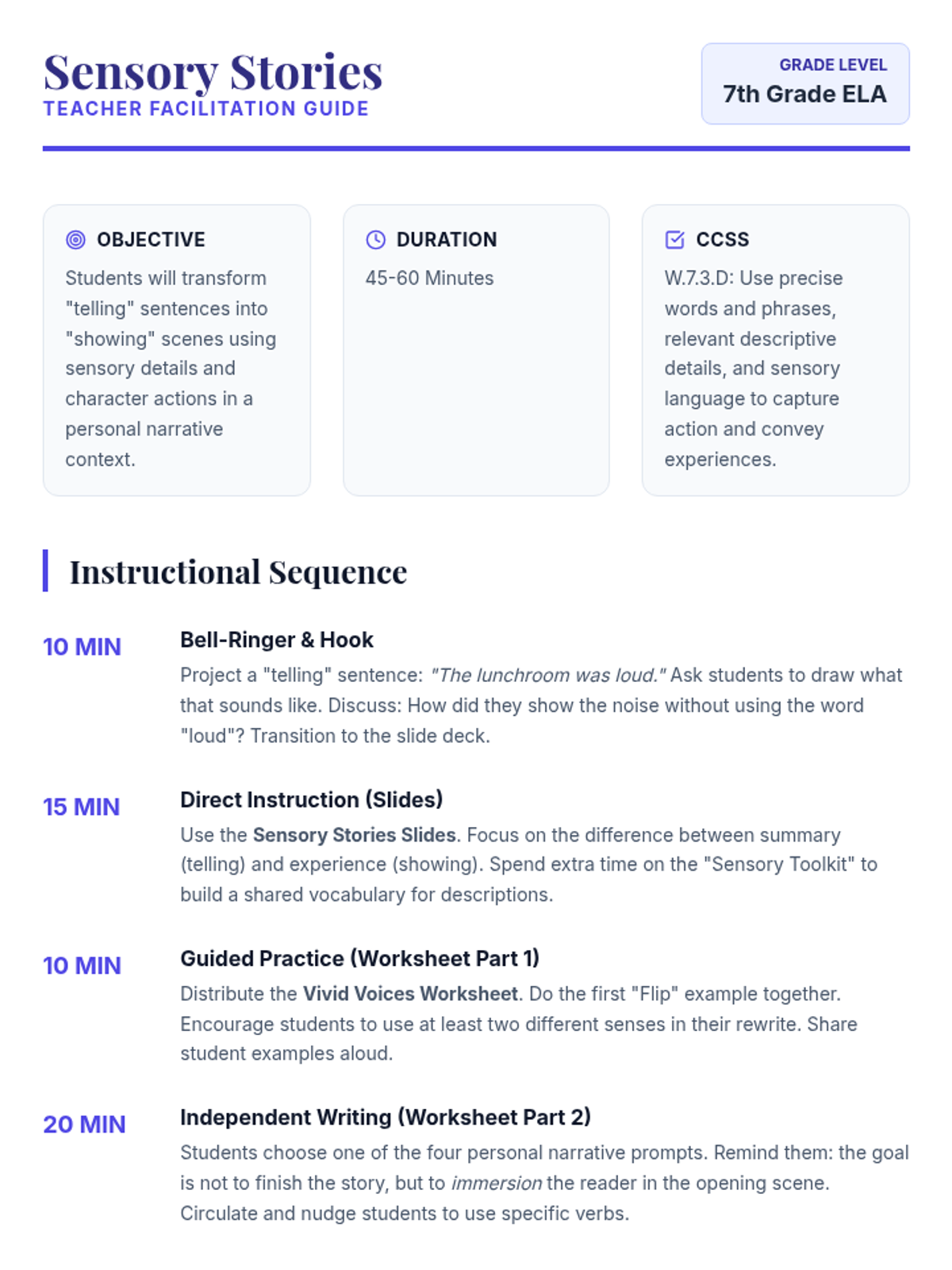
This lesson introduces 7th-grade students to the 'Show, Don't Tell' technique in personal narrative writing, focusing on using sensory details and internal dialogue to create immersive stories. Students will practice transforming flat statements into vivid scenes and apply these skills to original writing prompts.
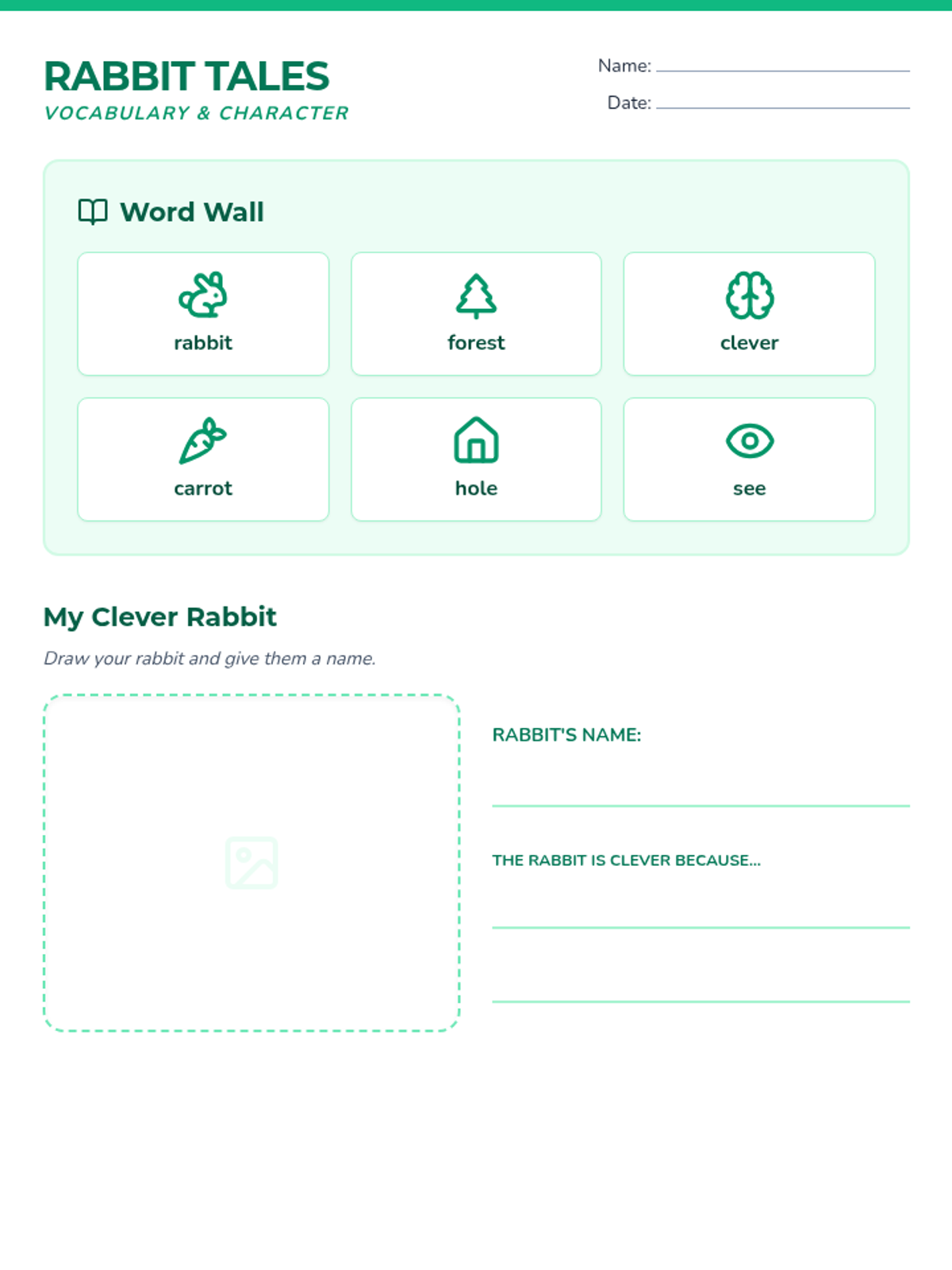
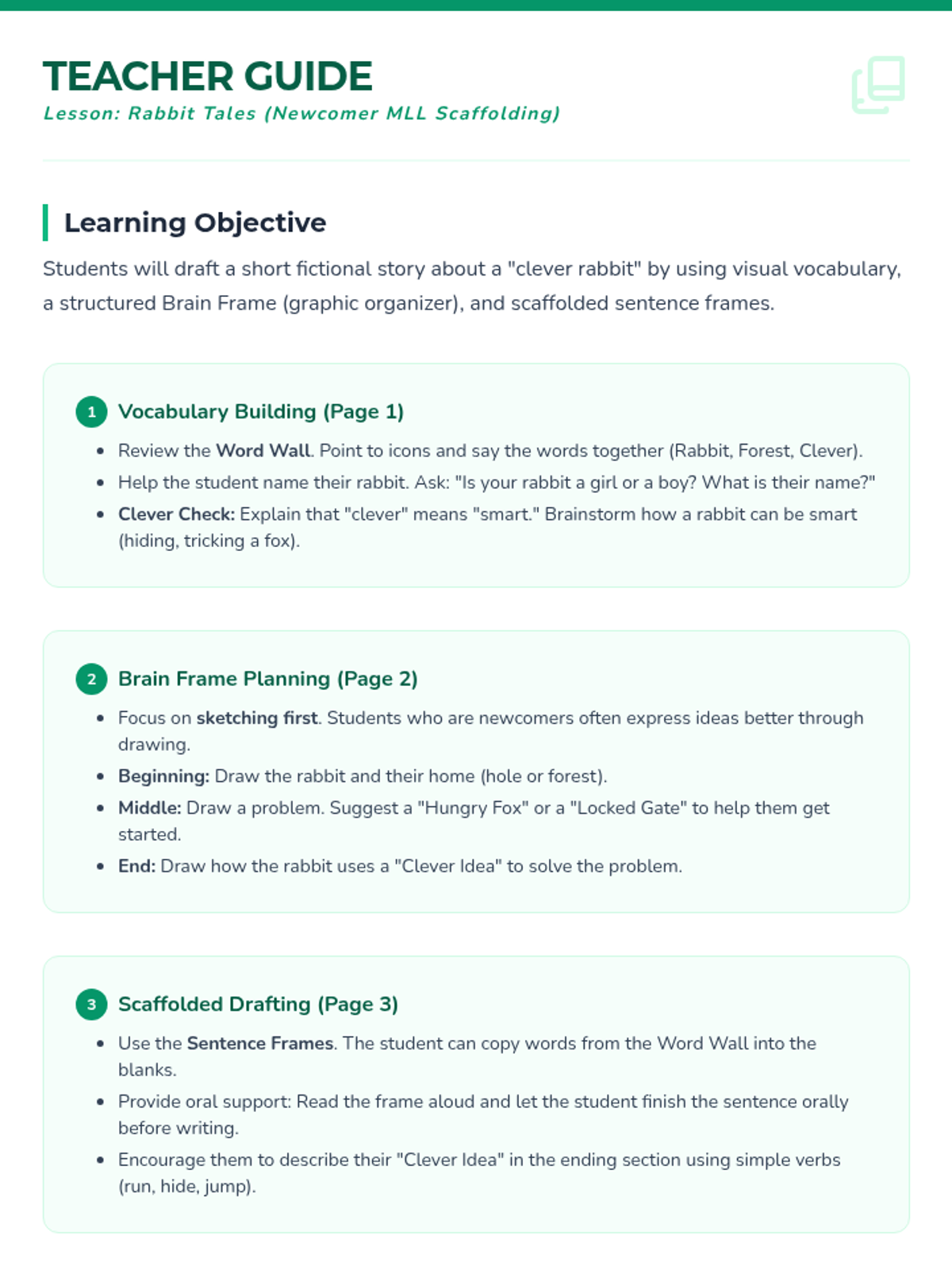
A comprehensive writing unit designed for newcomer multilingual learners to draft a fictional story about a clever rabbit. This lesson includes vocabulary building, structured planning with a brain frame, and scaffolded drafting.
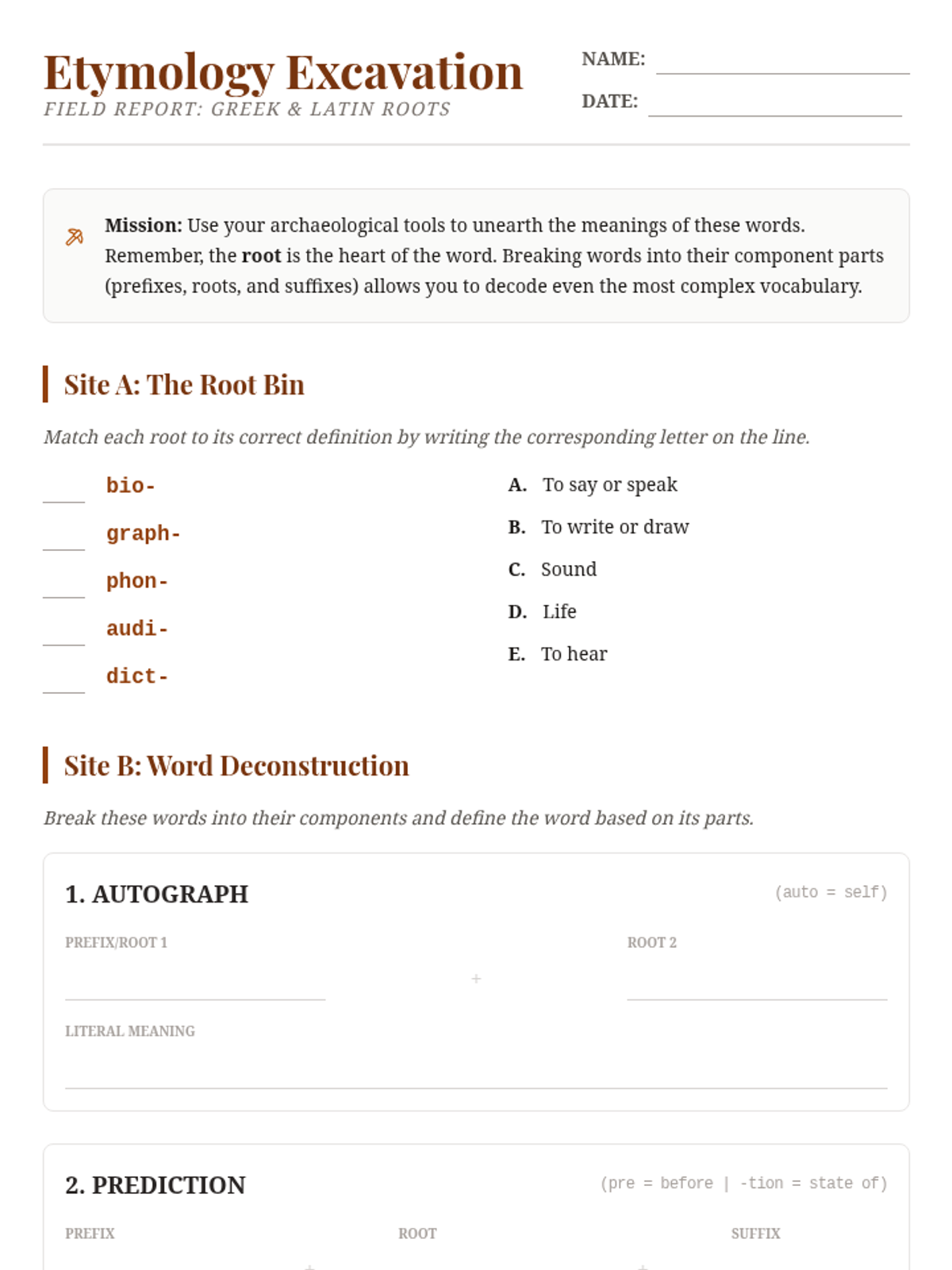
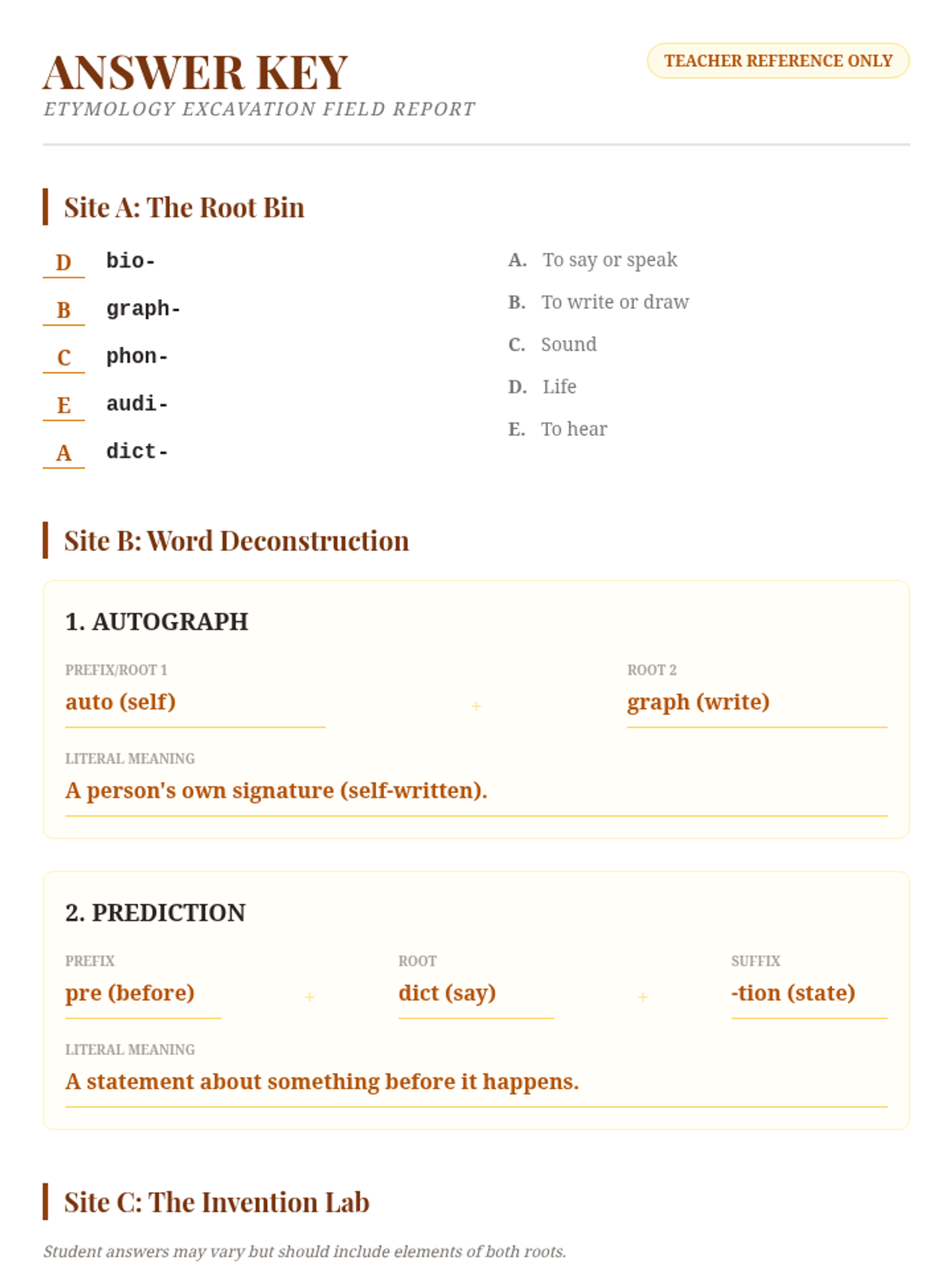
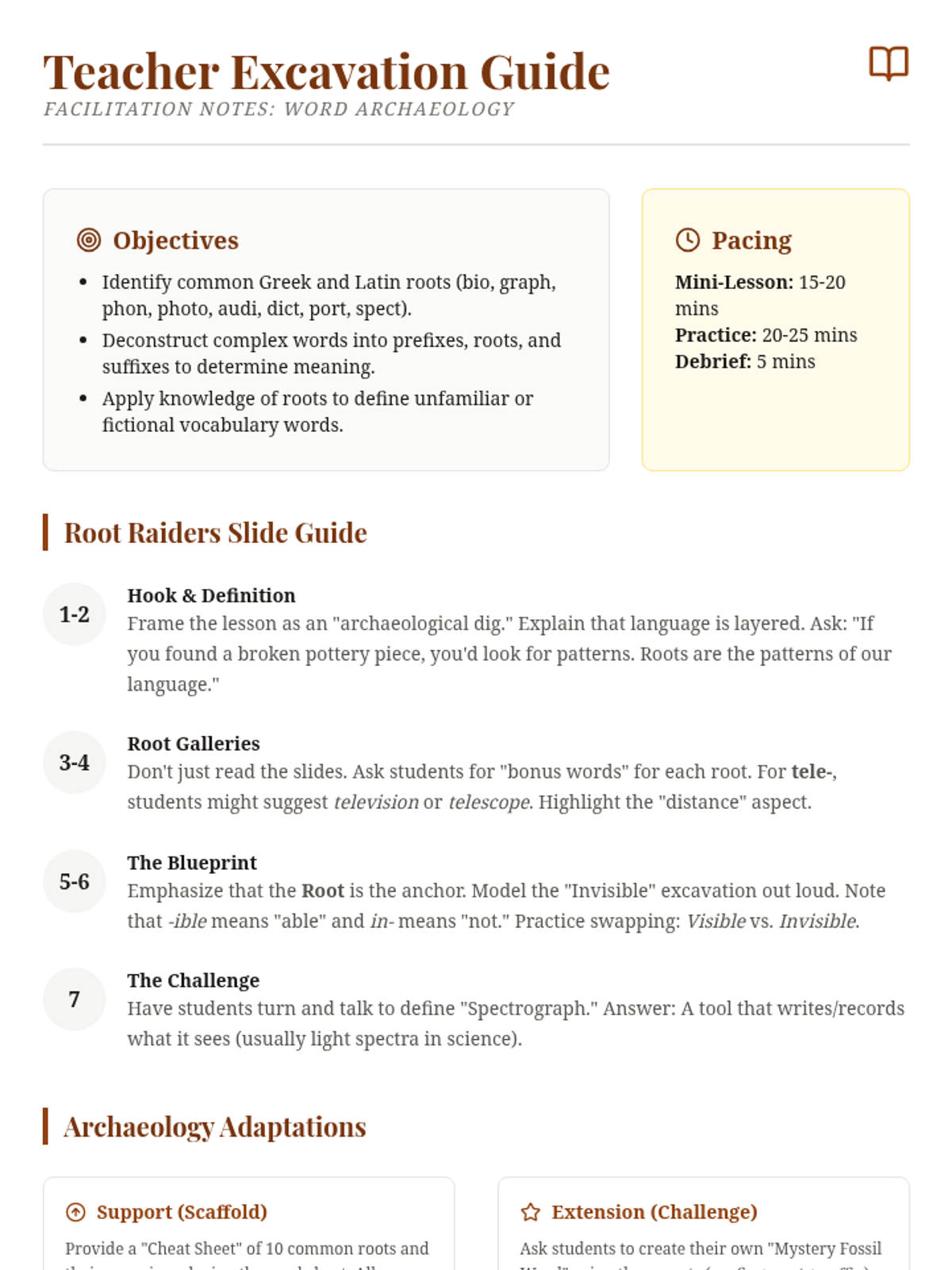
A deep dive into common Greek and Latin roots for 7th graders, using a word archaeology theme to explore how language is built and understood.
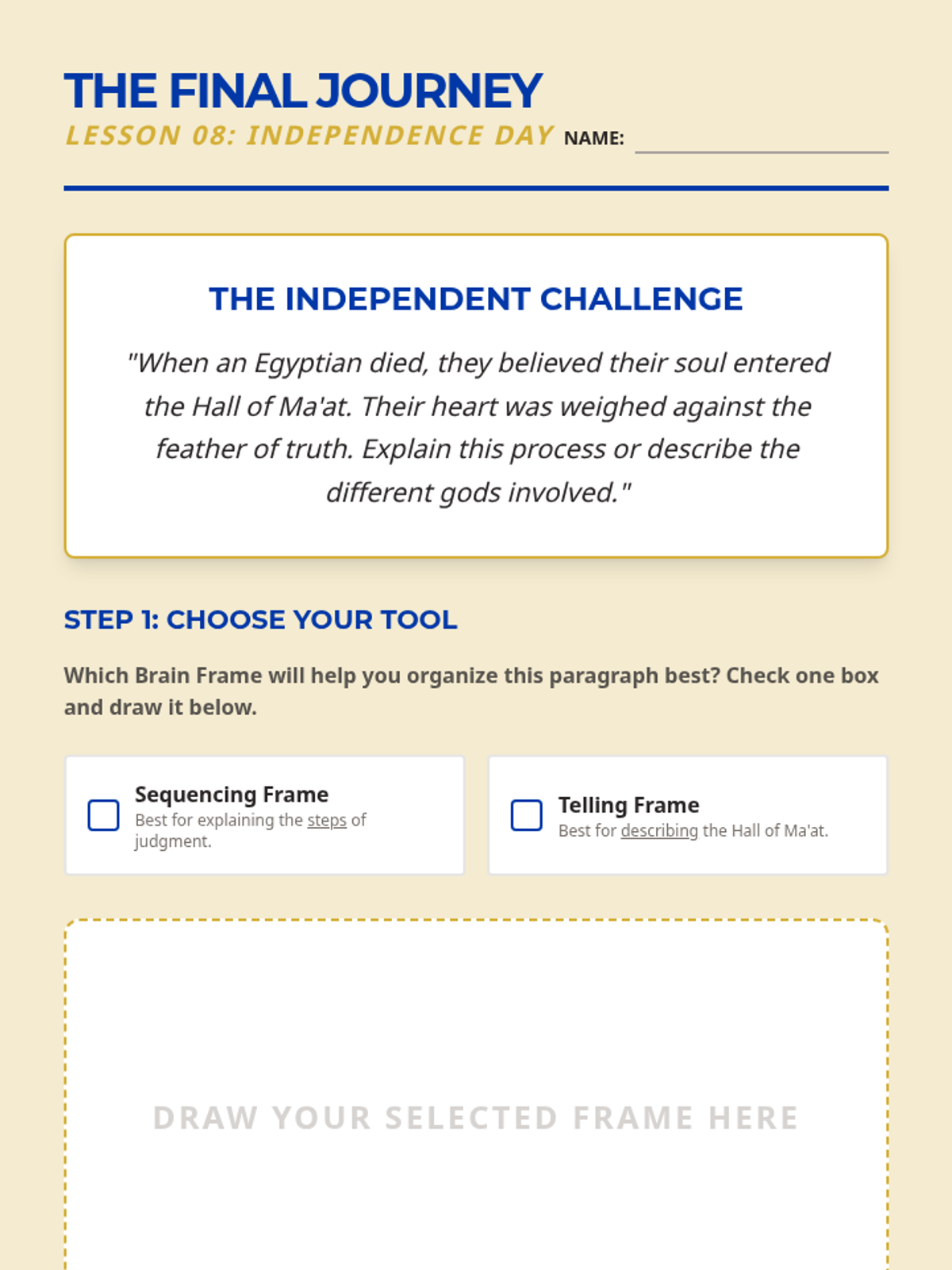
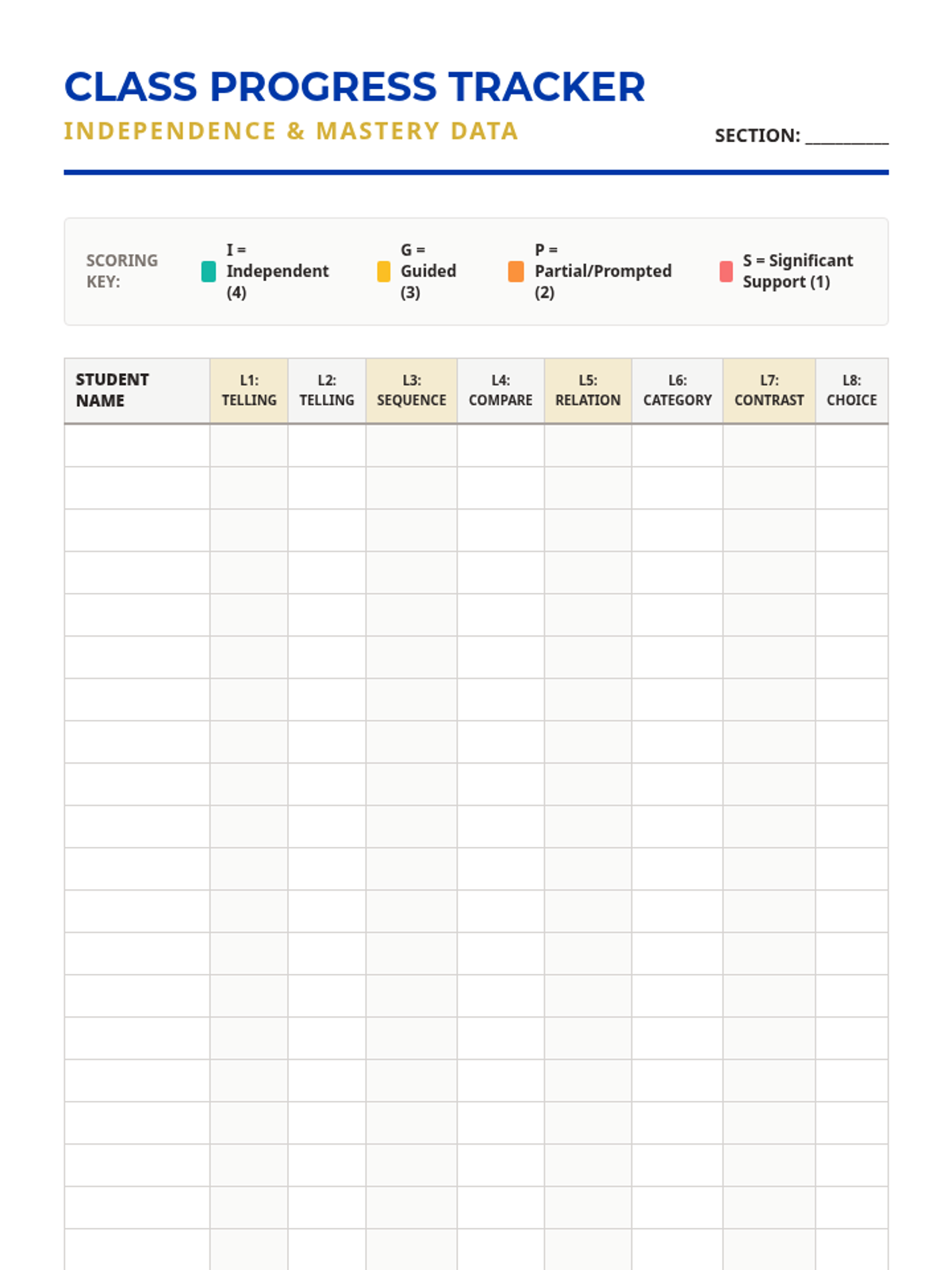
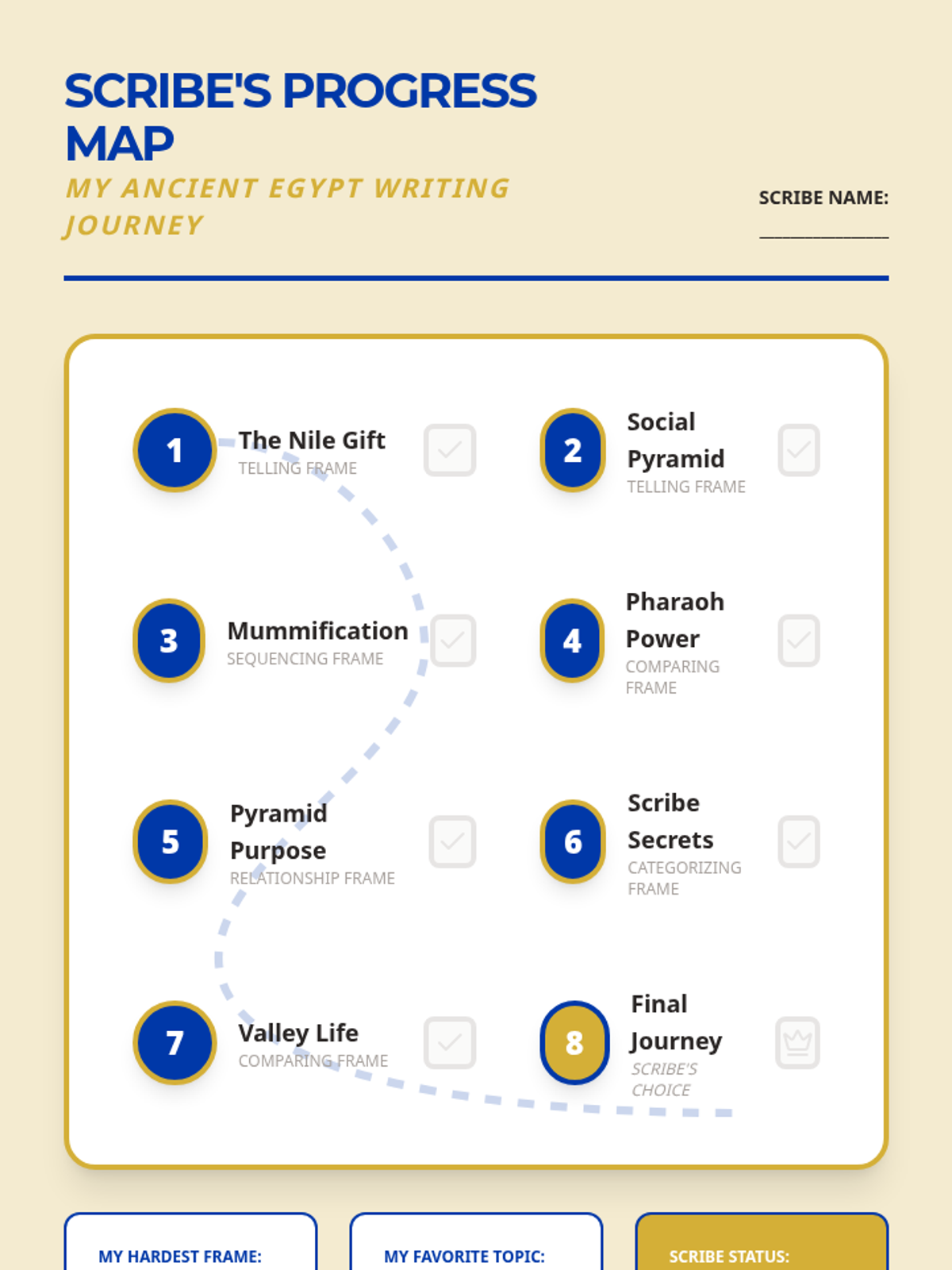
Final independent writing session where students apply their knowledge of Brain Frames to explain the Egyptian concept of the afterlife judgment in the Hall of Ma'at. Students choose the most appropriate frame (Sequencing or Telling) to organize their final paragraph.
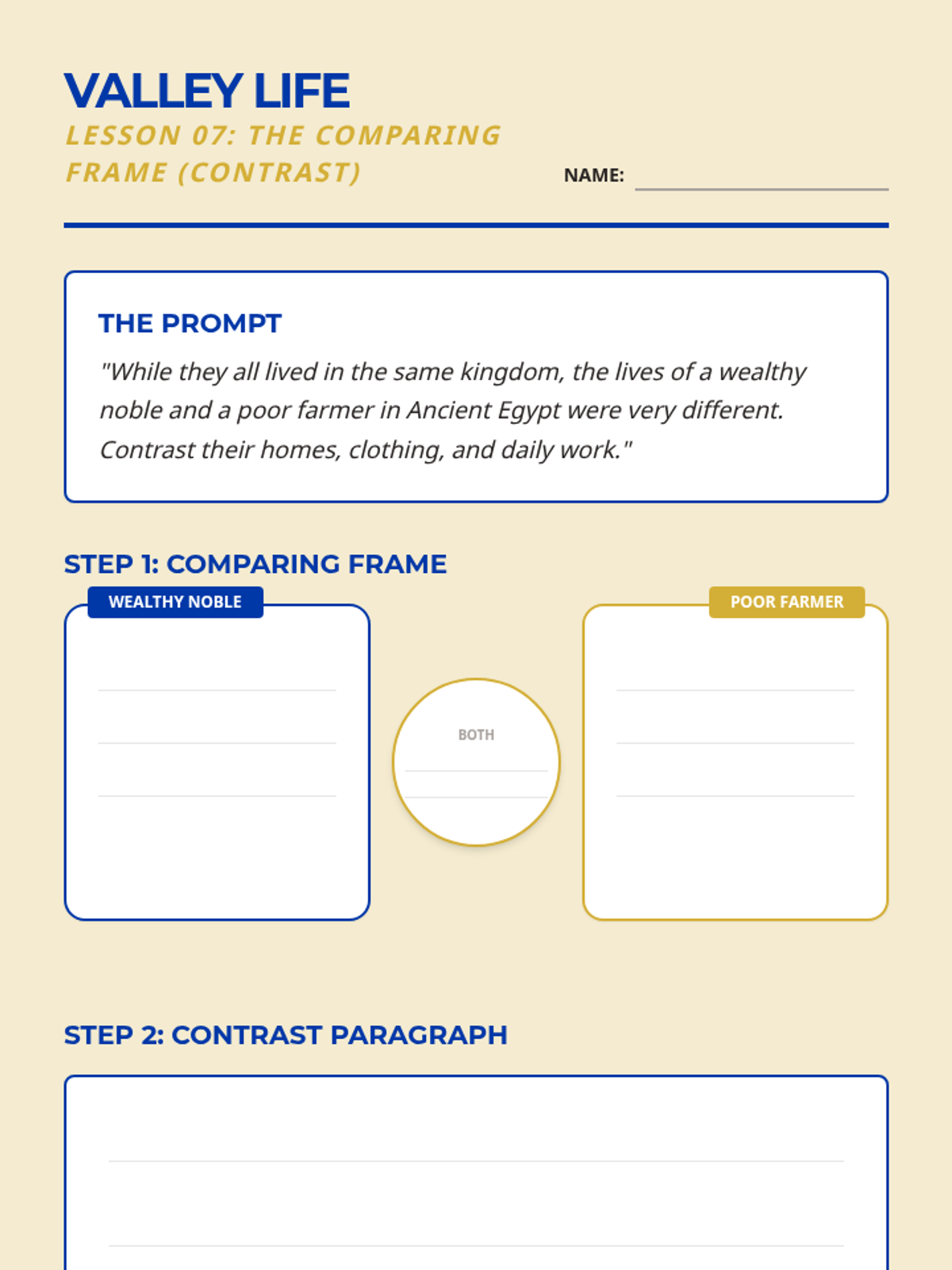
Comparison of the lives of wealthy Egyptian nobles and poor farmers using a Comparing Frame. Focuses on using contrasting transition words to write a comparative paragraph about daily life in the Nile Valley.
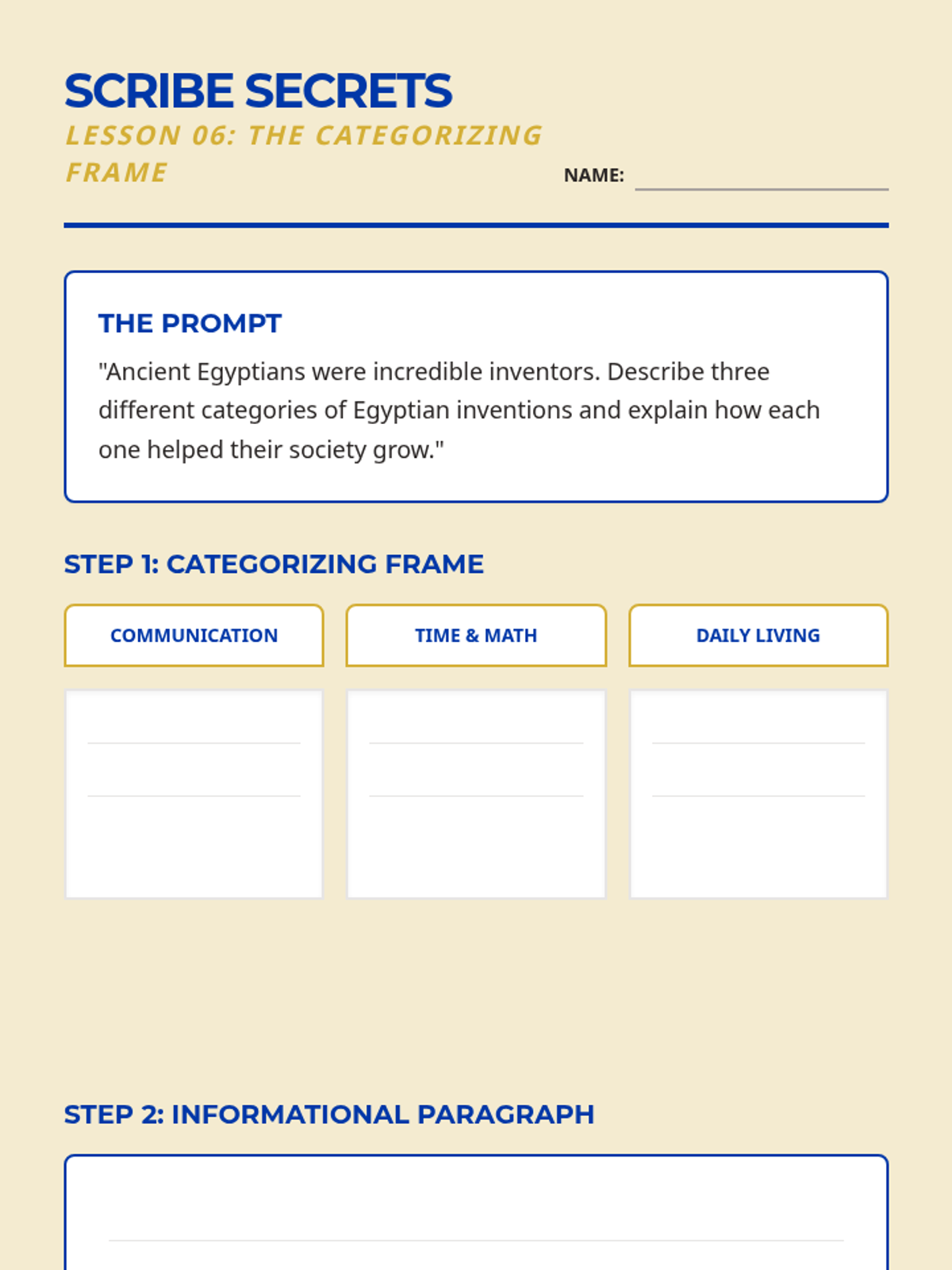
Introduction to the Categorizing Frame (a variation of the Telling Frame) to explore Egyptian inventions and social roles. Students focus on grouping related ideas (e.g., writing, math, medicine) to write an organized informational paragraph.
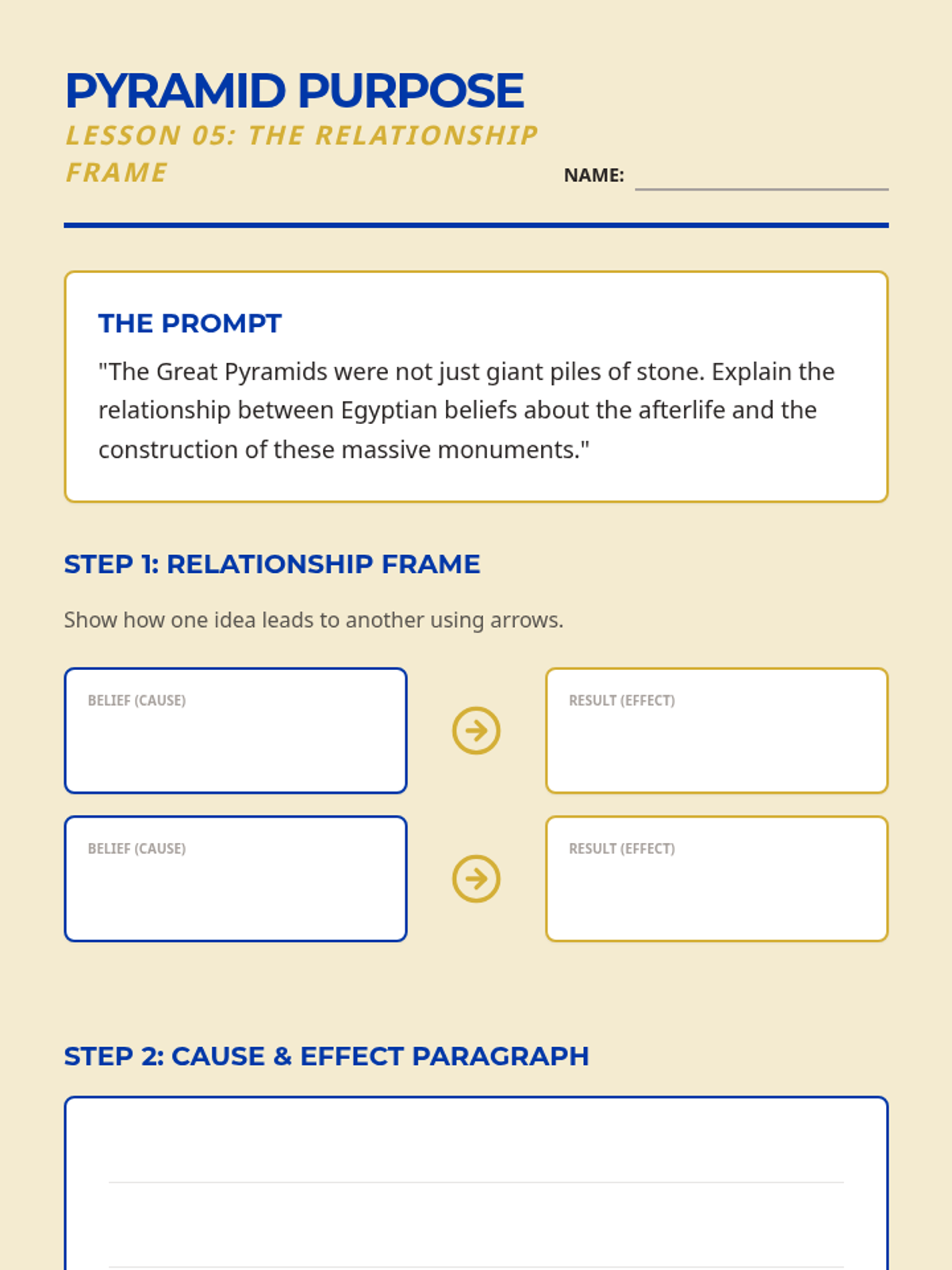
Investigation into the 'why' and 'how' of pyramid construction using a Relationship Frame (Cause and Effect). Students explore the religious beliefs that led to tomb building and the engineering outcomes of these massive projects.
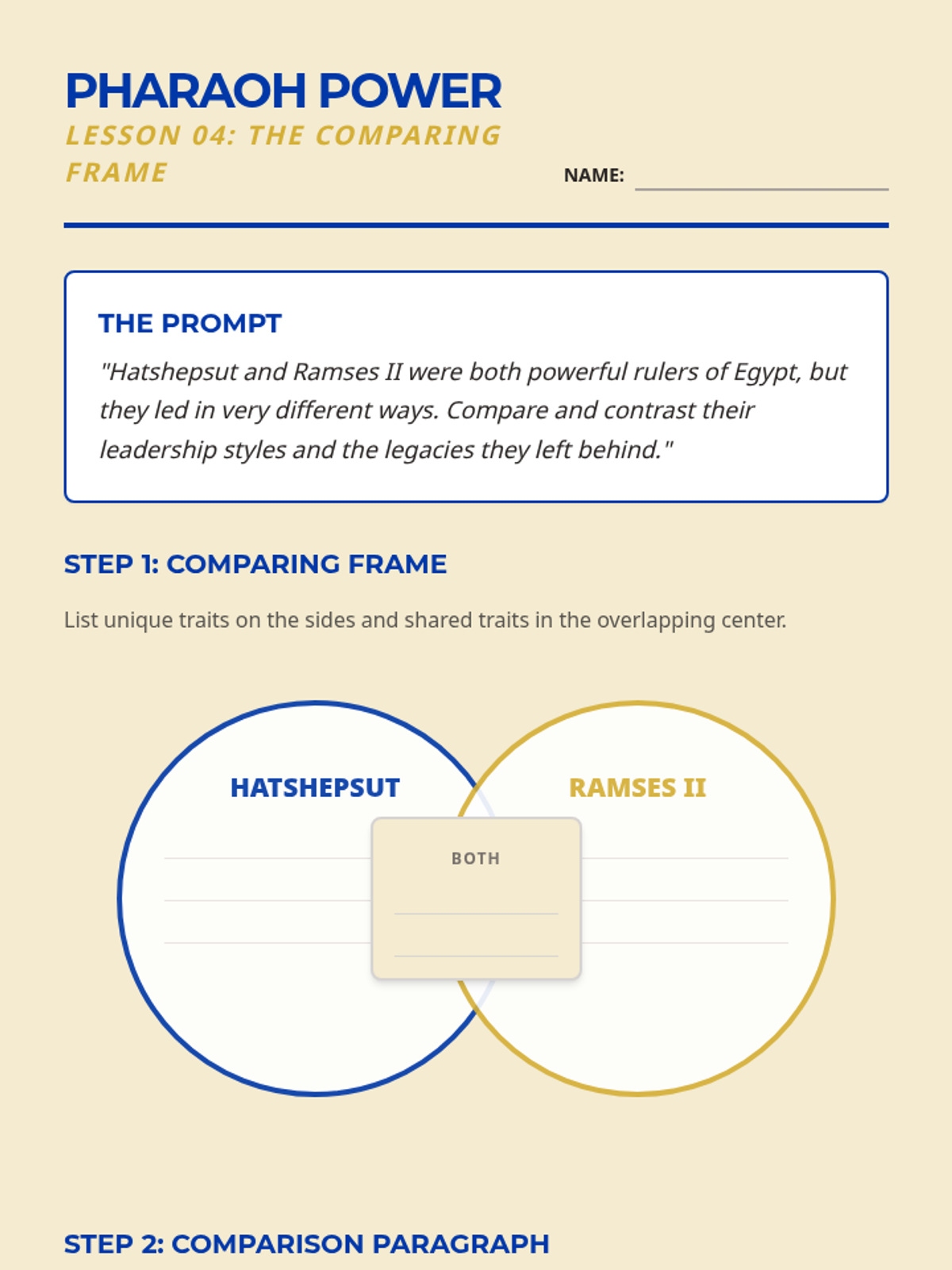
Comparison of two significant Egyptian pharaohs, Hatshepsut and Ramses II, using a Comparing Frame. Students focus on identifying similarities and differences in their leadership styles and achievements to write a comparative paragraph.
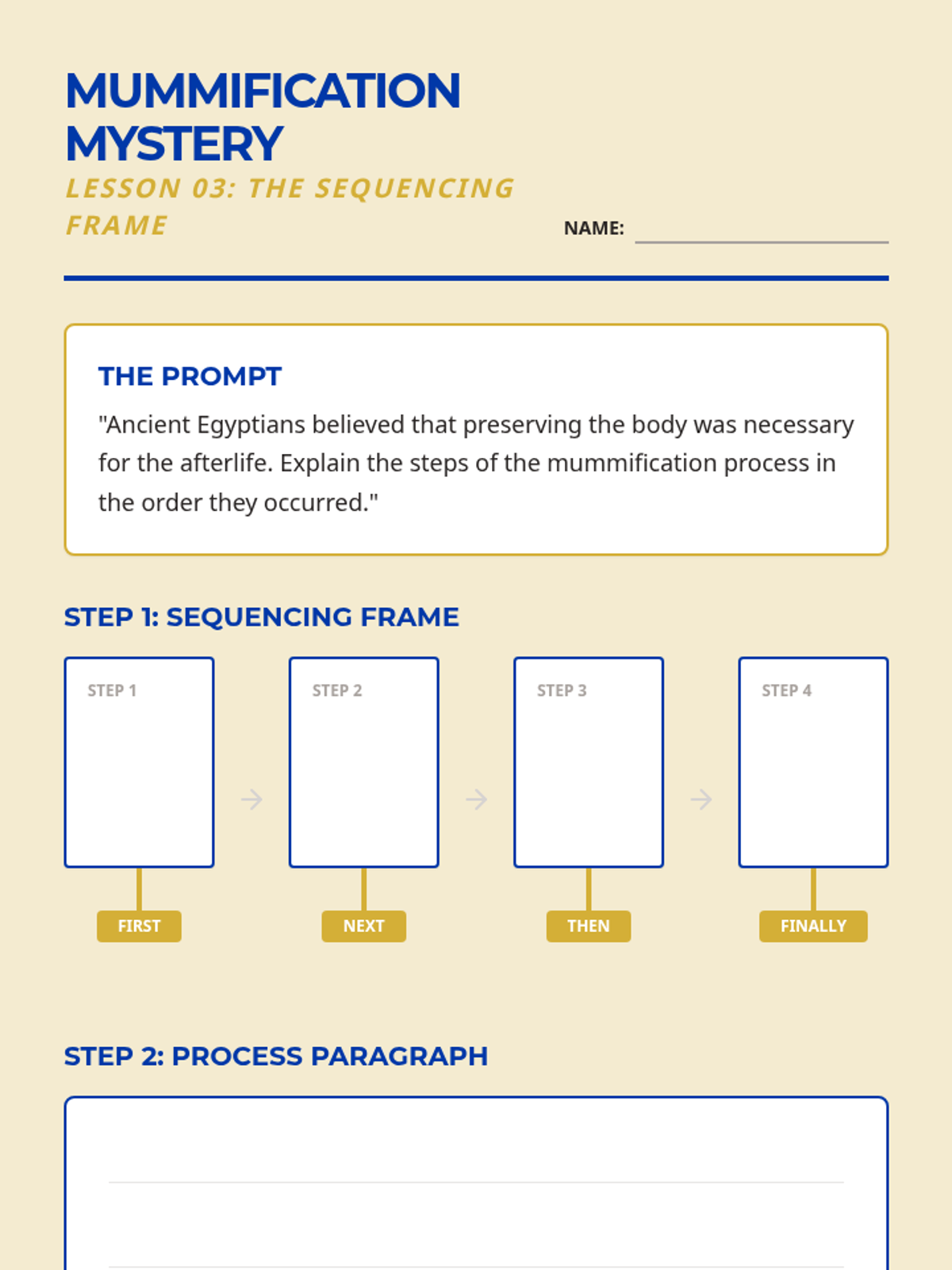
Introduction to the Sequencing Frame (Chronological/Step-by-step) through the study of the ancient Egyptian mummification process. Students focus on using sequential transition words to connect ideas in a paragraph.
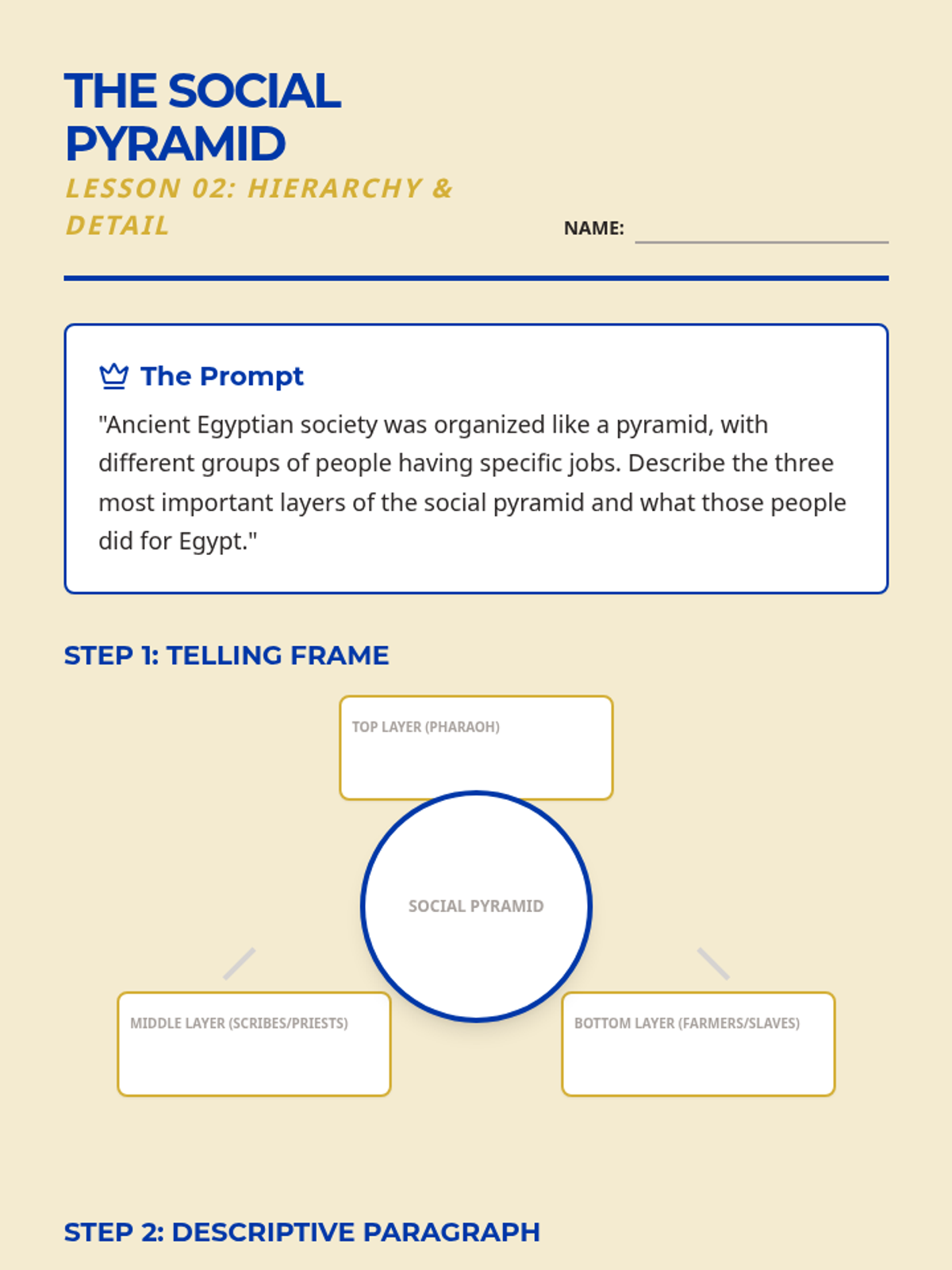
Exploration of the Ancient Egyptian social structure using a Telling Frame to categorize different roles. Focuses on writing a paragraph that describes the hierarchy and the specific responsibilities of each group.
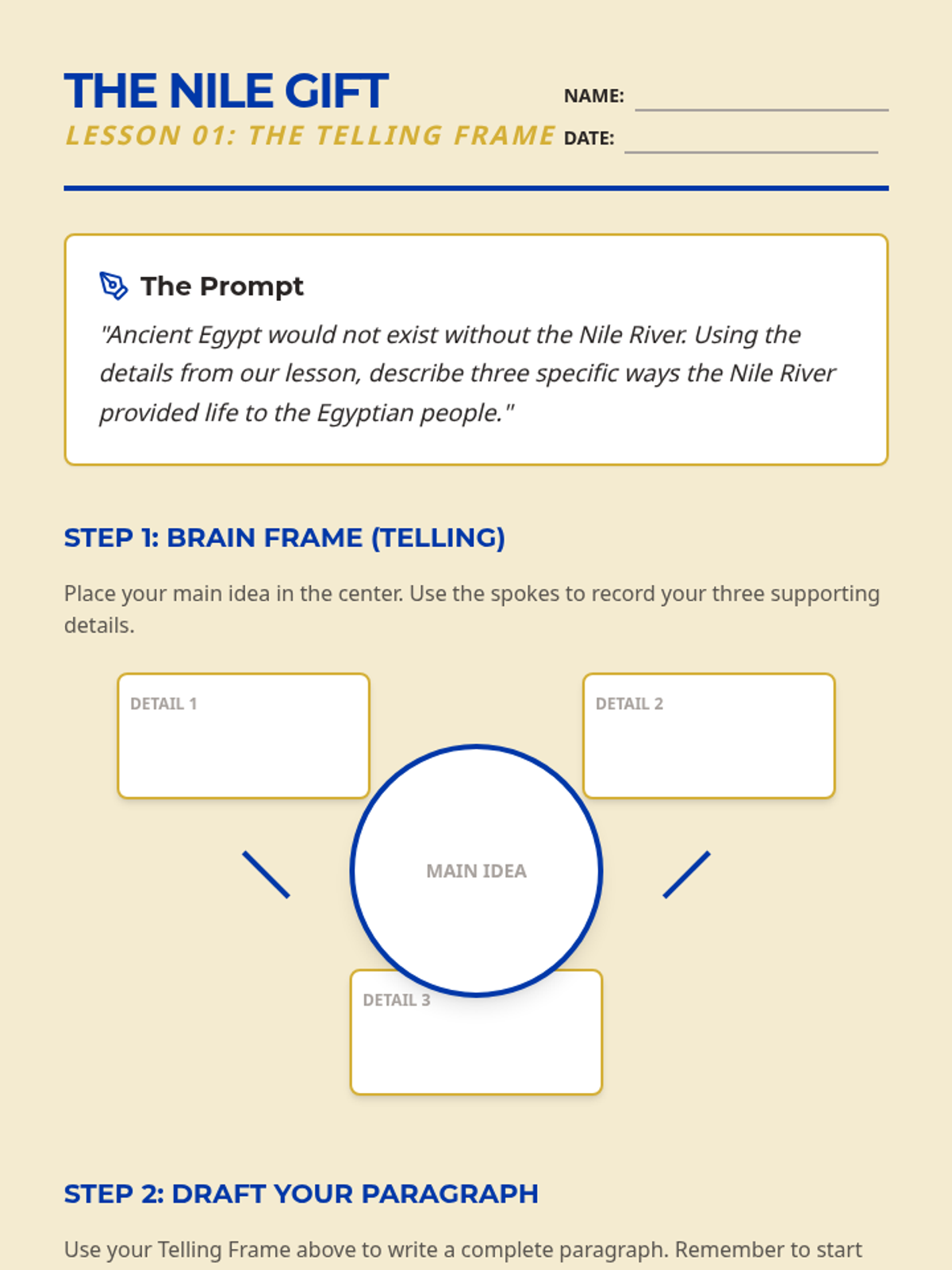
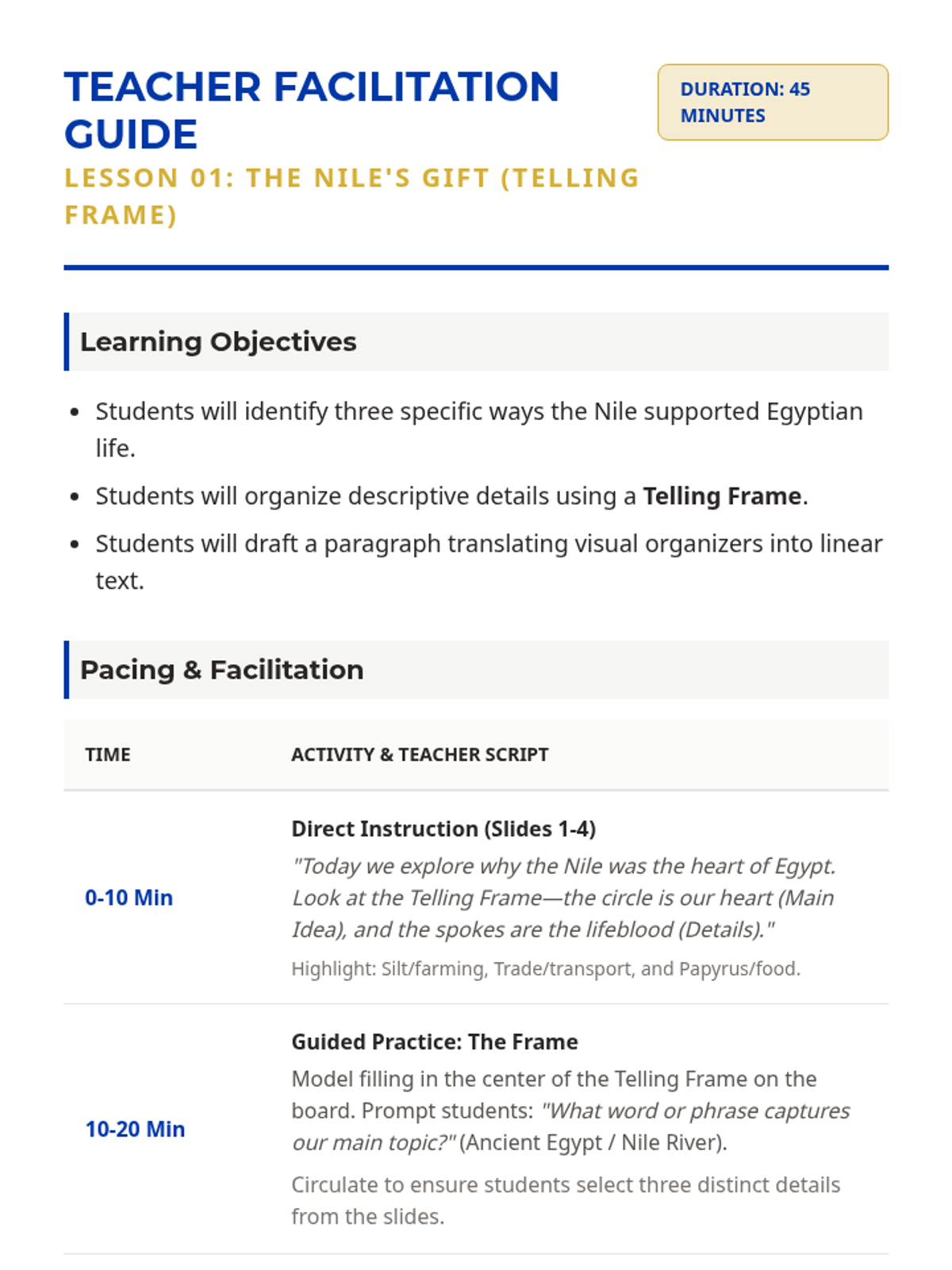
Introduction to the Telling Frame (Main Idea & Details) through the study of the Nile River's role in Ancient Egypt. Students learn to translate visual clusters into cohesive descriptive paragraphs.