A 40-minute lesson designed to build mathematical confidence by reframing 'struggle' as 'growth.' Students engage in progressive logic challenges while practicing self-regulation and encouragement strategies.
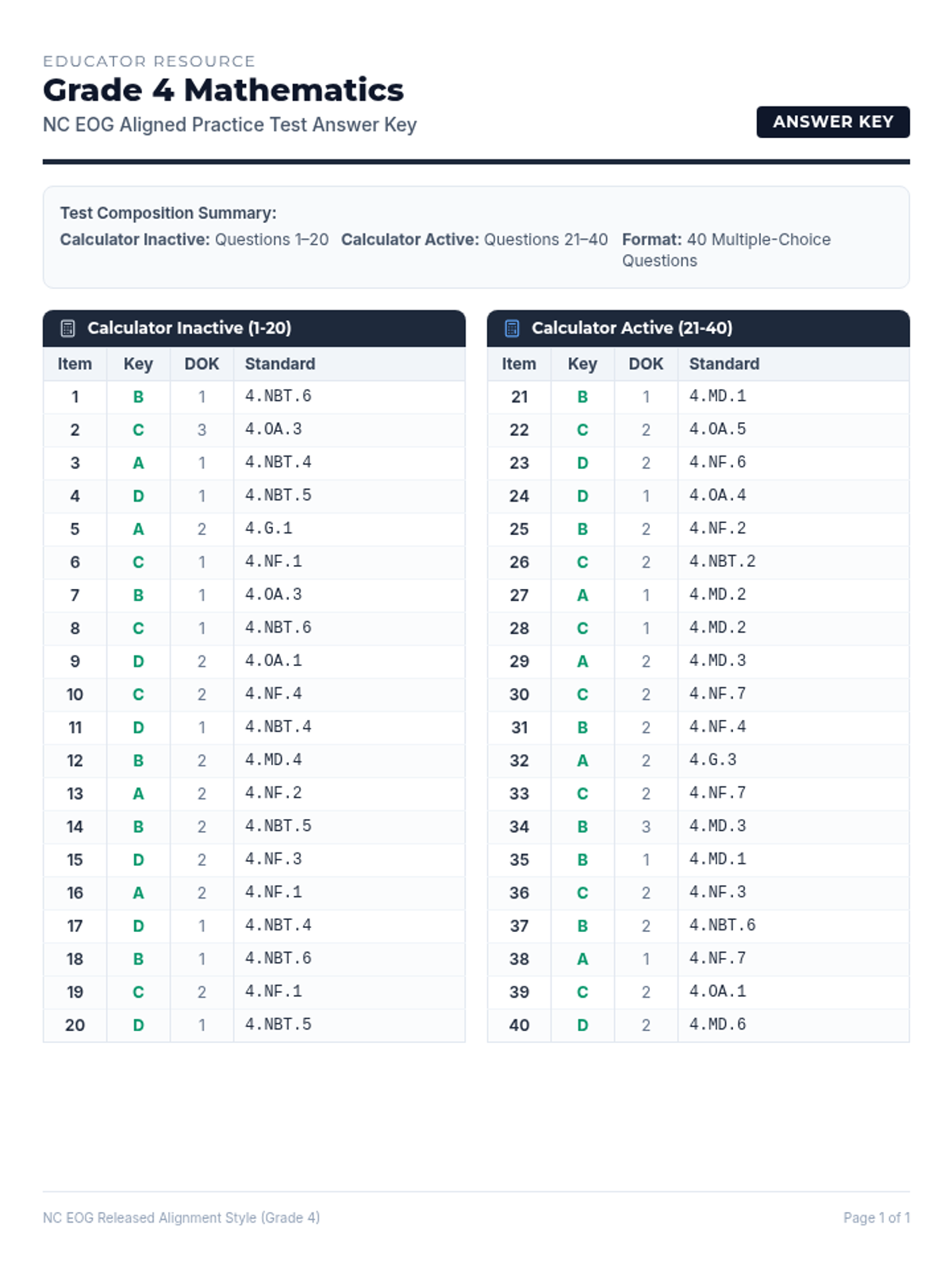
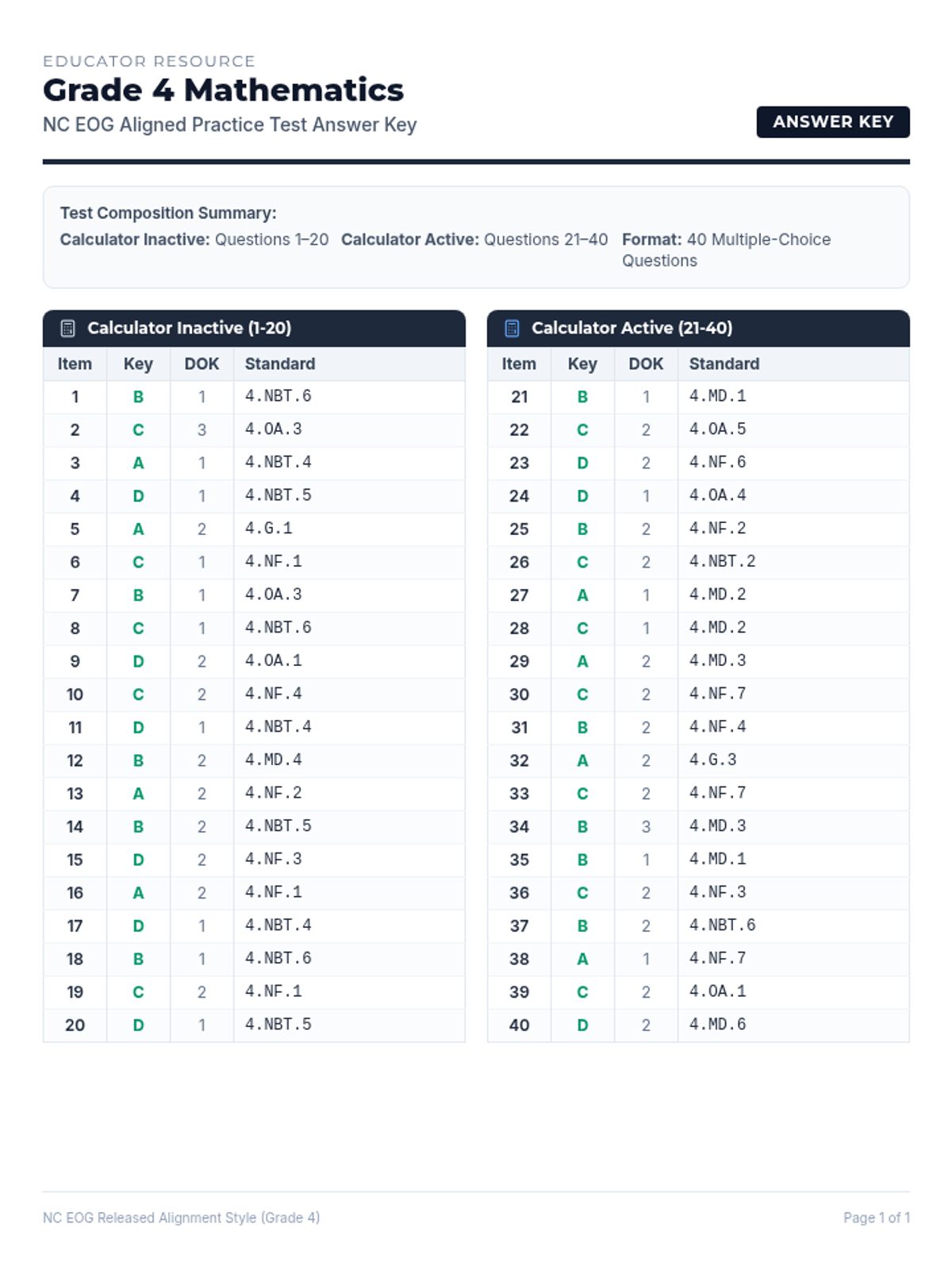
A comprehensive Grade 4 mathematics assessment modeled after the NC End-of-Grade released form, divided into Calculator Inactive and Calculator Active parts.
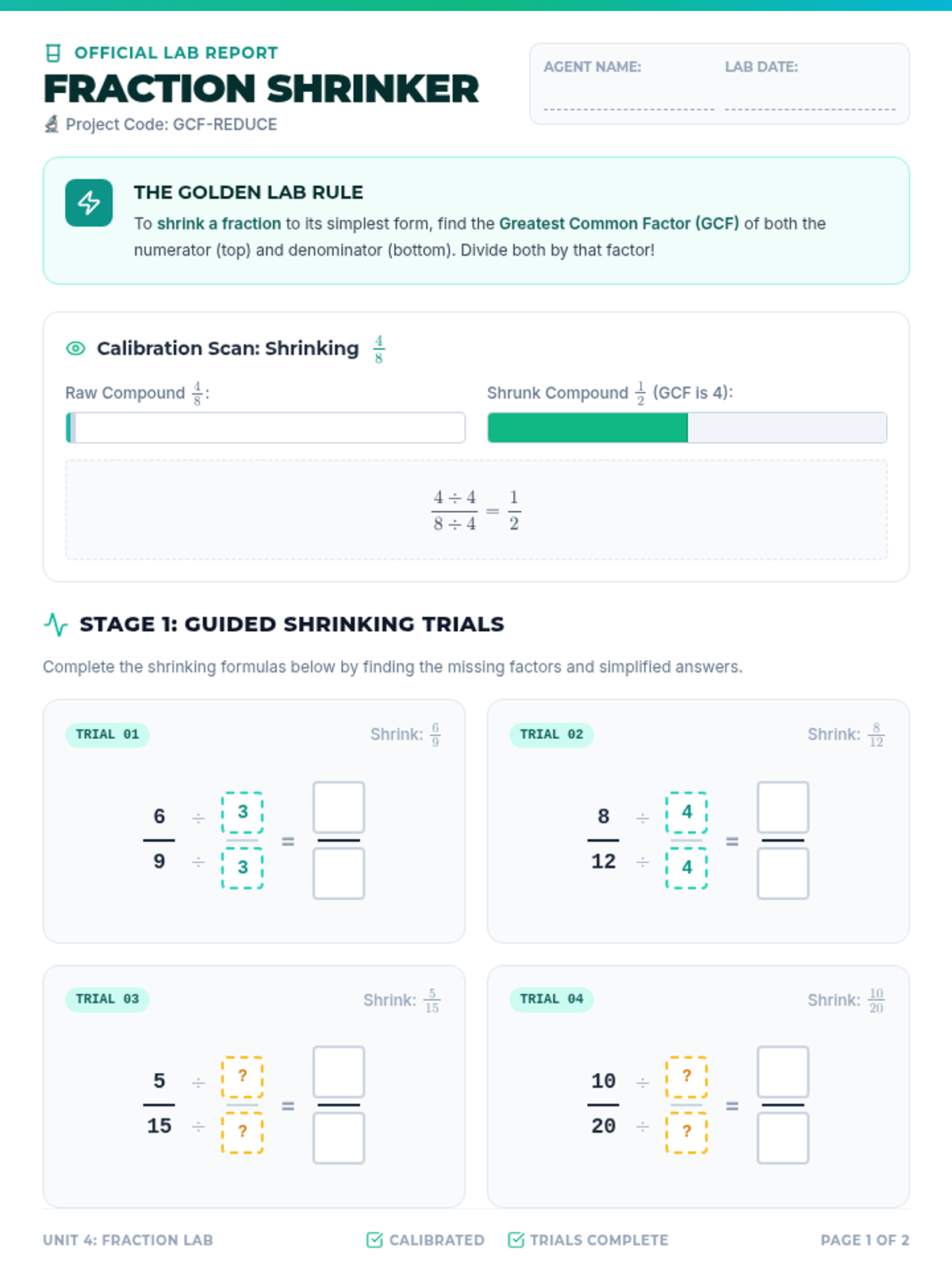
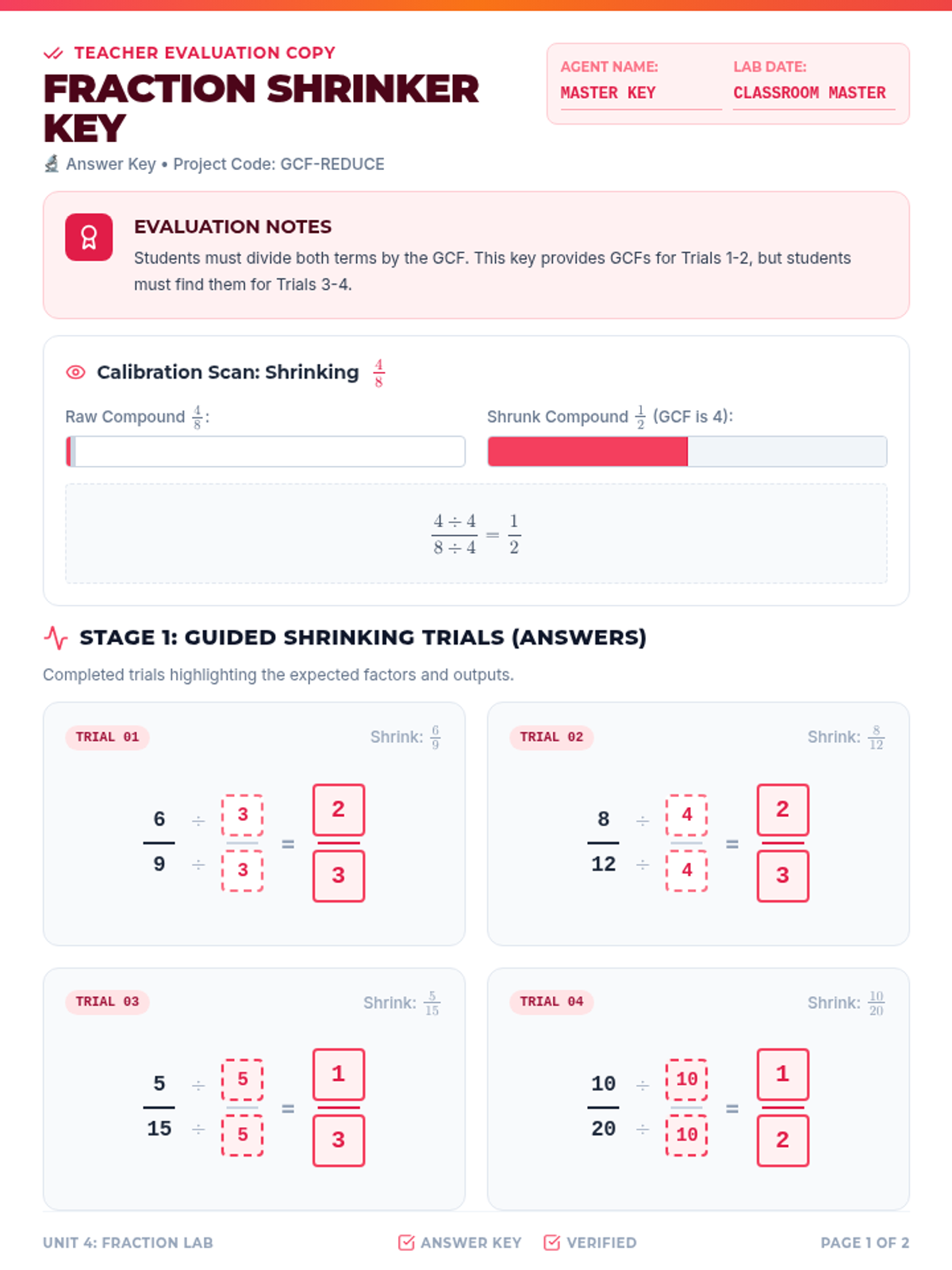
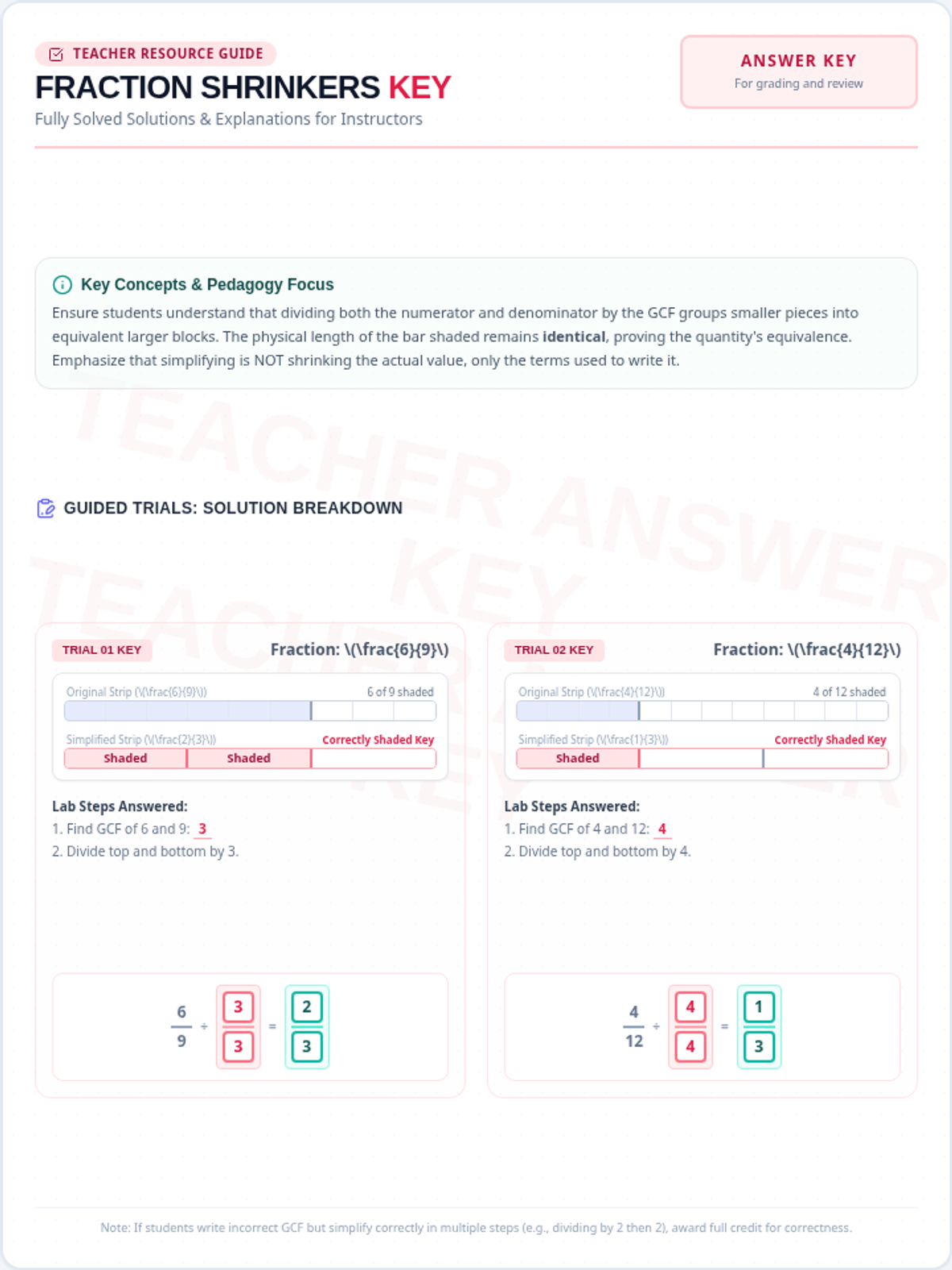
A focused lesson on simplifying fractions using visual models, greatest common factors, and guided practice. Students learn to 'shrink' fractions to their simplest form using a lab-themed framework.
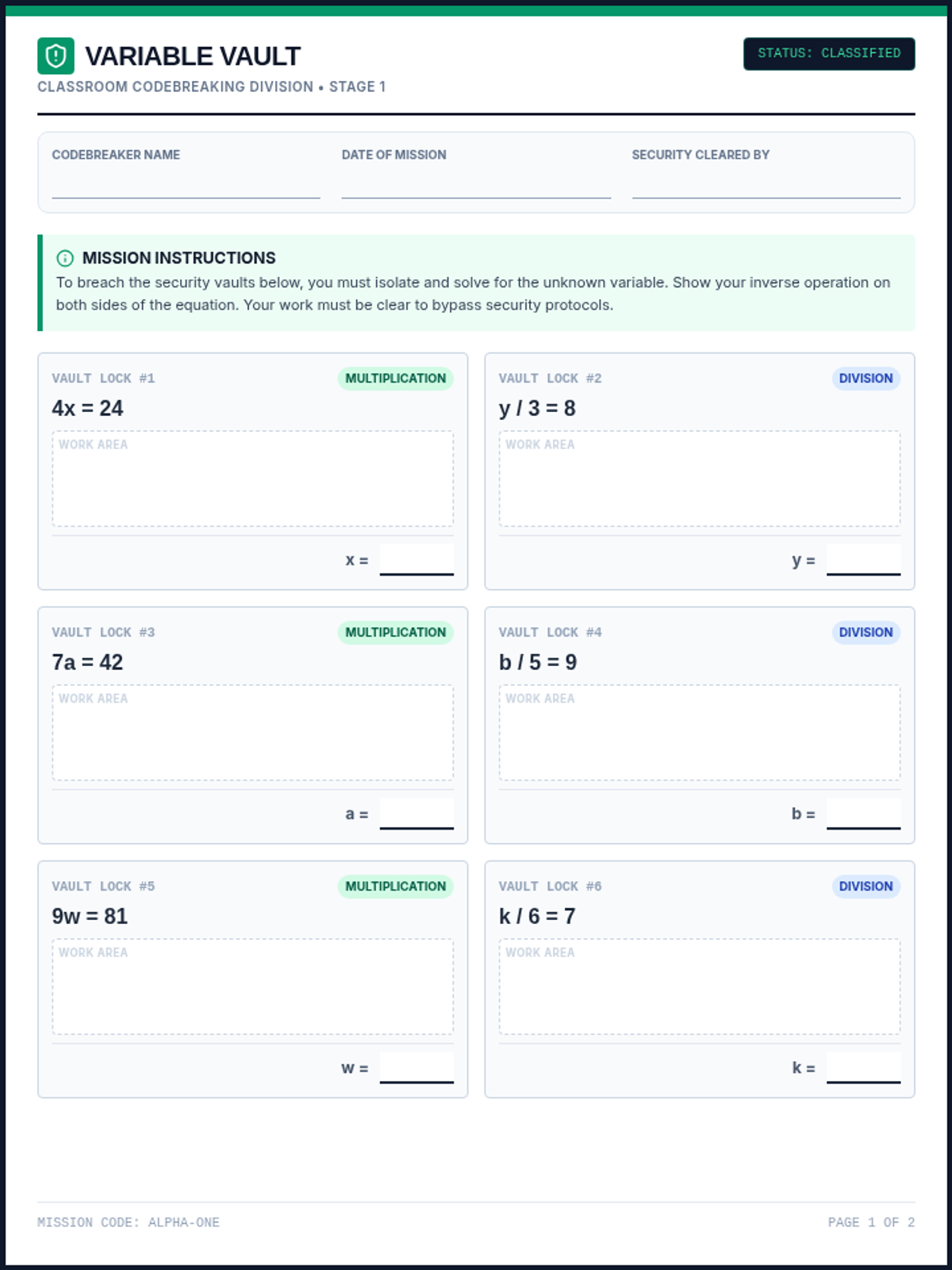
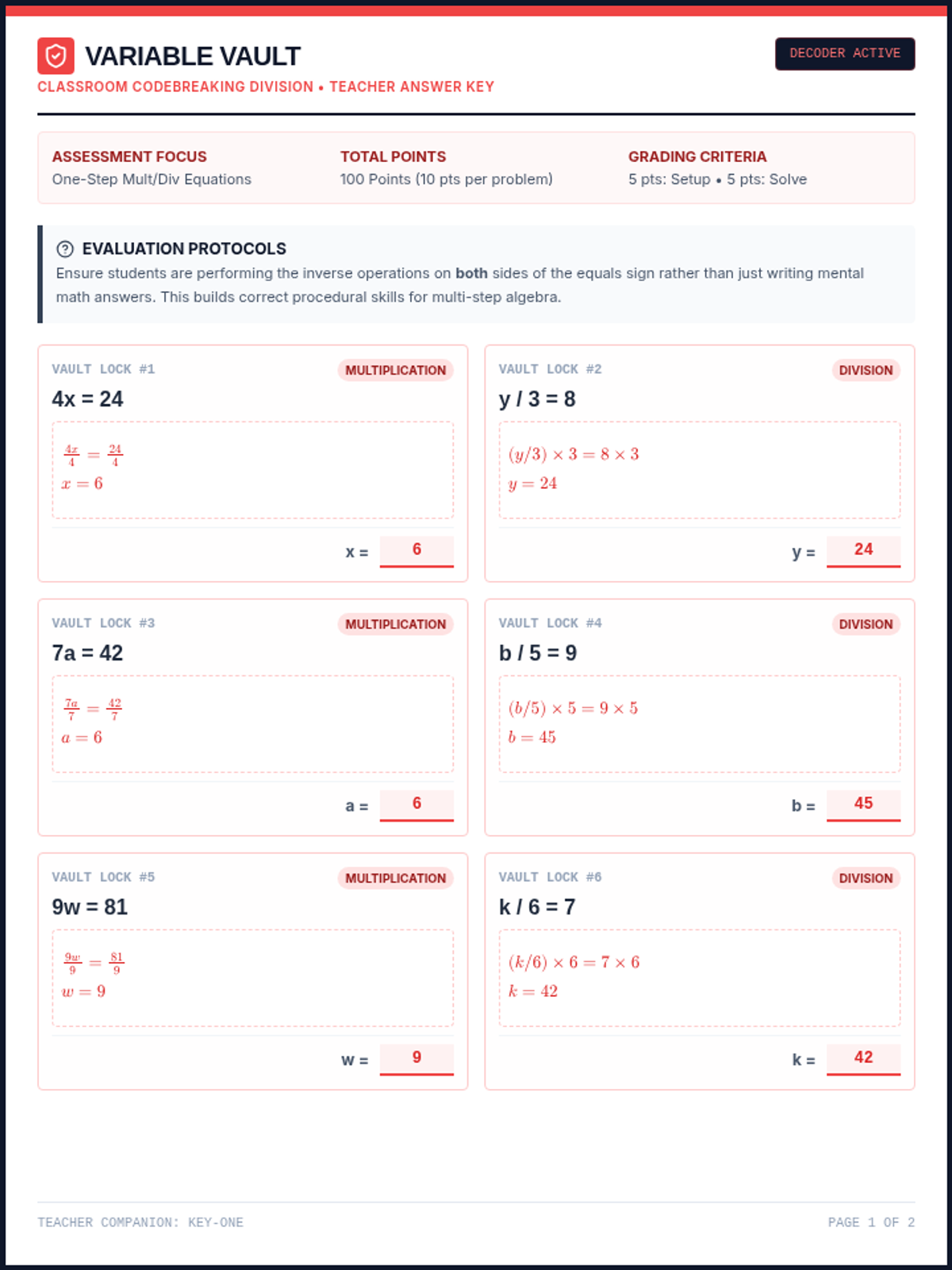
An assessment package for solving one-step equations involving whole number multiplication and division. Includes a student assessment worksheet and a teacher answer key with detailed step-by-step solutions.
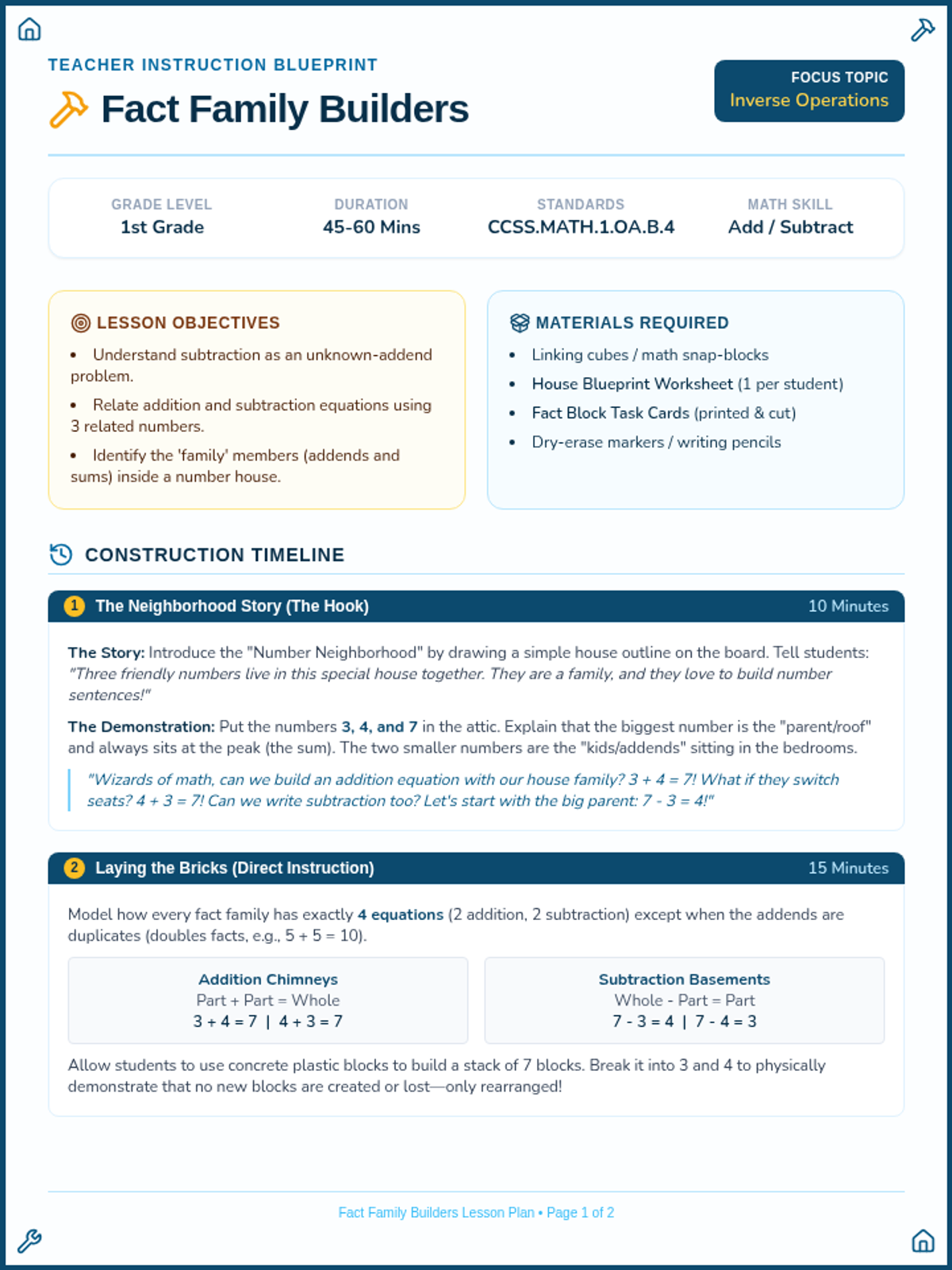
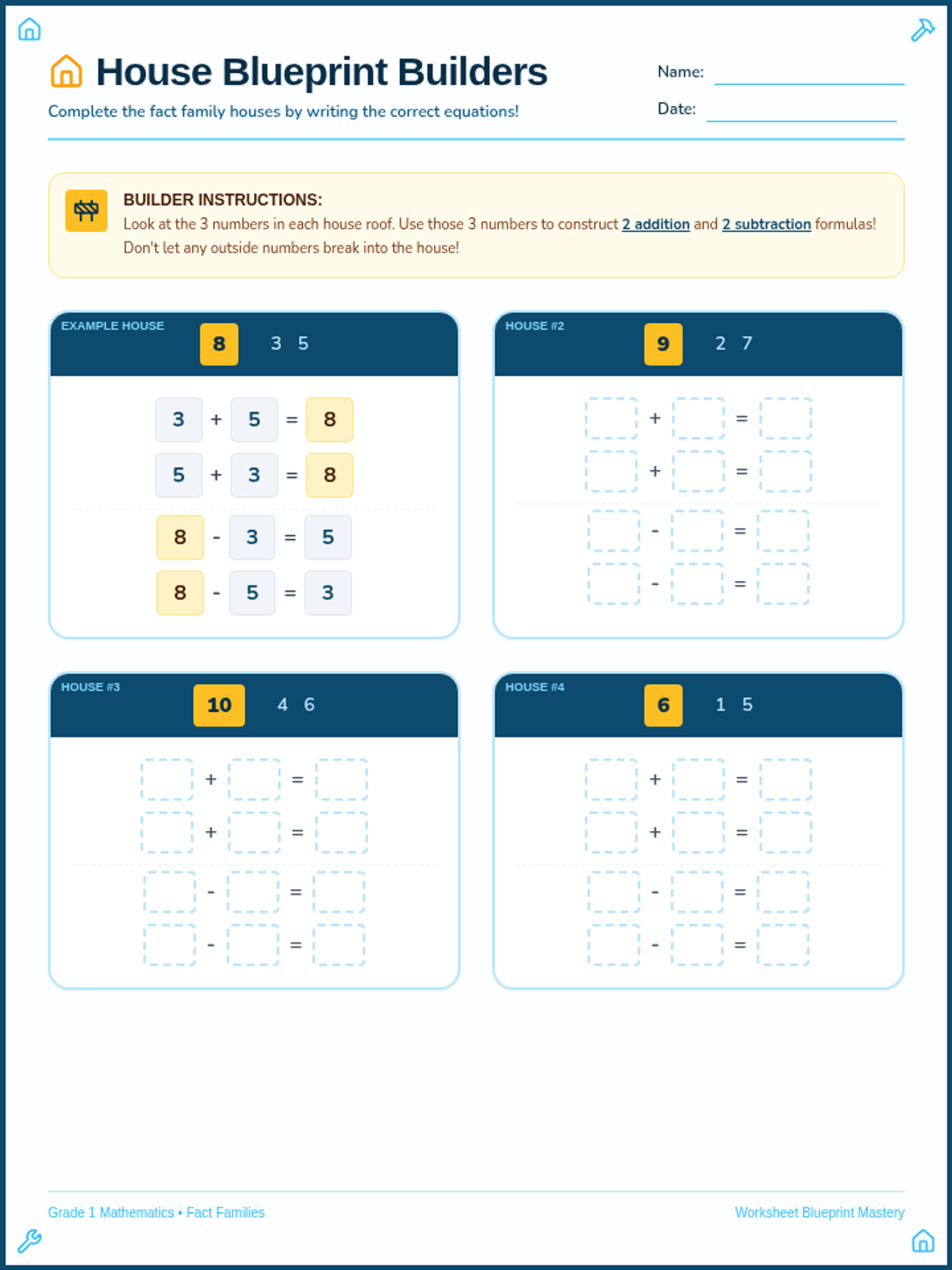
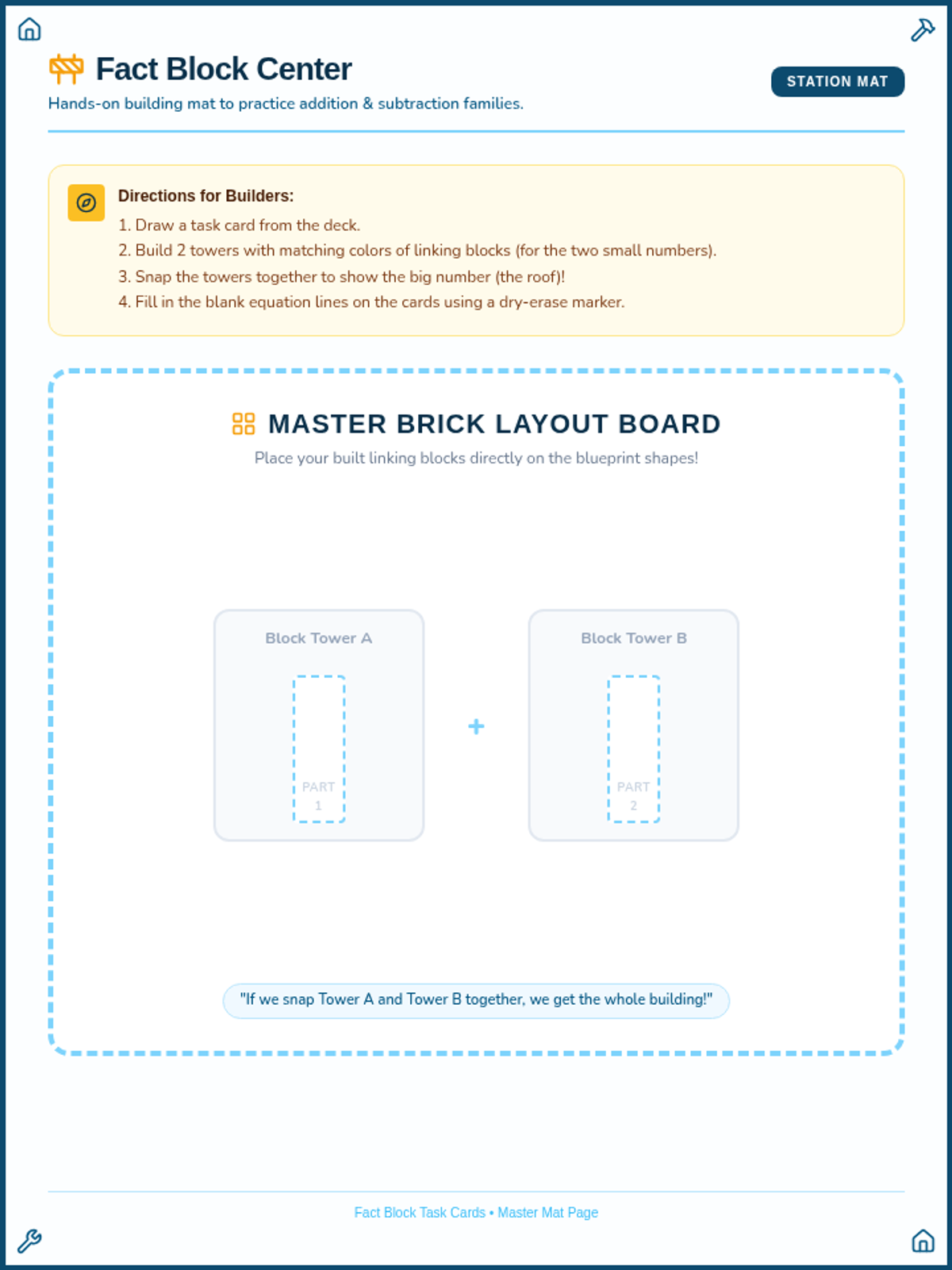
An engaging first-grade math lesson that teaches addition and subtraction relationships using cute, interactive fact family houses.
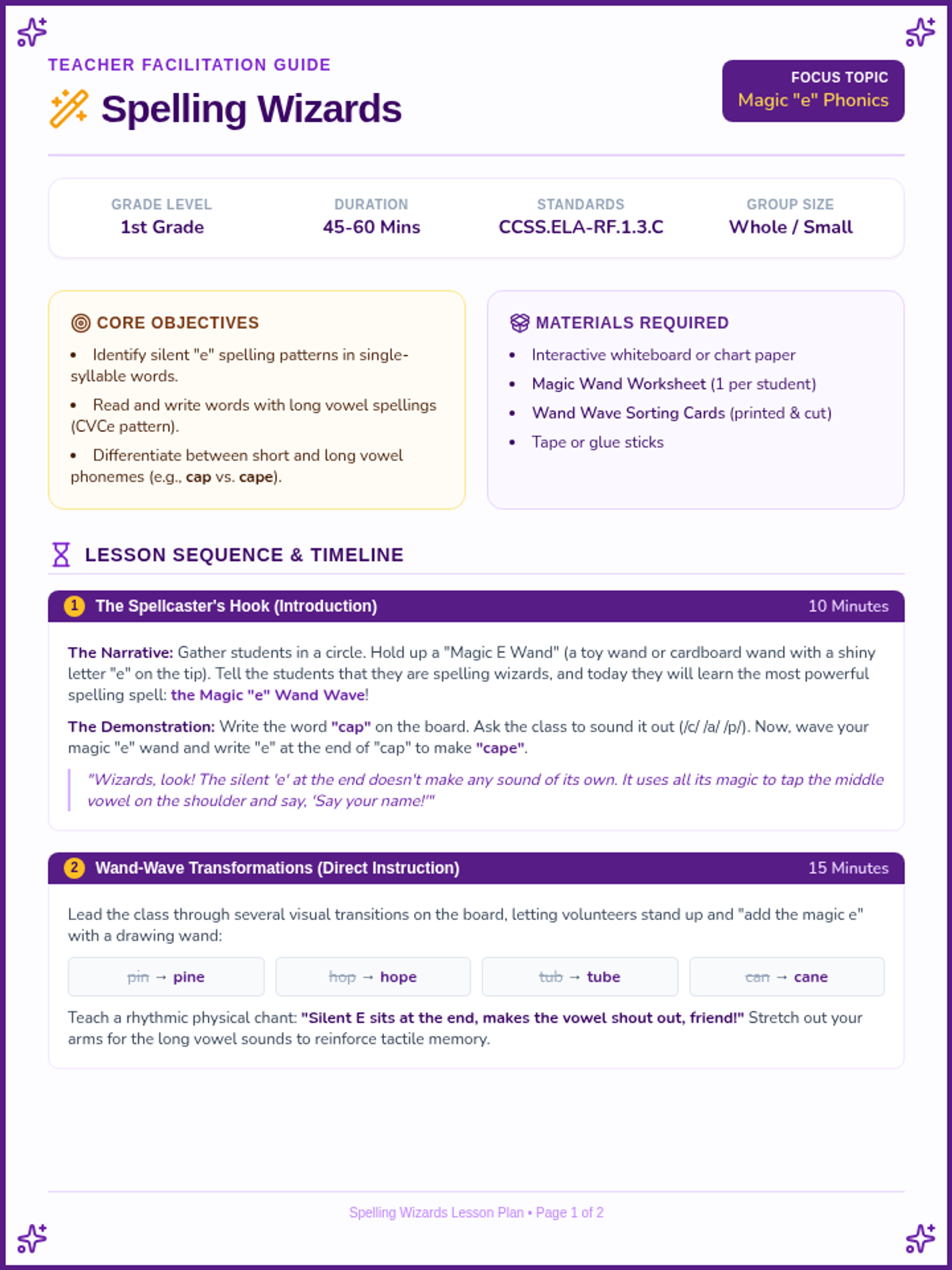
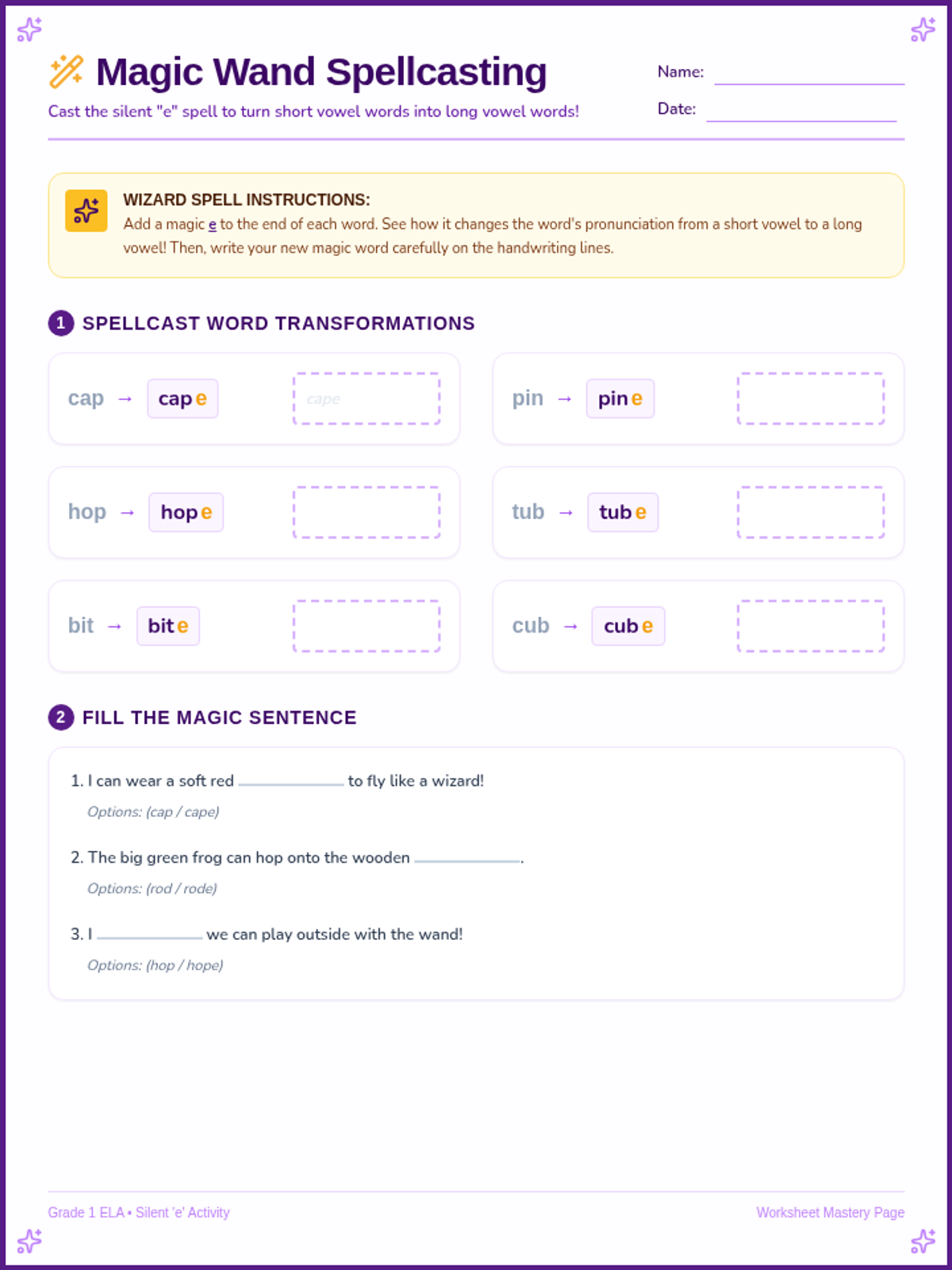
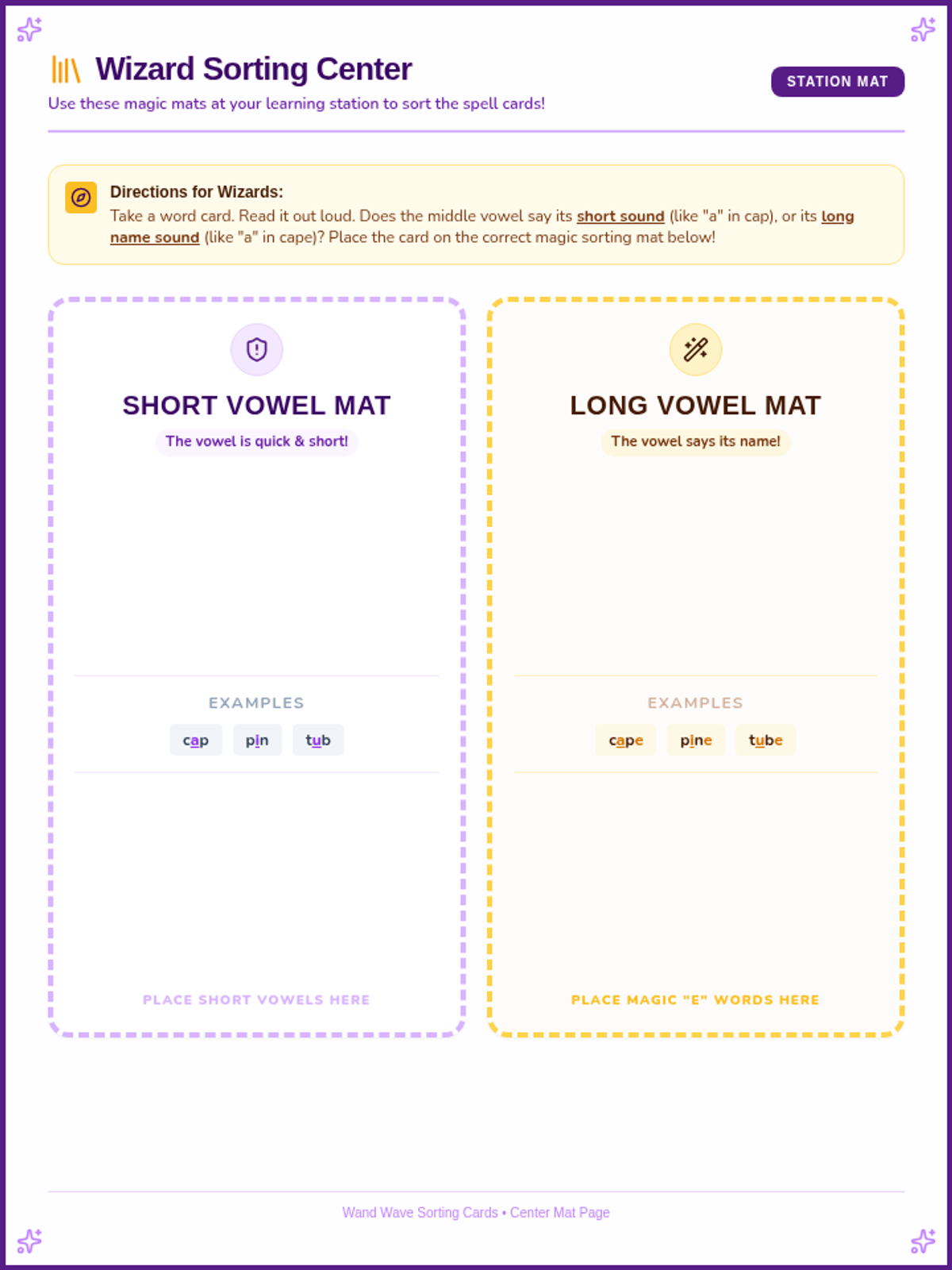
A whimsical first-grade ELA lesson teaching the power of silent 'e' through hands-on spelling wizard activities and guided practice.
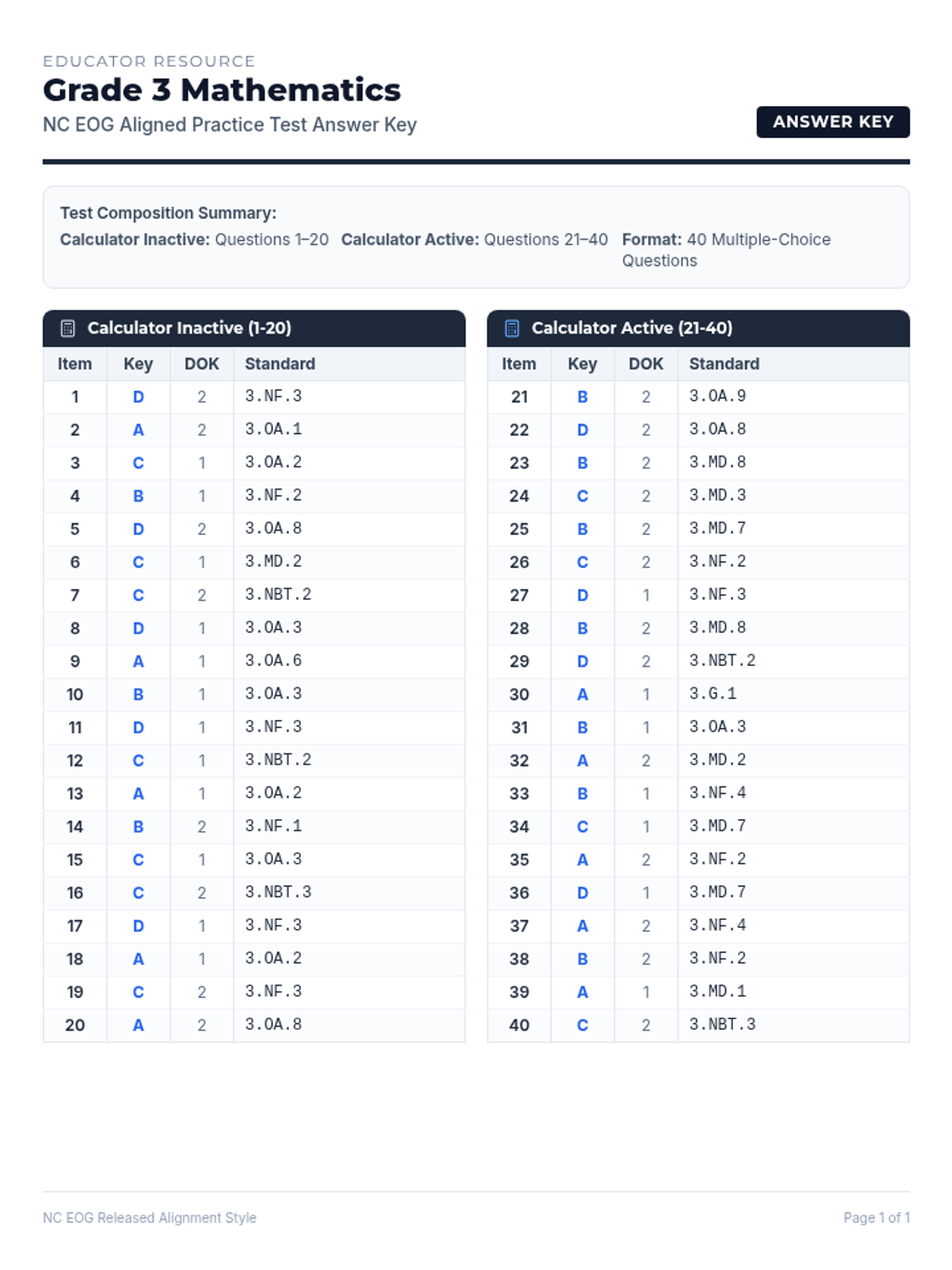
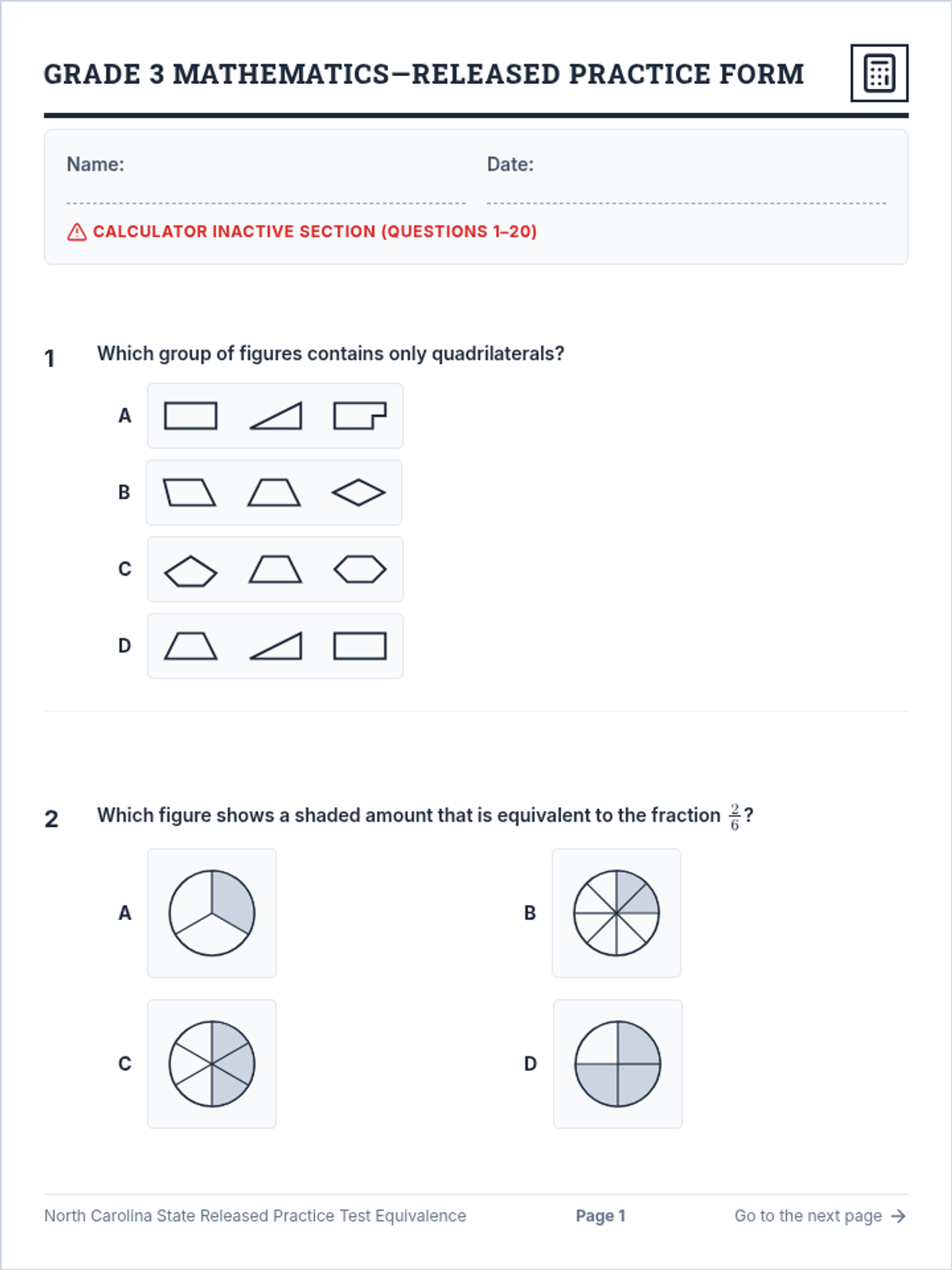
A comprehensive Grade 3 mathematics assessment modeled after the NC End-of-Grade released form, divided into Calculator Inactive and Calculator Active parts.
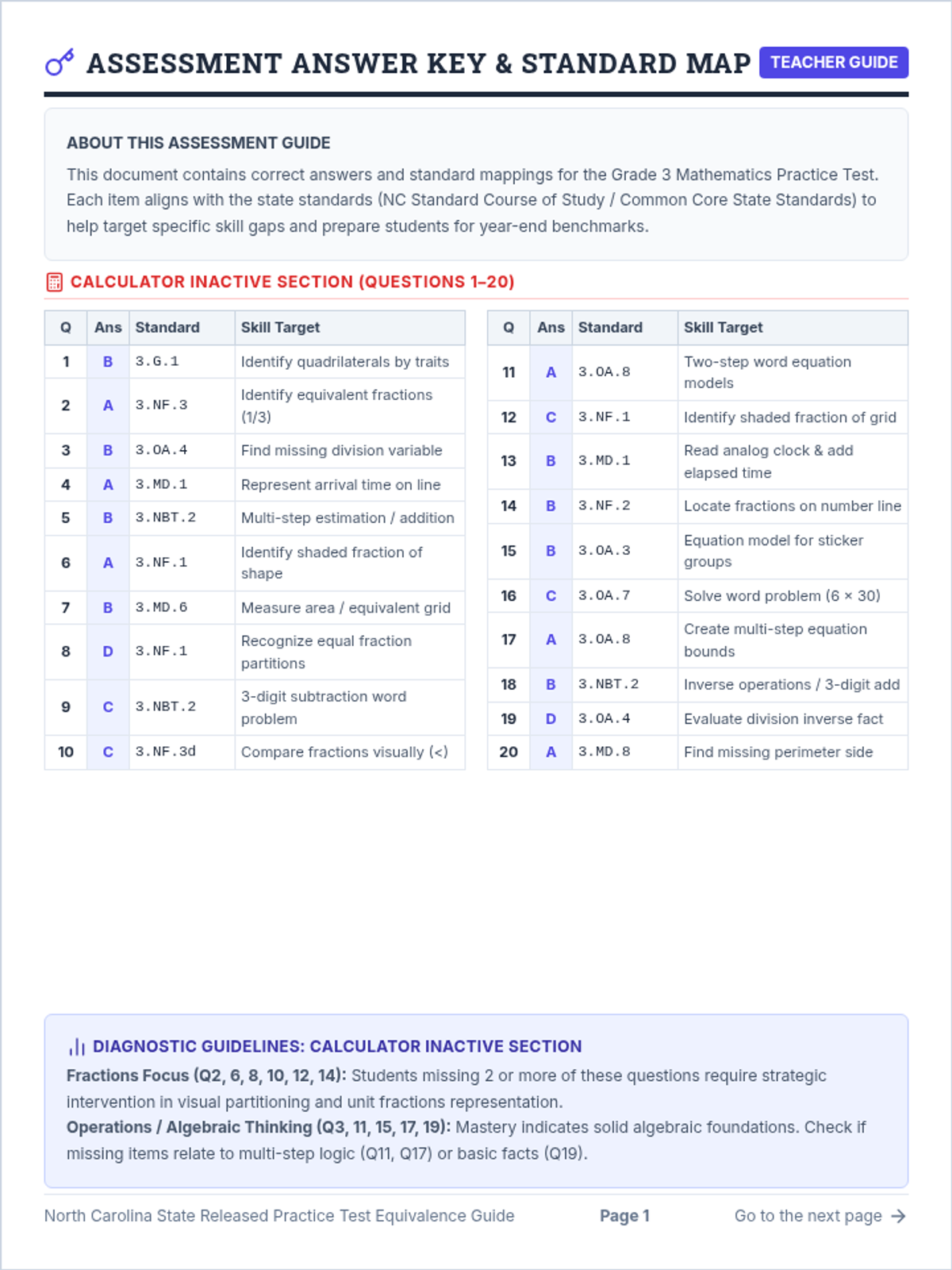
A comprehensive 3rd-grade mathematics practice exam modeled after the released state test, complete with exactly 40 standard-aligned questions divided into calculator-inactive and calculator-active sections, and an accompanying answer key and standards map.
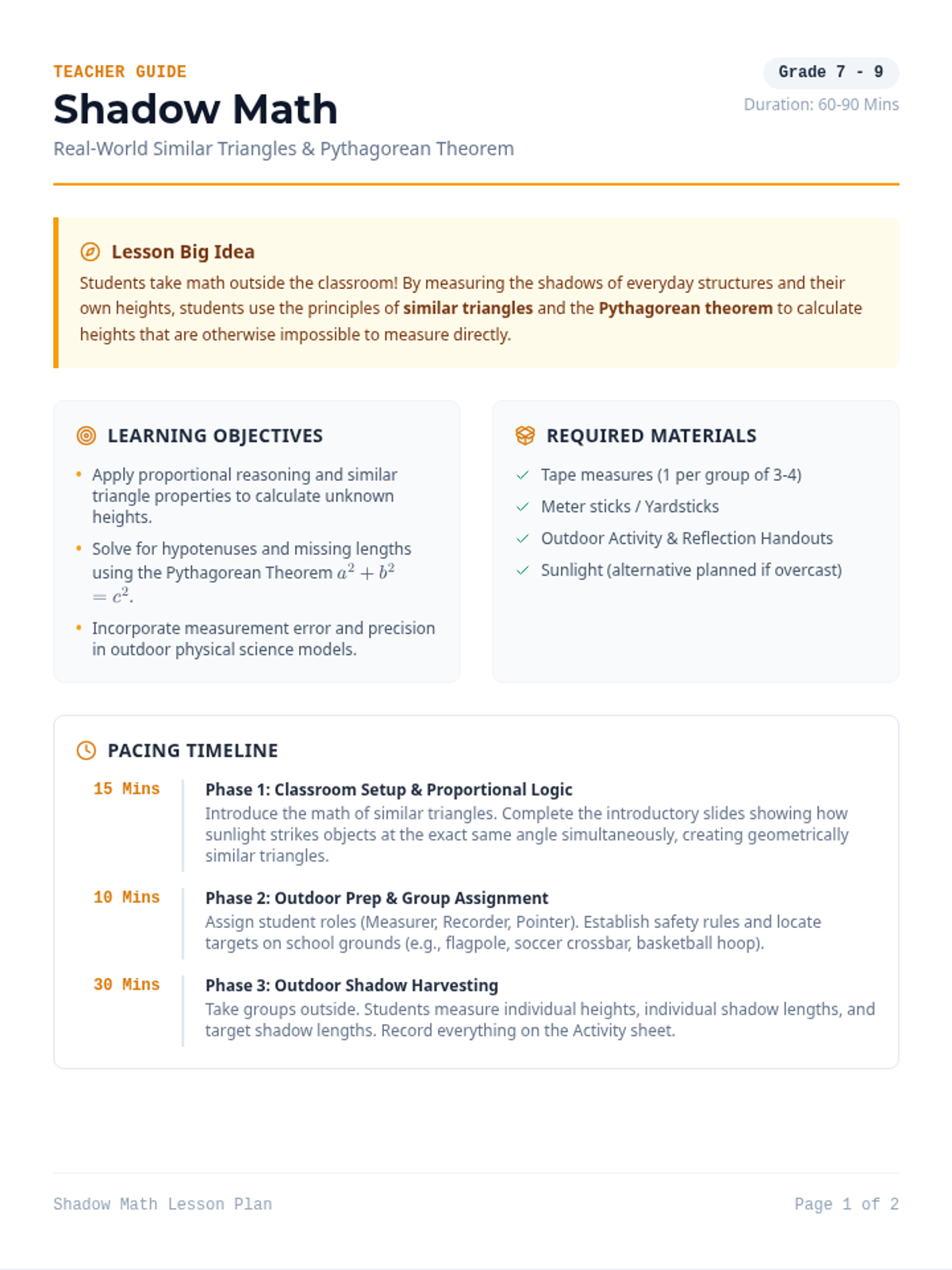
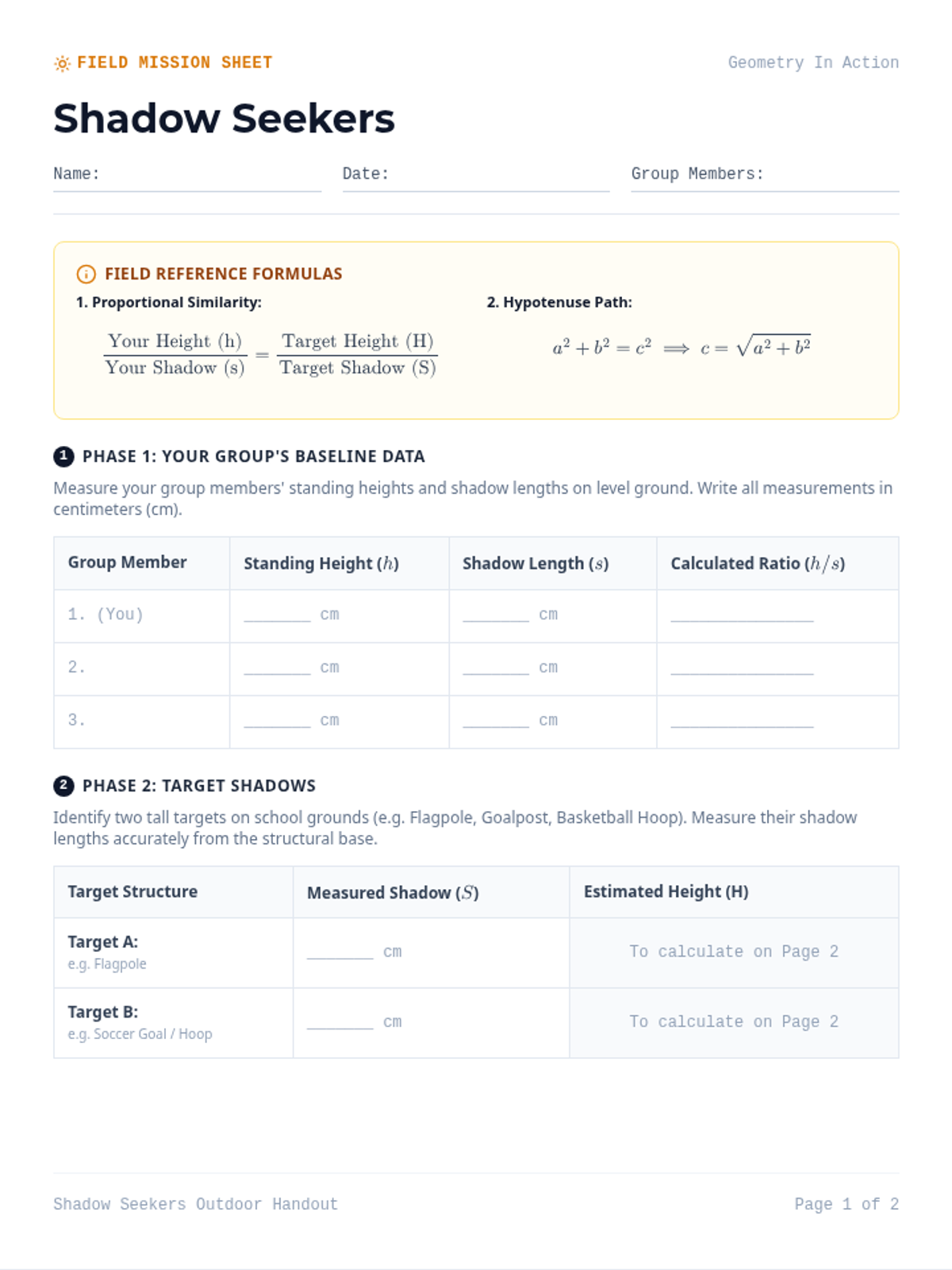
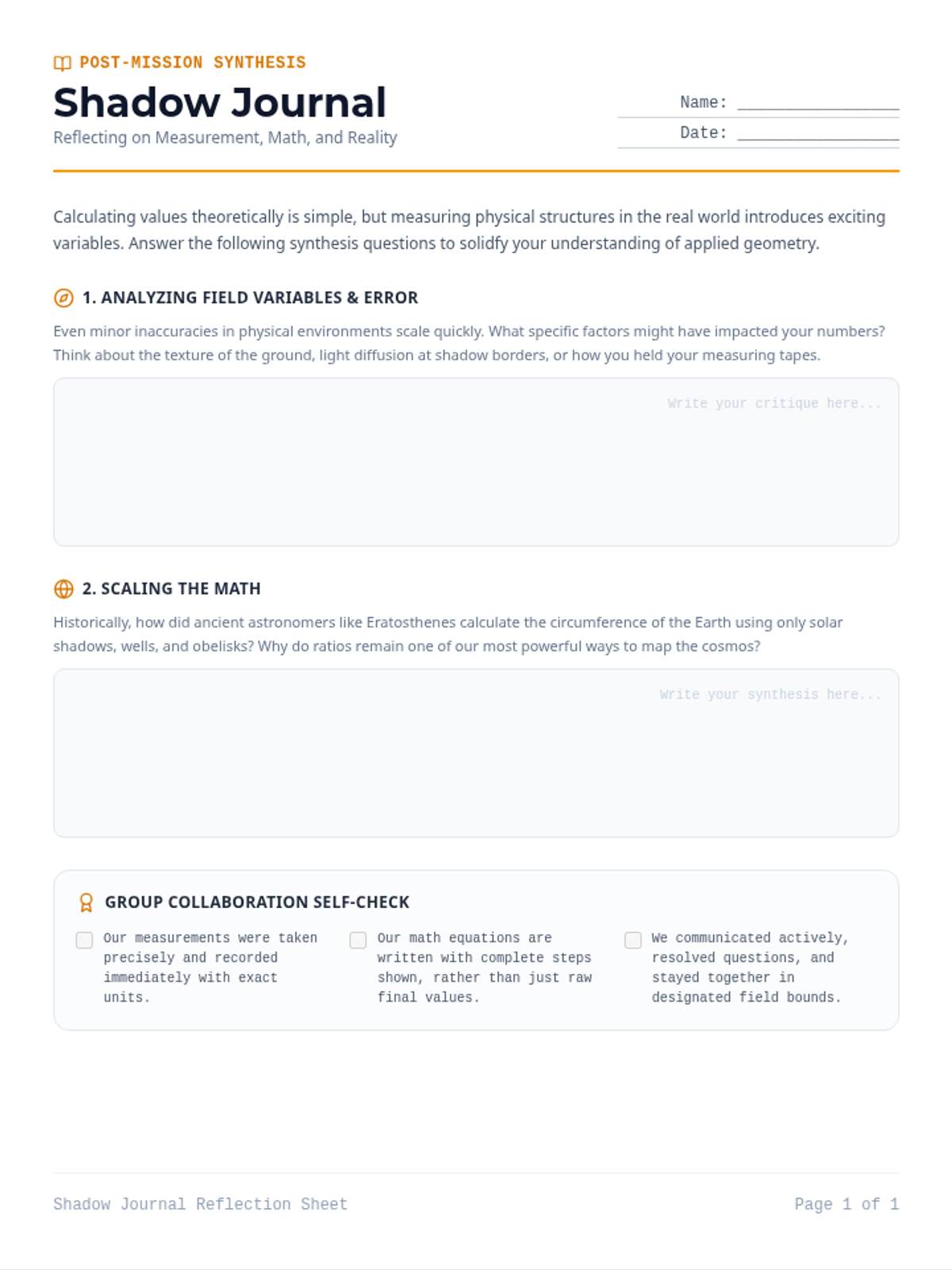
A hands-on geometry lesson where students head outdoors to measure shadows and use the Pythagorean theorem and geometric ratios to calculate the height of school structures. Includes a lesson plan, slide deck, outdoor activity guide, and reflection journal.
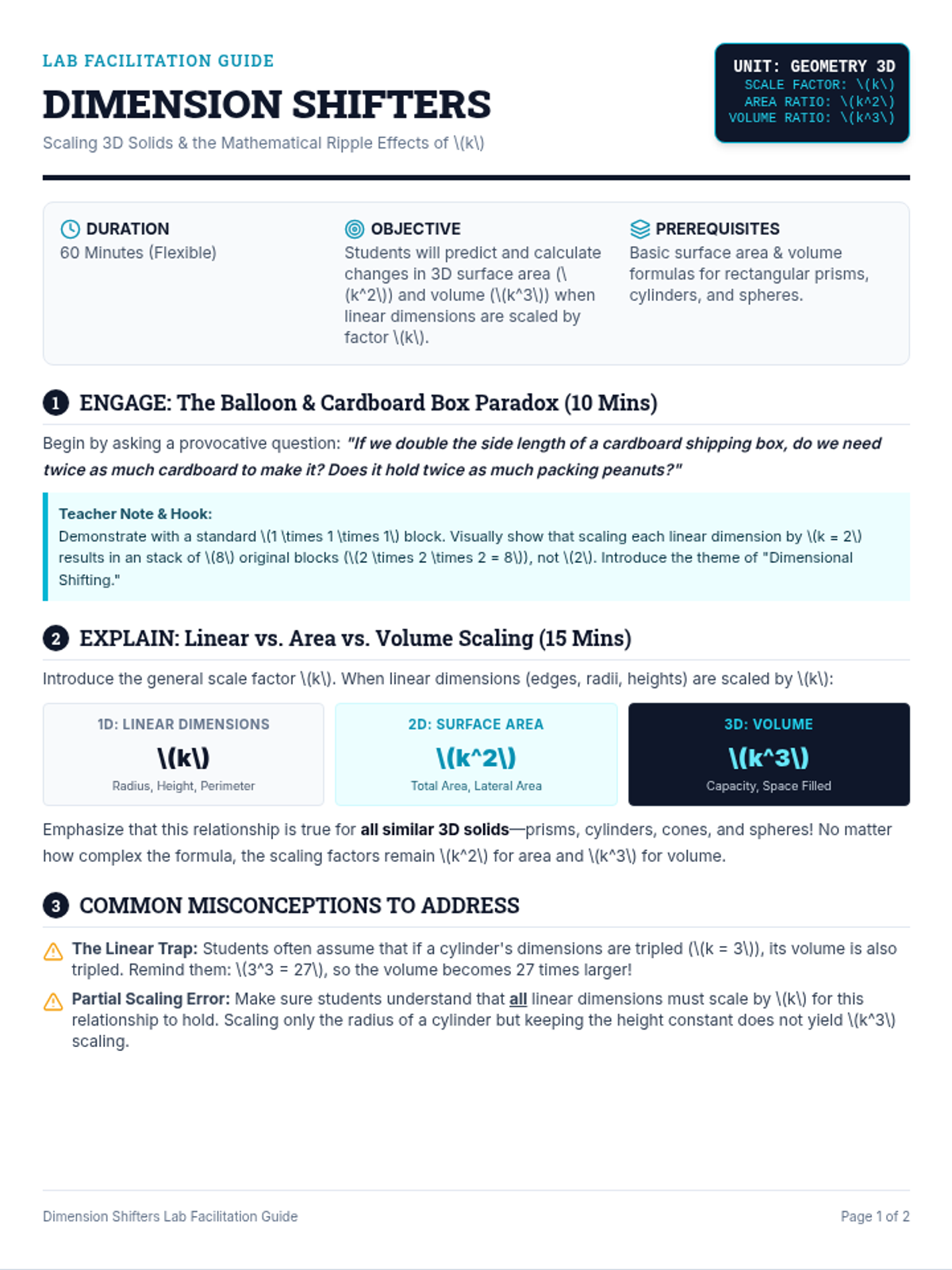
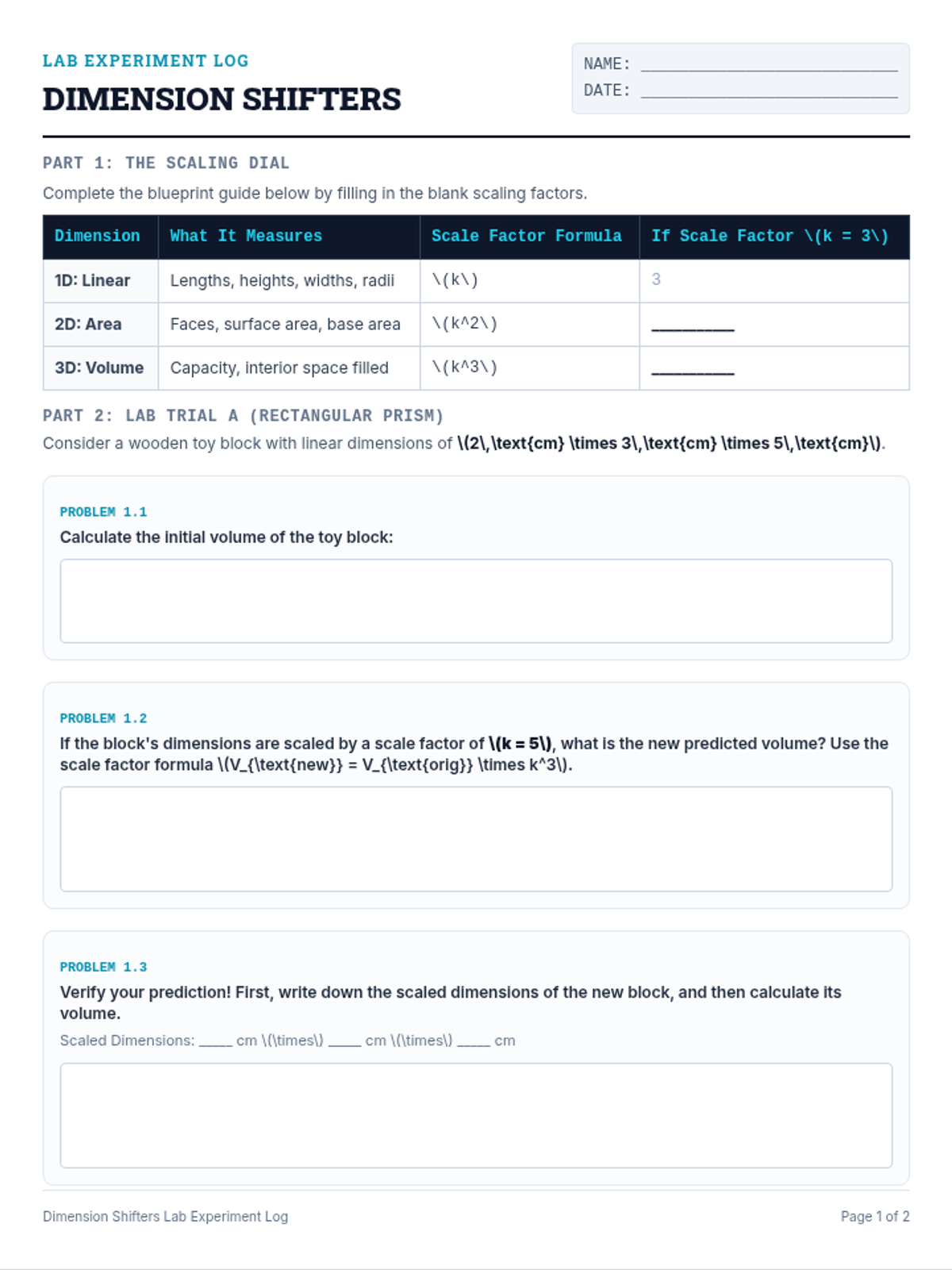
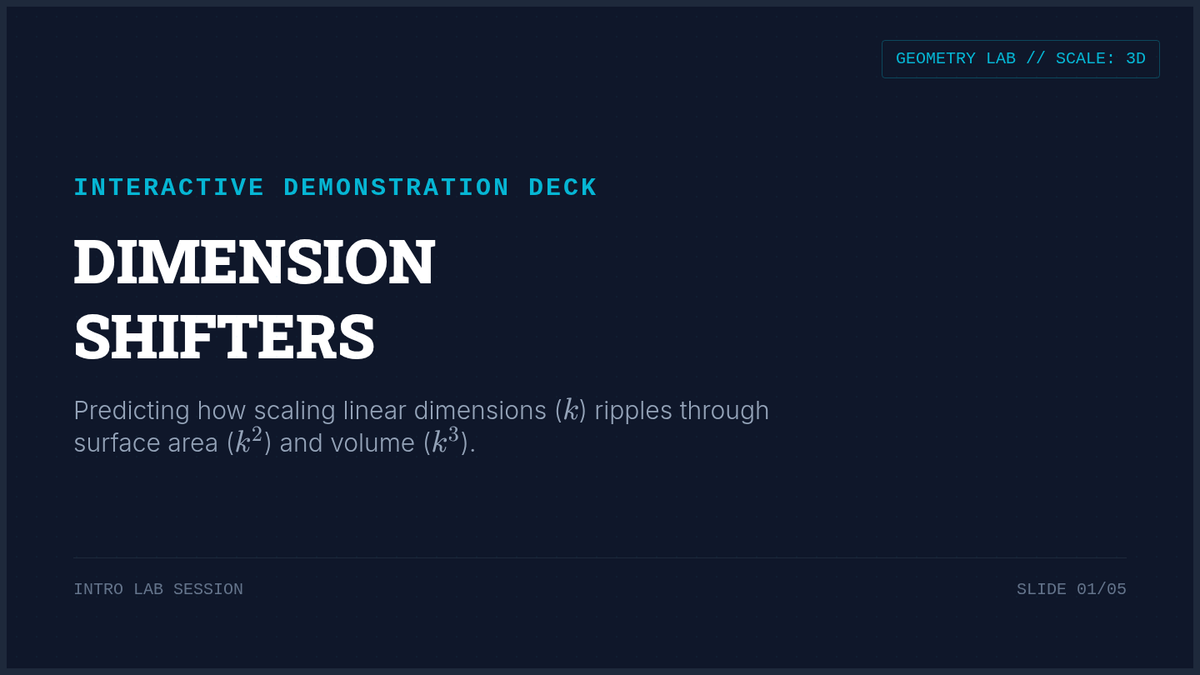
A hands-on geometry lesson exploring how scaling the linear dimensions of 3D solids by a scale factor k impacts their total surface area (by k²) and volume (by k³). Features interactive model-scaling examples, a vocabulary challenge, and guided practice.
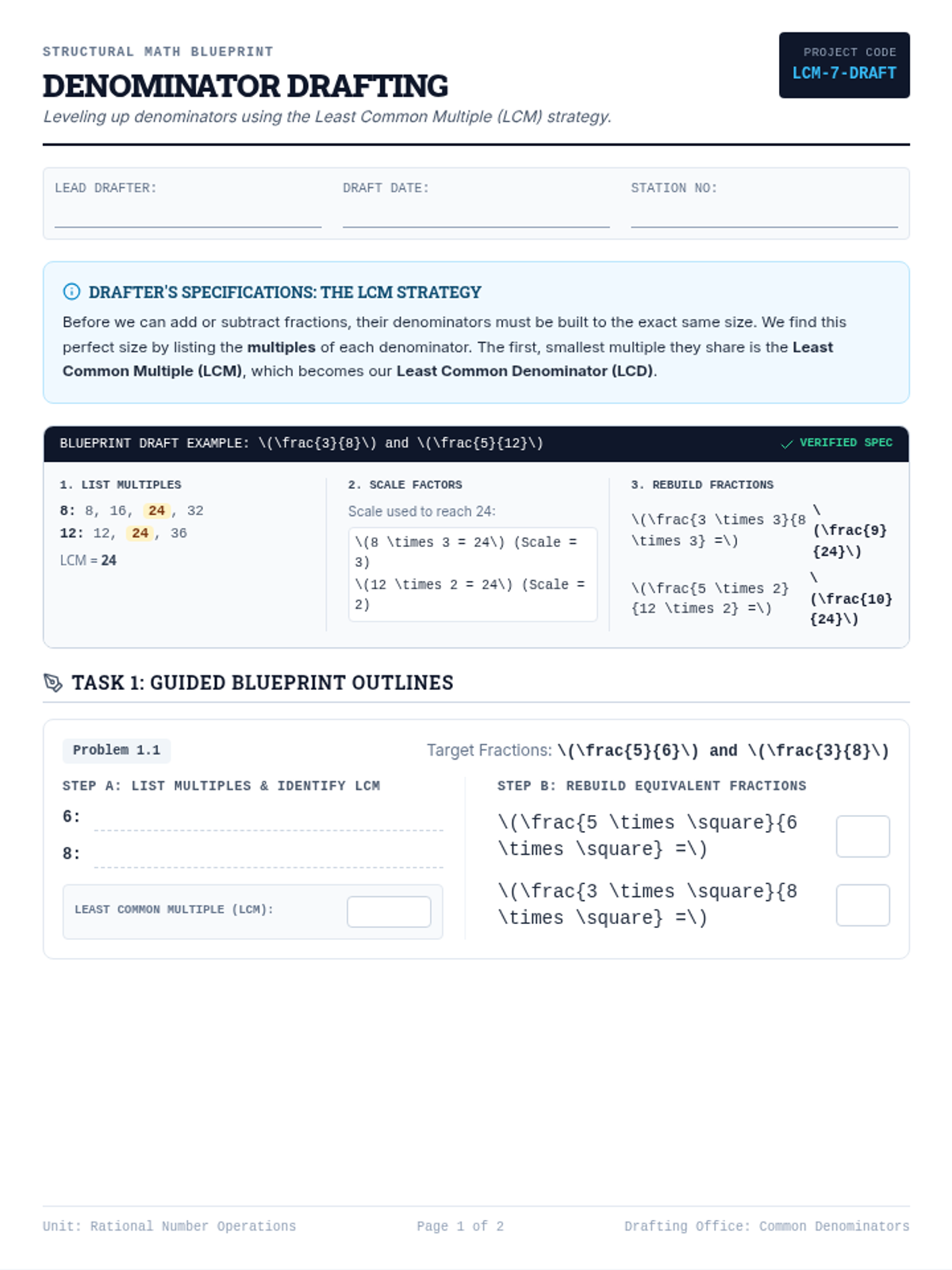
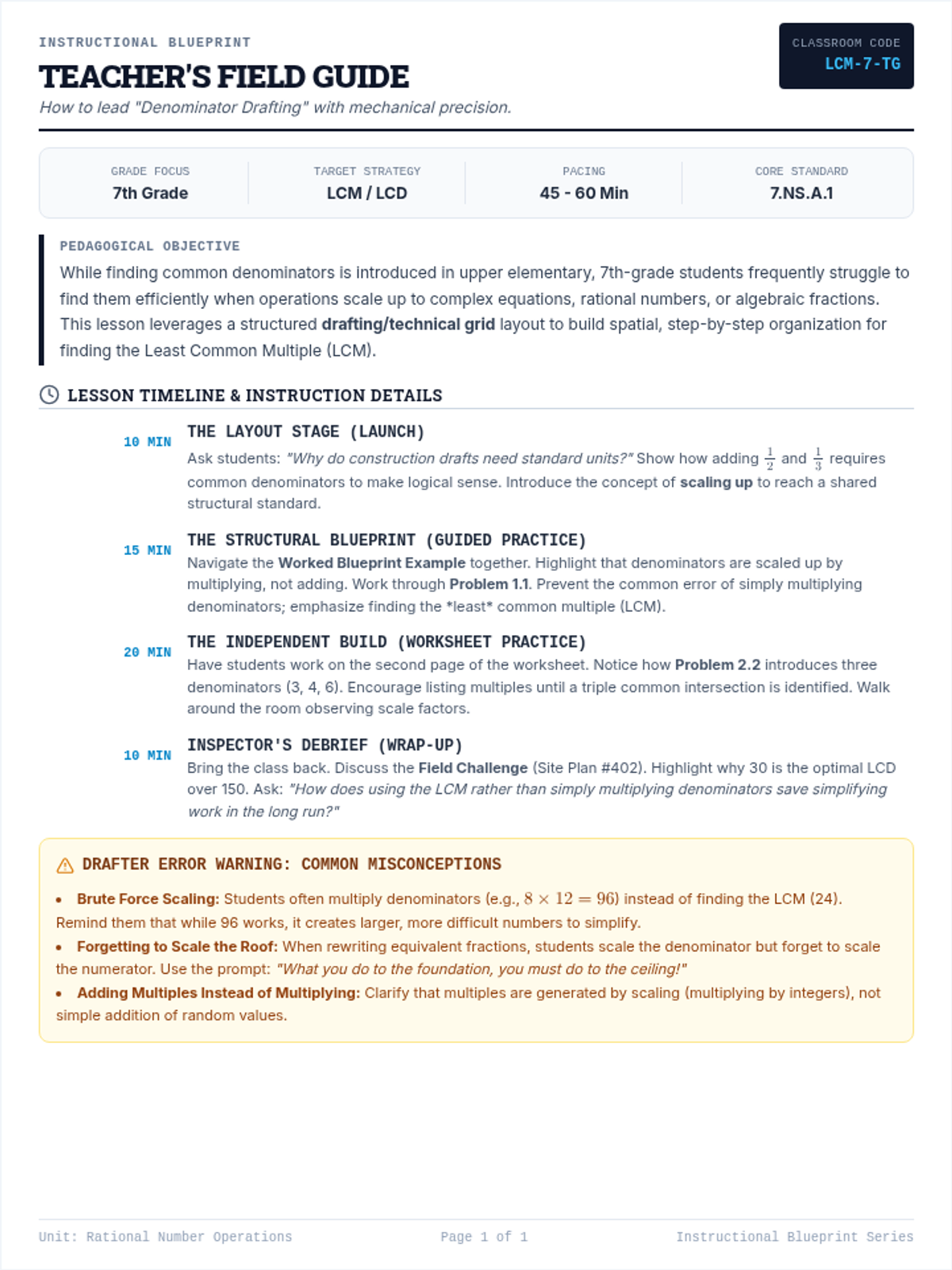
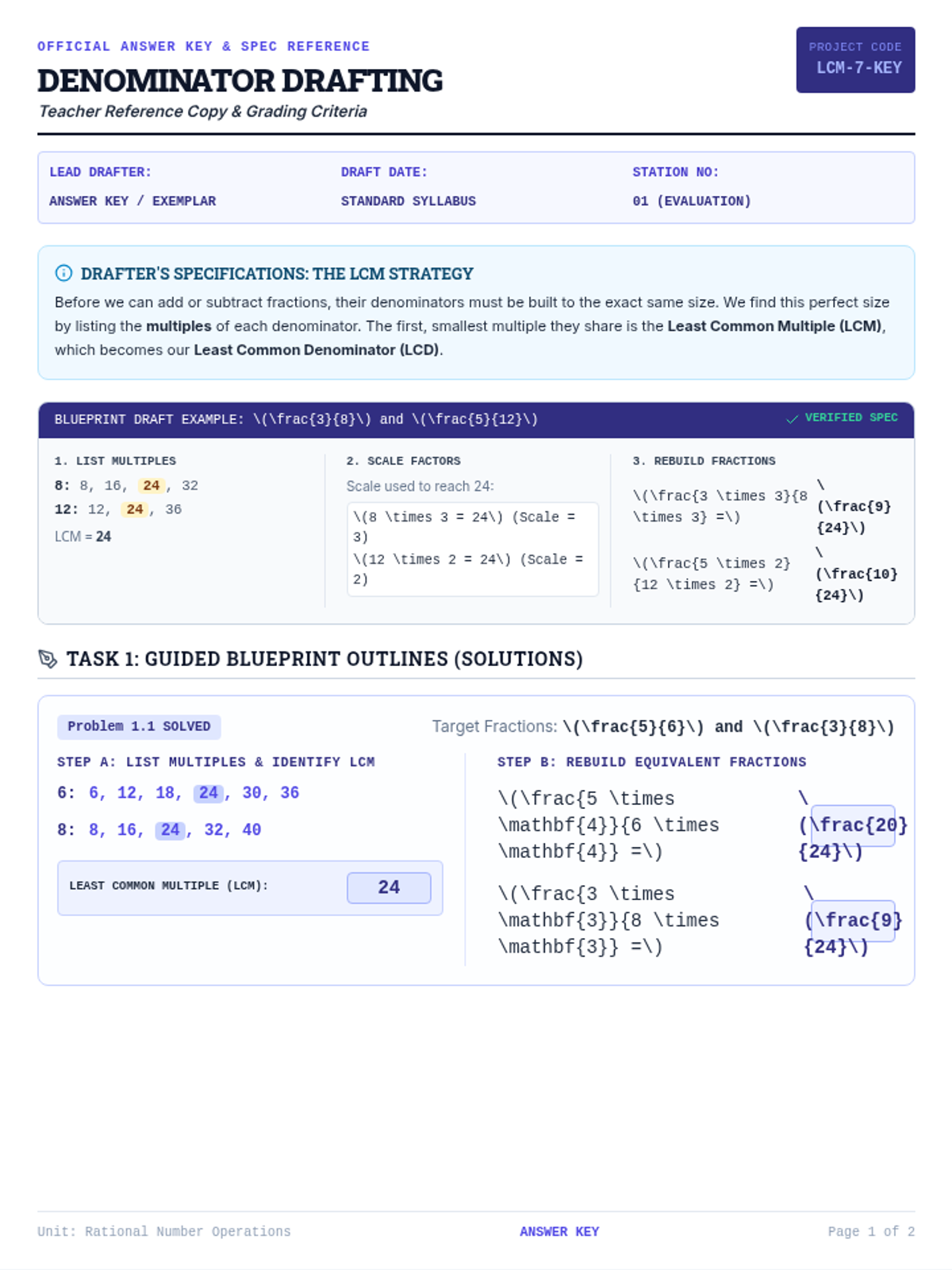
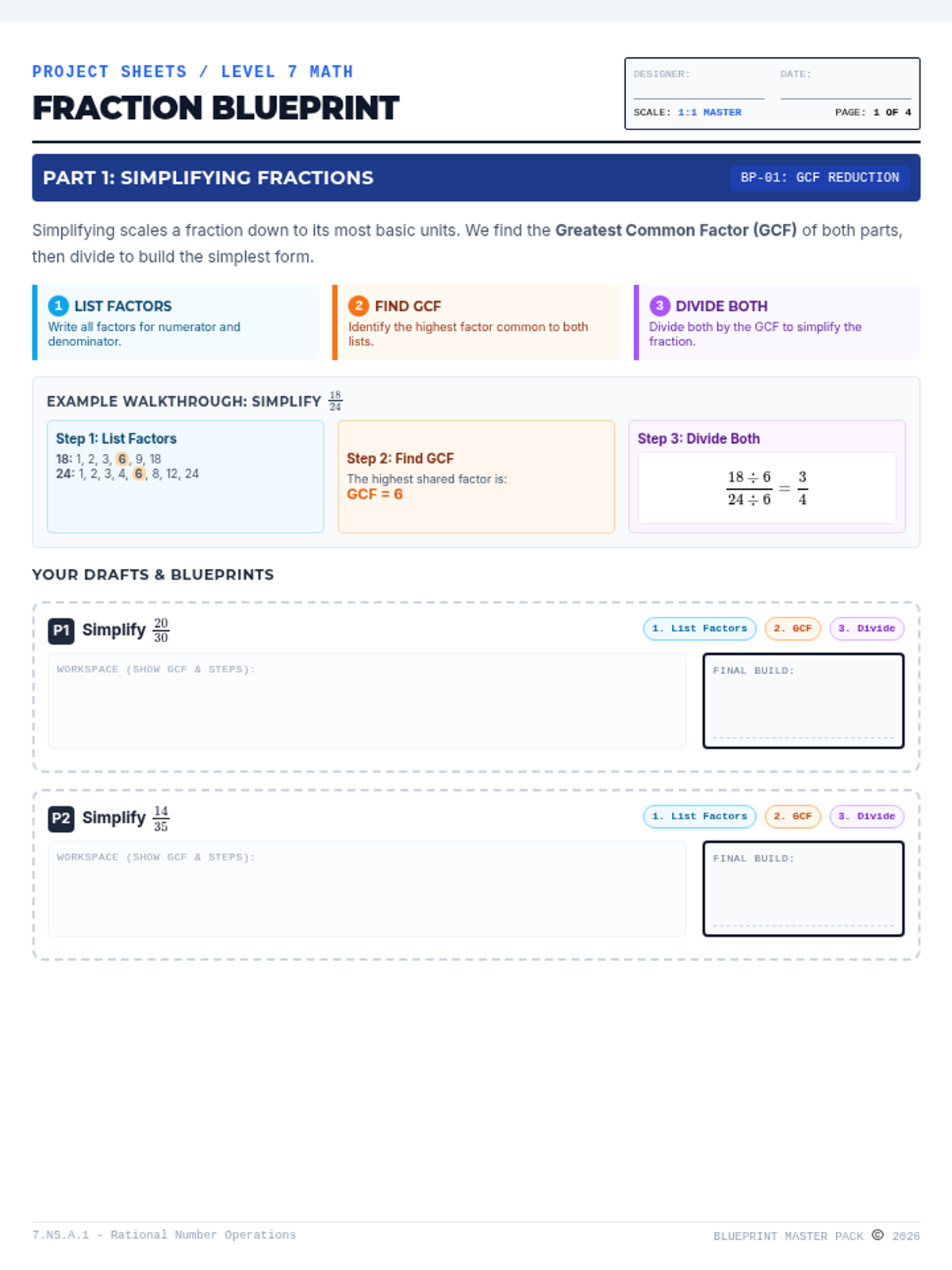
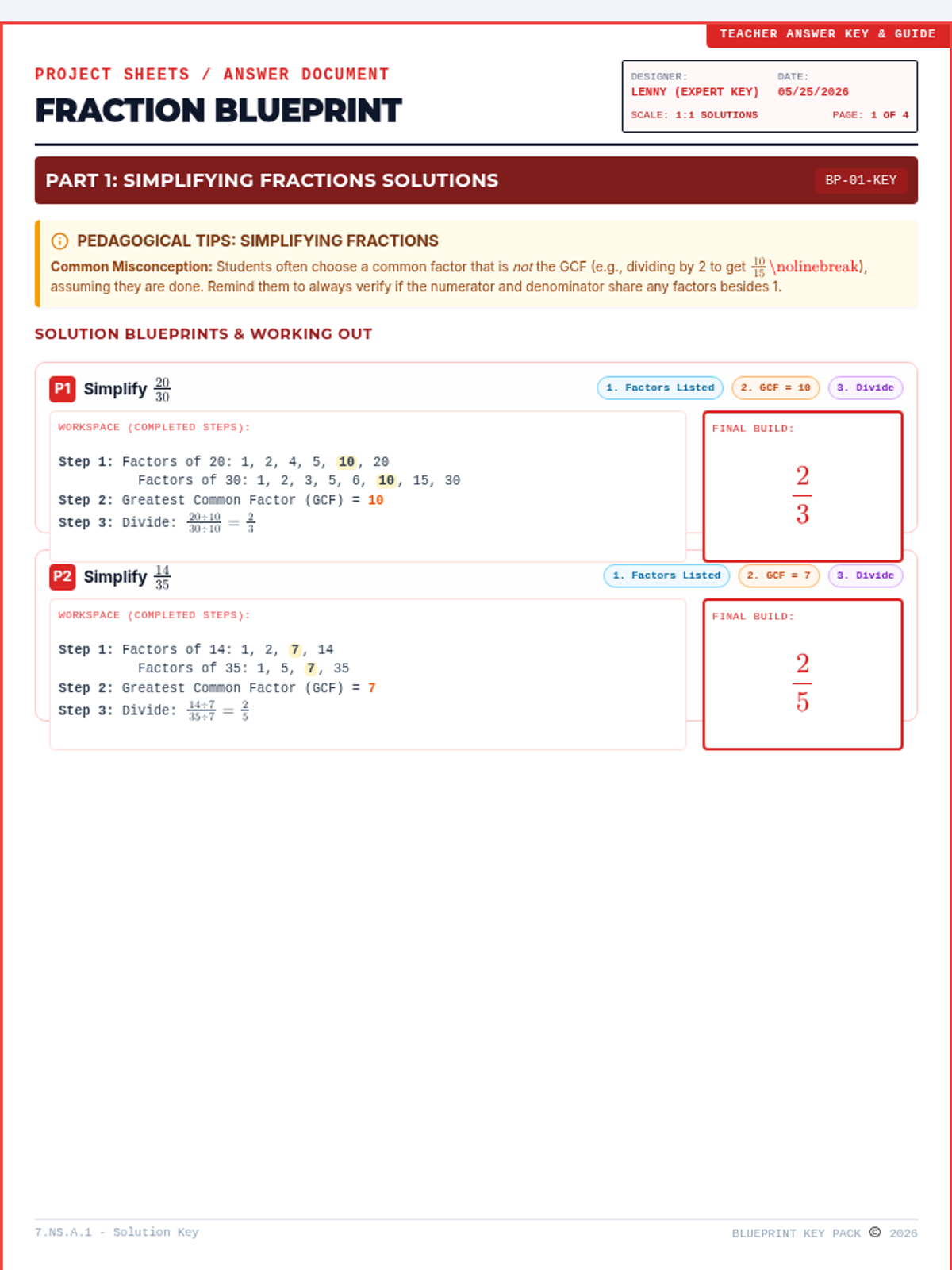
A scaffolded lesson for 7th-grade students to master finding common denominators using the Least Common Multiple (LCM) strategy, structured around a technical blueprint drafting theme.
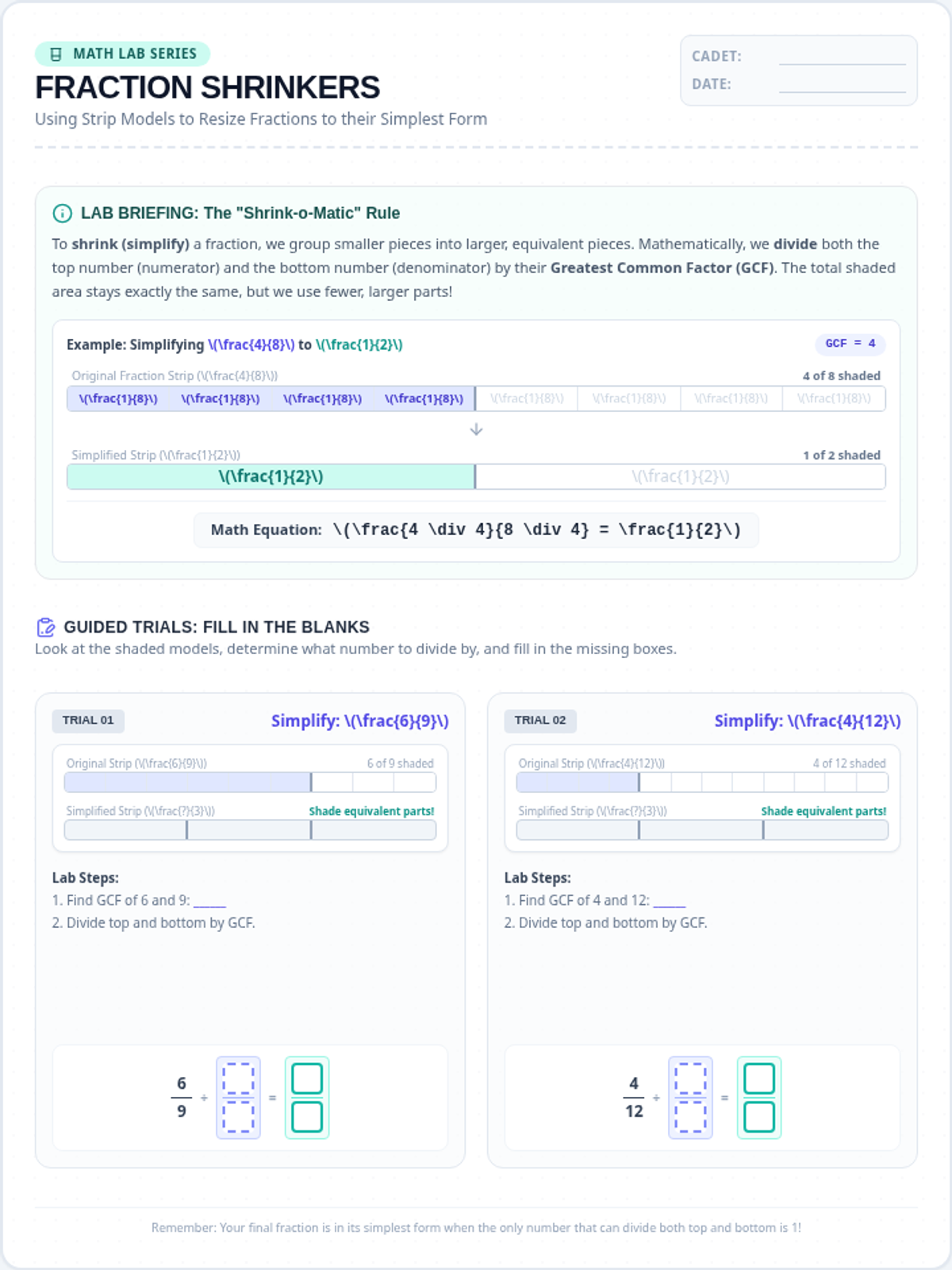
A comprehensive lesson introducing fraction simplification using visual fraction strip models as key scaffolding, complete with guided worksheets, error analysis, and a teacher answer key.
A structured, 7th-grade lesson on fraction operations (simplifying, finding common denominators, adding, subtracting, multiplying, and dividing) with color-coded step-by-step guides to support learners.
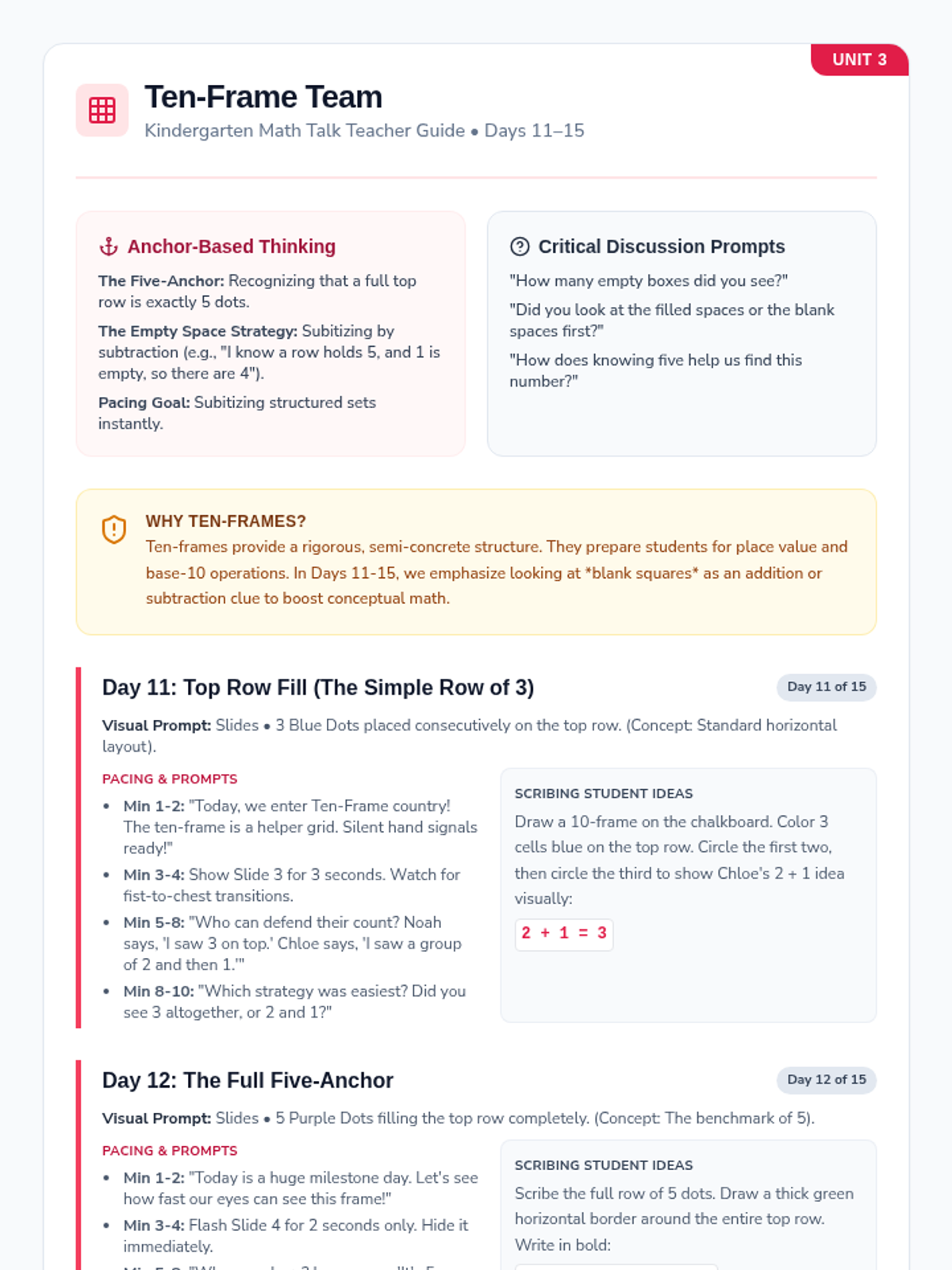
Explores subitizing numbers 1-5 within a ten-frame structure, helping students visualize numbers relative to five- and ten-anchors over Days 11-15.
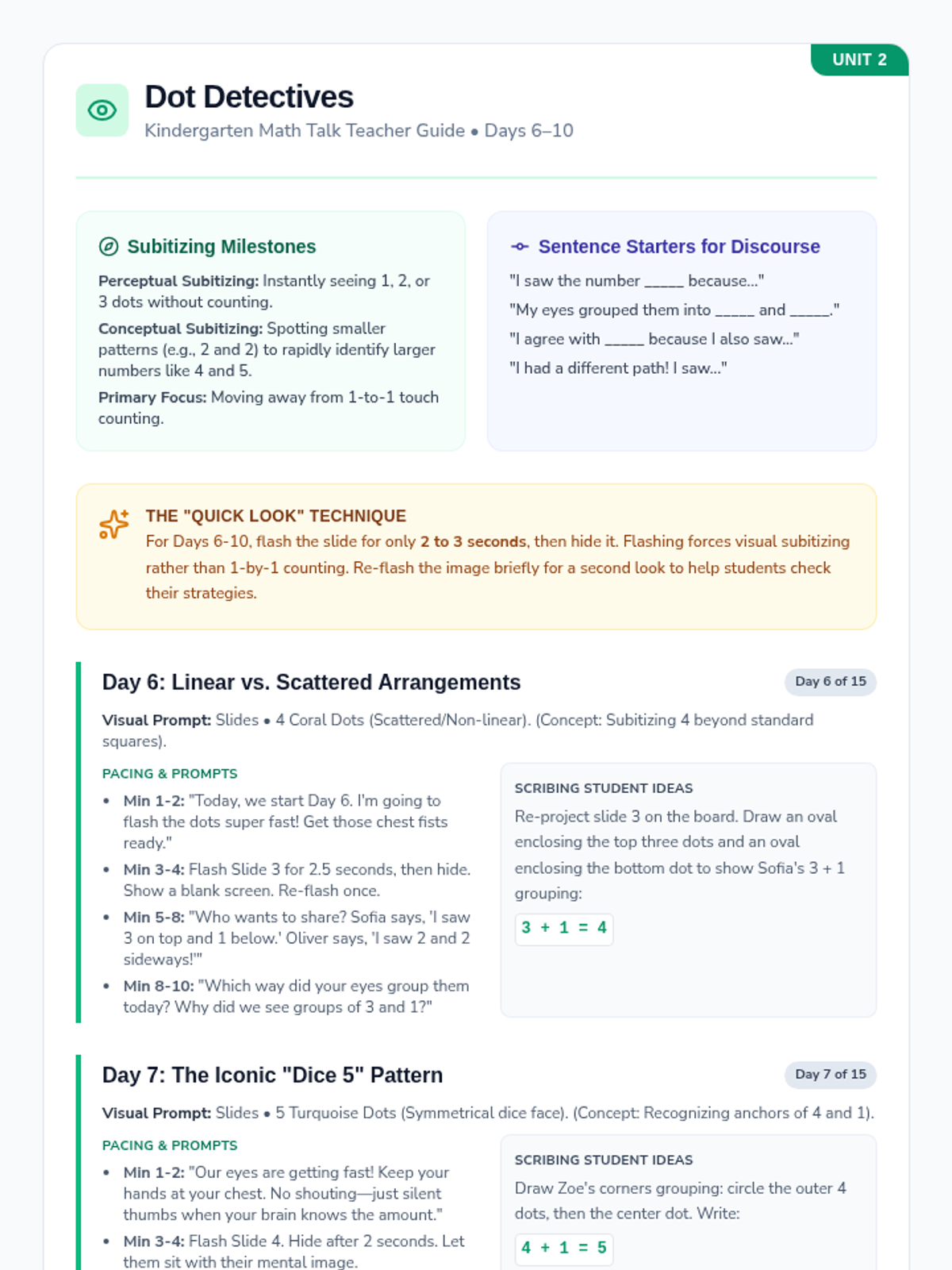
Develops rapid subitizing and spatial awareness for numbers 1 to 5 using varied dot configurations (dice, linear, and scattered) over Days 6-10.
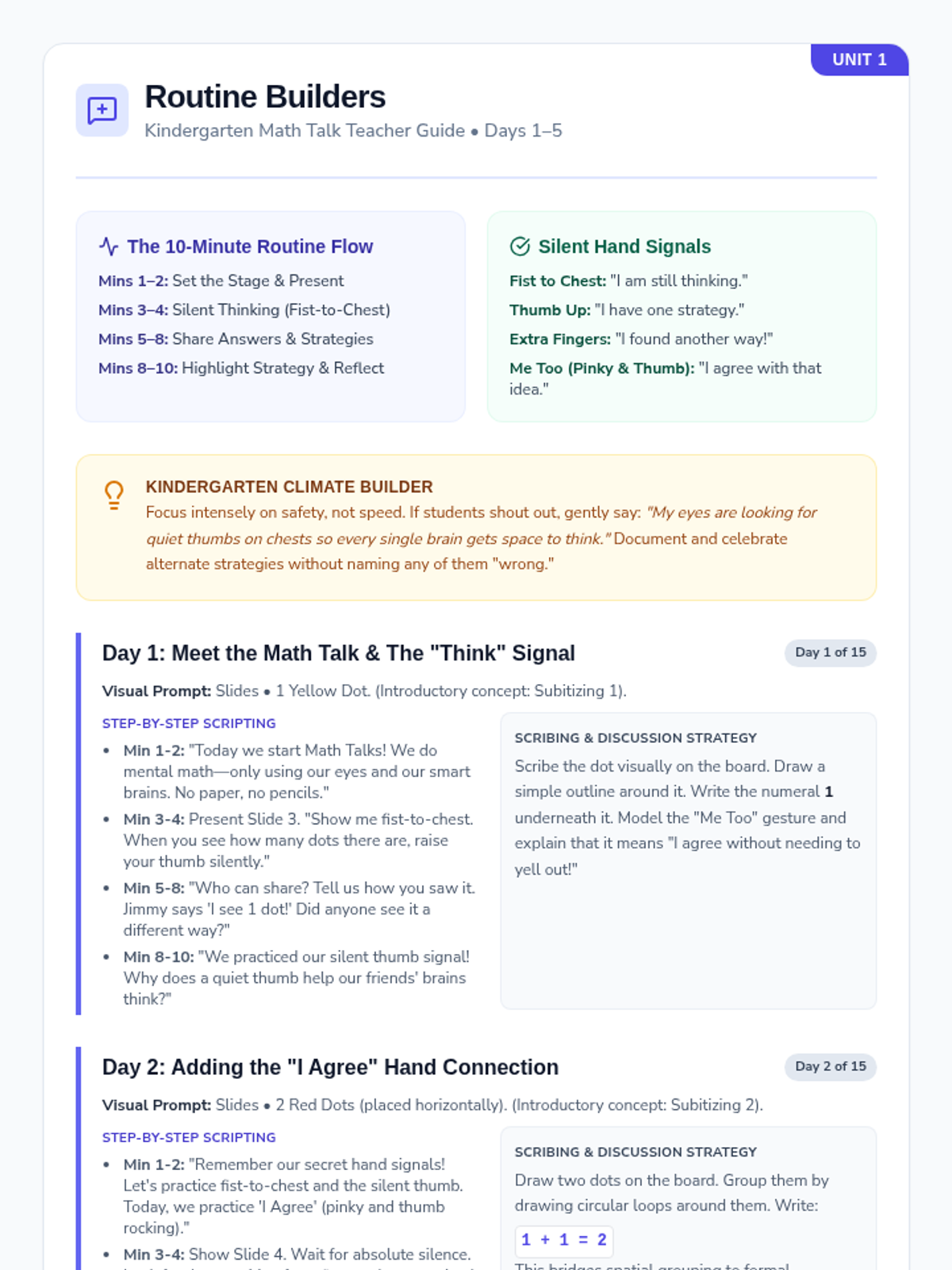
Introduces the foundational mental math protocols, silent hand signals, and first simple visual count talks (dots/fingers) over Days 1-5 to build classroom safety.
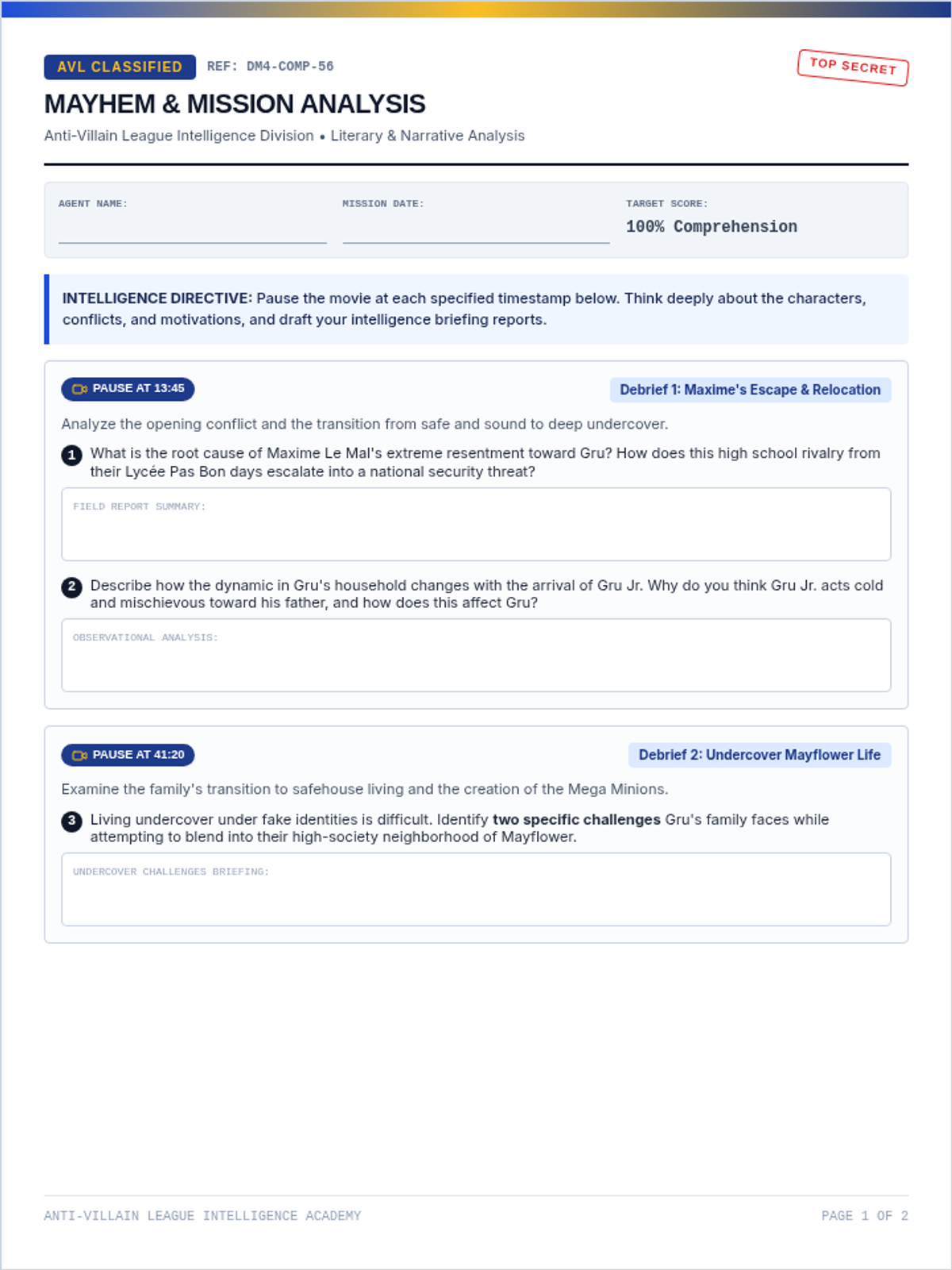
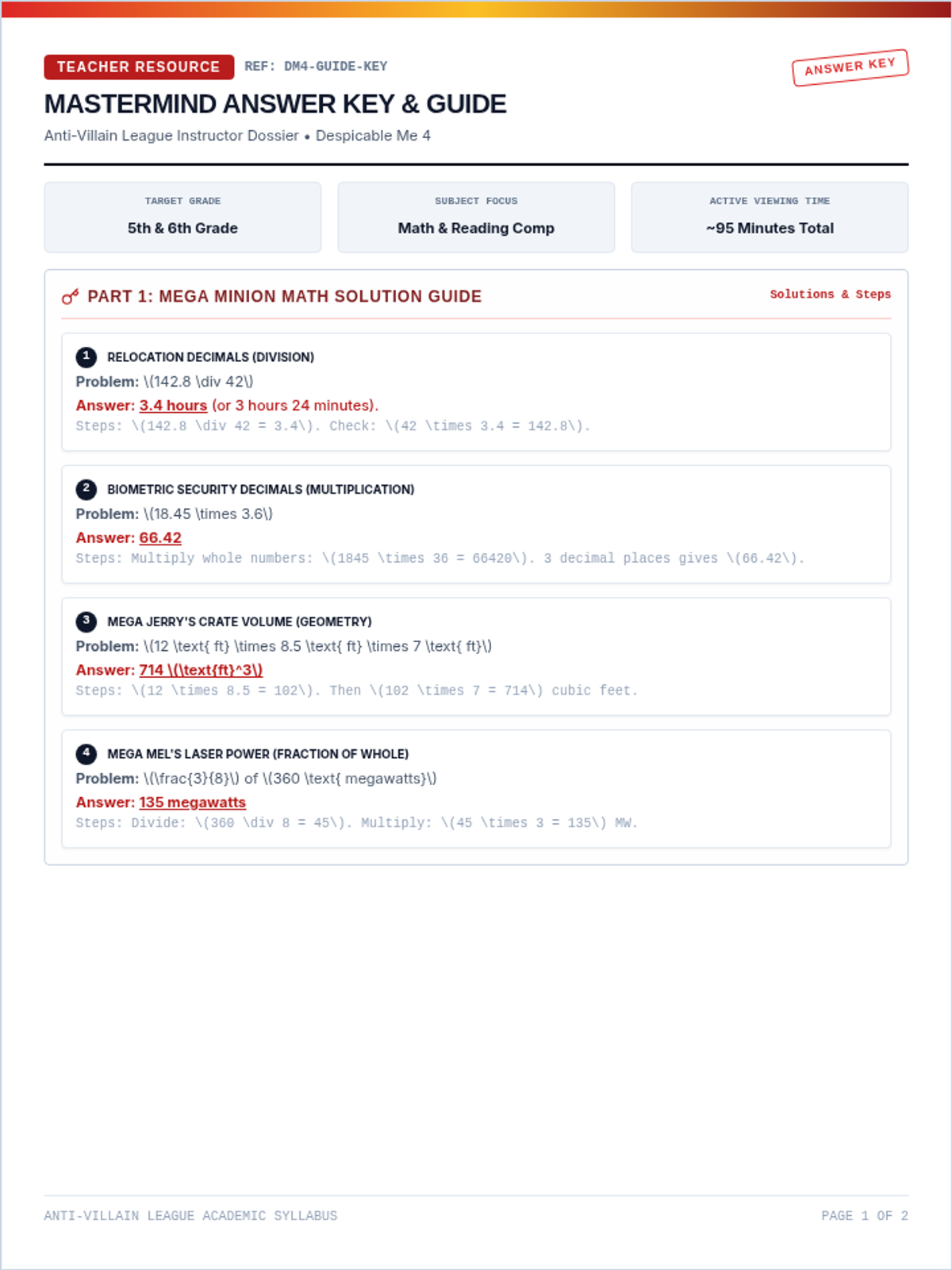
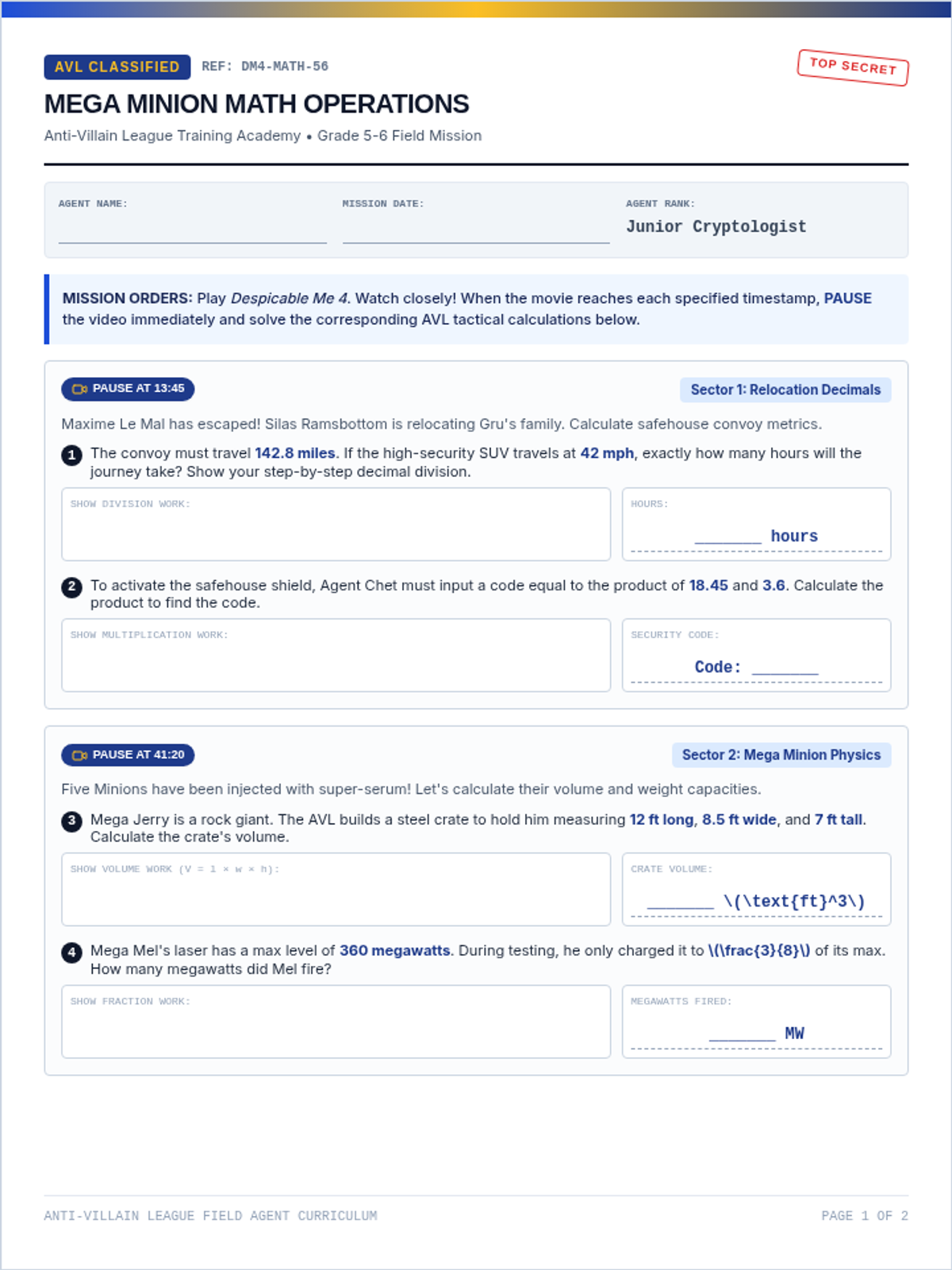
A movie companion lesson set for Despicable Me 4, targeting 5th and 6th-grade students. It features highly engaging math and reading comprehension worksheets organized around specific movie pause timestamps, plus a teacher answer key and guide.
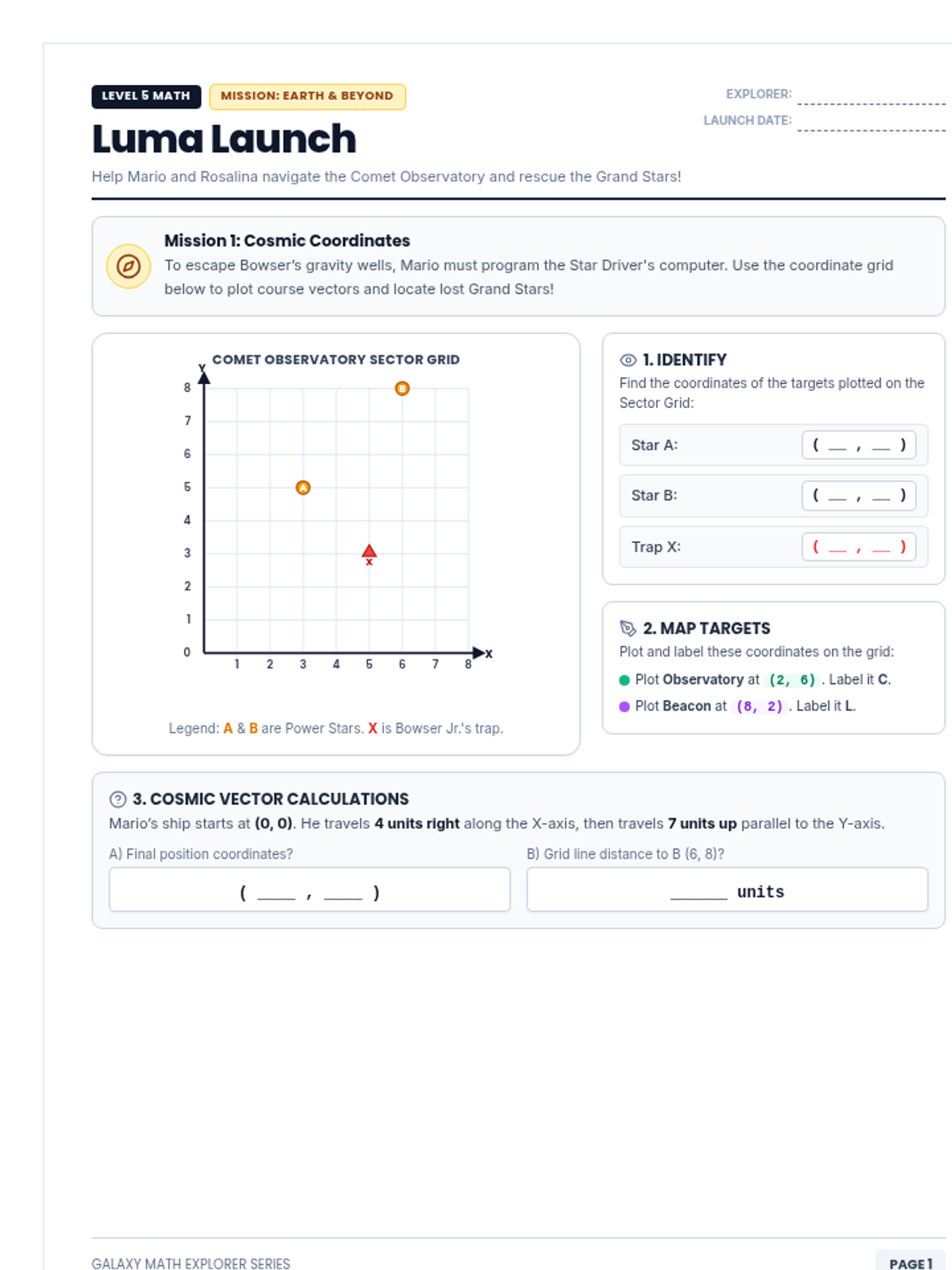
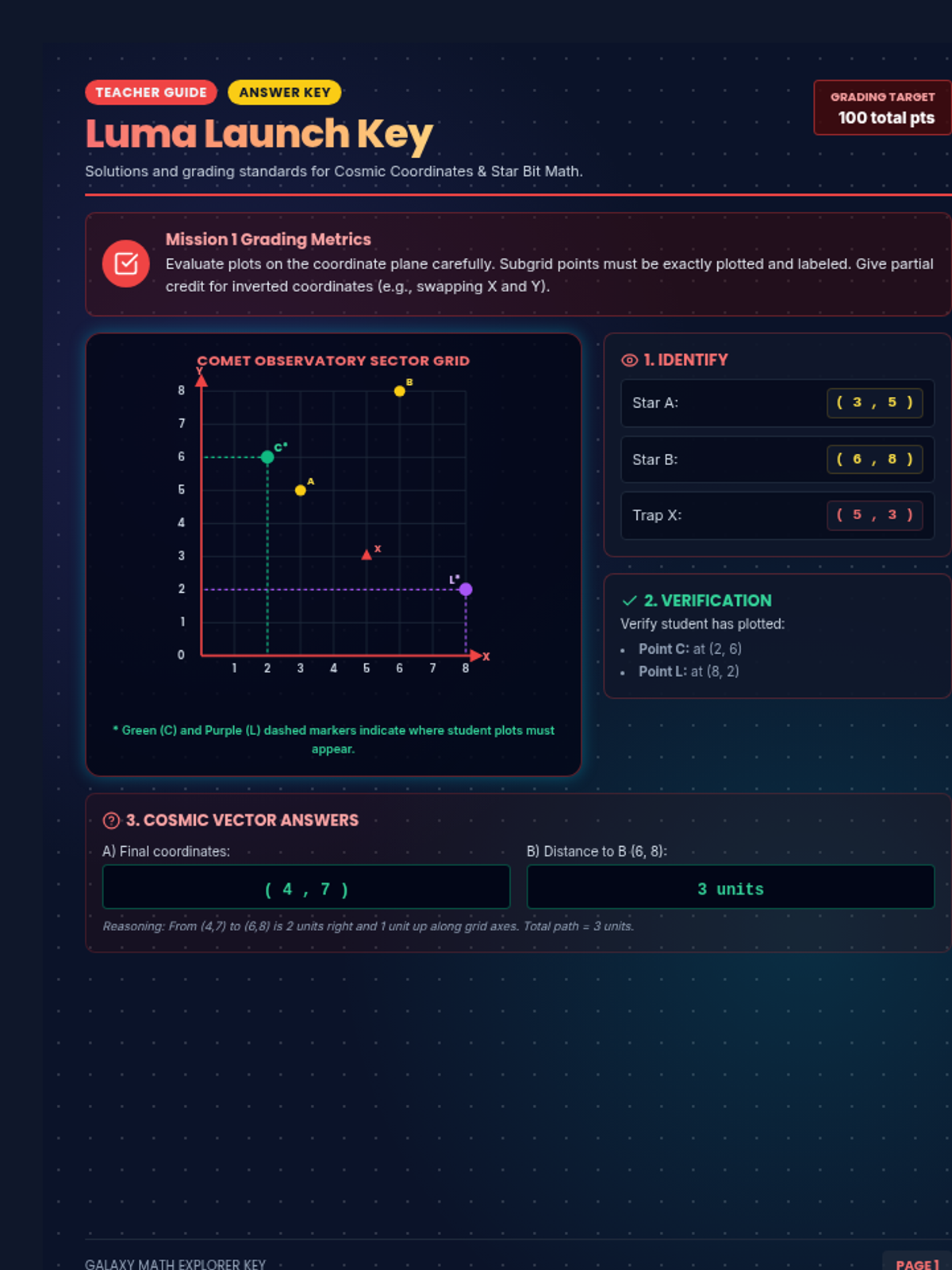
An out-of-this-world 5th-grade math adventure packet and answer key inspired by Mario Galaxy, focusing on coordinate graphing, decimal operations, fraction addition, and volume calculations.
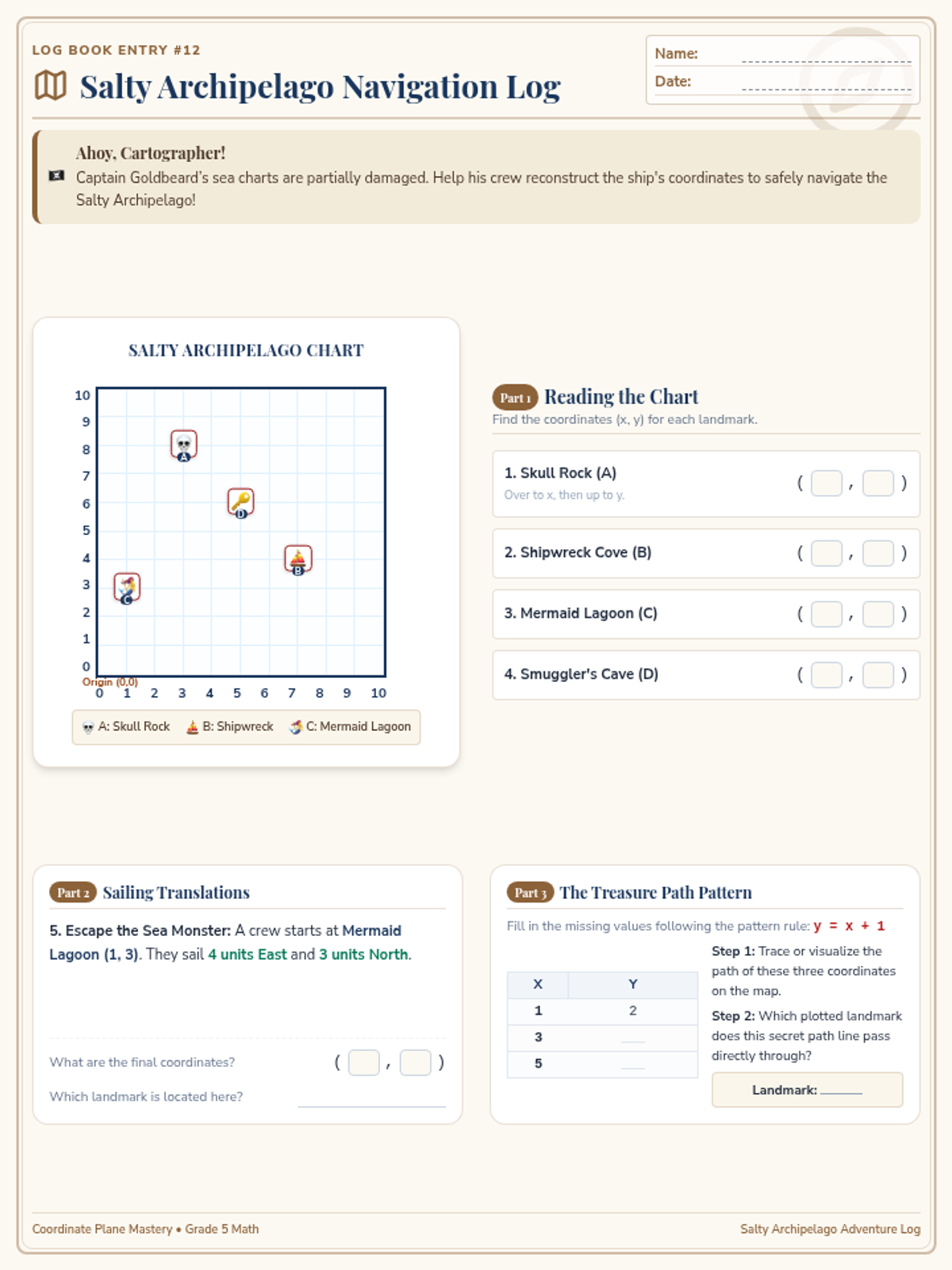
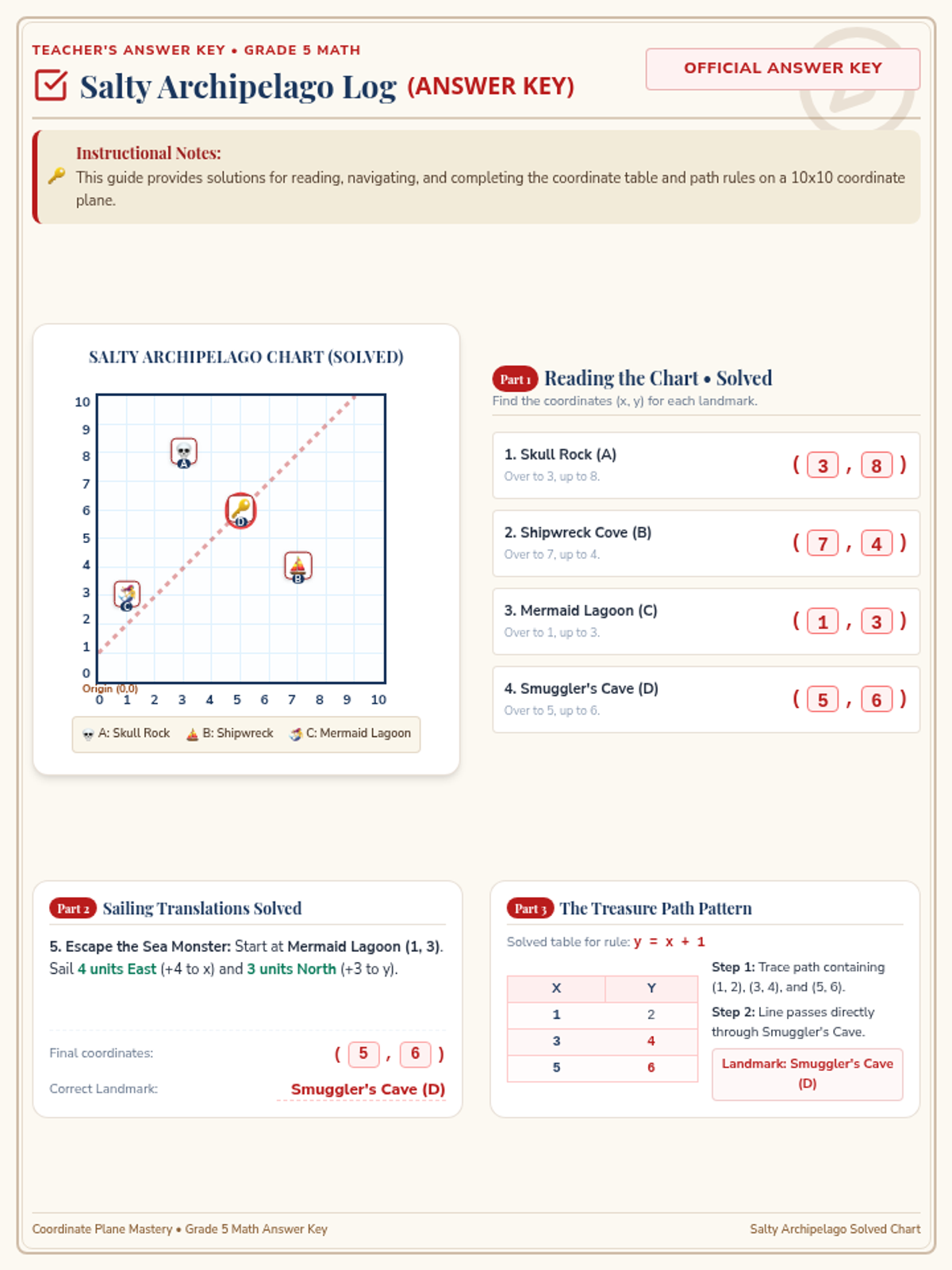
A 5th-grade math lesson focusing on representing and solving real-world navigation problems on a 10x10 coordinate plane with a pirate-map theme.
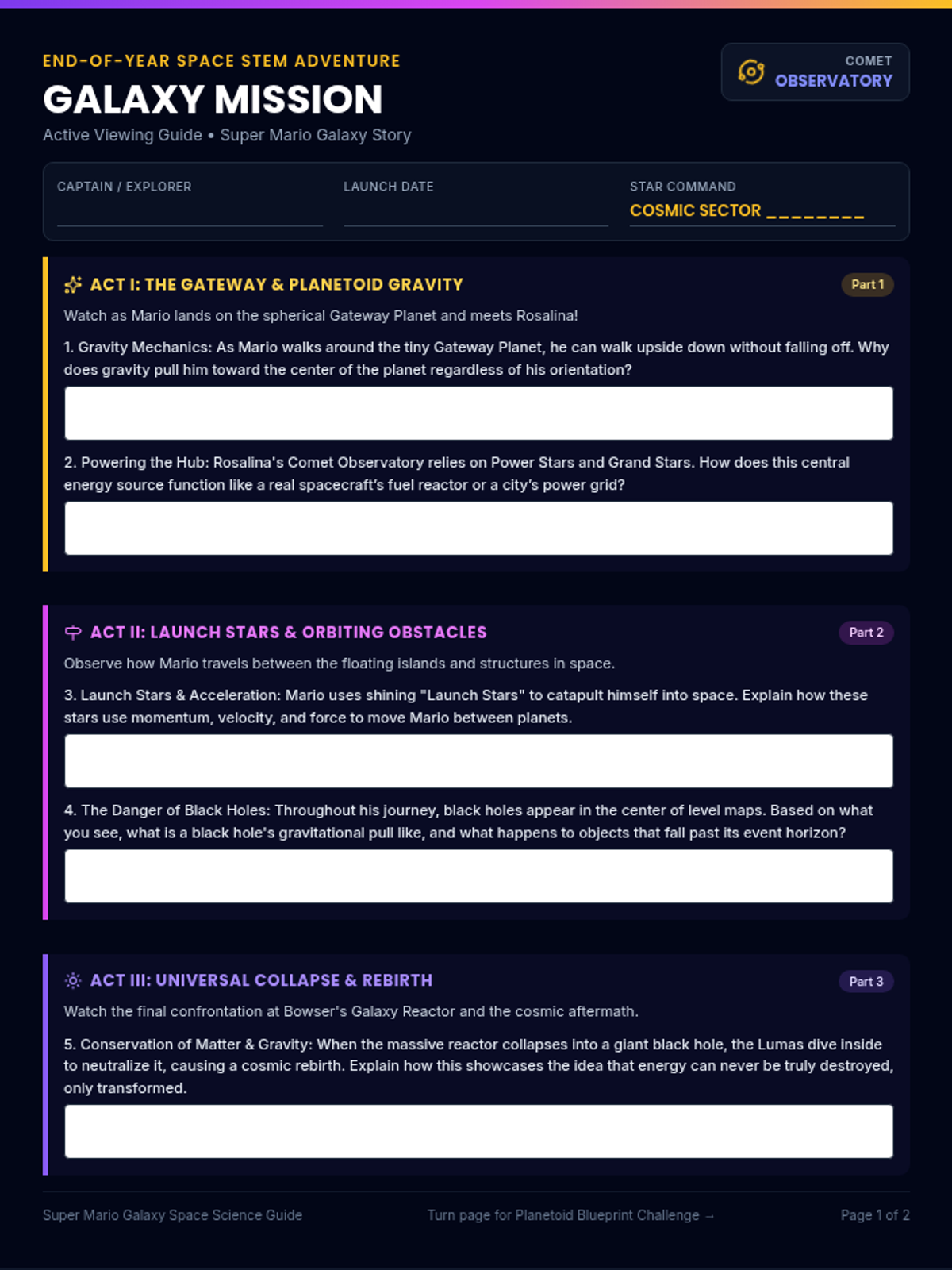
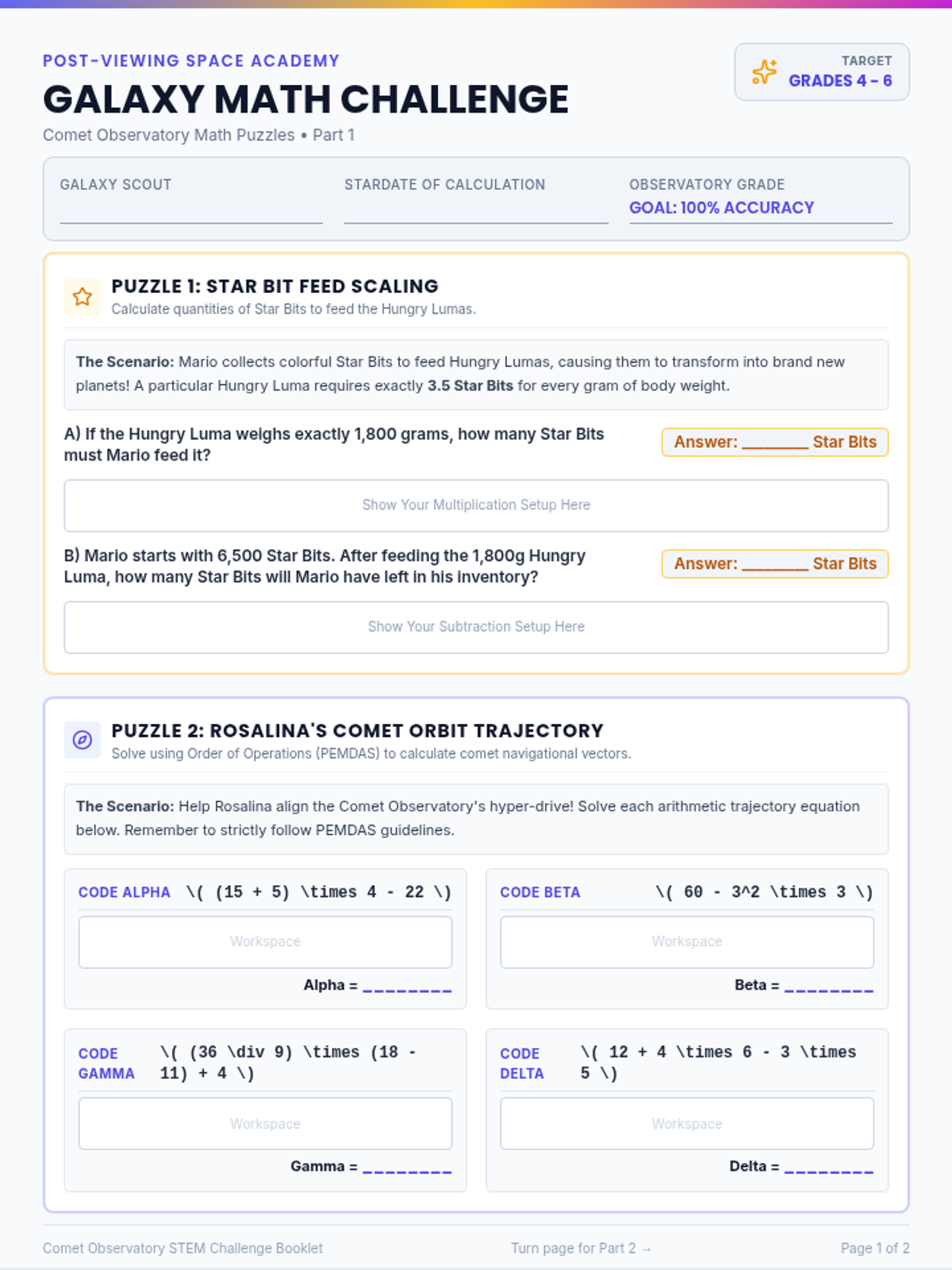
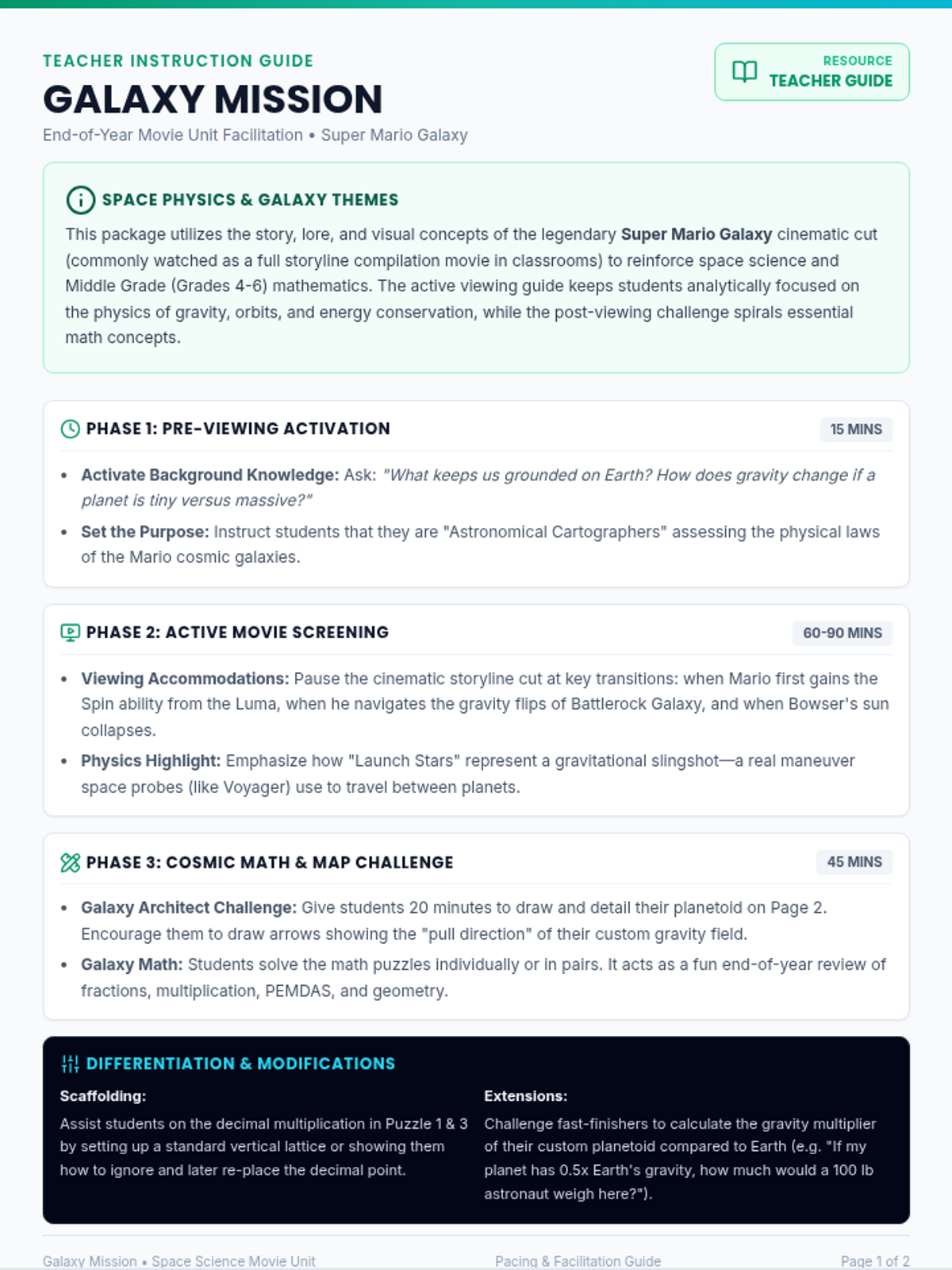
An end-of-year educational movie unit and math workbook based on the story of Super Mario Galaxy. Students explore gravity, orbits, and space physics through active viewing, followed by high-energy space-themed math puzzles.
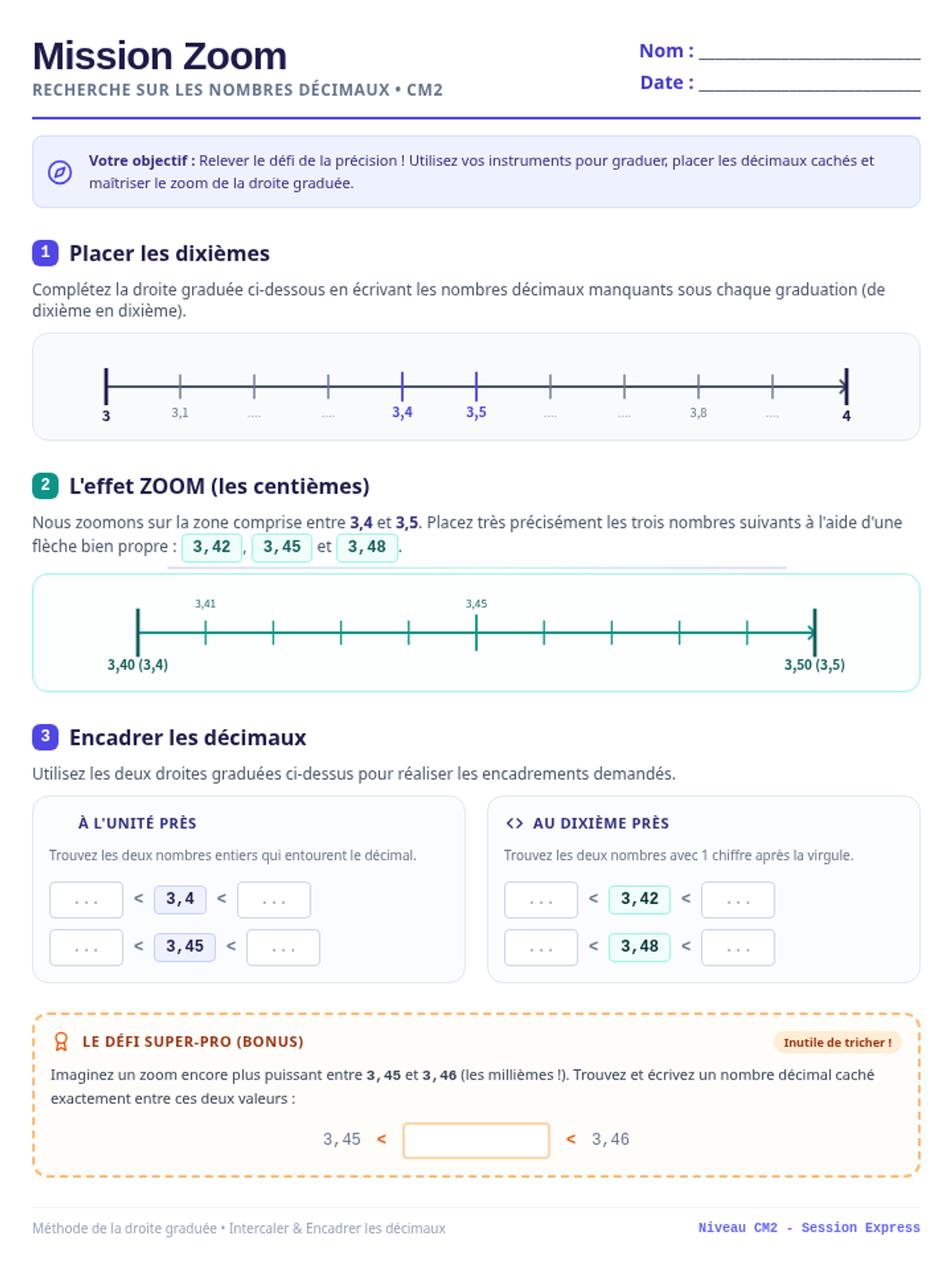
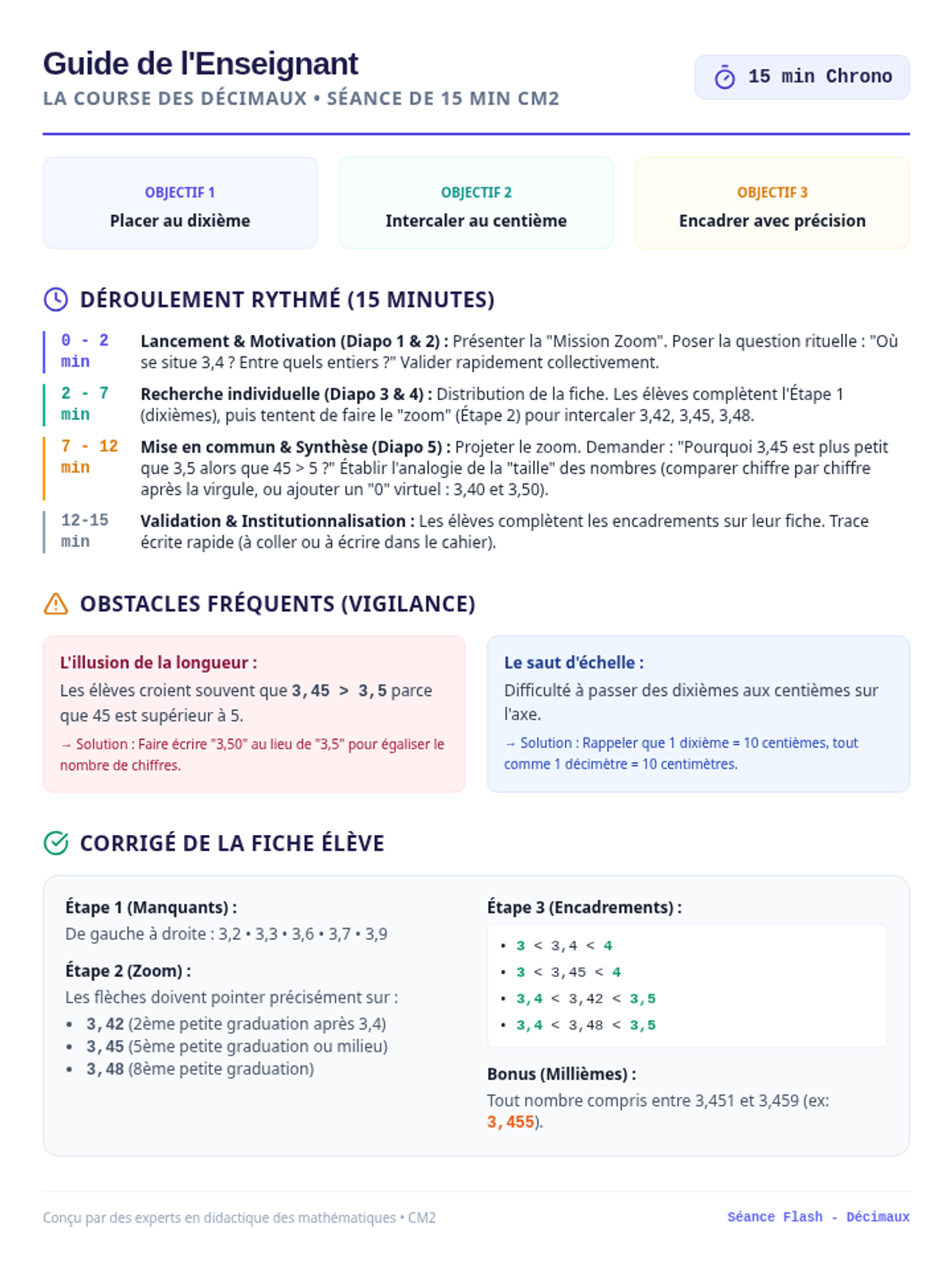
Une séance de découverte ultra-rythmée de 15 minutes pour le CM2, conçue pour faire comprendre visuellement le placement, l'intercalation et l'encadrement des nombres décimaux grâce au concept du zoom sur la droite graduée.
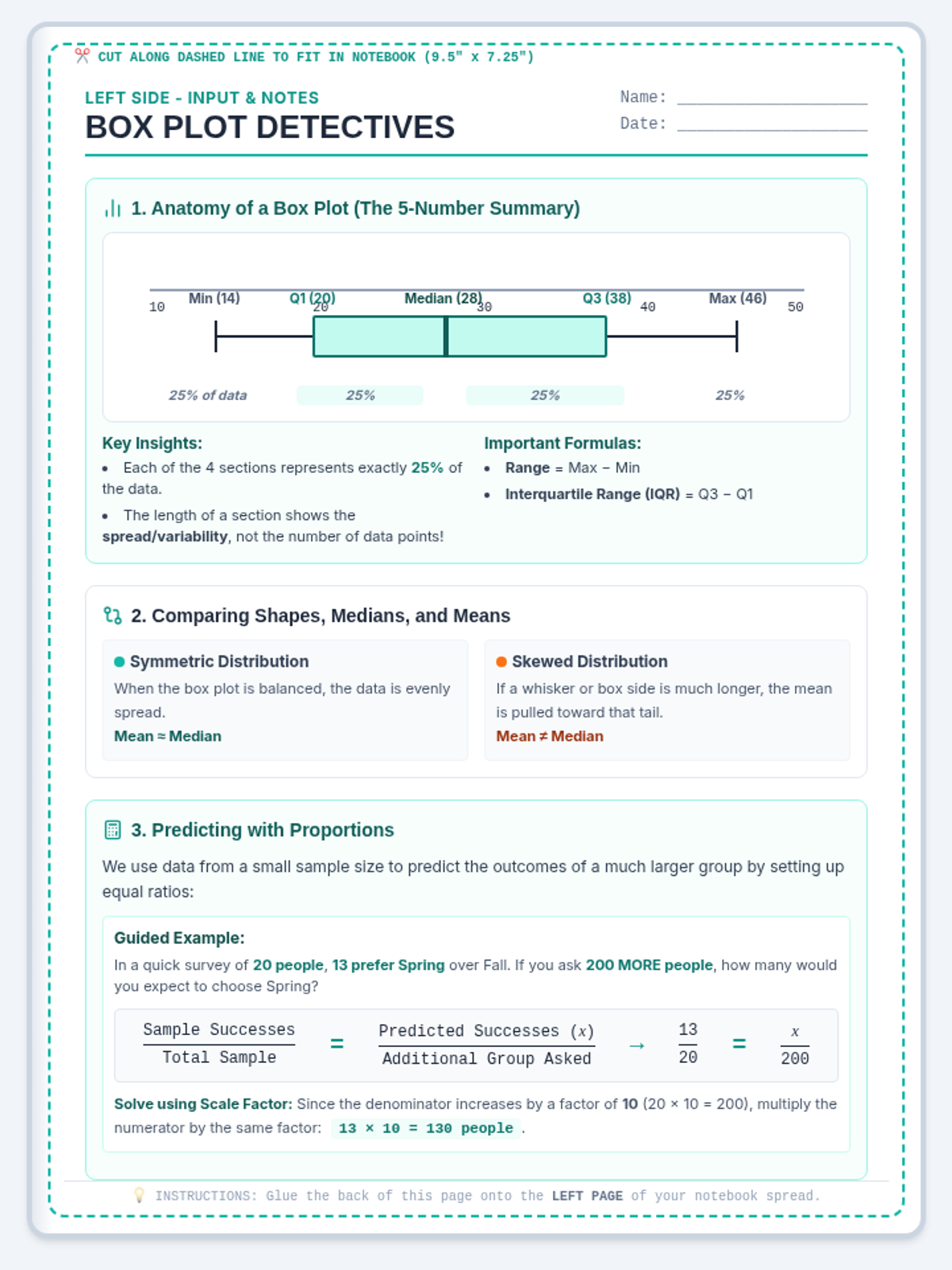
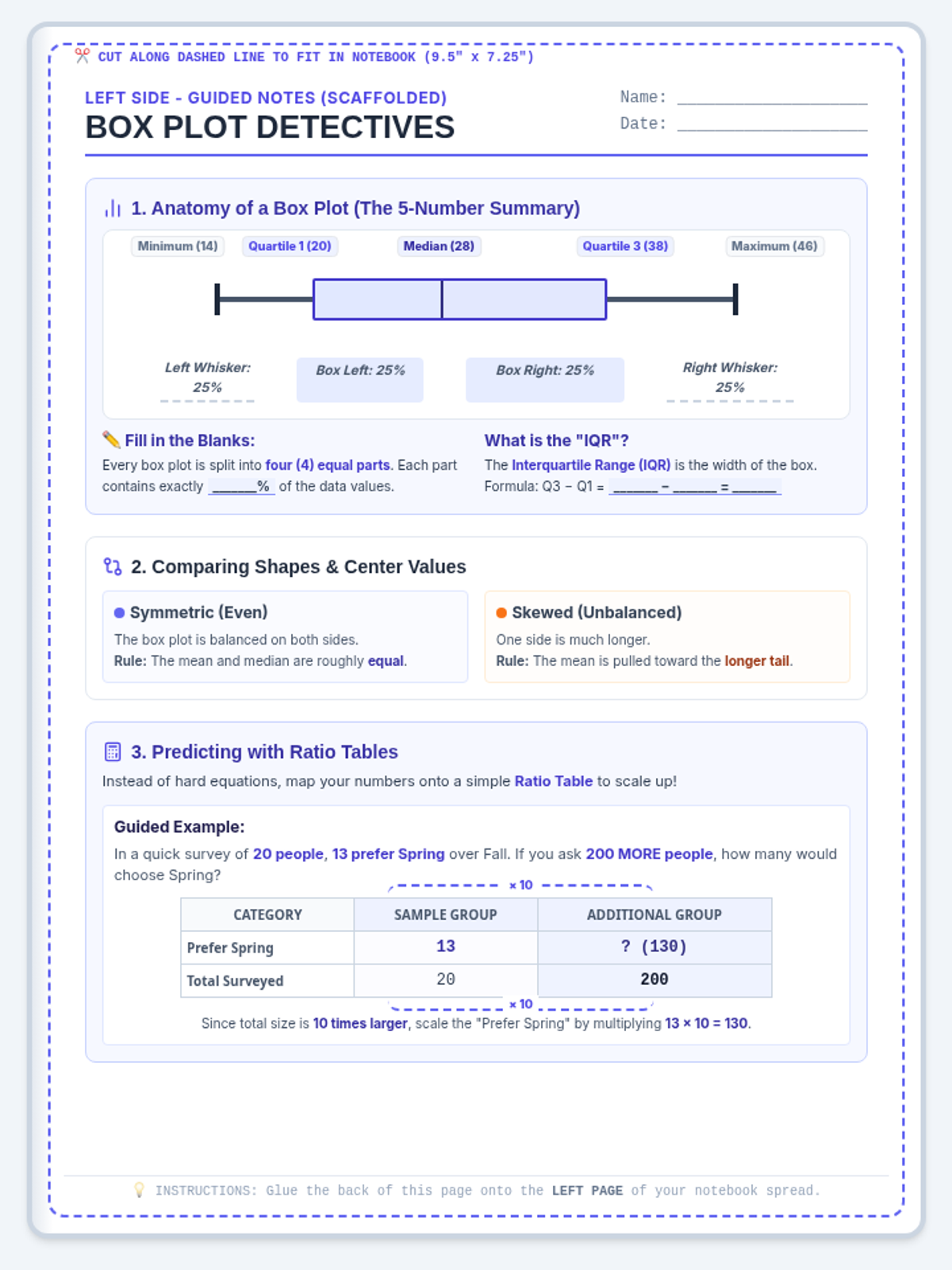
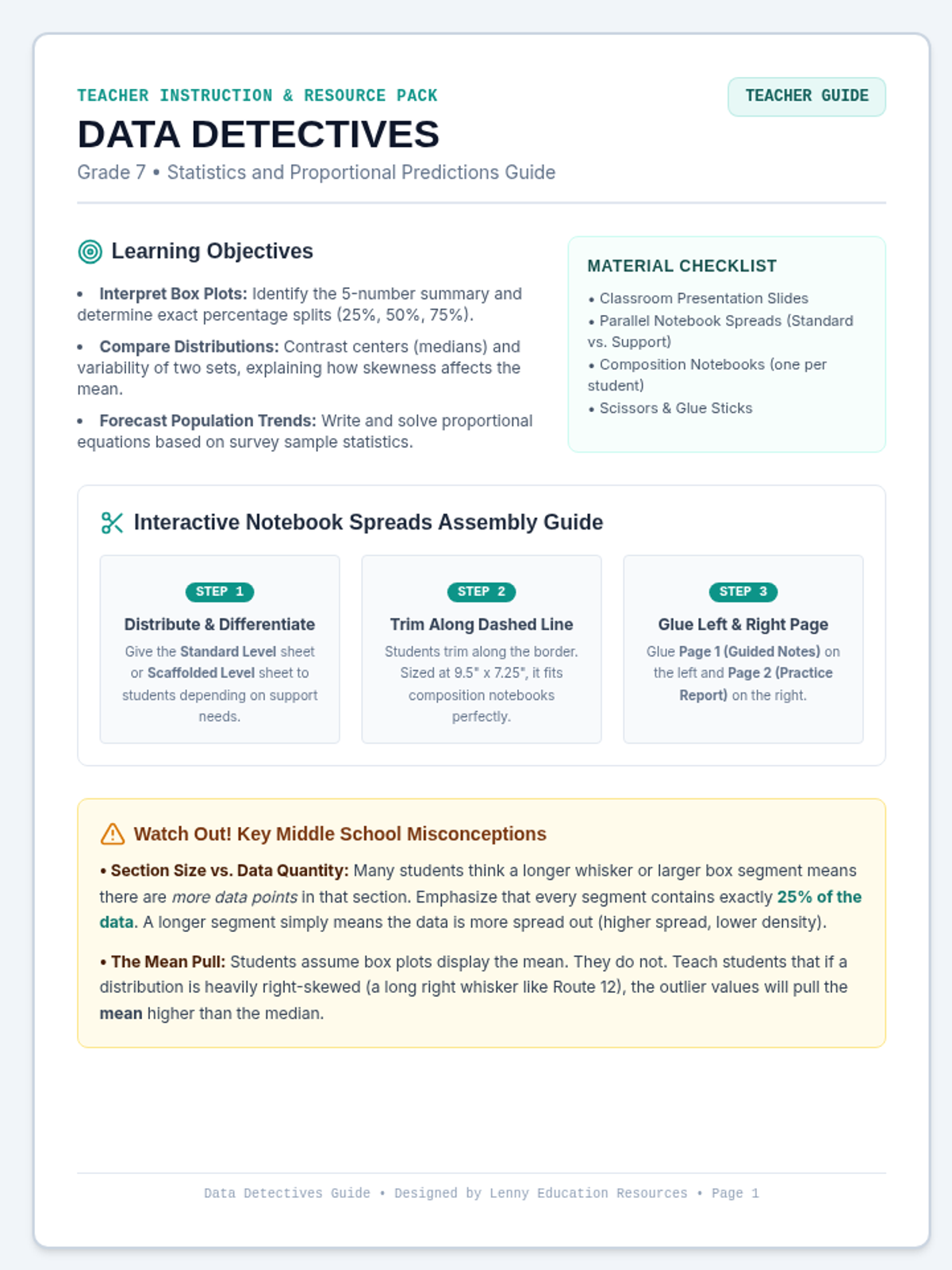
A middle school statistics lesson focused on comparing box plots, understanding quartiles, and making proportional predictions using sample data. Includes parallel standard and scaffolded interactive notebook spreads.
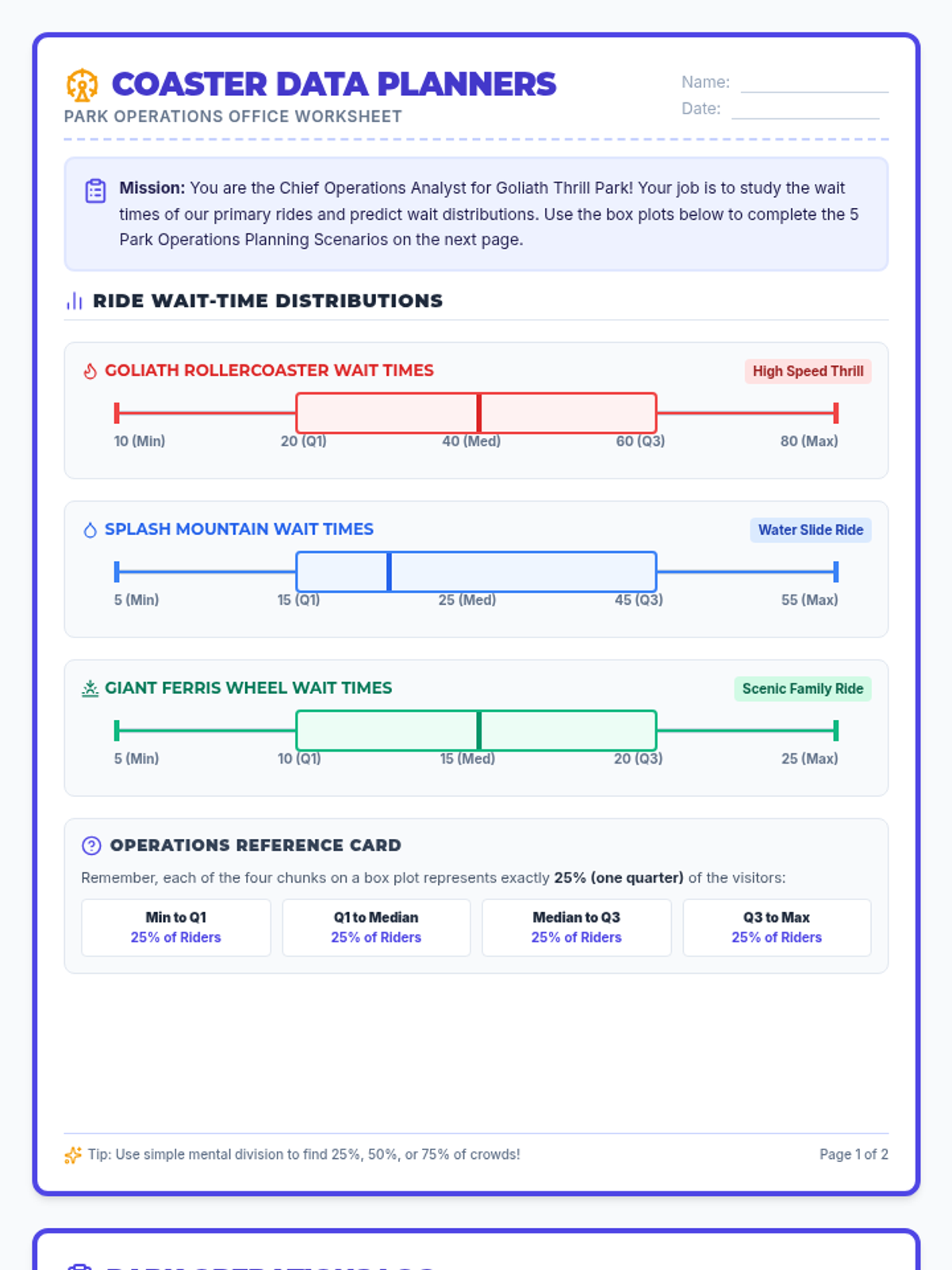
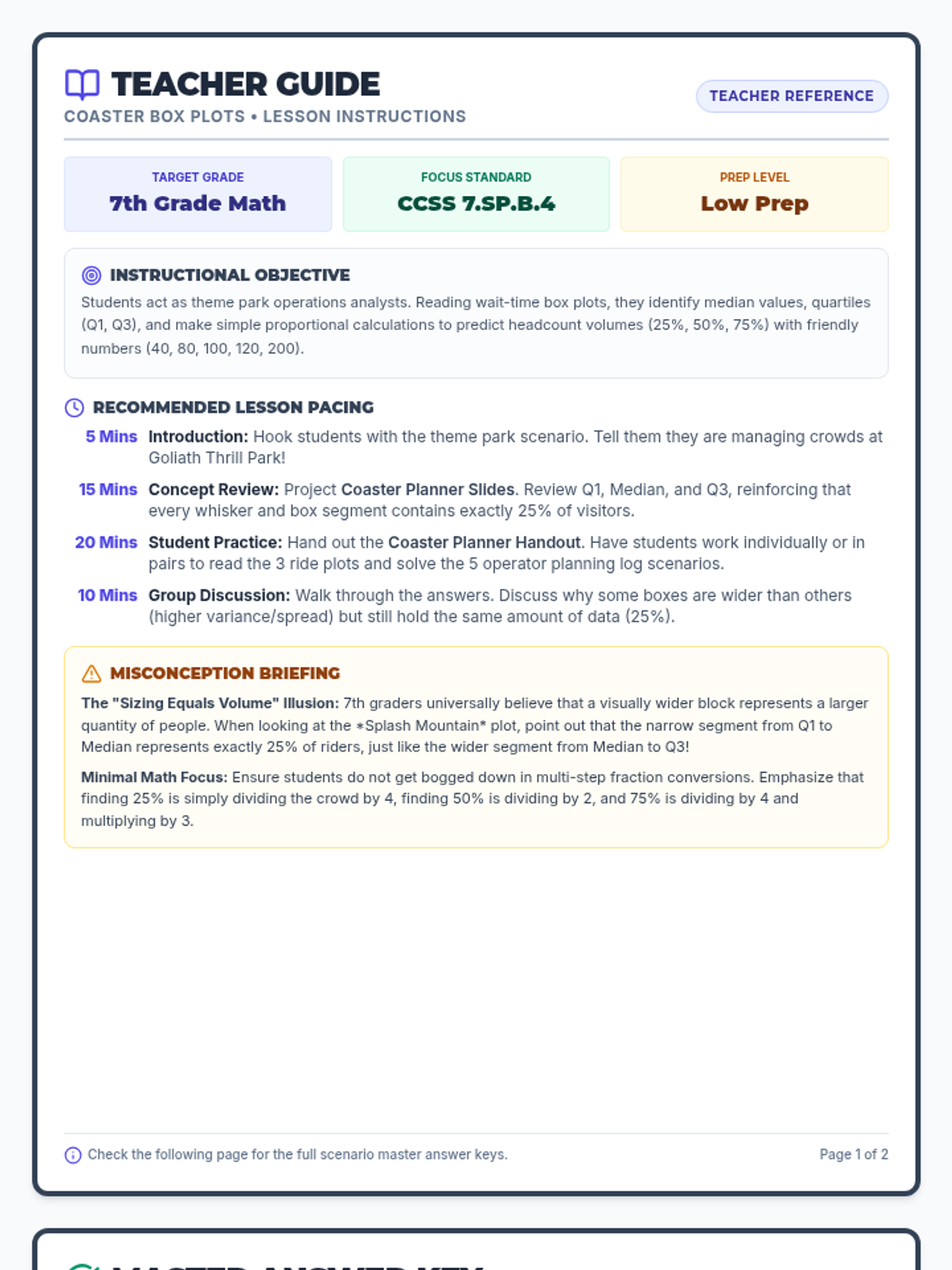
An engaging amusement park themed math lesson where 7th-grade students act as park planners. Reading ride wait-time box plots, students solve realistic visitor volume predictions with simple percentage calculations.