Students become book detectives as they explore and identify the different parts of a book through a hands-on puzzle activity. This lesson is designed for Pre-K learners to build early literacy and library skills.
Applying common suffixes (-s, -es, -ed, -ing) and mastering spelling rules like doubling consonants and dropping the silent e.
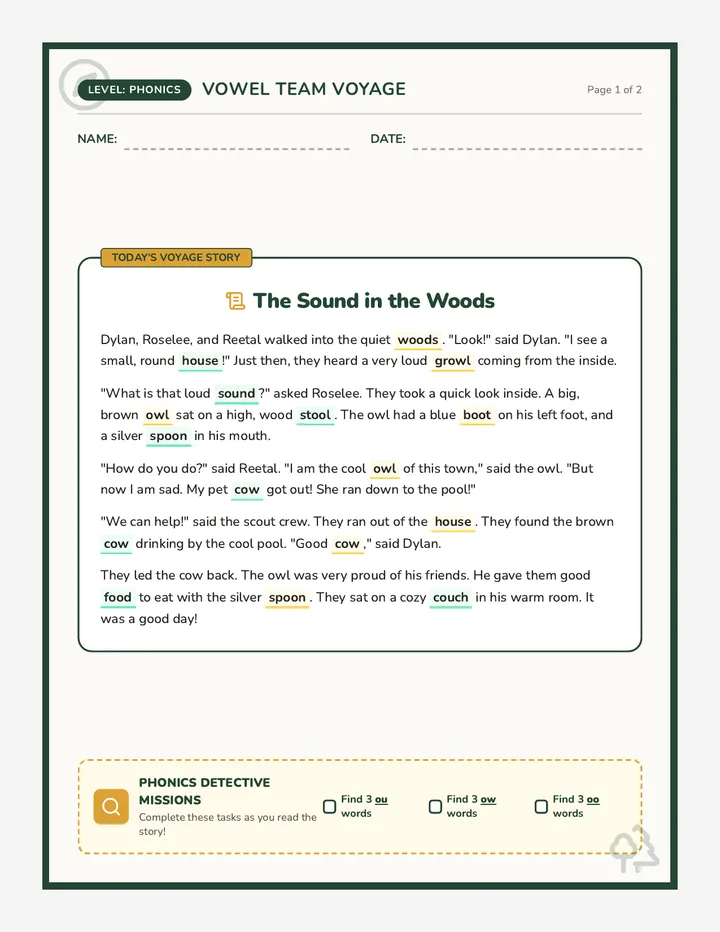
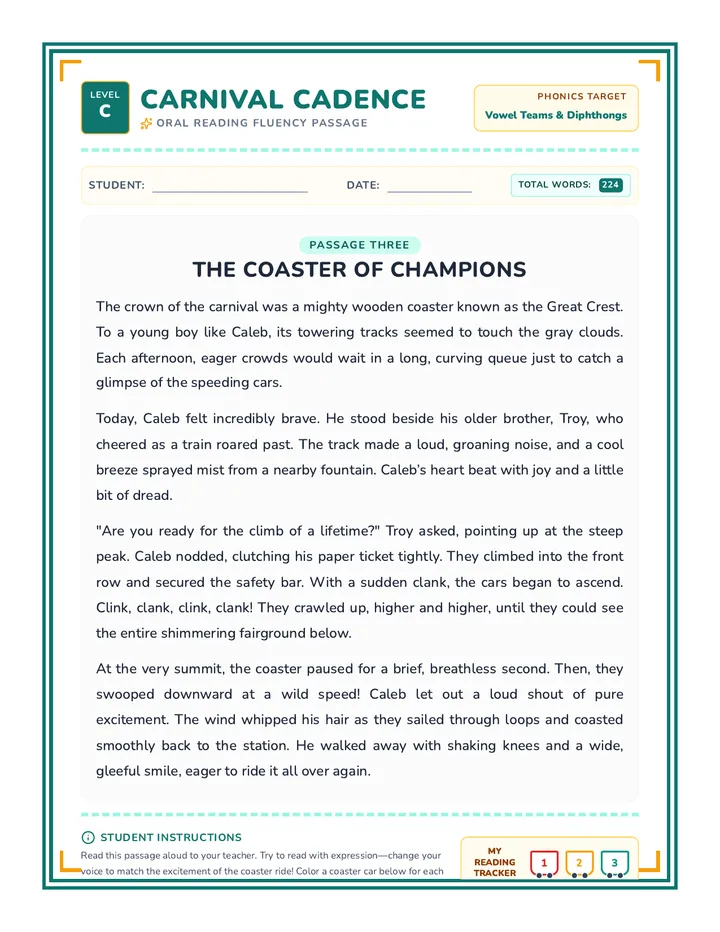
Exploring common vowel teams like ai, ay, ee, and ea, and understanding how vowel combinations create long vowel sounds.
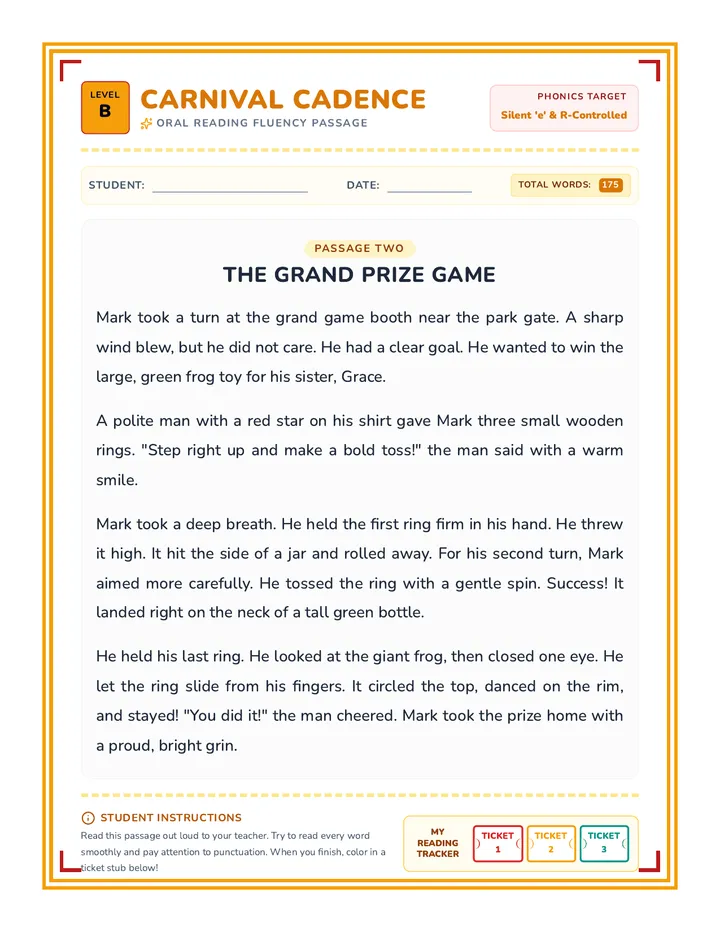
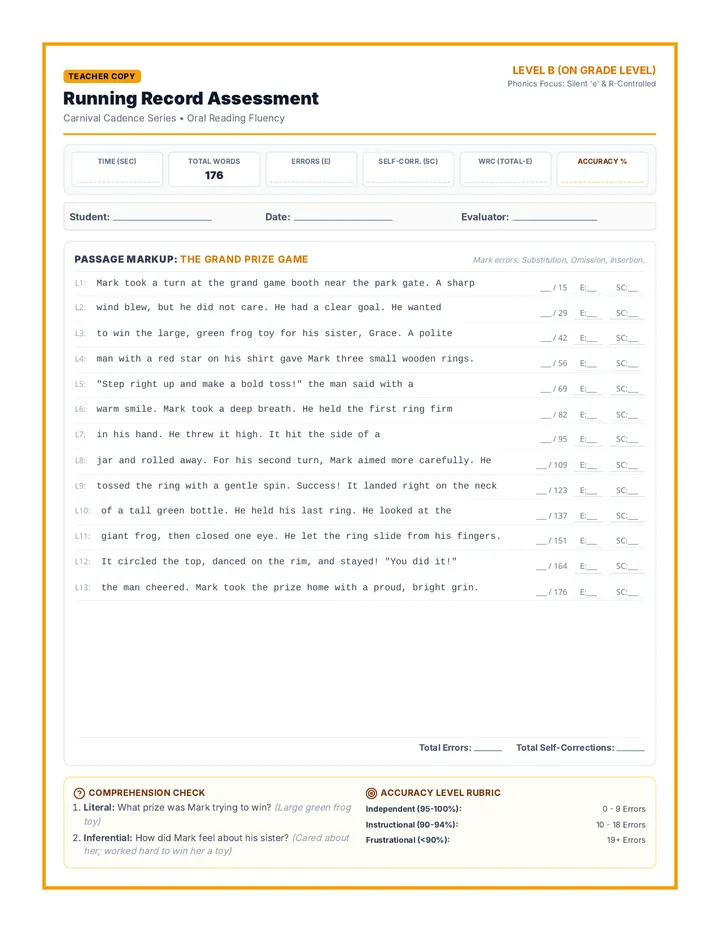
Learning the role of silent e in changing vowel sounds from short to long, focusing on common CVCE patterns.
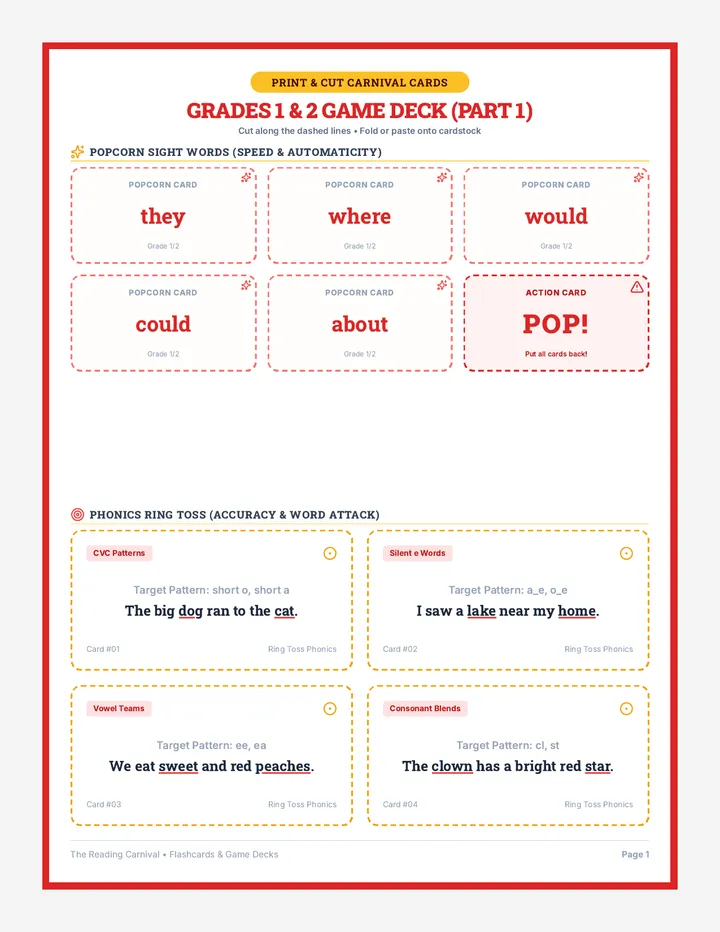
Developing proficiency with consonant blends (bl, st, fr) and digraphs (ch, sh, th, wh) to decode and spell more complex single-syllable words.
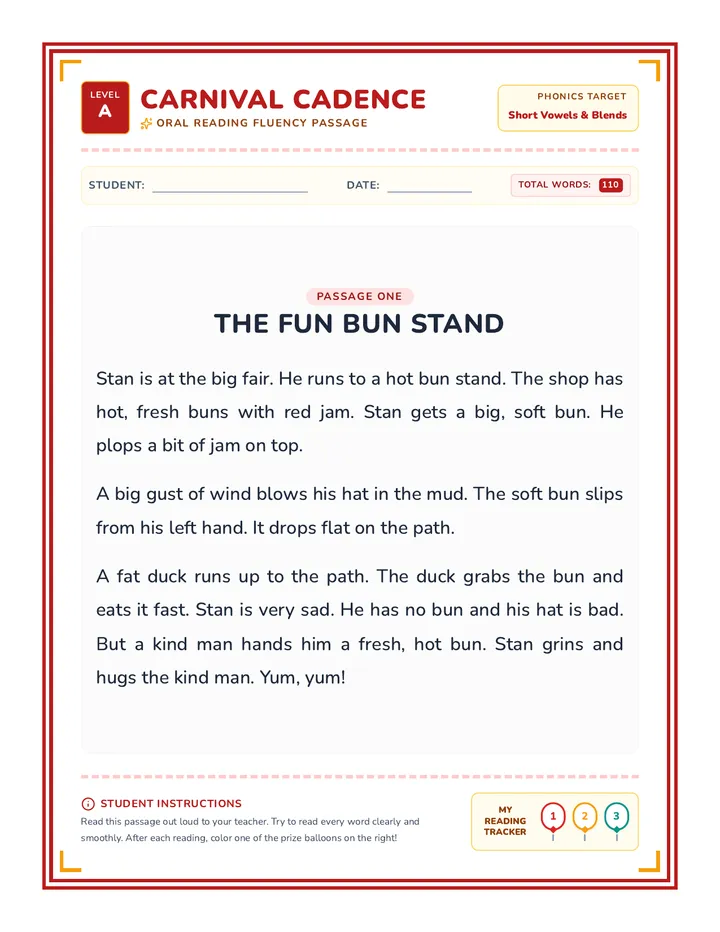
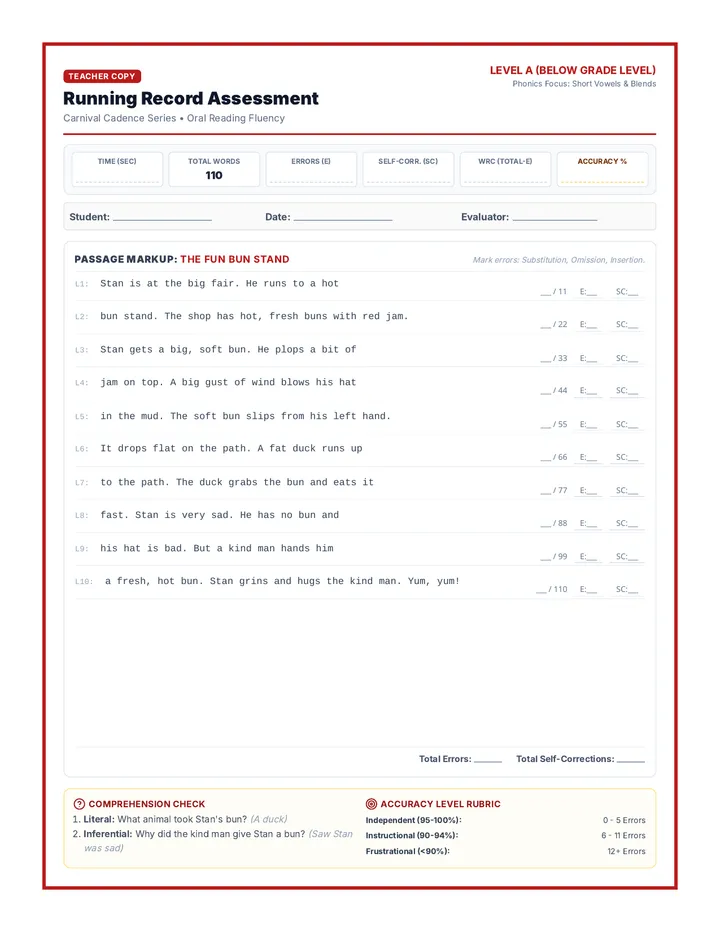
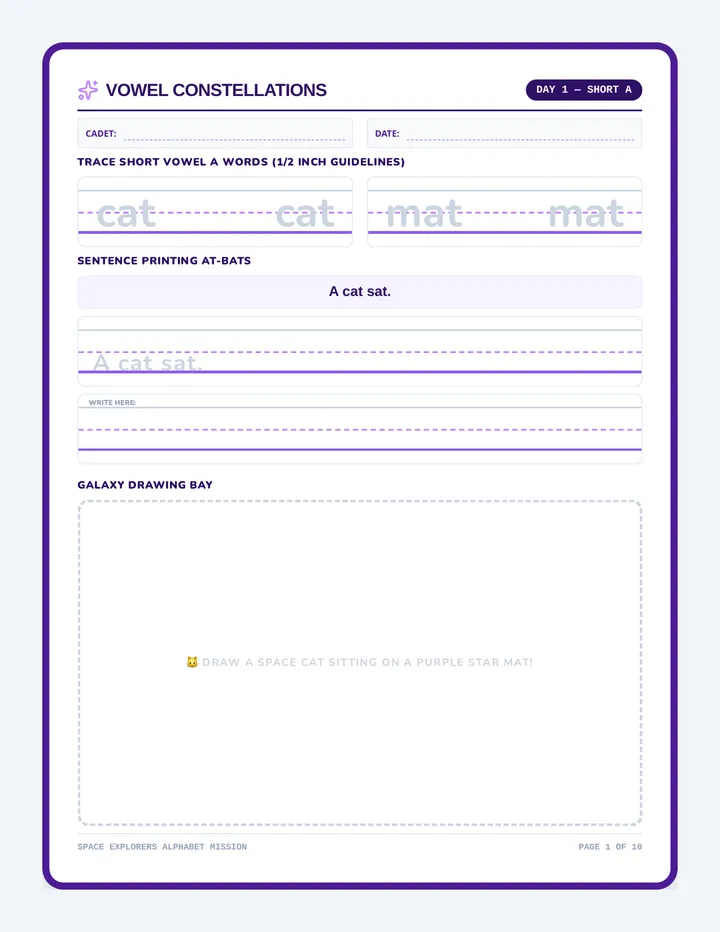
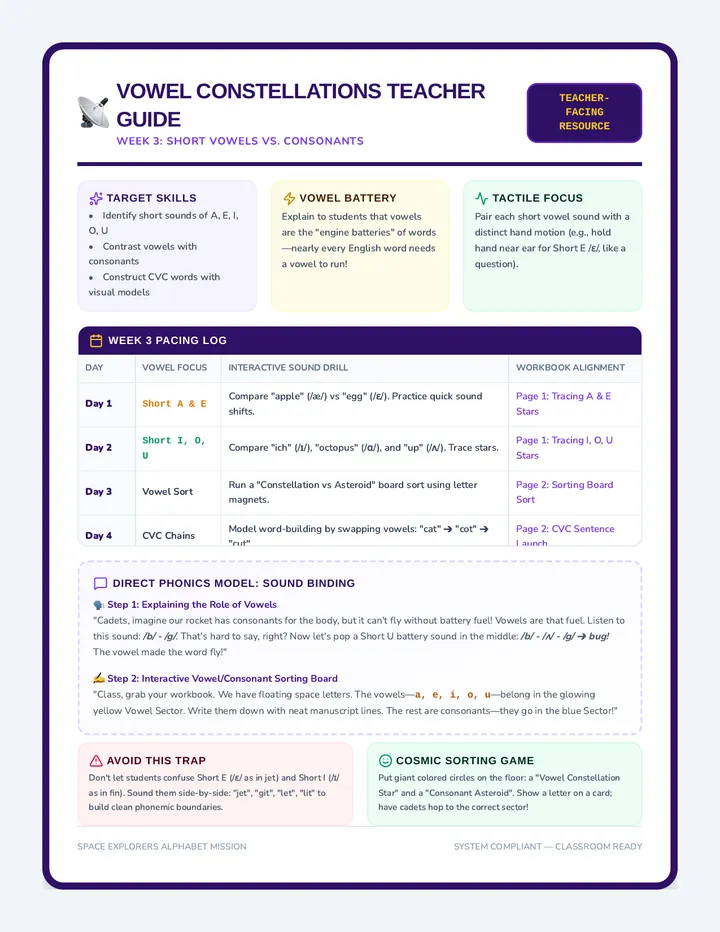
Mastering short vowel sounds (a, e, i, o, u) through CVC word construction, reading fluency with simple decodable text, and basic spelling patterns.
A celebratory final session where students demonstrate their 'Master Pathfinder' skills and receive recognition for their growth in thinking and English.
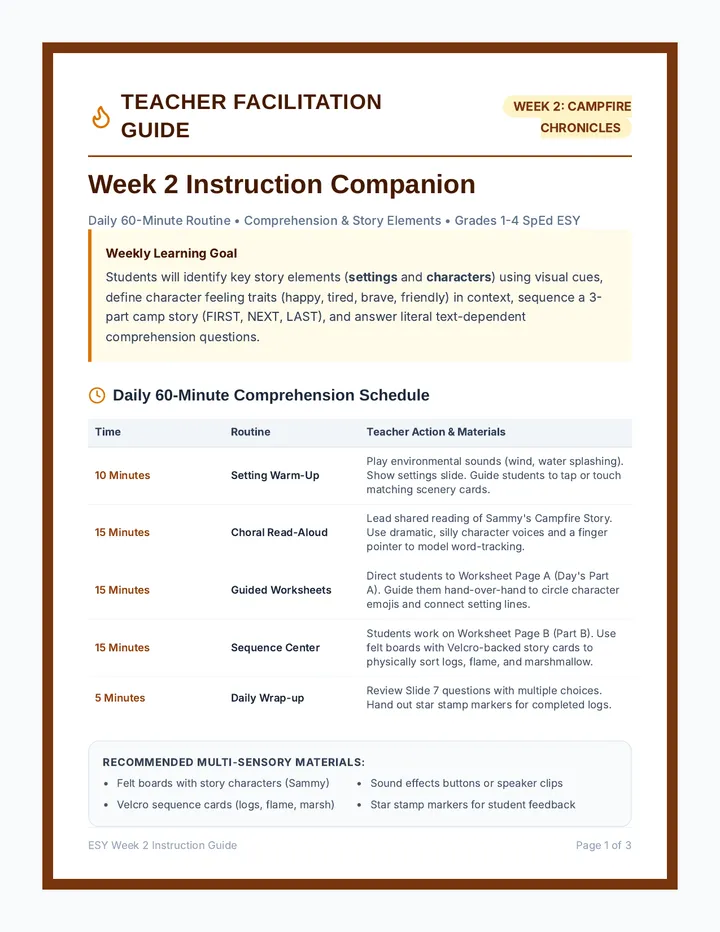
Focuses on logic and decision-making by asking 'why' and 'how' questions about texts to understand cause and effect.
Deepens self-awareness through journaling and reflection, helping students recognize their own reactions and thoughts while reading and writing.
Encourages idea construction and creative writing, showing students how to fuel their mind machines with imagination to create original stories.
Develops information decoding skills by teaching students to search for facts and evidence within a text, much like a forensic scientist.
Introduces the growth mindset by comparing resilience to a gear that helps us keep moving forward even when we encounter 'rusty' mistakes.
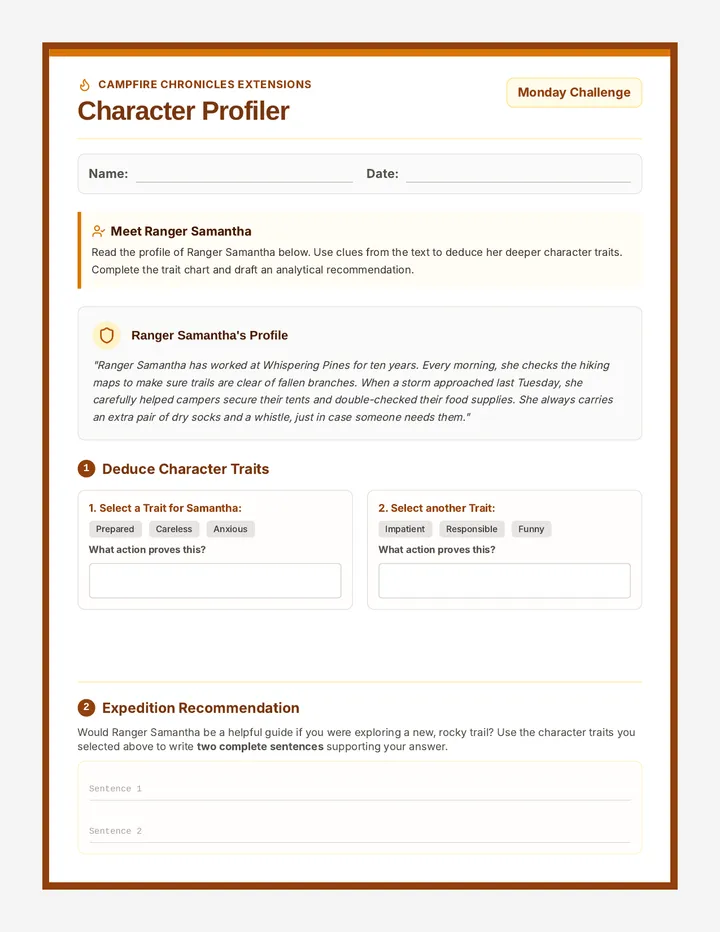
Explores social understanding by teaching students how to use their 'internal compass' to interpret character feelings and perspectives in texts.
Uses story mapping to help students visualize narrative flow and understand how different parts of a story connect to form a whole.
Teaches basic grammar and sentence structure as the 'blueprints' that help us express ideas clearly so others can understand our thoughts.
Introduces vocabulary building through the lens of 'parts' for our mind machines, focusing on labeling emotions and objects with precision.
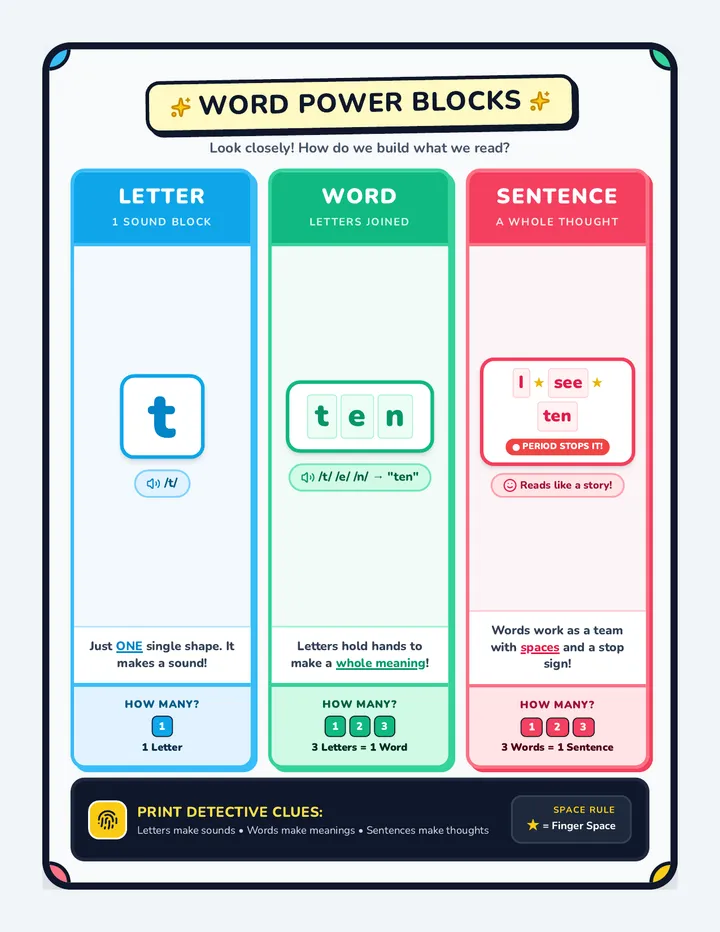
Focuses on phonics and pattern spotting in text, teaching students that reading is a form of detective work where we look for clues to unlock meaning.
An introductory lesson where students become 'Pathfinders,' learning that their minds are like incredible machines with gears they can control. Focuses on self-awareness and the basics of how we decode stories.
A hands-on lesson for first graders to identify and divide multisyllabic words with two closed syllables using the VC/CV pattern. Students will learn to spot the "vowel-consonant-consonant-vowel" pattern to decode longer words.
Students will learn to decode two-syllable words by identifying the VC/CV pattern between two closed syllables, using a hands-on cutting and pasting approach.
A series of activities focusing on long 'a' spelling patterns: a-consonant-e, vowel teams ai/ay, and open syllables. Students practice mapping sounds, completing sentences, and sorting words to build phonemic awareness and spelling proficiency.
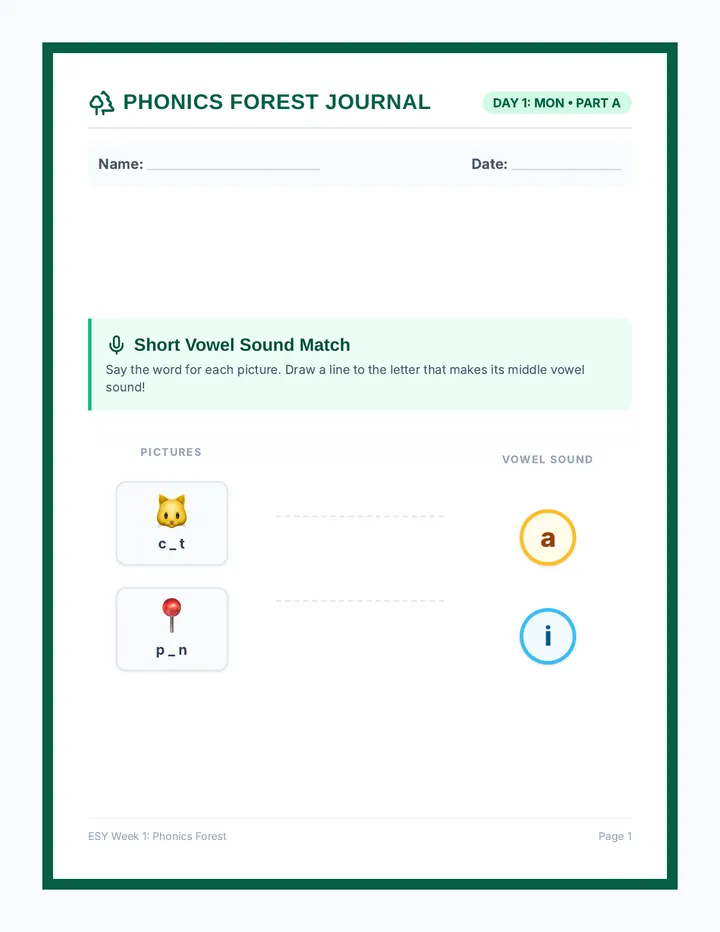
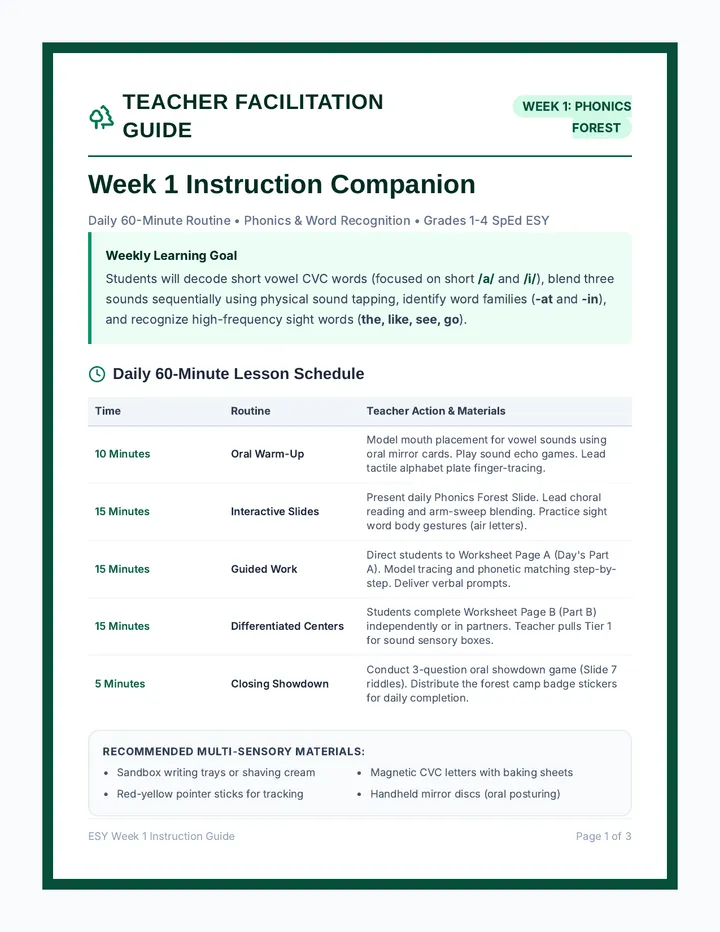
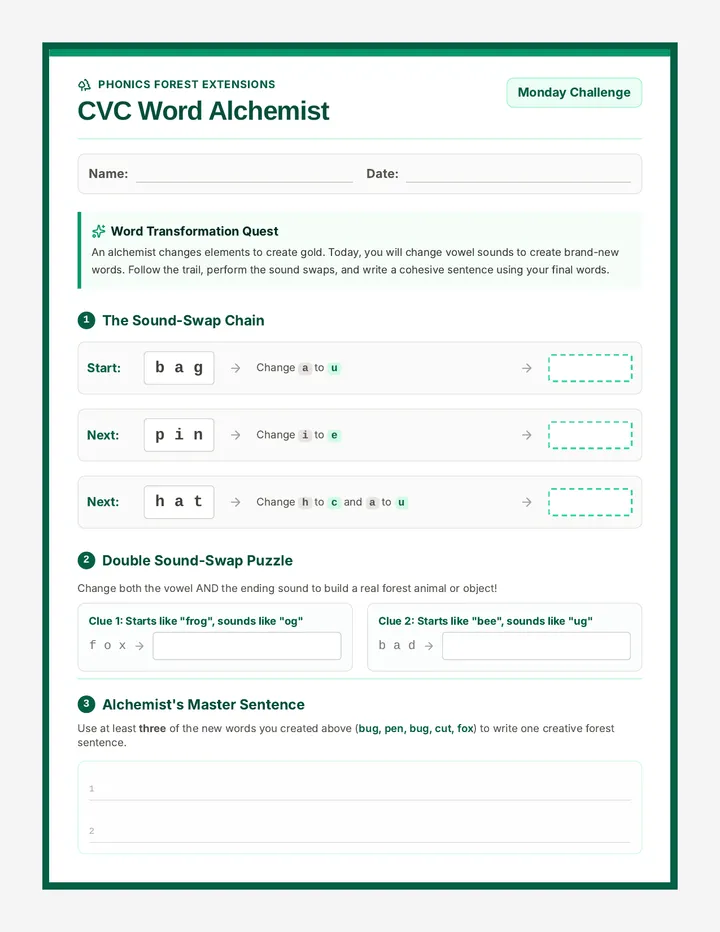
A foundational phonics lesson focusing on short vowel sounds (a, e, i, o, u) and high-frequency sight words using an adventure-themed "Vowel Valley" concept.
A foundational literacy lesson focusing on short vowel sounds and high-frequency sight words through an engaging 'nature expedition' theme. Students will identify vowel sounds in CVC words and practice common sight words.
Students practice reading comprehension and narrative sequencing by ordering sentences from Aesop's classic fable of the boy who cried wolf. The lesson includes a visual storytelling presentation, printable sentence strips for tactile learning, and a follow-up writing activity.
A collection of worksheets designed to help students write structured biographical paragraphs about historical figures using mind maps and sentence starters. Each worksheet features a unique theme tailored to the figure's profession.
A focused lesson on distinguishing between open and closed syllables through visual coding and step-by-step detective work.
A comprehensive small-group lesson focused on the foundational skills of retelling and paraphrasing using short fiction. Students use blueprint-themed tools to identify story structure and practice restating ideas in their own words.
A collection of reflective and creative activities for Memorial Day, including a poppy craft writing activity, a gratitude letter template, and acrostic poems to honor fallen heroes.