A visual lesson on multiplying 2-digit numbers by 2-digit numbers using the box method (area model). Students use a blueprint-themed layout to decompose numbers and calculate partial products.
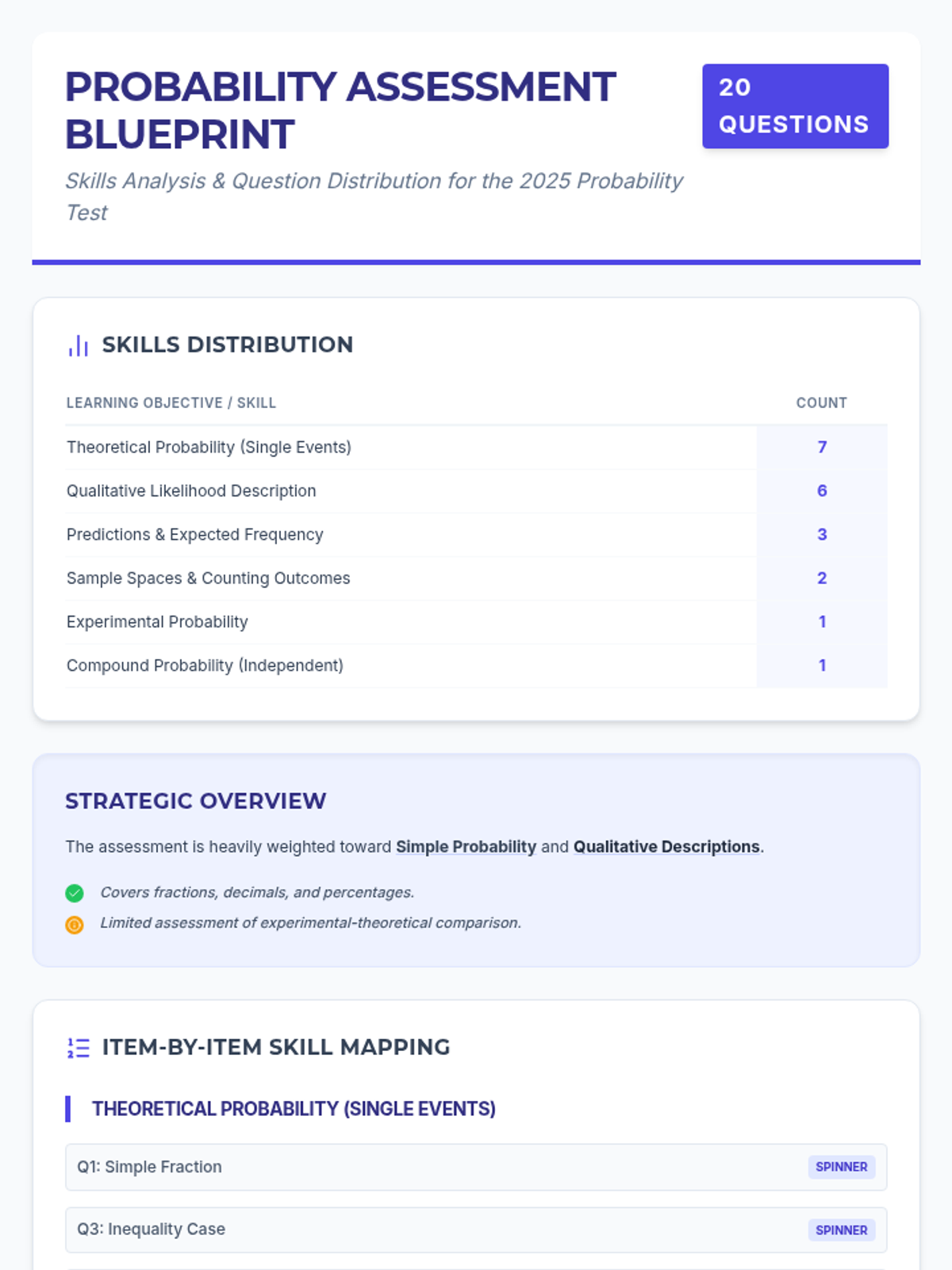
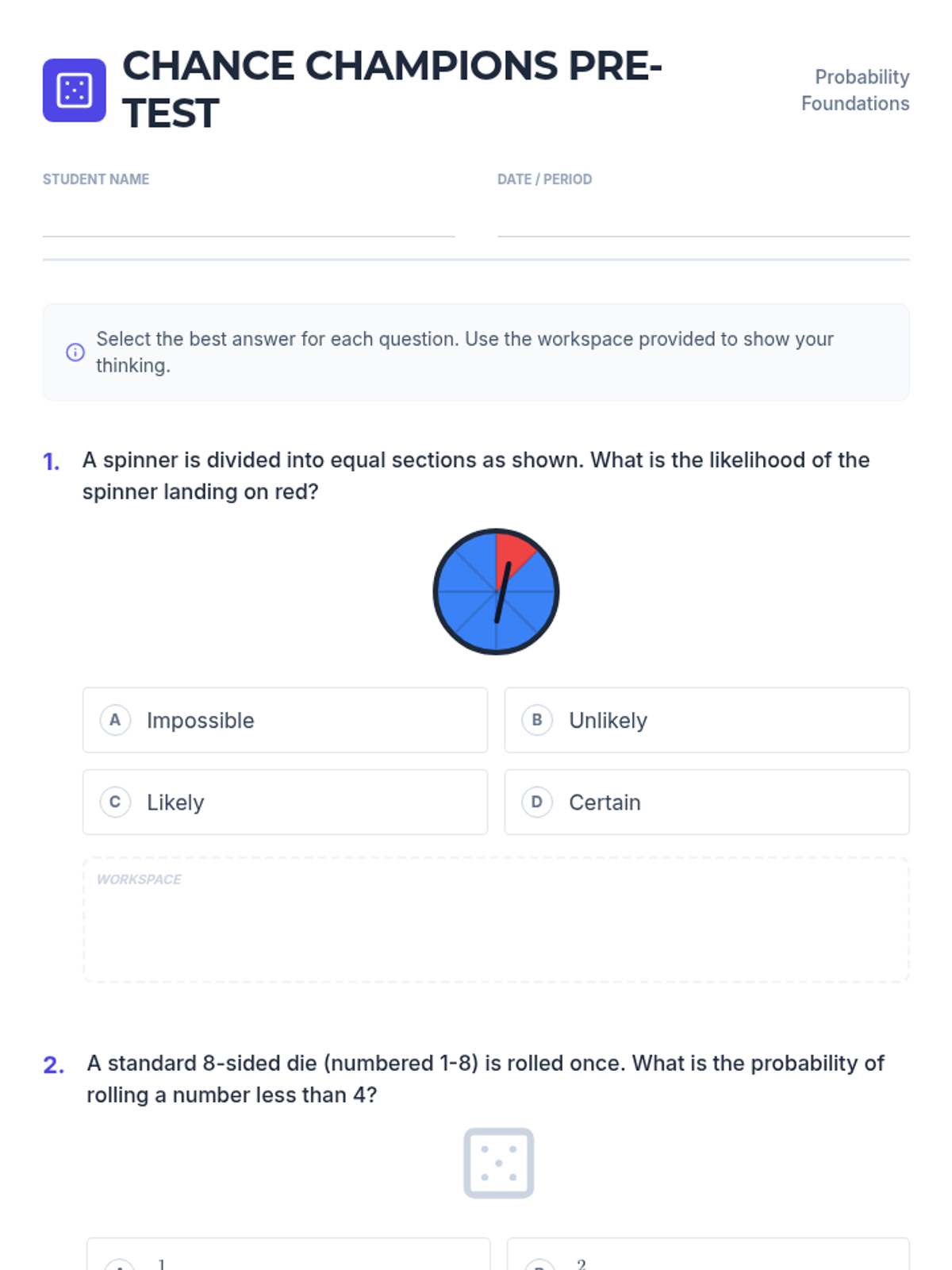
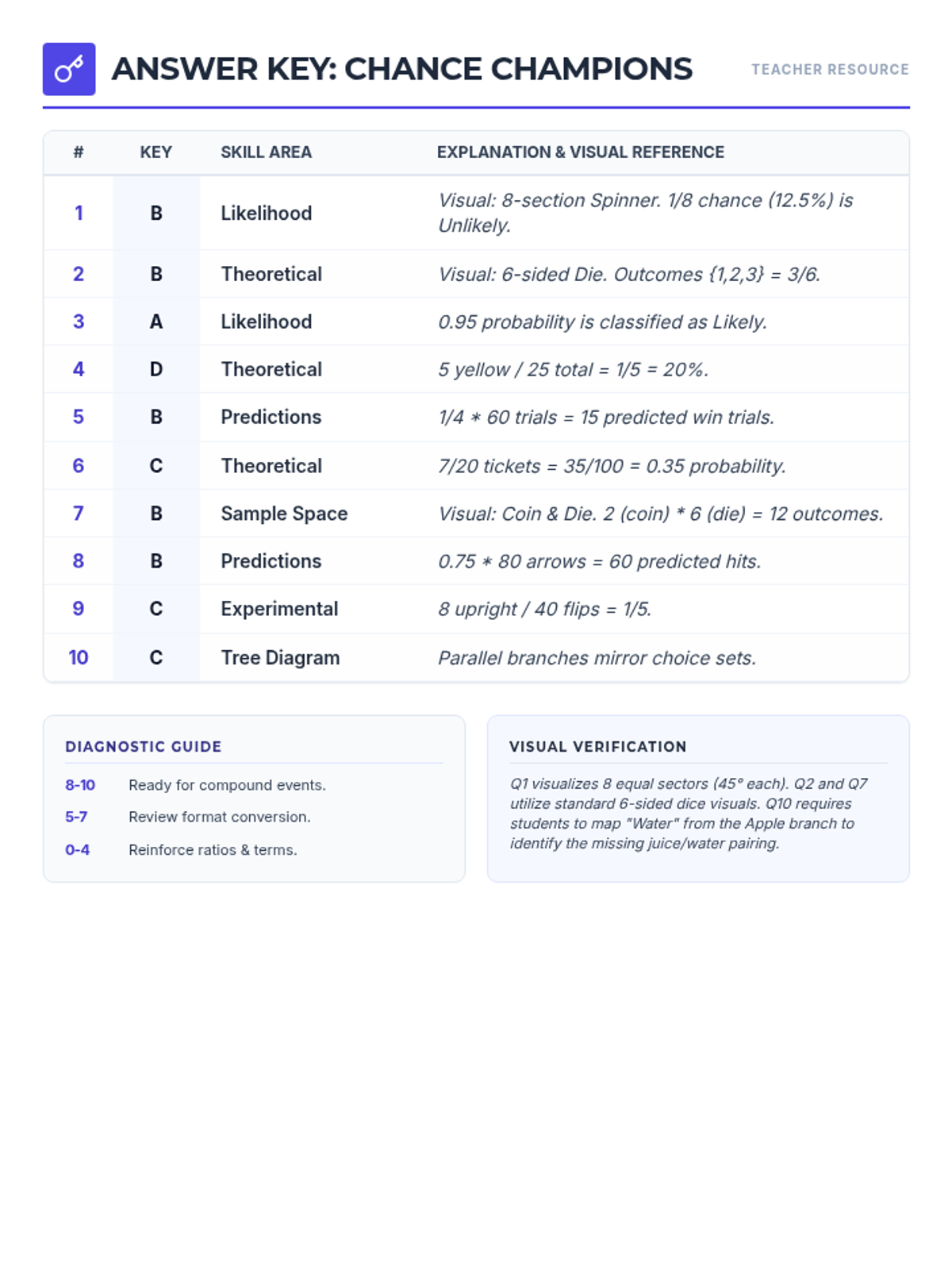
A foundational lesson on probability, covering qualitative likelihood, theoretical probability in various formats, and making predictions based on data.
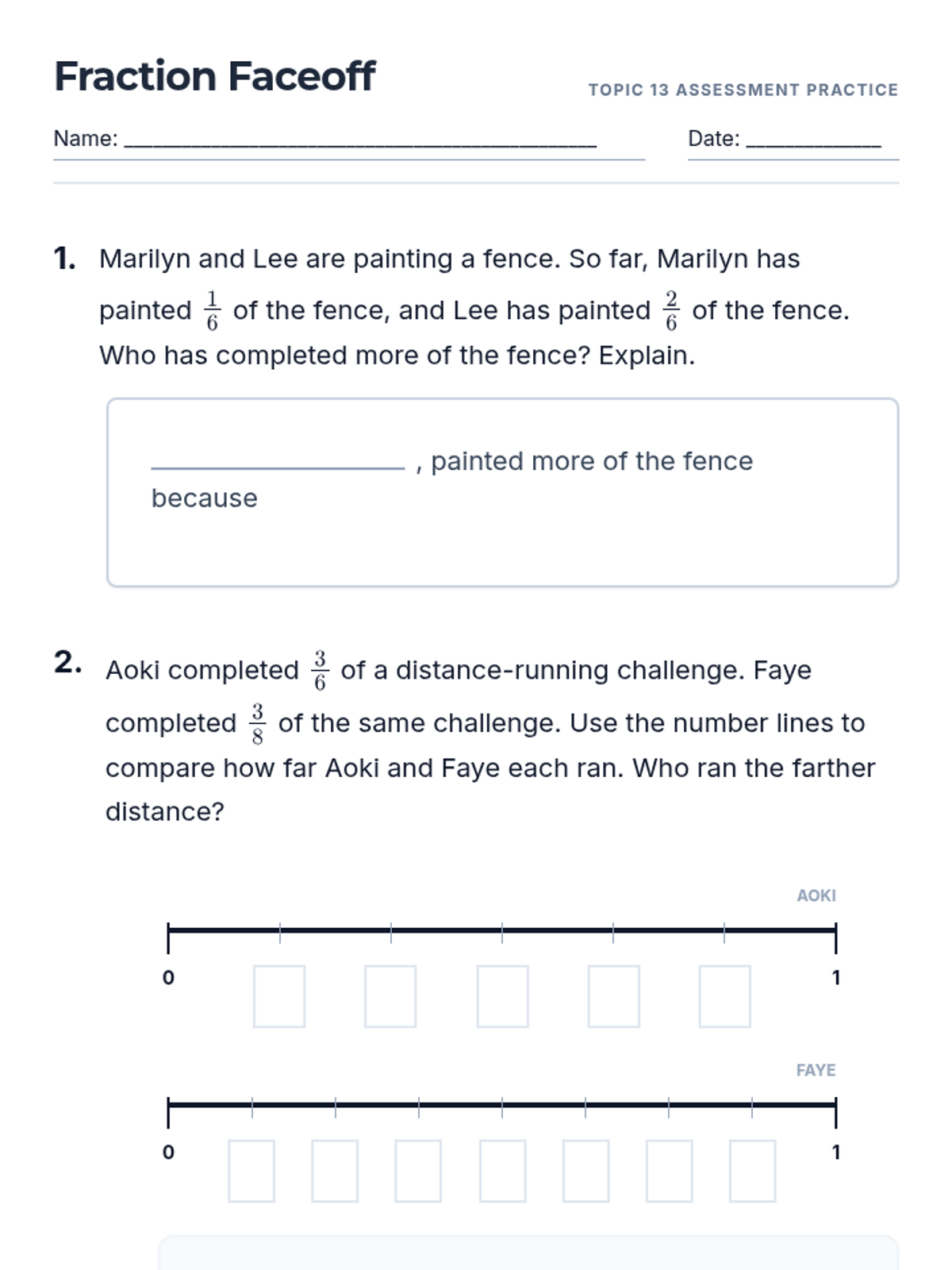
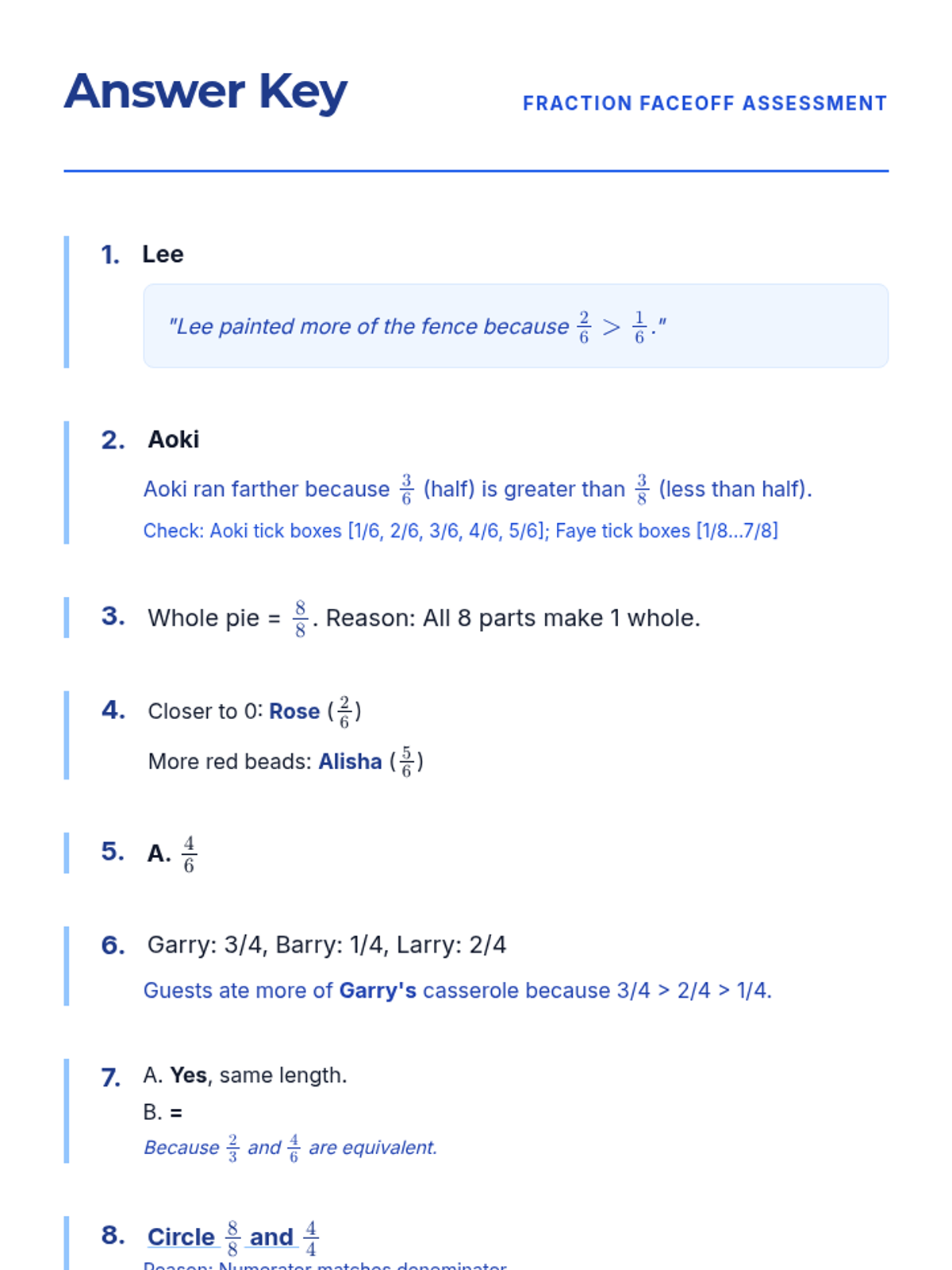
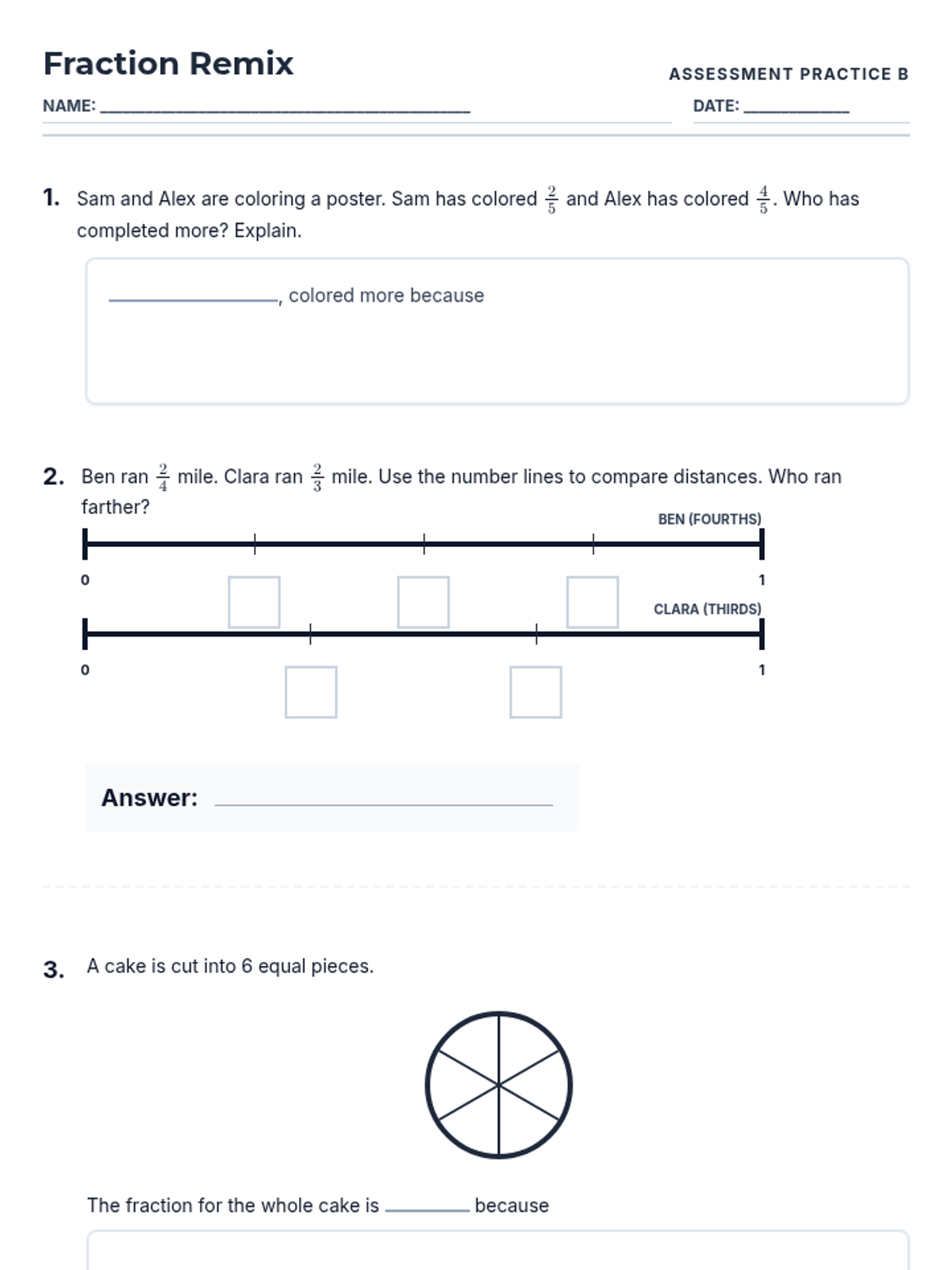
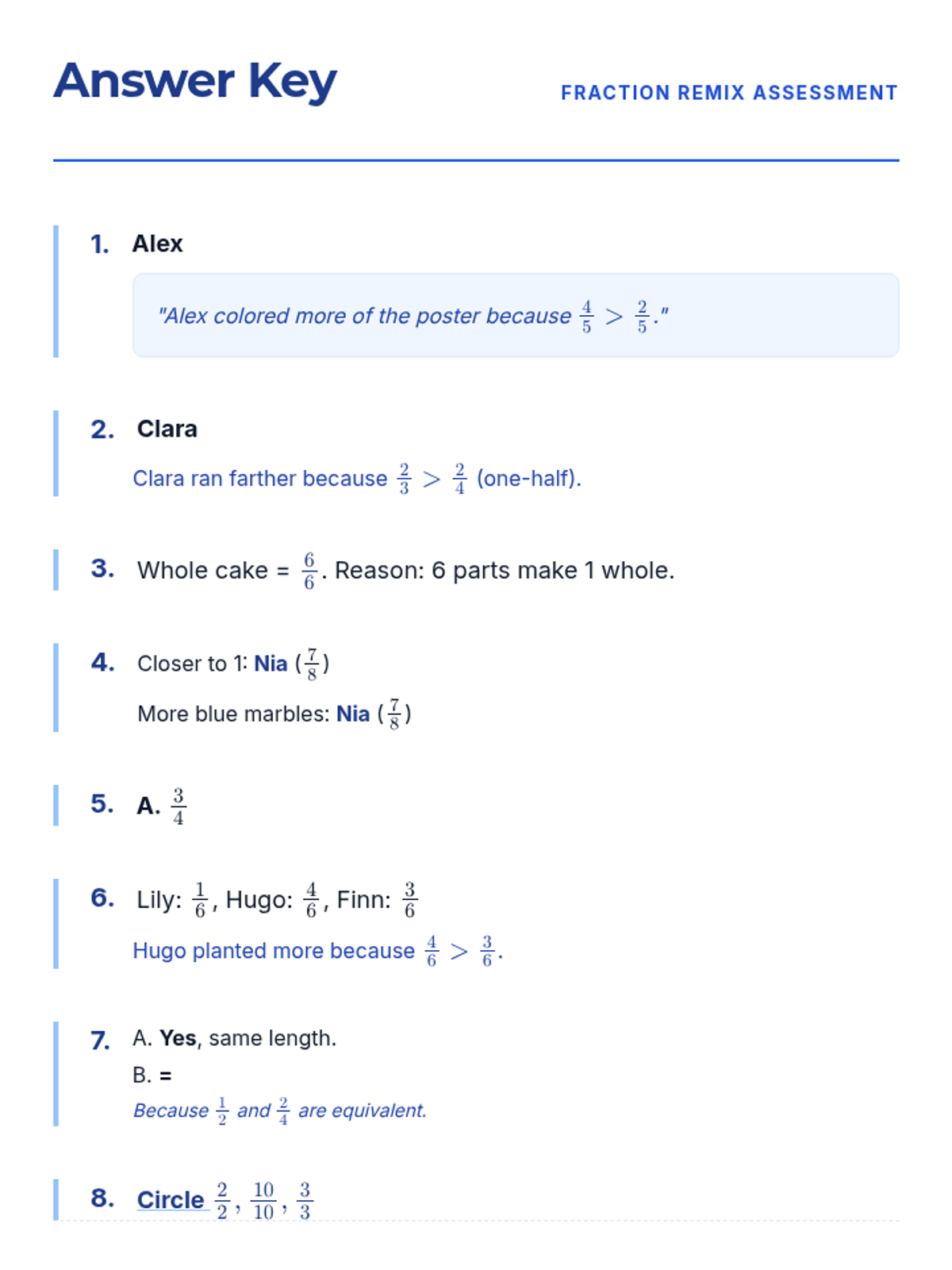
A comprehensive practice assessment focused on fraction comparison, equivalence, and representation, mirroring standardized testing formats with clear visuals and structured response areas.
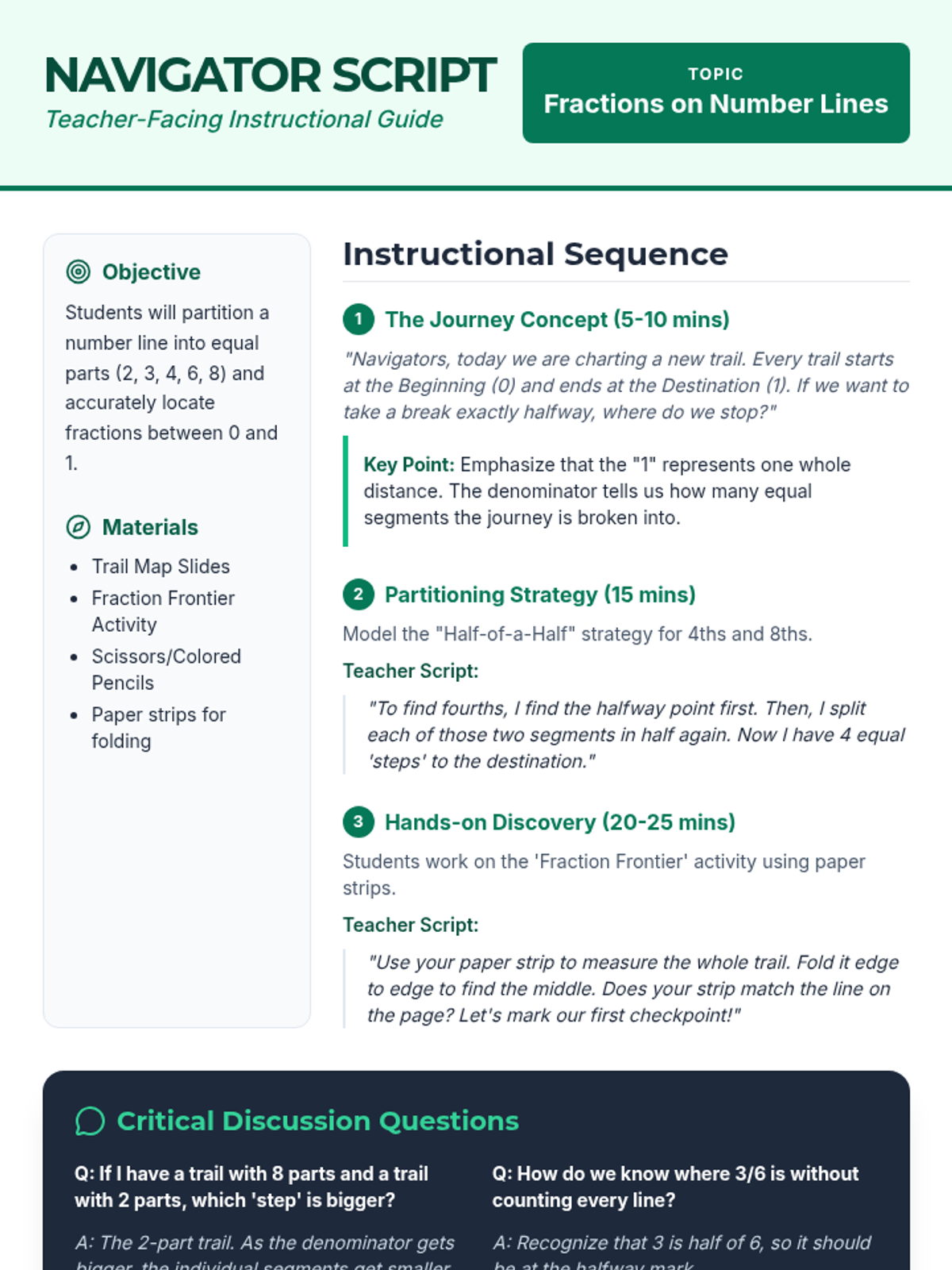
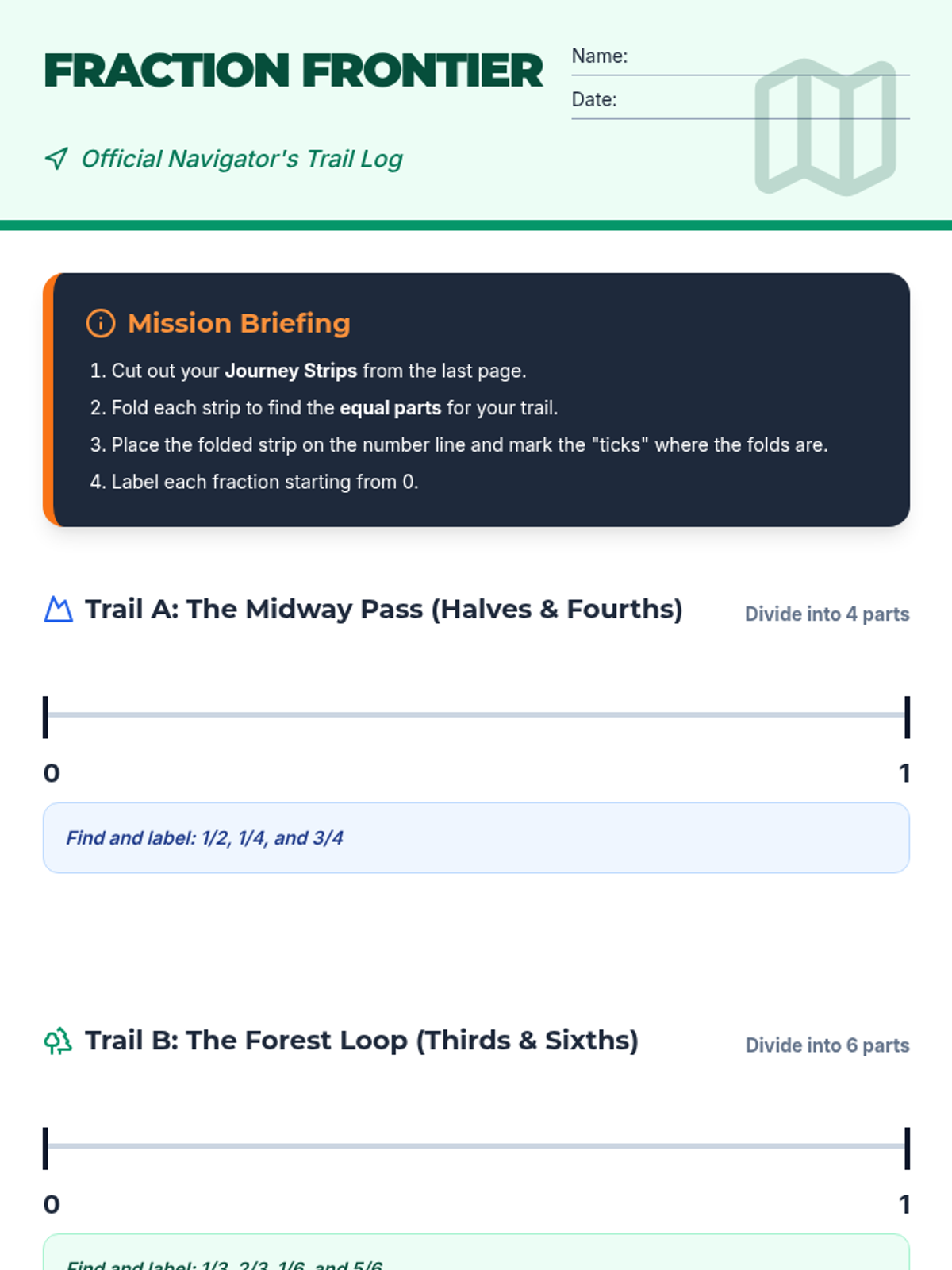
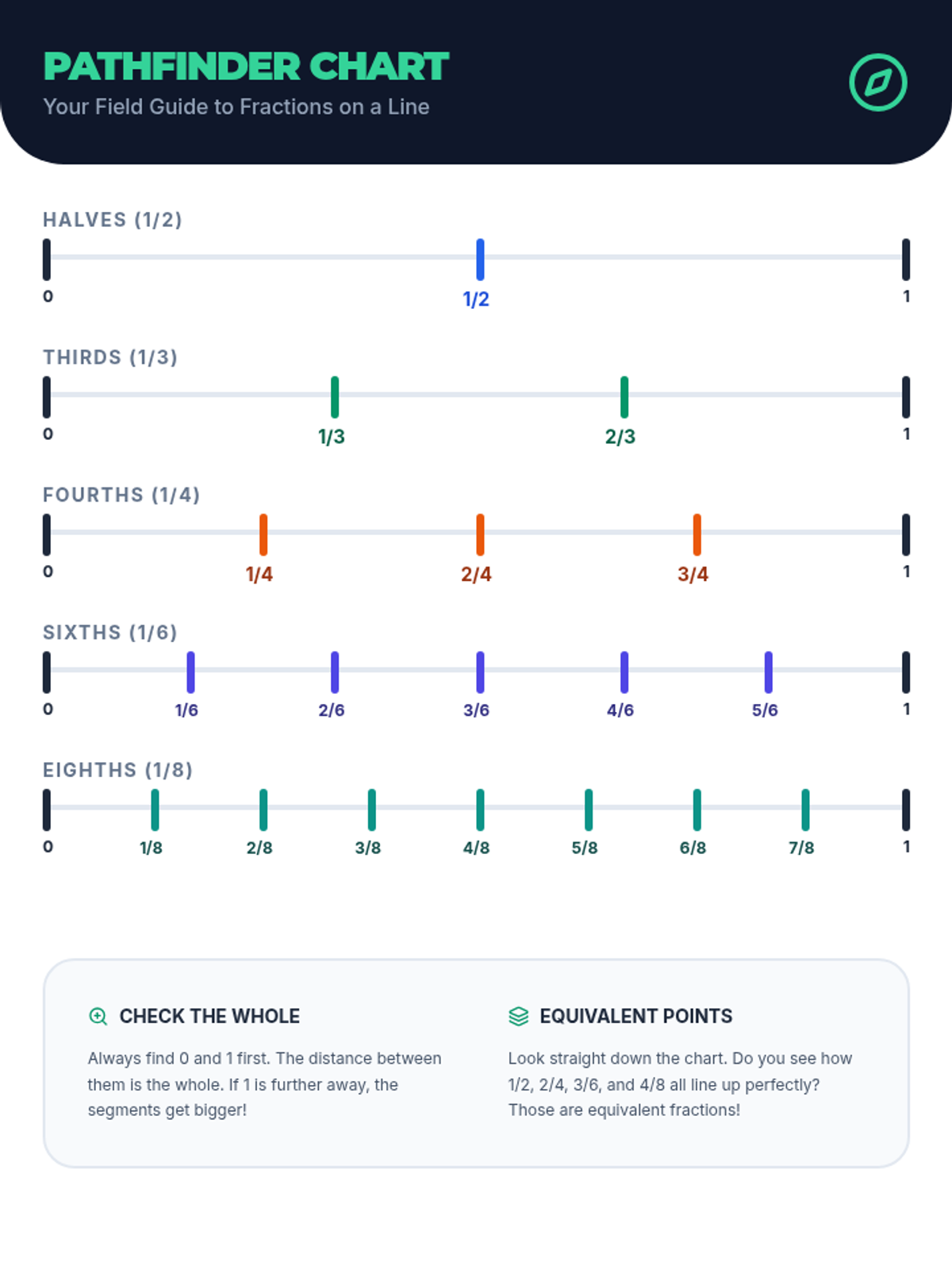
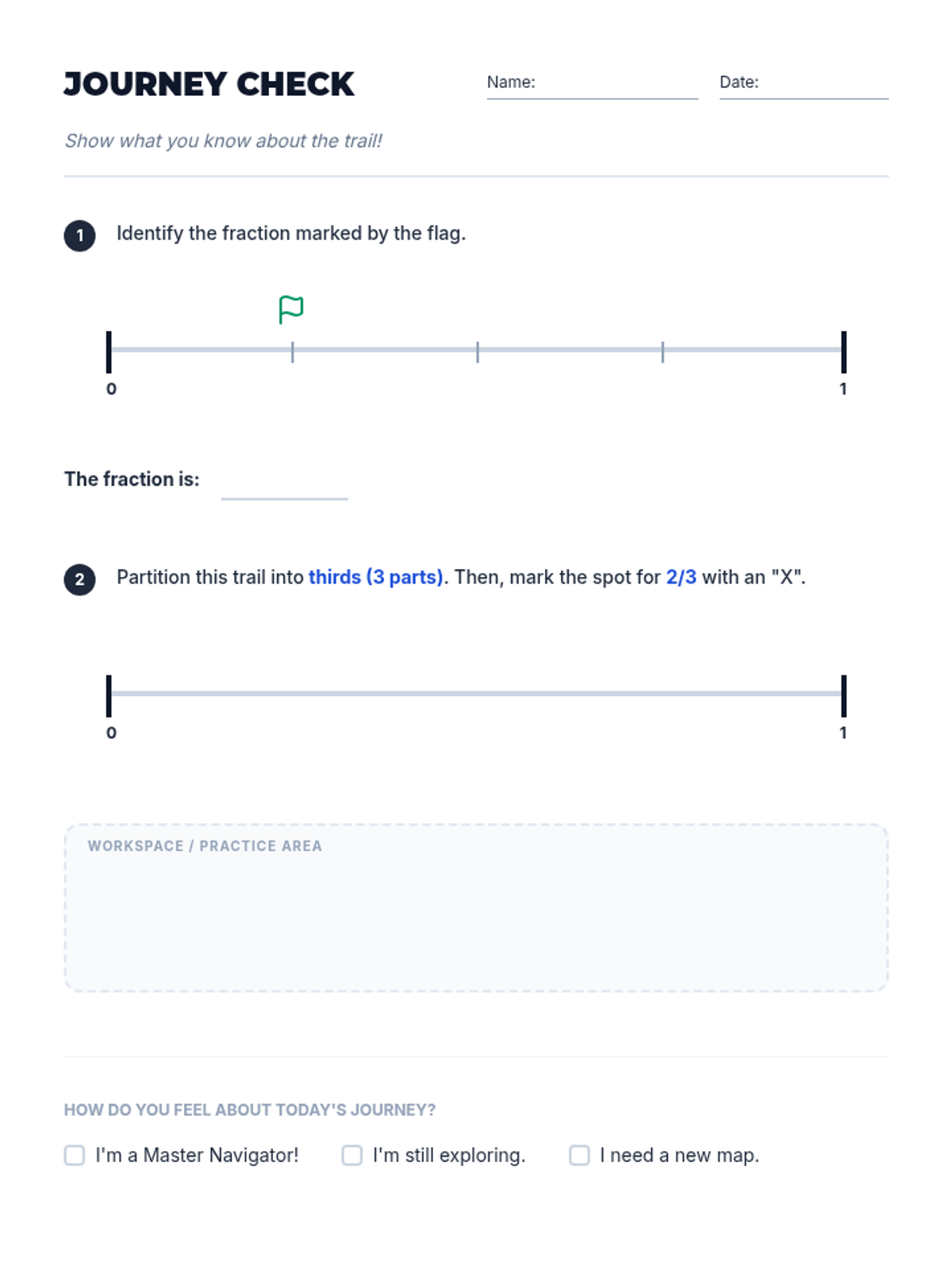
A remedial lesson focusing on partitioning and identifying fractions (halves, thirds, fourths, sixths, eighths) on a number line using a navigation and trail-blazing theme. Students practice partitioning distances from 0 to 1 and placing 'checkpoints' along the way.
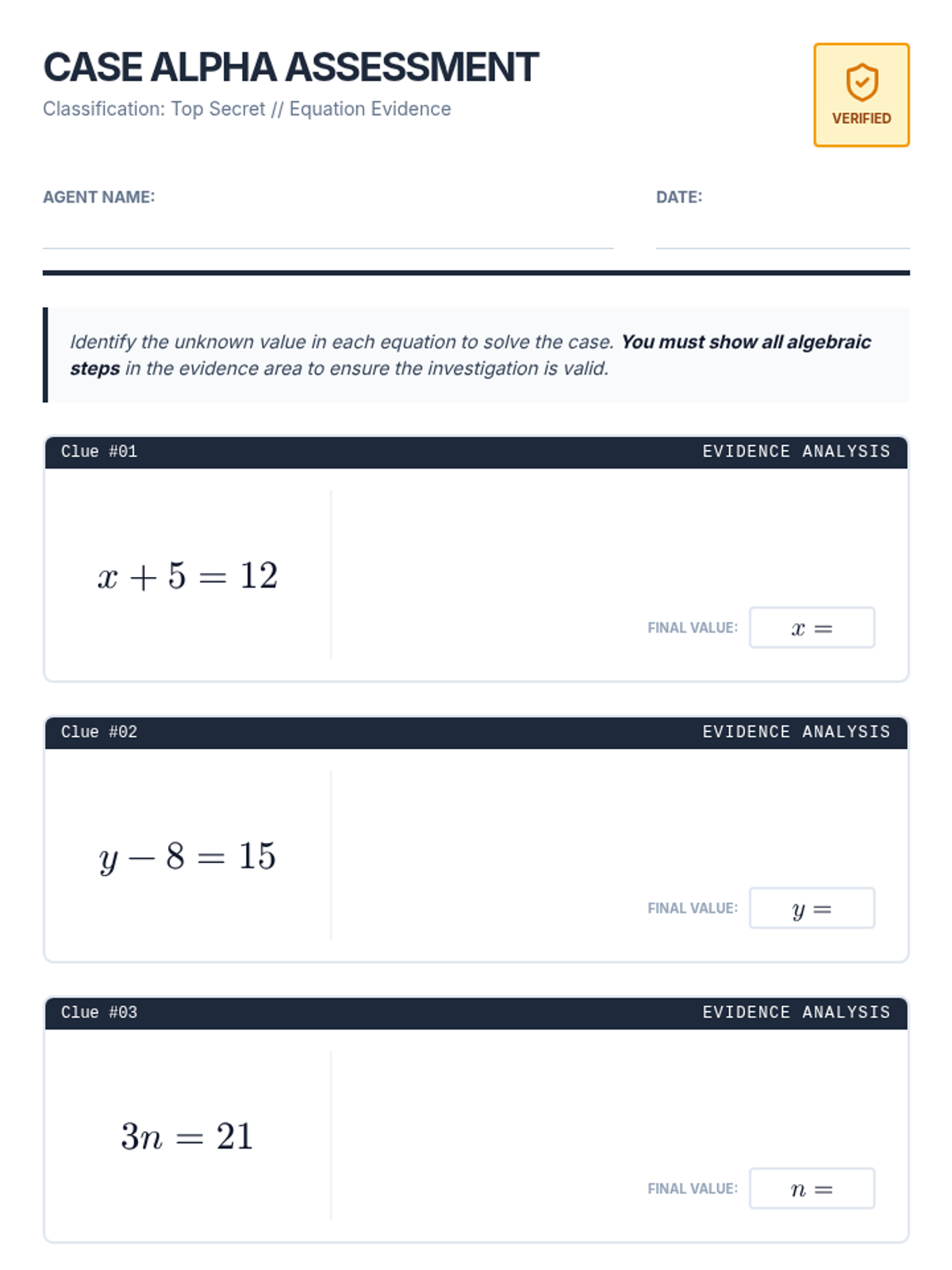
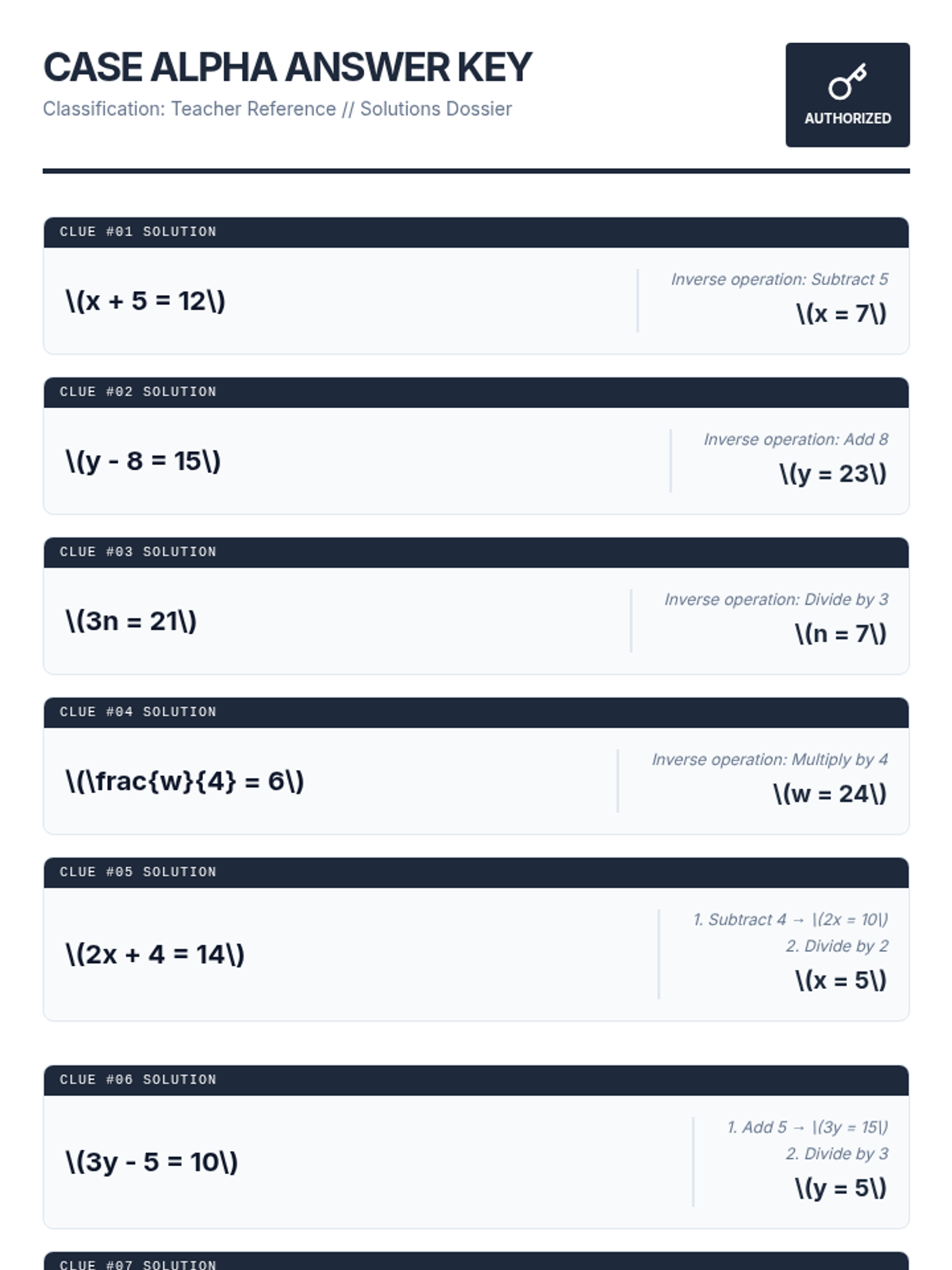
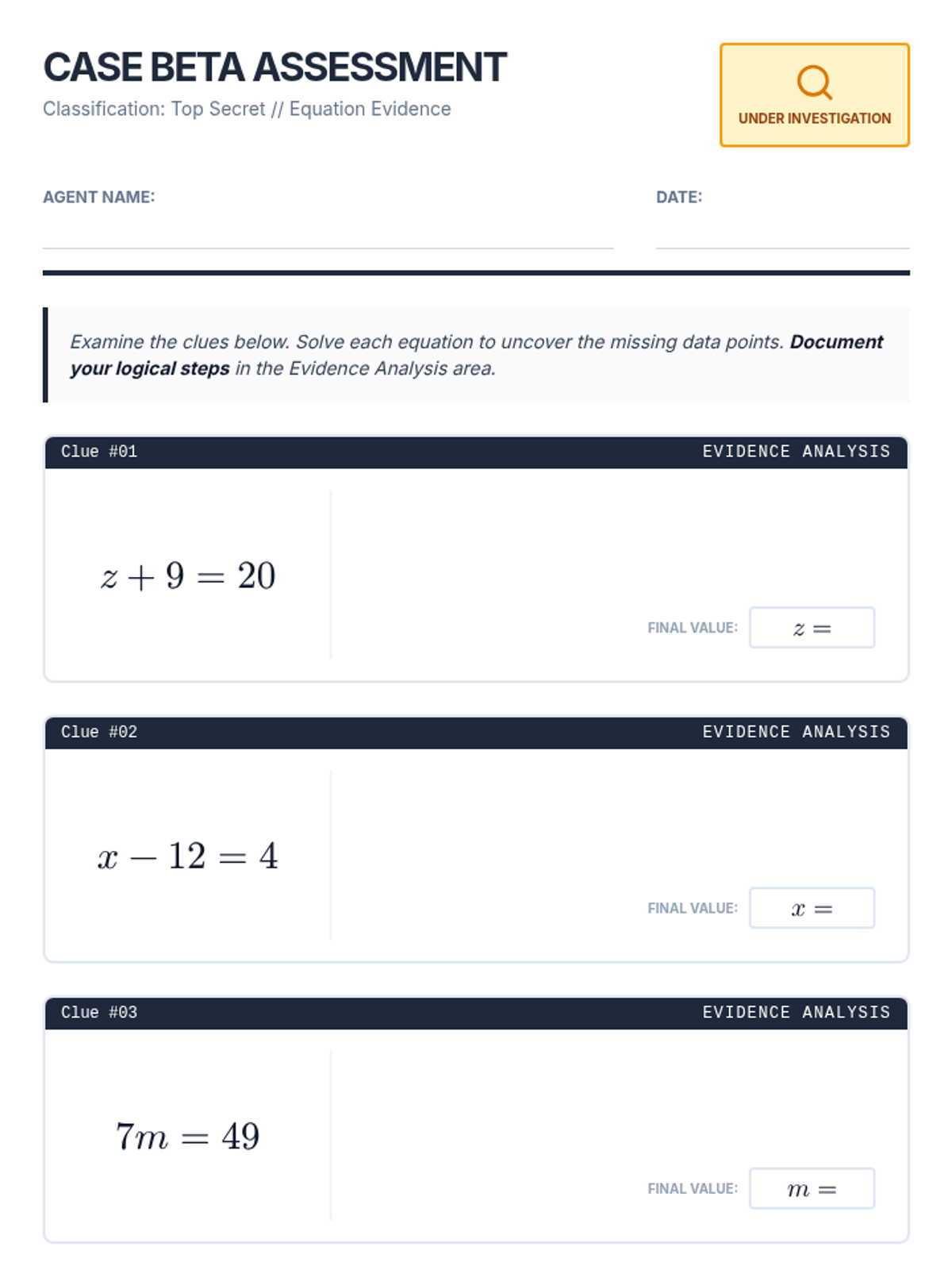
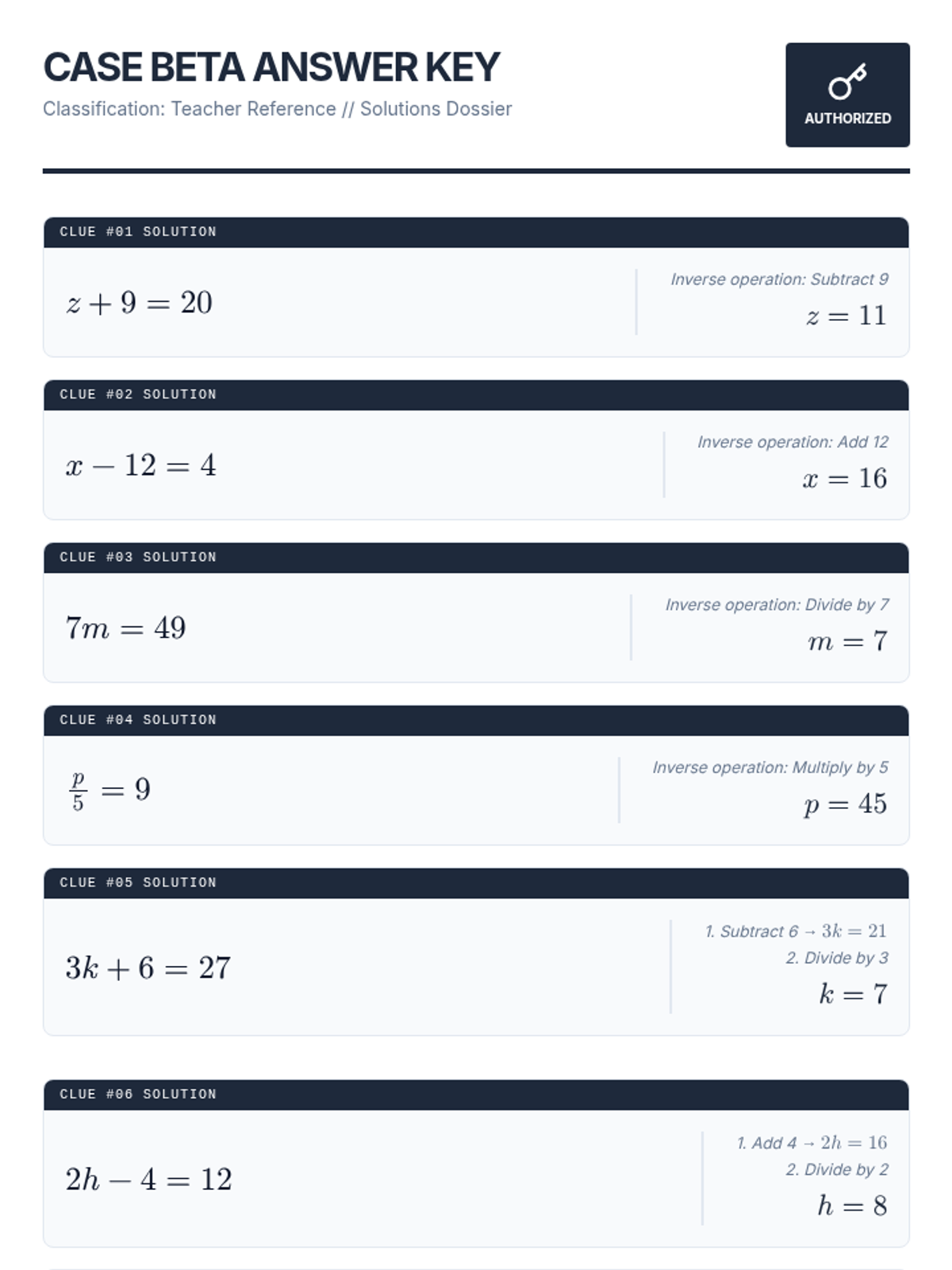
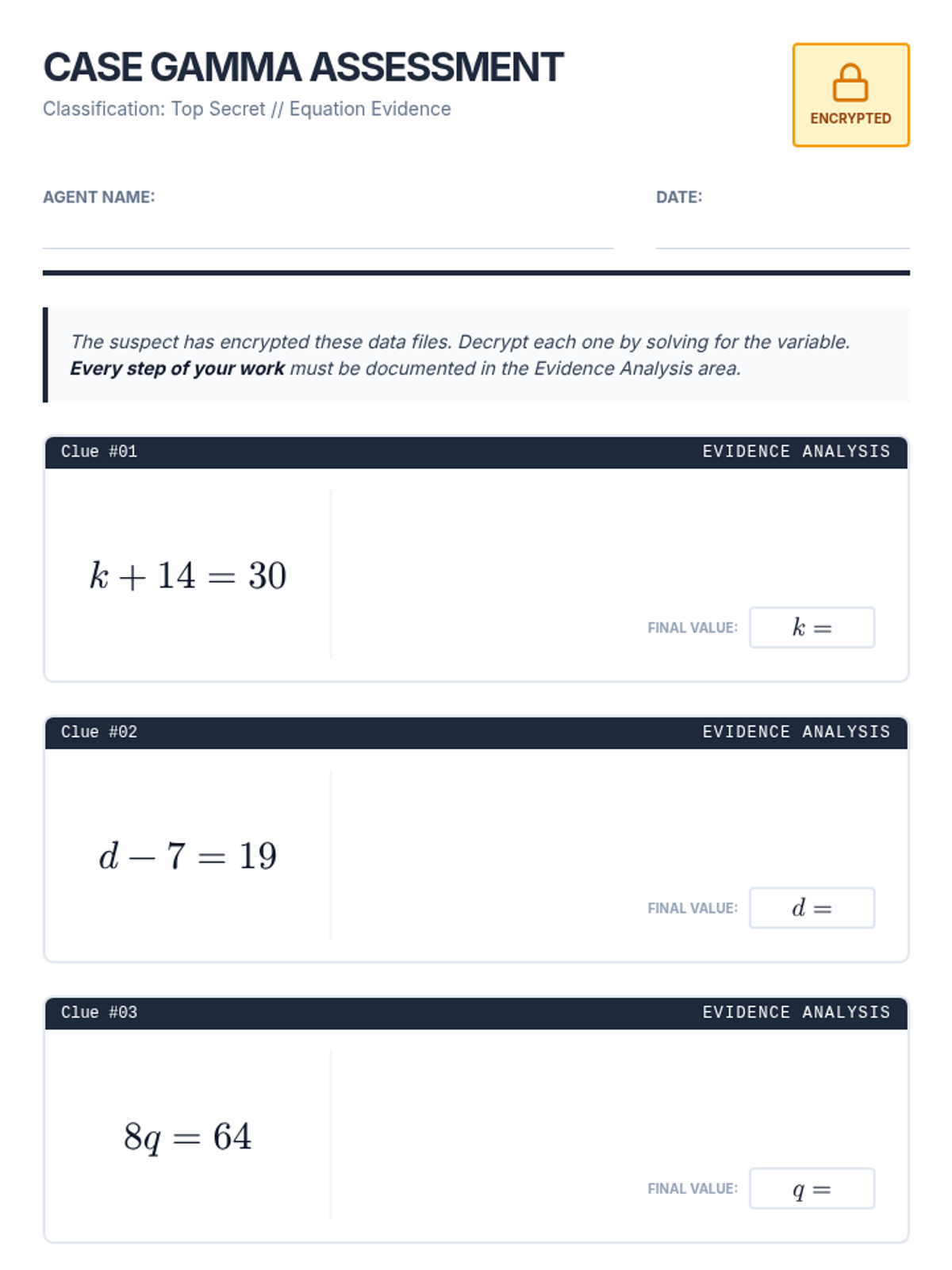
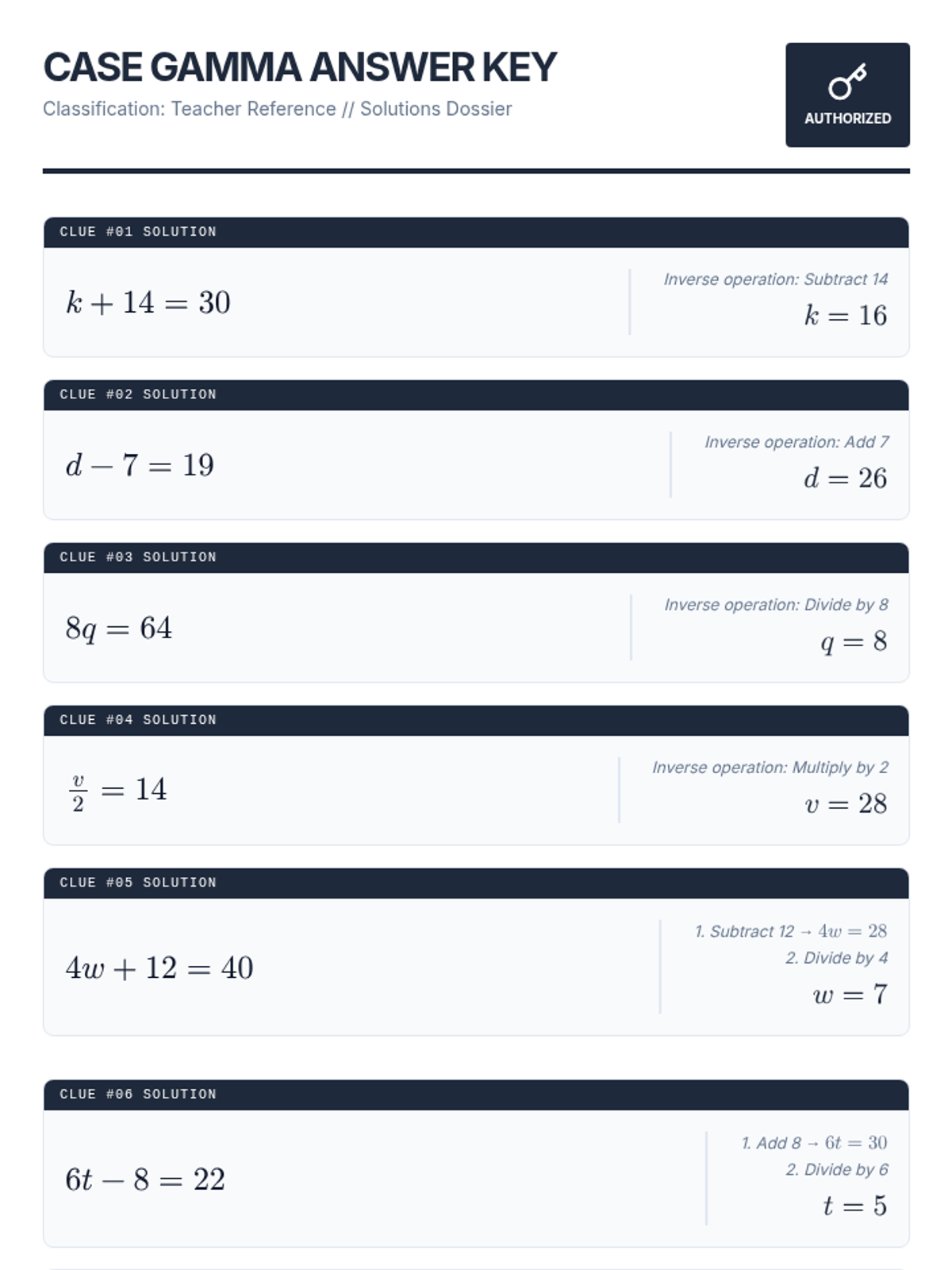
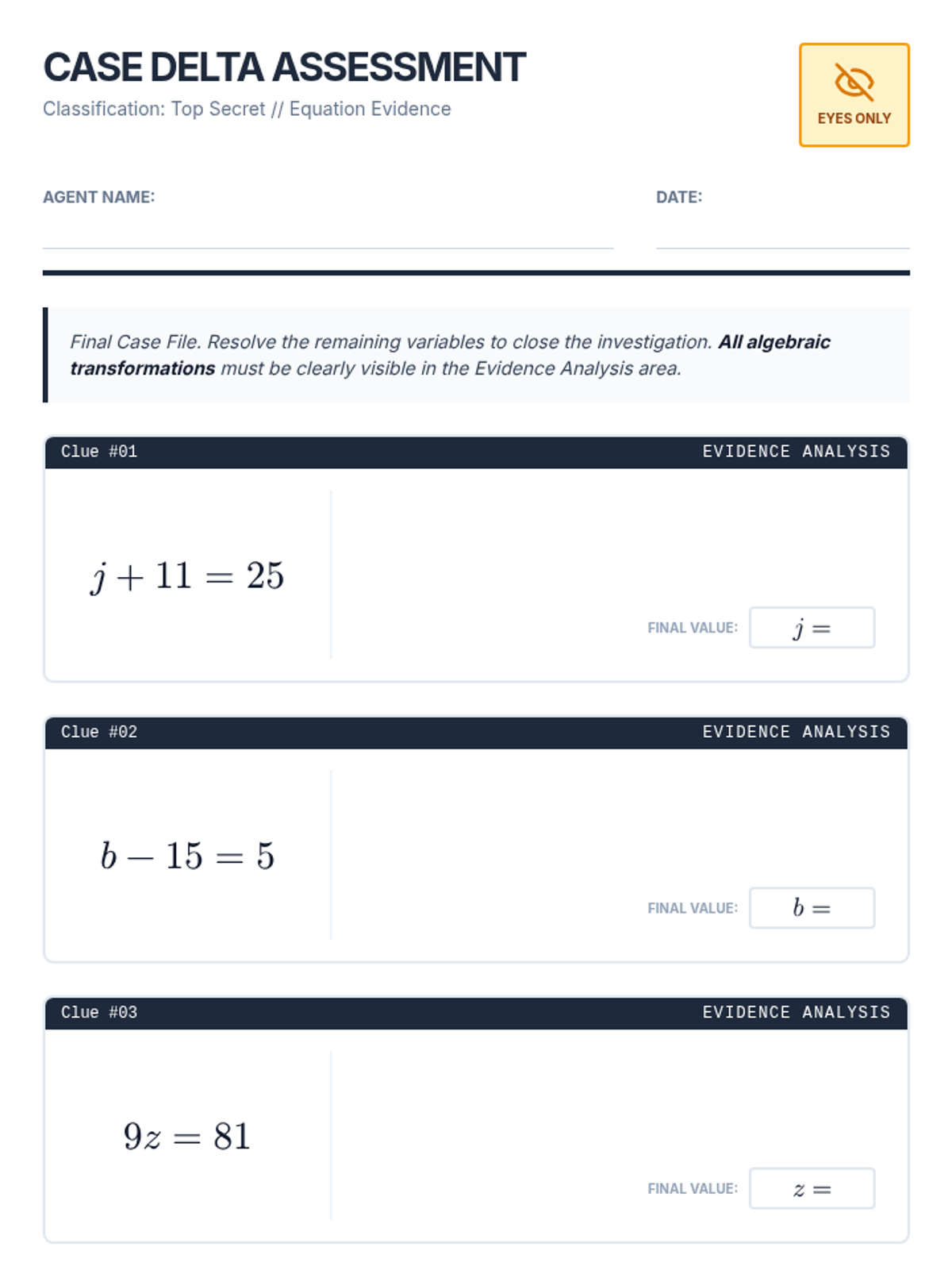
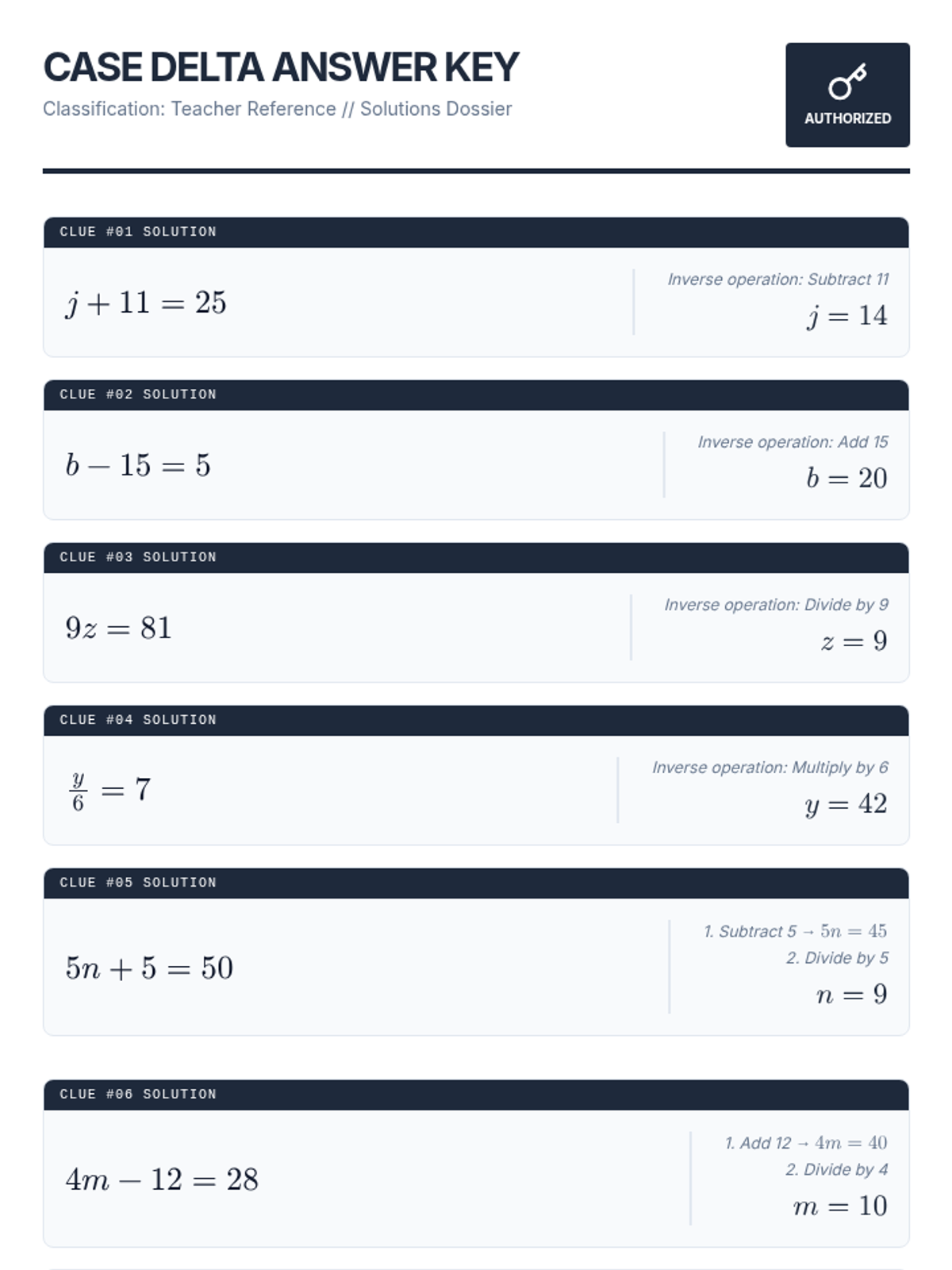
A collection of four distinct assessments and their corresponding answer keys focused on solving one and two-step equations.
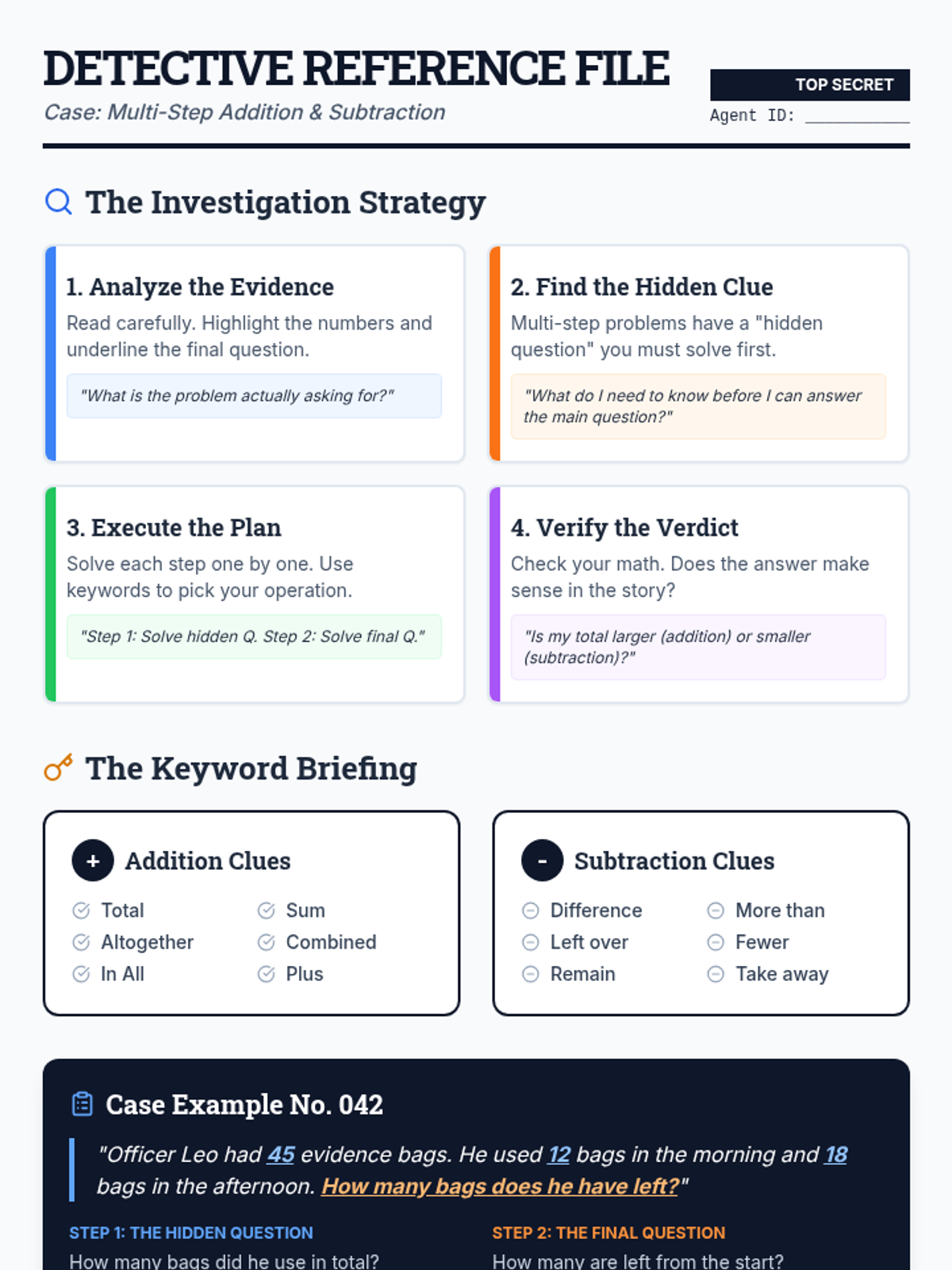
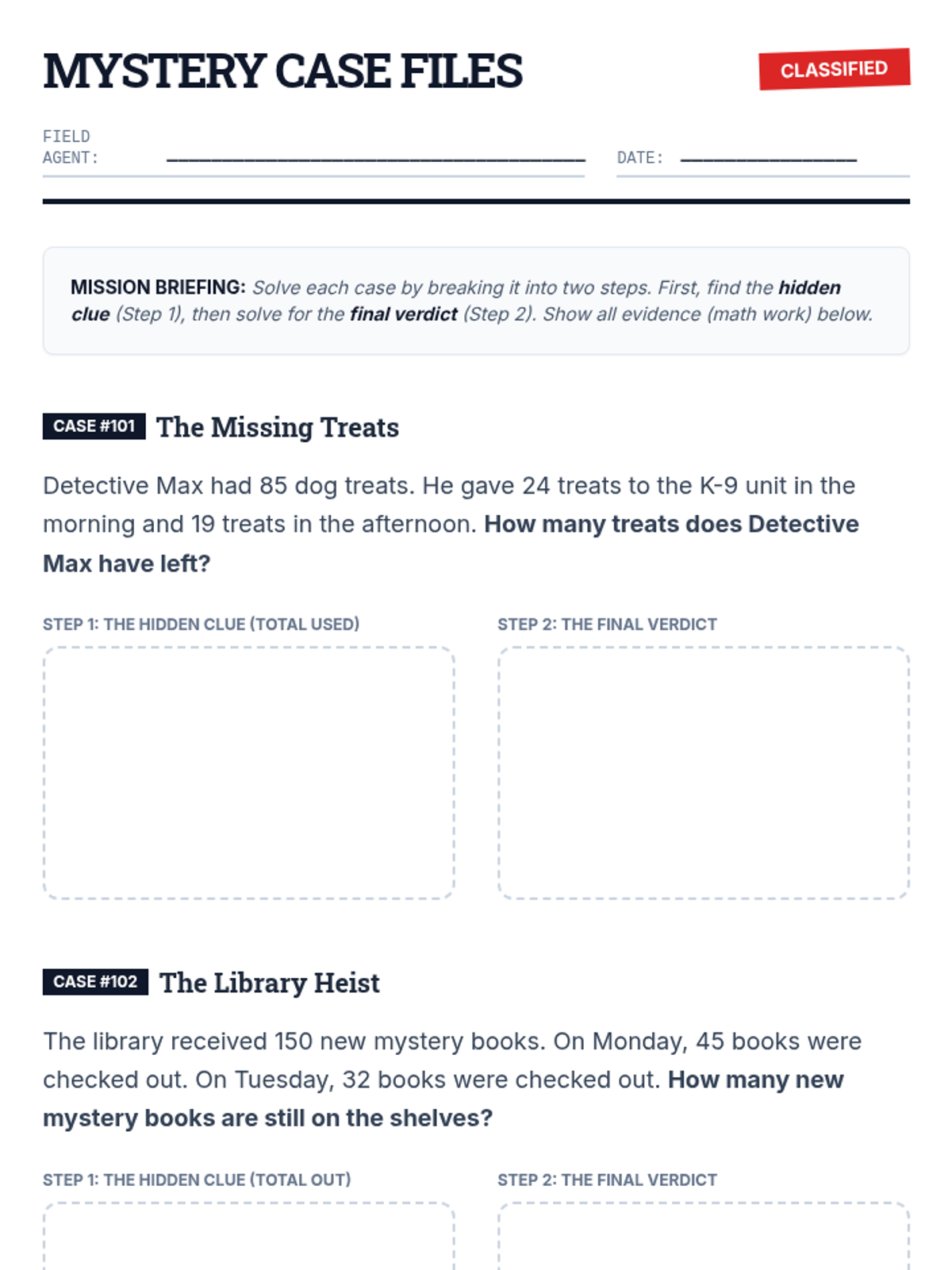
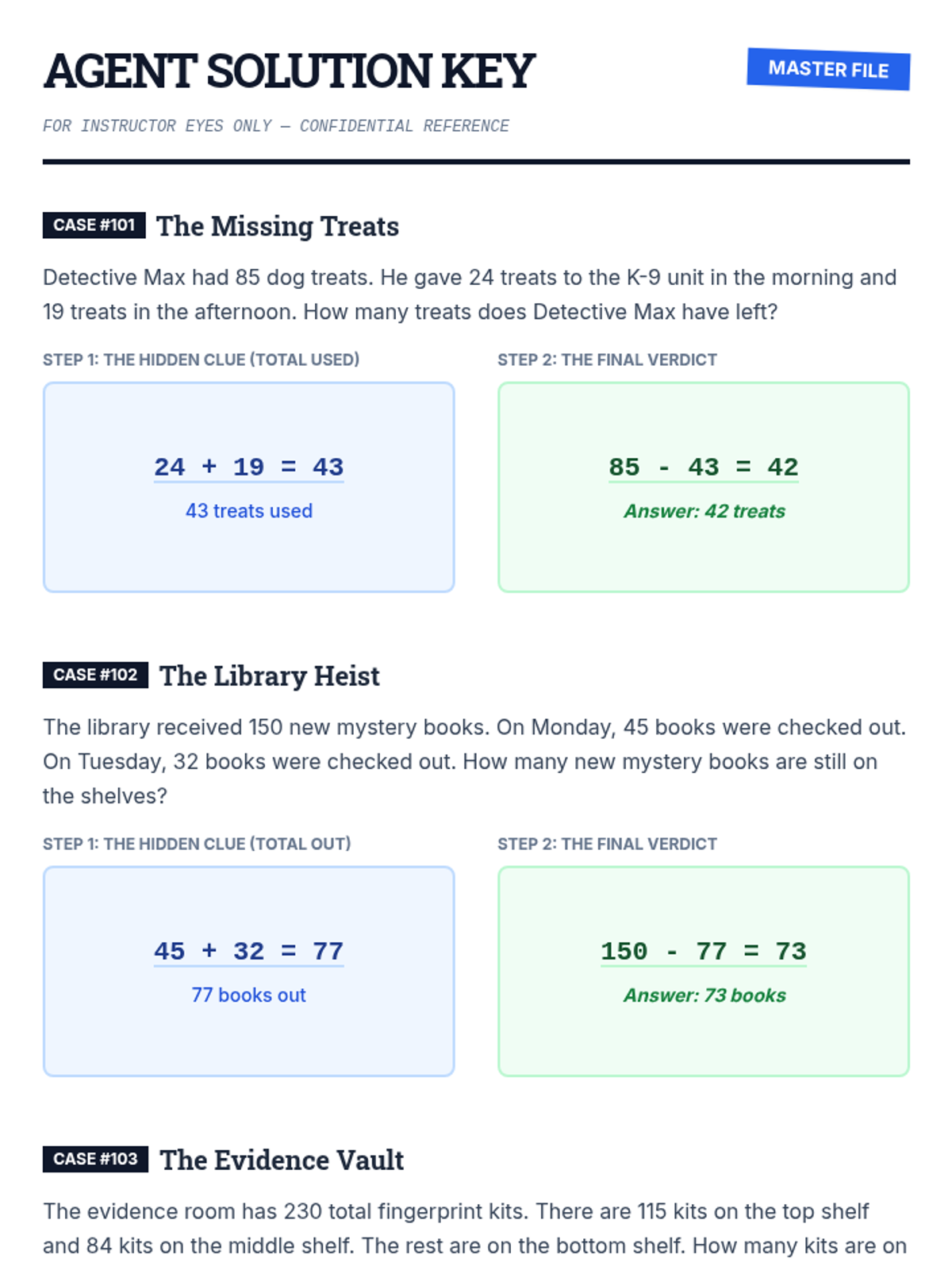
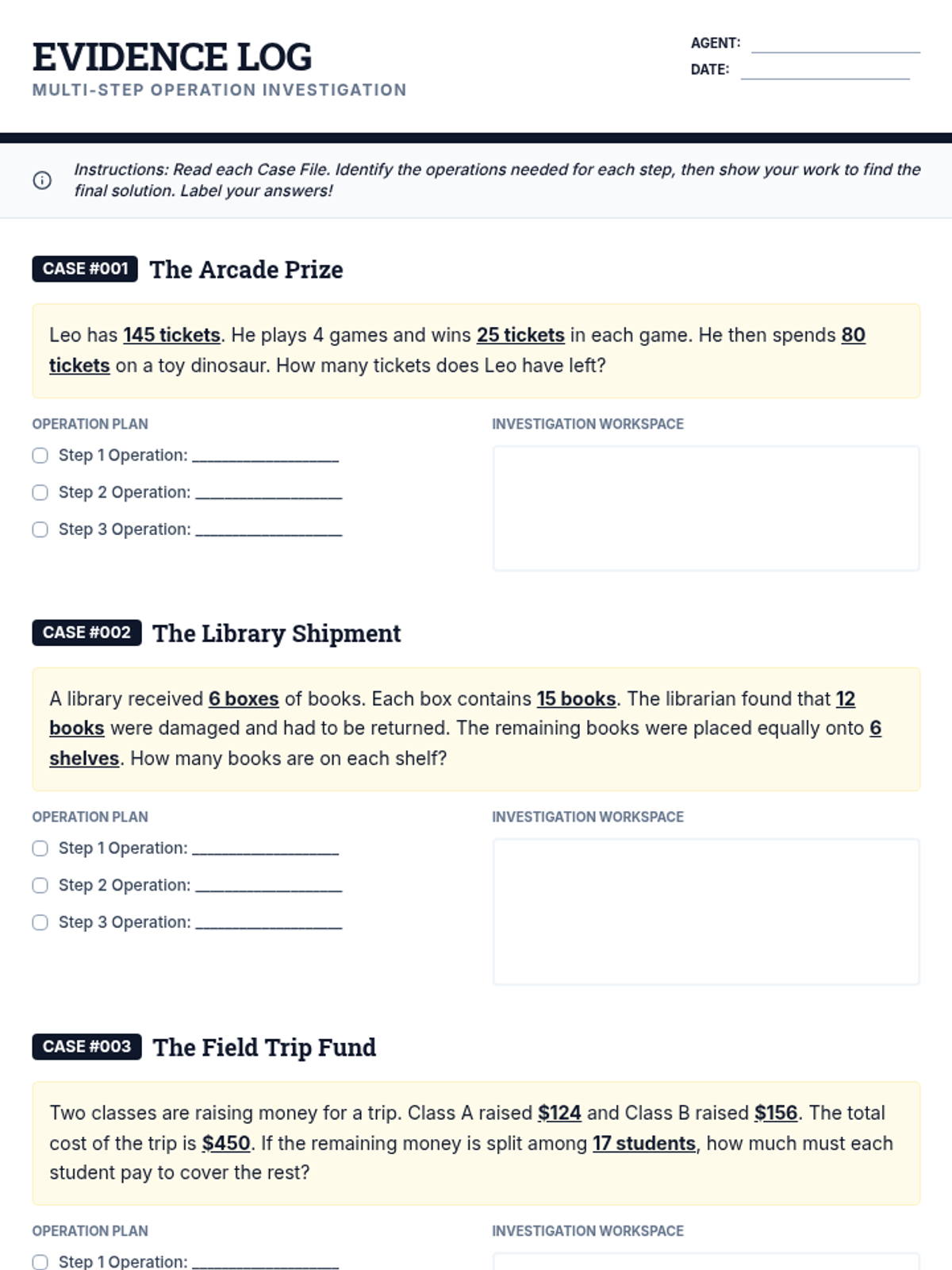
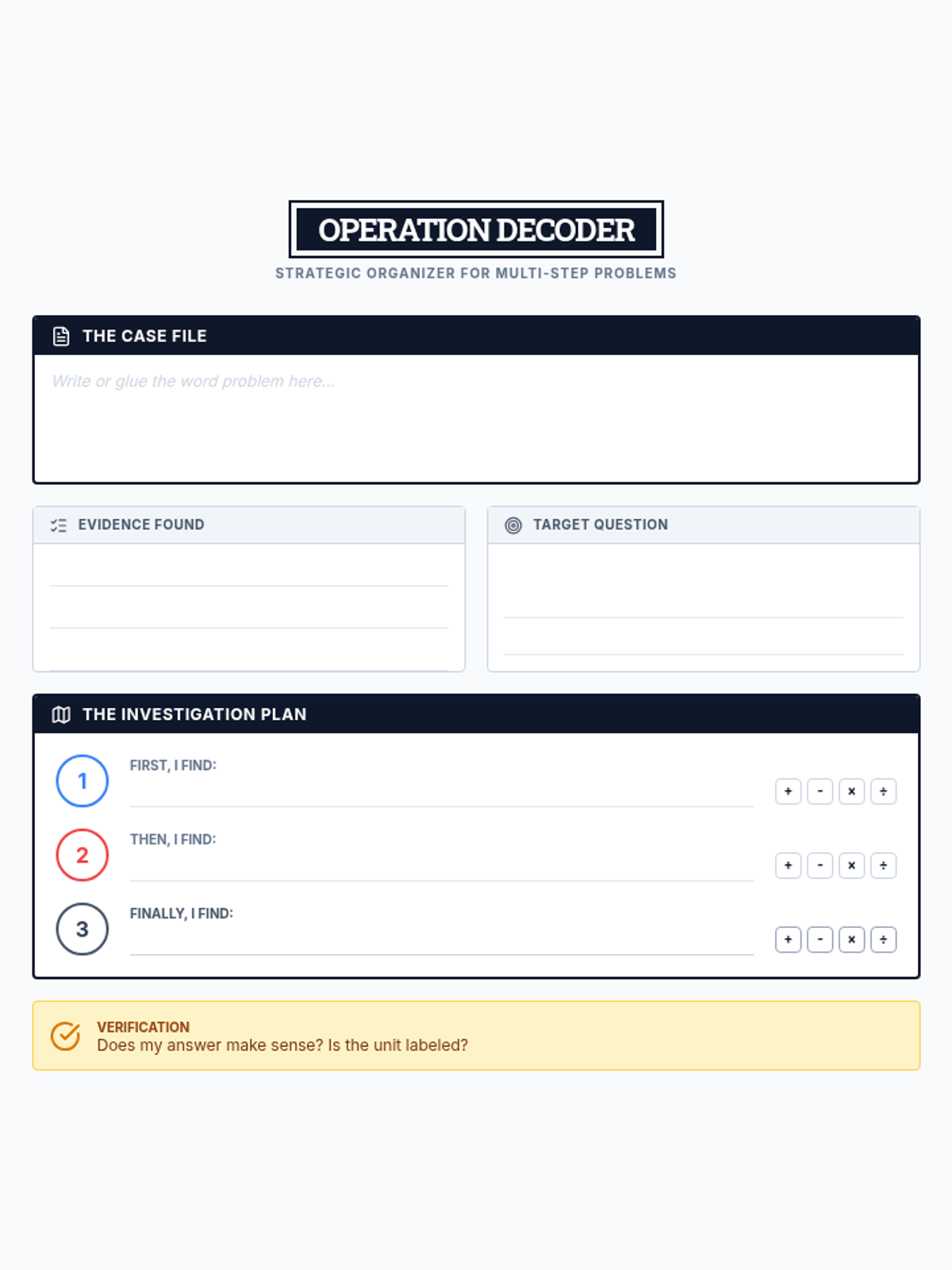
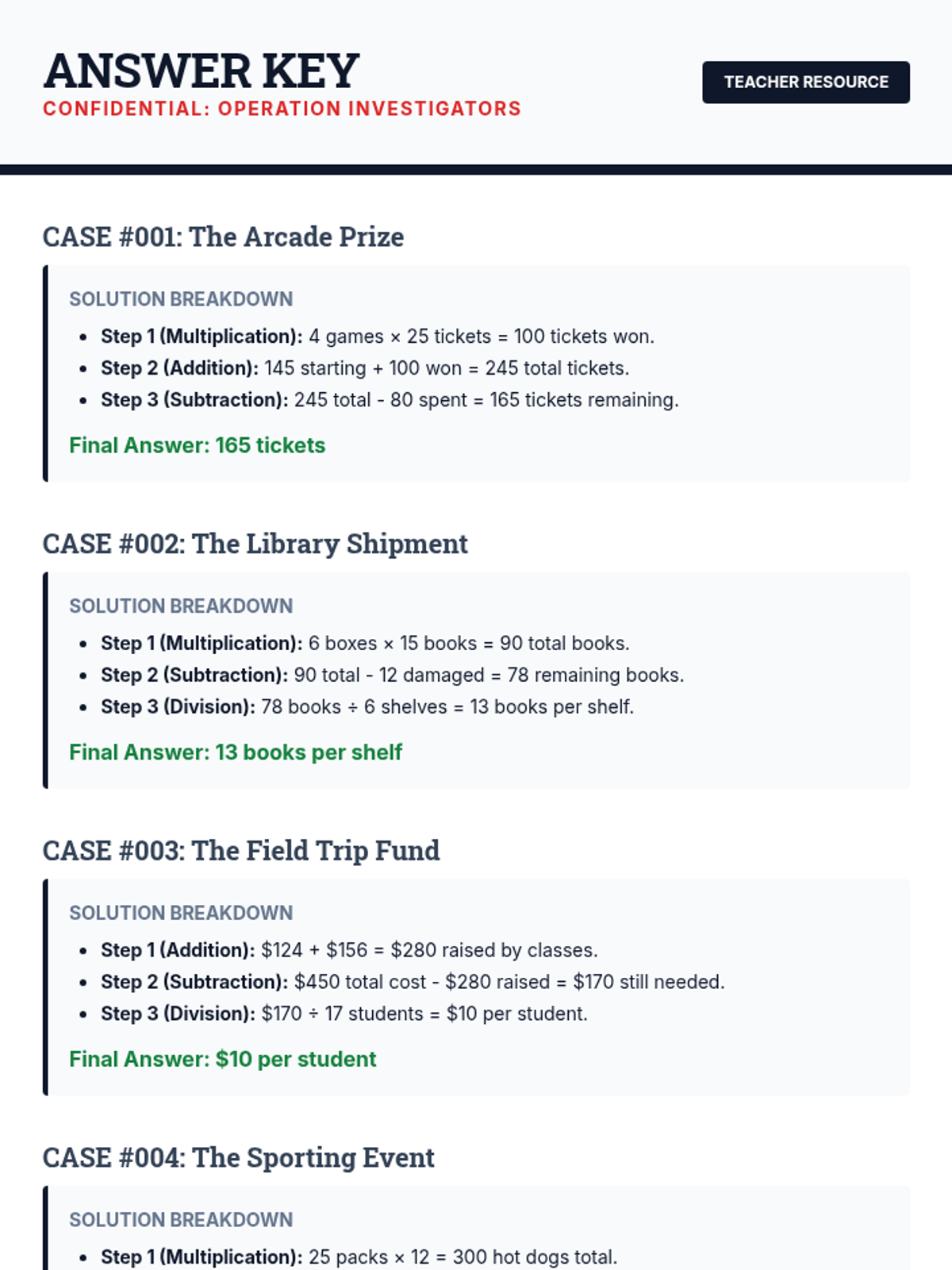
A lesson focused on breaking down and solving multi-step word problems using addition and subtraction through a detective-themed lens.
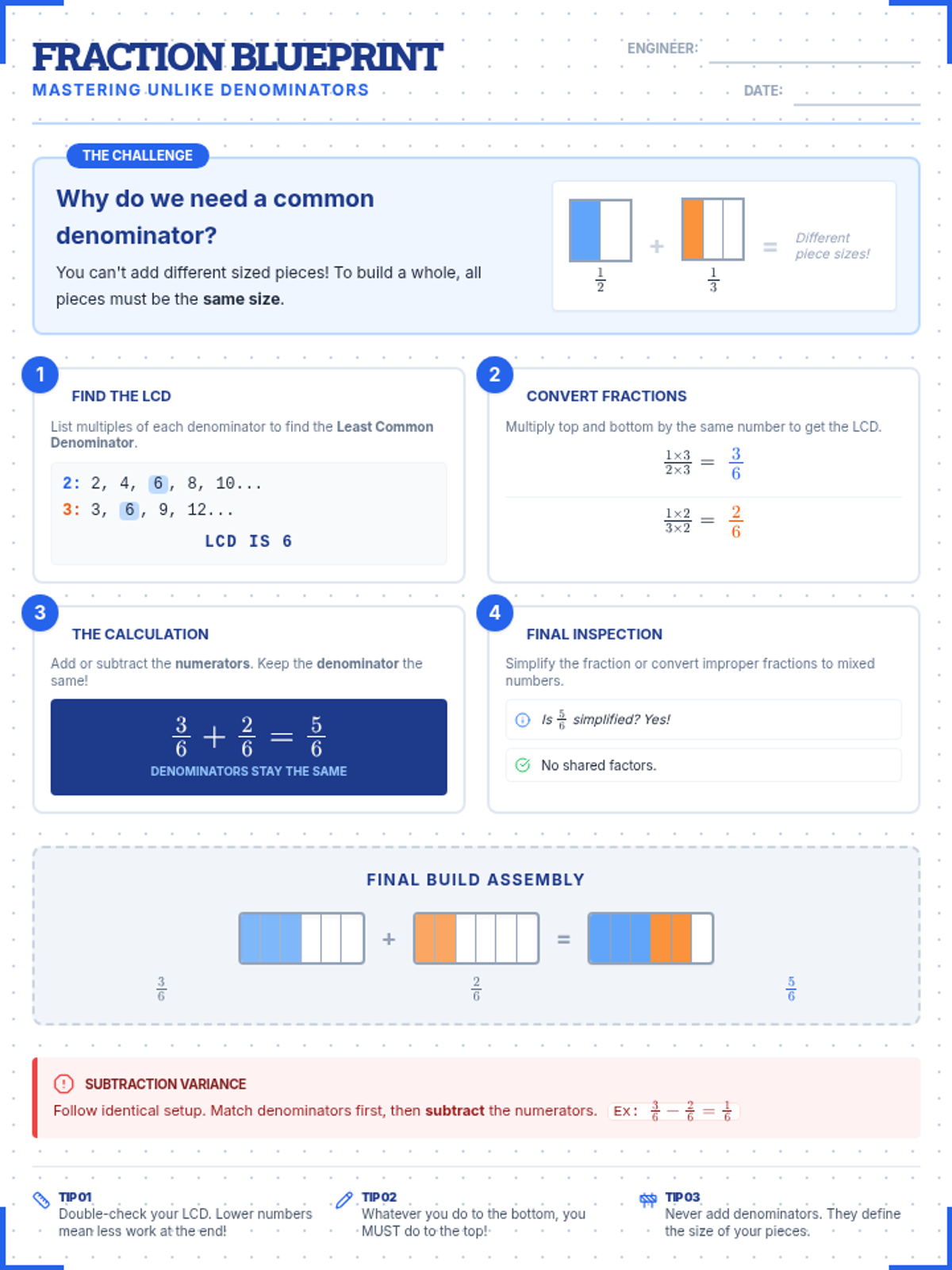
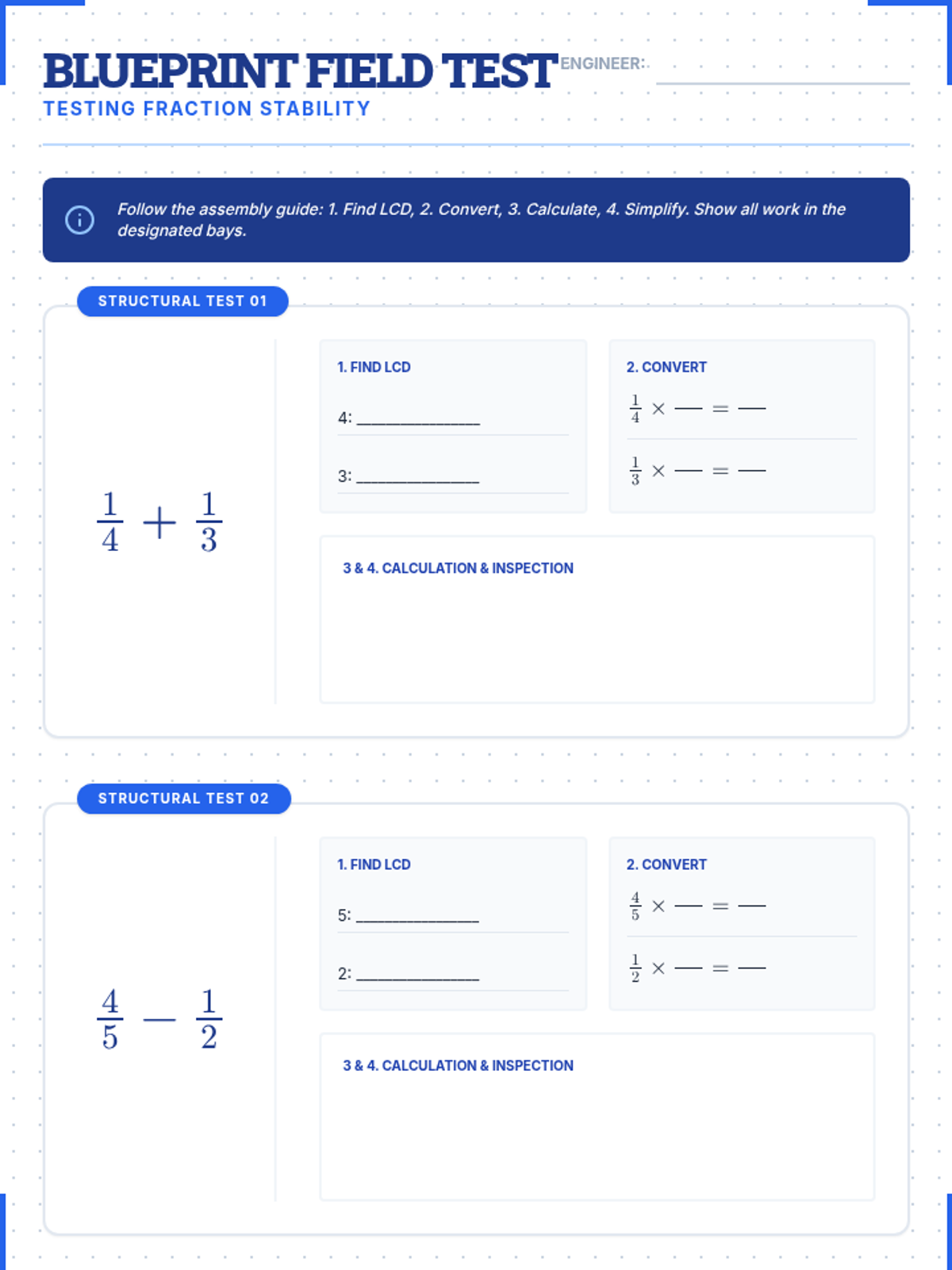
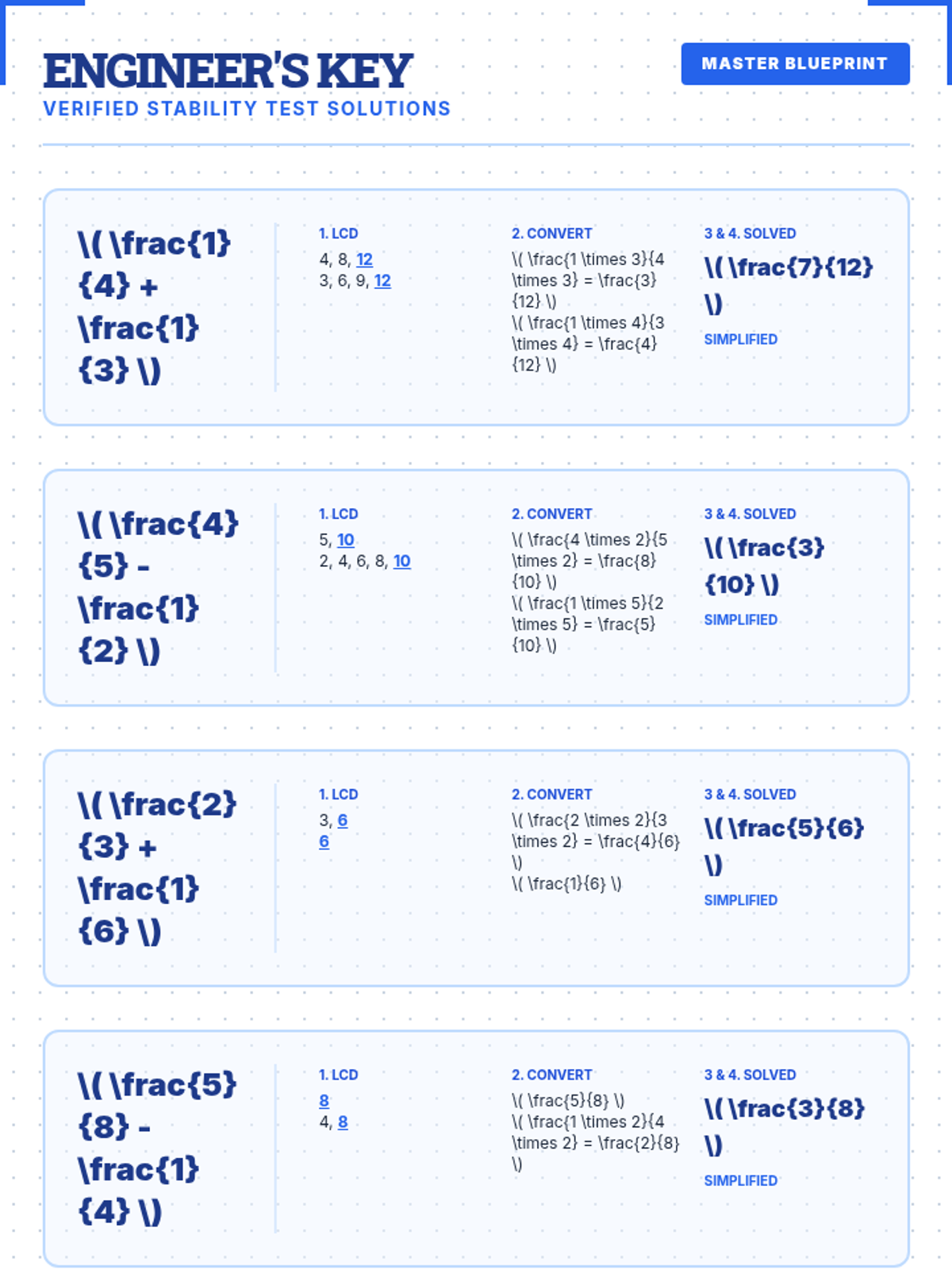
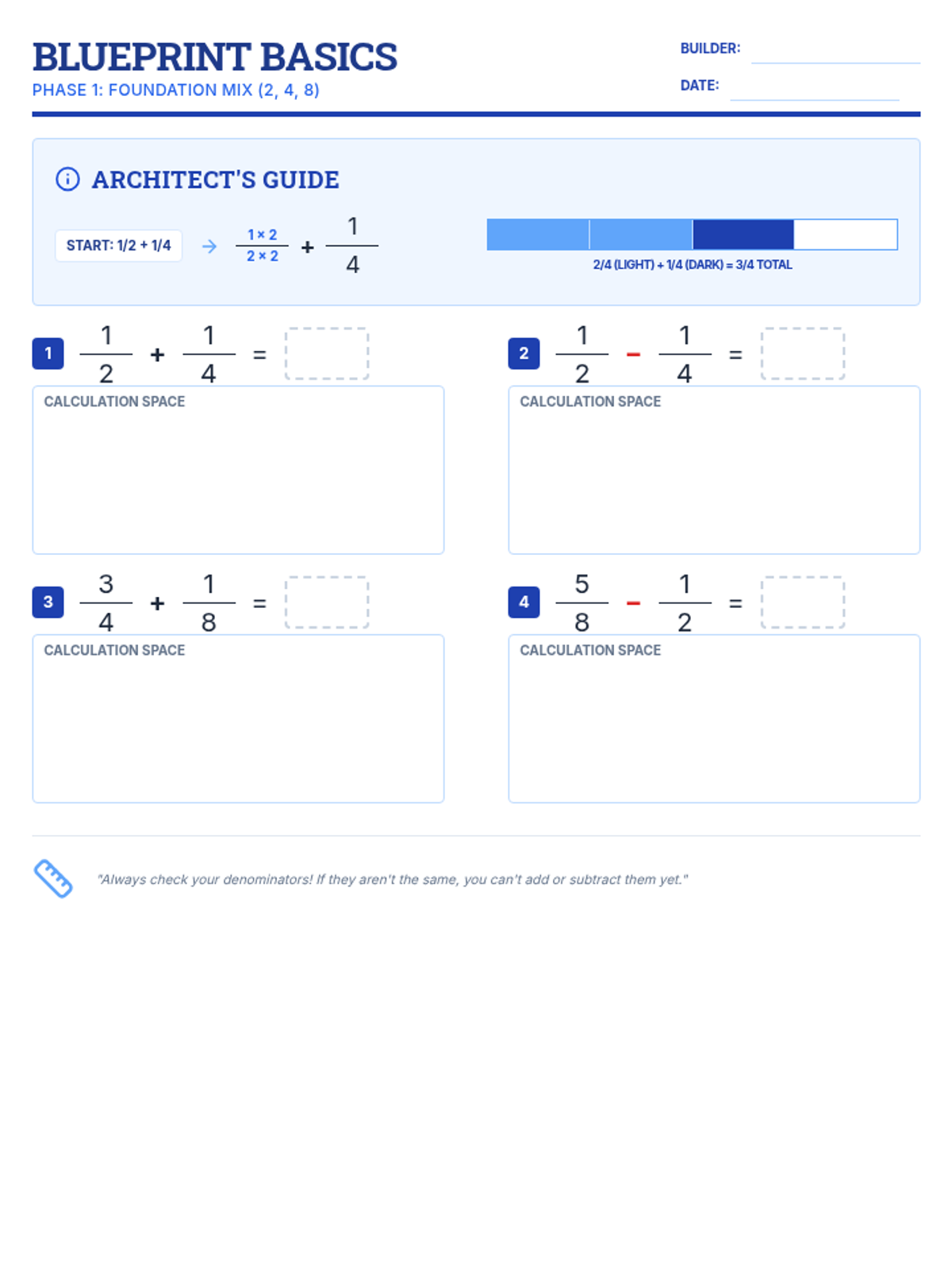
A lesson focused on adding and subtracting fractions with unlike denominators using a structural 'blueprint' approach. Students use step-by-step assembly guides and visual area models to understand common denominators.
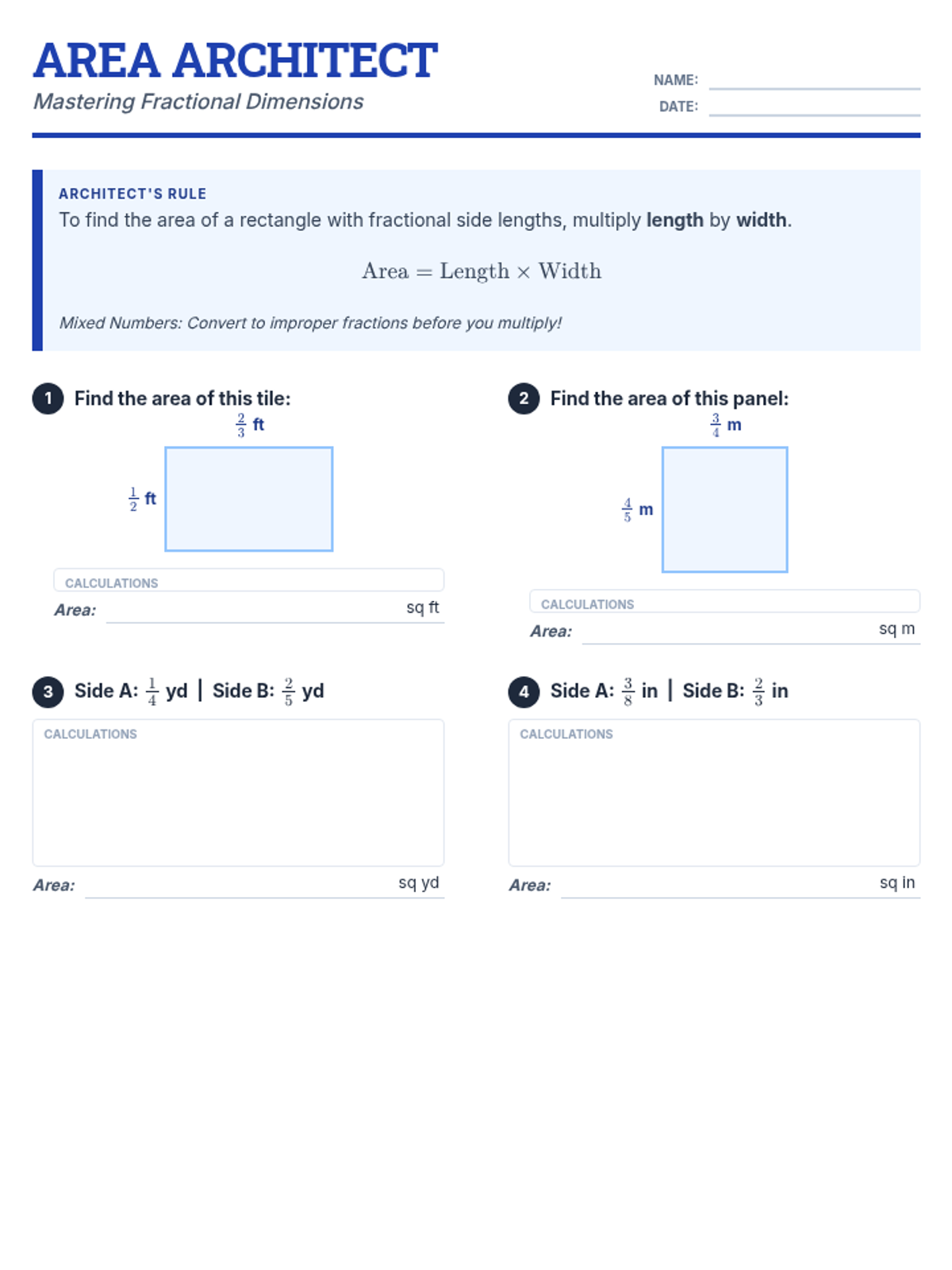
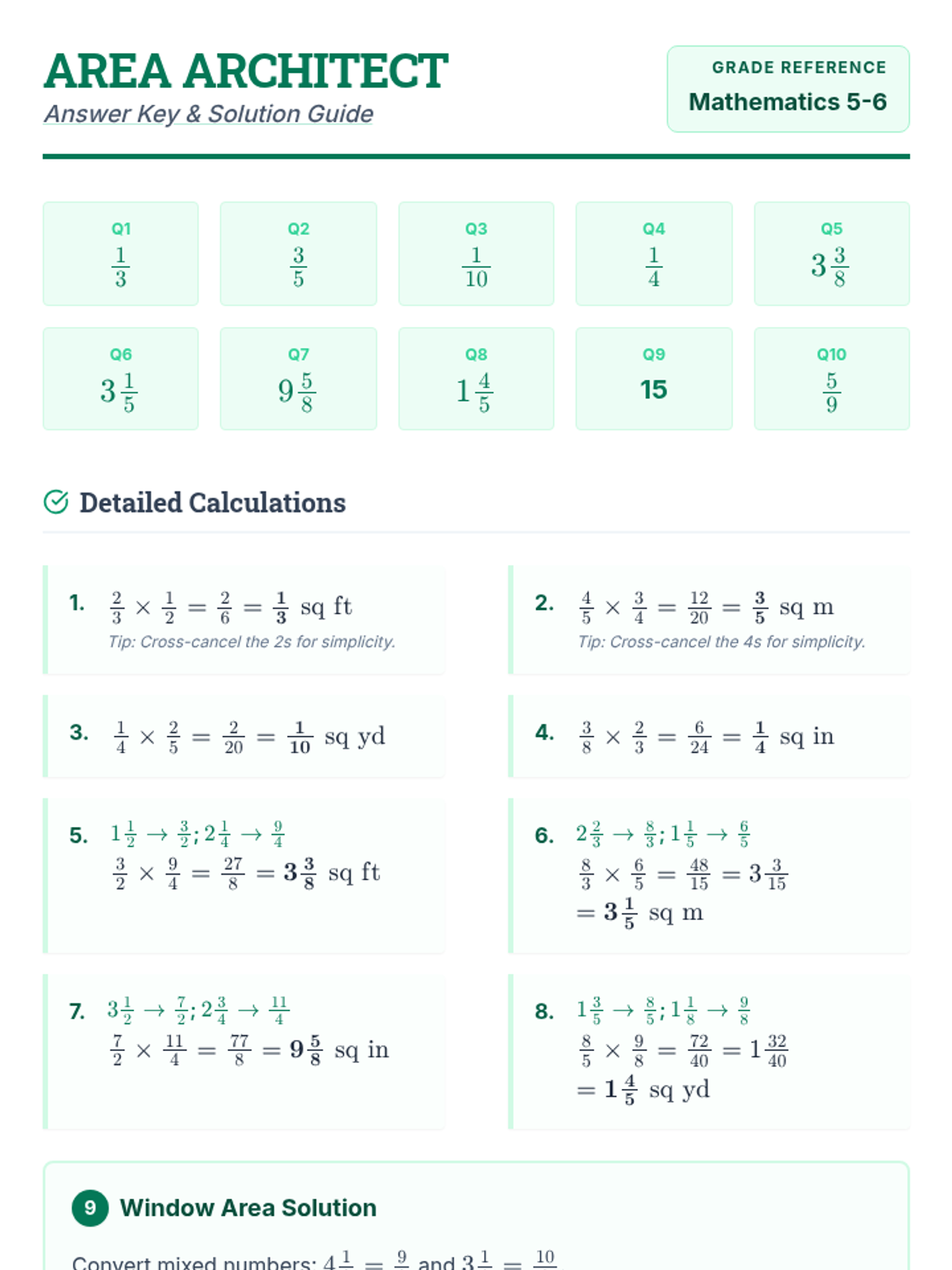
A lesson focused on calculating the area of rectangles with fractional and mixed number side lengths by relating the concept to multiplication. Students will practice converting mixed numbers to improper fractions and applying the area formula.
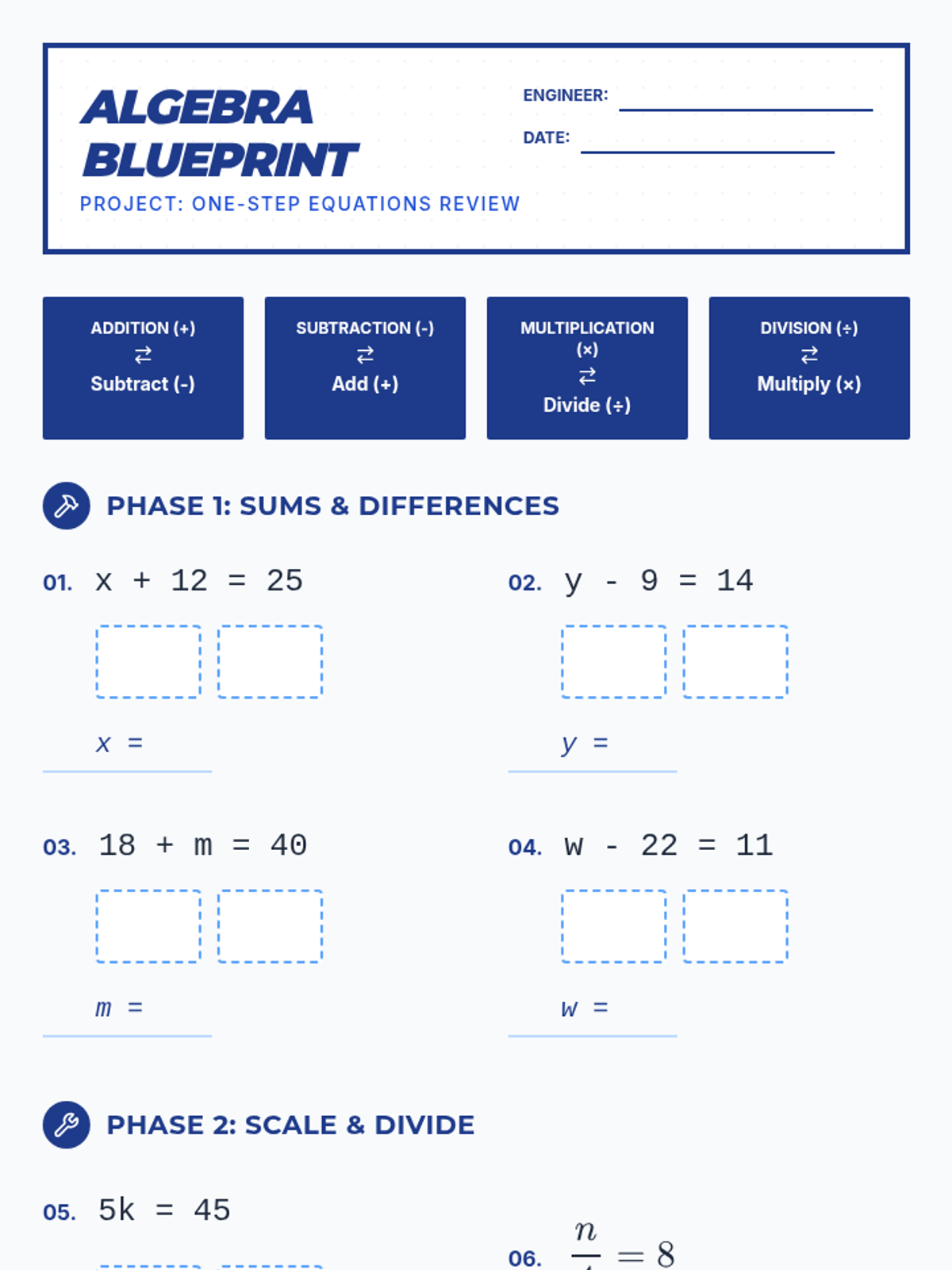
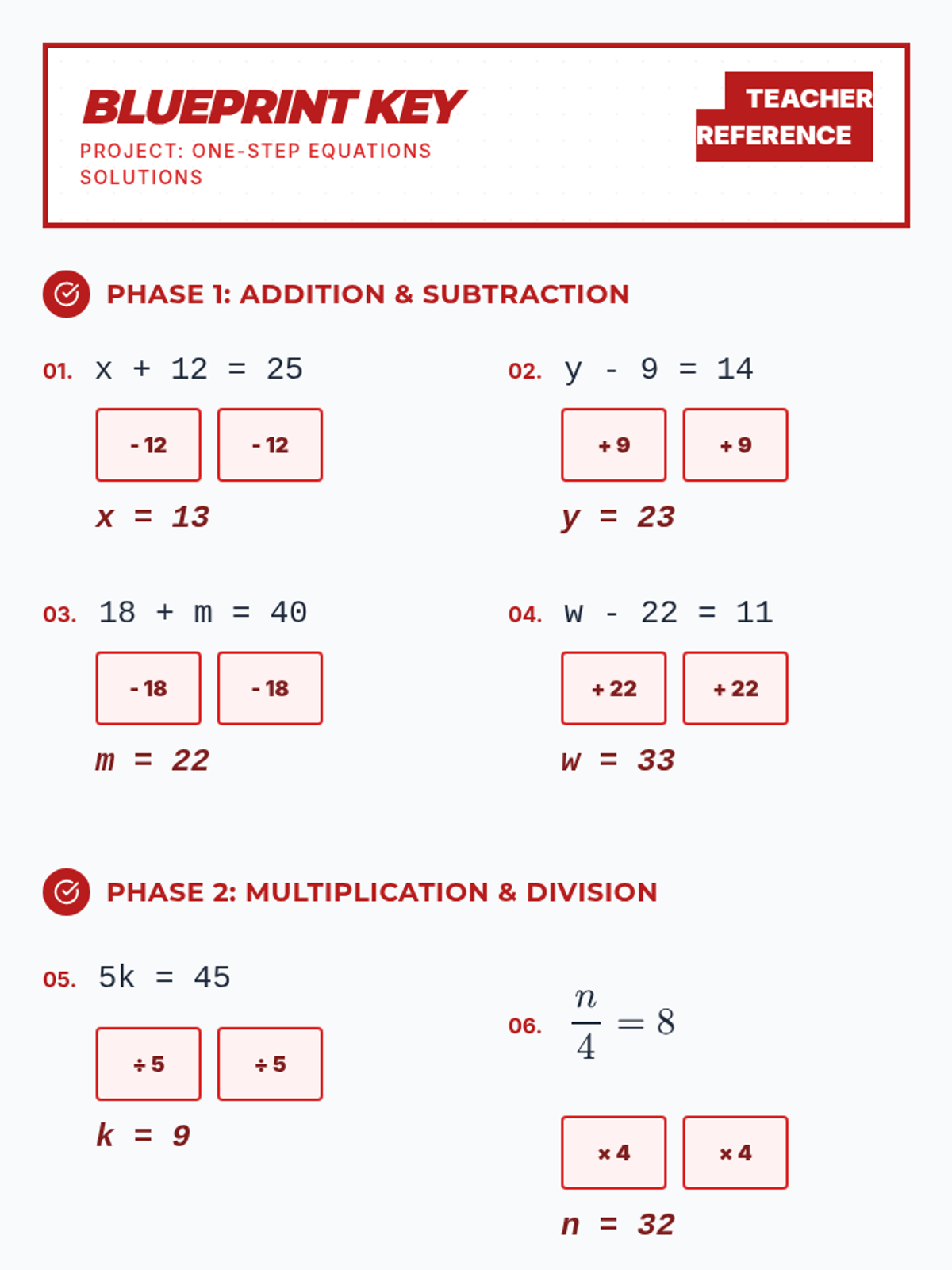
A foundational lesson on solving one-step equations using inverse operations, featuring a blueprint-inspired design to help students 'build' their algebraic skills.
Students learn to identify the necessary operations and sequence of steps required to solve complex, multi-part word problems.
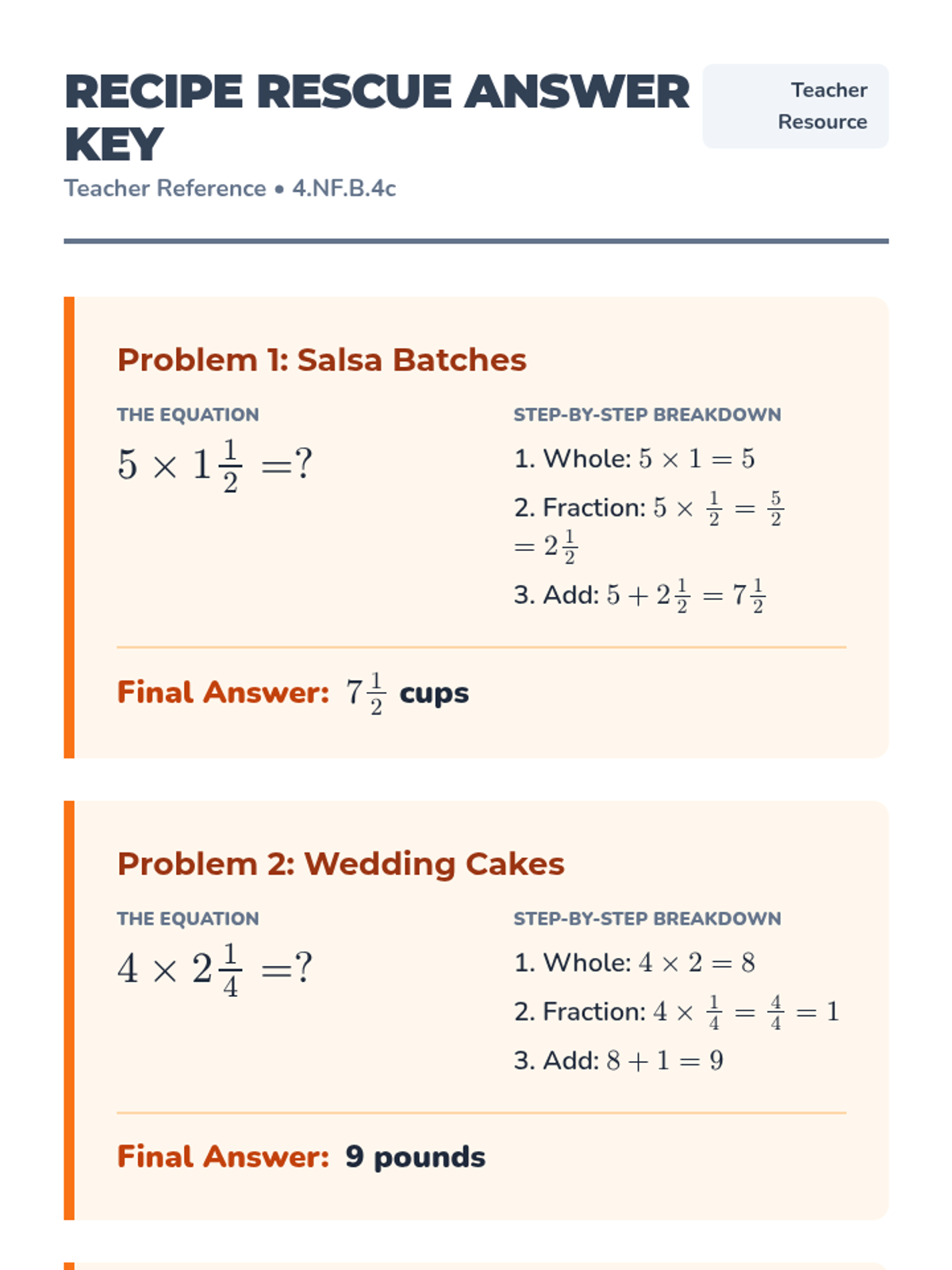
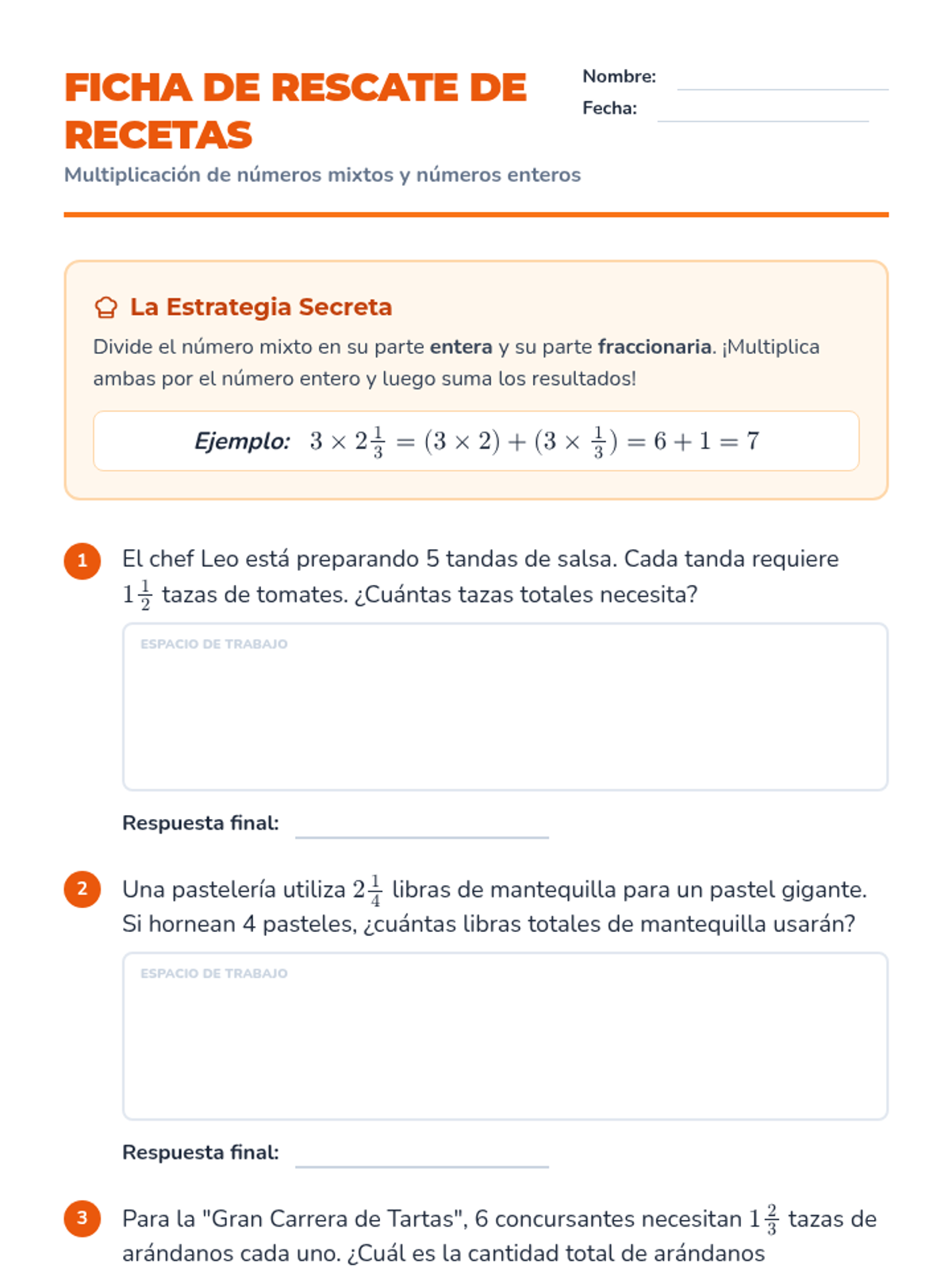
A 4th-grade math lesson focused on solving real-world word problems (number stories) involving the multiplication of mixed numbers by whole numbers using the distributive property and visual models.
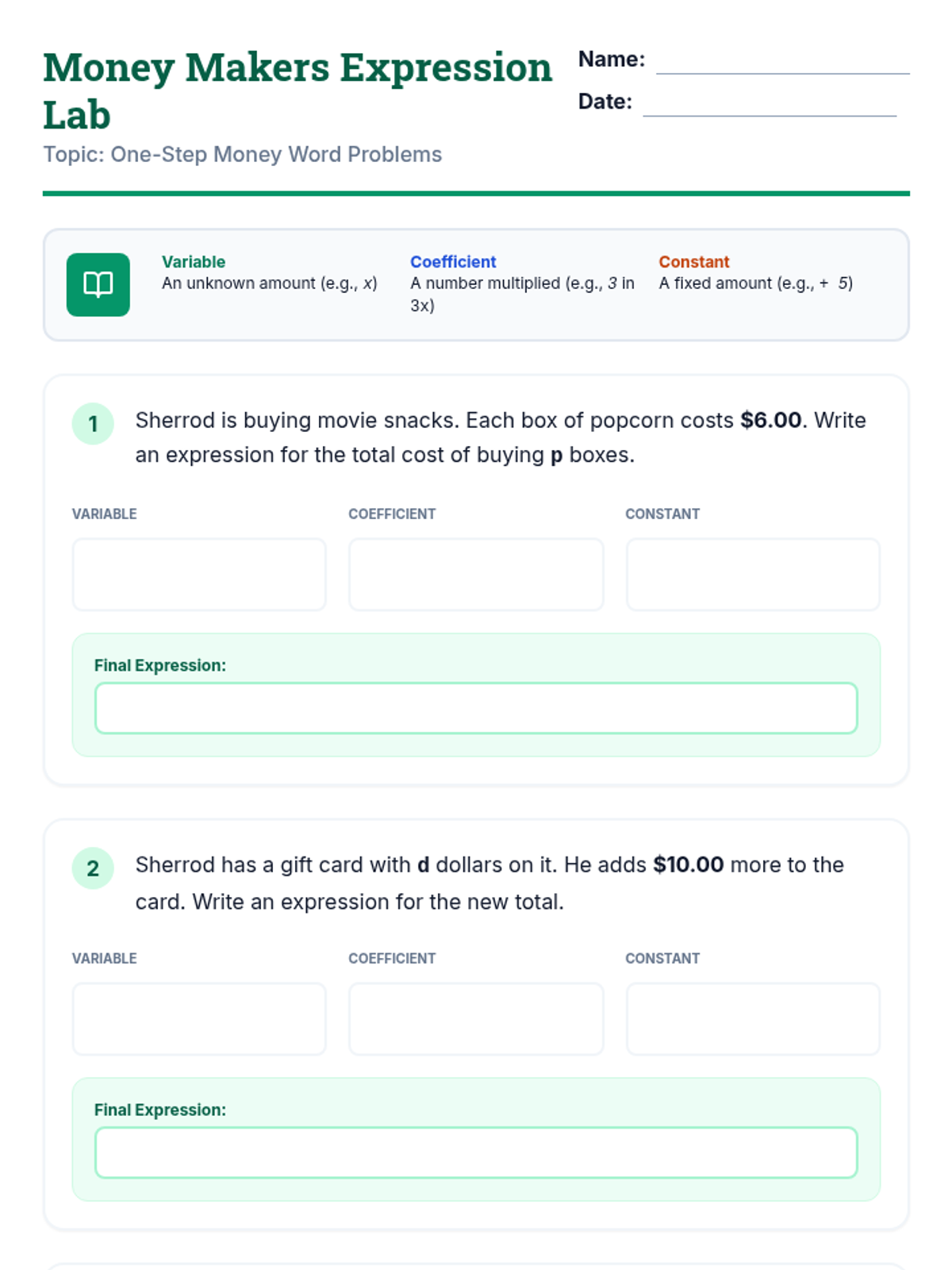
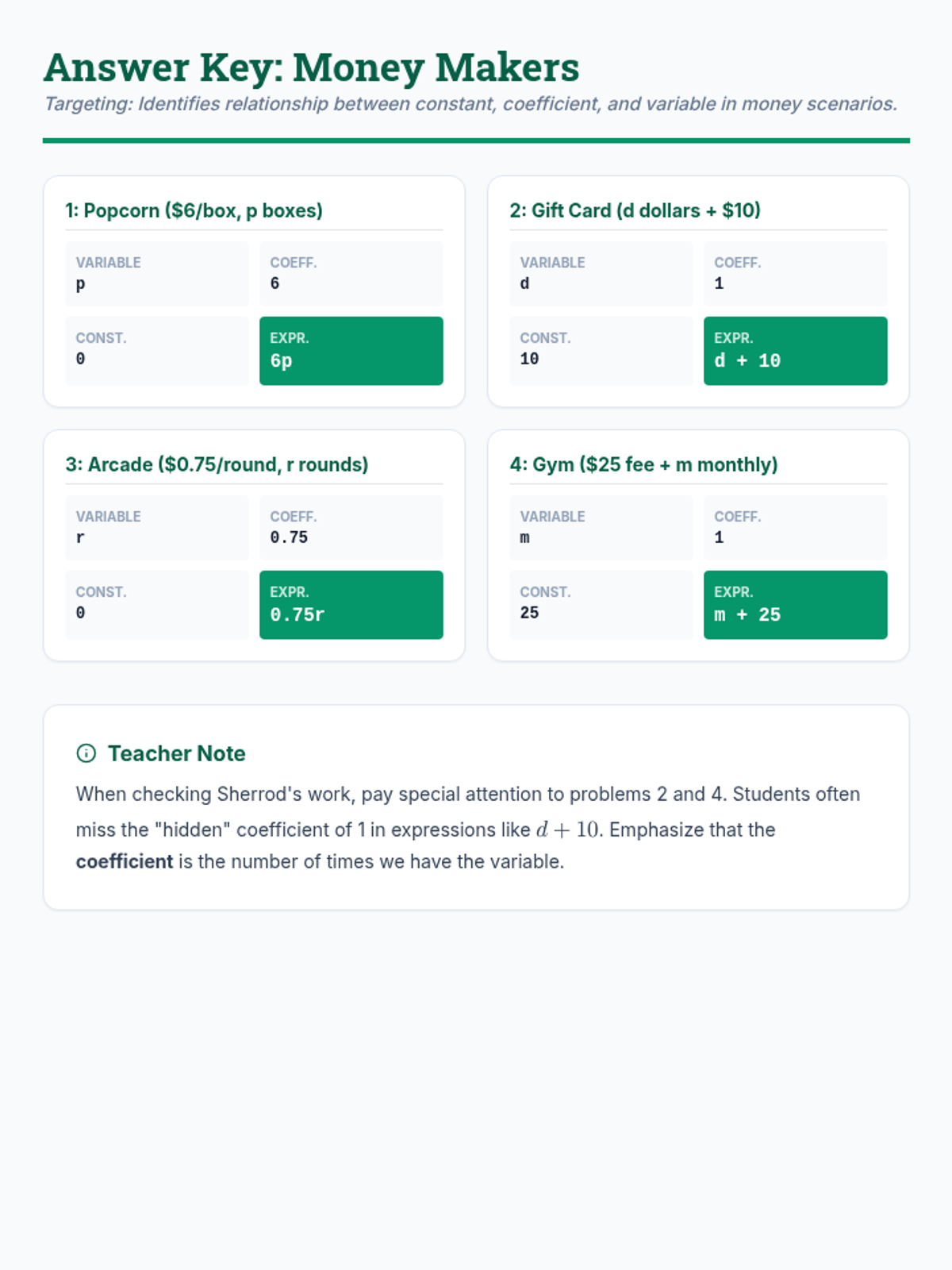
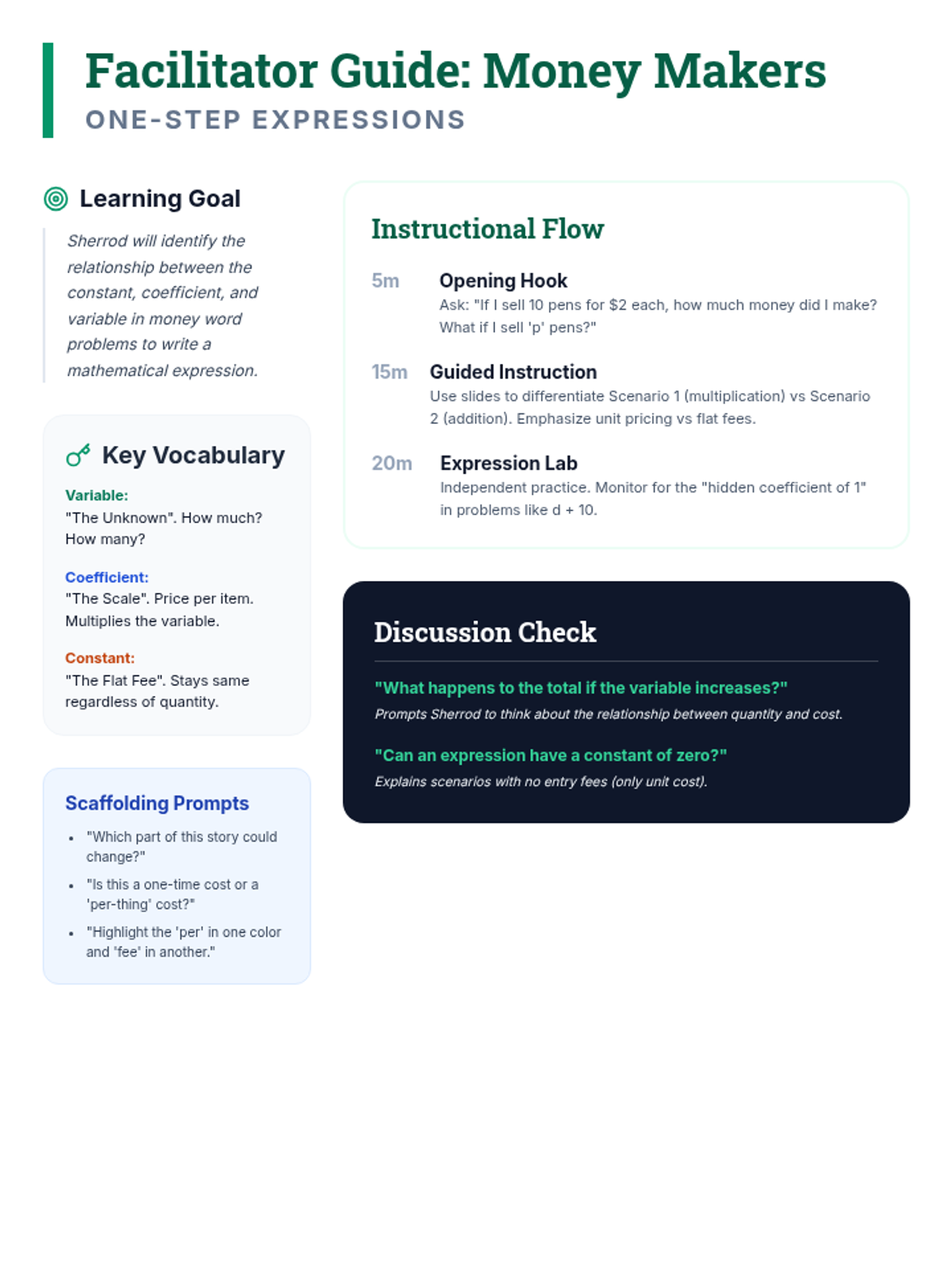
This lesson helps students identify and define the parts of a mathematical expression (constant, coefficient, variable) within the context of one-step money word problems. Students will learn to translate real-world financial scenarios into algebraic expressions.
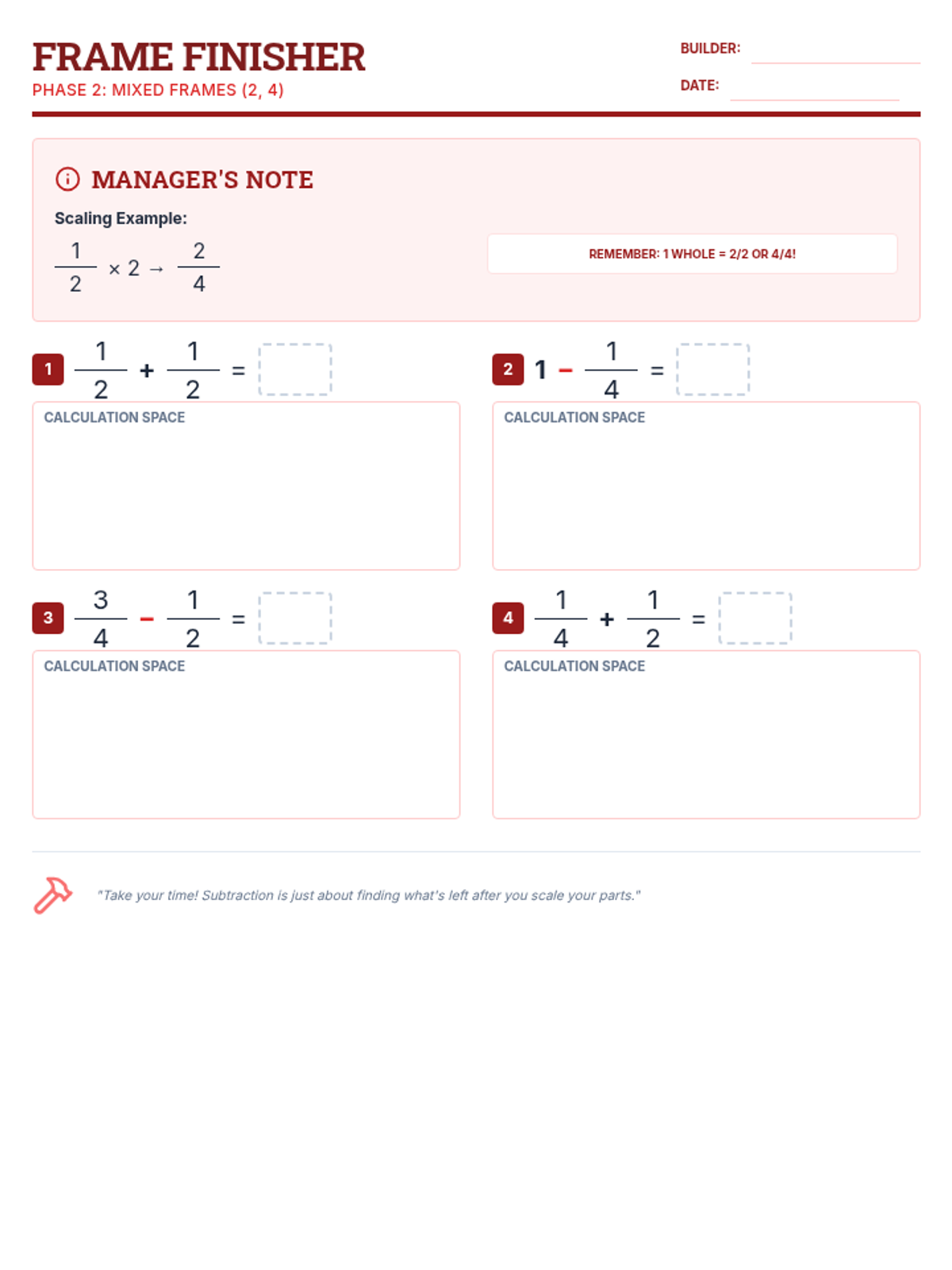
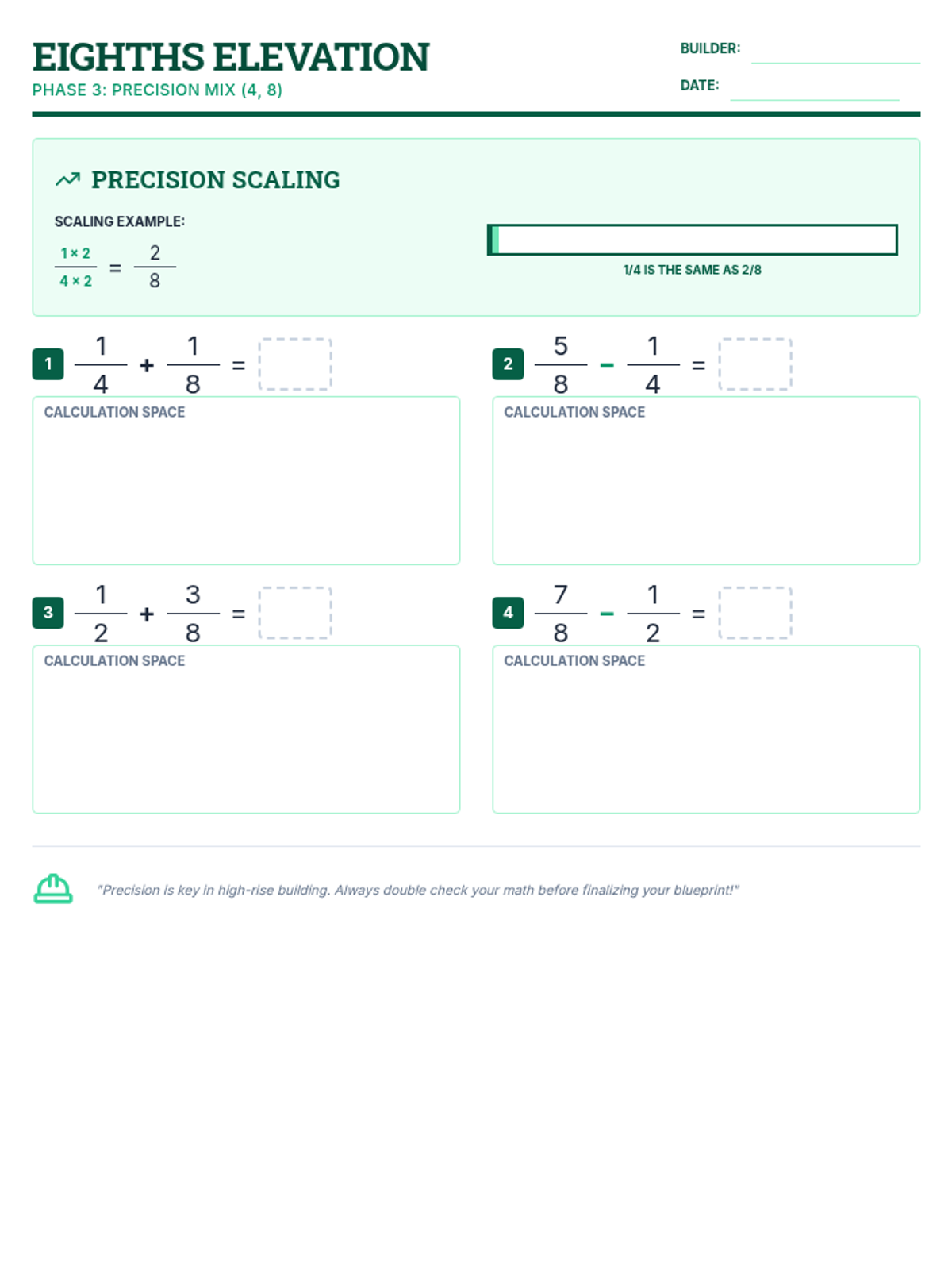
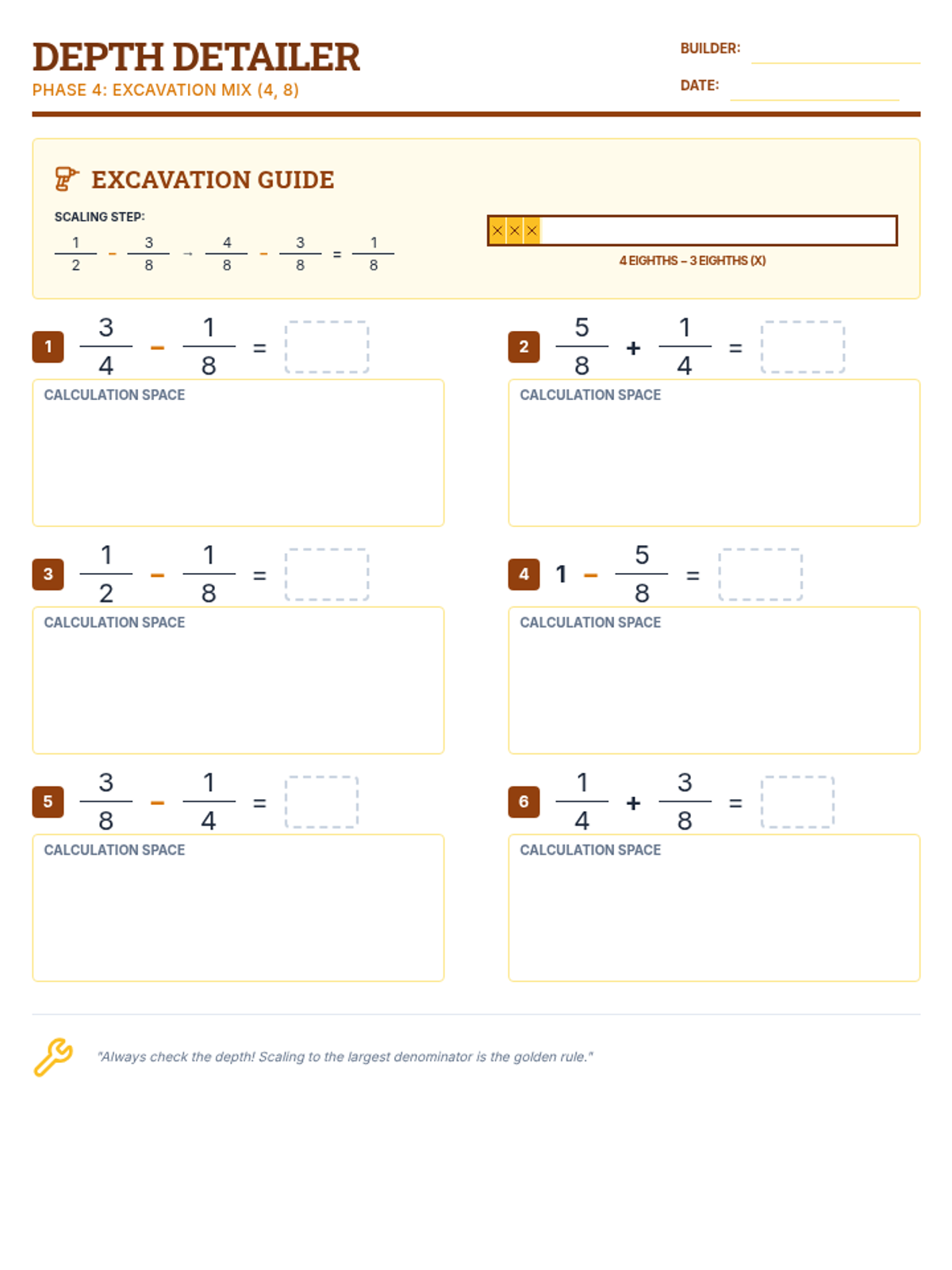
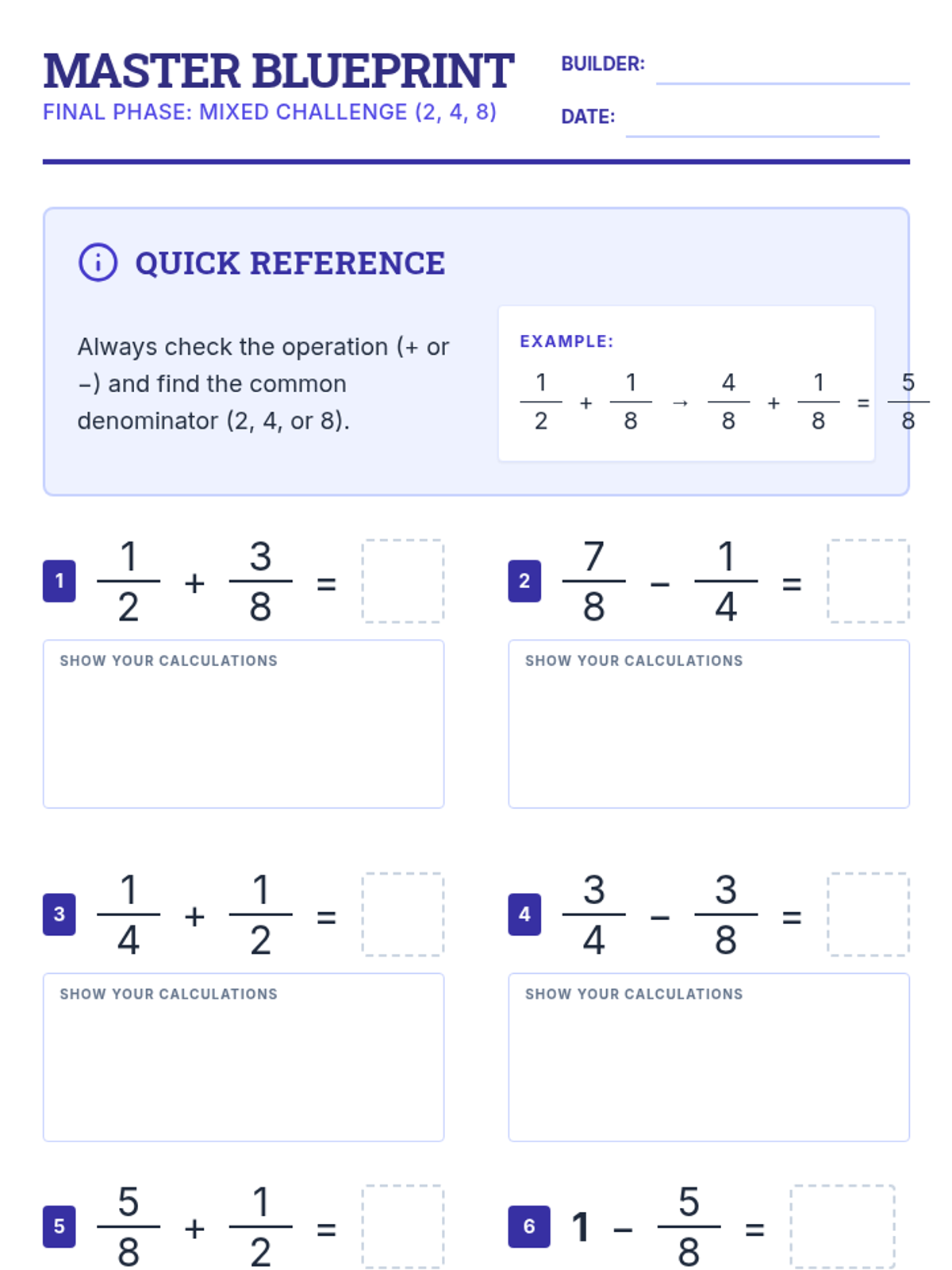
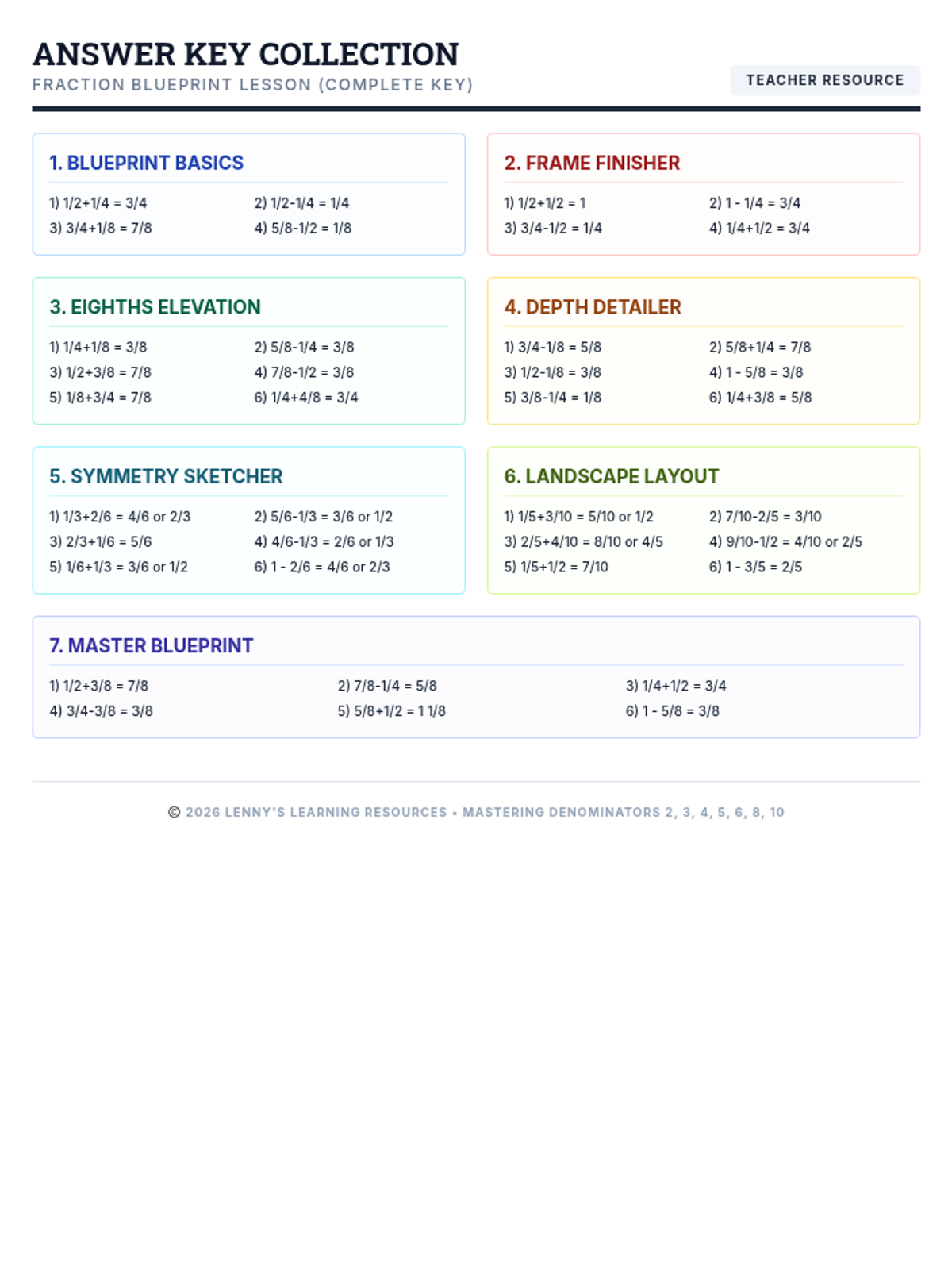
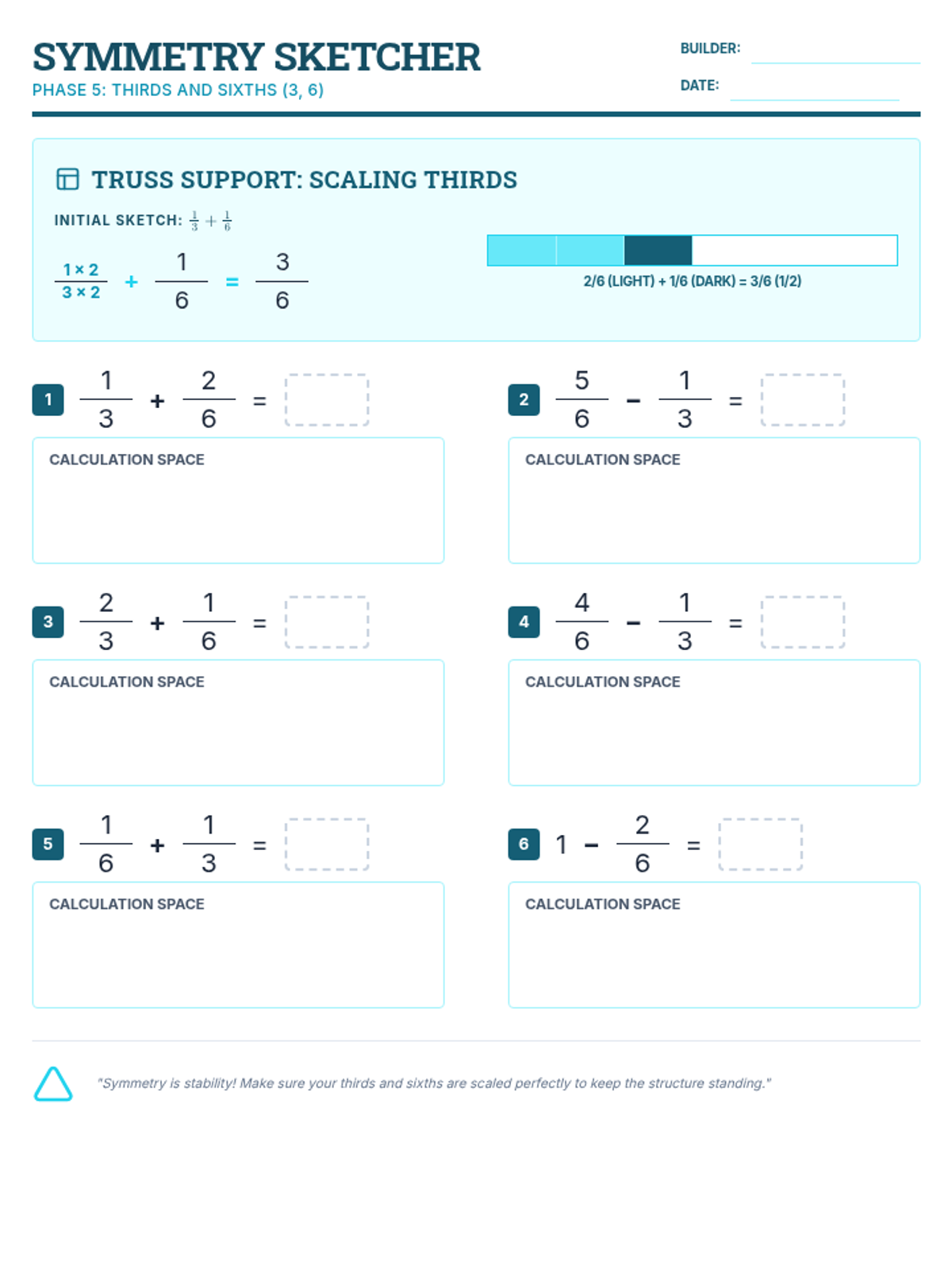
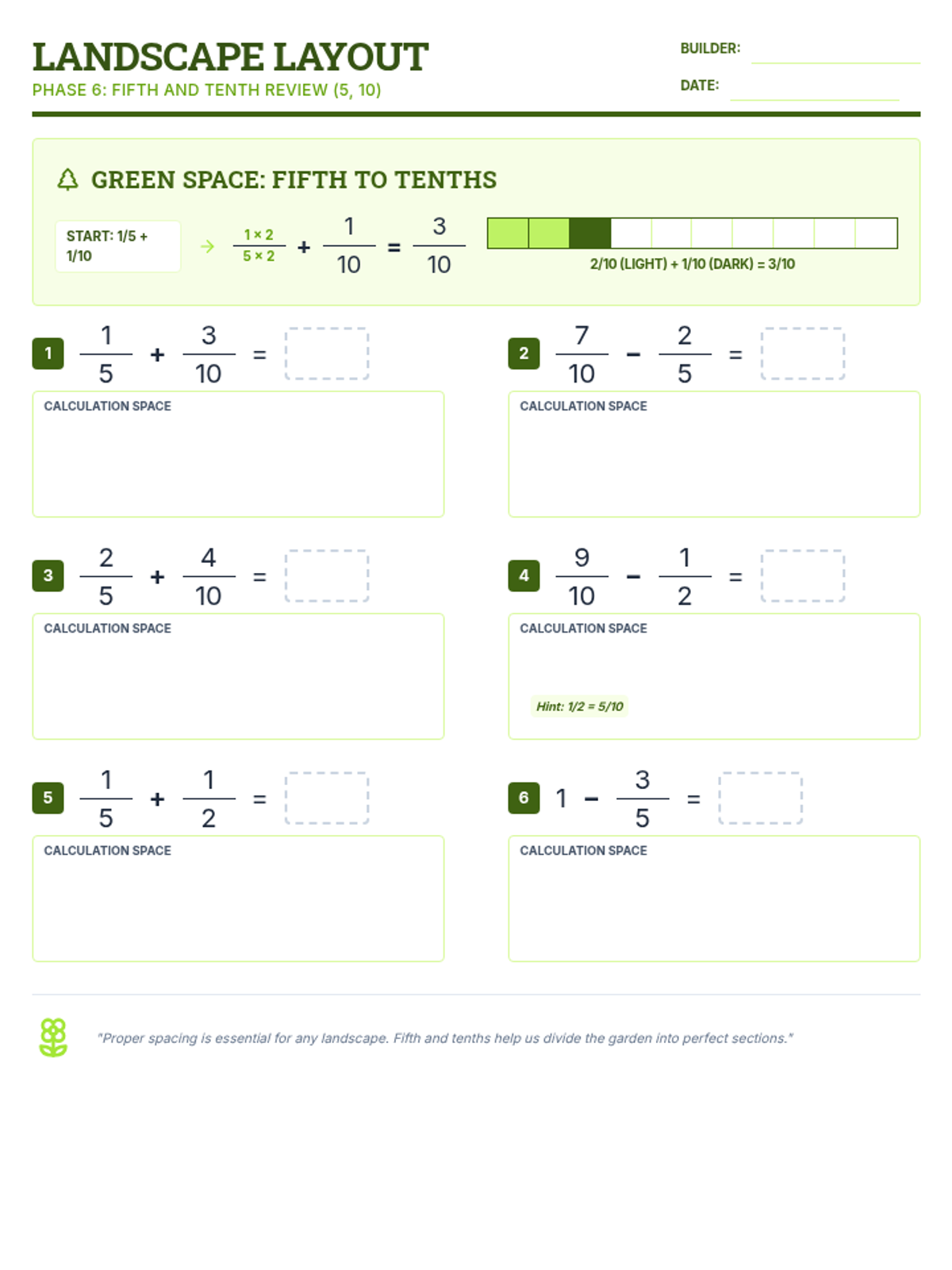
A series of 7 structured worksheets focusing on adding and subtracting fractions with simple denominators (2, 3, 4, 5, 6, 8) using a blueprint-inspired design. Includes step-by-step examples and visual scaffolds for students to master finding common denominators.
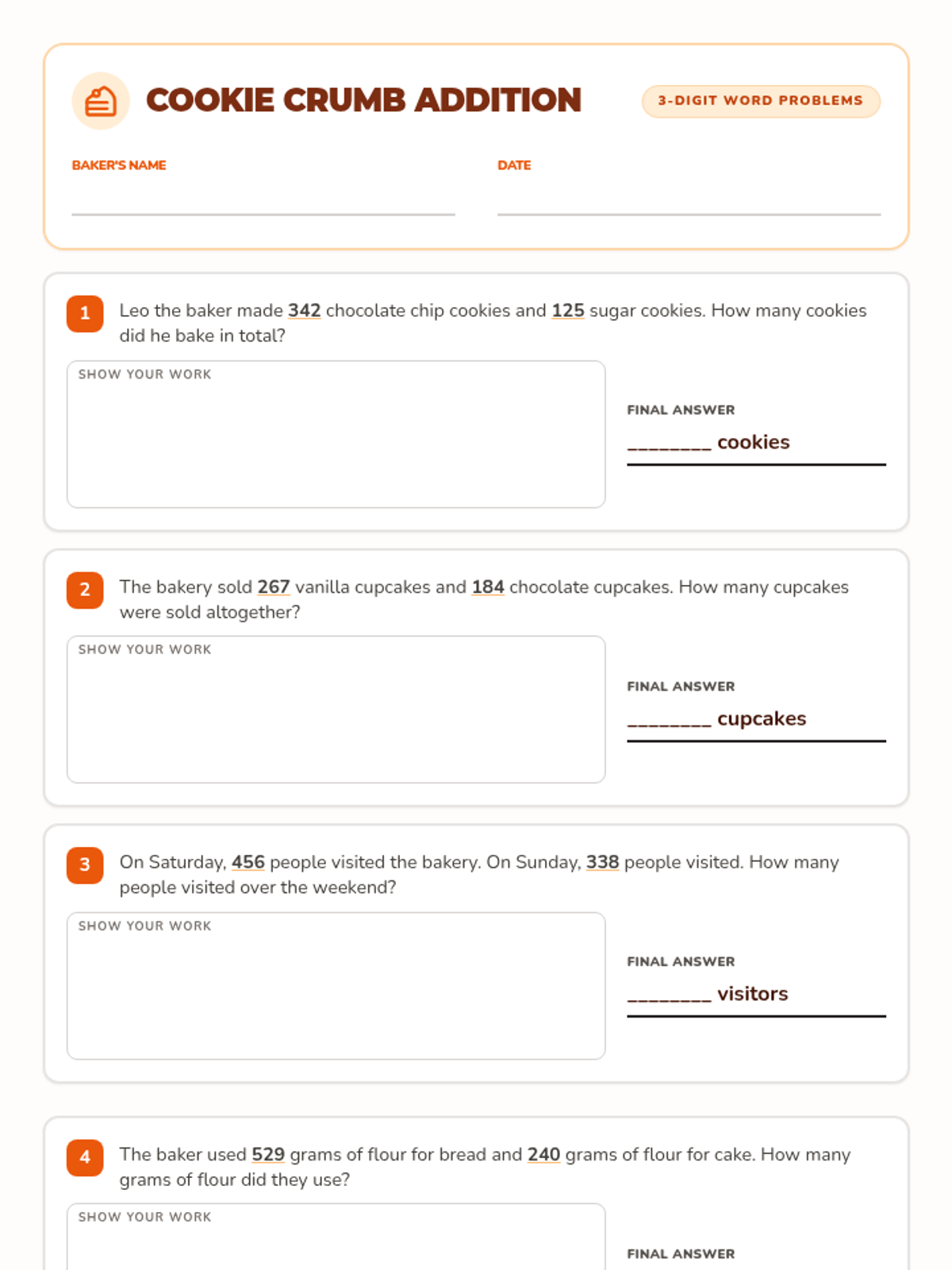
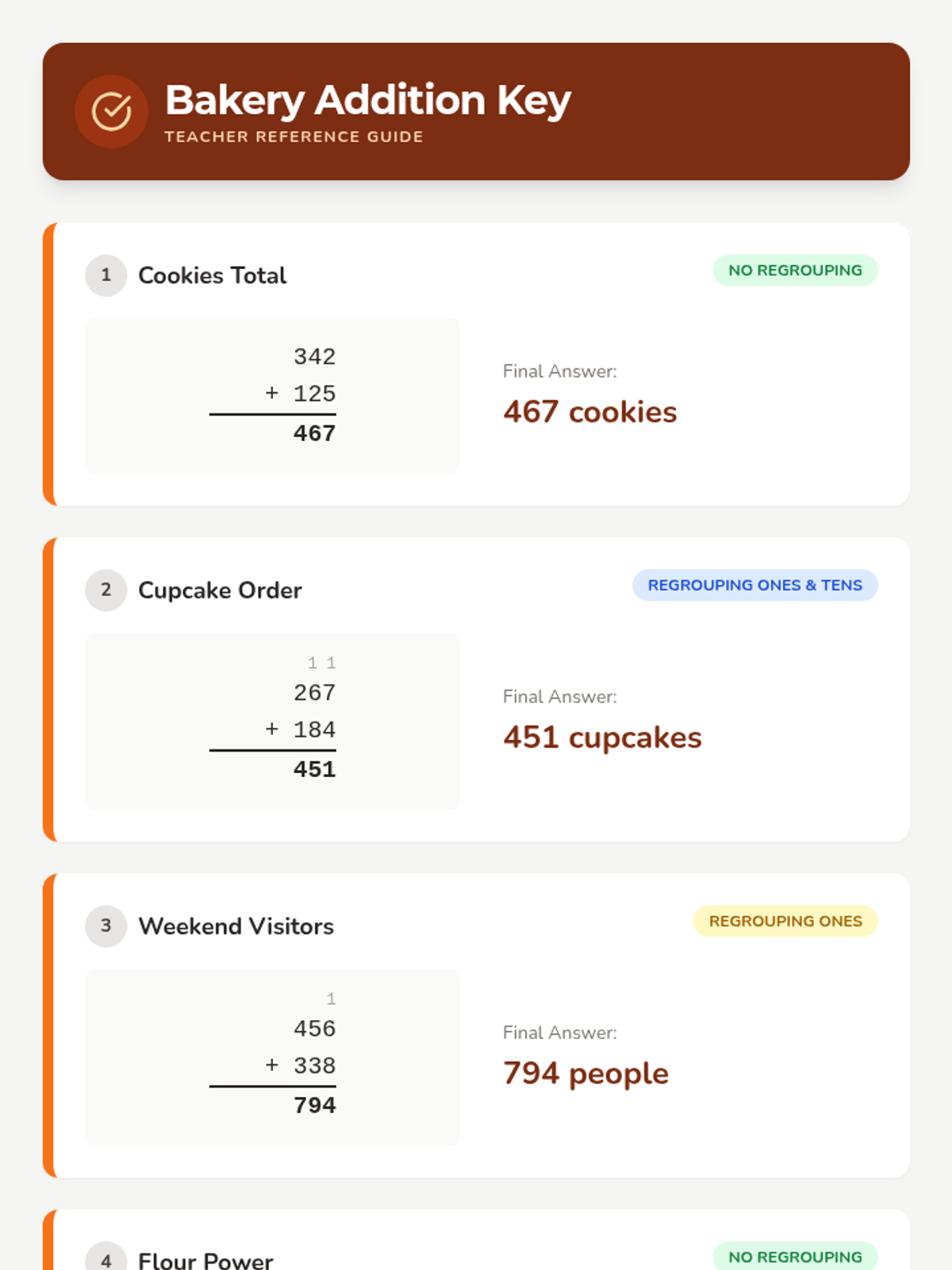
A lesson focused on solving one-step word problems using three-digit addition, both with and without regrouping. Includes a bakery-themed worksheet and a corresponding teacher answer key.
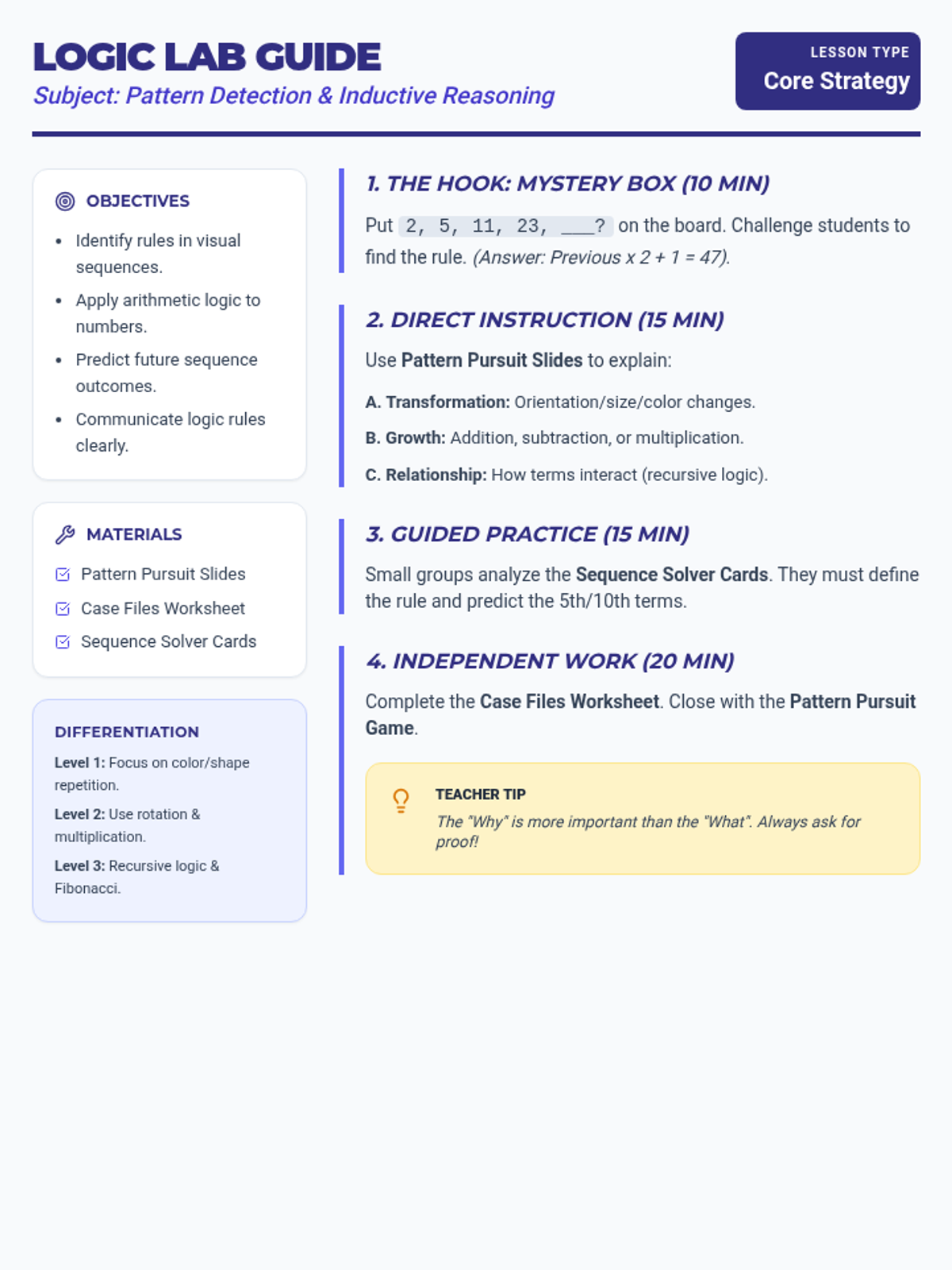
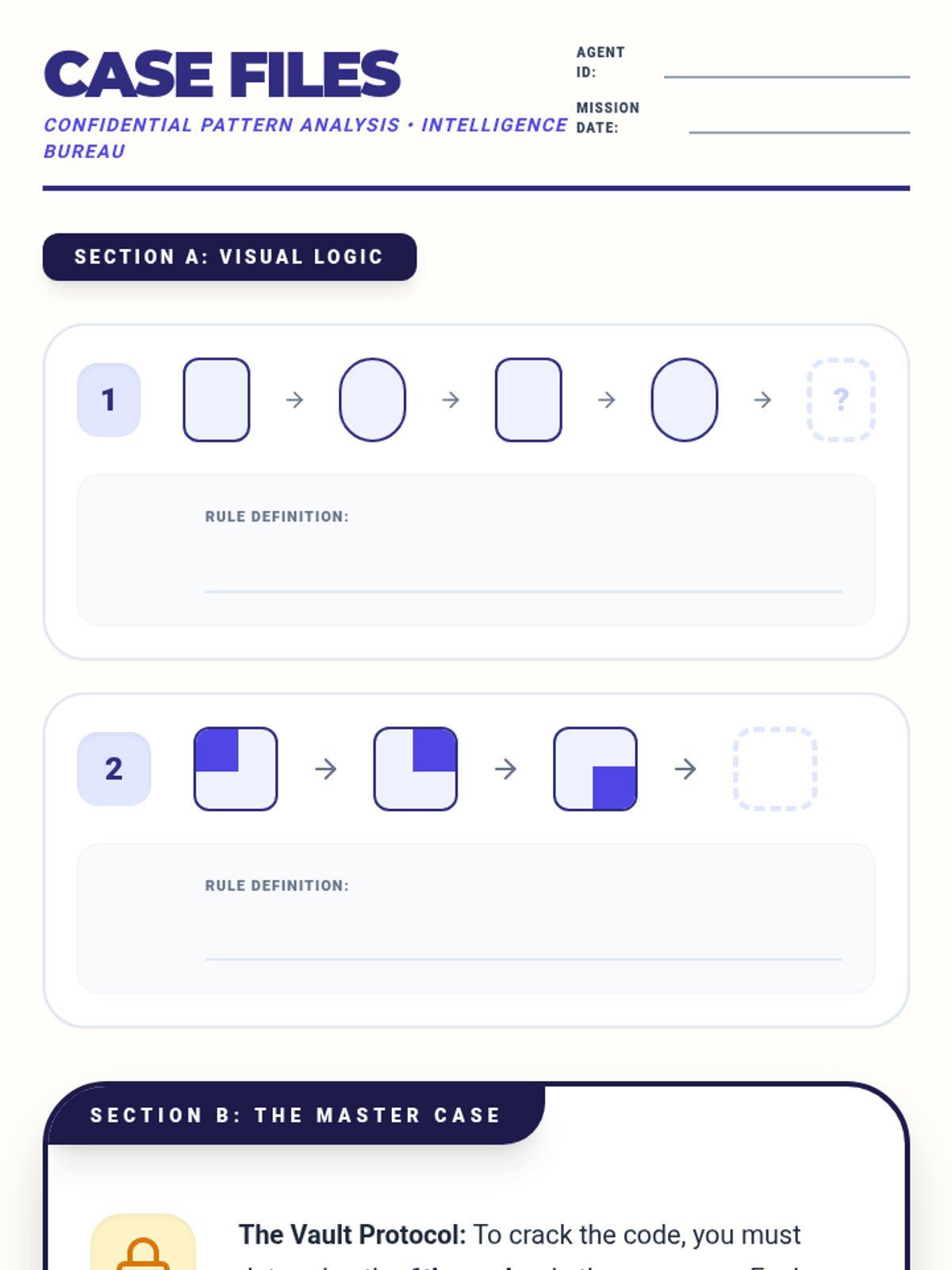
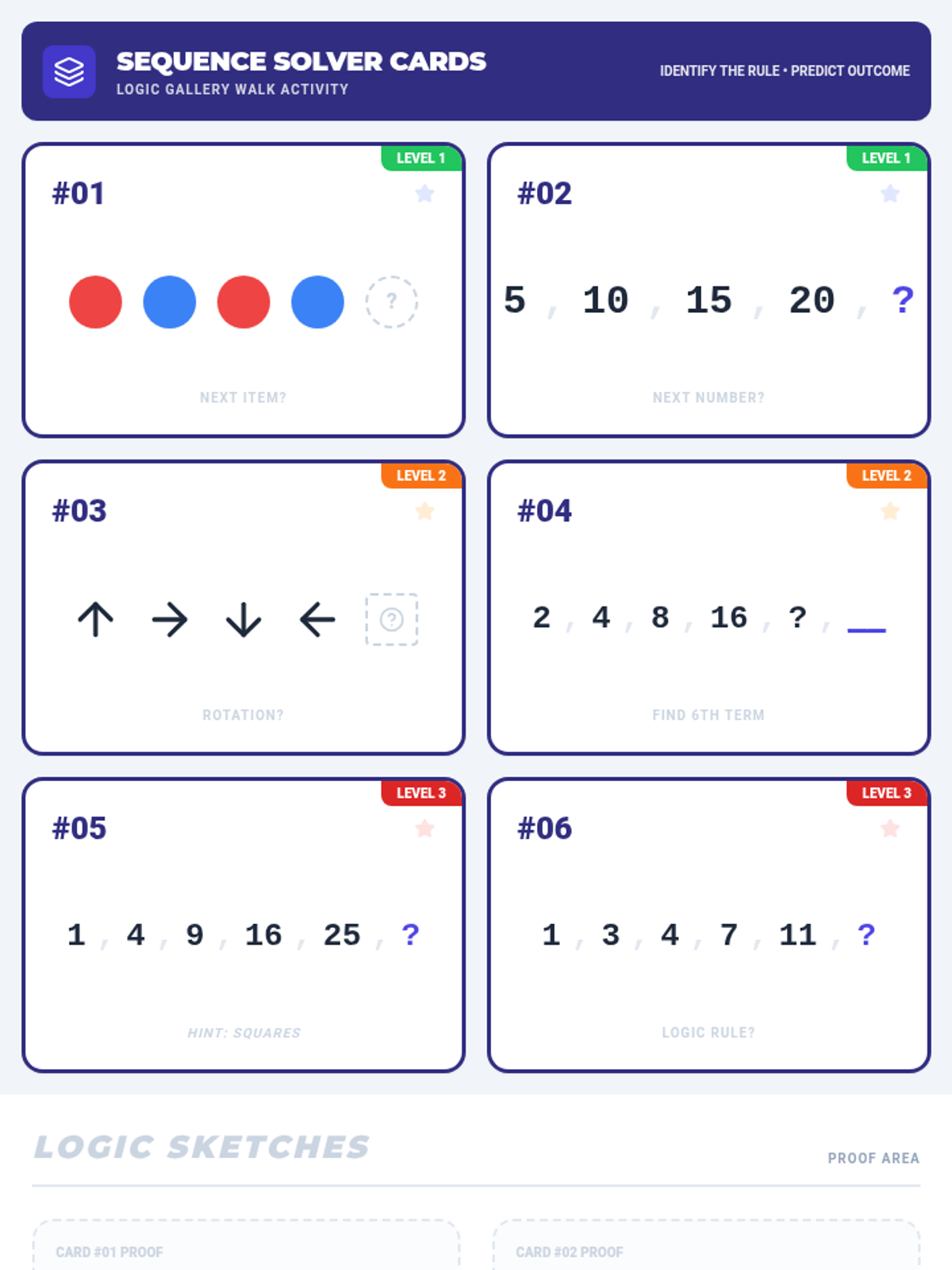
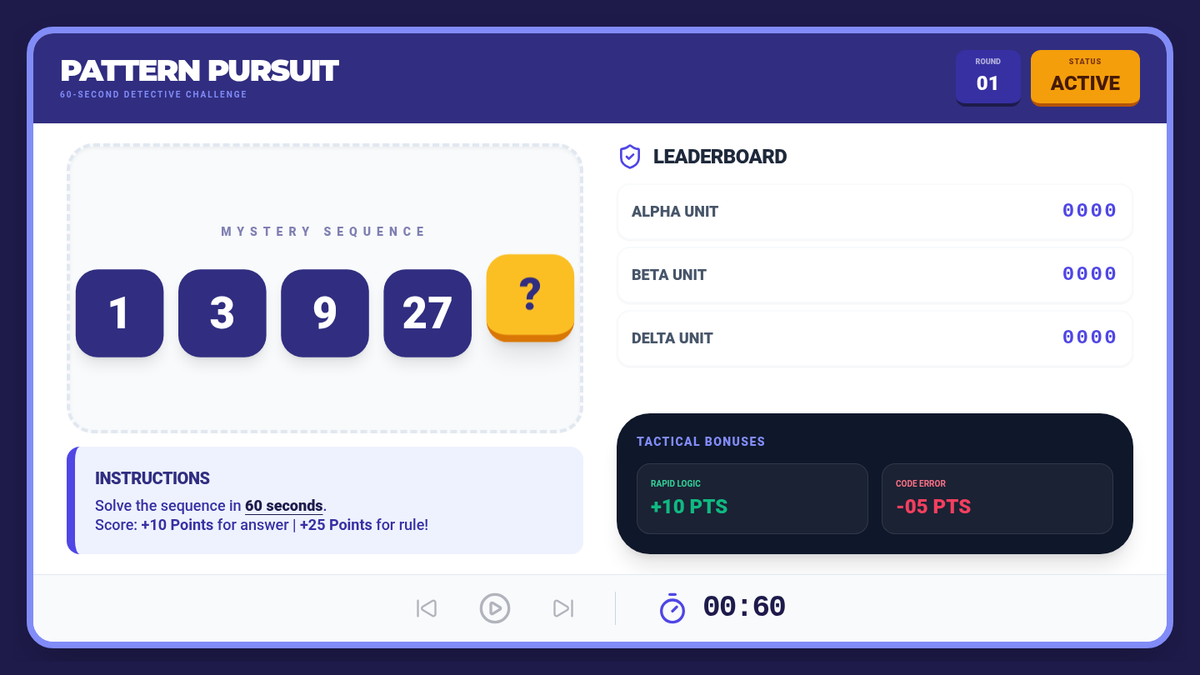
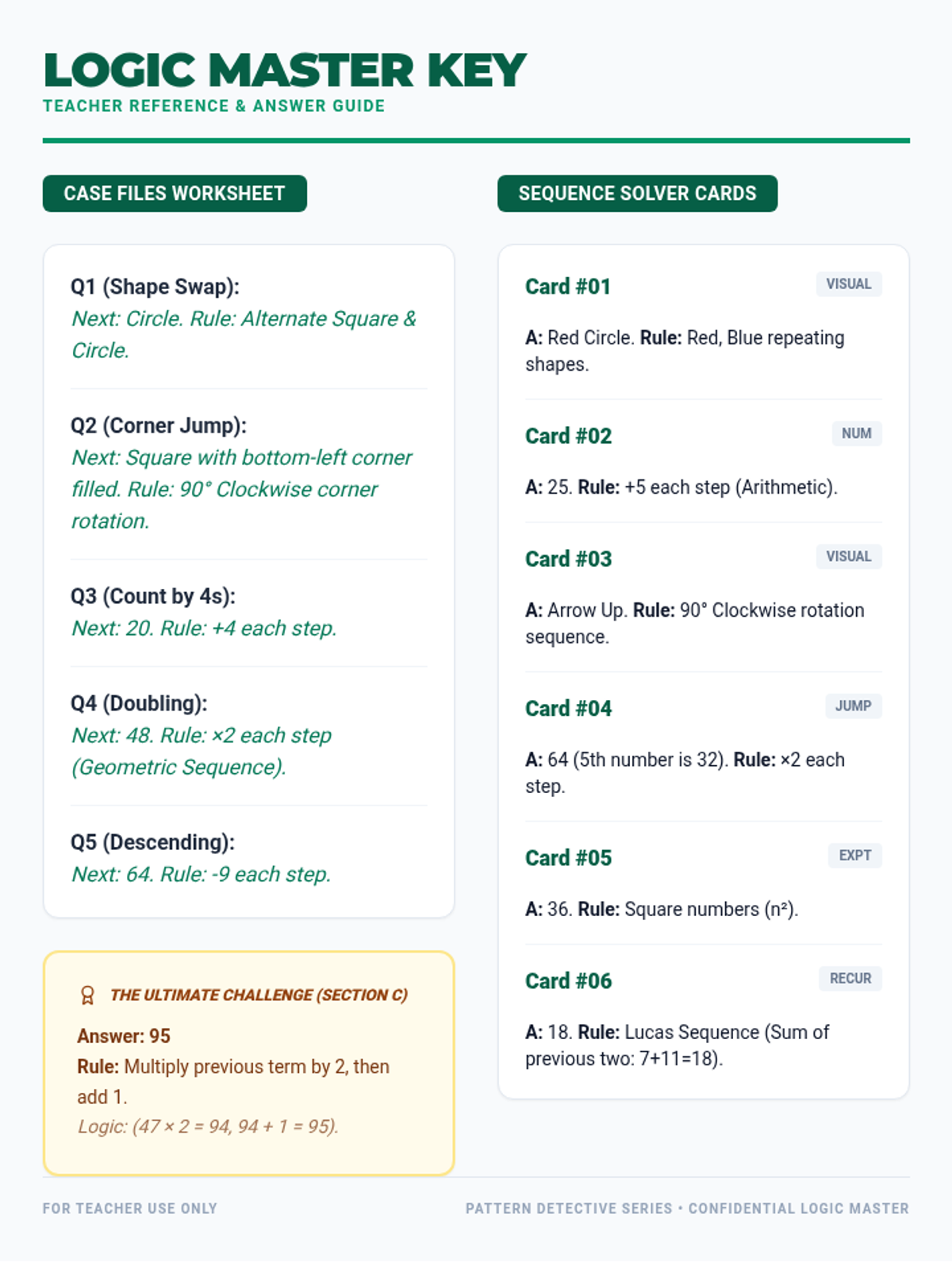
A comprehensive logic lesson where students act as detectives to identify rules in visual and numerical sequences, building inductive reasoning and prediction skills.
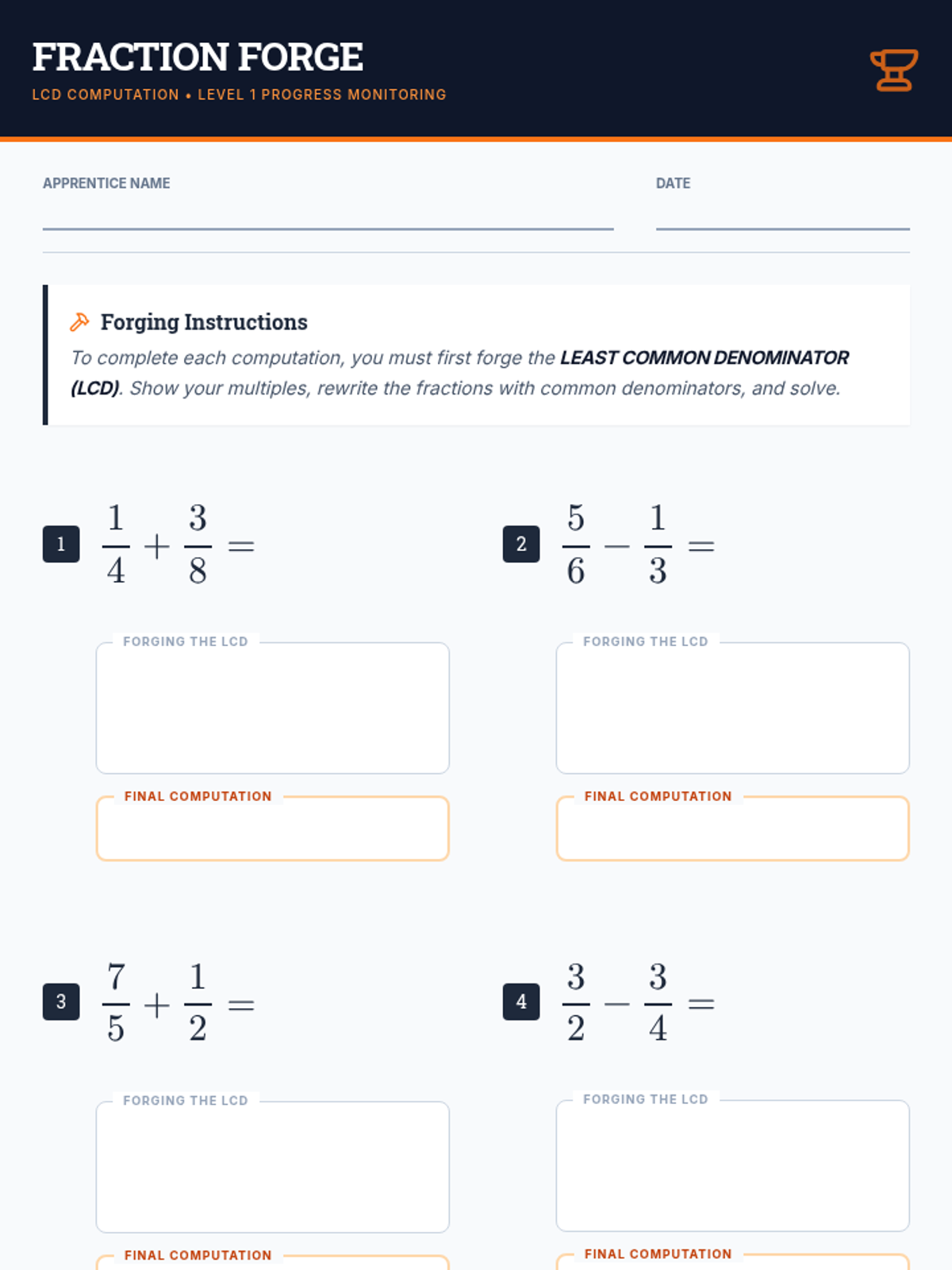
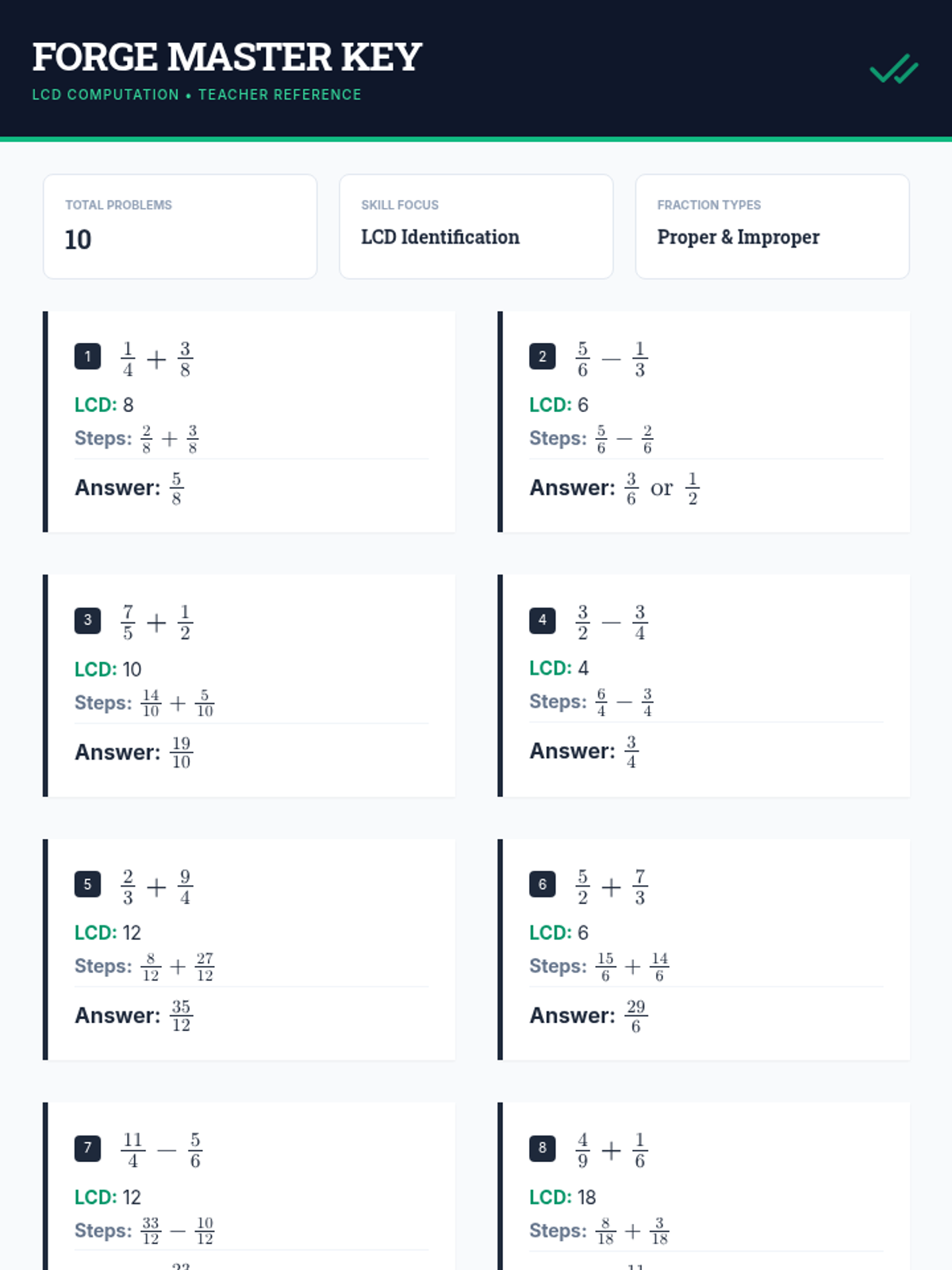
A lesson focused on adding and subtracting proper and improper fractions by identifying the least common denominator. Includes a progress monitoring worksheet and a detailed teacher answer key.
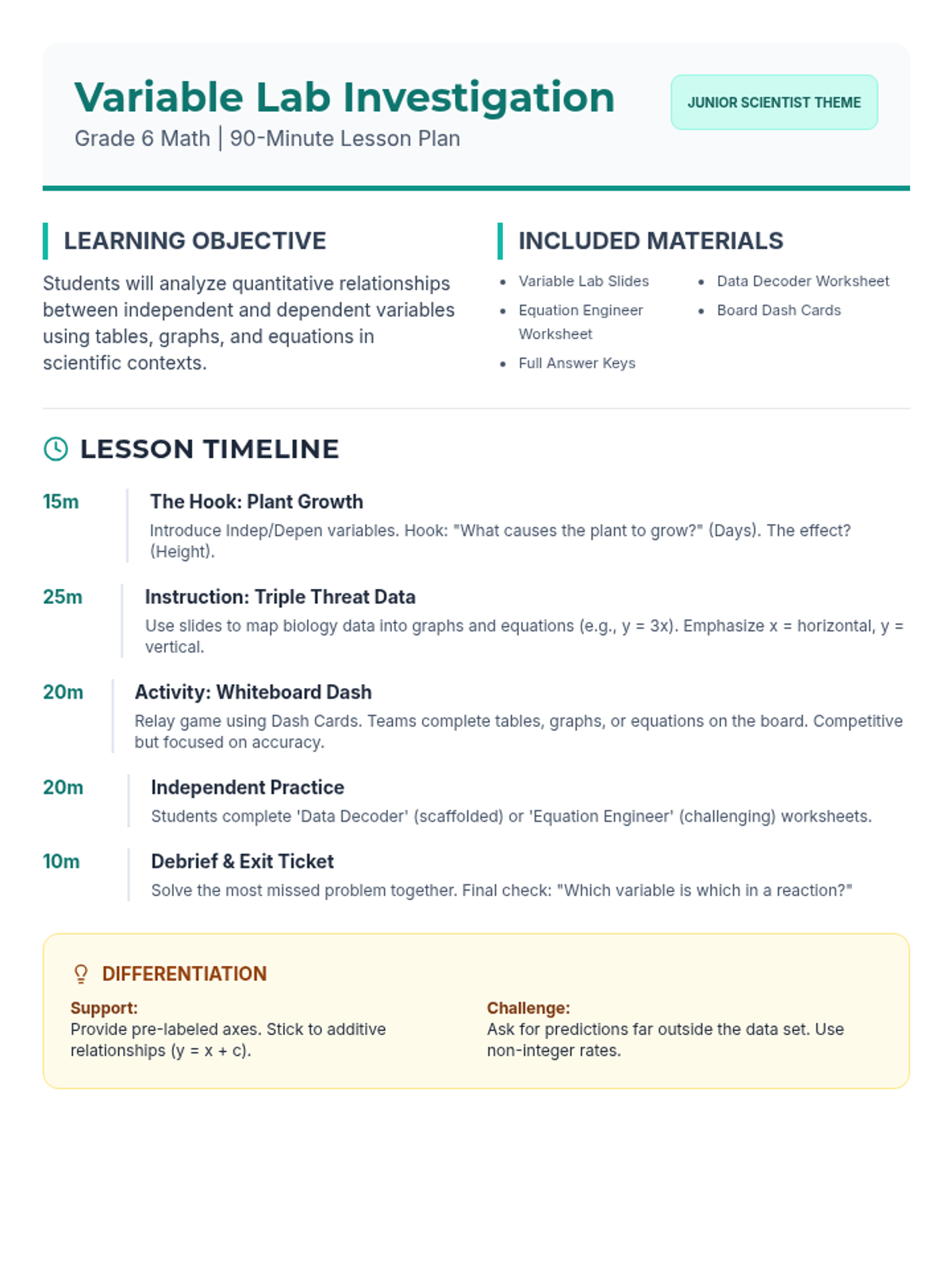
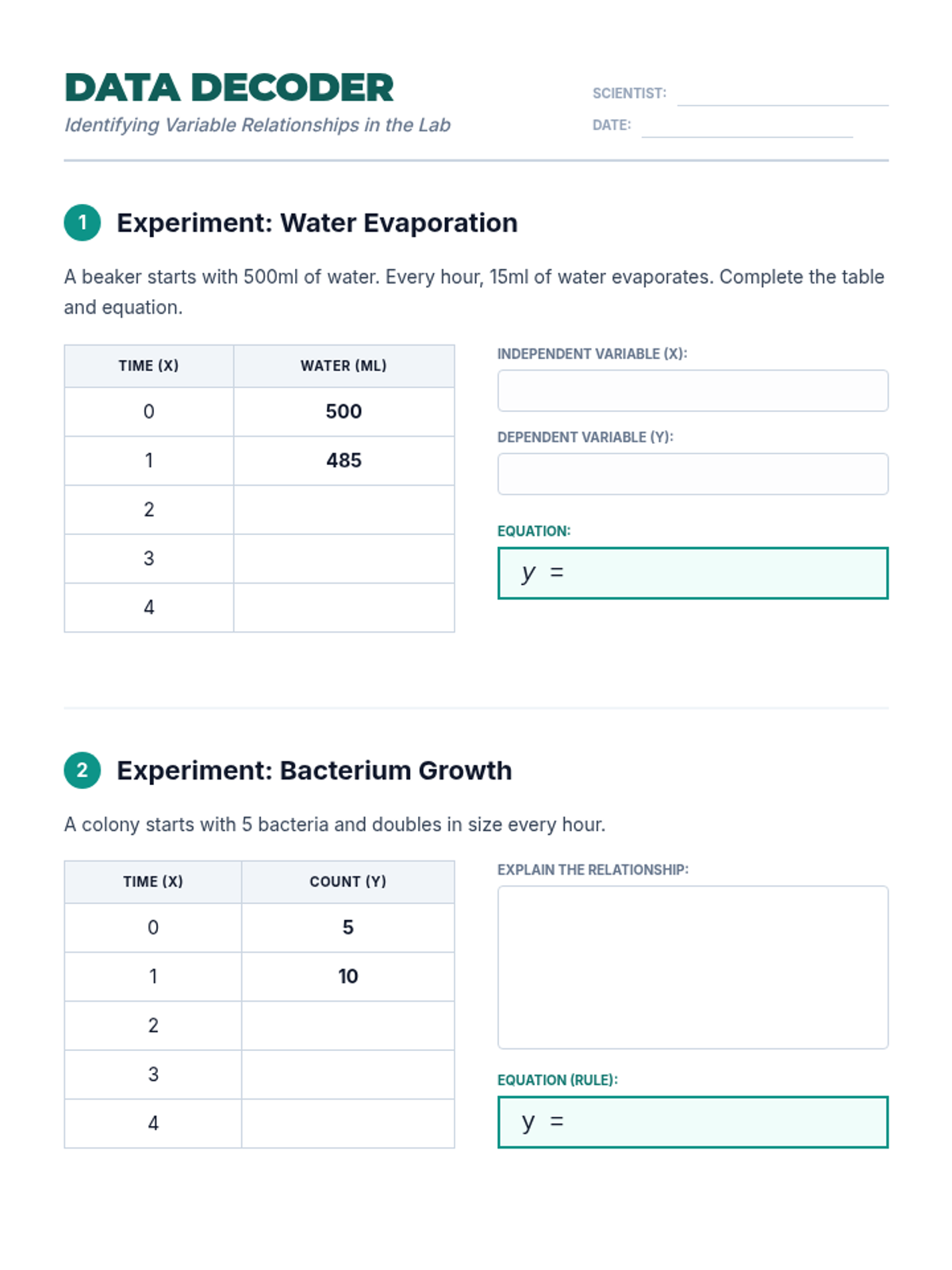
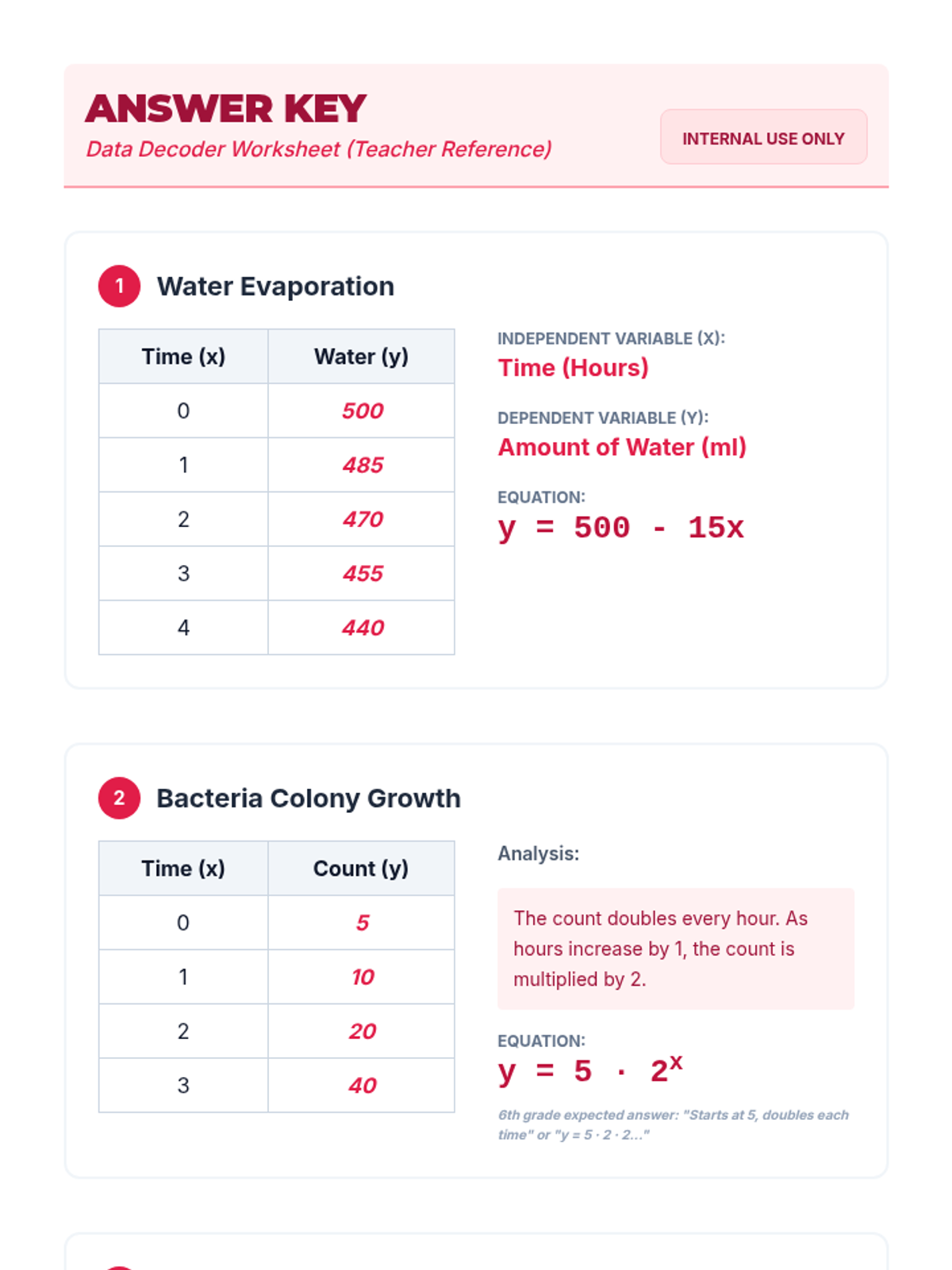
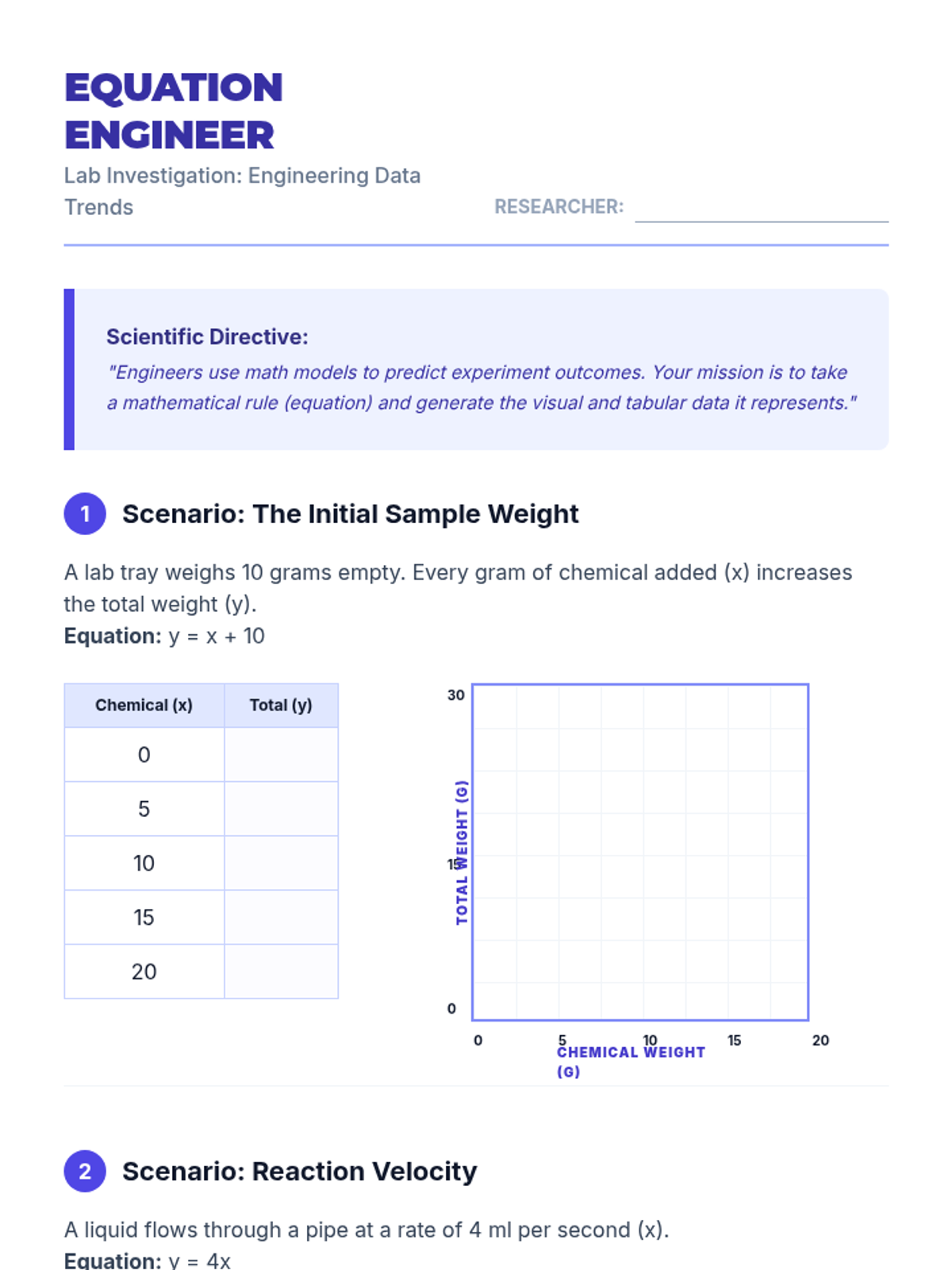
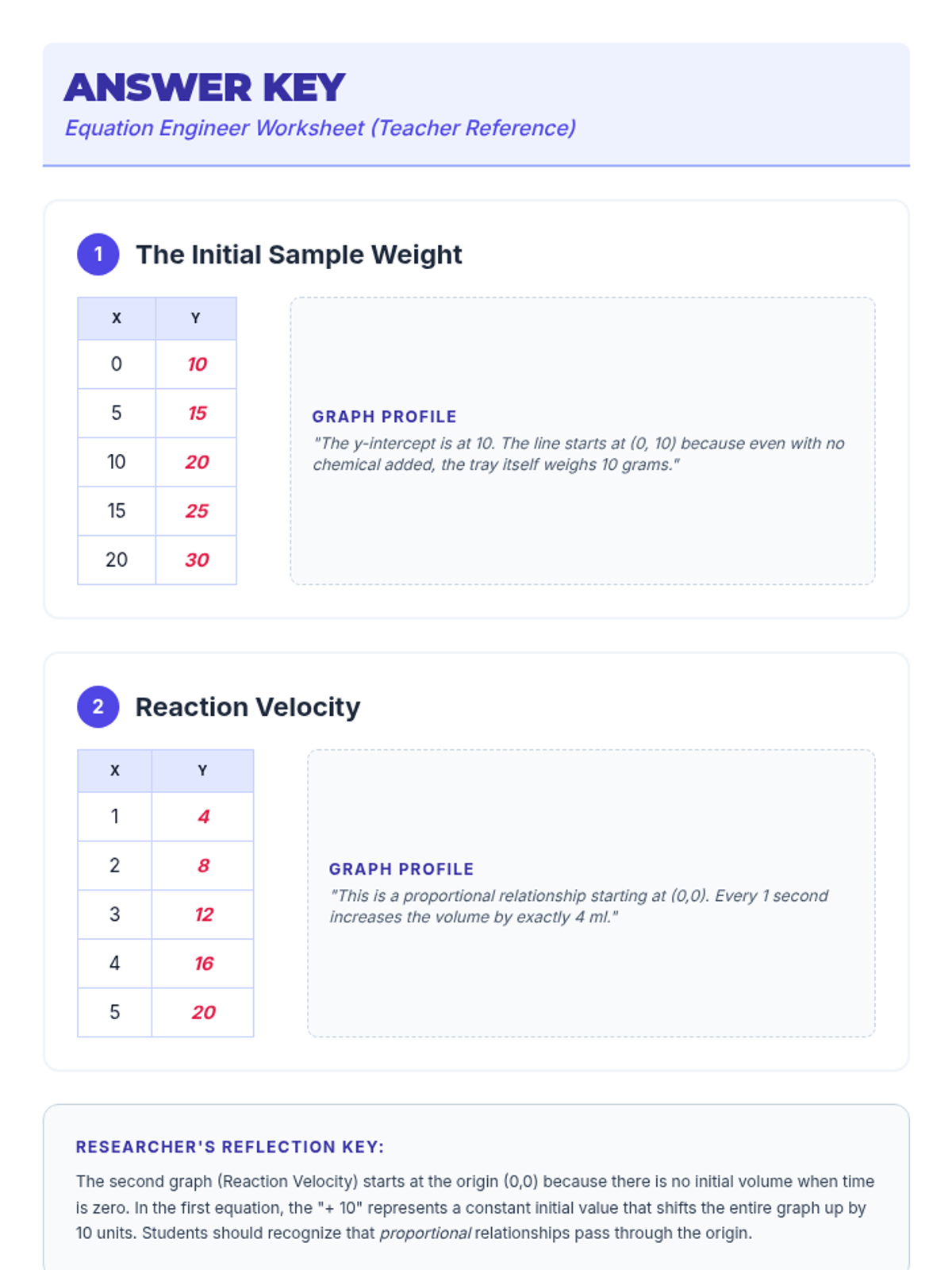
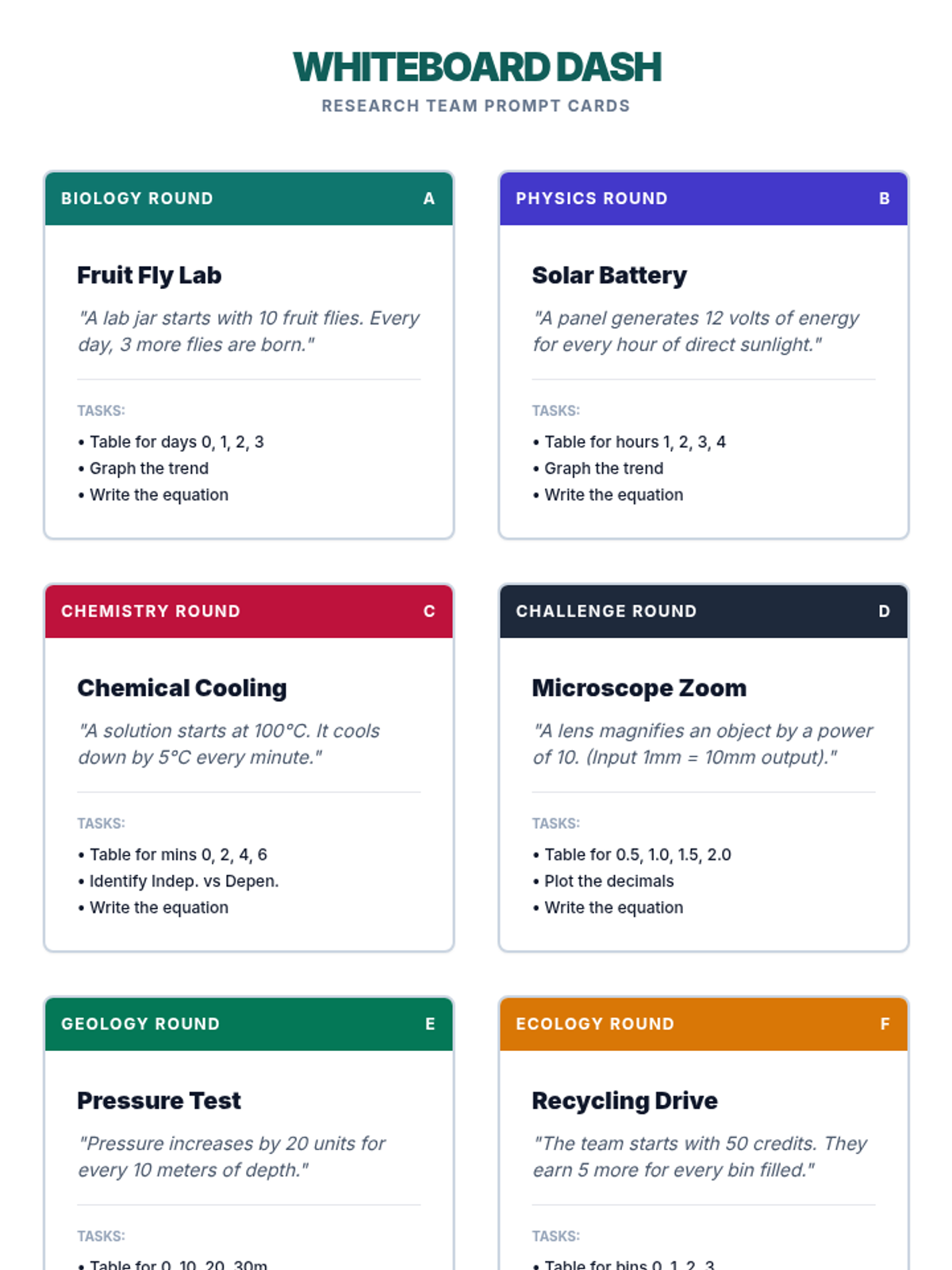
A 90-minute investigative math lesson where 6th grade students analyze independent and dependent variables through science experiment data. Students connect tables, graphs, and equations using real-world laboratory scenarios.
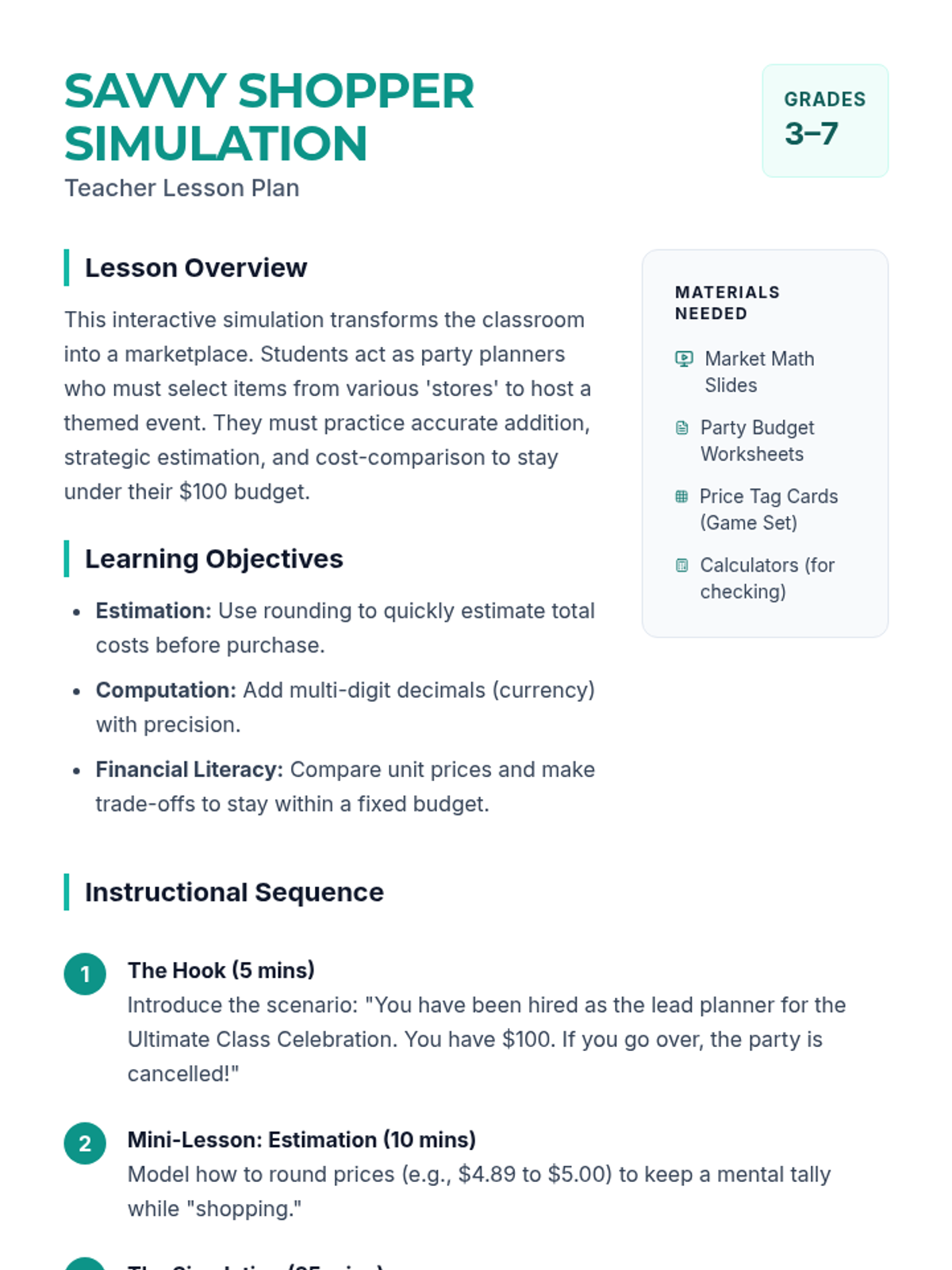
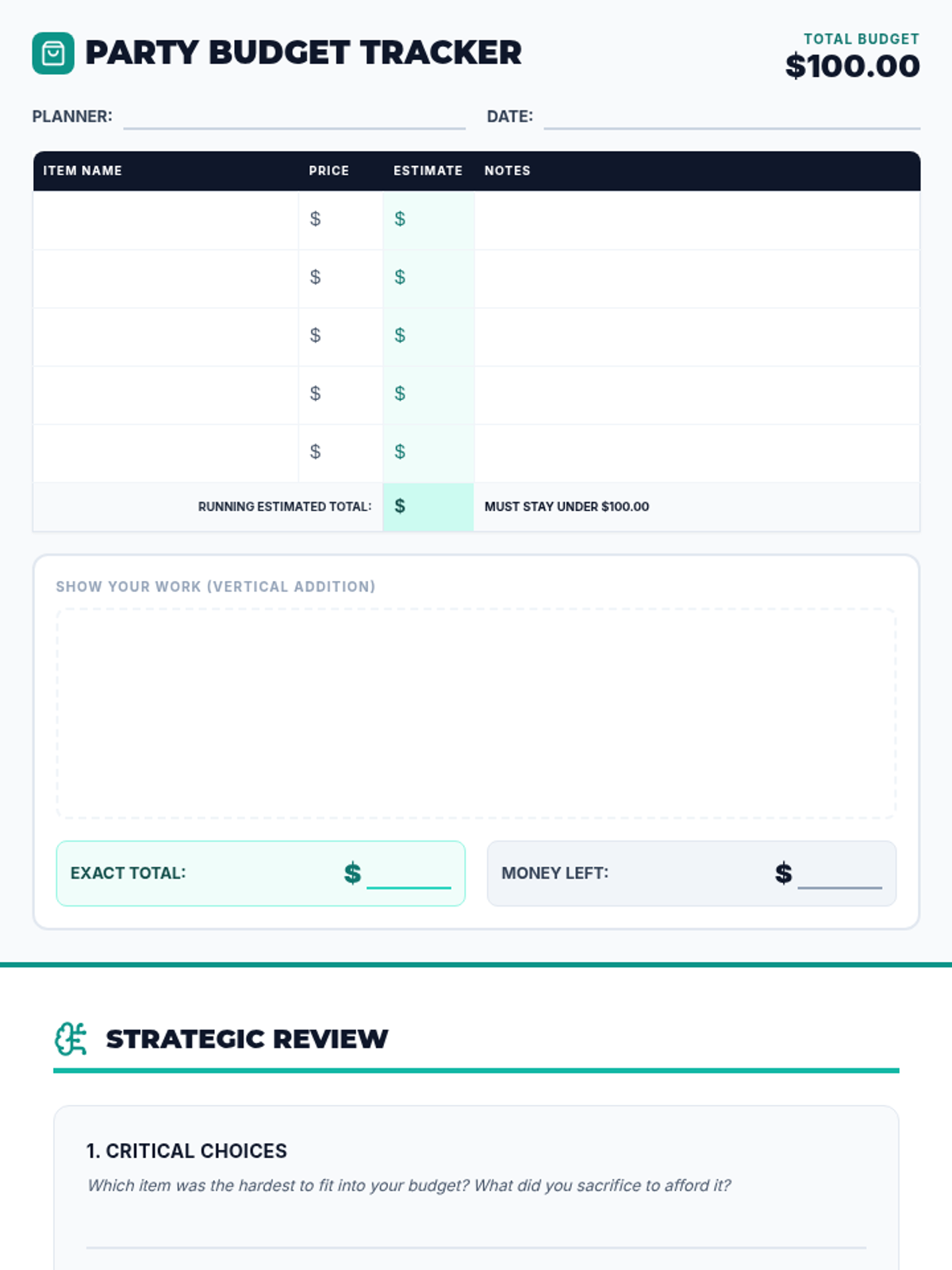
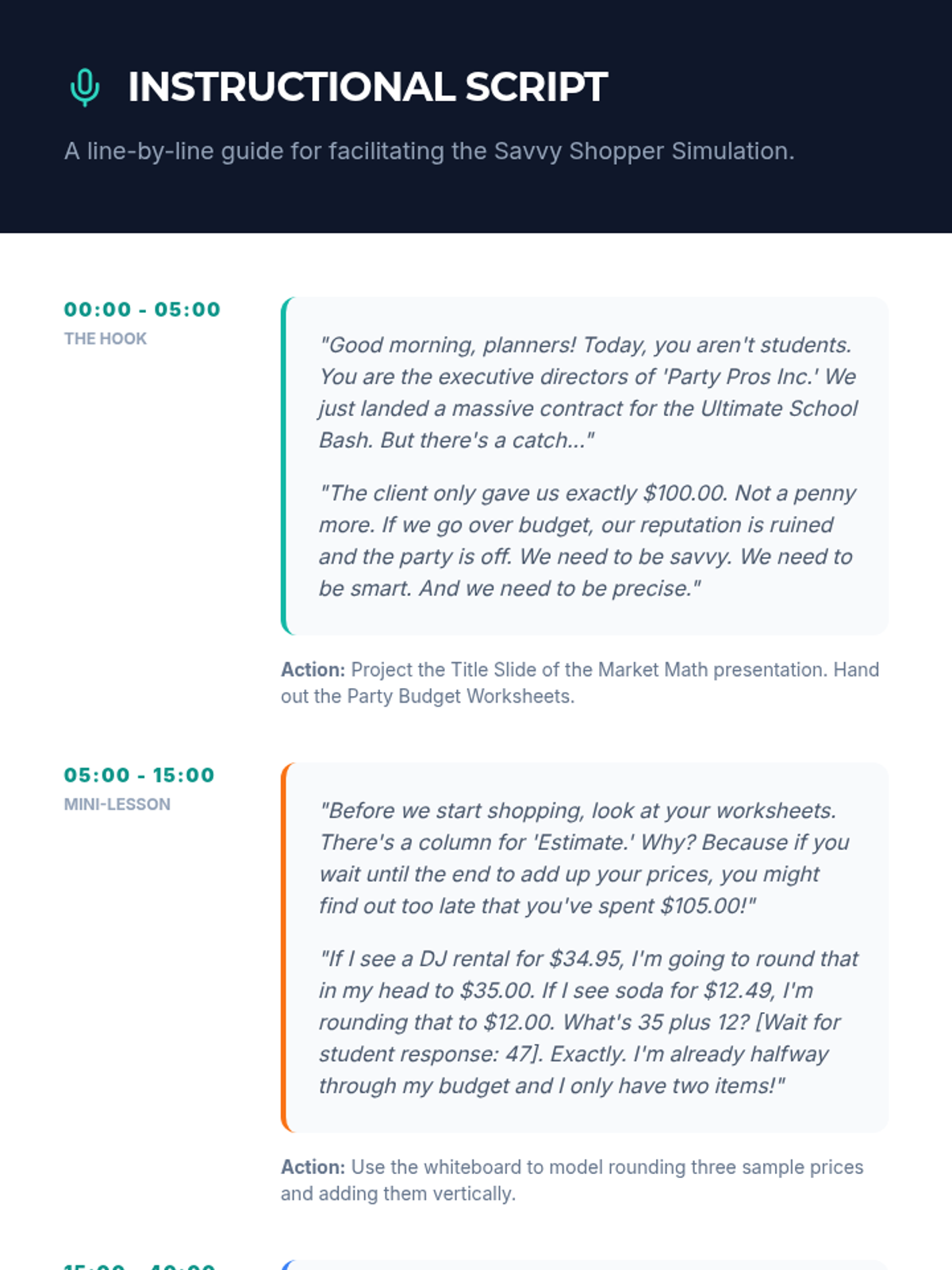
A hands-on math simulation where students practice addition and estimation by planning a party within a budget, developing real-world financial literacy skills.
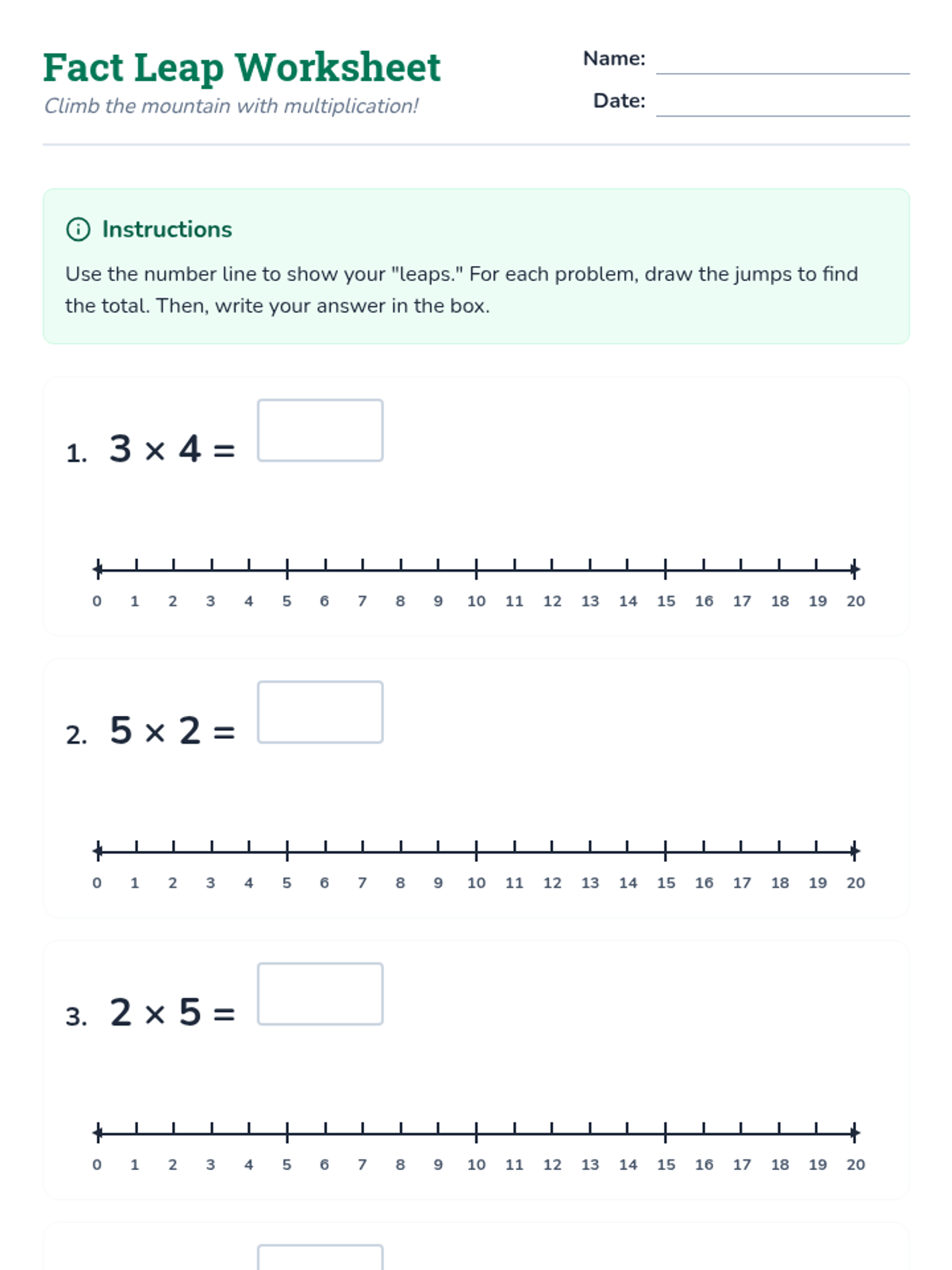
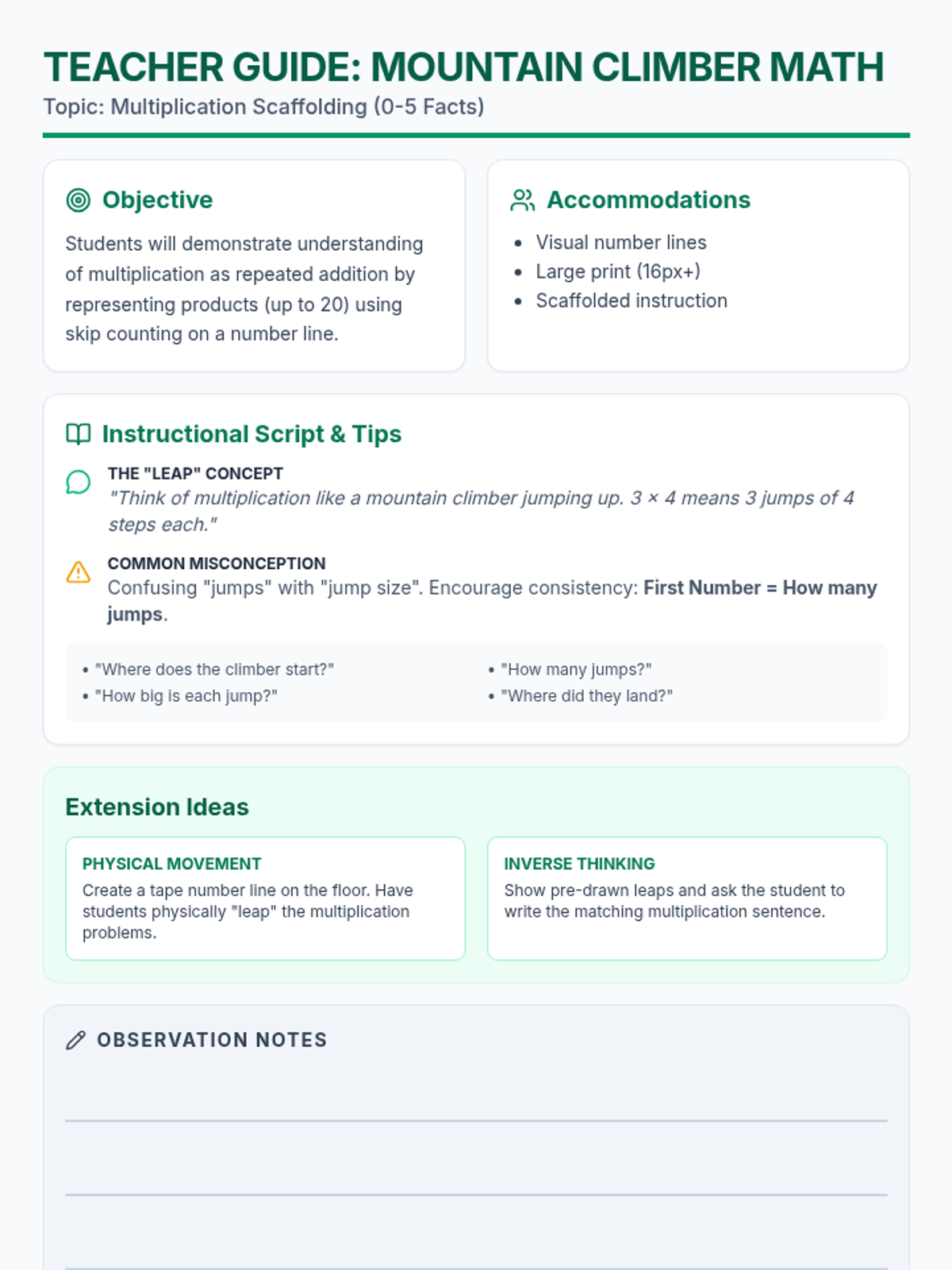
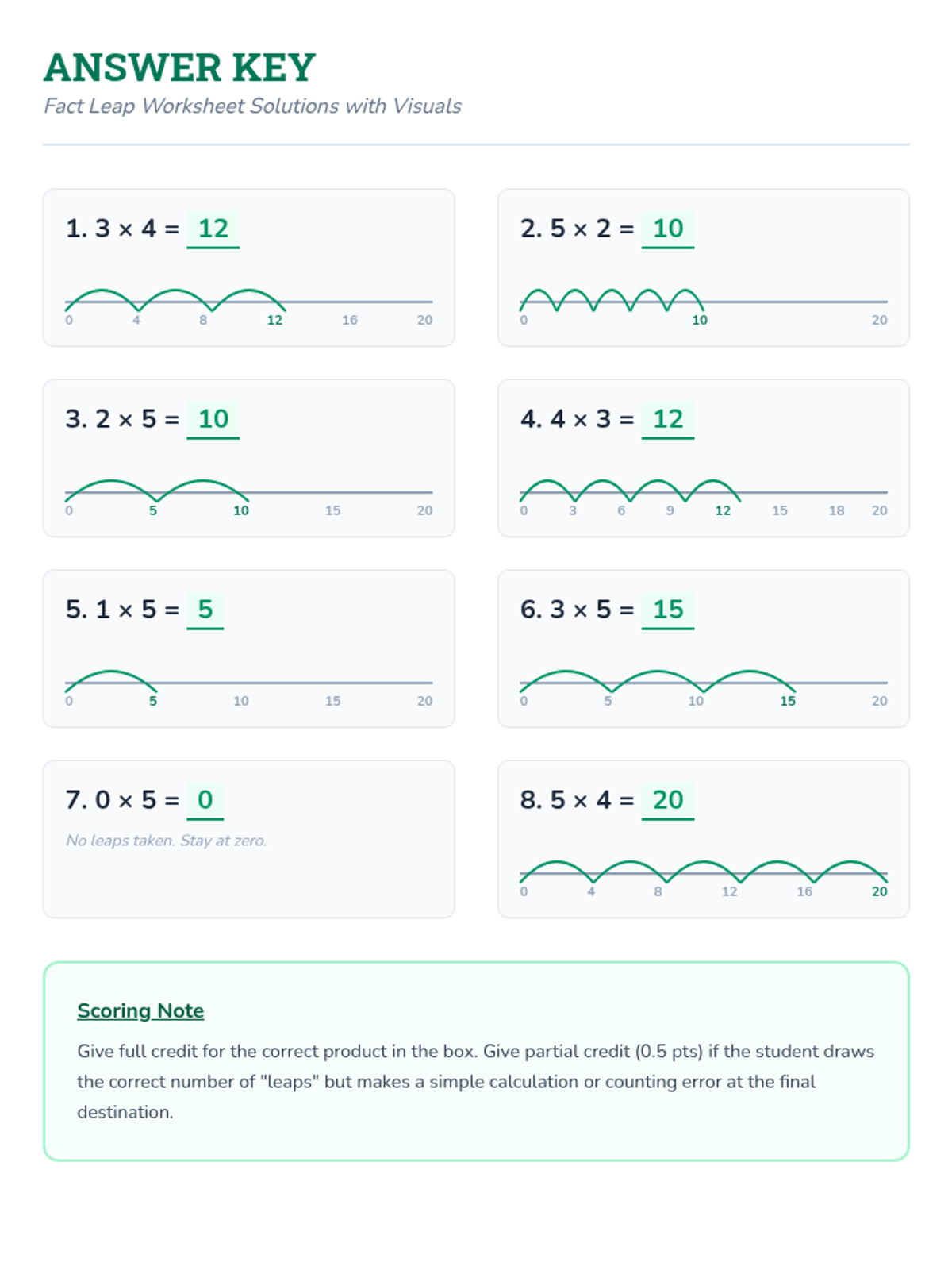
A foundational multiplication lesson for 6th grade special education students, focusing on facts 0-5 using number lines as visual scaffolding to support conceptual understanding and skip counting.
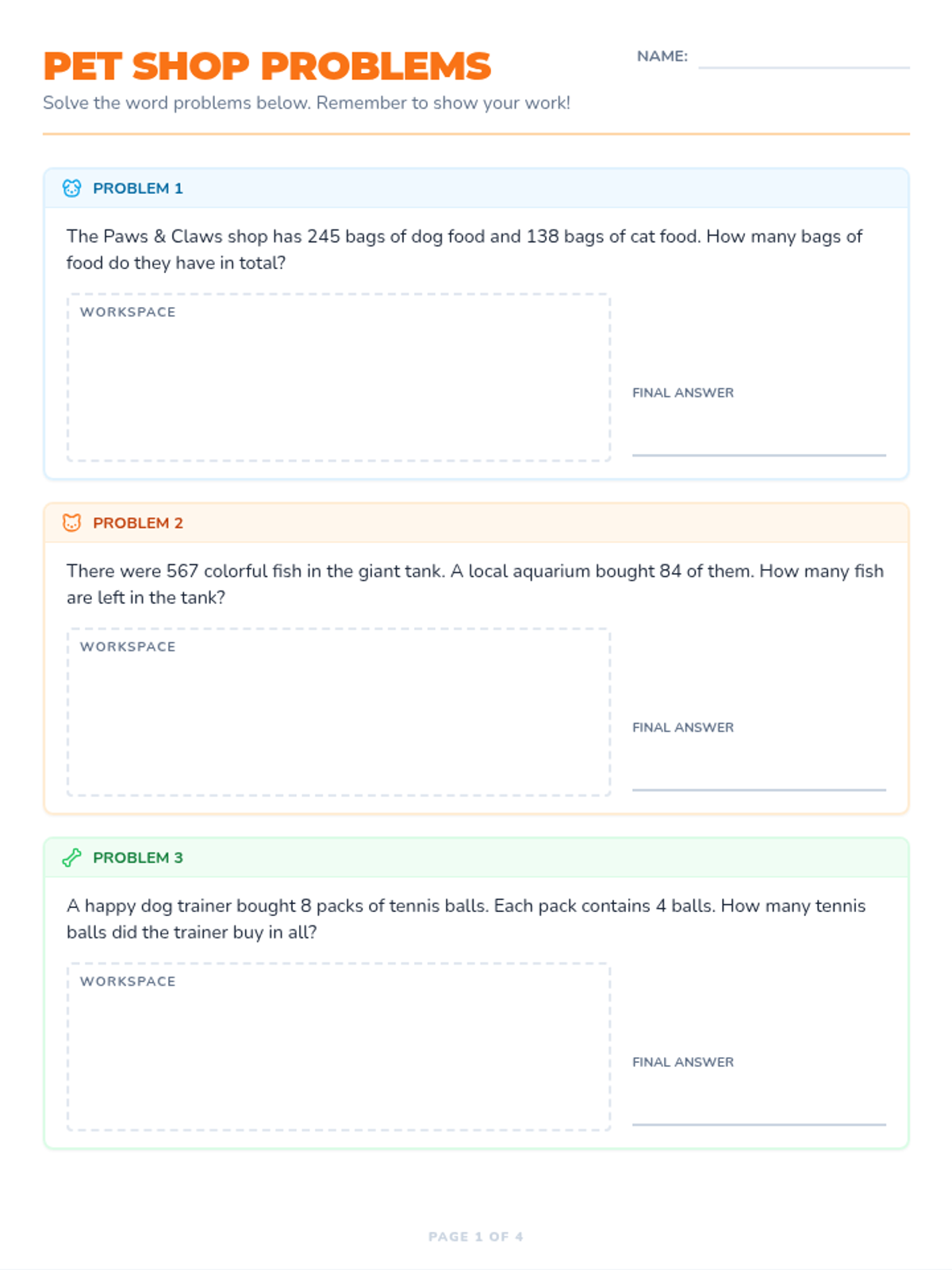
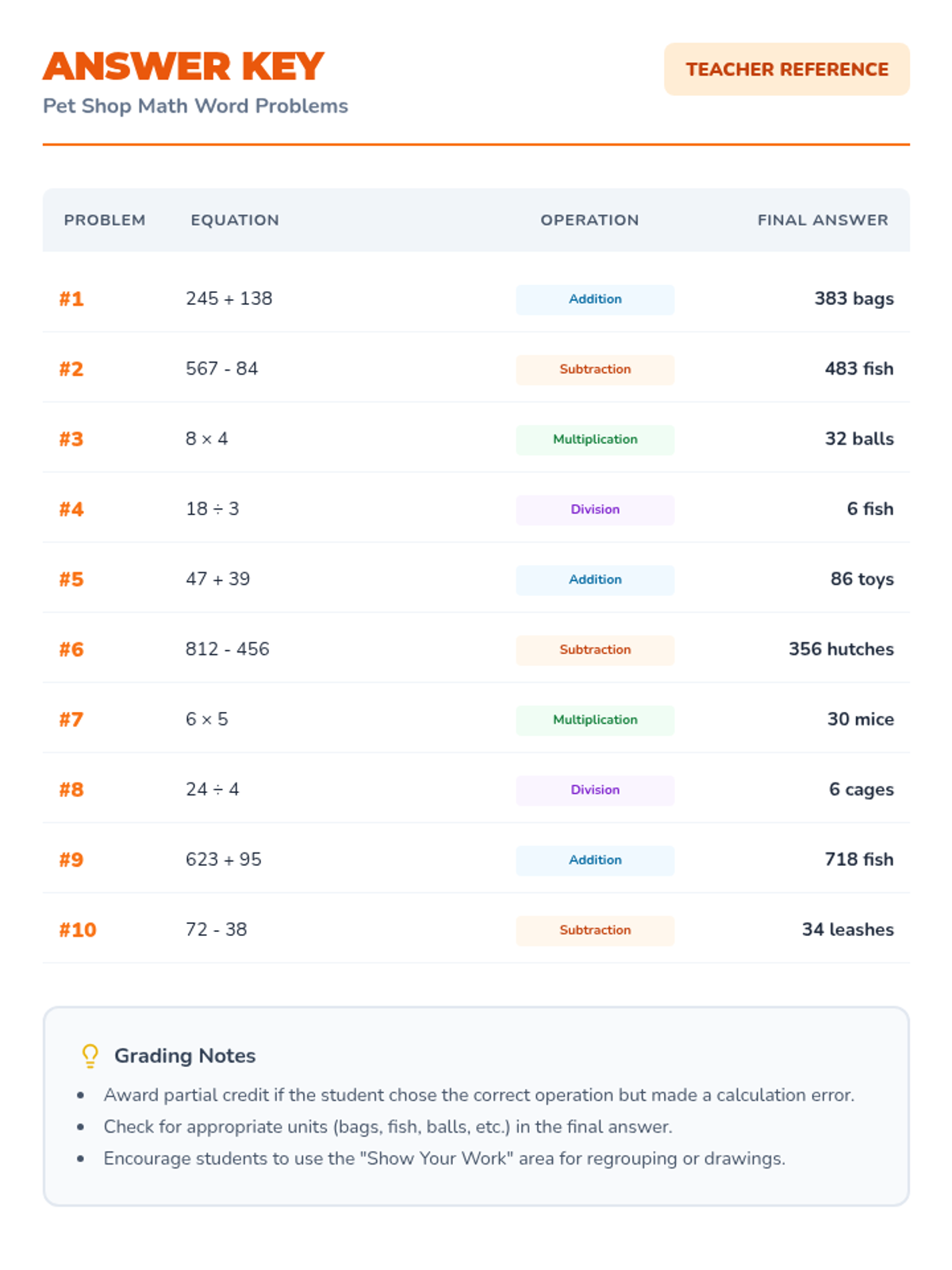
A collection of word problems themed around a pet shop, focusing on one-step addition, subtraction, multiplication, and division. Includes a student worksheet with ample workspace and a corresponding teacher answer key.
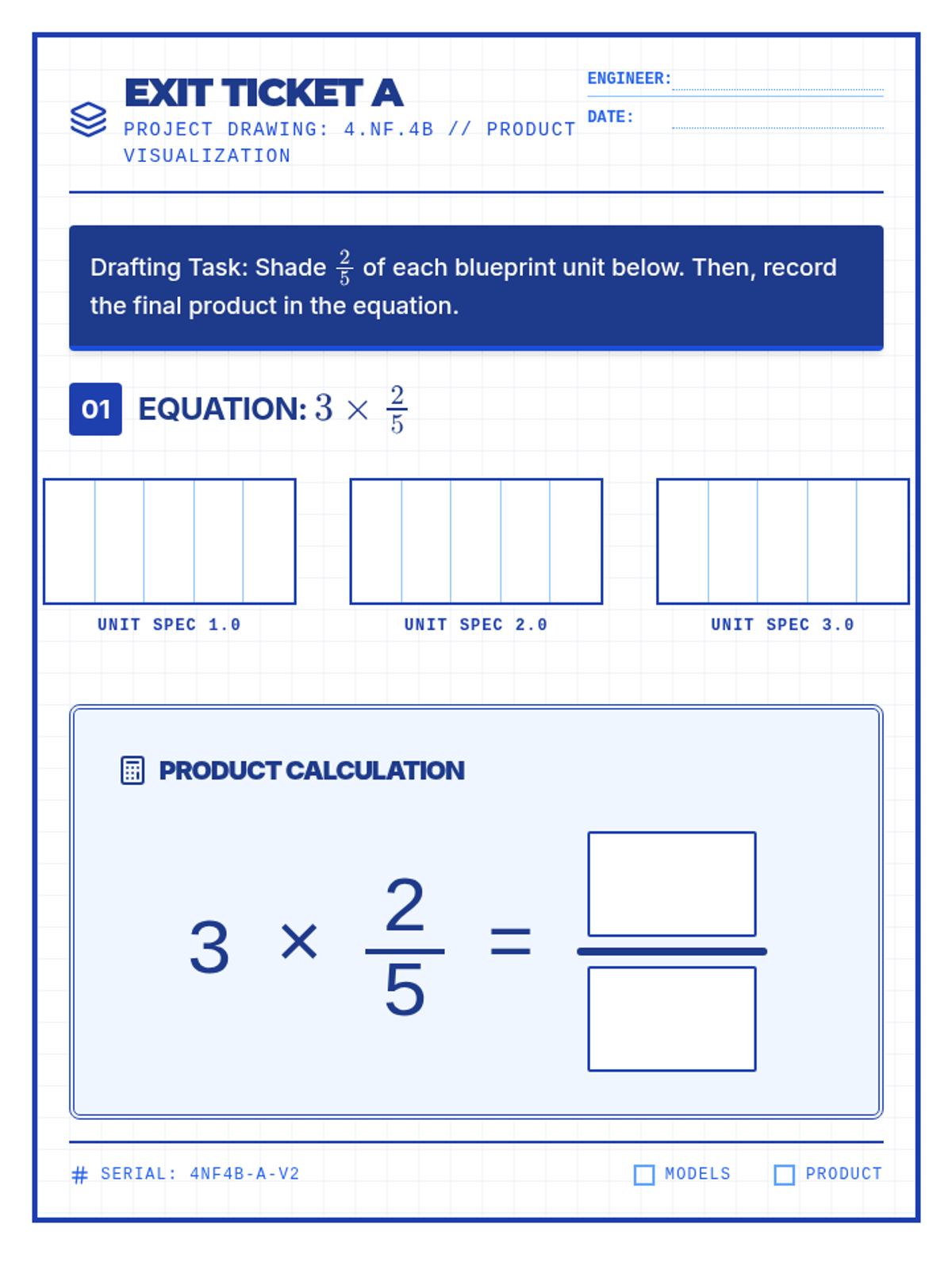
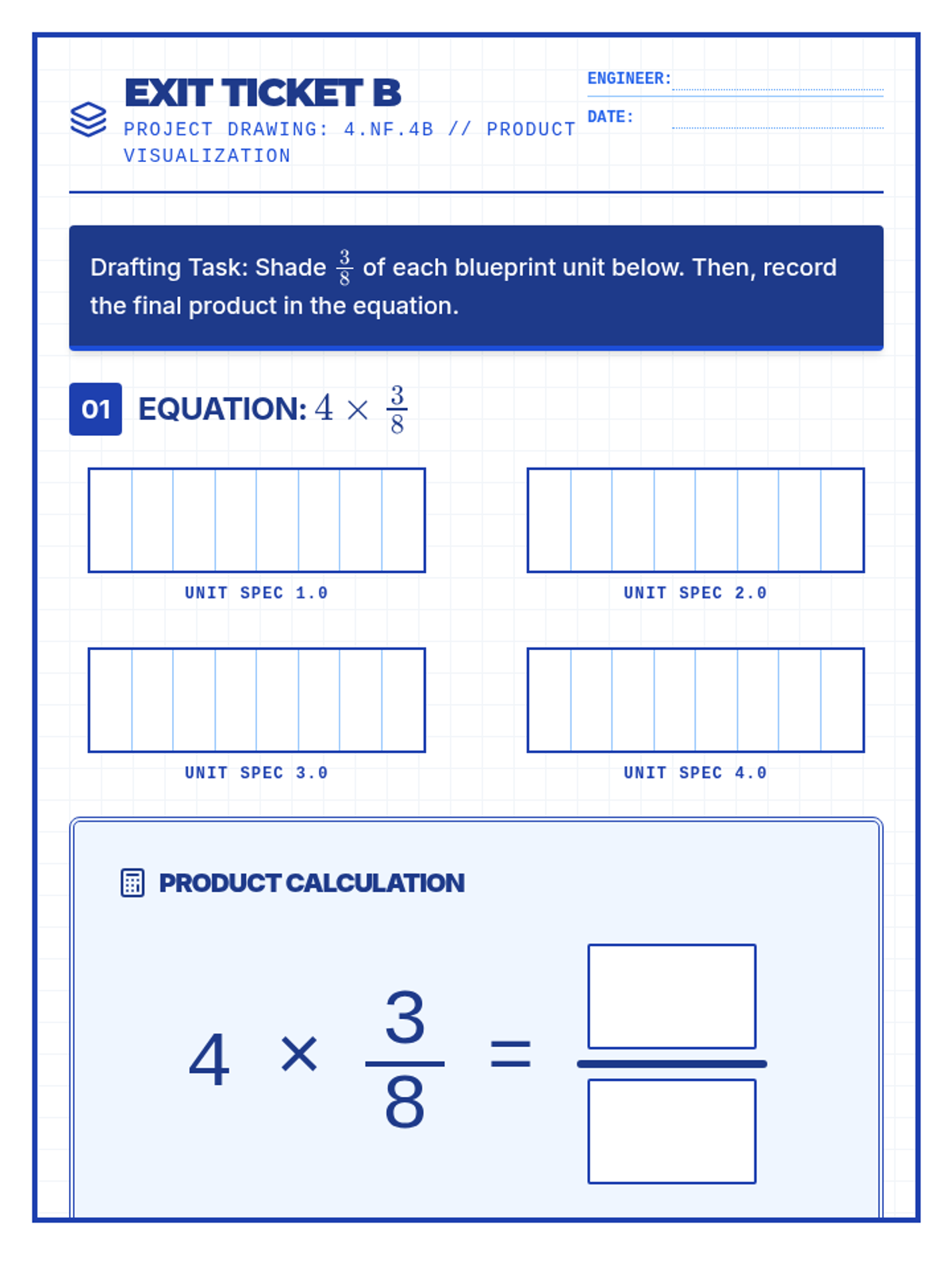
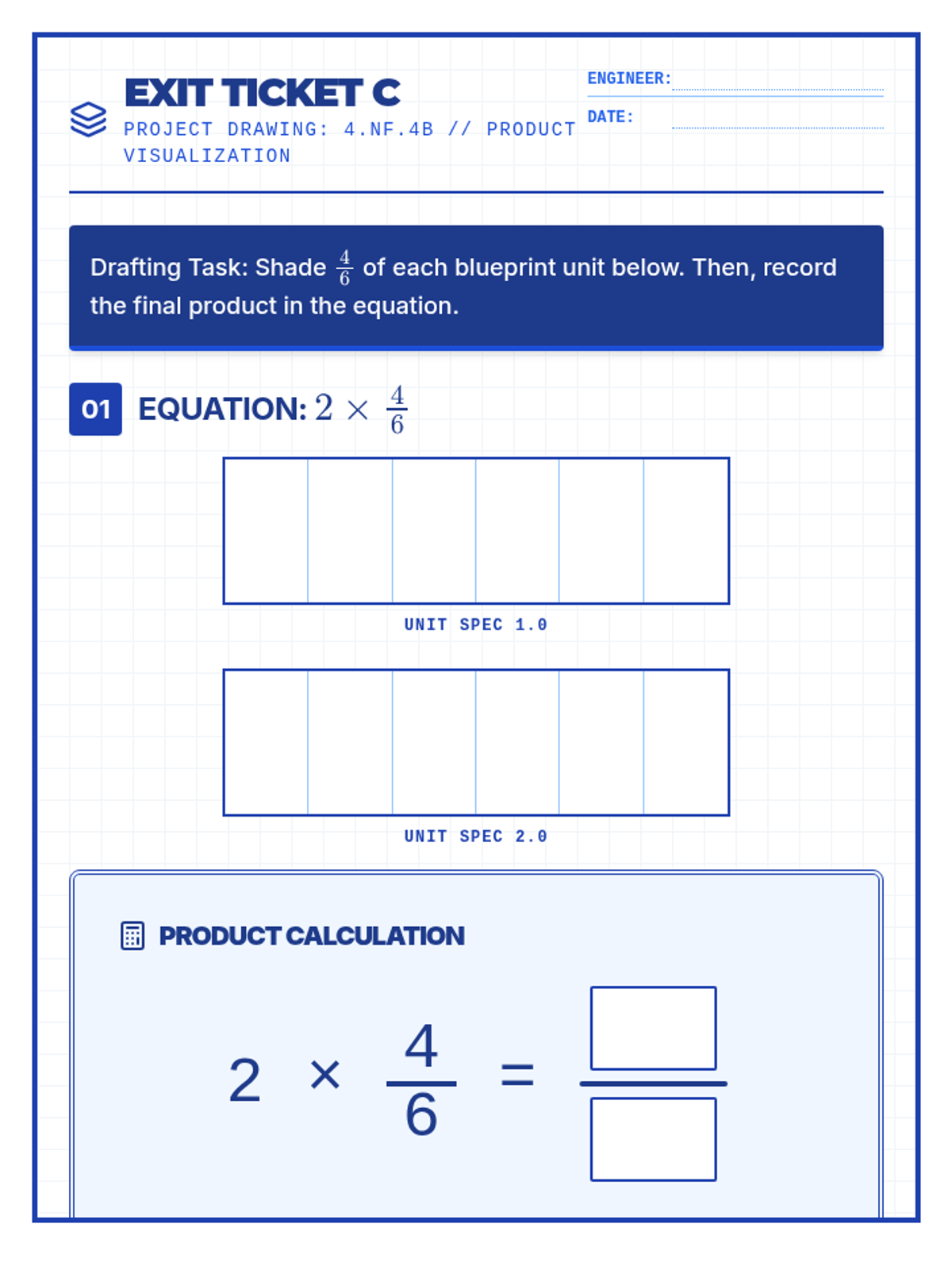
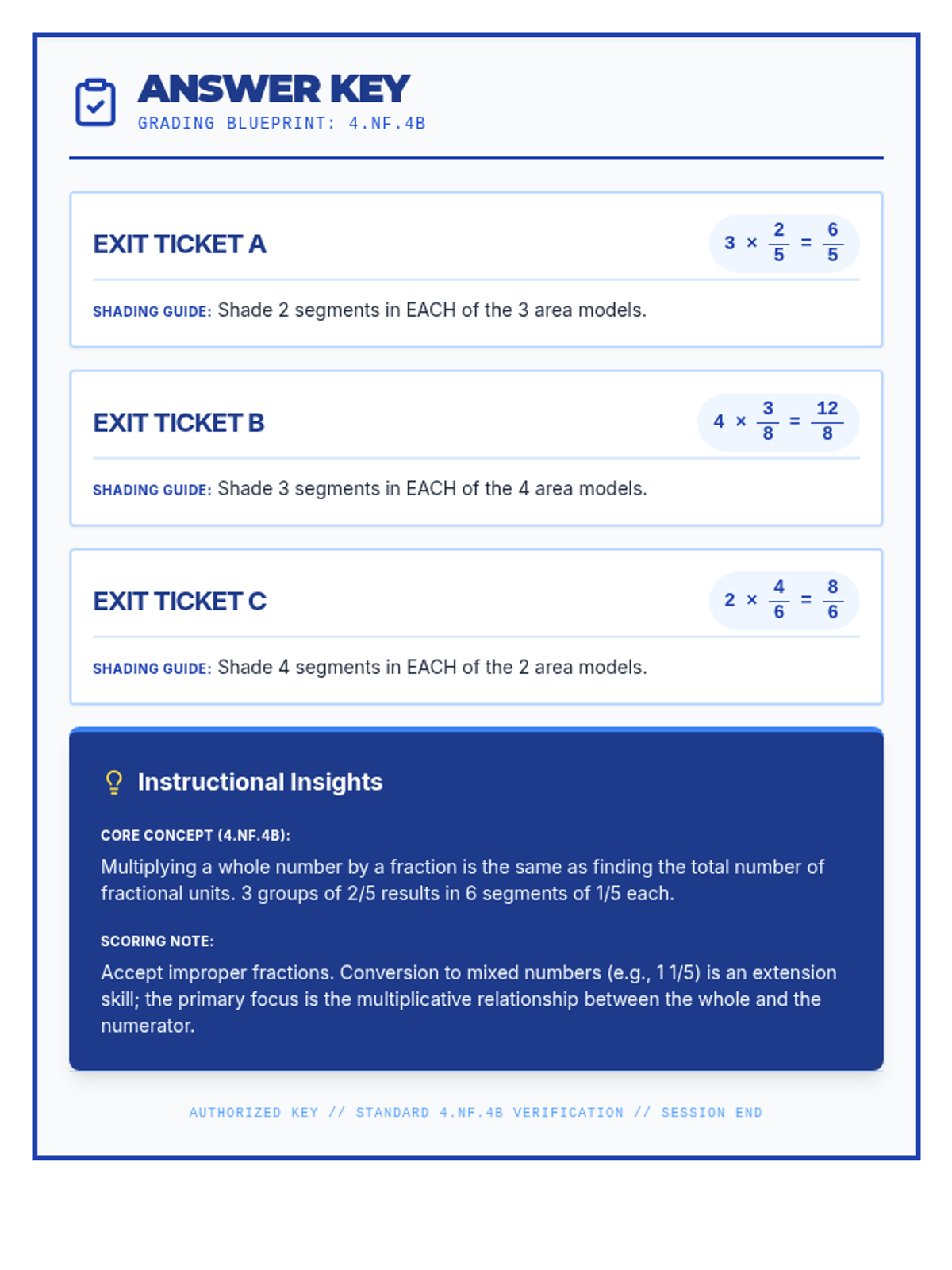
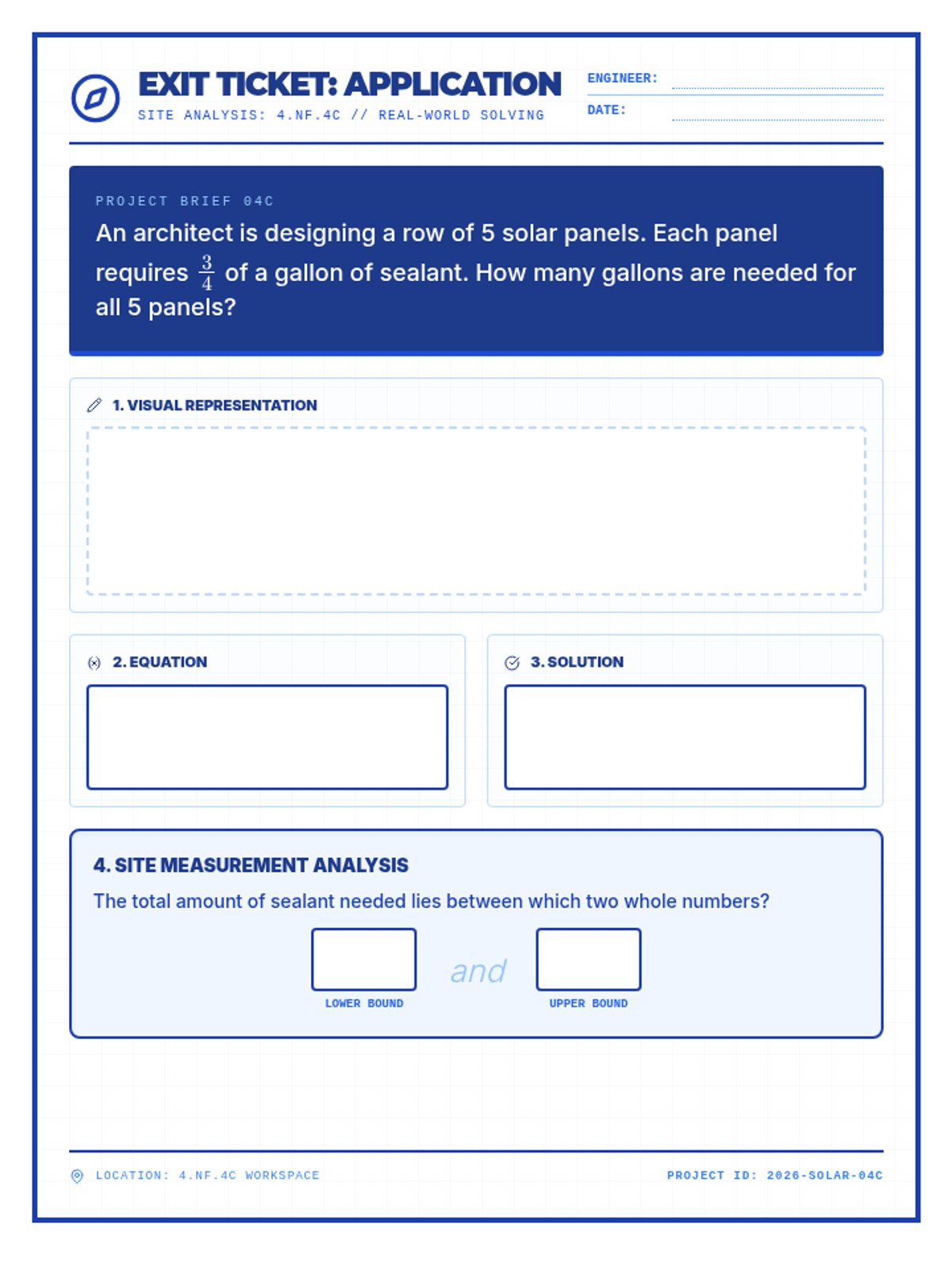
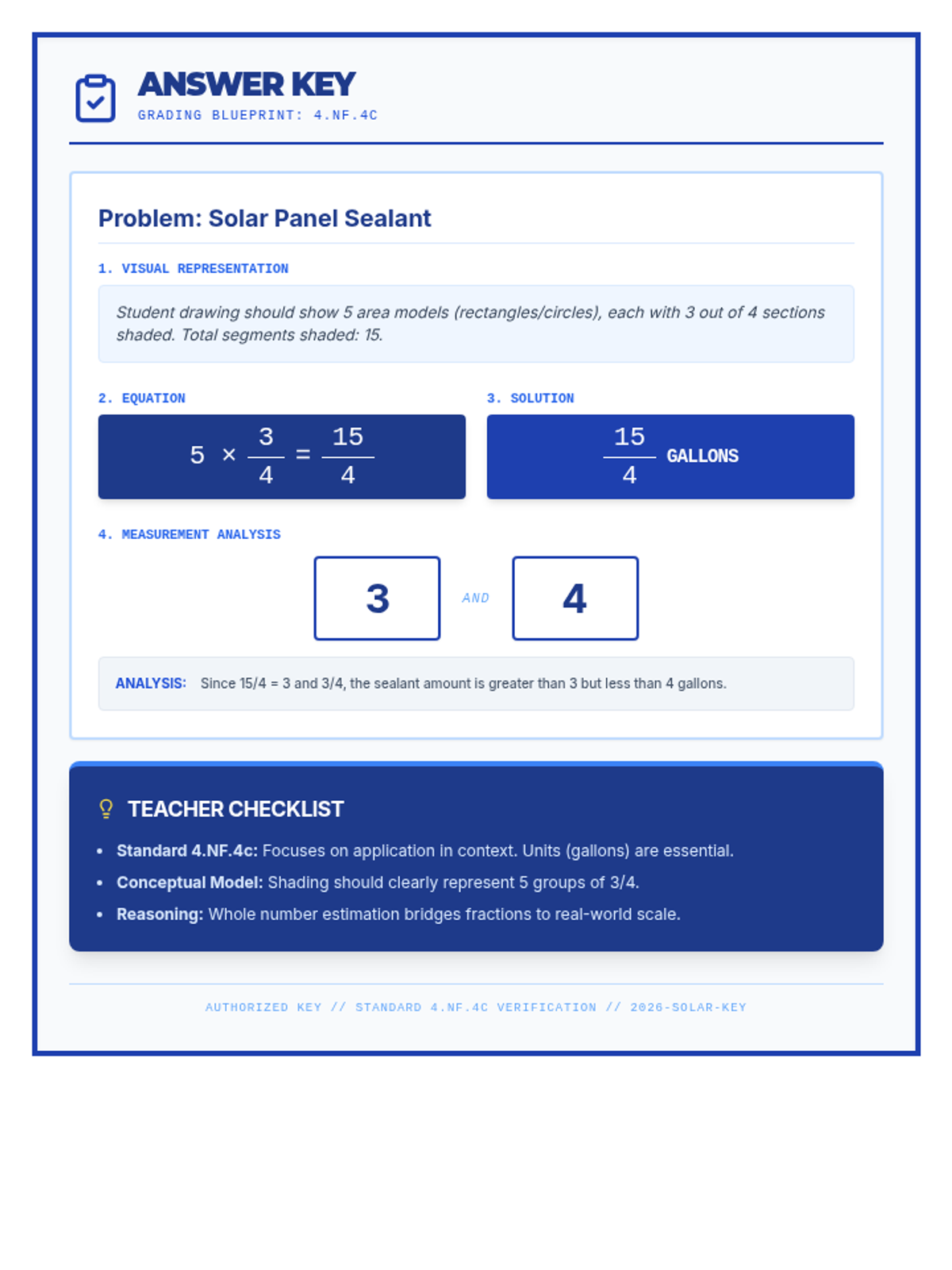
Students will master multiplying fractions by whole numbers using visual area models and equations, focusing on the relationship between multiple groups of fractional parts.
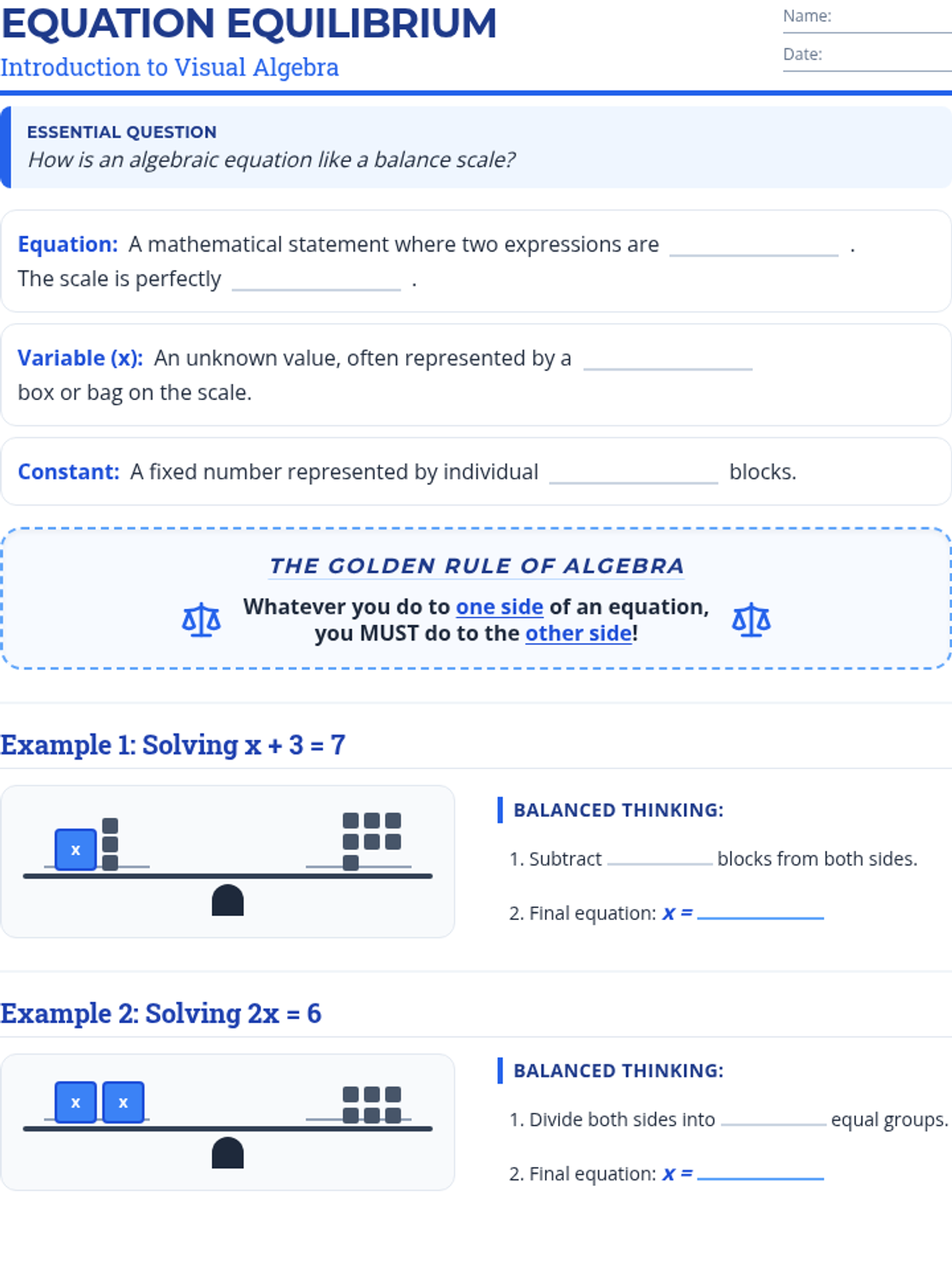
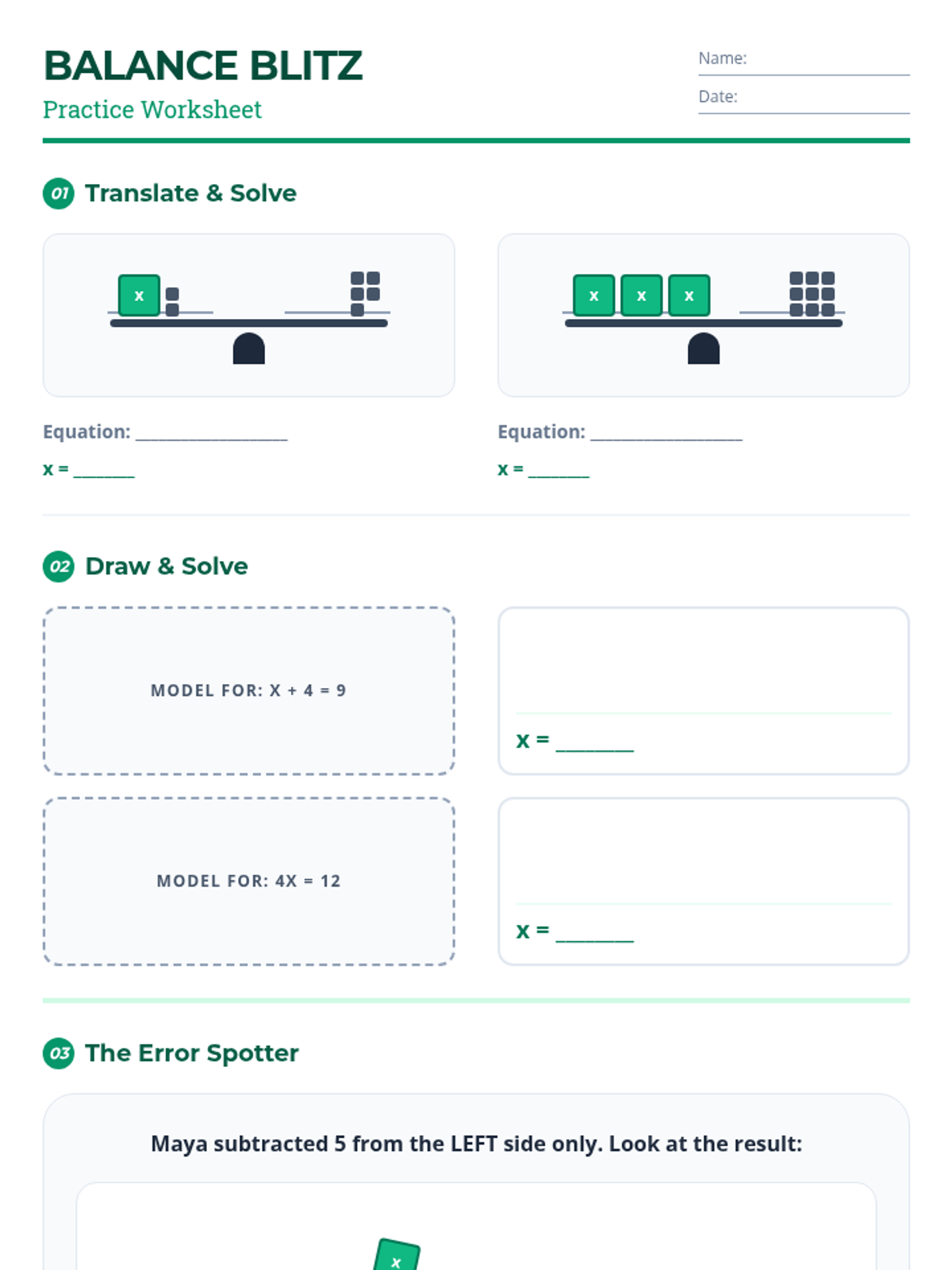
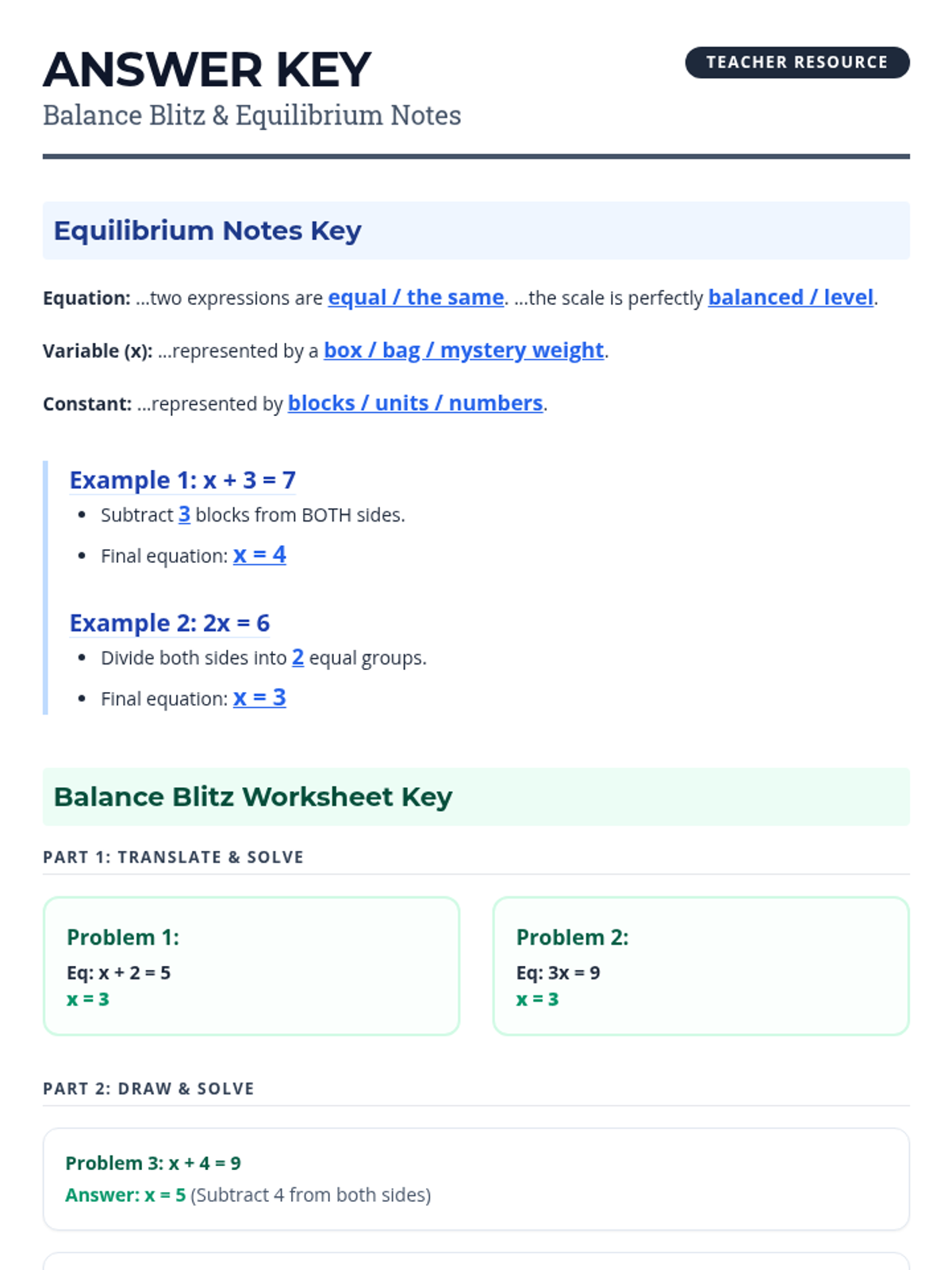
A lesson introducing one-step algebraic equations through the conceptual lens of a balance scale, focusing on the principle of keeping both sides equal.

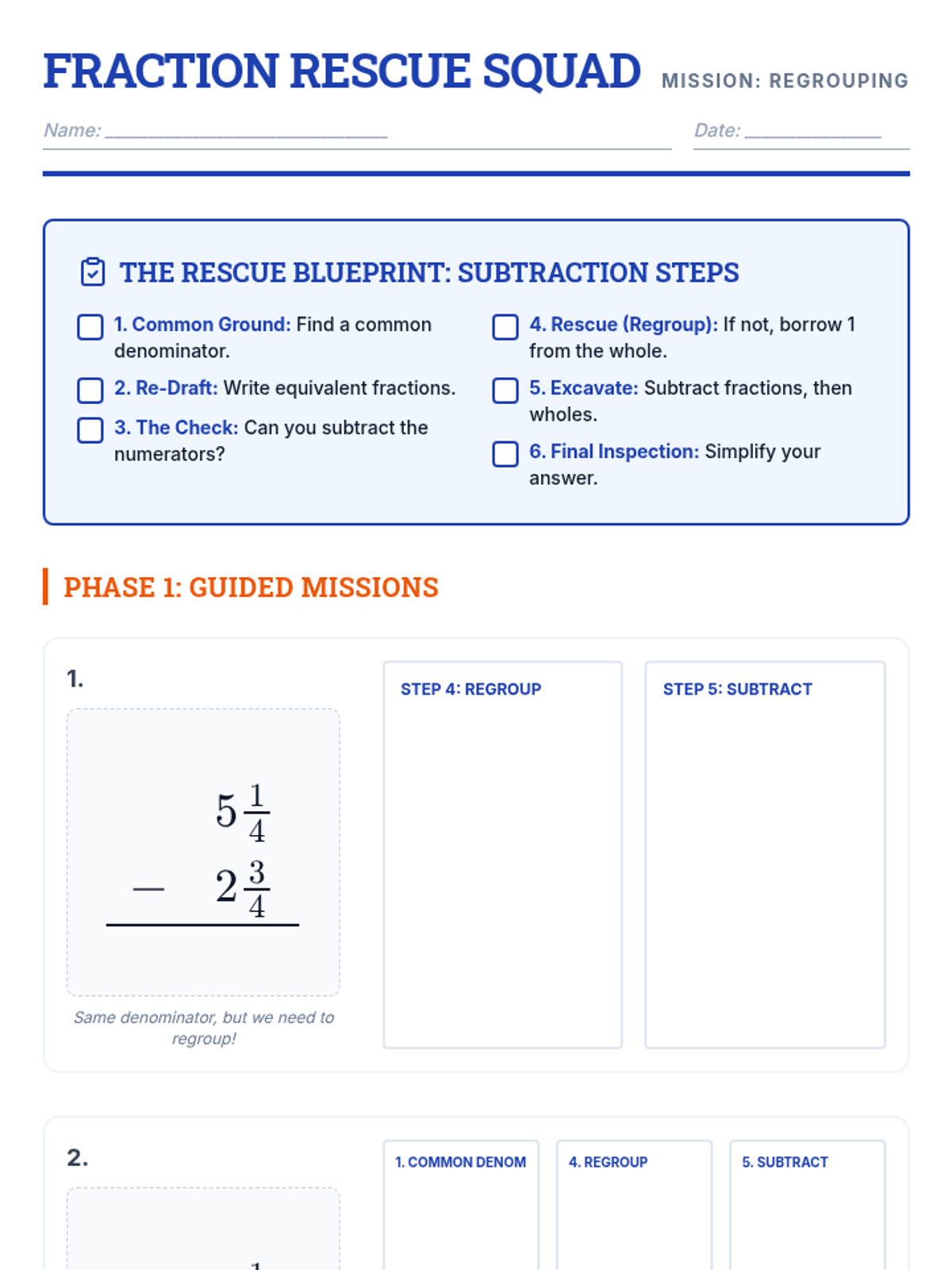
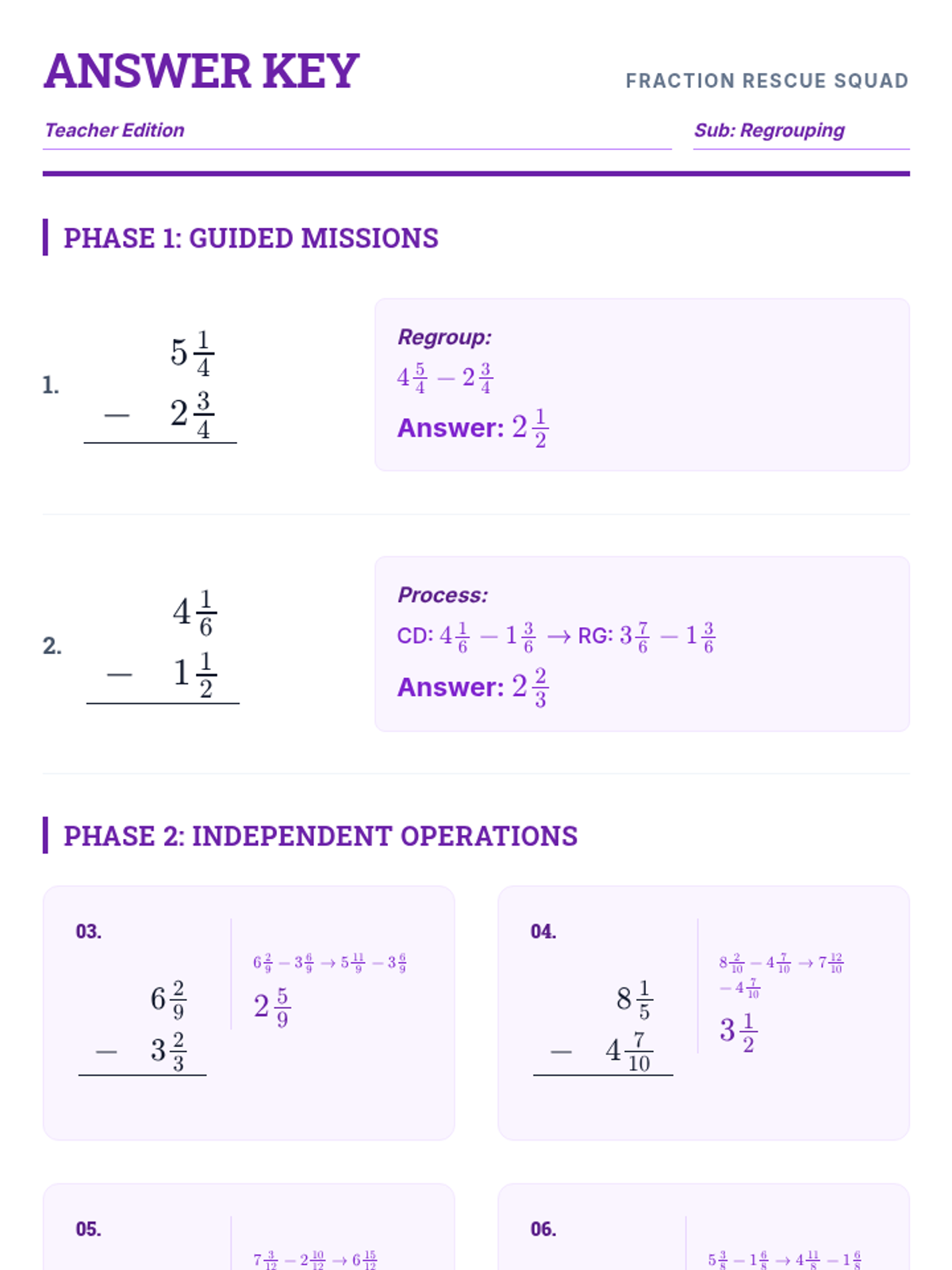
A comprehensive lesson on subtracting mixed numbers with unlike denominators, focusing on the challenging process of regrouping. Includes a guided practice worksheet, a teacher's answer key, and a visual slide deck for instruction.