Students will learn the three pillars of persuasion—Ethos, Pathos, and Logos—and how to identify them in real-world examples. This lesson provides a comprehensive introduction to rhetorical strategies through visual instruction and guided practice.
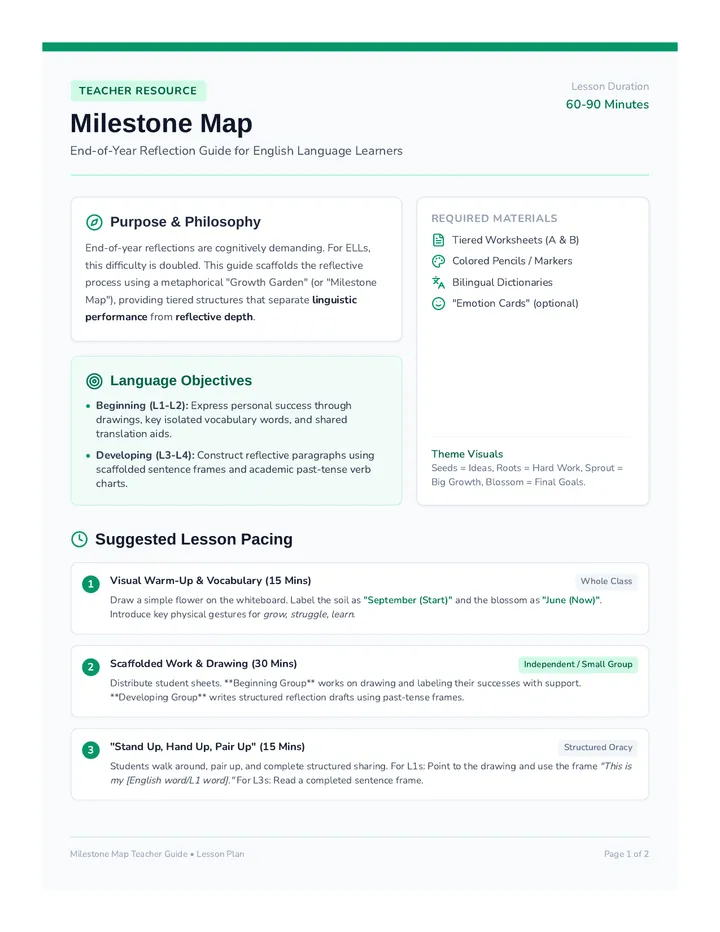
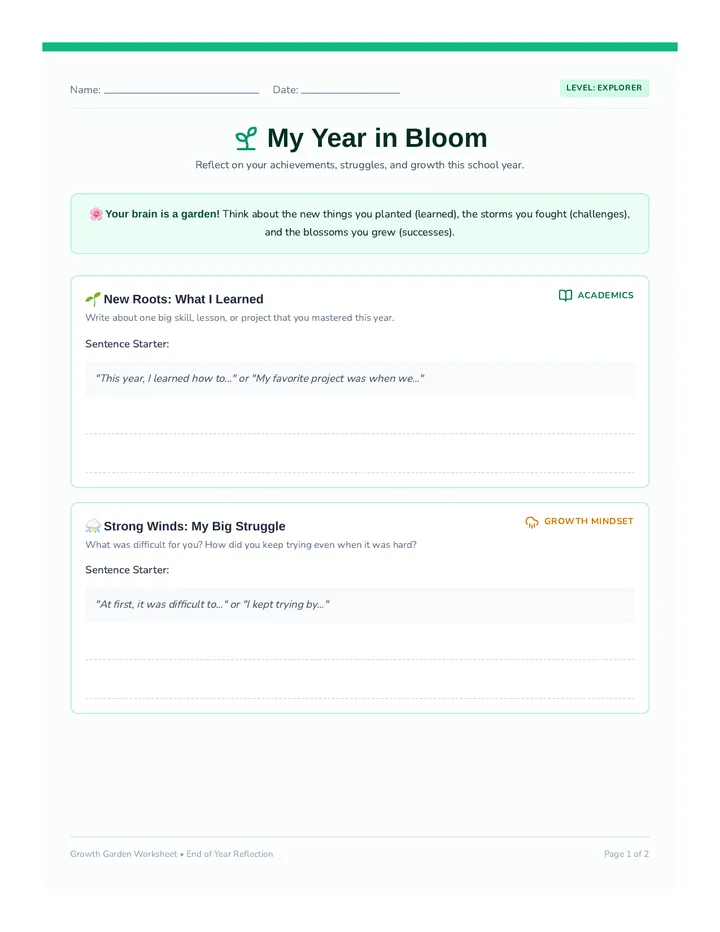
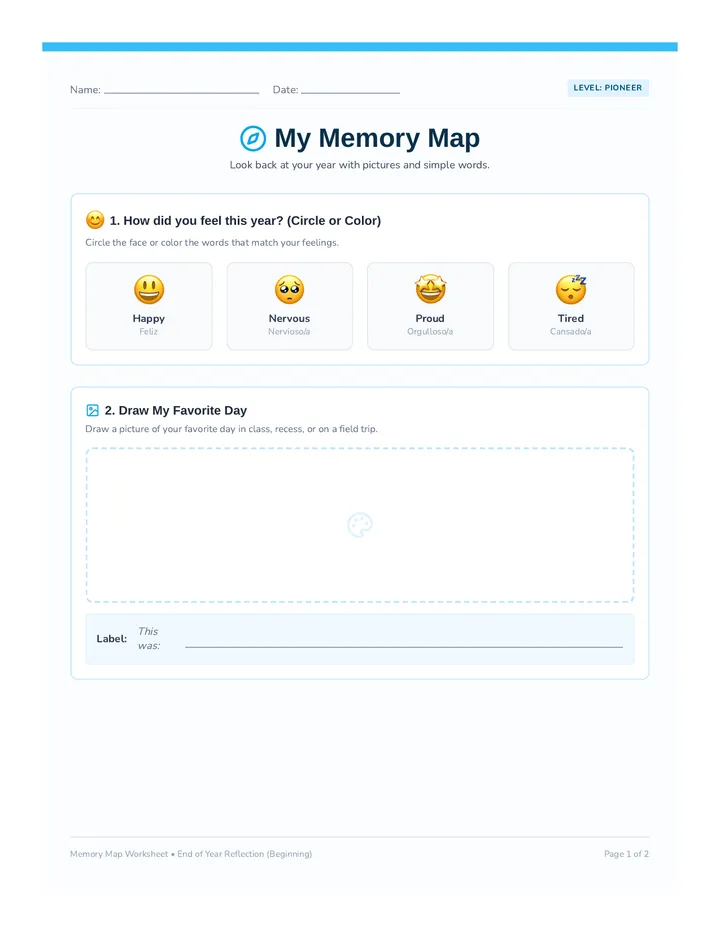
An end-of-year reflection lesson designed specifically for English Language Learners, featuring tiered worksheets for Beginning/Entering and Developing/Expanding levels, supported by a detailed facilitator guide.
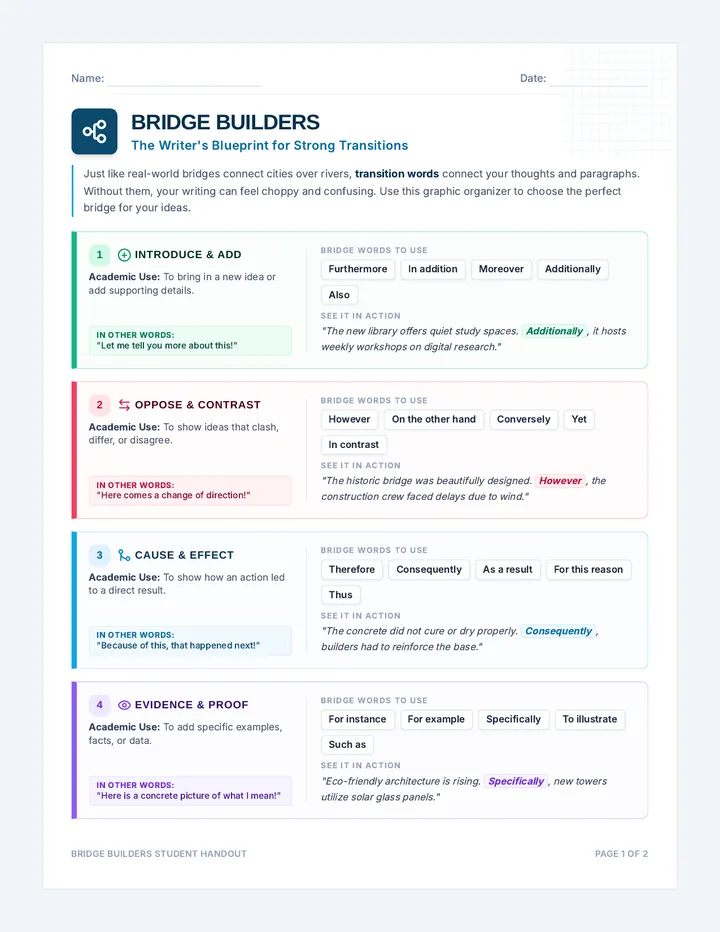
A comprehensive lesson focused on understanding and applying transition words to build logical, smooth connections between ideas in writing.
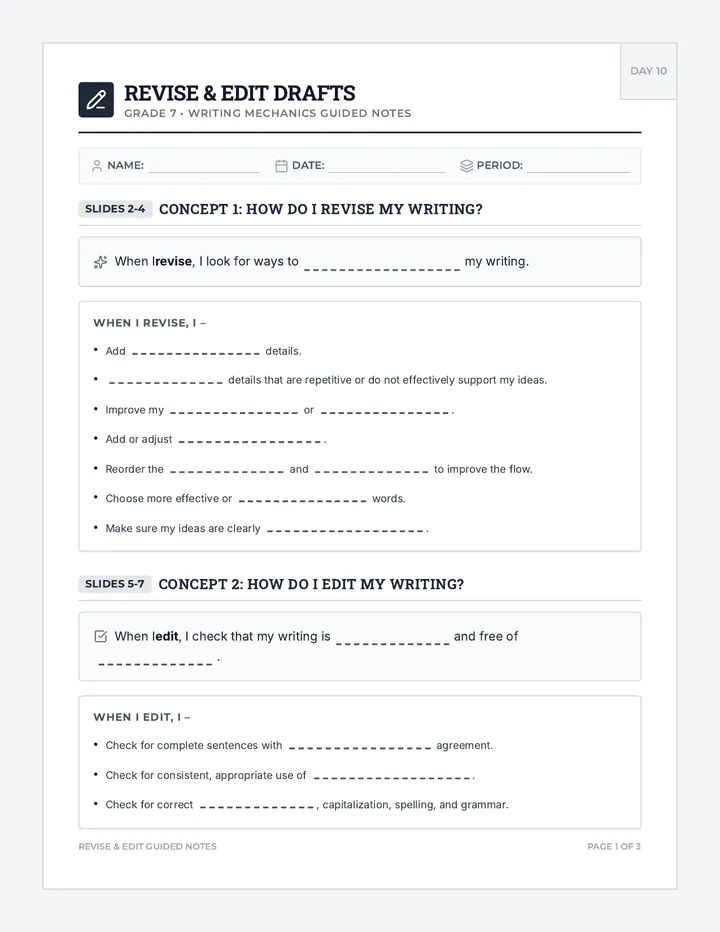
A lesson focused on teaching students how to systematically revise and edit writing drafts using clear strategies, sentence combining, and error correction.
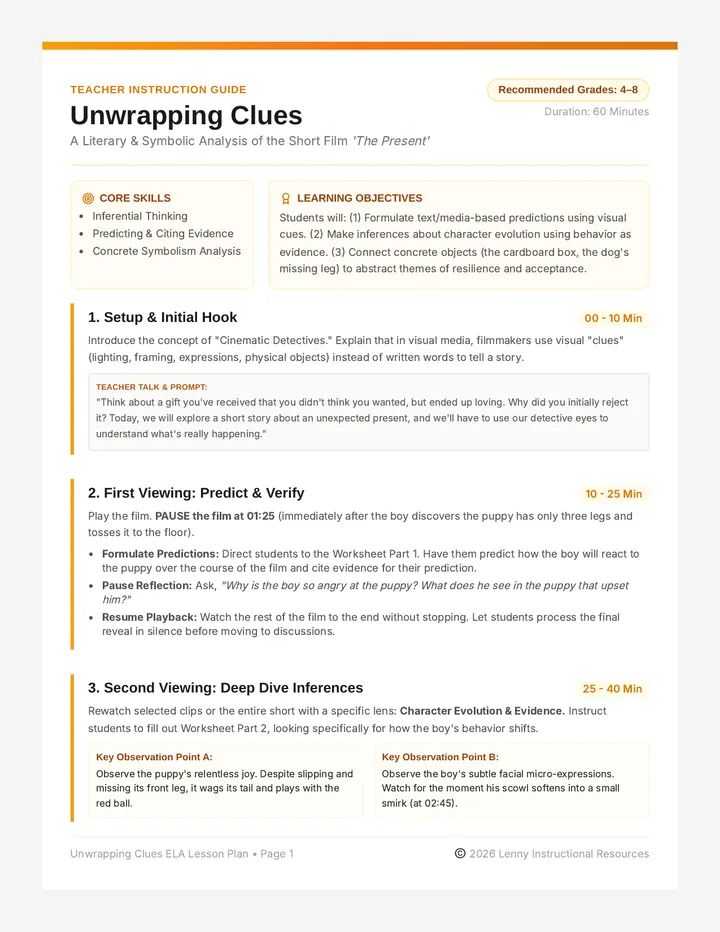
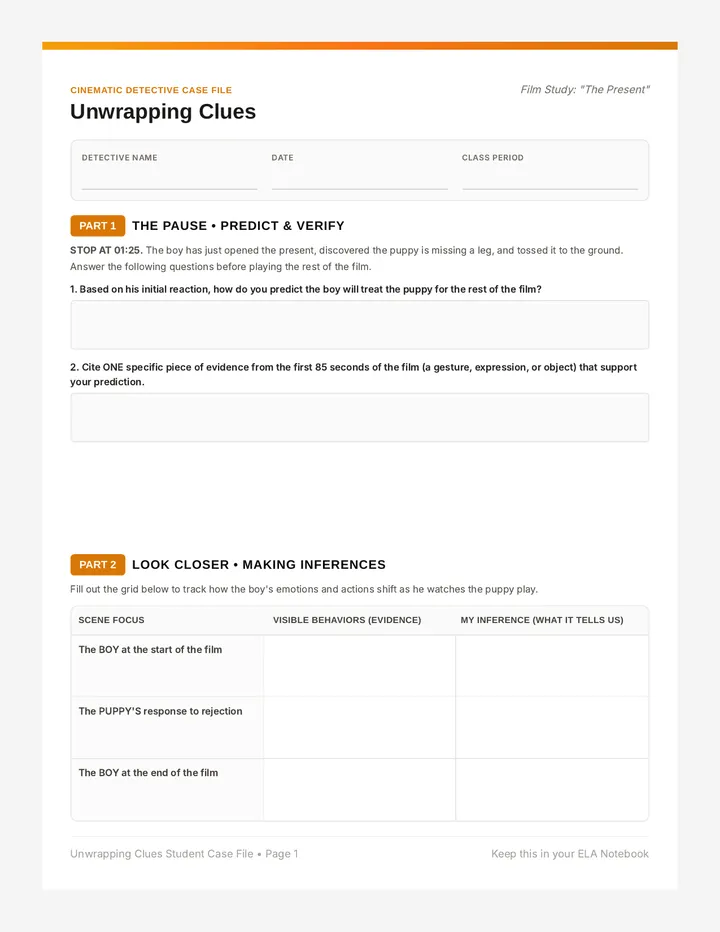
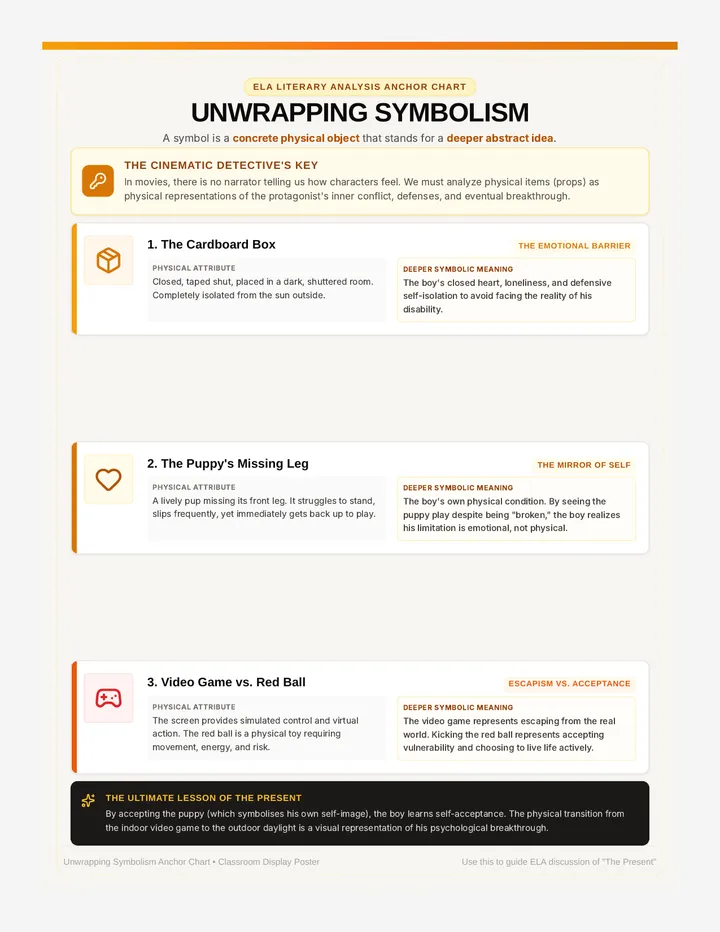
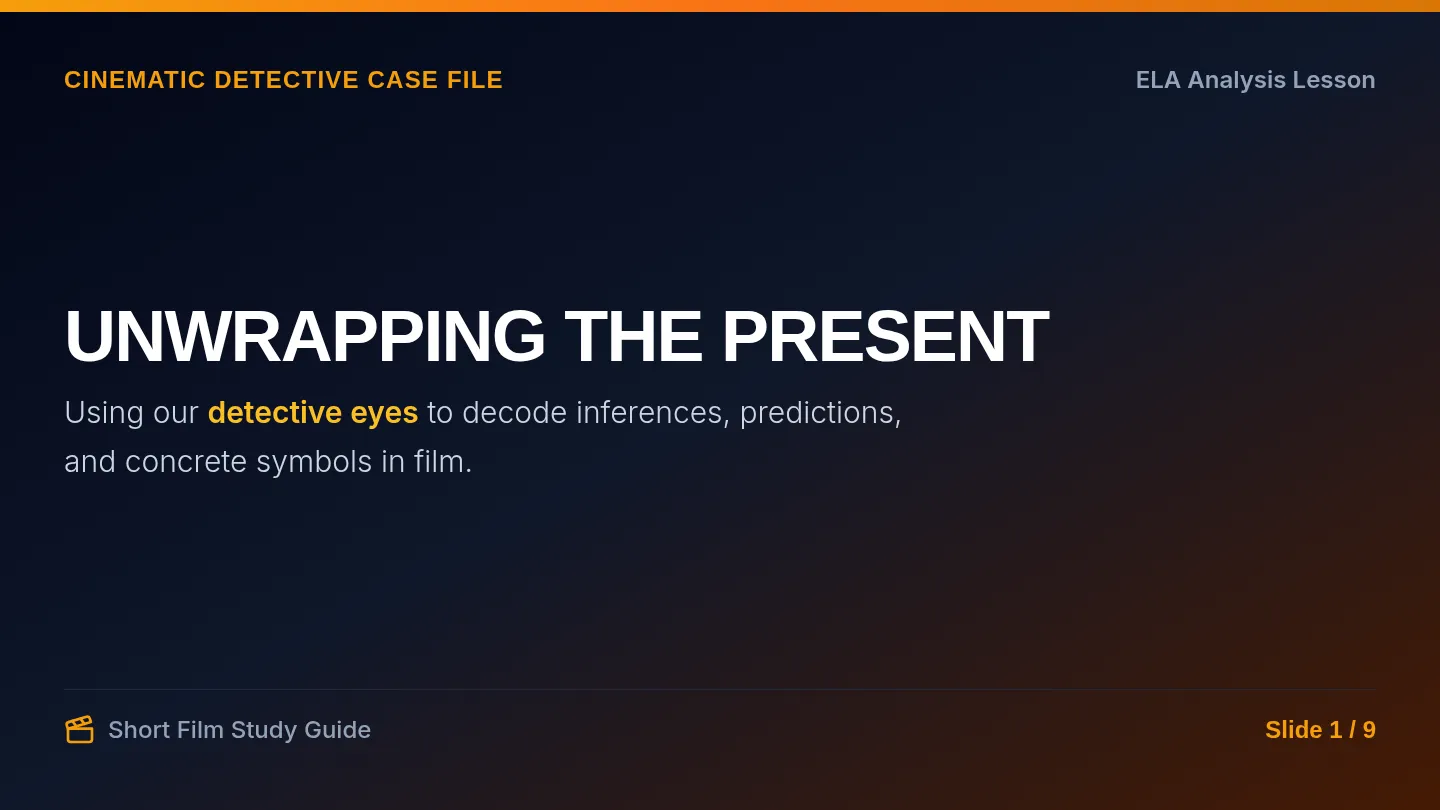
A comprehensive 60-minute ELA lesson focused on the animated short film 'The Present'. Students explore core reading skills—inferential thinking, prediction, citing evidence, and concrete symbolism—by analyzing the boy, the box, the dog, and the final reveal.
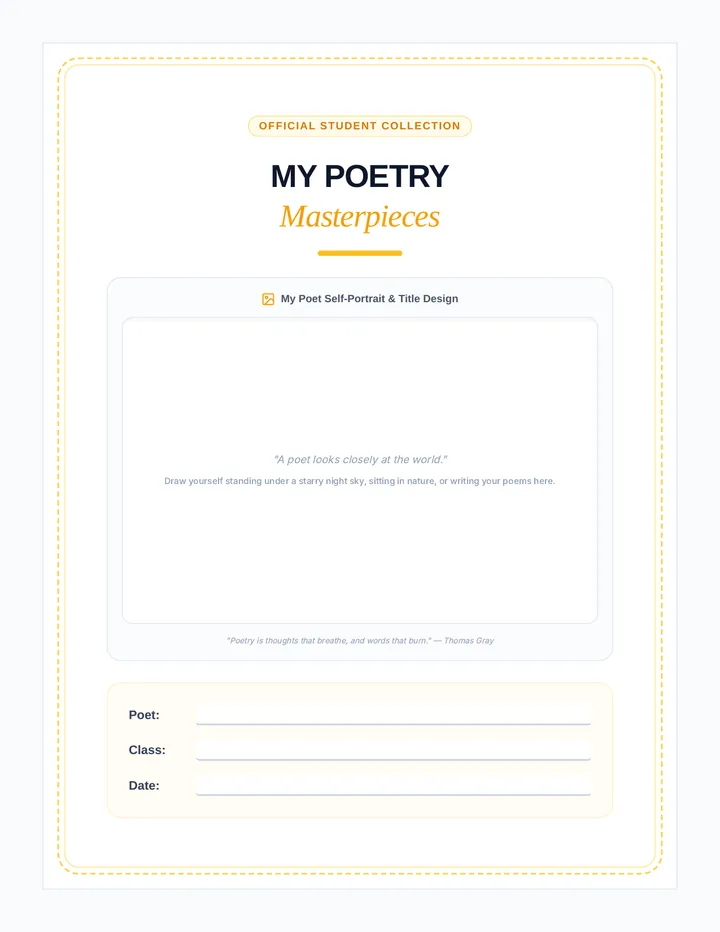
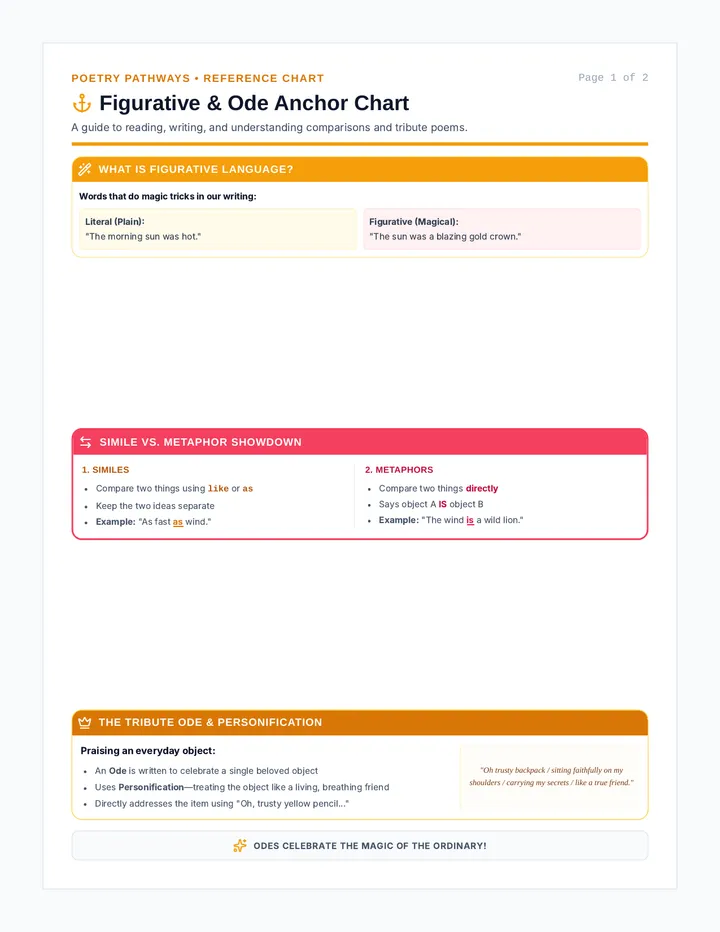
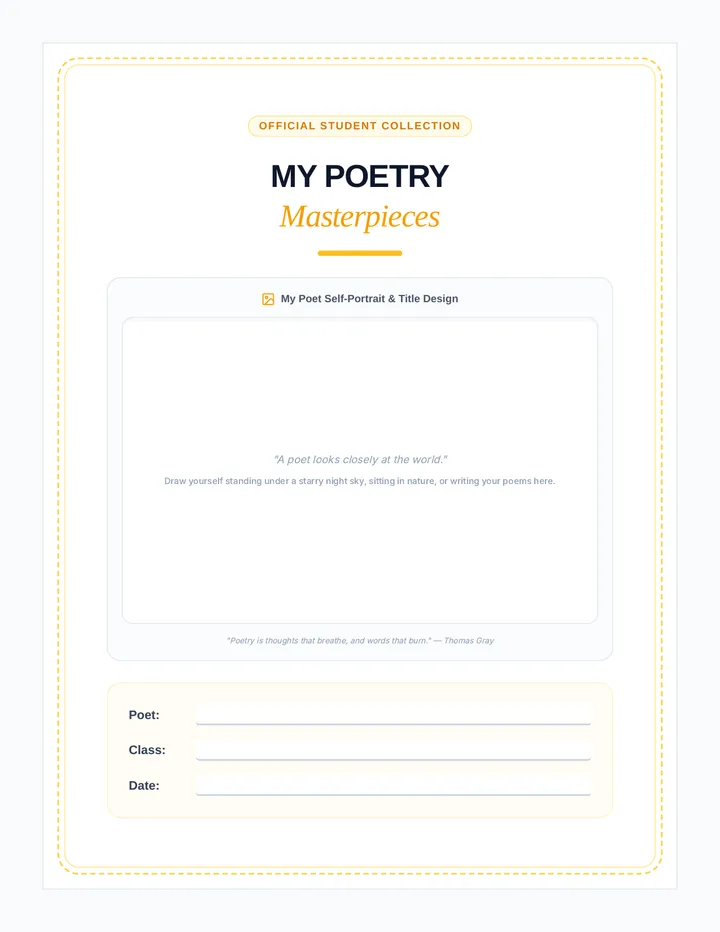
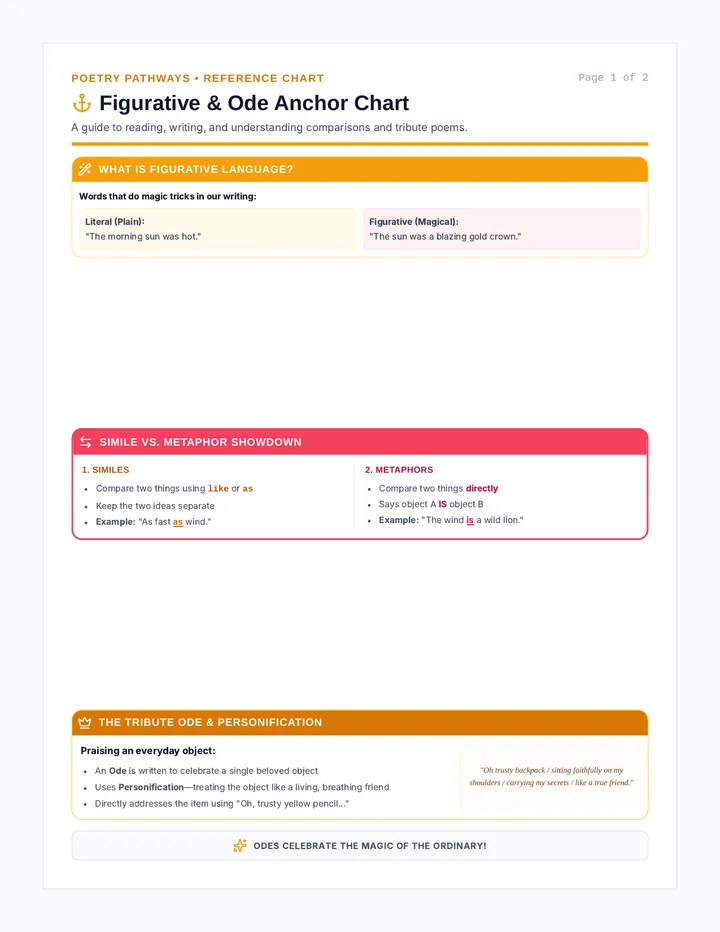
Focuses on using Metaphors and Similes to create powerful figurative imagery. Includes a final "My Poetry Masterpieces" portfolio cover and peer celebration review pages.
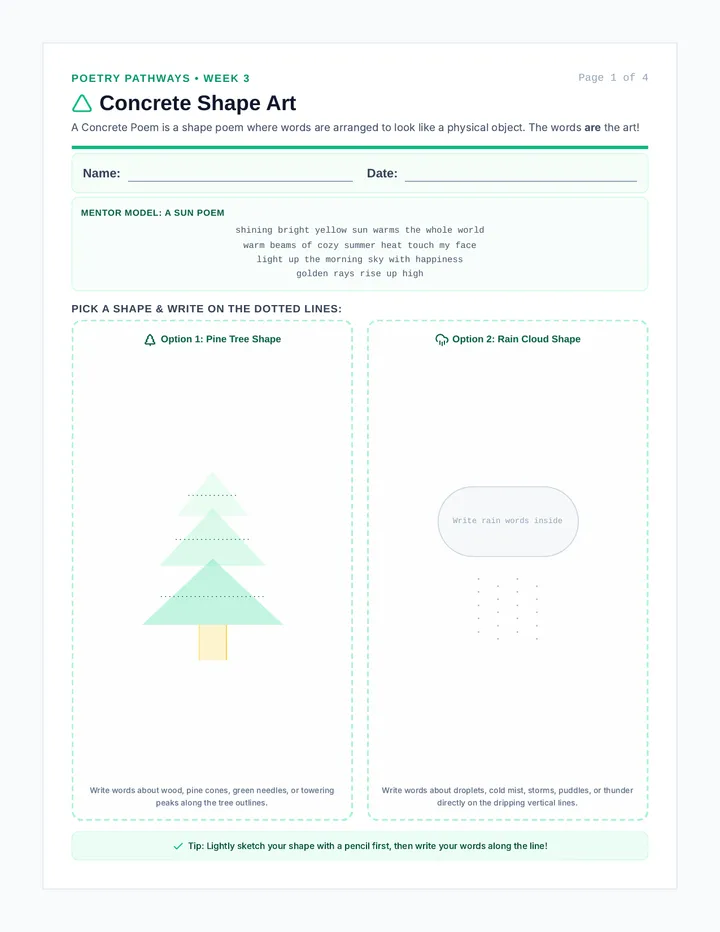
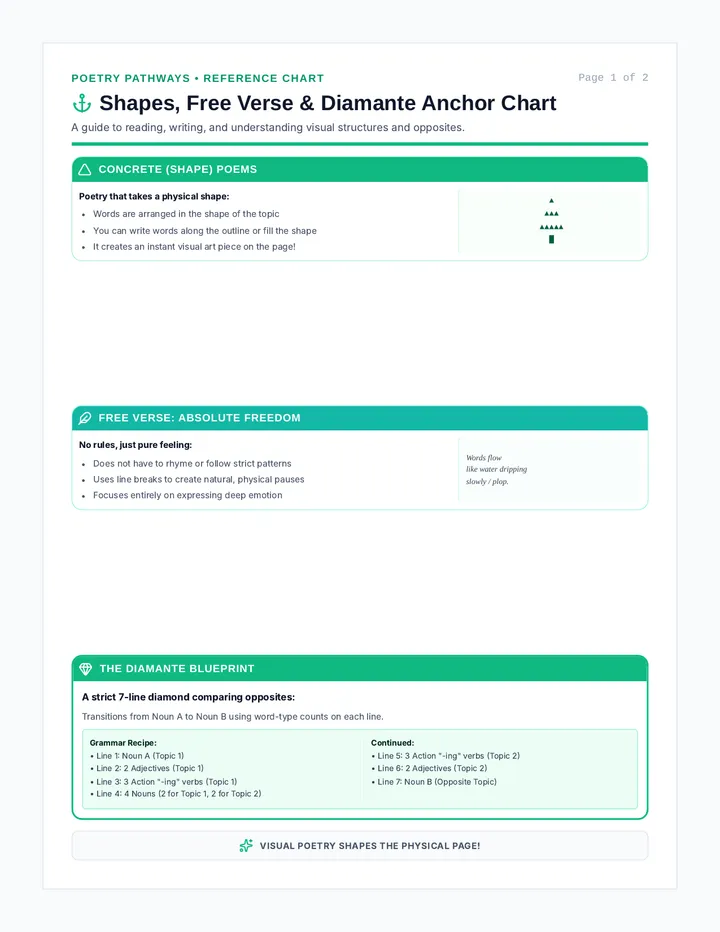
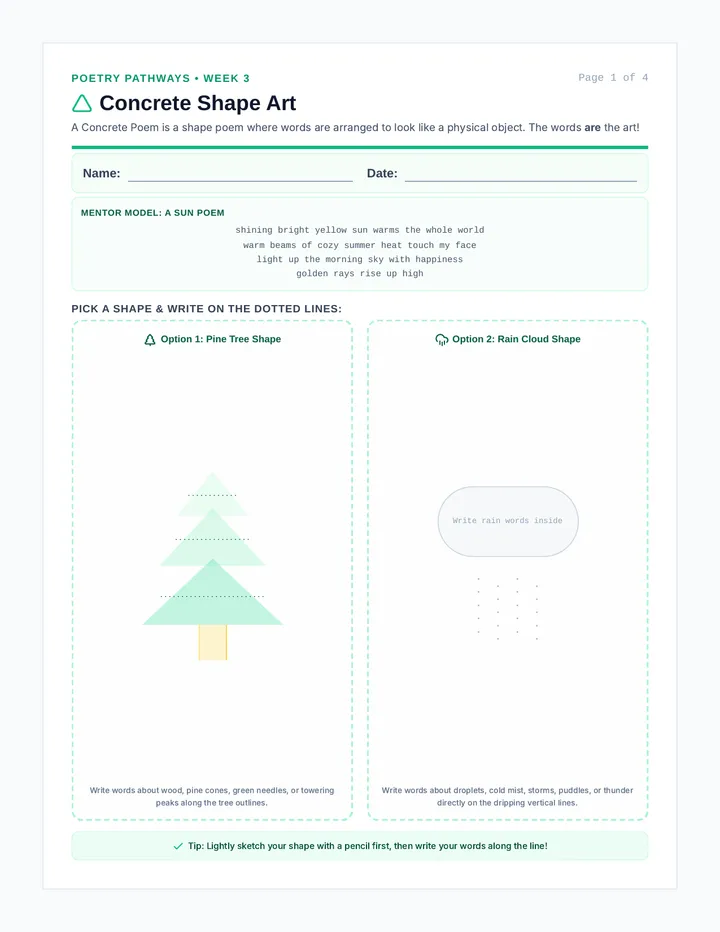
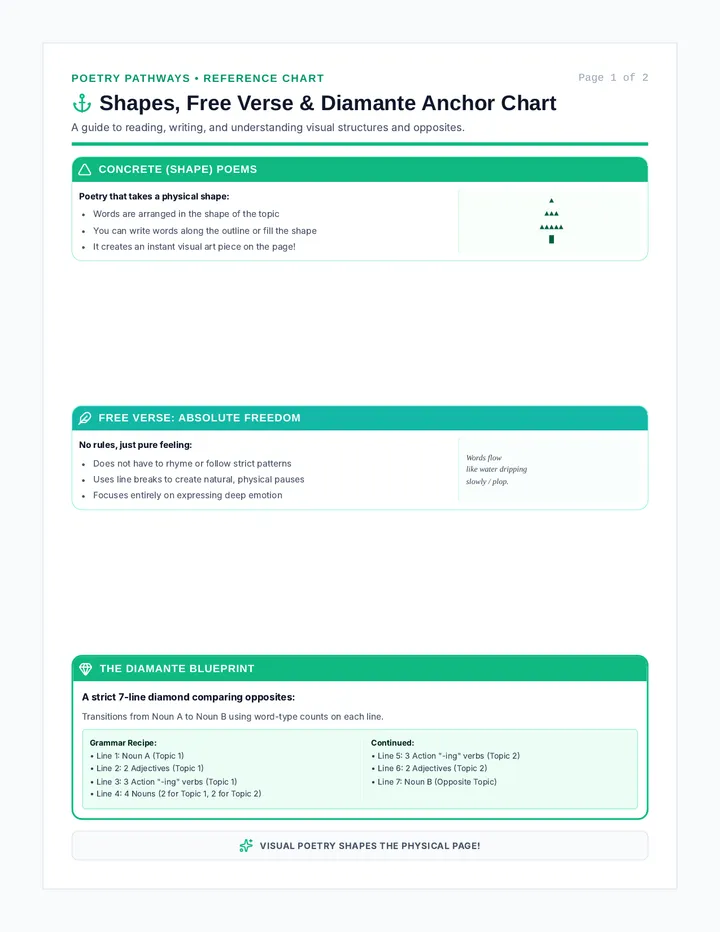
Focuses on shape, movement, and visual arrangement with Concrete (Shape) Poems and Free Verse. Provides scaffolded outline guides, word maps, and sensory feeling prompts.
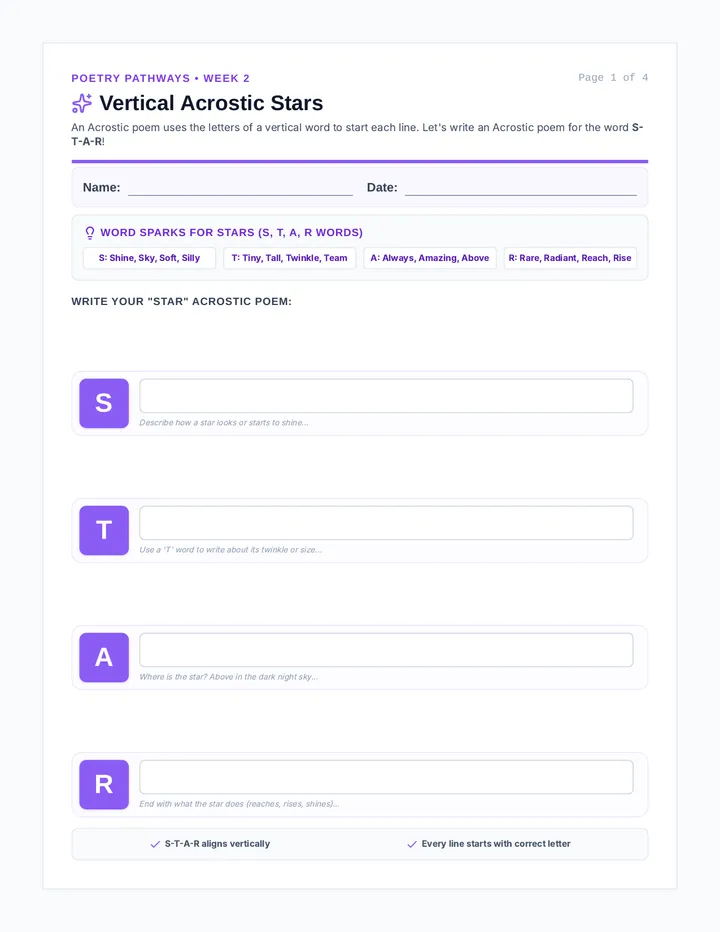
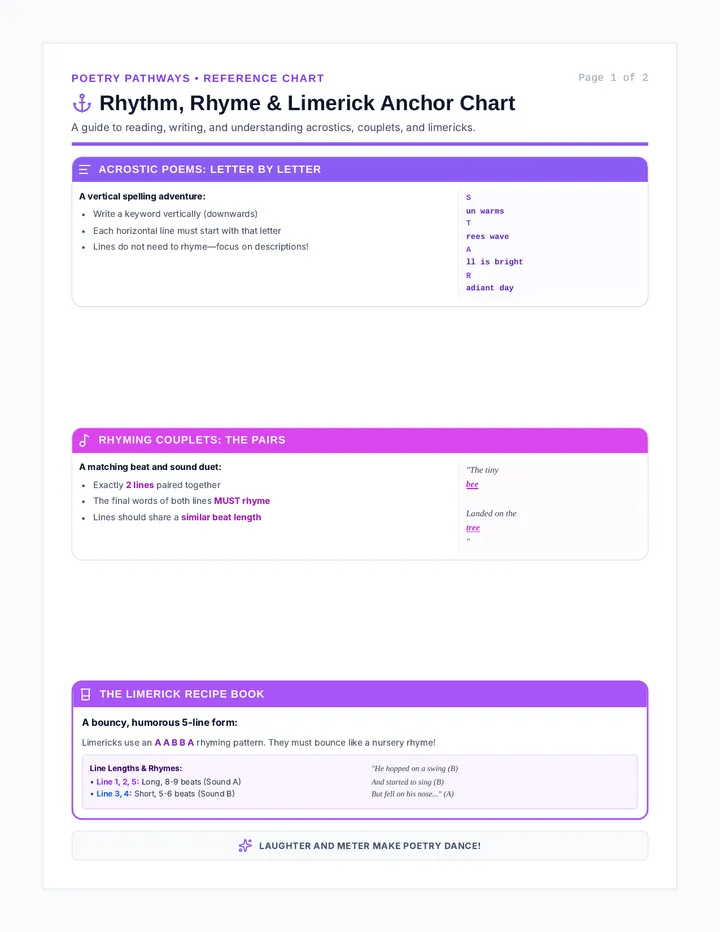
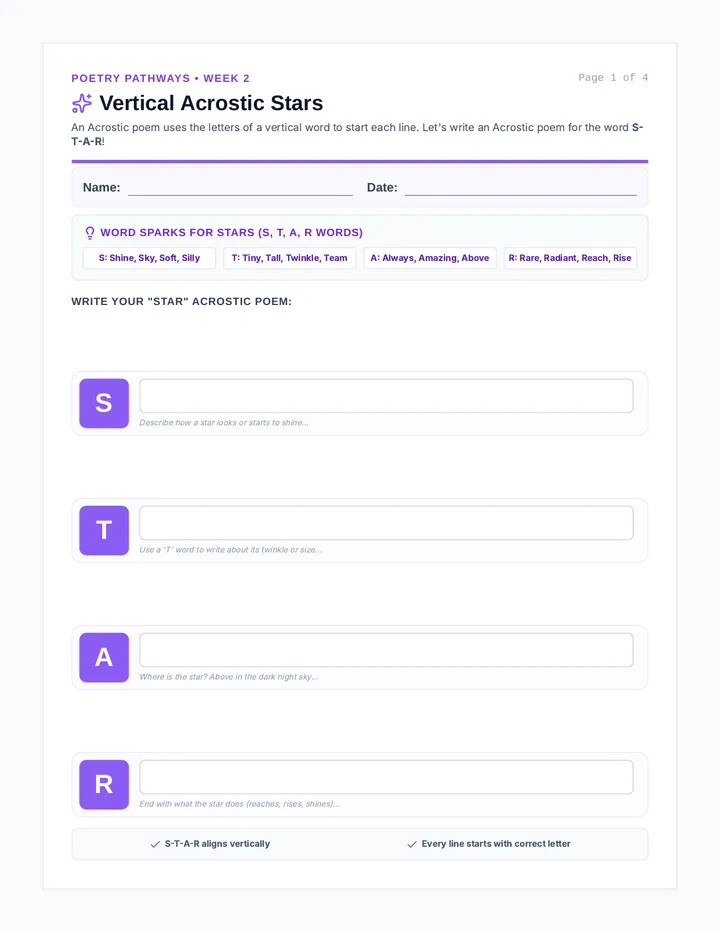
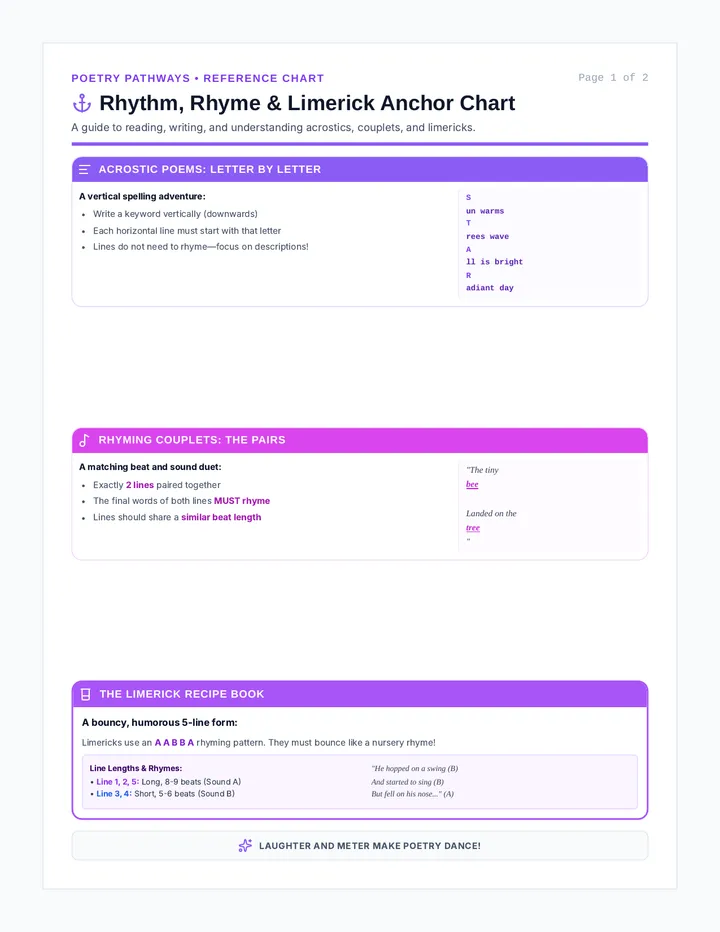
Focuses on structure, rhythm, and sound through Acrostic Poems and Rhyming Couplets. Offers step-by-step graphic templates, letter grids, rhyming dictionaries, and syllable beat counters.
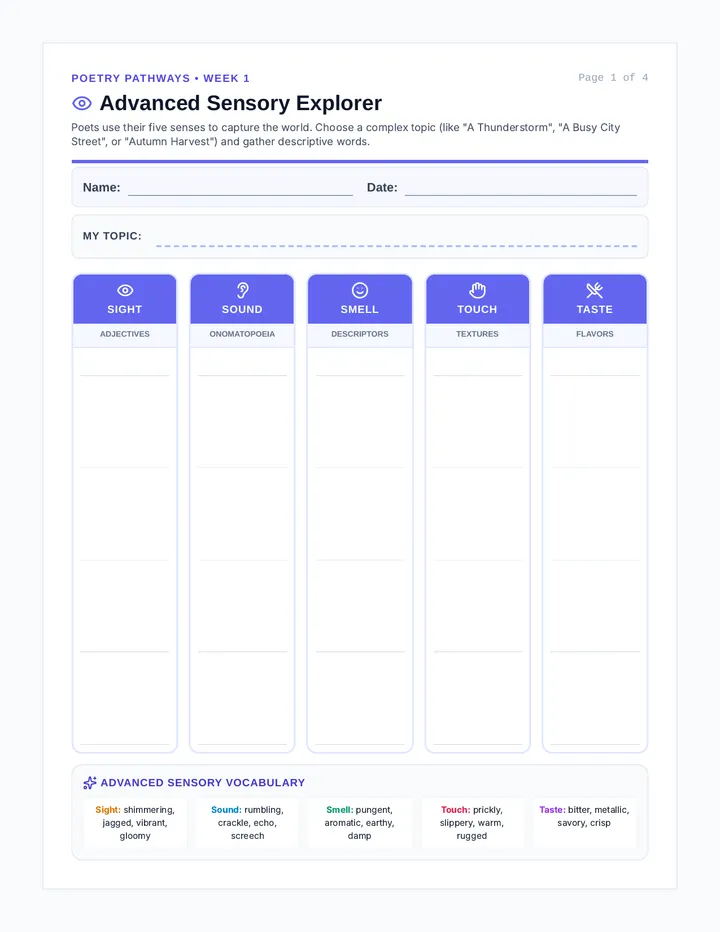
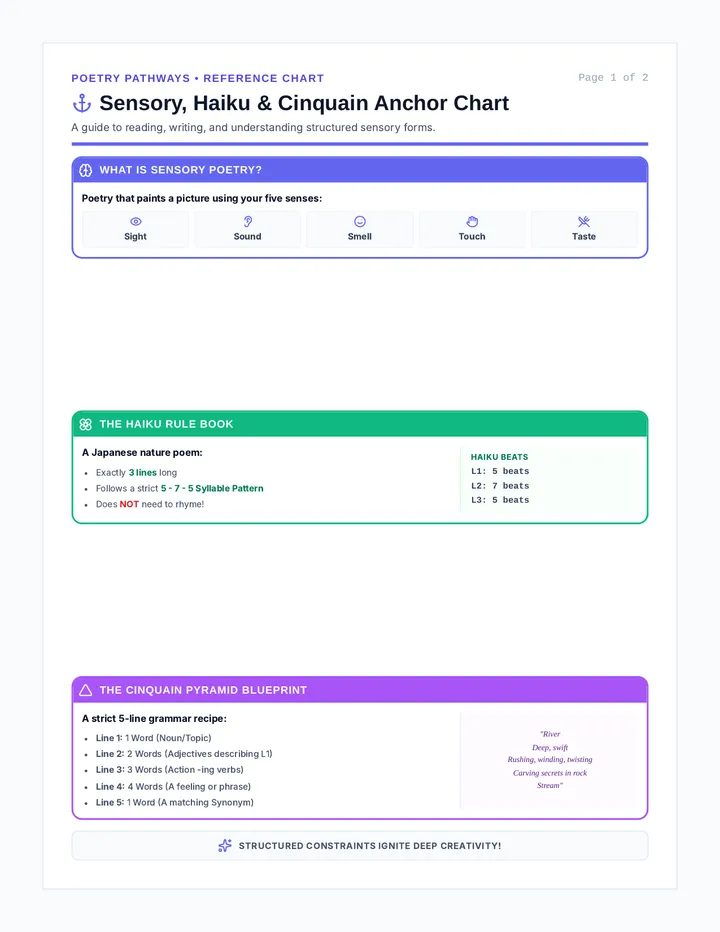
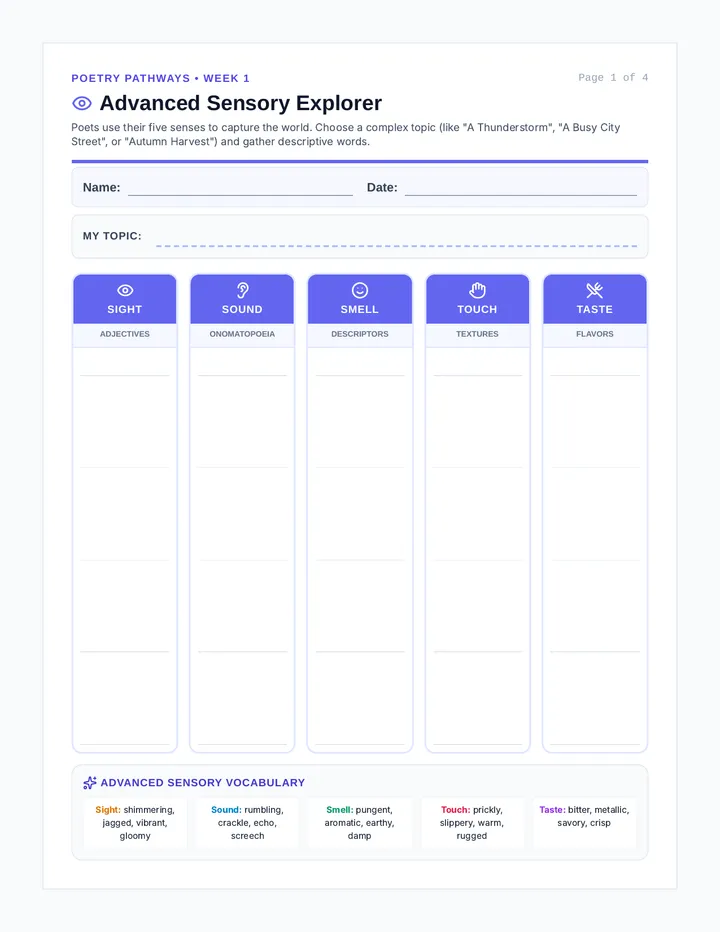
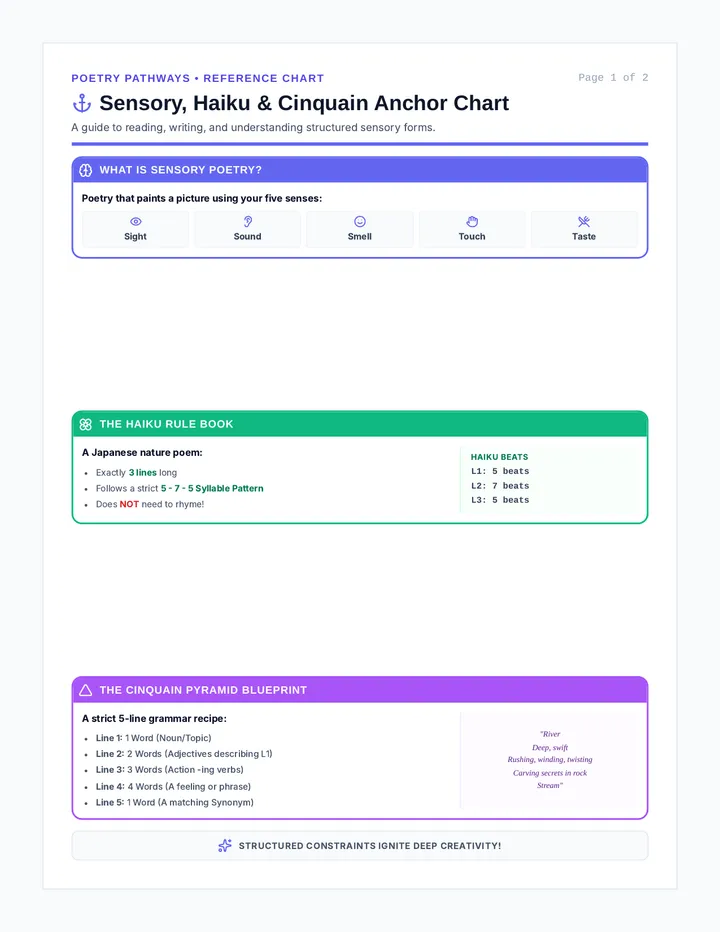
Focuses on Sensory and Color Poetry (Haiku and Color Poems). Students explore imagery using their five senses, utilizing highly visual sensory organizers, word banks, and syllable counters.
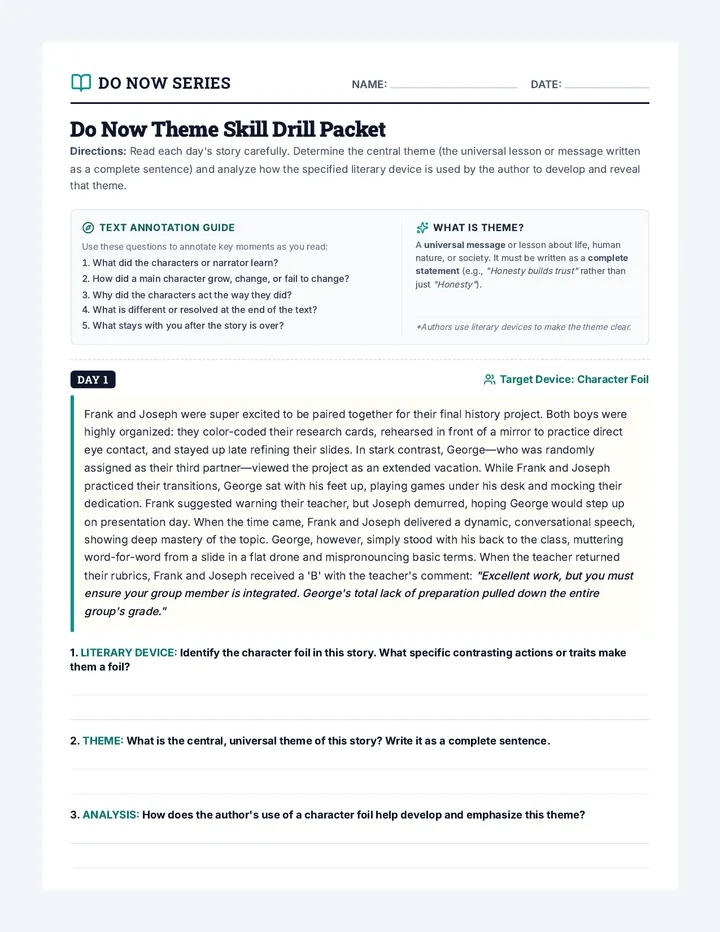
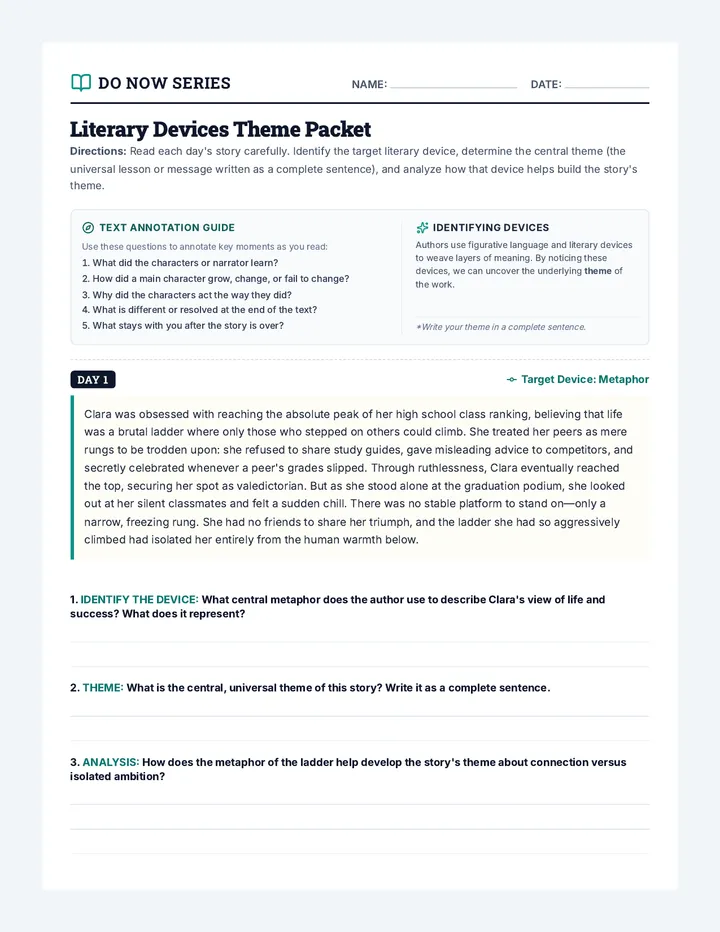
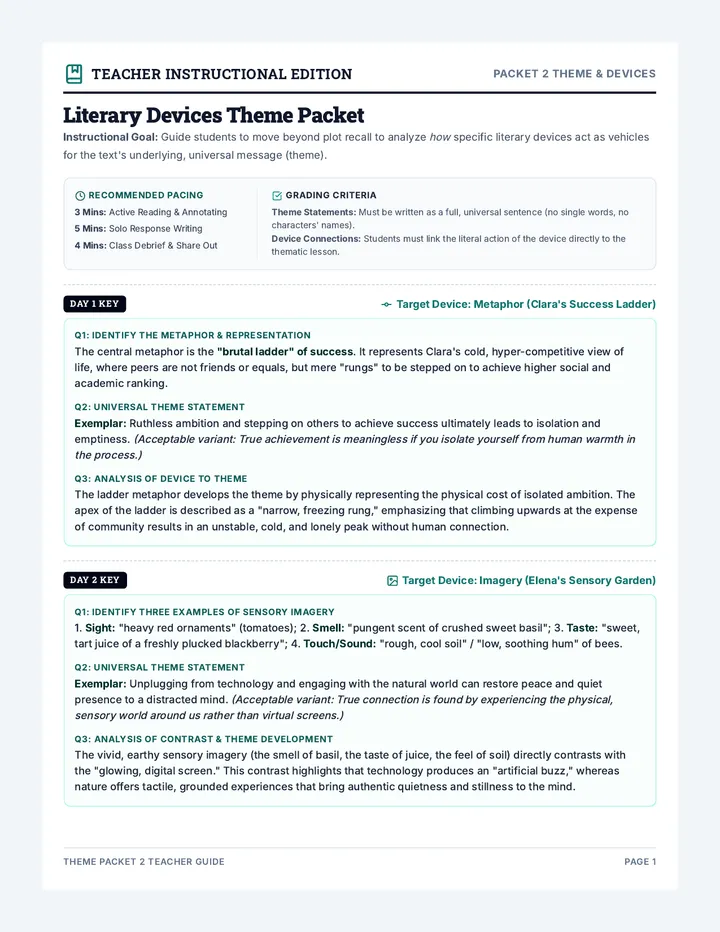
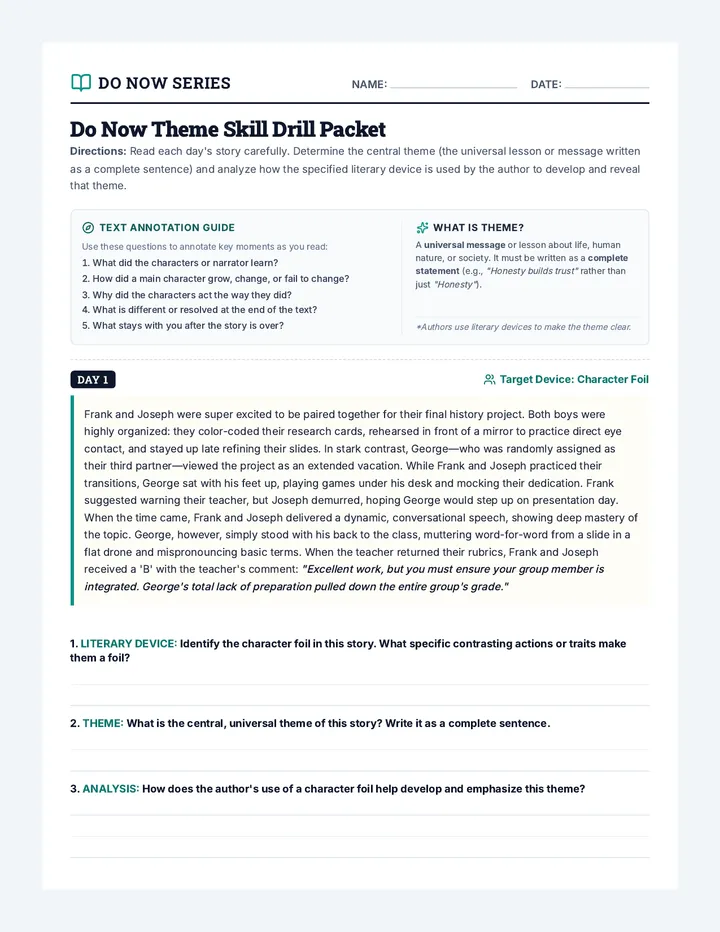
A cohesive lesson and drill series designed to help students master the connection between explicit literary devices and the central themes of literary texts.
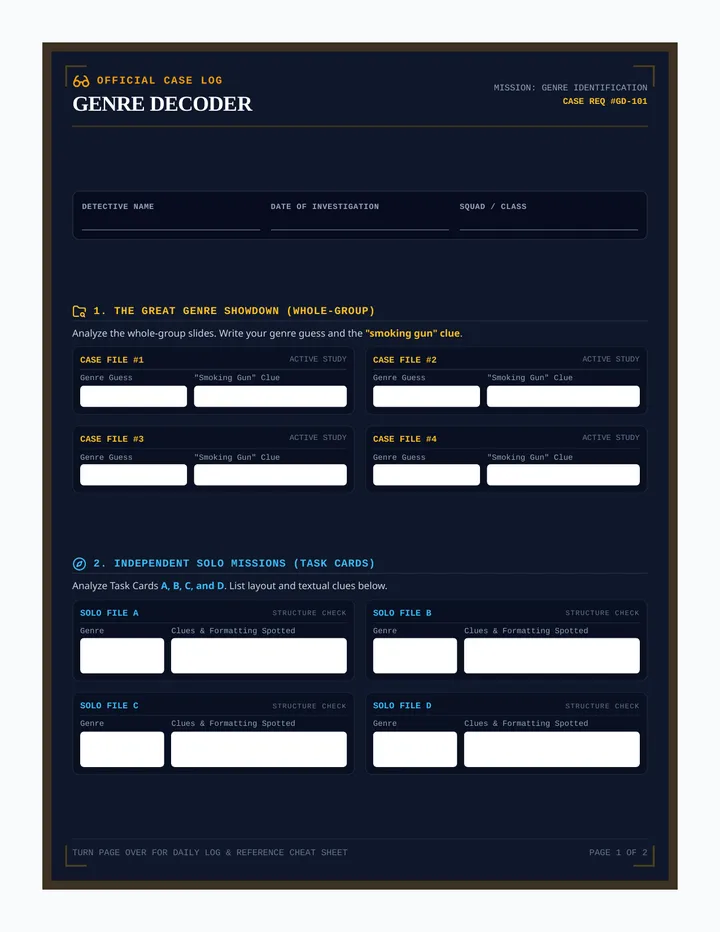
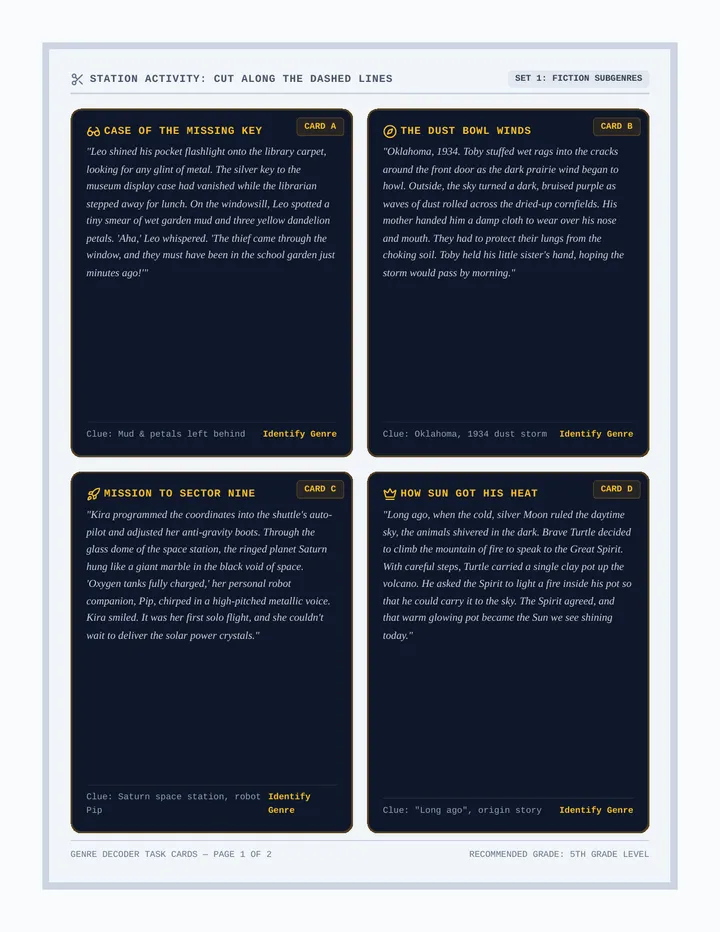
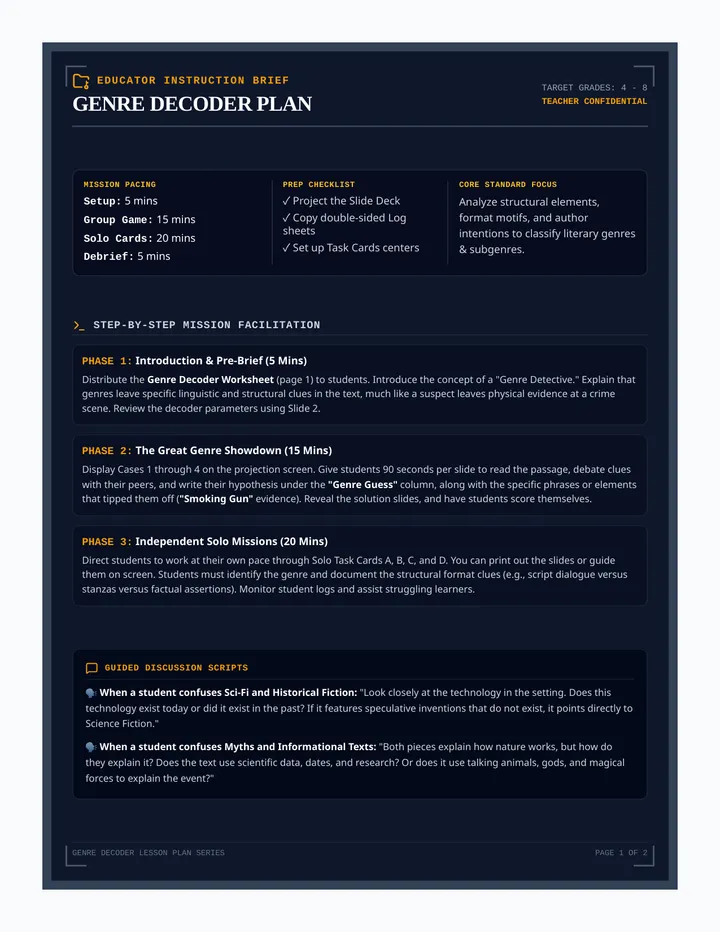
An interactive, gamified lesson where students become 'Genre Detectives' to identify fiction subgenres and mixed literature genres. Includes an interactive classroom presentation, a printable student recording sheet, and a comprehensive teacher guide with full answer keys.
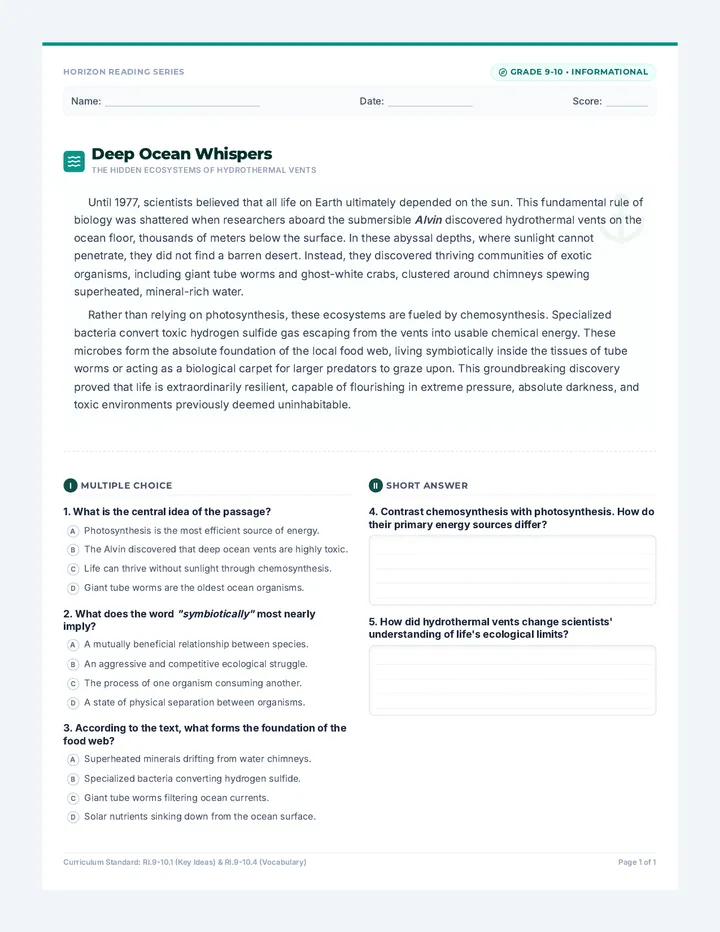
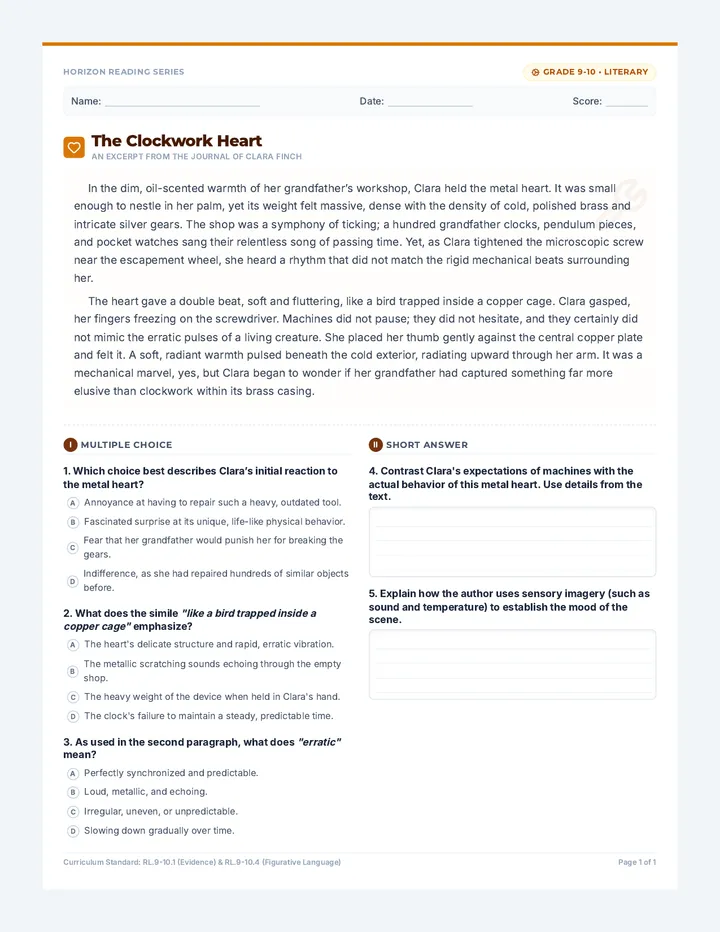
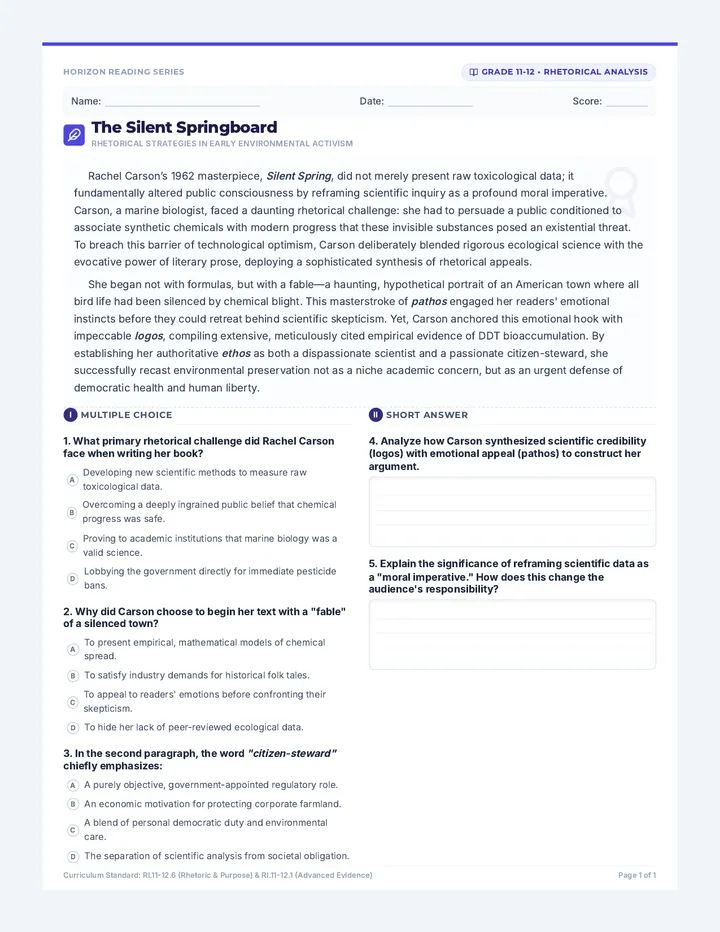
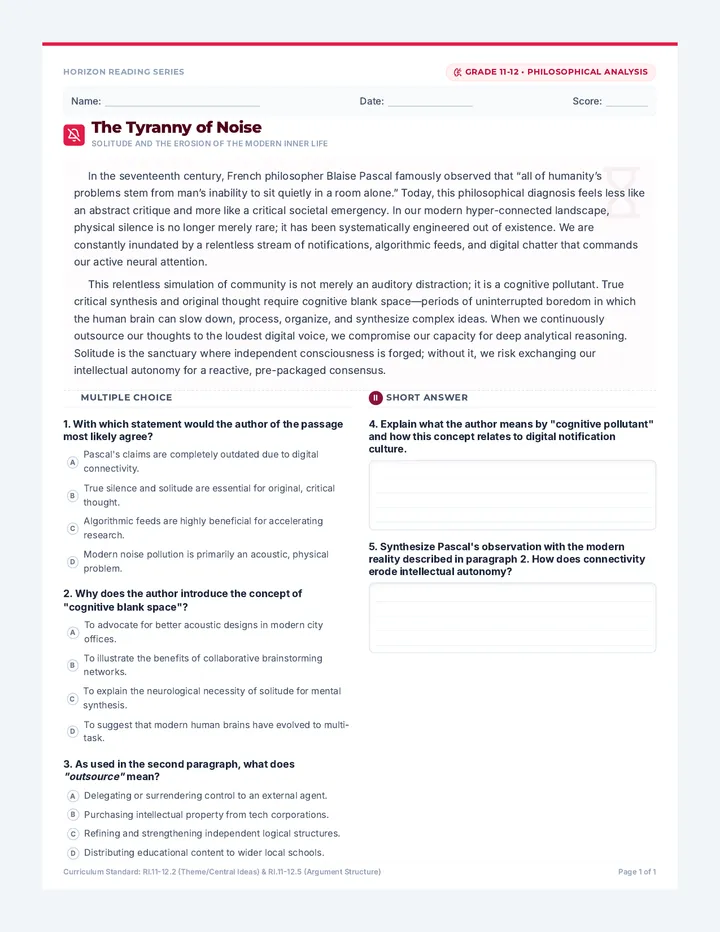
A foundational set of four reading comprehension sheets, split between Grade 9-10 (focusing on core inference and vocabulary) and Grade 11-12 (emphasizing rhetorical analysis and synthesis).
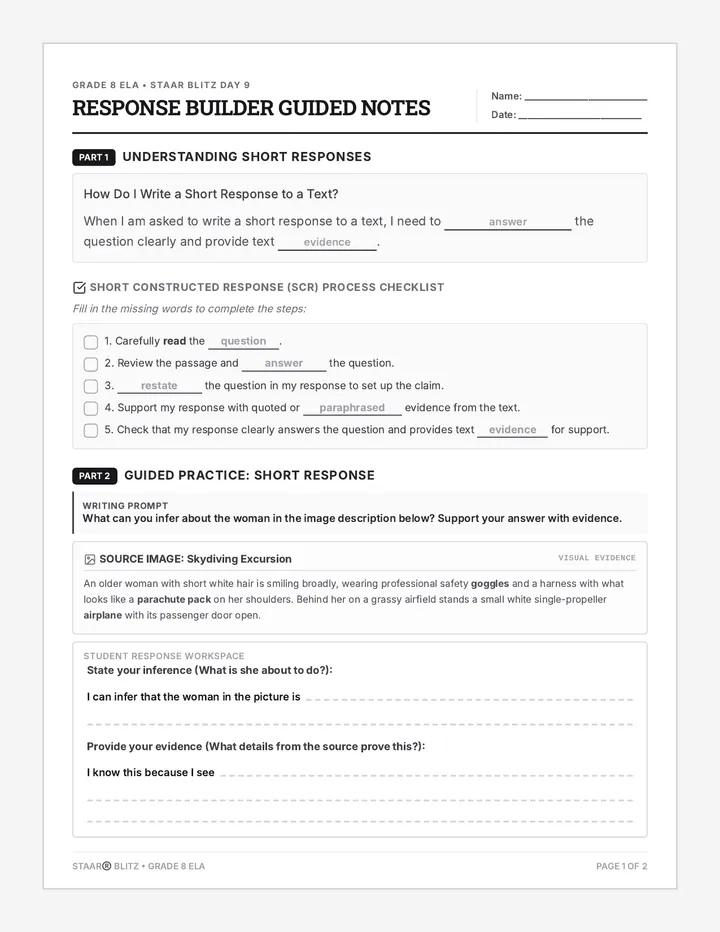
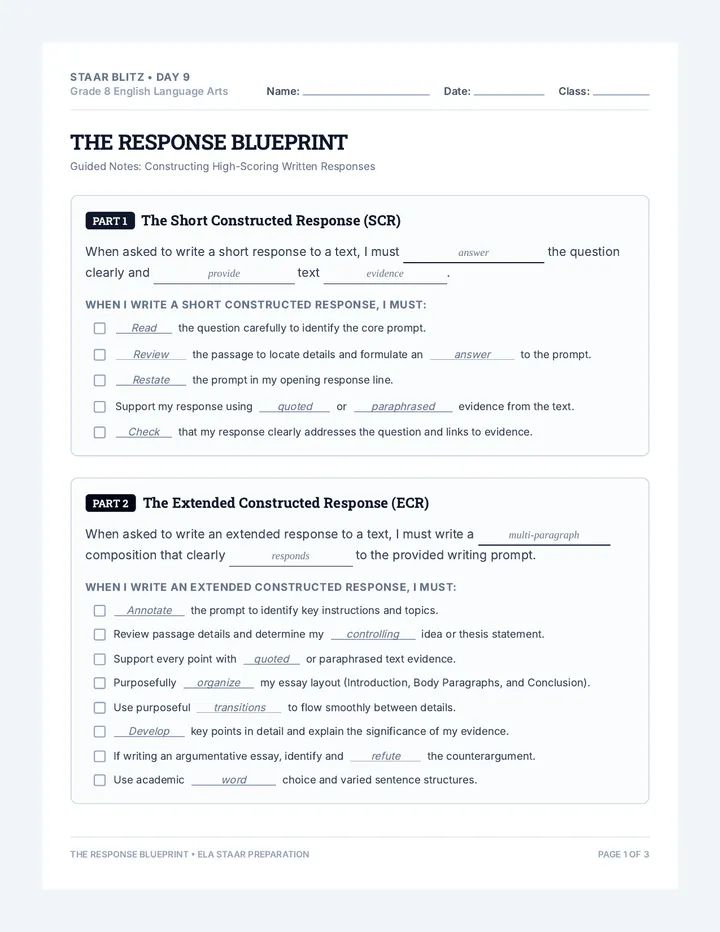
A structured eighth-grade ELA lesson focused on crafting clear, evidence-supported short and extended responses using structured scaffolds, text evidence integration, and argumentative alignment.
A STAAR-aligned lesson focused on teaching students how to write short and extended constructed responses using text evidence and structured controlling ideas.
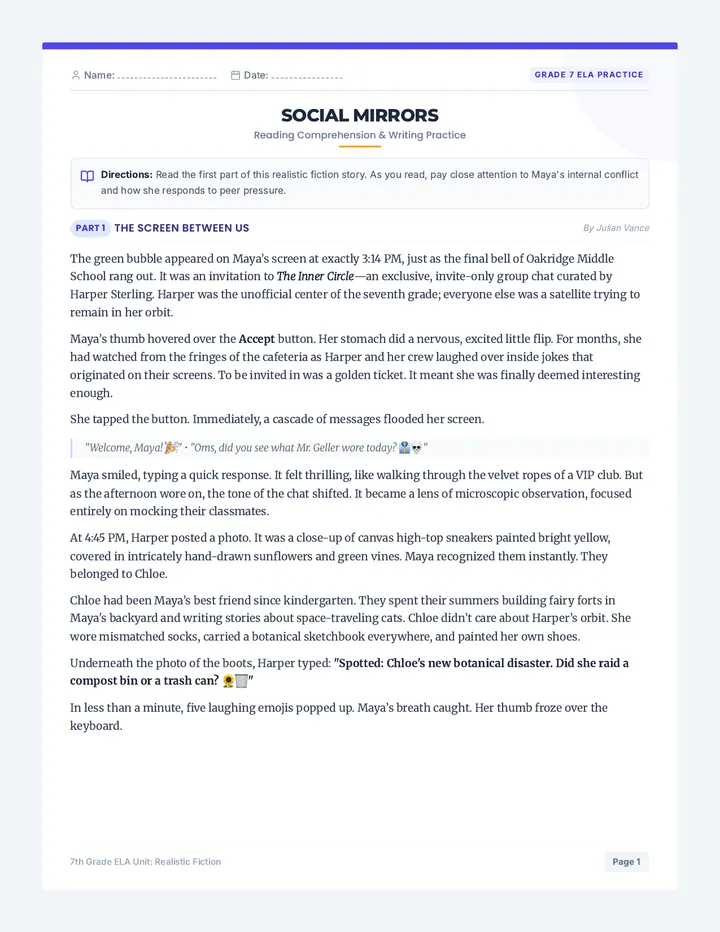
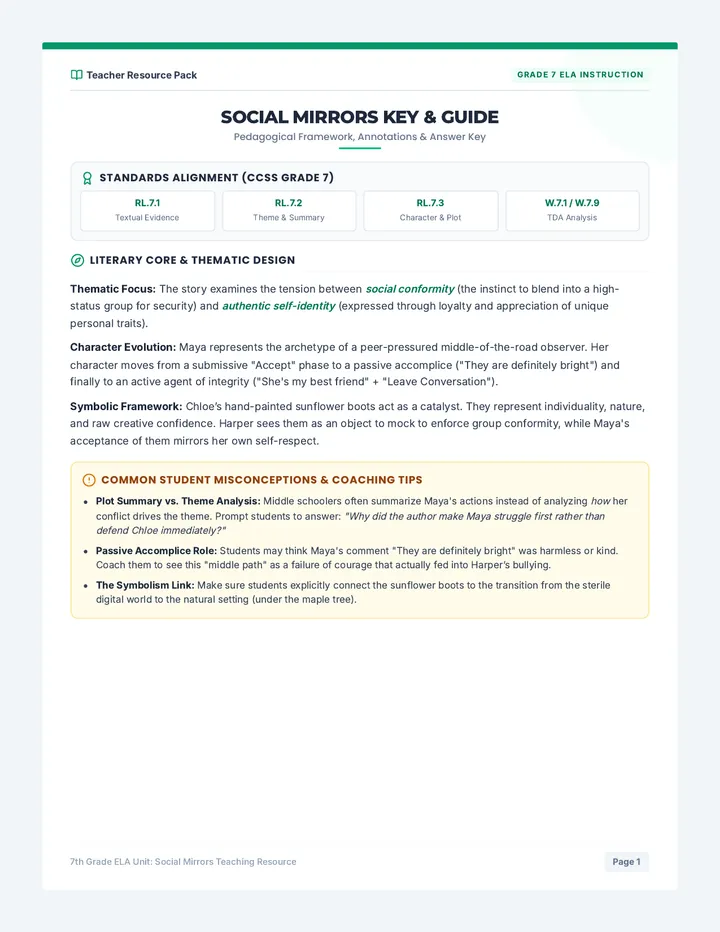
A rigorous 7th-grade reading and writing lesson centered around an engaging realistic fiction story about middle school peer dynamics, online group chats, and authentic friendships. Students read a high-interest passage, answer text-dependent comprehension questions, and write an analytical essay citing text evidence.
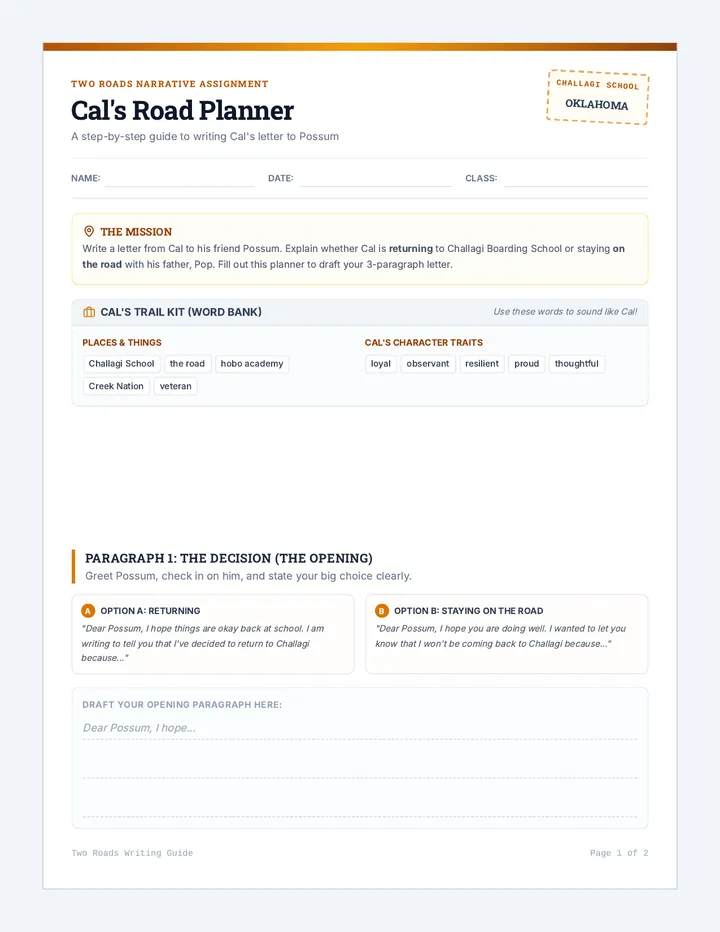
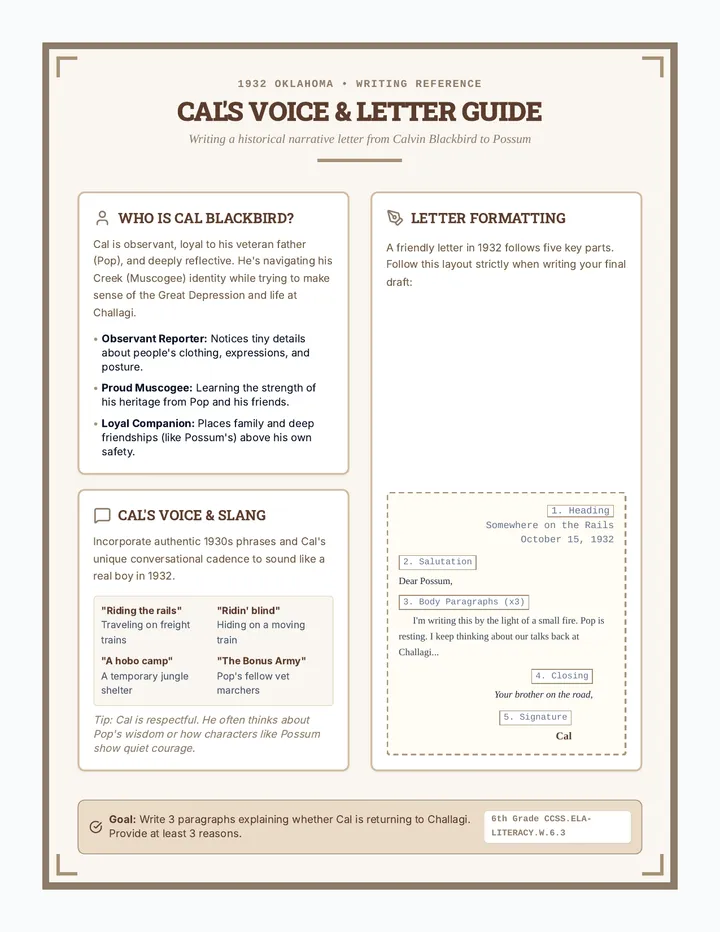
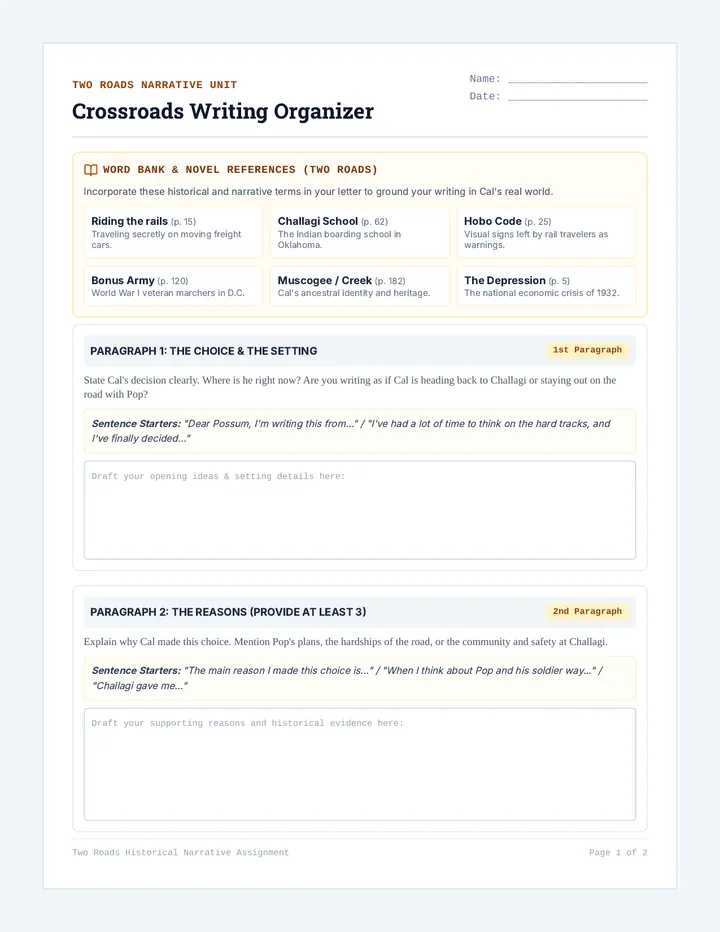
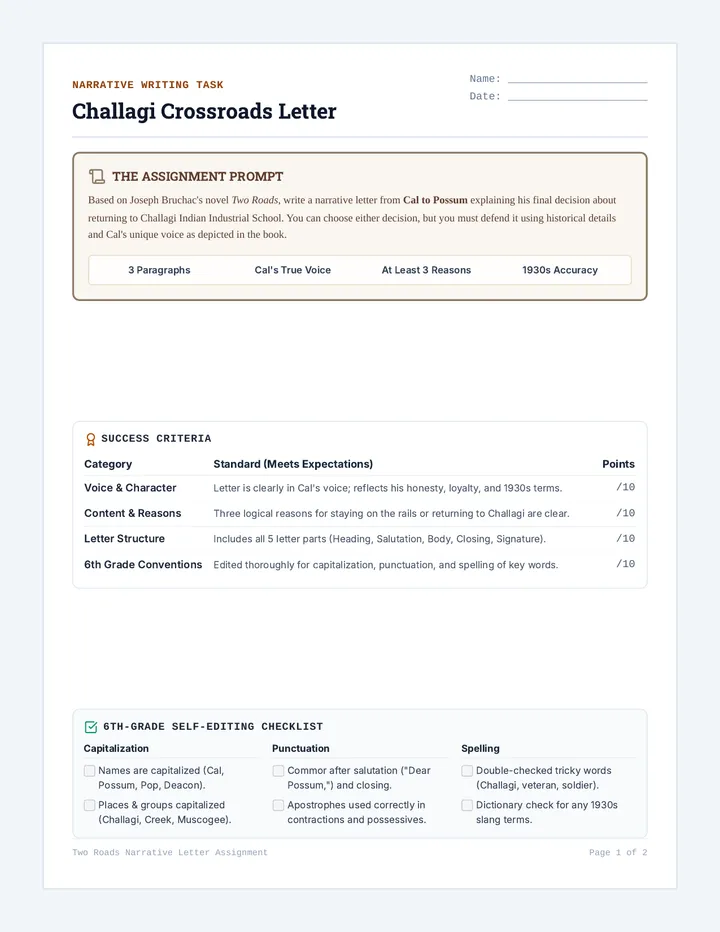
A planning and writing lesson centered around Joseph Bruchac's novel Two Roads, guiding students to write a structured narrative letter from Cal to Possum with differentiated scaffolding.
A narrative writing lesson based on Joseph Bruchac's novel *Two Roads*, where students write a three-paragraph letter from Cal to Possum detailing his decision about returning to Challagi Indian Industrial School. Includes an anchor chart, a graphic organizer, and a formal assignment sheet with editing support.
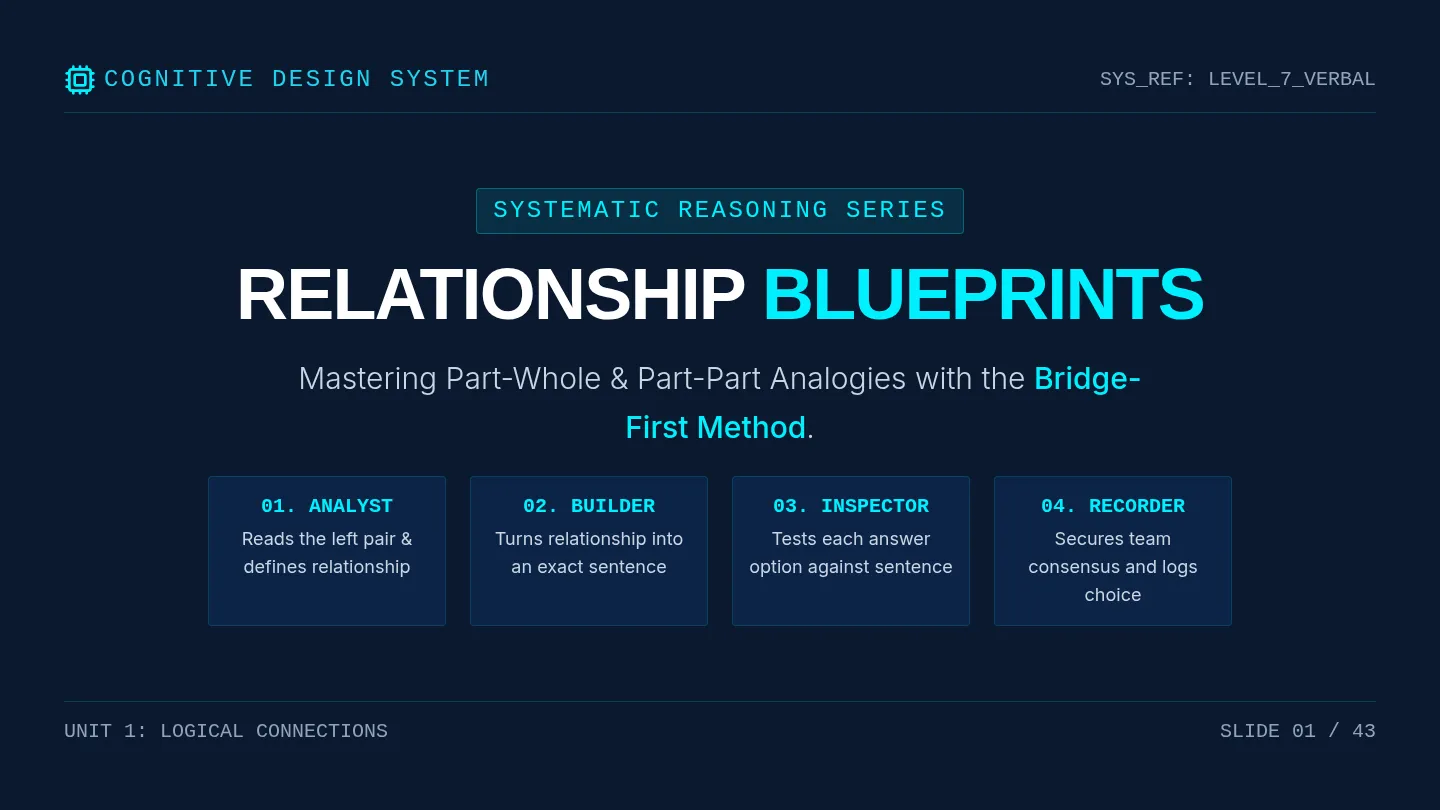
An interactive slide deck focusing on part-whole and part-part analogies for seventh graders, emphasizing the strategy of formulating the relationship before viewing multiple-choice options.
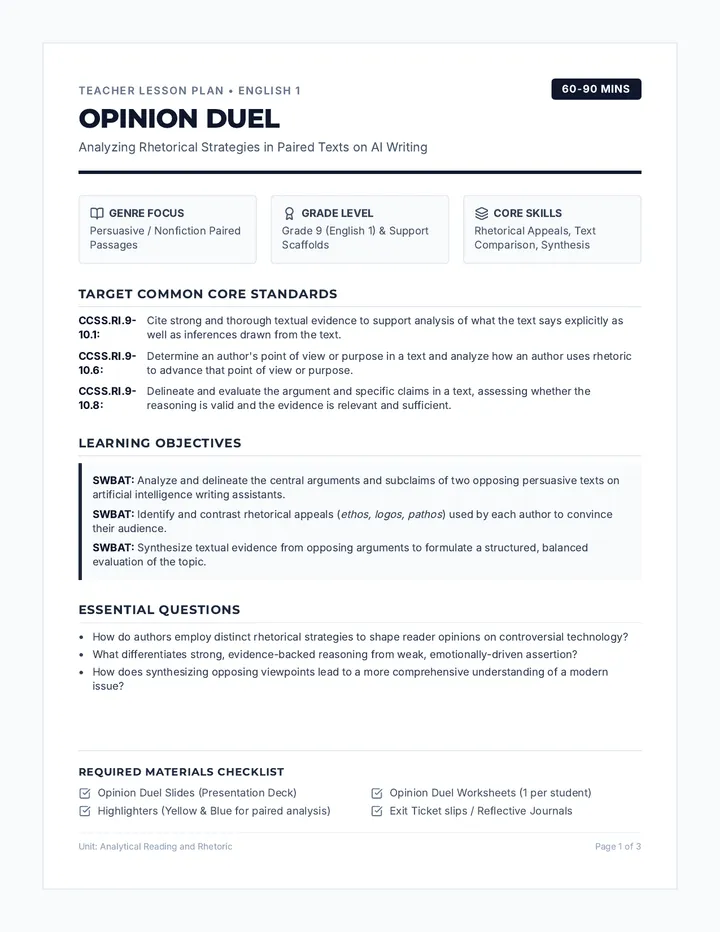
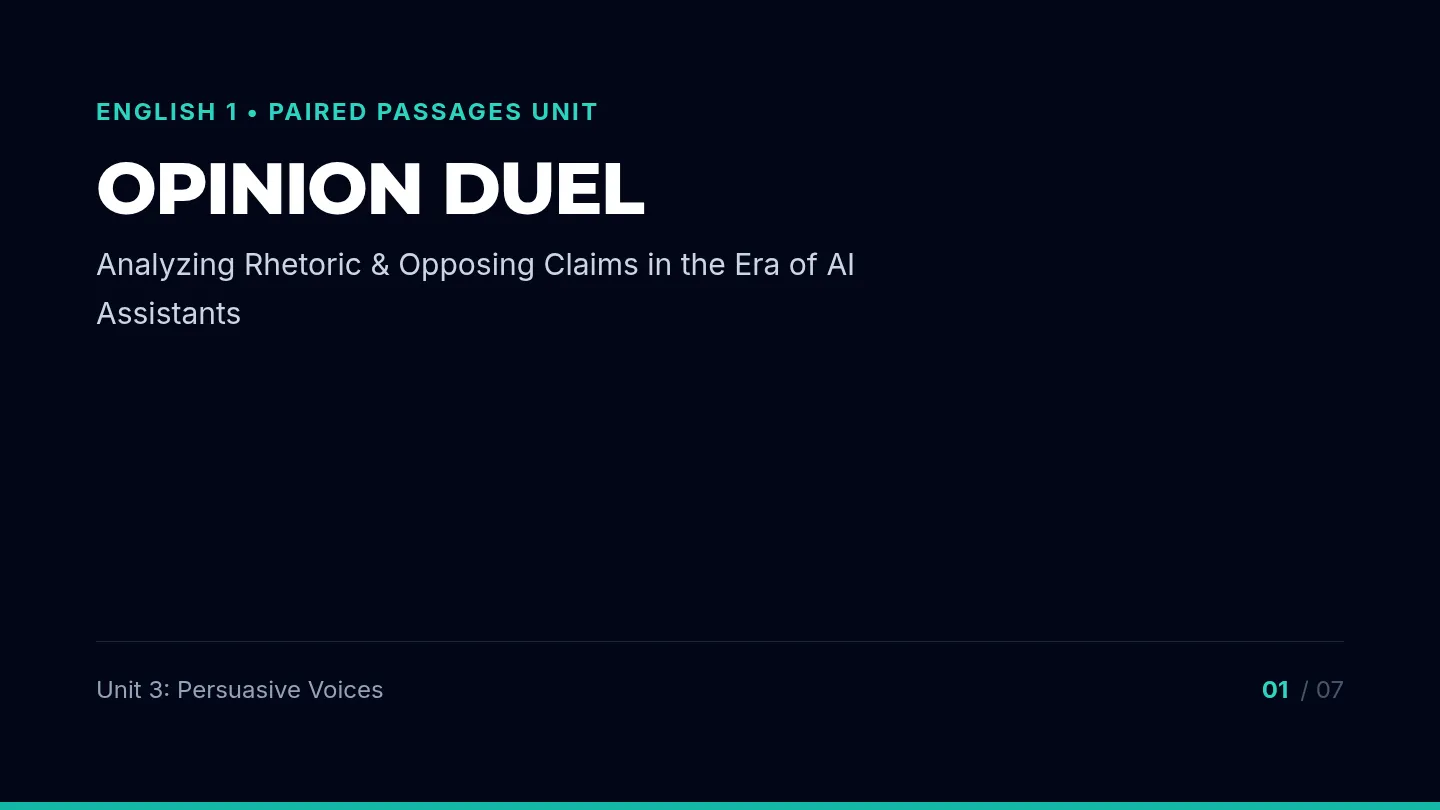
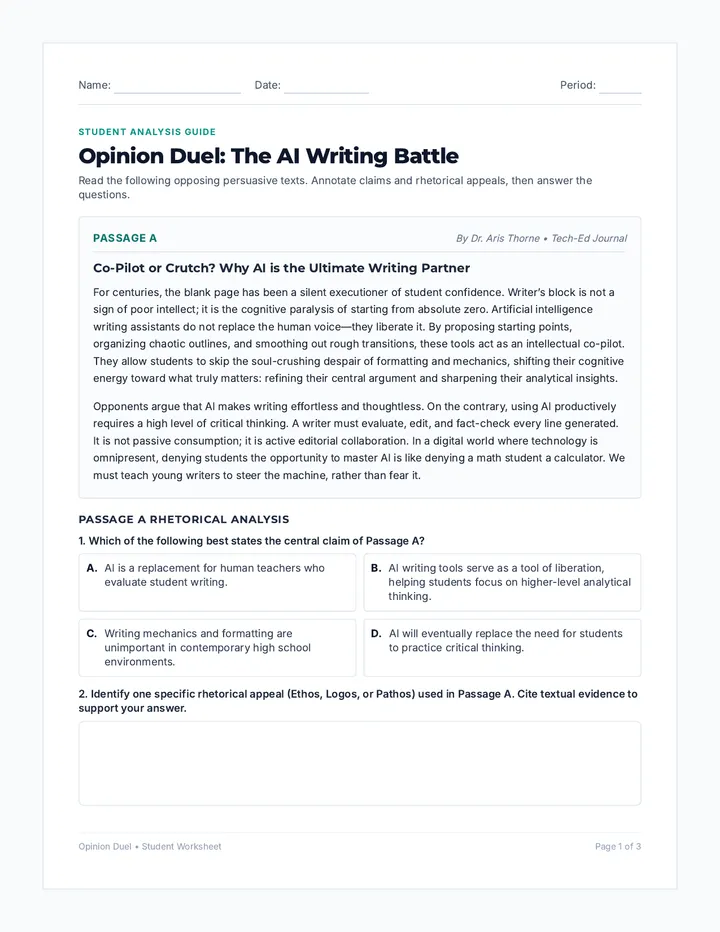
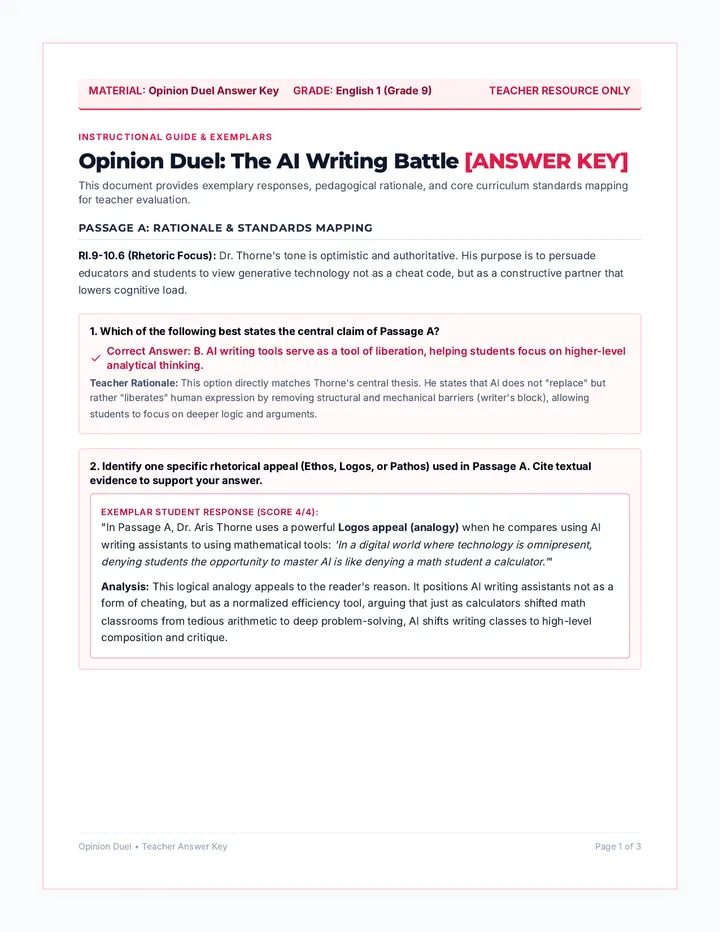
An English 1 lesson focused on comparing and analyzing paired persuasive texts about the use of AI writing assistants. Students learn to evaluate contrasting arguments, identify rhetorical devices, and synthesize opposing viewpoints using text-based evidence.
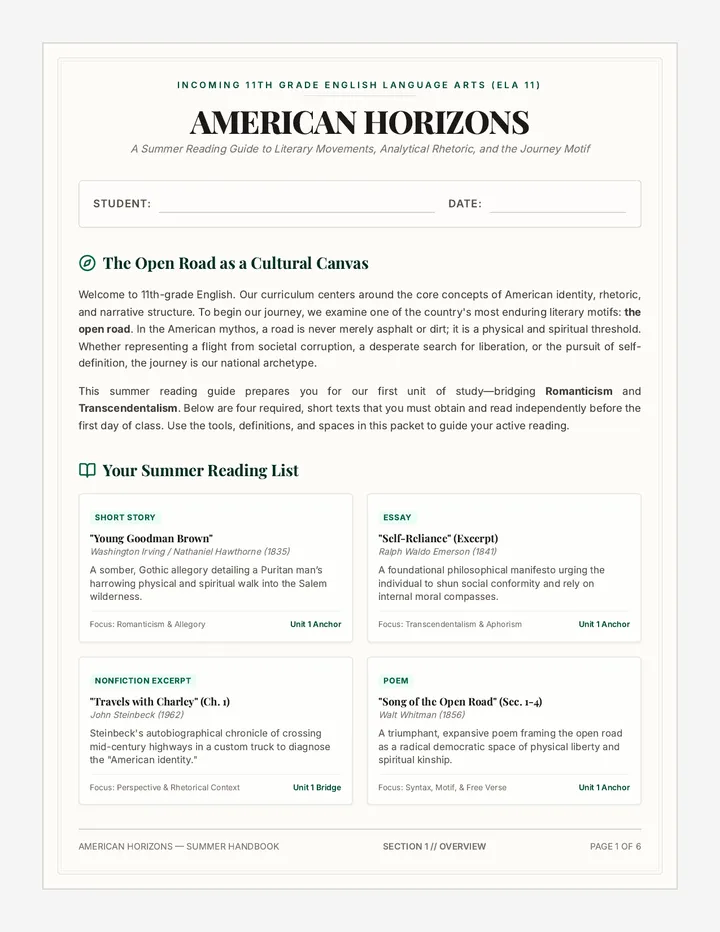
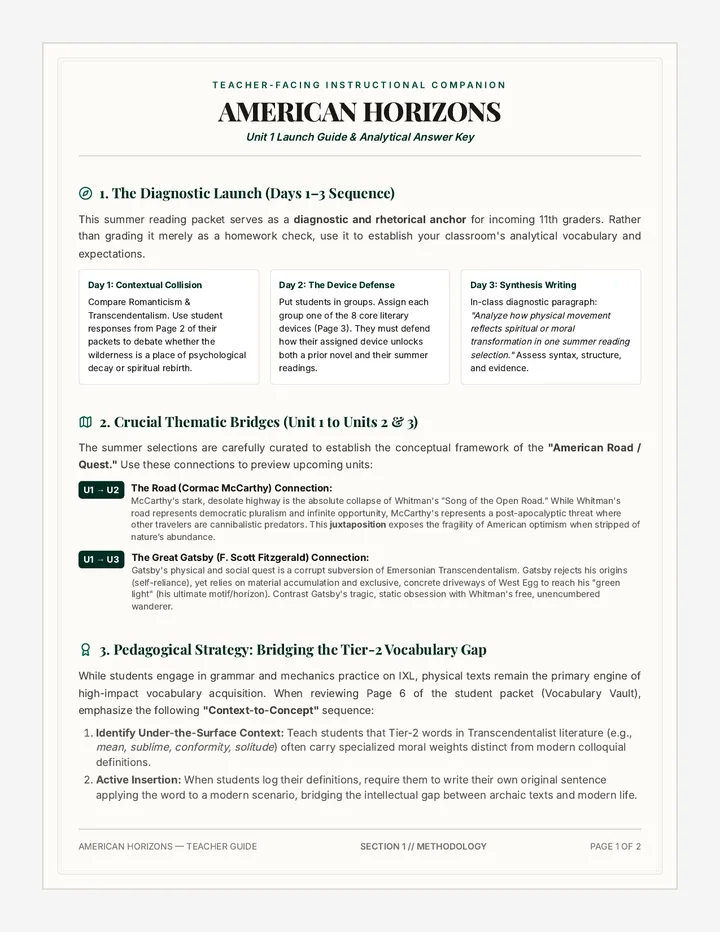
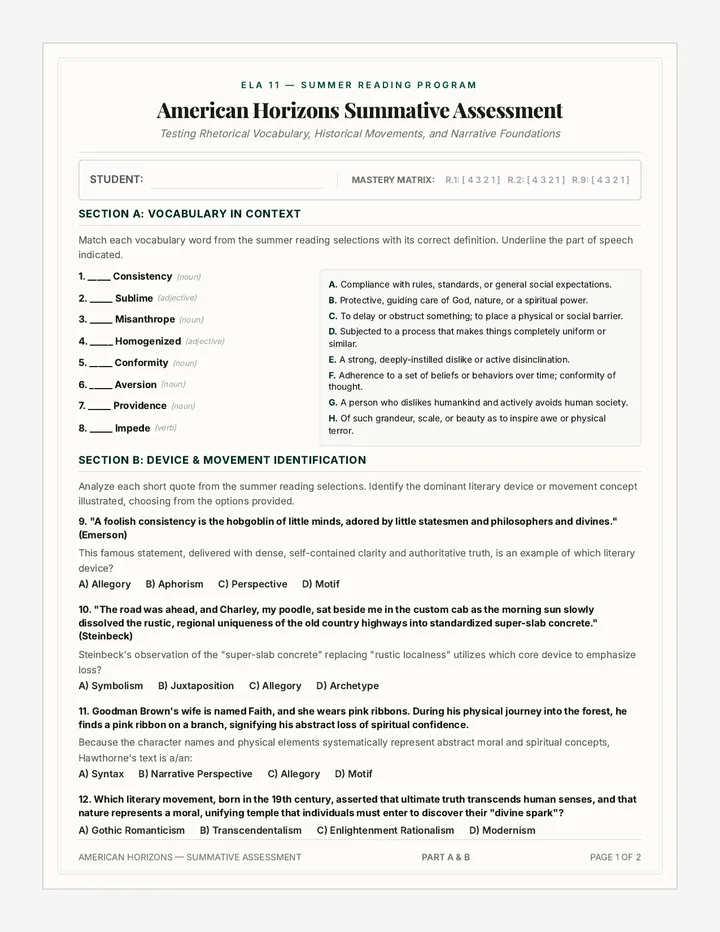
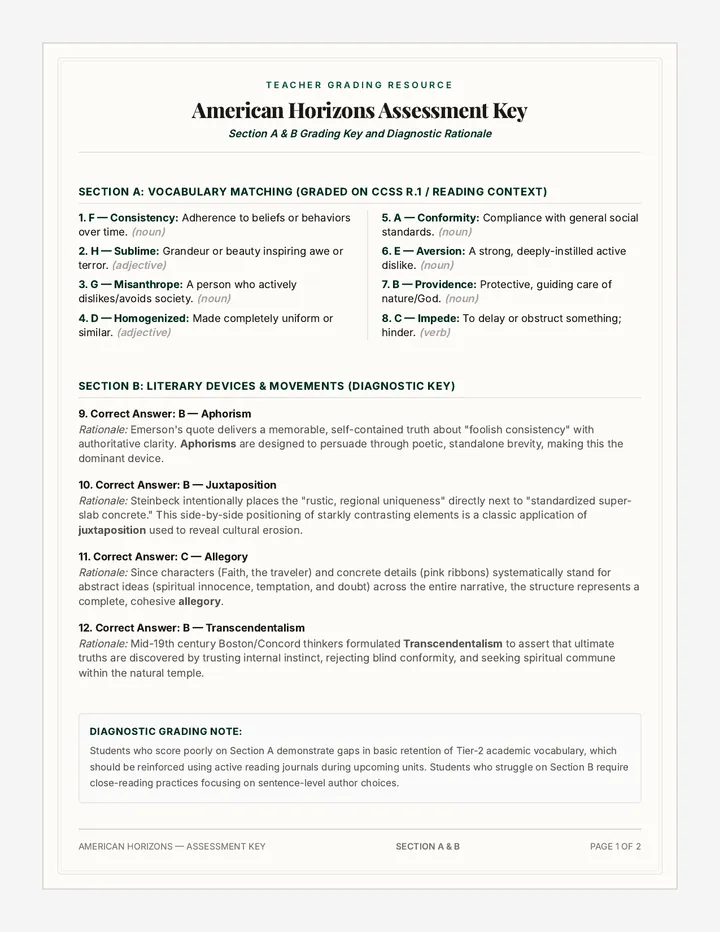
A preparatory summer reading curriculum designed to bridge historical literary movements, analytical vocabulary, and journey-themed texts for incoming 11th graders.
Students compile their four-sentence creative stories into a comic strip layout, add simple illustrations, and celebrate their storytelling accomplishments.