A lesson exploring animal adaptations and camouflage through the lens of polar bears in the Arctic. Students will observe how white fur helps bears hunt seals at breathing holes and create camouflage art to visualize the concept.
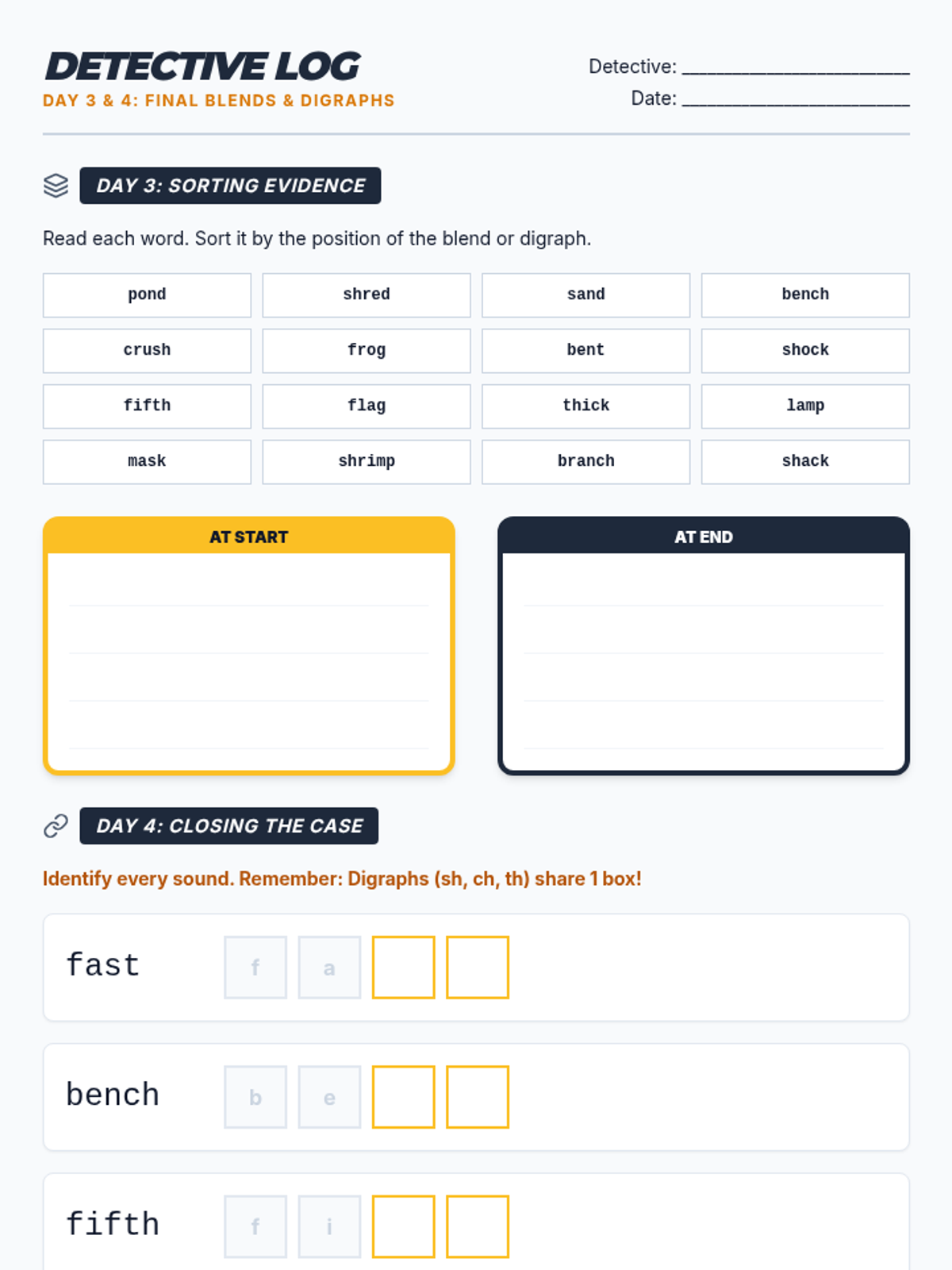
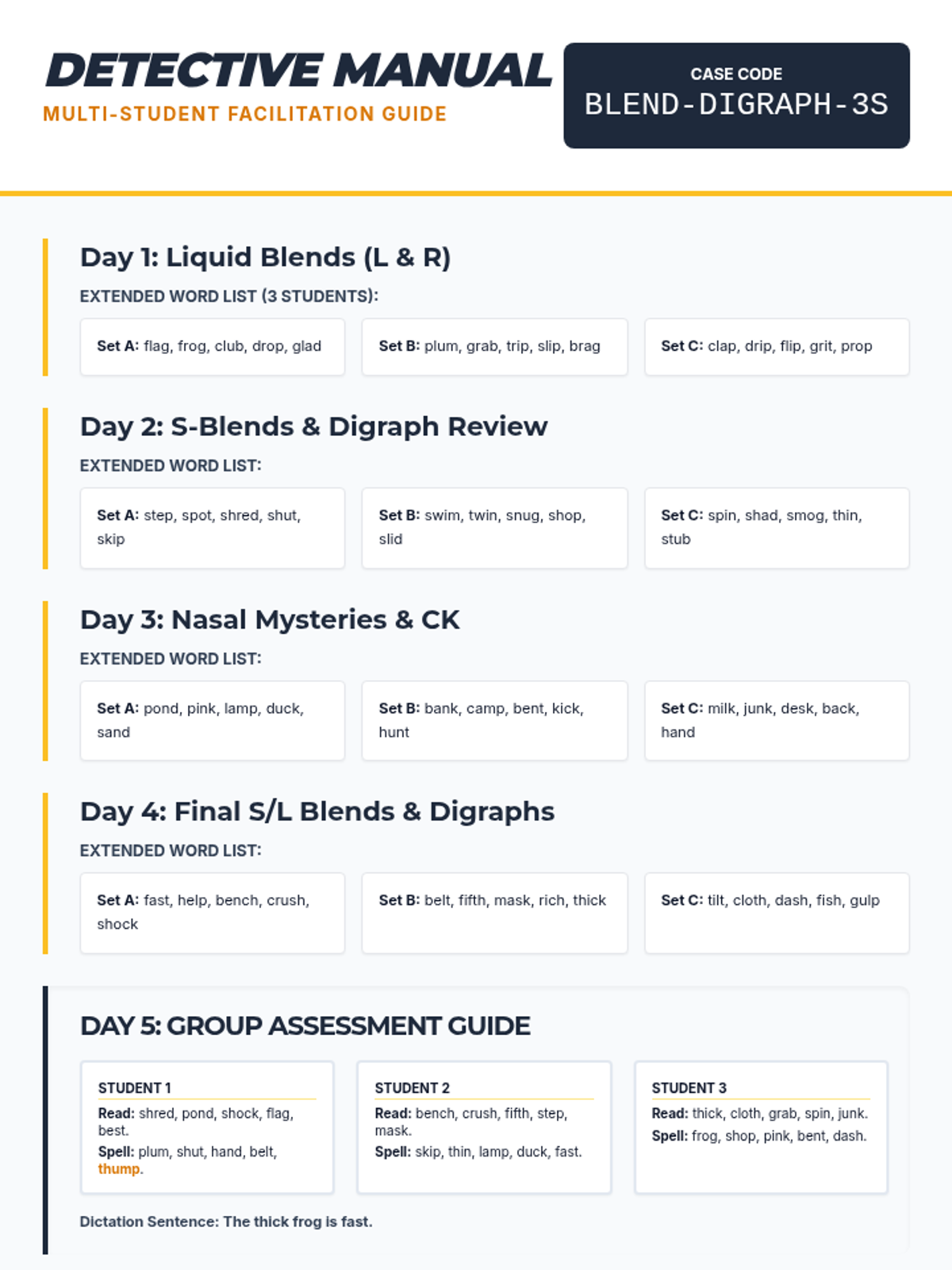
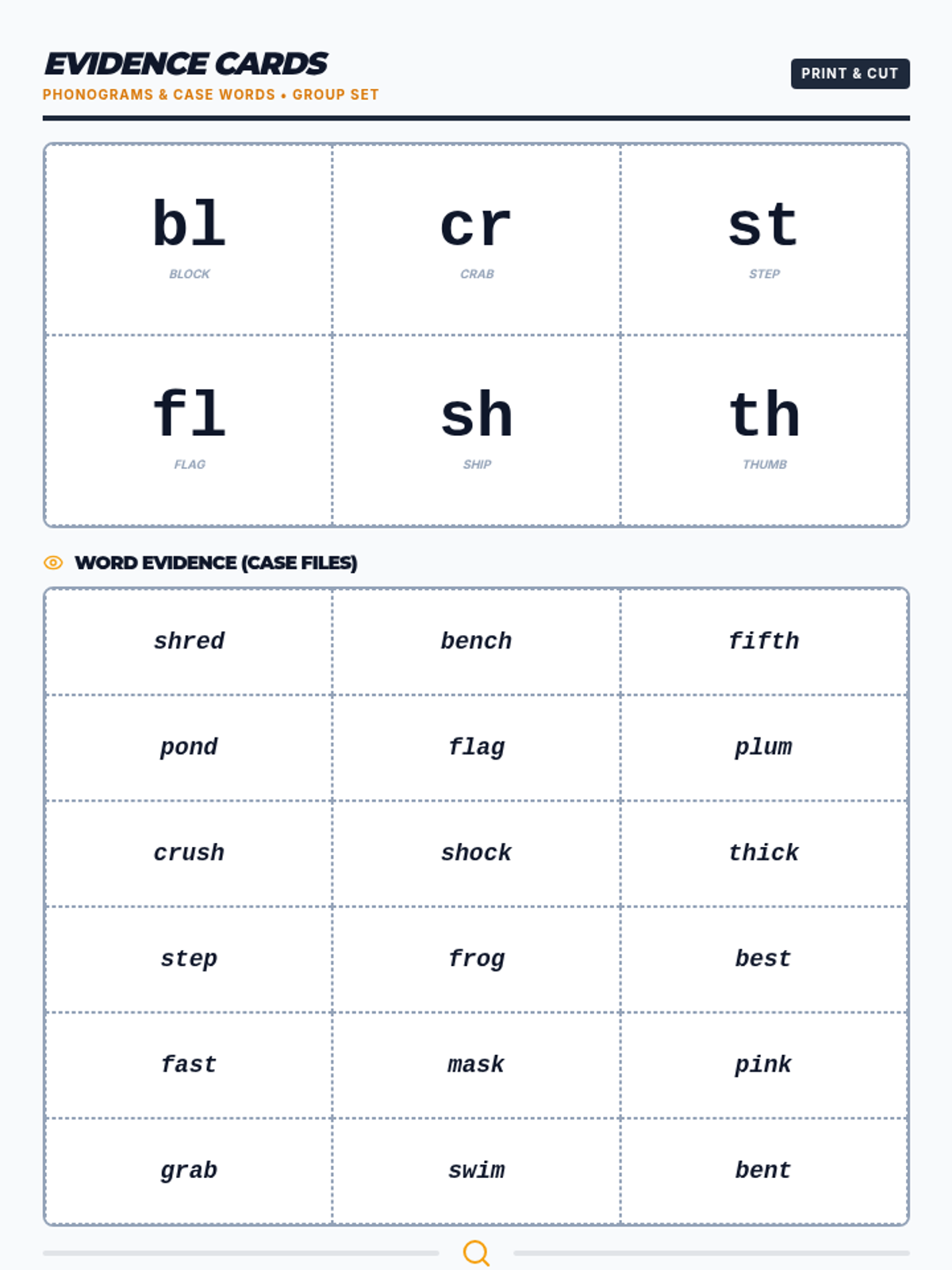
Review of the week's blend concepts and a formal assessment of decoding and encoding skills for CCVC and CVCC patterns.
Focus on CVCC words ending with S-blends (-st, -sk, -sp) and L-blends (-lt, -lp, -lk). Integration of initial and final blends.
Focus on CVCC words ending with nasal blends (-mp, -nd, -nt, -nk). Students identify the 'stuck' sound before the final consonant.
Focus on CCVC words starting with S-blends (st, sp, sl) and T-blends (tr, tw). Students practice maintaining the sequence of sounds in the cluster.
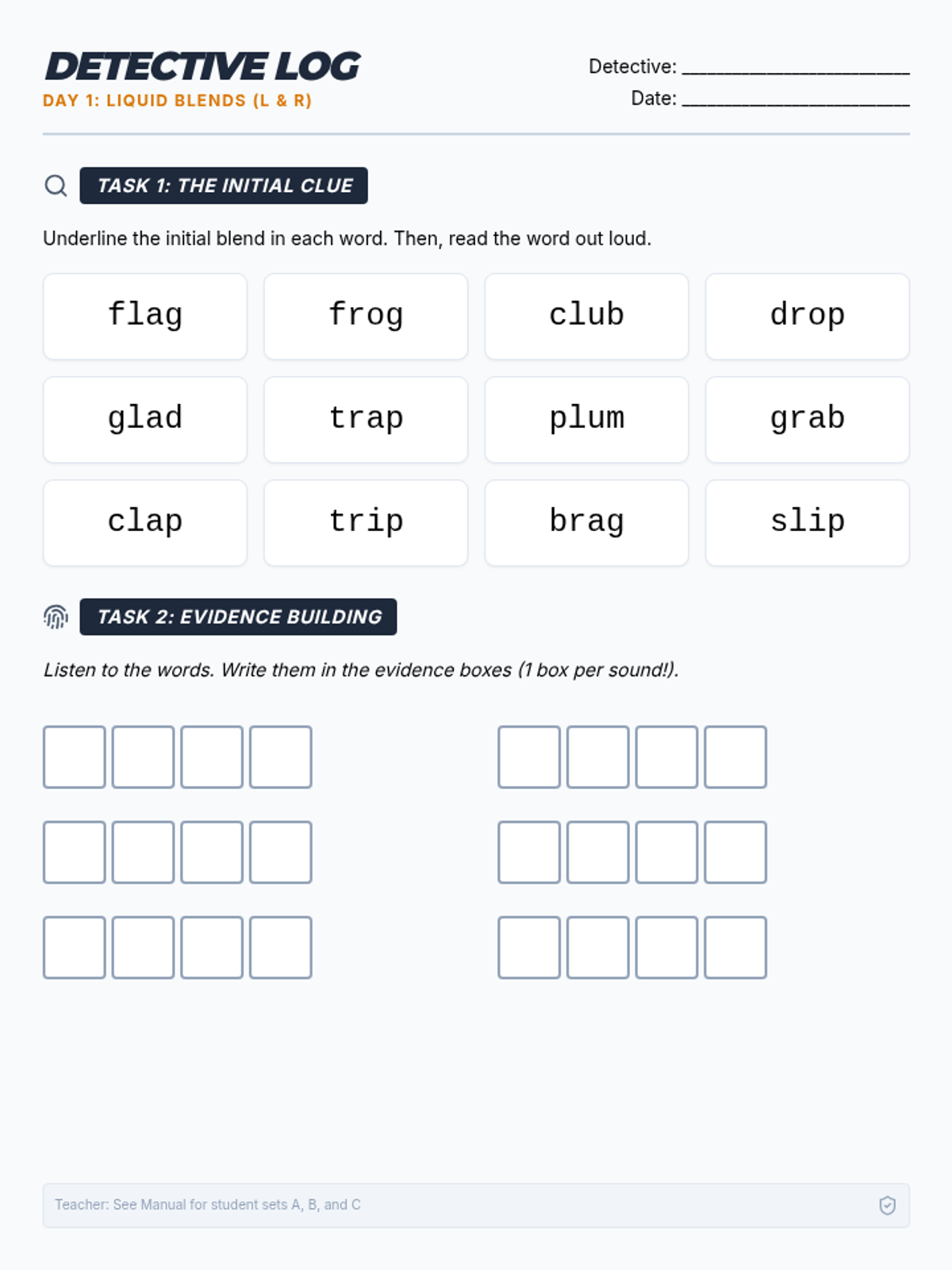
Introduction to CCVC words starting with liquid blends (L-blends like bl, cl, fl and R-blends like br, cr, dr). Students practice segmenting each sound in the blend.
Review of the week's concepts and a formal assessment of decoding and encoding skills.
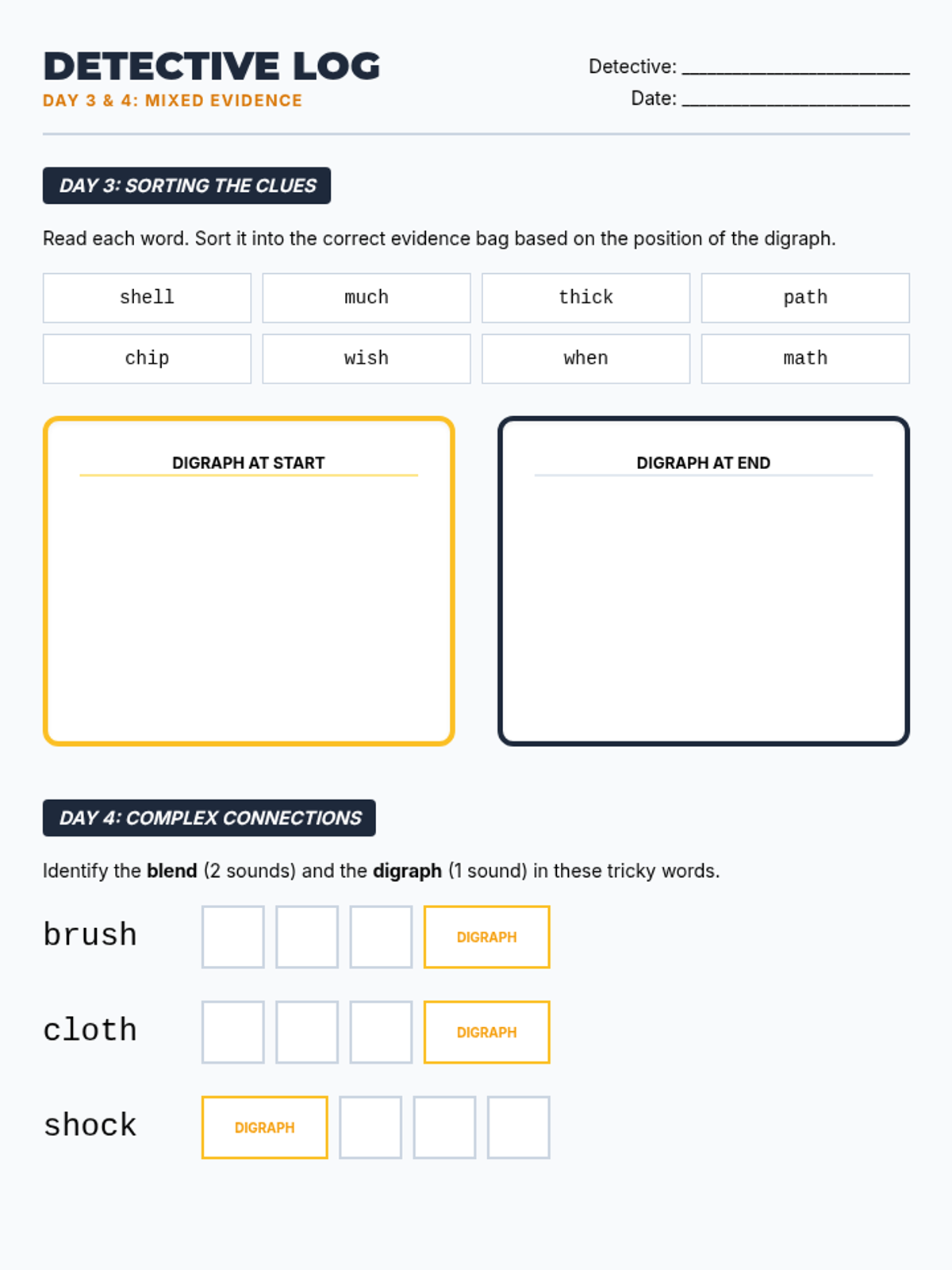
Integrating consonant blends with digraphs (e.g., brush, cloth). Focused on multi-sound blending and segmenting.
Practice with mixed CCVC and CVCC patterns. Students discriminate between sounds at the beginning and end of words.
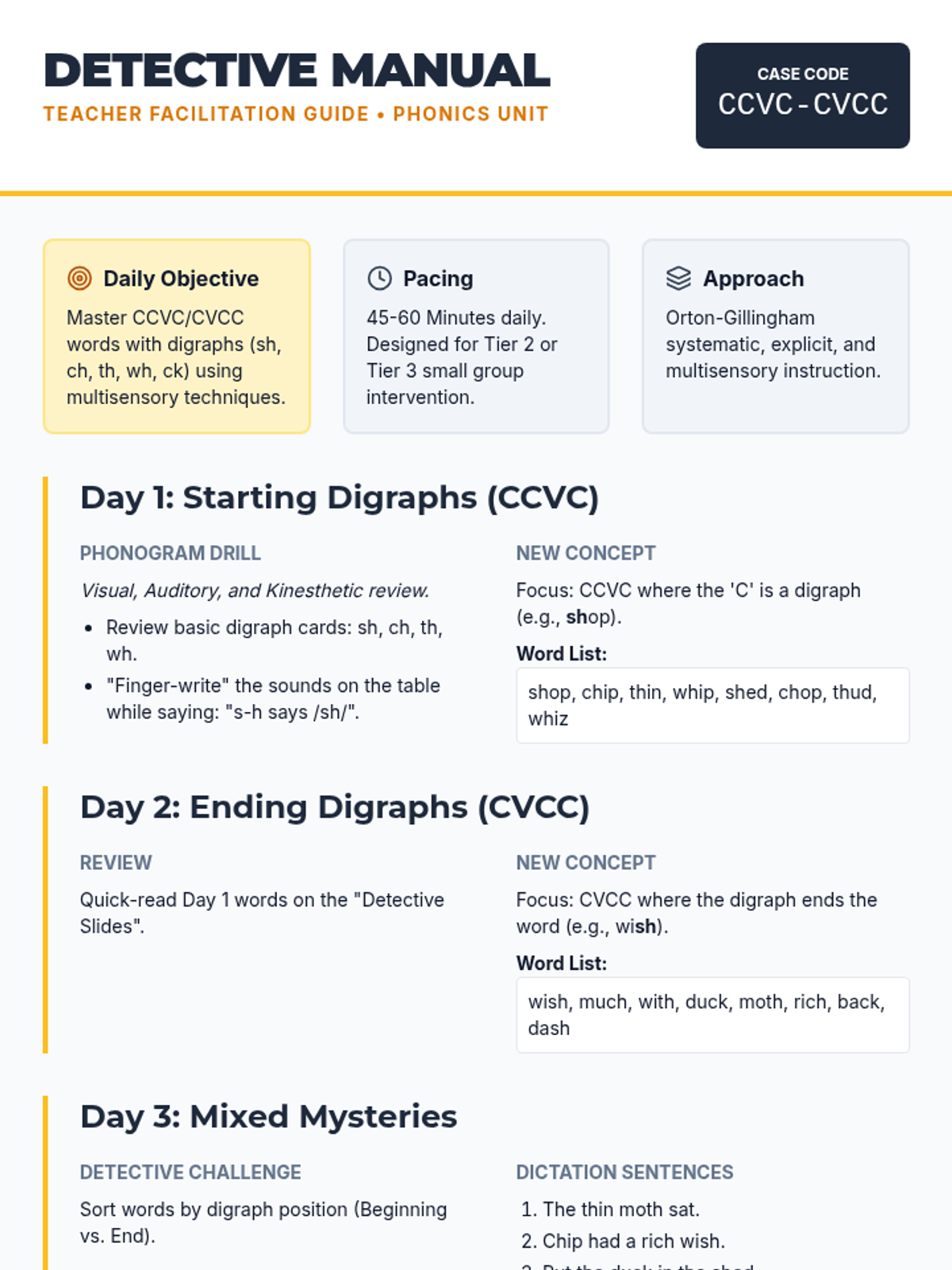
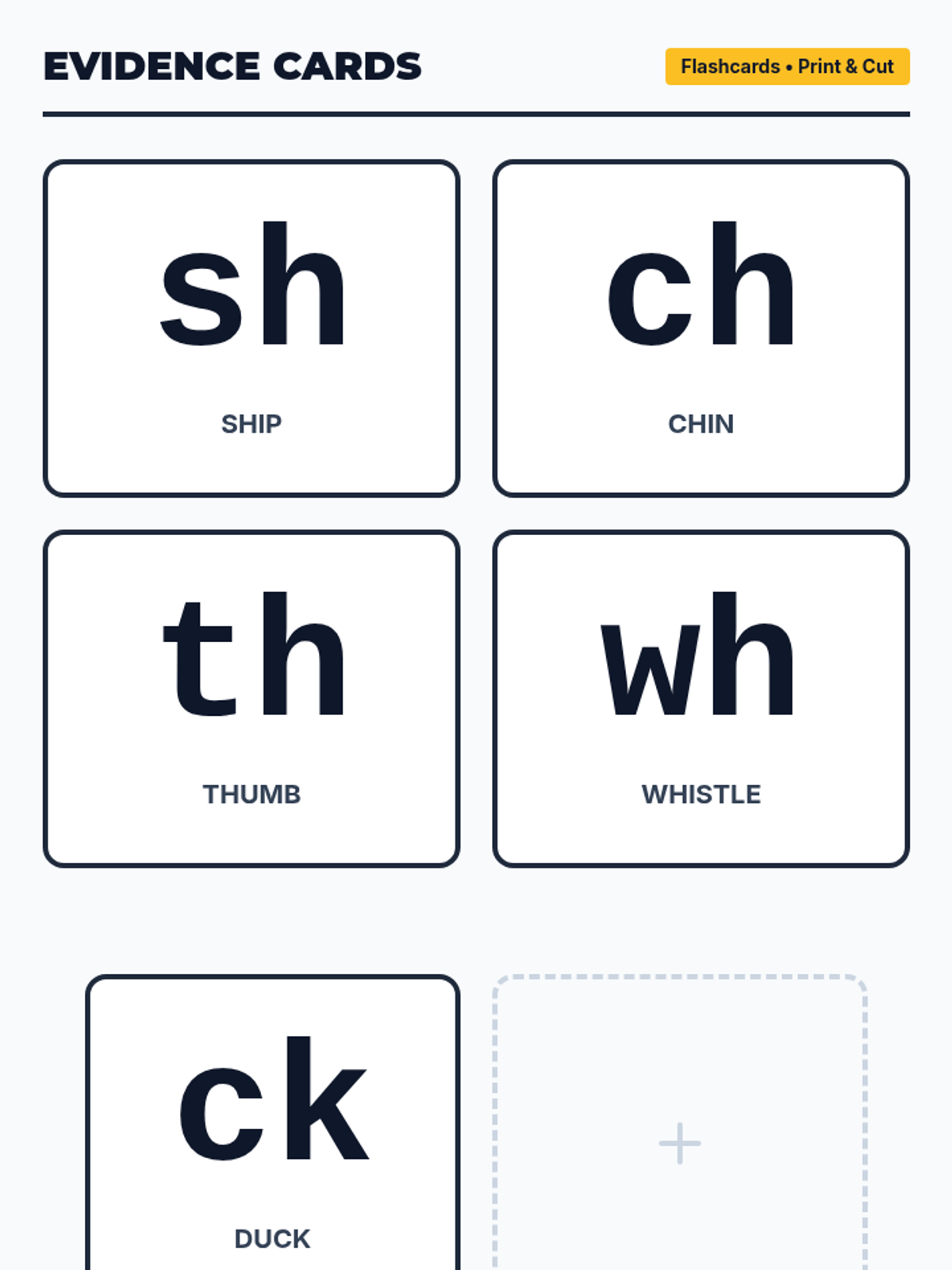
Focus on CVCC words ending with digraphs (sh, ch, th, ck). Students explore how the digraph sound completes the word.
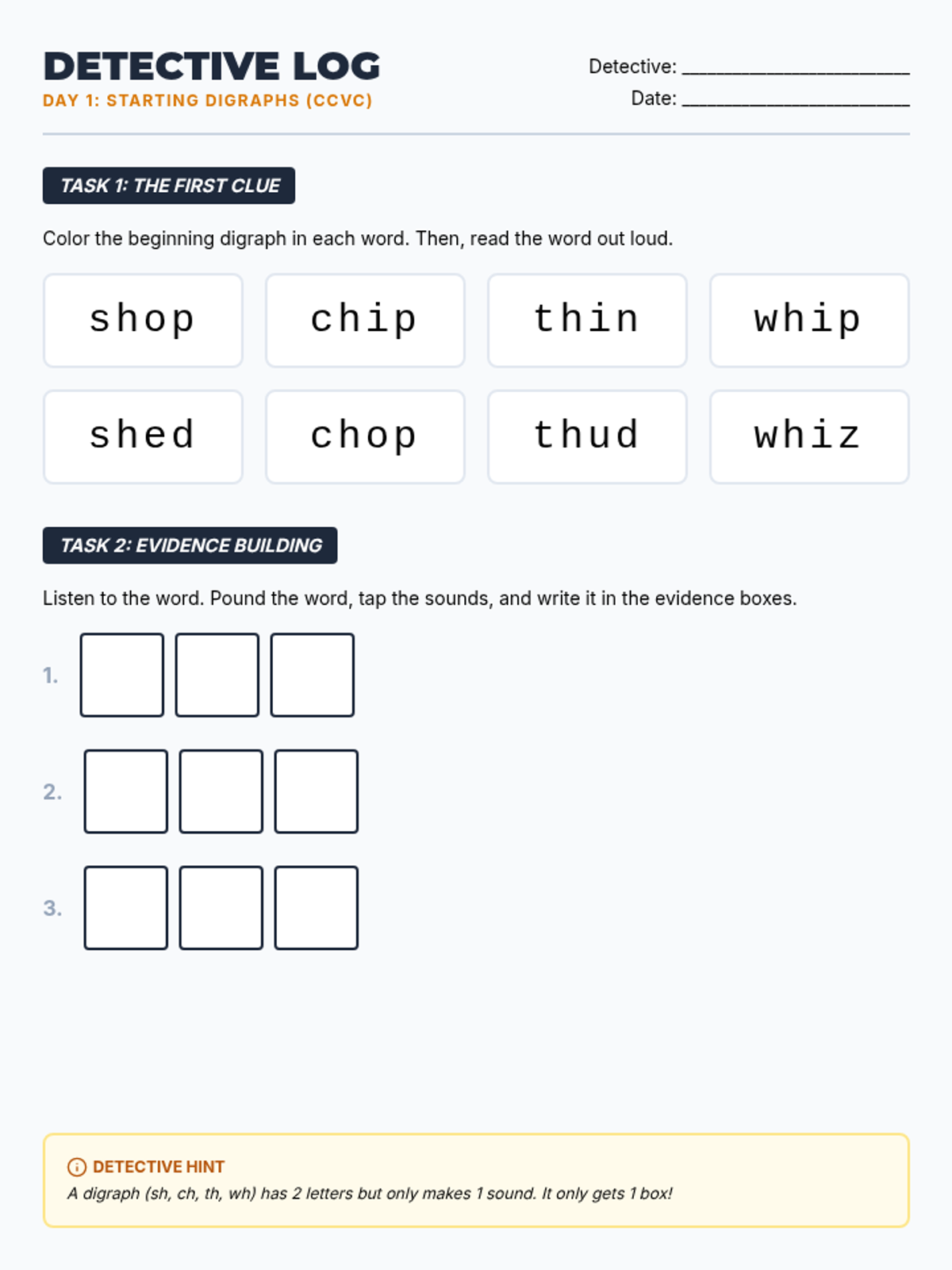
Introduction to CCVC words starting with digraphs (sh, ch, th, wh). Students practice identifying the initial digraph and blending it with the rest of the word.
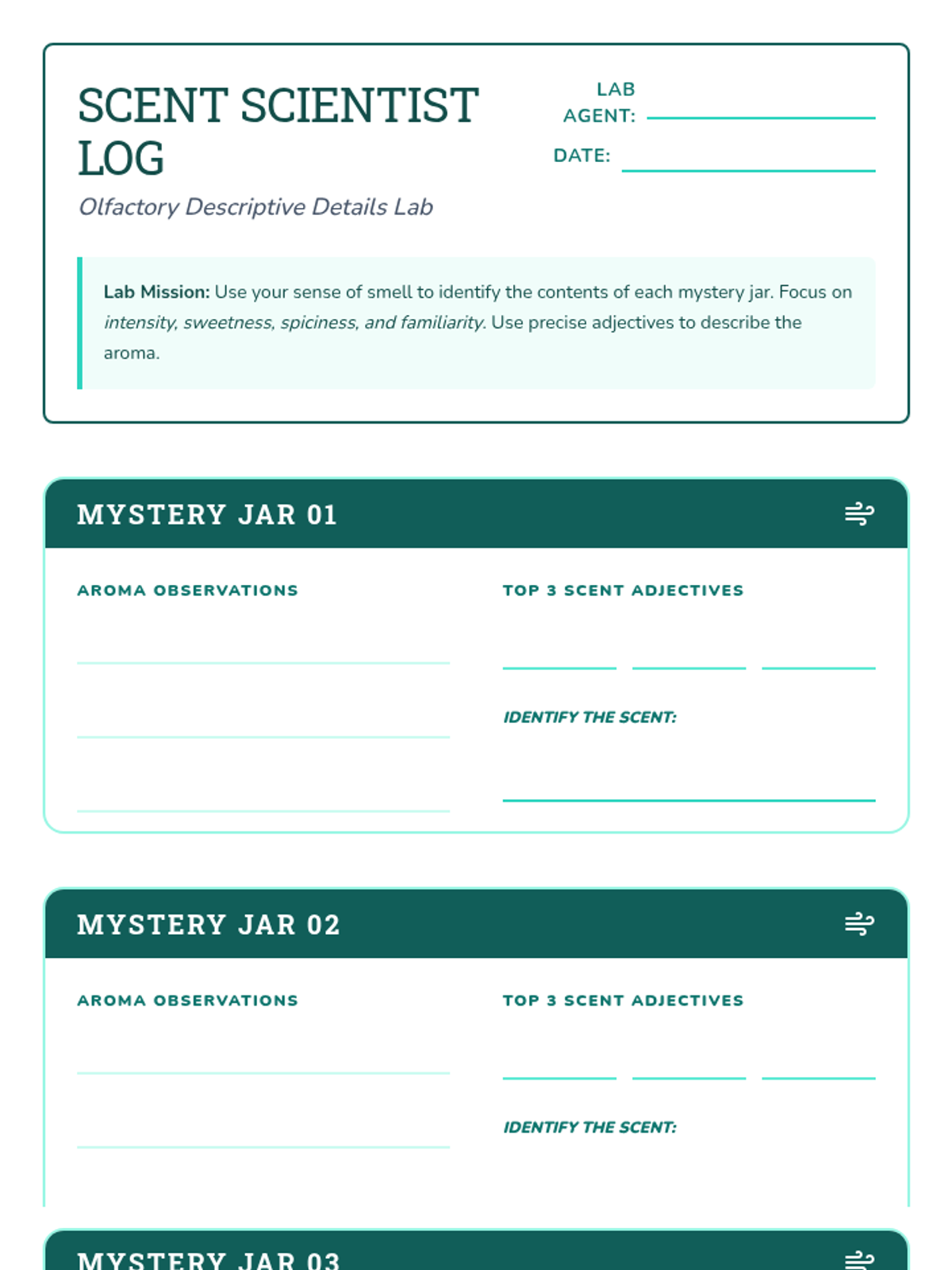
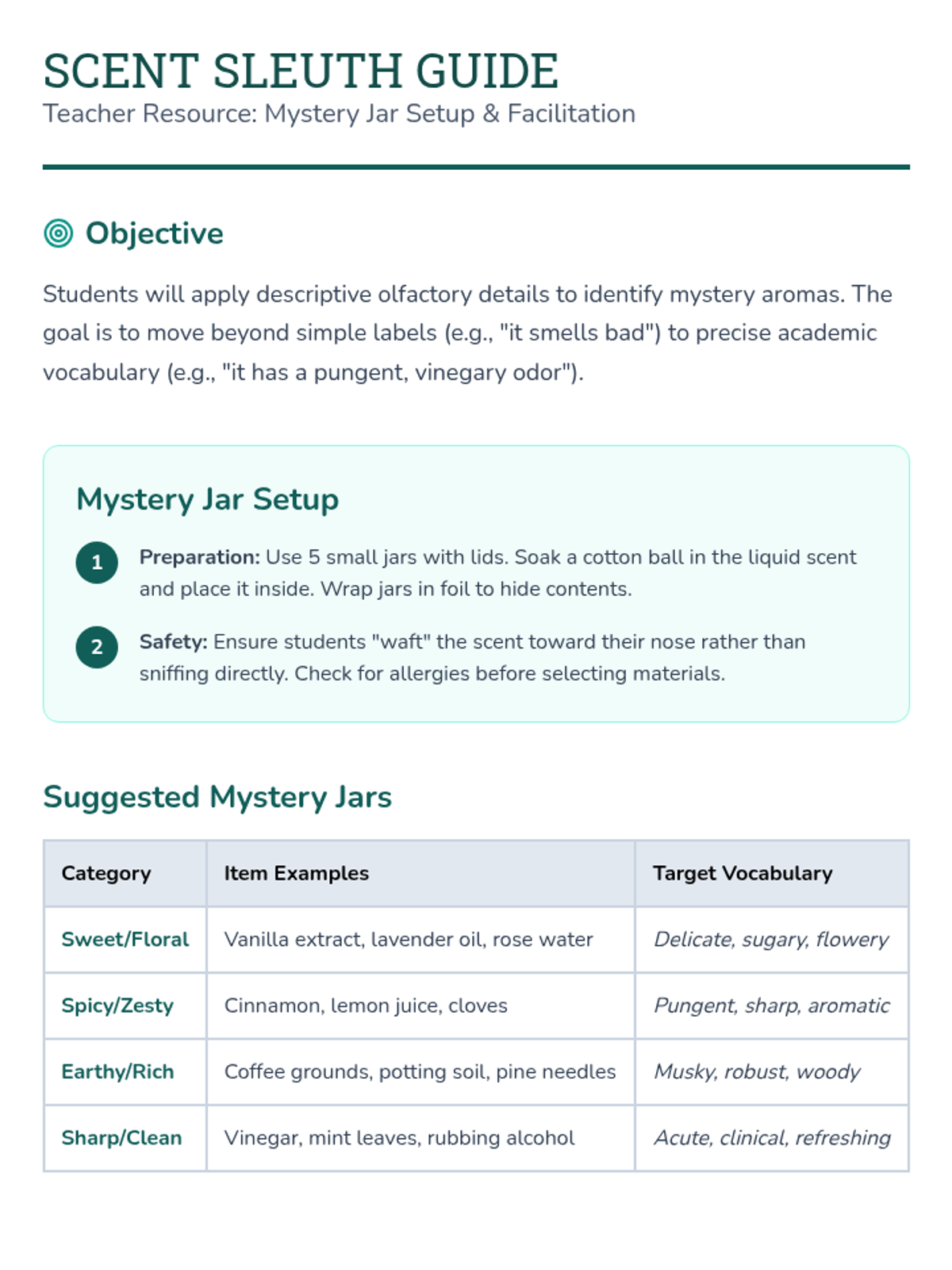
A hands-on science and ELA lesson where students explore mystery scents and use descriptive olfactory details to document their observations.
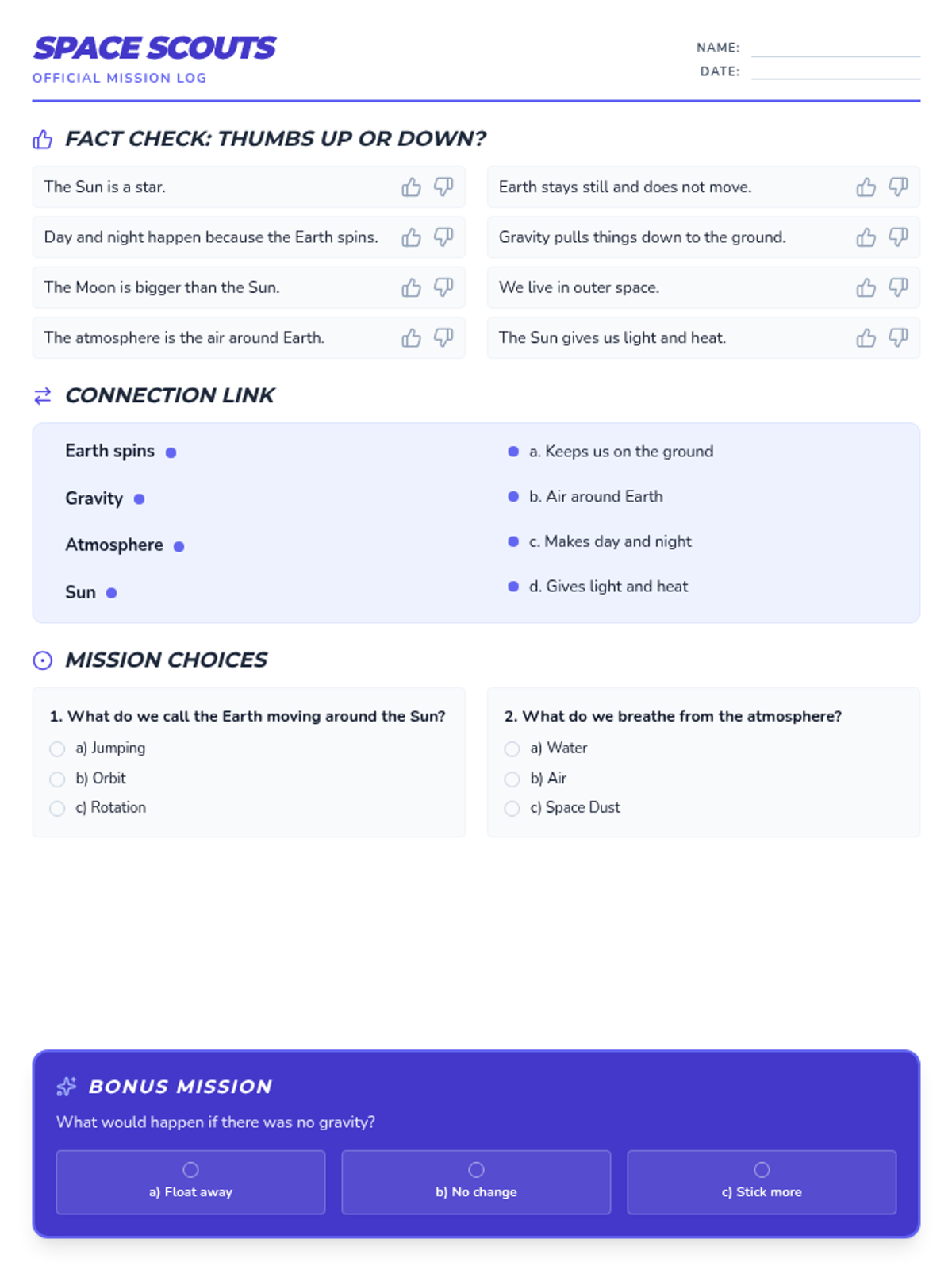
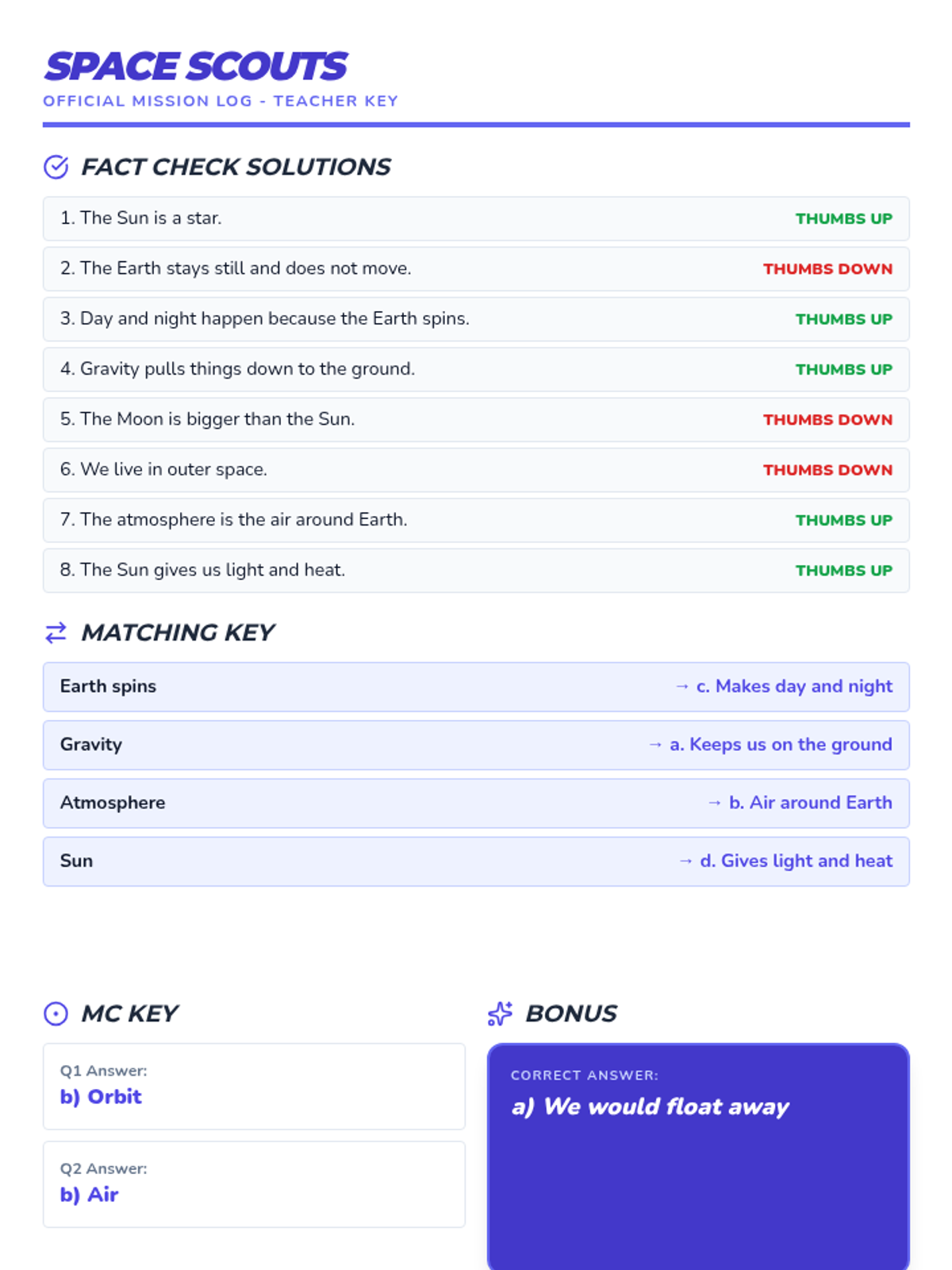
A foundational exploration of Earth's place in space, covering the Sun, gravity, atmosphere, and Earth's rotation through engaging true/false, matching, and multiple-choice questions.
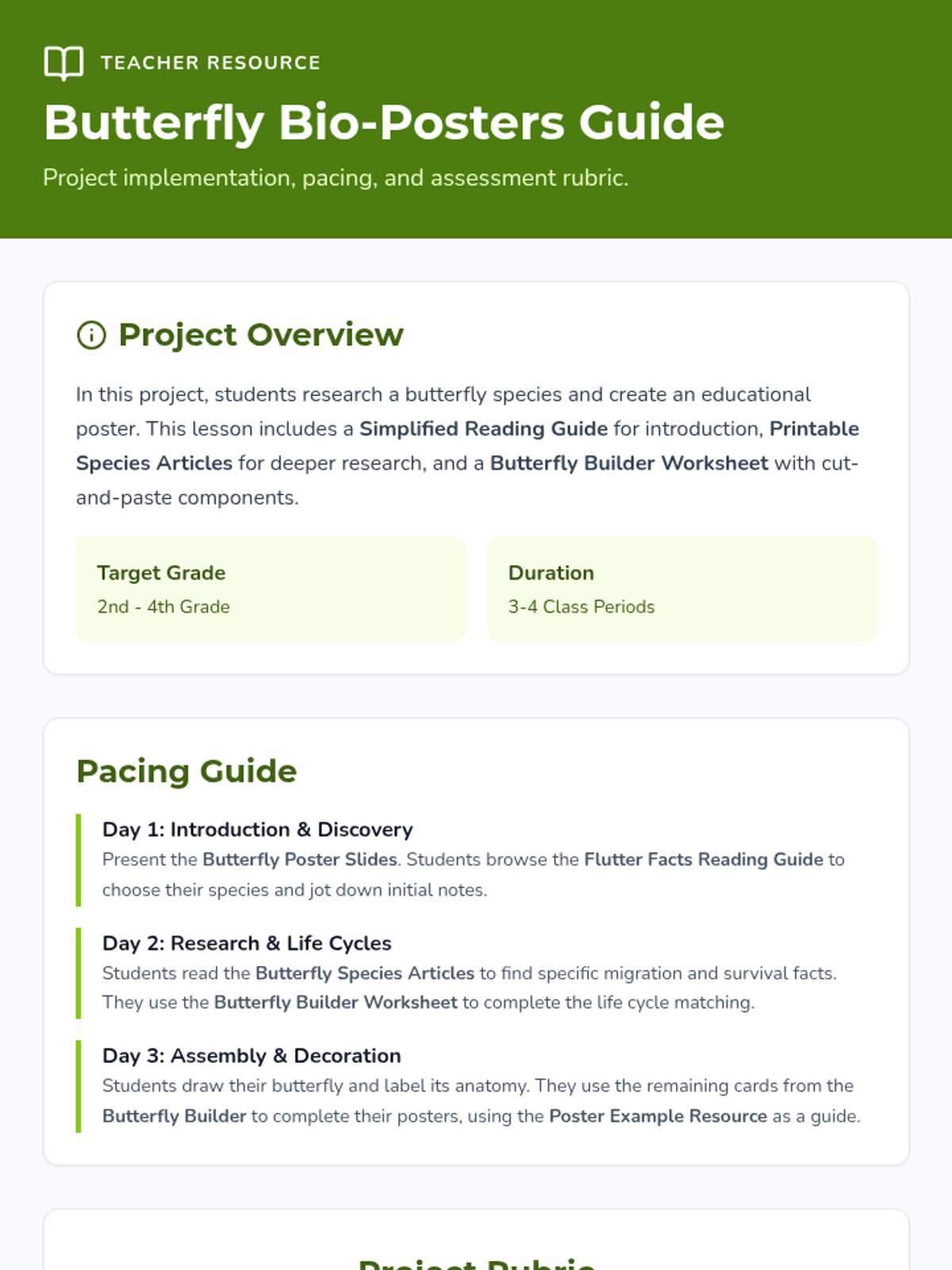
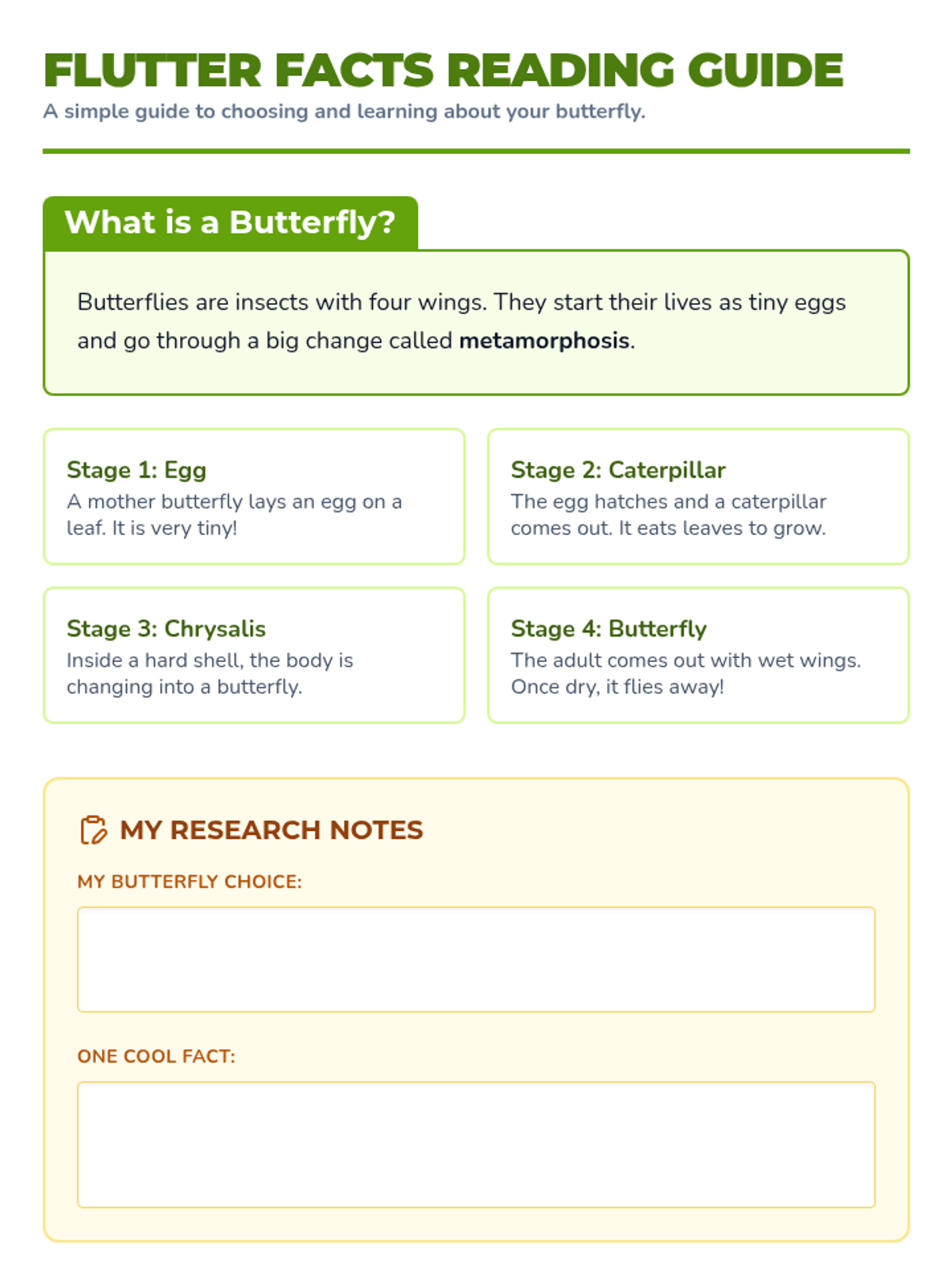
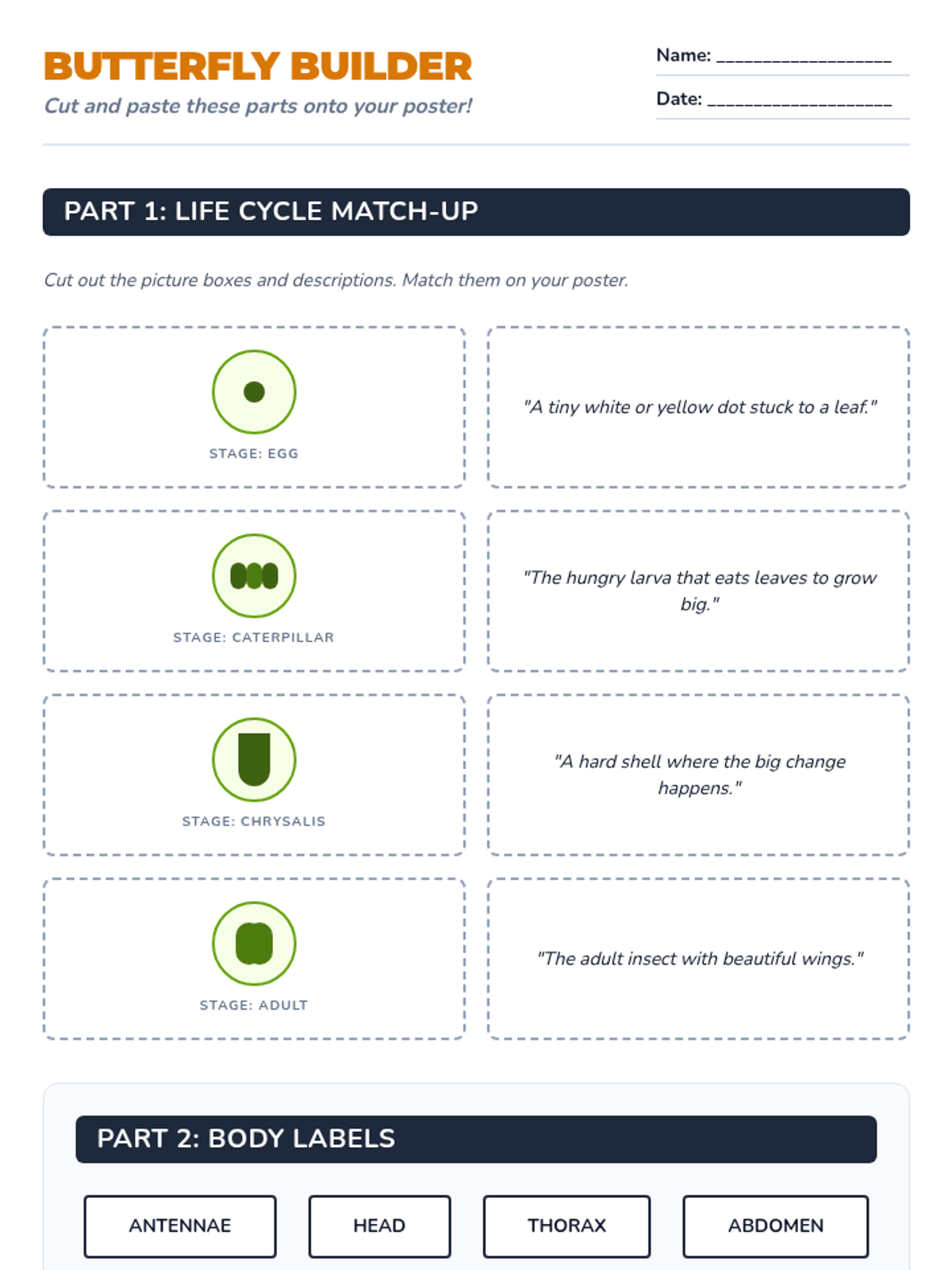
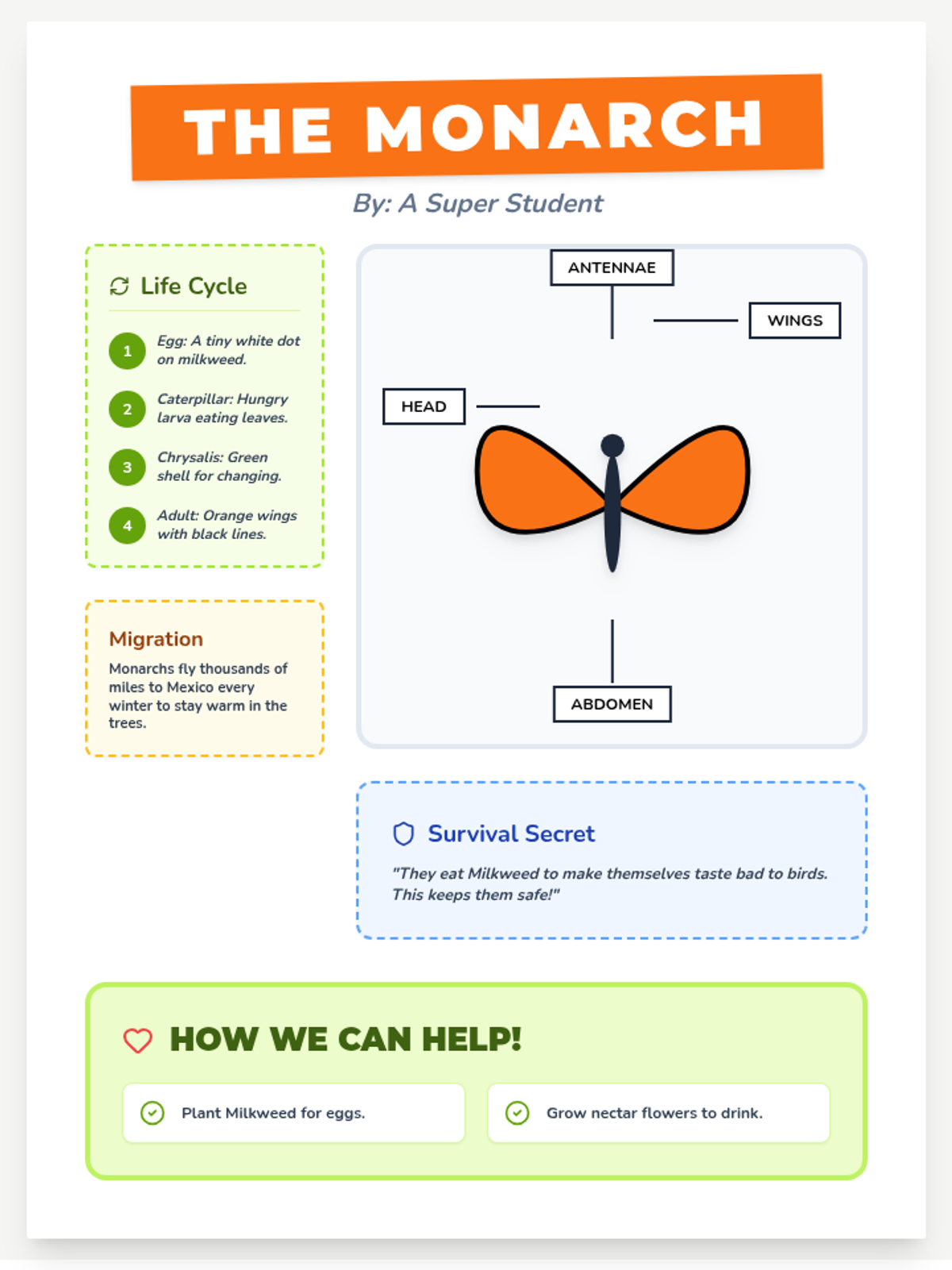
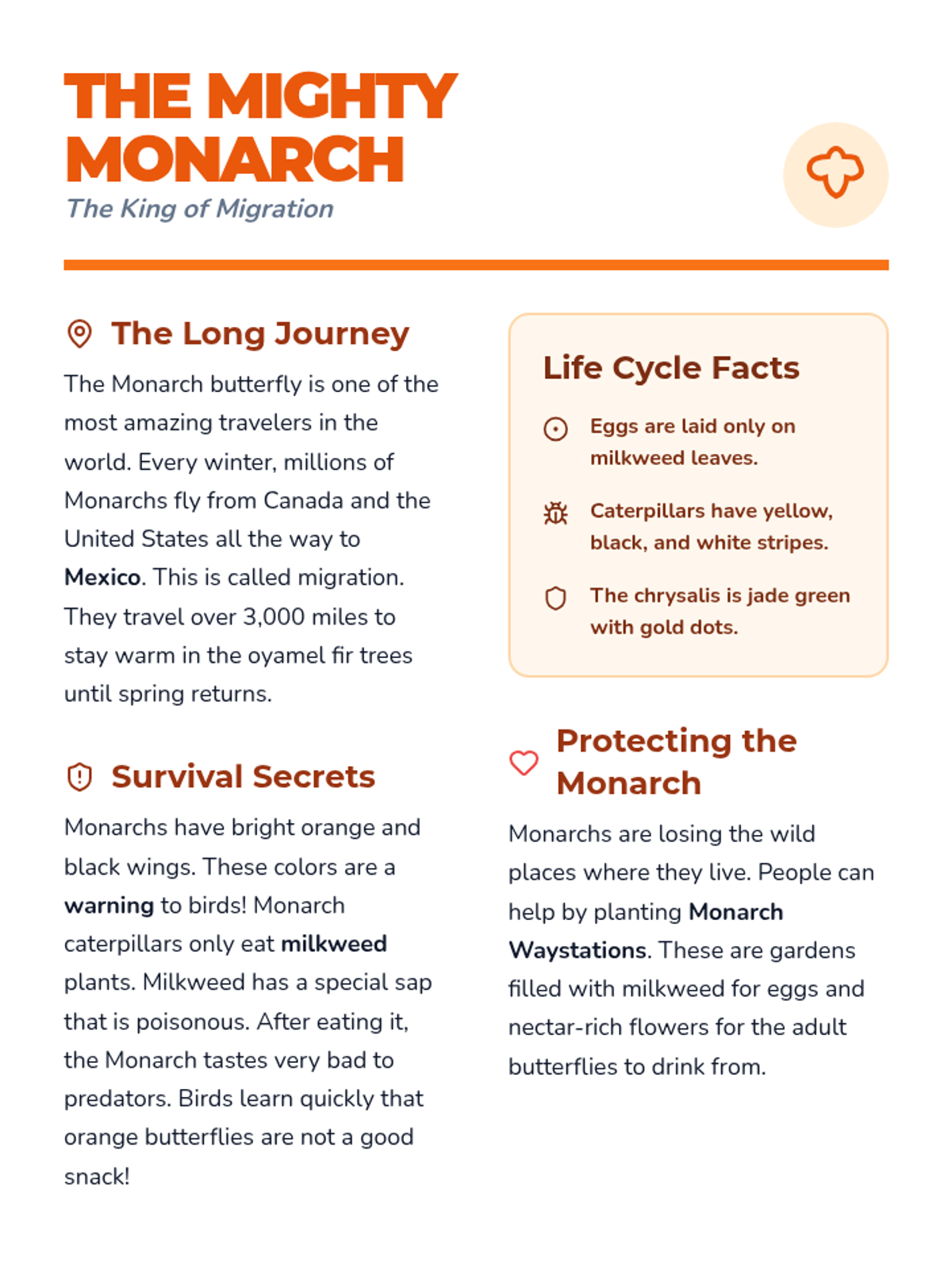
A creative science project where students research a butterfly species of their choice and design an informative poster. The lesson includes a simplified reading guide, cut-and-paste components, and a presentation to guide the project.
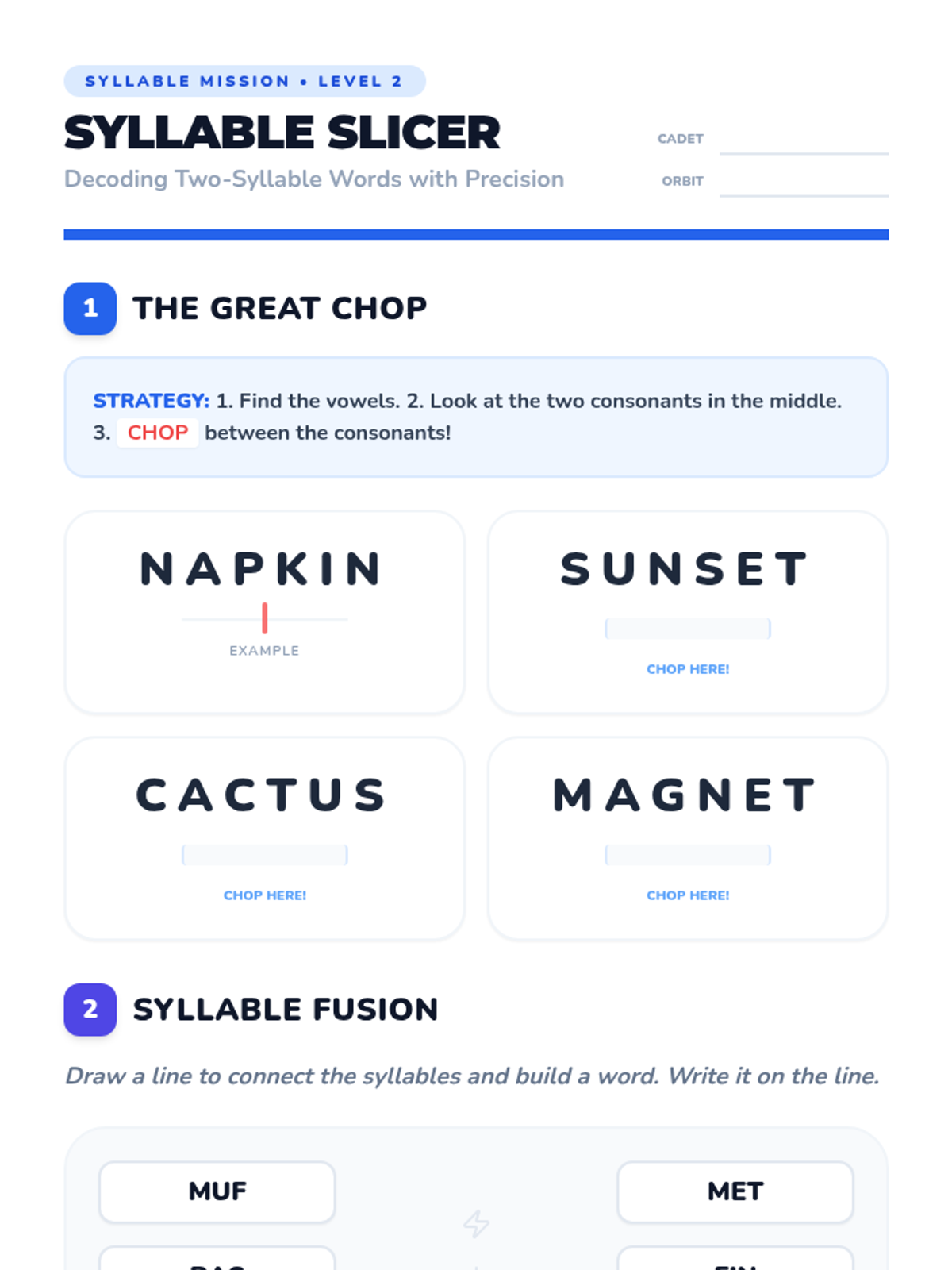
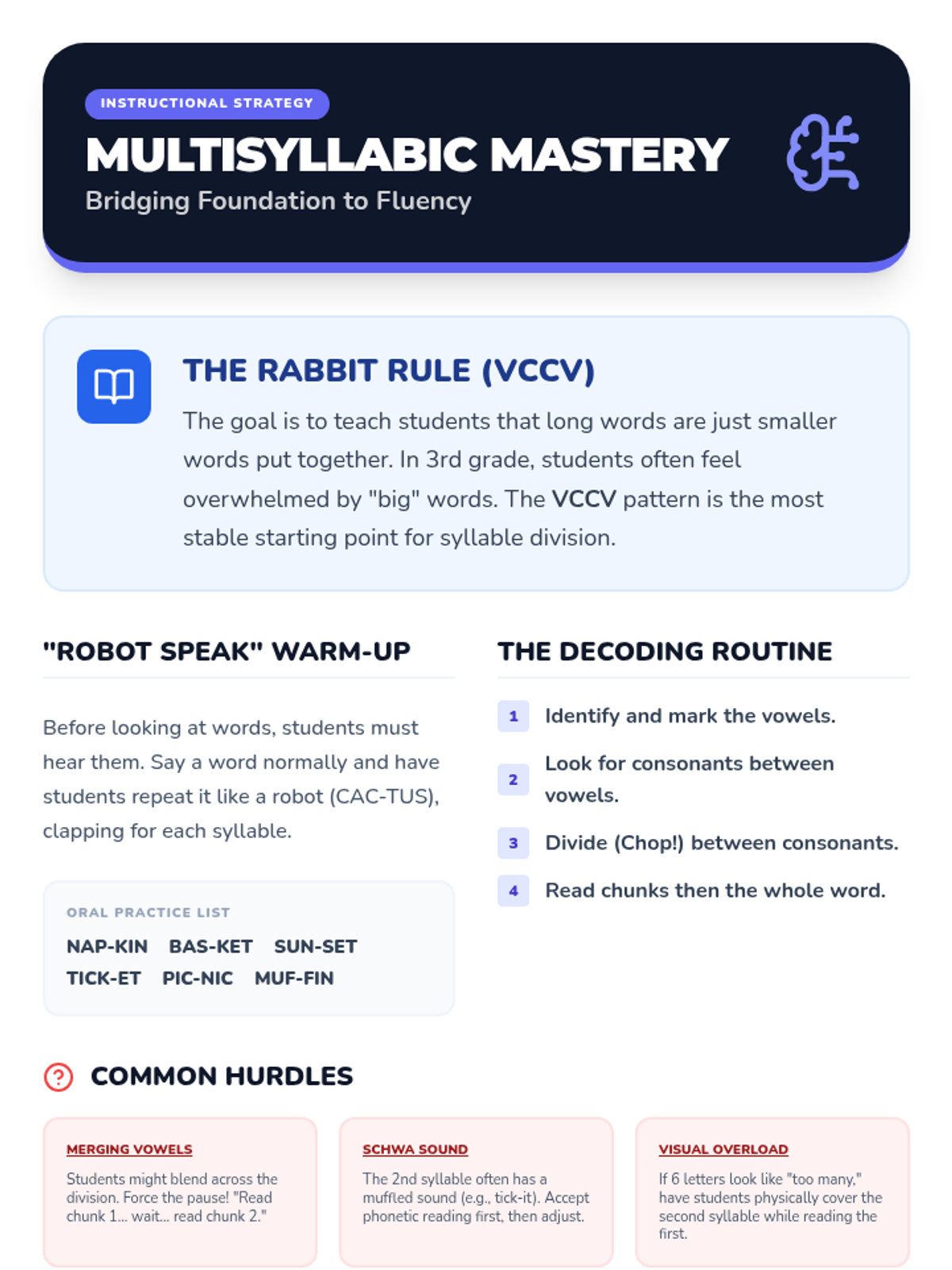
Advanced word study focusing on syllable division rules, decoding strategies for 2-syllable words, and reading multisyllabic fluency.
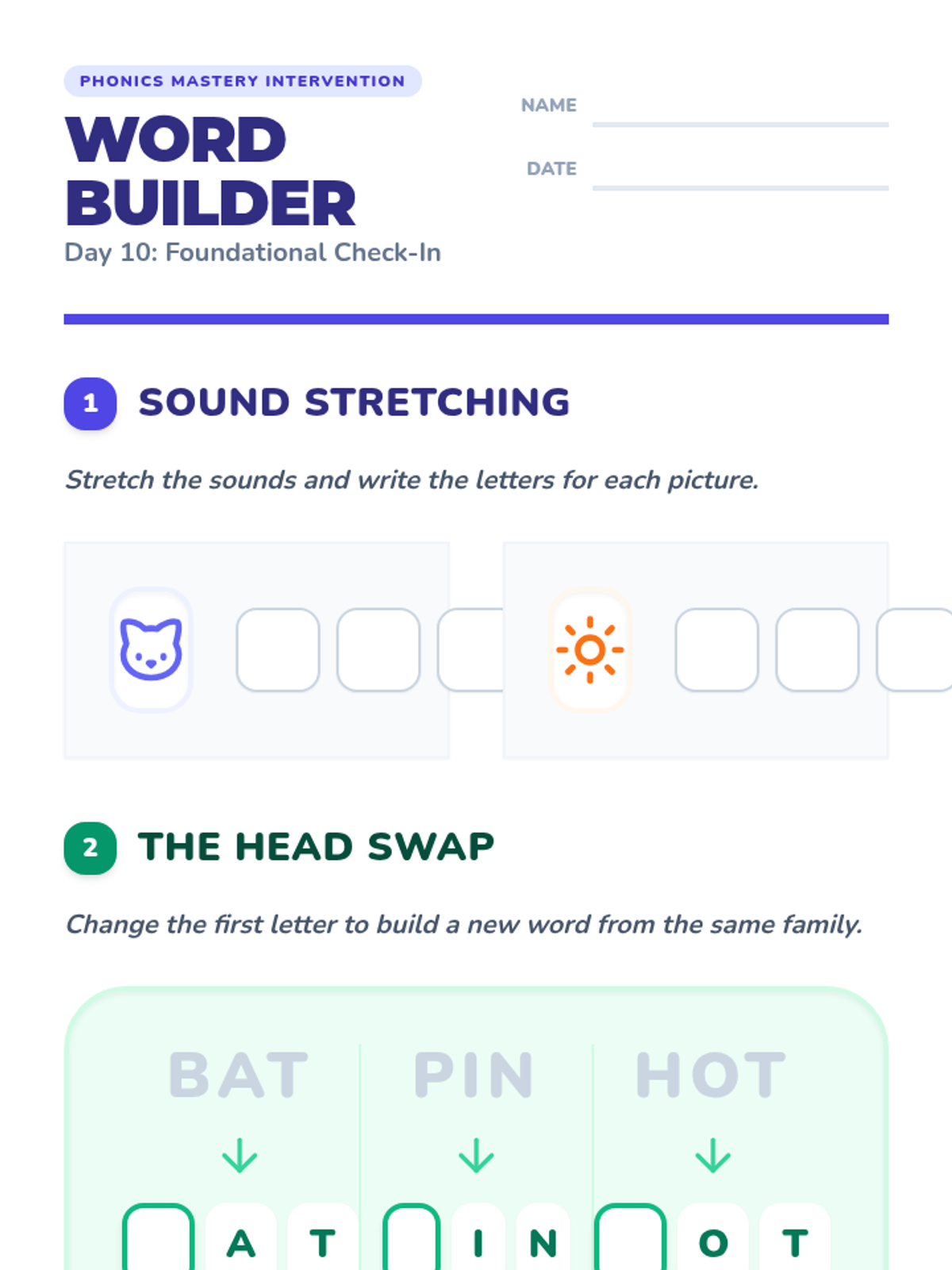
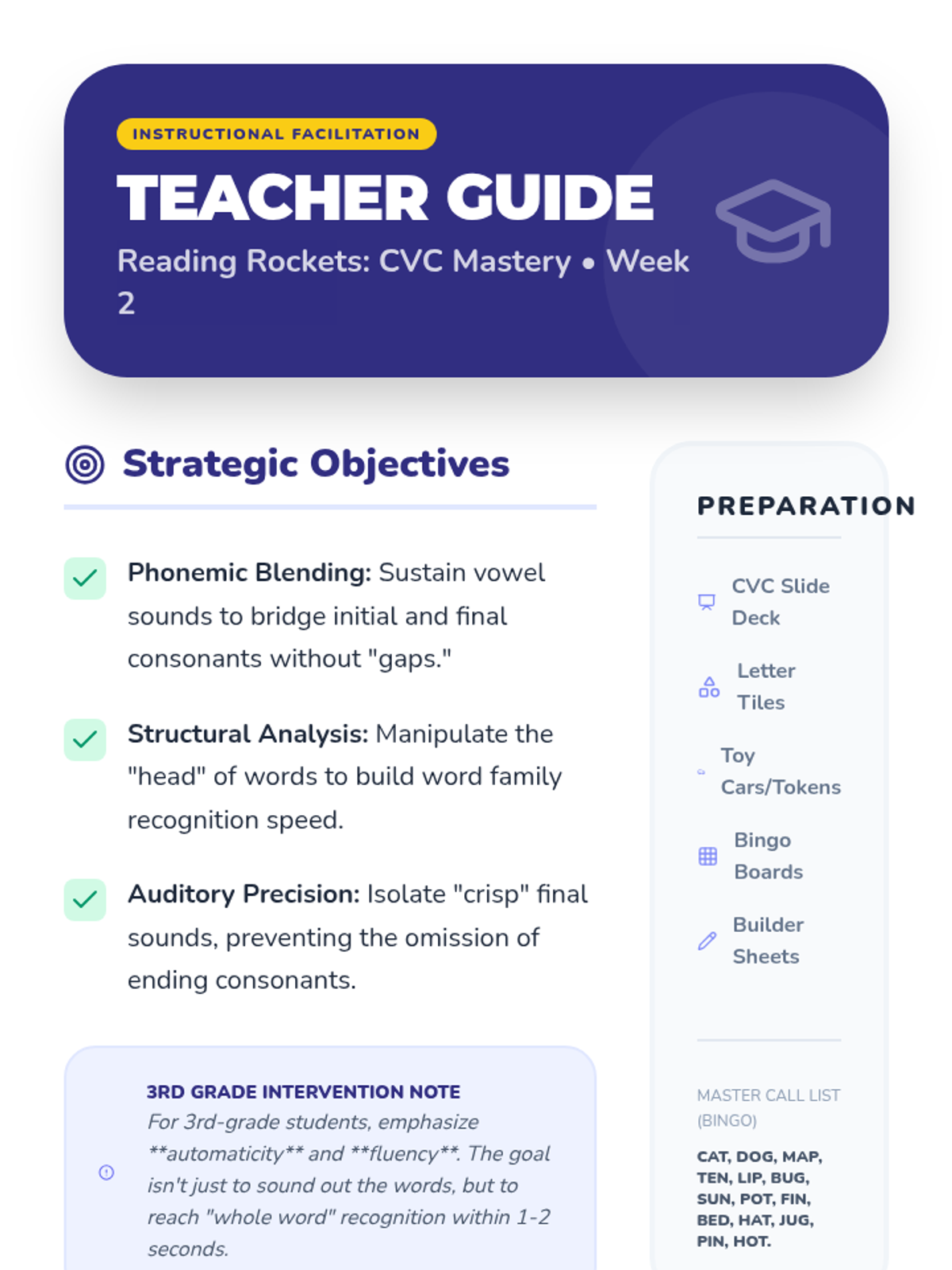
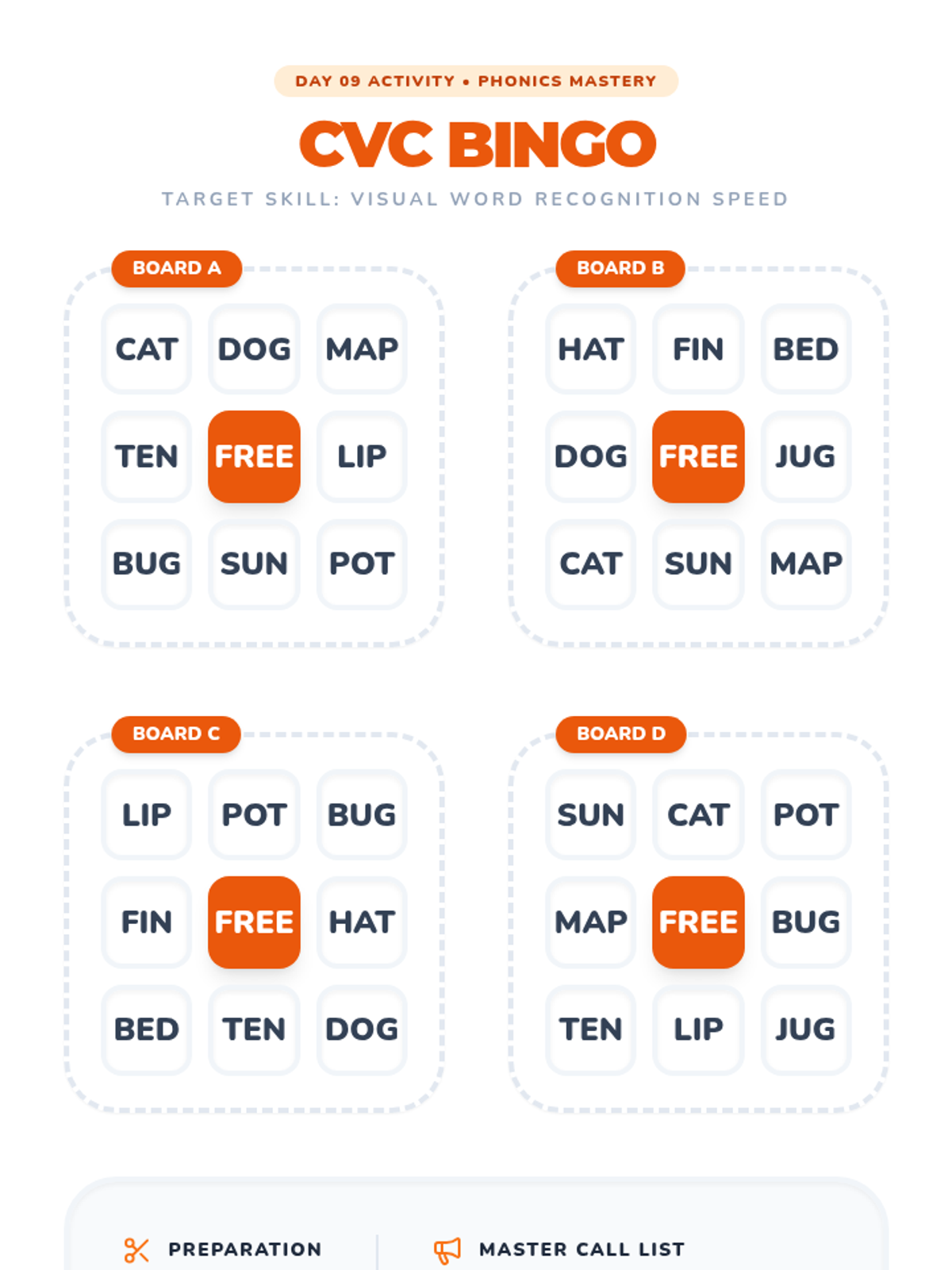
A week of targeted CVC practice covering blending, initial and final consonant changes, and automaticity.
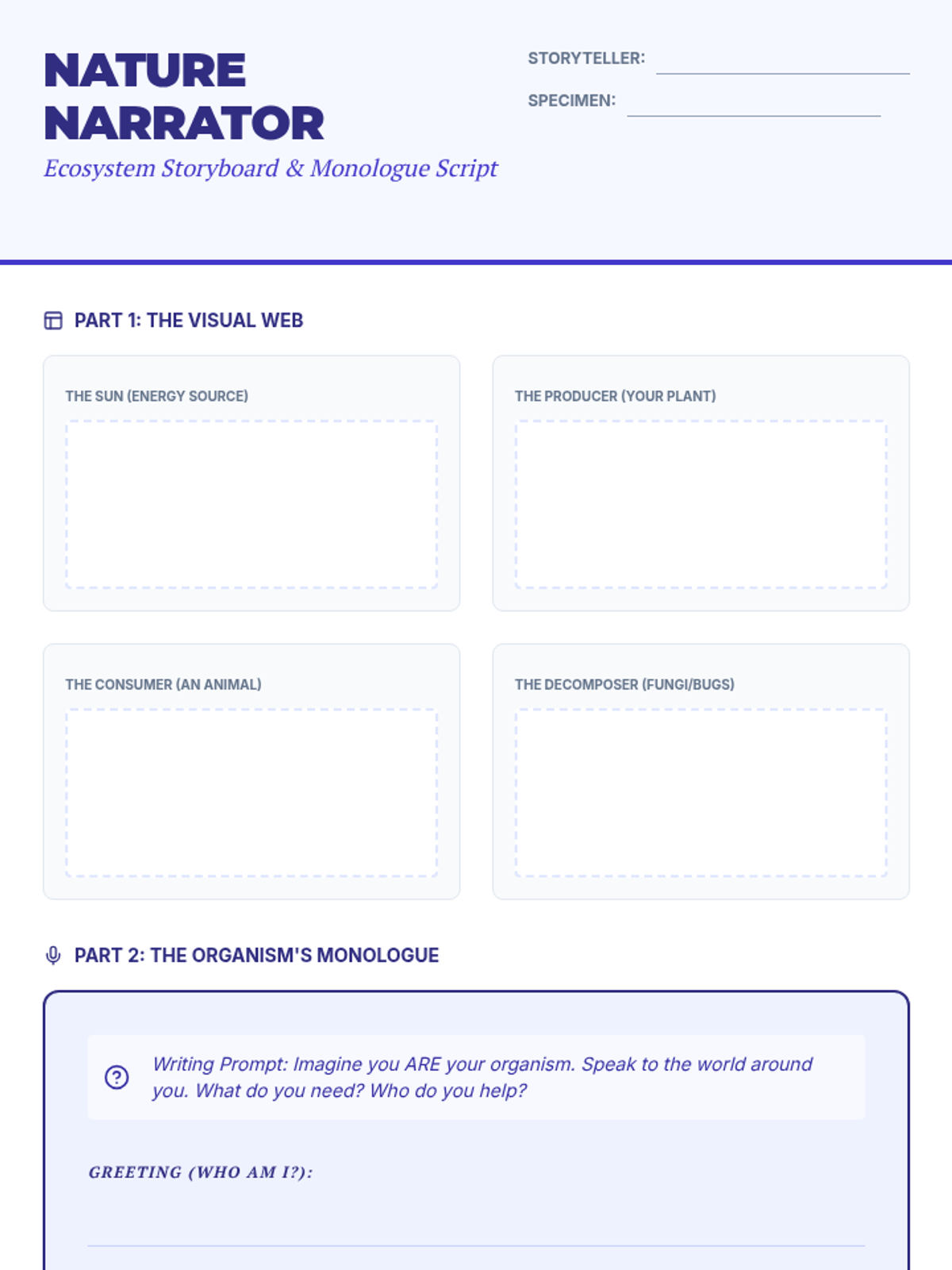
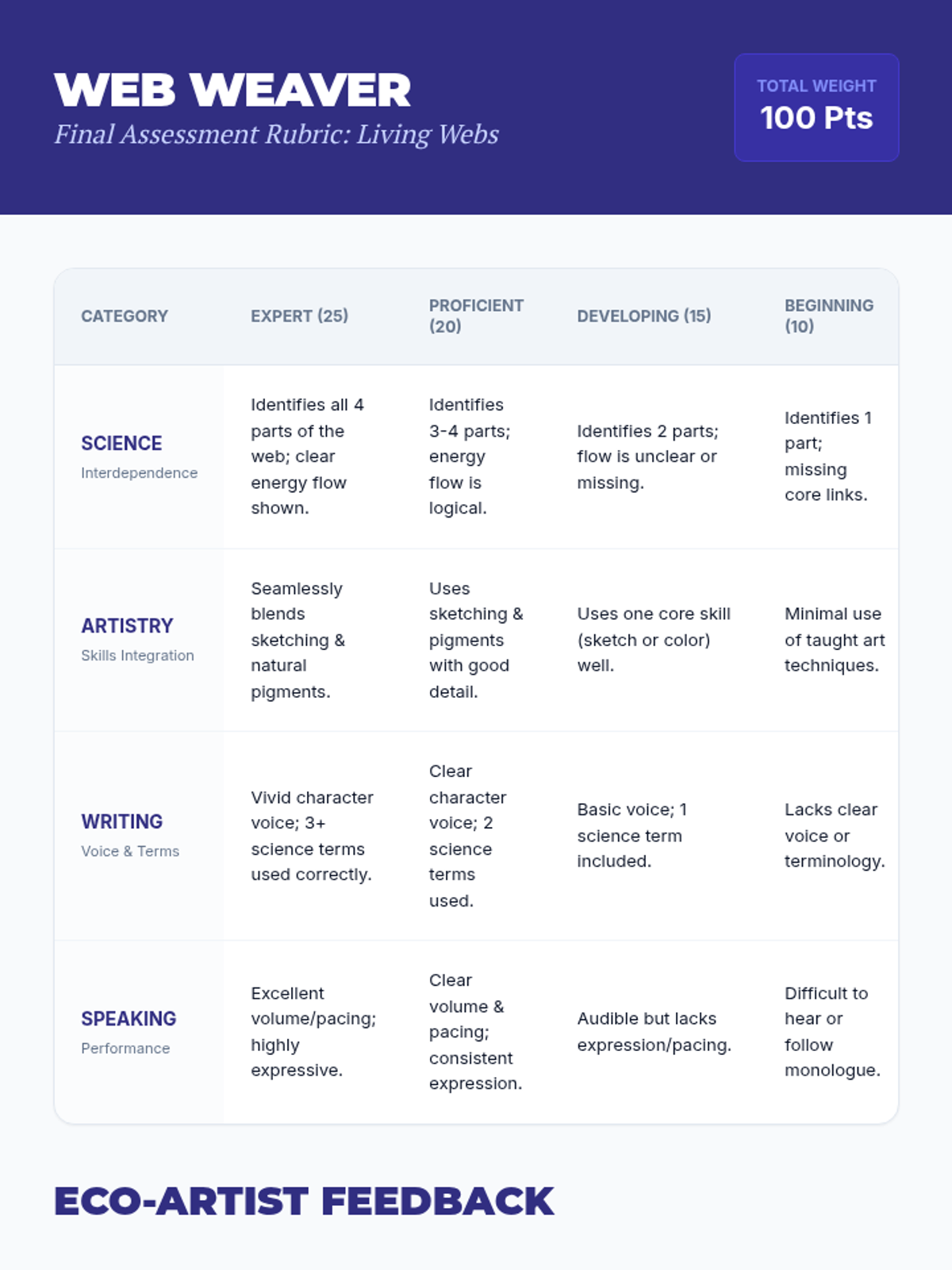
Students synthesize their knowledge of ecosystems to create narrative art pieces that tell the story of interdependence in the natural world.
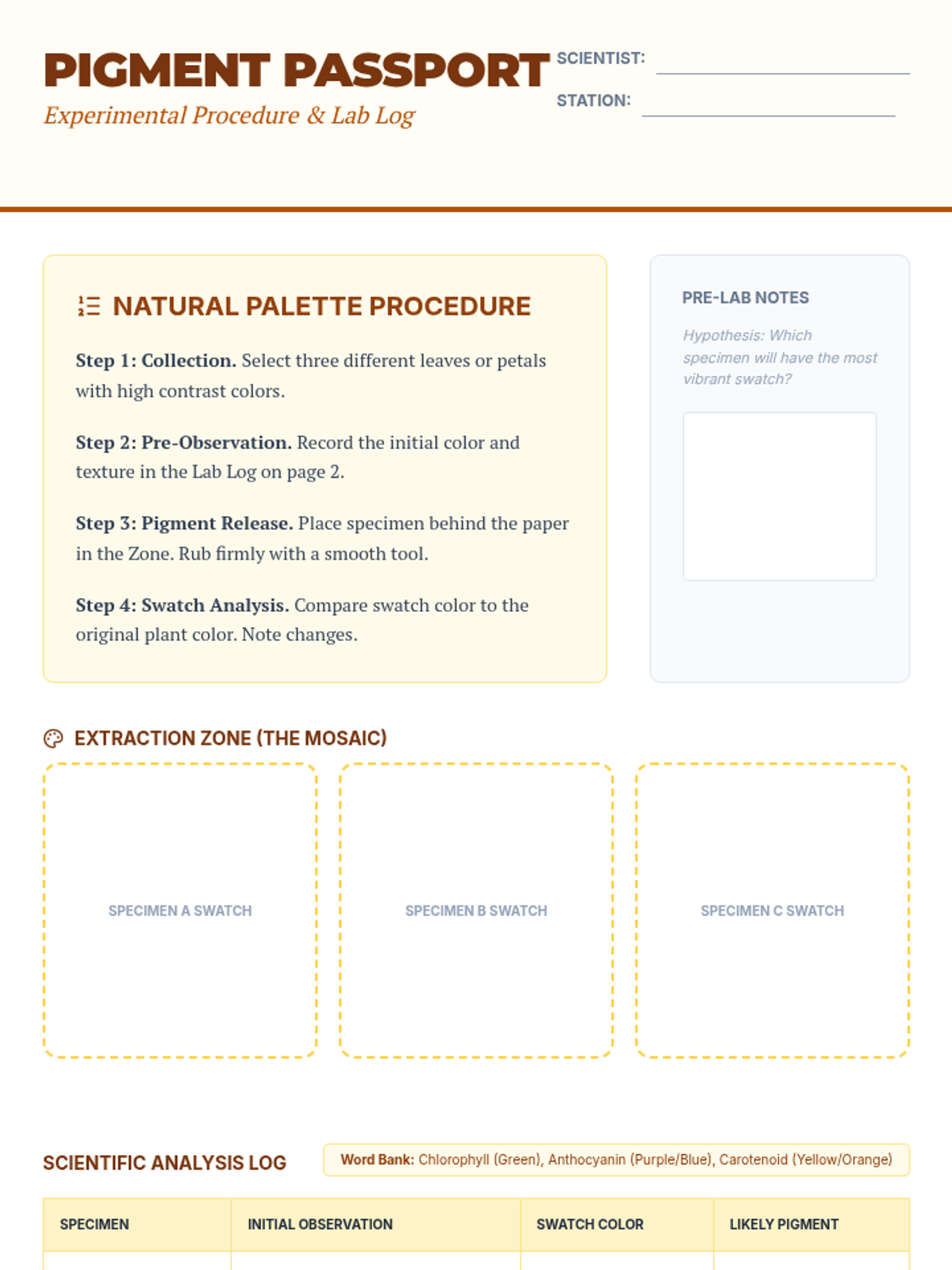
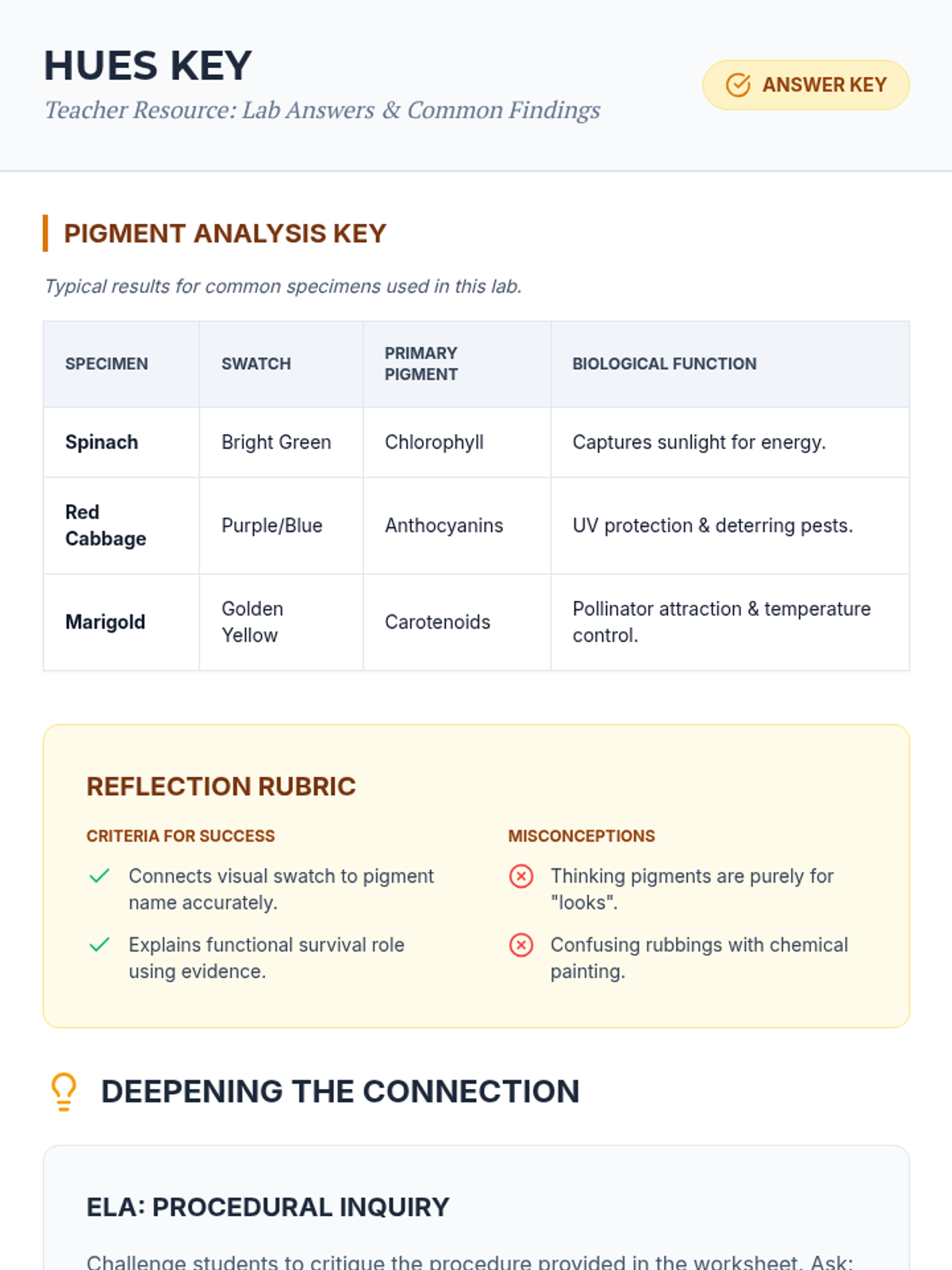
An exploration into the chemistry of natural pigments, where students follow procedures to extract colors and document their experimental process.
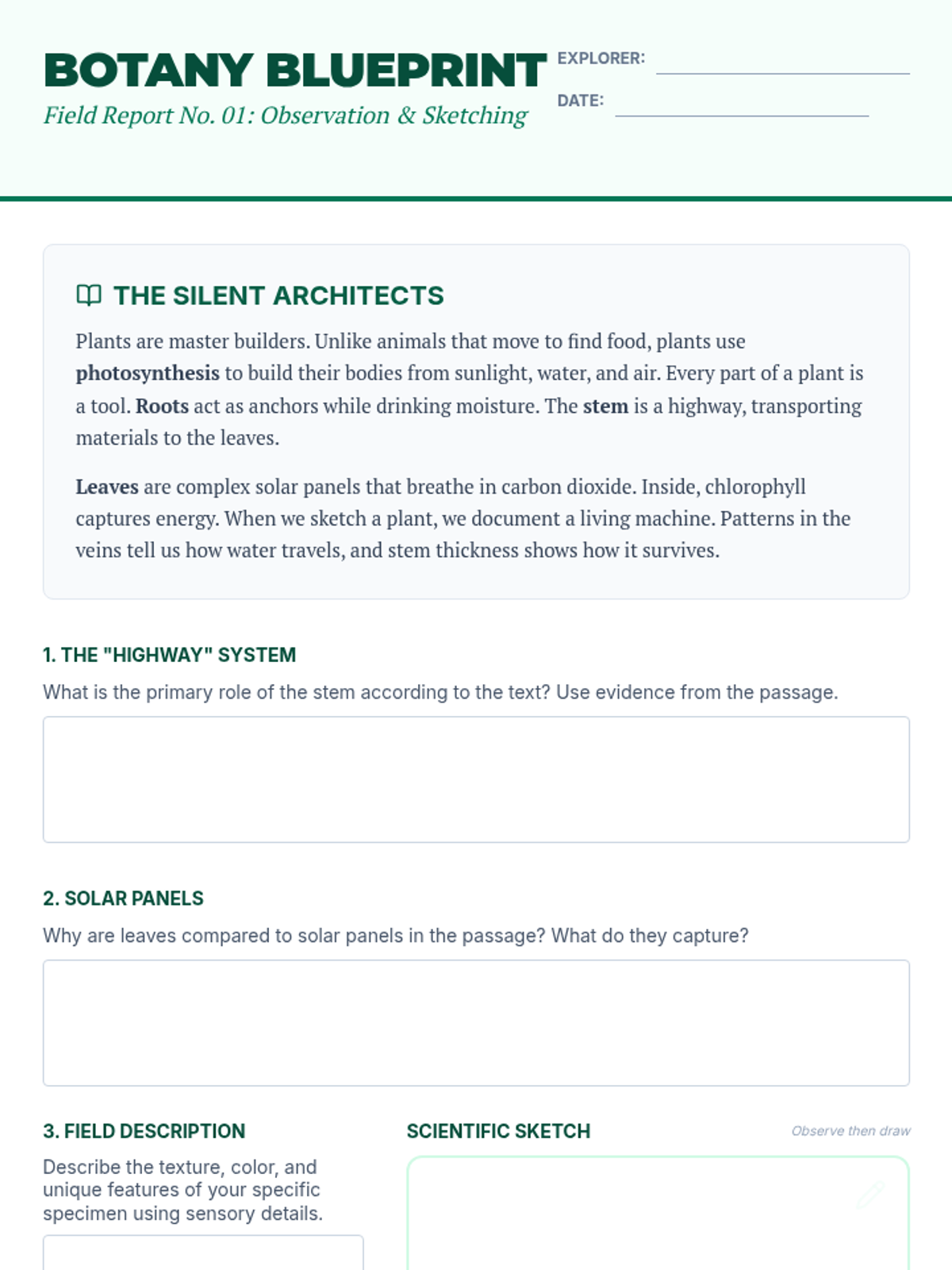
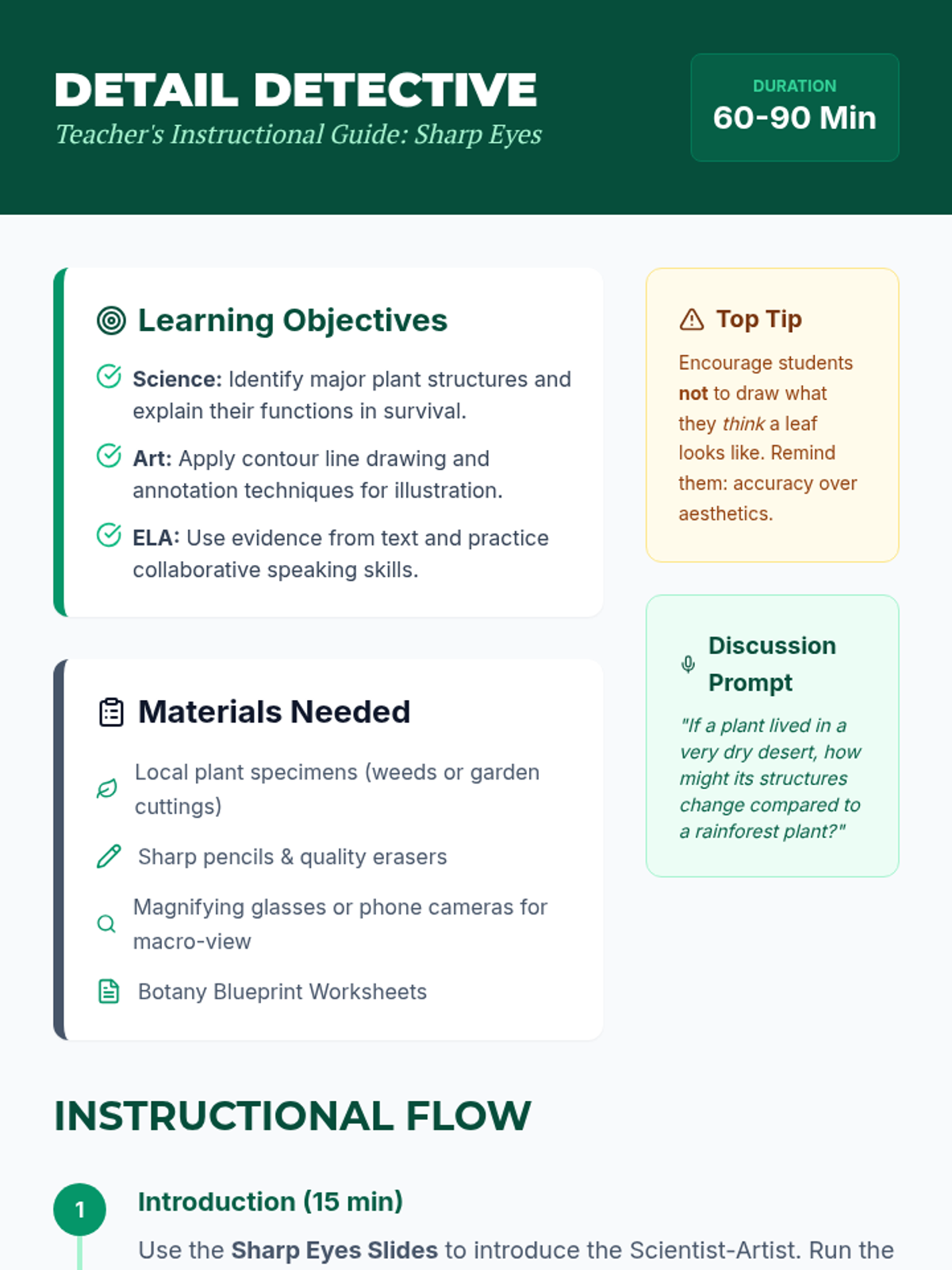
Students learn the art of botanical illustration by observing plant structures and recording their findings with scientific precision and artistic flair.
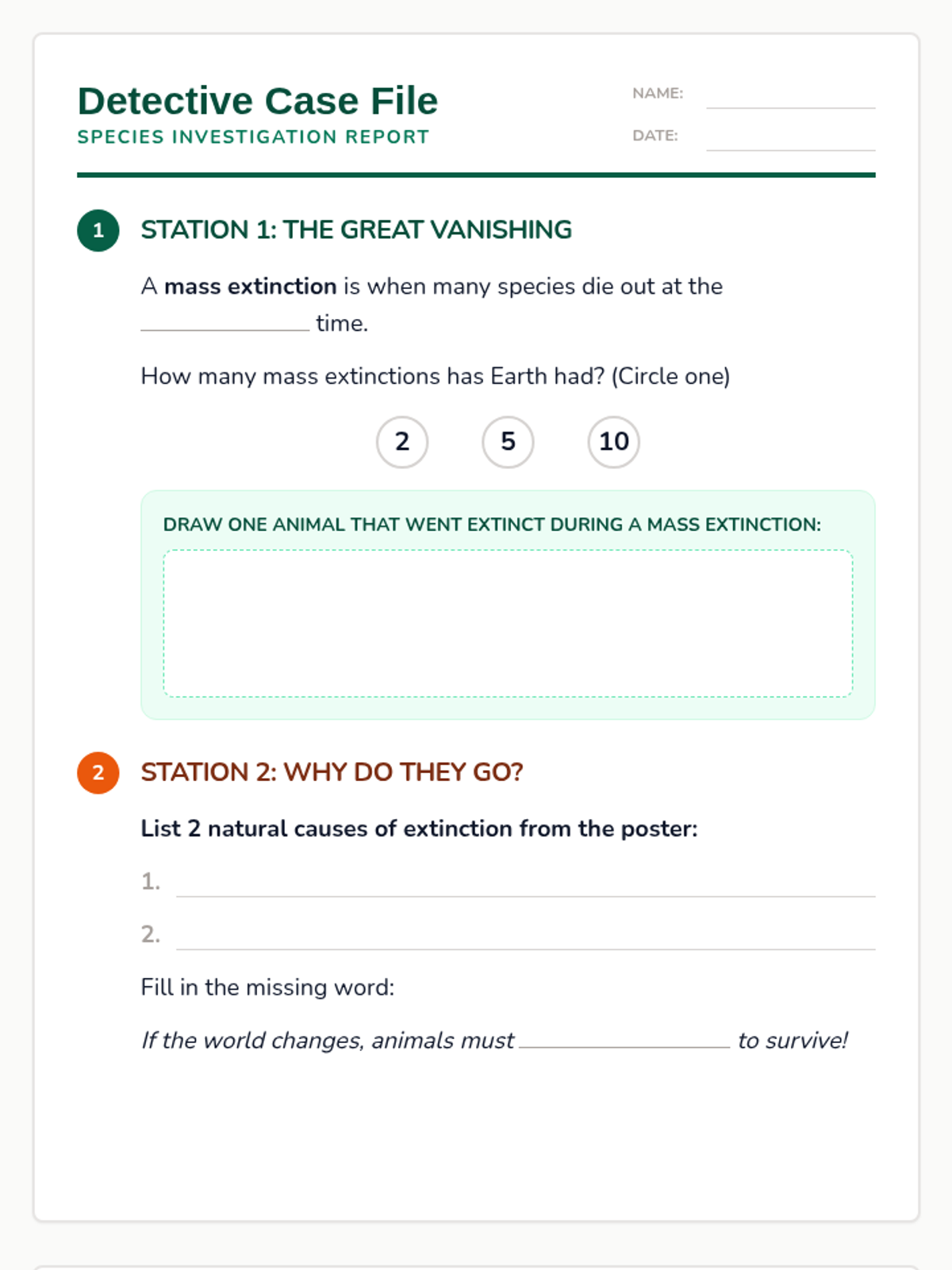
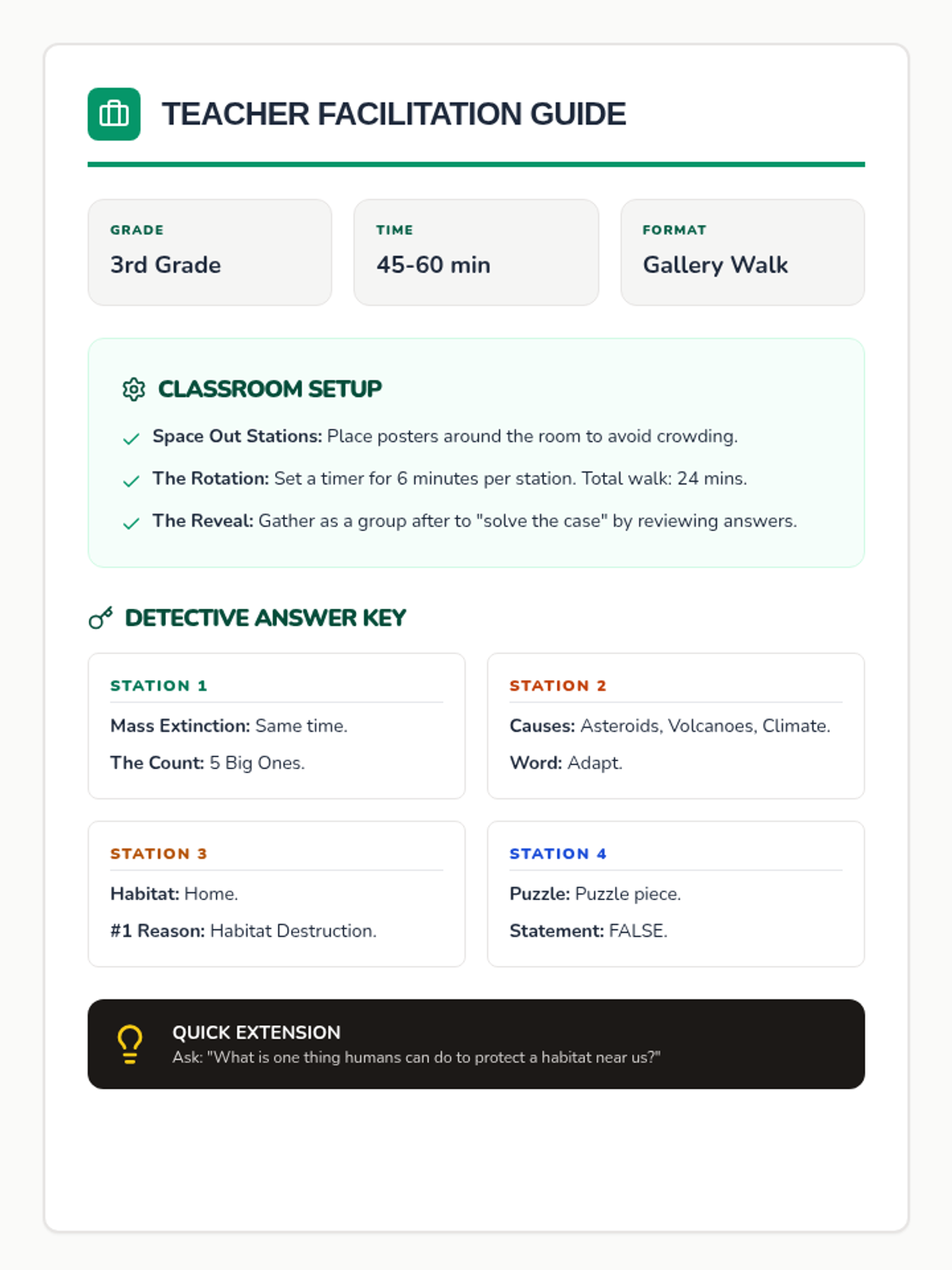
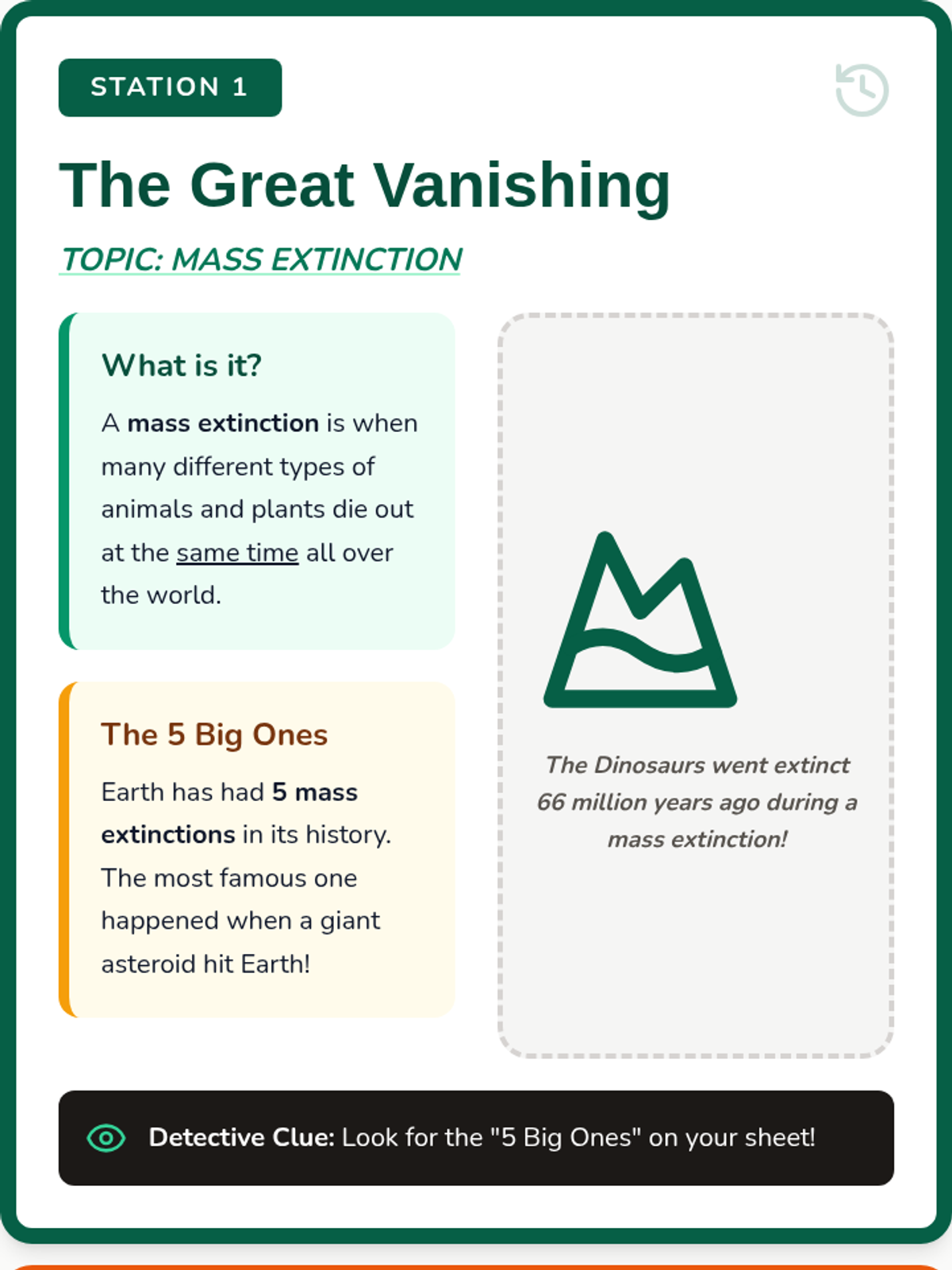
An introductory biology lesson where students act as detectives to investigate the causes and effects of extinction through an interactive gallery walk.
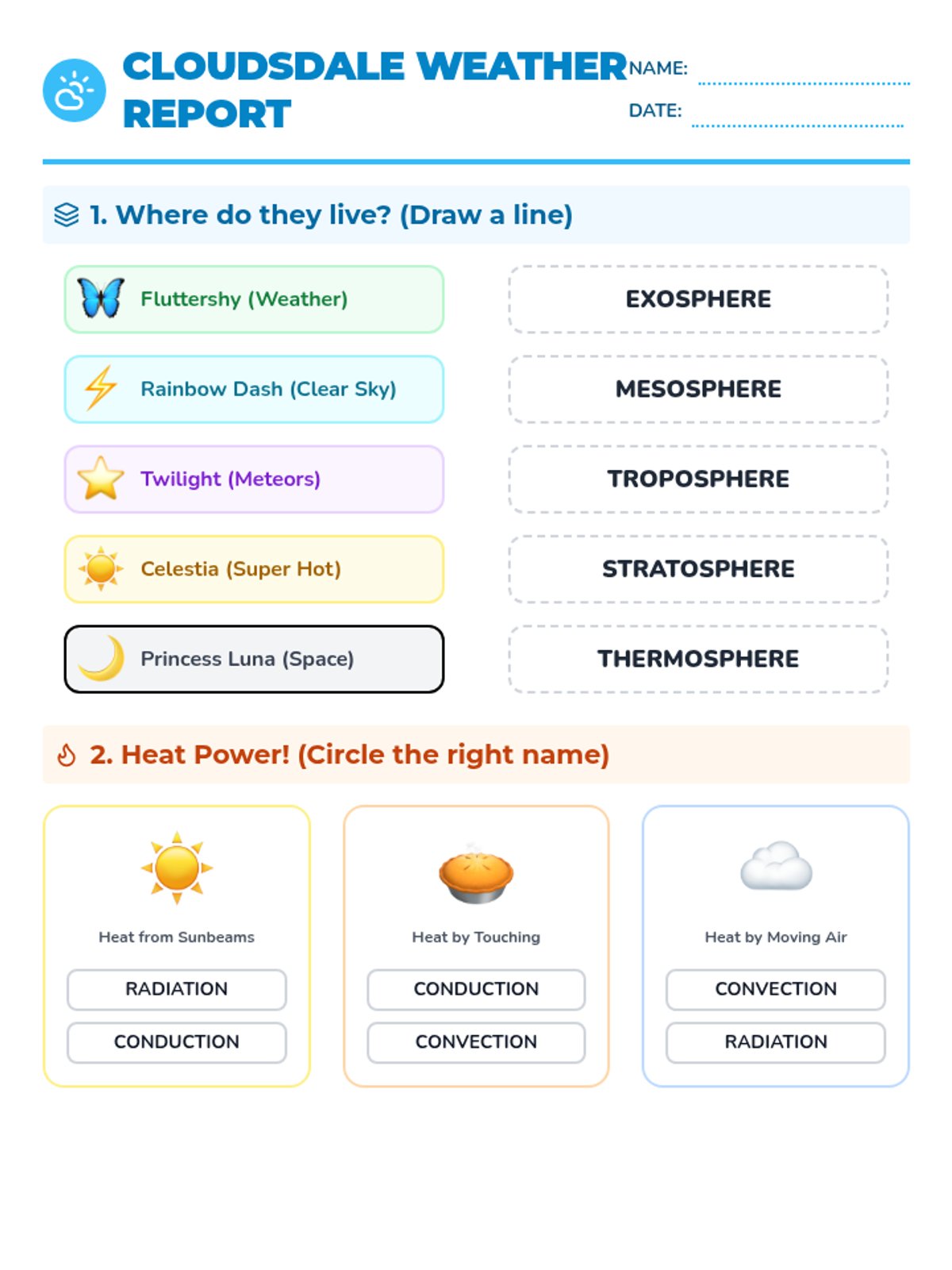
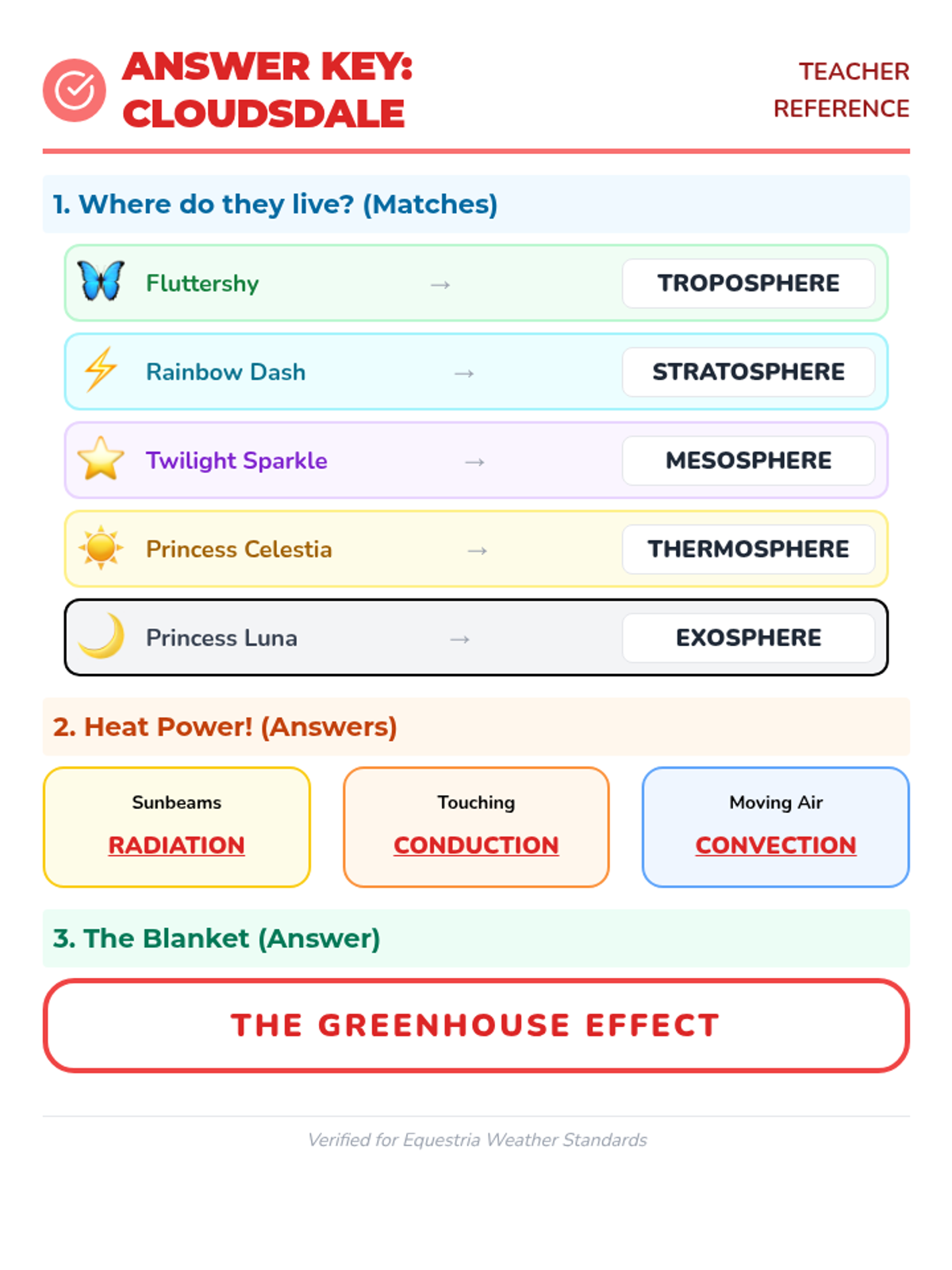
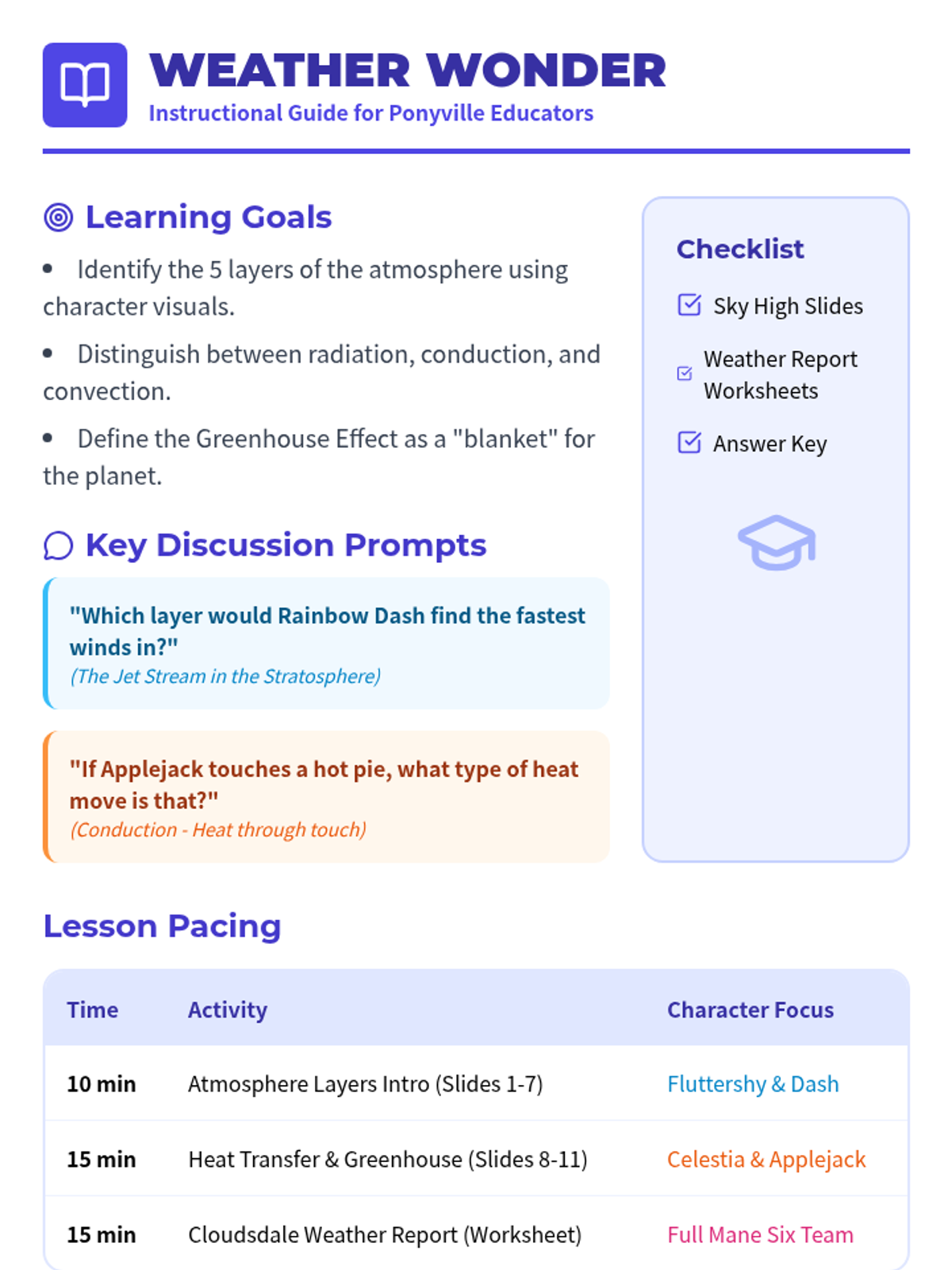
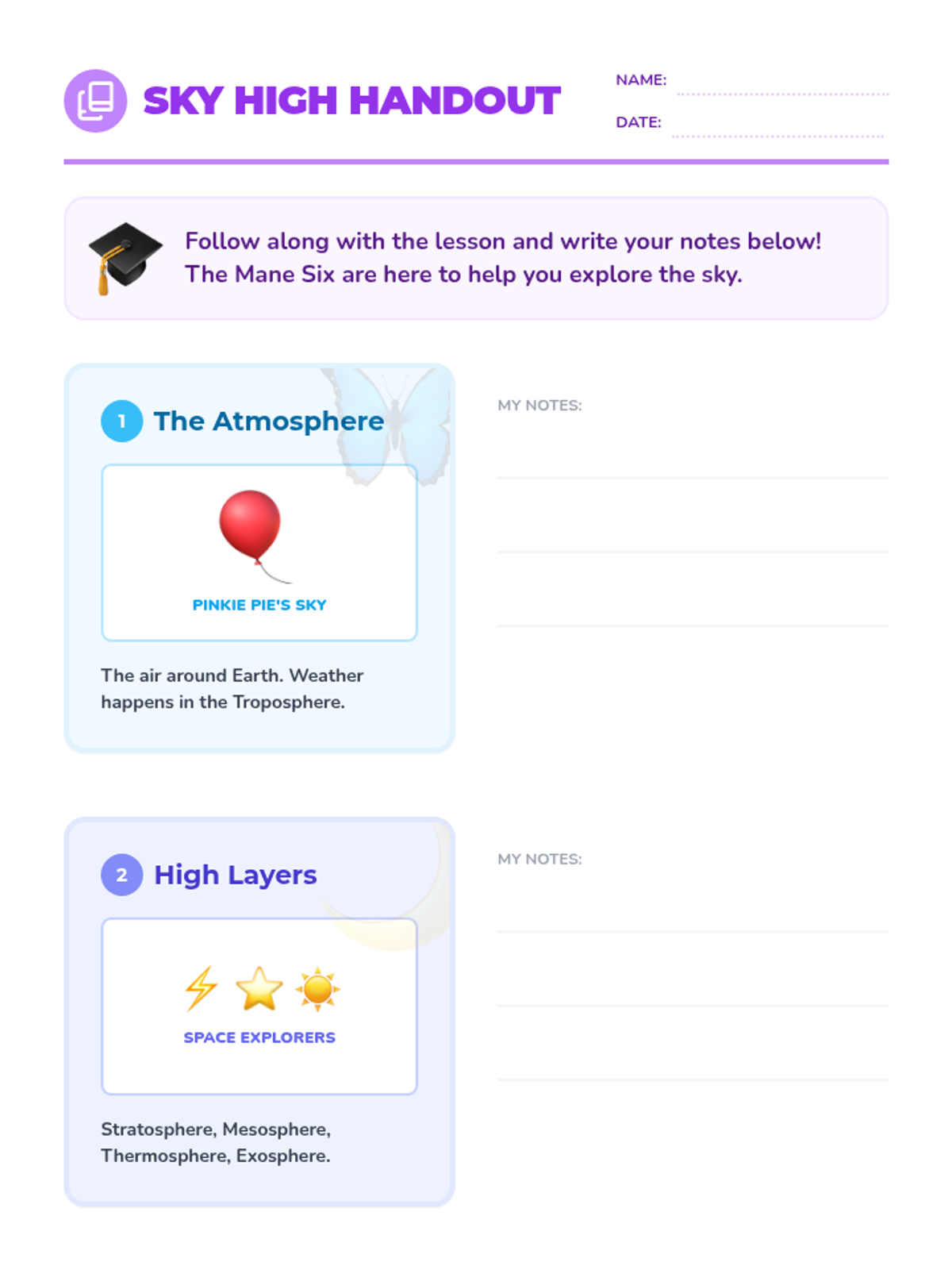
Explore the layers of the atmosphere and how heat moves through Equestria with the help of the Mane Six. This lesson covers atmospheric layers and thermal energy transfer using simplified language and visual symbols.
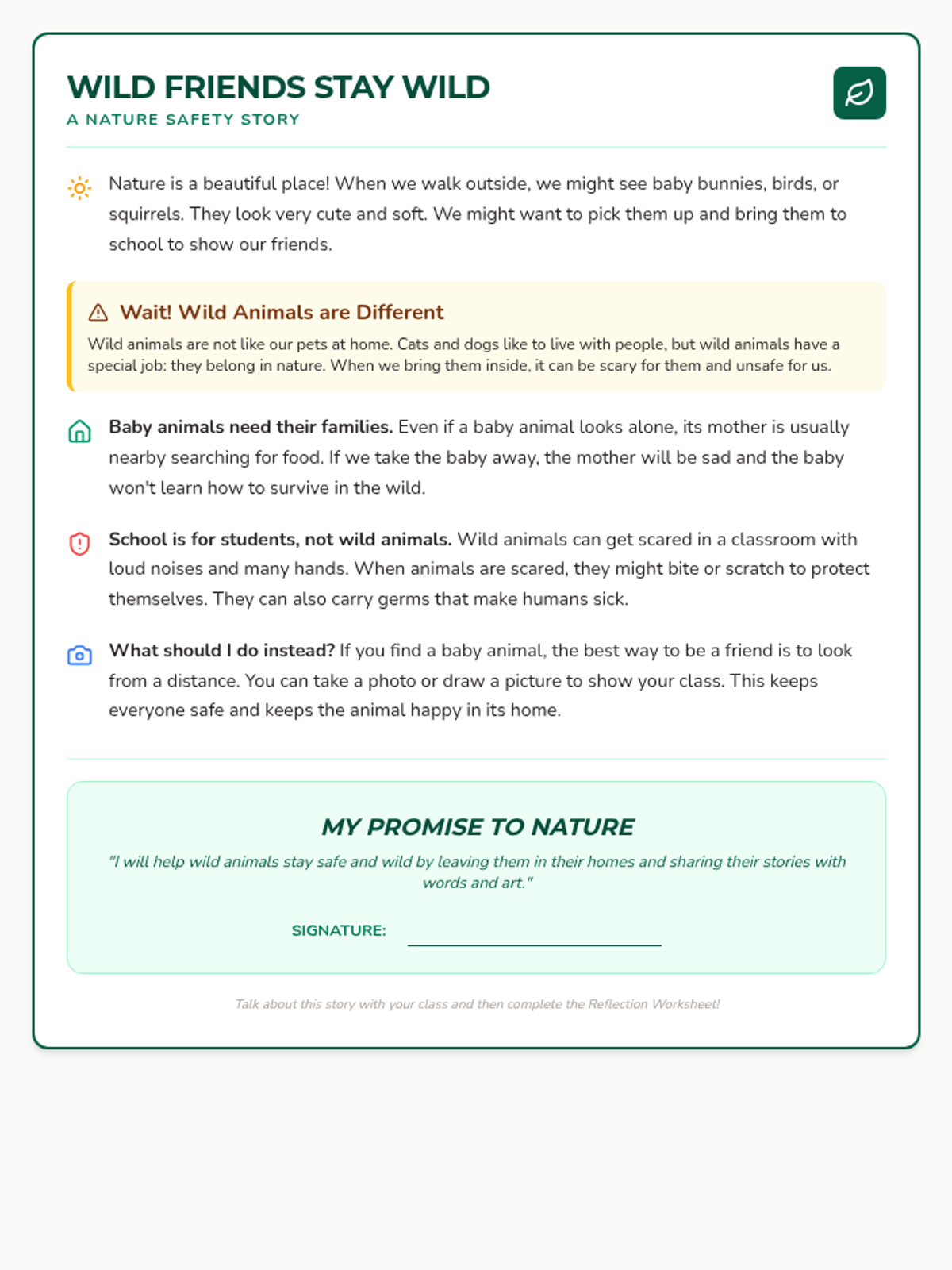
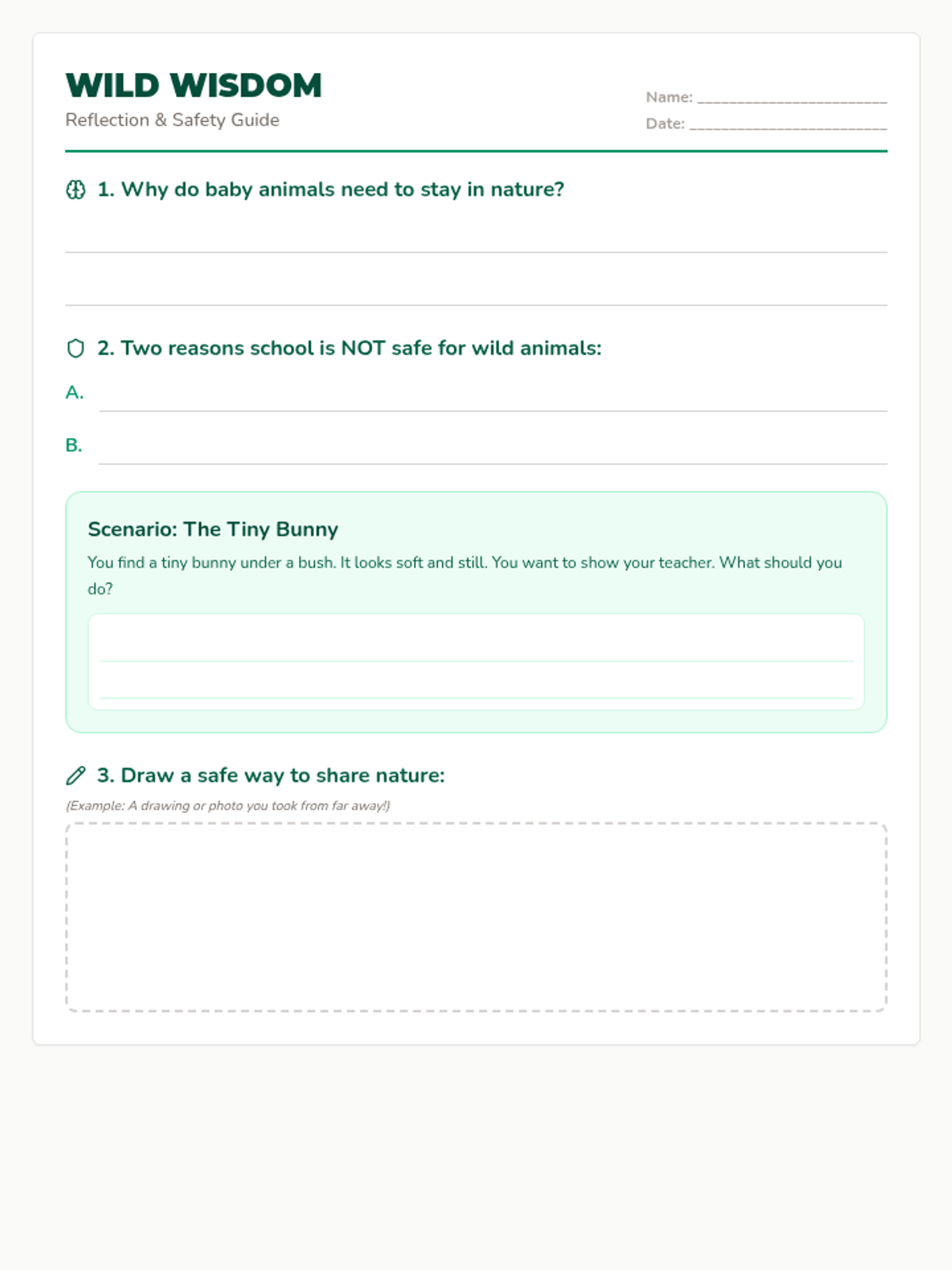
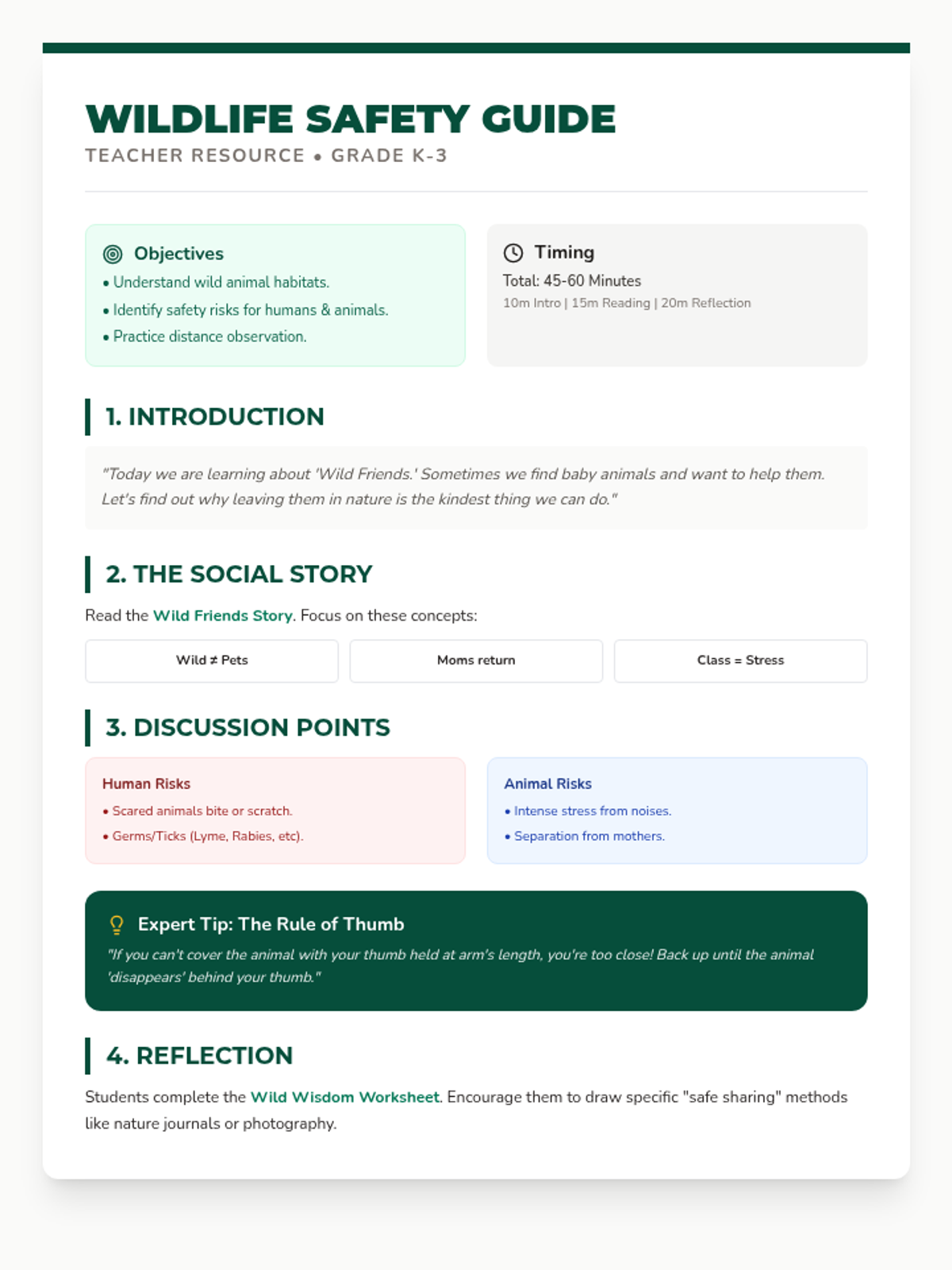
This lesson teaches students why wild animals, especially babies, should remain in their natural habitats rather than being brought to school, focusing on the safety of the animal and the classroom community.