A printable, double-sided math worksheet and corresponding answer key designed to help students master reading angles using pre-aligned background protractors and measuring angles using physical plastic protractors.
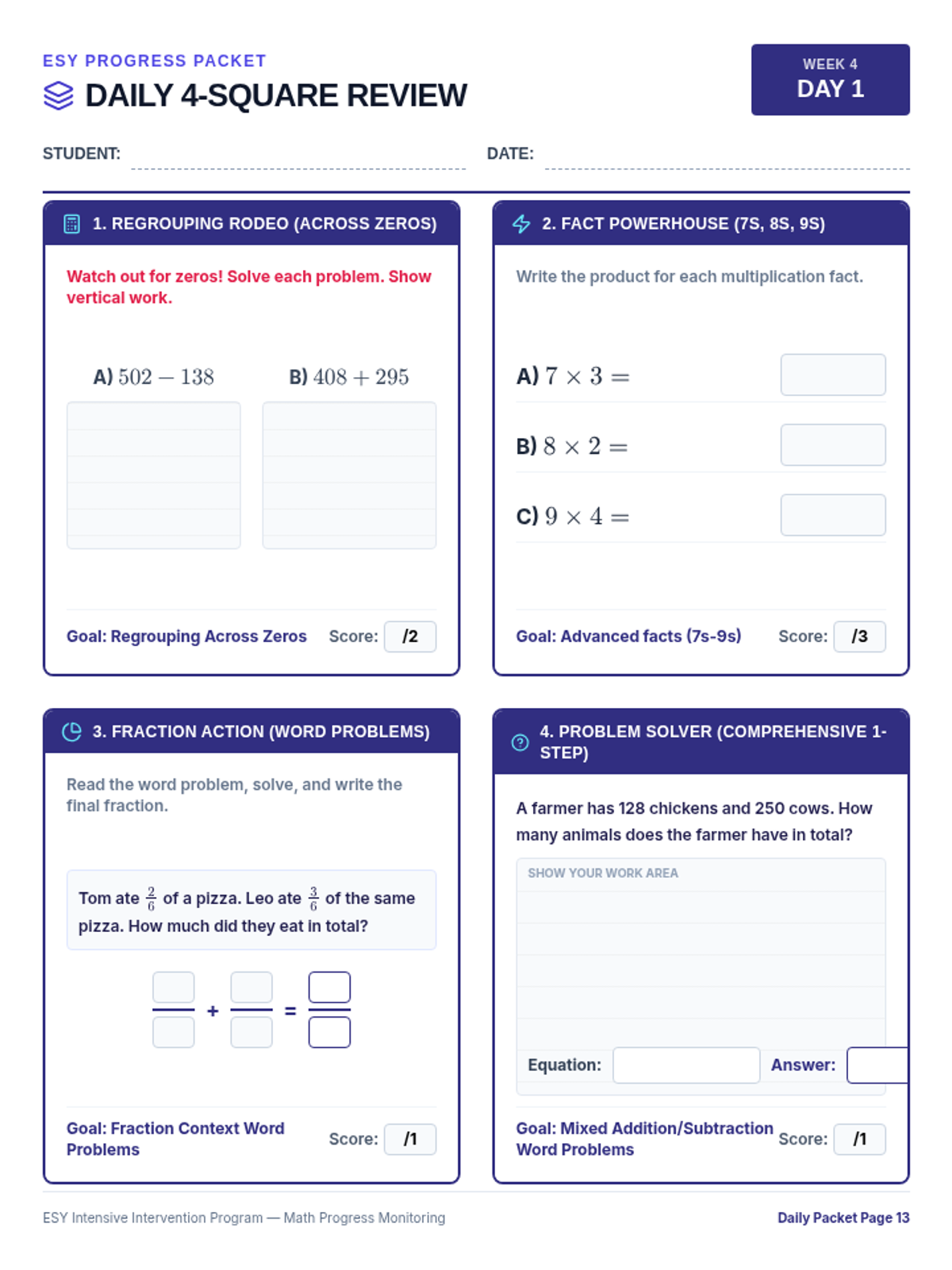
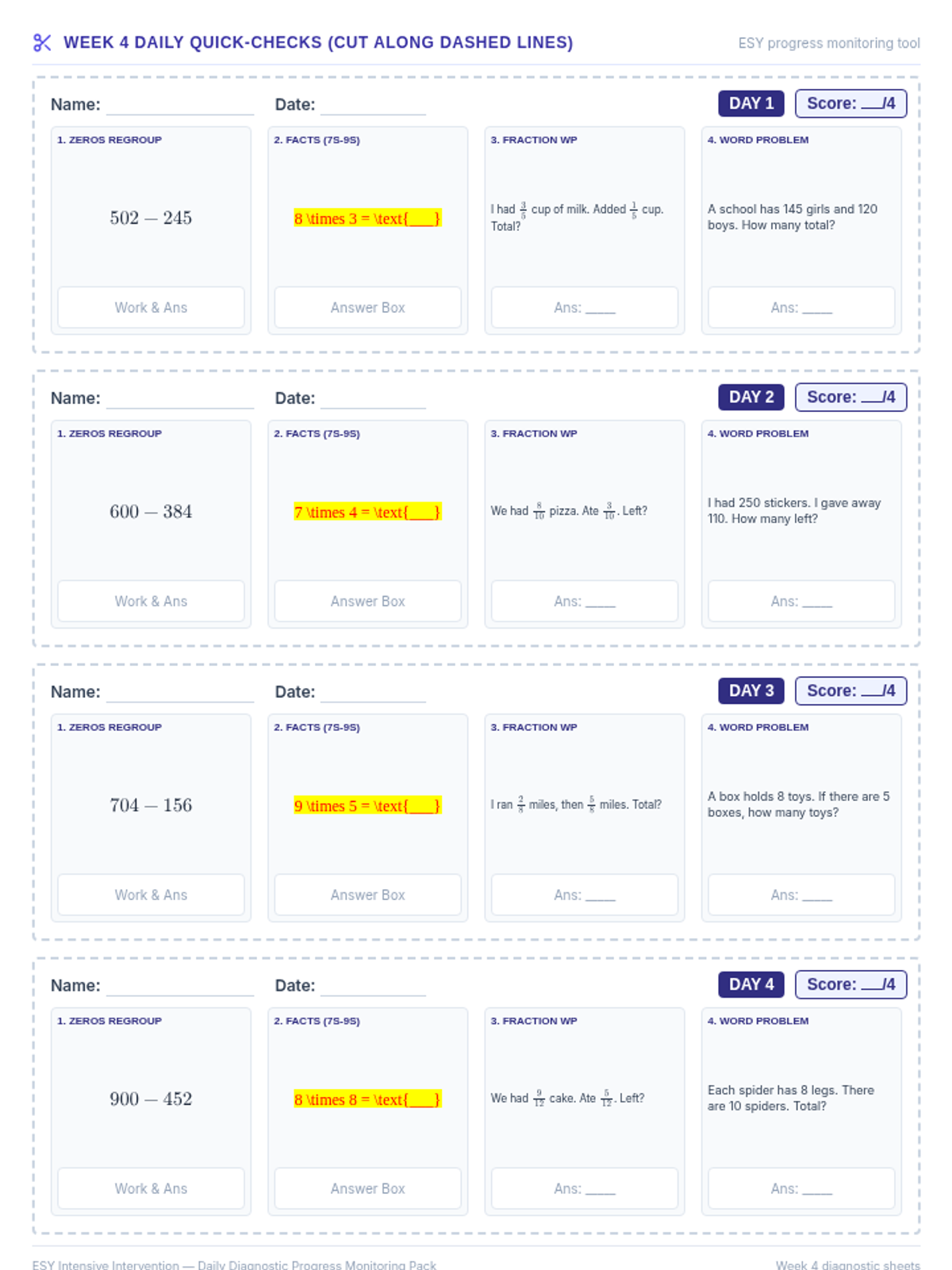
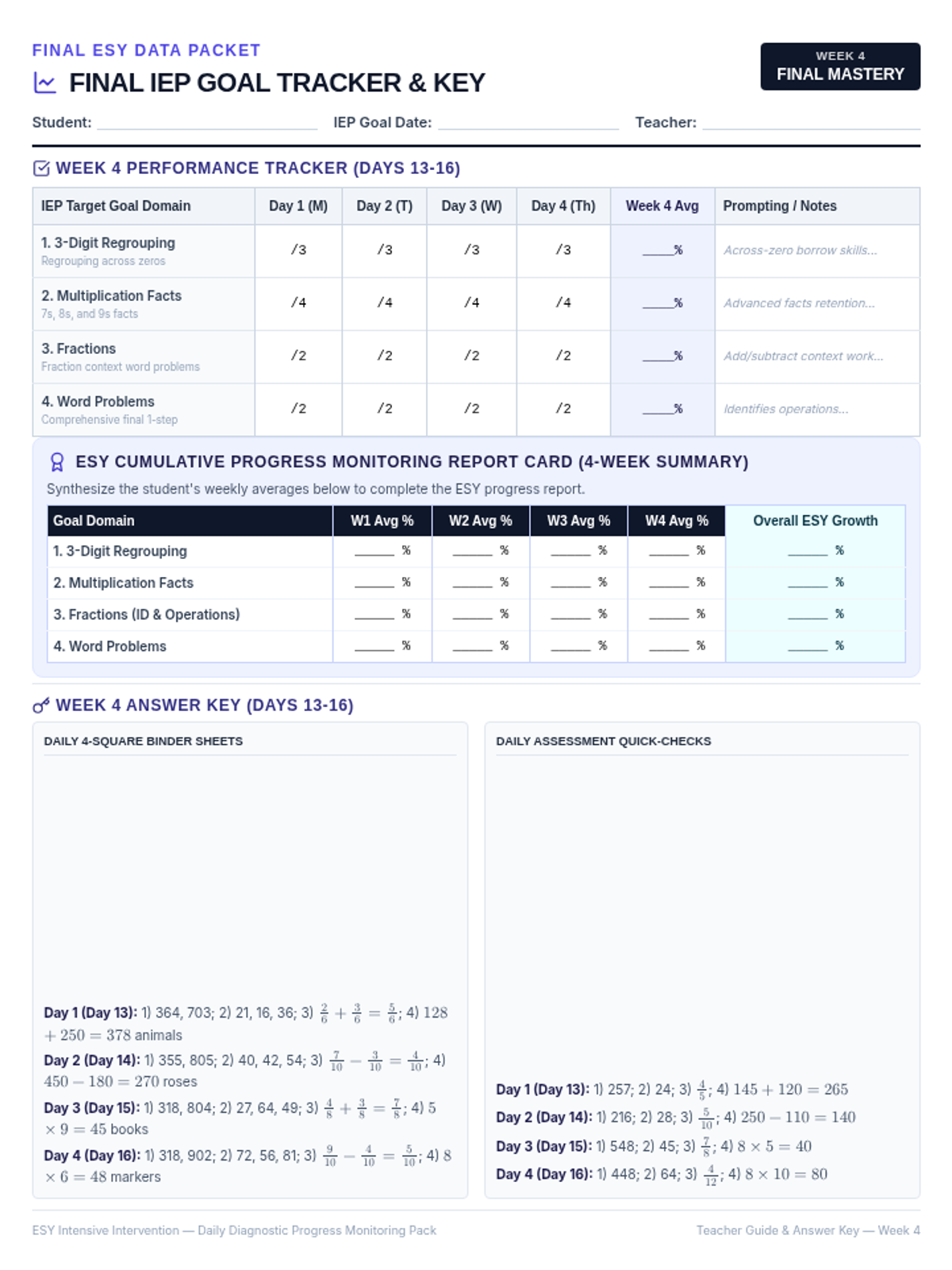
Week 4 of ESY focuses on mastery, mixed review, and final progress-monitoring data collection. Skills include complex 3-digit regrouping across zeros, multiplication facts for 7s, 8s, and 9s, adding/subtracting fractions plus simple word problems for all four domains, and generating progress summary reports.
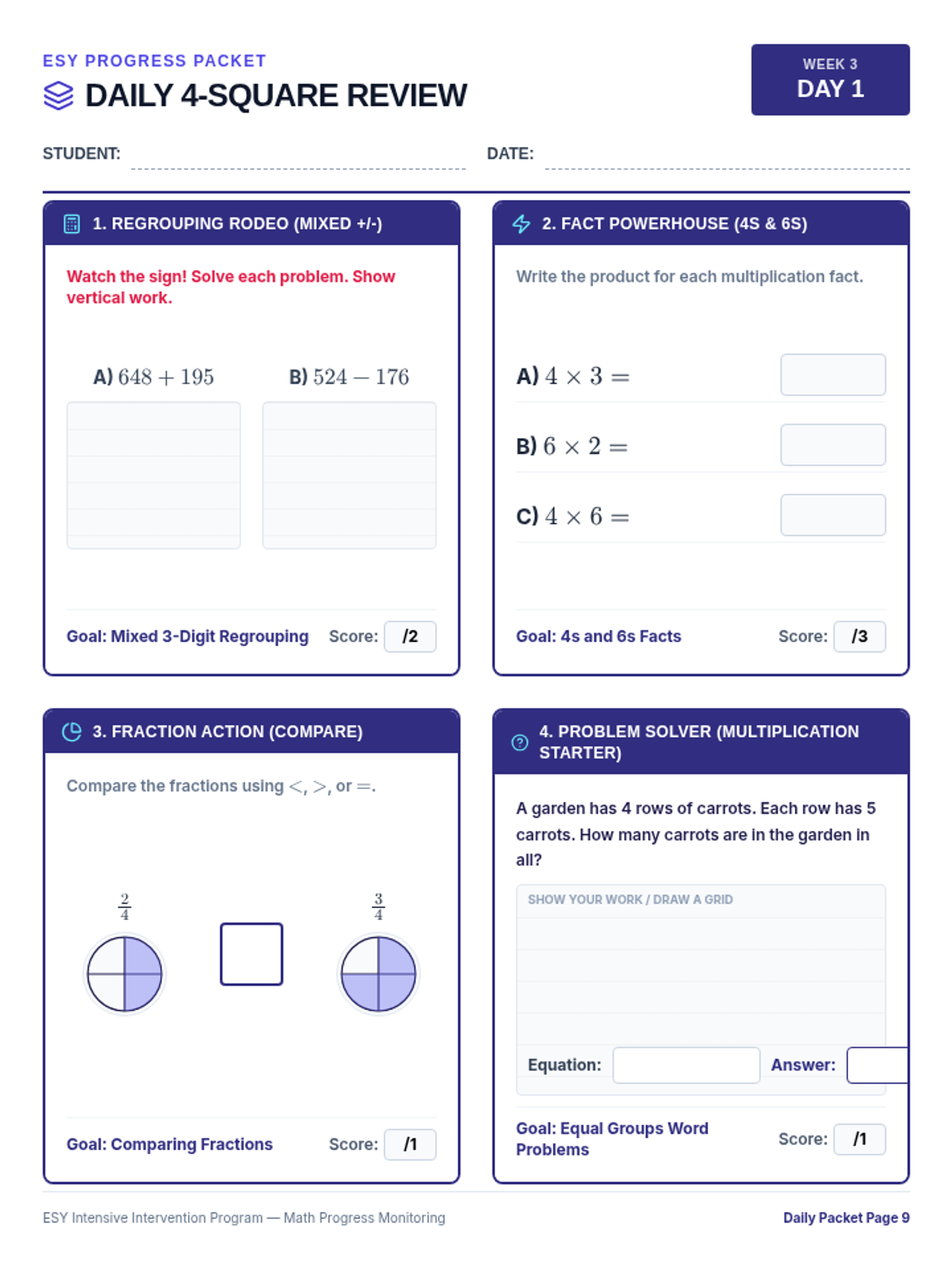
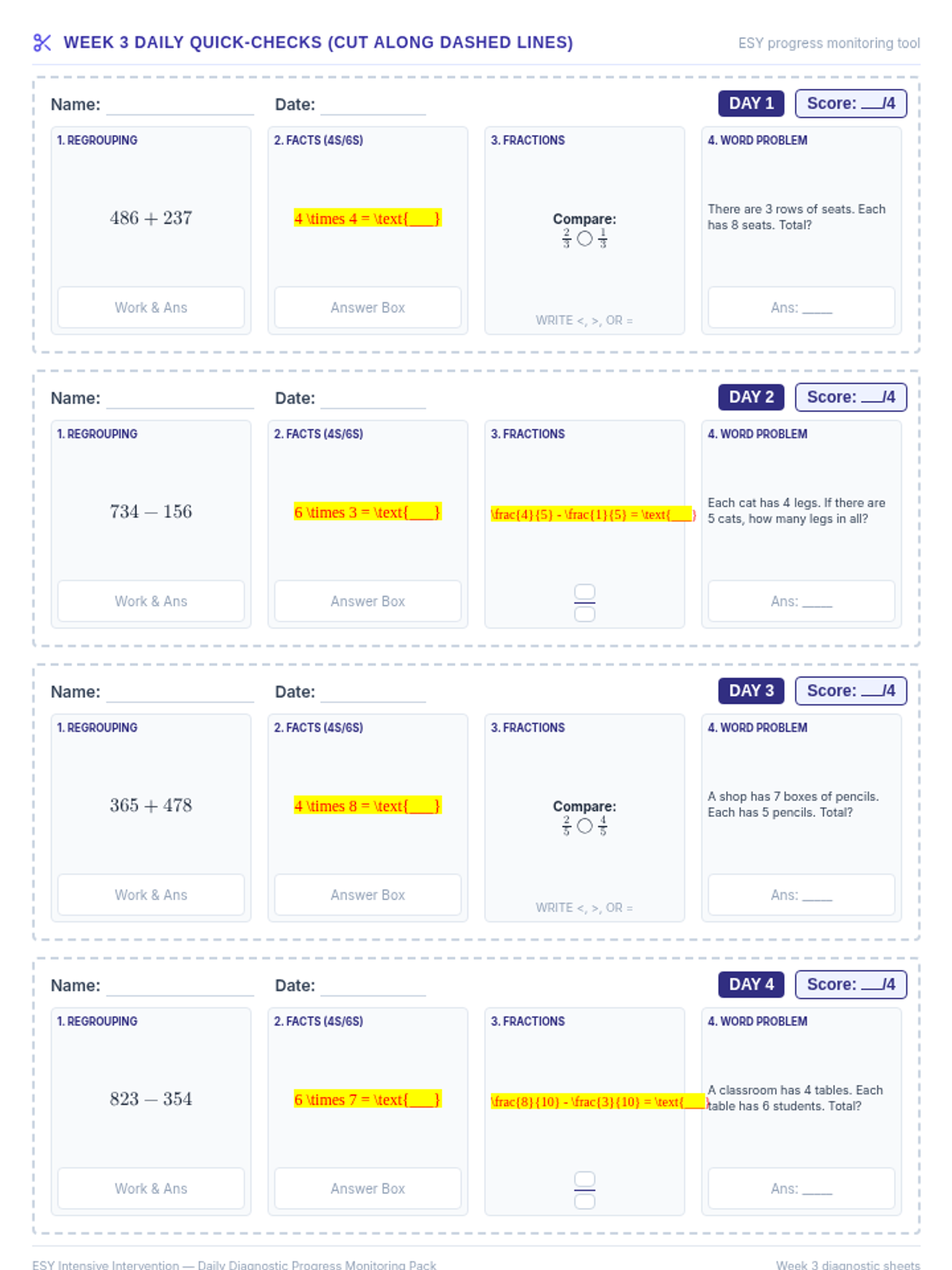
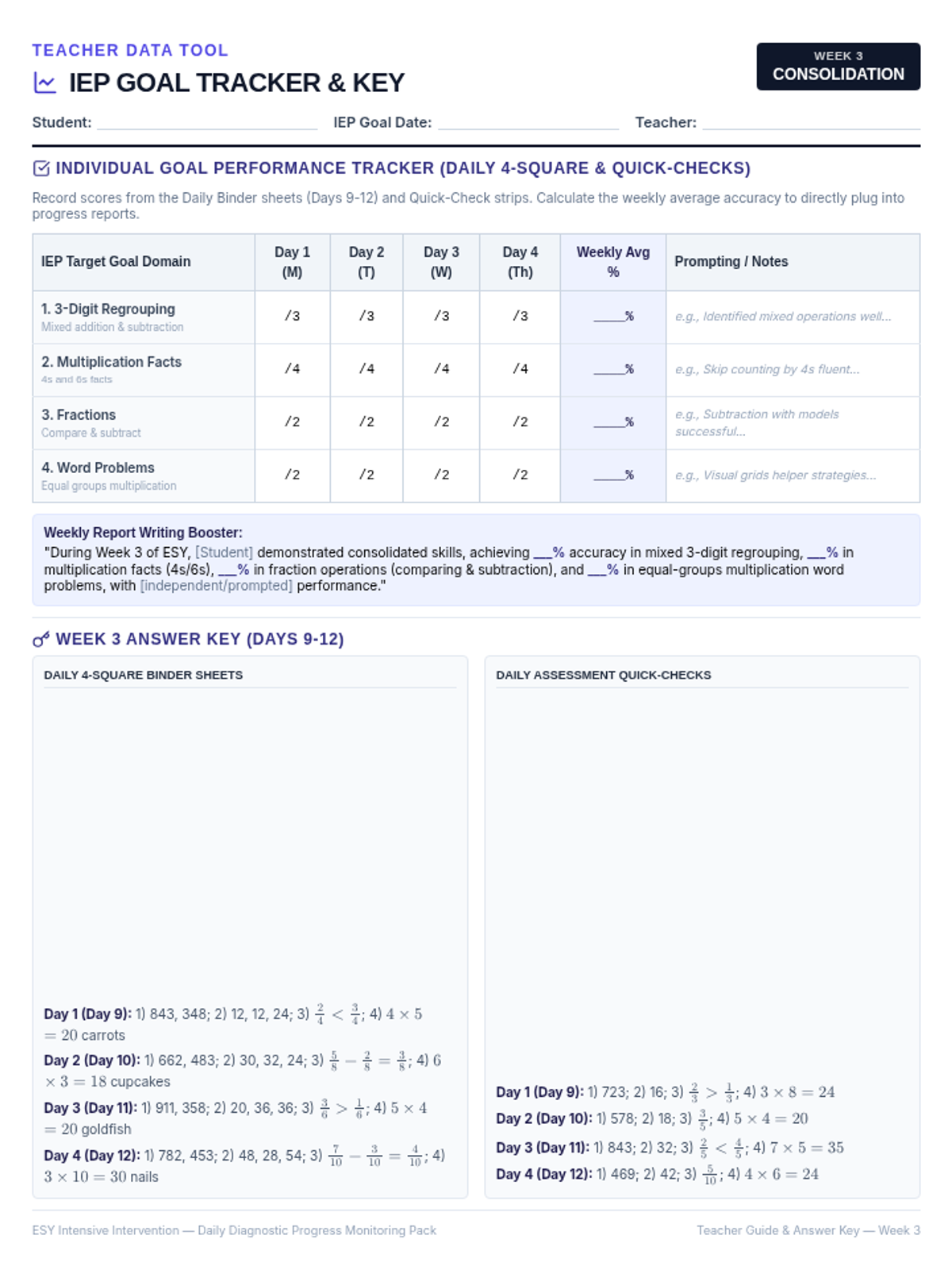
Week 3 of ESY shifts to mixed addition/subtraction regrouping, multiplication facts for 4s and 6s, comparing fractions and adding/subtracting fractions with common denominators, and mixed single-step word problems (multiplication/division starter).
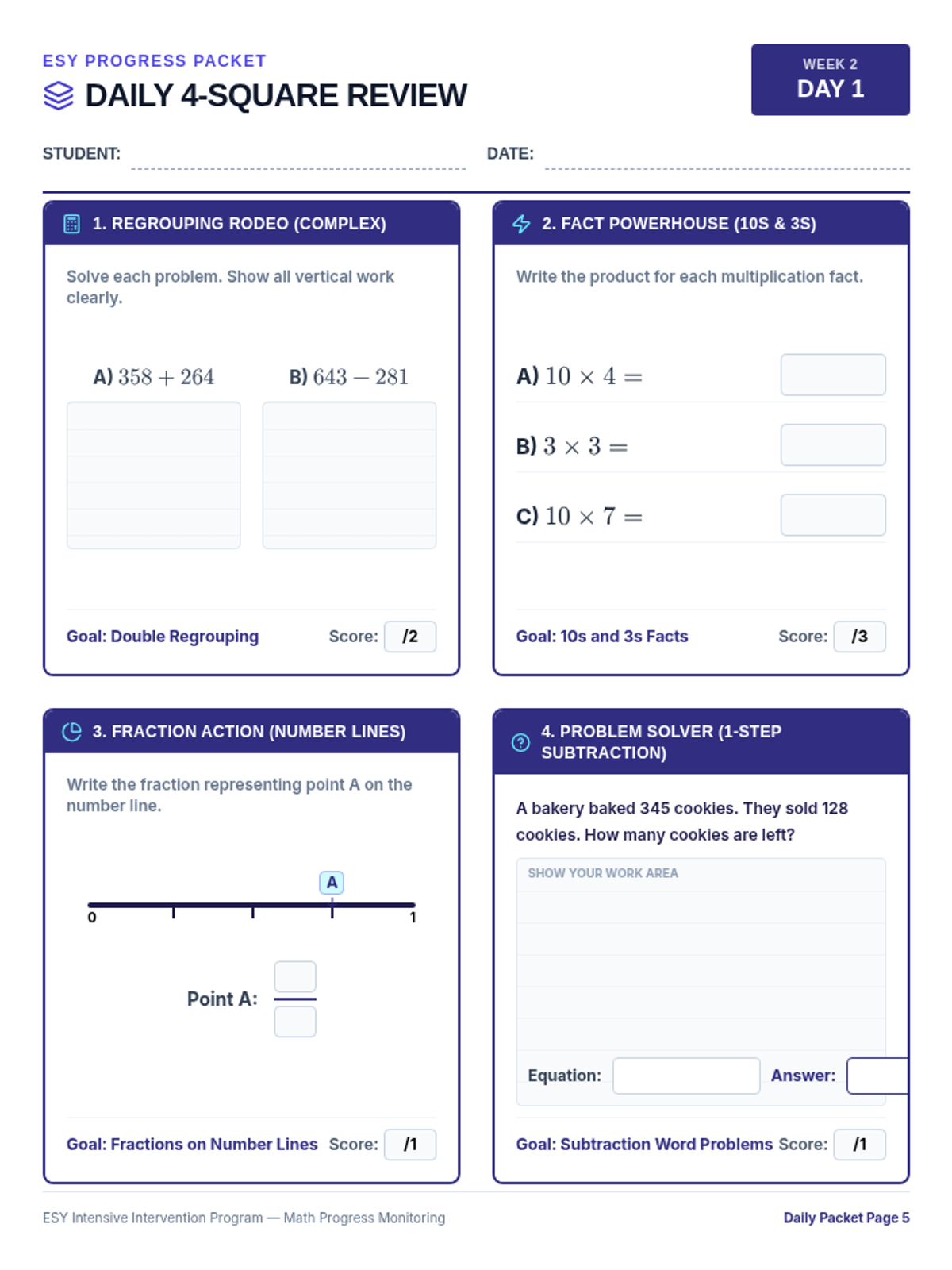
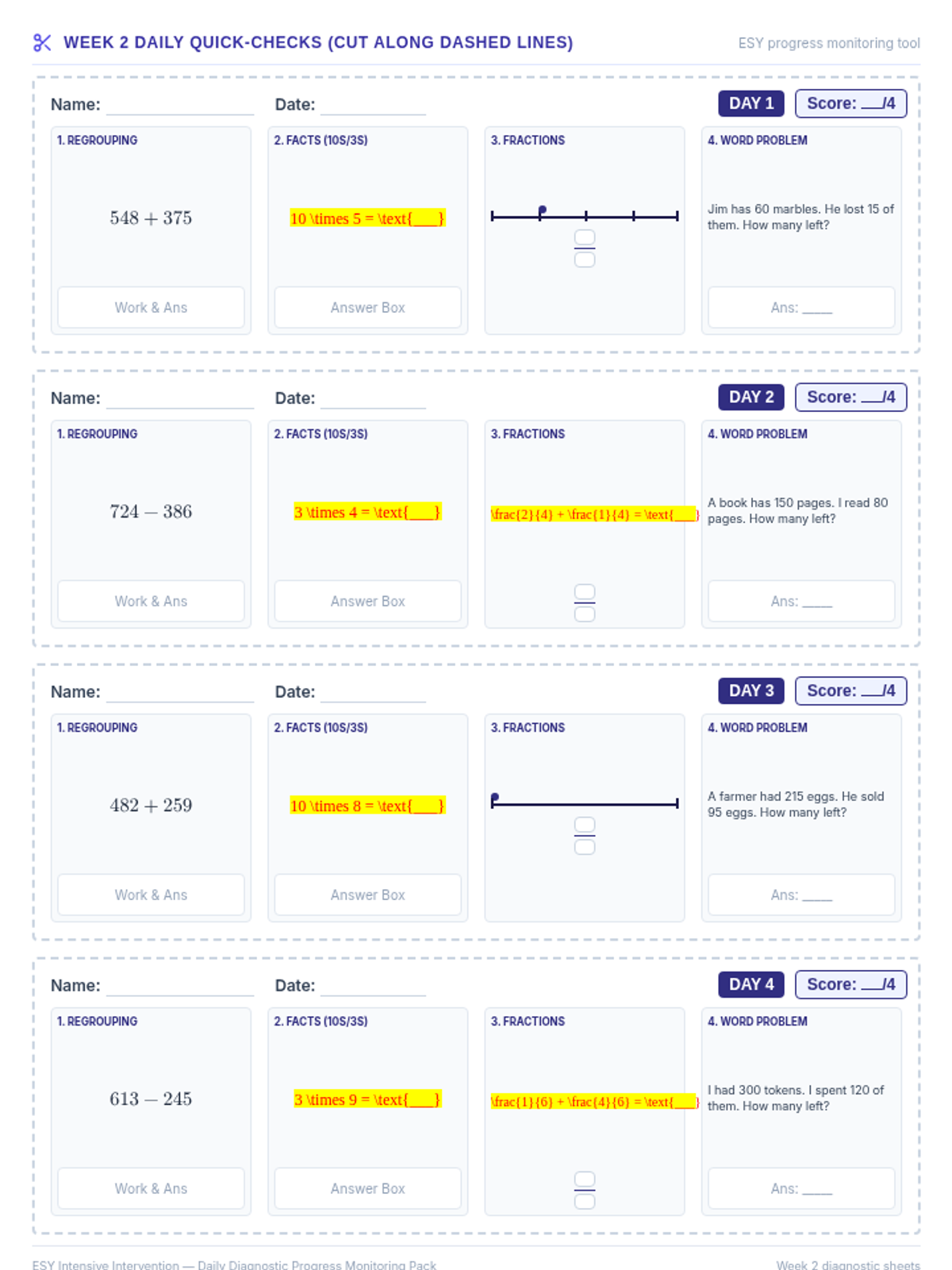
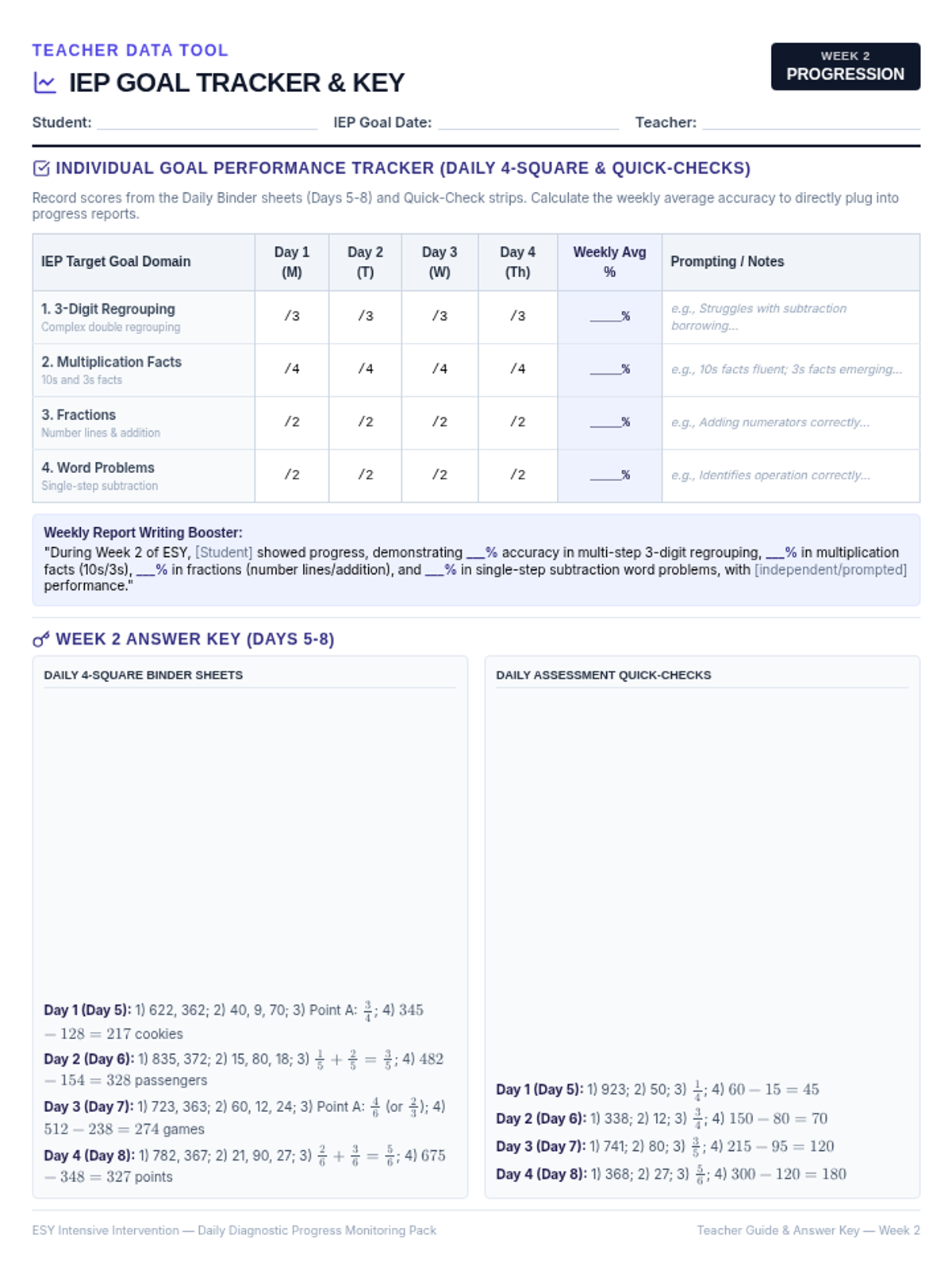
Week 2 of ESY introduces multi-step or more complex regrouping, multiplication facts for 10s and 3s, identifying fractions on number lines and simple fraction addition, and single-step subtraction word problems.
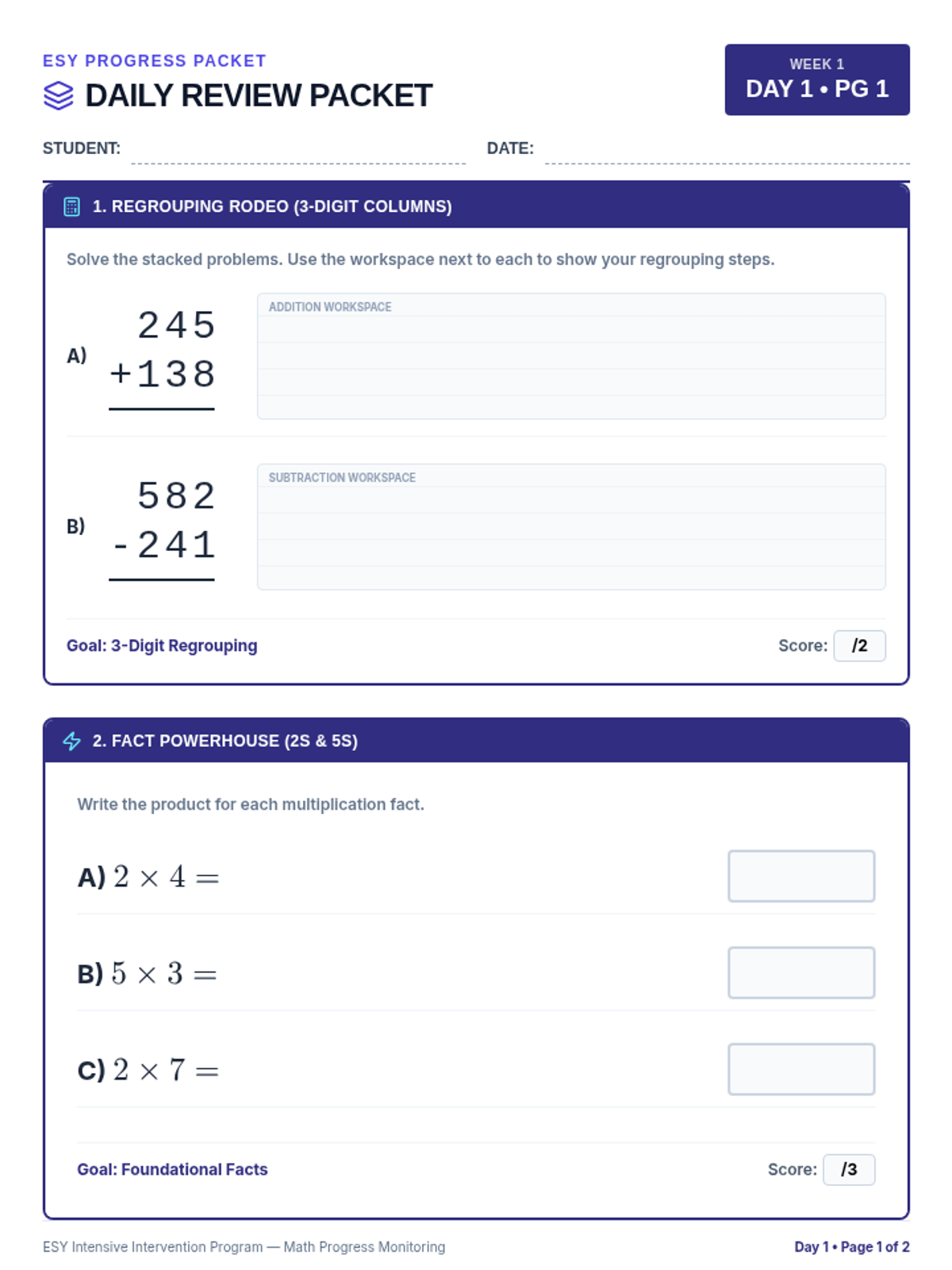
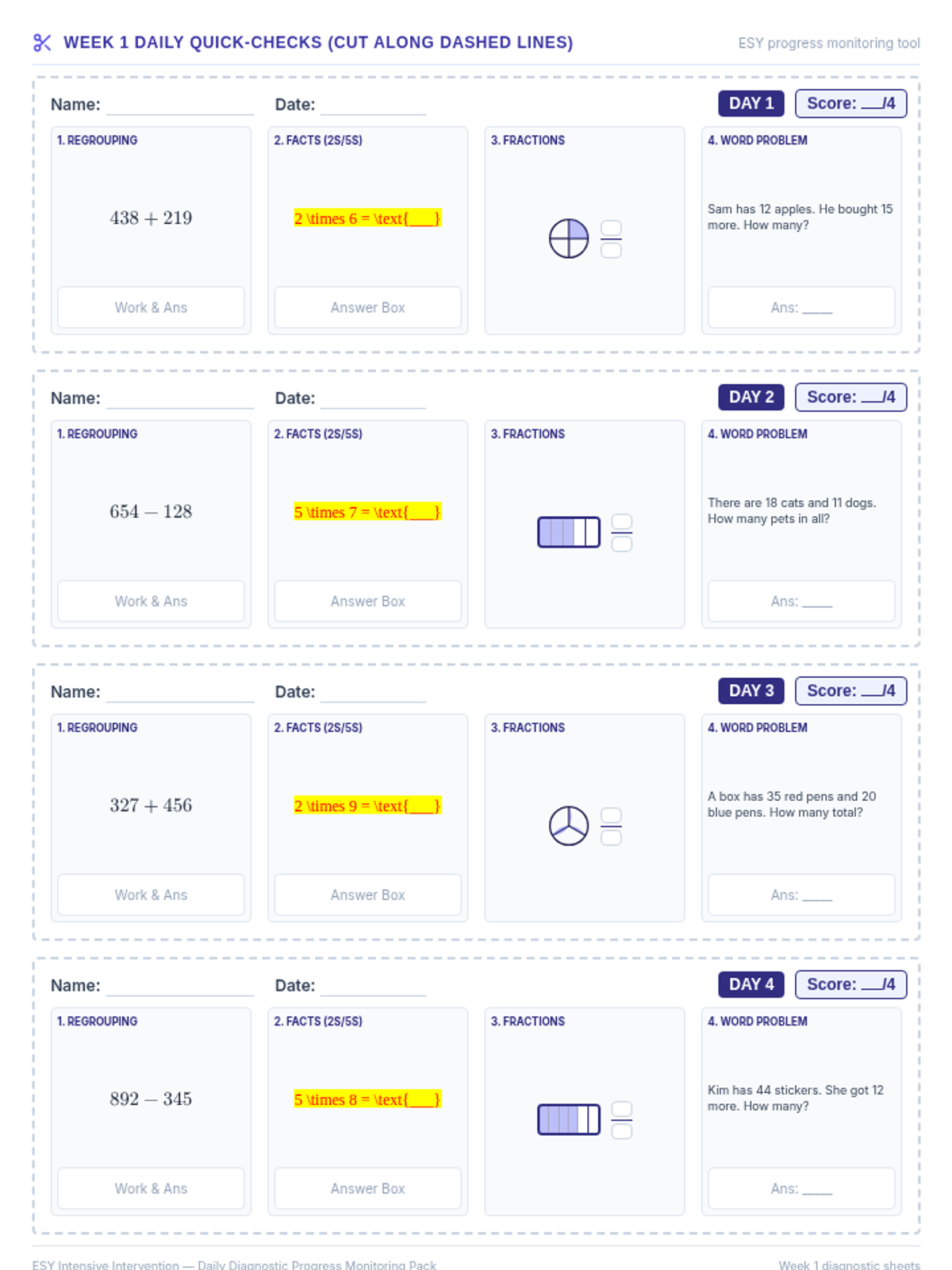
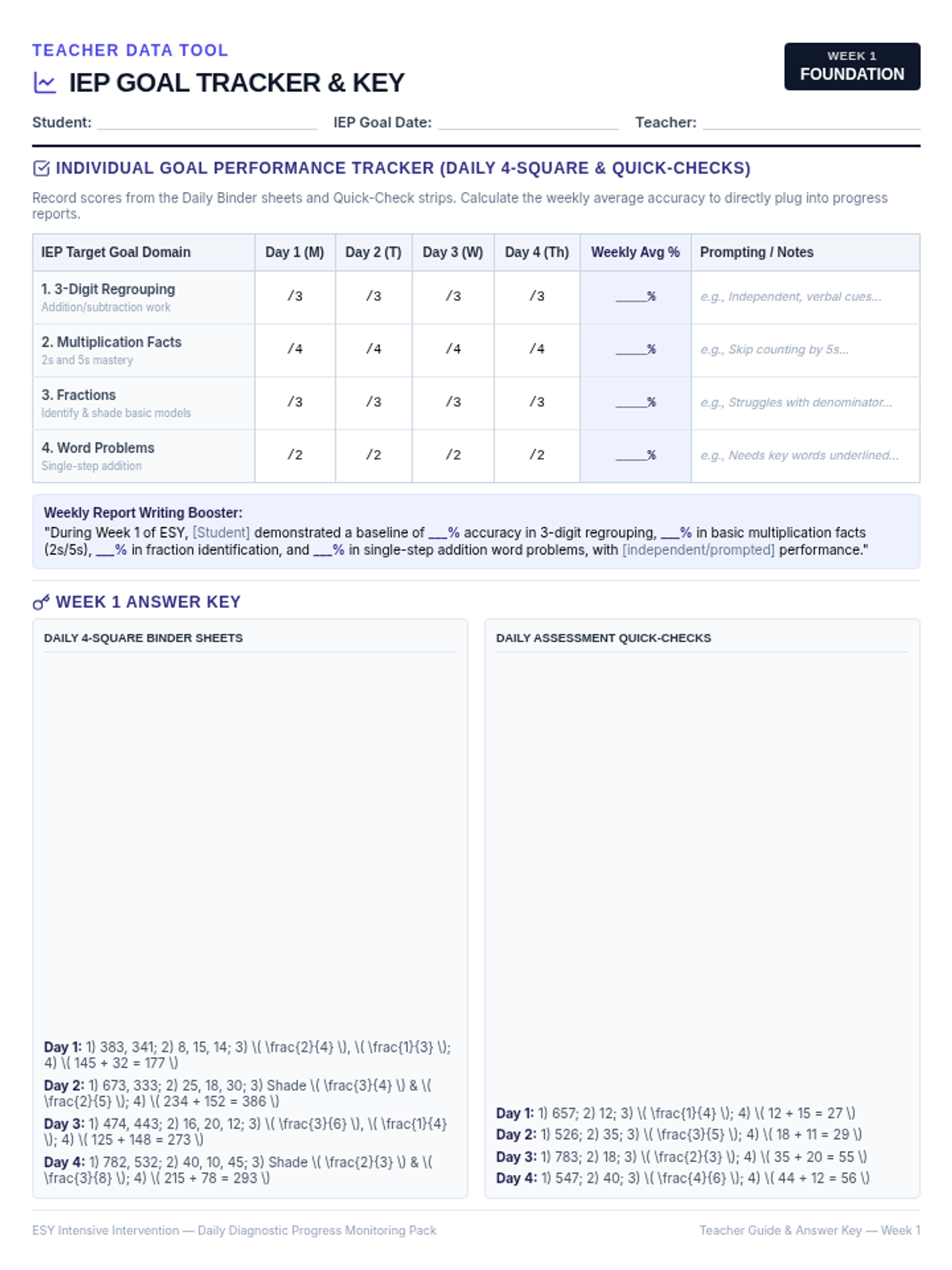
Week 1 of ESY focuses on establishing daily routines and gathering baseline/early progress data. Skills include 3-digit addition/subtraction without/with simple regrouping, multiplication facts for 2s and 5s, basic fraction identification, and single-step addition word problems.
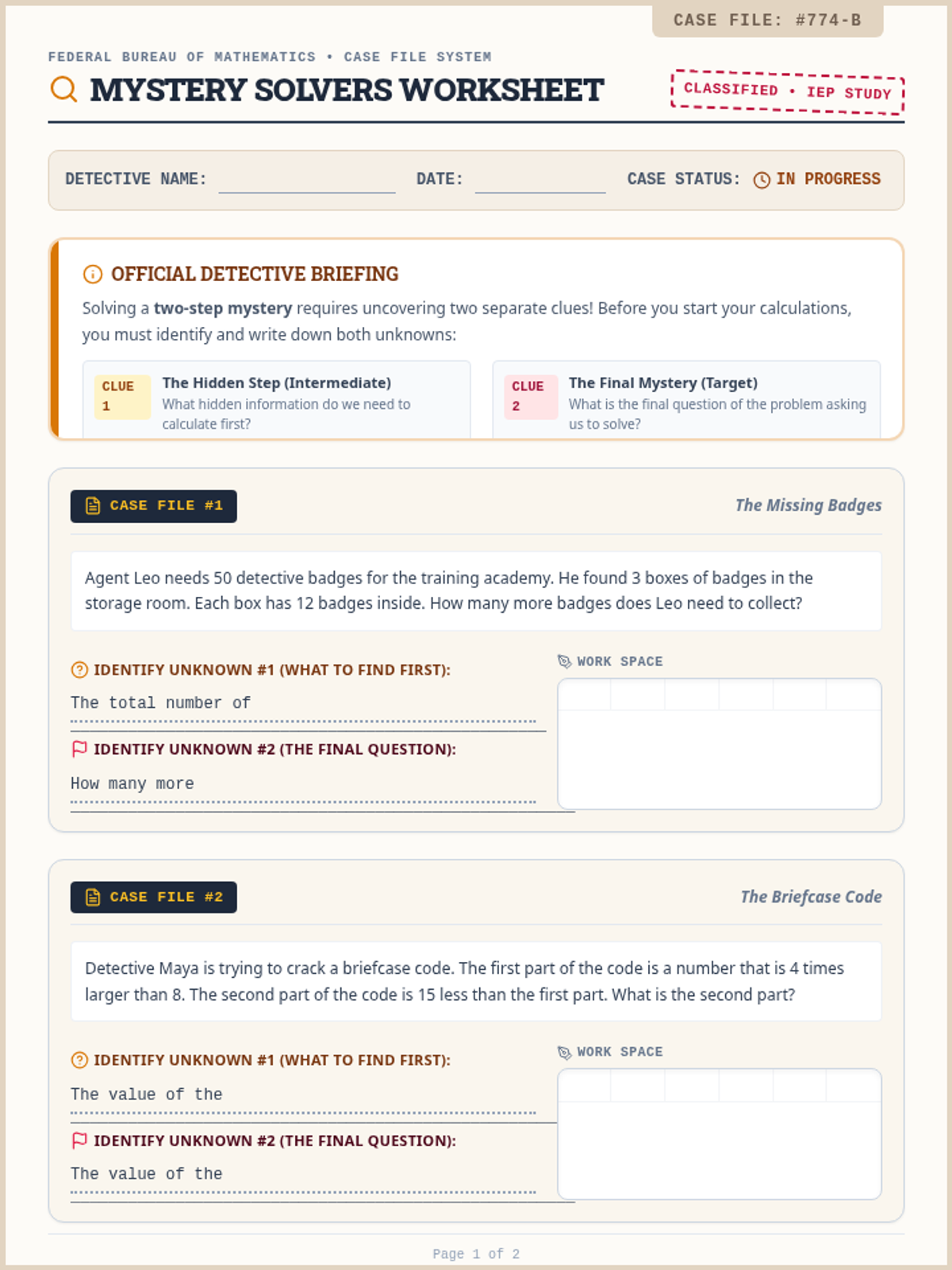
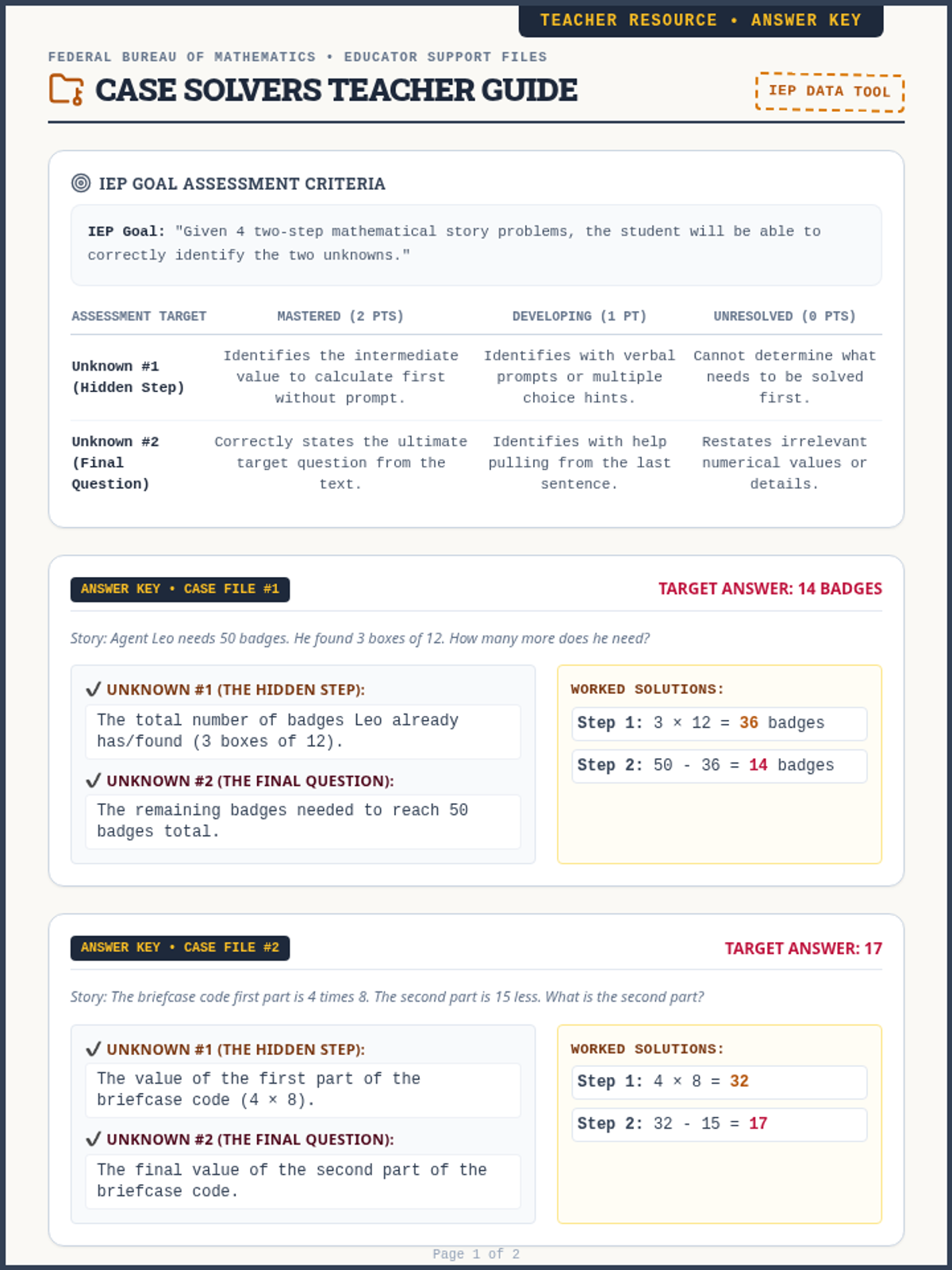
A lesson designed to help students master two-step mathematical word problems by identifying the intermediate and final unknowns. Includes a structured student worksheet and an educator answer guide.
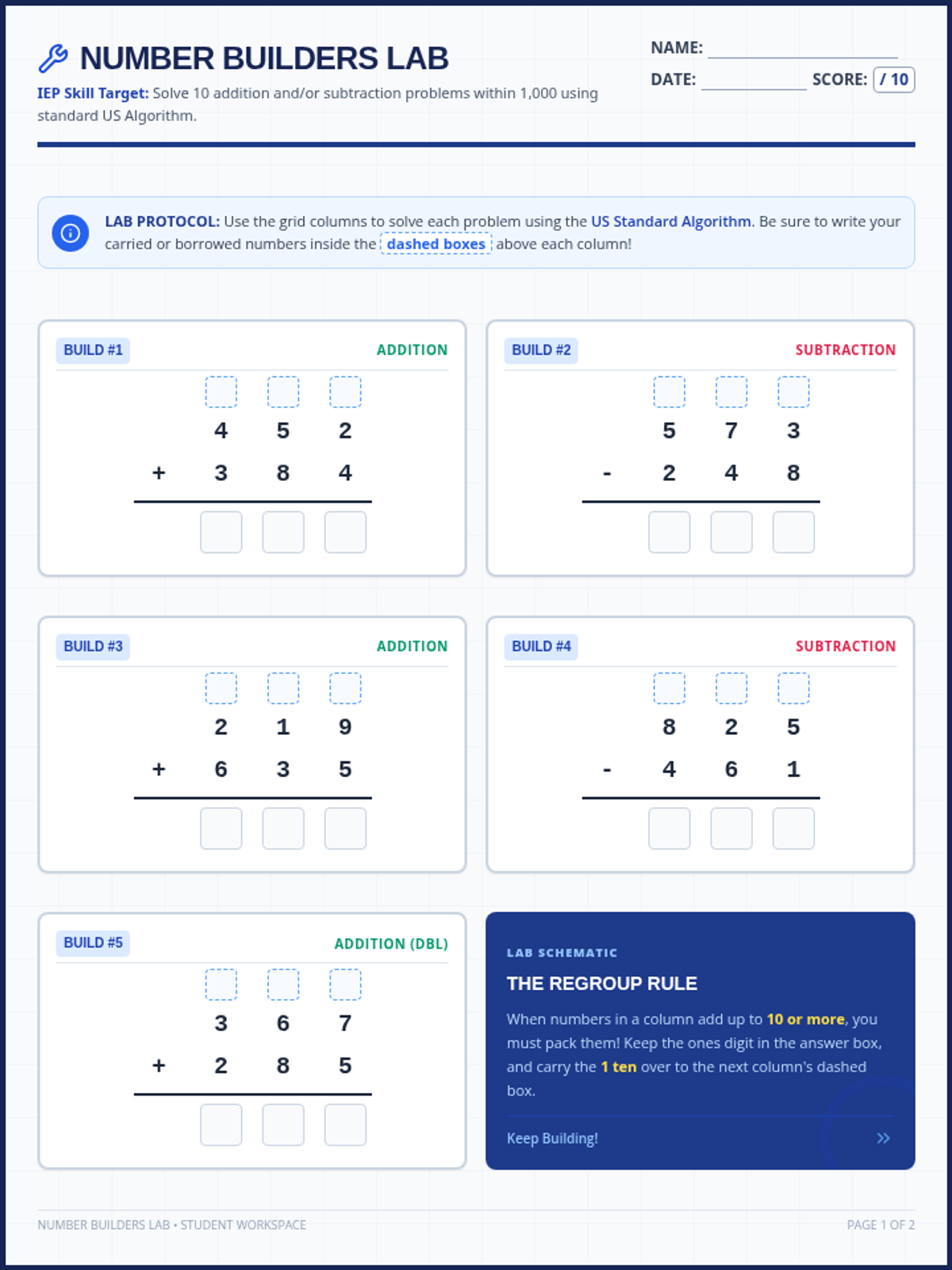
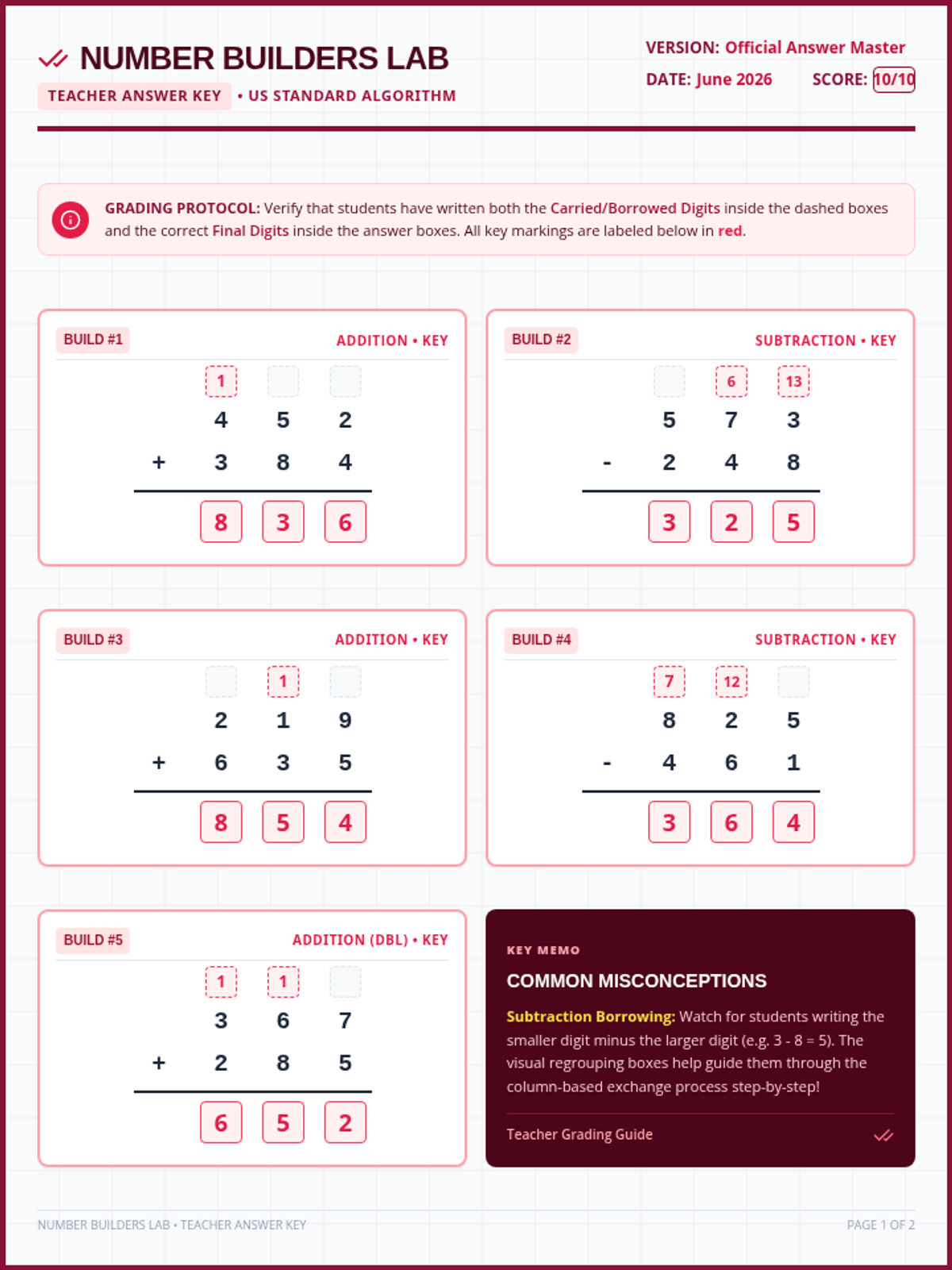
A highly scaffolded addition and subtraction lesson within 1,000, designed to help students master the US standard algorithm through decomposition and visual regrouping aids. Includes name, date, clear instructions, visual regrouping boxes, and structured workspace templates.
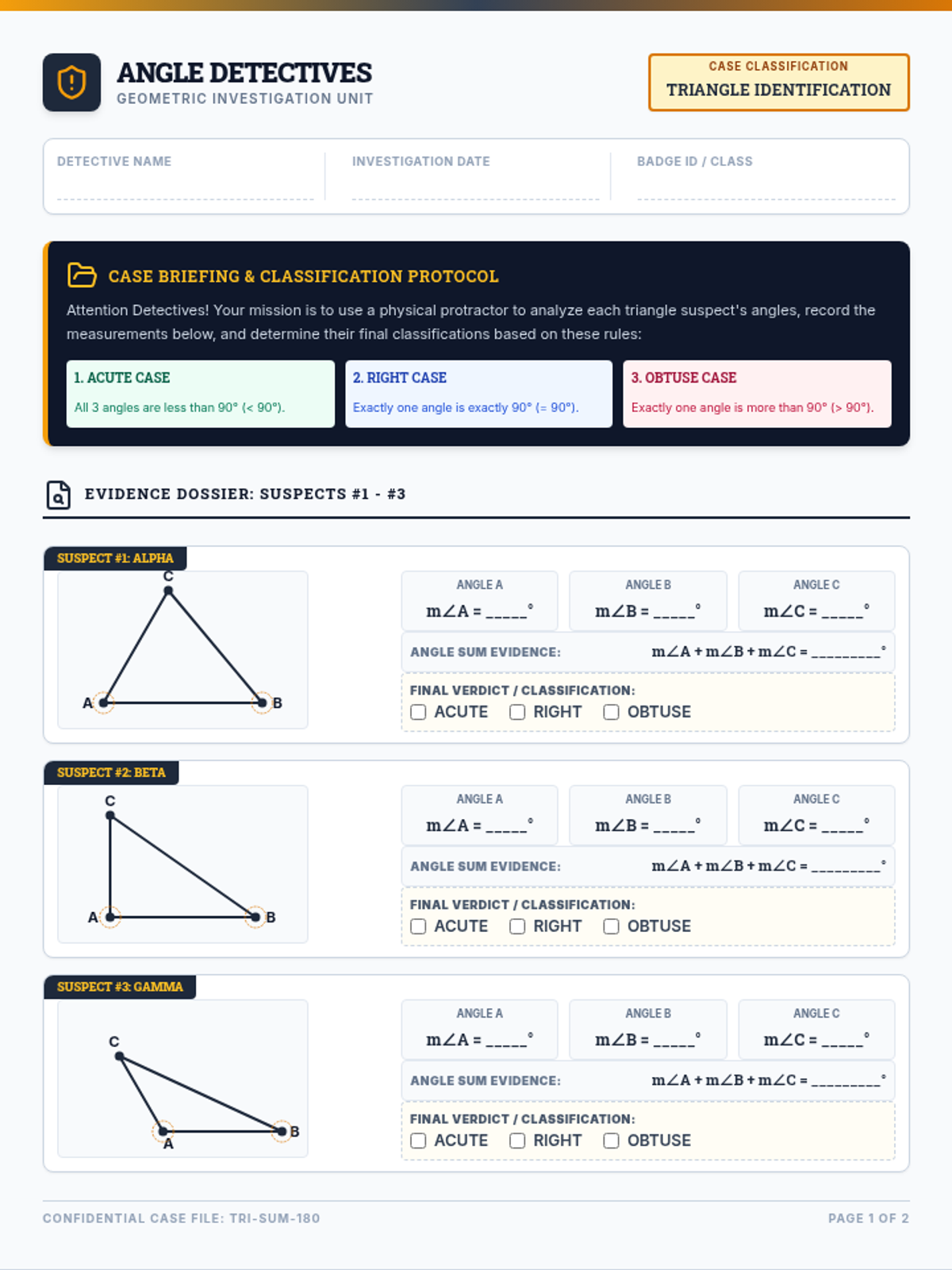
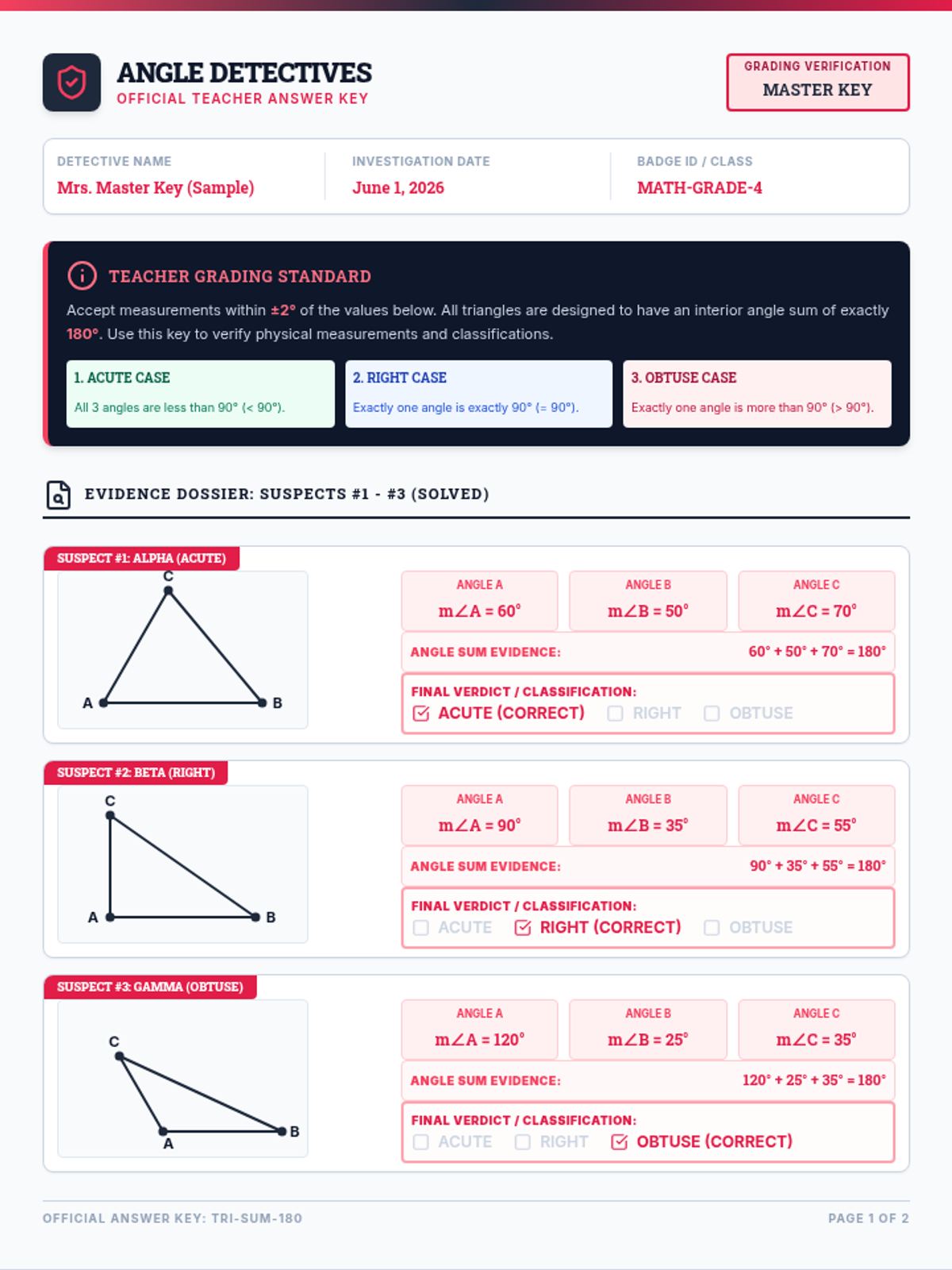
A highly engaging geometric investigation lesson where students step into the role of 'Angle Detectives'. Students use physical protractors to measure angles, discover the 180-degree triangle sum theorem, and classify triangles as acute, right, or obtuse.
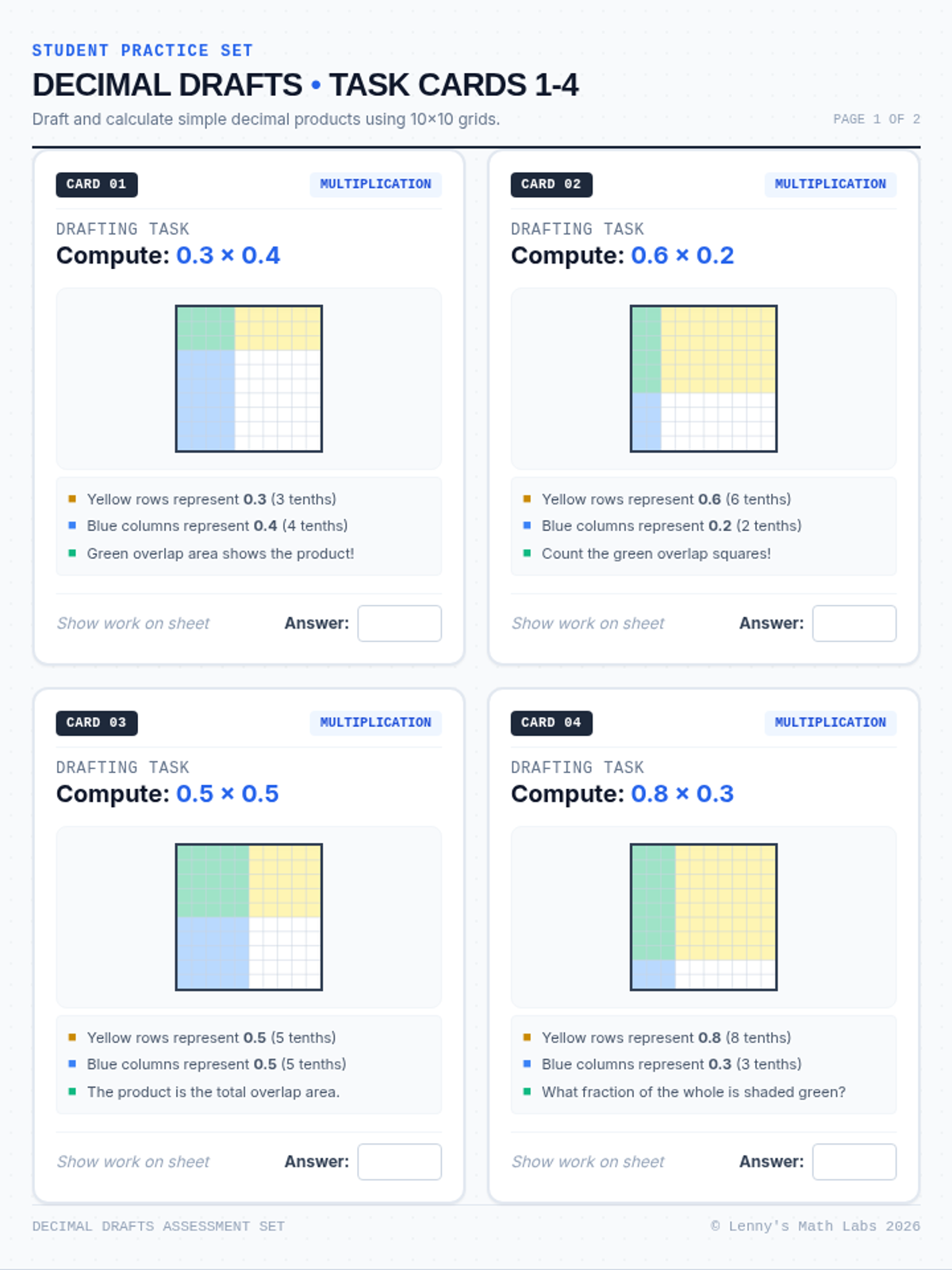
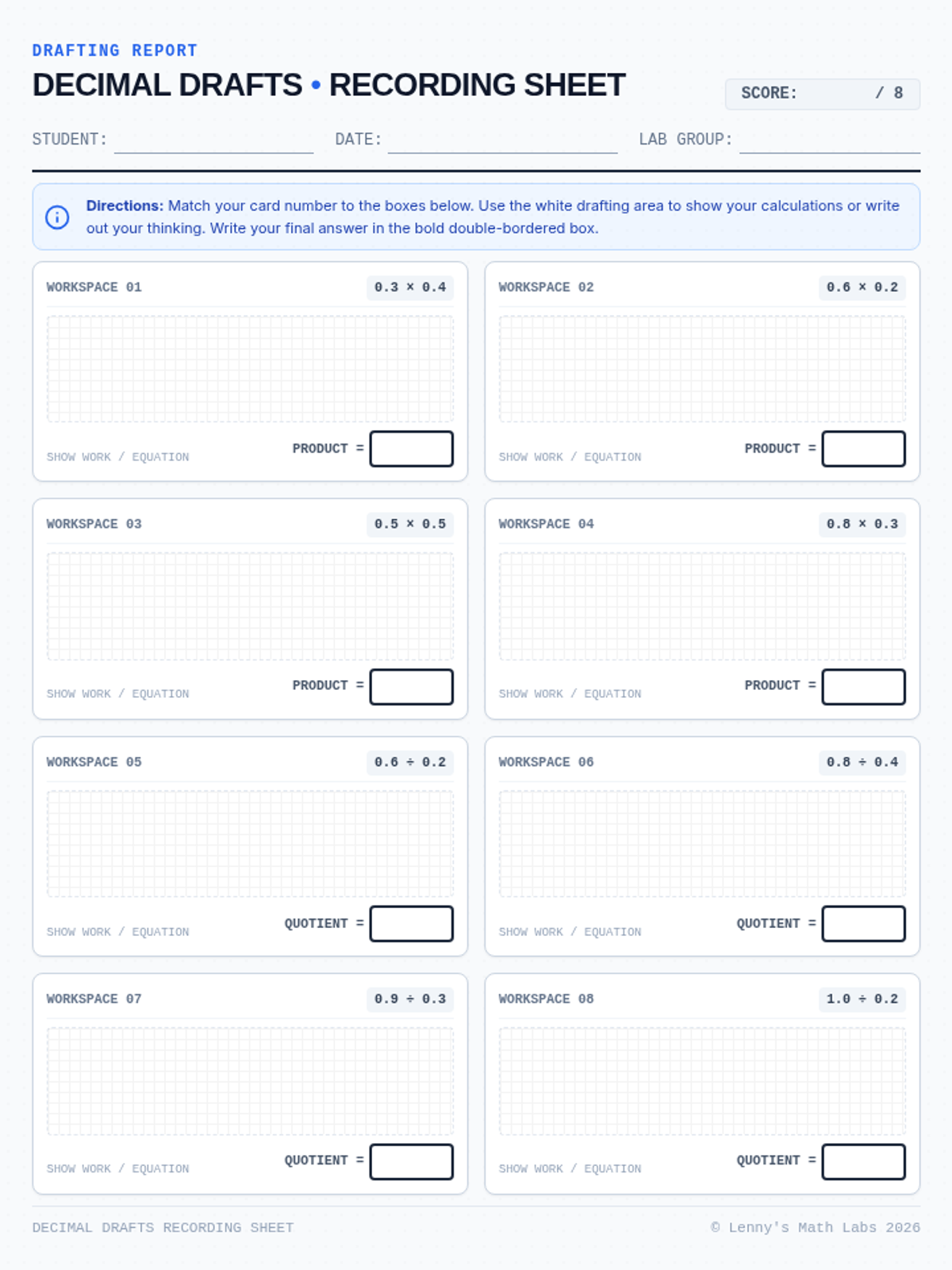
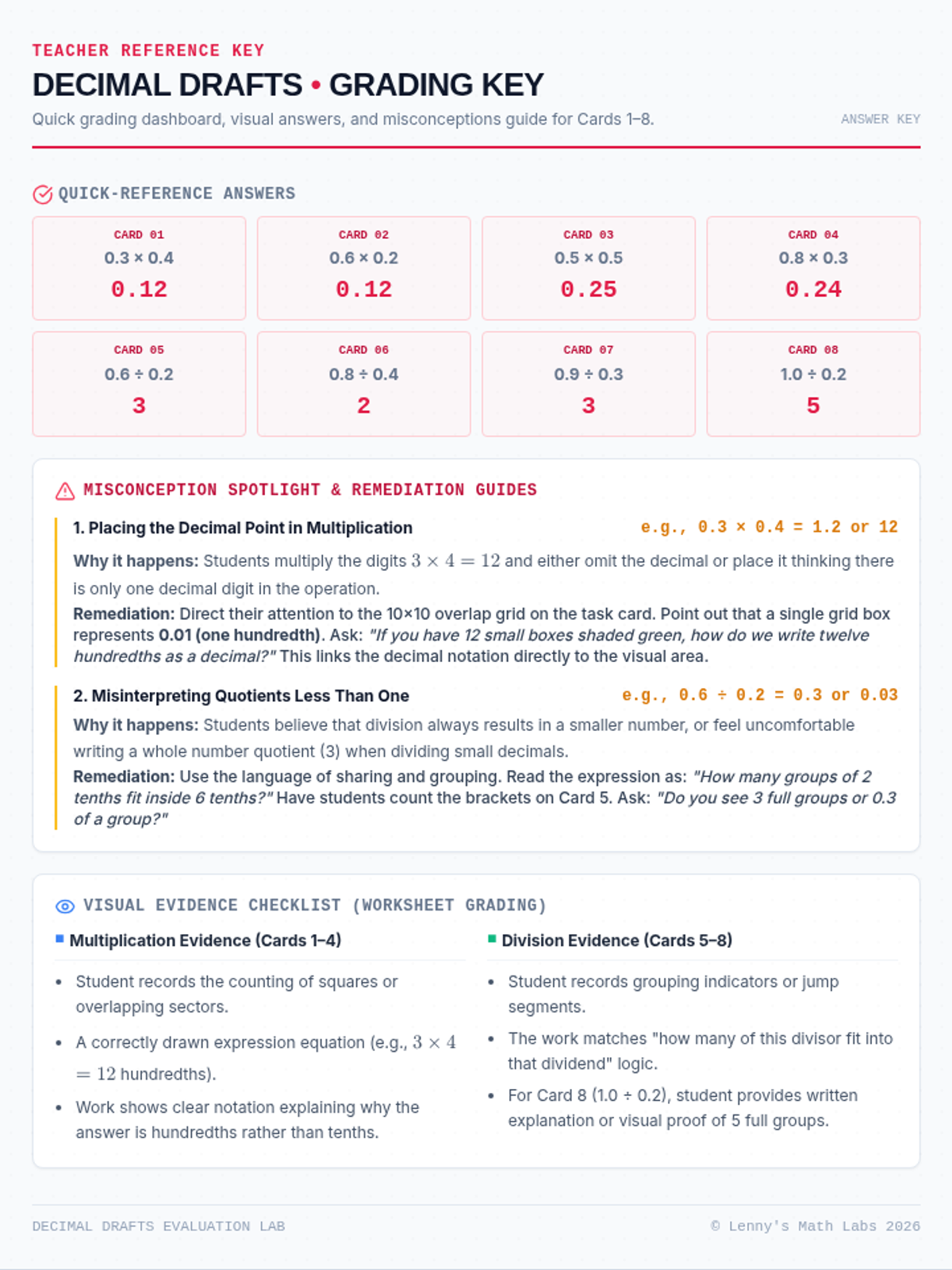
An assessment lesson focused on multiplying and dividing basic tenths using visual grids, bar models, and step-by-step drafting aids.
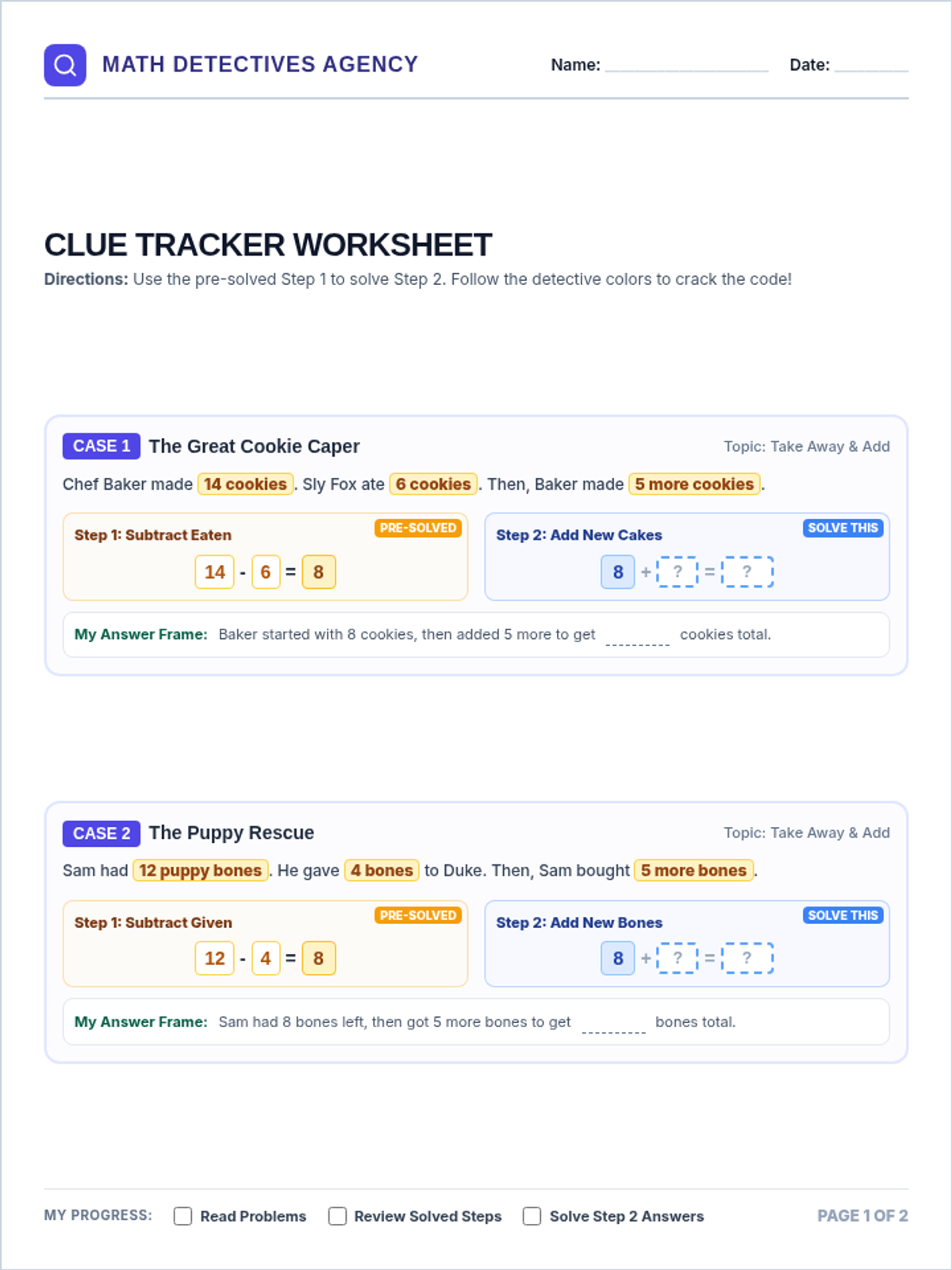
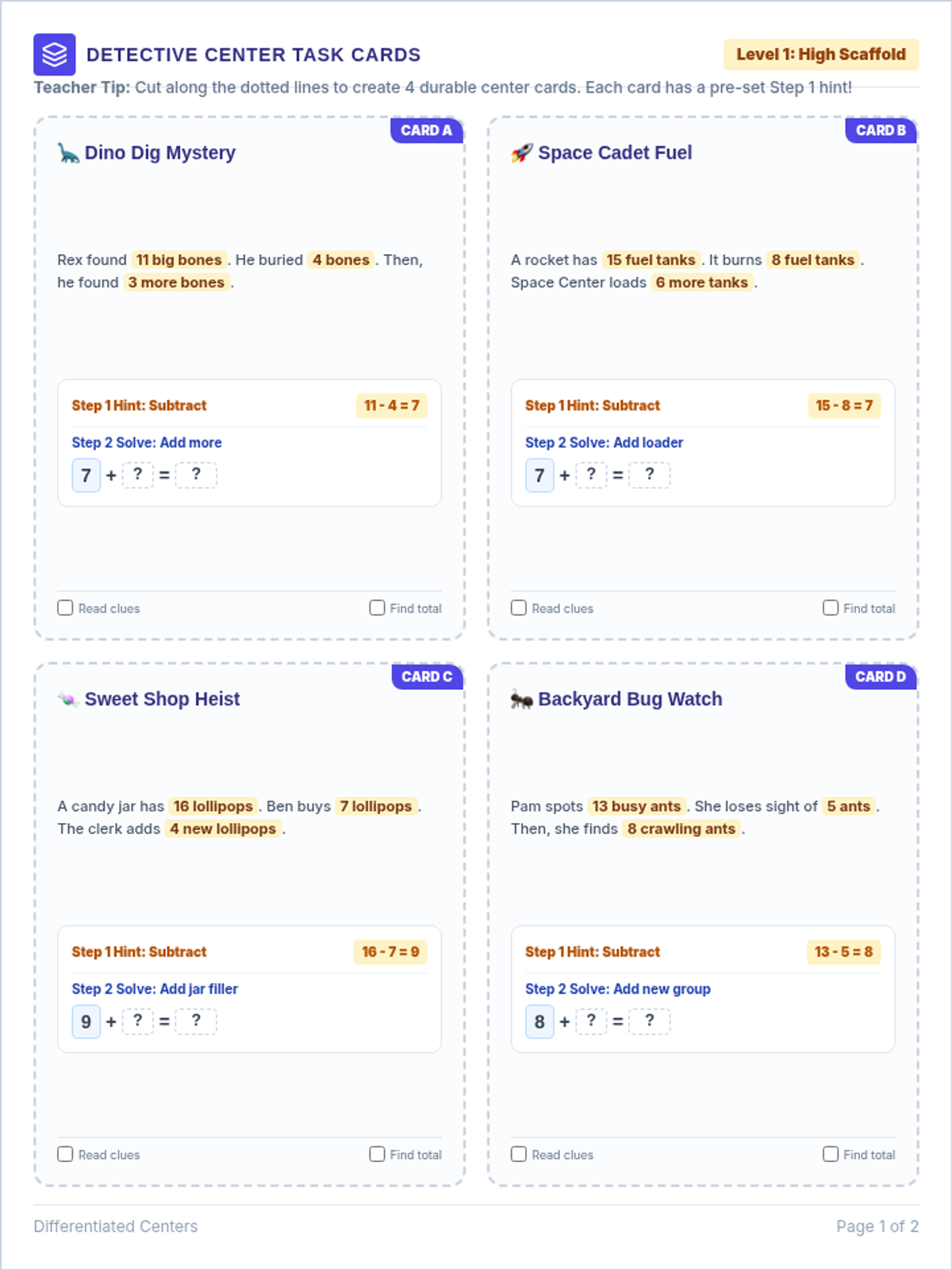
A structured lesson designed for IEP students to master multi-step word problems using a 'Math Detectives' theme. Includes visual guides, color-coded step-by-step scaffolds, sentence frames, and partially-completed templates.
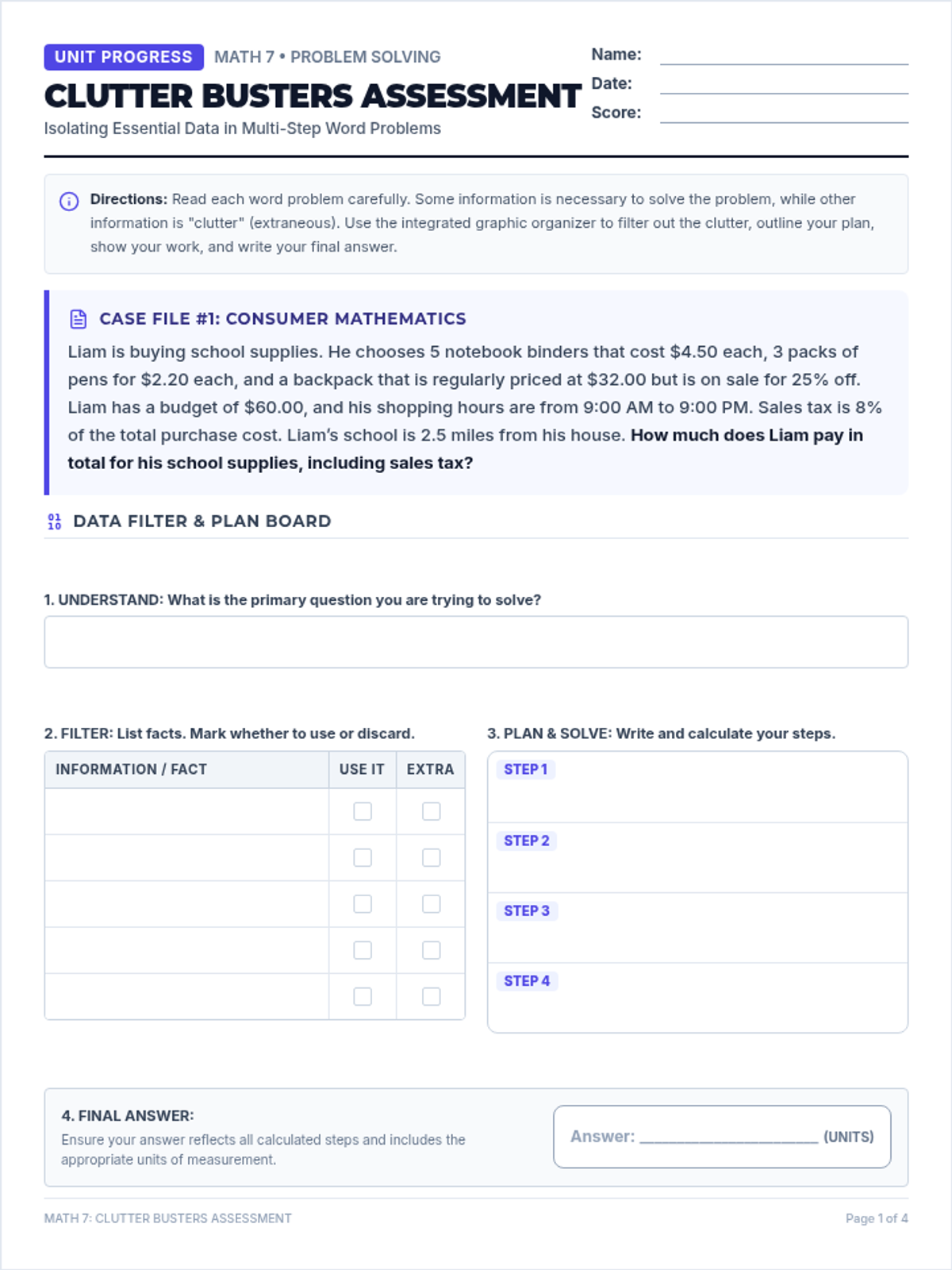
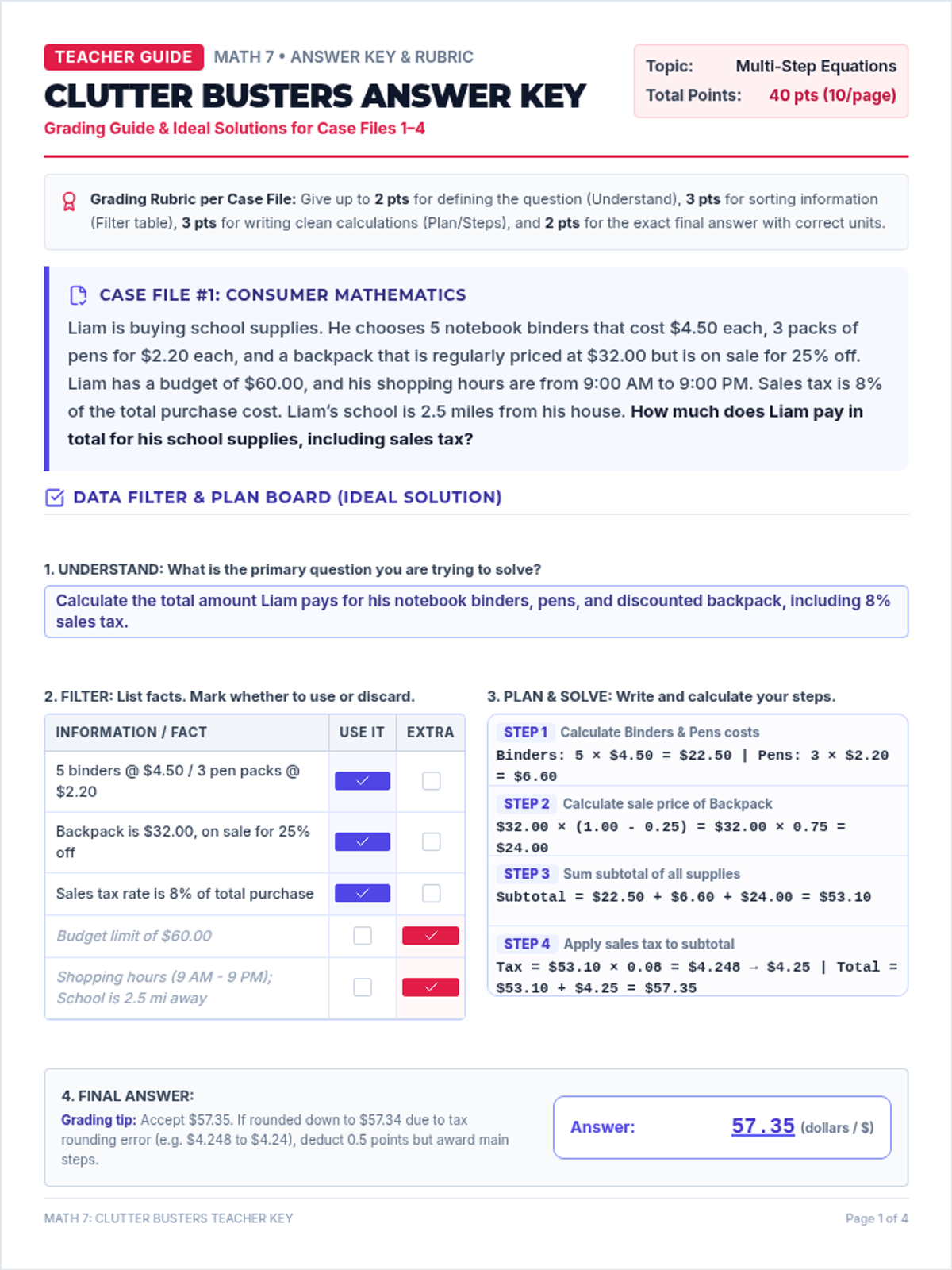
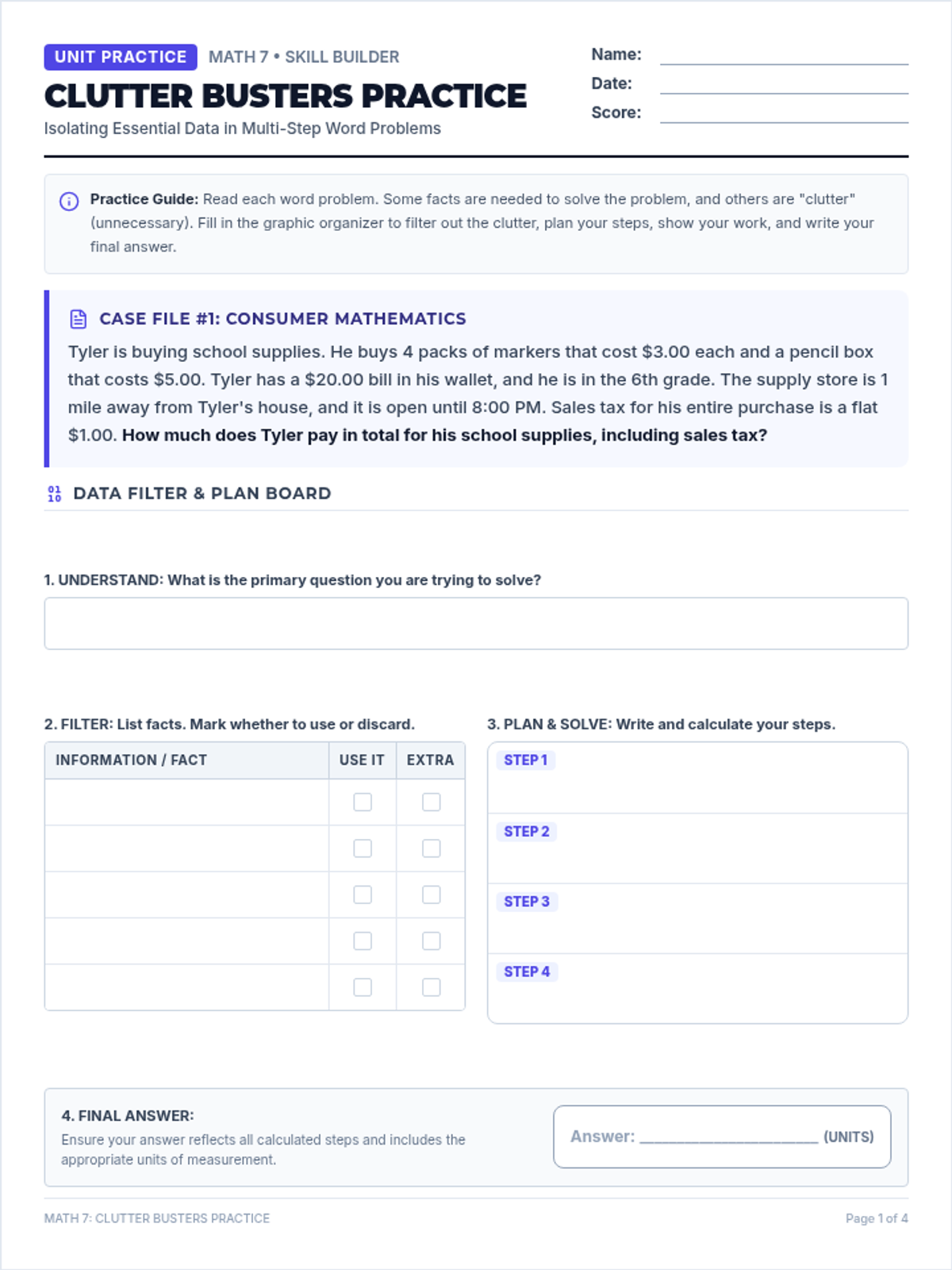
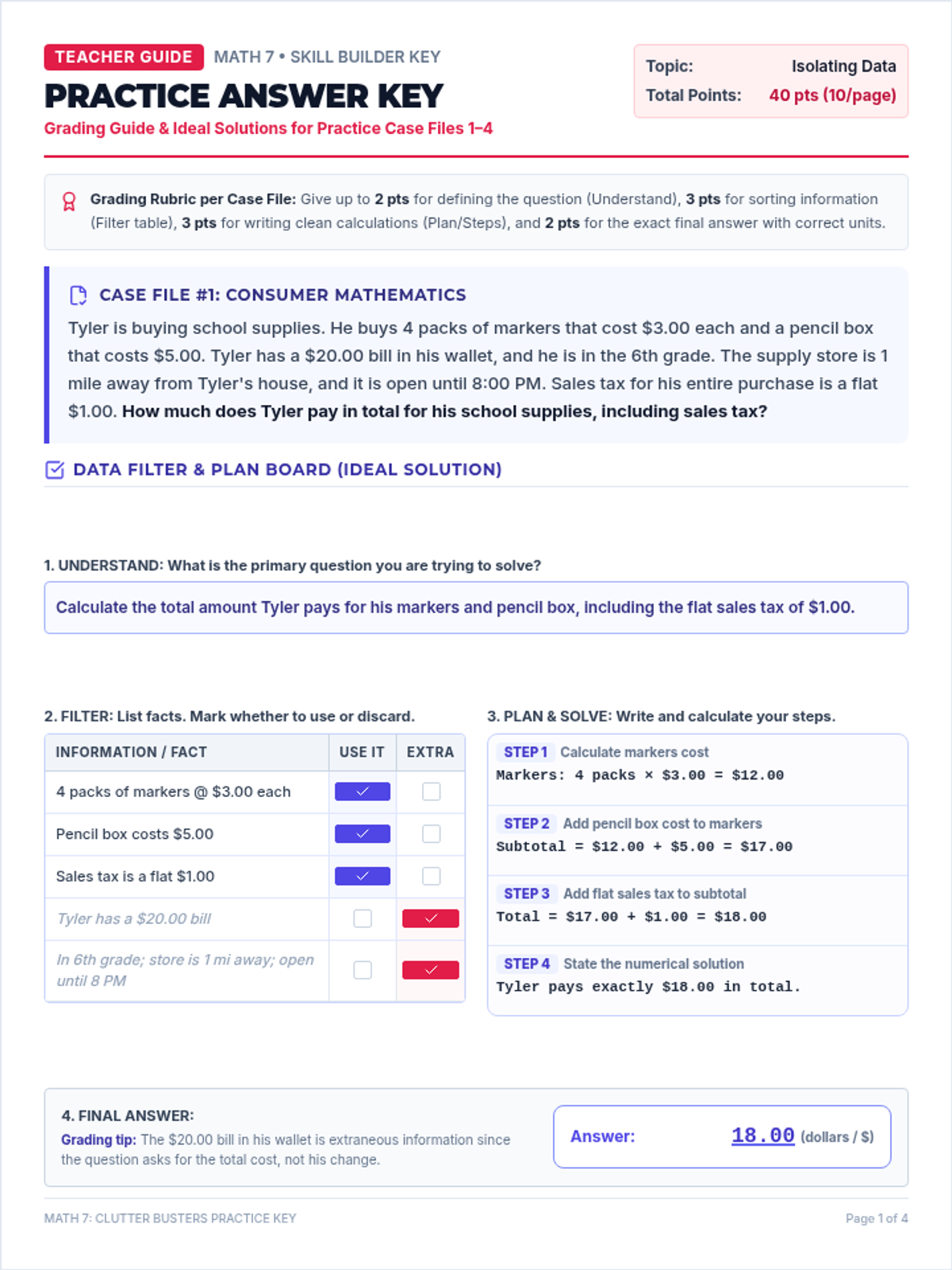
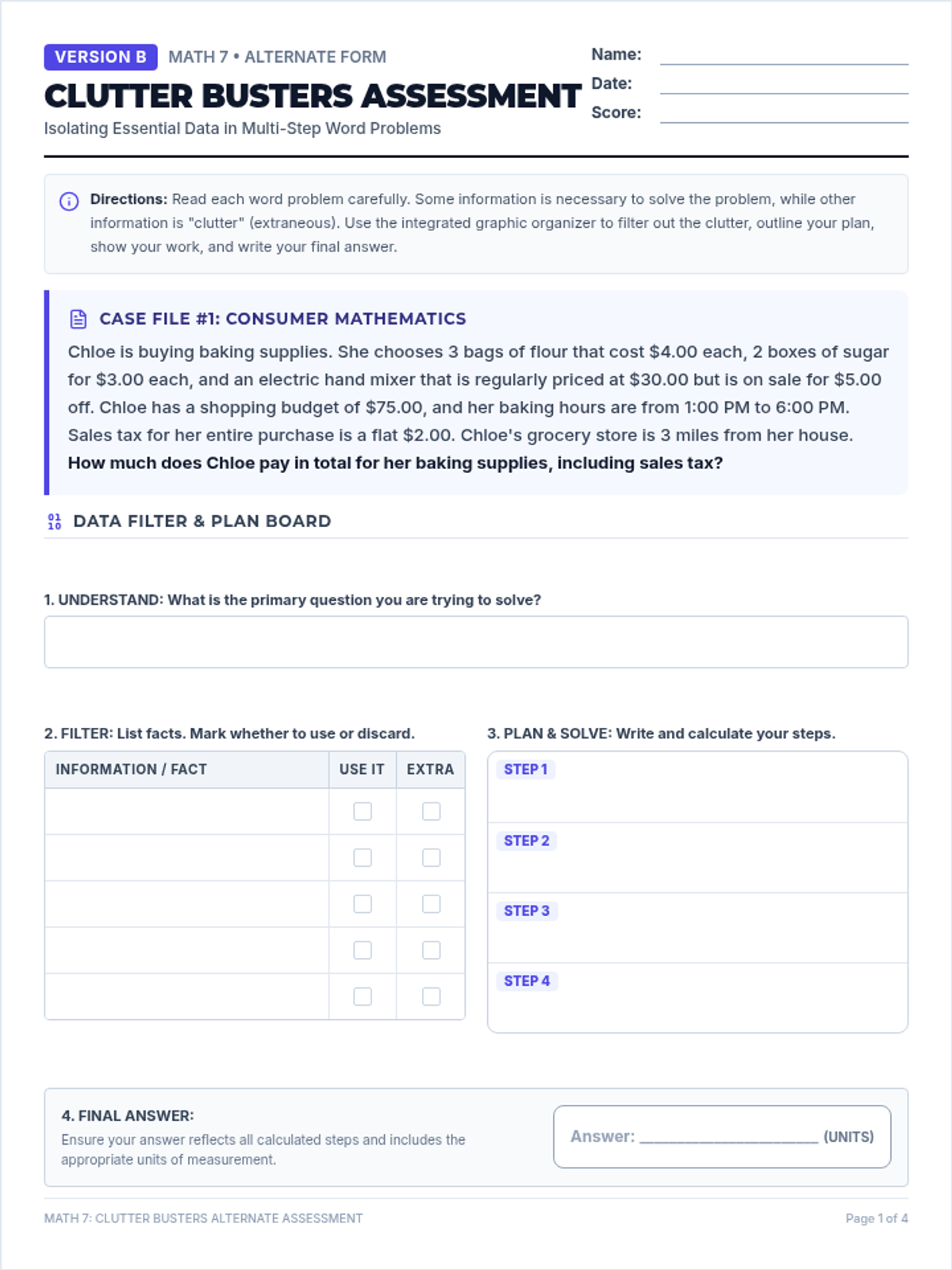
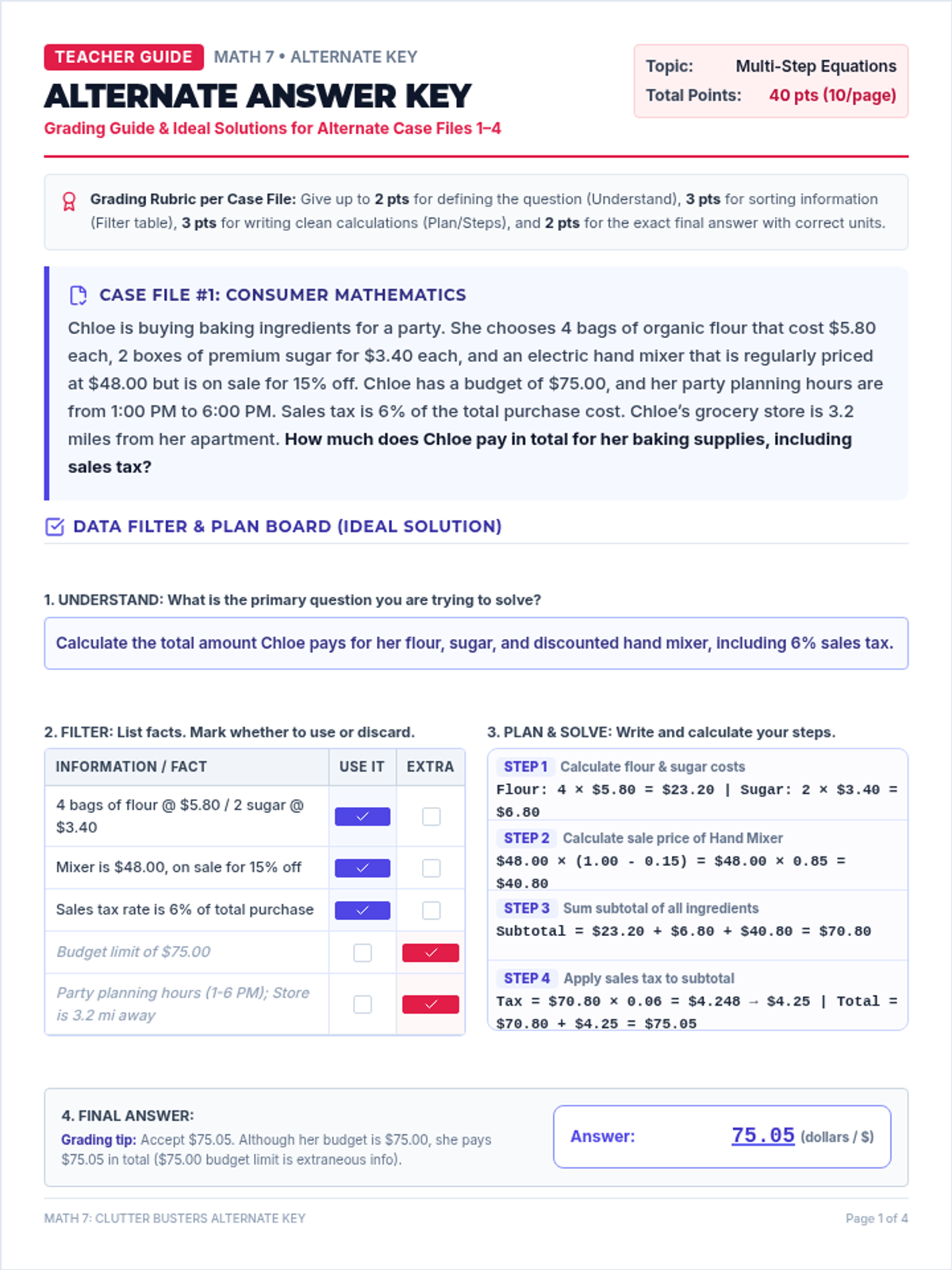
A middle-school math lesson focused on identifying and isolating extraneous information in multi-step word problems. It teaches students to separate relevant data from distracting context using an intuitive, column-based graphic organizer.
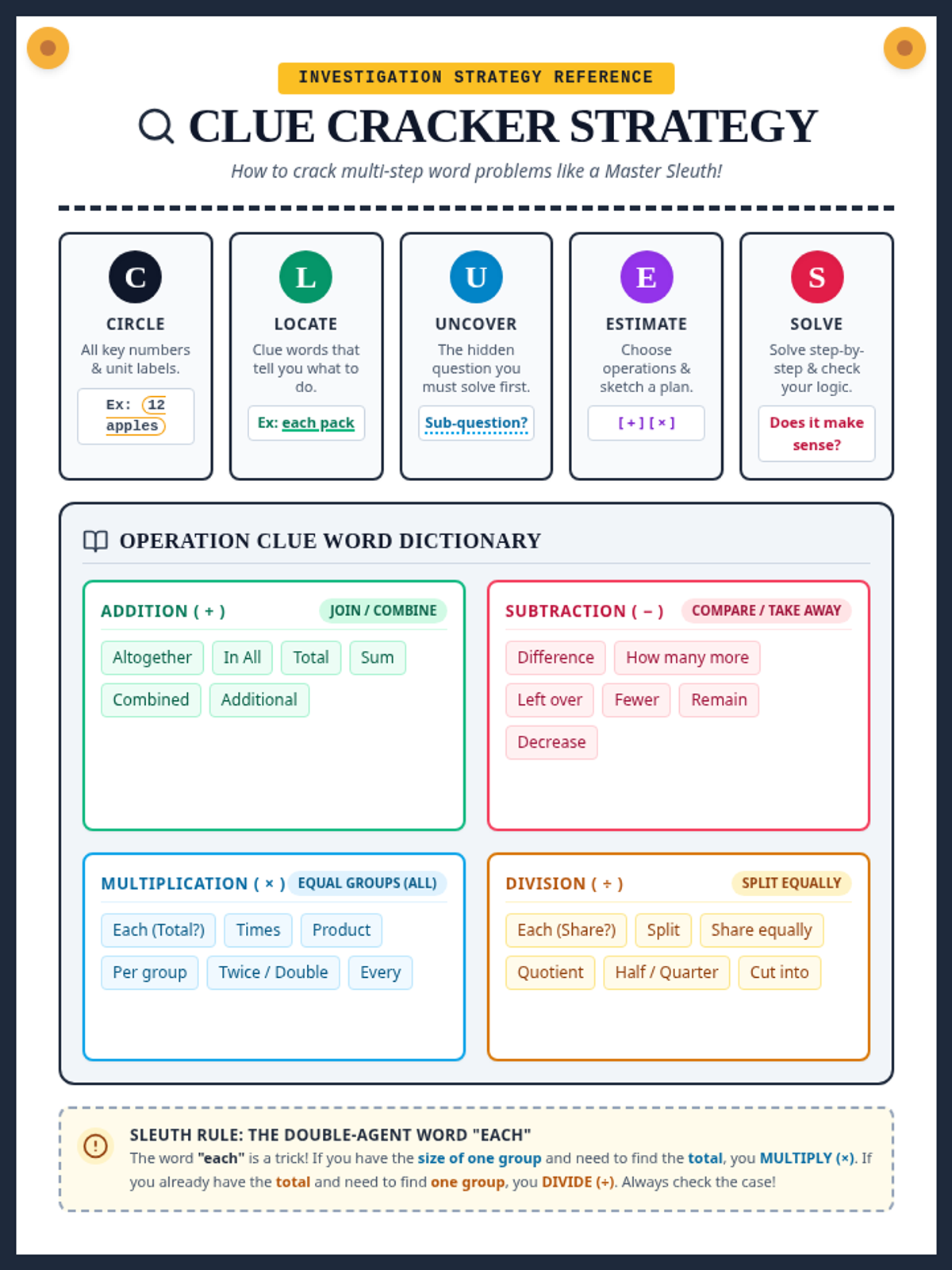
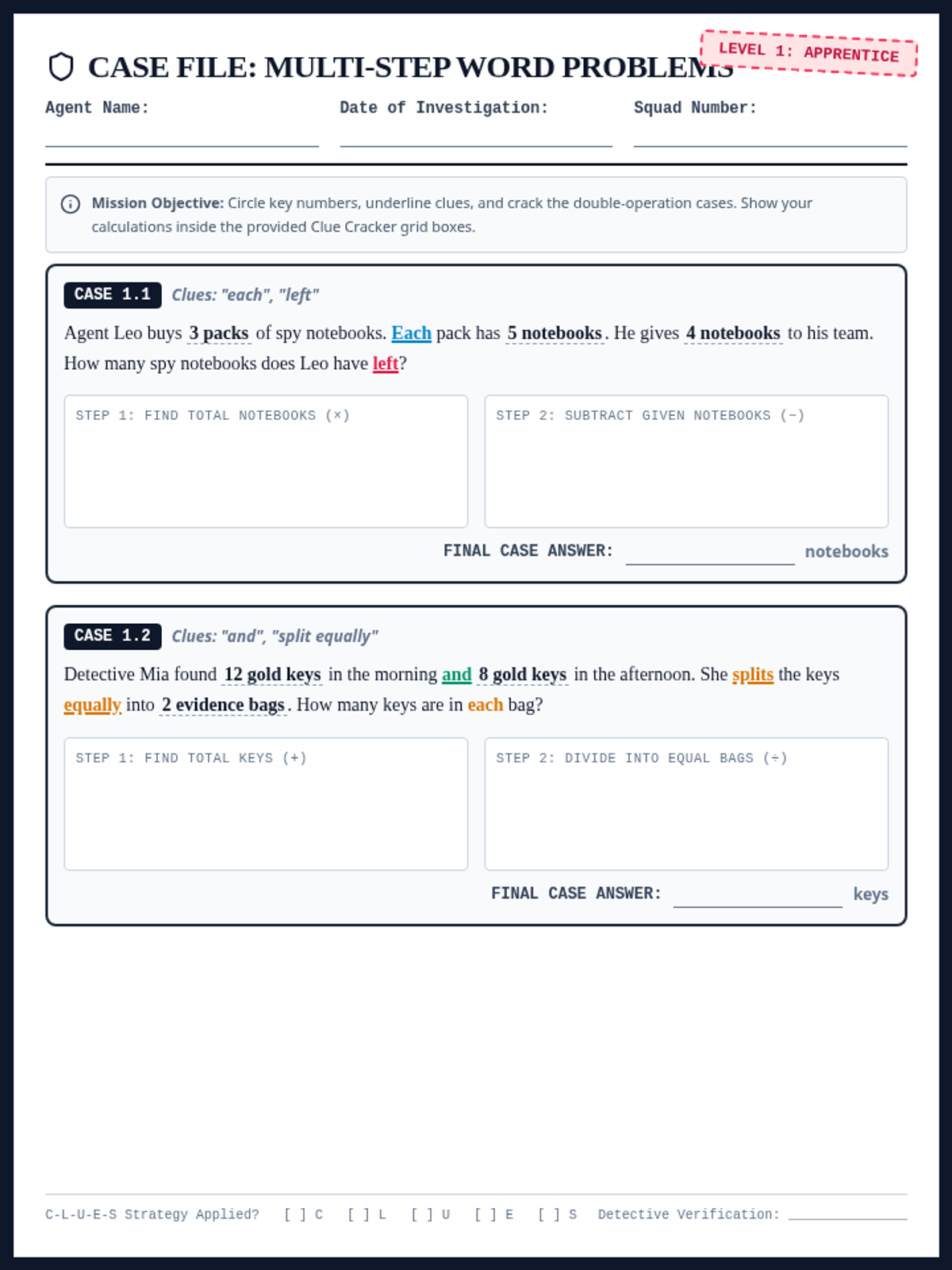
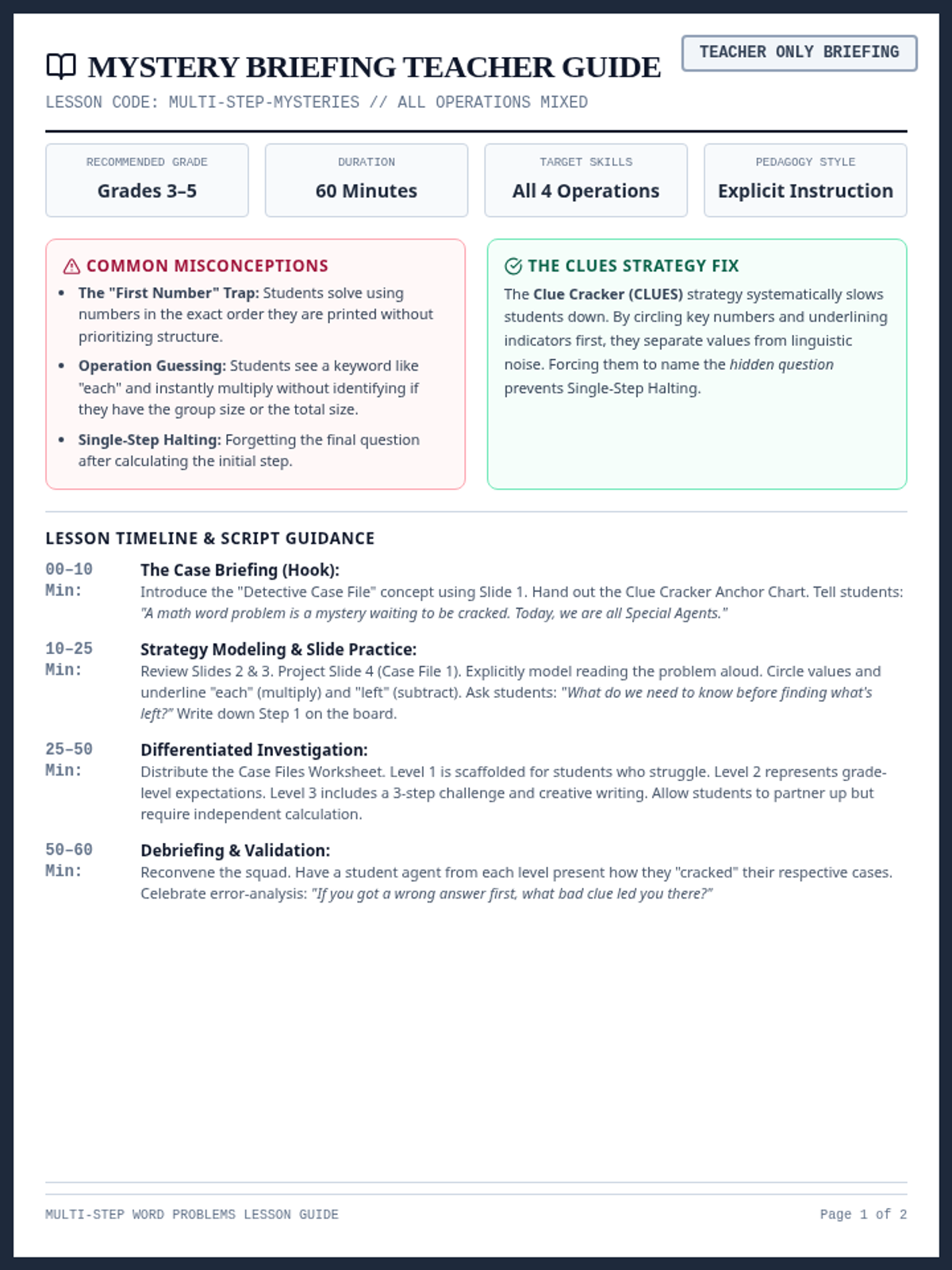
A comprehensive math lesson designed to master multi-step word problems using all four operations. The lesson features a 'Case File' detective theme, equipping students with a visual CUBES-inspired 'Clue Cracker' strategy, color-coded operation indicators, and differentiated investigation worksheets.
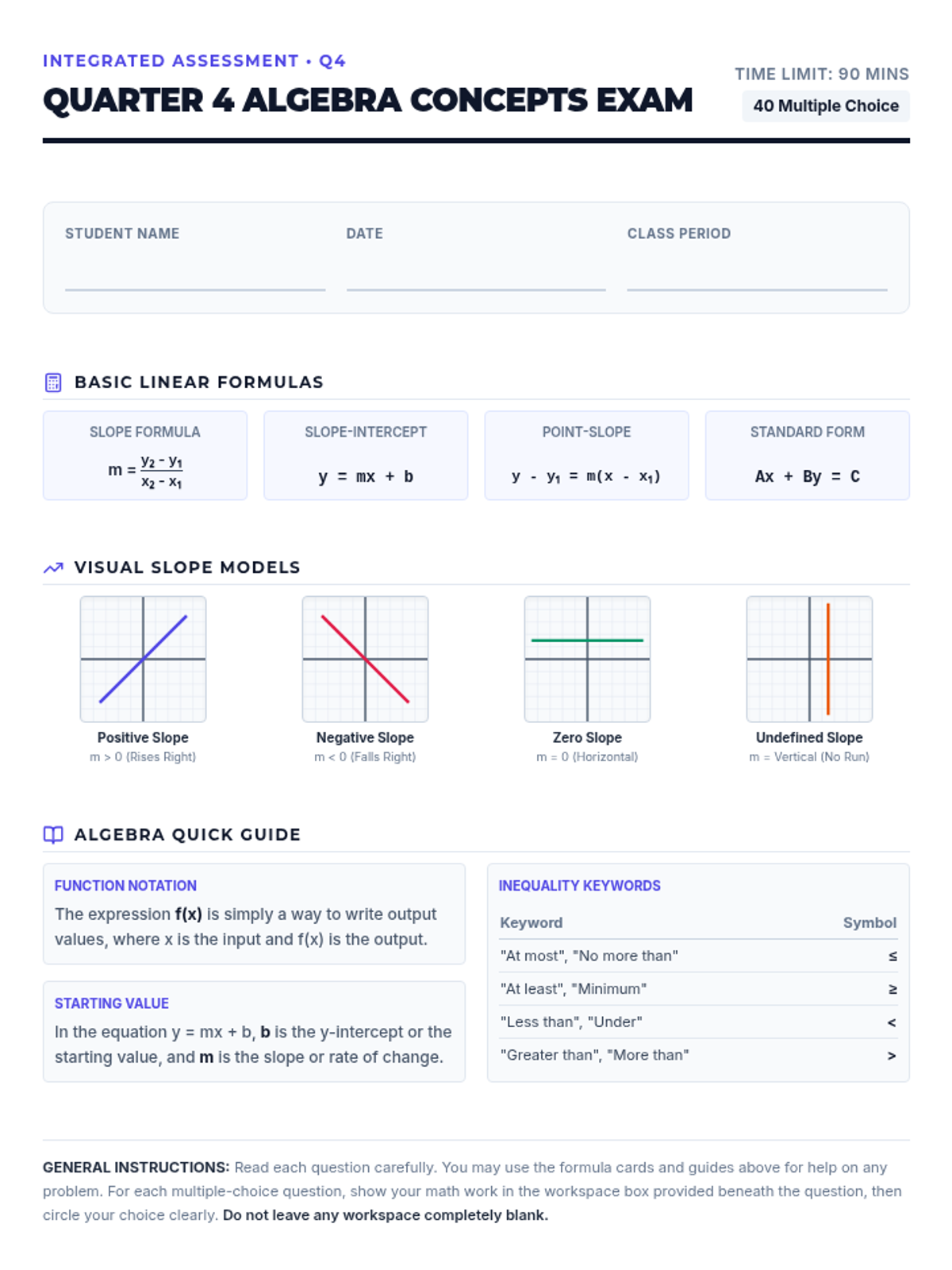
A comprehensive 40-question algebra cumulative exam assessing standard-form modeling, linear functions, slope, graphing, systems of equations, inequalities, and functions. Includes a student booklet with reference sheet and a separate comprehensive answer key with detailed solutions.
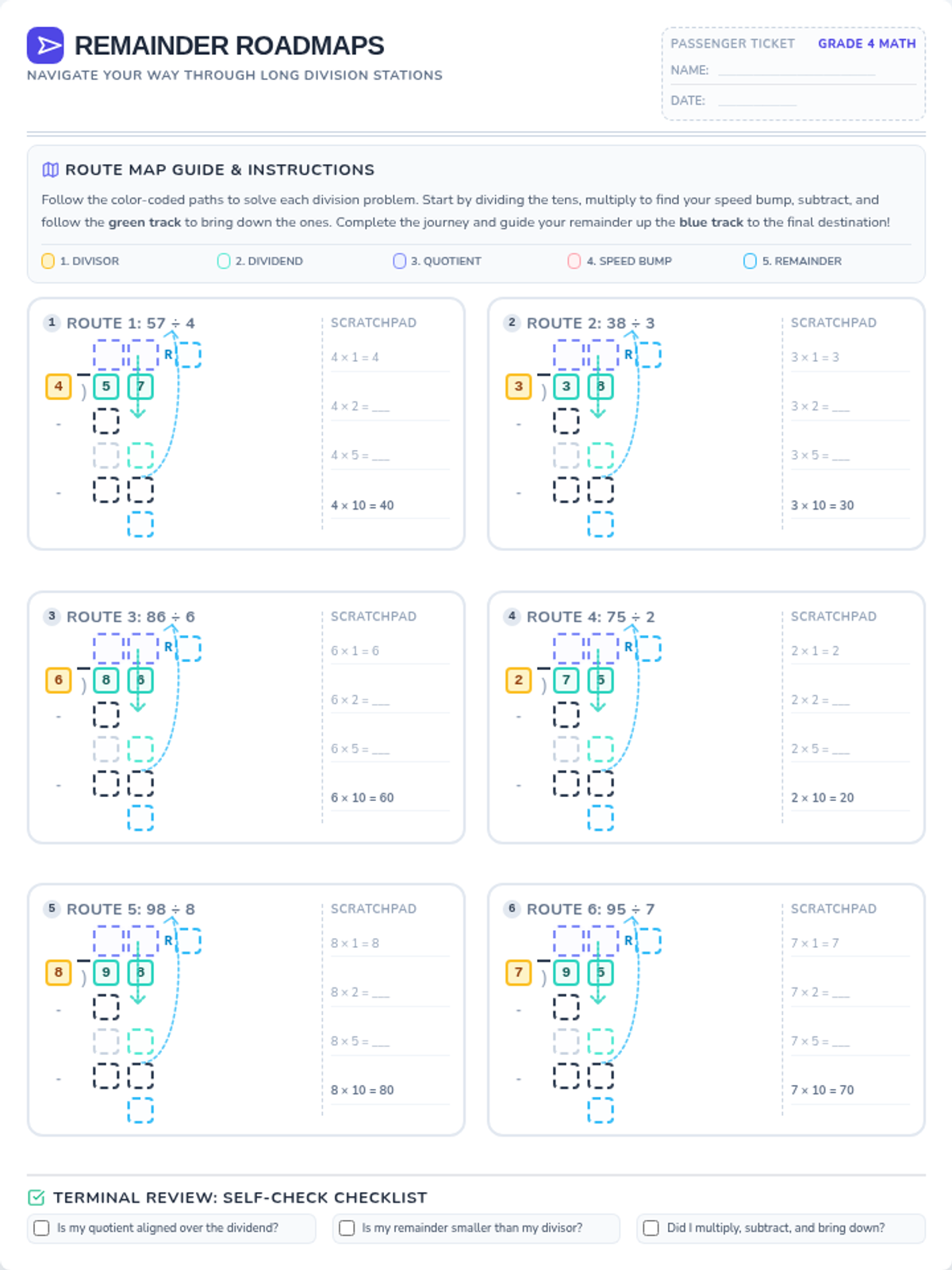
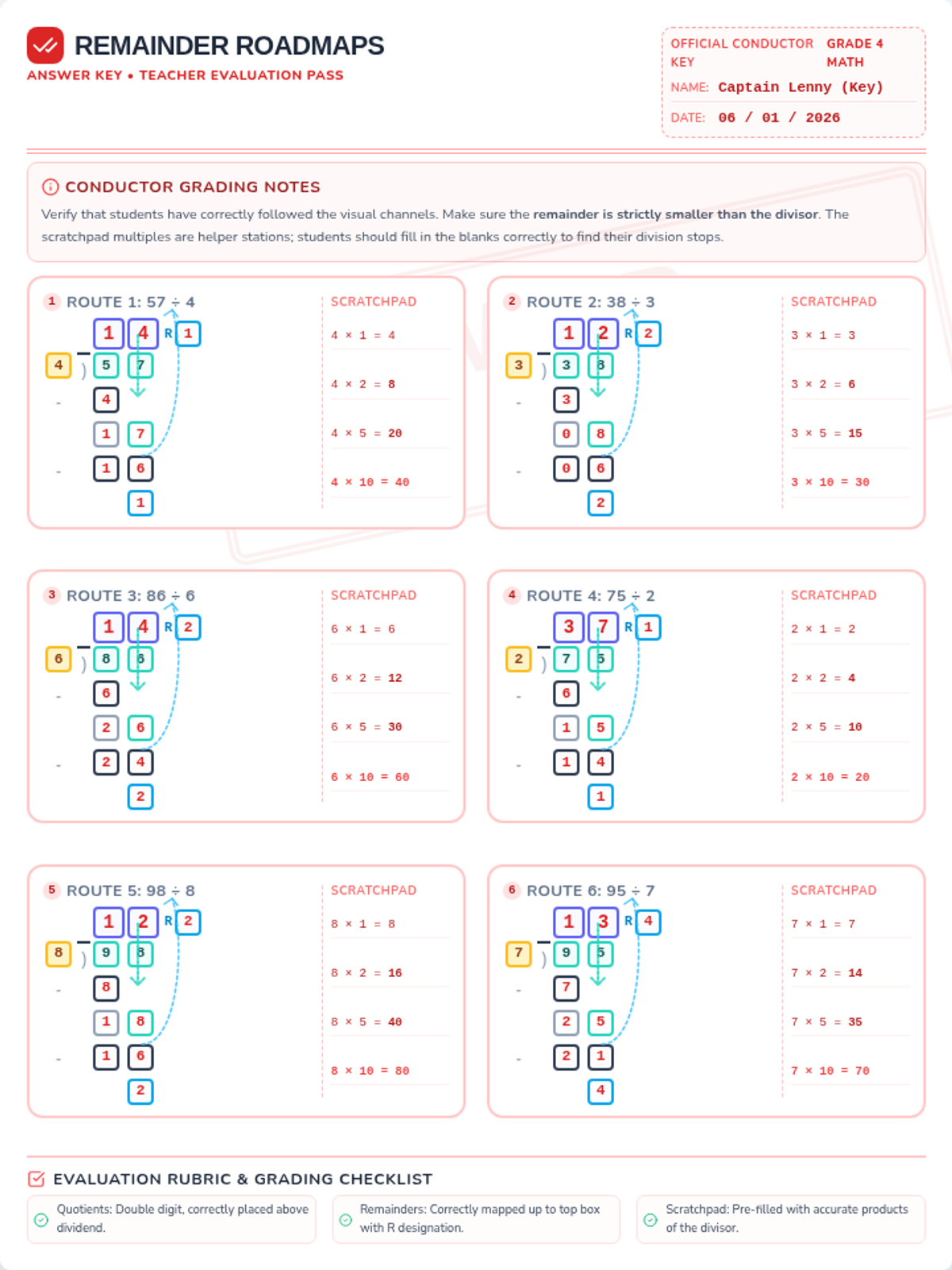
A fourth-grade math lesson introducing long division with remainders using color-coded grid paths. Students learn to align quotients, products, and remainders within a structured, highly-scaffolded visual layout to build procedural confidence.
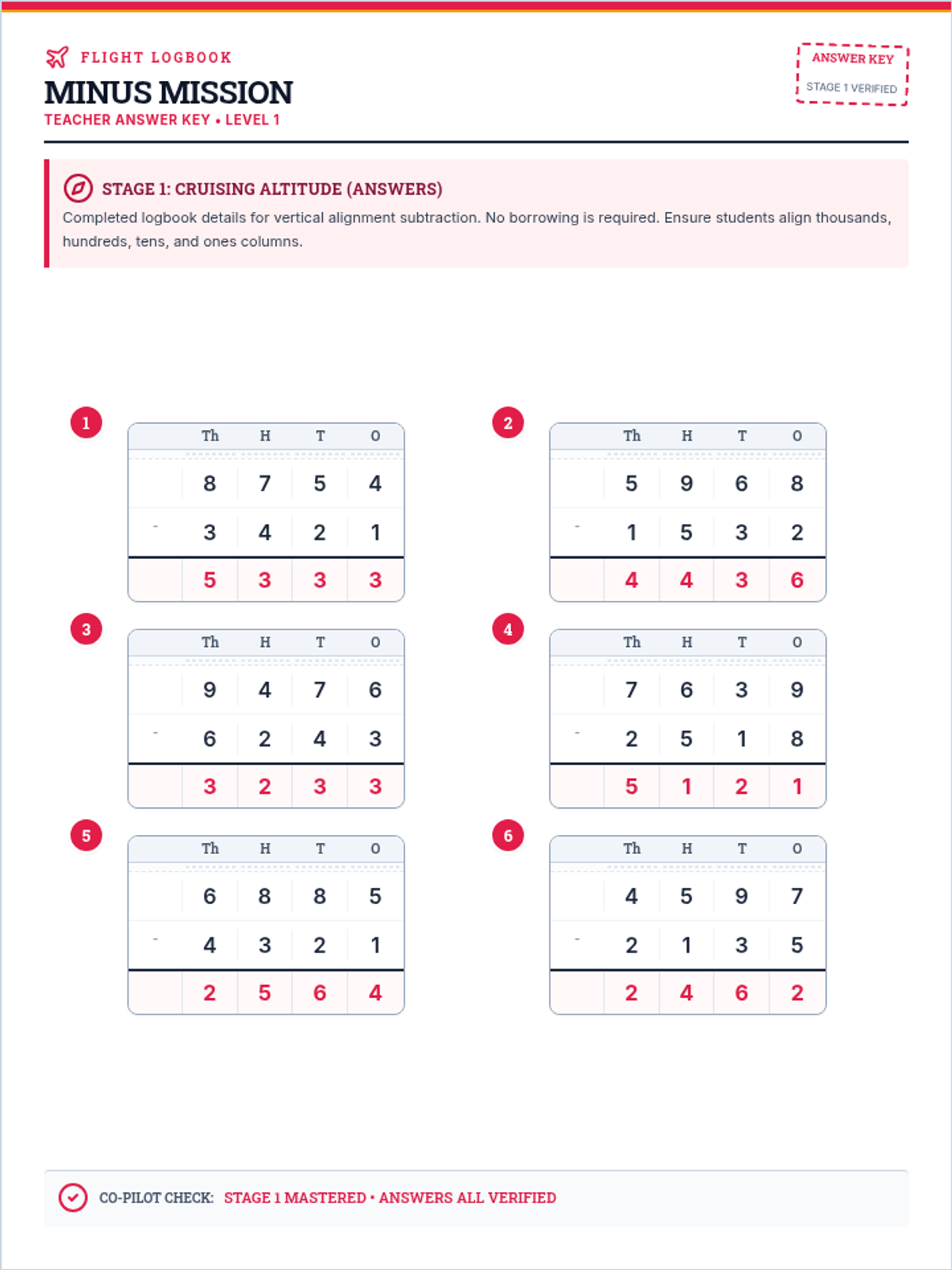
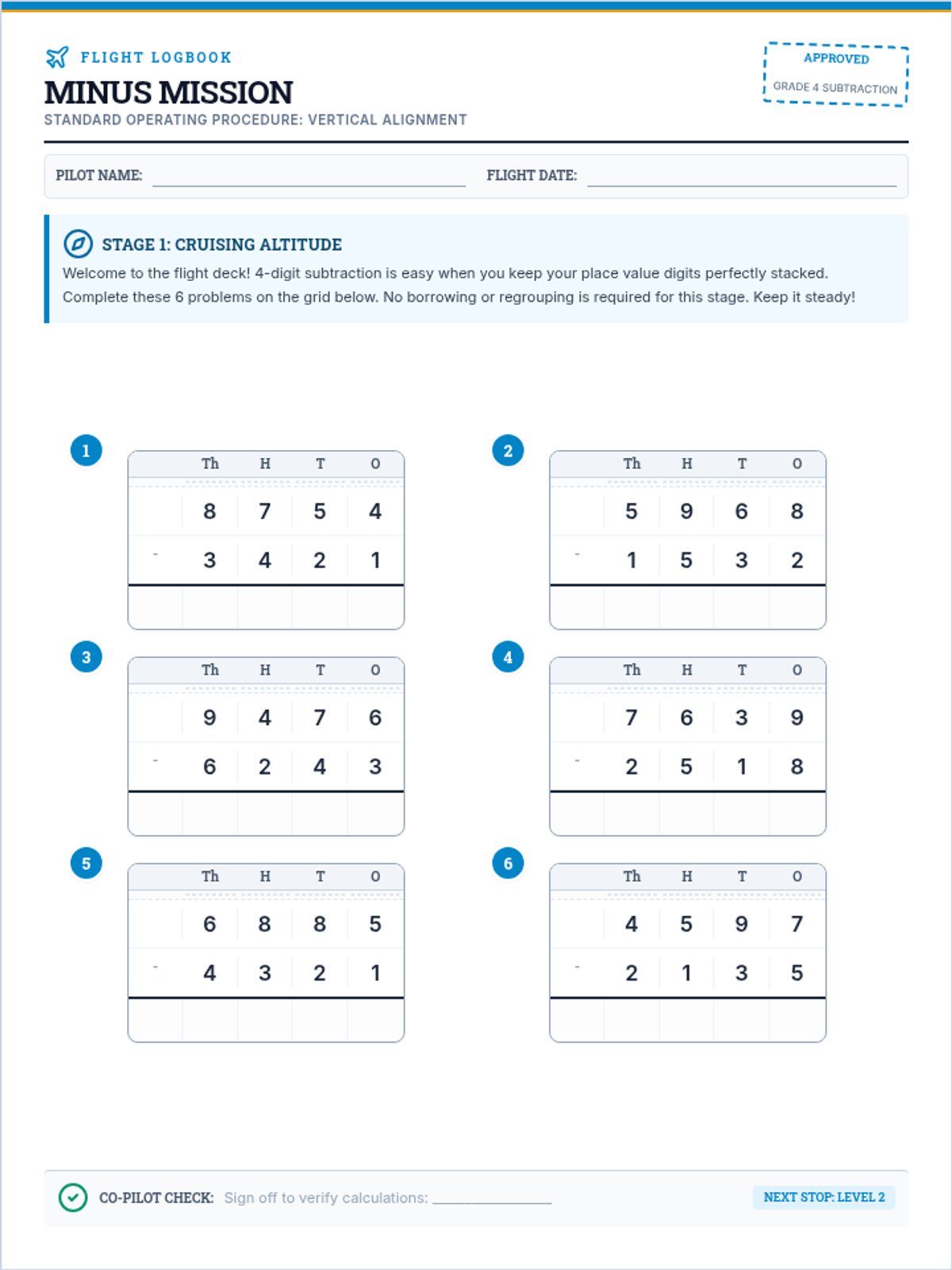
A structured math lesson on 4-digit subtraction within 10,000. It utilizes vertical place value grids to guide students through a multi-step progression from no-regrouping to advanced regrouping across zeros.
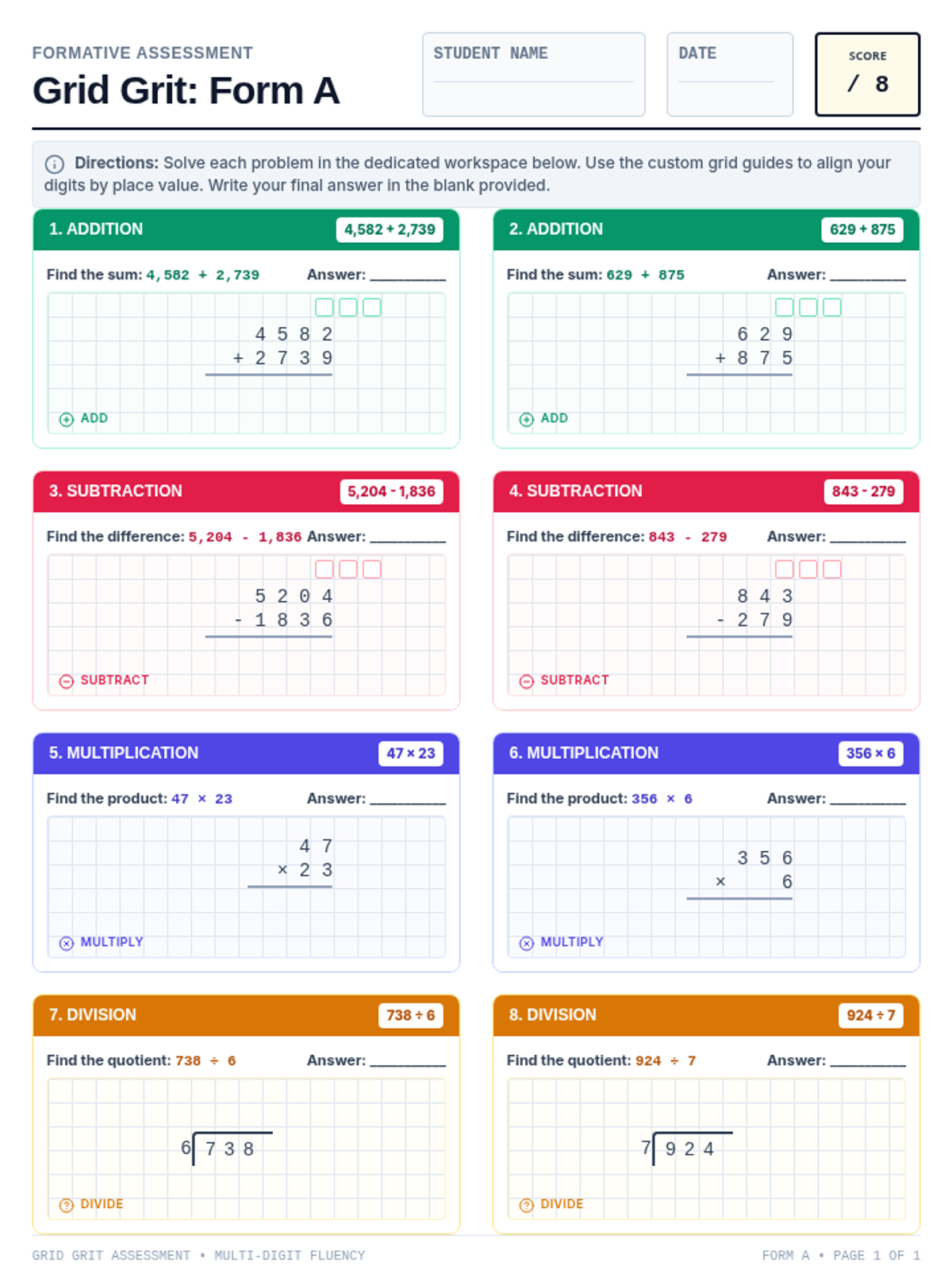
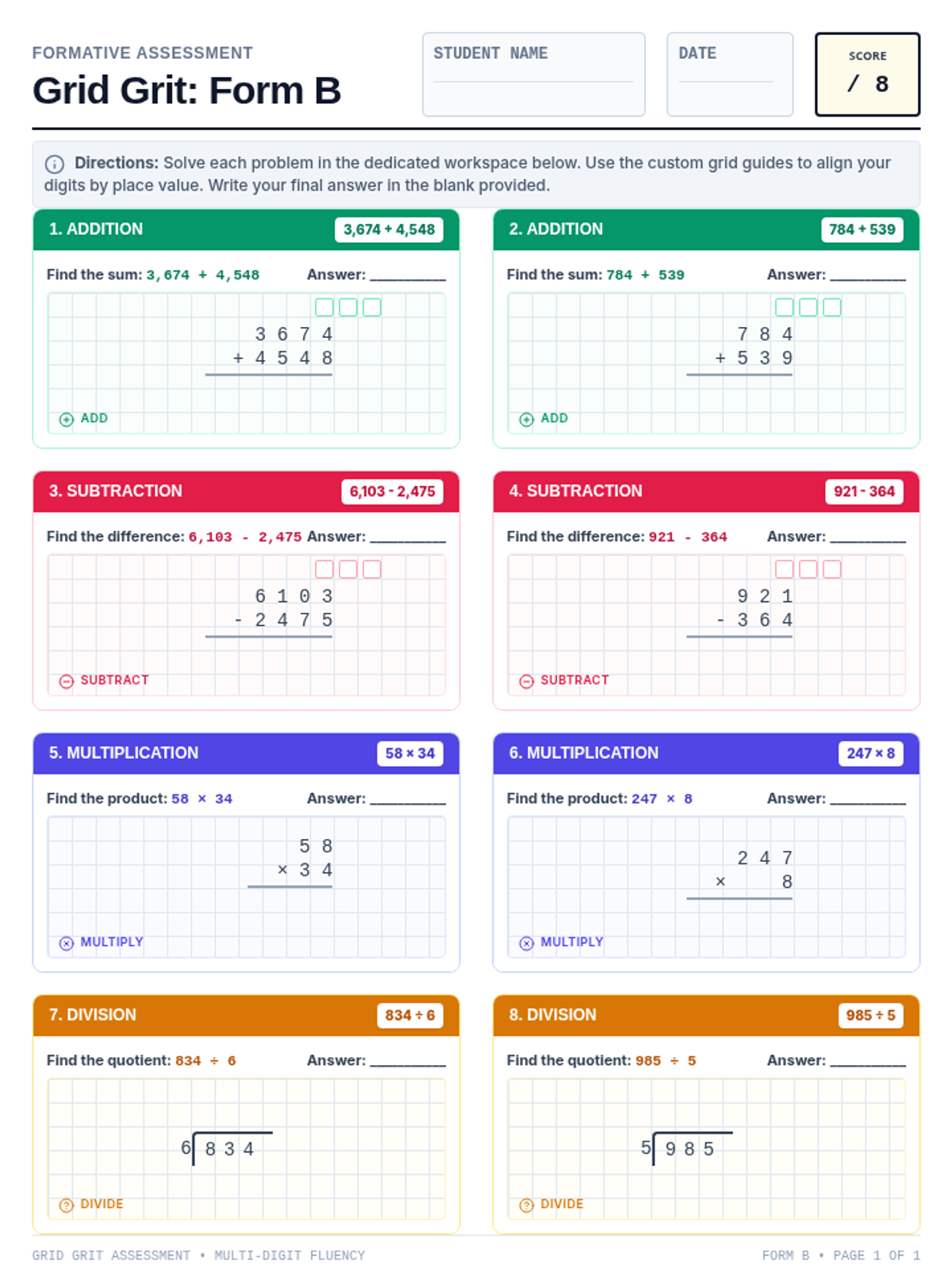
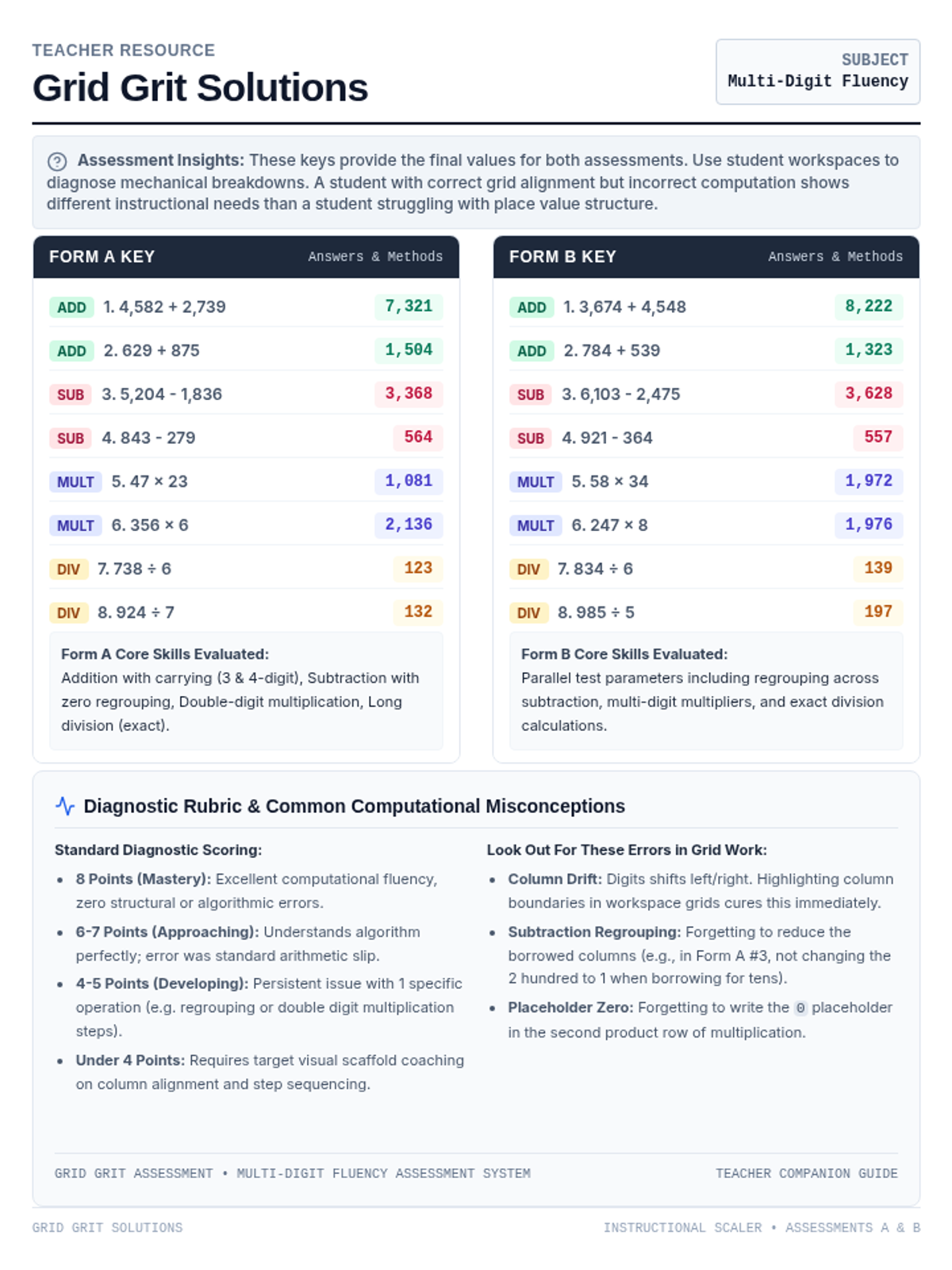
A comprehensive assessment lesson focusing on computational fluency across the four operations using multi-digit whole numbers. Students are supported by highly structured grid alignment guides, color-coded operation cues, and dedicated workspace areas.
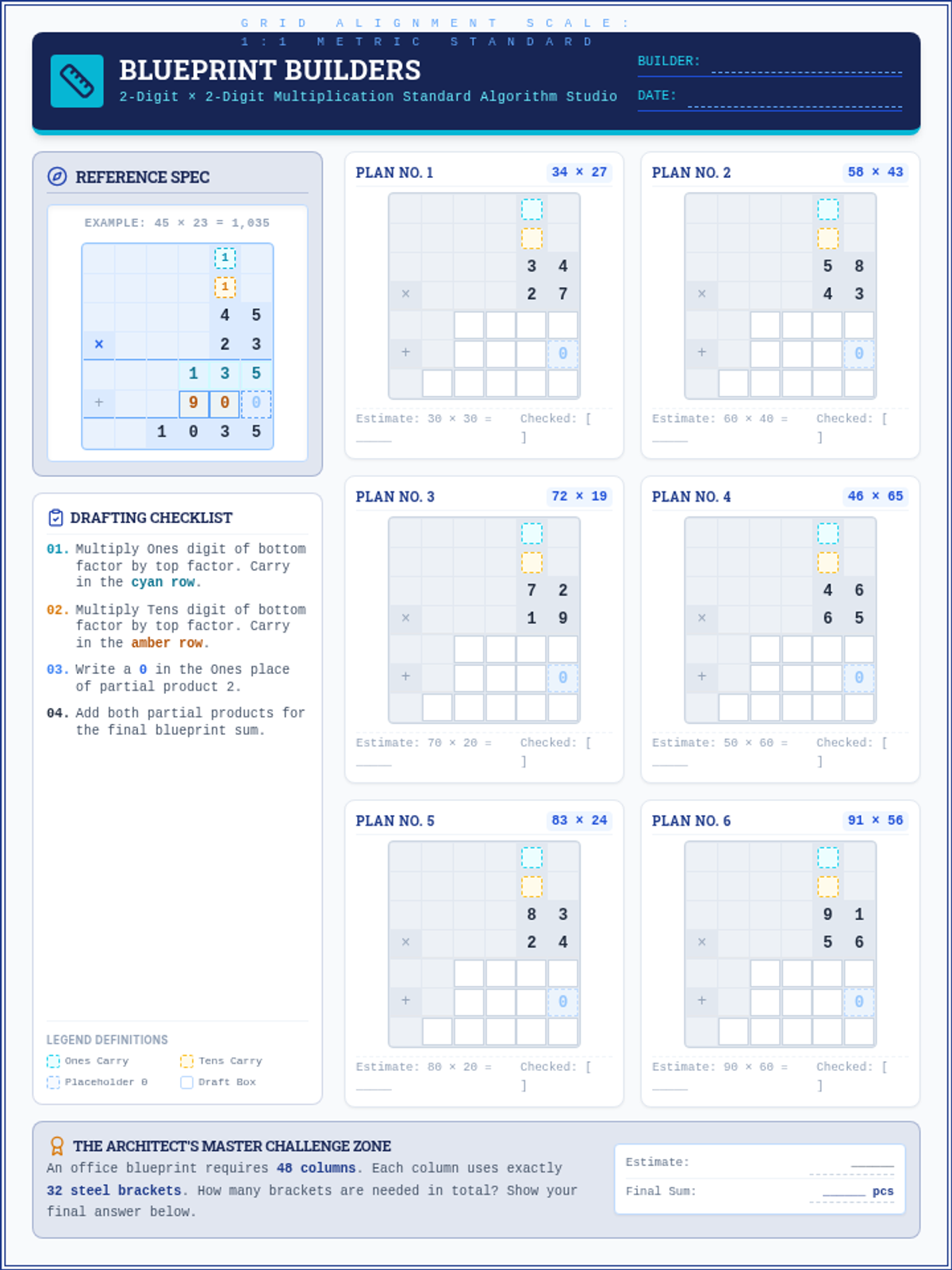
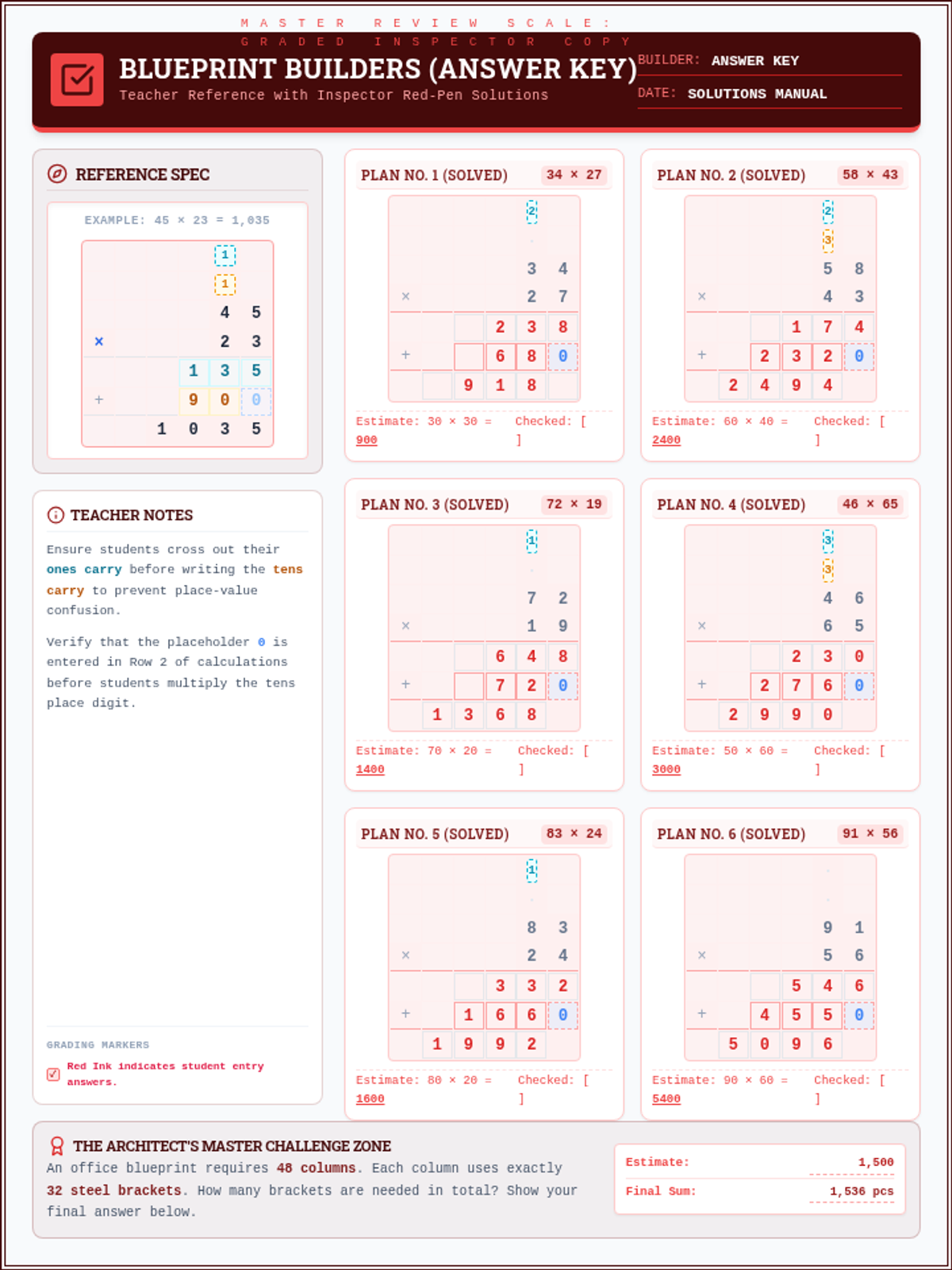
A math practice lesson focused on 2-digit by 2-digit multiplication using the standard algorithm, featuring blueprint-style grid alignment guides to support student accuracy and place value understanding.
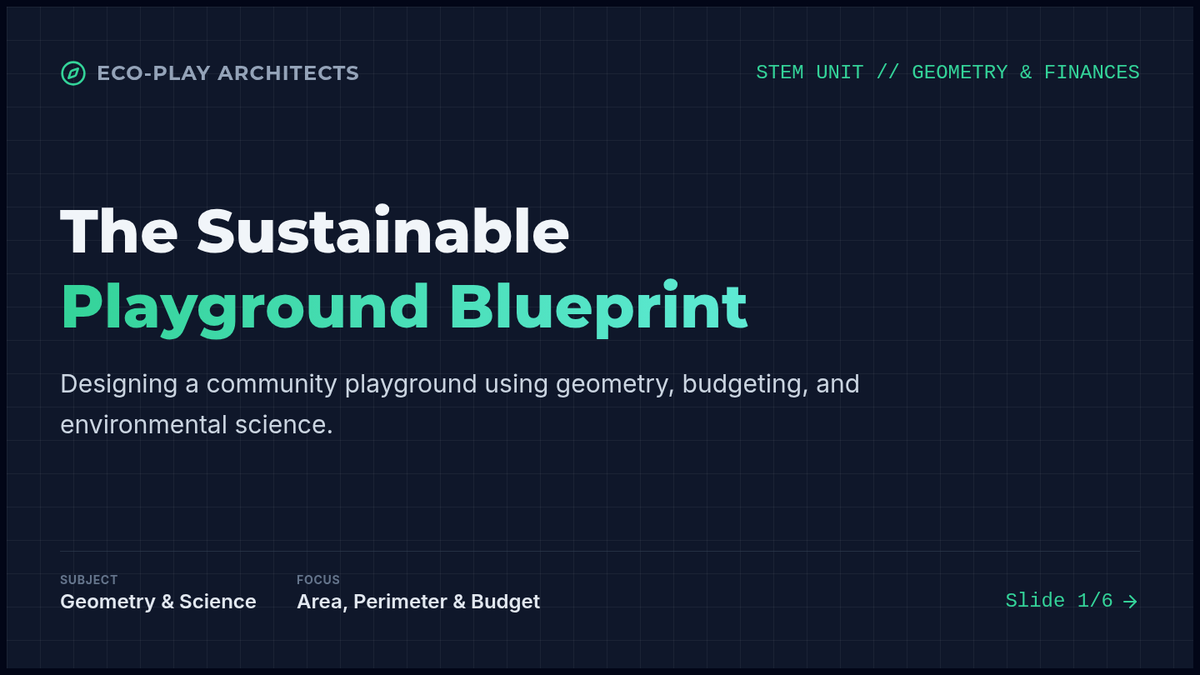
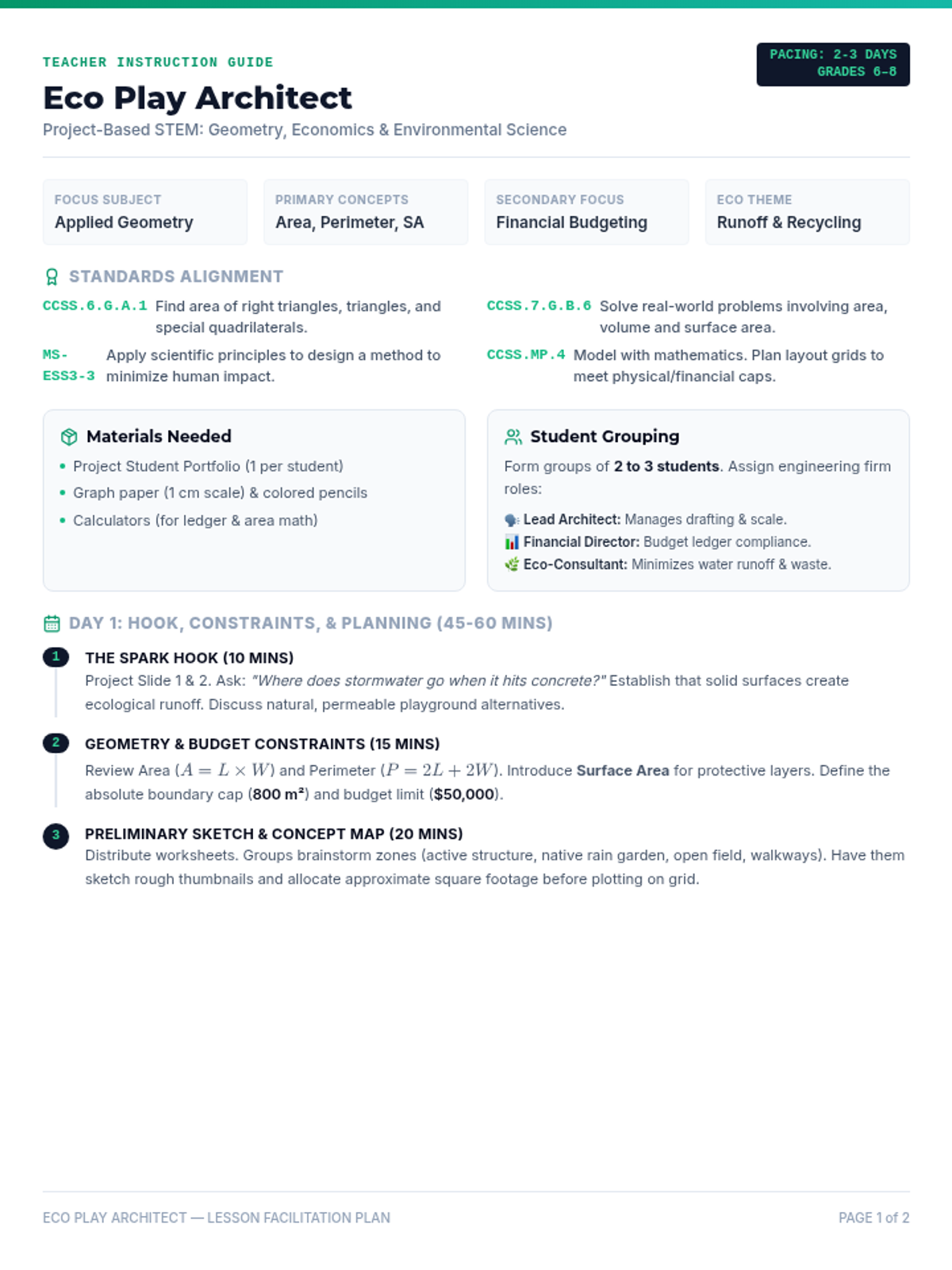
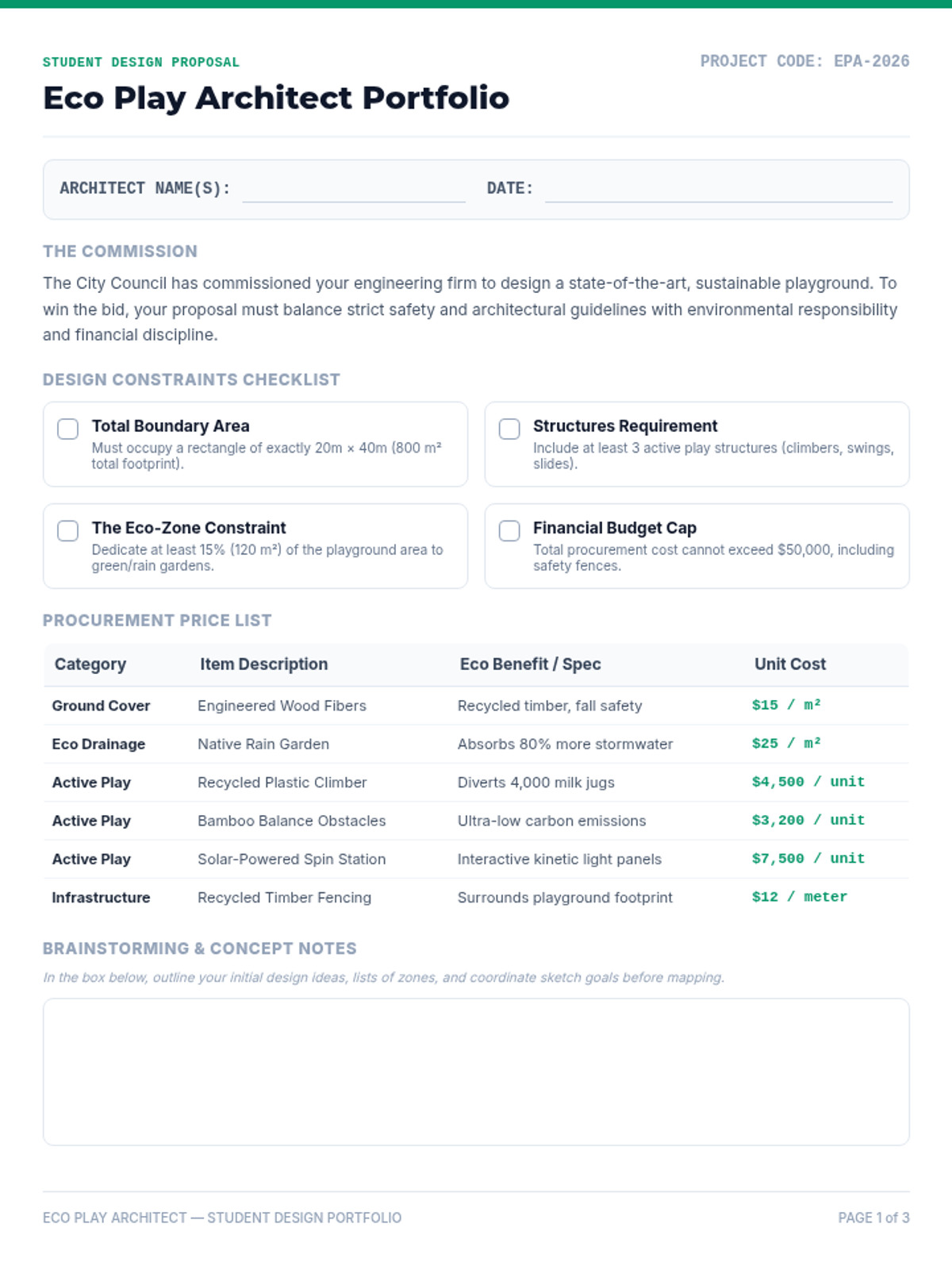
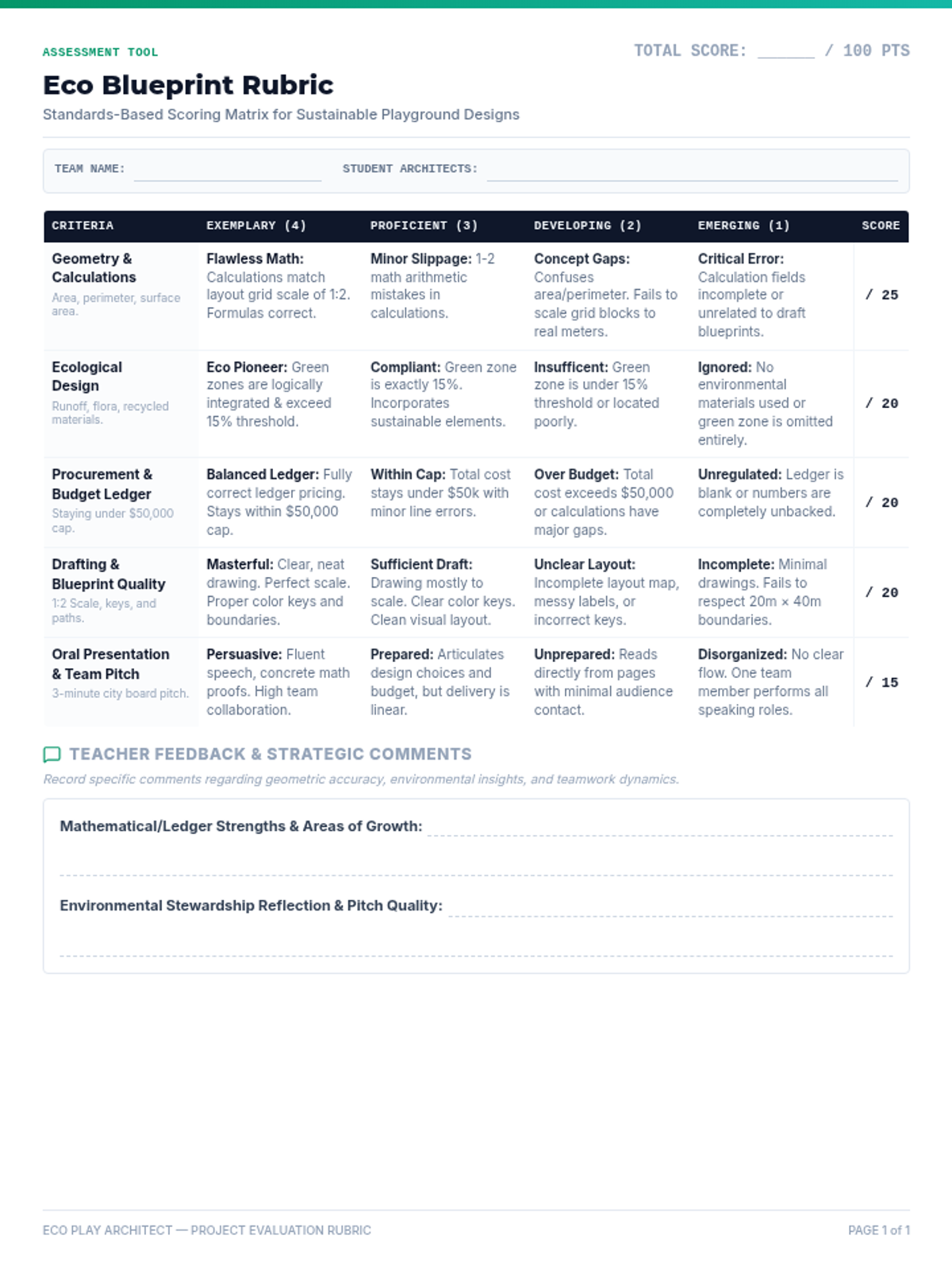
A hands-on STEM project where students design a sustainable playground, using geometry (area, perimeter, surface area) and financial math to stay within a budget and environmental constraints.
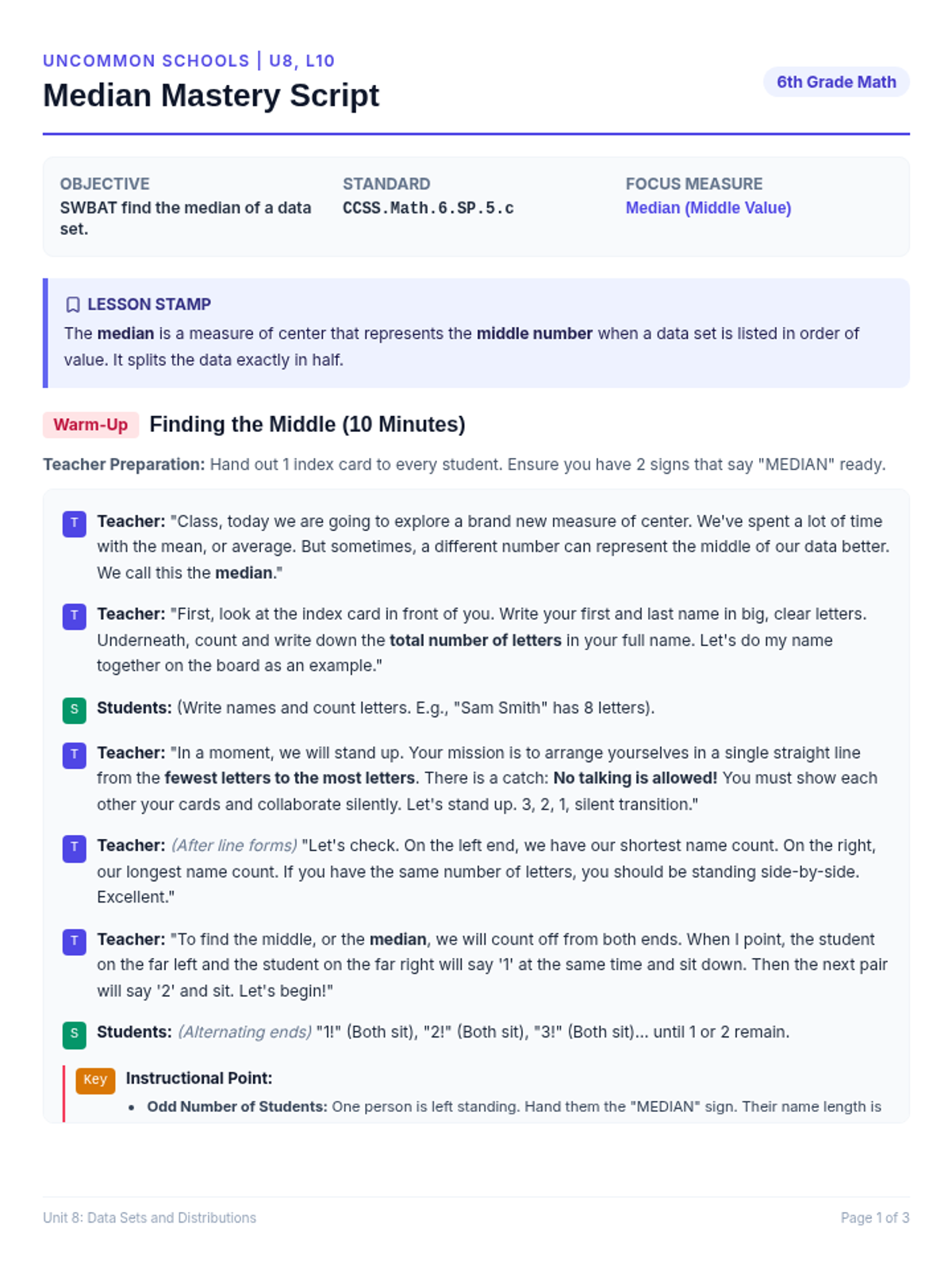
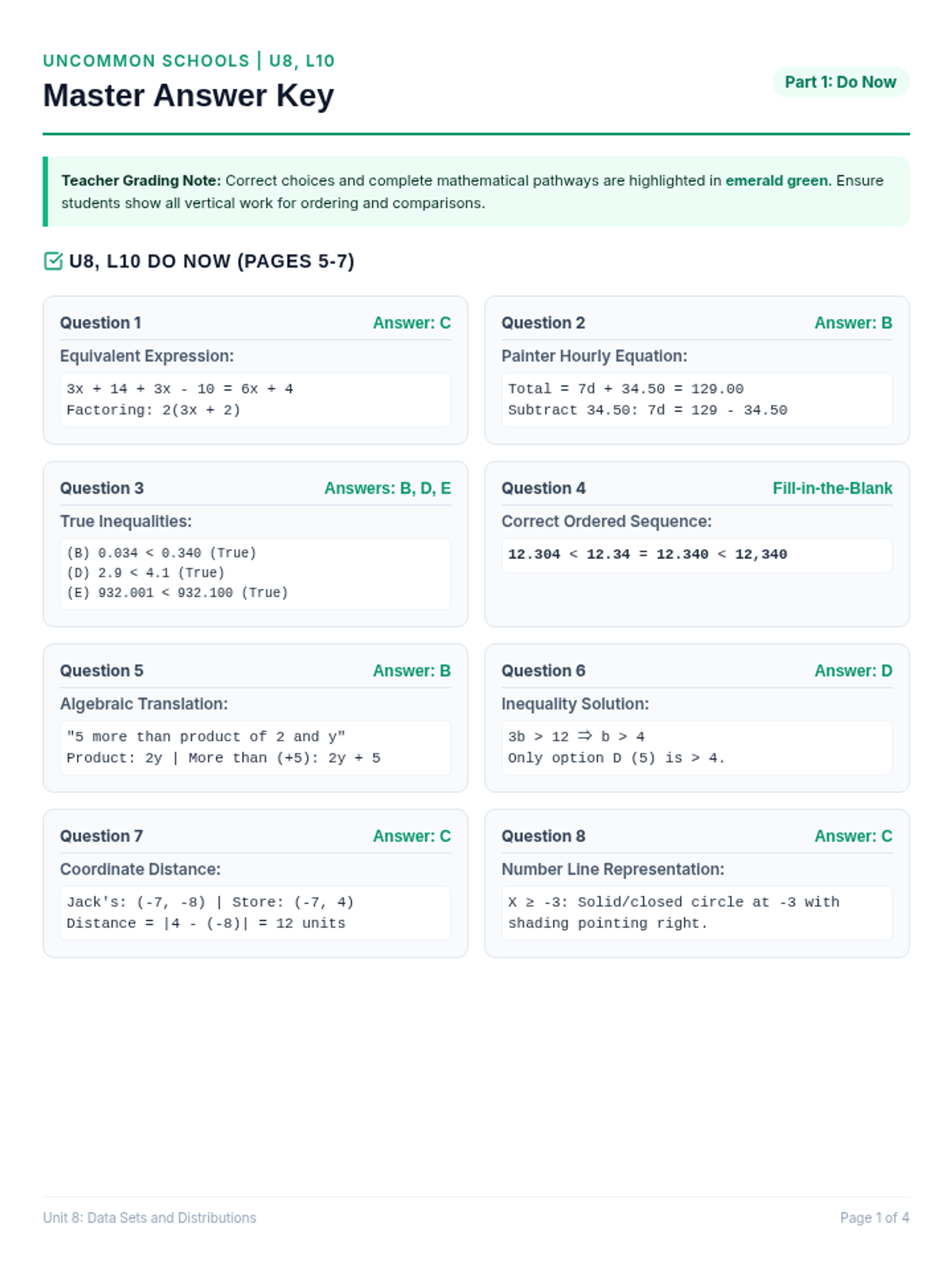
This lesson guides students to discover and calculate the median as a measure of center. It contains a complete turn-by-turn annotated script and a comprehensive answer key for all pages in the unit pack.
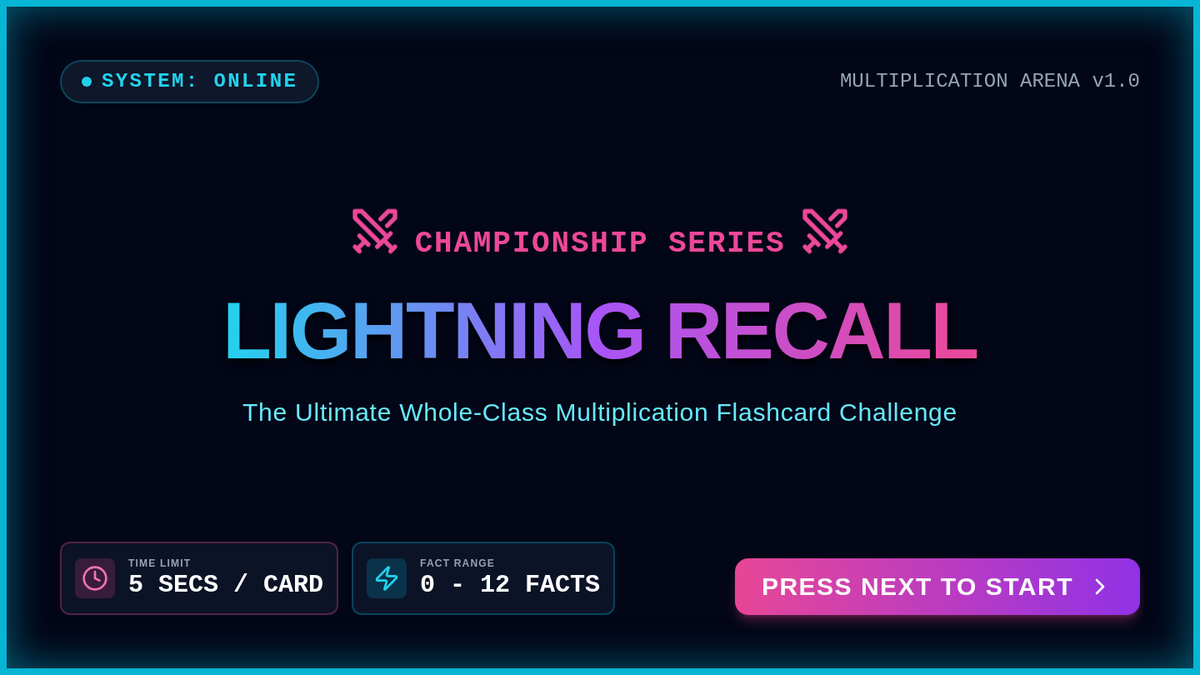
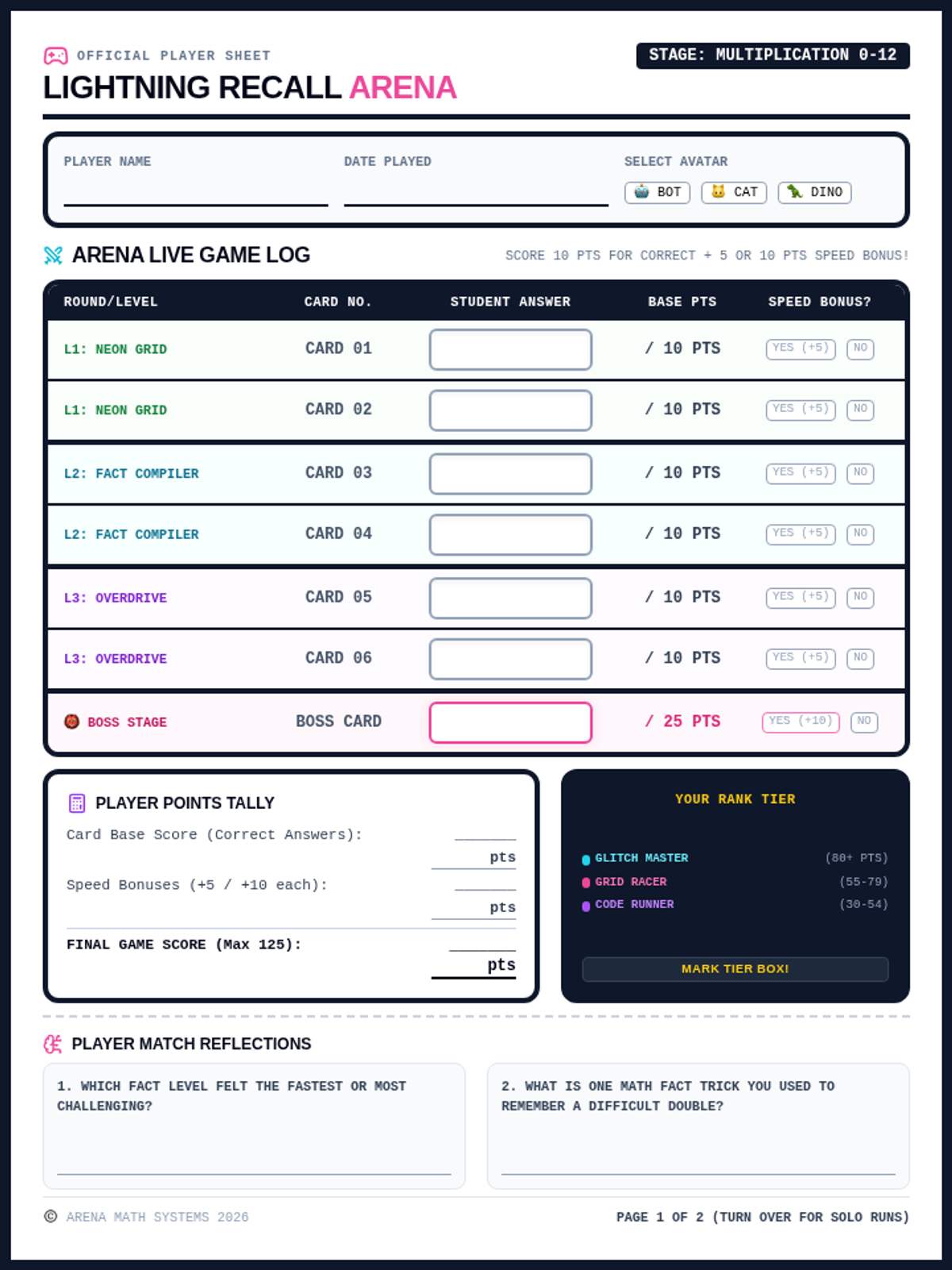
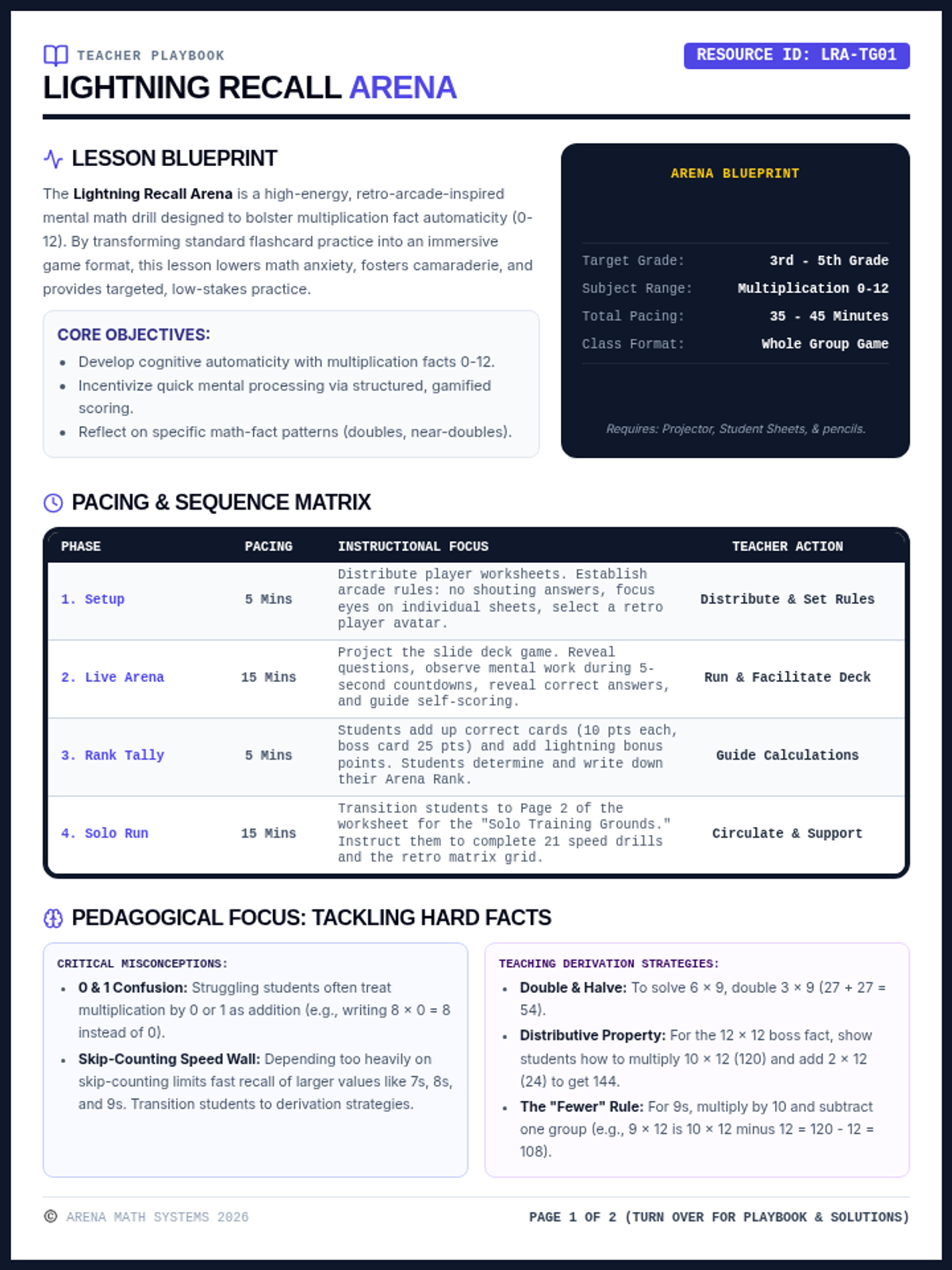
An energetic, neon-arcade-themed multiplication flashcard lesson designed to boost recall speed and mastery for facts 0-12. Includes a whole-class slide deck game, a student response worksheet, and a teacher facilitation guide.
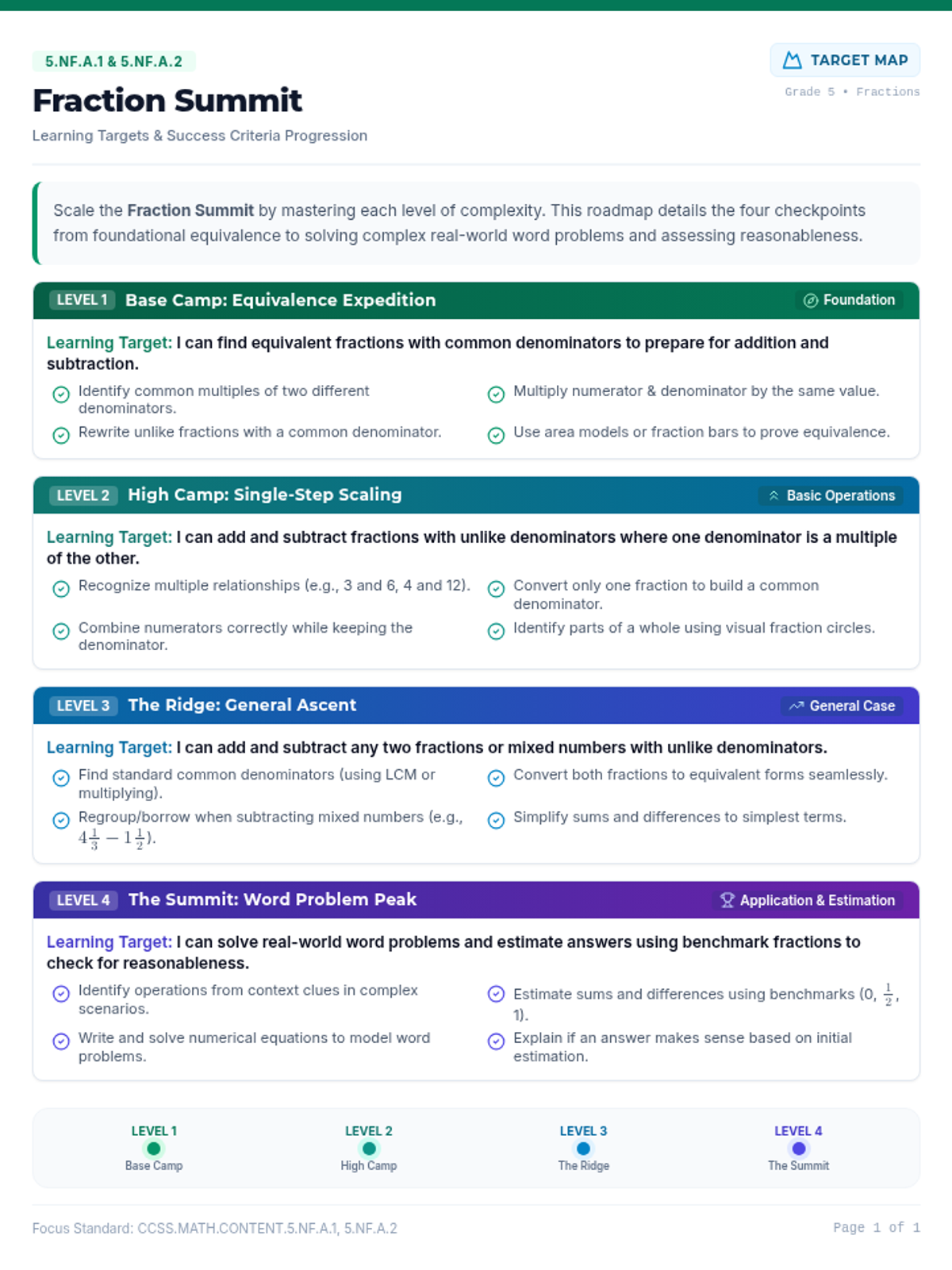
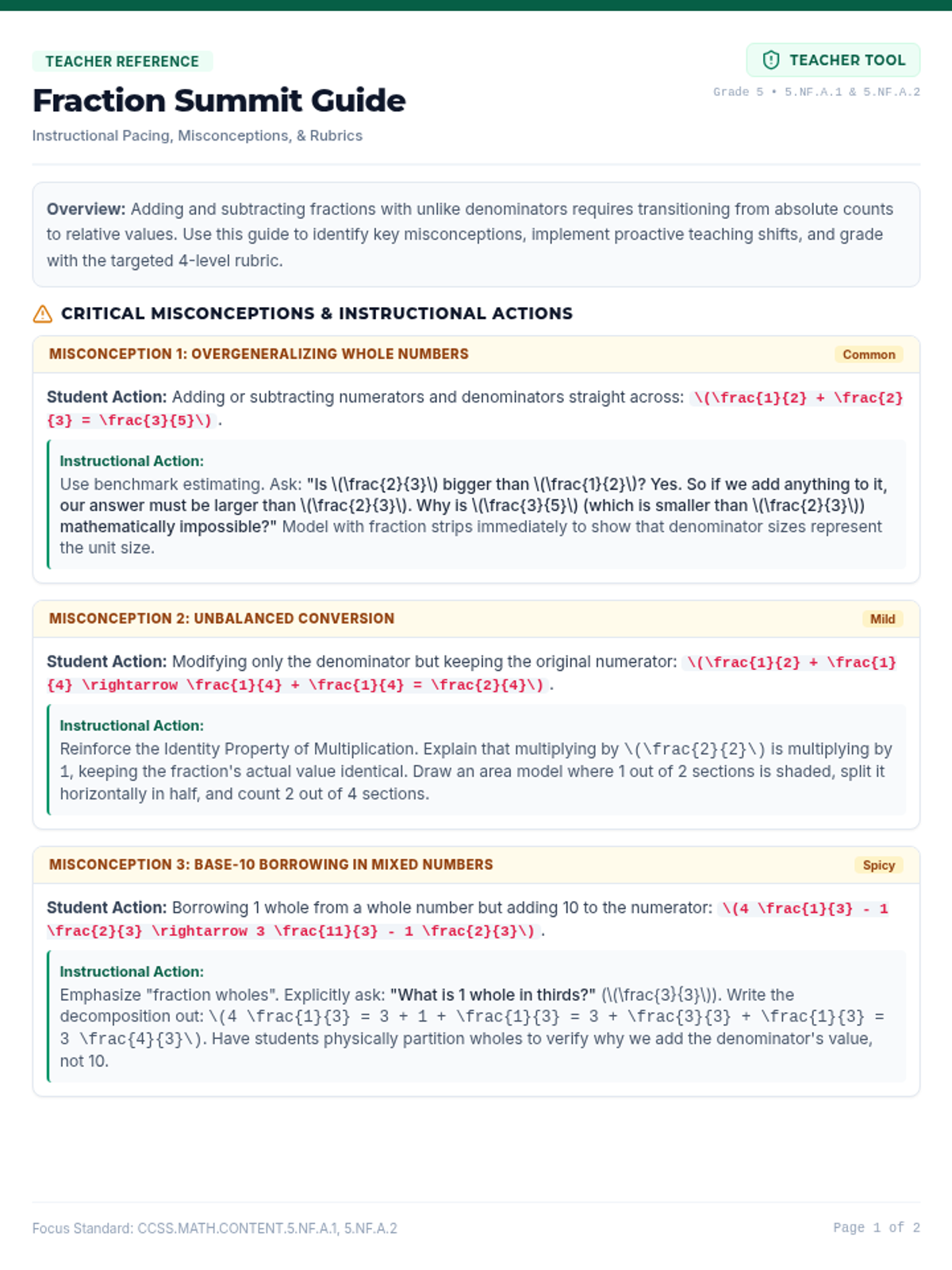
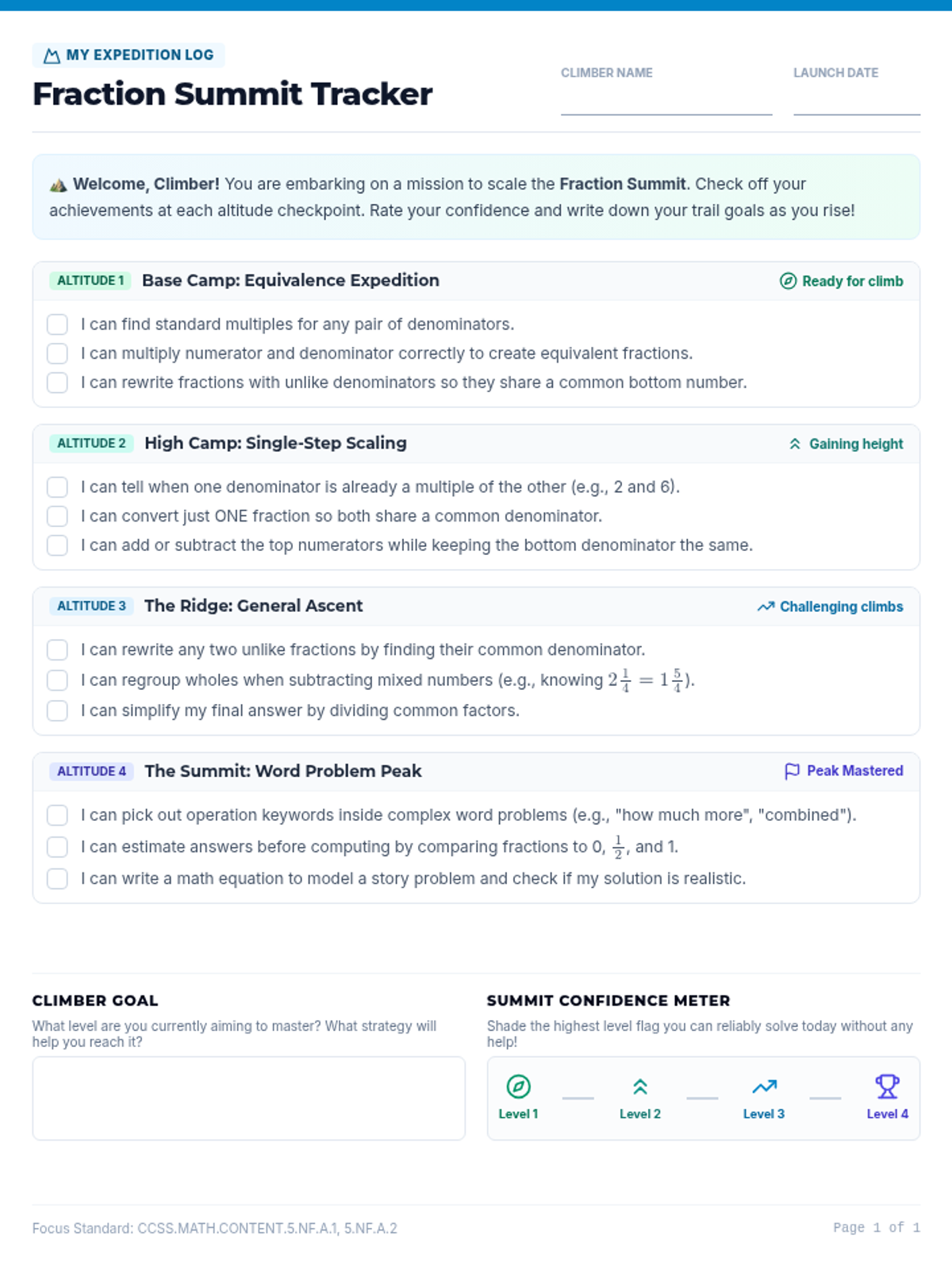
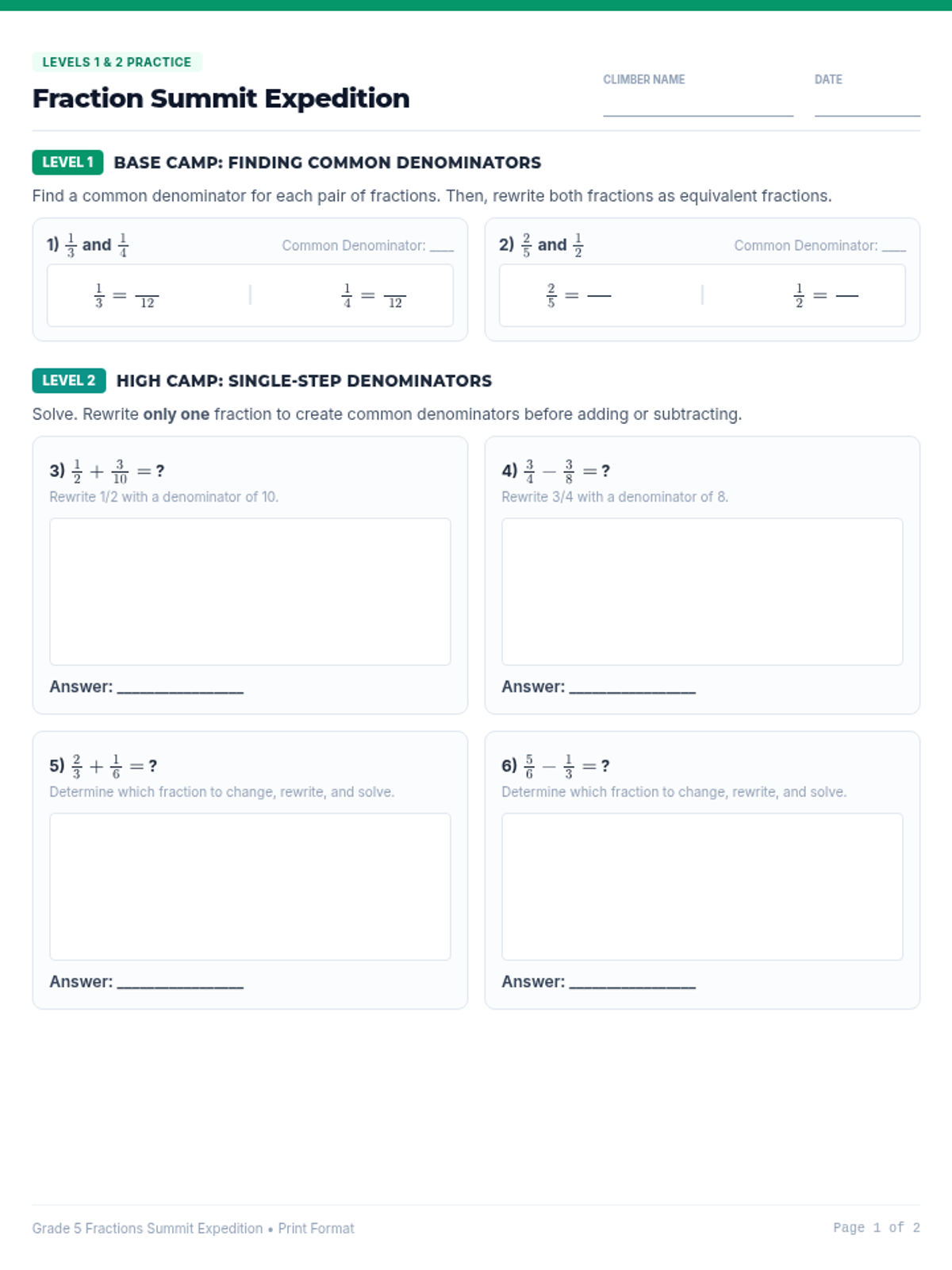
A comprehensive, scaffolded unit on adding and subtracting fractions with unlike denominators (5.NF.A.1 & 5.NF.A.2). Students scale the fraction mountain from basic equivalence to complex mixed-number word problems, supported by progress trackers, teacher rubrics, and targeted practice.
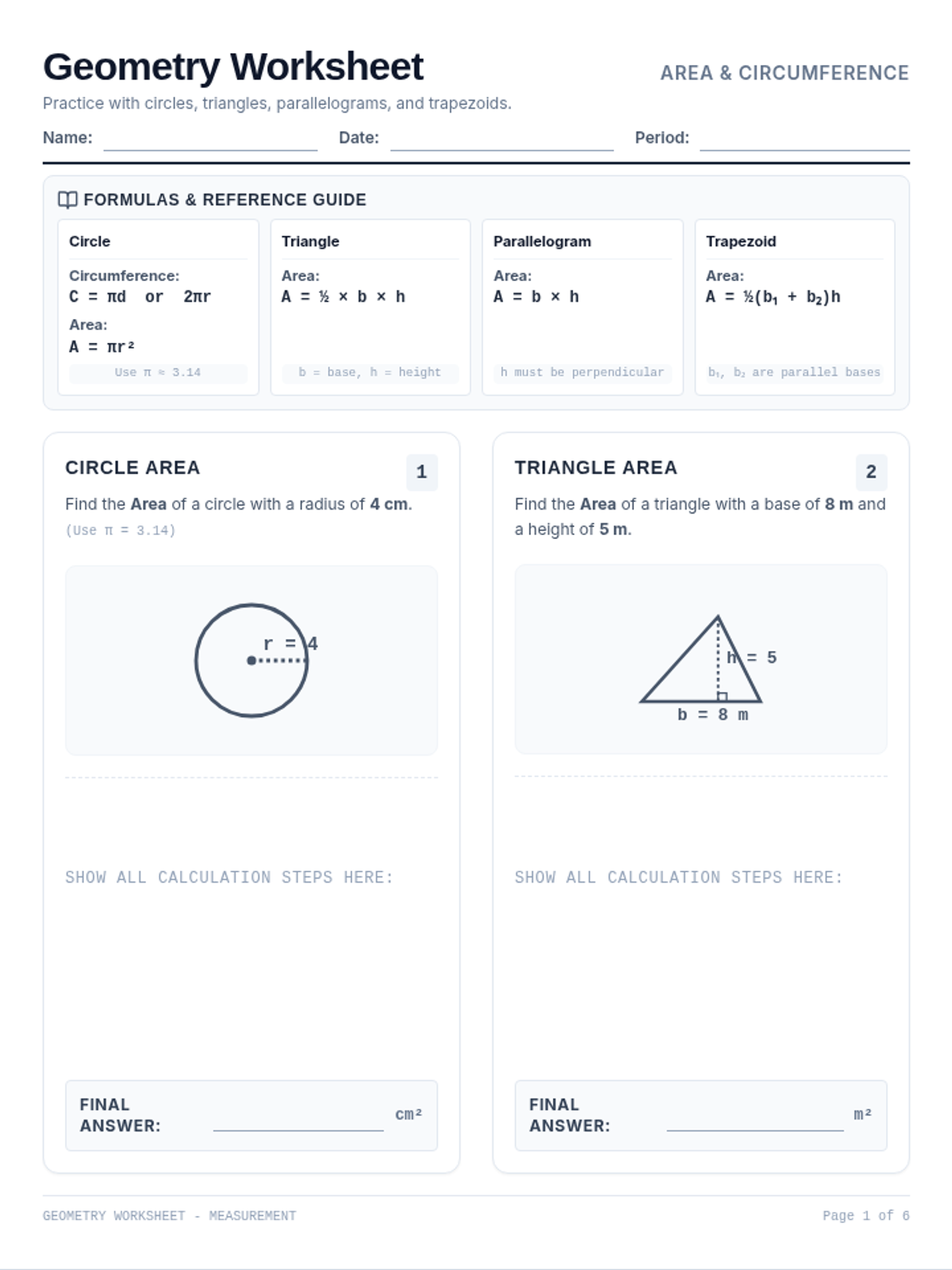
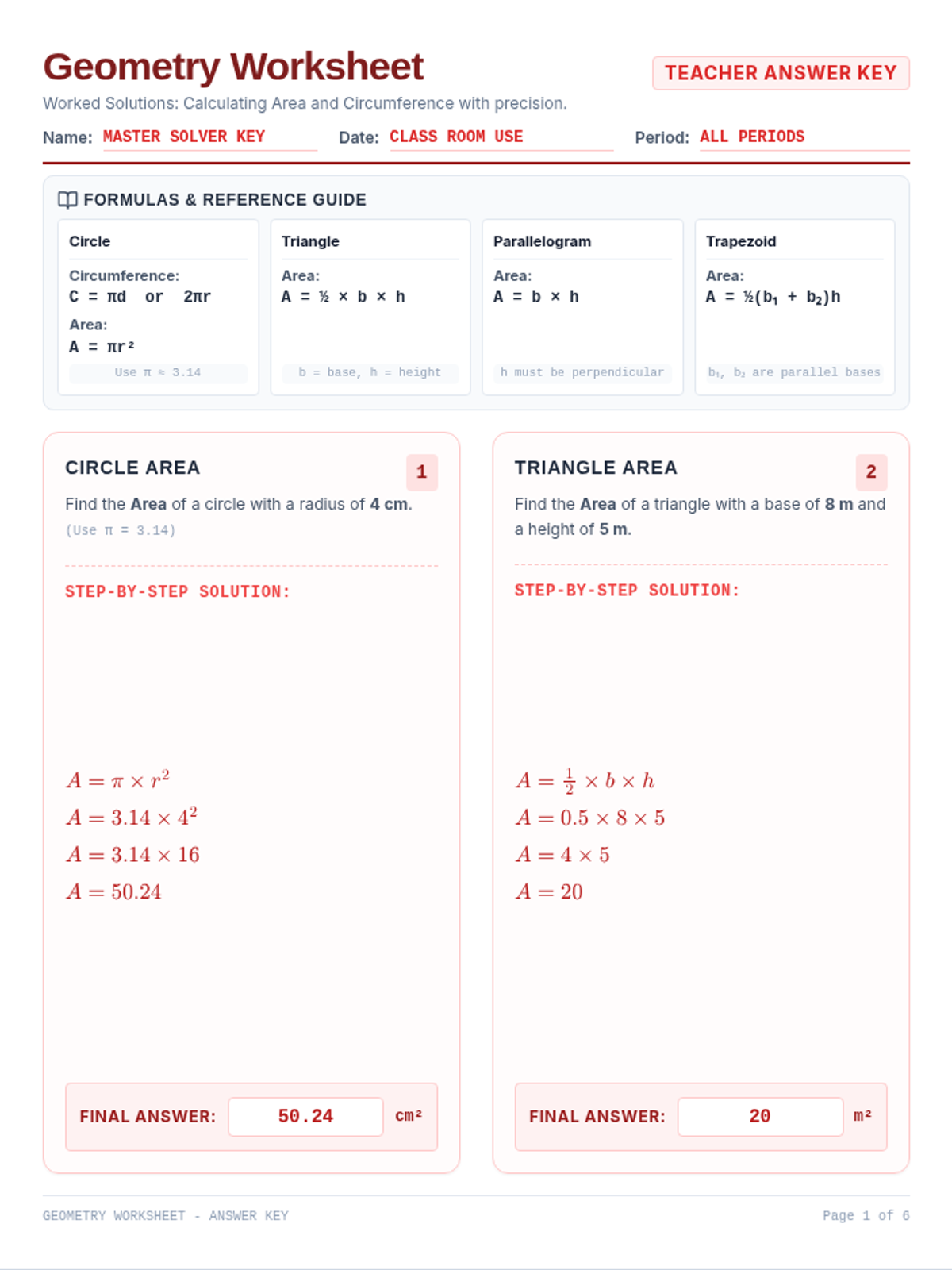
A seventh-grade geometry lesson focusing on calculating the area and circumference of circles, the area of triangles, parallelograms, and trapezoids, as well as the surface area of rectangular and triangular prisms, featuring simplified numbers and visual scaffolding.
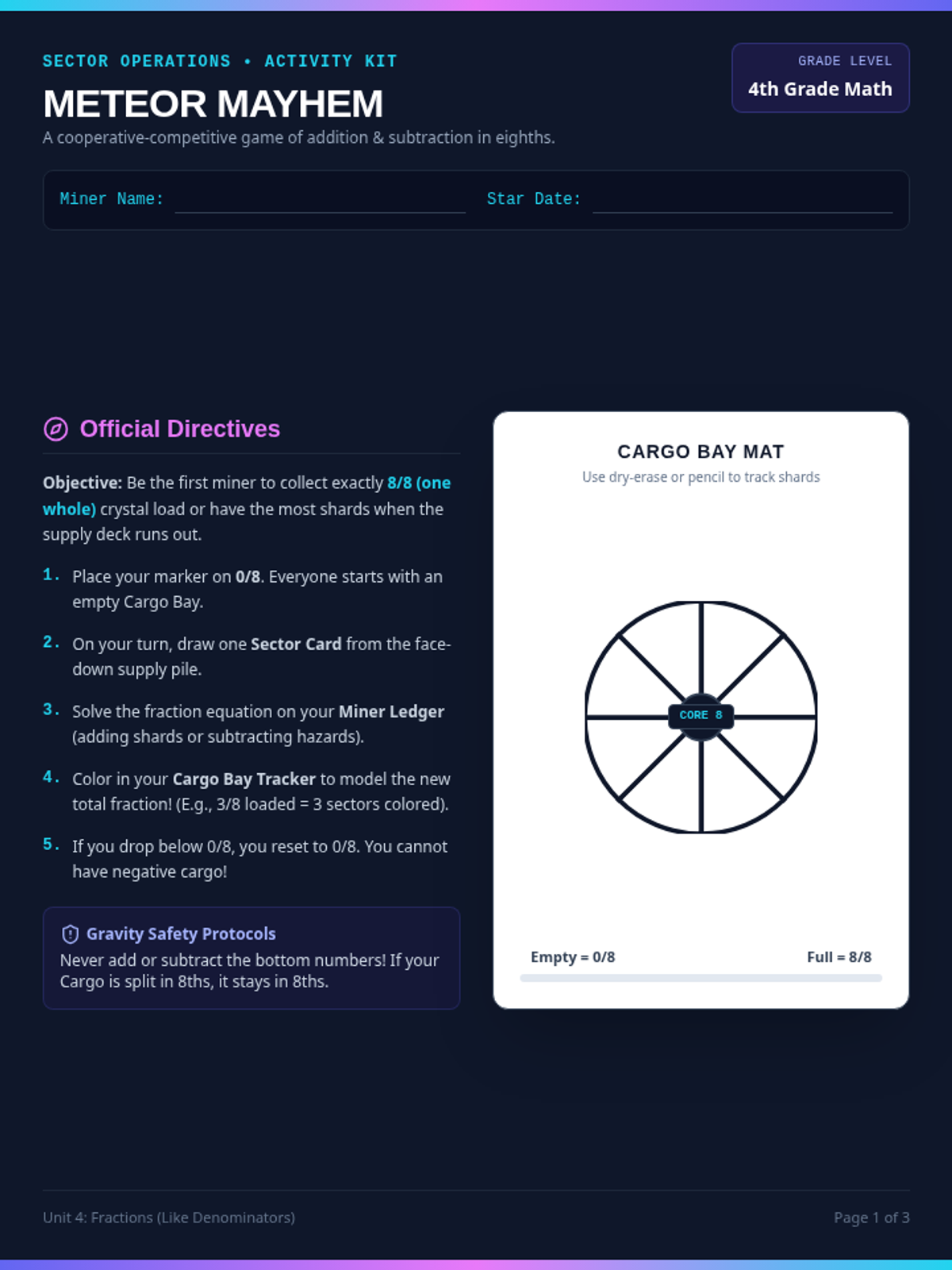
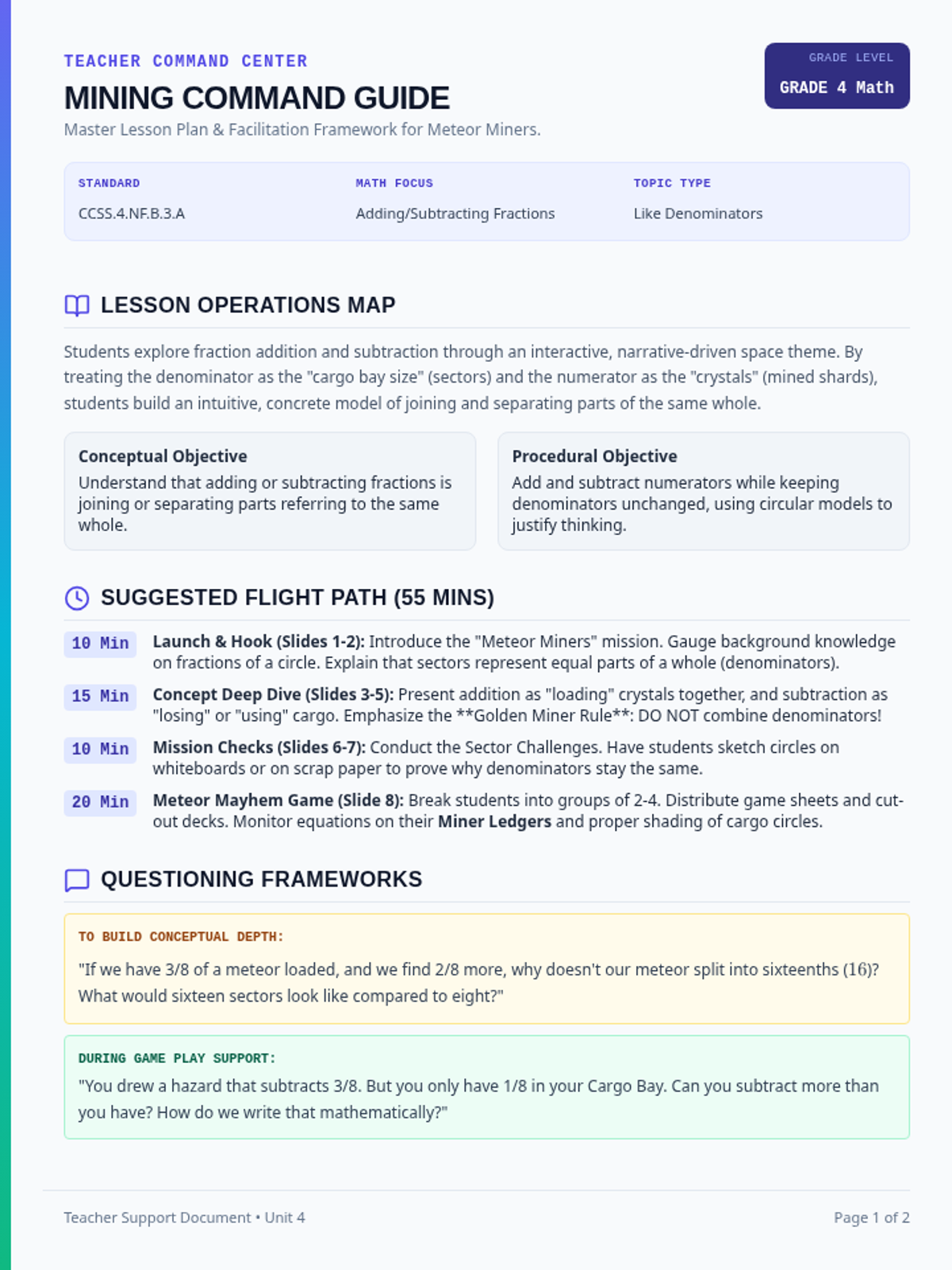
An out-of-this-world fourth-grade lesson on adding and subtracting fractions with like denominators. Students join and separate precious crystal shards on fractional meteors to master combining parts of a whole.
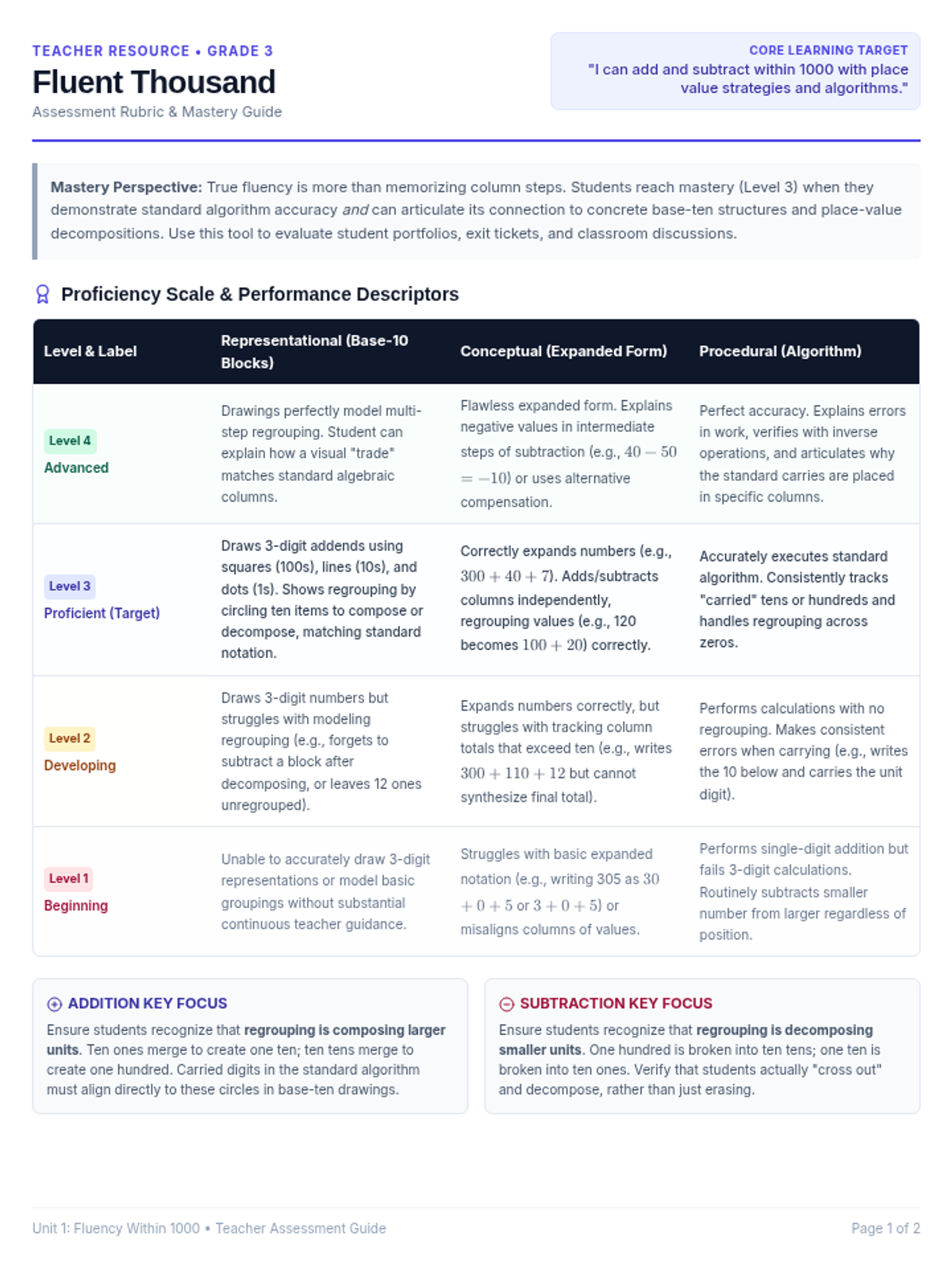
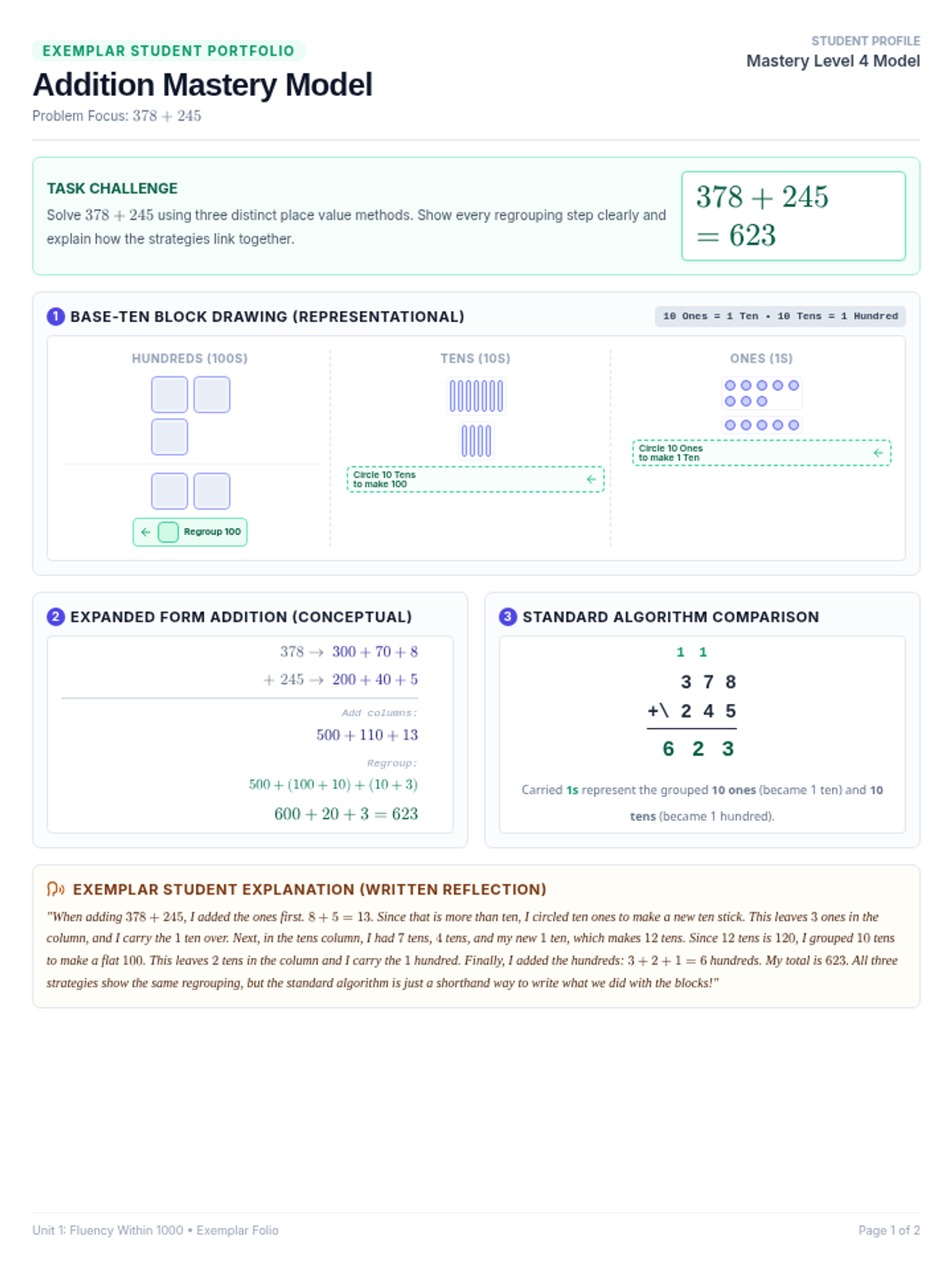
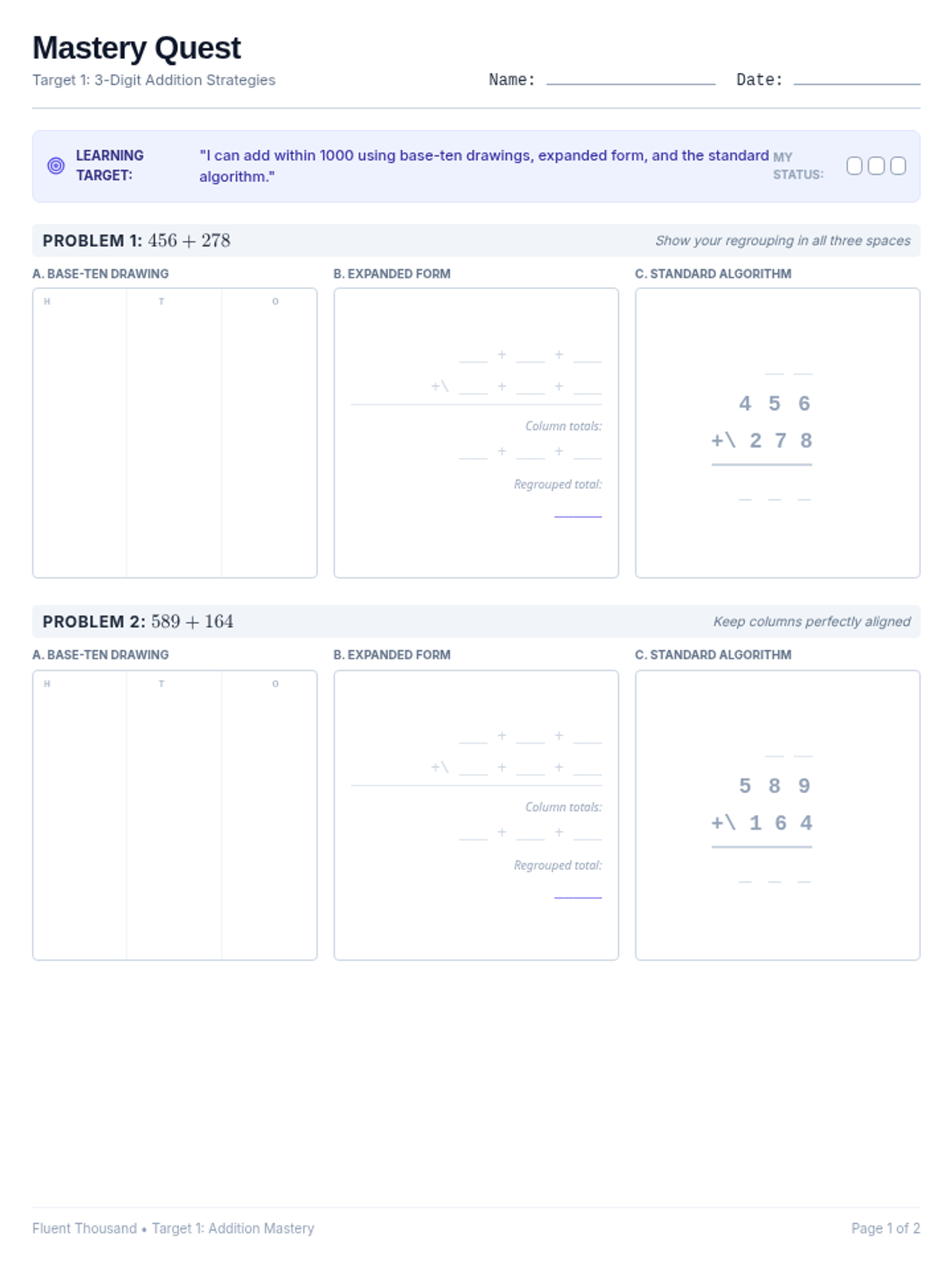
A mastery-focused lesson pack designed to teach, assess, and practice 3-digit addition and subtraction using base-ten drawings, expanded form, and the standard algorithm. Includes a comprehensive rubric, student exemplar exemplars, and a multi-strategy practice worksheet.
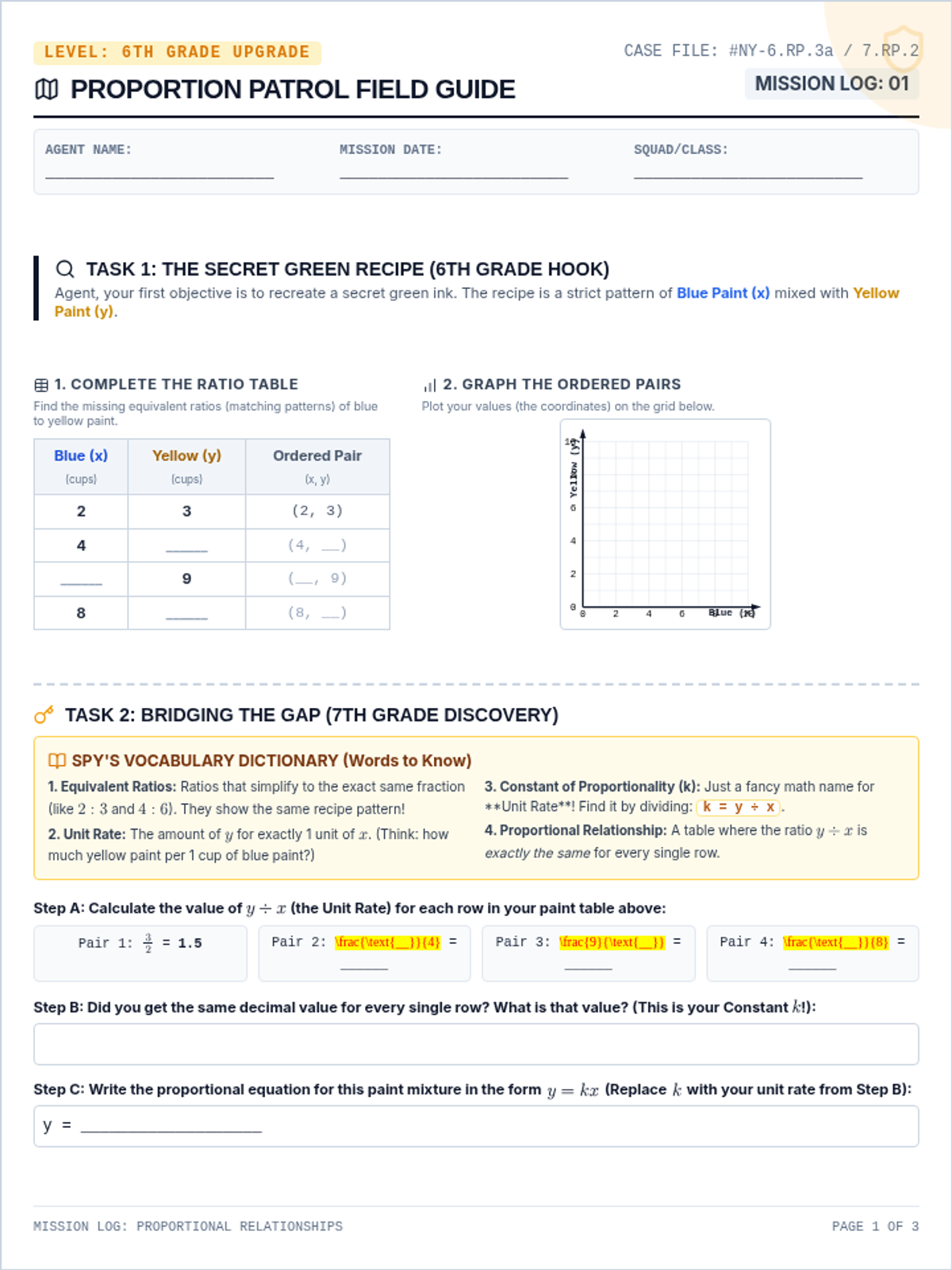
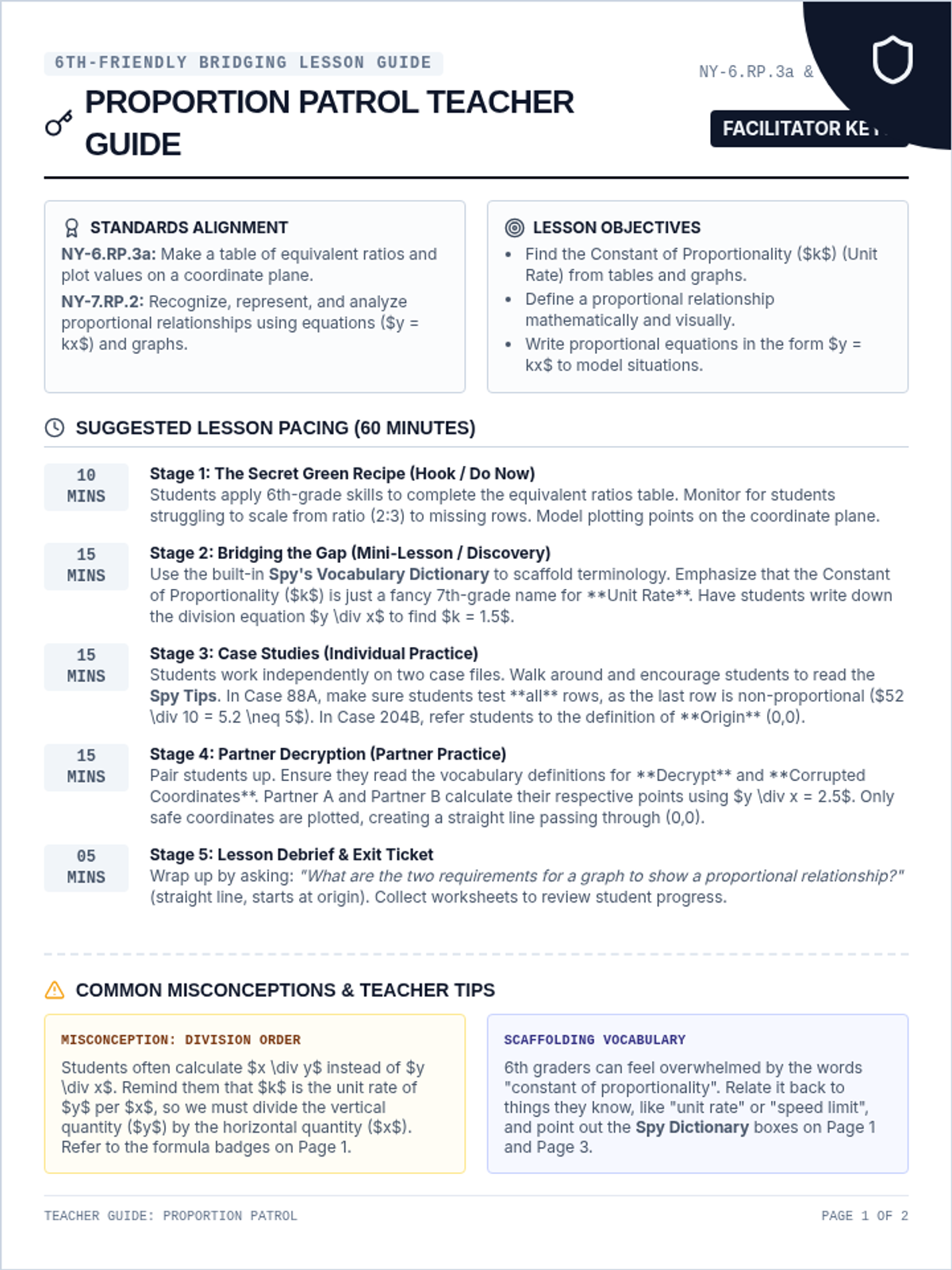
A high-engagement 6th-to-7th grade bridge lesson that connects ratio tables and graphing (NY-6.RP.3a) to the constant of proportionality and proportional relationships (NY-7.RP.2). Students act as detectives solving blueprint puzzles using coordinate planes and ratio analysis.
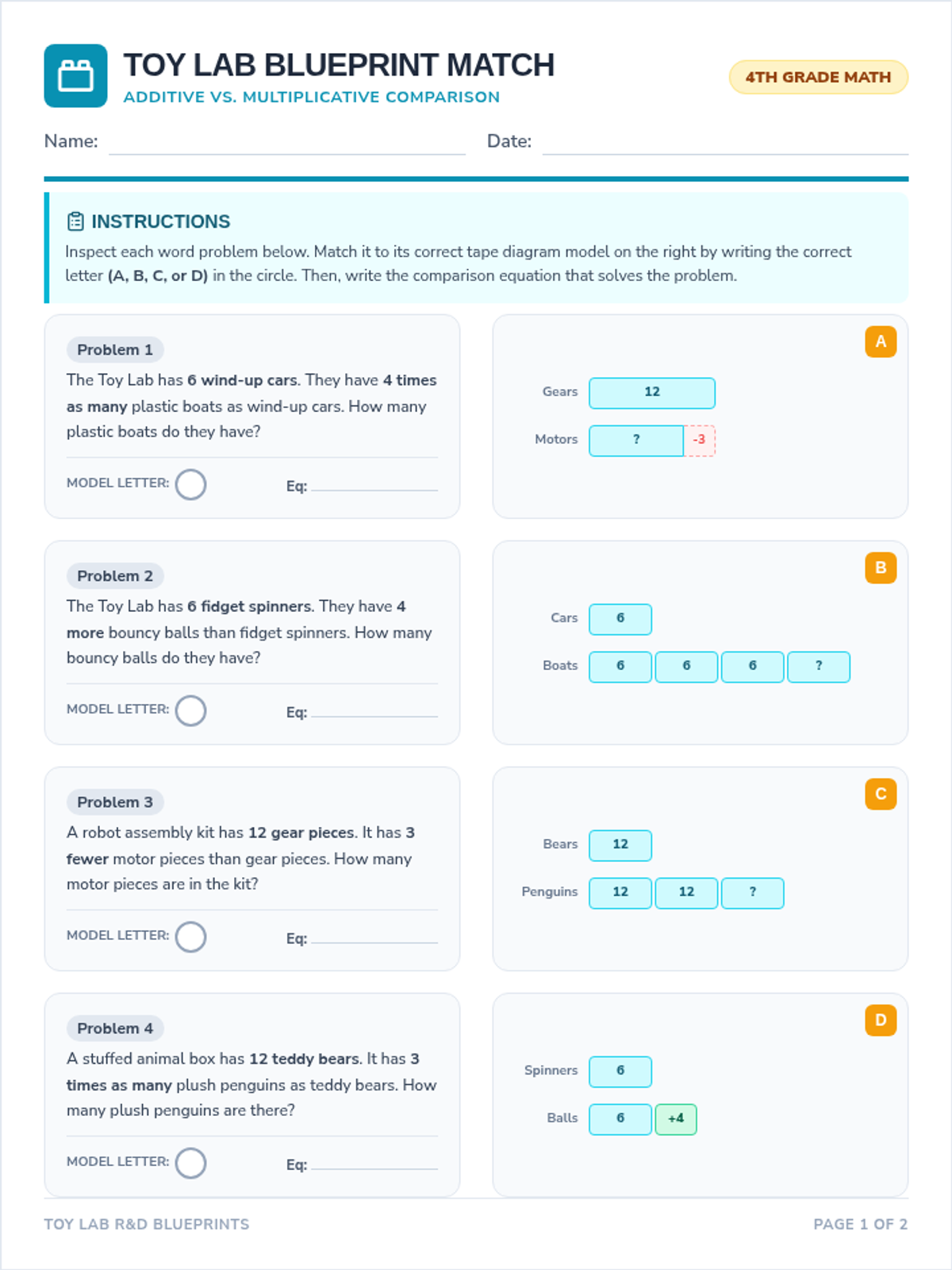
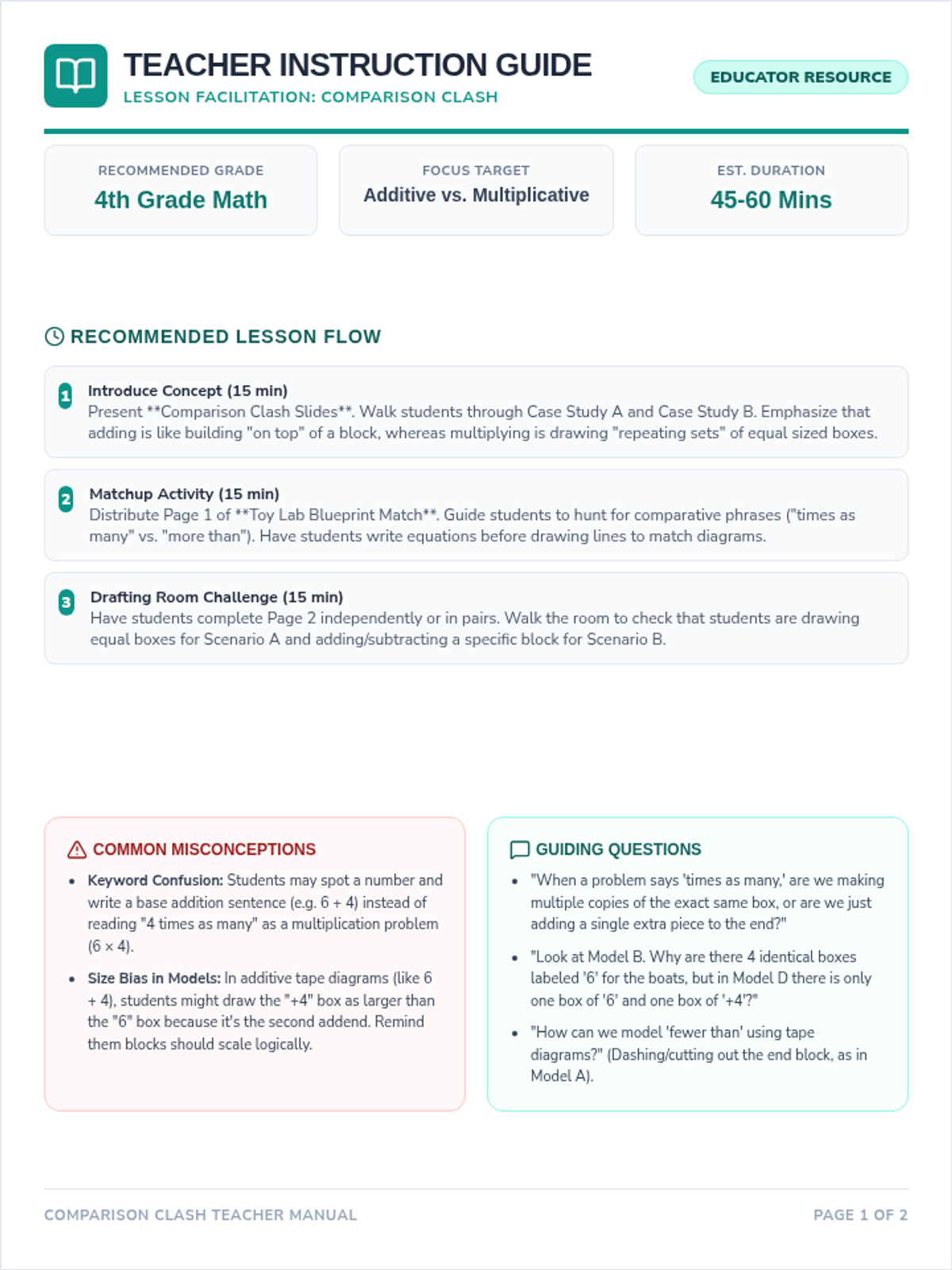
A hands-on, high-engagement lesson where 4th-grade students distinguish between additive and multiplicative comparison using visual models, tape diagrams, and real-world toy factory scenarios. This lesson includes interactive presentation slides, a student matching activity, and a comprehensive teacher guide.
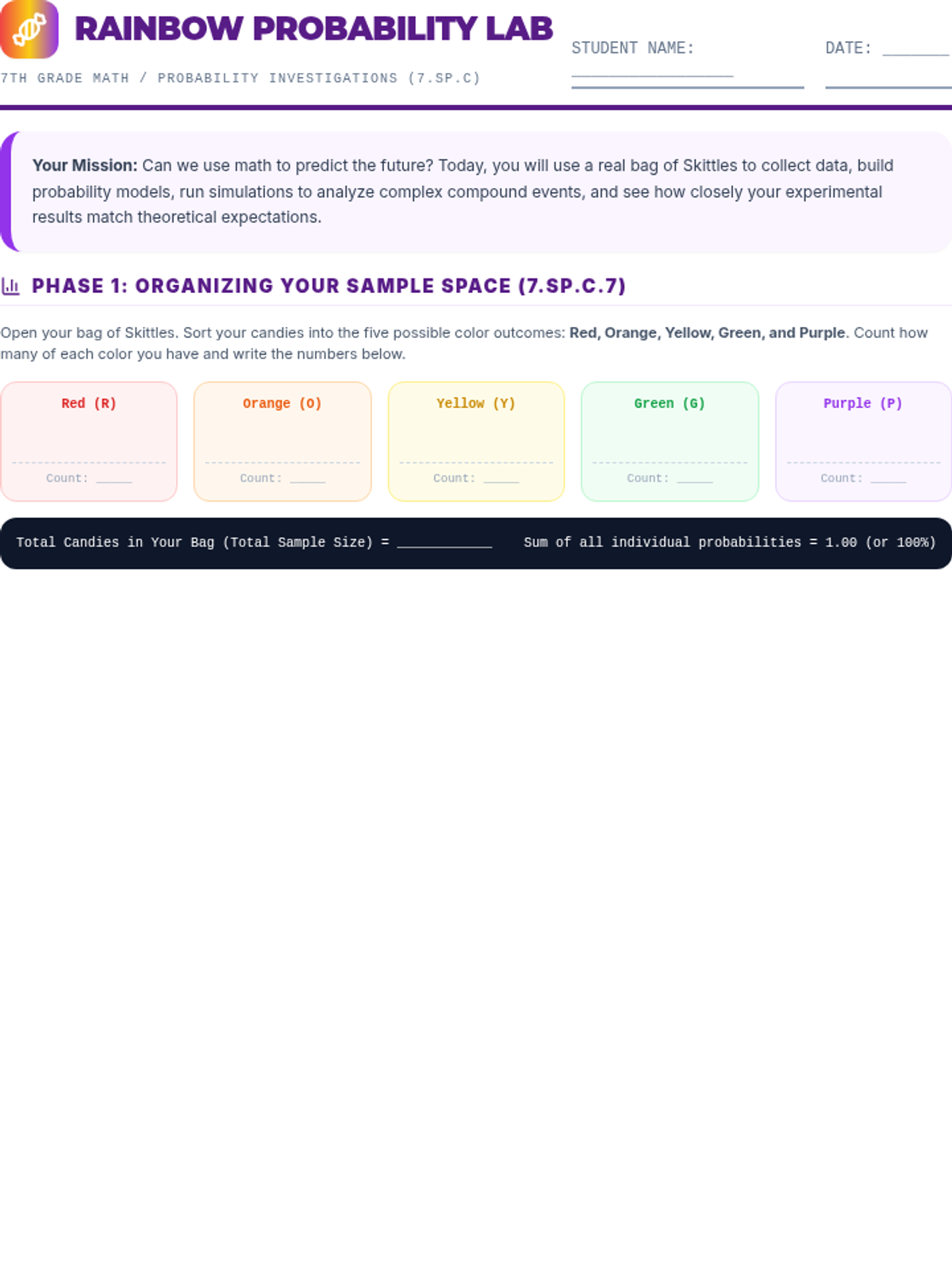
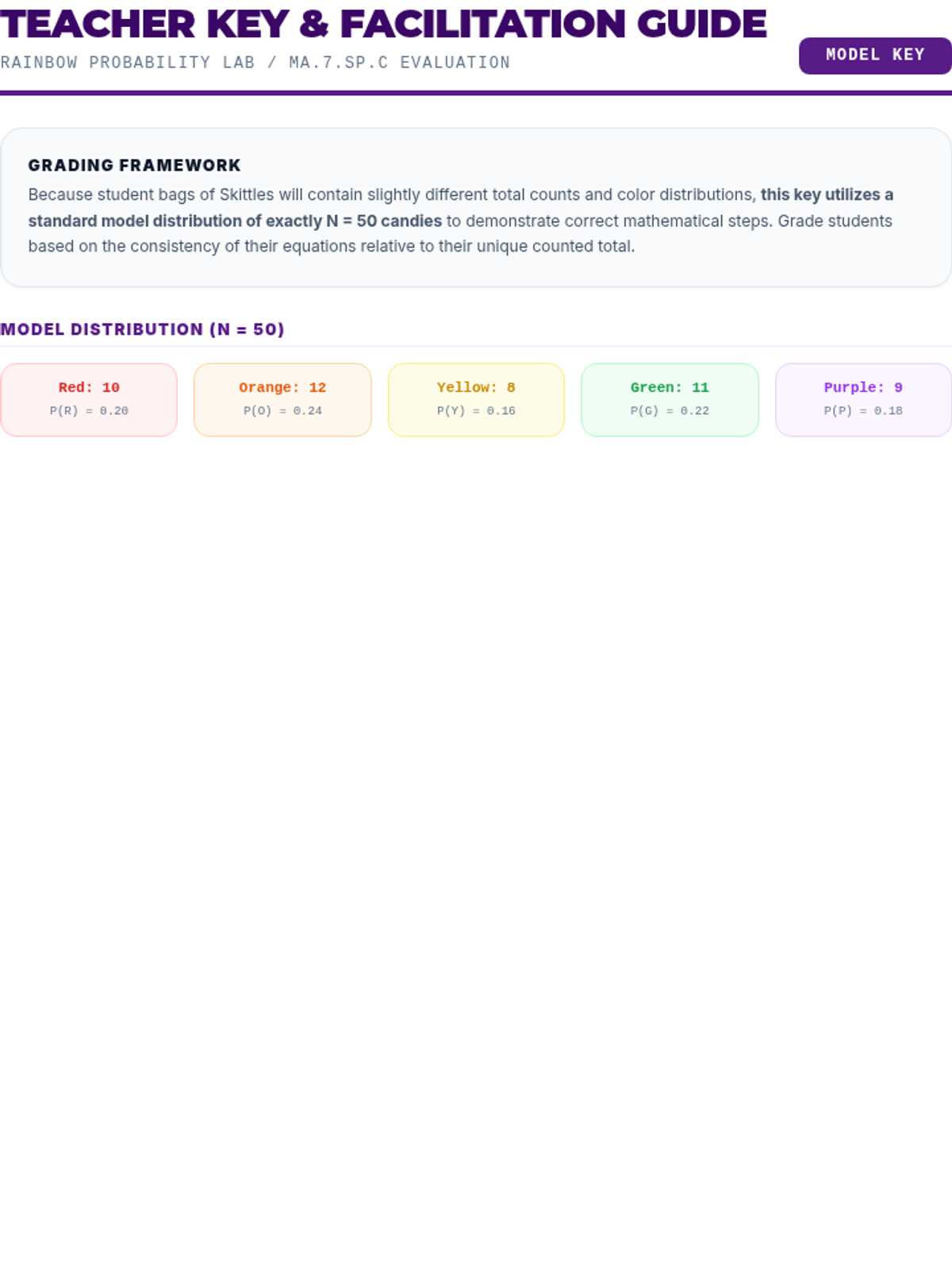
An engaging hands-on math lab where students collect empirical data using Skittles candies to build probability models, compare experimental and theoretical probabilities, and analyze compound events.
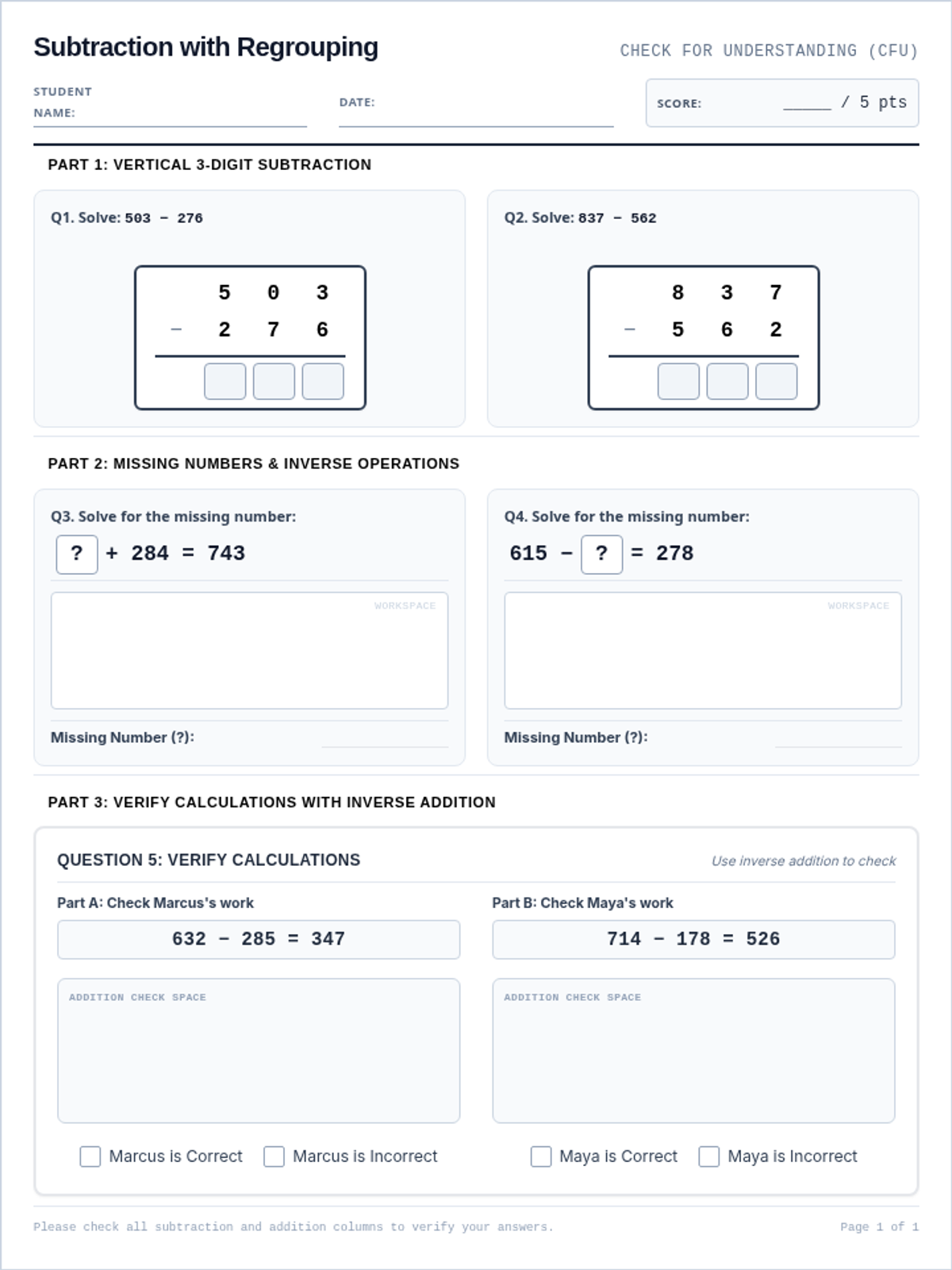
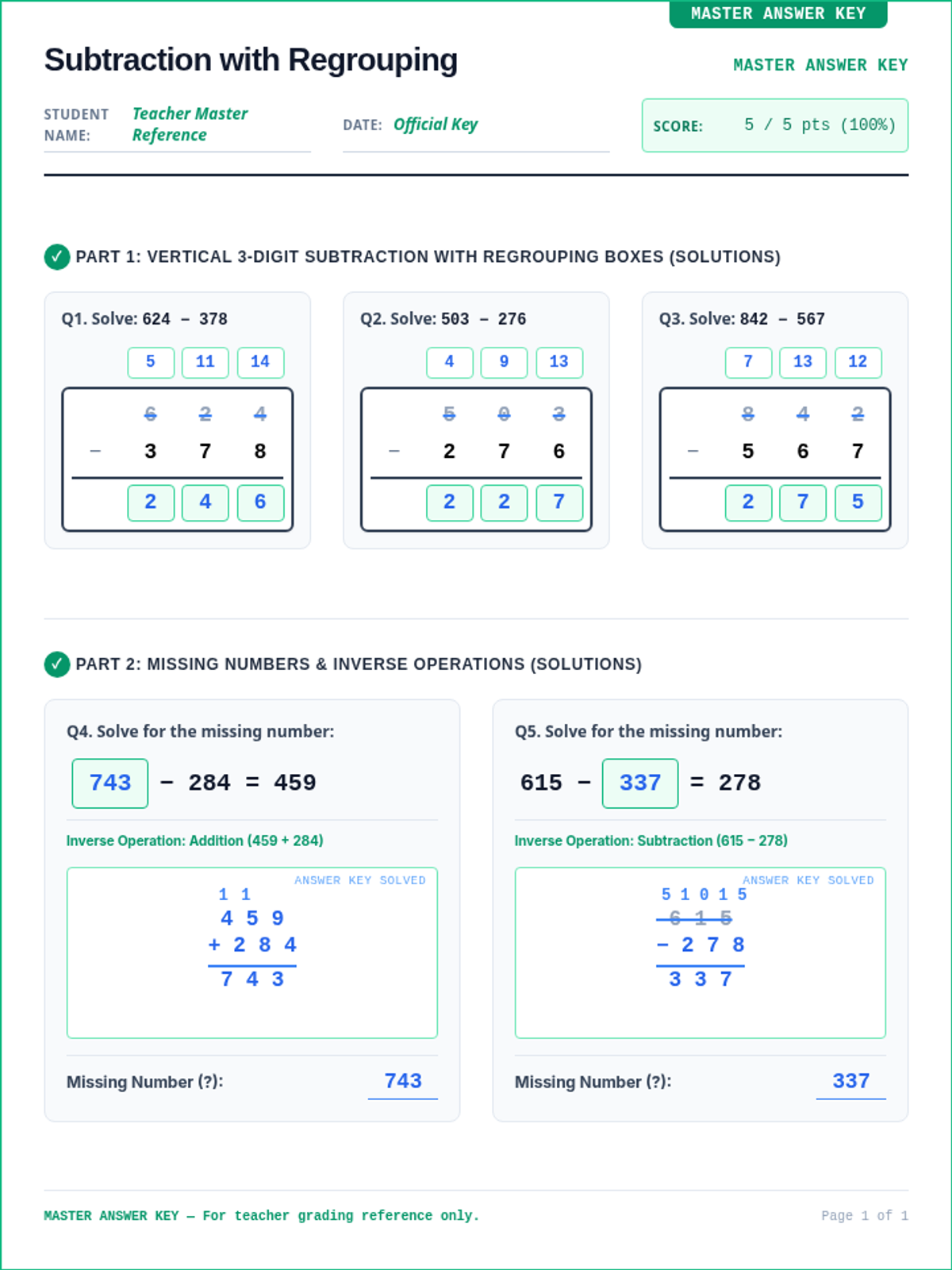
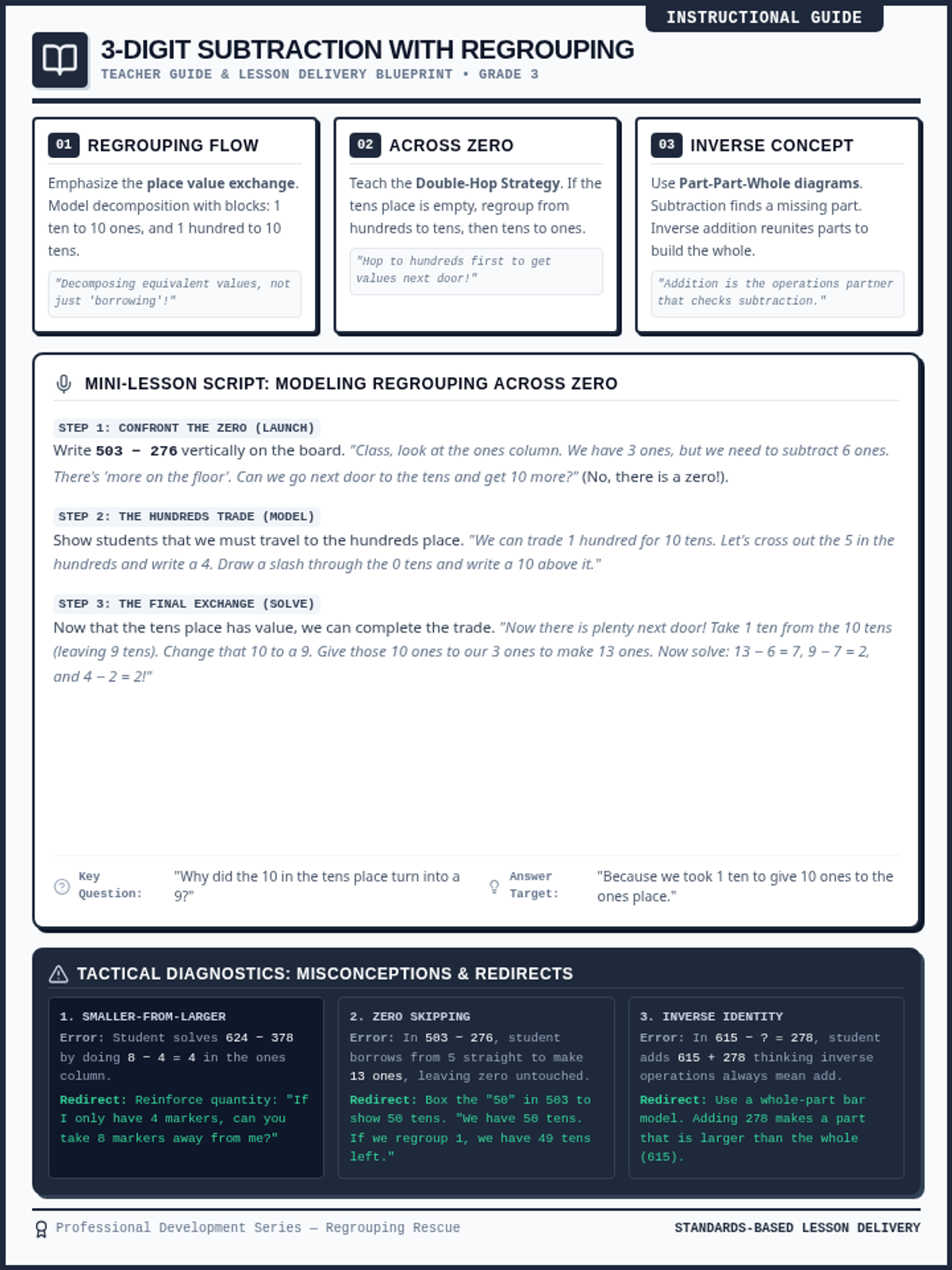
A focused check-for-understanding assessment on 3-digit subtraction with regrouping, including subtracting across zeros and solving for missing numbers using inverse operations.
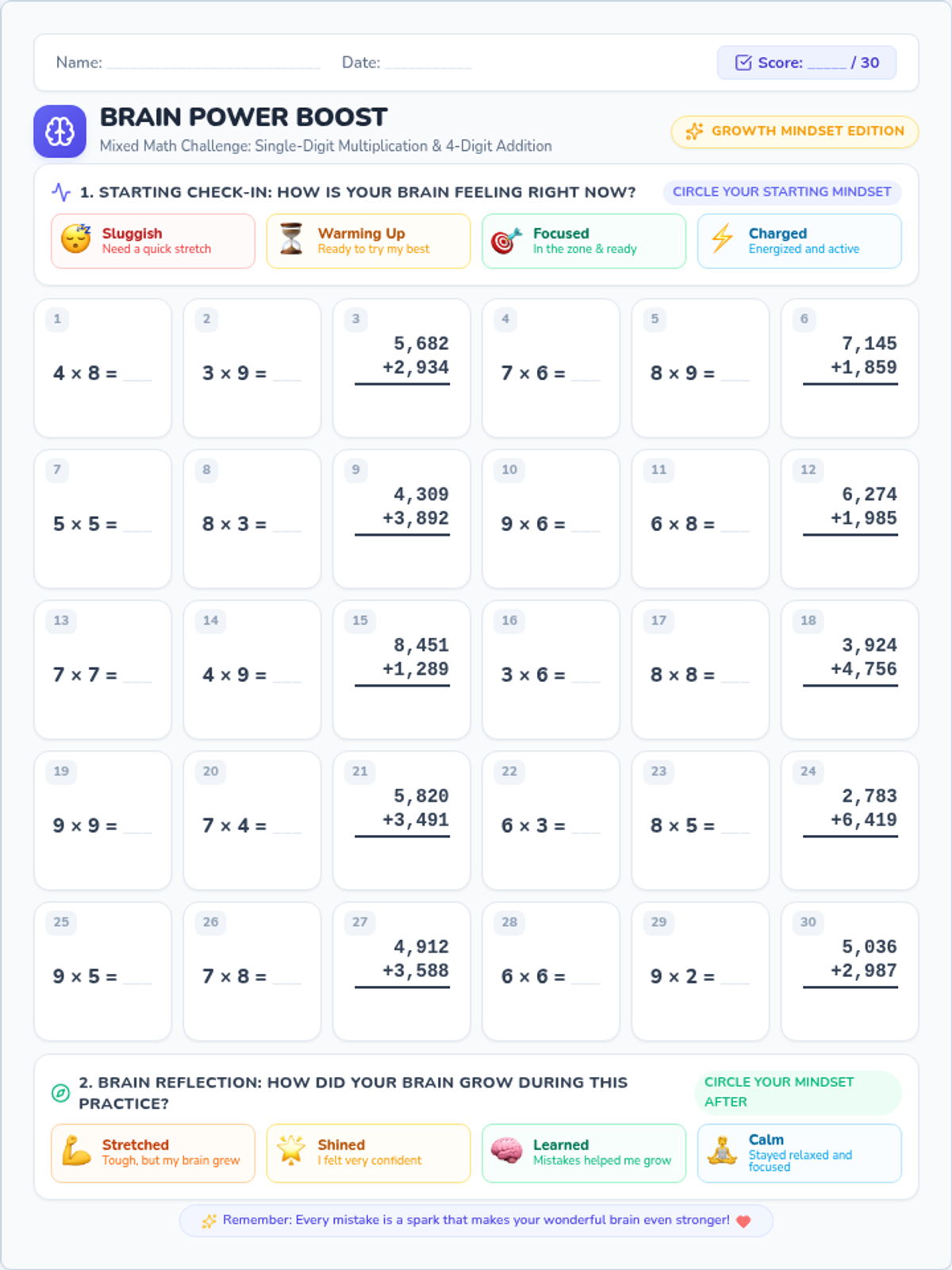
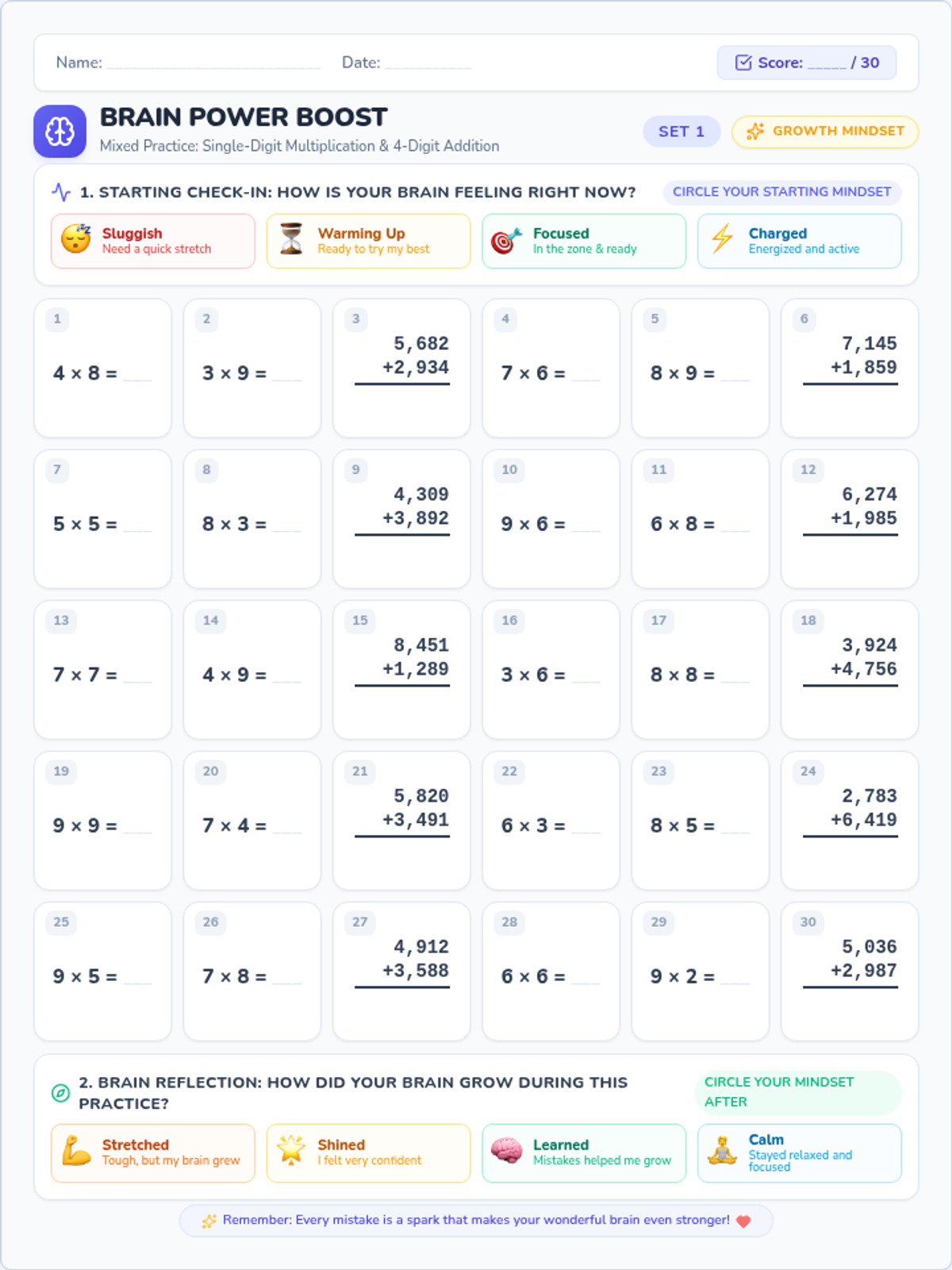
A math lesson focused on building single-digit multiplication and four-digit addition fluency while integrating self-regulation check-ins to foster a growth mindset.
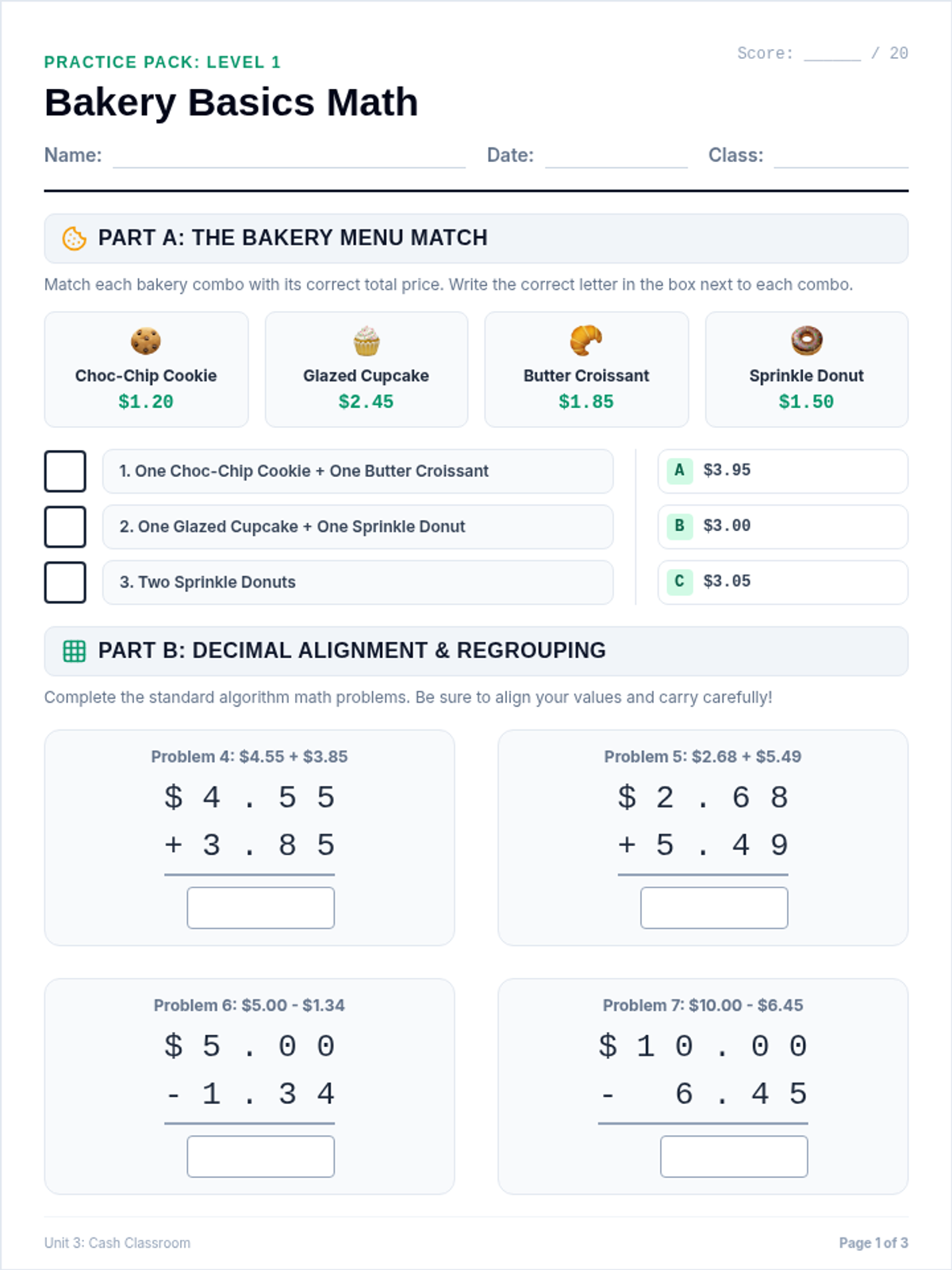
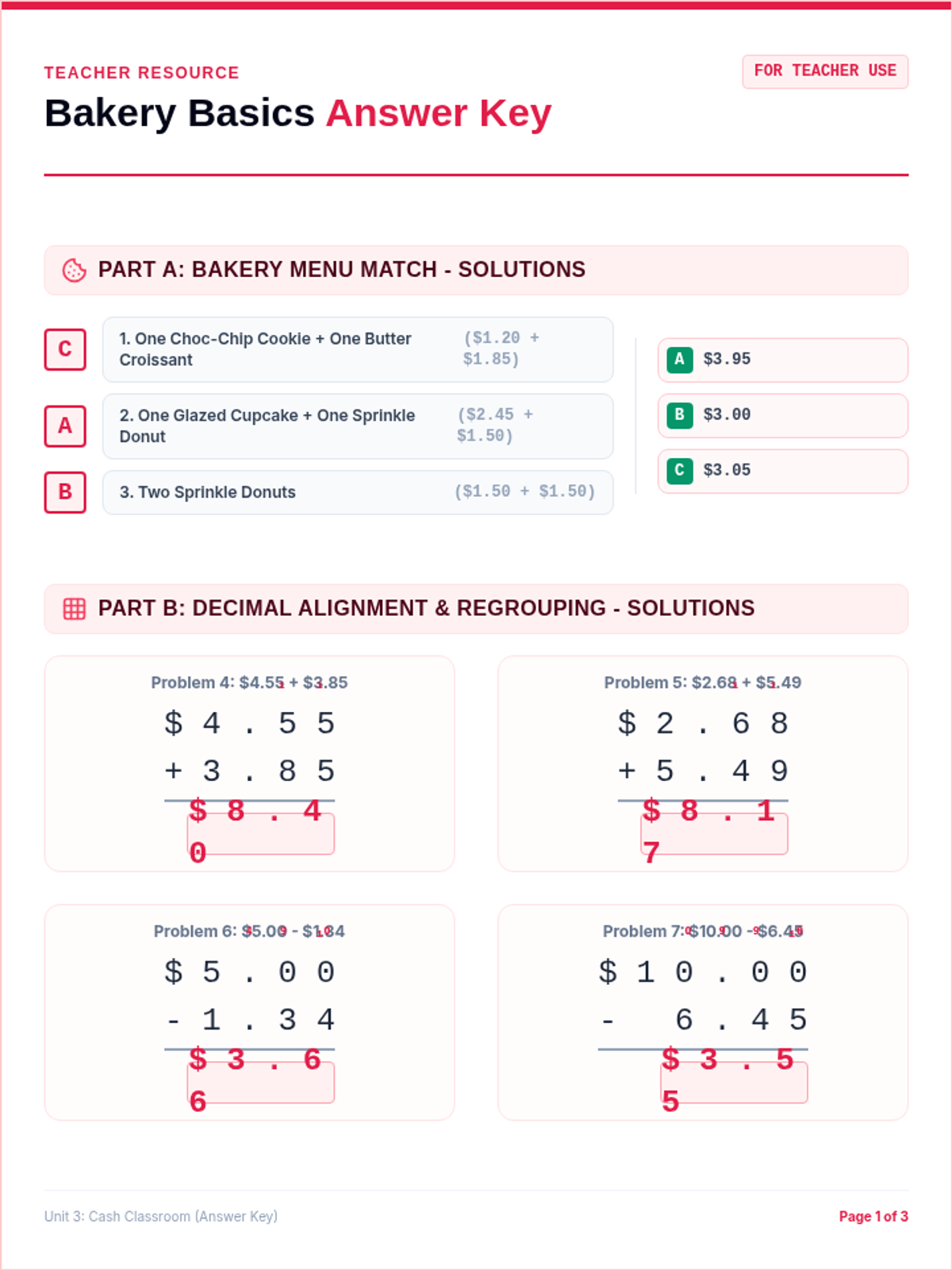
An engaging elementary math lesson focused on adding and subtracting money, lining up decimals, regrouping across zeros, and solving real-world shopping word problems up to $10.00.
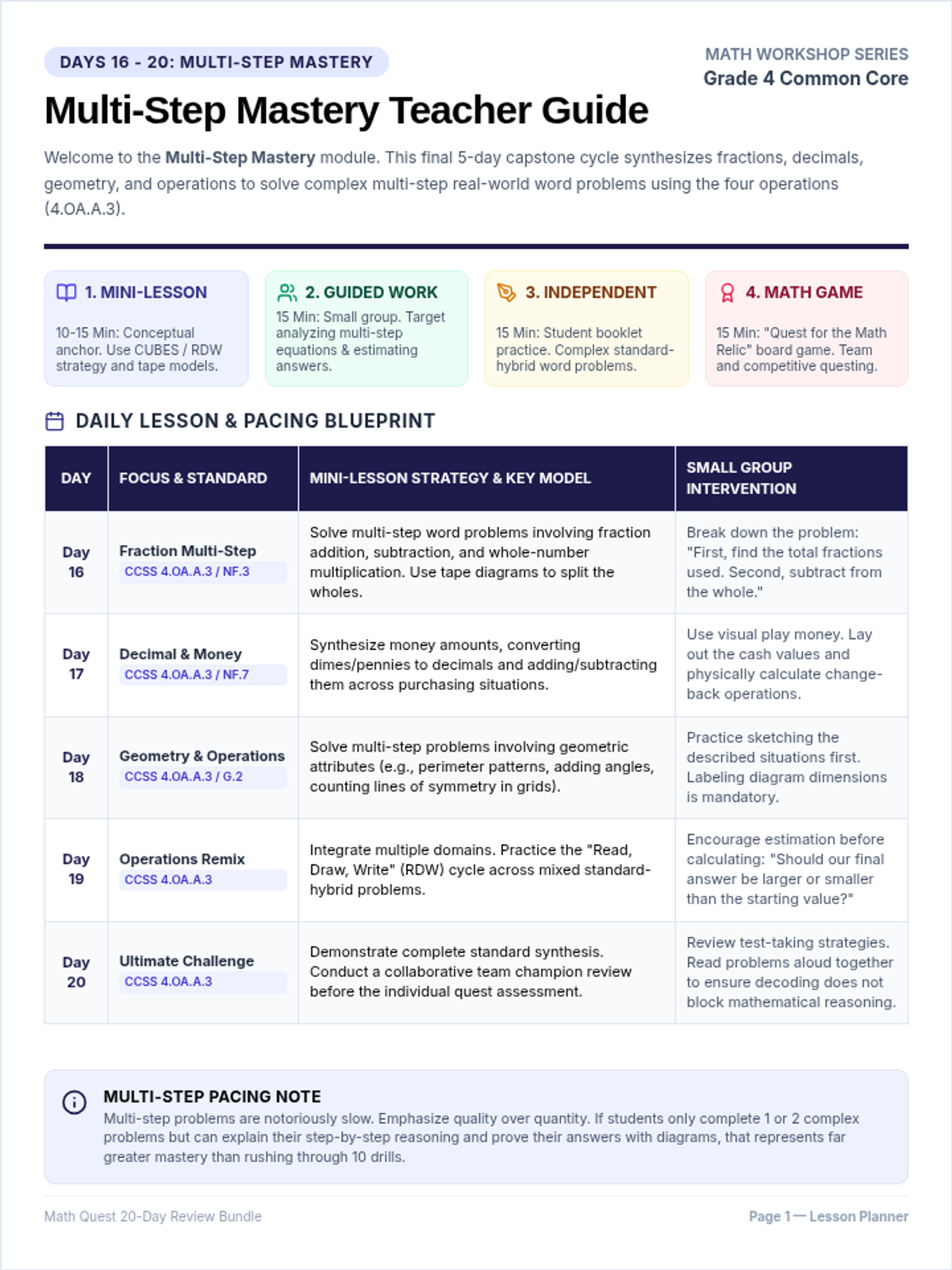
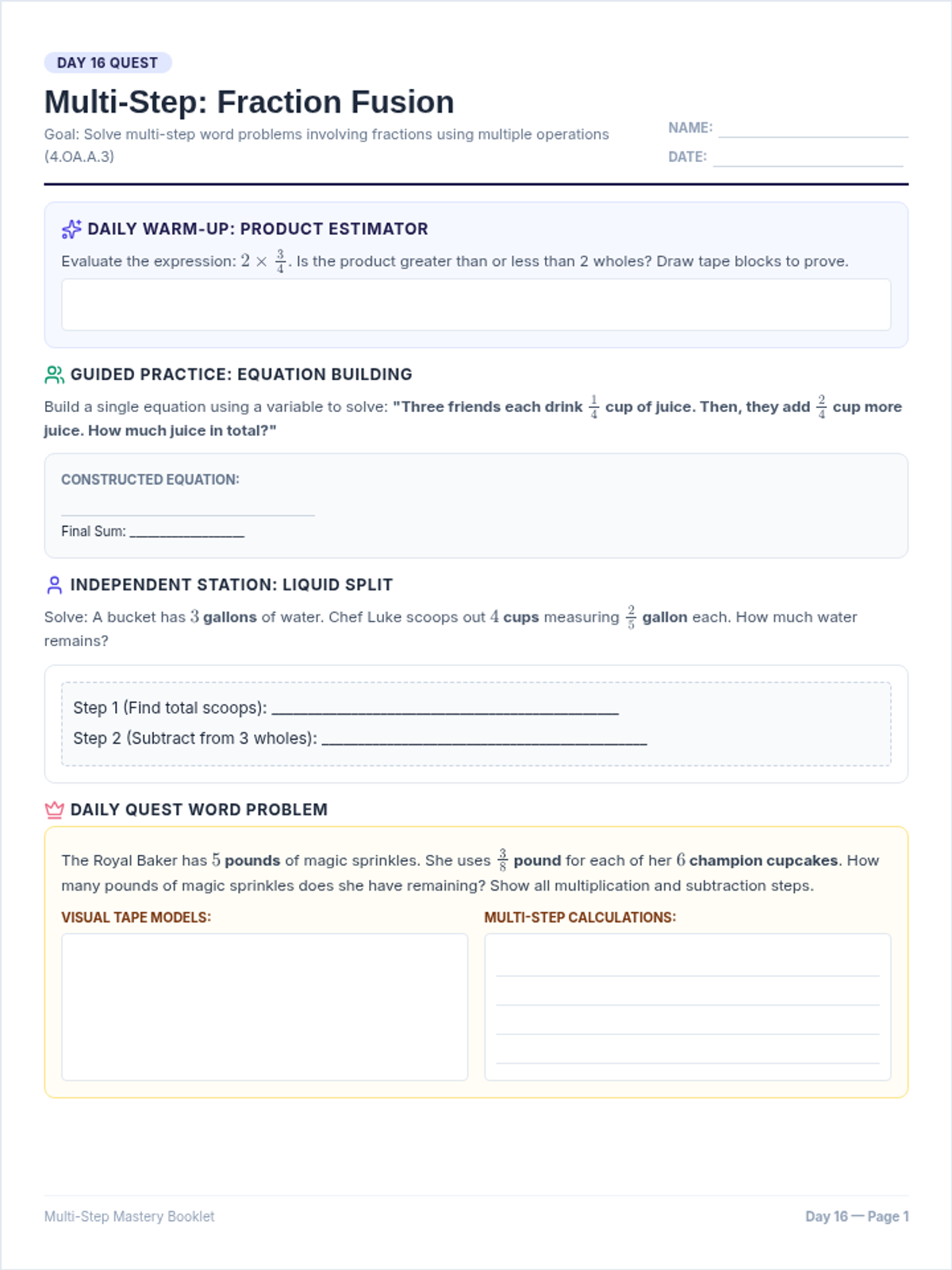
Days 16-20 of the review, focusing on integrating operations, fractions, decimals, and geometry to solve complex multi-step real-world word problems (OA.3).