A comprehensive lesson for 2nd and 3rd graders on using the present progressive tense. Students will learn the formula for adding -ing to verbs and use helping verbs to describe actions happening right now through a photography-themed exploration.
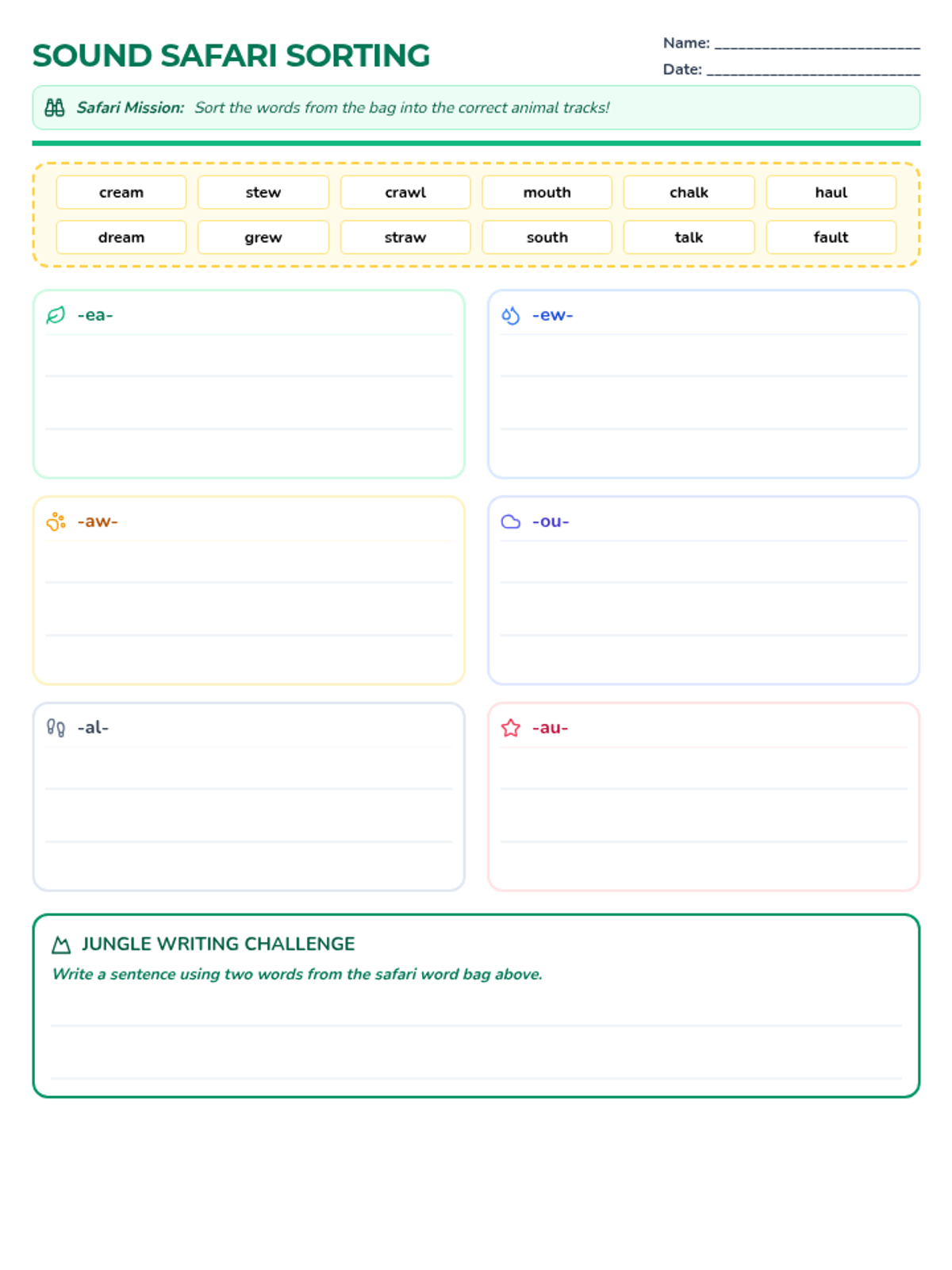
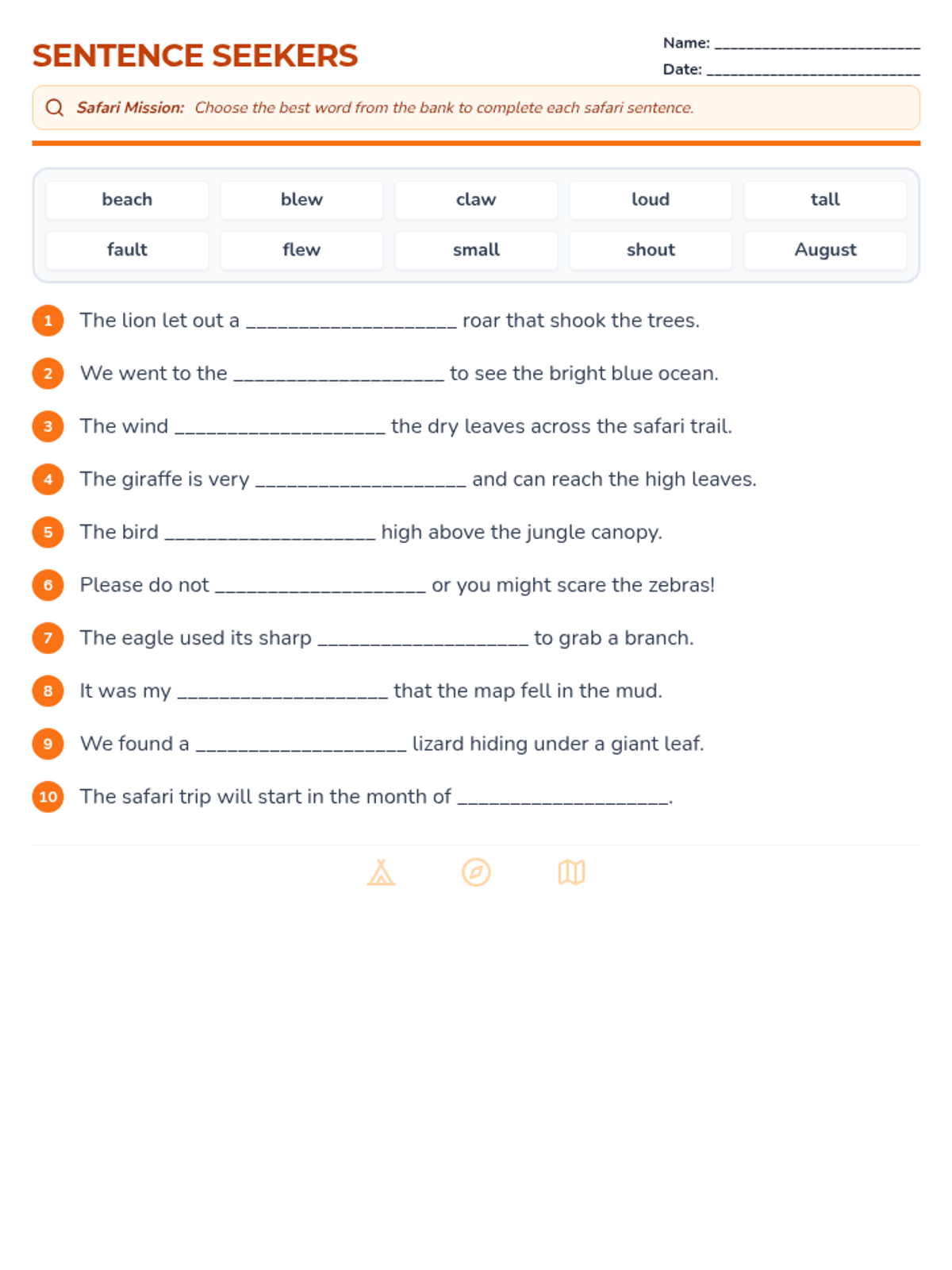
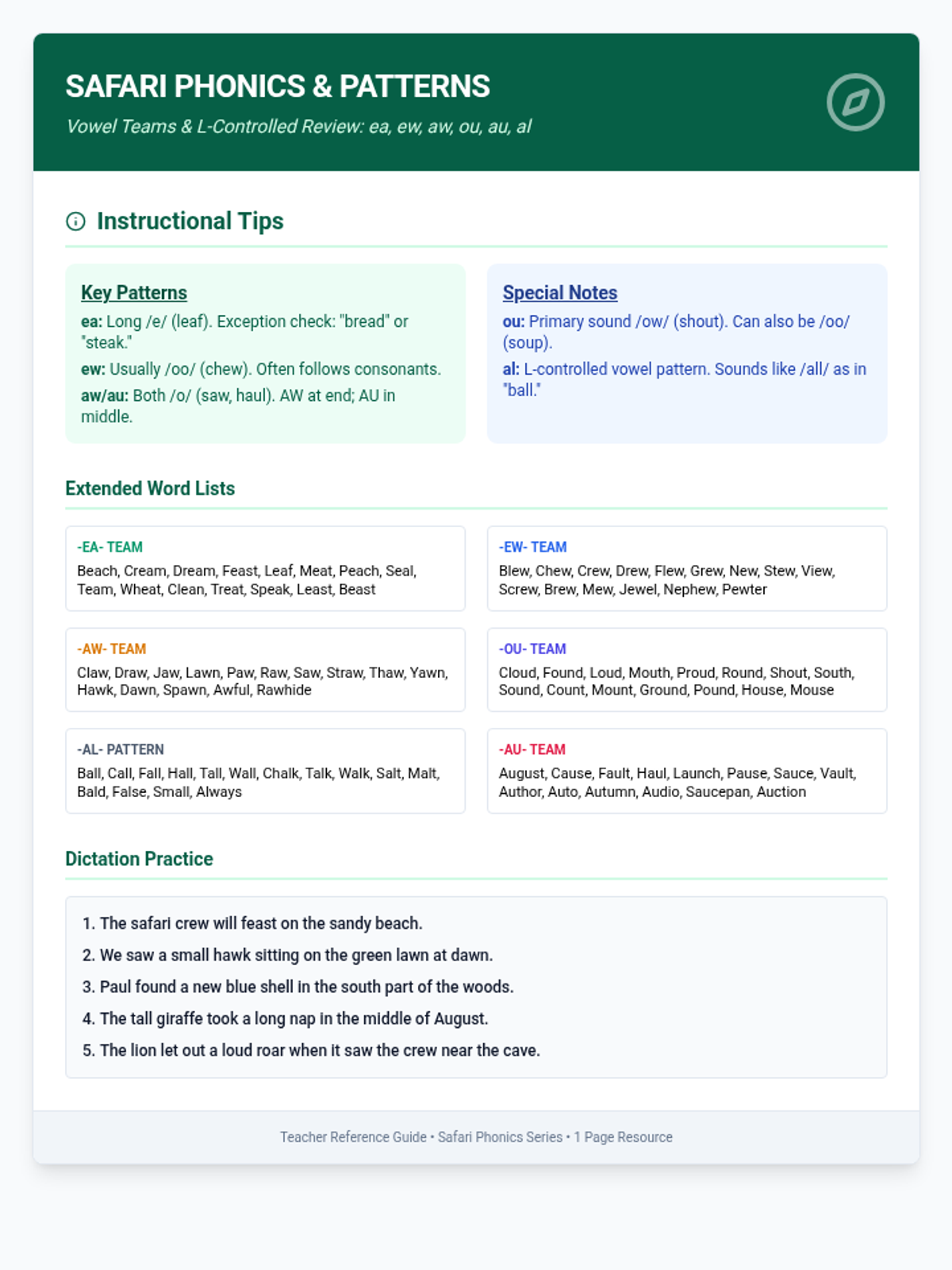
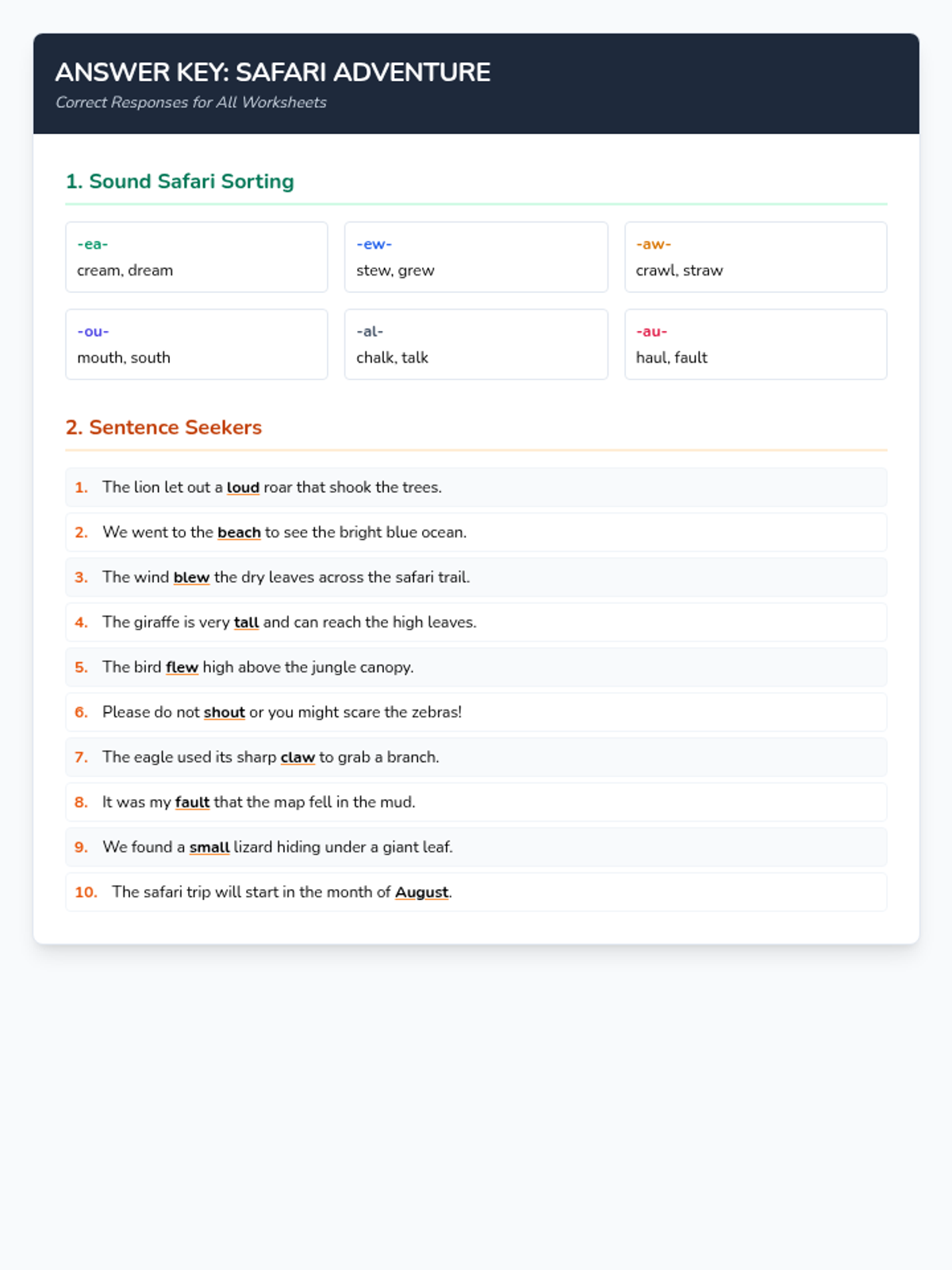
A phonics-focused lesson reviewing the vowel teams ea, ew, aw, ou, al, and au through an engaging safari-themed adventure. Students will practice identifying, sorting, and using these sounds in context.
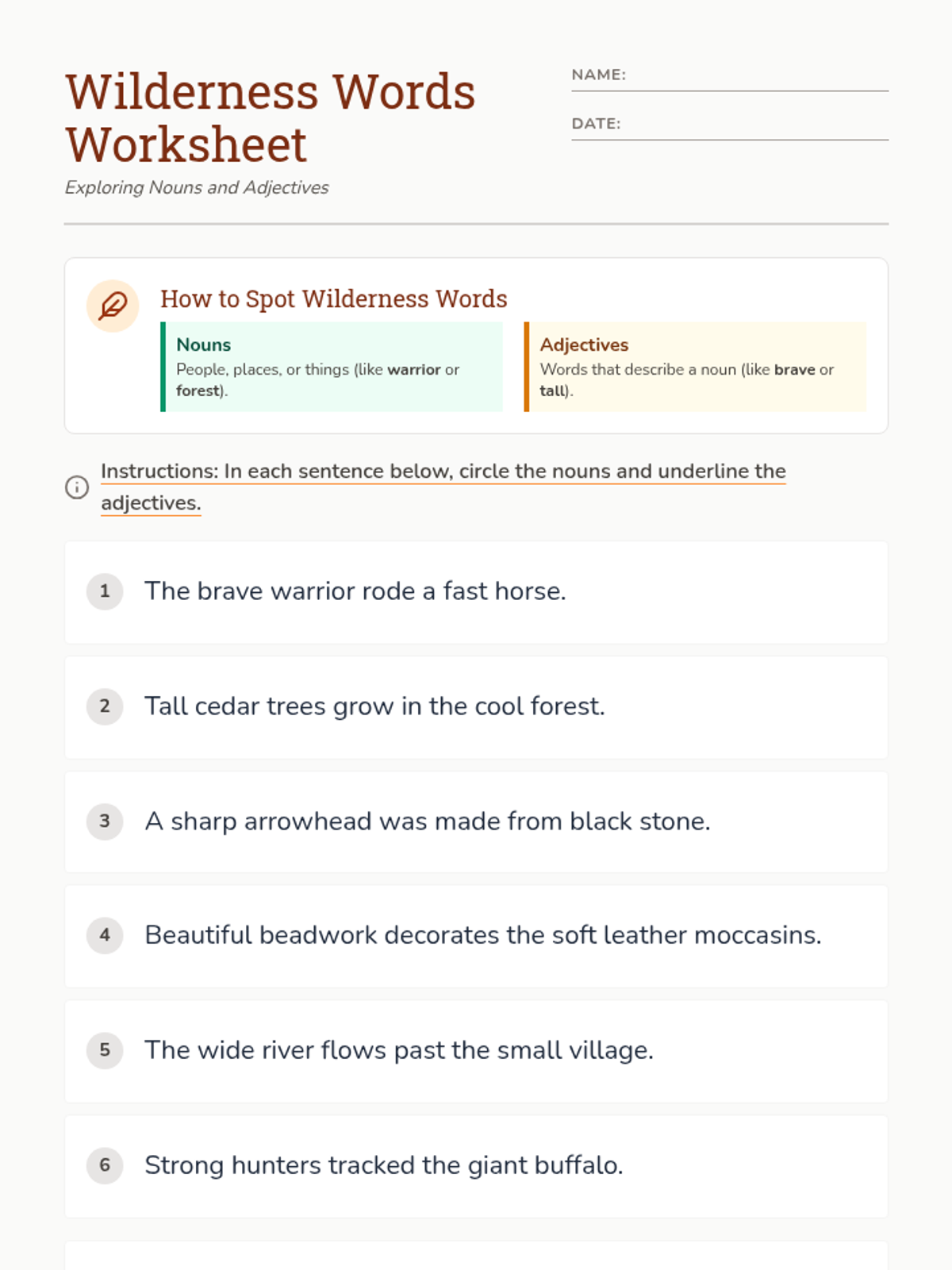
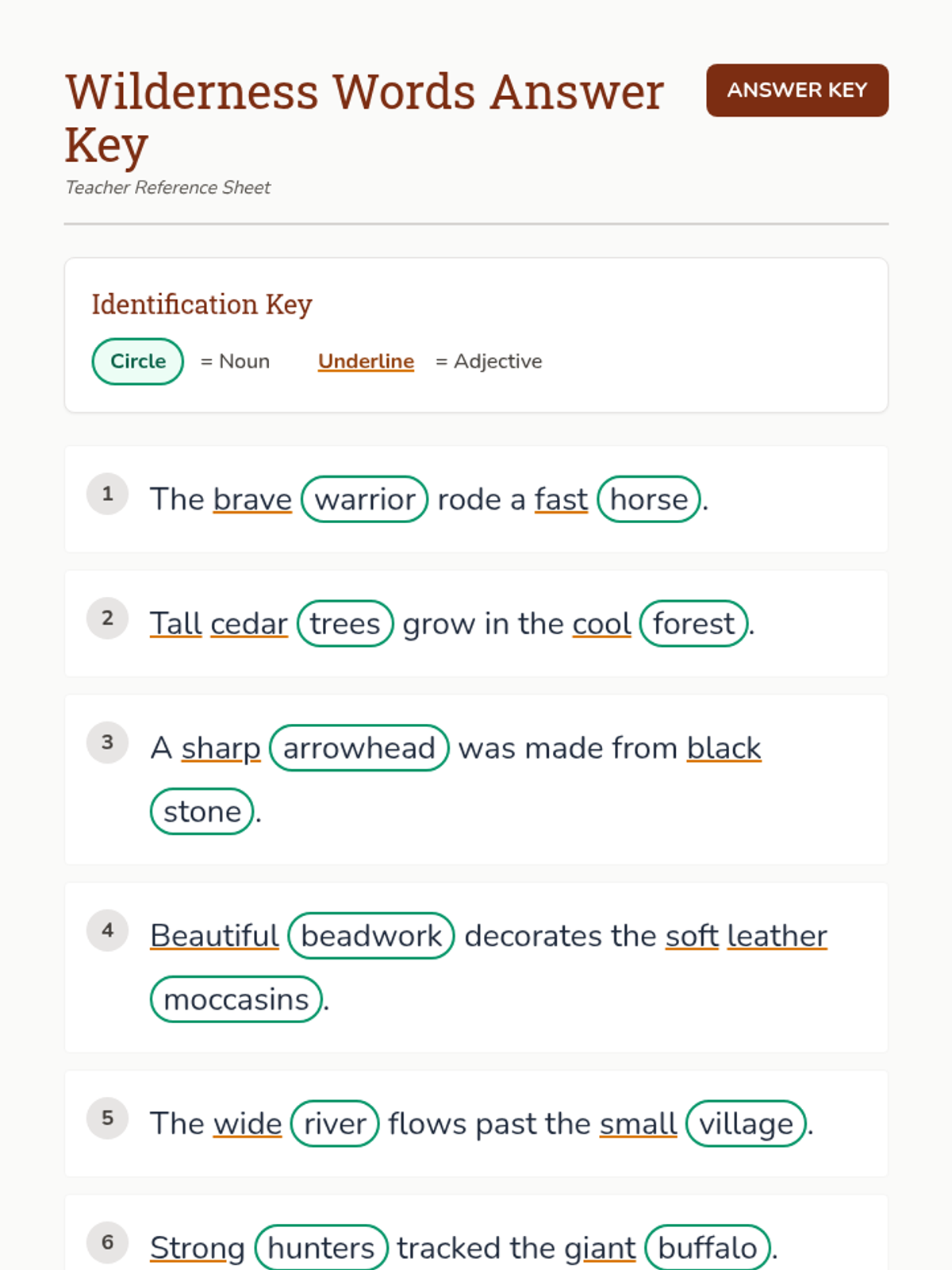
A lesson for 3rd grade students to practice identifying nouns and adjectives through the lens of Native American cultures and nature.
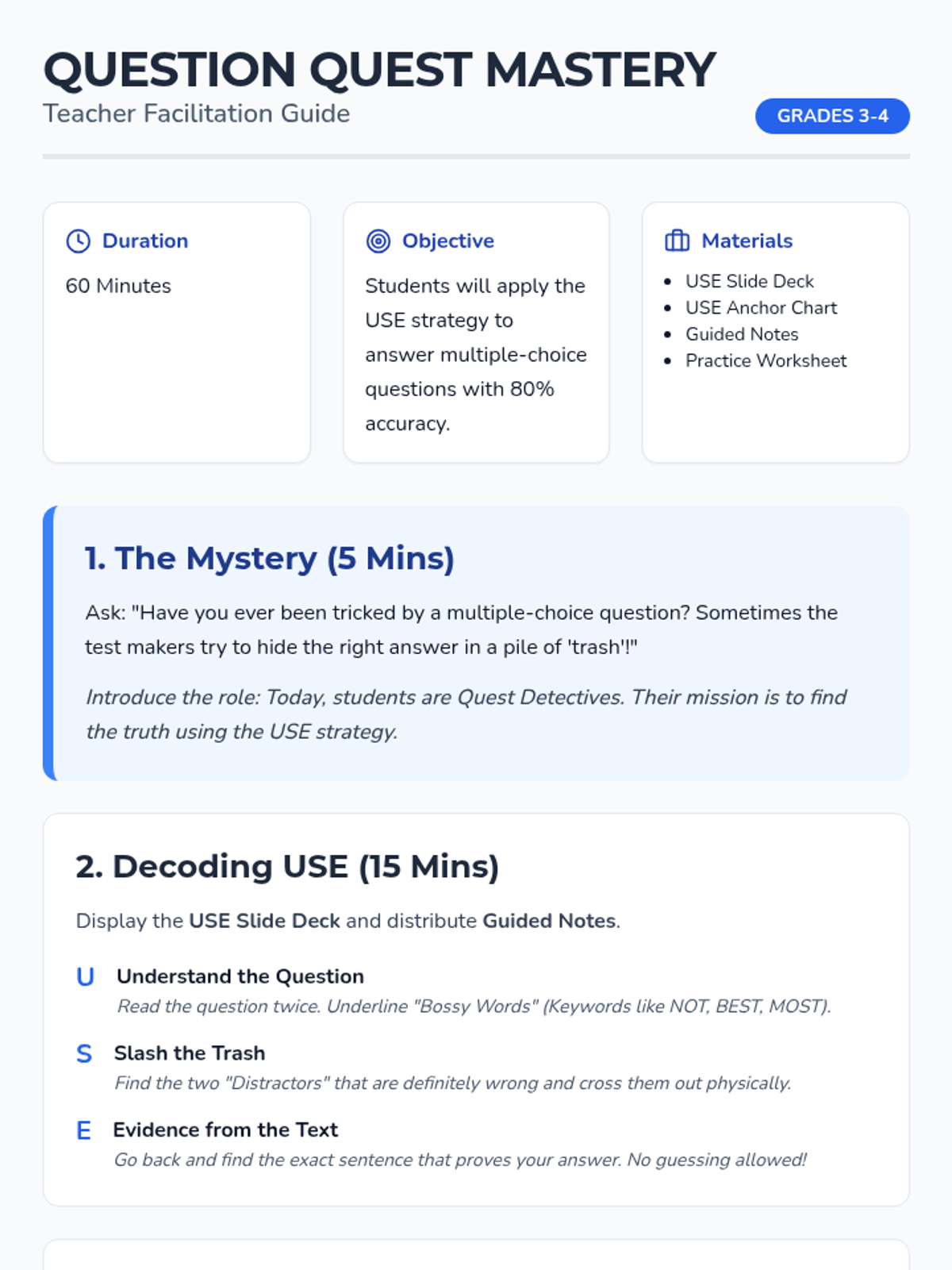
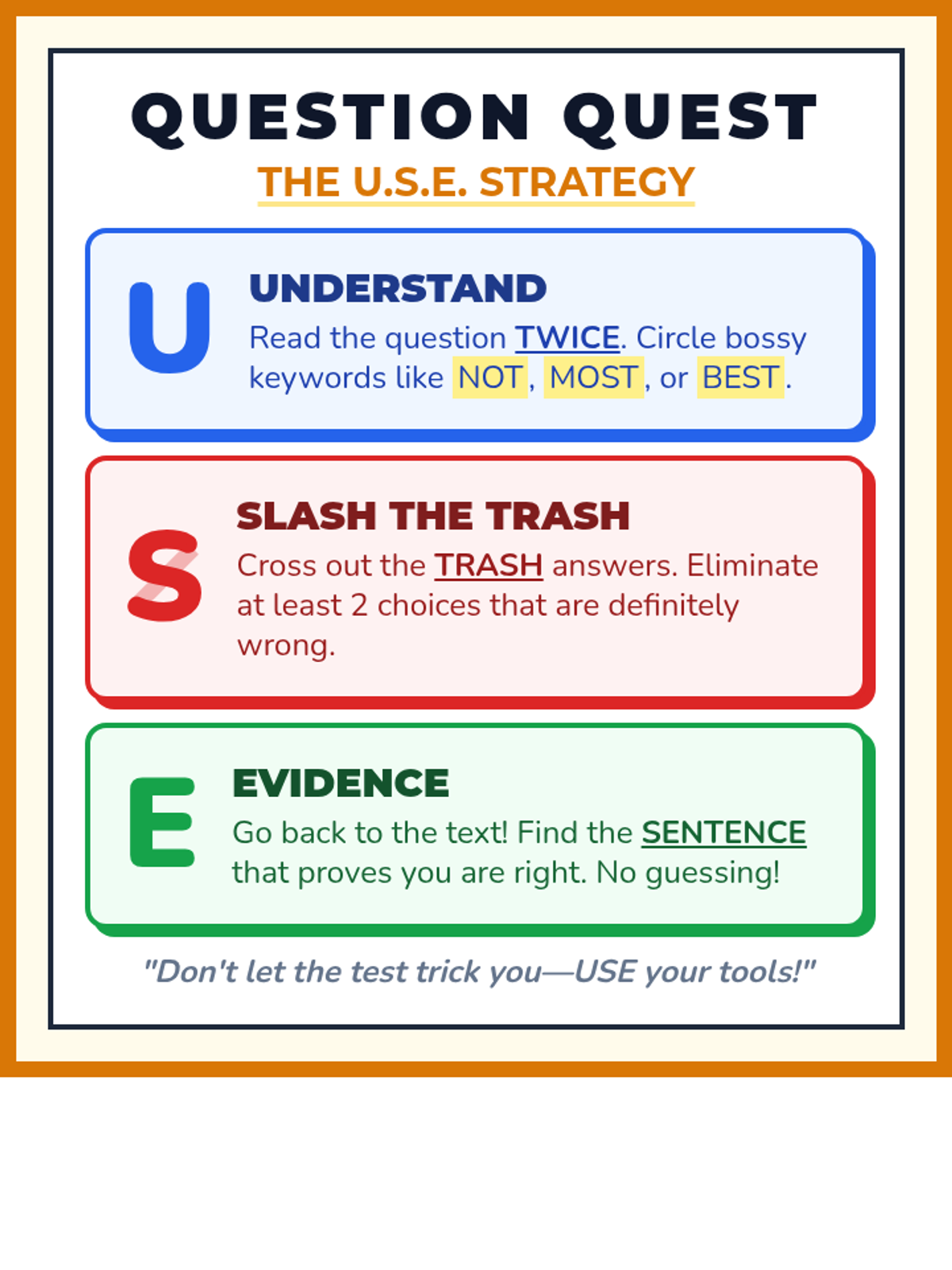
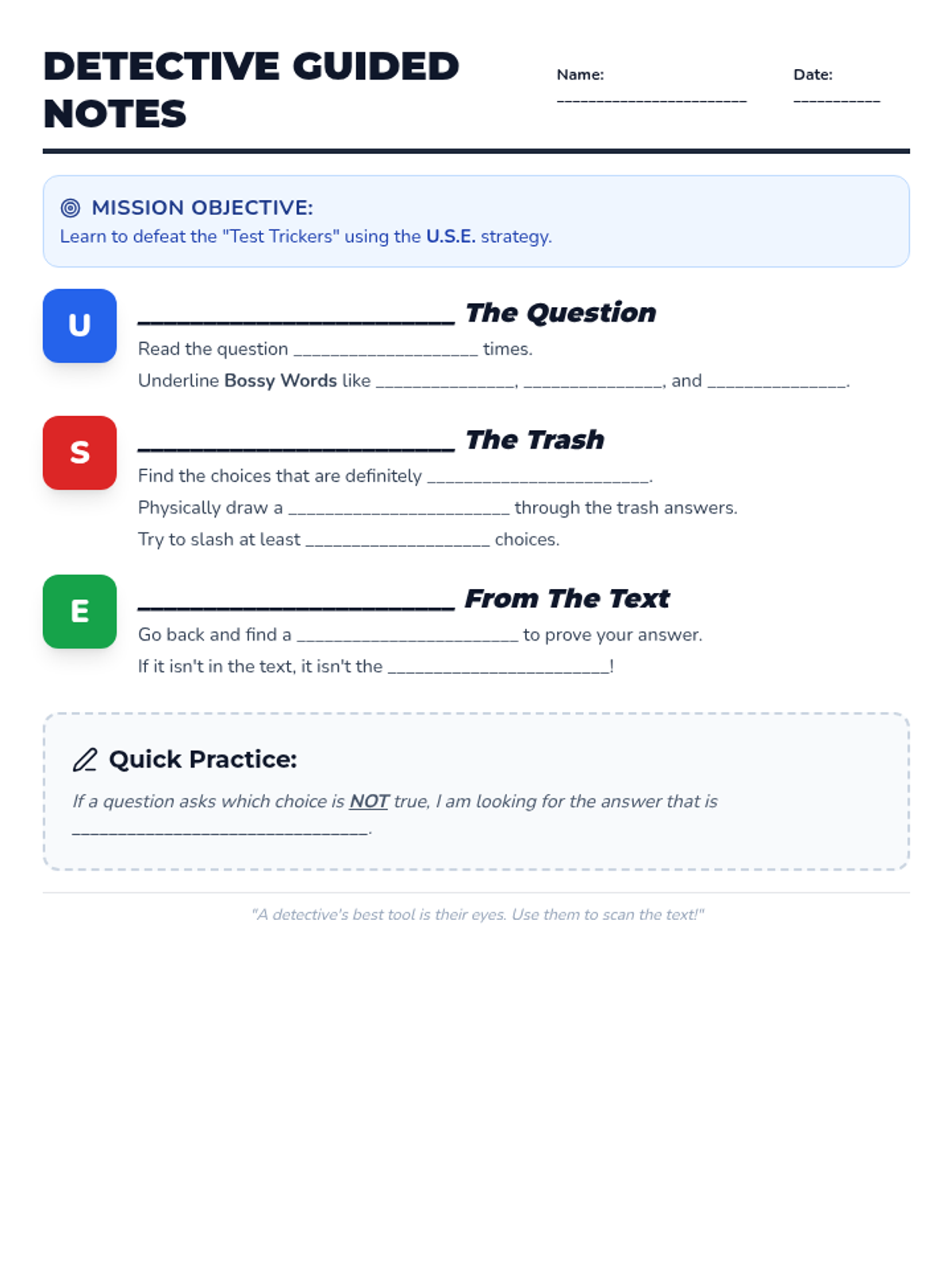
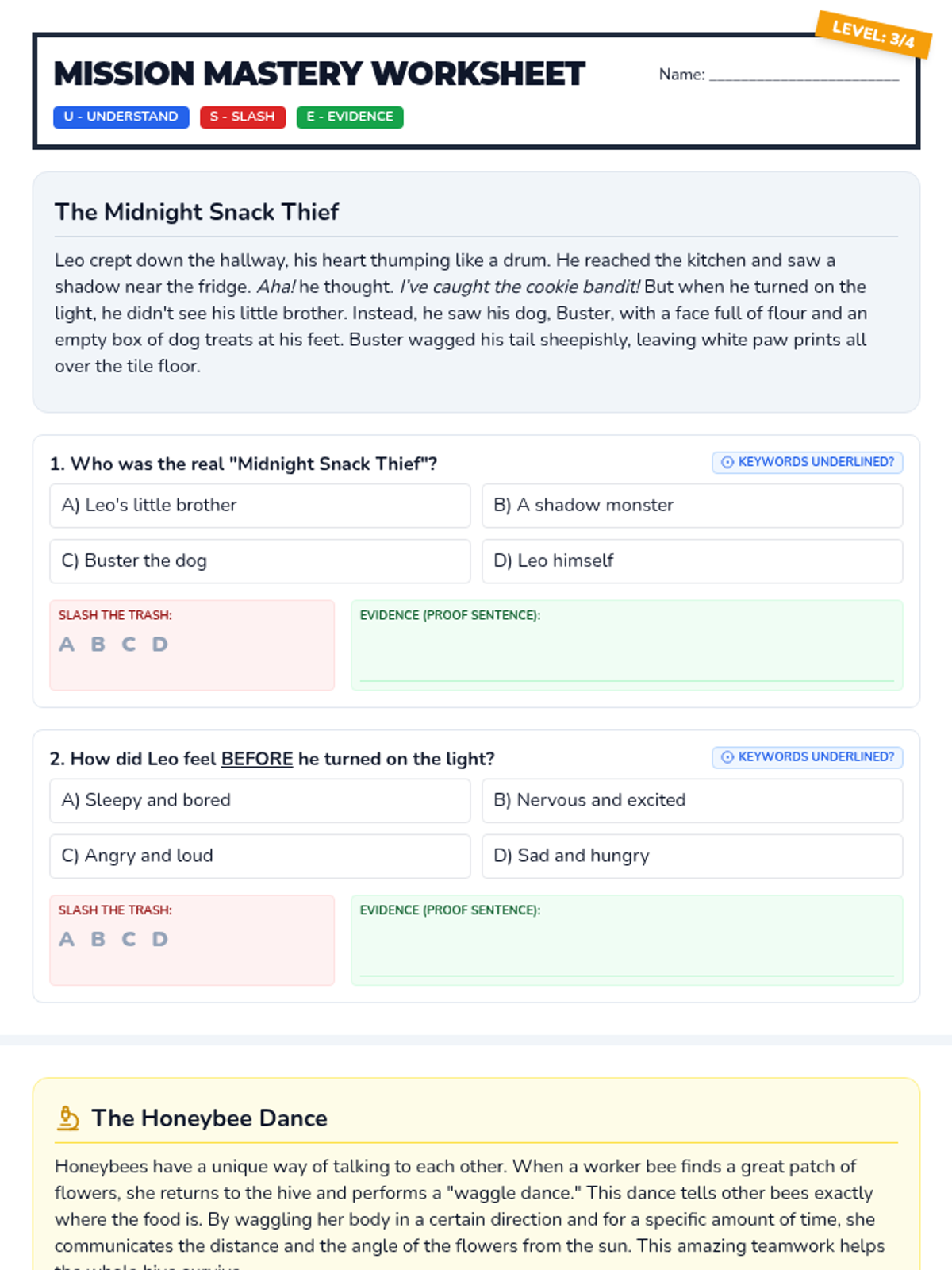
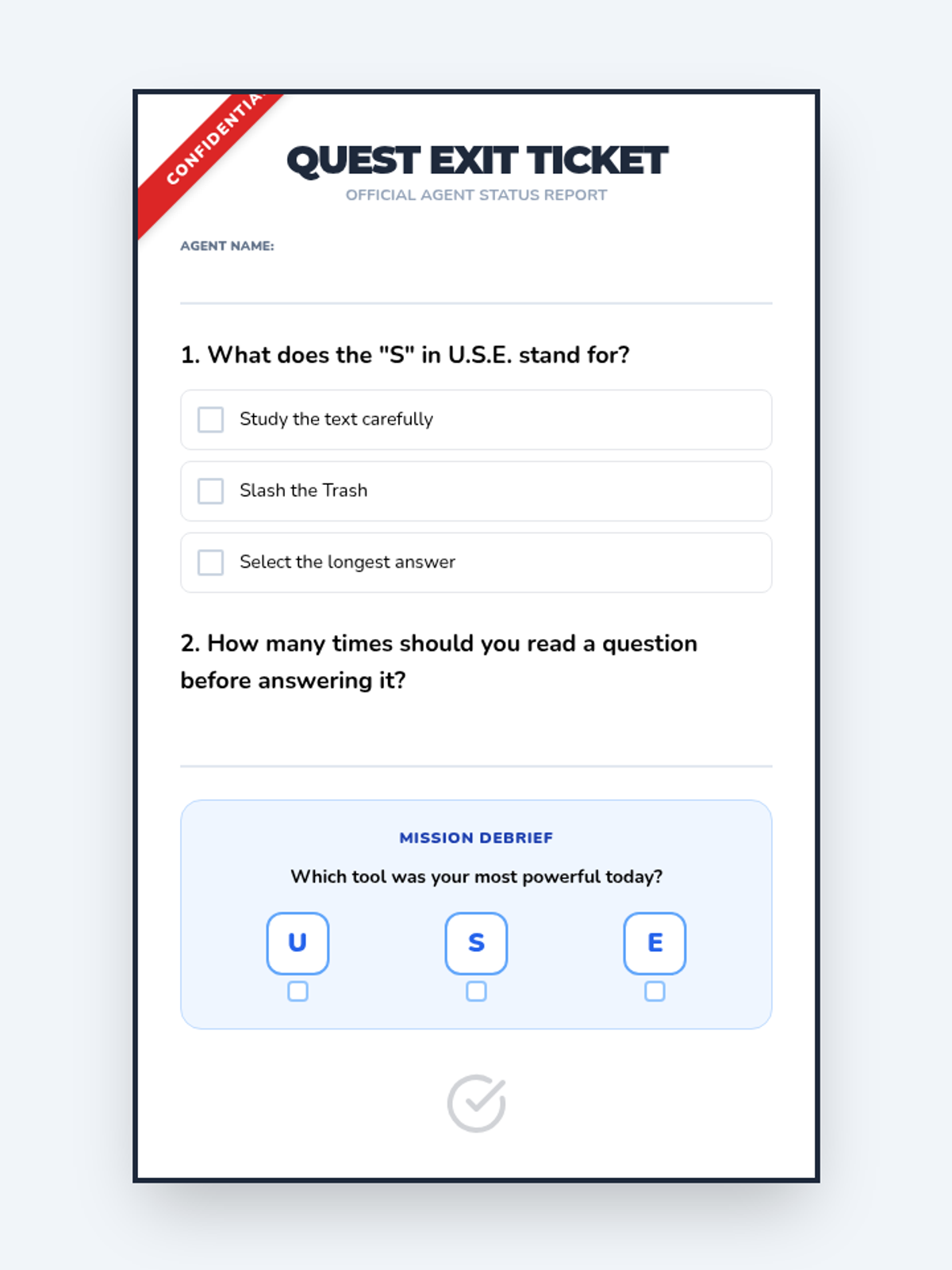
A comprehensive lesson for 3rd and 4th graders on the USE strategy (Understand, Slash, Evidence) to improve multiple-choice accuracy using fiction and science texts.
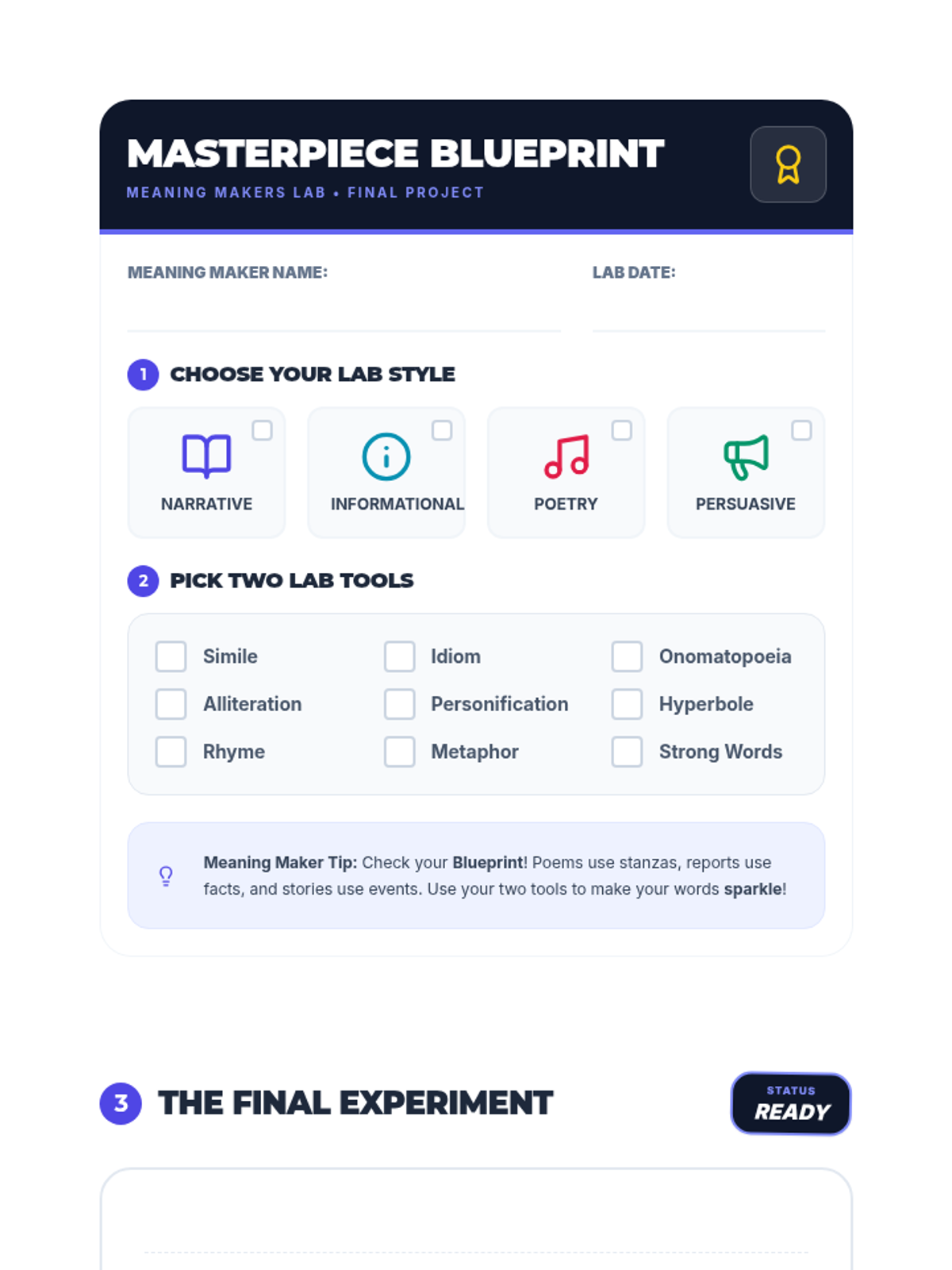
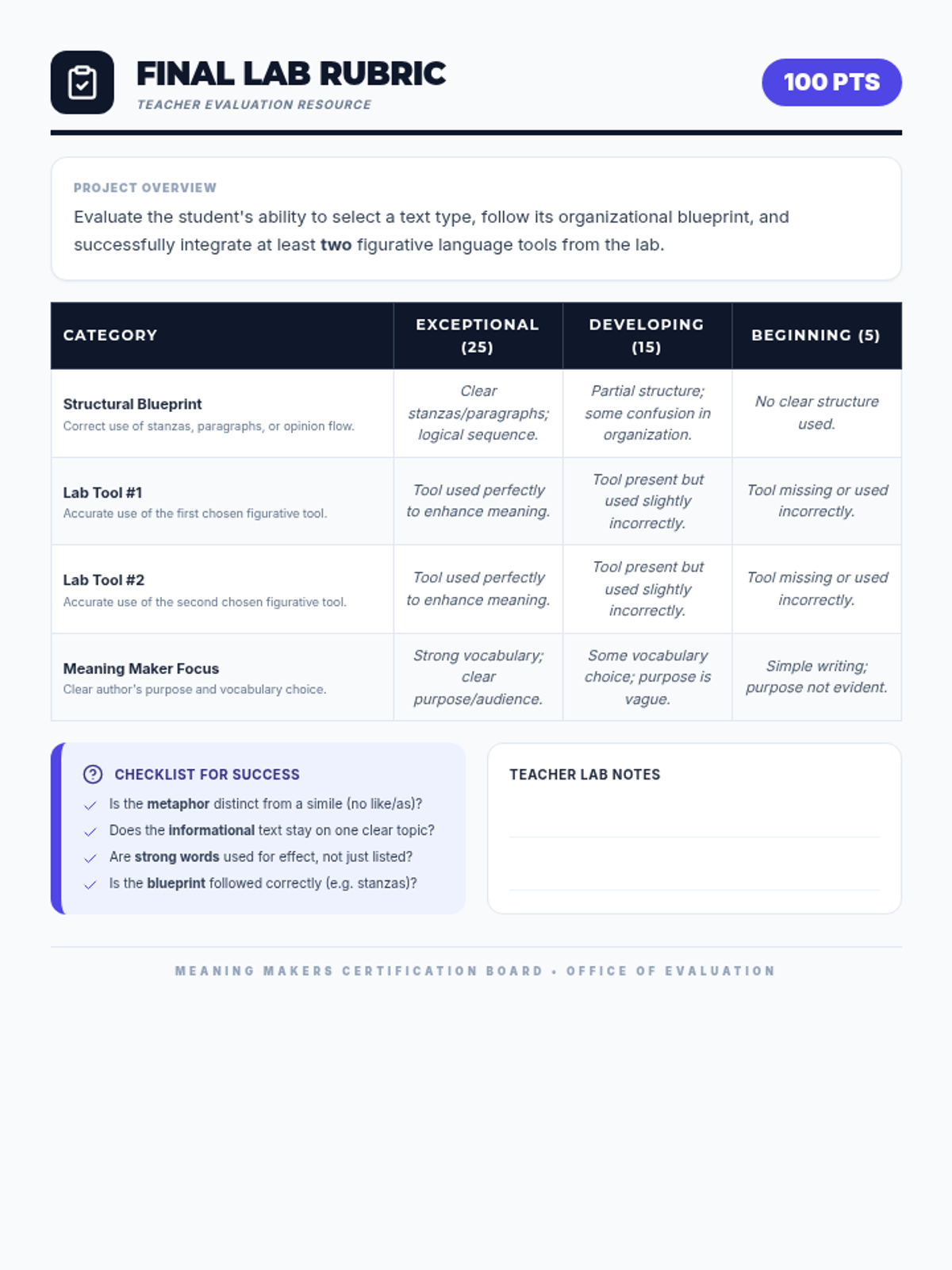
A culminating experience where students review the four text types and create their own 'Meaning Maker Masterpiece' by writing a short piece using specific structural and figurative tools.
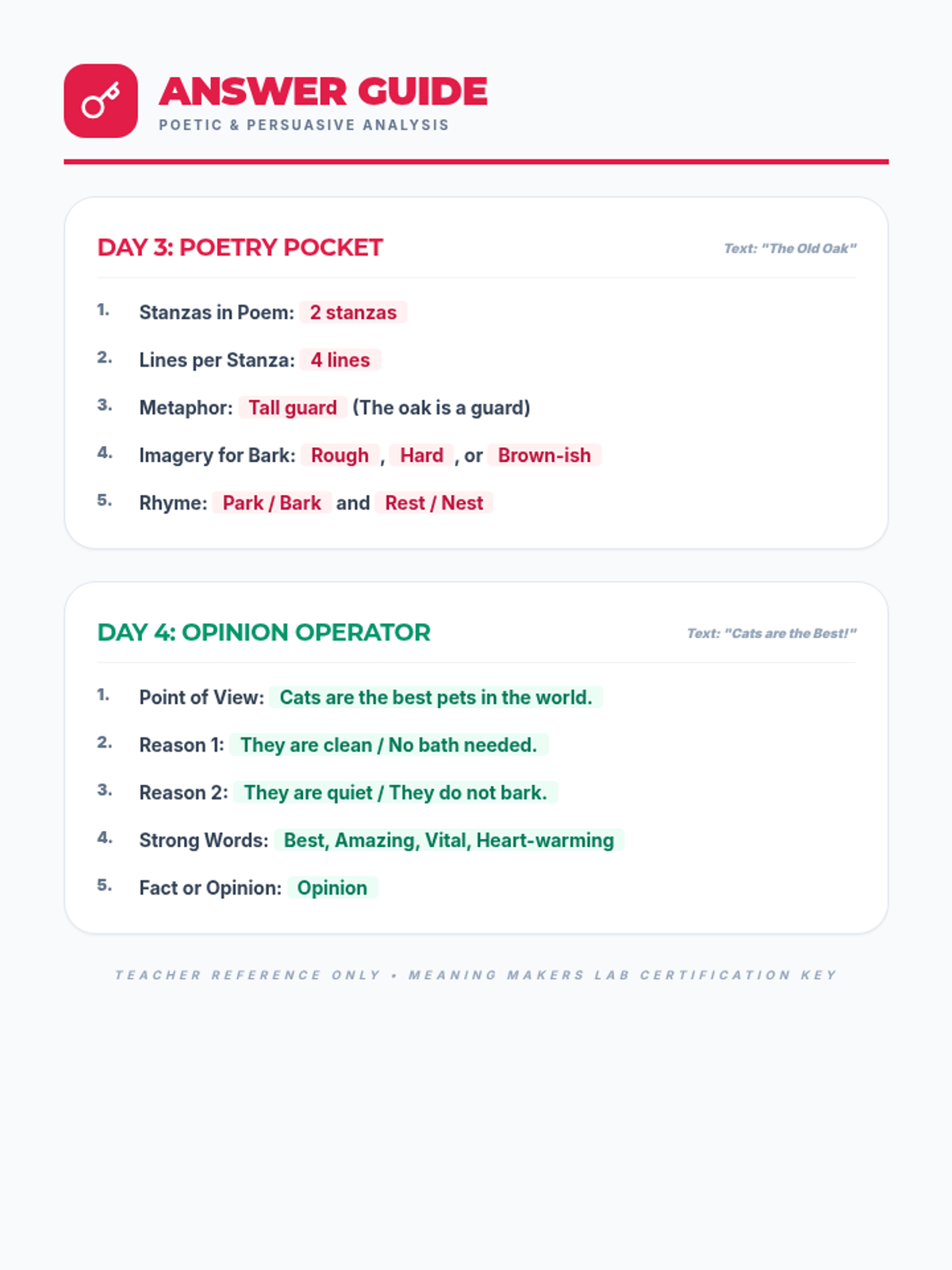
Focused on opinion texts, this lesson teaches students to identify an author's point of view and the reasons provided to support it, while exploring persuasive word choices.
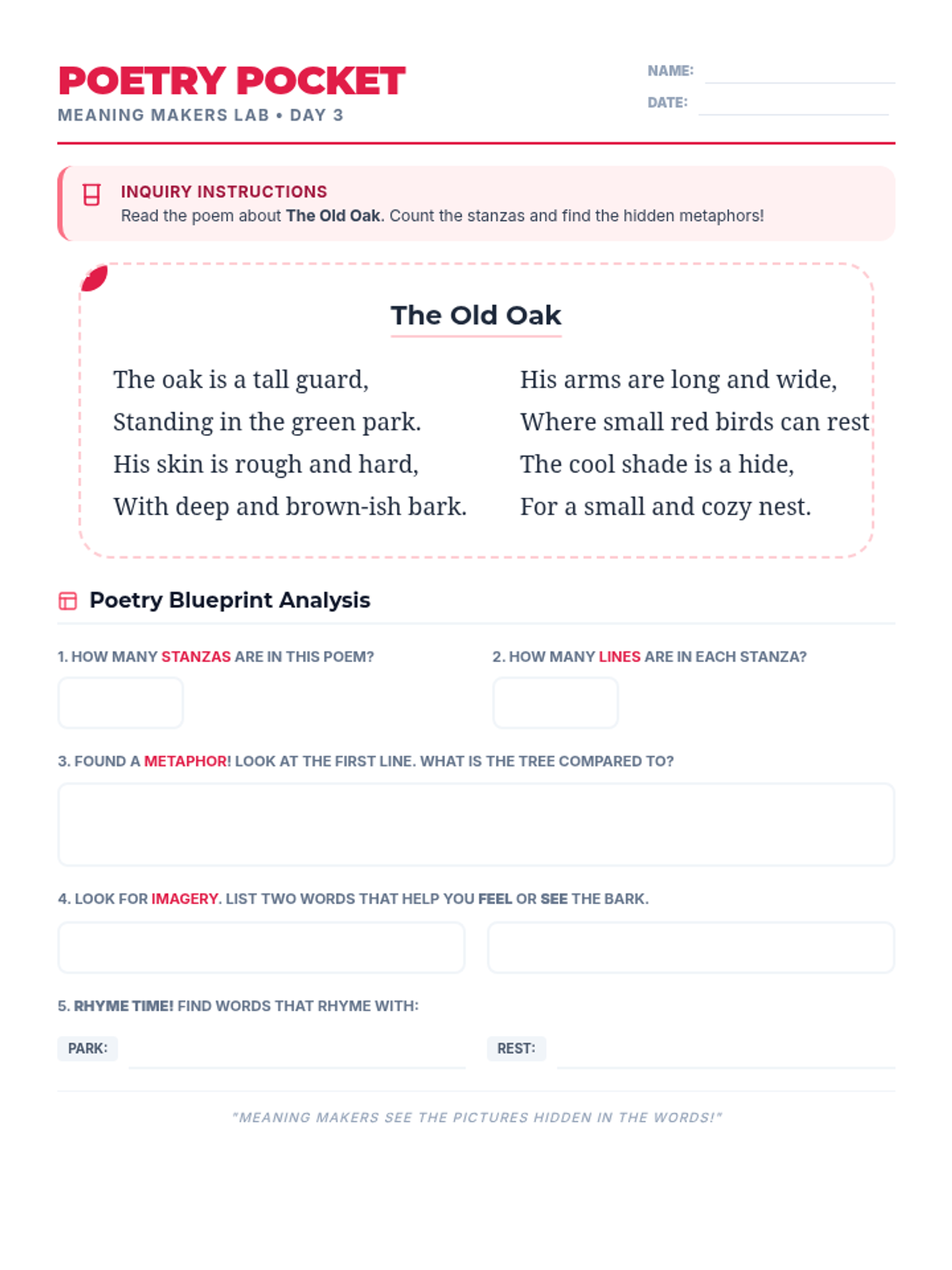
Focused on poetry, this lesson explores how stanzas and rhyme create rhythm and how metaphors and sensory words build vivid imagery for the reader.
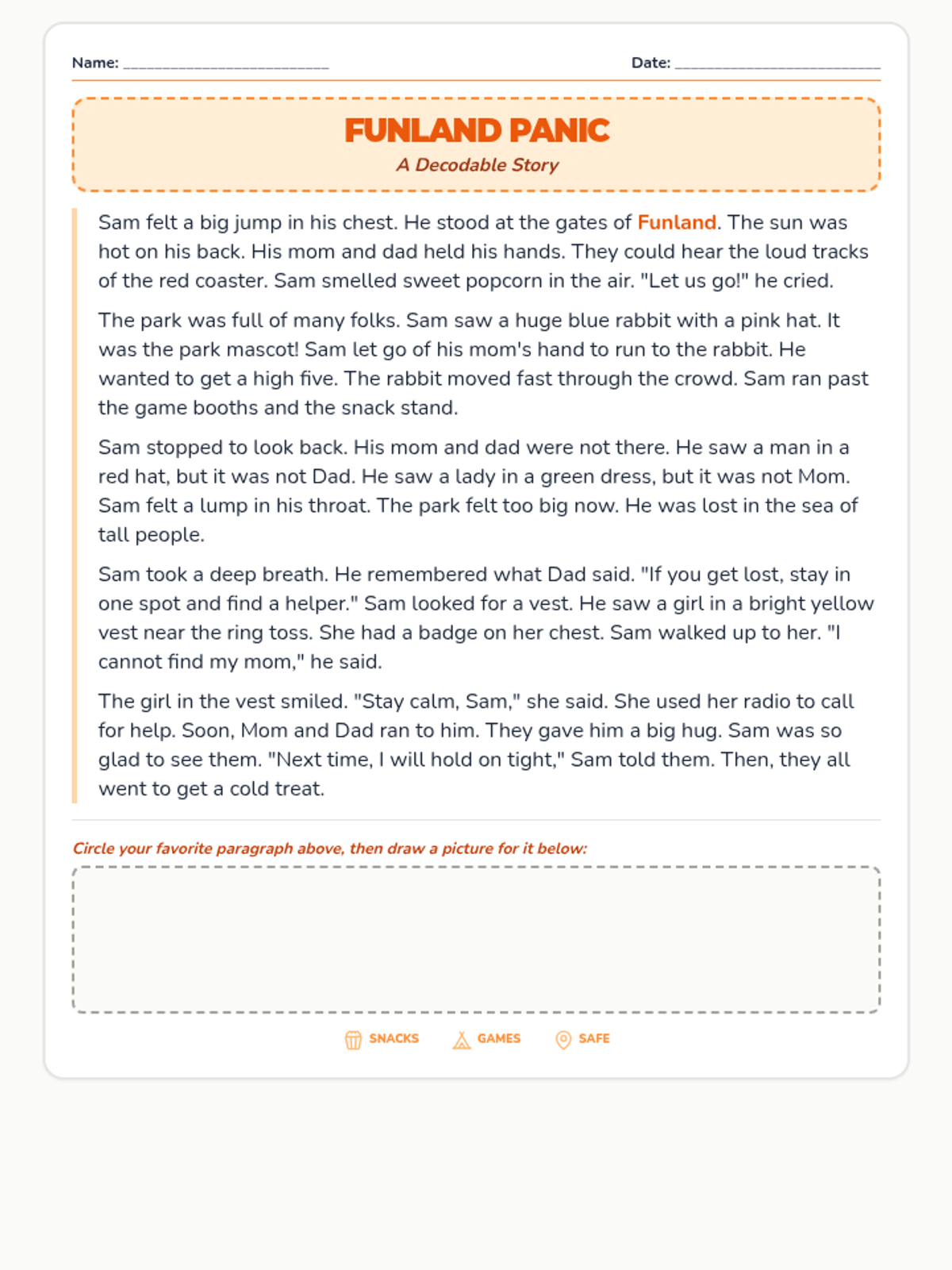
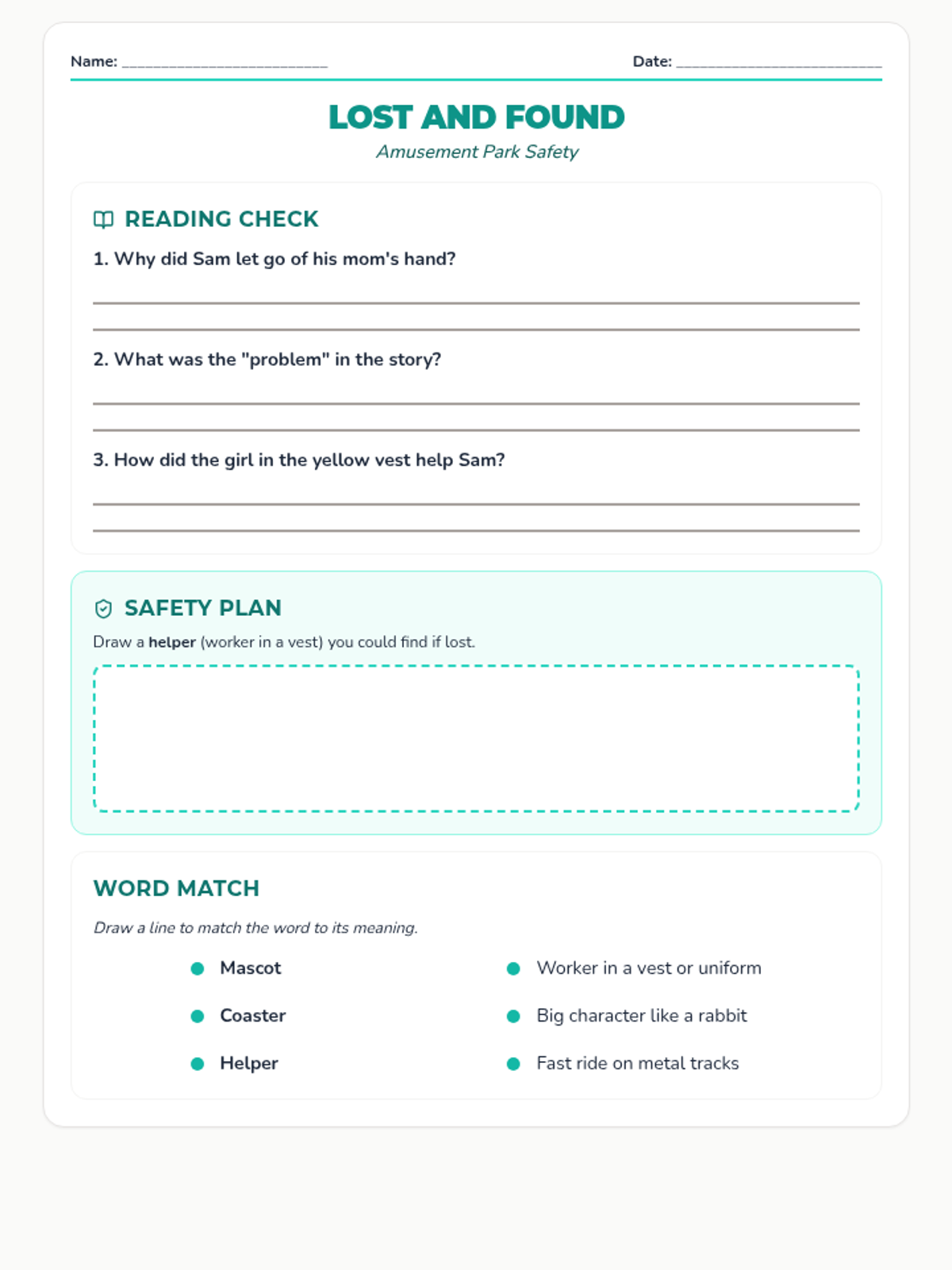
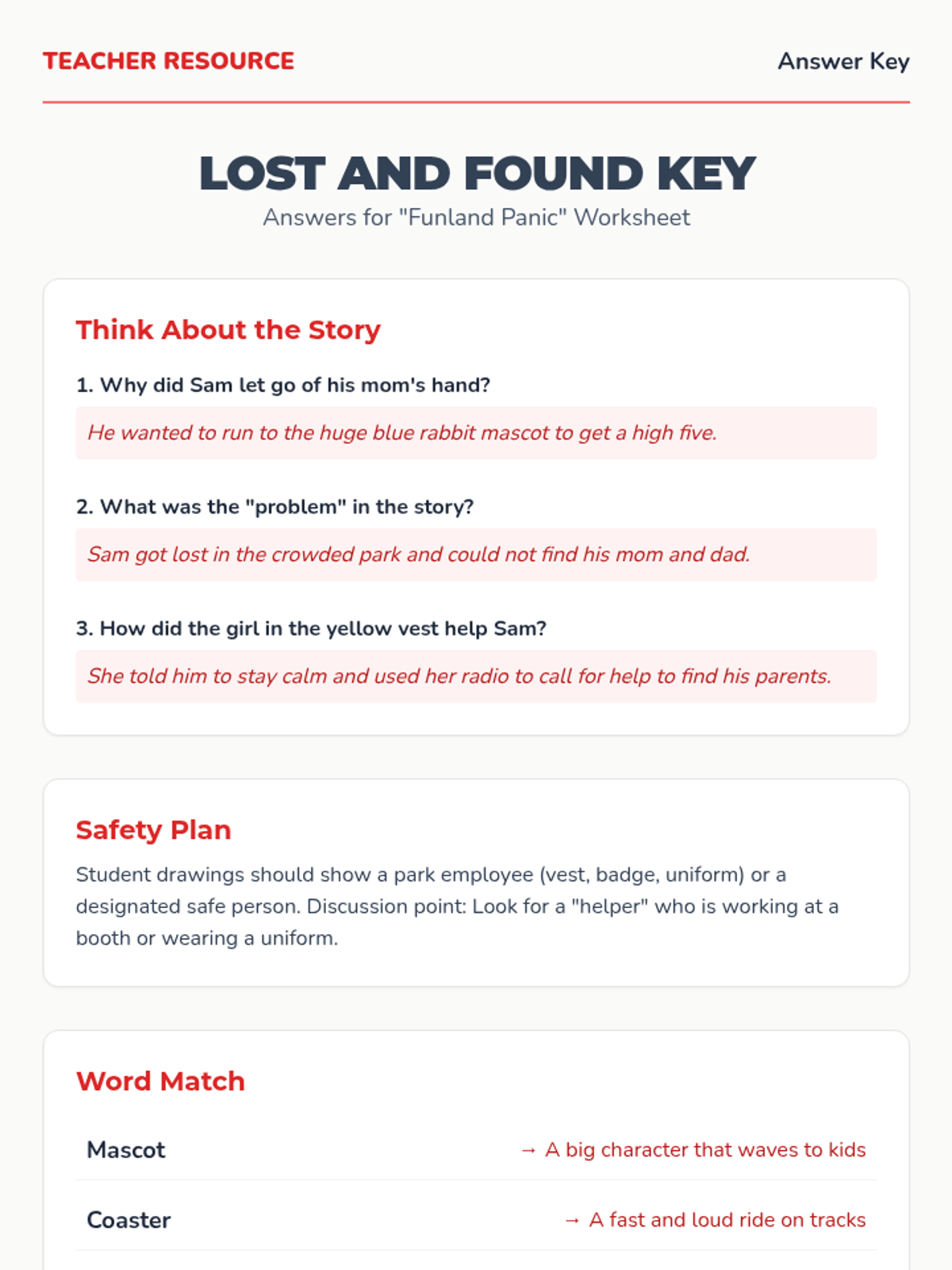
A decodable reading lesson centered on a story about getting lost at an amusement park, focusing on reading comprehension and safety rules.
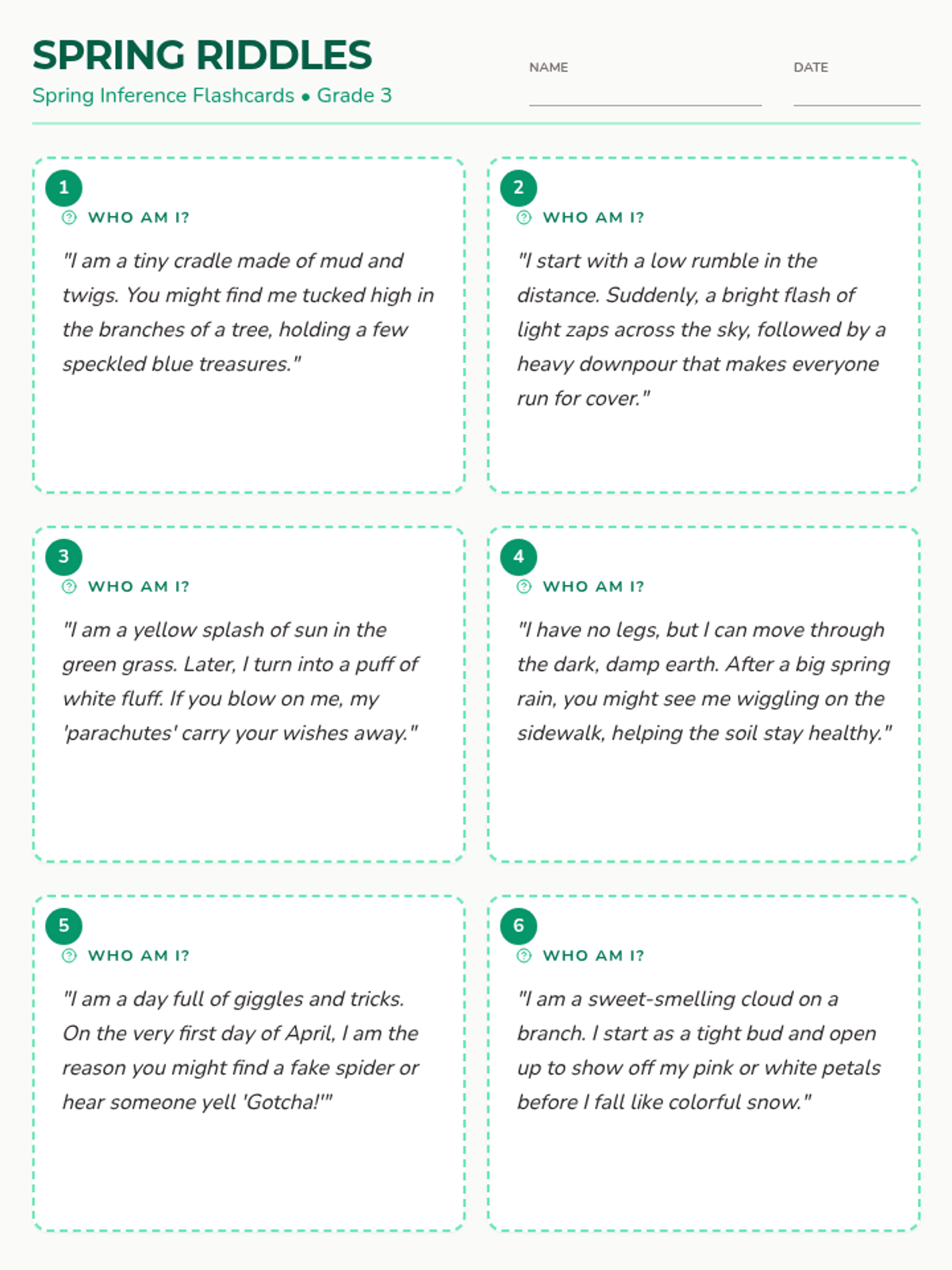
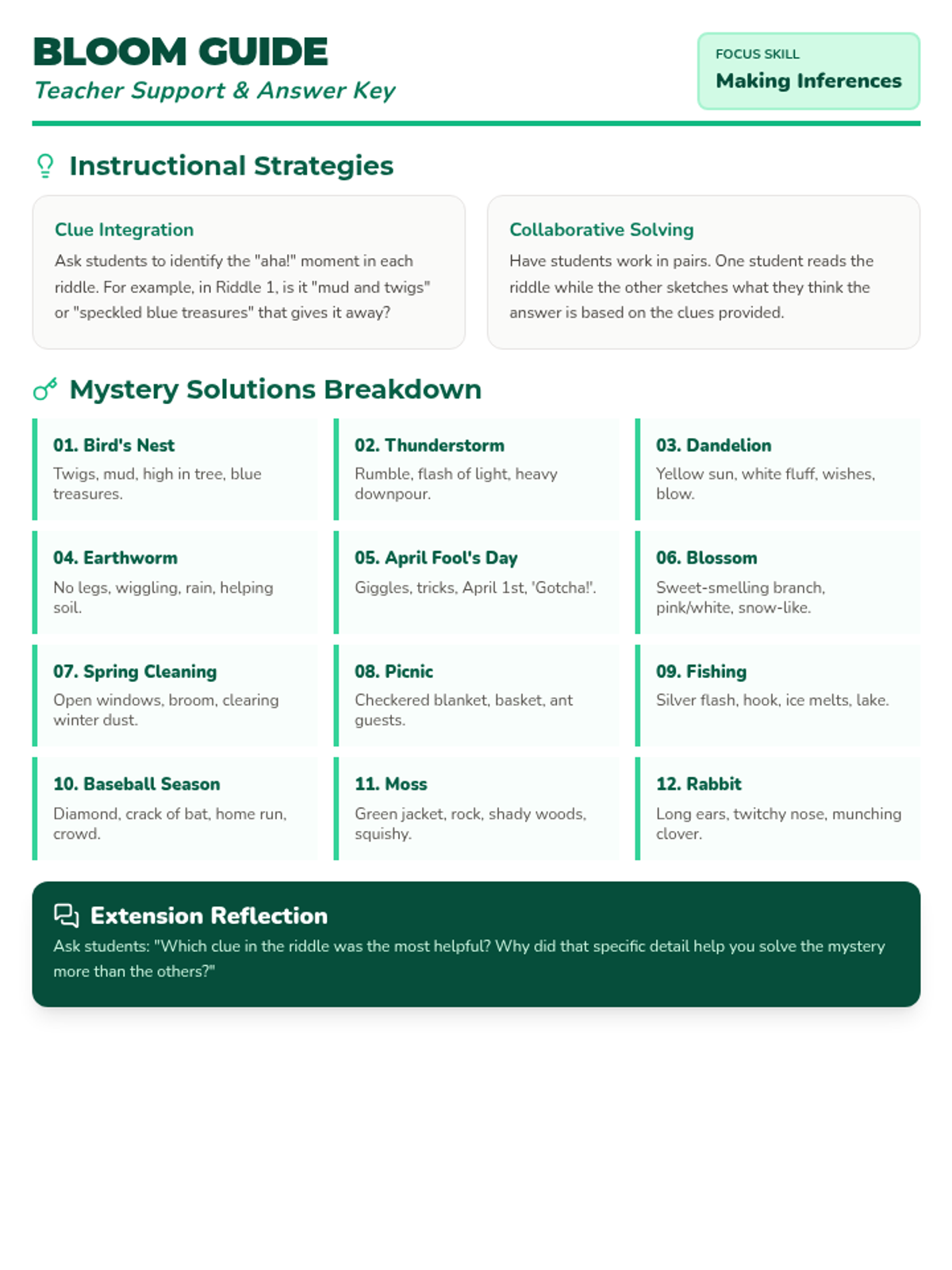
A collection of activities focused on developing inference skills using spring-themed content for third-grade students.
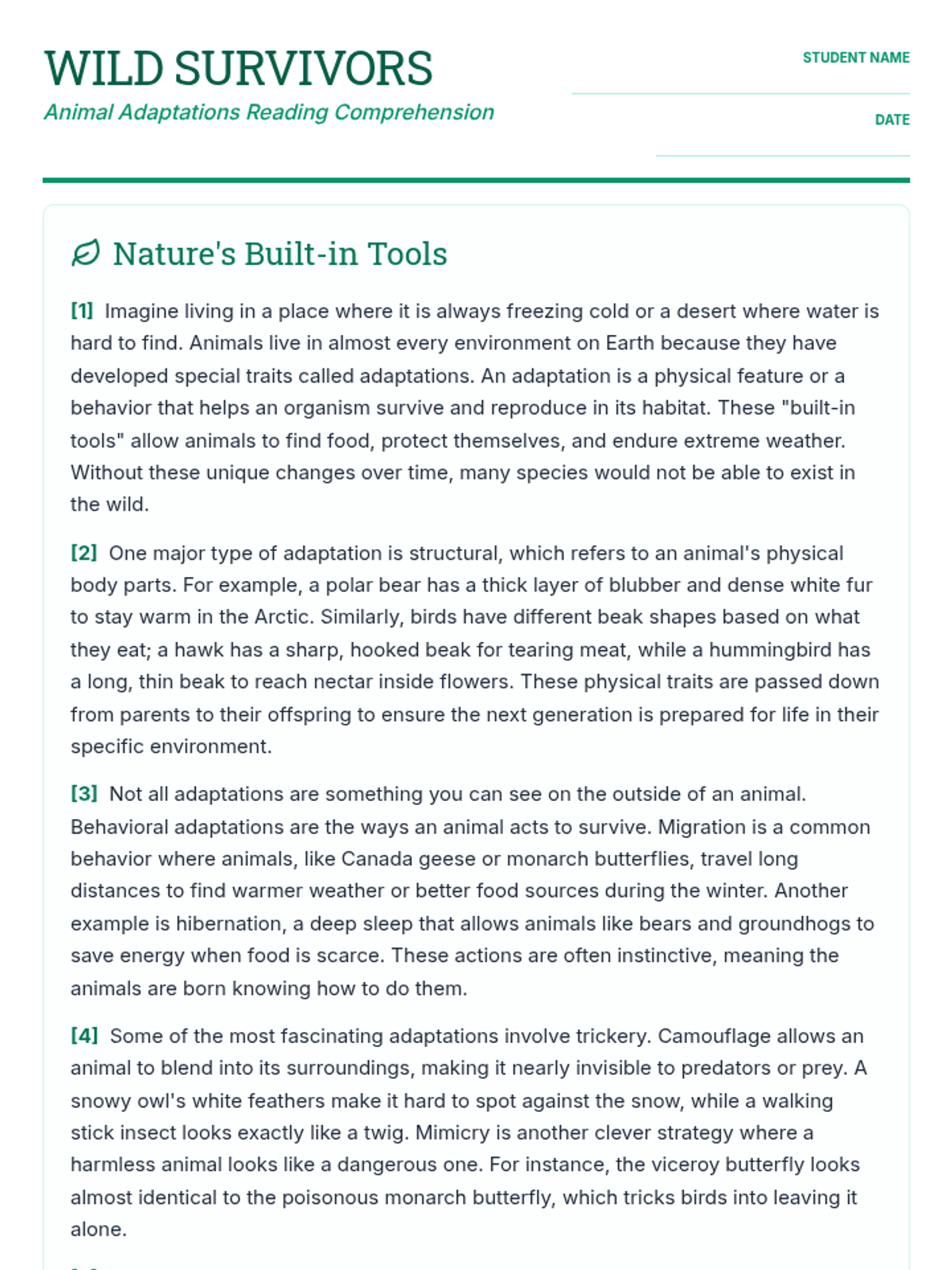
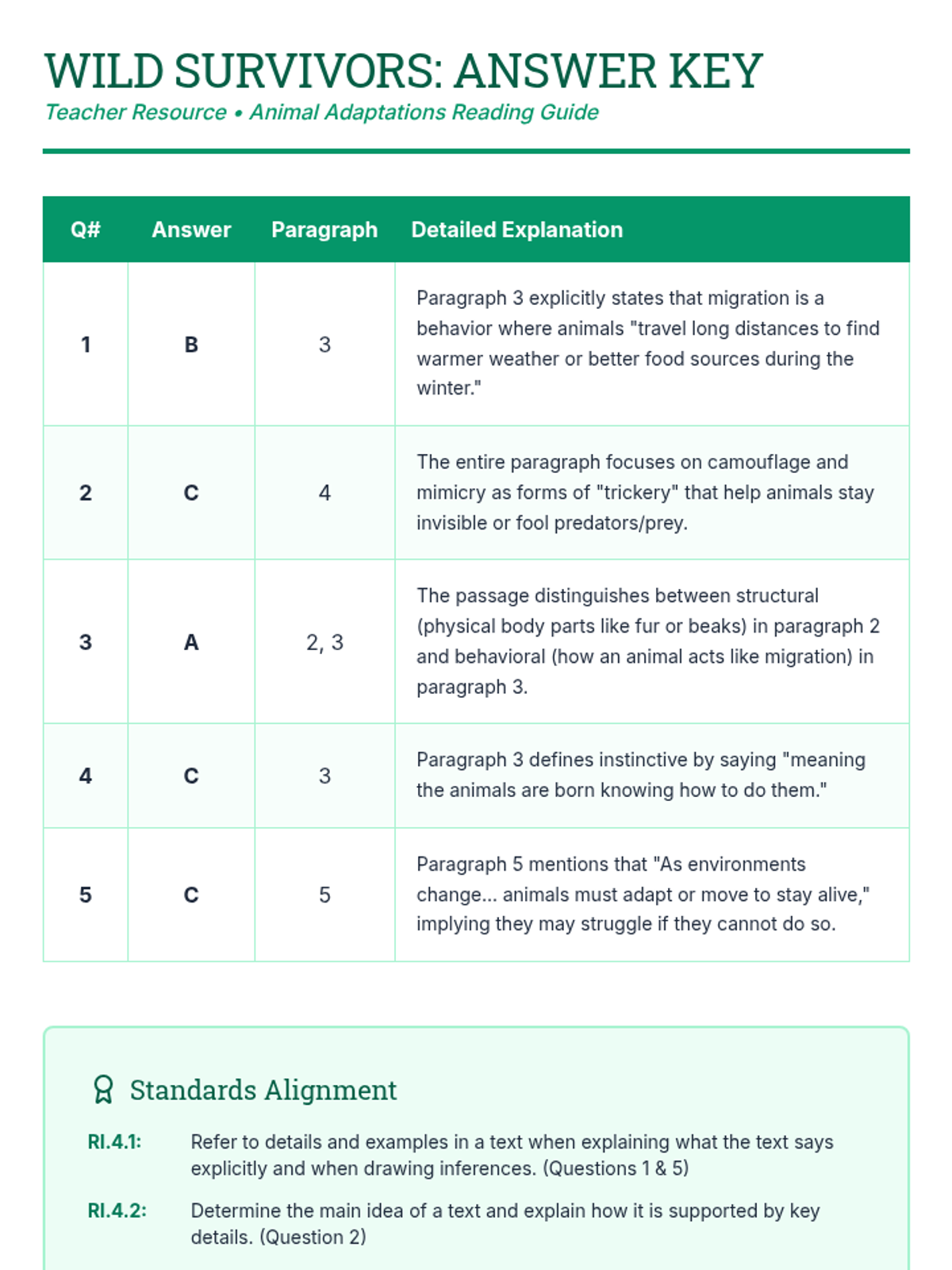
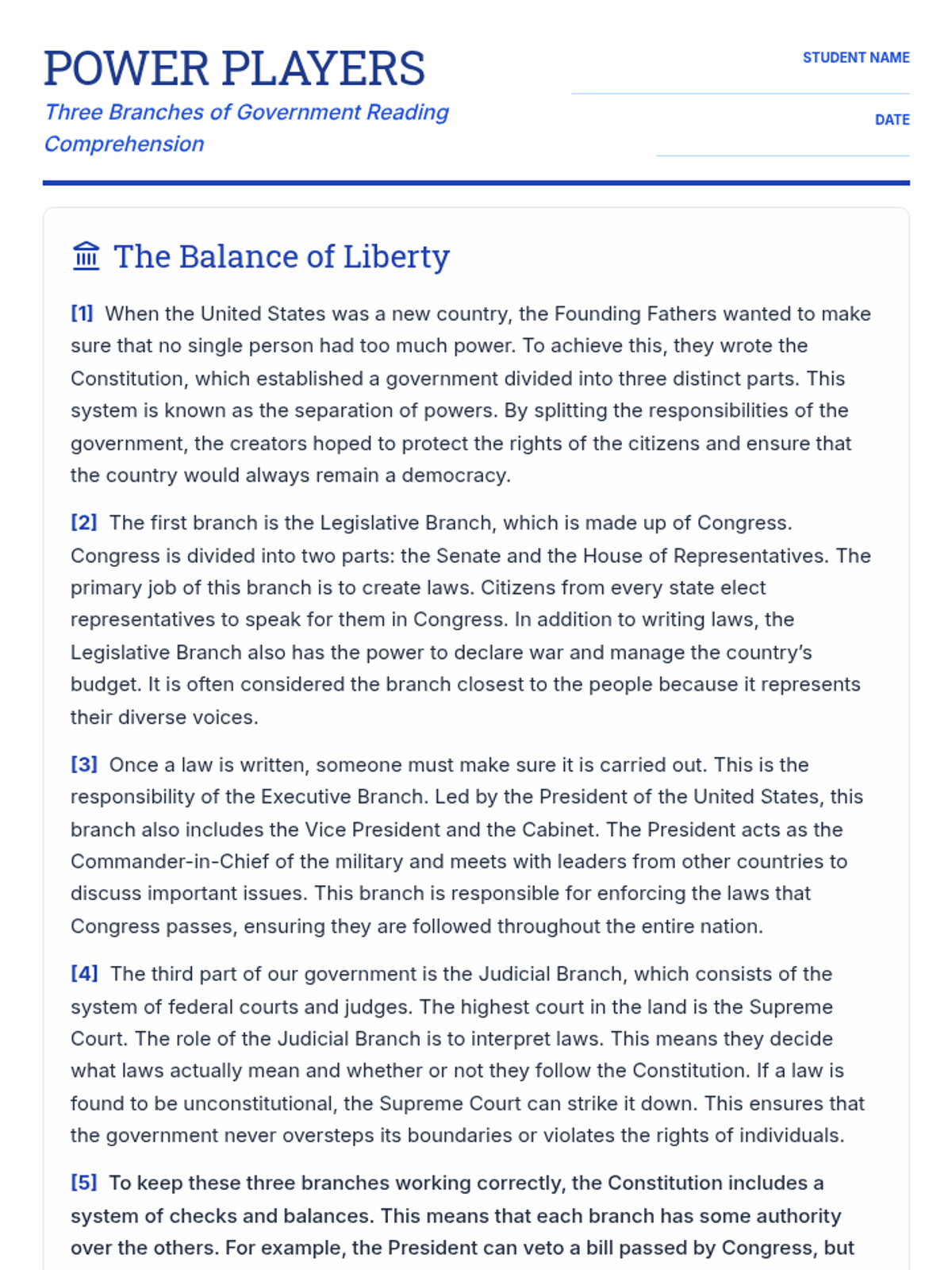
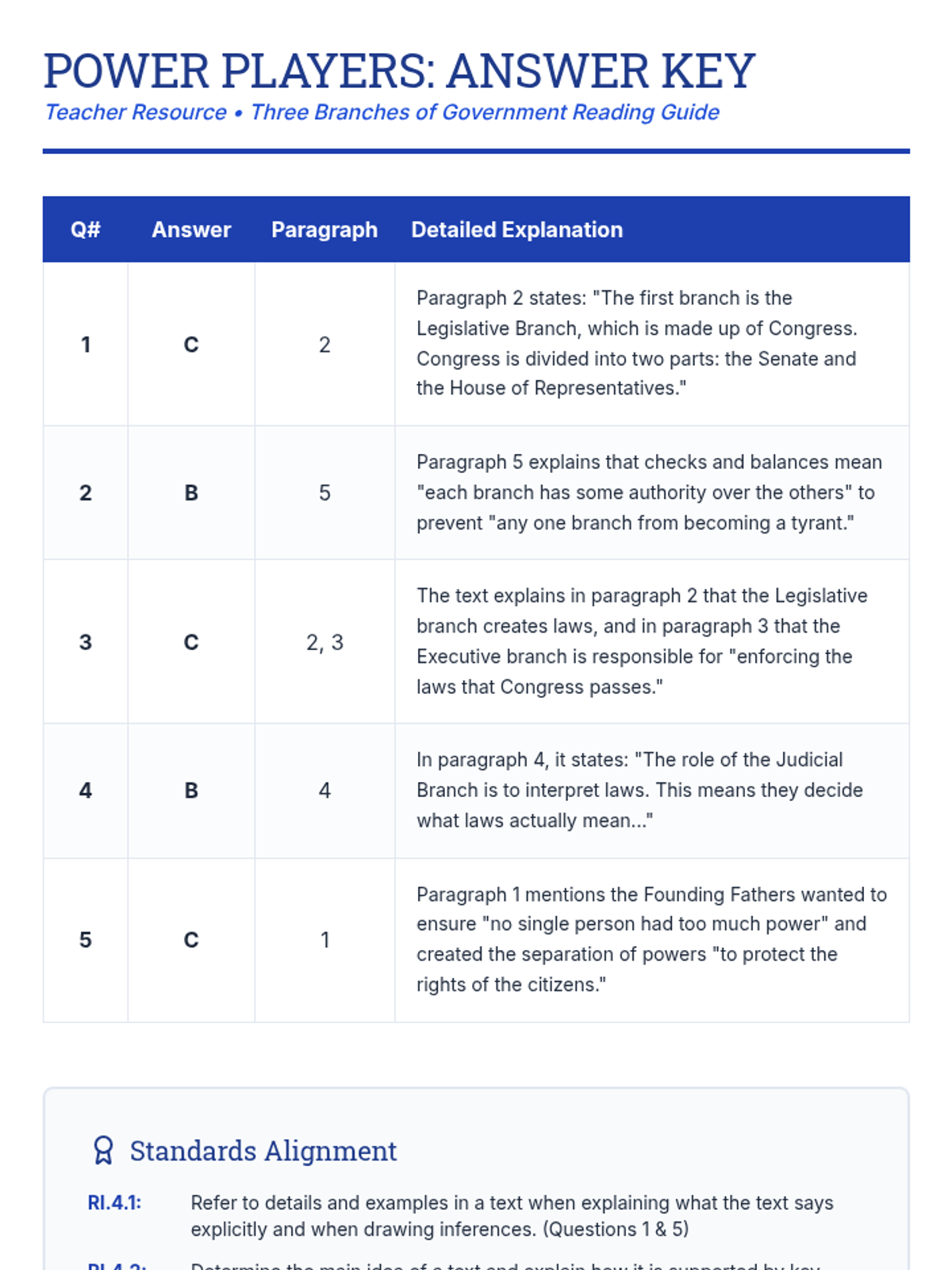
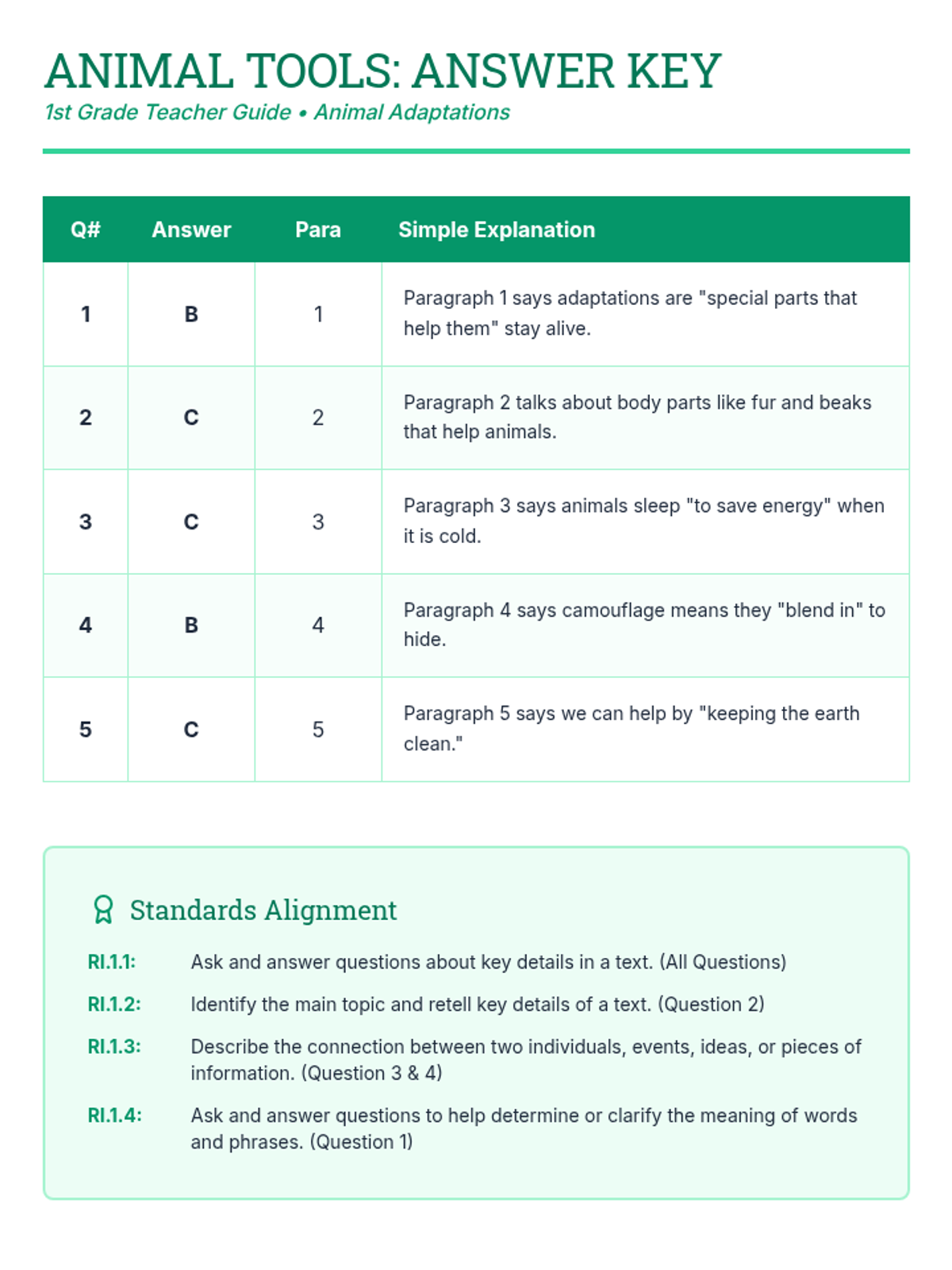
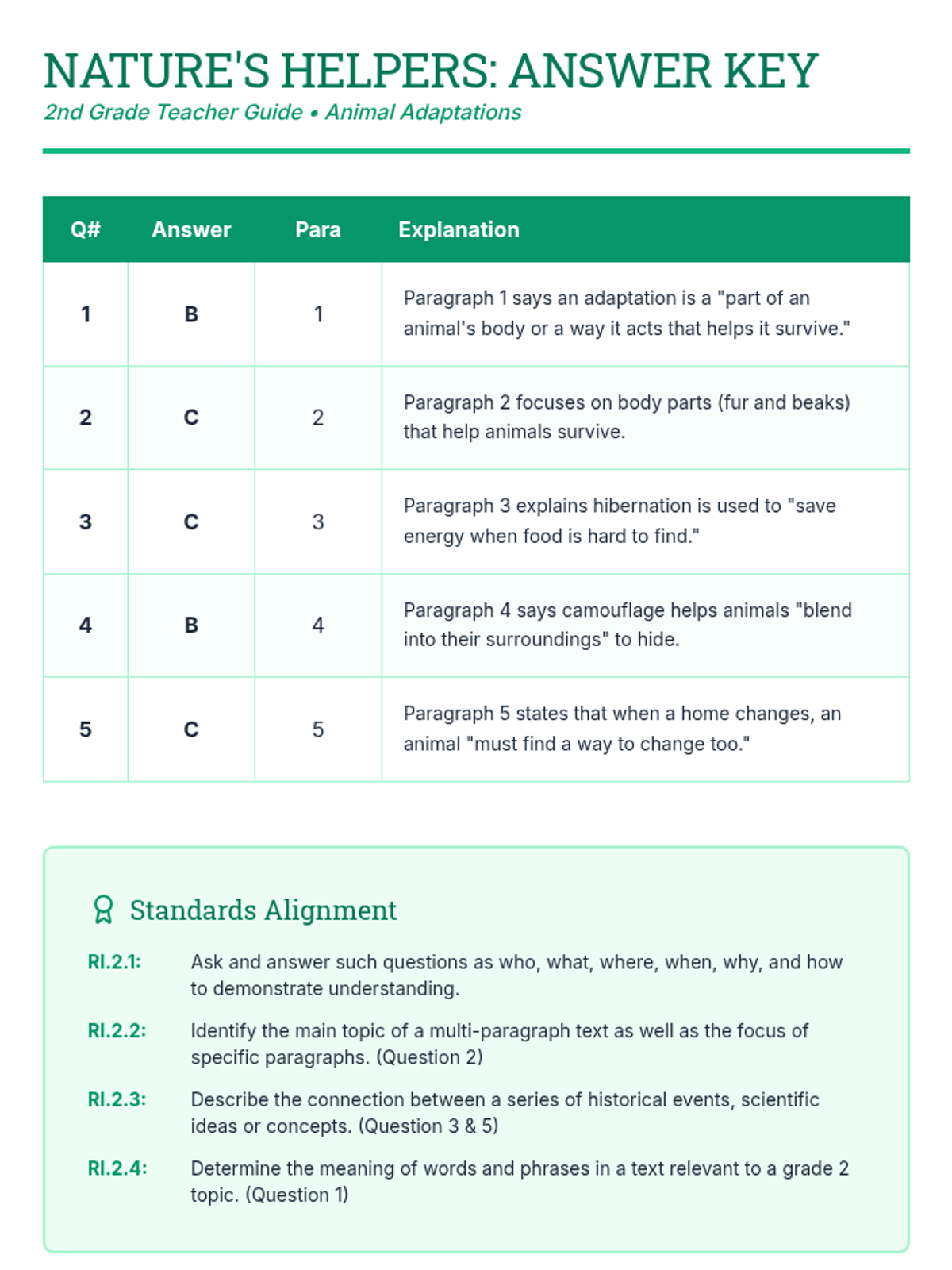
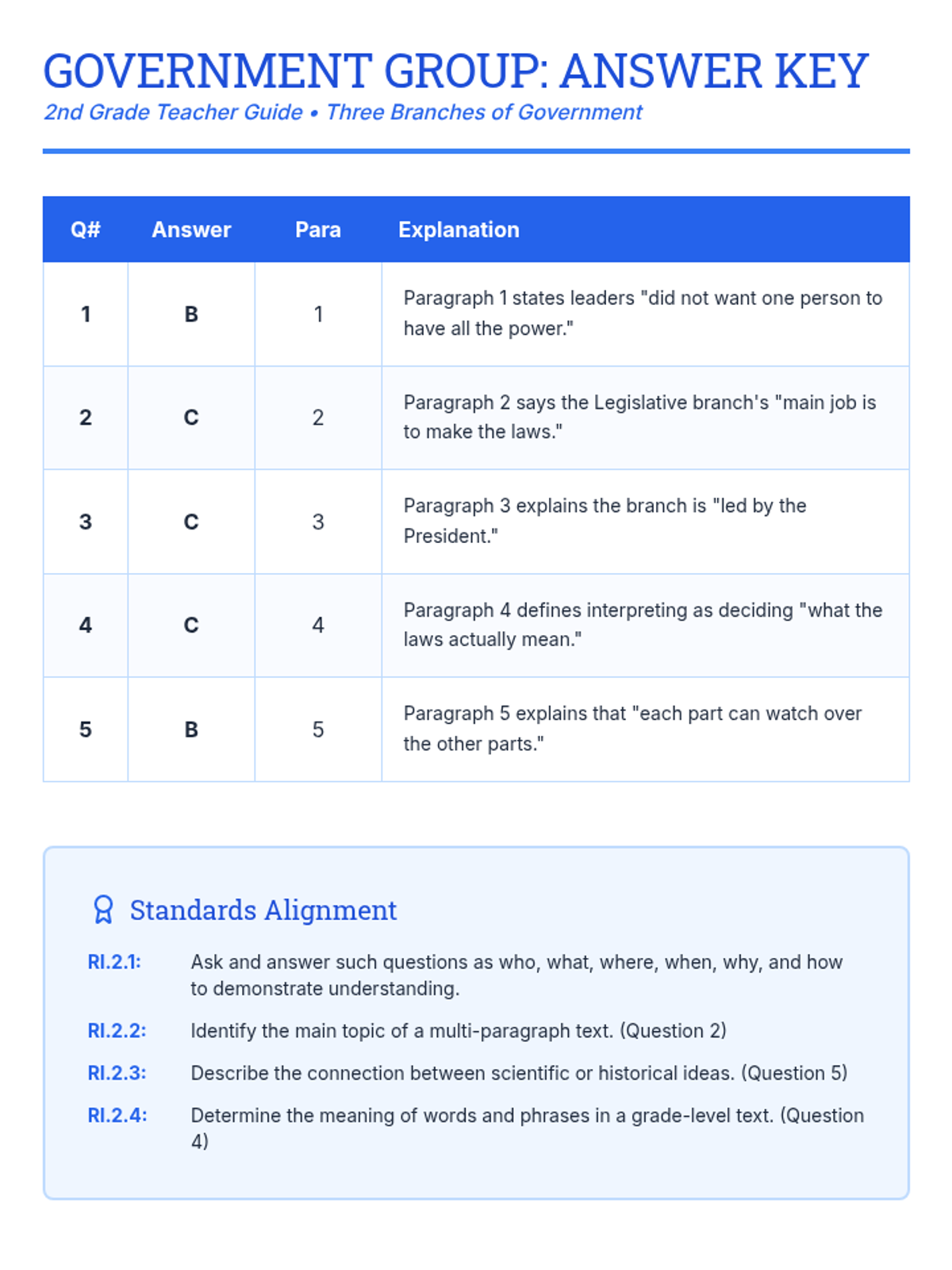
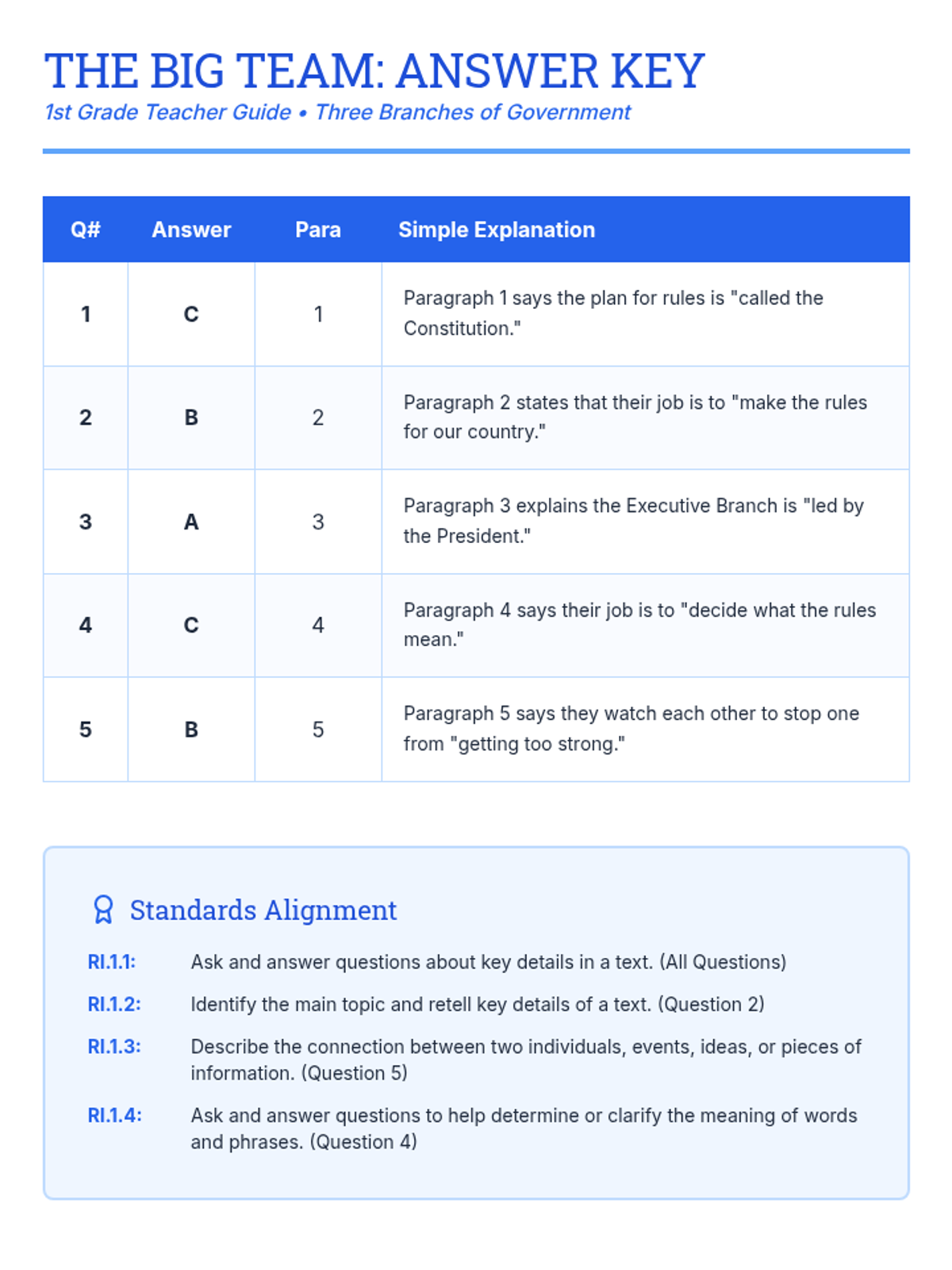
A comprehensive reading comprehension lesson focusing on RI.1, RI.2, RI.3, and RI.4 standards through the lenses of Animal Adaptations and the Three Branches of Government.
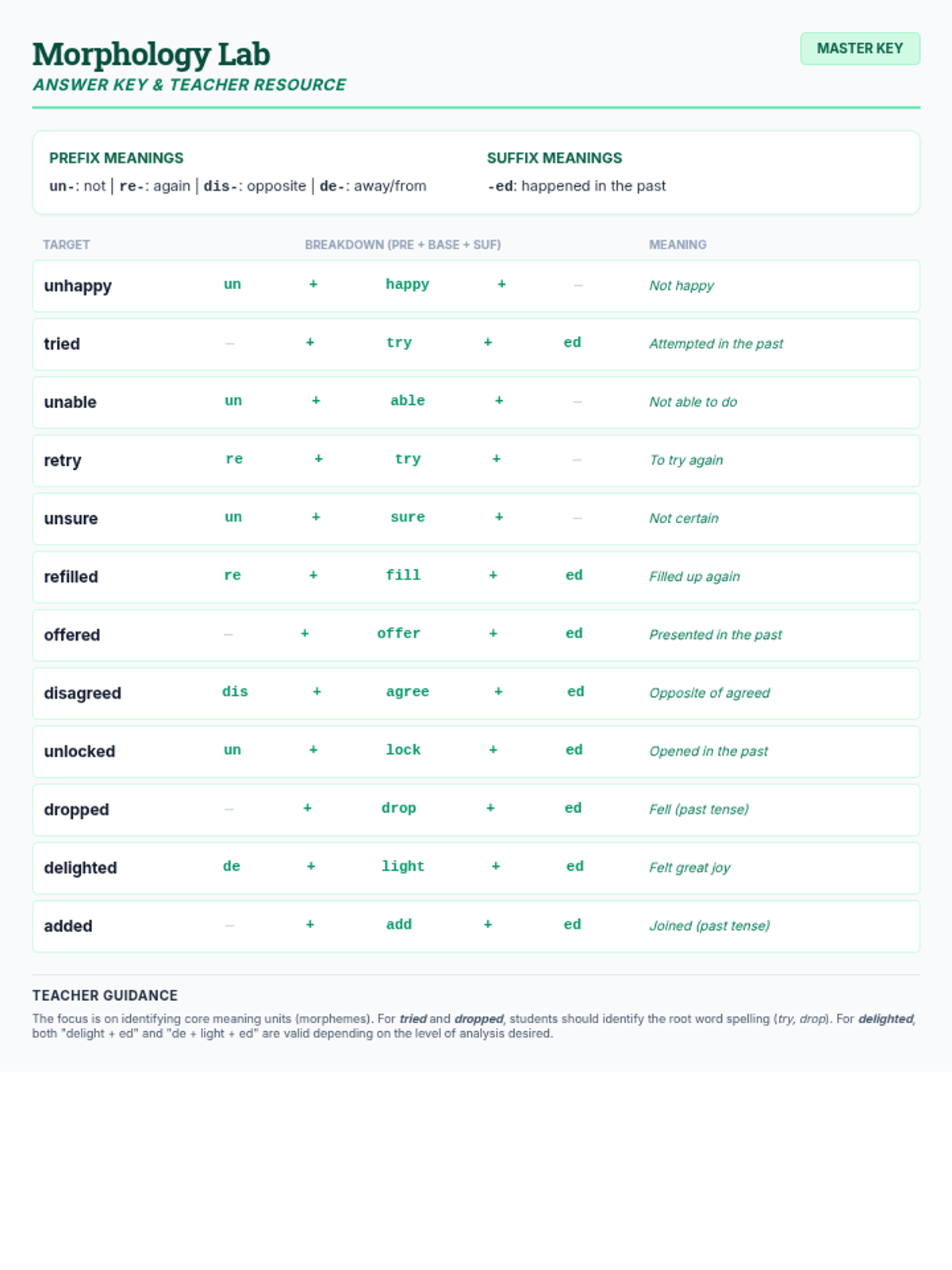
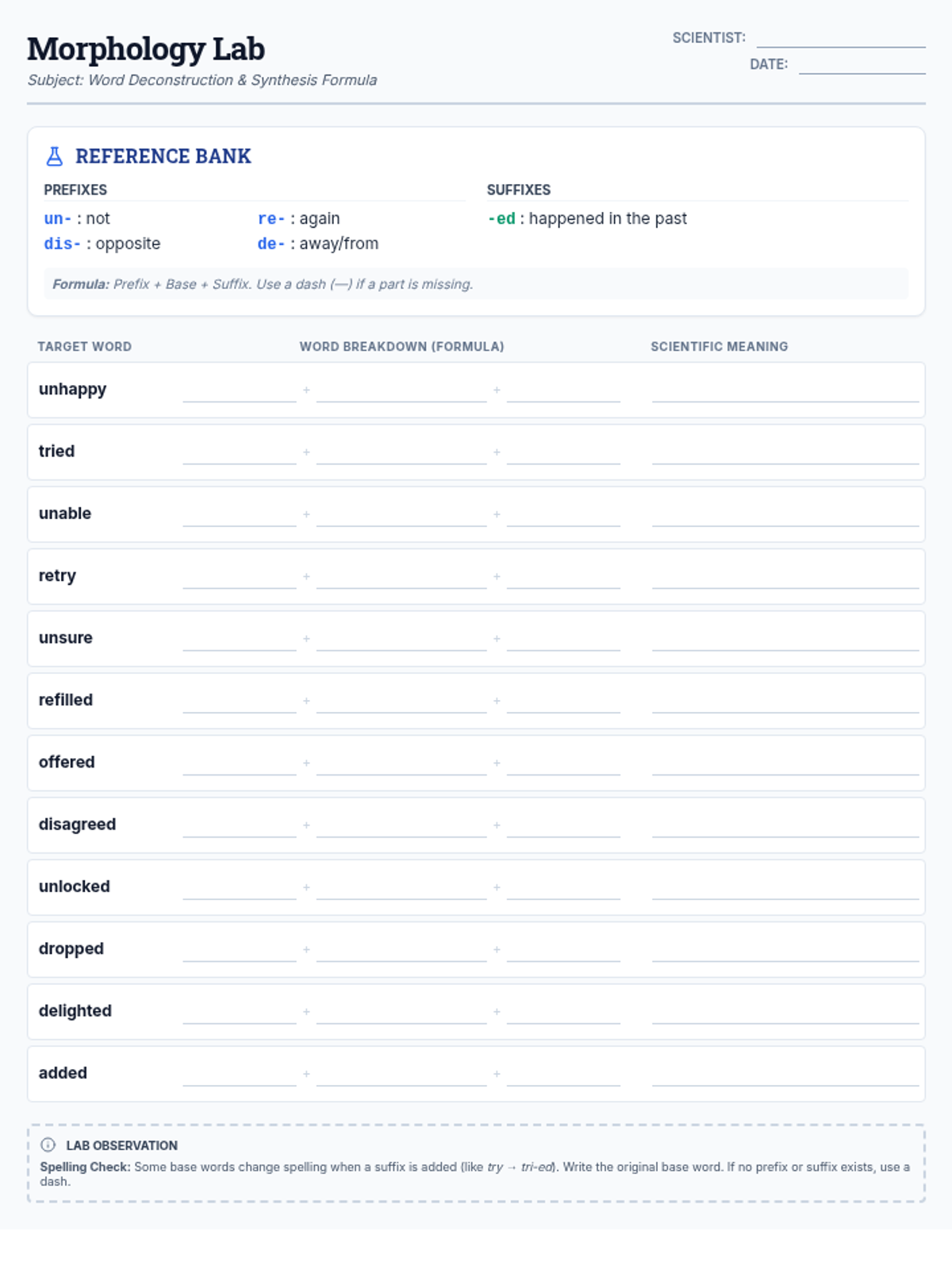
A lesson focused on morphology where students deconstruct words into prefixes, bases, and suffixes to determine their meanings using a word bank formula.
A Grade 4 literacy lesson focusing on the structural analysis of words with common prefixes: re-, mis-, dis-, and un-. Includes a multi-page reading passage and identification activities.
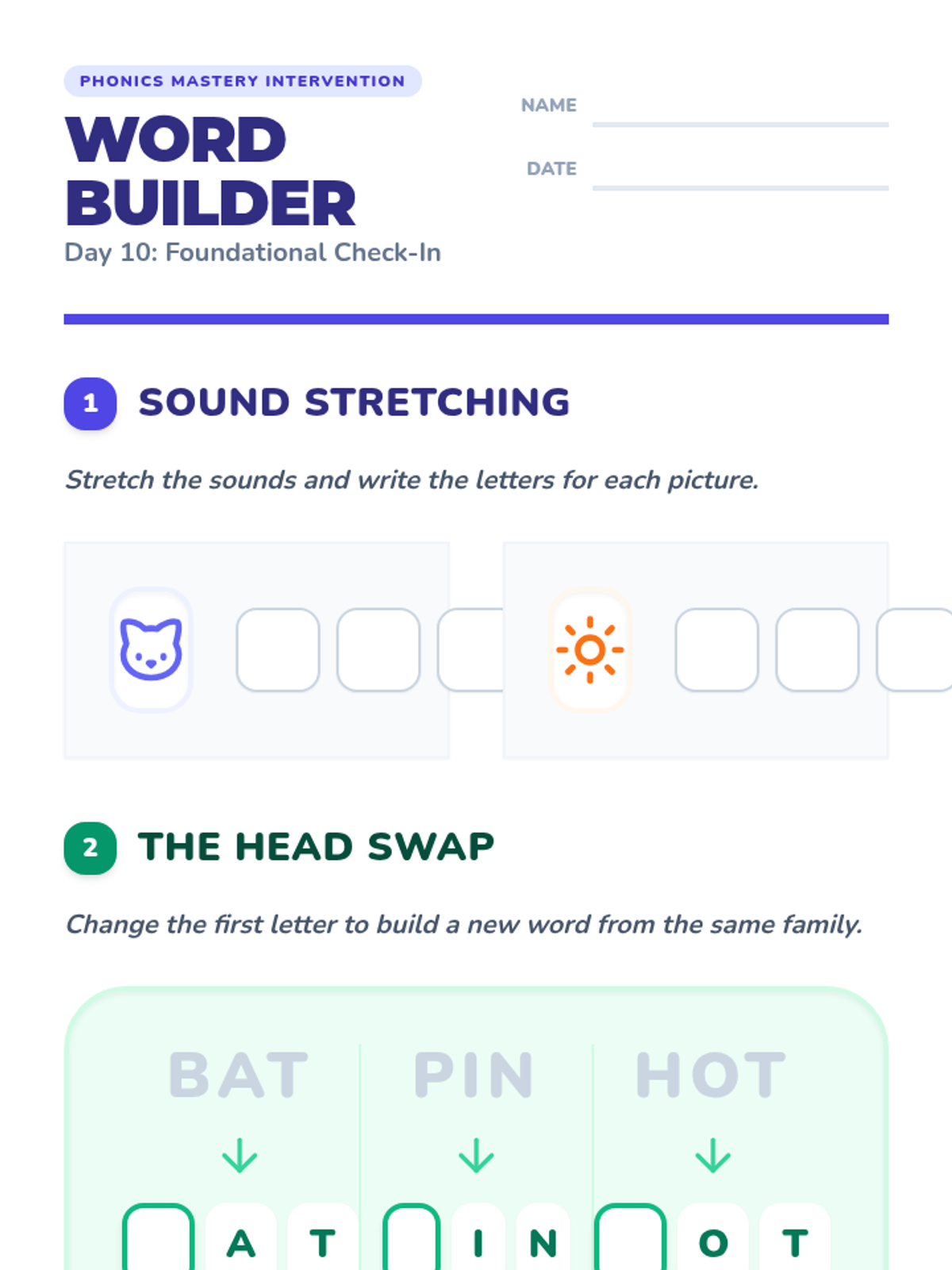
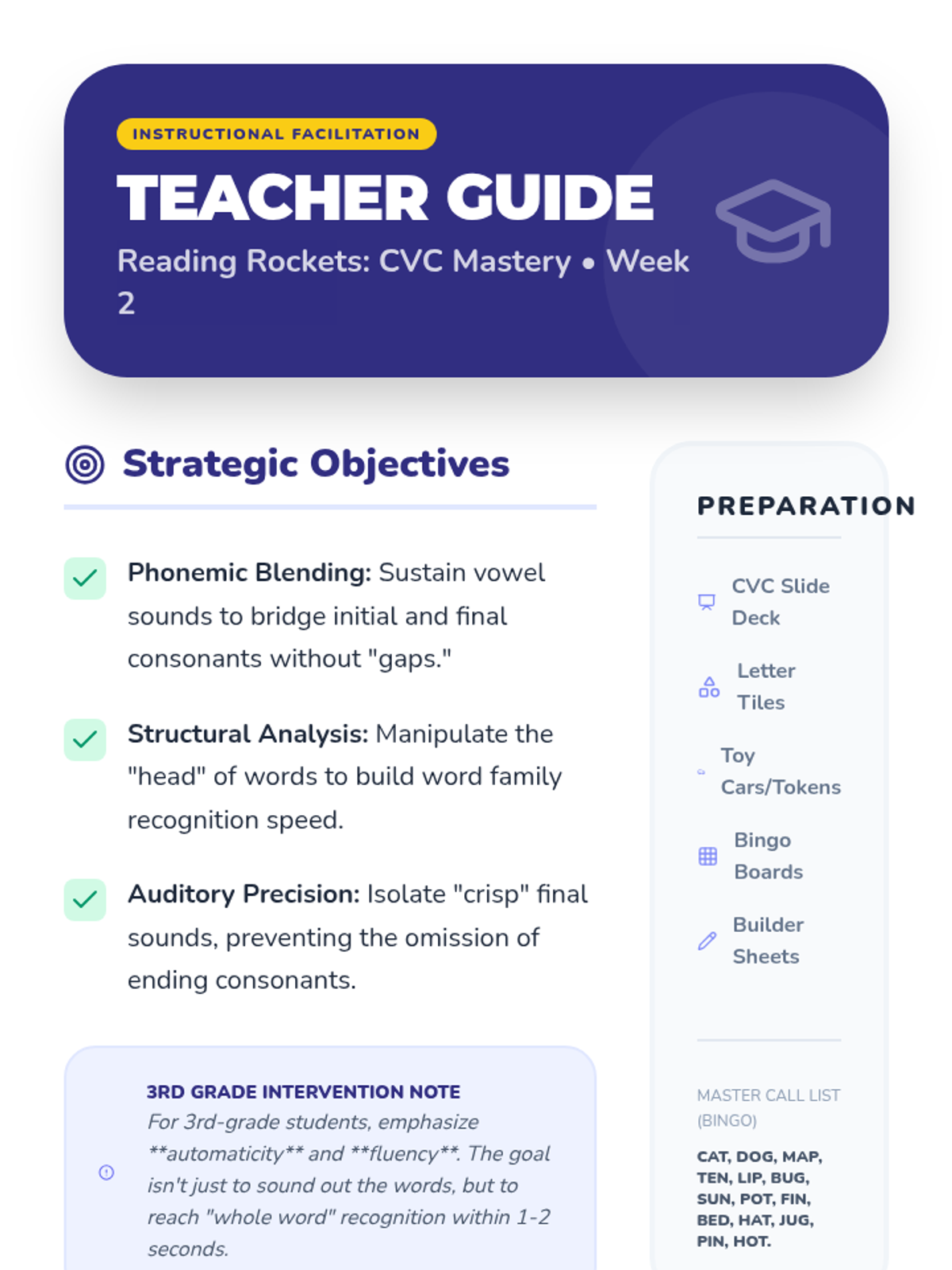
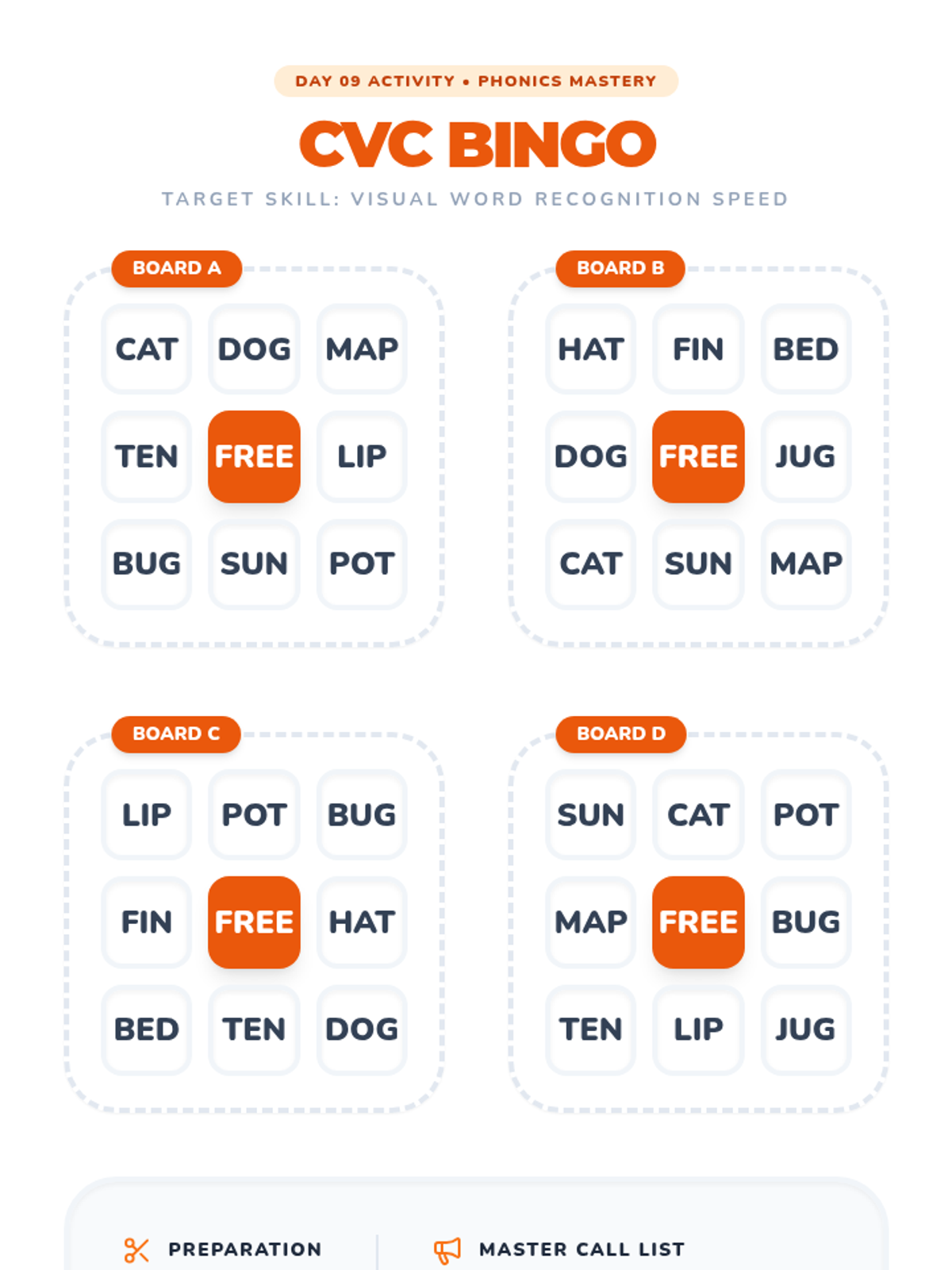
A week of targeted CVC practice covering blending, initial and final consonant changes, and automaticity.
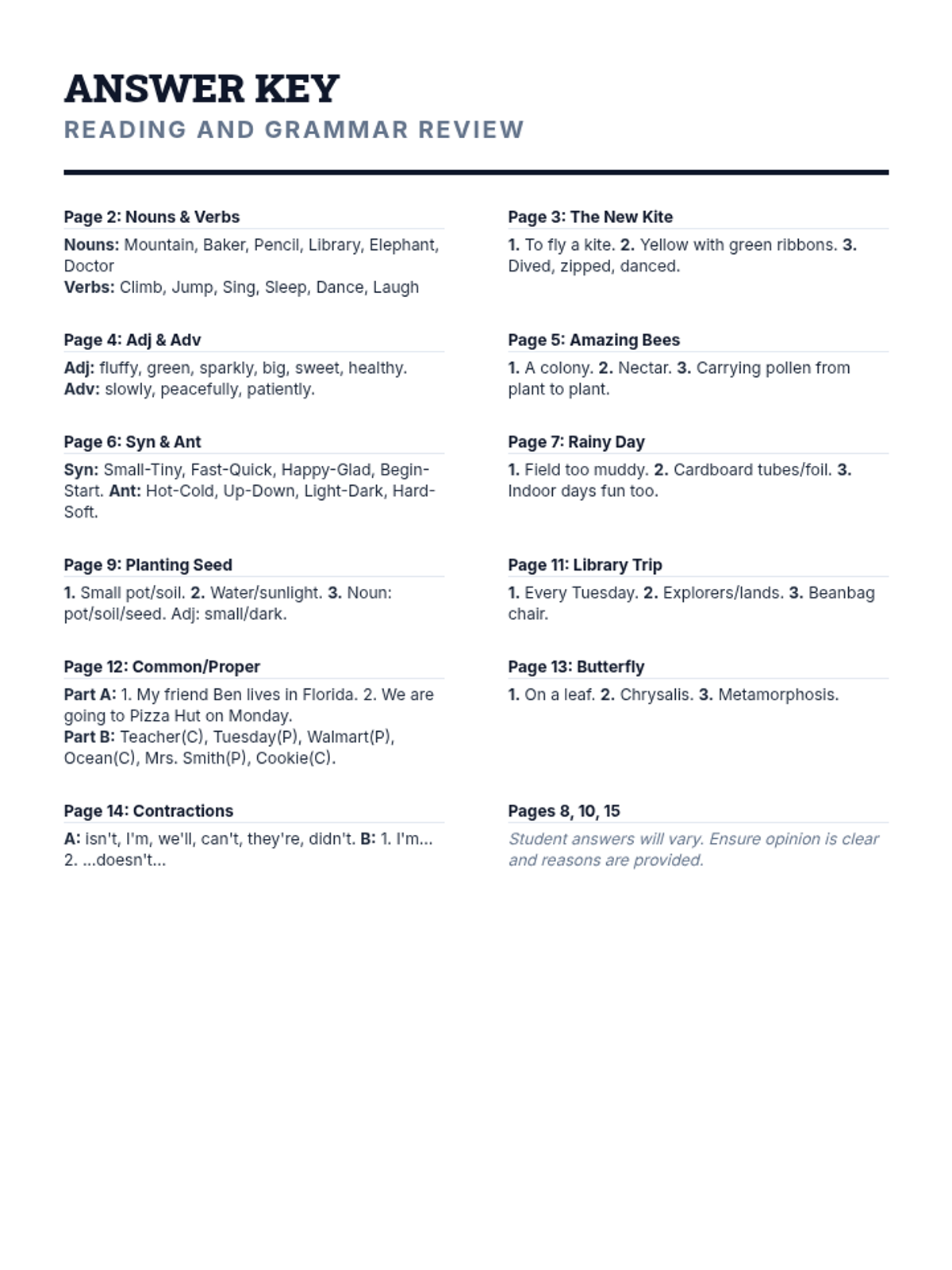
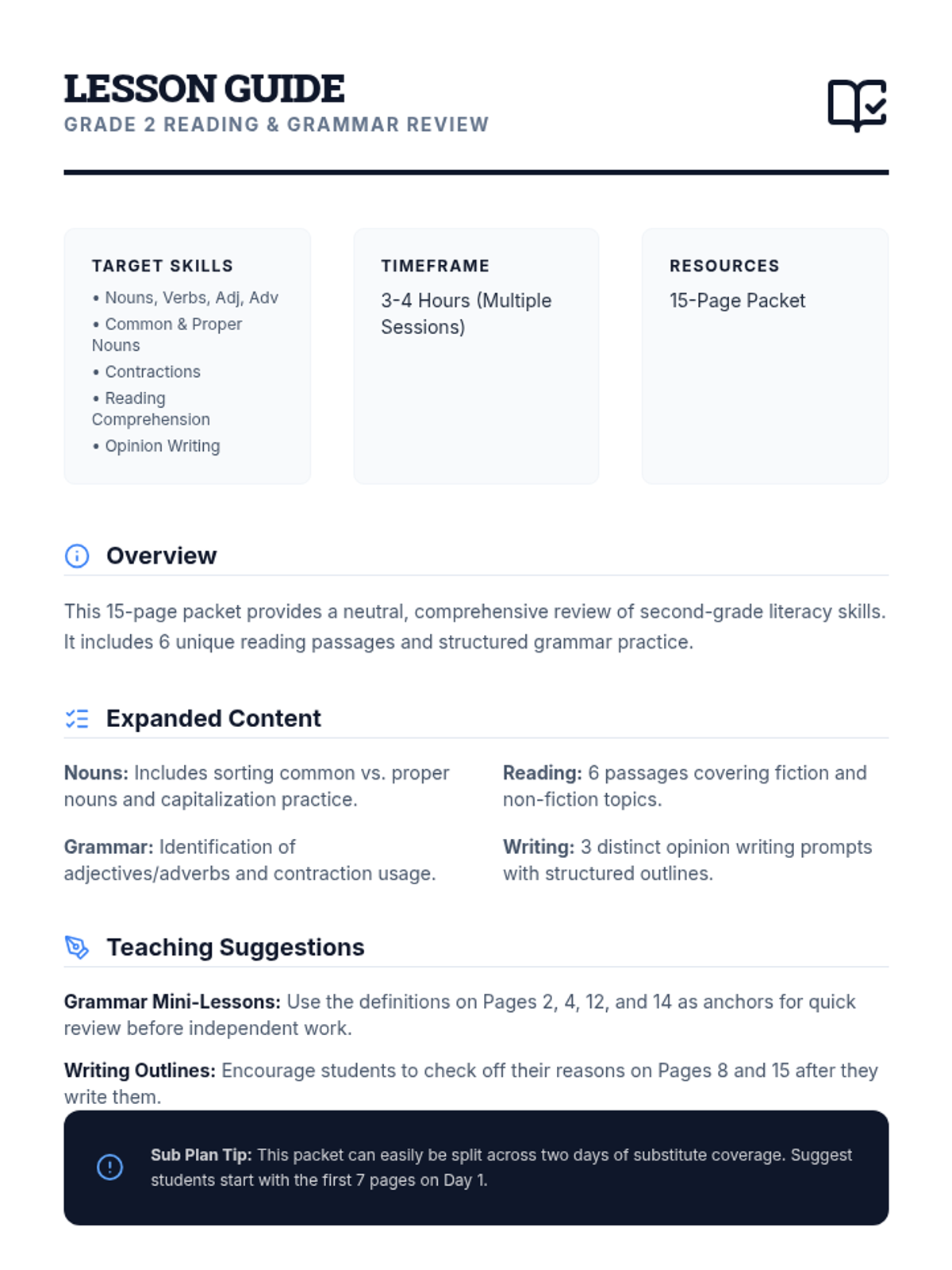
A comprehensive 15-page reading and grammar review packet for 2nd-grade students. This neutral resource covers nouns (common/proper), verbs, adjectives, adverbs, synonyms, antonyms, contractions, reading comprehension across 6 passages, and opinion writing.
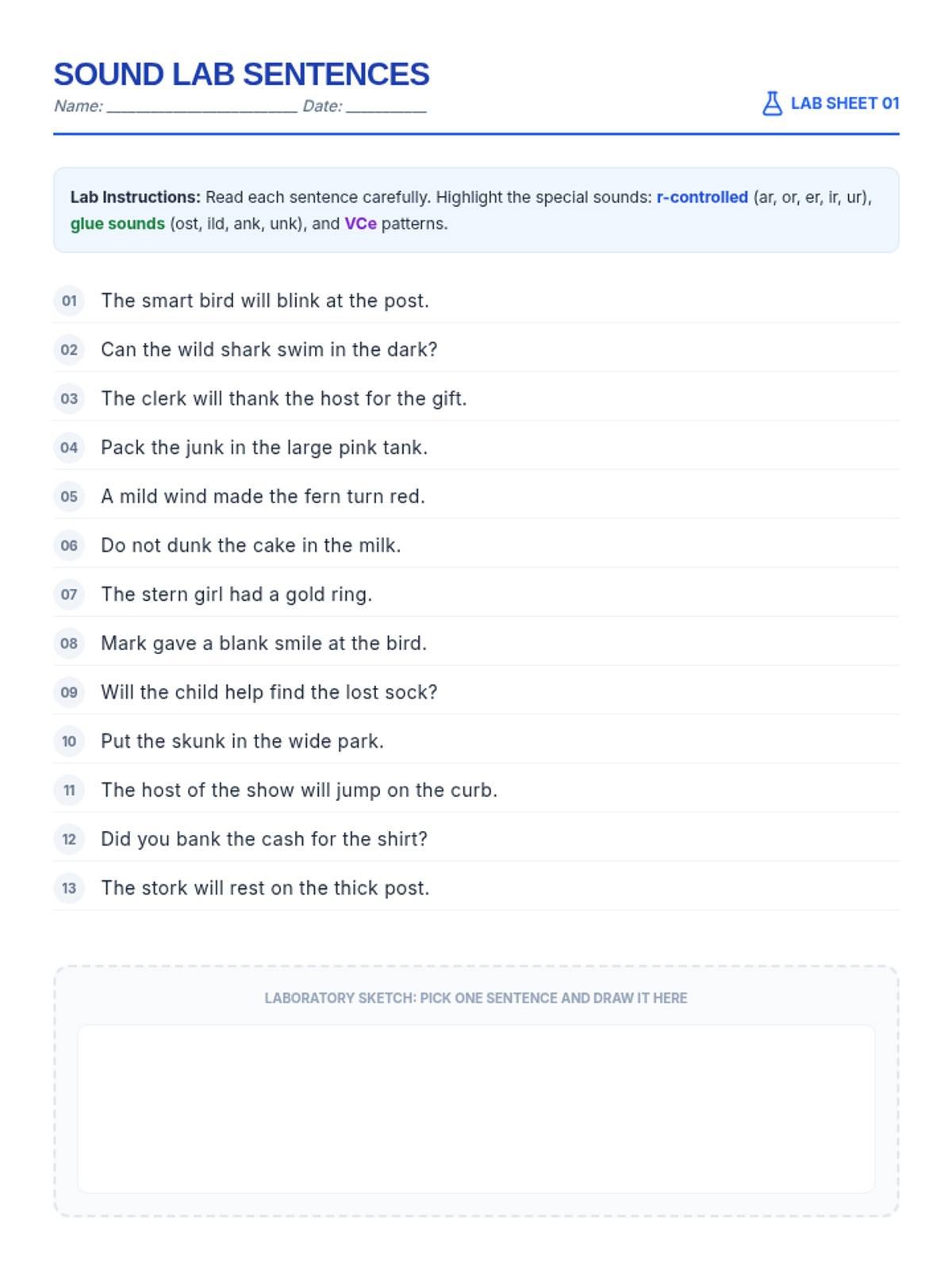
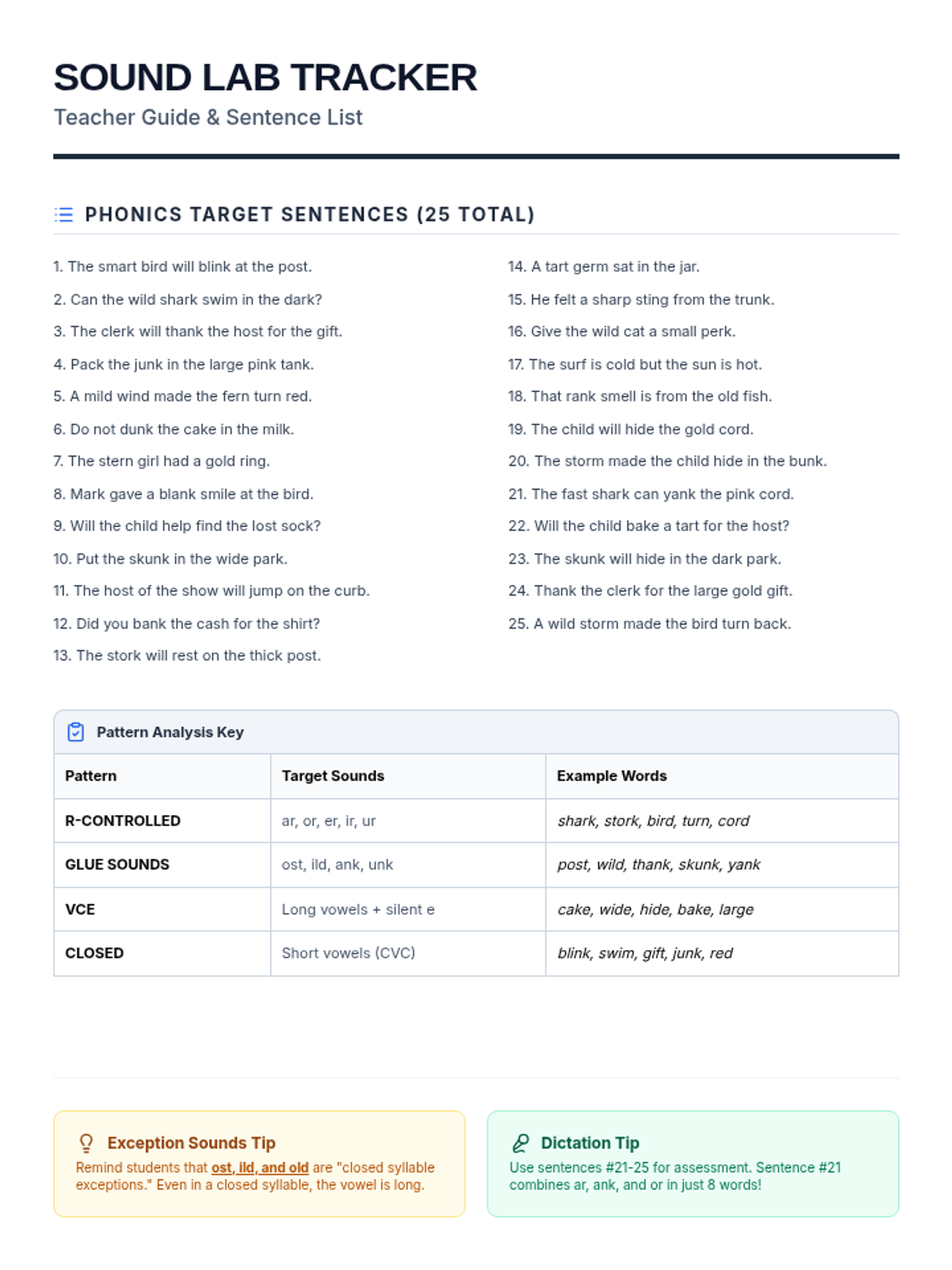
A series of decodable sentences and activities focusing on closed syllables, VCe patterns, r-controlled vowels, and specific glue sounds (ost, ild, ank, unk). Students will practice blending and reading these patterns in context.
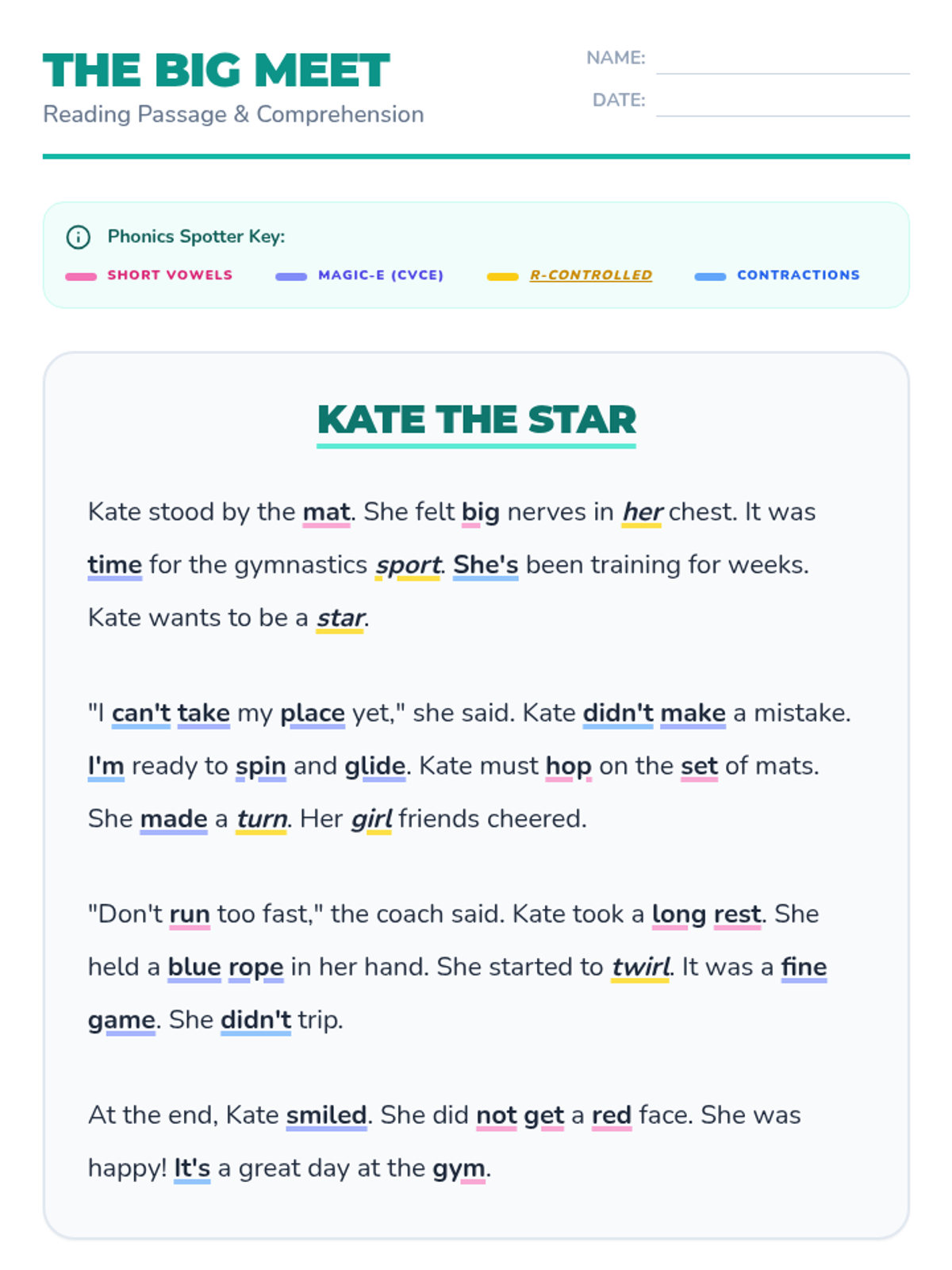
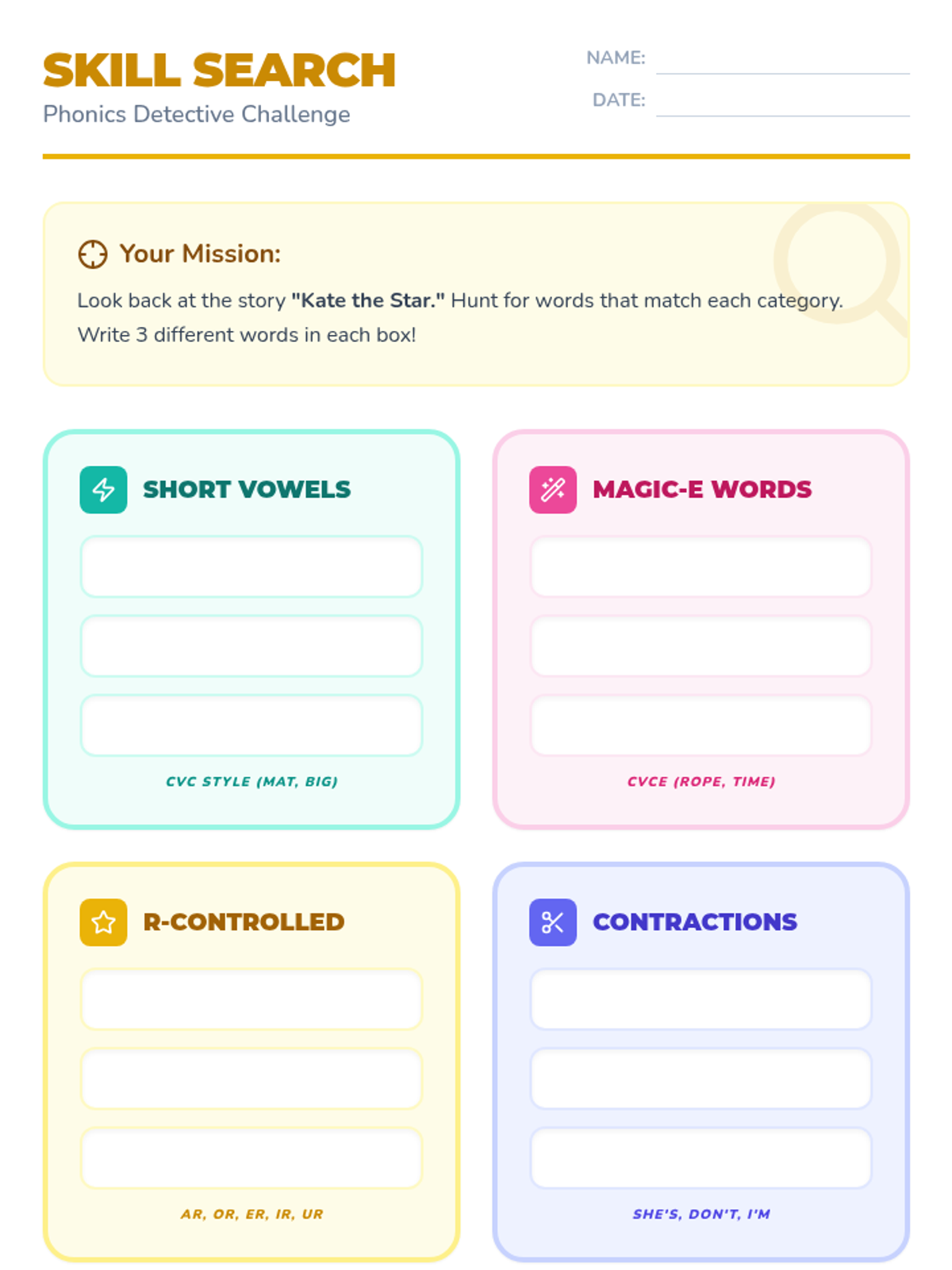
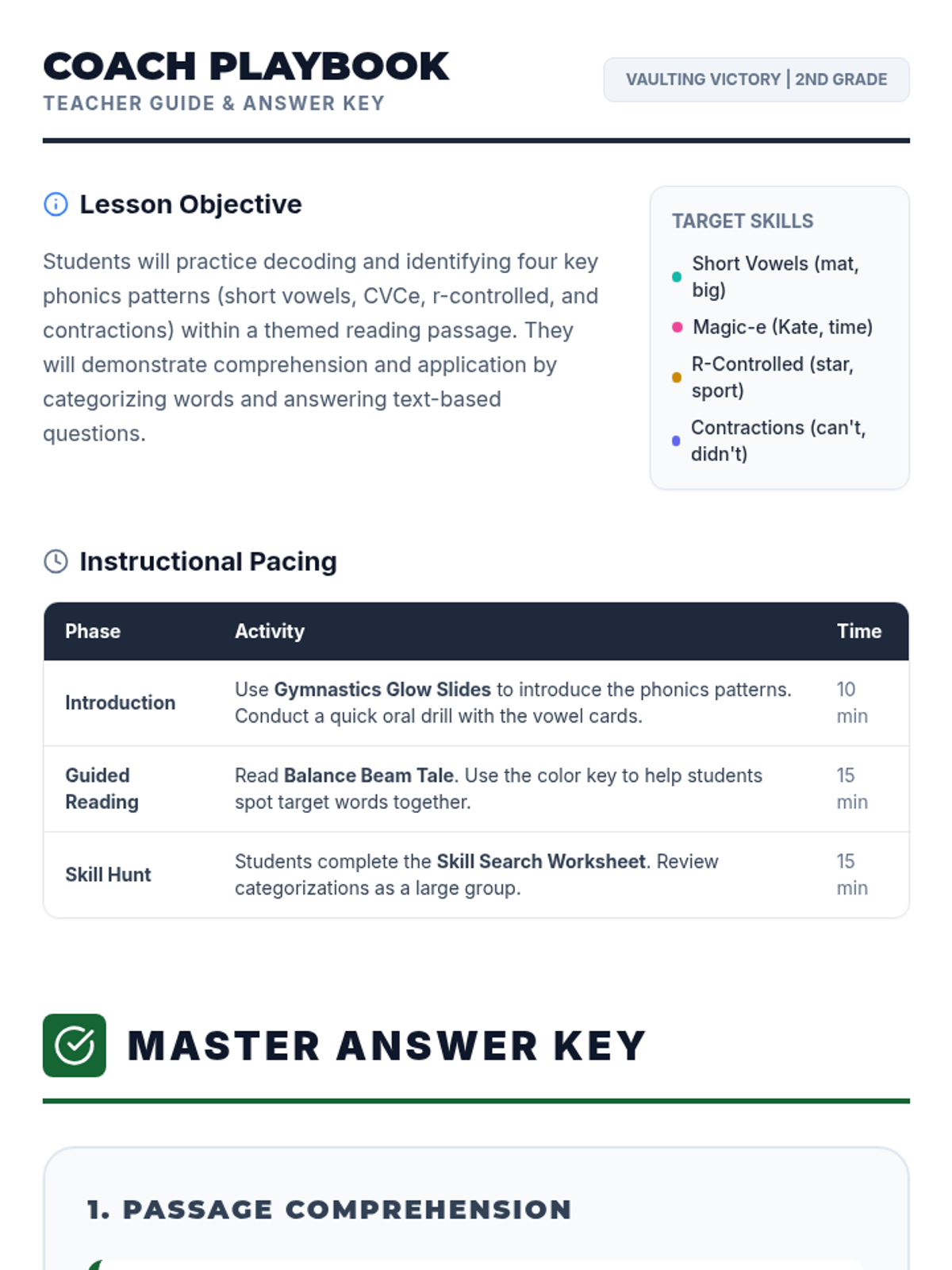
A phonics-focused lesson for second graders centered on gymnastics, targeting short vowels, CVCe patterns, r-controlled vowels, and common contractions.
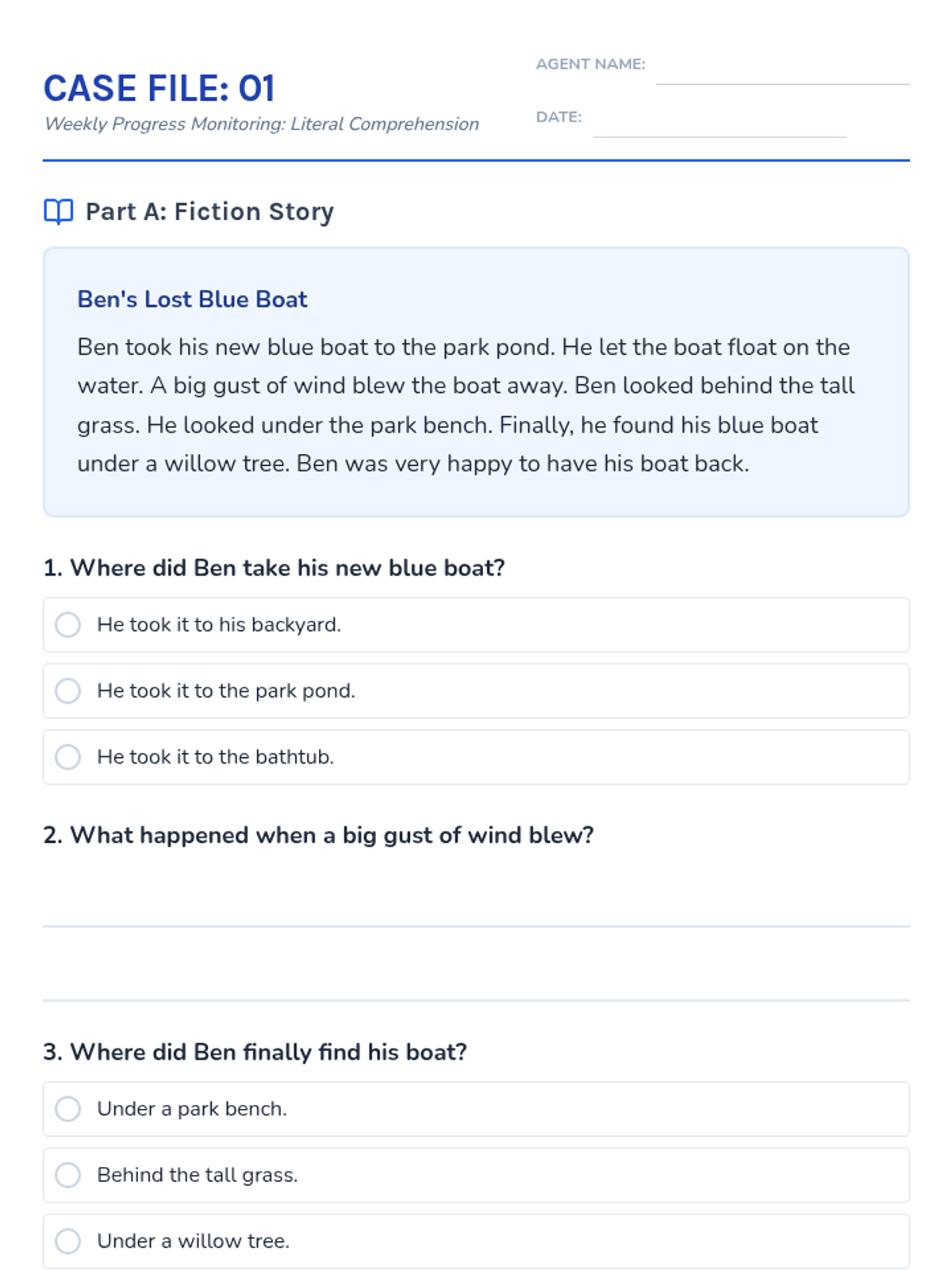
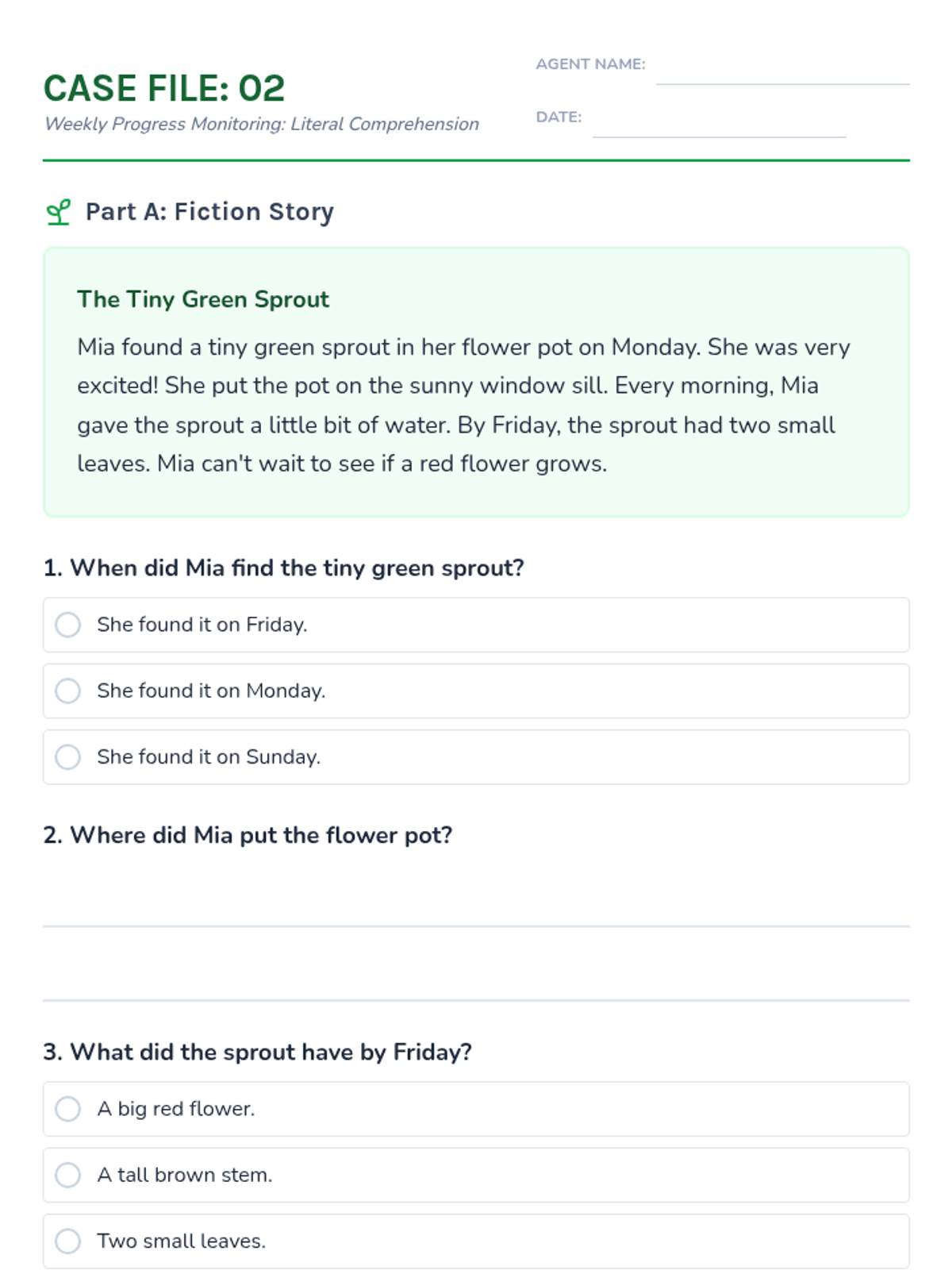
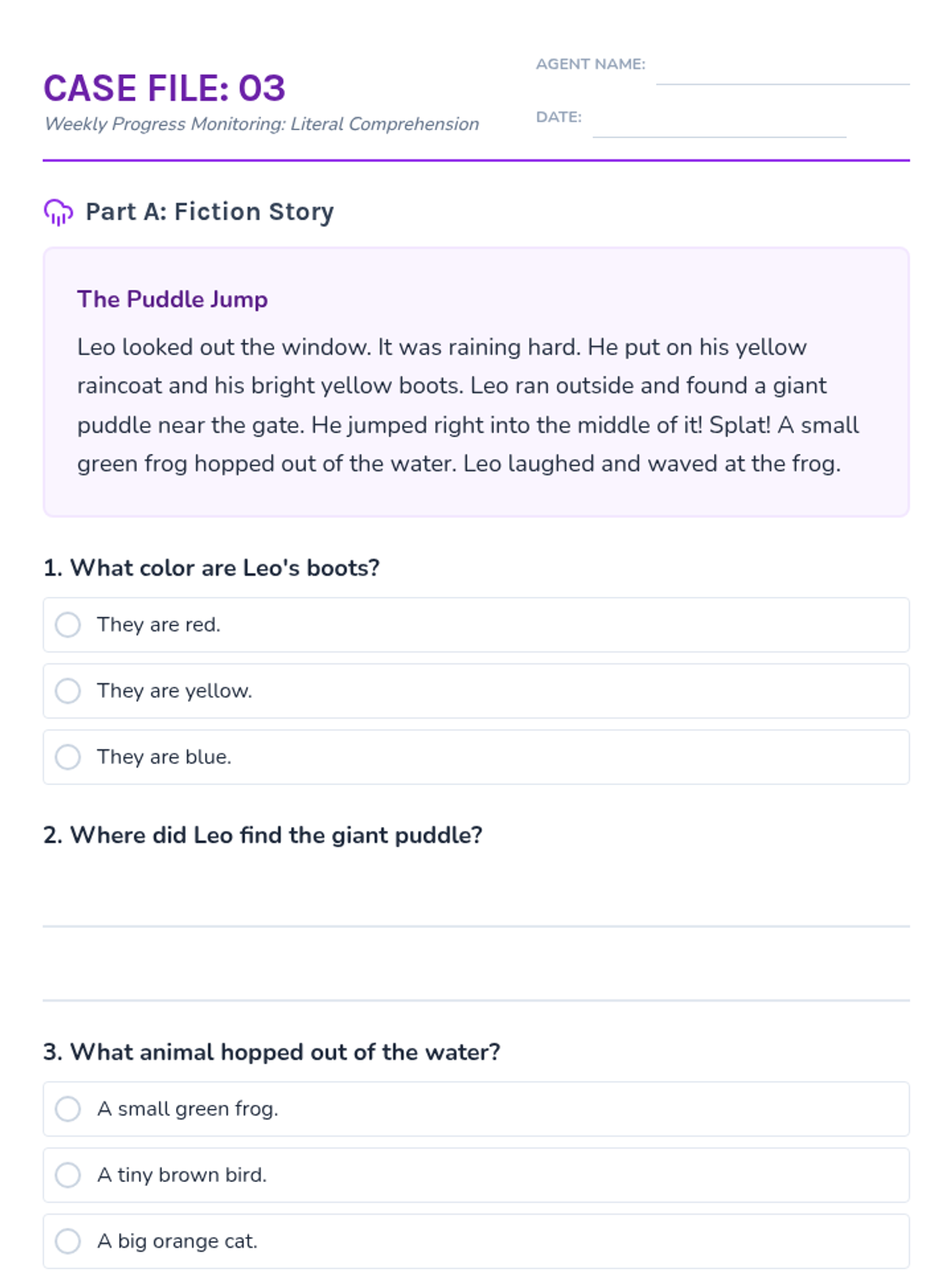
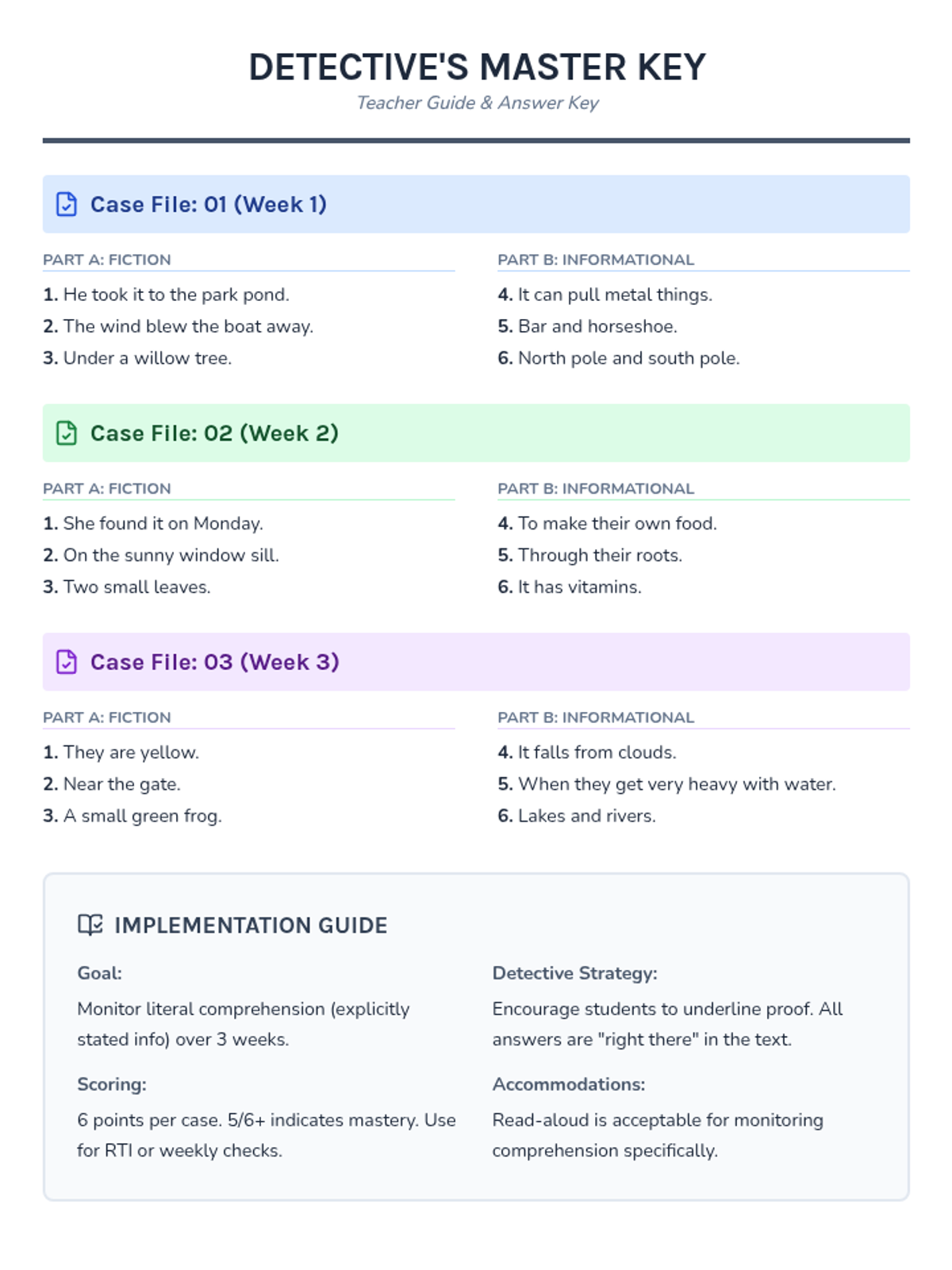
A set of three weekly progress monitoring probes for 2nd-grade literal comprehension, featuring both fiction and informational texts formatted as 'Case Files'.
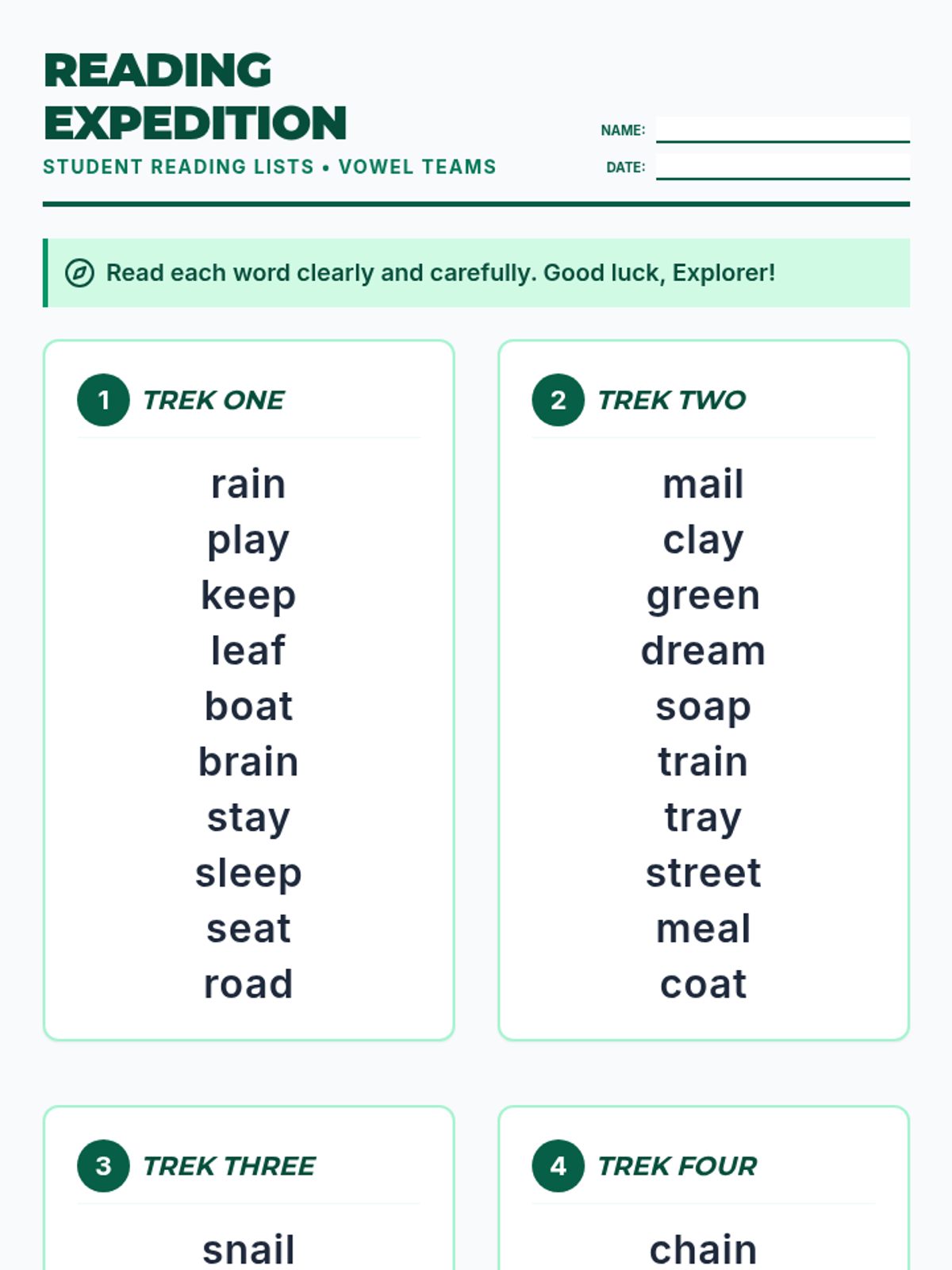
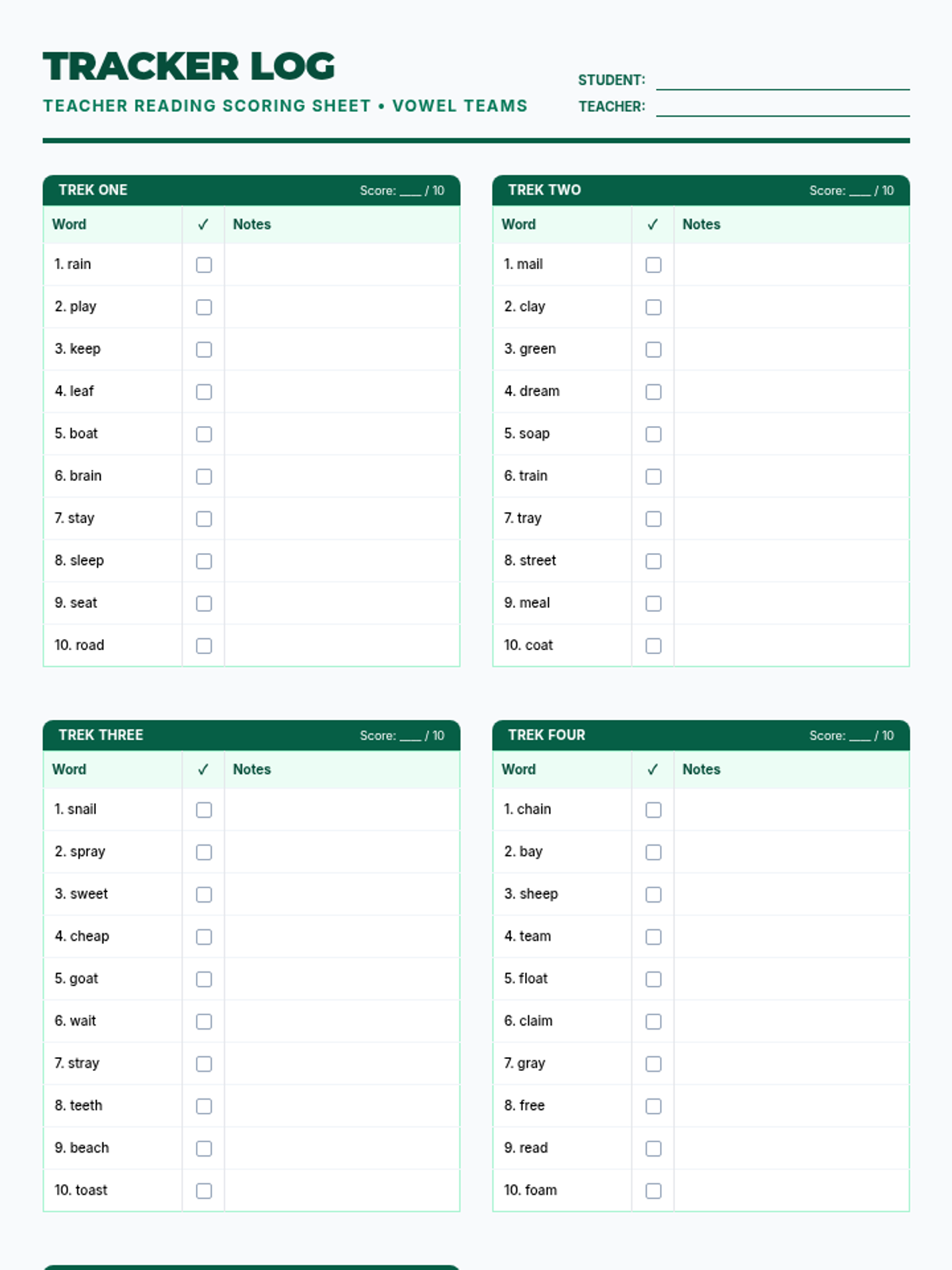
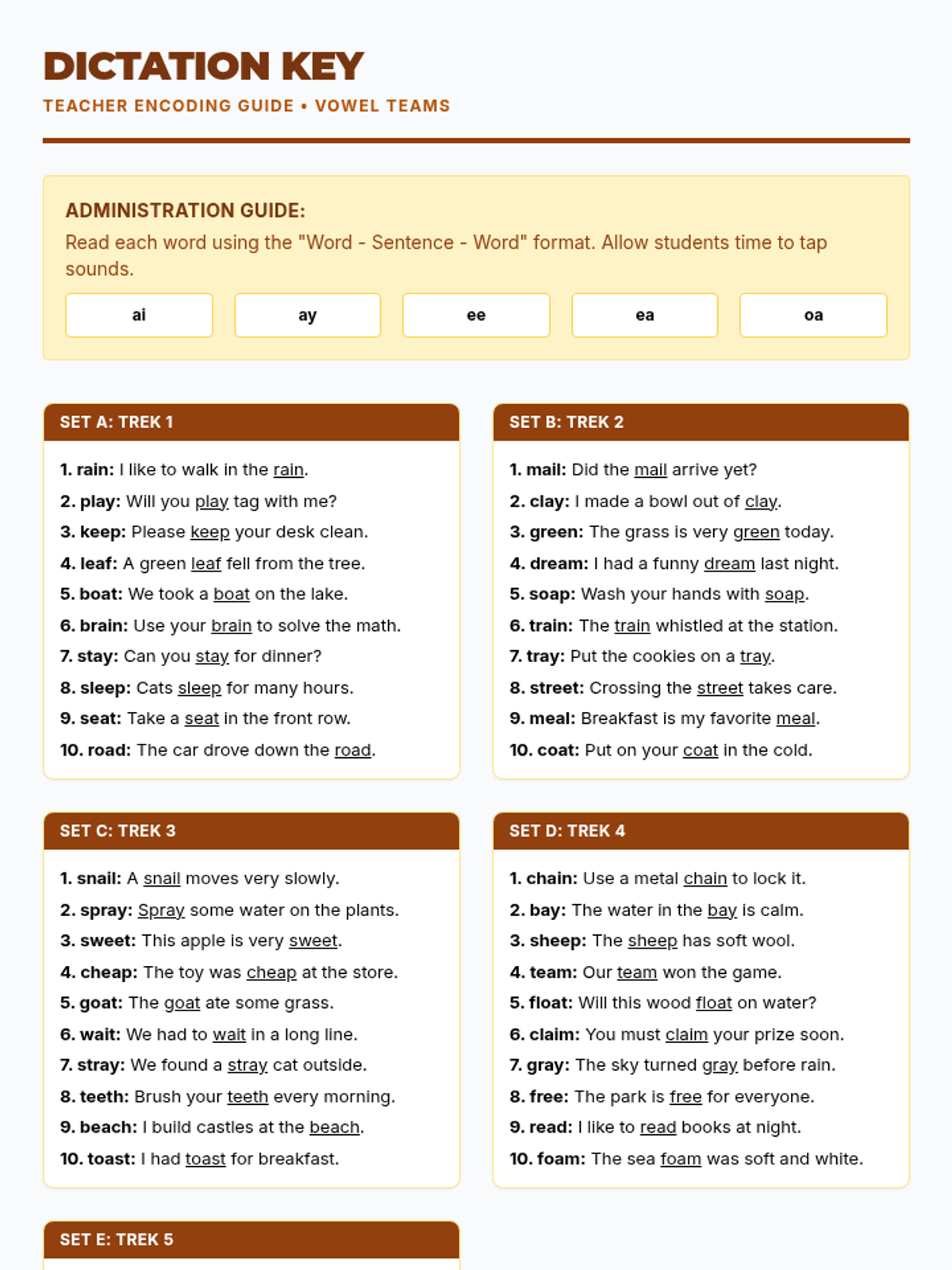
A comprehensive progress monitoring set for vowel teams ai, ay, ee, ea, and oa. Includes student-facing reading and spelling materials along with teacher-facing scoring and dictation guides.
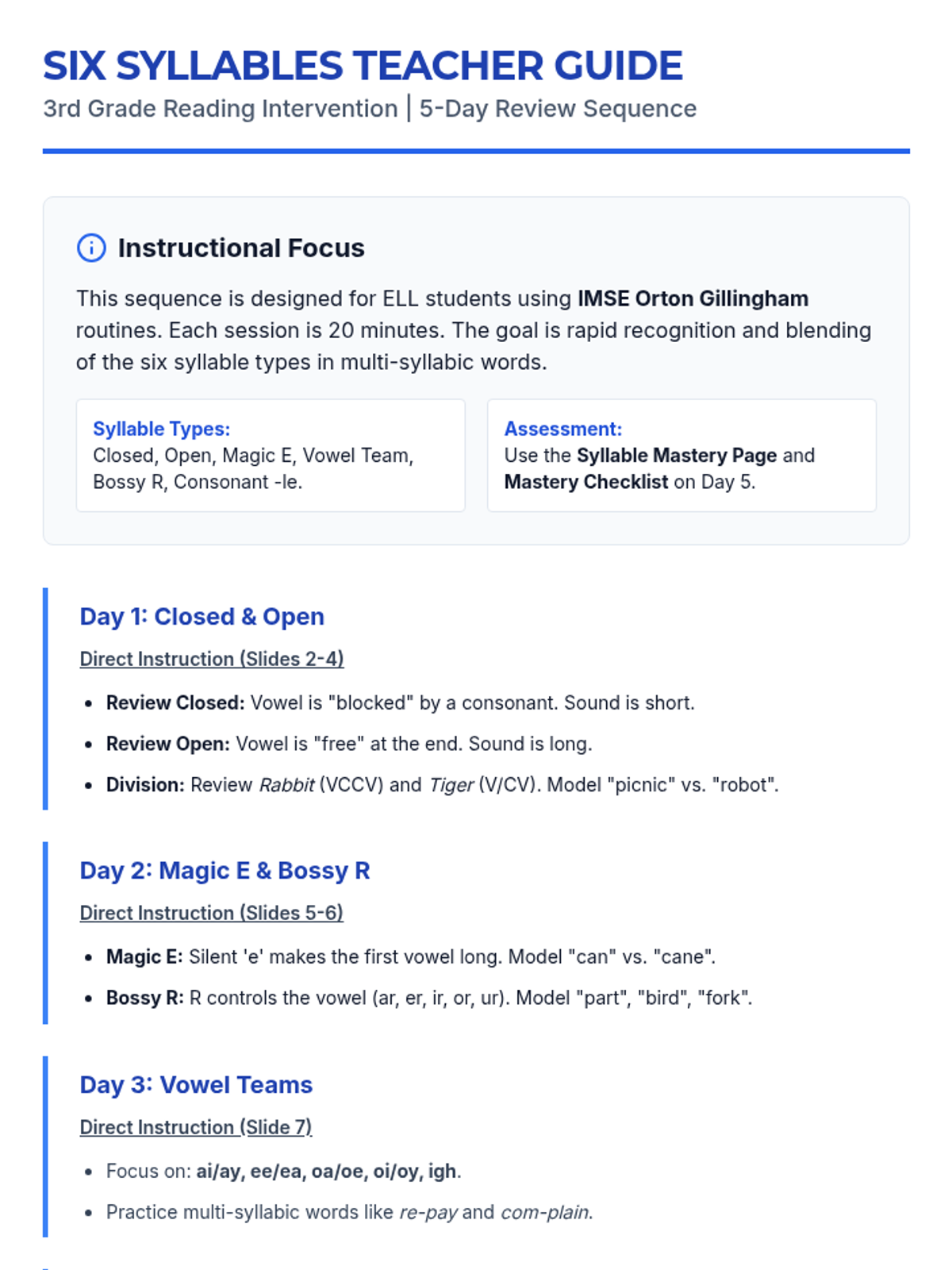
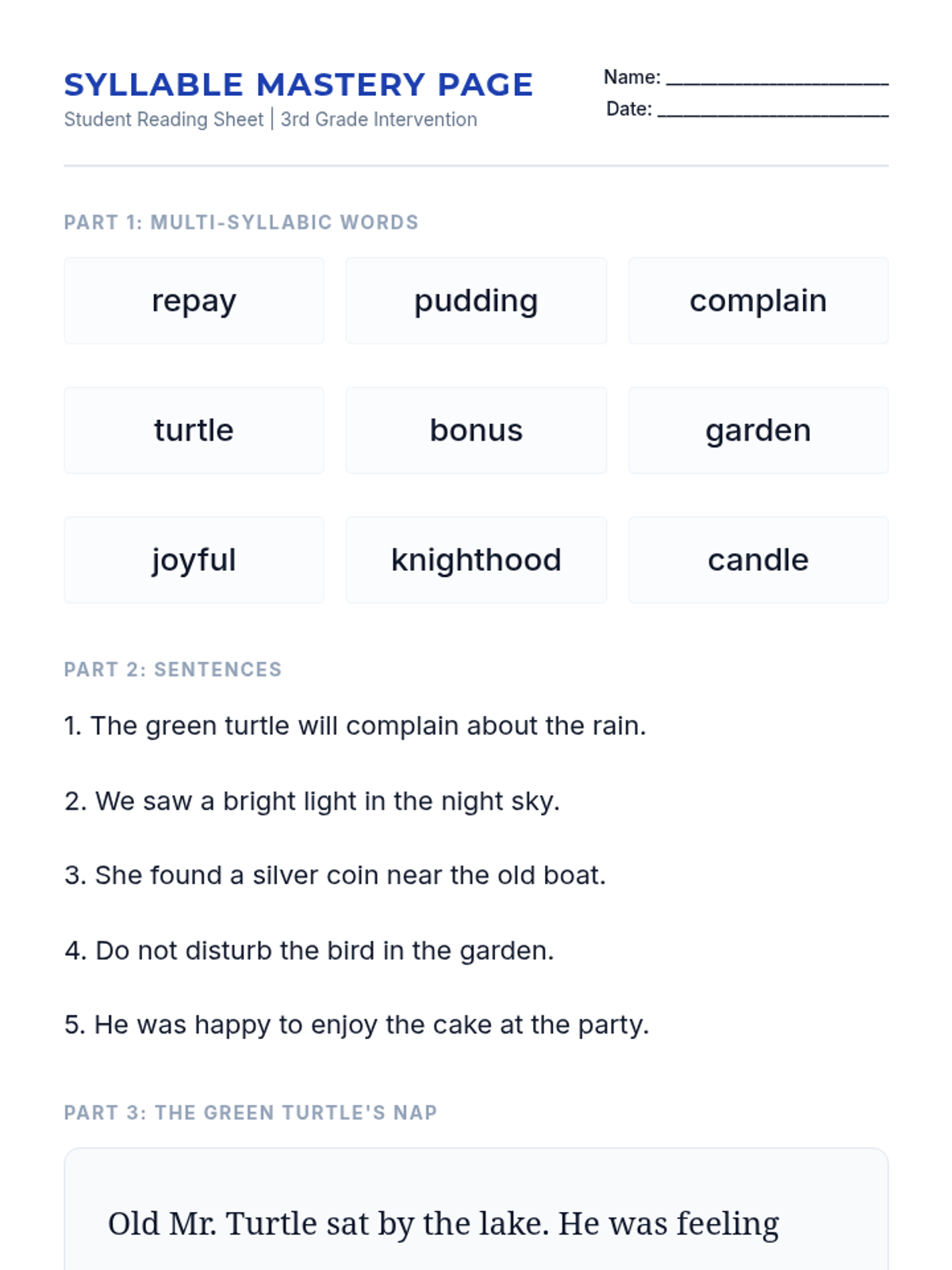
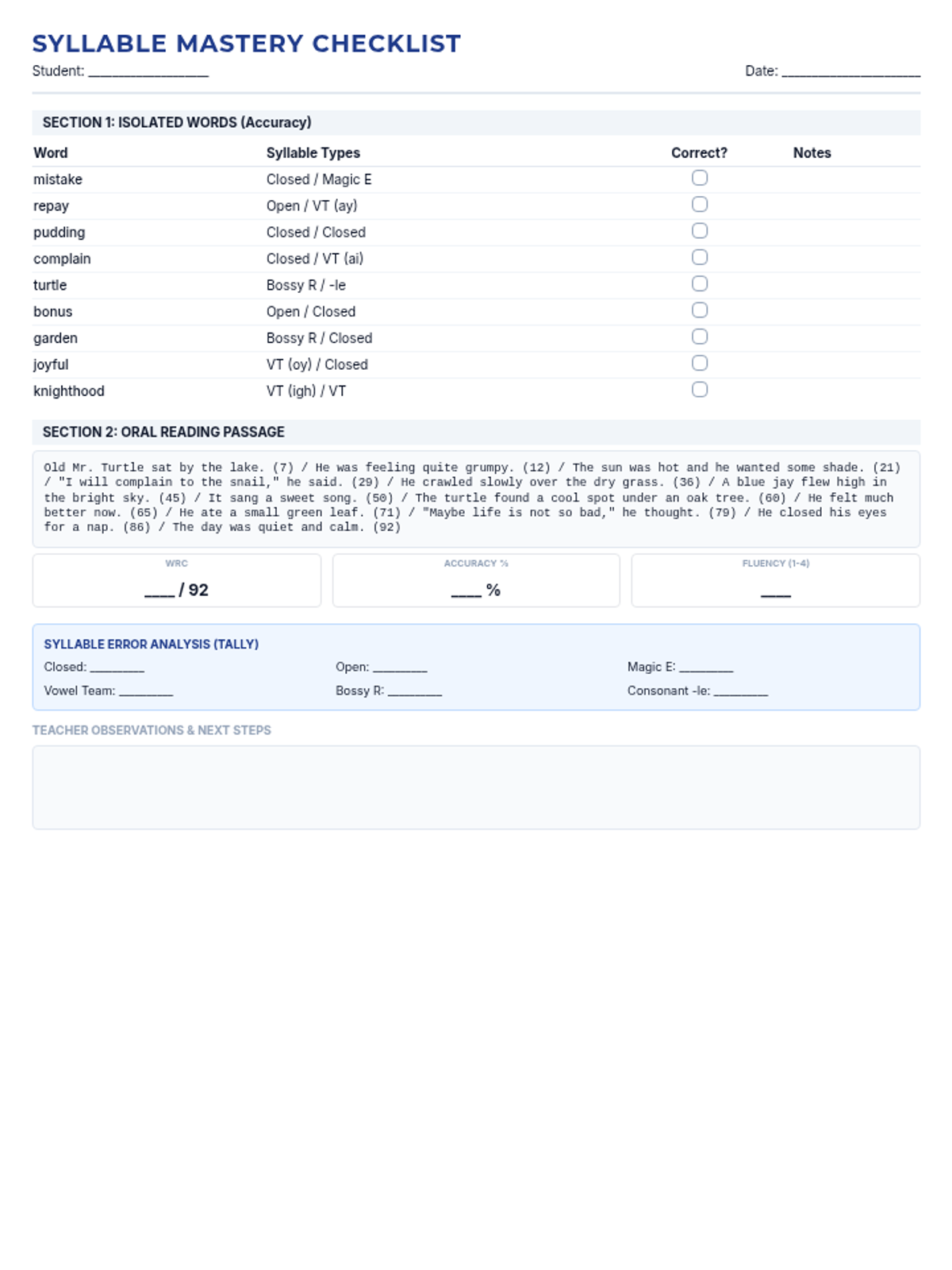
A 5-day intensive review of Closed, Open, Magic E, Vowel Team, Bossy R, and Consonant -le syllable types, designed for 20-minute intervention blocks.
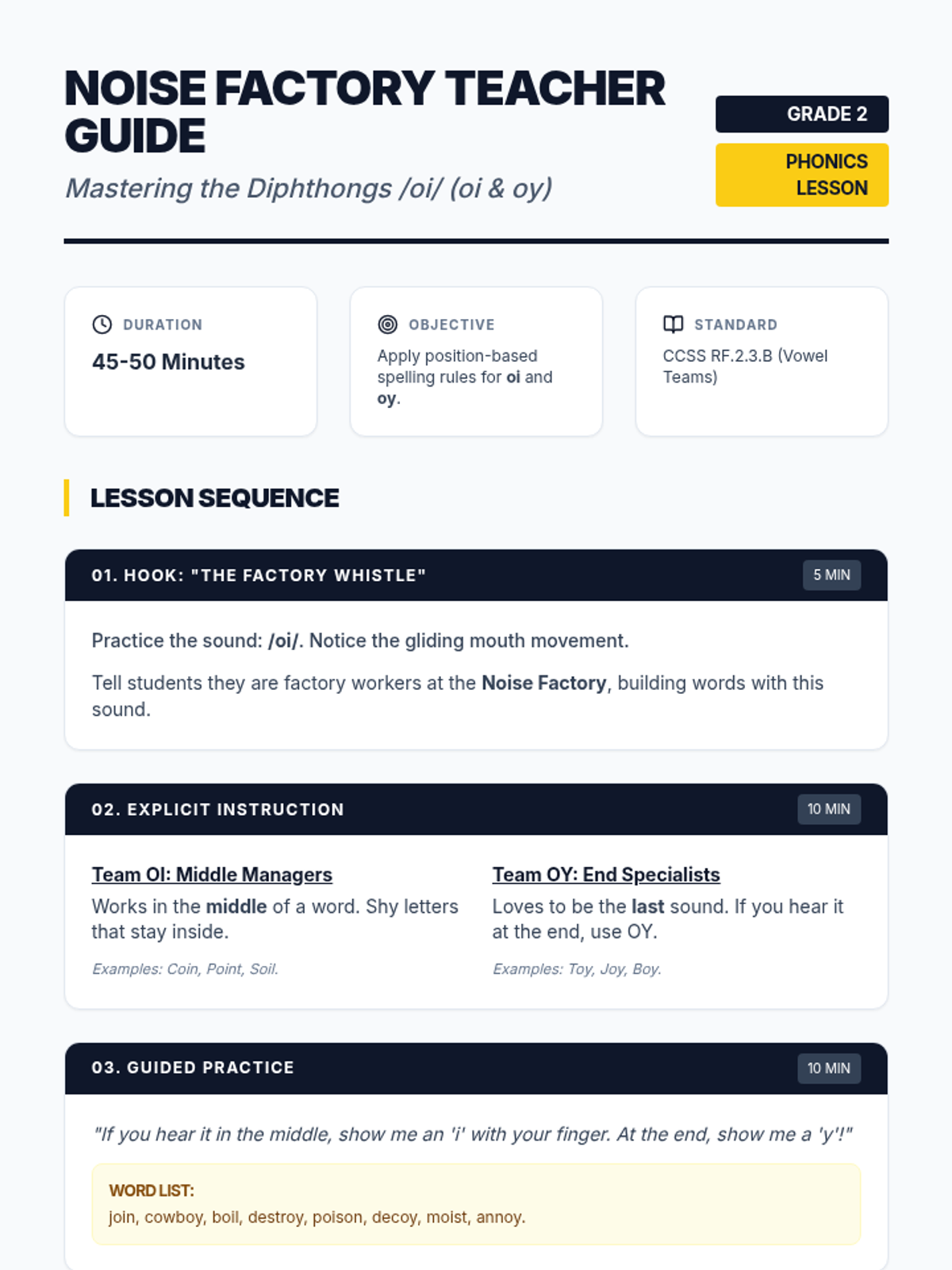
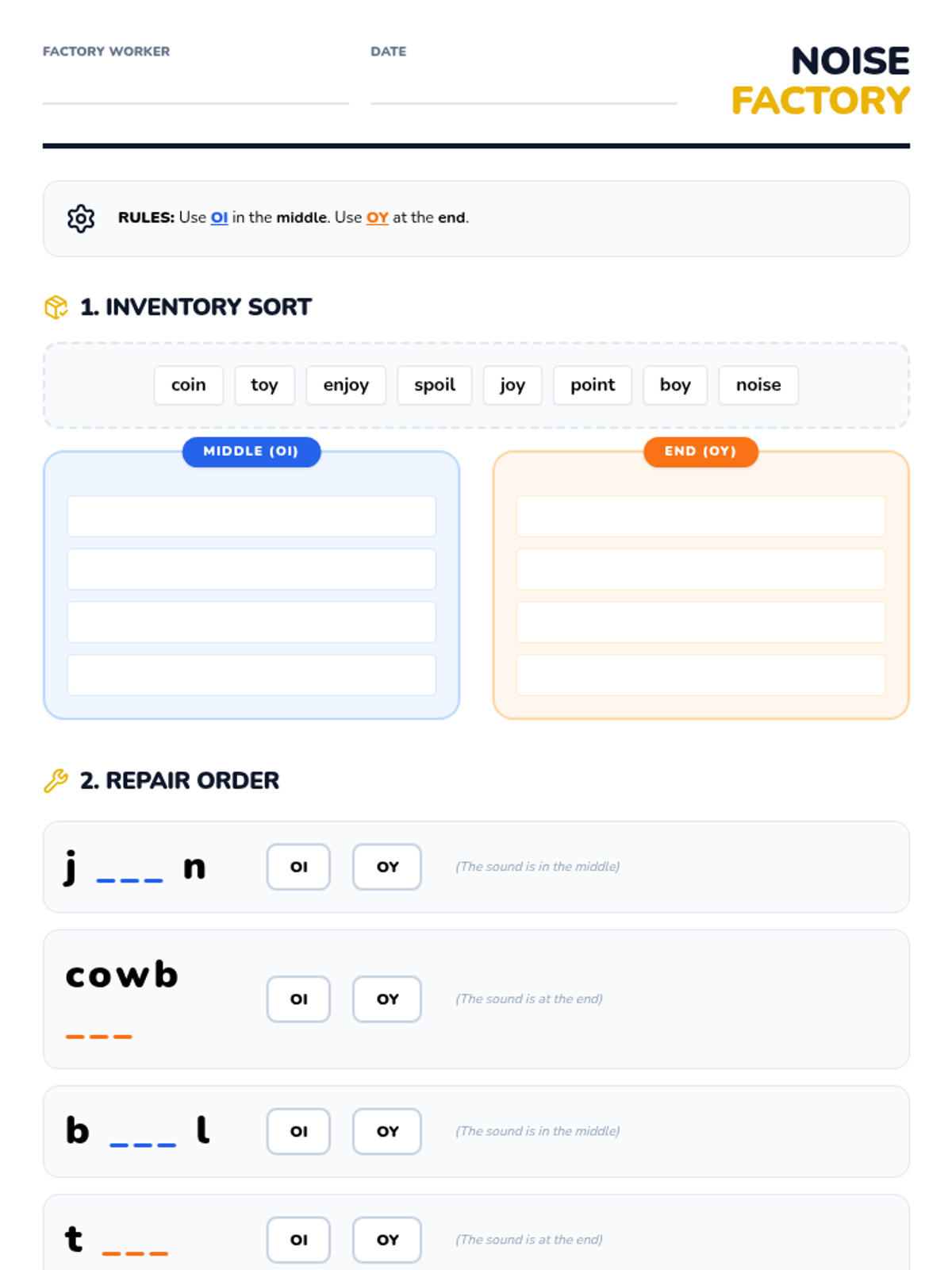
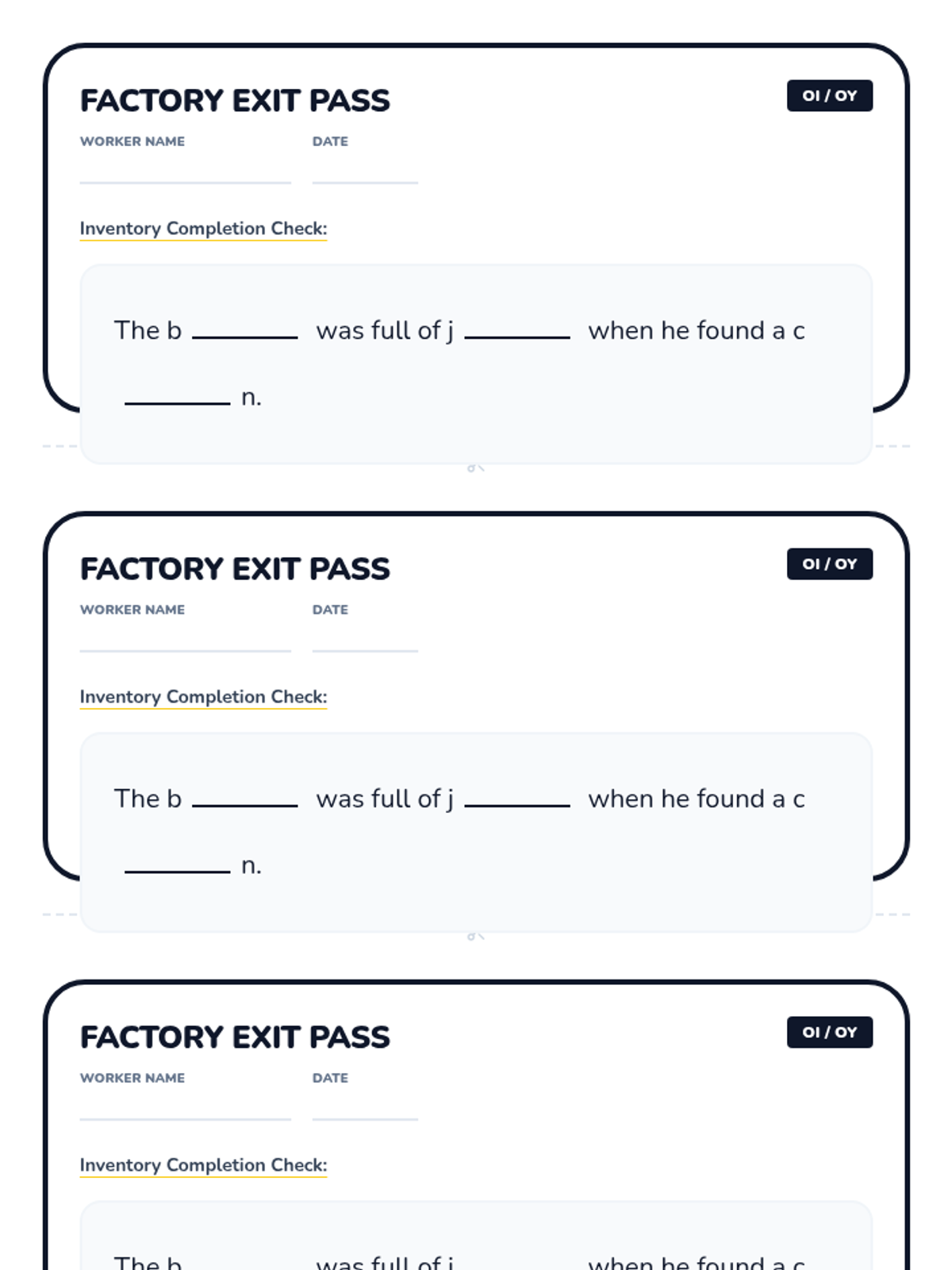
A comprehensive phonics lesson introducing the diphthongs 'oi' and 'oy' through a fun factory-themed exploration. Students will learn the spelling patterns and rules for when to use each spelling to create the /ɔɪ/ sound.
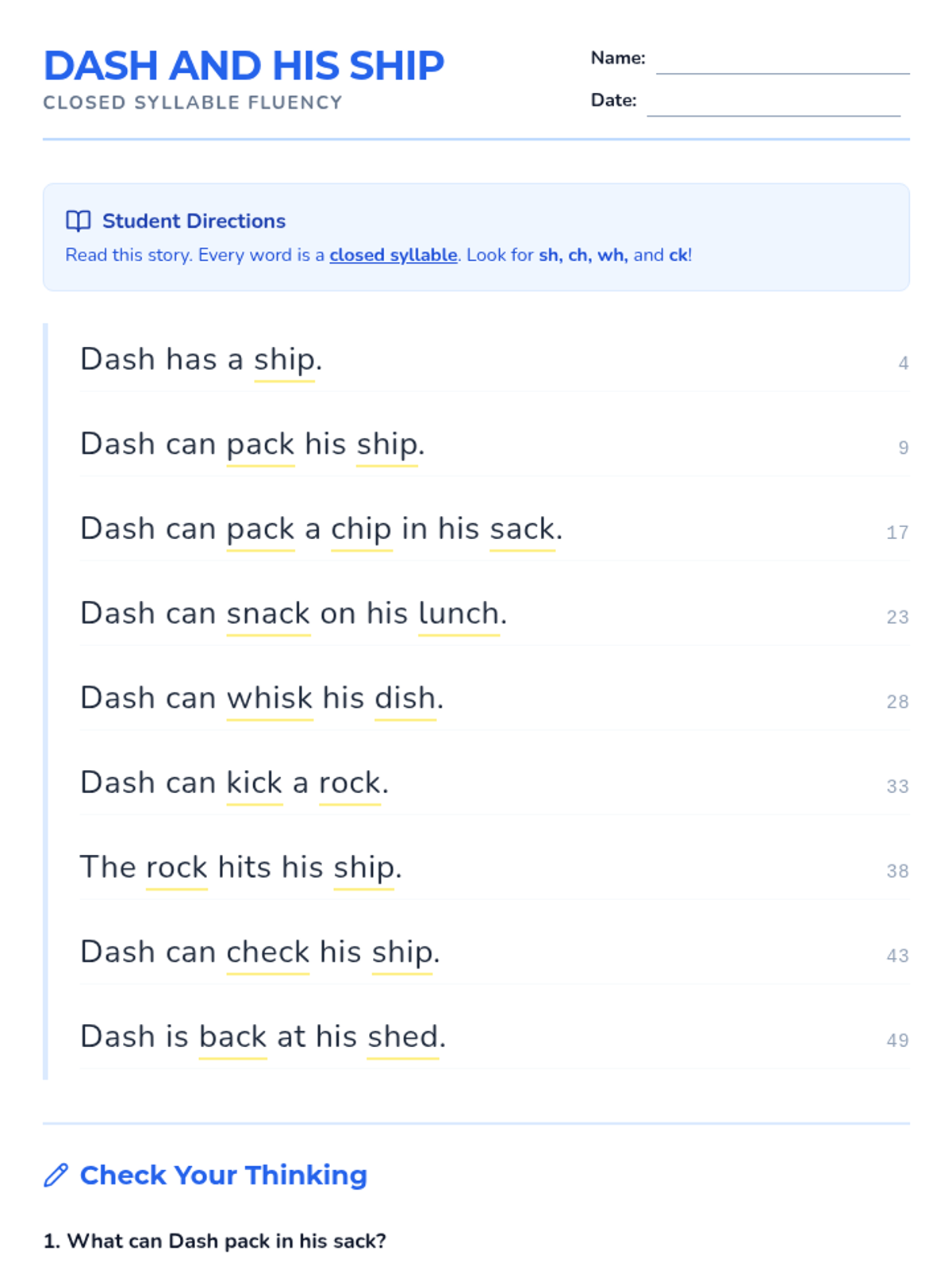
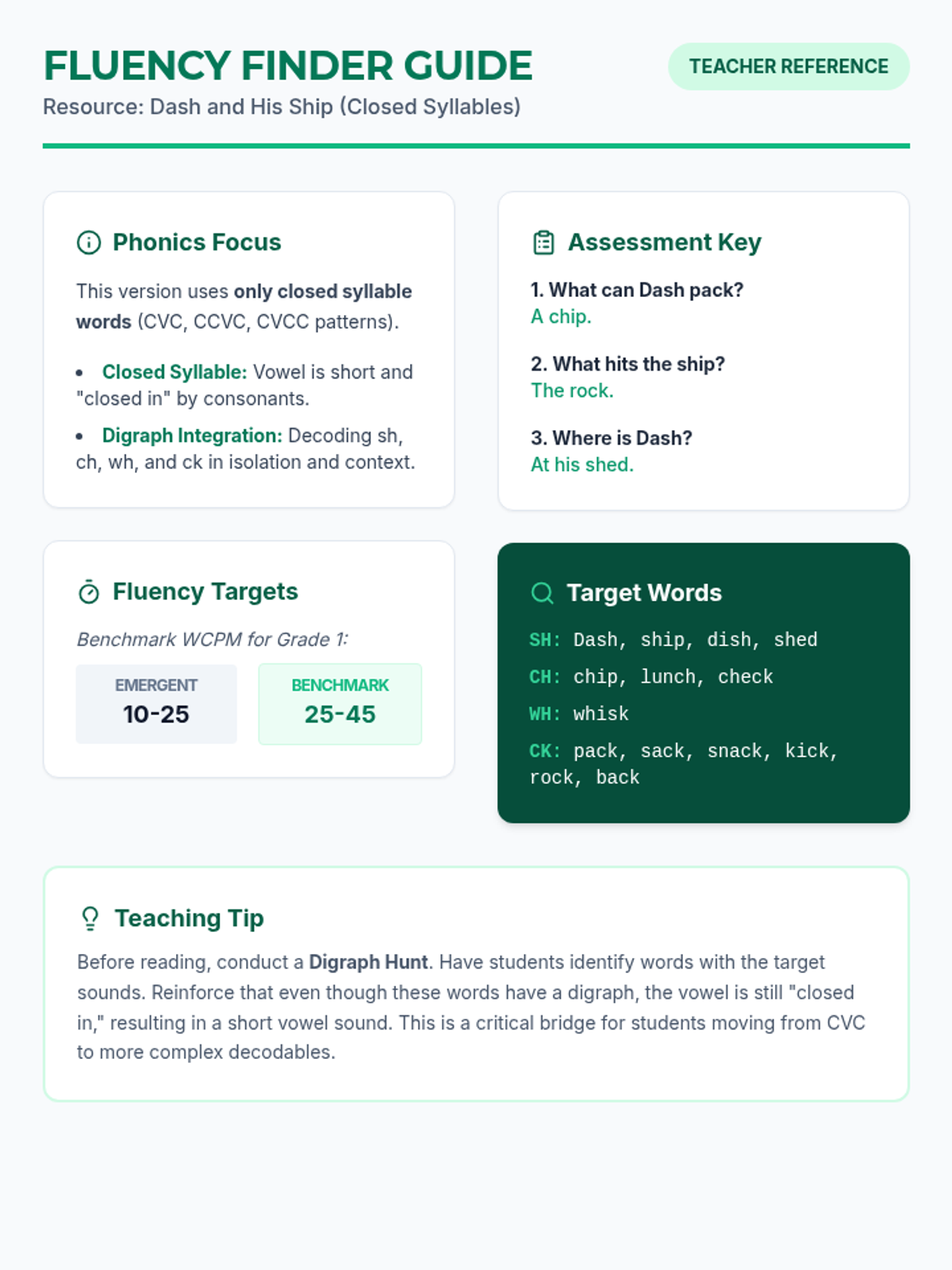
A foundational phonics lesson focusing on identifying and reading words with the digraphs wh, sh, ch, and ck within a beach-themed narrative. Students will practice oral reading fluency and basic reading comprehension.
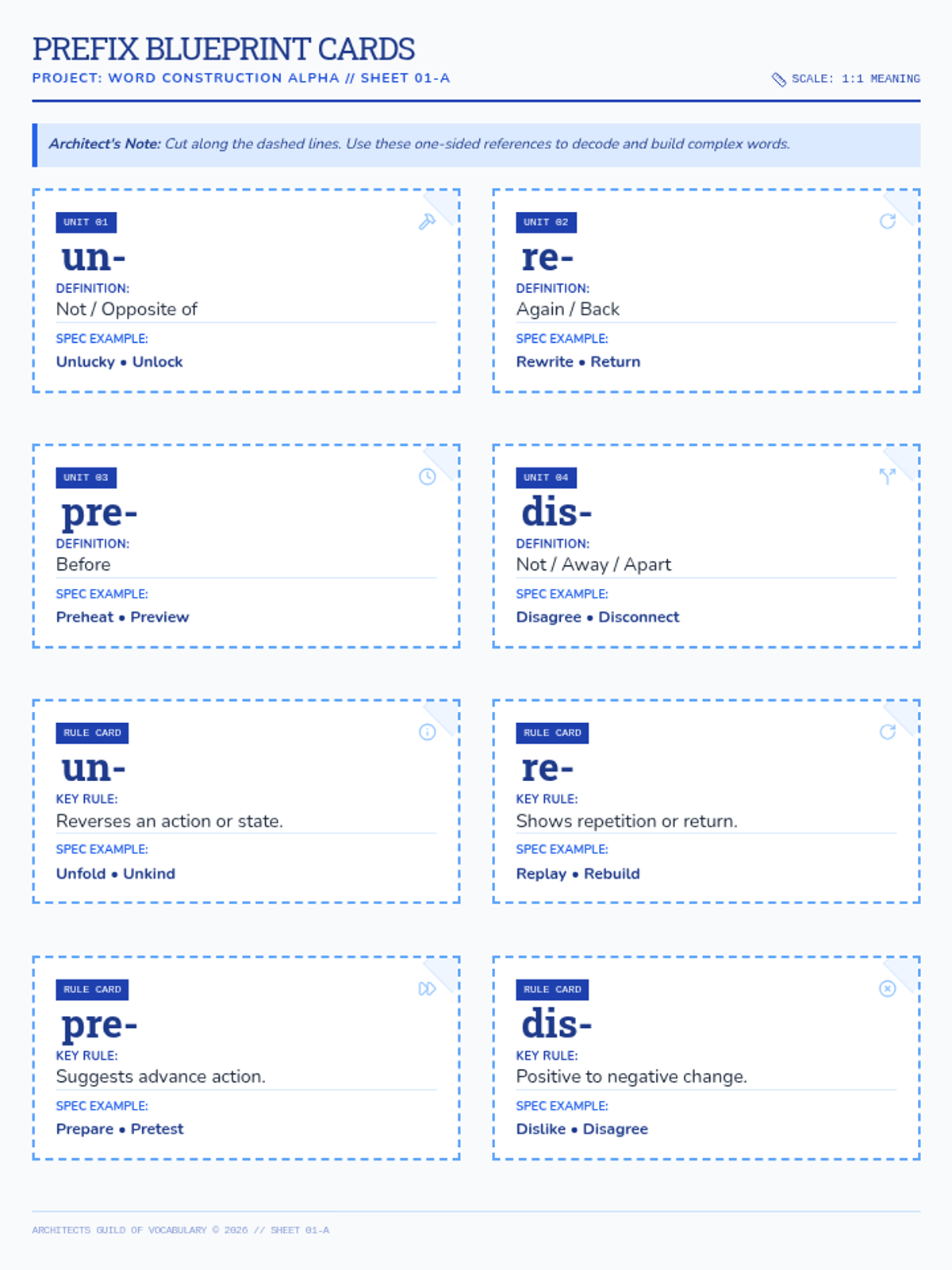
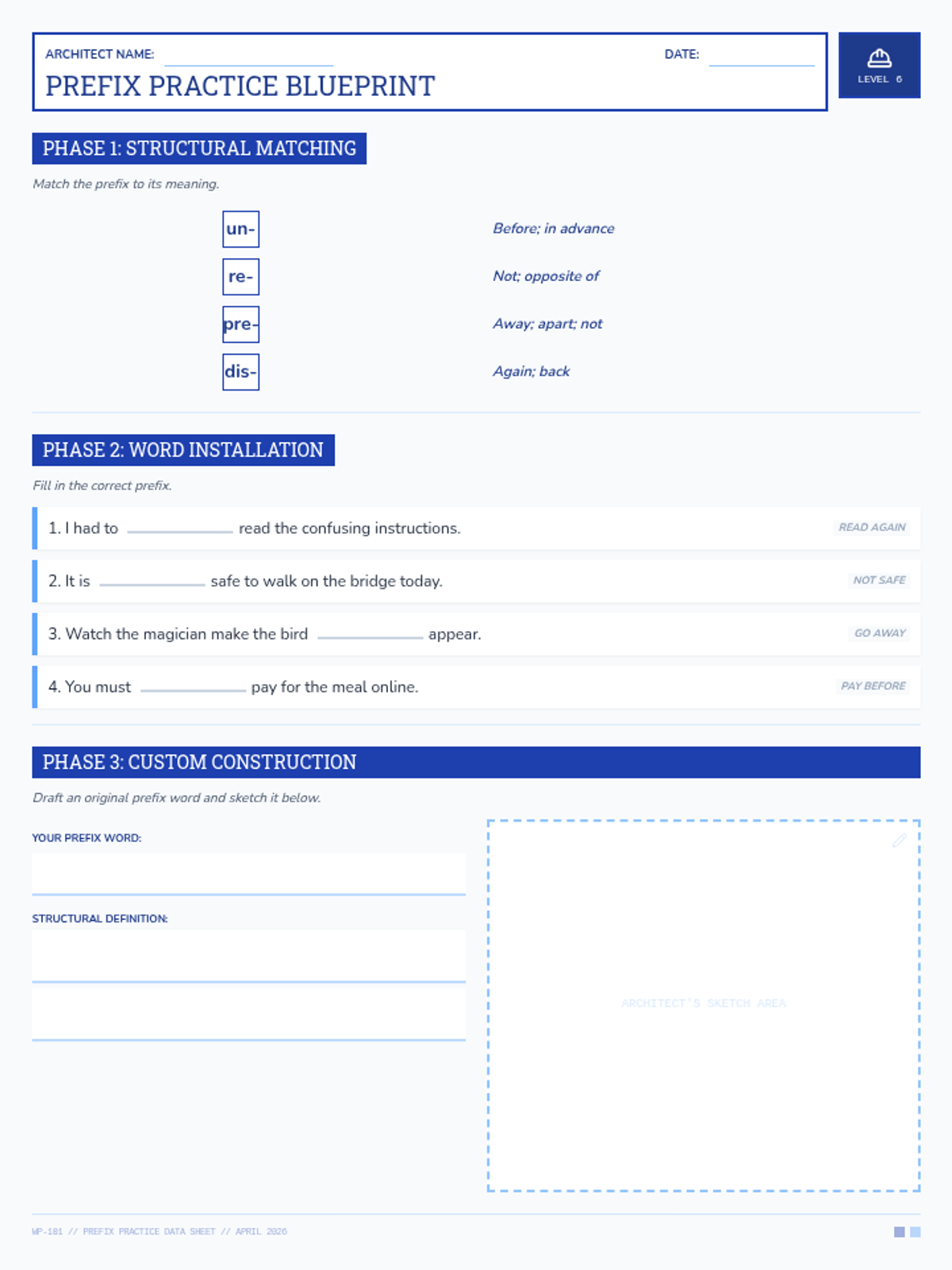
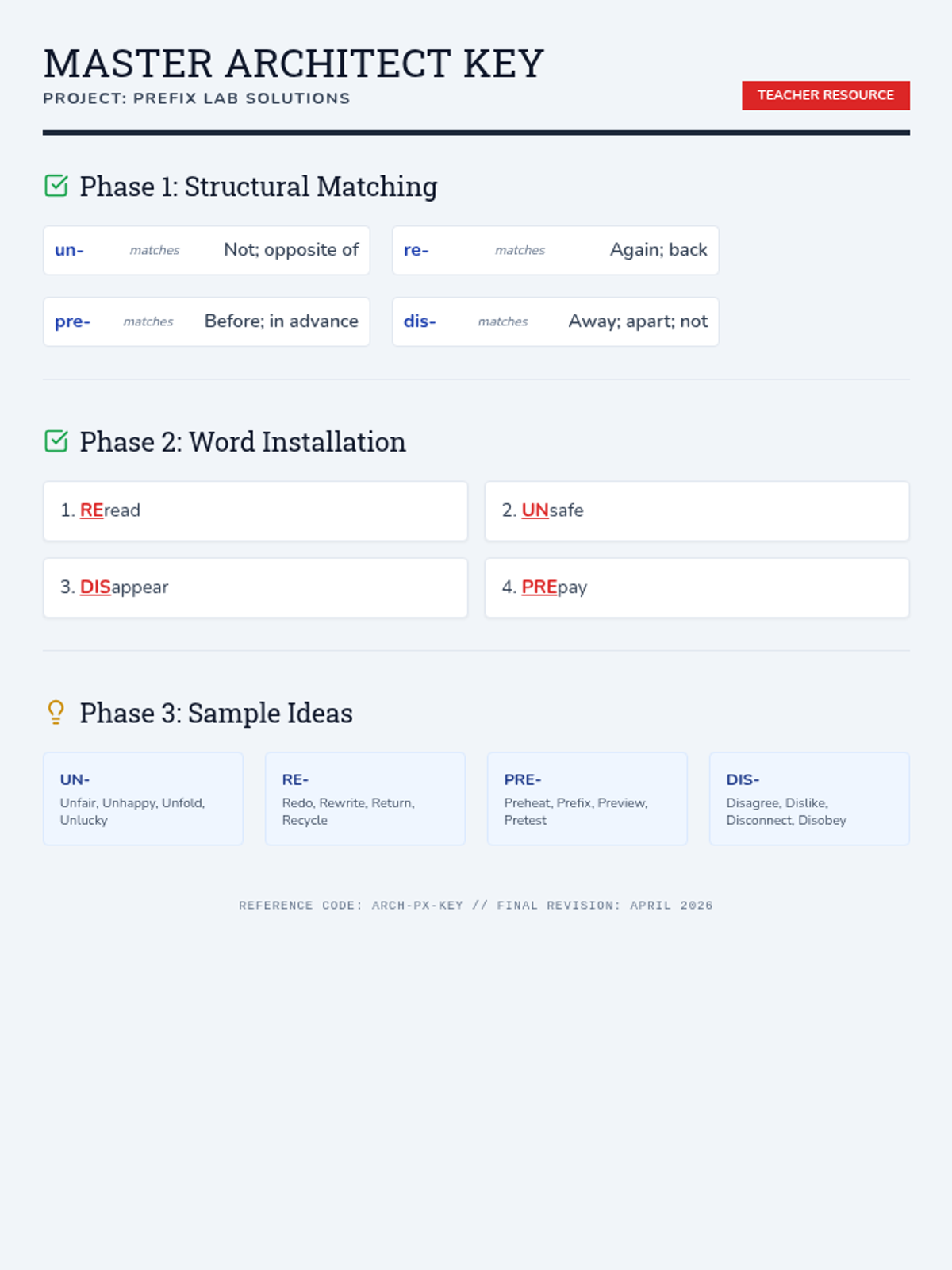
A foundational lesson on common prefixes (un-, re-, pre-, dis-) where students act as 'Word Architects' to build and deconstruct words.
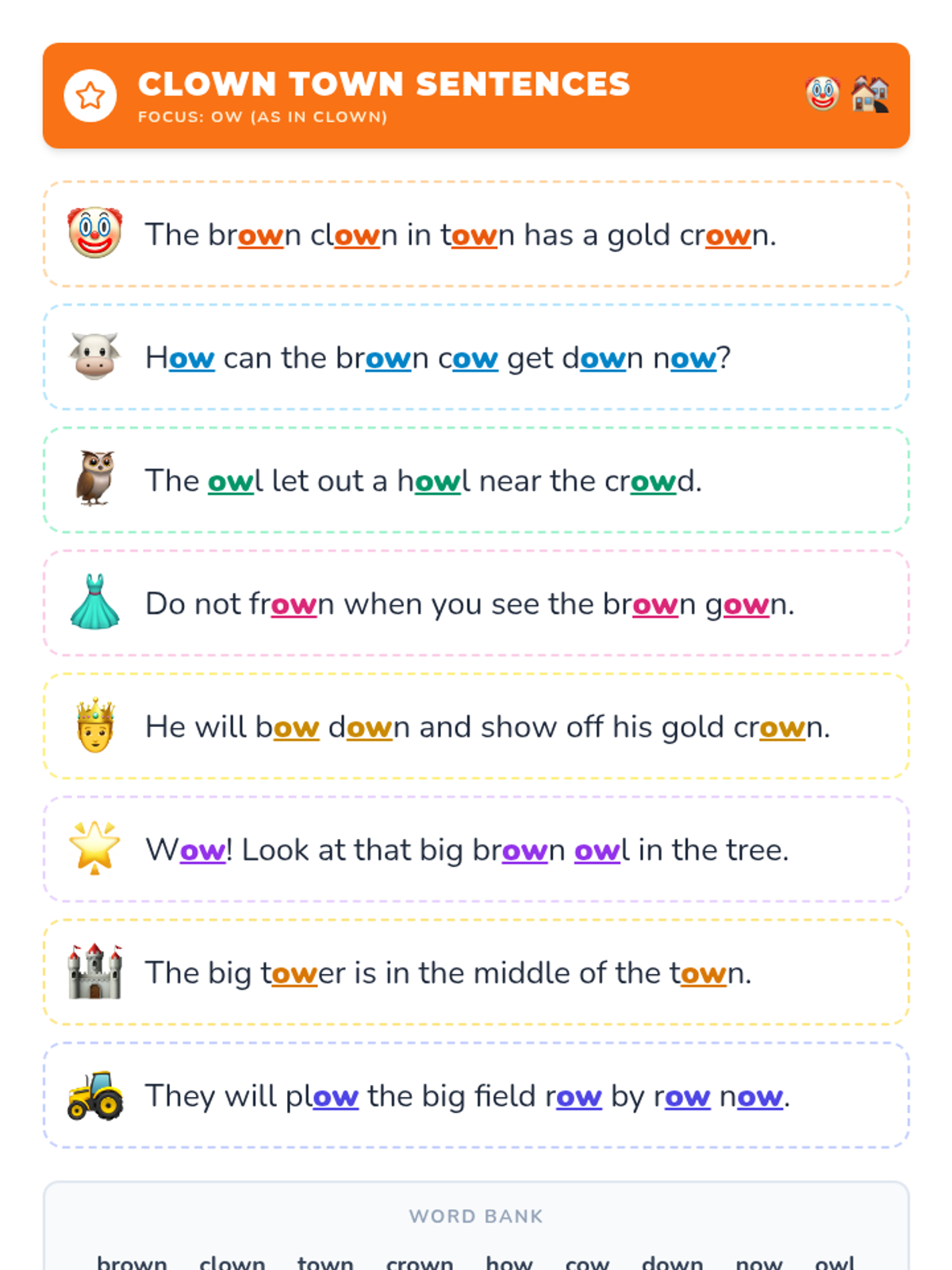
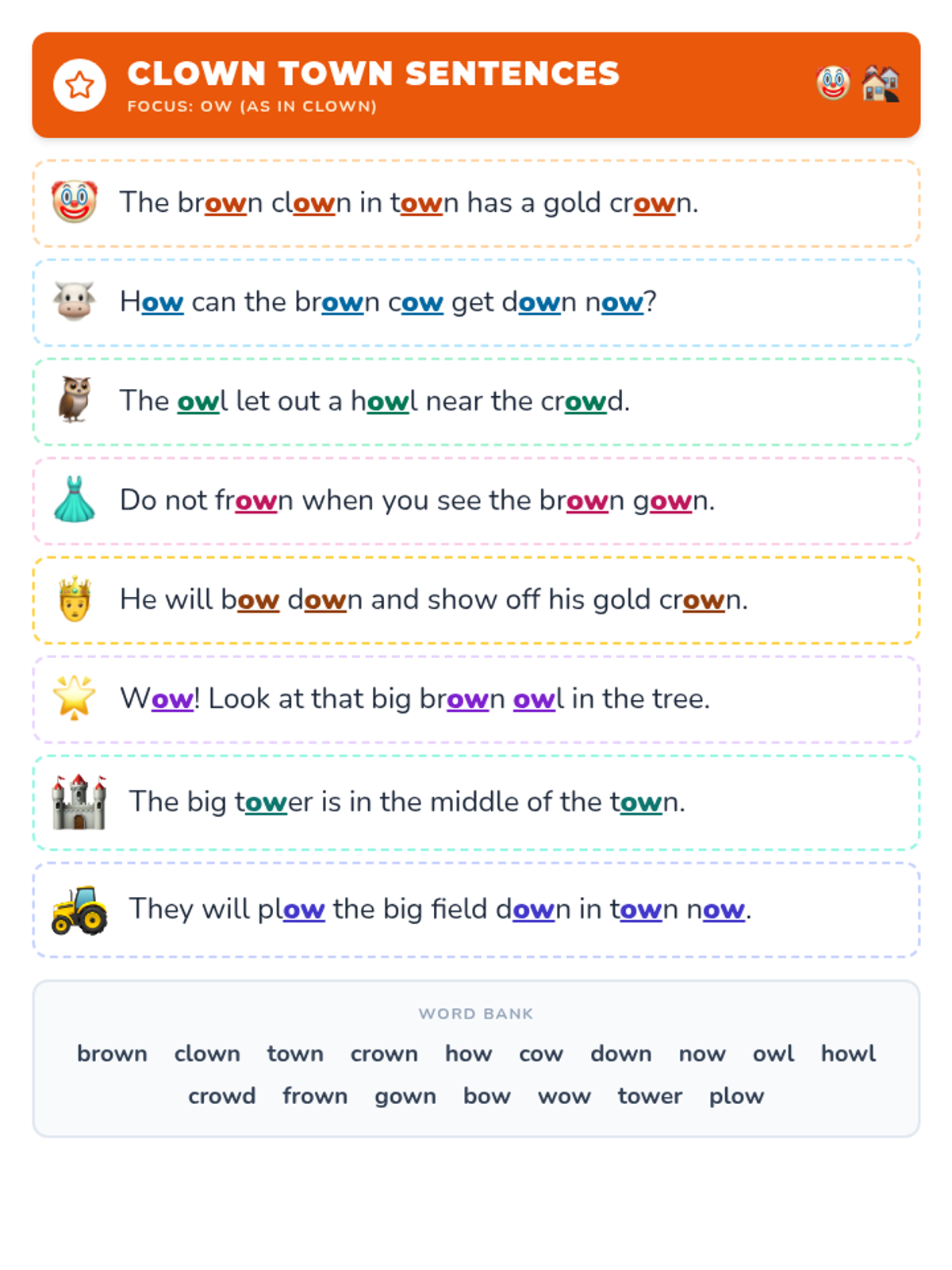
A phonics lesson focusing on the diphthong 'ow' as heard in 'clown' and 'town'.
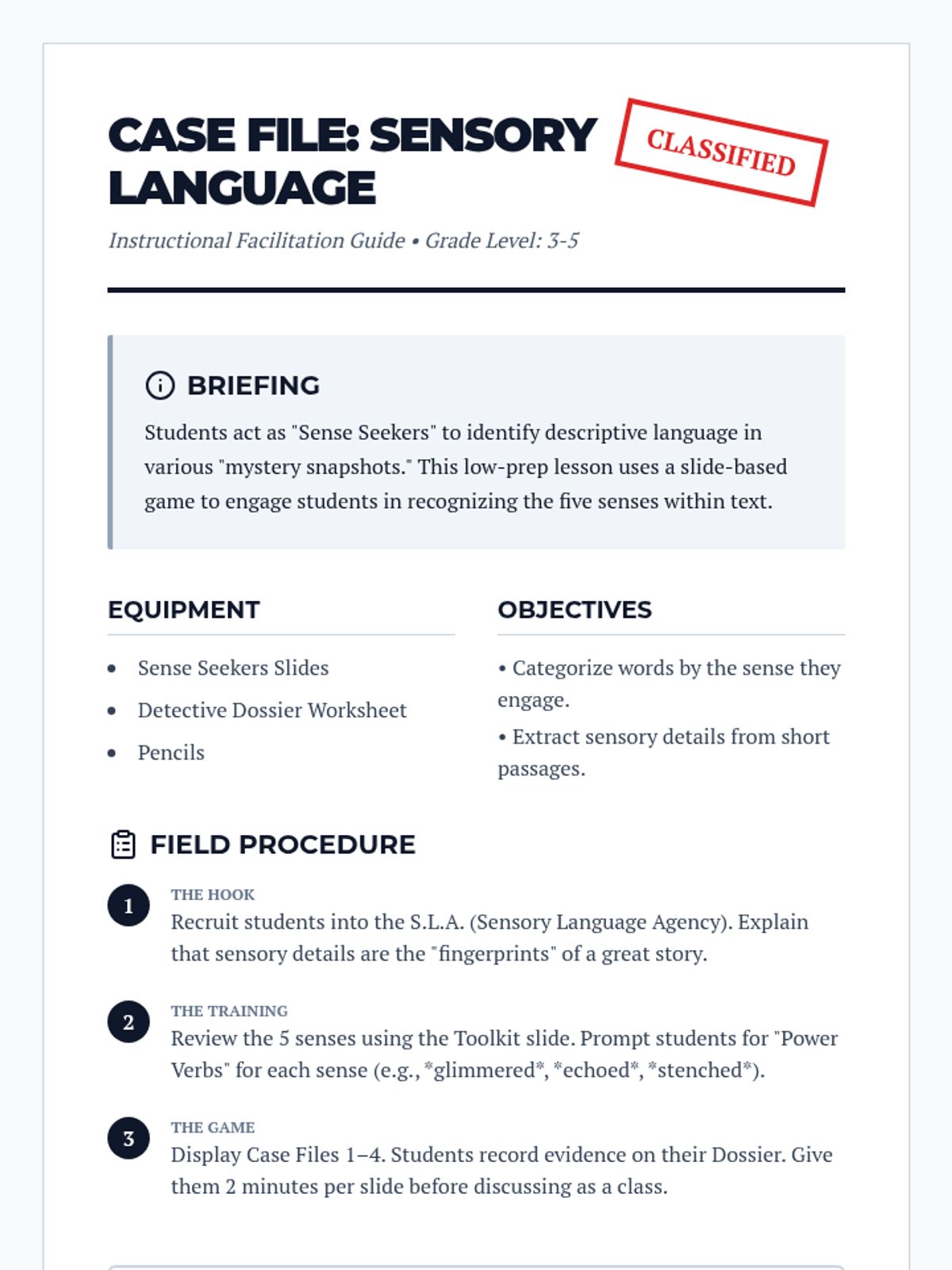
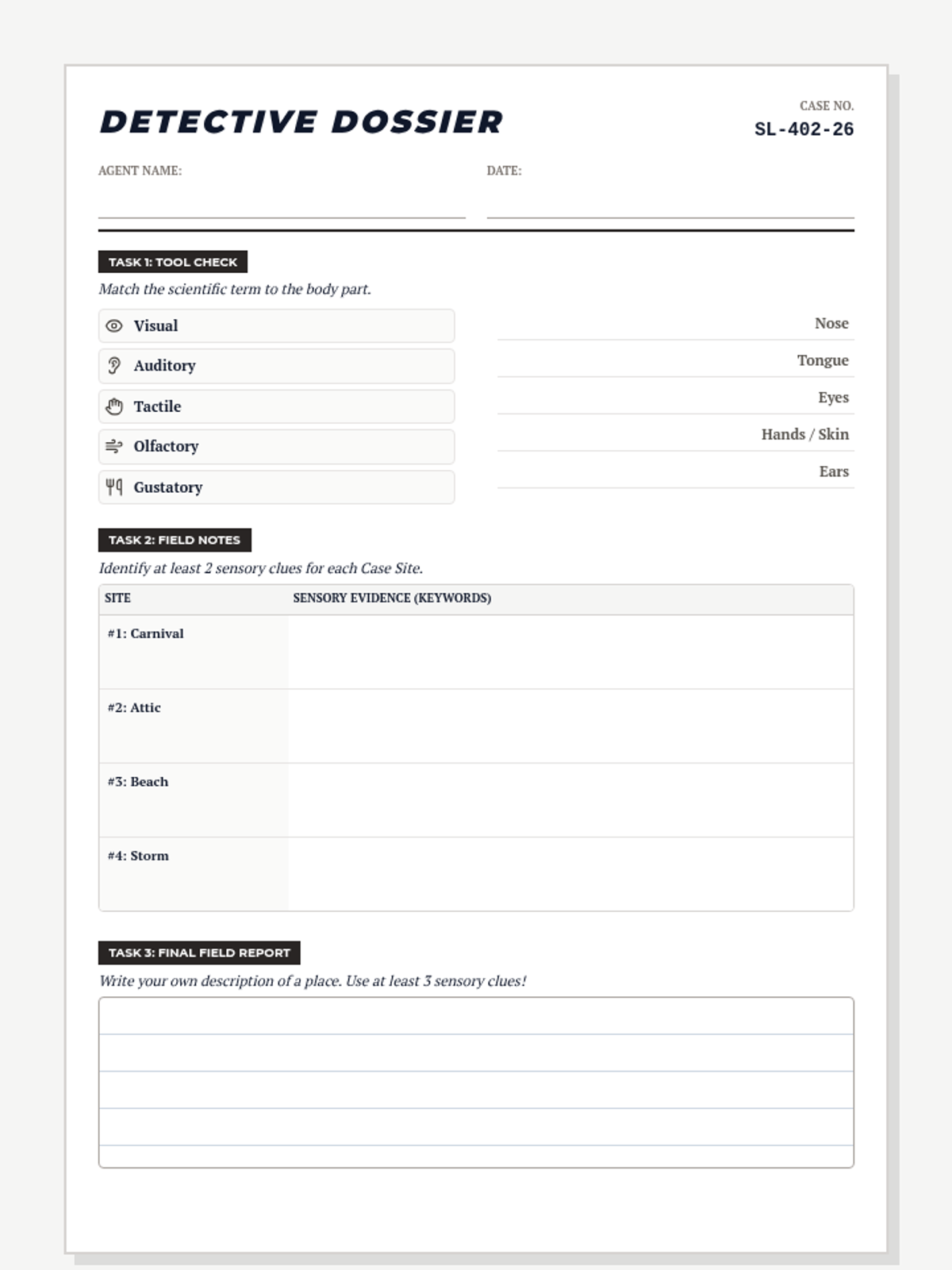
A lesson where students become 'Sense Seekers' to identify sensory language in descriptive text through a mystery-themed game.
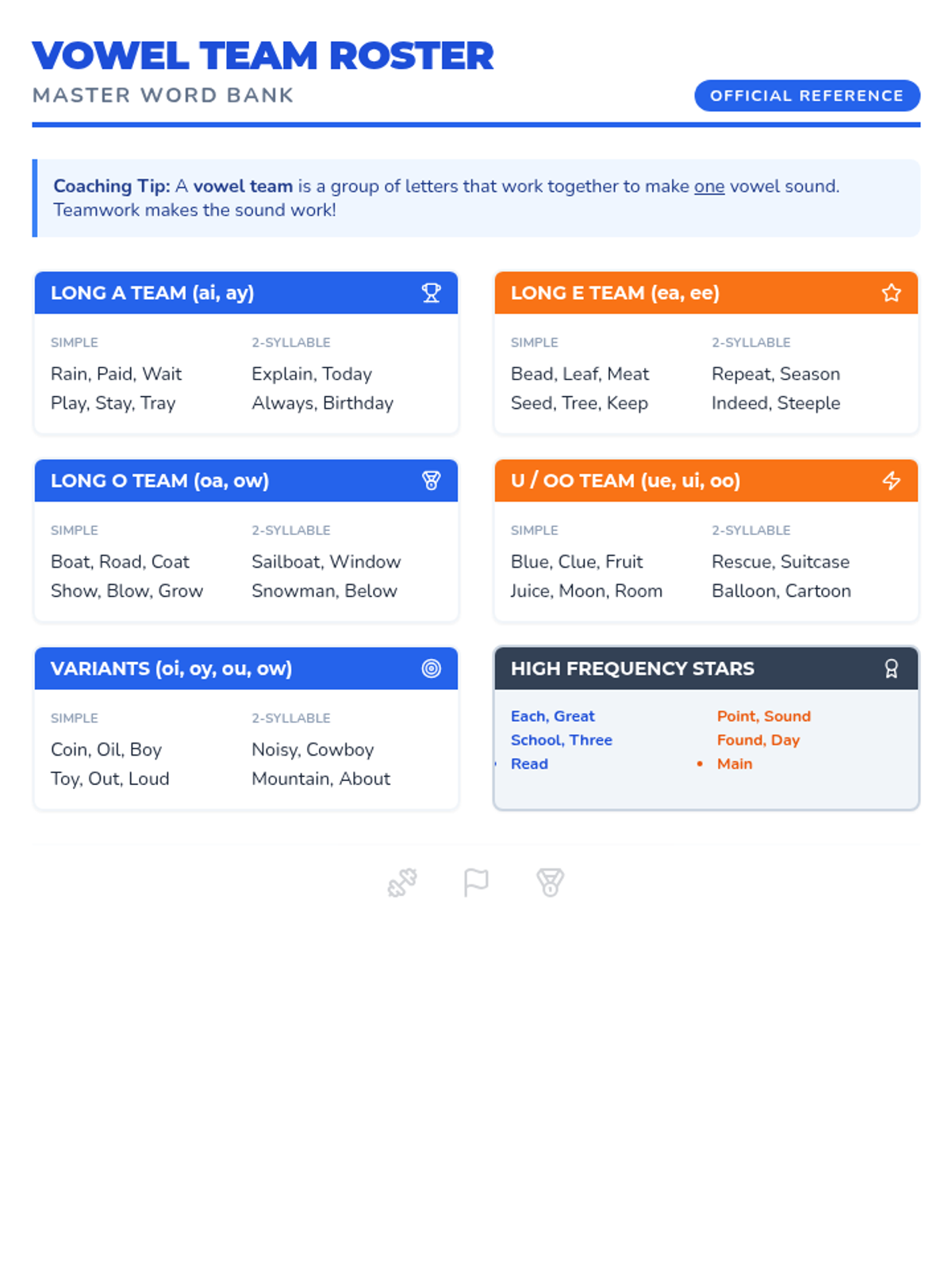
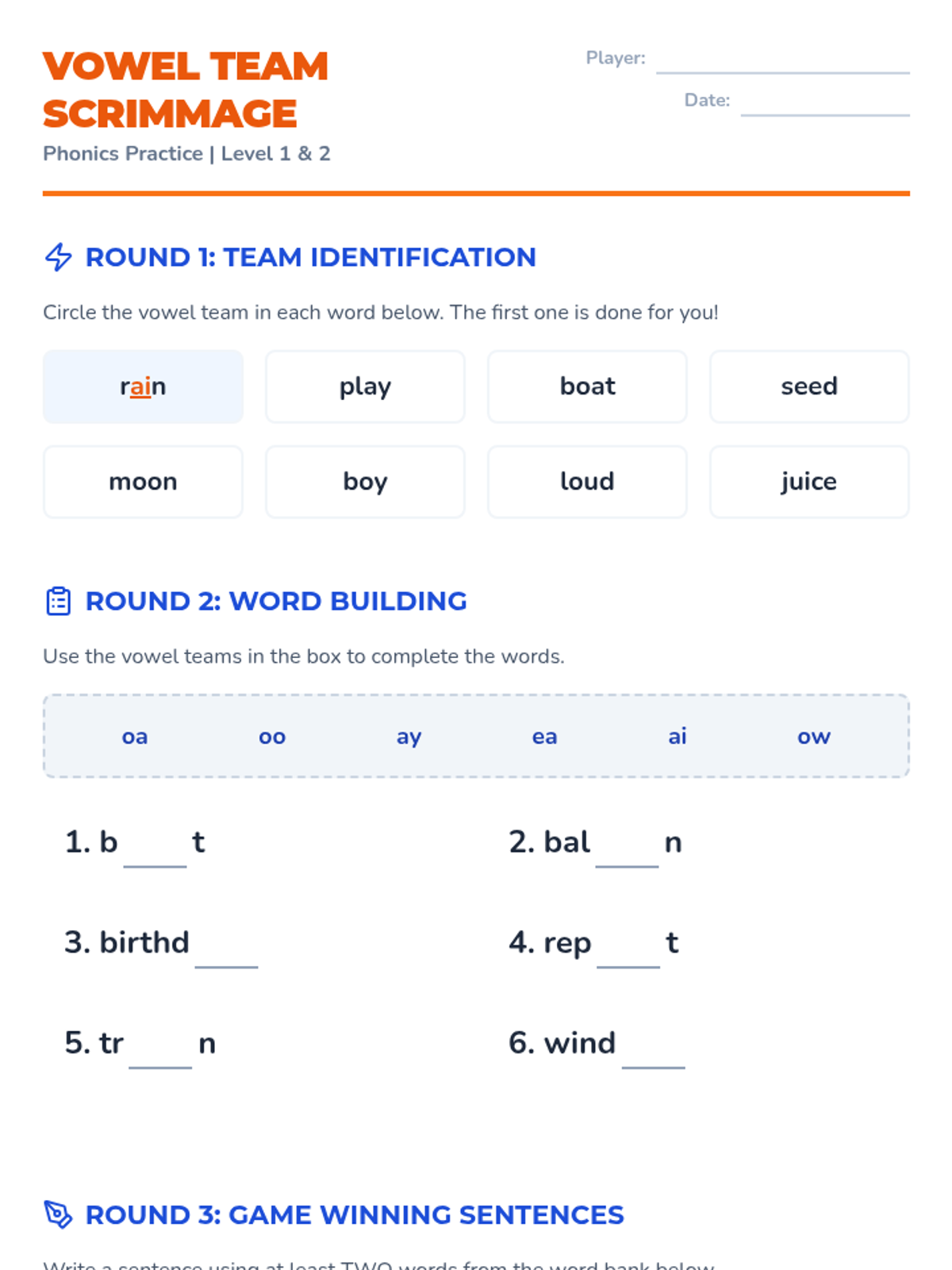
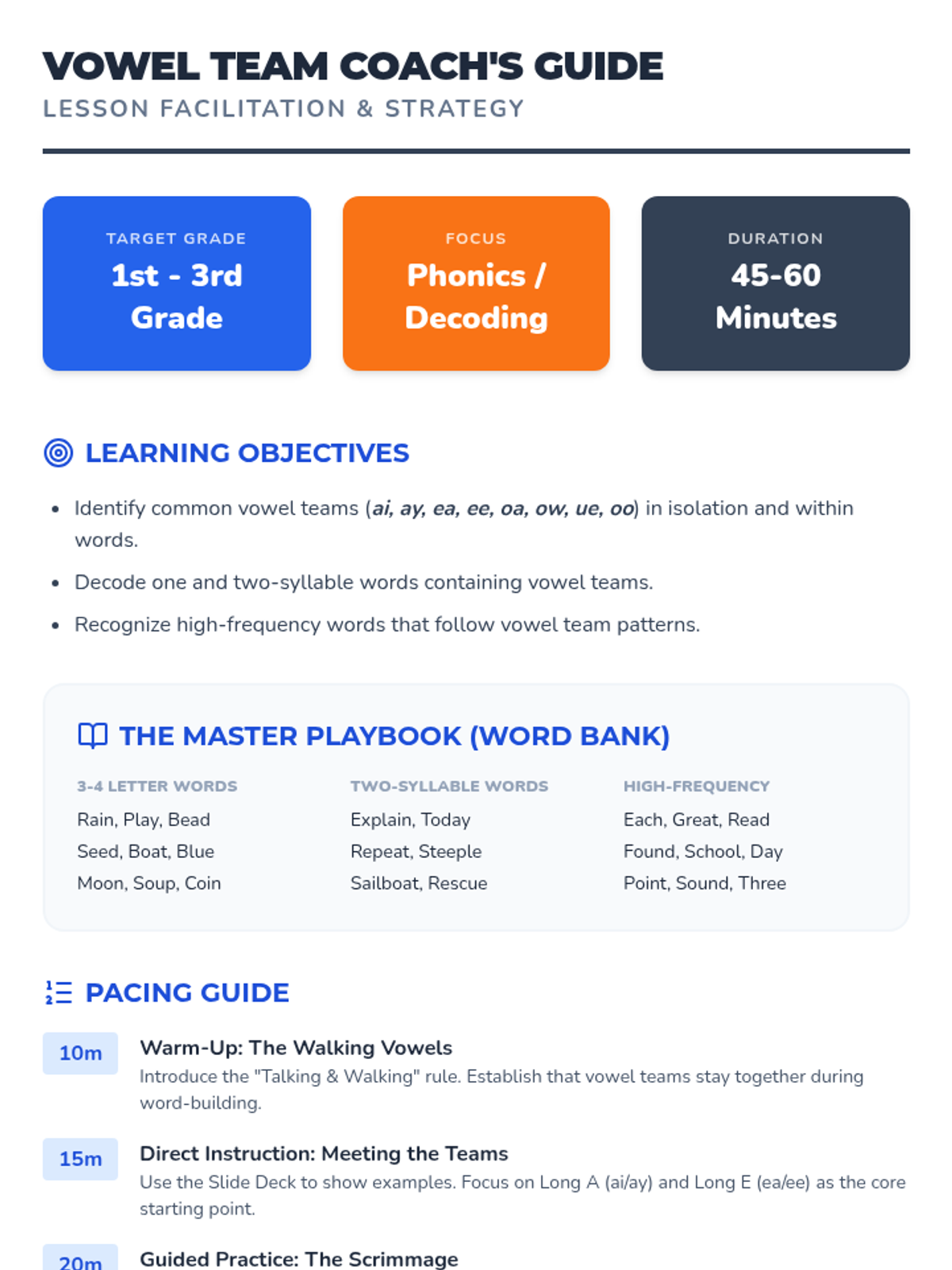
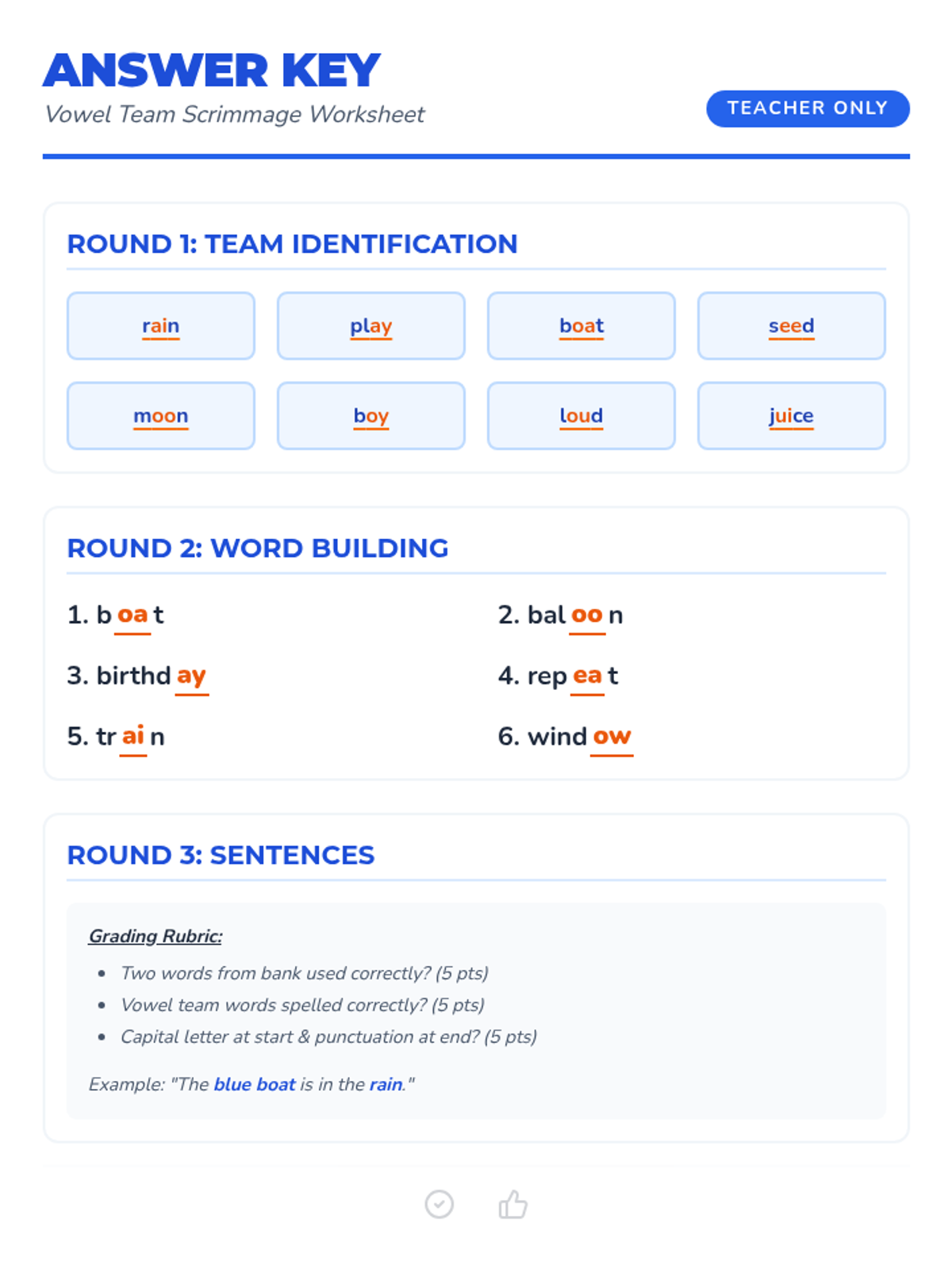
A comprehensive introduction to vowel teams using a sports-themed approach. Students will identify, read, and write words with various vowel teams, ranging from simple one-syllable words to more complex two-syllable terms.
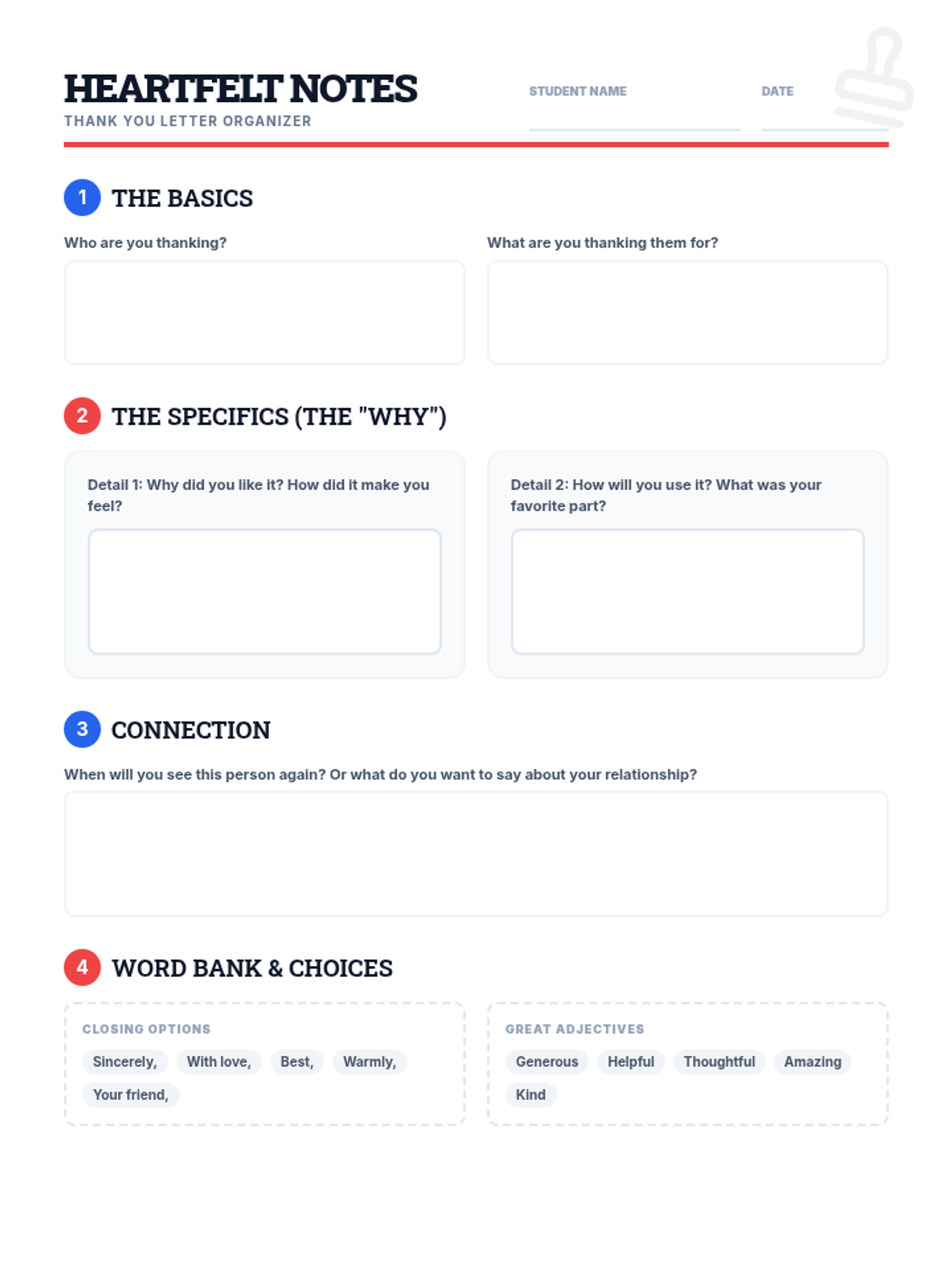
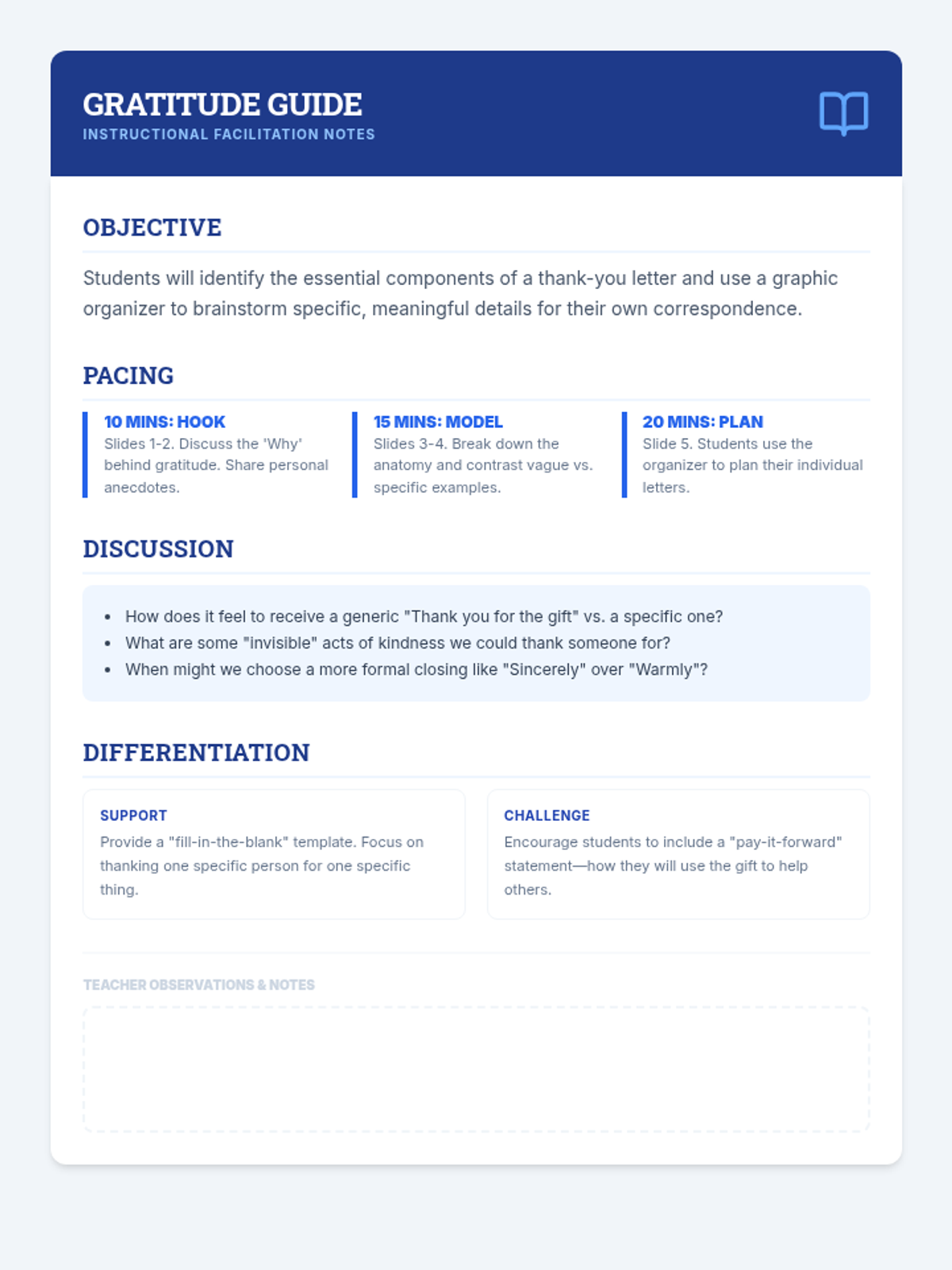
A lesson focused on the art of writing sincere thank-you letters, covering the essential components and the emotional impact of expressing gratitude.
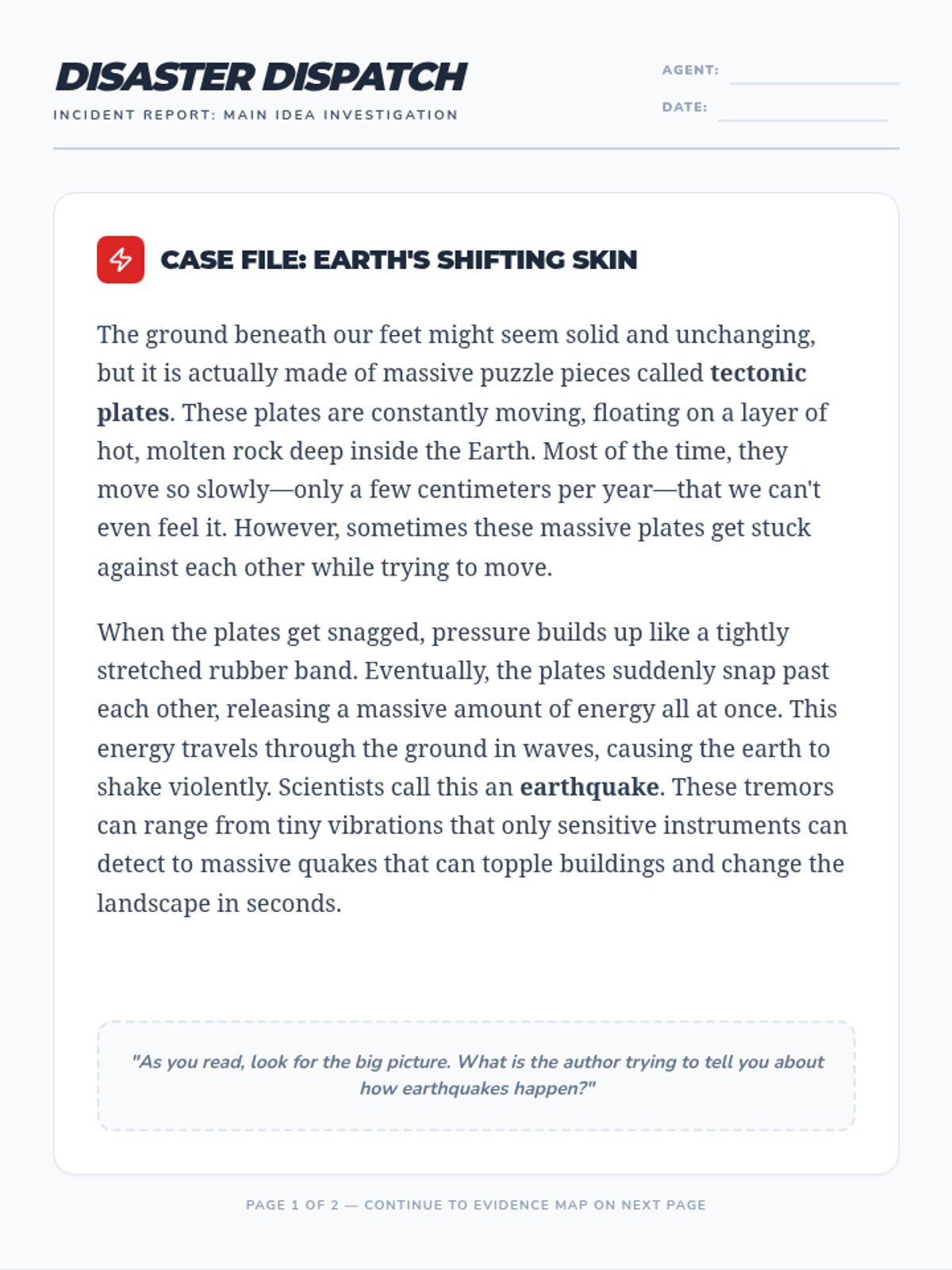
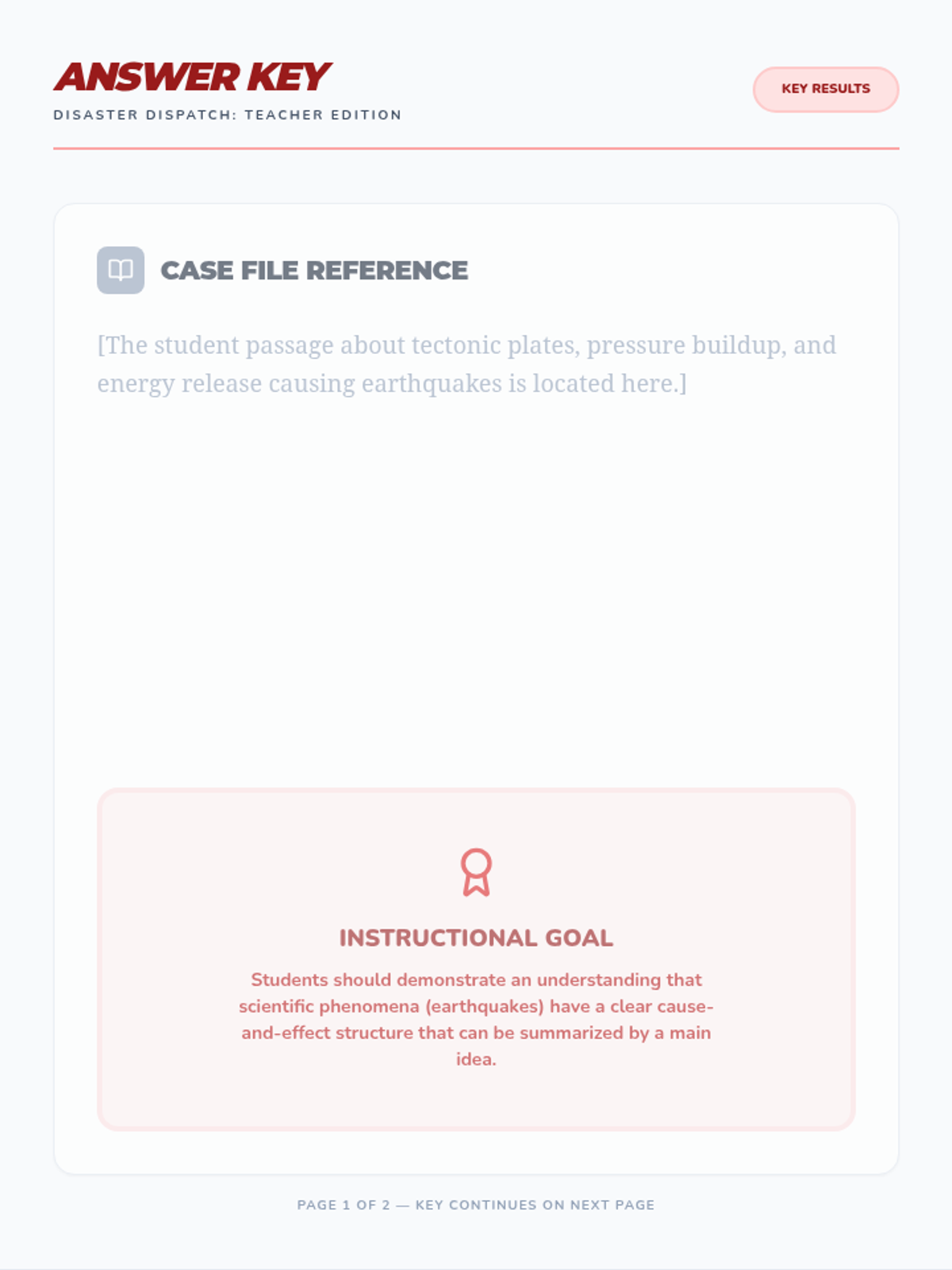
In this lesson, students practice identifying the main idea and supporting details in non-fiction texts about natural disasters. They will use a graphic organizer to map out the structure of a passage about earthquakes.
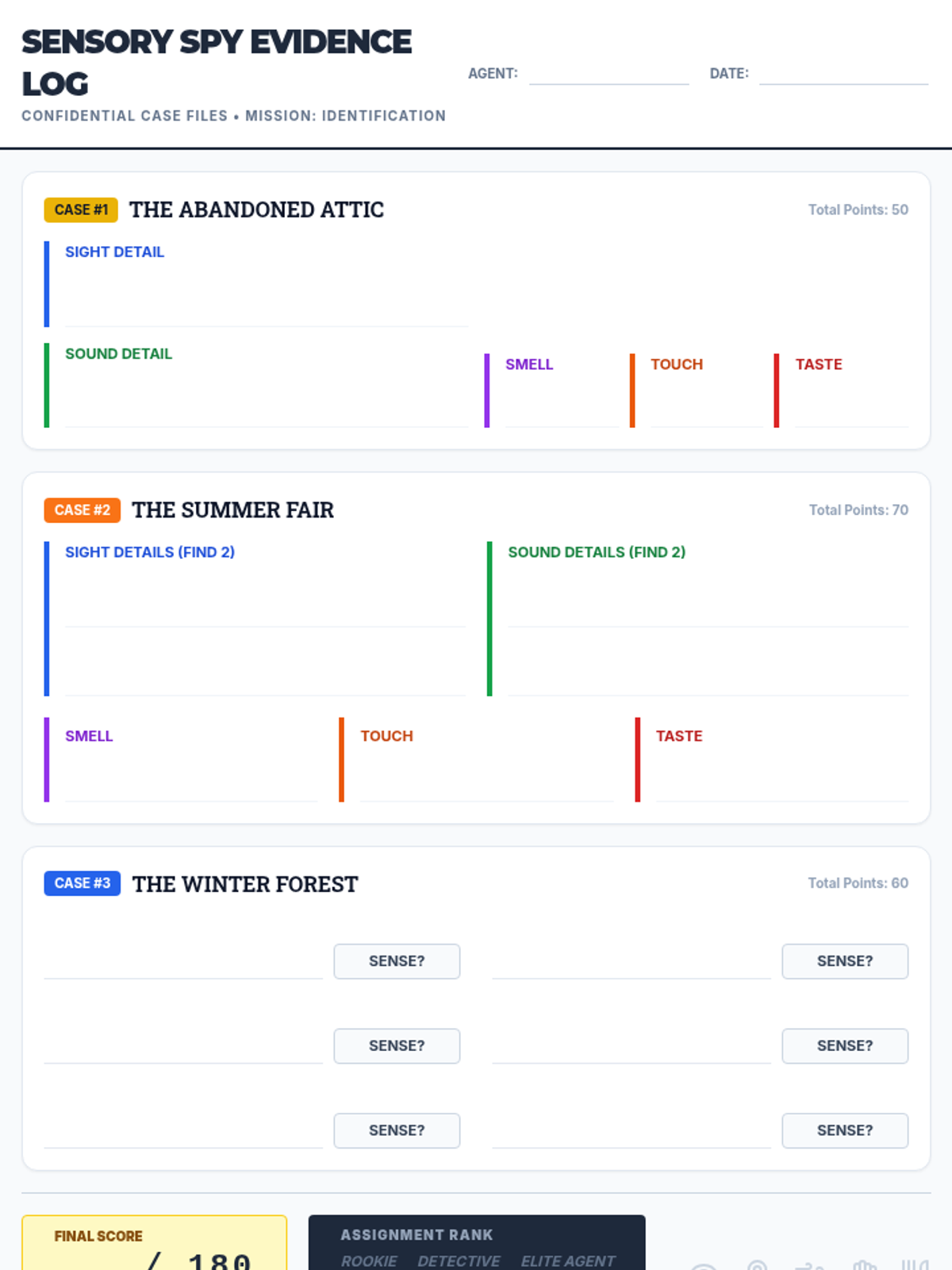
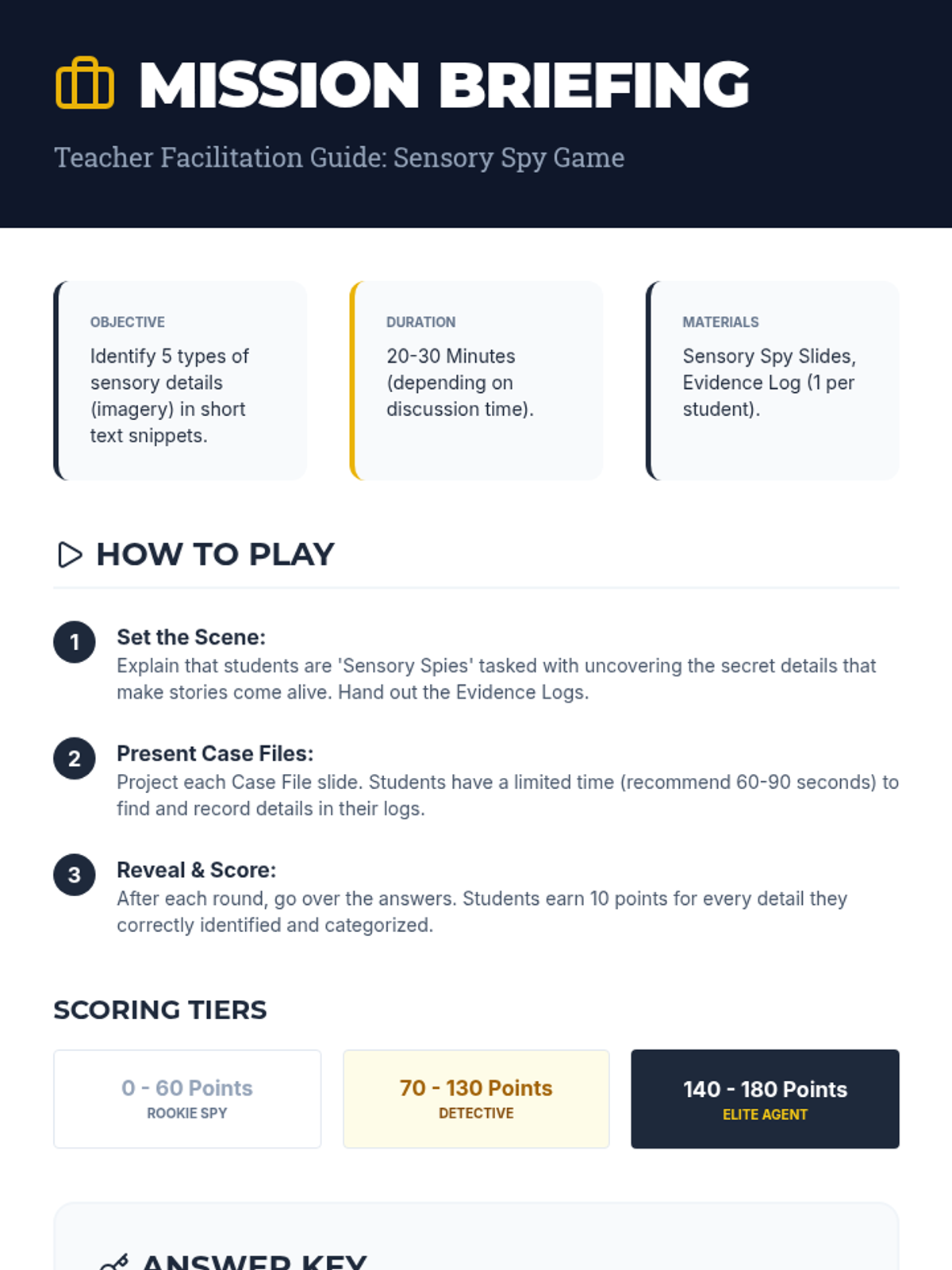
A fast-paced, interactive game where students become 'Sensory Spies' to track down descriptive language in high-interest short story snippets. Students compete to identify sights, sounds, smells, tastes, and textures hidden within case files.
A Grade 2 literacy lesson focused on the long 'e' vowel teams 'ea' and 'ee' through a multi-page story, visual slides, and interactive practice.
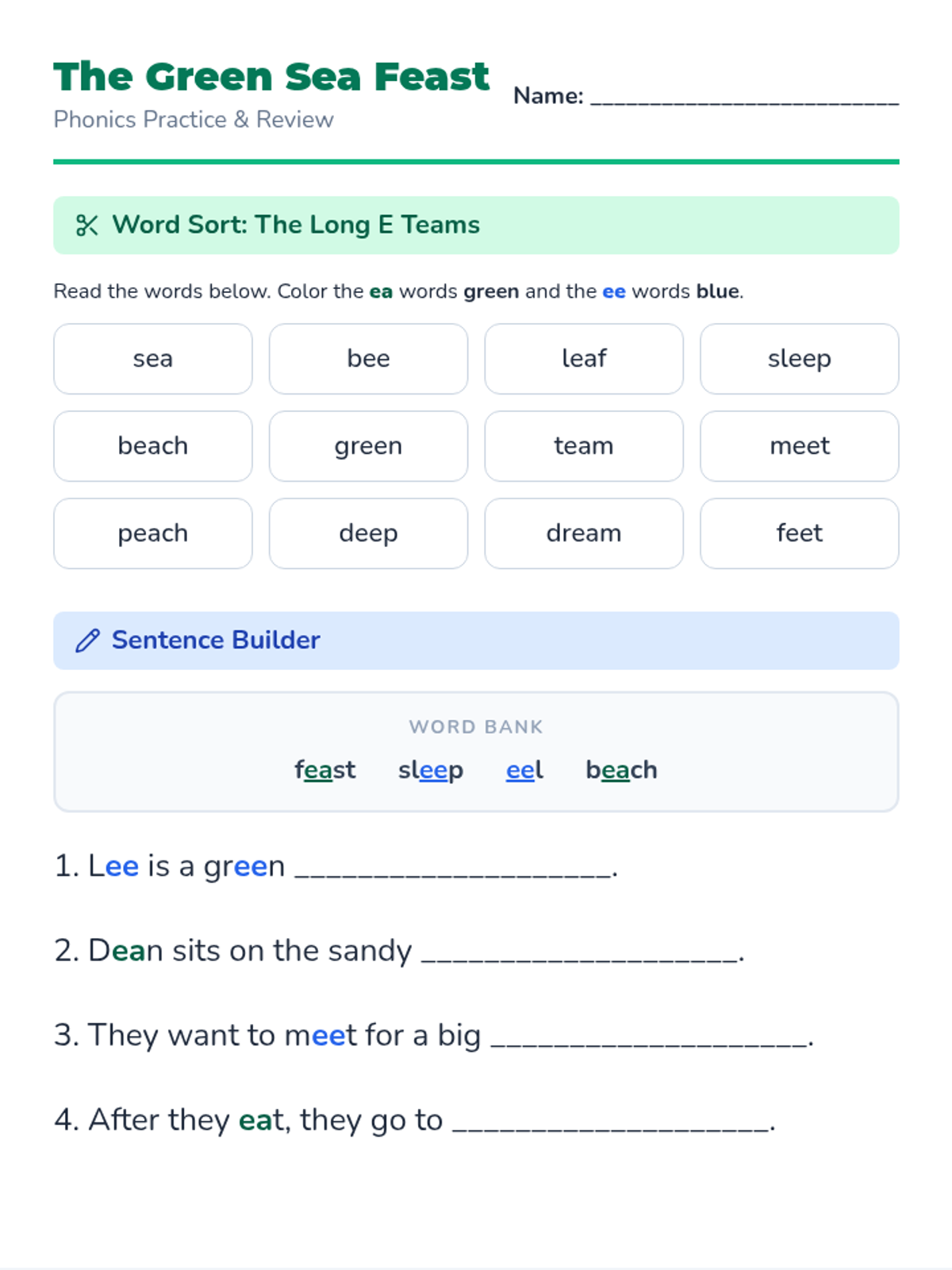
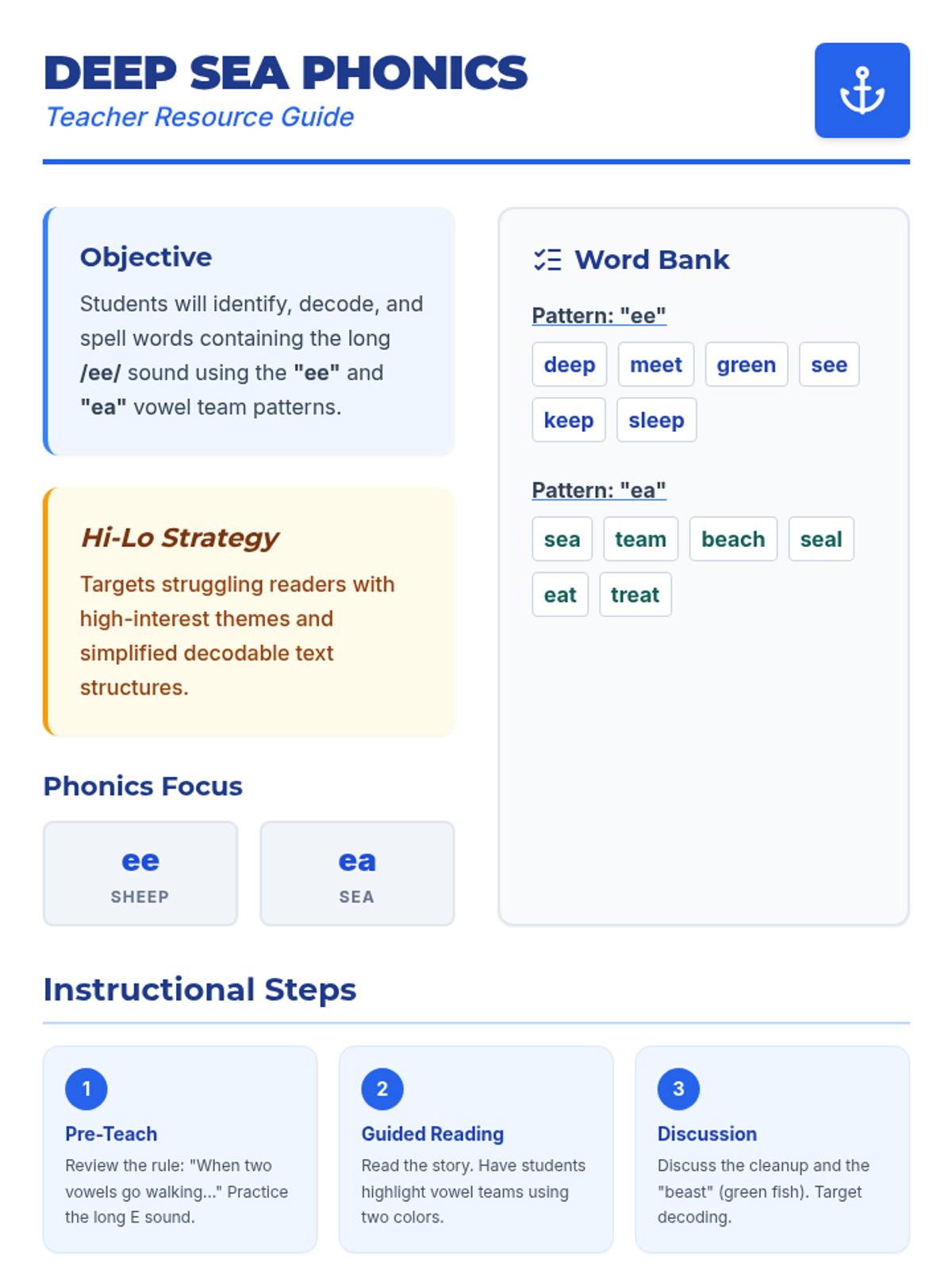
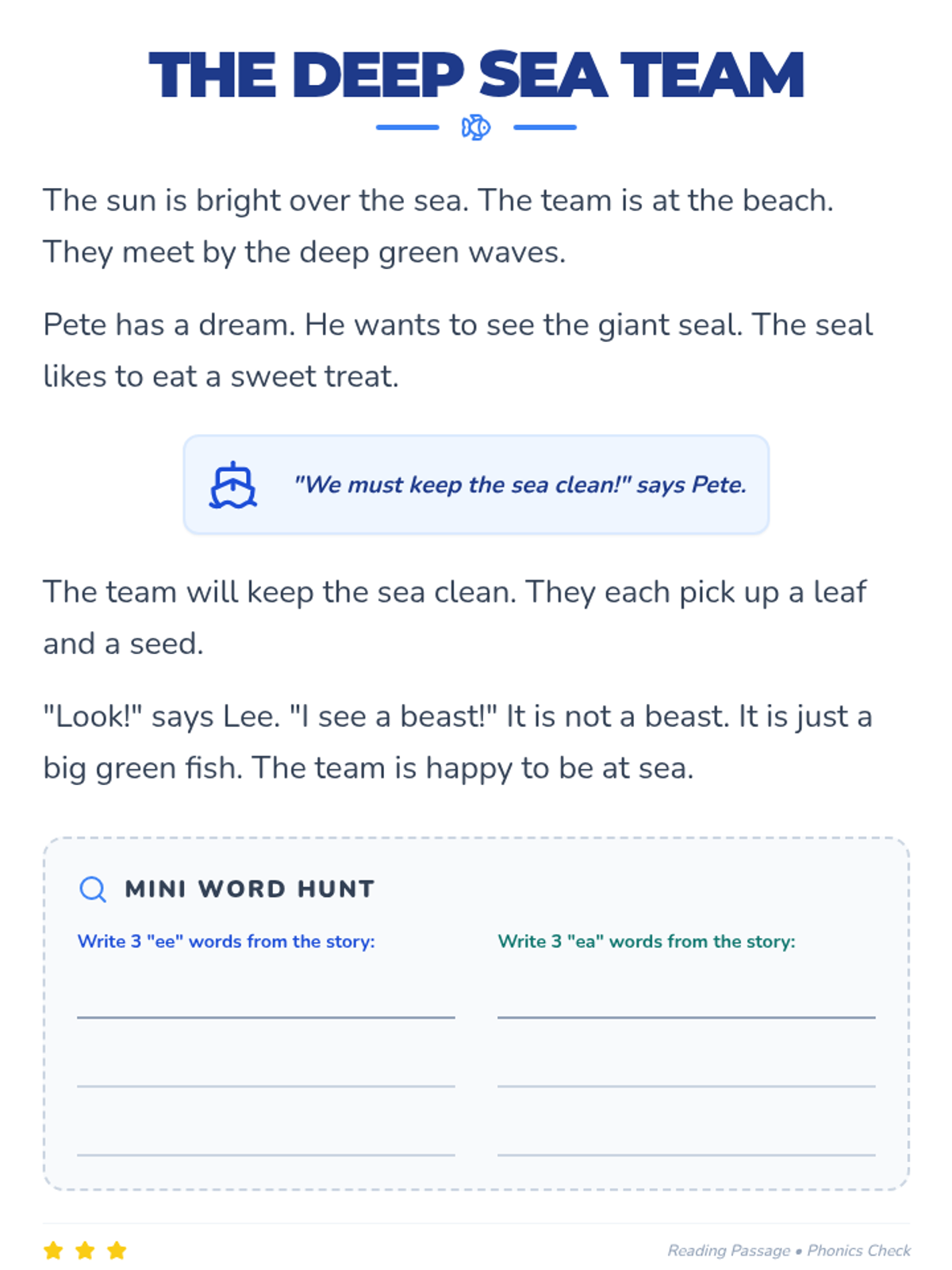
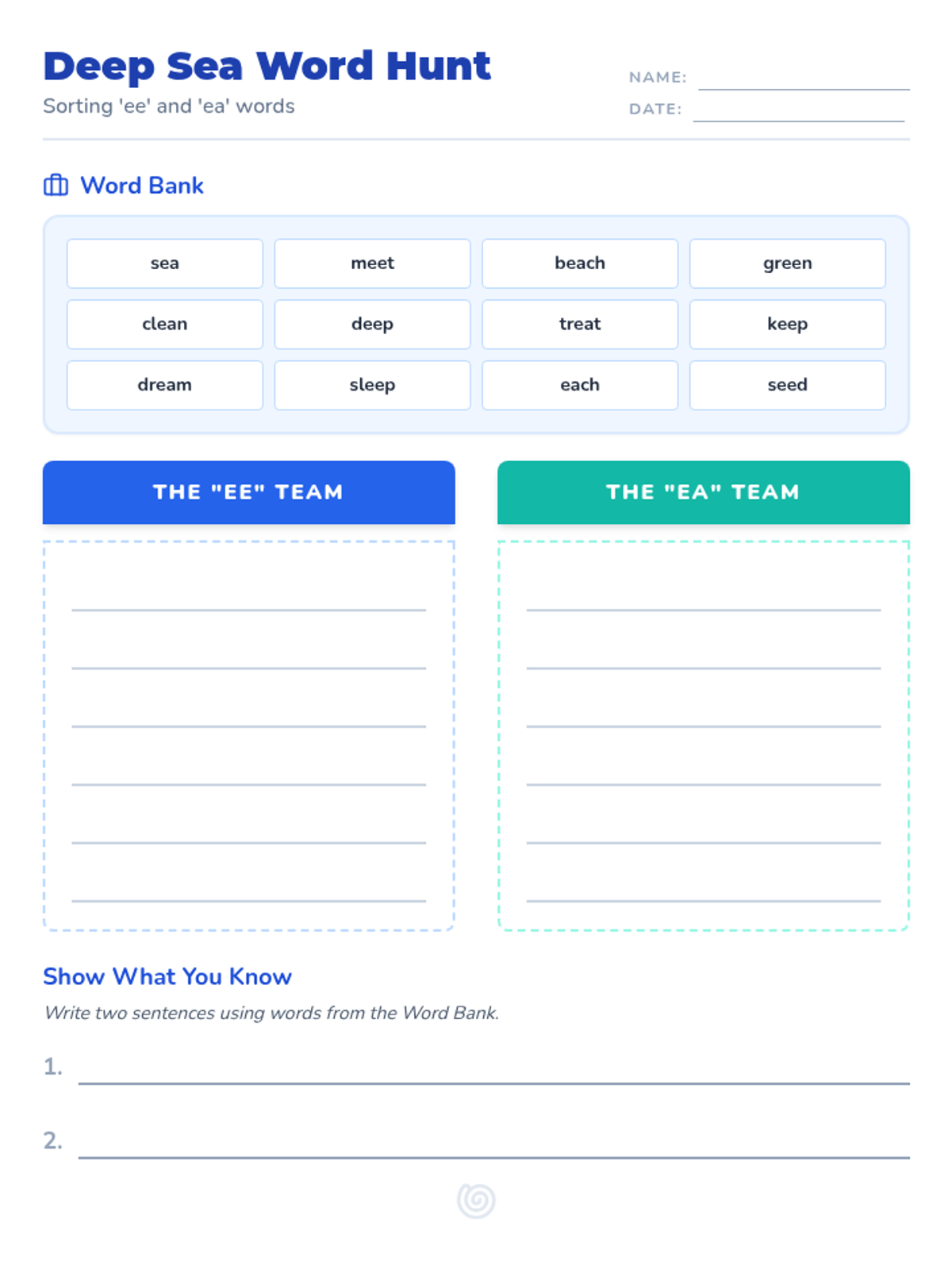
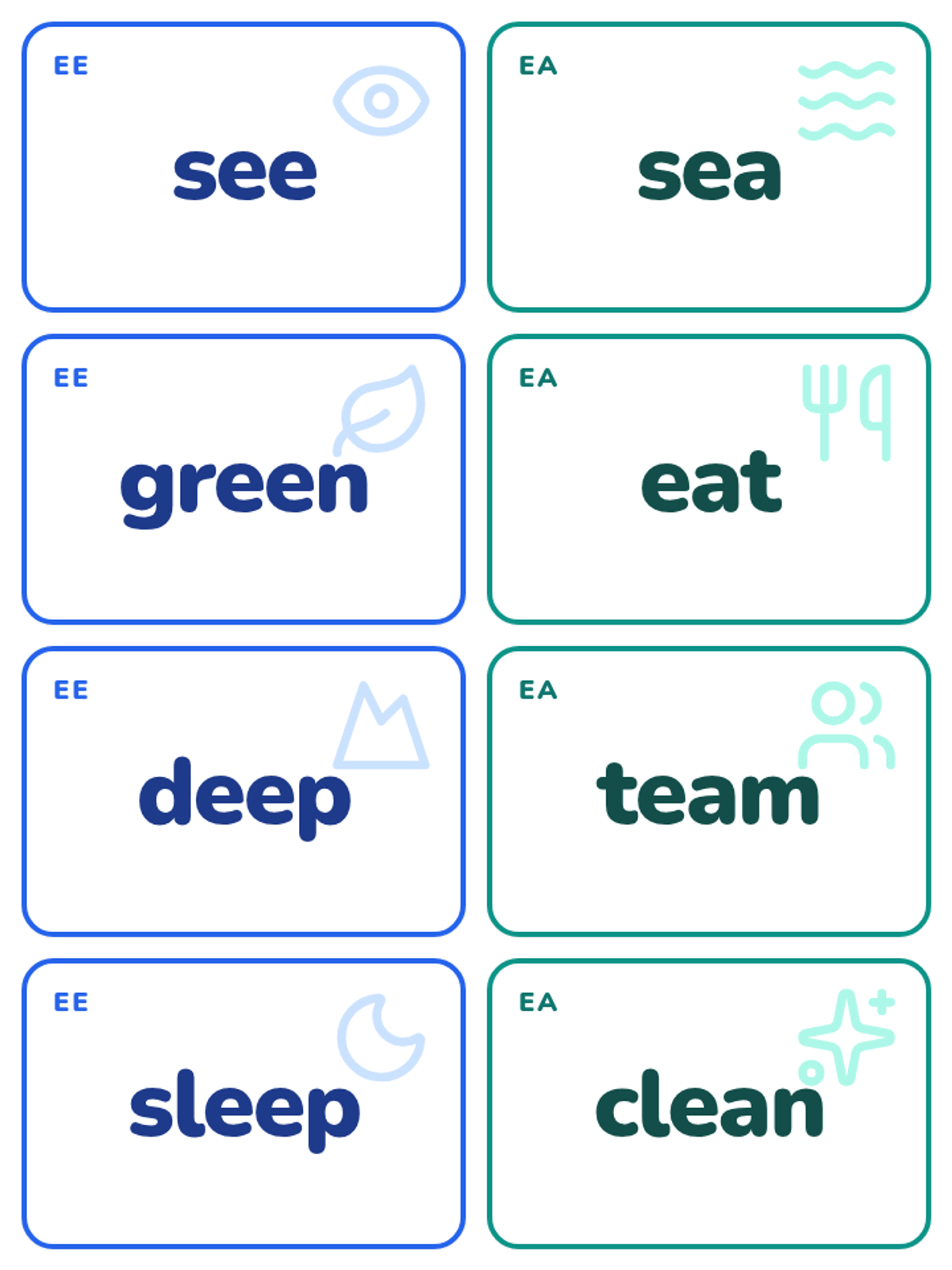
A phonics-focused lesson targeting the /ee/ sound spelled with 'ee' and 'ea' through an engaging deep-sea exploration theme. Includes a high-interest reading passage, word sorting activities, and instructional support.
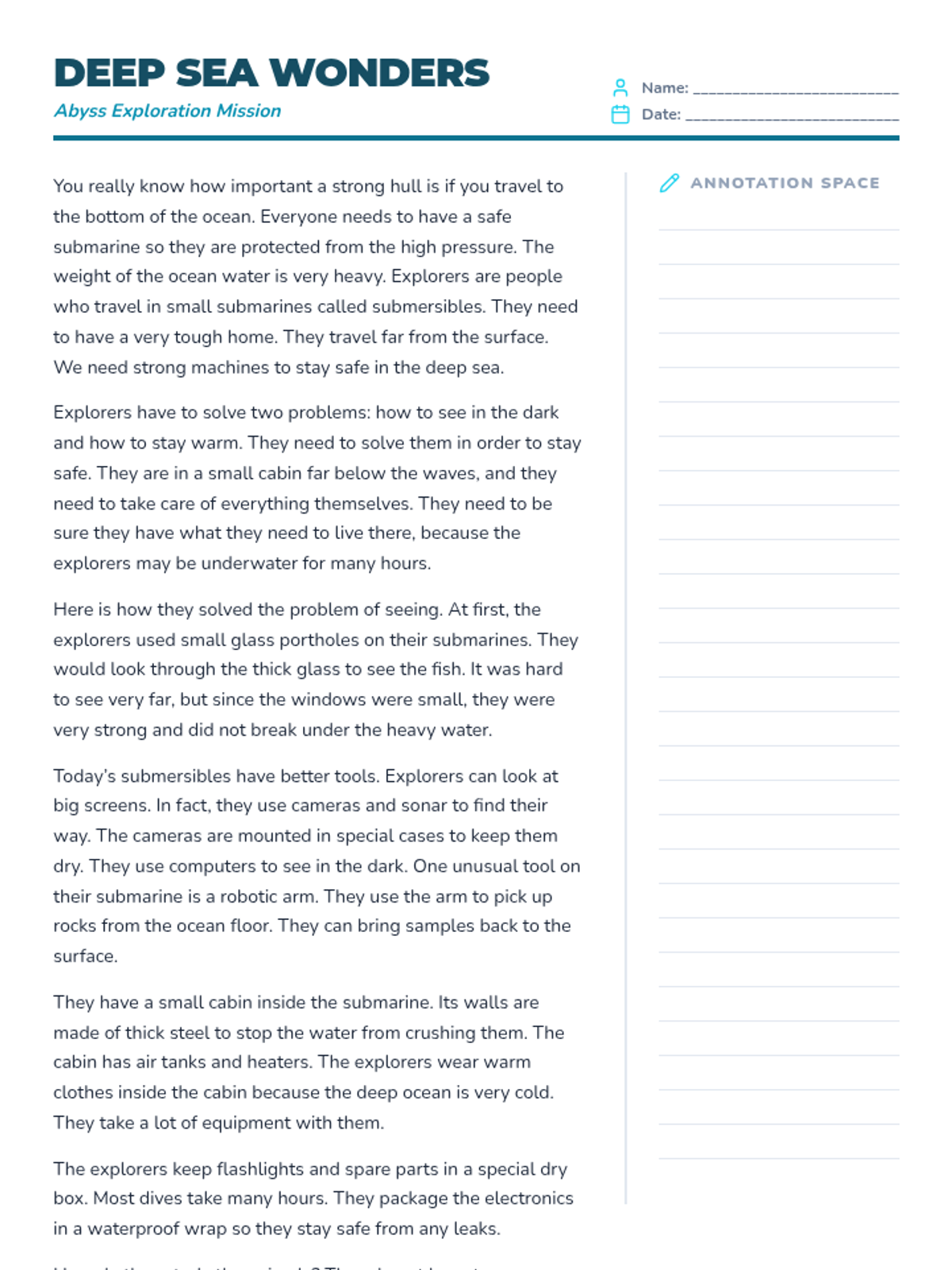
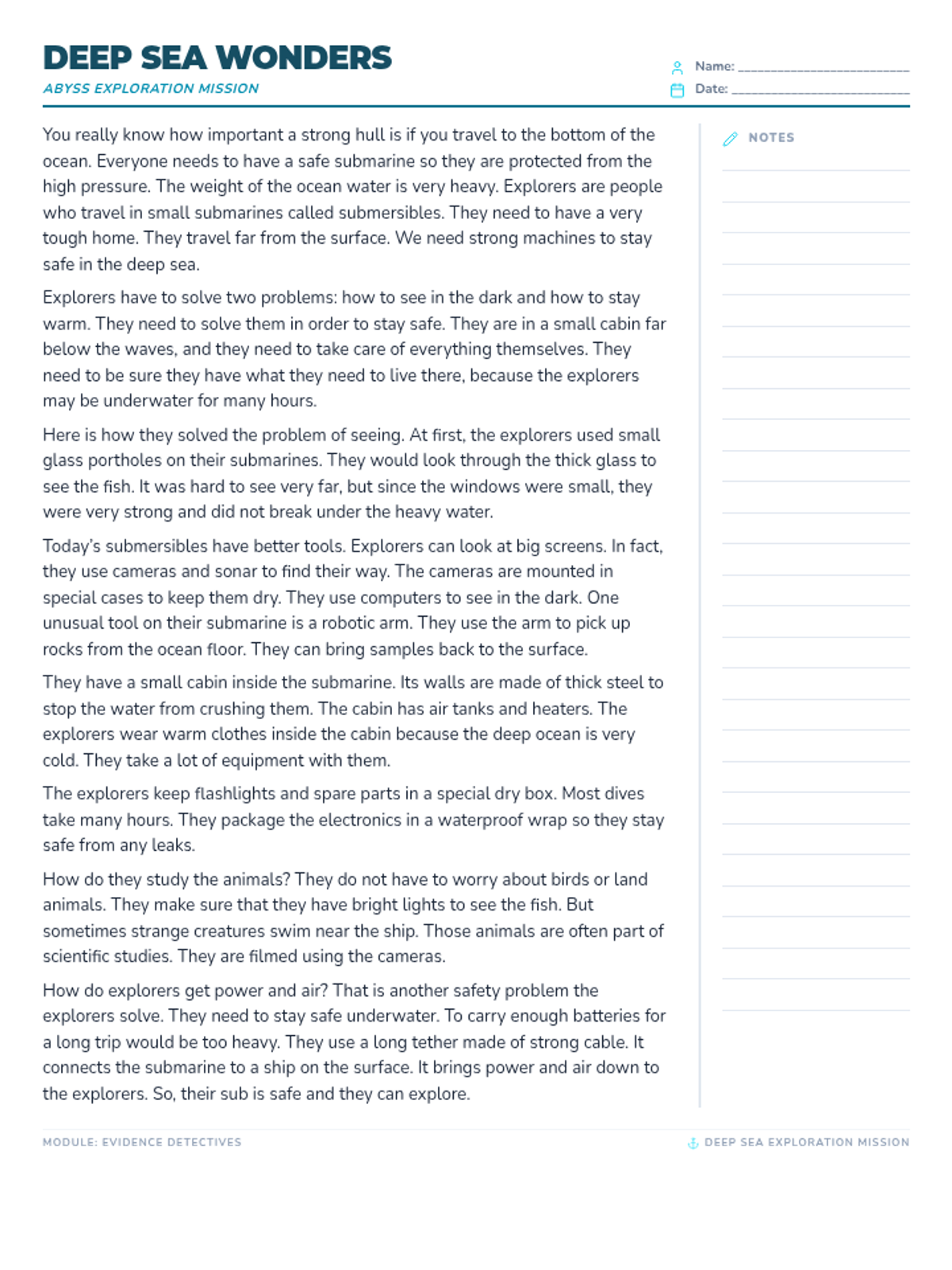
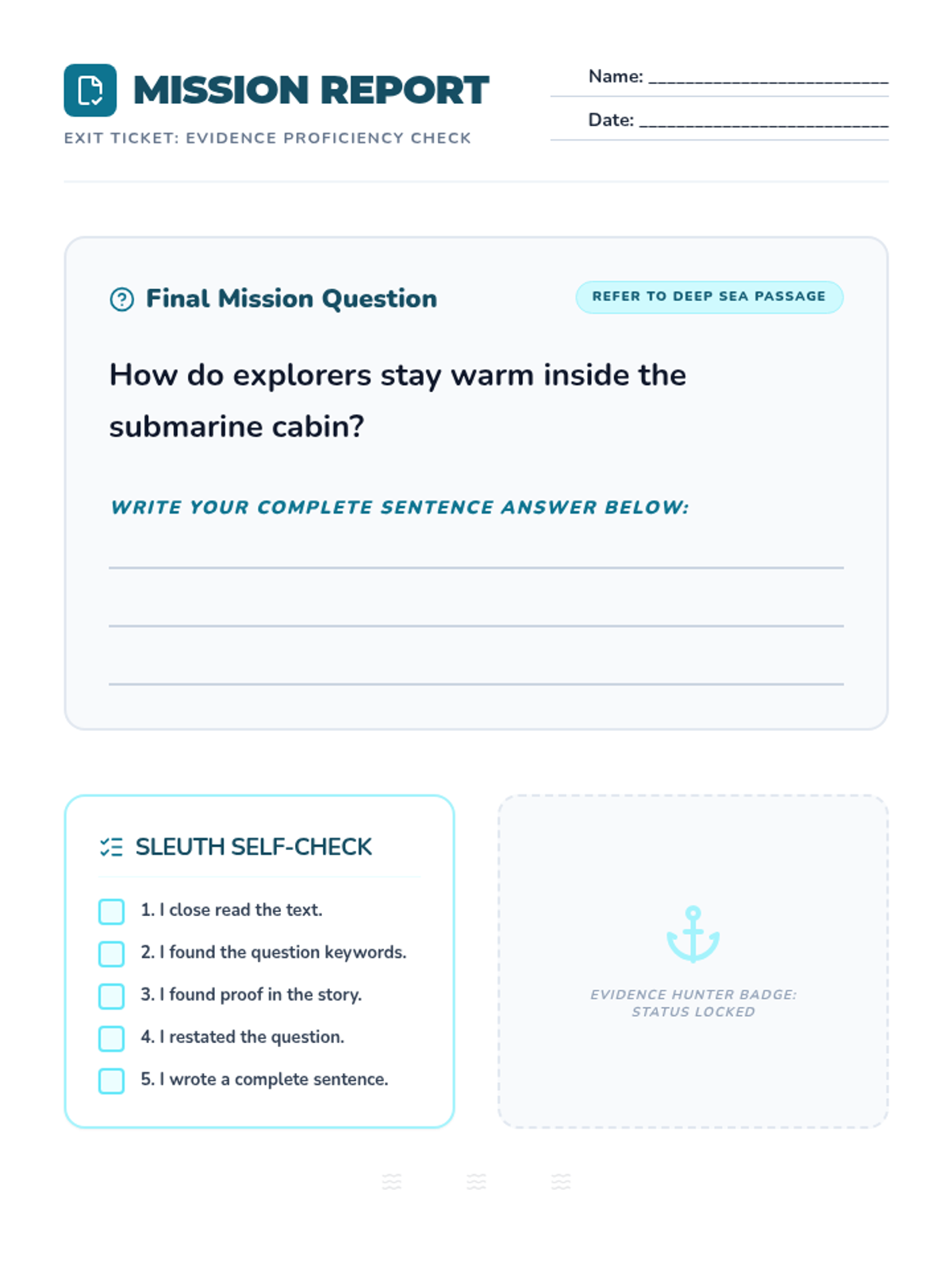
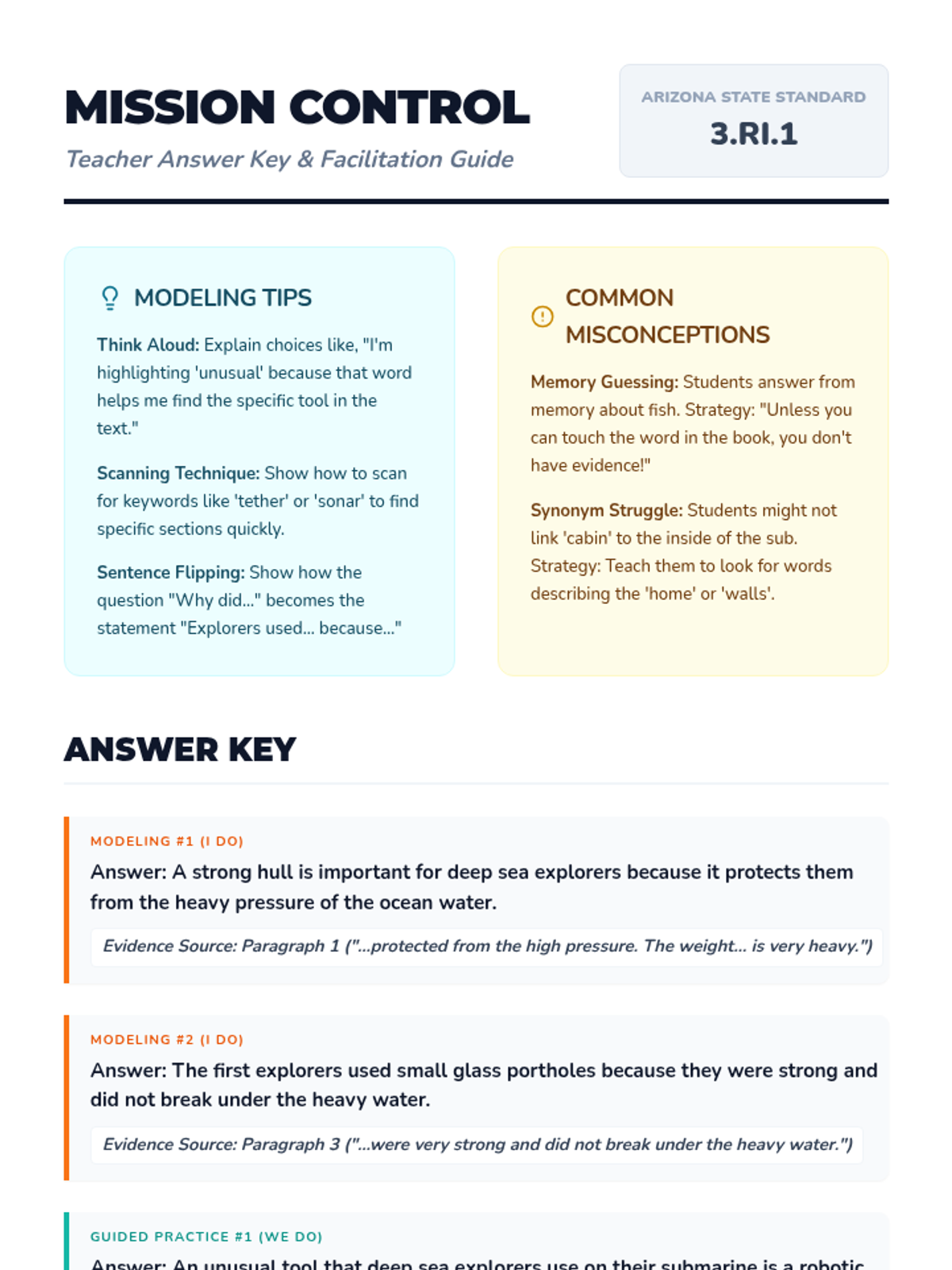
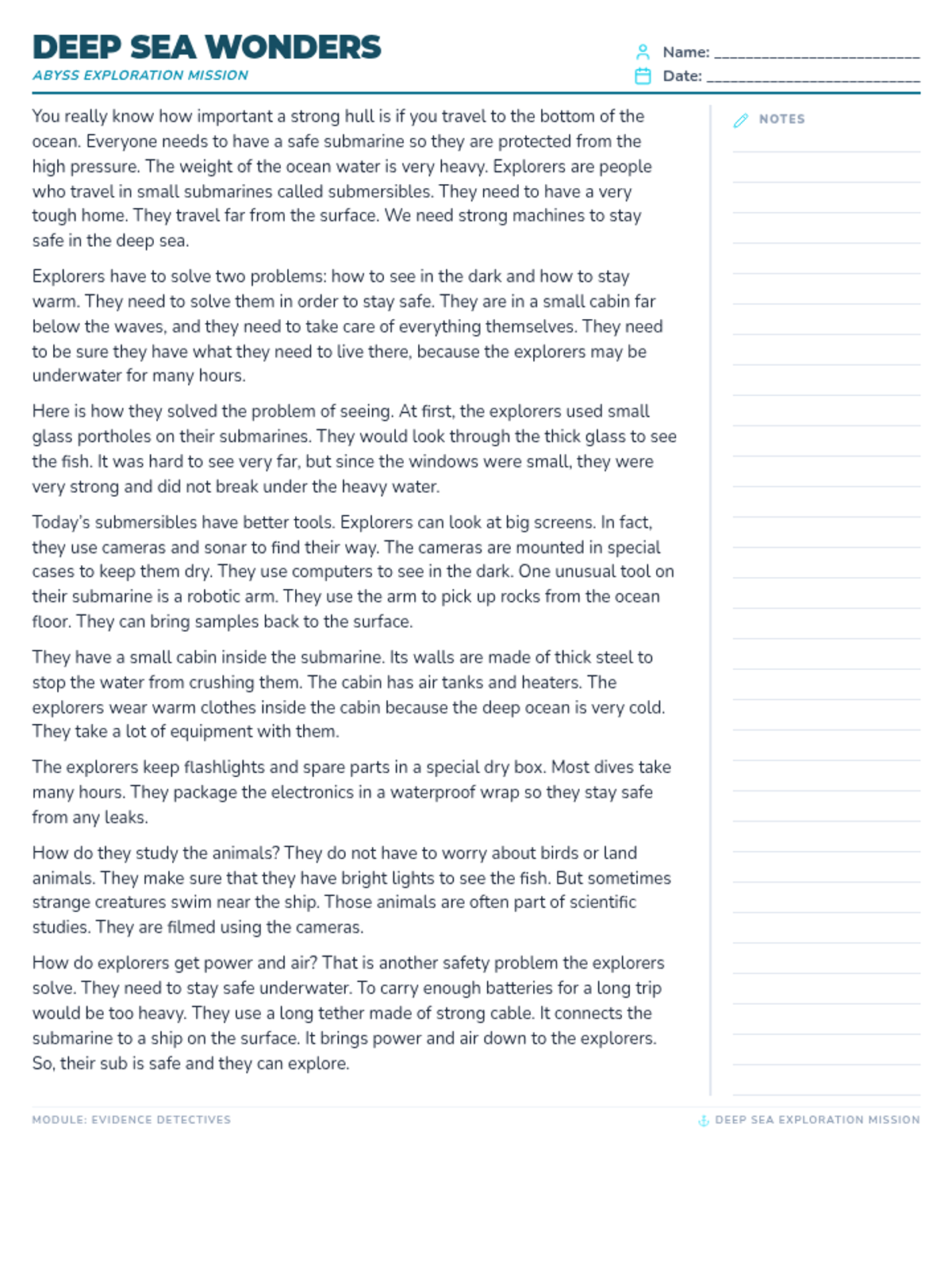
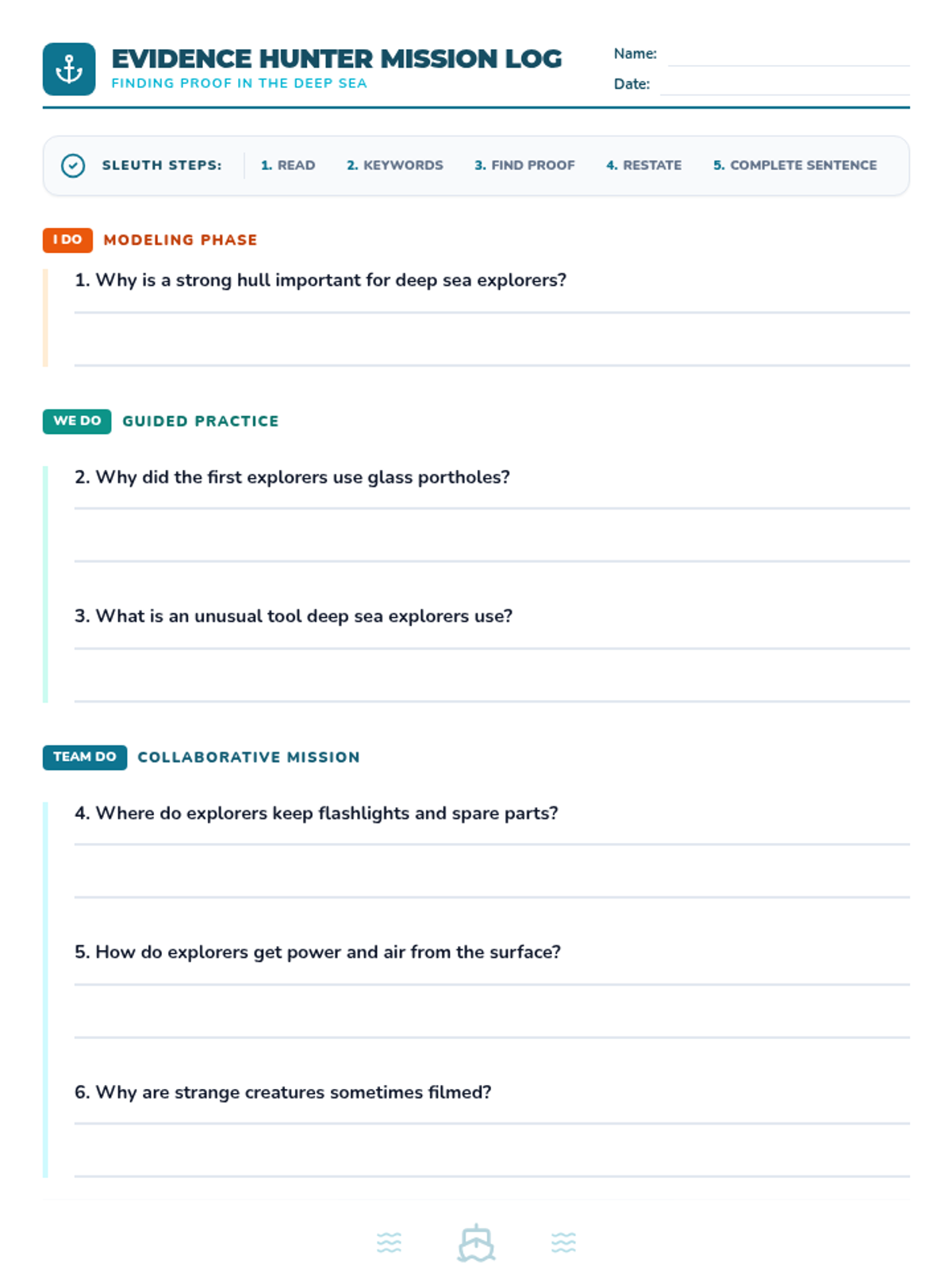
A 3rd-grade explicit instruction lesson on finding text evidence, following the 'I Do, We Do, You Do' model. Students learn to use a five-step checklist to answer questions about deep sea exploration, focusing on identifying keywords and locating proof in the text.
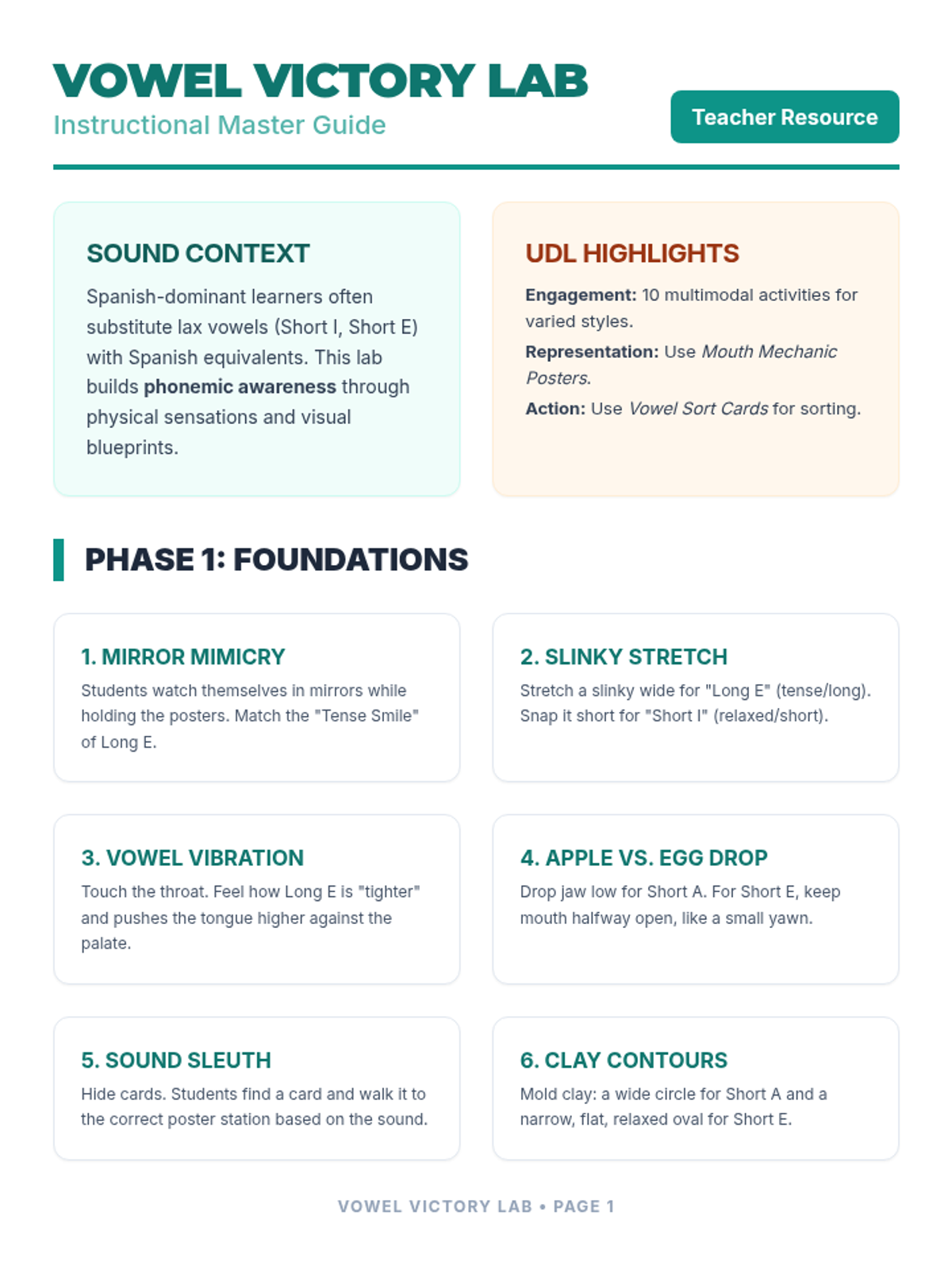
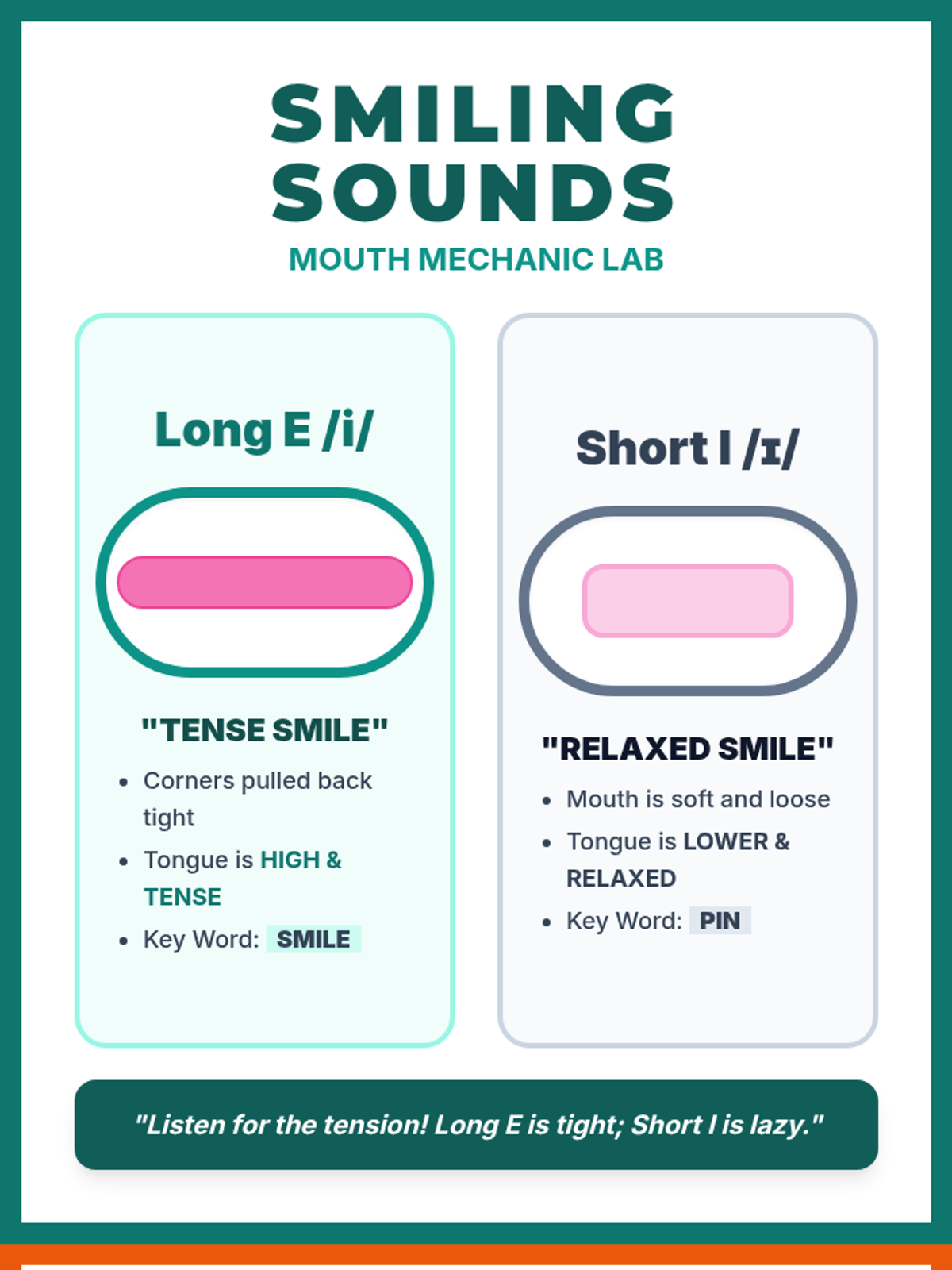
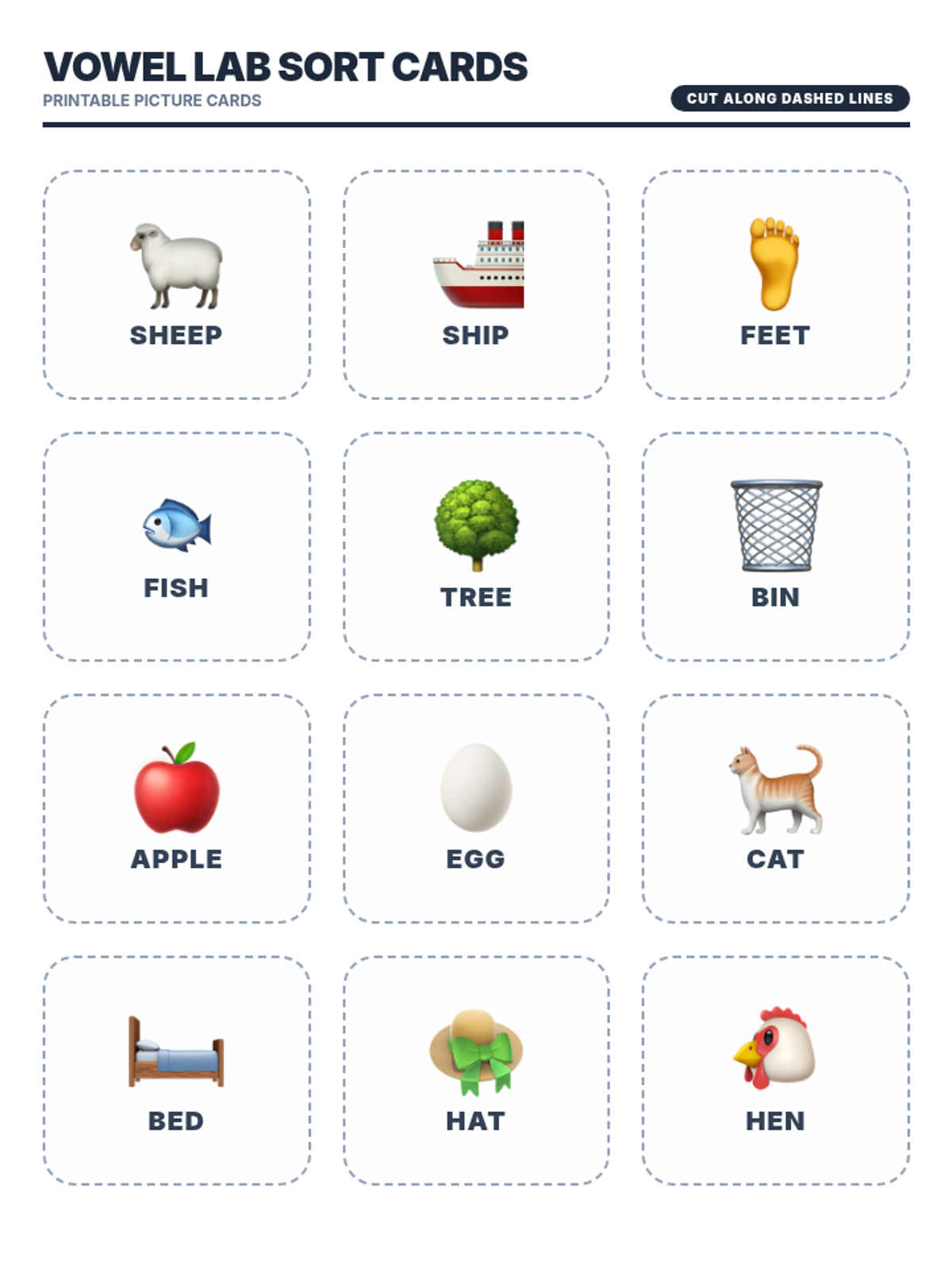
A comprehensive phonics lesson for bilingual students focusing on the specific vowel contrasts of Long E/Short I and Short A/Short E through multisensory, UDL-aligned activities.
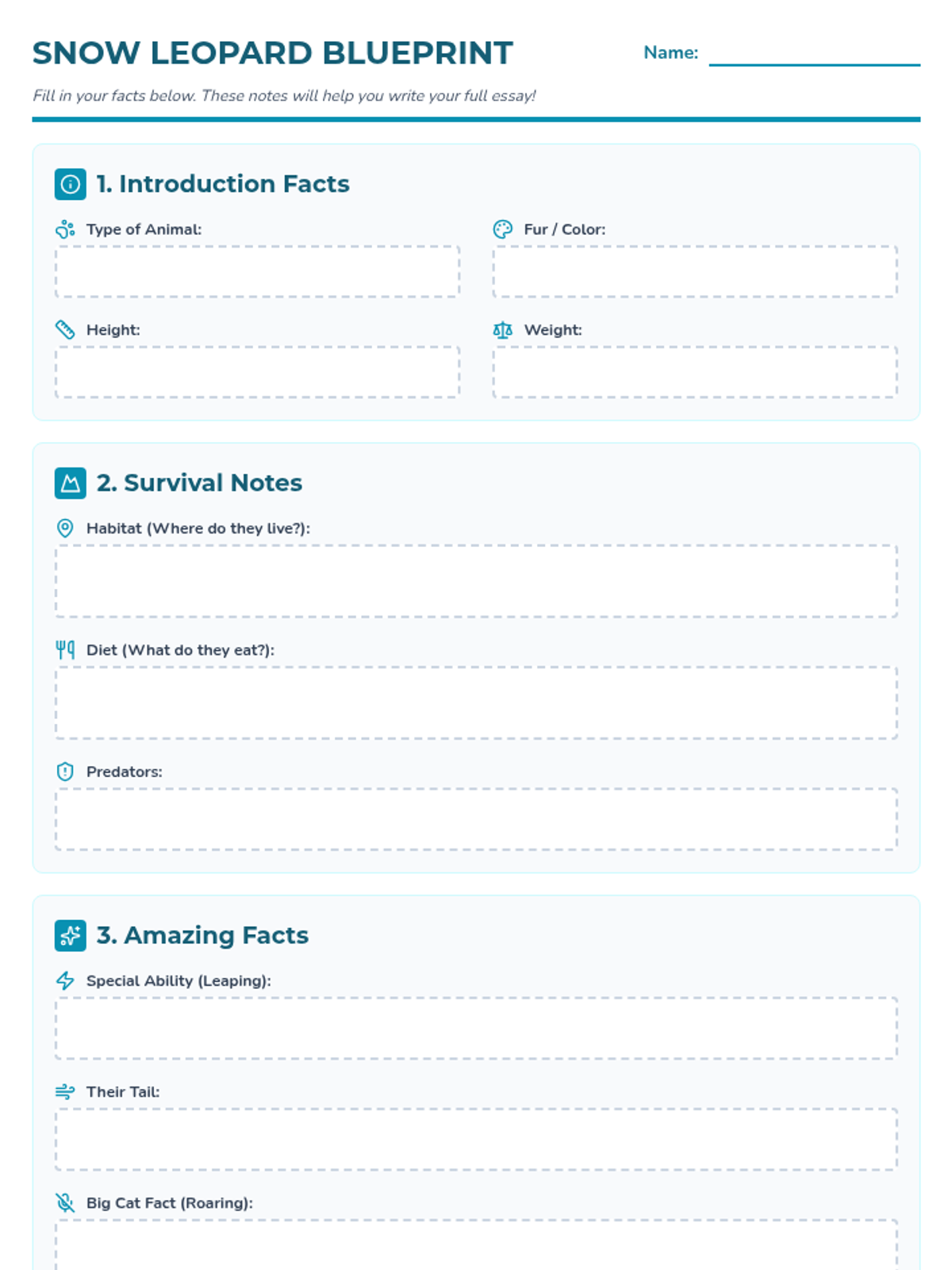
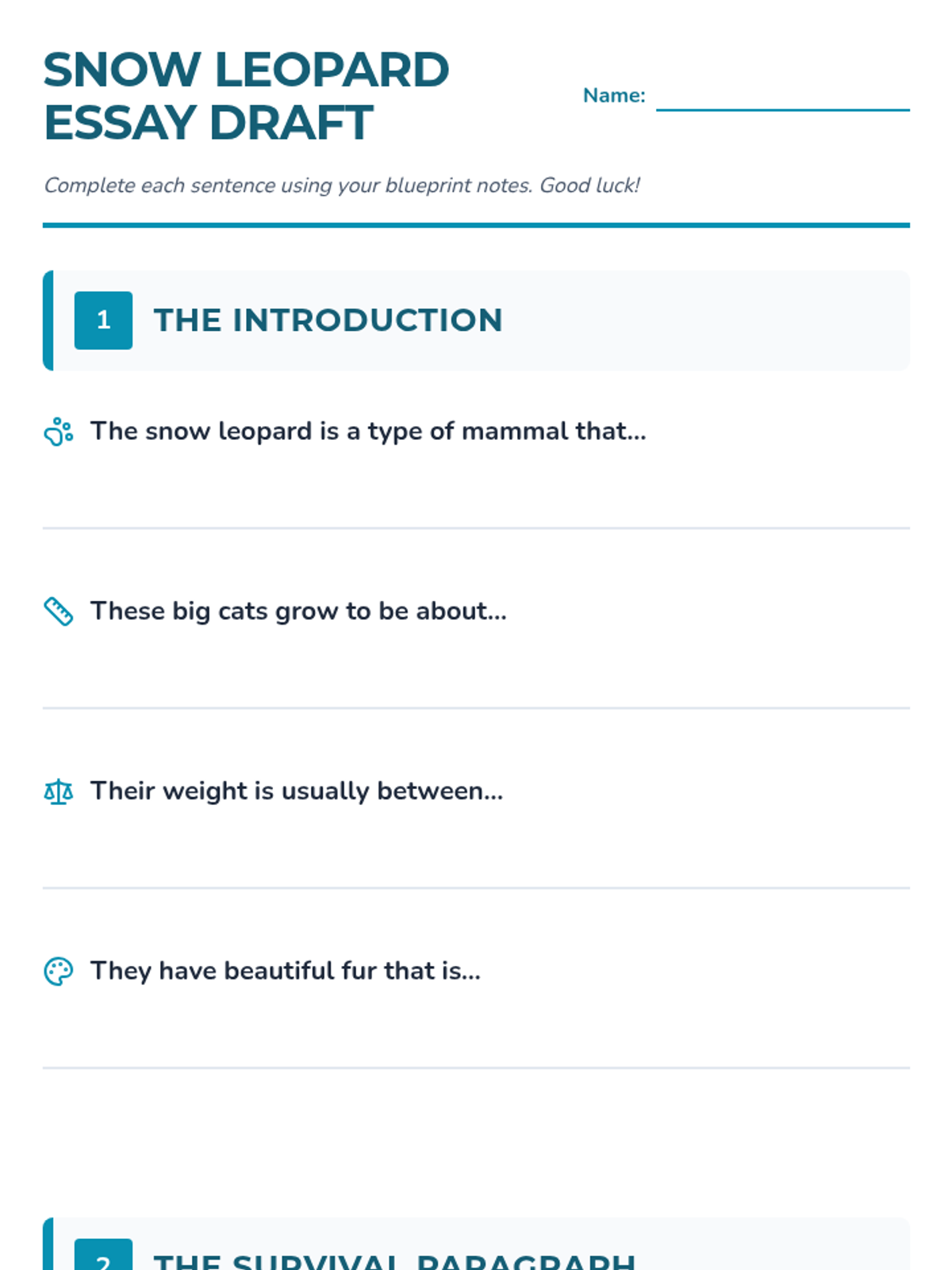
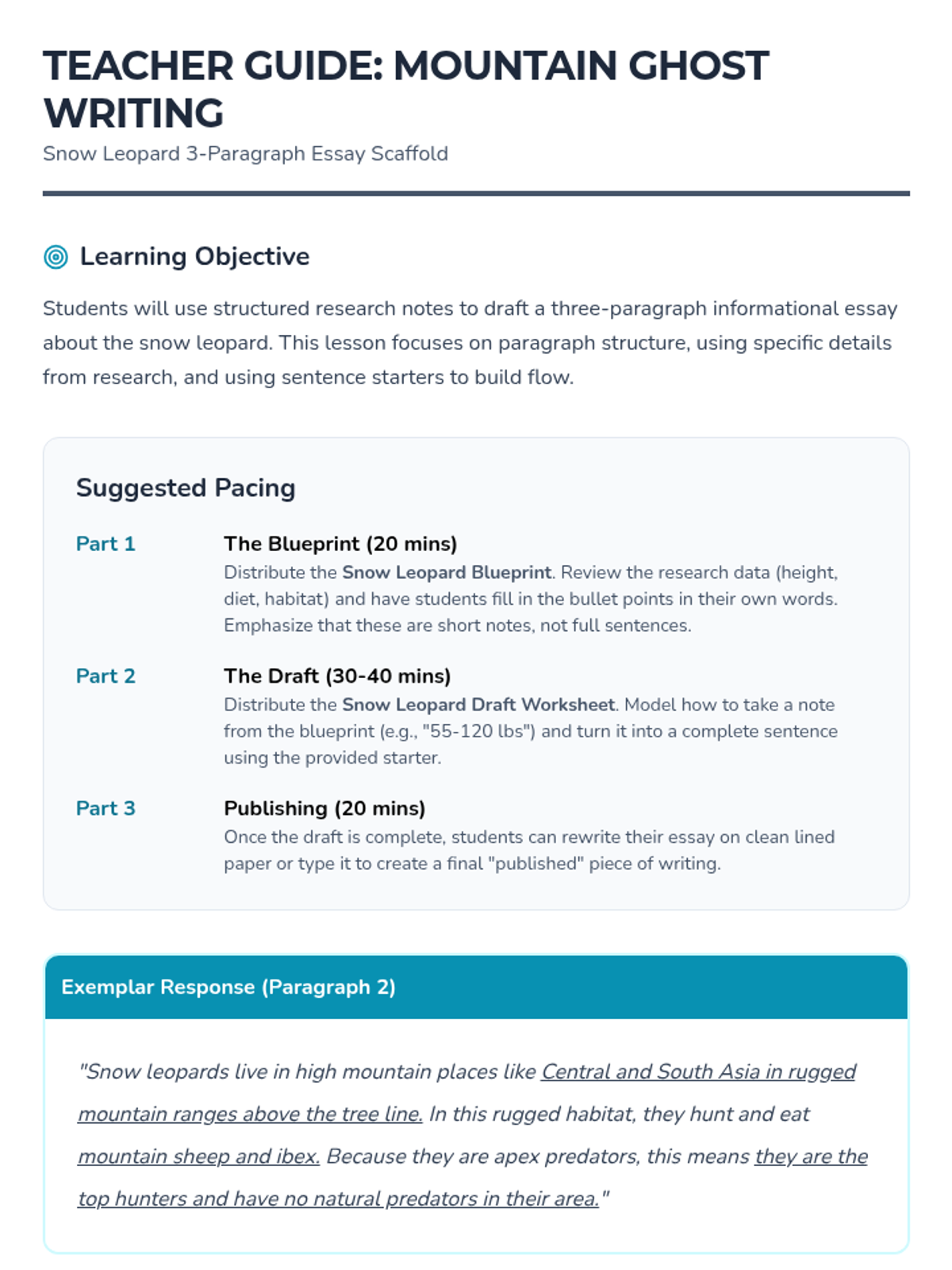
A scaffolded writing lesson designed to help students transition from research notes to a structured three-paragraph essay about the snow leopard. It includes a visual graphic organizer and a sentence-starter drafting sheet.
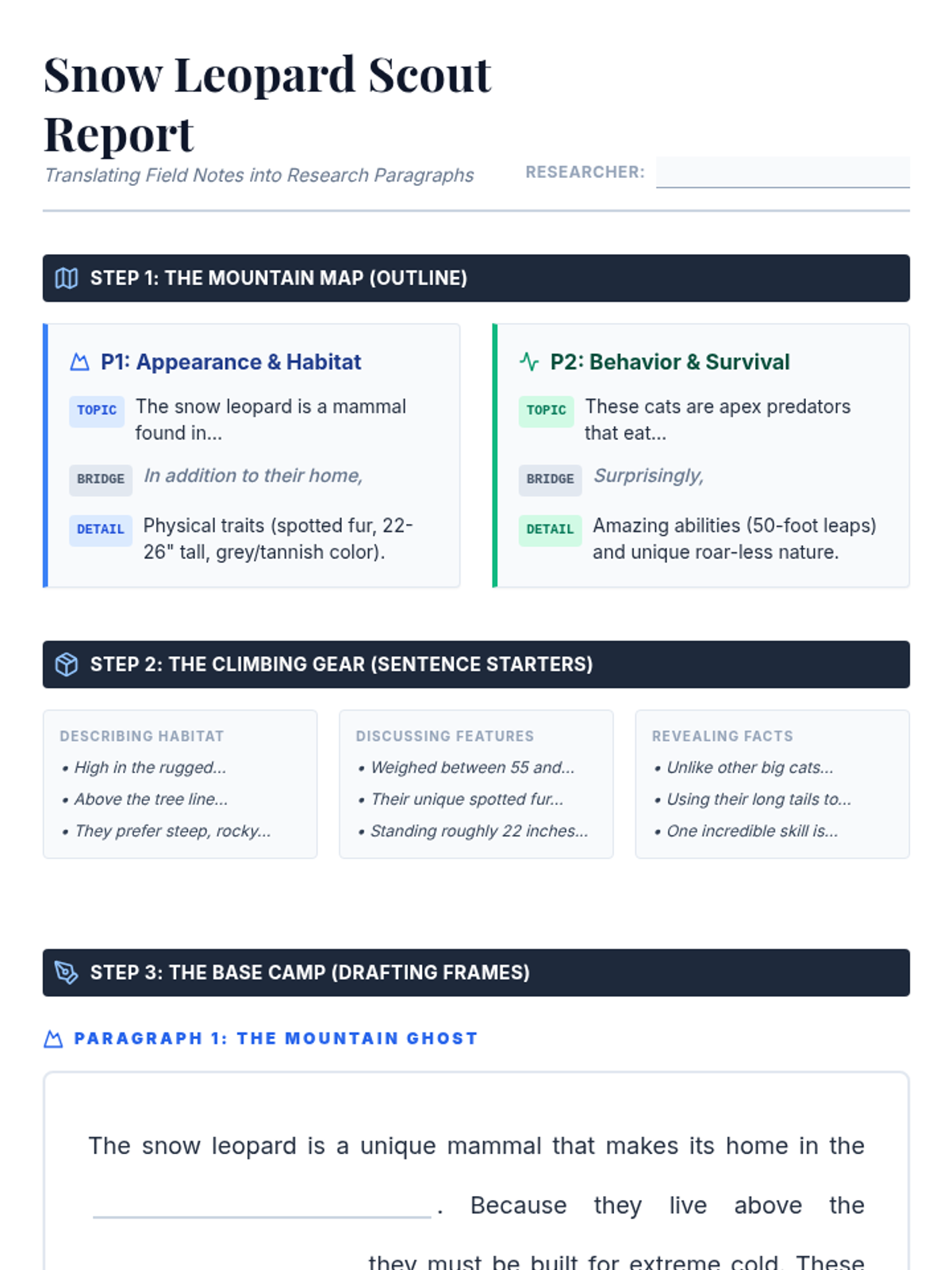
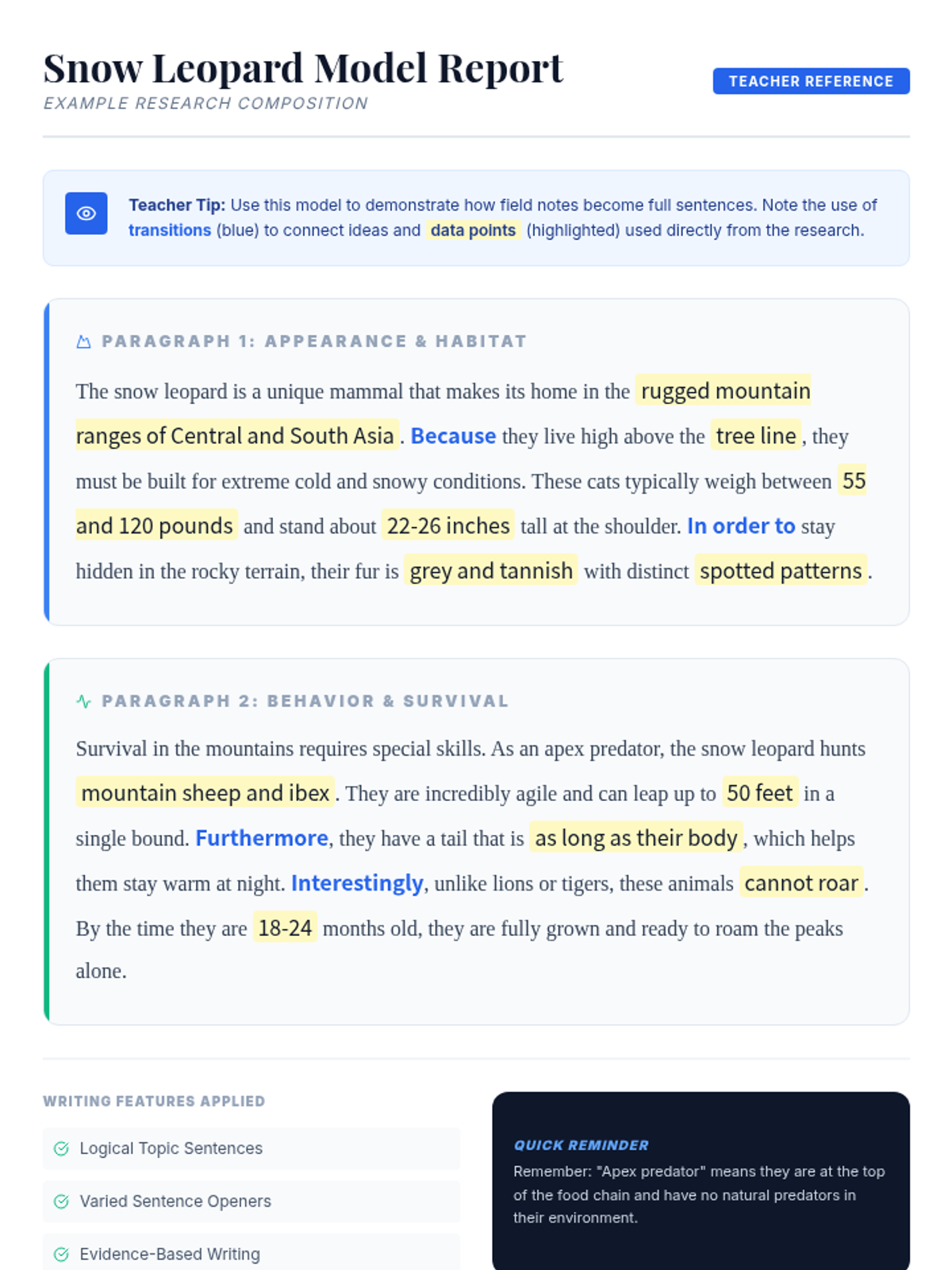
A lesson focused on transforming animal research notes into cohesive, descriptive paragraphs using structured writing supports like outlines and paragraph frames.
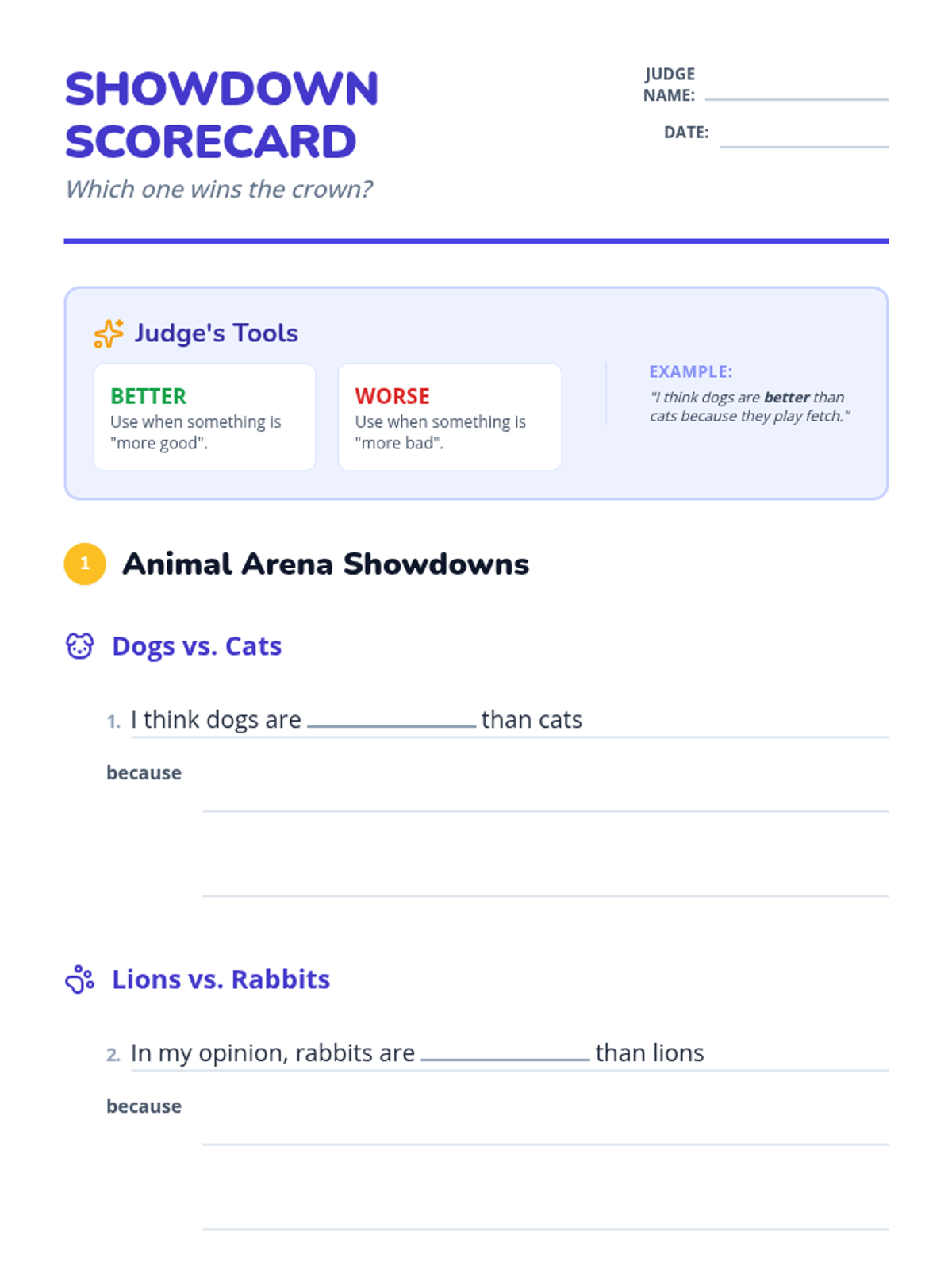
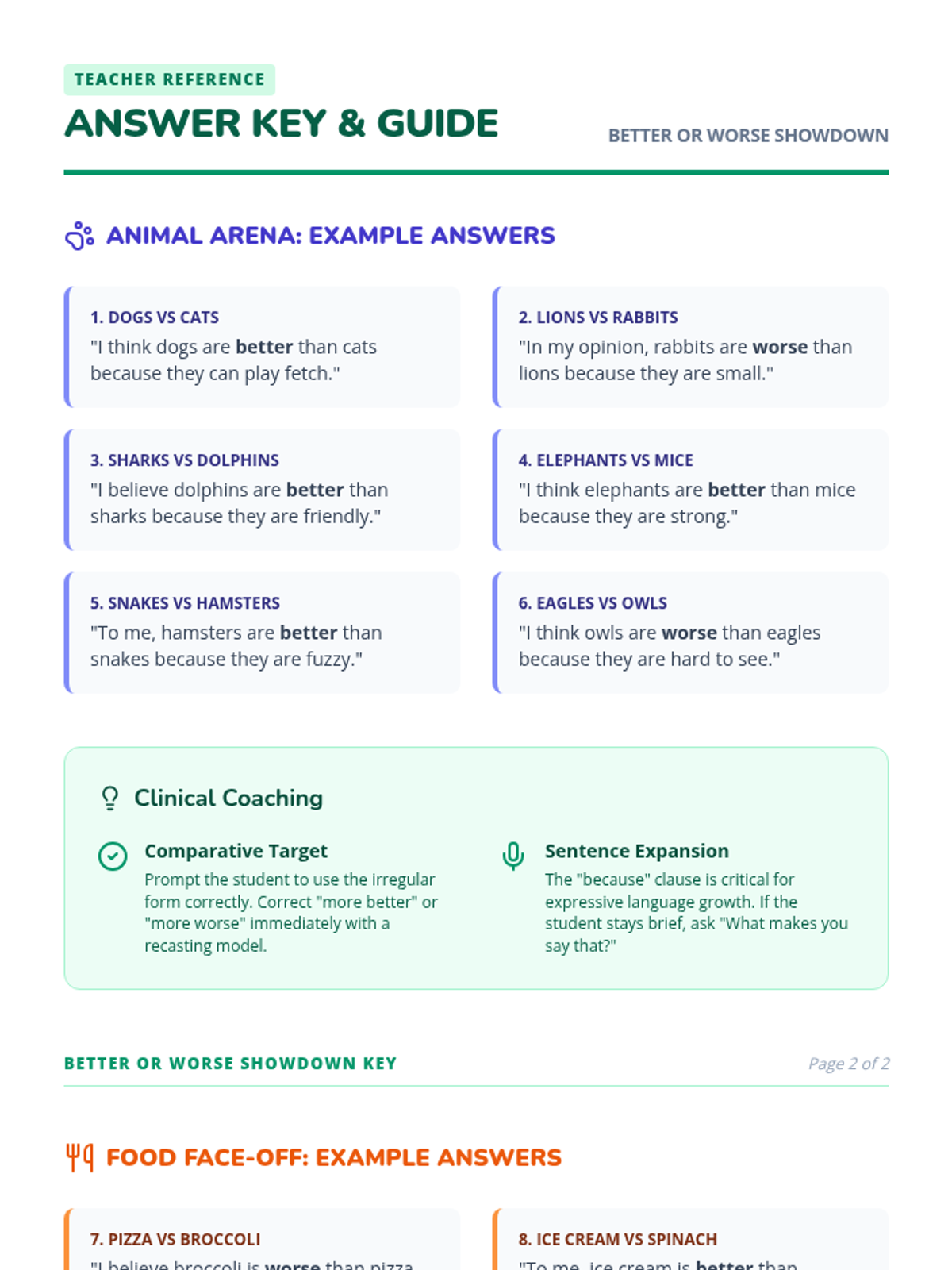
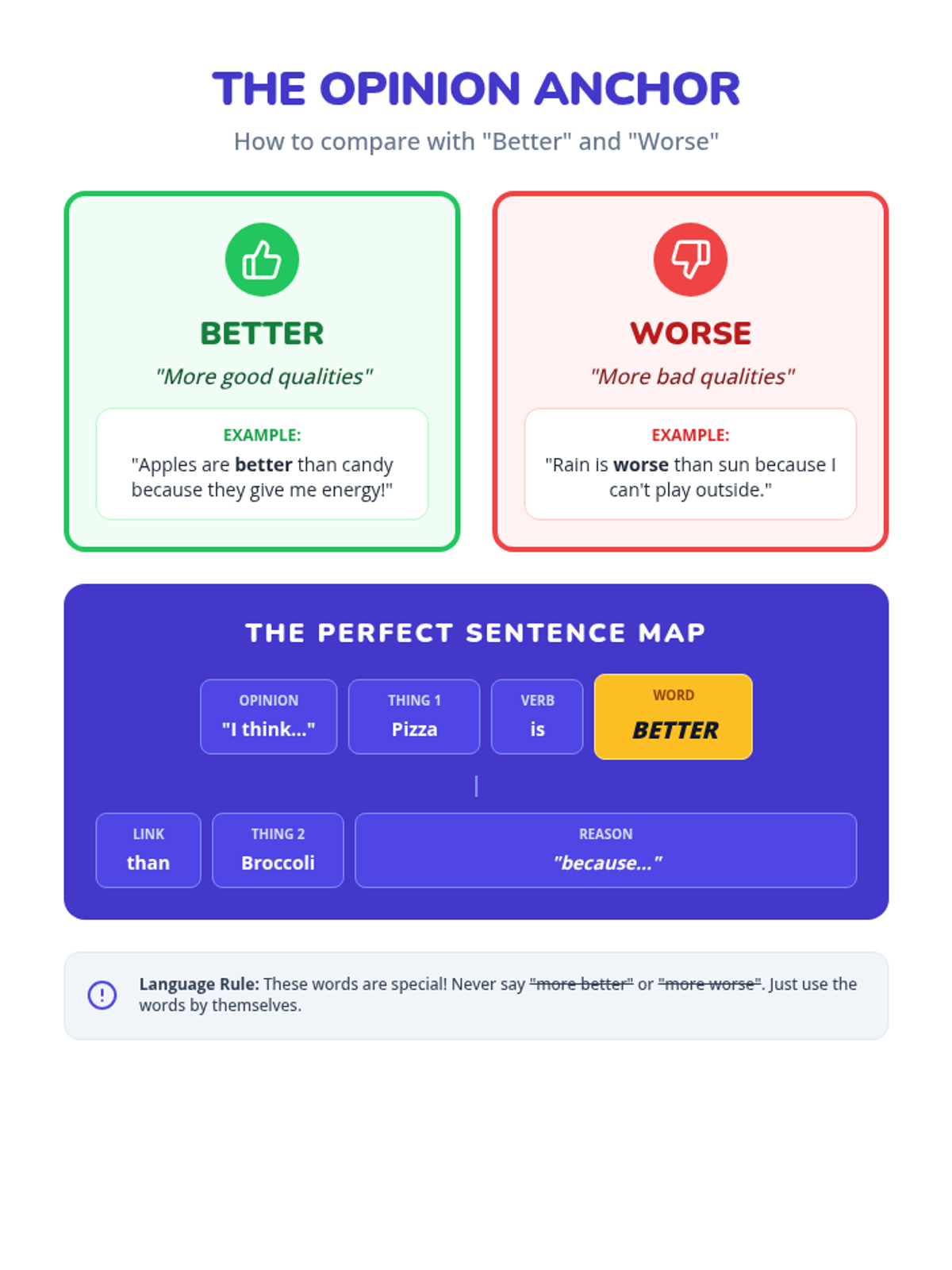
A language therapy lesson focused on using the comparative adjectives 'better' and 'worse' to express opinions about animals and food through structured sentence frames.
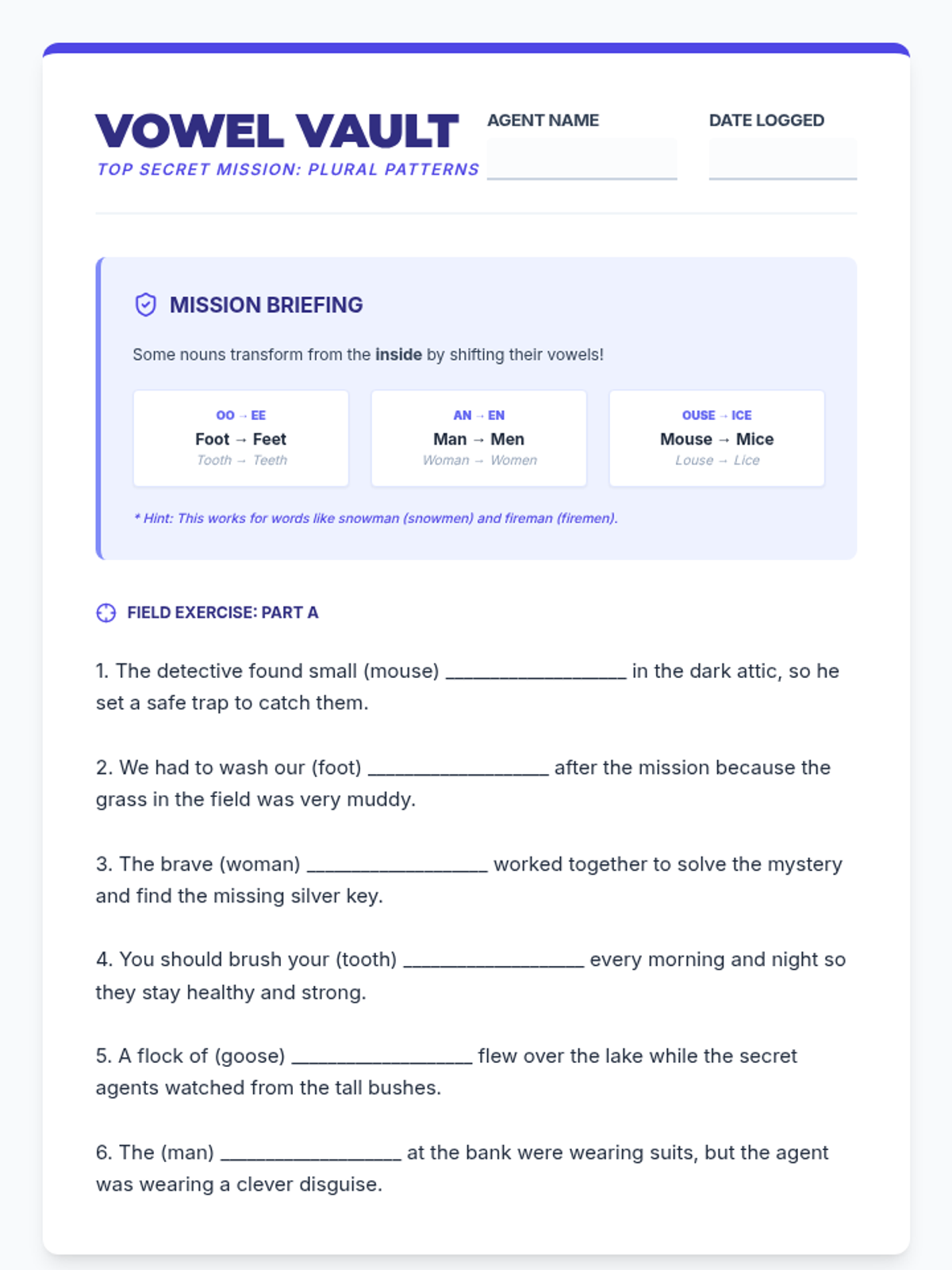
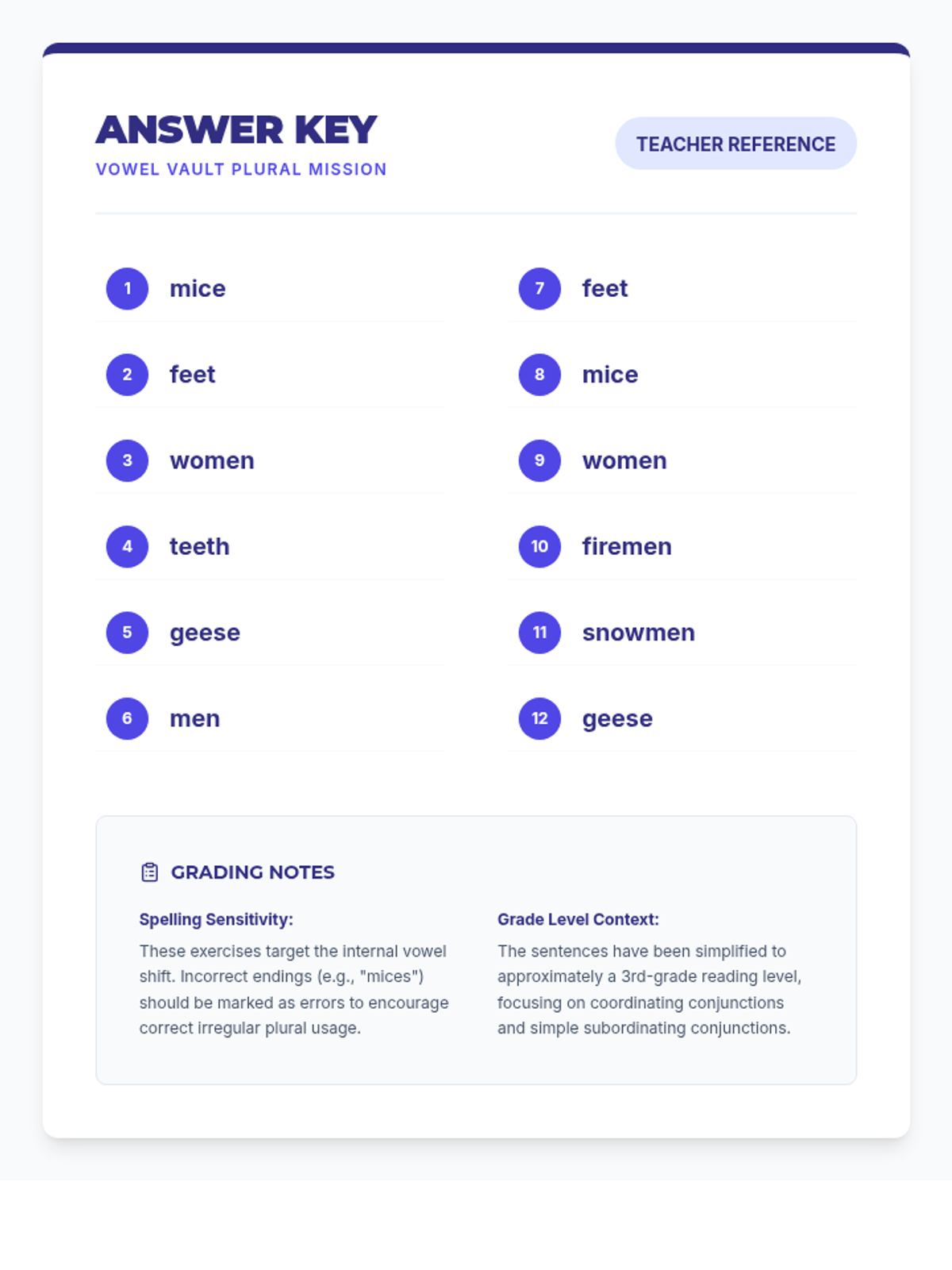
A focused lesson on irregular plural nouns that undergo vowel shifts, designed for 4th-grade students to master common internal spelling changes.
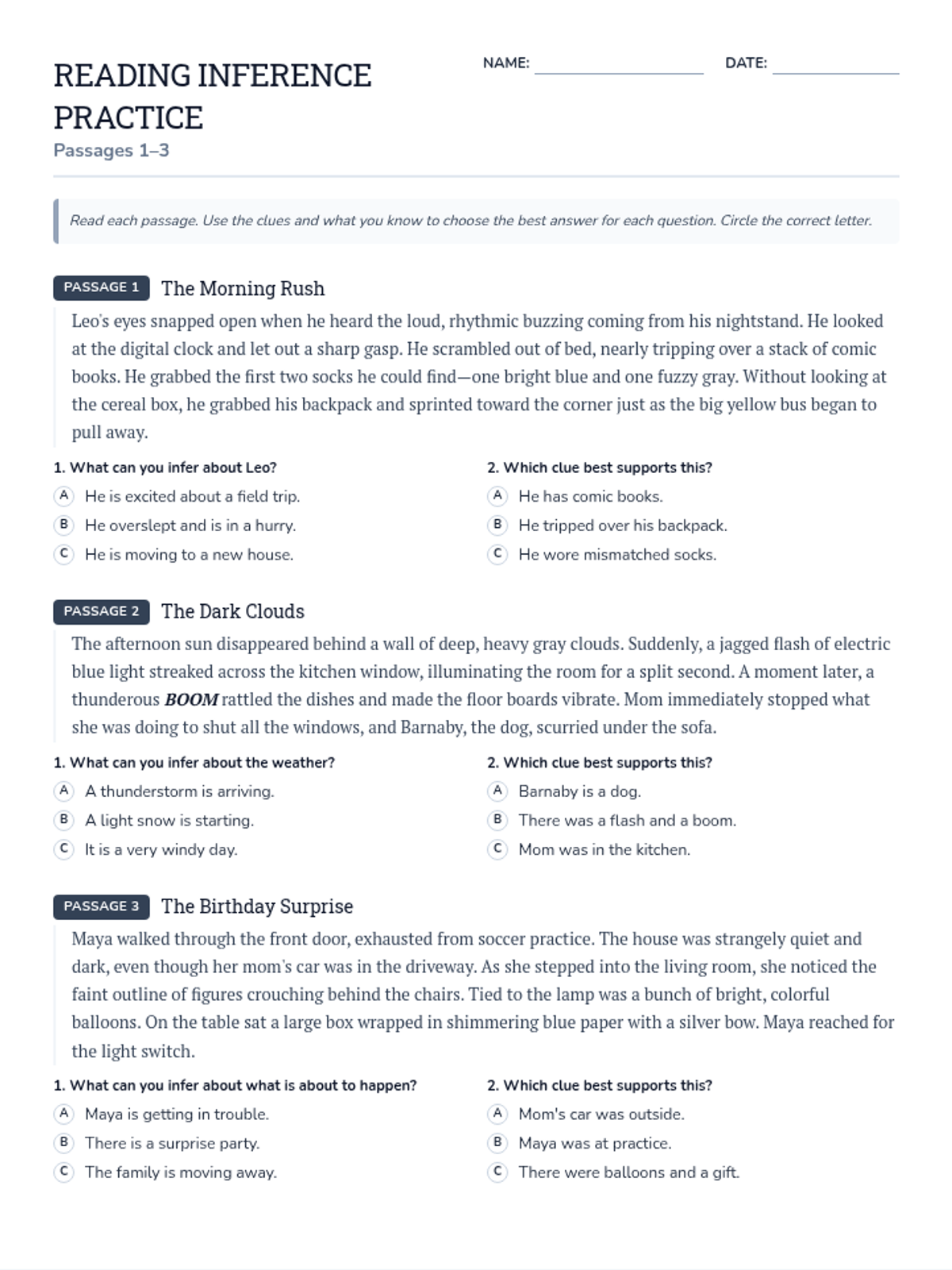
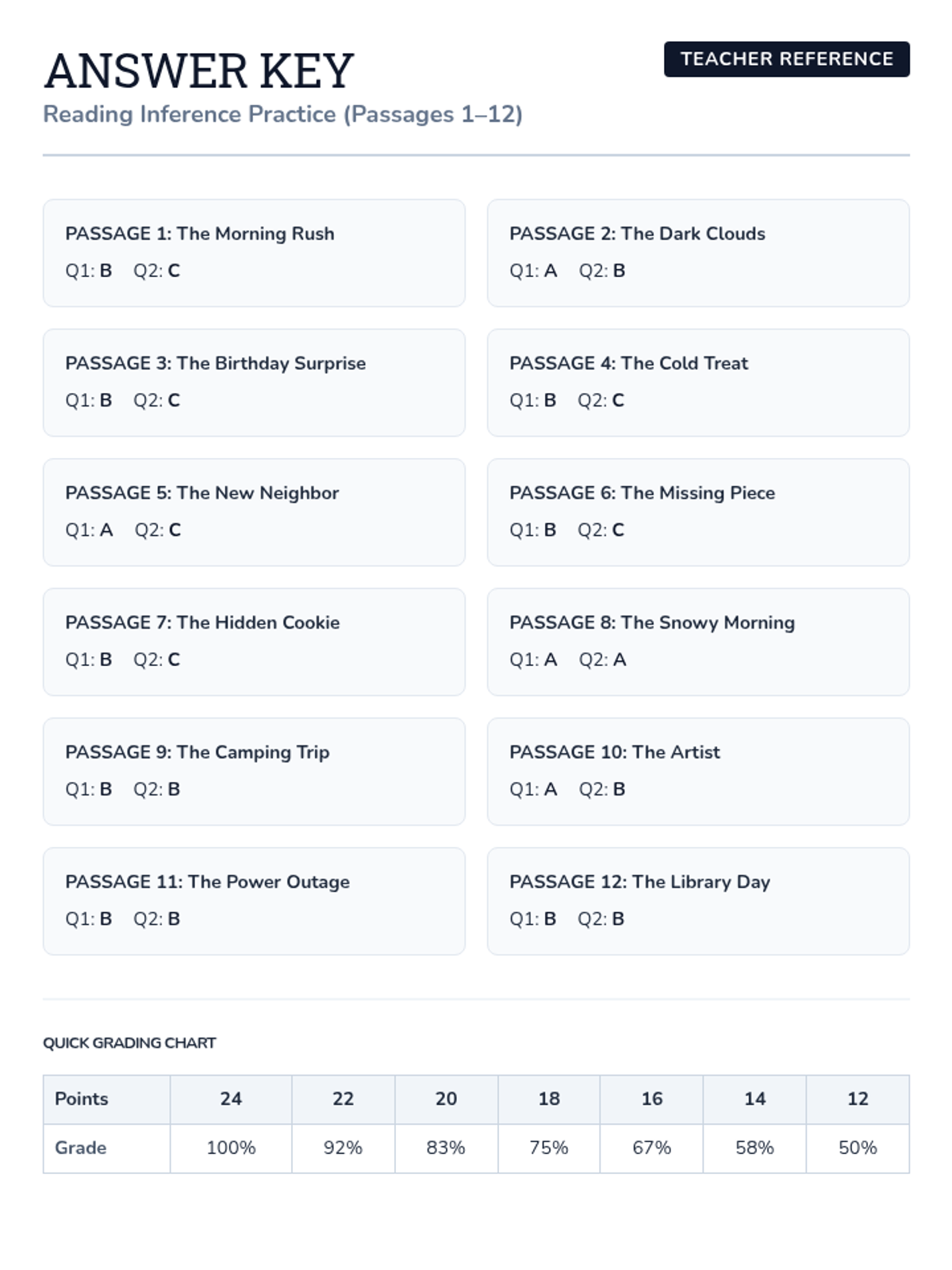
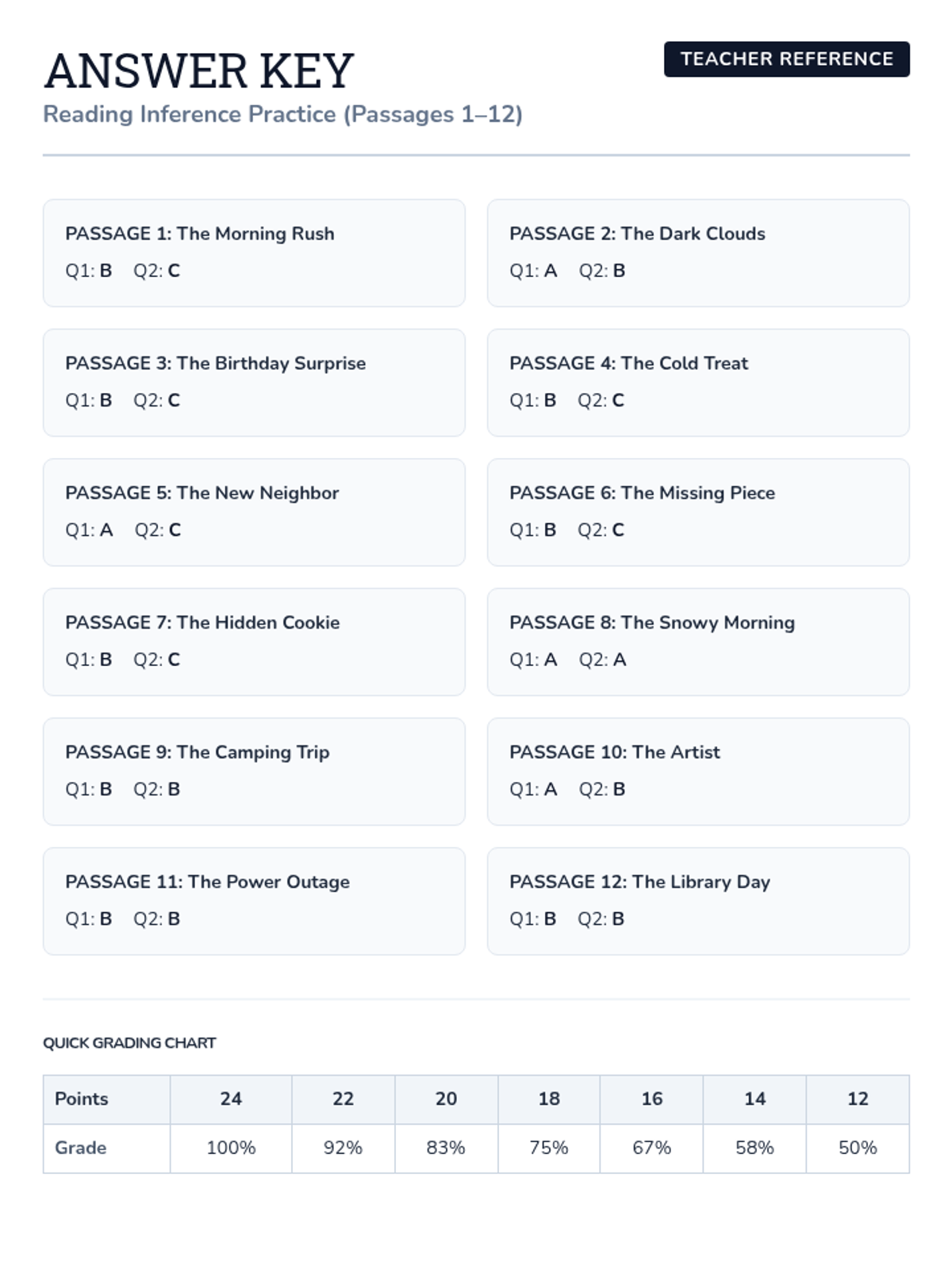
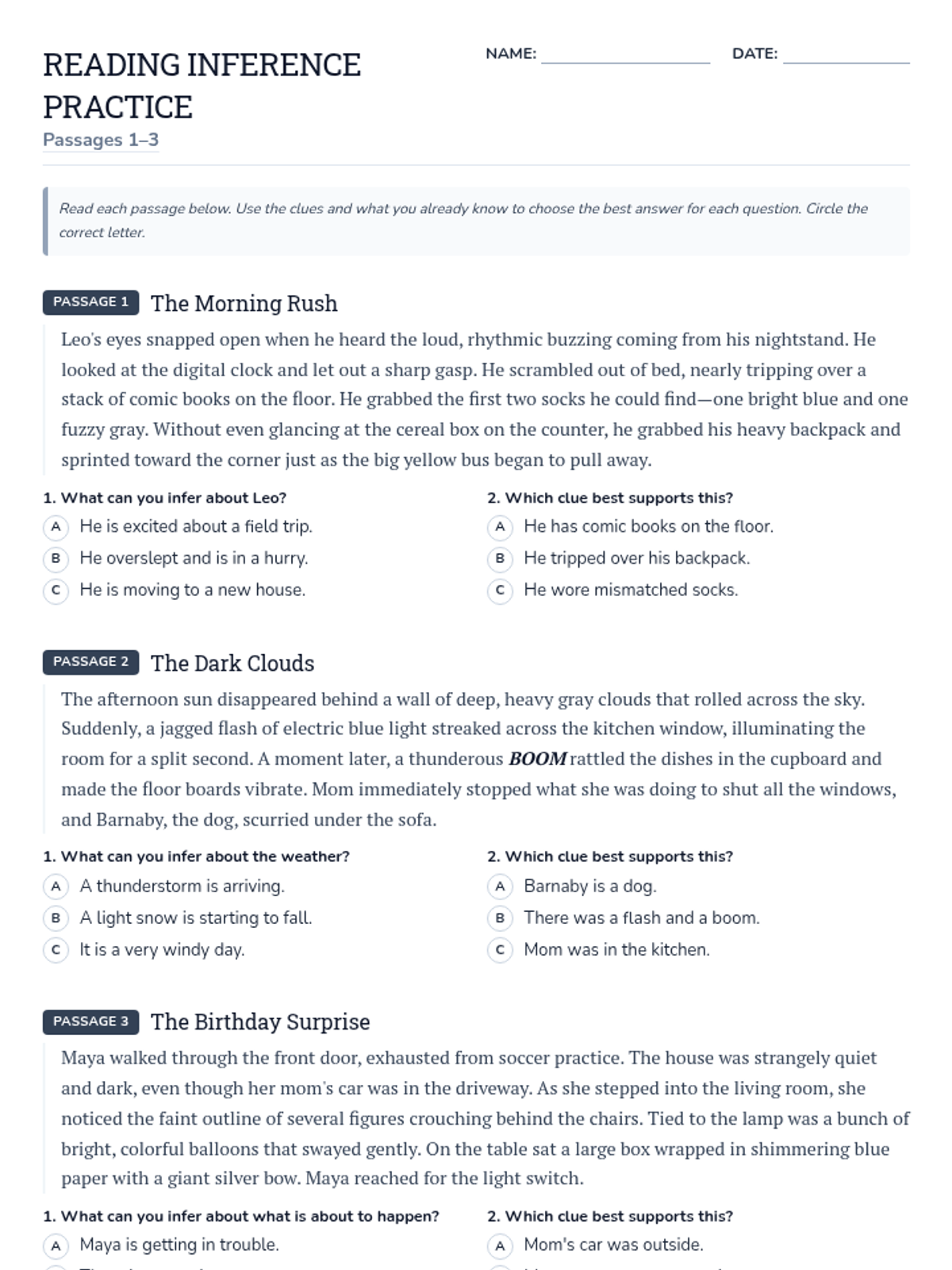
A collection of reading passages designed to help 3rd-grade students practice making inferences and identifying textual evidence. Includes 12 detailed passages with multiple-choice questions.
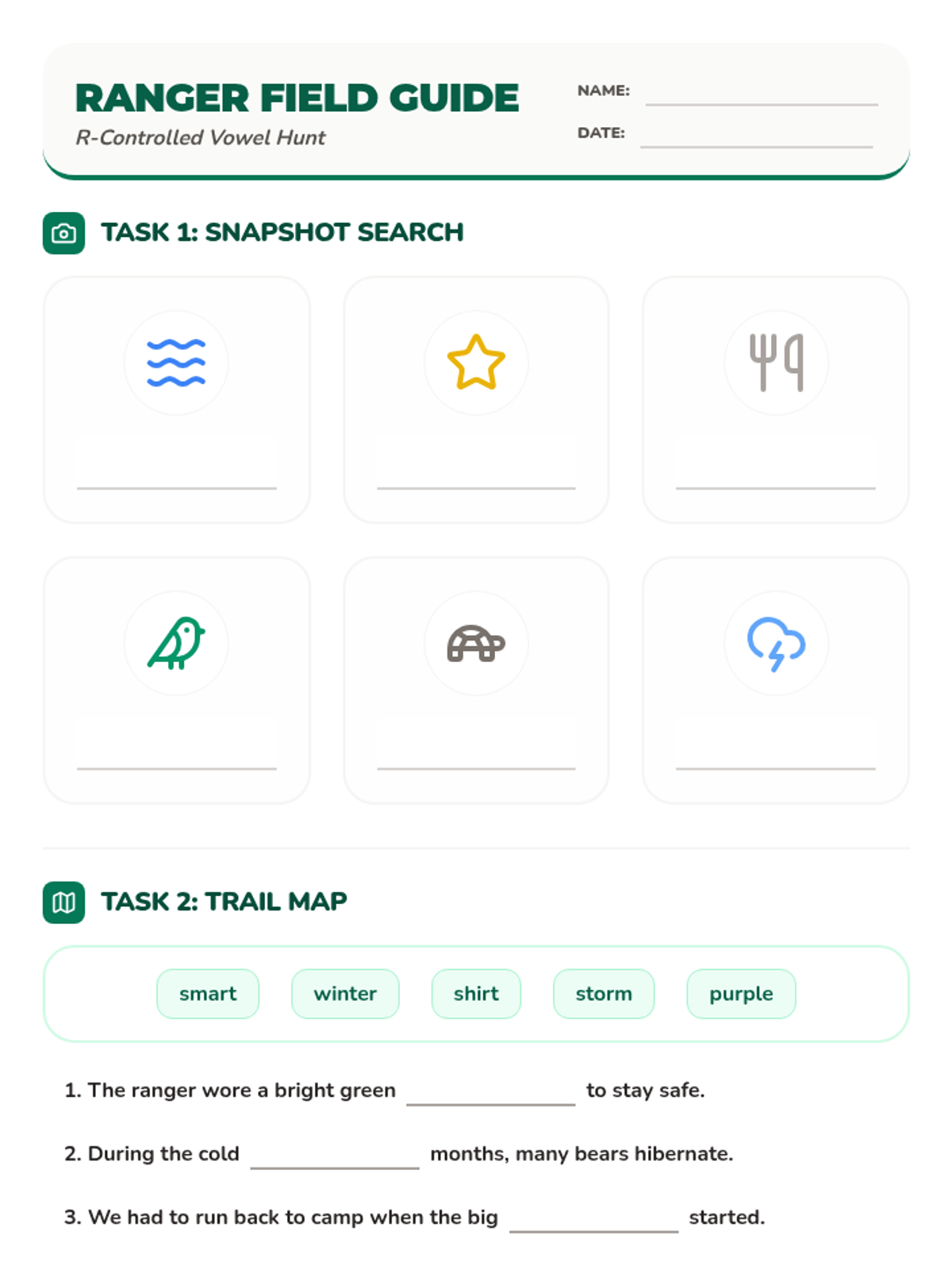
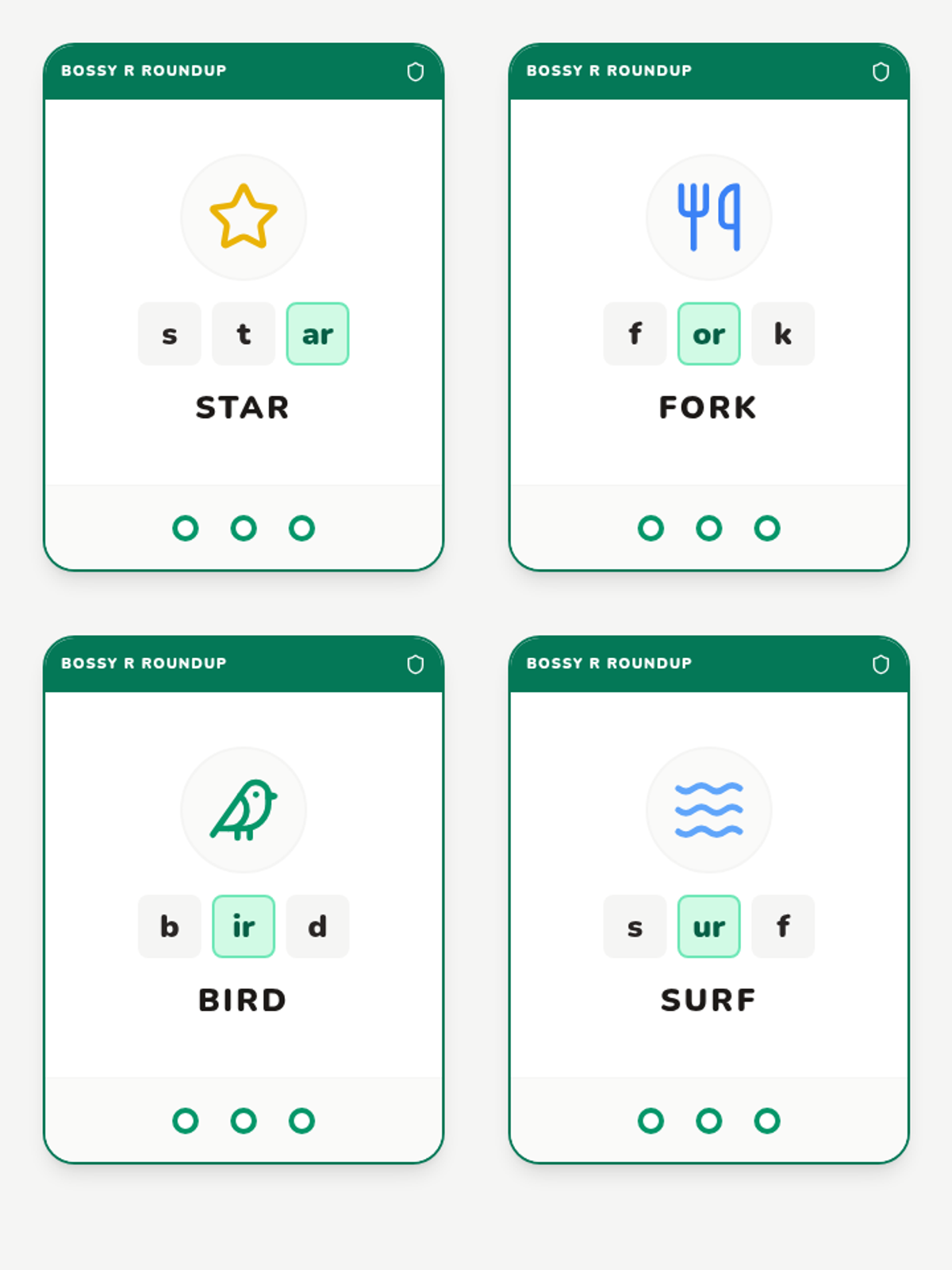
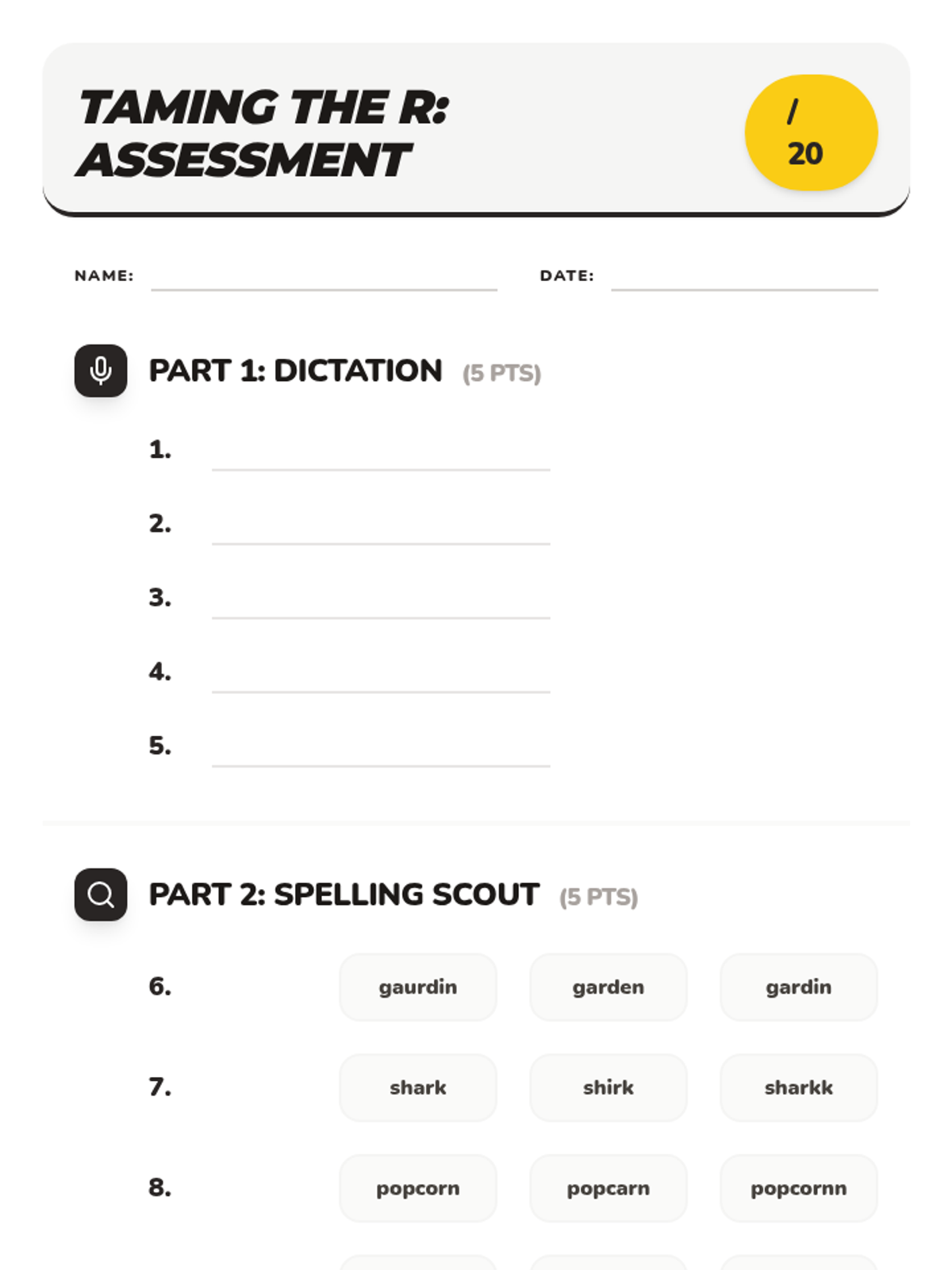
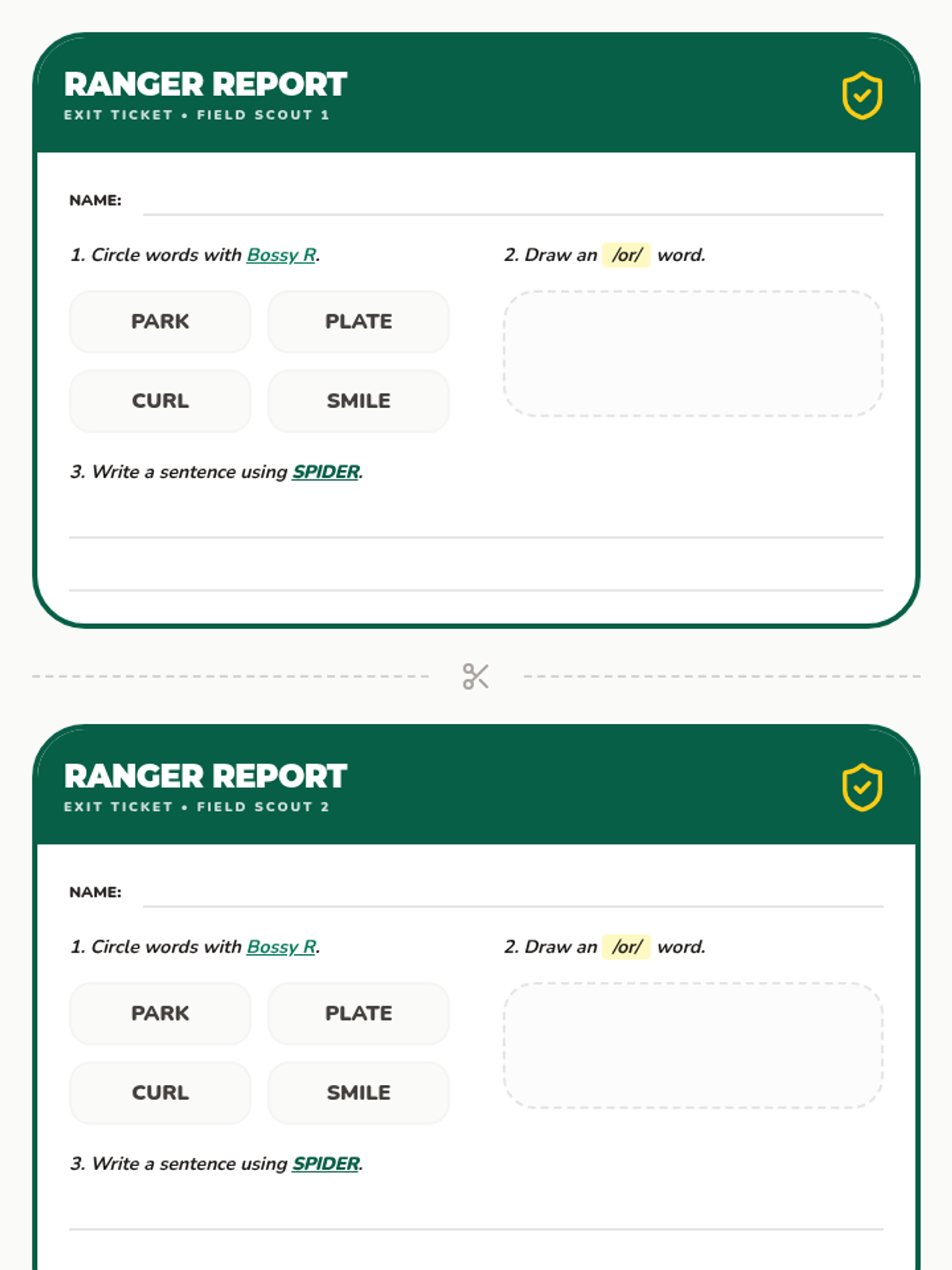
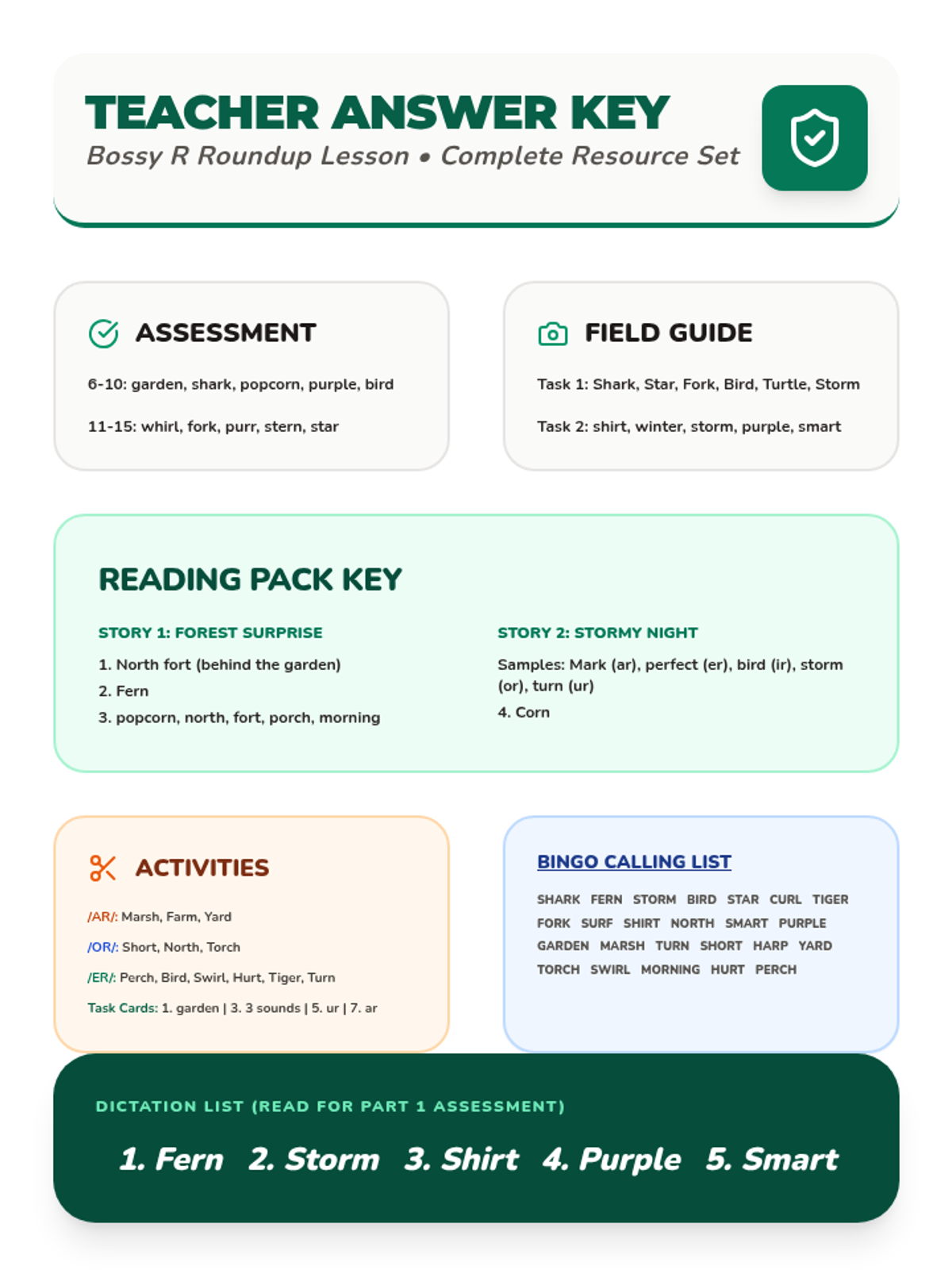
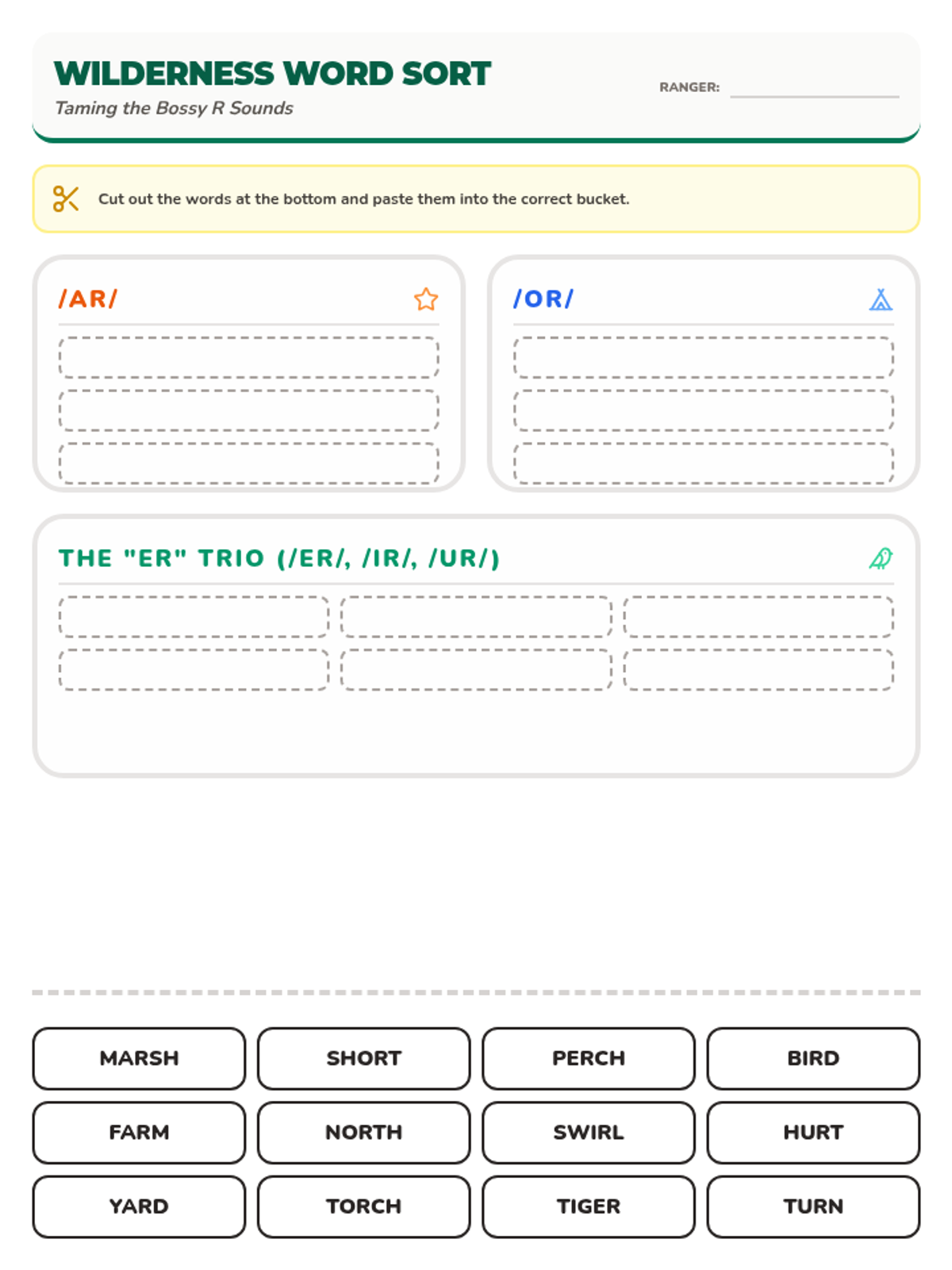
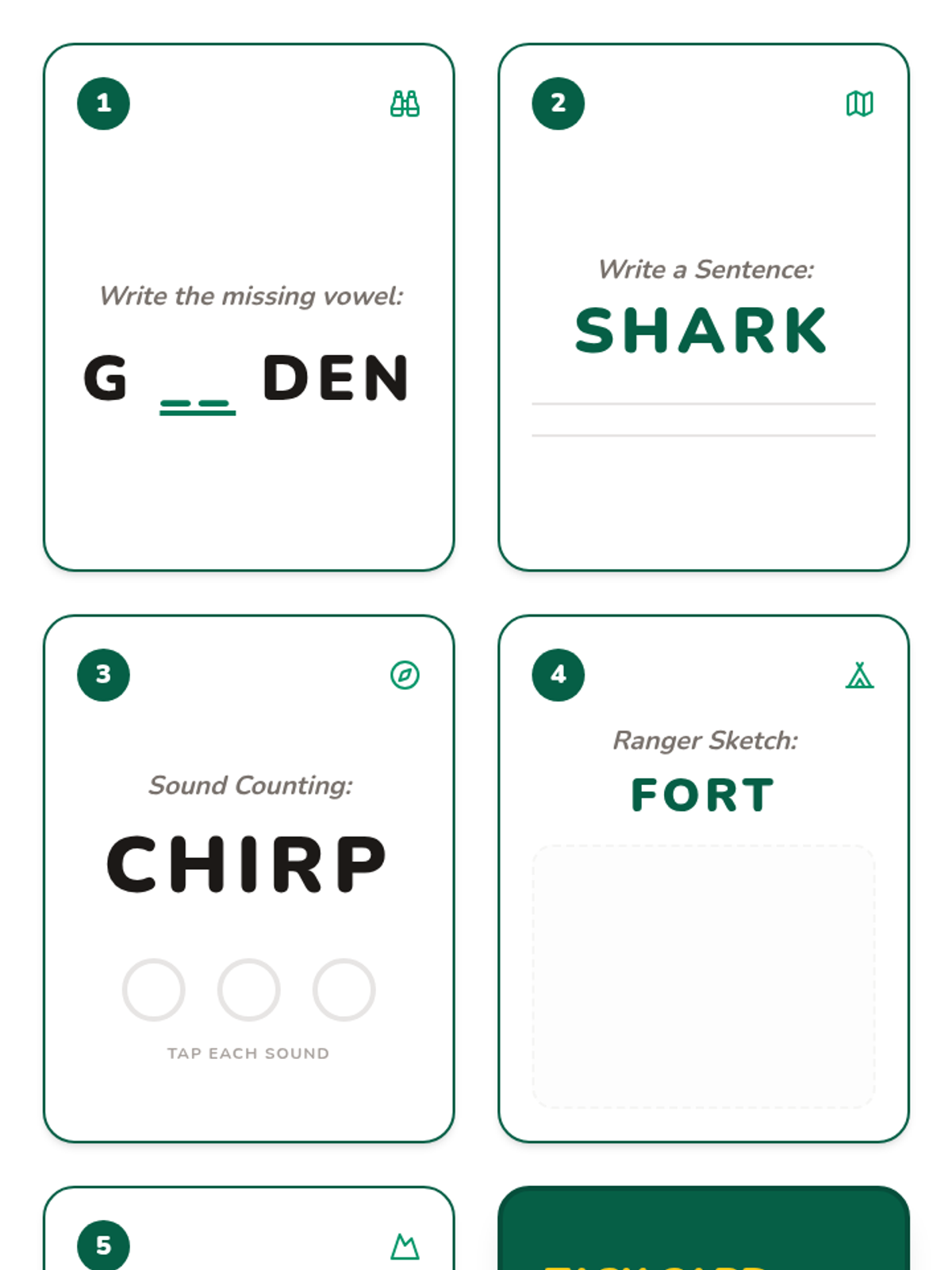
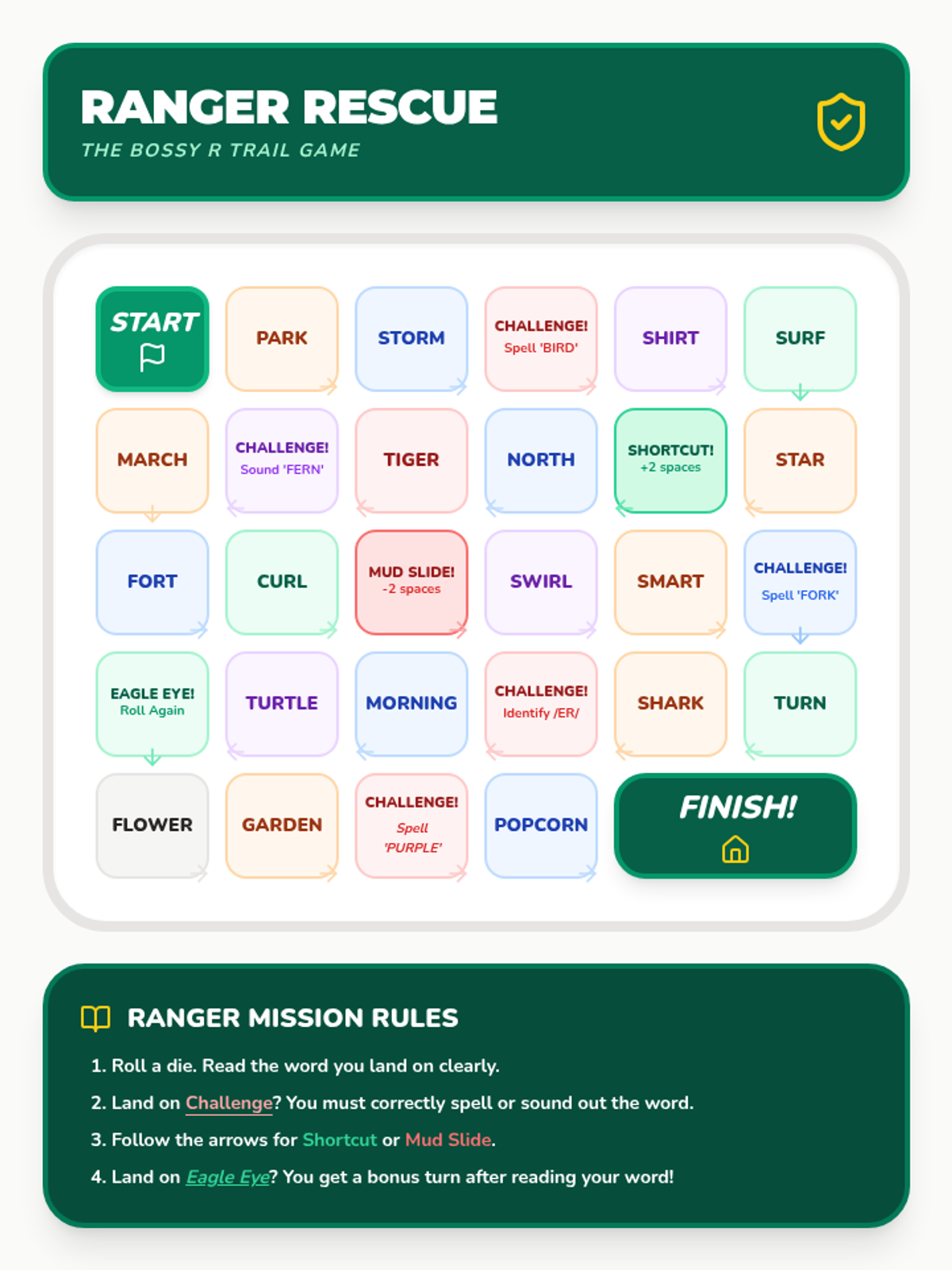
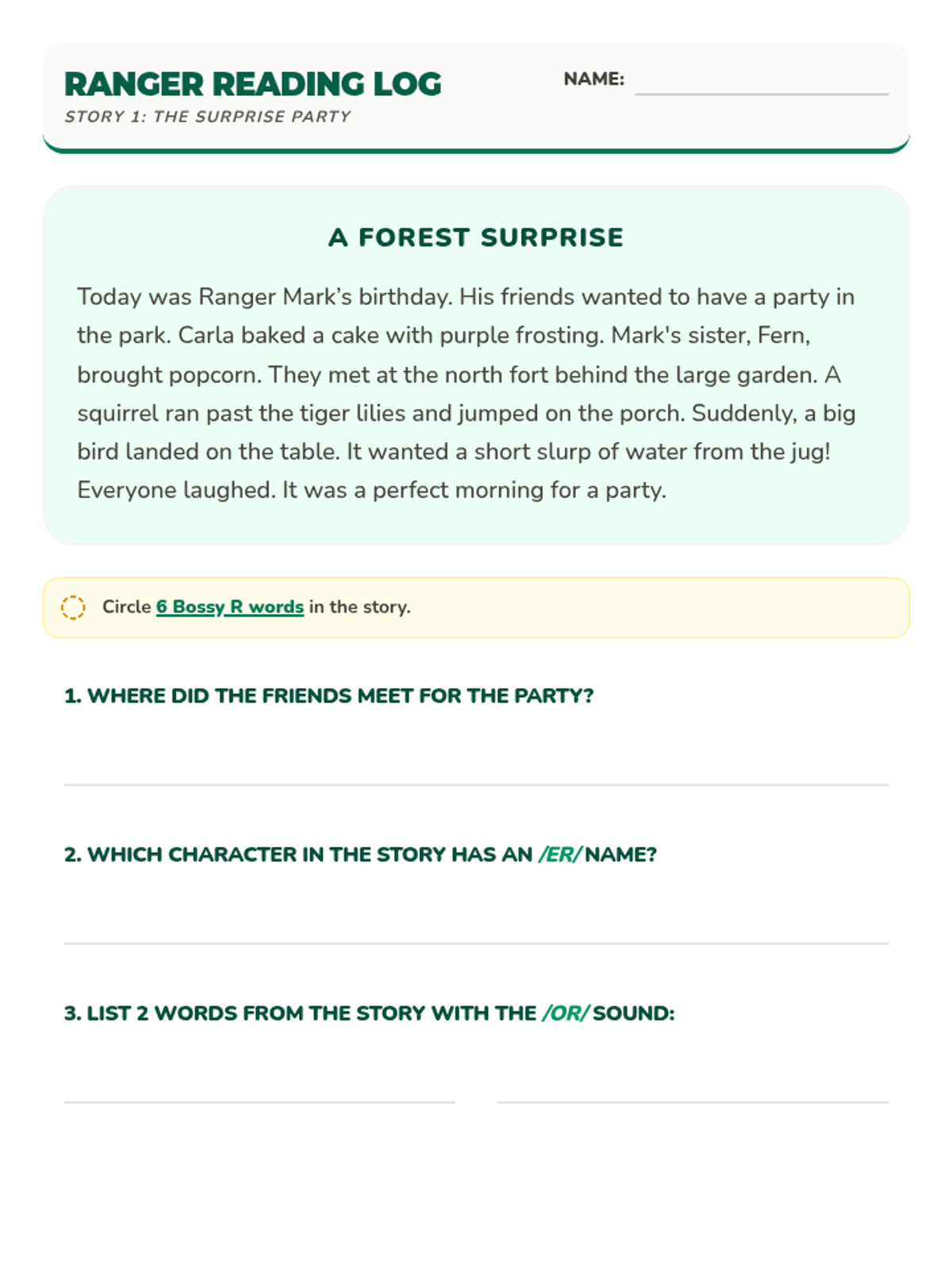
A comprehensive lesson on r-controlled vowels (ar, er, ir, or, ur) for 3rd-grade students, featuring a ranger-themed approach to "taming" the Bossy R. Includes direct instruction, blending practice, independent work, and formal assessment.