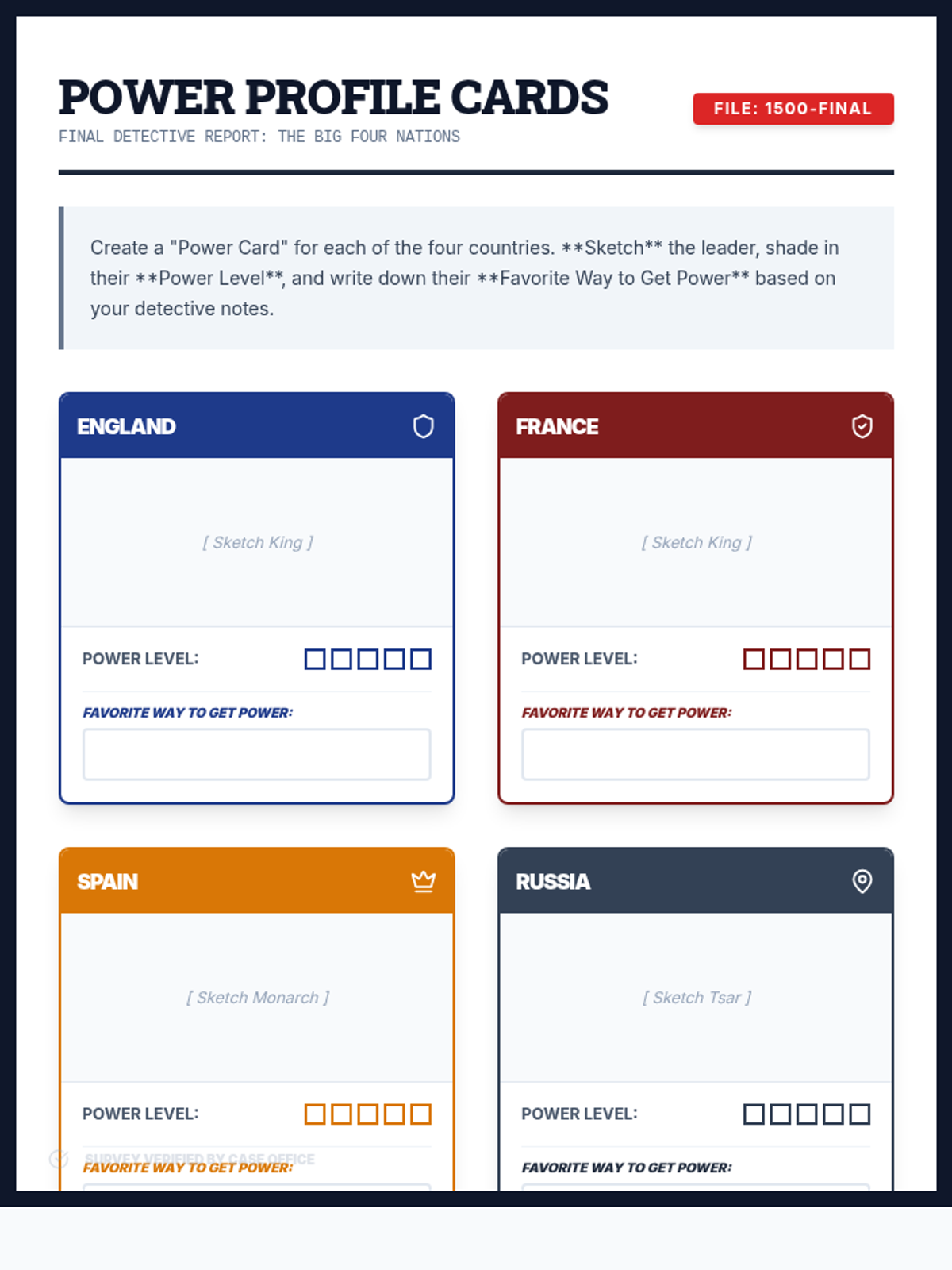
Students rotate through stations, analyzing maps, treaties, and accounts to understand how monarchs consolidated power and defined the borders of modern Europe.
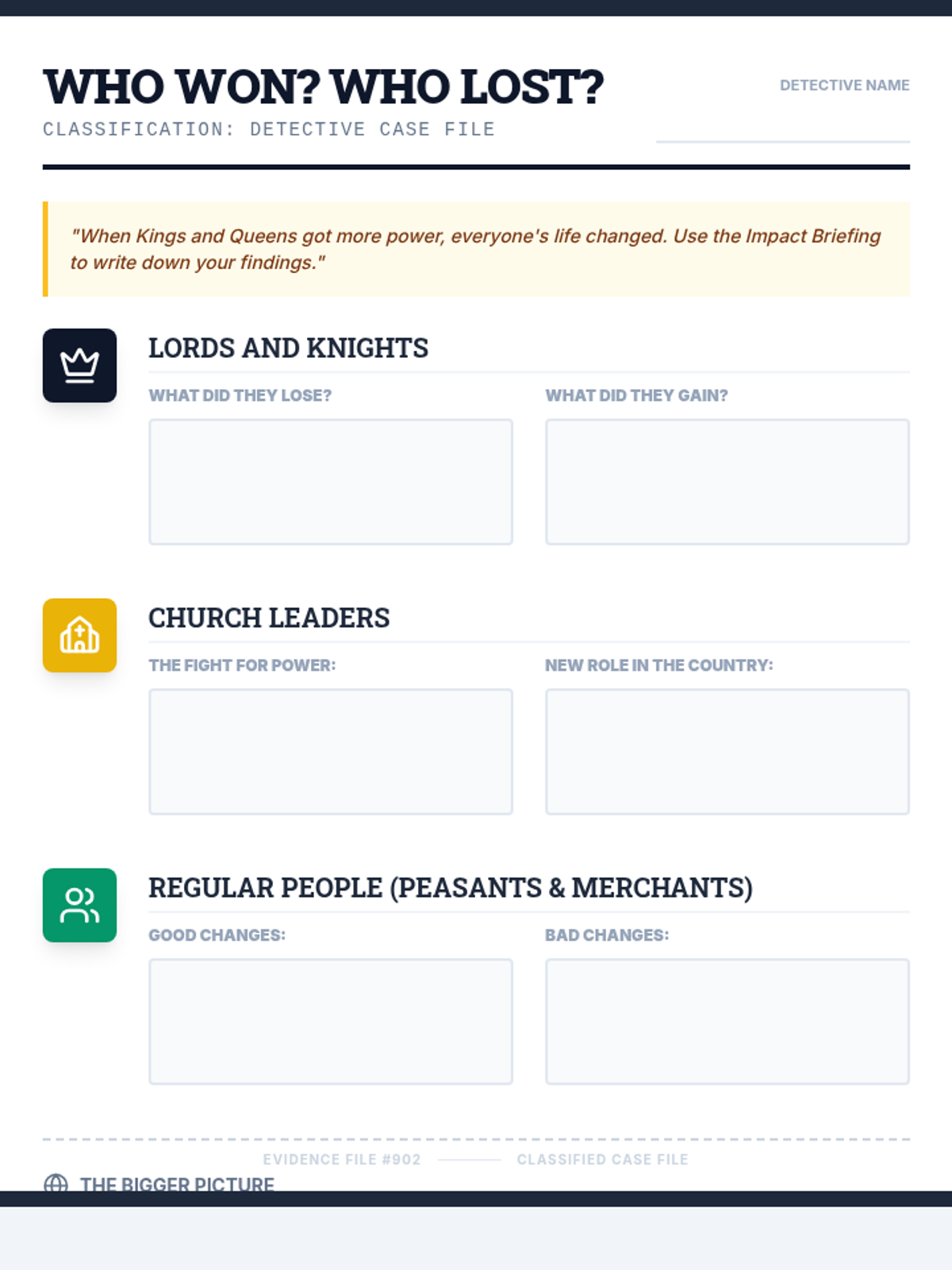
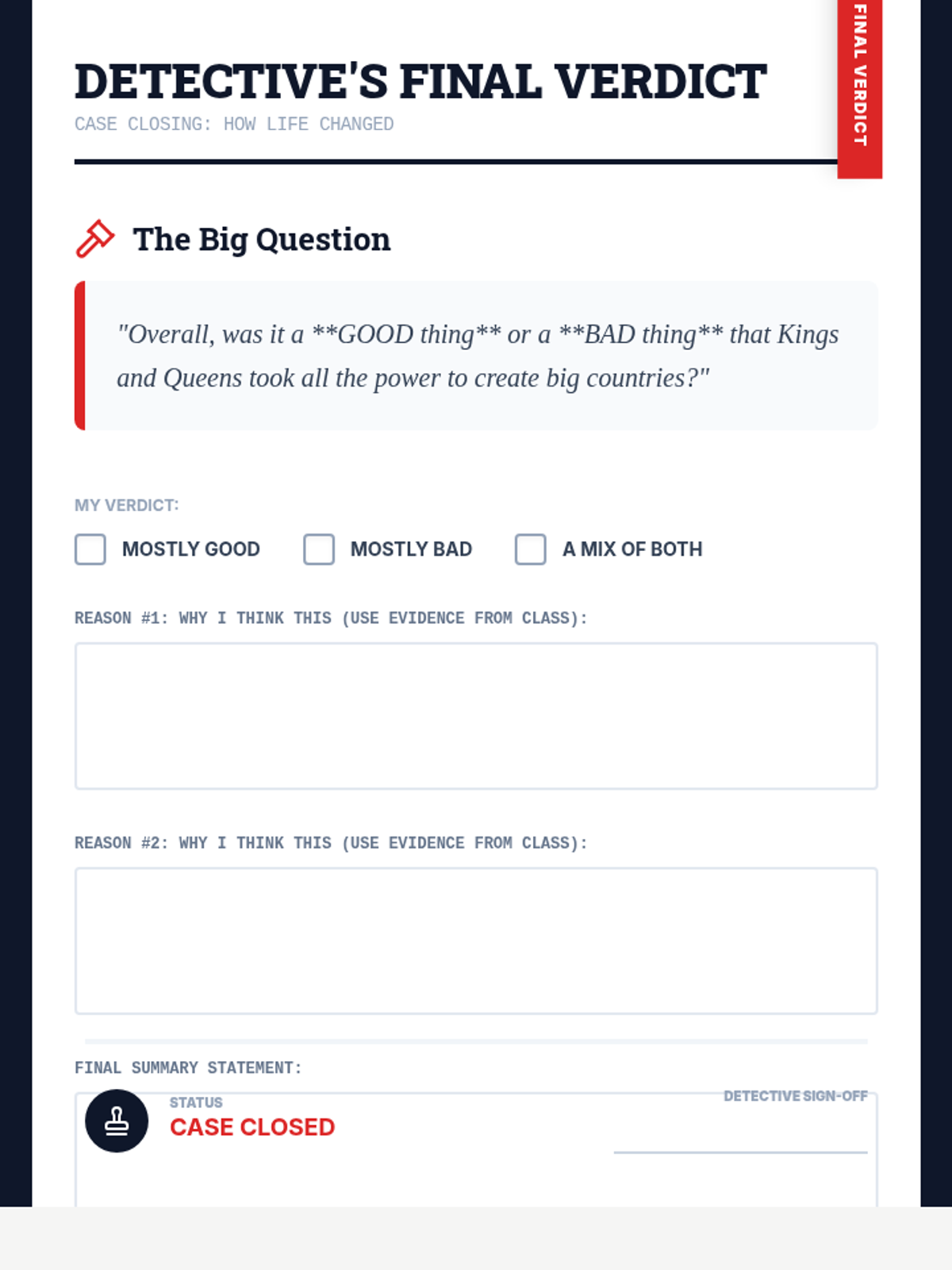
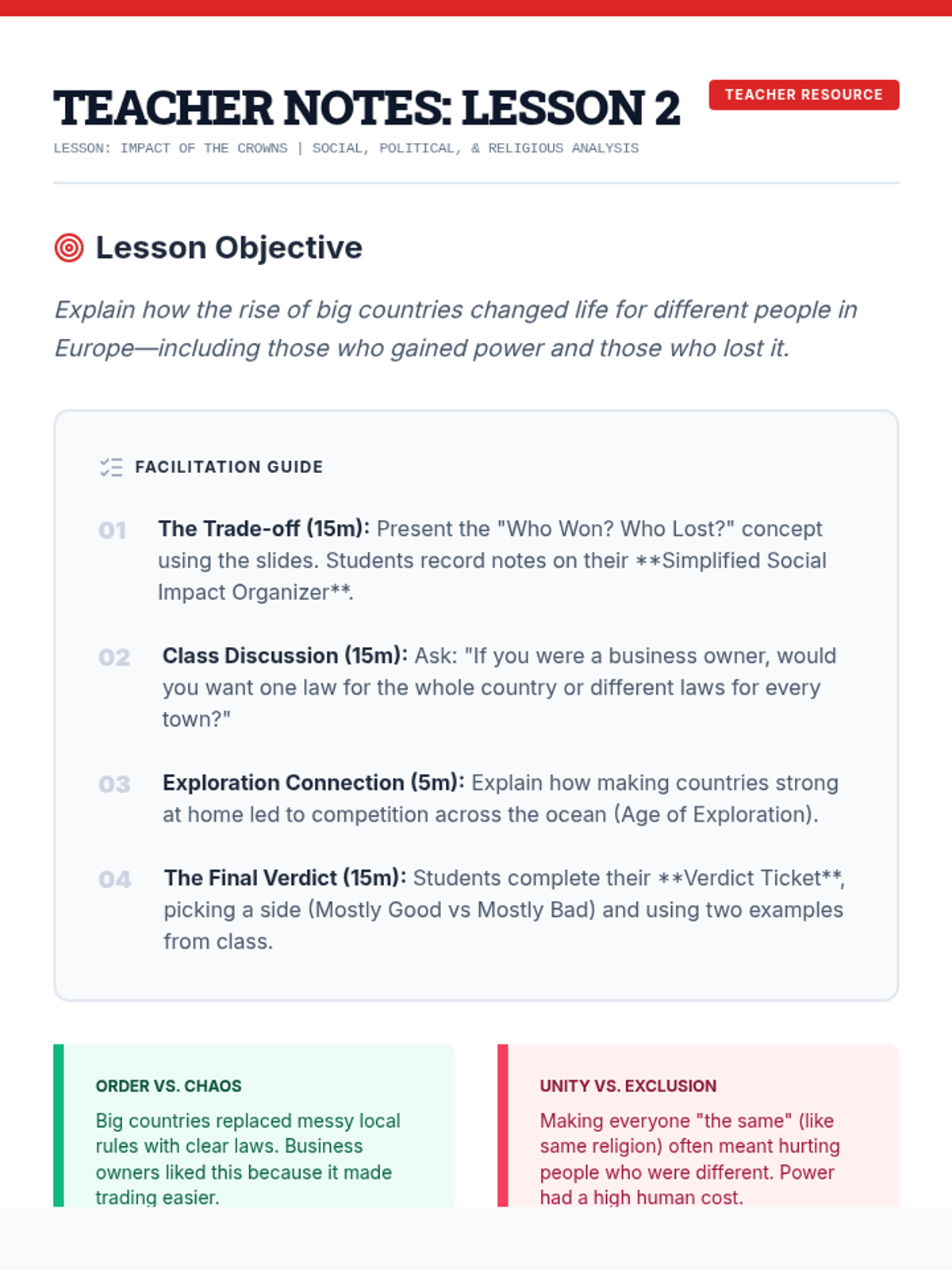
Students investigate the profound social, religious, and political impacts of centralized power, examining how the rise of nation-states led to both stability and systemic conflict across Europe.
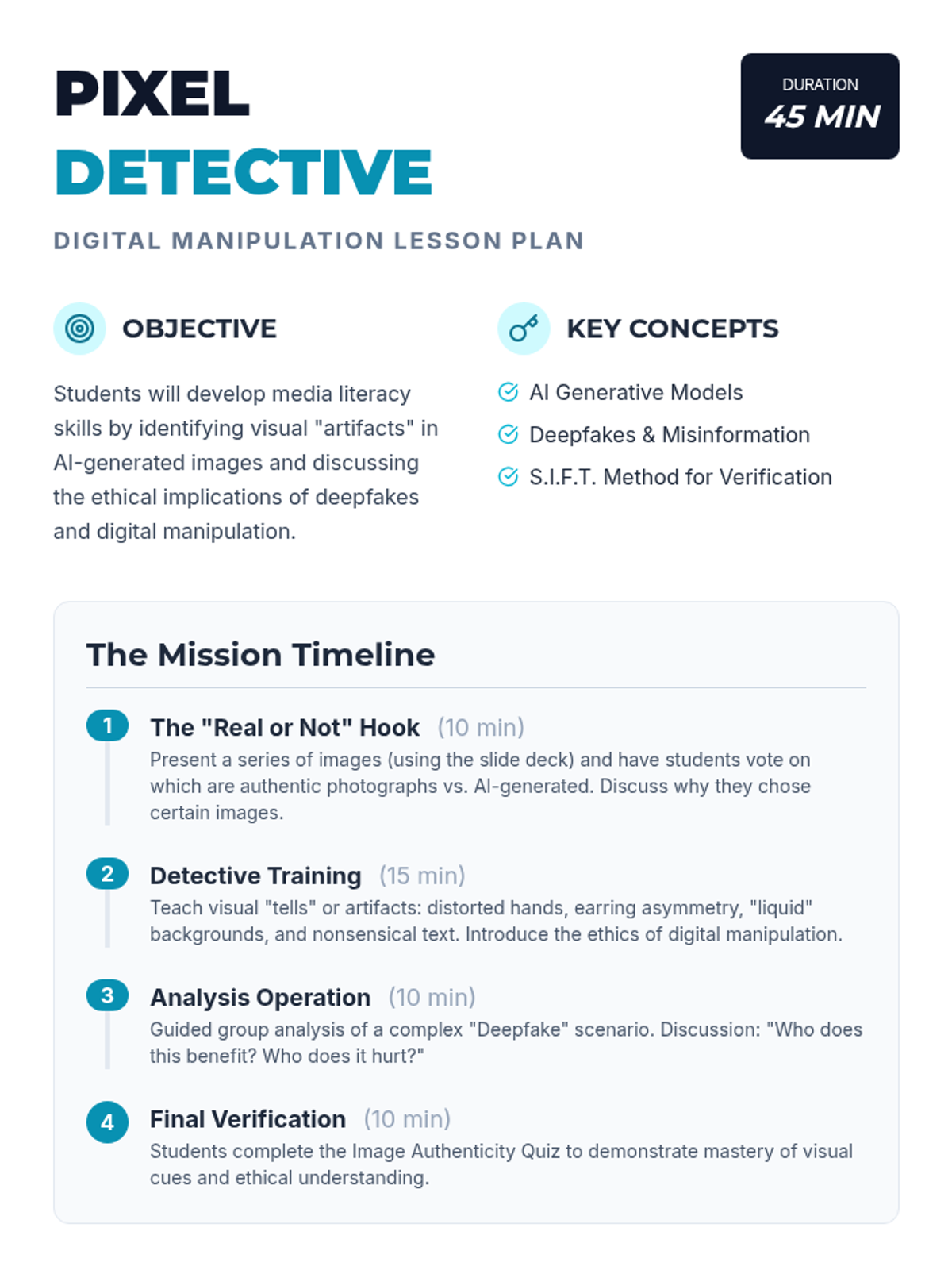
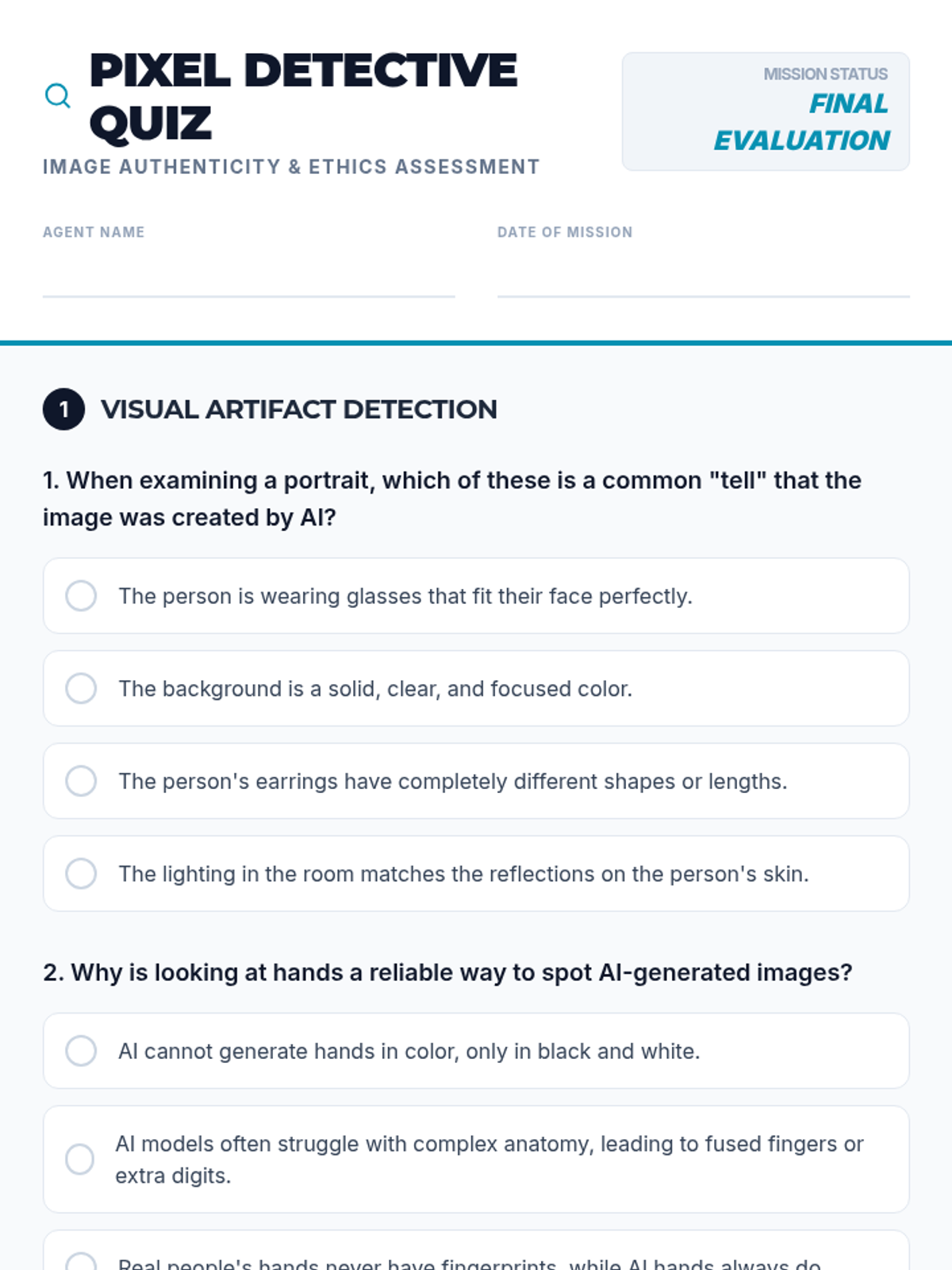
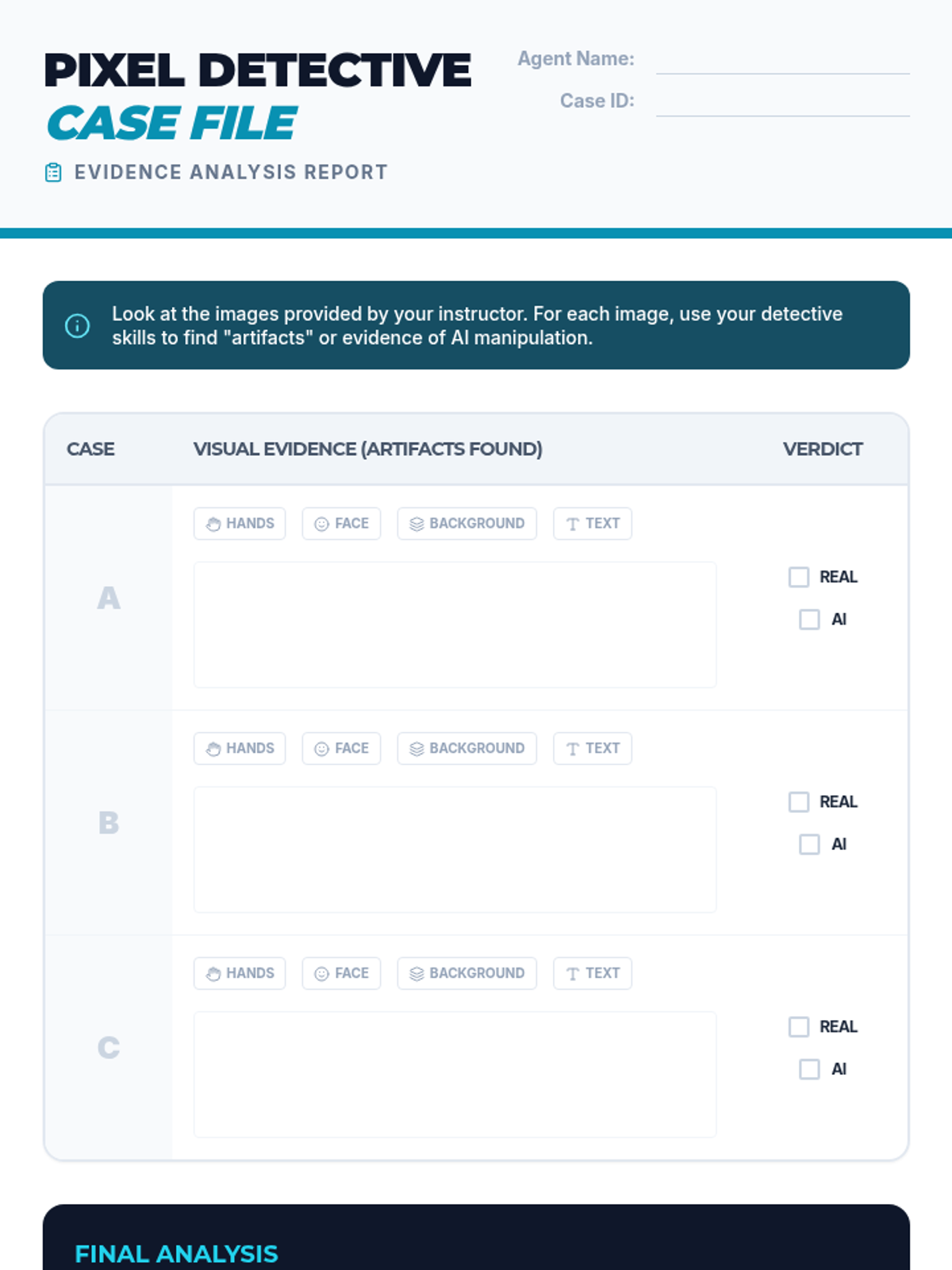
A 45-minute lesson for 6th graders to develop media literacy skills by learning how to identify AI-generated images and discussing the ethical implications of digital manipulation. Students will become 'Pixel Detectives,' learning specific visual cues to distinguish between reality and synthesis.
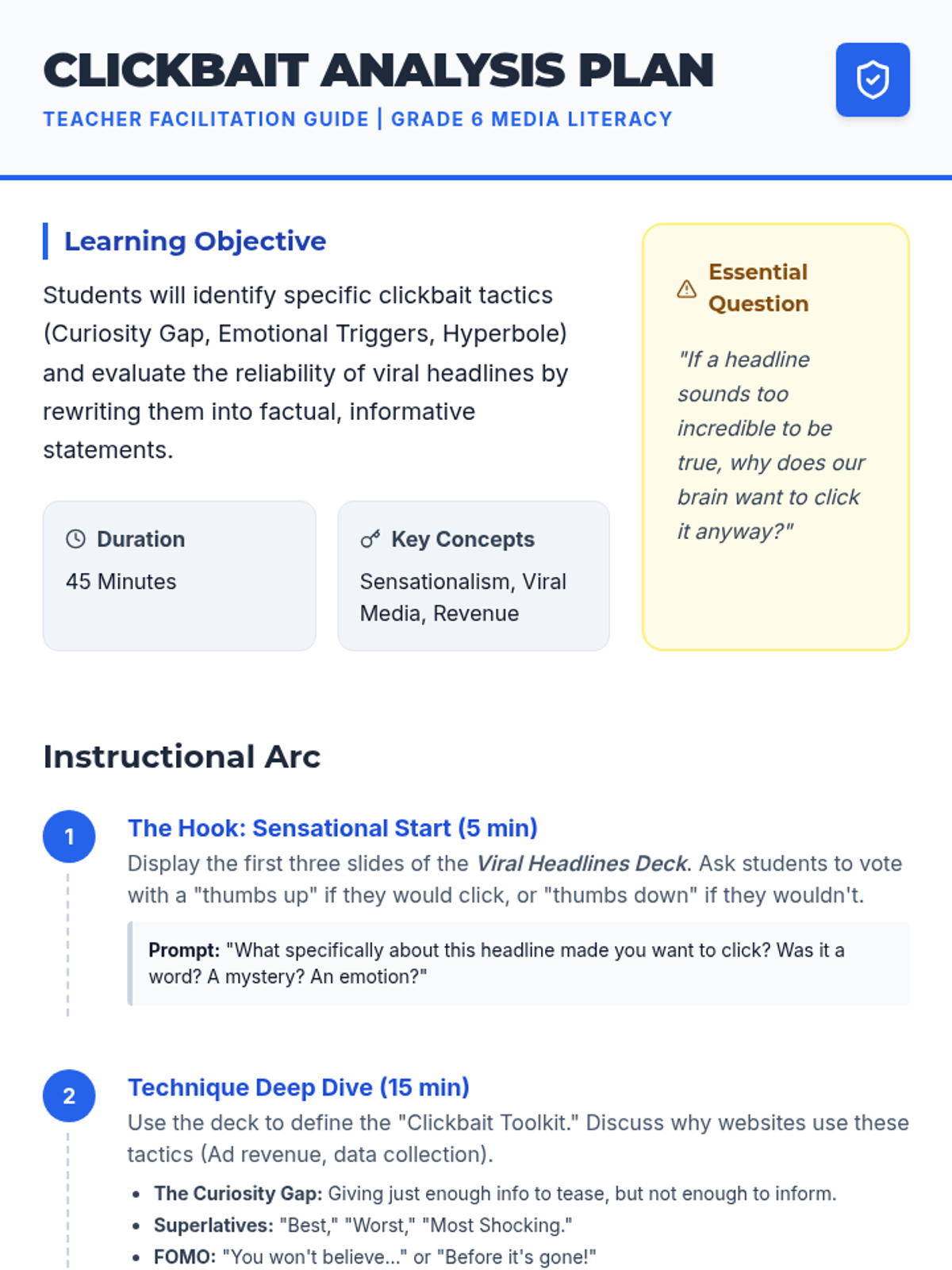
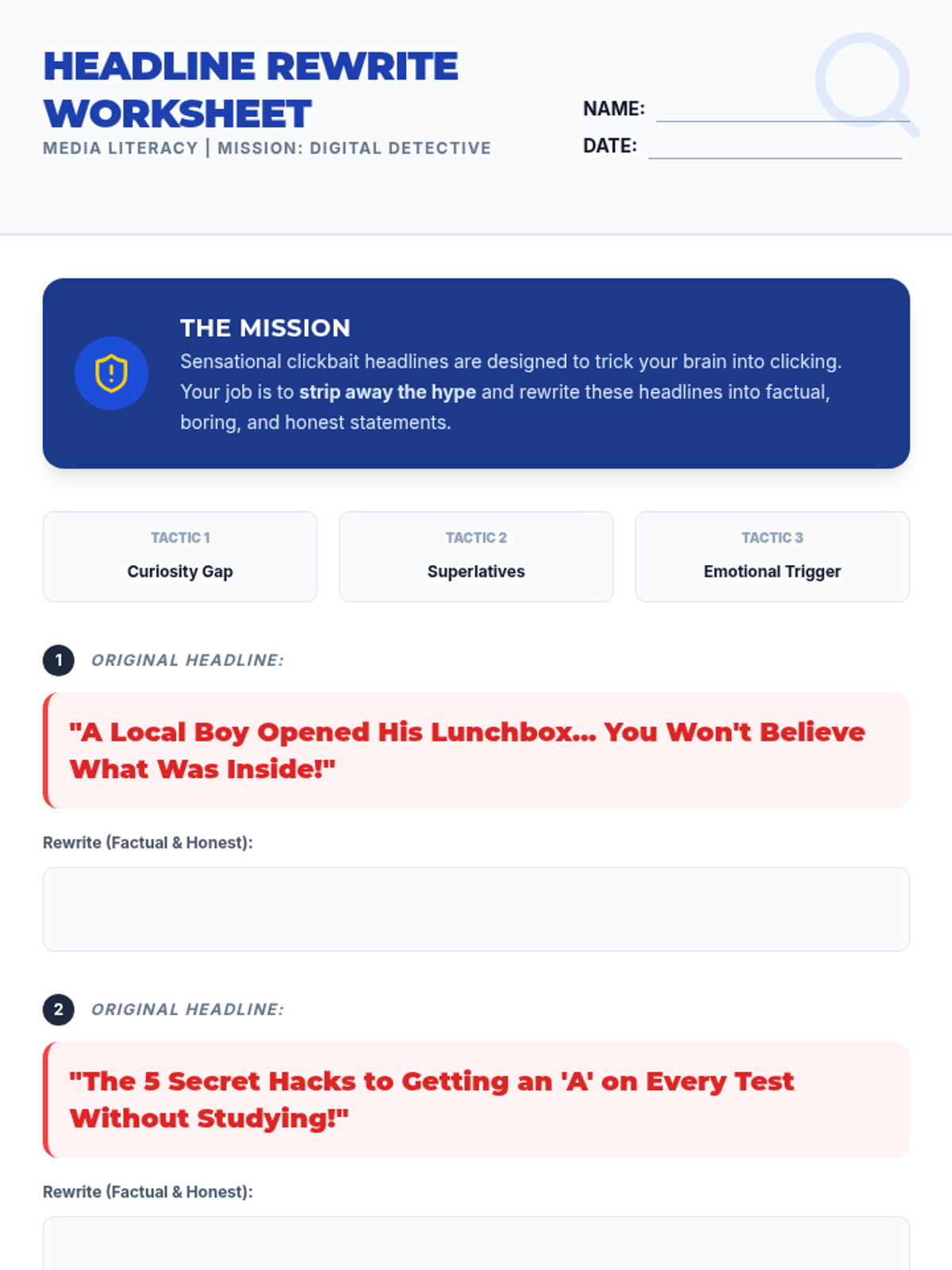
In this media literacy lesson, 6th-grade students become 'Digital Detectives' to uncover the hidden tactics of clickbait. They will analyze sensational headlines, identify emotional triggers, and practice transforming misleading viral content into factual reporting.
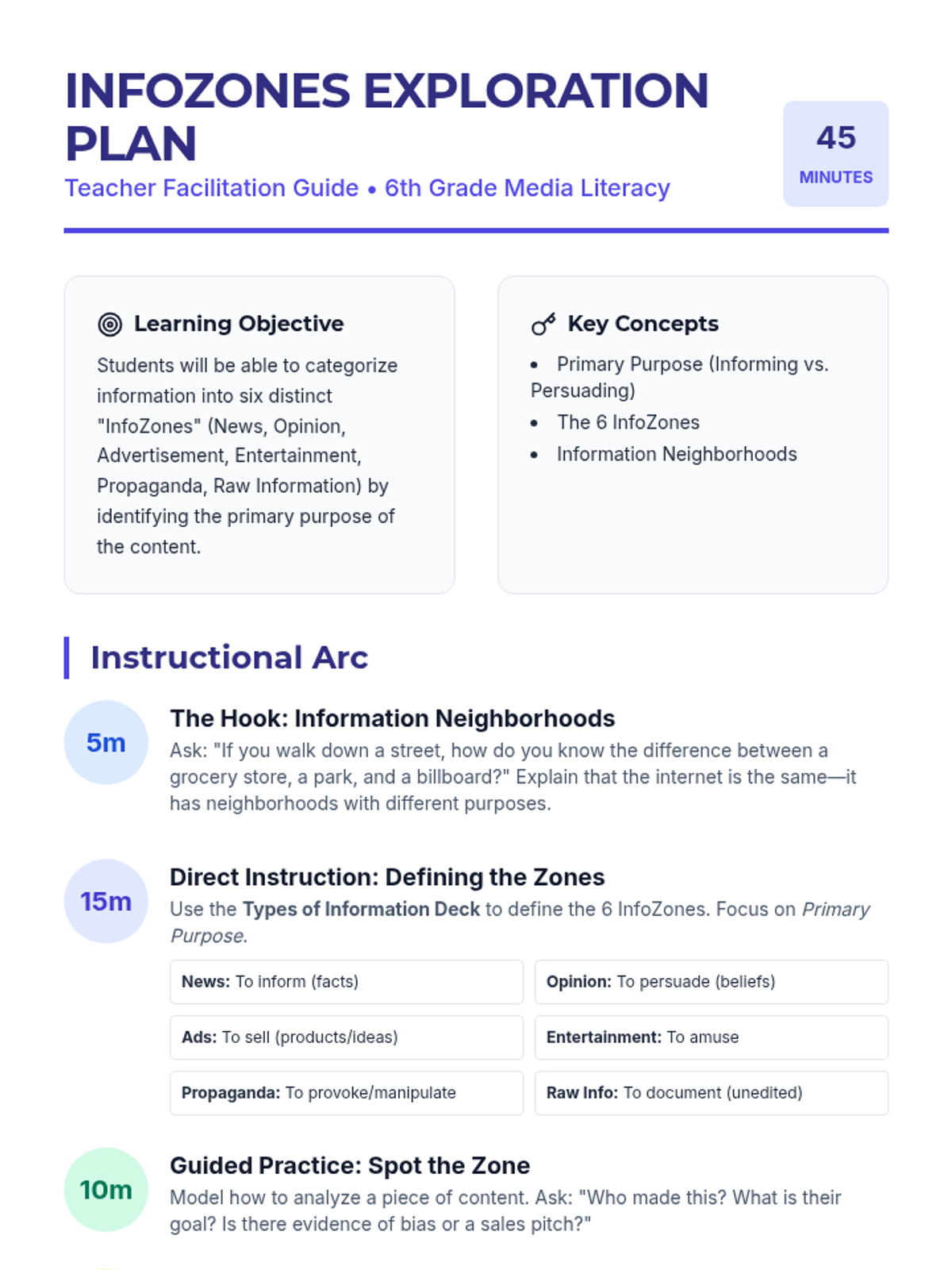
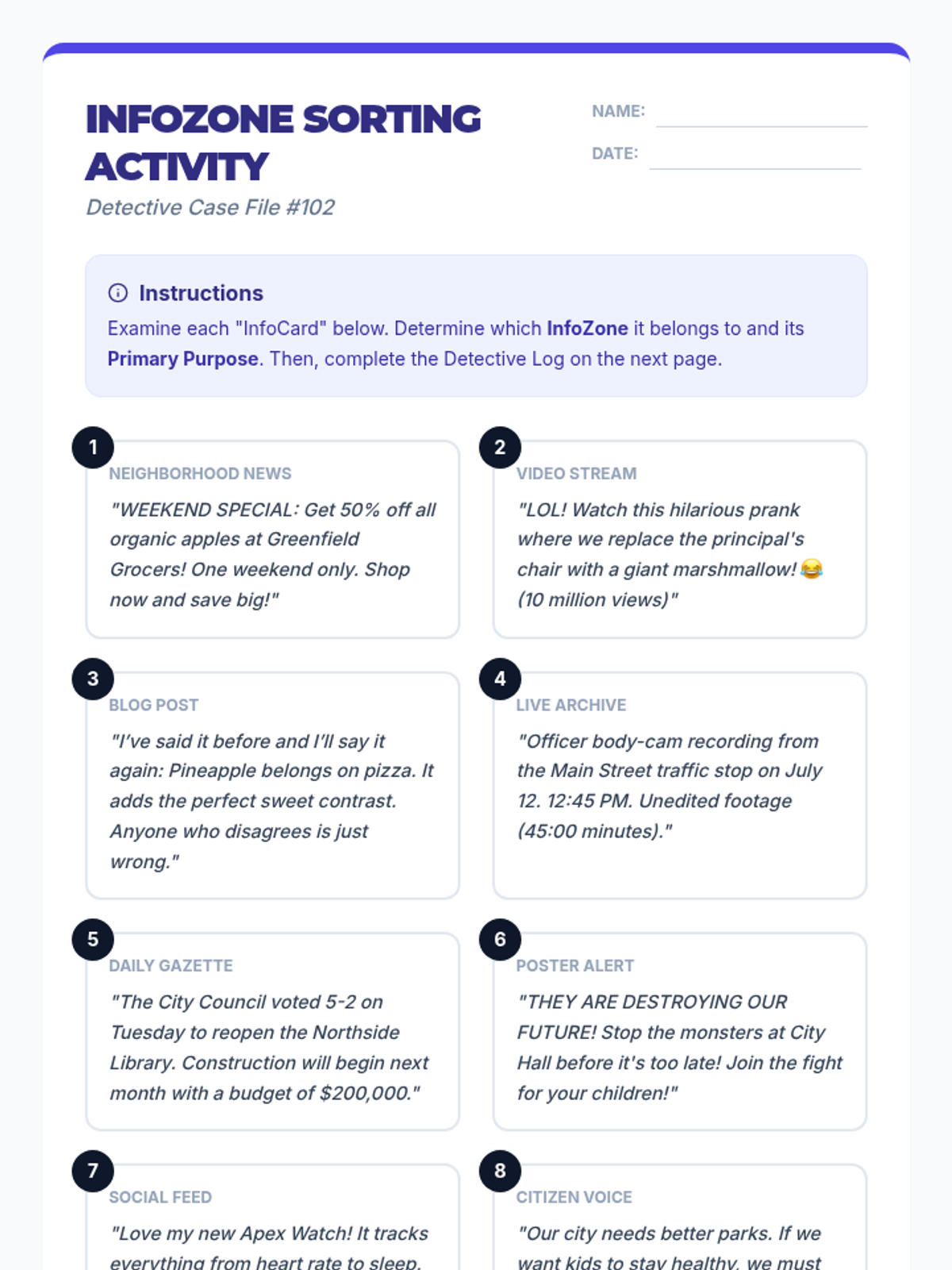
A comprehensive 45-minute lesson for 6th graders to navigate the complex digital landscape by categorizing information into six distinct 'InfoZones' based on their primary purpose. Students will learn to distinguish between news, opinion, advertising, and more.
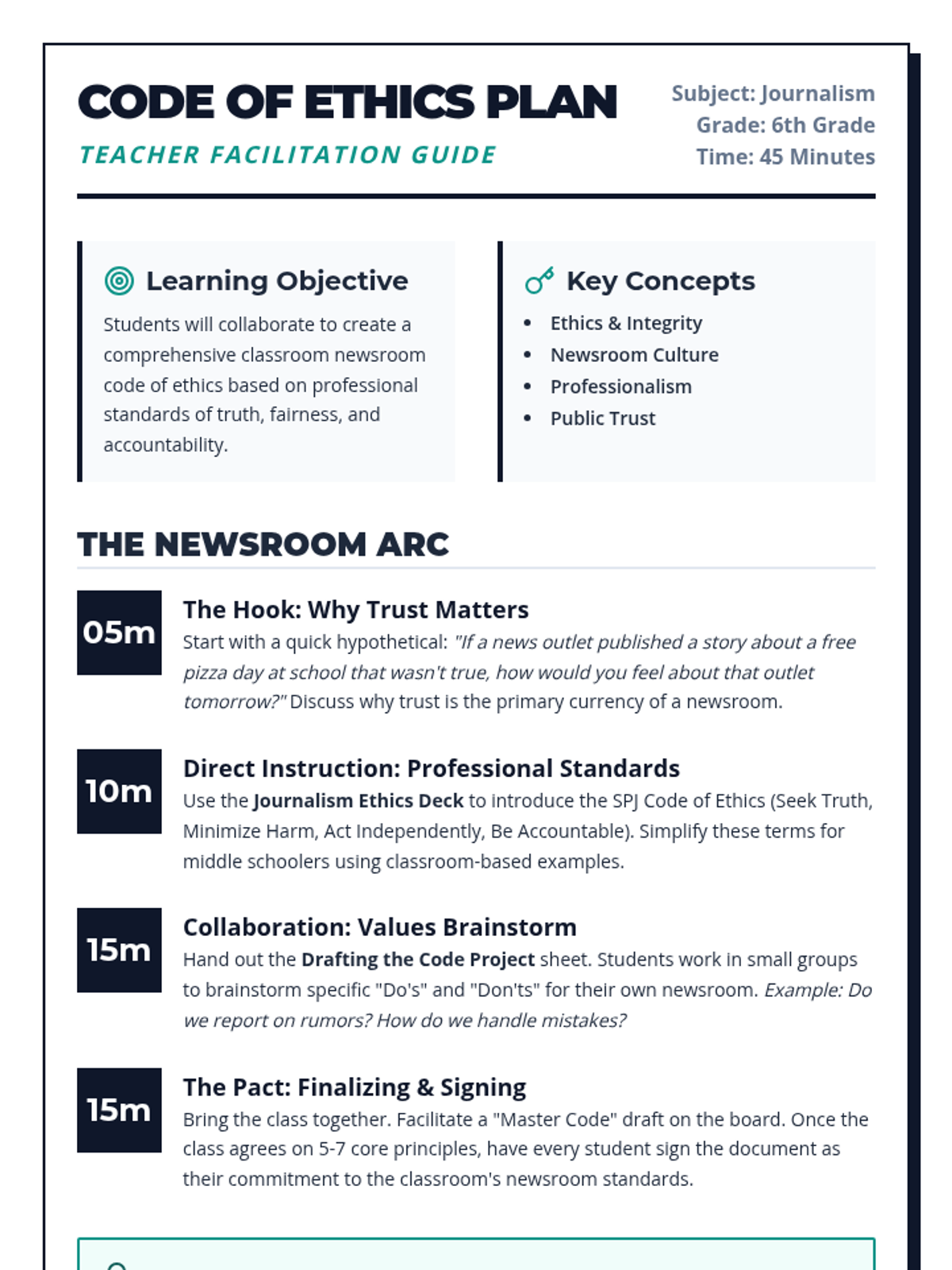
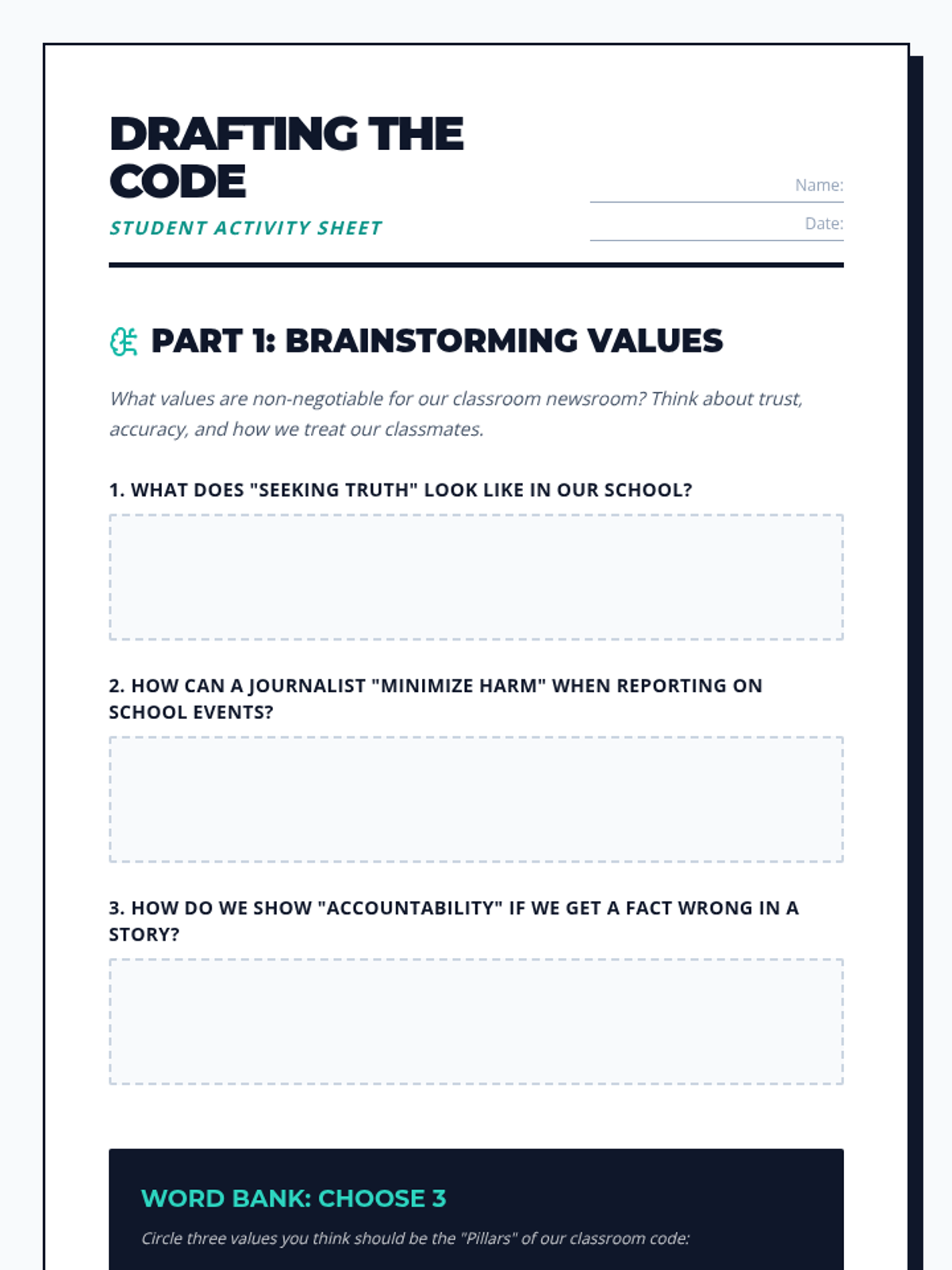
Students explore the foundations of professional journalism ethics to collaboratively build a code of conduct for their classroom newsroom, focusing on truth, fairness, and accountability.
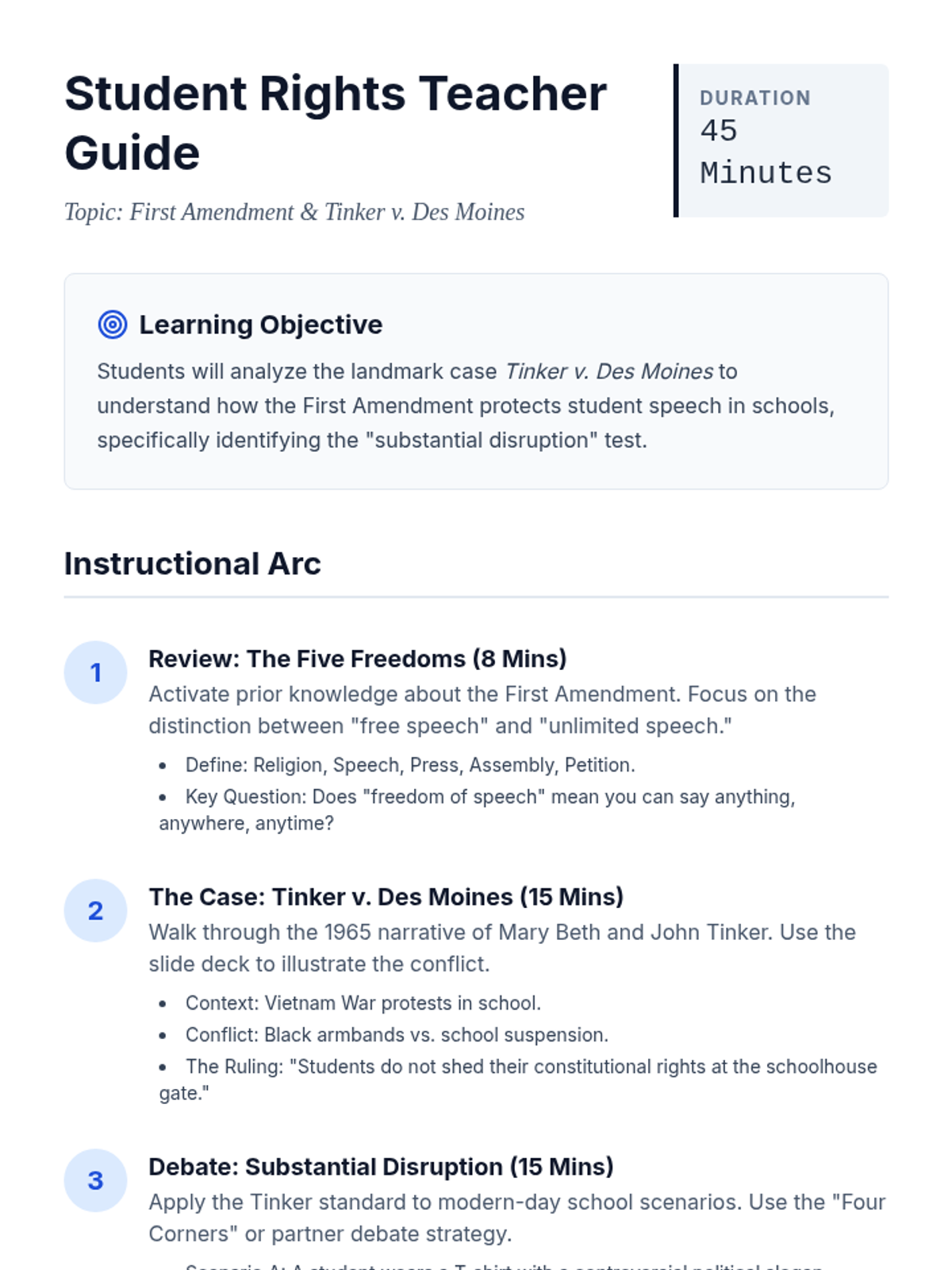
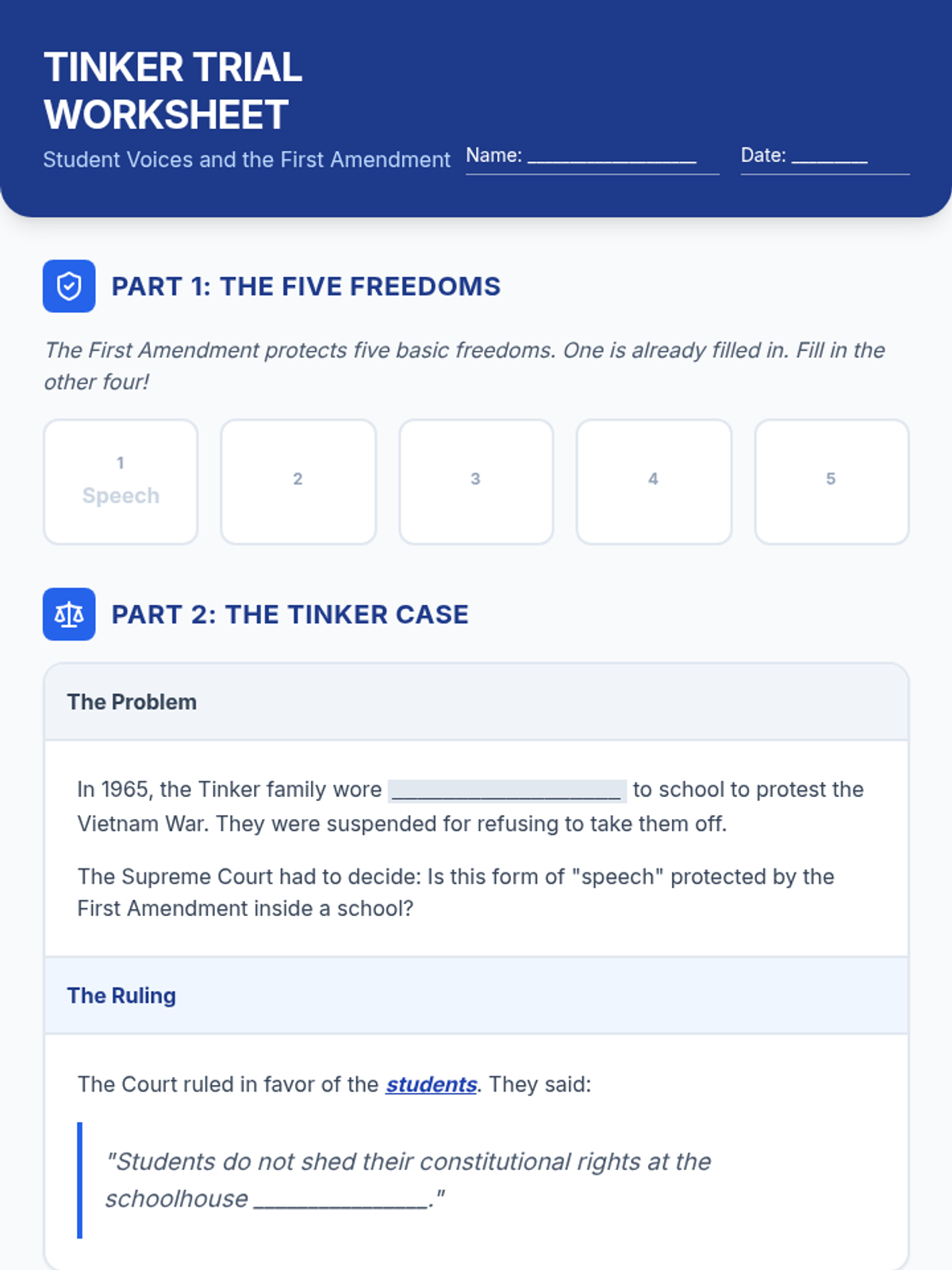
A 45-minute civics lesson exploring the First Amendment through the lens of the landmark Supreme Court case Tinker v. Des Moines, empowering students to understand their rights and responsibilities.
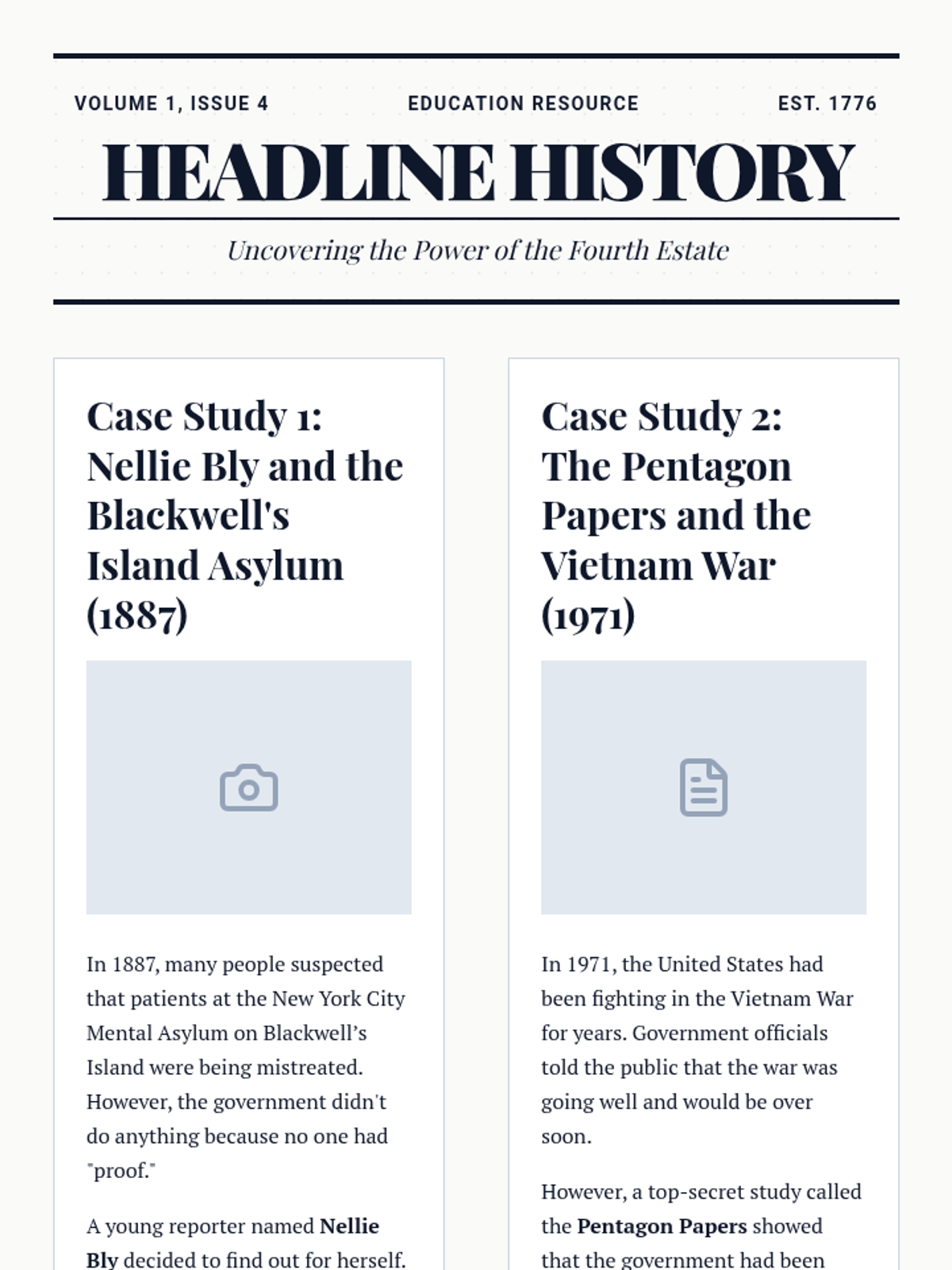
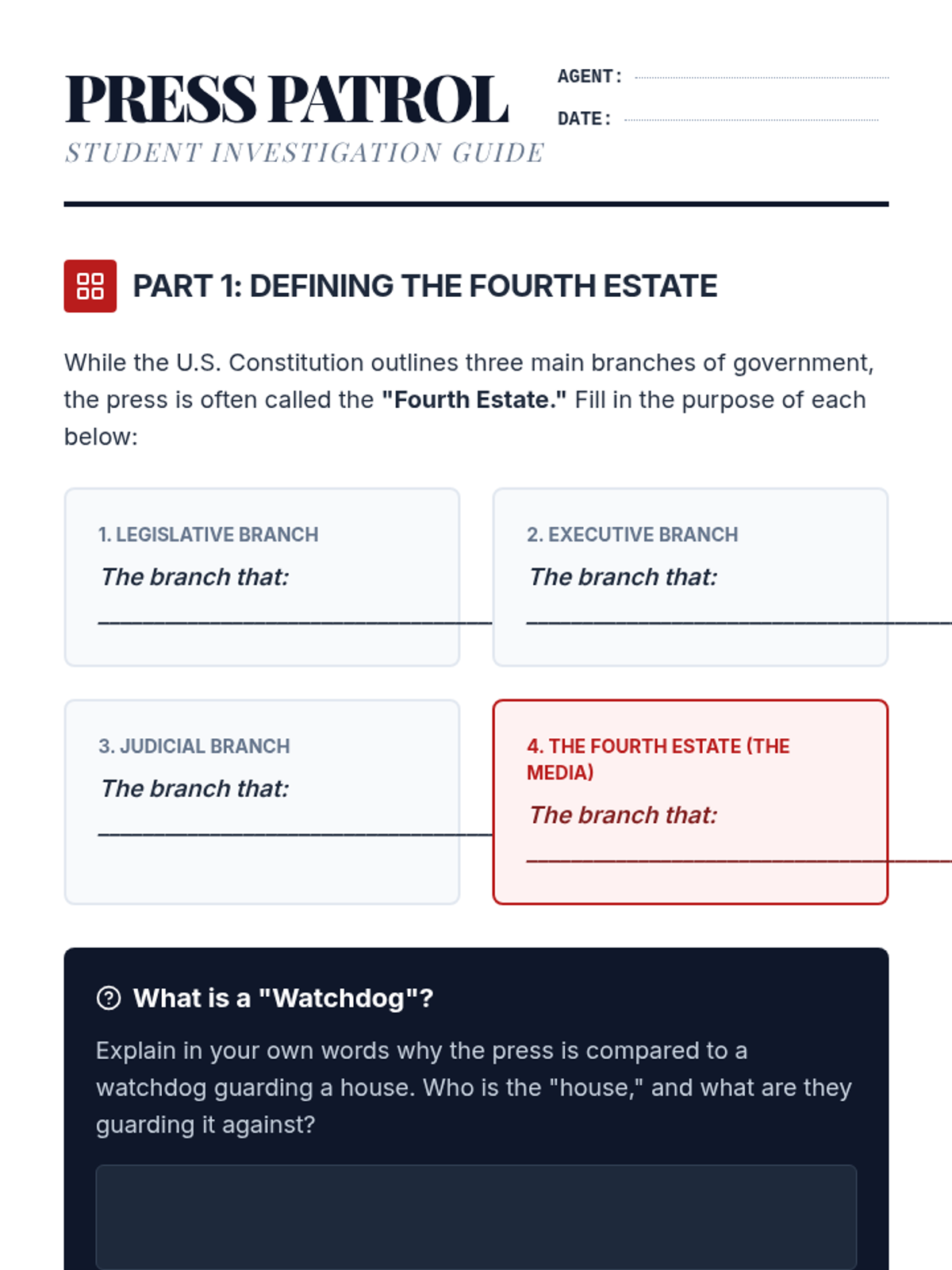
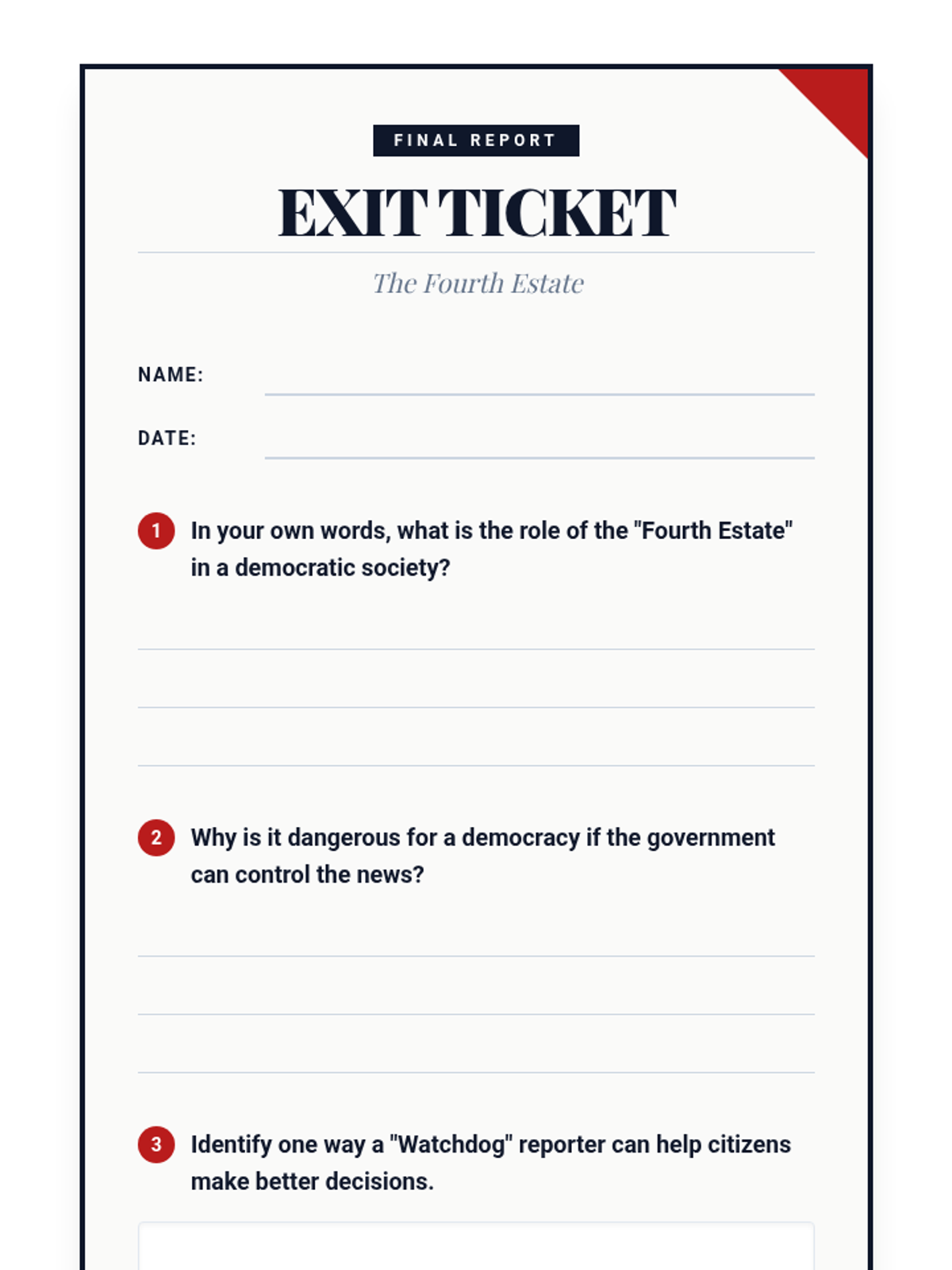
Students explore the vital role of a free press as the 'Fourth Estate' in a democracy, examining historical impact and current relevance through inquiry and analysis.
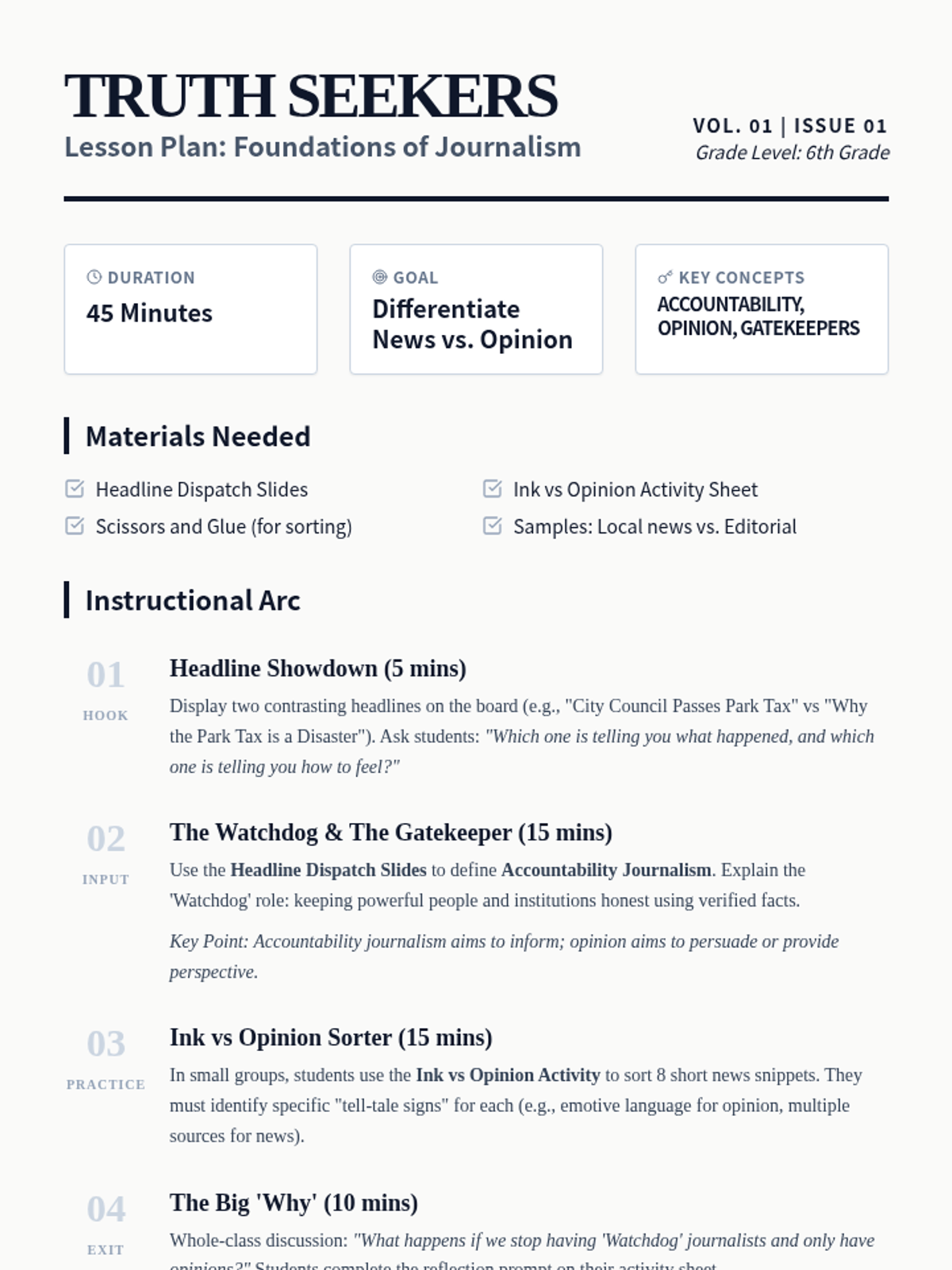
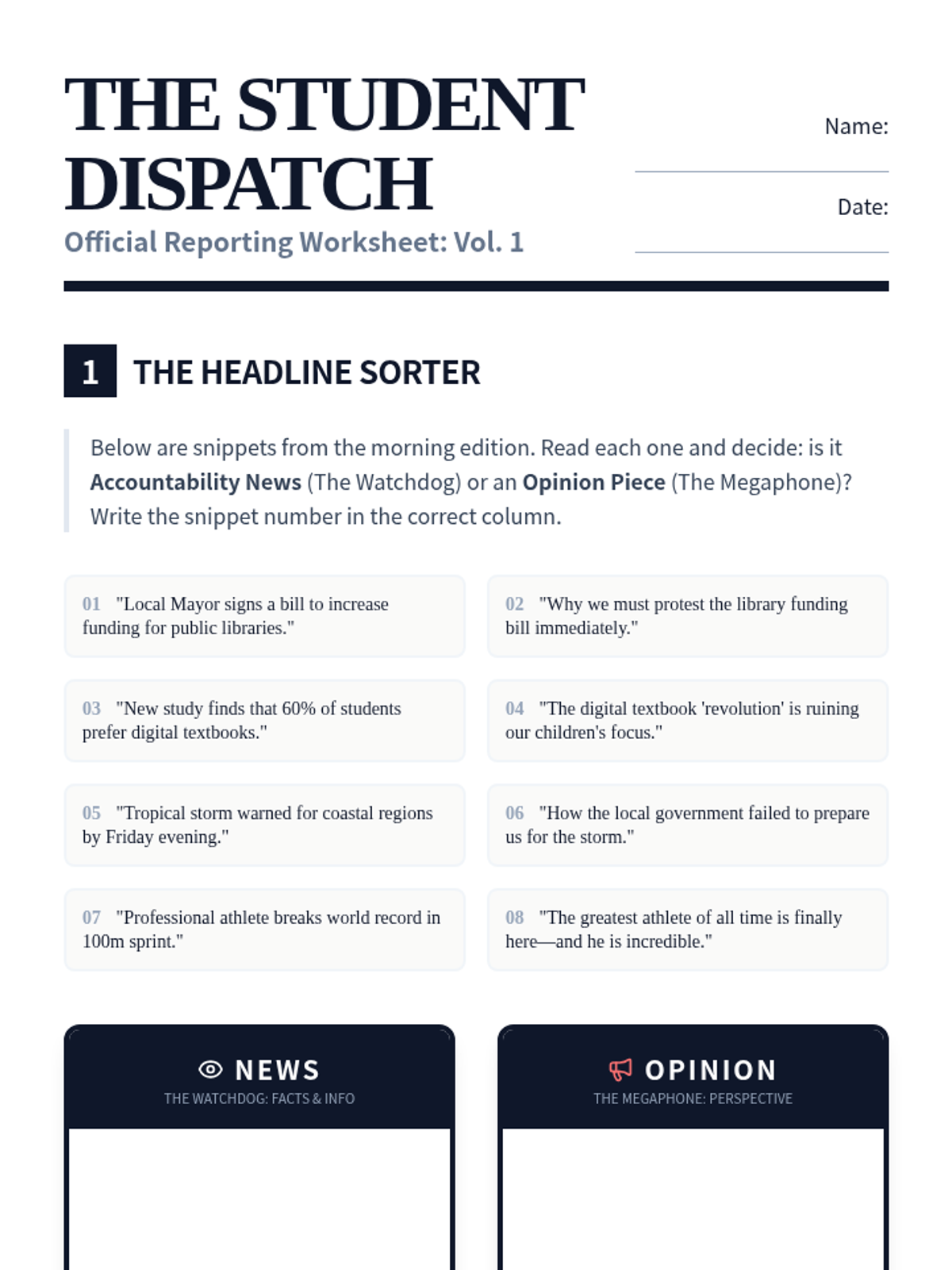
This lesson introduces 6th-grade students to the fundamental differences between accountability journalism and opinion pieces, focusing on the concept of 'watchdog' journalism and the role of information gatekeepers.
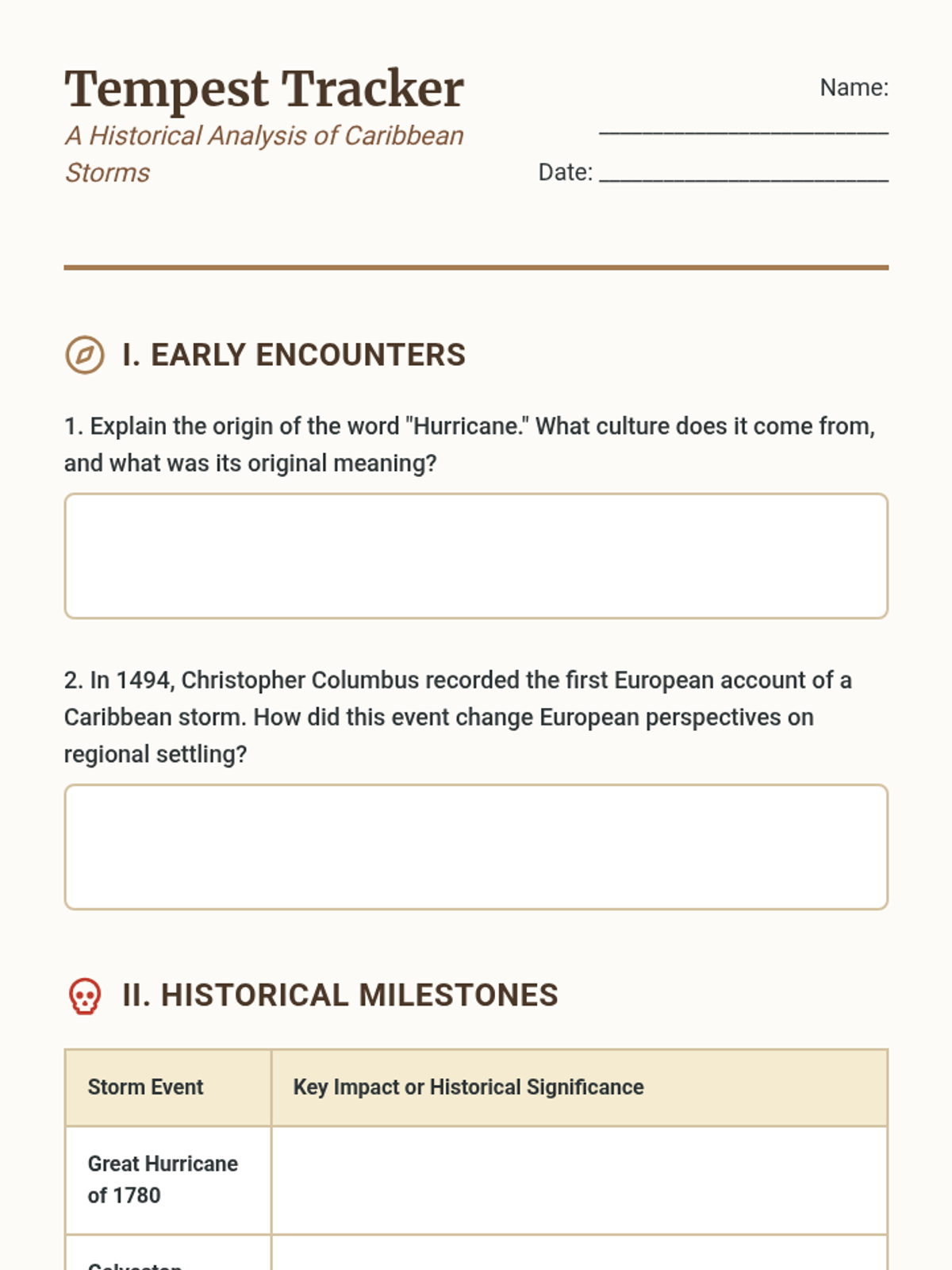
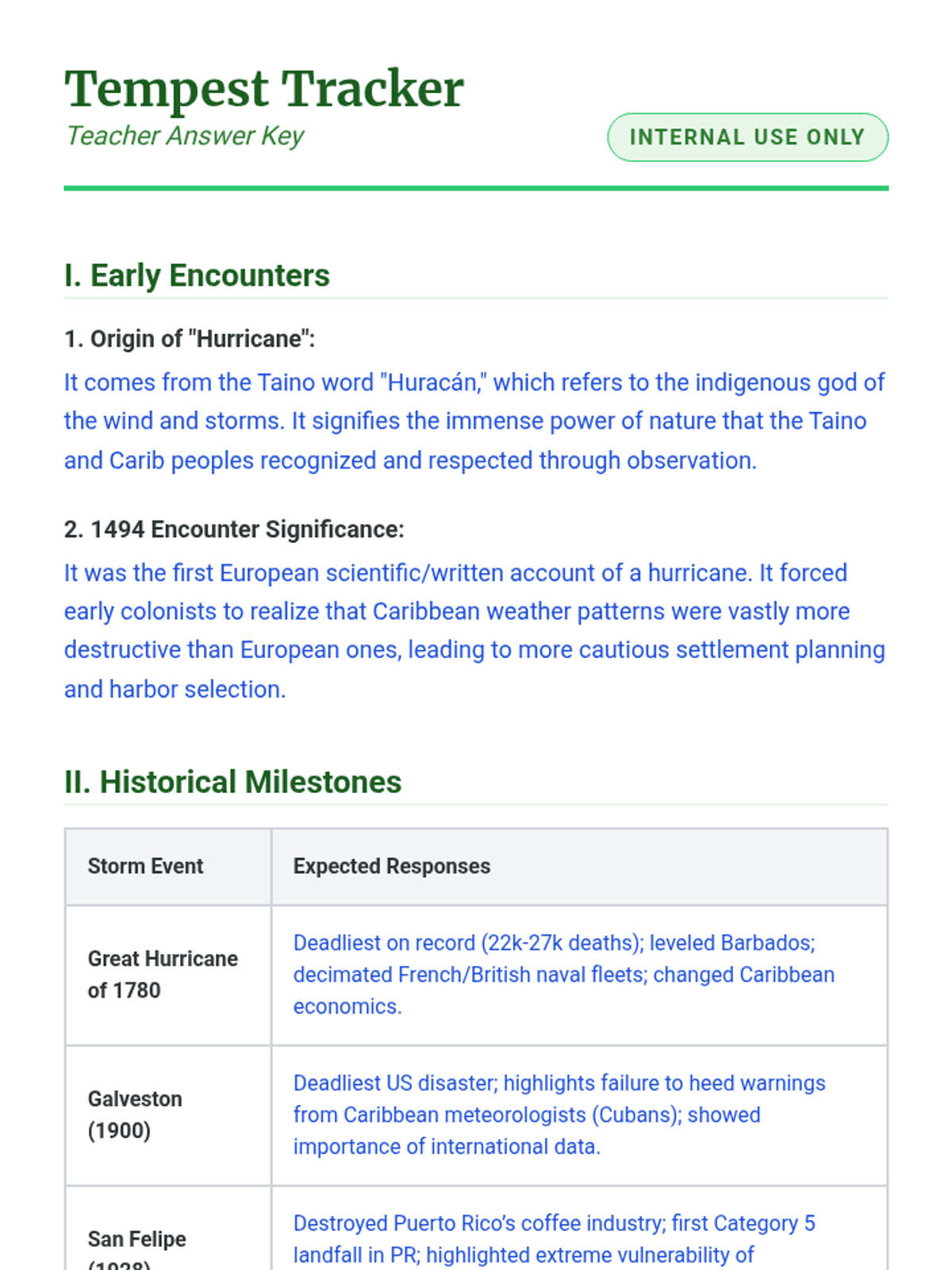
A historical exploration of tropical storms in the Caribbean, focusing on significant events, technological evolution, and the impact on regional history from the colonial era to the late 20th century.
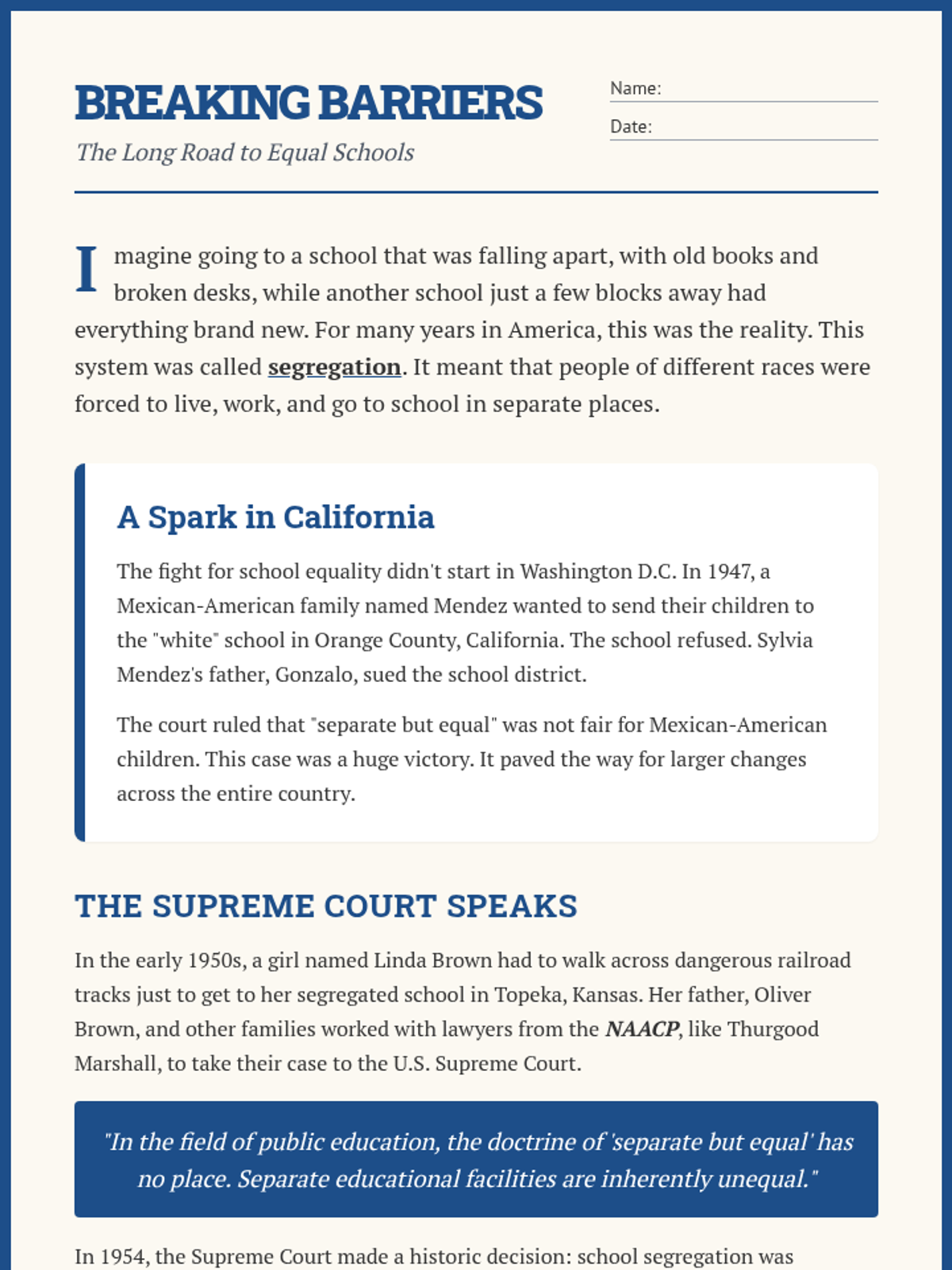
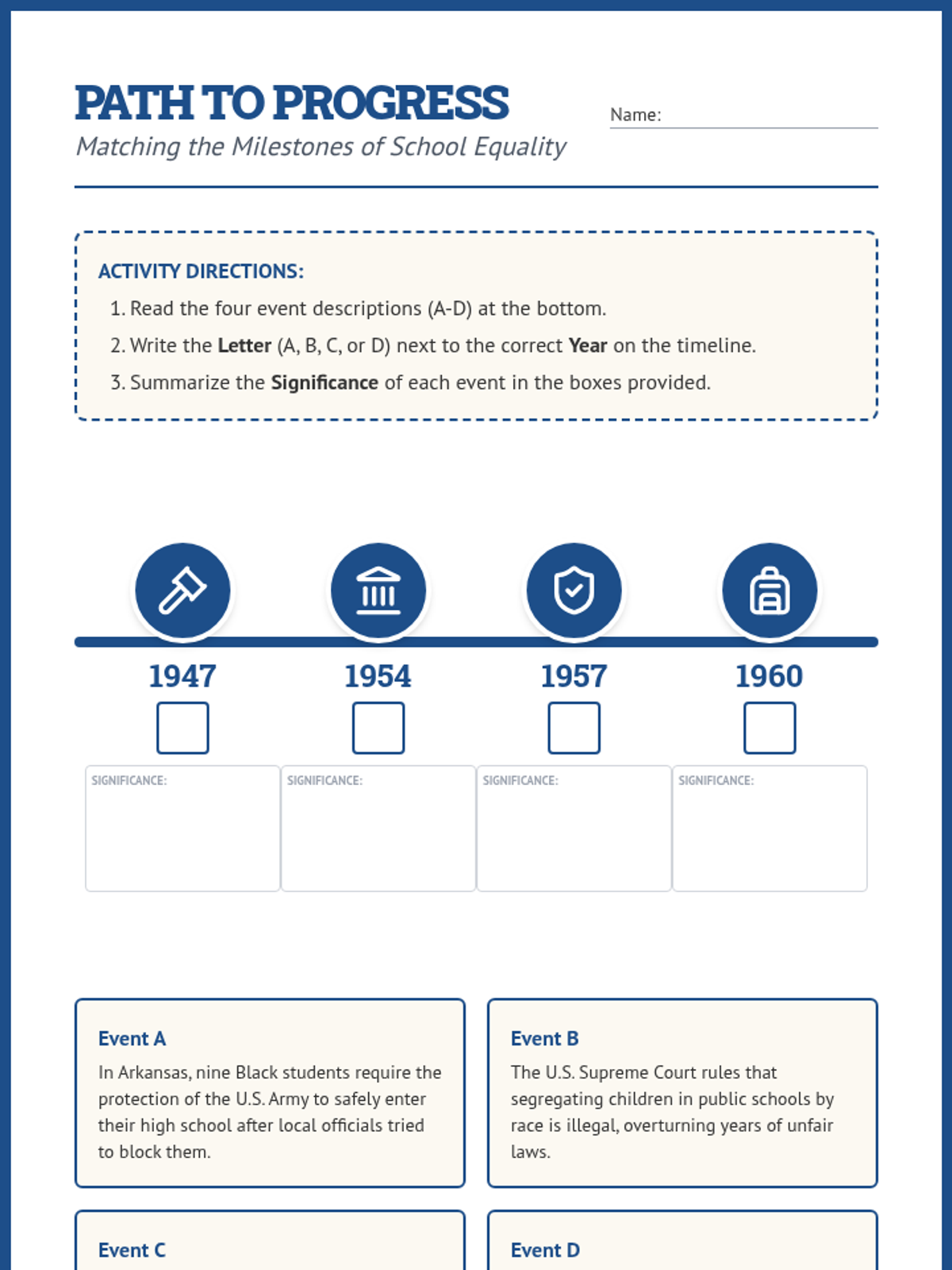
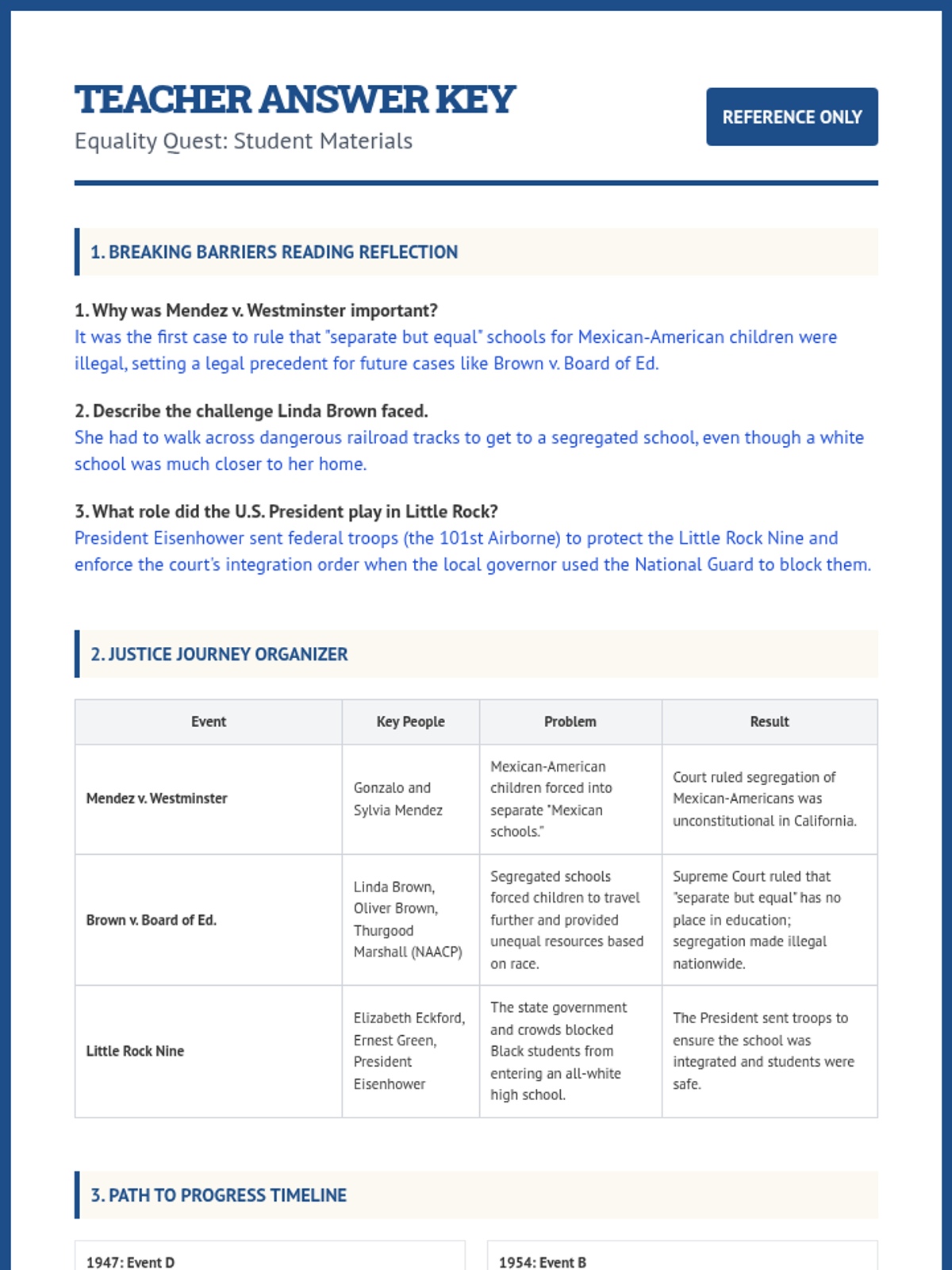
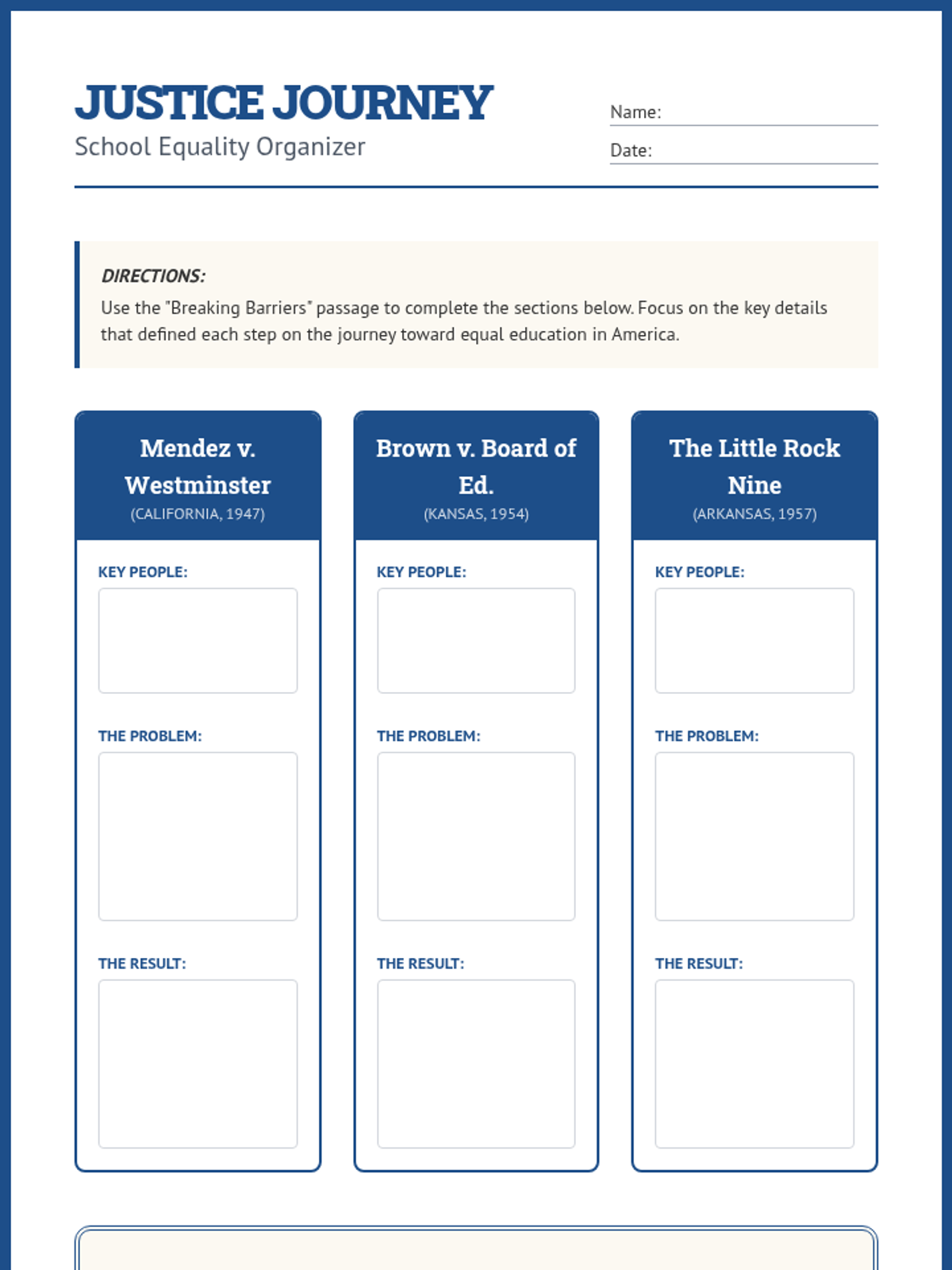
A lesson exploring the struggle for school equality in the United States, focusing on key legal cases and the brave students who led the way for integration.