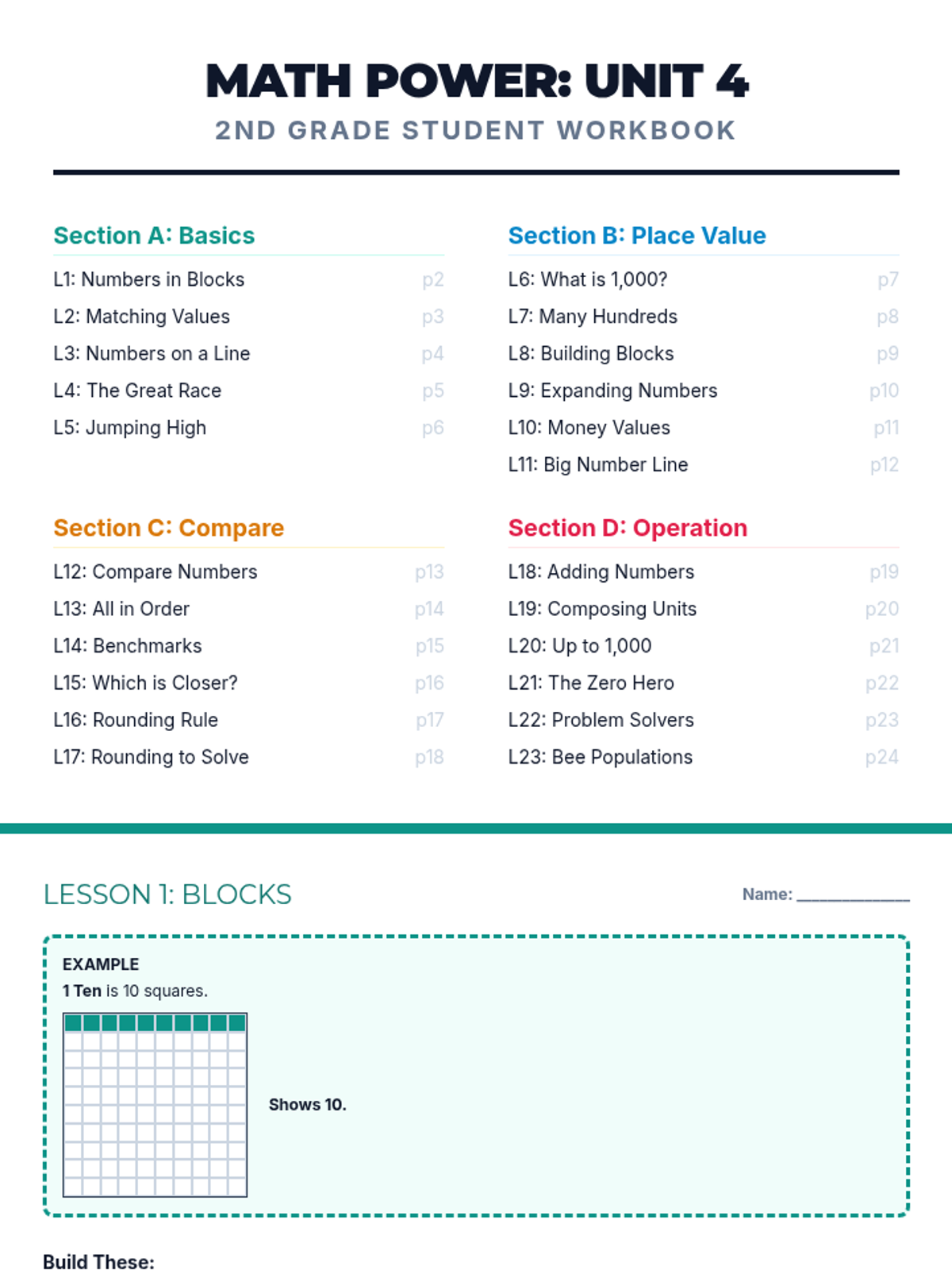
A complete workbook containing all 17 lessons for the Fraction Explorers Unit 2, covering basic representation, equivalence, and comparisons for 2nd grade students.

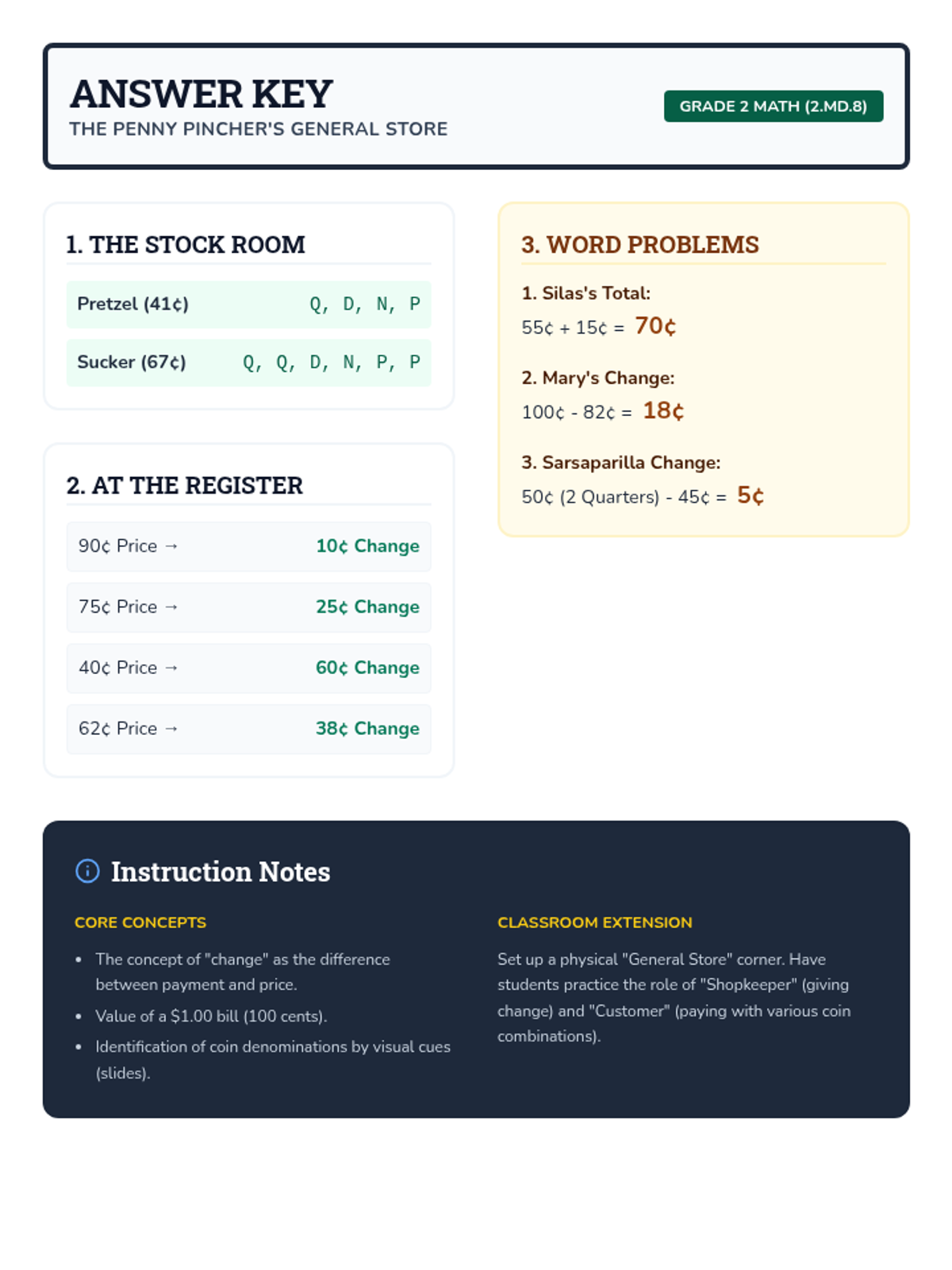
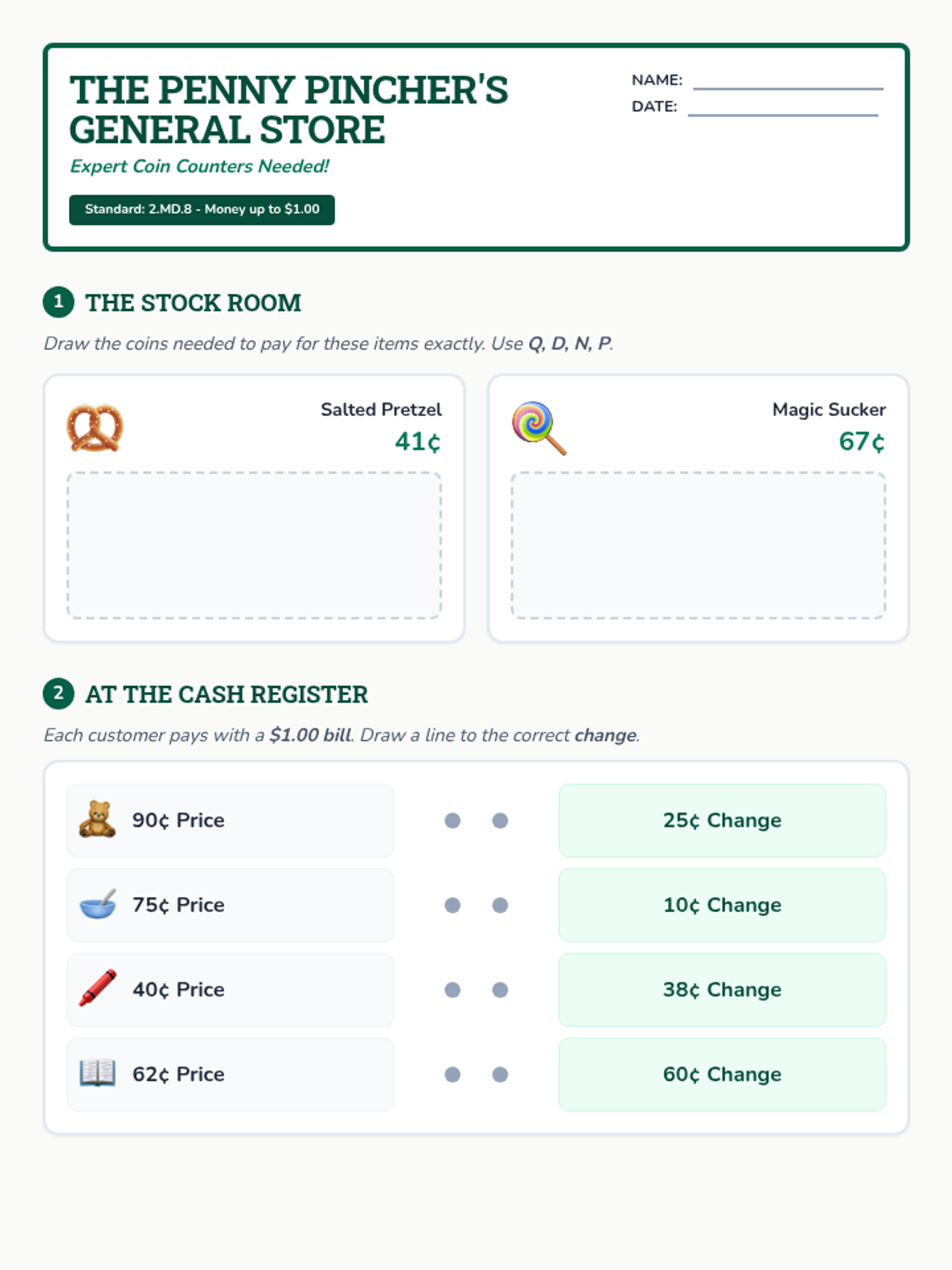
A second-grade math lesson focused on counting coins and making change up to $1.00 through the engaging theme of a vintage general store. Students solve word problems, match prices to change, and practice visual coin representation.
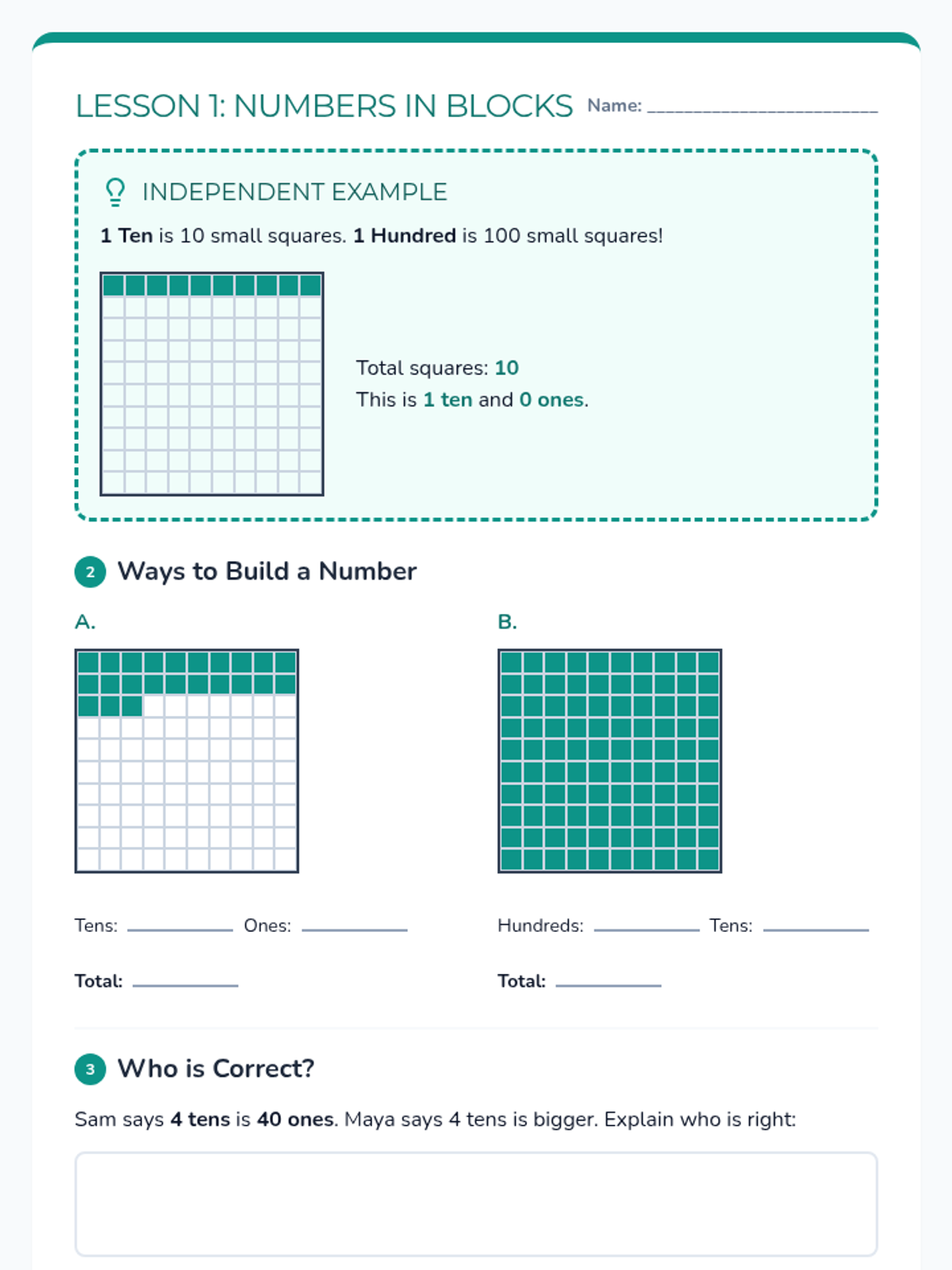
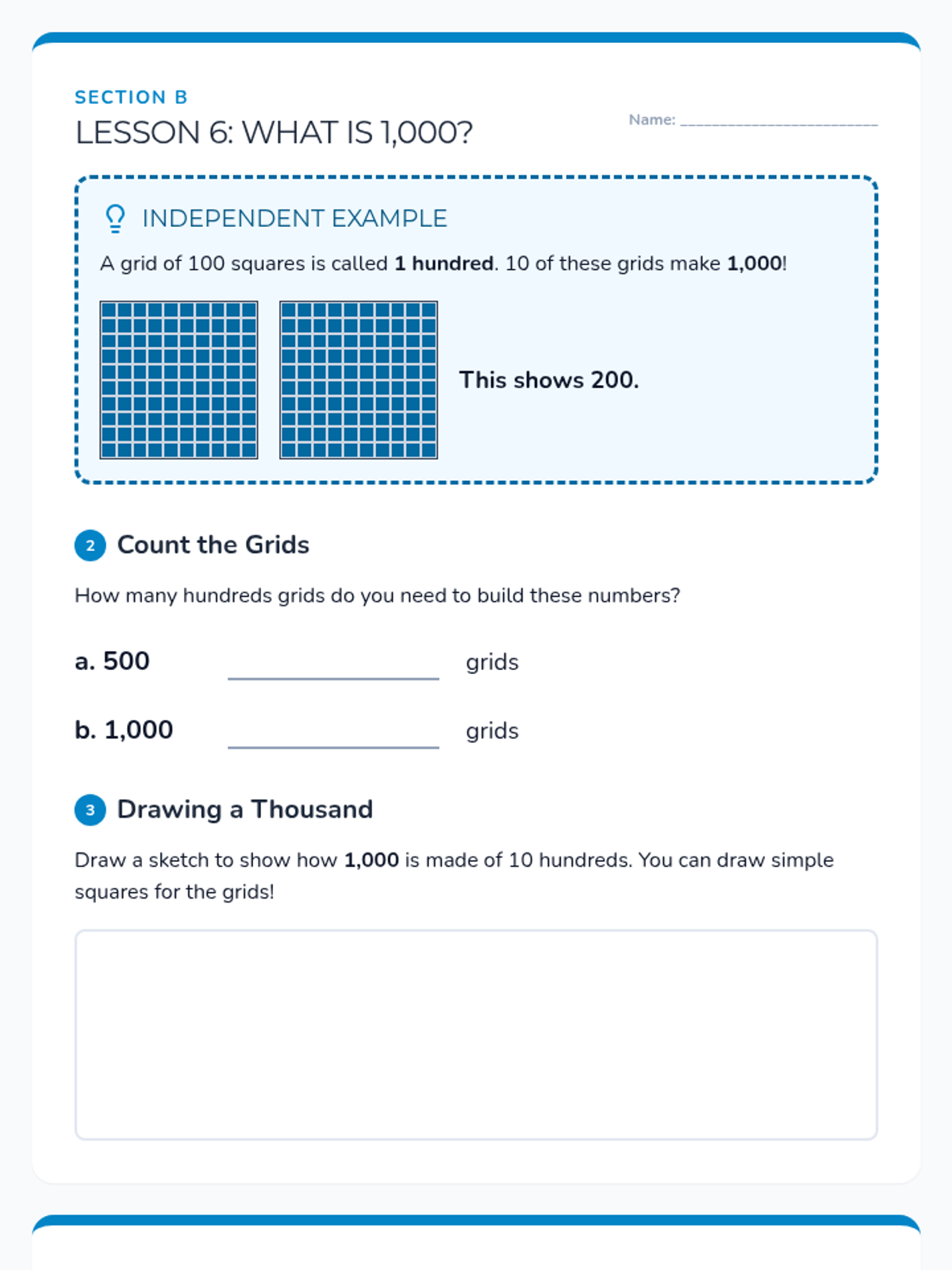
A set of activities adapted from a 4th-grade decimals unit to a 2nd-grade place value level, focusing on hundreds, tens, and ones with clear examples for independent work.
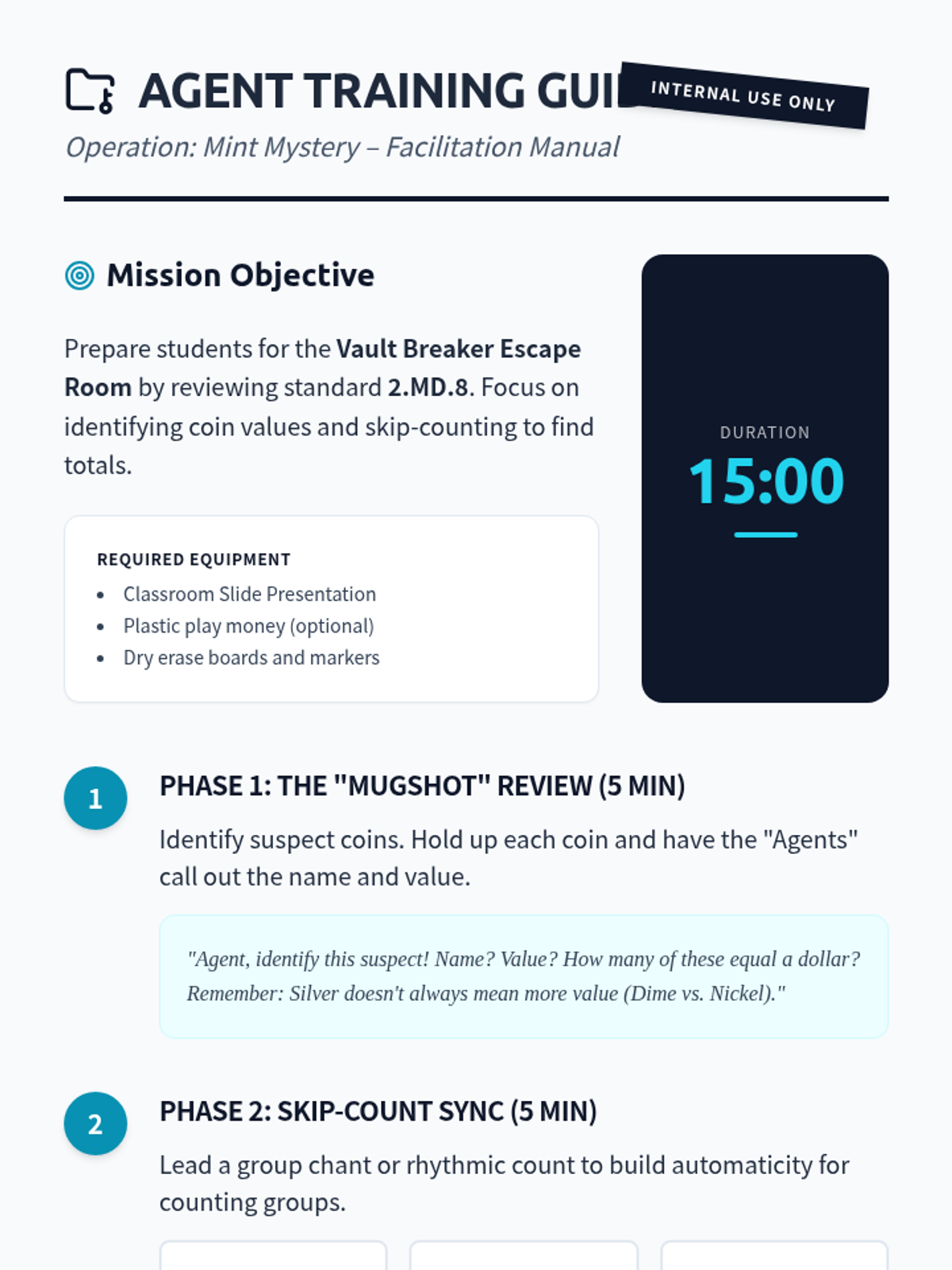
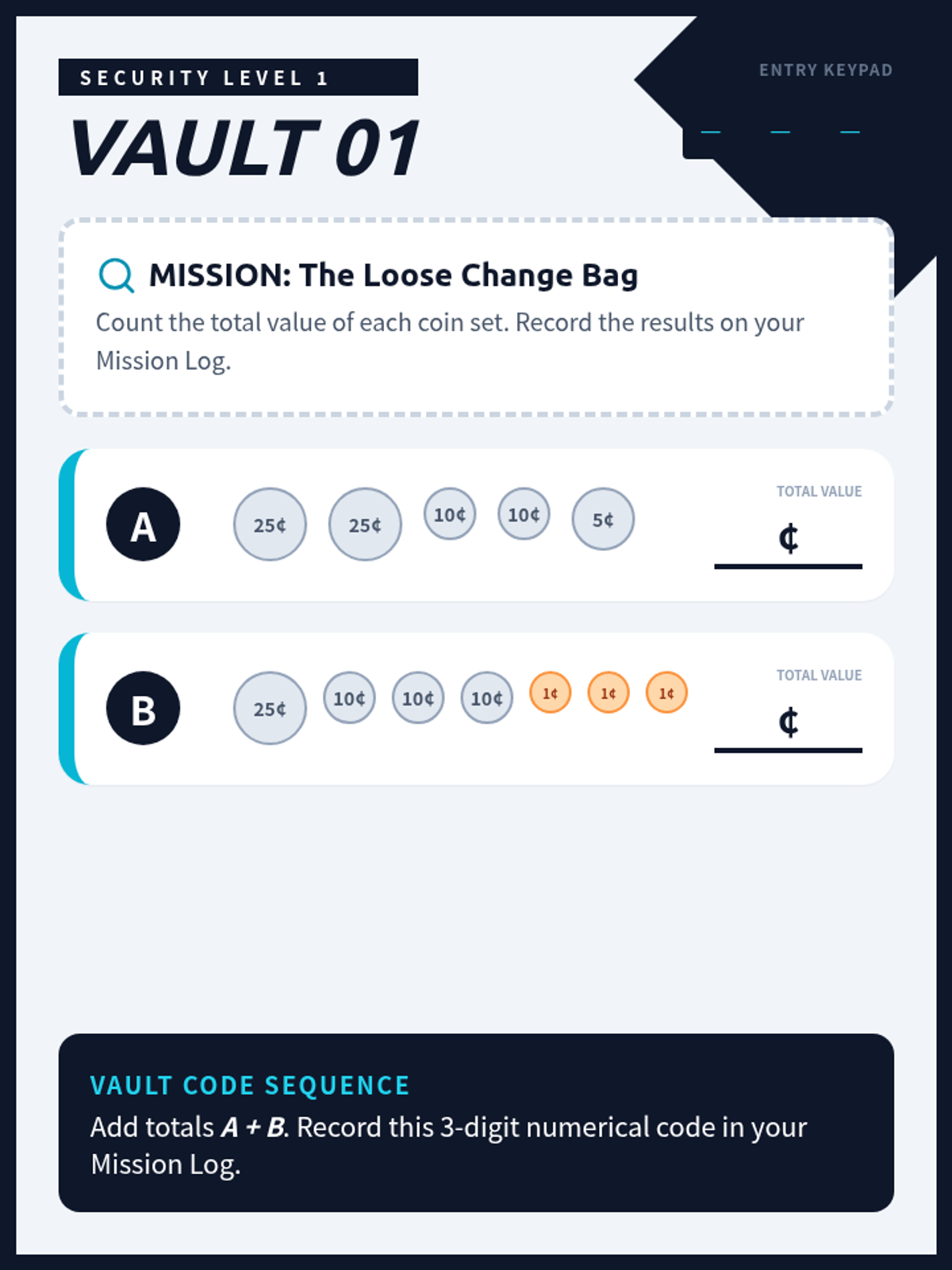
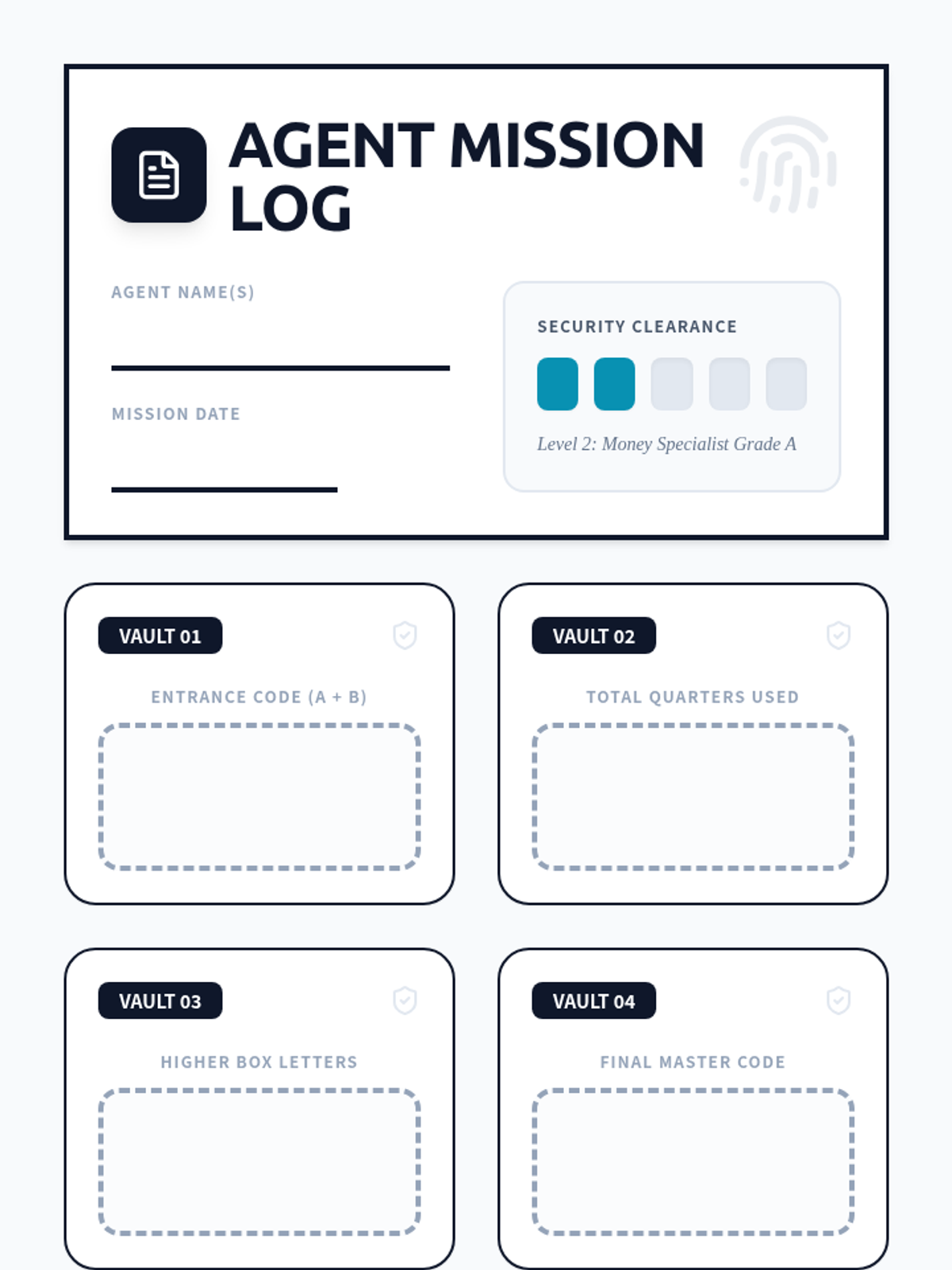
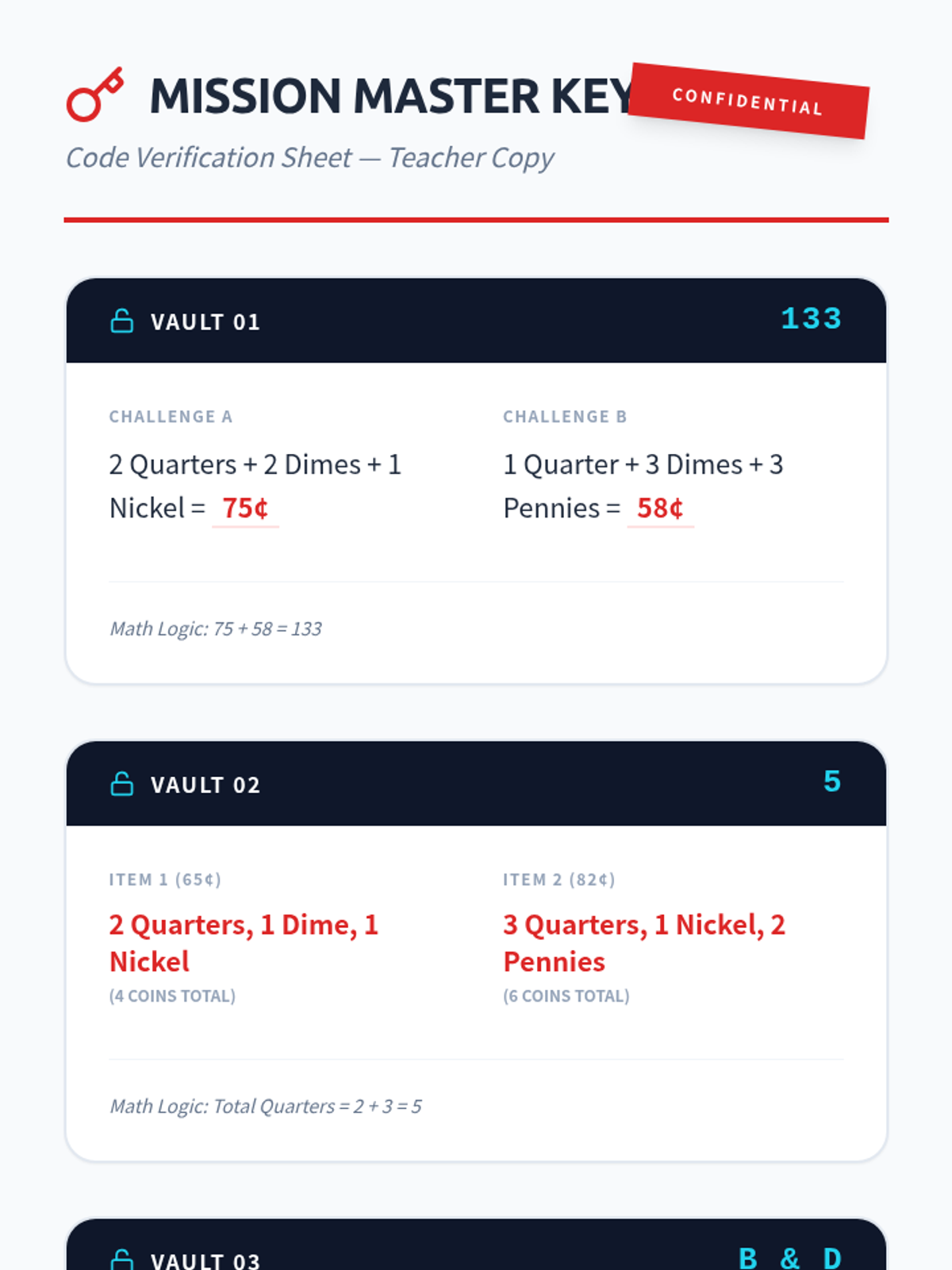
A high-stakes math escape room where students use money-counting skills to unlock a series of digital vaults and recover stolen artifacts. Students will master counting coins, solving money word problems, and comparing currency values.
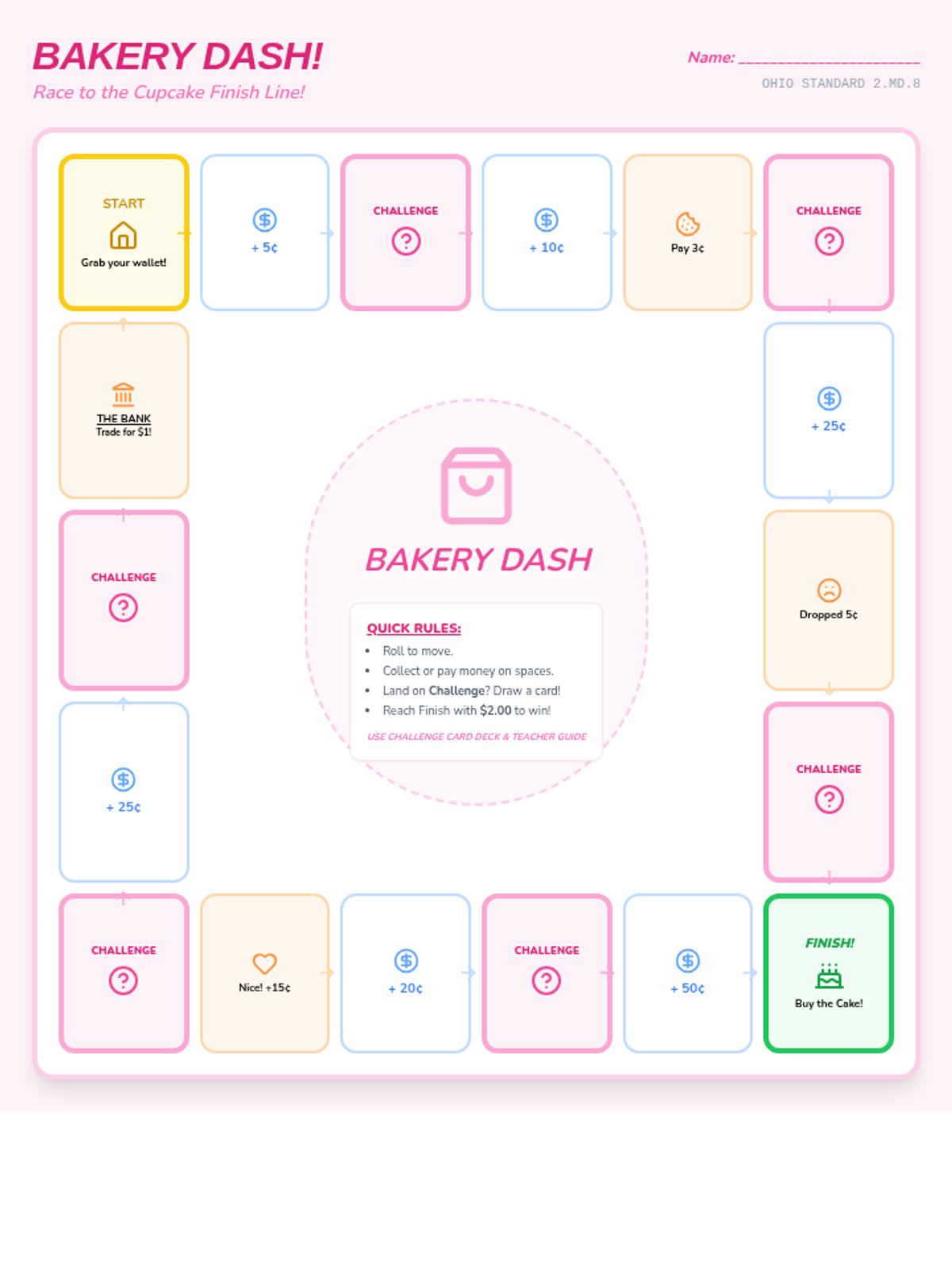
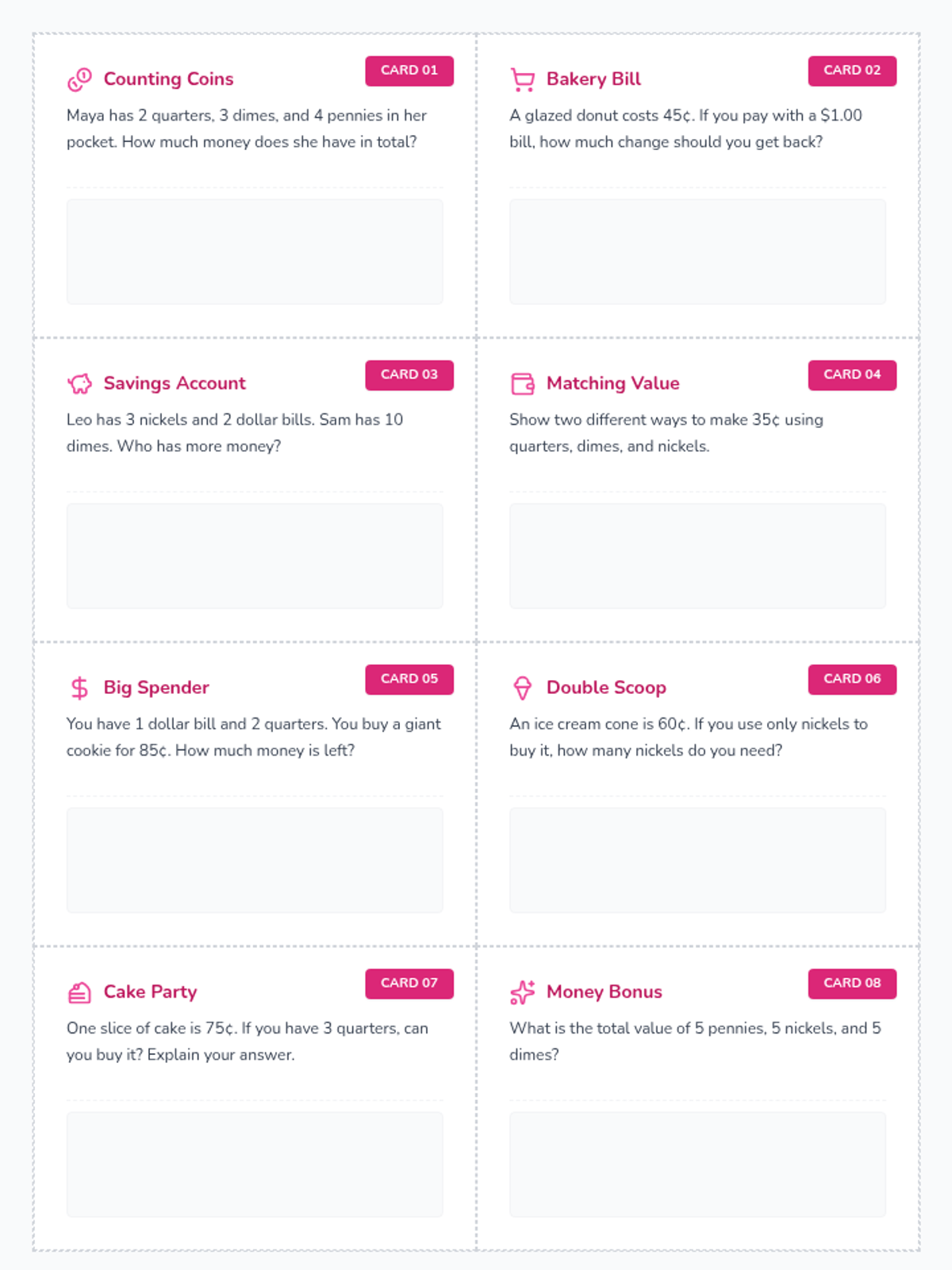
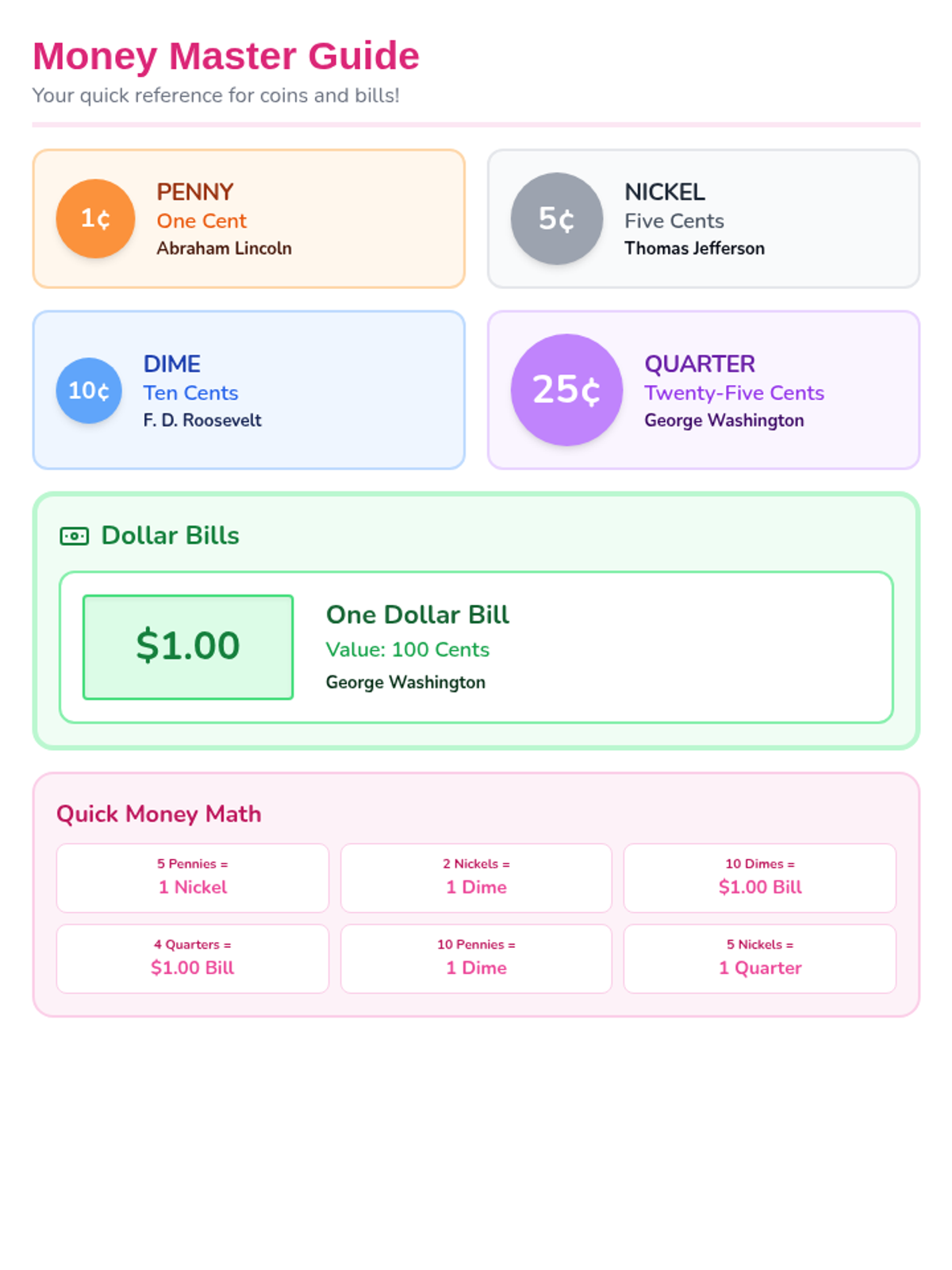
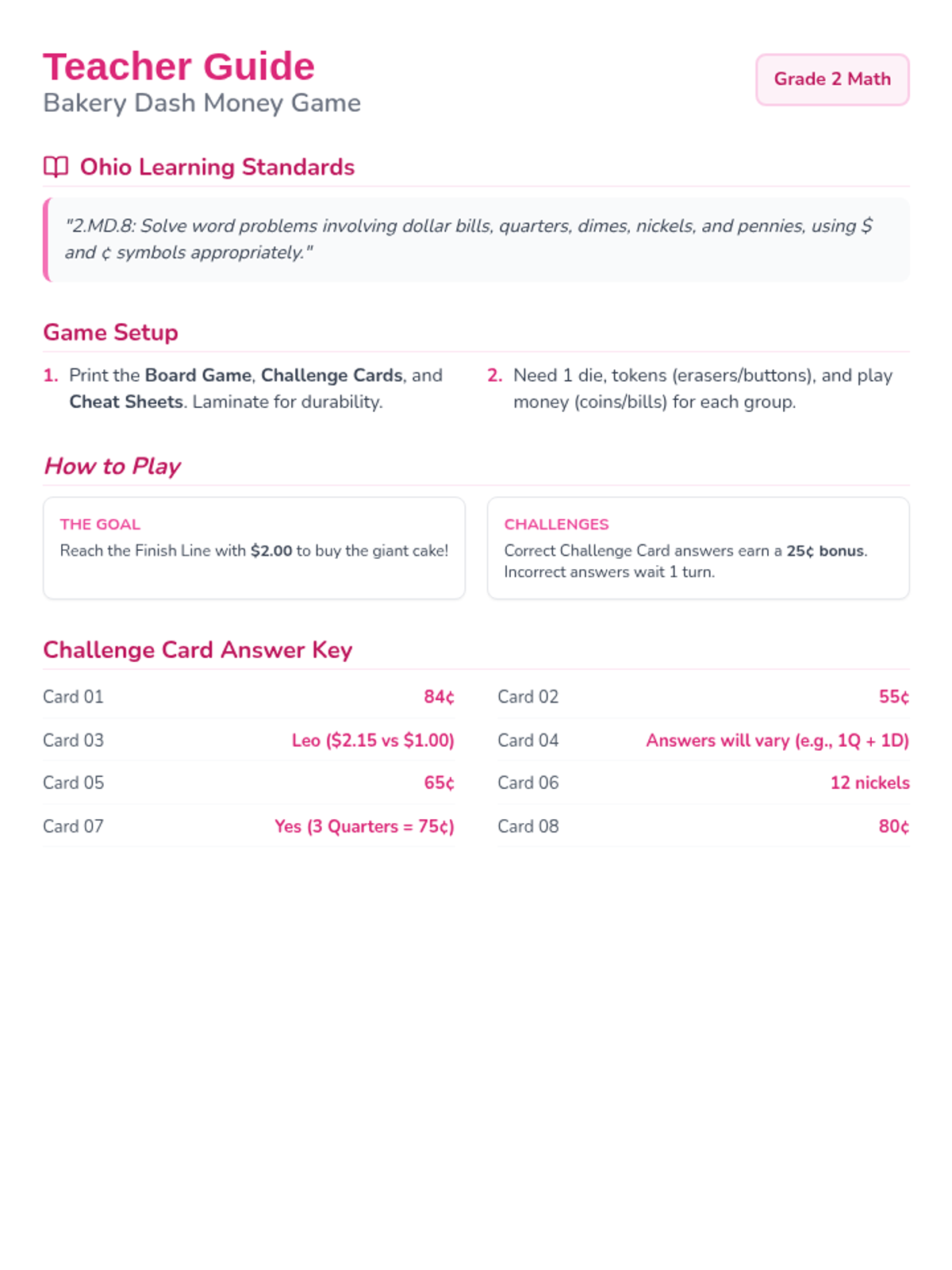
A high-energy board game lesson where students master counting coins and solving money word problems through a bakery-themed shopping adventure.
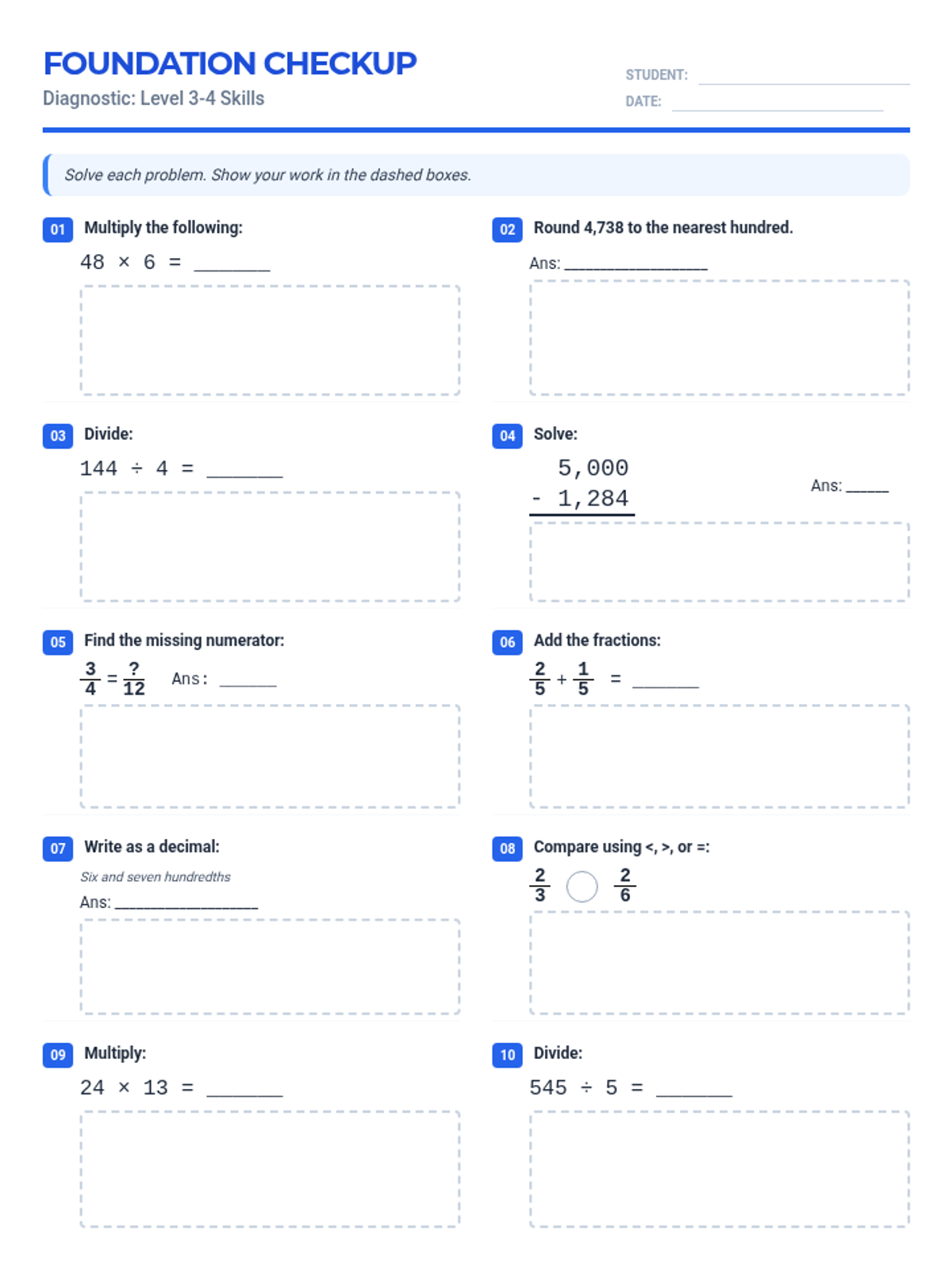
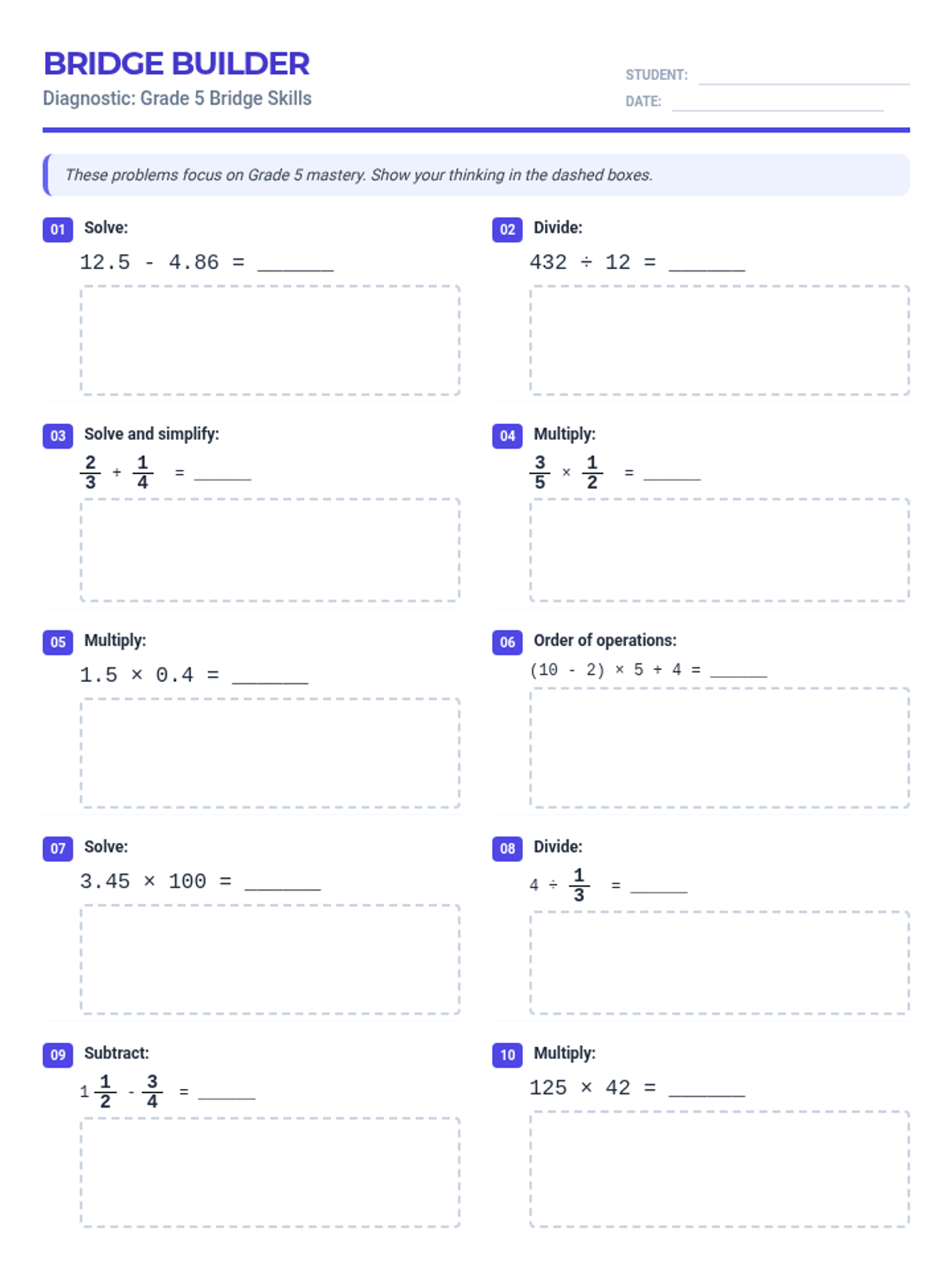
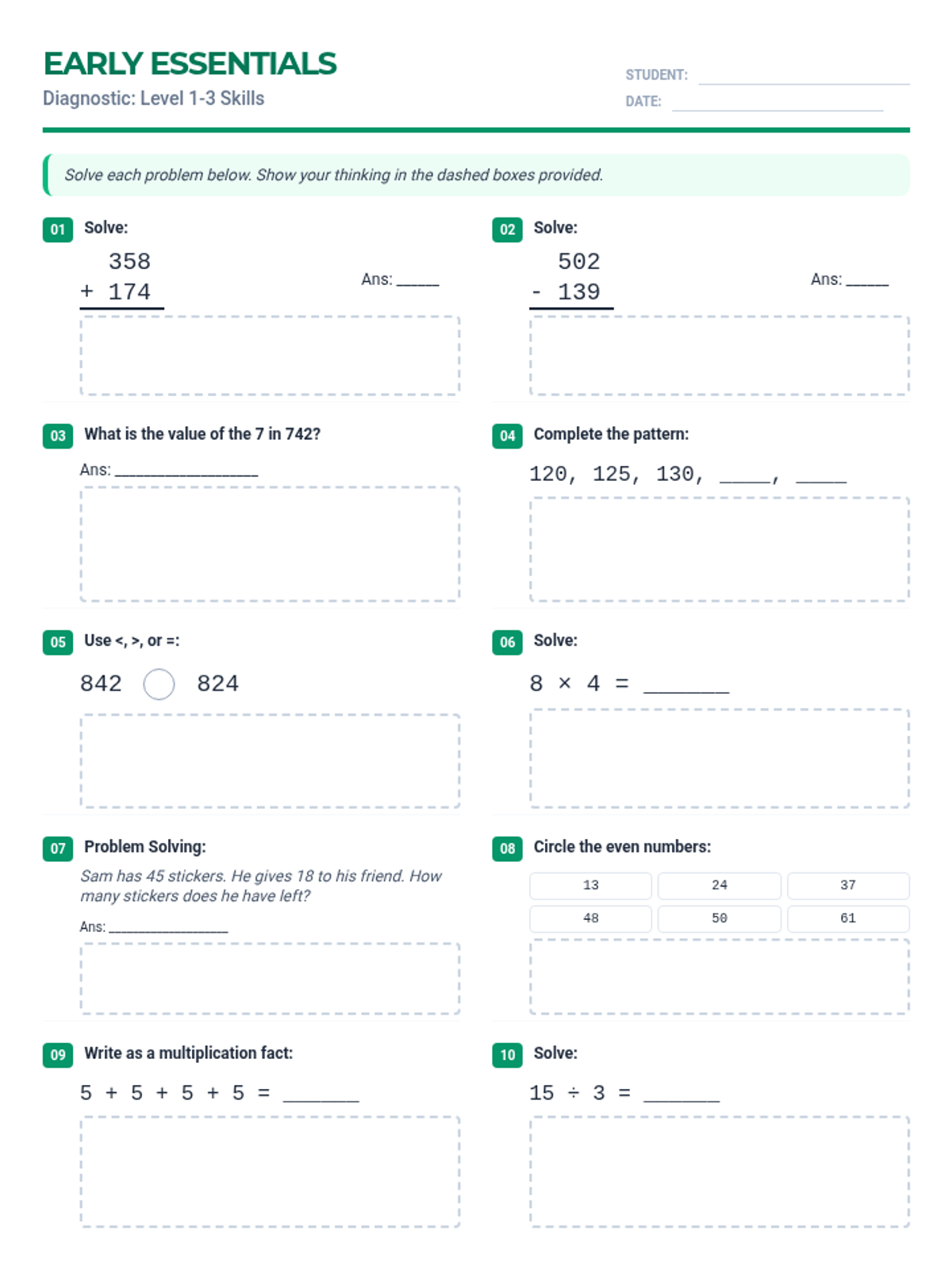
A pair of diagnostic assessments designed to pinpoint gaps in foundational number sense, fractions, and decimals, bridging 3rd-4th grade concepts to 5th grade mastery in preparation for 6th grade math.
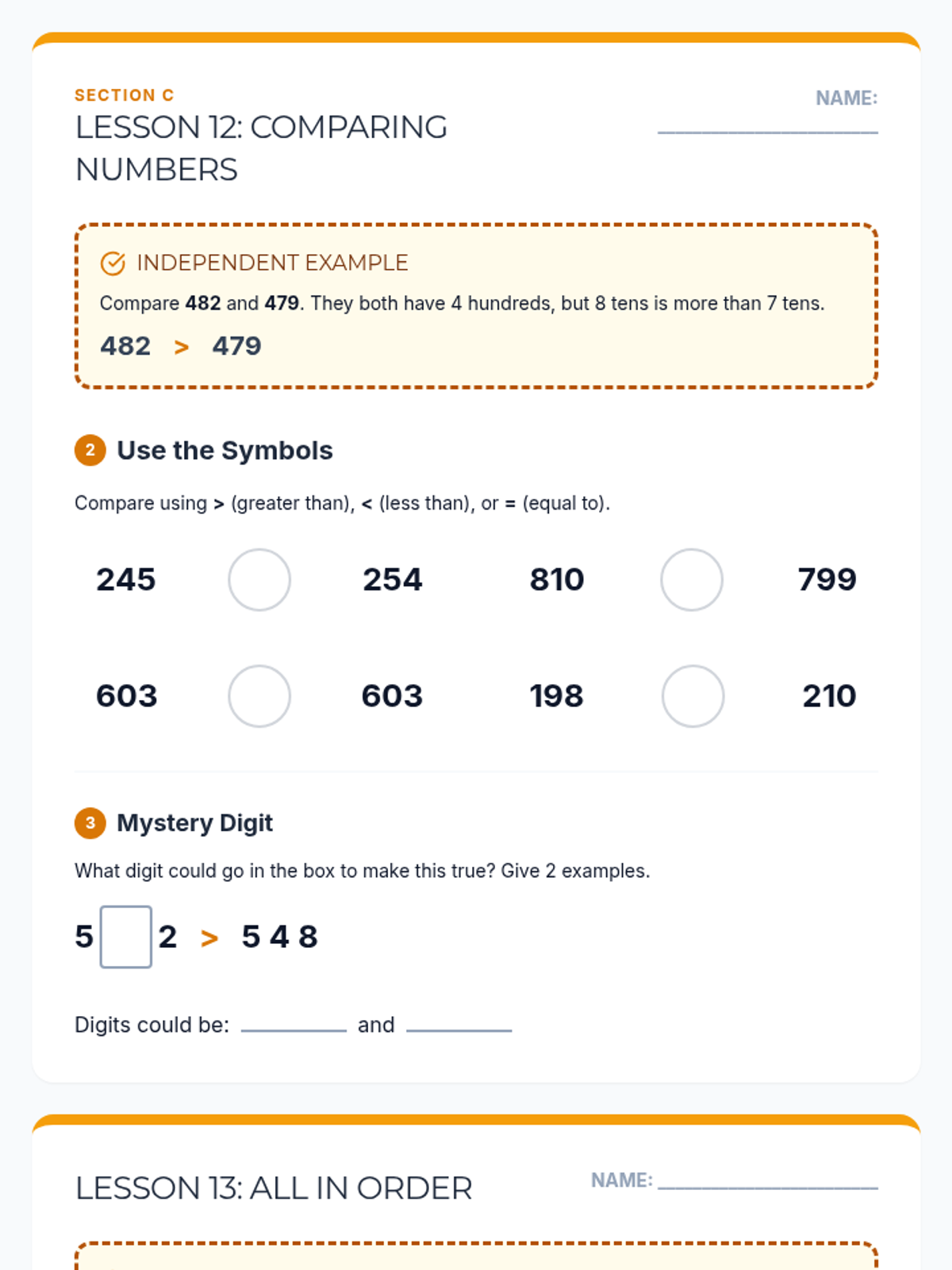
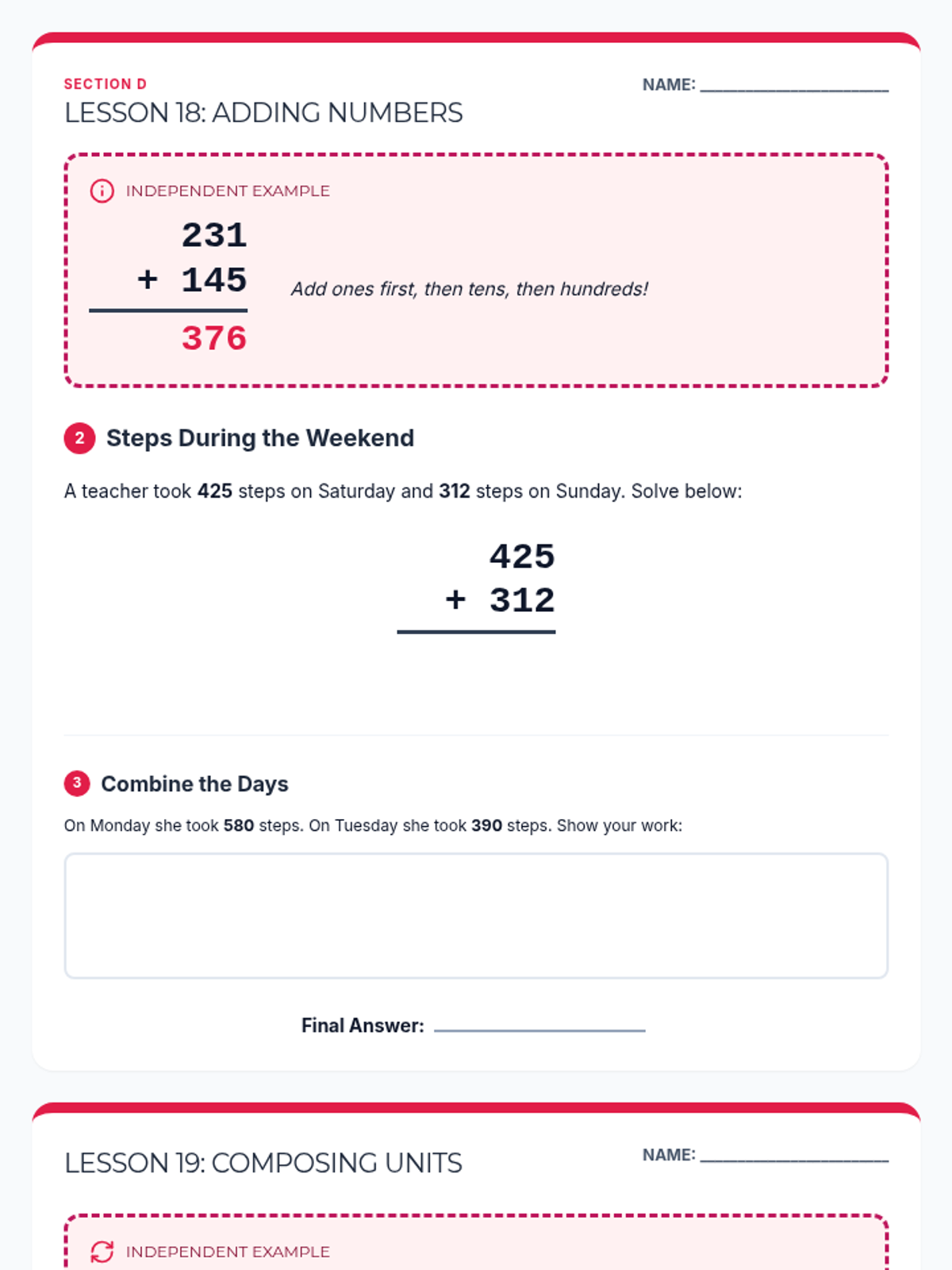
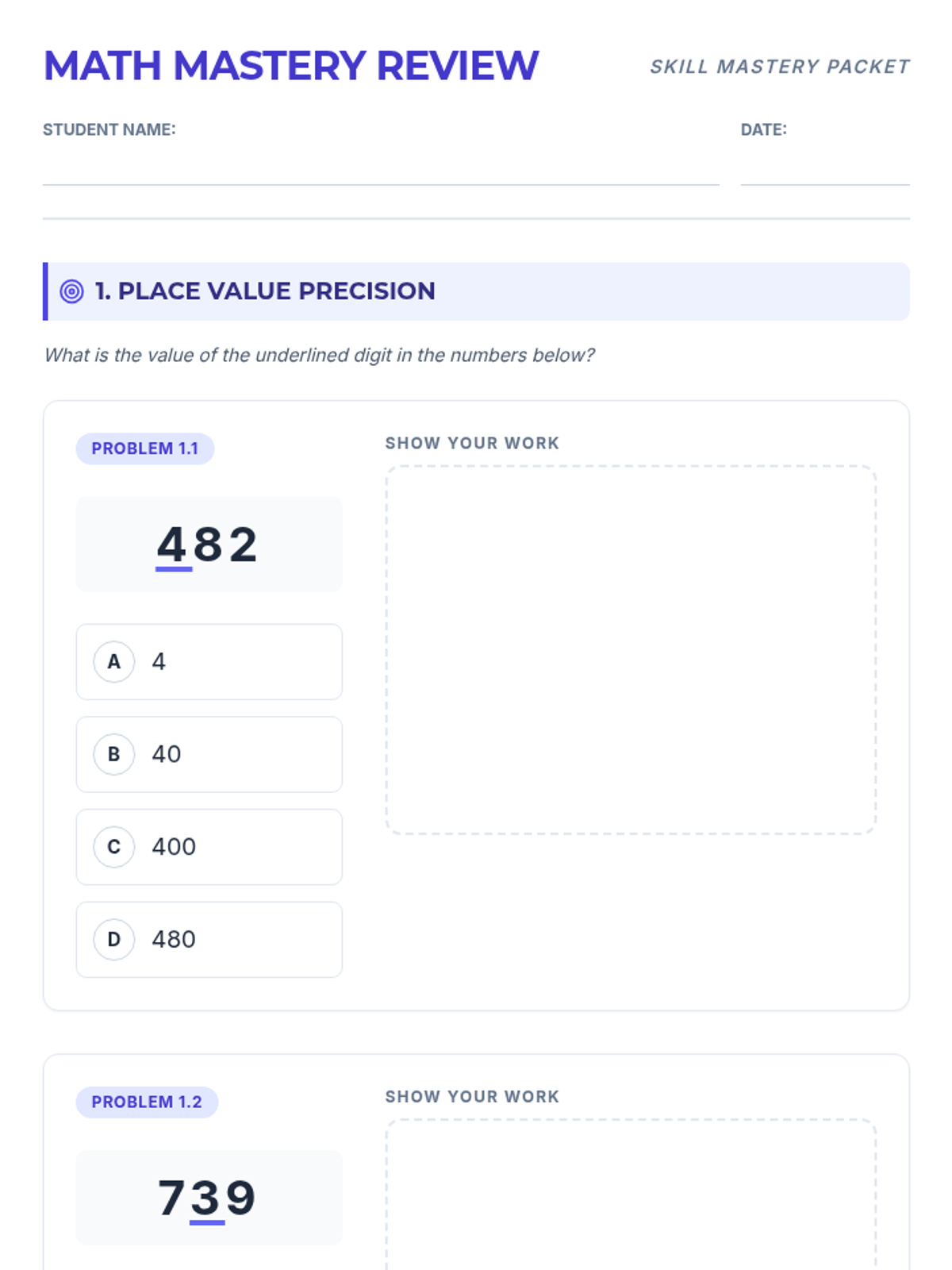
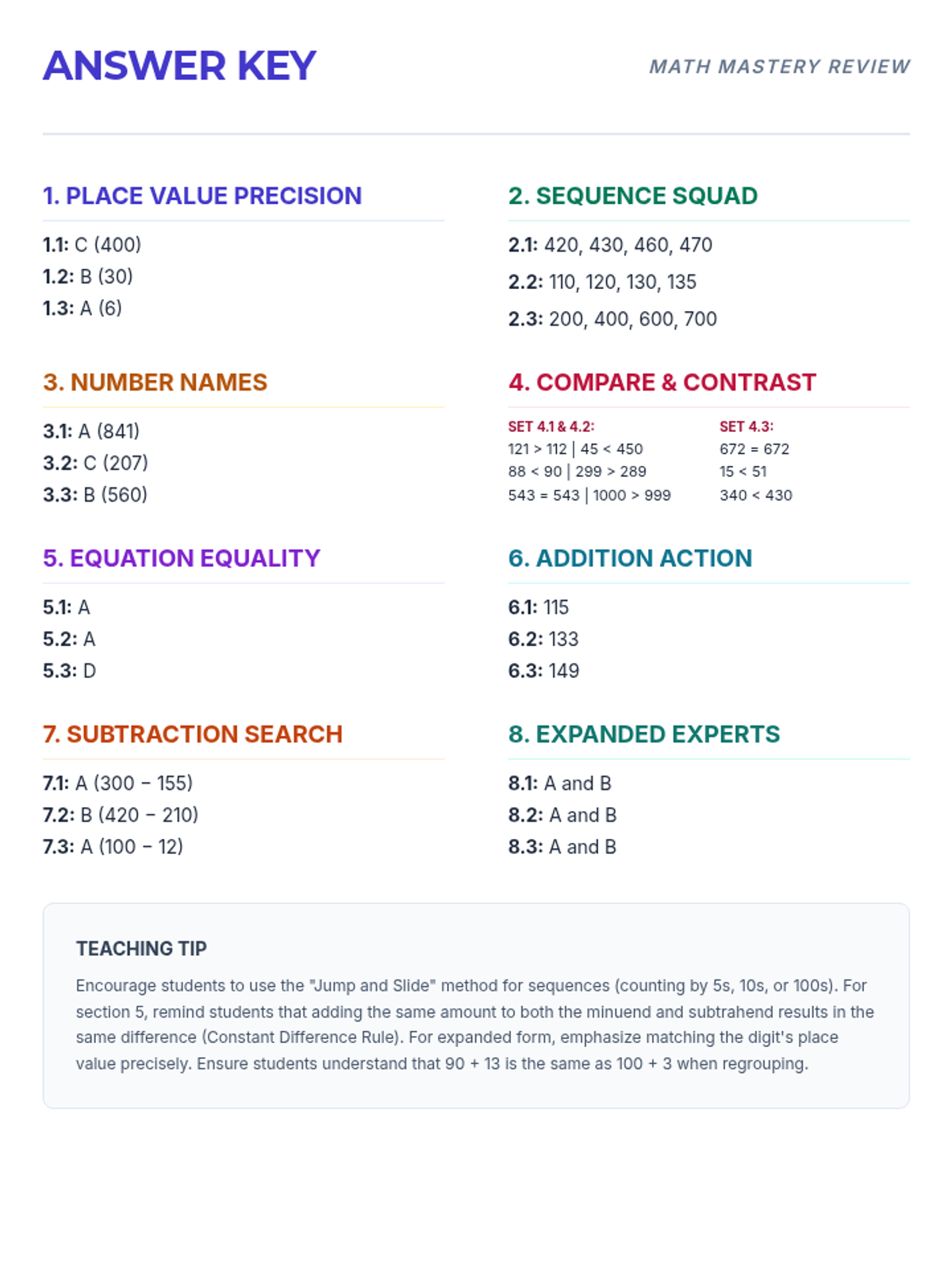
A comprehensive math review lesson focused on place value, number patterns, comparisons, and addition/subtraction strategies for 2nd and 3rd grade students.
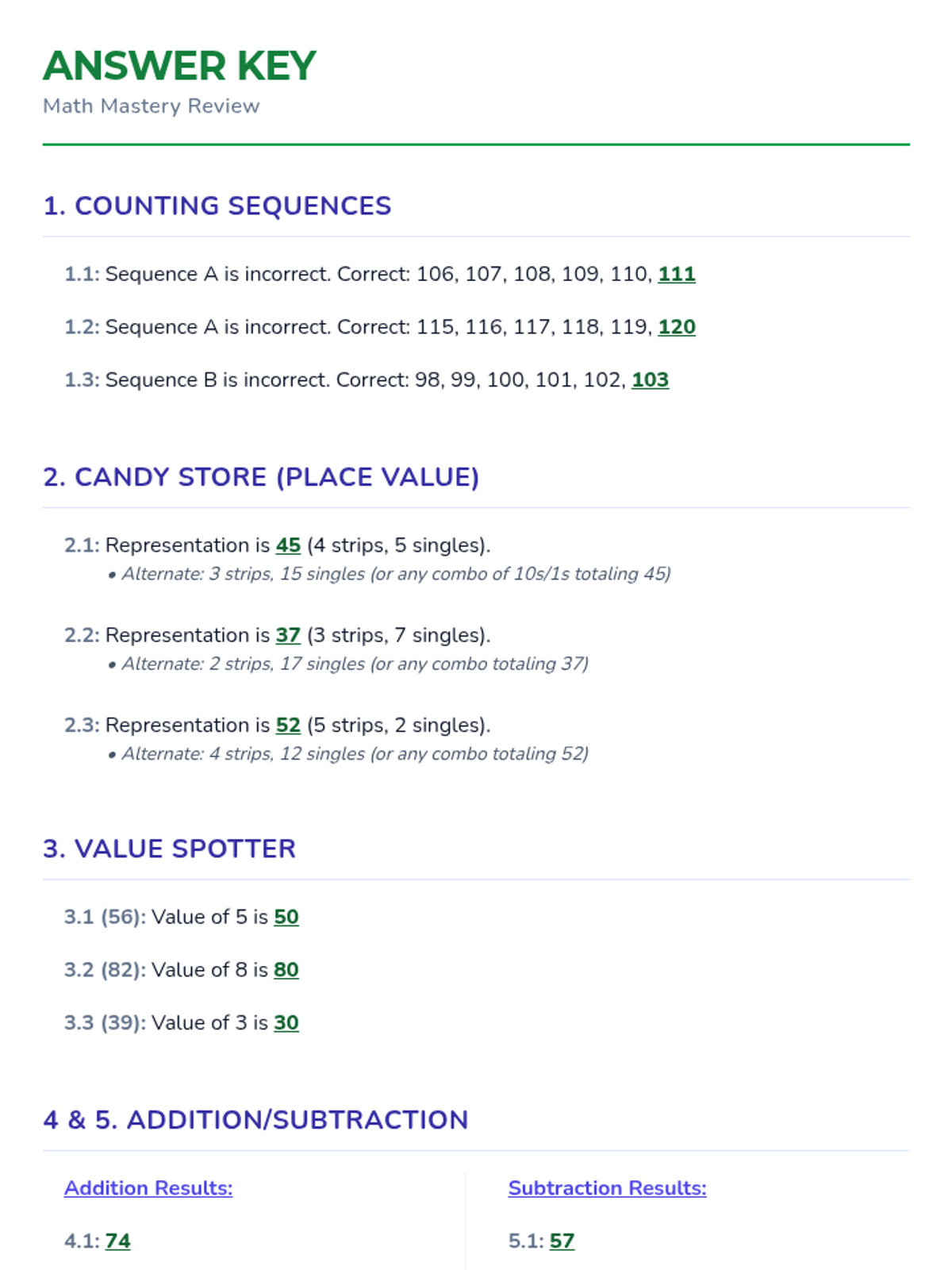
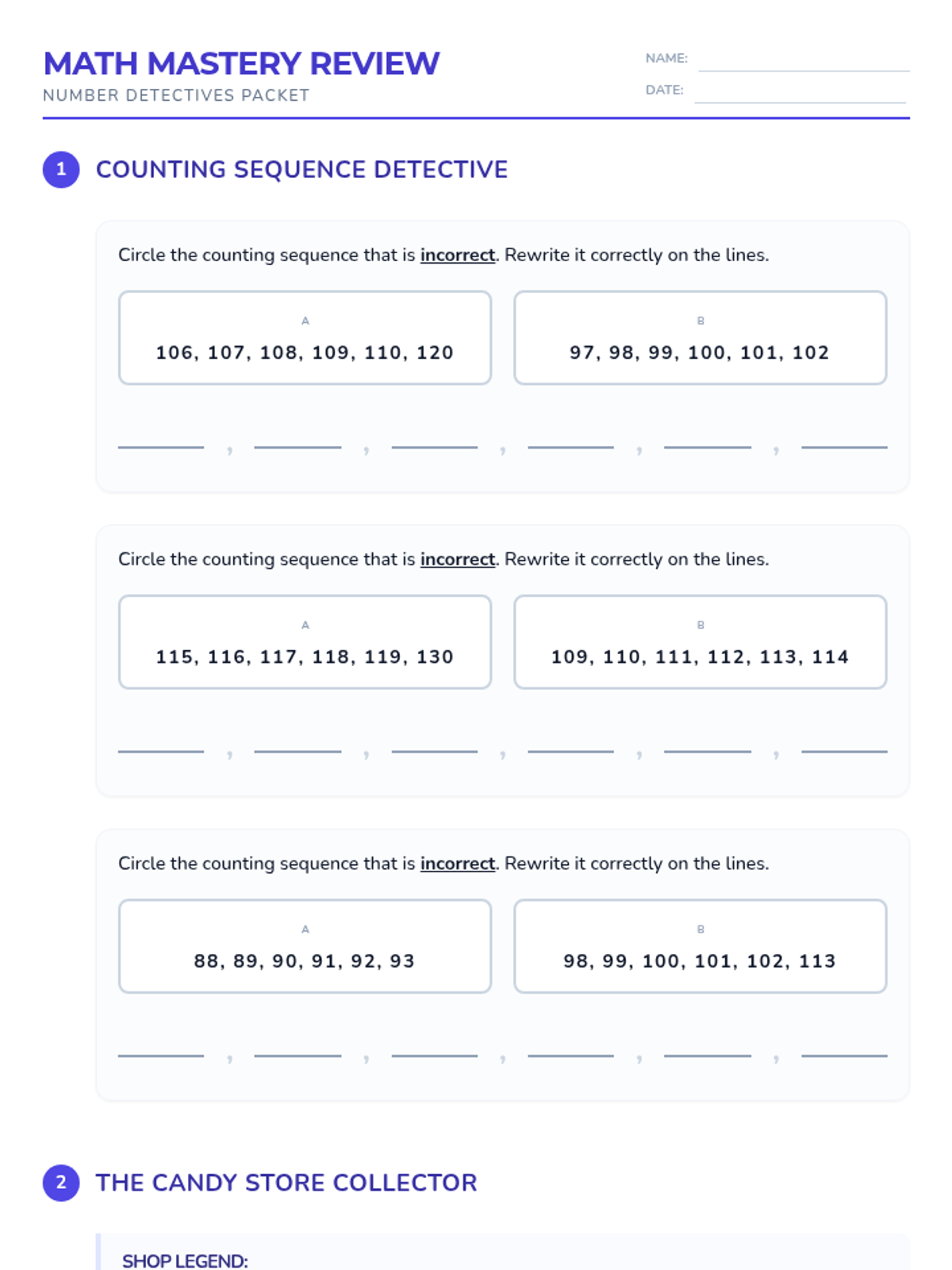
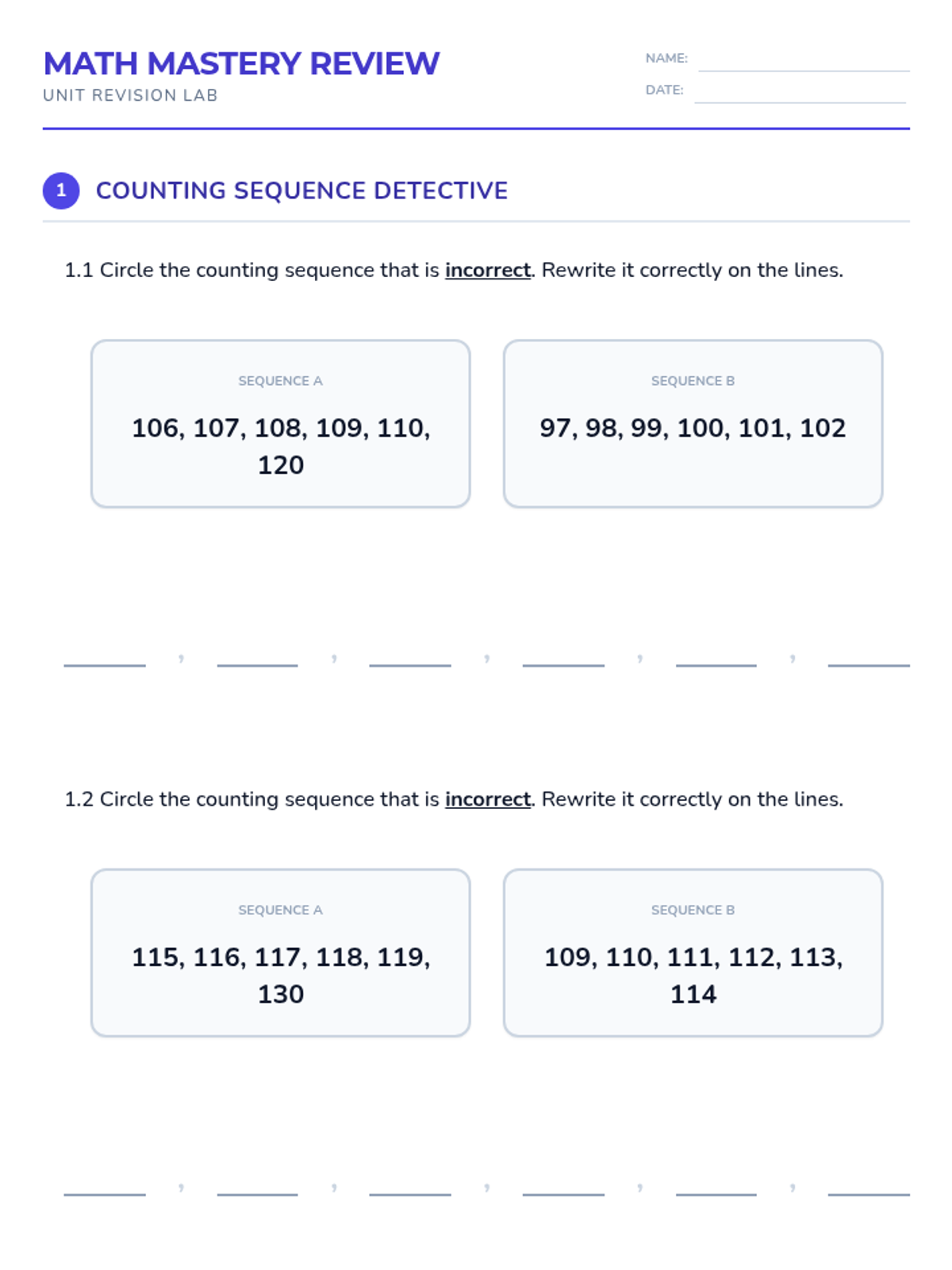
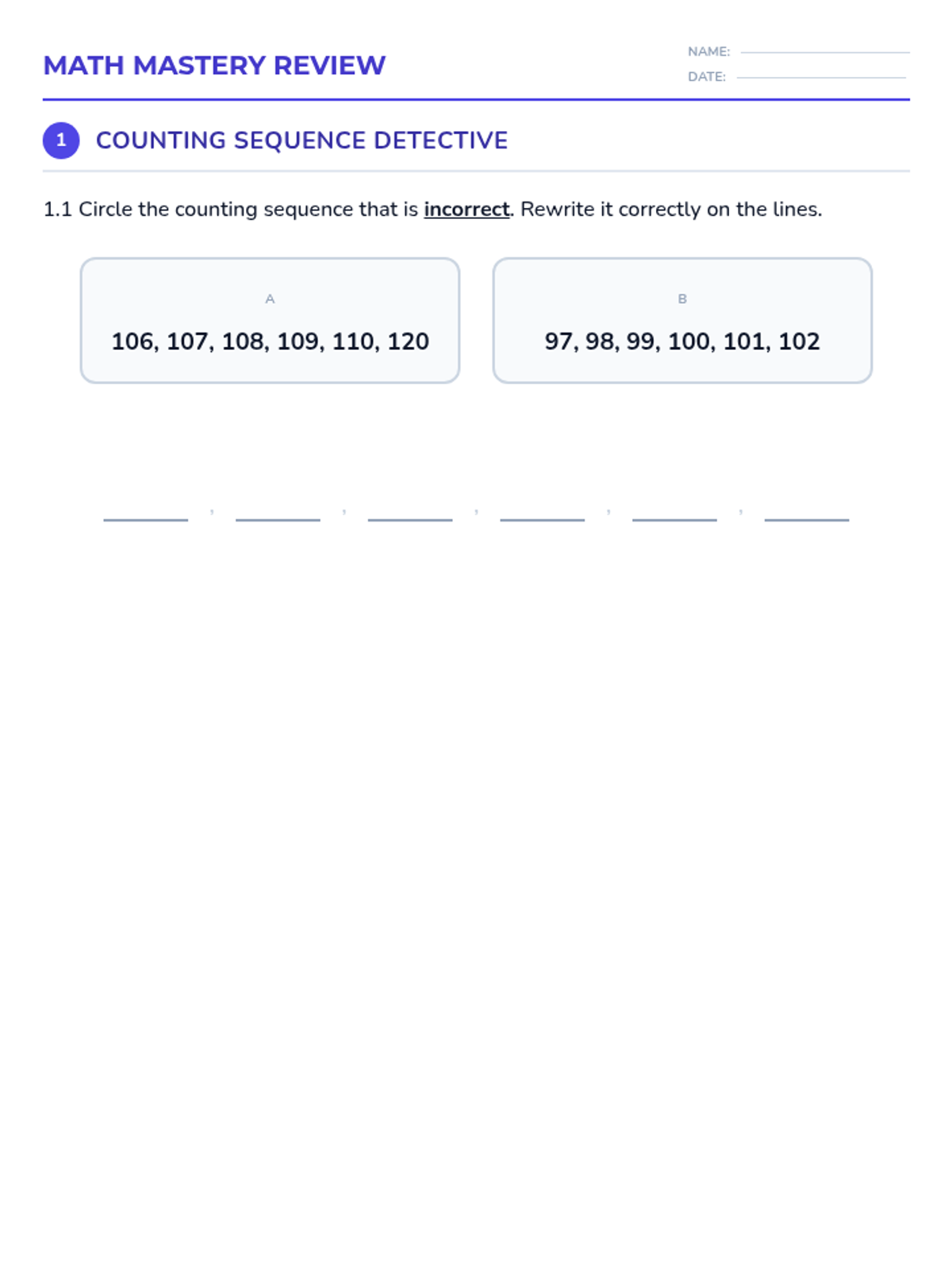
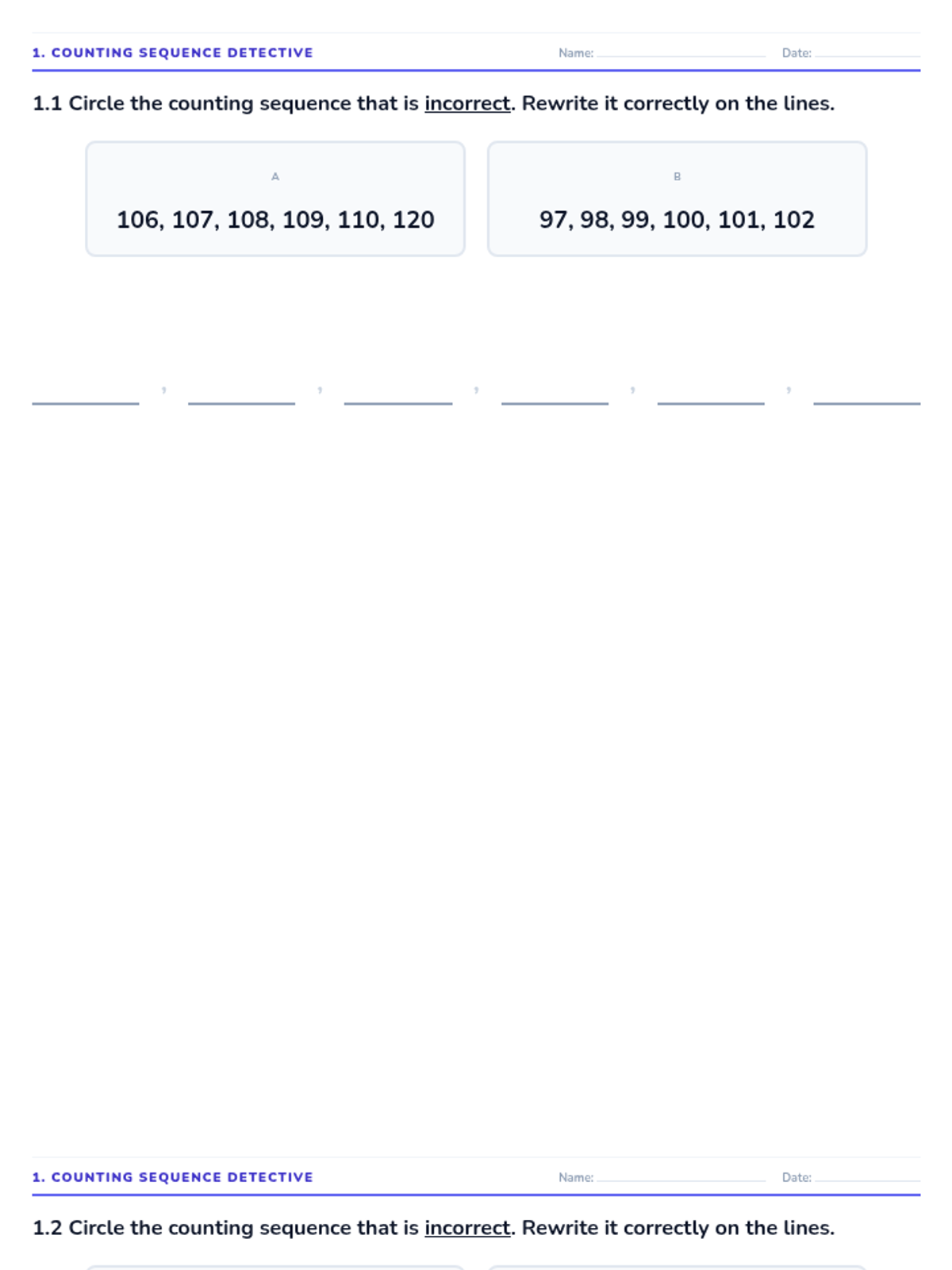
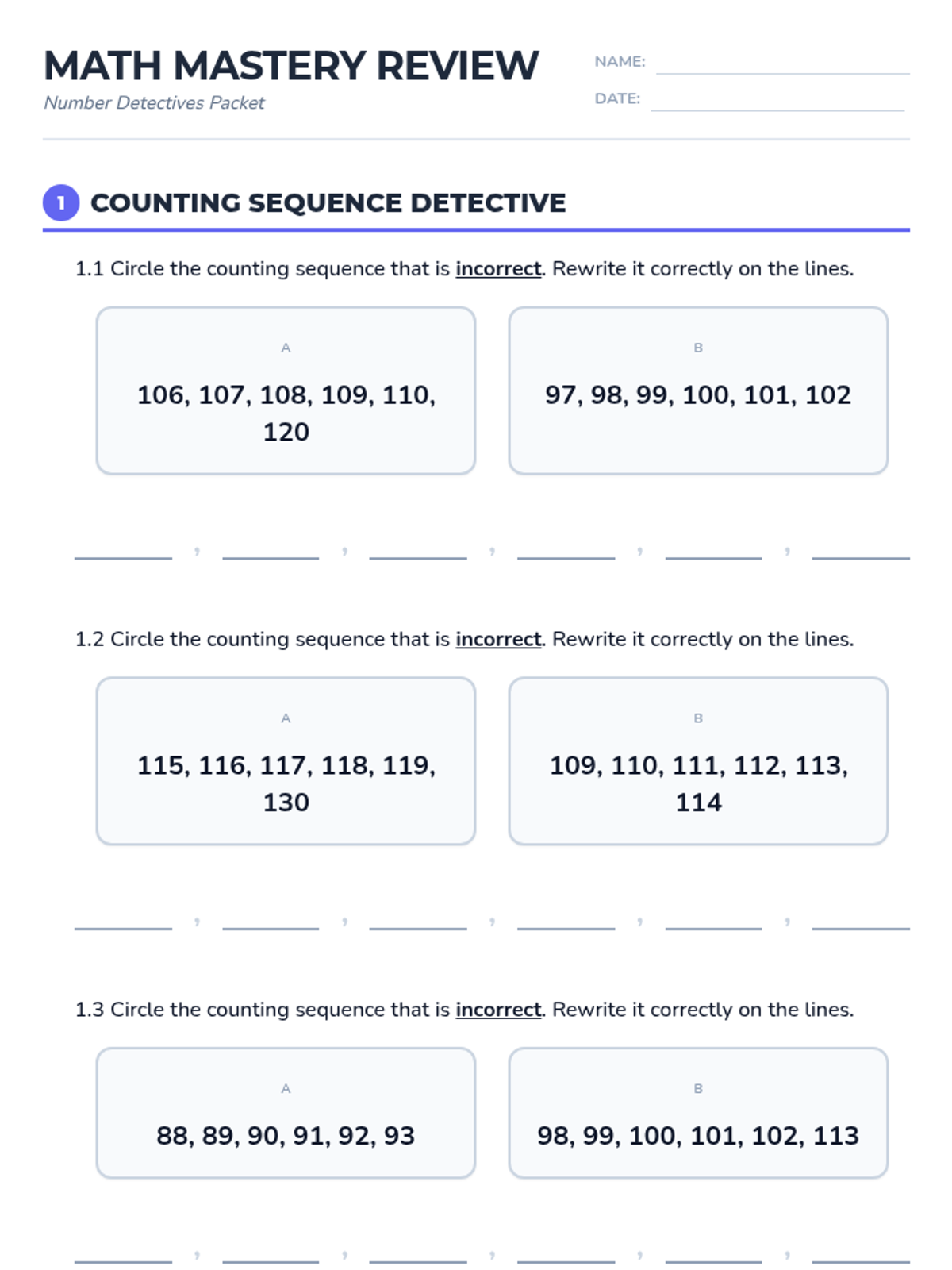
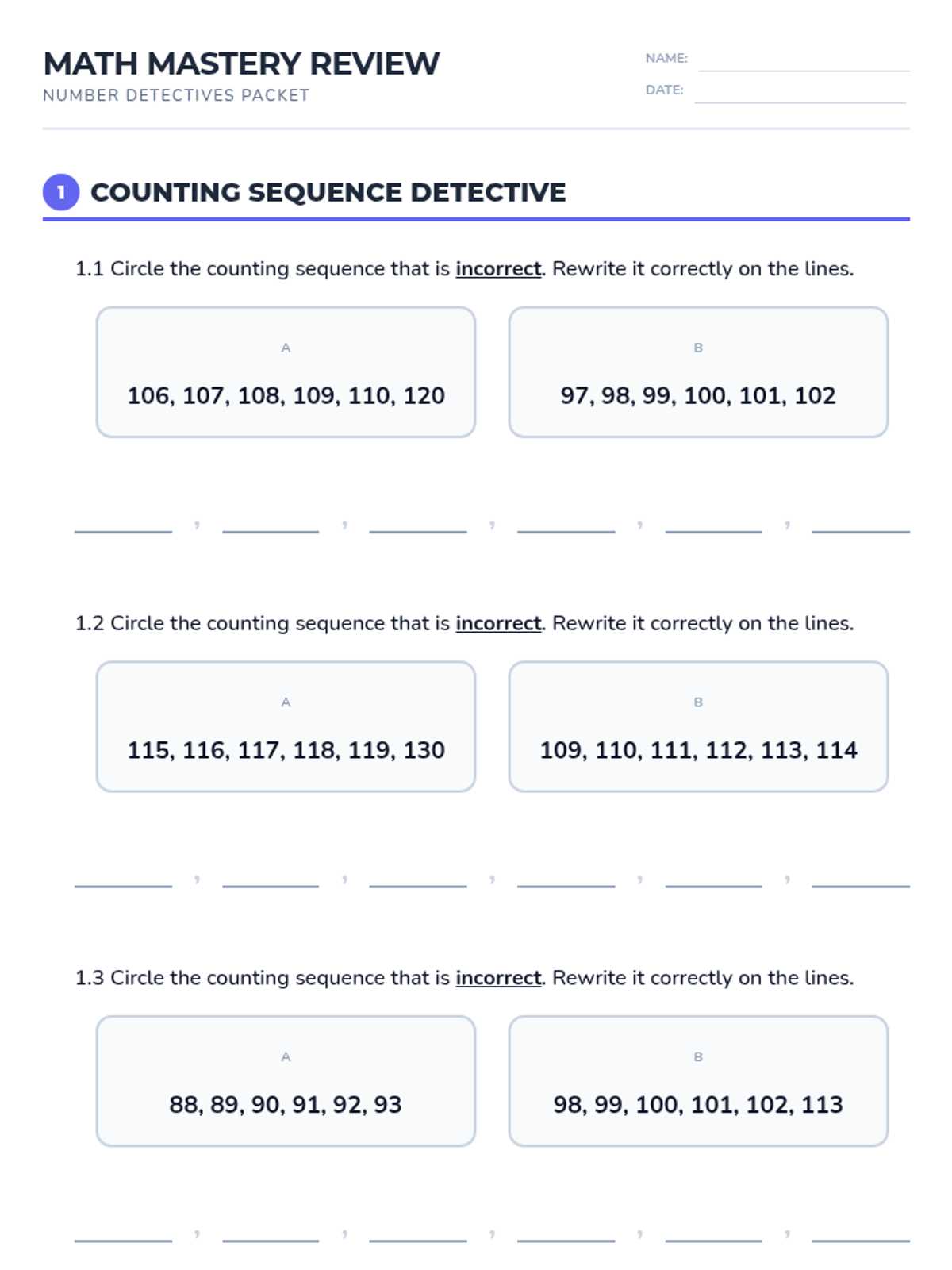
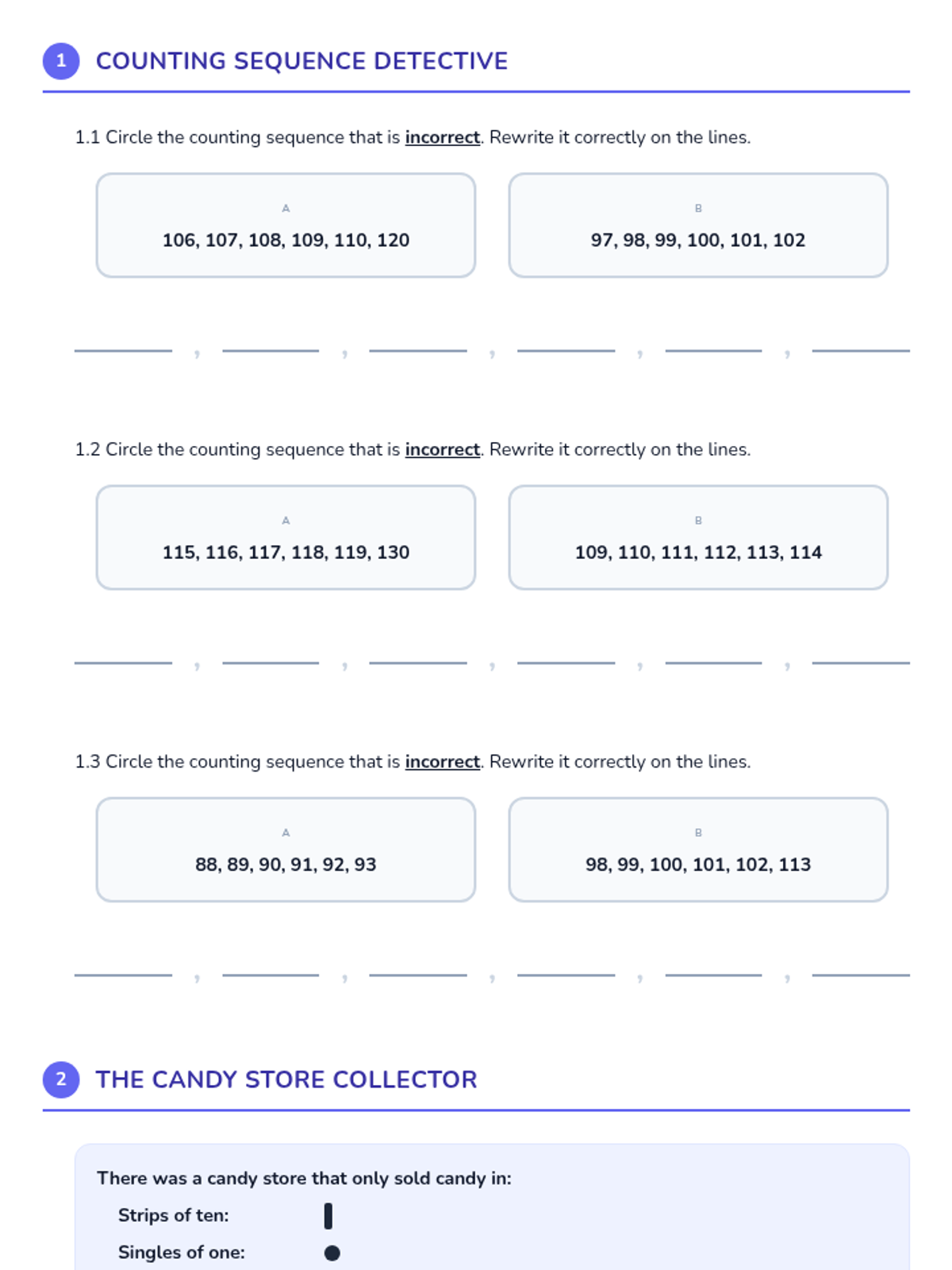
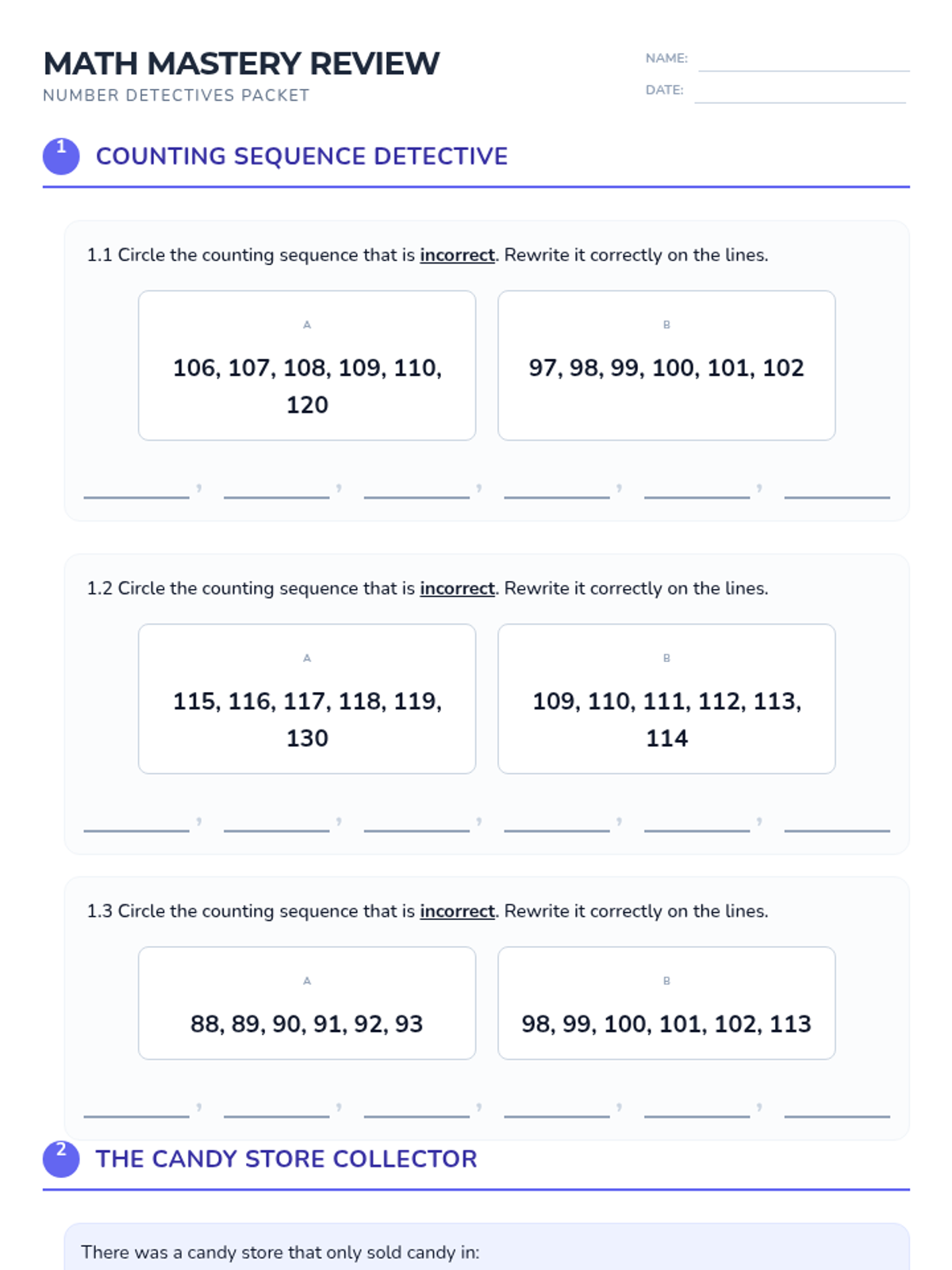
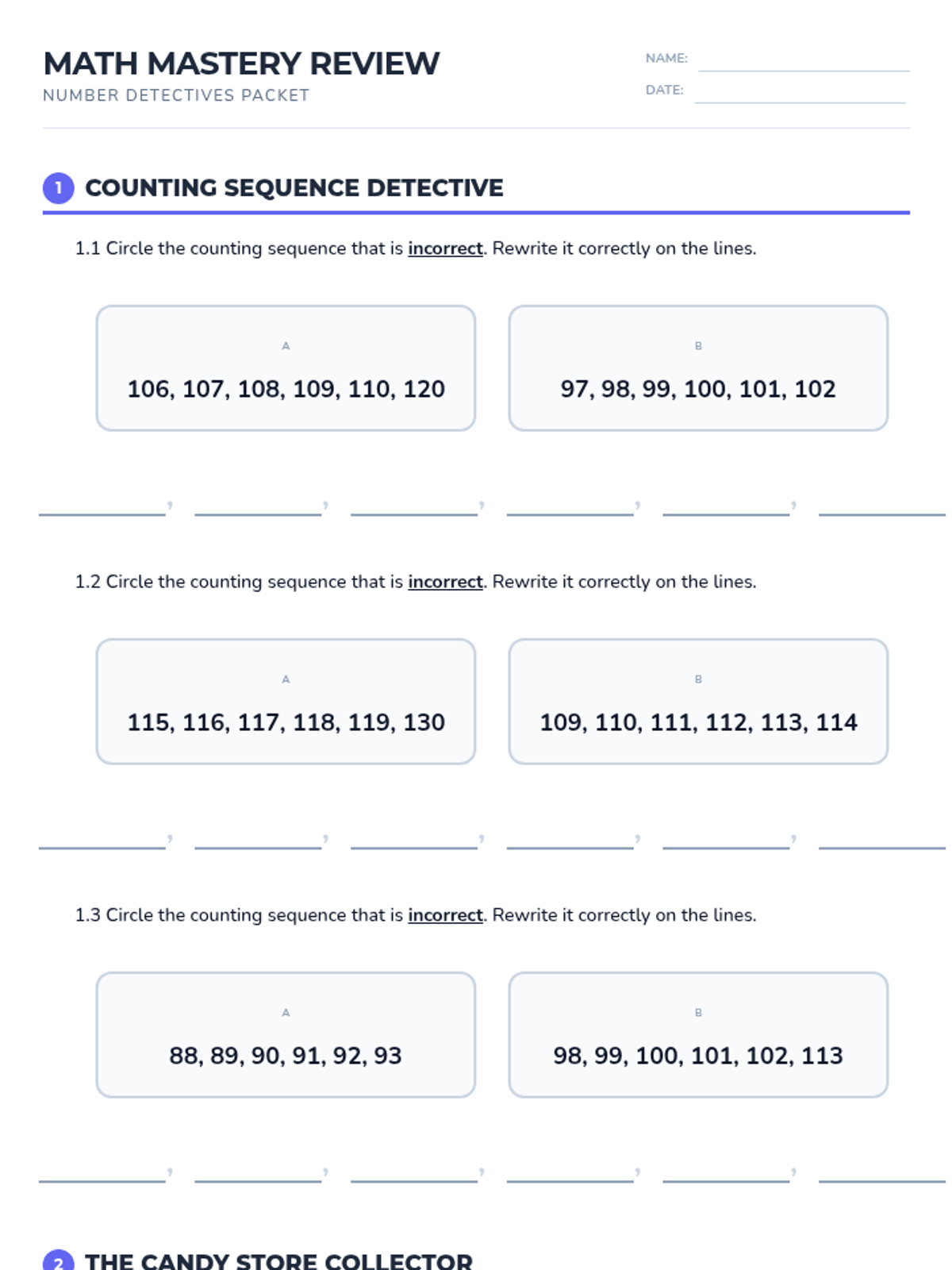
A comprehensive review packet covering counting sequences, place value, double-digit addition/subtraction with multiples of ten, and error analysis of addition strategies. Each core question type is practiced three times to ensure mastery.
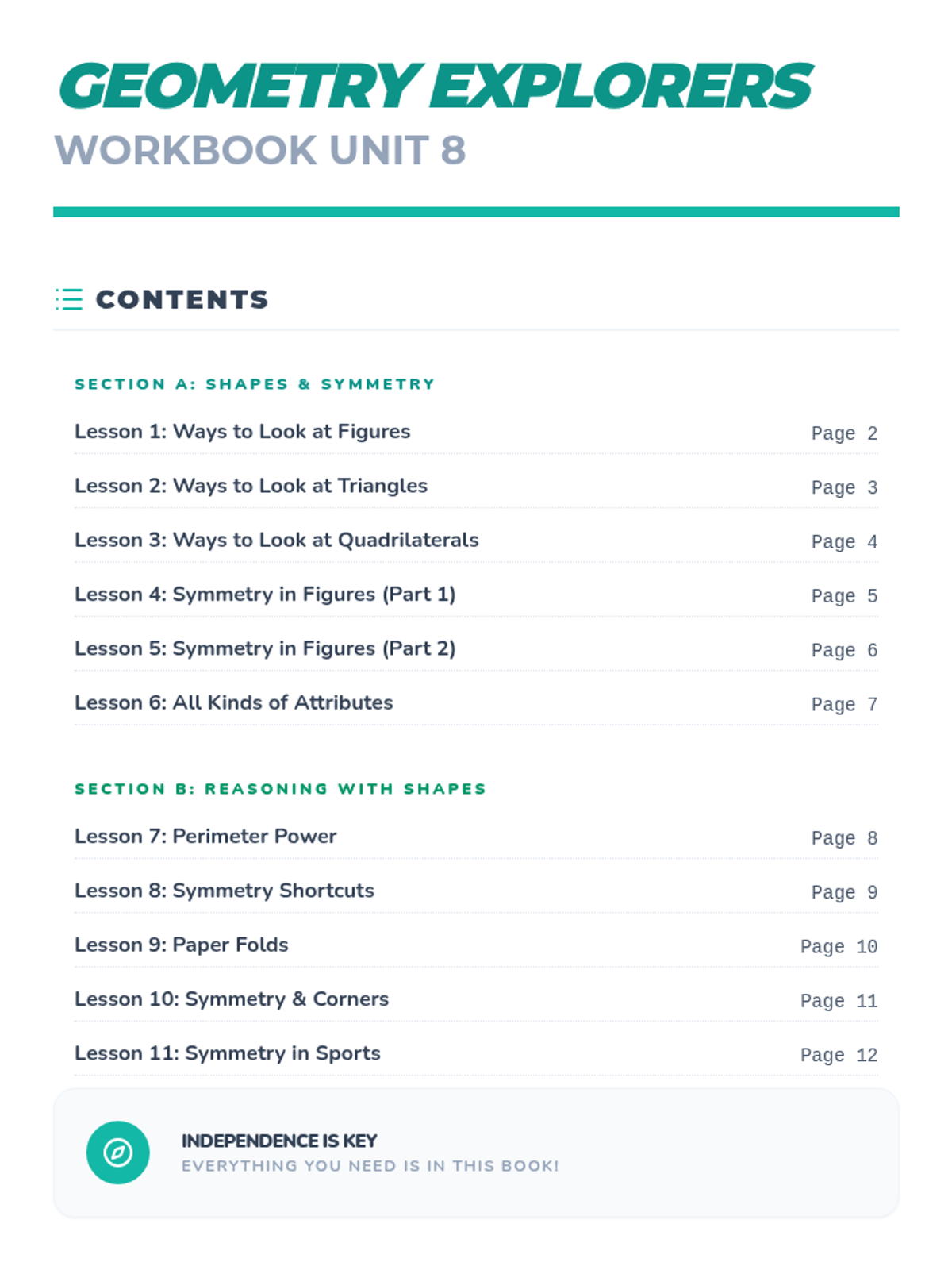
A collection of geometry lessons adapted for 2nd grade, focusing on identifying flat shapes by their attributes, exploring symmetry, and drawing geometric figures. This lesson covers basic shape properties, triangle and quadrilateral identification, and the fundamentals of symmetry.
A comprehensive unit on even/odd numbers, skip counting, and rectangular arrays. Students explore patterns using visual representations and context-based activities.
A visual guide connecting story problems to equal group models. The lesson covers multiplication (finding the total), sharing division (finding the group size), and grouping division (finding the number of groups).