Lenny LearningLenny
Create
Explore
Workspace
LoginSign up
MathEnglish Language ArtsScience & EngineeringSocial StudiesGlobal LanguagesHealth & Physical EducationSpecial EducationCounseling & Life SkillsArts & CreativityESL
Lenny LearningLenny
Lenny Learning
About
Training
Pricing
Support
Contact
© 2026 Lenny Learning Inc.
Counseling & Life SkillsSelf-AwarenessBasic Emotion RecognitionComplex Emotion IdentificationEmotional Nuance & Mixed FeelingsBuilding Positive Self-ImageRecognizing Strengths & Growth AreasAccurate Self-AssessmentPersonal Values IdentificationCultural & Individual Identity ExplorationValues-Based Decision MakingSelf-ManagementStop-and-Think StrategiesDelaying GratificationIndependent Impulse ManagementIdentifying Stress TriggersShort-Term Goal SettingSMART Goals DevelopmentGoal Monitoring & AdjustmentBuilding Perseverance & ResilienceInternal Motivation DevelopmentComprehensive Stress Reduction PlanningSocial AwarenessRecognizing Others' FeelingsDemonstrating EmpathyRespecting Individual DifferencesUnderstanding Cultural DiversityComplex Empathetic ResponsesMultiple Viewpoint ConsiderationMulti-Perspective AnalysisChallenging Stereotypes & BiasRelationship SkillsActive ListeningClear Verbal & Nonverbal CommunicationBuilding Positive FriendshipsWorking Cooperatively in GroupsCommunicating Personal BoundariesRespecting Others' BoundariesAssertive ExpressionPeaceful Problem-SolvingContributing to Team GoalsComplex Conflict NavigationMediation & NegotiationHealthy Romantic RelationshipsResponsible Decision-MakingDaily Problem IdentificationBrainstorming Multiple SolutionsEvaluating Pros & ConsRecognizing Risks & ConsequencesApplying Ethical FrameworksInformed Risk-Benefit DecisionsRoot Cause AnalysisMindfulnessMindful BreathingBody Scan MeditationDaily Mindfulness ApplicationDaily Self-Care RoutinesBalancing Life DemandsAdvocating for Wellness NeedsMental Health SupportUnderstanding Anxiety SymptomsWorry Management StrategiesProgressive Muscle RelaxationRecognizing Depression SignsBuilding Mood-Supporting RoutinesBehavioral Activation for MoodUnderstanding Grief StagesHealthy Grief CopingCreative Expression of LossBehavioral SupportDaily Check-In ProceduresDaily Goal Setting & ReviewRecognizing Escalation Warning SignsRequesting Breaks & SupportSelf-Calming During DistressUnderstanding Positive ReinforcementToken Economy ImplementationBehavior Chart TrackingAnalyzing Behavior PatternsIdentifying Antecedents & ConsequencesDetermining Behavior FunctionFunction-Based InterventionsIndividualized Behavior ContractsData-Driven Behavior AdjustmentTherapeutic ApproachesThoughts-Feelings-Behaviors ConnectionRecognizing Thinking PatternsChallenging Negative ThoughtsPositive Self-Talk PracticeThought Record TrackingAdvanced Cognitive RestructuringComprehensive CBT PlansBehavioral Activation TechniquesBuilding Positive ExperiencesExposure Hierarchies for AnxietyPresent-Moment AwarenessNon-Judgmental ObservationSelf-Soothing & DistractionComplex Emotion LabelingReducing Emotional Vulnerability (PLEASE)DEAR MAN CommunicationGIVE Skills for RelationshipsFAST Skills for Self-RespectRadical Acceptance PracticeCrisis Survival Skills (TIPP)Understanding Trauma EffectsTrauma Responses & TriggersIdentifying Trauma FeelingsGrounding TechniquesRegulation During Trauma DistressSafe Place VisualizationProcessing Through NarrativeDeveloping Trauma StoryPersonalized Safety PlanningGroup SupportTurn-Taking & SharingGroup Conversation SkillsSharing in Supportive EnvironmentLearning from Similar ChallengesBuilding Community & BelongingNavigating Peer RelationshipsGroup Skill PracticeGroup Mental Health EducationStress & Anxiety UnderstandingCrisis Support & SafetyKnowing When to Seek HelpIdentifying Mental Health CrisesGrounding During CrisisUsing Crisis HotlinesBuilding Support NetworksAccessing Mental Health ResourcesWarning Signs & Coping StrategiesDeveloping Personal Safety PlansUnderstanding Suicide Warning SignsGatekeeper Skills for PeersDigital LiteracySocial MediaTechnology BasicsProductivity ToolsInternet and Online ResearchWeb Design and PublishingDigital CitizenshipOnline Safety and PrivacyEmerging TechnologiesFinancial LiteracyMaking Financial DecisionsBanking and AccountsConsumer SkillsSaving and InvestingCredit and DebtEmployment and IncomeTaxesInsuranceMajor PurchasesEconomic ConceptsFinancial PlanningCollege & Post-Secondary PlanningCareer ExplorationUnderstanding Post-Secondary OptionsCollege Research & SelectionAdmission RequirementsCollege Application ProcessPersonal Statement WritingFAFSA CompletionScholarship Search & ApplicationsUnderstanding Student LoansContinuing Education PlanningInterview PreparationResearching EmployersCommon Interview QuestionsSTAR Method ResponsesProfessional Interview PresenceVirtual Interview SkillsInterview Follow-UpJob Search SkillsUnderstanding Job PostingsEffective Job Search StrategiesNetworking for OpportunitiesResume Writing BasicsAction Verbs & AchievementsTailoring Resumes to JobsCover Letter WritingProfessional ReferencesProfessional CommunicationBusiness Email EtiquettePhone & Voicemail ProfessionalismMeeting ParticipationPresentation SkillsProfessional Work EthicTime Management & ProductivityTeamwork & CollaborationAdaptability & FlexibilityProblem-Solving at WorkConstructive FeedbackWorkplace RightsUnderstanding Employment LawsPay & Benefits UnderstandingWorkplace SafetyAnti-Discrimination & Harassment

Therapeutic Approaches

SequencesLessonsMaterialsVideos
  1. Counseling & Life Skills

Therapeutic Approaches

SequencesLessonsMaterialsVideos

Cognitive Behavioral Therapy (CBT) and Dialectical Behavior Therapy (DBT) frameworks for restructuring negative thought patterns and enhancing interpersonal communication. Targets emotional regulation, distress tolerance, and trauma-informed recovery through narrative development and evidence-based grounding techniques.

Thoughts-Feelings-Behaviors ConnectionInterconnected relationships between cognitive processes, emotional responses, and behavioral outcomes. Examines techniques for identifying cognitive distortions and implementing positive behavioral shifts through thought reframing.
Recognizing Thinking PatternsIdentification of common cognitive distortions such as catastrophizing, overgeneralization, and emotional reasoning. Strengthens metacognitive awareness to disrupt negative internal monologues and promote balanced perspectives.
Challenging Negative ThoughtsCognitive restructuring techniques and identification of common cognitive distortions. Equips learners with evidence-based questioning strategies to reframe maladaptive self-talk and promote balanced thinking.
Positive Self-Talk PracticeCognitive restructuring techniques to identify and reframe negative internal dialogue. Strengthens self-compassion and emotional resilience through practical affirmations and mindfulness exercises.
Thought Record TrackingCognitive restructuring techniques for identifying, challenging, and reframing automatic negative thoughts. Equips practitioners with tools to document evidence and evaluate the accuracy of cognitive distortions.
Advanced Cognitive RestructuringExamines complex cognitive distortions and core beliefs through Socratic questioning. Integrates behavioral experiments and thought records to modify deeply ingrained schemas and maladaptive patterns.
Comprehensive CBT PlansStructured protocols for case formulation, cognitive restructuring, and behavioral activation across diverse clinical presentations. Provides session-by-session guides, homework templates, and progress monitoring tools for mental health practitioners.
Behavioral Activation TechniquesStructured activity scheduling and mood tracking to reinforce positive behaviors and combat withdrawal. Equips practitioners with tools to help clients reconnect with meaningful, value-based experiences.
Building Positive ExperiencesBehavioral activation strategies and techniques for identifying rewarding activities to combat depression and anxiety. Develops emotional resilience through consistent engagement in positive routines and habit-building.
Exposure Hierarchies for AnxietySystematic construction of step-by-step challenges to treat anxiety and phobias. Introduces Subjective Units of Distress Scale (SUDS) to rank fears and guide gradual exposure exercises.
Present-Moment AwarenessGrounding exercises, sensory focus, and non-judgmental observation techniques for clinical and personal practice. Builds emotional resilience and reduces anxiety by anchoring attention in the immediate environment.
Non-Judgmental ObservationTechniques for labeling internal and external experiences using neutral, factual language instead of evaluative judgments. Supports emotional regulation and objective self-awareness in clinical and mindfulness settings.
Self-Soothing & DistractionSensory-based grounding techniques and distress tolerance strategies for immediate emotional regulation. Equips individuals with mindfulness practices and constructive diversions to manage intense psychological triggers.
Complex Emotion LabelingNuanced emotional identification techniques that go beyond basic categories like happy or sad. Builds emotional literacy and self-regulation by connecting physiological cues to specific affective labels.
Reducing Emotional Vulnerability (PLEASE)DBT-based strategies for managing physical health to decrease emotional sensitivity. Targets sleep hygiene, balanced nutrition, exercise, and physical illness management to build emotional resilience.
DEAR MAN CommunicationAssertive communication strategies for requesting needs and setting boundaries using the Dialectical Behavior Therapy (DBT) framework. Targets each step of the DEAR MAN acronym to enhance interpersonal effectiveness while maintaining self-respect.
GIVE Skills for RelationshipsDialectical Behavior Therapy (DBT) interpersonal effectiveness techniques focused on maintaining positive relationships. Builds skills in validation, gentle communication, active listening, and lighthearted interaction to navigate conflicts while preserving rapport.
FAST Skills for Self-RespectInterpersonal effectiveness techniques for maintaining self-respect using the DBT framework of being Fair, avoiding over-Apologizing, Sticking to values, and being Truthful. Equips learners to preserve personal integrity during social interactions and conflict resolution.
Radical Acceptance PracticeTechniques for acknowledging reality without judgment to reduce emotional suffering and psychological resistance. Develops distress tolerance skills through mindfulness, cognitive reframing, and acceptance-based coping strategies.
Crisis Survival Skills (TIPP)Physiological strategies for rapid emotional regulation through temperature changes, intense exercise, paced breathing, and paired muscle relaxation. Targets immediate distress reduction and nervous system stabilization during crisis moments.
Understanding Trauma EffectsNeurobiological and psychological impacts of traumatic events on brain development and emotional regulation. Examines symptom manifestations such as dissociation, hypervigilance, and long-term behavioral patterns.
Trauma Responses & TriggersExamines neurobiological mechanisms of fight-flight-freeze responses and identifies environmental or emotional triggers. Develops clinical strategies for stabilization, emotional regulation, and trauma-informed intervention.
Identifying Trauma FeelingsRecognition of emotional and physiological signatures associated with traumatic experiences. Targets awareness of triggers, somatic markers, and the distinction between past reactions and present safety.
Grounding TechniquesSensory engagement, cognitive distractions, and breathing exercises to manage acute anxiety or dissociation. Builds skills for redirecting focus to the immediate physical environment during moments of distress.
Regulation During Trauma DistressGrounding techniques and nervous system stabilization strategies for managing acute trauma responses. Equips practitioners with somatic tools and distress tolerance interventions to foster emotional safety.
Safe Place VisualizationGuided imagery techniques for creating a mental sanctuary to manage acute distress and emotional dysregulation. Employs sensory details and grounding exercises to support psychological stabilization and trauma-informed care.
Processing Through NarrativeReauthoring techniques and externalizing conversations to help clients reconstruct personal identities. Examines how dominant narratives shape meaning and supports the development of alternative life stories.
Developing Trauma StoryNarrative reconstruction techniques for integrating traumatic memories into a coherent chronological sequence. Targets emotional regulation, cognitive reframing, and the reduction of avoidance behaviors.
Personalized Safety PlanningIndividualized protocols for identifying warning signs, internal coping mechanisms, and external support networks to mitigate immediate crisis risk. Equips practitioners to co-create actionable steps that prioritize client safety during mental health emergencies.
No videos found
There are no videos available for this topic yet.
No videos found
There are no videos available for this topic yet.
Video
Developing a Growth Mindset and the Power of Yet

Developing a Growth Mindset and the Power of Yet

This engaging music video introduces students to the concept of a "Growth Mindset" through a catchy, folk-pop style song. The video combines live-action footage of a singer-songwriter with diverse clips of people overcoming challenges, studying, playing sports, and exploring nature. The central narrative focuses on the power of changing one's internal dialogue—specifically shifting from saying "I can't" to "I can't yet." It emphasizes that intelligence and ability are not fixed traits but attributes that can be developed through hard work, focus, and practice. Key themes explored include the importance of perseverance, the value of making mistakes as learning opportunities, and the specific language students can use to reframe negative self-talk. The lyrics break down abstract psychological concepts into actionable steps, such as taking goals one step at a time and viewing challenges as opportunities to "train your brain." The video explicitly contrasts fixed mindset statements (e.g., "I don't understand, I must be dumb") with growth mindset alternatives (e.g., "I'm still learning"). For educators, this video serves as an excellent anchor for Social Emotional Learning (SEL) lessons centered on resilience and classroom culture. It provides a shared vocabulary ("The Power of Yet") that teachers can reference throughout the year when students face academic frustration. The song's bridge offers concrete examples of how to reframe thoughts, making it a practical tool for teaching cognitive reframing techniques suitable for elementary and middle school students.

Math Songs by NUMBEROCKMath Songs by NUMBEROCK

4mins

Video
Body Positivity or Body Obsession? Learning to See More & Be More | Lindsay Kite | TEDxSaltLakeCity

Body Positivity or Body Obsession? Learning to See More & Be More | Lindsay Kite | TEDxSaltLakeCity

In this compelling TEDx talk, Lindsay Kite, PhD, challenges the traditional narrative of body positivity. Rather than simply widening the definition of beauty to include more shapes and sizes, Kite argues for a more radical shift: moving away from defining women by their appearance entirely. She shares her personal journey from quitting competitive swimming as a teenager due to body shame to reclaiming her power as an adult, illustrating how we can transition from viewing our bodies as ornaments to be looked at, to instruments for our use. The video dives deep into the psychological concept of "self-objectification"—the habitual monitoring of one's body from an outsider's perspective—and explains how this mental energy drain negatively impacts physical and cognitive performance. Kite introduces the framework of "Body Image Resilience," outlining three distinct paths people take when facing body shame: sinking into harmful behaviors, hiding and fixing (the status quo), or rising with resilience to repurpose the pain into power. This resource is highly valuable for high school and collegiate health, psychology, and sociology classrooms. It moves beyond superficial "love yourself" messaging to provide concrete theoretical frameworks and actionable strategies for mental health. Teachers can use this video to spark critical discussions about media literacy, the difference between health and aesthetics, and practical coping mechanisms for anxiety and shame.

TEDx TalksTEDx Talks

16mins 48s

Video
"I'm Fine" - Learning To Live With Depression | Jake Tyler | TEDxBrighton

"I'm Fine" - Learning To Live With Depression | Jake Tyler | TEDxBrighton

In this moving and humorous TEDx talk, Jake Tyler shares his personal journey of navigating severe depression and suicidal ideation. He begins by deconstructing the reflex of saying "I'm fine" and opens up about his "rock bottom" moment where he forgot what happiness felt like. Tyler details how a pivotal phone call to his mother and a reframing question from his doctor helped him distinguish between wanting to die and simply wanting his pain to stop. The talk explores Tyler's recovery strategy, which centered on physical movement and connection with nature. He recounts his experience walking 3,000 miles around Great Britain, which evolved from a personal fitness challenge into a journey of community connection. He introduces the metaphor of depression being the "biggest club in the world" that convinces you that you are the only member, highlighting the irony of isolation in mental health struggles. For educators, this video is a powerful tool for Social Emotional Learning (SEL), Health, and Psychology classes. It destigmatizes mental health discussions, introduces the concept of "movement" versus "exercise," and demonstrates how vulnerability can lead to strength. The narrative arc moves from despair to a triumphant desire to "live forever," offering a hopeful perspective on resilience and recovery.

TEDx TalksTEDx Talks

16mins 5s

Video
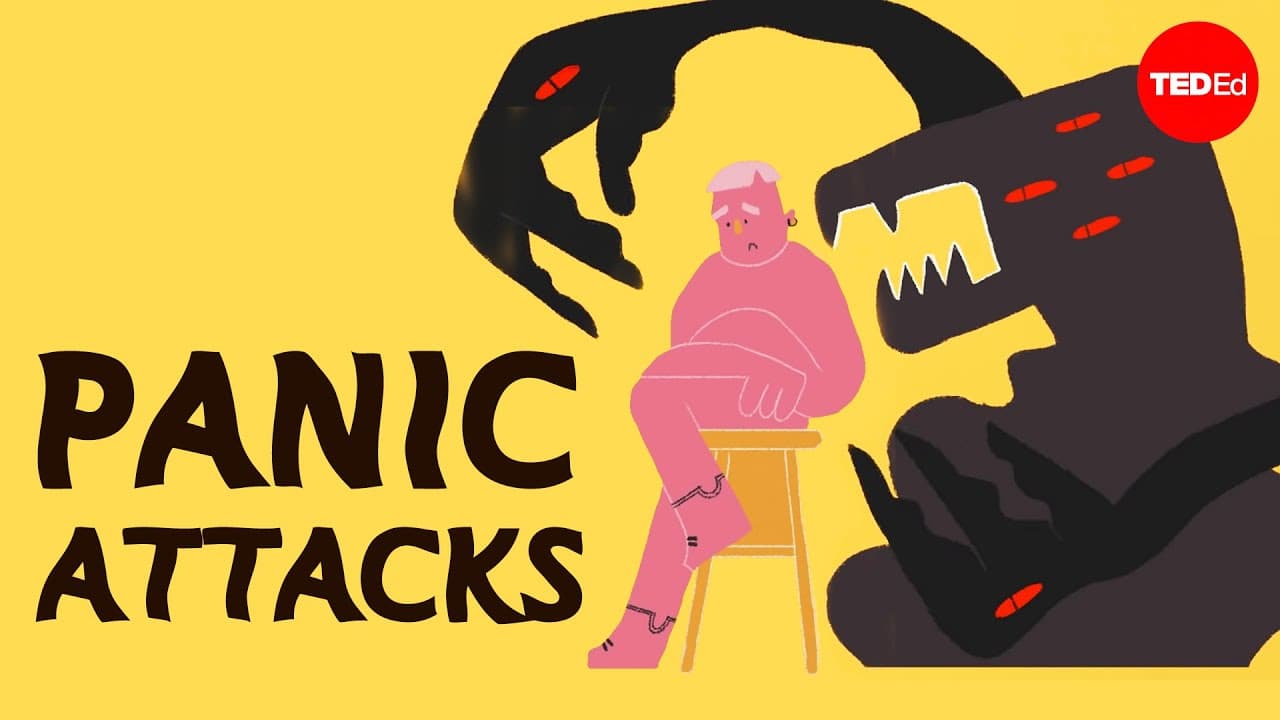
What causes panic attacks, and how can you prevent them? - Cindy J. Aaronson

What causes panic attacks, and how can you prevent them? - Cindy J. Aaronson

This animated lesson provides a deep dive into the physiological and psychological mechanics of panic attacks. It begins by vividly describing the subjective experience of a panic attack through poetic metaphor before transitioning into the hard science of what is actually happening in the brain and body. The video explains that a panic attack is essentially a "false alarm" where the body's fight-or-flight response is triggered without real danger, involving the amygdala, the sympathetic nervous system, and the release of adrenaline. The content moves beyond just the biology to explore the cycle of fear that maintains panic disorders—specifically, how the fear of having another attack can actually trigger one. It outlines the differences between distinct anxiety disorders like PTSD, OCD, and Generalized Anxiety Disorder. Crucially, it clarifies that while these experiences are terrifying and mimic life-threatening events like heart attacks, they are not physically dangerous in the long term. Finally, the video offers concrete, evidence-based solutions, comparing medication with Cognitive Behavioral Therapy (CBT). It breaks down how CBT works through physiological education, breathing exercises, cognitive restructuring (changing thoughts), and exposure therapy. This resource is invaluable for health and psychology classrooms to de-stigmatize mental health issues, explain the nervous system, and equip students with practical mental tools for managing anxiety.

TED-EdTED-Ed

5mins 23s

Video
How to manage your emotions

How to manage your emotions

This educational animation explores the psychological science behind emotional regulation, challenging the notion that we are at the mercy of our feelings. Using a relatable opening scenario about failing a test, the video contrasts two different reactions to the same setback to illustrate that while we cannot always control external events, we can control our responses to them. It introduces the "Process Model," a framework used by psychologists to identify specific points in time where we can intervene to change how we feel. The content breaks down the four stages of emotion formation: Situation, Attention, Appraisal, and Response. through a hypothetical scenario involves running into an ex-partner at a party, the narrator demonstrates practical strategies for each stage, such as situation modification, attentional deployment, and cognitive reappraisal. The video also critically examines "response modulation" (managing emotions after they occur), warning against unhealthy suppression while advocating for sustainable outlets like exercise or social support. For educators, this video serves as an excellent foundation for Social Emotional Learning (SEL) and psychology curriculums. It provides students with a concrete vocabulary for their internal experiences and offers a toolkit for mental resilience. Crucially, the video concludes by debunking the "happiness trap," teaching students that negative emotions like sadness or anger are functional and necessary, and that the goal of emotional regulation is balance and appropriateness rather than constant positivity.

TED-EdTED-Ed

4mins 51s

Video
Developing a Growth Mindset and the Power of Yet

Developing a Growth Mindset and the Power of Yet

This engaging music video introduces students to the concept of a "Growth Mindset" through a catchy, folk-pop style song. The video combines live-action footage of a singer-songwriter with diverse clips of people overcoming challenges, studying, playing sports, and exploring nature. The central narrative focuses on the power of changing one's internal dialogue—specifically shifting from saying "I can't" to "I can't yet." It emphasizes that intelligence and ability are not fixed traits but attributes that can be developed through hard work, focus, and practice. Key themes explored include the importance of perseverance, the value of making mistakes as learning opportunities, and the specific language students can use to reframe negative self-talk. The lyrics break down abstract psychological concepts into actionable steps, such as taking goals one step at a time and viewing challenges as opportunities to "train your brain." The video explicitly contrasts fixed mindset statements (e.g., "I don't understand, I must be dumb") with growth mindset alternatives (e.g., "I'm still learning"). For educators, this video serves as an excellent anchor for Social Emotional Learning (SEL) lessons centered on resilience and classroom culture. It provides a shared vocabulary ("The Power of Yet") that teachers can reference throughout the year when students face academic frustration. The song's bridge offers concrete examples of how to reframe thoughts, making it a practical tool for teaching cognitive reframing techniques suitable for elementary and middle school students.

Math Songs by NUMBEROCKMath Songs by NUMBEROCK

4mins

Video
How to manage your emotions

How to manage your emotions

This educational animation explores the psychological science behind emotional regulation, challenging the notion that we are at the mercy of our feelings. Using a relatable opening scenario about failing a test, the video contrasts two different reactions to the same setback to illustrate that while we cannot always control external events, we can control our responses to them. It introduces the "Process Model," a framework used by psychologists to identify specific points in time where we can intervene to change how we feel. The content breaks down the four stages of emotion formation: Situation, Attention, Appraisal, and Response. through a hypothetical scenario involves running into an ex-partner at a party, the narrator demonstrates practical strategies for each stage, such as situation modification, attentional deployment, and cognitive reappraisal. The video also critically examines "response modulation" (managing emotions after they occur), warning against unhealthy suppression while advocating for sustainable outlets like exercise or social support. For educators, this video serves as an excellent foundation for Social Emotional Learning (SEL) and psychology curriculums. It provides students with a concrete vocabulary for their internal experiences and offers a toolkit for mental resilience. Crucially, the video concludes by debunking the "happiness trap," teaching students that negative emotions like sadness or anger are functional and necessary, and that the goal of emotional regulation is balance and appropriateness rather than constant positivity.

TED-EdTED-Ed

4mins 51s

Video
Body Positivity or Body Obsession? Learning to See More & Be More | Lindsay Kite | TEDxSaltLakeCity

Body Positivity or Body Obsession? Learning to See More & Be More | Lindsay Kite | TEDxSaltLakeCity

In this compelling TEDx talk, Lindsay Kite, PhD, challenges the traditional narrative of body positivity. Rather than simply widening the definition of beauty to include more shapes and sizes, Kite argues for a more radical shift: moving away from defining women by their appearance entirely. She shares her personal journey from quitting competitive swimming as a teenager due to body shame to reclaiming her power as an adult, illustrating how we can transition from viewing our bodies as ornaments to be looked at, to instruments for our use. The video dives deep into the psychological concept of "self-objectification"—the habitual monitoring of one's body from an outsider's perspective—and explains how this mental energy drain negatively impacts physical and cognitive performance. Kite introduces the framework of "Body Image Resilience," outlining three distinct paths people take when facing body shame: sinking into harmful behaviors, hiding and fixing (the status quo), or rising with resilience to repurpose the pain into power. This resource is highly valuable for high school and collegiate health, psychology, and sociology classrooms. It moves beyond superficial "love yourself" messaging to provide concrete theoretical frameworks and actionable strategies for mental health. Teachers can use this video to spark critical discussions about media literacy, the difference between health and aesthetics, and practical coping mechanisms for anxiety and shame.

TEDx TalksTEDx Talks

16mins 48s

Video
"I'm Fine" - Learning To Live With Depression | Jake Tyler | TEDxBrighton

"I'm Fine" - Learning To Live With Depression | Jake Tyler | TEDxBrighton

In this moving and humorous TEDx talk, Jake Tyler shares his personal journey of navigating severe depression and suicidal ideation. He begins by deconstructing the reflex of saying "I'm fine" and opens up about his "rock bottom" moment where he forgot what happiness felt like. Tyler details how a pivotal phone call to his mother and a reframing question from his doctor helped him distinguish between wanting to die and simply wanting his pain to stop. The talk explores Tyler's recovery strategy, which centered on physical movement and connection with nature. He recounts his experience walking 3,000 miles around Great Britain, which evolved from a personal fitness challenge into a journey of community connection. He introduces the metaphor of depression being the "biggest club in the world" that convinces you that you are the only member, highlighting the irony of isolation in mental health struggles. For educators, this video is a powerful tool for Social Emotional Learning (SEL), Health, and Psychology classes. It destigmatizes mental health discussions, introduces the concept of "movement" versus "exercise," and demonstrates how vulnerability can lead to strength. The narrative arc moves from despair to a triumphant desire to "live forever," offering a hopeful perspective on resilience and recovery.

TEDx TalksTEDx Talks

16mins 5s

No videos found
There are no videos available for this topic yet.
No videos found
There are no videos available for this topic yet.
No videos found
There are no videos available for this topic yet.
No videos found
There are no videos available for this topic yet.
No videos found
There are no videos available for this topic yet.
No videos found
There are no videos available for this topic yet.
No videos found
There are no videos available for this topic yet.
No videos found
There are no videos available for this topic yet.
No videos found
There are no videos available for this topic yet.
No videos found
There are no videos available for this topic yet.
No videos found
There are no videos available for this topic yet.
No videos found
There are no videos available for this topic yet.
No videos found
There are no videos available for this topic yet.
No videos found
There are no videos available for this topic yet.
Video
So, You're Having an Anxiety Attack (The Calm-Down Method for Stopping Anxiety Attacks)

So, You're Having an Anxiety Attack (The Calm-Down Method for Stopping Anxiety Attacks)

This video serves as a real-time guided intervention for individuals experiencing an anxiety or panic attack. Rather than just explaining the theory of anxiety, the presenter, a licensed therapist, walks the viewer through immediate, practical grounding techniques designed to down-regulate the nervous system. The video uses a slow, calming pace to help viewers regain control of their physical and emotional state. The content explores key themes of emotional regulation, sensory grounding, and the physiological response to stress. It validates the scary physical sensations of panic (shaking, nausea, fear) while reassuring the viewer of their safety. The video introduces specific techniques such as the '5-4-3-2-1' sensory method (modified here for immediate impact), cold water immersion for the diving reflex, and visualization of a safe place. For educators, this is a vital tool for social-emotional learning (SEL) and crisis management. It can be used proactively to teach students coping mechanisms or reactively as a resource when a student is overwhelmed. It demystifies the experience of panic, reducing the shame often associated with it, and provides a concrete 'break glass in case of emergency' toolkit that students can use in the classroom or at home.

Therapy in a NutshellTherapy in a Nutshell

5mins 23s

Video
Body Positivity or Body Obsession? Learning to See More & Be More | Lindsay Kite | TEDxSaltLakeCity

Body Positivity or Body Obsession? Learning to See More & Be More | Lindsay Kite | TEDxSaltLakeCity

In this compelling TEDx talk, Lindsay Kite, PhD, challenges the traditional narrative of body positivity. Rather than simply widening the definition of beauty to include more shapes and sizes, Kite argues for a more radical shift: moving away from defining women by their appearance entirely. She shares her personal journey from quitting competitive swimming as a teenager due to body shame to reclaiming her power as an adult, illustrating how we can transition from viewing our bodies as ornaments to be looked at, to instruments for our use. The video dives deep into the psychological concept of "self-objectification"—the habitual monitoring of one's body from an outsider's perspective—and explains how this mental energy drain negatively impacts physical and cognitive performance. Kite introduces the framework of "Body Image Resilience," outlining three distinct paths people take when facing body shame: sinking into harmful behaviors, hiding and fixing (the status quo), or rising with resilience to repurpose the pain into power. This resource is highly valuable for high school and collegiate health, psychology, and sociology classrooms. It moves beyond superficial "love yourself" messaging to provide concrete theoretical frameworks and actionable strategies for mental health. Teachers can use this video to spark critical discussions about media literacy, the difference between health and aesthetics, and practical coping mechanisms for anxiety and shame.

TEDx TalksTEDx Talks

16mins 48s

Video
What causes panic attacks, and how can you prevent them? - Cindy J. Aaronson

What causes panic attacks, and how can you prevent them? - Cindy J. Aaronson

This animated lesson provides a deep dive into the physiological and psychological mechanics of panic attacks. It begins by vividly describing the subjective experience of a panic attack through poetic metaphor before transitioning into the hard science of what is actually happening in the brain and body. The video explains that a panic attack is essentially a "false alarm" where the body's fight-or-flight response is triggered without real danger, involving the amygdala, the sympathetic nervous system, and the release of adrenaline. The content moves beyond just the biology to explore the cycle of fear that maintains panic disorders—specifically, how the fear of having another attack can actually trigger one. It outlines the differences between distinct anxiety disorders like PTSD, OCD, and Generalized Anxiety Disorder. Crucially, it clarifies that while these experiences are terrifying and mimic life-threatening events like heart attacks, they are not physically dangerous in the long term. Finally, the video offers concrete, evidence-based solutions, comparing medication with Cognitive Behavioral Therapy (CBT). It breaks down how CBT works through physiological education, breathing exercises, cognitive restructuring (changing thoughts), and exposure therapy. This resource is invaluable for health and psychology classrooms to de-stigmatize mental health issues, explain the nervous system, and equip students with practical mental tools for managing anxiety.

TED-EdTED-Ed

5mins 23s

Video
So, You're Having an Anxiety Attack (The Calm-Down Method for Stopping Anxiety Attacks)

So, You're Having an Anxiety Attack (The Calm-Down Method for Stopping Anxiety Attacks)

This video serves as a real-time guided intervention for individuals experiencing an anxiety or panic attack. Rather than just explaining the theory of anxiety, the presenter, a licensed therapist, walks the viewer through immediate, practical grounding techniques designed to down-regulate the nervous system. The video uses a slow, calming pace to help viewers regain control of their physical and emotional state. The content explores key themes of emotional regulation, sensory grounding, and the physiological response to stress. It validates the scary physical sensations of panic (shaking, nausea, fear) while reassuring the viewer of their safety. The video introduces specific techniques such as the '5-4-3-2-1' sensory method (modified here for immediate impact), cold water immersion for the diving reflex, and visualization of a safe place. For educators, this is a vital tool for social-emotional learning (SEL) and crisis management. It can be used proactively to teach students coping mechanisms or reactively as a resource when a student is overwhelmed. It demystifies the experience of panic, reducing the shame often associated with it, and provides a concrete 'break glass in case of emergency' toolkit that students can use in the classroom or at home.

Therapy in a NutshellTherapy in a Nutshell

5mins 23s

Video
So, You're Having an Anxiety Attack (The Calm-Down Method for Stopping Anxiety Attacks)

So, You're Having an Anxiety Attack (The Calm-Down Method for Stopping Anxiety Attacks)

This video serves as a real-time guided intervention for individuals experiencing an anxiety or panic attack. Rather than just explaining the theory of anxiety, the presenter, a licensed therapist, walks the viewer through immediate, practical grounding techniques designed to down-regulate the nervous system. The video uses a slow, calming pace to help viewers regain control of their physical and emotional state. The content explores key themes of emotional regulation, sensory grounding, and the physiological response to stress. It validates the scary physical sensations of panic (shaking, nausea, fear) while reassuring the viewer of their safety. The video introduces specific techniques such as the '5-4-3-2-1' sensory method (modified here for immediate impact), cold water immersion for the diving reflex, and visualization of a safe place. For educators, this is a vital tool for social-emotional learning (SEL) and crisis management. It can be used proactively to teach students coping mechanisms or reactively as a resource when a student is overwhelmed. It demystifies the experience of panic, reducing the shame often associated with it, and provides a concrete 'break glass in case of emergency' toolkit that students can use in the classroom or at home.

Therapy in a NutshellTherapy in a Nutshell

5mins 23s

Video
What causes panic attacks, and how can you prevent them? - Cindy J. Aaronson

What causes panic attacks, and how can you prevent them? - Cindy J. Aaronson

This animated lesson provides a deep dive into the physiological and psychological mechanics of panic attacks. It begins by vividly describing the subjective experience of a panic attack through poetic metaphor before transitioning into the hard science of what is actually happening in the brain and body. The video explains that a panic attack is essentially a "false alarm" where the body's fight-or-flight response is triggered without real danger, involving the amygdala, the sympathetic nervous system, and the release of adrenaline. The content moves beyond just the biology to explore the cycle of fear that maintains panic disorders—specifically, how the fear of having another attack can actually trigger one. It outlines the differences between distinct anxiety disorders like PTSD, OCD, and Generalized Anxiety Disorder. Crucially, it clarifies that while these experiences are terrifying and mimic life-threatening events like heart attacks, they are not physically dangerous in the long term. Finally, the video offers concrete, evidence-based solutions, comparing medication with Cognitive Behavioral Therapy (CBT). It breaks down how CBT works through physiological education, breathing exercises, cognitive restructuring (changing thoughts), and exposure therapy. This resource is invaluable for health and psychology classrooms to de-stigmatize mental health issues, explain the nervous system, and equip students with practical mental tools for managing anxiety.

TED-EdTED-Ed

5mins 23s

Video
Common Misconceptions about Dissociative Disorders

Common Misconceptions about Dissociative Disorders

This educational video dismantles three prevalent myths surrounding dissociative disorders, aiming to reduce stigma and increase understanding of these mental health conditions. Through clear narration and simple visuals, it addresses misconceptions regarding medication, diagnosis difficulty, and the perceived danger of individuals living with these disorders. Key themes include the complexities of mental health treatment, the long road to accurate diagnosis within the healthcare system, and the damaging effects of media stereotypes. The video emphasizes that while there is no "cure-all" pill for dissociation itself, effective therapies exist, and that individuals with these disorders are no more violent than the general population. For educators, this resource serves as a crucial tool for psychology, health, and social-emotional learning curriculums. It provides a factual counter-narrative to the sensationalized portrayals often seen in movies and TV, helping students develop empathy and a more scientific understanding of mental health challenges.

Brain Health BootcampBrain Health Bootcamp

1min 55s

Video
So, You're Having an Anxiety Attack (The Calm-Down Method for Stopping Anxiety Attacks)

So, You're Having an Anxiety Attack (The Calm-Down Method for Stopping Anxiety Attacks)

This video serves as a real-time guided intervention for individuals experiencing an anxiety or panic attack. Rather than just explaining the theory of anxiety, the presenter, a licensed therapist, walks the viewer through immediate, practical grounding techniques designed to down-regulate the nervous system. The video uses a slow, calming pace to help viewers regain control of their physical and emotional state. The content explores key themes of emotional regulation, sensory grounding, and the physiological response to stress. It validates the scary physical sensations of panic (shaking, nausea, fear) while reassuring the viewer of their safety. The video introduces specific techniques such as the '5-4-3-2-1' sensory method (modified here for immediate impact), cold water immersion for the diving reflex, and visualization of a safe place. For educators, this is a vital tool for social-emotional learning (SEL) and crisis management. It can be used proactively to teach students coping mechanisms or reactively as a resource when a student is overwhelmed. It demystifies the experience of panic, reducing the shame often associated with it, and provides a concrete 'break glass in case of emergency' toolkit that students can use in the classroom or at home.

Therapy in a NutshellTherapy in a Nutshell

5mins 23s

Video
"I'm Fine" - Learning To Live With Depression | Jake Tyler | TEDxBrighton

"I'm Fine" - Learning To Live With Depression | Jake Tyler | TEDxBrighton

In this moving and humorous TEDx talk, Jake Tyler shares his personal journey of navigating severe depression and suicidal ideation. He begins by deconstructing the reflex of saying "I'm fine" and opens up about his "rock bottom" moment where he forgot what happiness felt like. Tyler details how a pivotal phone call to his mother and a reframing question from his doctor helped him distinguish between wanting to die and simply wanting his pain to stop. The talk explores Tyler's recovery strategy, which centered on physical movement and connection with nature. He recounts his experience walking 3,000 miles around Great Britain, which evolved from a personal fitness challenge into a journey of community connection. He introduces the metaphor of depression being the "biggest club in the world" that convinces you that you are the only member, highlighting the irony of isolation in mental health struggles. For educators, this video is a powerful tool for Social Emotional Learning (SEL), Health, and Psychology classes. It destigmatizes mental health discussions, introduces the concept of "movement" versus "exercise," and demonstrates how vulnerability can lead to strength. The narrative arc moves from despair to a triumphant desire to "live forever," offering a hopeful perspective on resilience and recovery.

TEDx TalksTEDx Talks

16mins 5s

Video
Body Positivity or Body Obsession? Learning to See More & Be More | Lindsay Kite | TEDxSaltLakeCity

Body Positivity or Body Obsession? Learning to See More & Be More | Lindsay Kite | TEDxSaltLakeCity

In this compelling TEDx talk, Lindsay Kite, PhD, challenges the traditional narrative of body positivity. Rather than simply widening the definition of beauty to include more shapes and sizes, Kite argues for a more radical shift: moving away from defining women by their appearance entirely. She shares her personal journey from quitting competitive swimming as a teenager due to body shame to reclaiming her power as an adult, illustrating how we can transition from viewing our bodies as ornaments to be looked at, to instruments for our use. The video dives deep into the psychological concept of "self-objectification"—the habitual monitoring of one's body from an outsider's perspective—and explains how this mental energy drain negatively impacts physical and cognitive performance. Kite introduces the framework of "Body Image Resilience," outlining three distinct paths people take when facing body shame: sinking into harmful behaviors, hiding and fixing (the status quo), or rising with resilience to repurpose the pain into power. This resource is highly valuable for high school and collegiate health, psychology, and sociology classrooms. It moves beyond superficial "love yourself" messaging to provide concrete theoretical frameworks and actionable strategies for mental health. Teachers can use this video to spark critical discussions about media literacy, the difference between health and aesthetics, and practical coping mechanisms for anxiety and shame.

TEDx TalksTEDx Talks

16mins 48s

Video
How to manage your emotions

How to manage your emotions

This educational animation explores the psychological science behind emotional regulation, challenging the notion that we are at the mercy of our feelings. Using a relatable opening scenario about failing a test, the video contrasts two different reactions to the same setback to illustrate that while we cannot always control external events, we can control our responses to them. It introduces the "Process Model," a framework used by psychologists to identify specific points in time where we can intervene to change how we feel. The content breaks down the four stages of emotion formation: Situation, Attention, Appraisal, and Response. through a hypothetical scenario involves running into an ex-partner at a party, the narrator demonstrates practical strategies for each stage, such as situation modification, attentional deployment, and cognitive reappraisal. The video also critically examines "response modulation" (managing emotions after they occur), warning against unhealthy suppression while advocating for sustainable outlets like exercise or social support. For educators, this video serves as an excellent foundation for Social Emotional Learning (SEL) and psychology curriculums. It provides students with a concrete vocabulary for their internal experiences and offers a toolkit for mental resilience. Crucially, the video concludes by debunking the "happiness trap," teaching students that negative emotions like sadness or anger are functional and necessary, and that the goal of emotional regulation is balance and appropriateness rather than constant positivity.

TED-EdTED-Ed

4mins 51s

Video
"I'm Fine" - Learning To Live With Depression | Jake Tyler | TEDxBrighton

"I'm Fine" - Learning To Live With Depression | Jake Tyler | TEDxBrighton

In this moving and humorous TEDx talk, Jake Tyler shares his personal journey of navigating severe depression and suicidal ideation. He begins by deconstructing the reflex of saying "I'm fine" and opens up about his "rock bottom" moment where he forgot what happiness felt like. Tyler details how a pivotal phone call to his mother and a reframing question from his doctor helped him distinguish between wanting to die and simply wanting his pain to stop. The talk explores Tyler's recovery strategy, which centered on physical movement and connection with nature. He recounts his experience walking 3,000 miles around Great Britain, which evolved from a personal fitness challenge into a journey of community connection. He introduces the metaphor of depression being the "biggest club in the world" that convinces you that you are the only member, highlighting the irony of isolation in mental health struggles. For educators, this video is a powerful tool for Social Emotional Learning (SEL), Health, and Psychology classes. It destigmatizes mental health discussions, introduces the concept of "movement" versus "exercise," and demonstrates how vulnerability can lead to strength. The narrative arc moves from despair to a triumphant desire to "live forever," offering a hopeful perspective on resilience and recovery.

TEDx TalksTEDx Talks

16mins 5s

Video
Body Positivity or Body Obsession? Learning to See More & Be More | Lindsay Kite | TEDxSaltLakeCity

Body Positivity or Body Obsession? Learning to See More & Be More | Lindsay Kite | TEDxSaltLakeCity

In this compelling TEDx talk, Lindsay Kite, PhD, challenges the traditional narrative of body positivity. Rather than simply widening the definition of beauty to include more shapes and sizes, Kite argues for a more radical shift: moving away from defining women by their appearance entirely. She shares her personal journey from quitting competitive swimming as a teenager due to body shame to reclaiming her power as an adult, illustrating how we can transition from viewing our bodies as ornaments to be looked at, to instruments for our use. The video dives deep into the psychological concept of "self-objectification"—the habitual monitoring of one's body from an outsider's perspective—and explains how this mental energy drain negatively impacts physical and cognitive performance. Kite introduces the framework of "Body Image Resilience," outlining three distinct paths people take when facing body shame: sinking into harmful behaviors, hiding and fixing (the status quo), or rising with resilience to repurpose the pain into power. This resource is highly valuable for high school and collegiate health, psychology, and sociology classrooms. It moves beyond superficial "love yourself" messaging to provide concrete theoretical frameworks and actionable strategies for mental health. Teachers can use this video to spark critical discussions about media literacy, the difference between health and aesthetics, and practical coping mechanisms for anxiety and shame.

TEDx TalksTEDx Talks

16mins 48s

Video
So, You're Having an Anxiety Attack (The Calm-Down Method for Stopping Anxiety Attacks)

So, You're Having an Anxiety Attack (The Calm-Down Method for Stopping Anxiety Attacks)

This video serves as a real-time guided intervention for individuals experiencing an anxiety or panic attack. Rather than just explaining the theory of anxiety, the presenter, a licensed therapist, walks the viewer through immediate, practical grounding techniques designed to down-regulate the nervous system. The video uses a slow, calming pace to help viewers regain control of their physical and emotional state. The content explores key themes of emotional regulation, sensory grounding, and the physiological response to stress. It validates the scary physical sensations of panic (shaking, nausea, fear) while reassuring the viewer of their safety. The video introduces specific techniques such as the '5-4-3-2-1' sensory method (modified here for immediate impact), cold water immersion for the diving reflex, and visualization of a safe place. For educators, this is a vital tool for social-emotional learning (SEL) and crisis management. It can be used proactively to teach students coping mechanisms or reactively as a resource when a student is overwhelmed. It demystifies the experience of panic, reducing the shame often associated with it, and provides a concrete 'break glass in case of emergency' toolkit that students can use in the classroom or at home.

Therapy in a NutshellTherapy in a Nutshell

5mins 23s