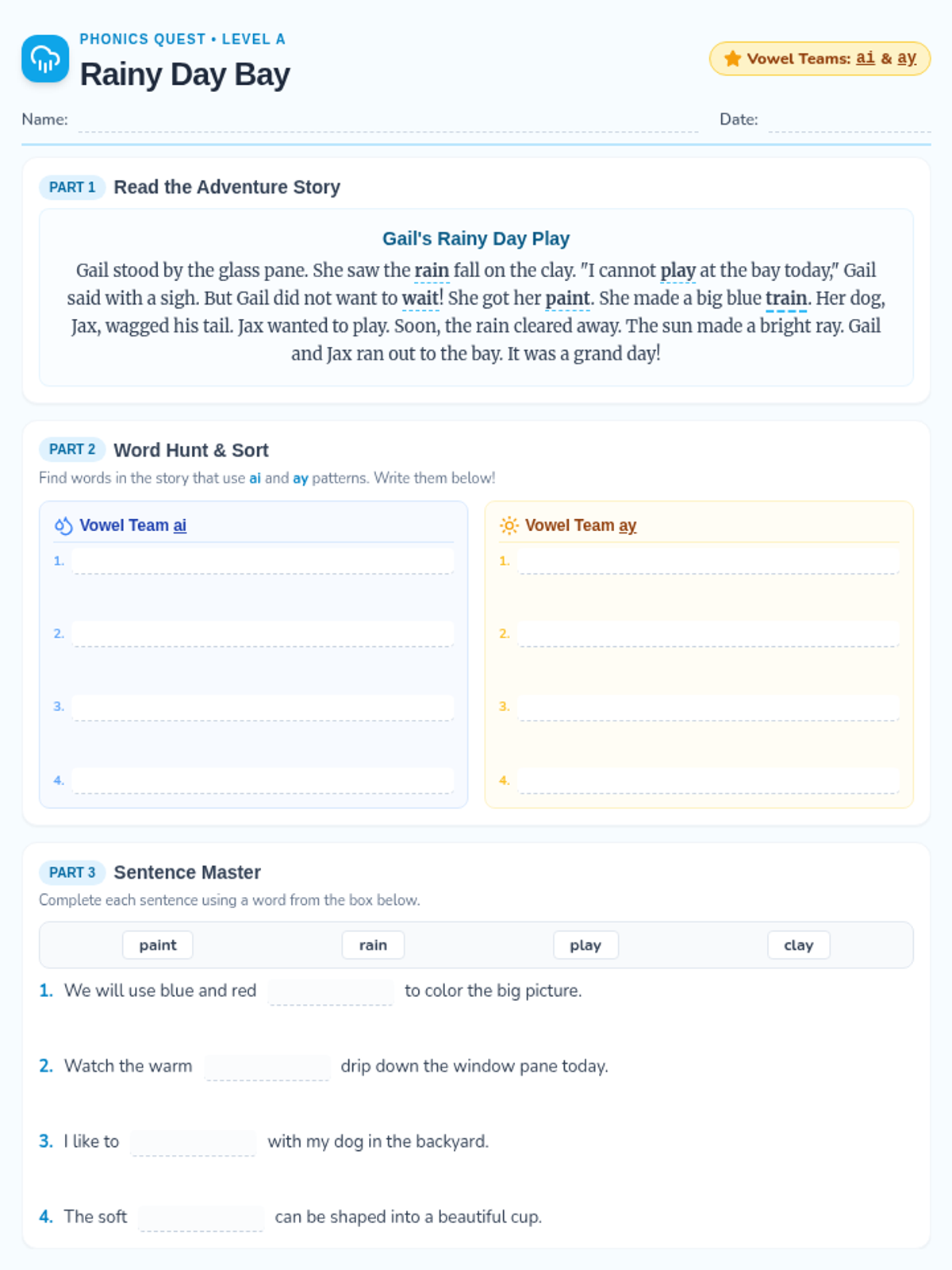
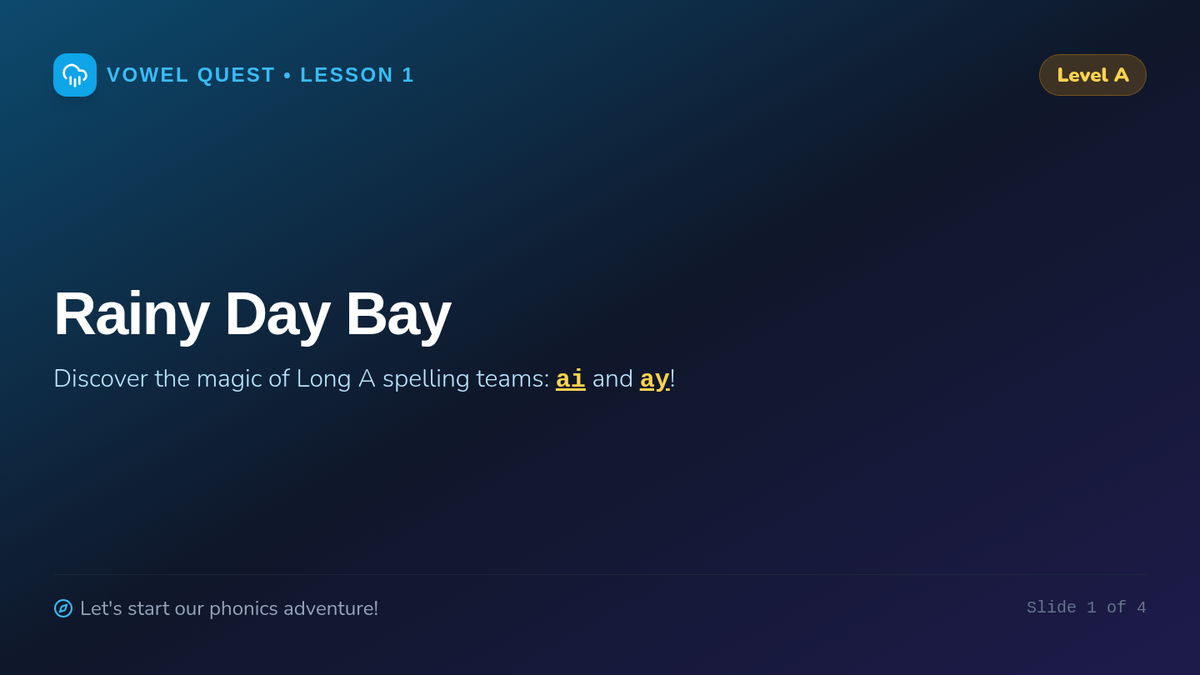
A foundational phonics unit focused on vowel teams and alternative spellings for the Long A sound, culminating in a collaborative classroom visual aid.
A week-long ELA homework series centered around a narrative about a squirrel's search for a rare acorn. The materials are differentiated for Kindergarten, 2nd Grade, and 4th Grade learners.
A week-long unit for 2nd graders to master procedural writing through the lens of being 'Master Makers'. Students learn transition words, sequencing, material lists, and detail-oriented instructions.
A foundational writing sequence for early learners focused on developing opinion writing skills. Students progress from stating simple preferences to supporting their opinions with reasons and descriptive details using 'I like' and 'because'.
A comprehensive baseline reading assessment sequence designed for virtual tutoring environments. It includes tools for phonics screening, fluency checks, and comprehension evaluation to establish a student's starting point.
A comprehensive book study for Roscoe Riley Rules #1: Never Glue Your Friends to Chairs. Students will explore character traits, cause and effect, and story elements while building vocabulary and comprehension skills.
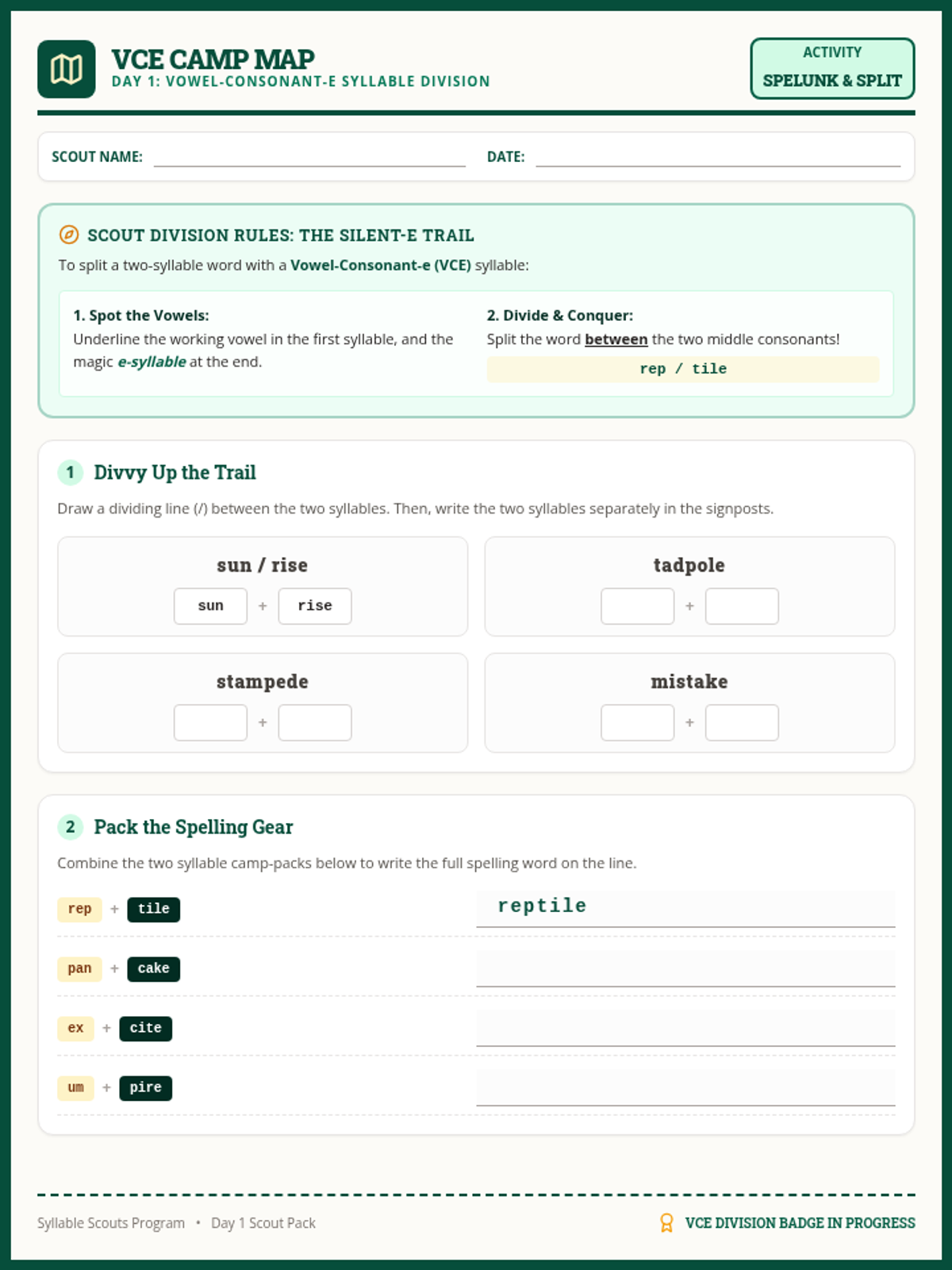
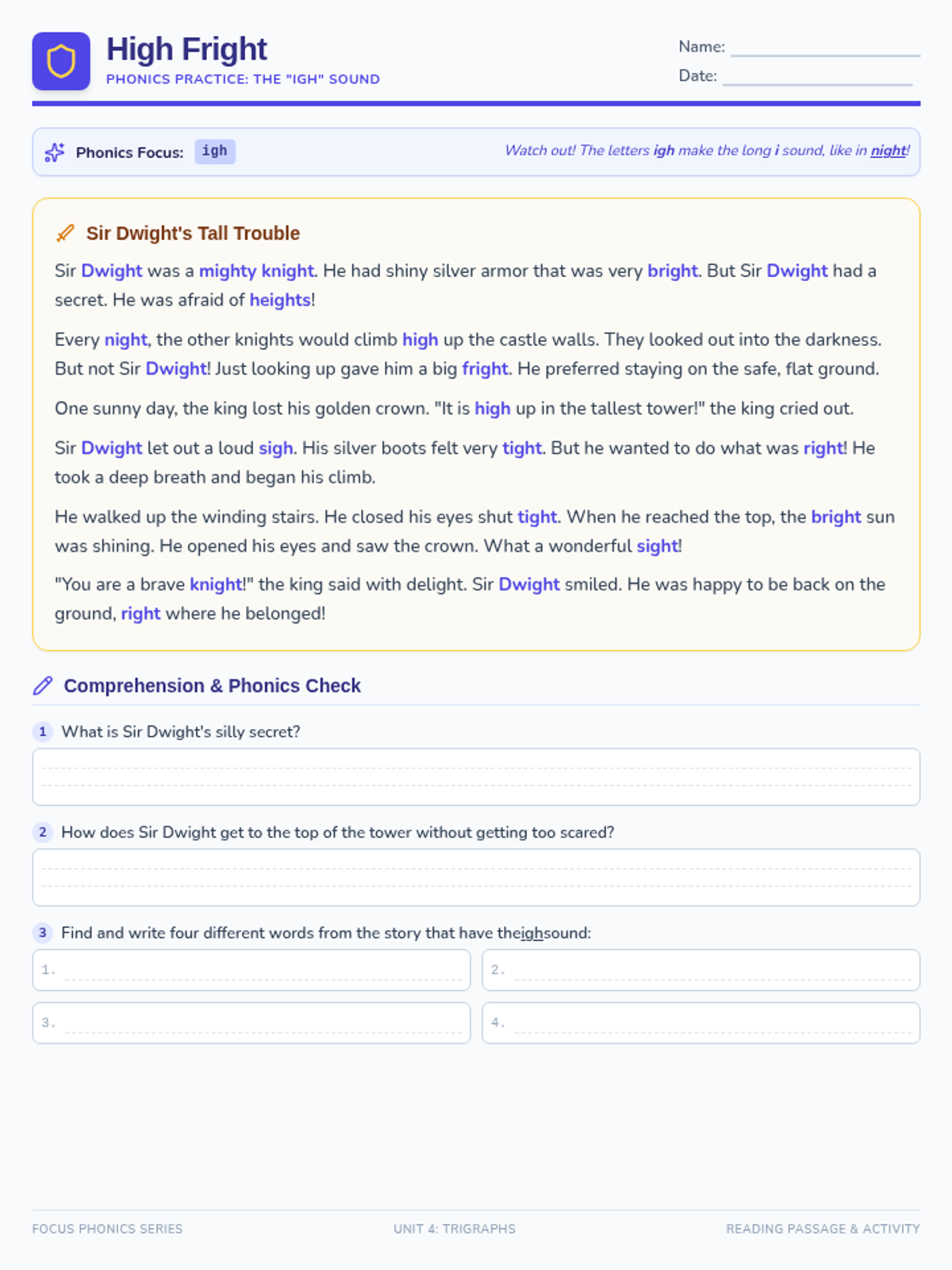
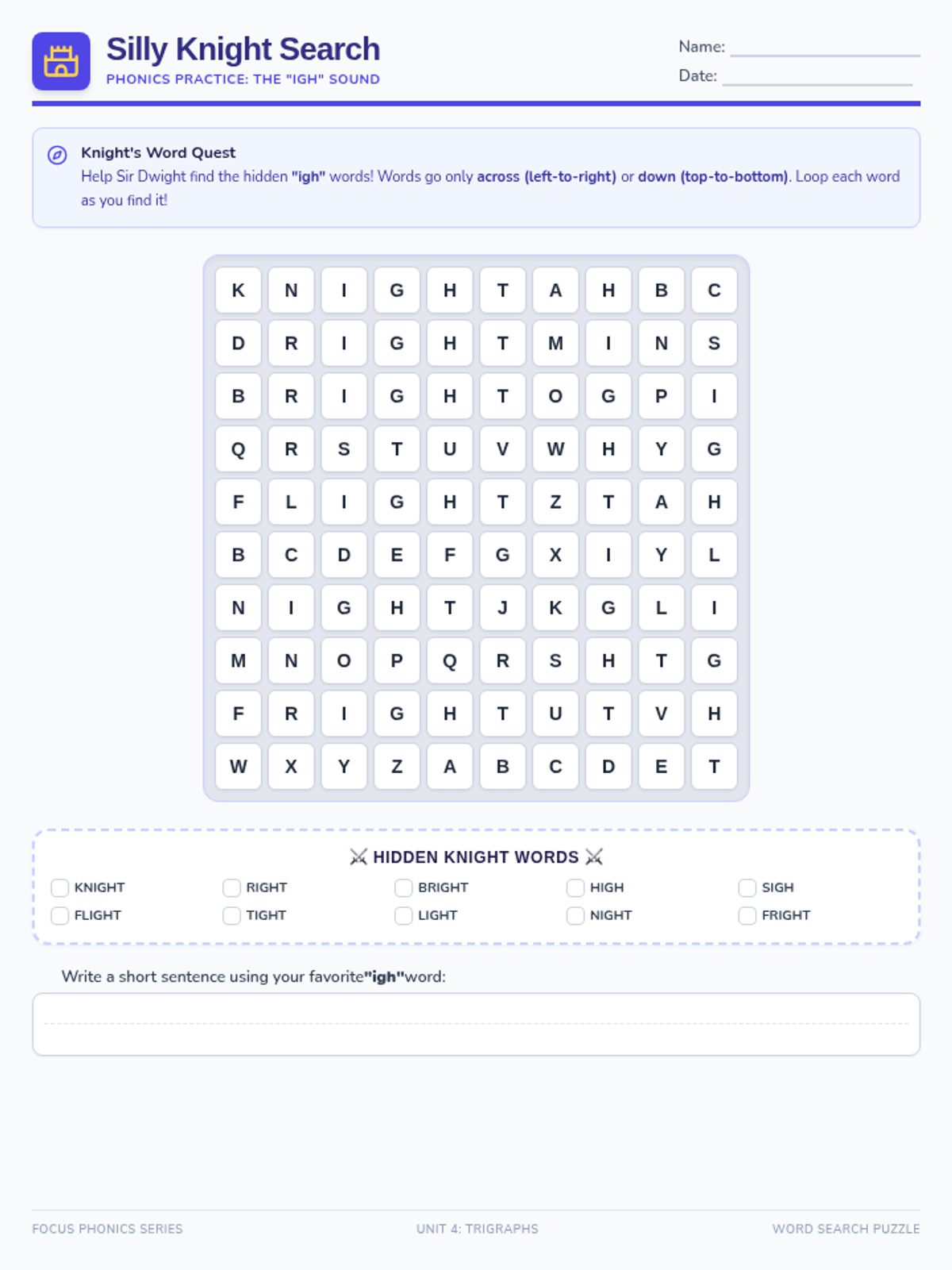
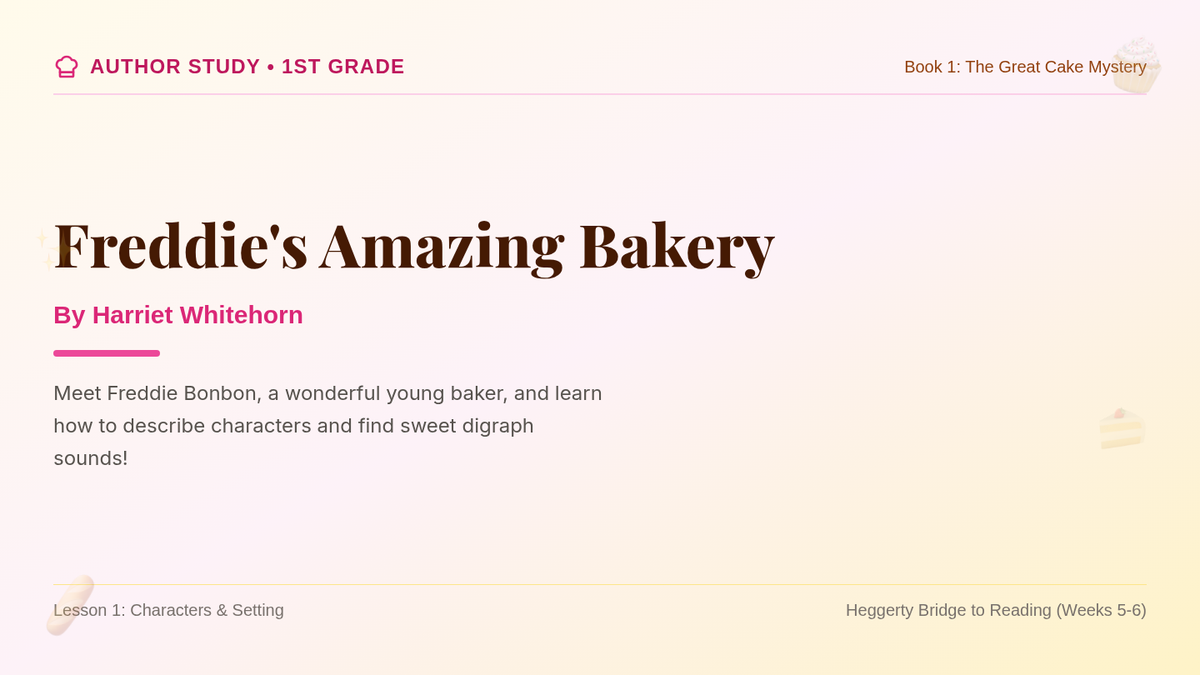
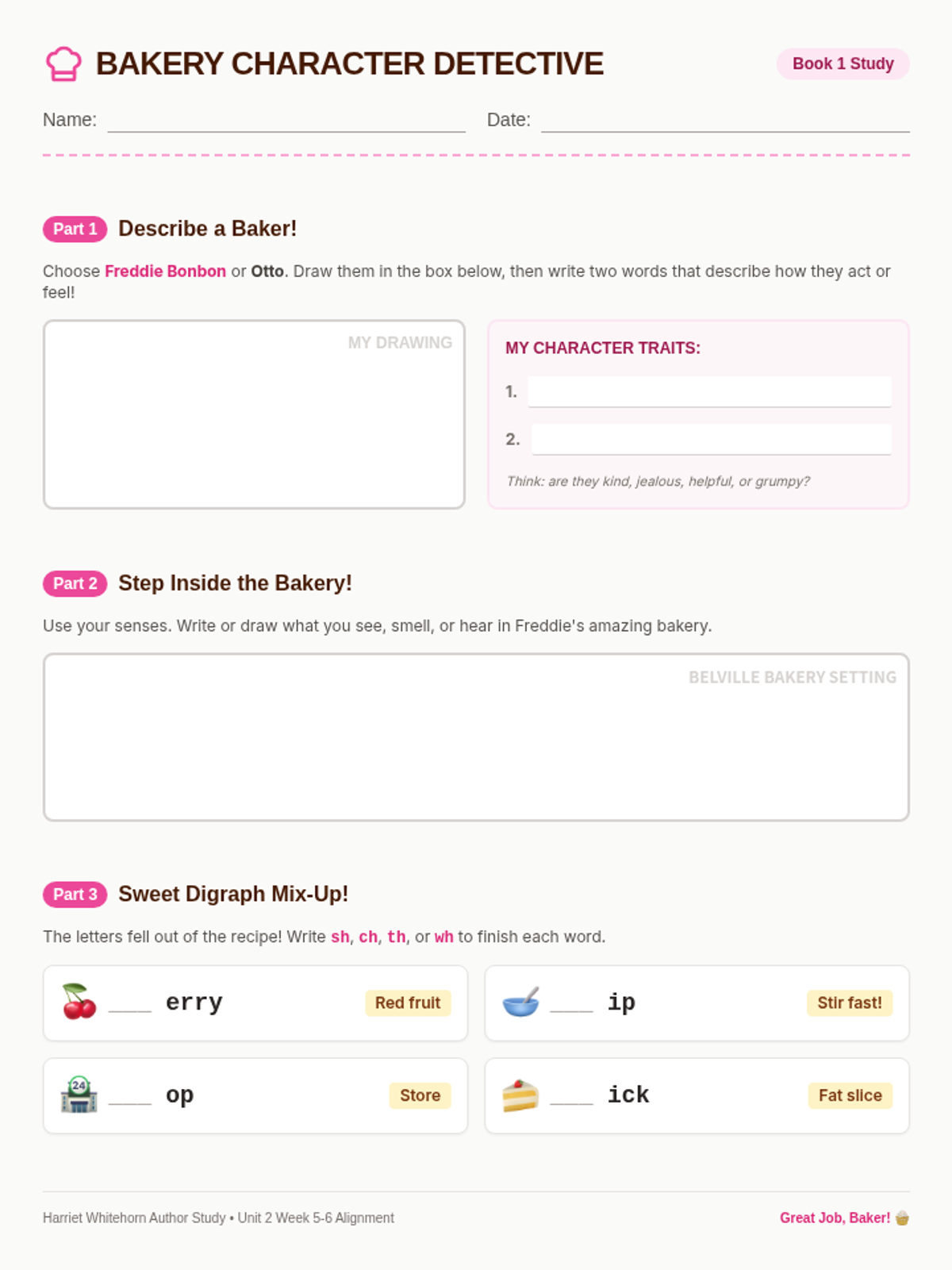
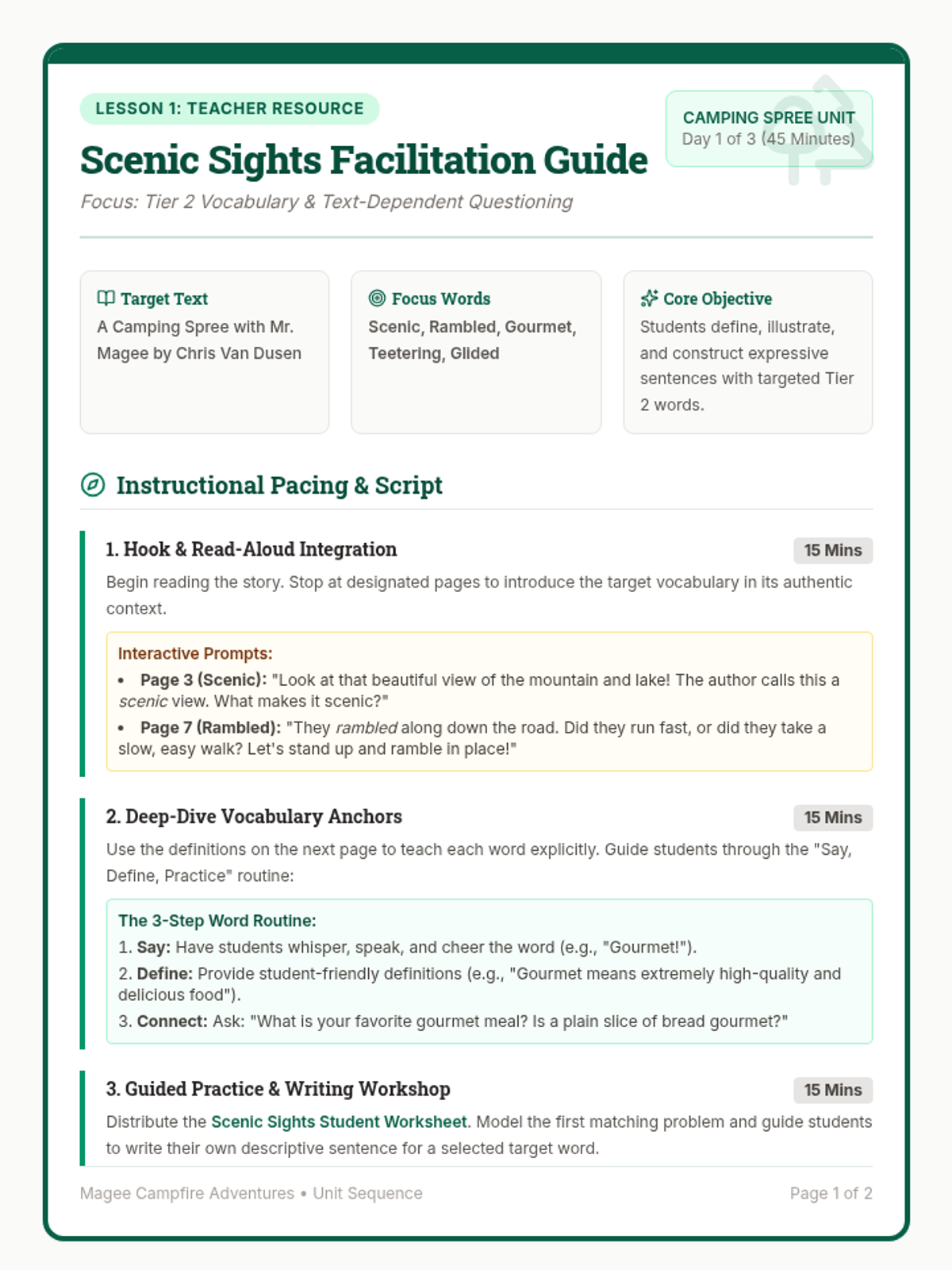
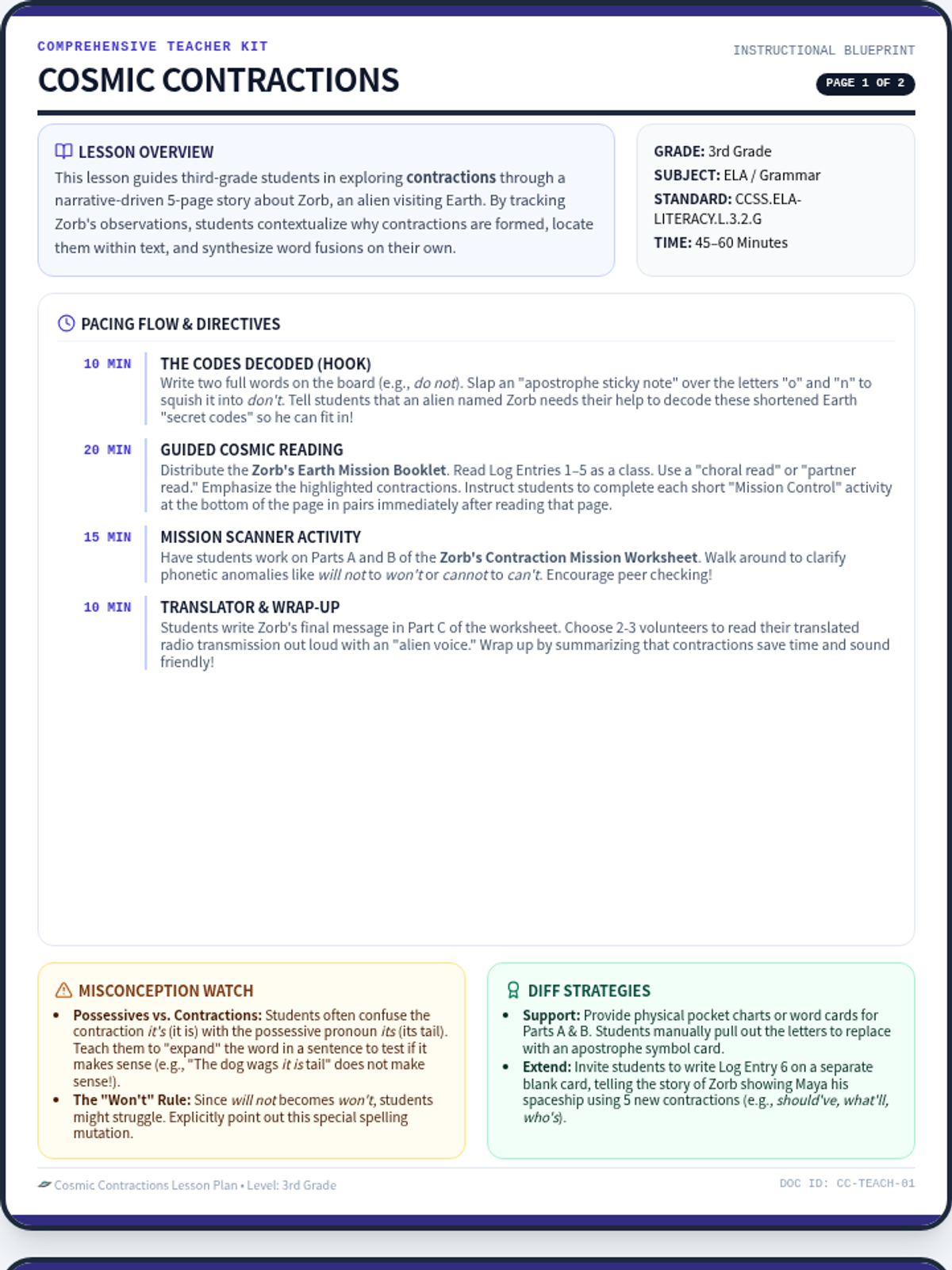
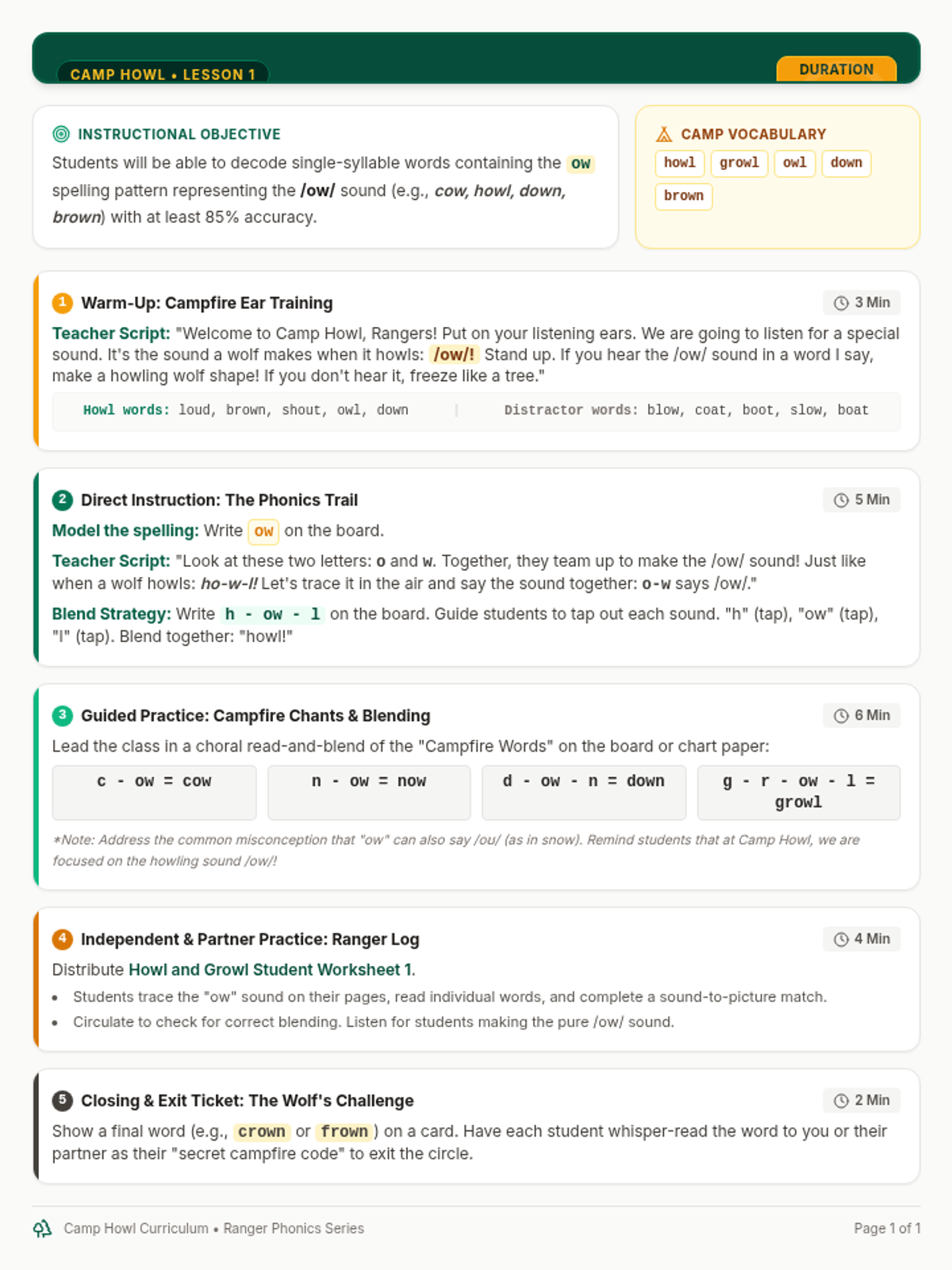
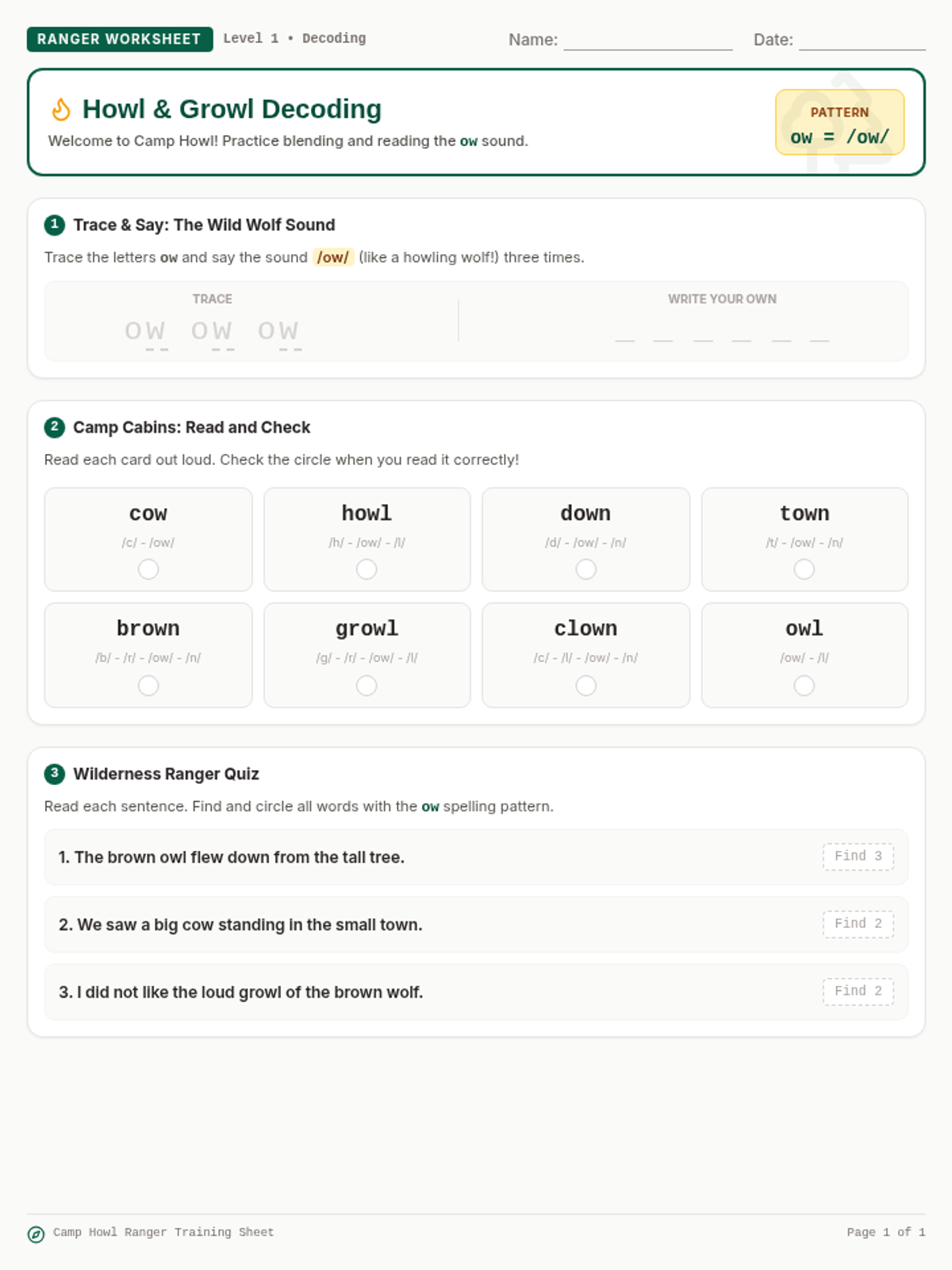
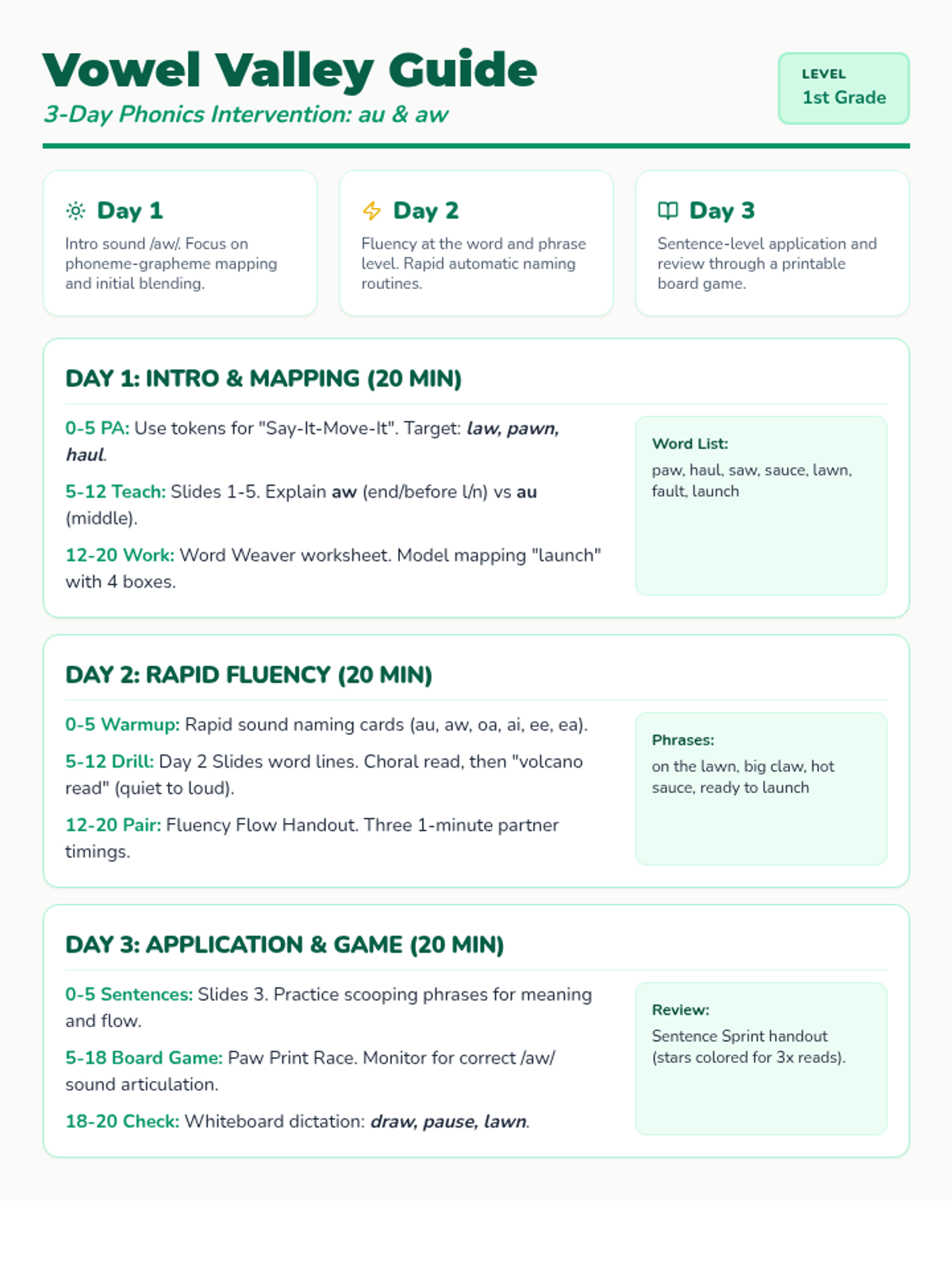
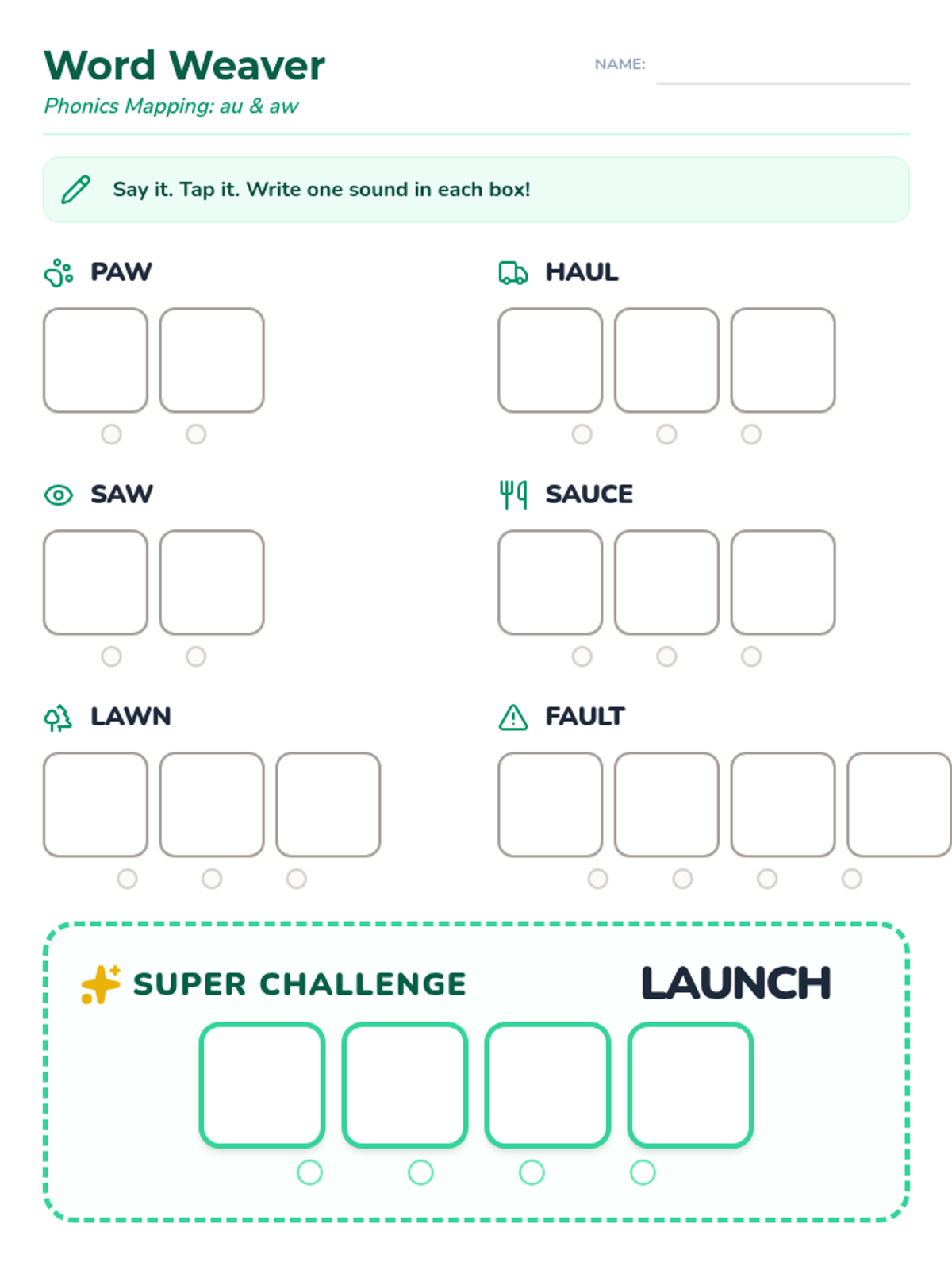
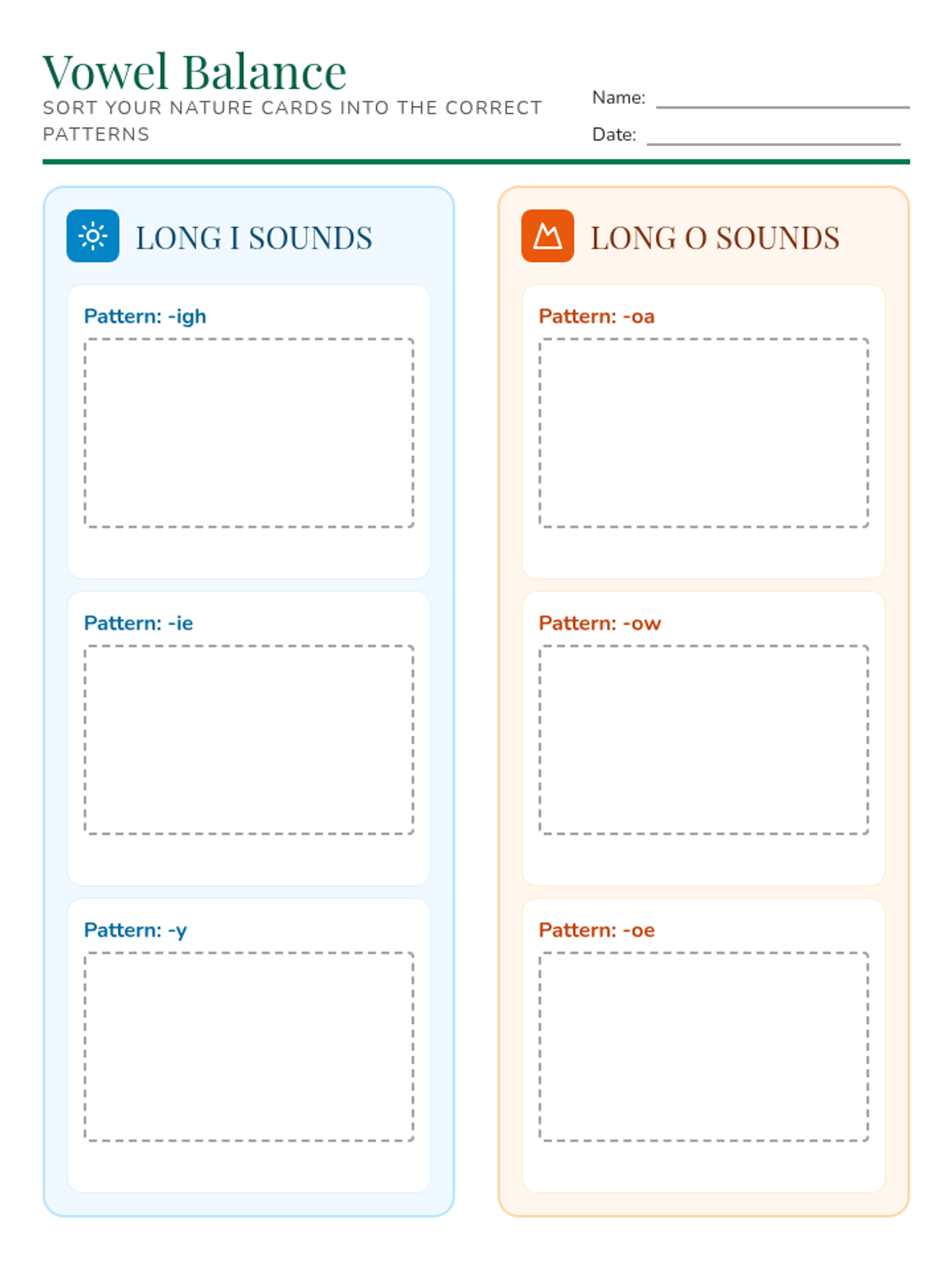
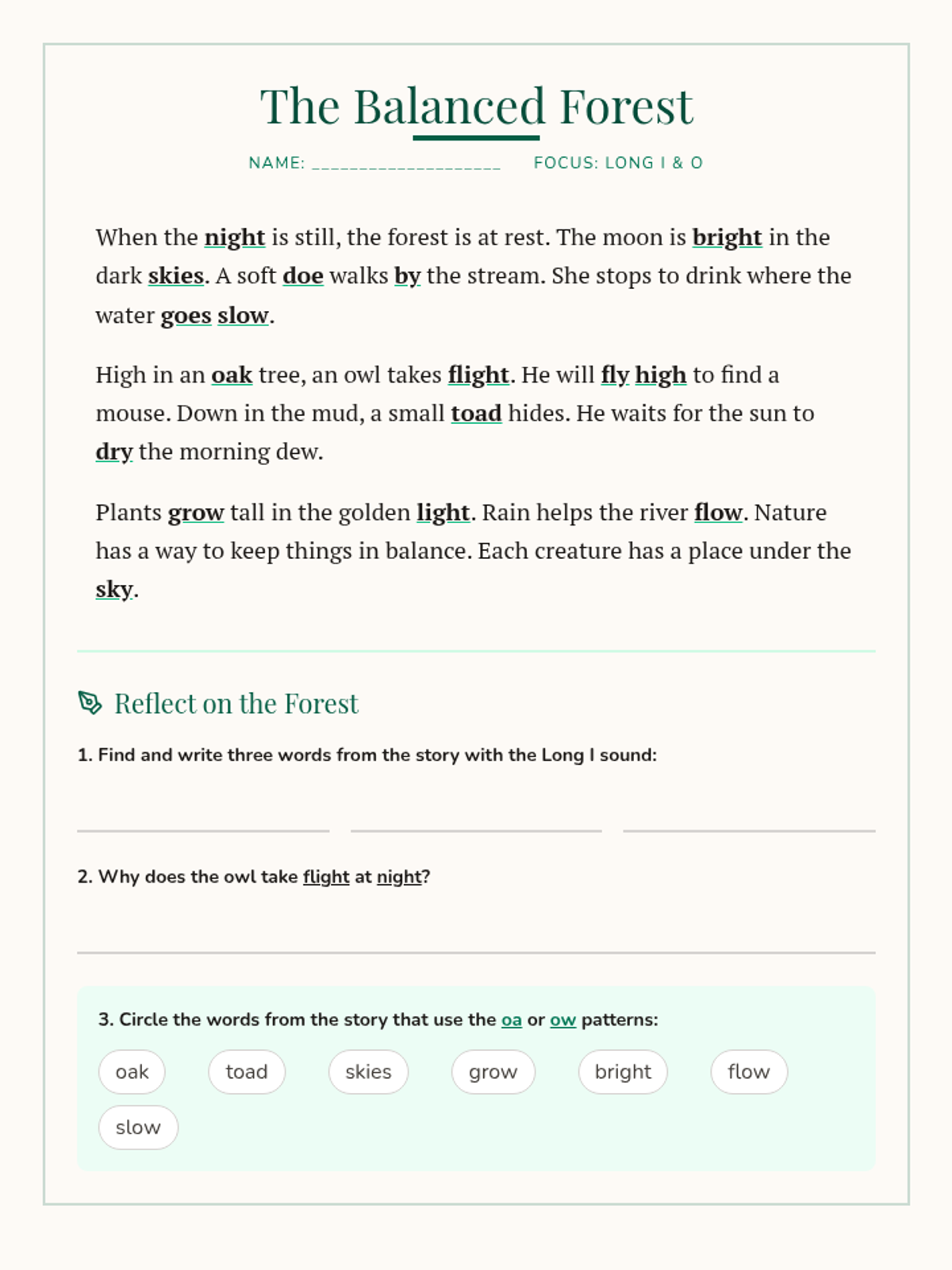
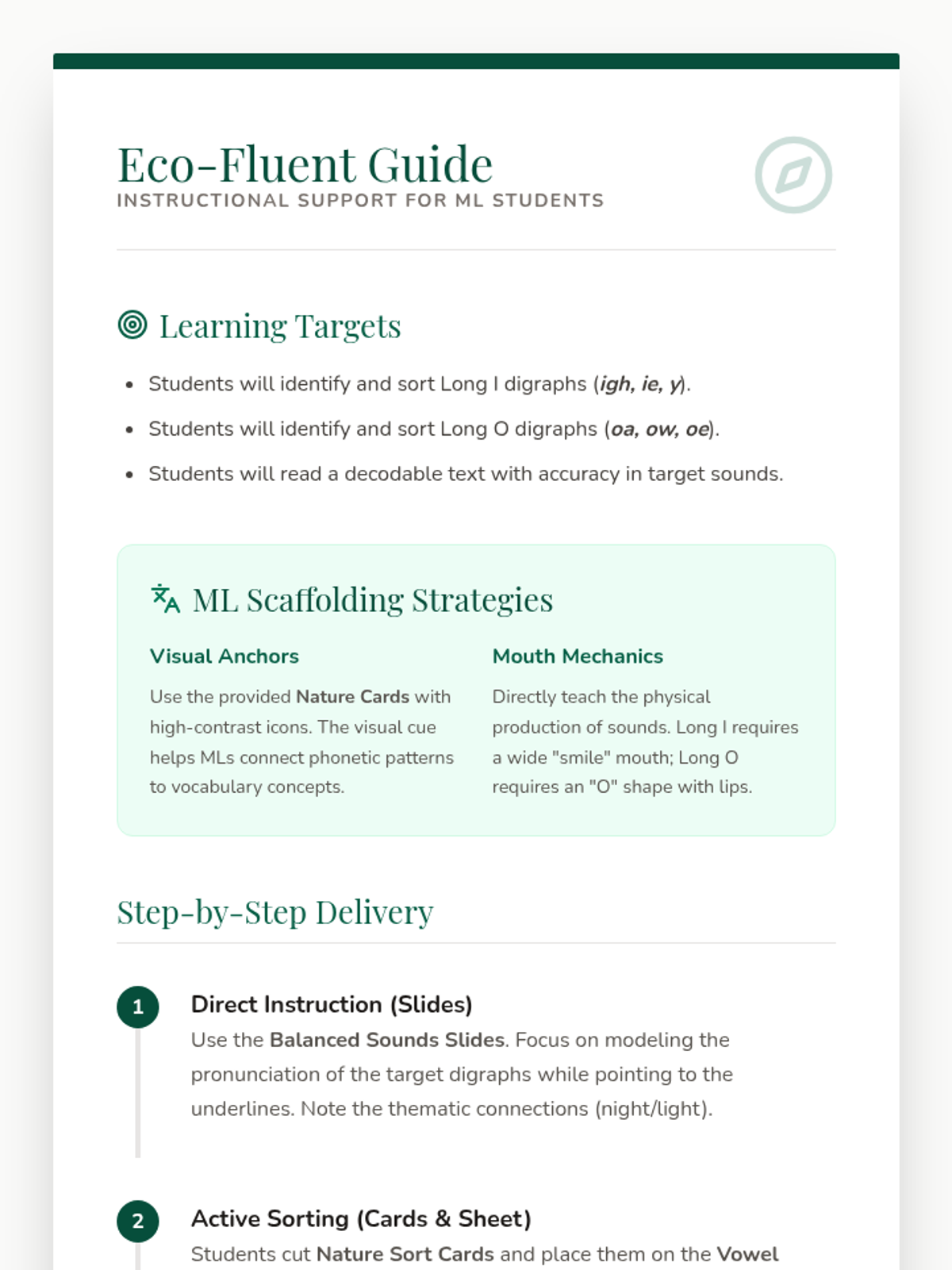
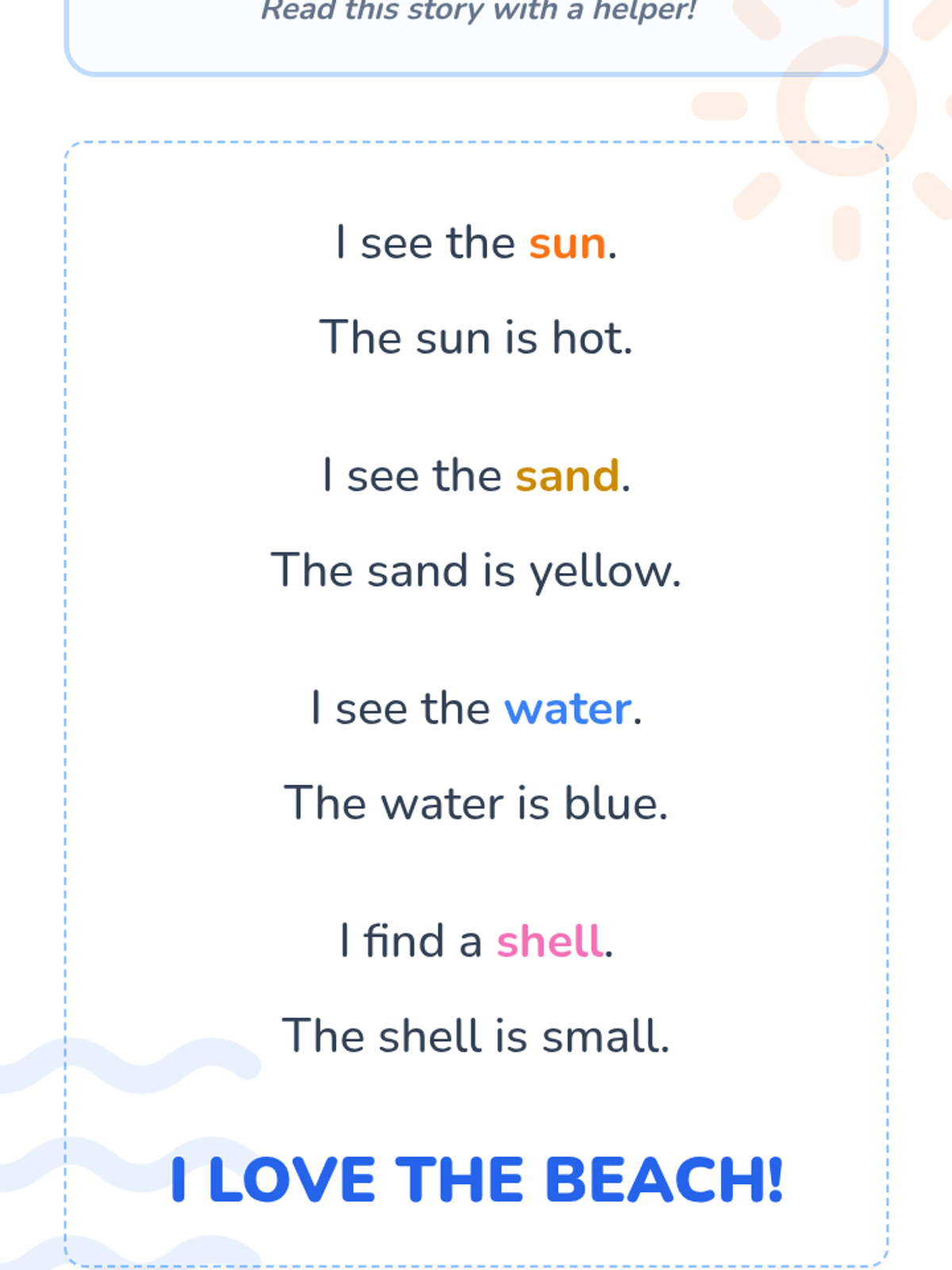
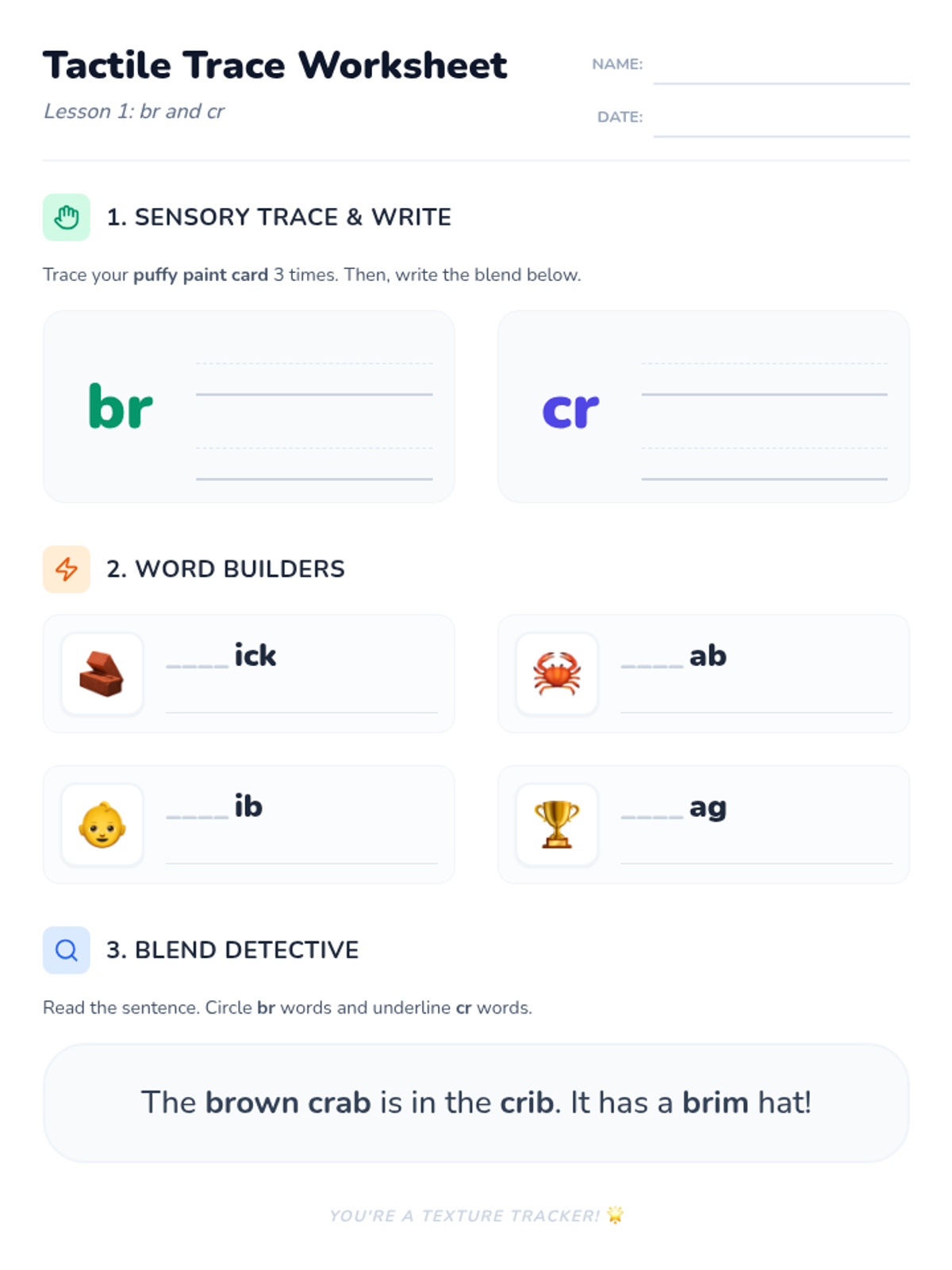
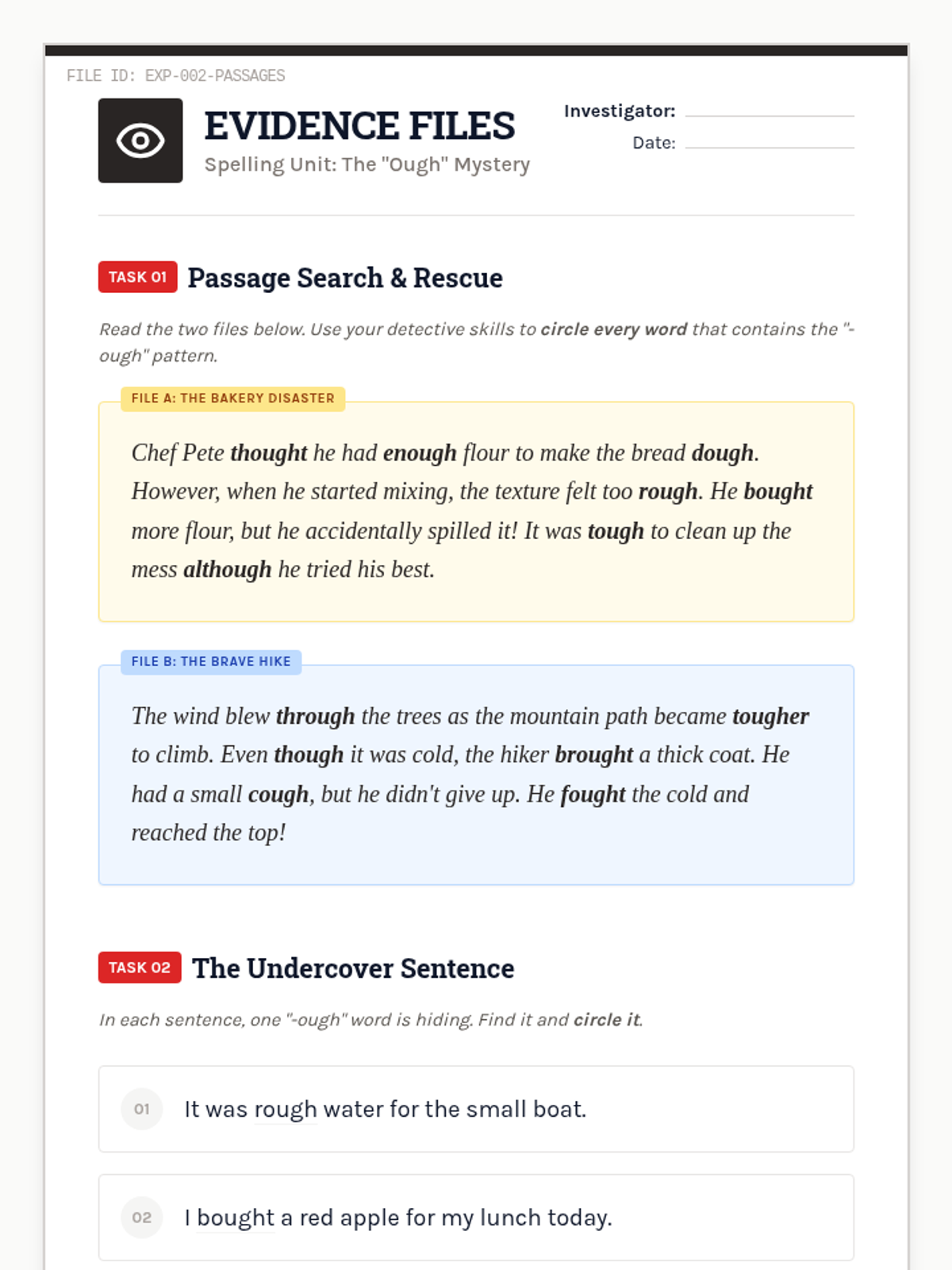
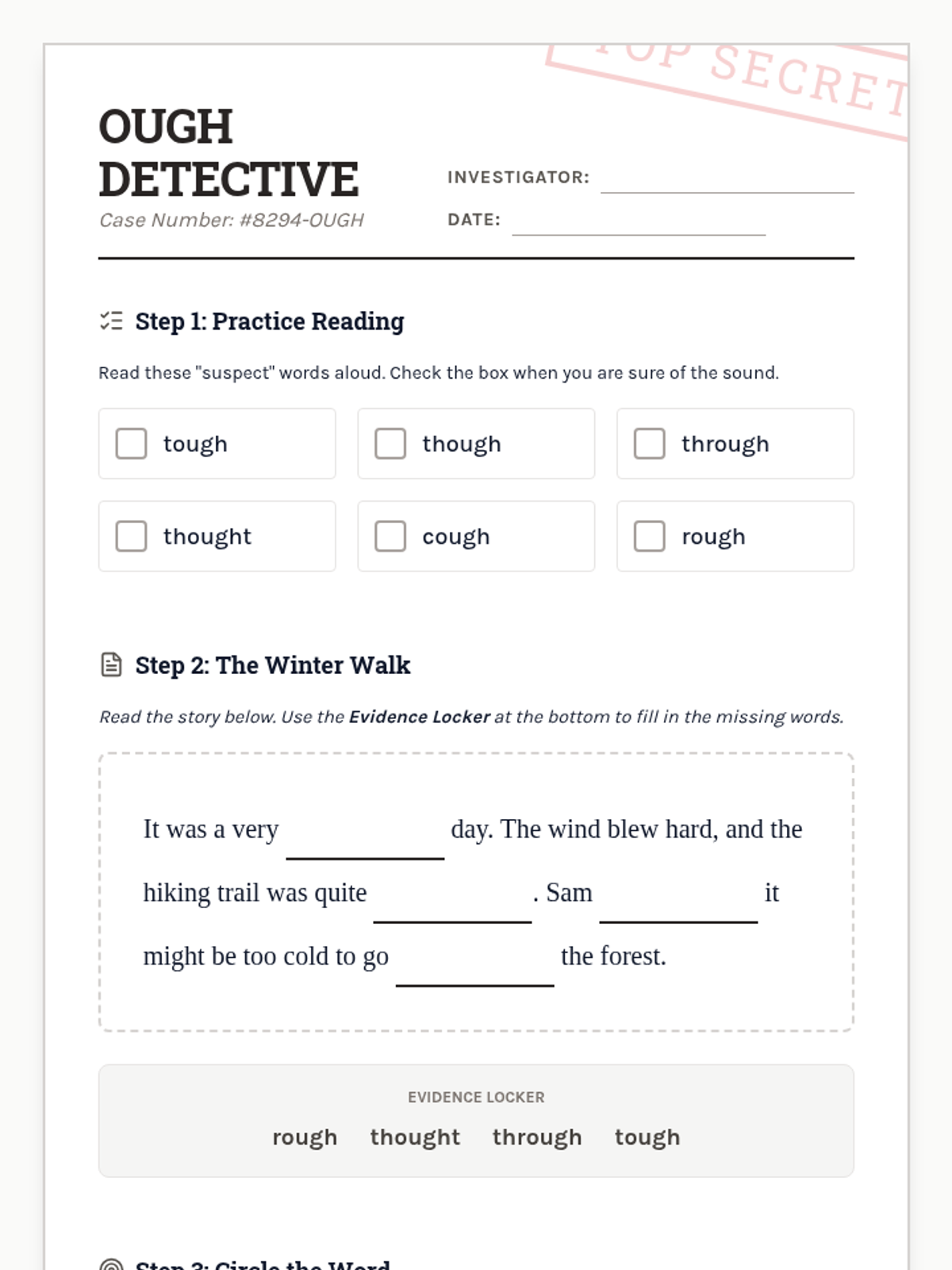
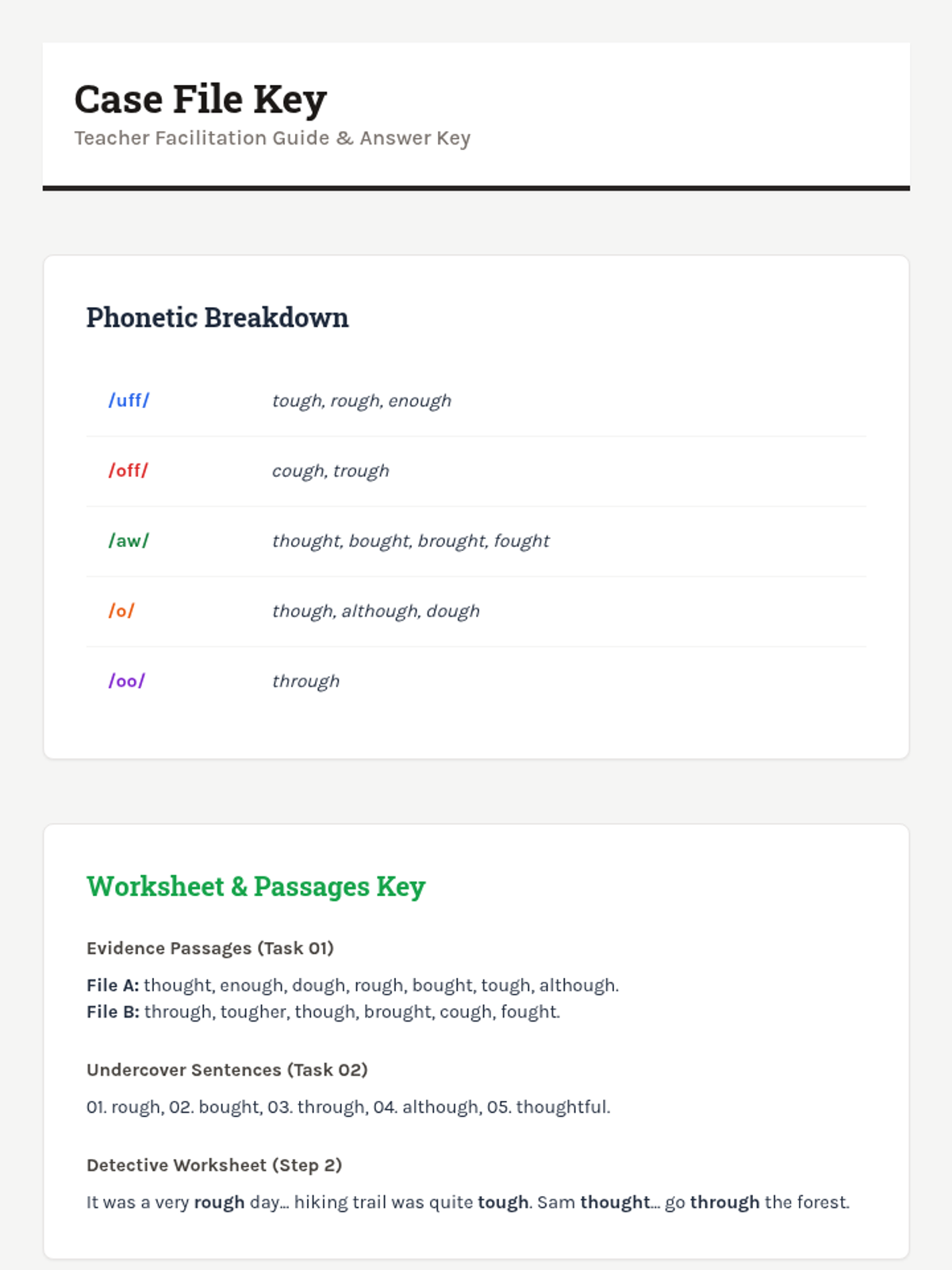
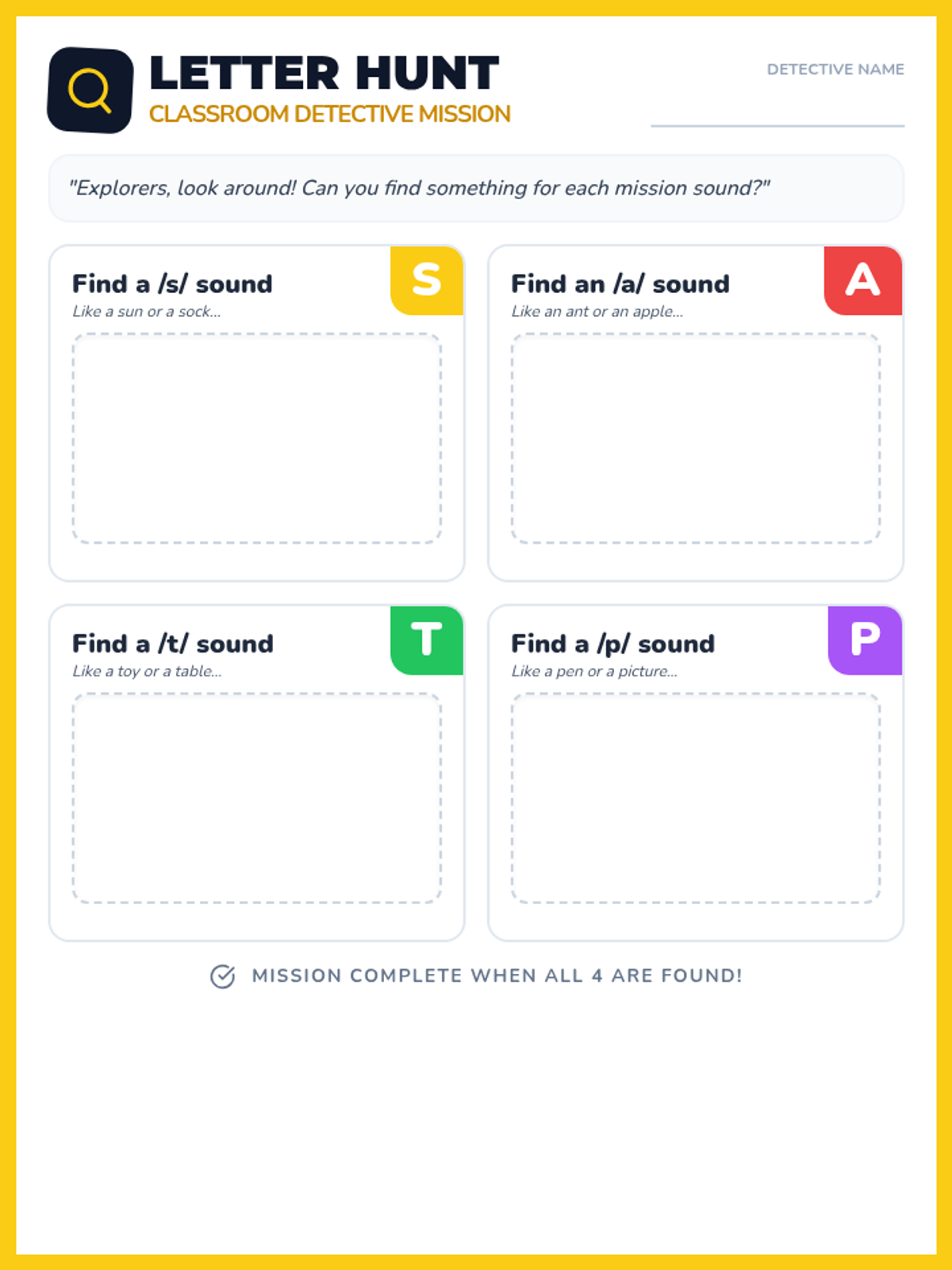
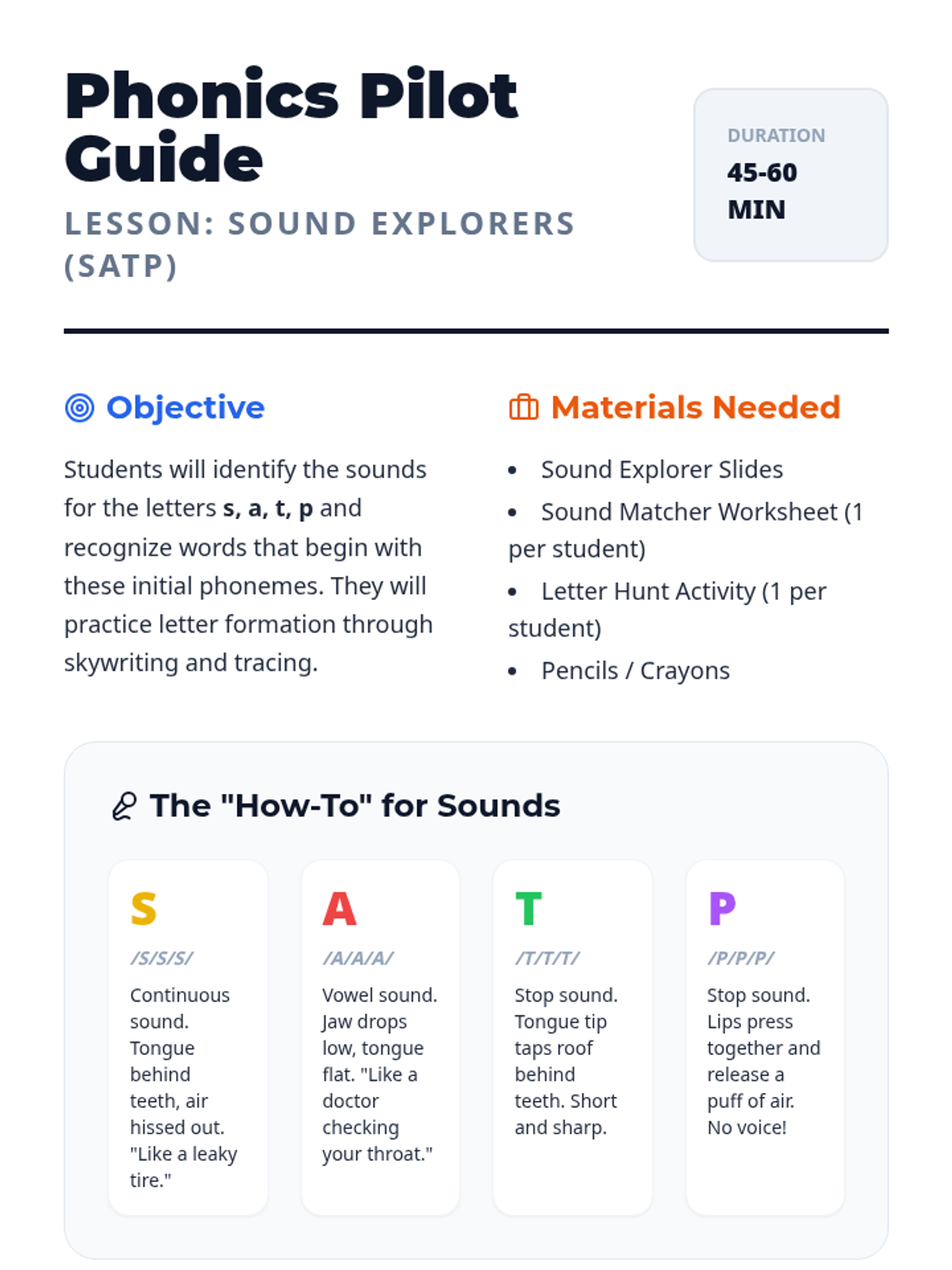
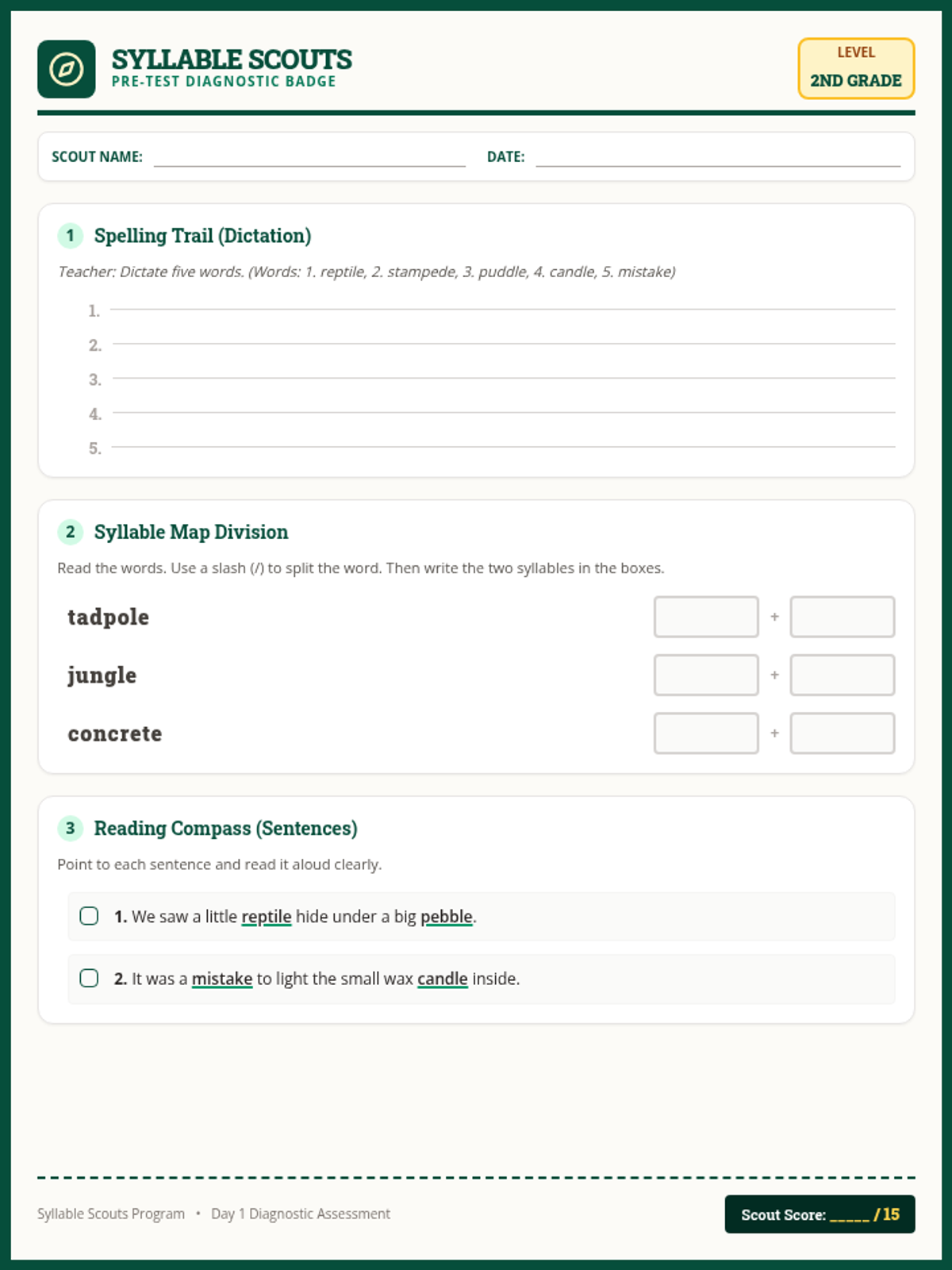
A series of lessons focused on foundational phonics skills for first-grade learners.
A comprehensive novel study for Keena Ford and the Field Trip Mix-Up, featuring a student journal, sequence organizers, and teacher keys designed for independent second-grade work.
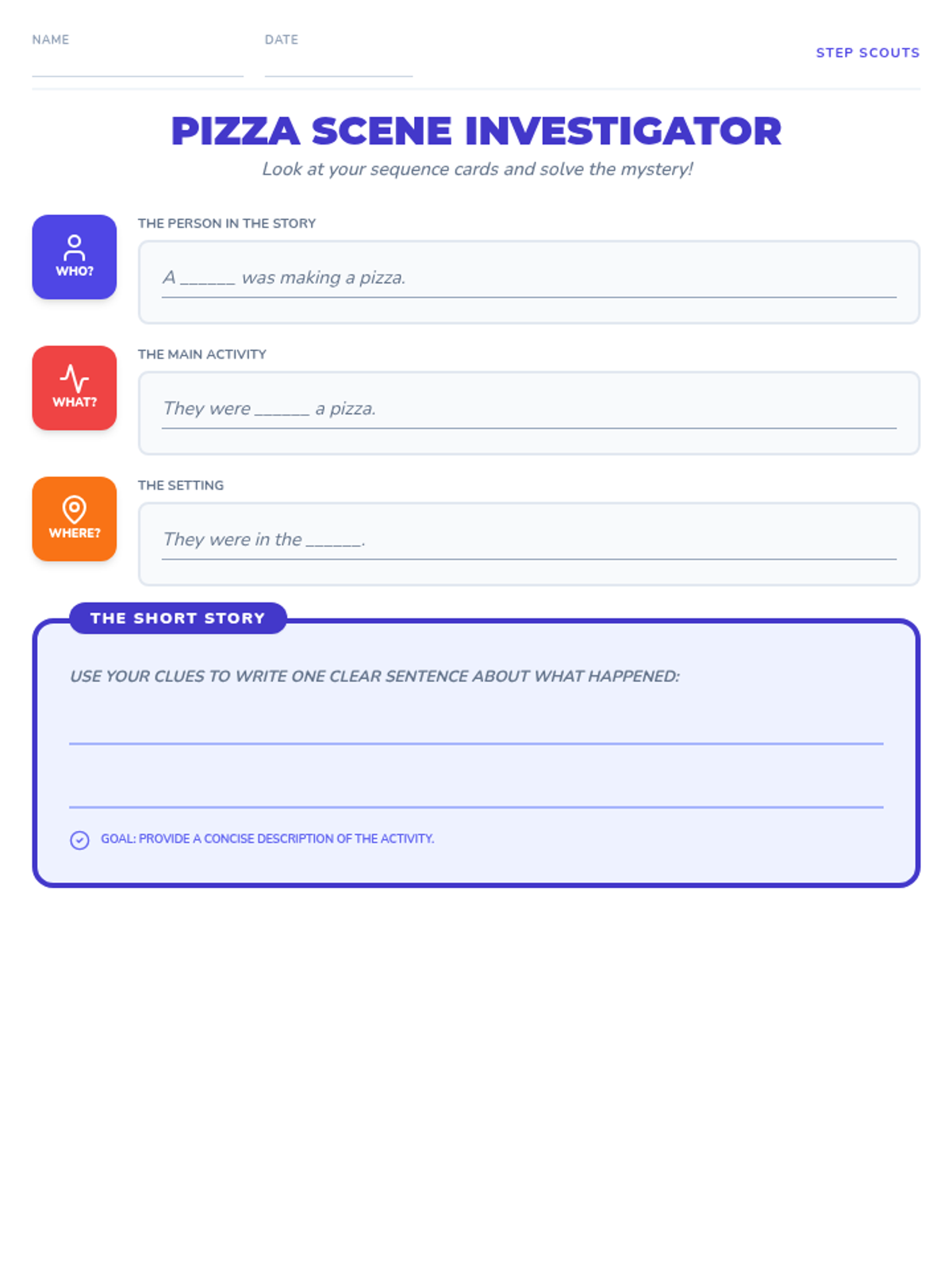
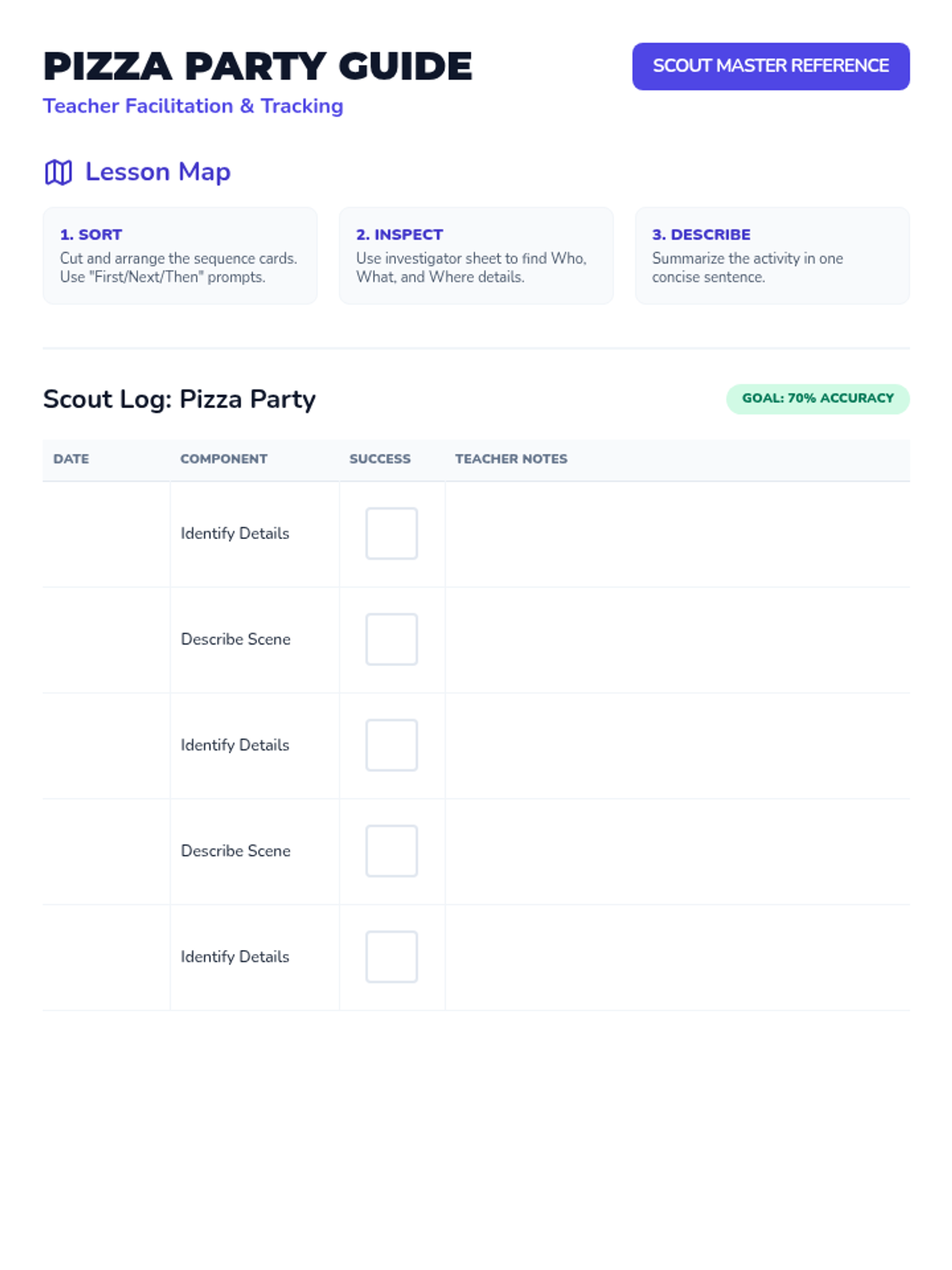
A unit focused on teaching story sequencing across different primary grade levels, from simple 3-step events to complex narrative order.
A thematic unit centered on winter and snow, exploring grammar, functional language, and descriptive comparison skills.
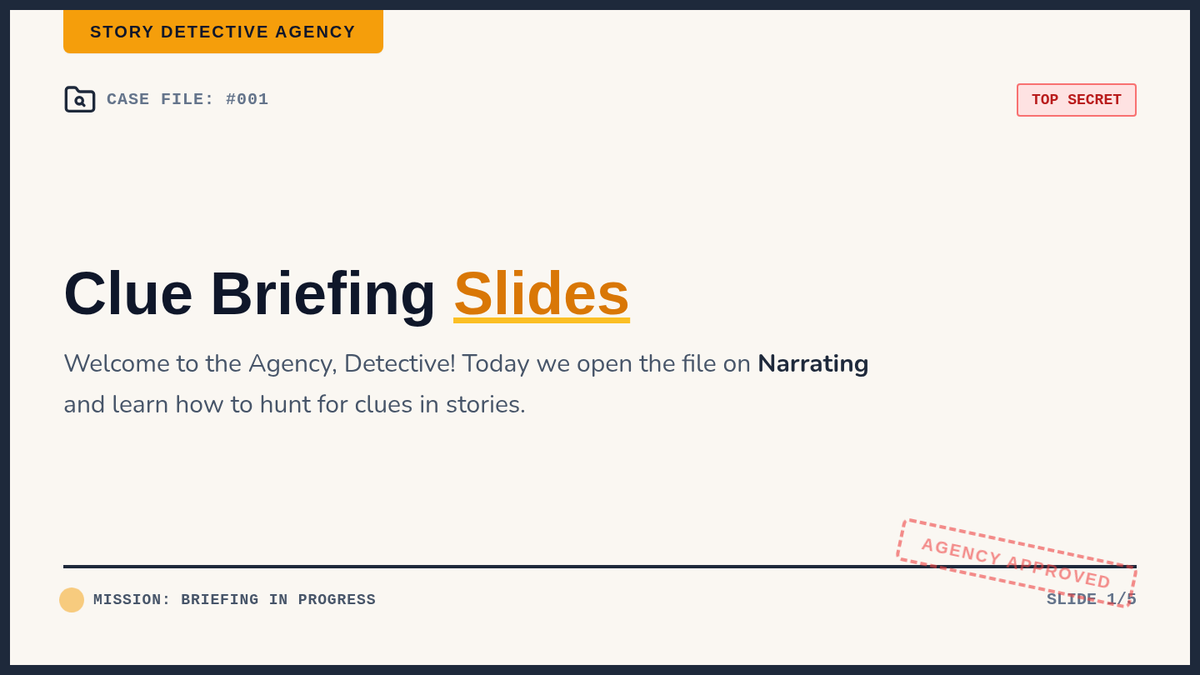
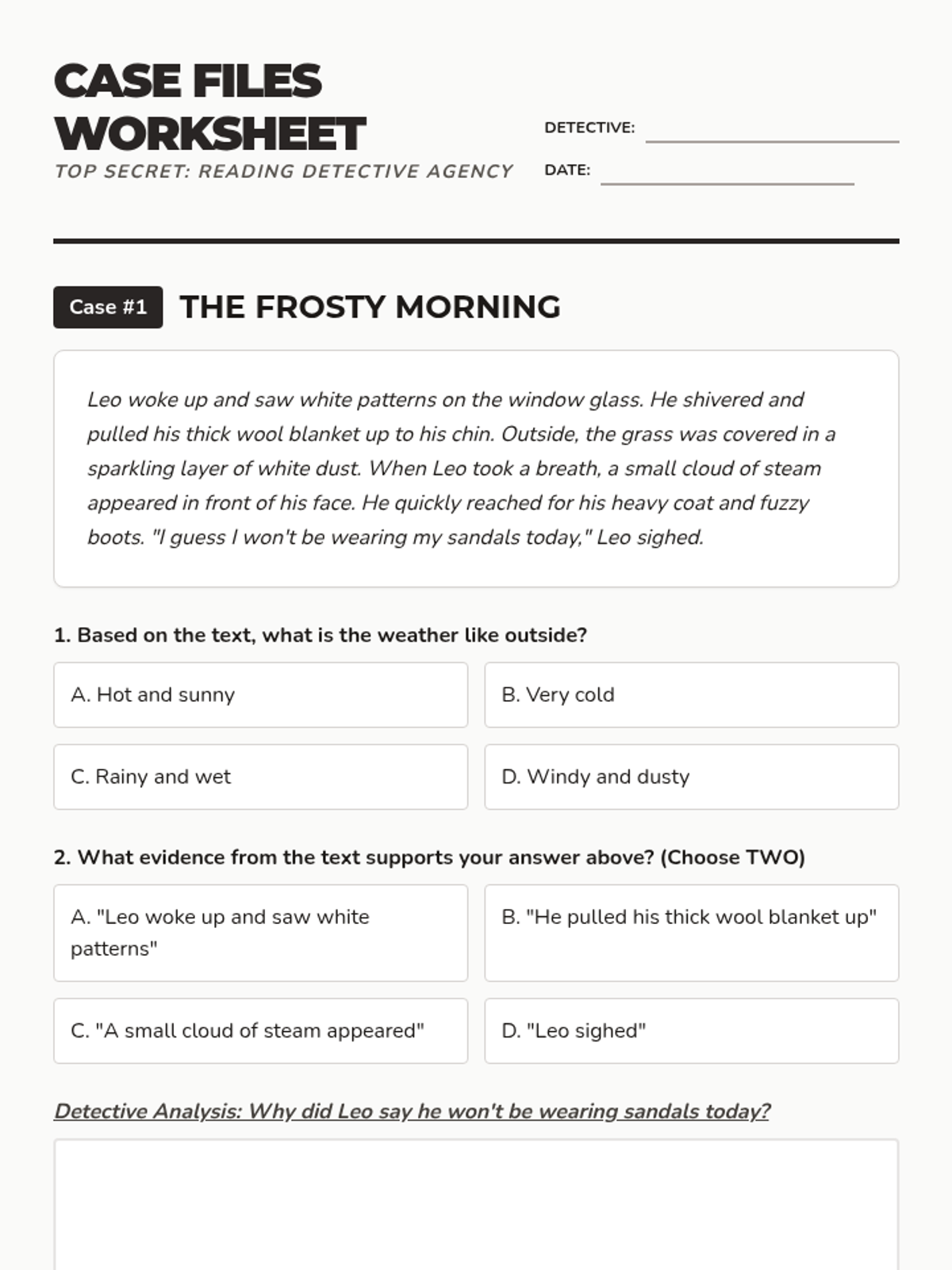
A two-day investigation where students master the ability to distinguish between narrative and informational texts using specific text features and clues.
A 3-part reading comprehension unit focusing on identifying the main idea through engaging short stories about food, cooking, and culinary traditions.
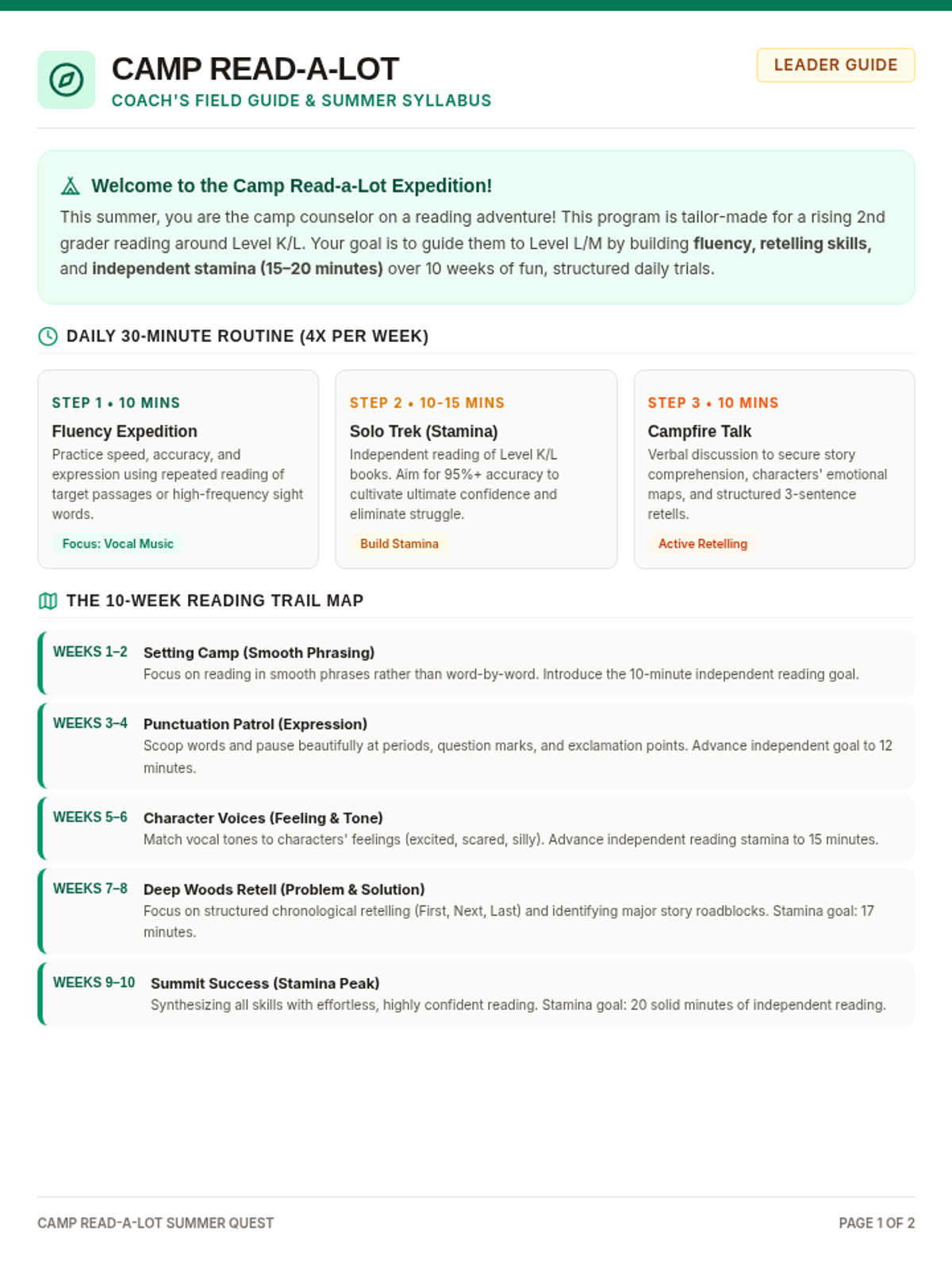
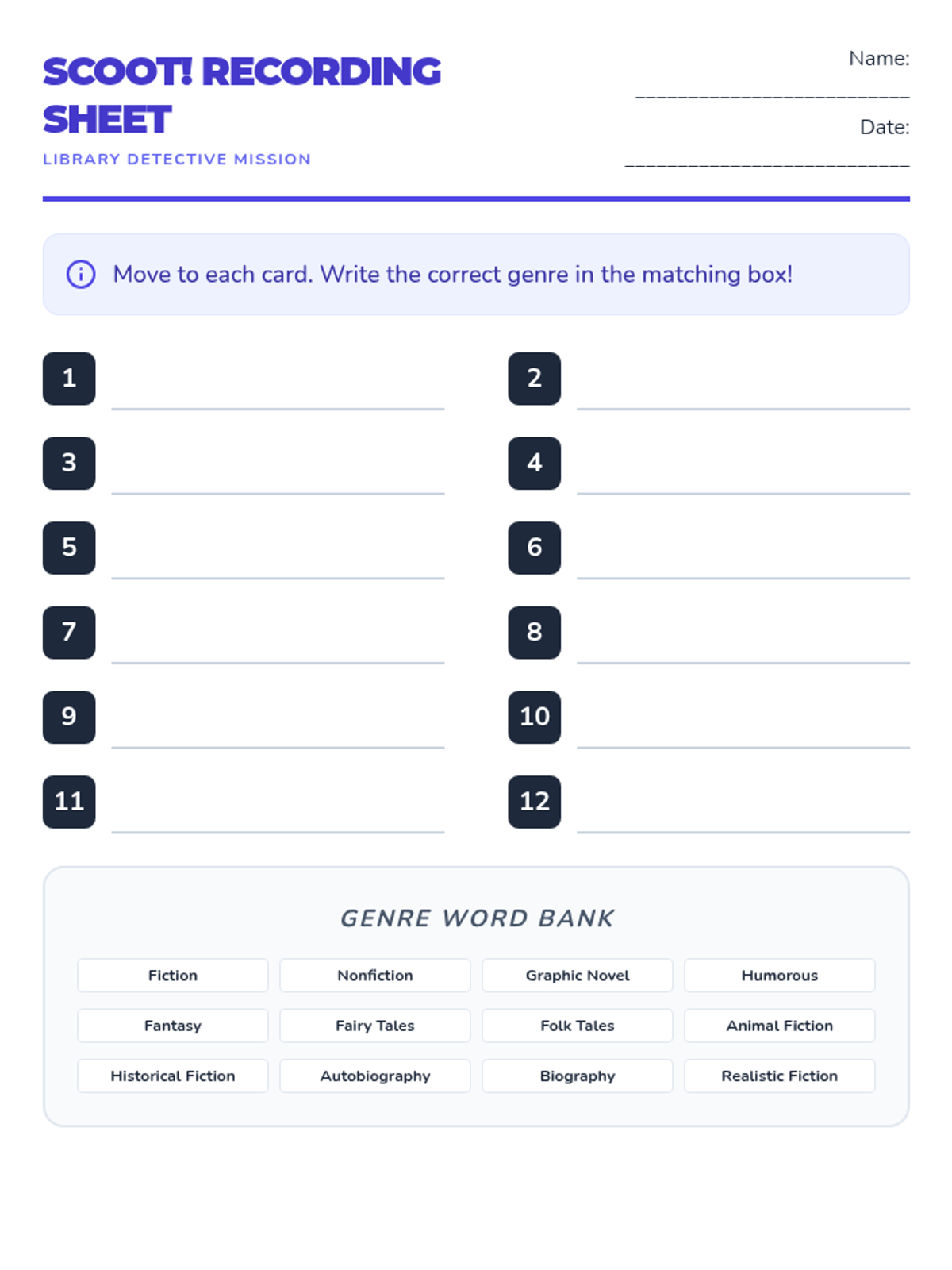
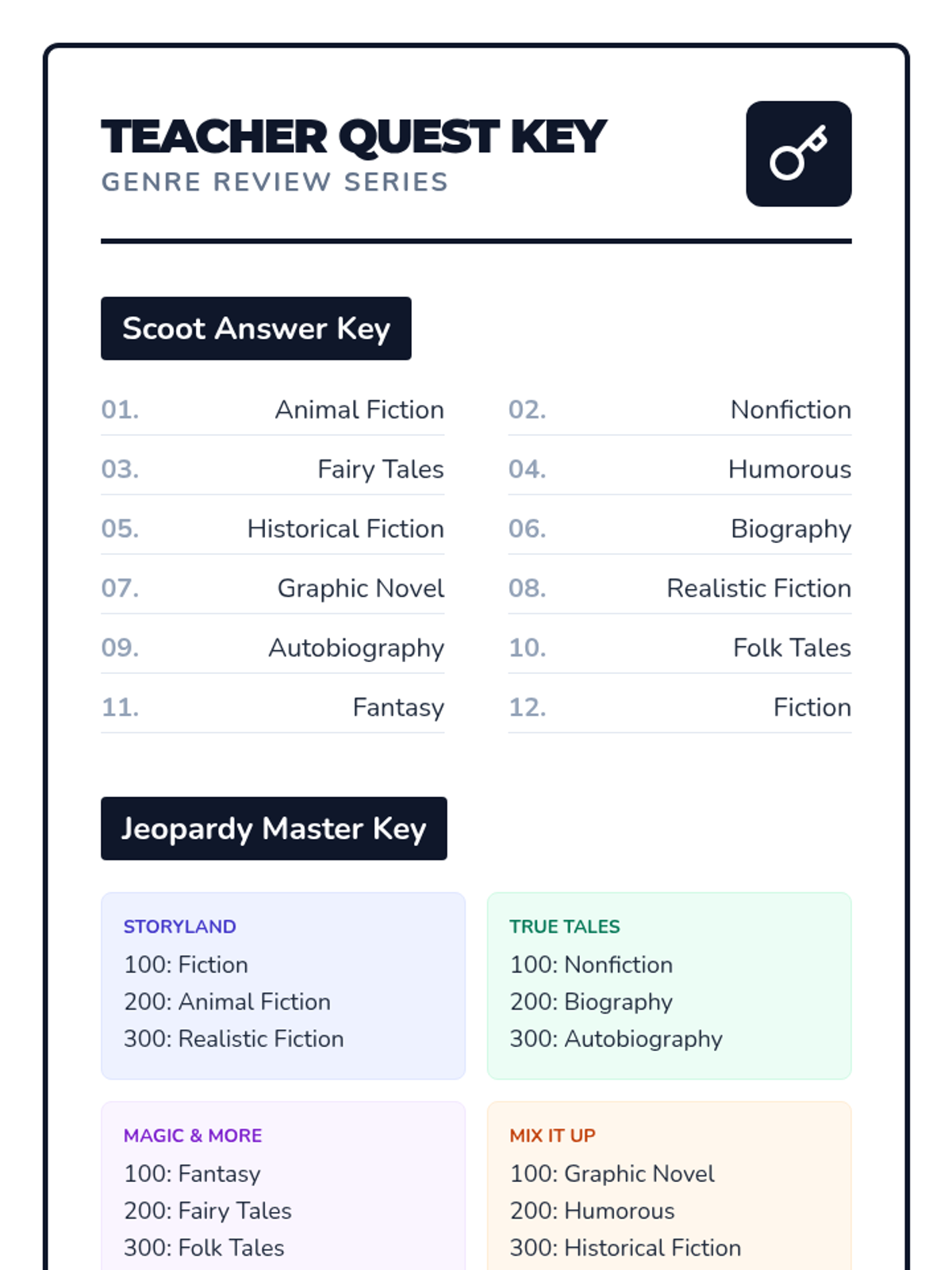
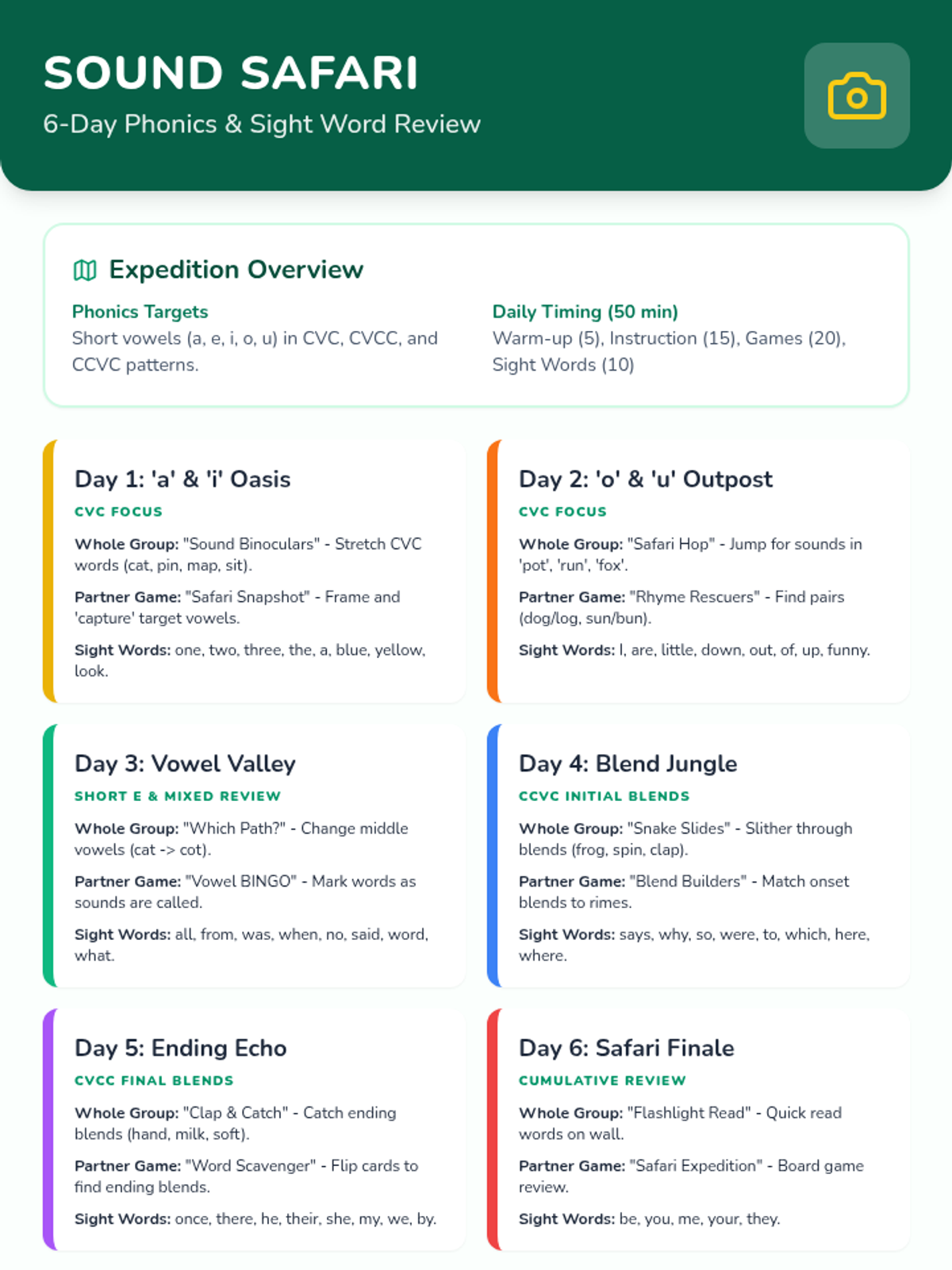
A 3-week literacy intervention program for grades K-5 focused on phonics, vocabulary, and comprehension with a space exploration theme. Each week features 30-minute daily sessions including interactive games and hands-on activities.
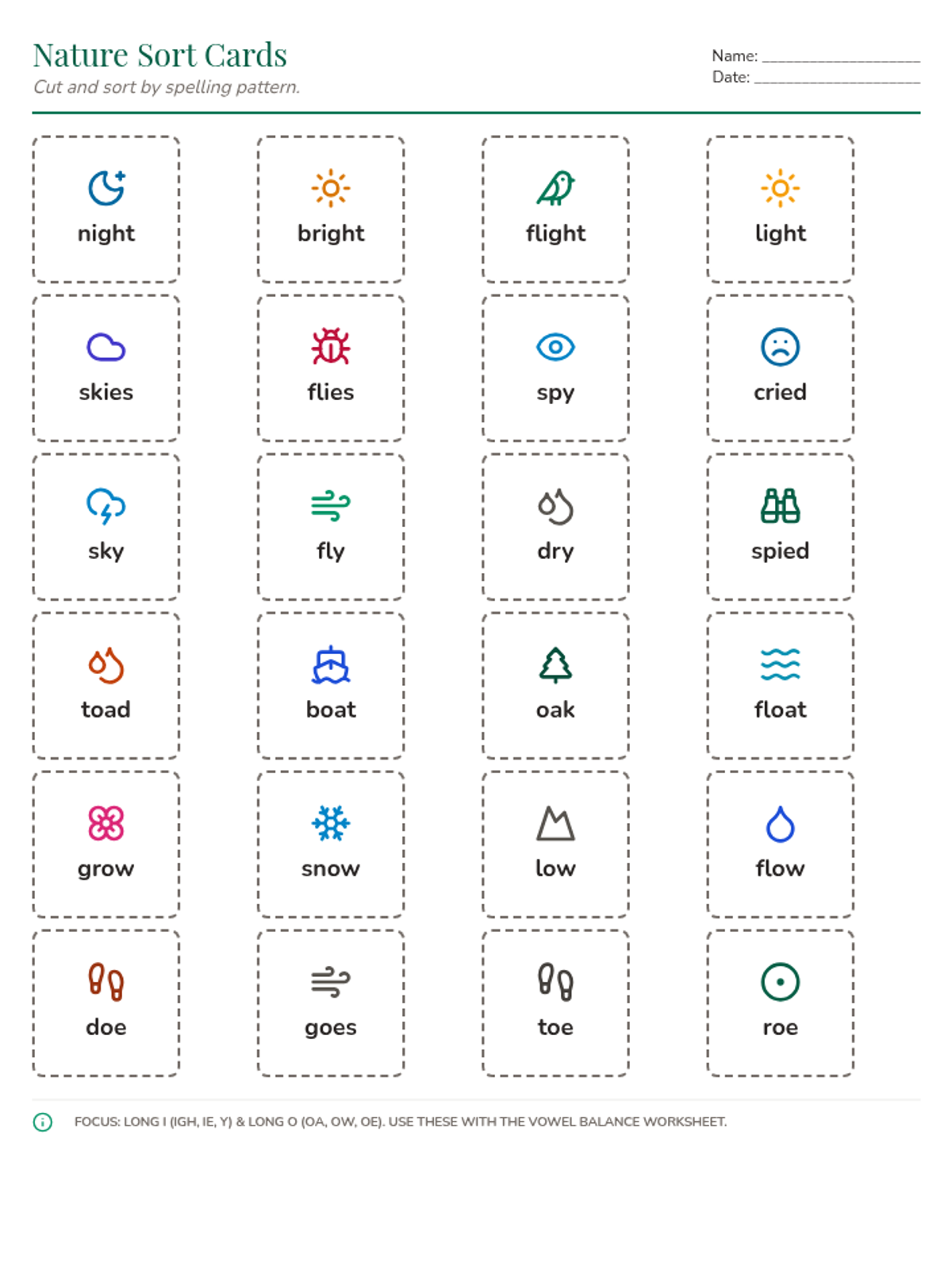
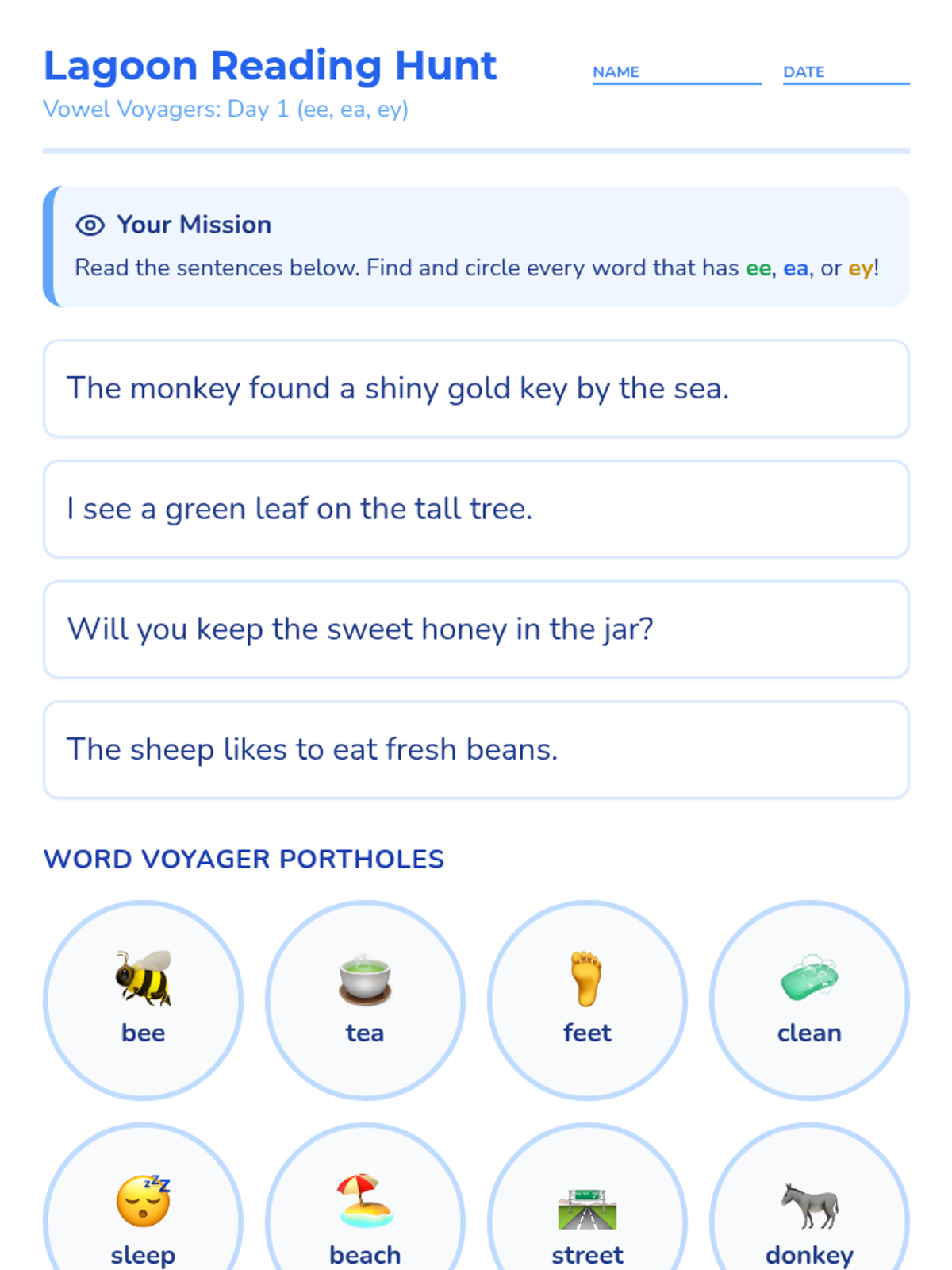
A foundational phonics series focusing on complex vowel patterns that create the Long A sound, helping students navigate the irregular spellings of the English language.
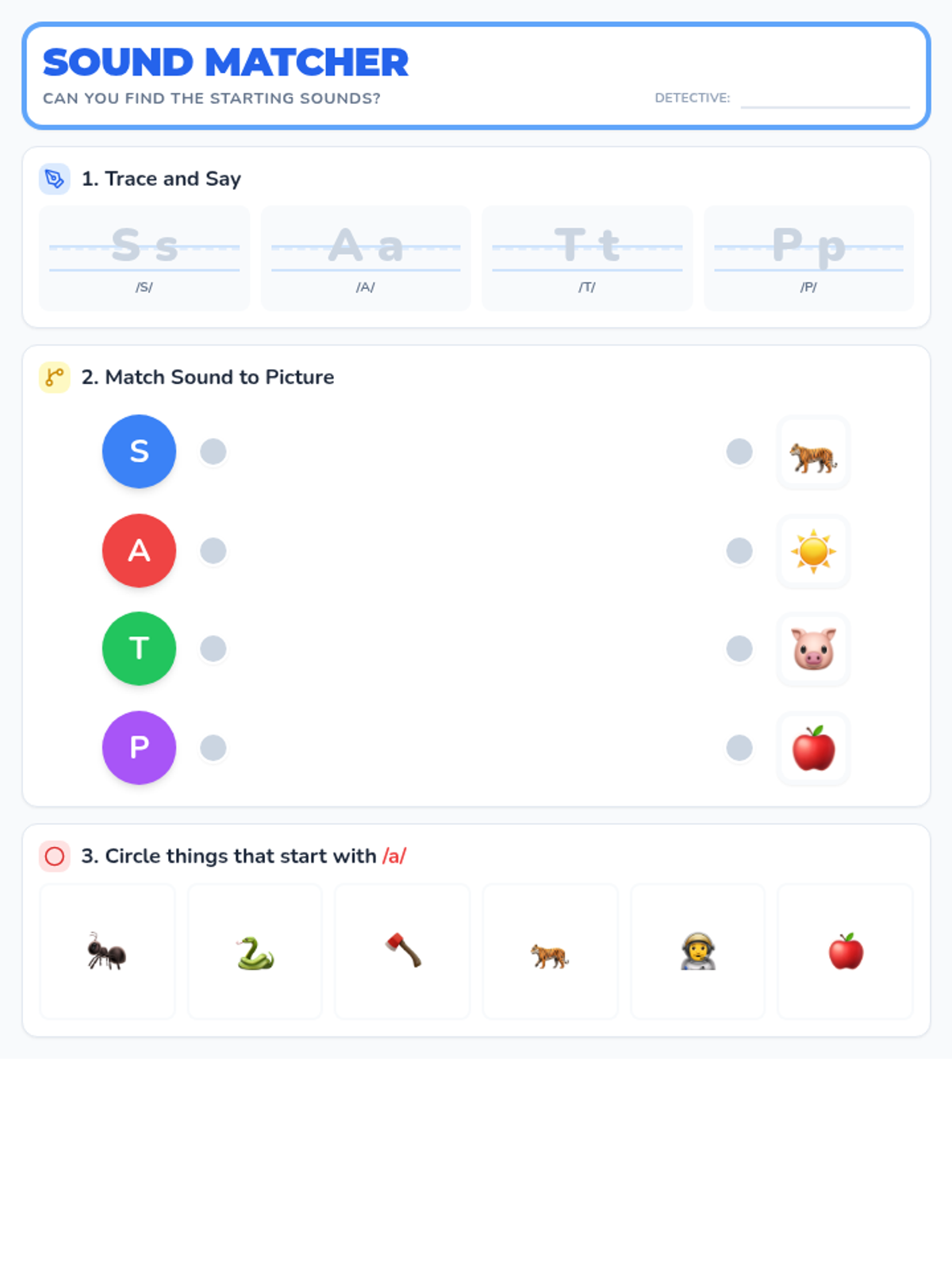
A series of foundational literacy lessons designed to introduce young learners to the alphabet, phonics, and writing forms.
A series of lessons focused on mastering frequently confused homophones through visual color-coding and active participation.
This sequence teaches 2nd-grade students how to use Text-to-Speech (TTS) technology as a powerful editing tool for their writing. Students progress from identifying simple missing words to using TTS for punctuation, fluency, and spelling, culminating in a polished final project.
A 5-lesson sequence for 2nd-grade students exploring narrative writing through speech-to-text technology. Students learn oral rehearsal, dictation commands, and descriptive storytelling to bridge the gap between their imagination and the page.
This sequence focuses on the cognitive planning required before activating the microphone, bridging the gap between thought and oral expression. Students explore how to organize their ideas using graphic organizers and bullet points to prevent rambling during dictation.
This 2nd-grade sequence uses kinesthetic and oral strategies to support visualization. Students progress from partner description games to physically embodying text through freeze-frames and role-play, culminating in a Reader's Theater performance where they verbally construct the setting.
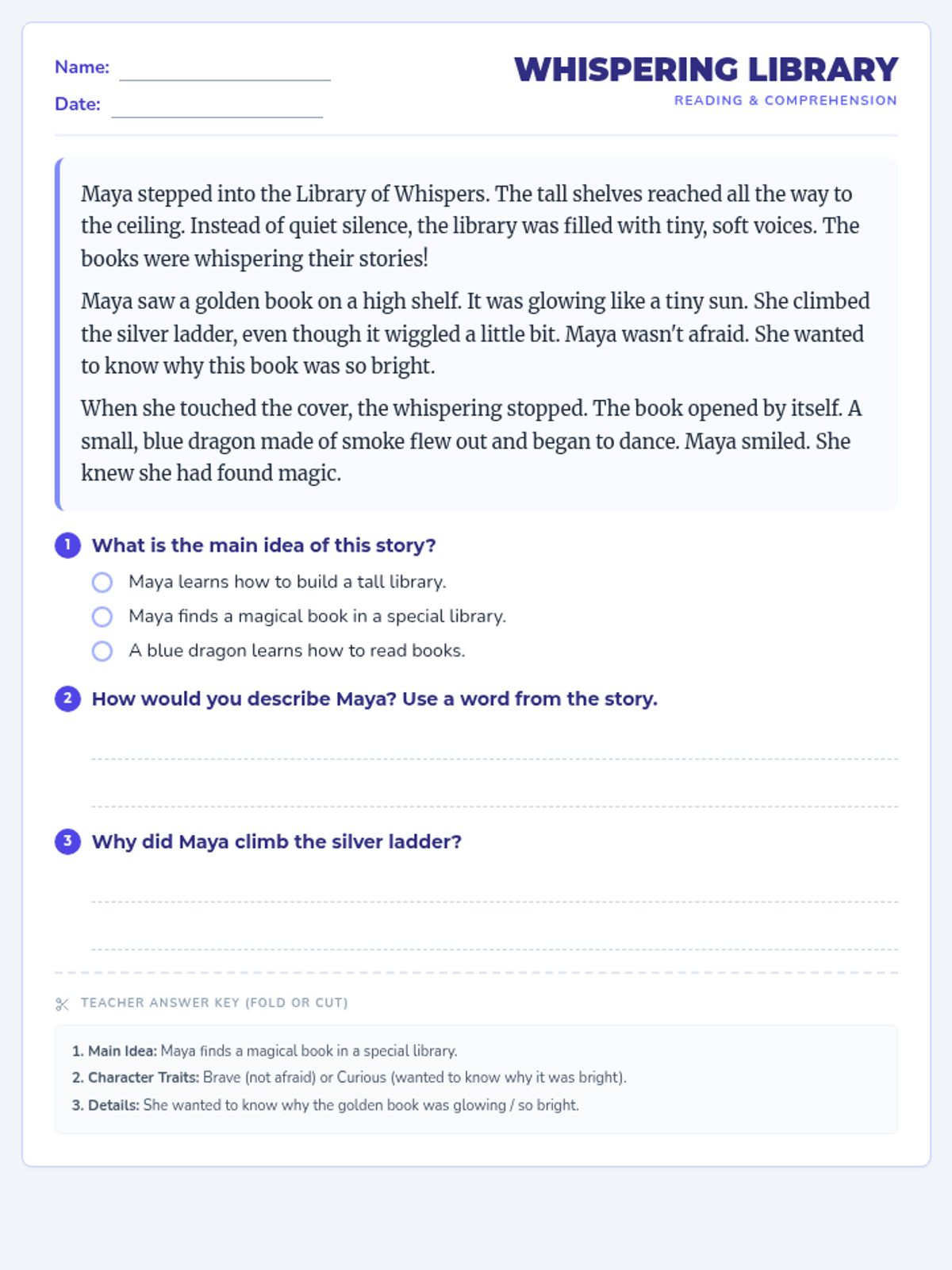
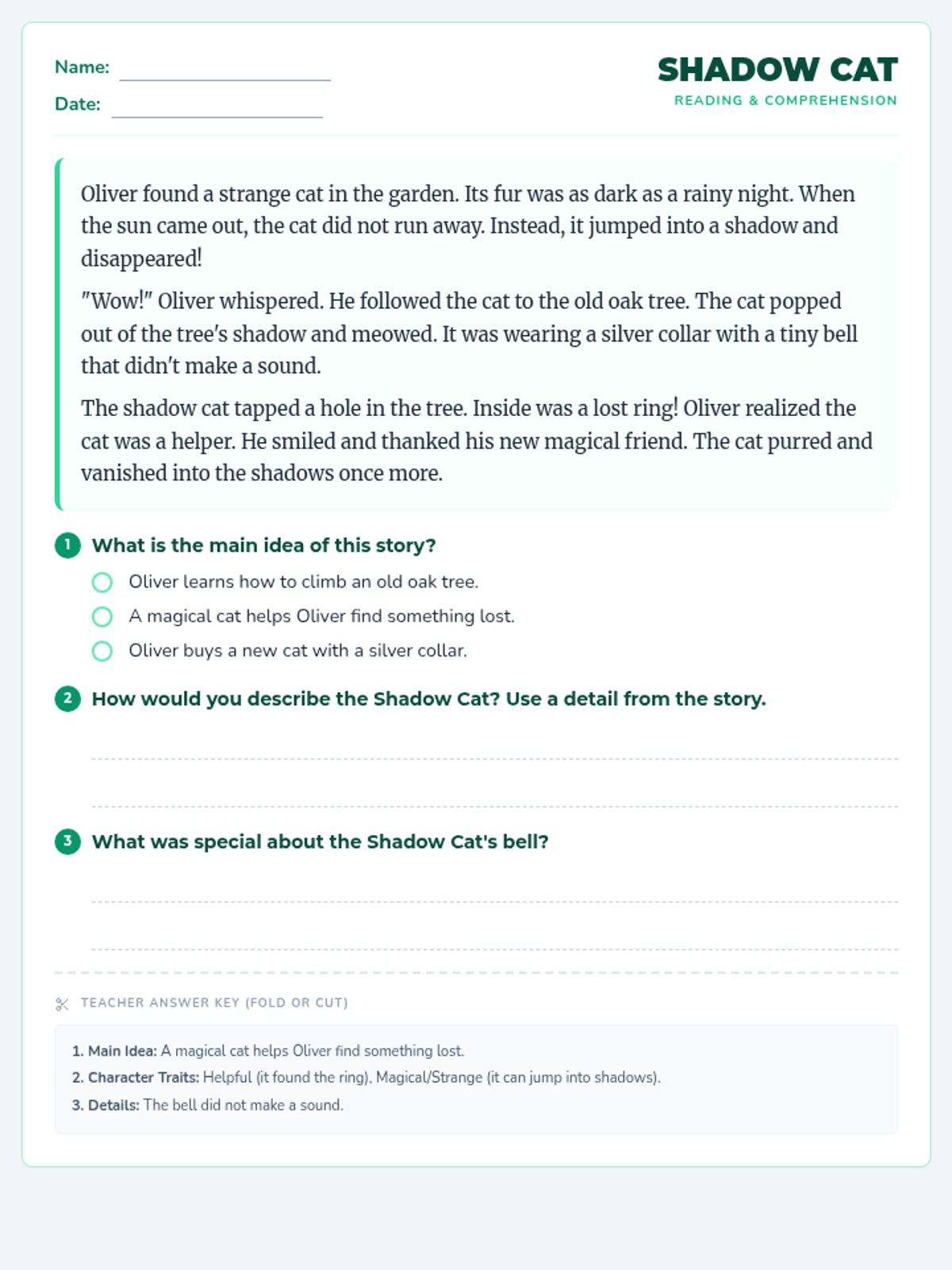
This sequence introduces 2nd-grade students to visualization strategies by connecting sensory details in text to 'mental movies.' Students progress from simple visual imagery to multi-sensory mental pictures that support reading comprehension and recall.
This sequence focuses on character analysis, helping students infer internal traits, motivations, and emotions based on external dialogue and actions. It moves from identifying temporary emotions to predicting long-term behavior based on established character traits.
A specialized reading intervention sequence designed for 8th-grade students to master visualization strategies for expository and informational texts. Students move from visualizing simple procedural steps to constructing complex mental models of cause-effect relationships and conceptual hierarchies.
A 1st-grade sequence focused on teaching visualization strategies through the metaphor of a 'Mind Movie'. Students learn to cast characters, build settings, monitor comprehension, and retell stories using mental imagery.
This sequence teaches 2nd-grade students how to use graphic organizers (Sequence, Compare/Contrast, Cause/Effect, and Description) to plan and draft informational writing. Students learn to select the right organizational tool for their purpose, brainstorm effectively with keywords, and transition from visual plans to structured paragraphs.
This sequence teaches 2nd-grade students how to use concept maps to organize main ideas and supporting details, moving from tangible objects to informational texts. It uses a "Map Makers" theme to make the abstract concept of text structure more concrete and engaging.
A specialized sequence for 2nd-grade students focusing on identifying and mapping cause-and-effect relationships using visual organizers. This series scaffolds from physical role-play to analyzing informational texts and creating complex event chains.
This sequence introduces 2nd-grade students to sequential text structure, moving from concrete physical routines to abstract text analysis using flow charts and signal words. Students will learn to identify 'first,' 'next,' and 'last' while using visual anchors to improve comprehension and oral retelling.
A 2nd-grade sequence focusing on visual graphic organizers (Circle, Bubble, and Tree Maps) to support writing for students with executive functioning needs. The series scaffolds from basic brainstorming to independent selection of organizational tools.
A 5-lesson sequence for 2nd Grade students to master the OREO method of opinion writing. This unit reduces cognitive load through structured graphic organizers and hands-on activities, focusing on distinguishing facts from opinions, brainstorming strong reasons, and providing supporting examples.
A structured writing sequence for 2nd-grade students using the 'Hamburger Model' to teach informational paragraph organization. Students progress from identifying parts to planning a full paragraph using a visual graphic organizer.
This sequence introduces 1st Grade students to procedural writing using flowcharts. It focuses on breaking down tasks into three distinct steps (First, Next, Last) through physical movement, visual organizers, action verbs, and scaffolded sentence writing.
A 1st-grade writing sequence focused on opinion writing through structured graphic organizers. Students learn to distinguish facts from opinions, use a 'because' bridge to link ideas, and use sentence frames to draft complete opinion statements.
This sequence introduces 1st-grade students to narrative structure using a visual 'Beginning, Middle, End' framework. It uses a 'Story Builders' theme to help students segment storytelling into manageable chunks, moving from identification to oral rehearsal and finally to written production.
A first-grade sequence that introduces cause and effect through physical exploration, narrative analysis, and informational texts, concluding with a creative comic project. Students learn to use signal words like 'because' and 'so' to connect events and outcomes.
A 1st-grade grammar sequence exploring conditional and subjunctive moods through the lens of imagination. Students learn to use 'If/Then' structures, express wishes with 'I wish I were', and use helper verbs to describe possibilities and hypothetical worlds.
A 1st Grade ELA sequence focused on the interrogative mood. Students learn to distinguish between statements and questions, use the 5 Ws, manipulate sentence structure to form questions, and conduct peer interviews.
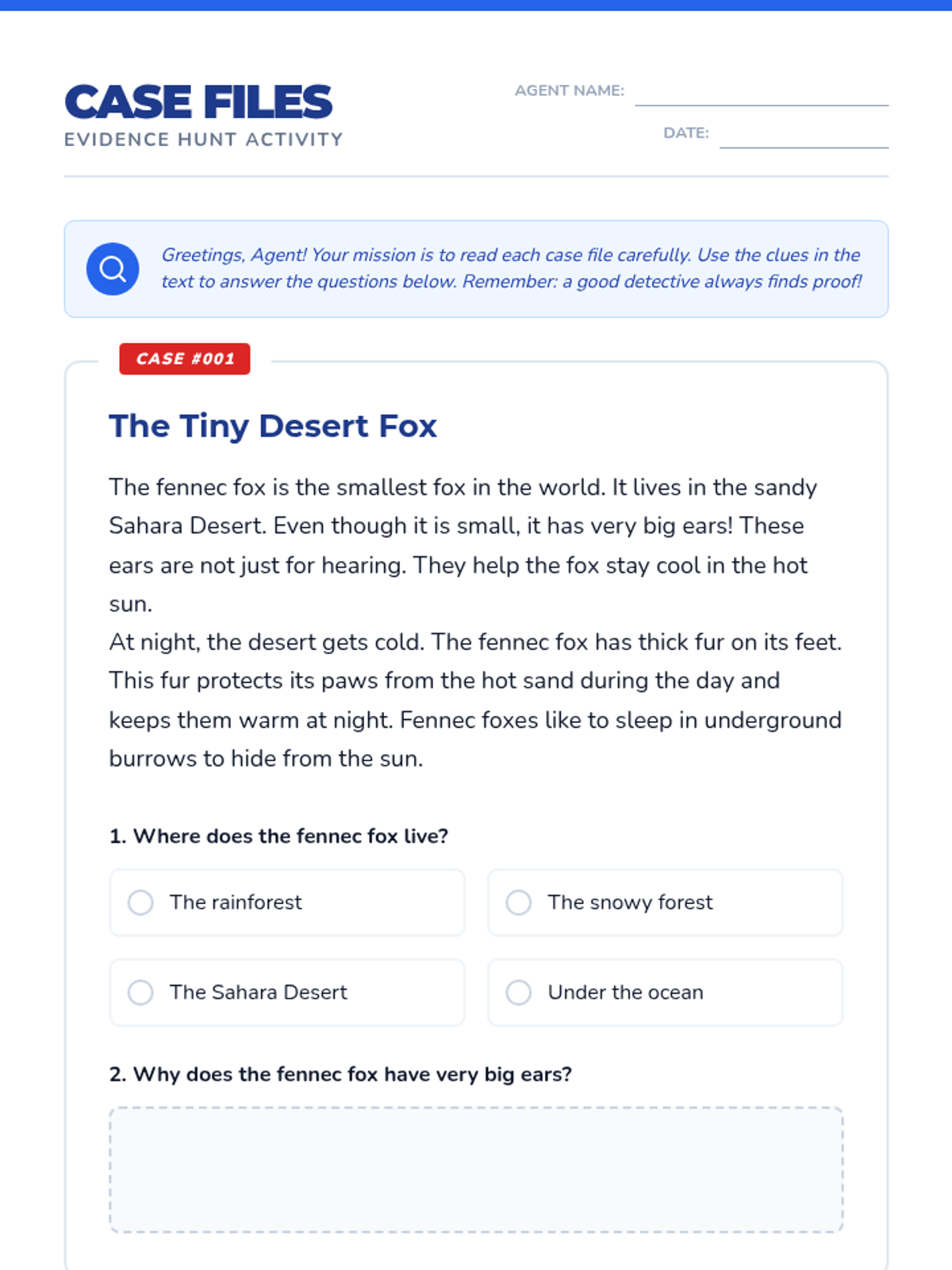
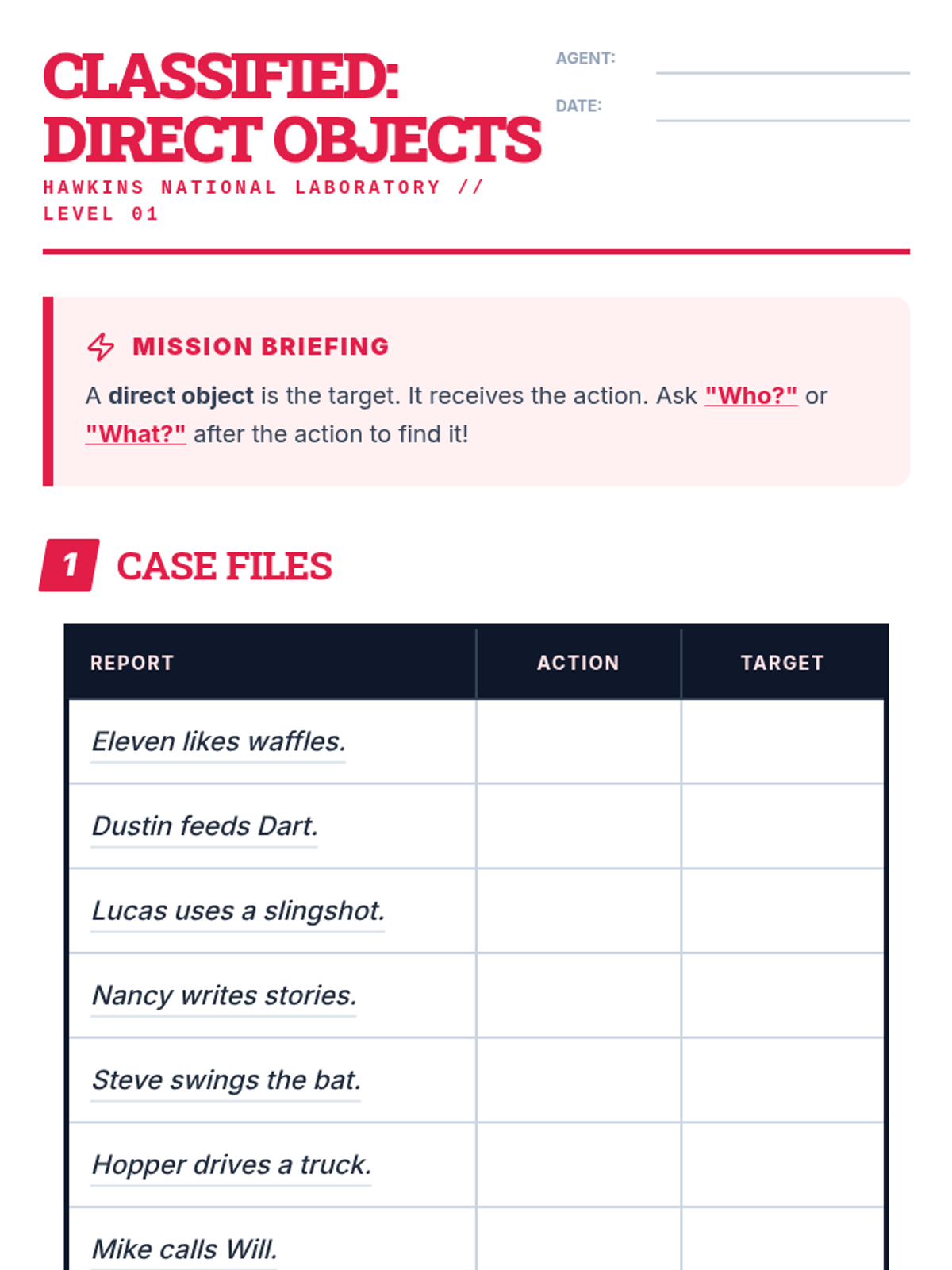
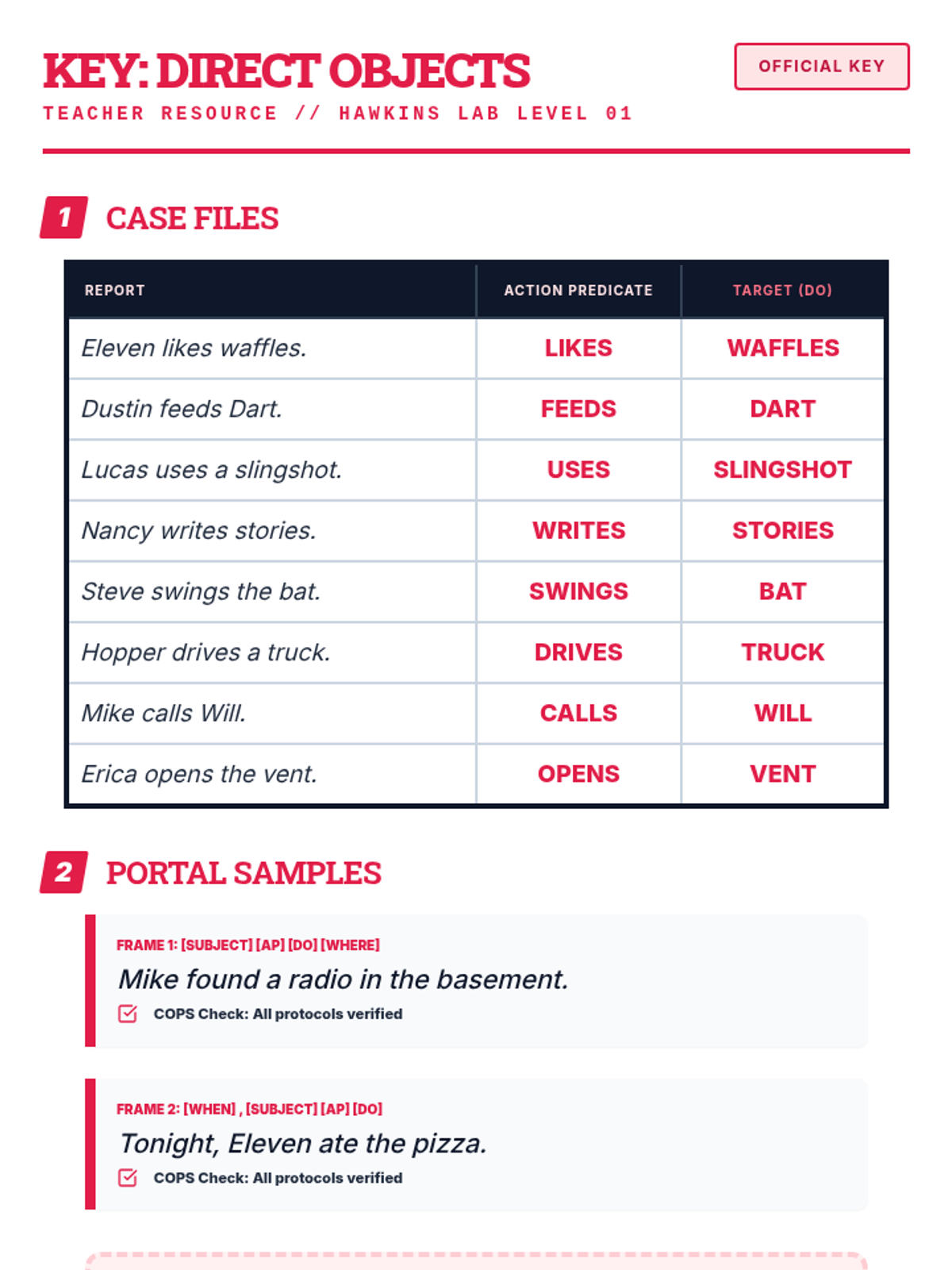
This sequence introduces 1st Grade students to the imperative mood through the concept of 'Bossy Verbs.' Students will move from identifying commands in speech to writing their own multi-step 'How-To' guides, focusing on clarity, punctuation, and sequencing.
A whimsical ELA unit for 2nd graders focusing on the conditional and subjunctive moods. Through the lens of 'wishing' and 'imagining', students learn to use 'if/then' structures and the 'If I were' pattern to express hypothetical scenarios and creative stories.
This sequence introduces 2nd-grade students to grammatical mood through the functions of statements, questions, and commands. Students use a 'News Bureau' theme to explore how verb forms change based on whether they are reporting facts, asking for info, or giving orders.
This sequence guides 2nd Grade students through the foundational concepts of verb tenses. Students will move from identifying action verbs in the present to mastering regular and irregular past tense, as well as future tense, culminating in writing narratives with consistent verb usage.
A 1st-grade grammar workshop focusing on adverbs that tell 'how' and distinguishing them from adjectives to build descriptive sentences through movement and creative writing.
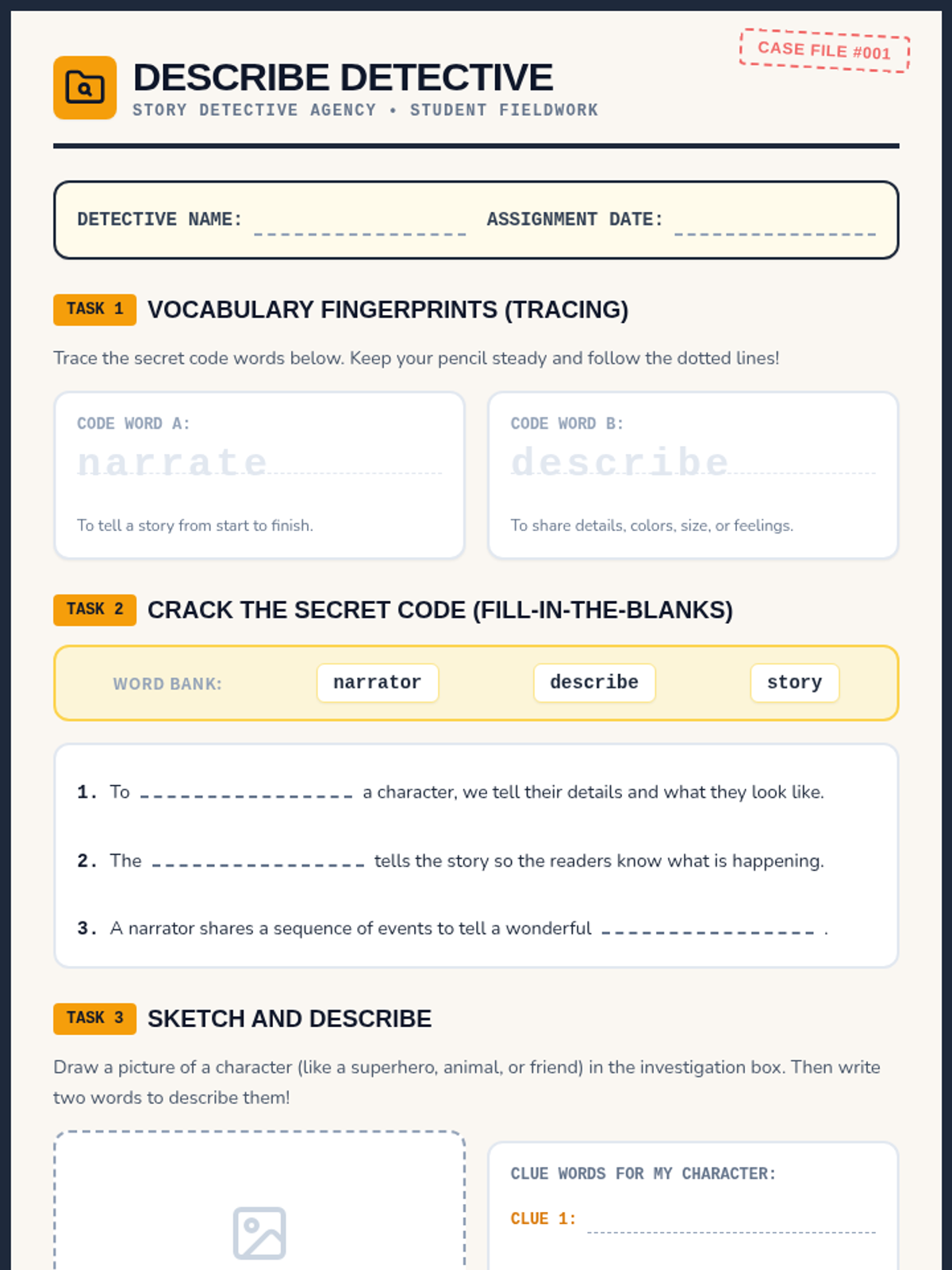
A foundational grammar sequence for first graders that uses a 'Word Detective' theme to explore adjectives through sensory exploration, sorting, and descriptive writing. Students learn to use their five senses to identify and apply adjectives to describe the world around them.