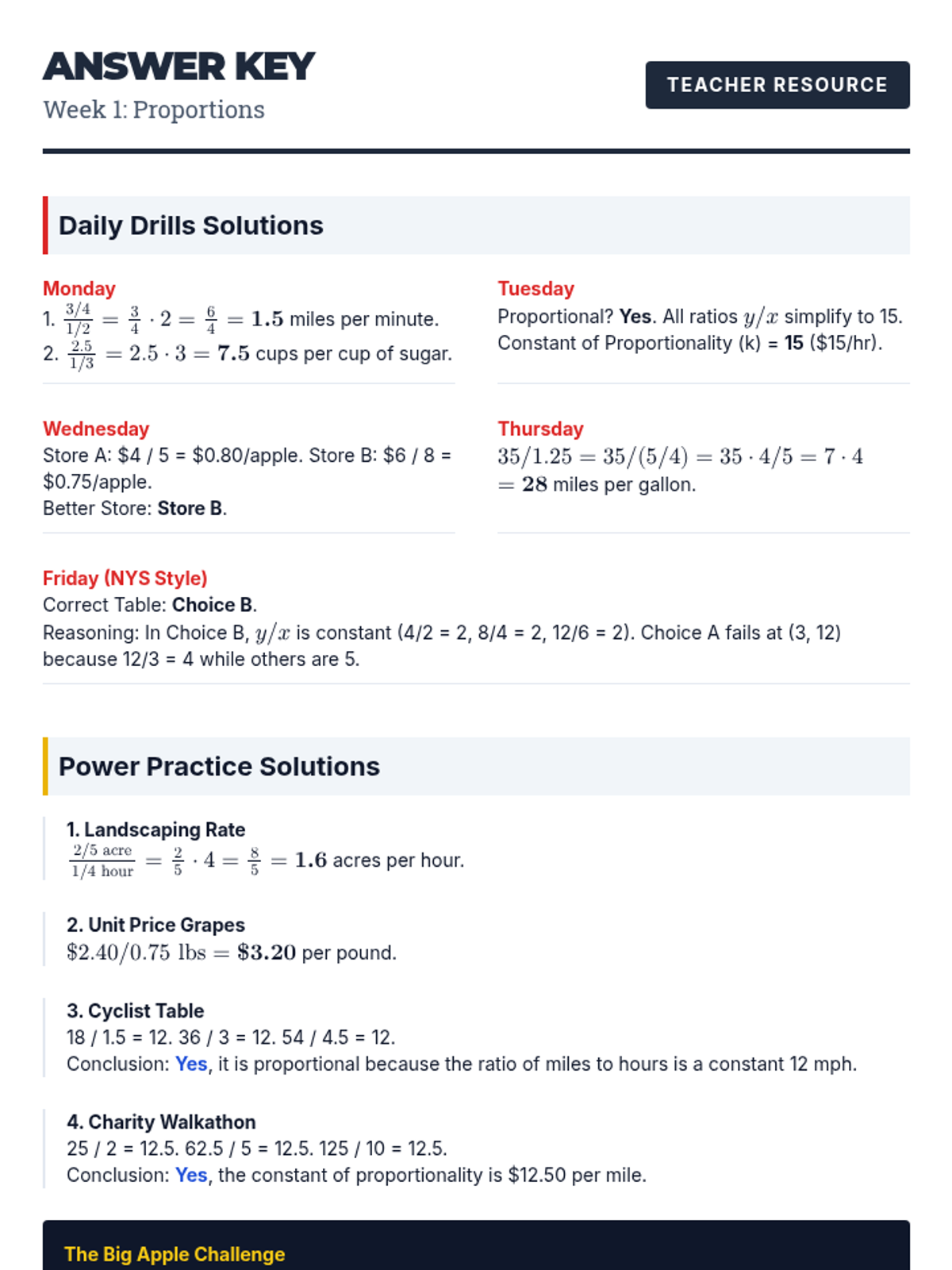
A comprehensive Tier 2 intervention sequence focused on multiplying and dividing rational numbers. Students move from concrete modeling with fraction tiles to abstract long division and fluency practice.
A Tier 2 intervention series focusing on multi-digit division using partial quotients and the standard algorithm. Designed for 15-minute daily sessions to build fluency and confidence in 6th grade students.
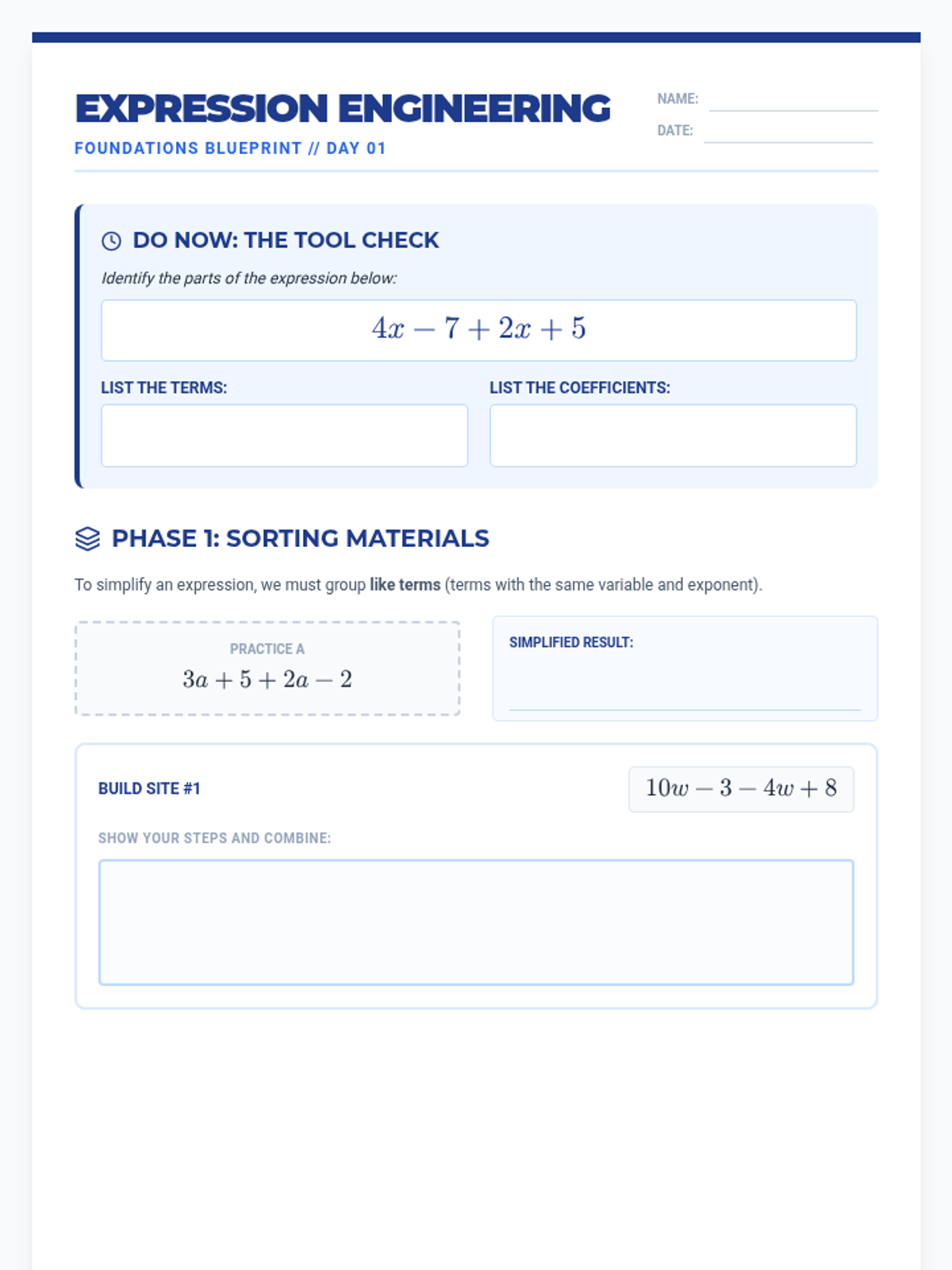
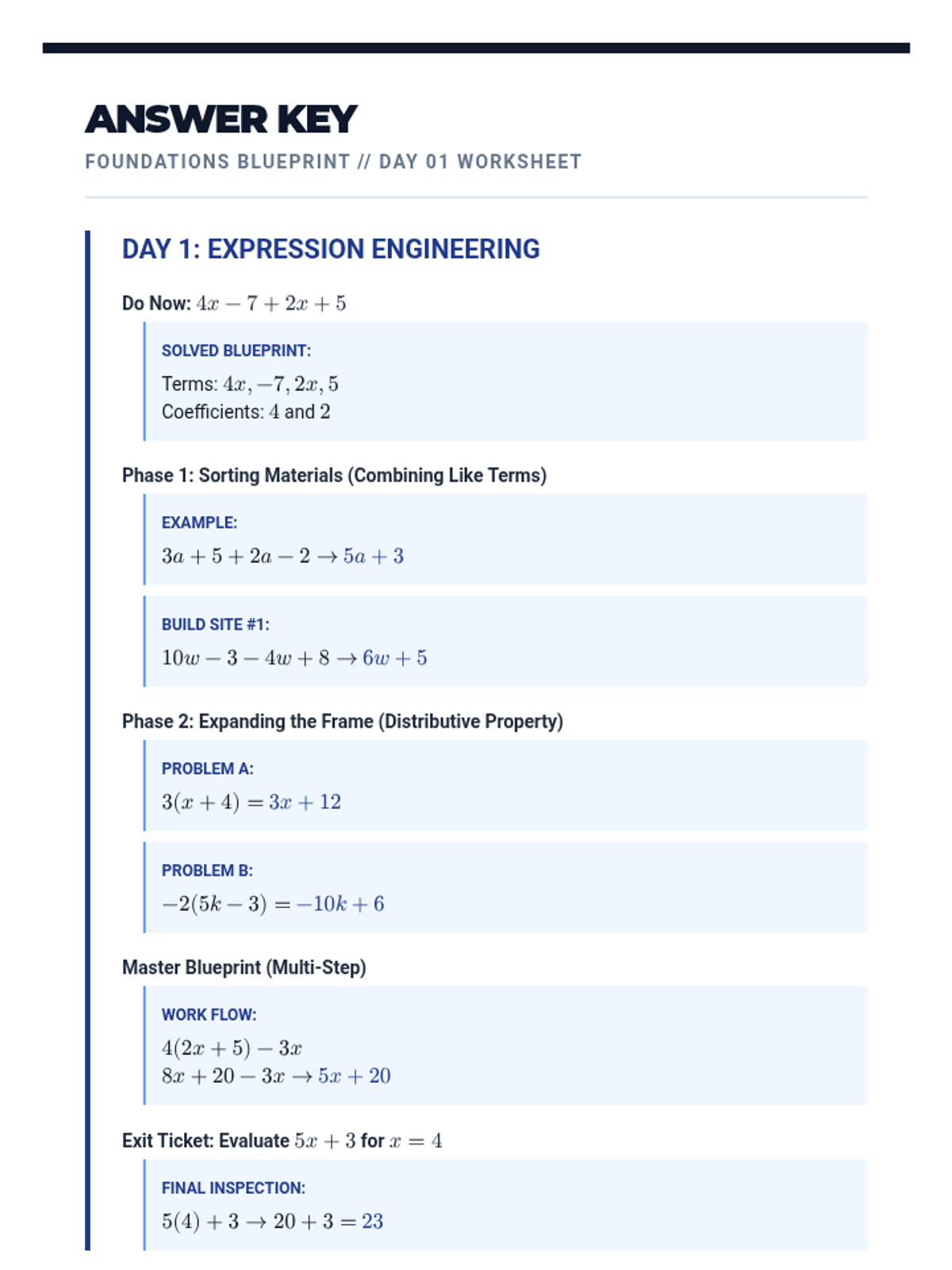
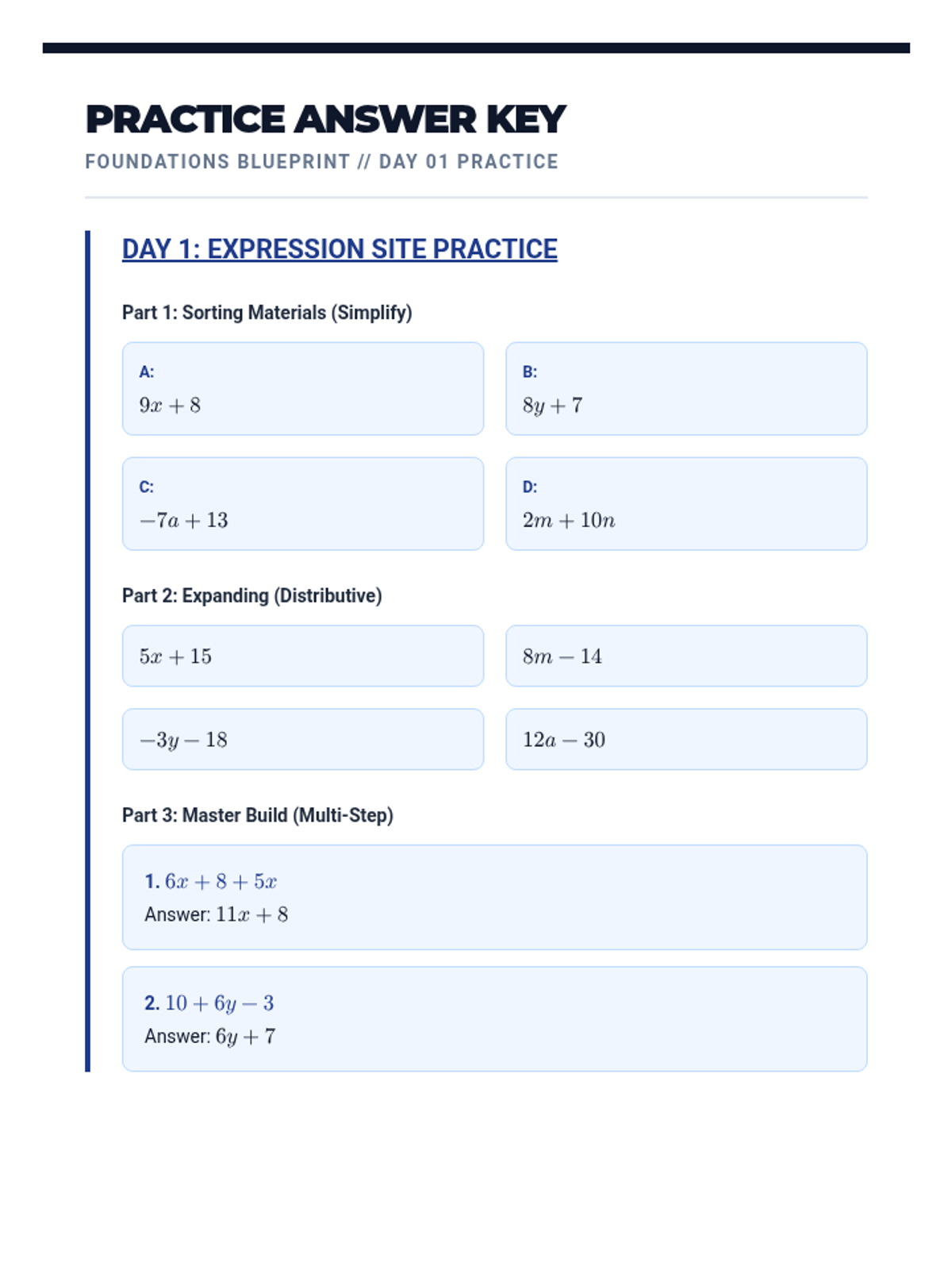
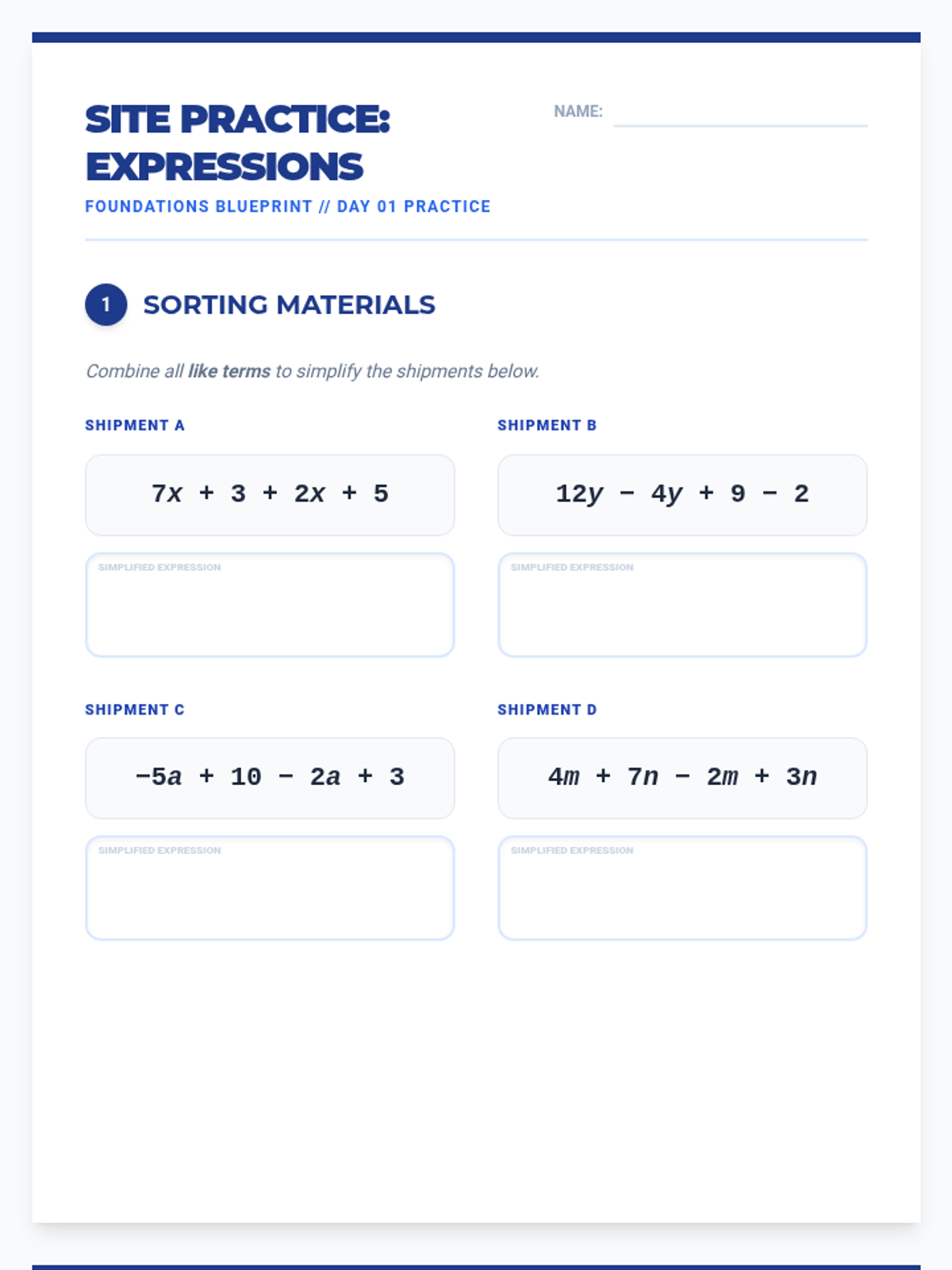
A series of lessons focused on building algebraic thinking and problem-solving skills for elementary students, moving from basic expressions to multi-step equations.
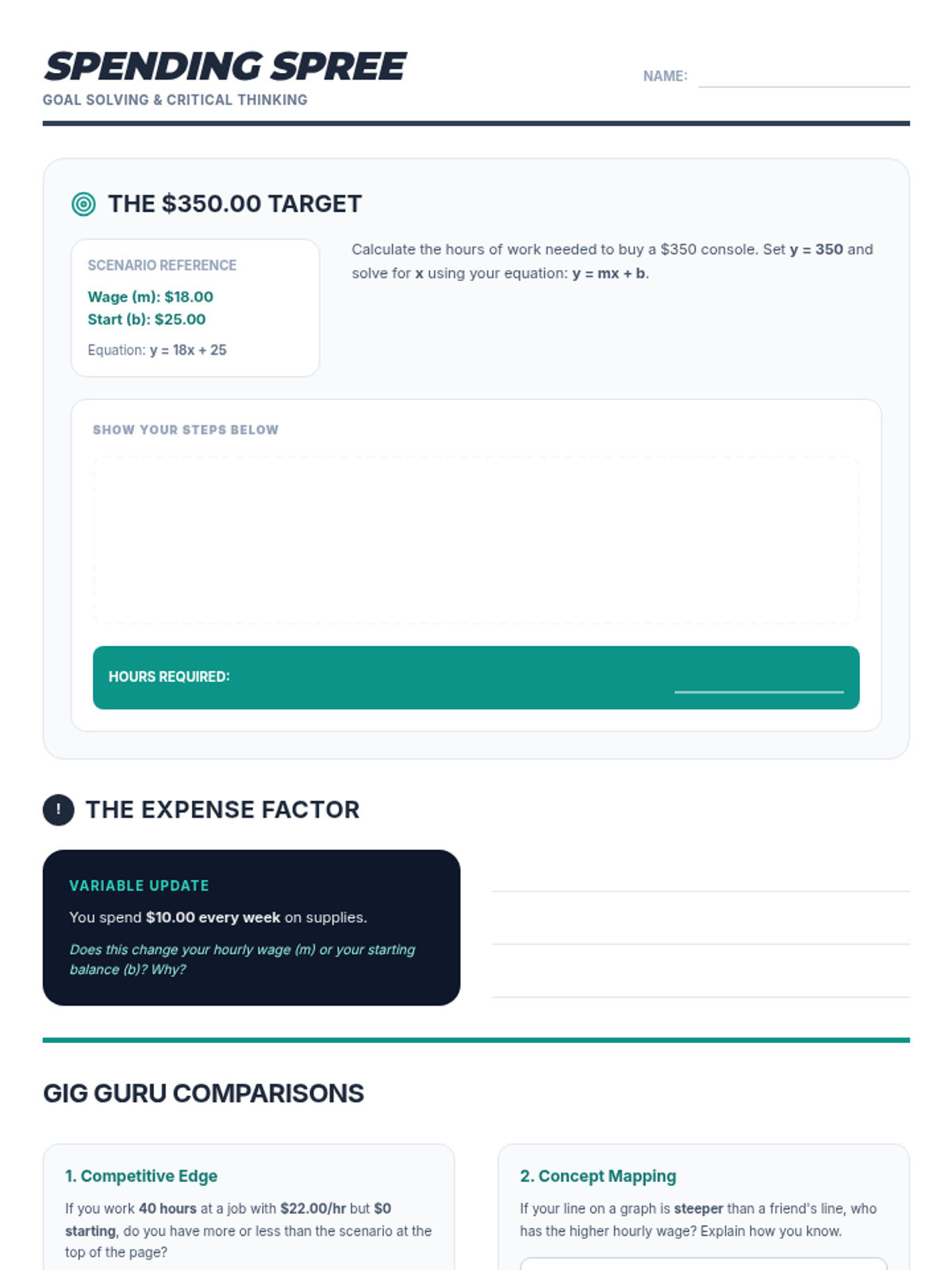
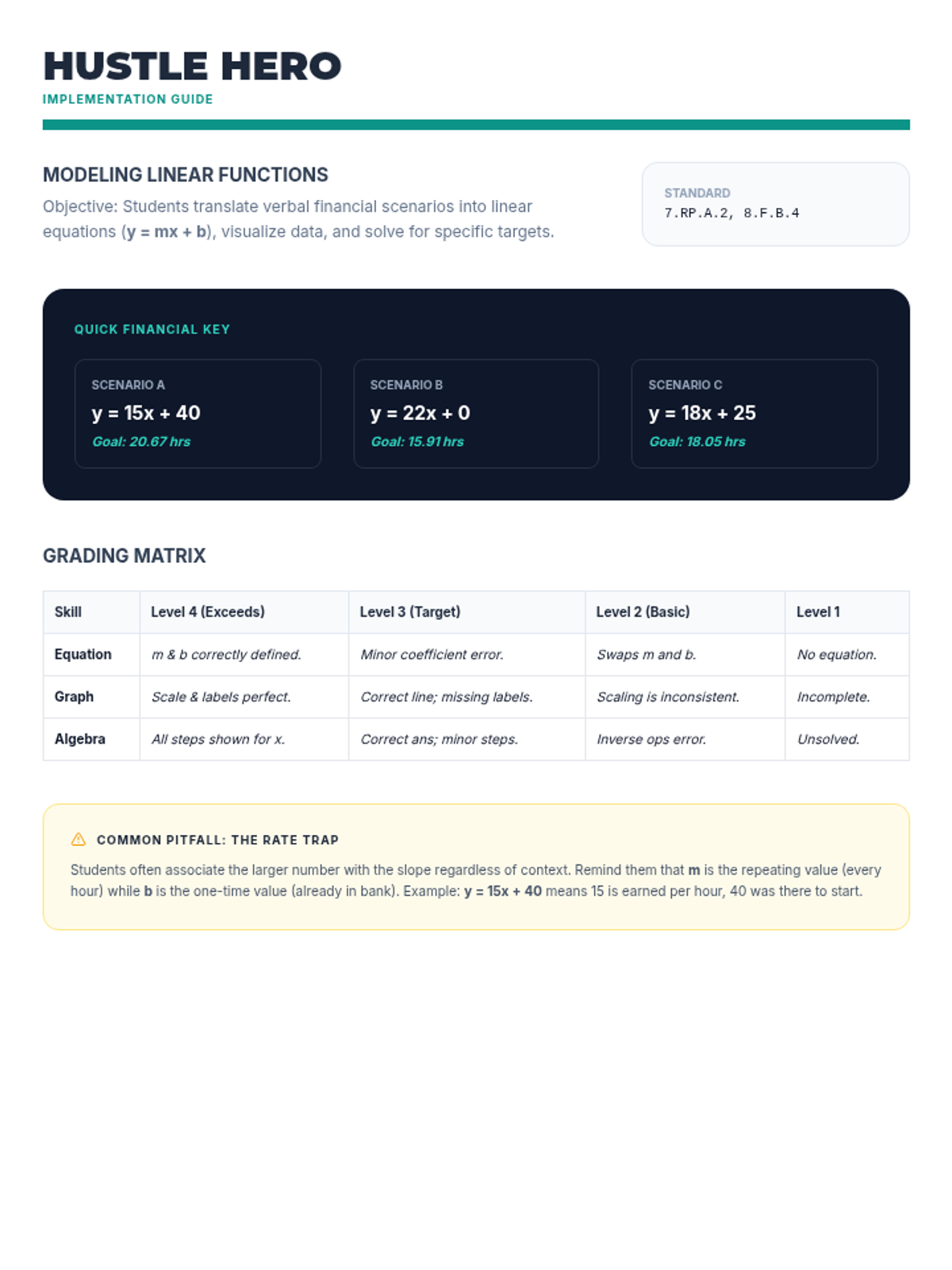
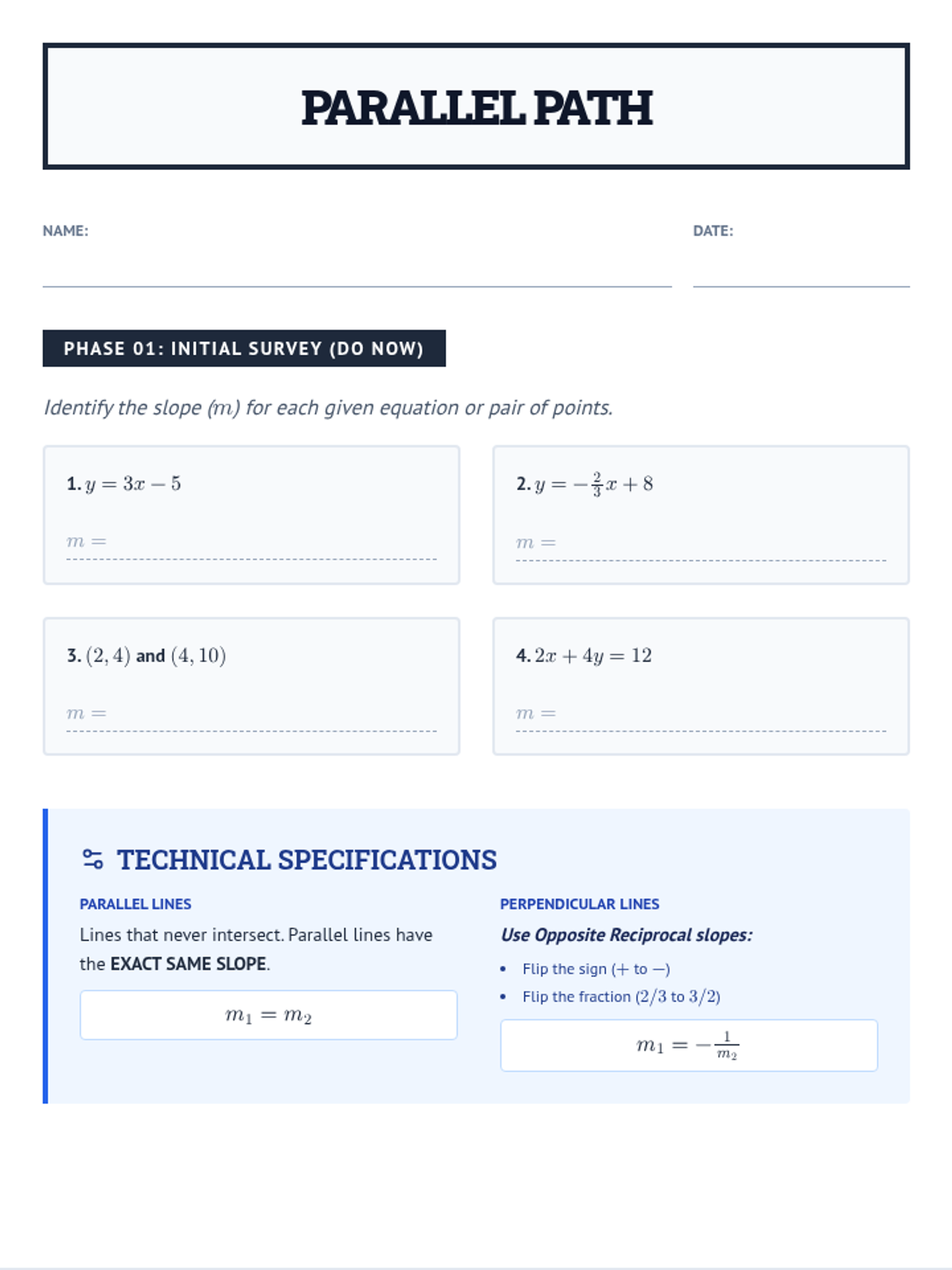
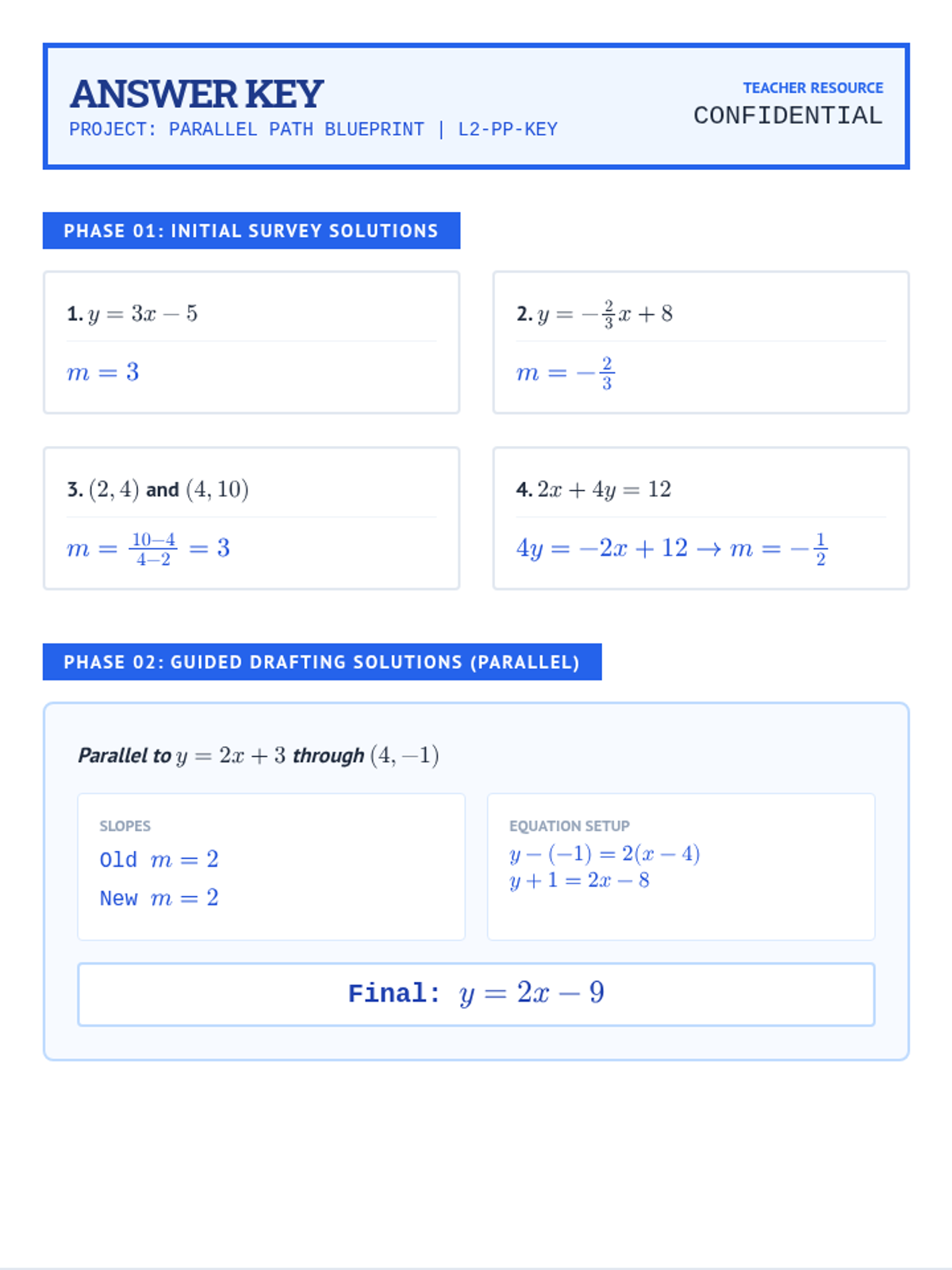
A Tier 2 intervention sequence for 8th-grade students focused on mastering the concept of functions and interpreting linear equations in the form y = mx + b. This unit provides scaffolded instruction on identifying functions, calculating slope, and connecting multiple representations.
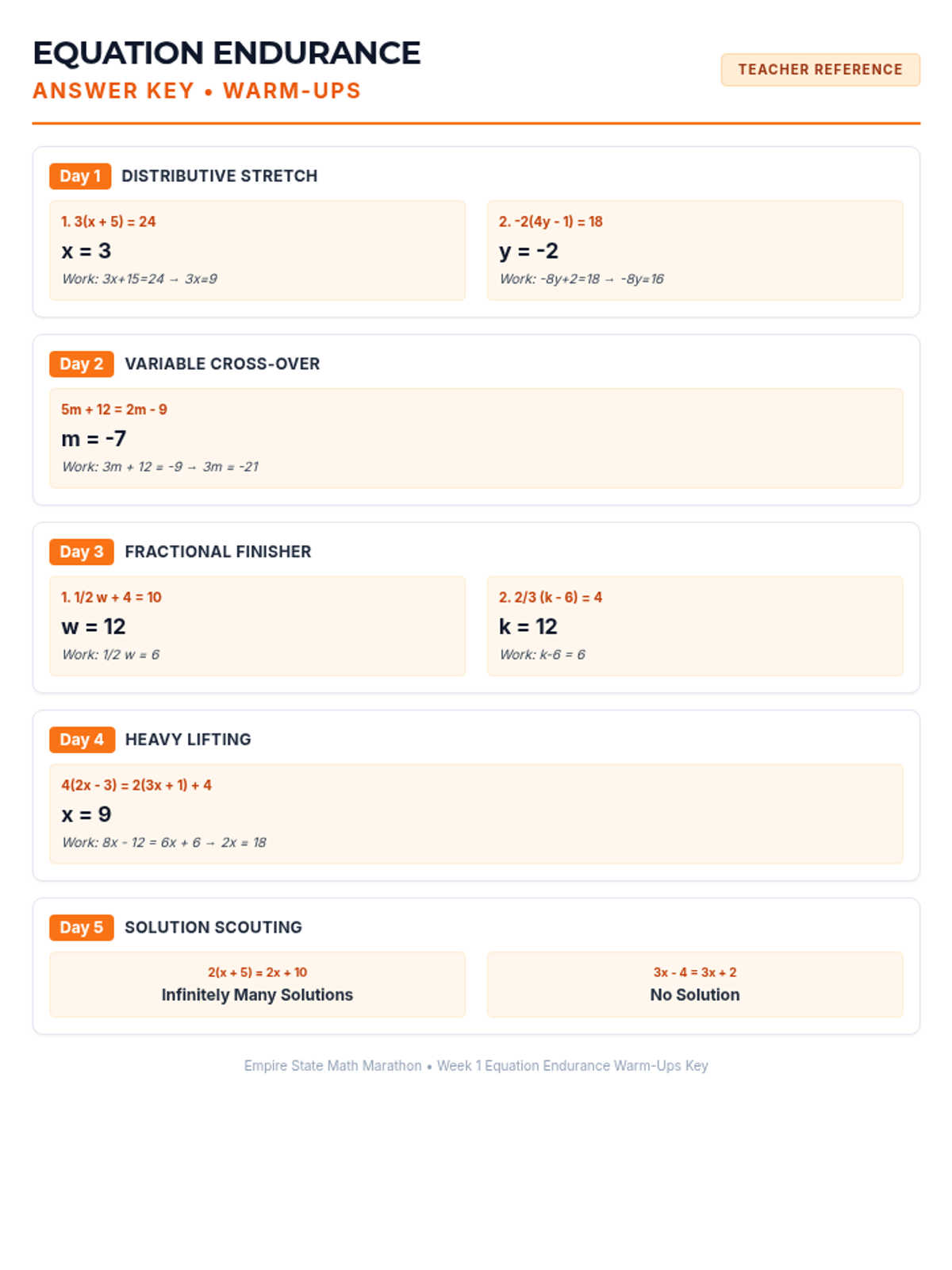
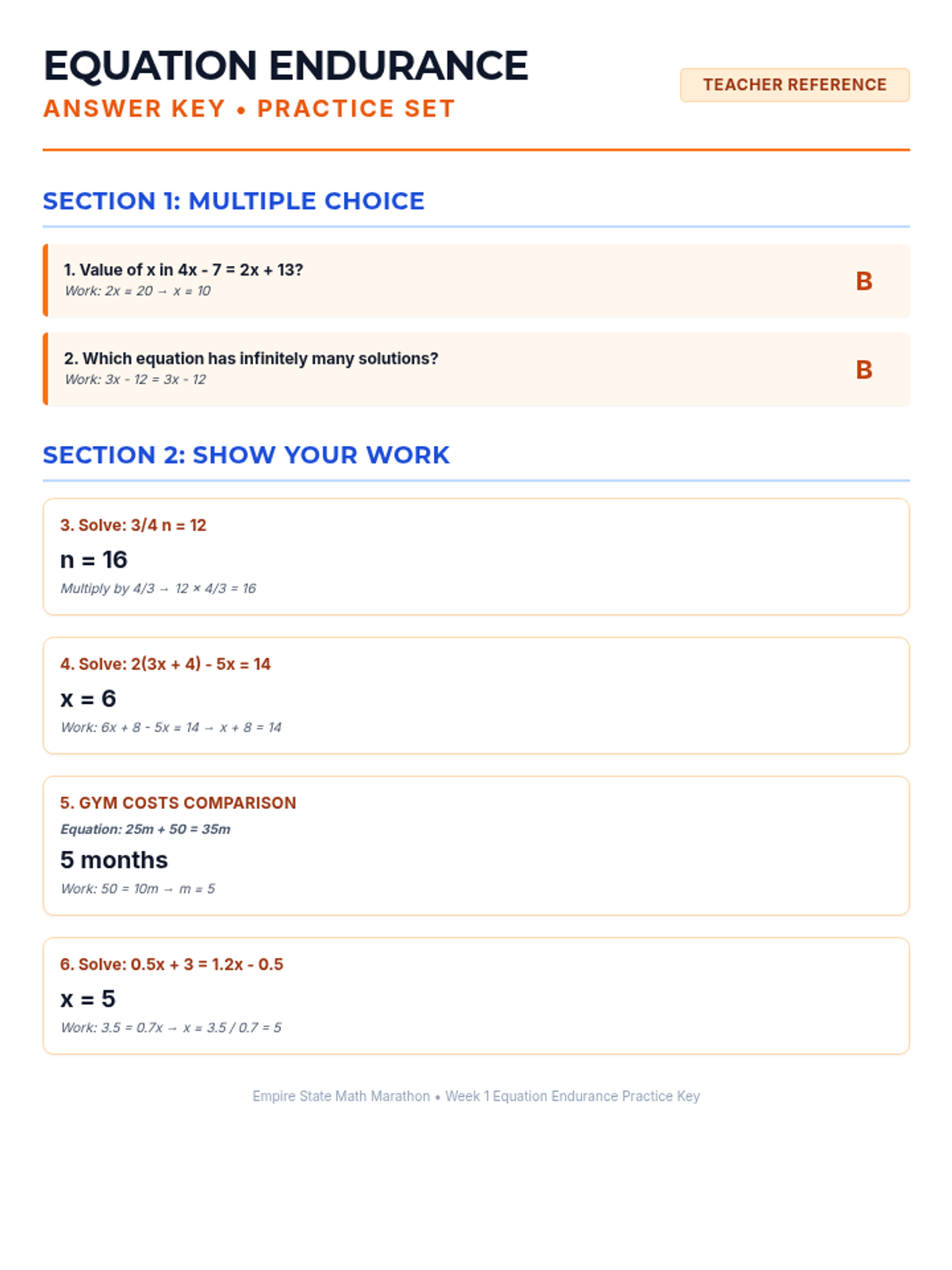
A comprehensive Tier 2 intervention designed to move 7th graders from foundational one-step equations to complex multi-step real-world problems using a 'structural engineering' theme.
A Tier 2 intervention sequence focused on rational number operations for 7th graders. Students navigate deep-sea depths to master integer addition, subtraction, multiplication, and division, as well as operations with fractions and decimals in real-world contexts.
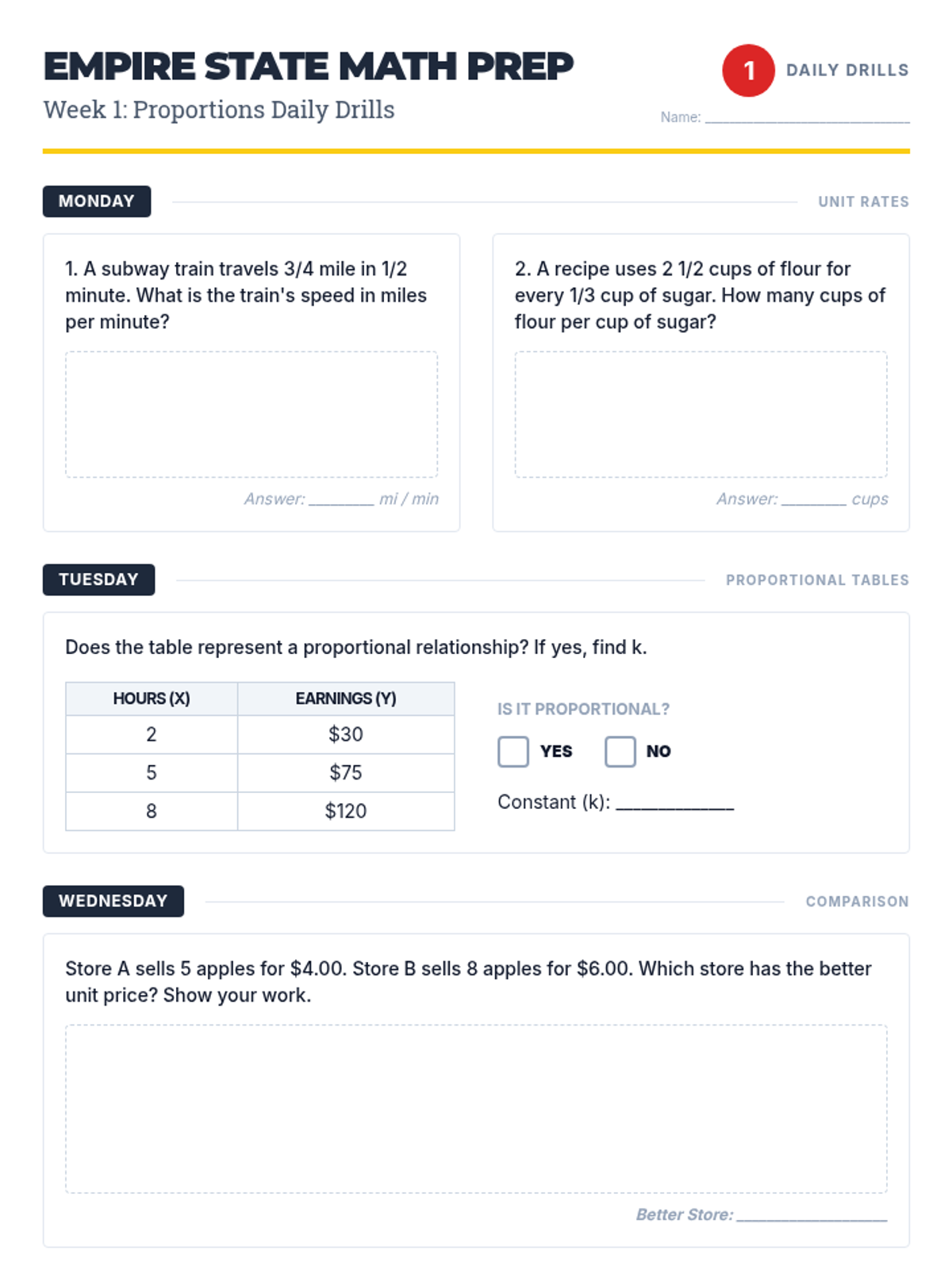
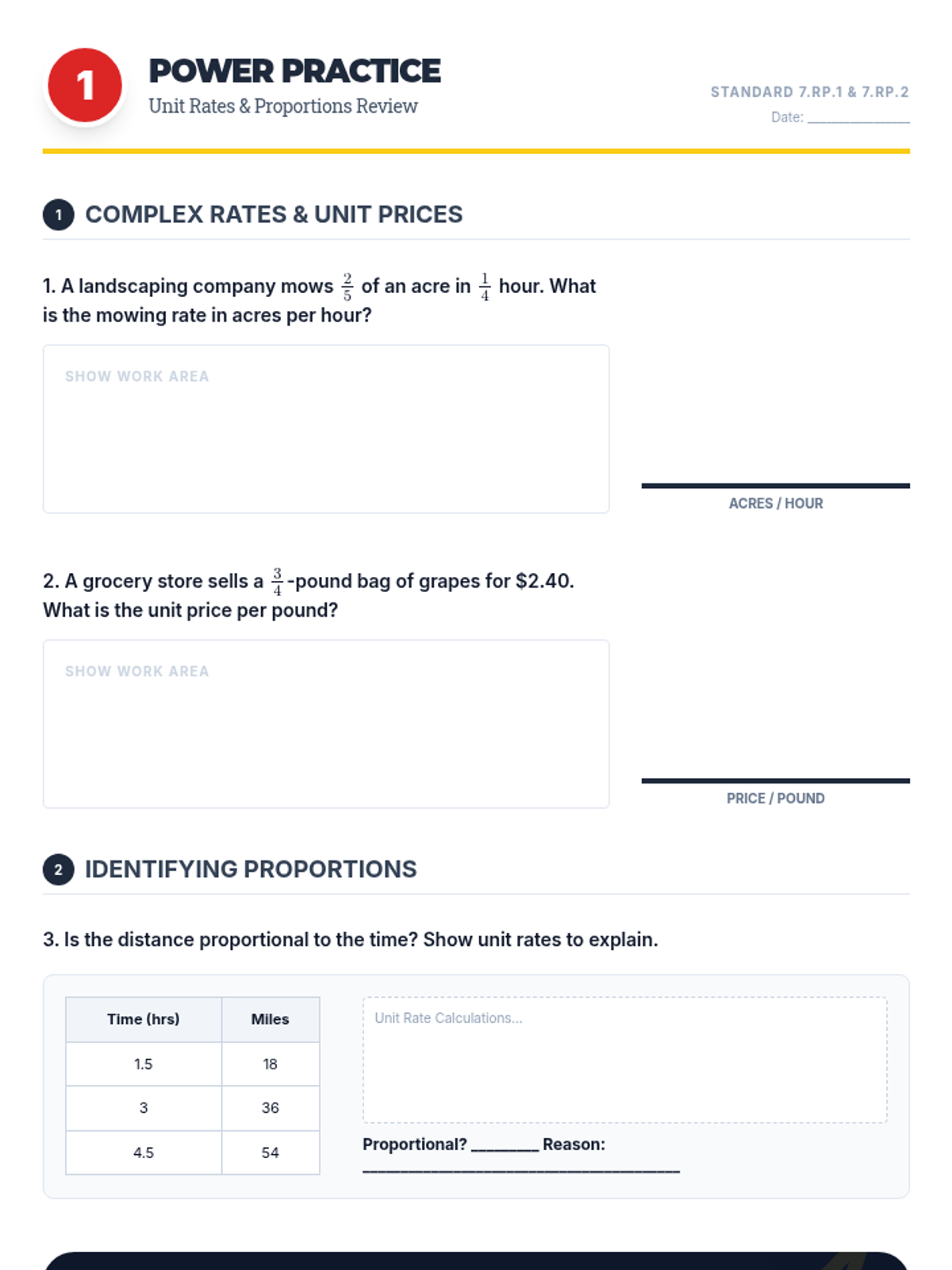
A comprehensive Tier 2 intervention sequence focused on building conceptual understanding of ratios, unit rates, and percents through visual models and real-world applications for 6th-grade students.
A foundational math sequence for special education students (grades 5-6) focusing on algebraic thinking and spatial reasoning through highly visual, themed units.
Une série de micro-leçons de 10 minutes centrée sur l'optimisation de l'espace papier. Les élèves apprennent à mettre à l'échelle une mise en page de 6 photos (format A4) vers le format Raisin (50x65 cm) en minimisant les chutes.
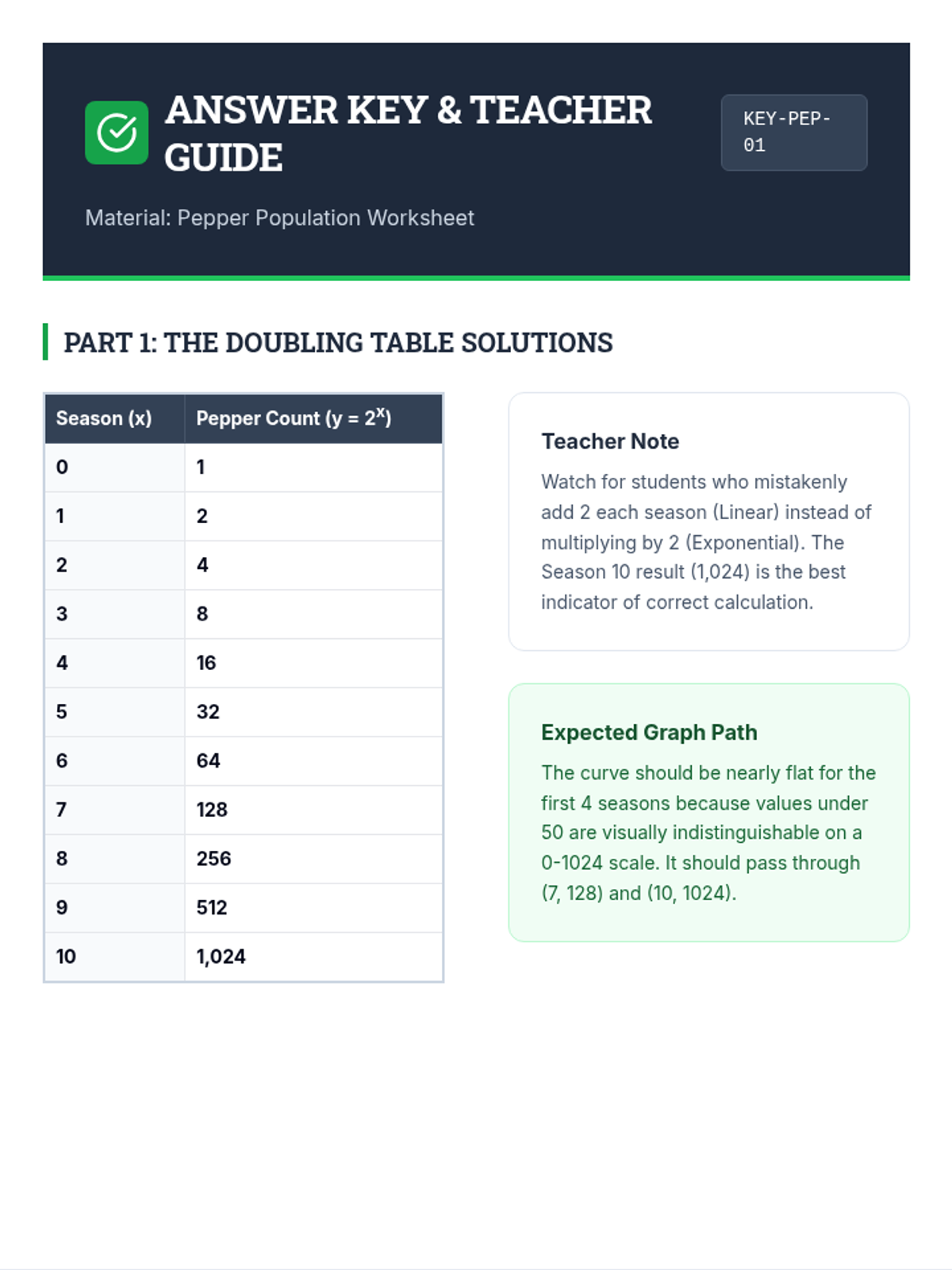
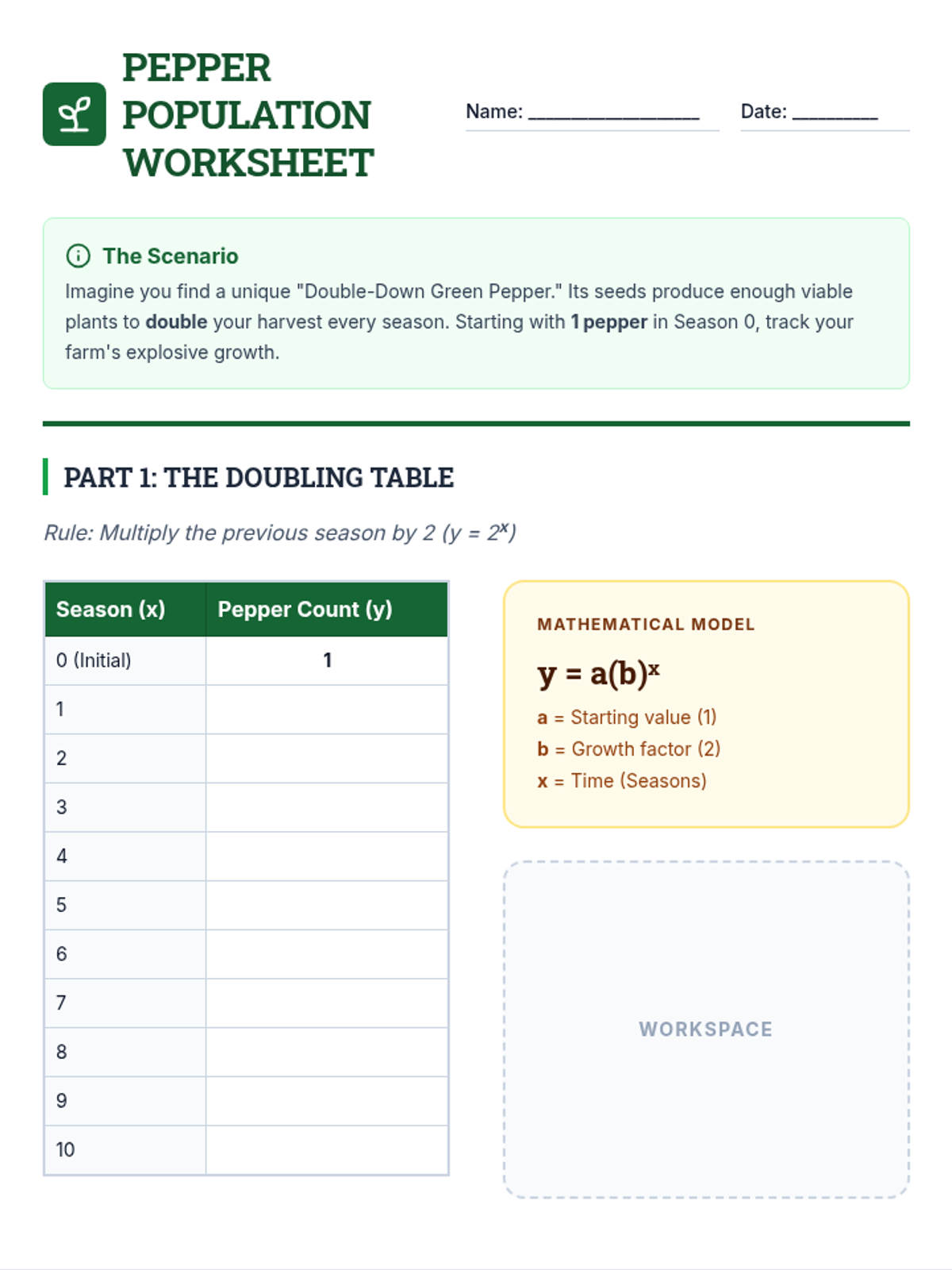
A specialized Tier 3 intervention sequence for 8th-grade students performing at a 5th-grade level, focusing on bridging foundational arithmetic to high school algebra concepts. This sequence uses concrete-representational-abstract (CRA) methods to explore area modeling, systems of equations, exponential patterns, and inequalities.
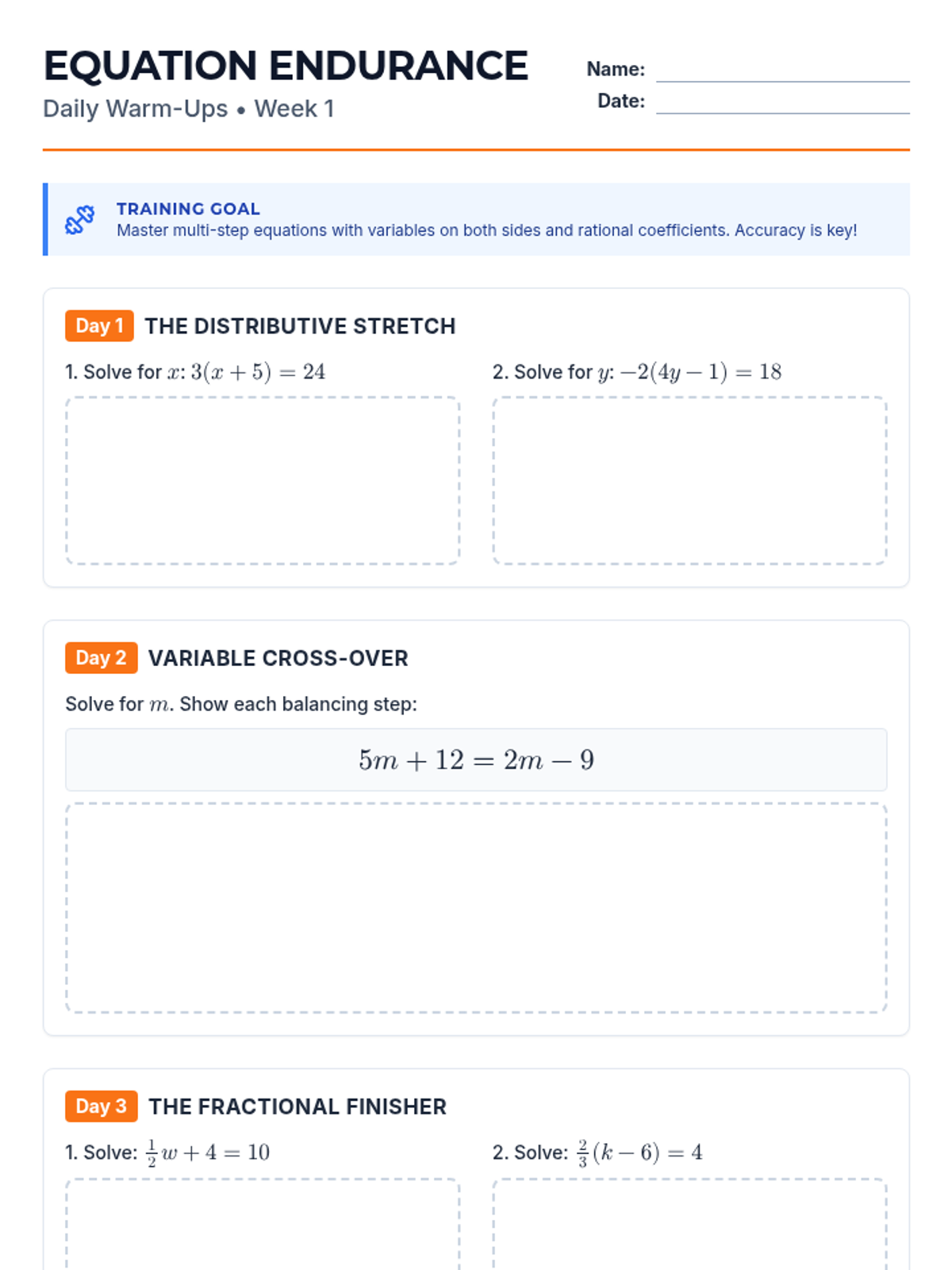
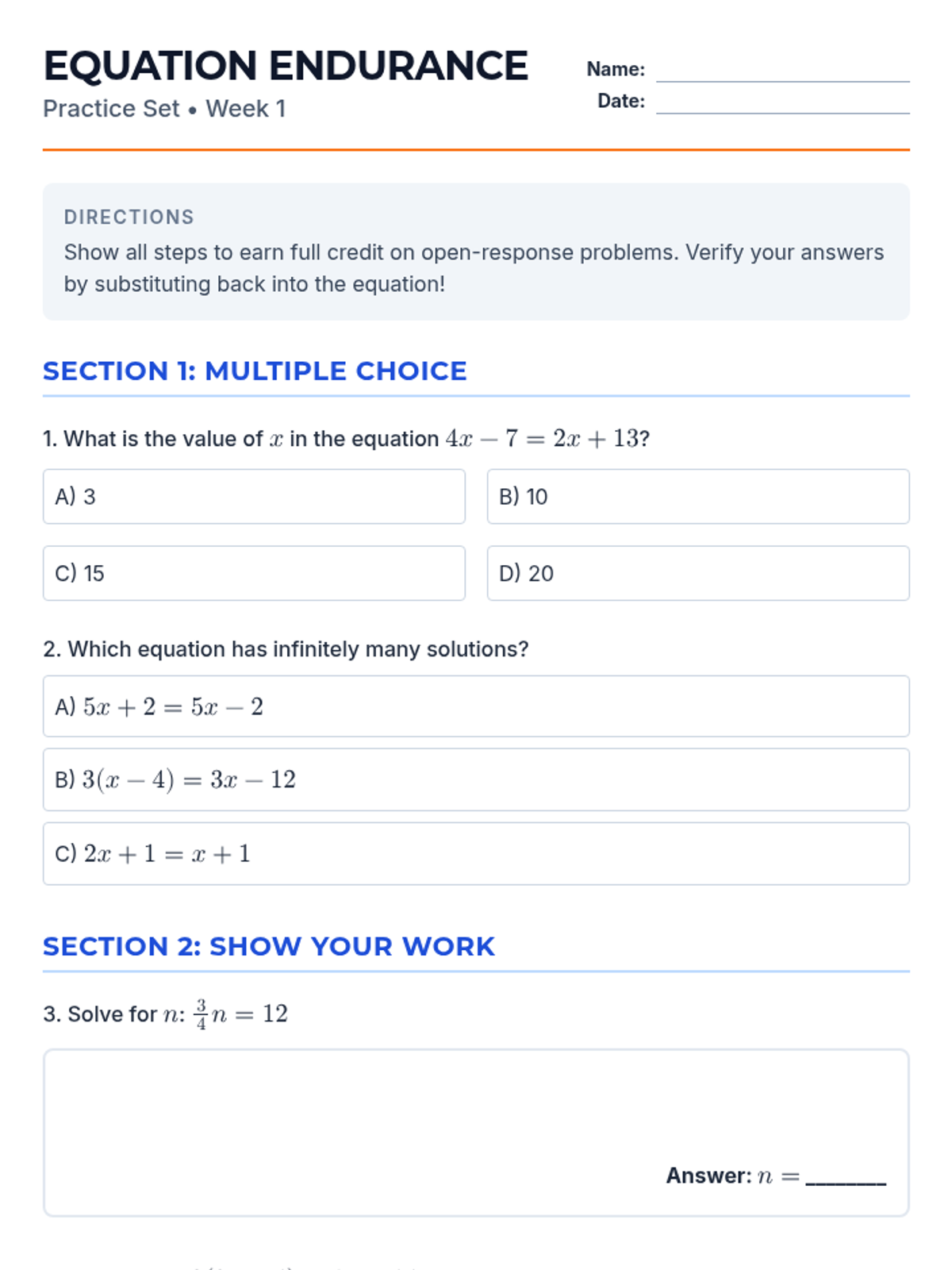
A comprehensive small-group intervention toolkit designed to help students master multi-step equations through scaffolded practice, error analysis, and real-world translation.
A comprehensive 7-lesson intervention sequence designed to build conceptual fraction understanding through visual models, number lines, and scaffolded practice. The sequence moves from basic area models to adding and subtracting with unlike denominators, prioritizing 'why' over 'how'.
A comprehensive math and SEL integration designed for Grades 5-6, focusing on multi-step fraction word problems through the lens of growth mindset and productive struggle. Students learn to reframe mistakes as data points and persistence as a measurable skill.
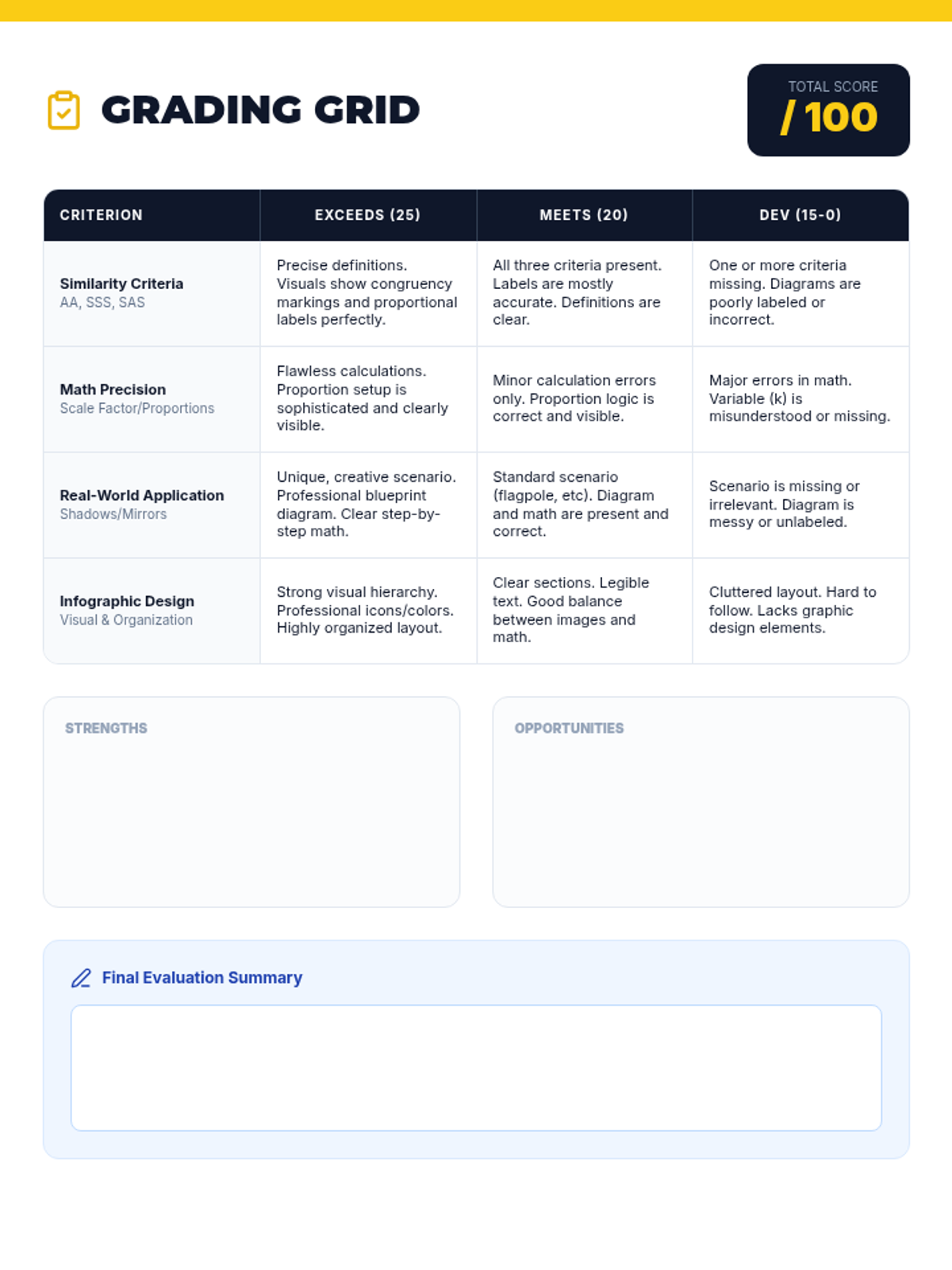
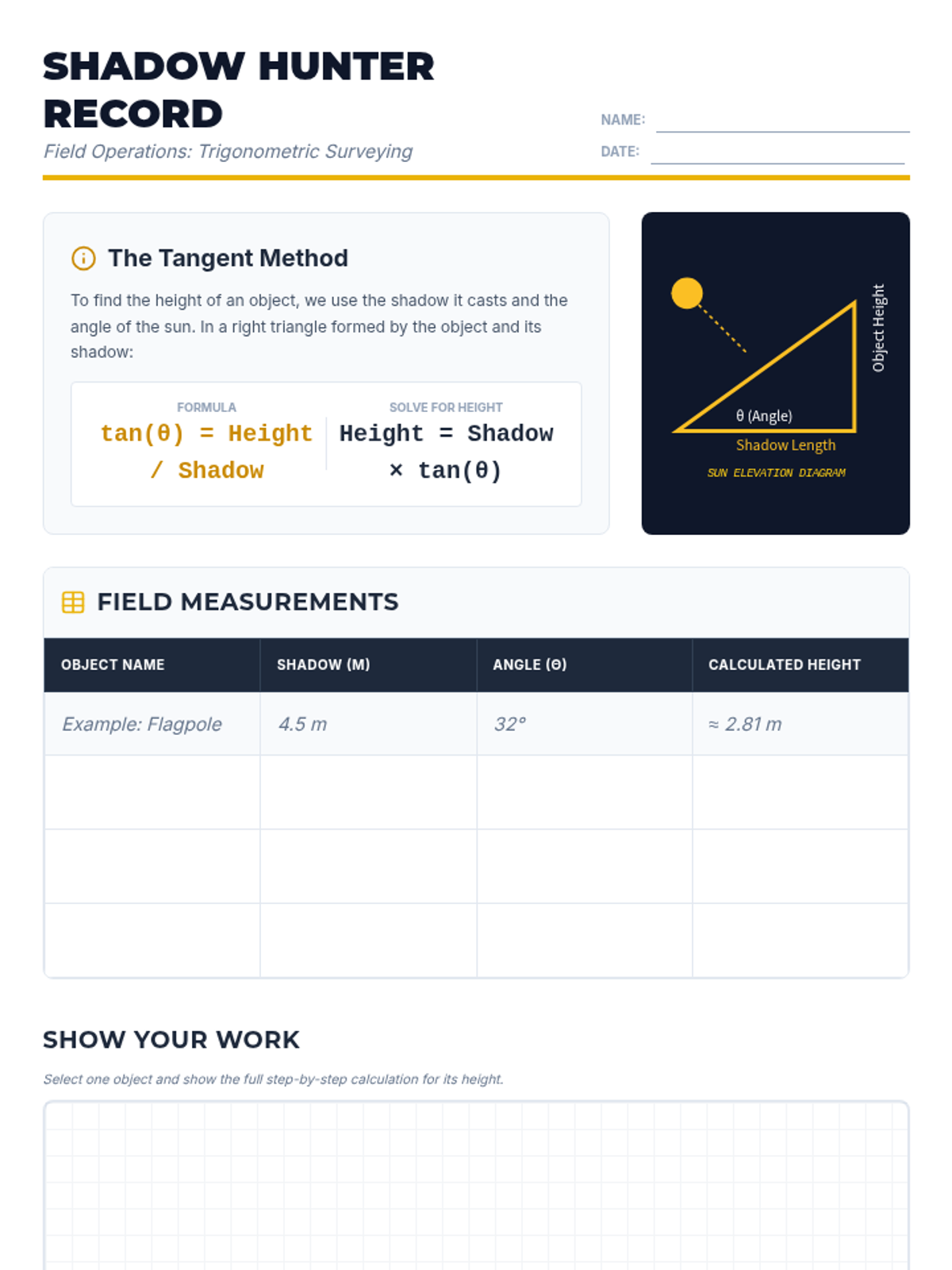
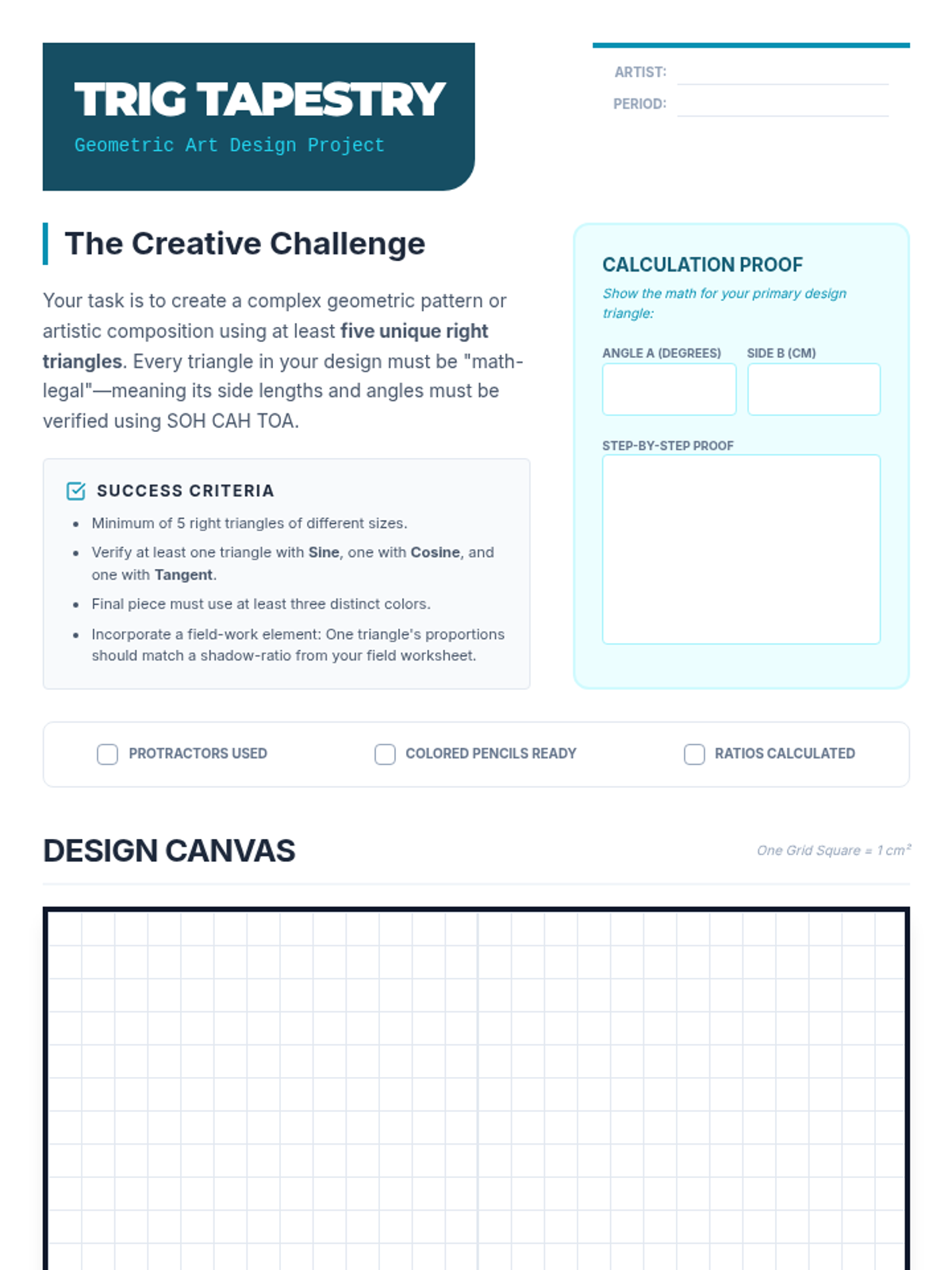
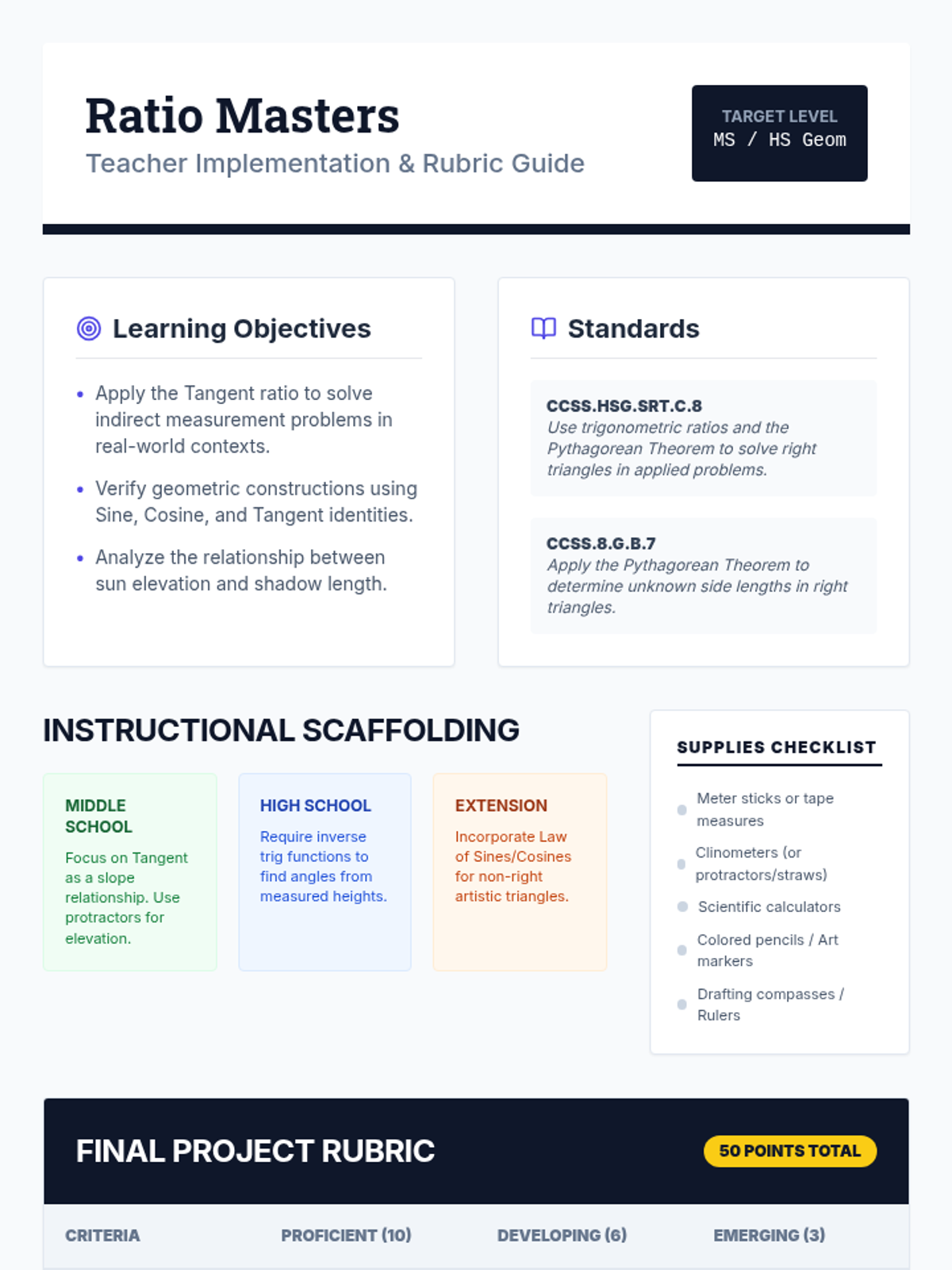
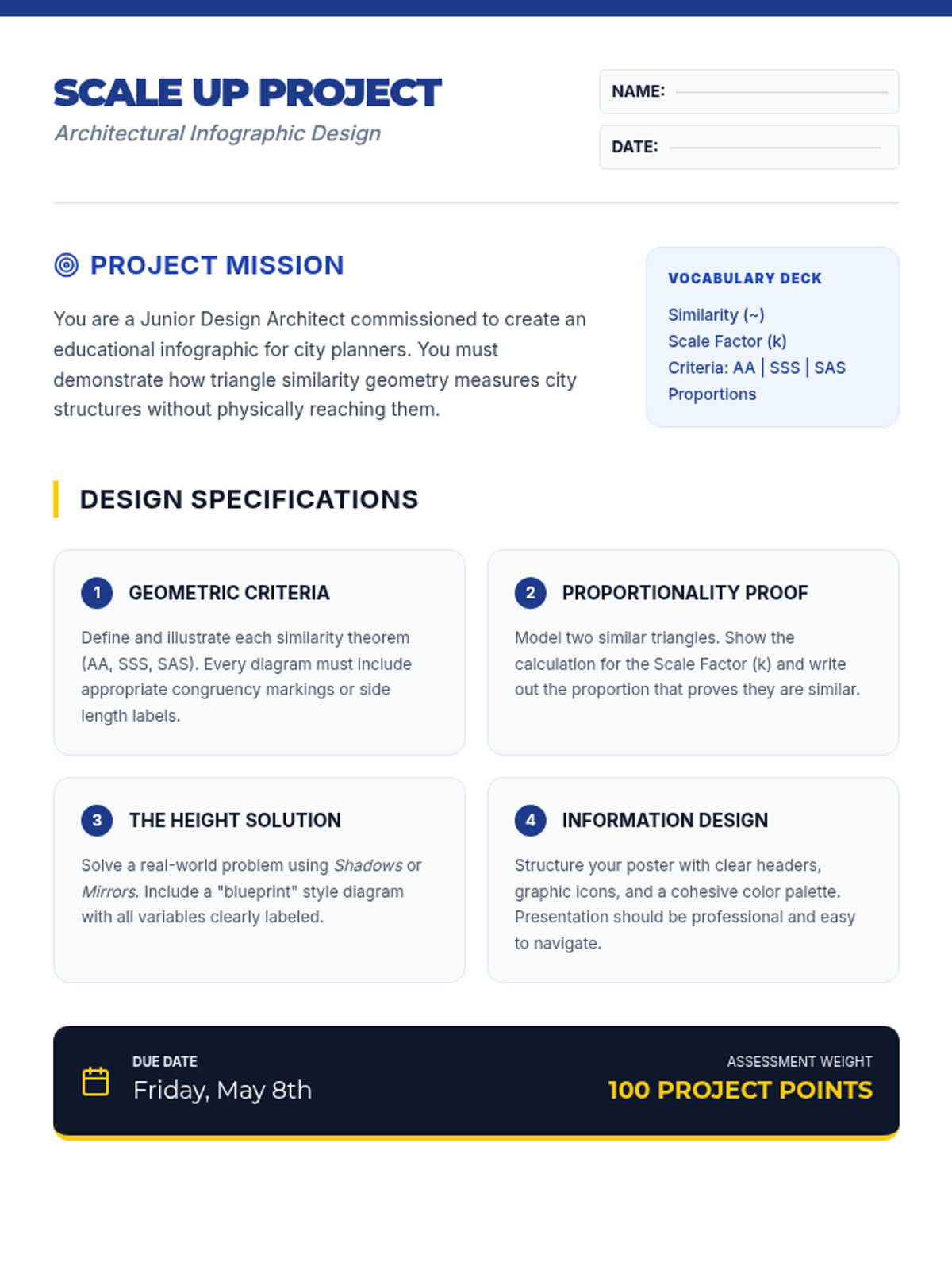
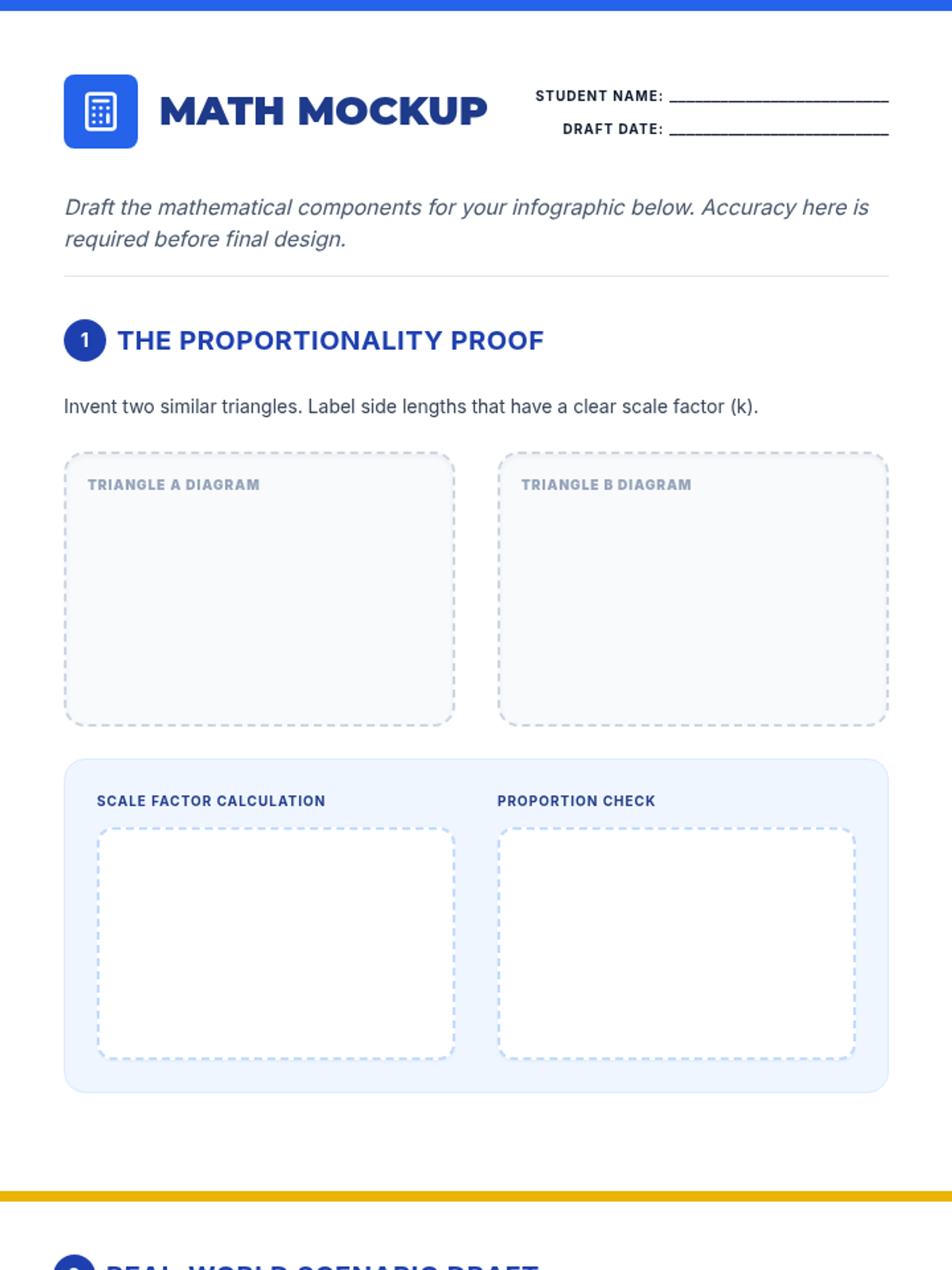
A series of targeted intervention lessons designed to bridge the gap between triangle similarity and basic trigonometry, focusing on conceptual understanding and ratio consistency.
A targeted Tier 2 intervention sequence focused on geometric transformations. It utilizes a Concrete-Representational-Abstract (CRA) approach, guiding struggling learners from physical manipulation with tracing paper to coordinate-based abstract rules.
A series of intensive intervention lessons focused on foundational geometry concepts through hands-on construction and formal definitions. This sequence supports Tier 2 learners in mastering transformations and proofs.
A targeted intervention sequence focused on understanding triangle congruence (SSS, SAS, ASA) through the lens of rigid motions, specifically designed for Tier 2 small group support.
A targeted small-group intervention sequence focused on translating verbal descriptions of functions into accurate graphical representations. Students learn to identify and map key features like intercepts, intervals of positivity/negativity, and end behavior onto a coordinate plane.
A Tier 2 intervention sequence focused on the conceptual and algebraic foundations of inverse functions. Students move from reversing input-output tables to solving algebraic equations to find inverse expressions.
A targeted intervention series focused on helping students compare key features of functions across various representations including graphs, tables, and equations.
A Tier 2 intervention sequence focused on analyzing bivariate data. Students learn to use technology to create scatter plots and develop a precise vocabulary for describing relationships between quantitative variables.
A Tier 2 intervention sequence focused on understanding the relationship between algebraic equations in two variables and their graphical representations as sets of solutions.
A small-group algebra intervention sequence focused on solving systems of linear and nonlinear equations. Students learn to identify intersection points graphically and verify them algebraically through substitution.
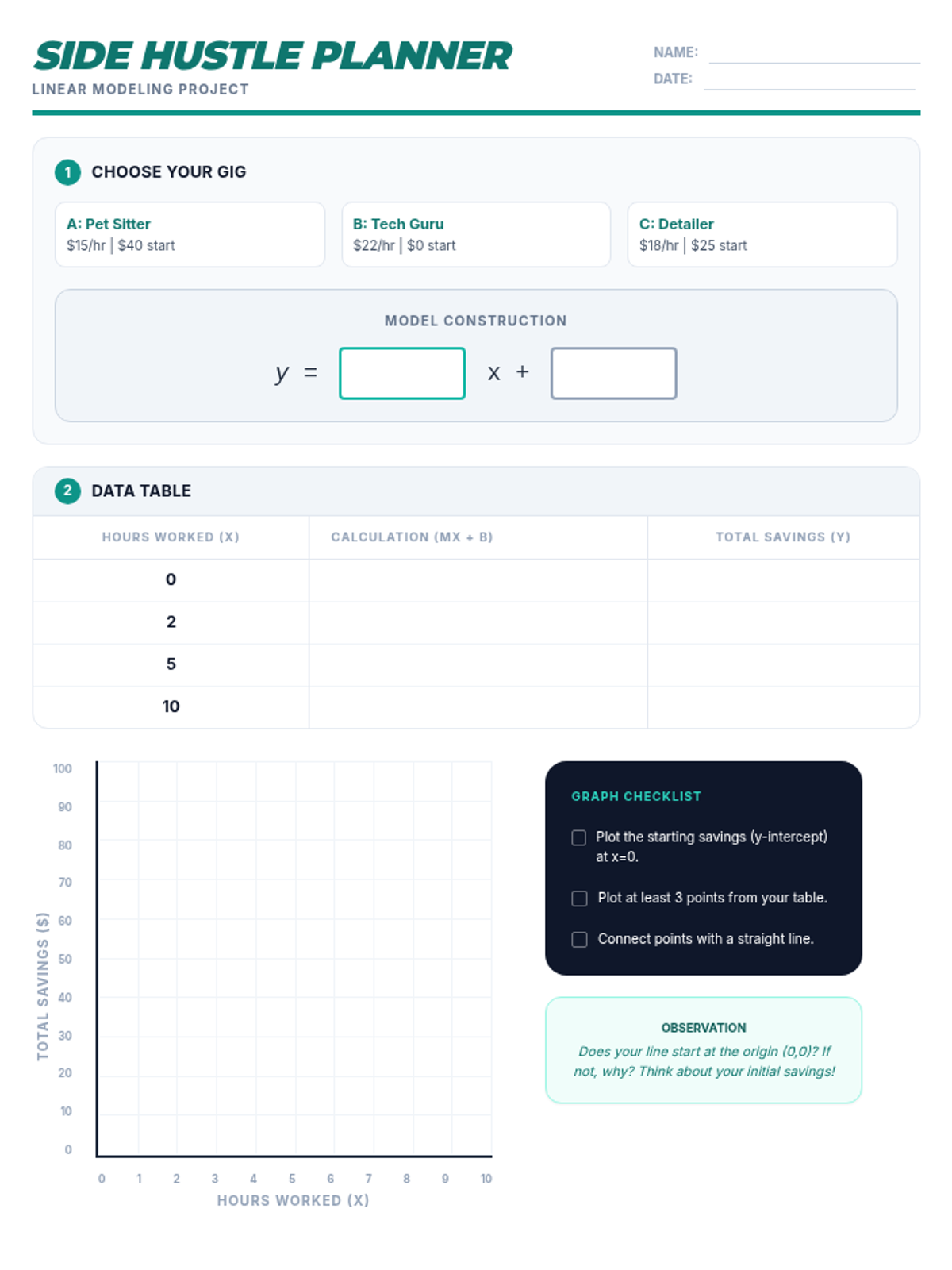
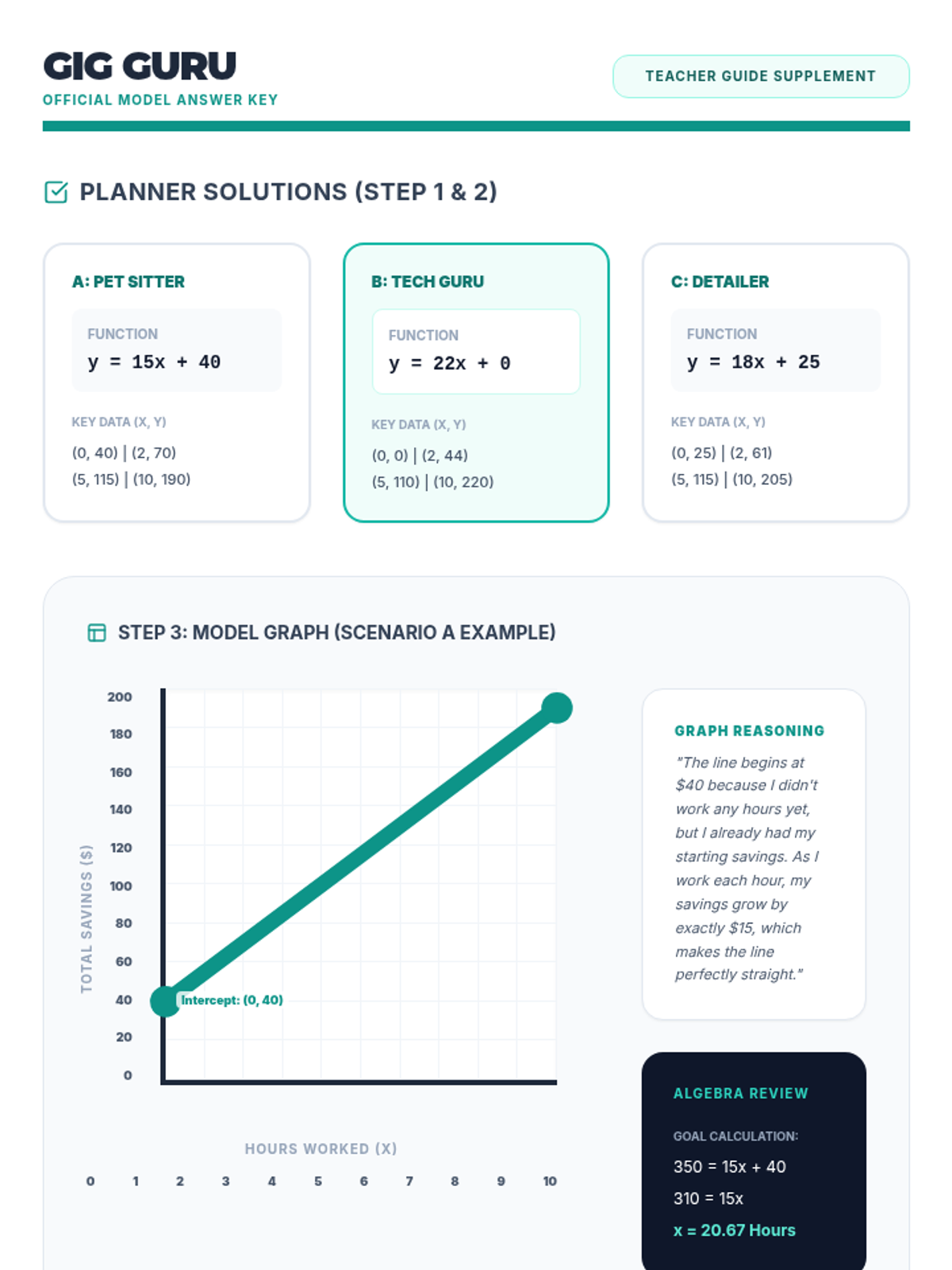
A targeted Algebra 1 intervention sequence focused on translating real-world relationships into linear equations and visual representations. Students explore data-driven scenarios to master equation construction and graphing.
A Tier 2 intervention sequence focused on the logical justification of algebraic steps using properties of equality, aligned with Colorado standard HS.A-REI.A.1.