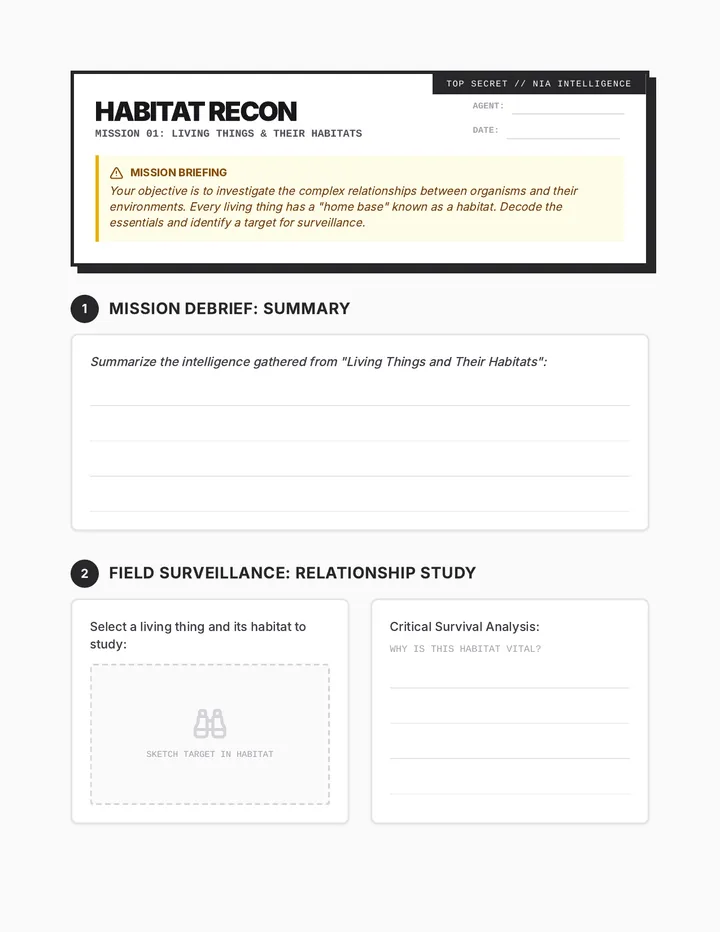
A 2nd-grade life science sequence exploring how living things depend on their environments for survival. Students learn the four components of a habitat, explore desert and rainforest biomes, and practice matching organisms to their correct homes.
A professional development series for PreK-12 educators that reframes Computer Science as a "Superpower" through Computational Thinking. Teachers explore how CS concepts like decomposition, abstraction, and automation are already present in their daily instructional practices and Iowa Core content.
A series of lessons exploring the mysterious and dangerous creatures of the deep ocean, focusing on unique adaptations and survival strategies.
A comprehensive unit focused on environmental stewardship, exploring waste management, conservation, and sustainable living through hands-on activities.
A two-day science unit for 2nd-3rd graders exploring how energy moves through nature. Students learn the basics of food chains on day one and expand their understanding to complex food webs on day two.
A series of nature-based investigations helping young learners connect with seasonal changes using their senses and scientific observation.
A functional science unit for Essential Skills classrooms focusing on identifying push and pull forces within daily household chores and routines. Students explore forces through visual identification, movement-based games, and guided group activities.
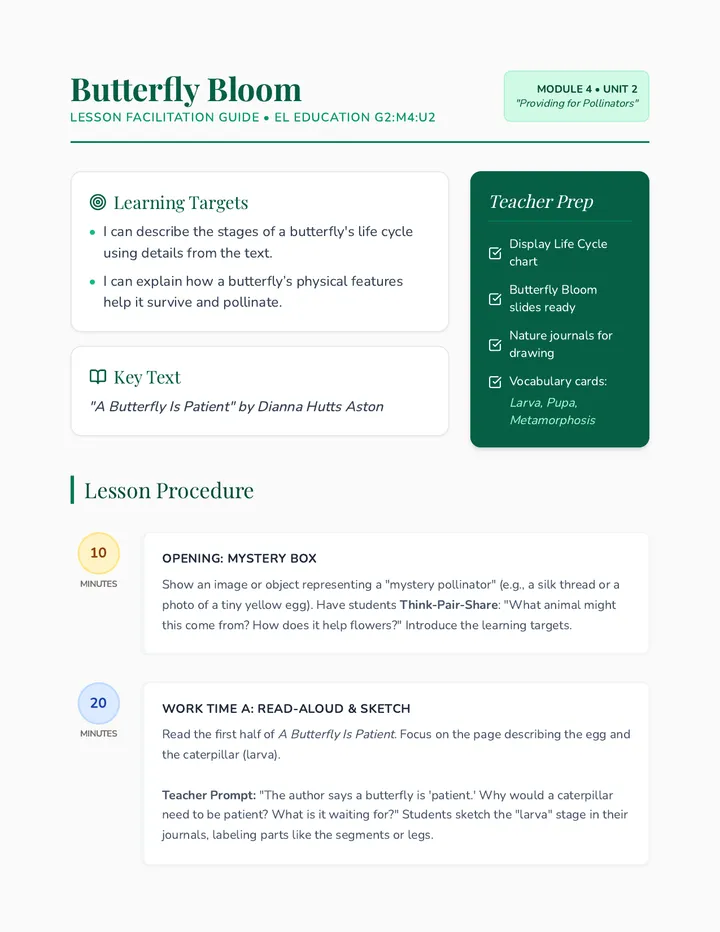
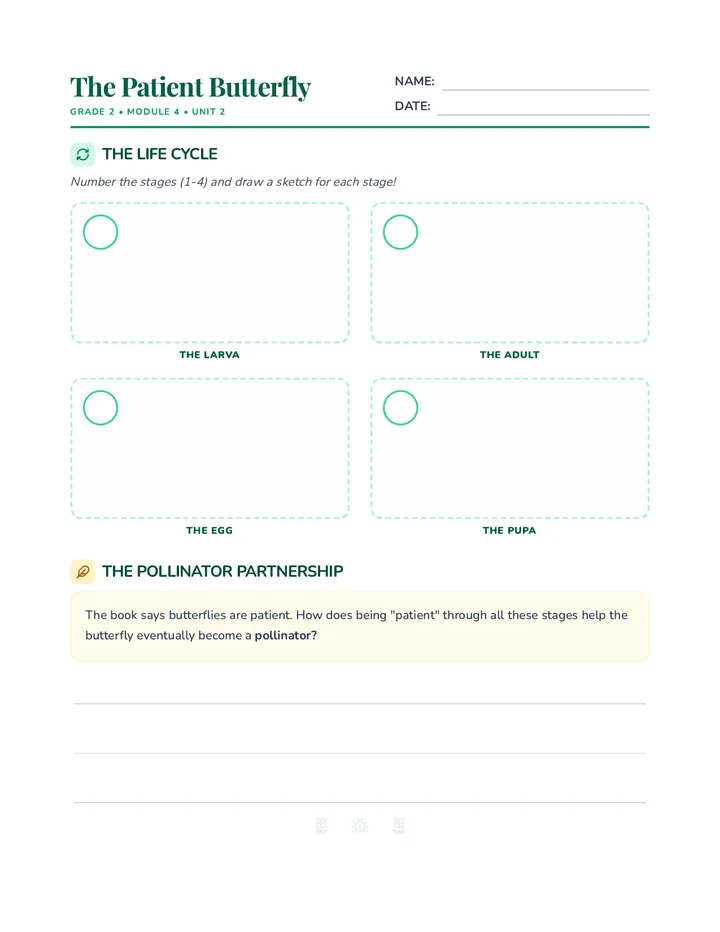
A science-focused sequence exploring the fascinating process of metamorphosis through the life cycle of a butterfly, focusing on sequencing skills and biological stages.
A comprehensive exploration of physical science and civic foundations, designed for elementary students to engage with waves, energy, government structures, and the roles of citizens.
A comprehensive exploration of plant life, beginning with the first signs of spring and basic life cycles, and extending into the detailed mechanisms of how plants grow, transport nutrients, and adapt.
A series of introductory lessons exploring different habitats (Arctic, Freshwater, etc.) and the unique animals that live in each, designed for early elementary learners.
A series of hands-on fall projects designed for middle school students working at a second-grade level, focusing on leaf science, pumpkin anatomy, and animal adaptations through posters and crafts.
A four-part summer camp program focused on hands-on STEM exploration using everyday materials. Students will explore environmental science, aerospace engineering, mechanical design, and chemical reactions through play-based challenges.
A 2nd-grade sequence on digital literacy focusing on file naming, folder organization, search retrieval, cloud storage, and digital collaboration. Students learn to maintain a clean digital workspace through a 'Cyber Space Station' theme.
A comprehensive sequence on language mechanics, from phonetic marking of complex vowel sounds to the morphological analysis of Latin roots and affixes. Students develop deep decoding and encoding skills by investigating the building blocks of words.