A 6-session financial literacy course for adult ESL learners using FDIC resources. Students build vocabulary and practical skills in banking, budgeting, saving, credit, loans, and fraud prevention.
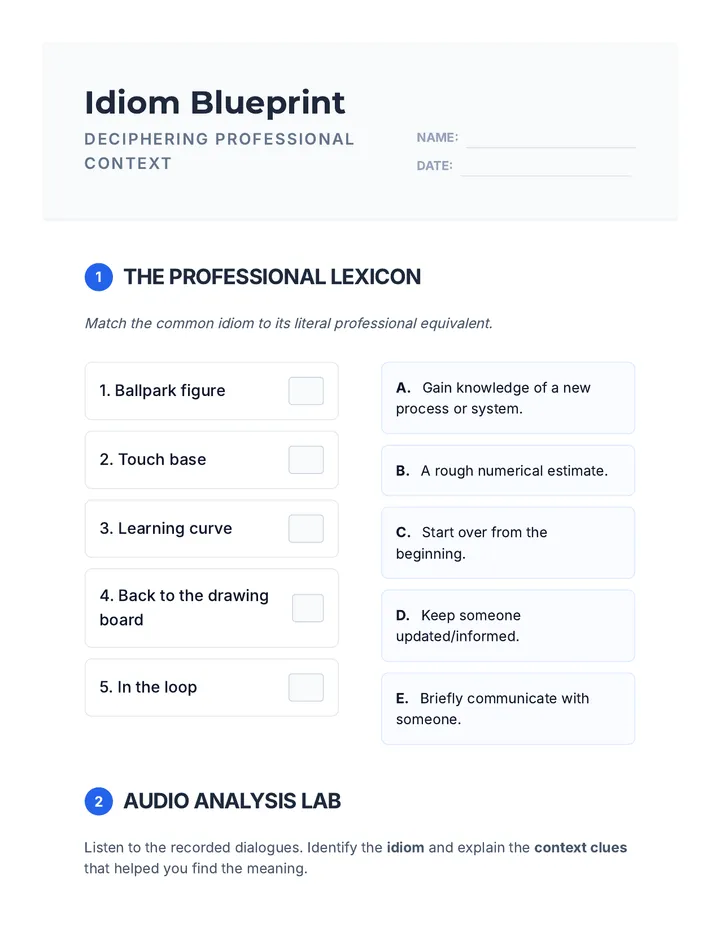
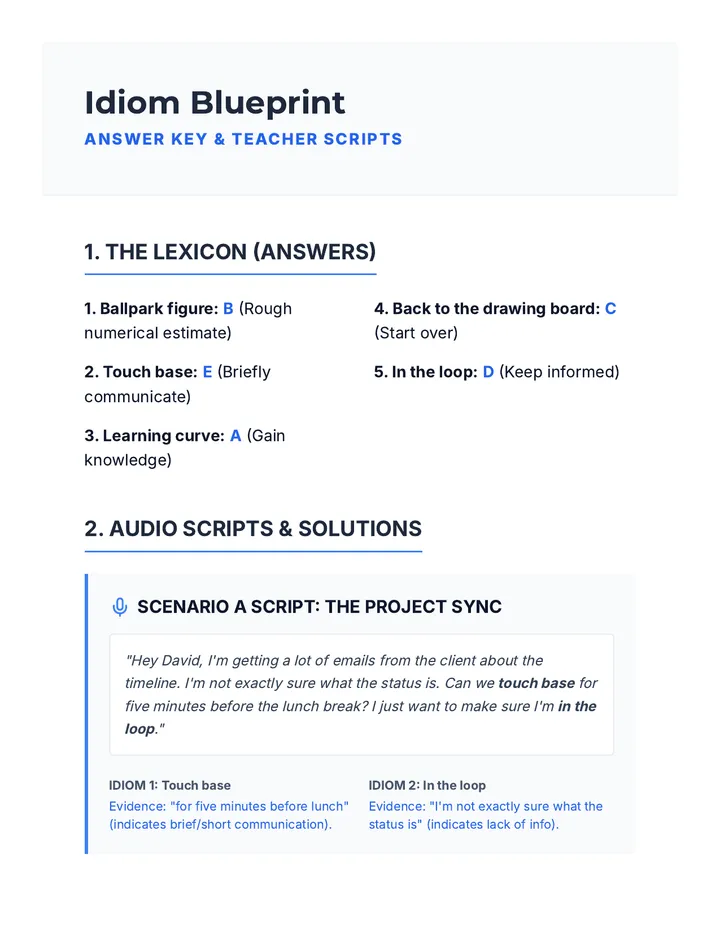
A 5-lesson sequence for graduate students to master idiomatic language, phrasal verbs, and cultural nuances in professional and academic networking environments. Students move from decoding literal meaning to applying figurative language in a high-stakes networking simulation.
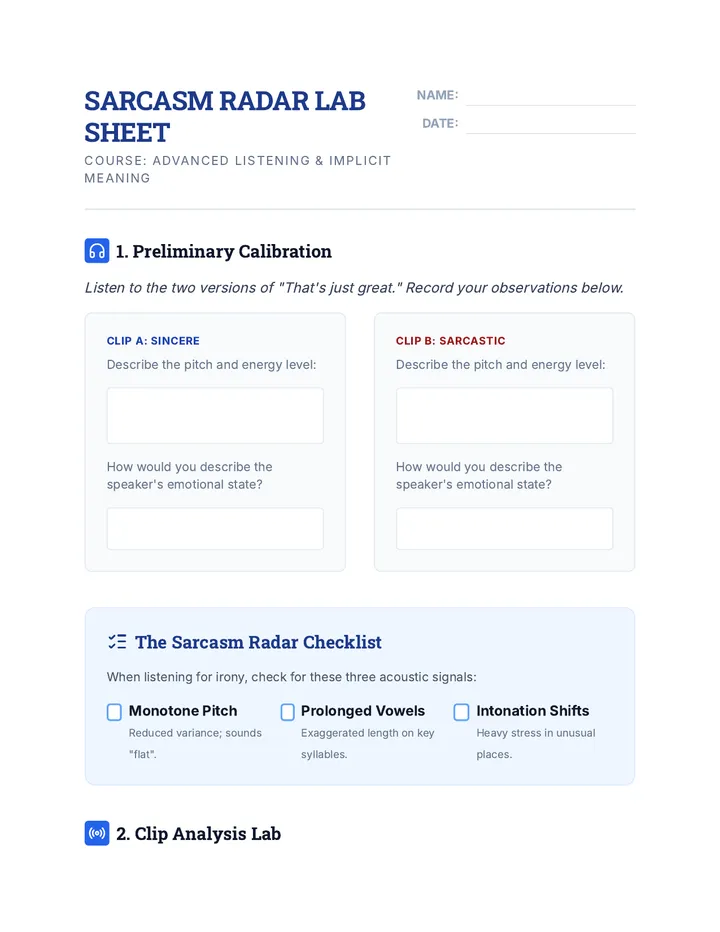
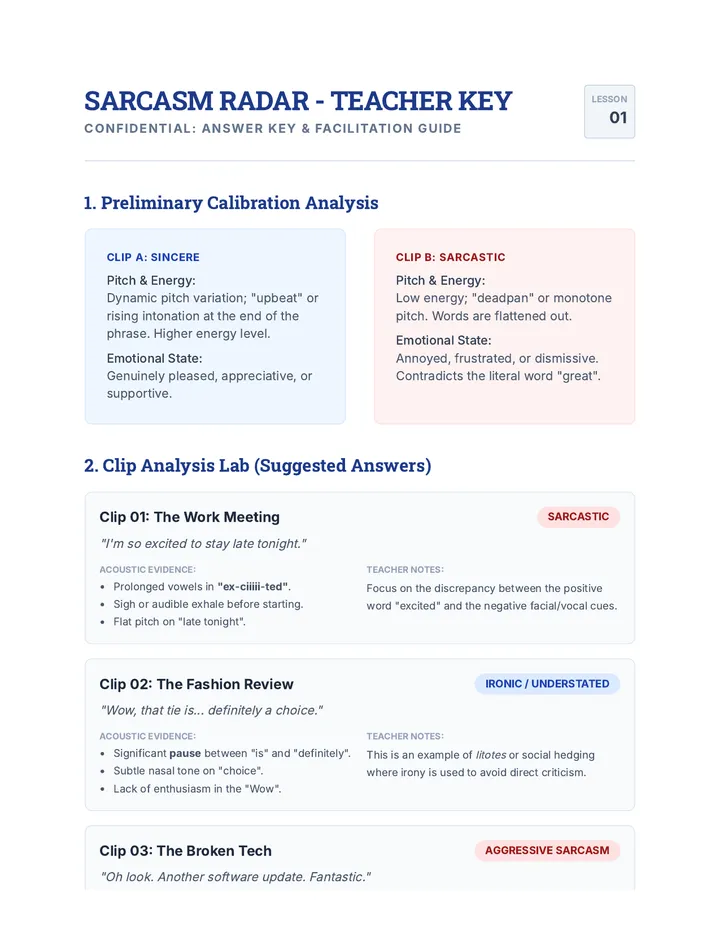
This sequence for graduate ESL students explores the nuances of English beyond literal meaning. Students will master the ability to detect sarcasm, bias, contrastive stress, and professional register, equipping them for complex academic and professional communication.
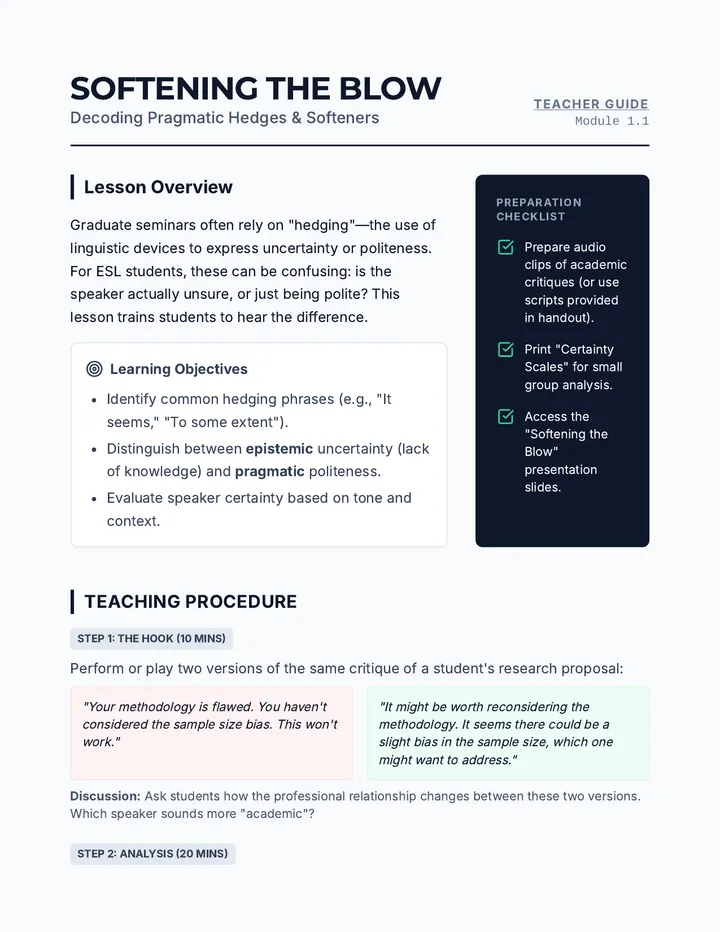
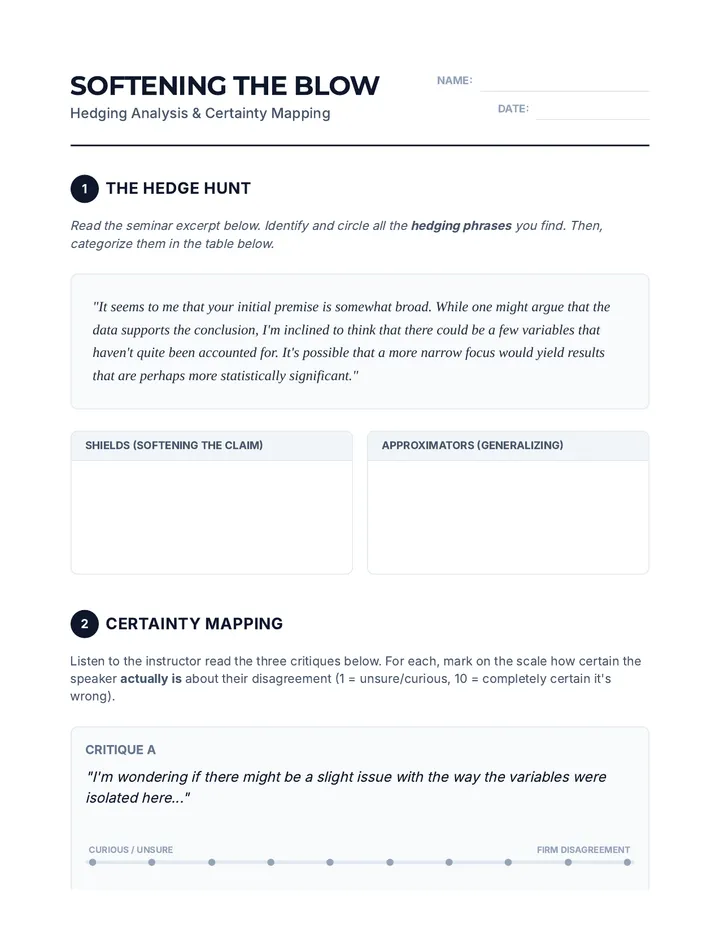
A graduate-level ESL listening sequence focused on the pragmatics of academic discourse. Students learn to navigate the subtleties of seminar discussions by identifying hedging, turn-taking signals, disagreement strategies, and multi-speaker argument threads.
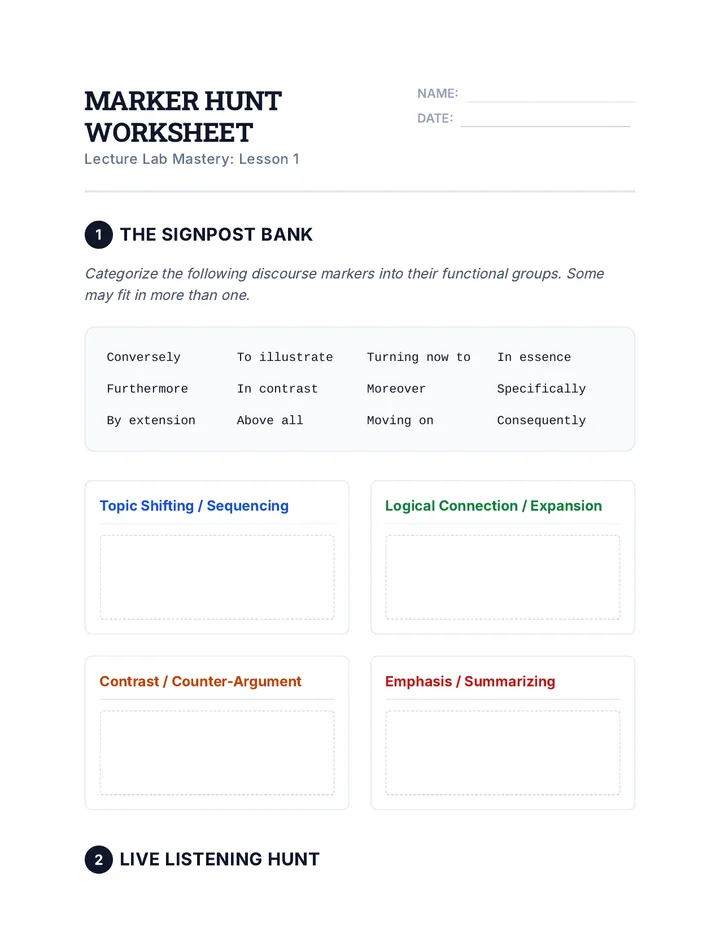
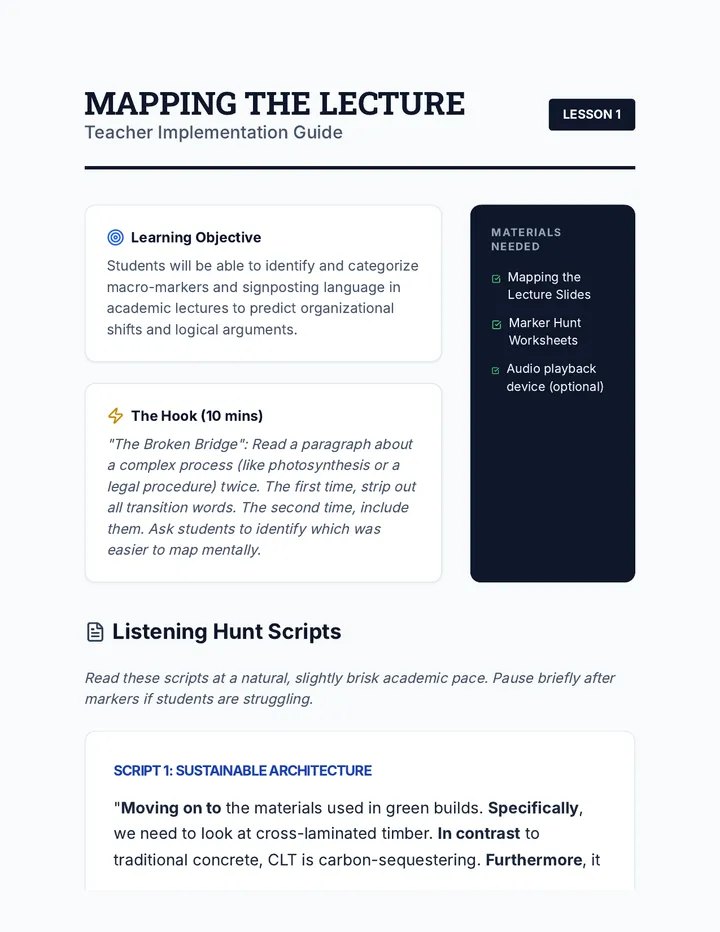
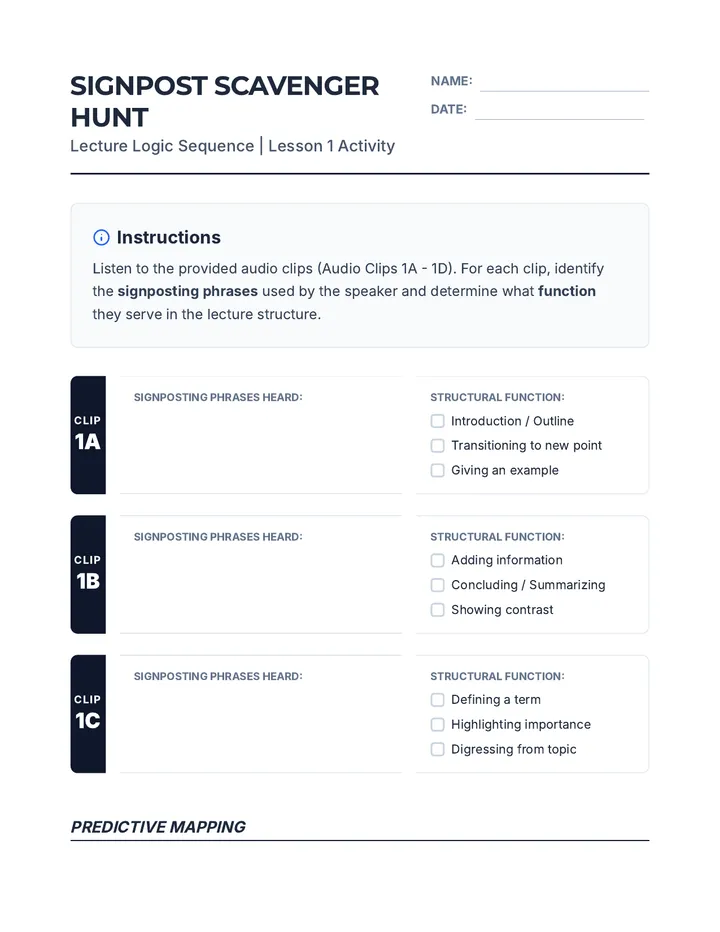
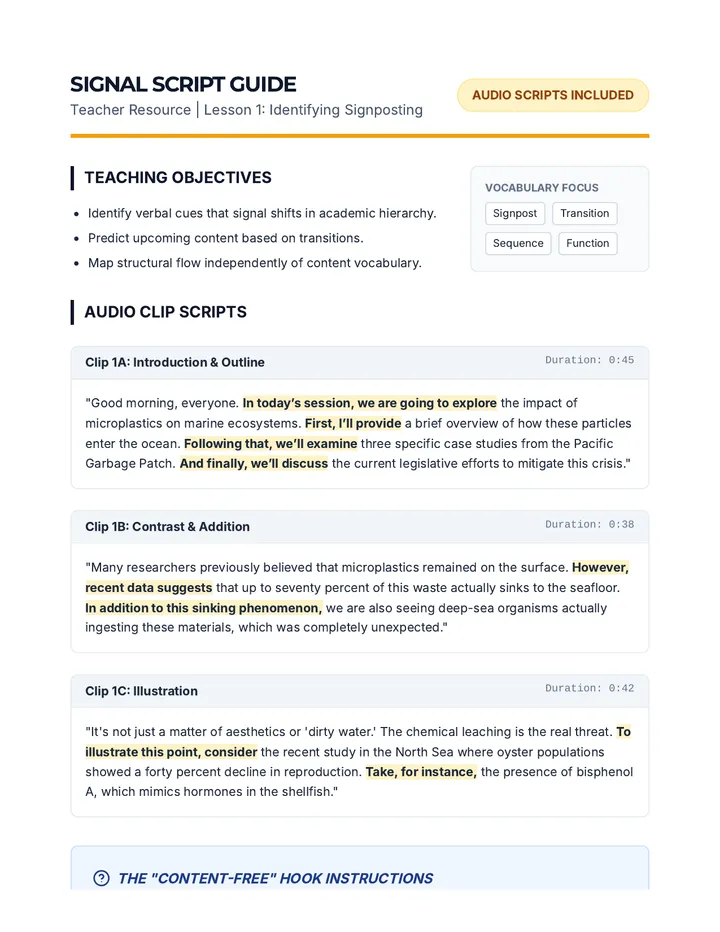
A comprehensive sequence for intermediate ESL graduate students focused on mastering academic lecture comprehension, identifying discourse markers, filtering digressions, and implementing effective note-taking strategies.
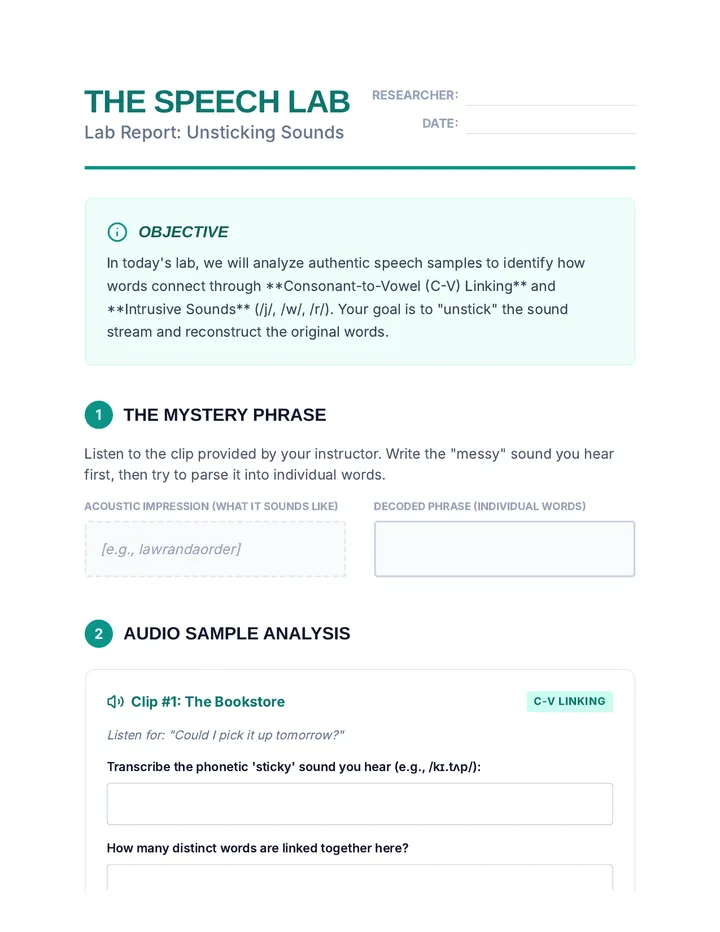
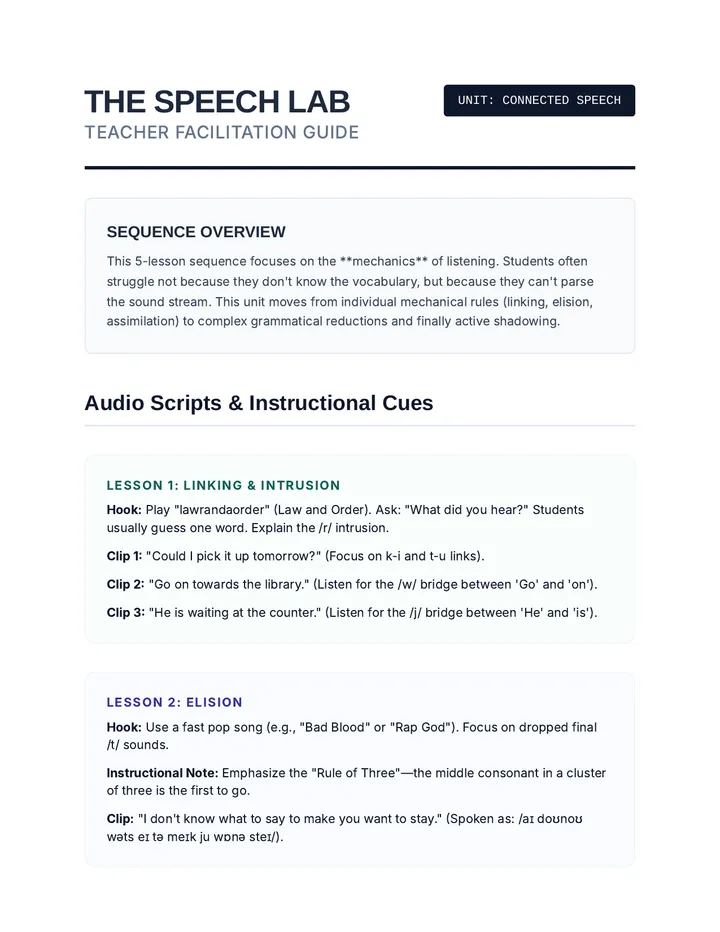
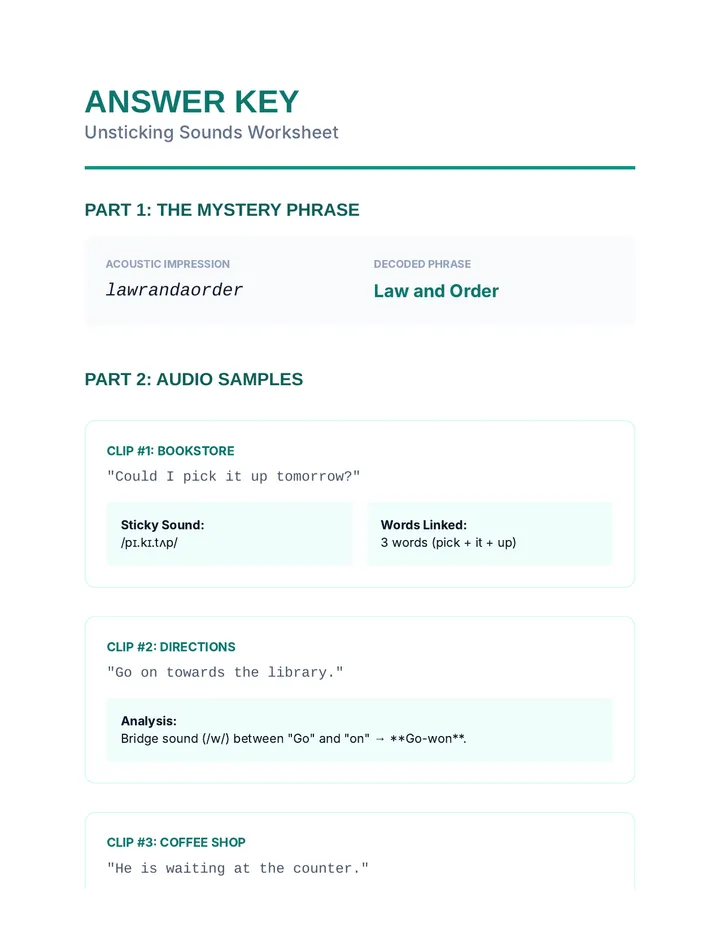
This sequence targets the mechanical difficulties of understanding natural, fast-paced English. Students explore phonological rules like linking, elision, and assimilation to decode authentic, fluid speech patterns found in campus social life.
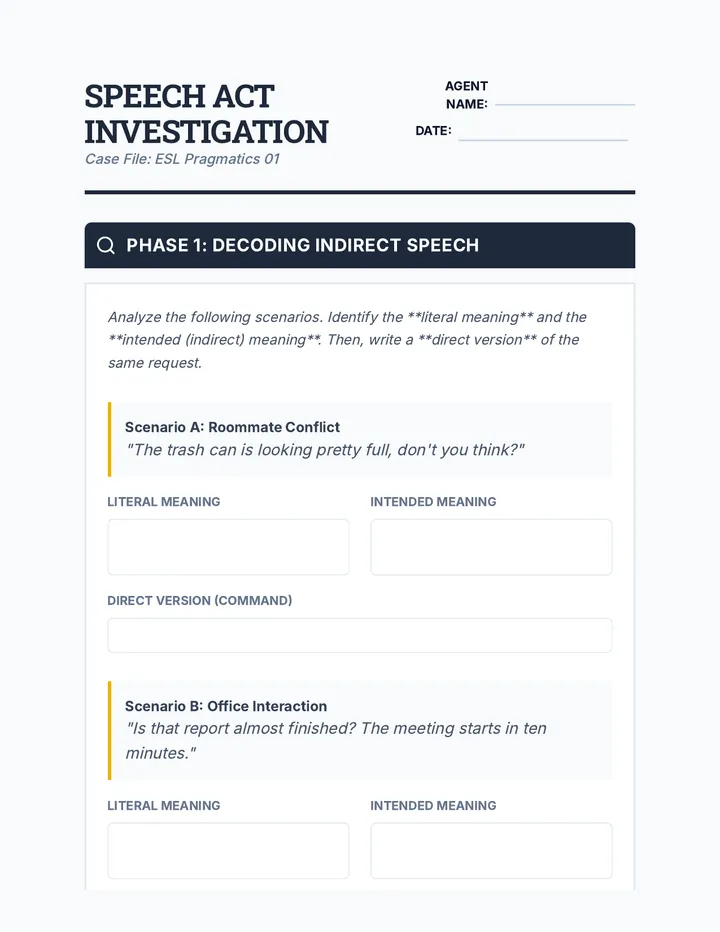
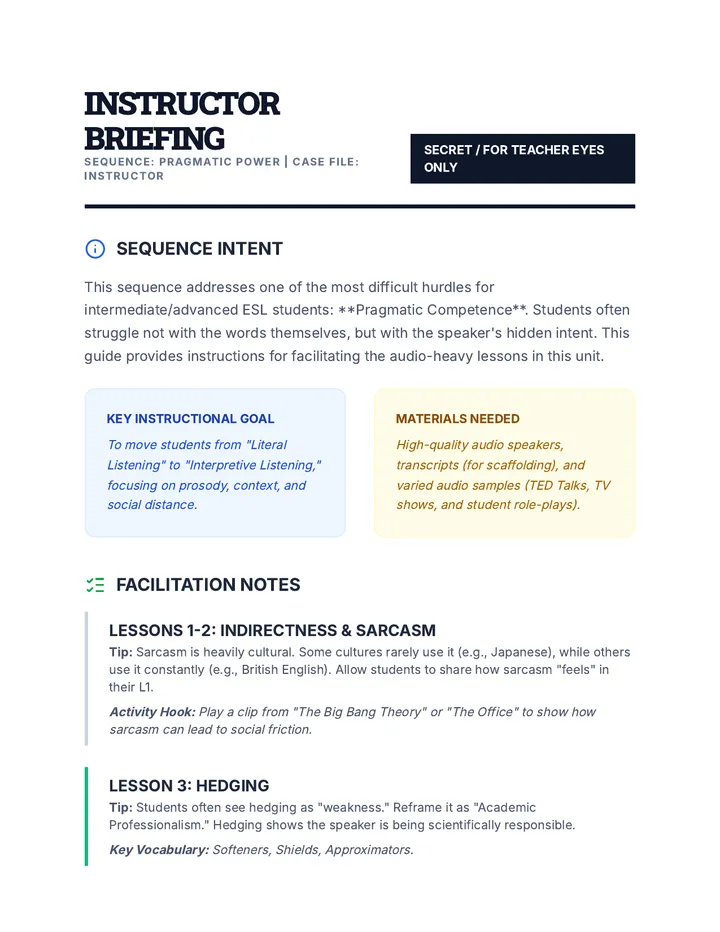
This sequence guides intermediate ESL students through the nuances of pragmatic meaning in English. Students will learn to decode indirect speech, sarcasm, hedging language, and emotional undertones in academic and social contexts to improve their listening comprehension and communicative competence.
This sequence equips intermediate ESL students with the linguistic and cognitive tools needed to navigate university lectures. It covers discourse markers, hierarchy of information, identifying tangents, note-taking systems, and synthesizing long-form academic speech.
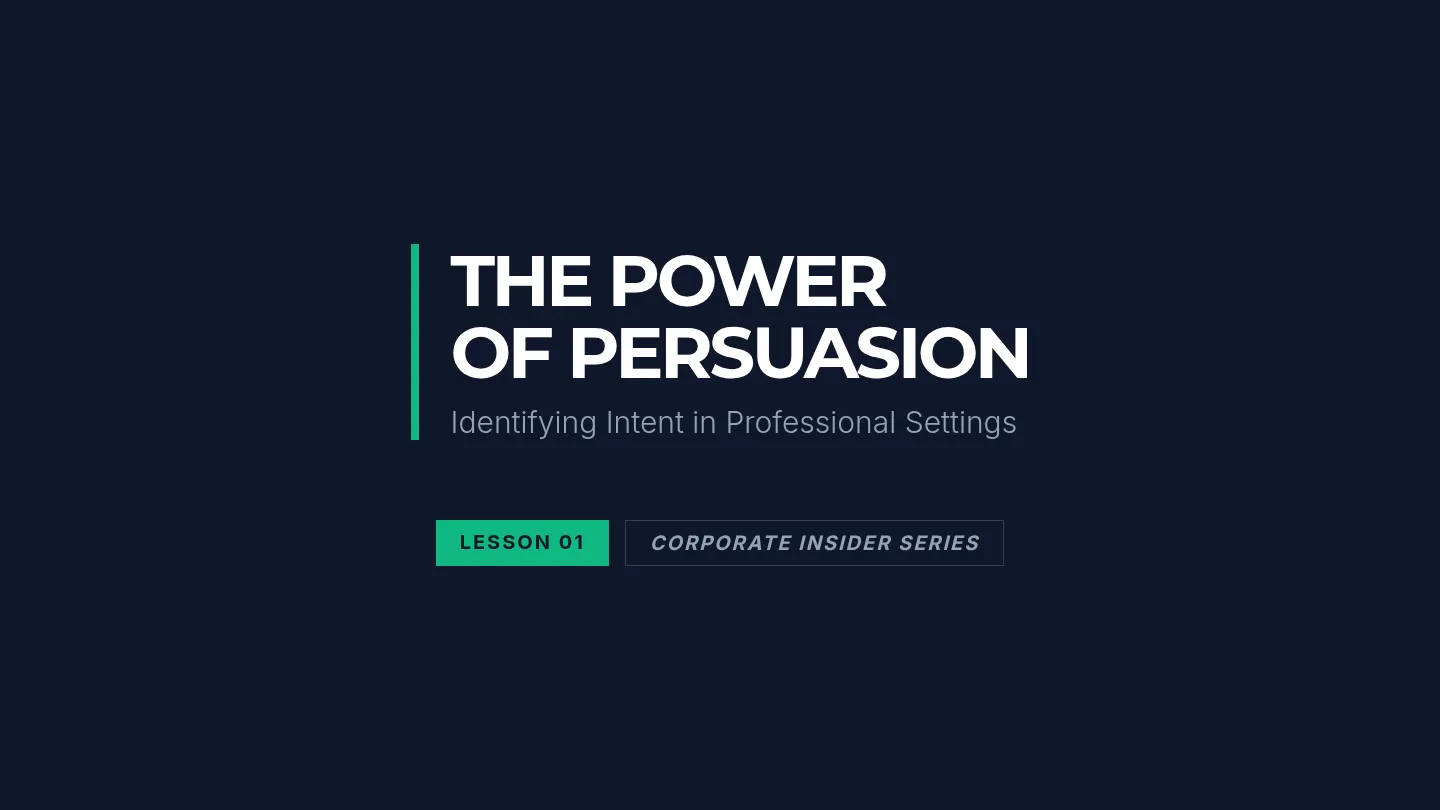
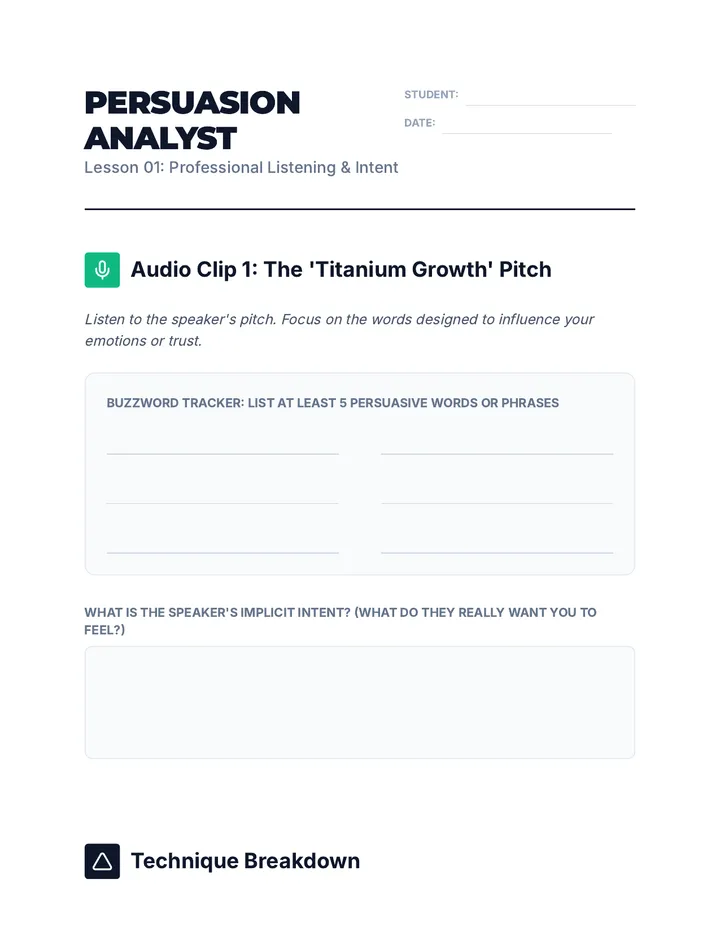
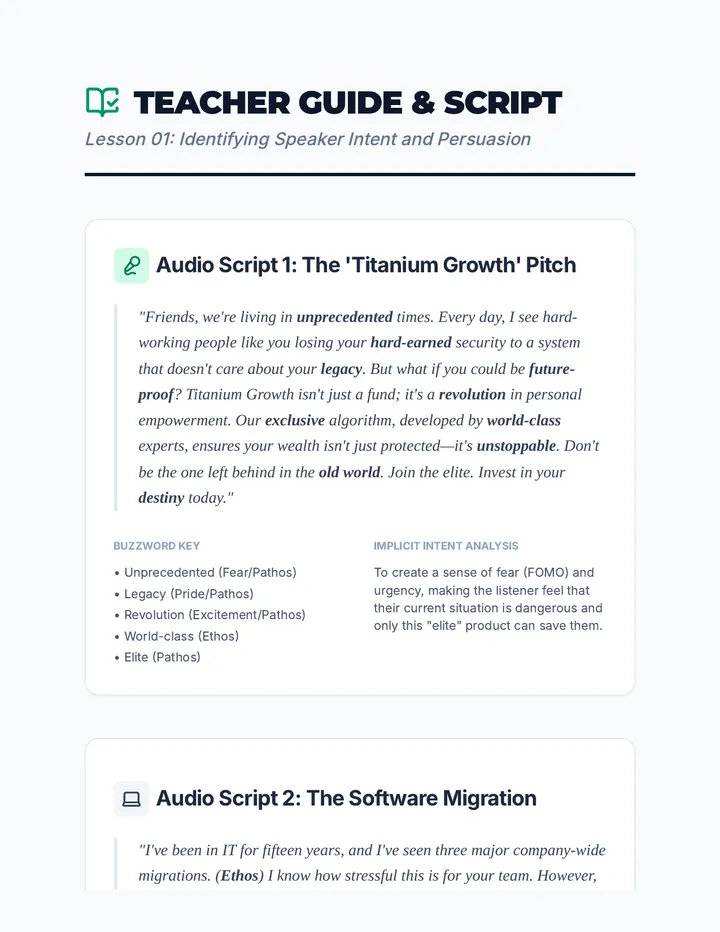
A 5-lesson sequence for 12th-grade ESL students focused on interpreting tone, intent, and implicit meaning in professional settings like job interviews and negotiations.
A high-intensity workshop sequence designed for graduate students to master the reading demands of the GRE, GMAT, and TOEFL. Focuses on skimming, scanning, contextual vocabulary, and syntactic deconstruction for maximum efficiency.
A comprehensive sequence designed for graduate ESL students to master the integrated writing and speaking tasks of high-stakes academic exams like TOEFL iBT and IELTS. The curriculum focuses on shorthand note-taking, identifying inter-source relationships, utilizing structural templates, and rapid synthesis under timed conditions.
This sequence teaches 5th-grade ESL students how to navigate informational texts efficiently using skimming and scanning strategies. Students will move from understanding the big picture to locating specific keywords and using text features to answer test-style questions under time pressure.
A mastery-based sequence for undergraduate ESL students focused on rapid structuring and drafting for standardized writing exams like the TOEFL and GRE. Students learn to decode prompts, outline in under three minutes, and use formulaic language to produce high-scoring academic essays under pressure.
A comprehensive unit for undergraduate ESL students to deconstruct the logic of standardized tests, focusing on question stems, distractor categorization, absolute language detection, and the process of elimination.
This sequence addresses the psychological and logistical challenges of timed exams through simulation and strategy, treating test-taking as a resource management game where time is the currency. Students learn to benchmark their pacing, apply triage strategies for difficult questions, manage anxiety, and utilize intelligent guessing to maximize their score potential.
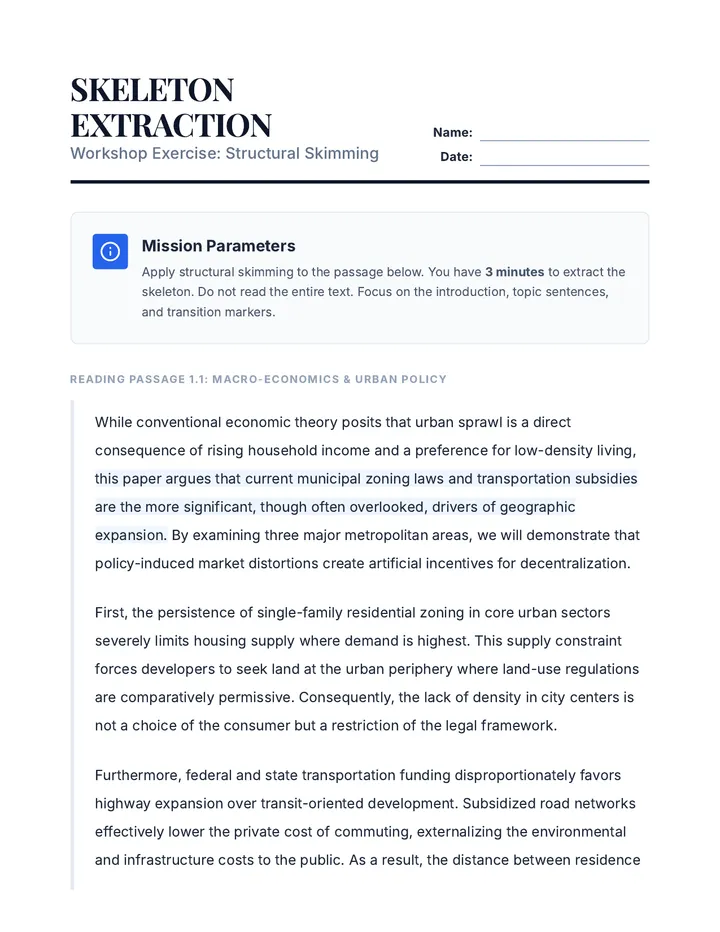
A workshop-style sequence for undergraduate ESL students to master skimming and scanning techniques for high-stakes academic exams. Students move from conceptual understanding to timed application, focusing on efficiency and accuracy in dense academic texts.
An intermediate ESL sequence focused on mastering the complexities of natural spoken English. Students explore connected speech, reductions, idioms, and prosodic features to decode meaning beyond literal definitions in authentic media contexts like podcasts and interviews.
A comprehensive sequence for 11th Grade ESL students focused on mastering the metacognitive and tactical aspects of high-stakes testing, including time management, strategic guessing, and anxiety regulation.
This sequence prepares intermediate ESL students for university-level academic listening by focusing on signposting language, speaker stance, hedging, and strategic note-taking. Students will move from identifying basic transitions to synthesizing complex arguments from multiple spoken sources.