A project-based unit where students analyze the breakdown of logic in online spaces, identifying fallacies in comments and memes, and creating a digital field guide to improve online discourse.
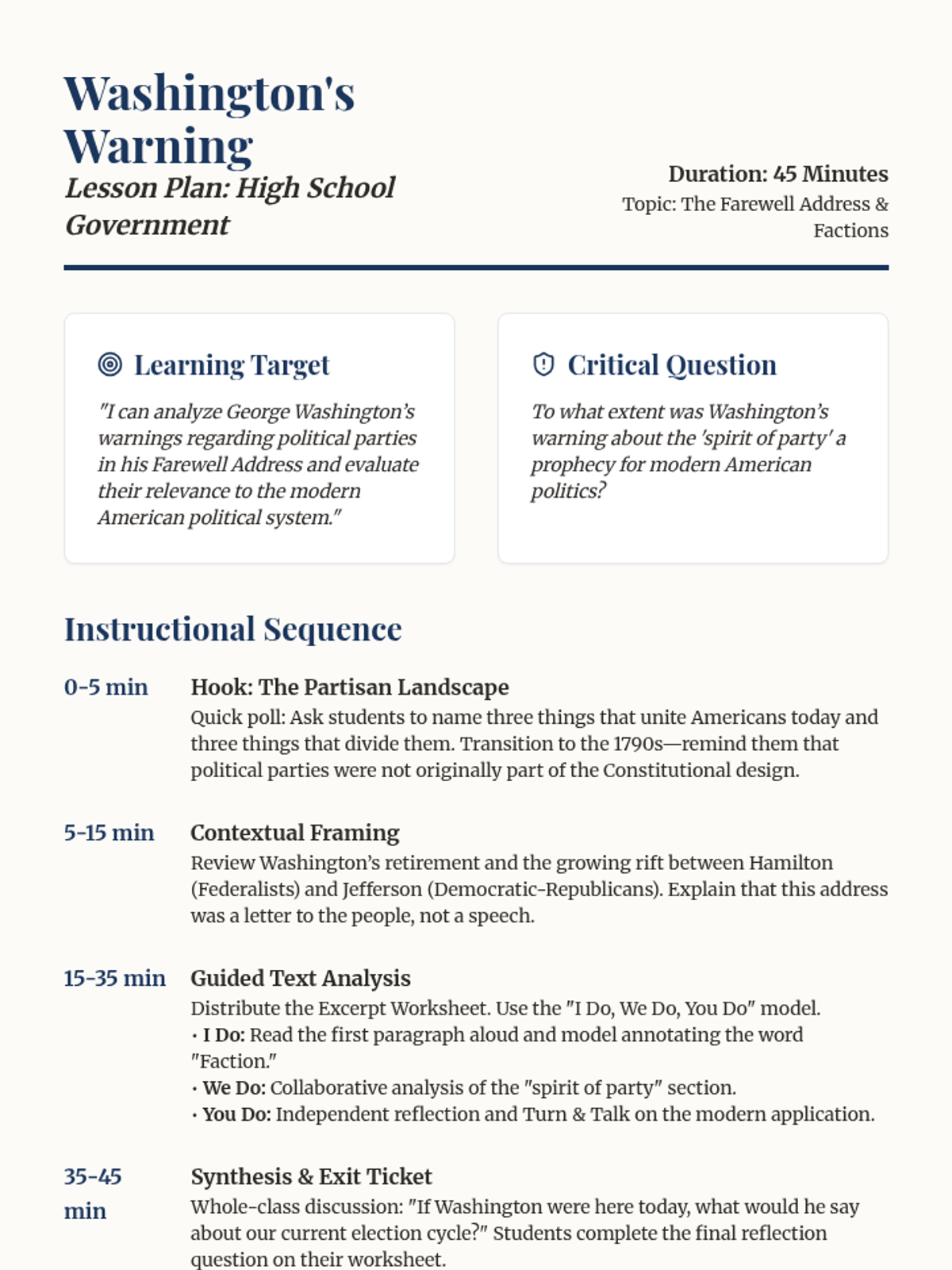
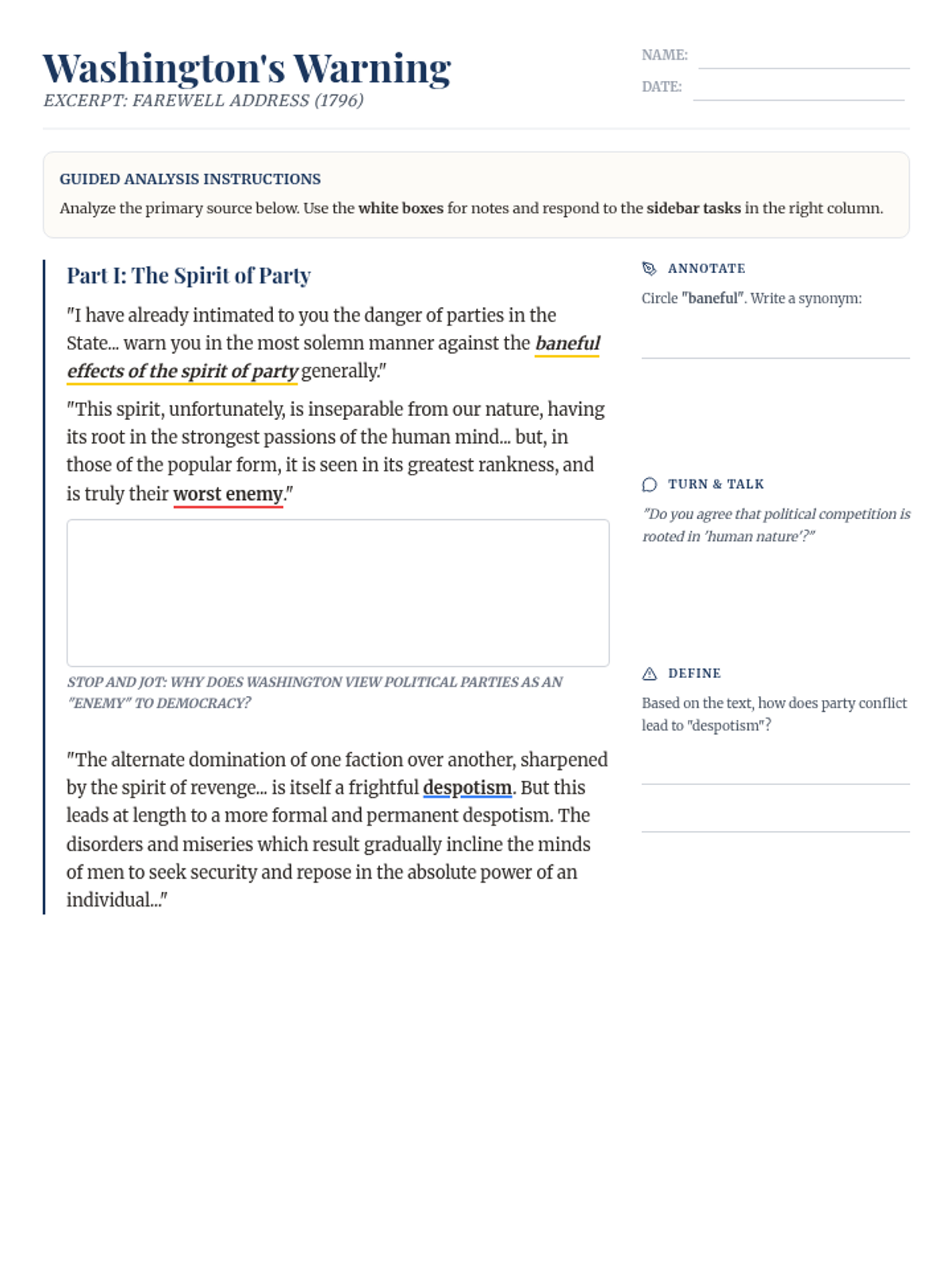
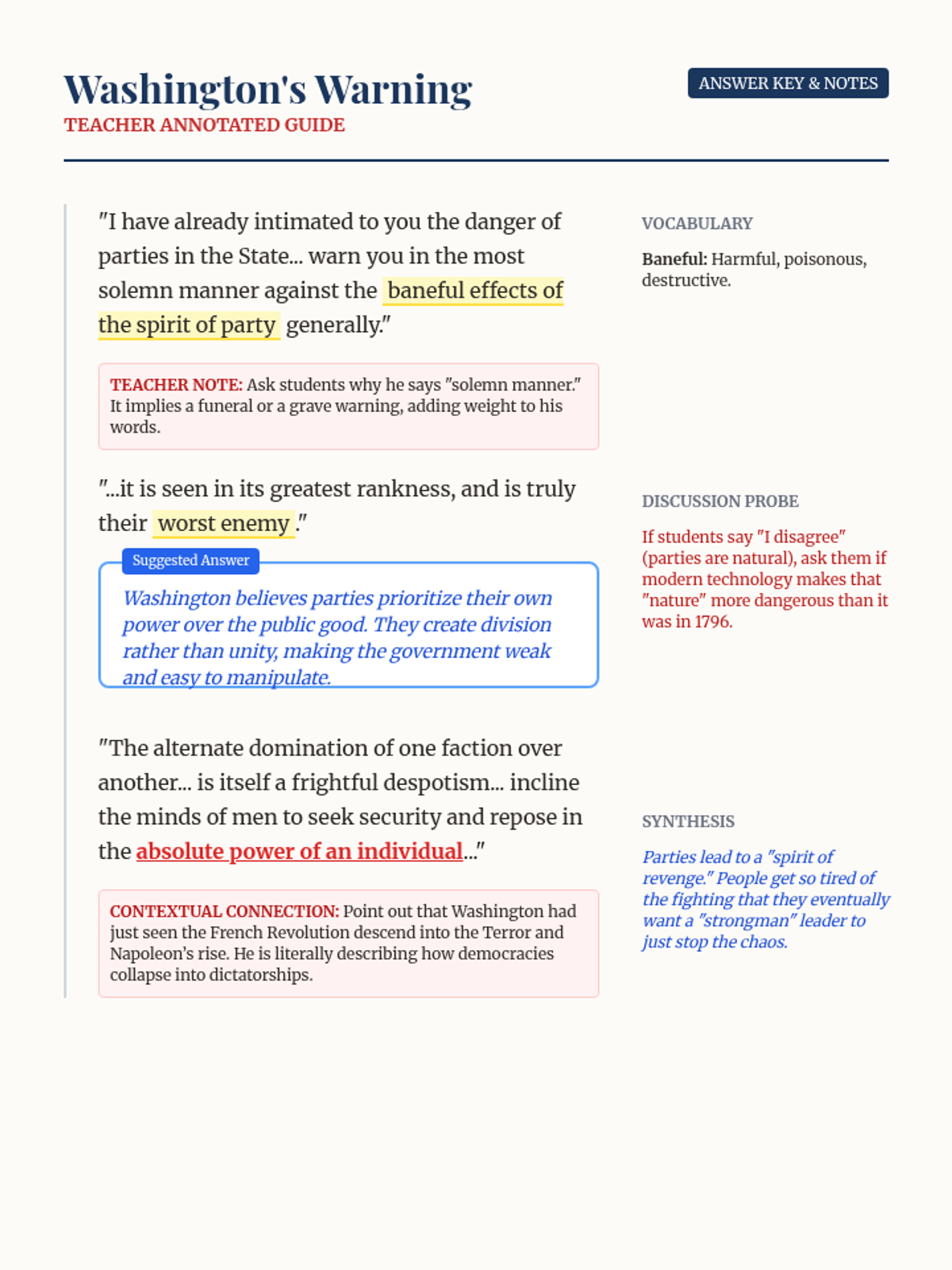
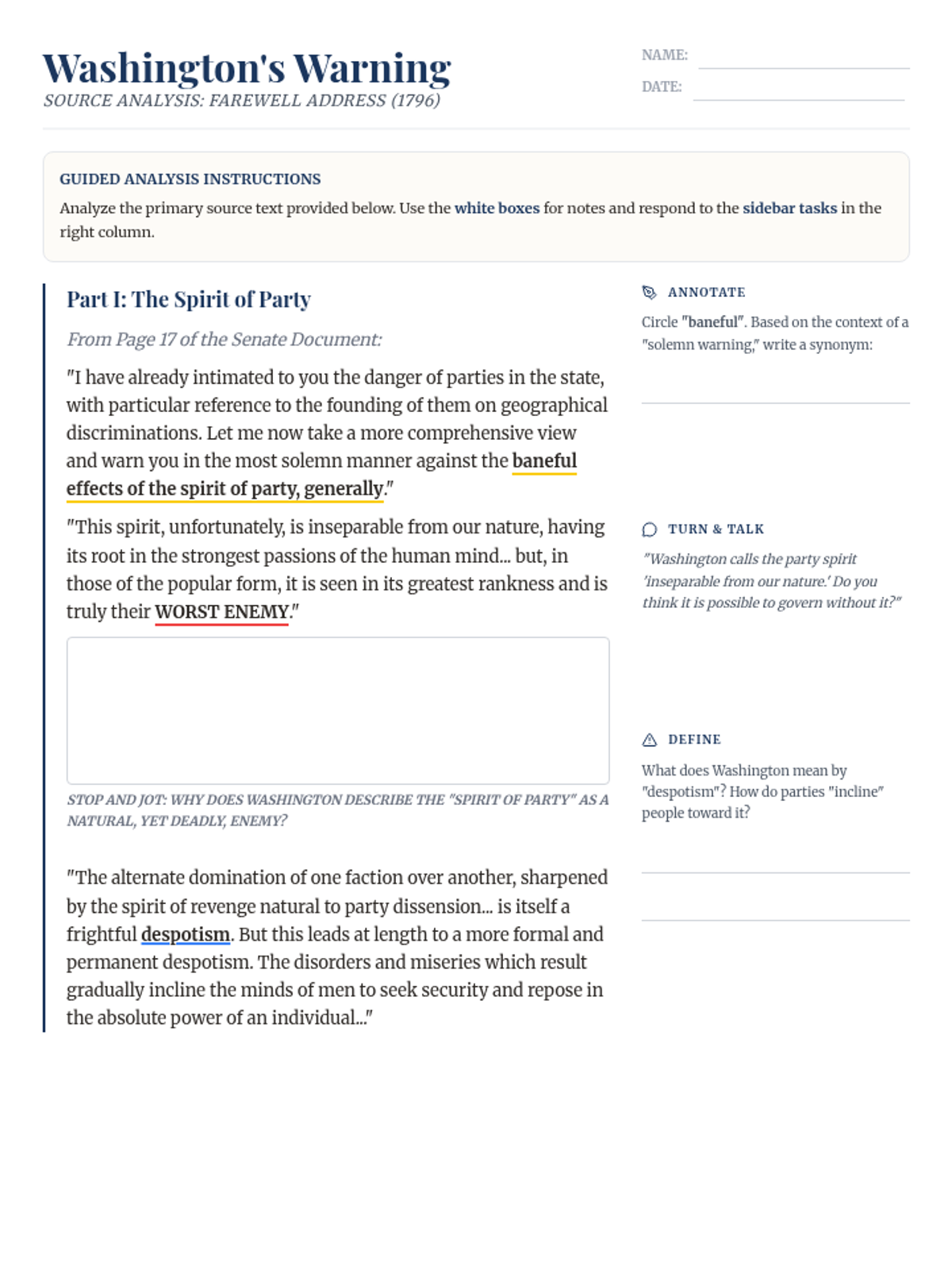
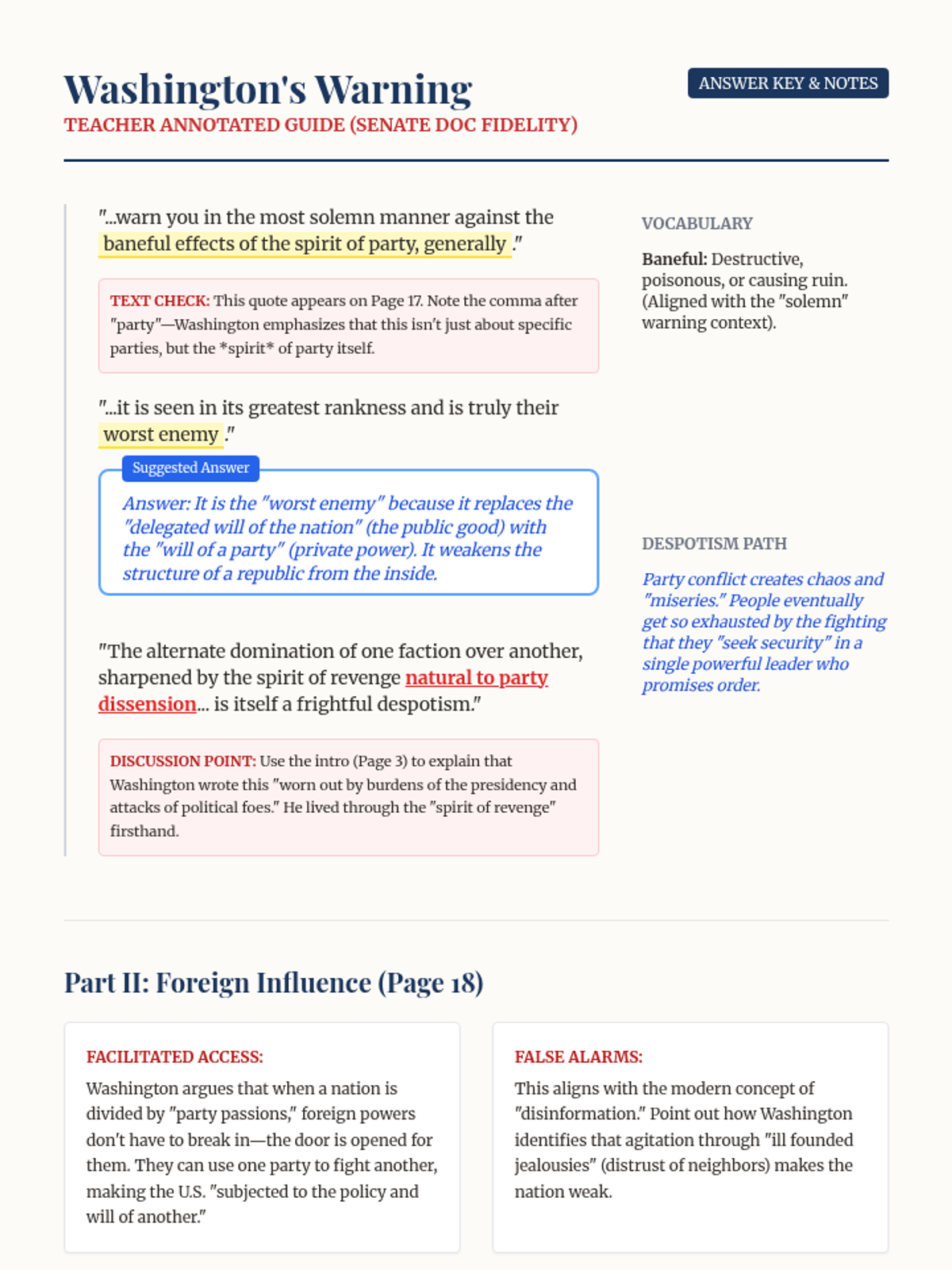
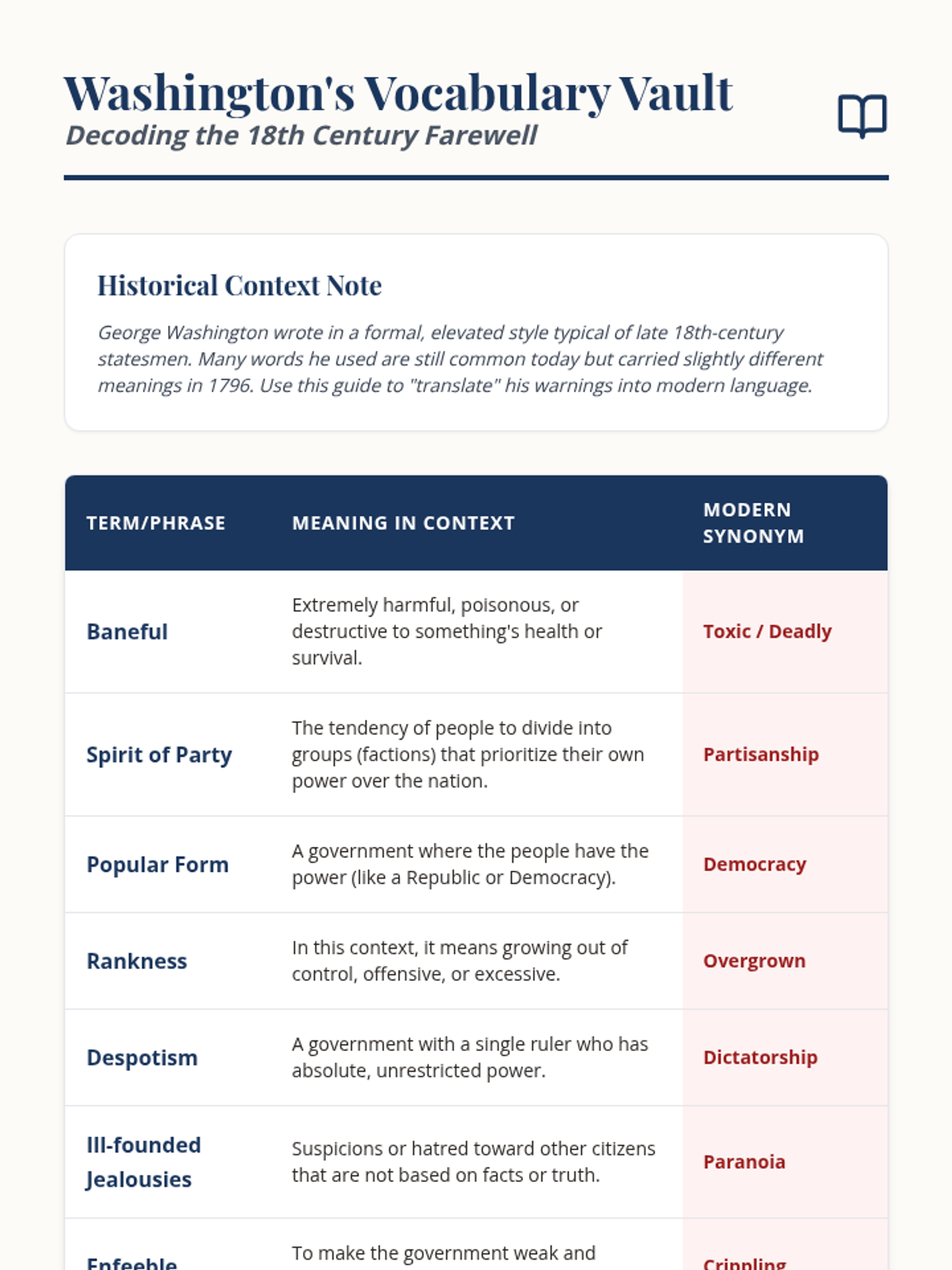
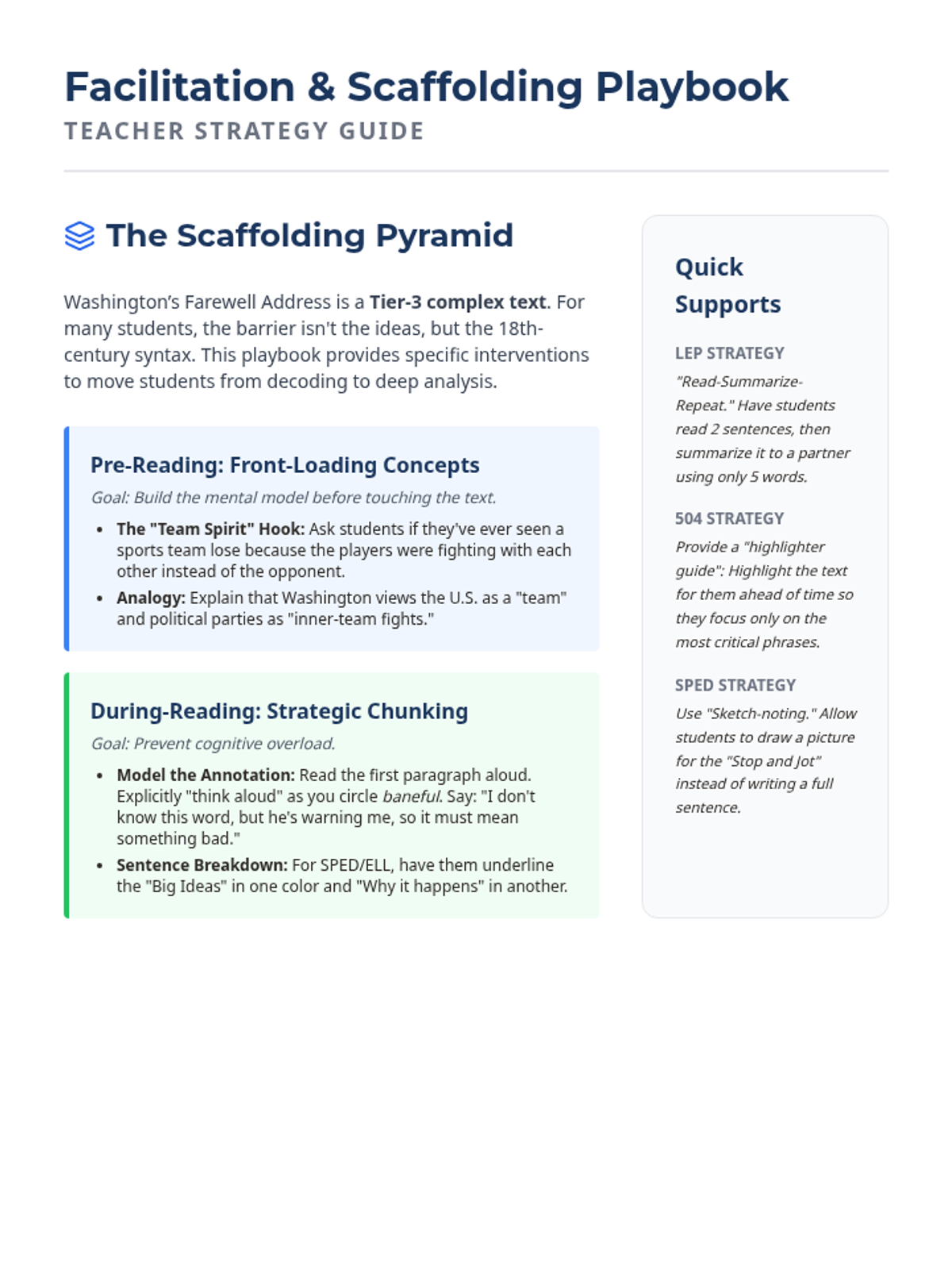
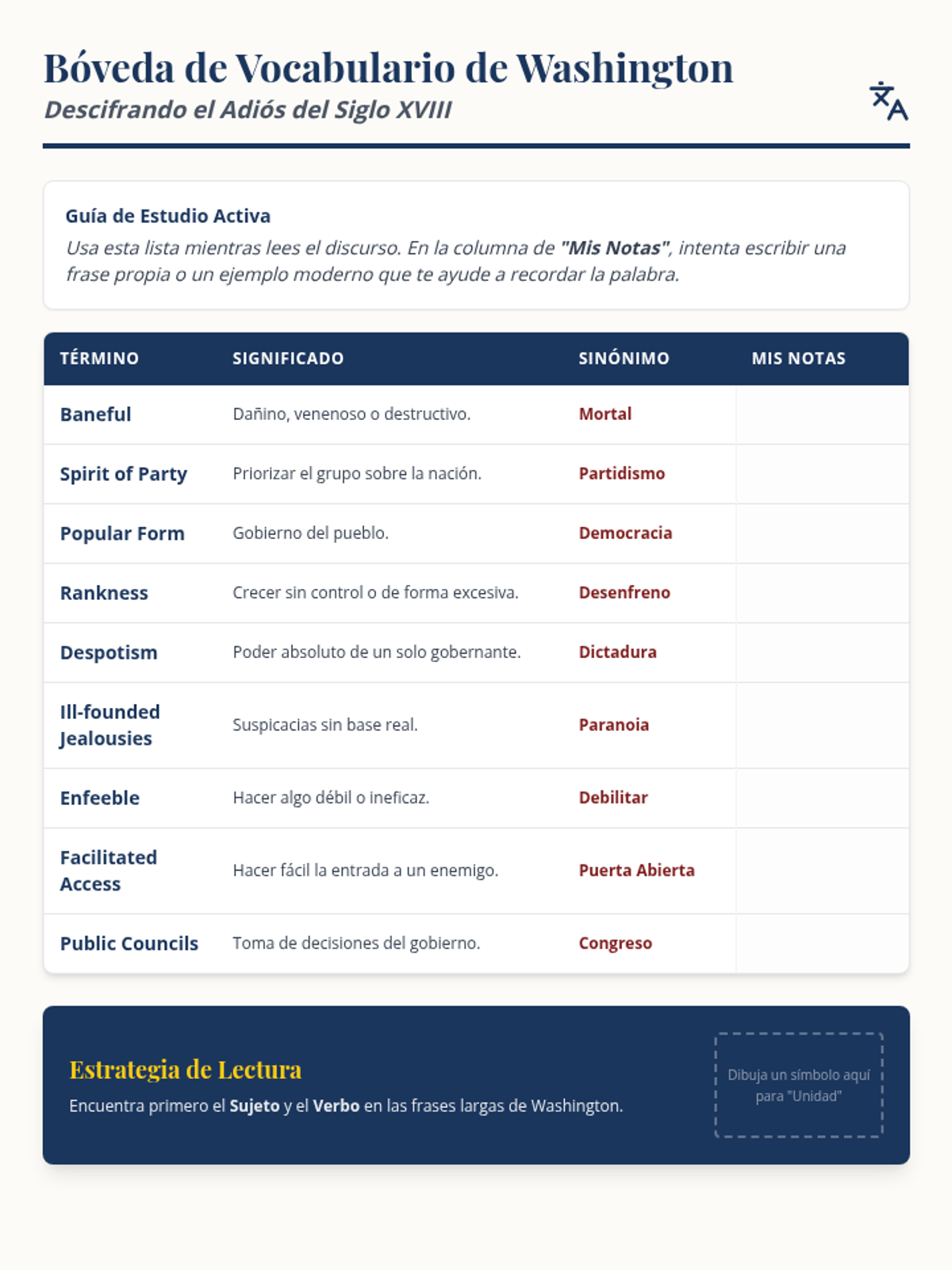
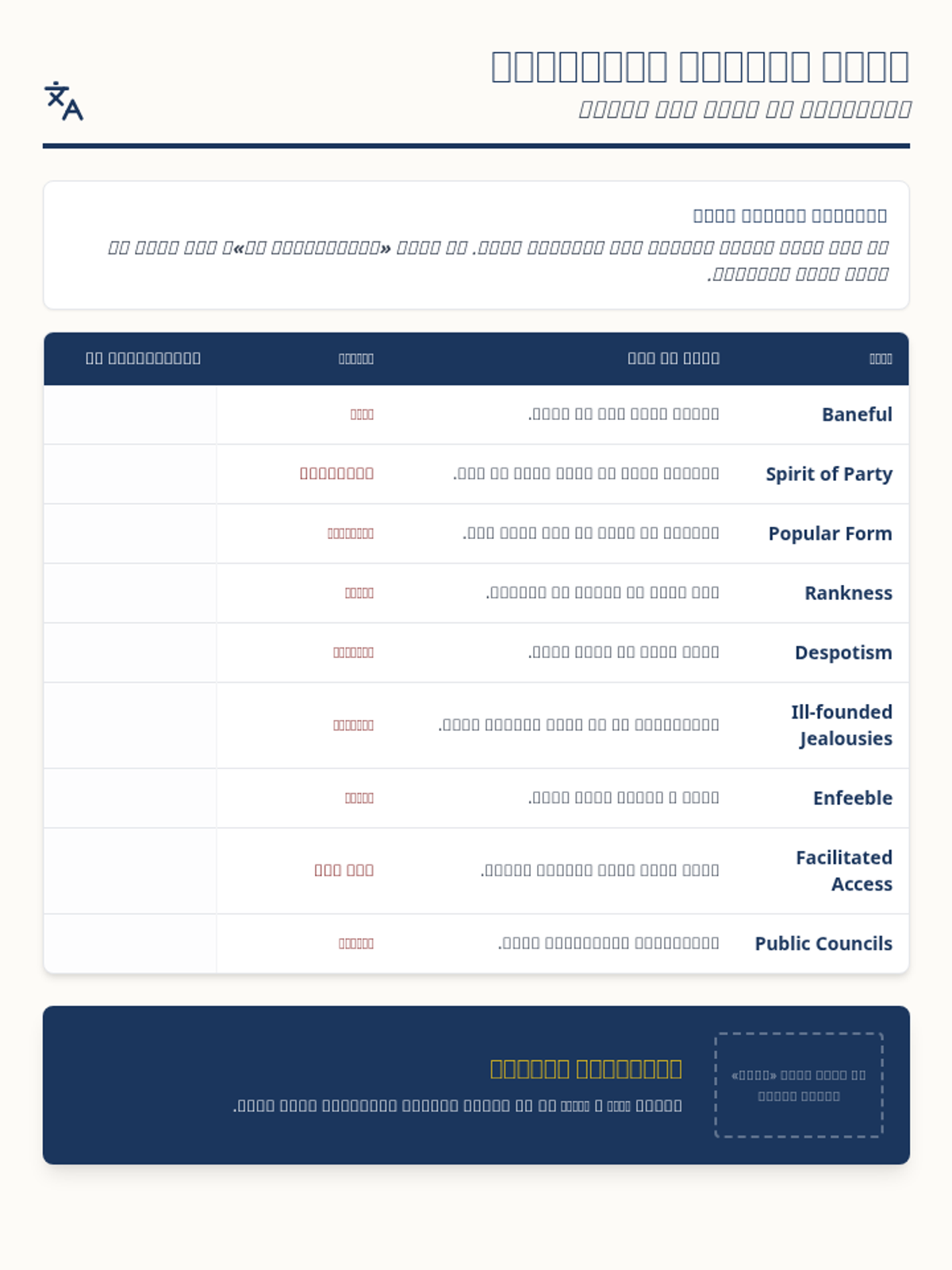
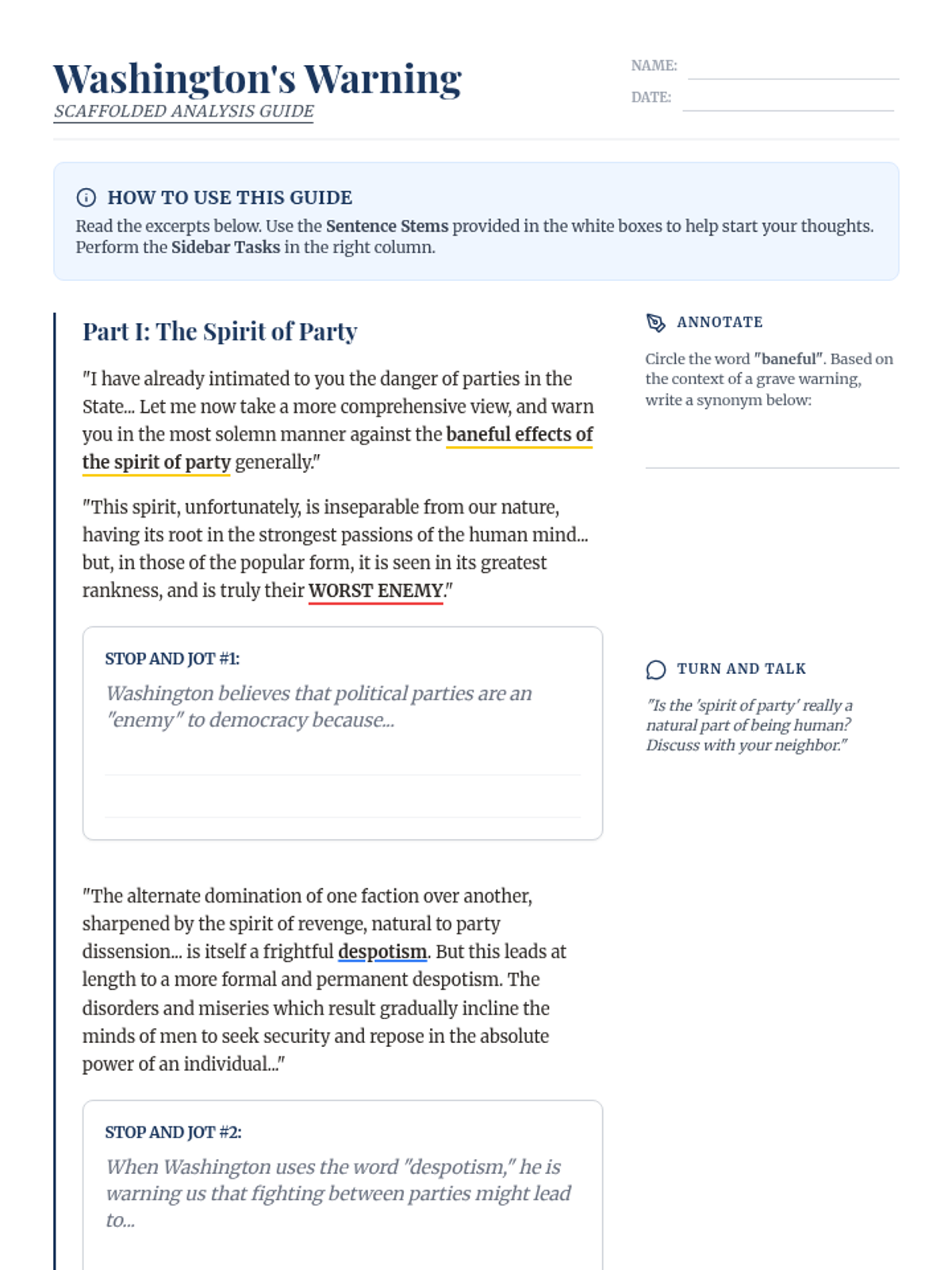
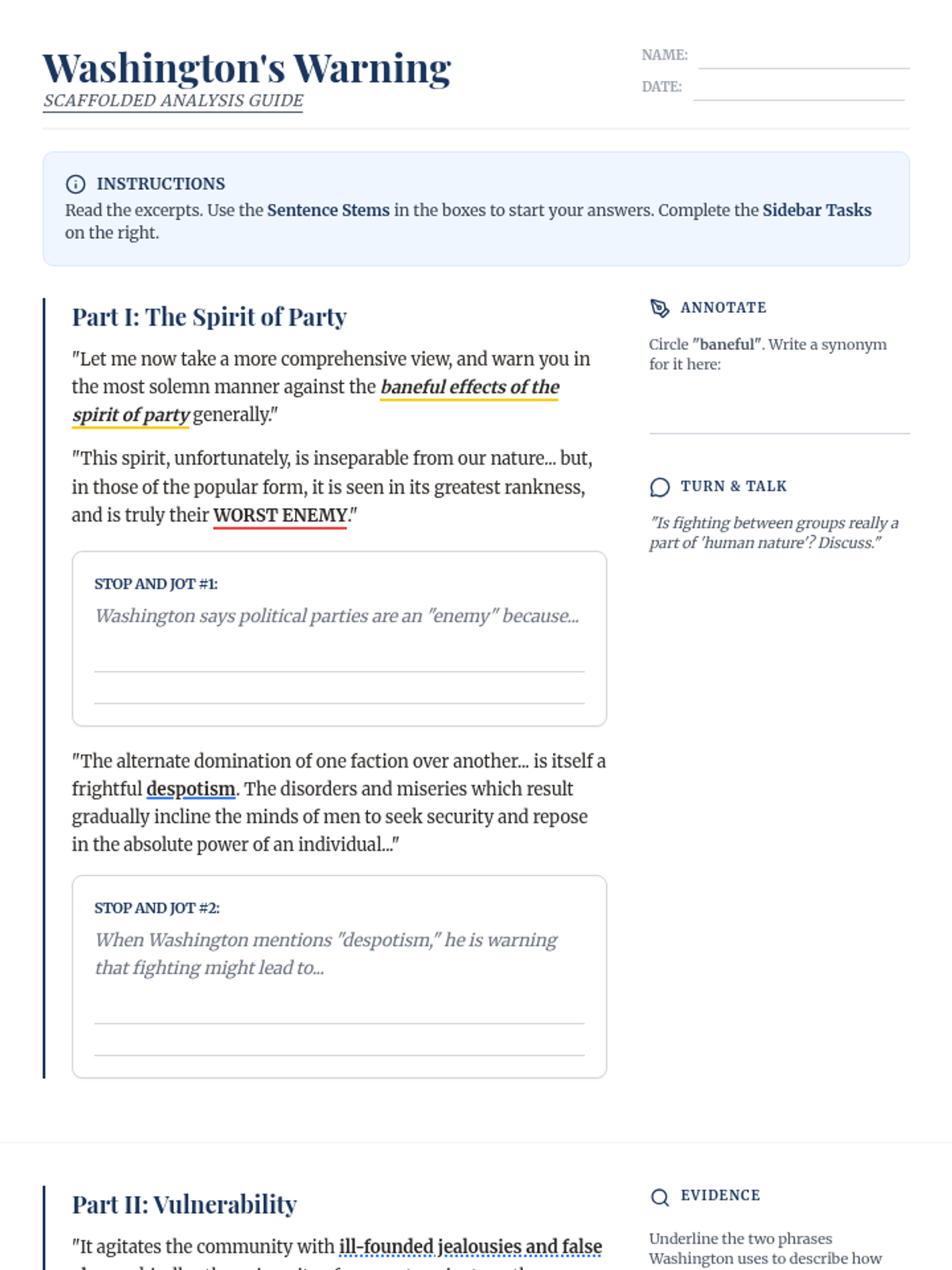
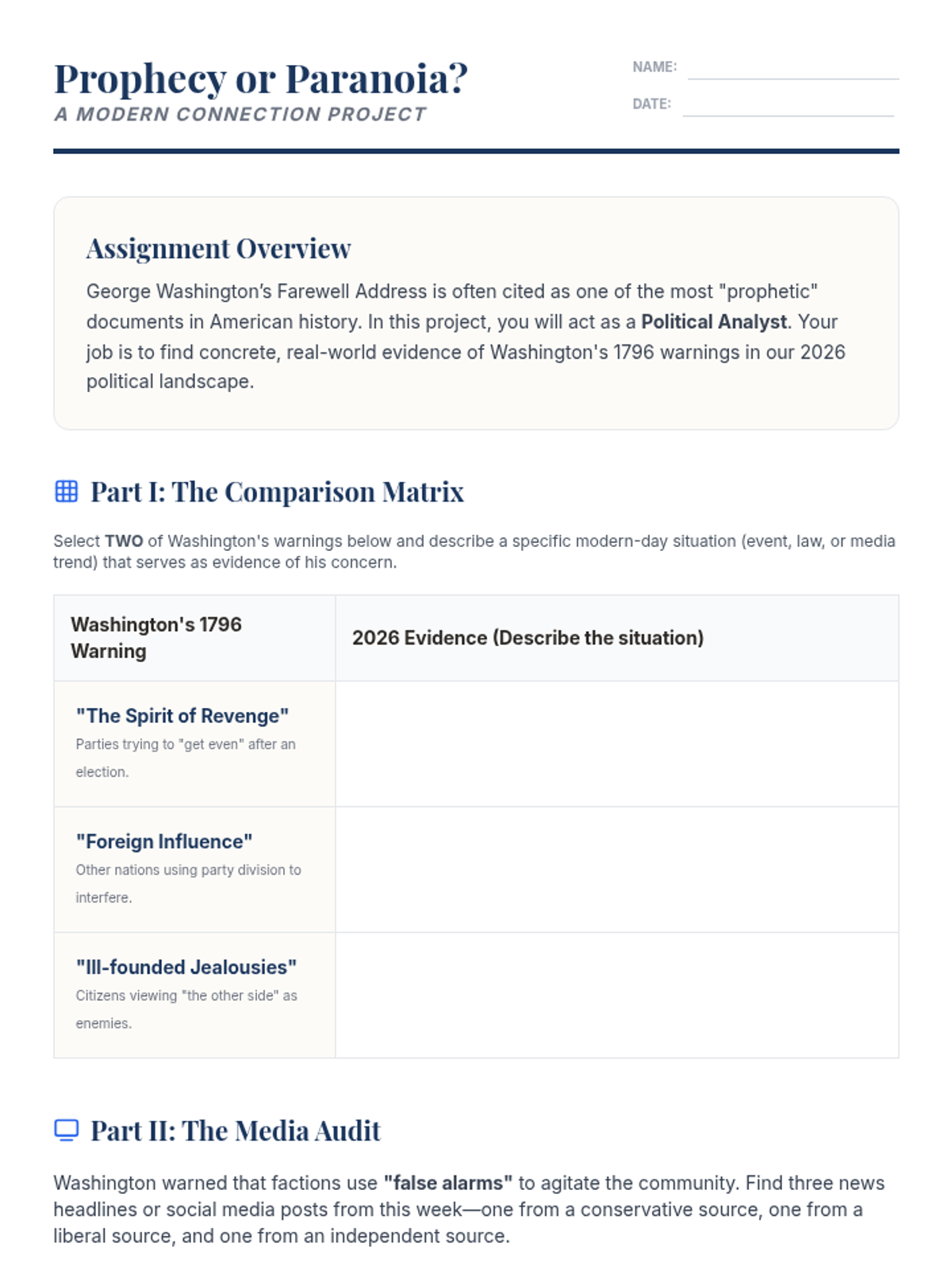
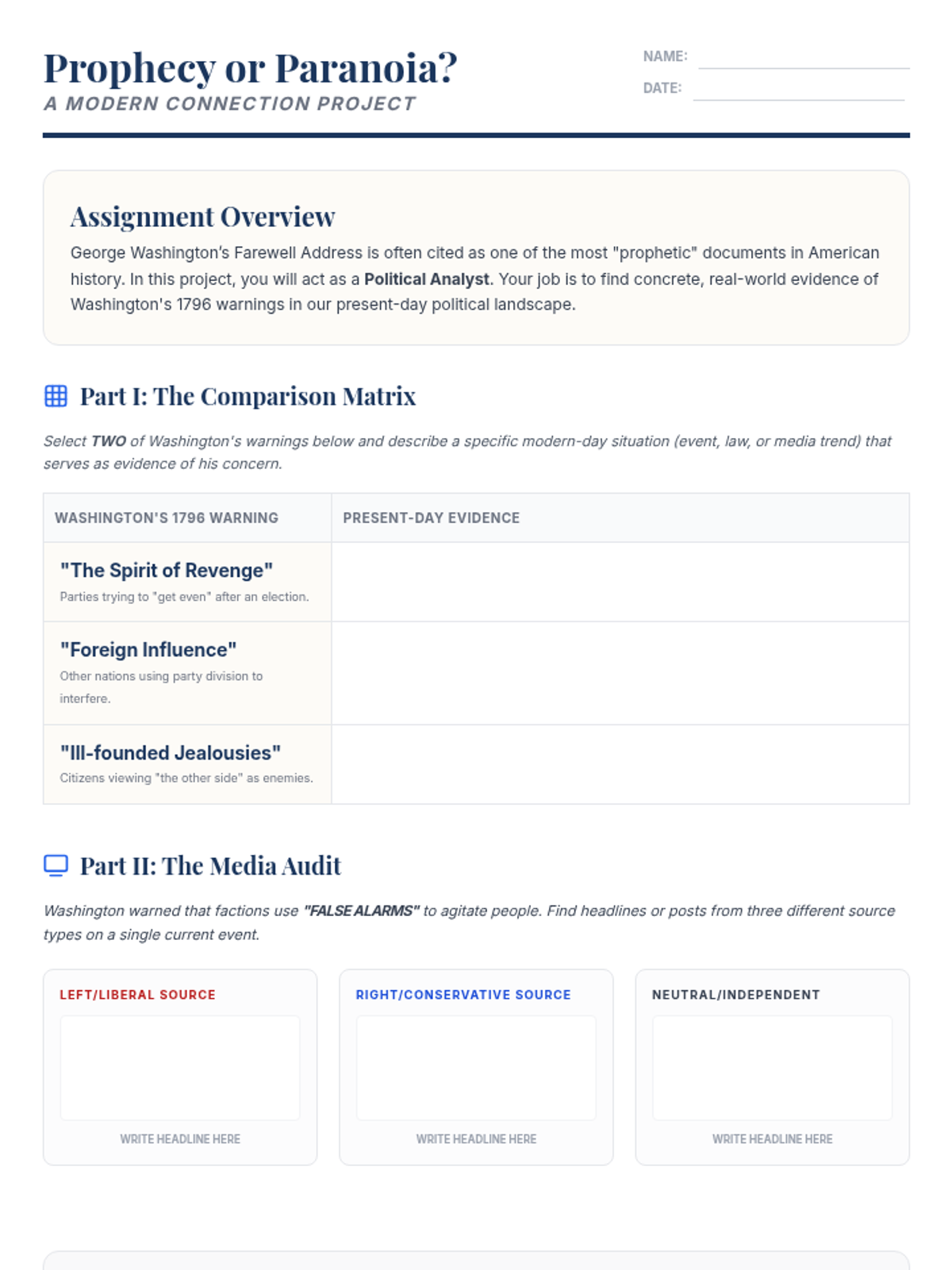
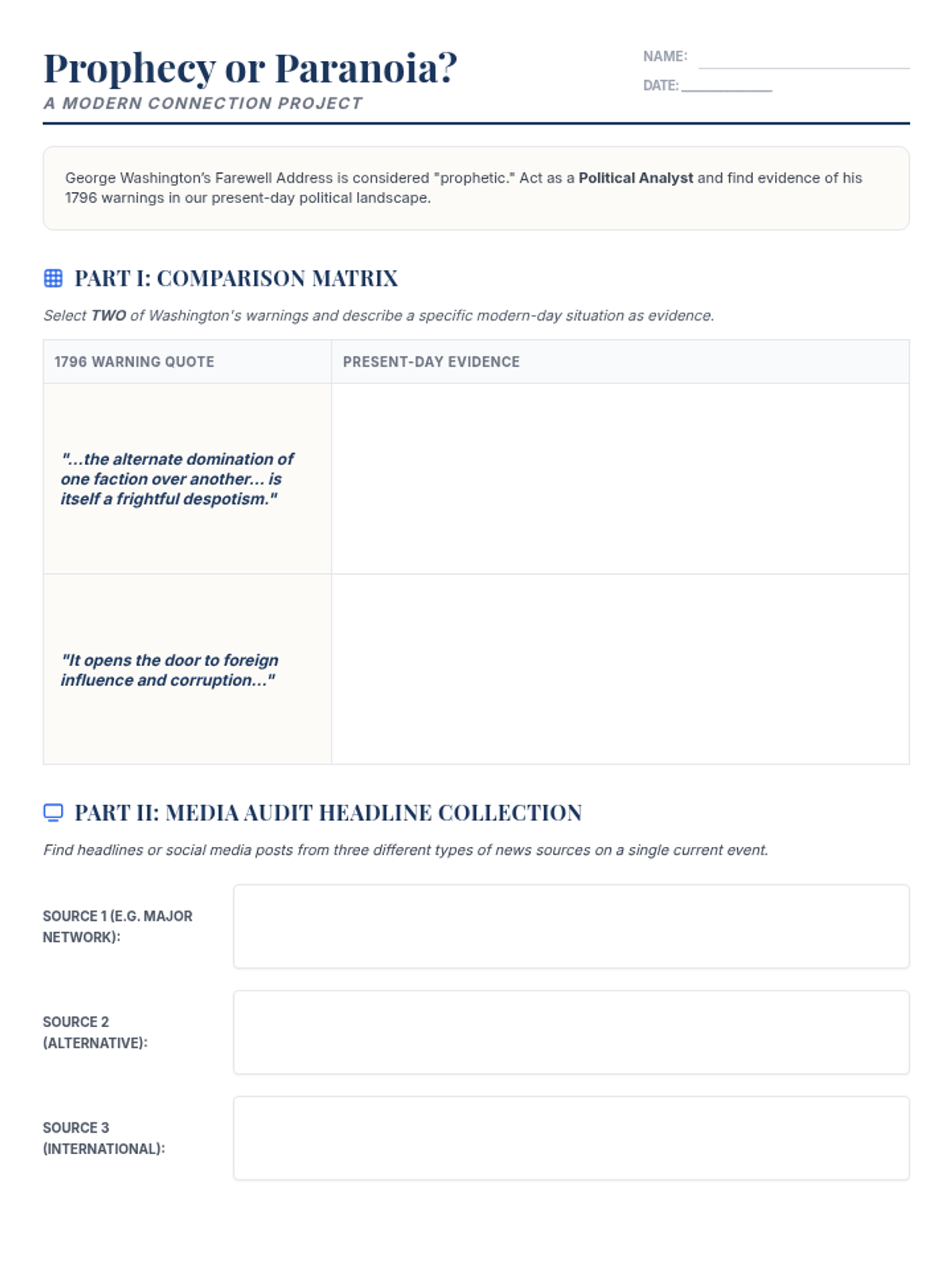
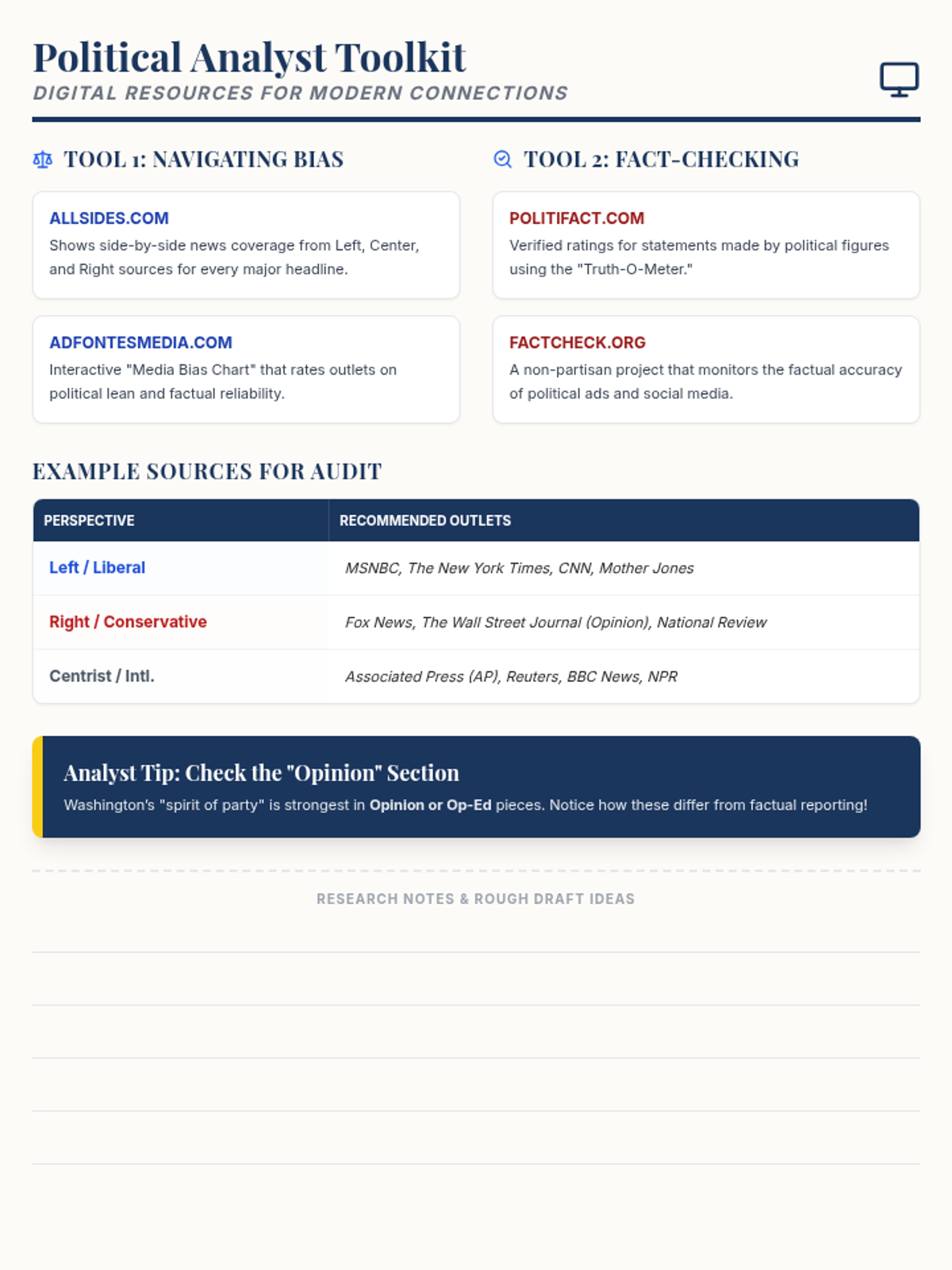
A two-part sequence that takes students from a deep-dive analysis of George Washington's Farewell Address to a modern-day evaluation of his warnings regarding political parties, media bias, and national unity.
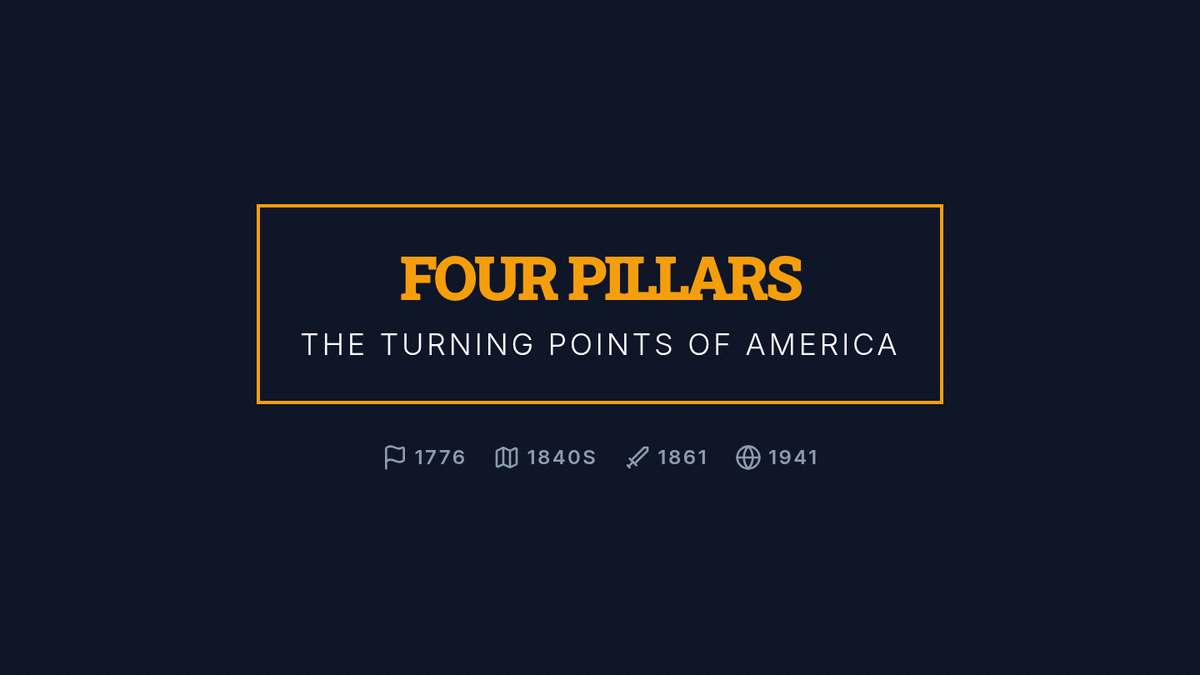
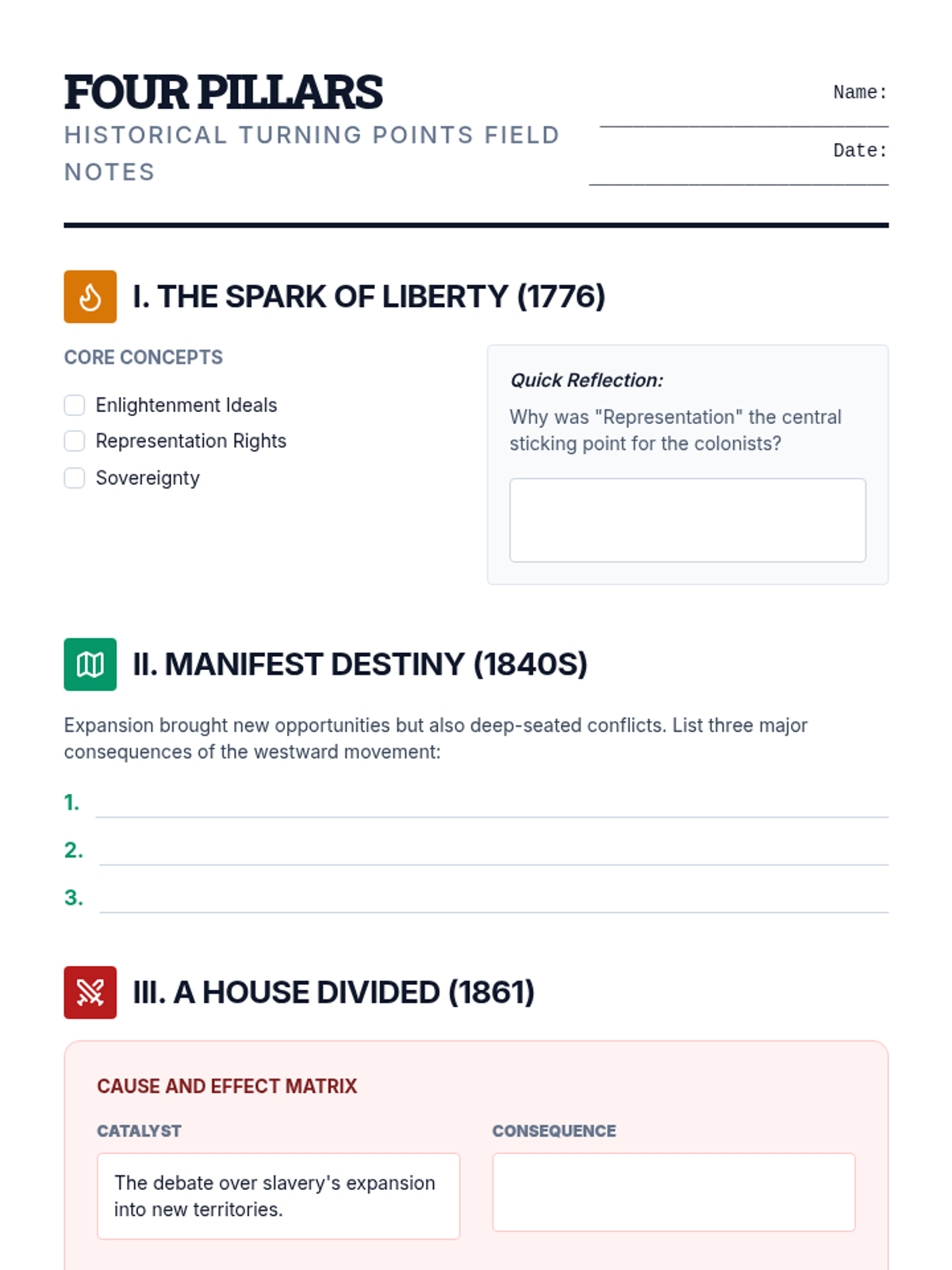
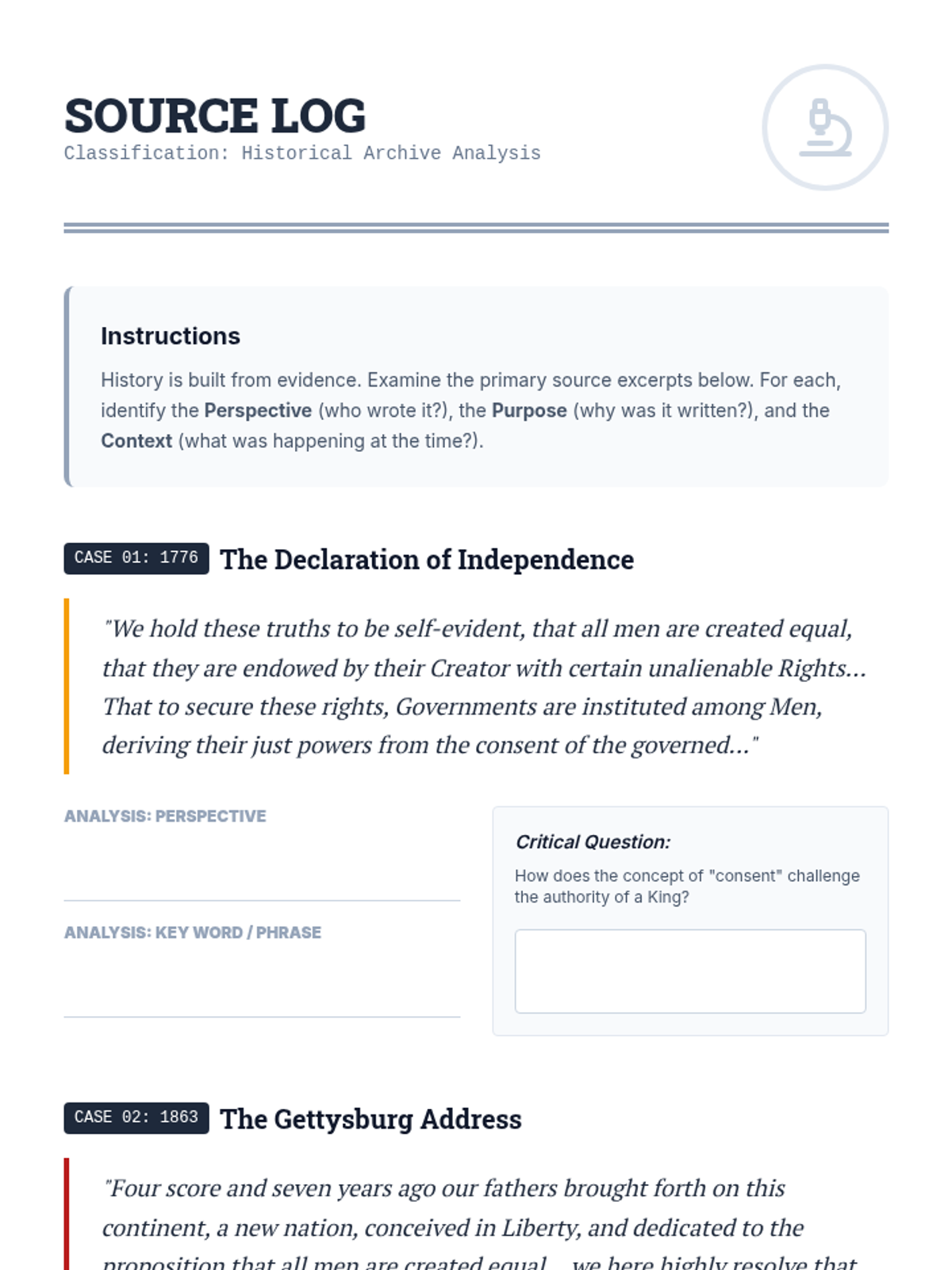
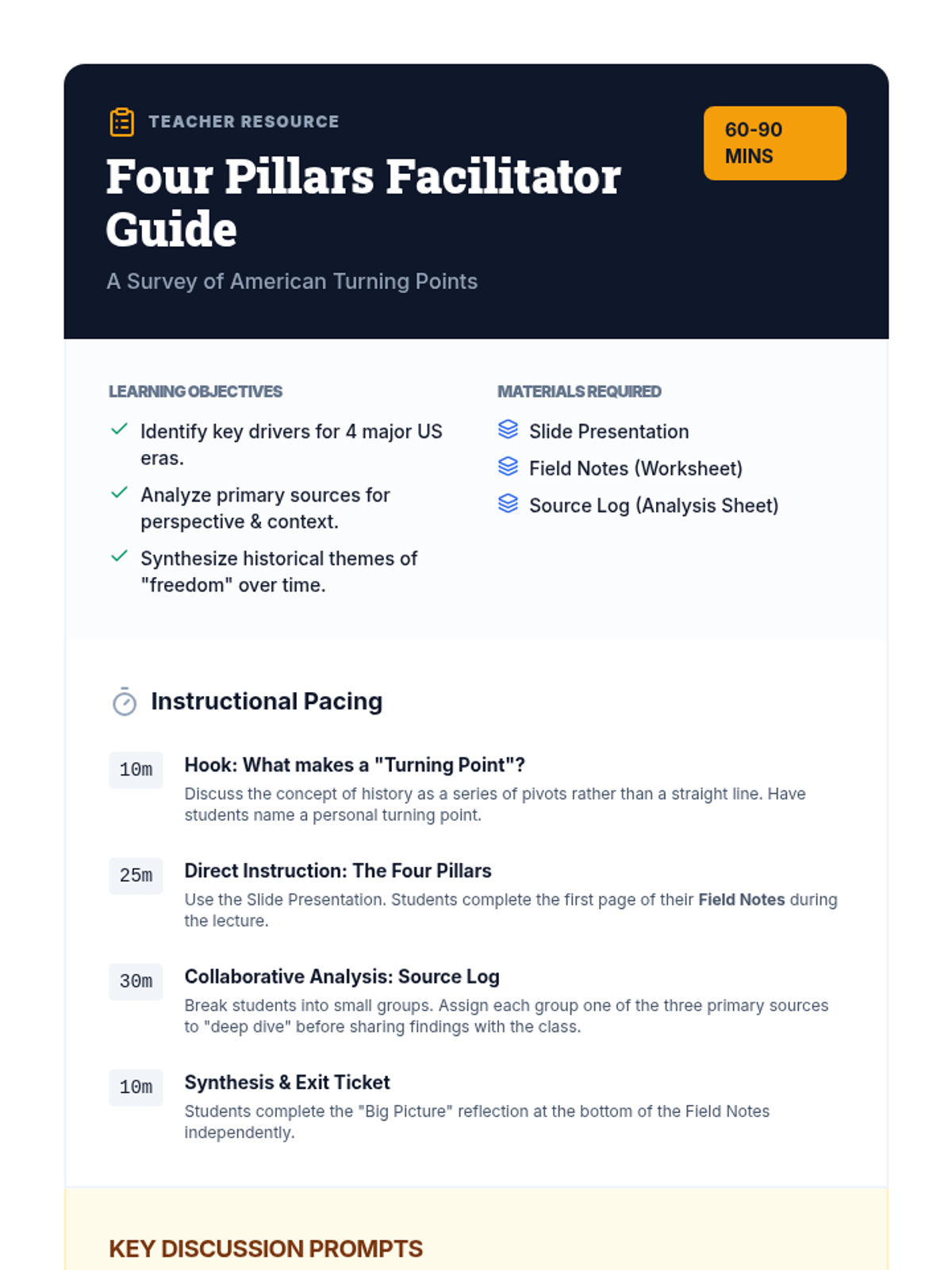
A comprehensive overview of four major turning points in United States history: the American Revolution, Westward Expansion, the Civil War, and World War II. This sequence explores how each era redefined the American identity and shifted the nation's trajectory.
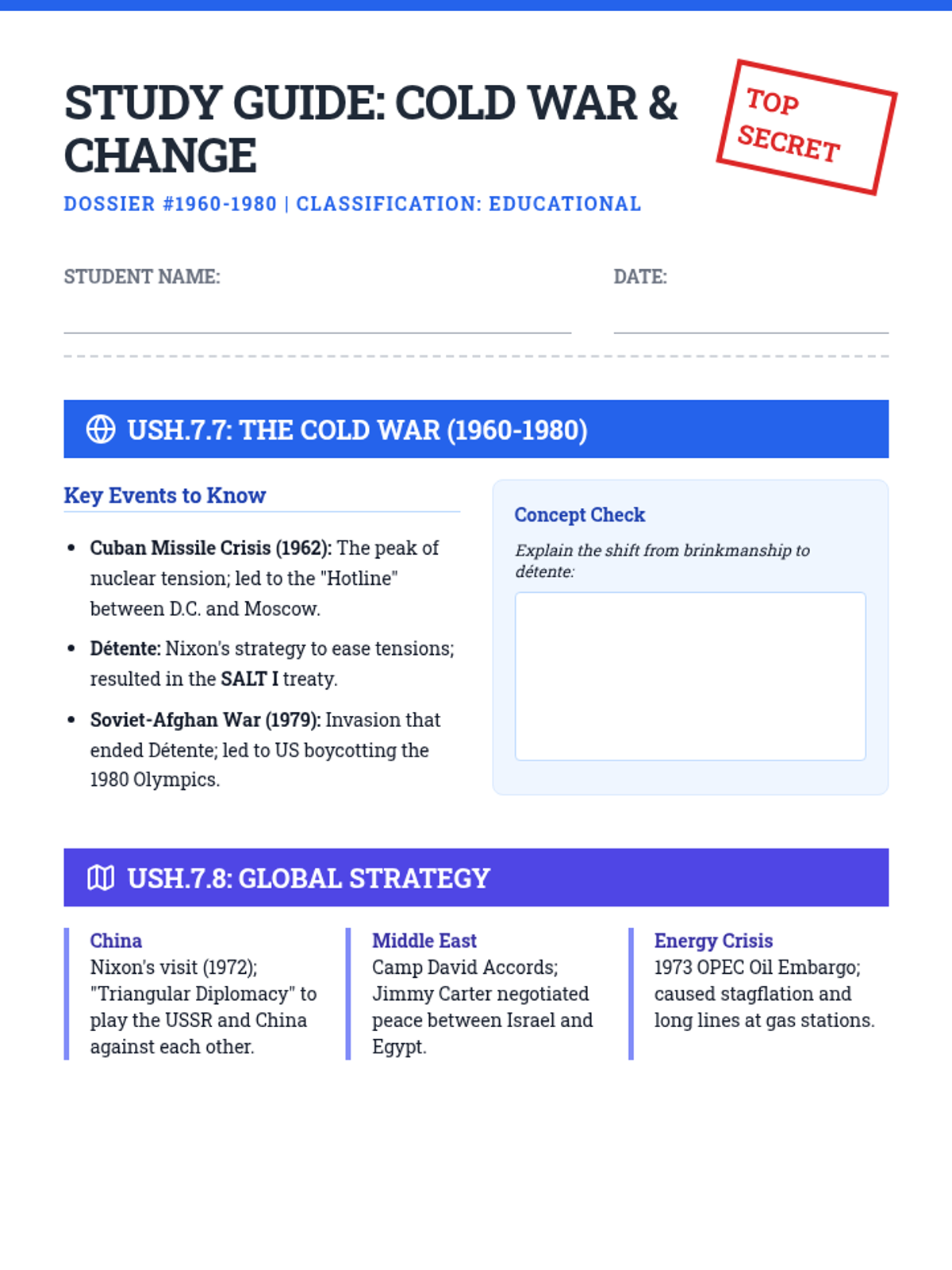
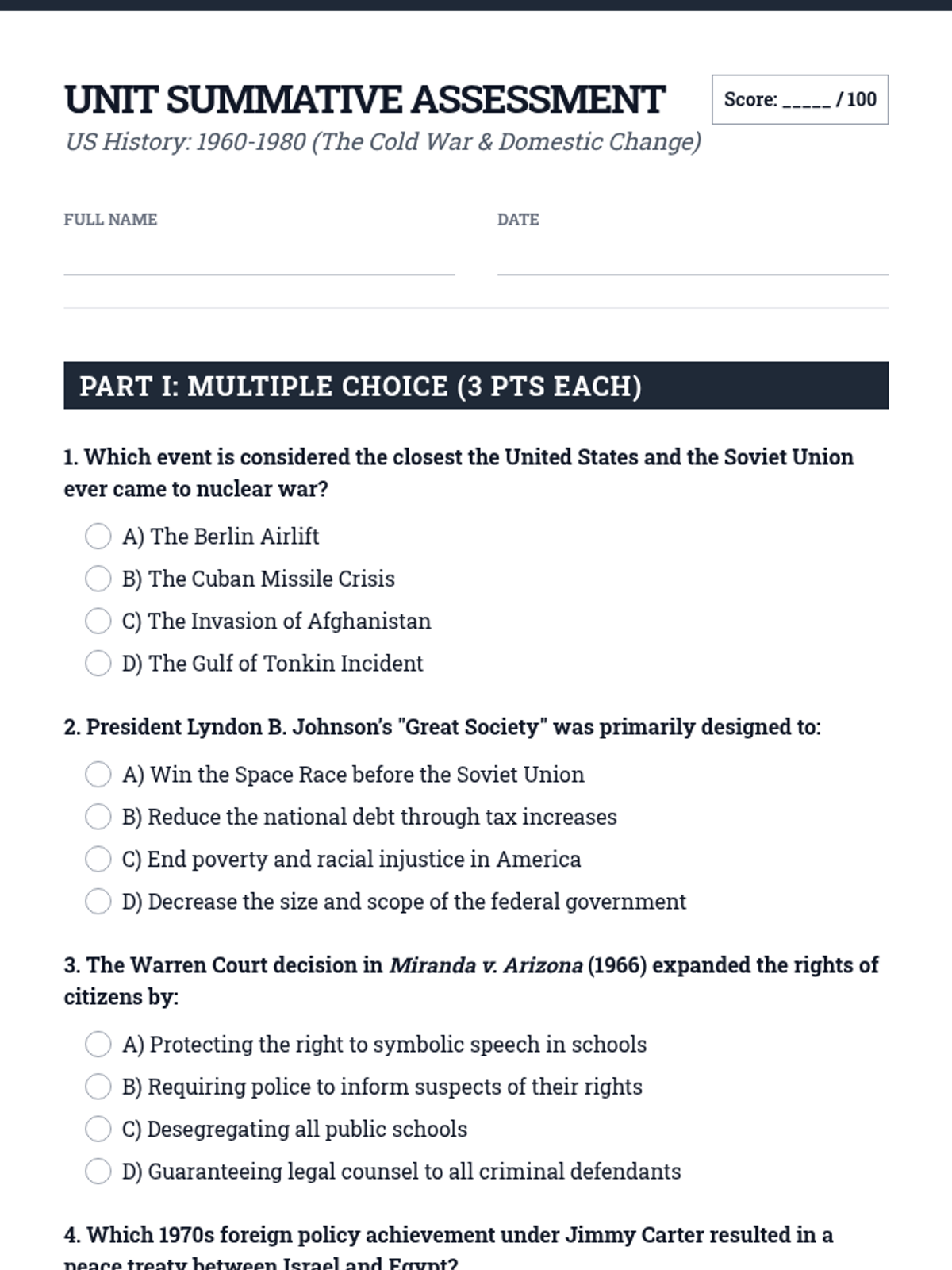
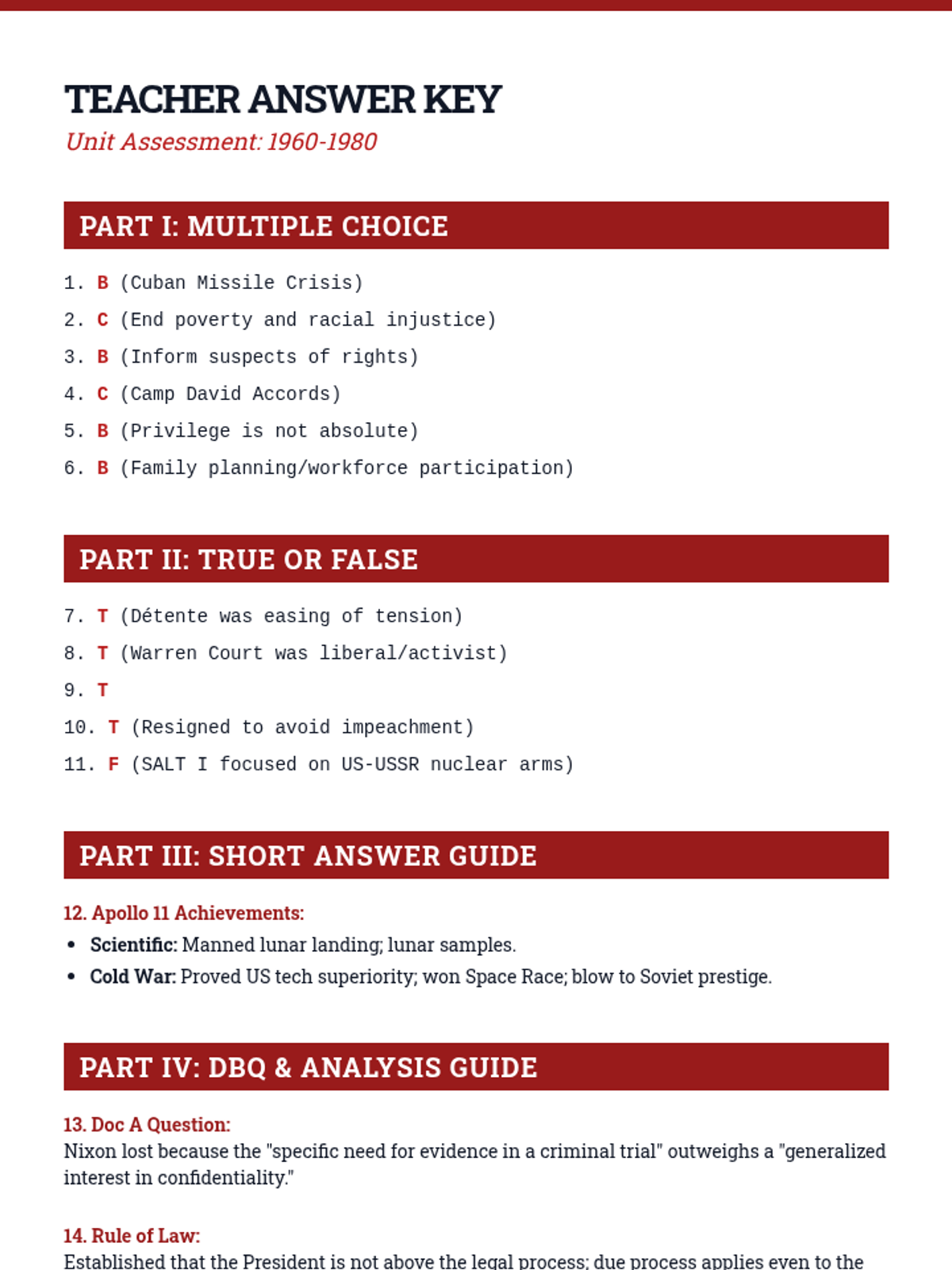
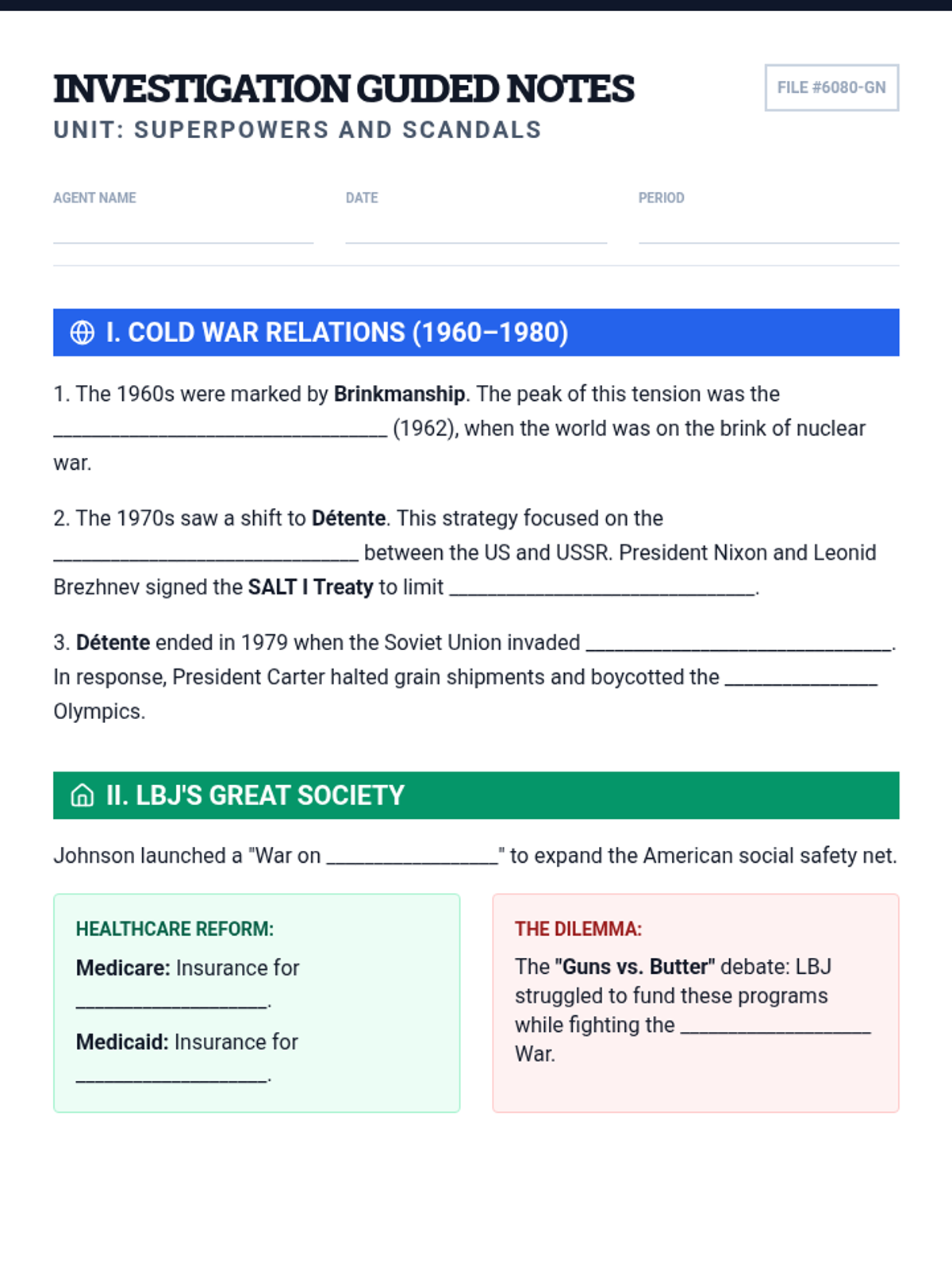
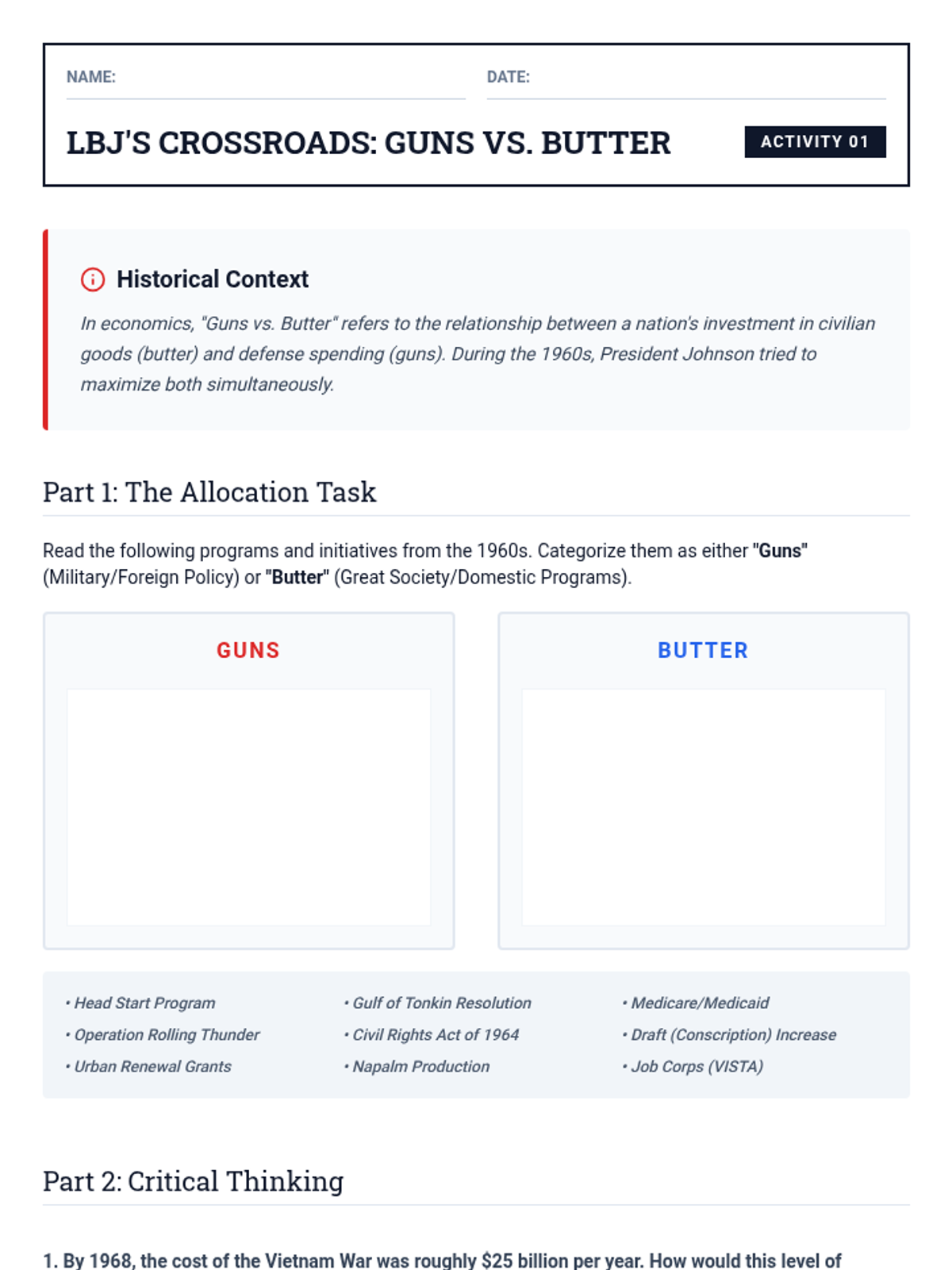
A comprehensive unit covering United States history from 1960 to 1980, focusing on the Cold War, domestic policy, and political scandals.
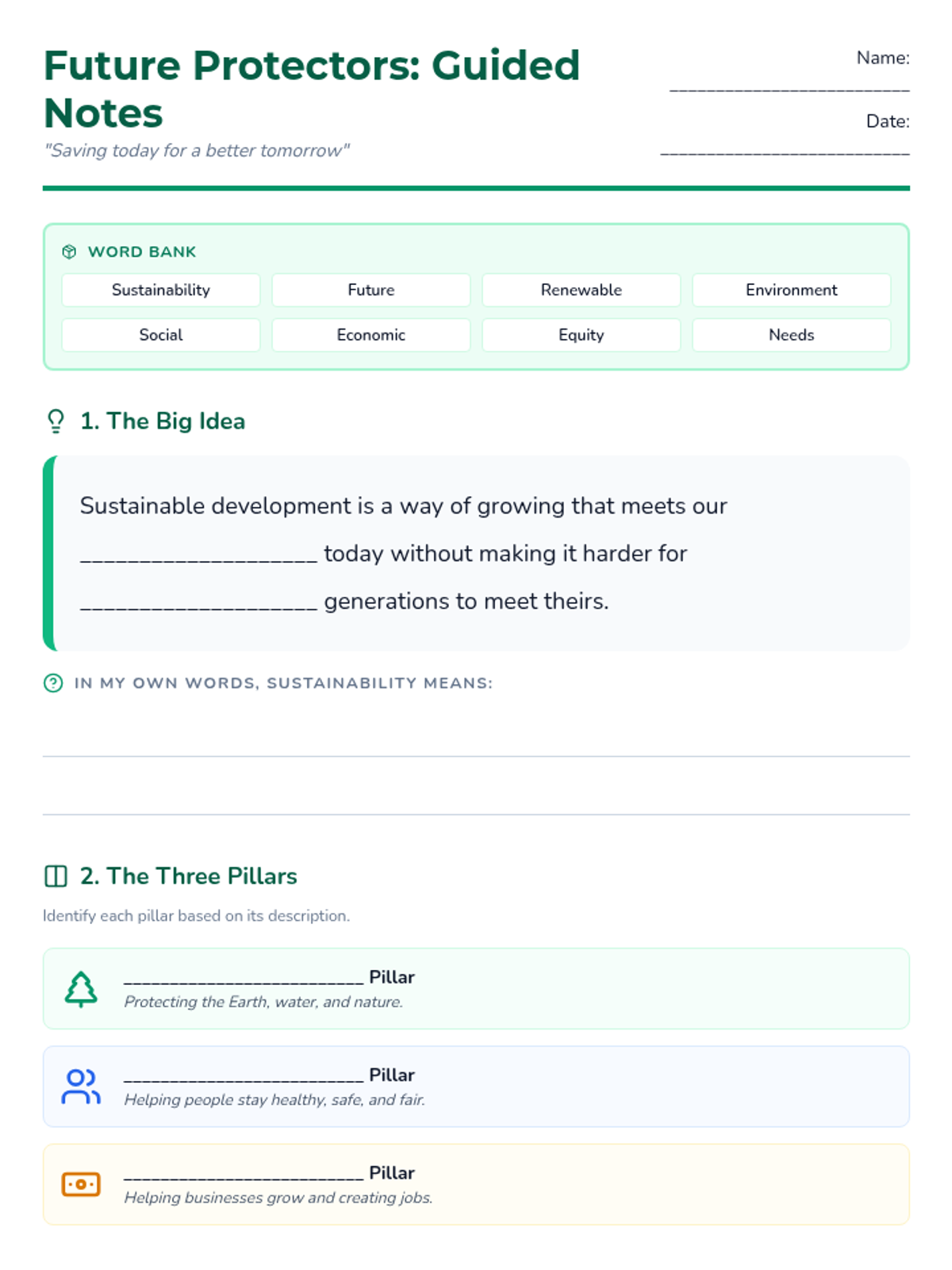
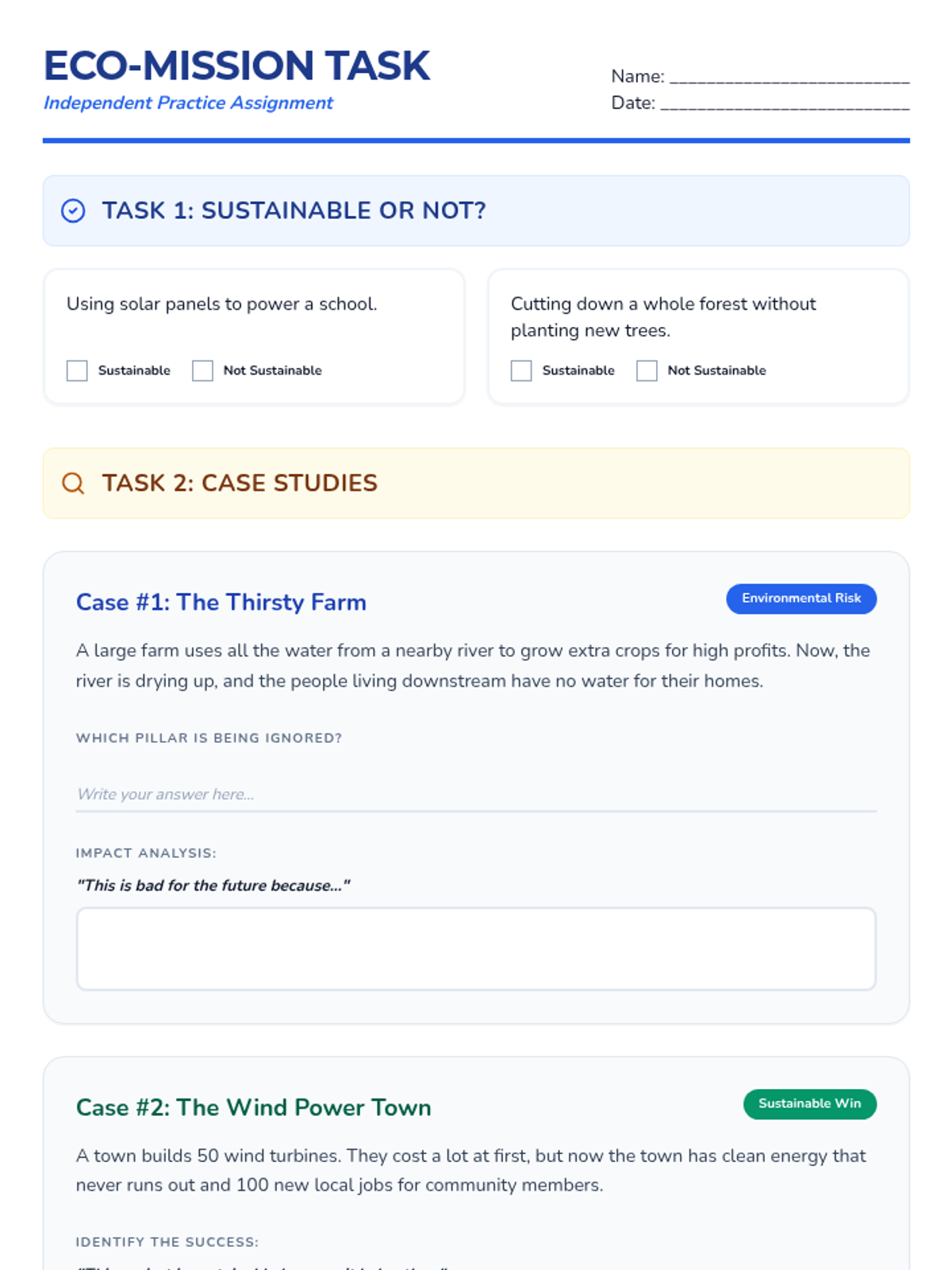
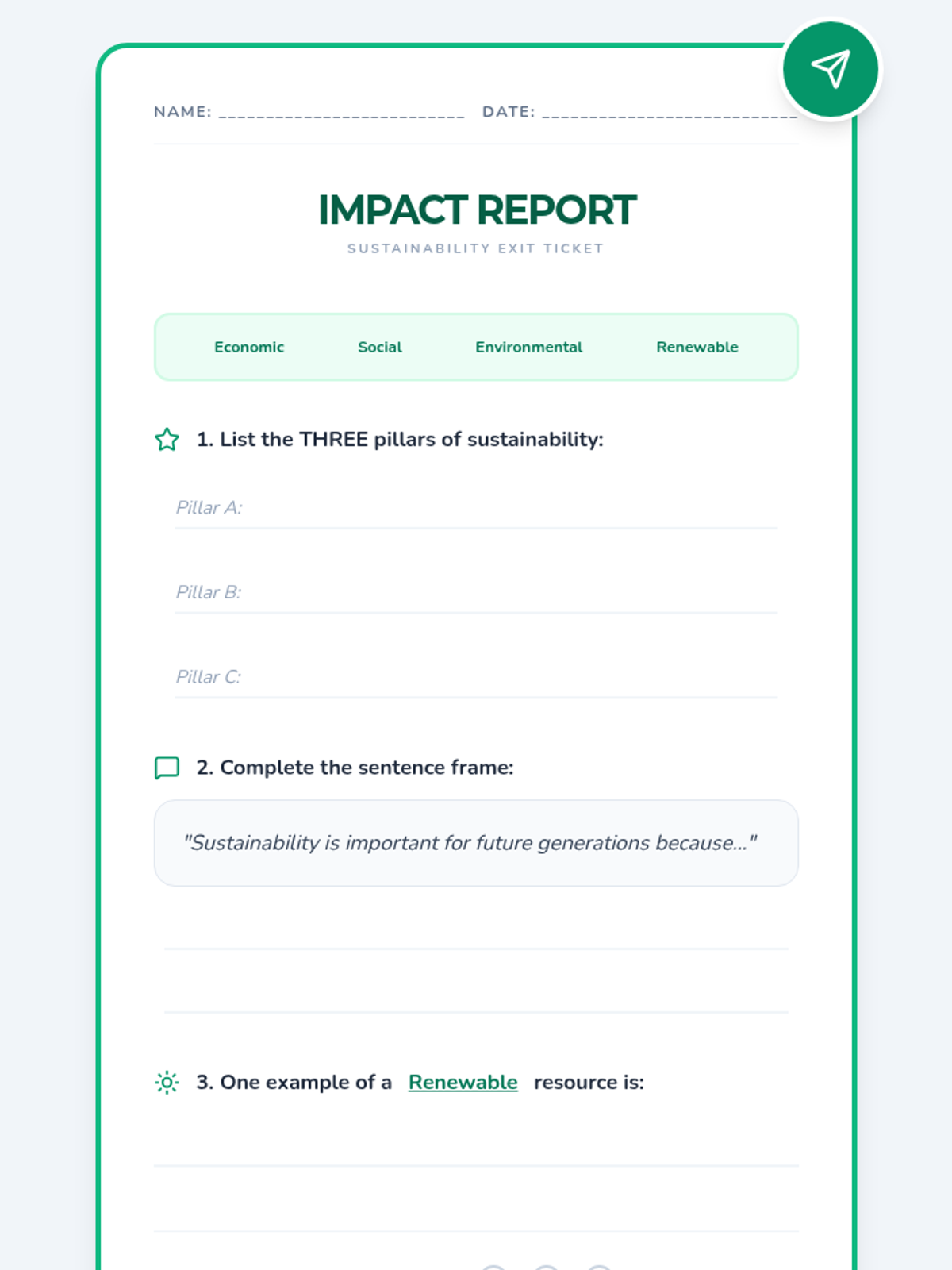
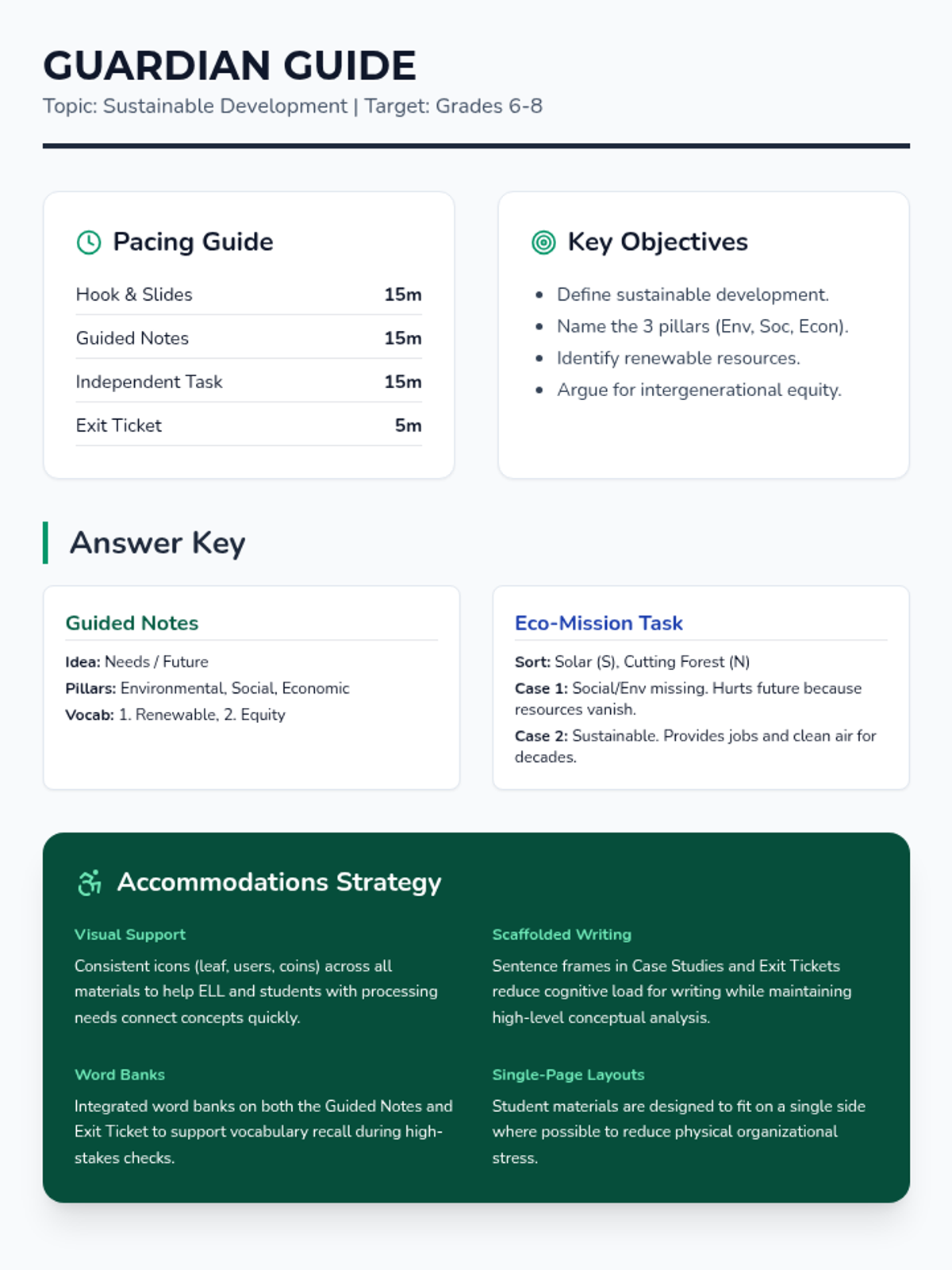
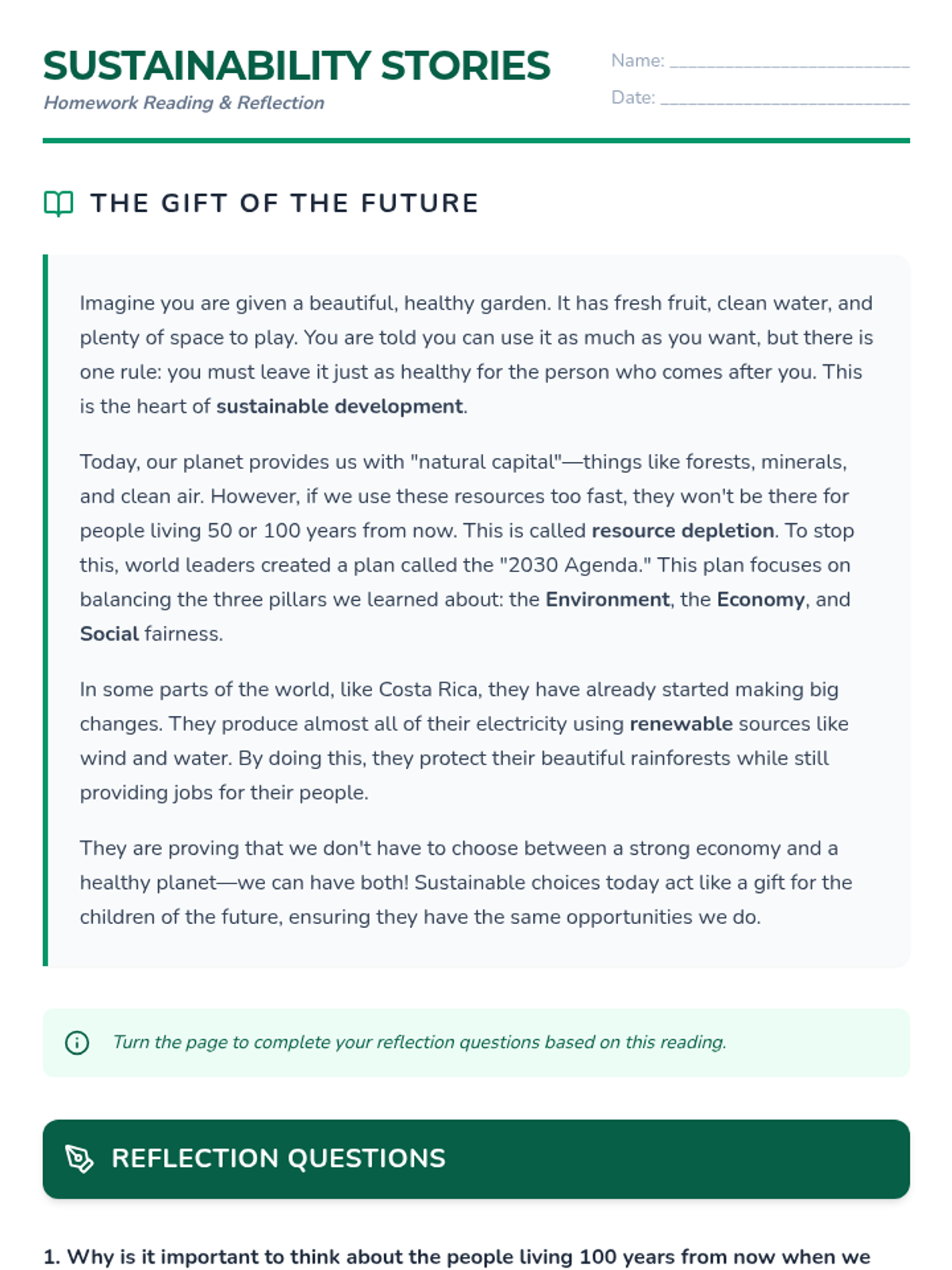
A unit on sustainable development that moves from foundational definitions to the analysis of specific practices and their long-term global impacts.
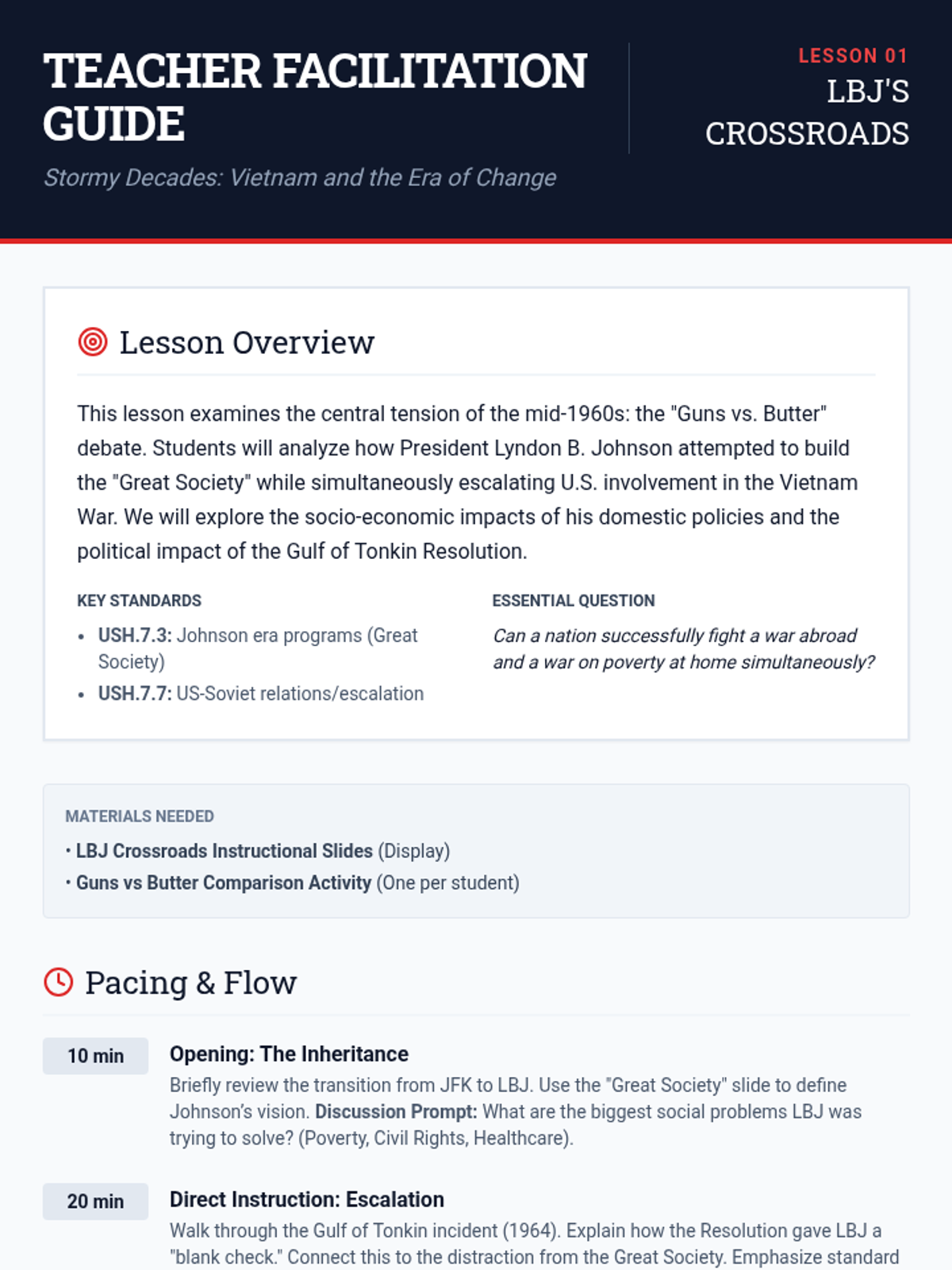
A comprehensive 5-day unit covering the United States from 1960 to 1980, focusing on the Vietnam War's impact on foreign policy, domestic programs, and constitutional crises. Students analyze the tension between the Great Society and war spending, the role of technology in warfare, and the legacy of the Watergate scandal.
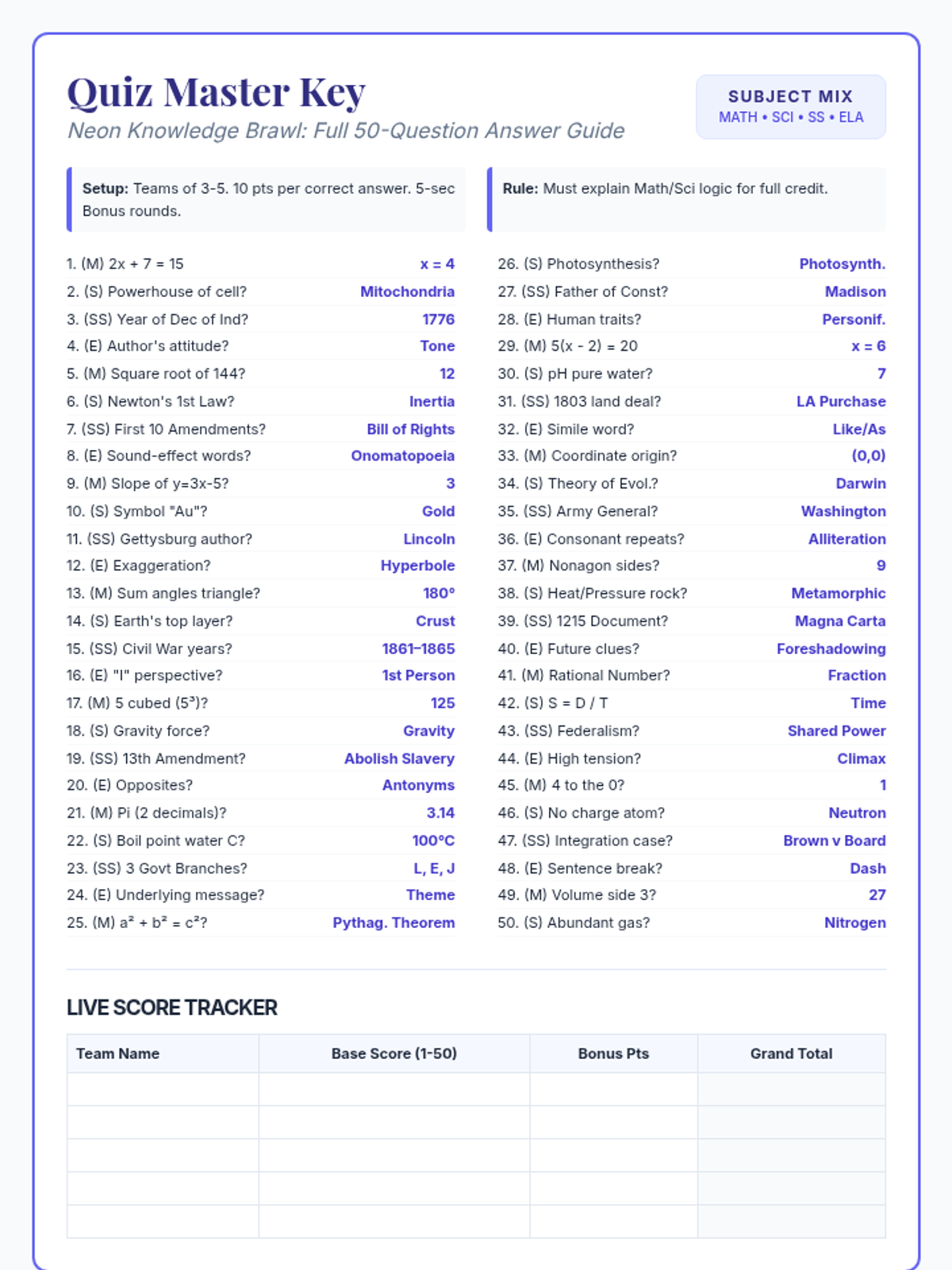
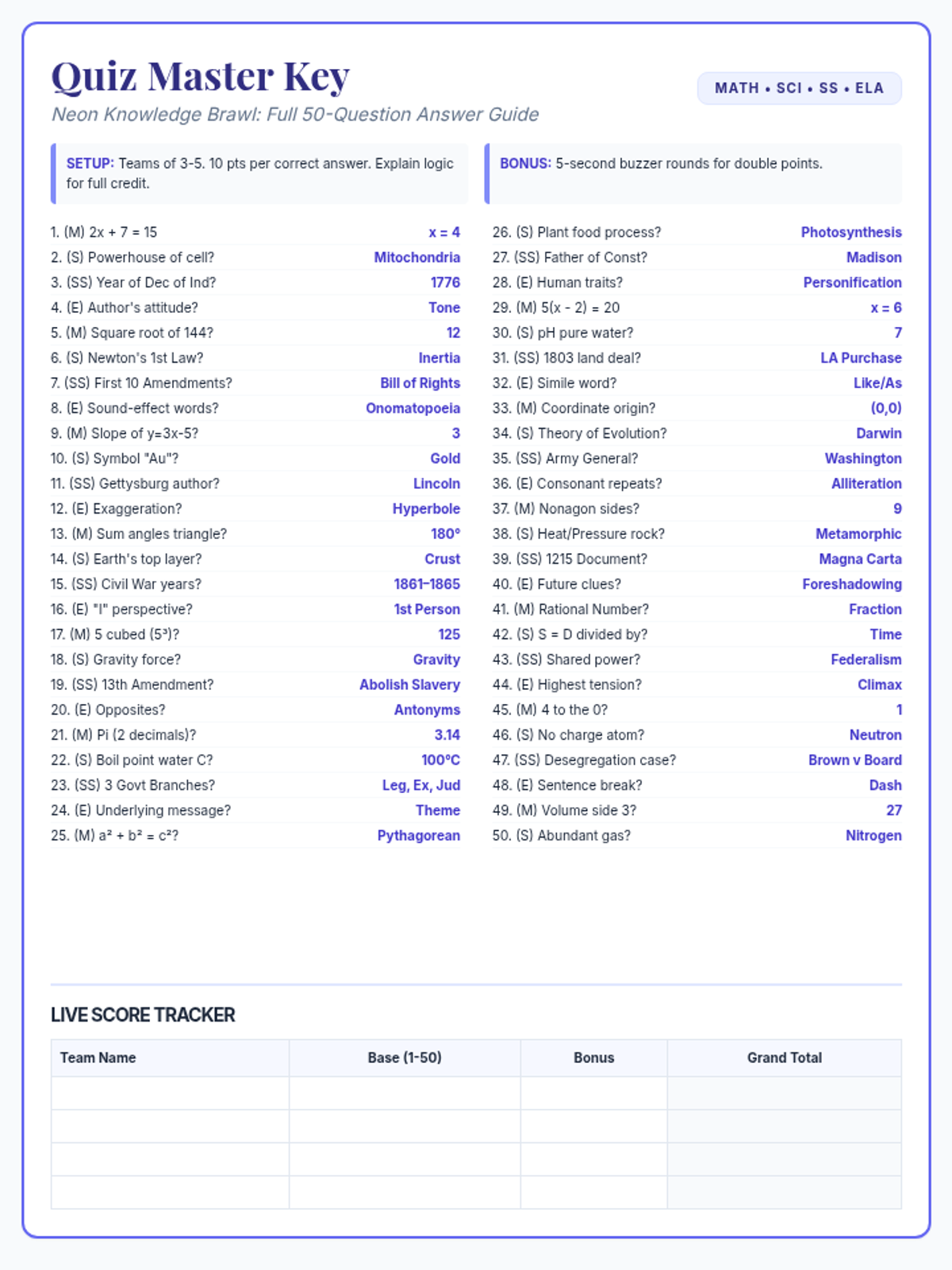
A comprehensive review sequence for 8th grade students covering core curriculum in Math, Science, Social Studies, and English Language Arts.
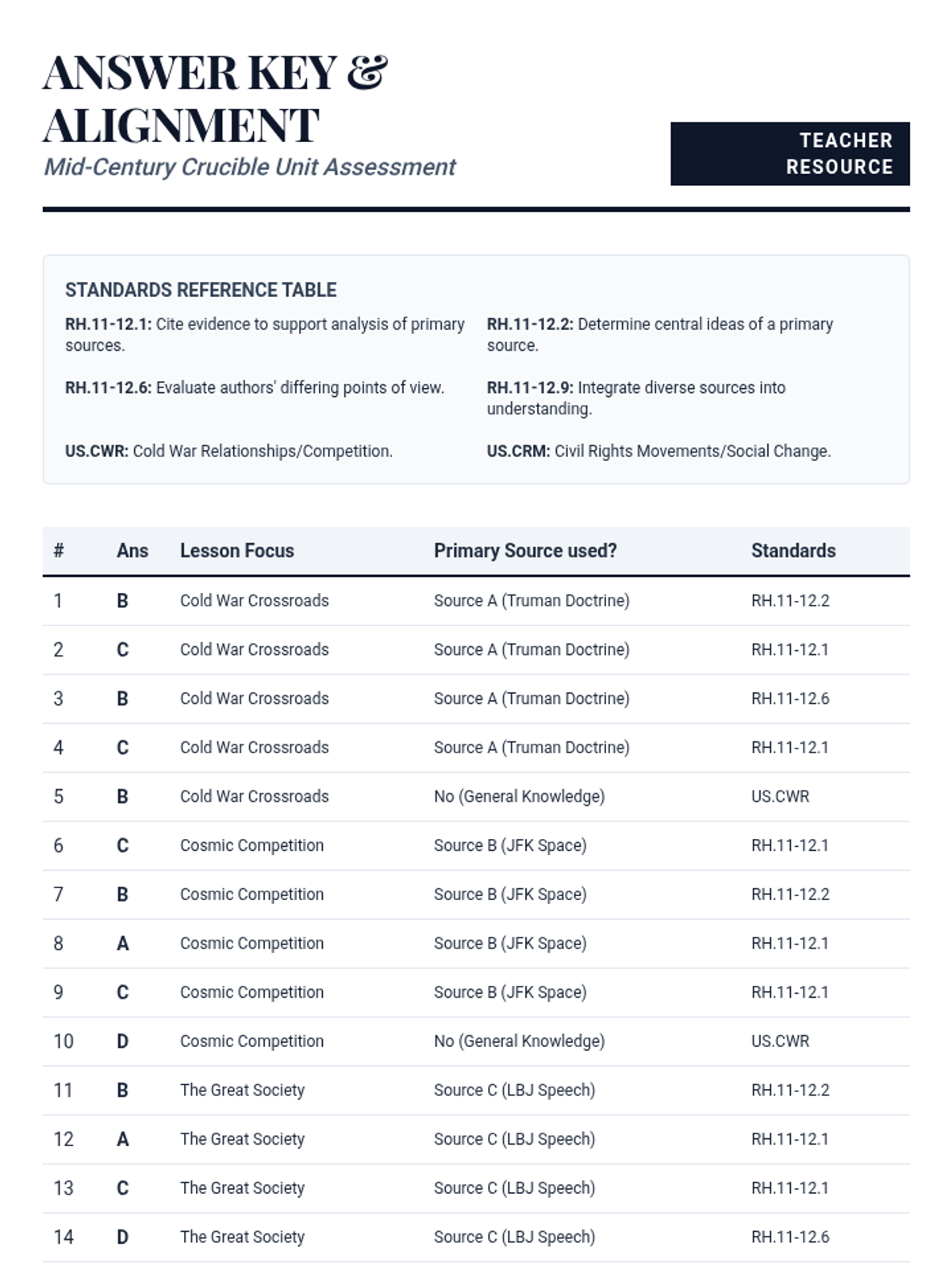
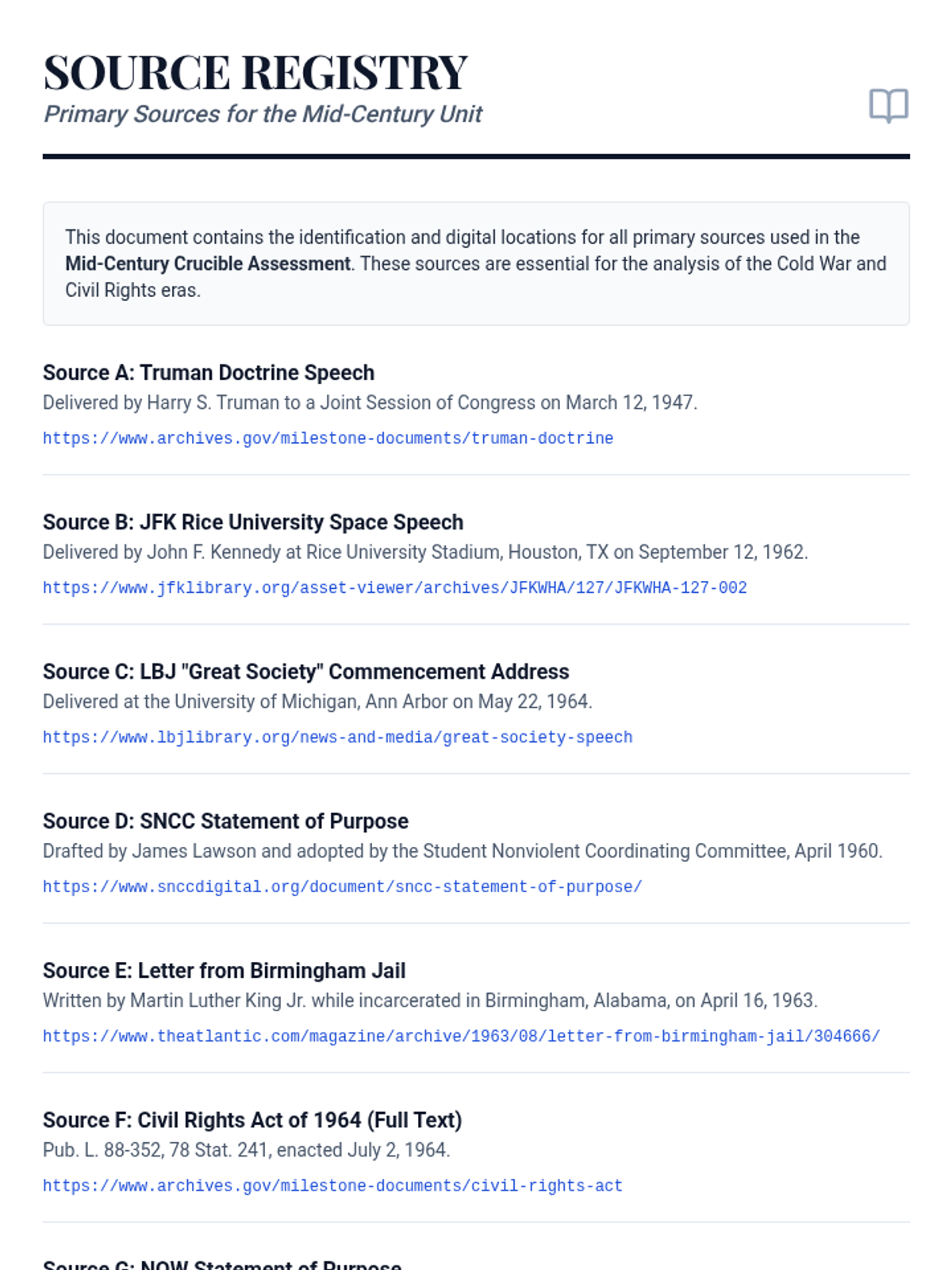
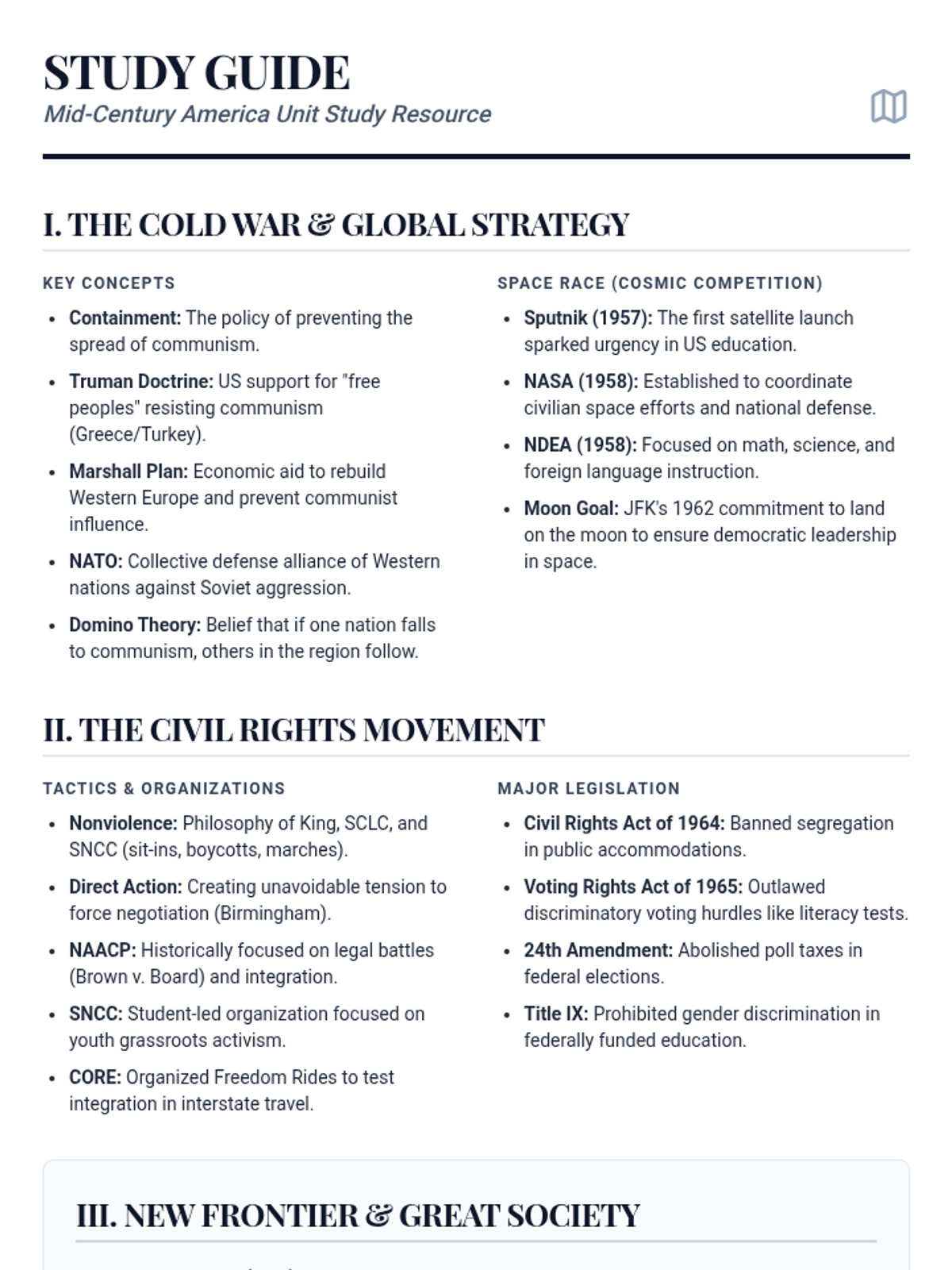
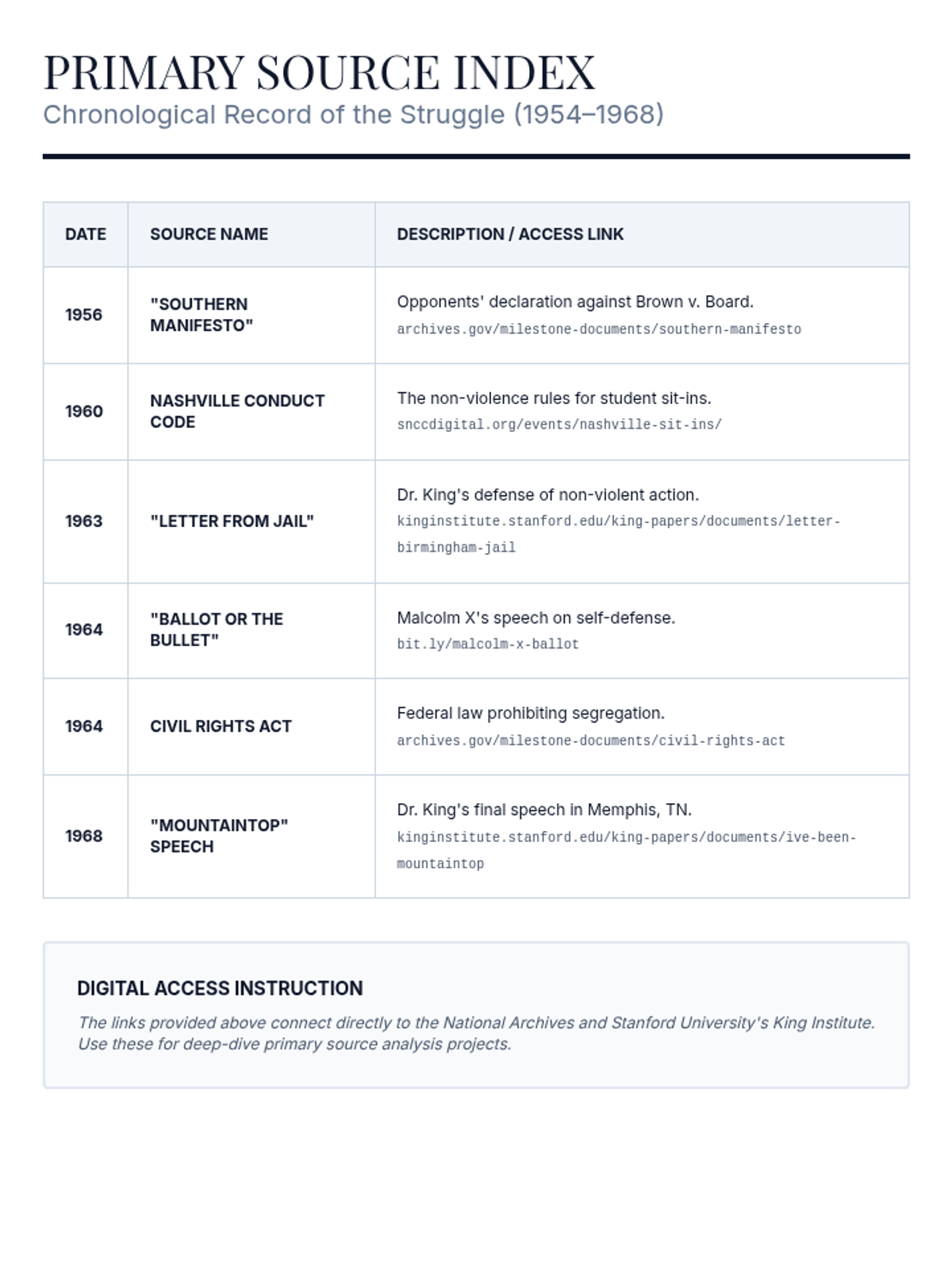
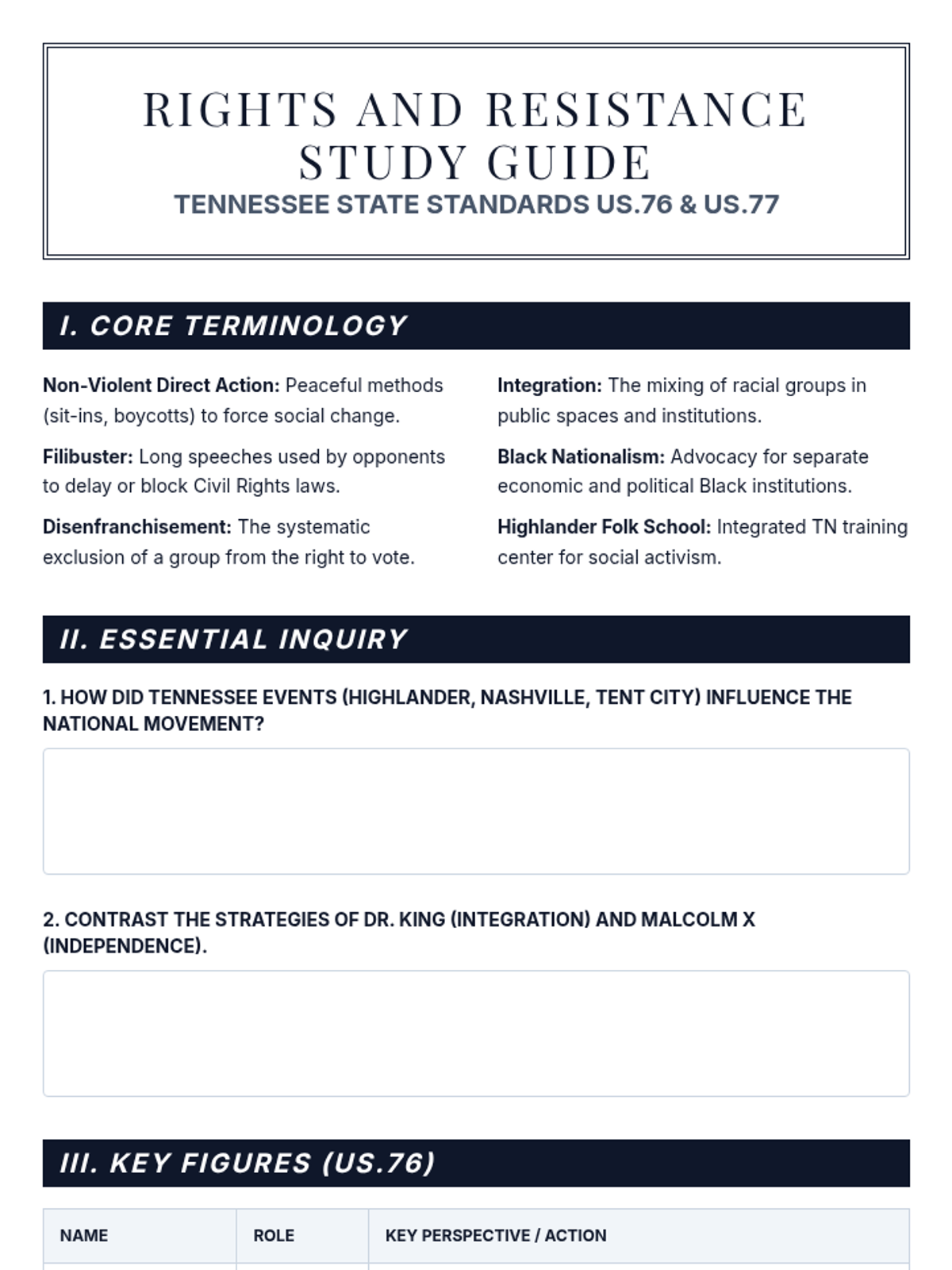
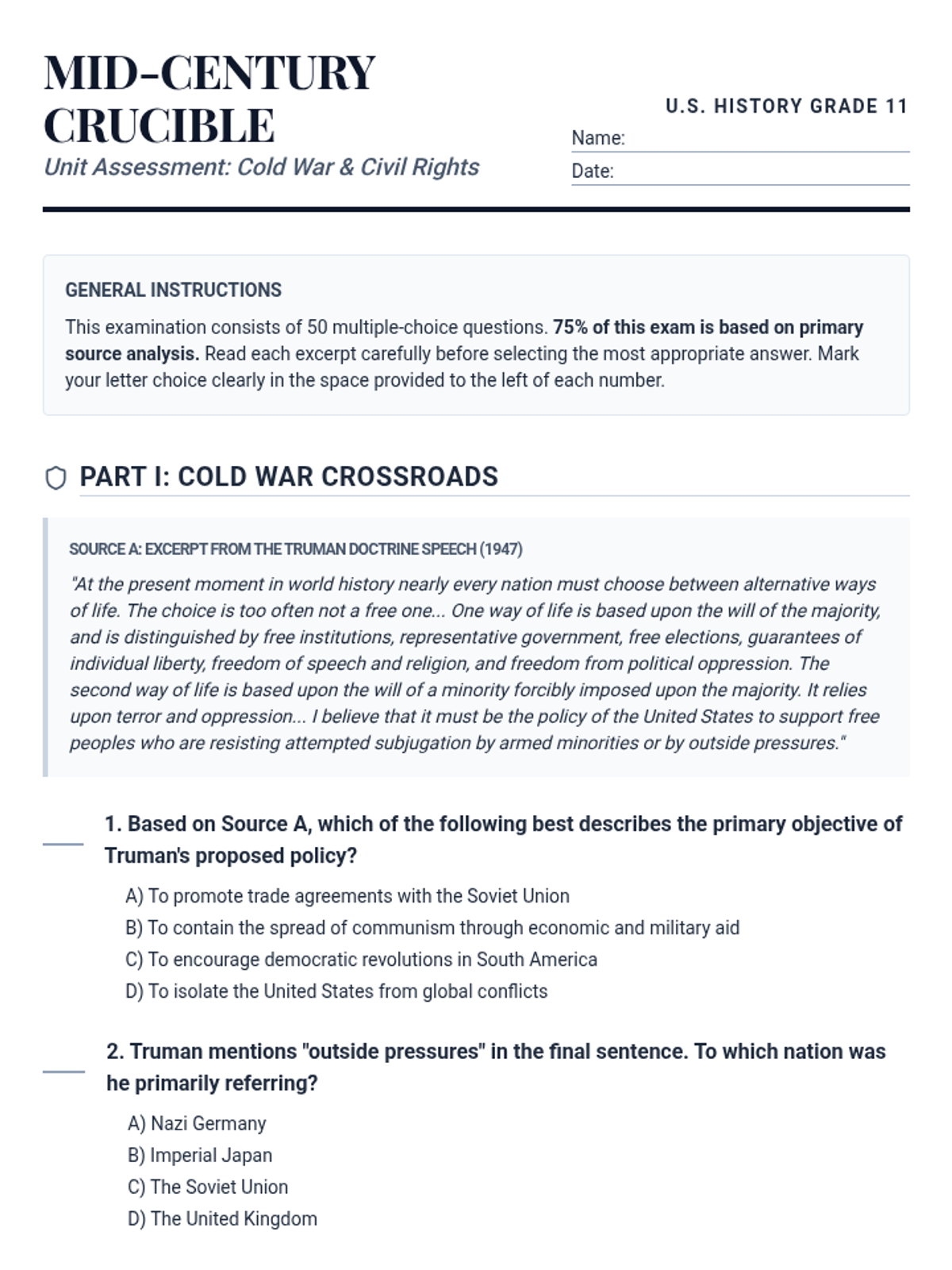
A comprehensive assessment sequence covering mid-century American history, focusing on the Cold War and the Civil Rights Movement. It includes a unit test, answer key, source registry, and study guide.
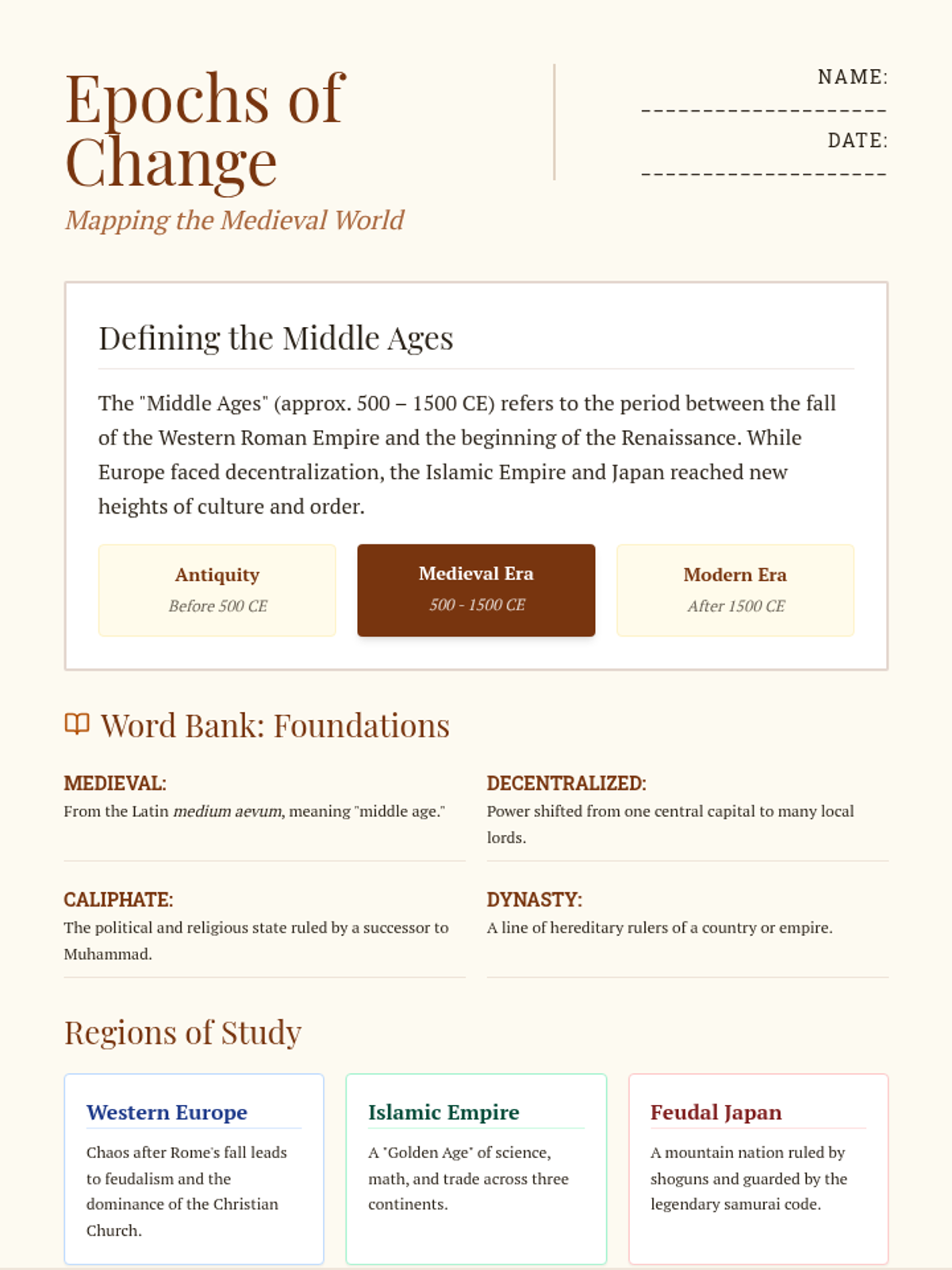
A comprehensive 10-lesson unit exploring the political, economic, religious, and technological landscape of the Middle Ages across Western Europe, Japan, and the Islamic Empire. Students will analyze feudal systems, cultural achievements, and global connections through slides, guided activities, and comparative studies.
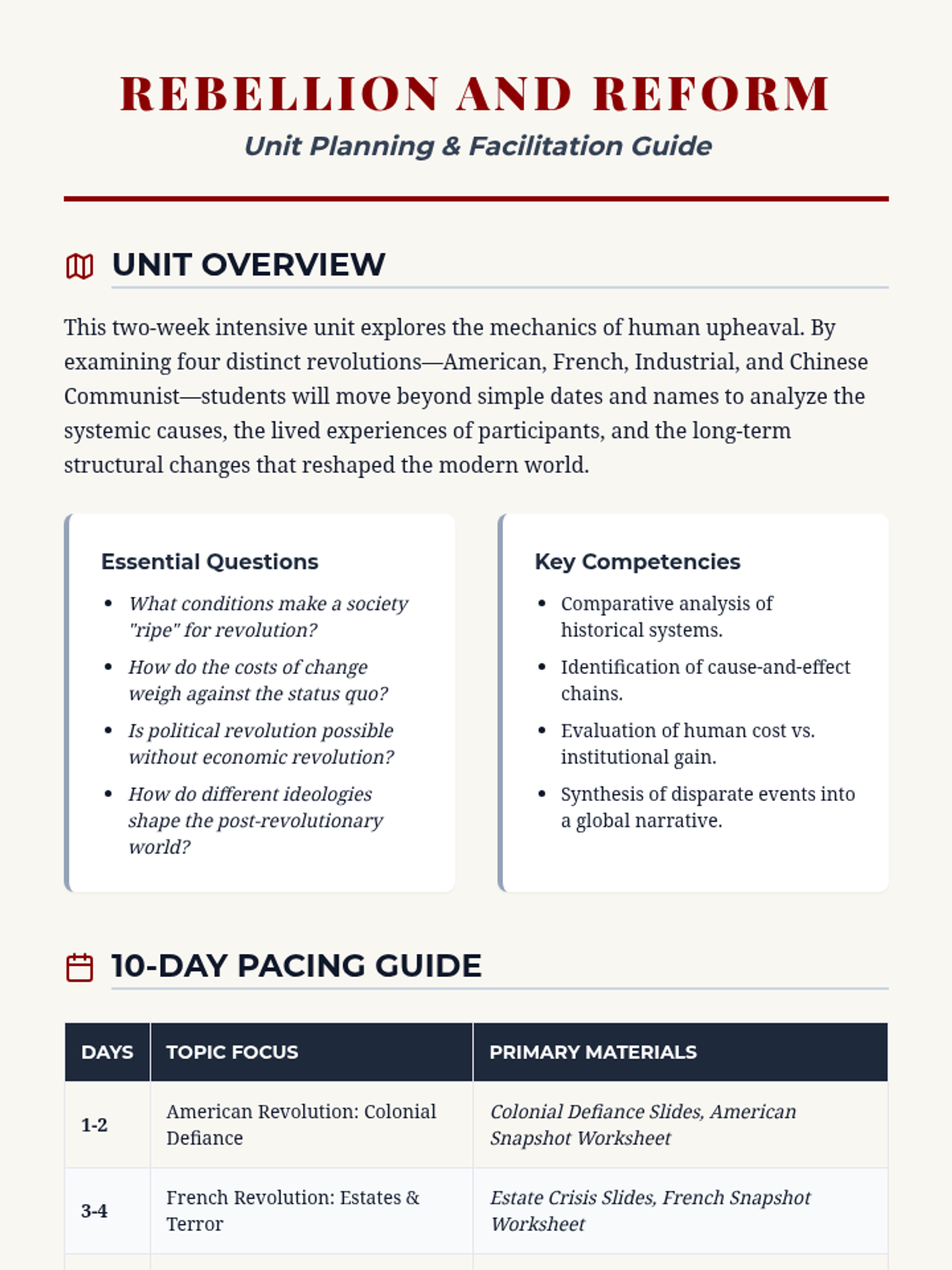
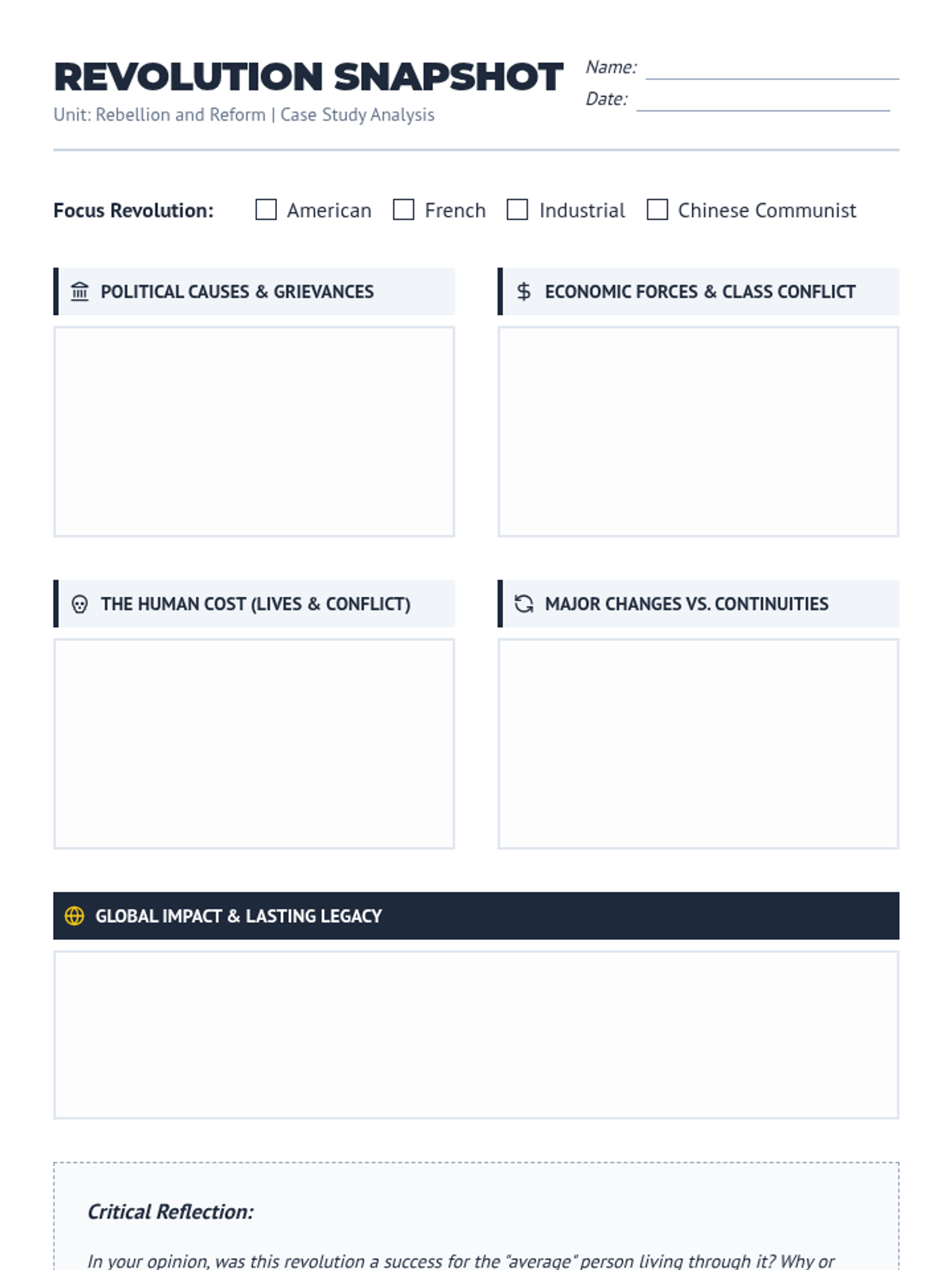
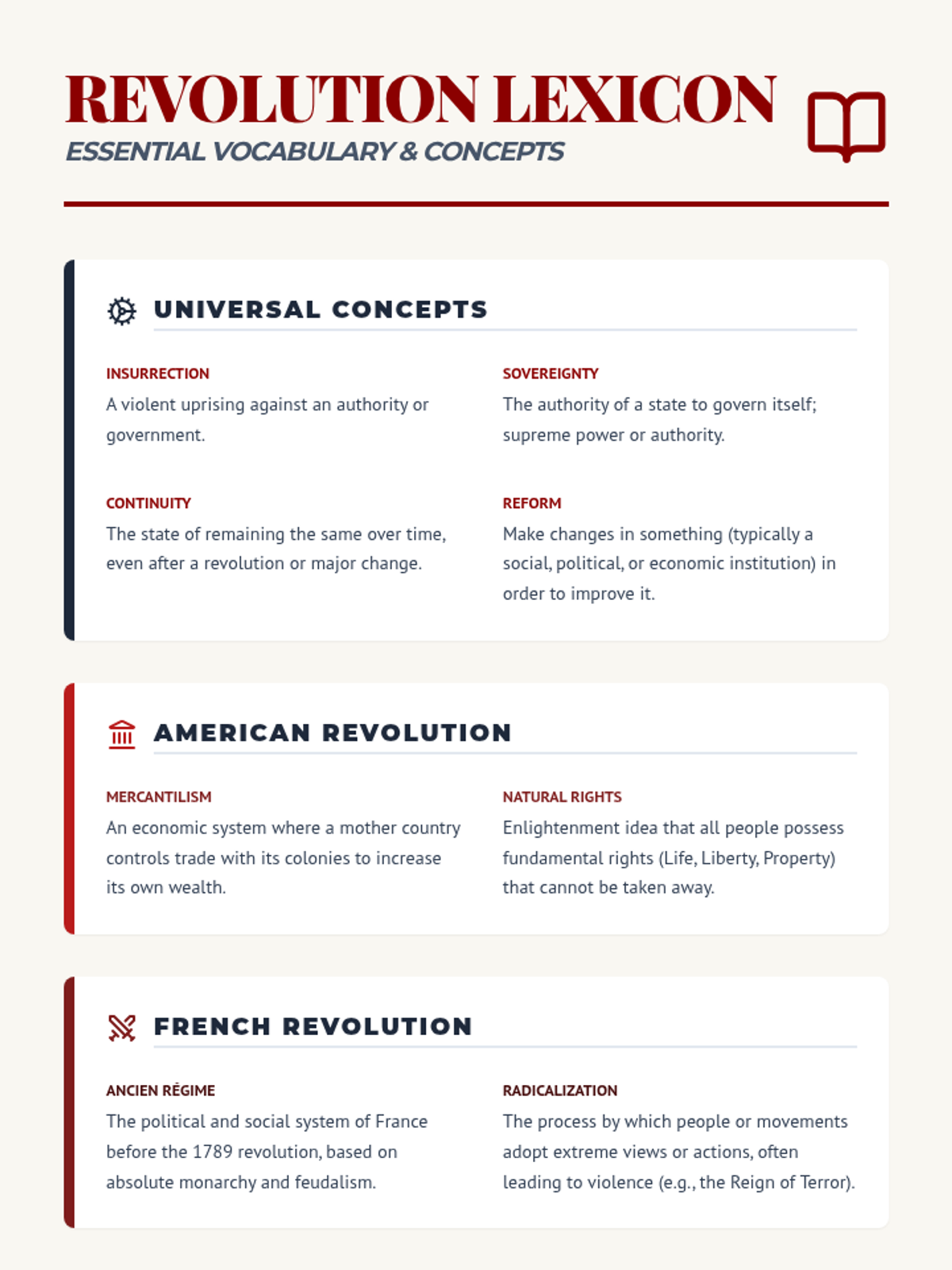
A comprehensive 10-day unit exploring the causes, courses, and consequences of four major world-altering revolutions: American, French, Industrial, and China's Communist Revolution. Students will analyze political and economic drivers, human costs, and lasting global impacts through comparative study.
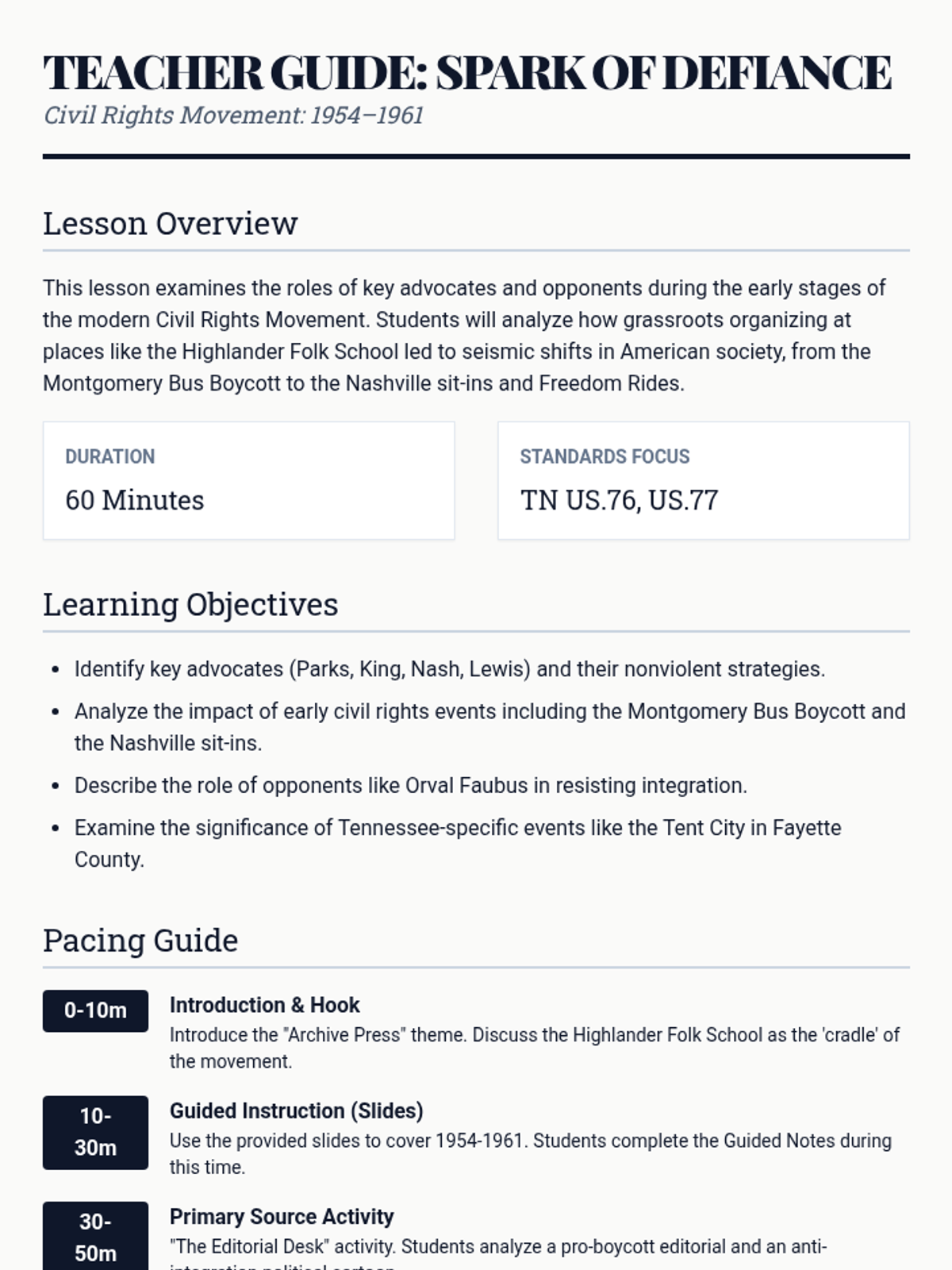
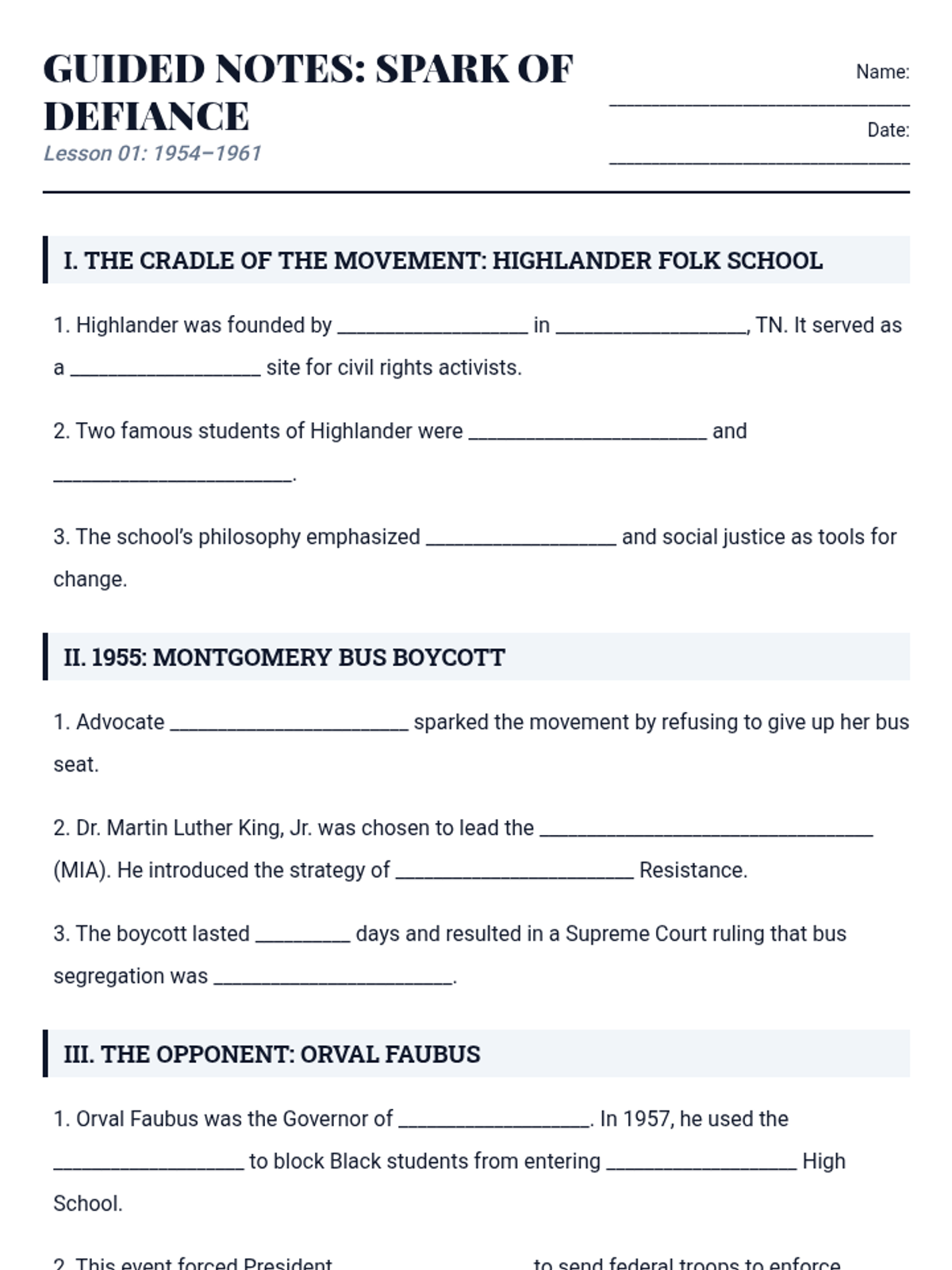
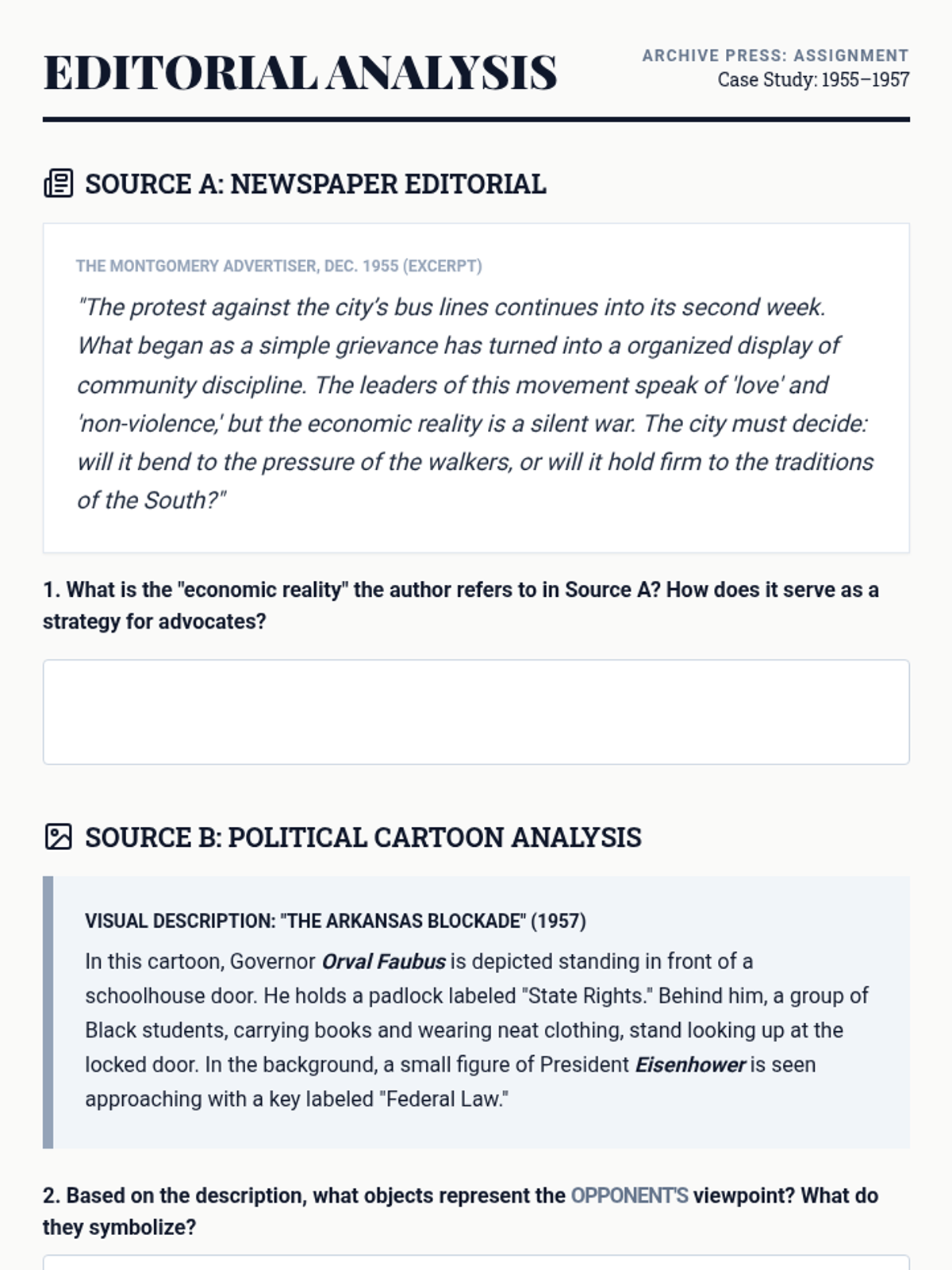
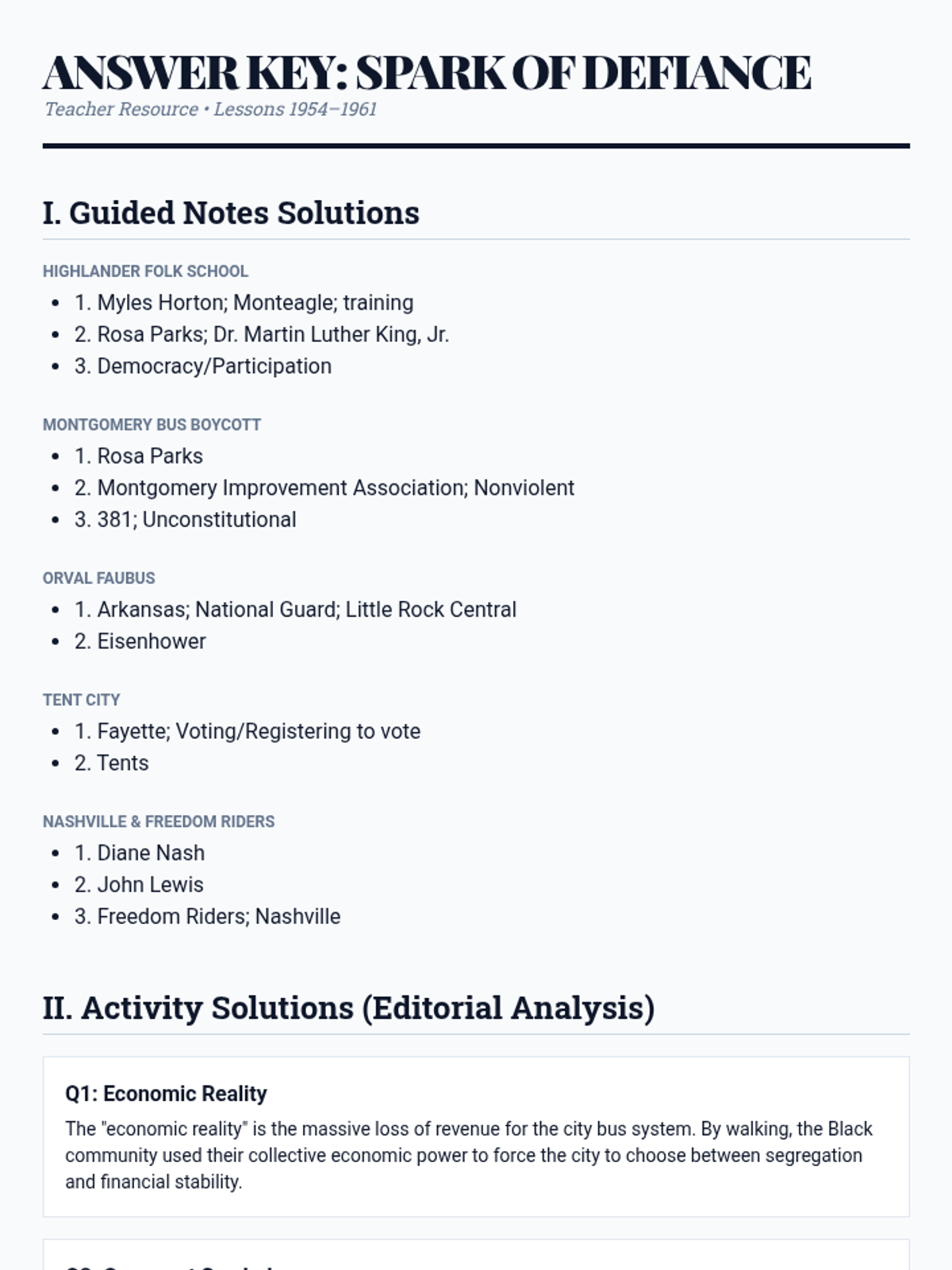
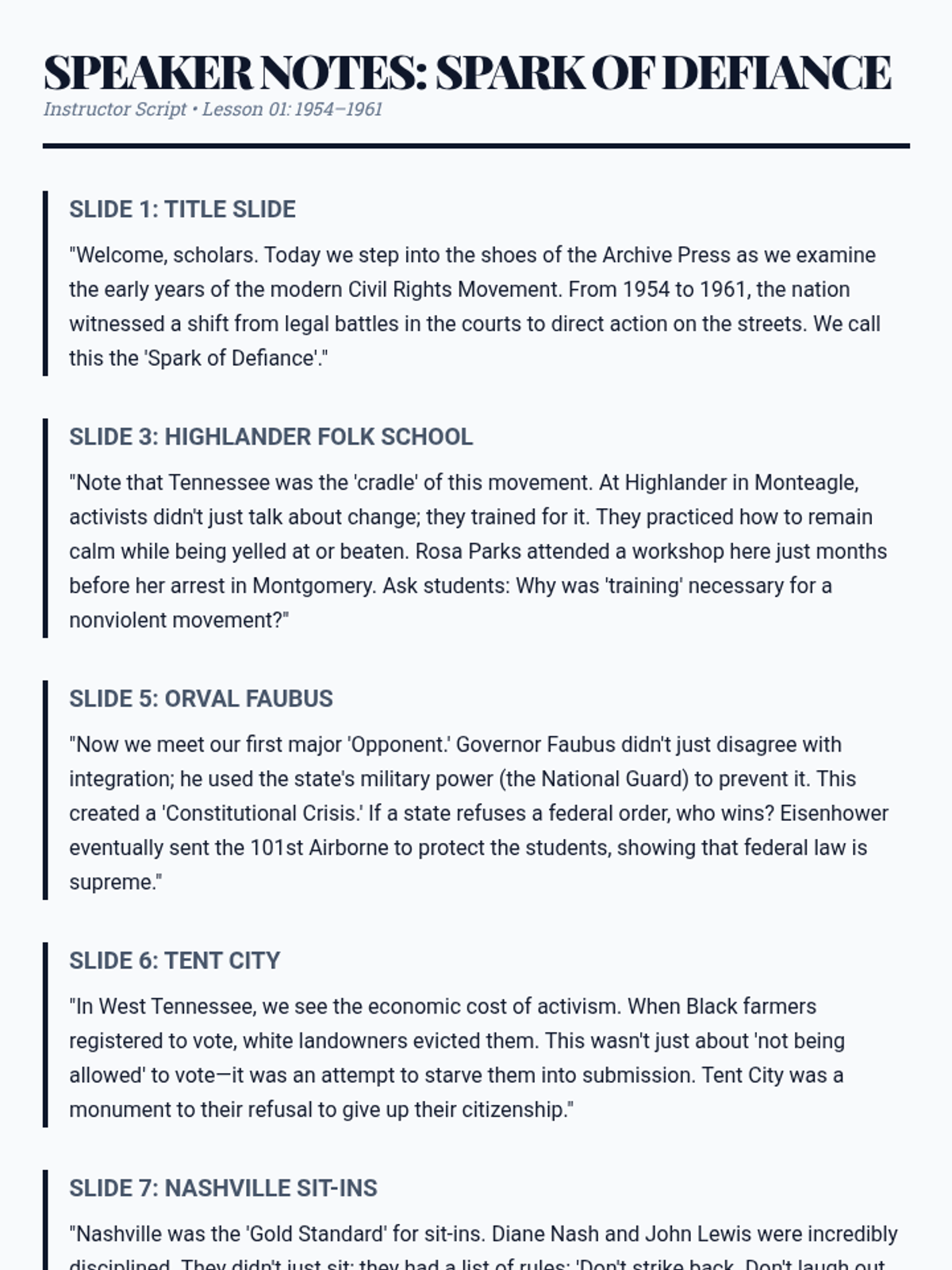
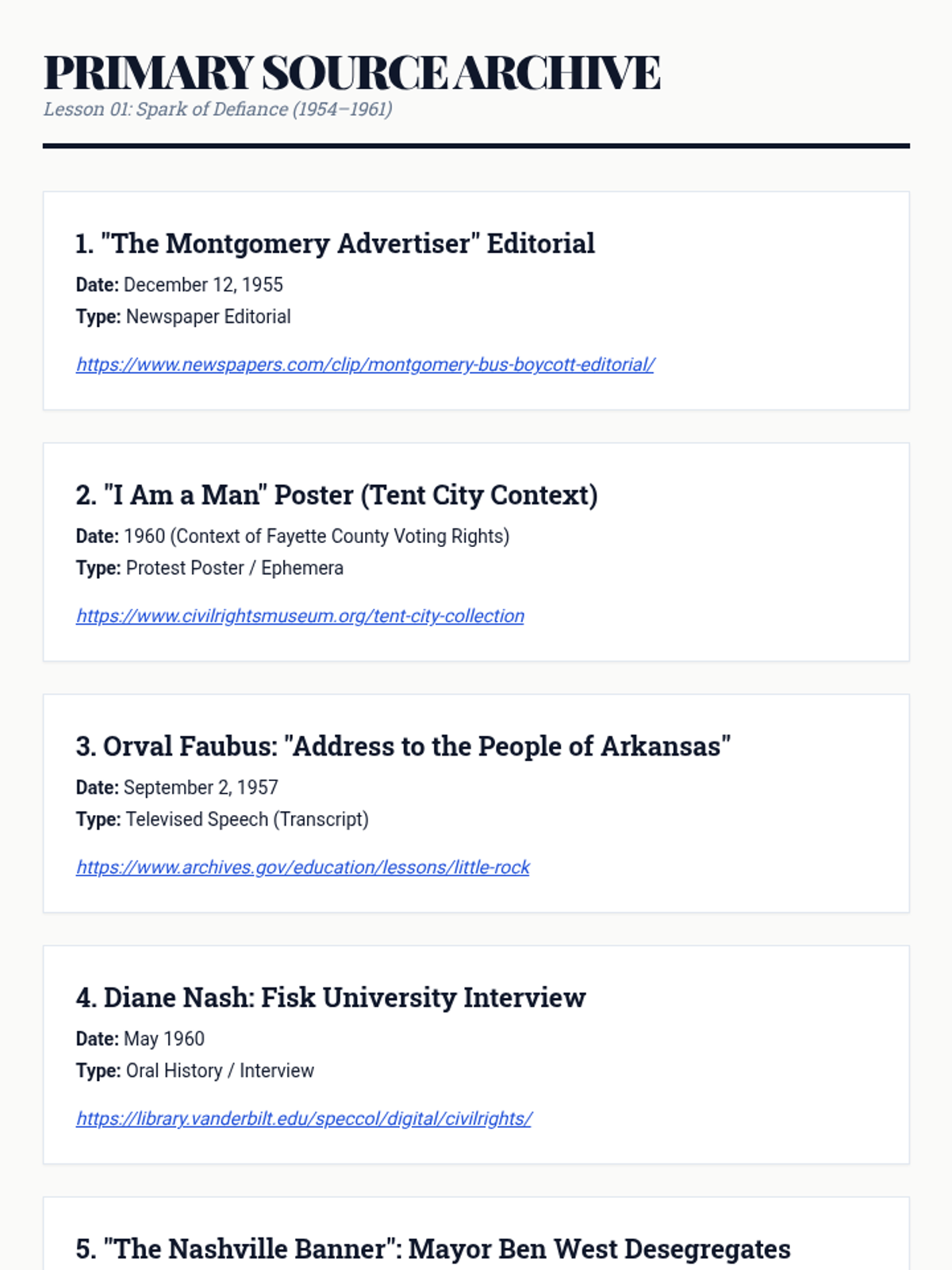
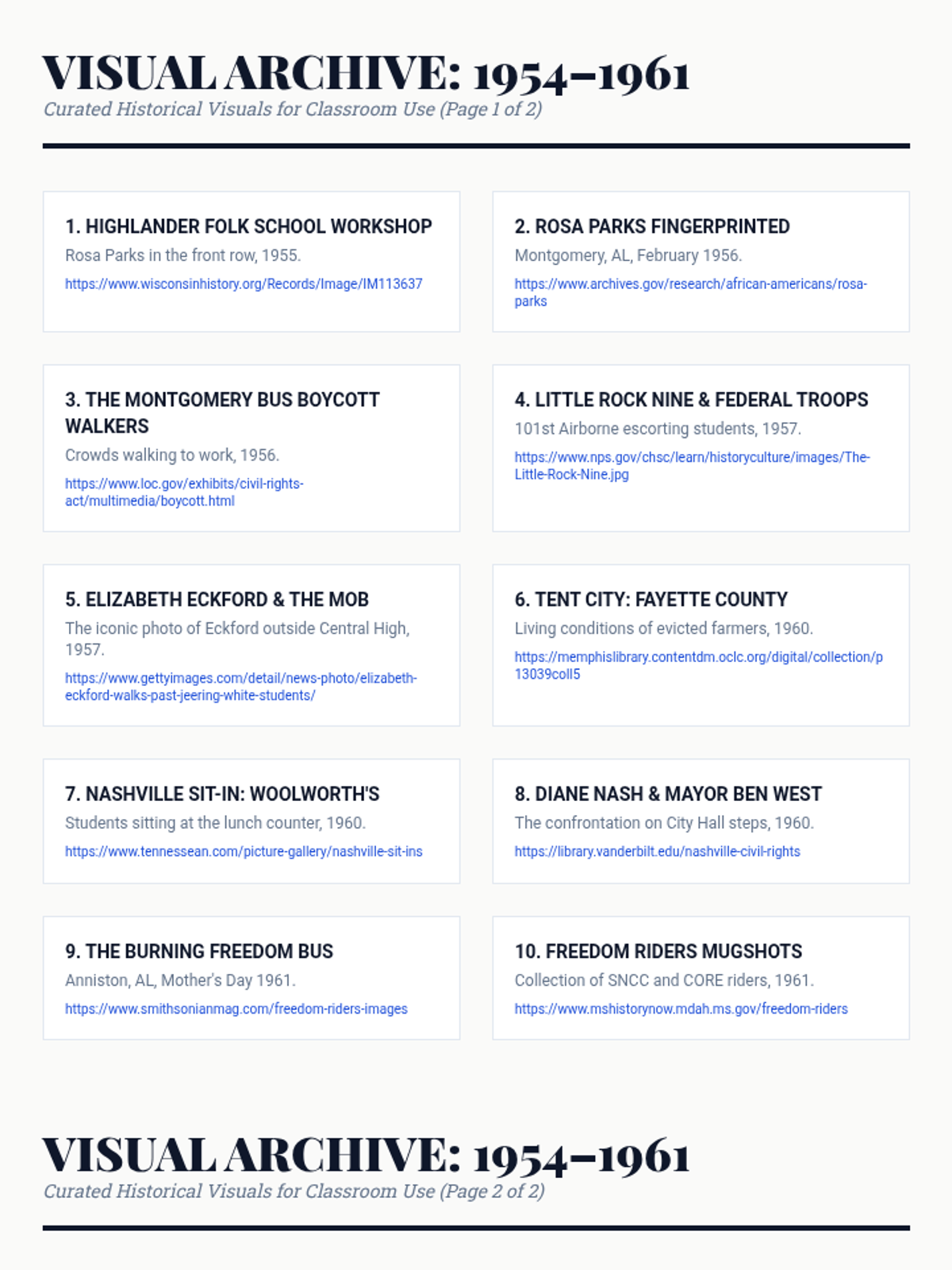
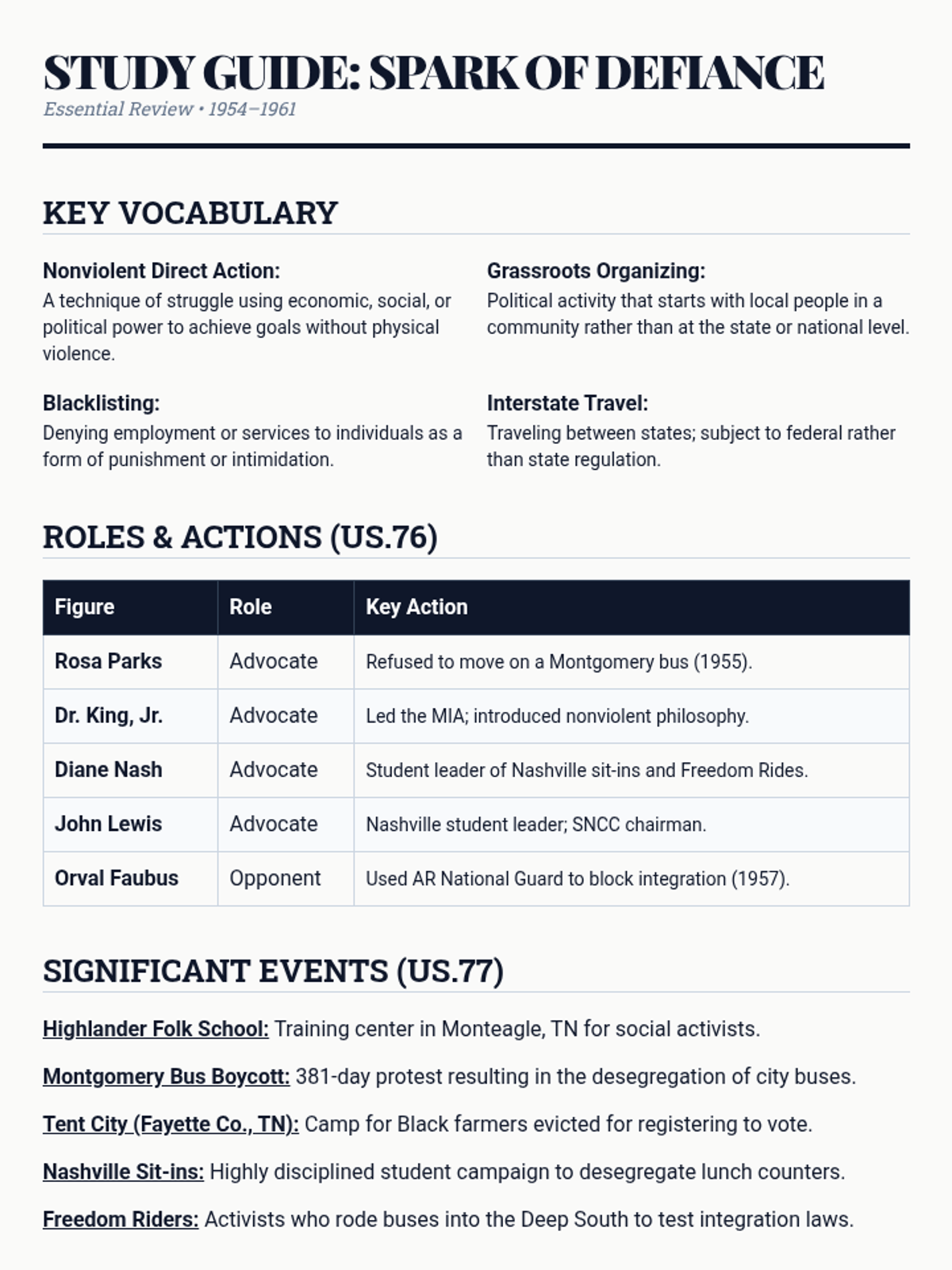
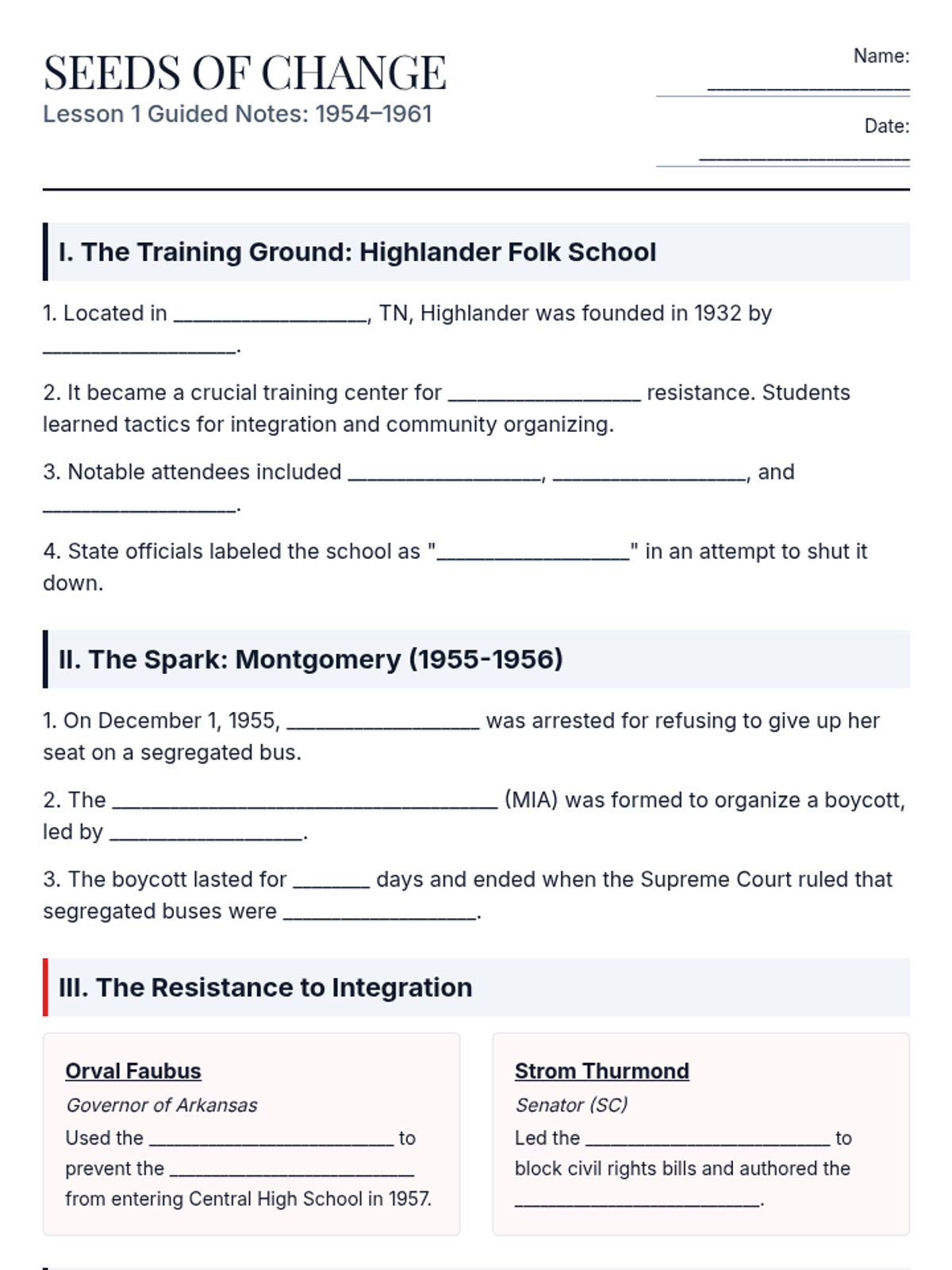
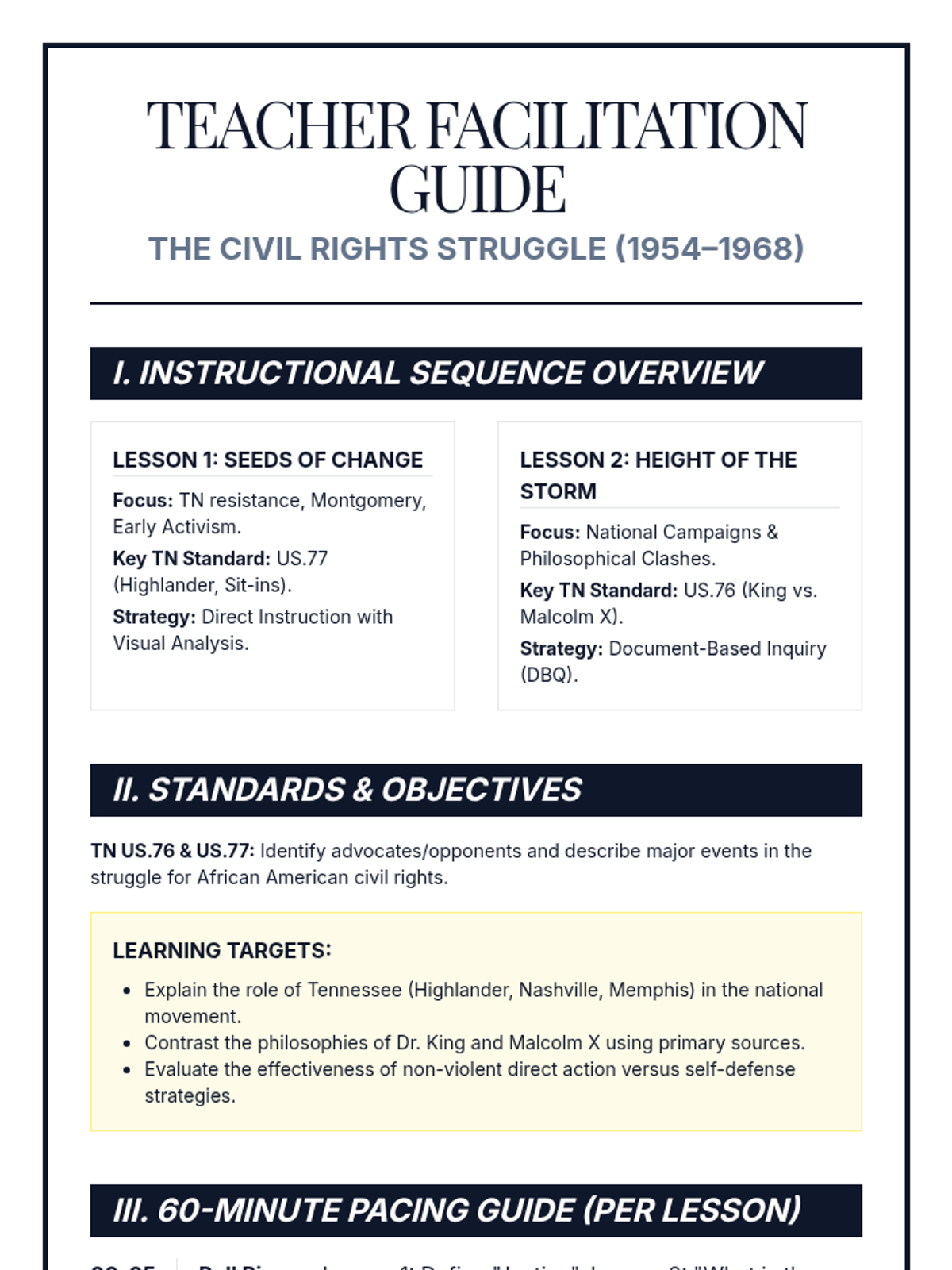
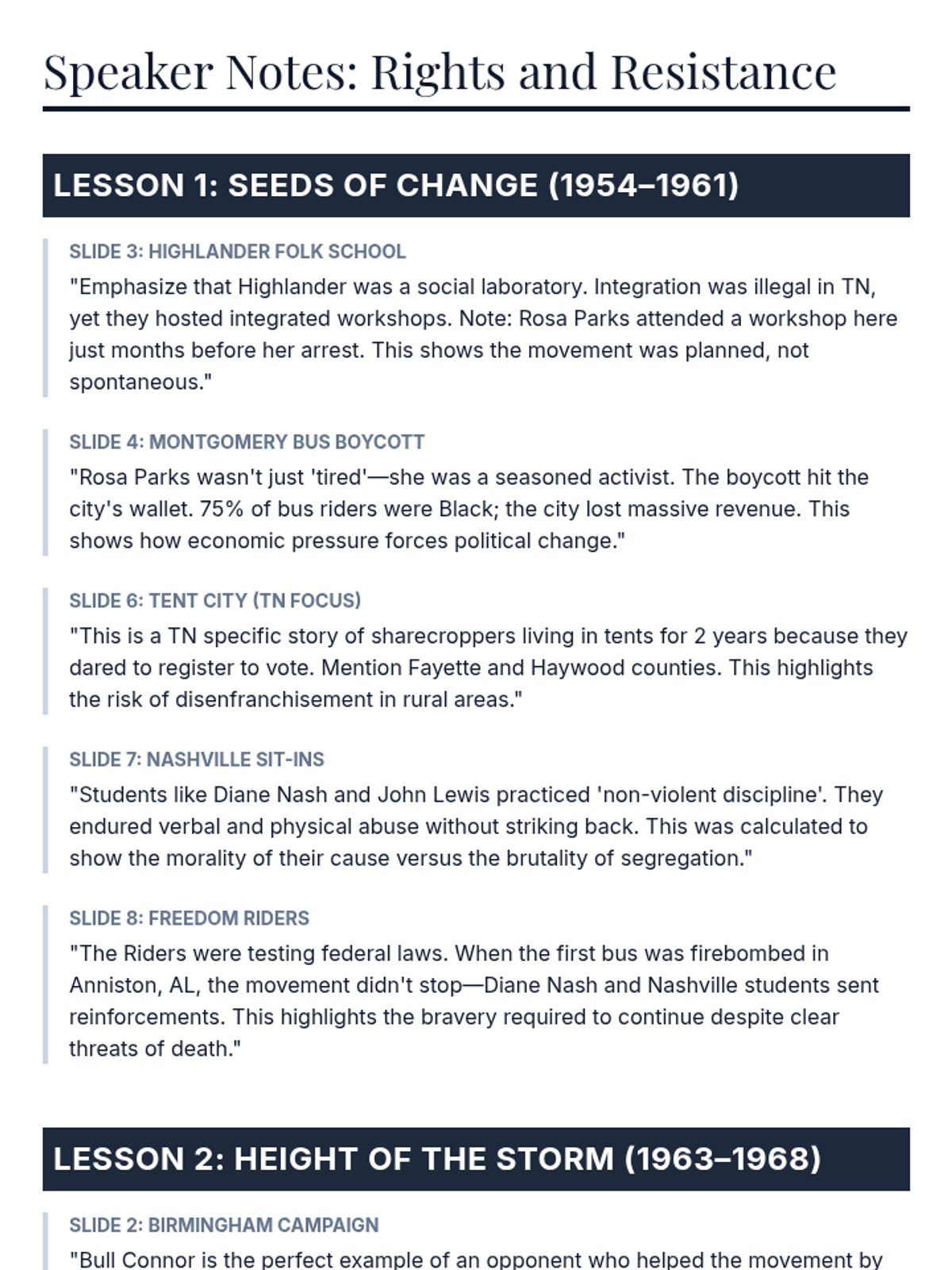
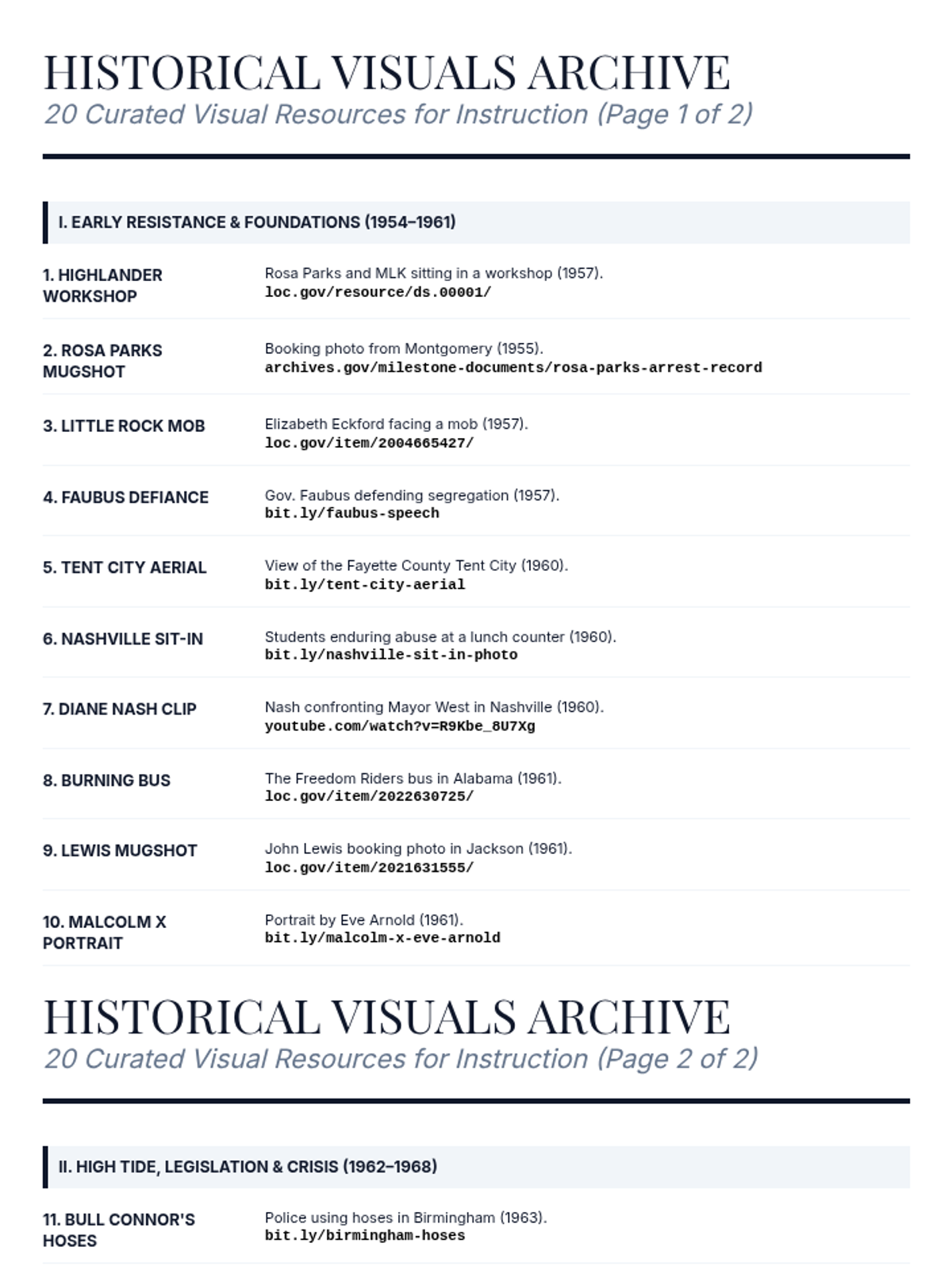
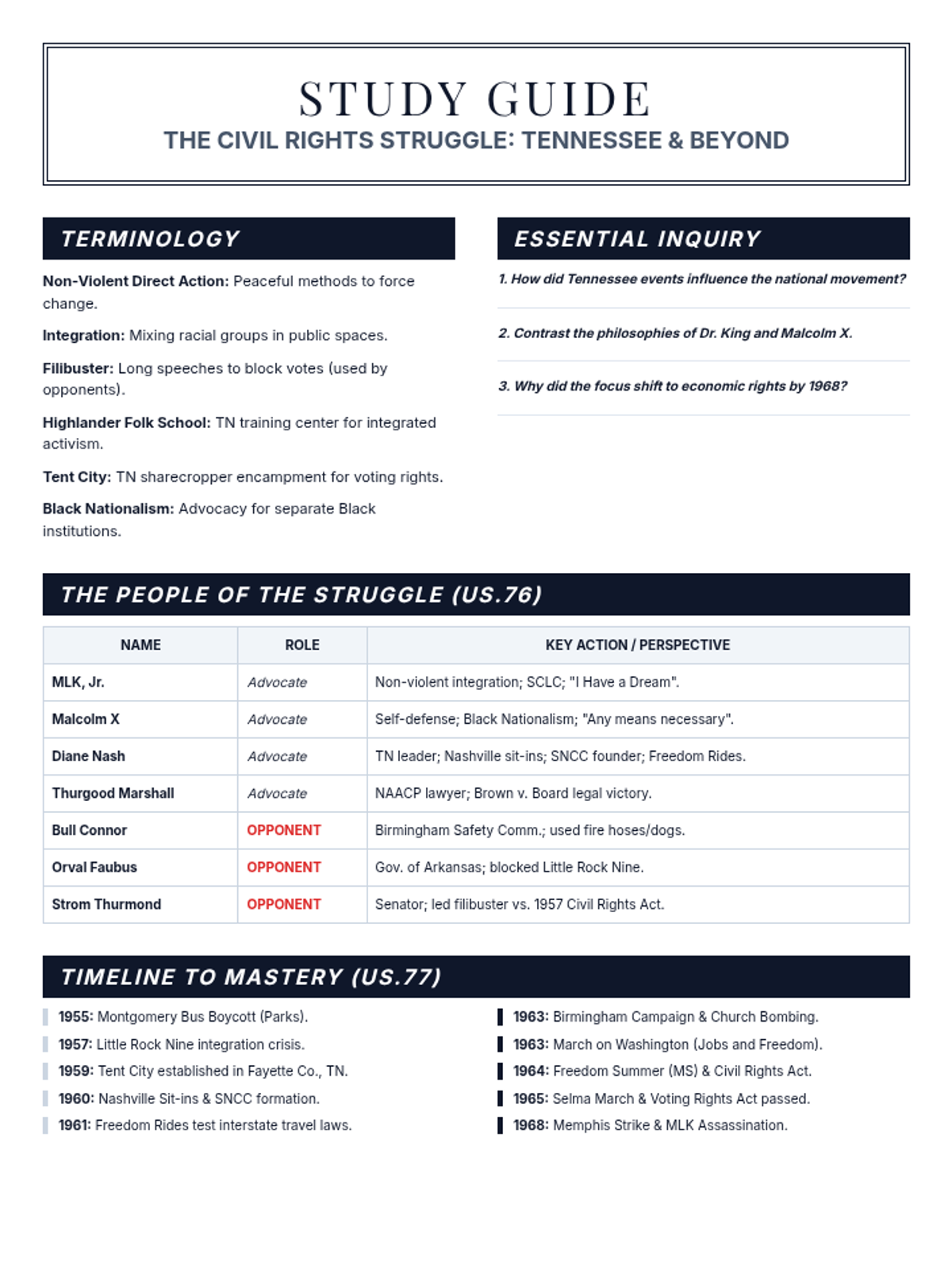
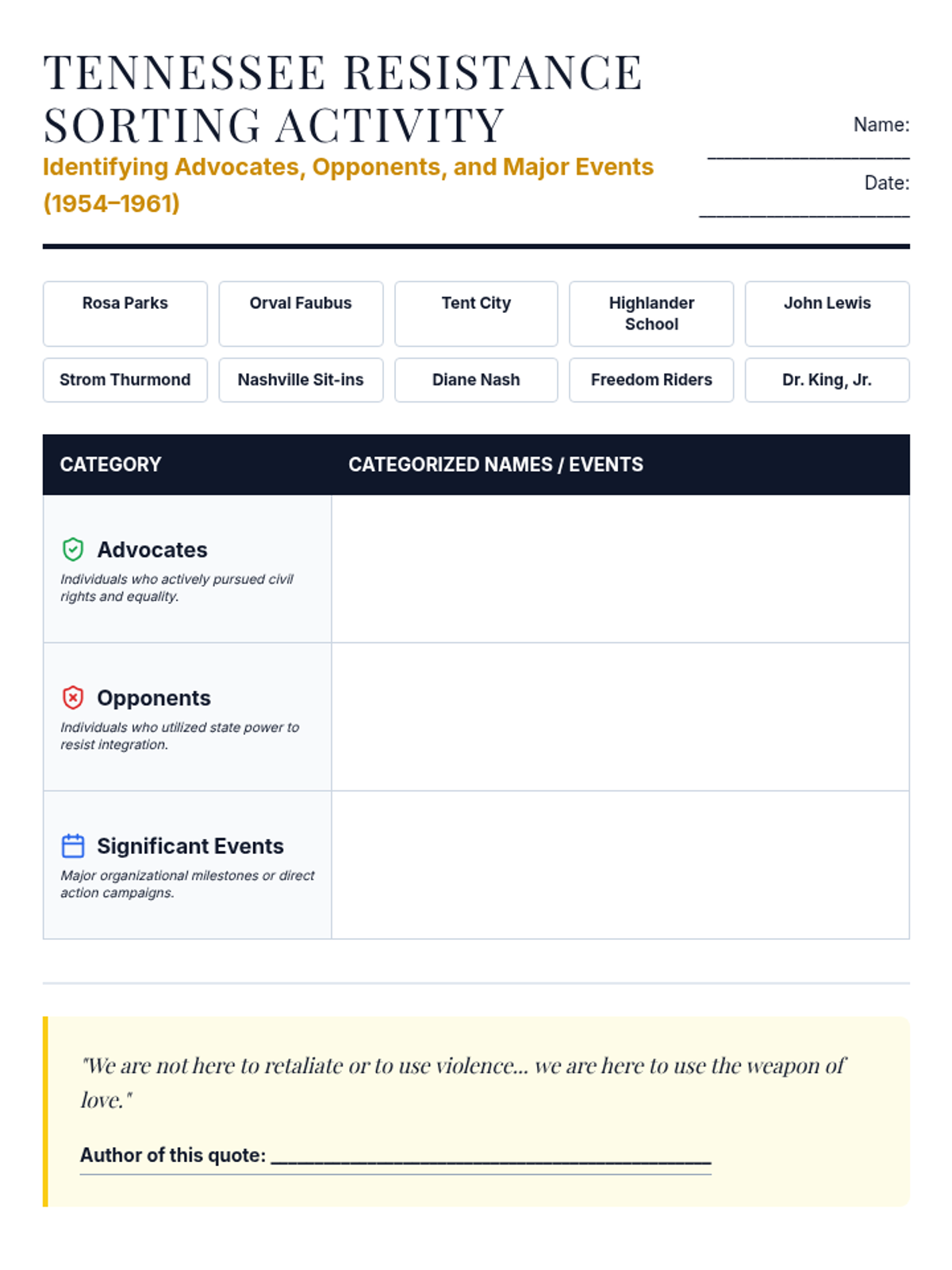
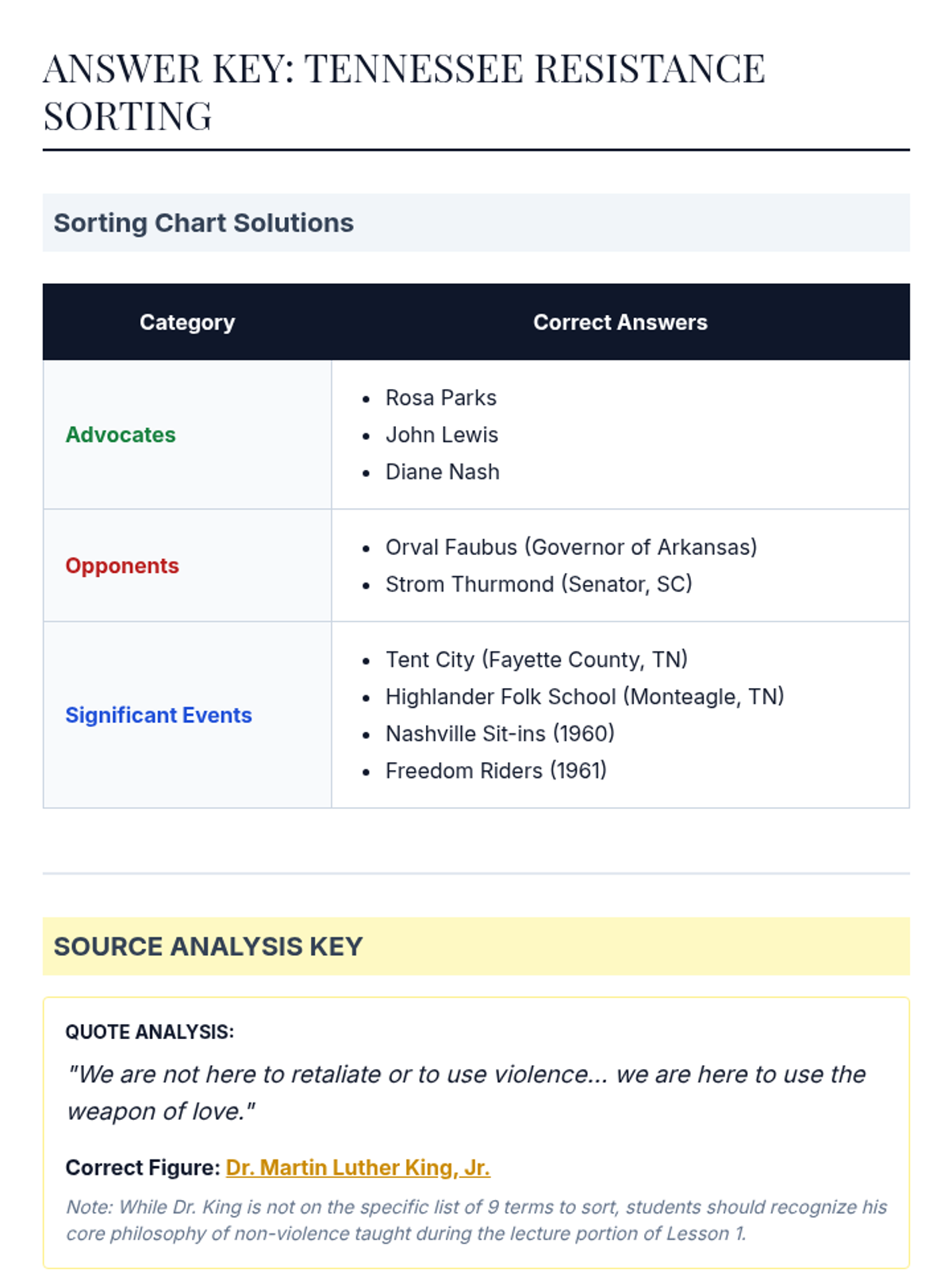
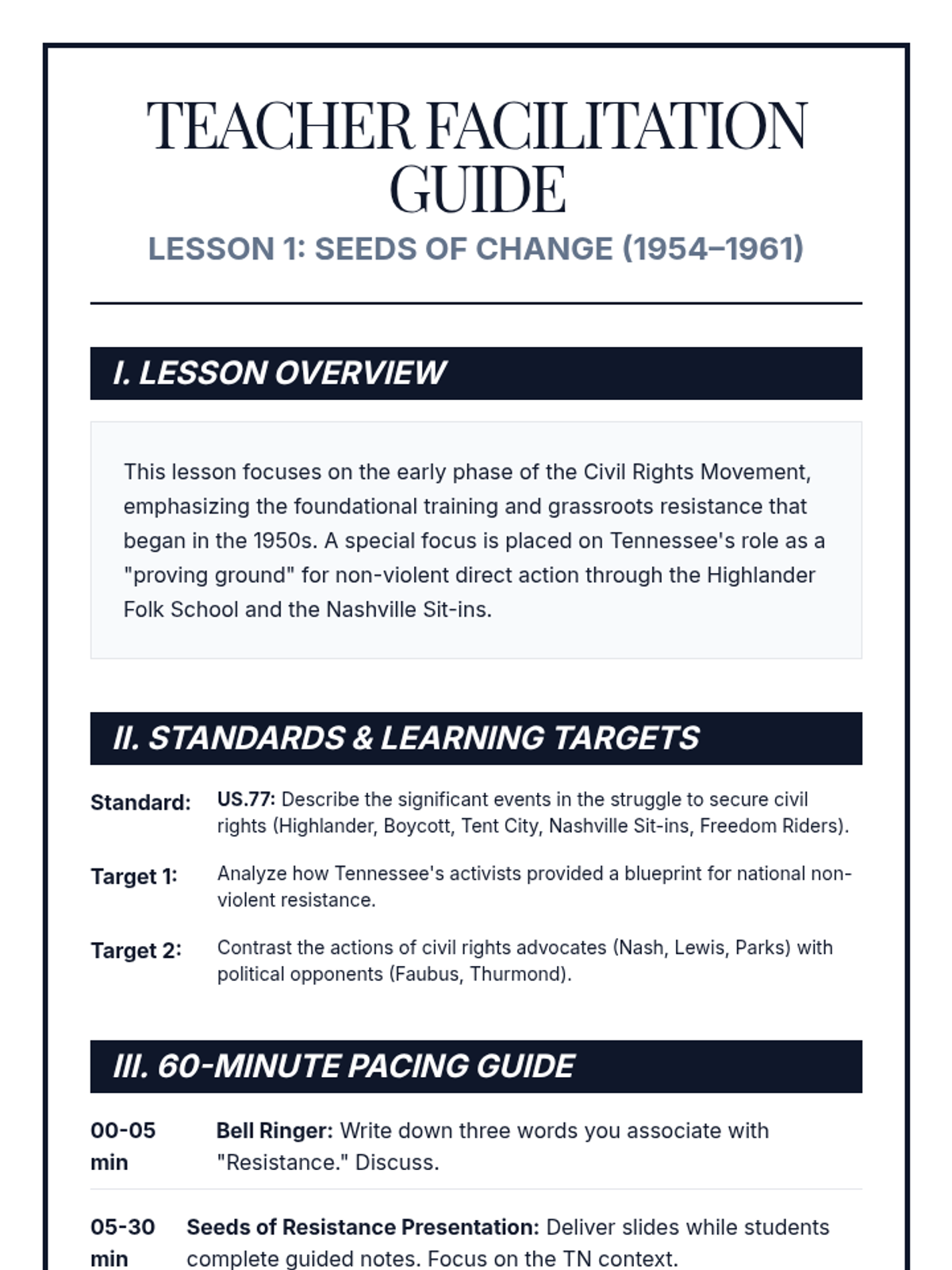
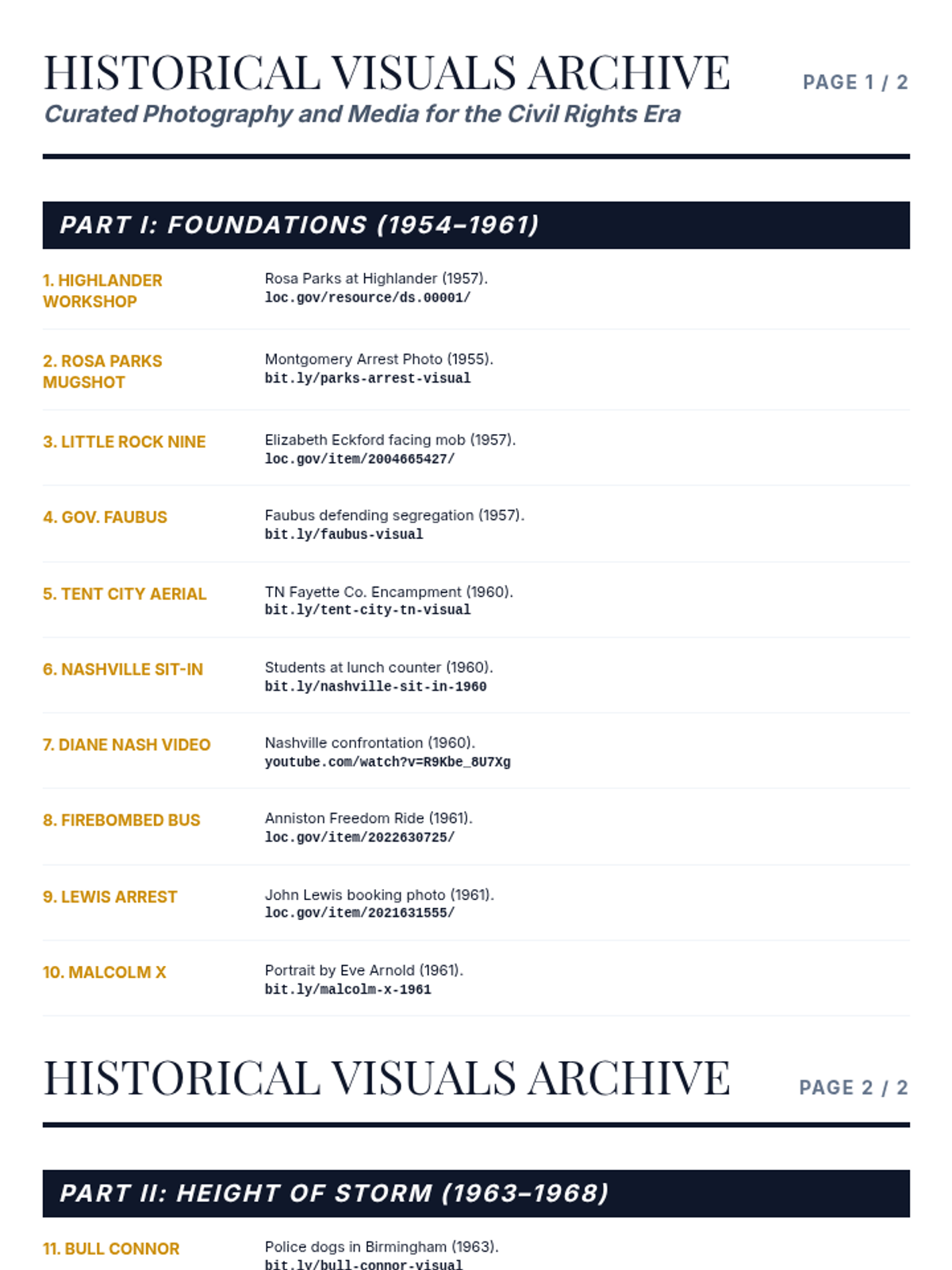
A comprehensive two-lesson sequence covering the American Civil Rights Movement from 1954 to 1968, focused on key advocates, opponents, and pivotal events in the struggle for equality.
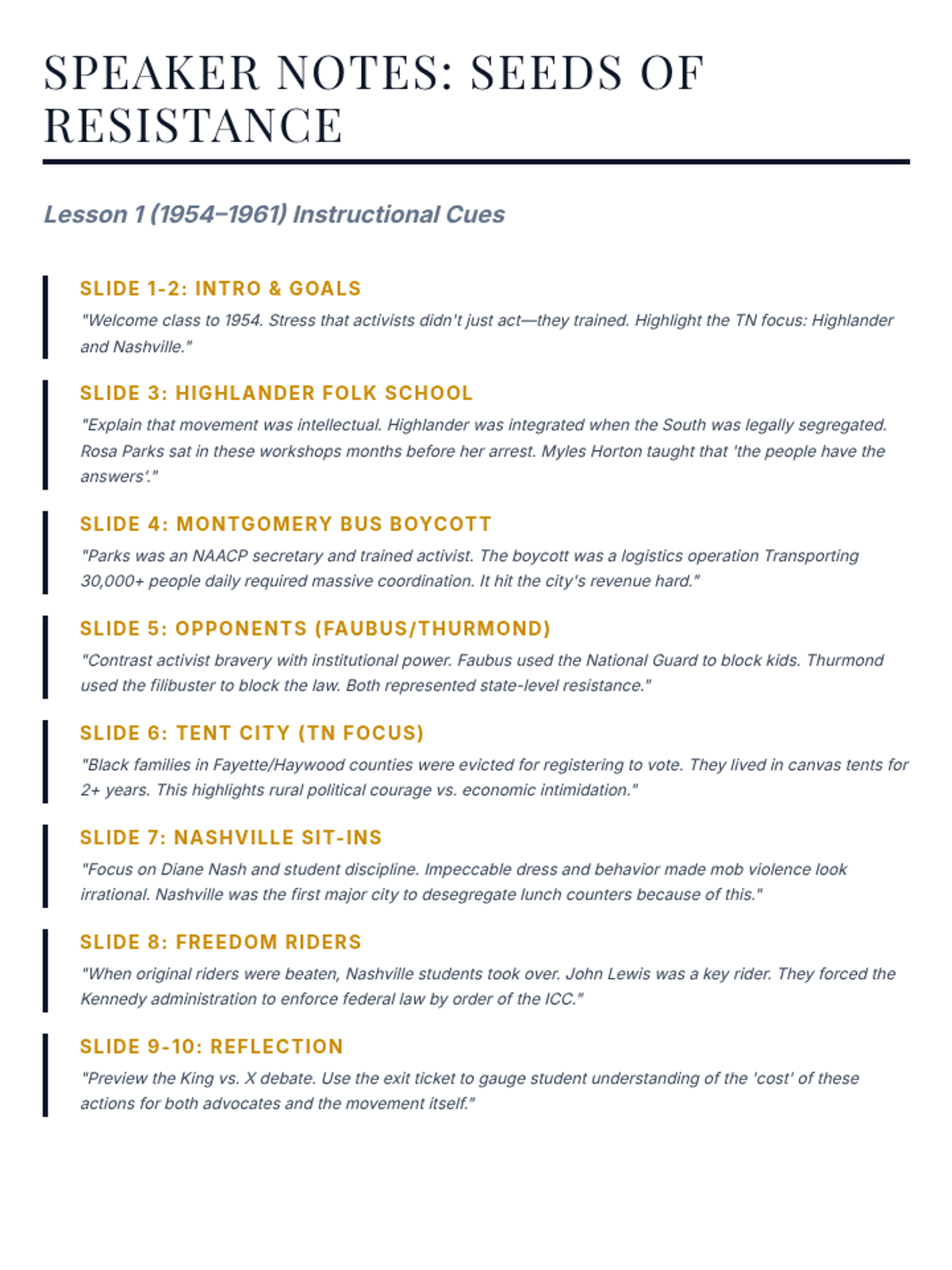
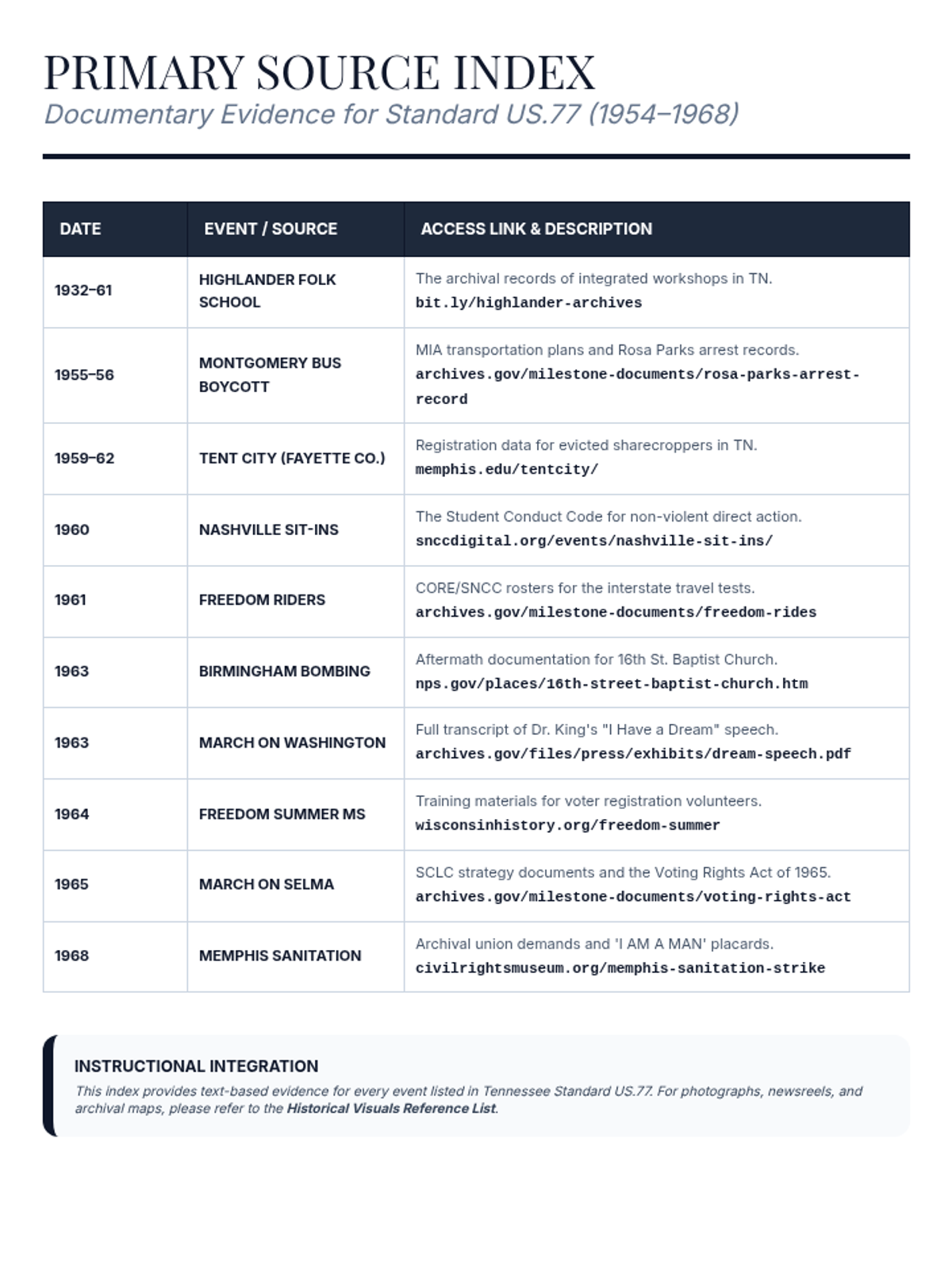
A comprehensive two-lesson sequence covering the American Civil Rights Movement from 1954 to 1968, with a specific focus on Tennessee-based events and the comparison of different activist philosophies. Students explore key figures, legislative battles, and the impact of grassroots organizing.
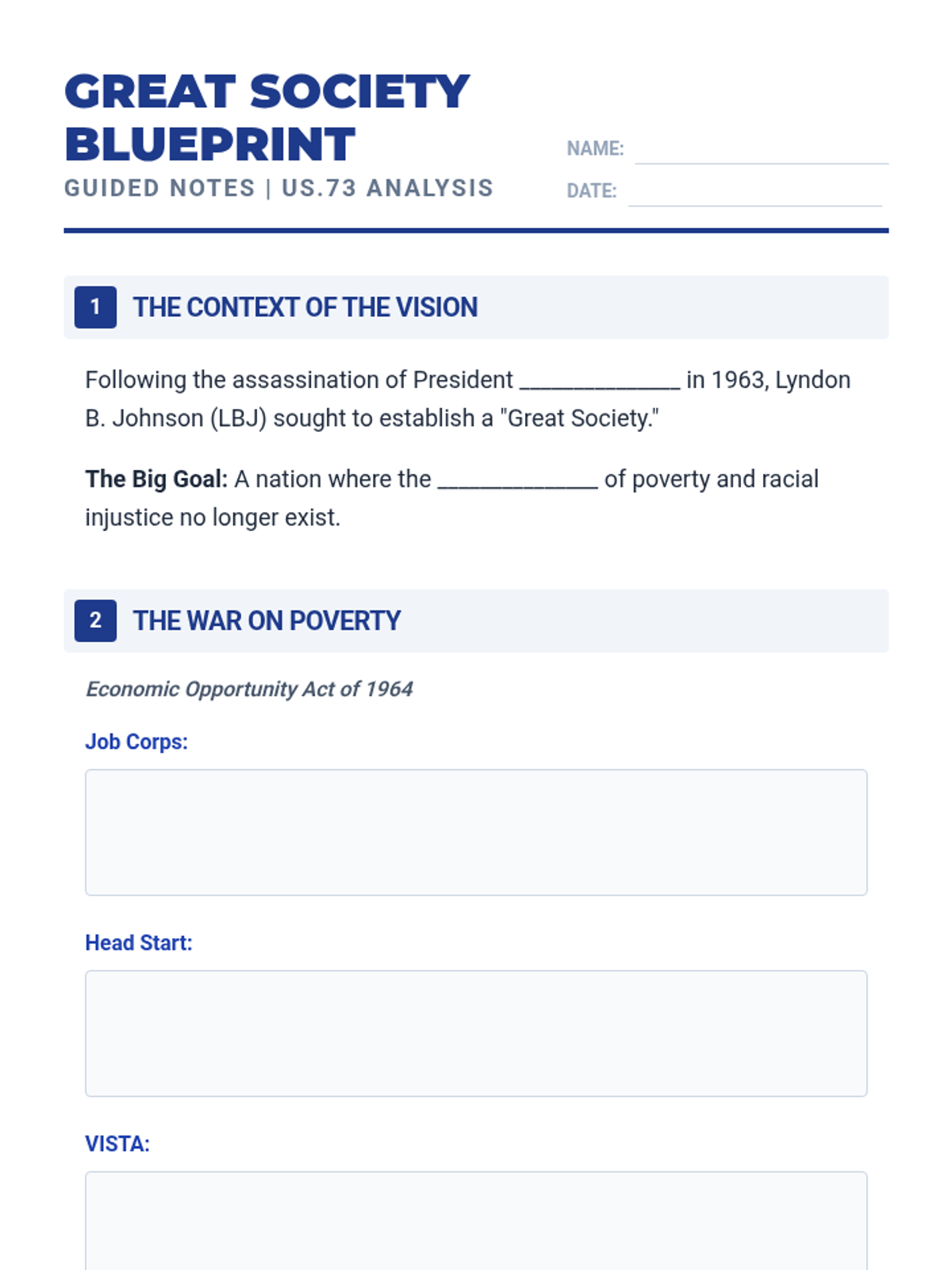
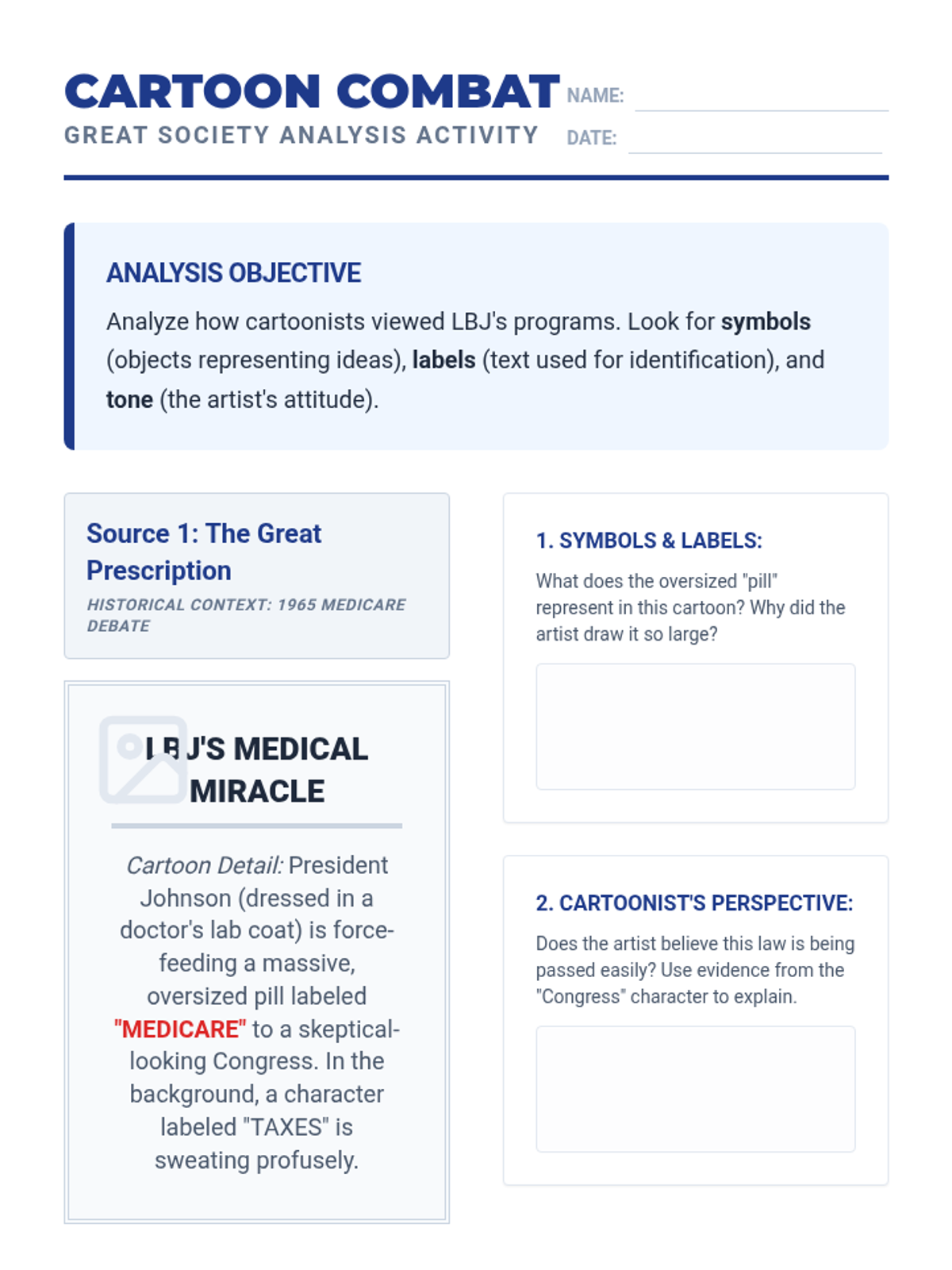
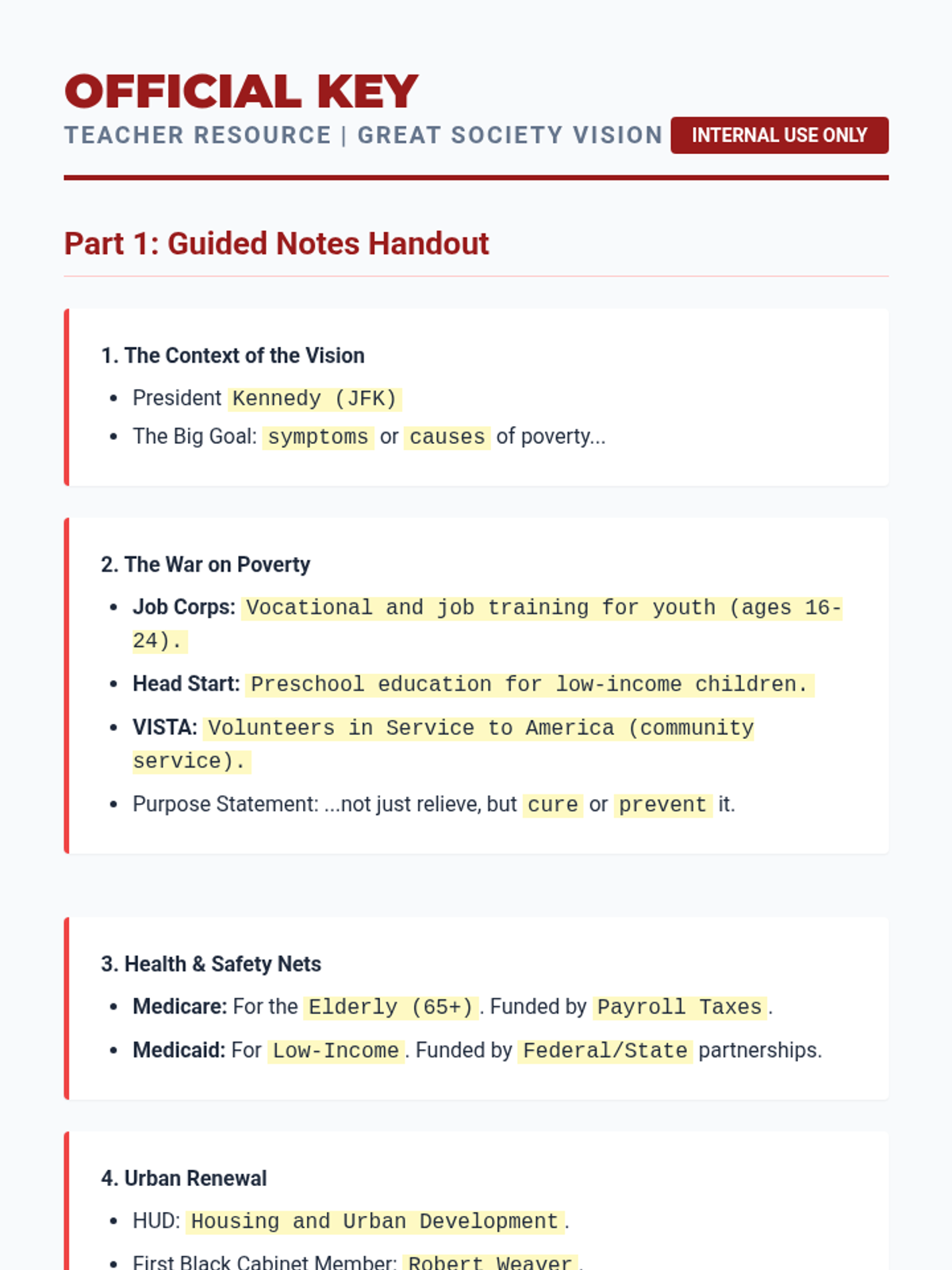
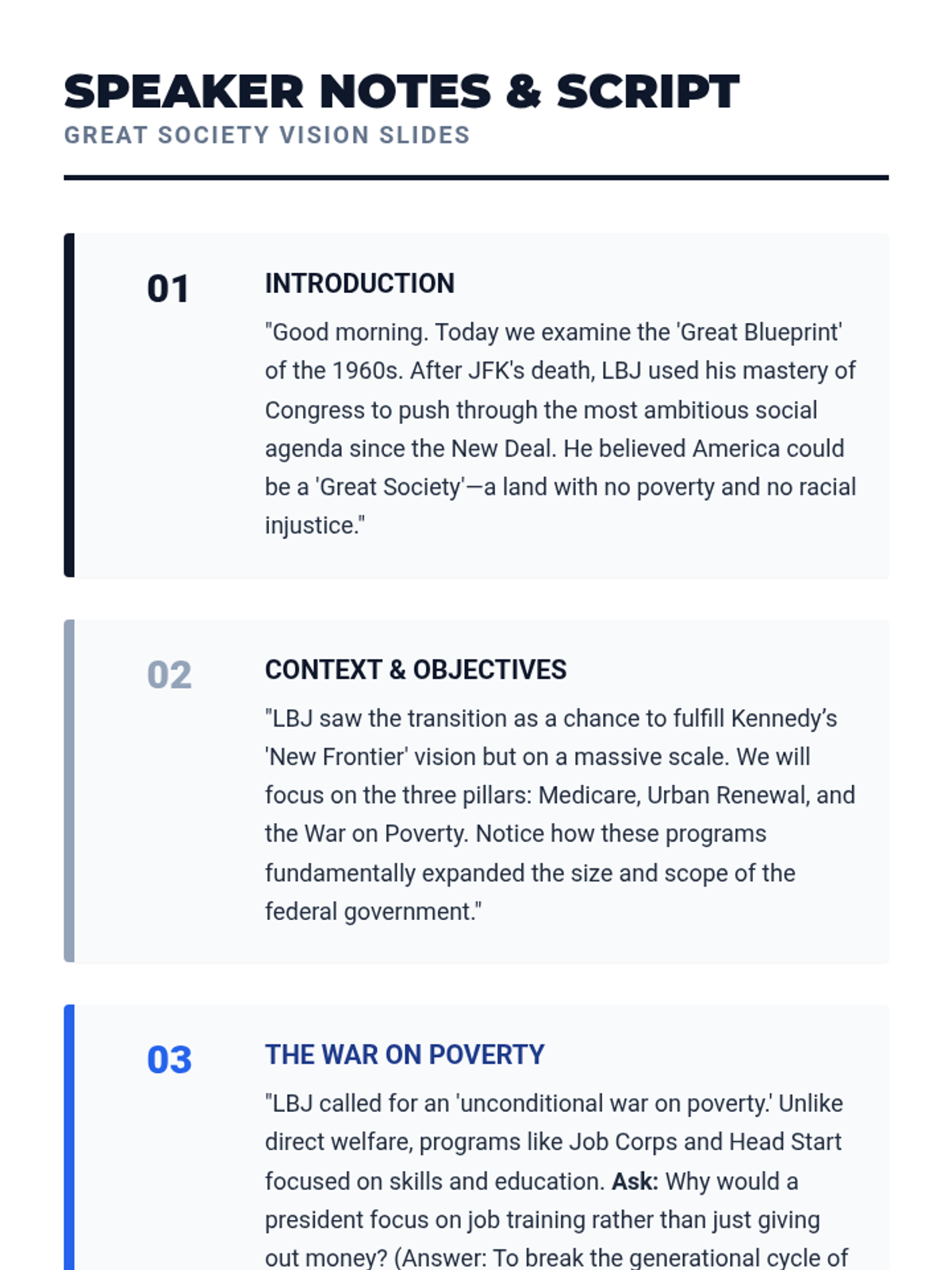
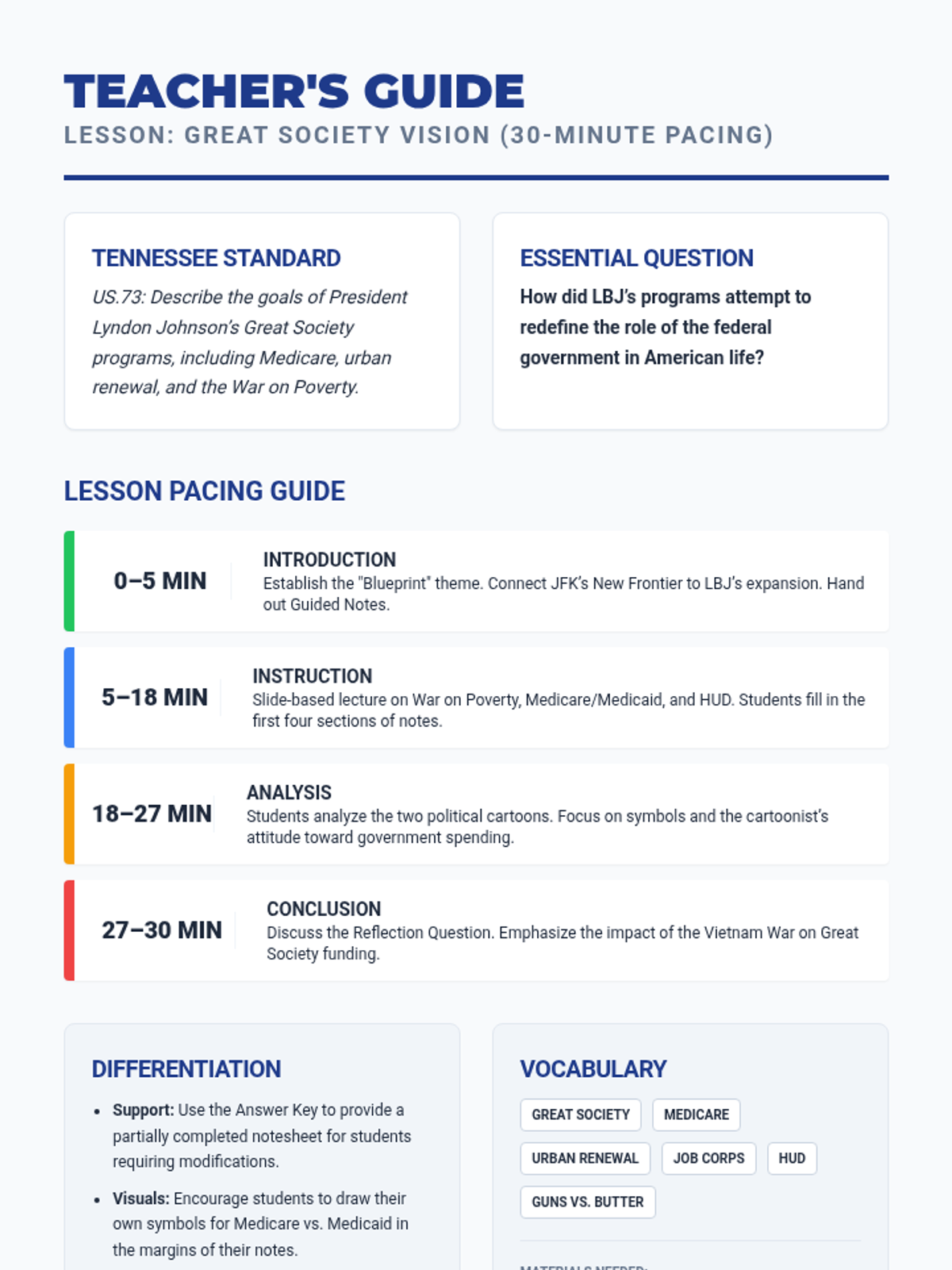
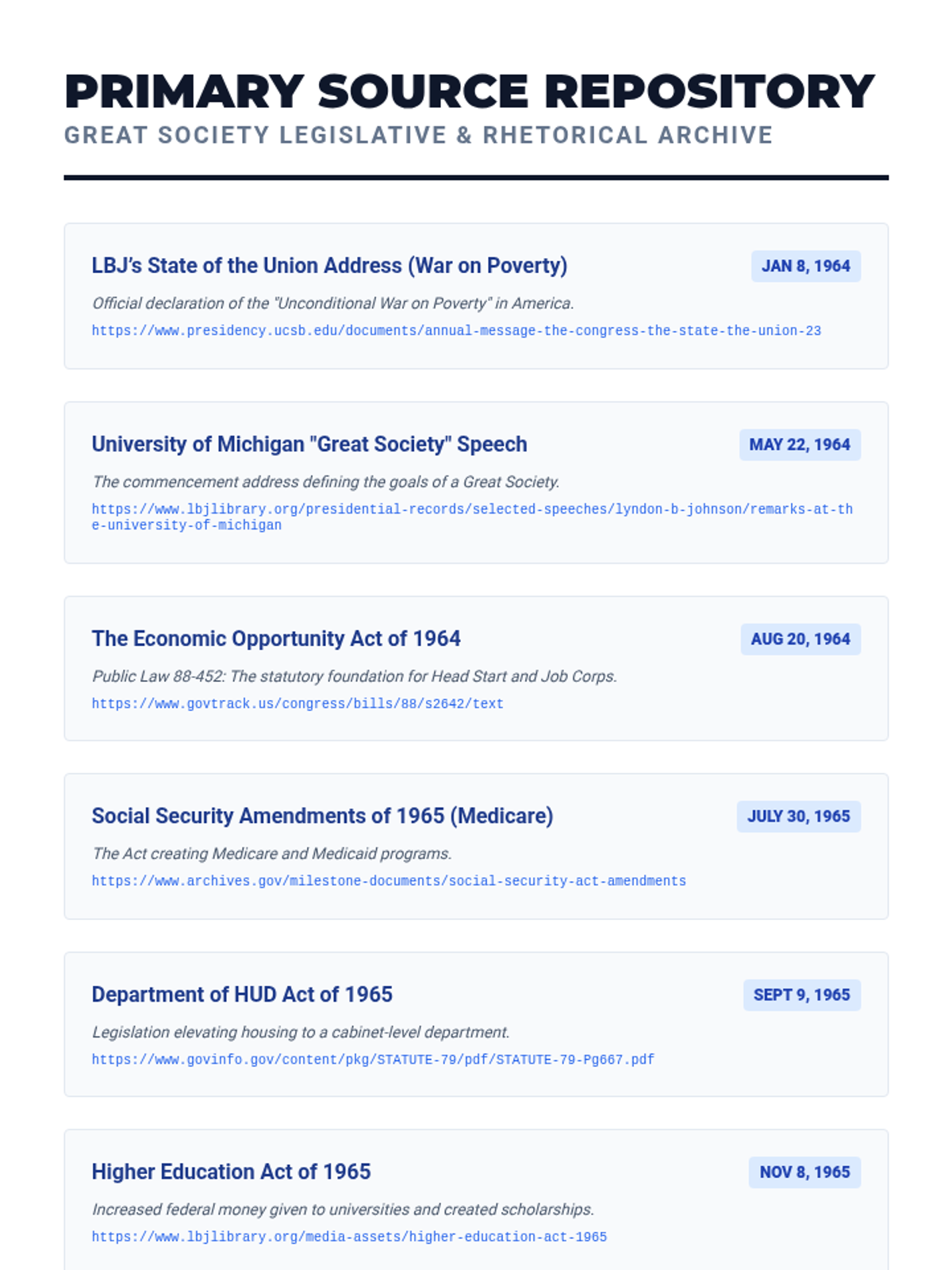
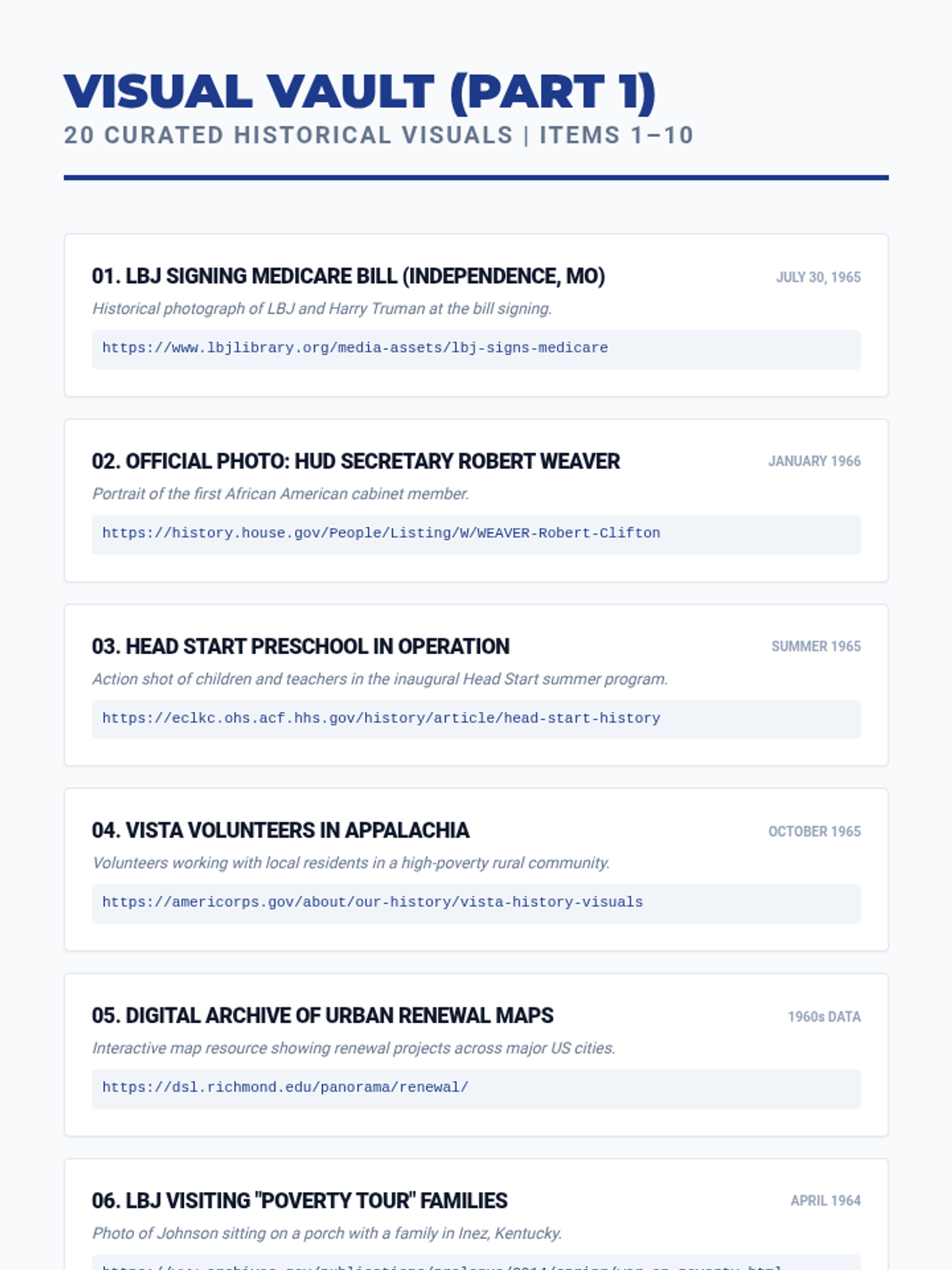
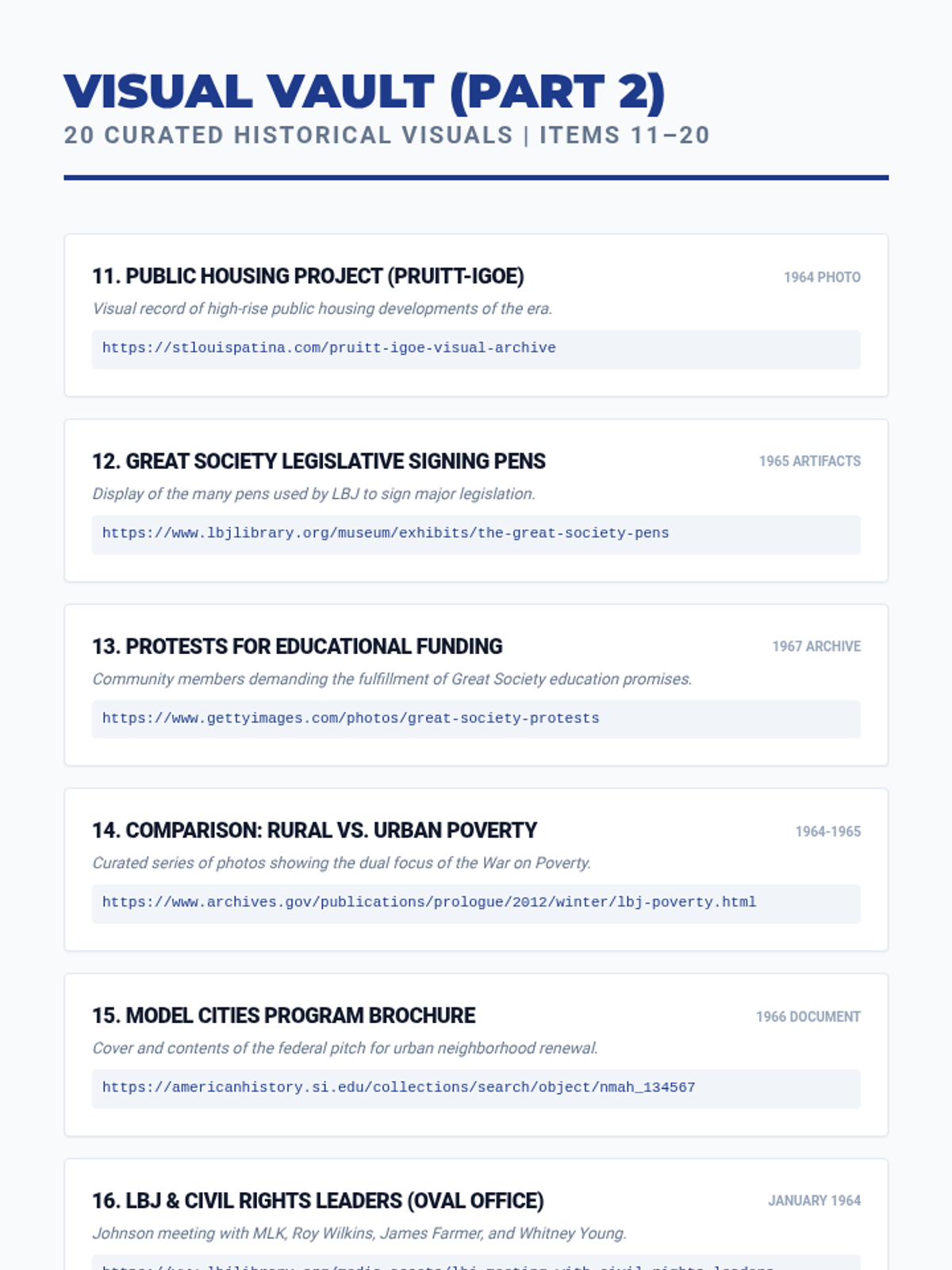
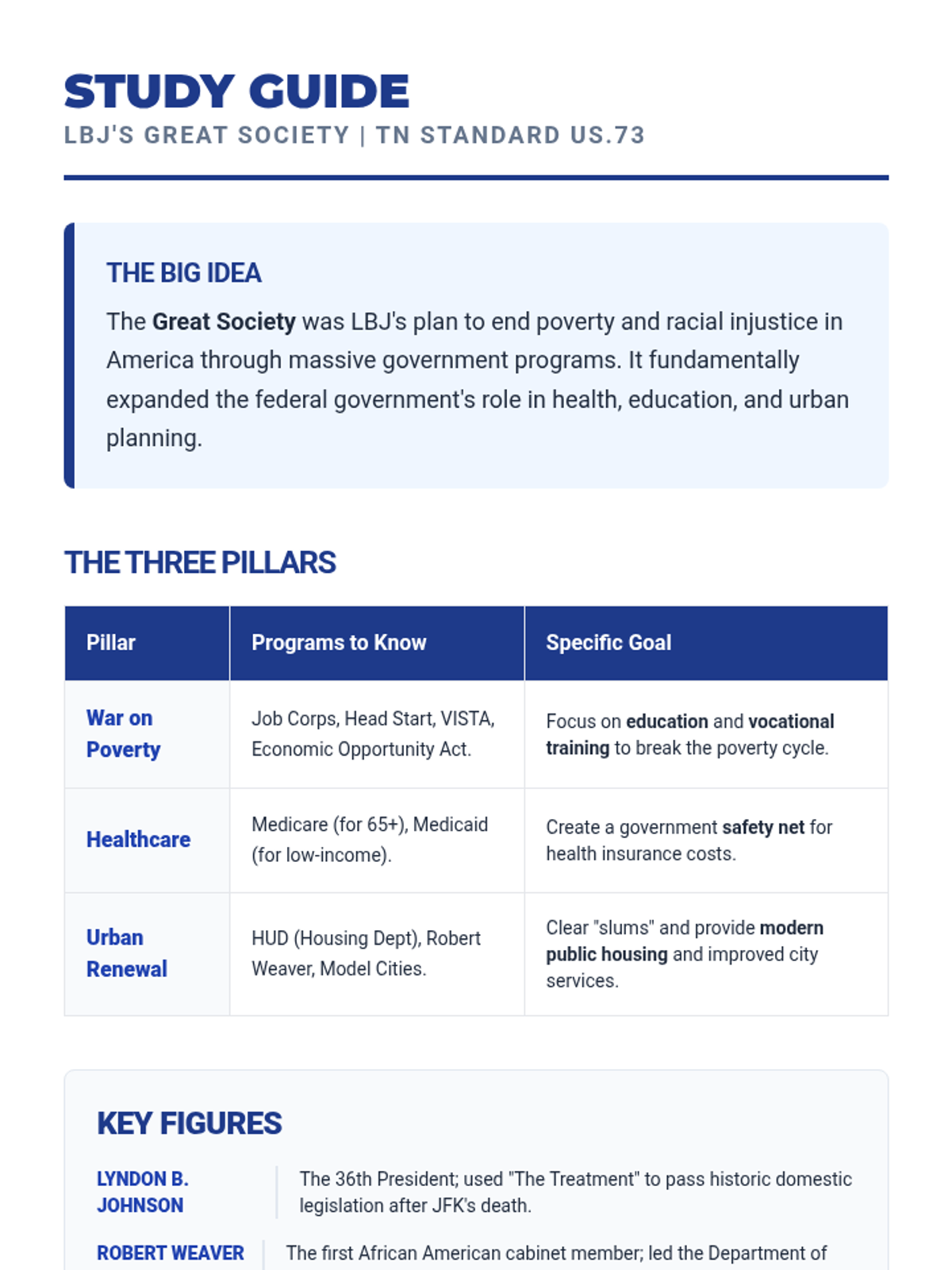
A deep dive into President Lyndon B. Johnson's domestic agenda, focusing on the Great Society's attempts to eliminate poverty and racial injustice. This sequence examines the legislative milestones of the mid-1960s and their lasting impact on American society and government.