A technical sequence for graduate students focusing on forensic workplace incident investigations. Students move from immediate scene management to advanced root cause analysis and professional technical reporting.
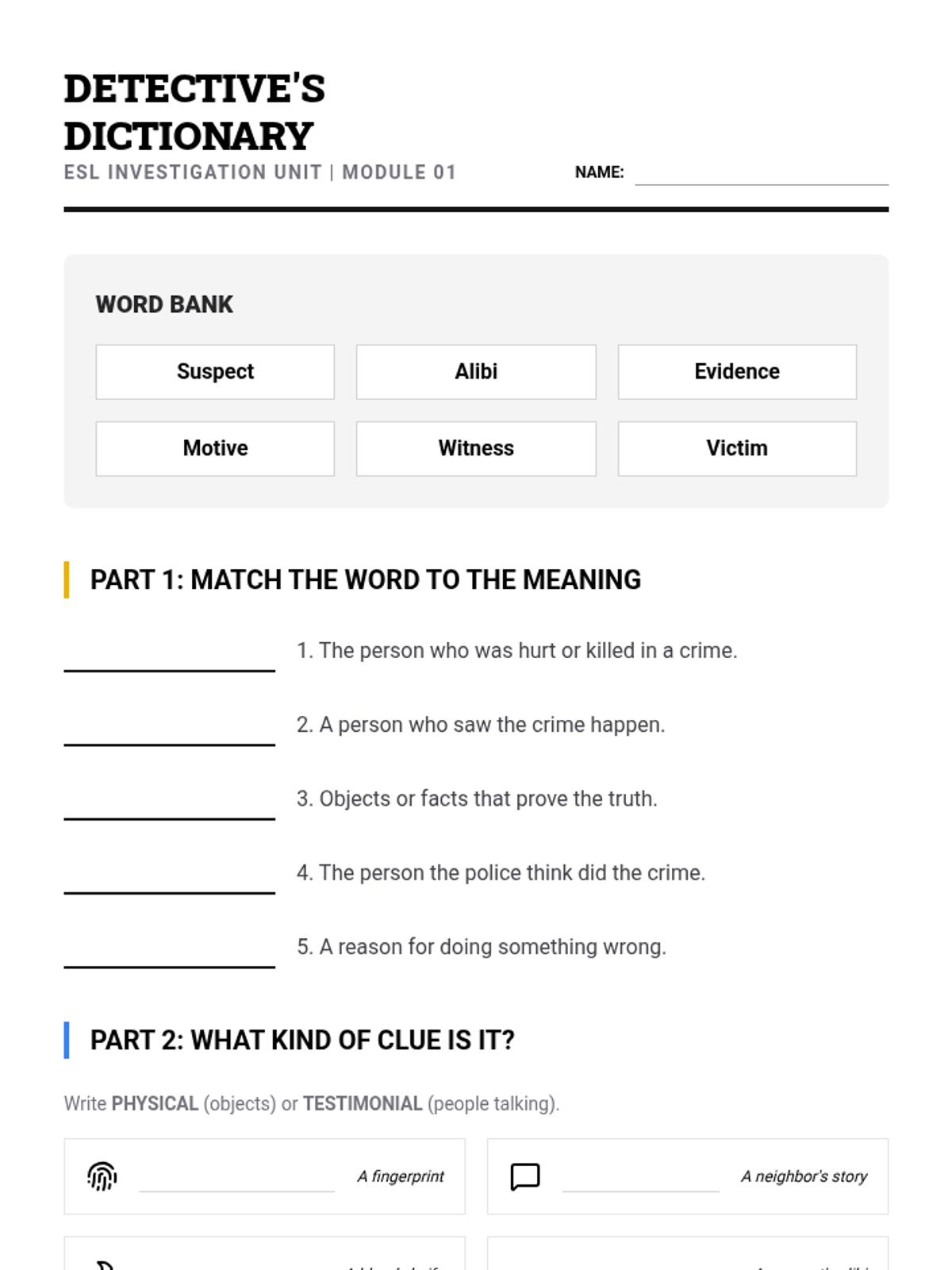
A comprehensive unit on the fundamentals of forensic science and criminal investigation, culminating in a hands-on murder mystery simulation. Students learn about evidence collection, witness psychology, and deductive reasoning.
A graduate-level sequence focused on systematic hazard identification and risk control. Students master Industrial Hygiene, Job Hazard Analysis (JHA), Hierarchy of Controls, and Hazard Communication (GHS) to develop predictive safety strategies in high-risk environments.
An advanced graduate-level sequence exploring the legal and regulatory framework of OSHA. Students analyze statutory authority, navigate complex CFR standards, evaluate liability through case law, and perform mock compliance audits to prepare for strategic safety leadership.
This inquiry-based sequence bridges biology and behavioral science, exploring the neurobiological roots of agitation. Students investigate the 'why' behind physiological changes during escalation to foster an objective, science-based approach to behavioral support.
A mastery-based sequence for undergraduate students to learn mouse-less operating system navigation and file management. This series focuses on building muscle memory for keyboard shortcuts to improve accessibility and efficiency.
A comprehensive sequence for undergraduate students to master CSS from basic styling and selectors to advanced responsive layouts using Flexbox and Grid. The curriculum emphasizes mobile-first design and professional front-end standards.
A capstone sequence for undergraduate students to design, code, and deploy a professional personal portfolio website, focusing on branding, IA, and technical execution.
A comprehensive guide to the operational side of web development, covering DNS, hosting types, FTP, CMS deployment, SEO, and site security. Students learn the technical requirements for establishing and maintaining a professional digital presence.
A comprehensive sequence for undergraduate students focused on the human-centered design of digital interfaces. Students progress from understanding user psychology and personas to technical implementation of Web Content Accessibility Guidelines (WCAG) and usability testing.
A comprehensive introduction to semantic HTML for undergraduate students, focusing on web architecture, content hierarchy, media integration, and accessible layout design. Students progress from basic syntax to building complex, structurally sound website skeletons.
A comprehensive introduction to web development, focusing on semantic HTML5 structure and CSS styling. Students progress from analyzing existing websites to hand-coding a multi-page static site with professional standards.
A comprehensive sequence for high school seniors to plan, design, and build a professional digital portfolio. Students move from brand strategy and content curation to high-fidelity coding and peer-led usability testing.
A comprehensive graduate-level sequence covering professional web publishing workflows, version control, hosting, CMS evaluation, and performance optimization. Students transition from local development to professional DevOps practices for content creators.
A comprehensive graduate-level sequence on web accessibility, covering WCAG standards, legal compliance, technical implementation of ARIA, and professional auditing techniques.
A comprehensive sequence for graduate students exploring the intersection of cognitive psychology and web design. Students move from theoretical usability heuristics to practical wireframing and usability testing, focusing on creating evidence-based digital experiences.
A comprehensive graduate-level sequence on professional CSS architecture, covering the cascade, Flexbox, CSS Grid, mobile-first responsiveness, and scalable design systems using BEM and variables.
A graduate-level exploration of web architecture, semantic markup, and information hierarchy. Students learn to create accessible, SEO-optimized digital structures using HTML5, focusing on the DOM, semantic tags, and advanced data representation.
A technical sequence for graduate students focused on the Facial Action Coding System (FACS). Students move from anatomical identification of upper and lower face Action Units (AUs) to high-speed synthesis and differentiating between genuine and posed affect for clinical and forensic application.
A comprehensive graduate-level sequence on Experimental Functional Analysis (FA). Students will progress from understanding the limitations of descriptive assessments to designing, implementing, and interpreting rigorous experimental conditions to identify behavioral functions.