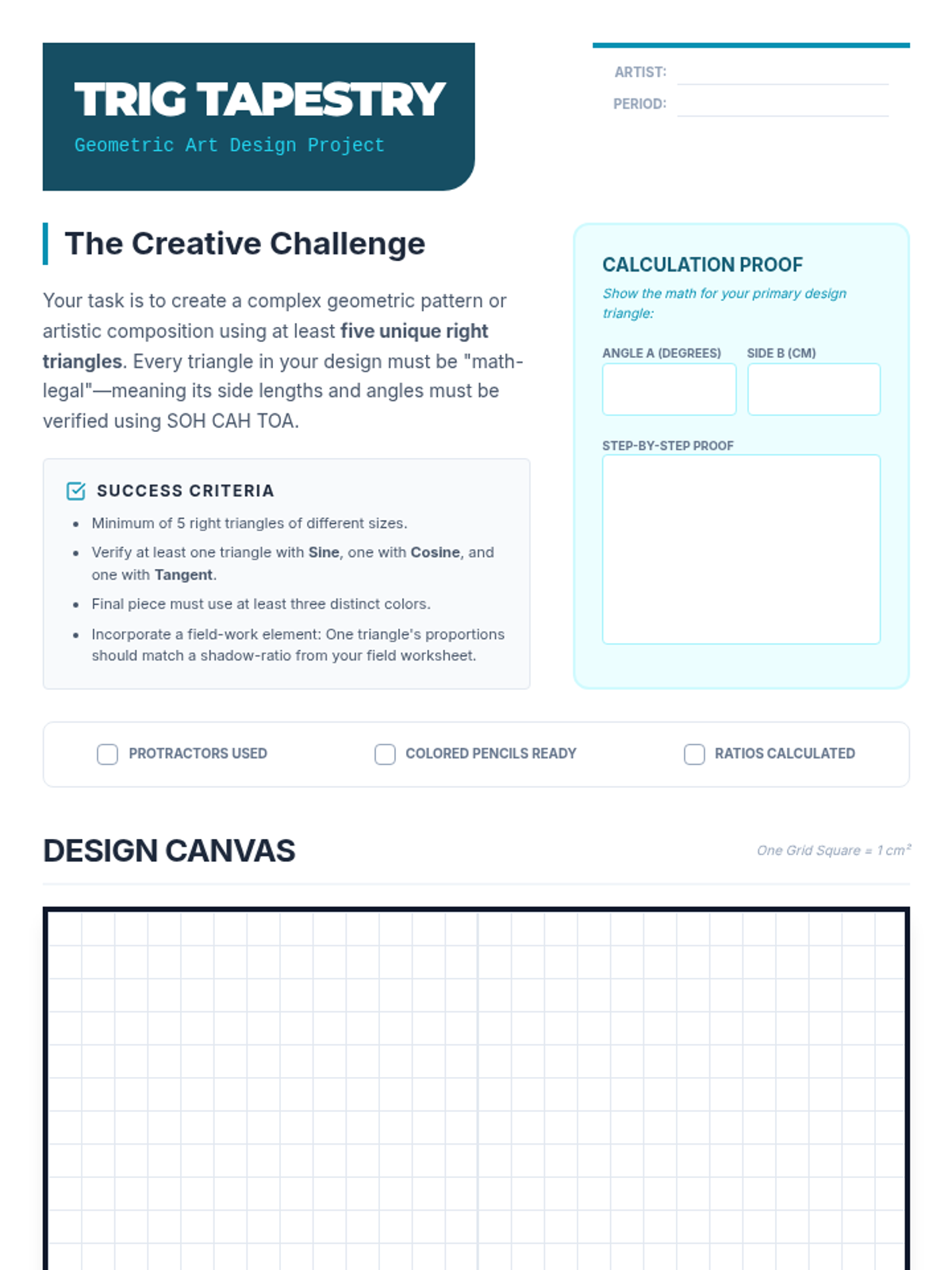
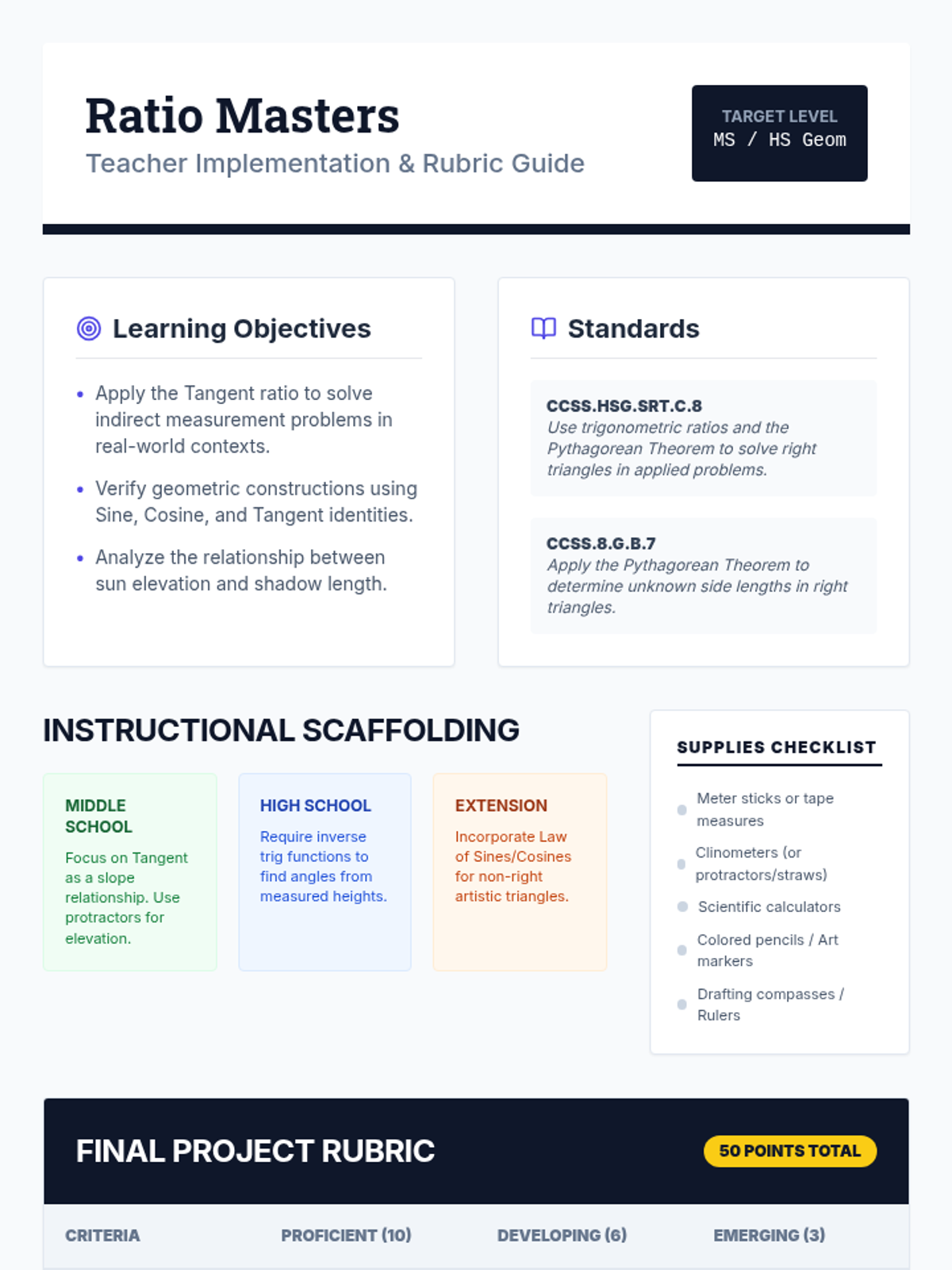
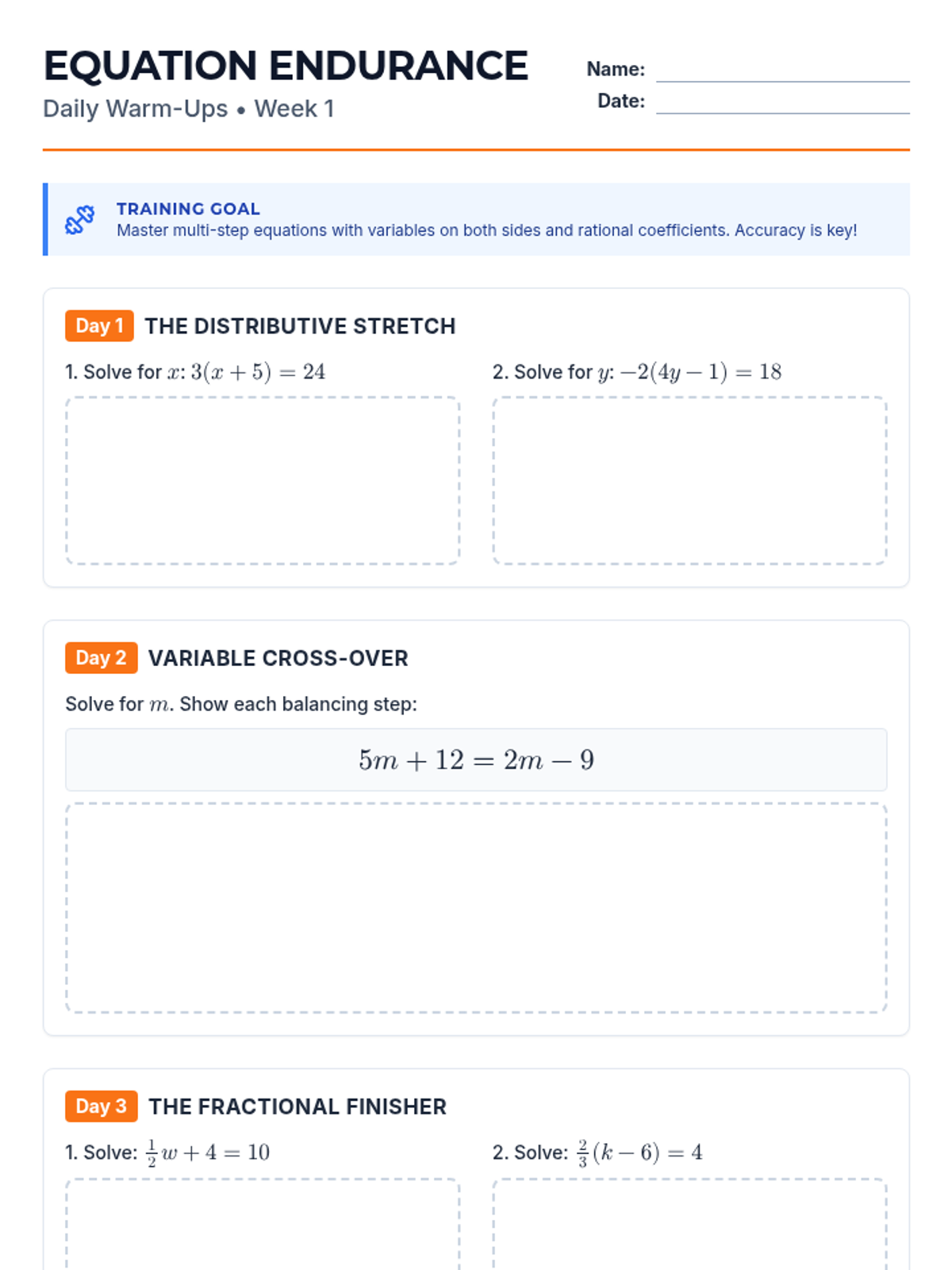
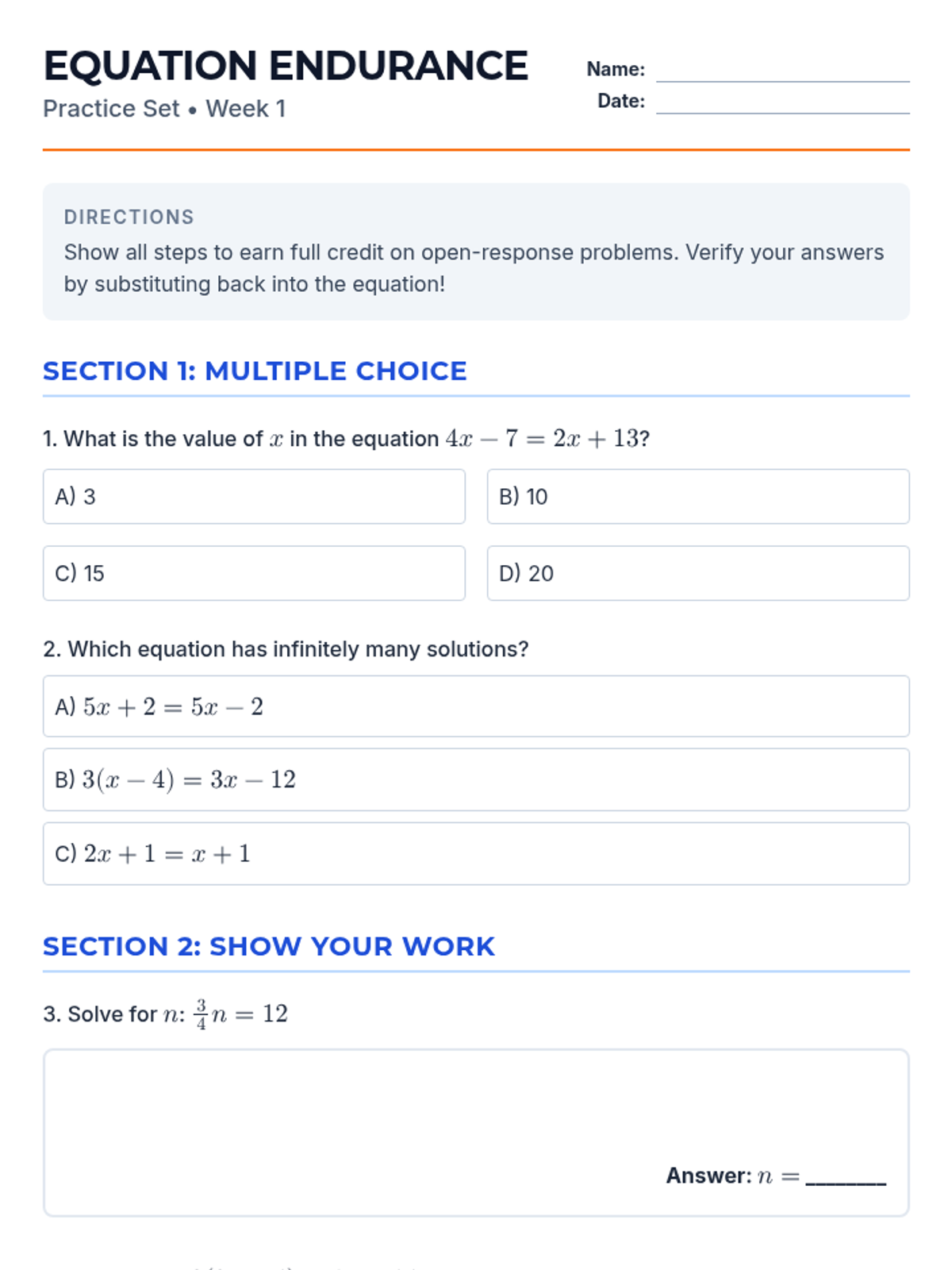
An 8th-grade geometry project where students use rigid motions to design complex, interlocking tessellations and geometric art, exploring congruence through practical application.
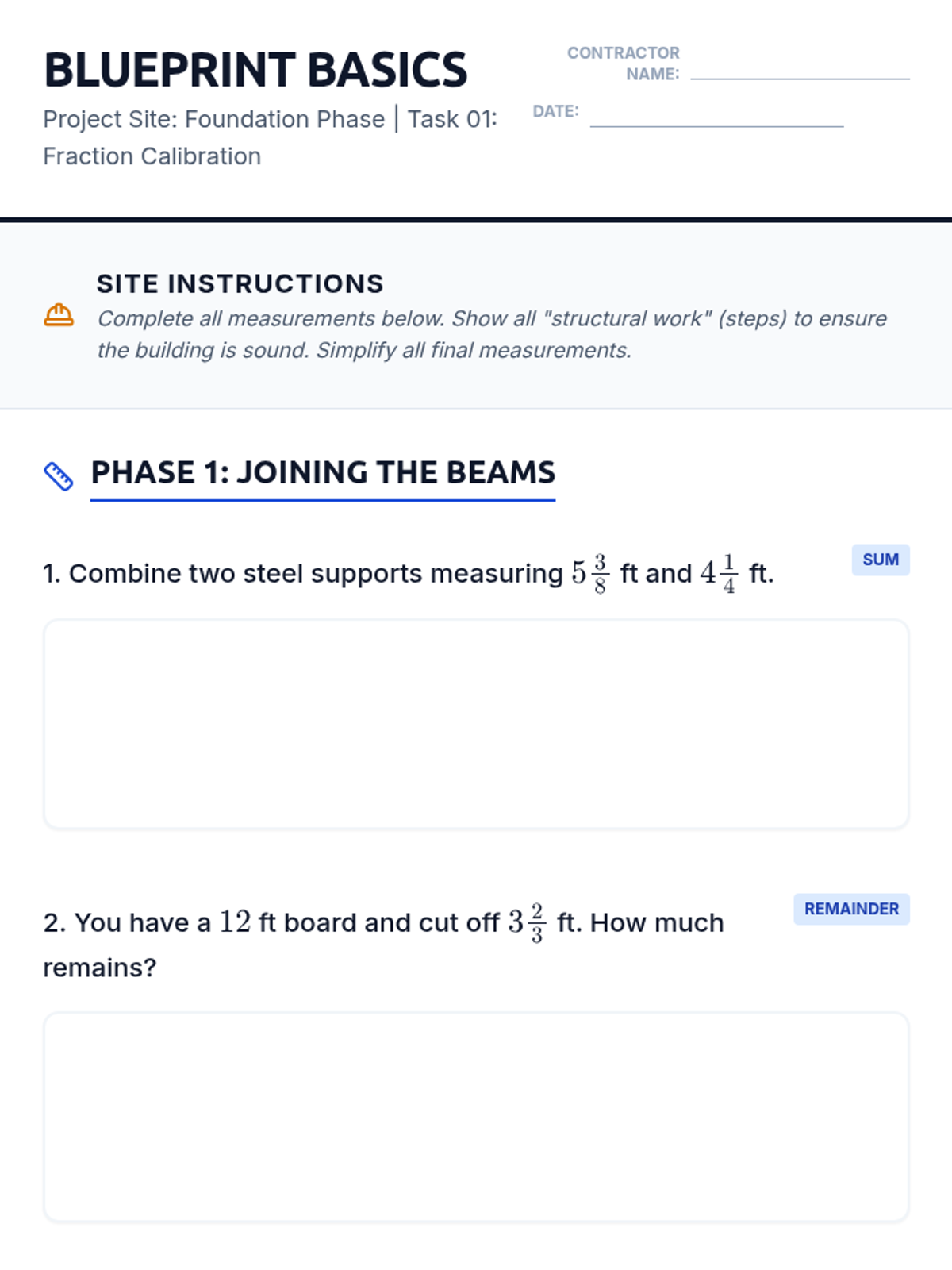
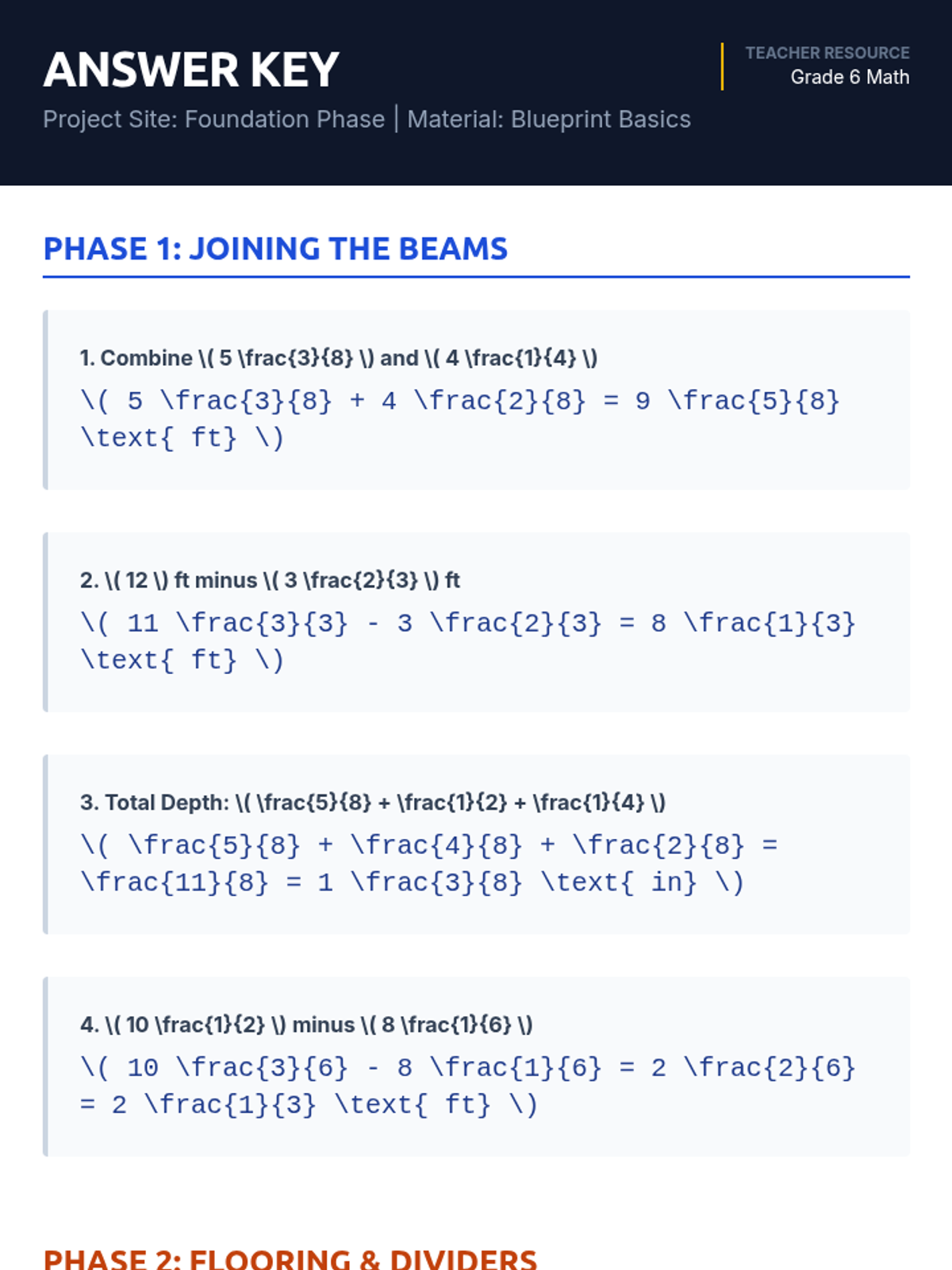
A 12-session tier 2 intervention sequence designed to build conceptual mastery of fraction division. Grounded in All Learners Network (ALN) principles, students progress from visual measurement models to the common denominator strategy and eventually the standard algorithm through deep reasoning and high-leverage concepts.
A comprehensive week-long math unit focused on identifying coin values and performing addition and subtraction of money up to $20 using a calculator in real-world contexts.
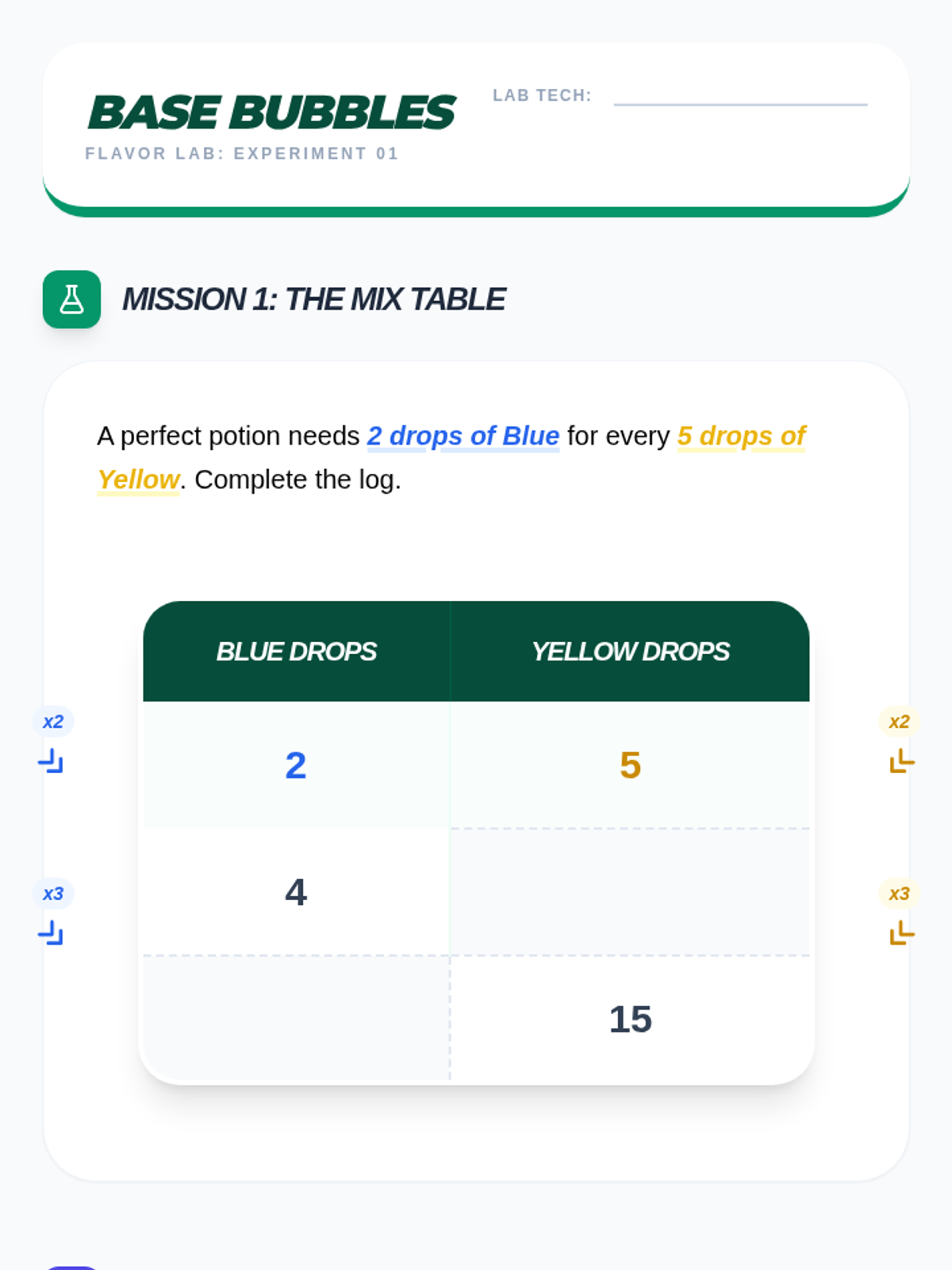
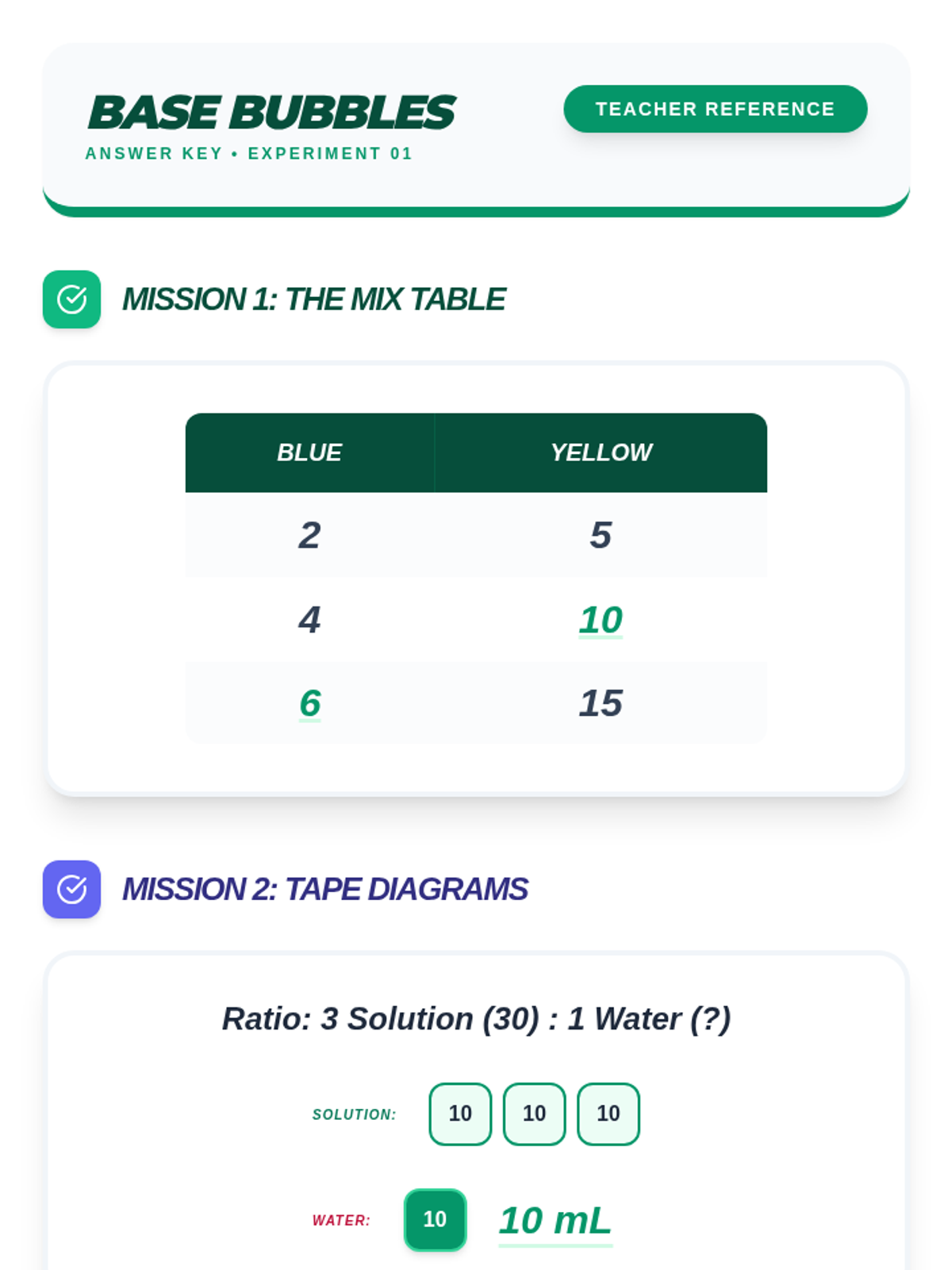
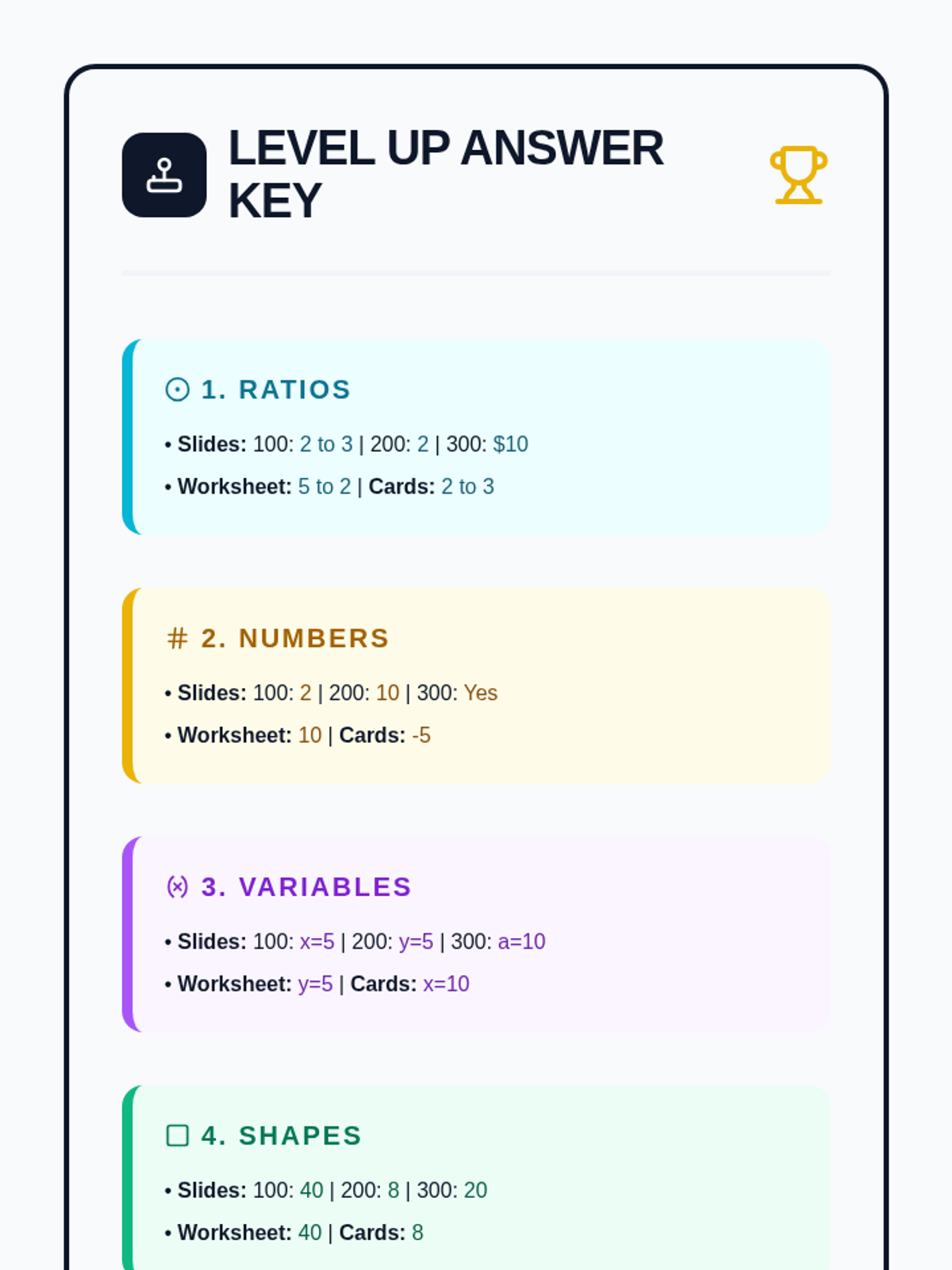
A comprehensive 12-lesson Tier 2 intervention sequence focused on 6th-grade ratio and proportion standards. Using High Leverage Concept strategies from the All Learners Network, this sequence moves from basic ratio language to complex unit rate and percent problems using visual models like tape diagrams and ratio tables.
A specialized intervention sequence designed for Algebra I students to master TEKS A2A and A6A, focusing on the domain and range of linear and quadratic functions through tiered small-group instruction.
A comprehensive geometry unit focused on rigid transformations: translations, reflections, and rotations. Students explore how shapes move across the coordinate plane while maintaining their size and shape.
A comprehensive math unit focusing on applying percentage calculations, sales tax, and multi-step budgeting to real-world scenarios. students act as event planners to manage a fixed budget while accounting for specific tax rates.
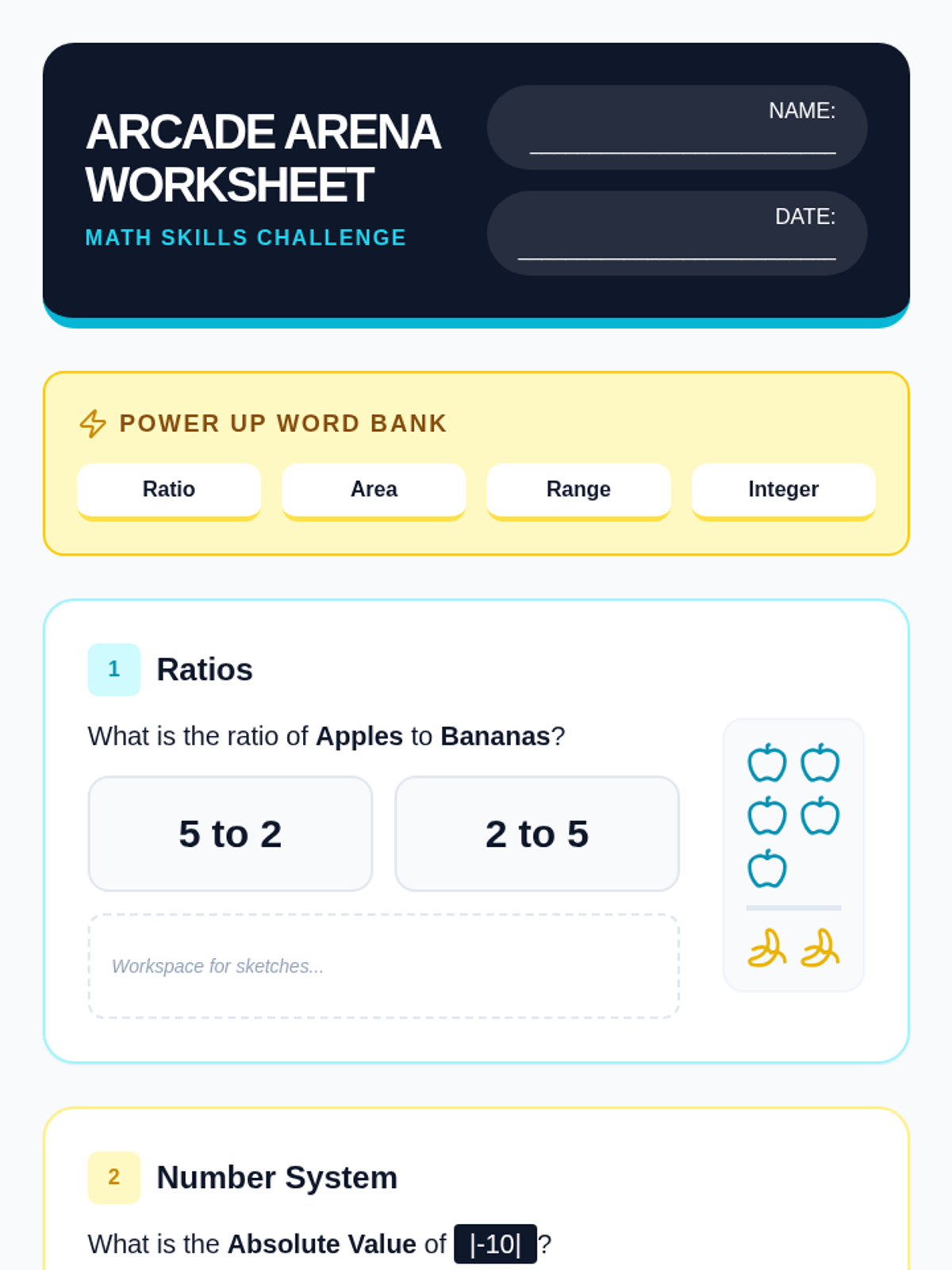
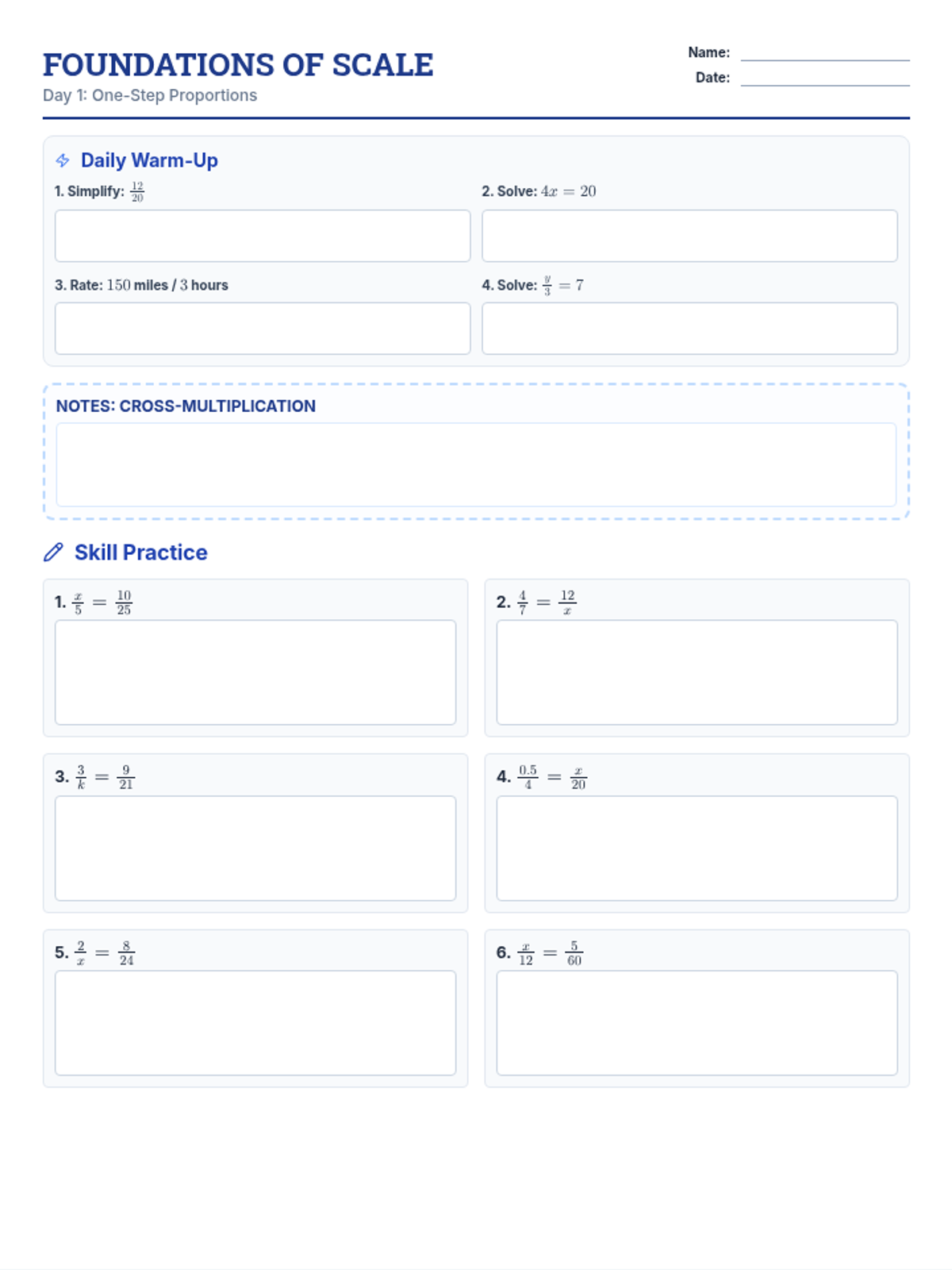
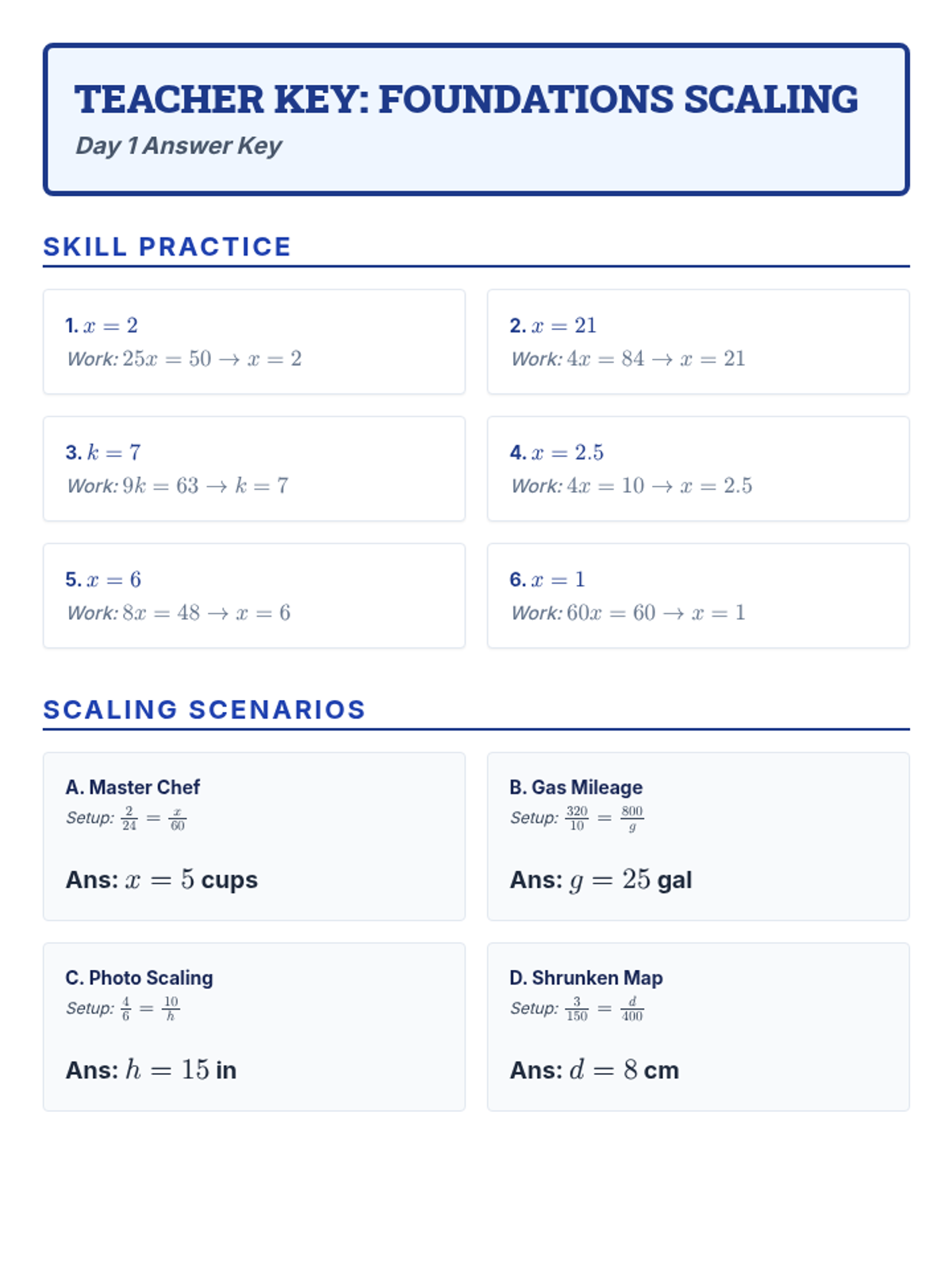
A math unit focused on understanding and applying ratios and proportions through visual methods, mental math strategies, and algorithmic problem-solving.
This lesson helps 8th-grade students determine the number of solutions in a system of equations using algebraic manipulation and visual shortcuts, moving from graphical understanding to algebraic mastery.
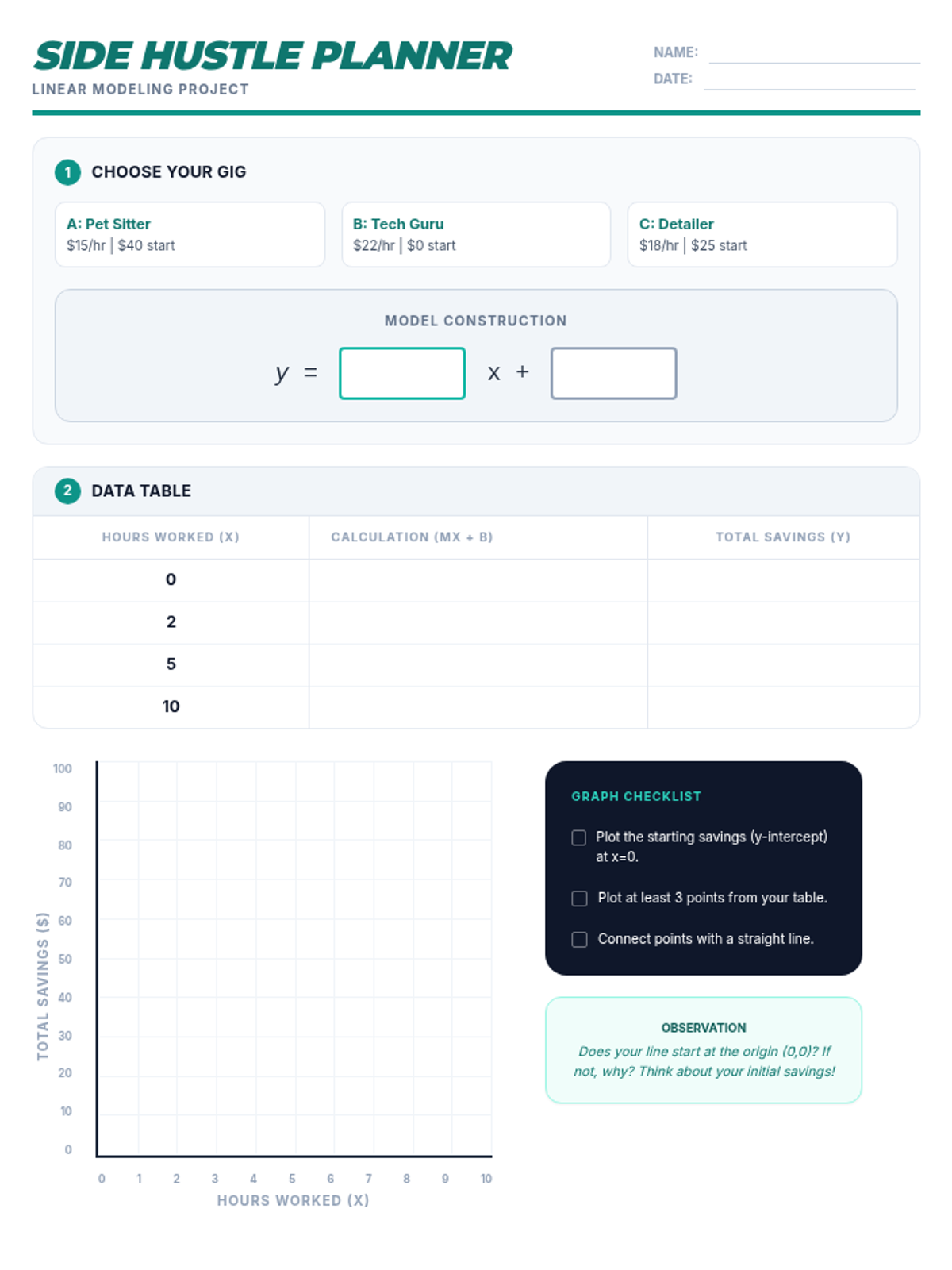
A sequence focused on visualizing linear functions through physical movement and spatial reasoning, designed for middle school students to master slope-intercept form.
A series of advanced mental math and historical algorithm lessons designed to build deep number sense and computational fluency in middle and high school students.
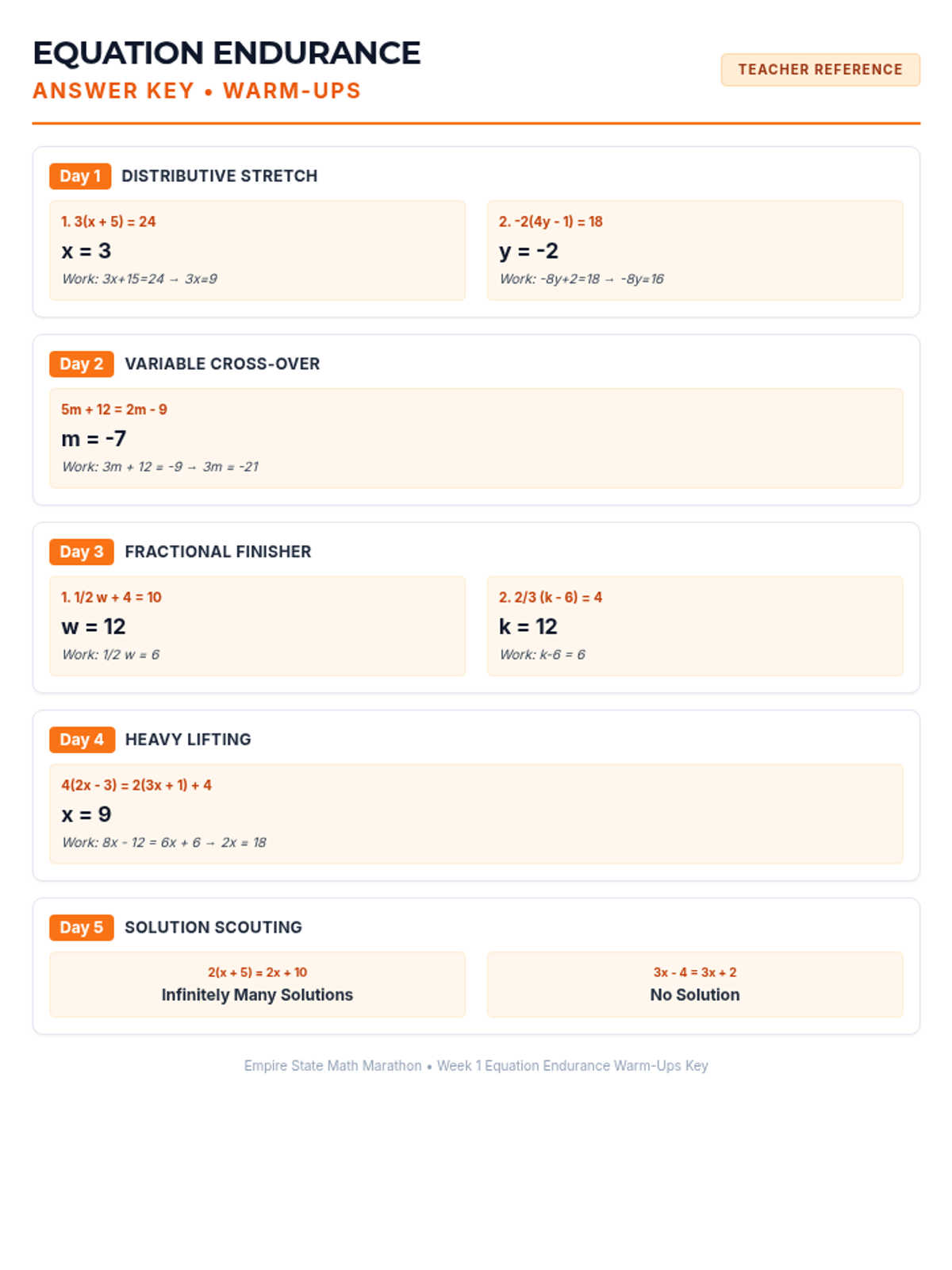
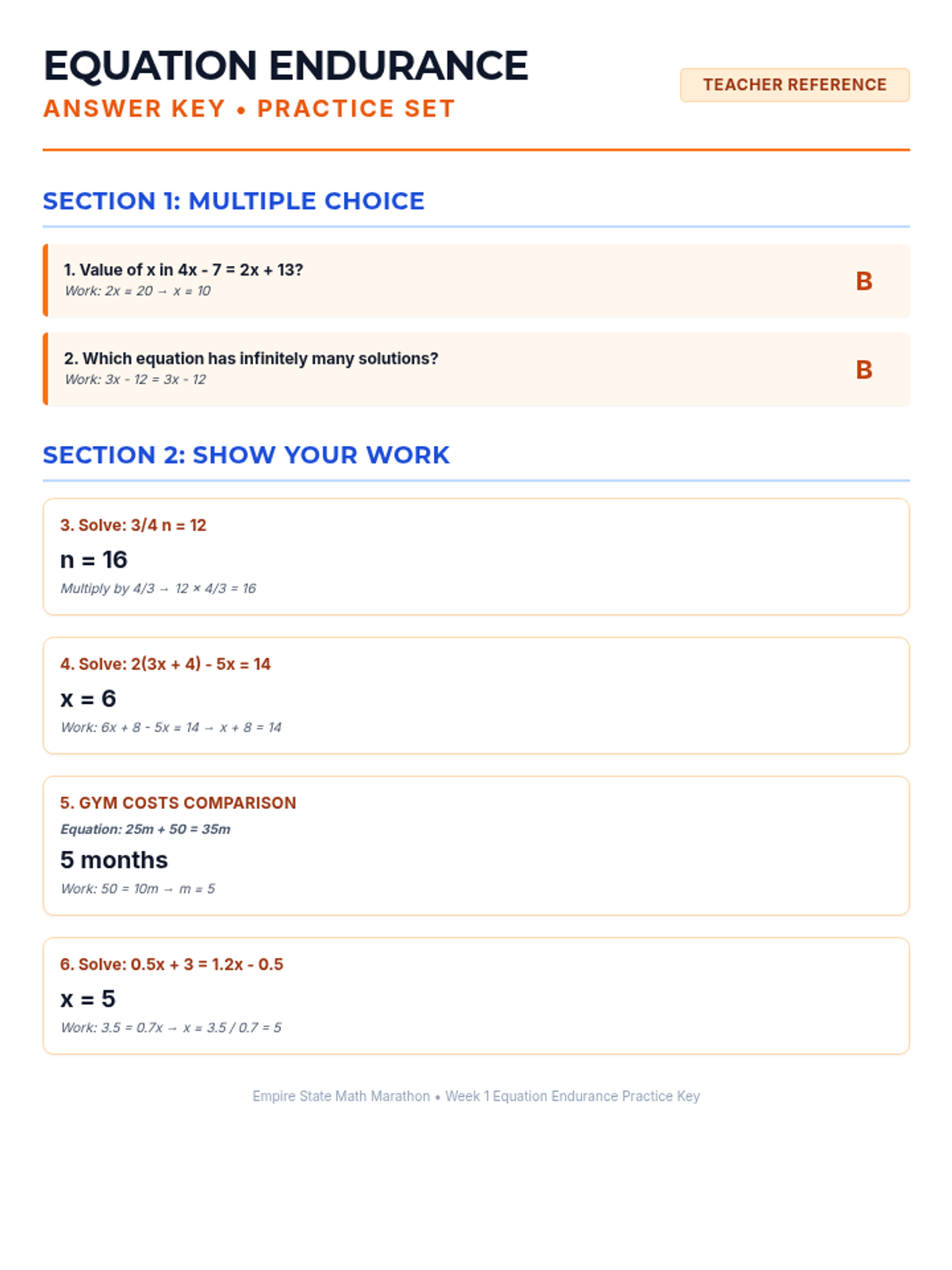
A Pre-Algebra unit focused on understanding the nature of linear equations and their solutions. Students explore how the structure of an equation determines whether it has one, none, or infinite solutions, connecting algebraic results to geometric representations.
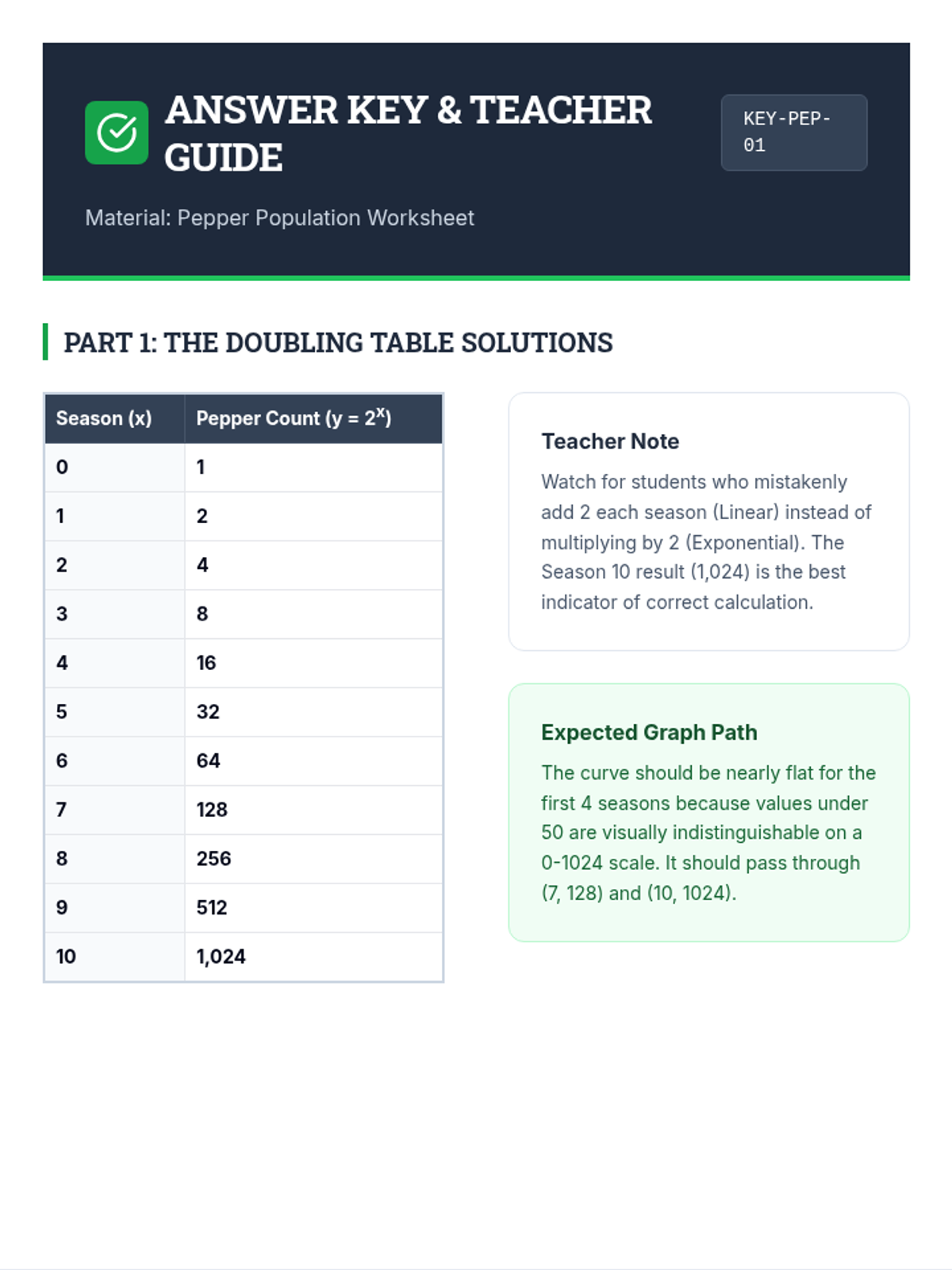
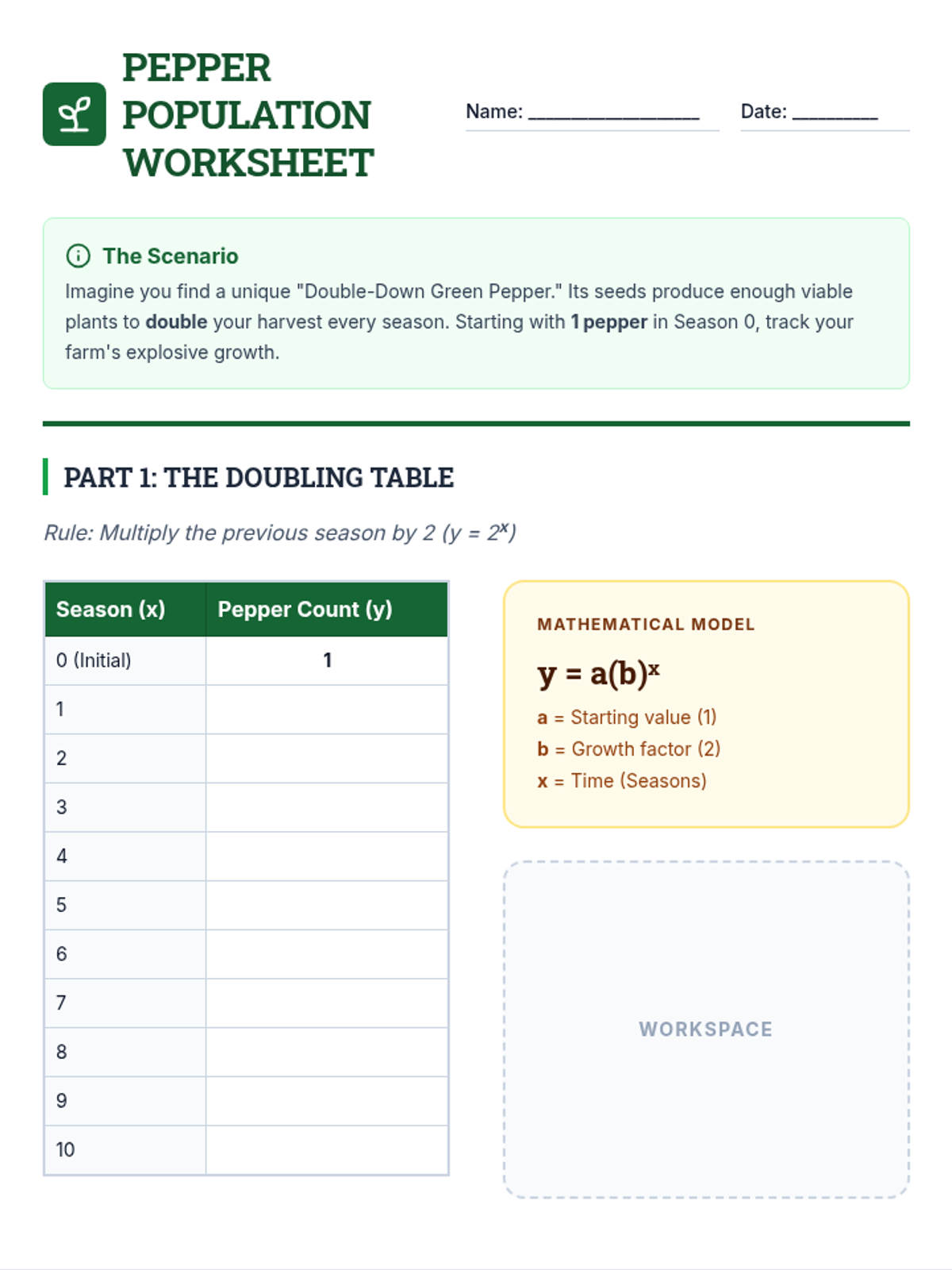
A series of lessons exploring exponential functions, their components, graphs, and real-world applications in Algebra 1.
A lesson sequence focusing on advanced factoring techniques, specifically targeting the difference of squares with higher-degree exponents (4, 6, 8) through visual recognition and verification.
A targeted math intervention sequence focused on remediating GCF gaps using a visual, color-coded prime factorization strategy. This sequence emphasizes the efficiency of prime factorization over listing factors for larger numbers.
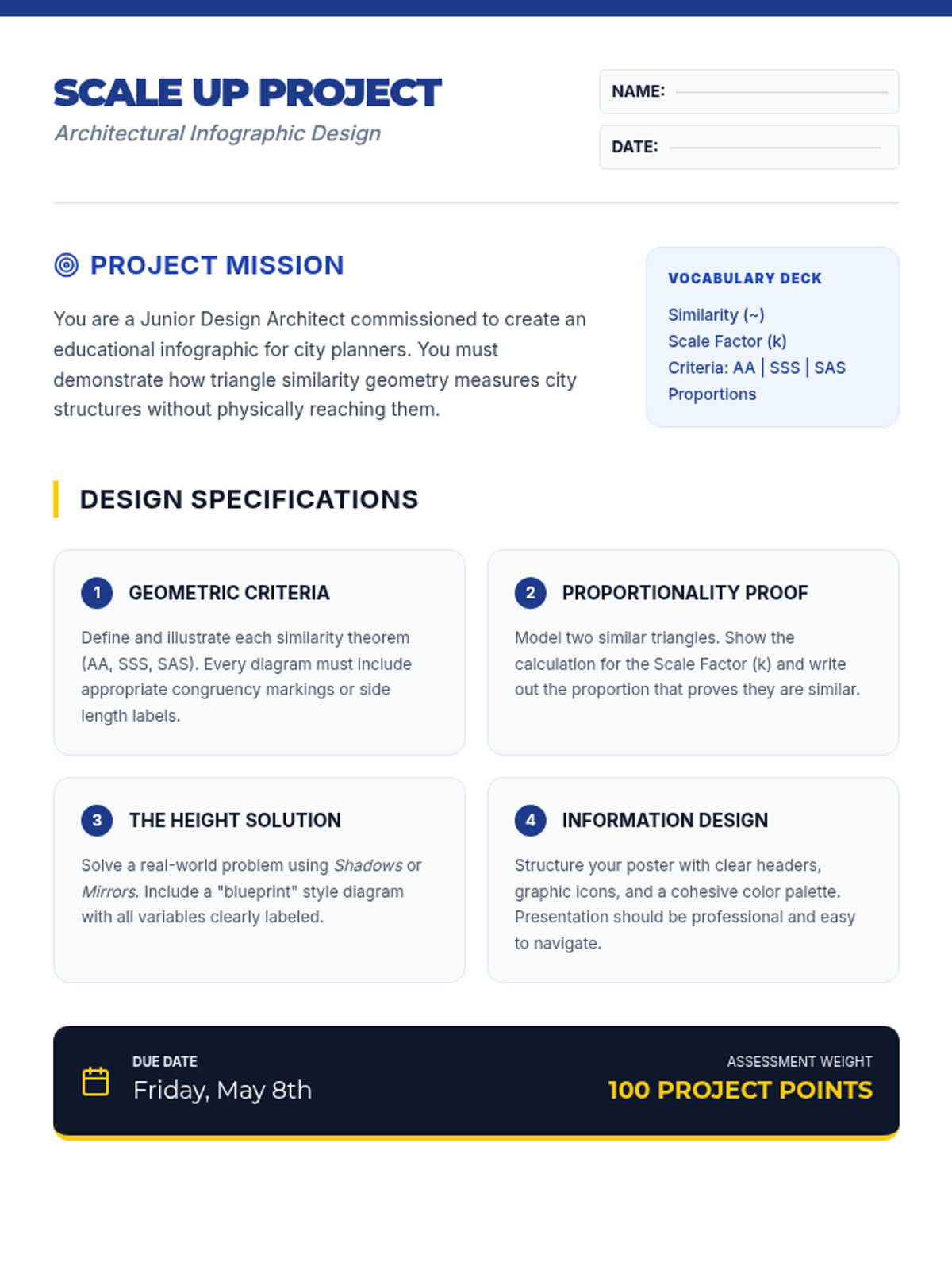
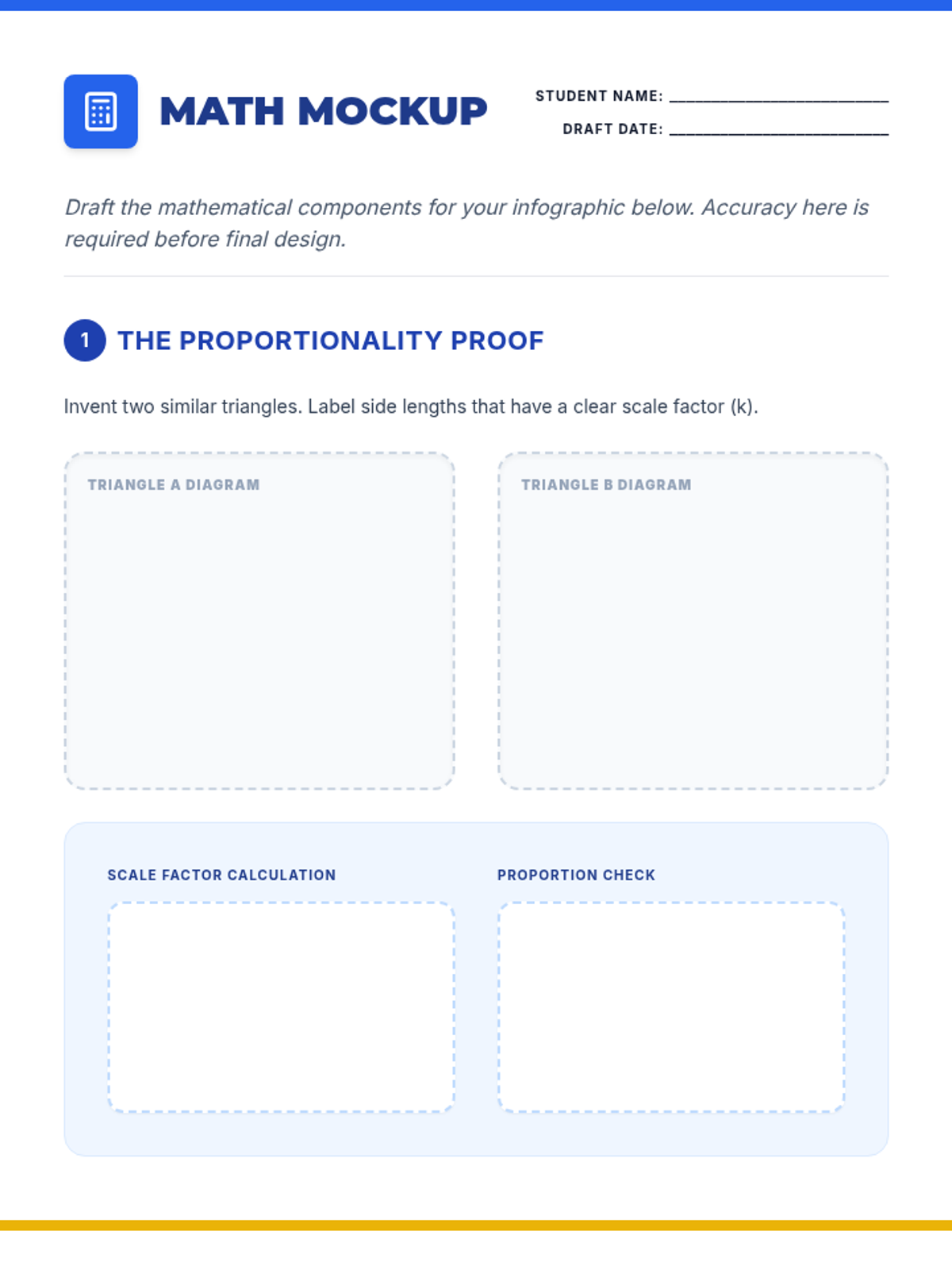
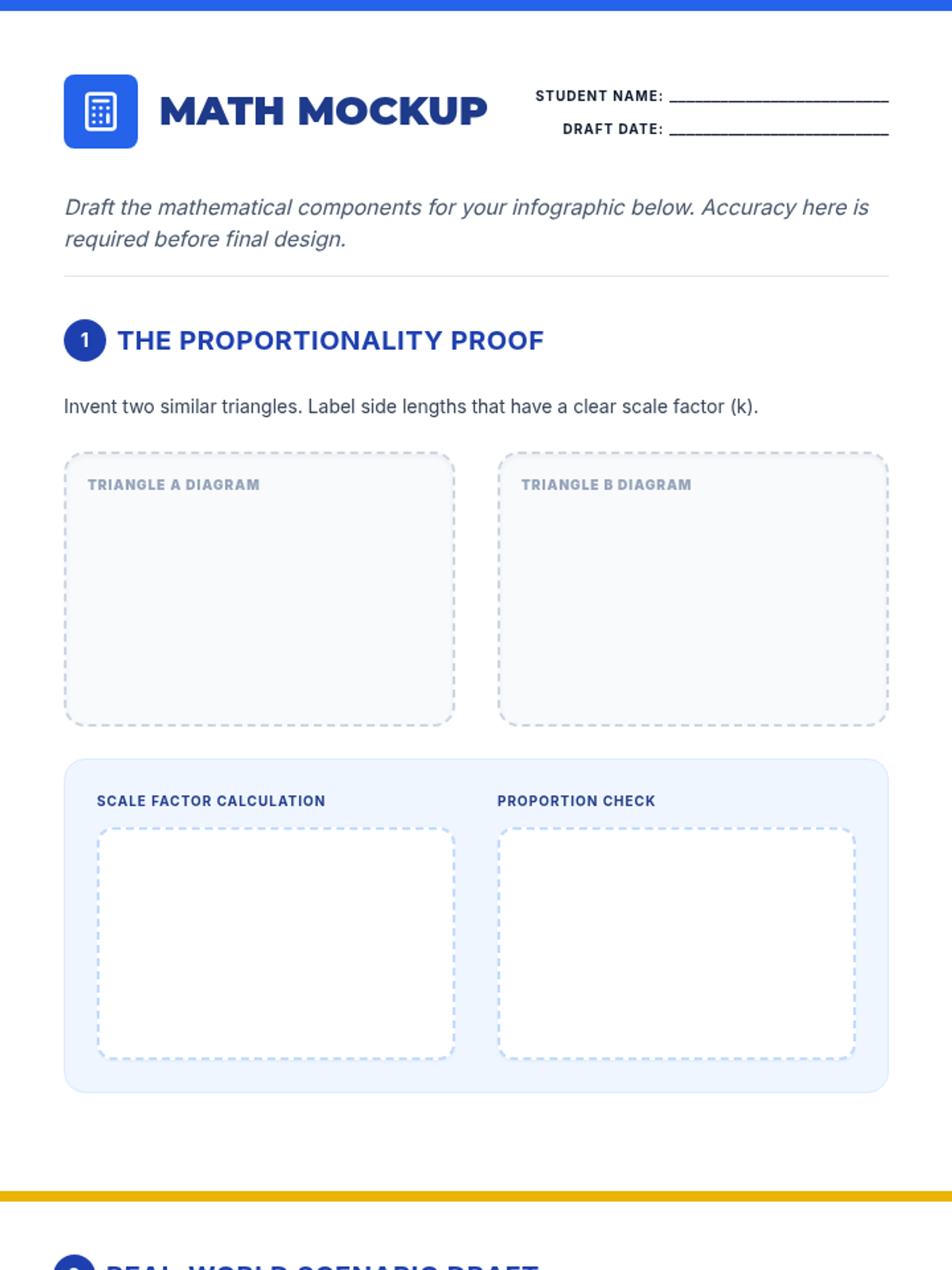
A lesson sequence focusing on geometry and proportions, specifically how side lengths and perimeters change according to a scale factor (enlargement ratio).
A high-level Honors Algebra lesson focused on complex recursive sequences where students analyze notation, explore the Fibonacci sequence, and engage in a 'Sequence Maker' activity to reverse-engineer formulas.
A specialized unit on advanced exponent rules, focusing on simplifying complex algebraic expressions involving fractions and negative powers.
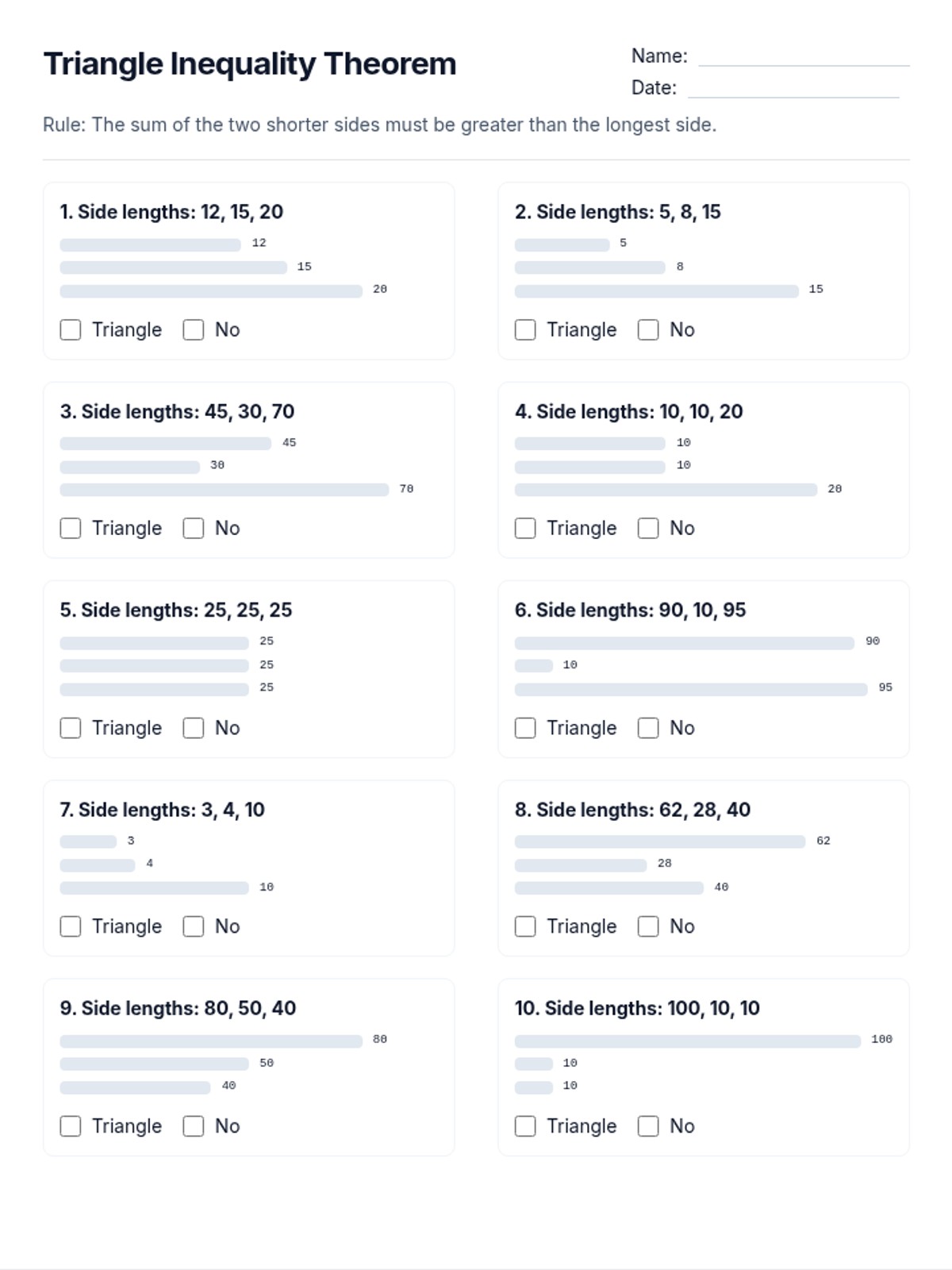
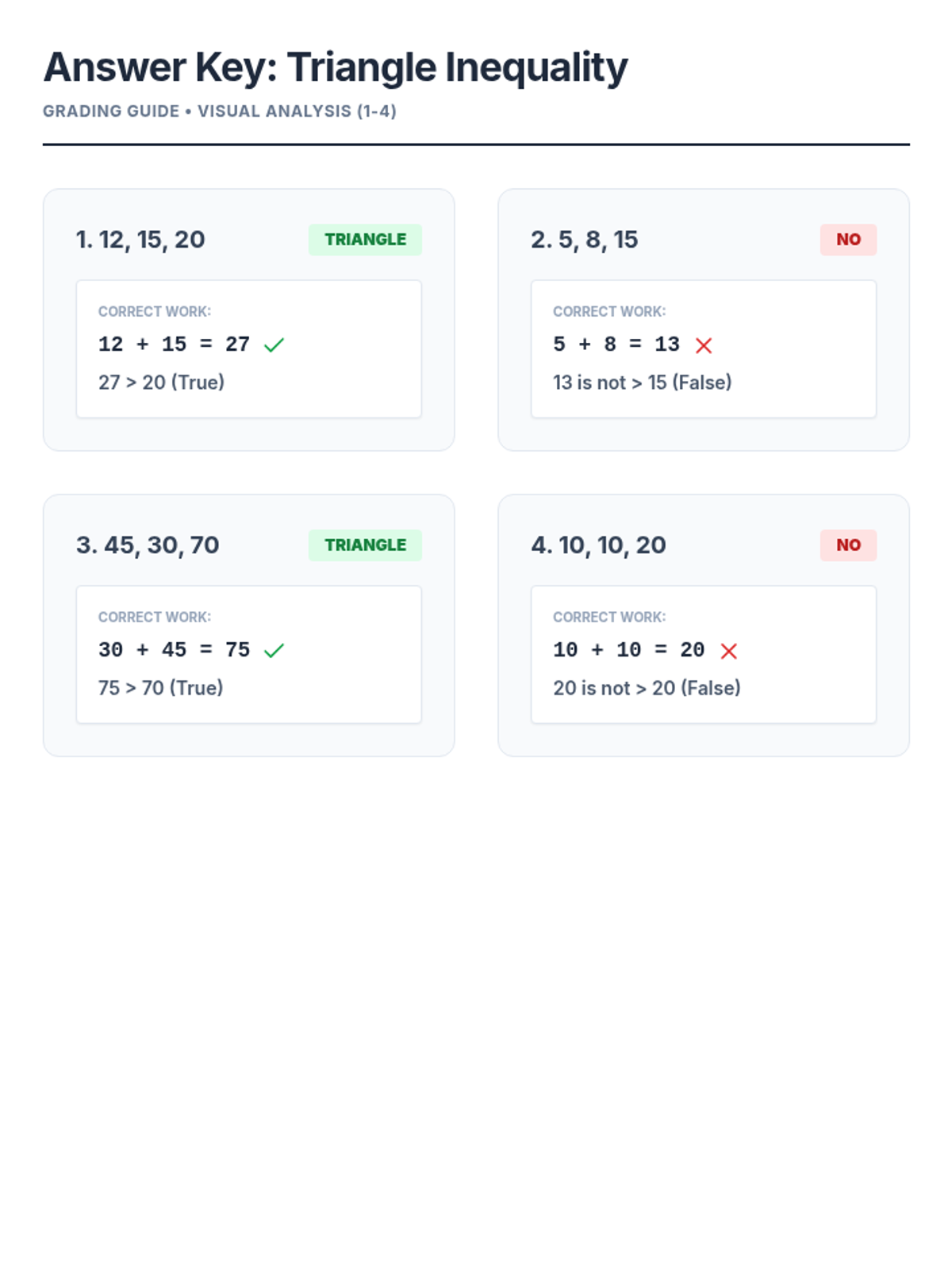
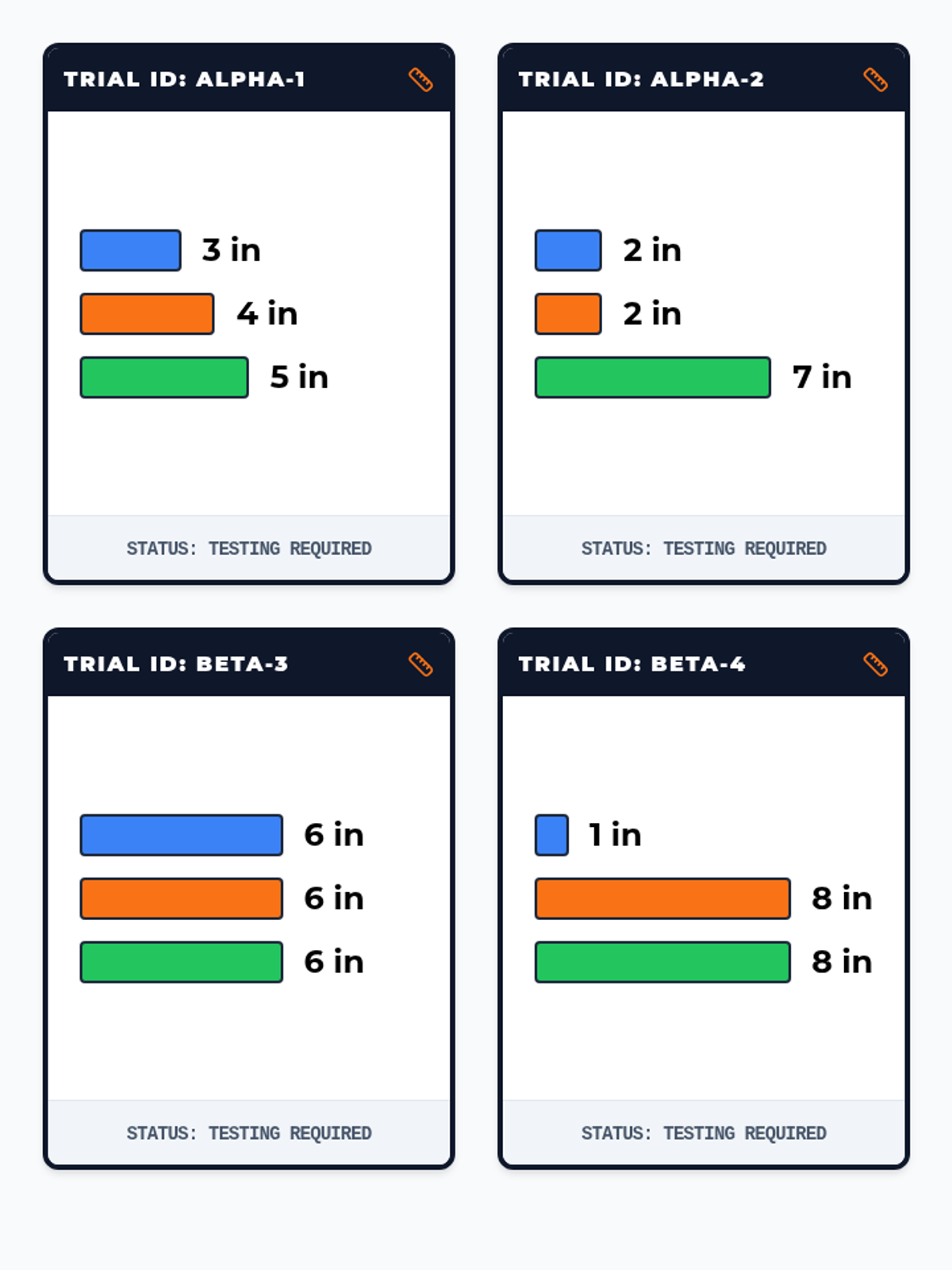
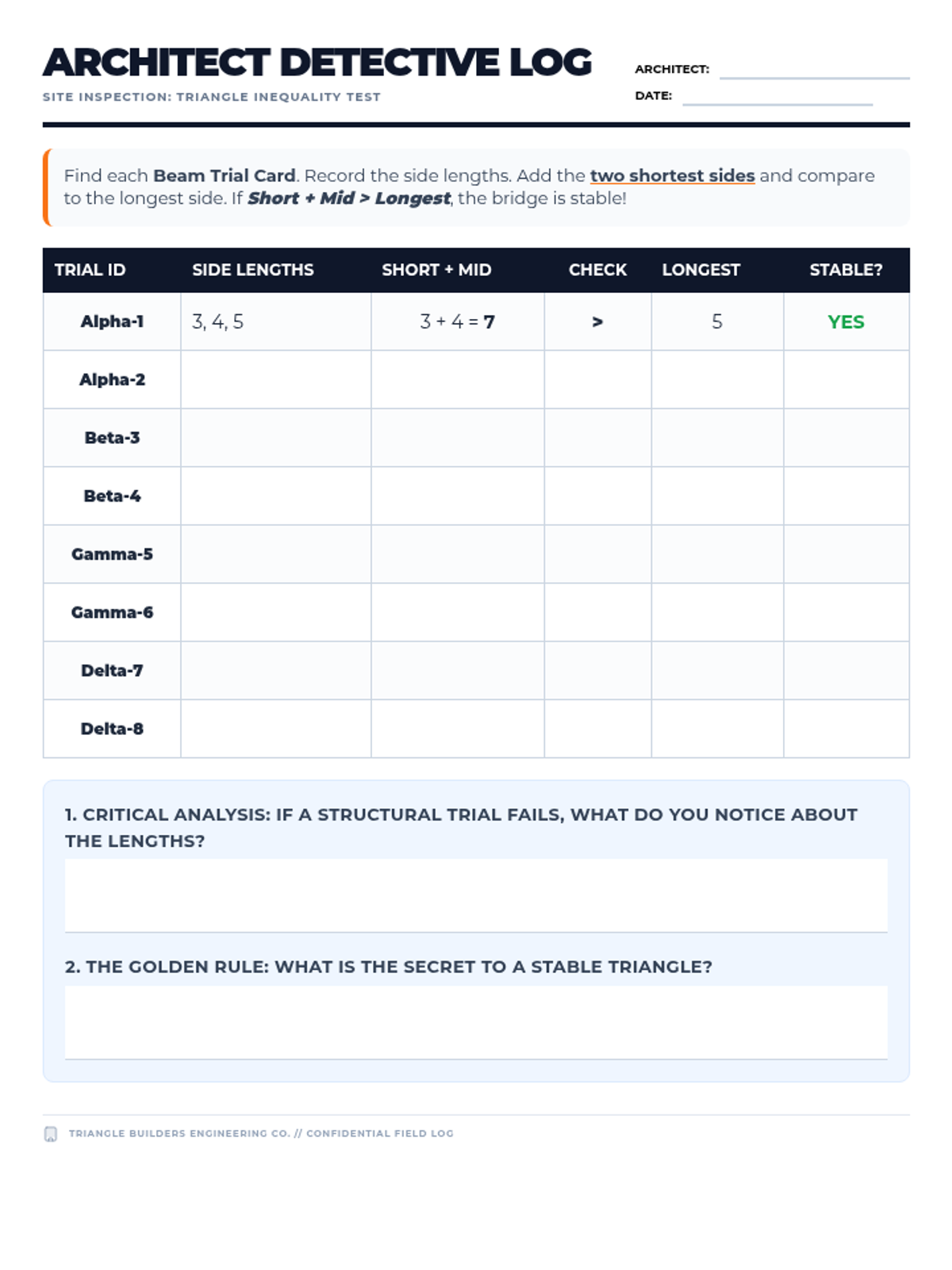
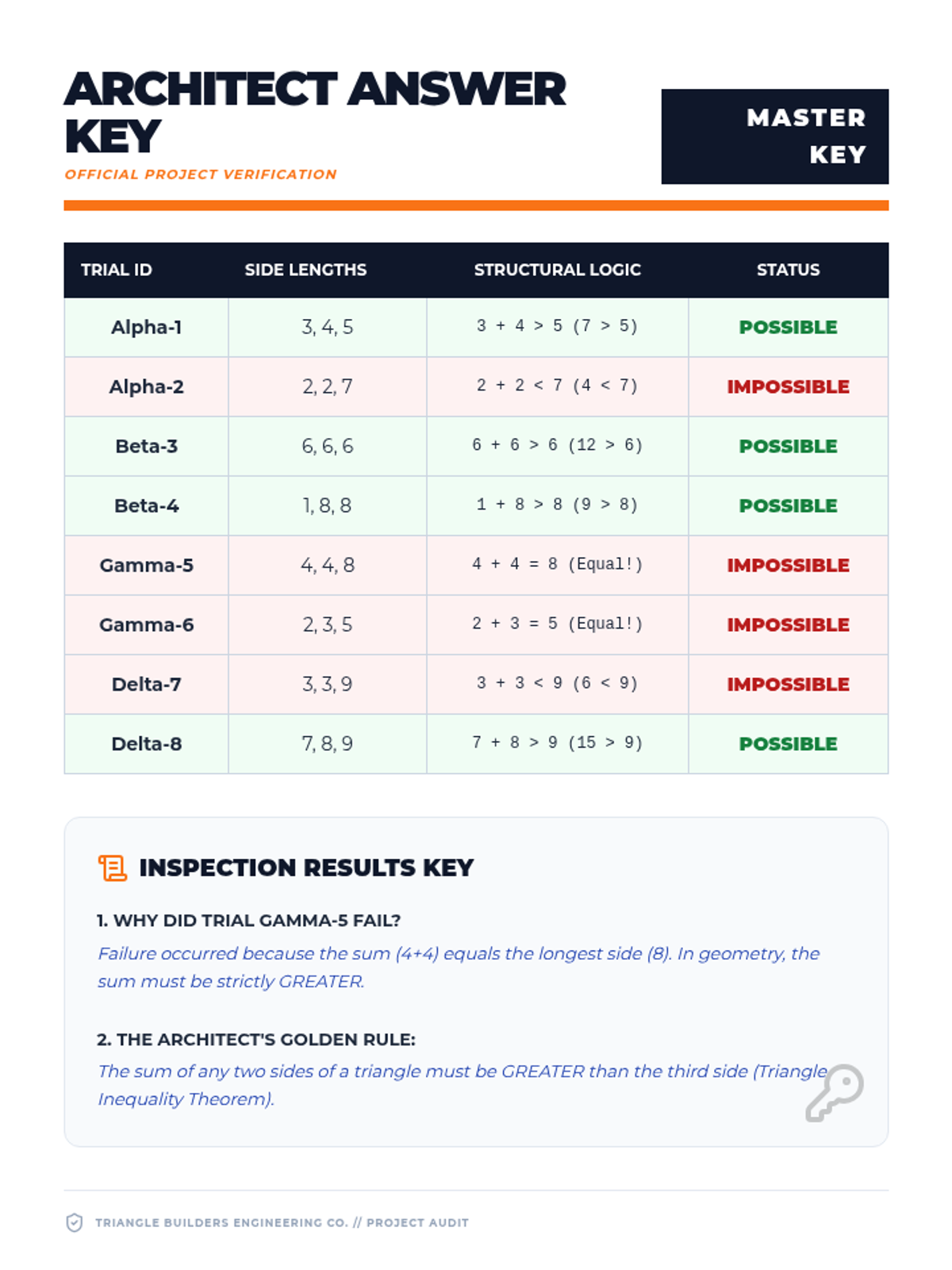
This 8th Grade Math sequence explores the properties of triangles, focusing on the Triangle Angle Sum Theorem and its applications in algebraic problem-solving. Students progress from hands-on measurement to complex multi-step relay challenges.
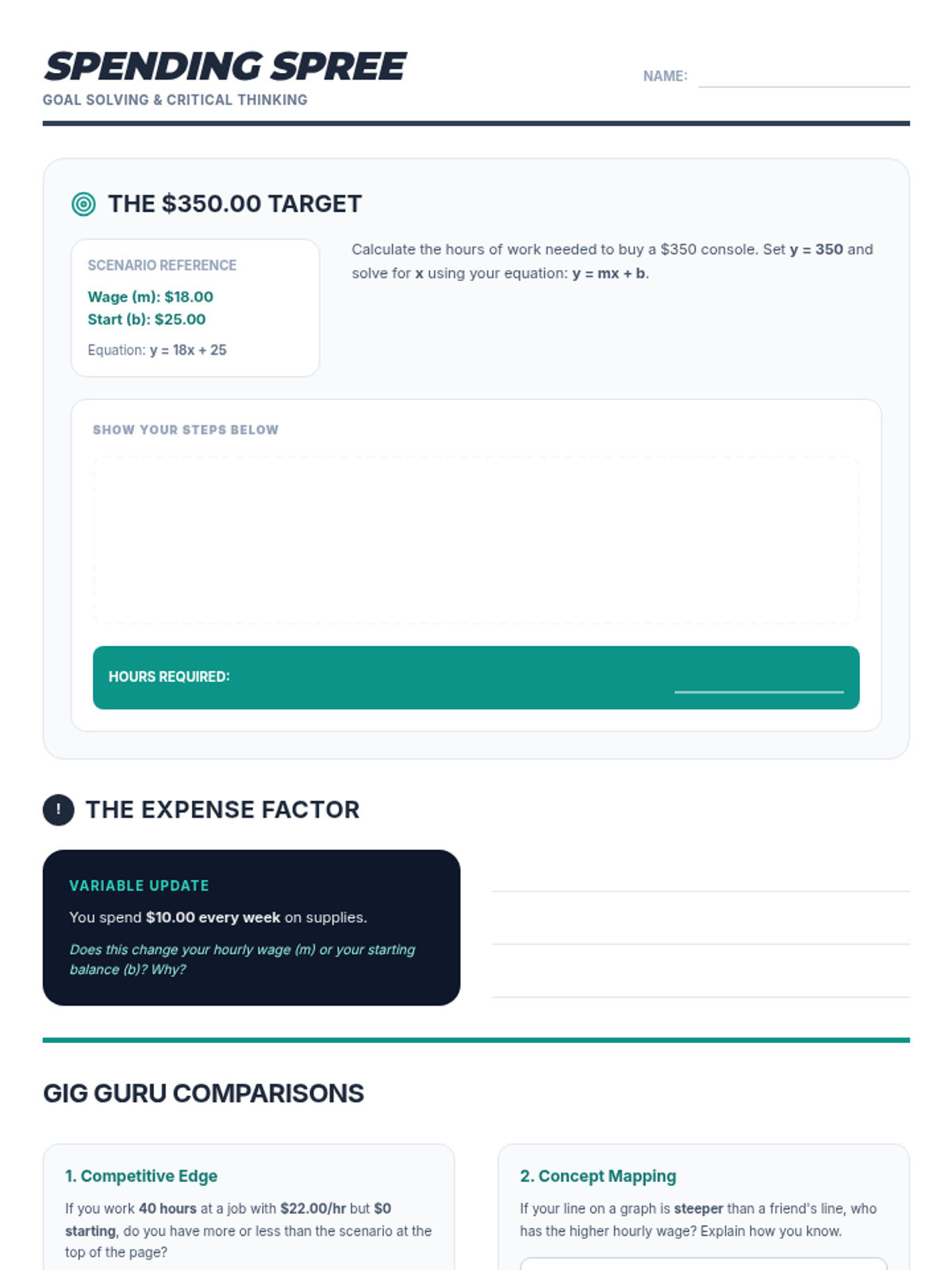
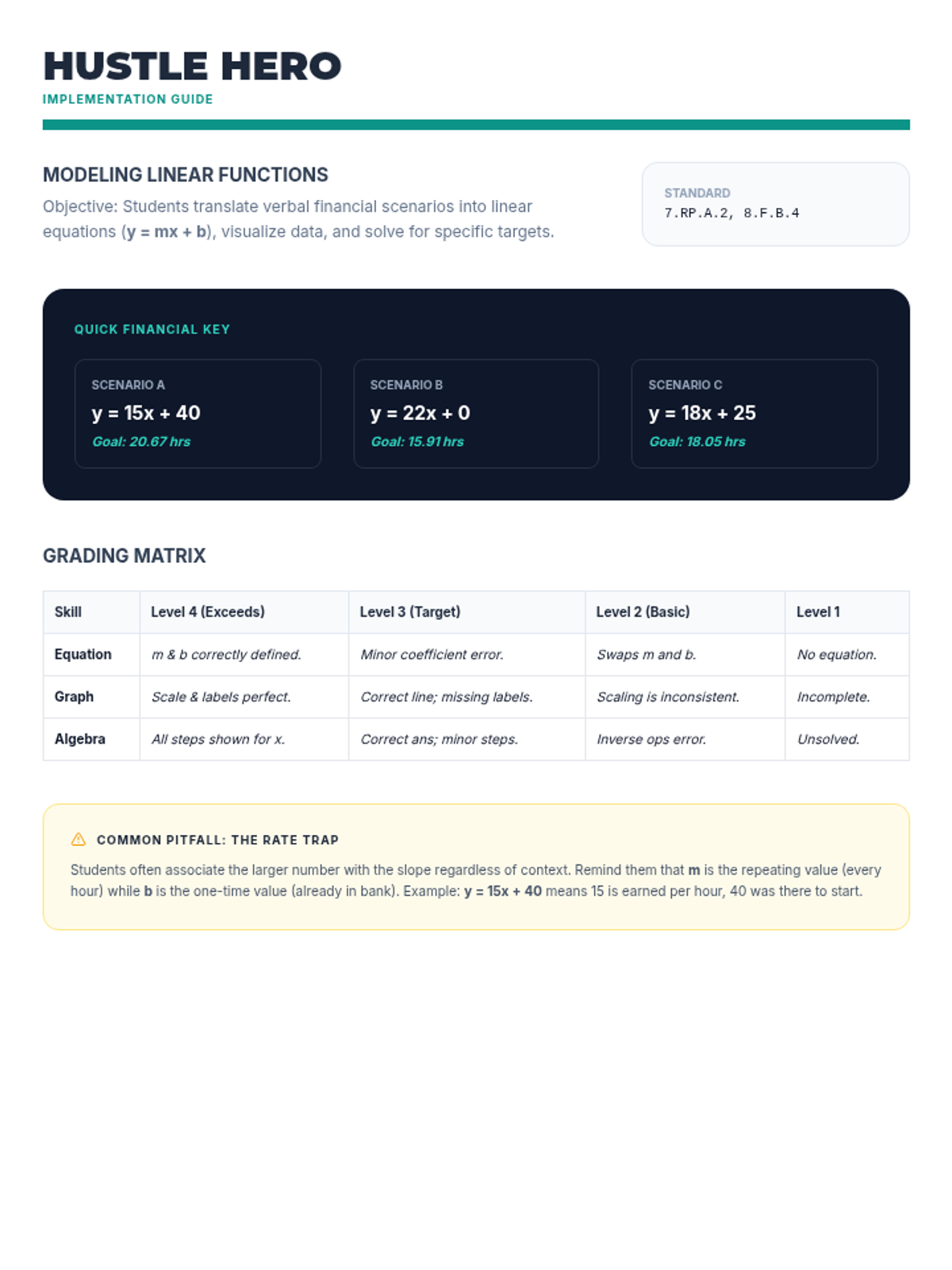
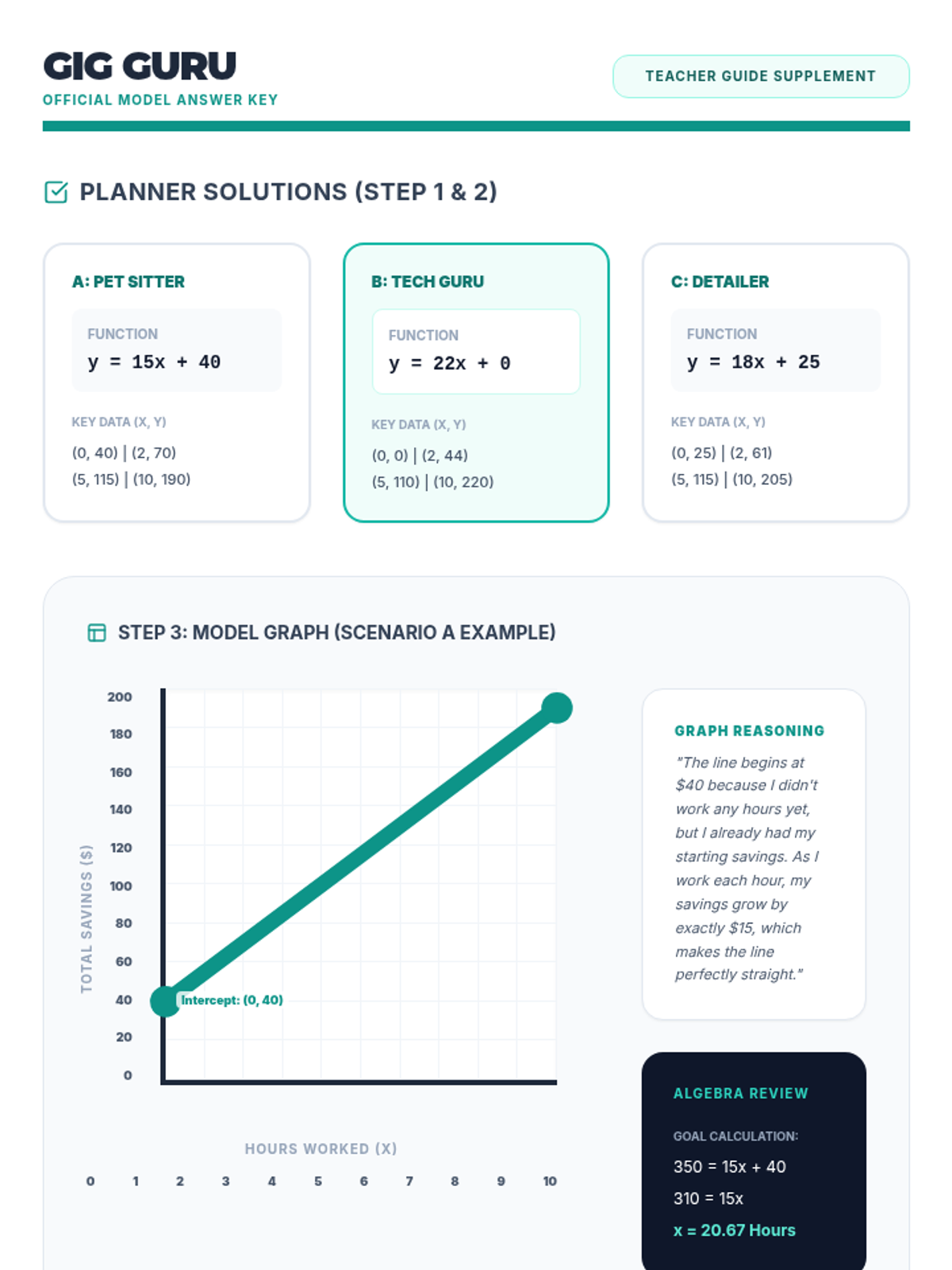
A series of Algebra I support lessons designed to address fundamental misconceptions in linear functions through interactive, theme-based activities.
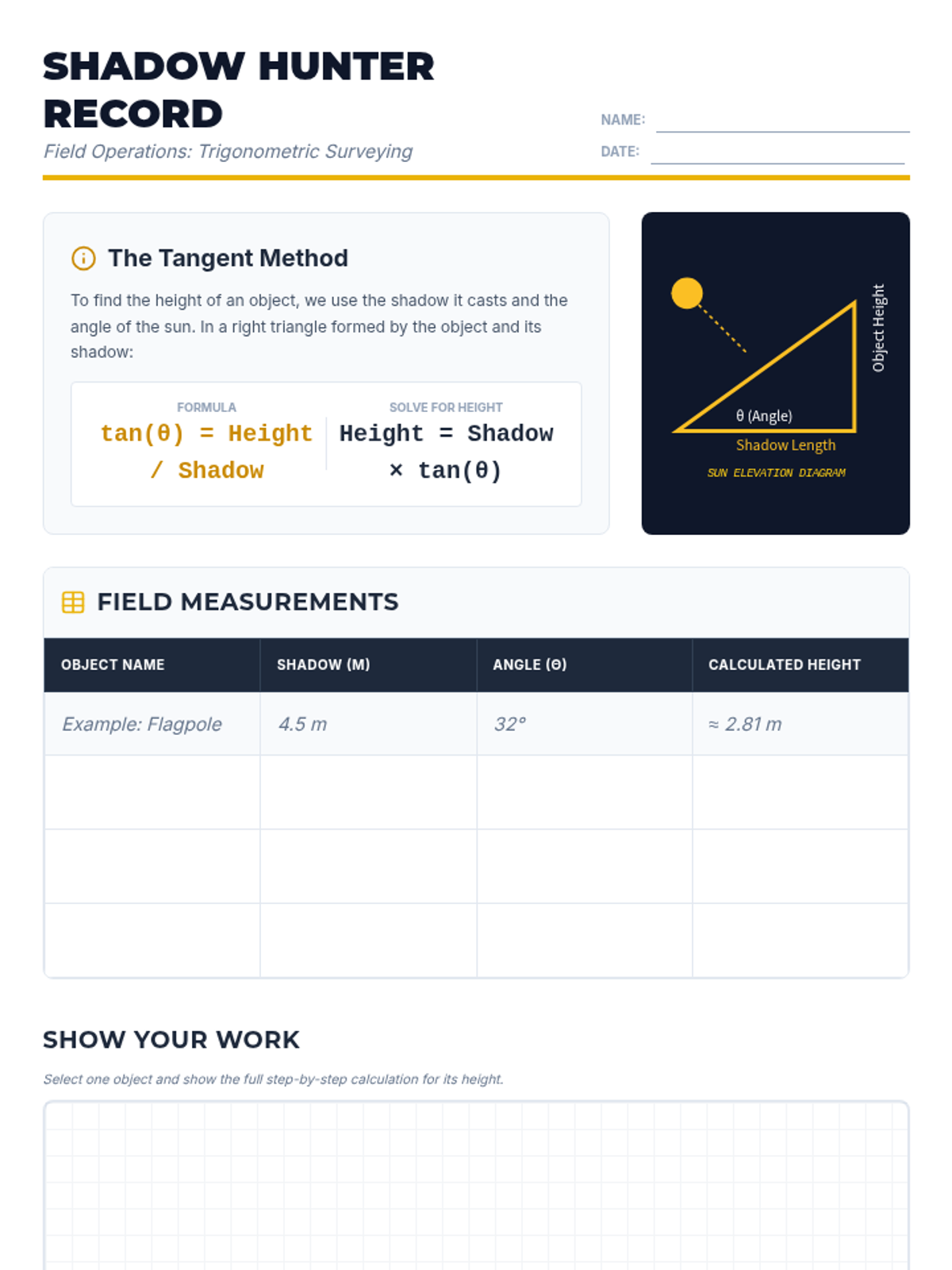
A specialized unit exploring the geometric properties of slope, connecting algebraic rates of change to trigonometric functions and the geometry of inclination.
A unit focused on applying percentages to real-world financial contexts, including discounts, markups, and interest.
A remedial math sequence focused on clarifying misconceptions between integer addition and multiplication rules through conceptual visualization and active sorting.
A middle school algebra lesson focused on identifying terms, combining like terms, and recognizing equivalent expressions through video analysis and a matching card game.
A targeted remediation sequence focused on identifying, analyzing, and correcting high-frequency algebra errors in polynomial operations.
A lesson sequence focusing on financial literacy and the practical application of percentage decrease through real-world shopping scenarios and discount calculations.
A series of lessons focused on mastering algebraic and numerical fractions through visual strategies and structural simplification.
A lesson sequence focusing on modeling real-world business scenarios using two-step inequalities, centered around the concepts of profit, revenue, and cost.
A focused unit on mastering the volume of cones, specifically identifying and correcting common calculation errors like the 'diameter trap'.
A music and math integration lesson where students learn algebraic concepts through rap and create their own math-themed mnemonics or rhymes.
A comprehensive lesson on calculating slope using both the algebraic formula and the visual rise-over-run method, featuring guided video notes and a competitive group activity.
A Pre-Algebra sequence focused on mastering the distributive property through visual analogies, emoji-based patterns, and color-coded modeling. Students transition from concrete sushi and emoji examples to abstract algebraic expressions.
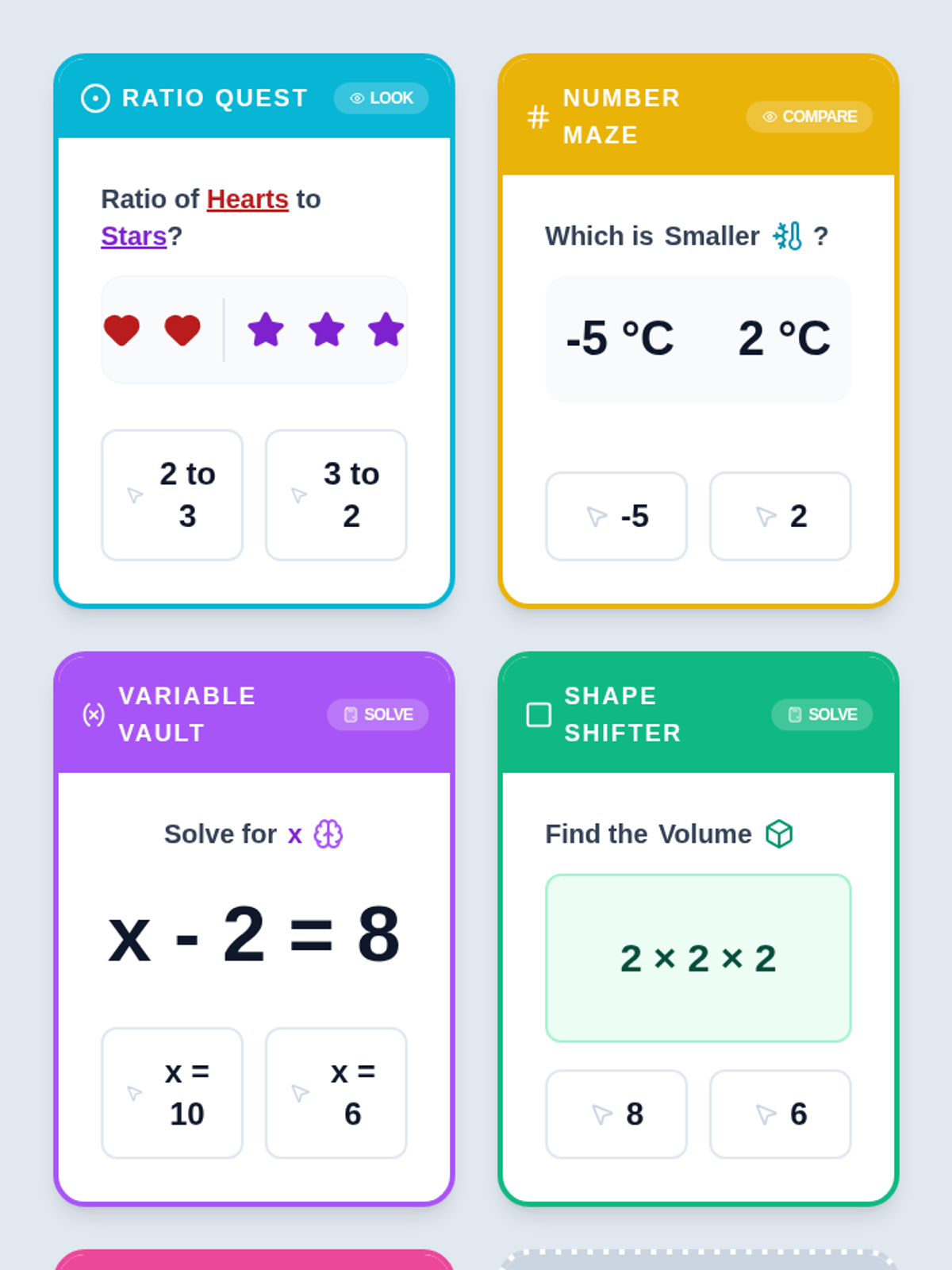
A middle school mathematics unit focused on proportional reasoning, ratio analysis, and multi-representation of numerical relationships.
A unit focused on mastering the number system, starting with integer basics and moving toward complex operations and coordinate planes.