An updated answer key and teacher facilitation guide for the Word Wonder Worksheet. Includes revised answer and rationale for Question 3 to match the updated worksheet content.
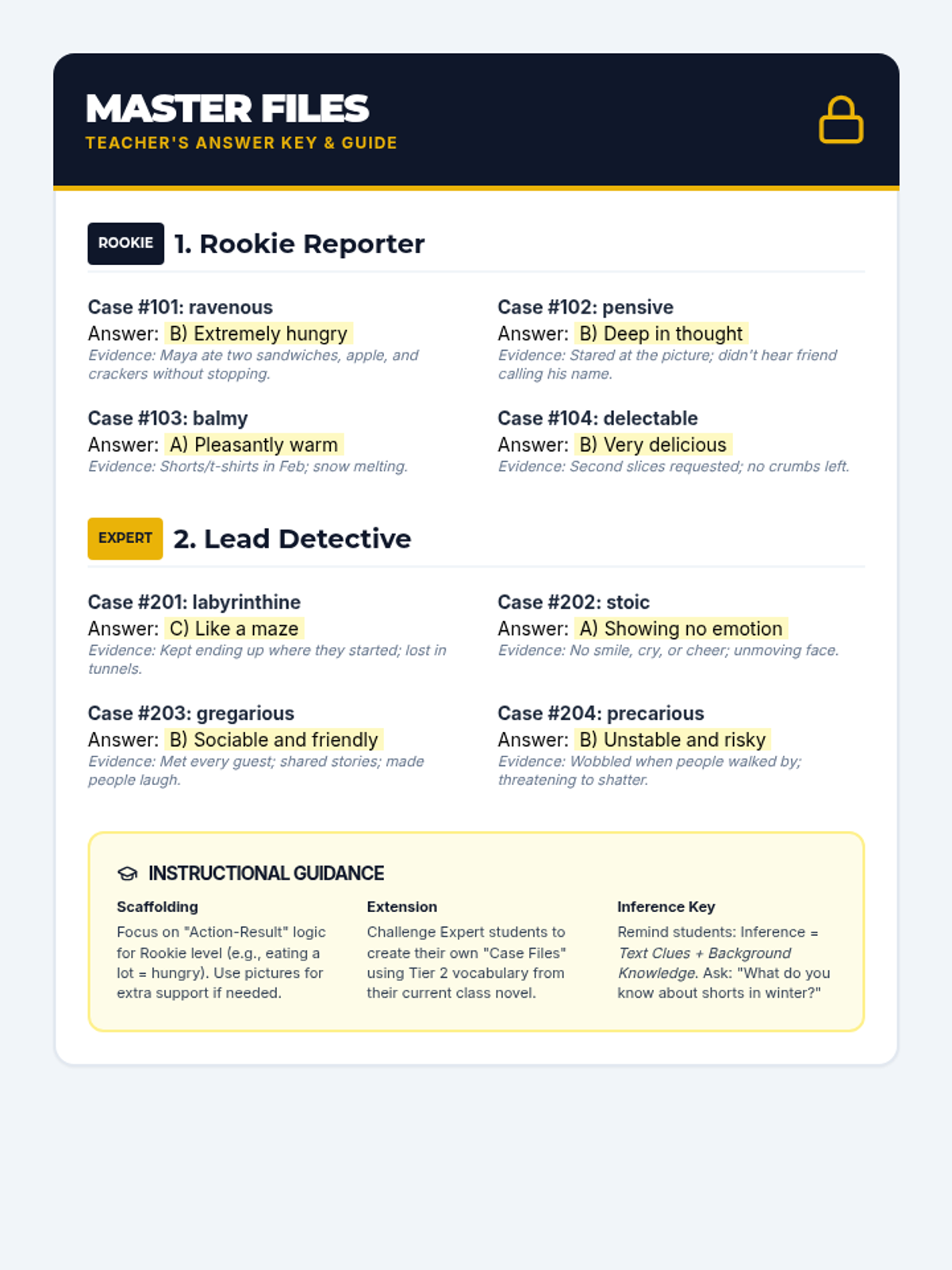
A comprehensive answer key and teacher guide for the Rookie Reporter and Lead Detective worksheets. Includes correct answers, sample textual evidence, and instructional tips for scaffolding and extension.
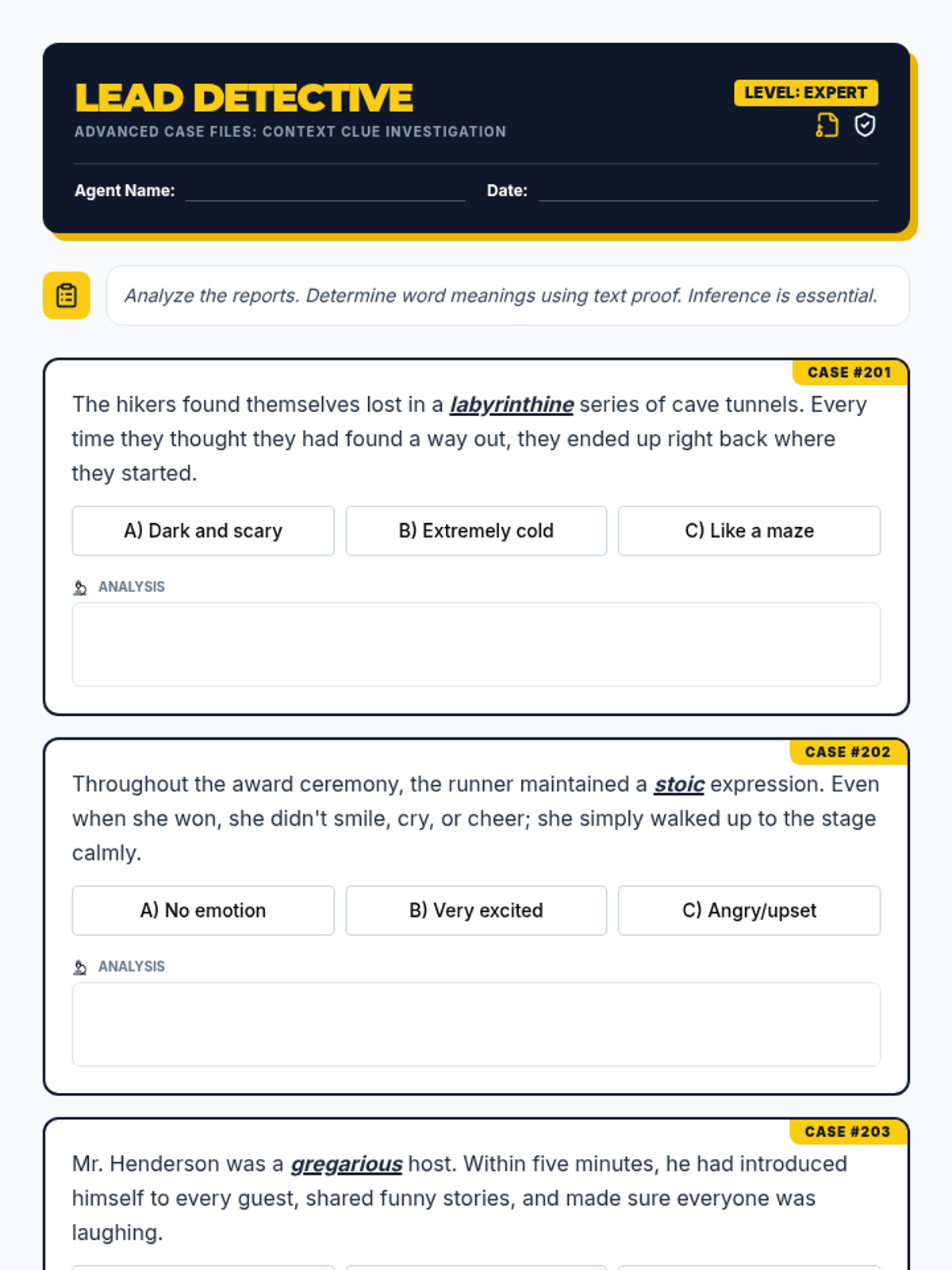
An at-grade level worksheet featuring four short stories focused on sophisticated inference-based vocabulary (labyrinthine, stoic, gregarious, precarious). Requires students to identify meanings and provide 'Evidence Analysis' for their choices.
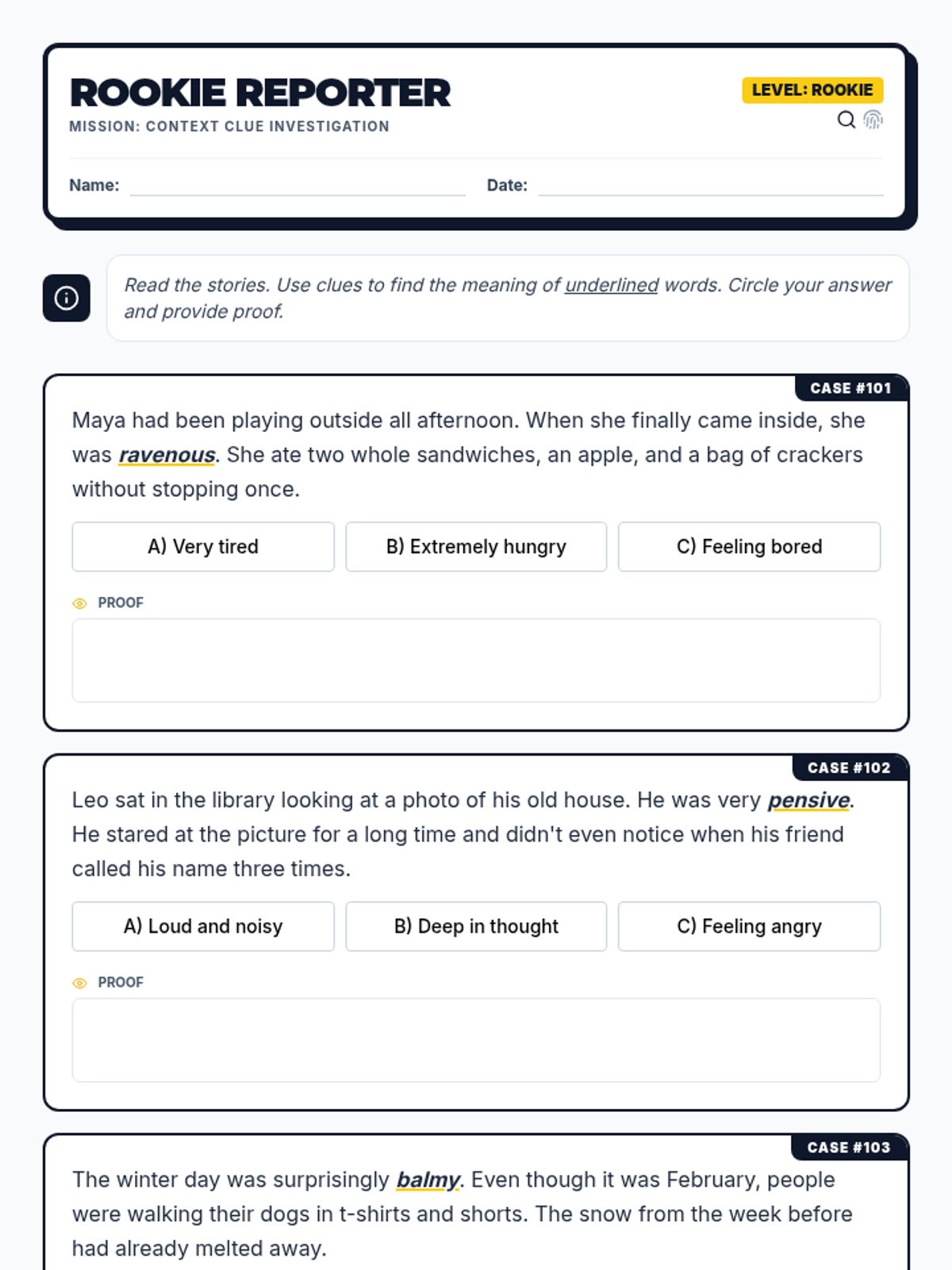
A below-grade level worksheet featuring four short stories focused on inference-based context clues (ravenous, pensive, balmy, delectable). Includes multiple-choice answers and space for students to provide textual evidence for their inferences.
An engaging slide deck introducing inference-based context clues with a detective theme. Includes a definition, a breakdown of how to infer meaning, a practice example, and a student 'toolbelt' for solving vocabulary mysteries.
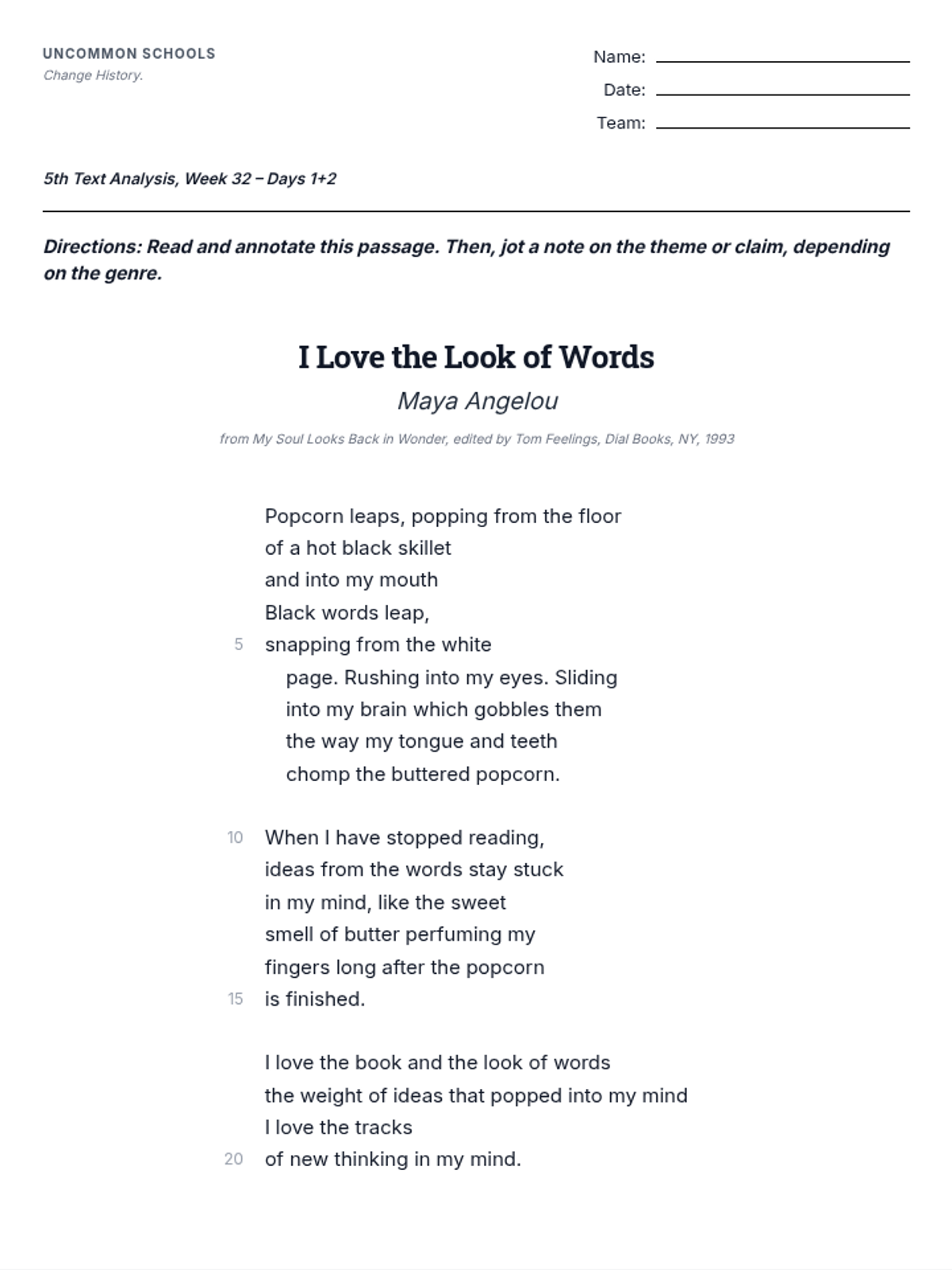
A student worksheet for the poem 'I Love the Look of Words' by Maya Angelou. It includes the text of the poem, discussion areas, and three multiple-choice questions focusing on explicit details and inferences (Standard RI.5.1). Question 3 has been revised to focus on what a specific set of lines mainly suggests.
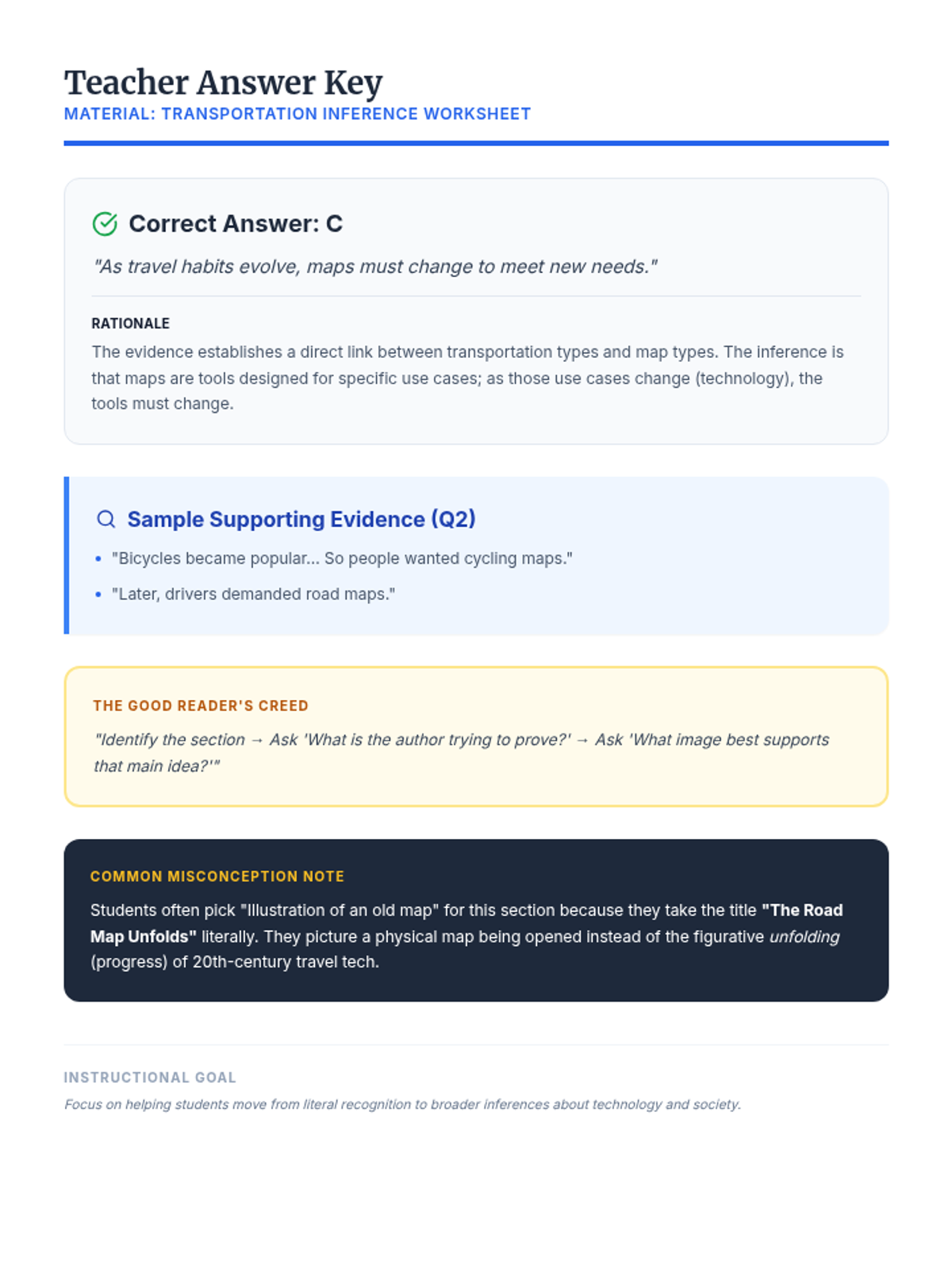
Teacher answer key for the Transportation Inference Worksheet, providing rationale for the correct inference and sample supporting evidence from the text. Includes strategy reference and instructional goal.
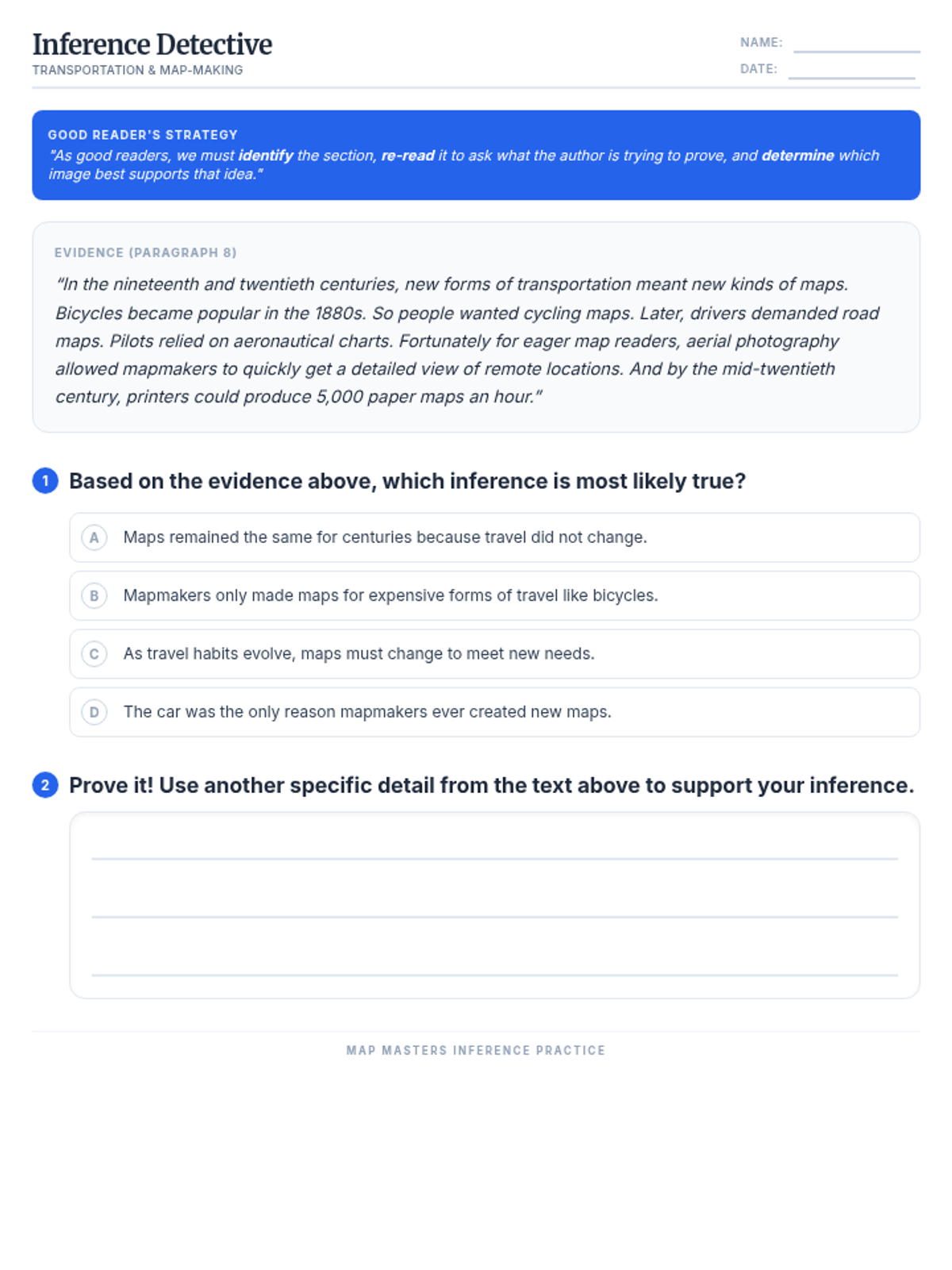
An inference practice worksheet based on the quote from 'Picturing Our Planet' regarding the relationship between transportation and map-making. Includes a multiple-choice question and an evidence-based writing prompt. Updated with strategy reminder and improved layout.
A strategy guide featuring a unified 'Good Reader's Creed' for identifying the best visual aids to support an informational text. Synthesizes the identification of sections, main idea analysis, and image matching.
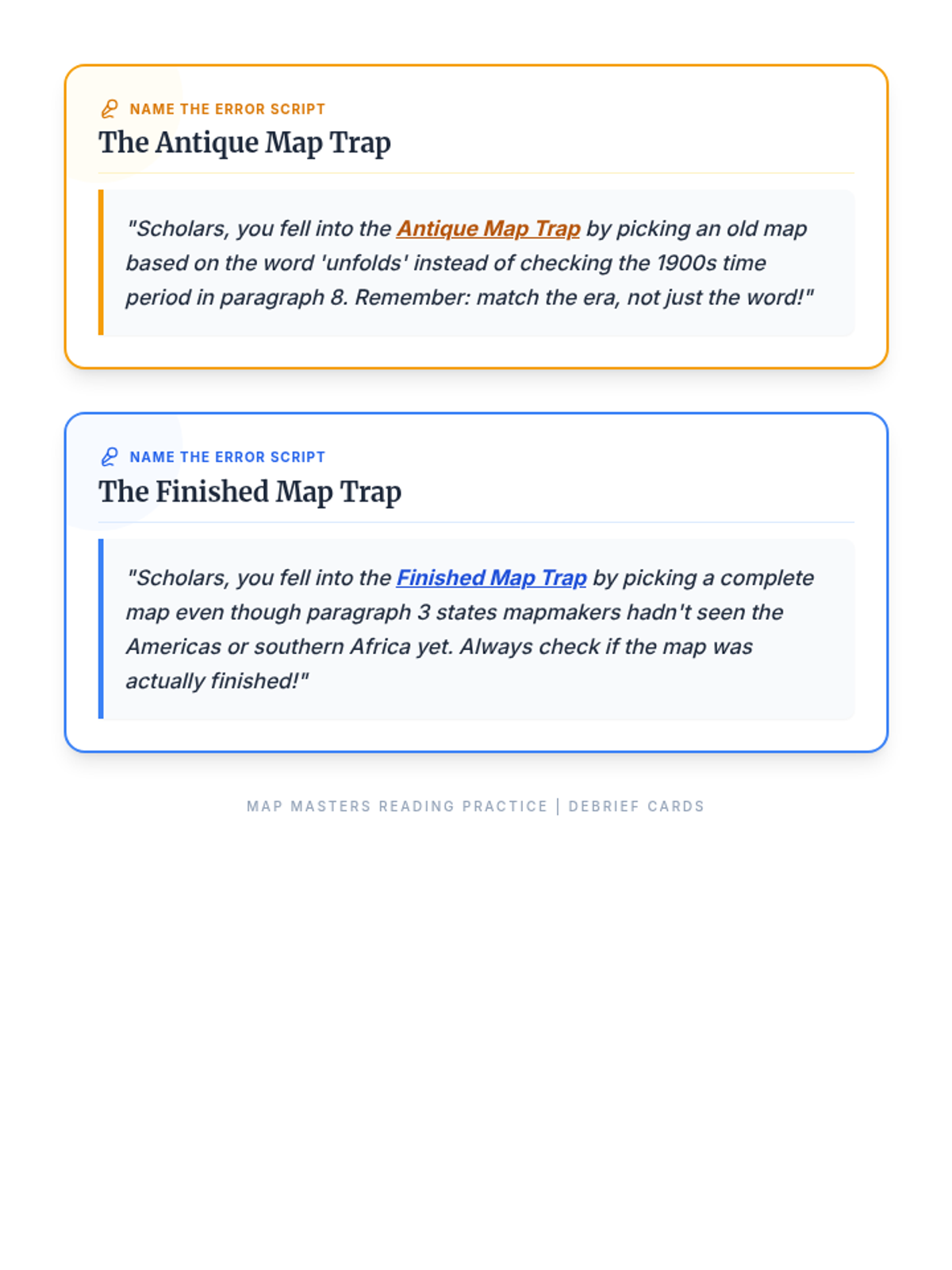
Shortened 'Name the Error' scripts (1-2 sentences) for teachers to use during debriefs to quickly address common student misconceptions about visual aids and time periods.
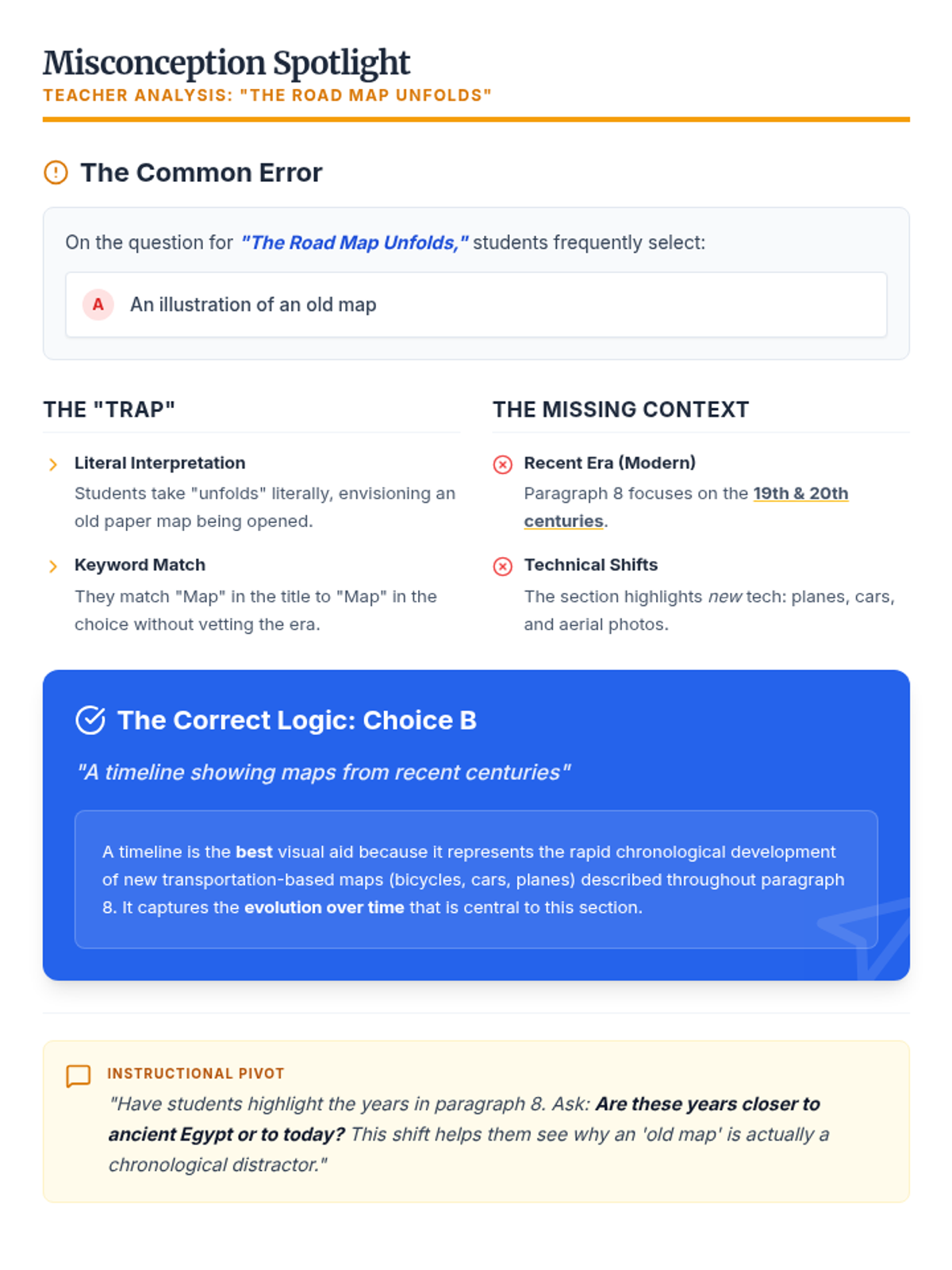
A teacher resource analyzing a common student misconception for the 'The Road Map Unfolds' section of the passage. It explains the error of choosing an old map (Option A) versus the correct timeline (Option B). Updated to fix page break issues.
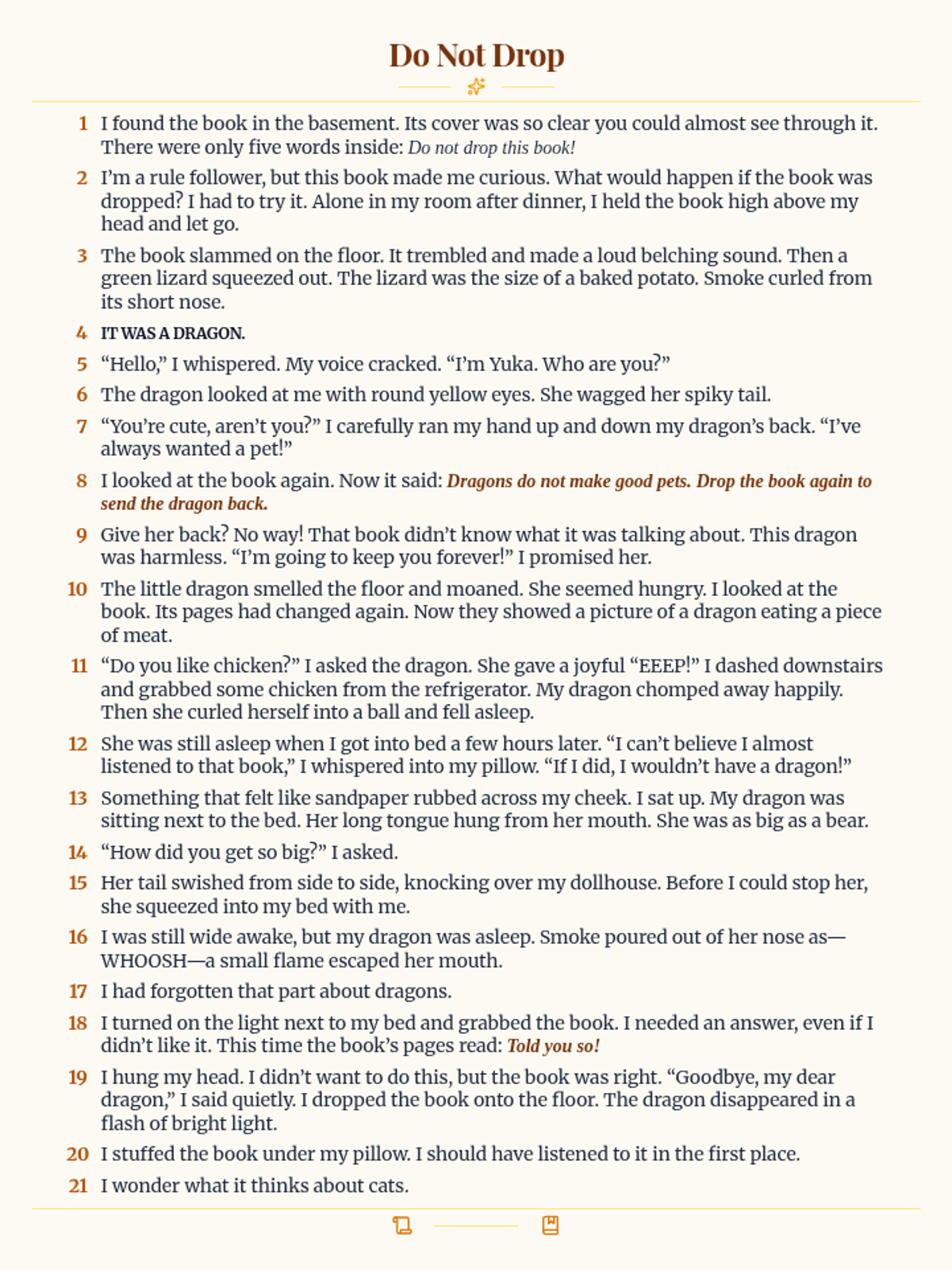
The full reading passage 'Do Not Drop', formatted as a storybook page for student use. Includes paragraph numbers for easy reference during comprehension activities. Condensed to fit on a single page.