Teacher answer key for the Transportation Inference Worksheet, providing rationale for the correct inference and sample supporting evidence from the text. Includes strategy reference and instructional goal.
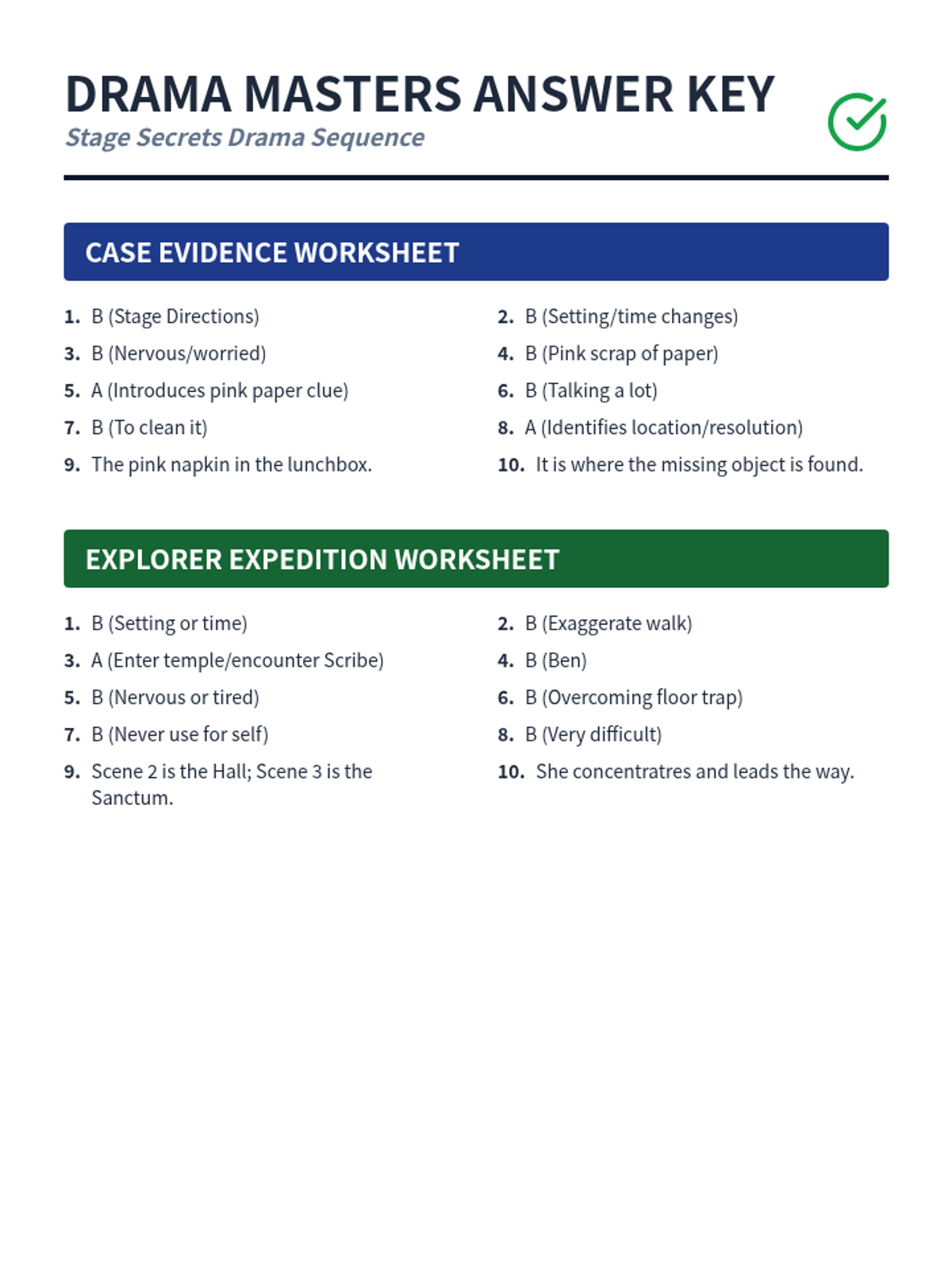
A comprehensive answer key for both lessons in the "Stage Secrets Drama" sequence, covering the Mystery and Adventure scripts and their respective worksheets. It provides clear, highlighted answers for standards RL.3.1, RL.3.4, and RL.3.5, with a focus on how scenes build on one another.
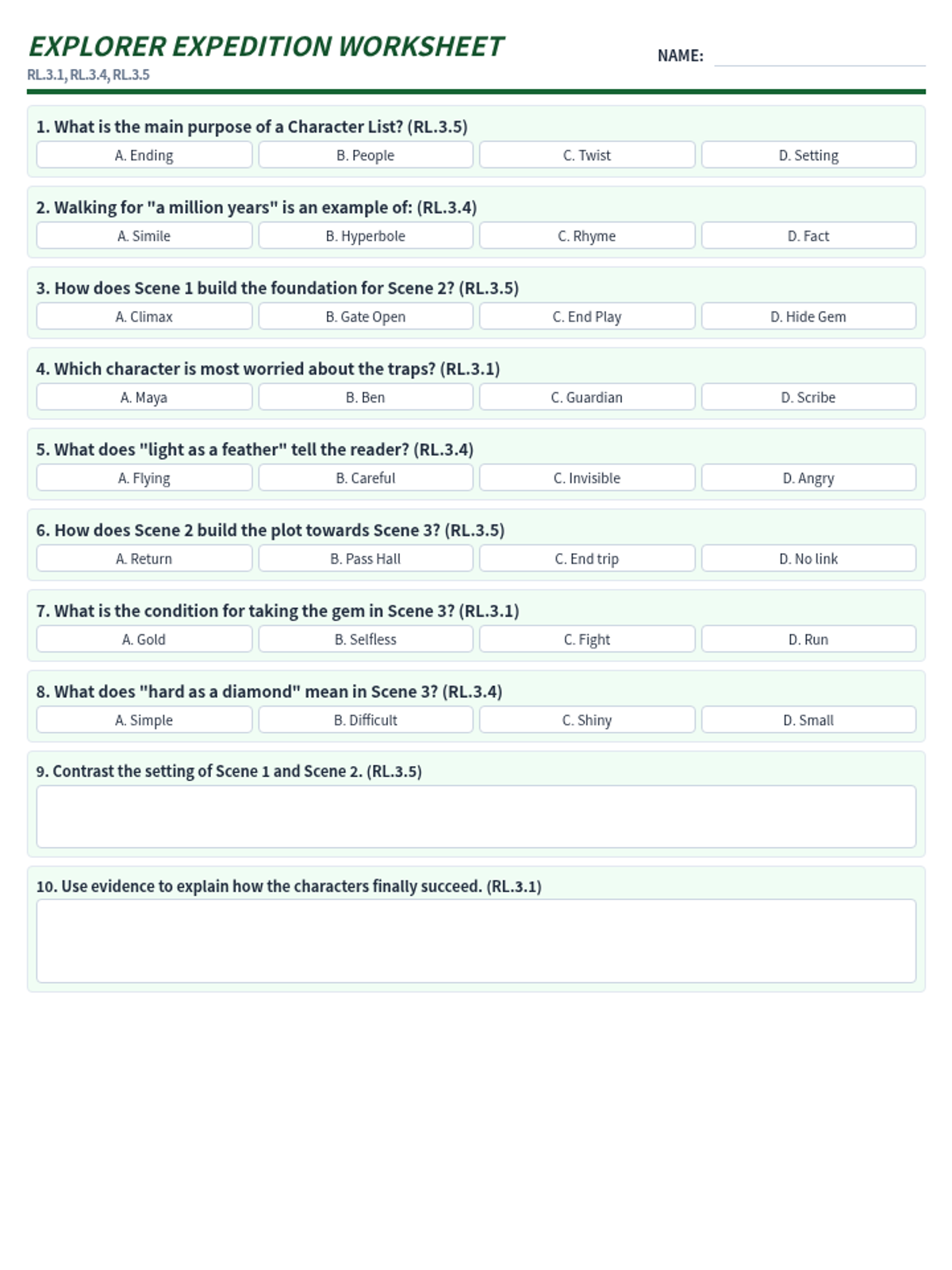
An independent practice worksheet for the "Temple of Time" play. It requires students to identify drama elements (RL.3.5), interpret non-literal phrases like "a million years" and "light as a feather" (RL.3.4), and provide text evidence for character analysis (RL.3.1). Question 6 addresses how successive parts of a drama build on earlier sections.
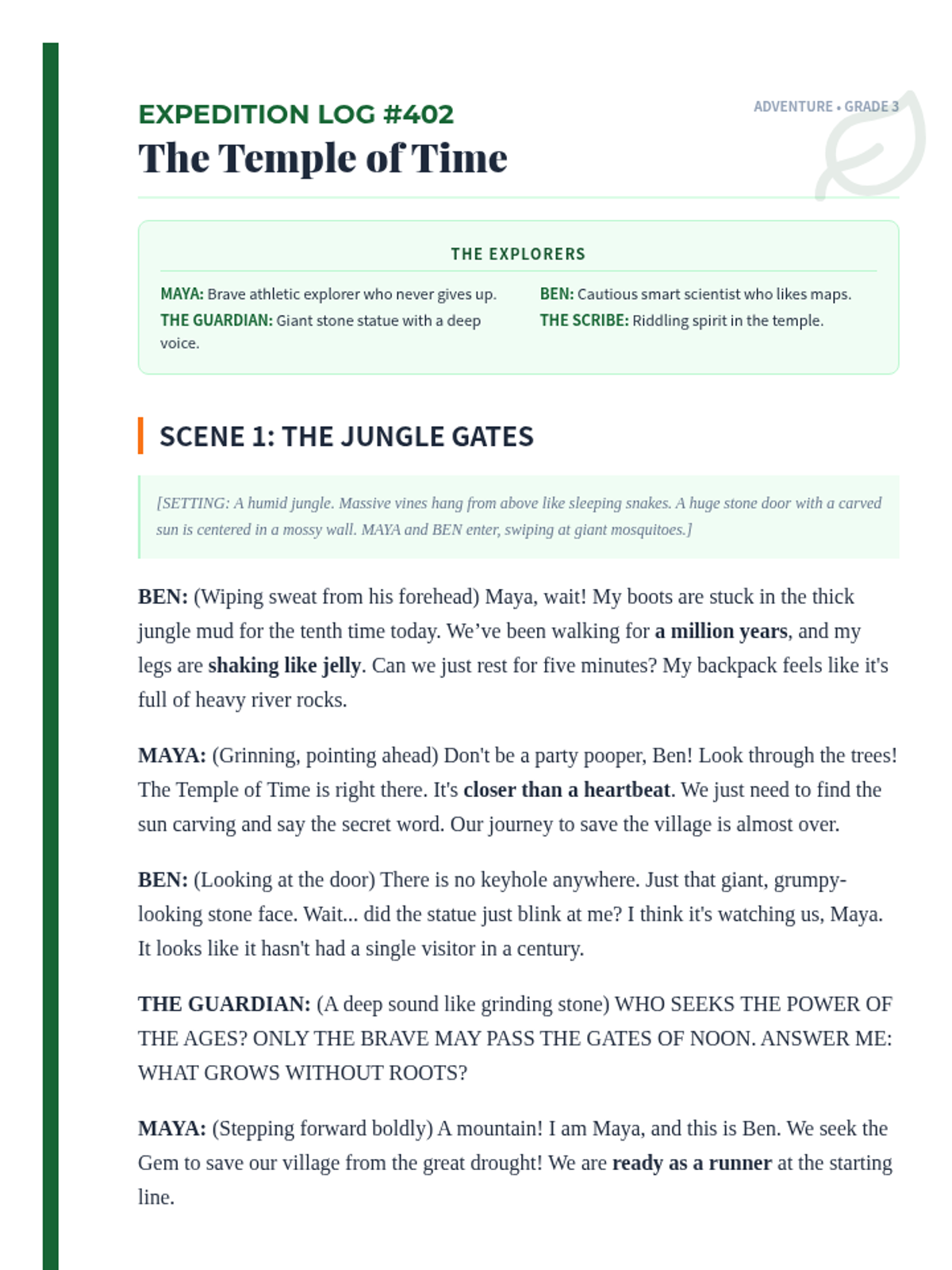
A 3rd-grade adventure play titled "The Temple of Time," intended for independent student practice. It features vivid settings, non-literal language (similes and hyperboles), and distinct characters to help students apply drama analysis skills.
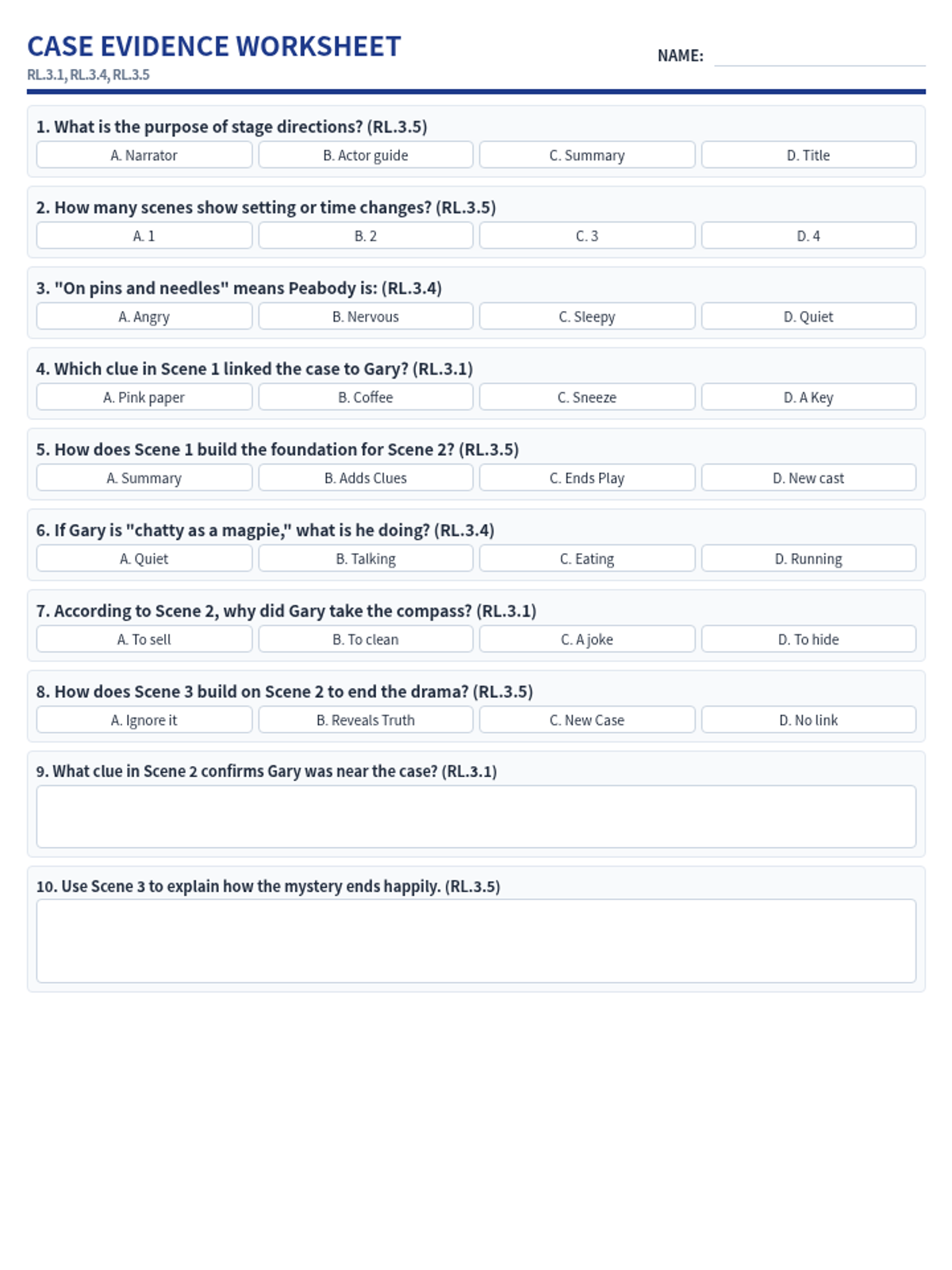
An "I Do / We Do" worksheet designed to accompany the "Missing Compass" play. It features structured sections for teacher modeling (identifying drama elements) and guided practice (analyzing non-literal language and using text evidence), aligned to RL.3.1, RL.3.4, and RL.3.5. Question 6 is specifically designed to address how successive parts of a drama build on earlier sections.
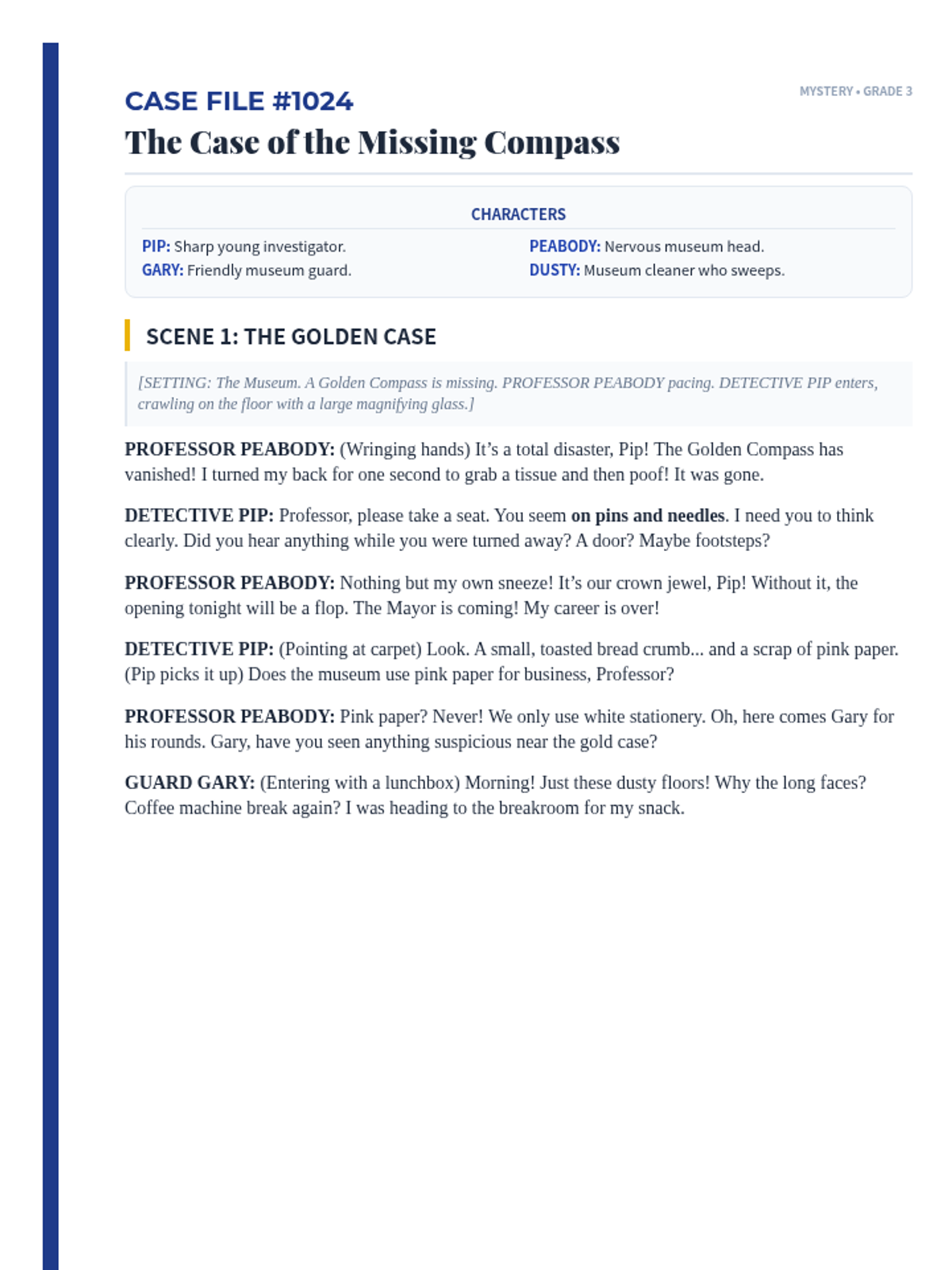
A 3rd-grade level mystery play script titled "The Case of the Missing Compass." It includes a character list, two scenes, stage directions, and non-literal language for students to analyze. The layout mimics a professional script with clear character names and parenthetical directions.
An instructional slide deck for a 3rd-grade drama lesson, introducing key vocabulary for RL.3.5 (scene, stage directions, characters), RL.3.4 (literal vs. non-literal language), and RL.3.1 (using evidence). The slides feature a professional "Stage Secrets" theme with high-contrast colors and clear definitions.
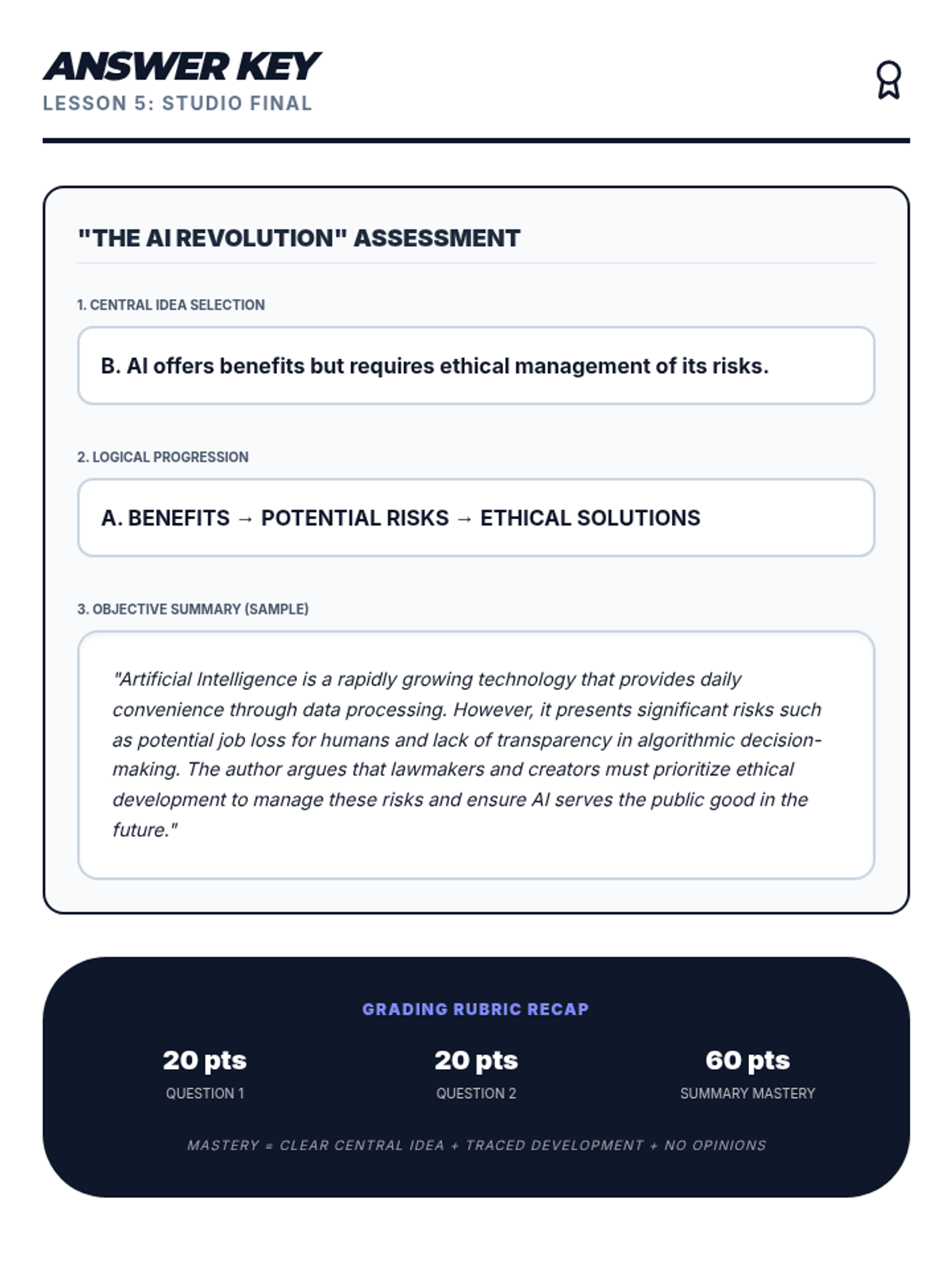
Final answer key for the Lesson 5 Studio Assessment, providing correct answers for the multiple-choice questions and a model objective summary.
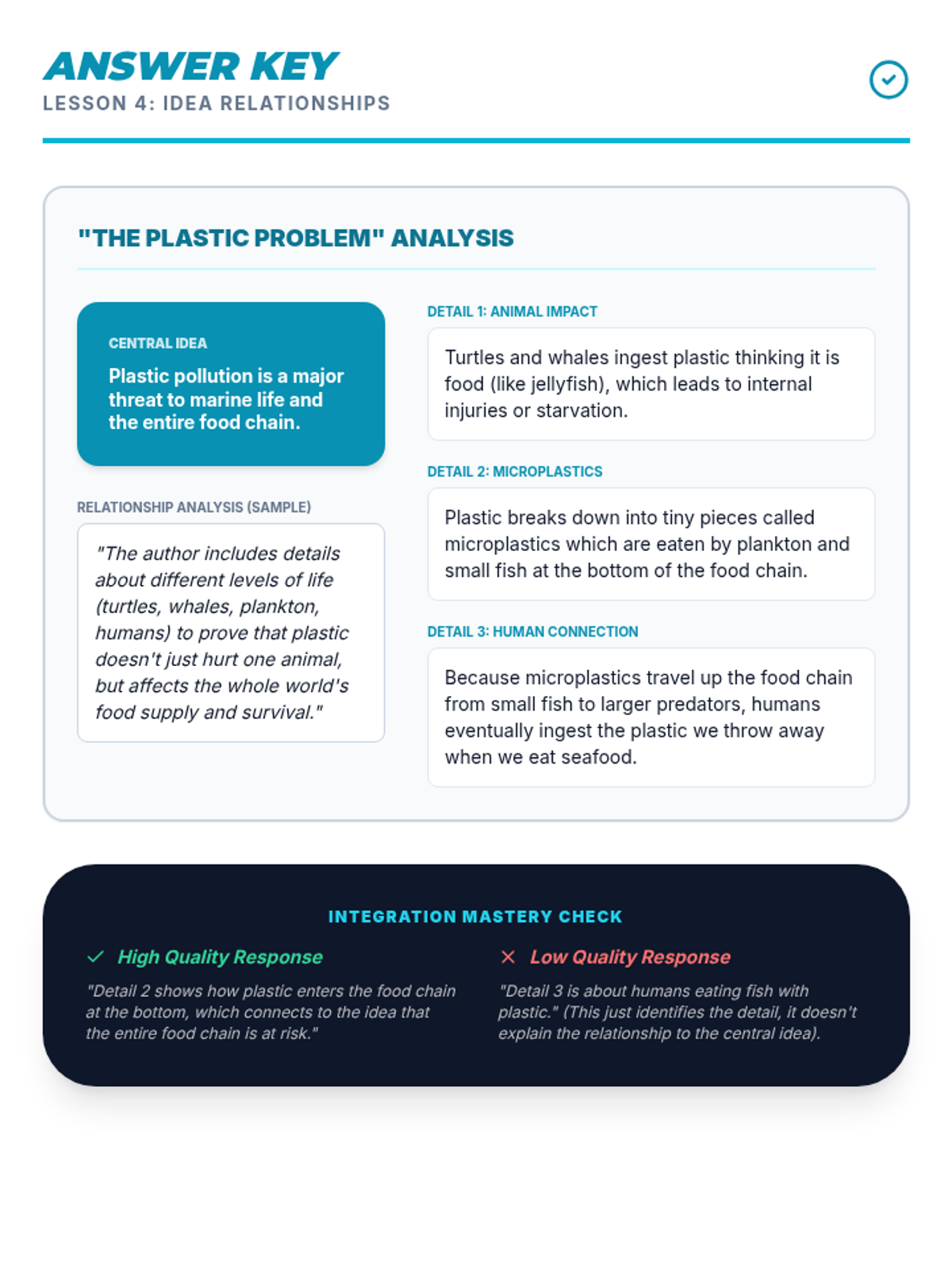
Answer key for the Lesson 4 'Idea Relationship Organizer', providing specific detail analysis for all 3 details and guidance on connecting details to central ideas.
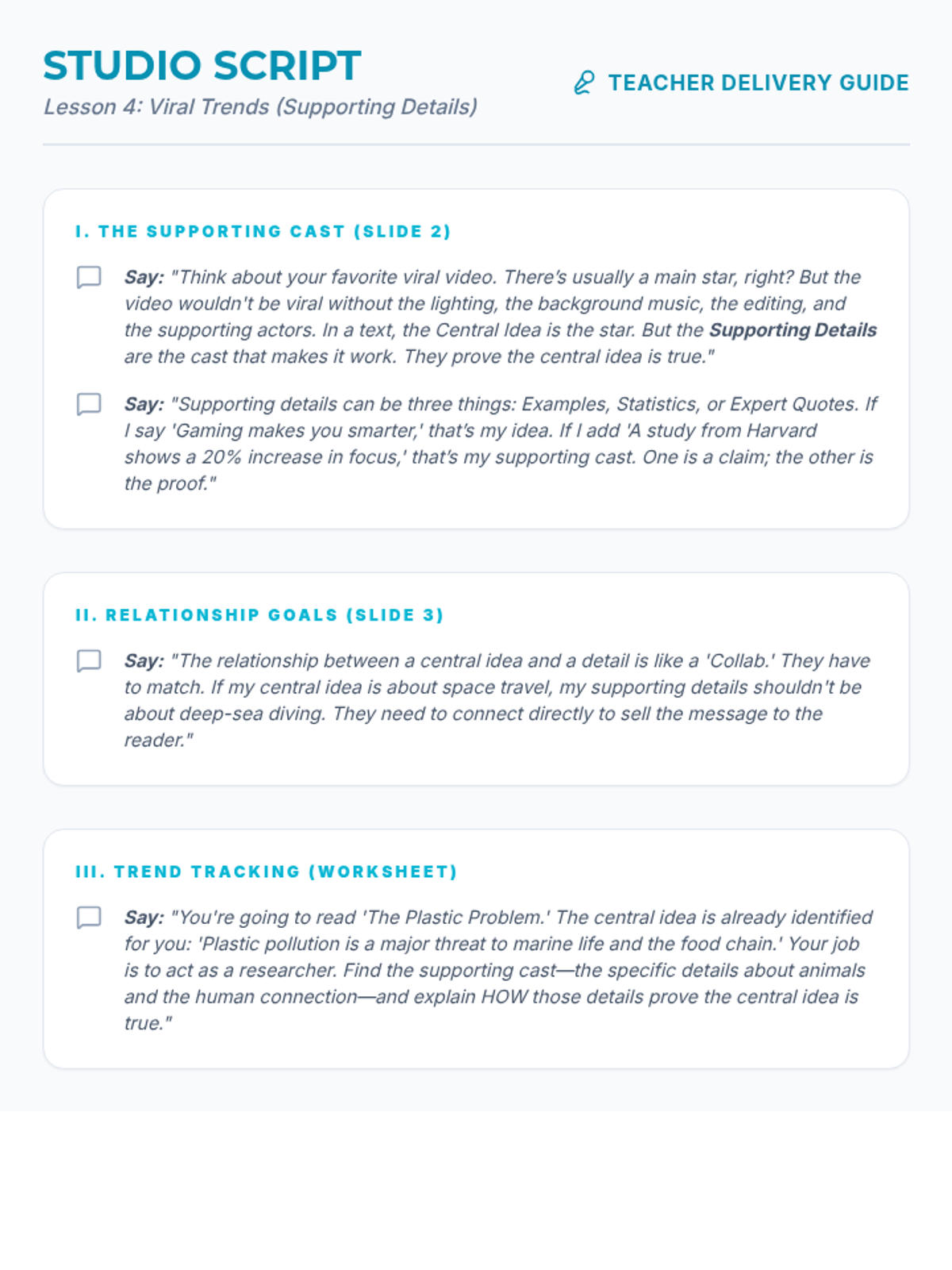
Teacher instructional script for Lesson 4, teaching the relationship between central ideas and supporting details using the 'supporting cast' analogy.
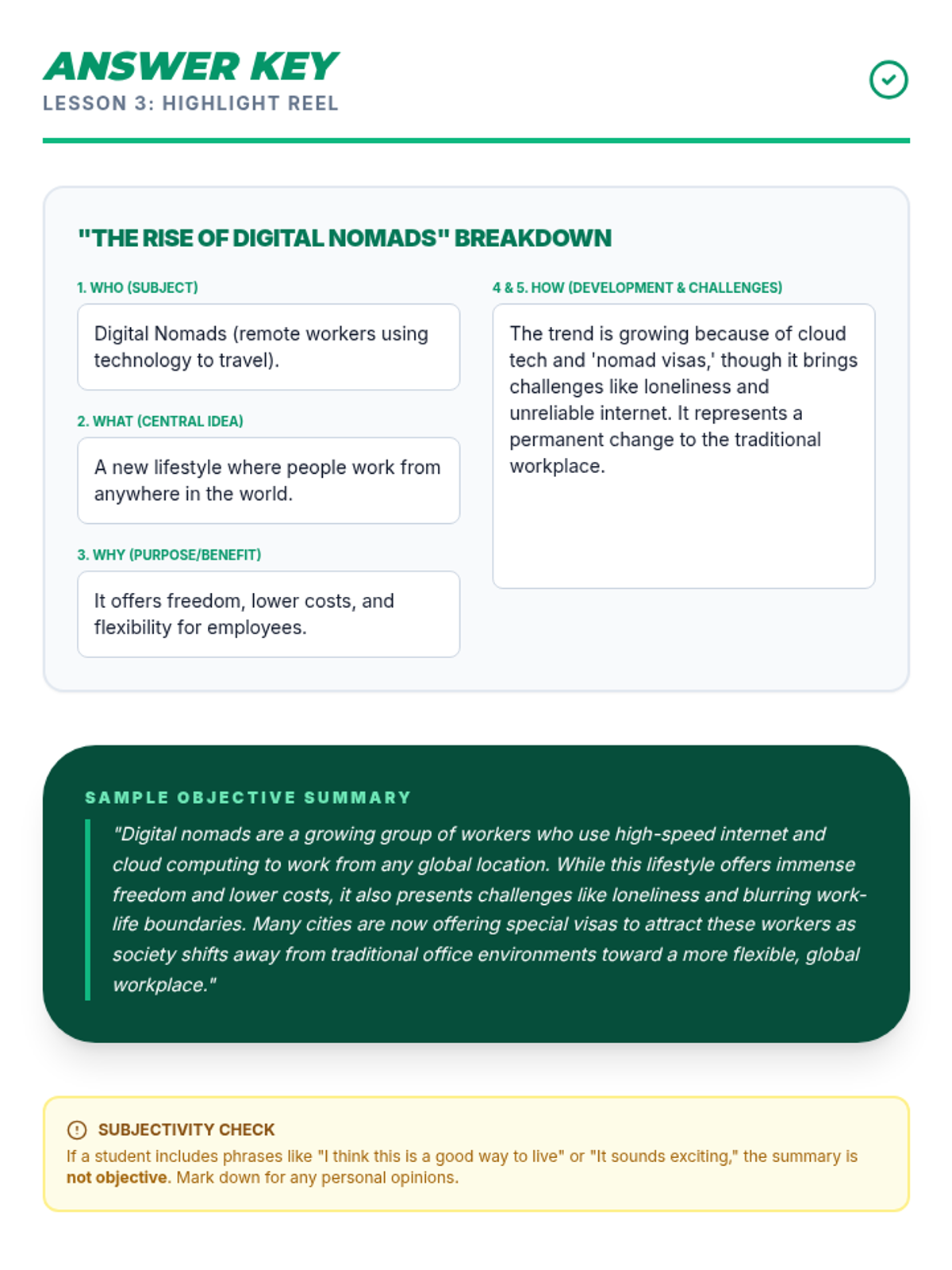
Answer key for the Lesson 3 'Highlight Reel Activity', providing notes for the 5-finger framework and a sample 3-5 sentence objective summary.