A comprehensive two-page answer key for the Word Weaver lesson, providing correct morphological breakdowns, definitions, and application examples for the teacher.
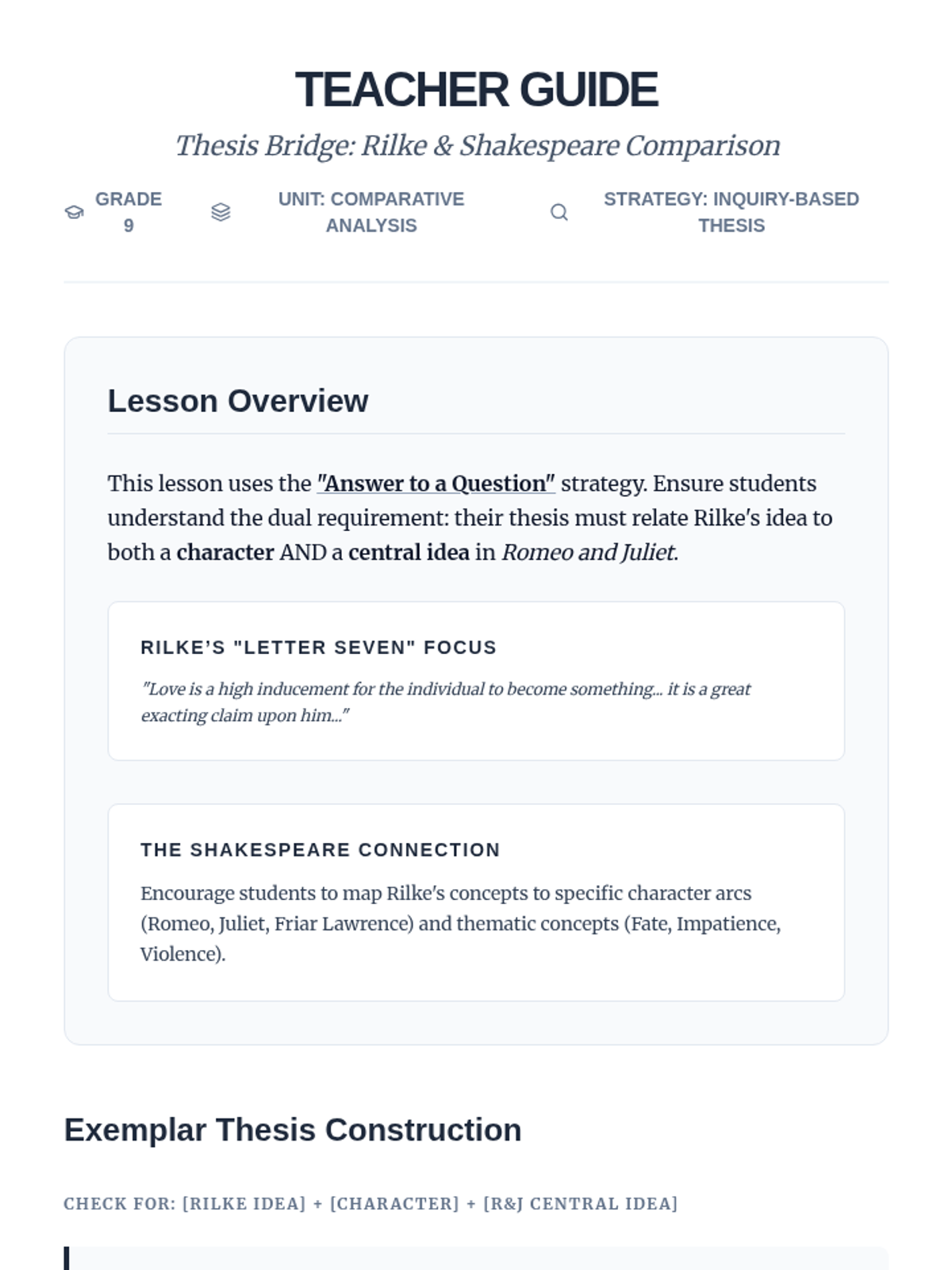
A guide for teachers that includes updated exemplar thesis statements and common student pitfalls, specifically highlighting the requirement to connect Rilke's ideas to both a character and a central idea in Shakespeare's Romeo and Juliet.
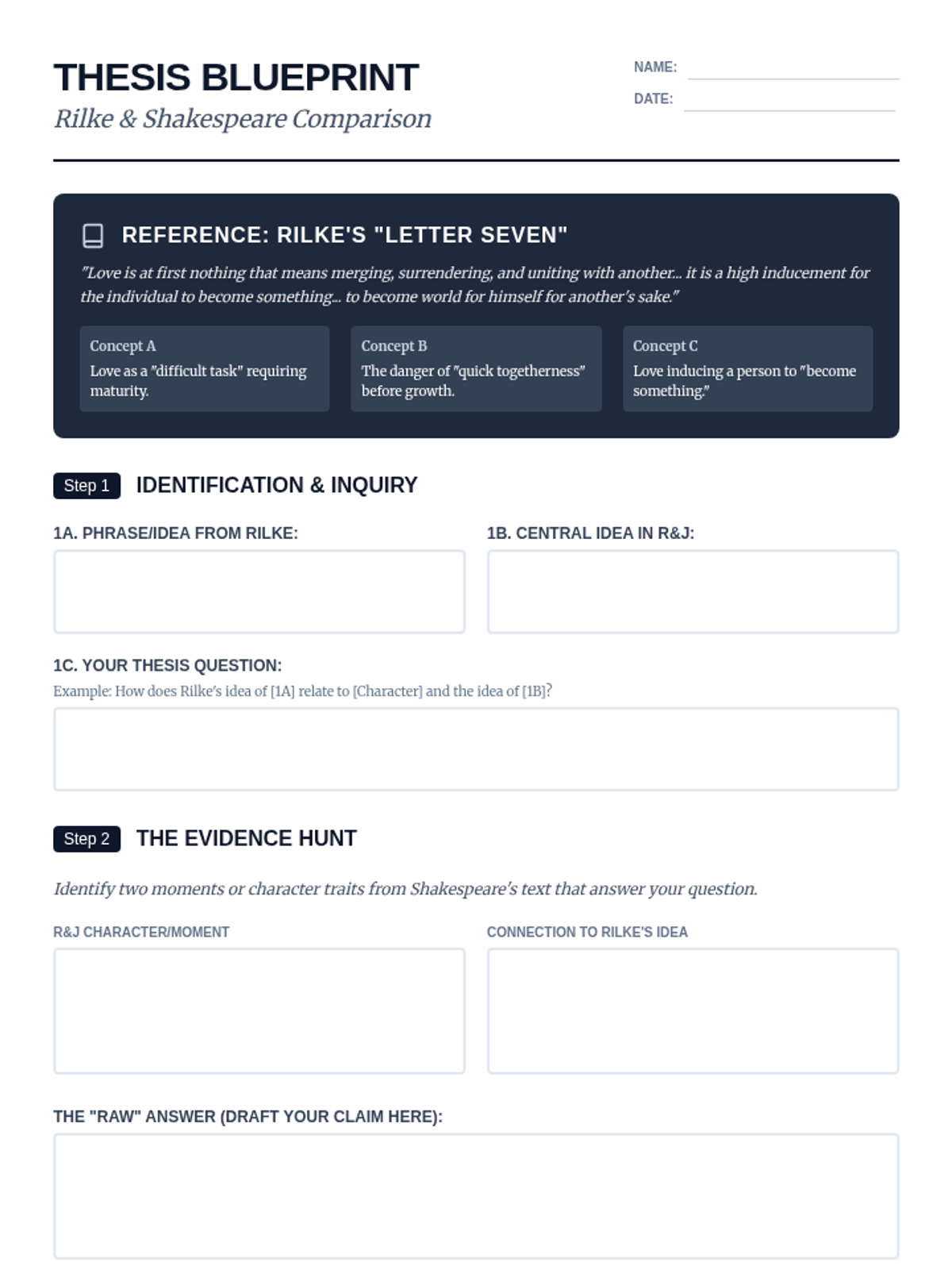
A structured worksheet that leads students through the process of developing a thesis statement by turning the prompt into a question and building a bridge between Rilke and Shakespeare, now with an explicit focus on characters and central ideas.
A slide presentation guiding students through the 'Answer to a Question' strategy, now explicitly detailing the requirement to connect Rilke's ideas to both a character and a central idea in Shakespeare's Romeo and Juliet.
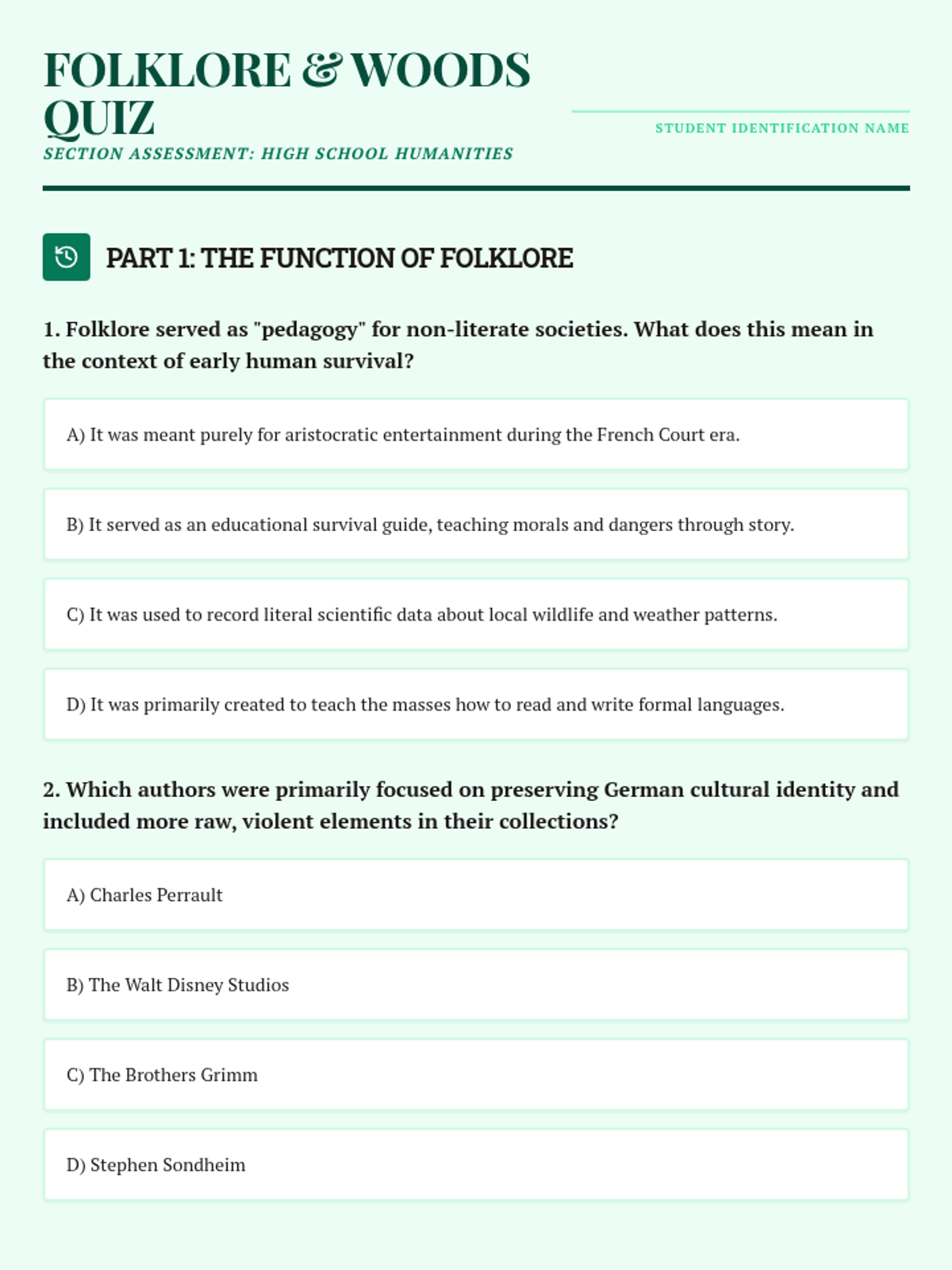
A high-school level quiz covering the purpose of folklore, literary history (Perrault/Grimm), and thematic subversion in 'Into the Woods'.
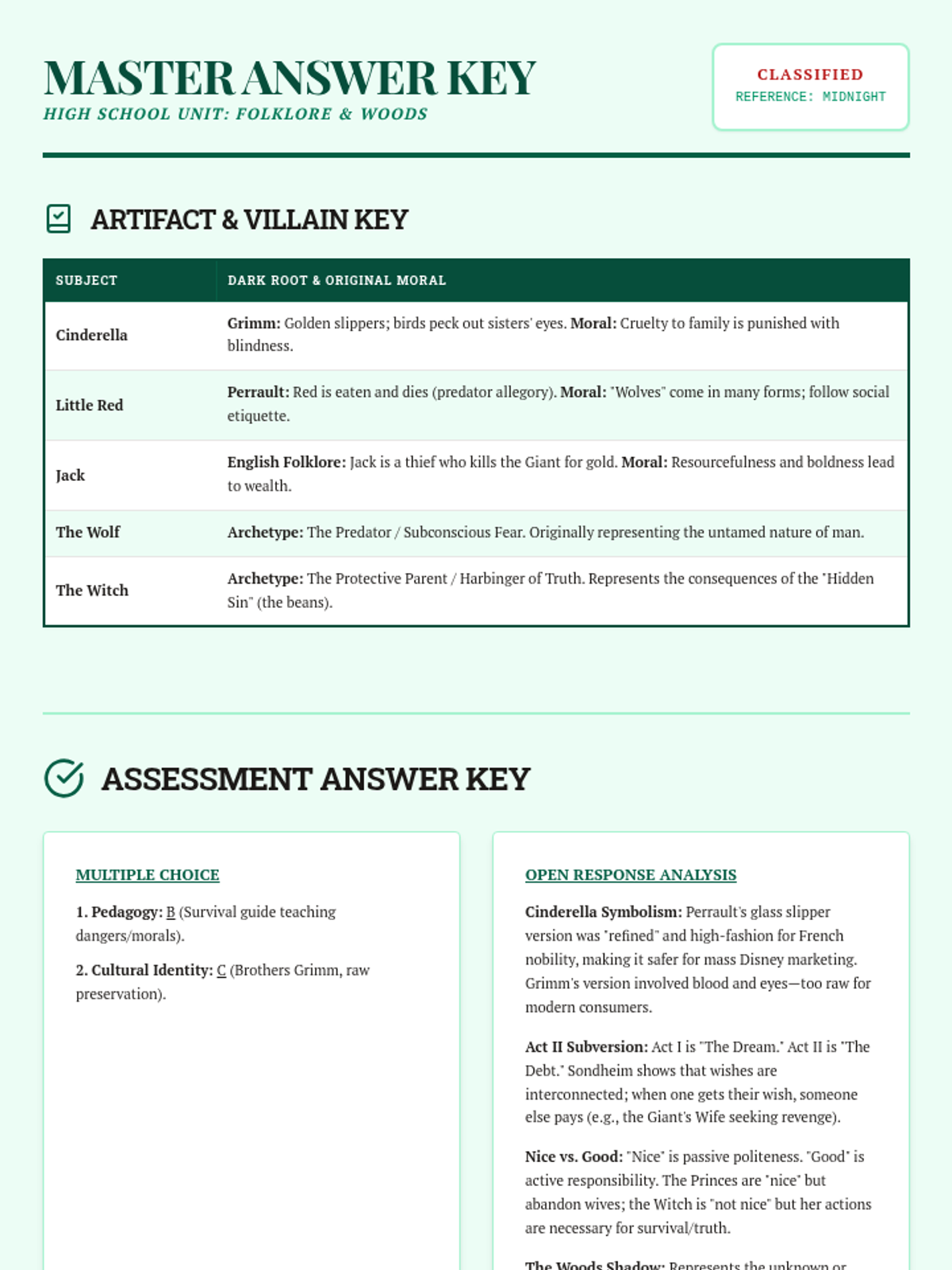
A comprehensive answer key for the high-school folklore unit, including character origins, literary history, and assessment answers.
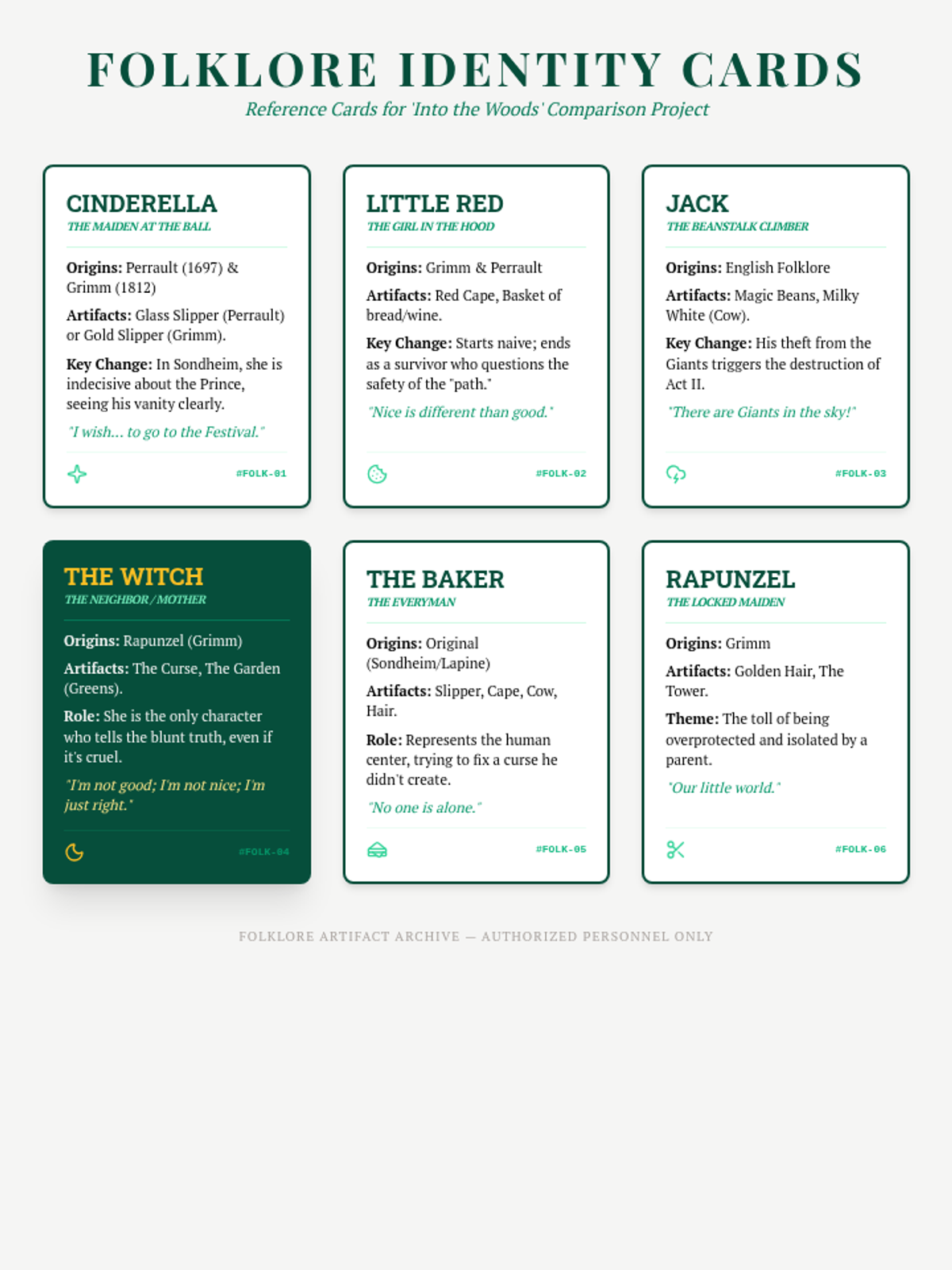
A set of reference cards for 'Into the Woods' characters, including their folklore origins, artifacts, and key changes in the musical adaptation.
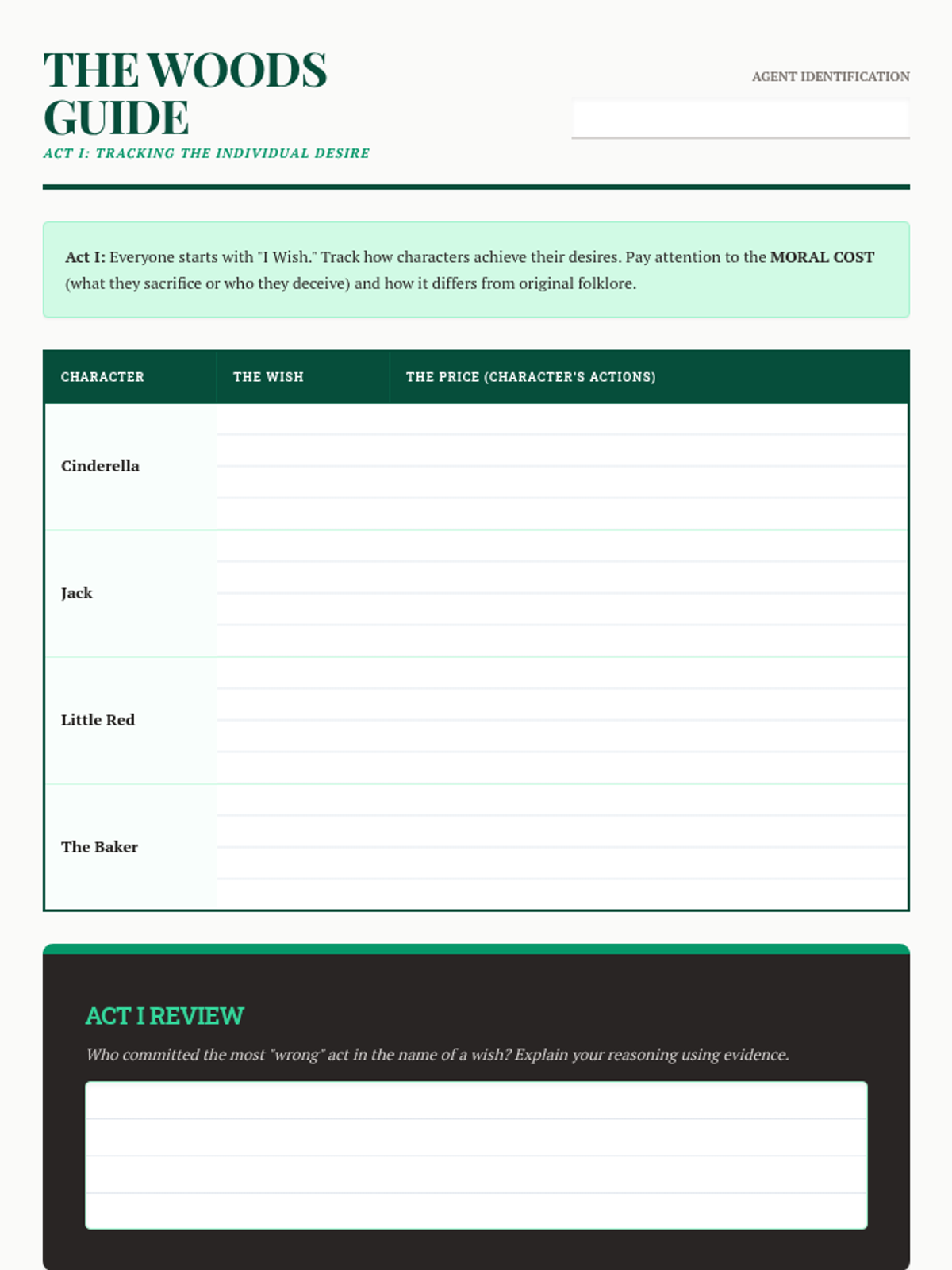
A detailed watching guide for 'Into the Woods' that tracks character wishes in Act I and their consequences in Act II.
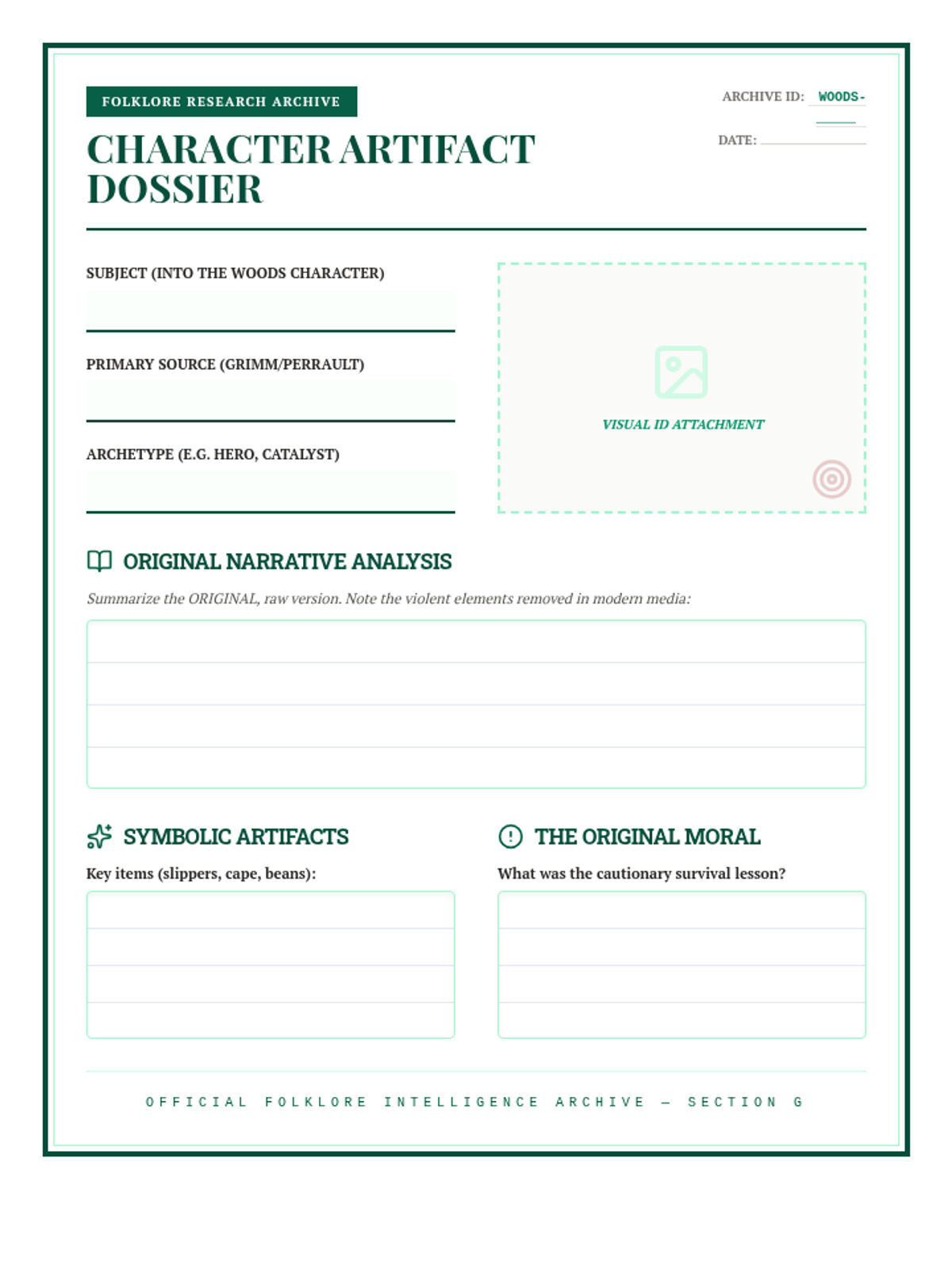
A research worksheet for students to document the original versions of fairytale characters, their attributes, and their cultural endurance.
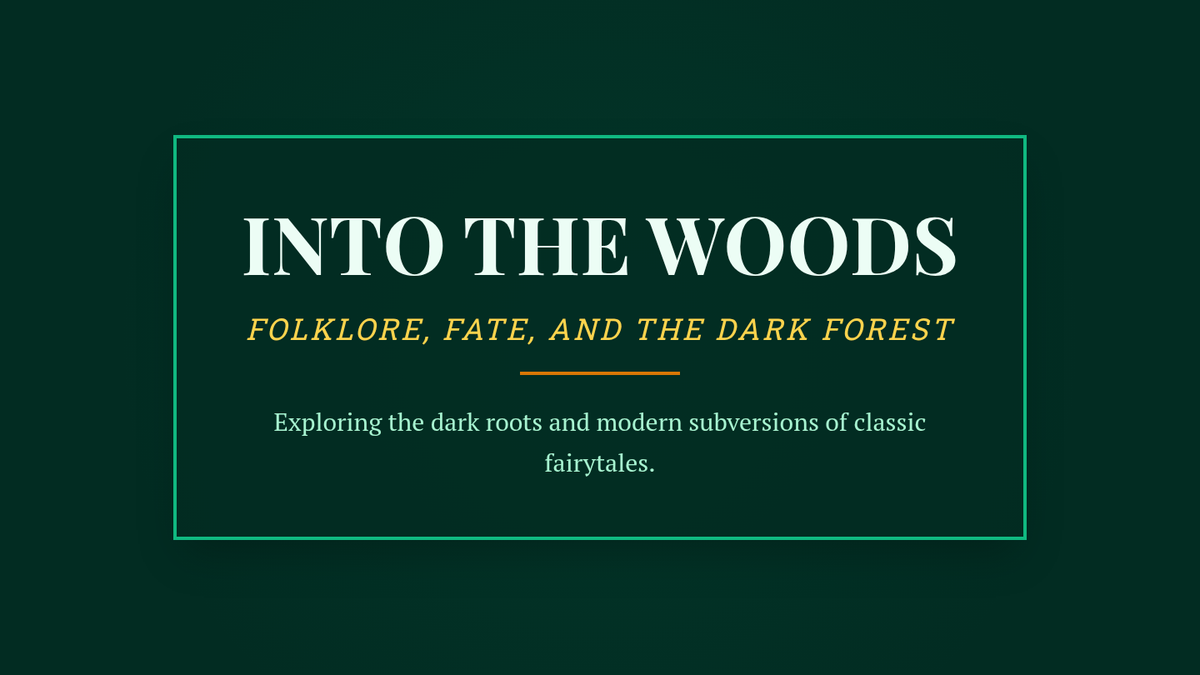
High-school introductory slides for the 'Into the Woods' folklore project, exploring the purpose of stories, literary history, and Sondheim's deconstruction.
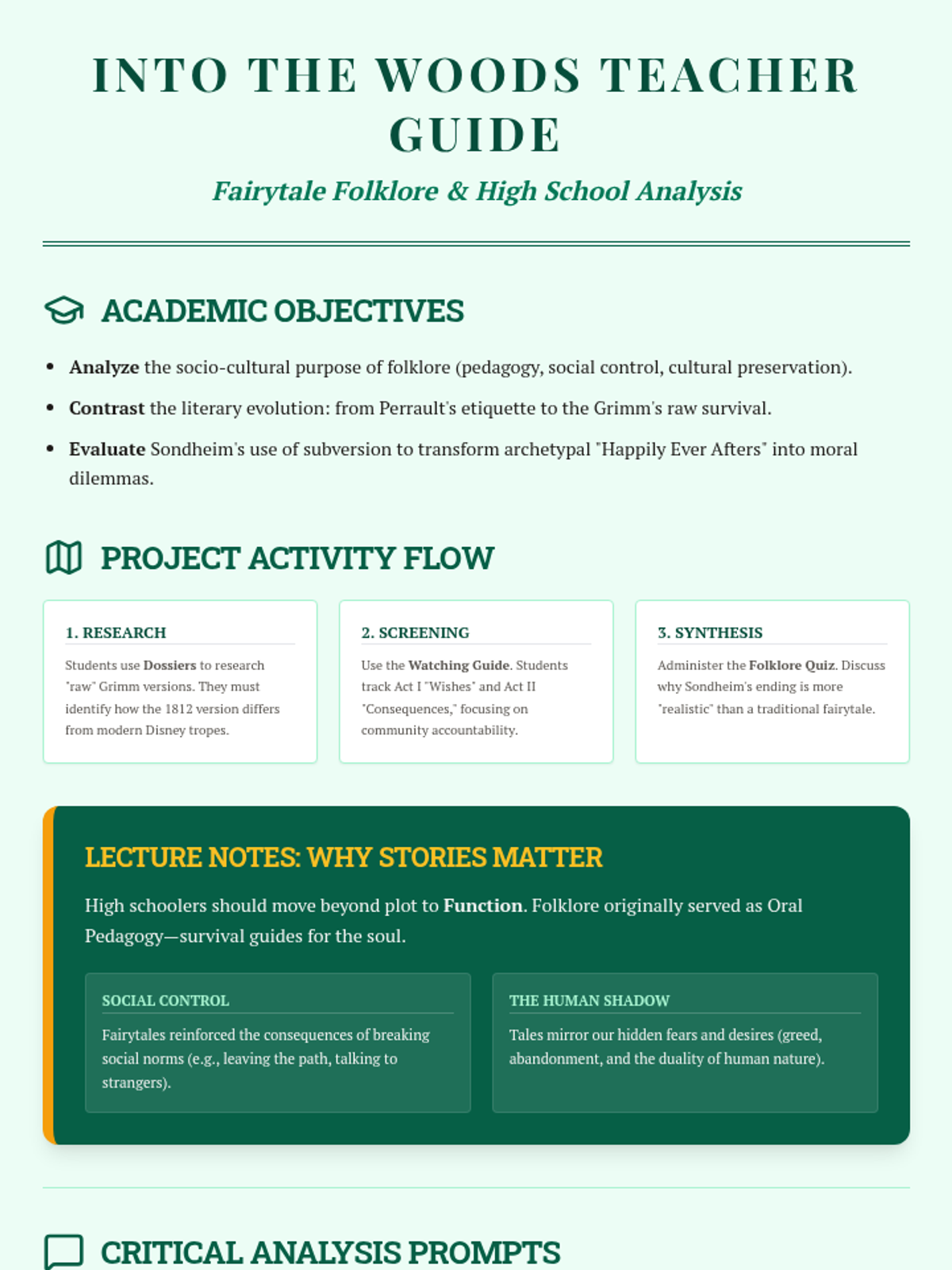
A high-school level teacher facilitation guide for the 'Into the Woods' folklore project, focusing on cultural value, literary history, and thematic analysis.
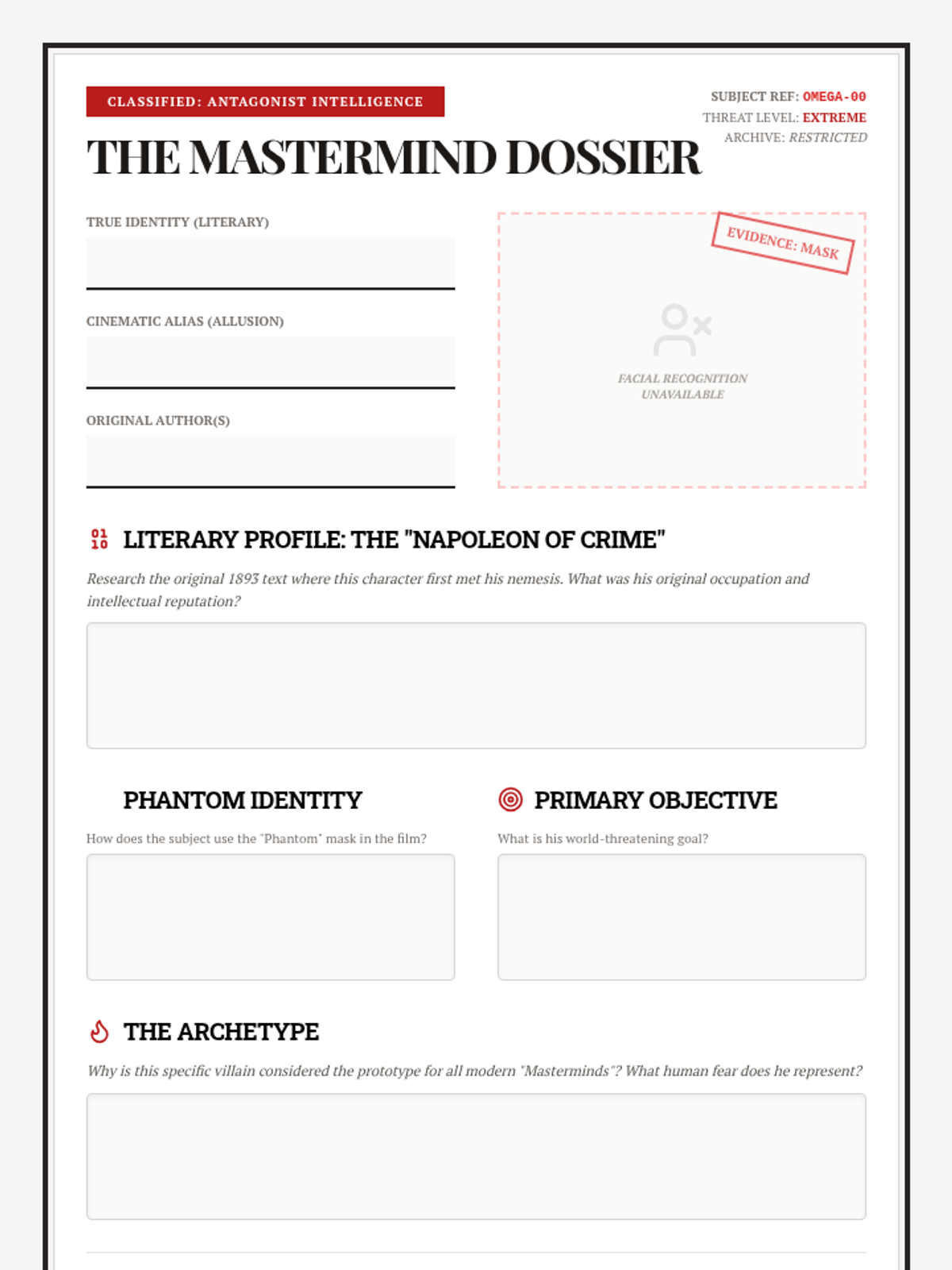
A specialized research dossier for the film's main antagonist, focusing on Professor Moriarty's literary origins and his 'Phantom' dual identity.
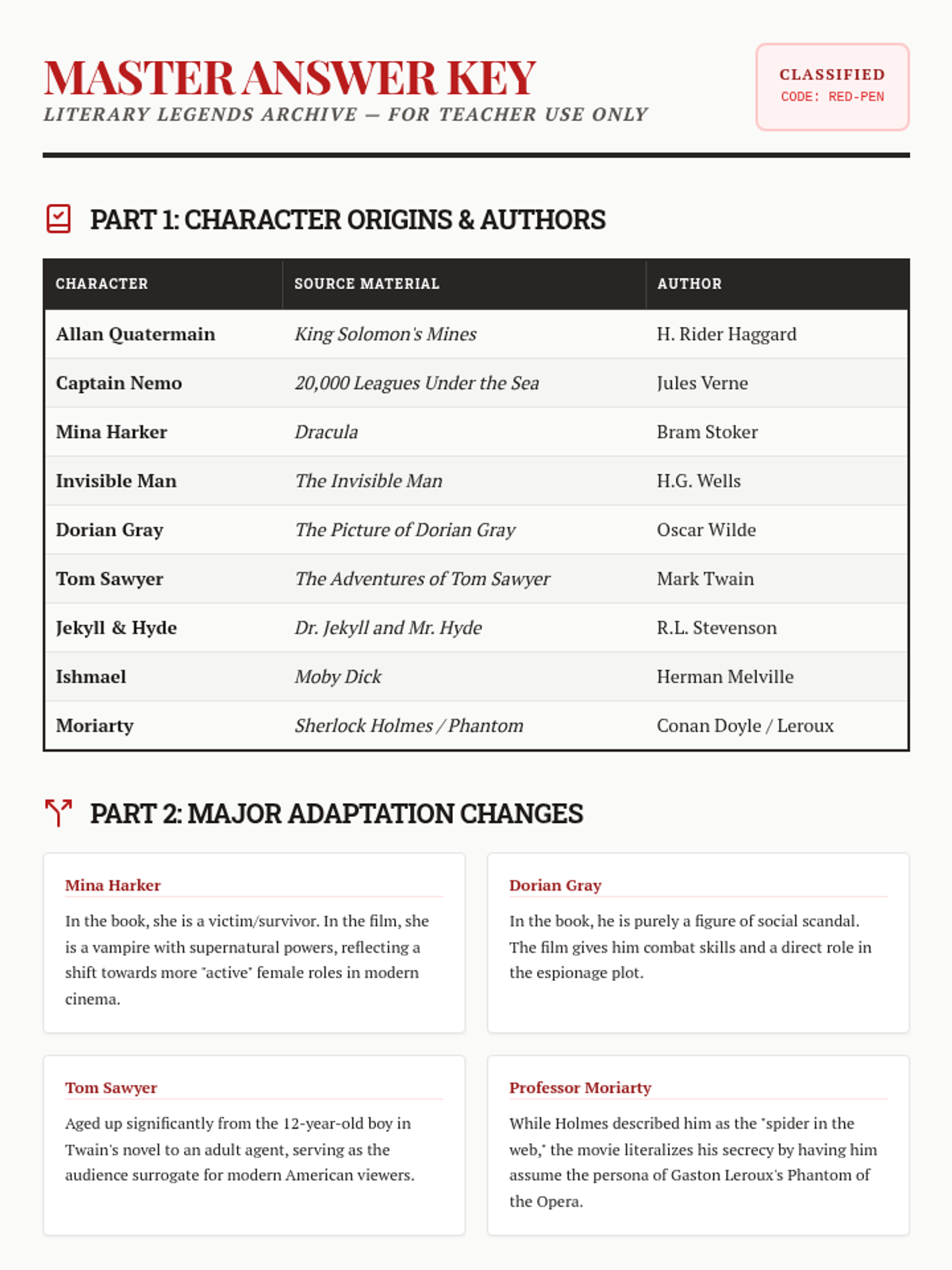
A comprehensive answer key for teachers, including character origins, adaptation differences, and explanations for the film's literary idioms and allusions.
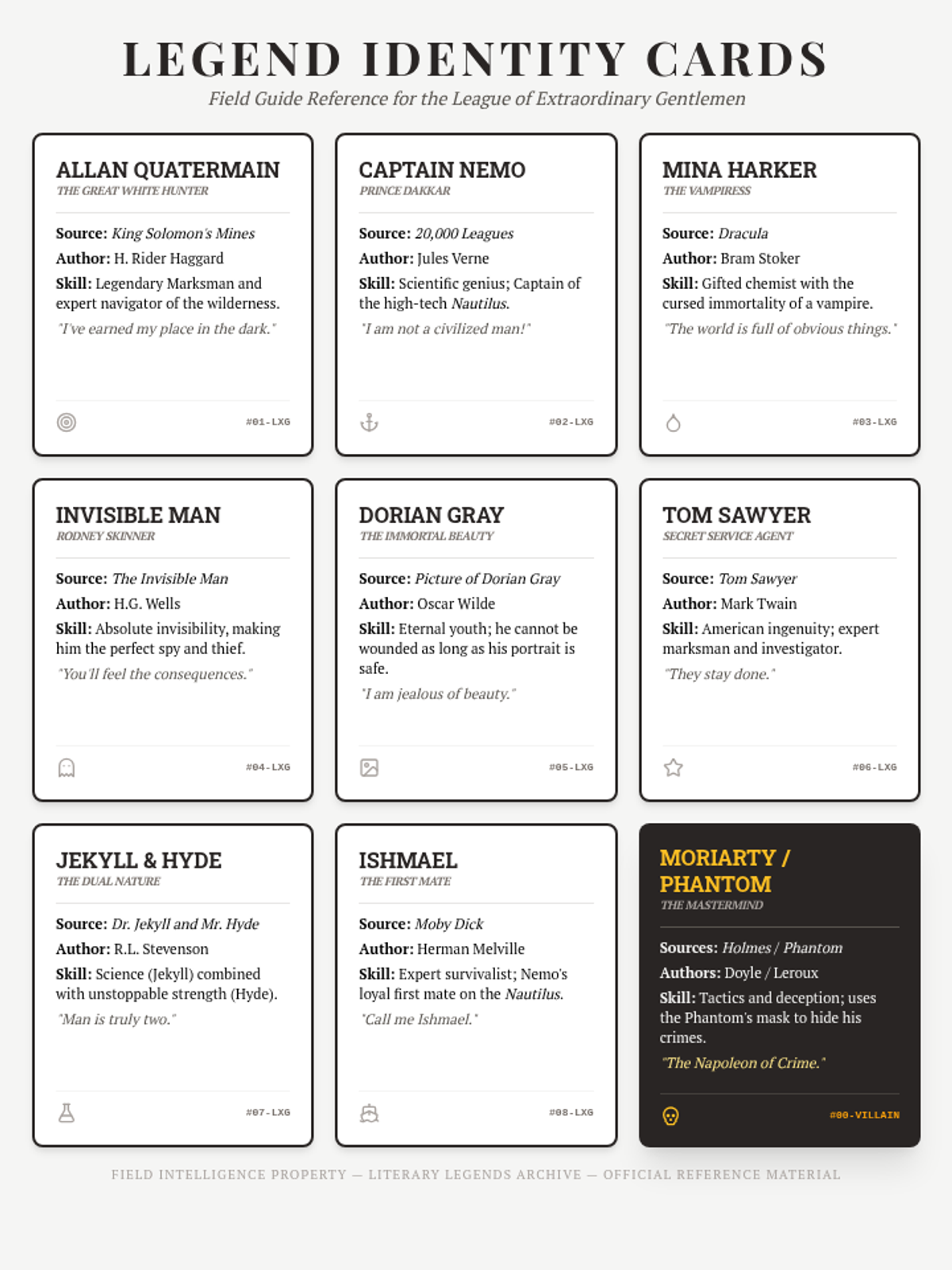
A set of reference cards for the main characters, including their literary origins, authors, skills, and key quotes.
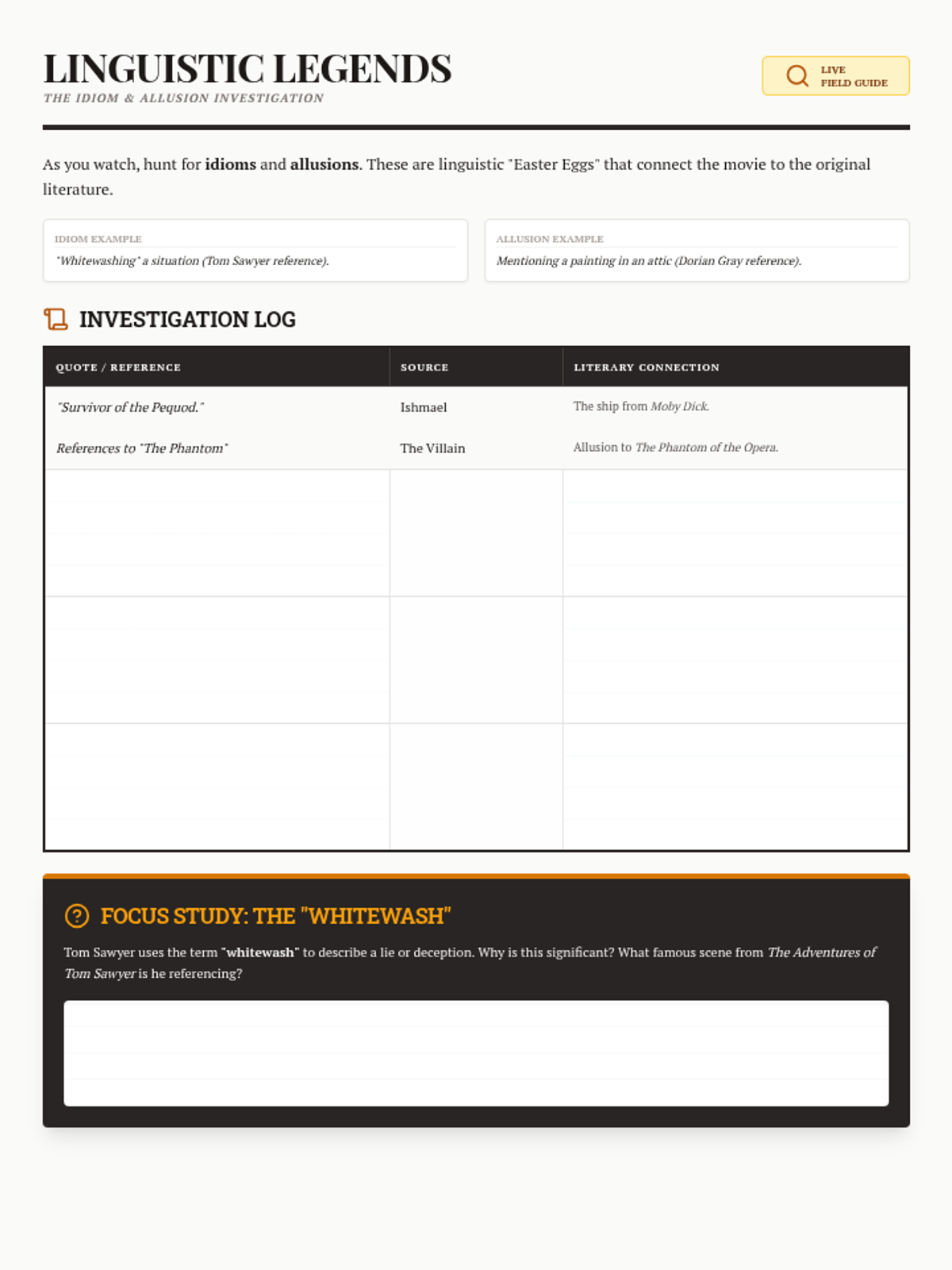
A watching guide focused on identifying literary idioms and allusions used by the characters throughout the film.
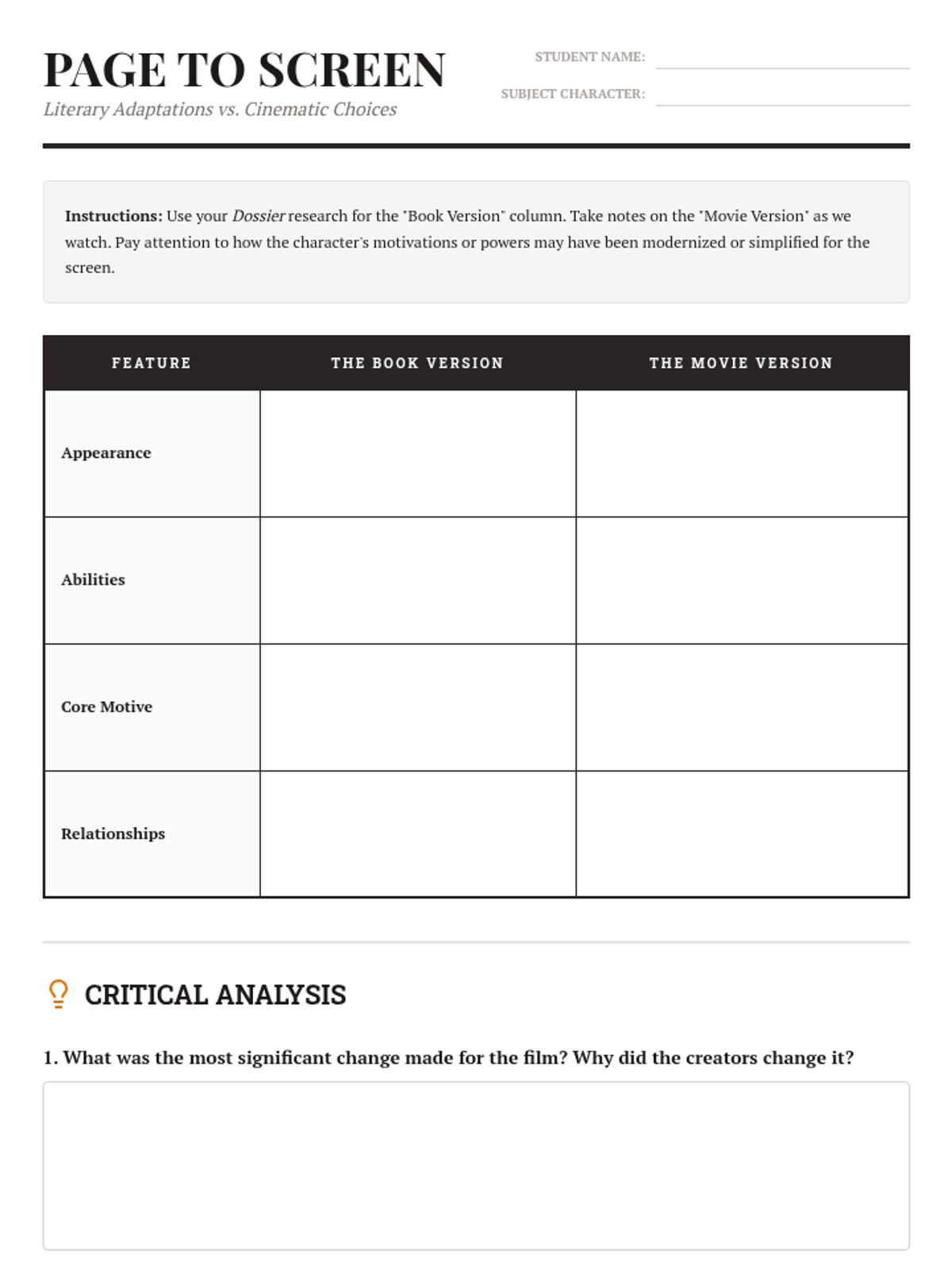
A comparison chart for students to record differences between the original literary version of a character and its cinematic counterpart in the film.
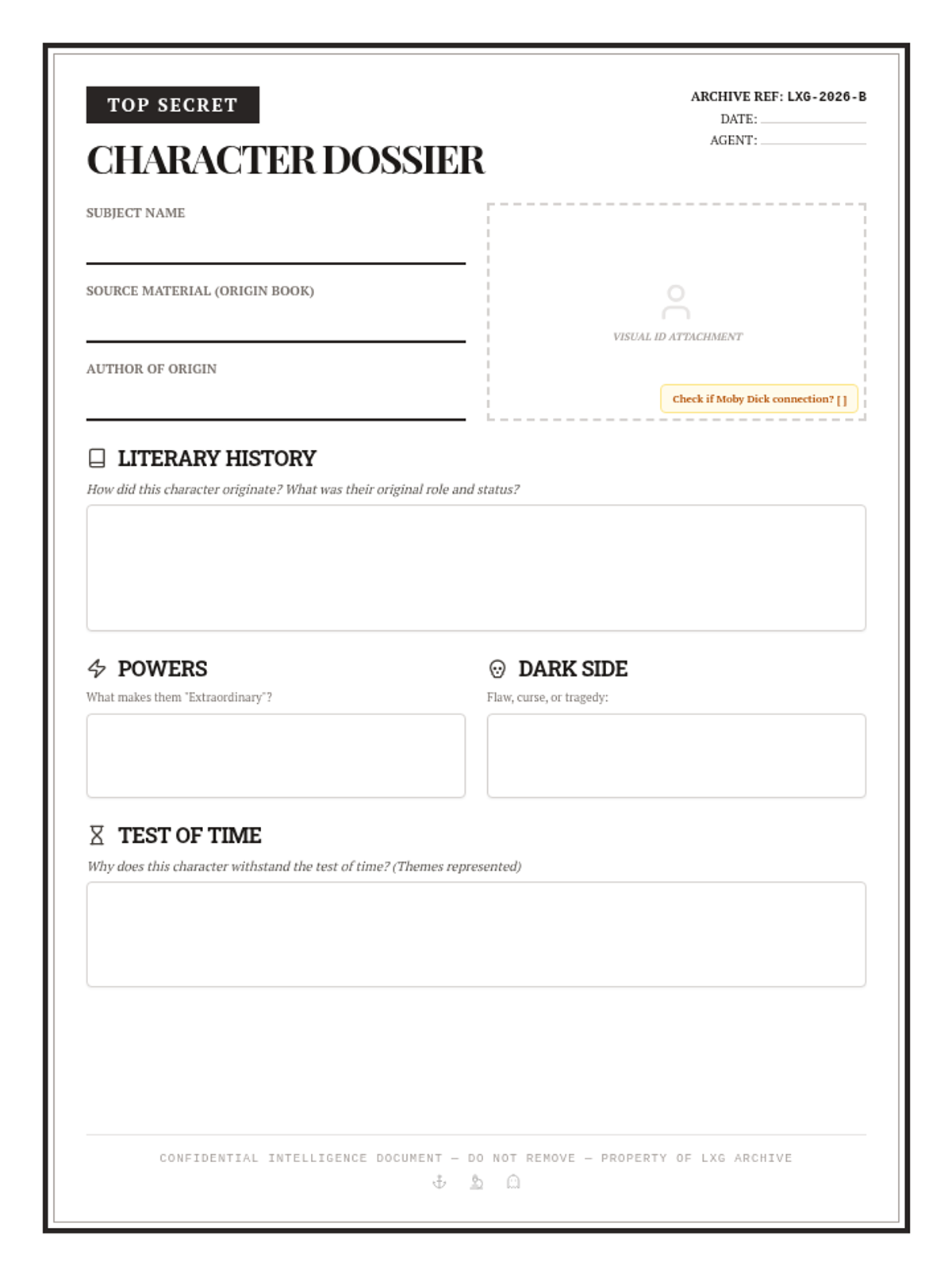
A structured 'Secret Dossier' research worksheet for students to document the literary origins, traits, and endurance of their assigned character.
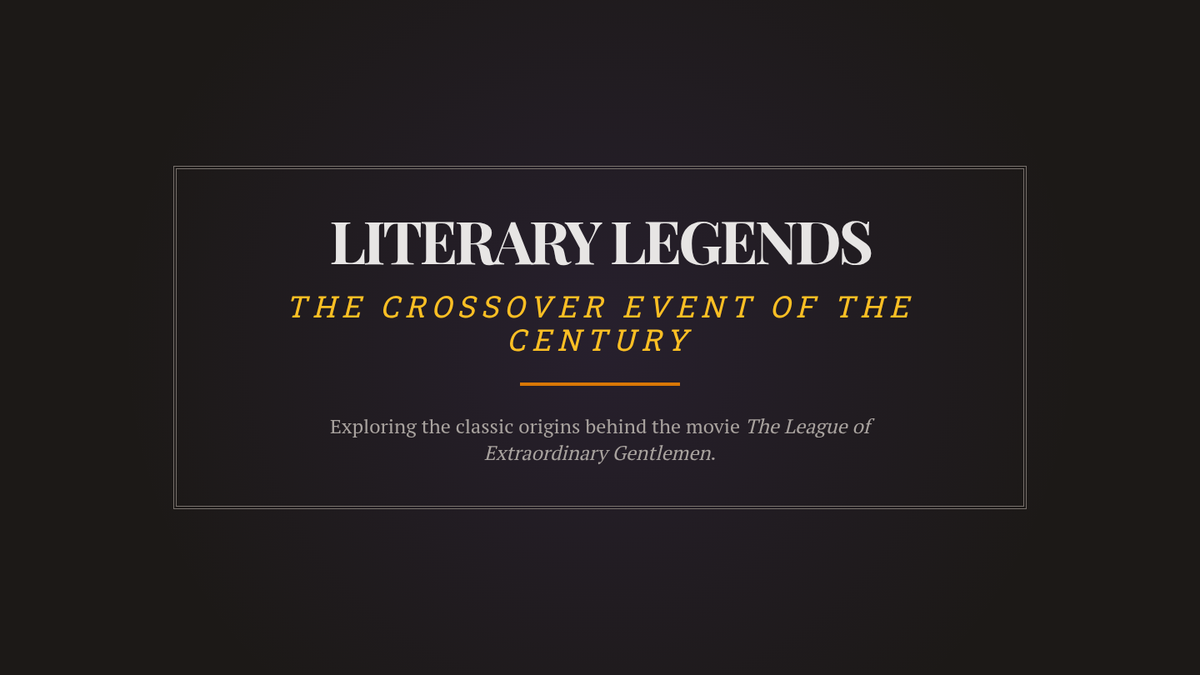
Introductory slides for the 'Literary Legends' project, explaining the concept of the cinematic crossover and the students' research mission.
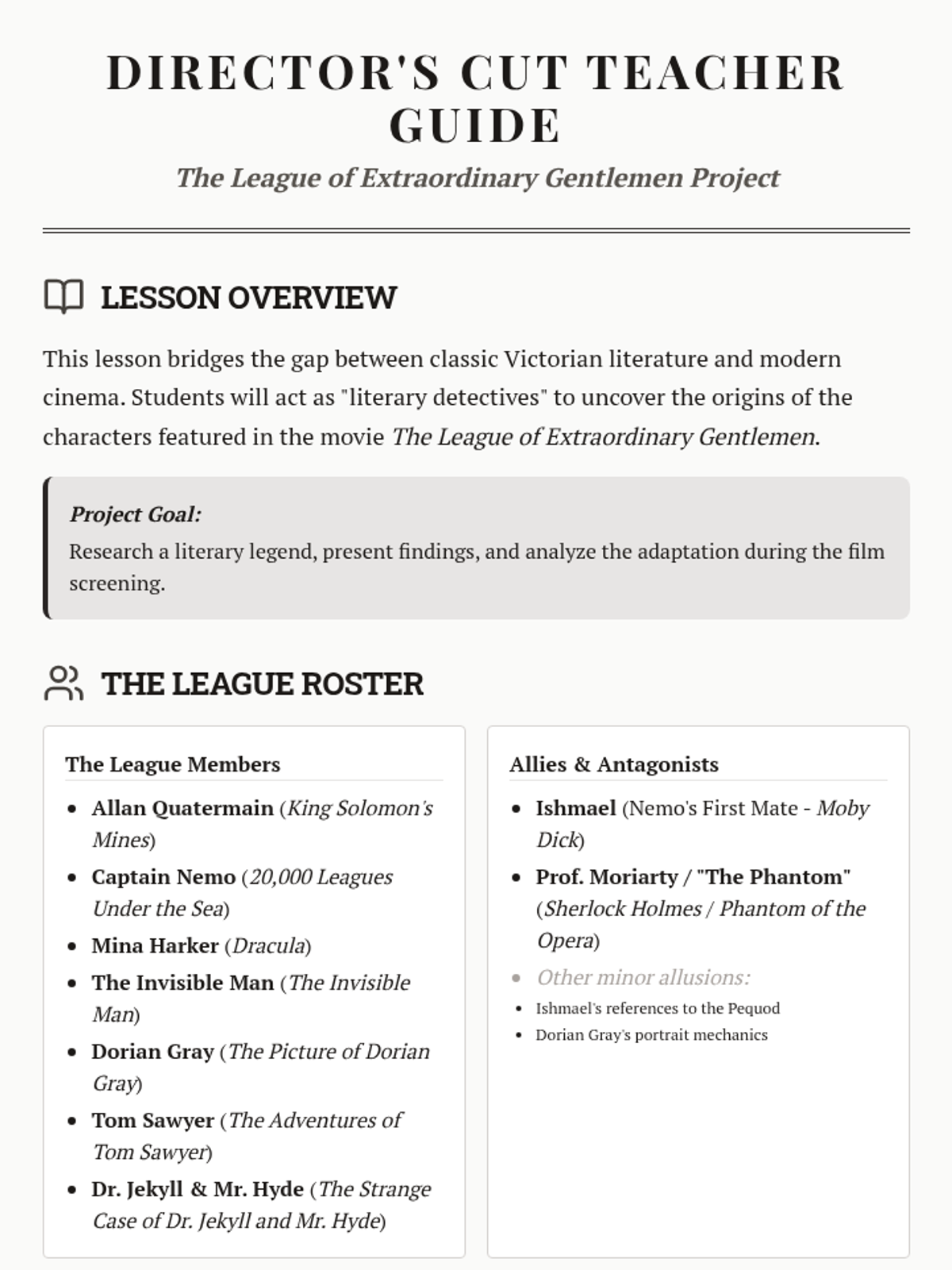
A teacher's facilitation guide for the 'Literary Legends Crossover' project, including a character roster, pacing guide, and discussion prompts.
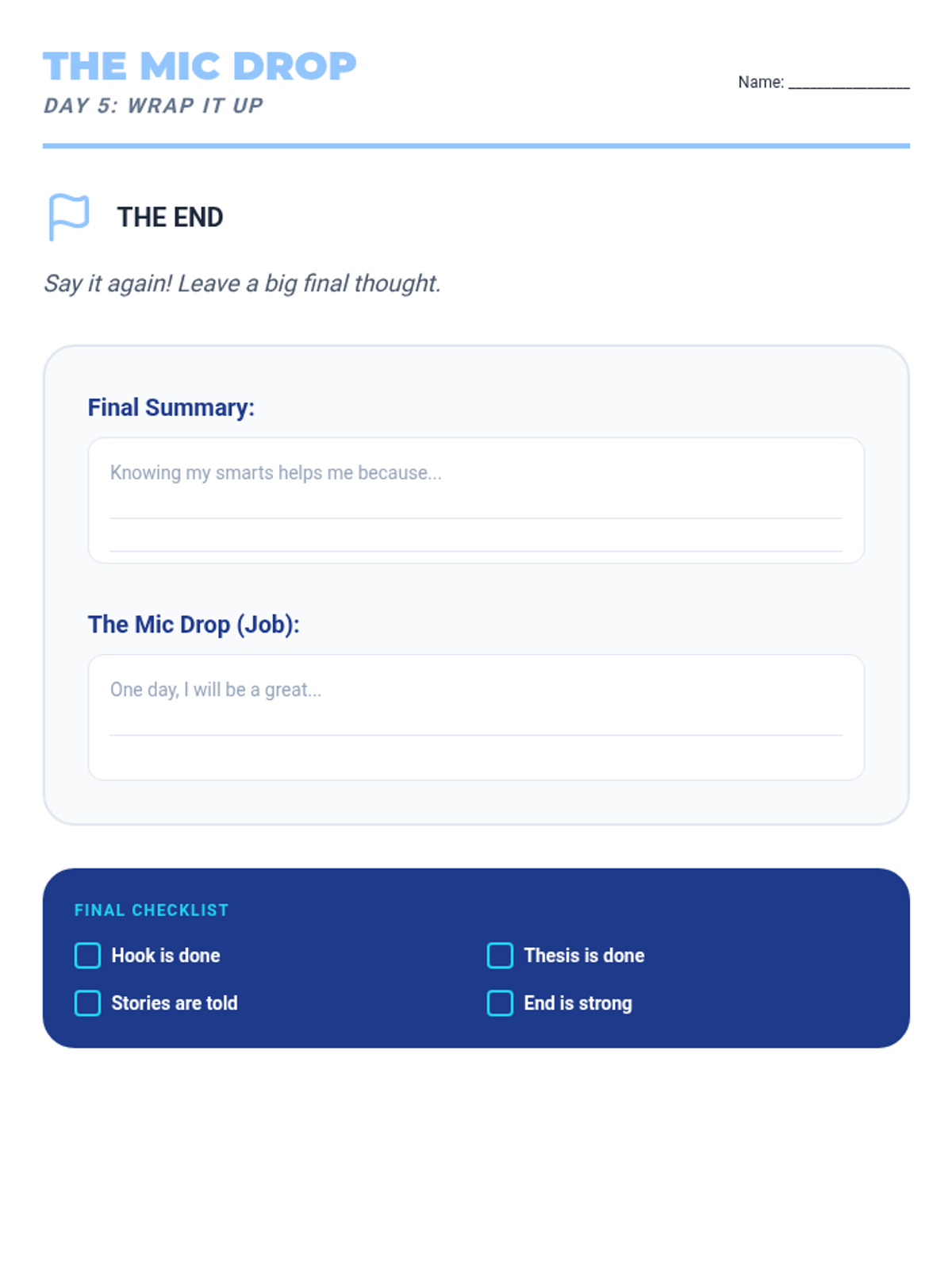
A Day 5 worksheet for drafting the conclusion and performing a final self-check on the essay components. Optimized for single-page printing.
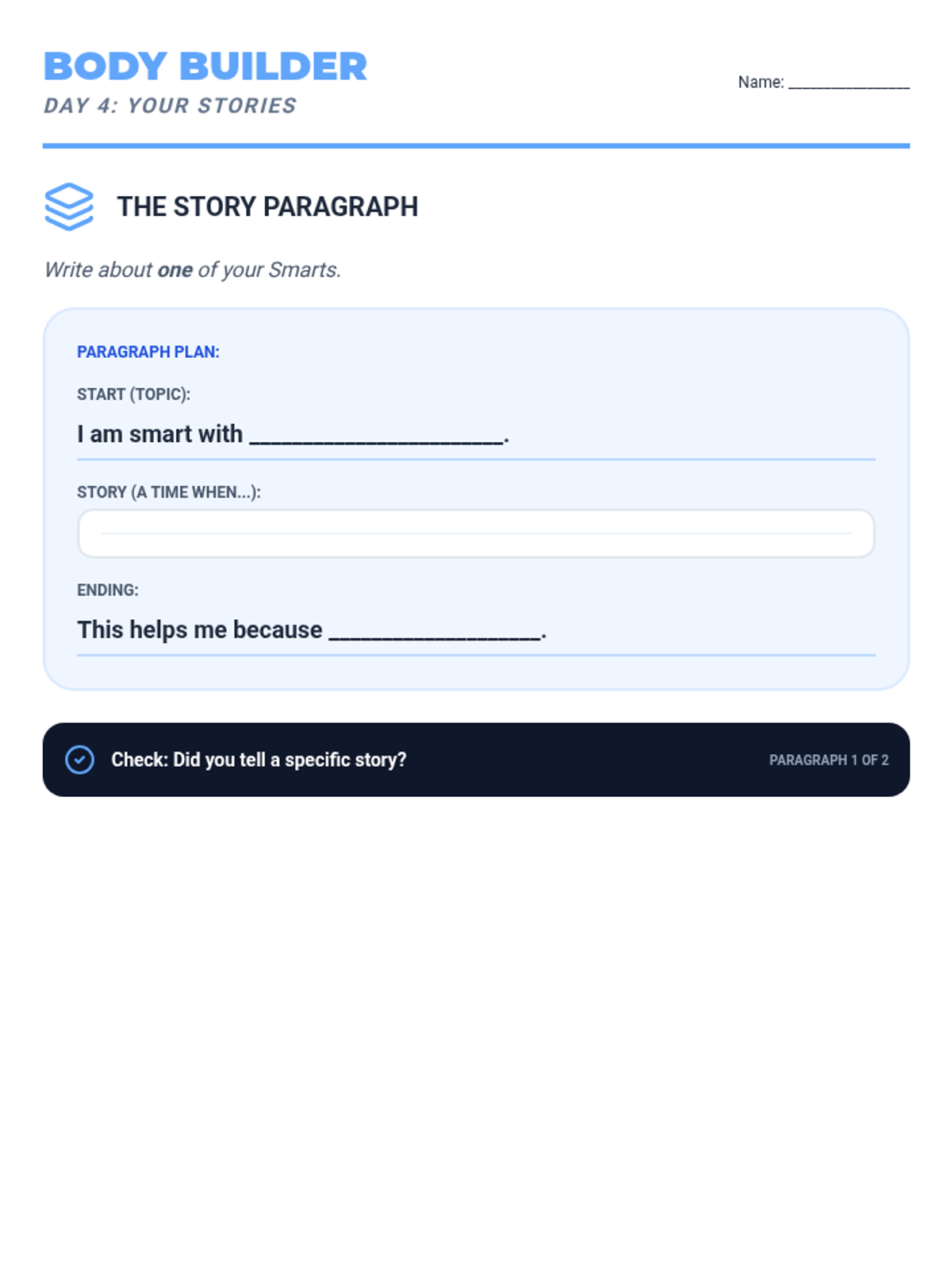
A Day 4 worksheet helping students draft their first body paragraph using a structured frame and storytelling prompts. Optimized with robust writing lines and single-page layout.
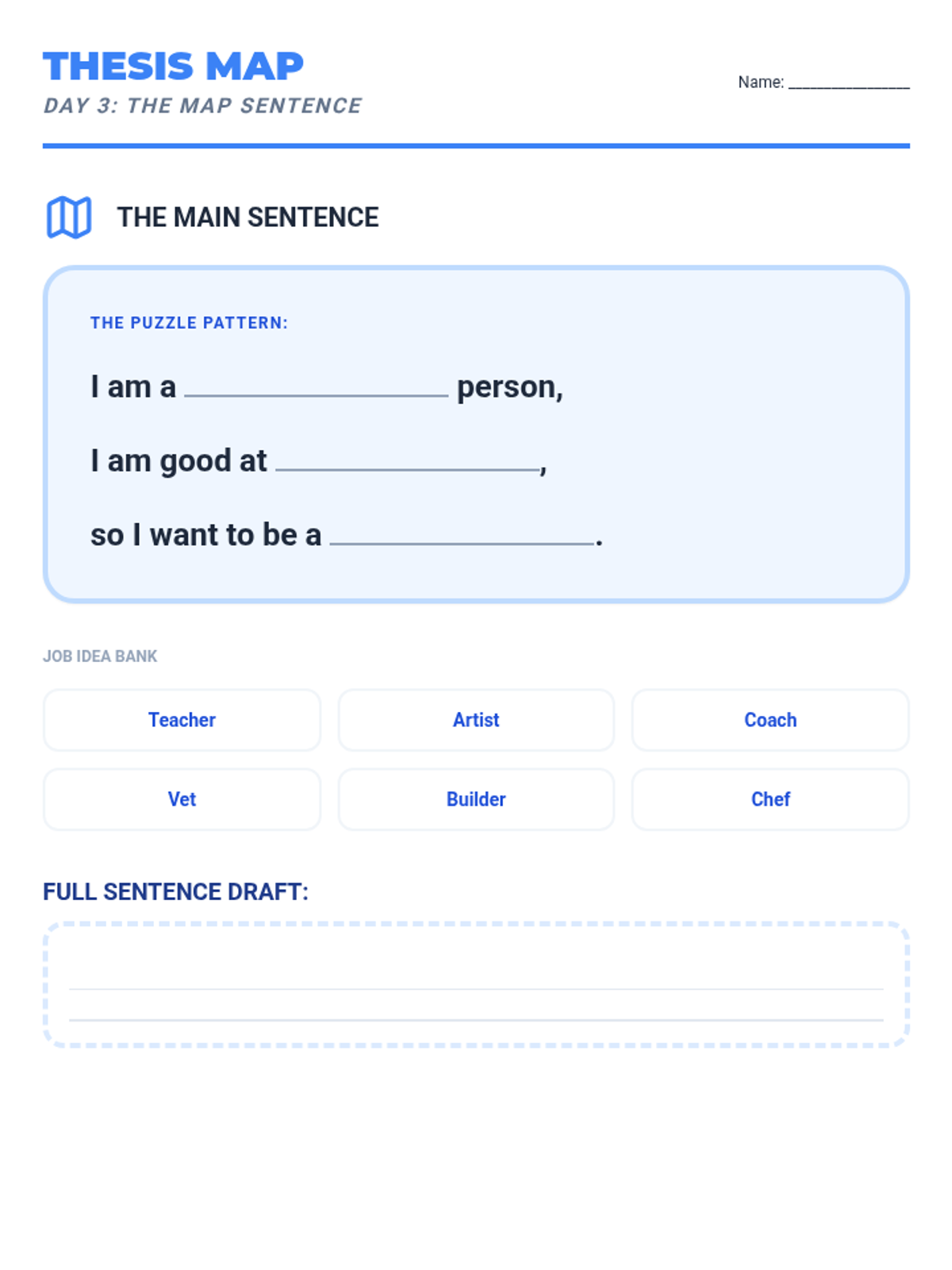
A Day 3 worksheet providing a "Thesis Puzzle" structure to help students construct a clear, formulaic thesis statement. Optimized for single-page printing and legibility.
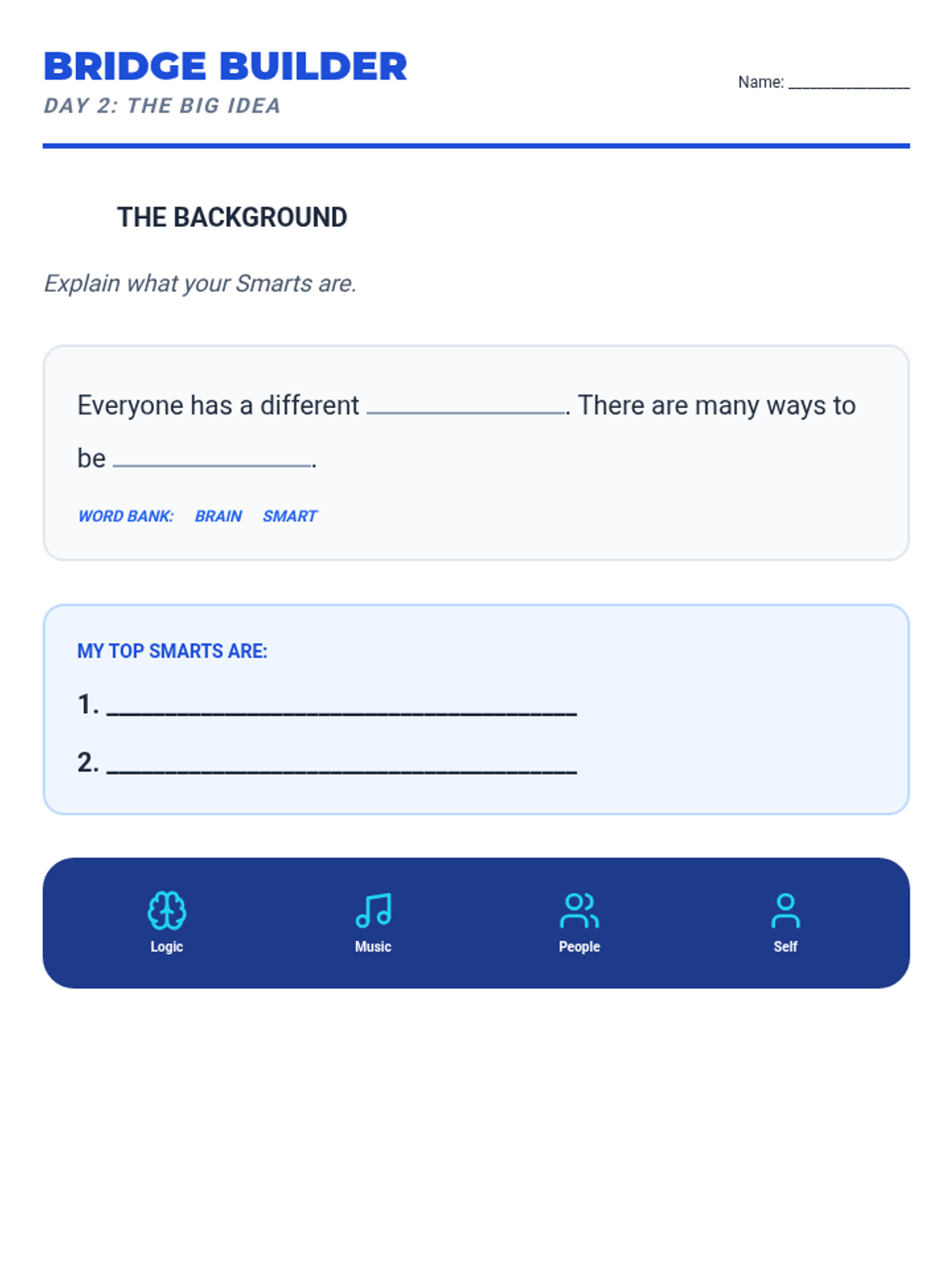
A Day 2 worksheet focused on building background information using sentence frames and visual aids. Now includes all 8 Multiple Intelligences and optimized layouts.
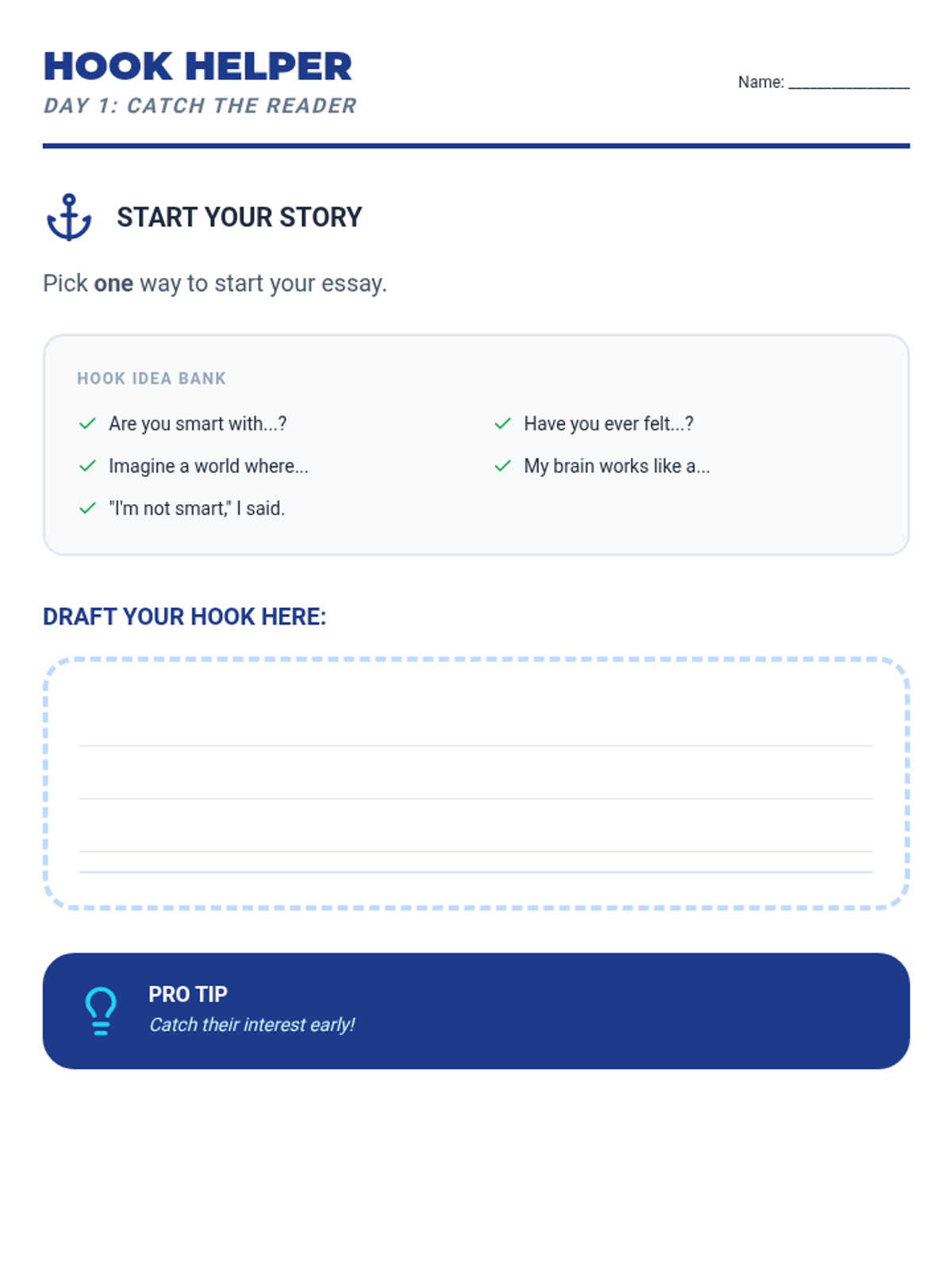
A simplified worksheet for Day 1 focusing on selecting and drafting a hook with visual prompts and a word bank. Optimized for single-page printing.
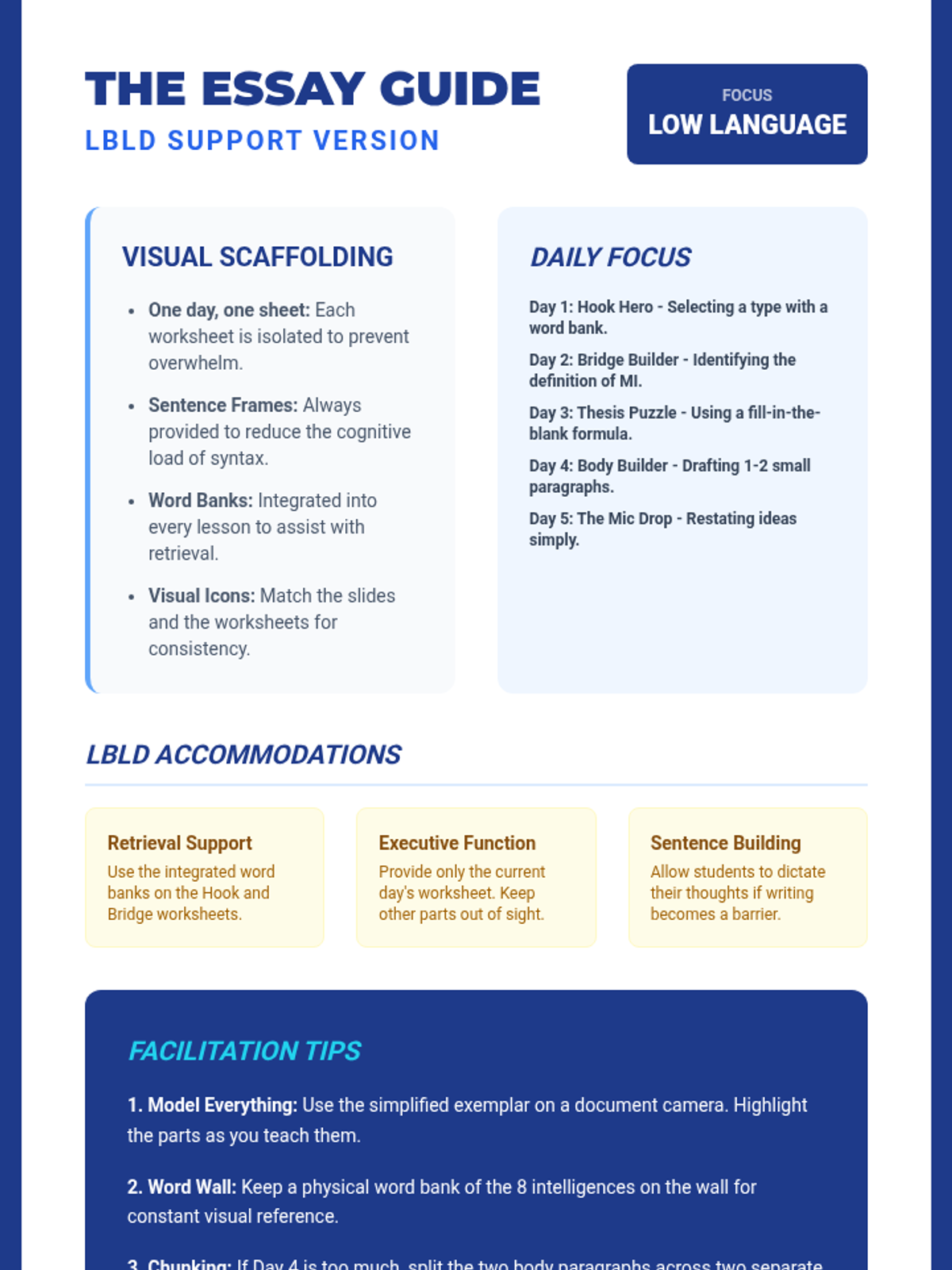
An adapted facilitator's guide for teaching students with language-based learning disabilities, focusing on visual scaffolding, chunking, and reduced text density. Includes the 5 hook types and the model essay. Now with increased font sizes.
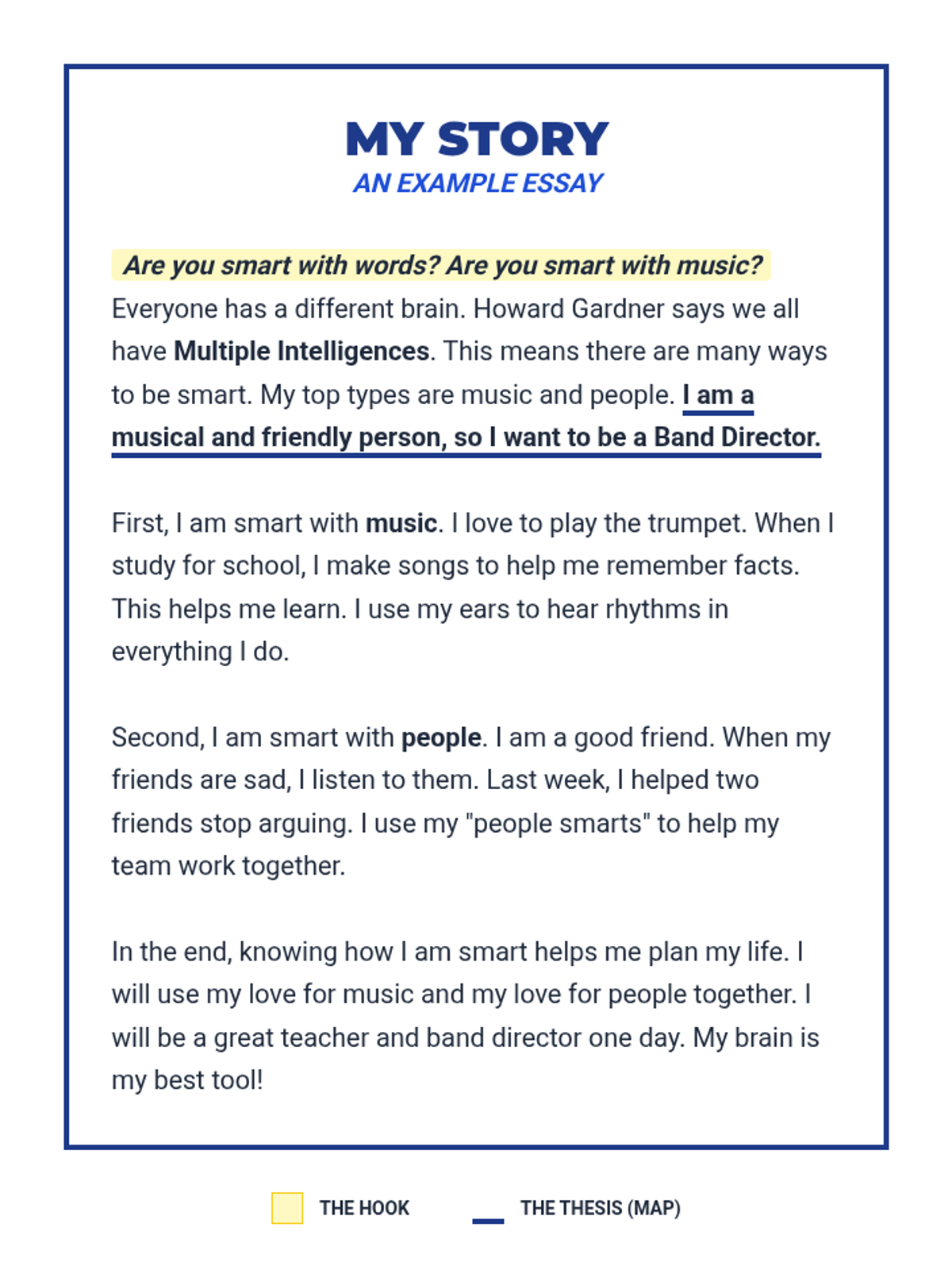
A simplified exemplar essay with reduced language and clear visual markers, designed for students with language-based learning disabilities. Optimized to fit on a single page.
A simplified, high-visual slide deck for students with language-based learning disabilities, including the hook types, thesis formula, and a complete model essay. Now includes Day 2 instructions and fixed layouts.
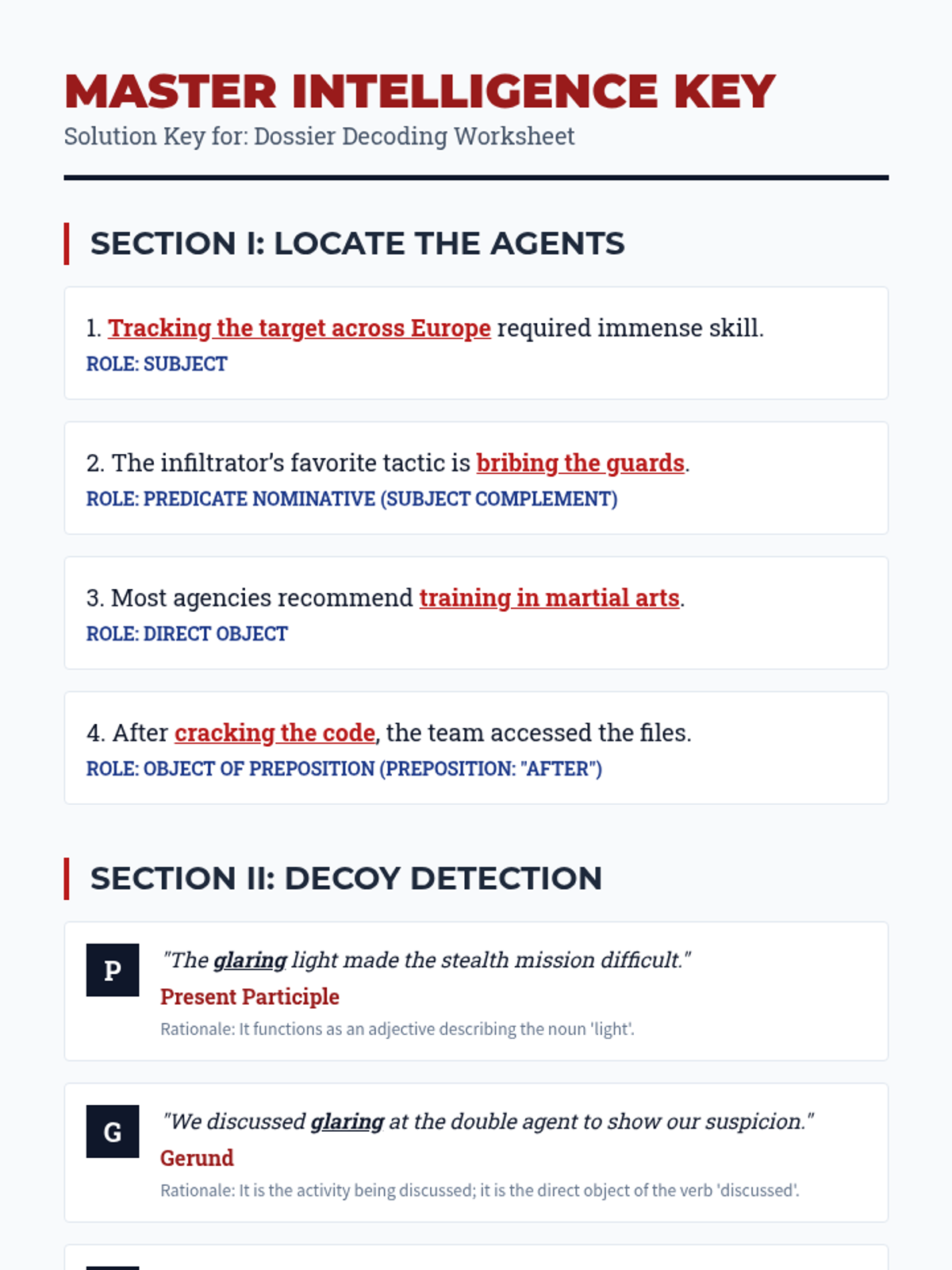
A comprehensive answer key for the 'Dossier Decoding' worksheet, providing highlighted solutions, role identifications, and teacher notes for evaluating high-level student responses. Section II is now self-contained and formatted for better readability.
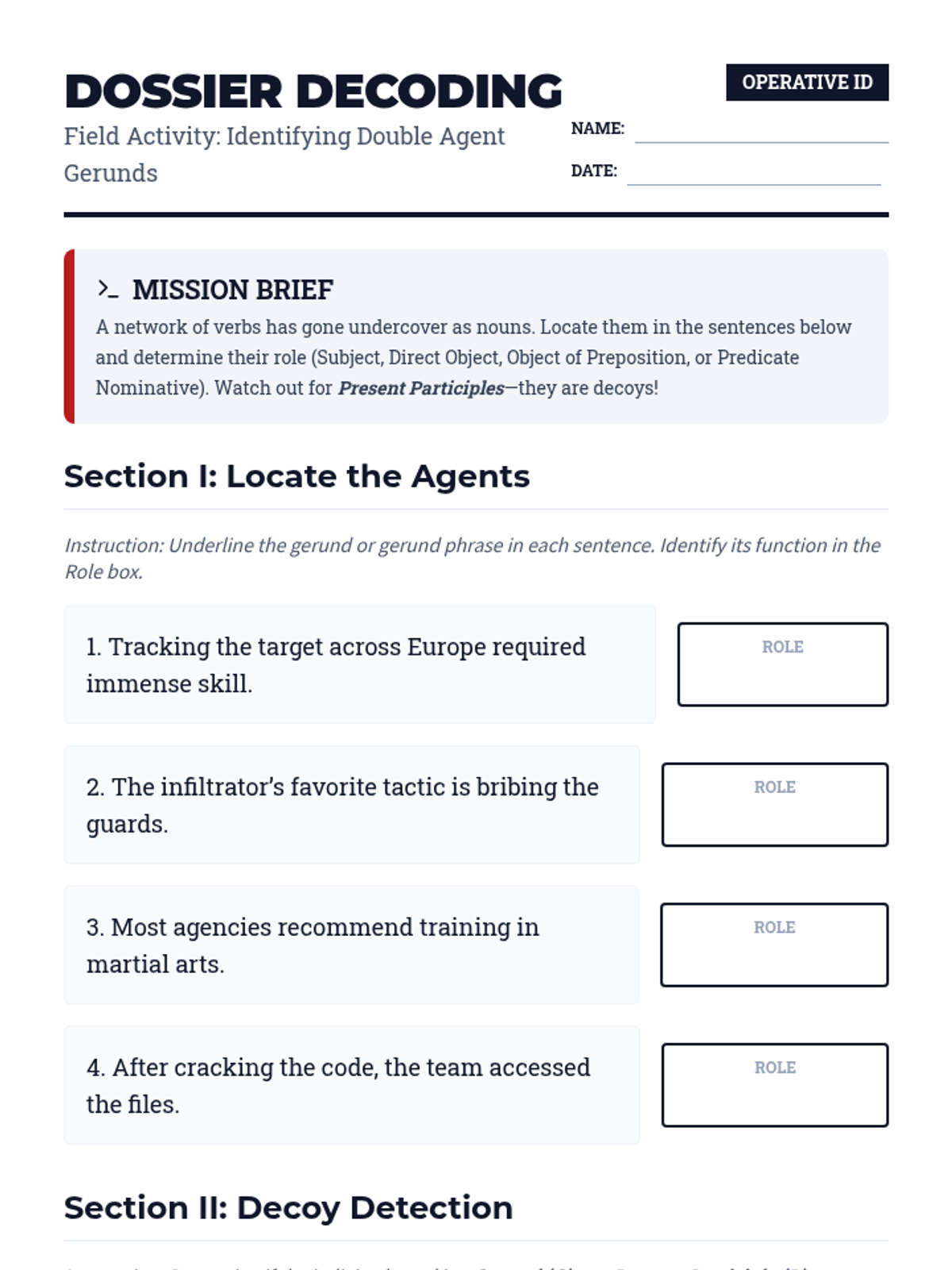
A student worksheet designed with a detective 'dossier' aesthetic. It challenges students to identify gerunds and their roles, distinguish them from participles, and apply their knowledge in creative writing. Section I has been improved for better layout and clarity.
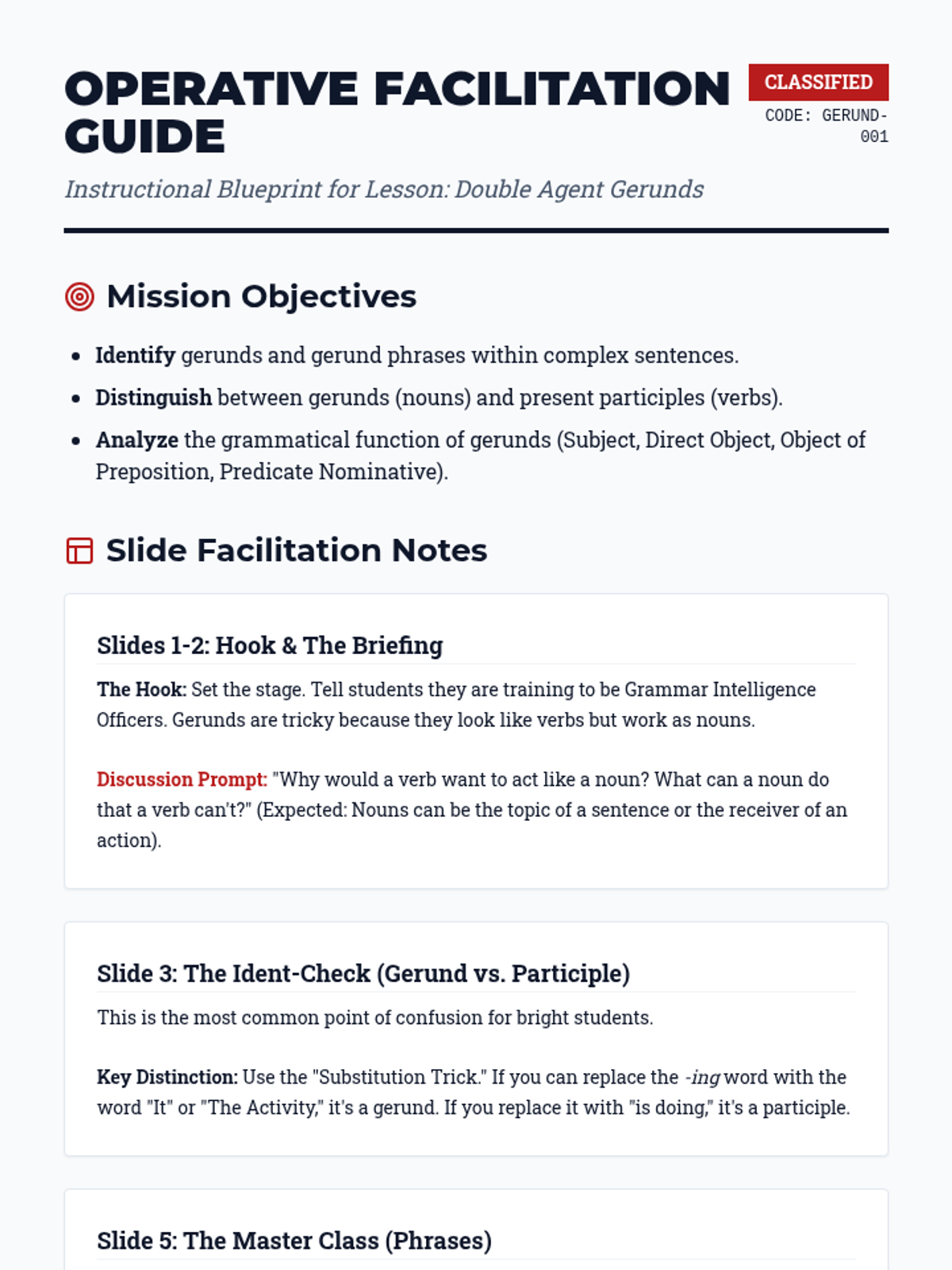
A teacher's facilitation guide for the 'Double Agent Gerunds' lesson, featuring slide-by-slide prompts, common pitfalls, the 'Substitution Trick', and extension activities for advanced students. Updated with guidance for the interactive analysis slide.
A visually striking, spy-themed slide deck that introduces gerunds as 'Double Agents'—verbs acting as nouns. It covers identification, functions (subject, object, complement), and gerund phrases for advanced learners. Now includes a dedicated analysis slide for student participation.
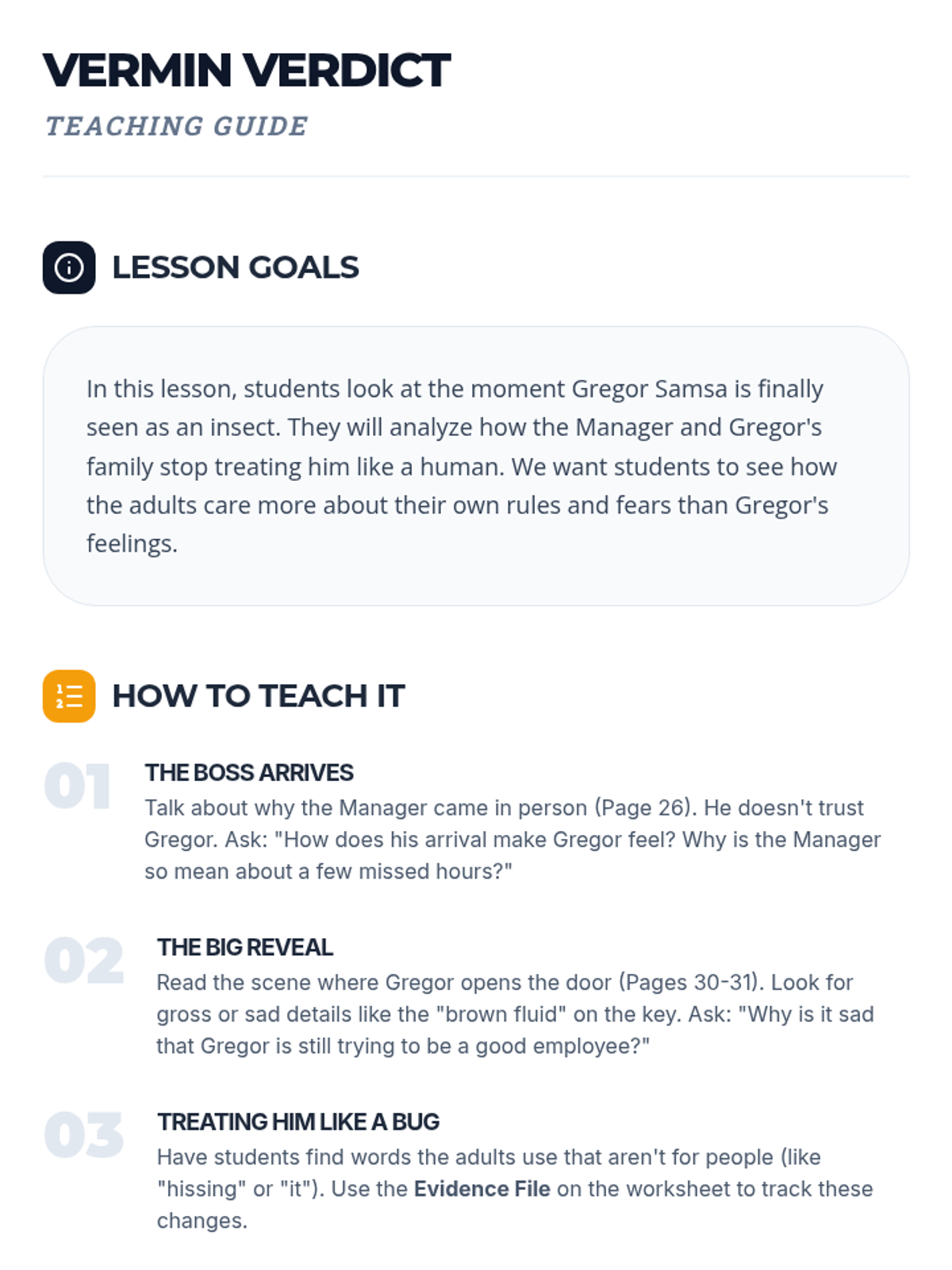
A middle-grade level teaching guide for the 'Vermin Verdict' lesson. It features simplified instructional goals, discussion prompts, and differentiation strategies. It includes specific page references to the Bernofsky translation of 'The Metamorphosis' and is designed to accompany the updated worksheet.
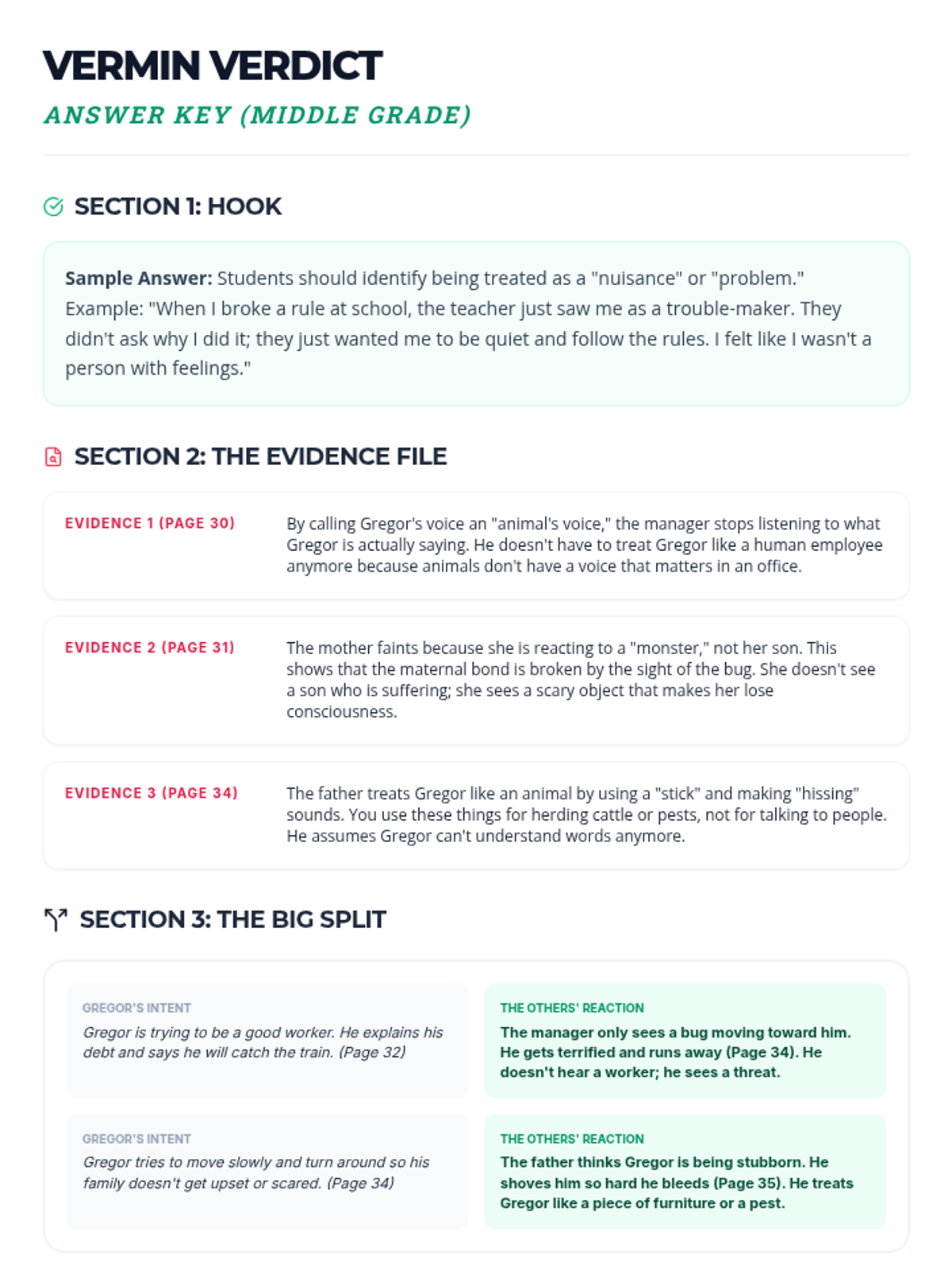
A middle-grade level answer key for the Vermin Verdict Worksheet. It includes simplified sample responses and page citations (based on the Bernofsky translation) for all evidence. The model responses focus on making complex ELA concepts like dehumanization and authority accessible to younger students.
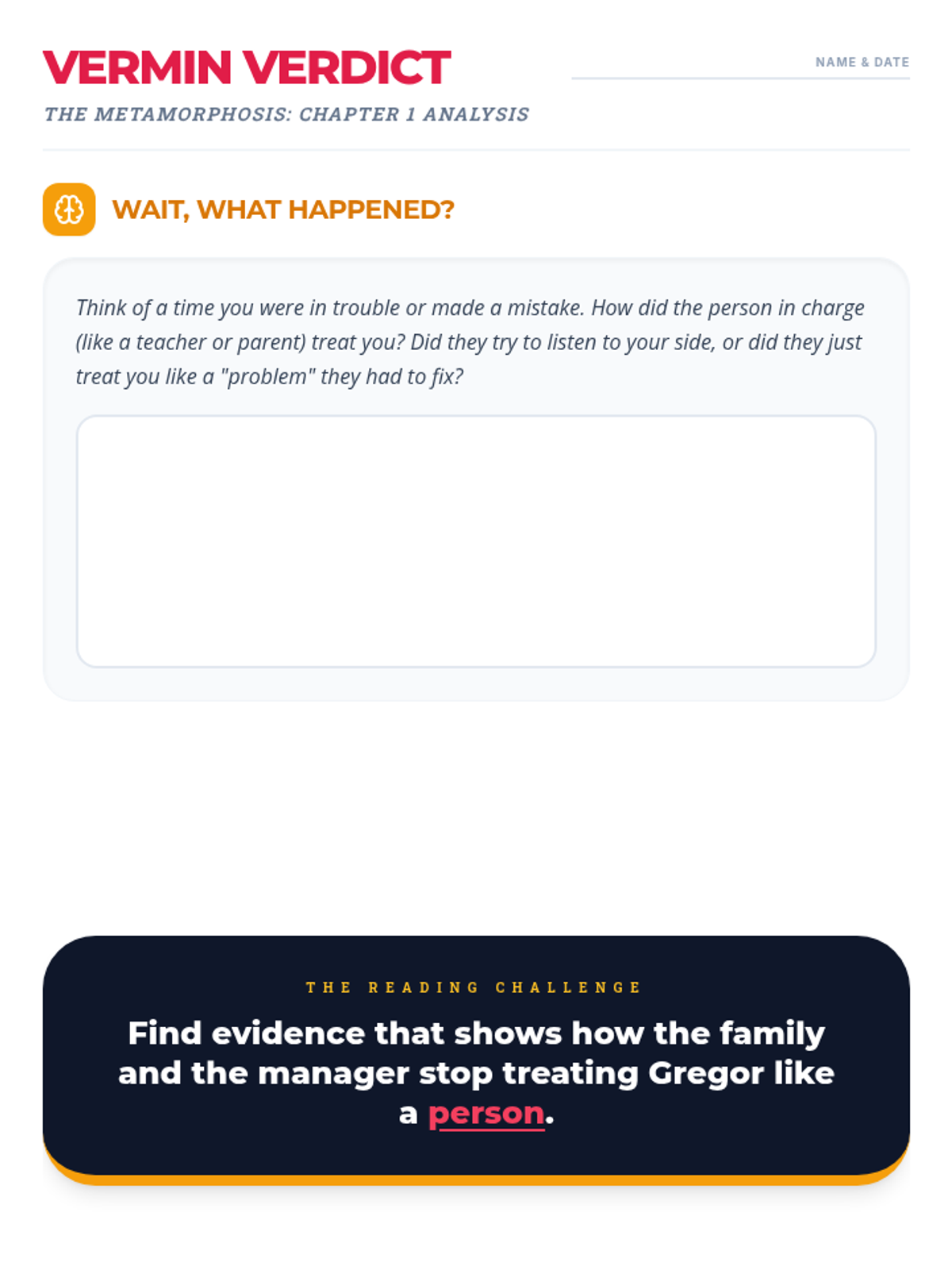
An updated reading guide for Chapter 1 of 'The Metamorphosis' adjusted for middle-grade students. This version optimizes the layout to ensure clear page breaks and high-quality student work areas. It includes page citations for all quotes, simplified language for accessibility, and structured trackers to analyze the theme of dehumanization and authority.