A simple, structured data tracking sheet for educators to monitor student progress in reading and spelling CCVC words with L and S blends. Includes mastery checkboxes and space for observational notes.
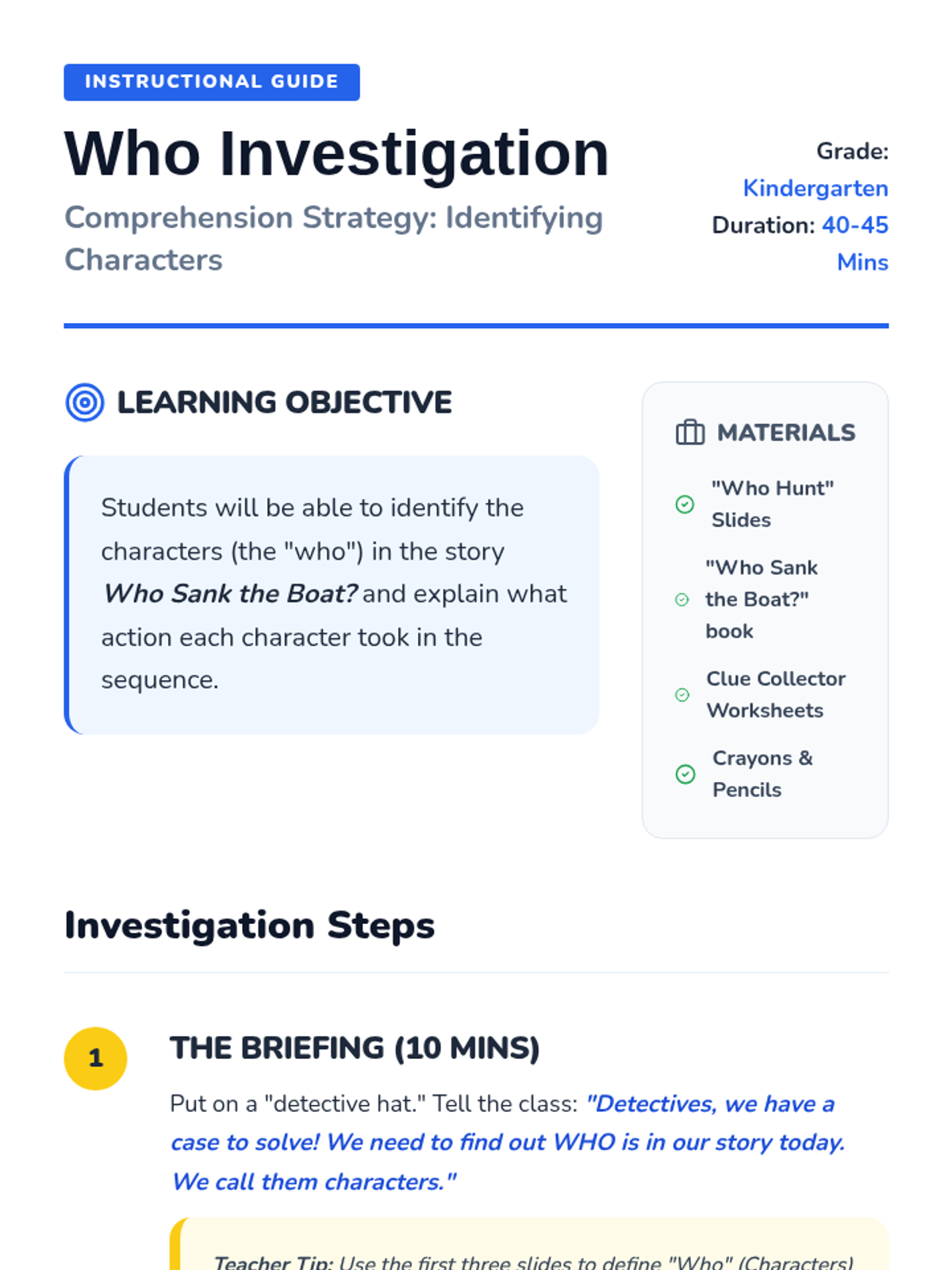
A comprehensive teacher guide for the 'Who Hunt' kindergarten lesson. Includes learning objectives, step-by-step procedures for the read-aloud, discussion prompts, and differentiation strategies for varied learner needs.
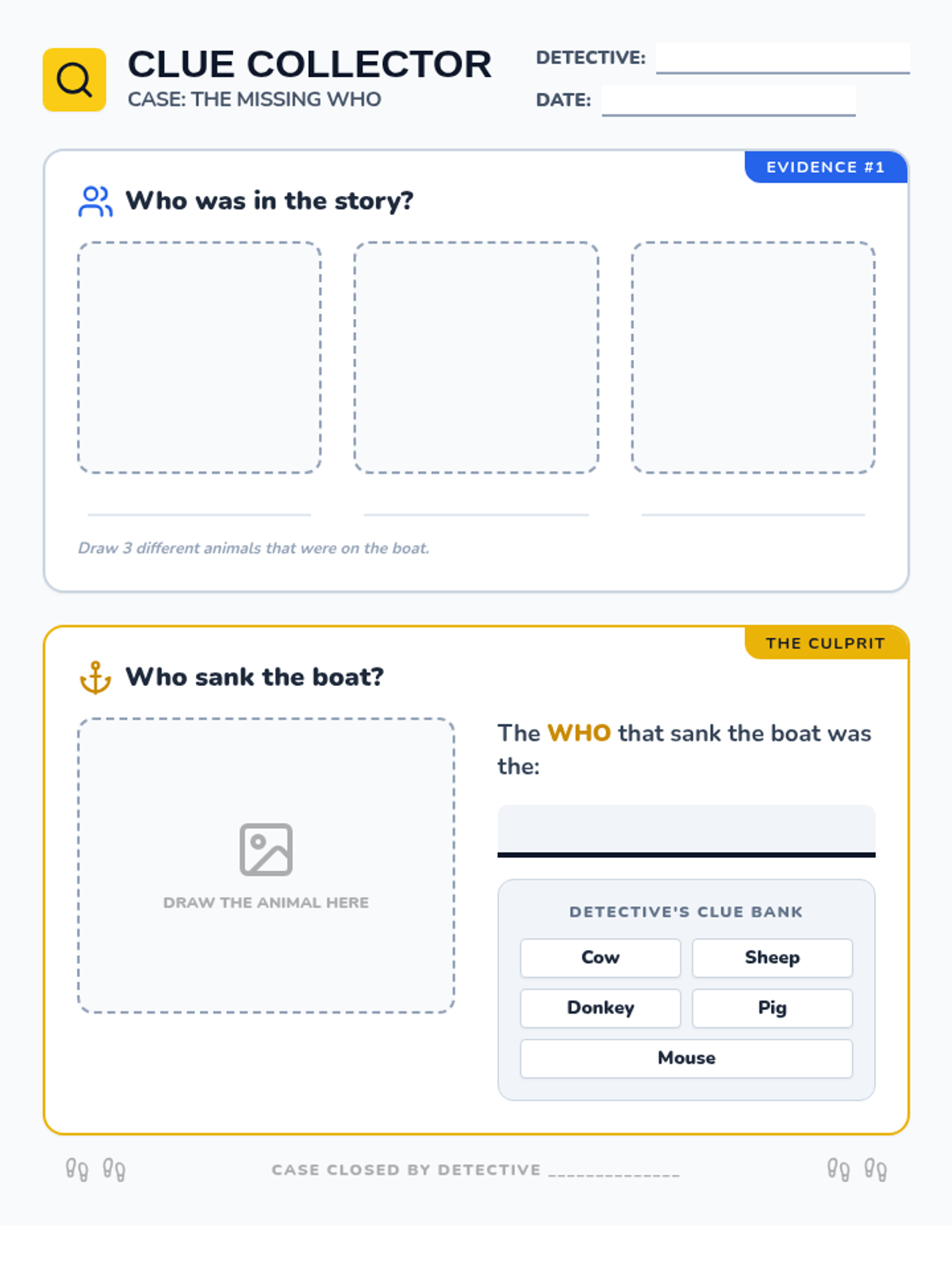
A detective-themed worksheet for kindergarteners to practice identifying characters ('Who') from the book 'Who Sank the Boat?'. Includes spaces for drawing characters and identifying the animal that sank the boat.
A slide presentation for a kindergarten lesson on identifying 'Who' in a story. Featuring a detective theme and focusing on the book 'Who Sank the Boat?', it guides students through defining characters and identifying them within the narrative.
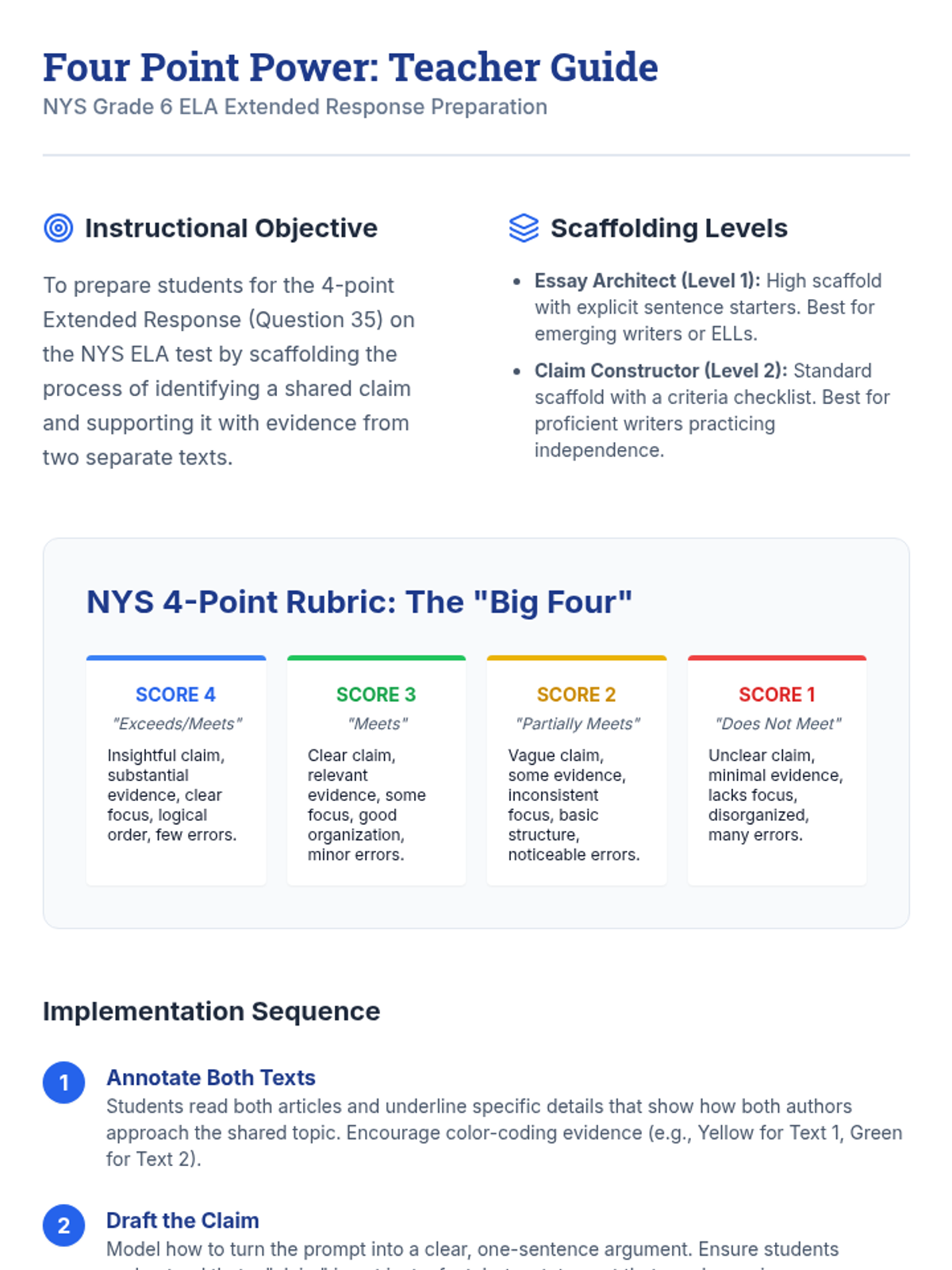
A guide for teachers on implementing the NYS Grade 6 ELA organizers, including a 4-point rubric overview and pacing suggestions.
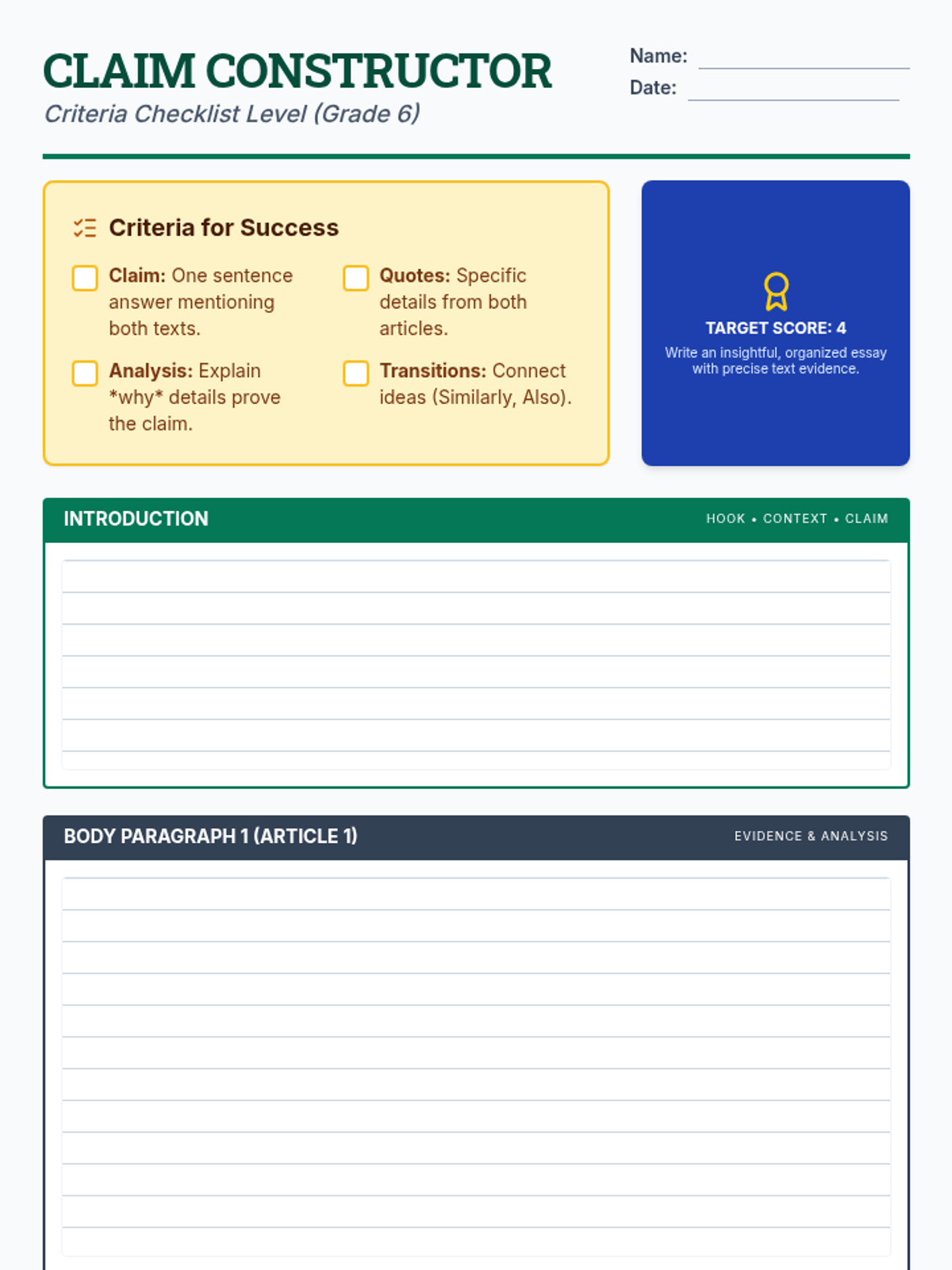
A graphic organizer for Grade 6 students with a 'Criteria for Success' checklist, designed for independent drafting of a 4-point comparison response for the NYS ELA test. Now includes darker writing lines and improved spatial layout.
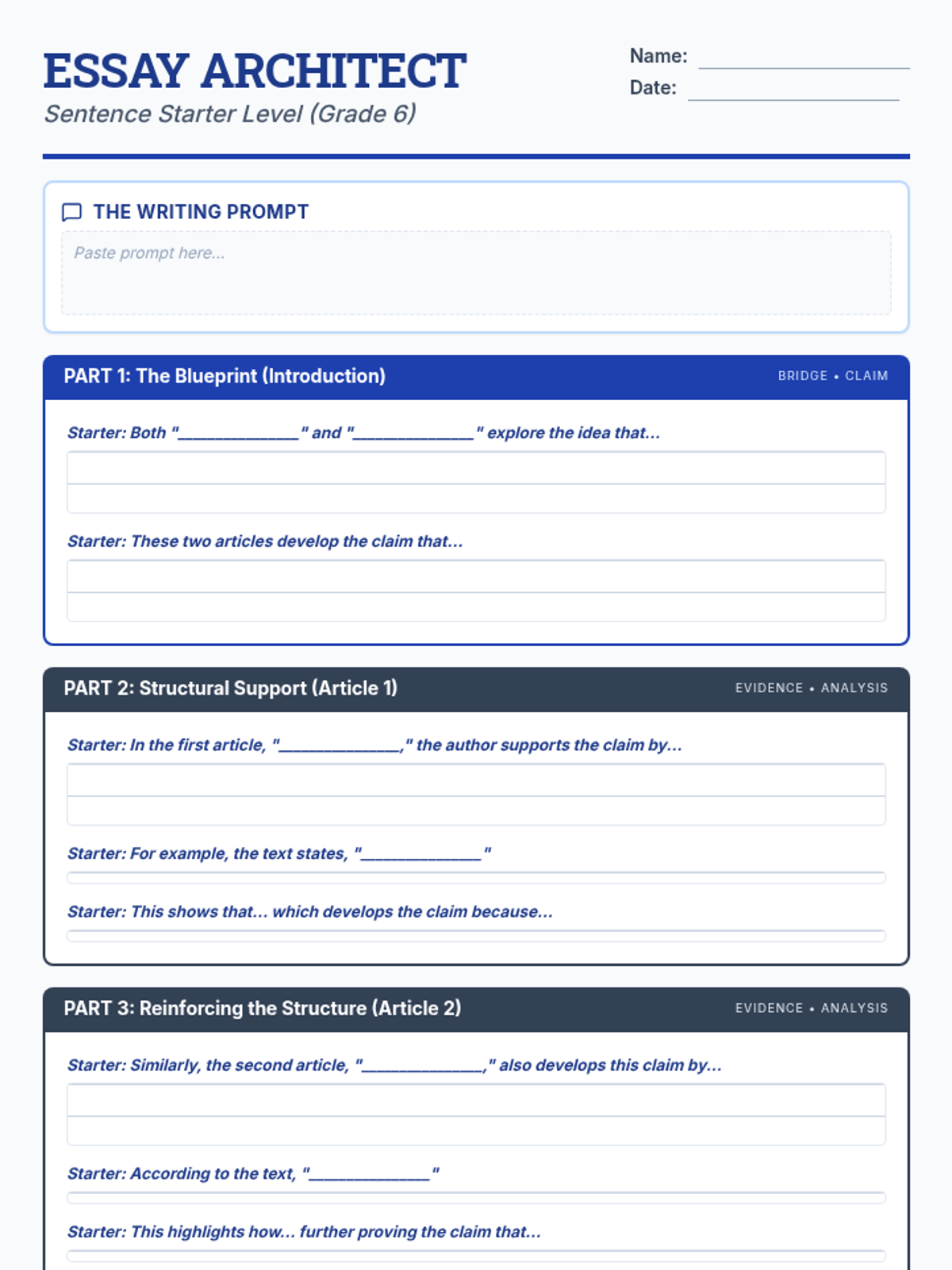
A highly scaffolded graphic organizer with sentence starters to help Grade 6 students draft a 4-point extended response comparing two texts on the NYS ELA test. Optimized for a clean 2-page print layout with writing lines and checklist.
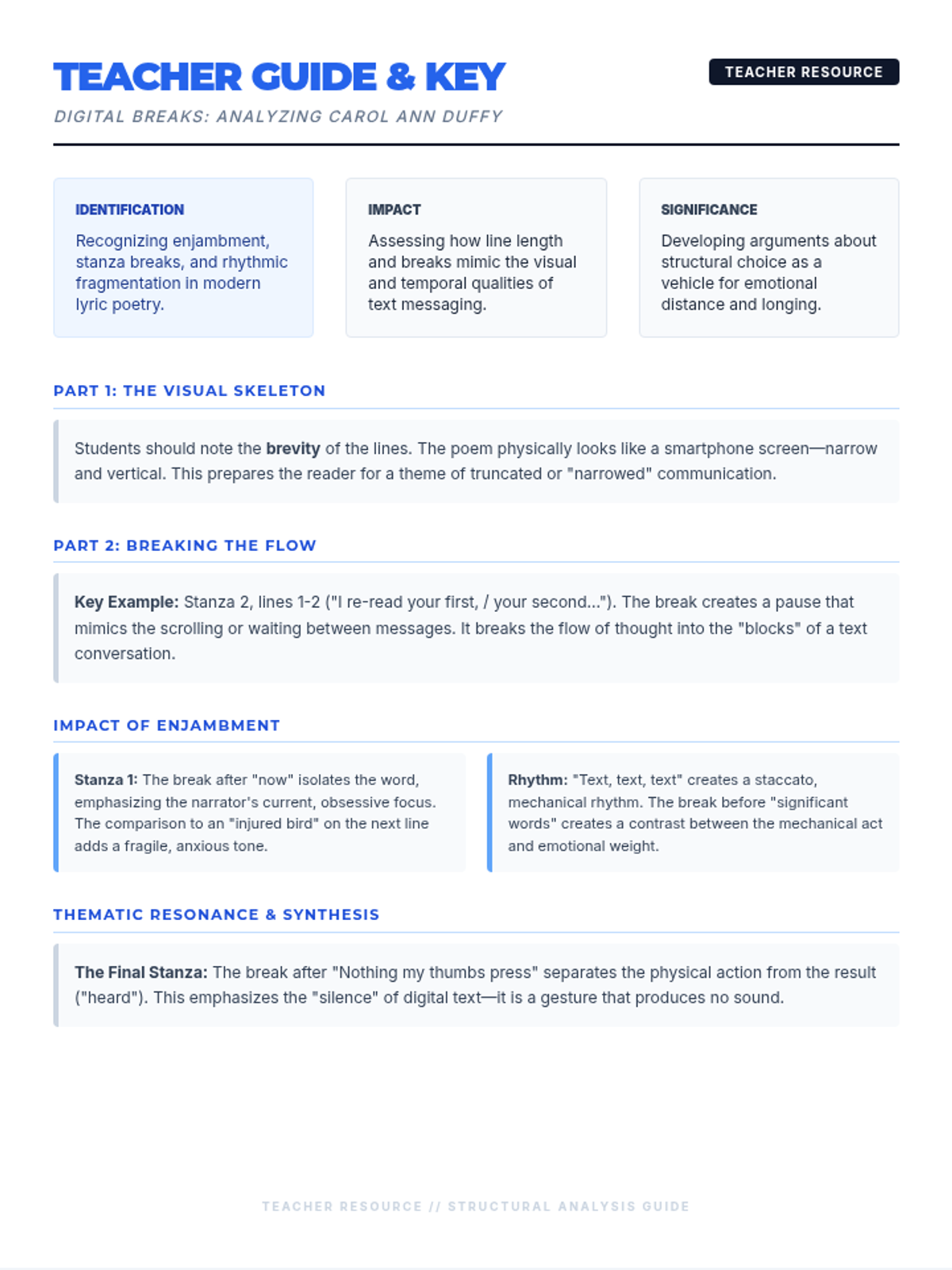
A teacher's answer key and instructional guide for the 'Digital Breaks' worksheet. Includes analysis of Carol Ann Duffy's poem 'Text', suggested student responses, and an exemplar argument paragraph.
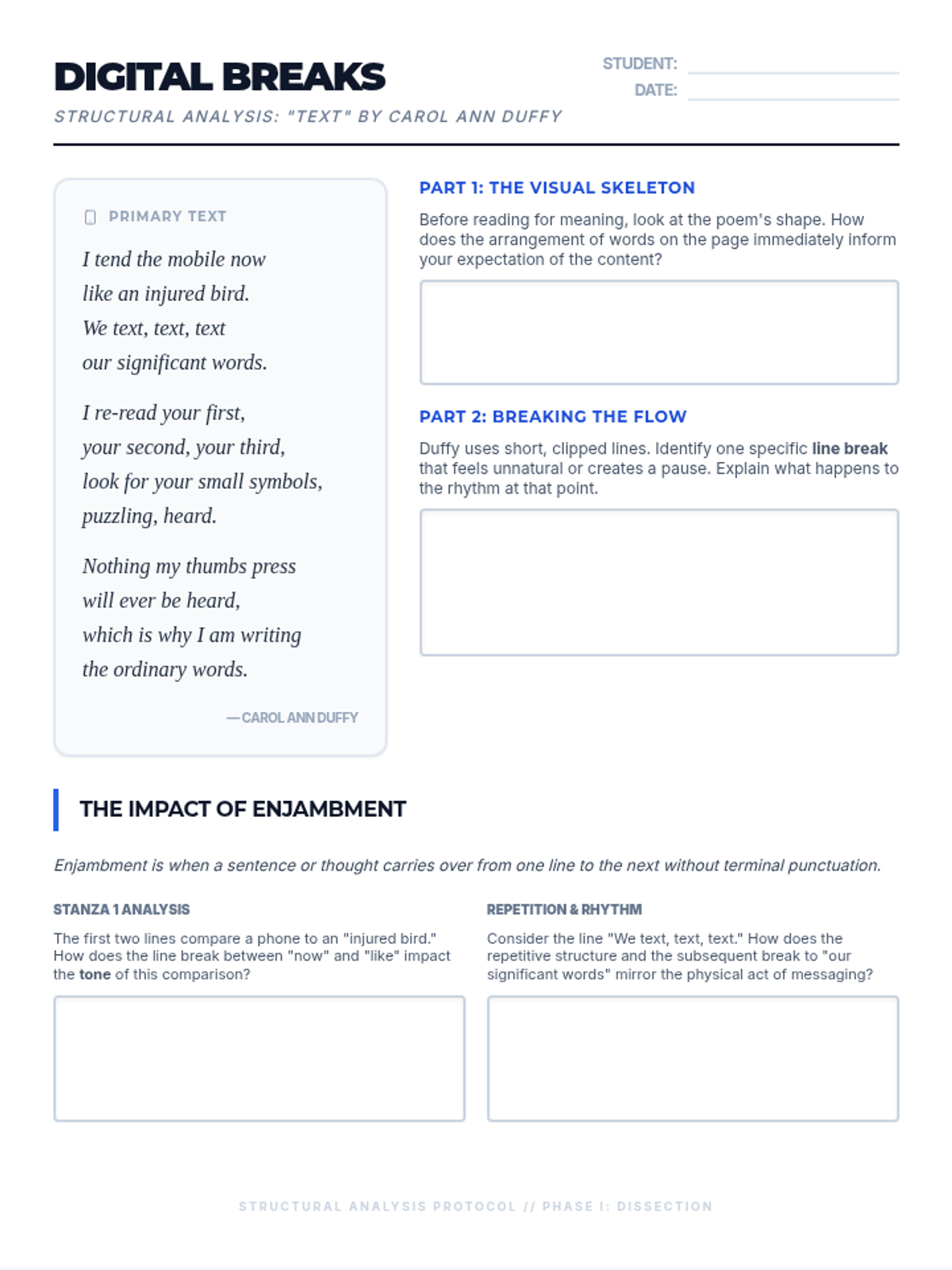
A two-page student worksheet exploring the structural elements of Carol Ann Duffy's poem 'Text'. It guides students from visual first impressions to deep analysis of line breaks and enjambment, culminating in a structured argument-writing task.
Interactive presentation slides to guide a shared reading of the Pet Picnic story. Revised with improved animal representation and specific question slides with writing lines.
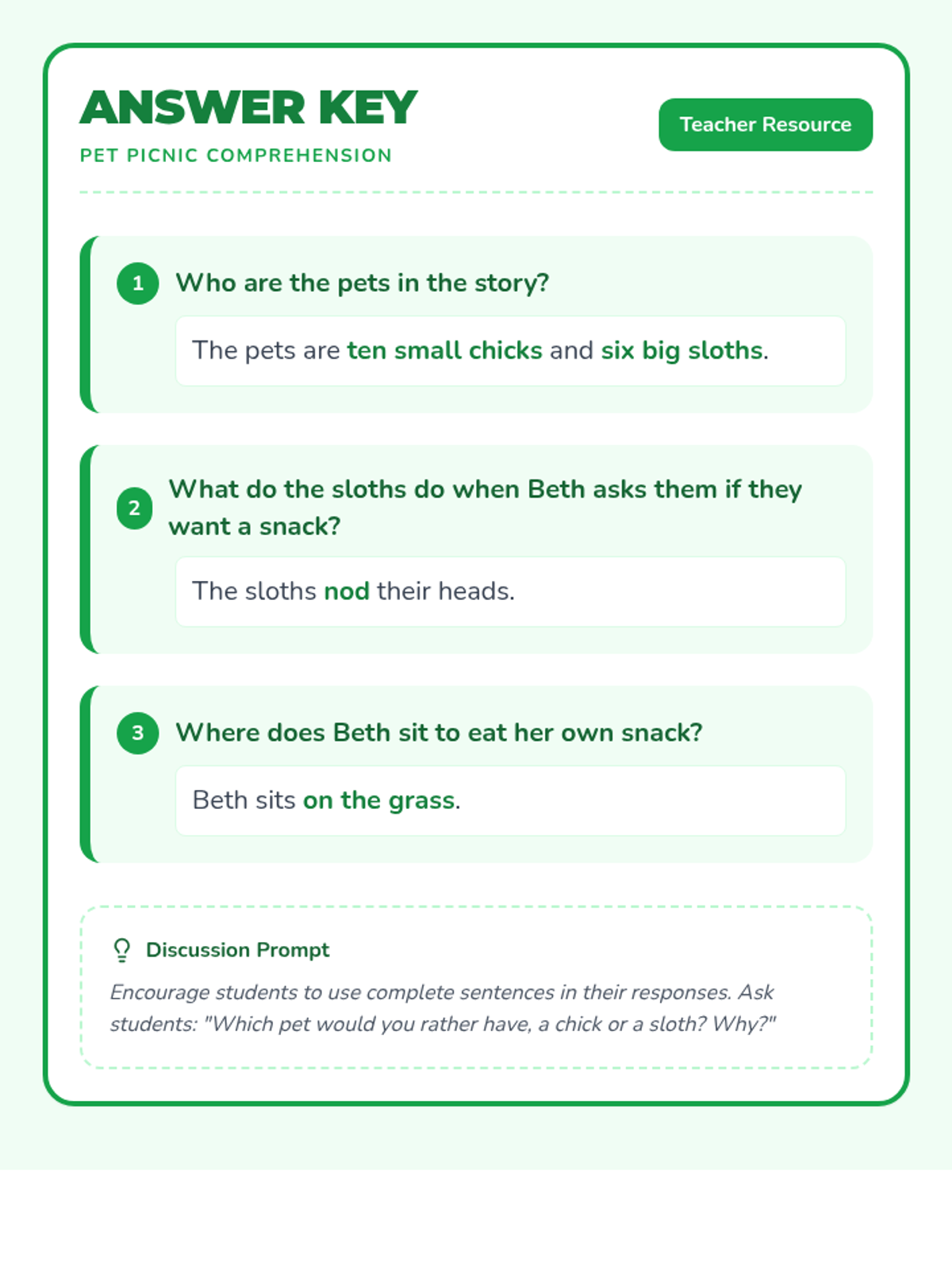
Teacher answer key for the Pet Picnic worksheet, including sample student responses and a discussion prompt. Revised for single-page printing.
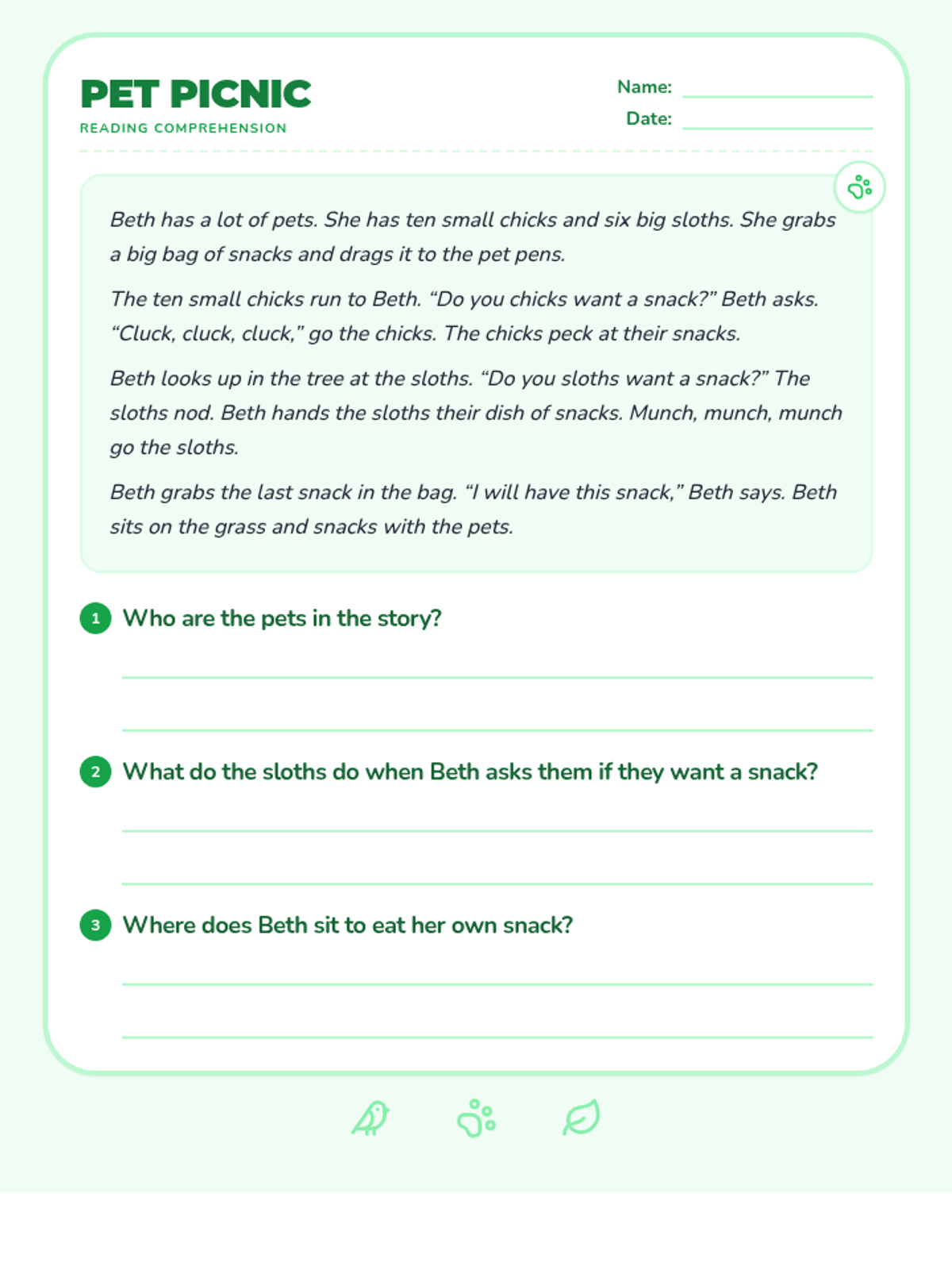
A comprehension worksheet featuring the story of Beth and her pets, with three specific Wh- questions and lined spaces for student responses. Revised for single-page printing and improved legibility.
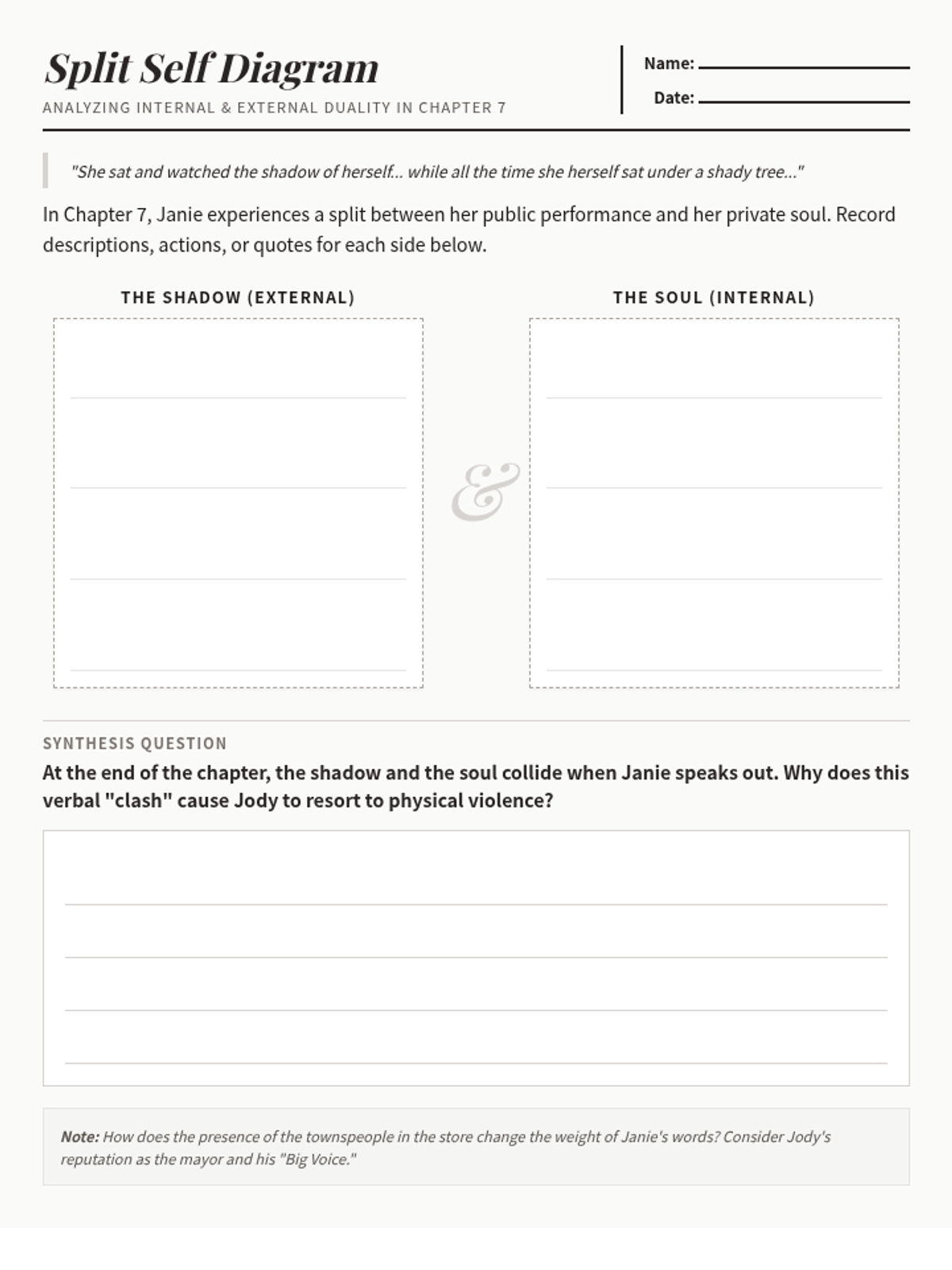
A student activity sheet for mapping Janie's internal and external conflict in Chapter 7, featuring a diagram for character analysis and synthesis questions.
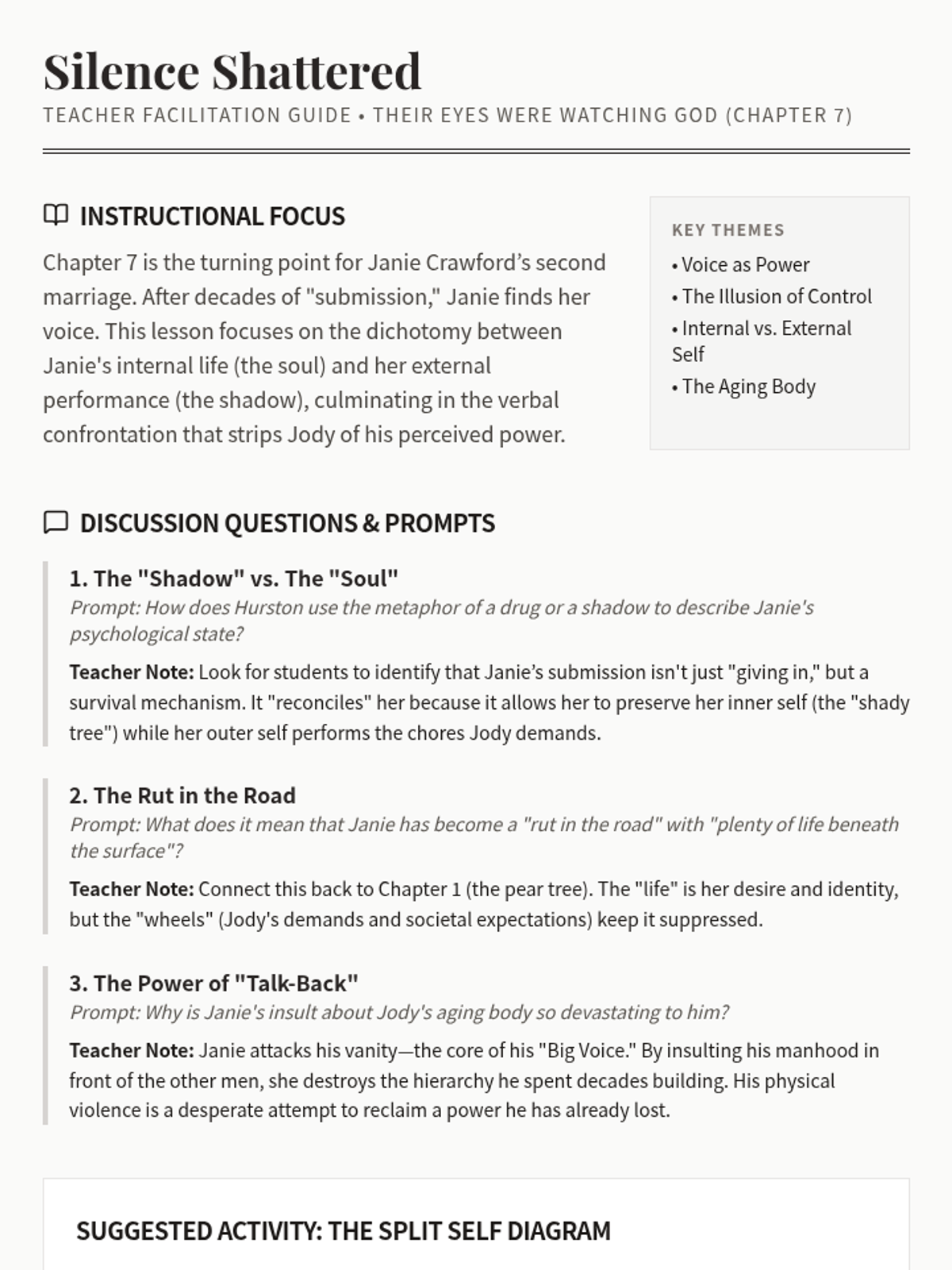
A facilitation guide for teachers covering Chapter 7 of Their Eyes Were Watching God, including discussion prompts, key themes, and activity suggestions focusing on Janie's internal conflict.
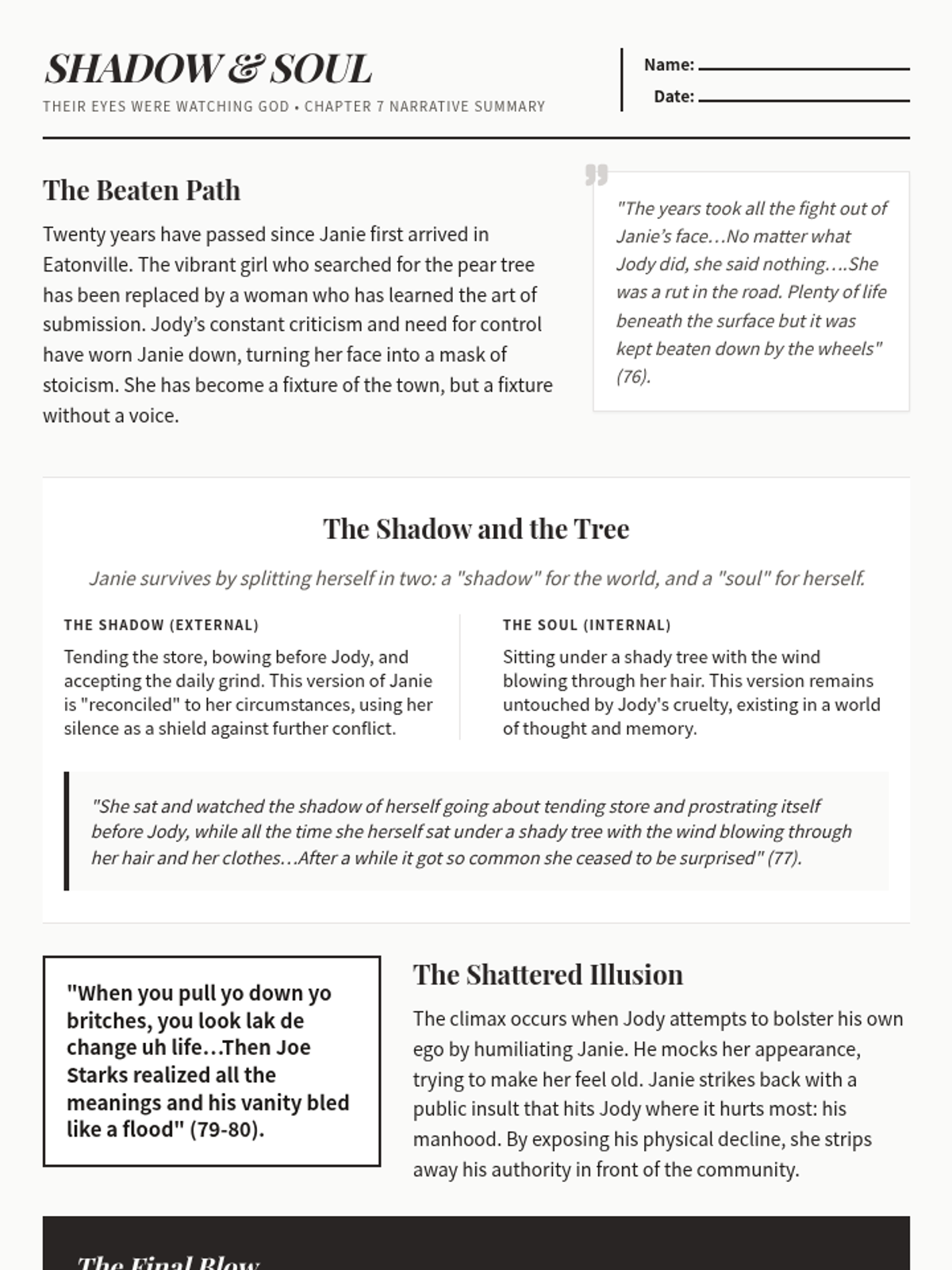
A narrative summary of Chapter 7 of Their Eyes Were Watching God, featuring key quotes, a breakdown of Janie's internal duality, and a reflection area for students.
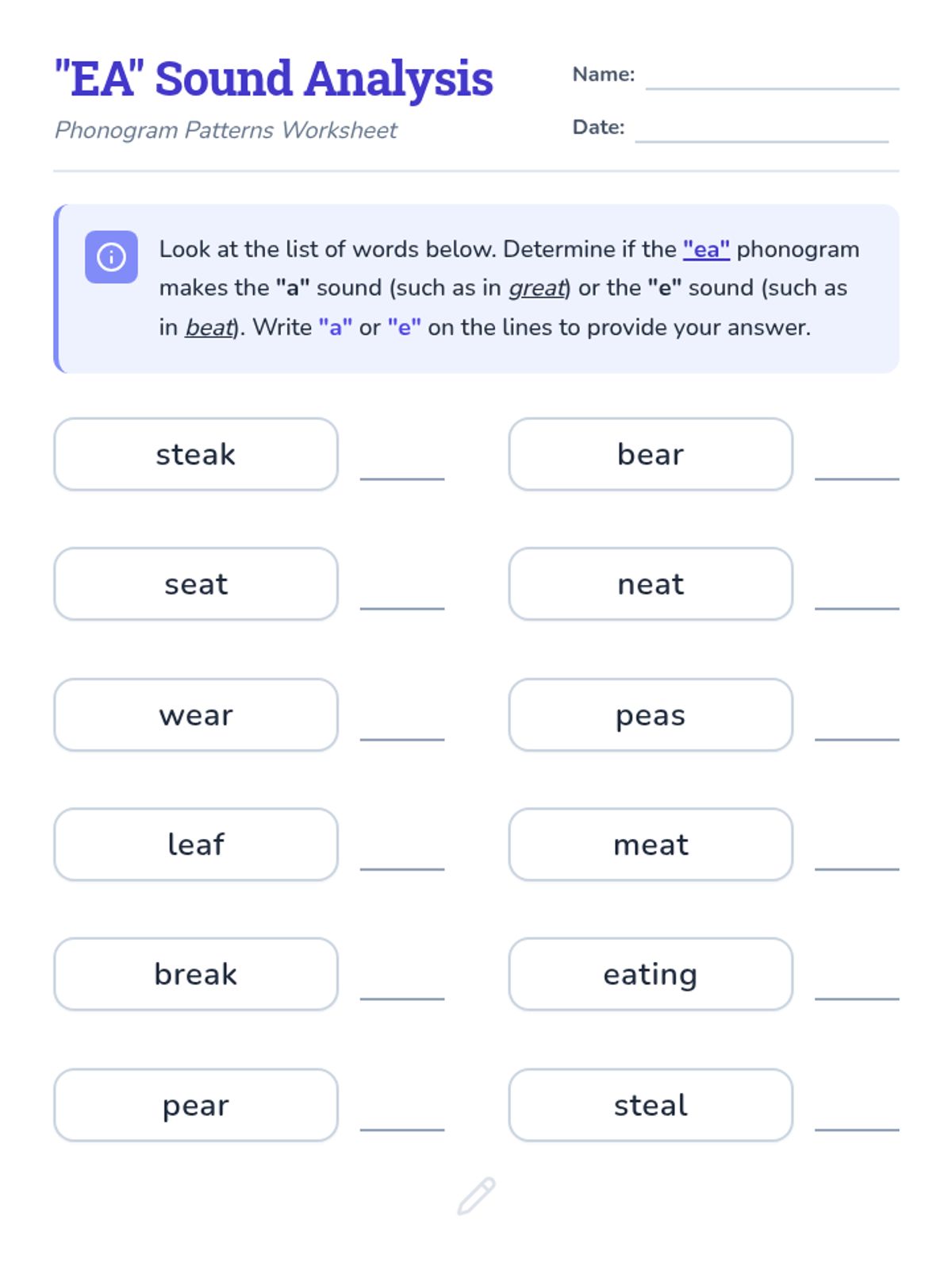
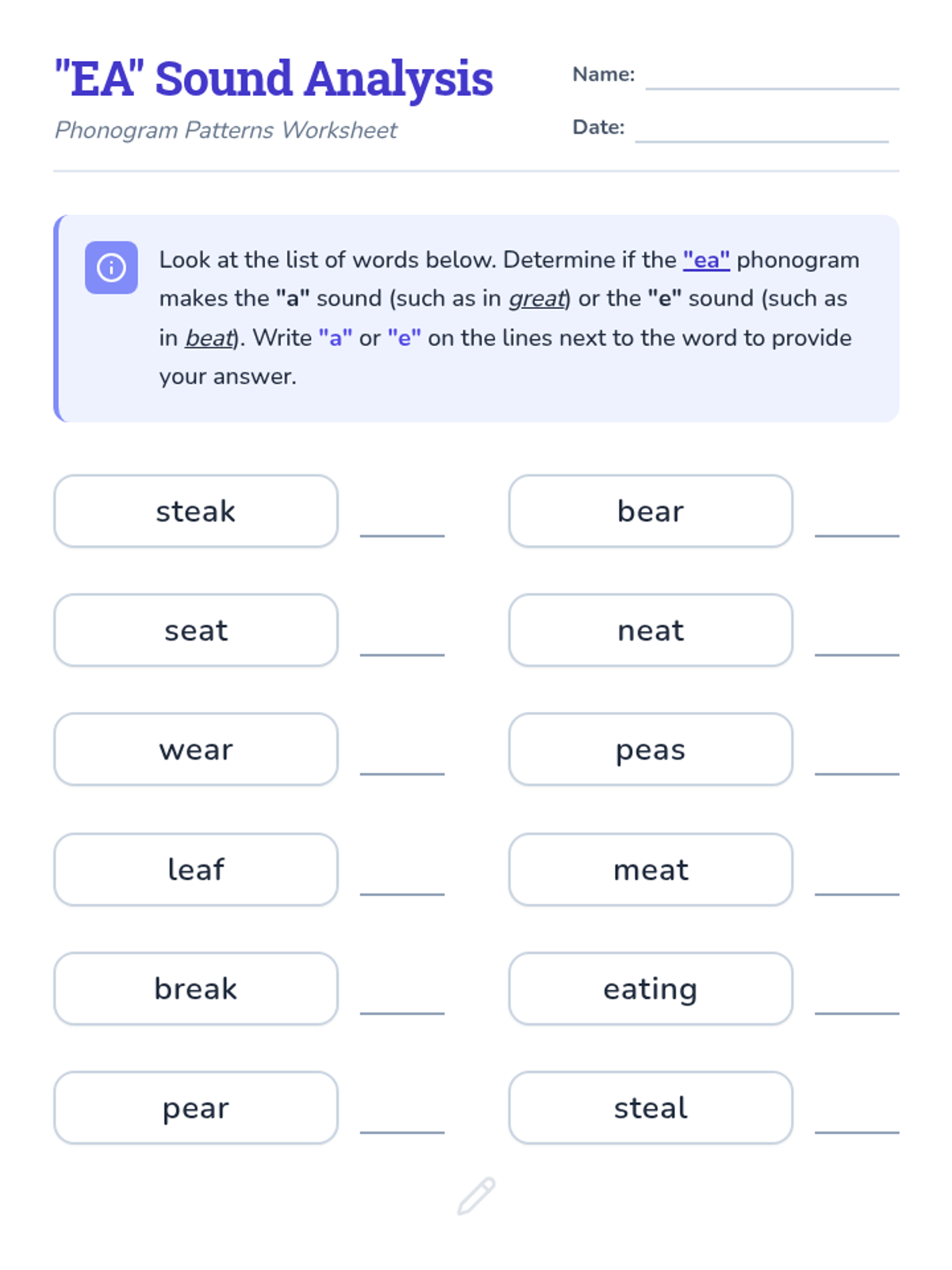
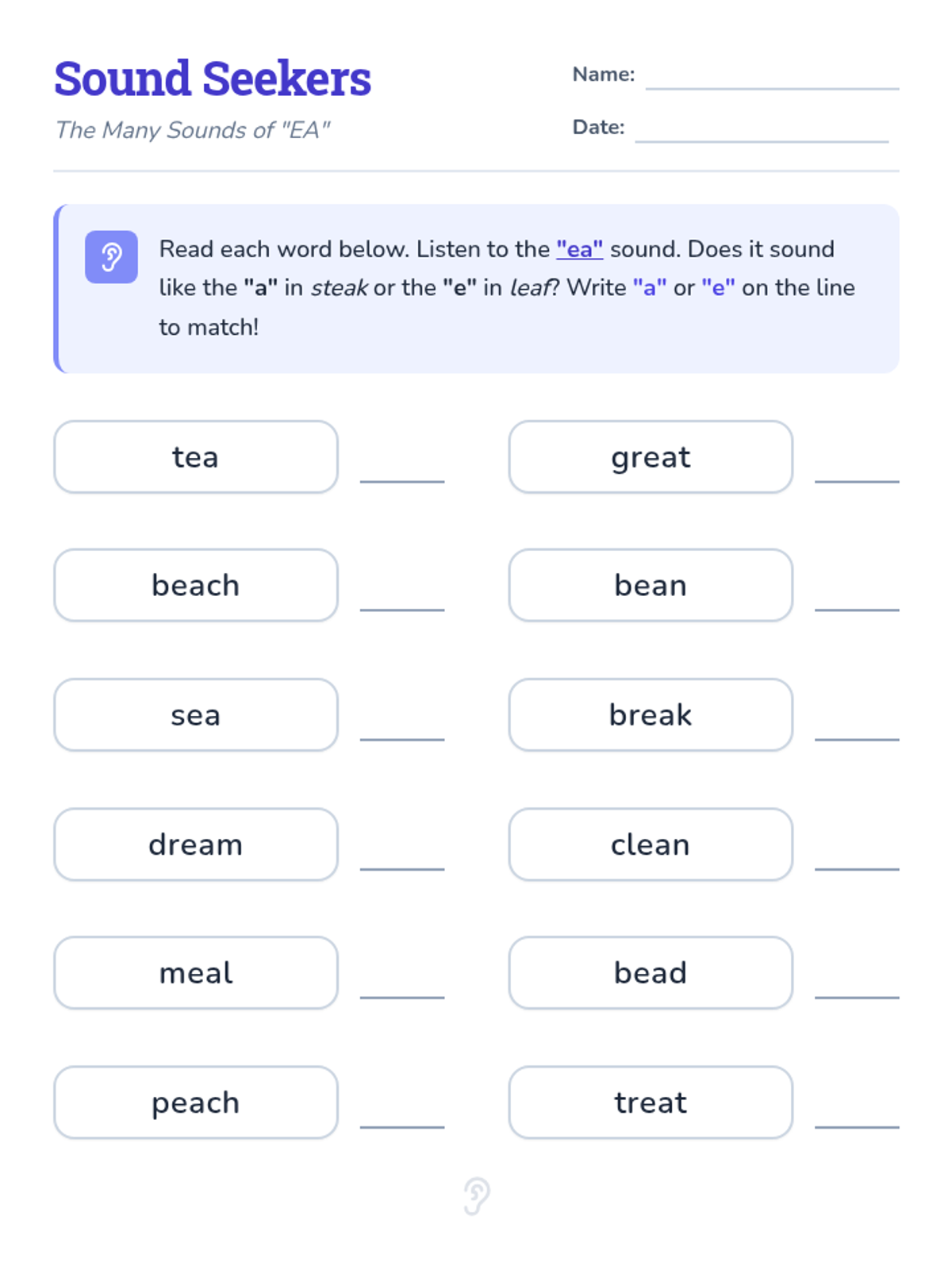
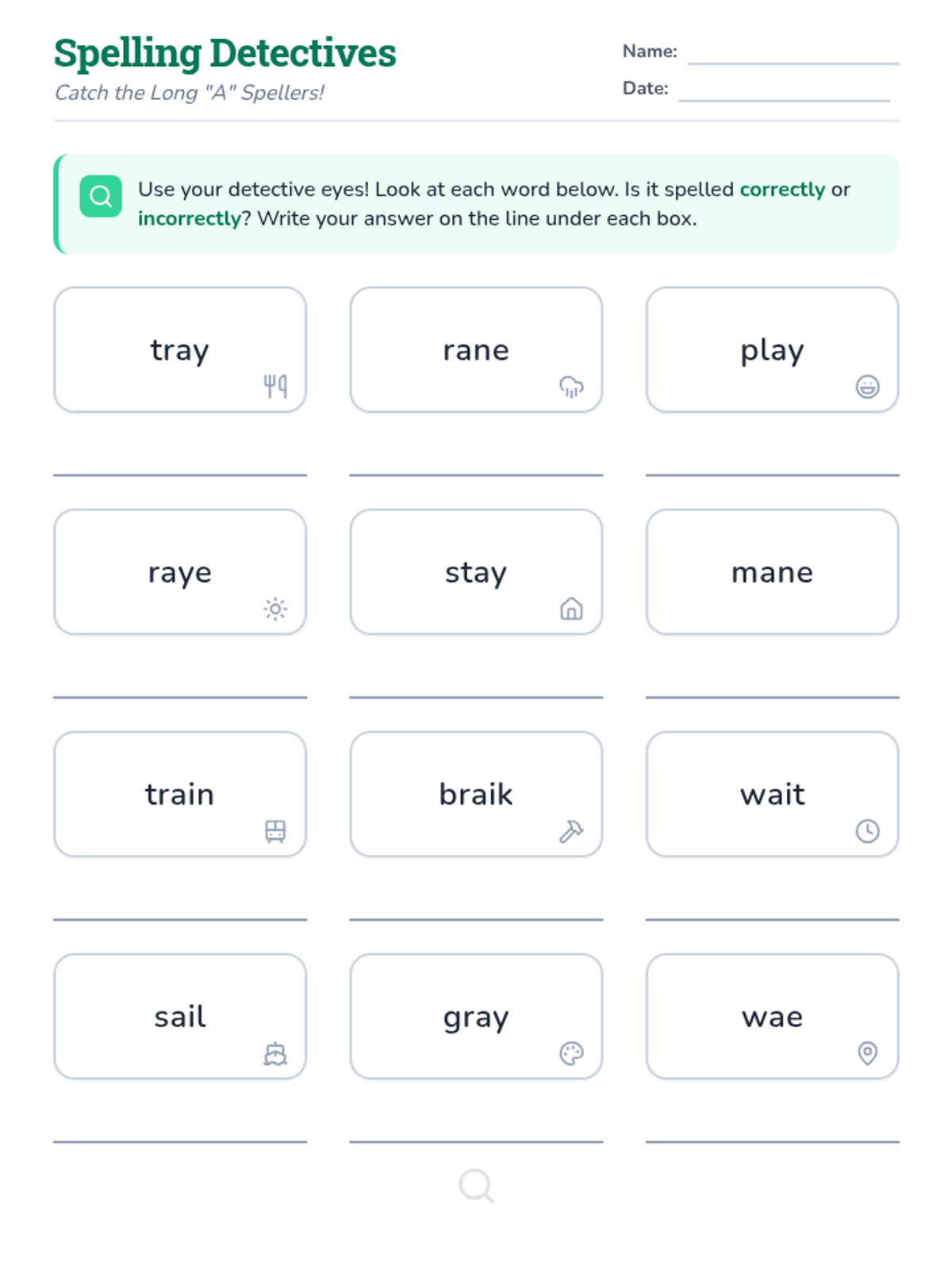
A double-sided phonics worksheet recreating the original "EA Sound Analysis" and "A Sound Spelling Analysis" activities. Side 1 focuses on vowel sounds, and Side 2 focuses on spelling accuracy. Polished spacing and icons.
A double-sided phonics worksheet recreating the original "EA Sound Analysis" and "A Sound Spelling Analysis" activities. Side 1 focuses on vowel sounds, and Side 2 focuses on spelling accuracy.
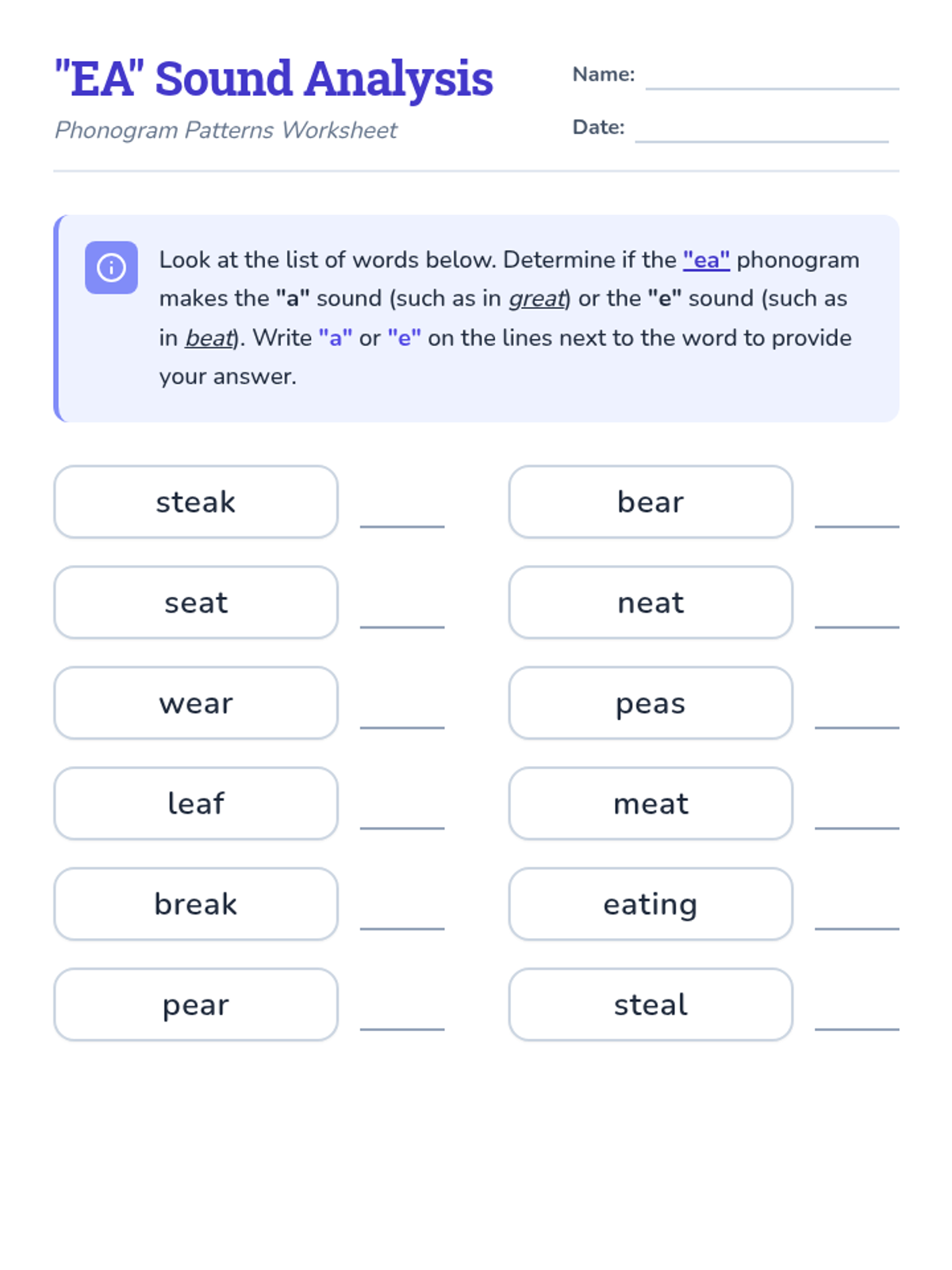
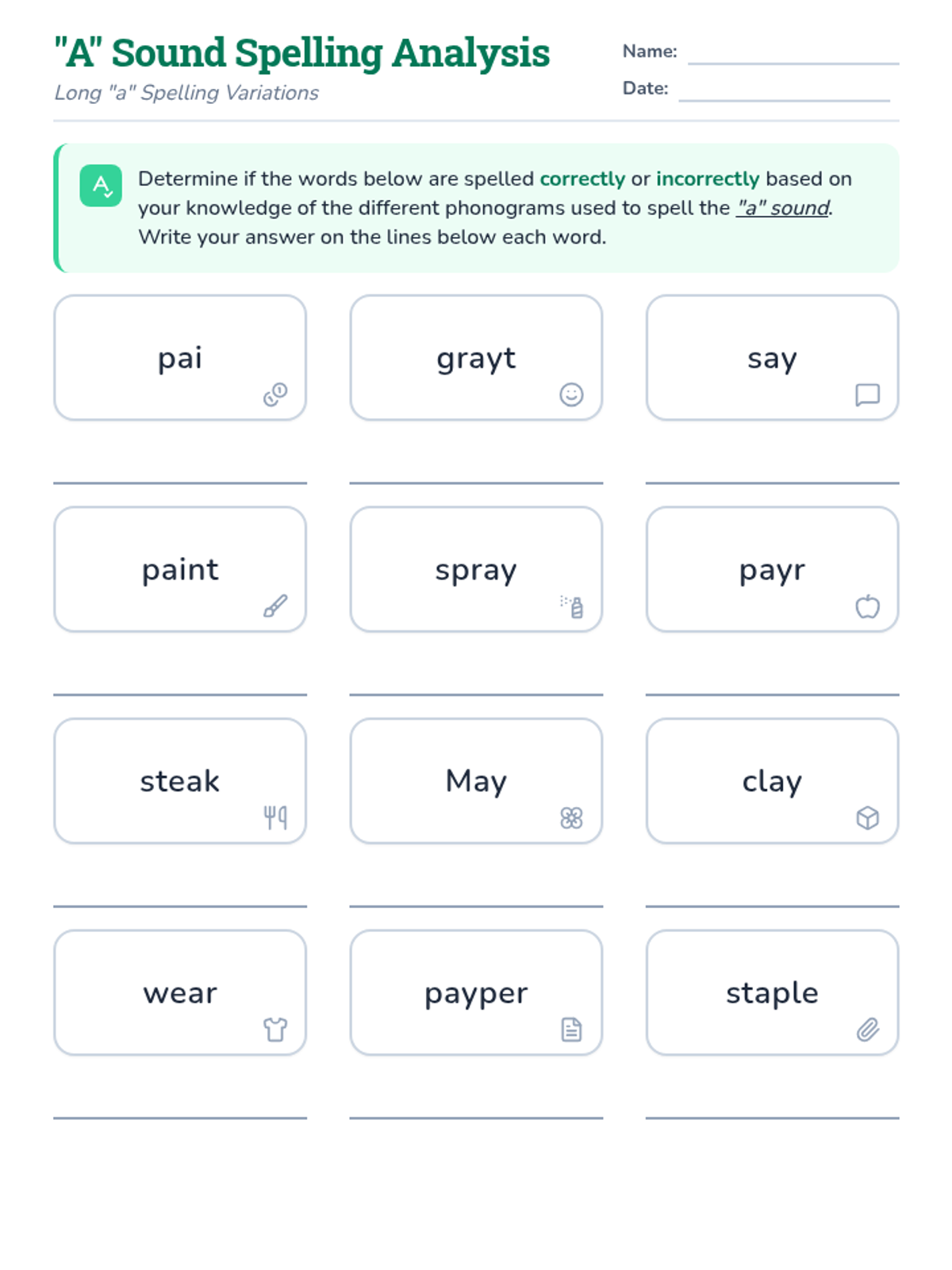
A double-sided phonics worksheet for Grade 2. Side 1 focuses on analyzing the sounds of the "ea" phonogram, and Side 2 focuses on identifying correct long "a" spellings using various phonograms.
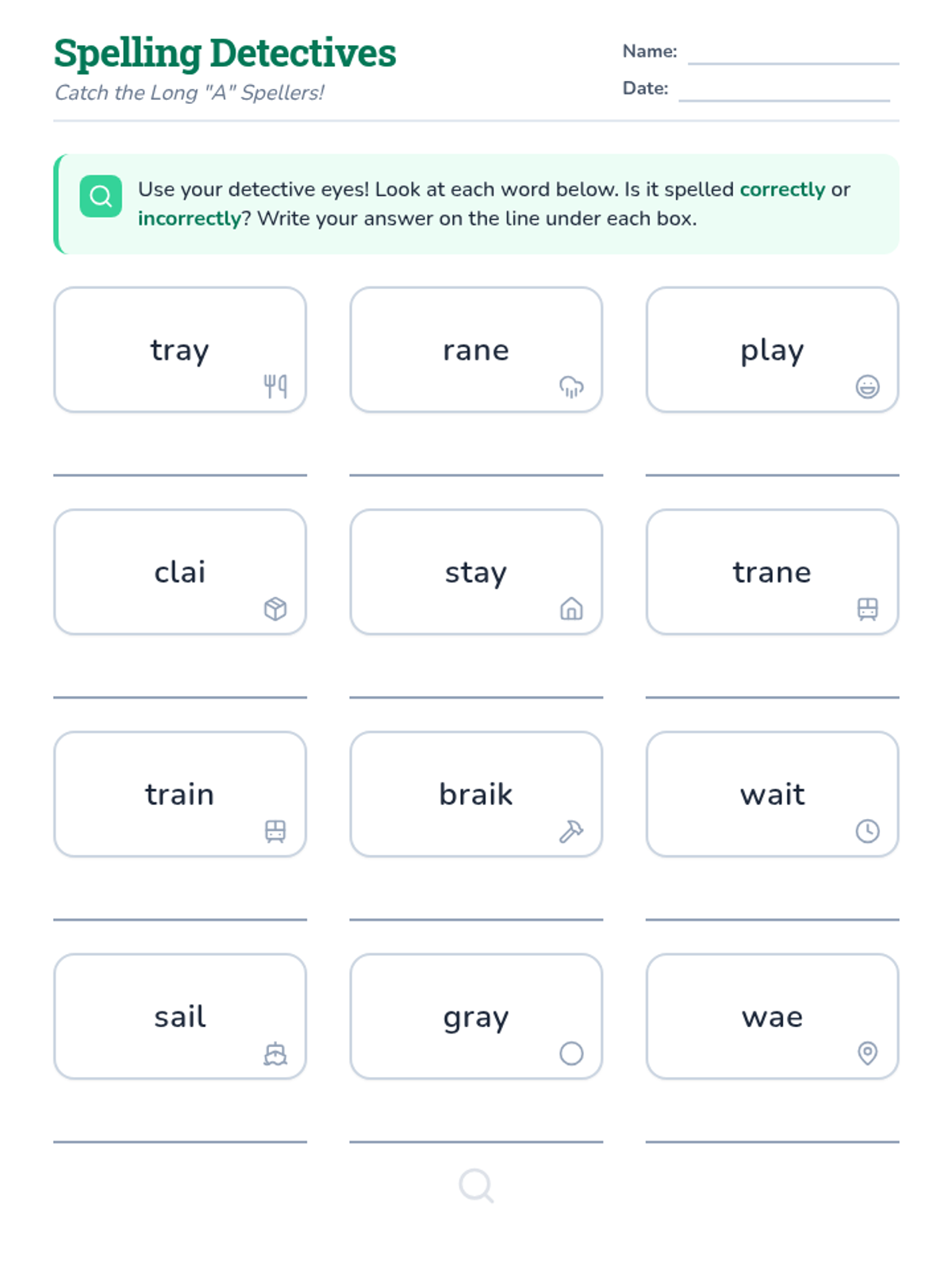
A spelling detective worksheet for Grade 2 students to identify correct and incorrect spellings of long 'a' sound words using phonograms like ai, ay, and ea. Updated for word variety.
A spelling detective worksheet for Grade 2 students to identify correct and incorrect spellings of long 'a' sound words using phonograms like ai, ay, and ea.
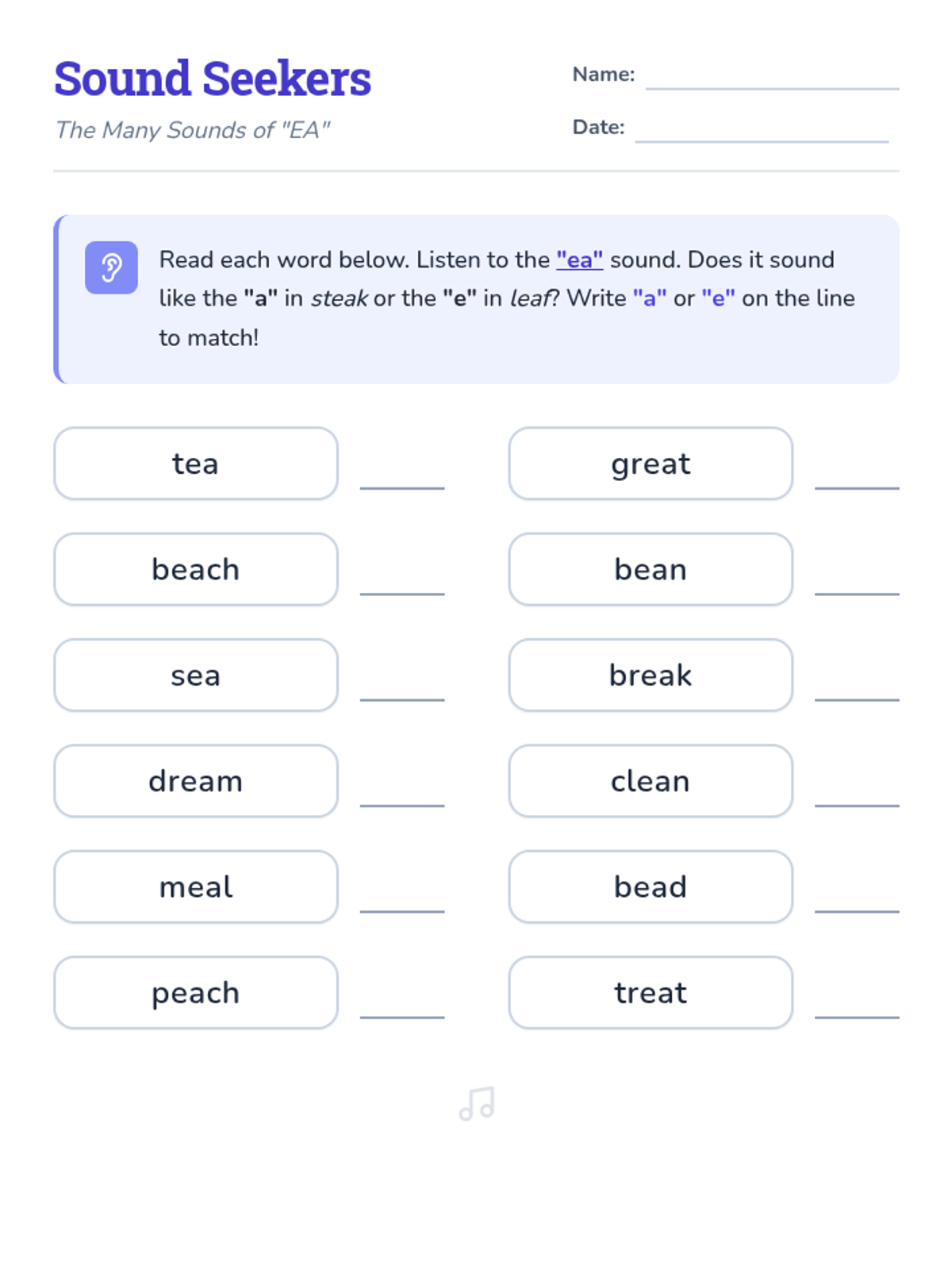
A phonics worksheet for Grade 2 students to distinguish between the long 'a' and long 'e' sounds made by the 'ea' phonogram. Word list polished to remove duplicates with instructions.
A worksheet for analyzing the different sounds the 'ea' phonogram can make, distinguishing between long 'a' and long 'e' sounds. 'Head' replaced with 'leaf' for phonetic consistency. Space tightened for single-page fit.
A worksheet for analyzing spelling accuracy of words containing the long 'a' sound, using various phonograms like 'ai', 'ay', and 'ea'. Box and lines grouped with break-avoidance for layout consistency. Spacing optimized for single-page fit.
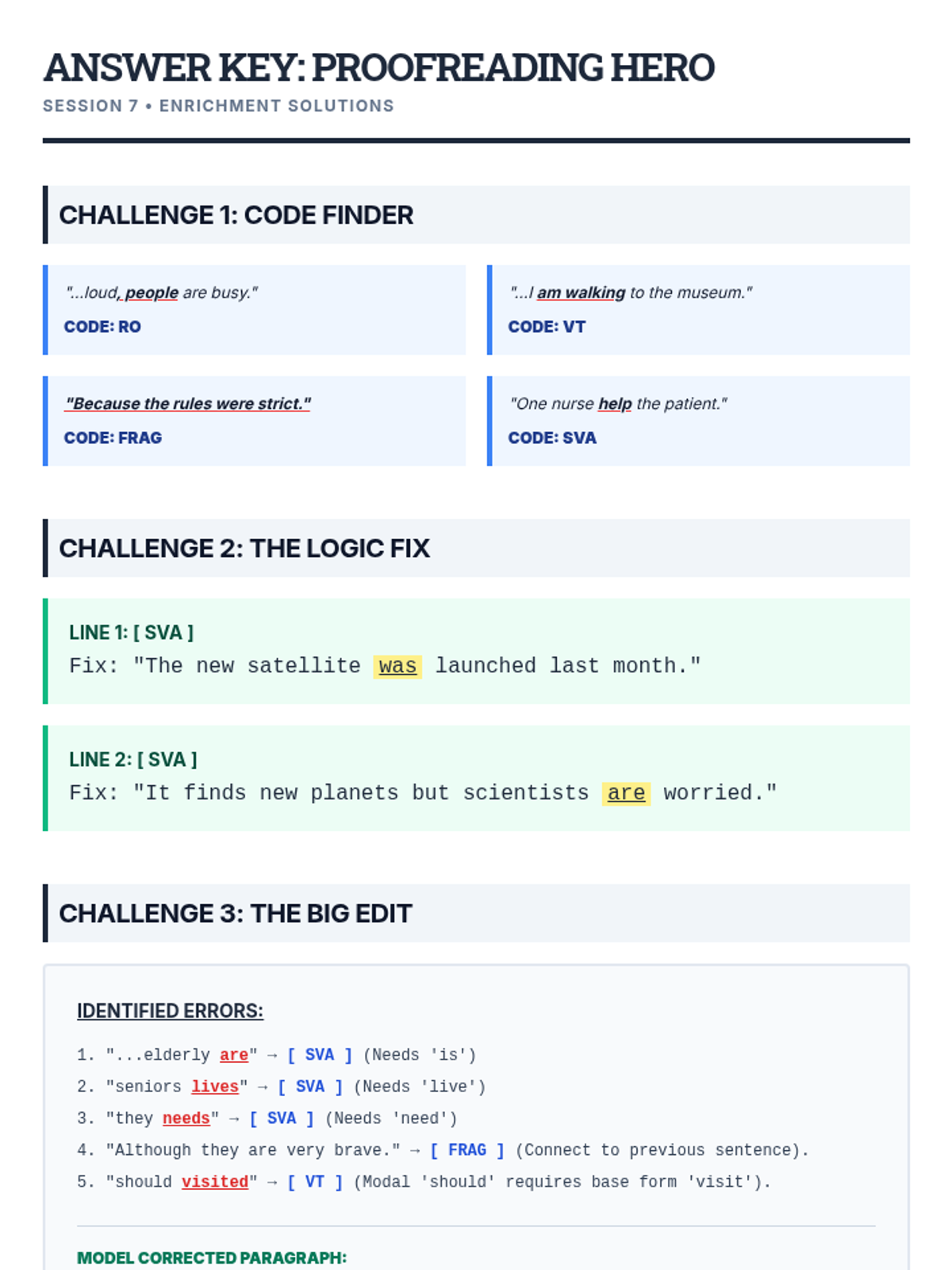
A teacher answer key for the Proofreading Hero Worksheet, including identified error codes and model corrected paragraphs for all challenges. Updated for matching expanded worksheet and includes a legend.
Instructional slides for the mock exam session, providing a visual pacing guide (10-30-5 breakdown) and specific phase-by-phase writing strategies.
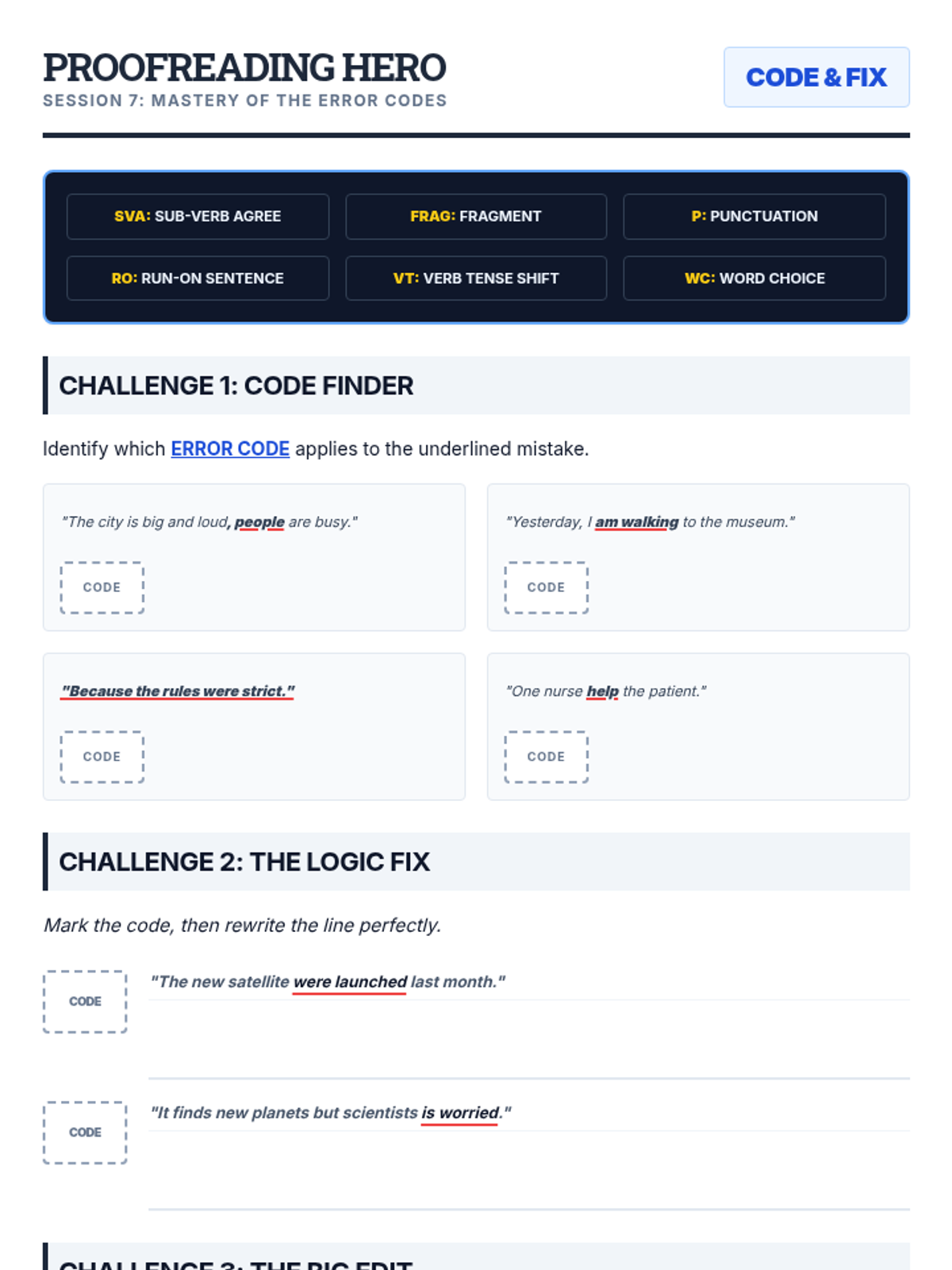
An interactive proofreading worksheet where students apply the teacher's Error Coding Key to identify and fix grammar, punctuation, and structure mistakes in sample texts. Updated with expanded items and unit-themed examples across two pages.
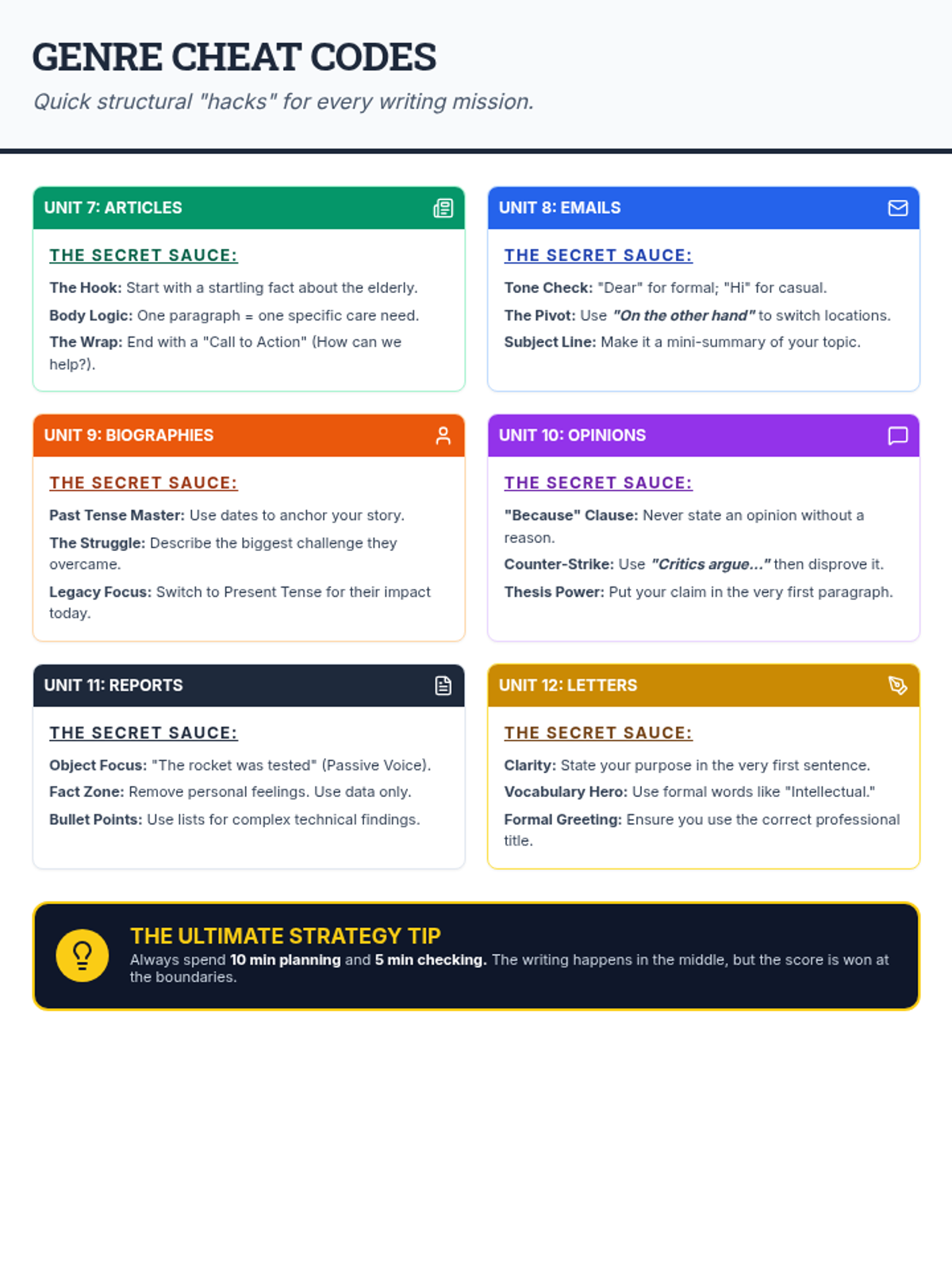
A one-page reference guide containing structural "hacks" and specific strategies for each of the six writing genres covered in the program. Updated for single-page efficiency.
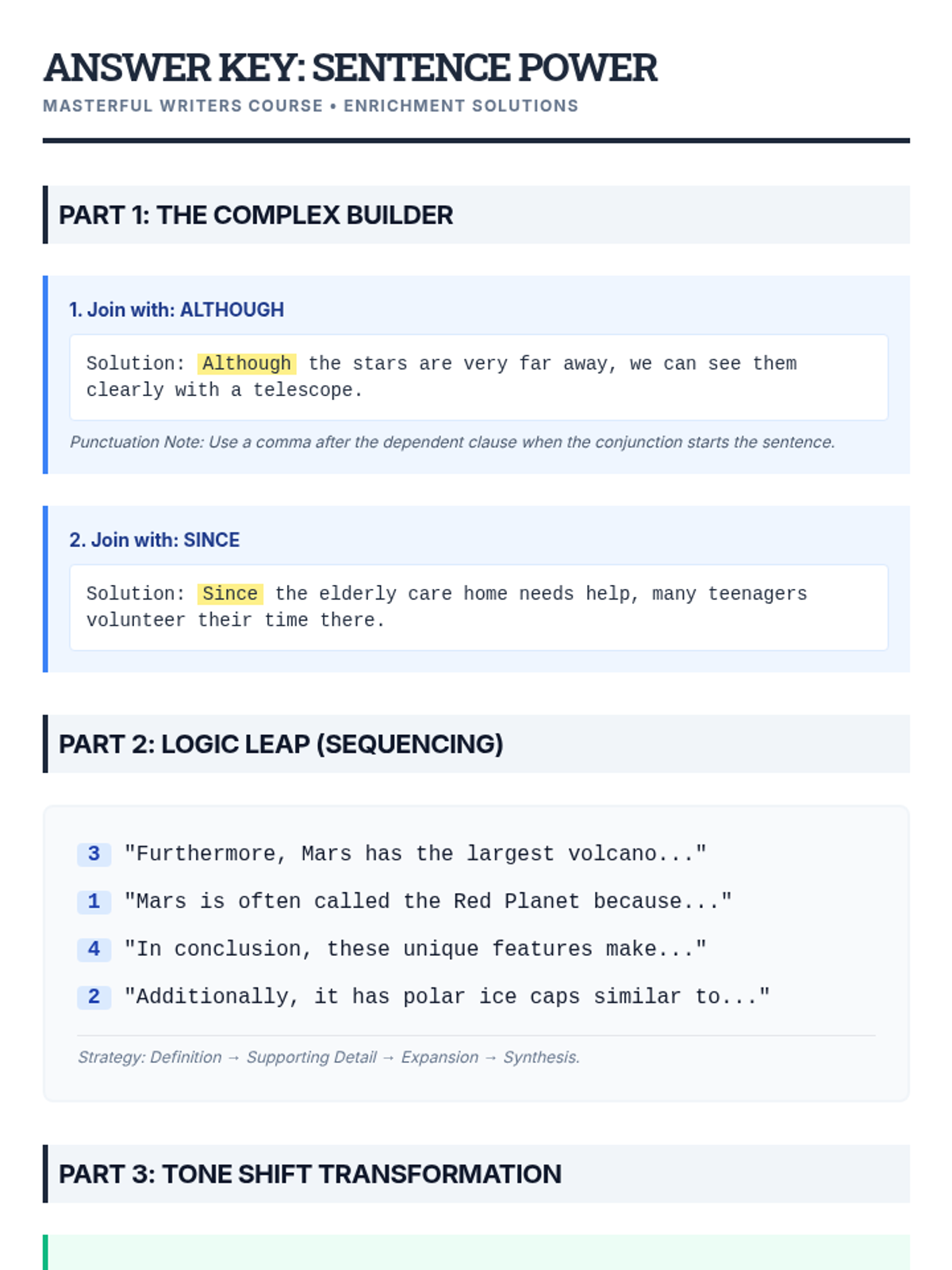
A teacher answer key for the Sentence Power Practice Worksheet, including model answers and grammar rationales. Updated for clarity and visual organization.
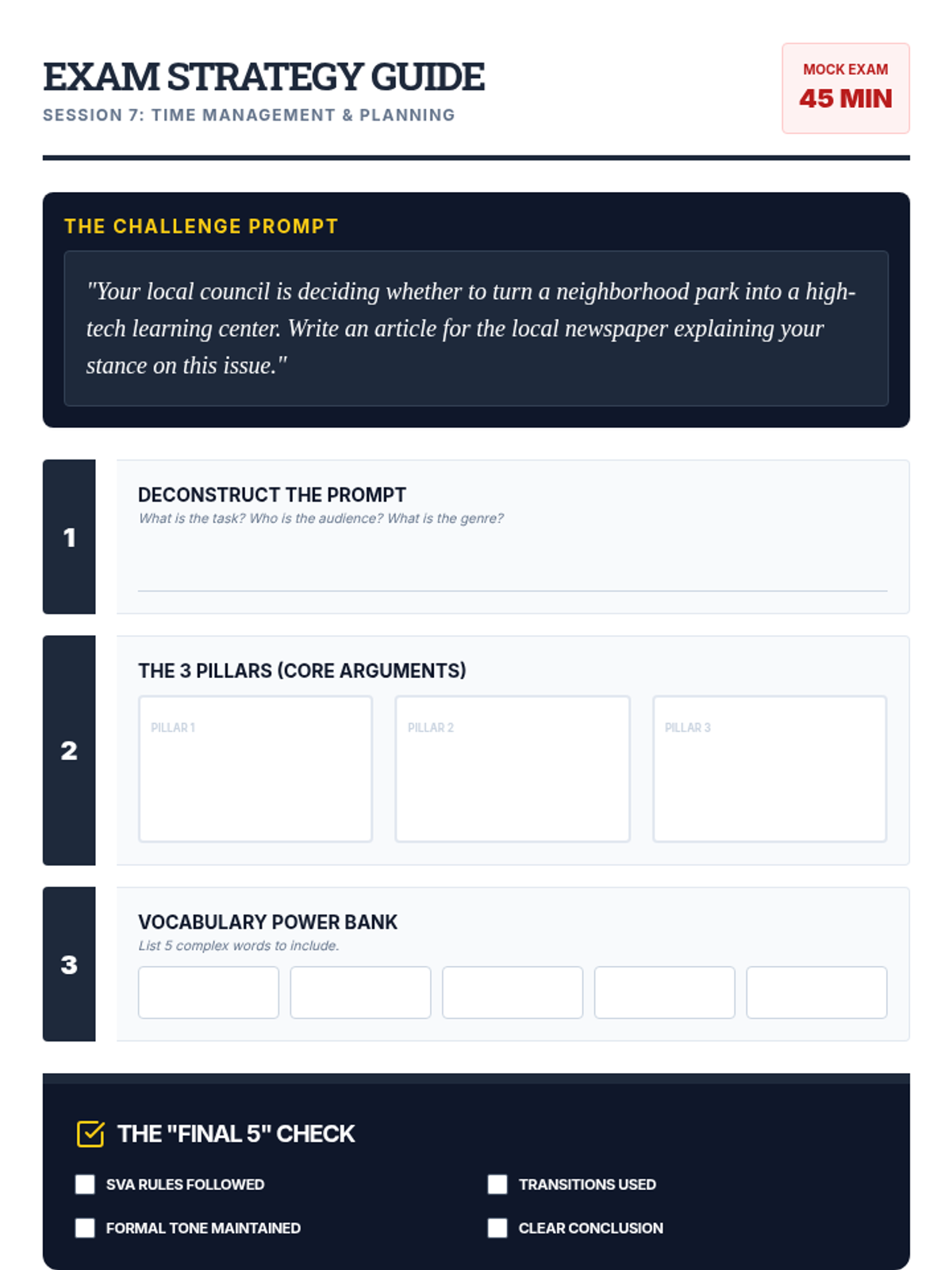
A strategic planning worksheet for students to use during exam preparation, featuring a practice prompt, increased workspace, and a consolidated single-page layout.
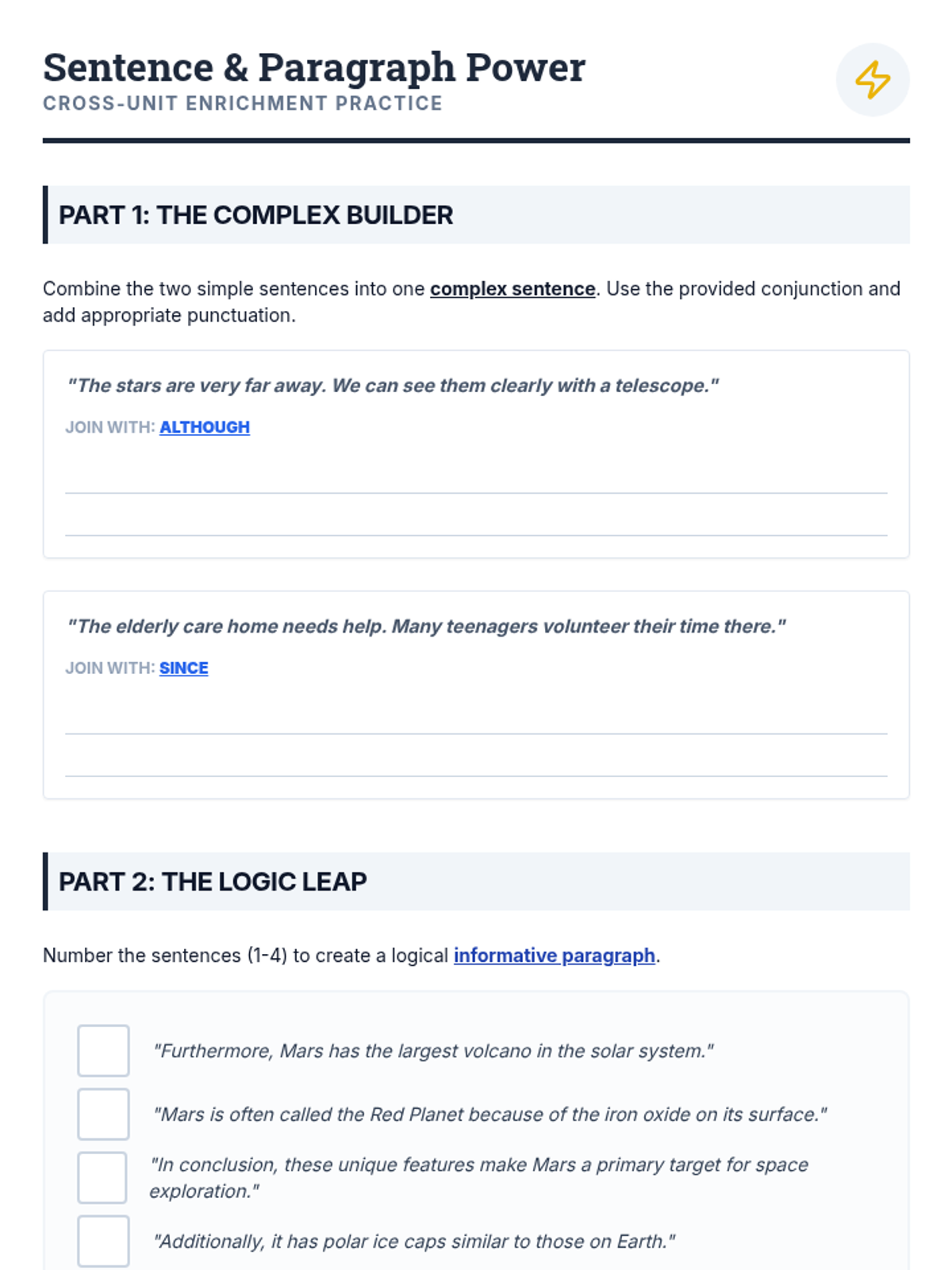
An enrichment worksheet focused on advanced sentence combining, logical paragraph sequencing, and tone transformation. Updated for handwriting legibility and clear instruction.
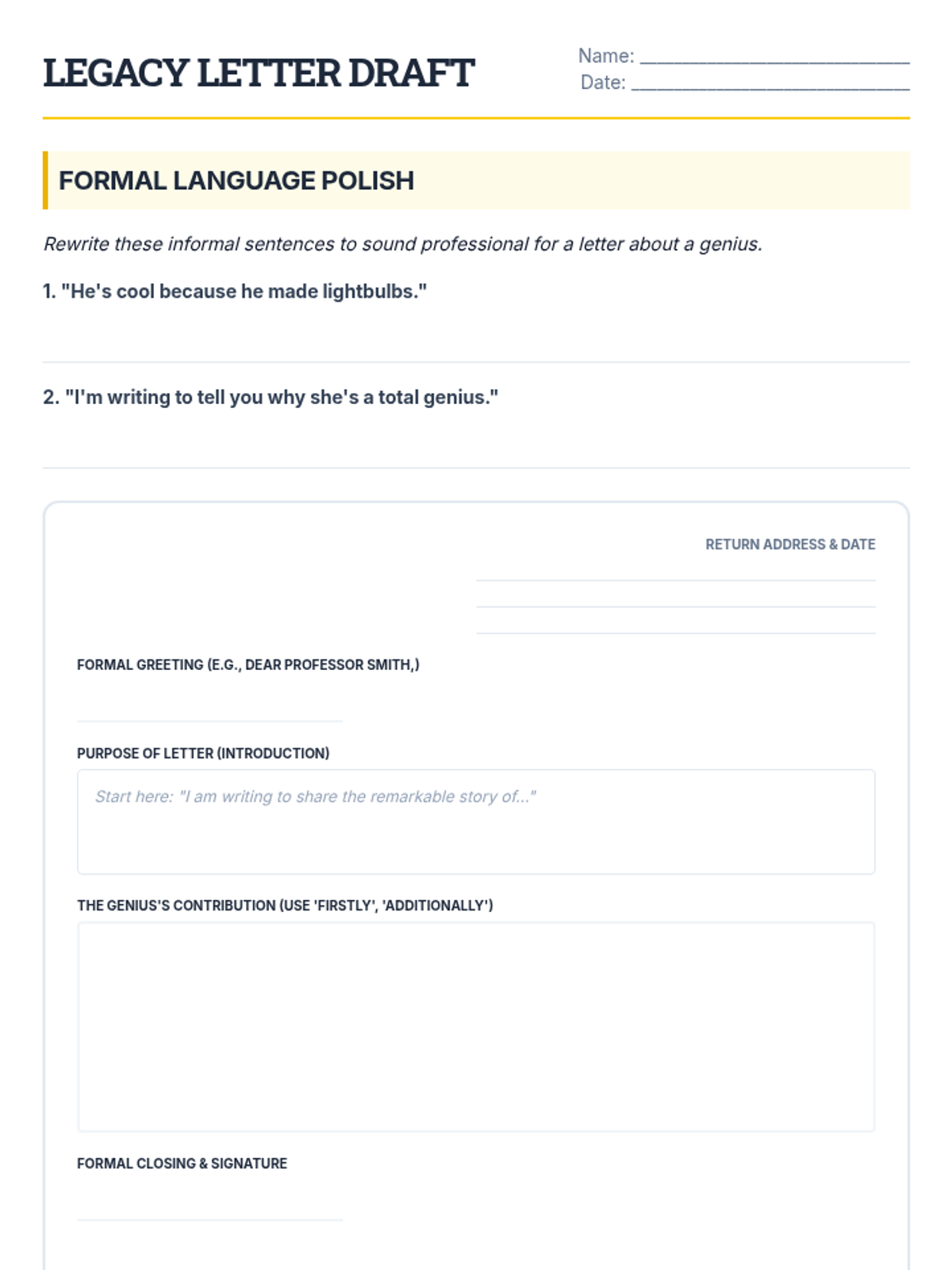
A student worksheet for formal letter writing about a genius. Includes a formal language rewrite activity and a structured letter template. Updated to fit one page and improve contrast.
Instructional slides for formal letter writing, focusing on the achievements of geniuses, formal tone vs. informal tone, and letter structure. Updated with specific examples and curriculum cohesion.
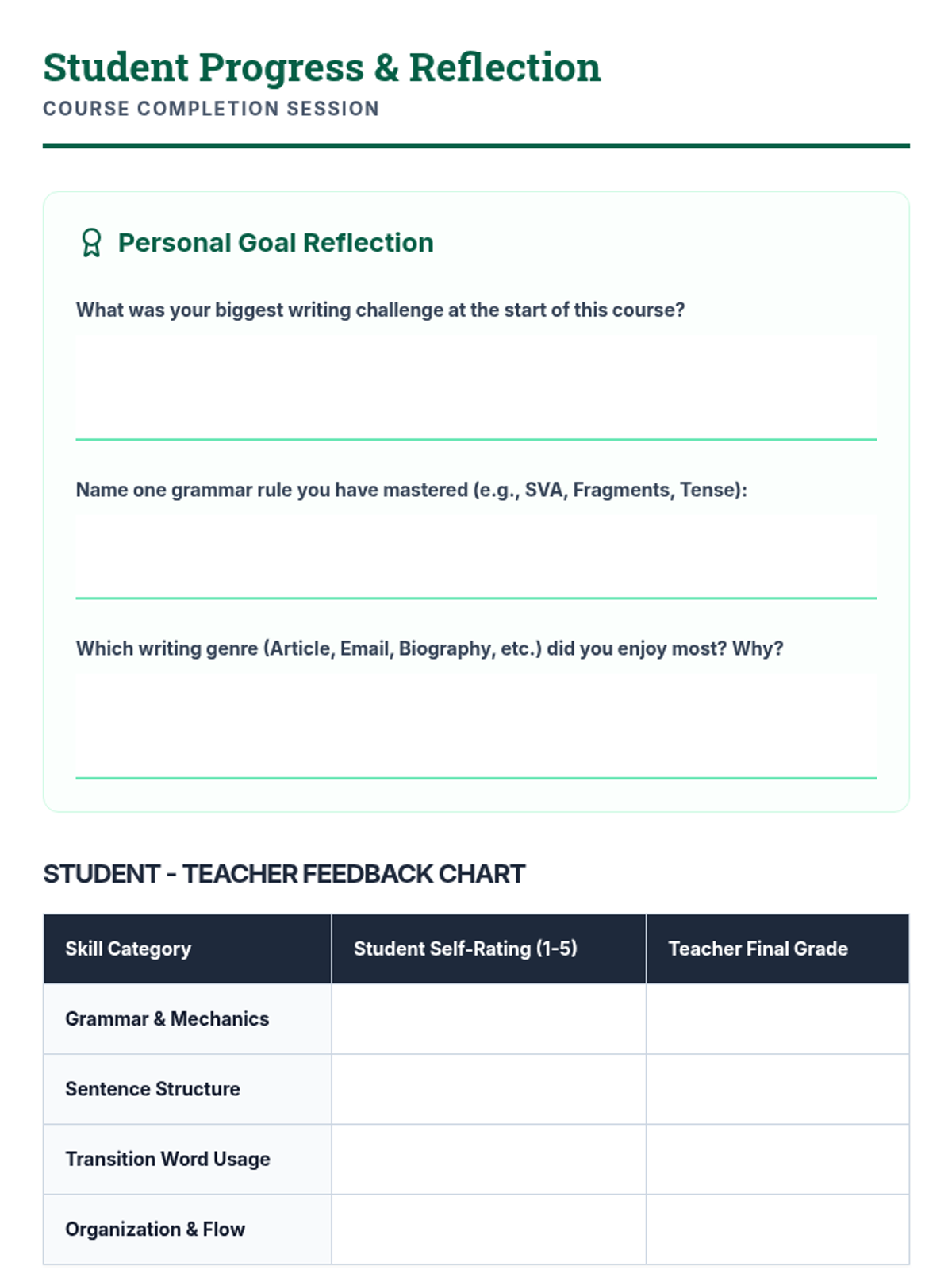
A final reflection and feedback document for students to self-assess their progress, receive teacher evaluations across core skill categories, and review strategy tips for future writing success.
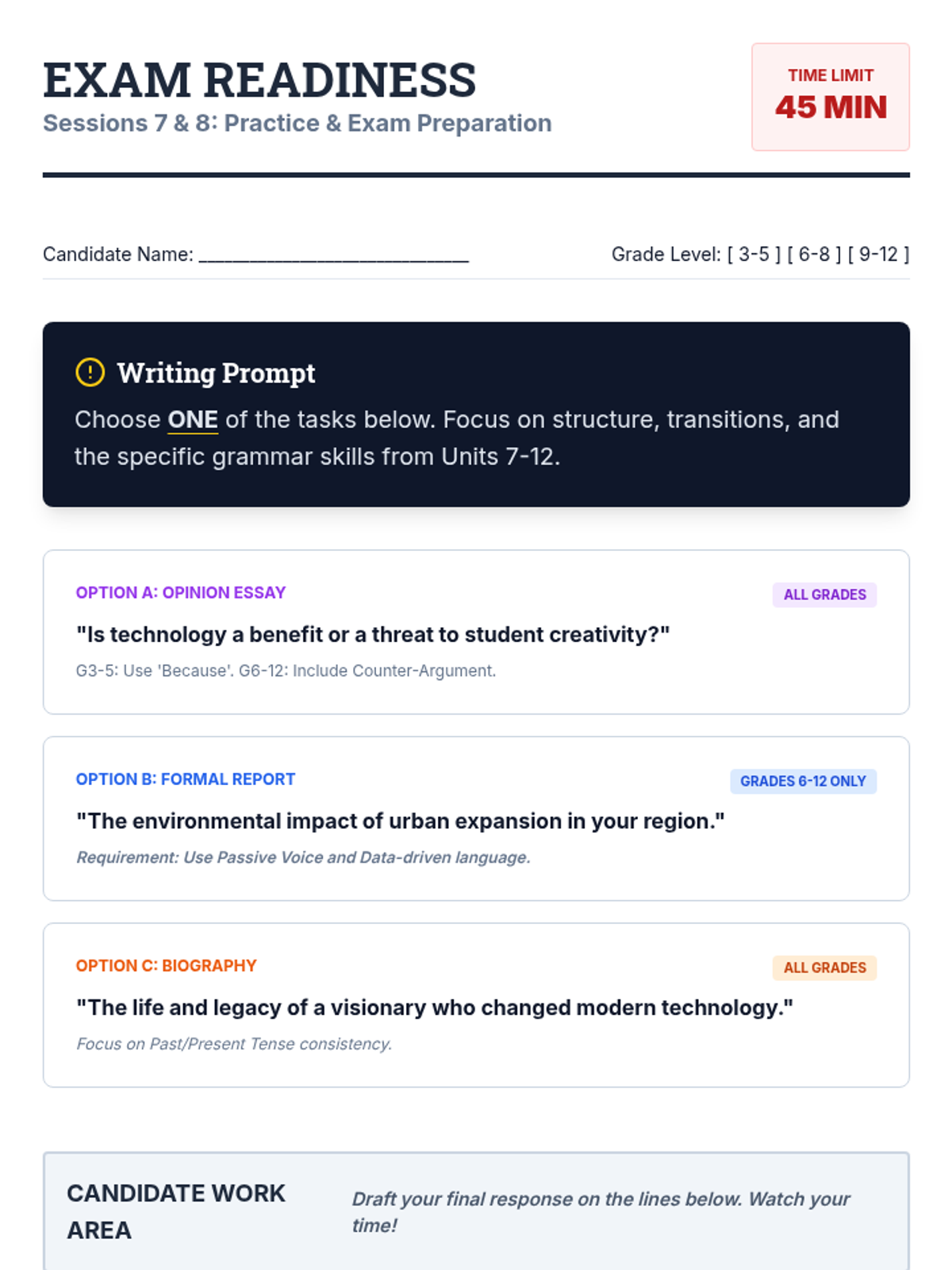
A mock exam writing prompt and workspace for sessions 7 and 8, featuring tiered options for different writing genres (essay, report, biography) and a lined writing area for timed practice.
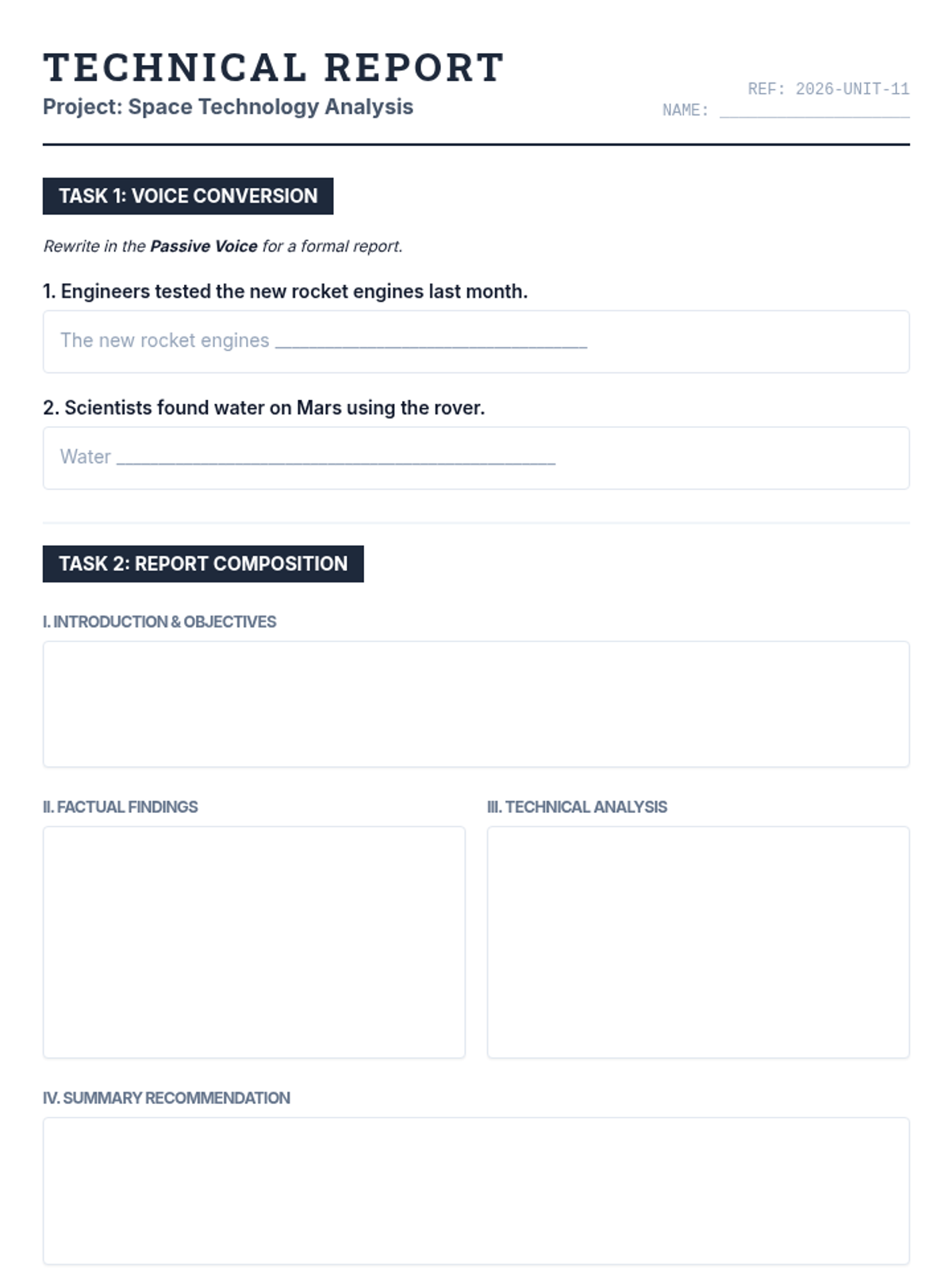
A technical report writing worksheet for students, including an active-to-passive voice conversion exercise and a structured four-part report layout for space technology analysis.
Instructional slides for report writing on space technology, focusing on the distinction between active and passive voice and the formal structure of a data-driven report.
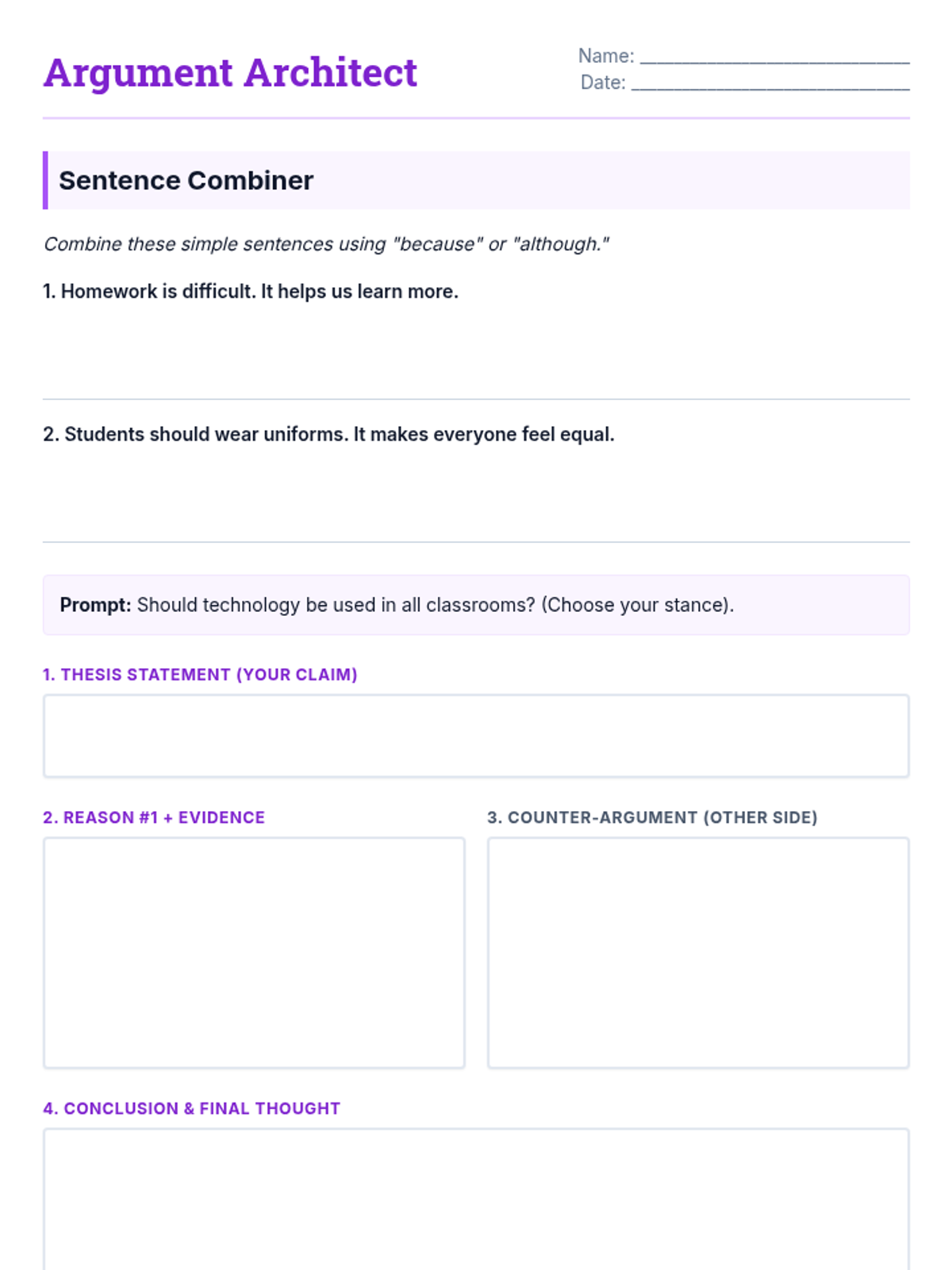
A student worksheet for opinion essay writing, featuring a conjunction-combining grammar activity and a structured multi-part outline for a thesis, evidence, counter-argument, and conclusion.
Instructional slides for opinion essay writing, emphasizing the use of conjunctions (because, although) and the structure of a multi-paragraph argument including counter-arguments.
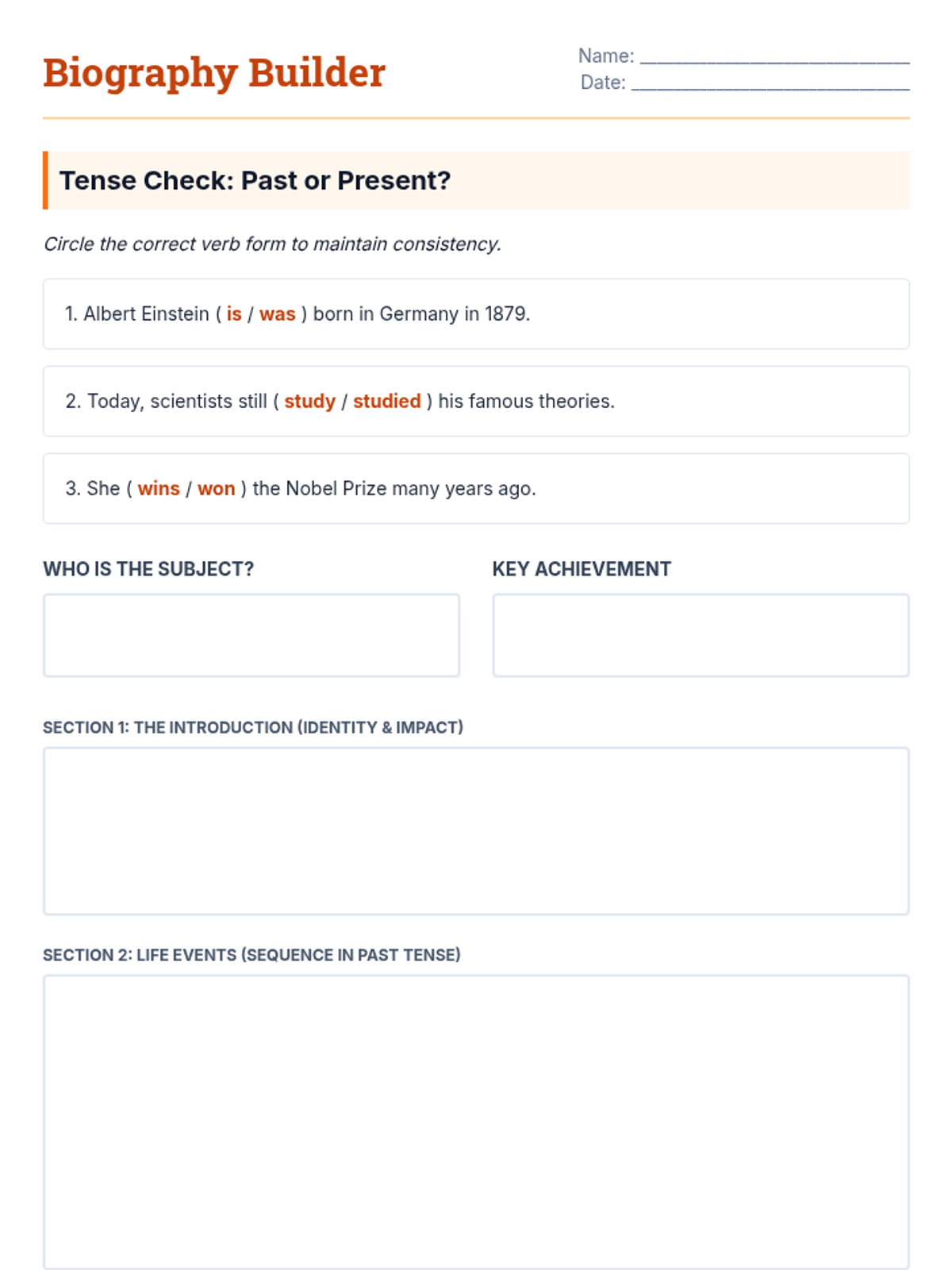
A student worksheet for biography writing, including a tense-selection warm-up activity and a three-section drafting organizer (Introduction, Life Events, Legacy).
Instructional slides for biography writing, focusing on tense consistency (past vs. present) and logical sequencing of life events for historical figures.
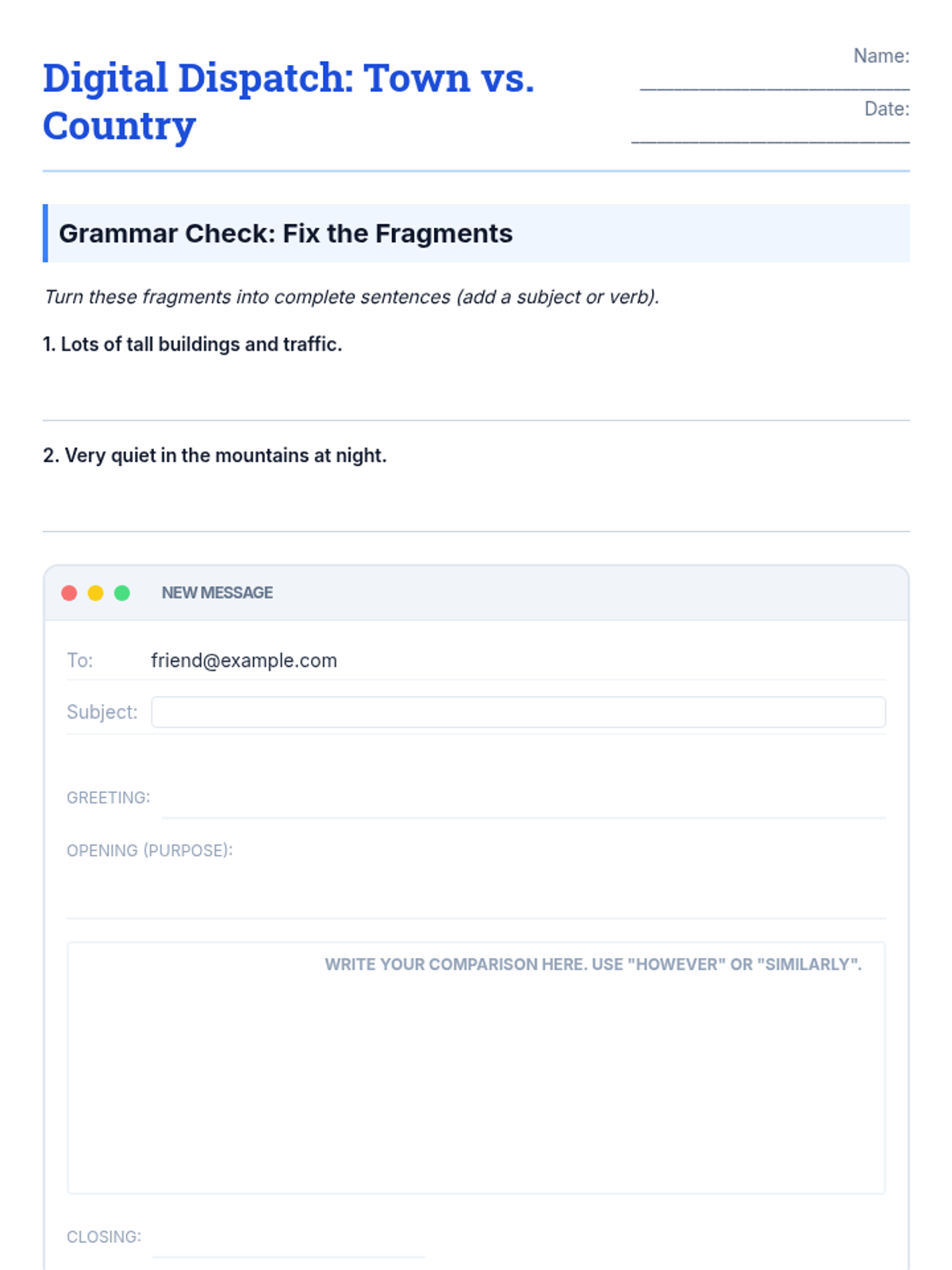
A student worksheet for writing an email comparing urban and rural life. Features a grammar activity to correct sentence fragments and a structured email template with comparison-word prompts.
Instructional slides for email writing, focusing on the comparison between urban and rural living, grammar instruction on sentence fragments, and transitional words for comparison.
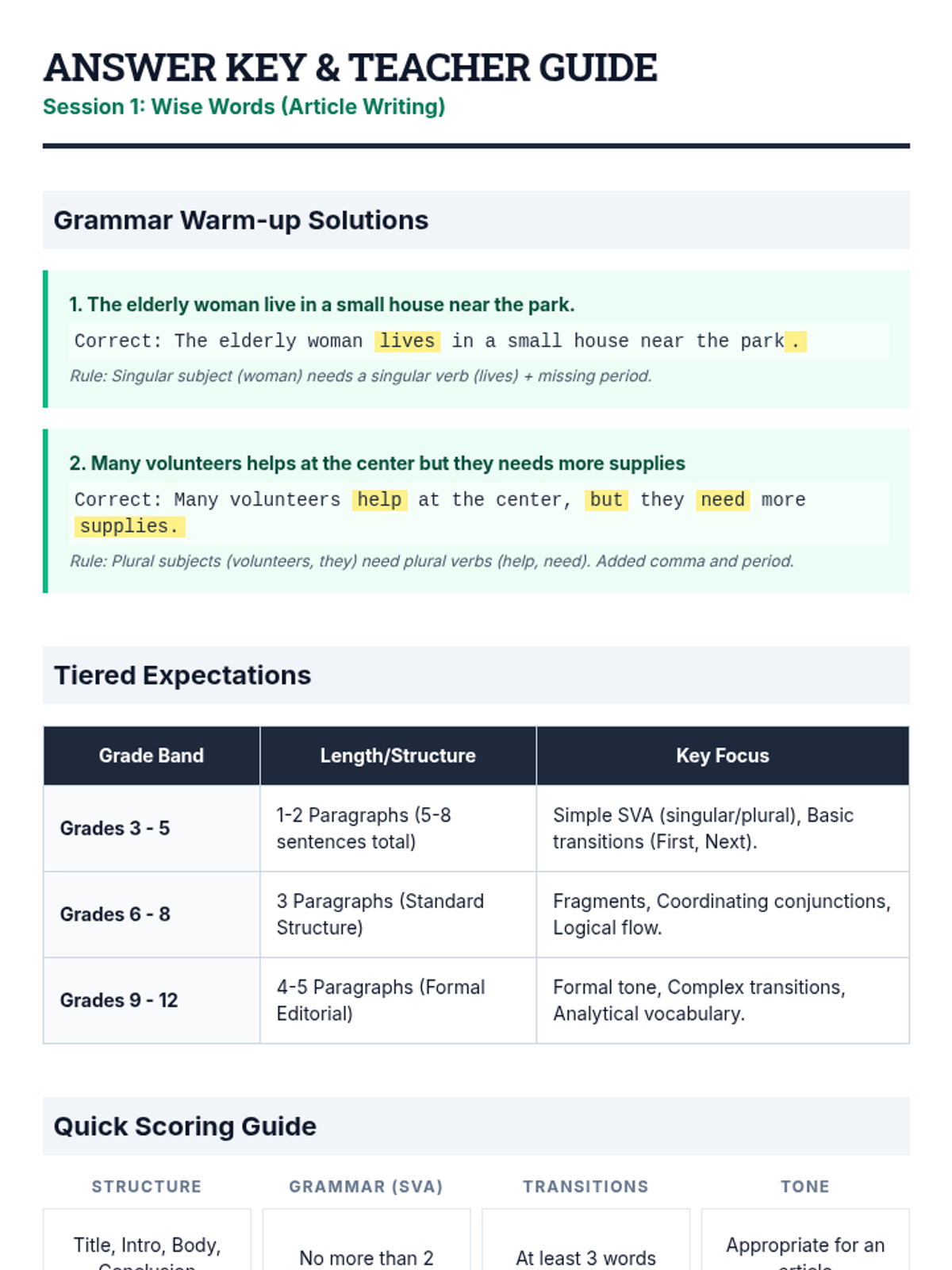
Teacher reference guide for Session 1, containing grammar solutions, tiered expectations for different grade bands, and a quick scoring rubric for the article writing task.