Student activity sheet for 'The Prince Wilbur Chronicles'. Includes the story prompt, a checklist for required prepositions of time, a large lined writing area, and a peer review section for verification.
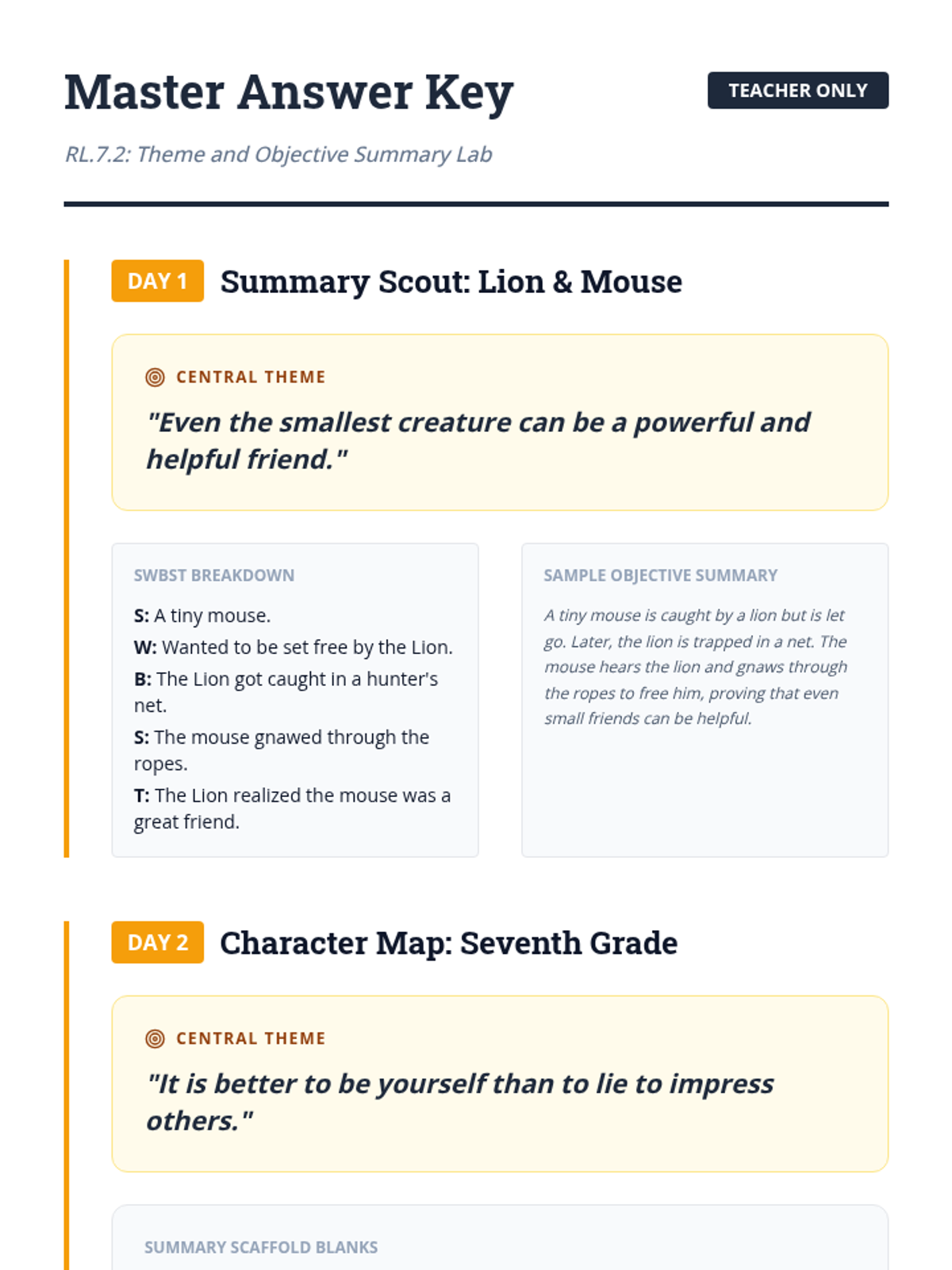
A comprehensive master answer key for the 3-day RL.7.2 unit. Includes correct answers for 'The Lion and the Mouse', 'Seventh Grade', and 'The Locker Loophole', explicitly highlighting the theme/lesson for each story. Features SWBST breakdowns and EOG-style question rationales.
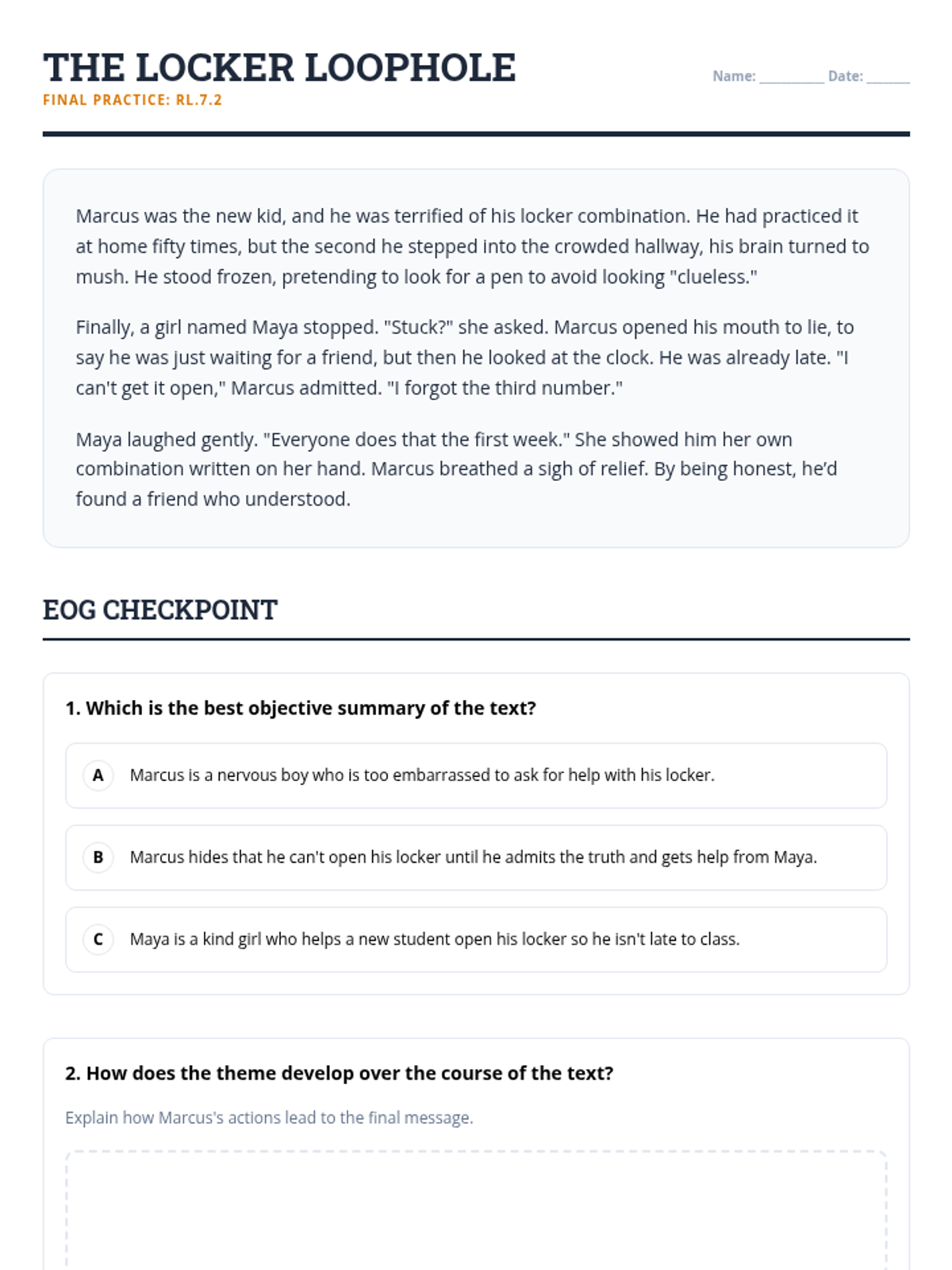
An EOG-style reading assessment for the final day of the reading unit. Features an original realistic fiction passage about school struggles, multiple-choice questions focusing on objective summary and theme development, and a final theme-writing task. Includes visual scaffolds for test-taking strategies.
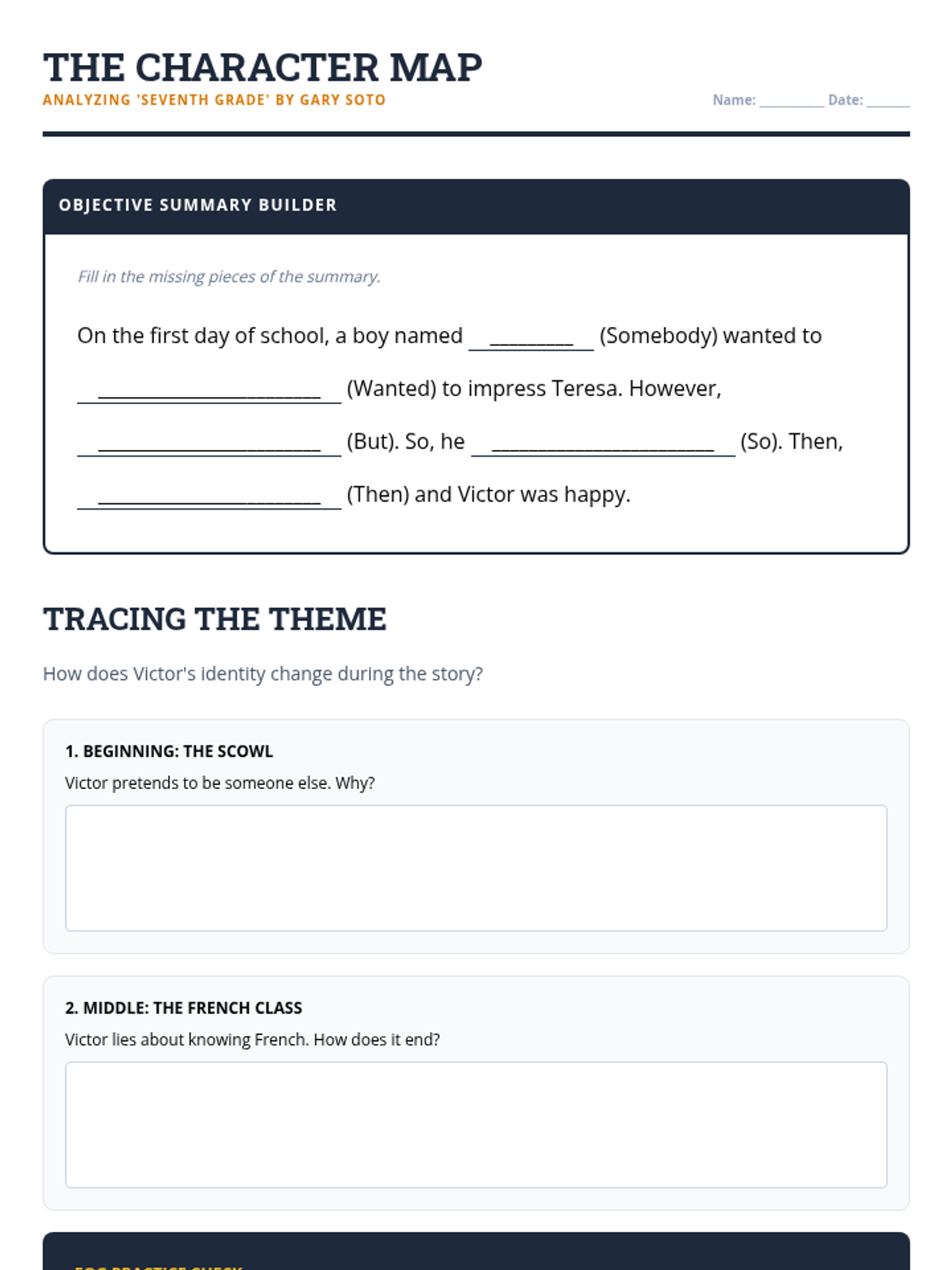
A focused character and theme analysis sheet for Gary Soto's 'Seventh Grade'. Includes a fill-in-the-blank SWBST summary scaffold to support special education students in objective writing, and a three-step theme development tracker. Ends with an EOG-style multiple choice question on objective vs. subjective writing.
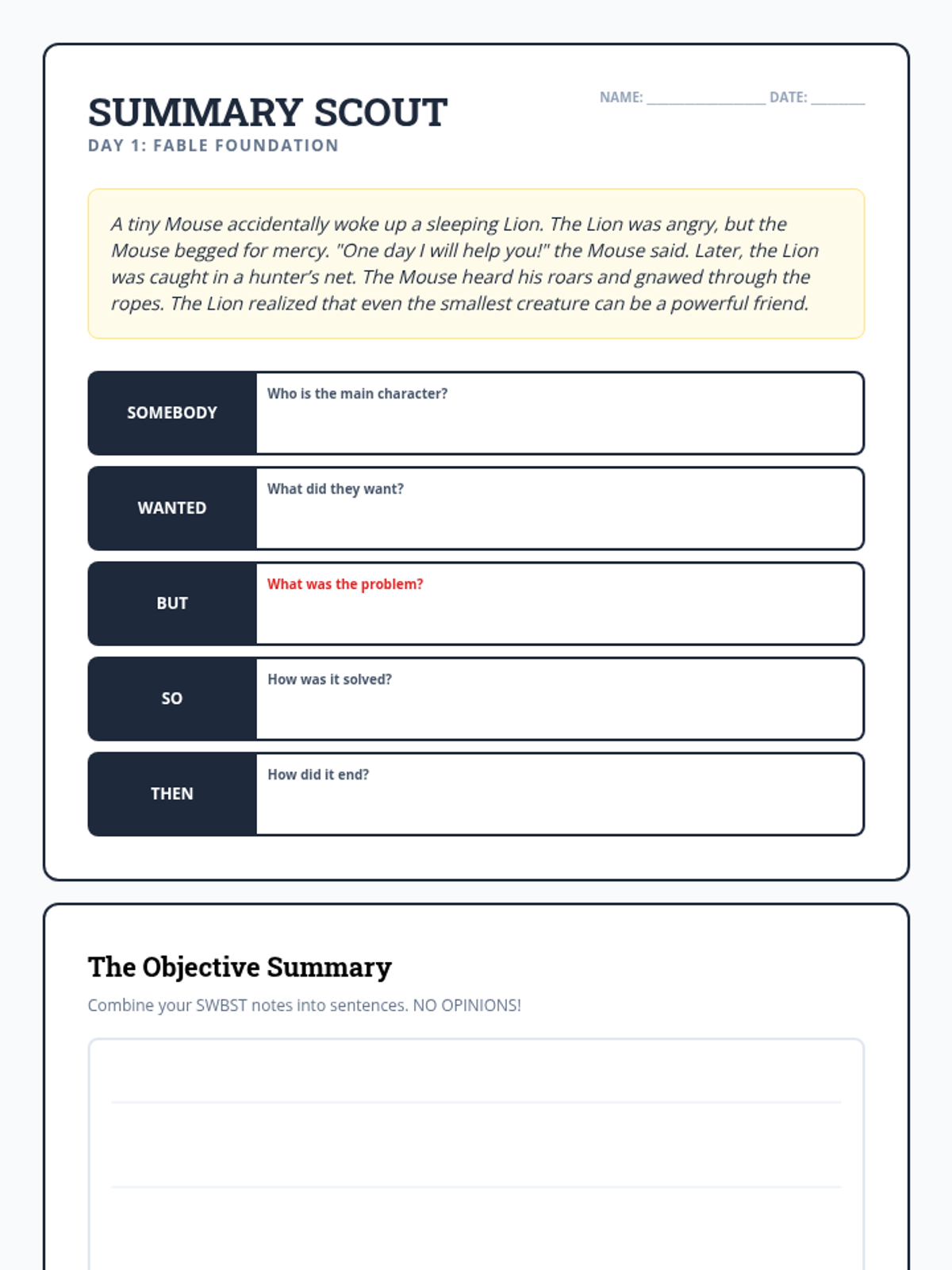
A heavily scaffolded worksheet for Day 1 of the RL.7.2 unit. Includes the text of 'The Lion and the Mouse', a structured SWBST (Somebody Wanted But So Then) graphic organizer for objective summaries, and a step-by-step theme tracker to help students bridge the gap between topic and message.
A visually engaging slide deck designed for small-group instruction. It now features a step-by-step progressive reveal for the SWBST strategy, prompting students to identify each component before seeing the answer. Covers theme definitions, character development in Gary Soto's 'Seventh Grade', and EOG-style practice. Answer choices are synced with student worksheets and the Master Answer Key.
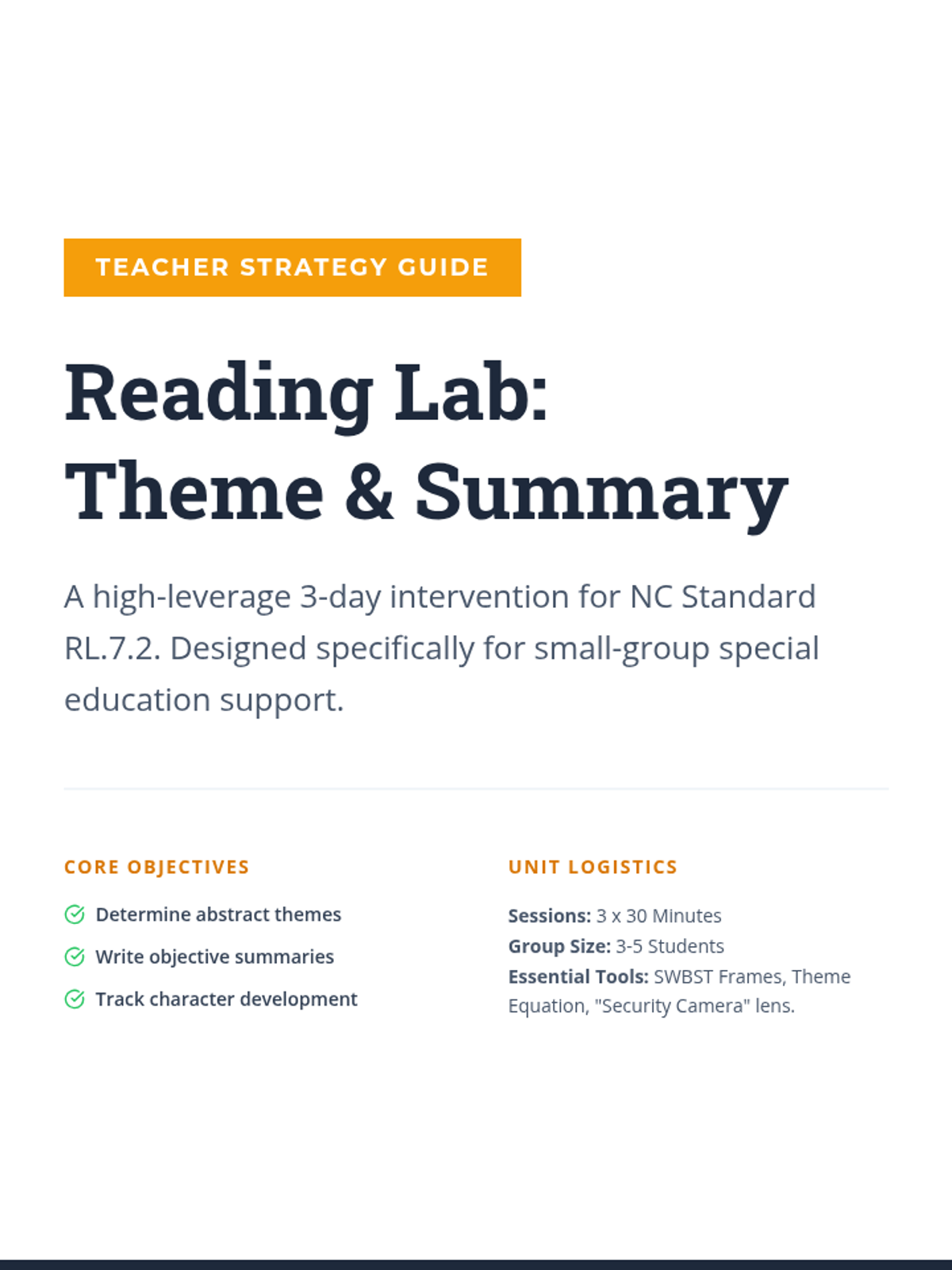
An expanded teacher's guide for a 3-day small-group reading intervention focusing on RL.7.2. Includes detailed daily pacing with specific "Warm-up," "I Do/We Do," and "You Do" sections, instructional metaphors like the "Security Camera" for objectivity, EOG test-taking strategies, and a quick-reference theme list.
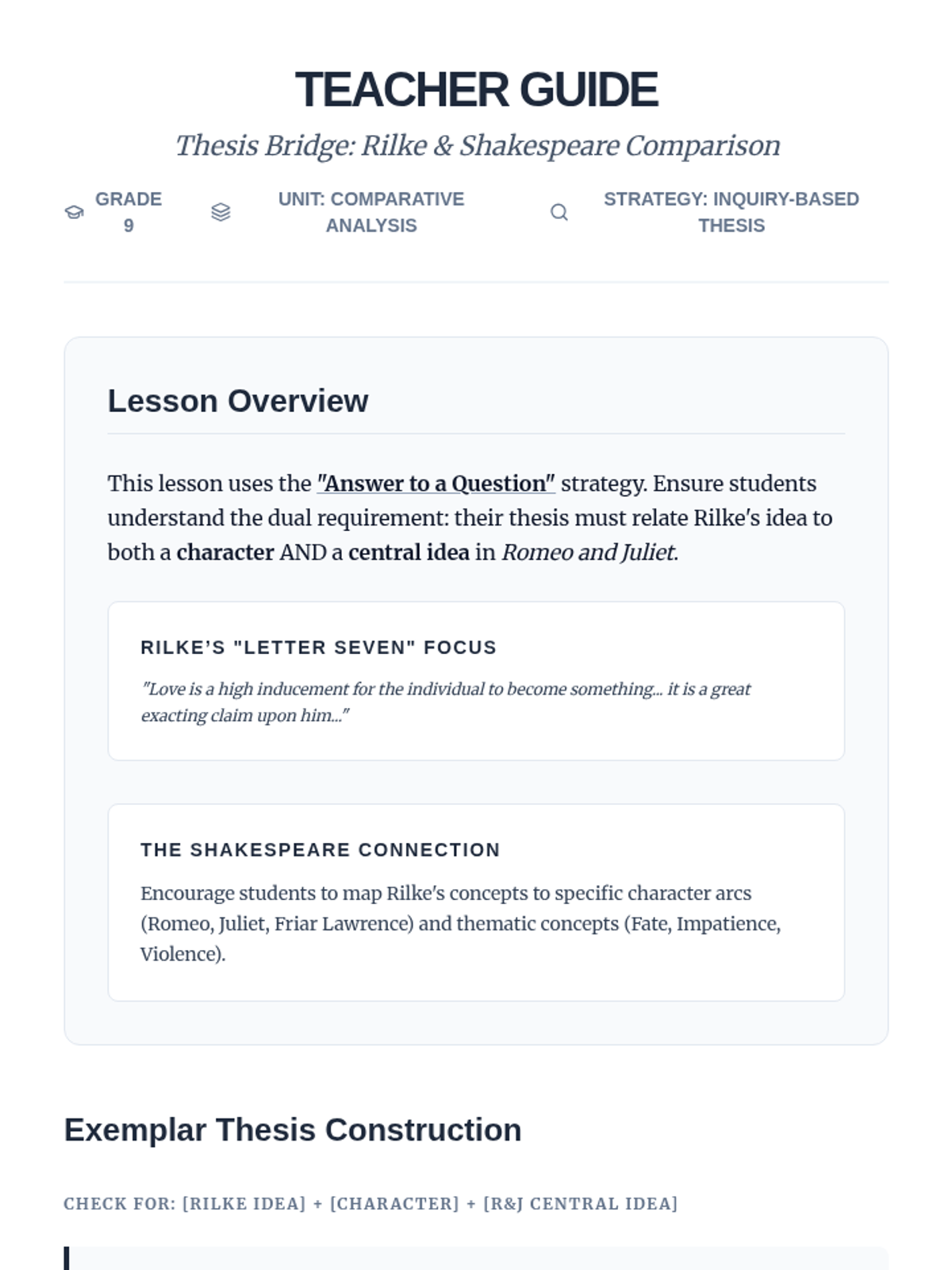
A guide for teachers that includes updated exemplar thesis statements and common student pitfalls, specifically highlighting the requirement to connect Rilke's ideas to both a character and a central idea in Shakespeare's Romeo and Juliet.
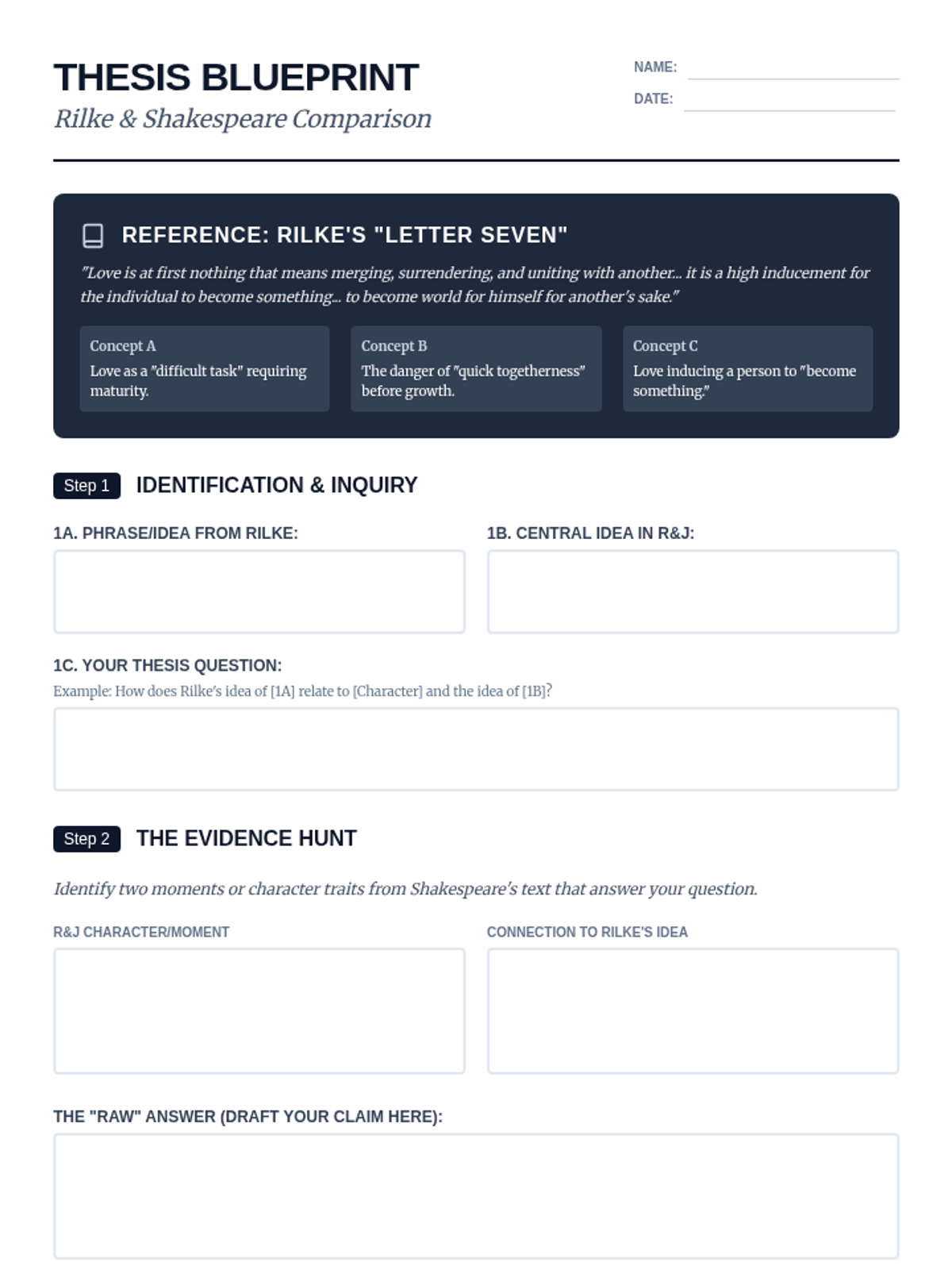
A structured worksheet that leads students through the process of developing a thesis statement by turning the prompt into a question and building a bridge between Rilke and Shakespeare, now with an explicit focus on characters and central ideas.
A slide presentation guiding students through the 'Answer to a Question' strategy, now explicitly detailing the requirement to connect Rilke's ideas to both a character and a central idea in Shakespeare's Romeo and Juliet.
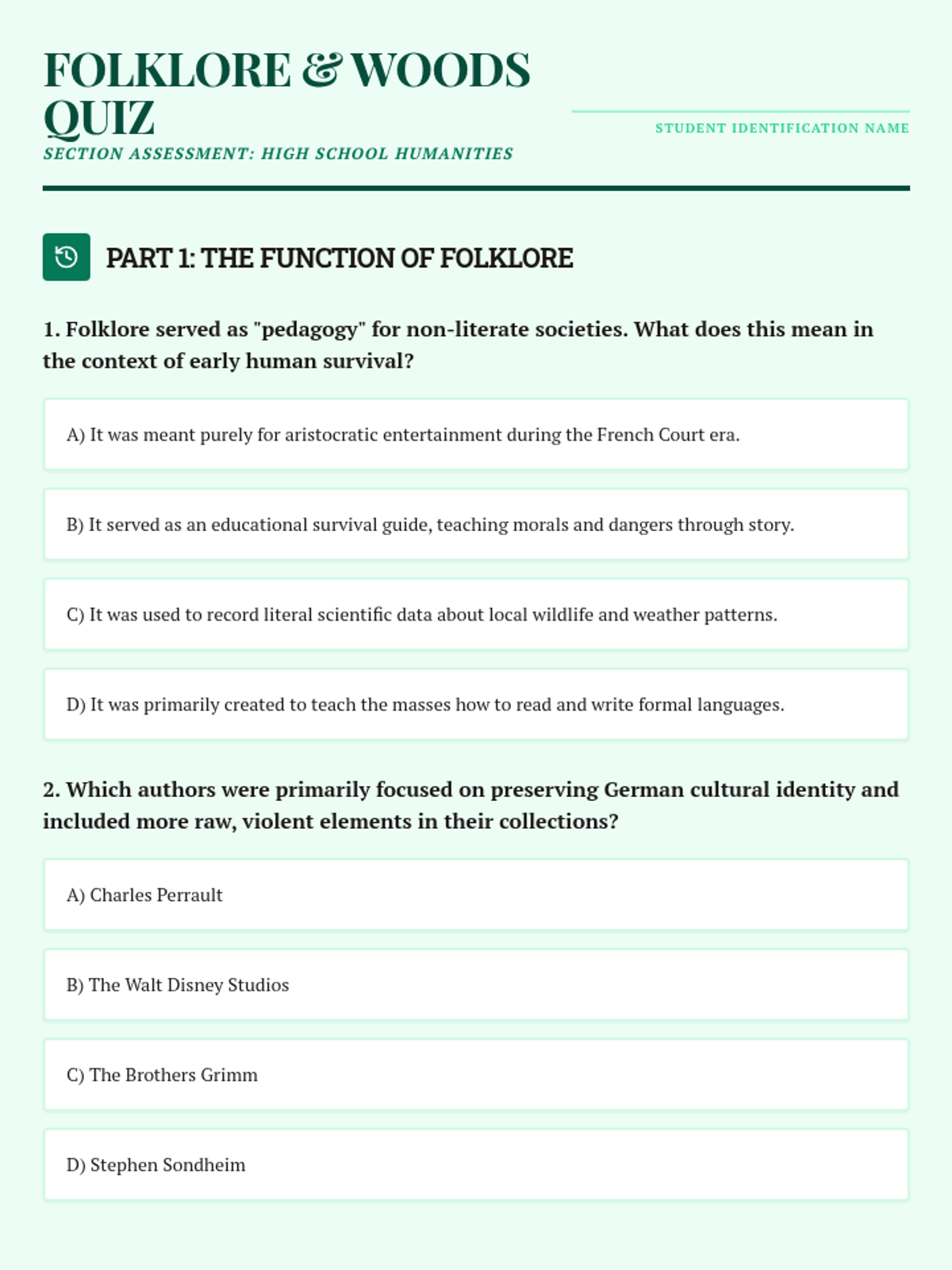
A high-school level quiz covering the purpose of folklore, literary history (Perrault/Grimm), and thematic subversion in 'Into the Woods'.
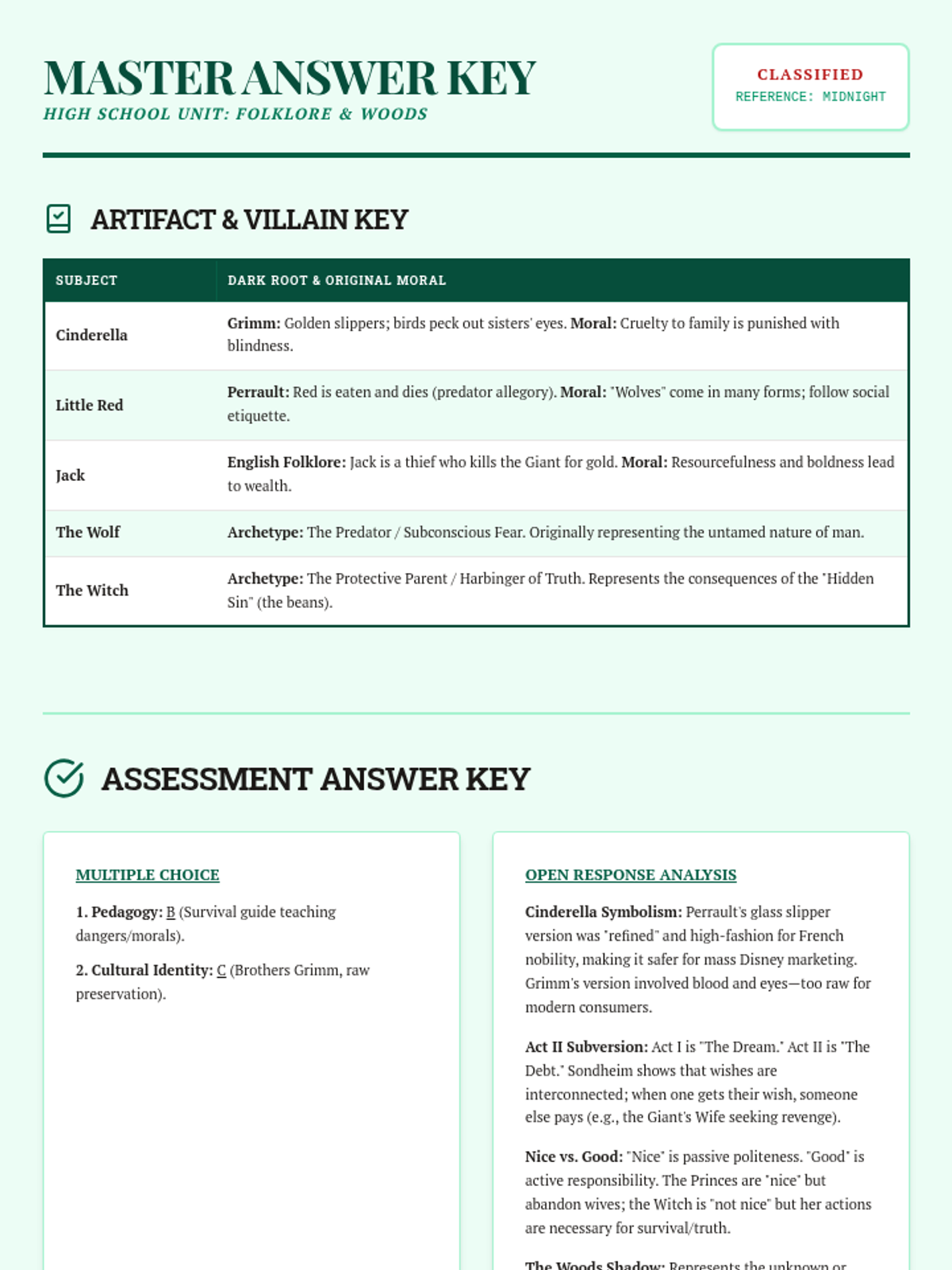
A comprehensive answer key for the high-school folklore unit, including character origins, literary history, and assessment answers.
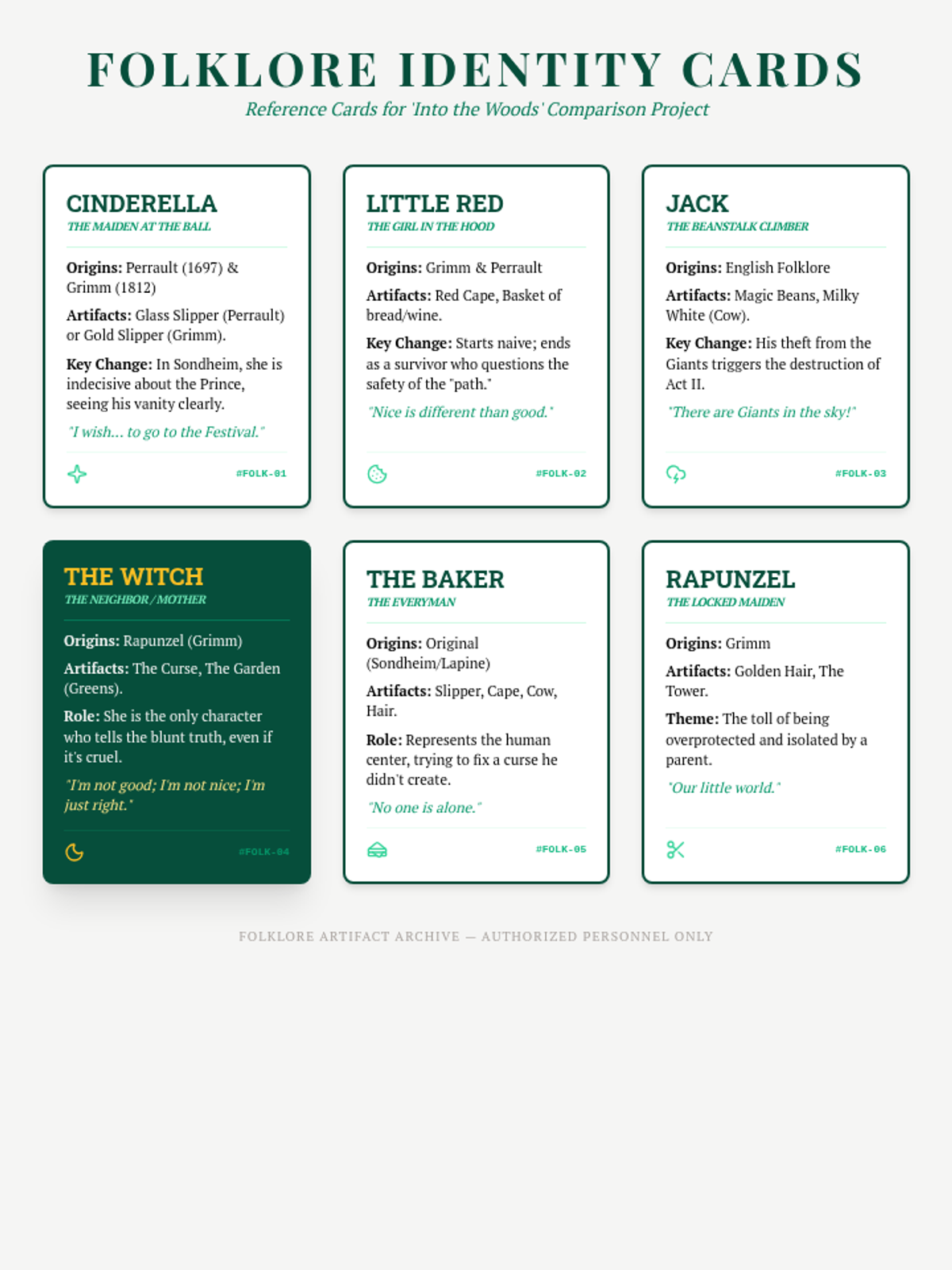
A set of reference cards for 'Into the Woods' characters, including their folklore origins, artifacts, and key changes in the musical adaptation.
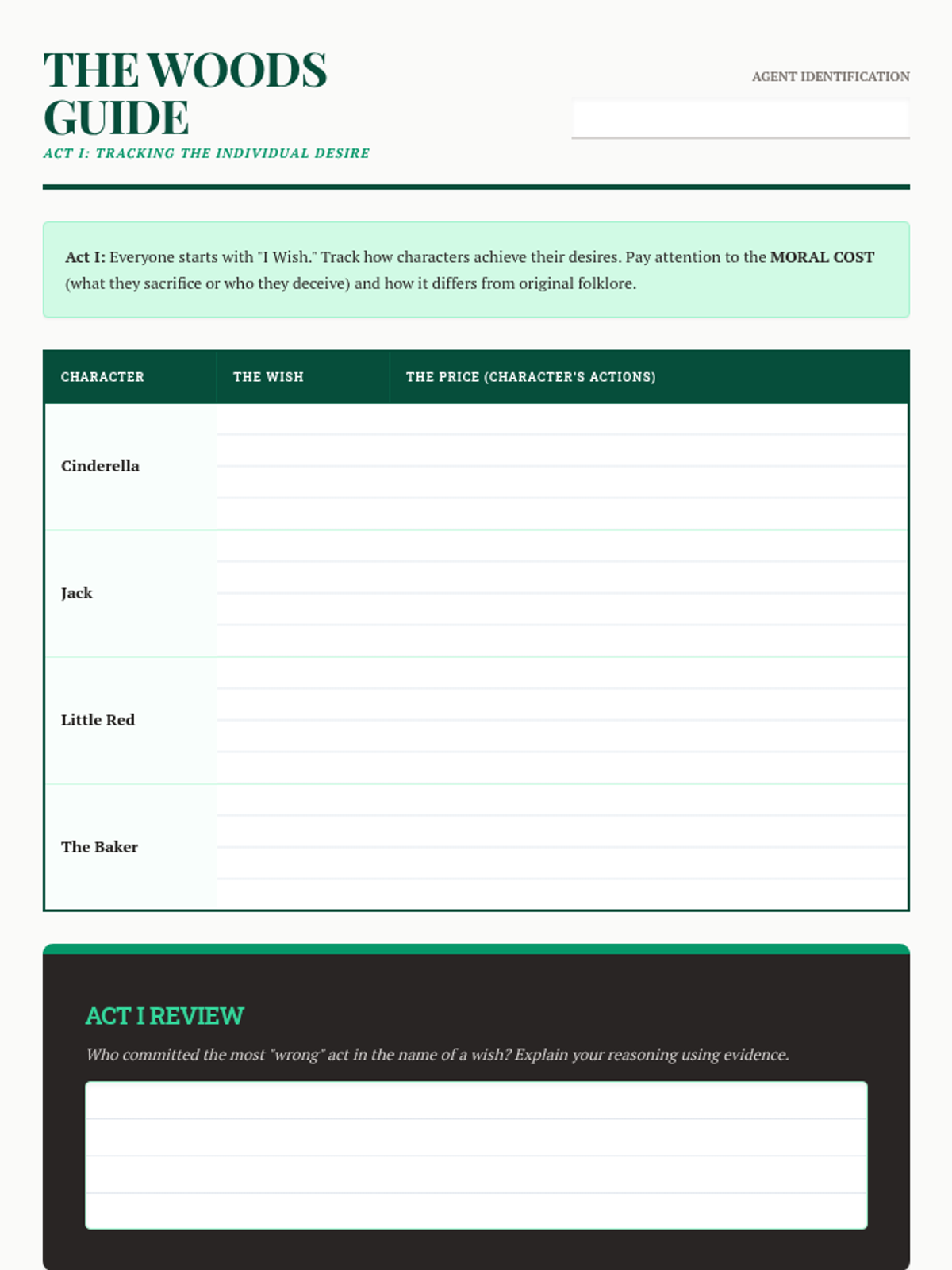
A detailed watching guide for 'Into the Woods' that tracks character wishes in Act I and their consequences in Act II.
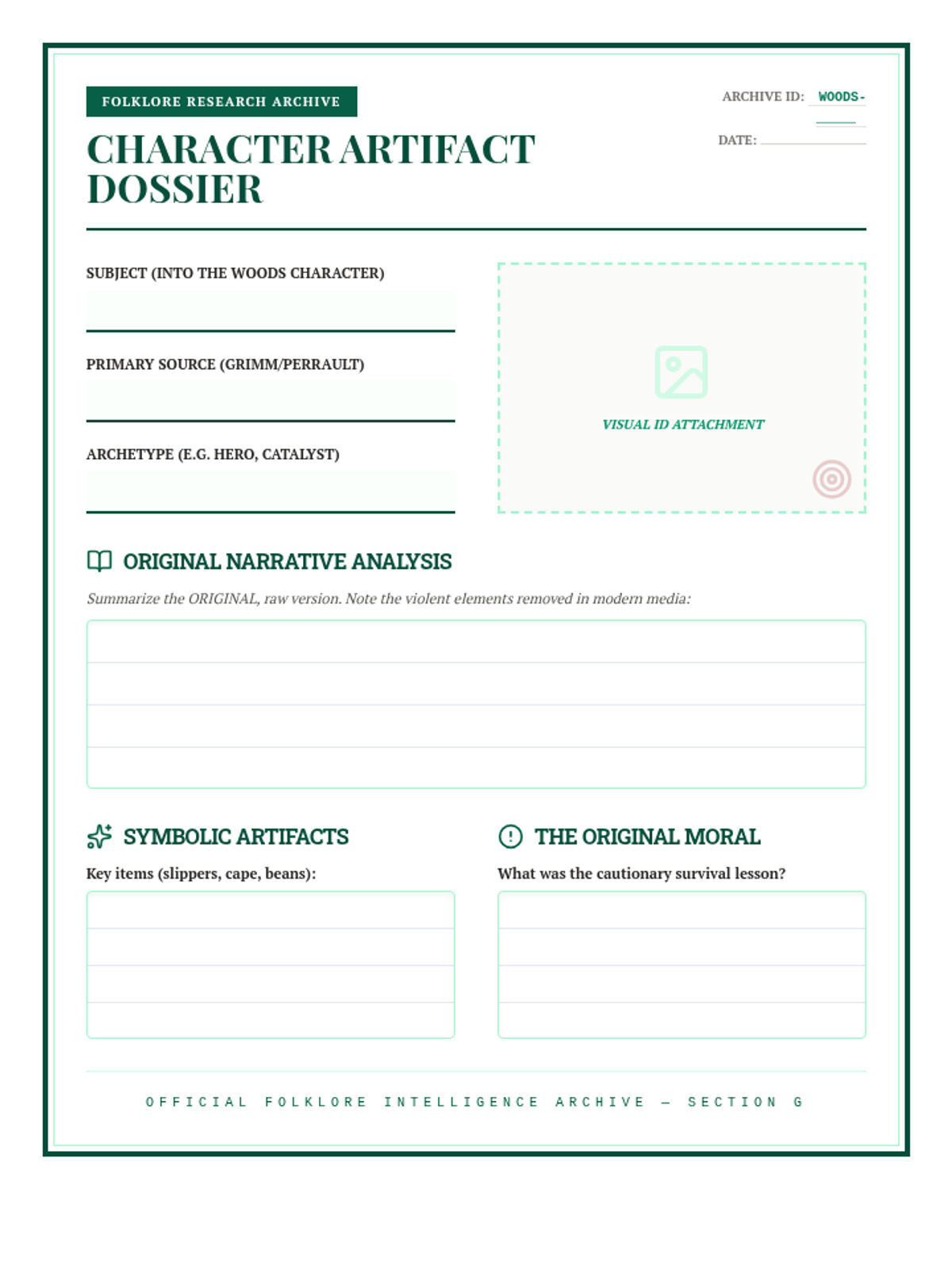
A research worksheet for students to document the original versions of fairytale characters, their attributes, and their cultural endurance.
High-school introductory slides for the 'Into the Woods' folklore project, exploring the purpose of stories, literary history, and Sondheim's deconstruction.
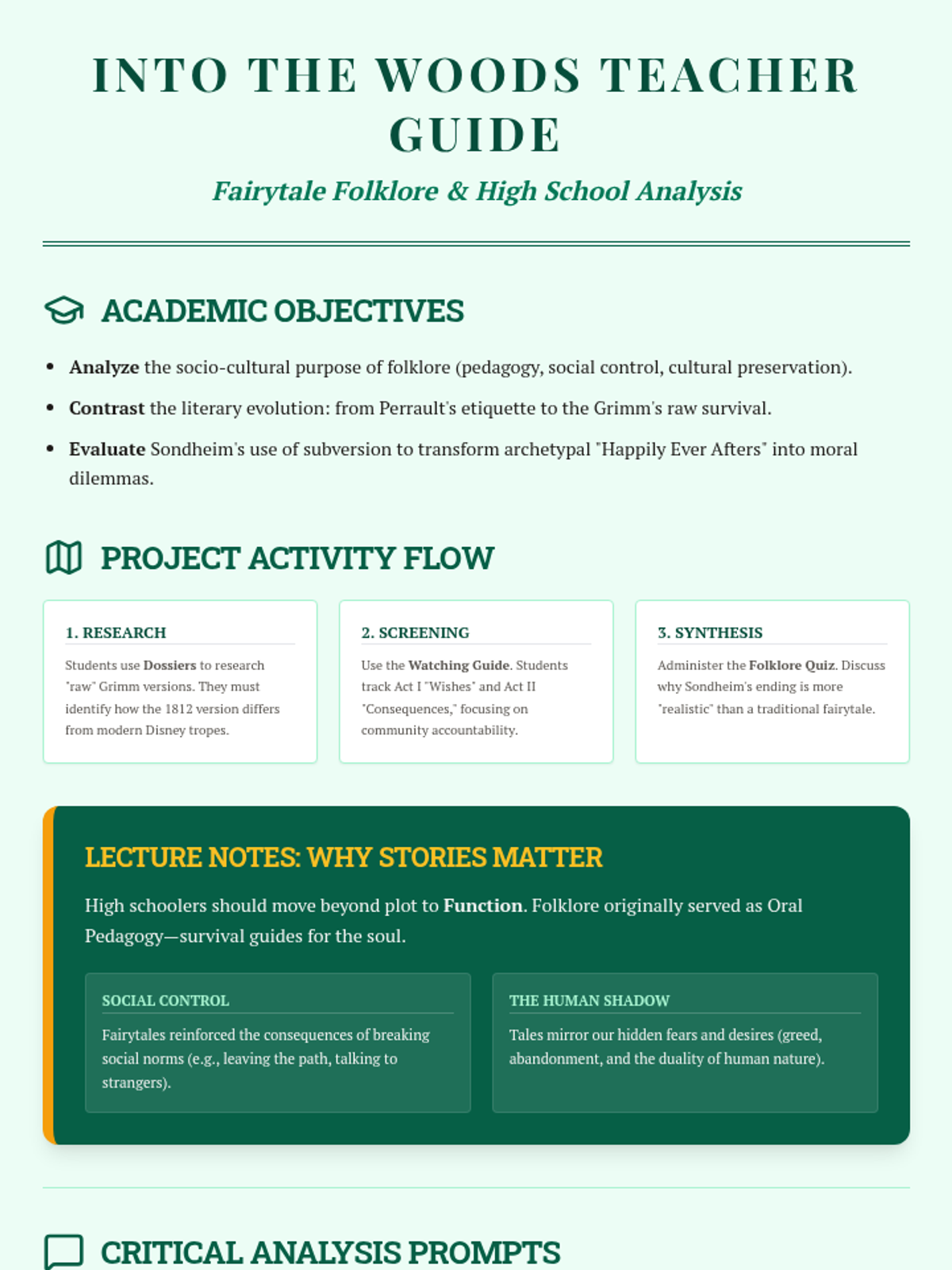
A high-school level teacher facilitation guide for the 'Into the Woods' folklore project, focusing on cultural value, literary history, and thematic analysis.
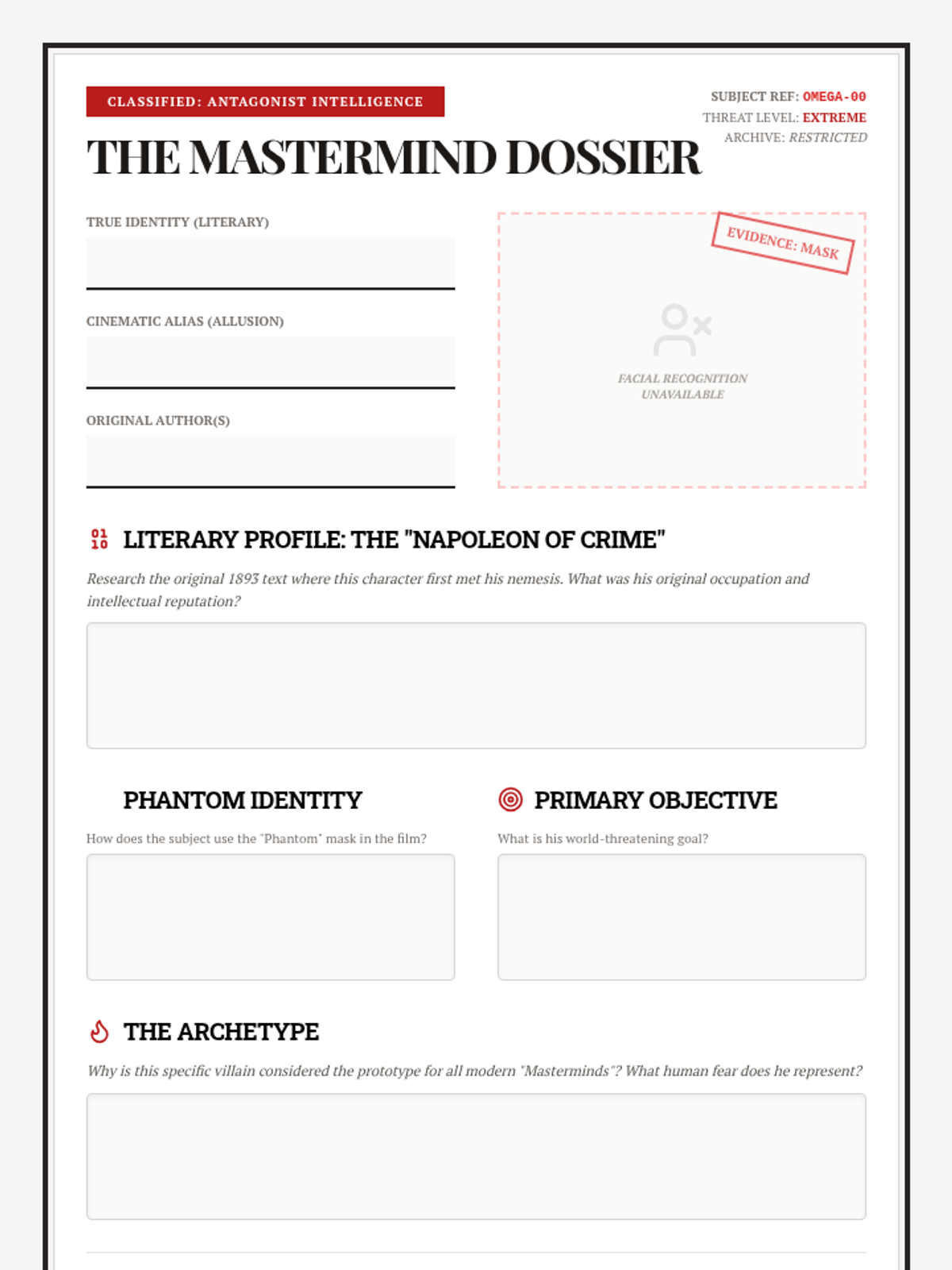
A specialized research dossier for the film's main antagonist, focusing on Professor Moriarty's literary origins and his 'Phantom' dual identity.