A student activity worksheet for modeling a complex food web involving mosquitoes, bats, humans, spiders, and flies, with specific reflection questions on the impact of predator removal.
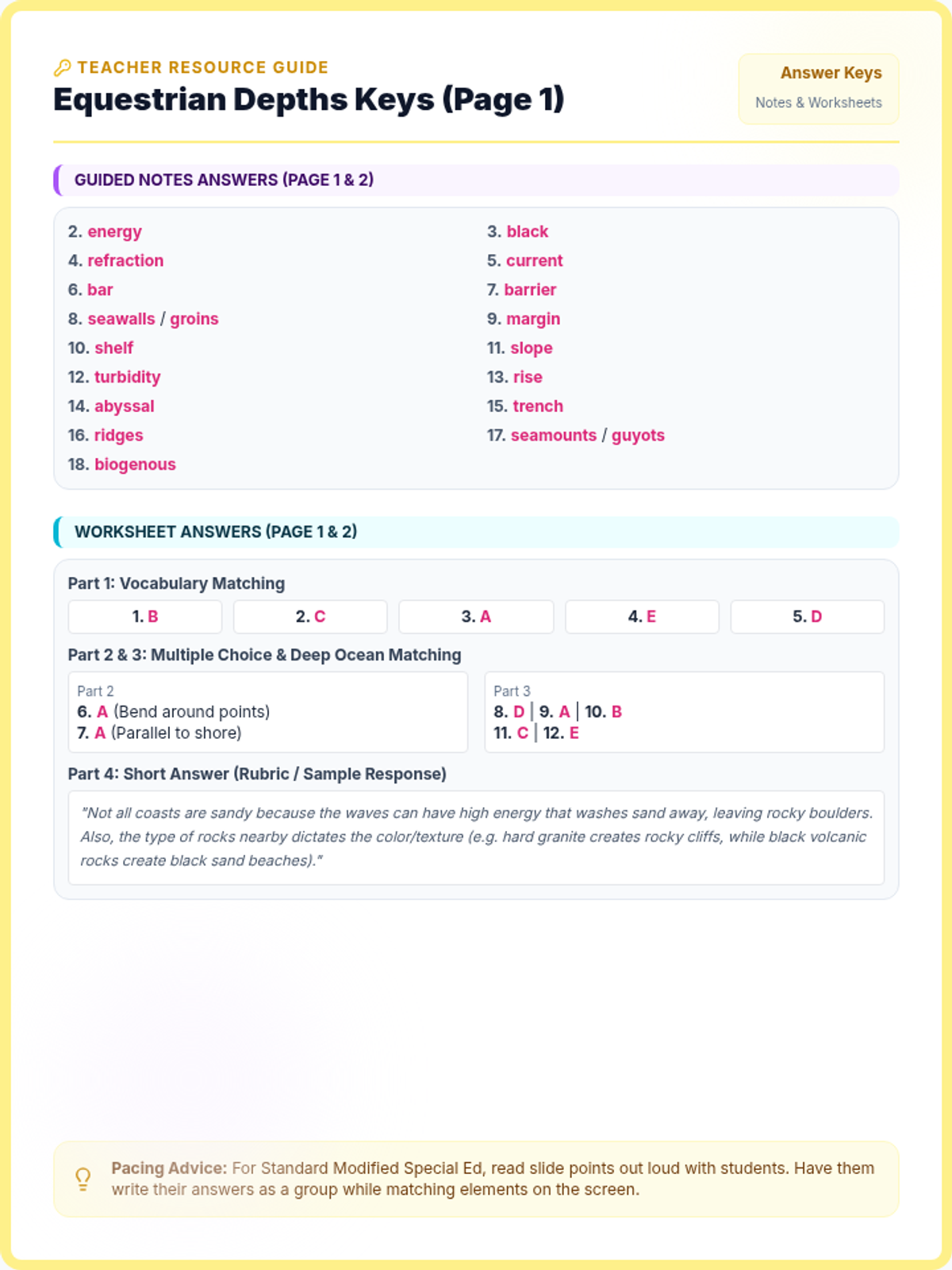
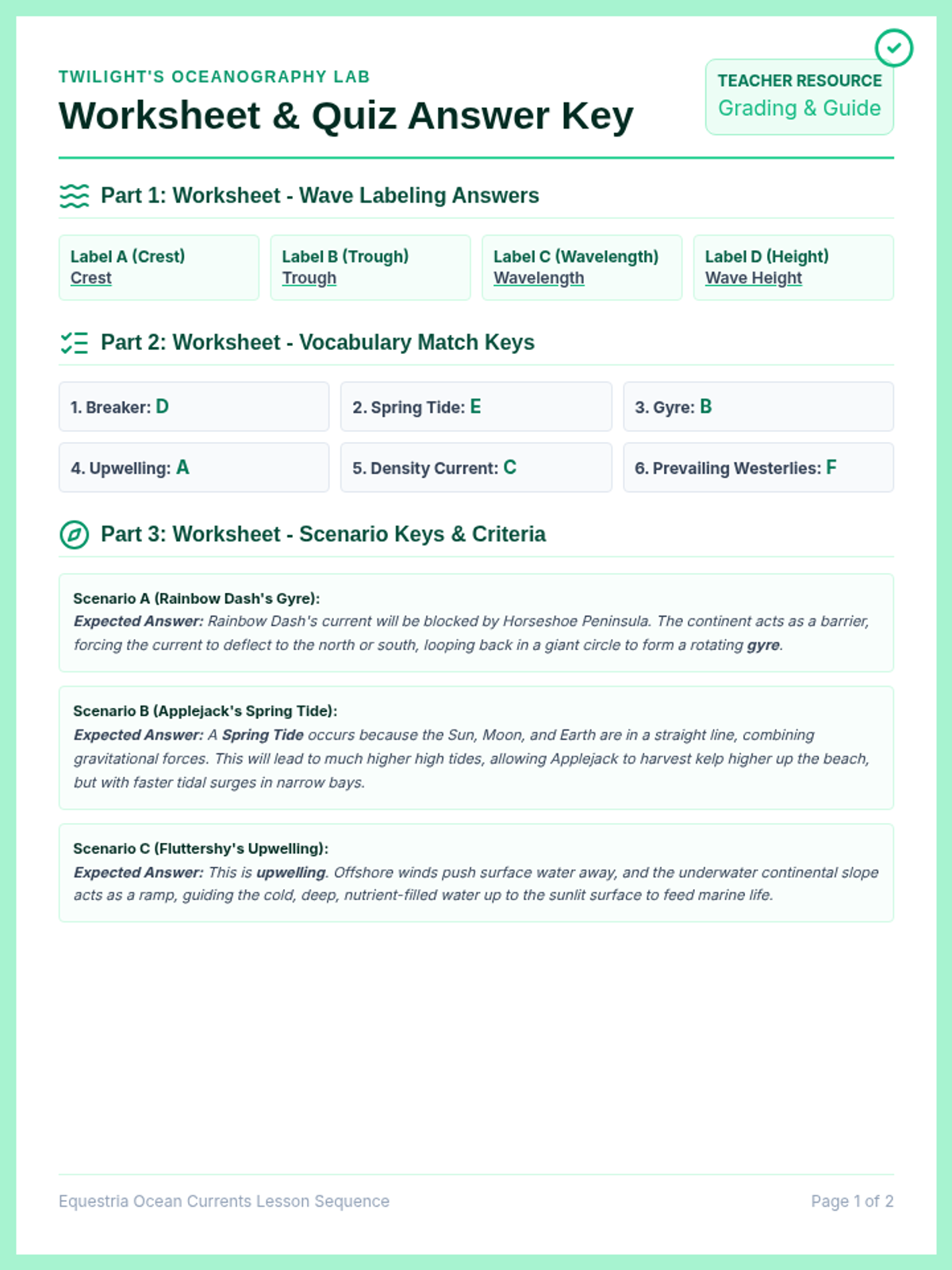
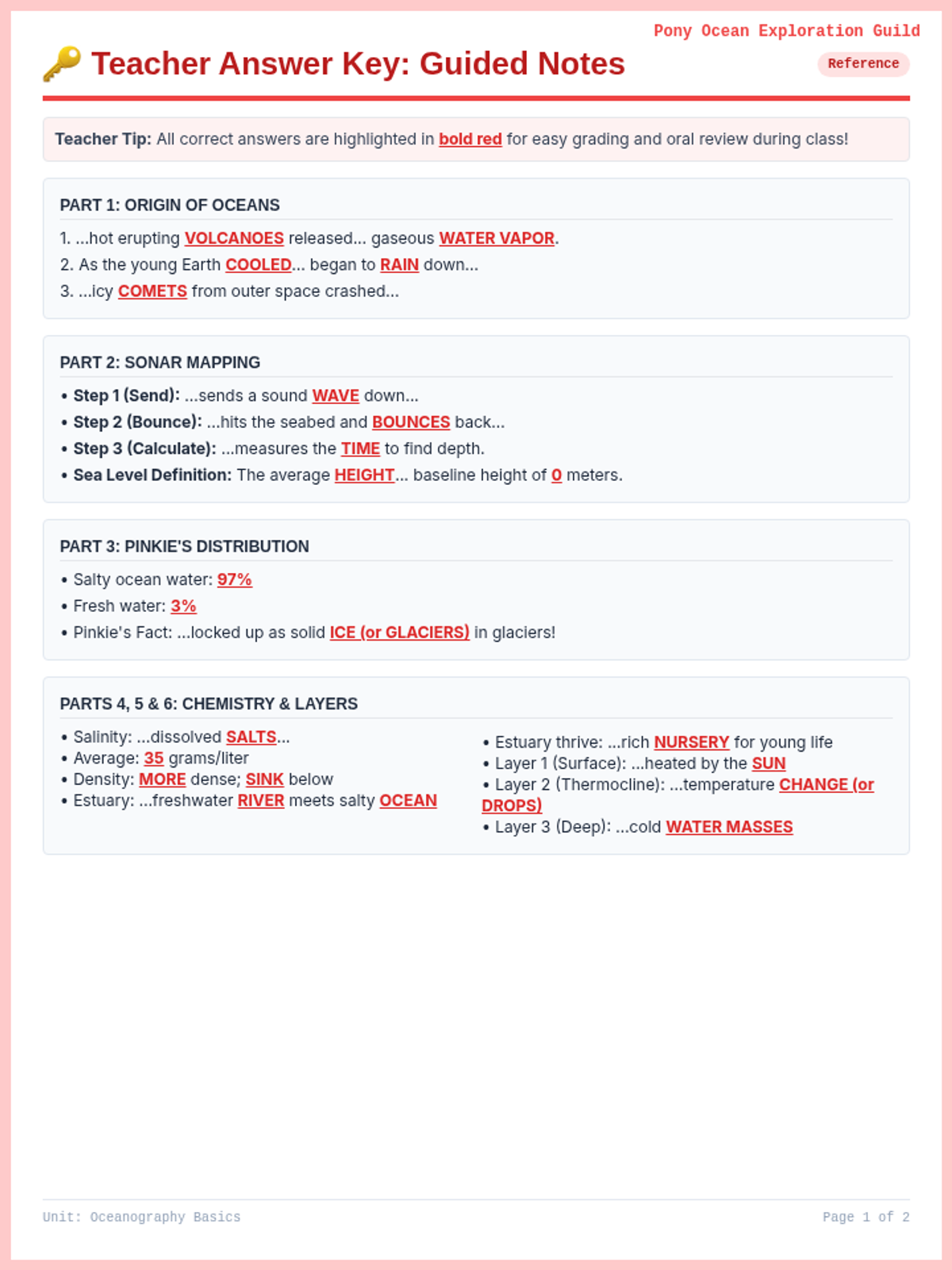
A 2-page print-ready teacher answer key providing solutions for the Equestrian Depths Guided Notes, Worksheet, and Multiple-Choice Quiz, with added grading tips and lesson facilitation ideas.
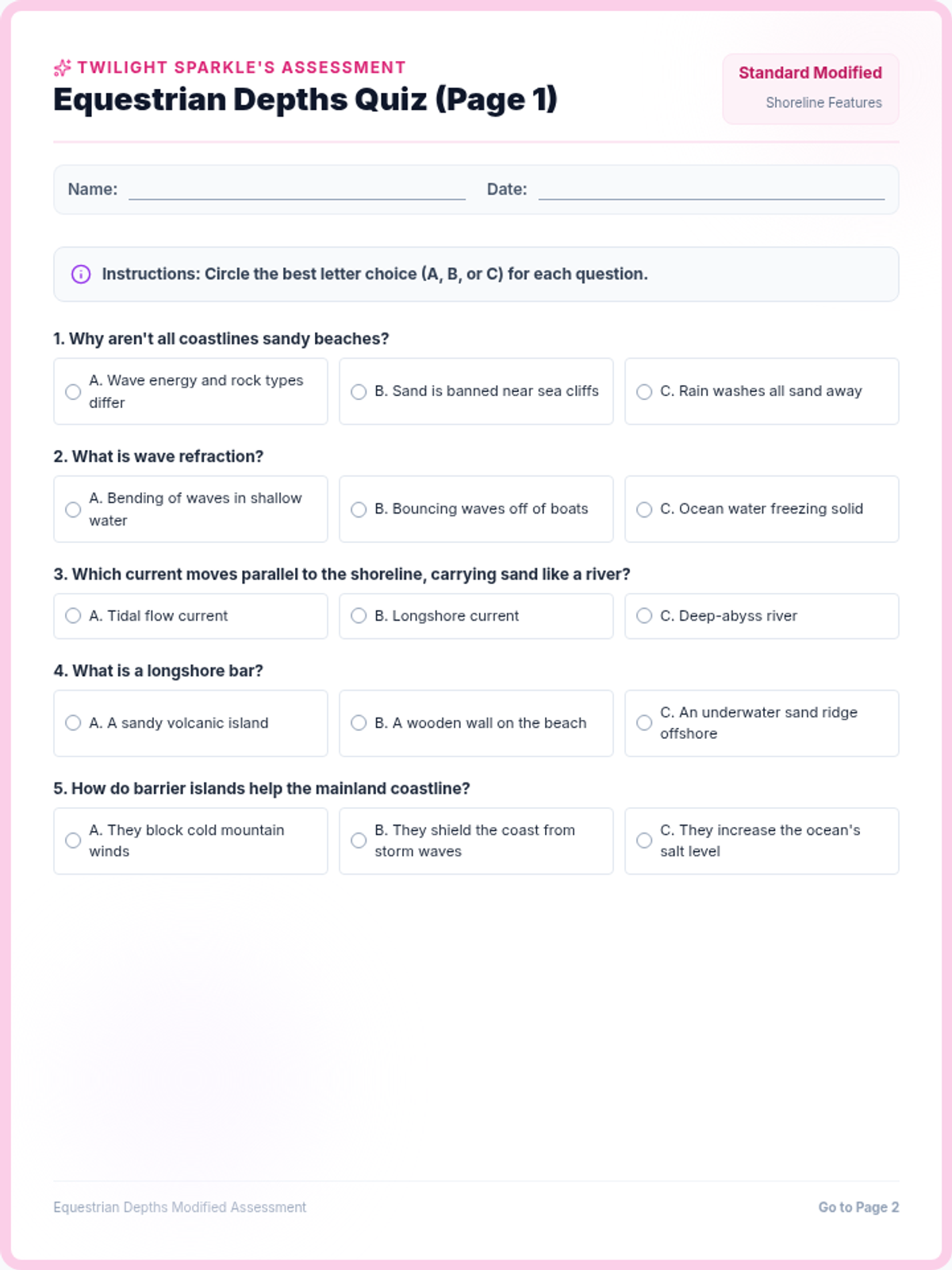
A 2-page print-ready multiple-choice quiz covering coastal and deep seafloor oceanography. Designed with clear chunked questions and 3 simplified, identically-styled choices per question.
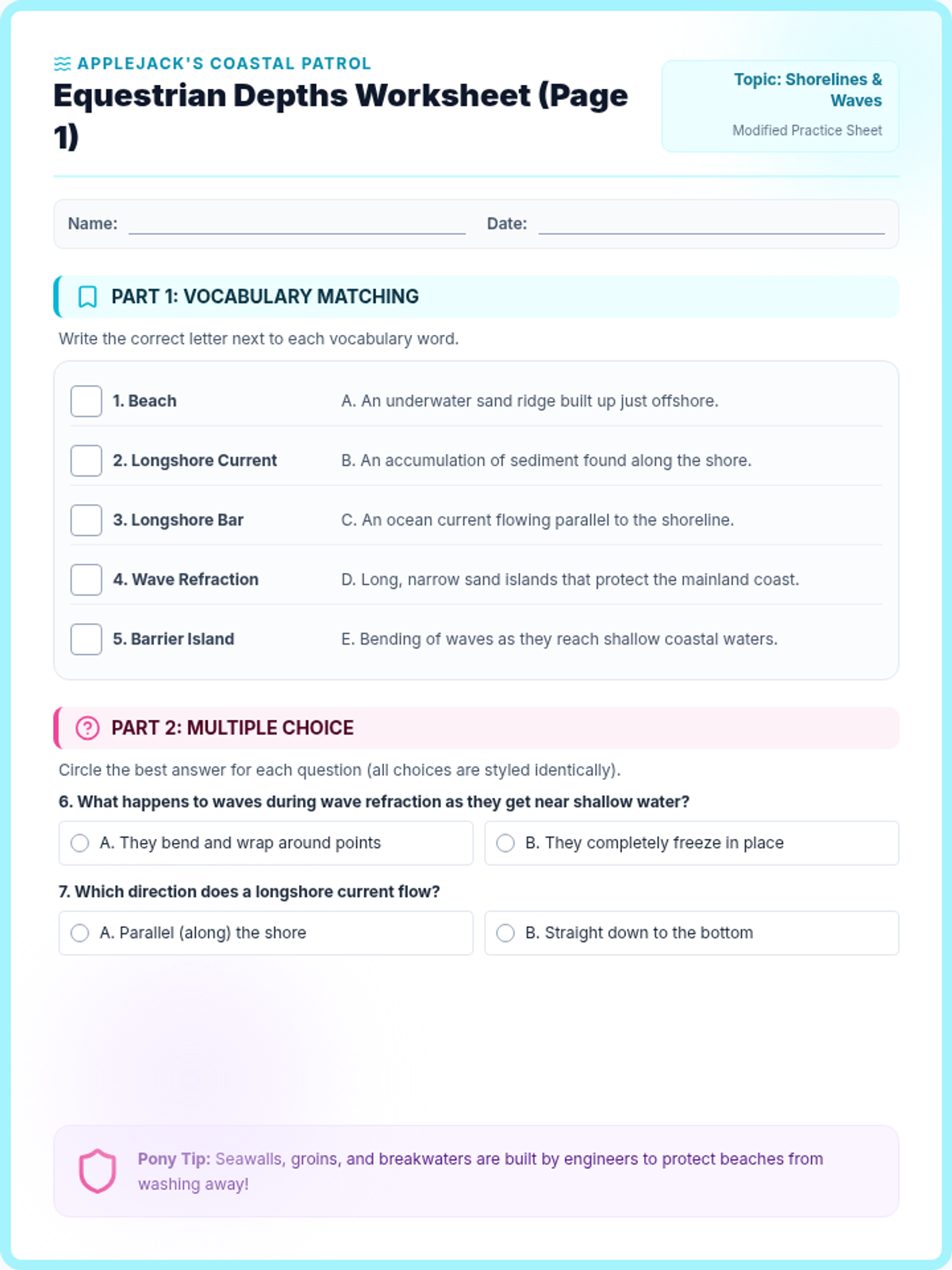
A printable 2-page worksheet for students to practice key terminology, label continental margins, and explain shoreline variations. Designed with a clean layout and ample handwriting space.
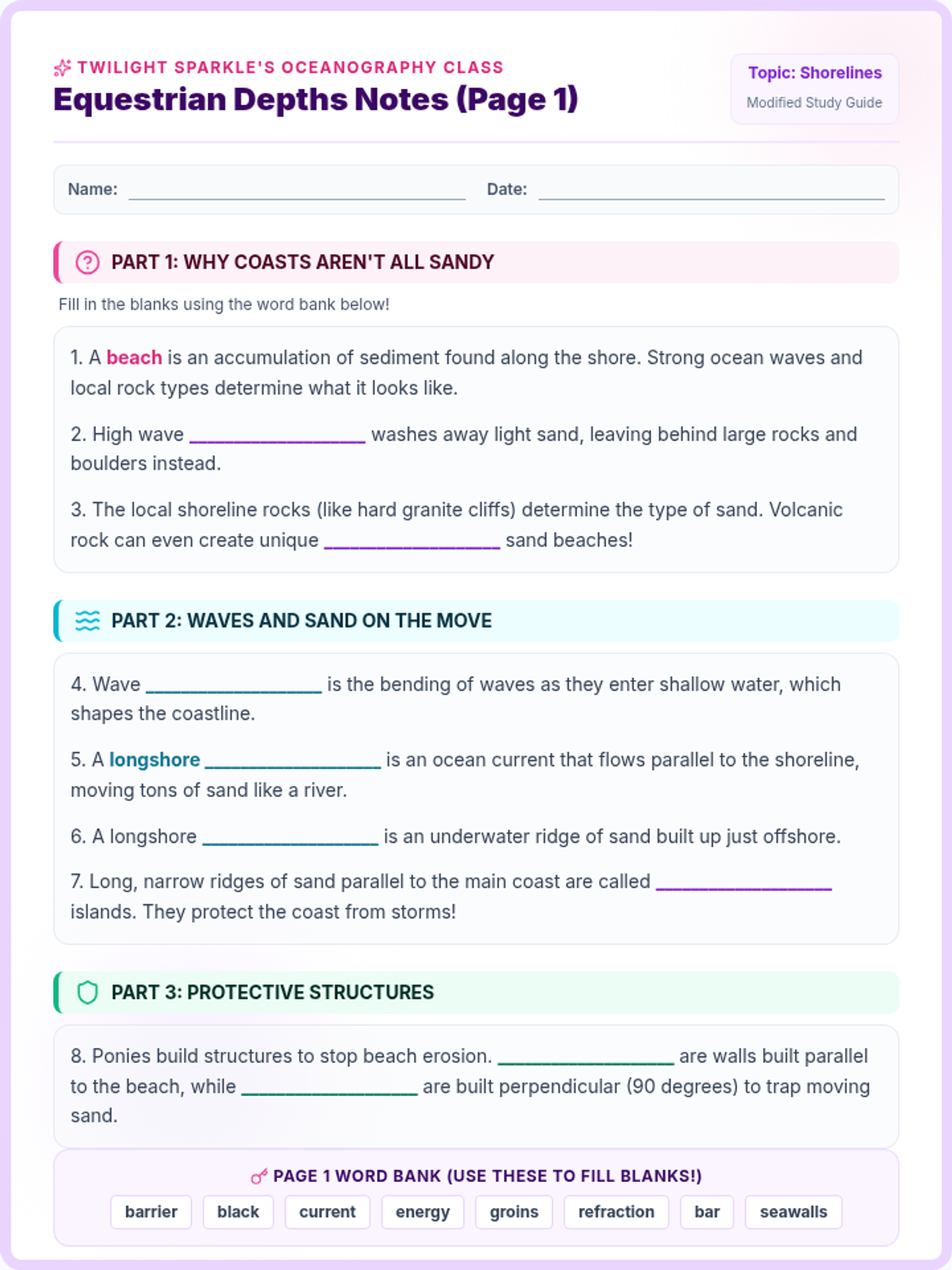
Printable 2-page guided notes document for Standard Modified Special Education students. Features chunked text, simple fill-in-the-blank statements, helpful word banks, and decorative pony themed headers.
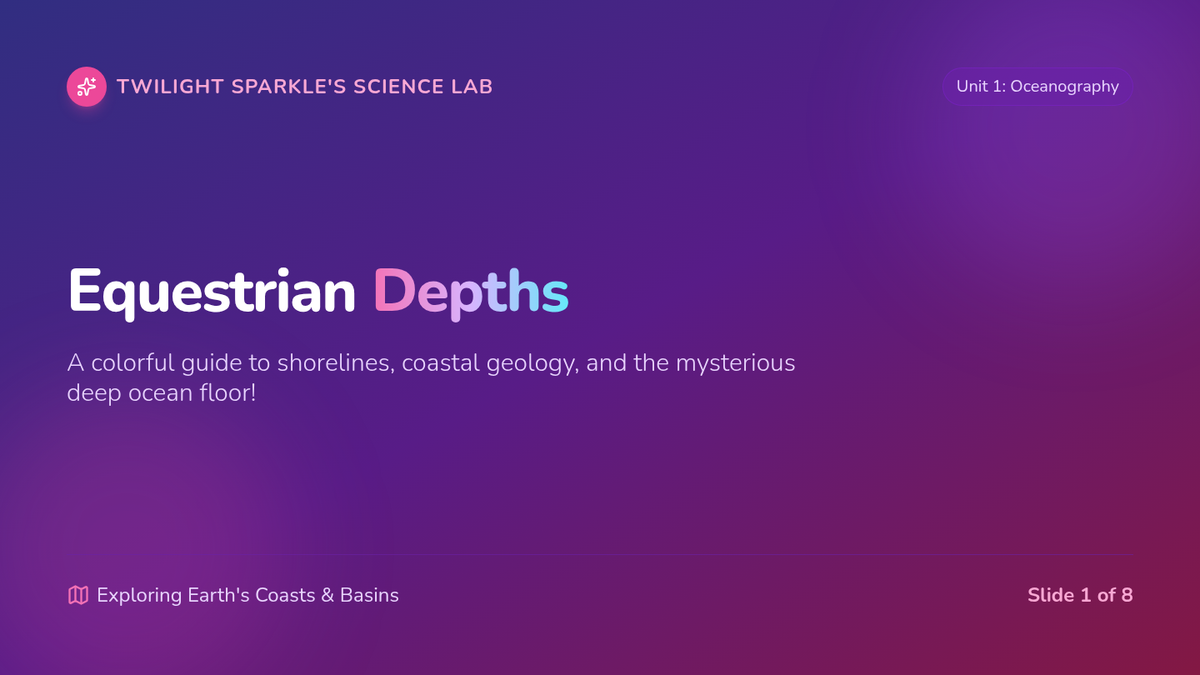
An interactive 16:9 presentation slide deck teaching shorelines, coastal dynamics, and deep seafloor structures with a friendly My Little Pony decorative theme. All text is designed at 24px minimum for readability.
A 2-page teacher-facing answer key and grading guide containing direct solutions, sample responses, and rubric guidelines for the worksheet and quiz.
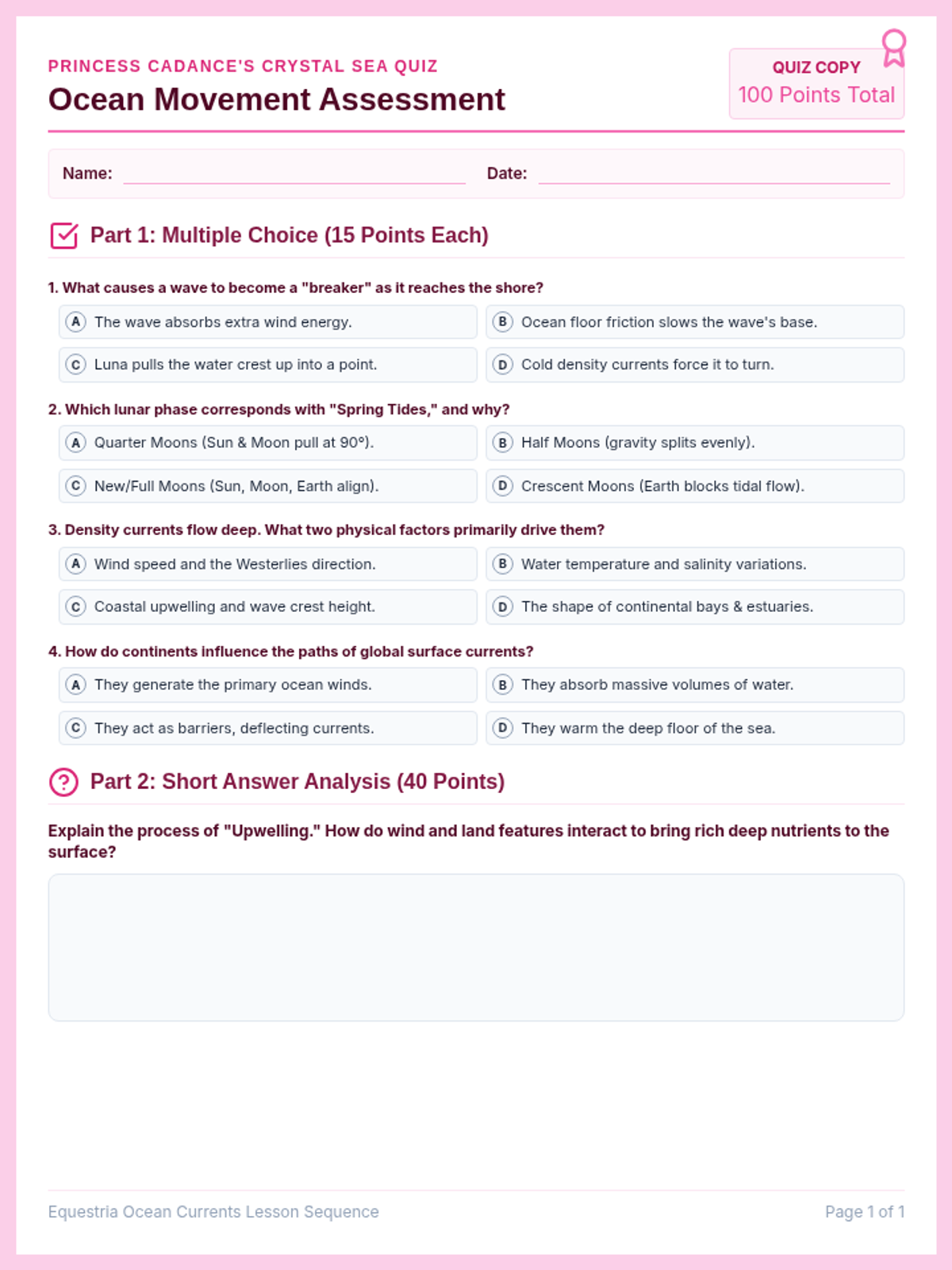
A 1-page print-ready assessment with multiple-choice questions and short-answer prompts covering waves, tides, currents, gyres, and land influences.
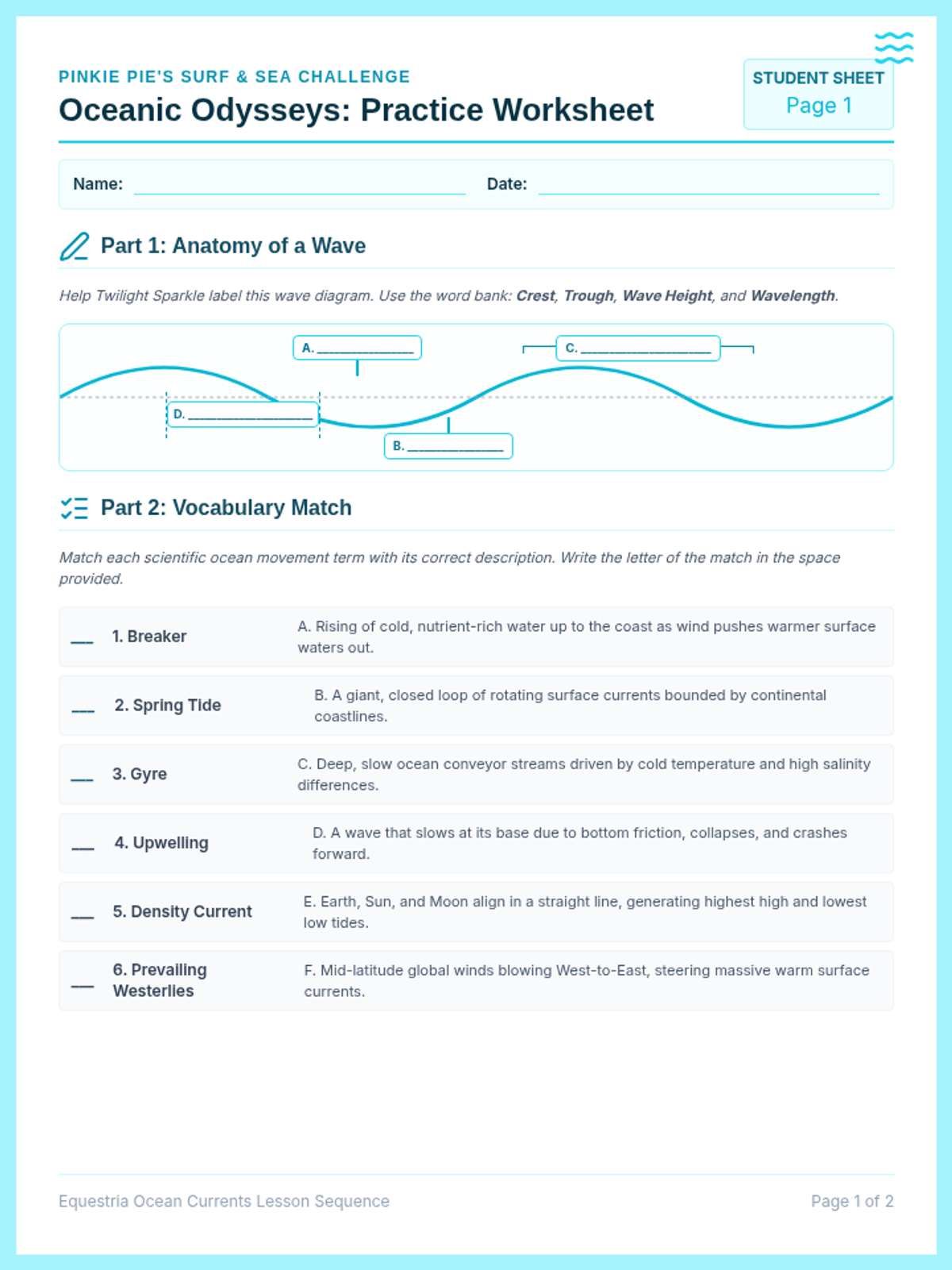
A 2-page print-ready worksheet with wave-labeling diagrams, a matching section for vocab words, and creative MLP-themed scenario analysis questions.
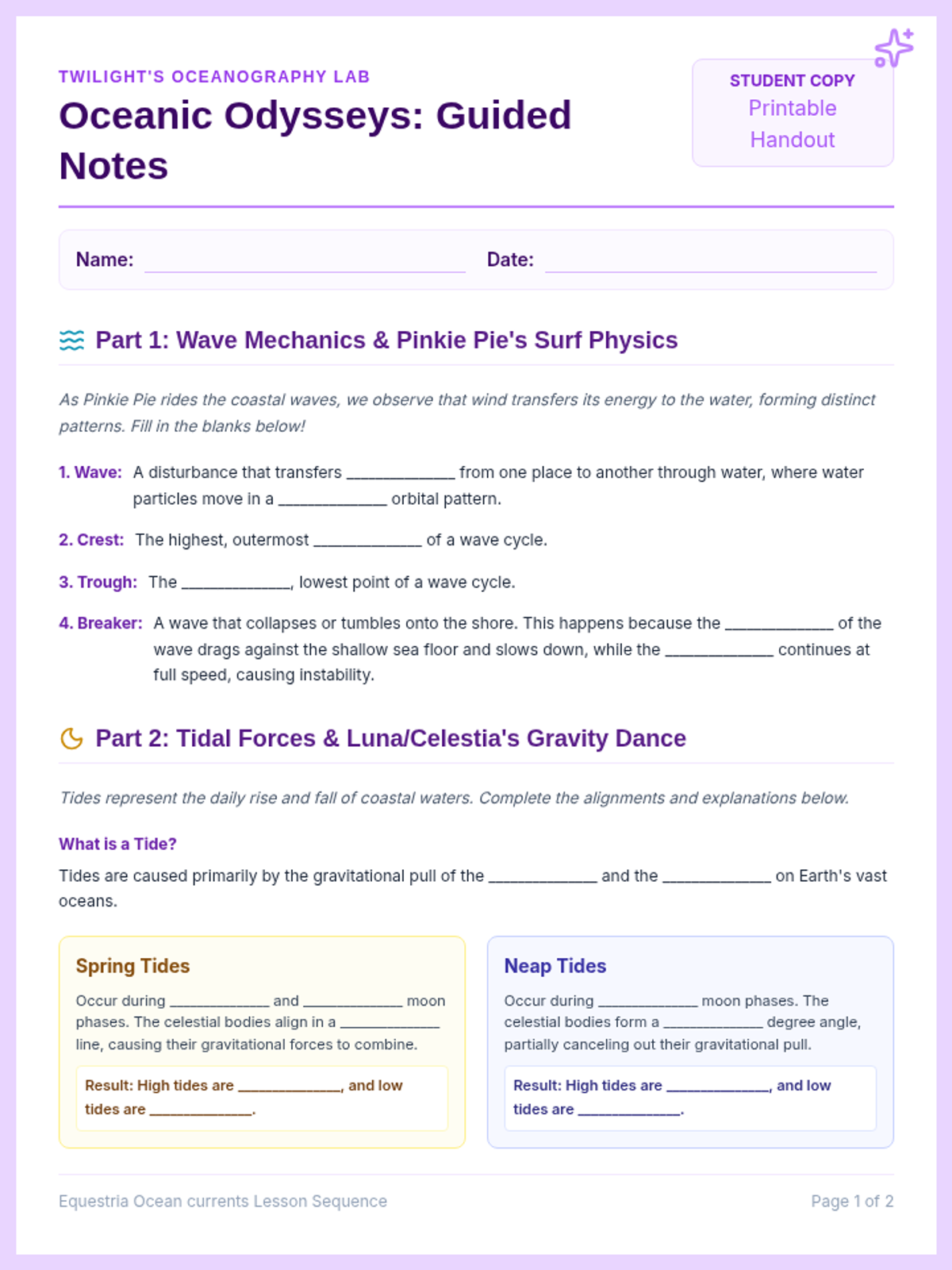
A 2-page print-ready guided notes document with fill-in-the-blank sections, diagrams, and reflection prompts based on the slides.
An interactive-style visual slide deck for Twilight Sparkle's Oceanography class, exploring waves, tides, currents, and gyres, and how land structures ocean movement in Equestria.
A comprehensive 2-page teacher answer key providing clear, bolded answers and mathematical solutions for the guided notes, worksheet, and student quiz.
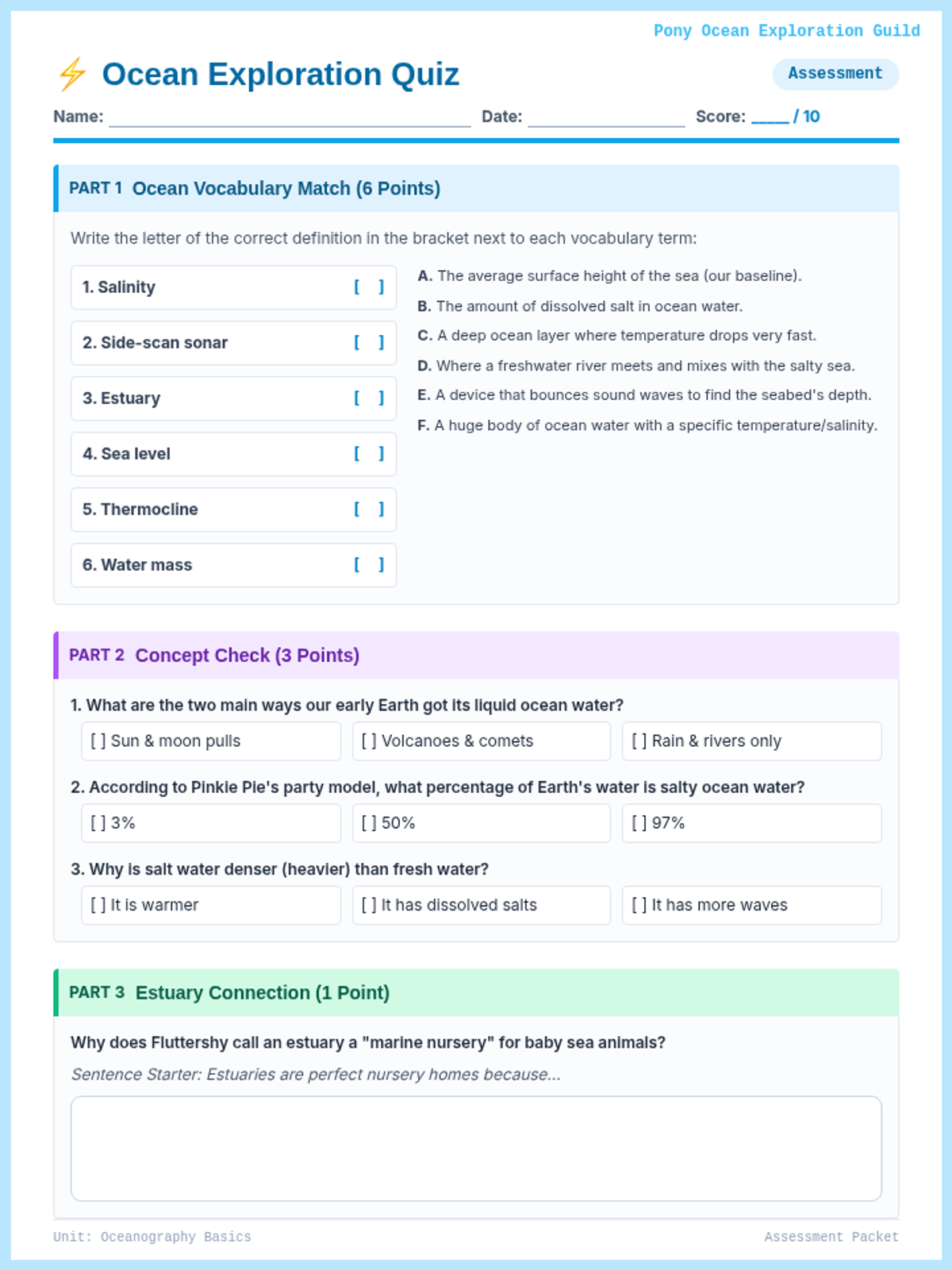
A supportive 1-page assessment utilizing word banks, sentence starters, and simple multiple-choice questions with balanced, clean styling for all options.
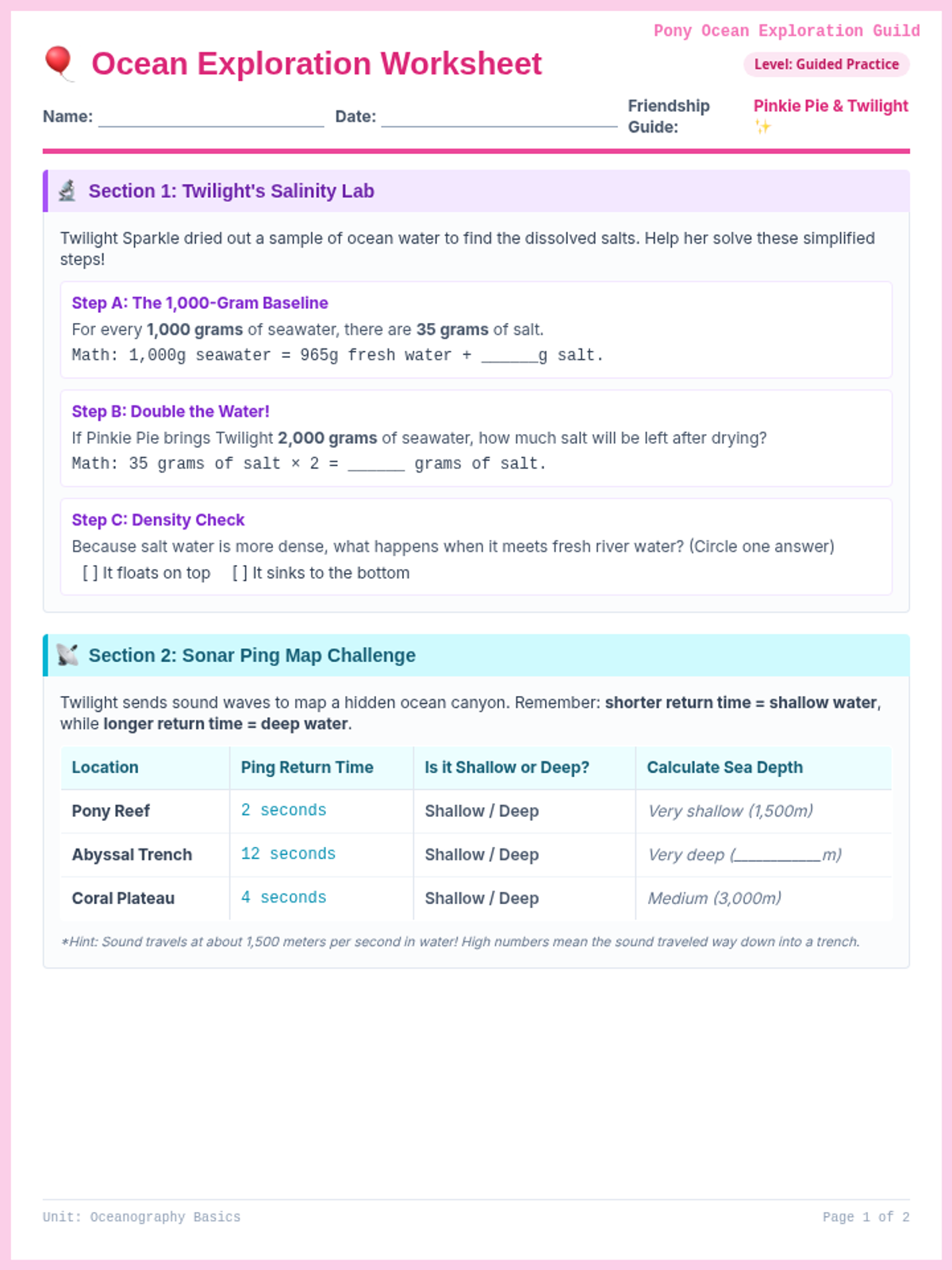
A 2-page student worksheet containing simplified step-by-step math for salinity and sonar, water sorting diagrams, and graphic organizers on estuaries and temperature profiles.
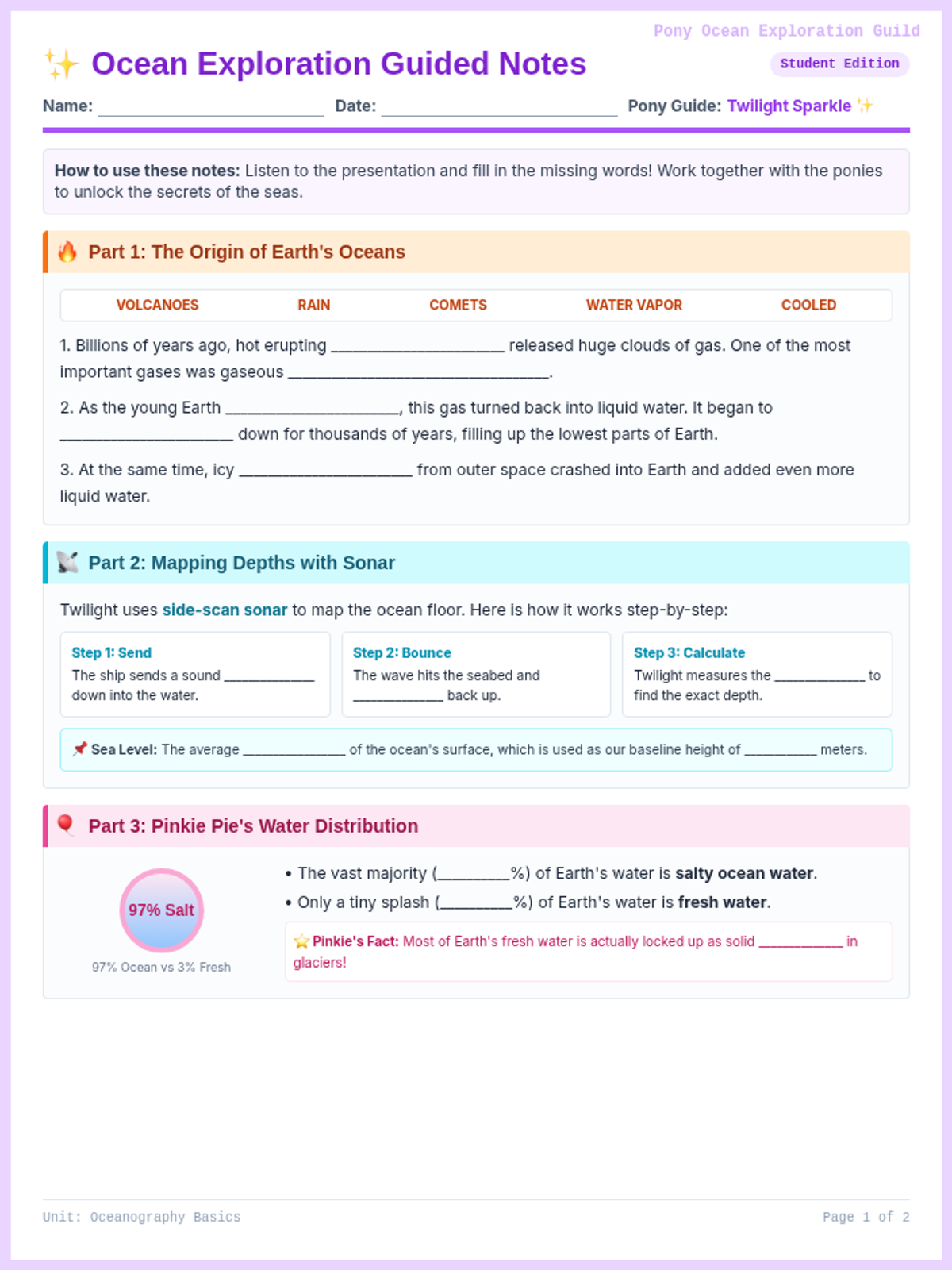
A 2-page highly supportive guided notes packet with custom character checkpoints, simple diagrams, fill-in-the-blanks, and a clear word bank for students to complete while following along with the presentation.
A 7-slide interactive presentation featuring the My Little Pony characters to explain ocean origins, water distribution, side-scan sonar, salinity, estuaries, and ocean layers. Designed with large text, vivid color codings, and simple layouts for visual learners.
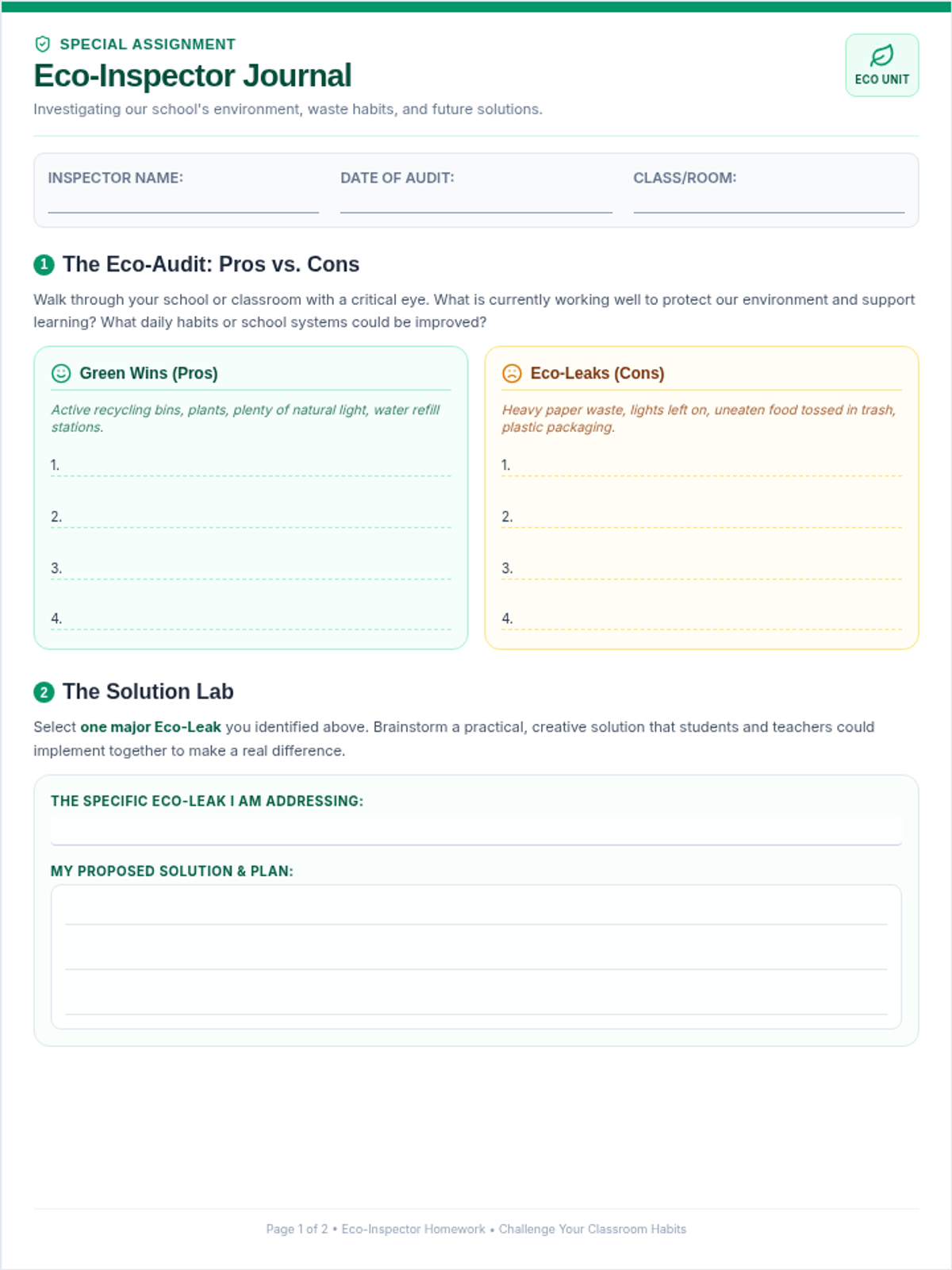
A highly engaging and beautifully formatted 2-page homework worksheet for students to audit their school/classroom environment, identify pros/cons, propose solutions, and design statistical data collection strategies for environmental habits.
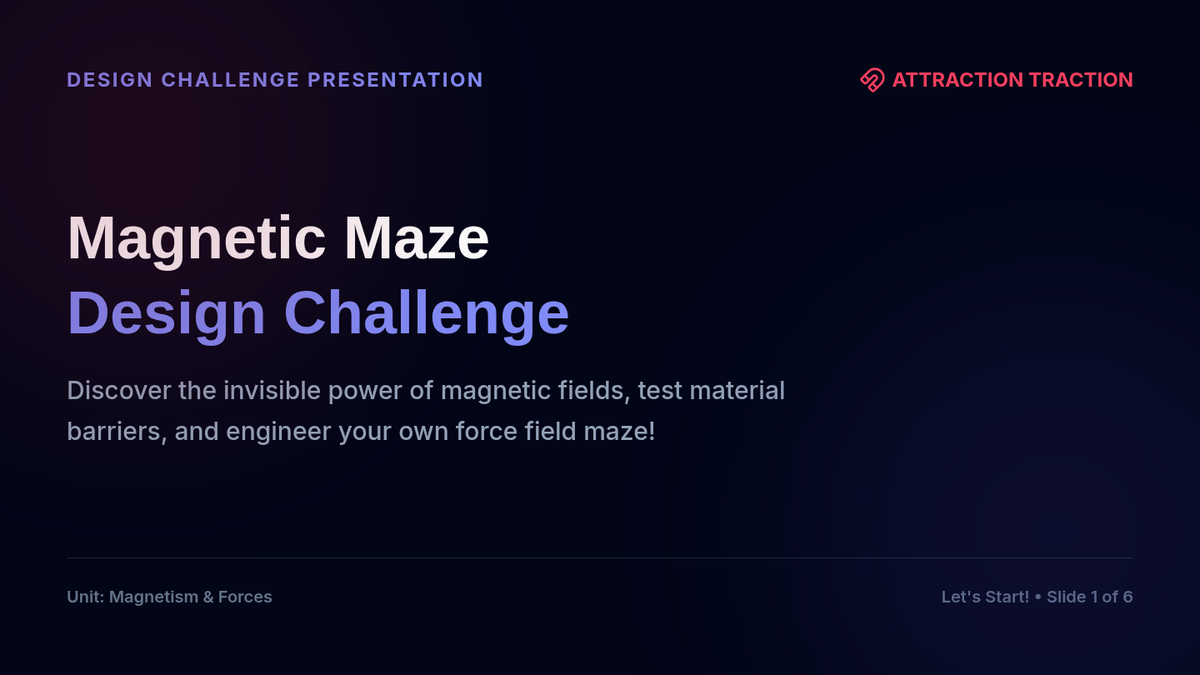
A 6-slide design challenge deck designed to guide students visually through the concepts of magnetism, non-contact forces, material testing, and iterative maze engineering.
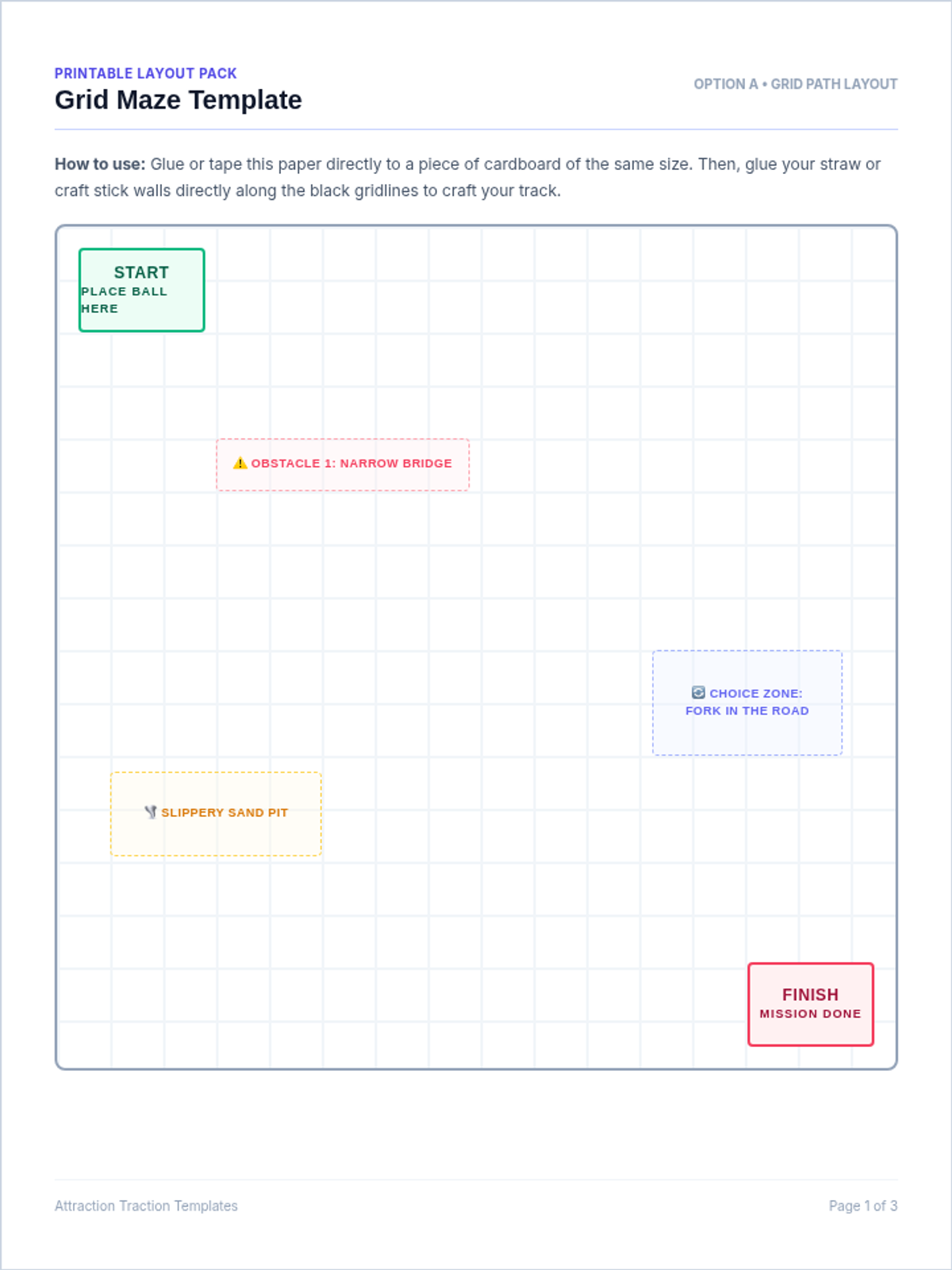
A 3-page printable pack featuring two complete pathing templates (orthogonal grid and concentric radial maze designs) and a hands-on material testing log sheet.
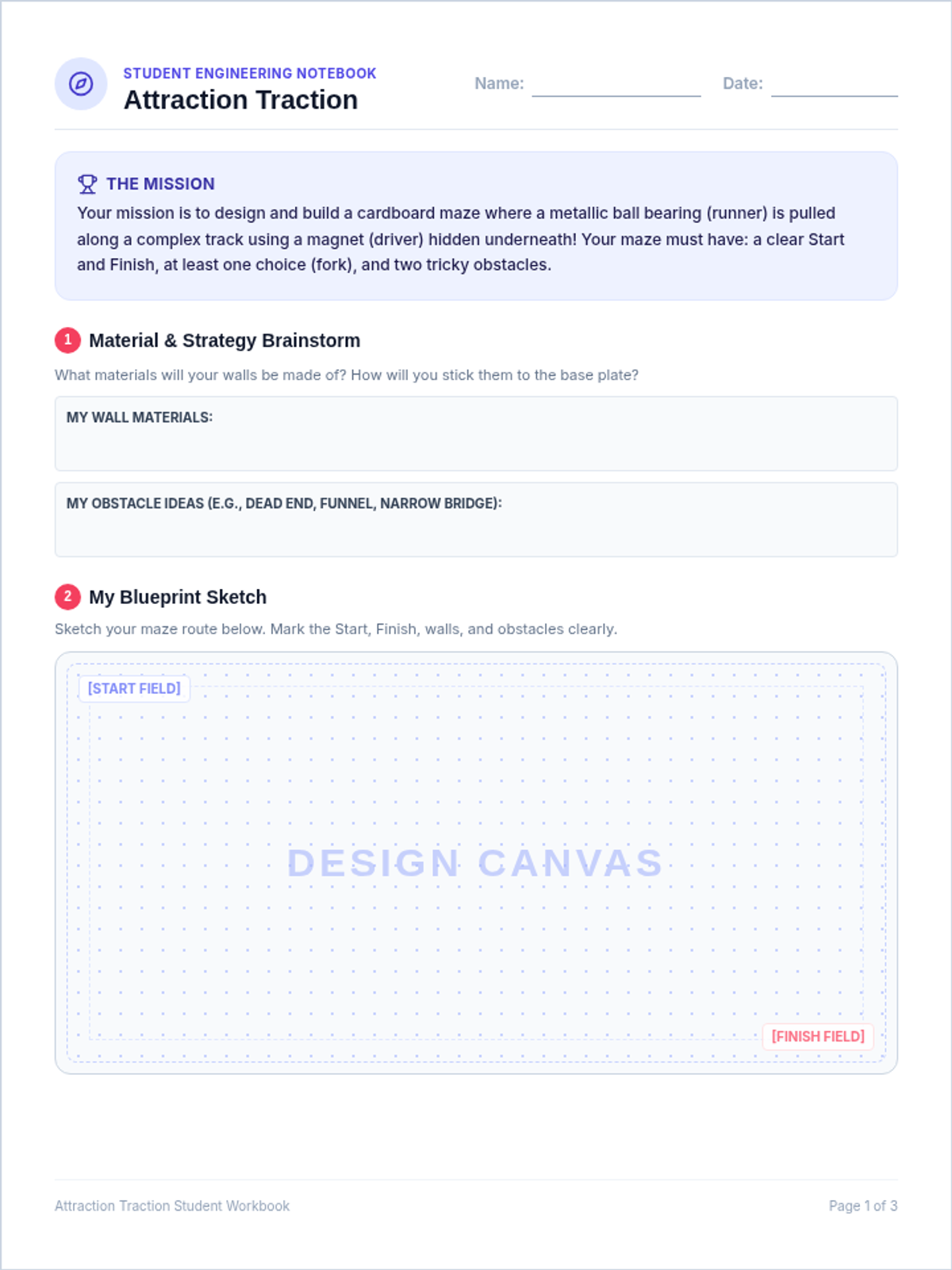
A 3-page student-facing STEM workbook containing a blueprint planning sheet, testing/iteration log, and a high-retention exit ticket with reflective writing prompts about magnetism and force vectors.
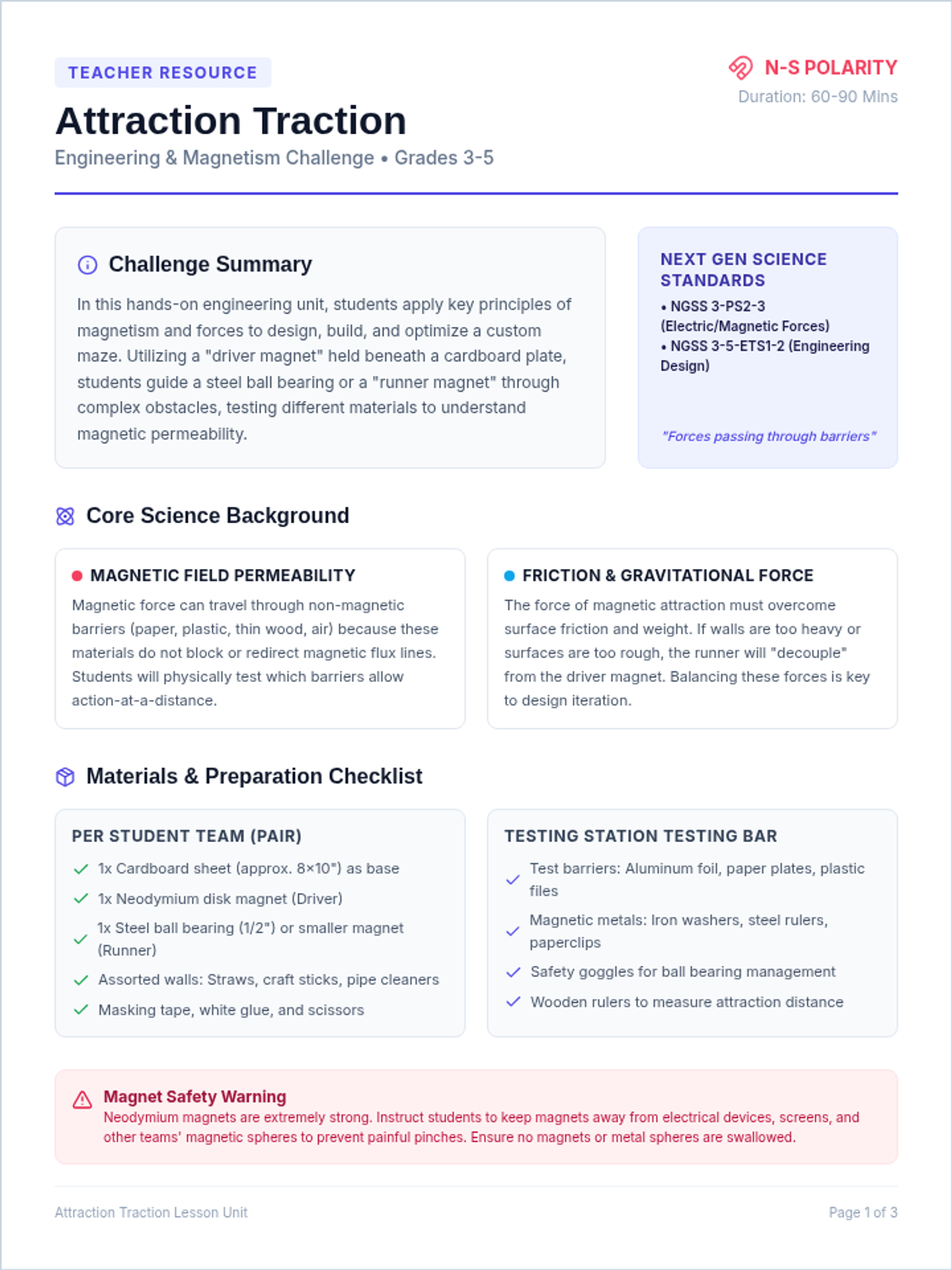
A 3-page printable guide for teachers featuring background science, step-by-step facilitation prompts, material checklists, lesson timeline, and a rubric for the Attraction Traction magnetic maze design challenge.
A 2-page print-ready teacher instructional plan and facilitation guide for running the Force Field Engineers magnet maze lab. Includes NGSS standards, a materials checklist, lesson pacing, inquiry prompts, a 3-tier grading rubric, and classroom troubleshooting tips.
A 2-page collection of printable layout templates, assembly components, and cutouts for building custom student magnet mazes. Includes a 1-inch printable grid board and a materials folding lab sheet.
A 2-page print-ready student lab handbook for the Magnet Maze engineering challenge. It includes a material testing matrix, maze blueprinting grid, testing logs, and reflective engineering prompts.
A 2-page teacher facilitation guide containing next-generation science standards (NGSS) alignments, a detailed 60-minute pacing guide, visual setup directions, a structured engineering design rubric, and a guide to solving common student misconceptions.
A 5-slide visual presentation for teachers to introduce non-contact forces, magnetic fields, attraction/repulsion, and the step-by-step engineering constraints of the Magnet Maze challenge.
A 3-page student activity guide and engineering worksheet for the magnet maze challenge. Includes design constraints, a layout sketching grid, material testing logs, and conceptual reflection questions on non-contact forces and poles.
A single-page formative assessment exit ticket where students analyze vague steps for logical loopholes, practice writing highly precise instructions, and explain why exact detail is crucial for programming.
A highly-structured 2-page student worksheet that helps kids brainstorm, sketch, and systematically draft chronological, step-by-step algorithms for building a marshmallow fluff and jelly sandwich.
A comprehensive, step-by-step facilitation guide for teachers on how to execute the literal-interpretation marshmallow fluff and jelly demo, complete with loophole guides, common student instruction errors, and reflection prompts.
A vibrant, projection-ready slide presentation that guides students through the 'Exact Instructions Challenge'. It establishes the rules of the robot-teacher demo, showcases ingredients, sets up the writing activity, and leads the class debrief on the importance of clarity.
A 2-page complete teacher facilitation guide and answer key for the Microbot Mission viewing unit. It provides lesson timelines, pre- and during-viewing classroom discussion prompts, and fully explained numerical solutions for all math and geometry challenges.
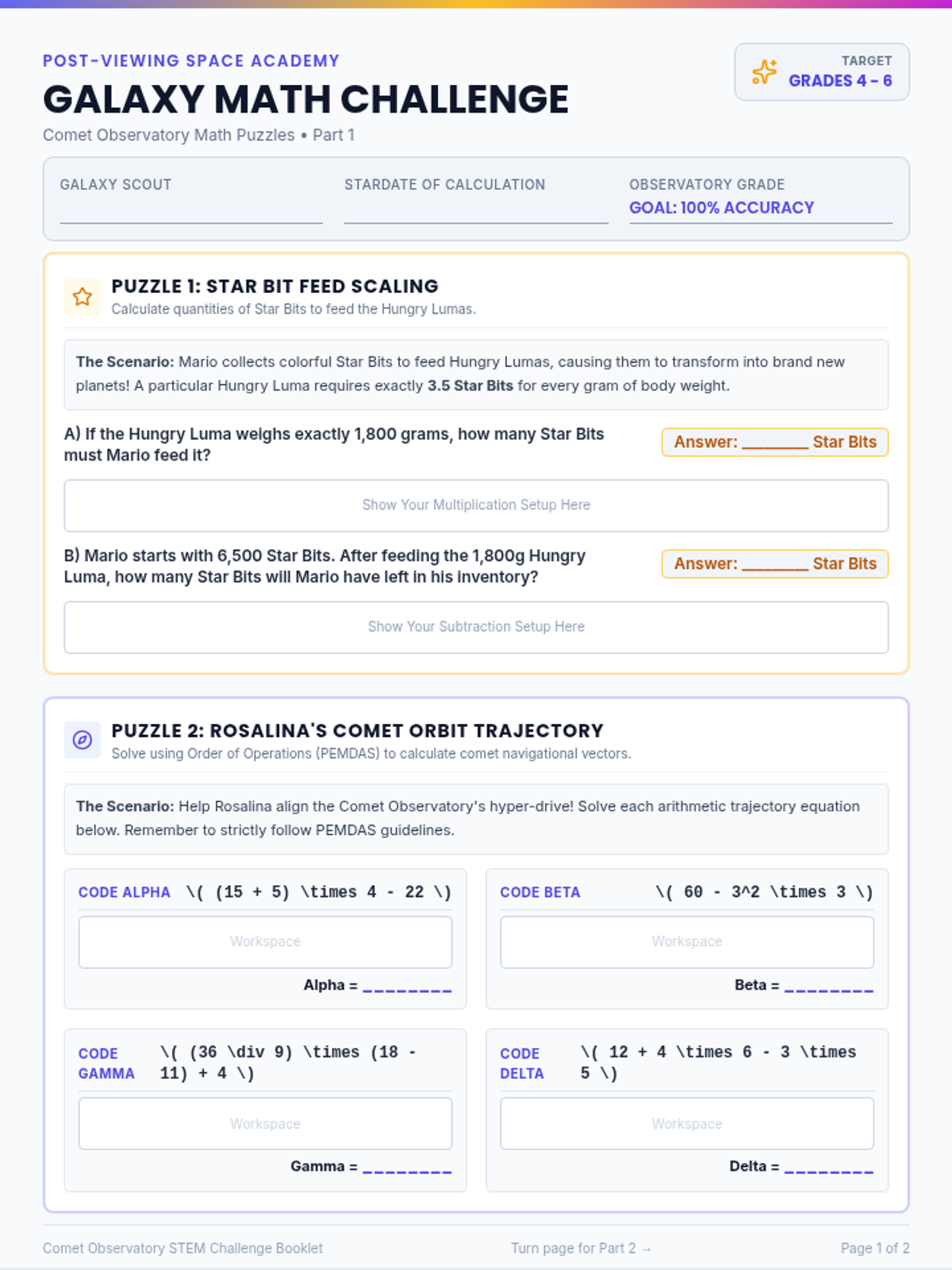
A high-energy 2-page math challenge booklet based on the physics, orbits, and story of Super Mario Galaxy. It presents Grade 4-6 aligned puzzles covering Star Bit scaling, PEMDAS navigational vectors, distance word problems, and orbital geometry.
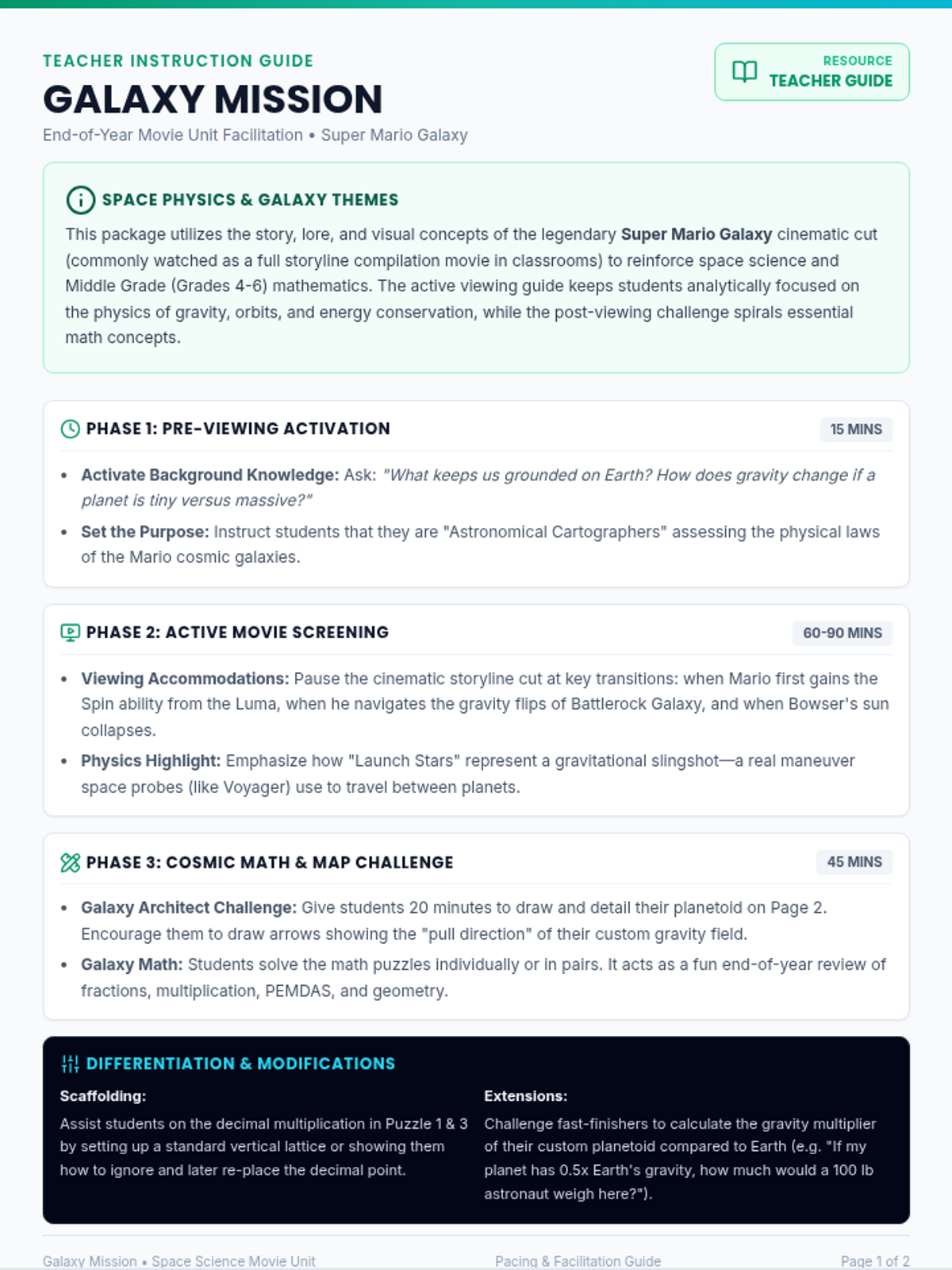
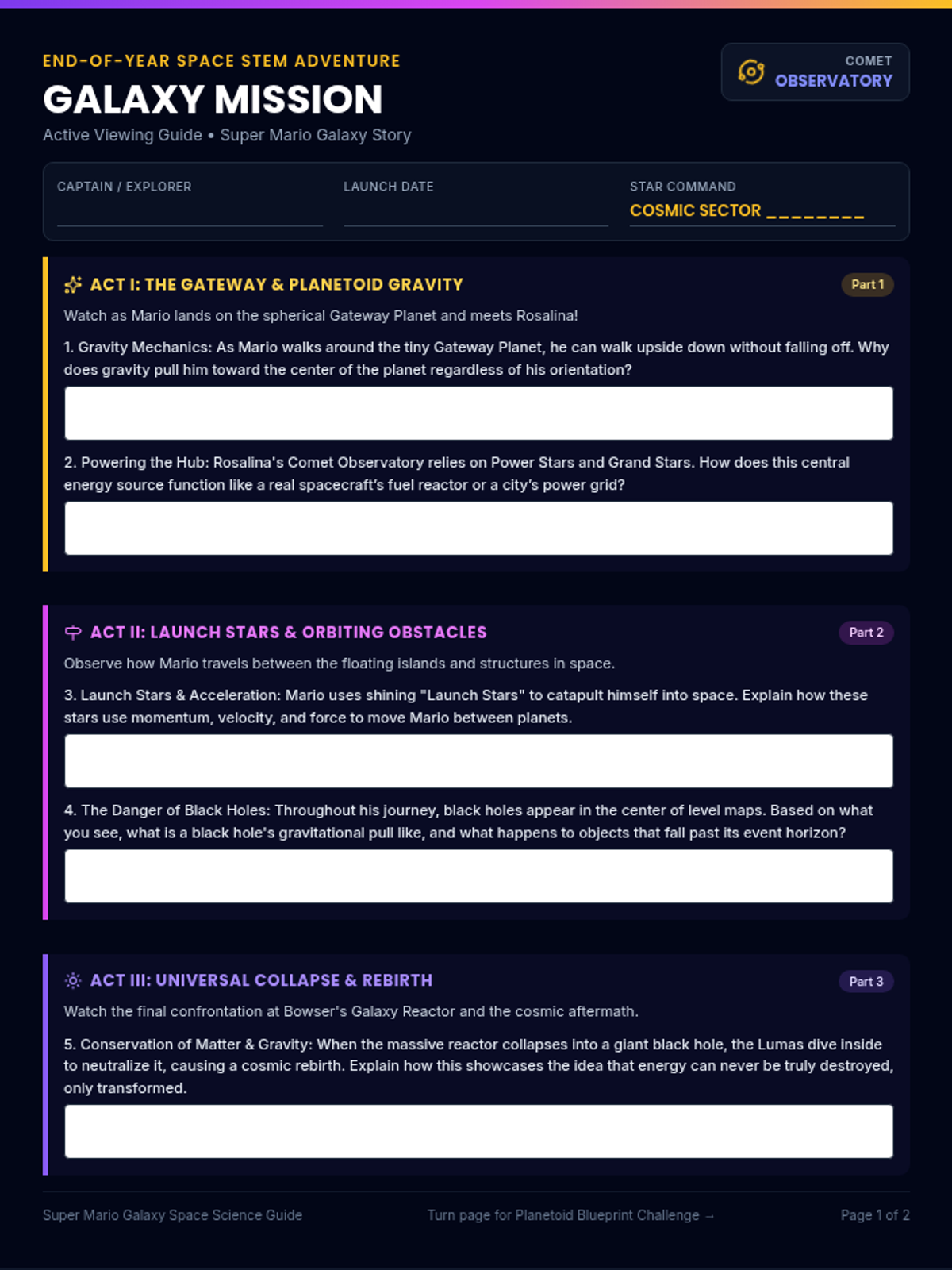
A 2-page active viewing and creative space-science guide based on the story of Super Mario Galaxy. Students explore gravity, orbits, energy transfer, and black holes, followed by designing and mapping their own gravitational planetoid.
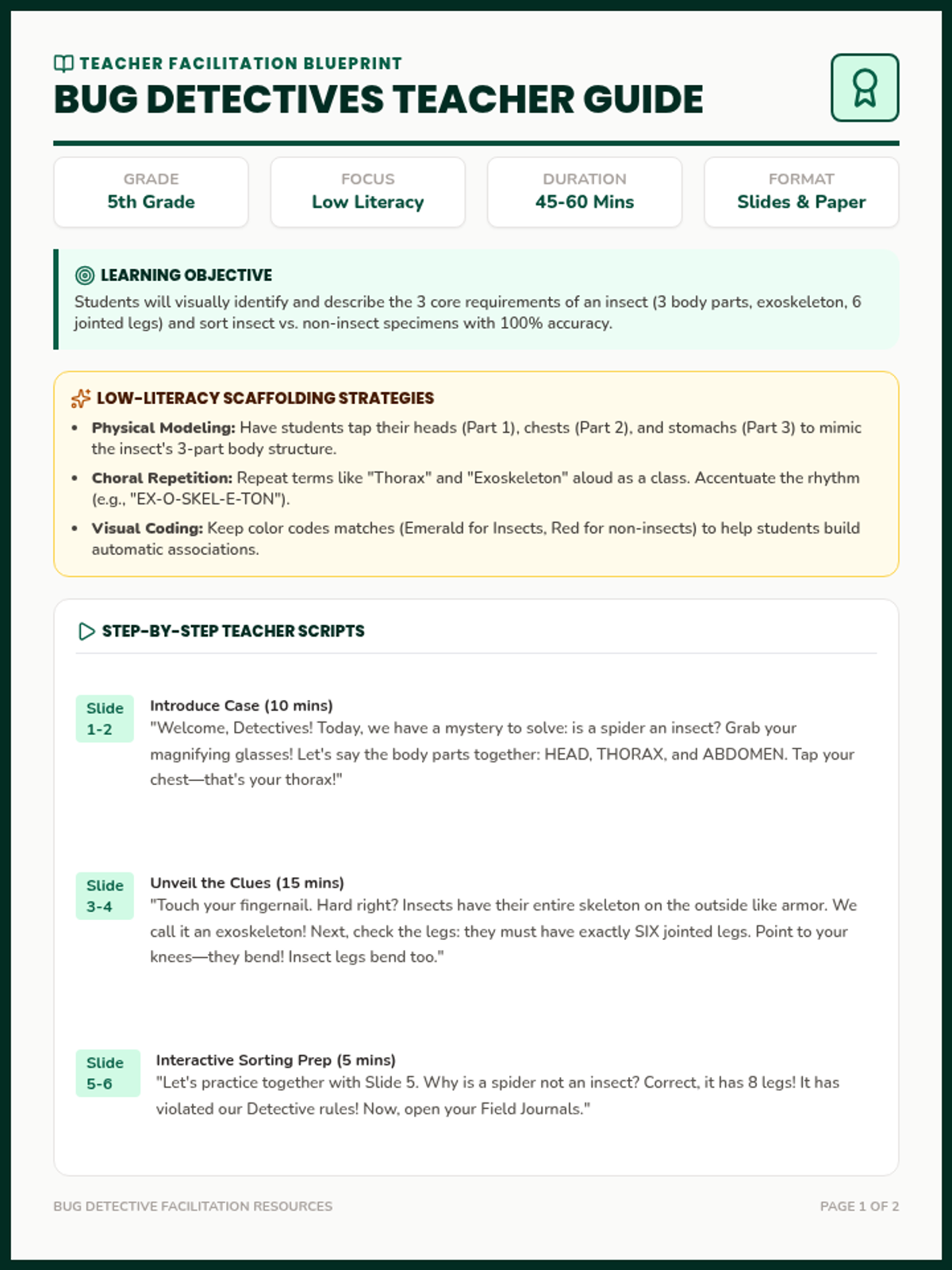
A comprehensive 2-page print-ready teacher blueprint and answer key. Page 1 contains a detailed pacing breakdown, instructional script matched to slides, and critical pedagogical scaffolding strategies for students with low literacy. Page 2 provides explicit answer keys for both the student Field Journal and Sorting Board, alongside formative checklist diagnostics.
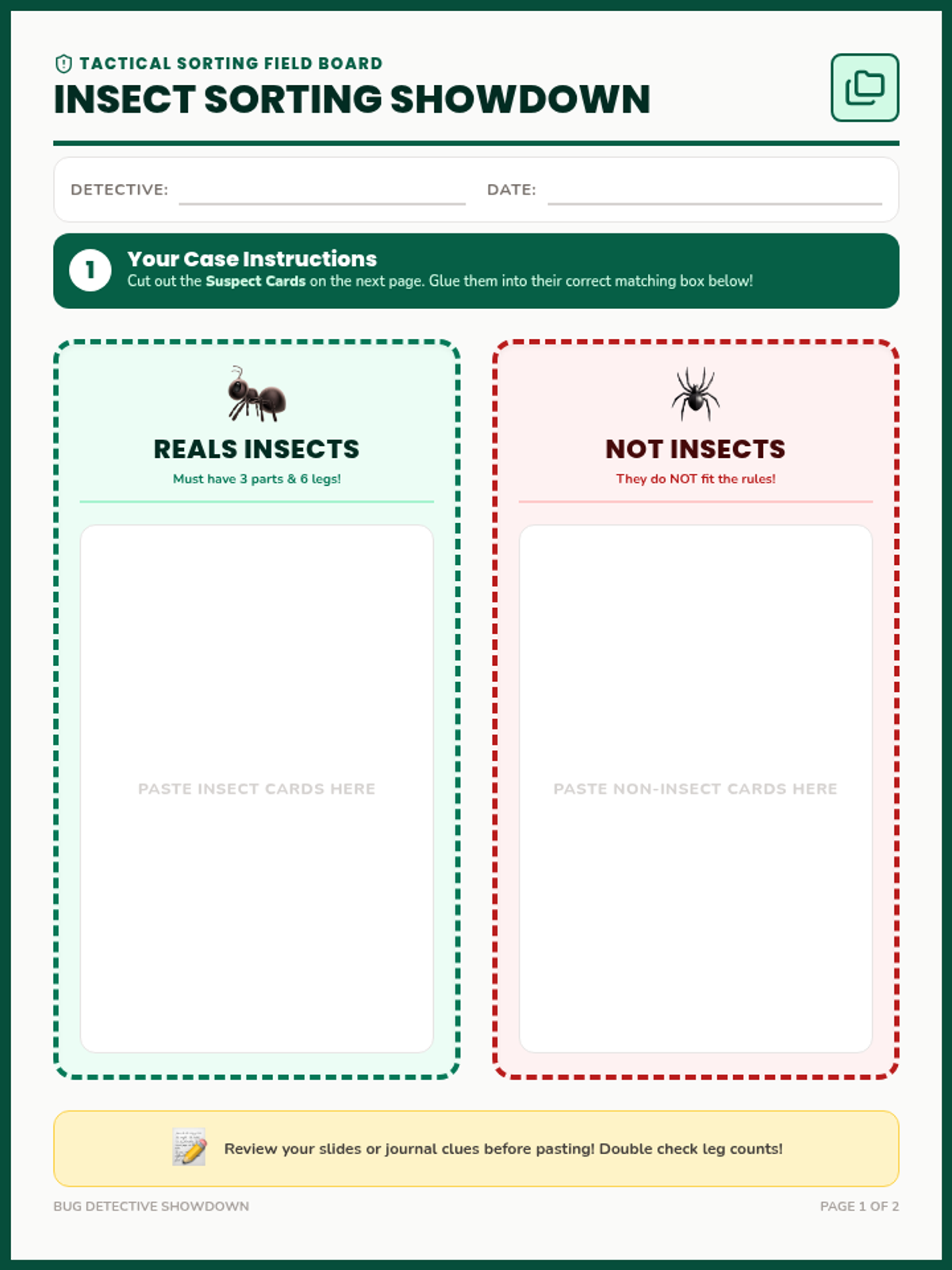
An interactive 2-page student sorting activity. Page 1 contains a high-contrast sorting board with distinct, labeled zones for insects vs. non-insects. Page 2 provides six stylized suspect cards with emoji illustrations and key body-part and leg-count clues, designed for students to cut out, analyze, and paste on the sorting board.
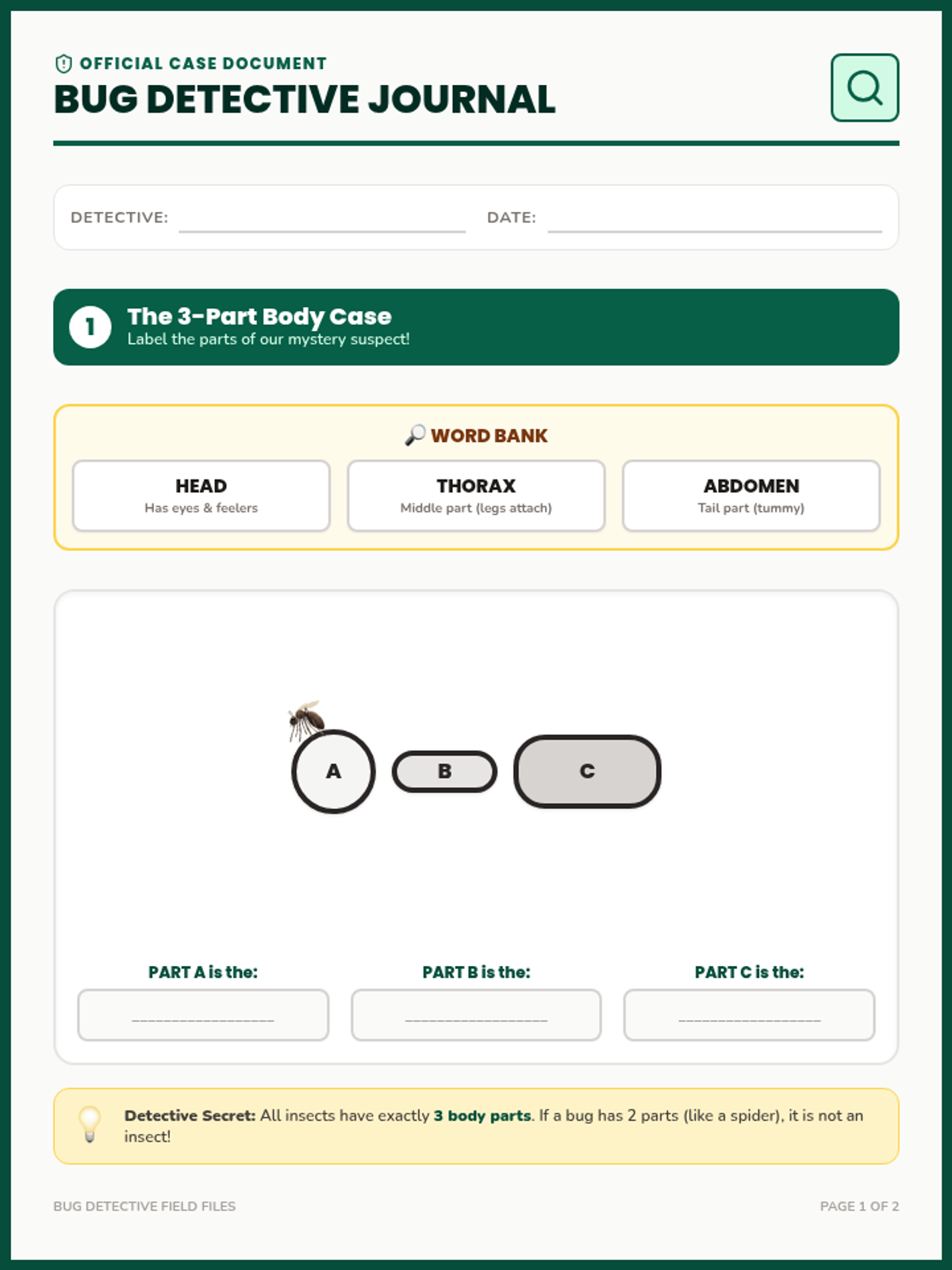
A printable 2-page student Field Journal worksheet tailored for 5th-grade students with limited literacy. Page 1 features a large visual labeling activity for the three primary body parts with a high-contrast visual word bank, while Page 2 includes a structured exoskeleton question and an active drawing canvas where students practice adding six jointed legs to a highlighted thorax.
Visually engaging slides designed for 5th-grade students with limited literacy, featuring high-contrast diagrams, bold icons, minimal text, and large 28px+ font sizes. The slides introduce the three core characteristics of insects: three-part body structures, exoskeletons and sensory antennae, and six jointed legs, finishing with an interactive sorting challenge.
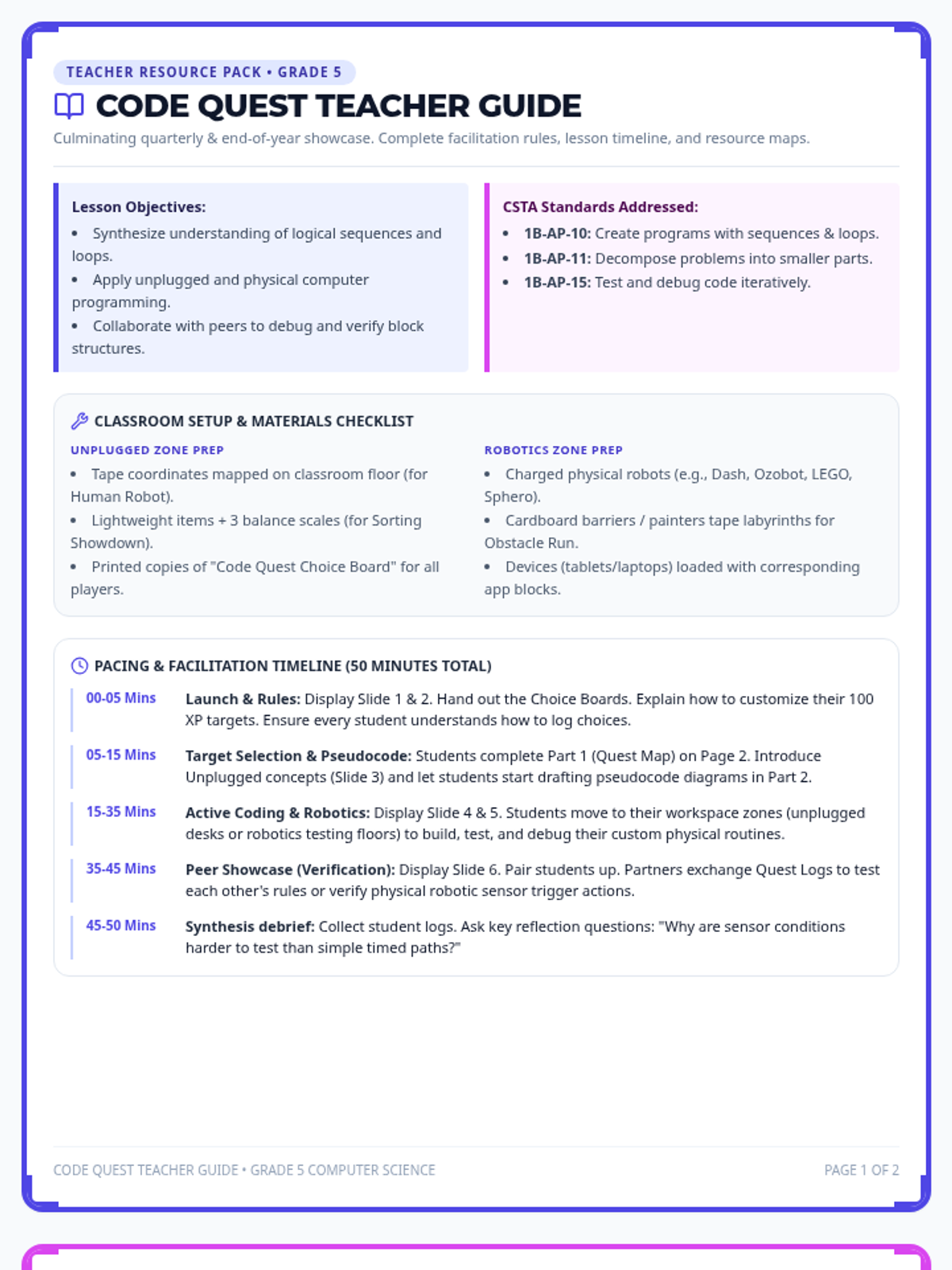
An essential 2-page teacher facilitation resource. Page 1 maps a detailed 50-minute pacing timeline and preparation guidelines. Page 2 provides an aligned performance rubric and standard troubleshooting diagnostics for physical robotics loops.
Stunning, high-impact presentation slides featuring retro-arcade vibes, structured directions for the Unplugged and Robotics modules, timer and engineering advice, and interactive peer-sharing instructions.
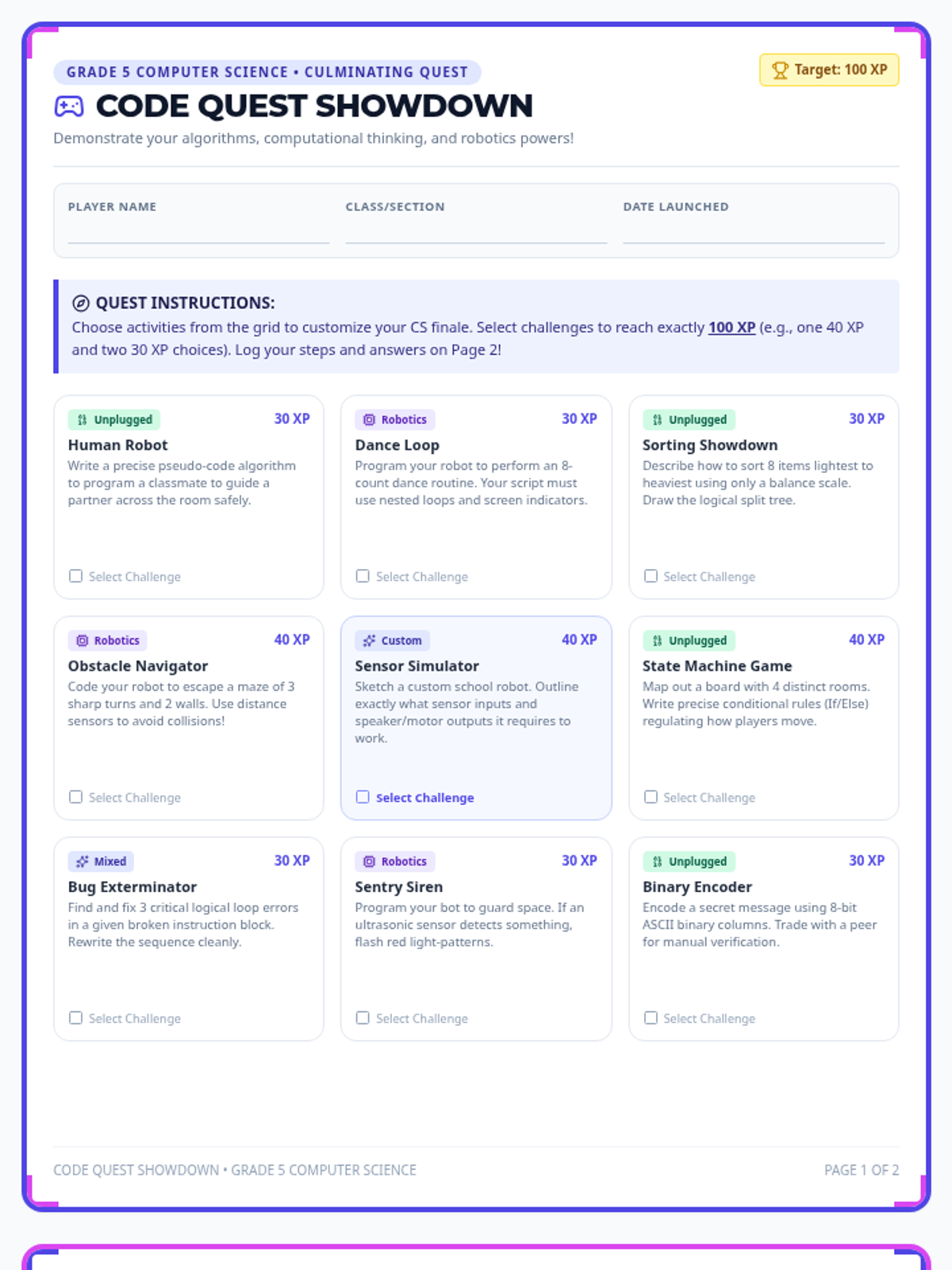
An engaging, dual-page retro-arcade style Choice Board and Student Quest Log. Page 1 contains a curated 3x3 choice matrix spanning algorithms and robotics categorized by difficulty/XP. Page 2 provides a clean student planning, pseudocode, drawing, and reflection journal.
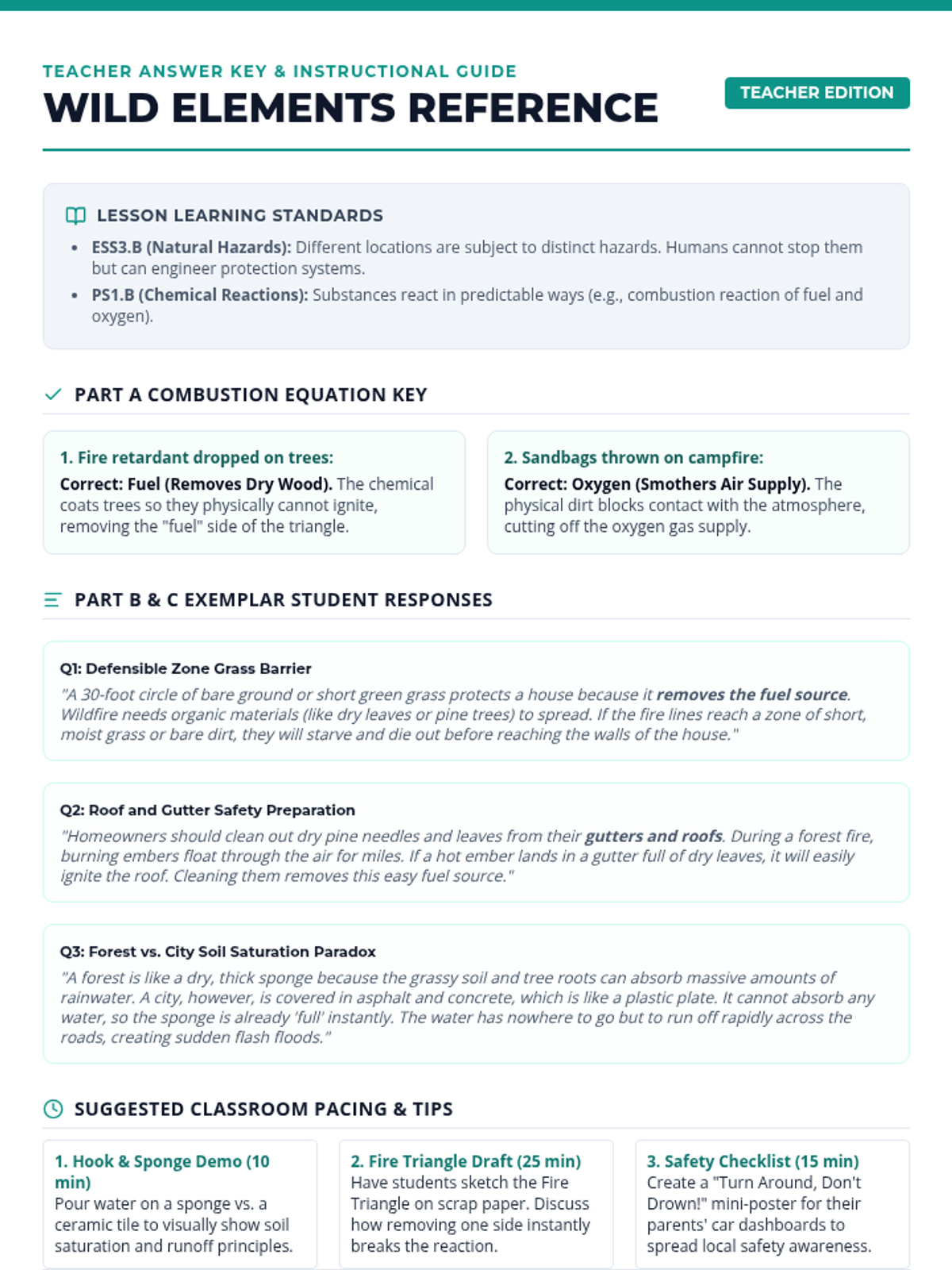
Teacher instructional reference and answer key for the Wild Elements lesson. Includes detailed matching keys, high-quality sample written student responses, and instructional pacing guidelines.

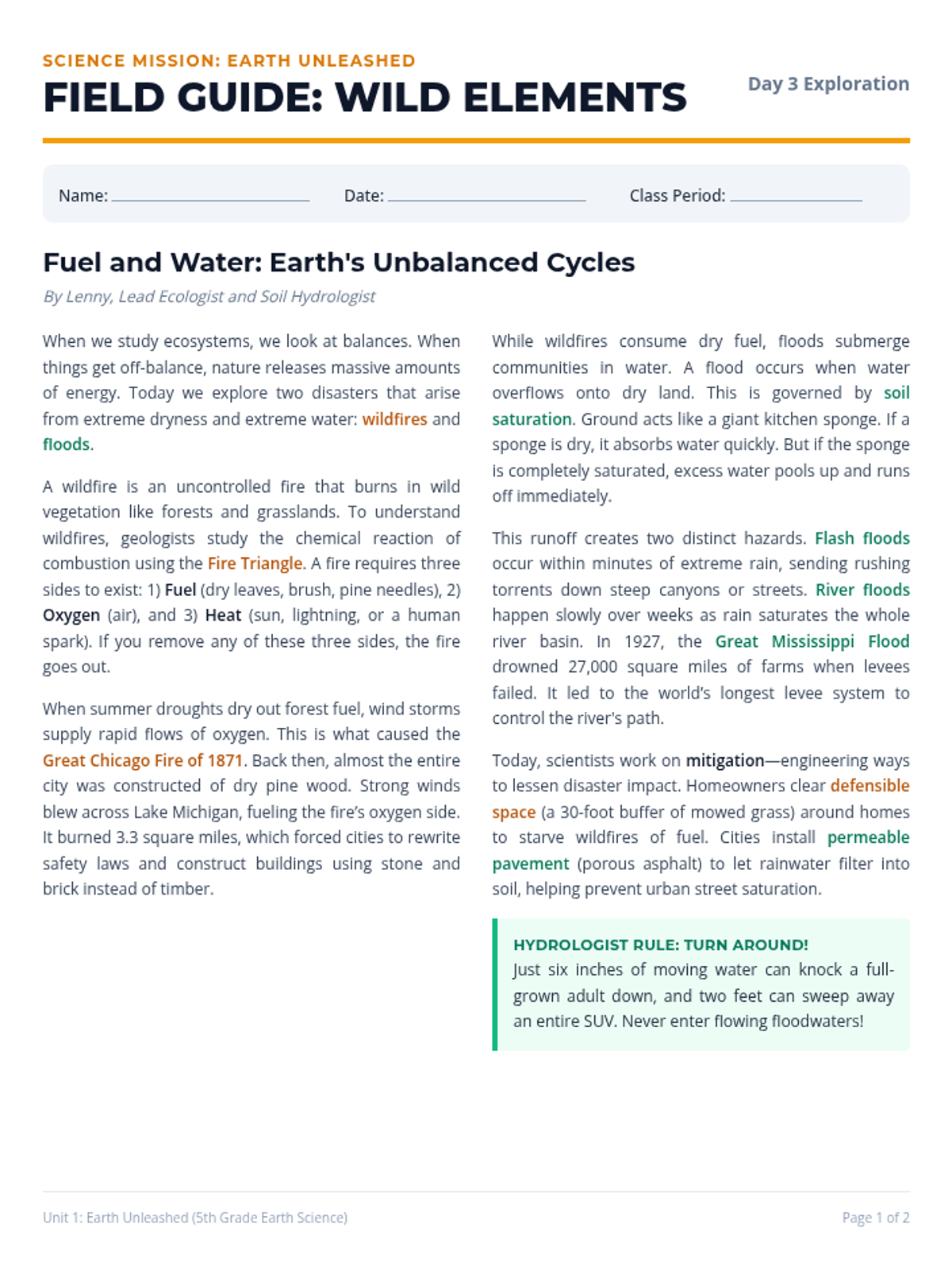
A student-facing 2-page field guide reading investigation on hurricanes, tornadoes, and pressure systems. Includes comparison matrices and storm shelter safety plan drafting.