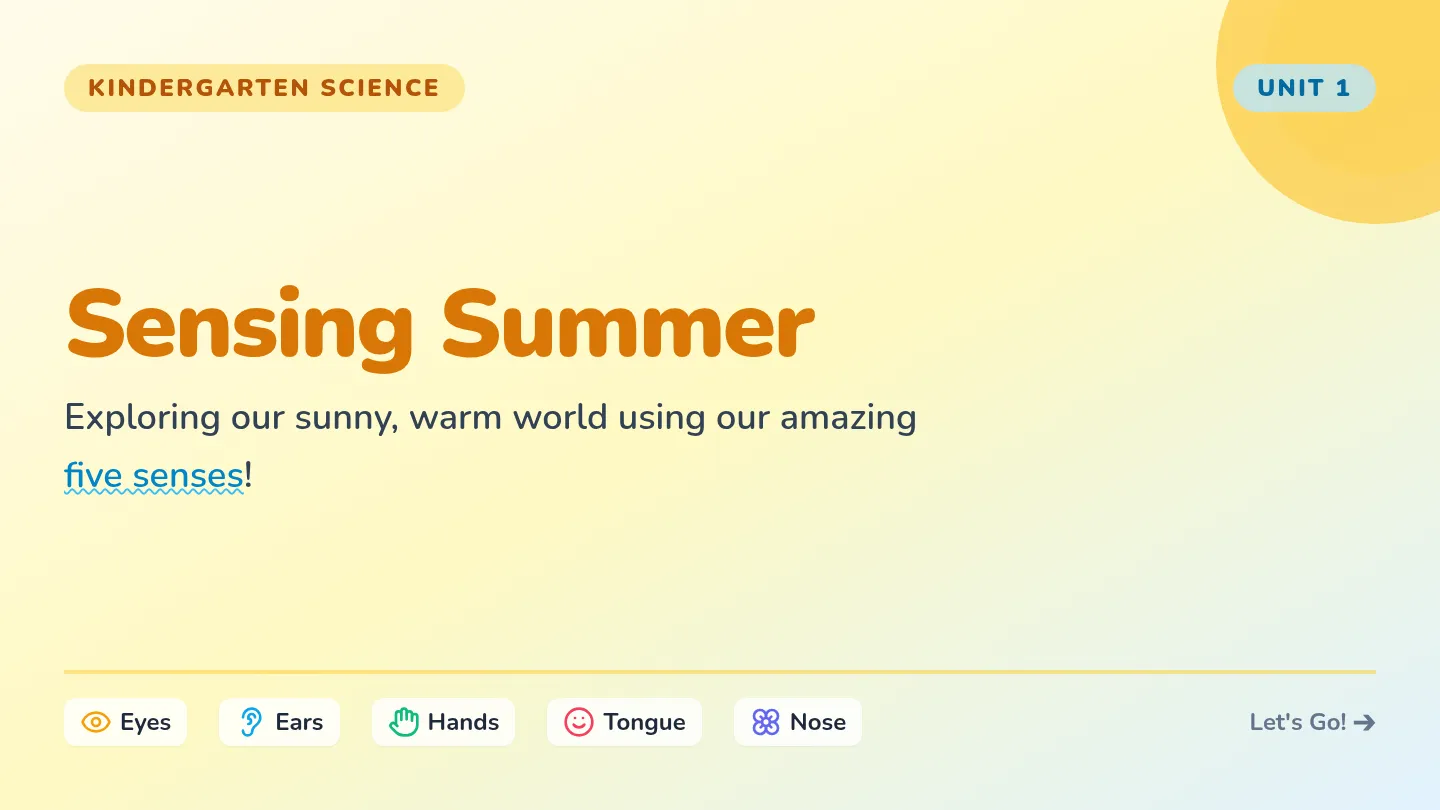
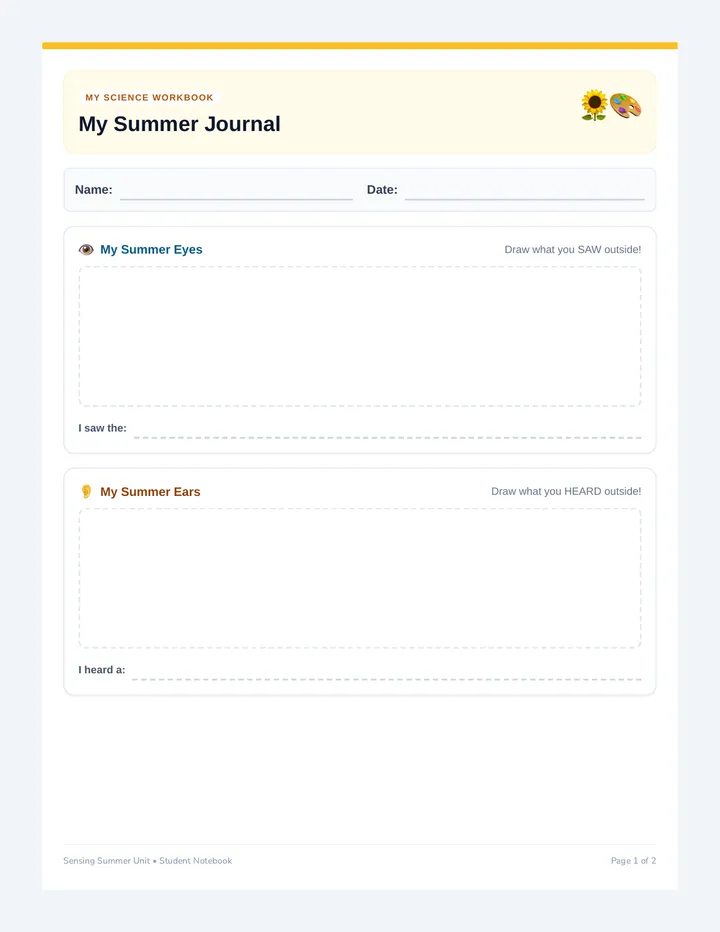
An introductory slide deck for kindergarten students to learn about different types of weather, including sunny, rainy, and snowy conditions, along with key sight words and appropriate clothing choices.
为教师提供的完整答案手册,包含所有练习的正确答案和解析,以及针对教学过程的额外建议。
一个匹配练习,旨在强化学生对细胞器功能的理解。通过将结构与功能匹配,以及使用工厂比喻来加深记忆。包含核糖体、高尔基体、溶酶体等核心内容。单页精简版。
一份学生练习纸,包含动物细胞结构的标注活动。学生需要根据示意图填入正确的细胞器名称,并回答有关溶酶体和高尔基体功能的思考题。设计简洁专业,适合打印。词库直接附于练习下方。
一套精美的教学幻灯片,介绍了动物细胞的基本结构,特别深入地讲解了核糖体、高尔基体和溶酶体。内容专业且生动,适合中学阶段使用。采用1440x810比例设计。覆盖了核心细胞器的功能与外观。
A comprehensive teacher's answer key and instructional guide for the Hue Master lesson, including delivery tips and common student misconceptions.
A professional lab worksheet for cosmetology students to practice color neutralization and step-by-step formulation based on client scenarios.
A stylish and professional slide deck for cosmetology students covering the primary laws of color, the color wheel for neutralization, level vs. tone, and step-by-step formulation logic.
A comprehensive instructional guide for teachers, providing a 45-minute lesson arc, discussion prompts, and success strategies for teaching site architecture.
A step-by-step technical guide for students to follow during the site-building phase, including a task-based checklist and success criteria for their framework project.
A visual guide introducing students to site architecture, navigation rules, and the step-by-step process of building their digital publication framework.
A planning worksheet designed for students to map out their website architecture, including site name, page hierarchy, and visual theme choices.
A high-contrast visual presentation about stars and space exploration tools, designed to be accessible for students with diverse learning needs.
Vocabulary cards for stars and space exploration, featuring bilingual labels and simple definitions to assist newcomers and students with special needs.
A simplified reading passage about stars, telescopes, and rockets with matching activities for students with cognitive differences.
Visual presentation for the planets lesson, illustrating the differences between rocky inner planets and gas giant outer planets with clear graphics and large text.
Vocabulary cards focusing on planetary concepts like orbit, rock, and gas, with bilingual support and simplified definitions.
A simplified reading passage about the eight planets, divided into inner rocky planets and outer gas giants, designed for students with lower reading levels.
Highly visual presentation slides for the Sun and Moon, featuring large text and bold icons to support newcomers and students with special needs.
Visual vocabulary cards for the Sun and Moon lesson, including Spanish translations for newcomers and simplified definitions for IEP students.
A simplified reading passage about the Sun and Moon with large text, visual icons, and simple comprehension questions for students with reading difficulties.
A student-facing application activity and assessment checklist for the 'Great Book Breakup' lesson. Students identify the 'big problem', check off decomposition steps (Category, Section, Spot), and reflect on the process.
A teacher facilitation guide for the 'Great Book Breakup' lesson, including 5D+ framework alignment, CS and Iowa standards, learning targets, and specific instructional moves for a 40-minute library block.
A 6-slide presentation for a 2nd-grade CS unplugged lesson on decomposition. Using a library 'Messy Mountain' theme, it explains breaking large problems into smaller steps and assigns collaborative roles.
A teacher's answer key for the Square Off Punnett square practice worksheet, providing completed grids and probability calculations with optimized spacing for clarity.
A two-page professional guide for educational leaders. Page 1 provides the analysis framework, while Page 2 serves as a functional workspace for drafting a stakeholder conflict resolution roadmap with lined response areas.
A practice worksheet for 8th-grade students to apply Punnett square skills through monohybrid cross scenarios. Features improved layout and explicit grid borders for clean printing.
A comprehensive reference handout introducing 8th-grade students to Mendelian inheritance, key genetics vocabulary (including homozygous and heterozygous), and Gregor Mendel's core principles. Now optimized for single-page printing. Now features corrected genetic notation and improved practice space.
Le corrigé détaillé du QCM de diagnostic sur la puberté, incluant des explications pédagogiques et des conseils pour l'enseignant de SVT.
Un questionnaire à choix multiples de 15 questions pour évaluer les connaissances préalables des élèves sur la puberté, les changements physiques et la différence enfant/adulte.
A teacher guide for the culminating Grade 8 AI Literacy lesson. Includes instructional steps for facilitating a "Design Studio" project, 5D+ framework alignment, and strategies for peer-led ethical audits.
A project blueprint for Grade 8 students to design a responsible AI solution for a real-world problem. It includes sections for problem identification, technical design, an ethical audit (bias and safeguards), and a creative motto.
A 6-slide presentation for 8th Grade students on responsible AI design. It encourages students to move from consumers to creators ("Architects") and outlines a framework for designing AI solutions that are fair, transparent, and safe.
A teacher guide for the Grade 7 AI Literacy lesson on ethics and privacy. Includes instructional steps for facilitating debates on surveillance, alignment with 5D+ framework, and strategies for teaching deepfake awareness.
A worksheet for Grade 7 students to explore AI ethics. It includes a pro-con analysis of facial recognition in schools, strategies for detecting deepfakes, and a reflective exercise on personal data privacy boundaries.
A 6-slide presentation for 7th Grade students on AI ethics and privacy. It covers facial recognition, deepfakes, and the trade-off between security and personal privacy, encouraging students to consider where "the line" should be drawn.
A teacher guide for the Grade 6 AI Literacy lesson on LLM mechanics. Includes instructional steps for teaching tokenization and probability, 5D+ alignment, and discussion prompts on AI creativity.
A worksheet for Grade 6 students to practice LLM concepts. It includes exercises on tokenization, assigning probabilities to word predictions, and experimenting with "temperature" settings for safe vs. creative outputs.
A 6-slide presentation for 6th Grade students on the mechanics of LLMs. It explains tokenization, next-word prediction based on probability, and the "temperature" setting that balances precision with creativity.
A teacher guide for the Grade 5 AI Literacy lesson on datasets and bias. Includes instructional steps aligned with 5D+, key discussion points on algorithmic fairness, and guidance for the "Balanced Buffet" activity.
An activity for Grade 5 students to explore dataset bias and fairness. It includes a case study on a sports recognition AI, a diversity checklist for data collection, and a creative section for designing a more equitable dataset.
A 6-slide presentation for 5th Grade students on datasets and algorithmic bias. It uses a "cooking/ingredients" metaphor to explain how training data influences AI behavior and why diversity is essential for fairness.