A predictive math worksheet exploring linear forecasts, negative correlation impacts from expenditures, and outlier analysis within the class economy context. integrate student-specific data for personal trend analysis.
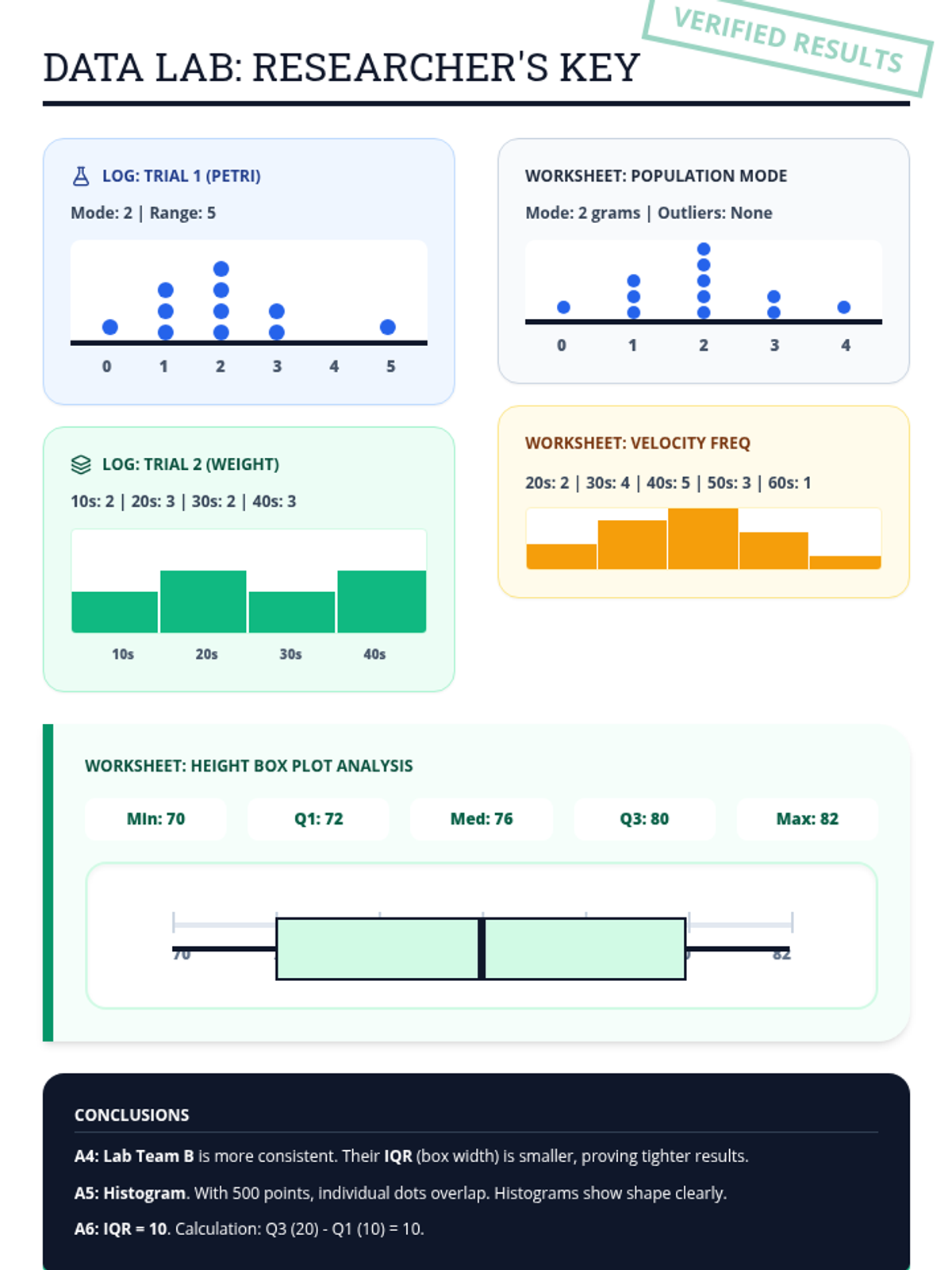
An answer key for the Data Lab lesson. Consolidated to one page with corrected visuals, centered box plots, and accurate scales.
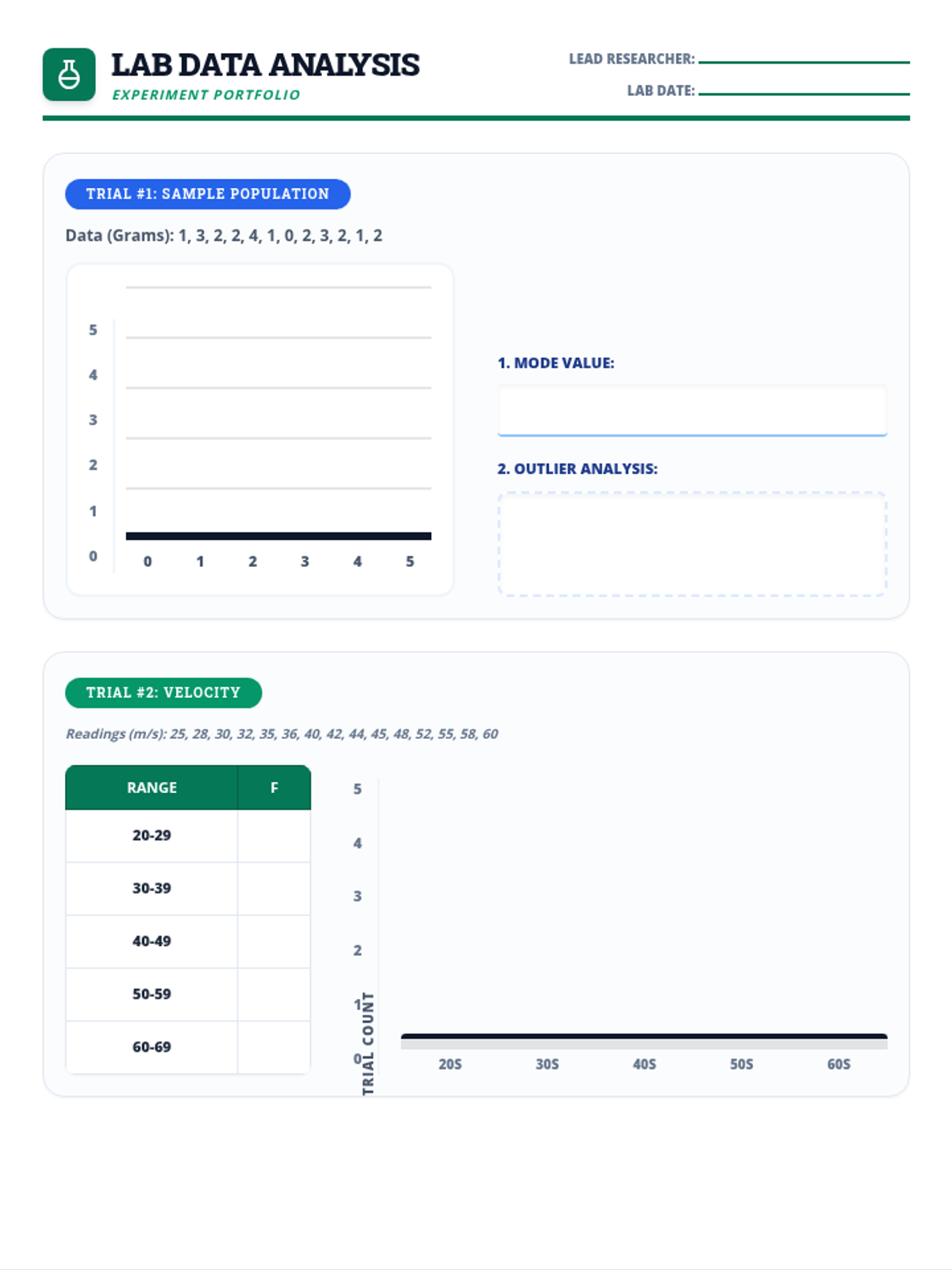
A scientific laboratory results worksheet. Updated with vertical scales, improved graph visibility, and clear analysis prompts.
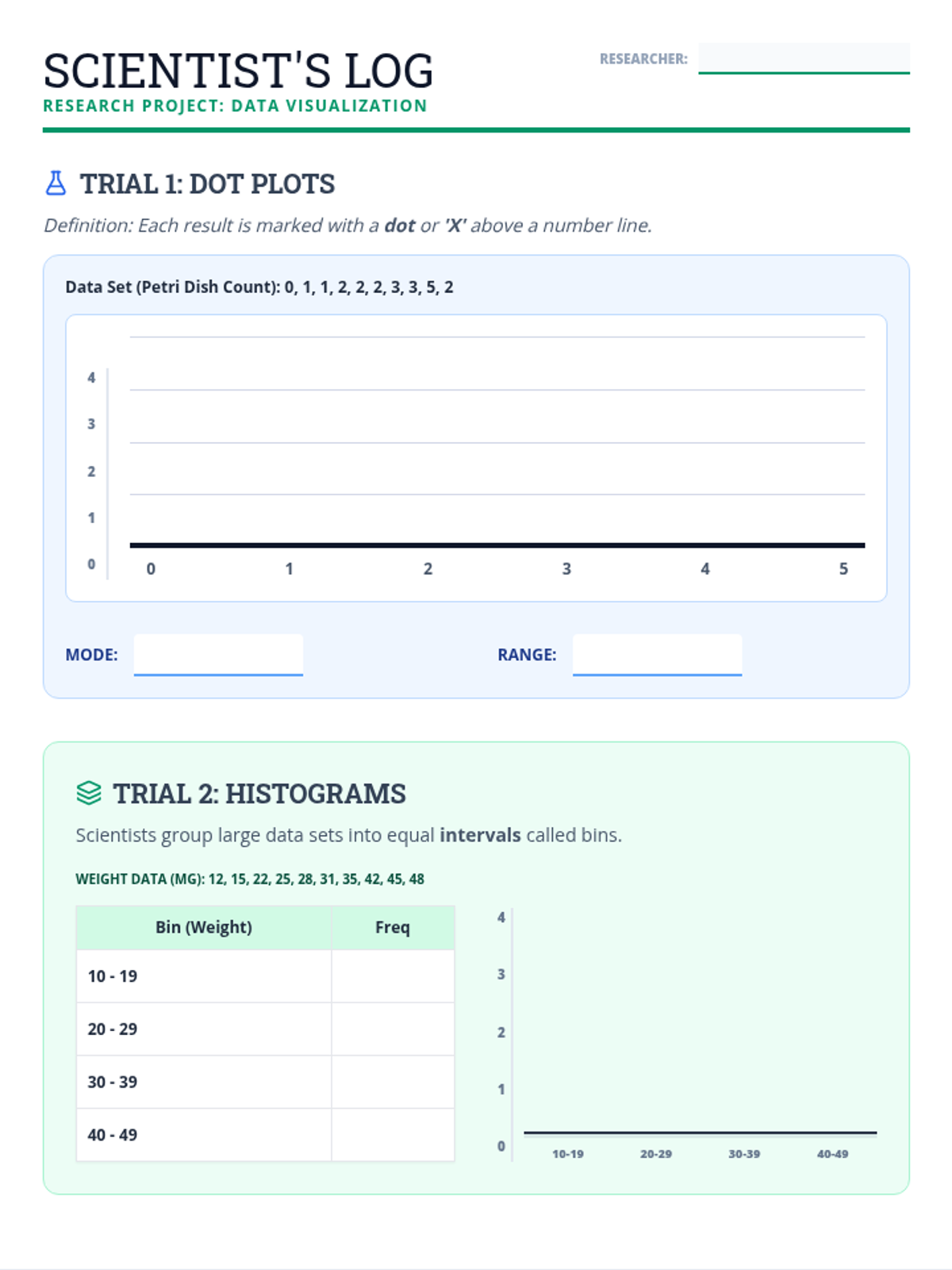
A scientist's log for students to record findings and practice data visualizations. Updated with y-axis scales and improved grid visibility.
An instructional slide deck for the Data Lab lesson, featuring scientific research visuals and concepts. Updated with better alignment and spacing.
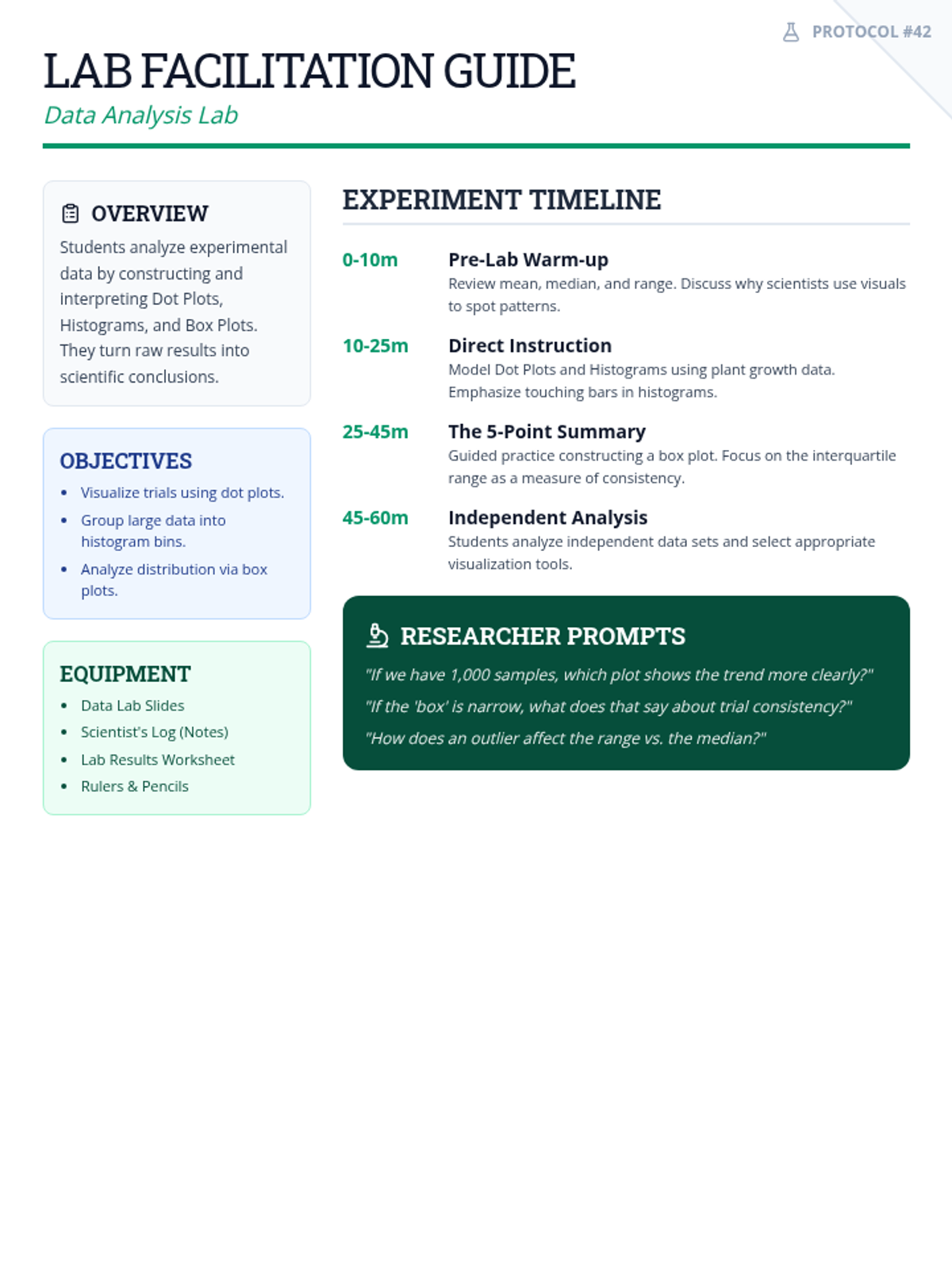
A teacher facilitation guide for the Data Lab lesson, themed around scientific research and experimentation. Consolidated to one page.
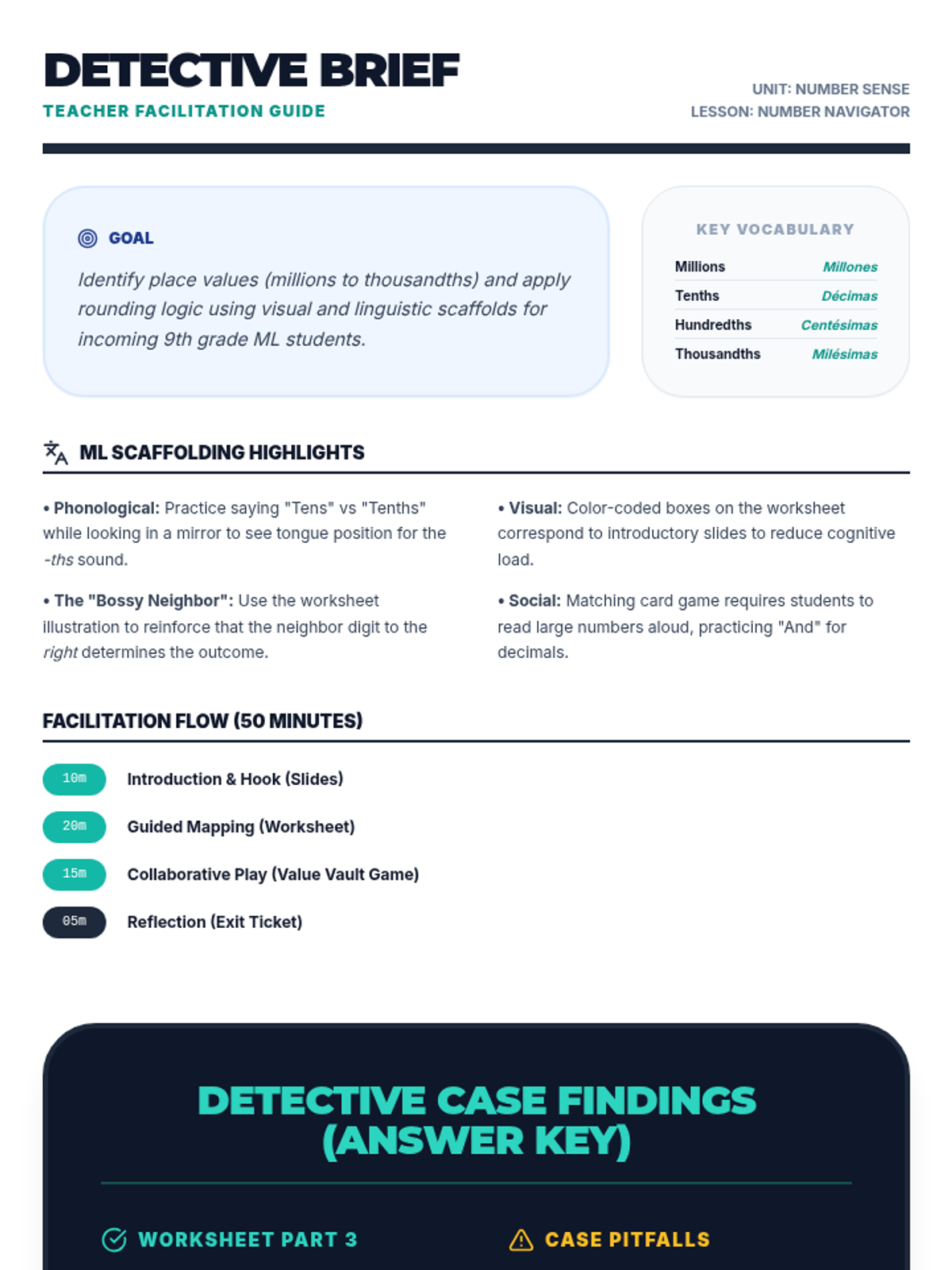
A comprehensive teacher guide providing lesson flow, ML/ELL scaffolding strategies, common misconceptions, and a detailed answer key for the Number Navigator lesson. Updated with an expanded answer key for the new worksheet problems and full terms for place values. Content layout is optimized for clarity and professional delivery.
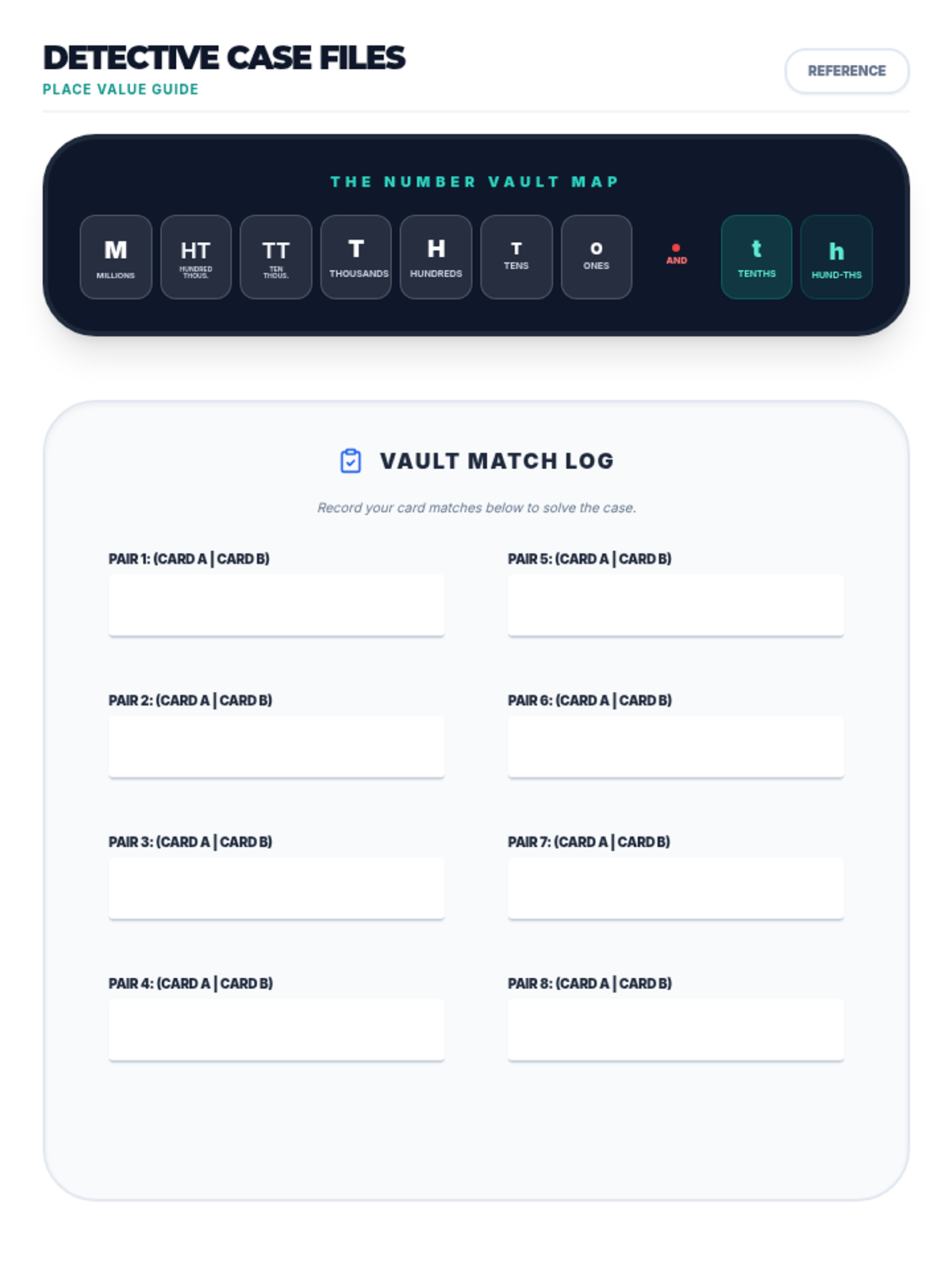
A matching card activity spread across three pages to maximize card size. Includes 8 pairs of cards covering place value identification and rounding, a reference guide, and a match log for student recording. Cards are uniformly styled with increased text contrast for better accessibility. Layout optimized to prevent page overflow.
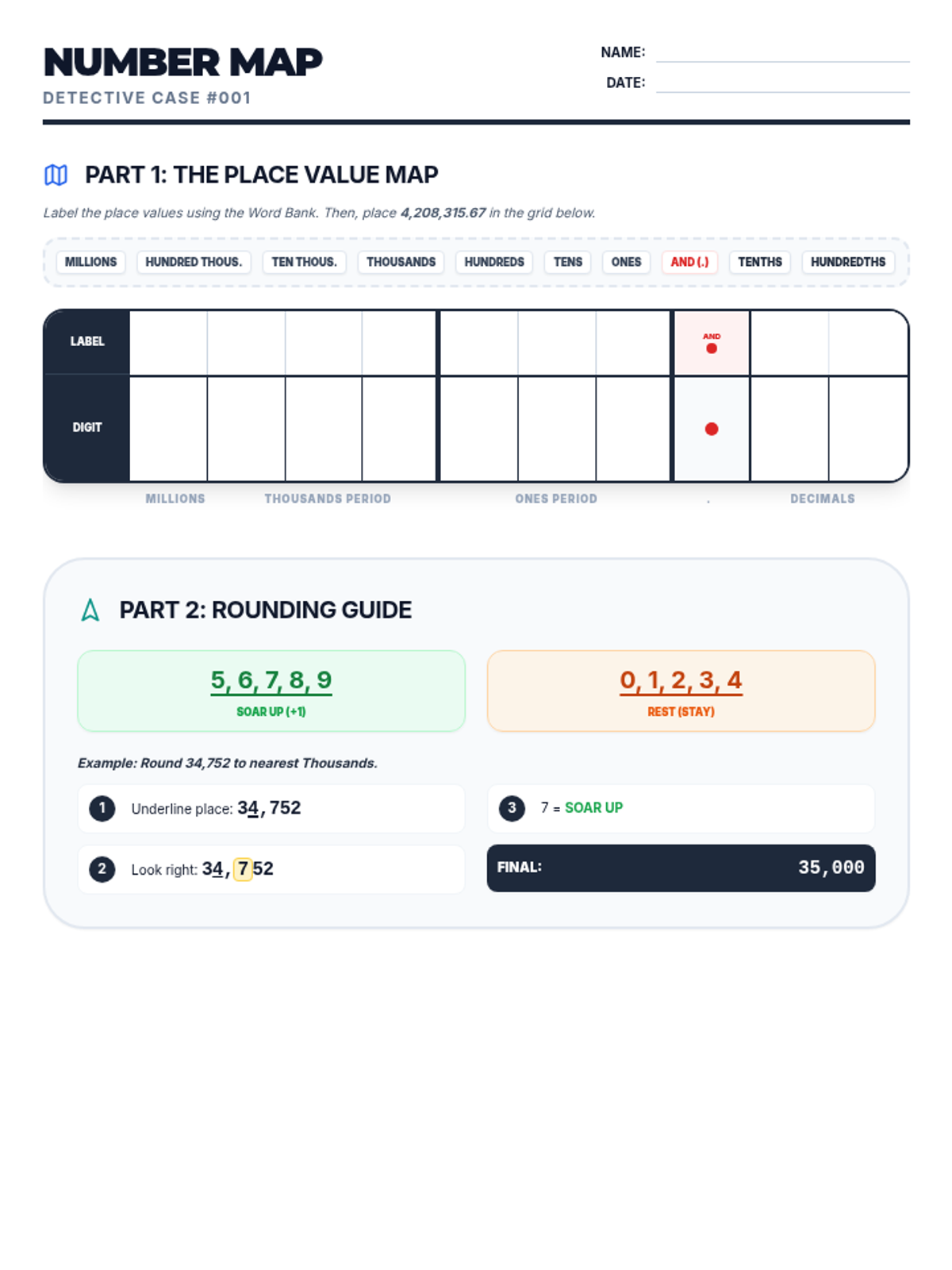
A two-page student worksheet featuring a visual place value organizer and a step-by-step rounding guide with explicit linguistic scaffolding for multilingual learners. Updated with 6 rounding problems in Part 3 and optimized layout to fit two pages perfectly. Includes white backgrounds for work areas as requested.
A visual and engaging slide deck introducing place value (millions to hundredths) and rounding rules with specific scaffolding for multilingual learners. Includes a corrected place value lineup and higher contrast practice slide.
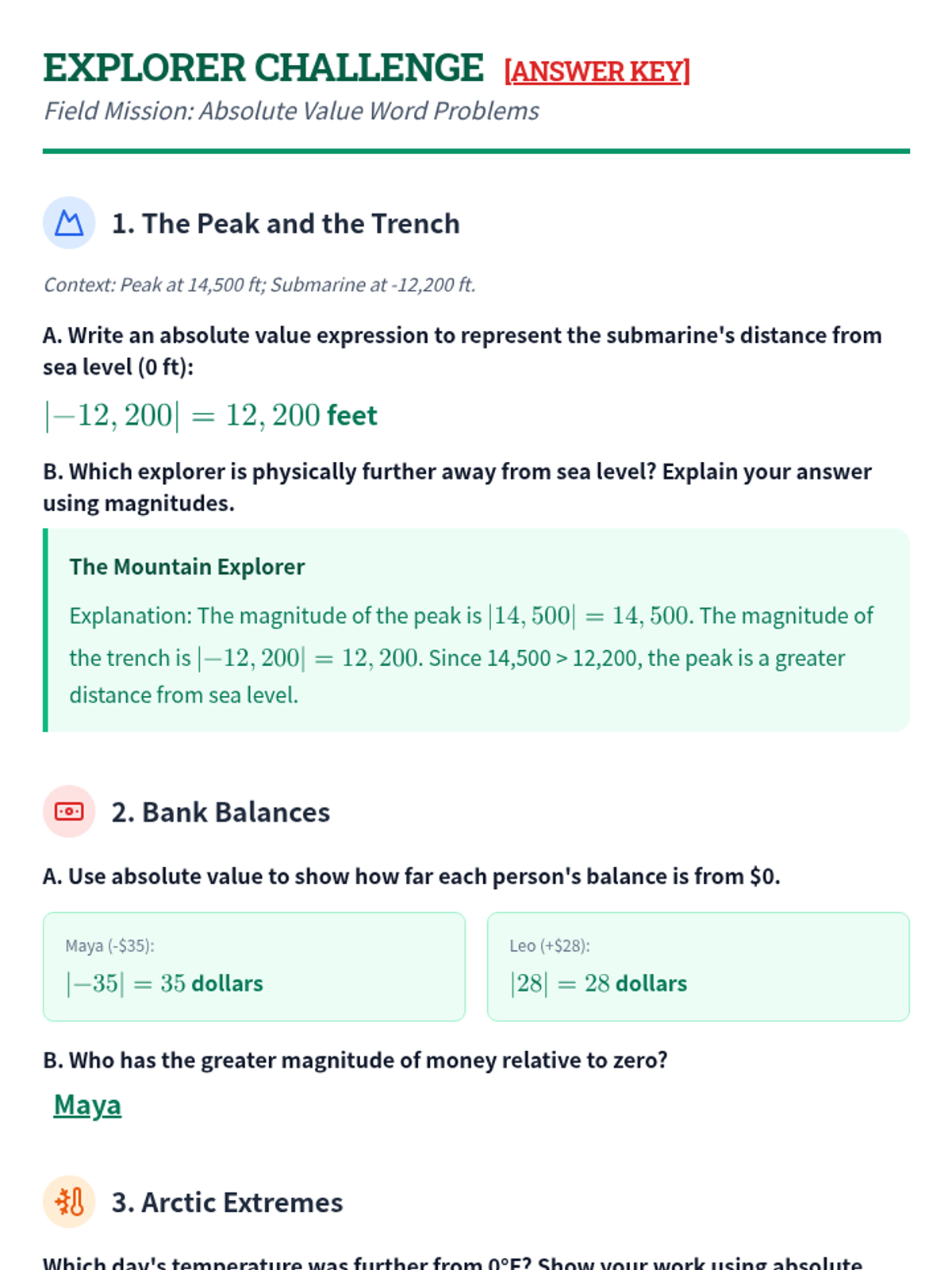
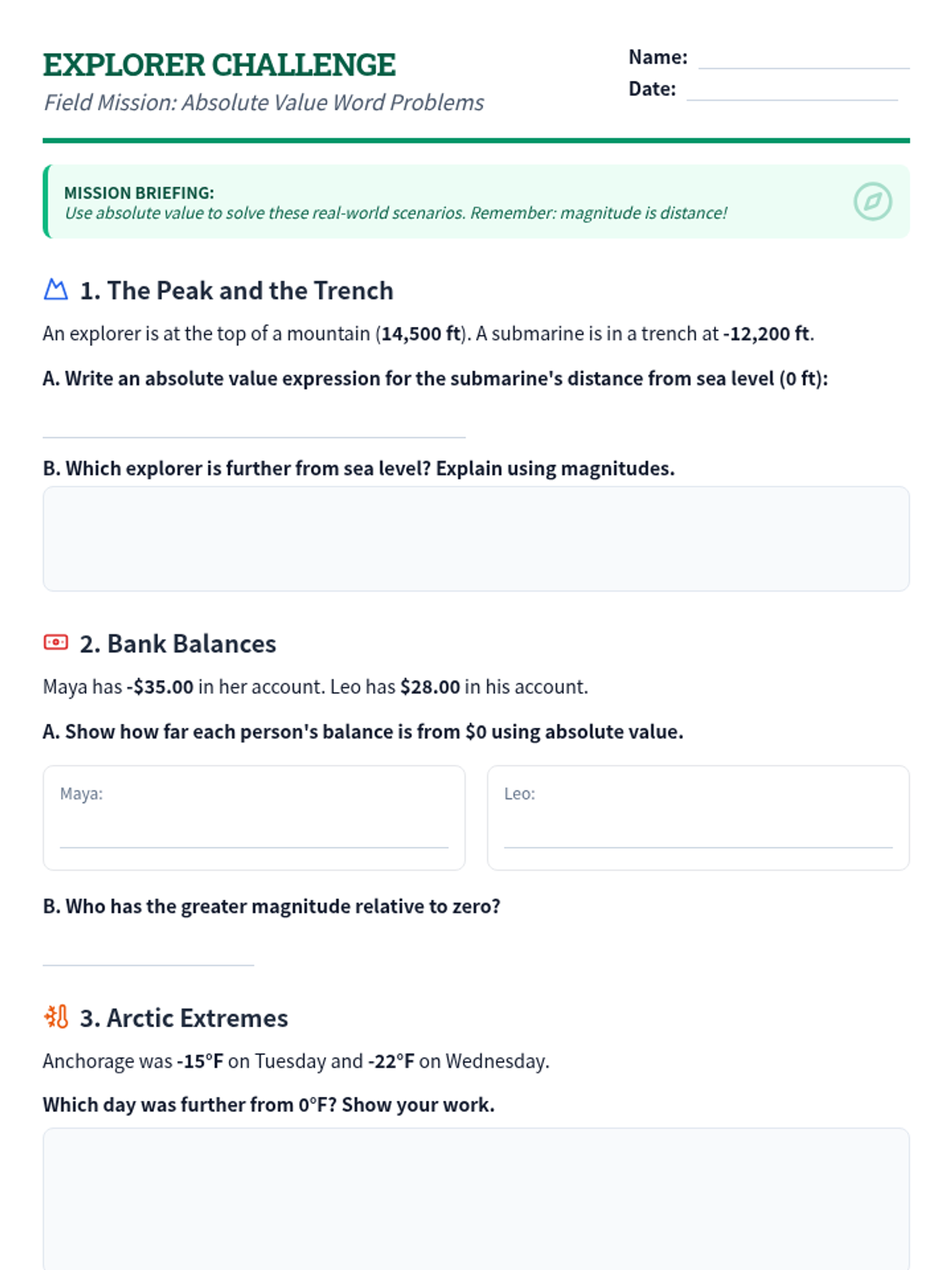
The complete answer key for the Explorer Challenge Worksheet, providing full explanations and absolute value expressions for each problem. Revised to fix LaTeX formatting, self-contain context, and correct page breaks. Improved contrast and unary minus sign handling.
A worksheet containing four real-world absolute value word problems covering altitude, finance, temperature, and distance, plus a final logic challenge. Revised to fix page breaks, LaTeX formatting, and spacing. Update consolidates worksheet into two pages and improves workspace for handwriting. Standardized currency and math variables.
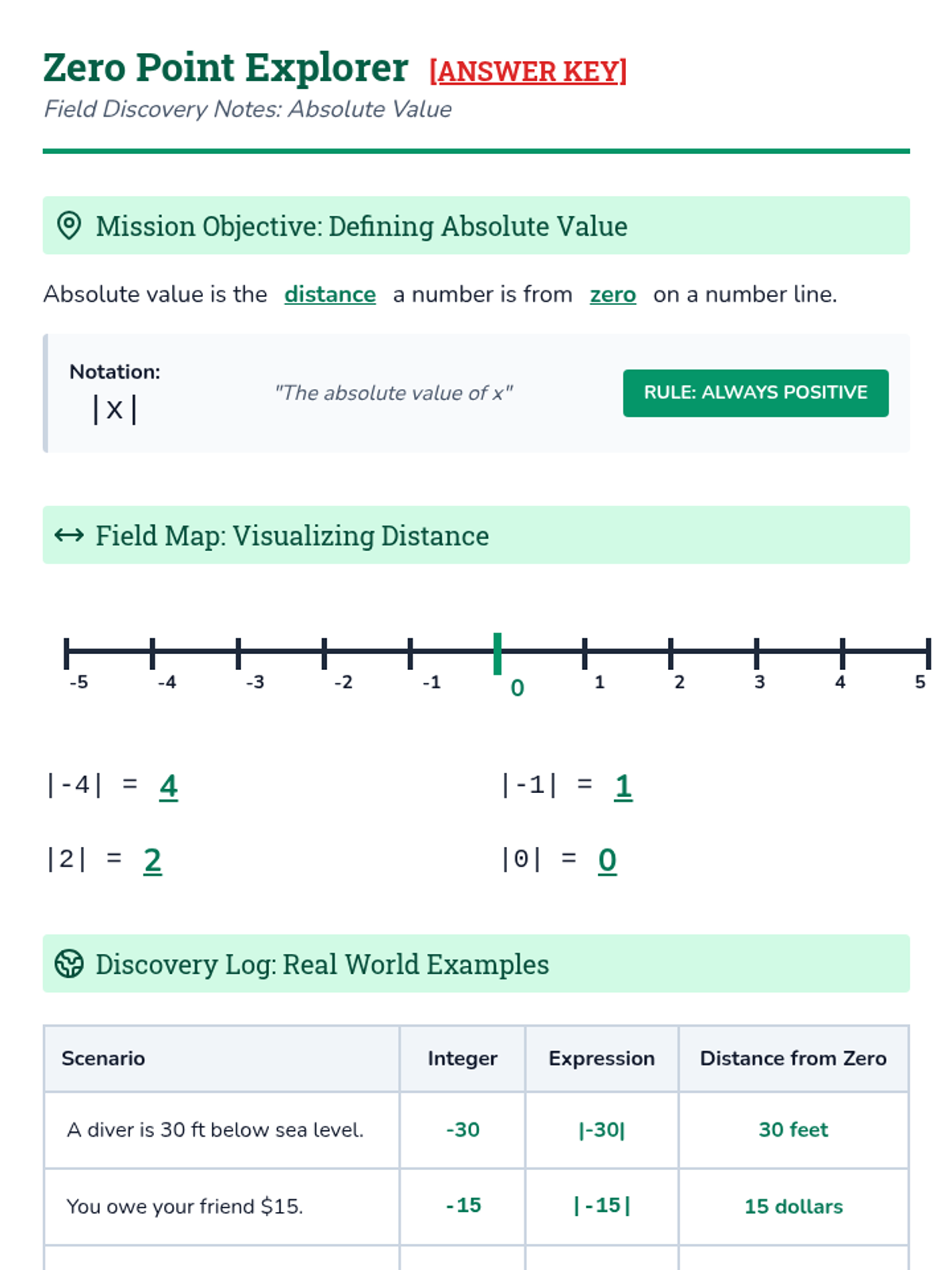
The completed answer key for the Zero Point Notes Document. Updated to ensure styling consistency and to prevent awkward page breaks in the real-world scenarios table and the final equations section. Updated equation spacing for polish.
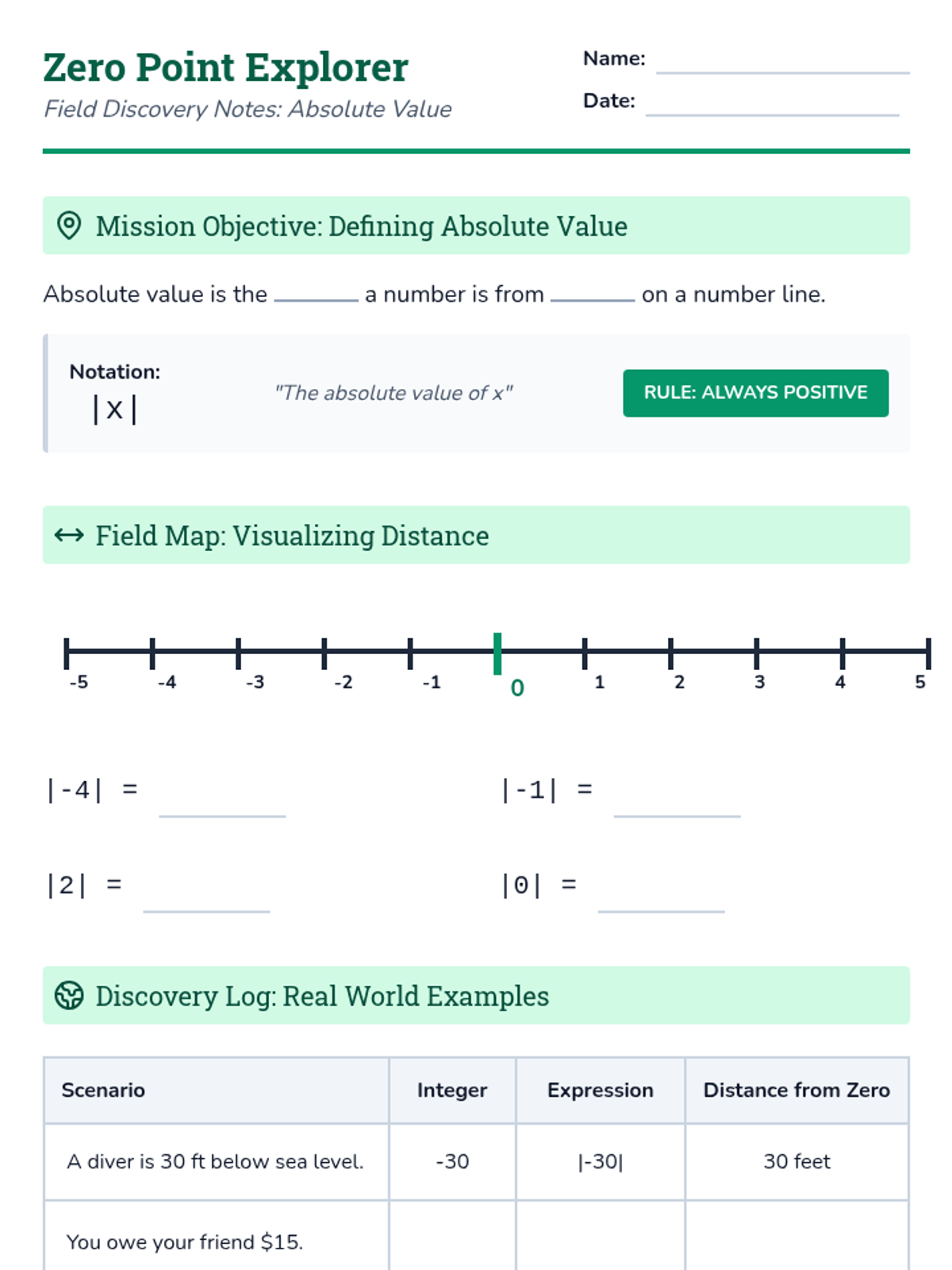
Guided notes and practice problems for students to explore absolute value. Updated to fix major page break issues, standardize number line visuals, and provide adequate space for handwriting solutions. Updated spacing for improved clarity.
A visual presentation introducing absolute value as distance from zero, including real-world examples (altitude, finance), magnitude comparison, and simple equations. Updated for consistent notation and better layout in the check-for-understanding slide.
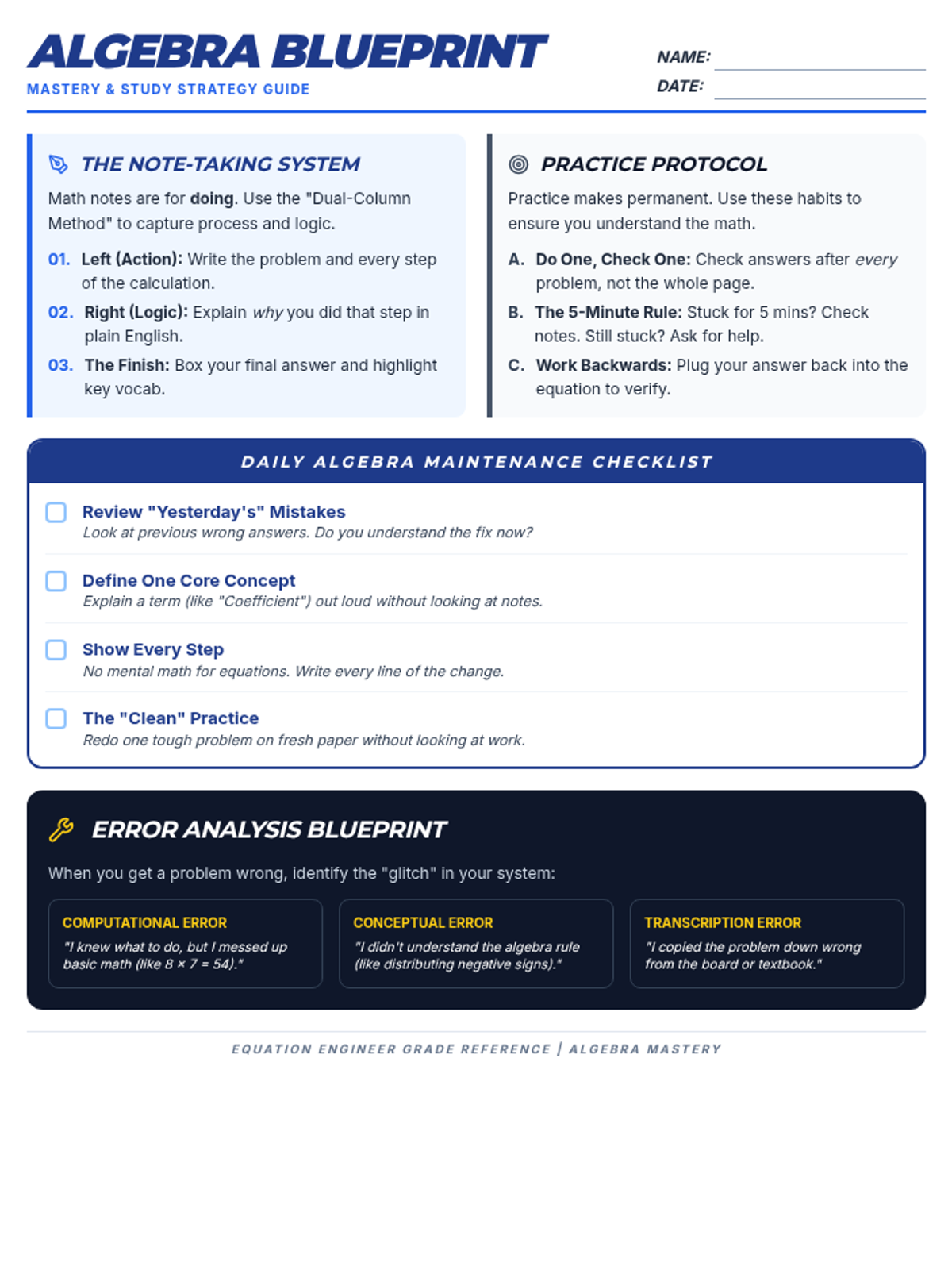
A comprehensive one-page reference guide for middle school algebra students, featuring a blueprint-inspired design. It includes specific note-taking frameworks, practice protocols, a daily maintenance checklist, and an error analysis guide to help students master algebraic concepts and study habits.
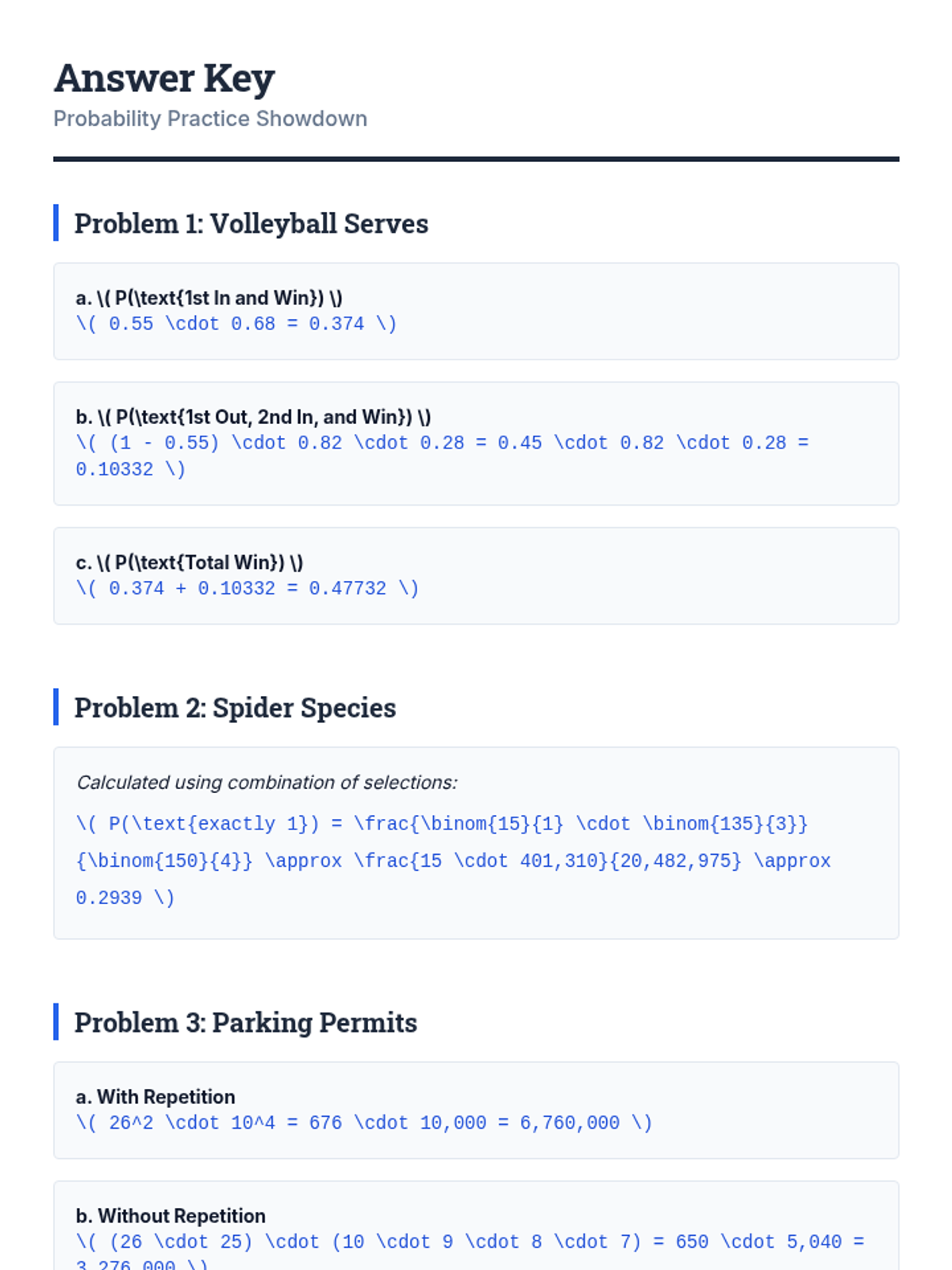
Complete answer key for the Probability Practice Showdown Worksheet. It provides detailed step-by-step calculations and interpretations for all five problems, including probability trees, combinatorics, expected value, and empirical estimation.
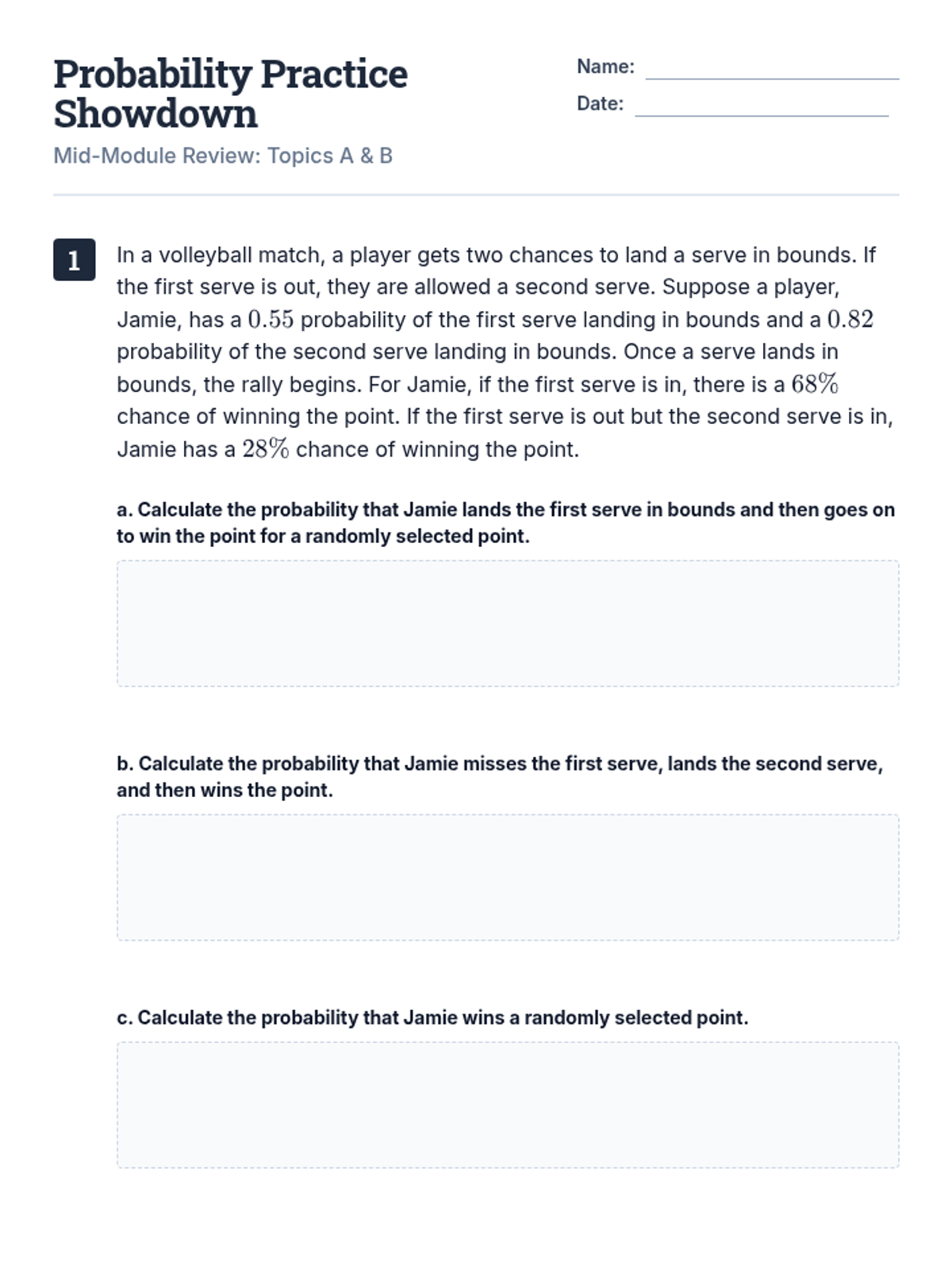
A practice review worksheet that directly replicates the structure of the Mid-Module Assessment. It features five multi-part problems covering sports probability trees, combinatorics, license plate permutations, discrete probability graphs/expected value, and empirical frequency analysis with large-scale estimates. All numbers have been changed while maintaining the exact question formats from the source. This revision fixes page break issues and adds missing labels.
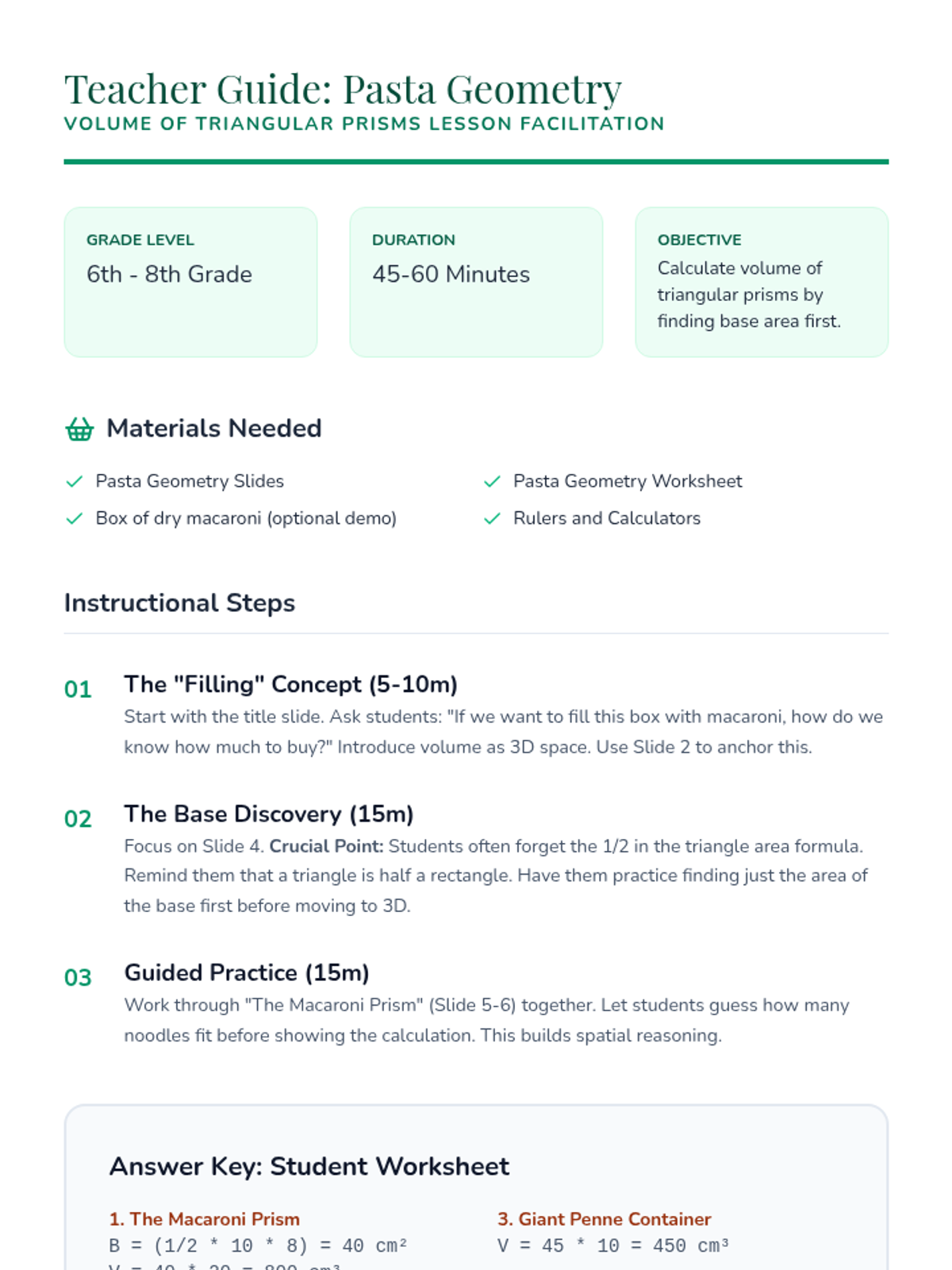
A comprehensive facilitation guide for teachers, including lesson objectives, timing, instructional steps, common misconceptions, and a full answer key for the Pasta Geometry student worksheet.
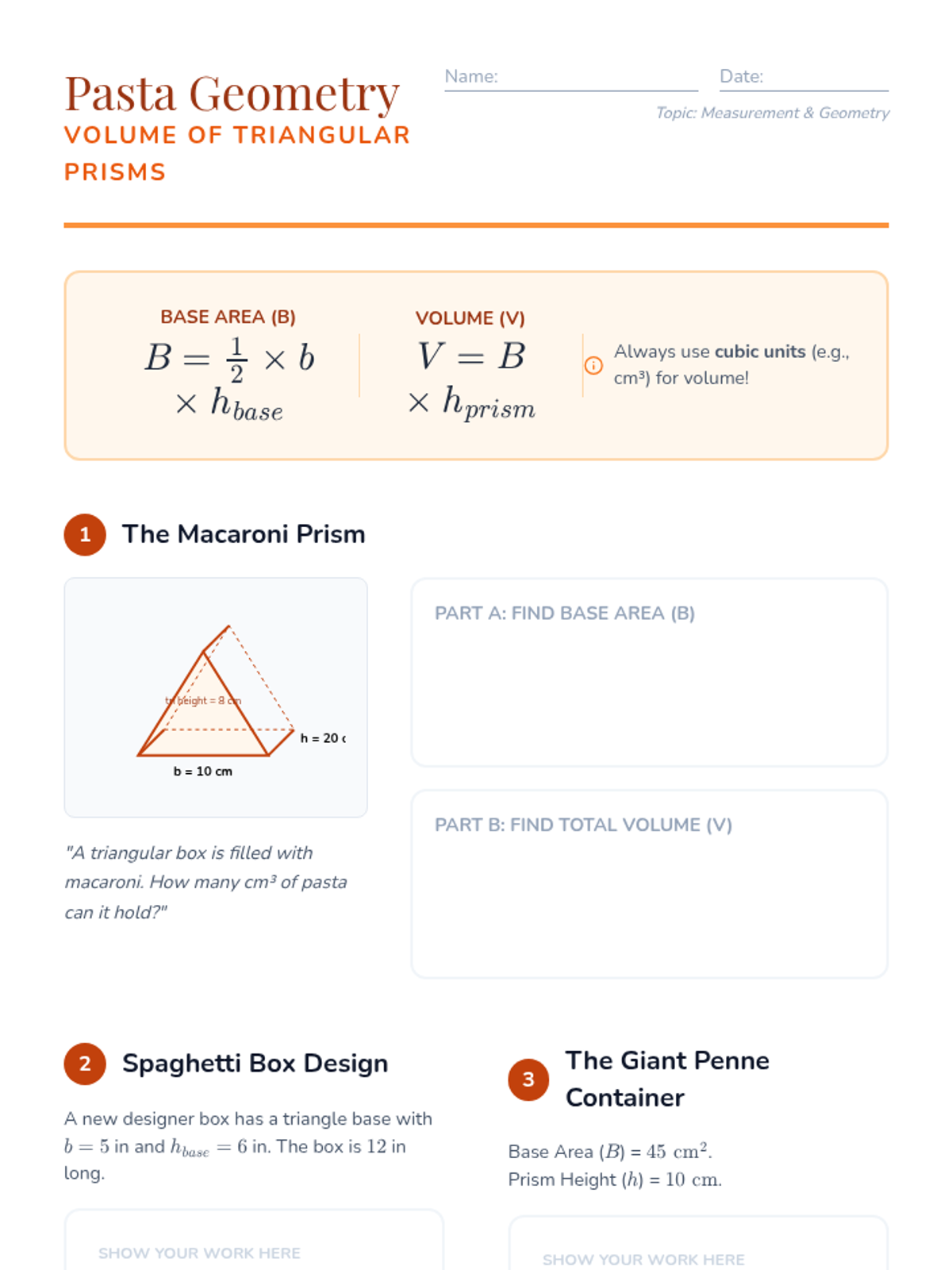
A practice worksheet where students calculate the volume of various triangular prisms, featuring a special 'Macaroni Prism' problem and a 'Chef's Challenge' word problem. Includes space for student work and clear formula references.
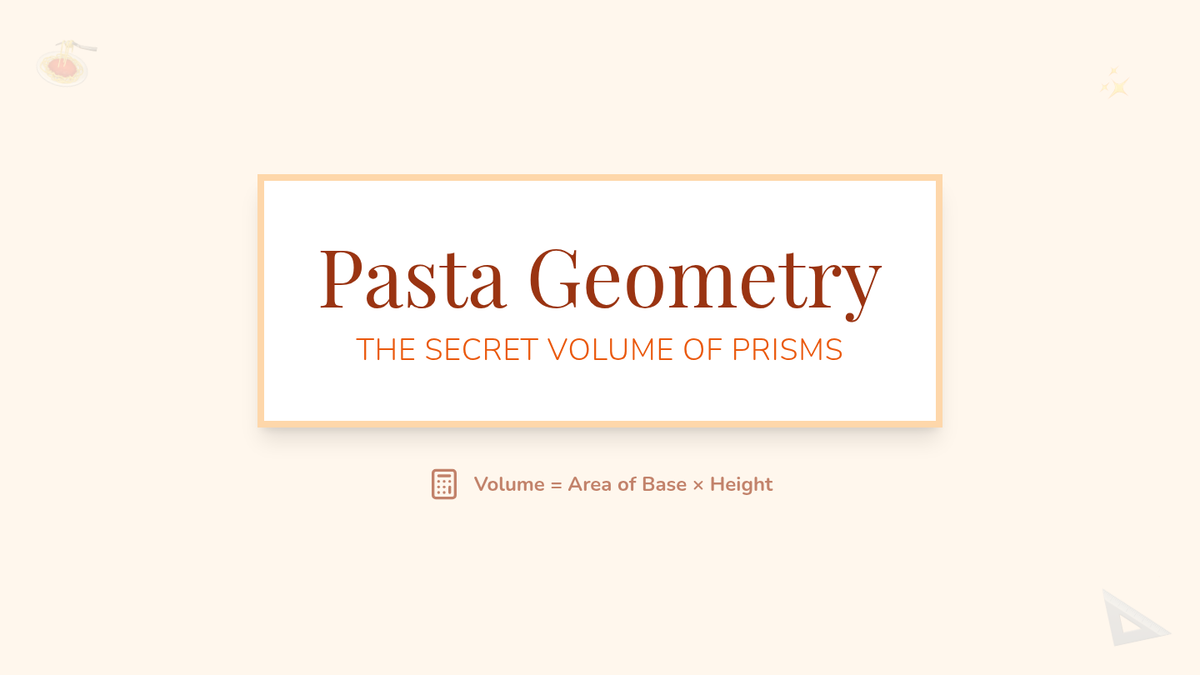
A visually engaging slide deck exploring the volume of triangular prisms through a 'Pasta Geometry' theme. It features step-by-step calculations, visual diagrams, and a 'Macaroni Mystery' scenario to help students understand 3D space.
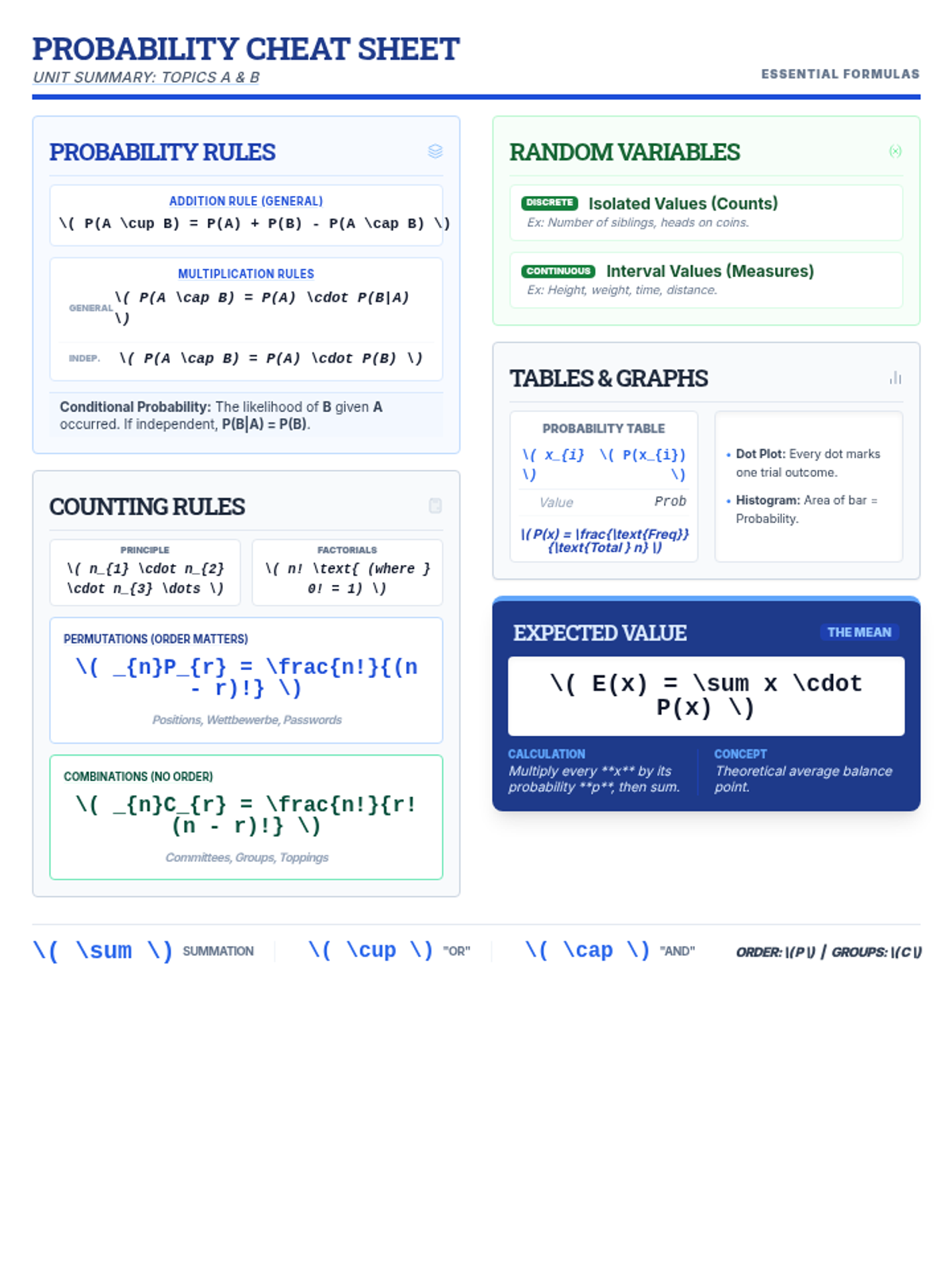
An updated one-page reference sheet that now includes a section on Tables and Graphs (frequency/probability tables, histograms, and dot plots) in addition to all previous unit formulas. The layout has been optimized for maximum density while maintaining clear visual hierarchy and high-contrast styling. All variables and mathematical expressions are rendered using LaTeX. Revision fixes minor rendering issues with variables and icons.
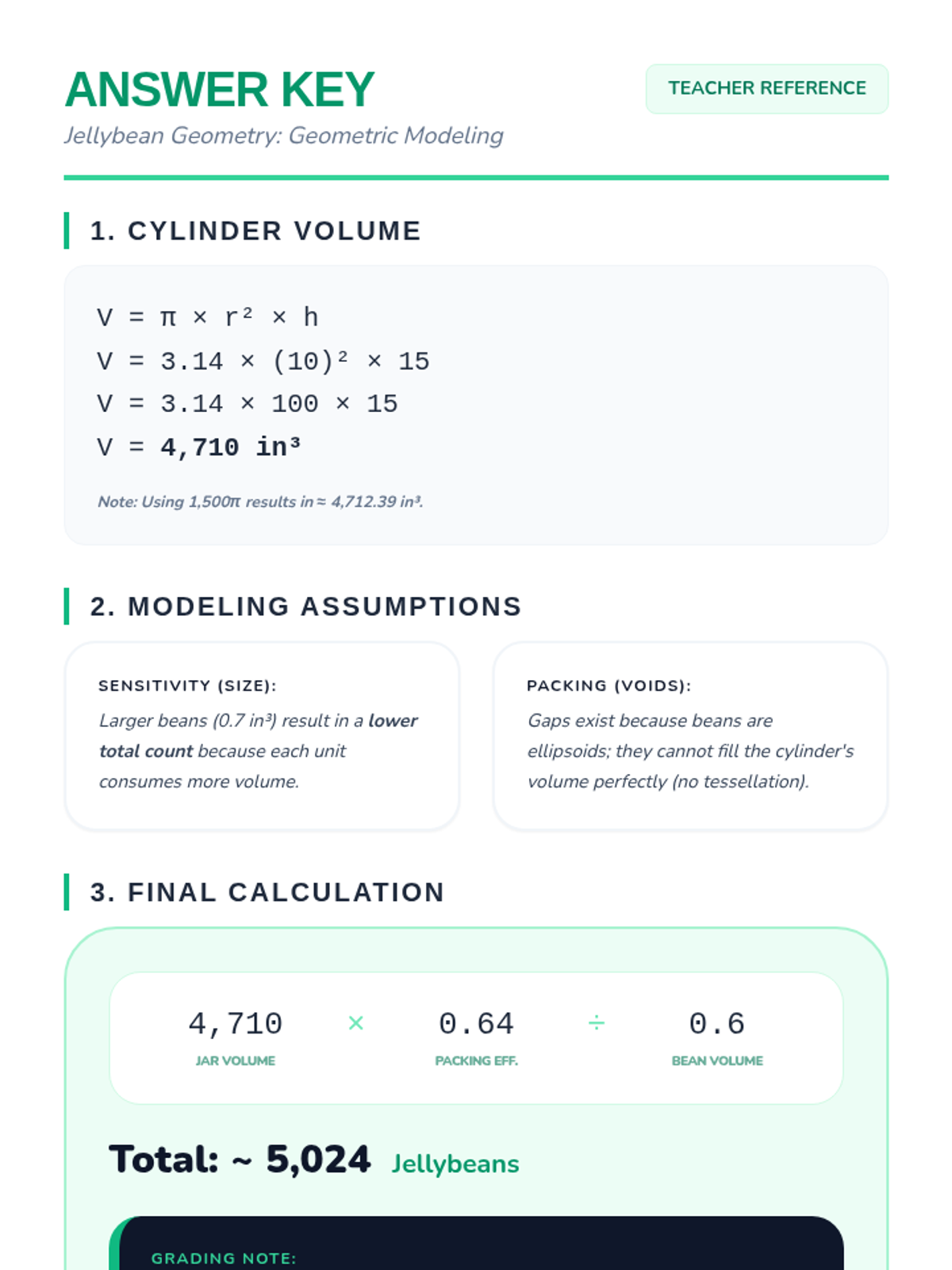
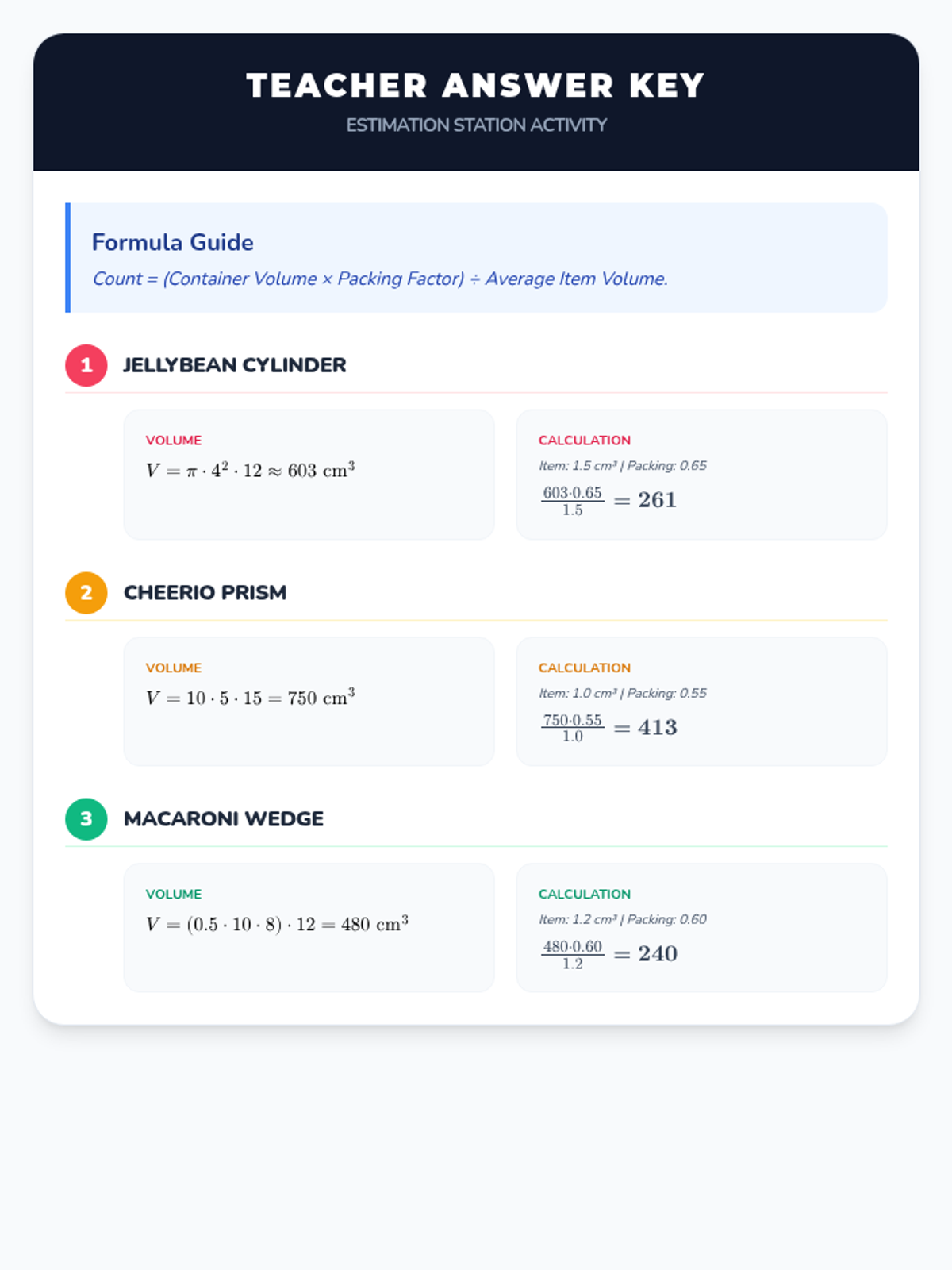
Detailed answer key and teacher facilitation guide for the jellybean geometric modeling activity.
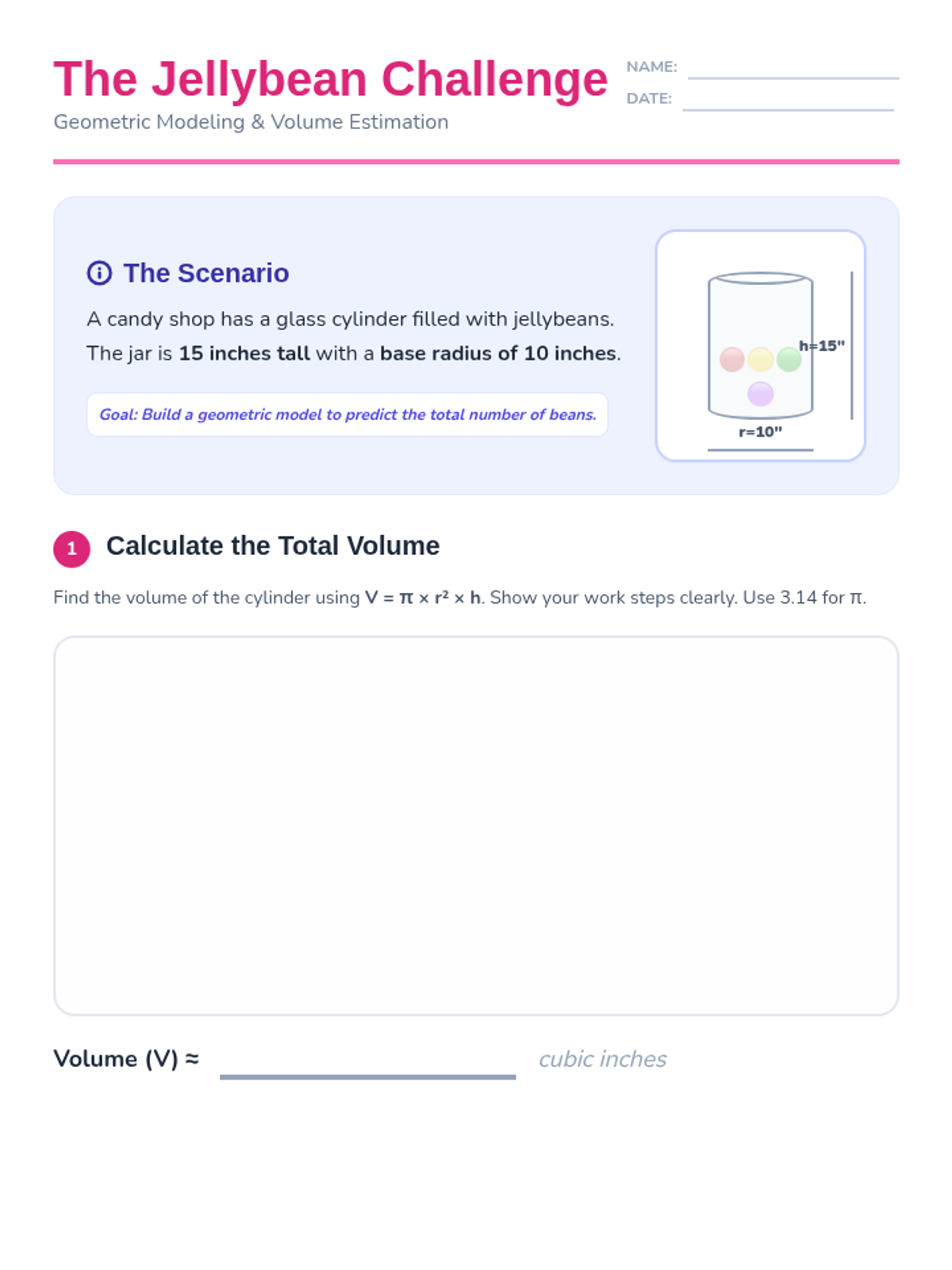
A student worksheet for calculating volume and performing geometric modeling to estimate the number of jellybeans in a cylinder.
A slide presentation exploring geometric modeling through the estimation of jellybeans in a cylindrical jar, covering volume calculations and packing efficiency.
Detailed teacher answer key providing the step-by-step volume calculations and final counts (adjusting for packing density) for the Estimation Station activity.
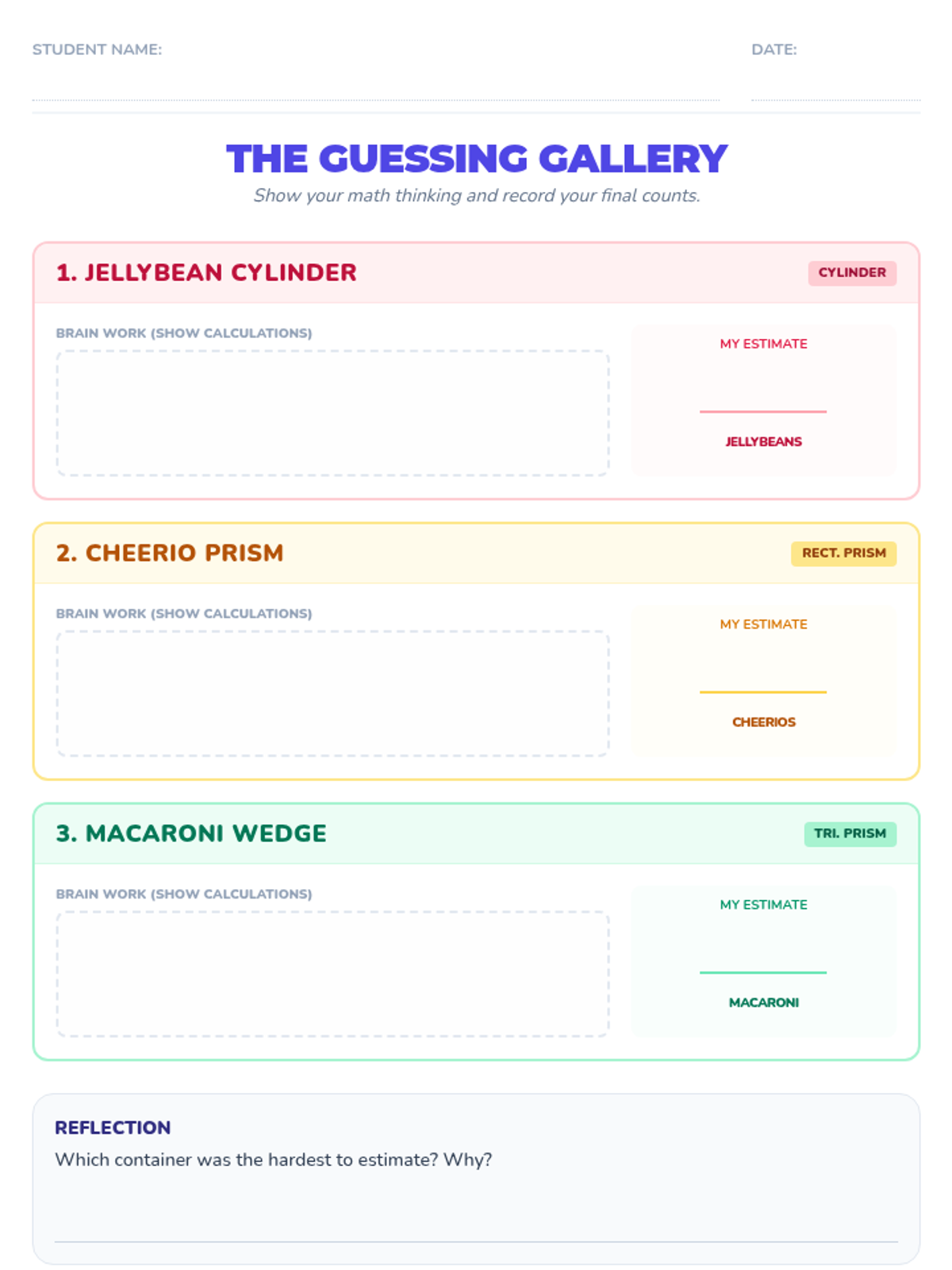
A structured recording sheet for students to document their mathematical thinking and final estimates for each of the three containers.