An investigation lab sheet for students to record observations of wave pulse collisions on springs and simulations, applying the principle of superposition.
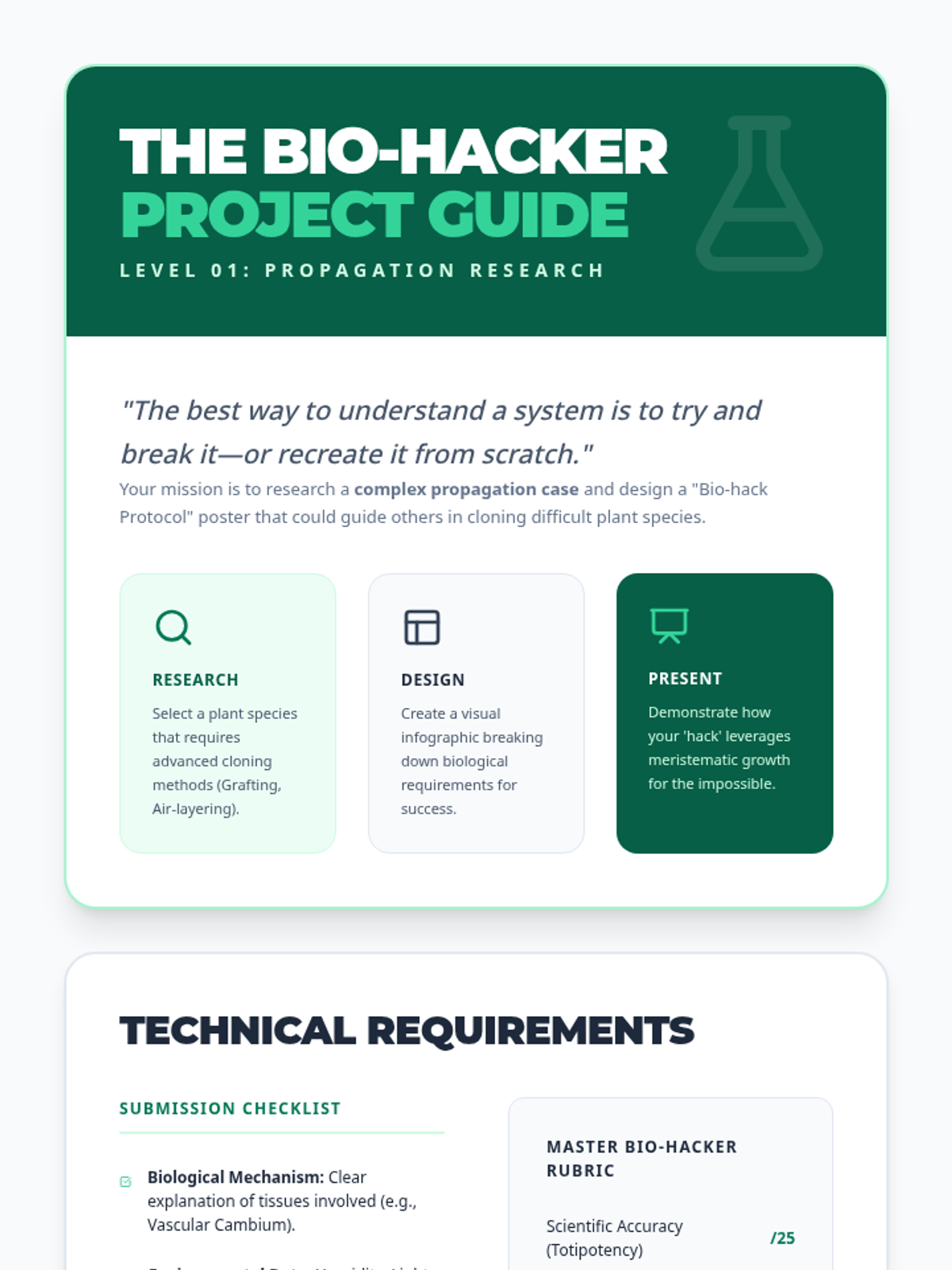
A culminating project guide for the Botanical Bio-hackers unit. Students are challenged to research and design a propagation protocol for a difficult plant species, applying their knowledge of cellular regeneration and environmental factors. Includes a technical rubric and a project proposal template.
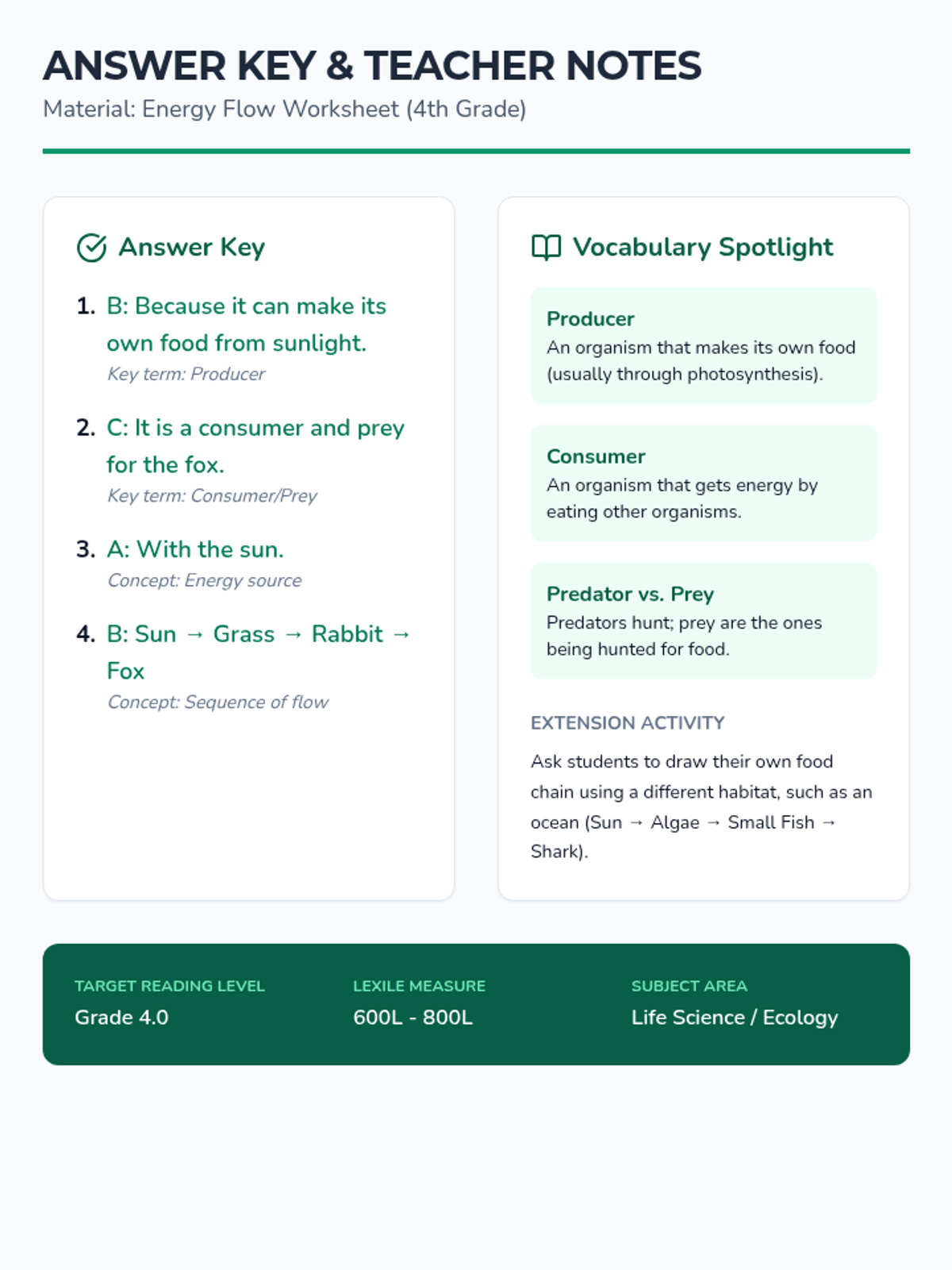
Teacher guide and answer key for the 4th-grade Energy Flow worksheet, including key vocabulary definitions and extension ideas.
A comprehensive growth journal for students to track their plant propagation experiment over several weeks. Features space for qualitative and quantitative data collection, weekly sketches, and a final analysis section connecting findings to the concept of cellular totipotency.
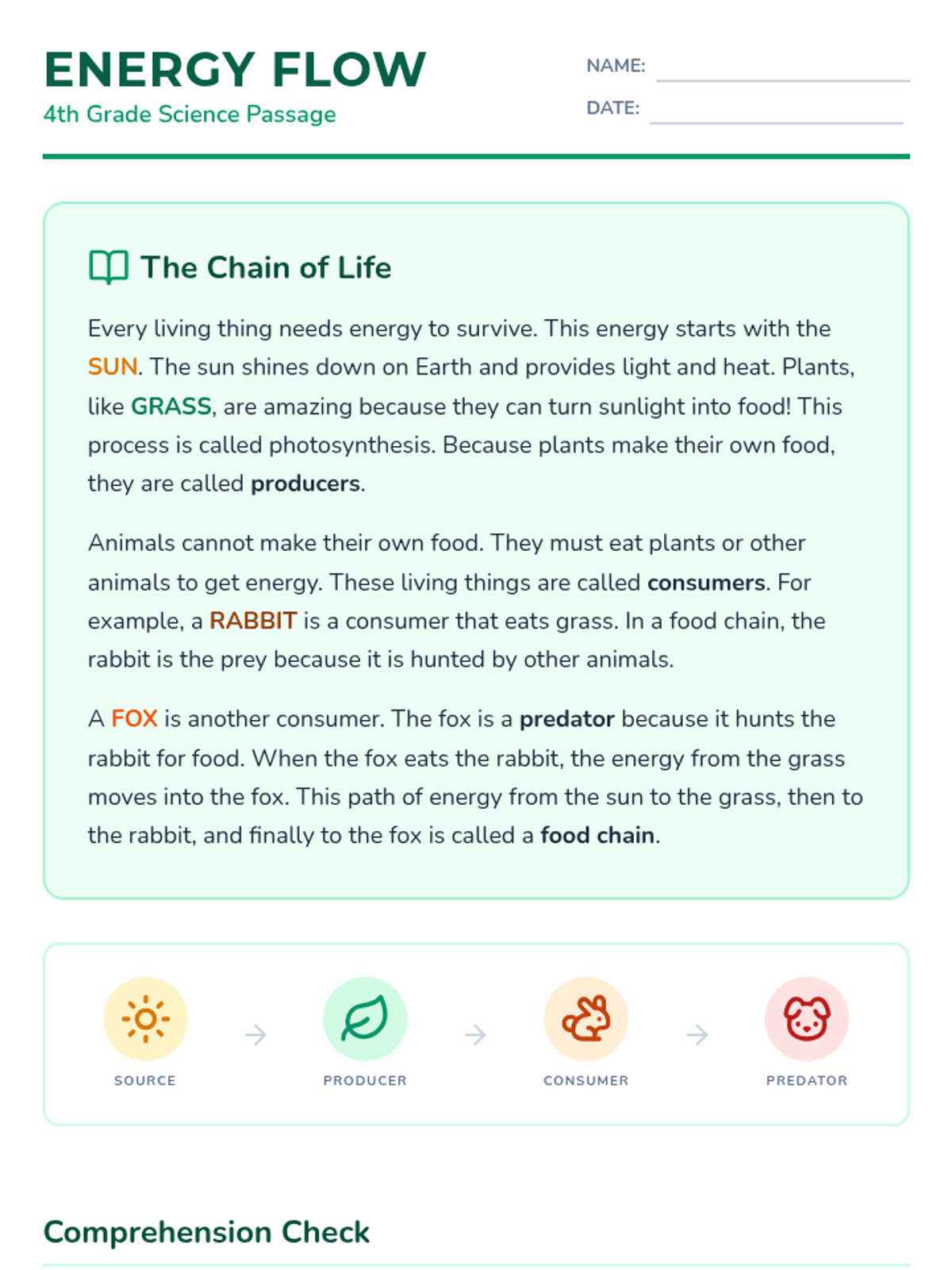
A 4th-grade level reading comprehension worksheet about food chains, condensed onto two pages with improved iconography for better flow.
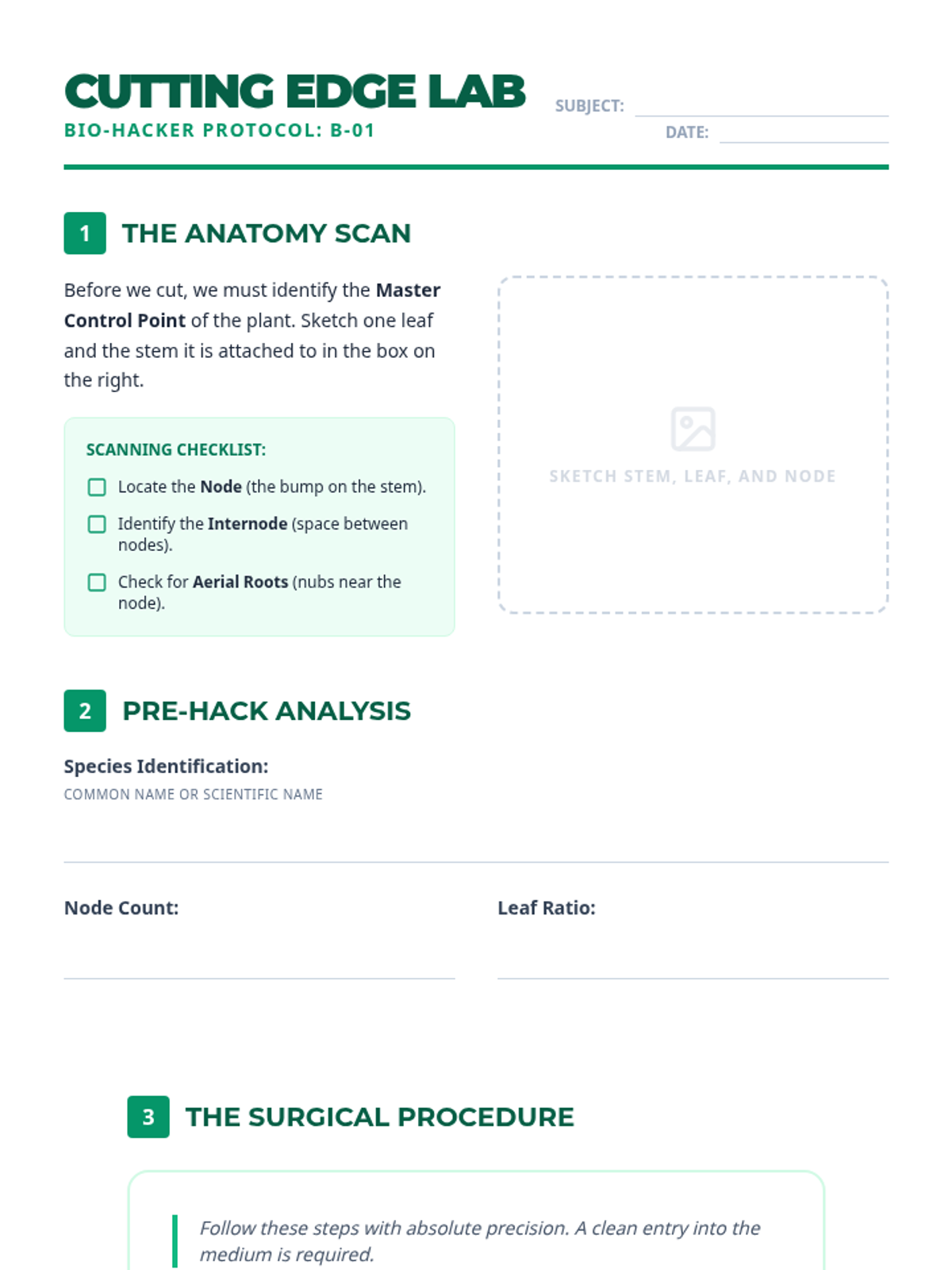
A student-facing laboratory sheet for the plant propagation activity. Includes sections for anatomical sketching, pre-activity analysis, step-by-step surgical procedures for taking cuttings, and a hypothesis section based on the biological principle of totipotency.
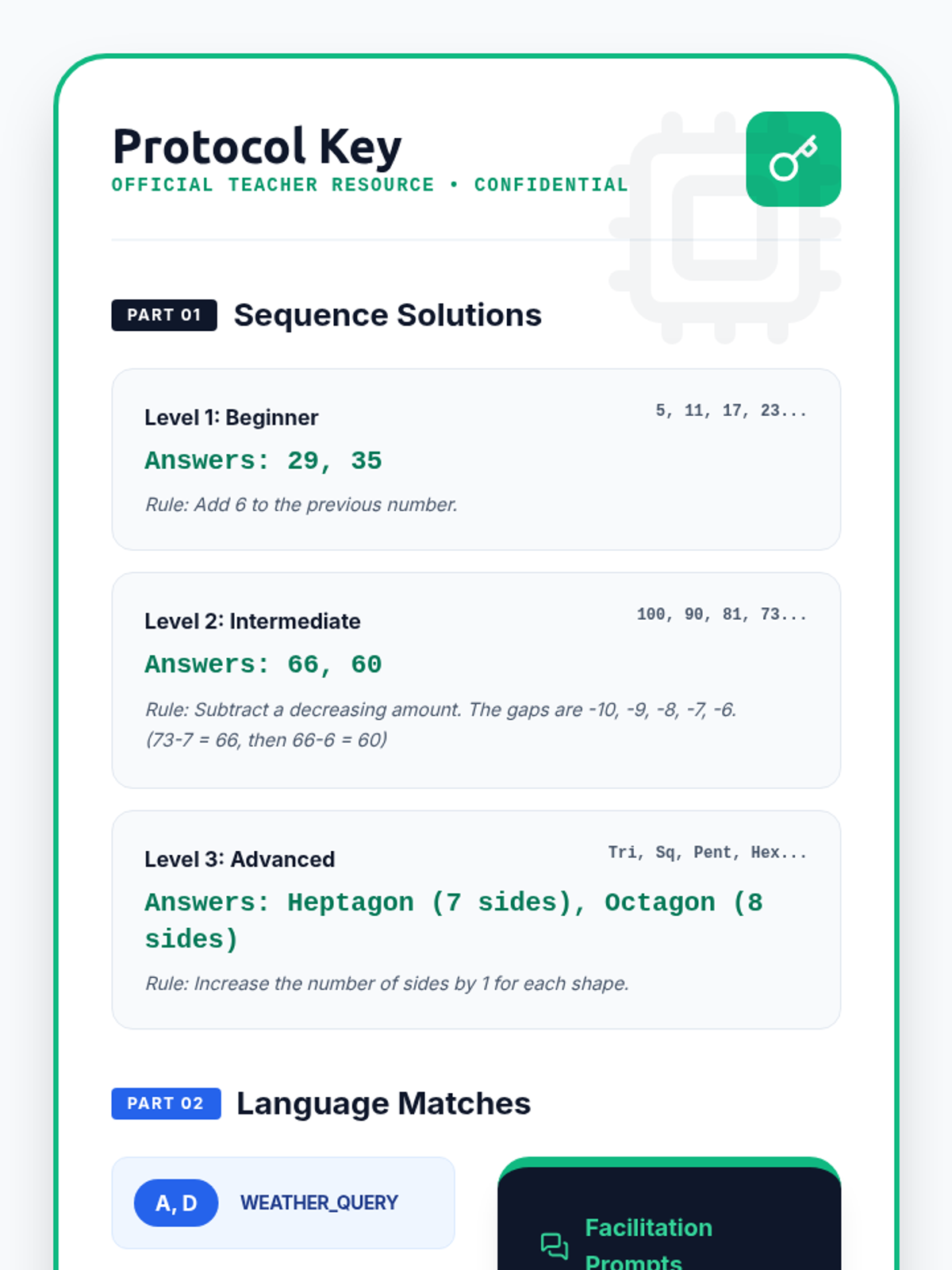
Teacher answer key and discussion guide for the Data Detective Packet activities, including original sequence context and facilitation prompts. Layout optimized to prevent content splitting.
An immersive slide deck for the Botanical Bio-hackers lesson, using a high-contrast 'tech' aesthetic to teach totipotency, asexual reproduction, and the practical steps of plant propagation. Features bold visual hierarchies and clear procedural instructions.
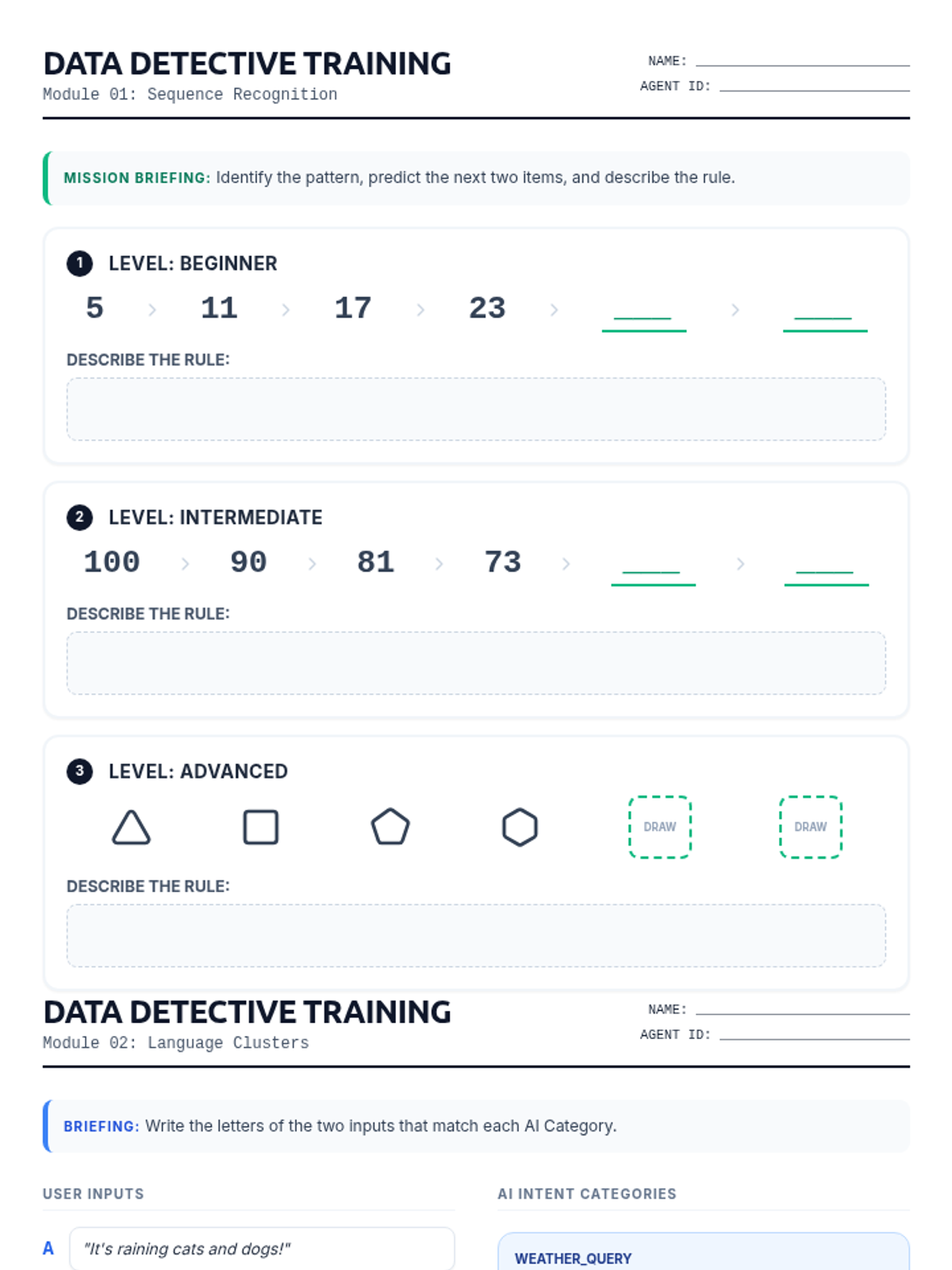
A student packet with sequence puzzles and natural language phrase matching exercises to simulate AI learning processes. Layout optimized for print with adequate student work space and standardized headers.
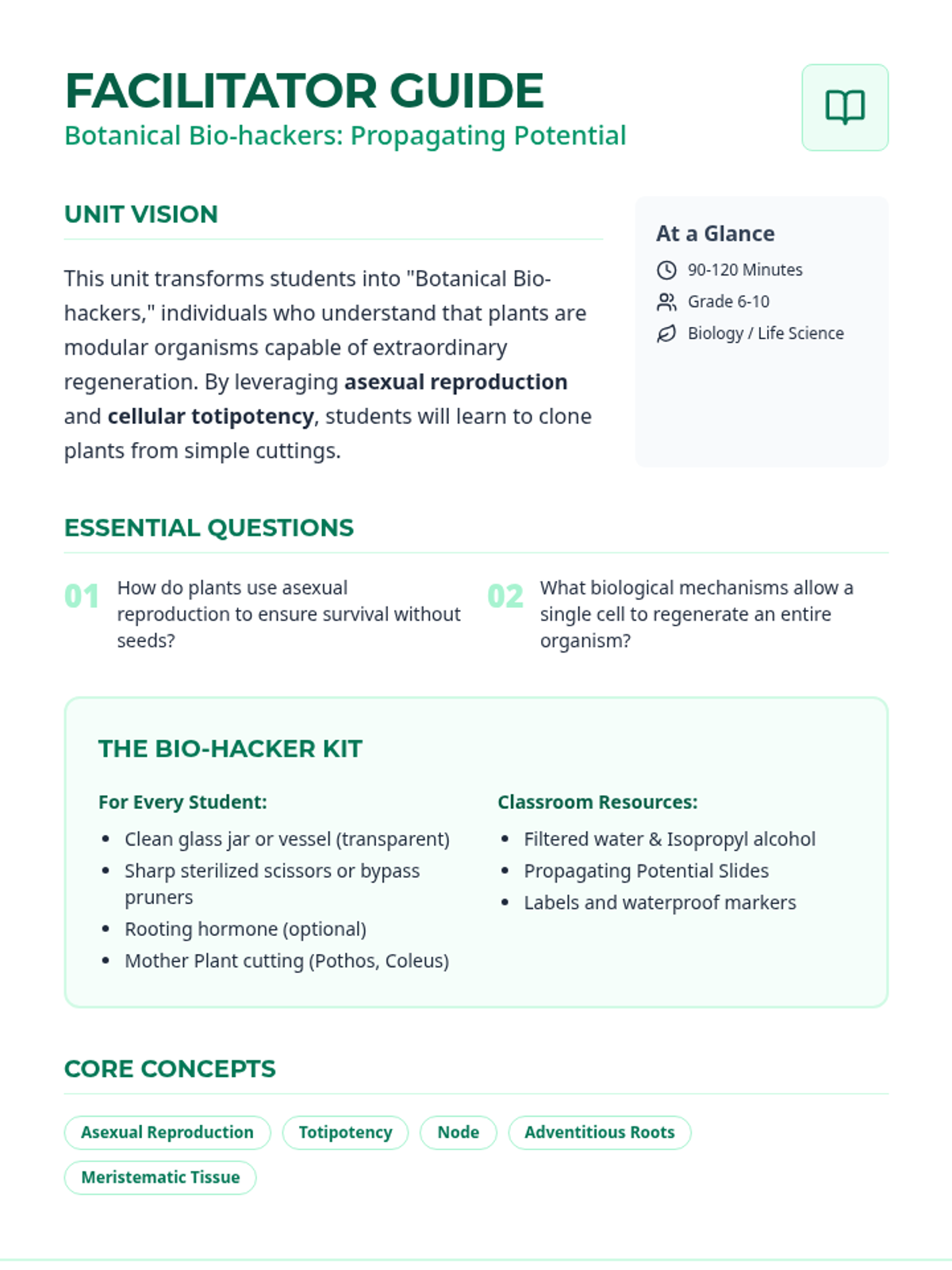
A comprehensive teacher's guide for the Botanical Bio-hackers lesson, featuring unit visions, essential questions, detailed lab materials, and a step-by-step instructional flow for teaching plant propagation.
A visual slide deck introducing the concepts of pattern recognition, machine learning, and natural language processing through interactive challenges.
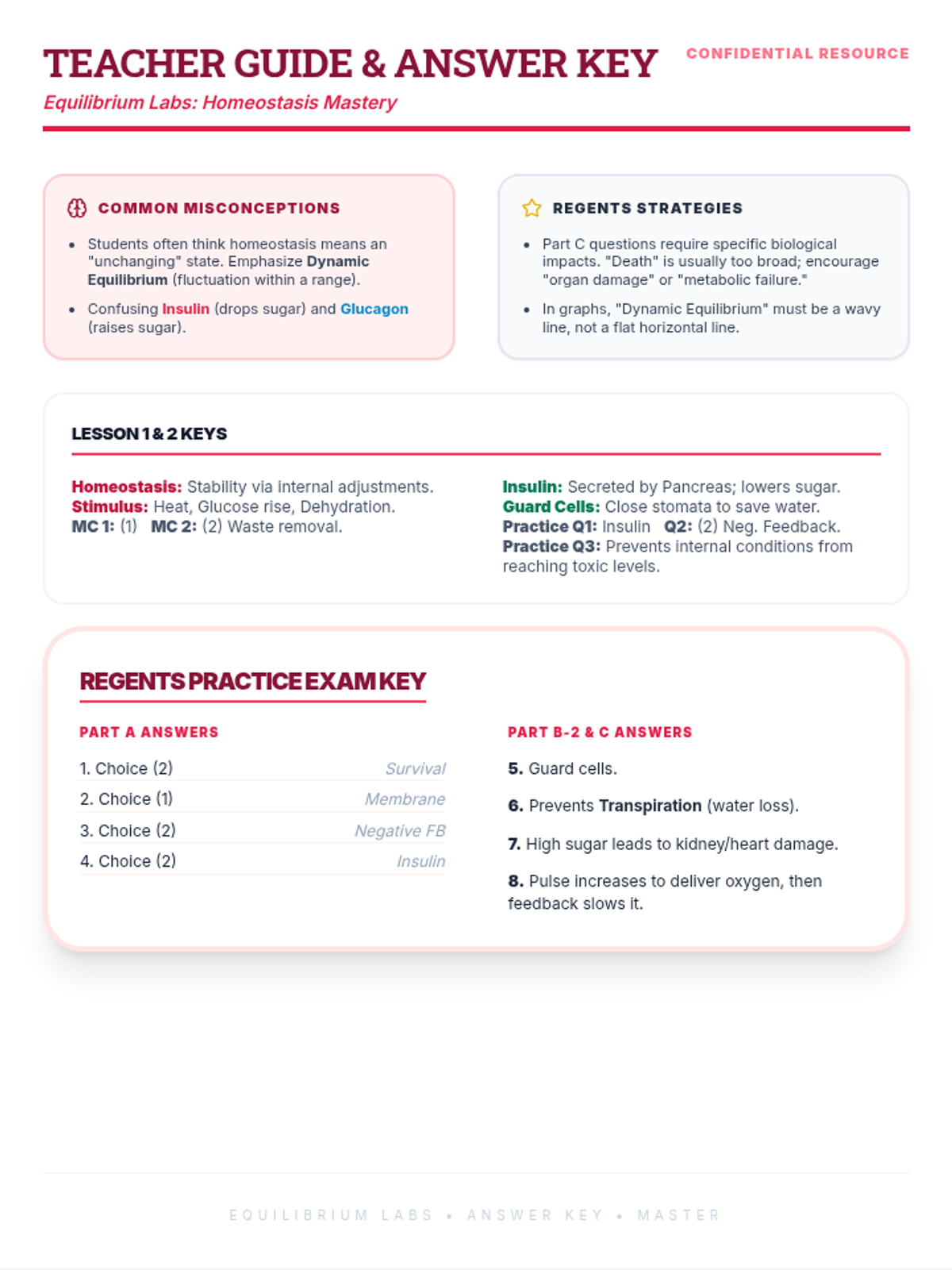
Comprehensive answer key and teacher guide for all materials in the Equilibrium Labs sequence. Includes teaching tips, common misconceptions, and Regents exam strategies.
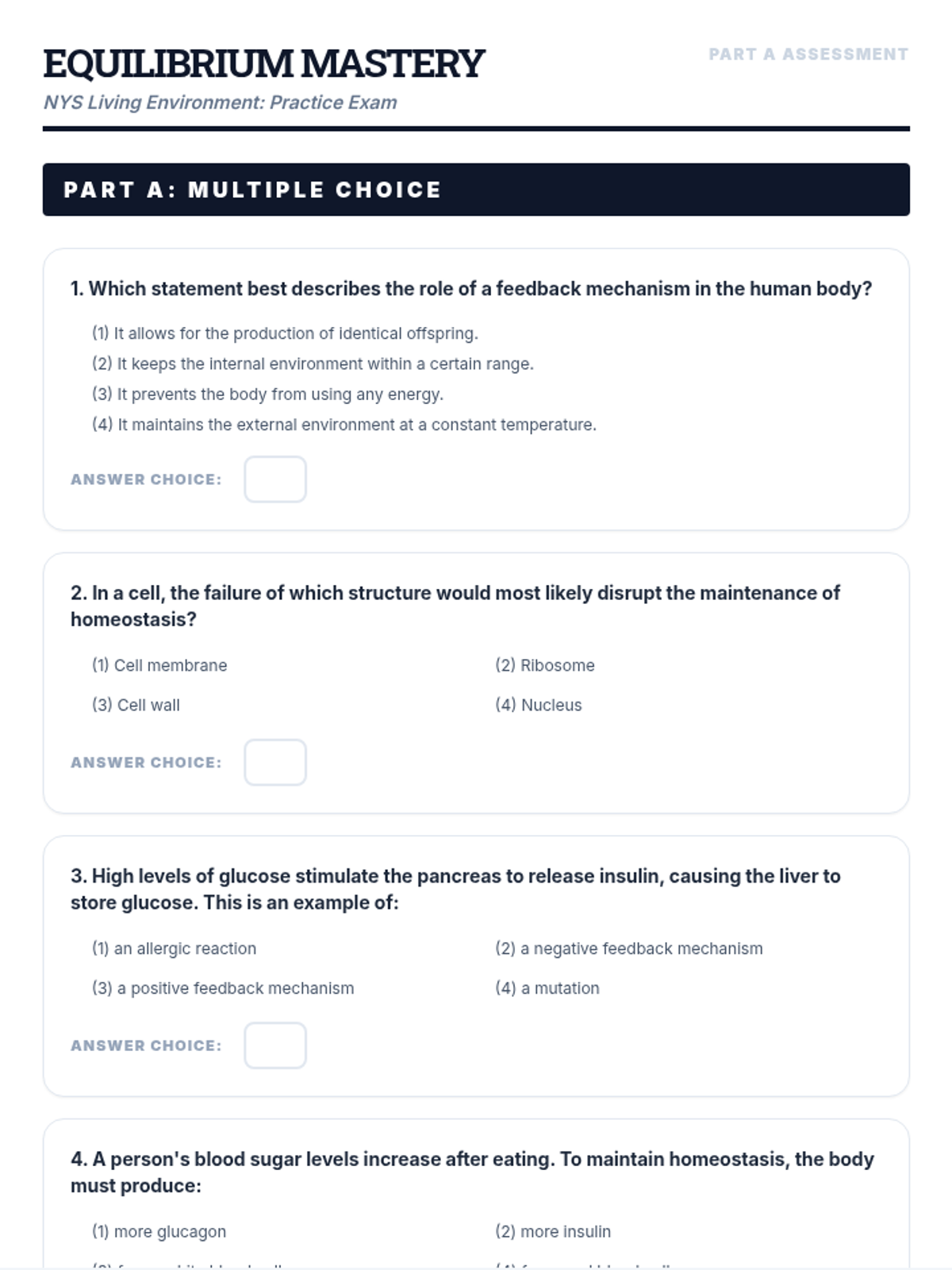
A comprehensive practice exam featuring Part A (Multiple Choice) and Part B/C (Constructed Response) questions modeled after authentic NYS Regents Biology exam questions on homeostasis and homeostasis feedback.
Visual presentation for Lesson 2, covering negative feedback loops, the insulin/glucagon cycle, and the role of guard cells in plant homeostasis.
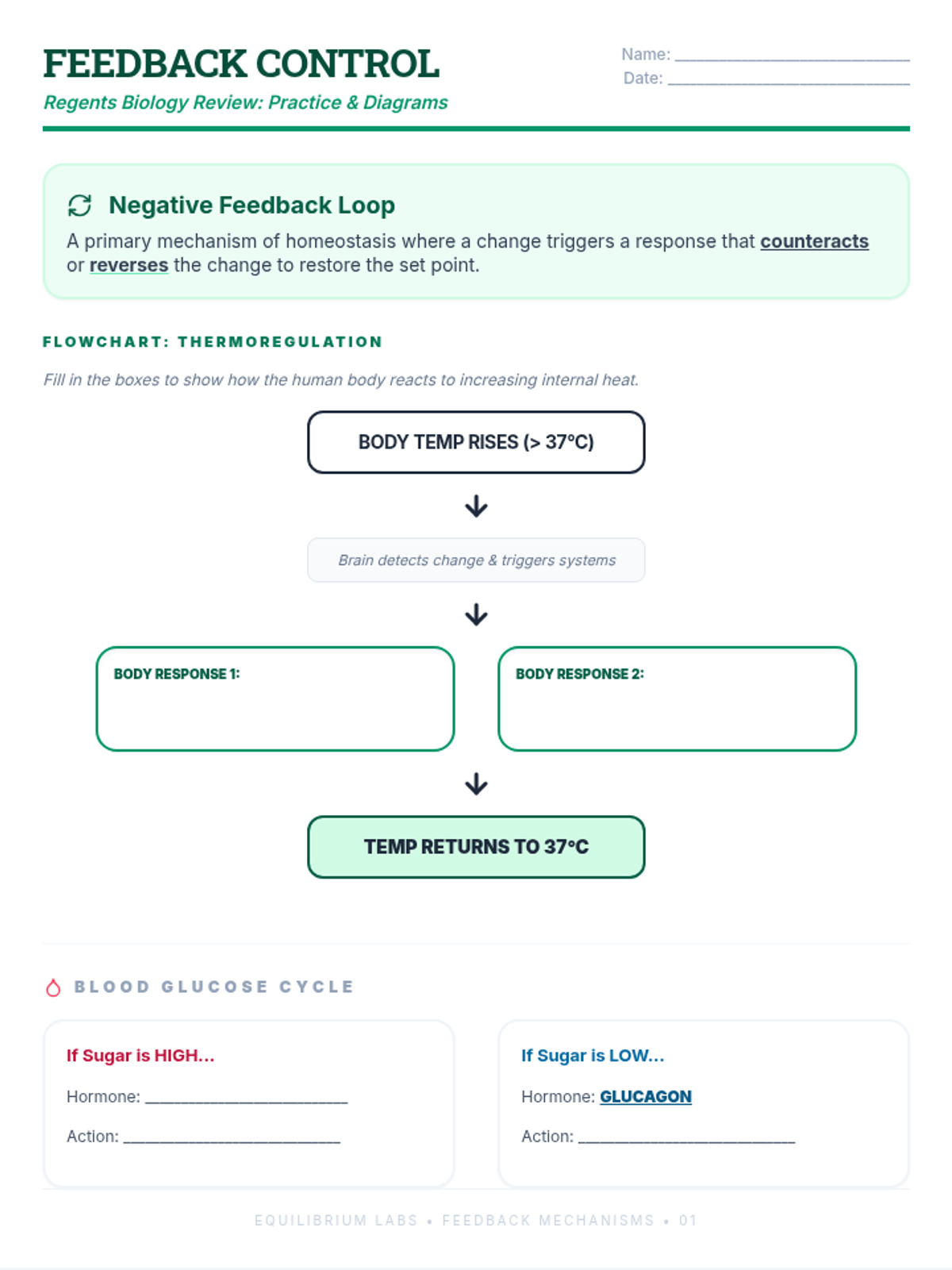
Practice worksheet for Lesson 2 focusing on negative feedback loops, thermoregulation, blood glucose control, and plant guard cells. Includes Regents-style multiple choice and short answer questions.
Visual presentation for Lesson 1, introducing the concepts of homeostasis, dynamic equilibrium, and failure of balance with high-impact visuals.
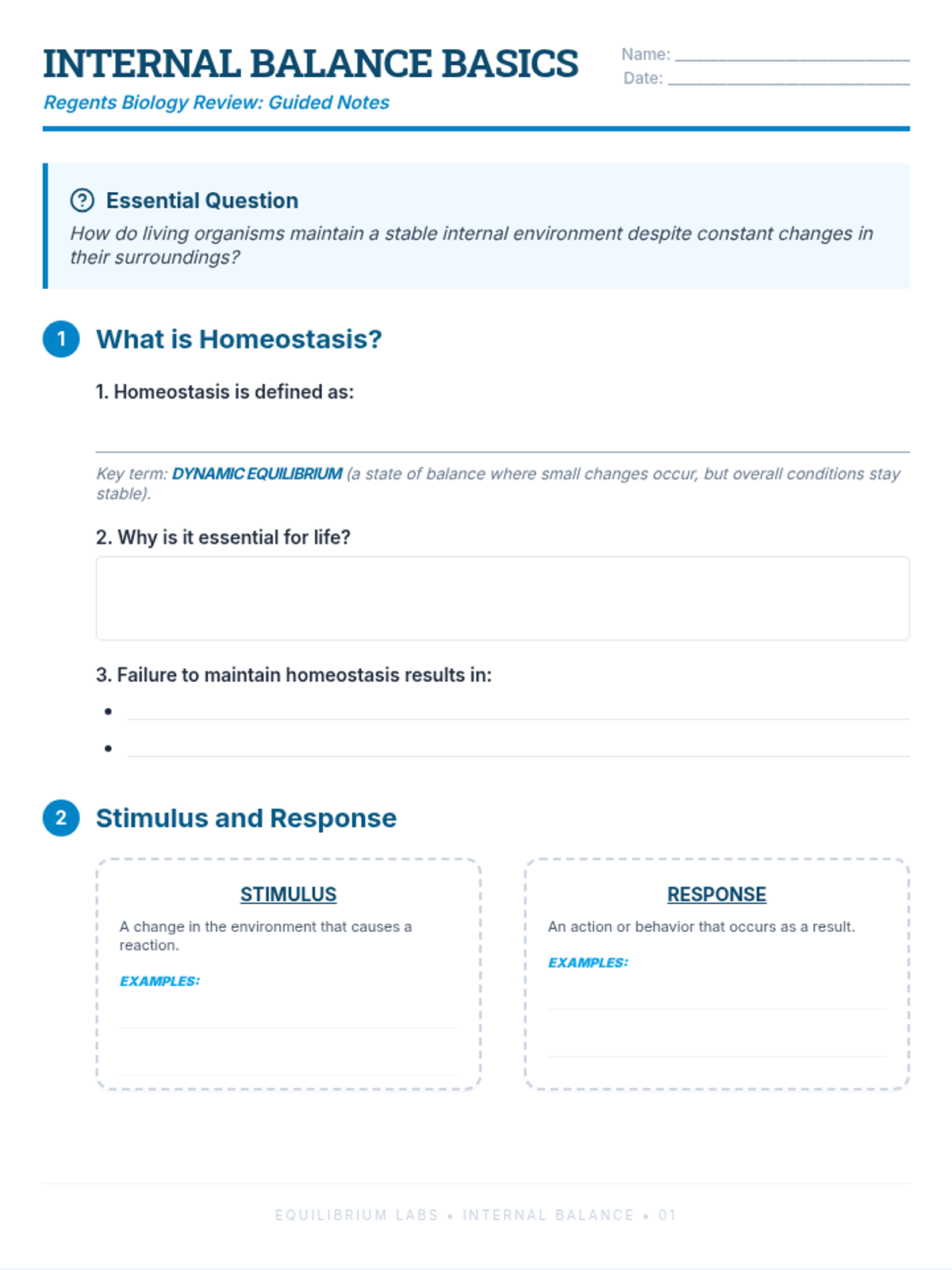
Guided notes for Lesson 1, covering the definitions of homeostasis, dynamic equilibrium, and basic stimulus-response mechanisms. Includes Regents-style practice questions.
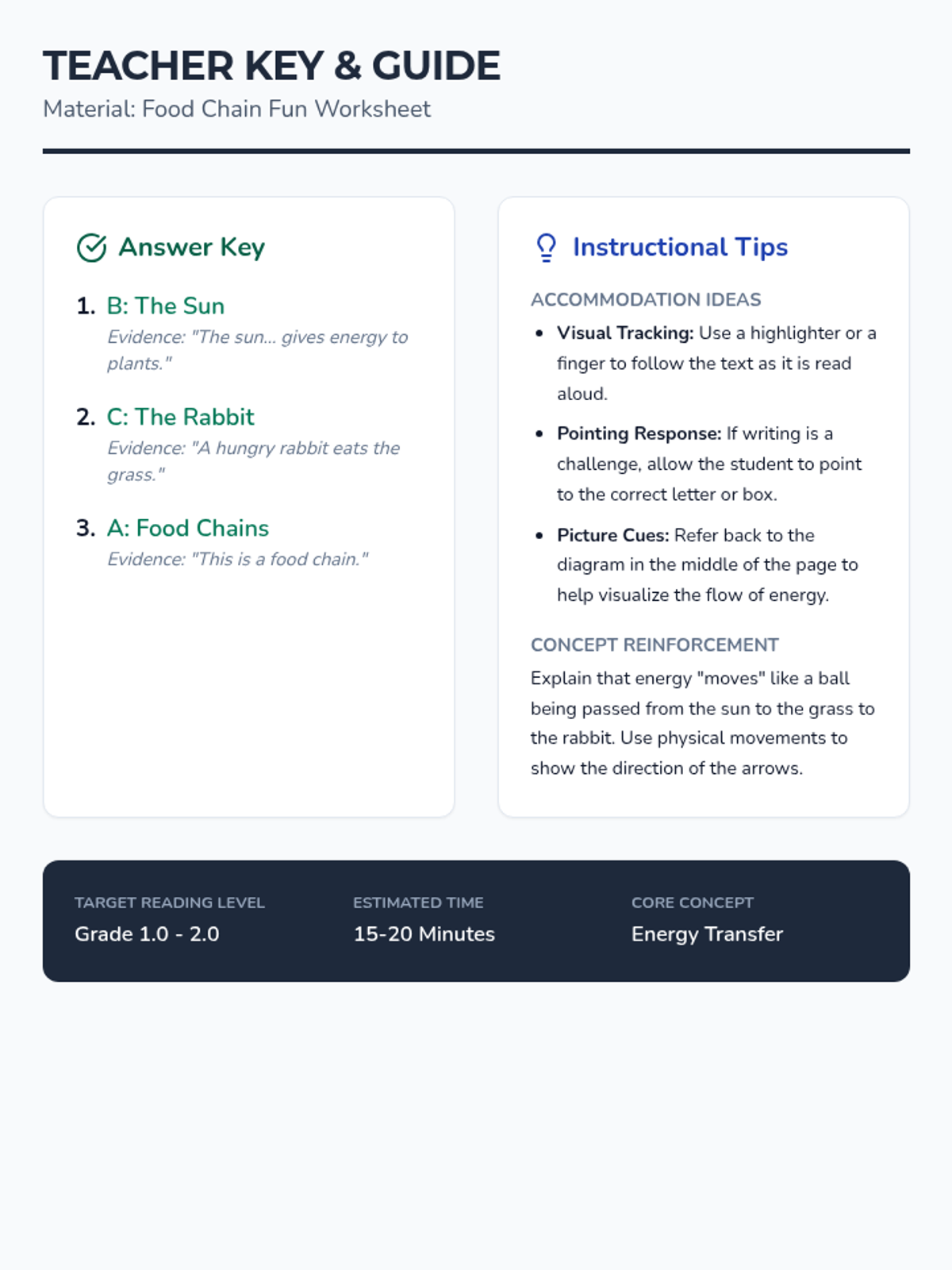
A teacher guide and answer key for the Food Chain Fun worksheet, including accommodation strategies and alignment notes.
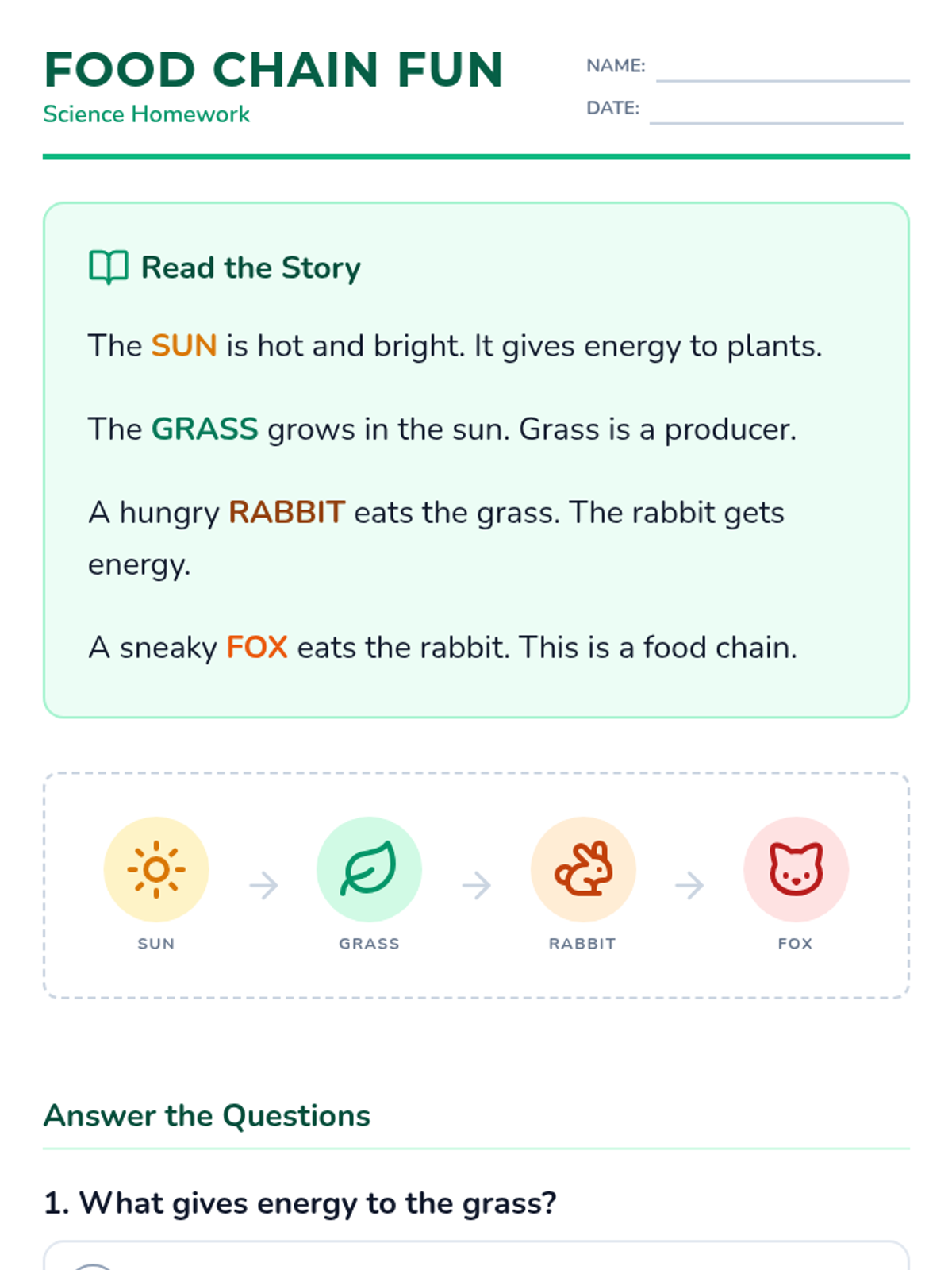
A simplified reading comprehension worksheet about food chains, featuring large text, visual supports, and multiple-choice questions for students with disabilities. Corrected page breaks and updated icons for better visual representation.
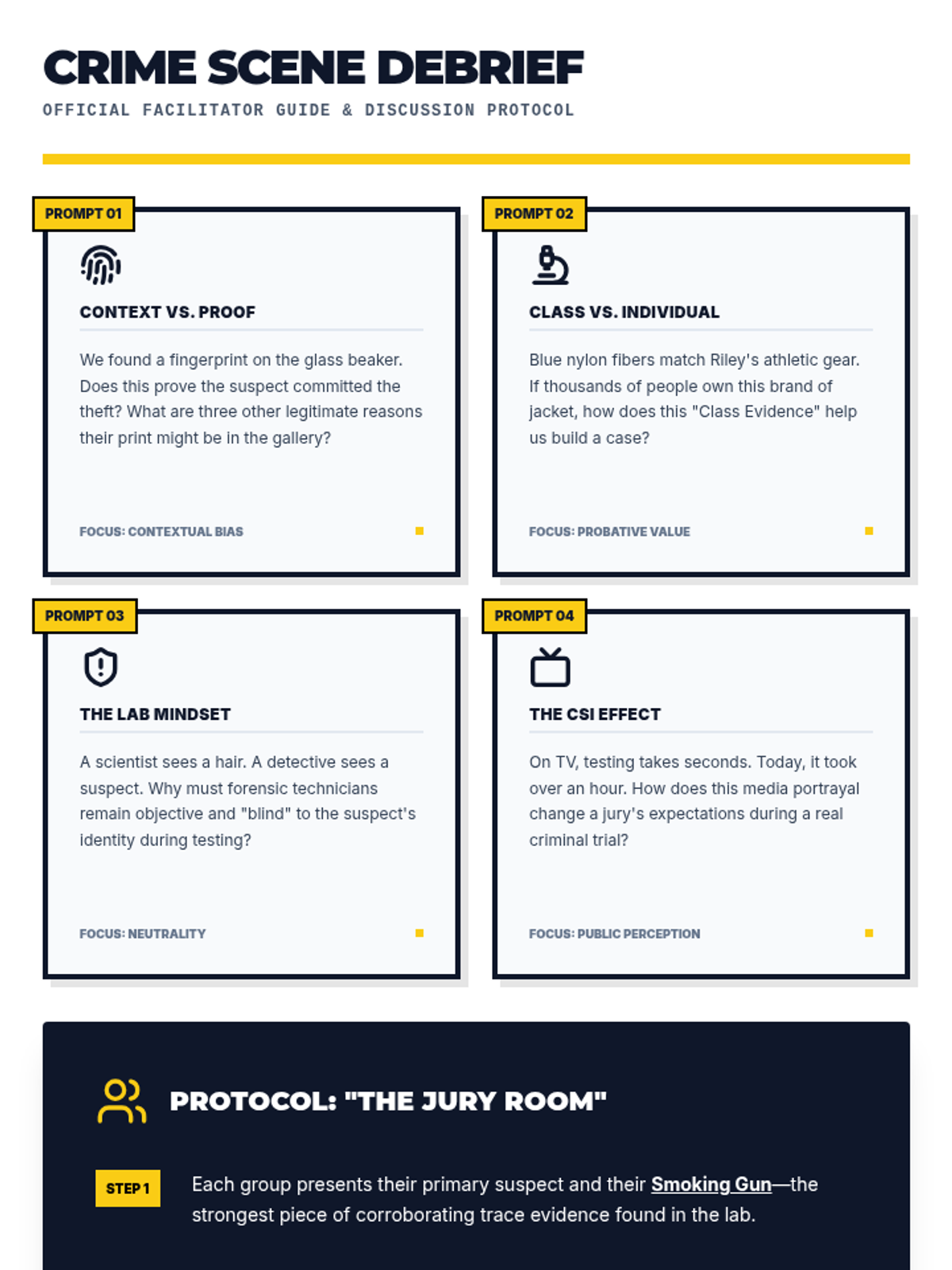
A set of high-level discussion prompts and a group protocol for debriefing a forensic simulation, focusing on evidence reliability, bias, and the "CSI Effect."
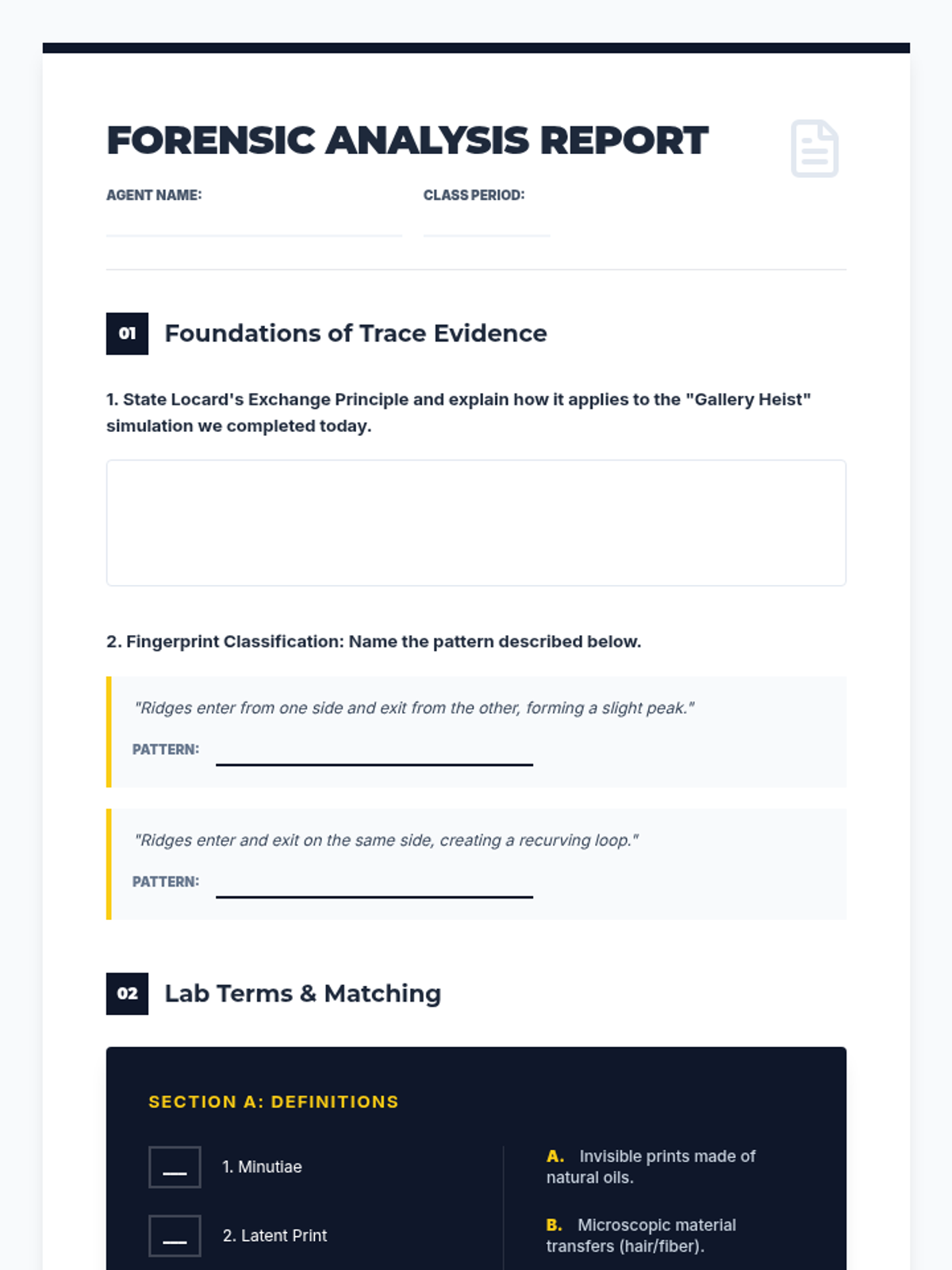
An academic worksheet for high school students to test their knowledge of Locard's Exchange Principle, fingerprint classification, hair anatomy, and forensic terminology.
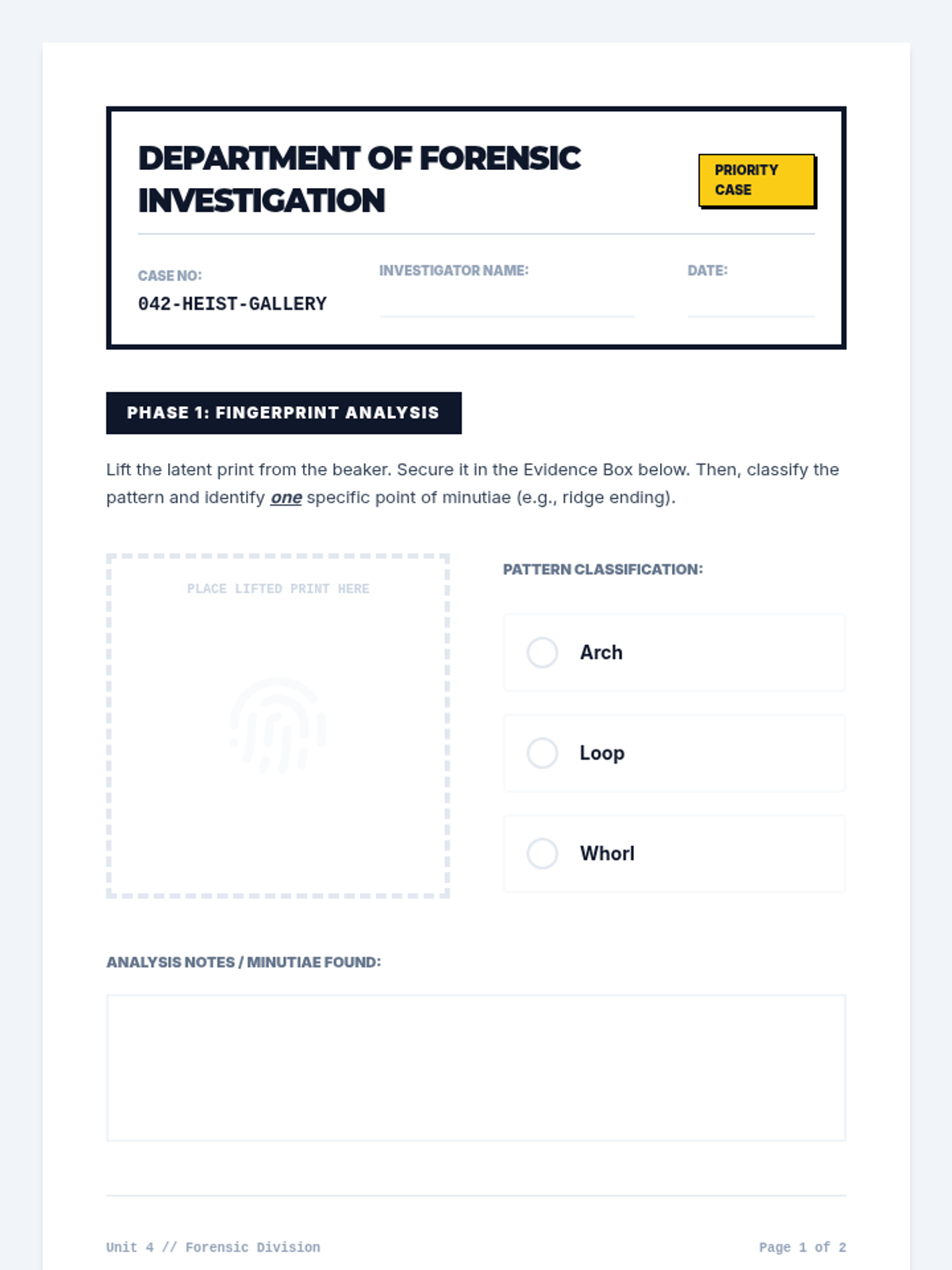
A forensic case file activity sheet where students record their findings from fingerprint lifting and microscopic fiber analysis to identify a primary suspect.
Visual presentation for the Trace Evidence Detective Lab, featuring Locard's Exchange Principle, suspect profiles, fingerprint classification guides, and lab procedures for student reference.
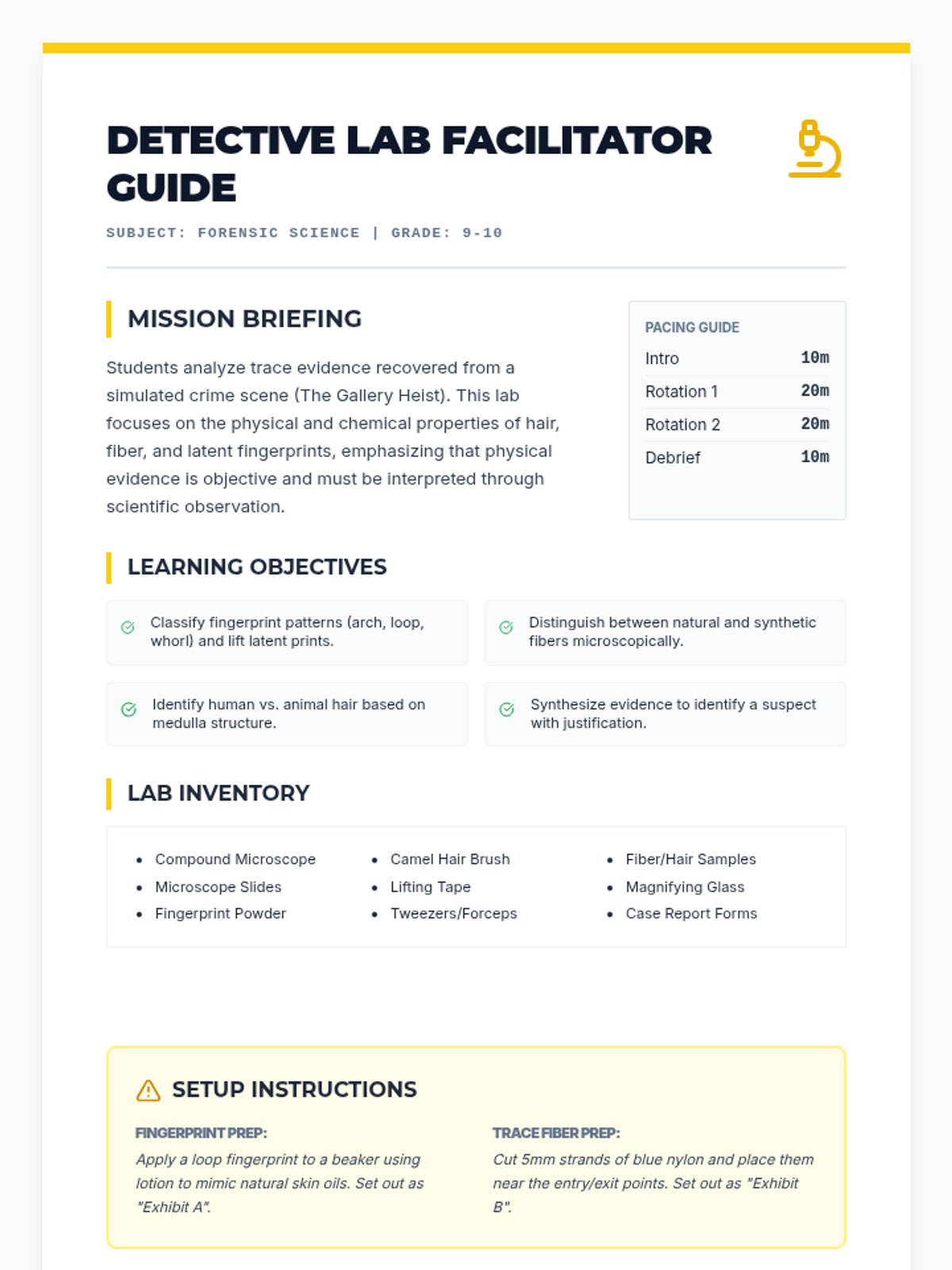
A comprehensive teacher's guide for a high school forensic science lab, featuring learning objectives, material lists, and step-by-step procedural instructions for fingerprint and fiber analysis.
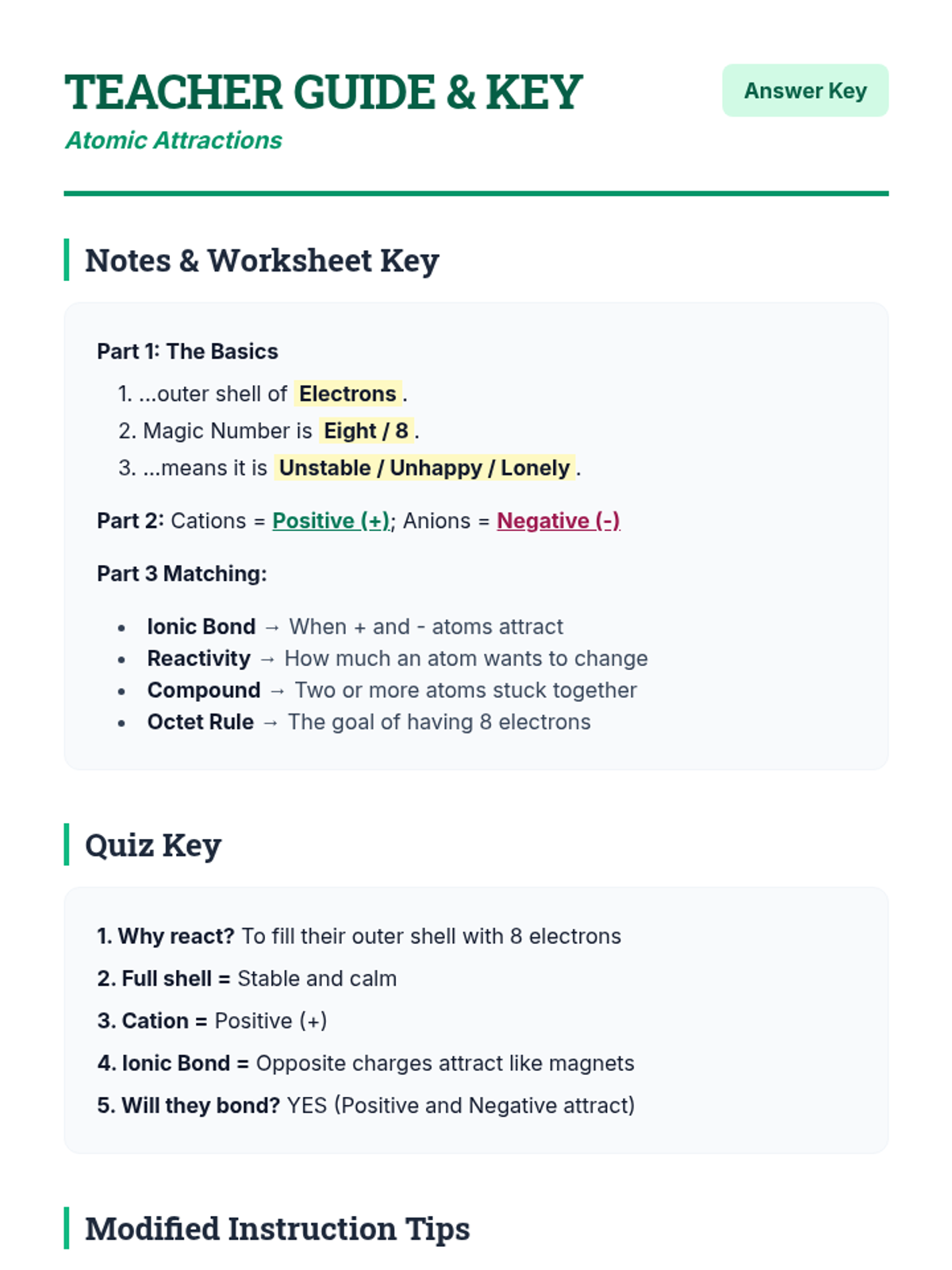
Teacher answer key and instructional support guide for the Atomic Attractions lesson materials. Includes modified instruction tips.
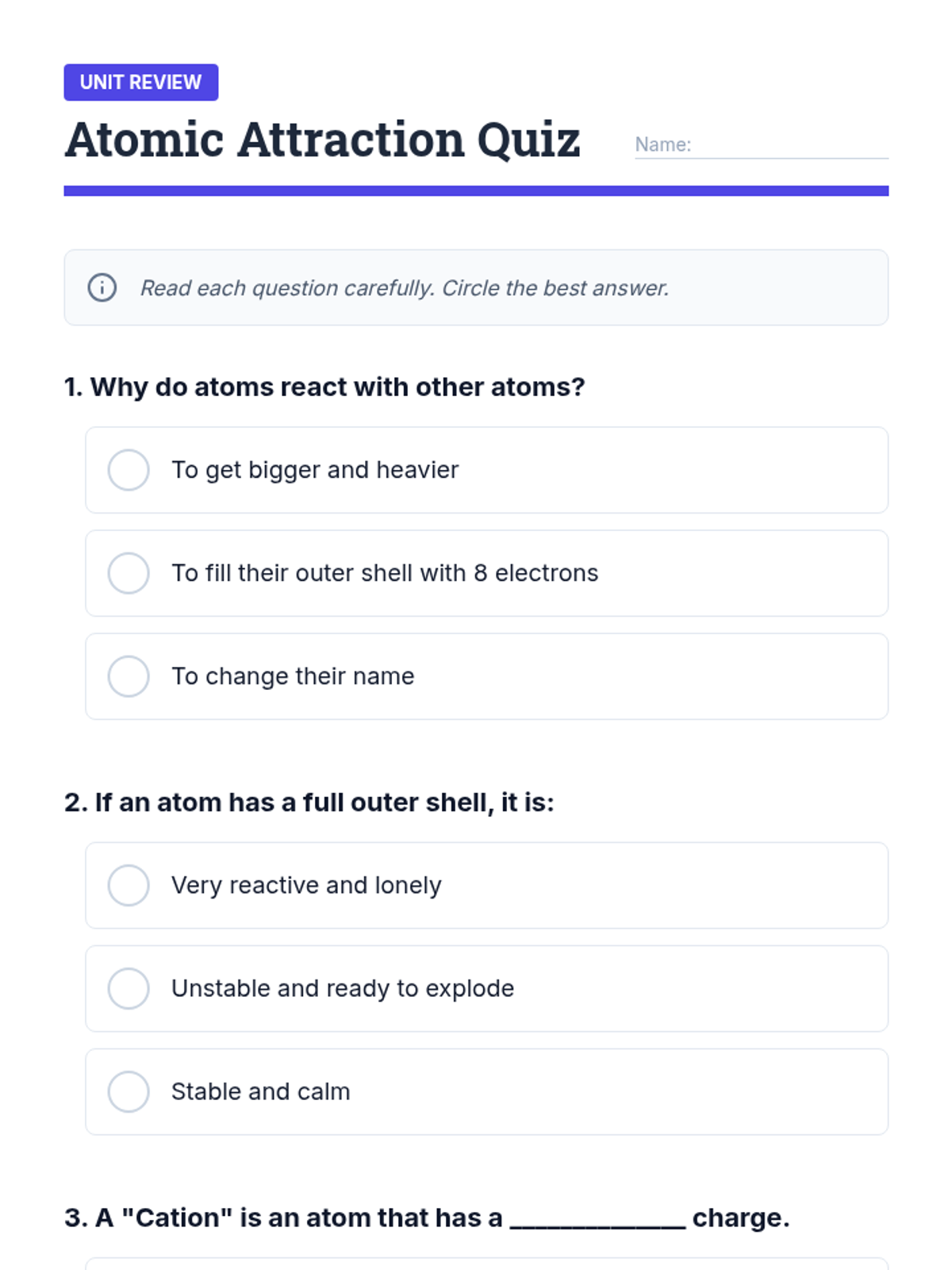
A multiple-choice and short-answer review quiz for the Atomic Attractions lesson. Features simplified language and clear visual prompts.
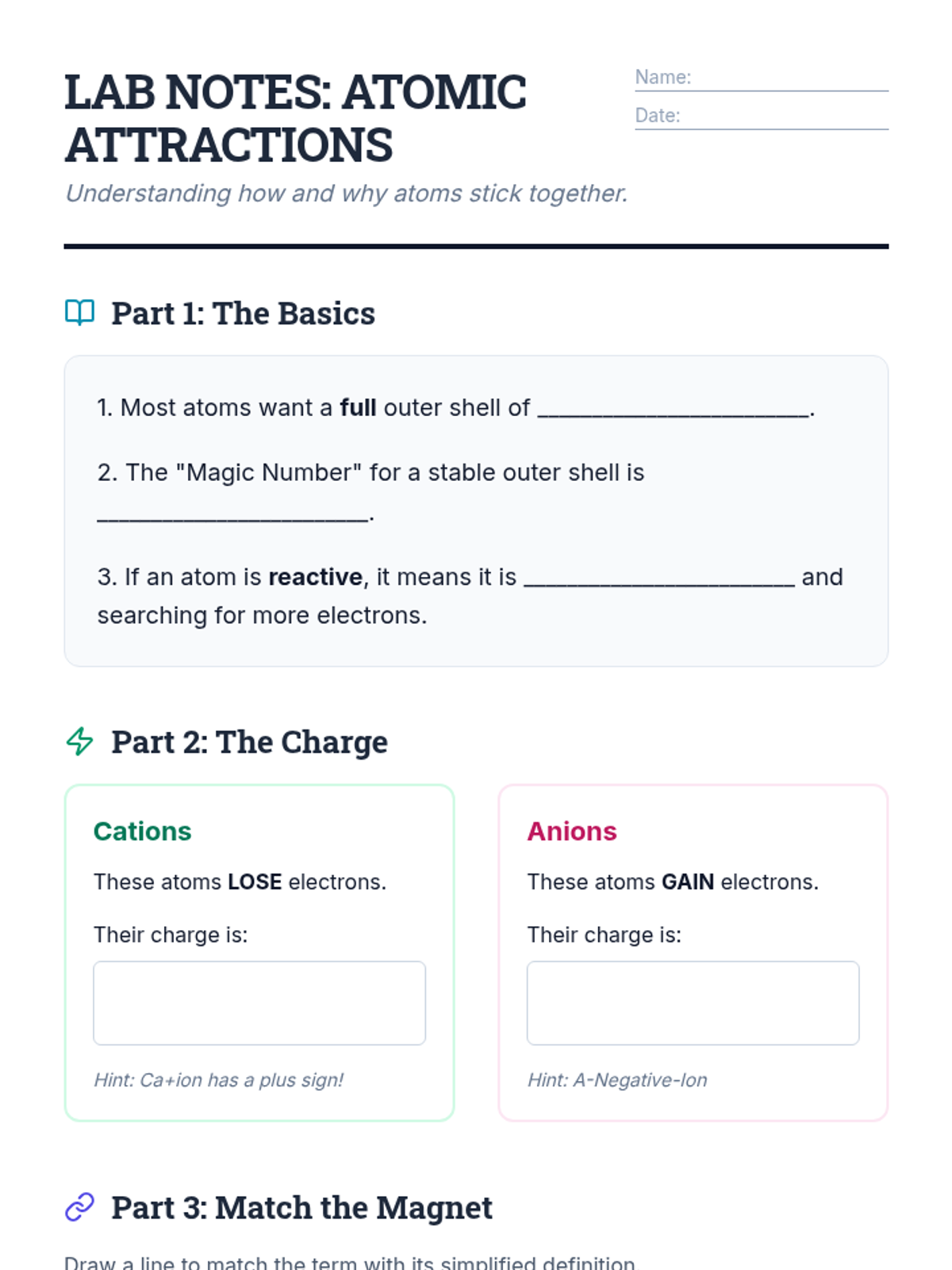
Guided notes and worksheet for students to complete while following the presentation. Includes vocabulary matching and a space for illustrating ionic bonds.
A set of educational slides about atomic reactivity, ions, and ionic bonding. Uses simplified text and bold visuals to support lower reading levels.
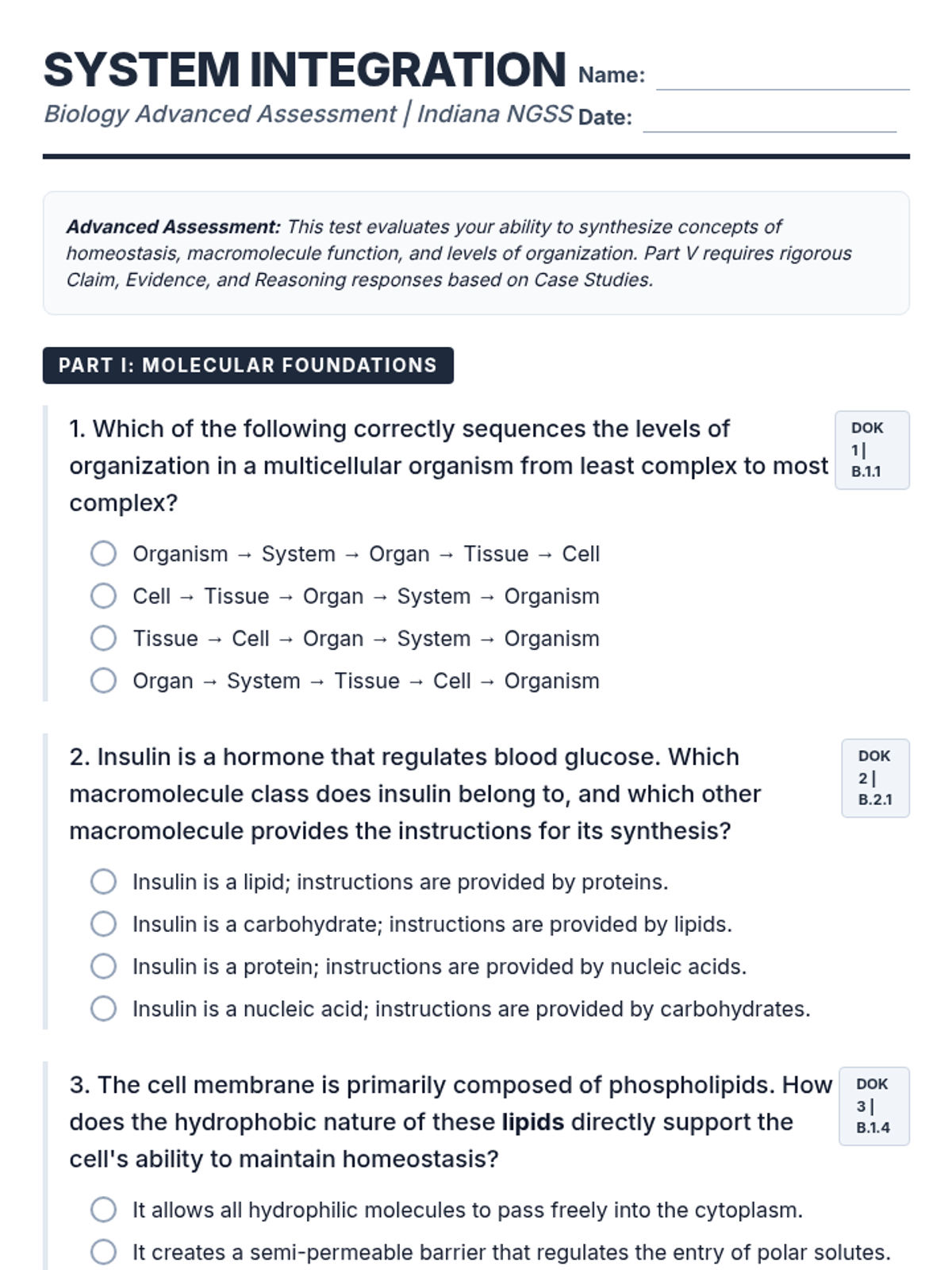
A comprehensive 37-item Biology assessment focusing on Indiana standards for homeostasis and macromolecules. It features a majority of DOK 2 and 3 questions, authored contiguously with items on atoms, enzymes, and cell transport. Part V includes extended reading passages (case studies) with integrated data for high-rigor CER synthesis. Revised for optimal page breaks.
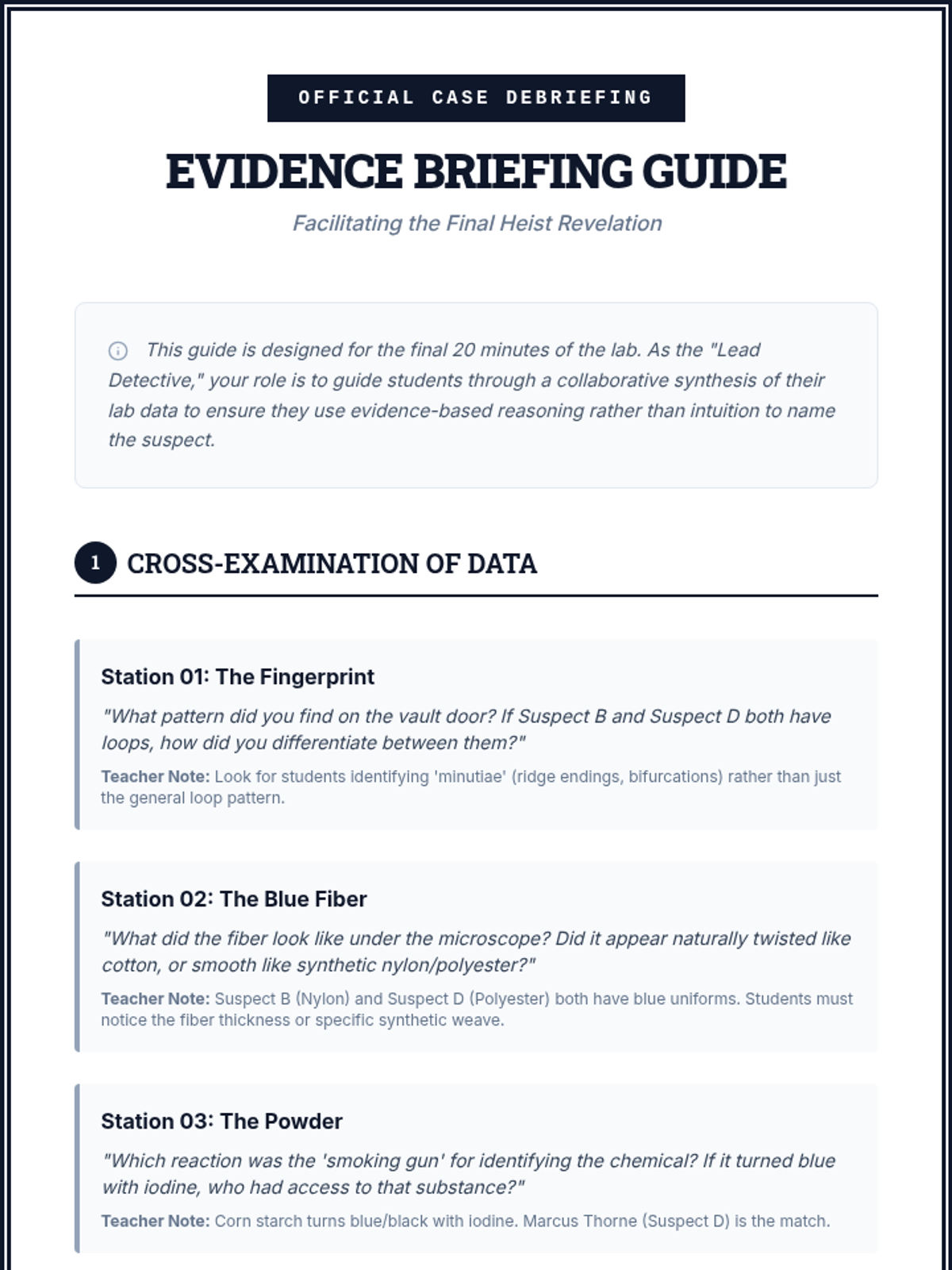
A teacher-facing discussion guide to facilitate the final debrief of the Detective Lab heist. It provides high-order questioning prompts for each evidence station and a framework for students to synthesize their findings into a final case presentation.
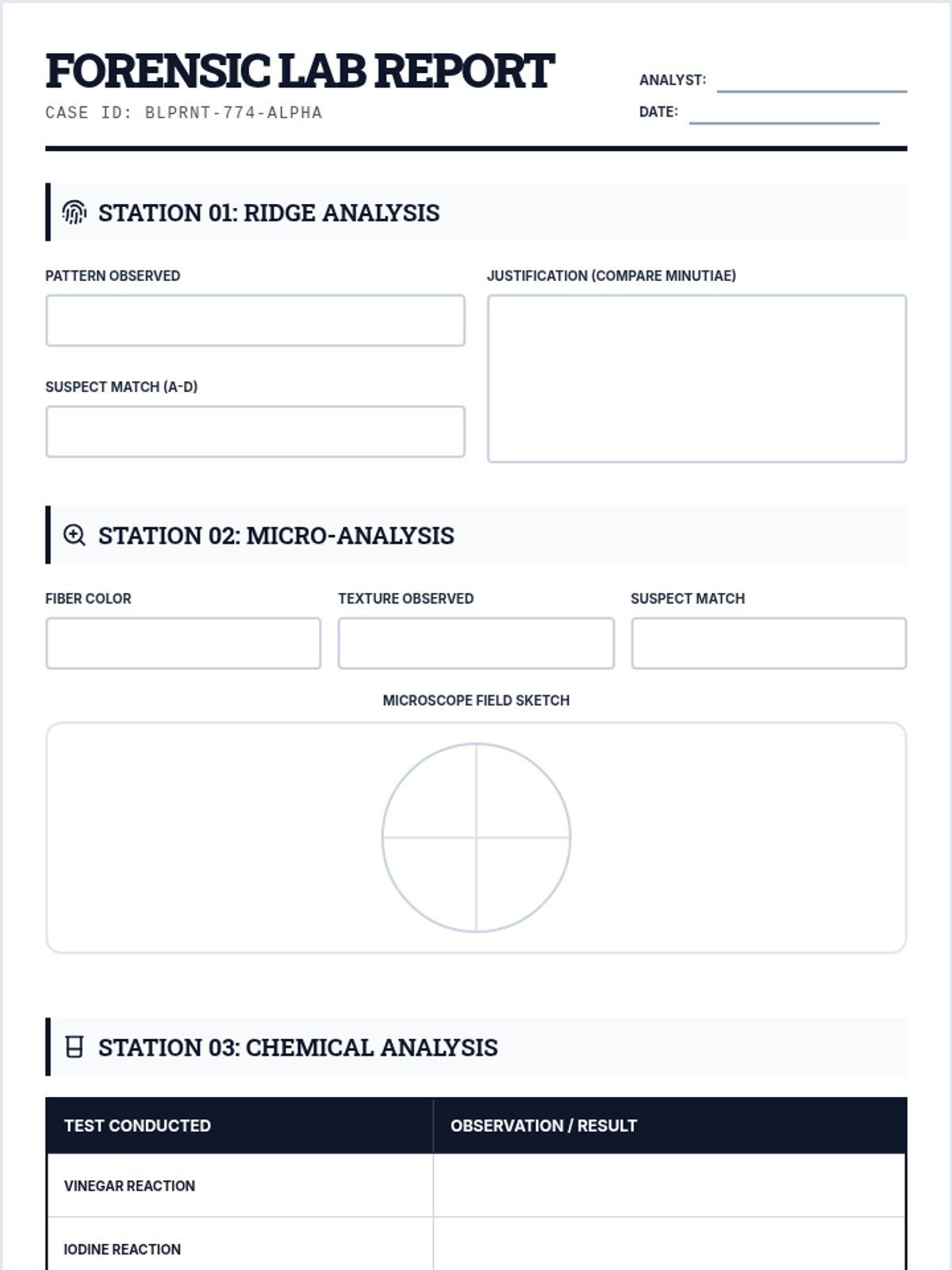
A structured student lab report for recording forensic data. It includes dedicated sections for fingerprint analysis, microscope sketches for fiber identification, chemical reaction tables, and a correlation matrix to help students synthesize their findings into a final verdict.
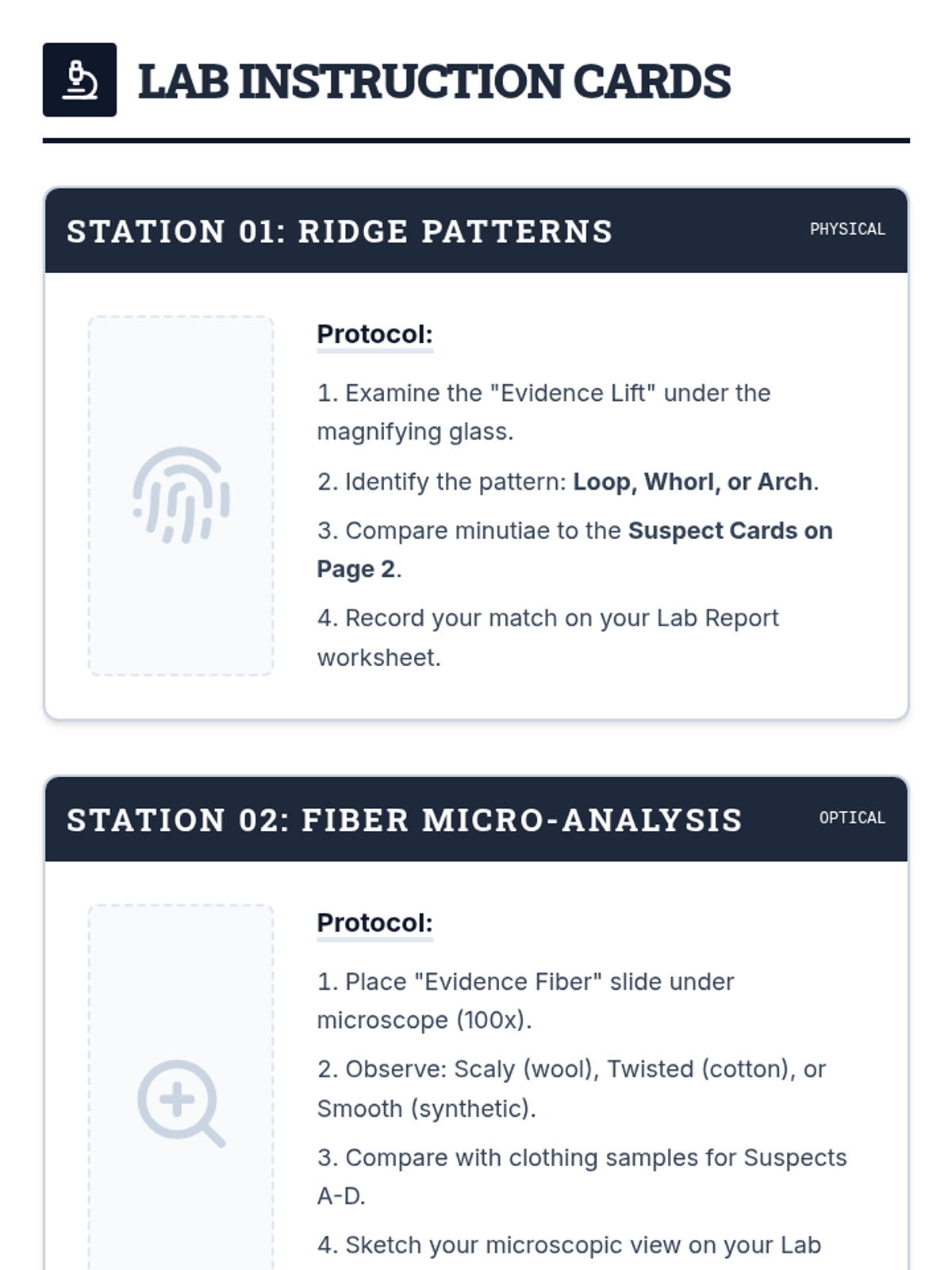
Lab station instruction cards and suspect physical reference guides for the Detective Lab activity. Includes clear scientific protocols for fingerprinting, fiber analysis, and chemical testing, along with a substance identification key.
Instructional slide deck for the Detective Lab, presenting the heist scenario, introducing the four suspects with their physical profiles, and explaining Locard's Exchange Principle to ground the forensic analysis.
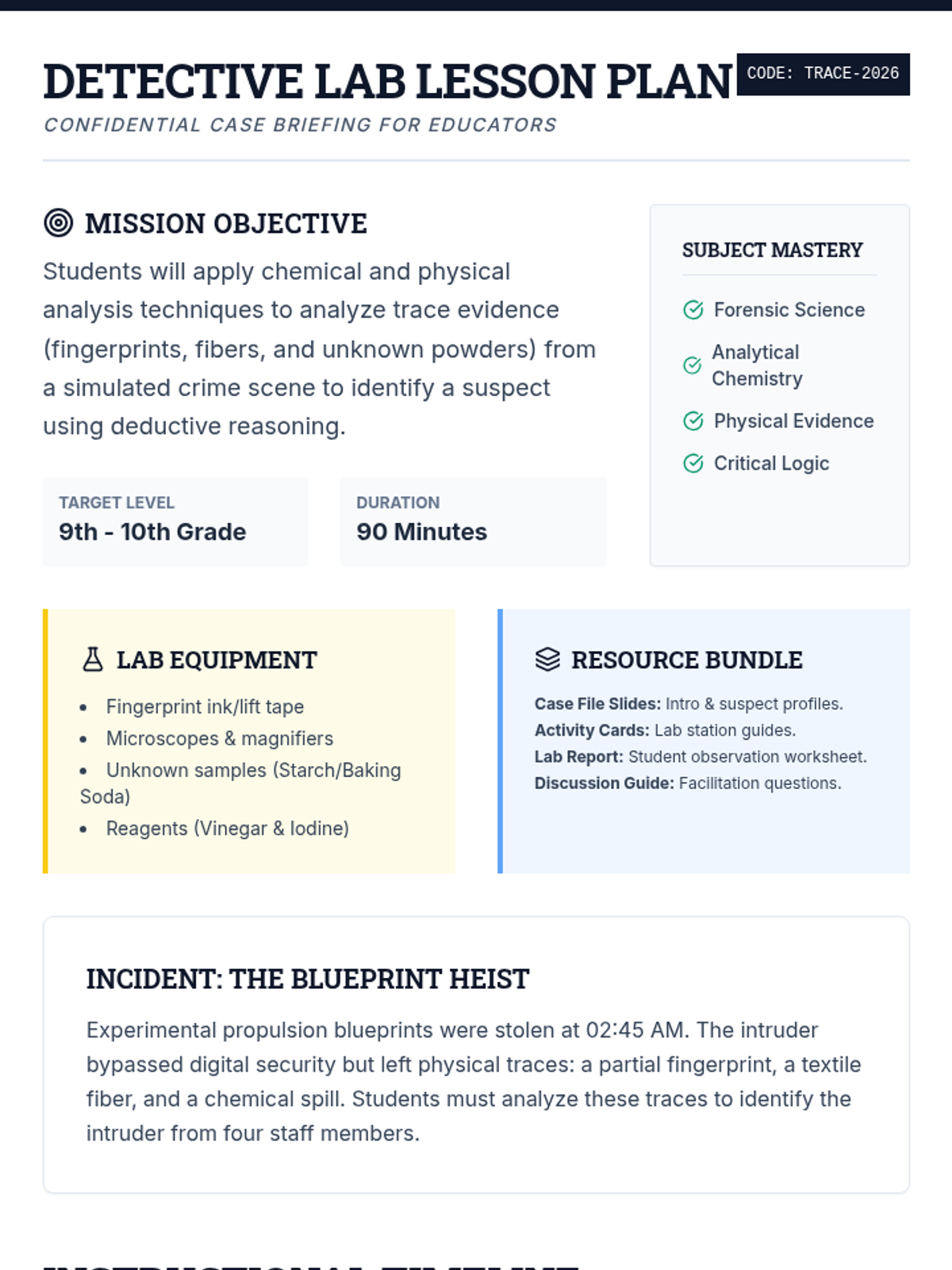
A comprehensive teacher lesson plan for the Detective Lab, including mission objectives, a detailed 90-minute timeline, lab preparation tips, and differentiation strategies for forensic science instruction.
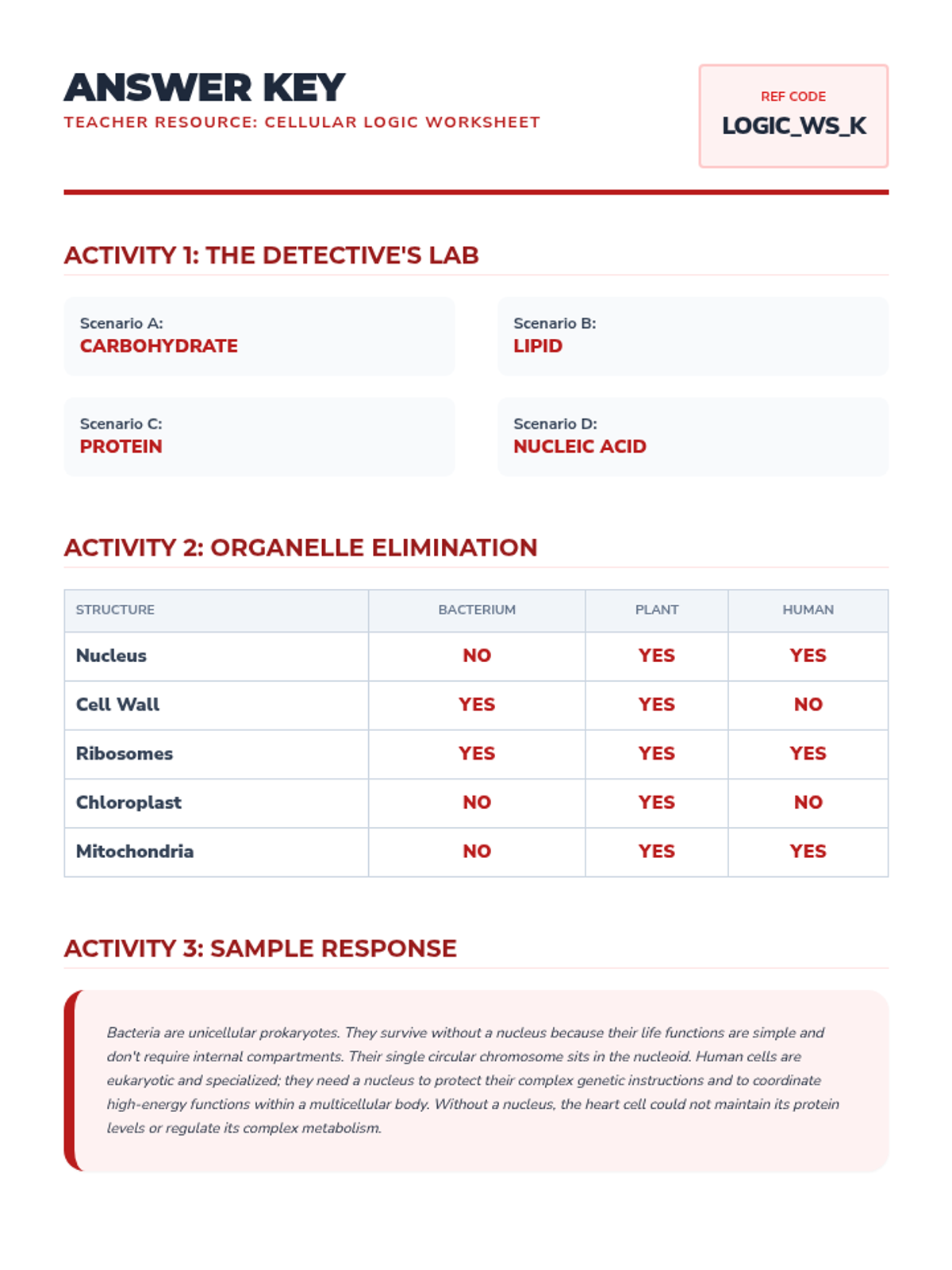
A teacher answer key for the Cellular Logic Worksheet with correct scenario identifications, table answers, and sample short-answer responses.
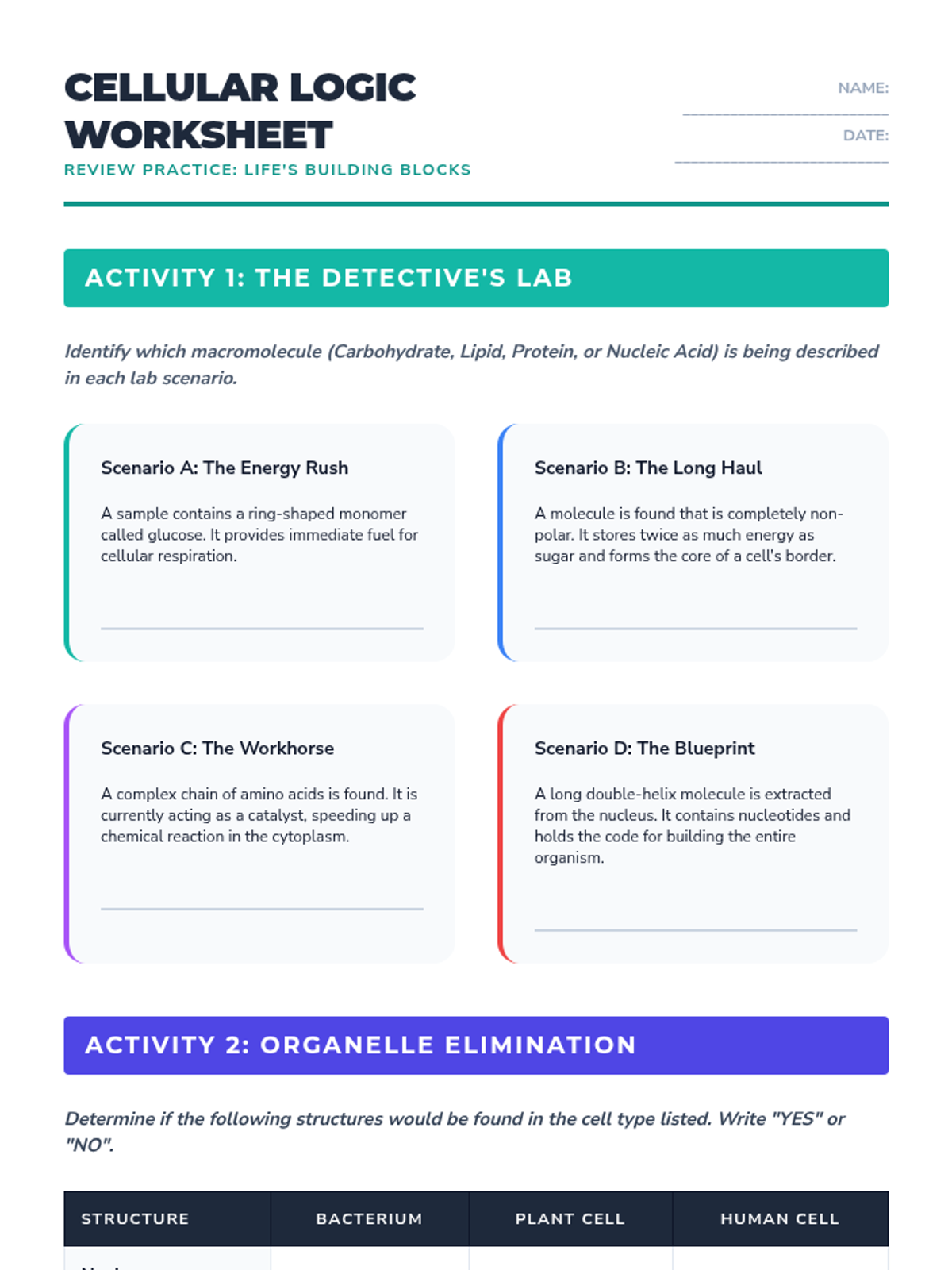
A practice worksheet with logic-based scenarios and comparison tables to reinforce concepts of macromolecules and cell types.
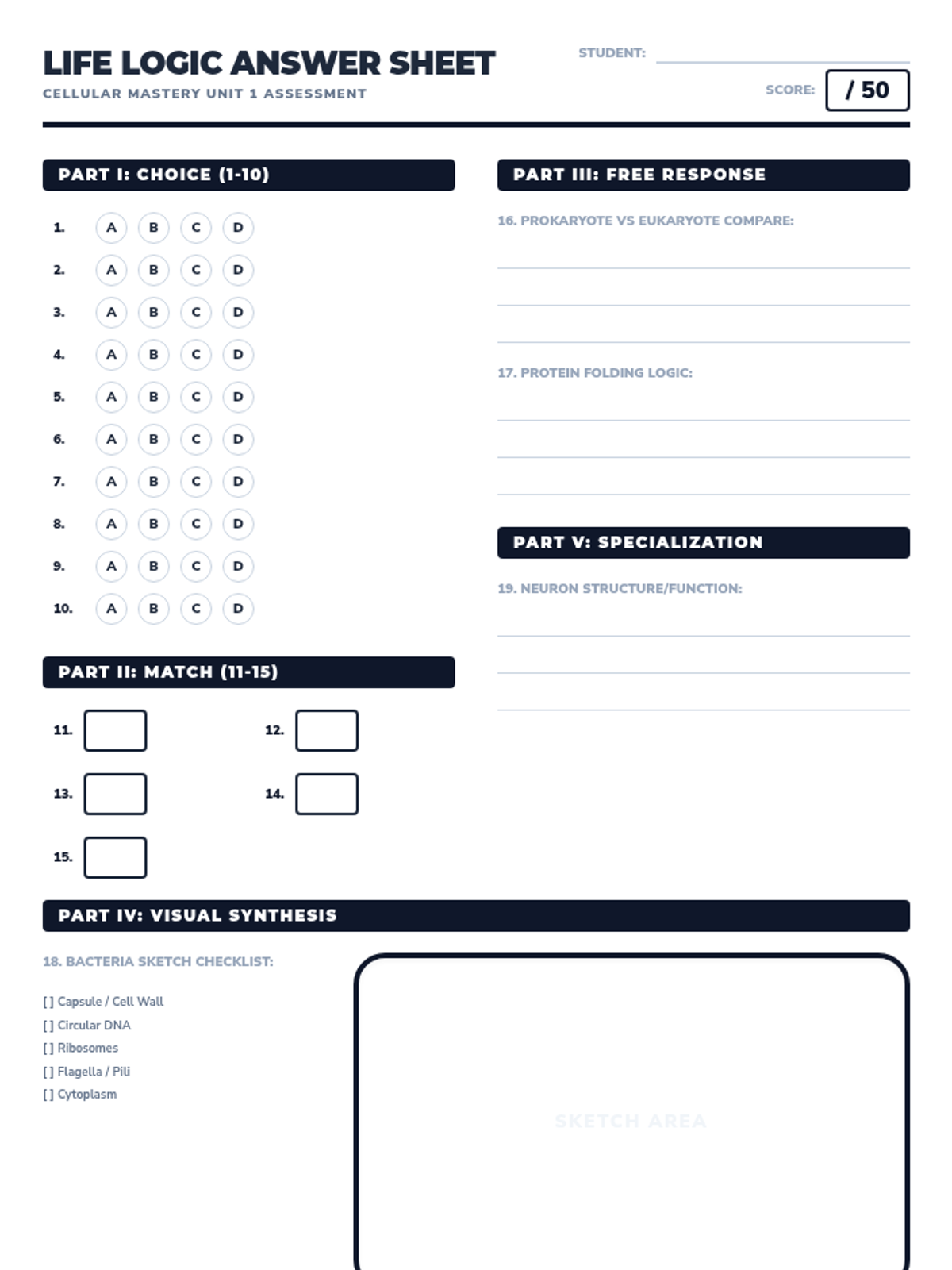
A clean, student-facing answer sheet for the Cellular Mastery Test, allowing for easy grading and the reuse of test booklets.
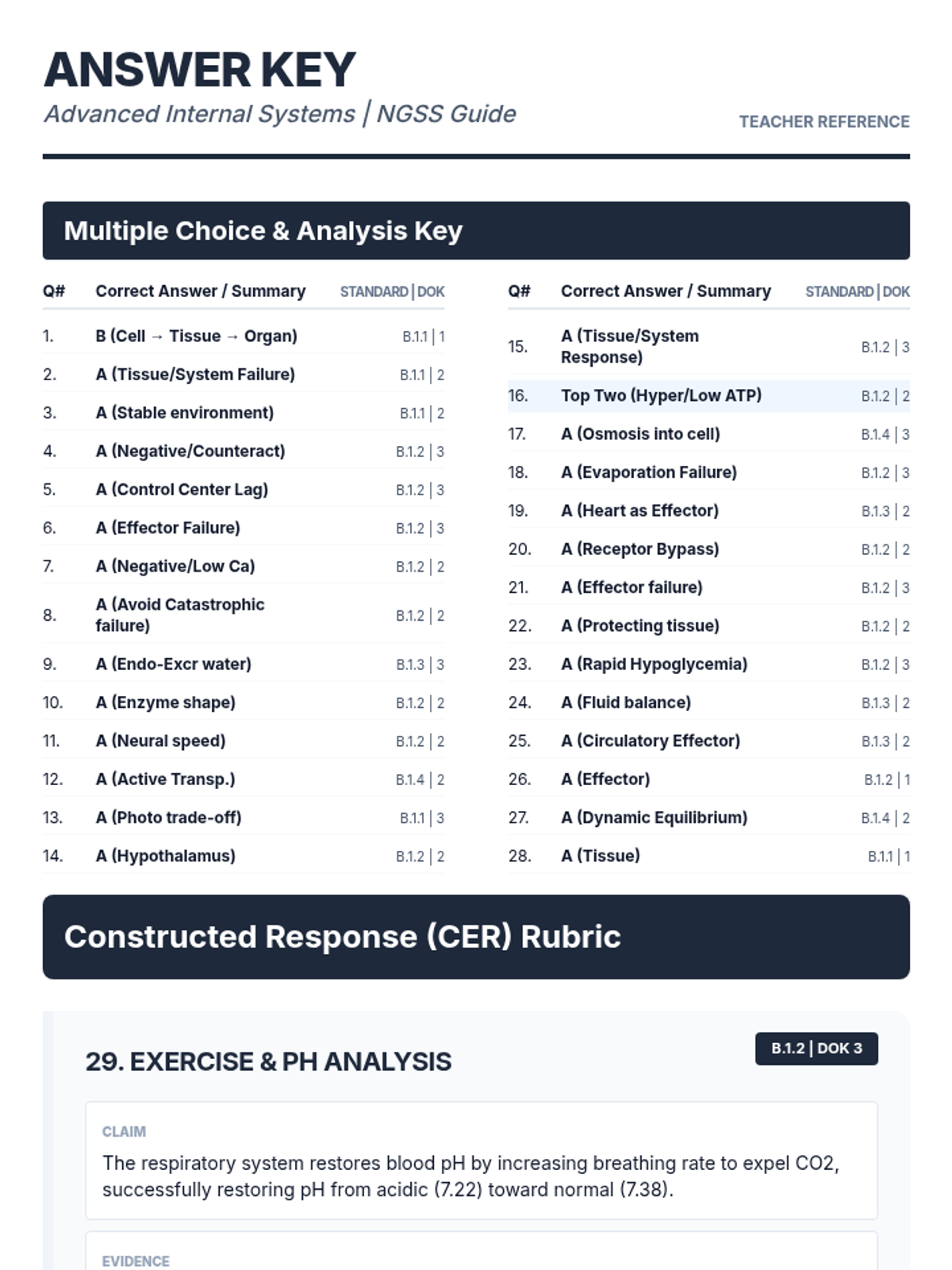
Answer key for the Advanced Internal Systems Biology Assessment. Features standard-aligned summaries, DOK levels, and comprehensive CER scoring rubrics for high-level data analysis scenarios. All 30 items included. Column headers standardized. CER reasoning sections are properly formatted to stay on one page.
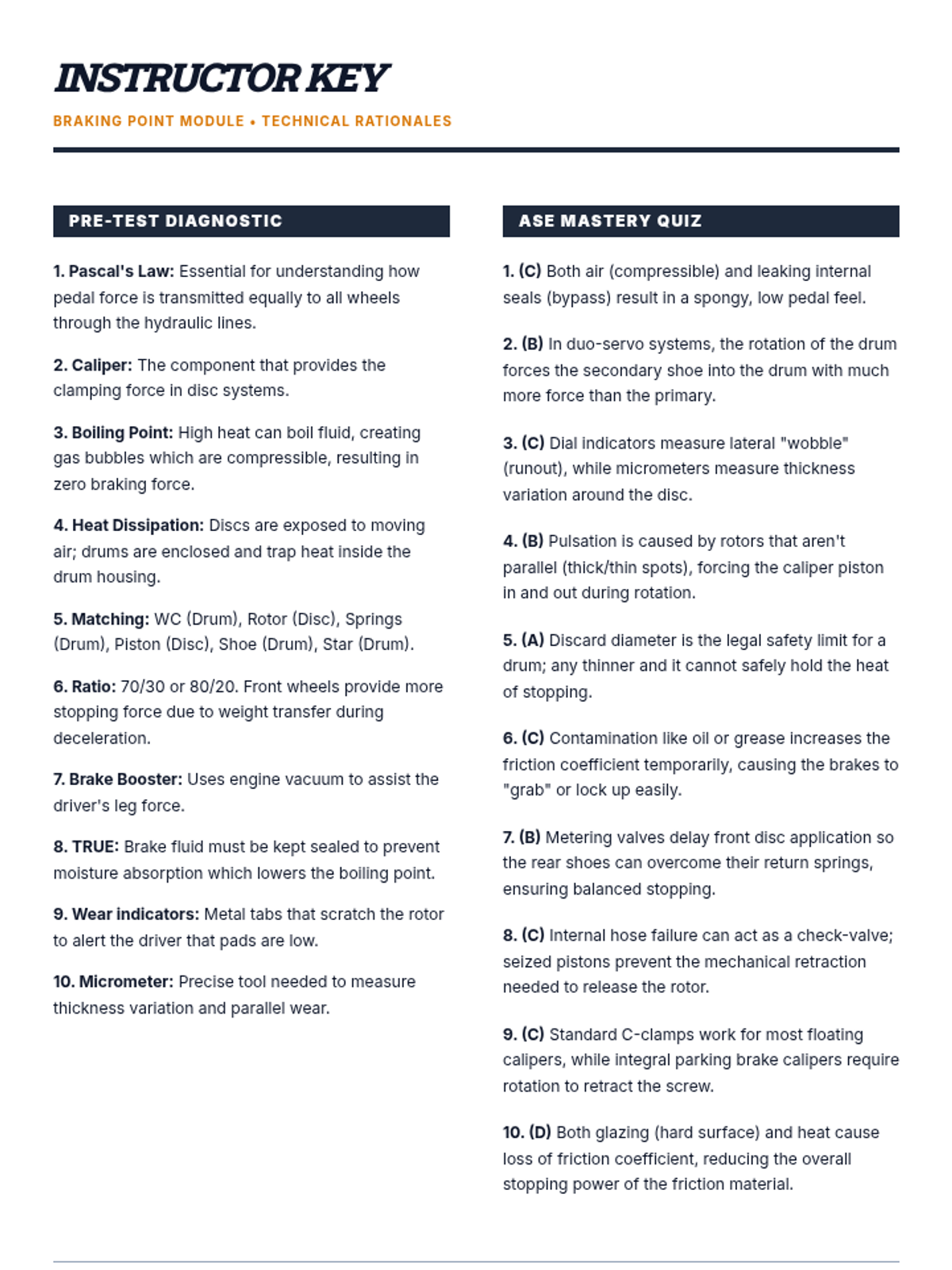
Comprehensive instructor answer key for the Braking Point pre-test and ASE mastery quiz, including technical rationales for each answer choice.