A visual presentation for the Wave Energy Lab, including embedded video demonstration, clear instructions for the transverse and longitudinal challenges, and reflection prompts.
A pacing and facilitation guide for teachers to lead the 45-minute MythBusters launch lesson, including hooks, discussion prompts, and differentiation strategies.
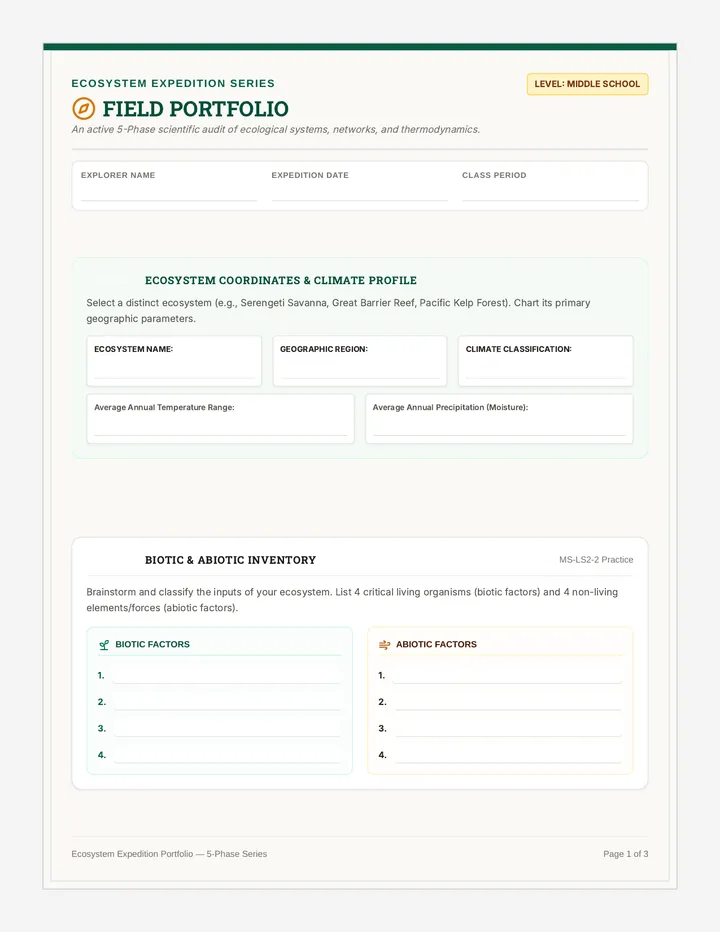
A comprehensive 3-page investigative packet for students to document their planning steps, record field data/observations, and present their final verdict based on evidence.
A formal project proposal worksheet for students to document their selected myth, justify why it is verifiable, and state their initial hypothesis.
A 5-slide introductory presentation to launch the MythBusters project, outlining criteria for selecting myths and the steps of the investigation process.
A final unit exit ticket for assessing cumulative student understanding of bioluminescence concepts.
A student worksheet for exploring strategies like counter-illumination (camouflage), burglar alarms (defense), and mating signals.
A teacher facilitation guide for Lesson 3, focusing on the social and defensive uses of light in nature, including discussion prompts and a classroom activity guide.
Exploring strategies like counter-illumination (camouflage), burglar alarms (defense), and mating signals.
A quick check for Lesson 2 to assess student understanding of the chemical components of bioluminescence.
A student activity sheet for labeling the chemical equation and predicting reactions.
A teacher facilitation guide for Lesson 2, including background chemistry on the bioluminescent reaction and a classroom demonstration guide using glow sticks.
Detailed breakdown of the chemical reaction behind bioluminescence, exploring the roles of luciferin, luciferase, and oxygen in creating "cold light."
A quick exit ticket for assessing student understanding of bioluminescence and deep-sea survival adaptations.
A student worksheet for exploring ocean zones and identifying the unique bioluminescent adaptations of deep-sea creatures.
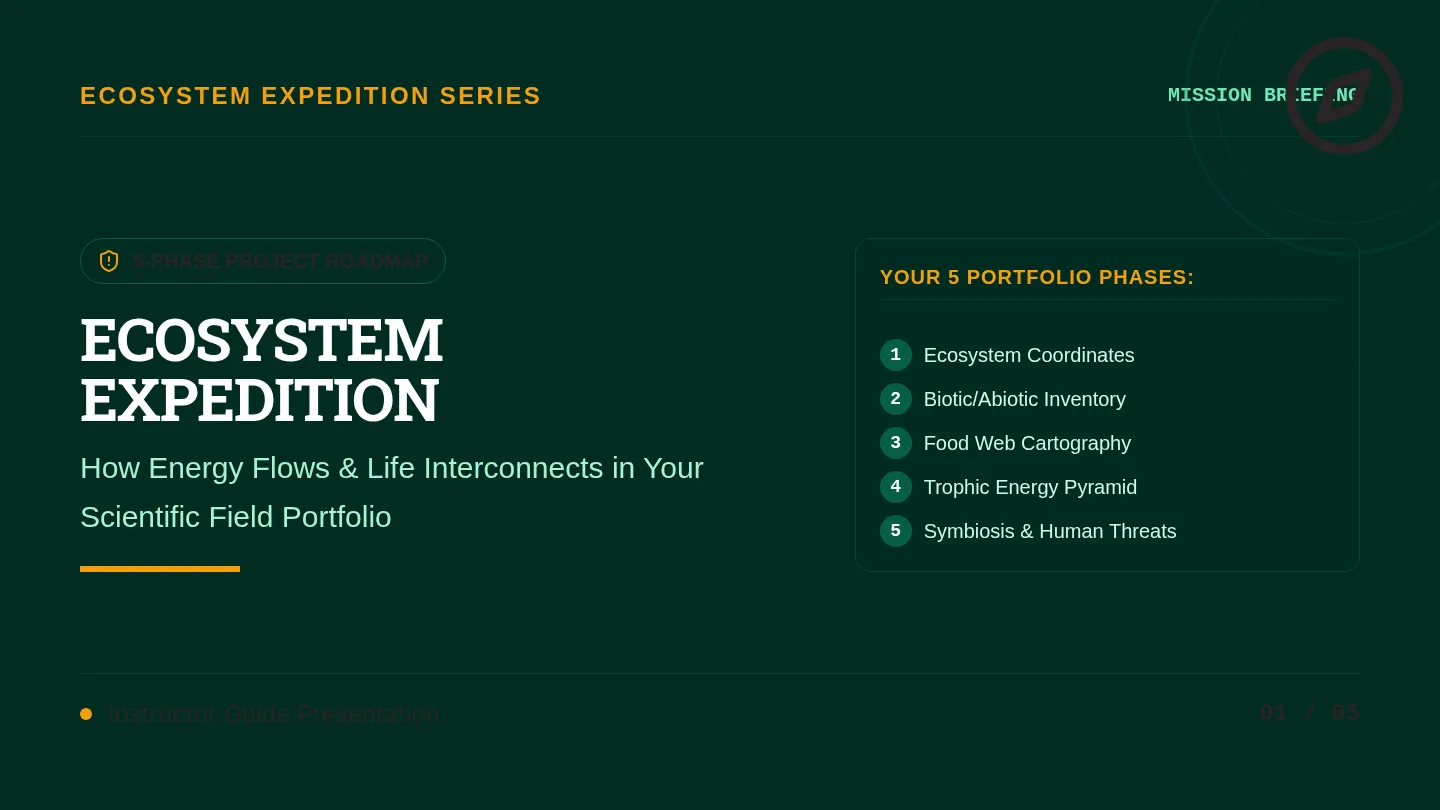
An engaging visual presentation exploring the midnight zone of the ocean and the fascinating ways deep-sea organisms use bioluminescence for survival.
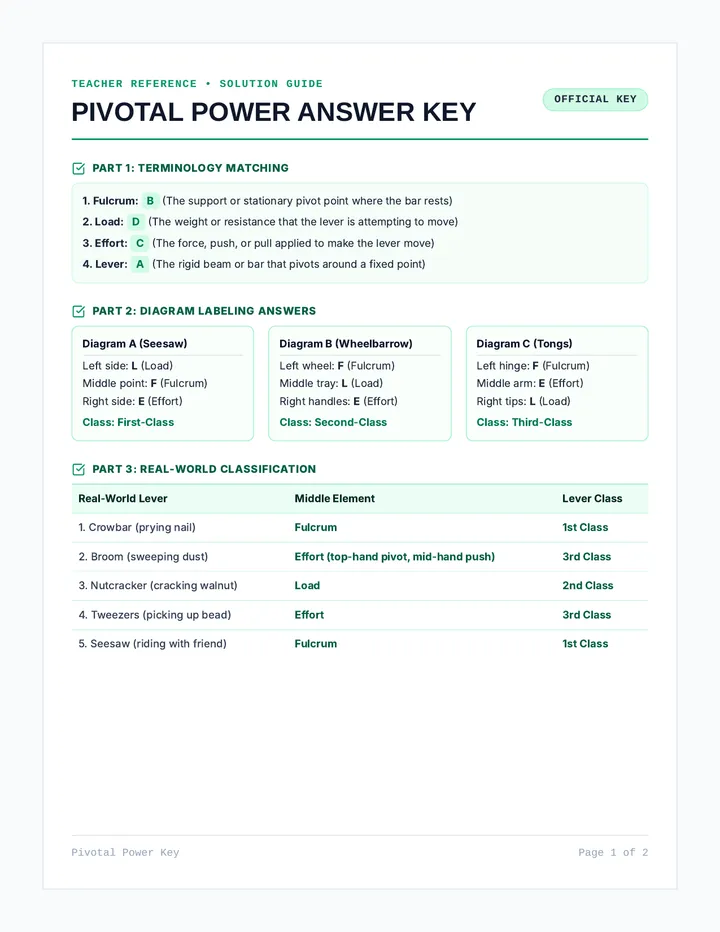
A comprehensive teacher facilitation guide for the "Deep Sea Spark" lesson, including pacing, discussion prompts, key vocabulary, and an answer key for student materials.
Gabarito detalhado para a folha de atividades "Exploradores do Tempo", fornecendo respostas corretas e explicações adicionais para o professor.
Folha de atividades para estudantes sobre a origem da vida, incluindo questões de múltipla escolha, verdadeiro ou falso, análise de experimentos e espaço para escrita.
Uma apresentação de slides visualmente impactante sobre a origem da vida, cobrindo abiogênese, biogênese, Terra primitiva e o experimento de Miller-Urey.
Um plano de aula detalhado para o professor, incluindo objetivos de aprendizagem, alinhamento com a BNCC, materiais necessários e uma sequência didática para duas aulas sobre a origem da vida.
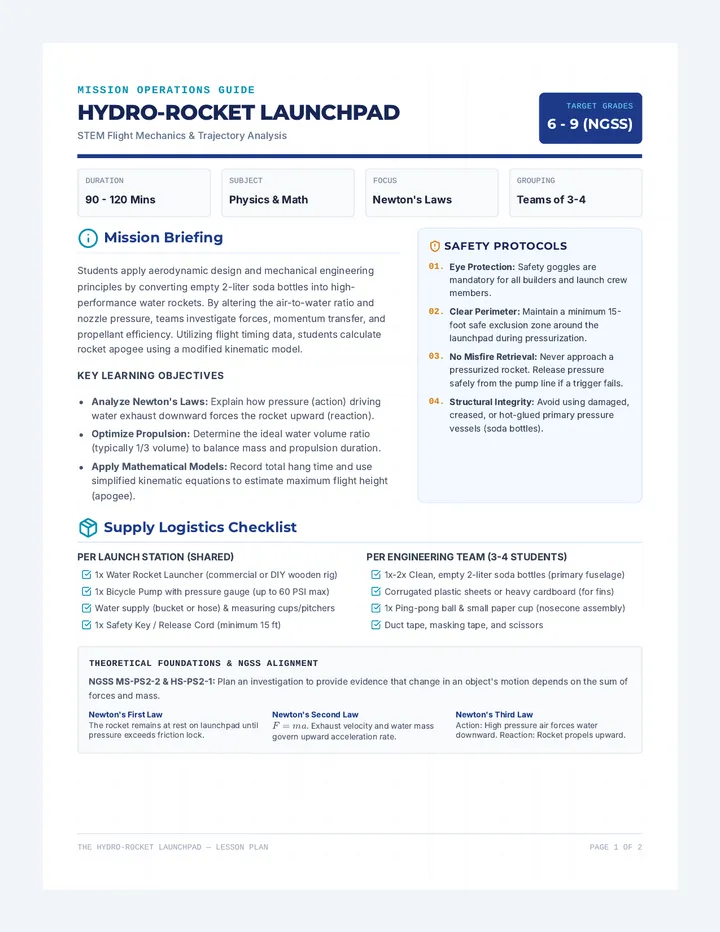
An extension worksheet for early finishers featuring three 'Missions' that apply Newton's Laws to complex scenarios like semi-truck acceleration, deep space motion, and rocket propulsion.
A teacher facilitation guide for the 15-minute Newton intervention. It includes a pacing timeline, specific probing questions for each phase, and a list of common 8th-grade misconceptions regarding force and motion.
A two-page student activity sheet featuring a quick 'Inertia Snap' lab and a high-impact visual graphic organizer. It includes a word bank and simplified instructions for students requiring reading support.
A daily operation report for engineering squads to track their design progress, material usage, and cleanup compliance.
A formal safety contract for students to sign, establishing clear expectations for tool use, lab safety, and professional conduct in the makerspace.
A comprehensive facilitation guide for teachers on how to implement the engineering roles, layout the classroom, and manage daily routines.
A high-impact classroom poster outlining the fundamental norms and cultural expectations for a collaborative engineering makerspace.
Handy role cards for engineering squads, defining the specific responsibilities for Lead Engineer, Materials Specialist, Safety Officer, and Communications Lead.
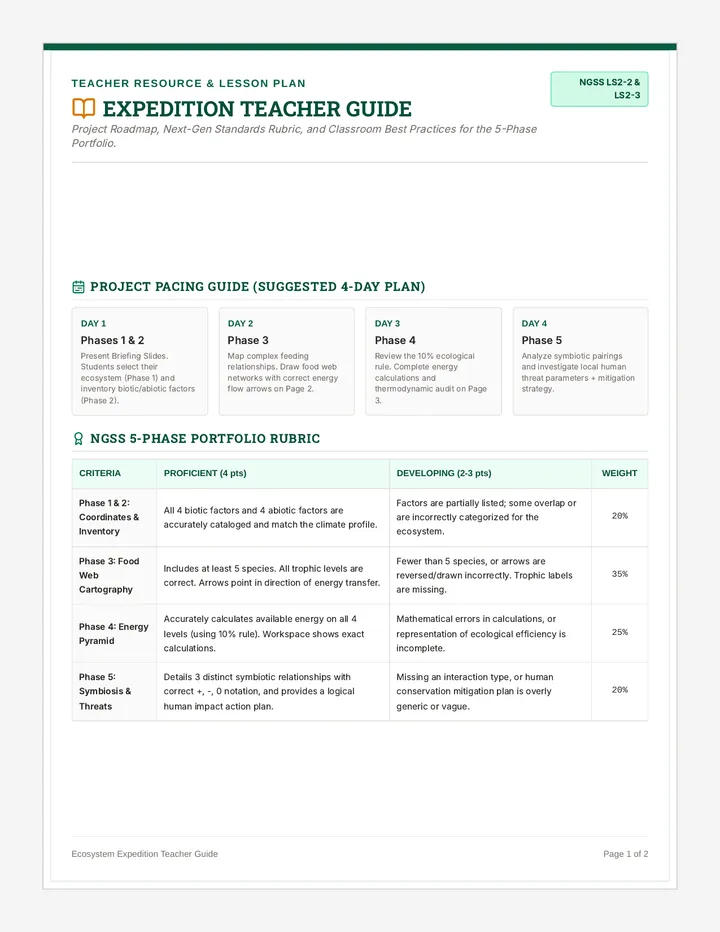
A visual slide deck outlining the physical layout, safety zones, and cleanup routines for an engineering makerspace.
A detailed mission dossier for teachers, including lesson flow, materials list, and instructional strategies for teaching the 4Cs and Computational Thinking with a cup-tower challenge.
A mission-themed field guide for students to design their tower, write their "Tower-Code" algorithm, and reflect on their use of the 4Cs and Computational Thinking.
A high-energy, mission-themed slide deck that introduces the 4Cs and Computational Thinking with a focus on a cup-tower engineering challenge.
An answer key for the Grassland Firepower Assessment, including detailed explanations for multiple choice and true/false questions, and the completed comparison table.
A student assessment covering fuel dynamics, fire behavior, and two case studies. Includes multiple choice, true/false questions, and a comparative table to check understanding of native versus invasive fuel types.
A set of instructional slides exploring the differences in fire behavior between native and invasive grasses, including two case studies: the Tallgrass Prairie and the Great Basin. The slides feature high-contrast visuals, comparative data tables, and key fire ecology terminology.
A comprehensive facilitator's guide for the wildland fuels lesson, including pacing, detailed answer keys for all student materials, and teaching tips for addressing common misconceptions.
A final formative assessment for the wildland fuels lesson, featuring multiple choice and short response questions in a field-voucher style format.
Real-world fire behavior scenarios requiring students to analyze incident reports based on fuel types, loading, and arrangement. Includes open-ended response sections for predicting rate of spread and ladder fuel risks.
A field guide-themed guided notes worksheet for students to complete during instruction. Includes a Do Now, fill-in-the-blank conceptual notes, and a ladder fuel diagramming activity.
Visual slide deck for a wildland fire behavior lesson, covering fuel classification, grass/shrub dynamics, timber/understory layers, ladder fuels, and regional variations.
A quick assessment for students to demonstrate their understanding of invasive species pathways and prevention strategies. Designed with two tickets per page for efficient printing.