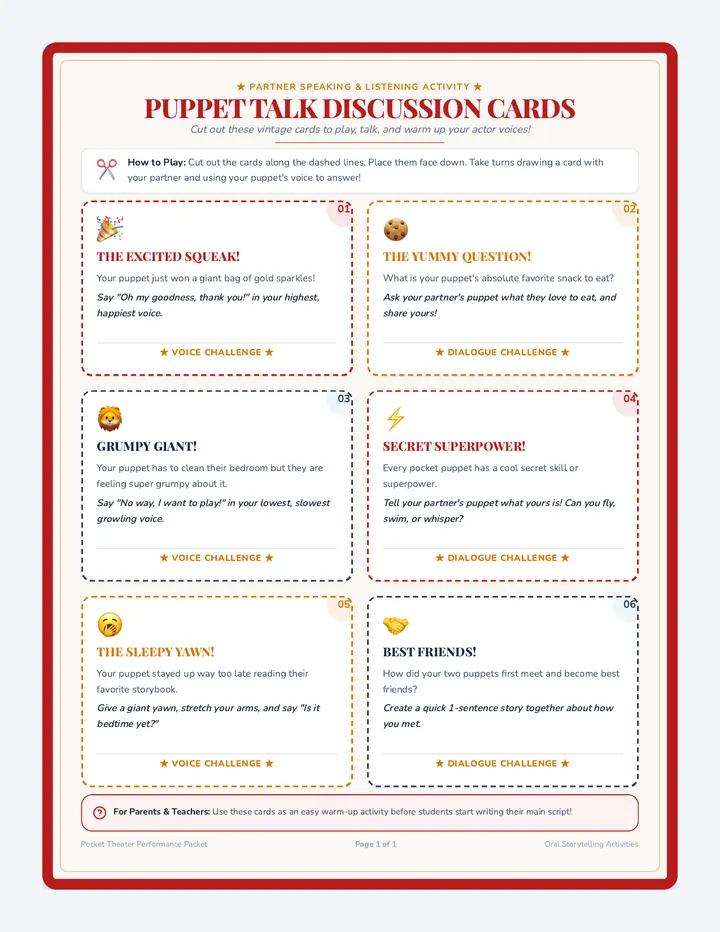
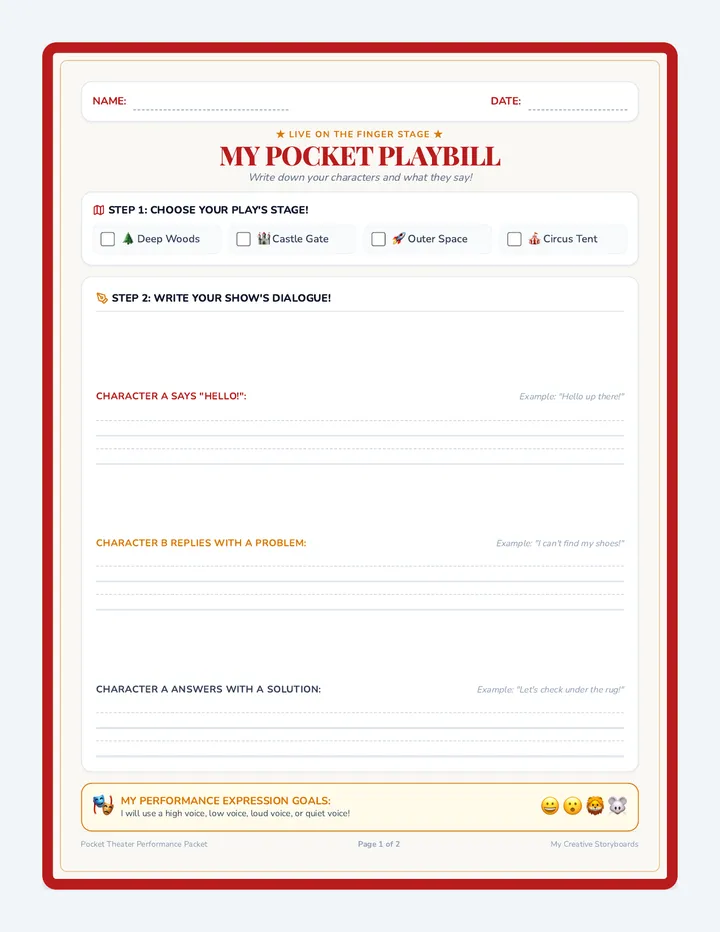
A student worksheet for practicing vocal variation, matching character archetypes to voice descriptions, and exploring facial expressions.
A one-page worksheet designed to help students write a biographical paragraph about Claude Monet using structured sentence starters based on a provided mind map. It includes large guided completion areas and a final writing space with 8 extra-large lines (48px height) for students who need more space.
Instructions for the Mystery Performance Lab, guiding students through solo reading, role assignment with tie-breakers, plot analysis, fluency practice, and final presentation.
A comprehensive 2-page follow-up worksheet for students to complete after performing or watching mystery plays. Focuses on fluency self-reflection, high-rigor character analysis, comprehension of plot devices like red herrings, and social-emotional debriefing. Optimized for print with writing lines instead of boxes. Updated terminology to "Character Change".
Six lengthened mystery/problem-solving plays featuring 4-5 characters each. Each play includes increased plot complexity, red herrings, and higher rigor dialogue focused on social-emotional conflicts. Includes a reusable analysis log template. Themes are strictly school-based with no space or weapon-related content. Every script and the analysis log are formatted to fit on a single page. Optimized with writing lines and no heavy boxes.
A student worksheet for analyzing the plot structure of a play, including sections for setting, characters, beginning, middle, end, problem, and solution. Optimized with writing lines and no heavy boxes. fits on one page.
A short model play script titled "The Missing Lunchbox" used to demonstrate play structure, characters, and dialogue. Features a friendship-based problem and solution. Dinosaur theme used for the lunchbox.
Instructional slides teaching the components of a play script (dialogue, stage directions), plot elements (beginning, middle, end, problem, solution), and fluency skills.
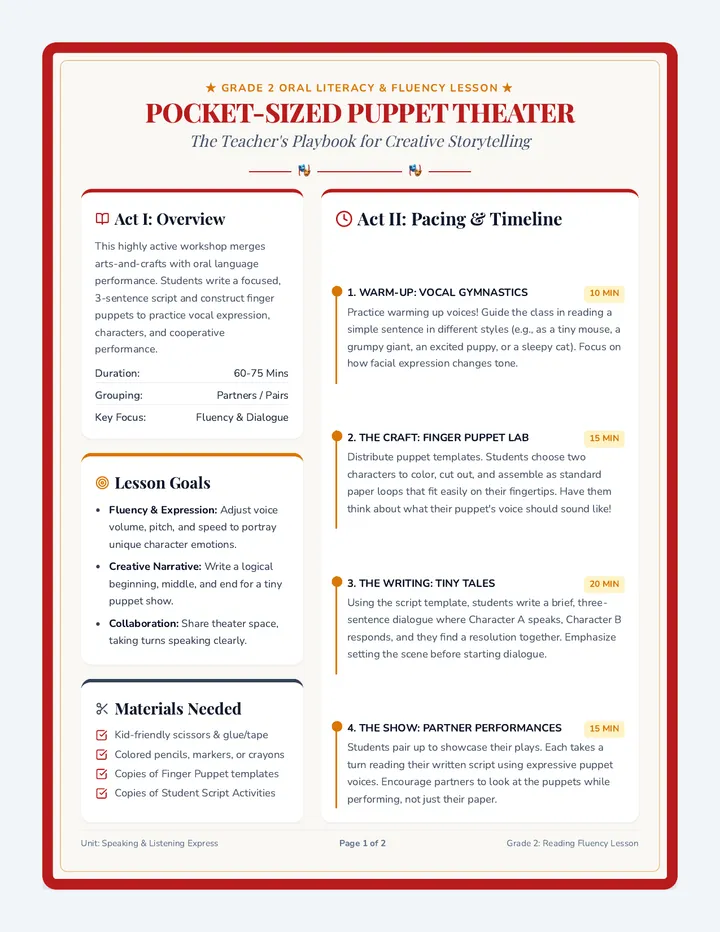
A teacher's guide for implementing reader's theater in the classroom, including pacing suggestions, instructional goals, and discussion prompts.
A spacious, easy-to-read version of the Snow Detective reader's theater script and RL.1 exit ticket, designed with larger fonts and a 2-page layout. Fits on two pages (front and back).
A spacious, easy-to-read version of the Jack Fame reader's theater script and RL.1 exit ticket, designed with larger fonts and a 2-page layout. Fits on two pages (front and back).
A spacious, easy-to-read version of the Smart Bears reader's theater script and RL.1 exit ticket, designed with larger fonts and a 2-page layout. Fits on two pages (front and back).
A spacious, easy-to-read version of the Sneaker Ella reader's theater script and RL.1 exit ticket, designed with larger fonts and a 2-page layout. Fits on two pages (front and back).
A balanced, easy-to-read version of the Wolf Kitchen reader's theater script and RL.1 exit ticket, designed with appropriate fonts and a 2-page layout to save paper while remaining accessible to young readers.
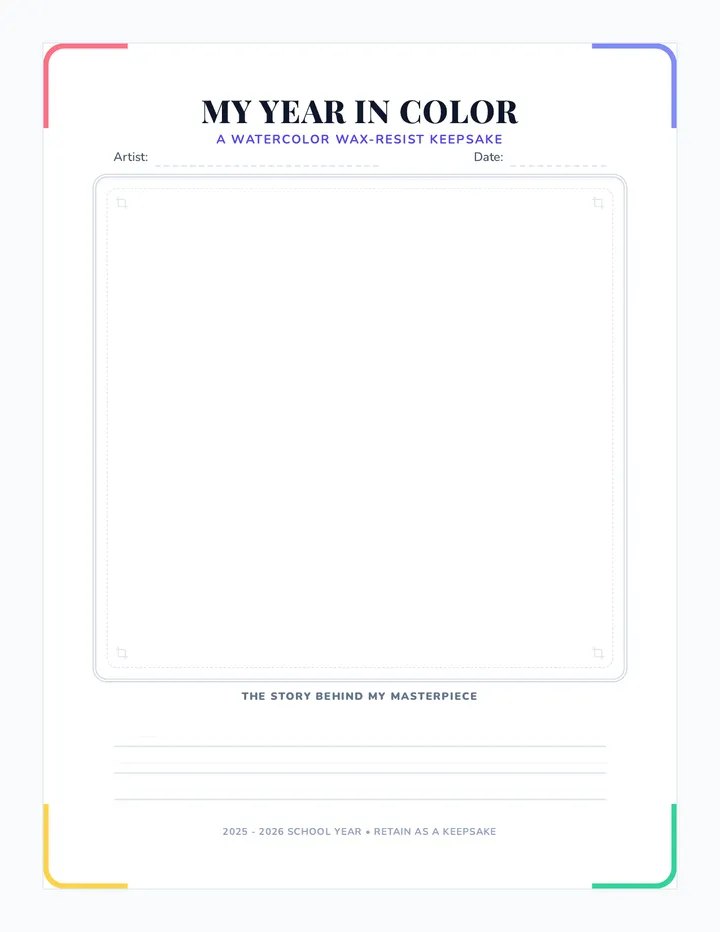
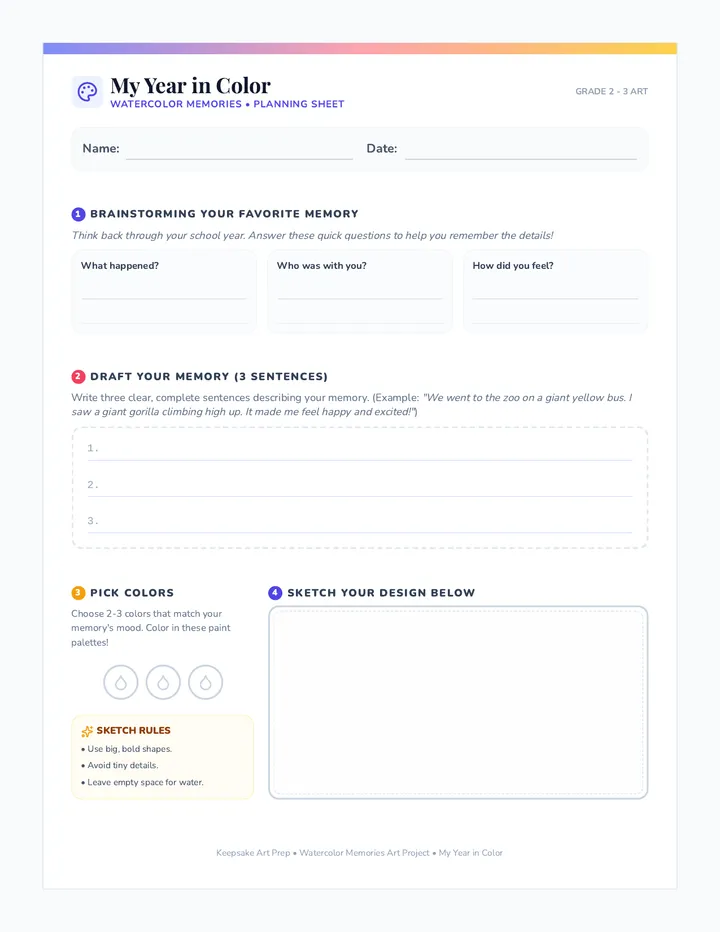
A year-end reflection portfolio page for students. It includes a sketch area for their final project, material preference checks, and written reflection prompts.