A visionary urban planning worksheet where students diagnose current civic trends, sketch infrastructure improvements on a grid-based site map, and propose 'Third Place' social connectivity solutions for Franklin Township.
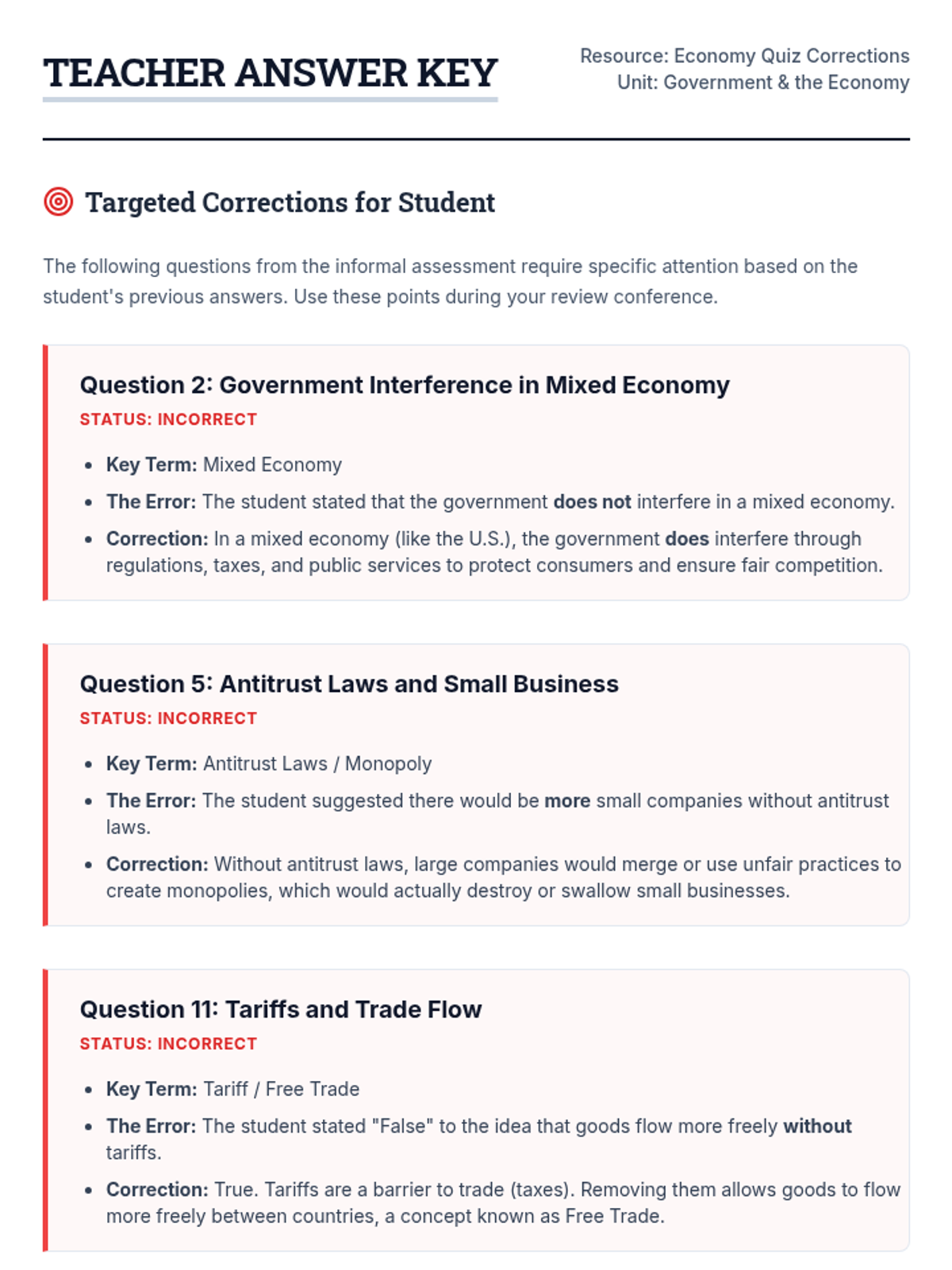
A teacher-facing answer key and support guide summarizing the student's specific errors and providing clear, corrected explanations for the "Economy Refinement" lesson.
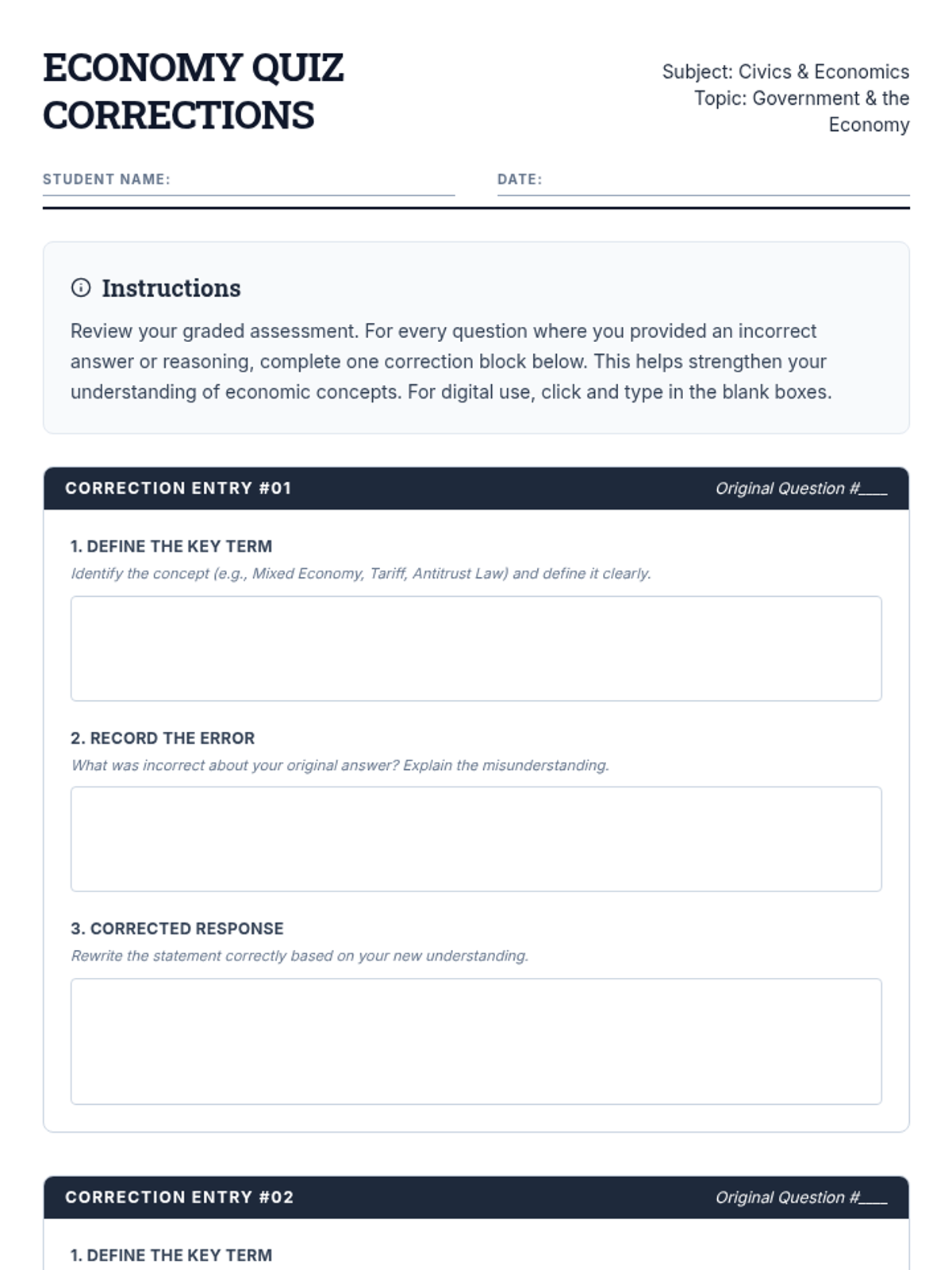
A clean, professional corrections worksheet designed for students to analyze their errors on economic concepts. Includes dedicated space for term definitions, error analysis, and corrected responses.
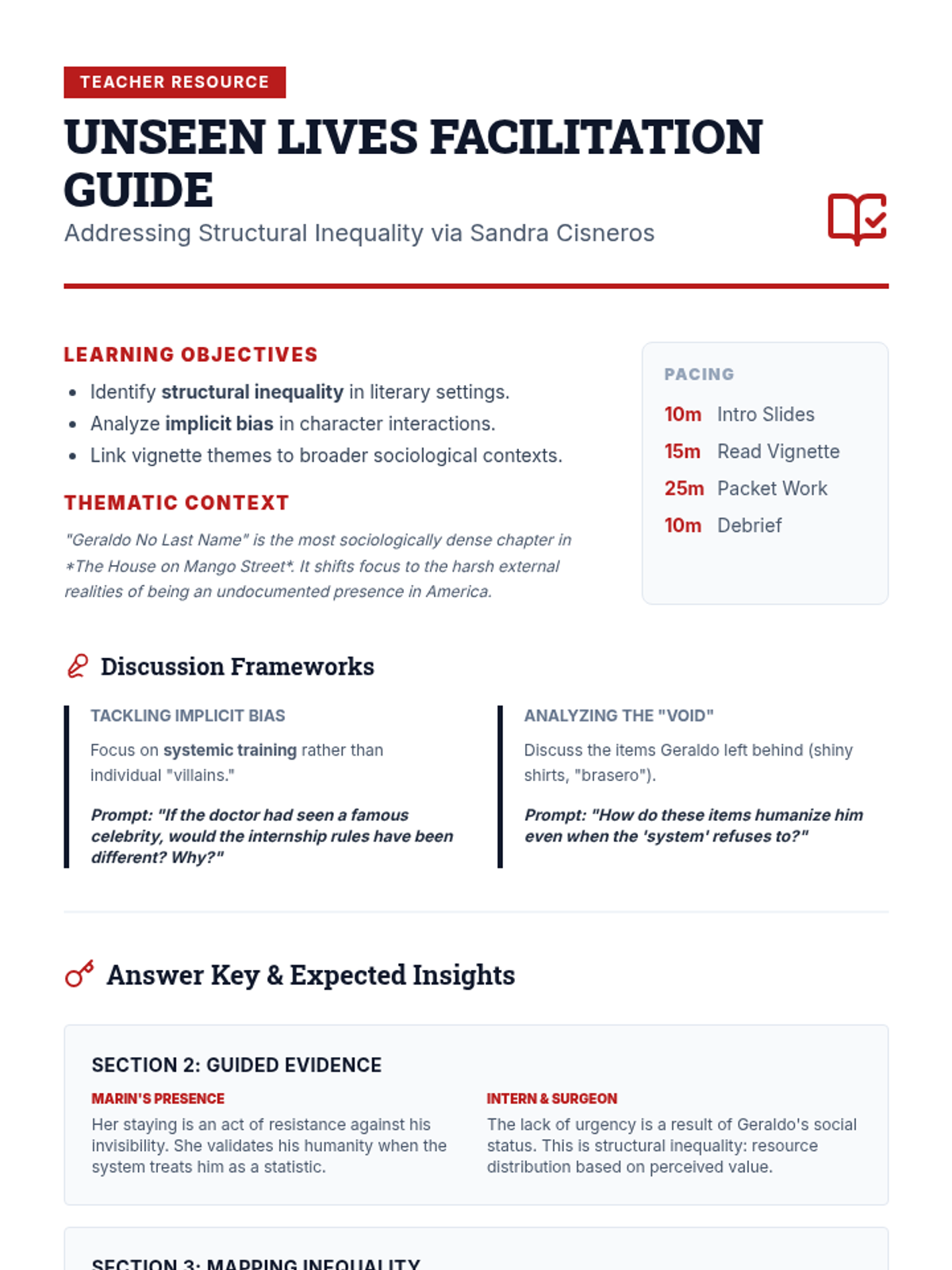
A teacher-facing facilitation guide providing instructional strategies, discussion prompts, pacing advice, and an answer key for 'The Unseen Profile' lesson. It focuses on how to handle sensitive topics like bias and systemic racism in the classroom.
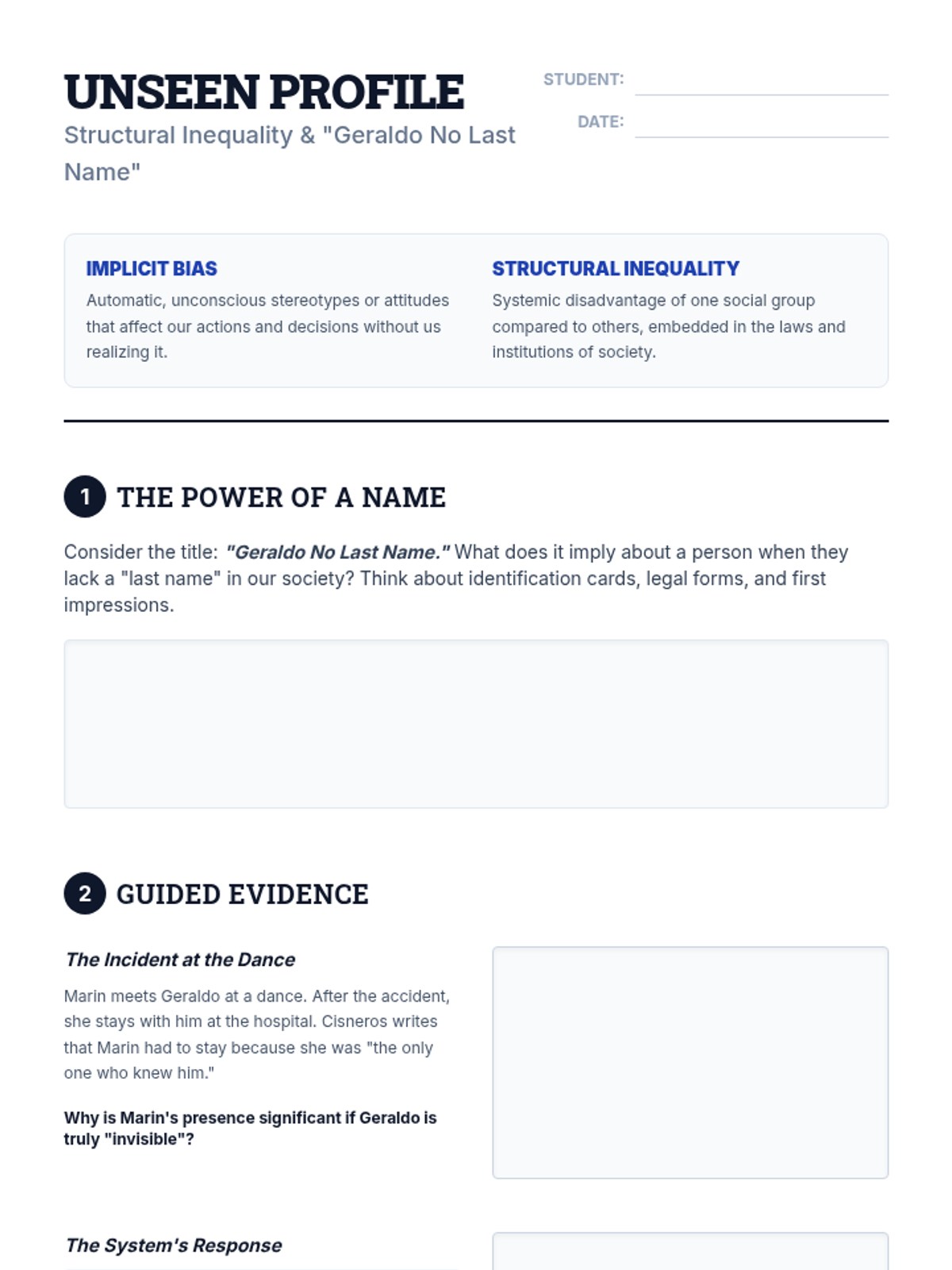
A comprehensive student document for analyzing 'Geraldo No Last Name.' It includes pre-reading activities, evidence-based analysis prompts focusing on structural inequality, and a final synthesis task. The layout is designed to feel like an official case file.
A visually engaging slide deck introducing concepts of structural inequality, implicit bias, and the sociological context of Sandra Cisneros's story. It provides definitions and discussion prompts to frame the reading.
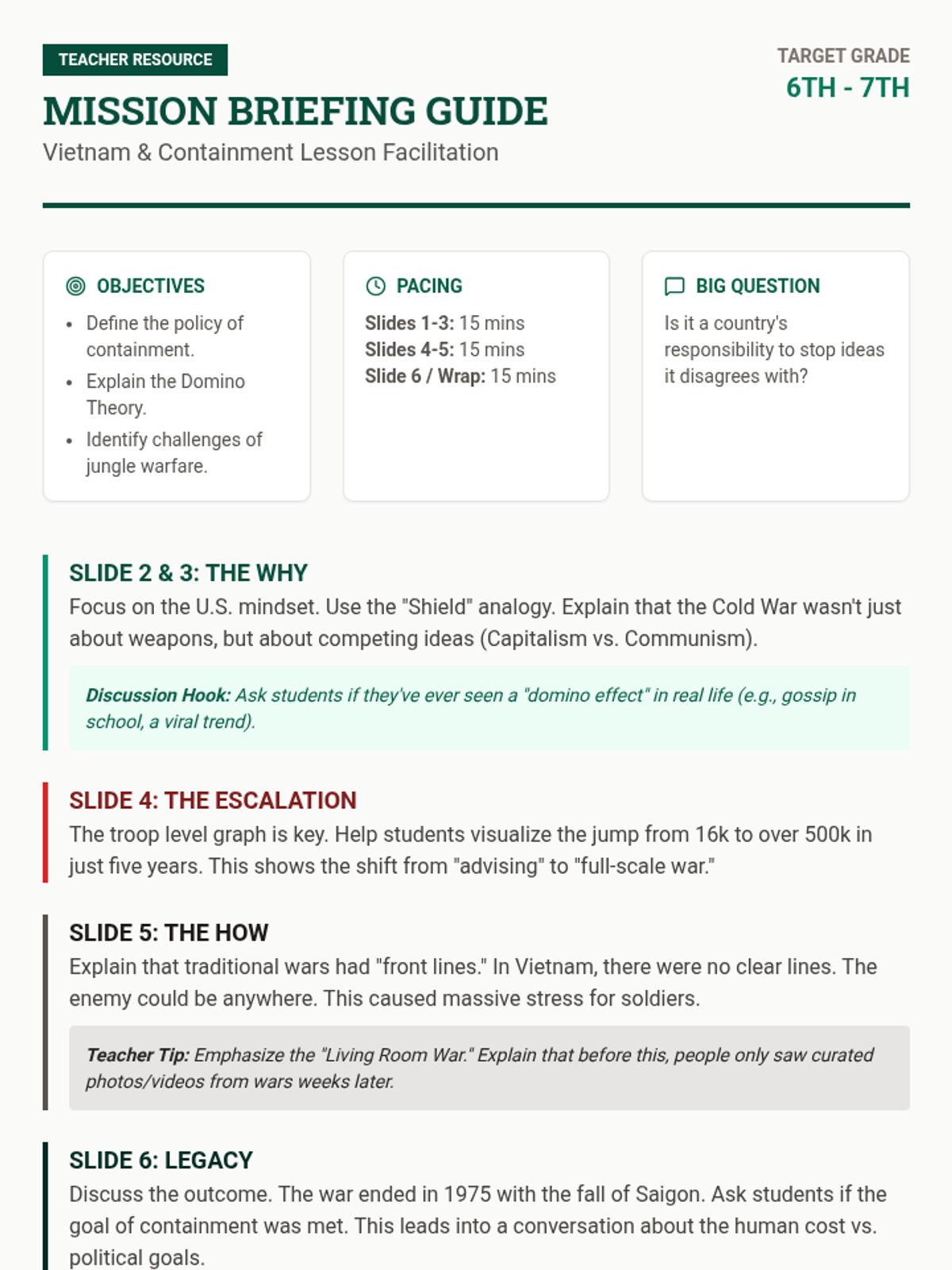
A teacher-facing guide for the Vietnam Containment lesson, providing pacing suggestions, discussion prompts, and an answer key for the student worksheet.
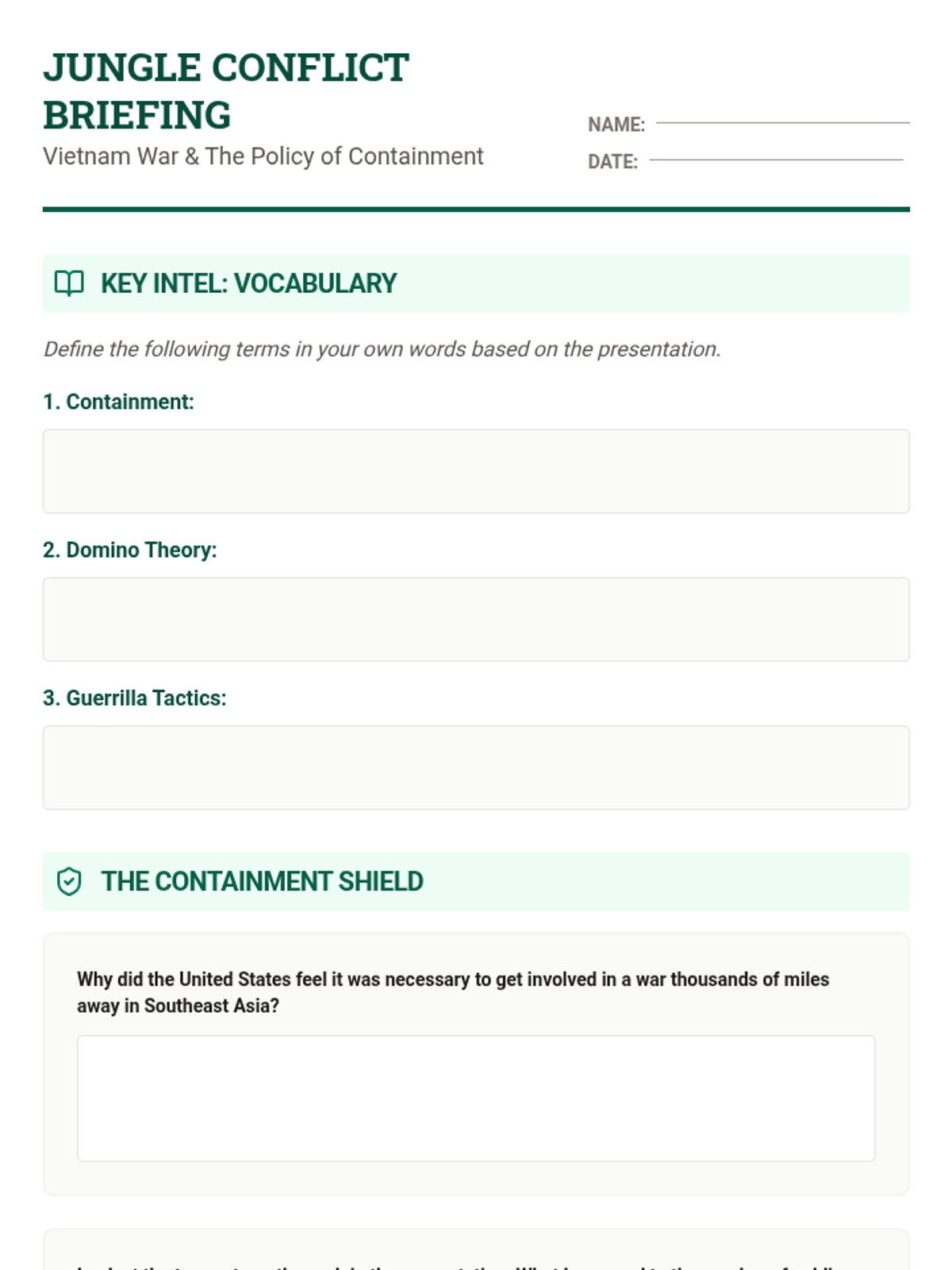
A student follow-along worksheet designed to accompany the Vietnam Containment Slides, featuring vocabulary, graphical analysis, and reflection questions.
A 6-slide presentation exploring the Vietnam War's origins through the policy of containment and the domino theory, featuring visual graphs and clear conceptual breakdowns for 6th-7th grade students.
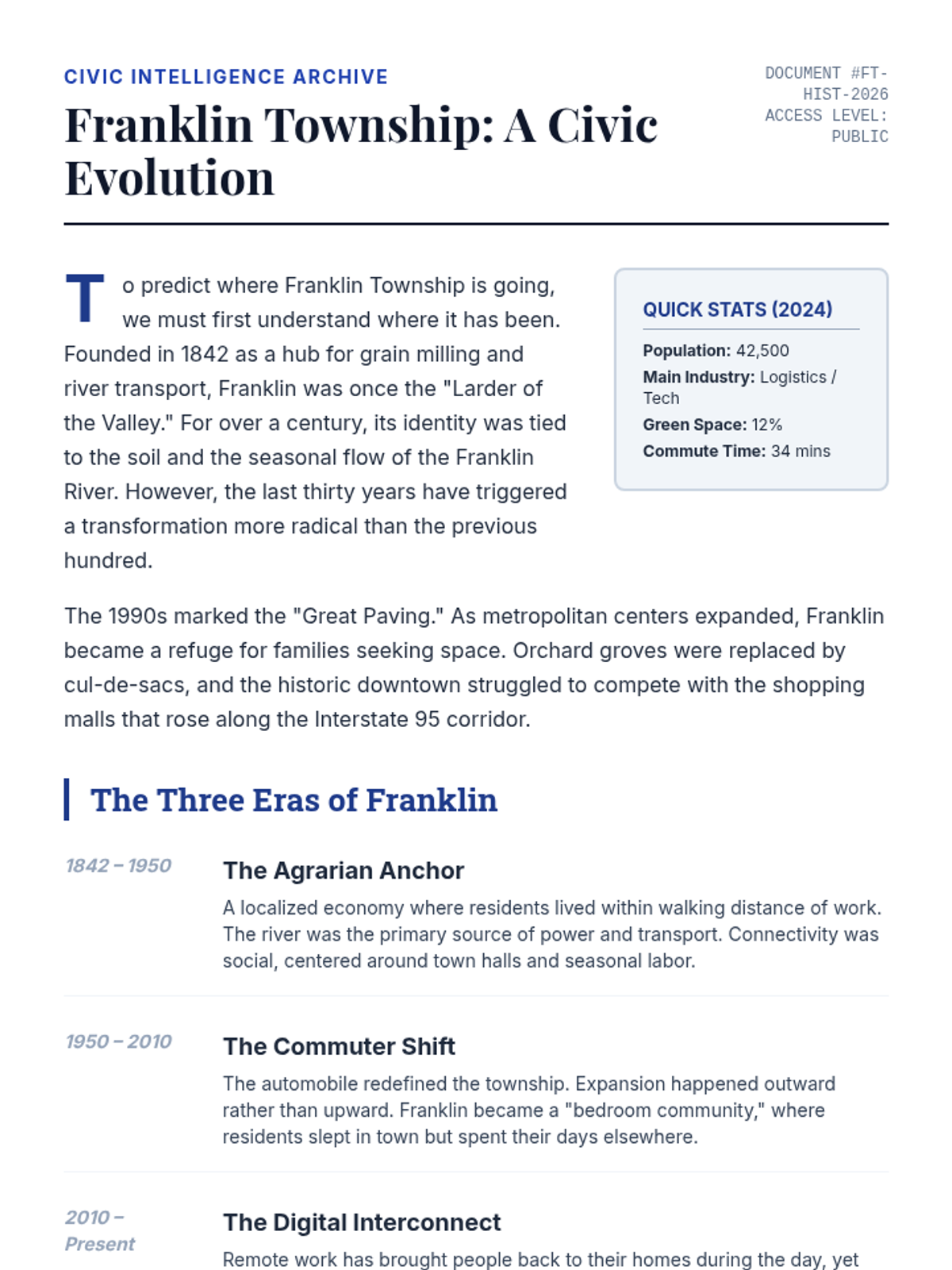
A detailed reading passage providing historical context for Franklin Township, from its agrarian roots to the modern digital era. It outlines current environmental, energy, and social pressures to prepare students for their predictive reasoning task.
A visual presentation introducing the Franklin 2050 project. It covers historical growth patterns, the core pillars of sustainability and connectivity, and the specific challenges students must address in their urban planning designs.