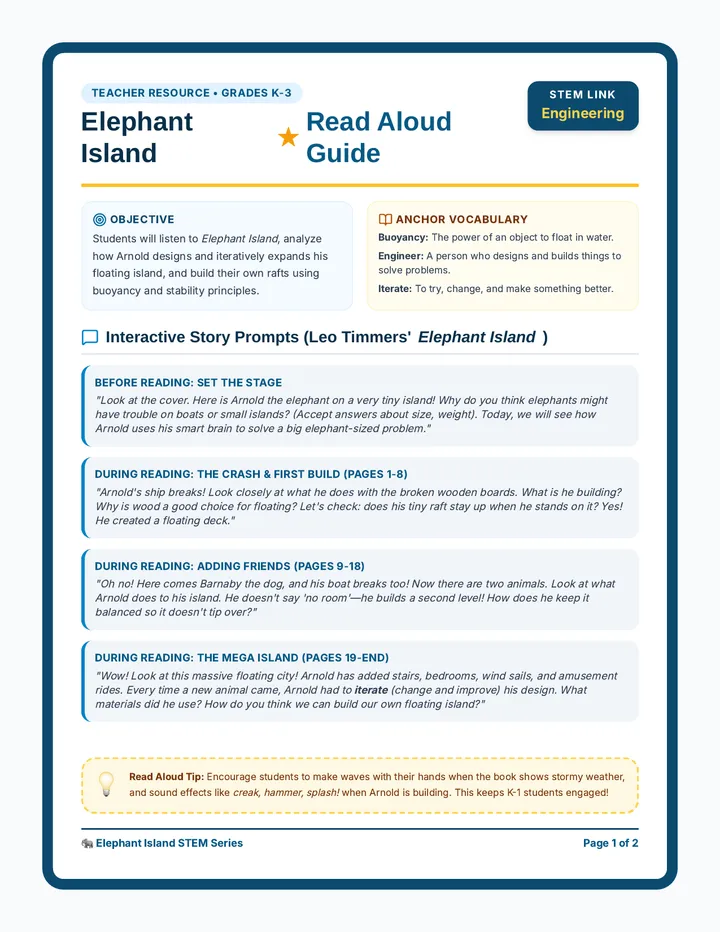
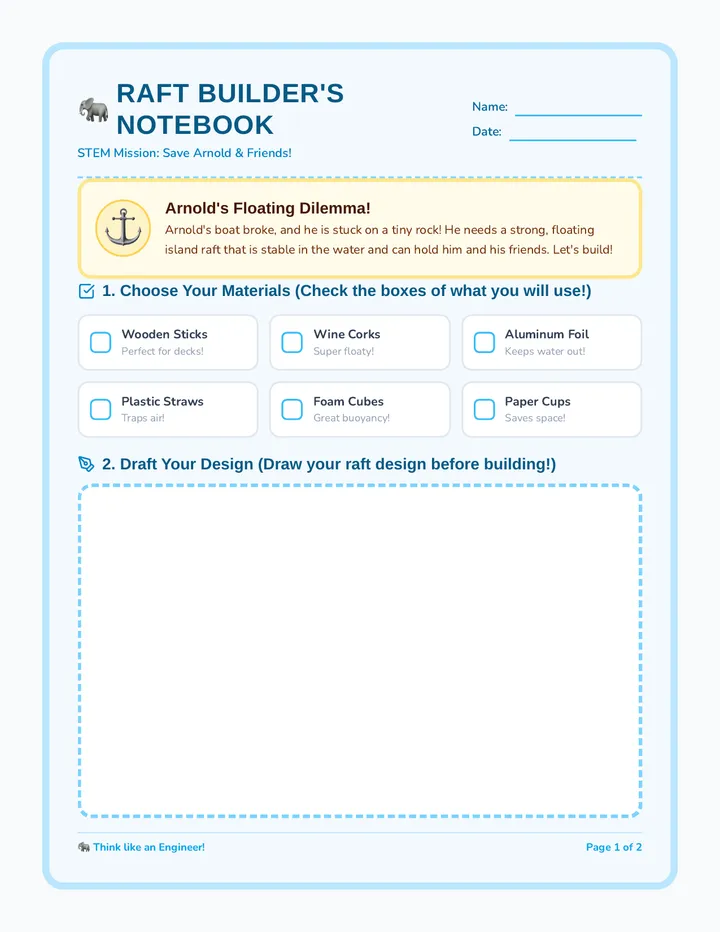
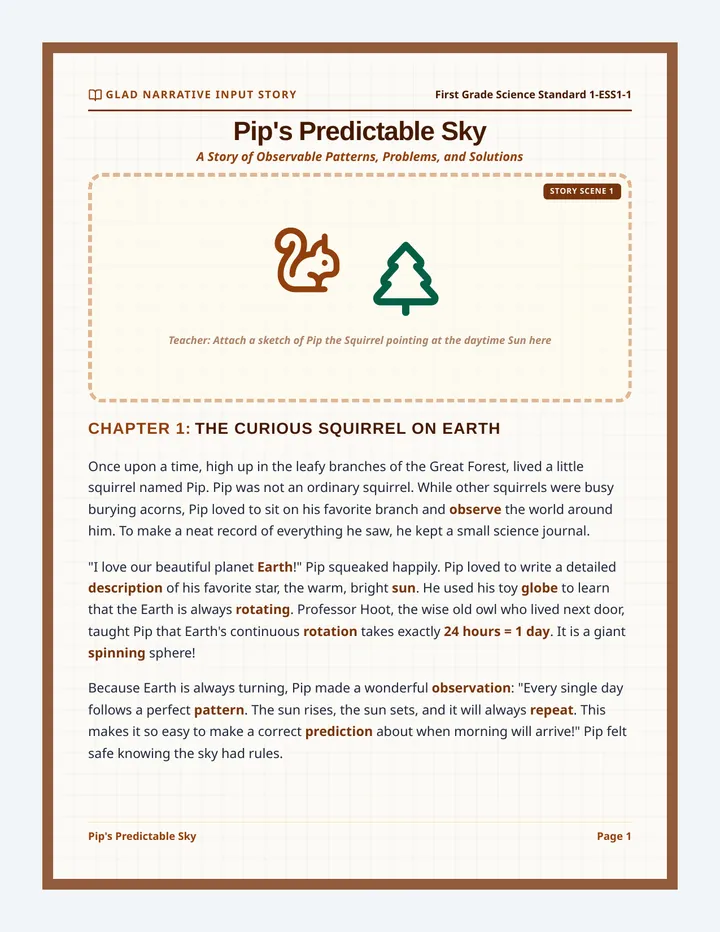
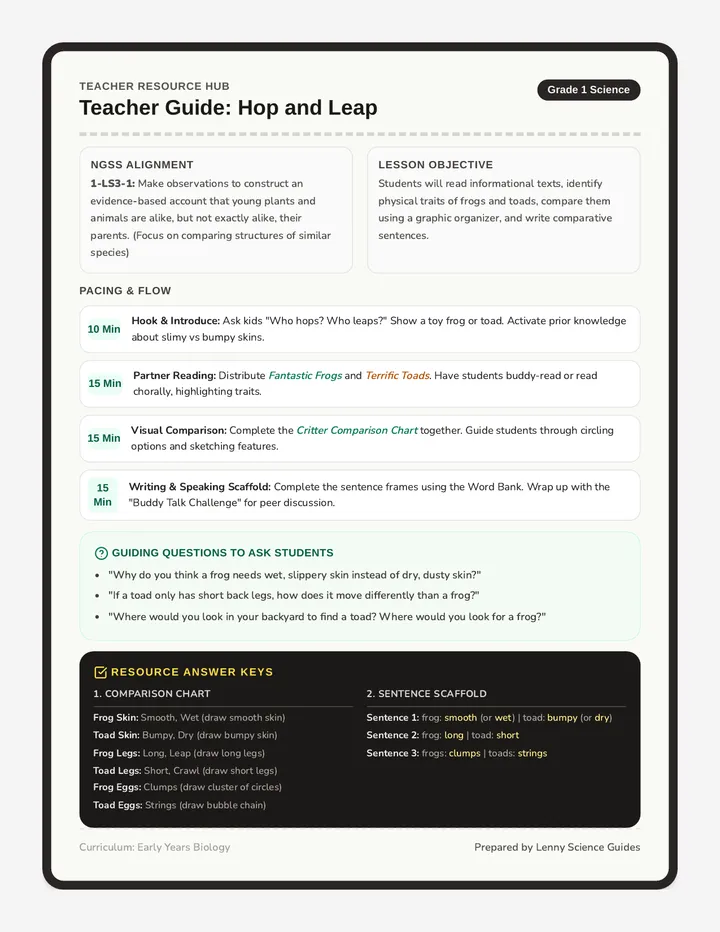
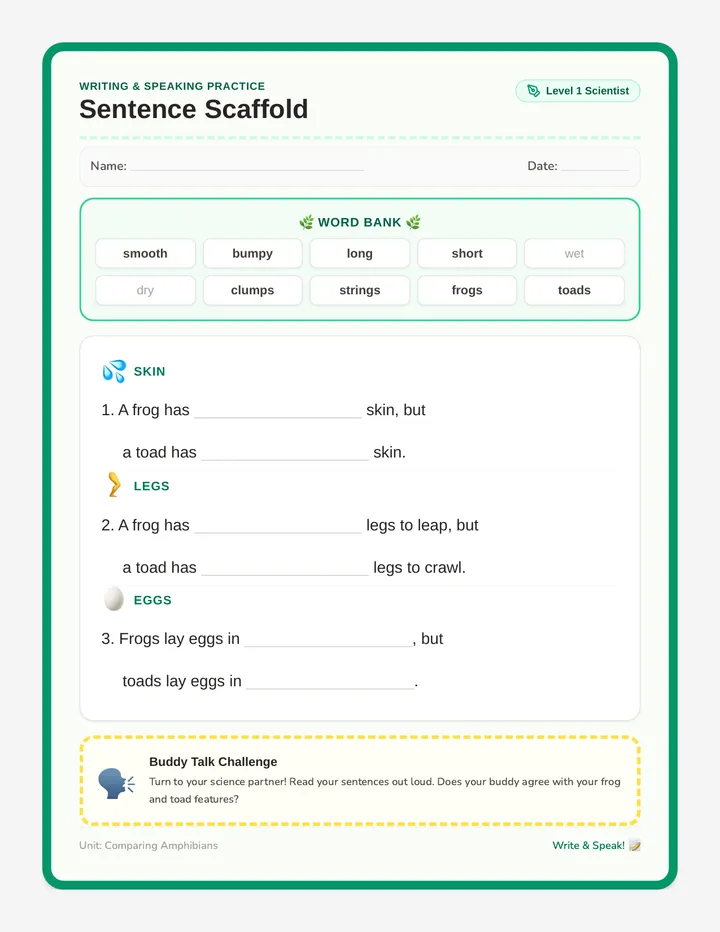
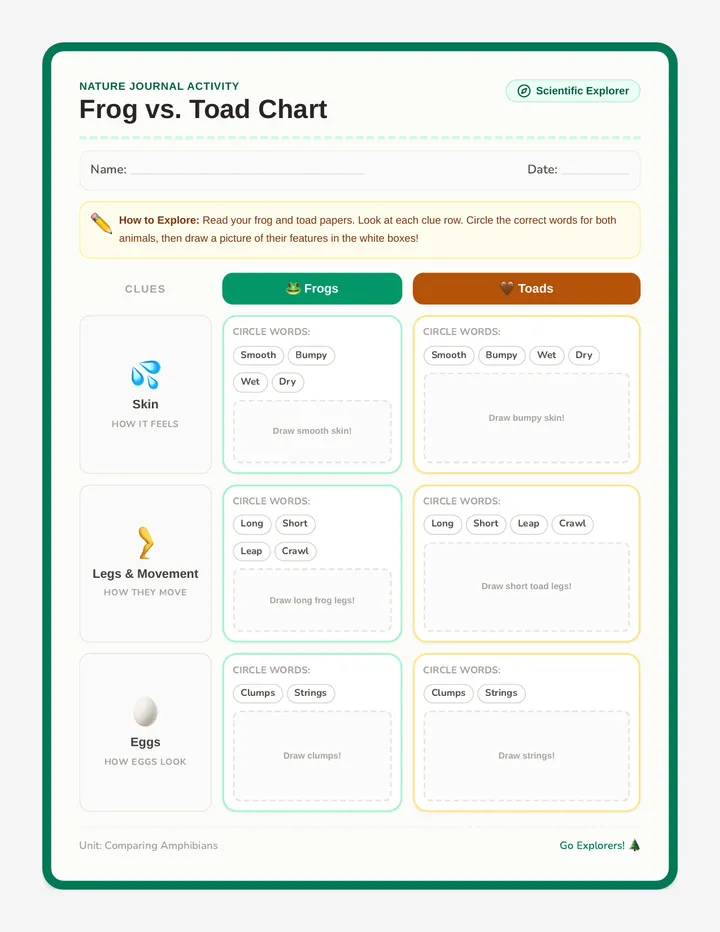
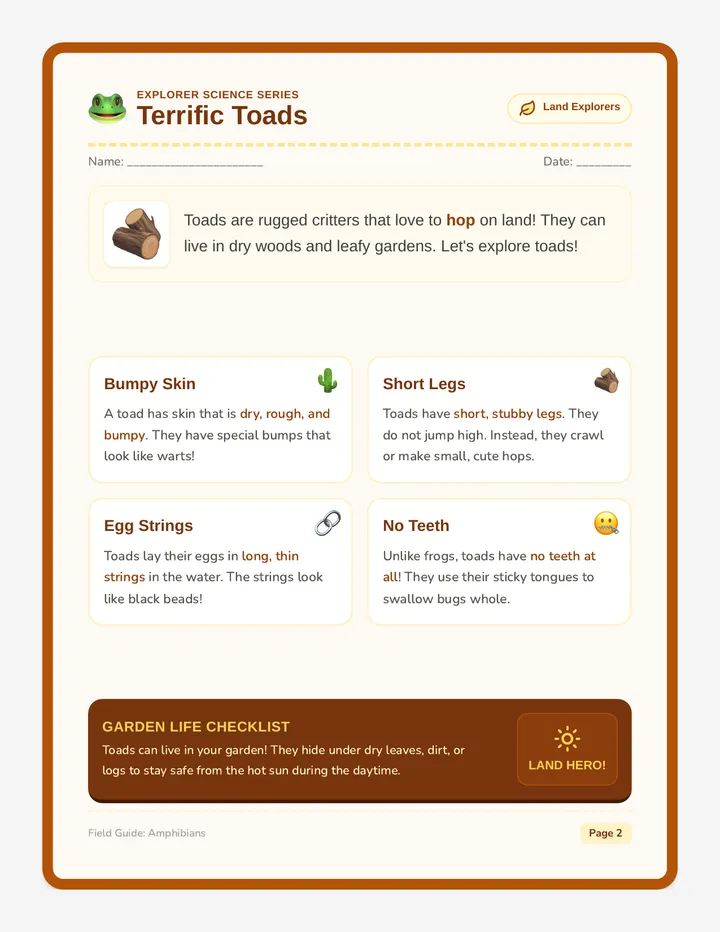
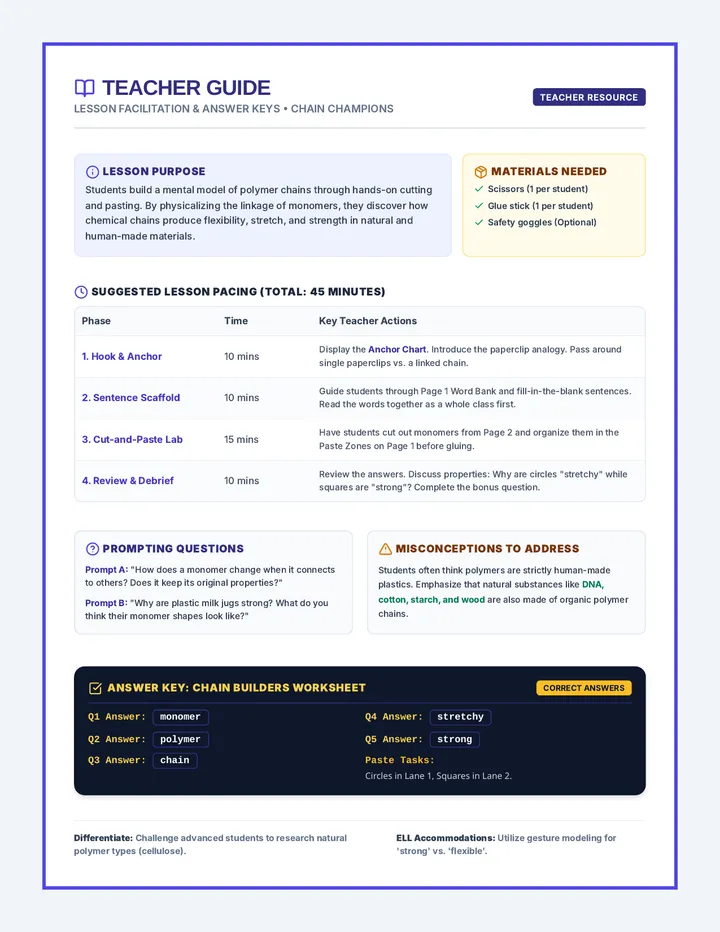
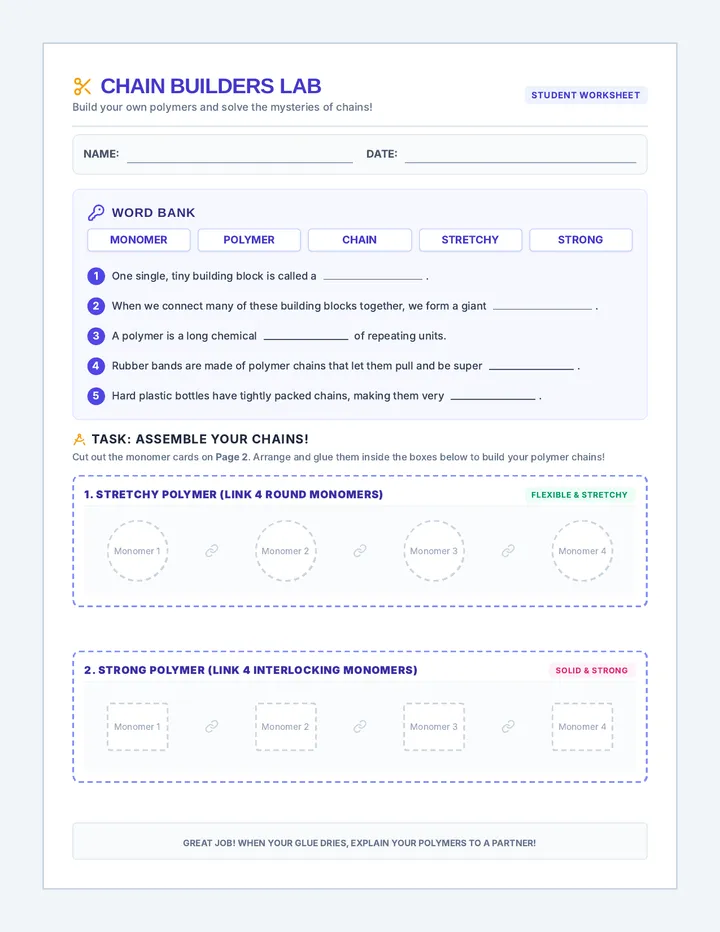
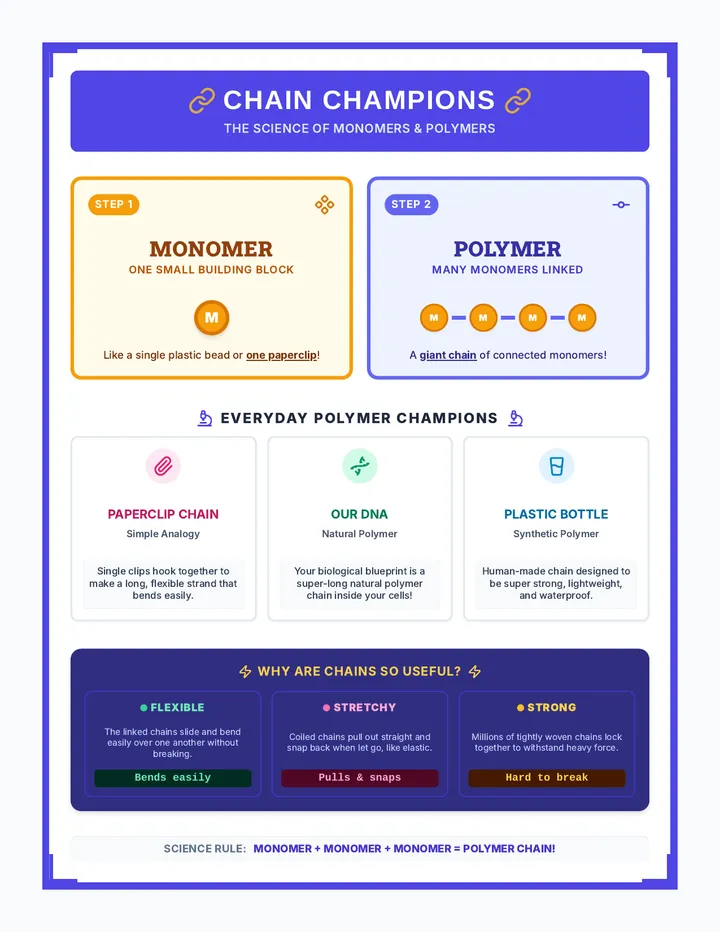
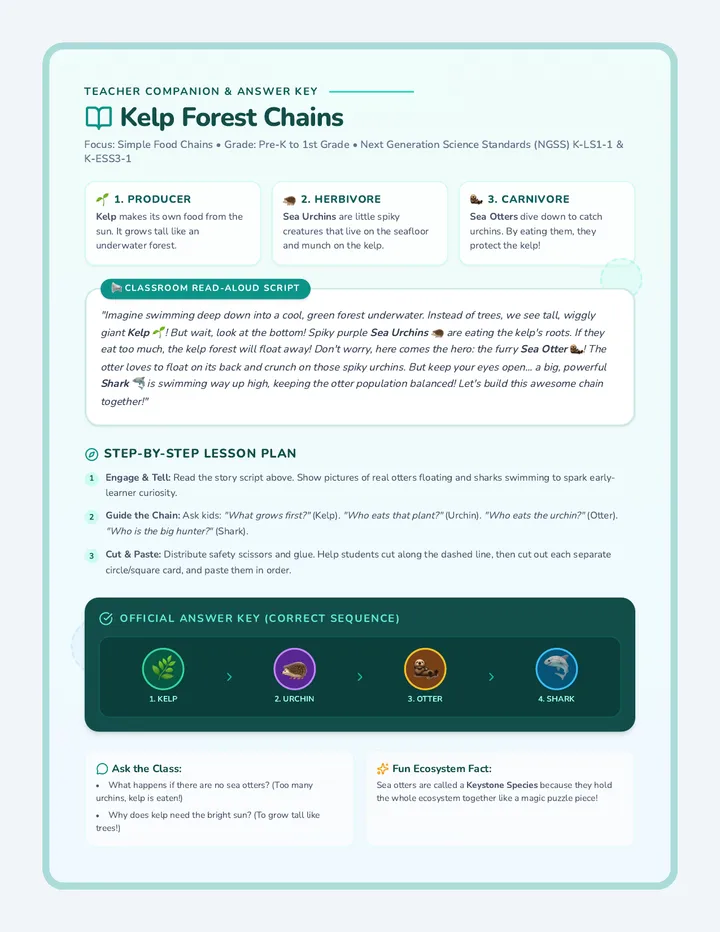
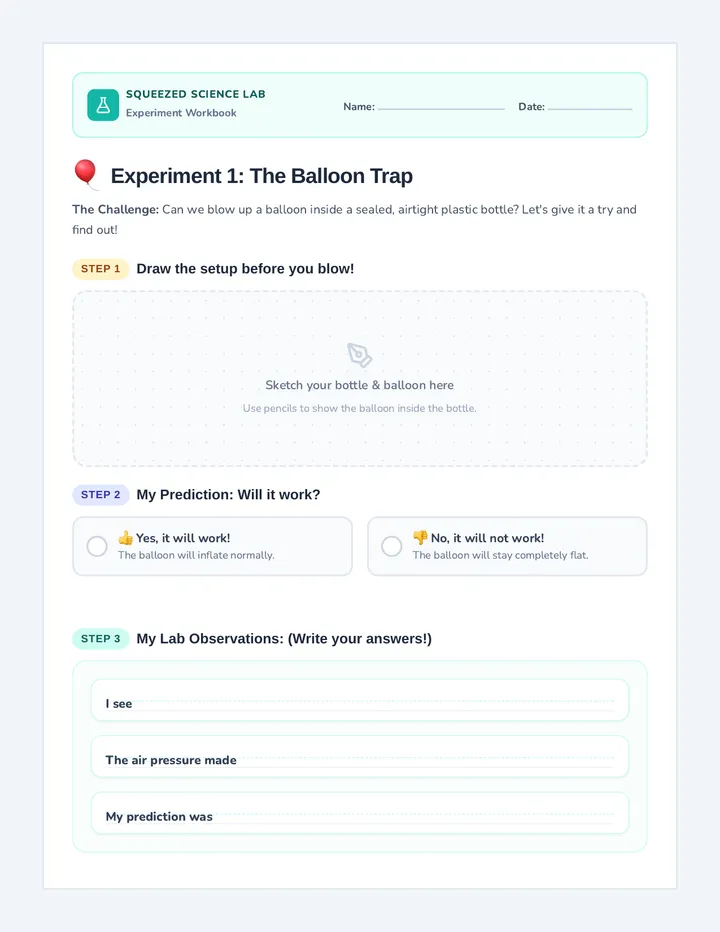
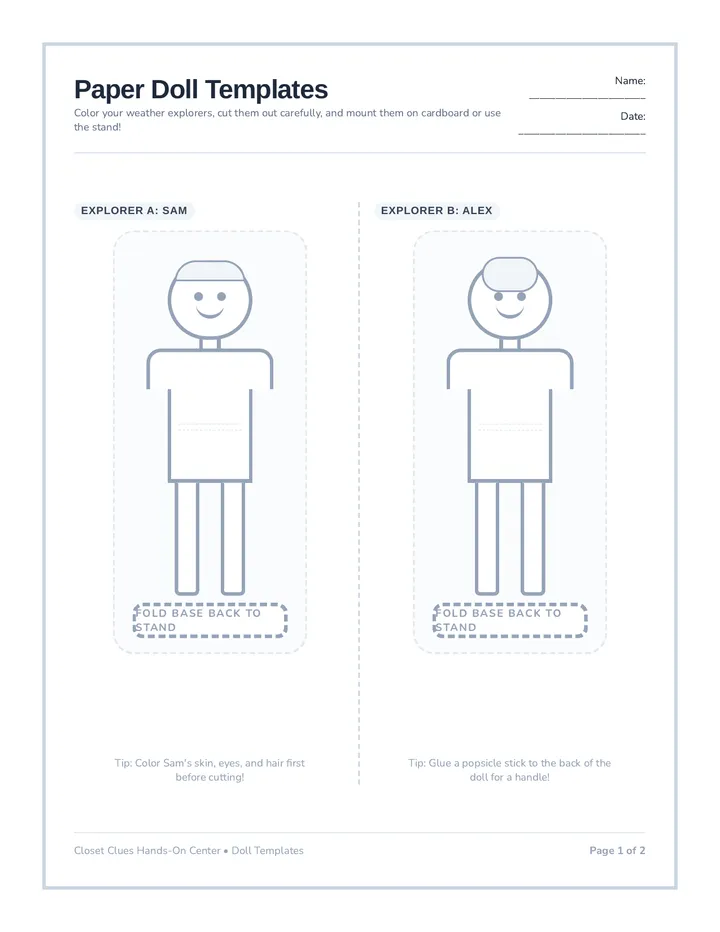
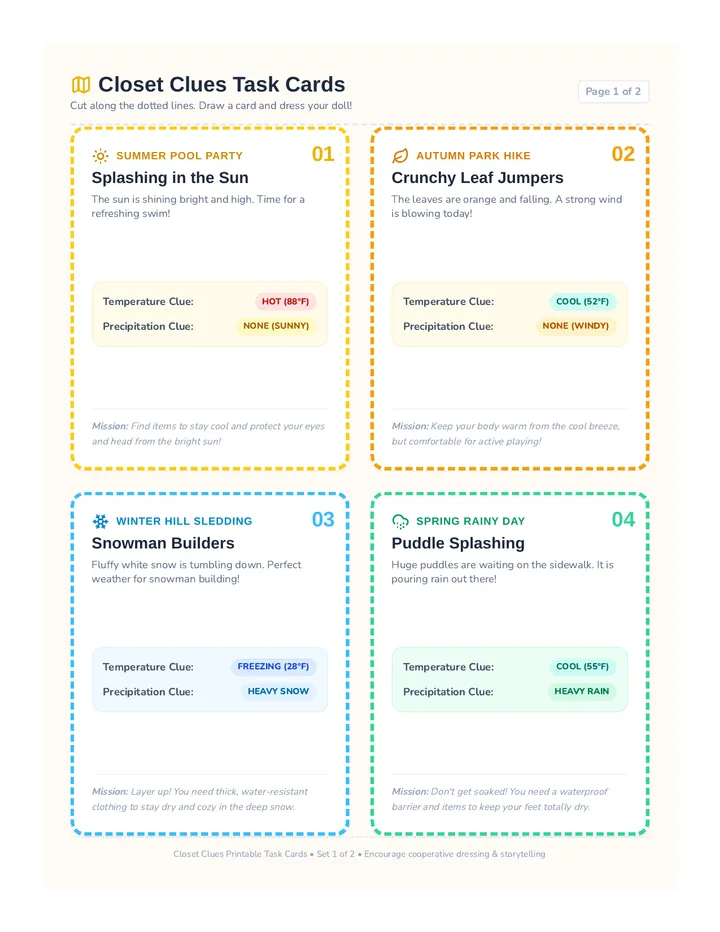
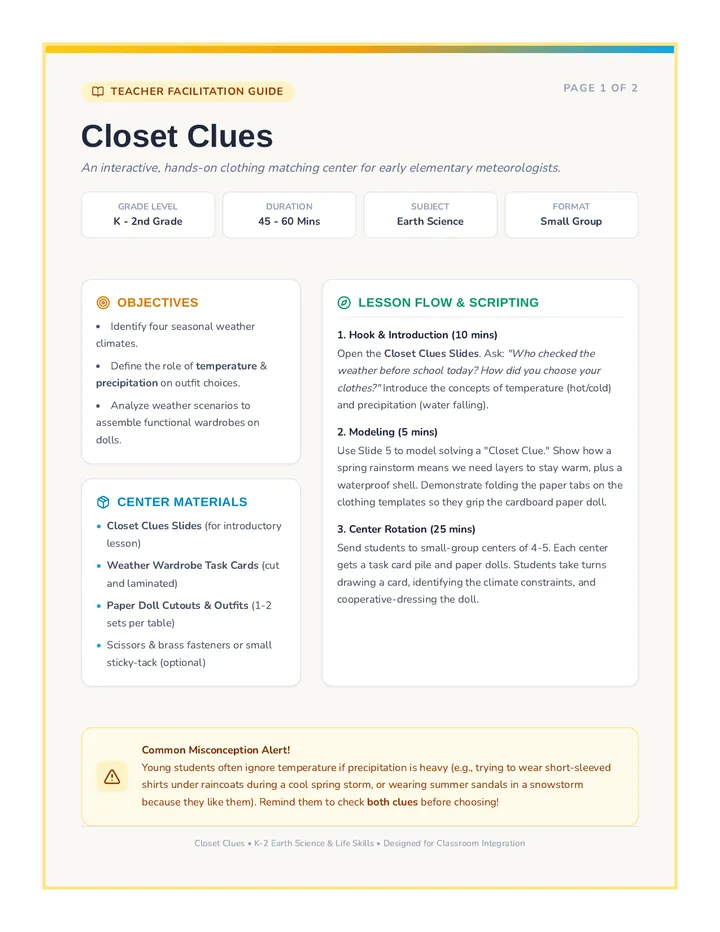
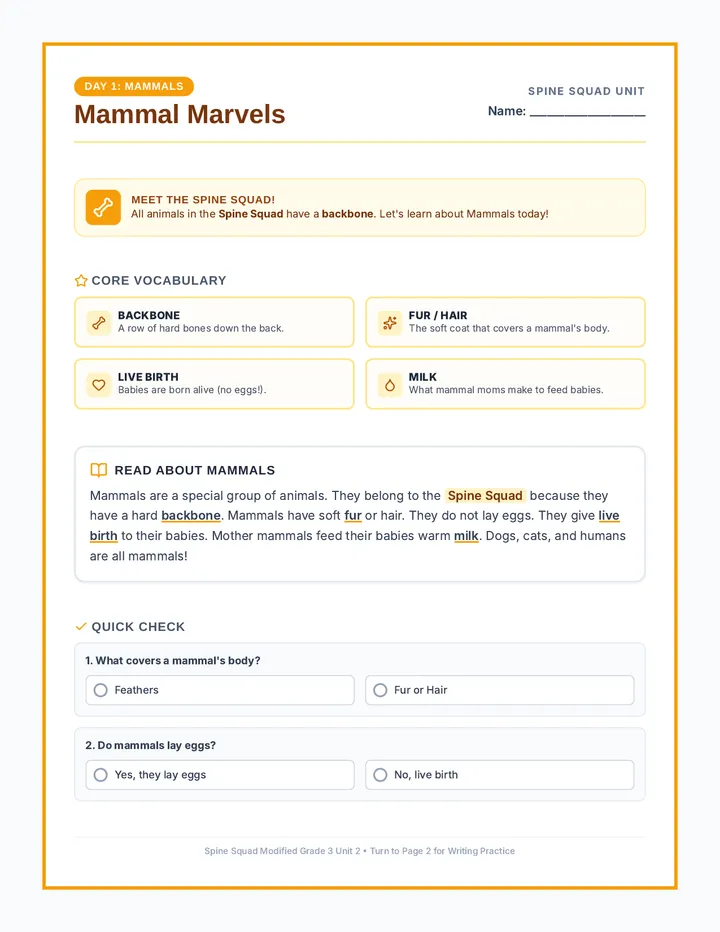
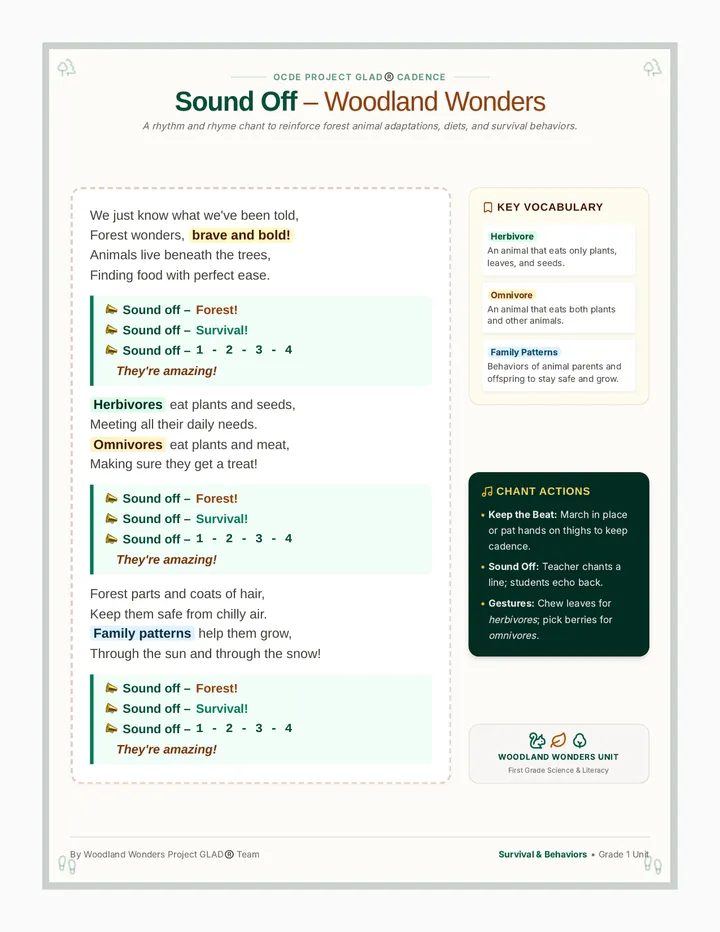
A detailed facilitation guide for teachers to lead the Vibration Station lesson, including specific video timestamps, discussion prompts, and activity steps for 1st grade students.

Teacher answer key for the Tree Tenant Worksheet, including expected animal names, habitat descriptions, and sample reflection responses.
A visual presentation introducing 8 tree-dwelling animals, their specific habitats (nests, hollows, branches), and why trees are essential for their survival.
A student worksheet for identifying 8 tree-dwelling animals and describing their specific habitats within the tree.
A detailed two-page field guide featuring "notebook-style" observations of 12 subterranean animals, focusing on their scientific observations and underground nesting habits.
A coloring sheet featuring the 12 subterranean animals in a grid format with large labels for coloring and literacy practice.
Updated page of 12 animal cards for cutting out, now including larger den-dwelling and nesting animals like foxes, badgers, and rabbits.
Updated landscape worksheet with 12 spots for animals that live in tunnels, dens, or nests beneath the soil.
A hands-on sorting activity for 1st-grade MLLs, featuring visual habitat mats and animal cards designed for oral language practice and habitat matching.
A vibrant, high-contrast visual presentation for 1st-grade MLLs introducing three habitats (Forest, Ocean, Desert) with emphasis on visual cues, vocabulary, and initial sounds.
A comprehensive teacher guide for a 1st-grade MLL lesson on animals and habitats, featuring TPR strategies, visual prompts, and a structured instructional sequence focused on oral language.
A comprehensive teacher guide for facilitating an outdoor nature walk, including discussion prompts, vocabulary, and preparation tips.
A student observation worksheet designed for an outdoor nature walk to record sightings of plant and animal babies.
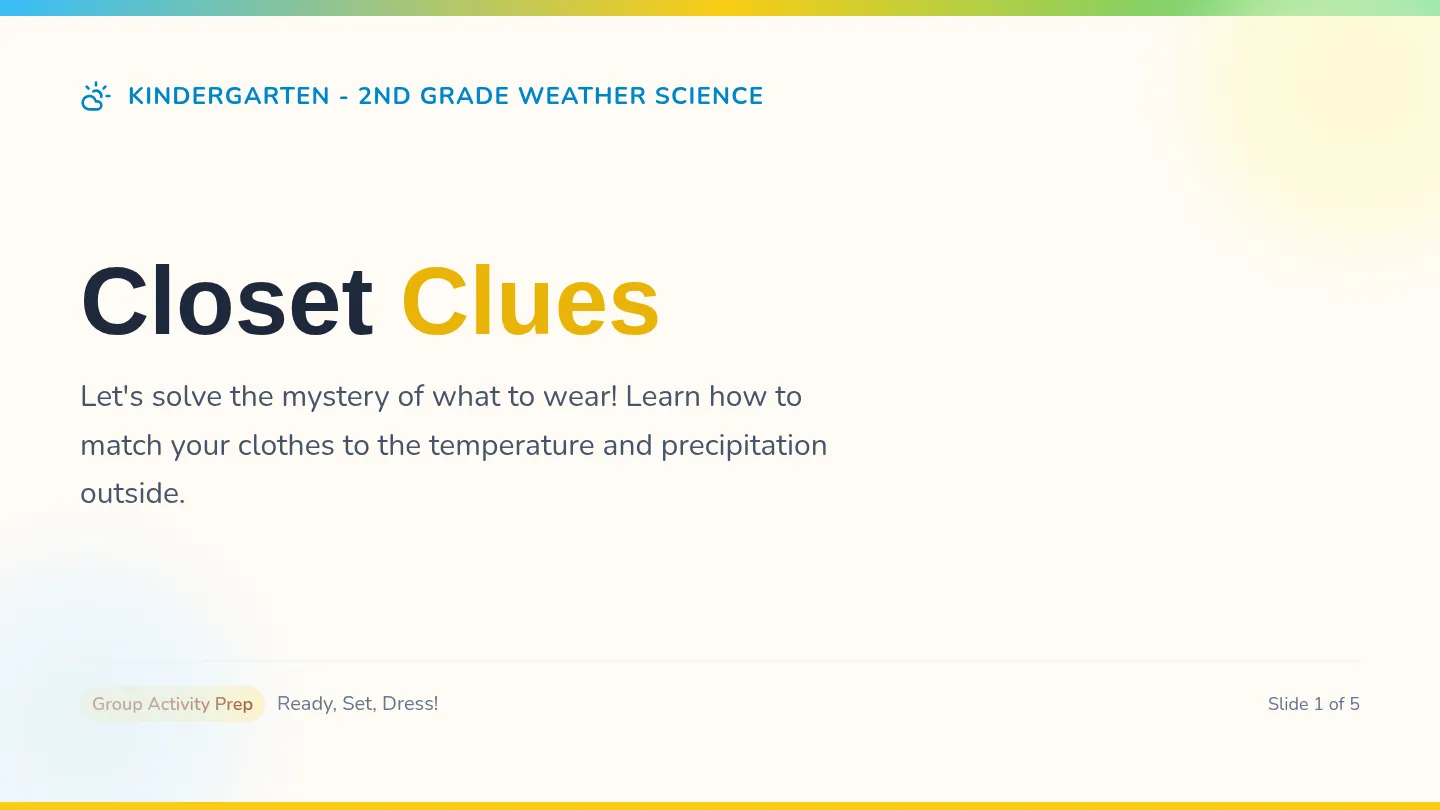
A visual presentation introducing the concept of life cycles in humans, animals, and plants, preparing students for an outdoor discovery mission.
A set of 12 printable task cards for first-grade students to practice identifying attributes, similarities, and differences in shapes, colors, weather, and objects.
A graphic organizer for first graders to compare sunny vs. rainy weather and a Lion vs. a Mouse. It features guided writing spaces and a kid-friendly Venn diagram layout.
A first-grade pretest worksheet featuring matching activities for attributes, odd-one-out exercises for differences, and a drawing section for identifying similarities.
A set of 12 printable task cards featuring sensory scenarios and questions to encourage discussion and critical thinking about the five senses.
A comprehensive teacher rubric for evaluating student performance on the Sensory Superpowers informational text and quiz, featuring clear criteria and scoring levels.
A comprehensive answer key for both the Sense Explorer Text questions and the Sense Superpowers Quiz, designed for teacher reference.
A visual presentation to introduce the five senses, their corresponding organs, and real-world examples of how they function.
A short assessment featuring matching and open-ended questions to evaluate students' understanding of the five sense organs and their functions.
An informational text for primary students explaining the five sense organs and their functions, accompanied by an expanded set of 8 reading comprehension questions.
Teacher answer key for the Skeleton Sketch Worksheet, providing correct labels and matching connections.
A student worksheet for K-2 students featuring a skeletal labeling activity with a word bank and a matching section for the functions of the skull, ribs, and spine.
An updated teacher facilitation guide for the Bone Zone lesson, now streamlined to a 30-minute session by removing the movement activity and focusing on direct instruction and labeling.
A bright, high-contrast slide deck for K-2 students introducing the skeletal system, focusing on major bones like the skull, ribs, and spine, and their functions of protection, support, and movement.
An MCAS-Alt observation log and data sheet for tracking student accuracy and independence during plant life cycle activities, designed for portfolio documentation.
A set of cut-out components for the plant life cycle model, including illustrations and descriptions for the birth, growth, reproduction, and death stages.
A base poster for building a plant life cycle model, featuring spaces for the four main stages: birth, growth, reproduction, and death. It includes circular arrows to represent the cycle's continuity.
A sequencing worksheet for the sunflower life cycle, featuring cut-and-paste images and descriptions for the four main stages: birth, growth, reproduction, and death.
A teacher guide for the MCAS-Alt Garden Lab lesson, providing learning objectives, key vocabulary, and an instructional sequence for teaching the plant life cycle.
A visual, student-facing worksheet for autistic students to practice identifying states of matter and predicting changes caused by heat, featuring matching activities and drawing areas.
A step-by-step experiment guide for ASD students to observe a "melting snowman" (ice) and its transition between the three states of matter using clear visuals and sensory cues.
A visual-heavy presentation designed for autistic students, explaining the states of matter using Mel the Snowman as a relatable narrative example.
A comprehensive teacher lesson guide for a snowman-themed science lesson on states of matter, featuring visual schedules, differentiation strategies for ASD students, and instructional scripts.
An updated student worksheet for designing and describing an original insect, featuring a drawing area, sentence starters, and a vocabulary-aligned checklist for 200 Lexile level.
An updated reading passage about bugs at a 200 Lexile level, featuring expanded vocabulary like thorax and abdomen alongside a visual word bank.
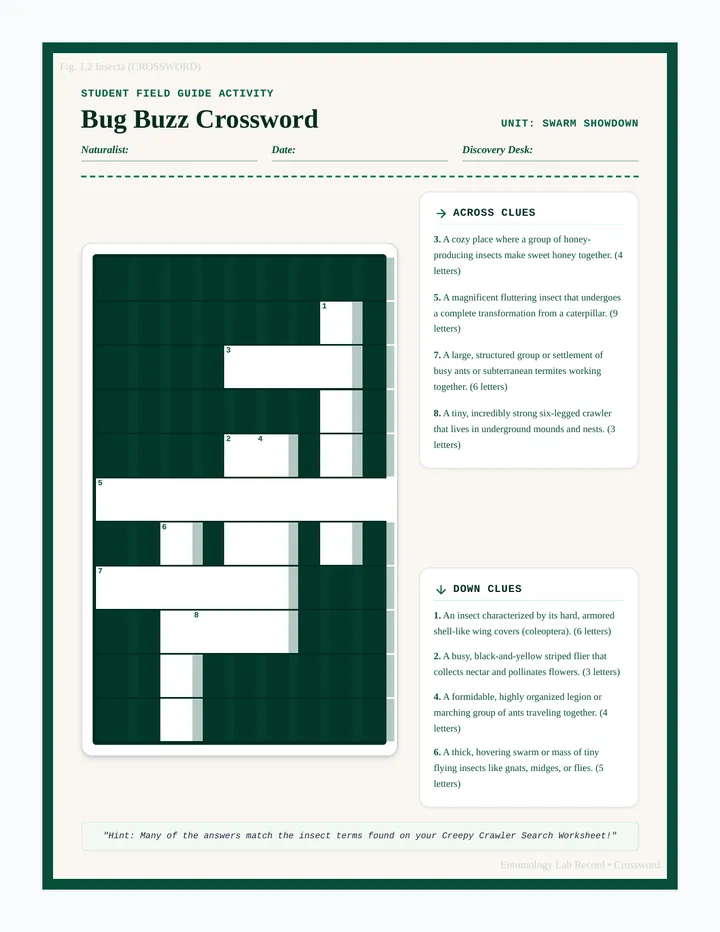
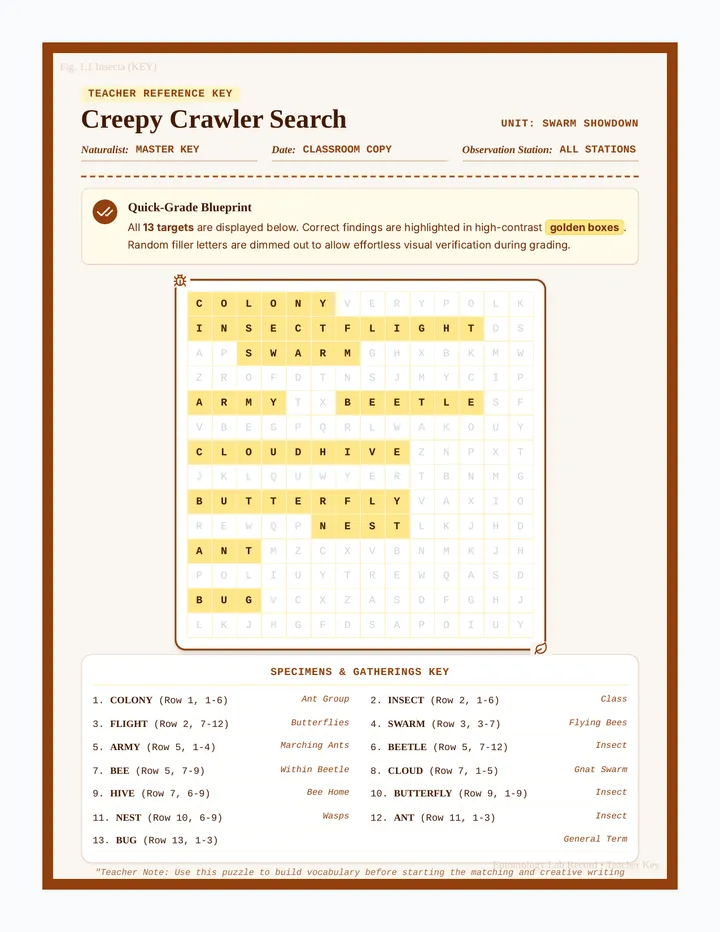
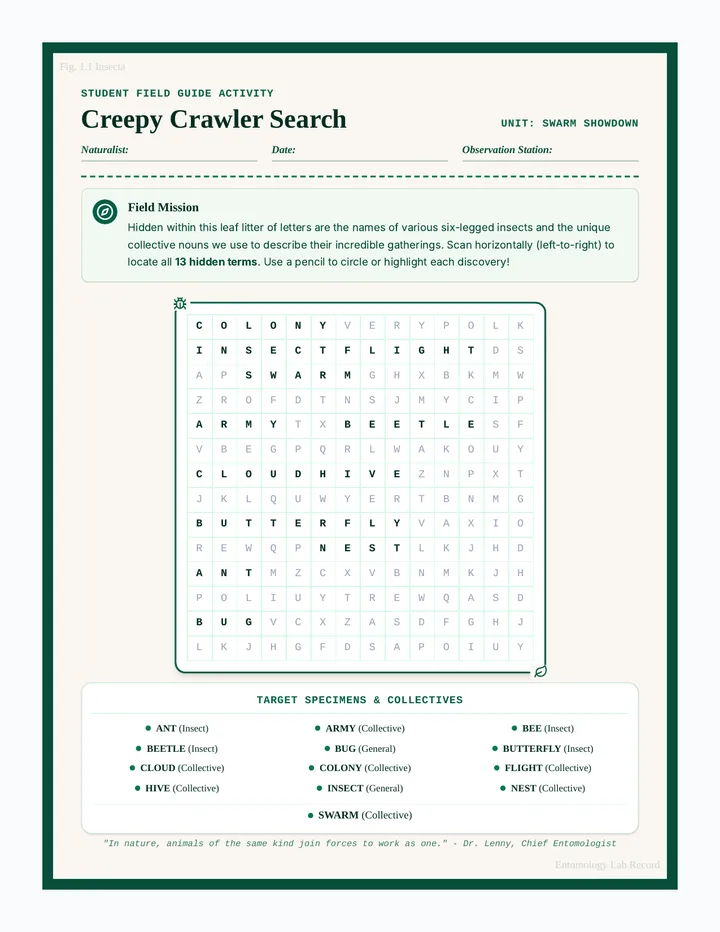
Visual presentation slides to support the direct instruction portion of the Bug Lab lesson, featuring large text and high-contrast visuals.
A teacher-facing guide outlining the lesson flow, 30-minute pacing, and a project-based learning extension for LIFE students.
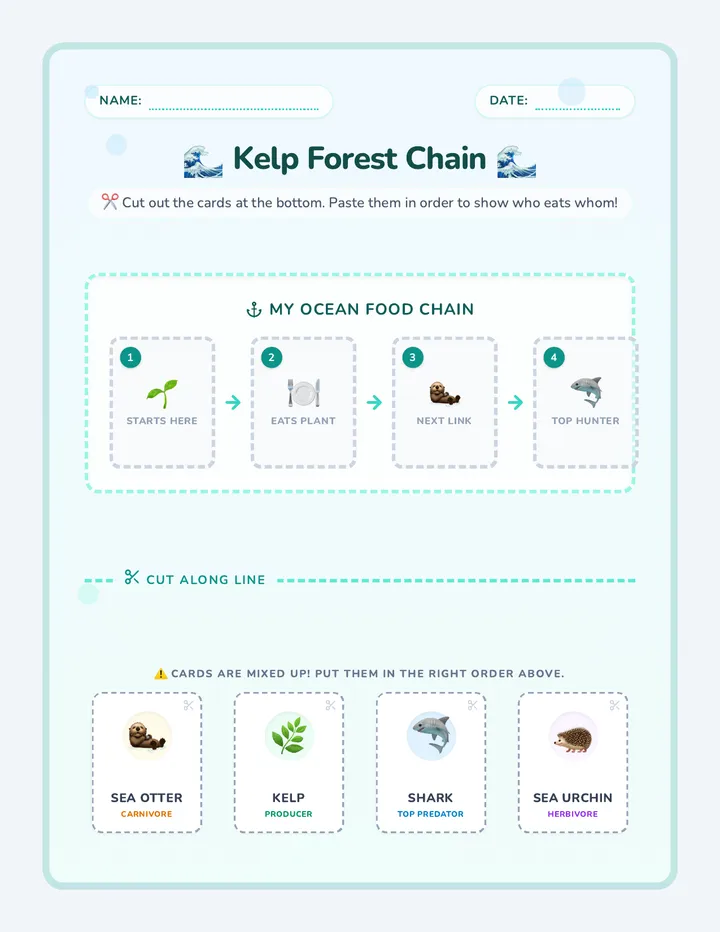
A teacher's answer key for the Matter Master Sort activity. Provides the correct categorization for all 24 emoji-based cards and includes guided discussion questions for classroom use. Layout fixed to exactly one page.
Large-format sorting mats for the States of Matter game. Each state (Solid, Liquid, Gas) has its own dedicated full-page mat. Layout strictly constrained to exactly 960px height per section to ensure perfect page alignment for printing.
The complete set of 24 colorful sorting cards and 24 B&W cards (8 for each state of matter). Layout has been strictly adjusted to exactly 960px height to ensure all cards fit perfectly on each page without overflow. Uniform card sizes (190px) and fixed headers guarantee no page-bleed.
A comprehensive teacher facilitation guide providing instructional sequences, station setup instructions, and discussion prompts for a week-long unit on Earth materials.