A student worksheet for the 'Vector Voyage' lesson, featuring a warm-up, video observation notes, a field data collection log, and a mathematical analysis section.
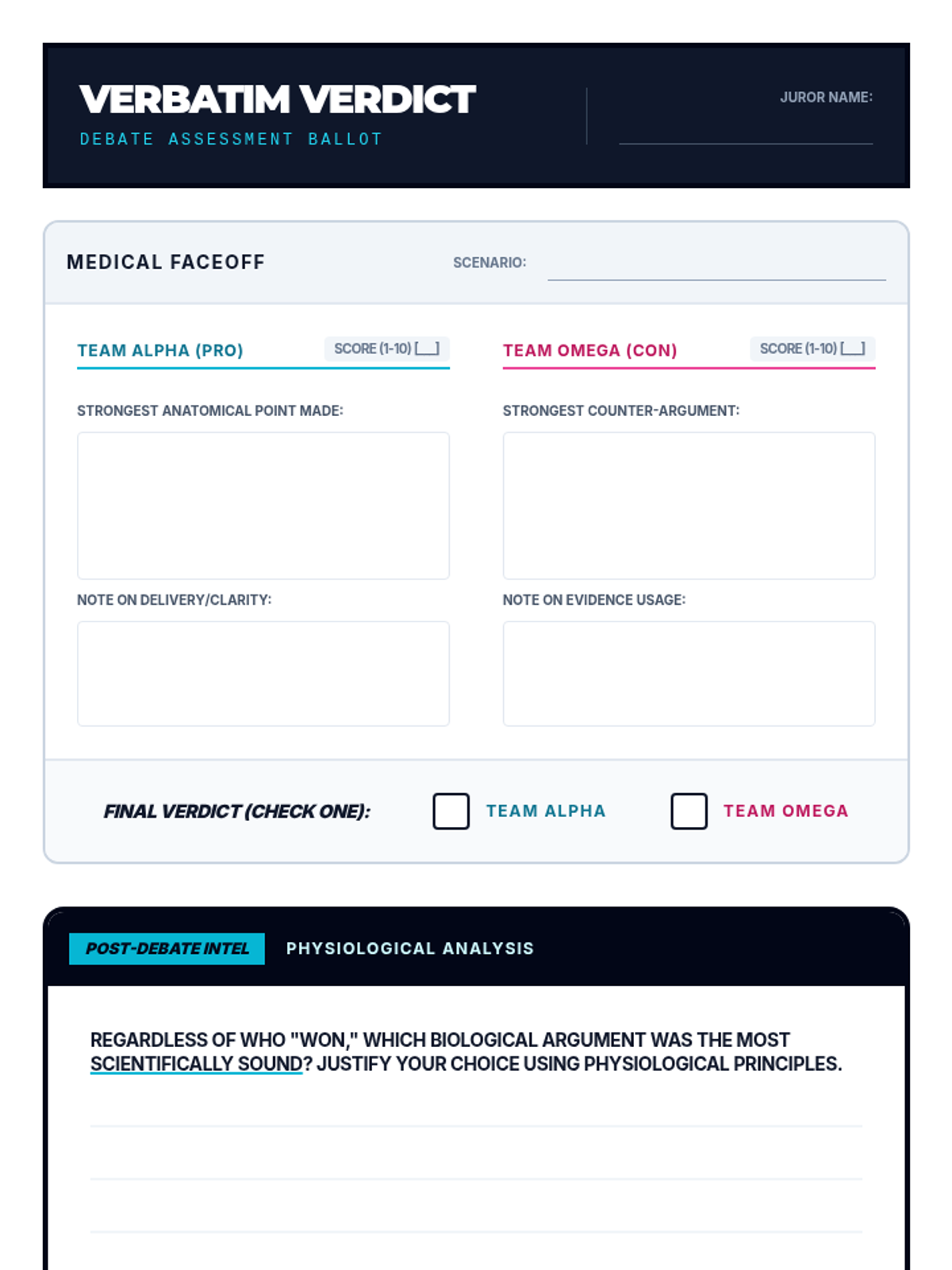
A peer-assessment ballot for students to use while observing debates, featuring structured scoring for anatomical accuracy, evidence usage, and delivery across two rounds.
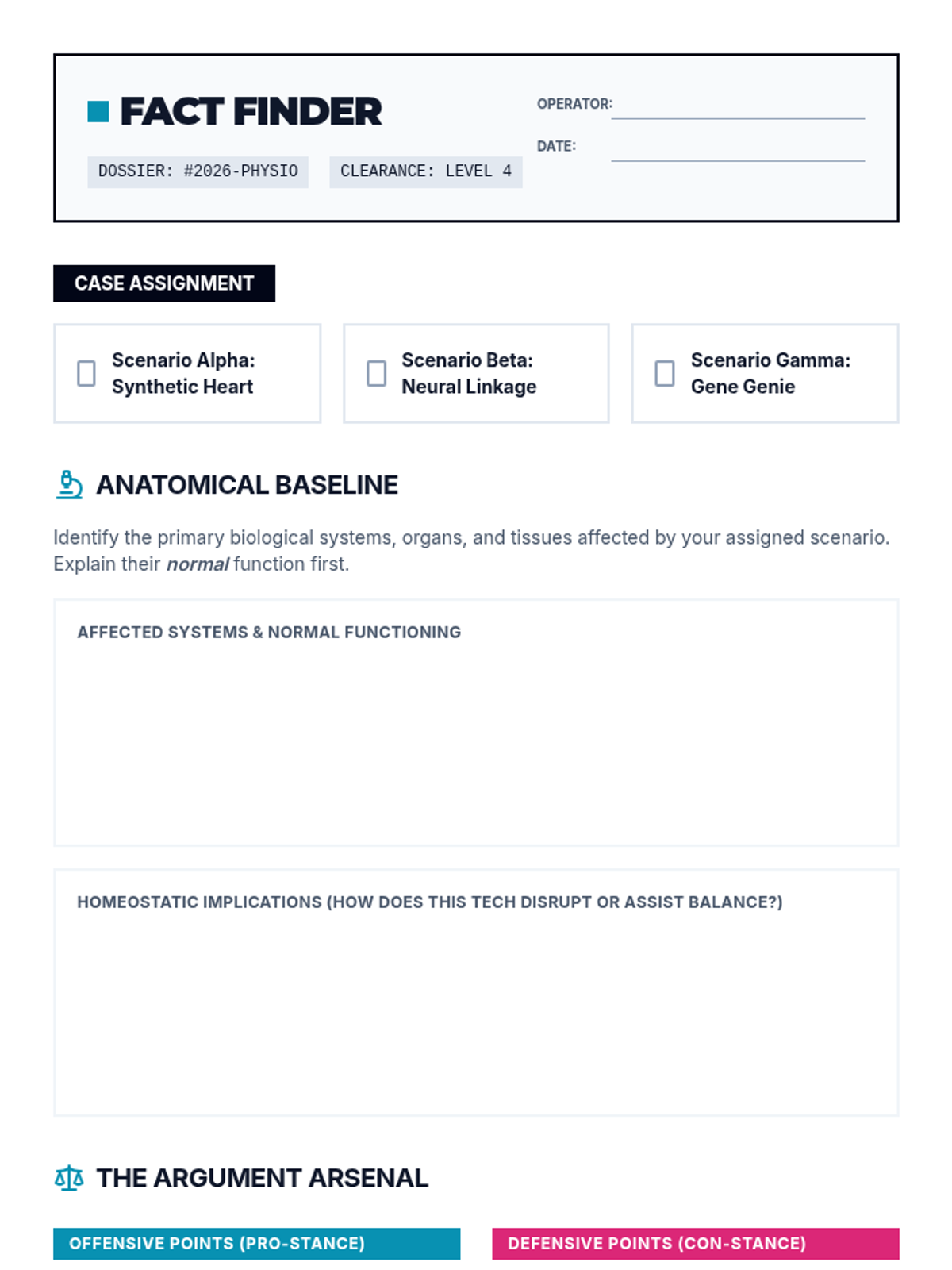
A student-facing research worksheet designed as a high-tech medical dossier, helping students organize anatomical facts and develop bio-ethical arguments for debate.
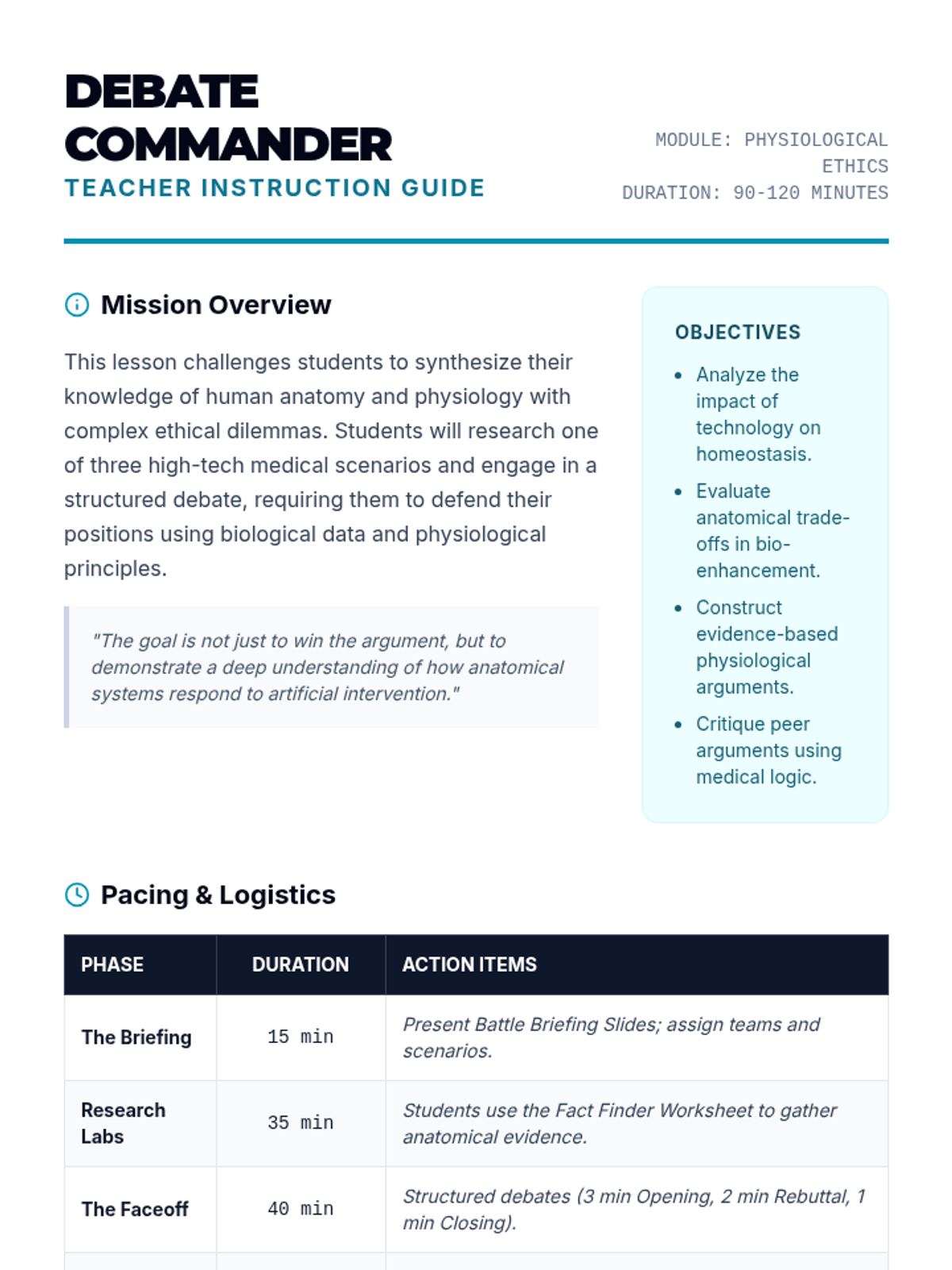
A comprehensive teacher guide for facilitating the Body Battles debate, including a detailed pacing guide, suggested debate formats, and a specialized scoring rubric.
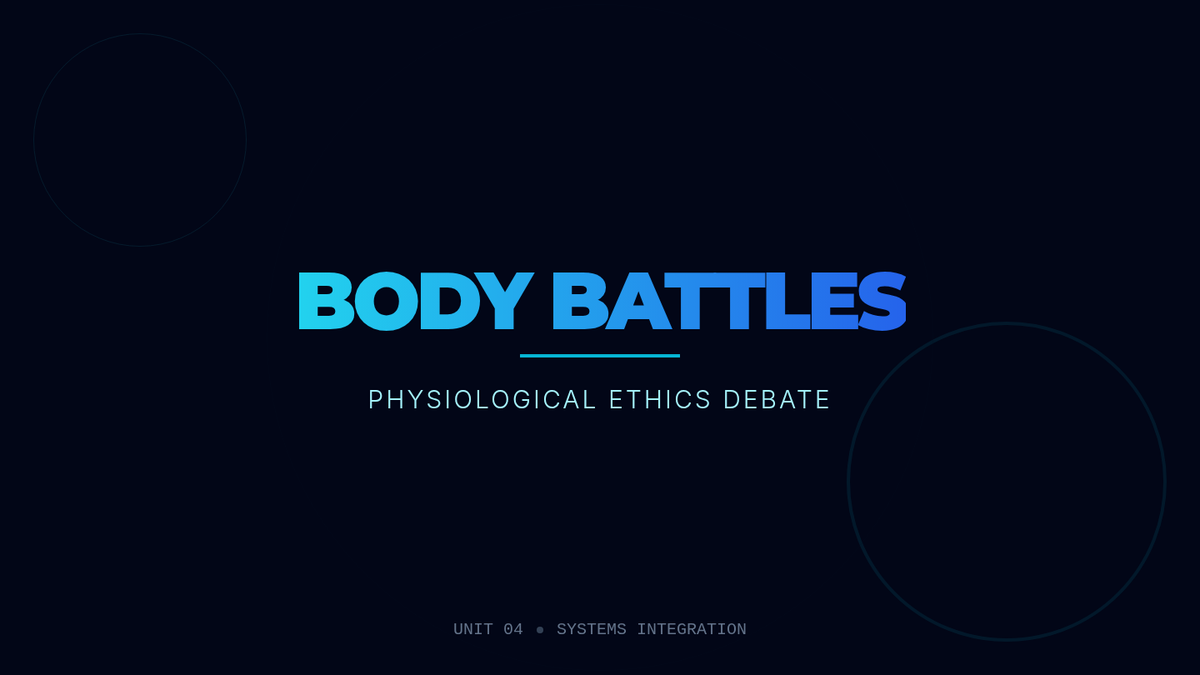
A high-impact slide deck for introducing a bio-ethics and anatomy debate, featuring three distinct scenarios (Synthetic Hearts, Neural Linkage, and Gene Editing) with a futuristic medical aesthetic.
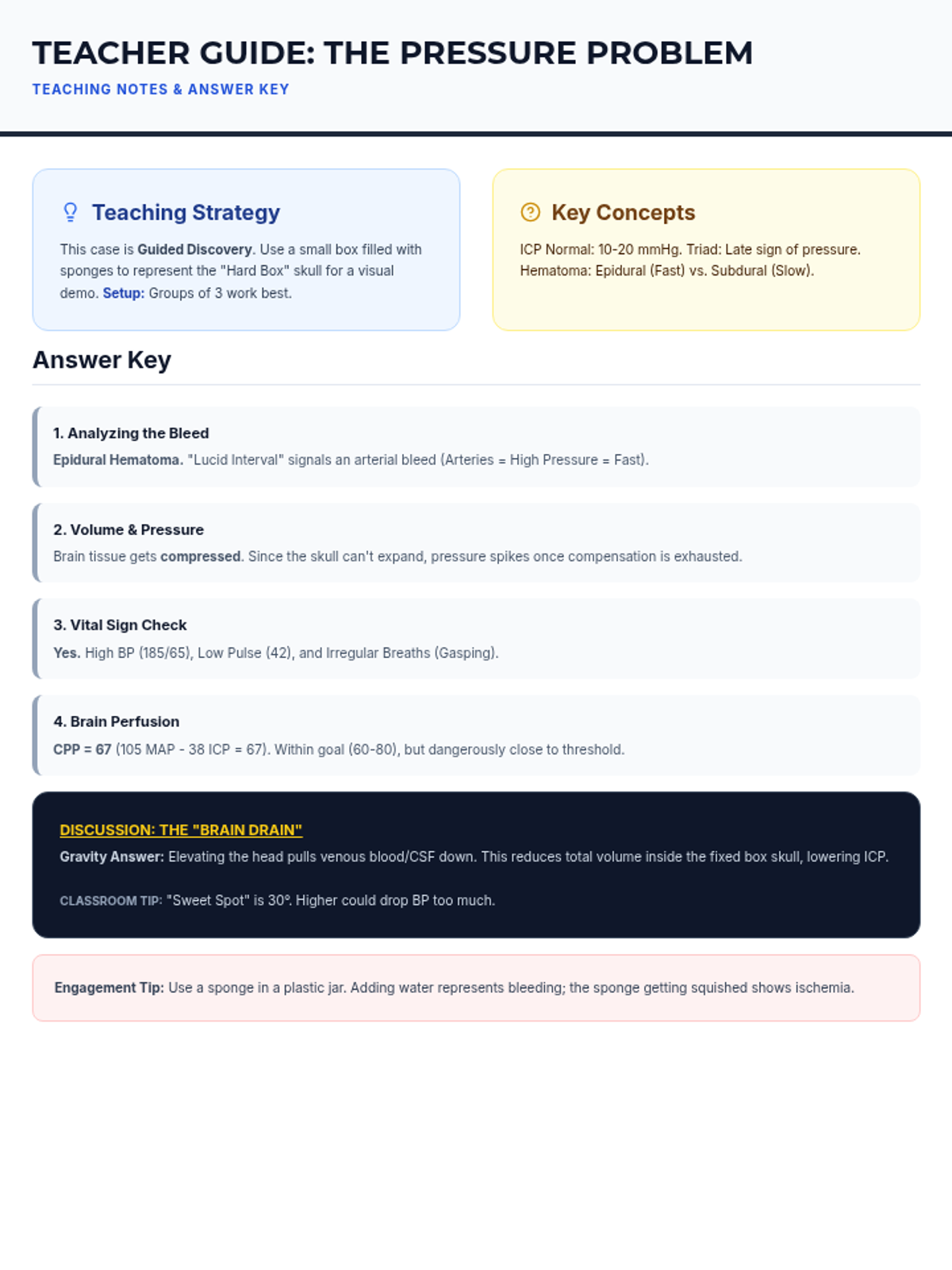
Simplified teacher guide tailored for pre-college instruction. Includes classroom engagement tips, simplified explanations, and a strategy for case-based discovery learning. Now fits answer key on one page.
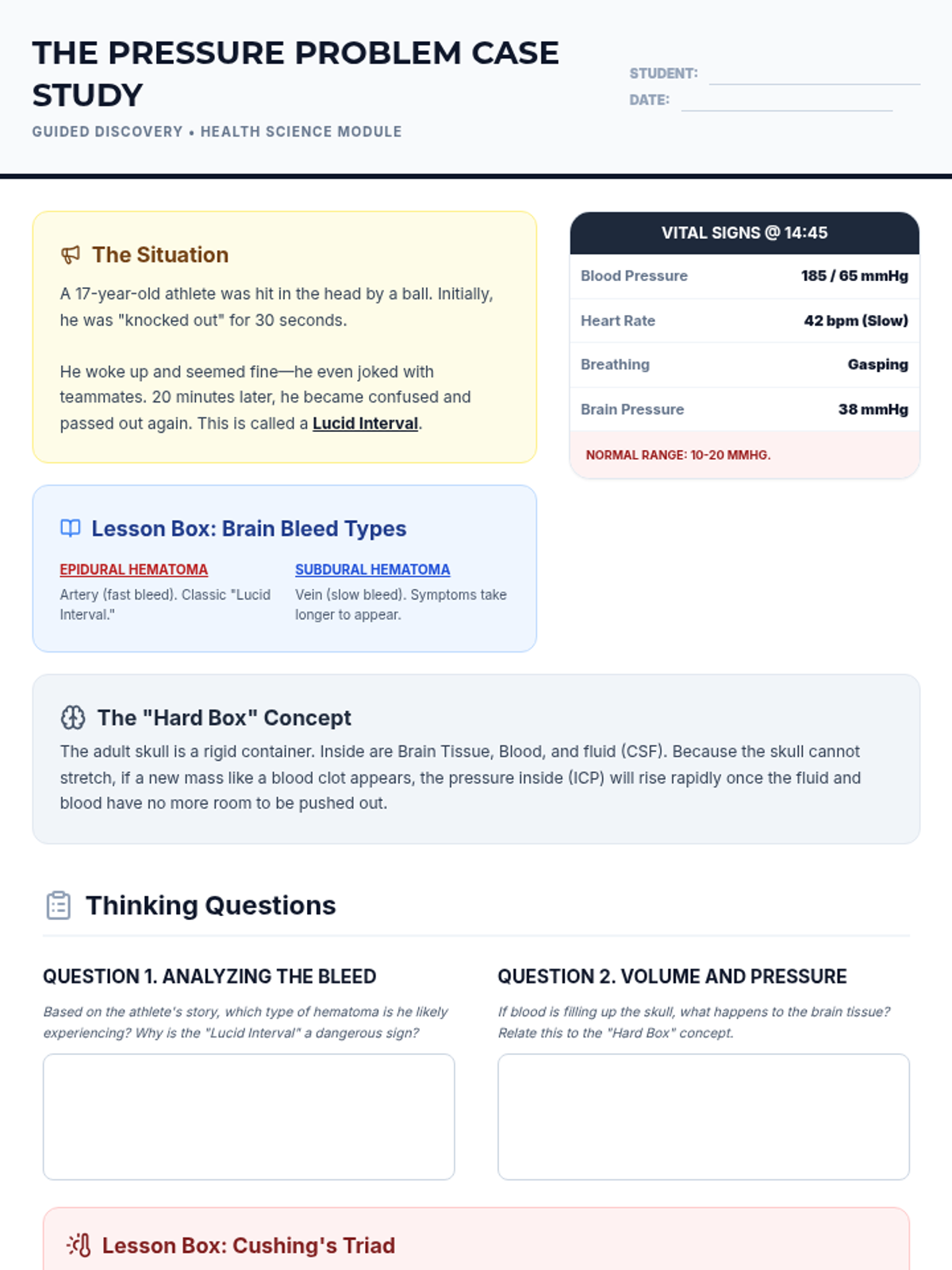
A self-contained, guided inquiry case study for pre-college students. Includes "Lesson Boxes" within the document so students can learn the concepts and immediately apply them to the clinical scenario. Now with optimized 2-page layout.
Engaging, high-impact slides designed for pre-college health science students. Explains ICP, Monro-Kellie doctrine, and hematoma differentiation using accessible language and clear visuals. Now includes a 2-part application scenario.
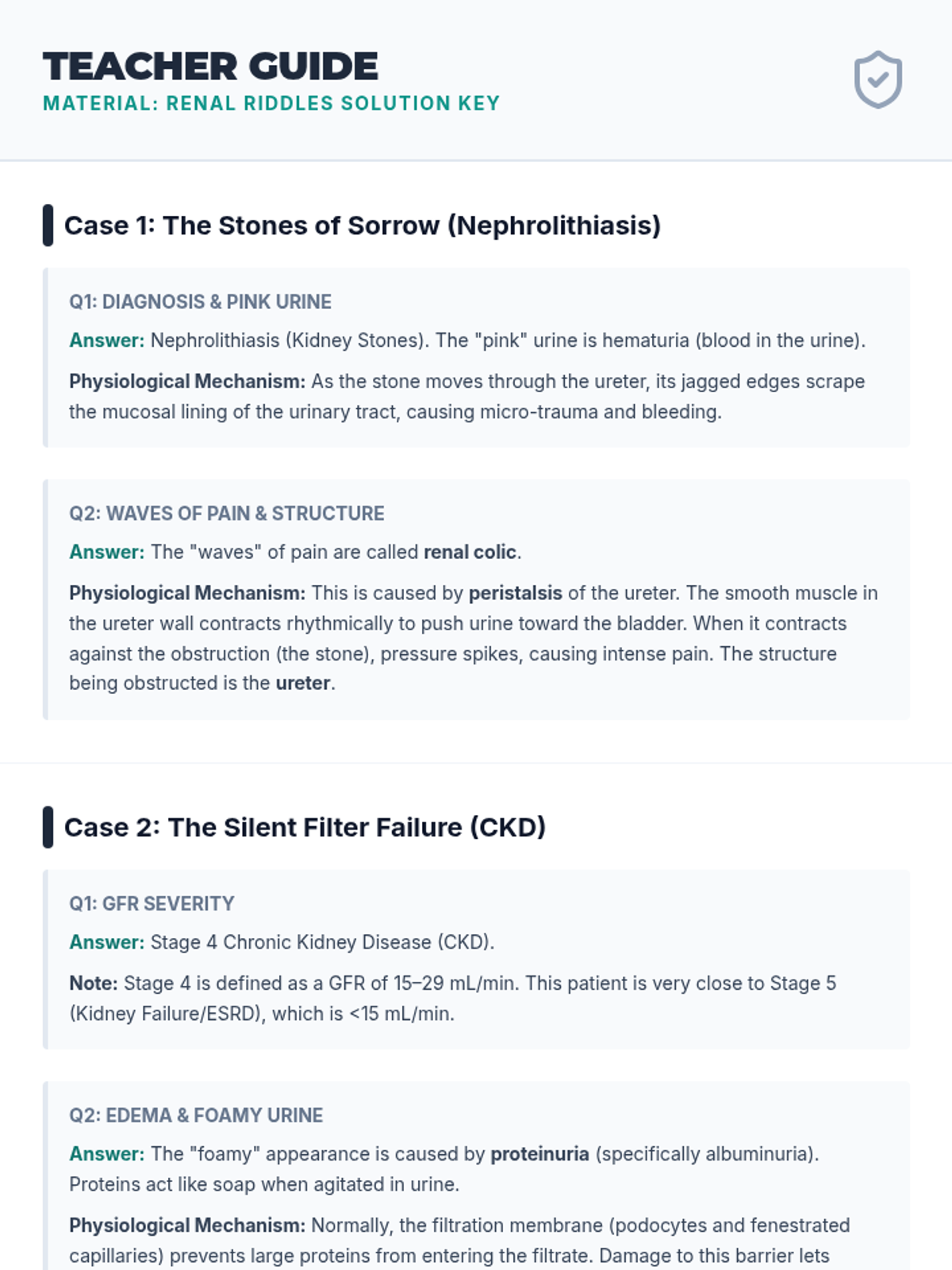
Comprehensive answer key and teaching notes for the Renal Riddles case studies, including detailed physiological explanations for the diagnosis and student pitfalls.
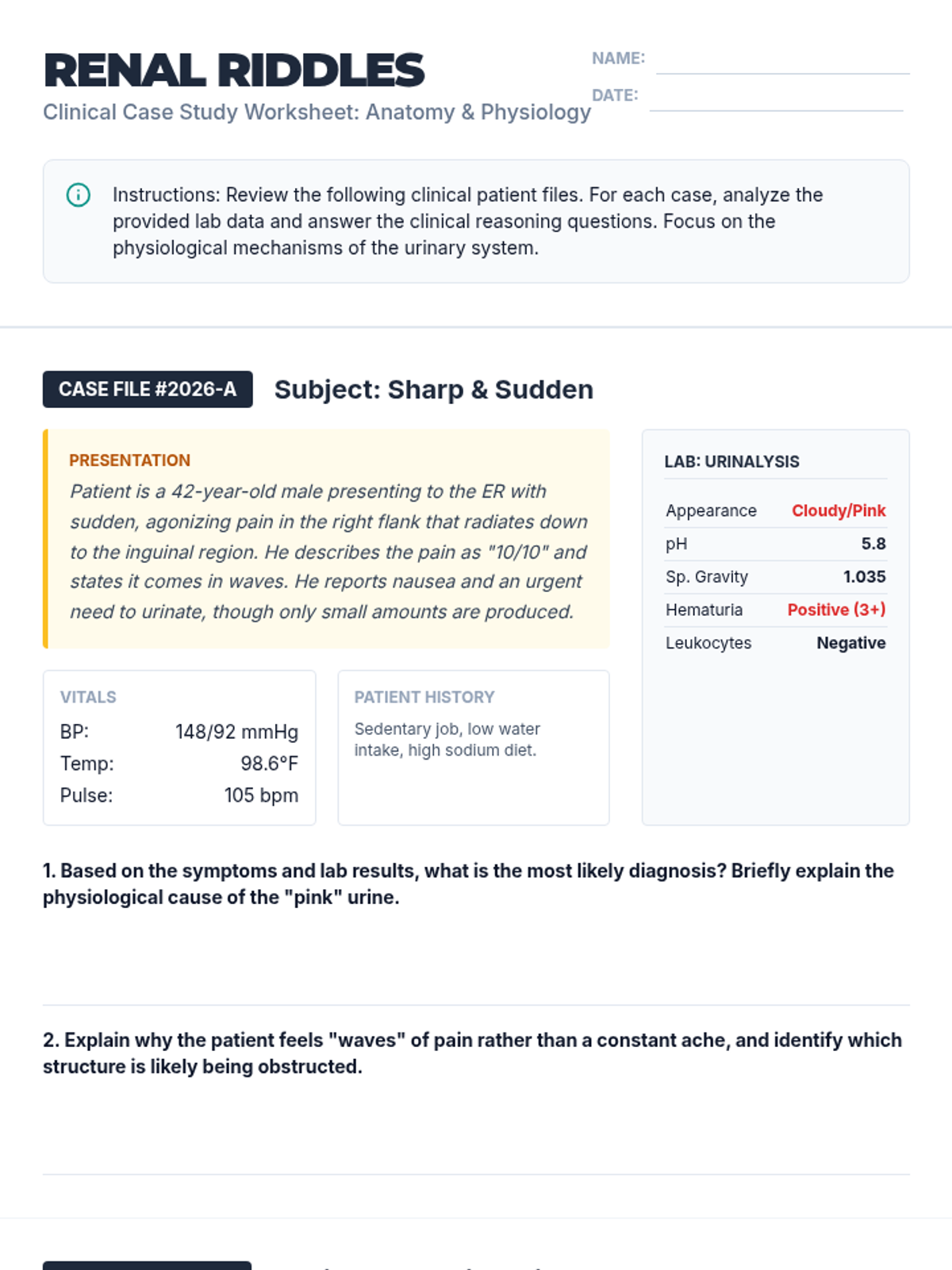
A worksheet containing clinical cases like kidney stones and Chronic Kidney Disease. Each case provides patient symptoms, diagnostic data, and questions for students to apply their knowledge of renal physiology.
A visual presentation to introduce the concepts of clinical reasoning, diagnostic tests (urinalysis, blood work like GFR/Creatinine), and a brief overview of the anatomy/physiology involved in the cases.
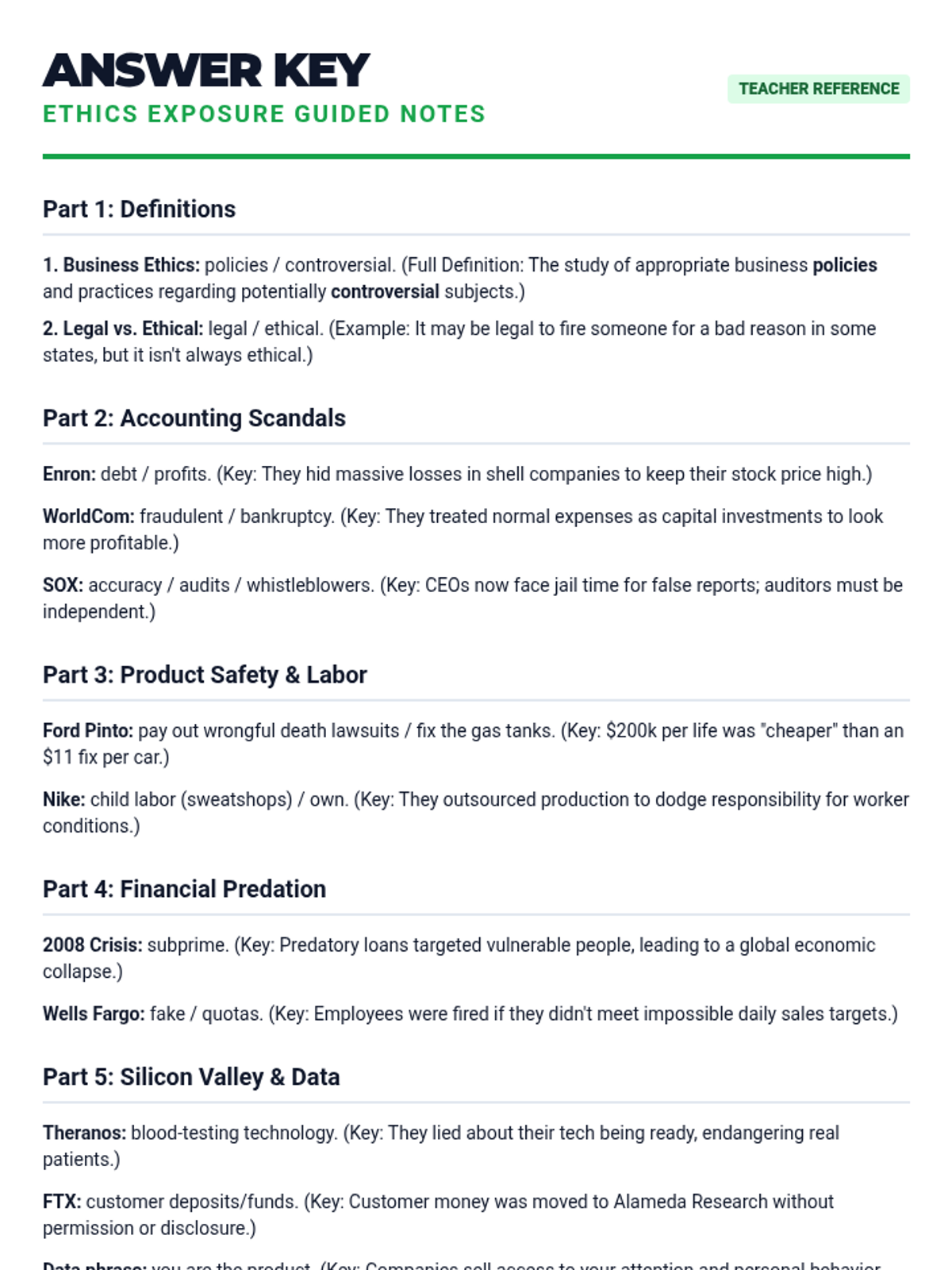
Teacher's answer key for the Ethics Exposure Guided Notes, including suggested discussion points and teaching tips.
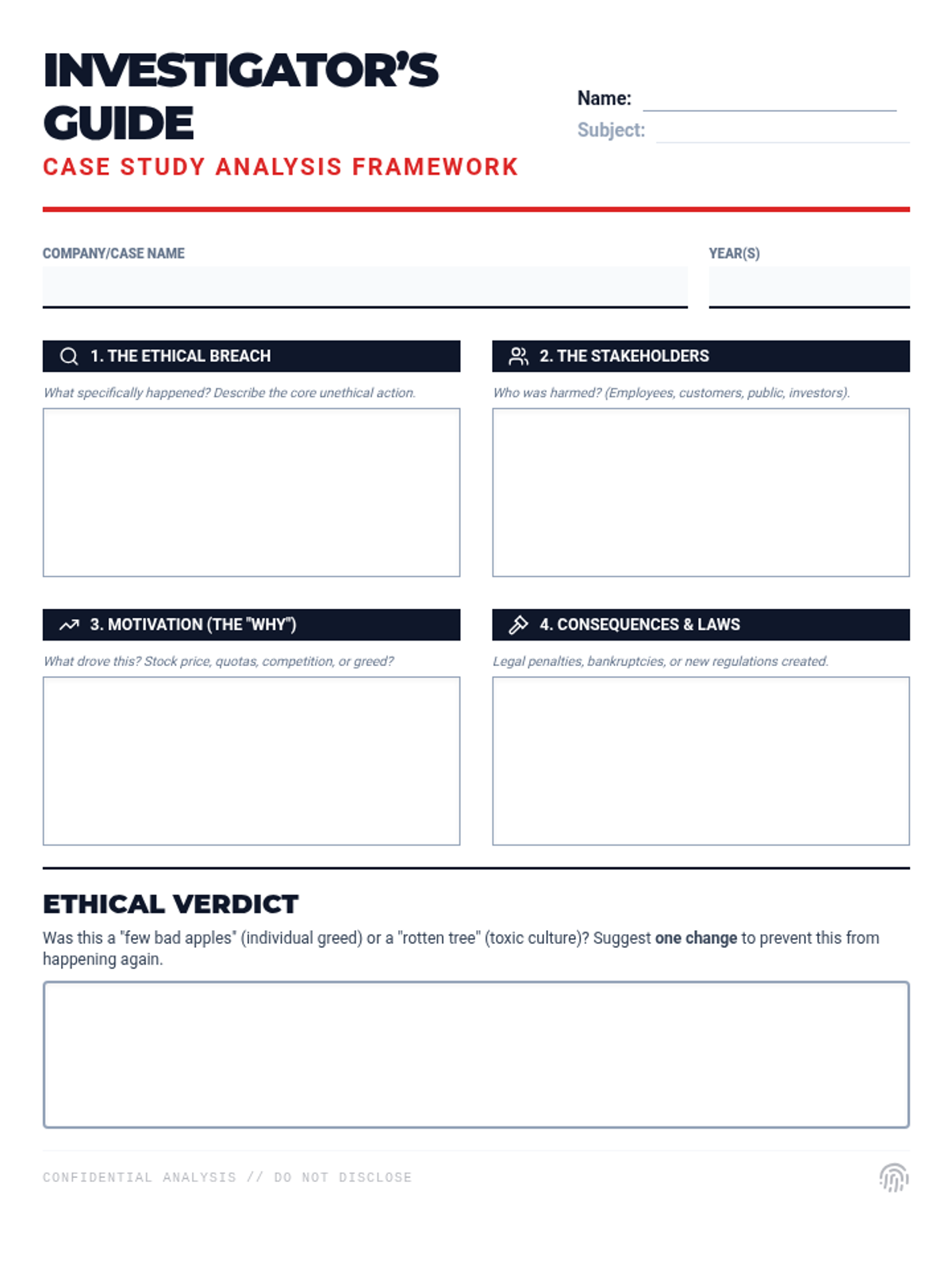
A versatile case study analysis worksheet that guides students through investigating business ethics breaches, identifying stakeholders, and evaluating consequences.
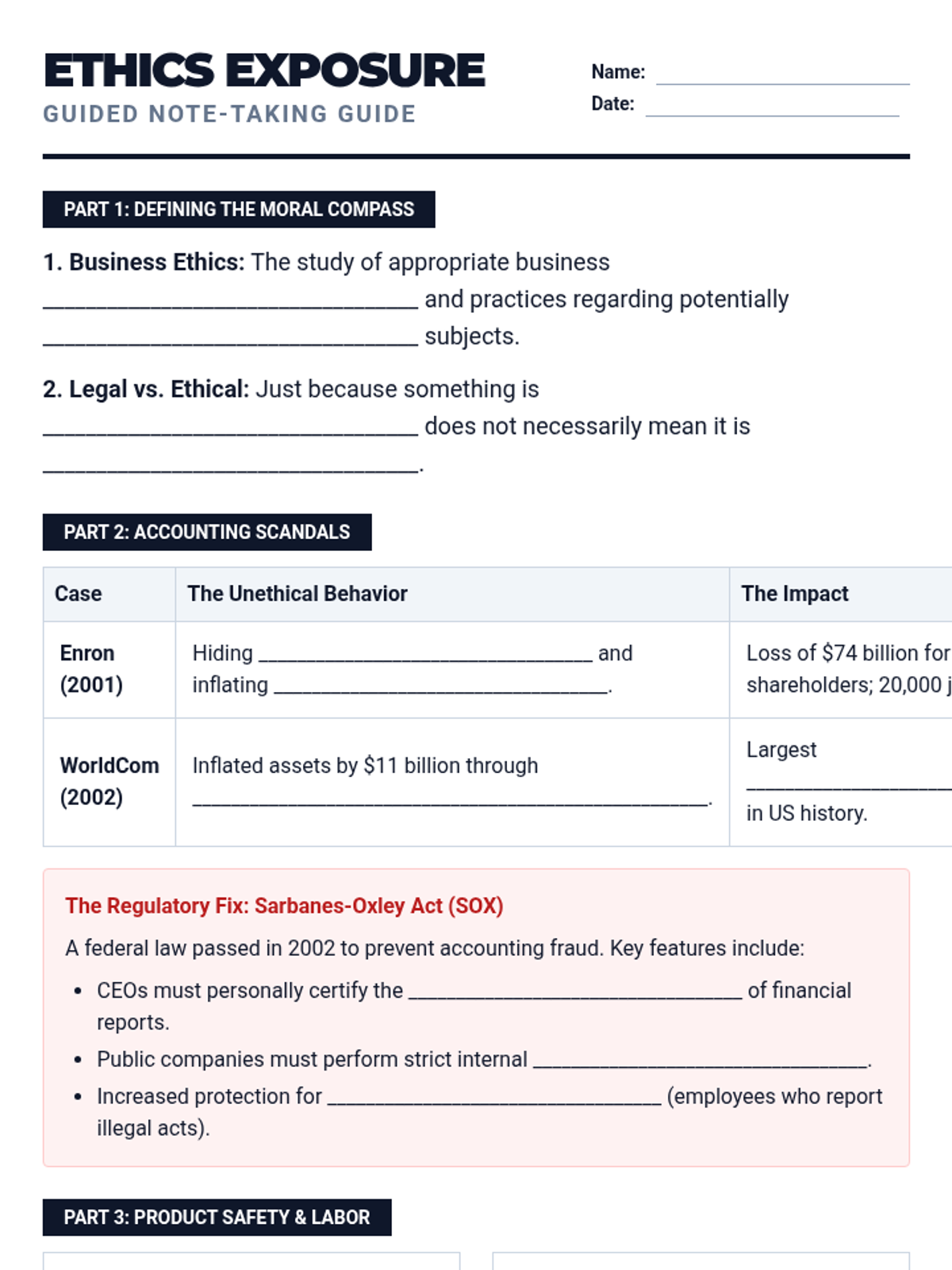
A structured guided note-taking document that aligns with the Ethics Exposure Slides, helping students track key definitions, case studies, and regulatory responses.
A comprehensive presentation for high school business students covering foundational concepts of business ethics, major corporate scandals (Enron, Theranos, FTX), and the legislative response (SOX).
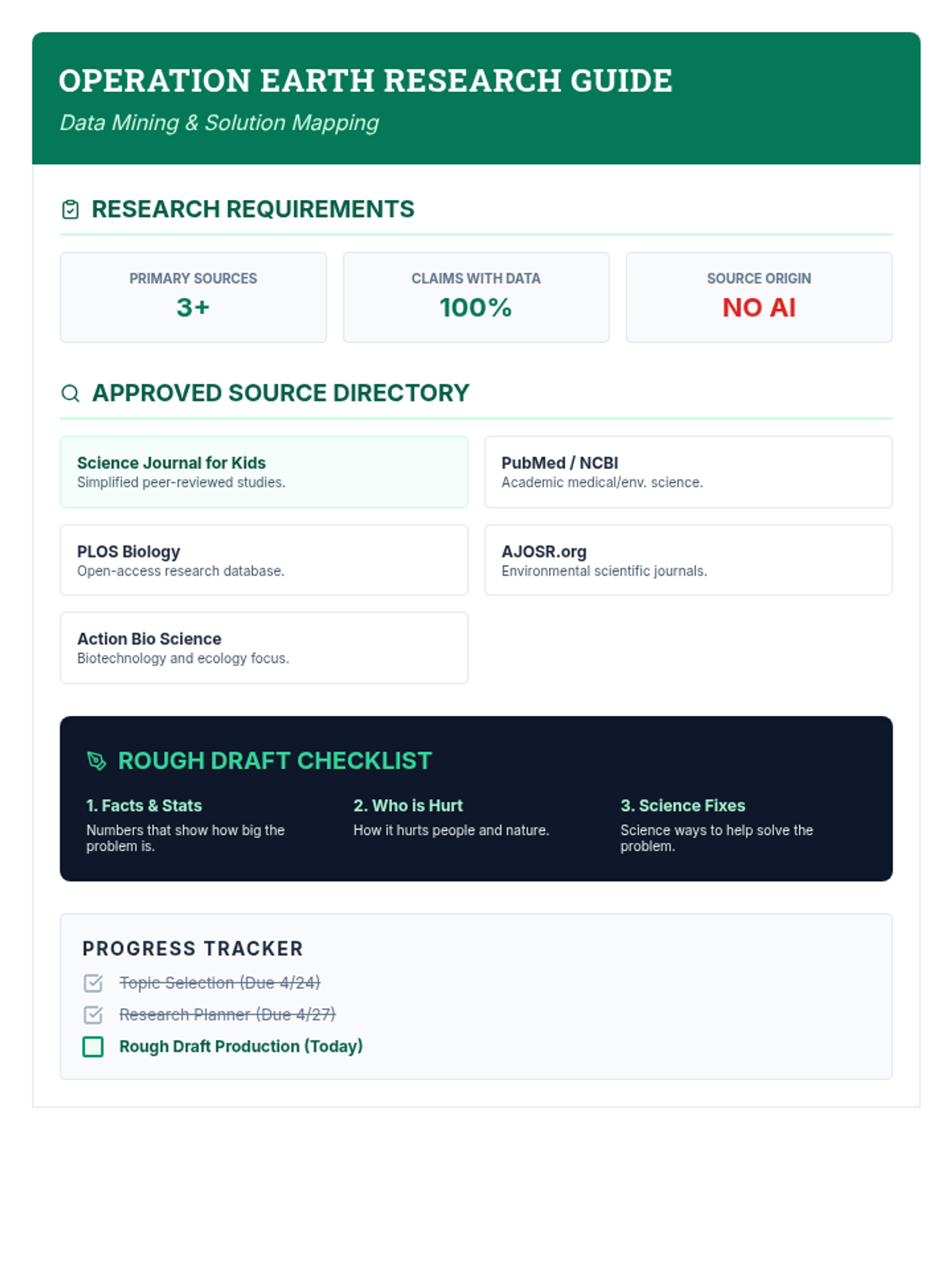
A quick-reference guide for Biology students during the 'Operation Earth' project, listing approved databases and required research components with simplified checklist wording.
A complete presentation for the substitute teacher with updated, simpler checklist wording for the Biology project components.
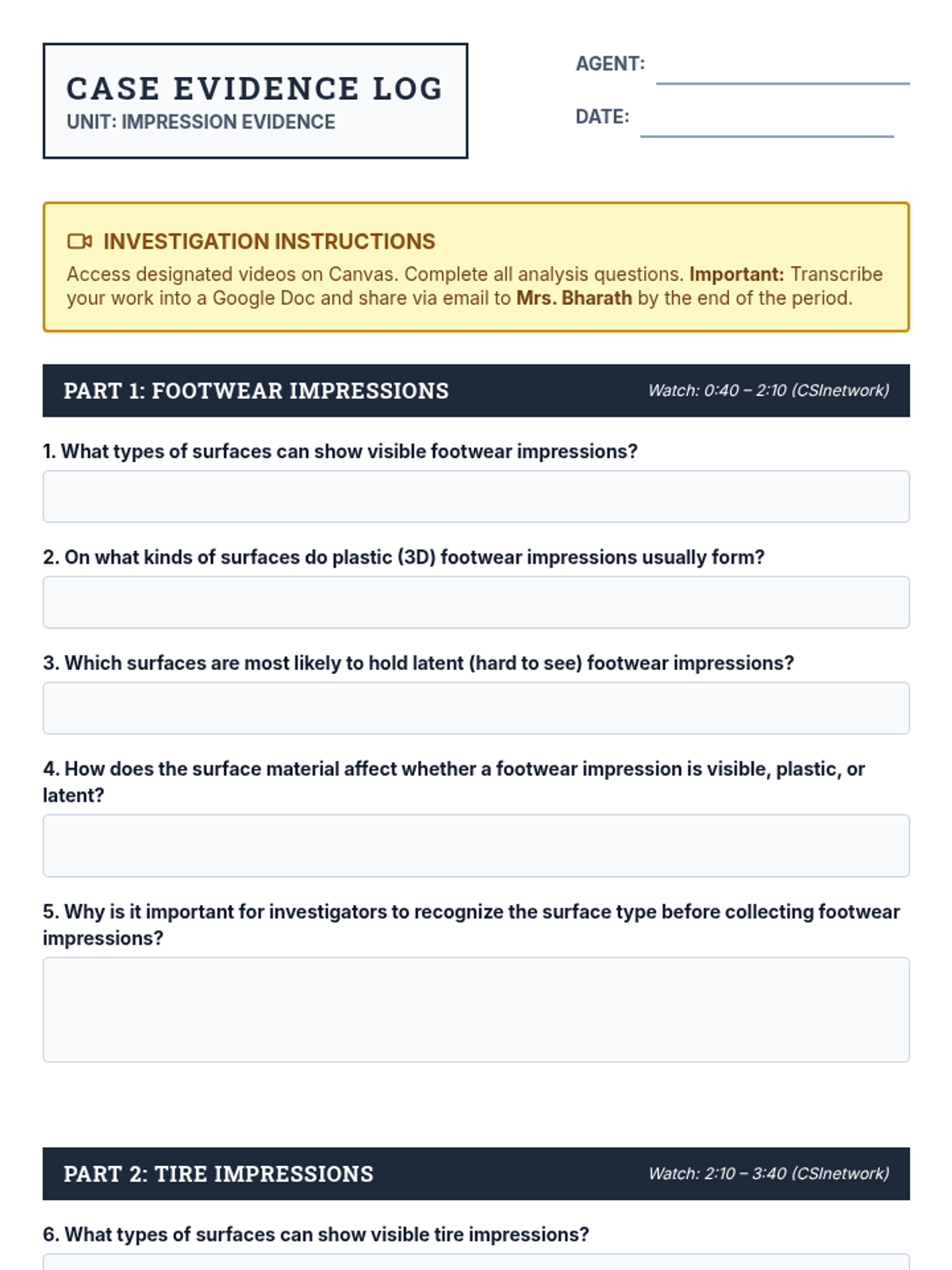
A structured Forensic Science worksheet covering footwear, tire impressions, and forensic odontology, designed for use with specific instructional videos.
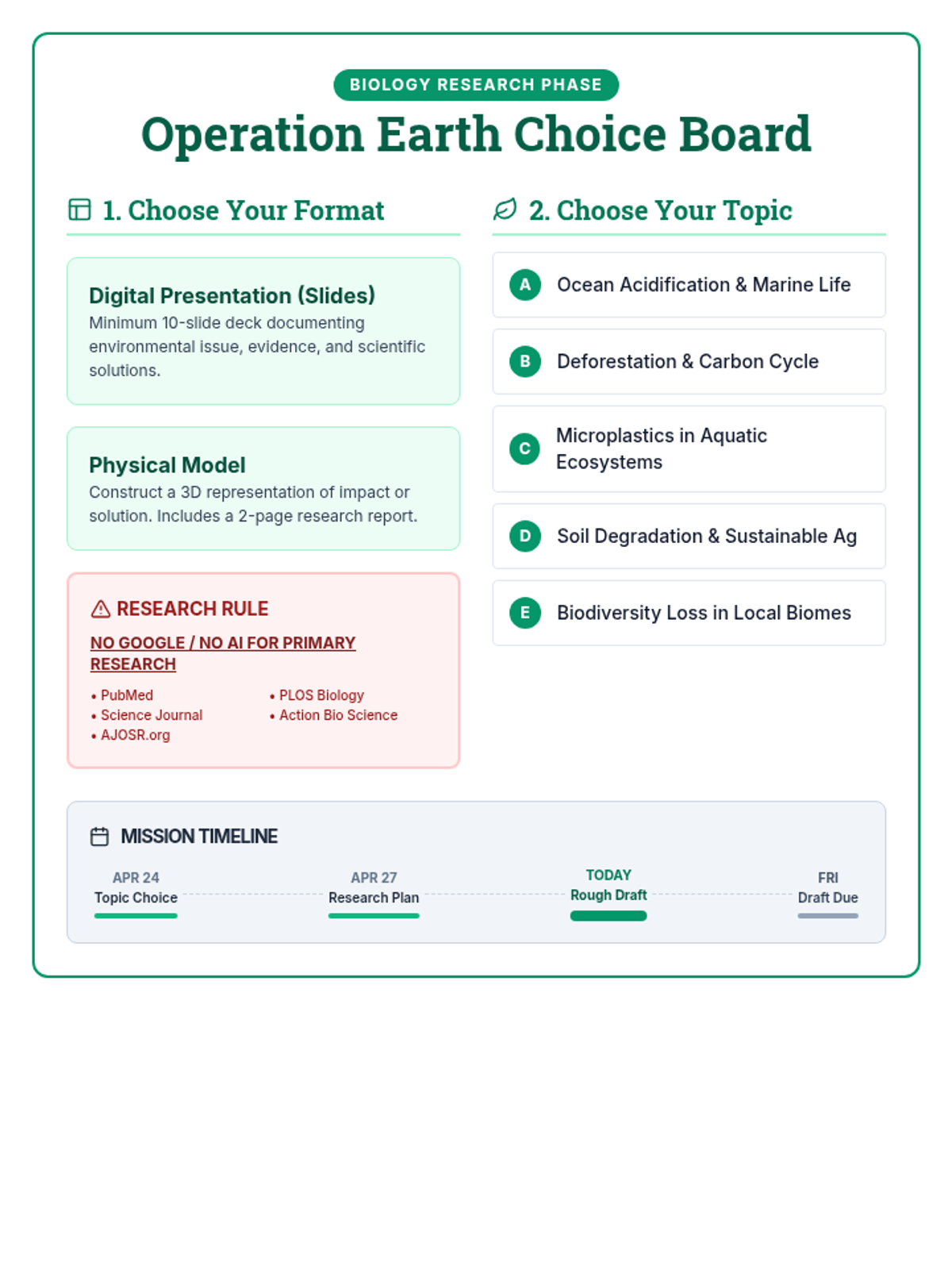
A visual choice board for the Biology 'Operation Earth' project, outlining project formats, environmental topics, and the current production timeline.
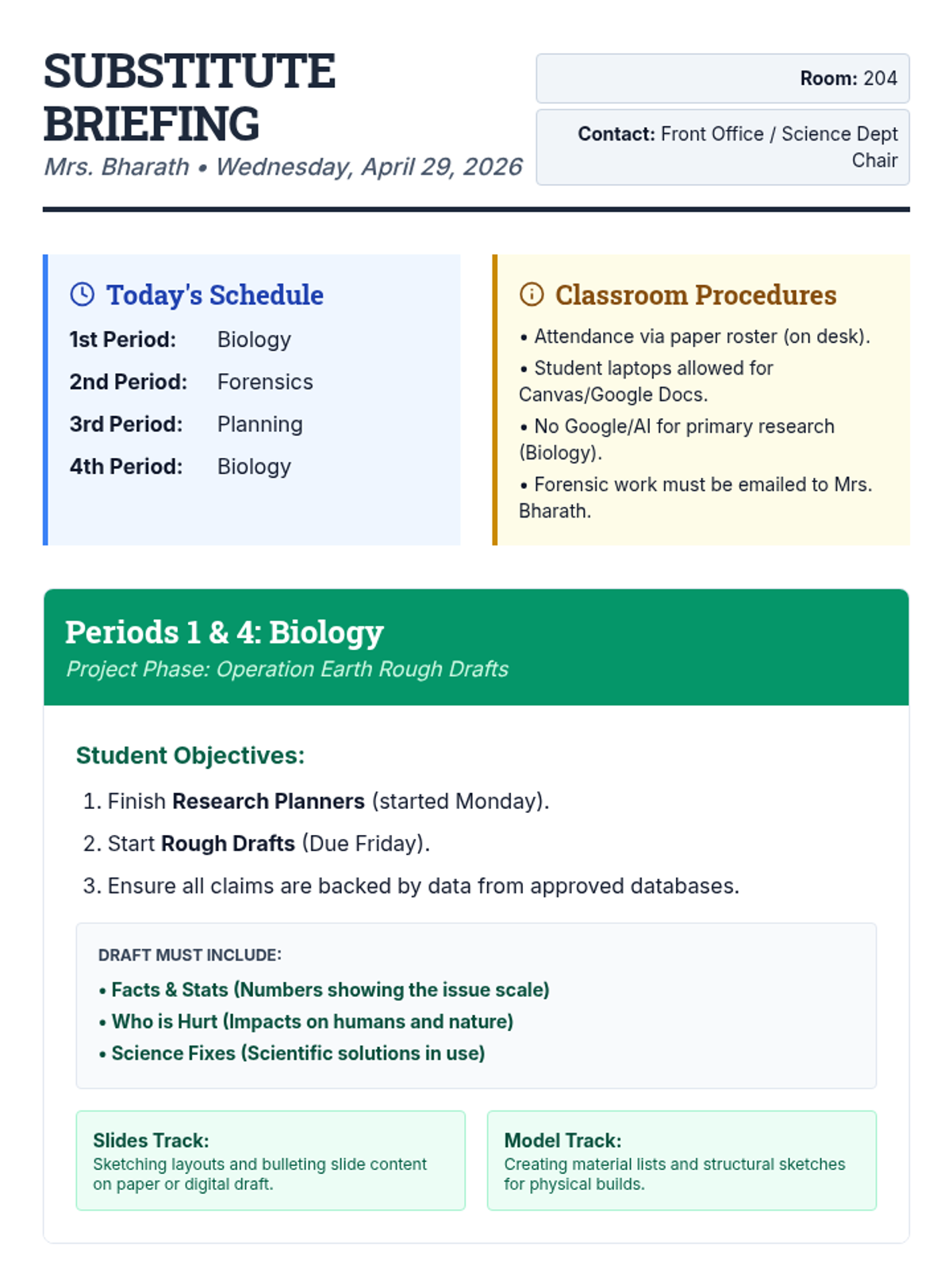
A comprehensive substitute teacher briefing document for Mrs. Bharath, updated with simplified project component wording.
A visually engaging slide deck covering growth curves, predator-prey dynamics, and the disruptive impacts of invasive species introduction on native ecosystems. Fixed axis labels and layout issues.
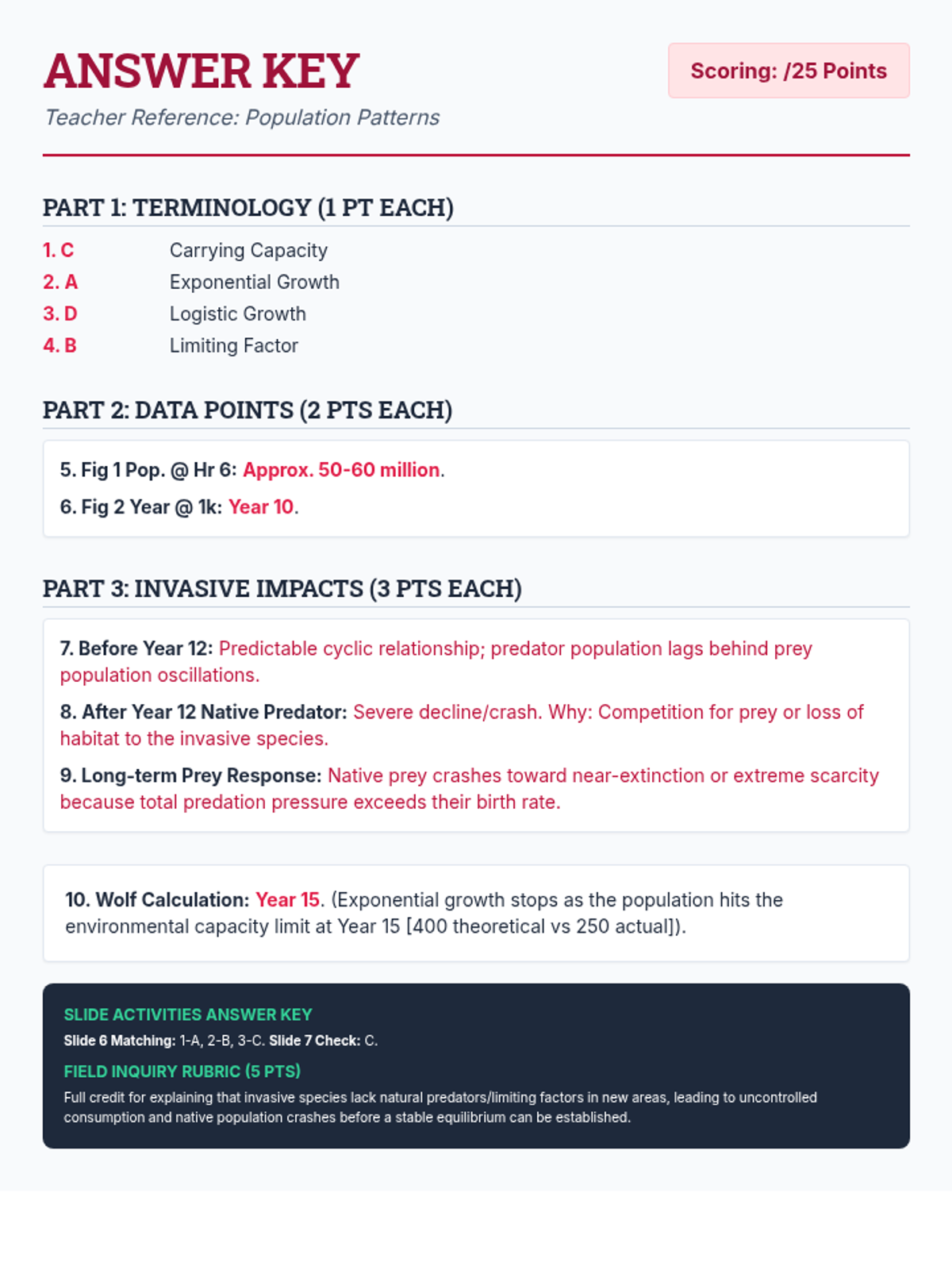
Answer key with detailed explanations for predator-prey dynamics and the impacts of invasive species introduction. Corrected terminology matching and logic.
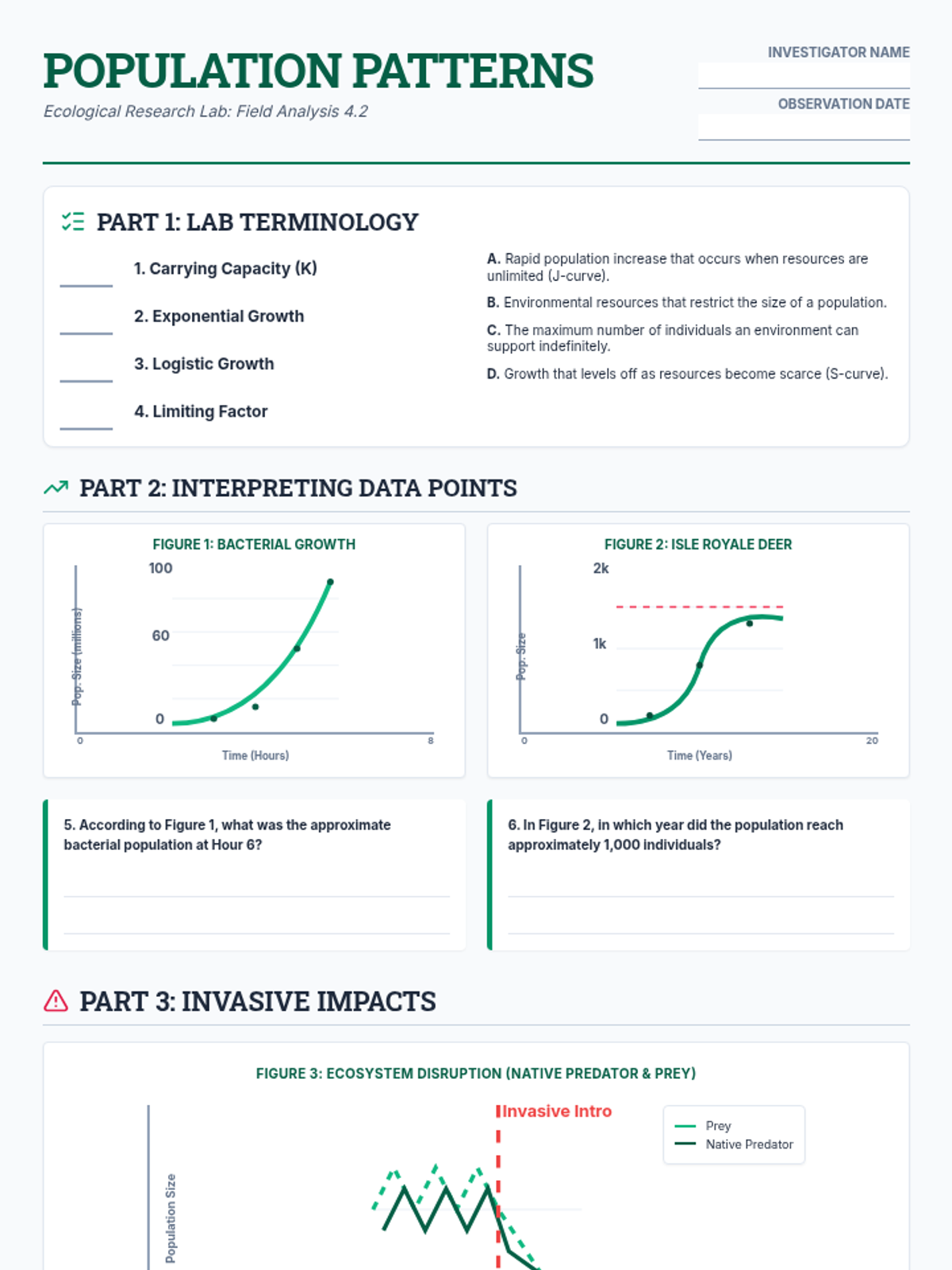
A comprehensive student worksheet featuring matching, detailed graph interpretation with data point analysis, and a new section on invasive species' effects on predator-prey populations. Optimized for a clean two-page print layout. Fixed path clipping in Figure 3.
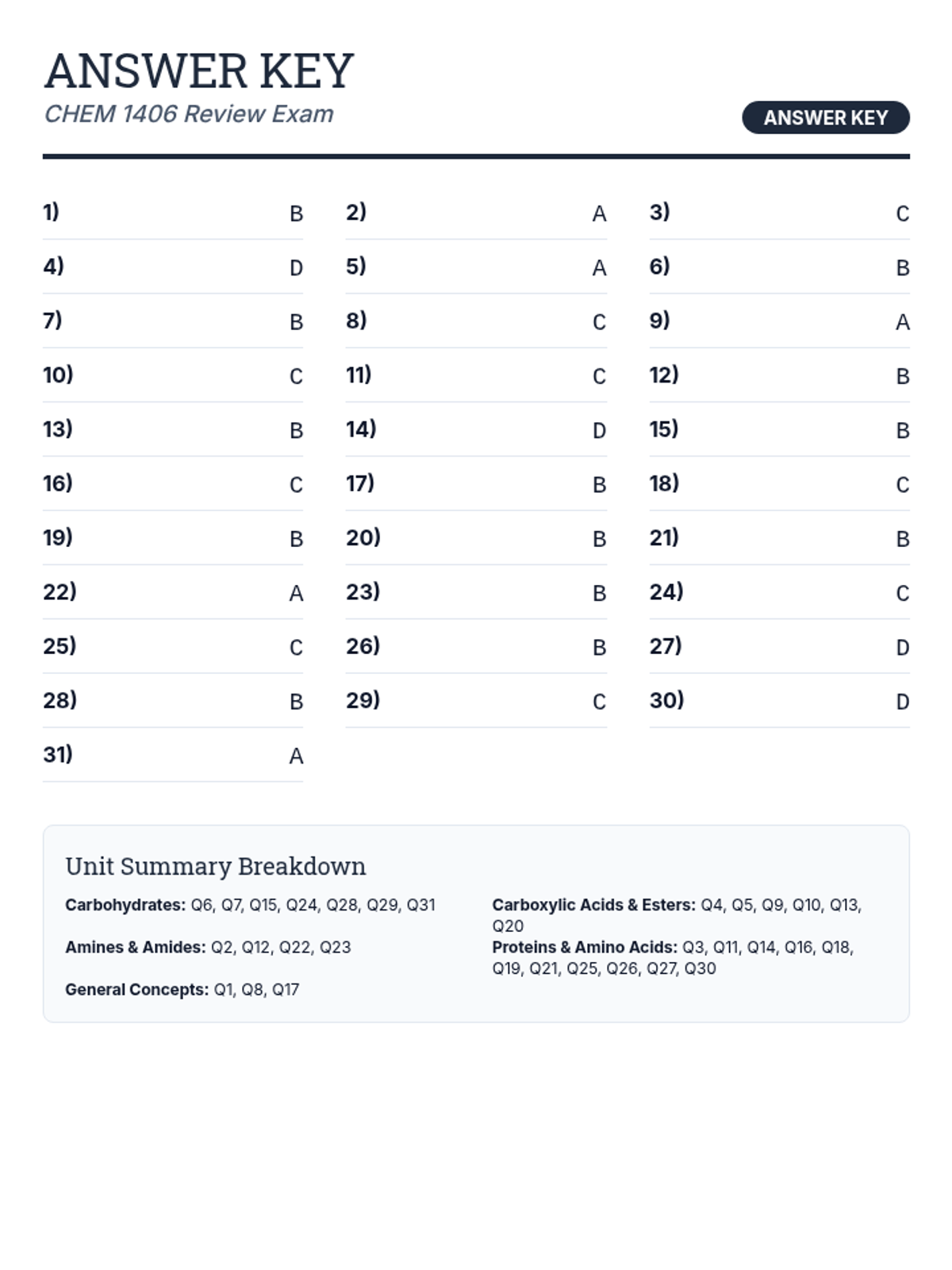
The answer key for the CHEM 1406 Review Exam, including a content breakdown for teacher reference.
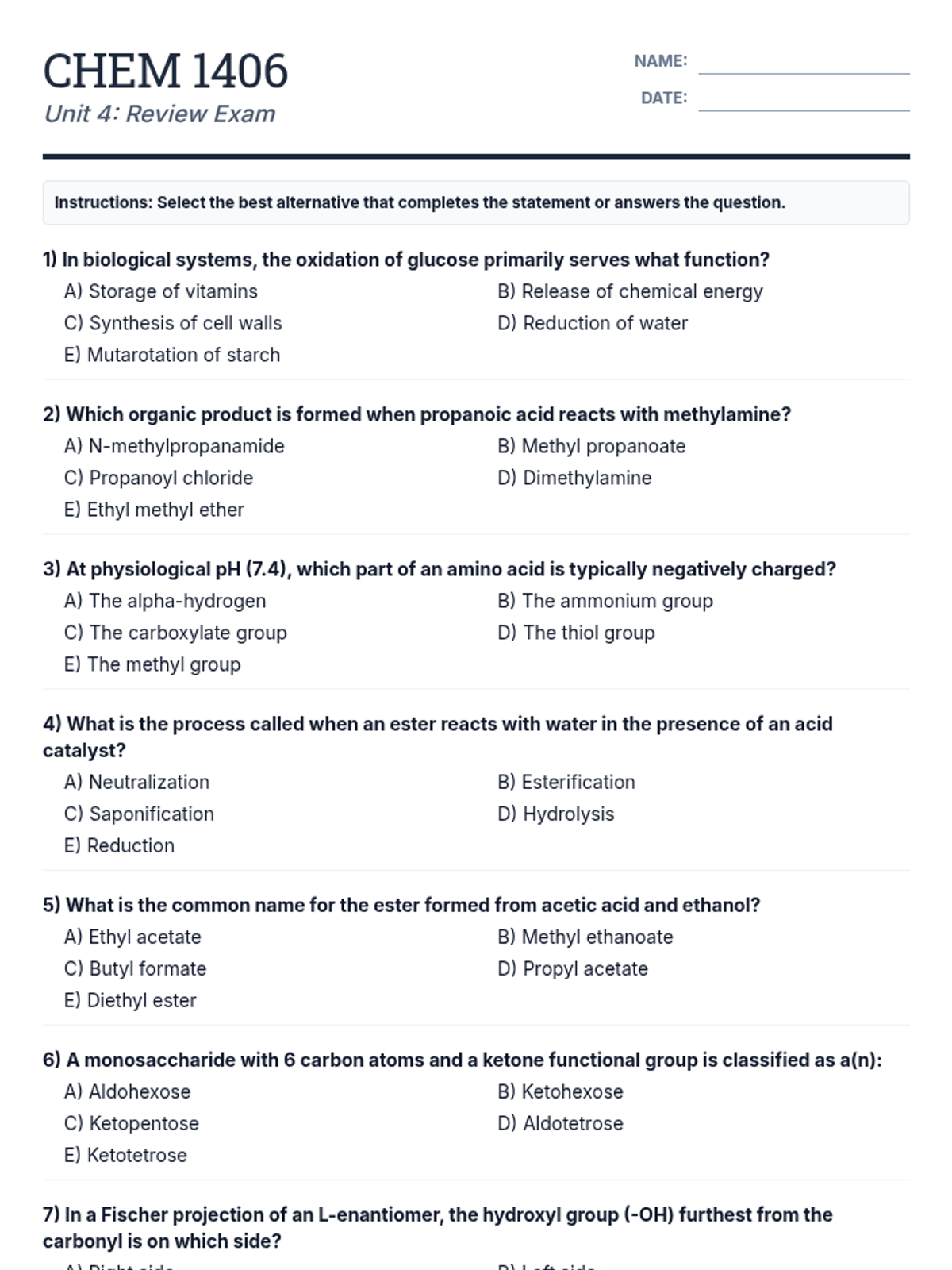
A 31-question multiple-choice review assessment covering the key concepts of the organic and biochemistry unit, including structural identification and reactions.
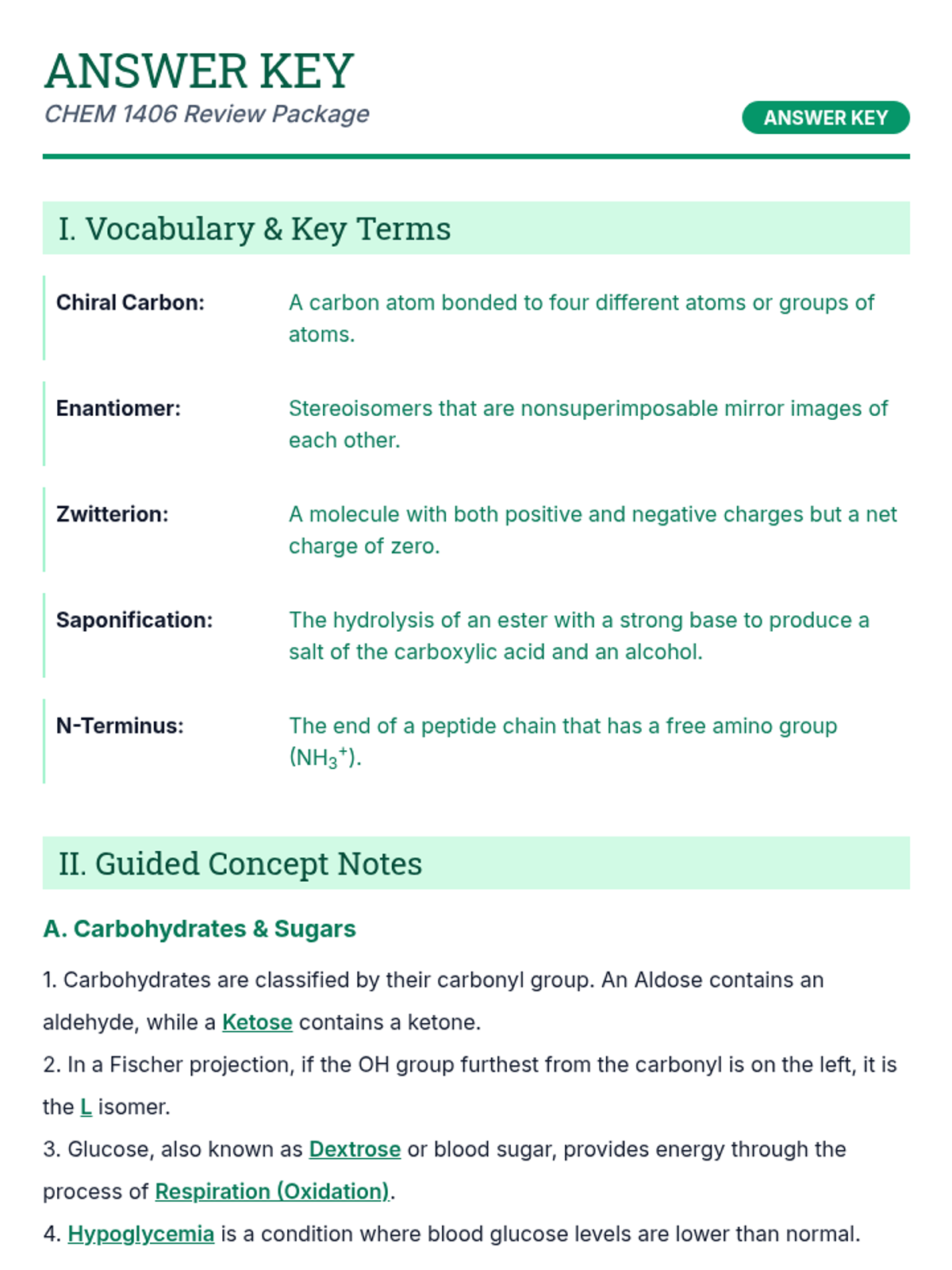
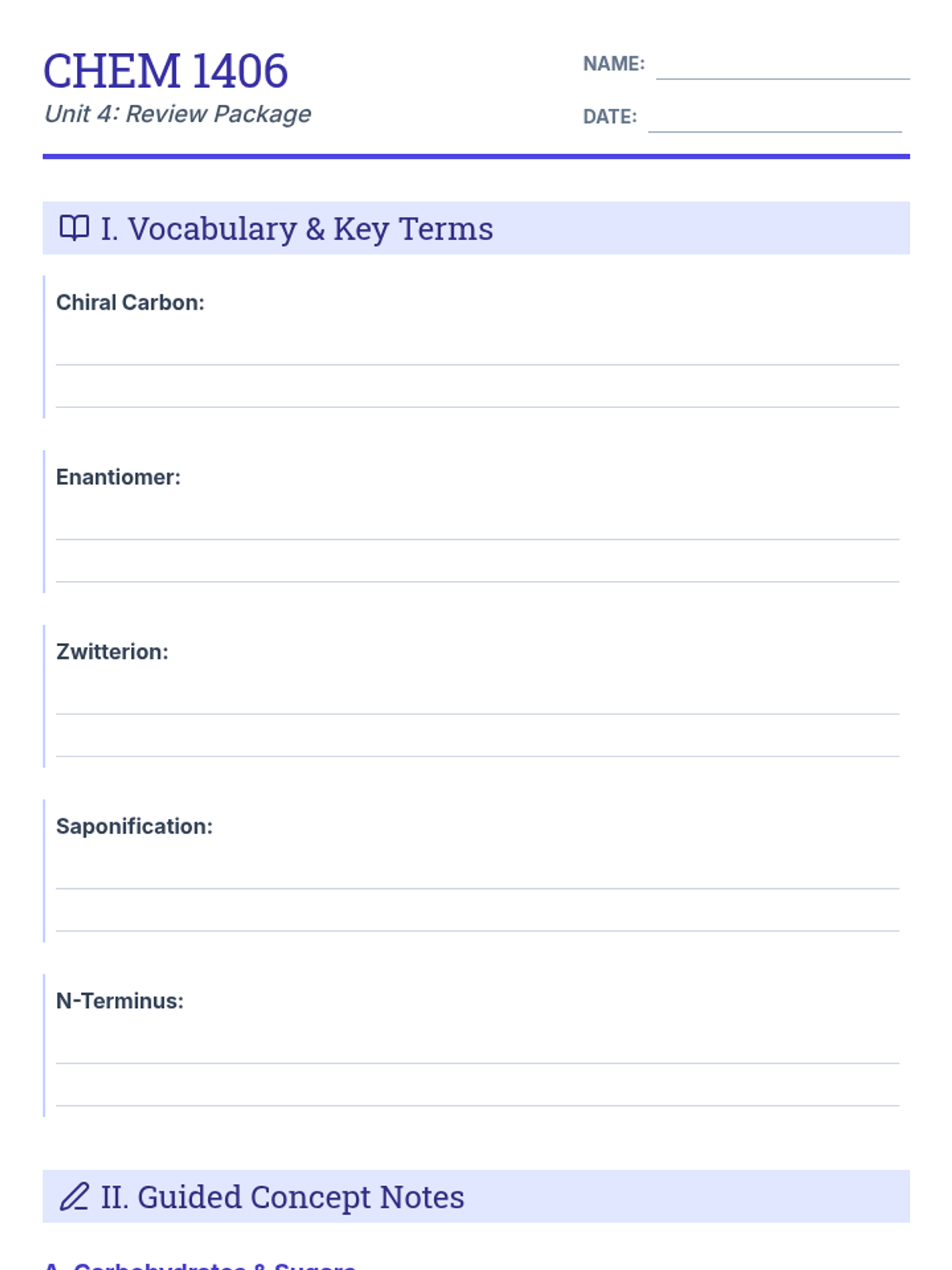
A completed answer key for the CHEM 1406 Review Package, providing all definitions, guided note completions, and classification details.
A comprehensive study guide featuring guided notes, a vocabulary list, and a graphic organizer to help students master organic and biochemistry concepts.
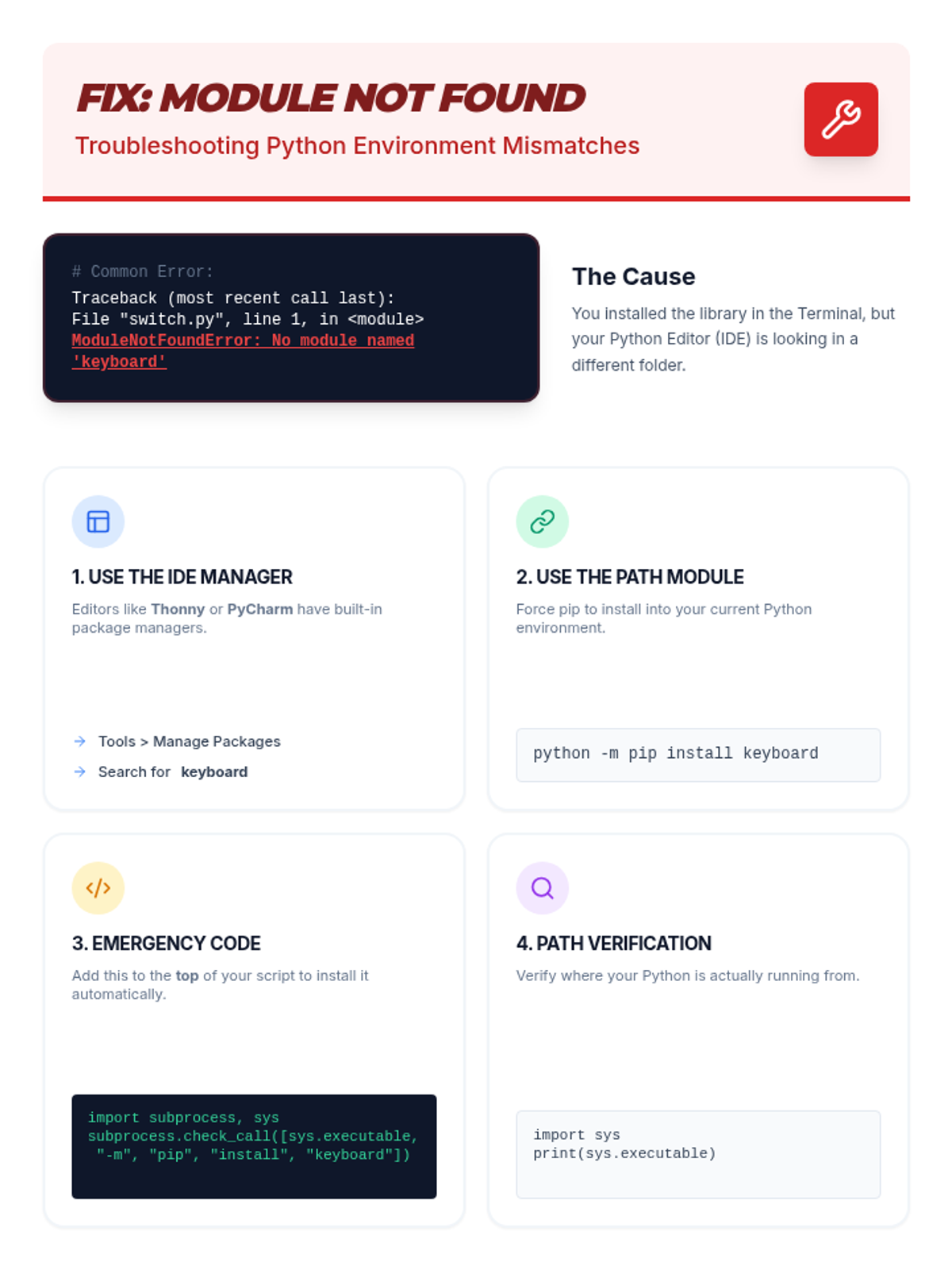
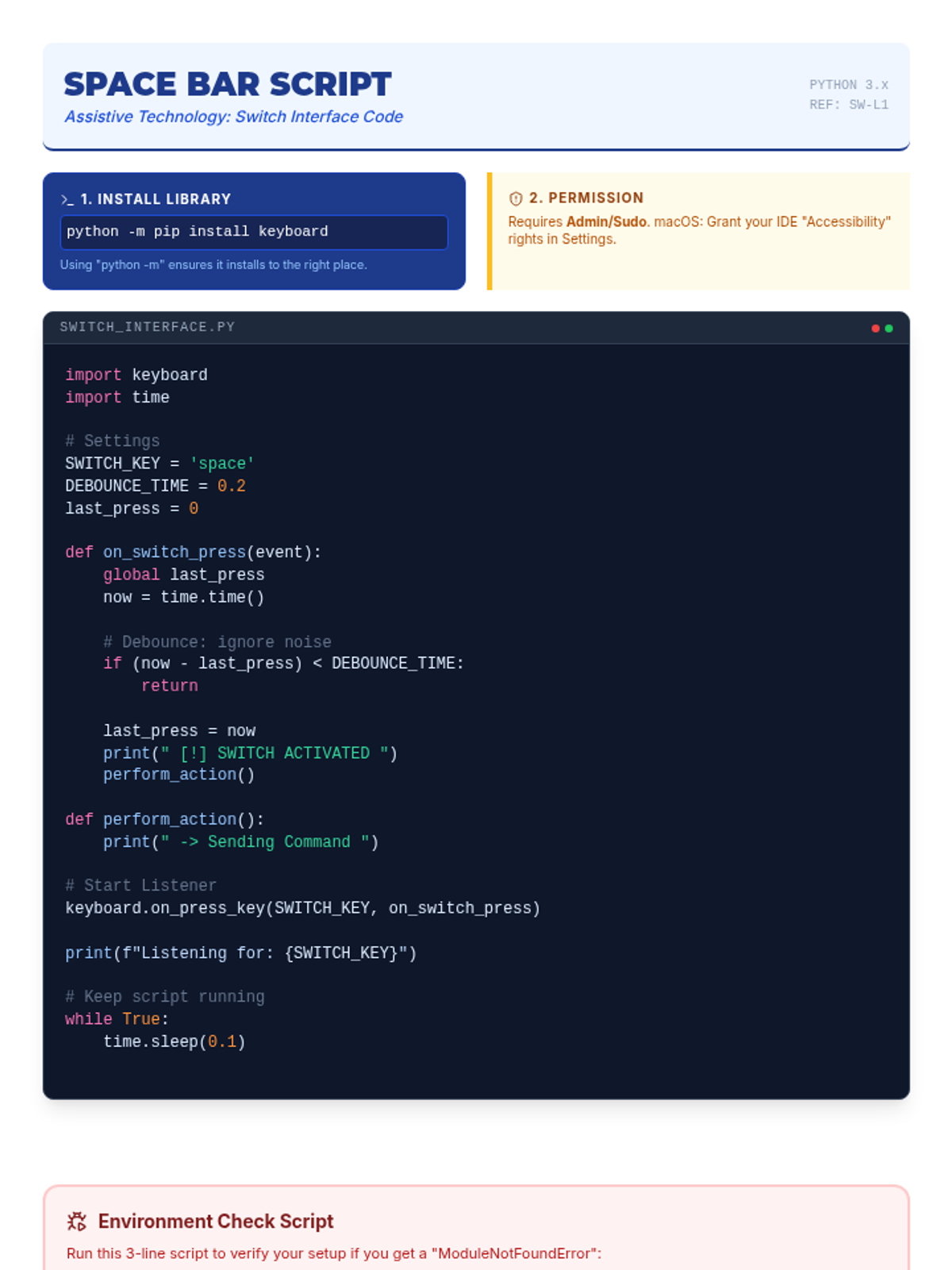
A technical troubleshooting guide specifically for resolving 'ModuleNotFoundError' issues when installing the keyboard library. Provides four concrete solutions including IDE package management, path matching, and emergency script-based installation.
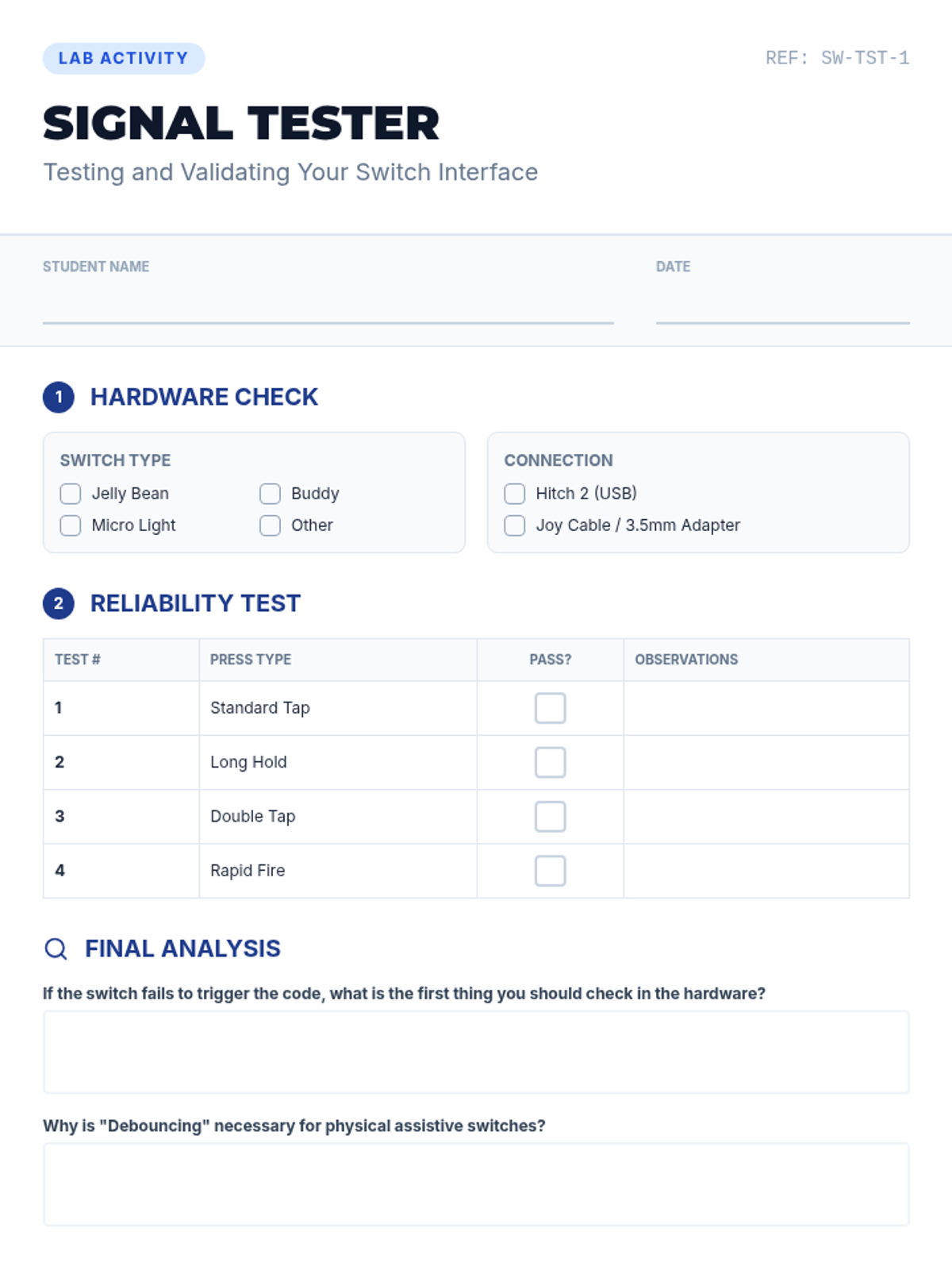
A student worksheet for testing and validating the Python switch interface. Includes hardware checks, a test log for verifying signal reliability, and troubleshooting questions to reinforce understanding of the hardware-software link.
An introductory presentation explaining the hardware and software logic of a digital switch interface. Focuses on the "Hitch 2" concept and how to program a Space Bar trigger in Python for assistive technology.
A technical reference sheet and code snippet for a Python-based switch interface. Includes the actual code logic for binding a physical switch to the space bar and explains the underlying programming concepts.
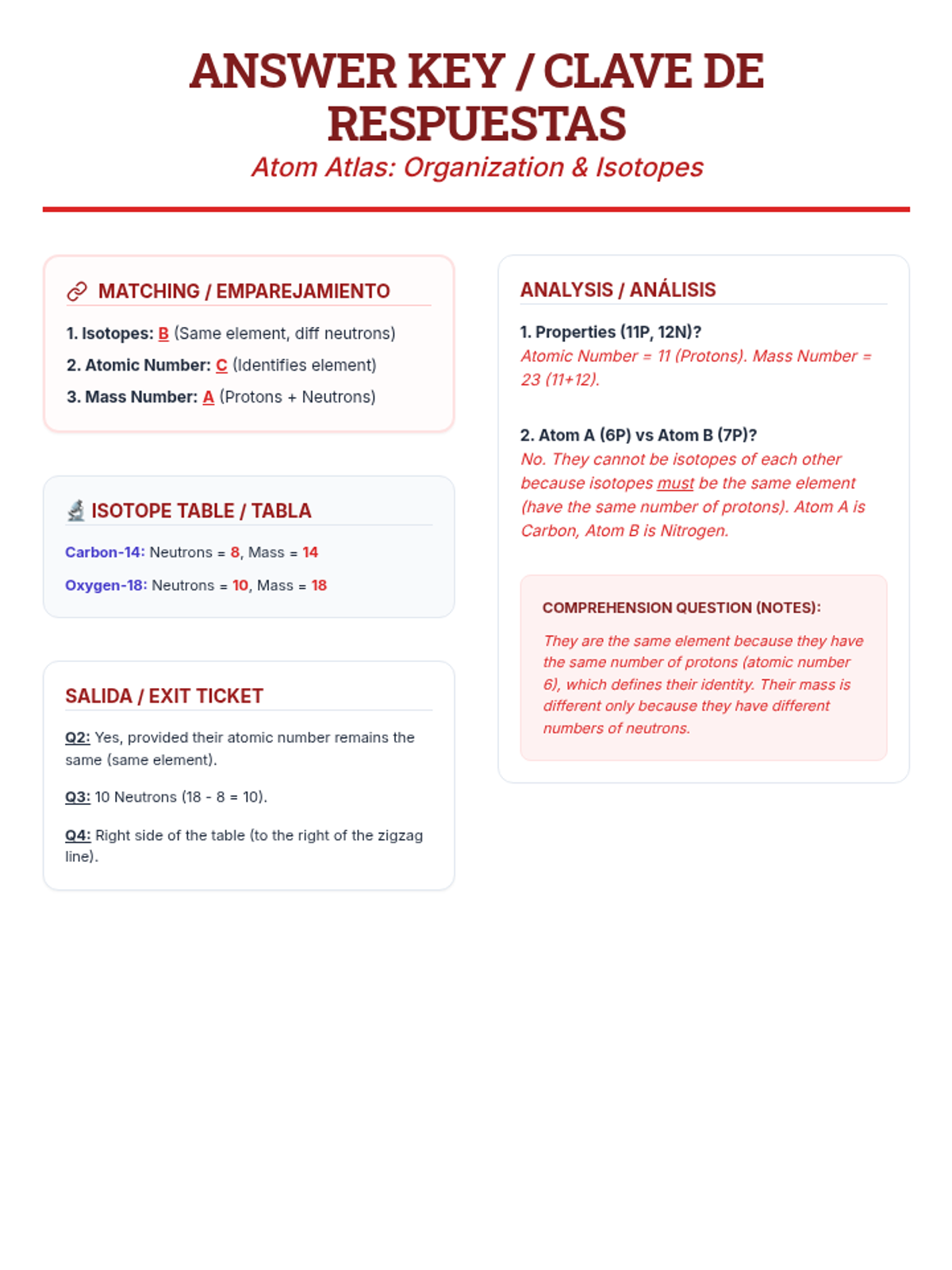
A comprehensive answer key covering the isotopes analysis, matching, and comprehension sections for the Atom Atlas lesson.
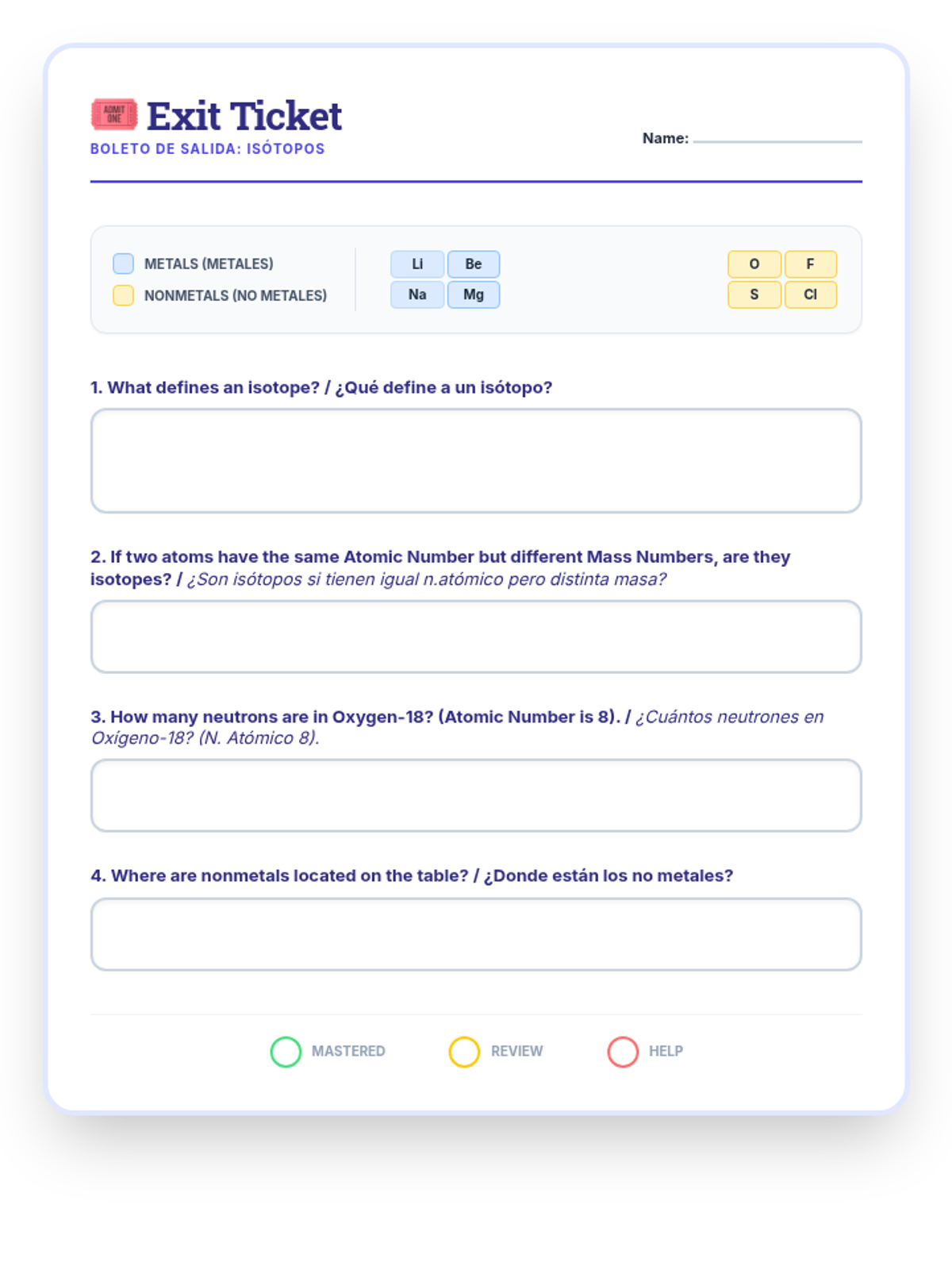
A concise exit ticket assessment focusing on isotope concepts and periodic table location, provided in both English and Spanish.
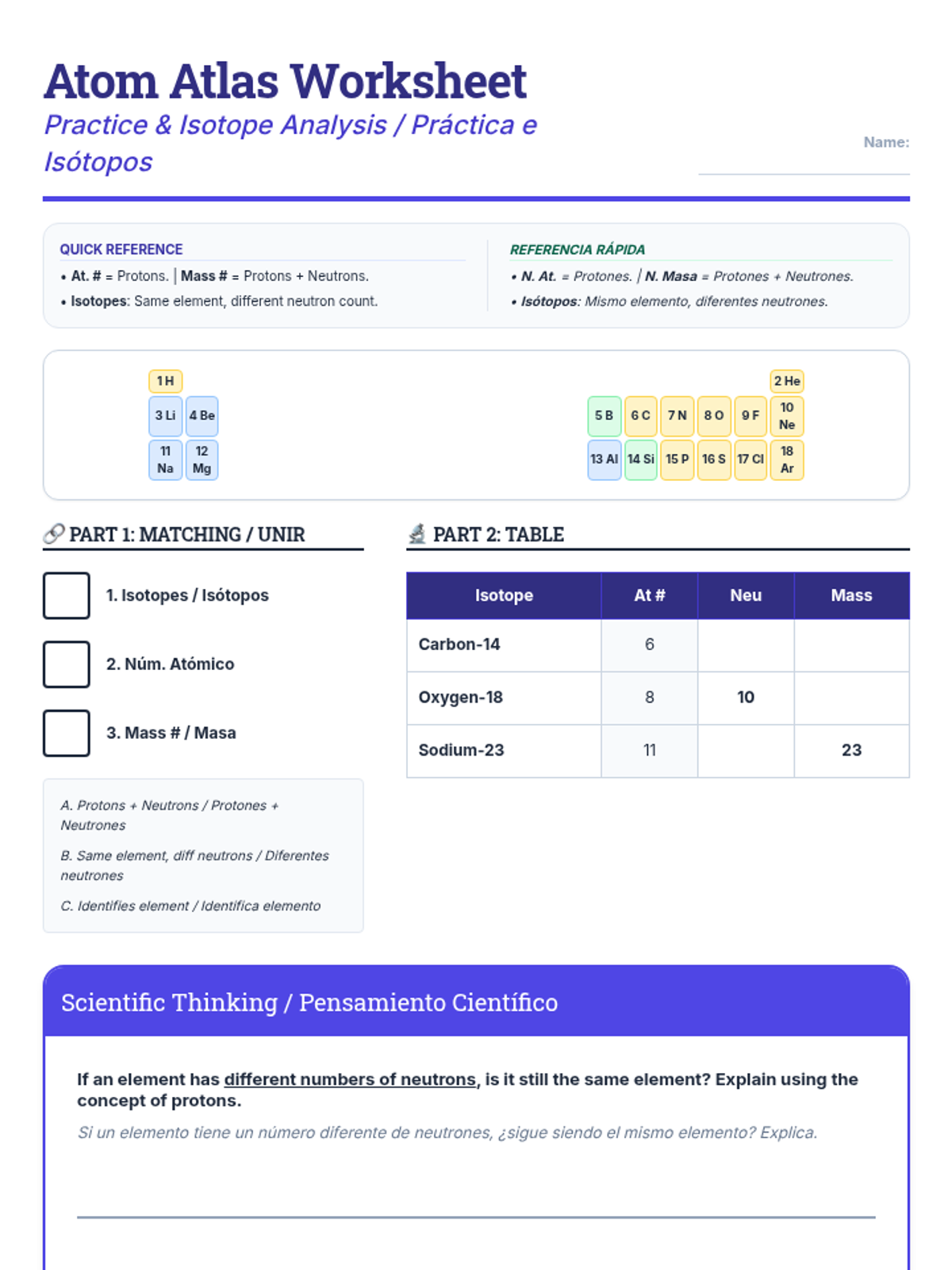
A practice worksheet featuring matching, an isotope analysis table, and comprehension questions focused on atomic structure and isotope variations.
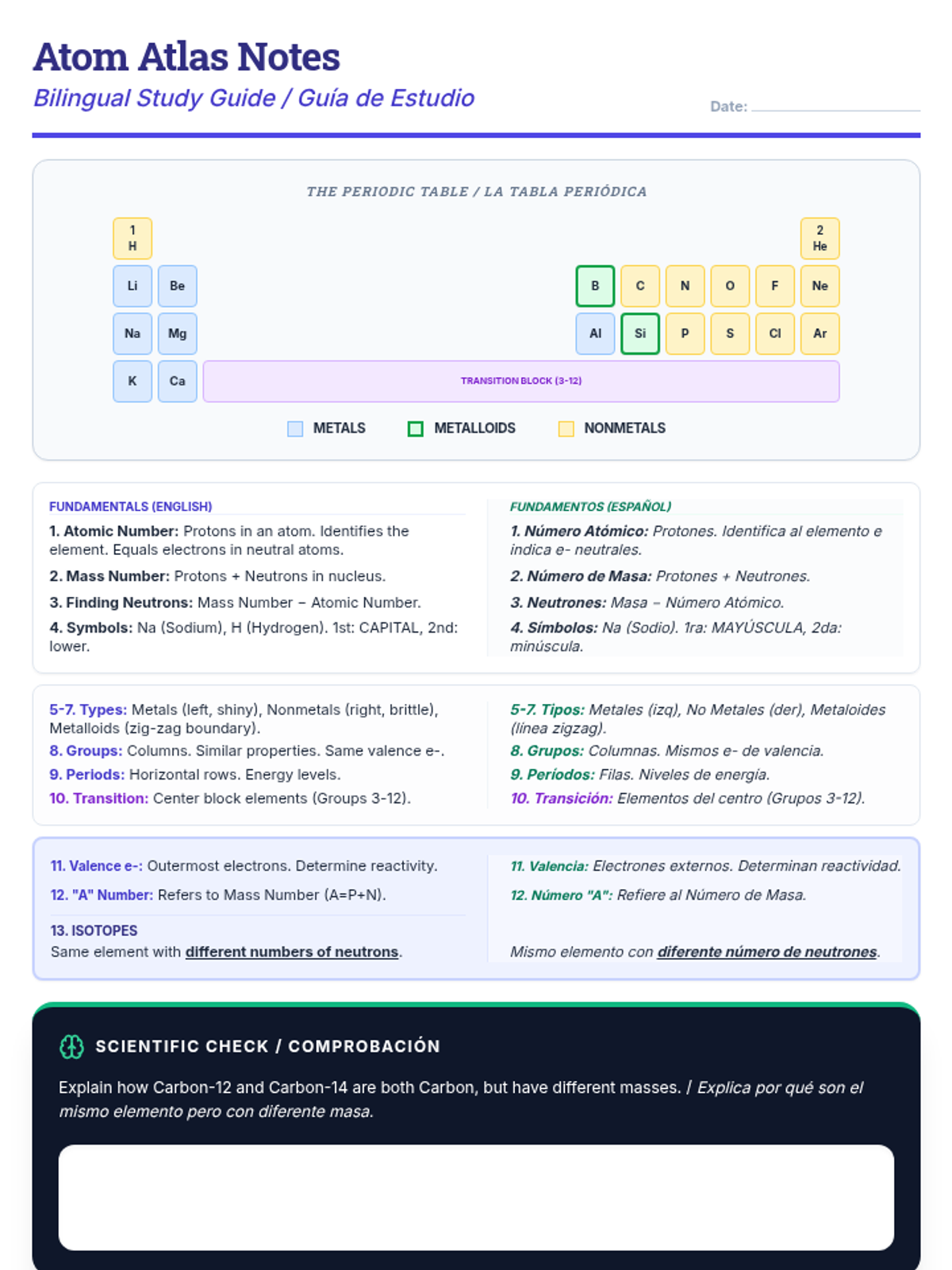
Bilingual notes document covering the organization of the periodic table, including a color-coded reference map, dual-language explanations of atomic properties, and a new section on isotopes.
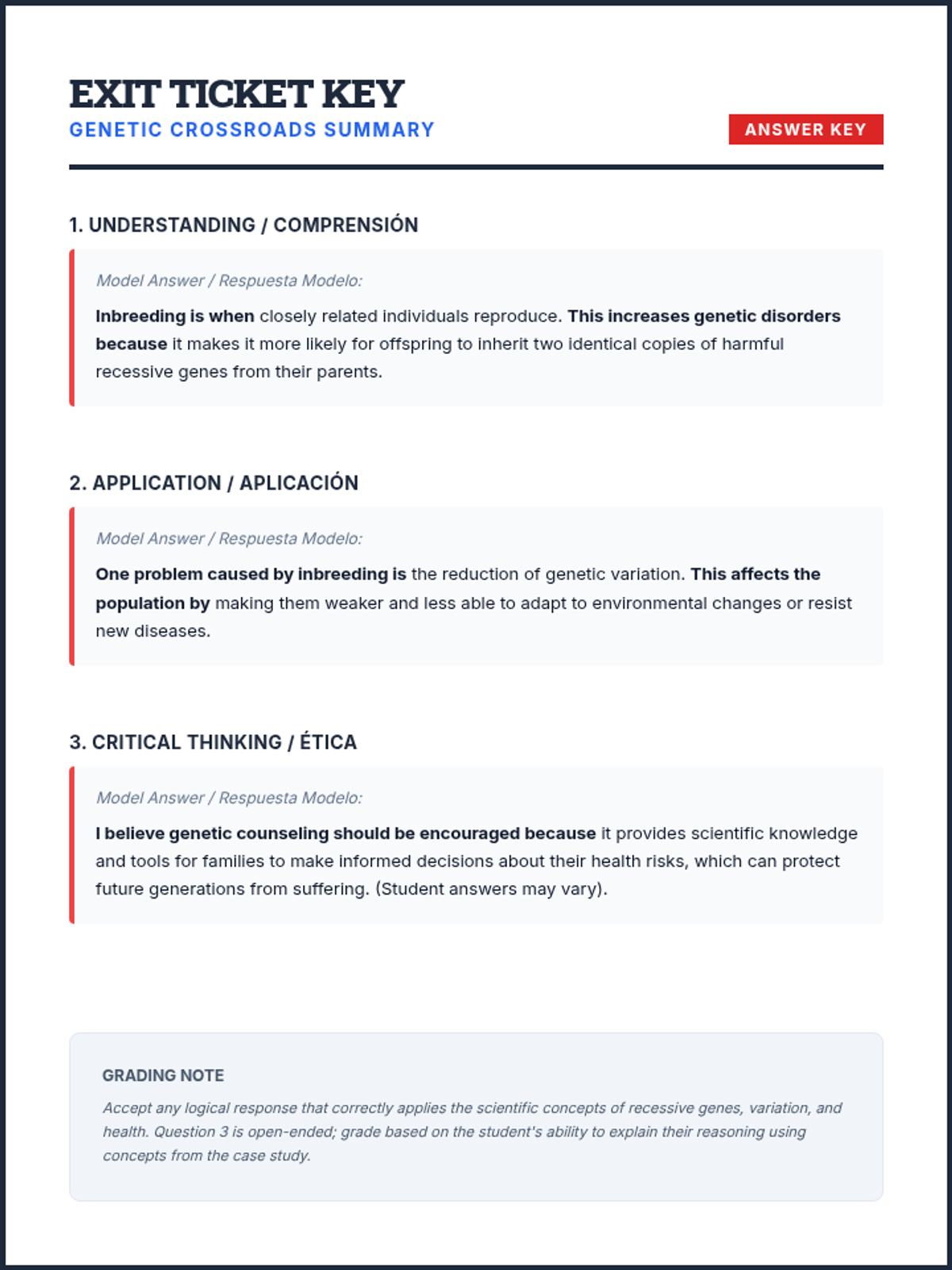
Teacher answer key for the Genetic Crossroads exit ticket, providing model responses for understanding inbreeding, its biological impact, and ethical reasoning regarding genetic counseling.
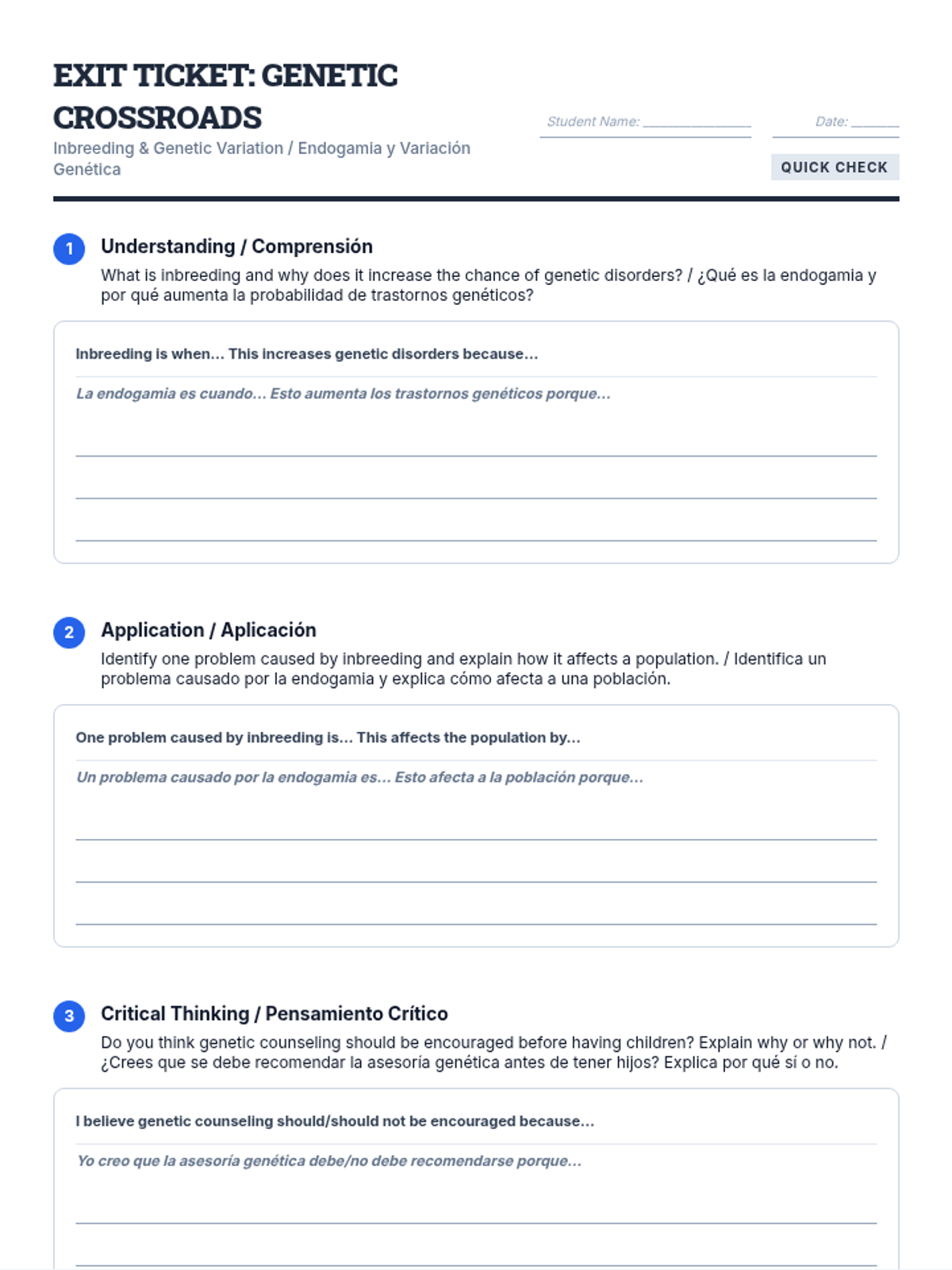
A bilingual exit ticket (English/Spanish) for the Genetic Crossroads lesson. Includes three questions focused on understanding inbreeding, its biological impact, and the ethics of genetic counseling, with provided sentence stems for each. Revised for improved writing line visibility and white background response areas.
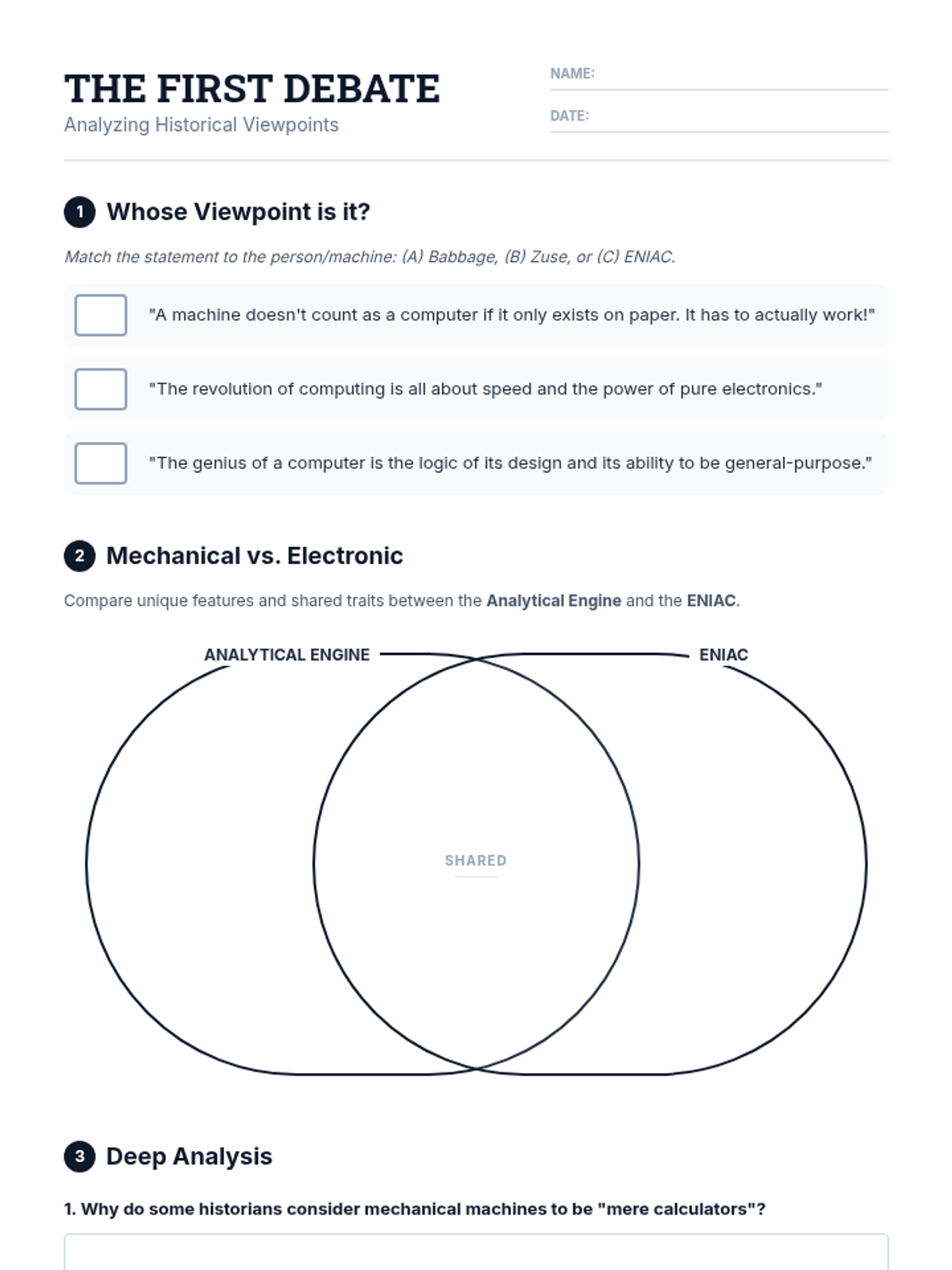
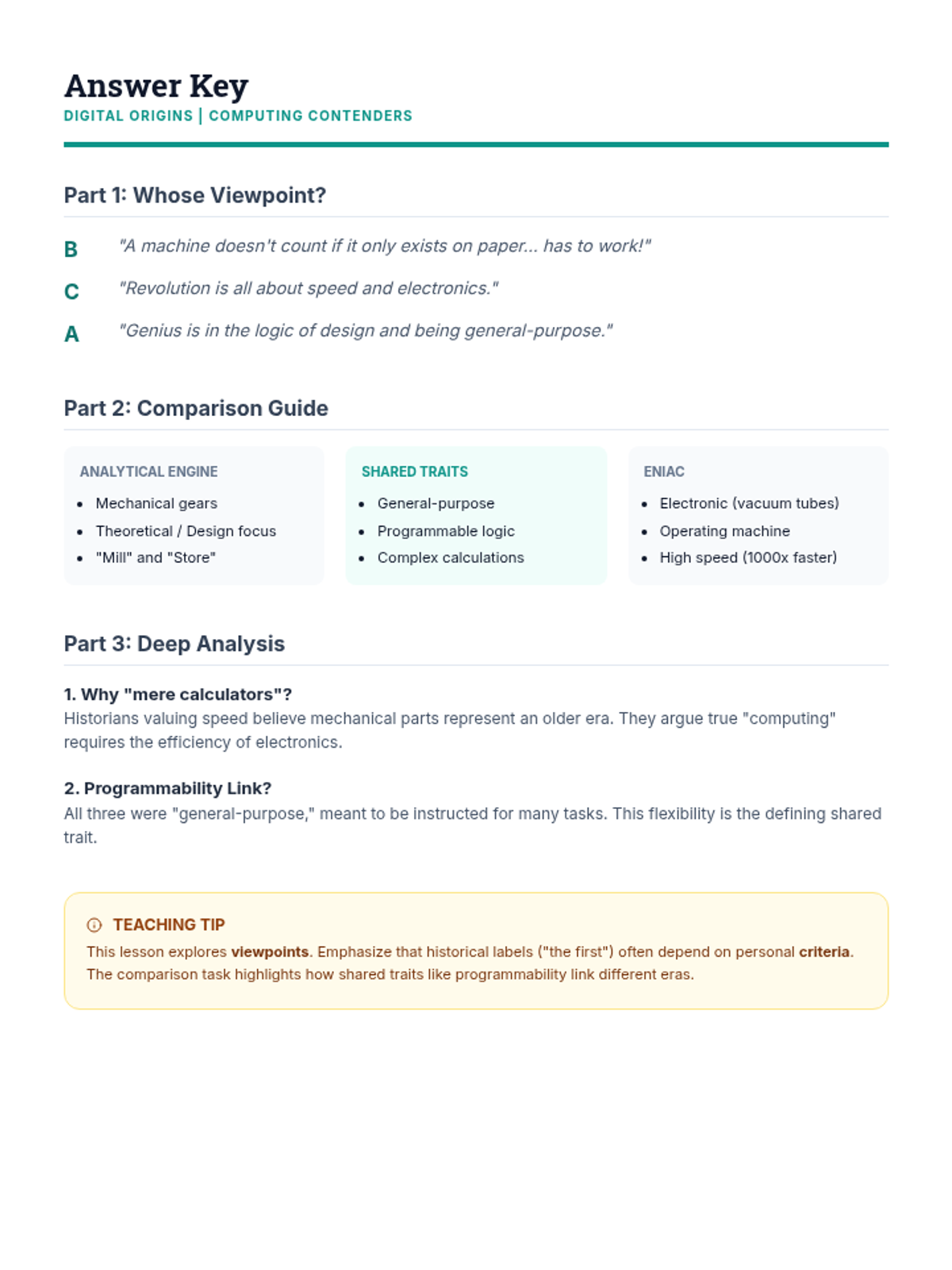
An answer key and teaching guide for the 'First Debate' worksheet, including sample answers for short-answer questions and instructional tips for classroom discussion.
A worksheet designed to test students' ability to compare and contrast the different historical viewpoints presented in the reading passage. Includes matching, a Venn diagram task, and analytical short-answer questions.
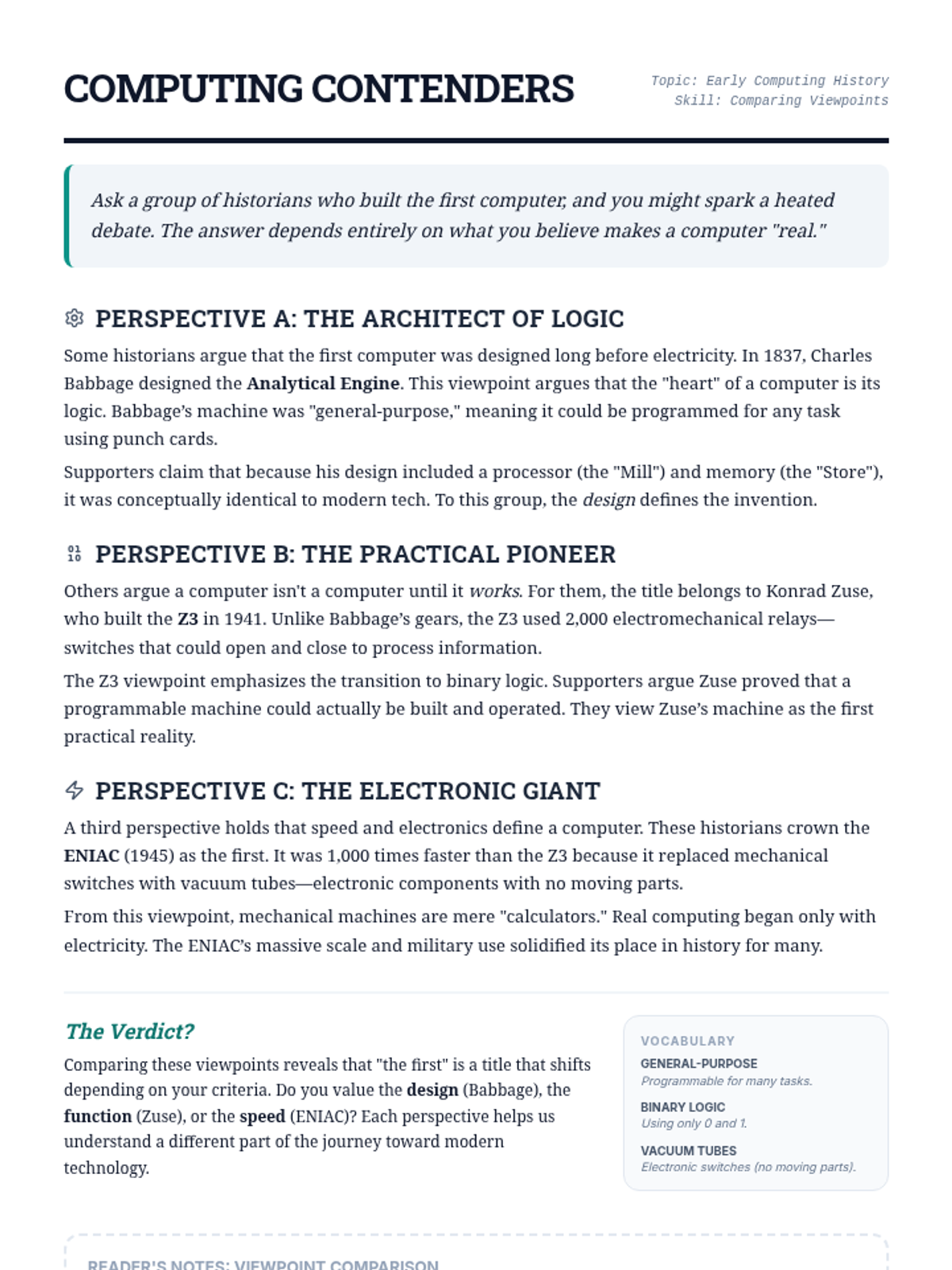
A detailed reading passage presenting three distinct historical viewpoints on the invention of the first computer, focusing on the Analytical Engine, the Z3, and the ENIAC. Includes a vocabulary reference and sets the stage for comparing and contrasting viewpoints.
A visual slide deck introducing three major contenders for the title of 'first computer' (Babbage's Analytical Engine, Zuse's Z3, and the ENIAC), highlighting the different technical criteria used to argue for each one.
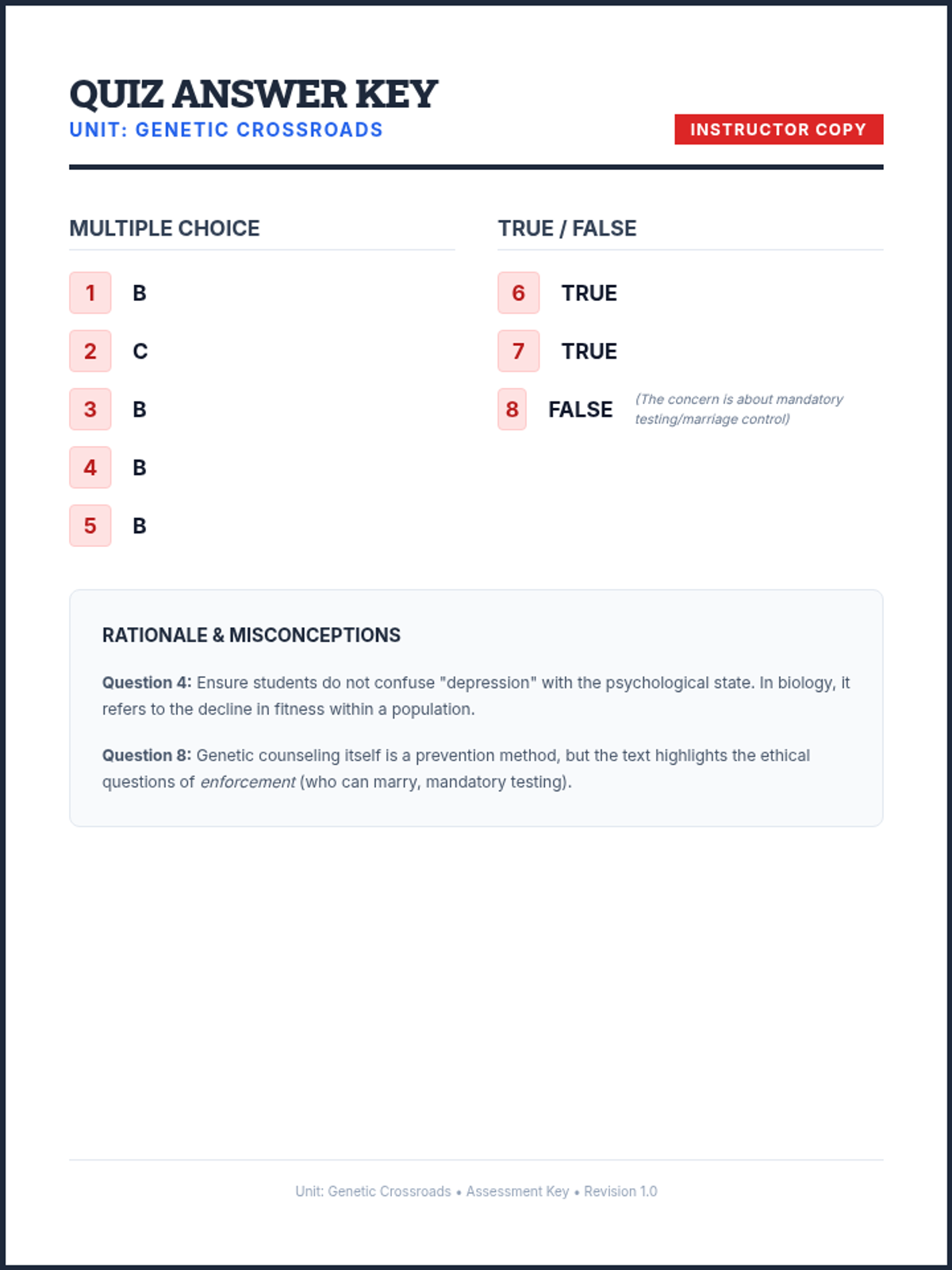
Teacher answer key for the Genetic Crossroads quiz, featuring correct answers for multiple-choice and true/false sections, along with rationales for key concepts.
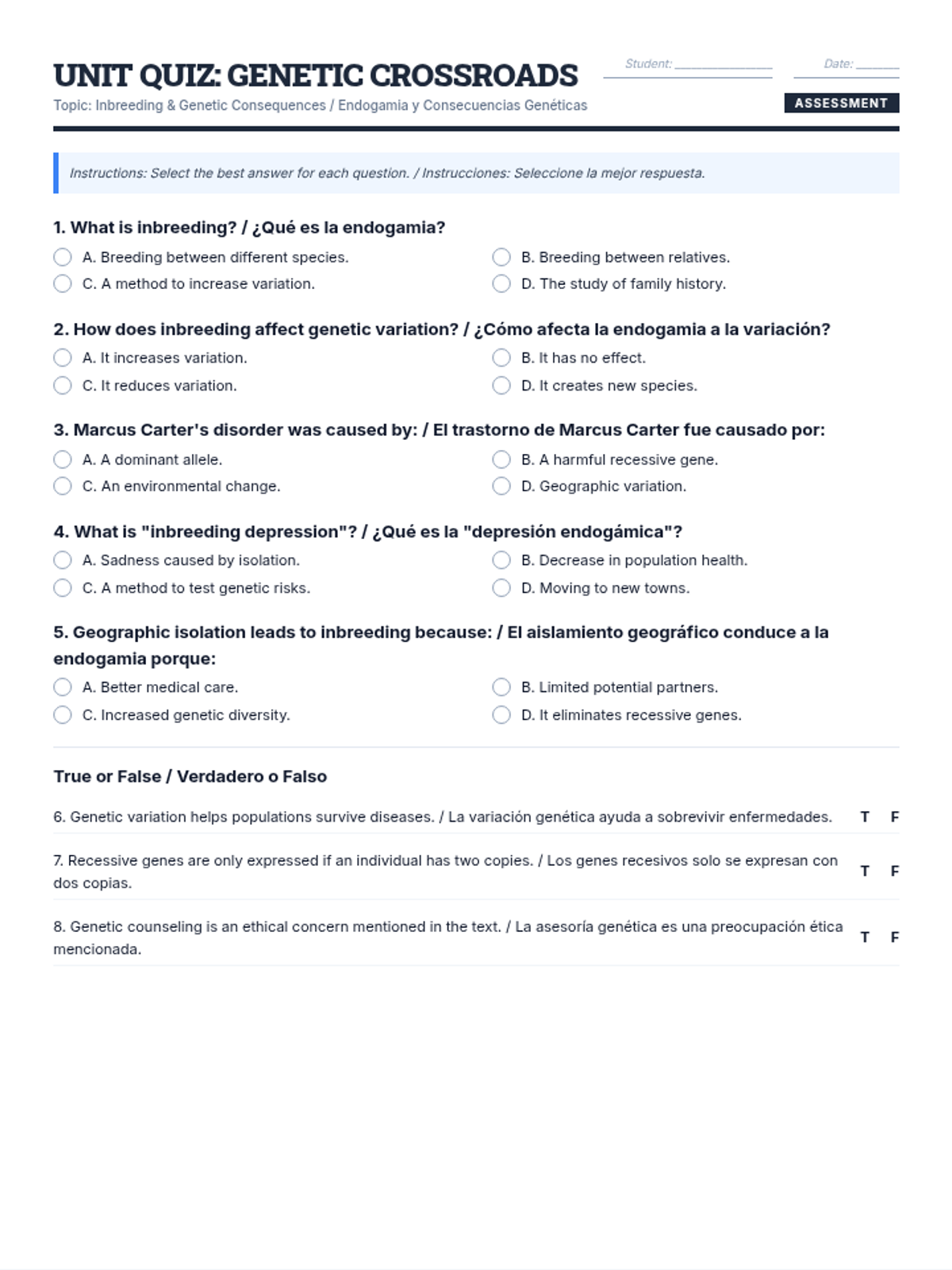
A bilingual unit quiz (English/Spanish) for the Genetic Crossroads lesson. Covers key vocabulary like inbreeding, genetic variation, and recessive genes, using multiple-choice and true/false questions. Revised for better page layout.
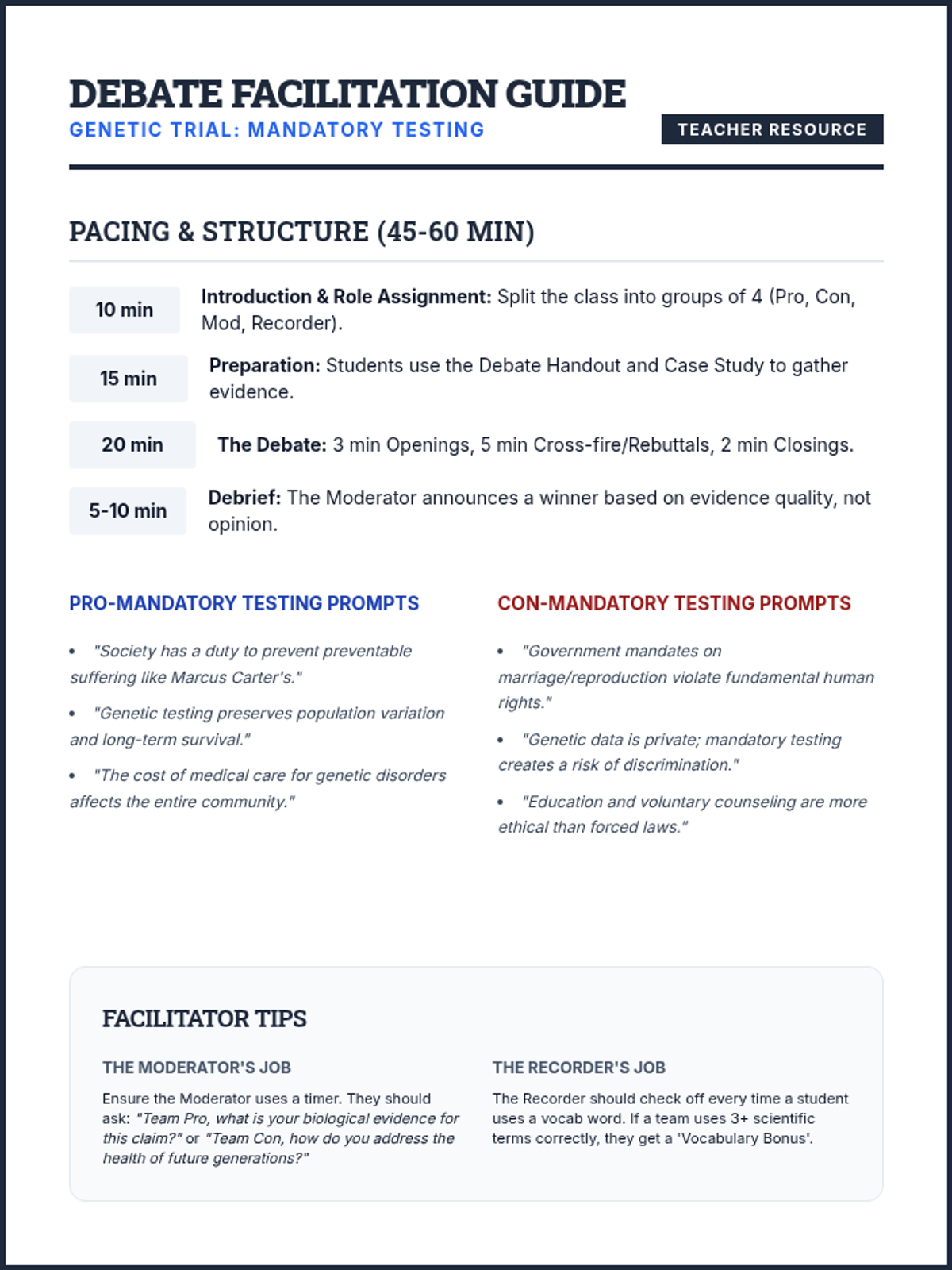
A teacher's facilitation guide for the Genetic Trial debate extension. Includes suggested pacing, argument prompts for both Pro and Con sides, and guidance for managing the Moderator and Evidence Recorder roles.
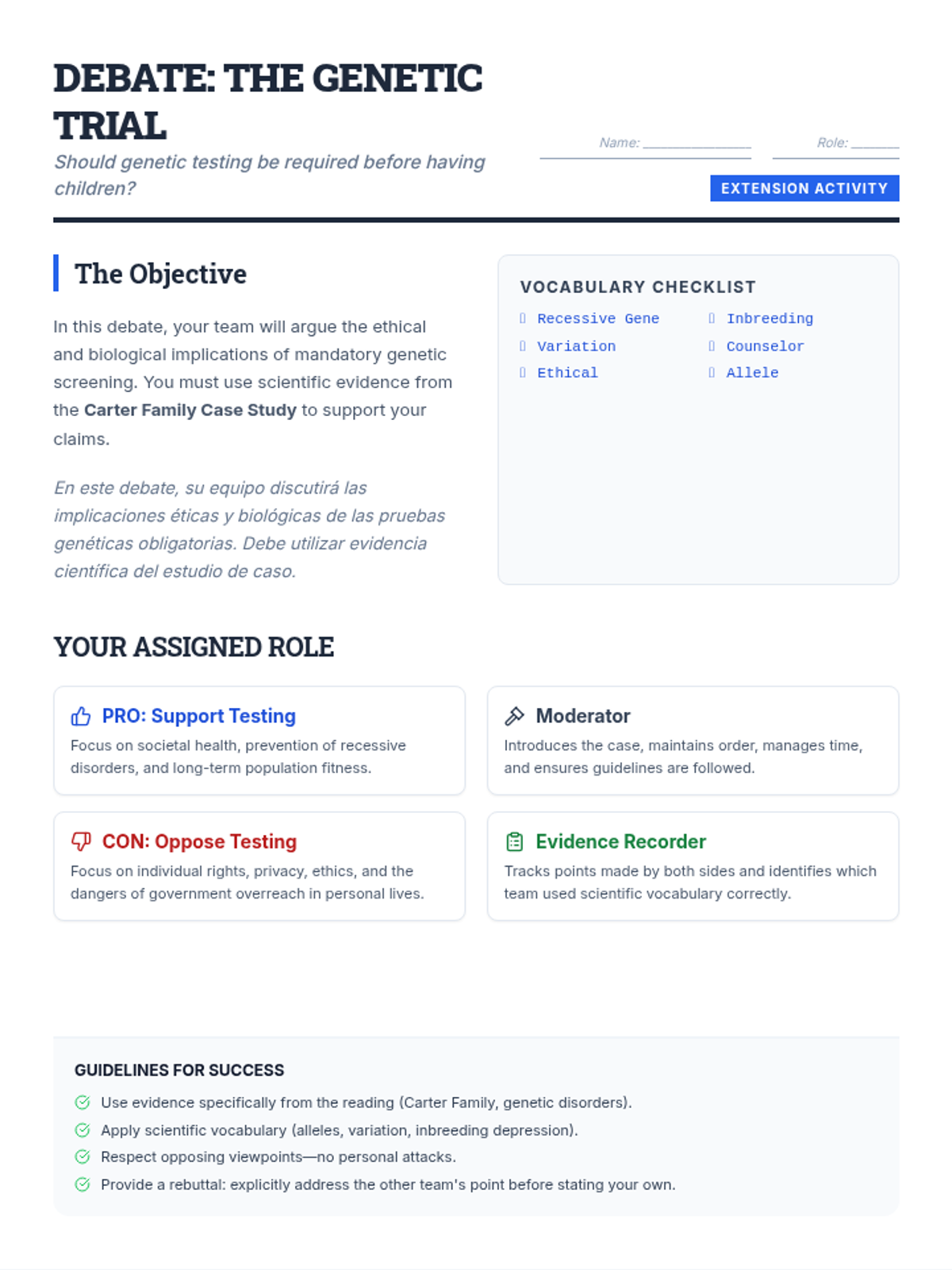
A student handout for a debate extension activity regarding mandatory genetic testing. Includes role descriptions (Pro, Con, Moderator, Evidence Recorder), debate guidelines, and a structured preparation sheet for evidence gathering and rebuttal planning.
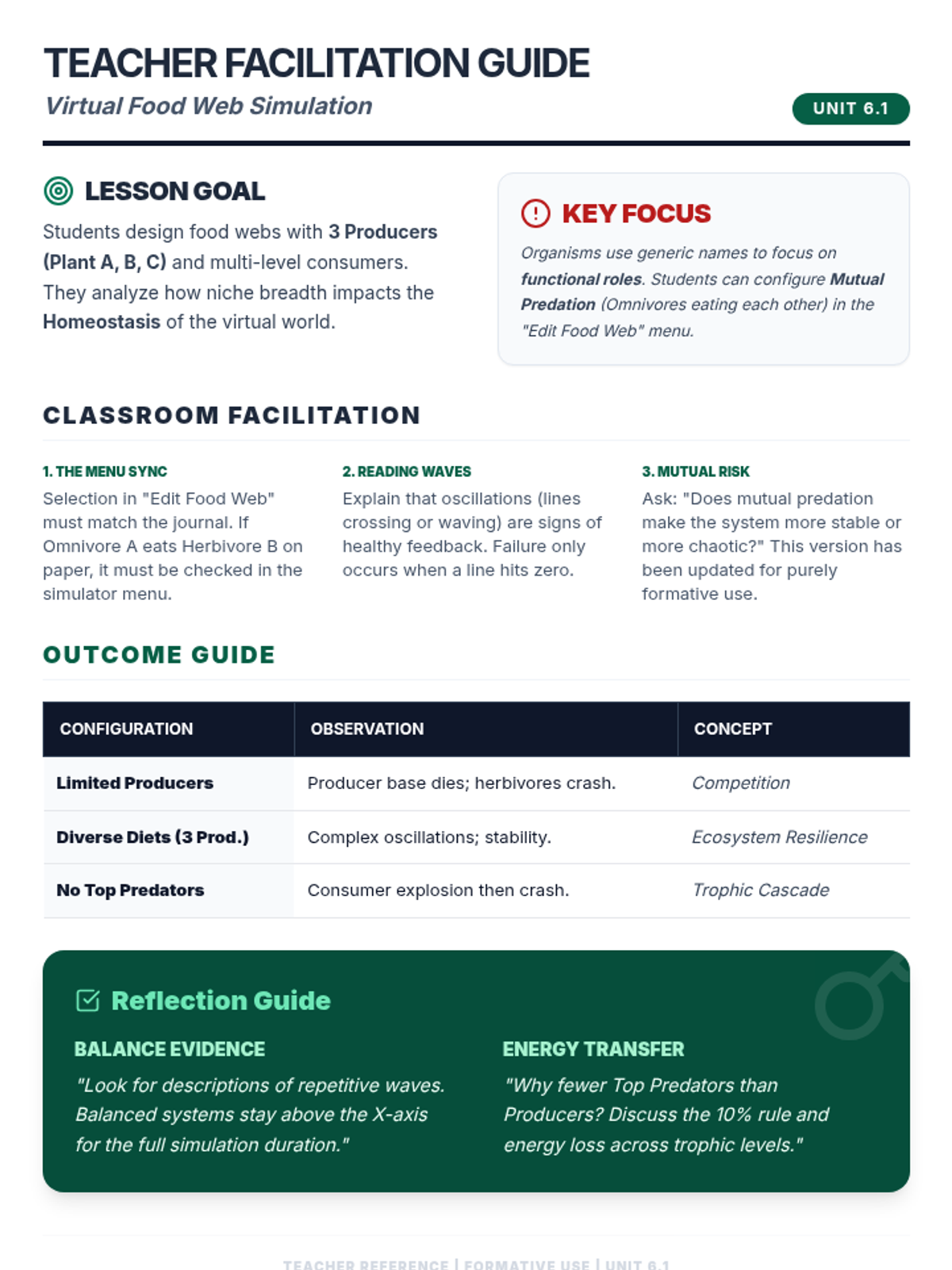
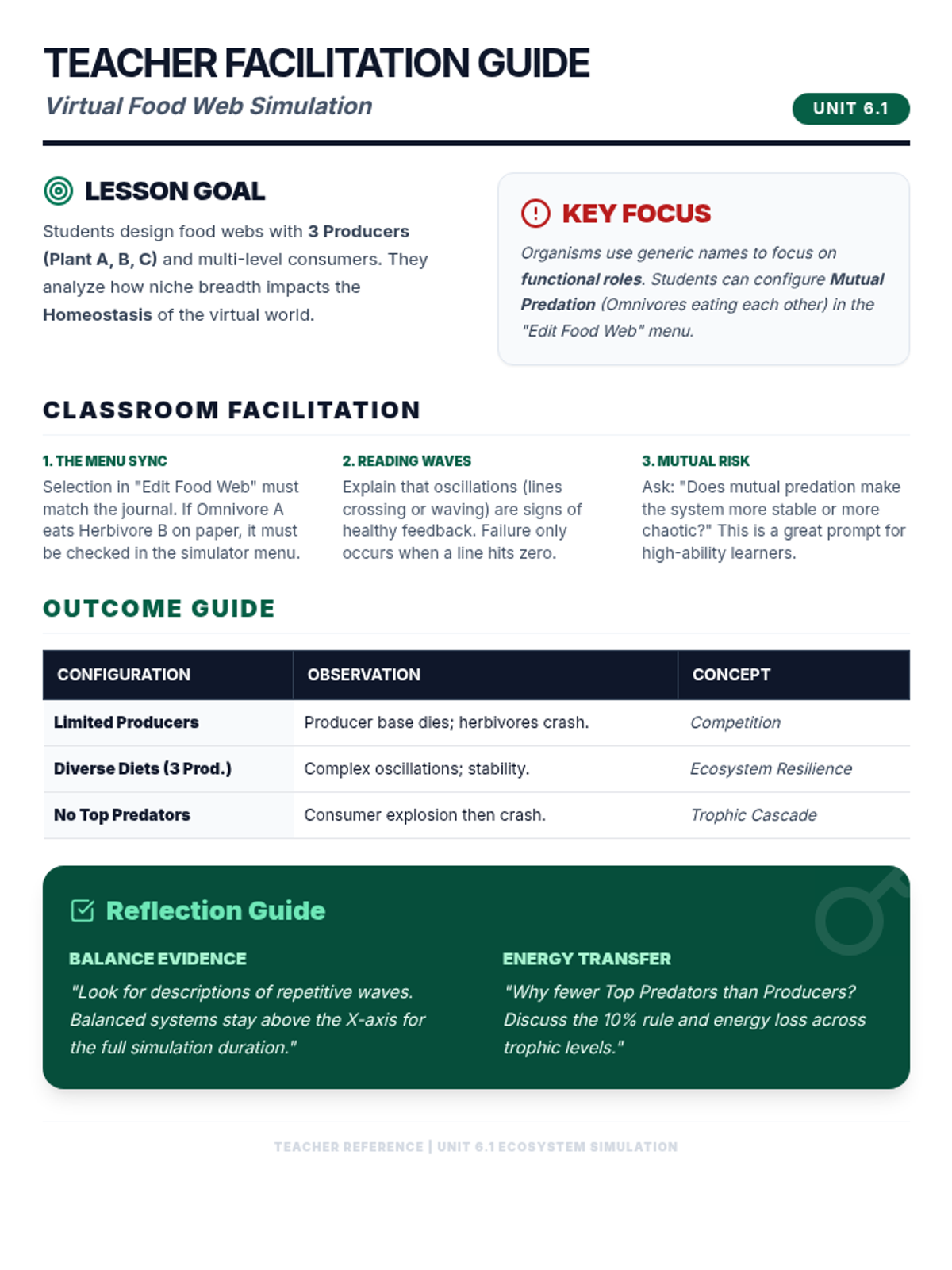
A comprehensive guide for teachers to facilitate the Virtual Food Web lab. Updated to remove scoring references and support the new Omnivore mutual predation options and 3-producer structure. Includes instructional goals and classroom facilitation tips. Simplified to fit a single page.
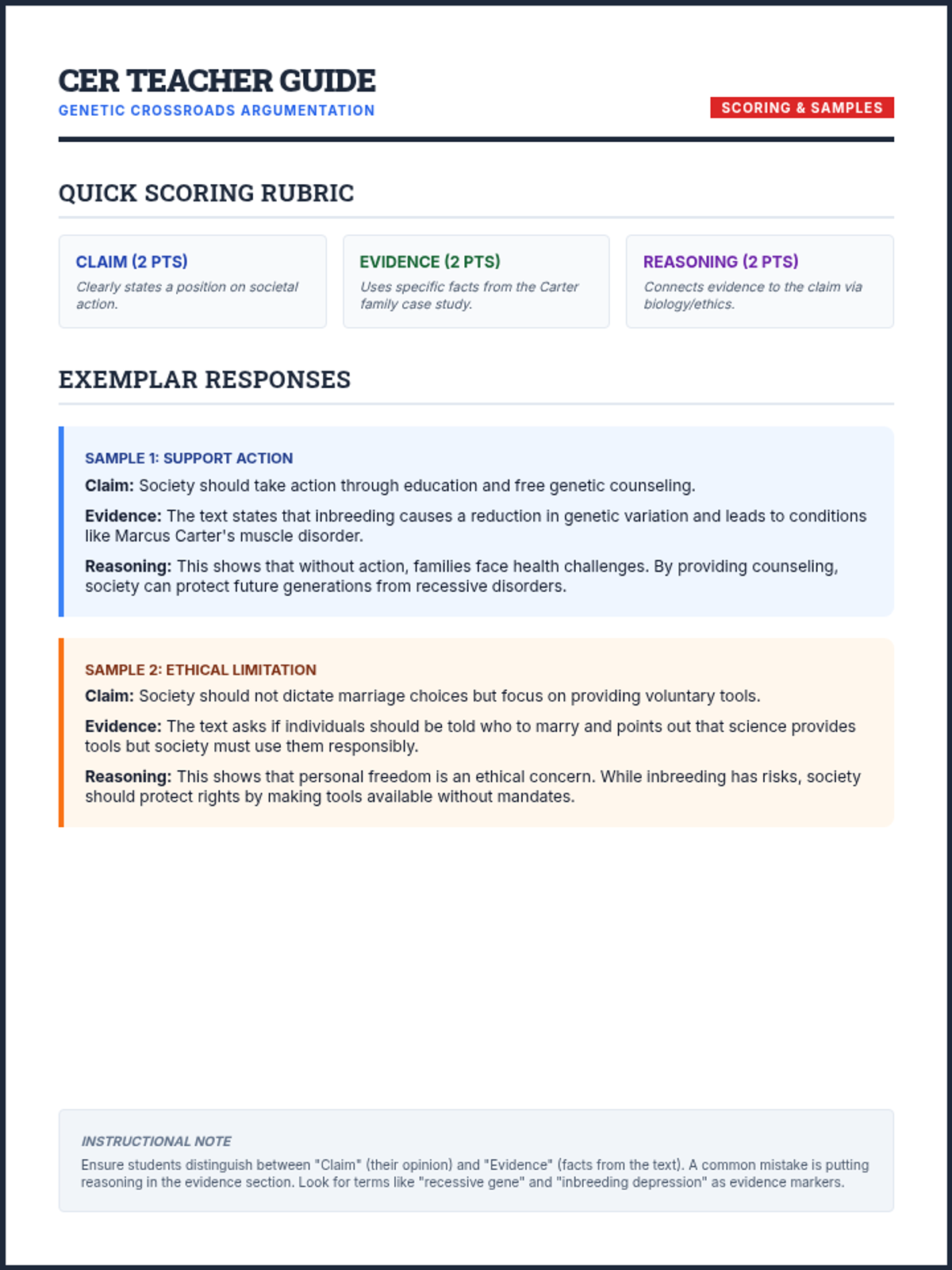
Teacher answer key and grading rubric for the Genetic Crossroads CER activity. Revised to fit on a single page with optimized sample responses and layout.
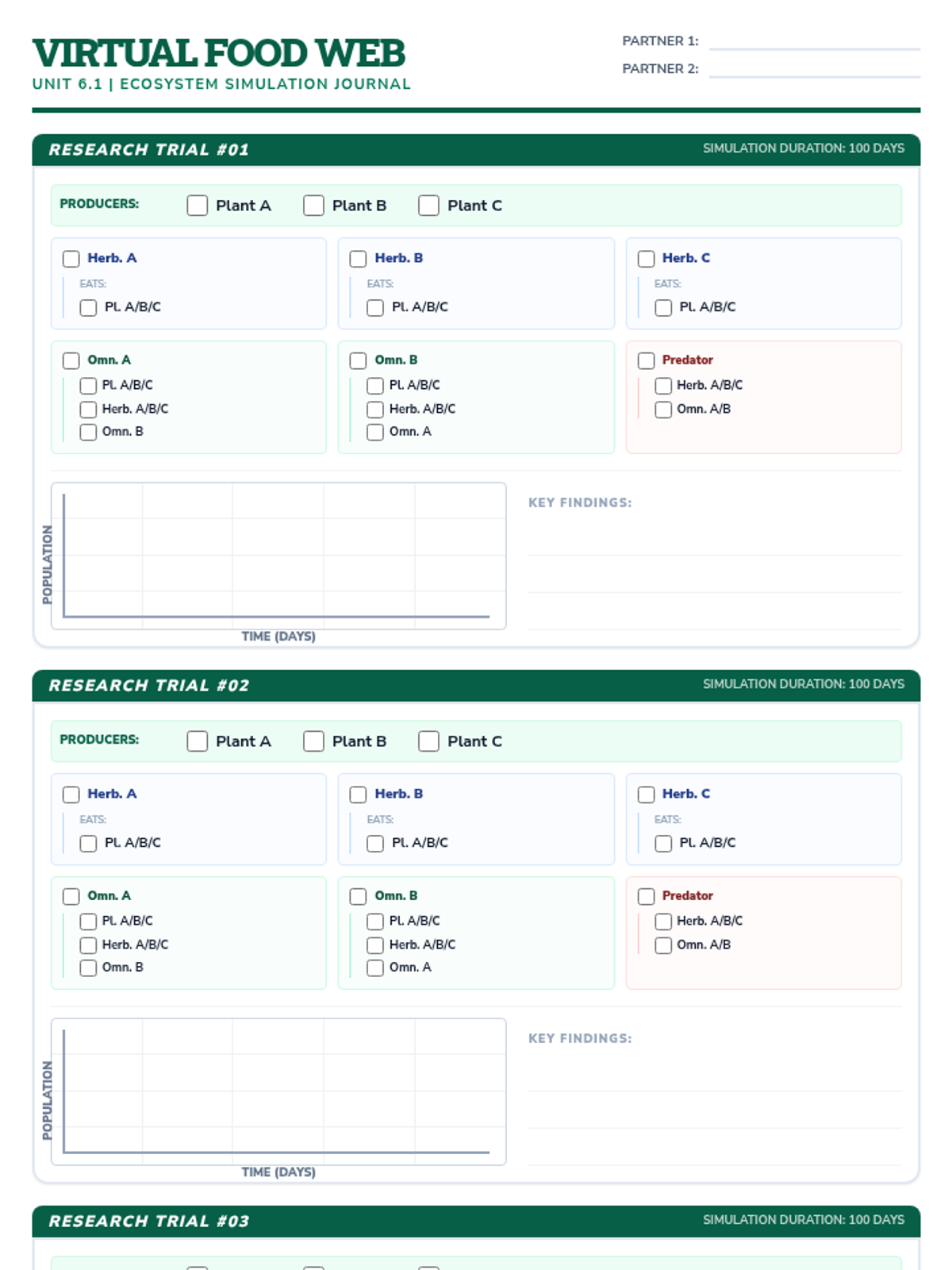
A two-page printable field journal for students to record multiple trials of the ecology simulator. Features selection checklists for 3 Producers, 3 Herbivores, 2 Omnivores, and a Top Predator with nested diet options including mutual predation. Grading elements have been removed for formative use. Updated for better legibility and student work areas.
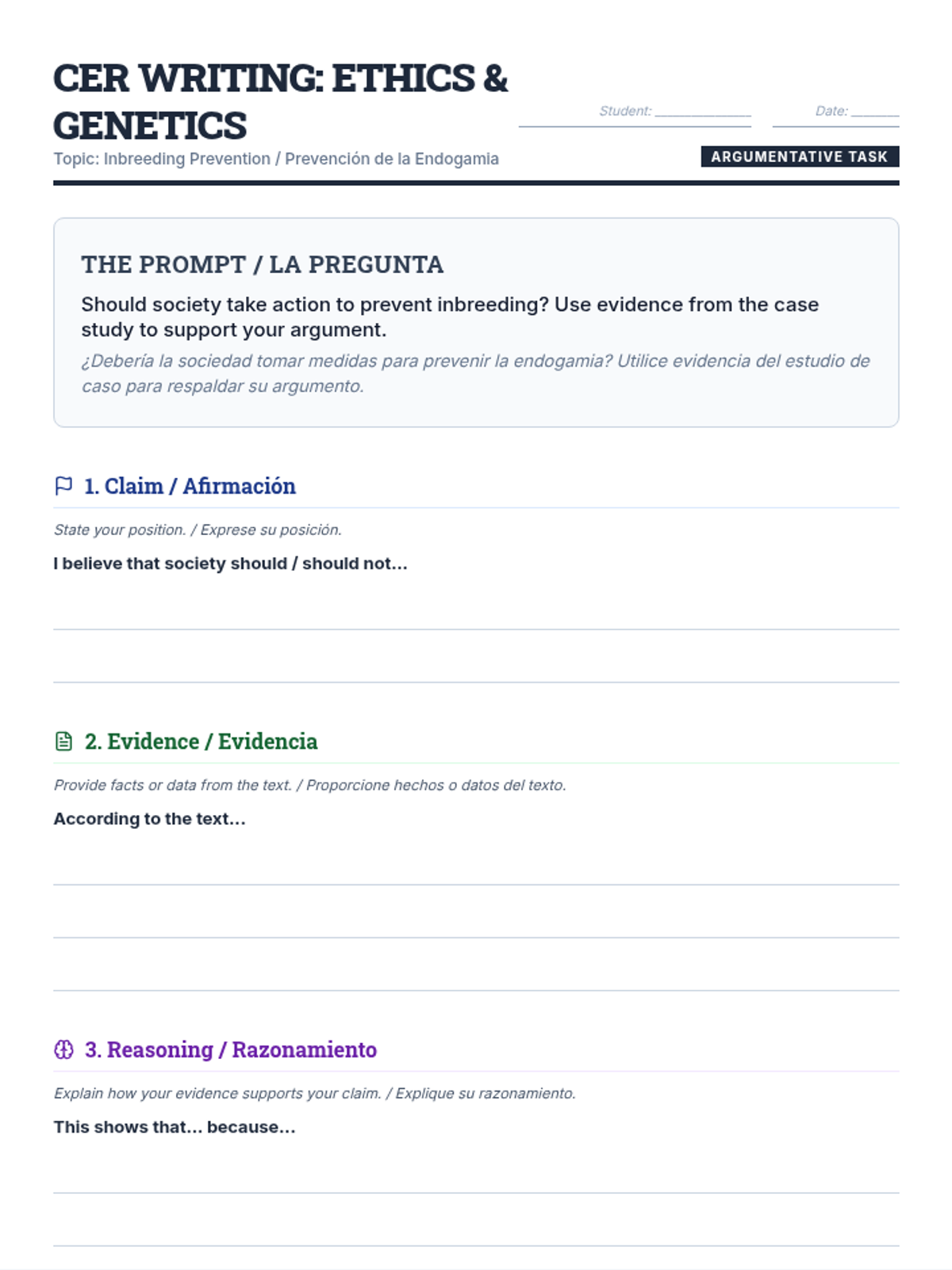
A Claim-Evidence-Reasoning (CER) writing activity focusing on the ethical and genetic implications of society's role in preventing inbreeding. Revised to fit on a single page with improved spacing and header layout.
A visual presentation introducing students to the Virtual Food Web lab. Updated to include information about 3-producer setups and advanced Omnivore mutual predation options. Includes a new slide previewing the journal's recording format.
A comprehensive guide for teachers to facilitate the Virtual Food Web lab. Updated to support the new Omnivore mutual predation options and 3-producer structure. Includes instructional goals and classroom facilitation tips. Simplified to fit a single page.