A unit-end exit ticket assessing student mastery of transduction structures, the necessity of dual-process theories for color and pitch, and the connection between biological damage and perceptual deficits.
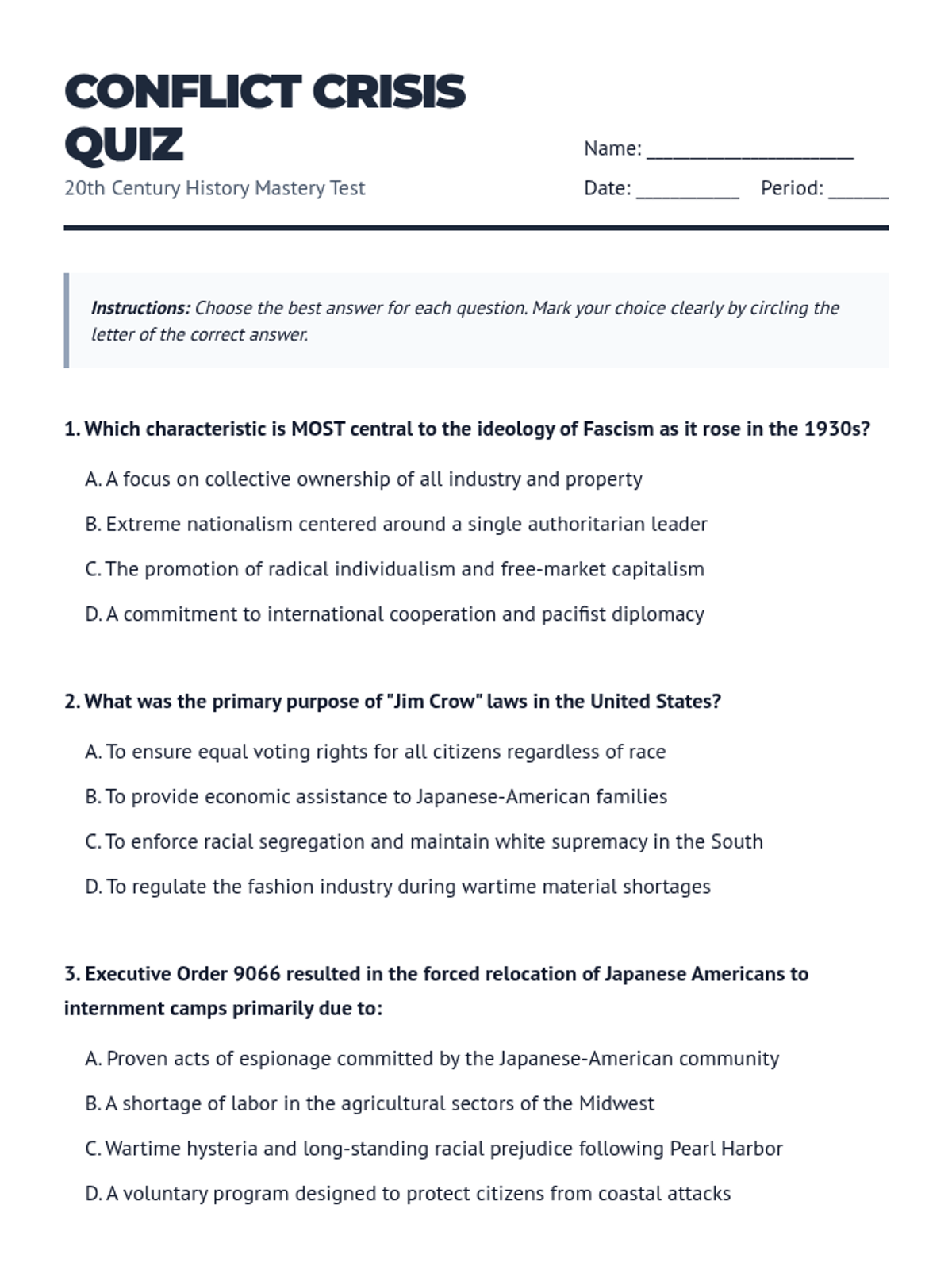
A 15-question multiple choice test covering key topics from WWII to the Civil Rights era. Focuses on vocabulary, cause-and-effect, and synthesis questions. Professional layout with fixed page breaks to keep questions together.
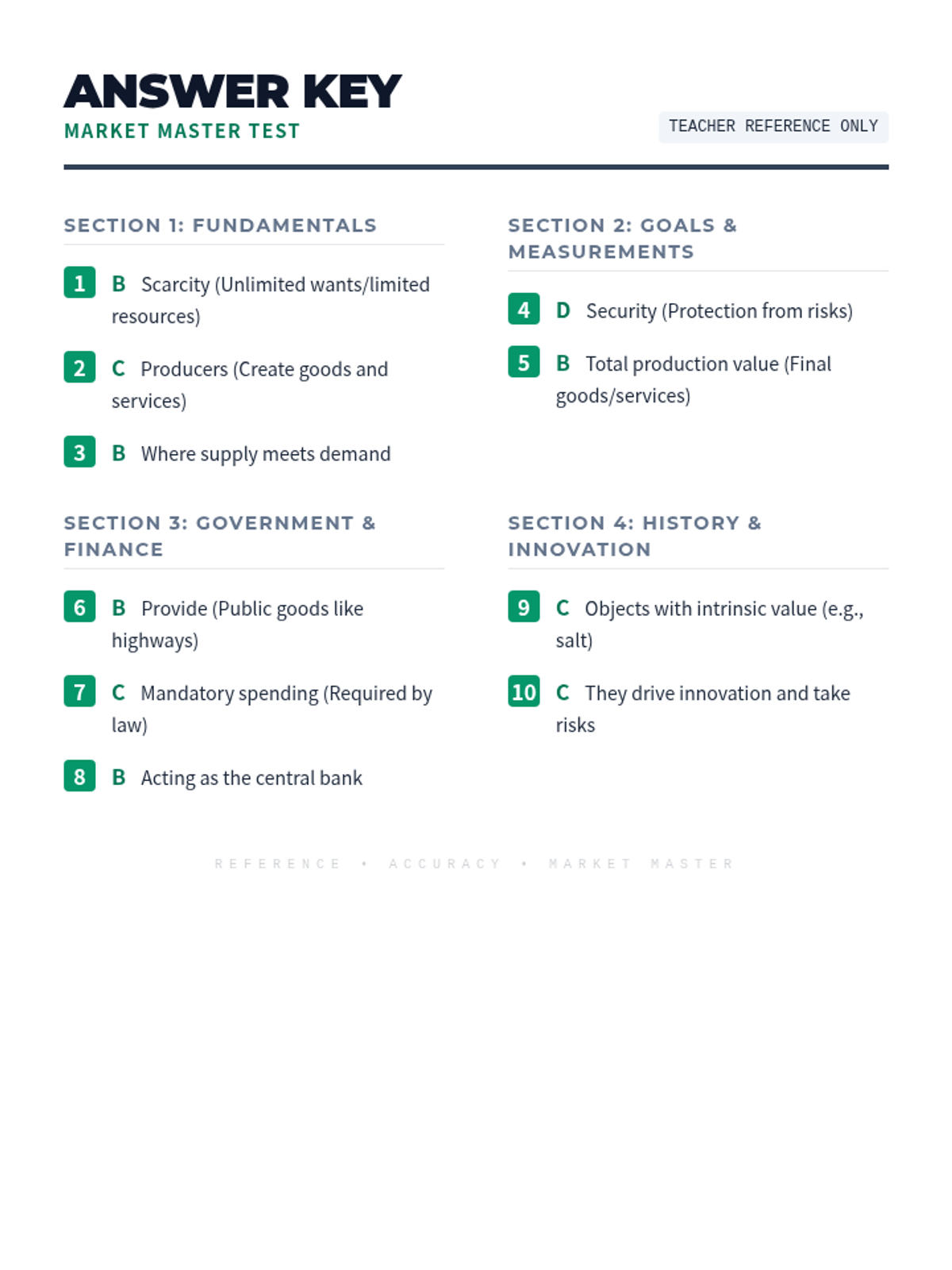
The teacher's answer key for the Market Master Test, providing the correct letter responses and brief rationale for each question.
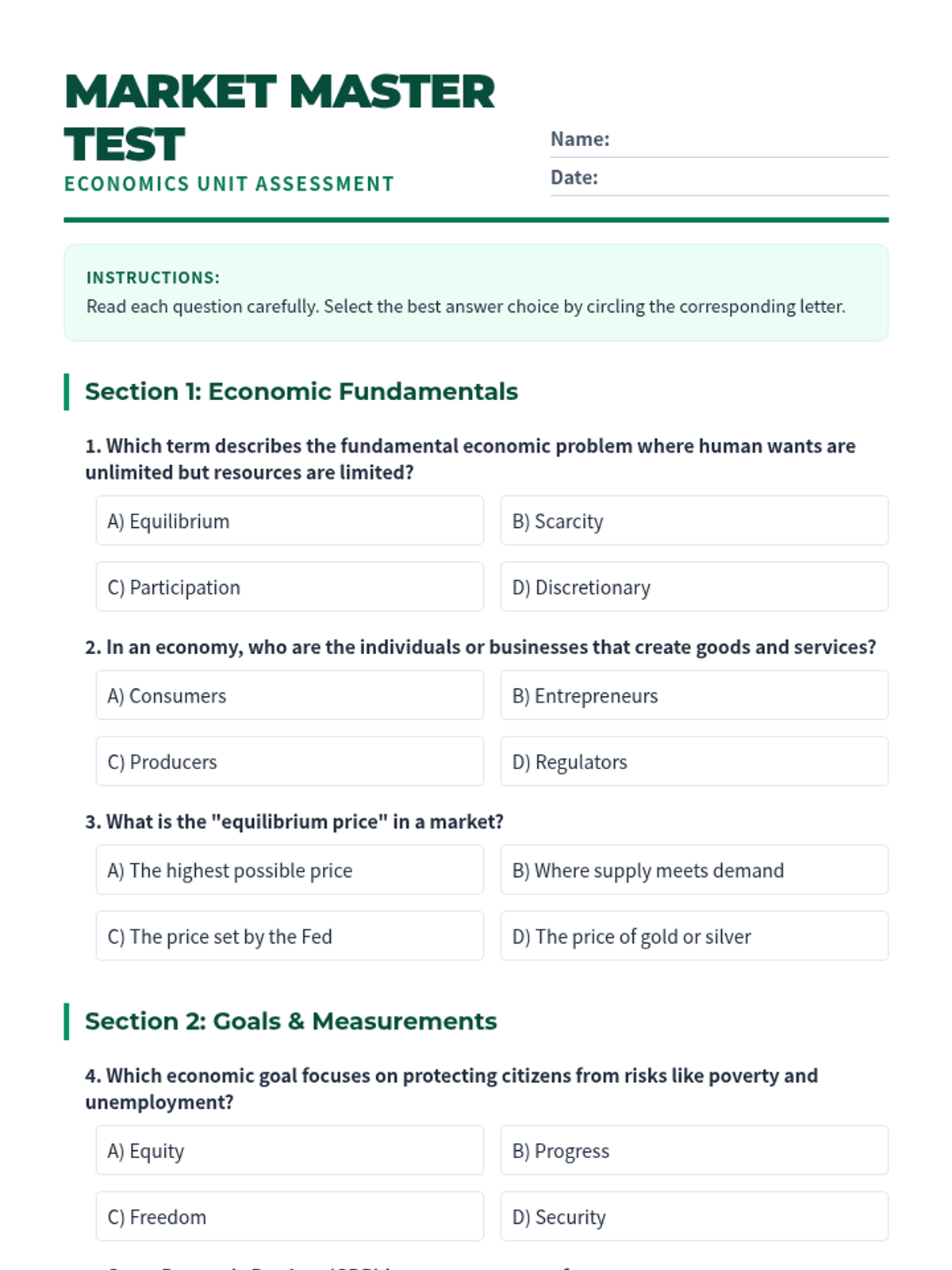
A 10-question multiple-choice test covering economic fundamentals, government roles, the Federal Reserve, and money history. All answer choices feature uniform styling for fair assessment. Layout updated for better page flow.
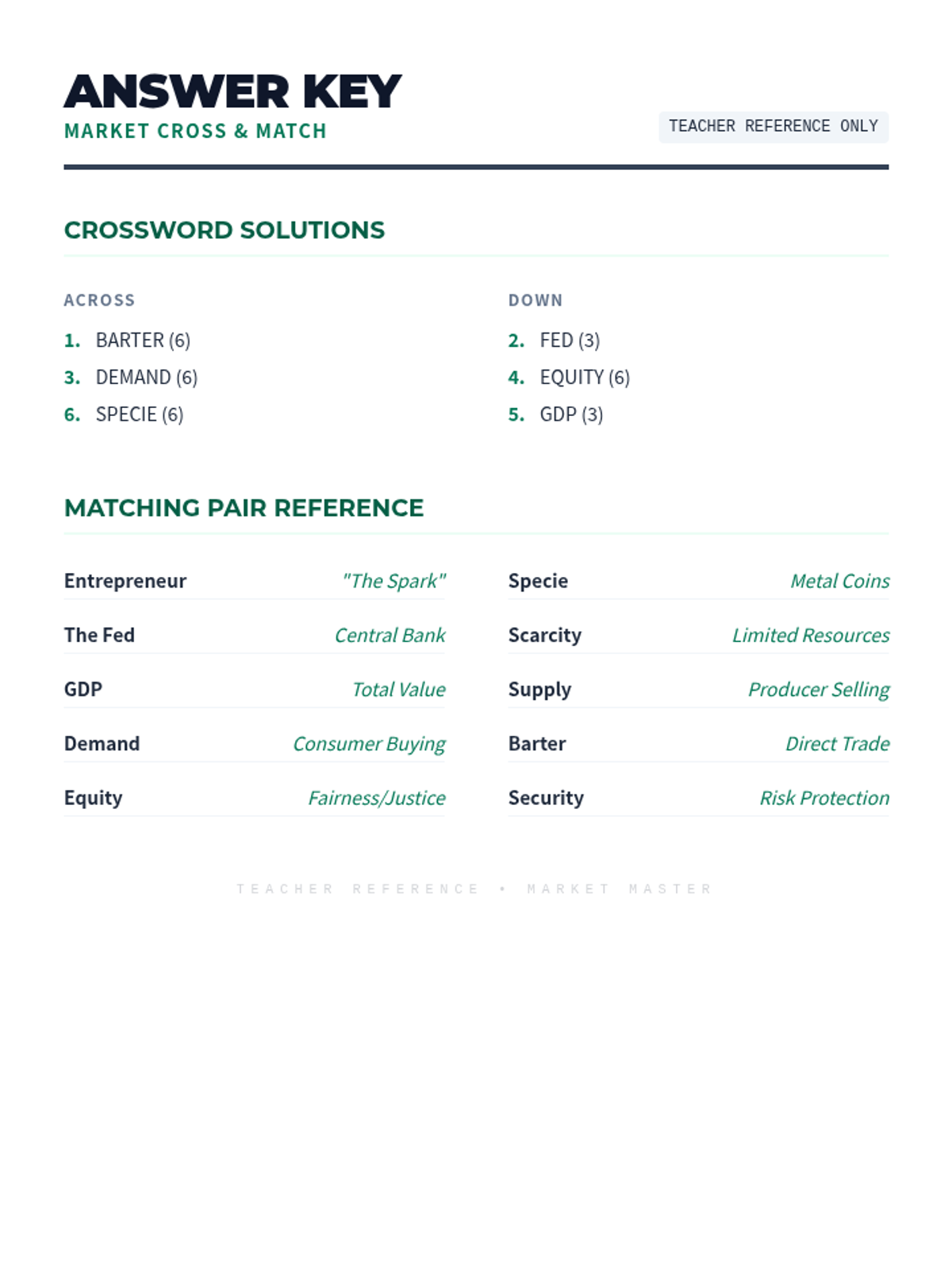
The combined answer key for the Market Cross crossword and the Market Match game, updated with the correct crossword solutions.
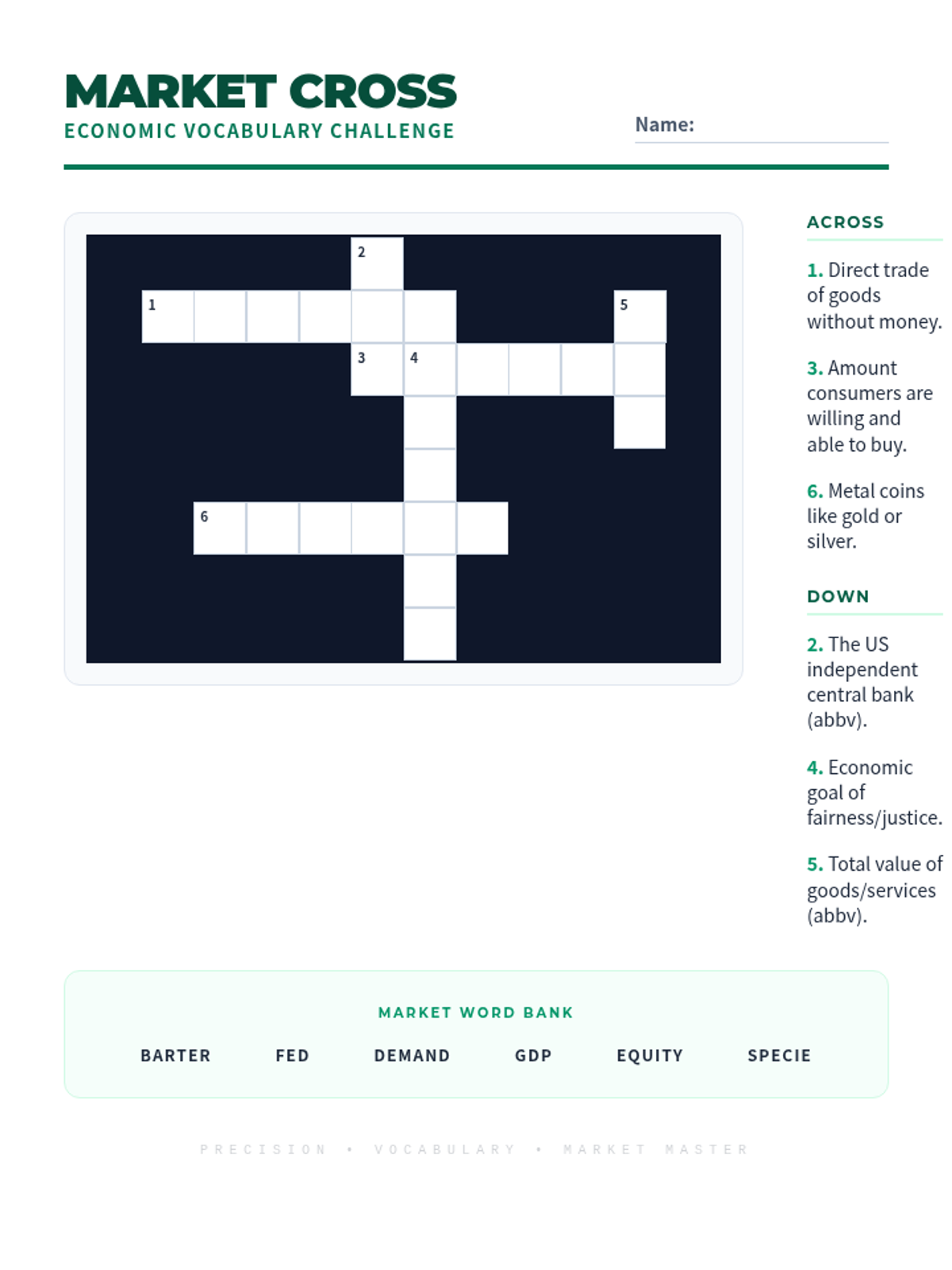
A vocabulary-building crossword puzzle featuring key economic terms like GDP, Barter, and Specie. The grid has been structurally redesigned for accurate letter intersections.
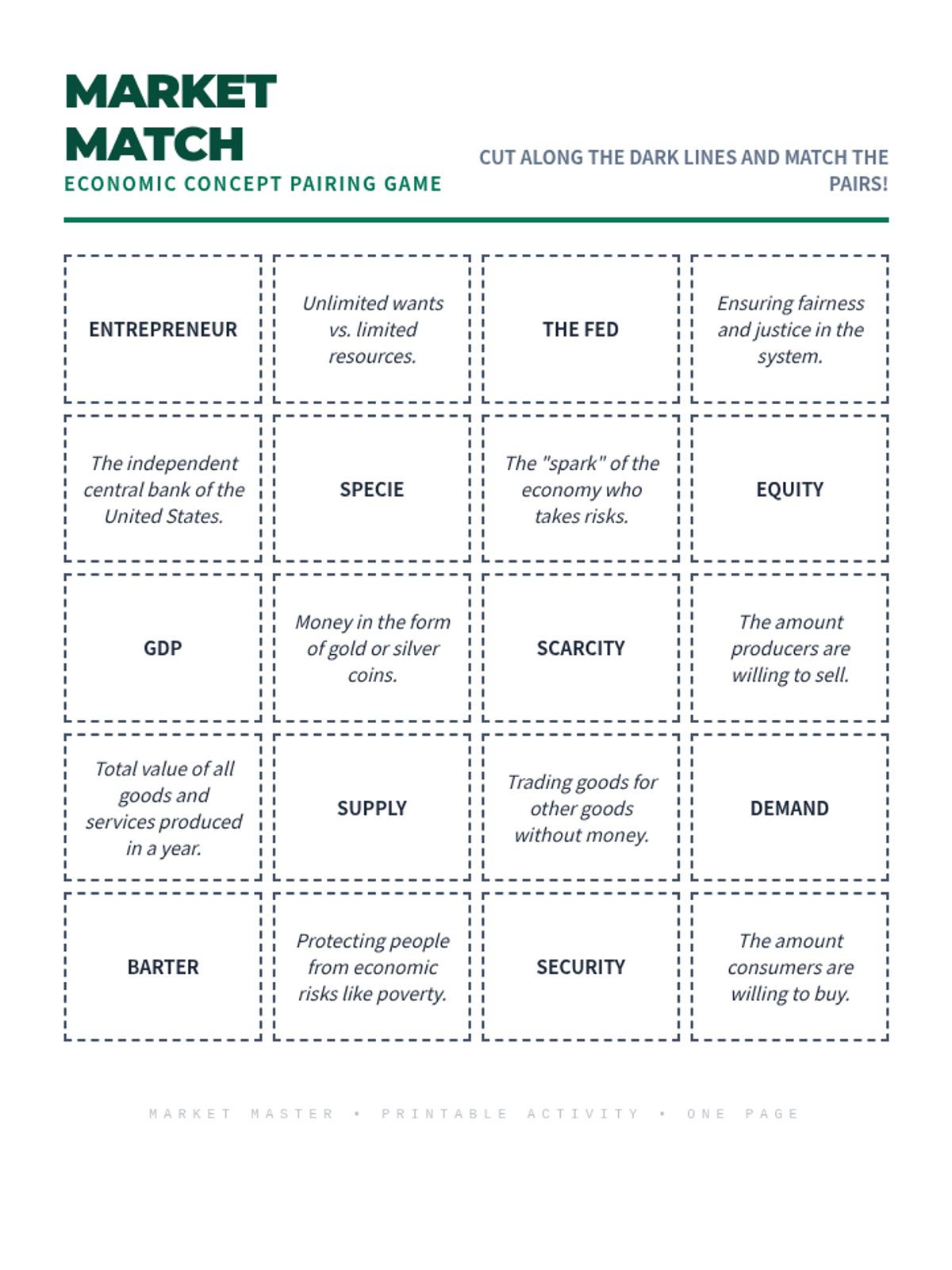
A set of printable matching cards for students to pair economic terms with their definitions, reinforcing vocabulary through hands-on play. All pairs now fit on one page with darkened cut-lines.
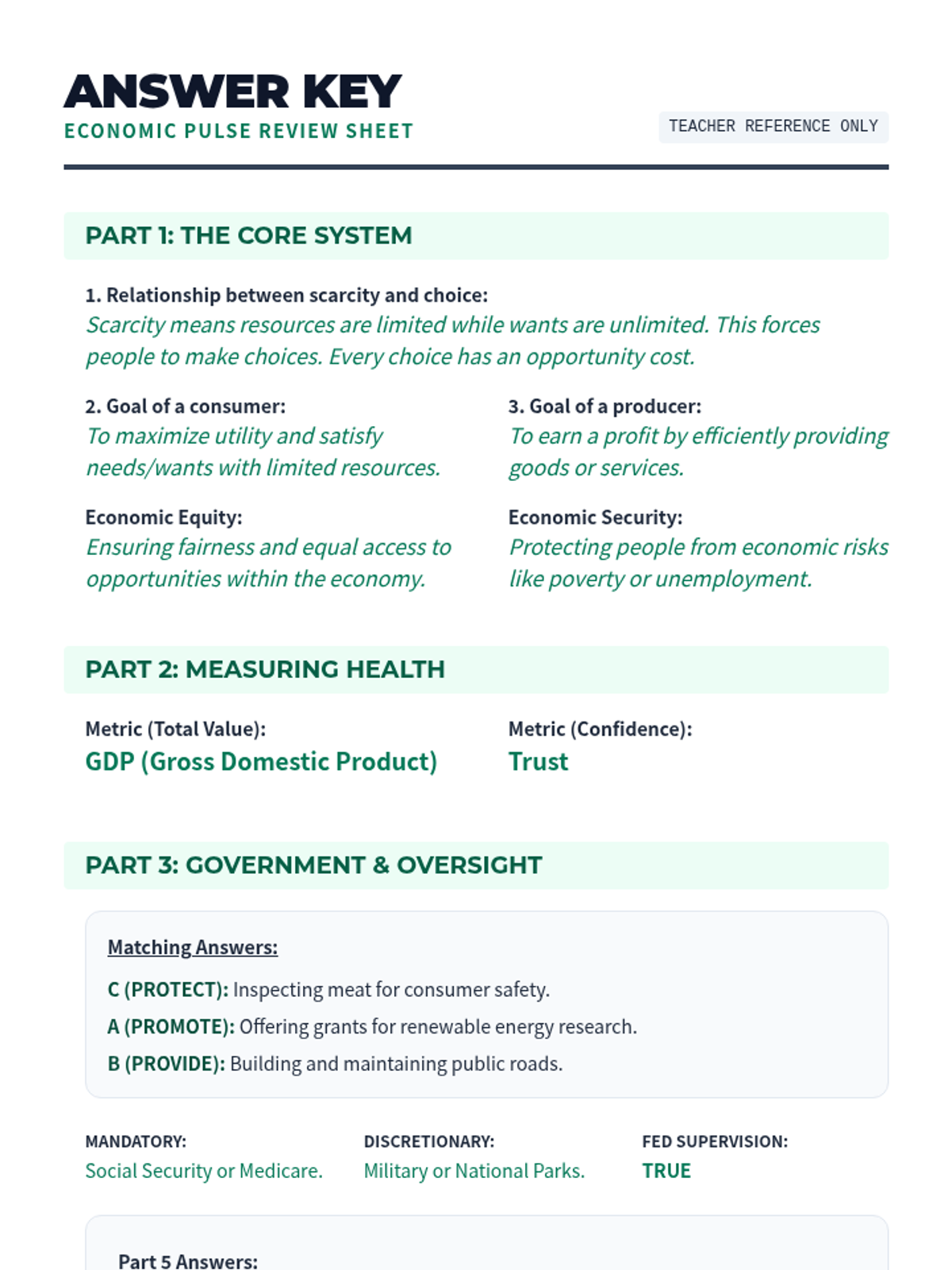
The answer key for the Economic Pulse review sheet, providing sample responses and factual corrections for the teacher.
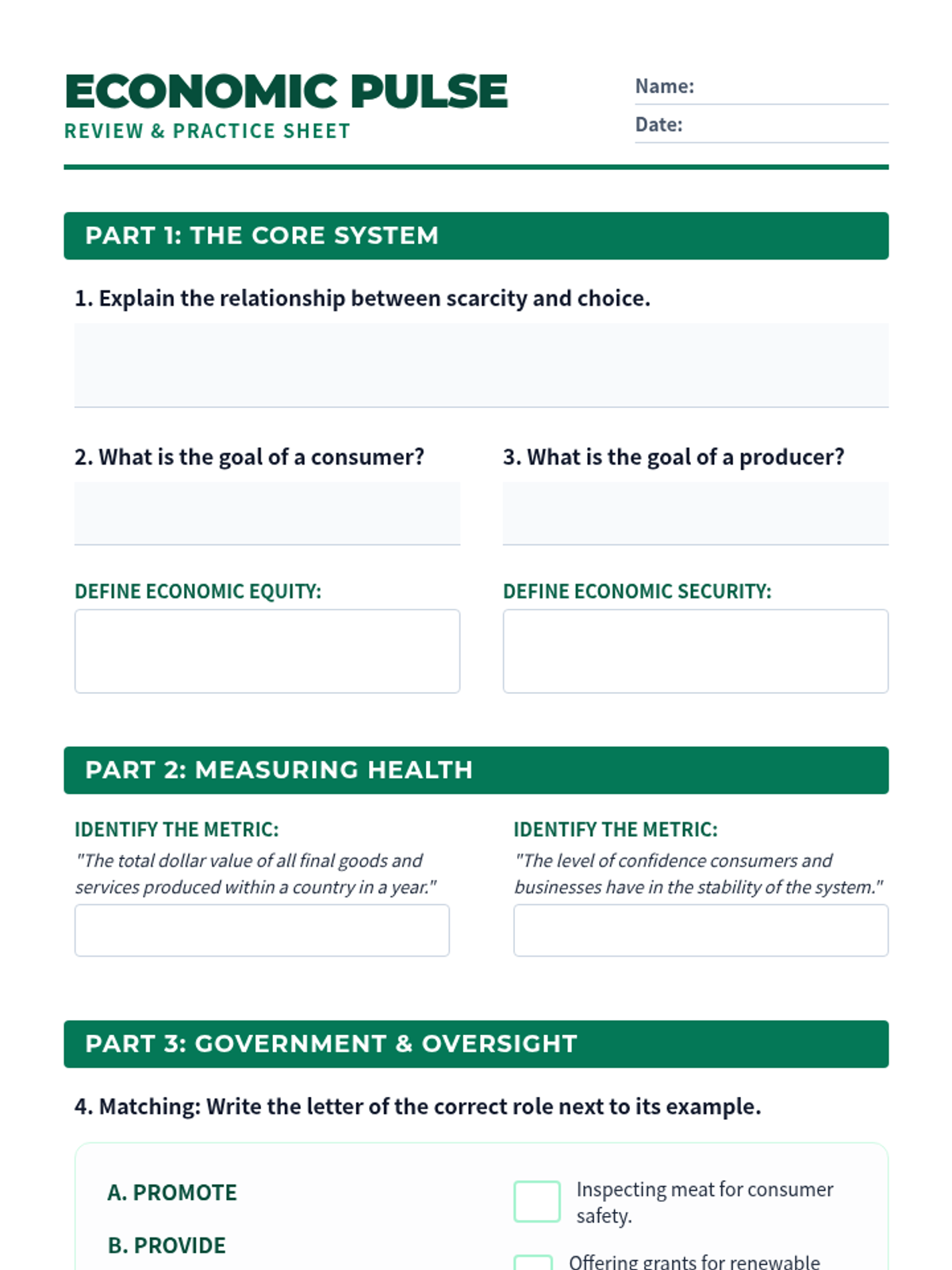
A comprehensive review sheet with matching, true/false, and open-ended questions covering the core topics of the economics unit.
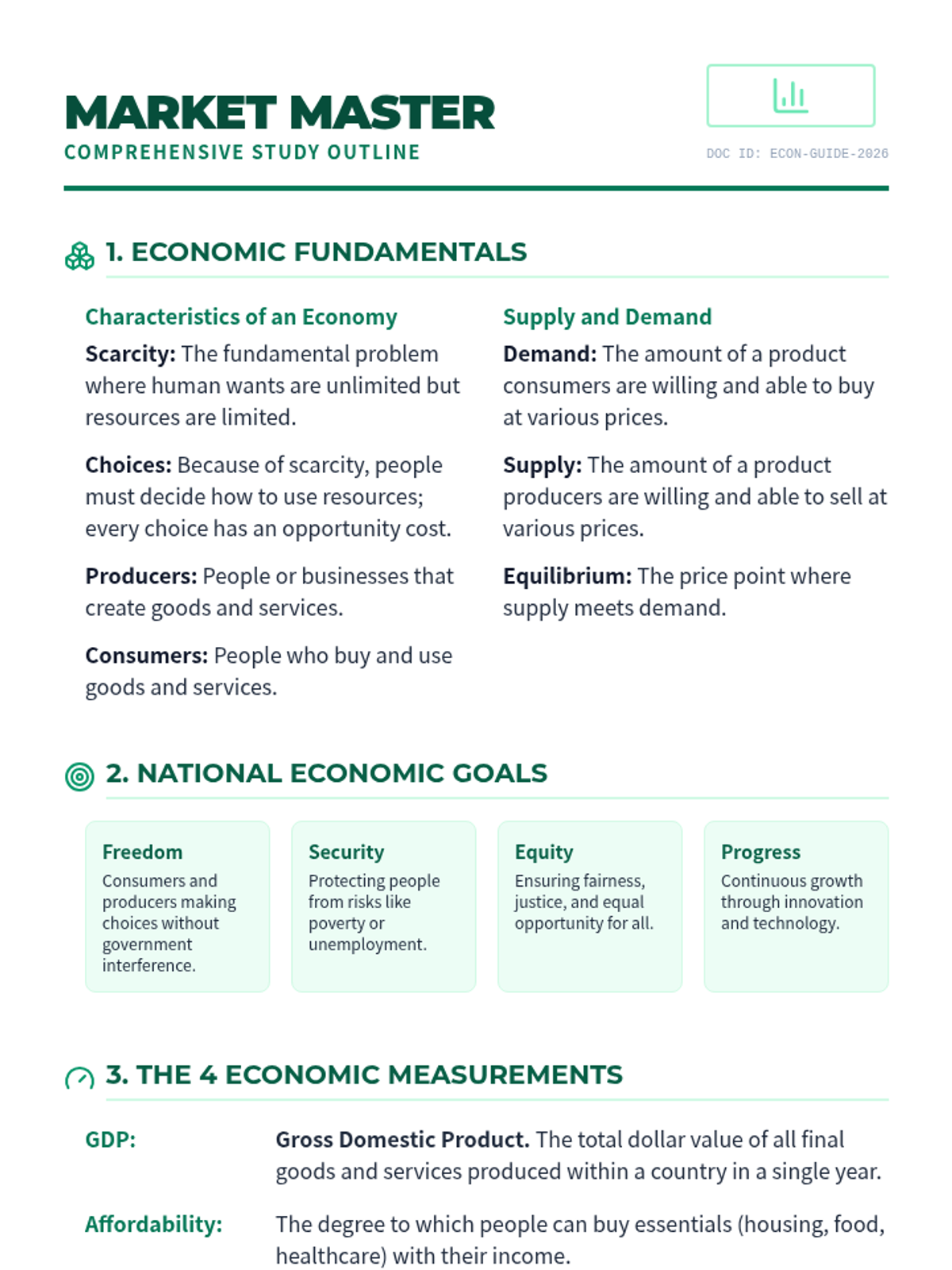
A detailed, structured outline of core economic concepts including definitions, government roles, and the history of currency.
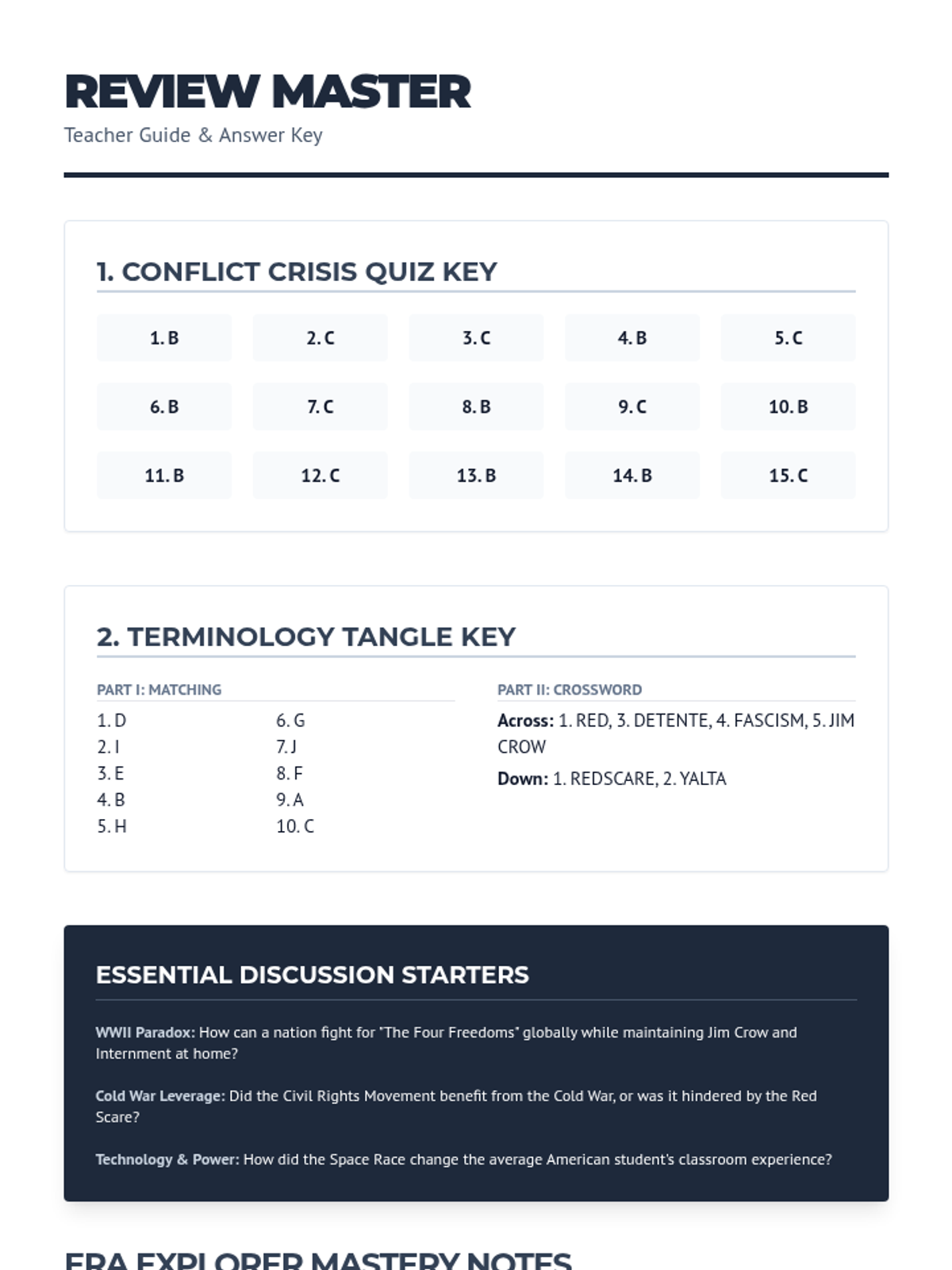
A comprehensive teacher guide and answer key covering the multiple-choice quiz, matching worksheet, and guided study guide. Includes instructional strategies, discussion prompts, and notes on common student misconceptions.
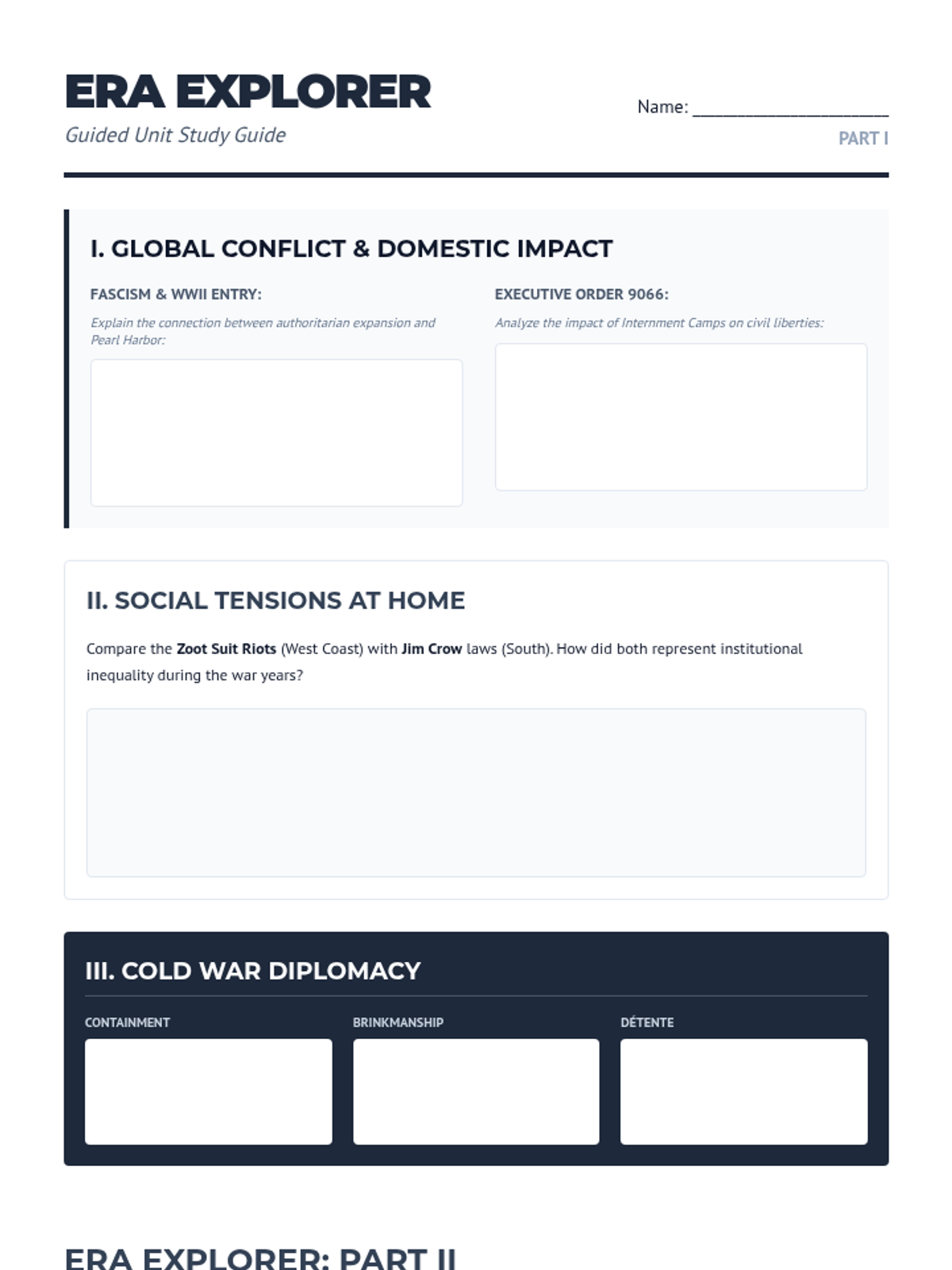
A two-page guided study guide exploring cause-and-effect relationships and key historical themes. Includes sections for WWII, the Cold War, social movements, and cultural diplomacy. Fixed page breaks and optimized work areas.
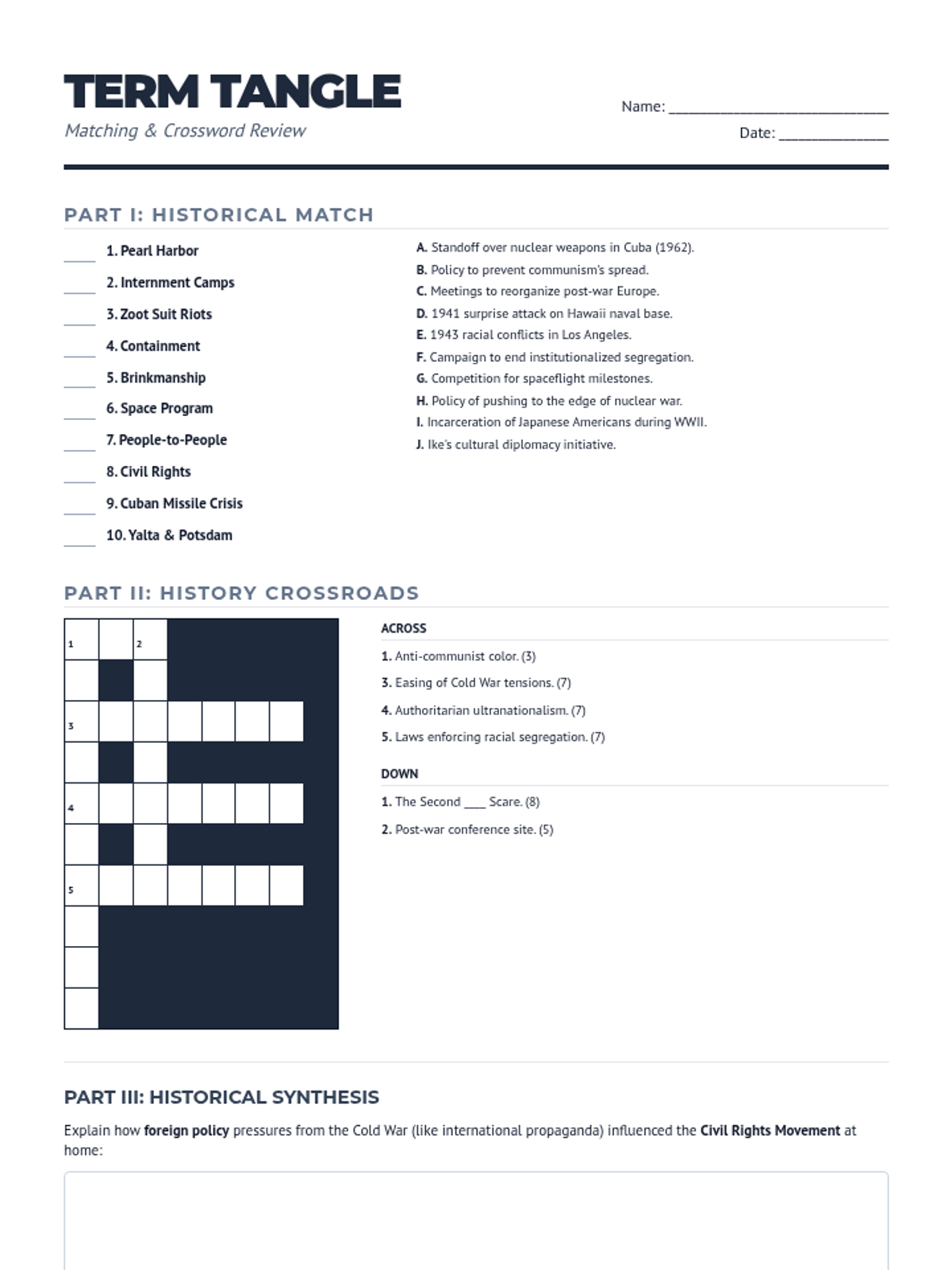
A matching and crossword worksheet focusing on vocabulary and key facts from WWII through the Cold War and Civil Rights era. Now condensed to a single page.
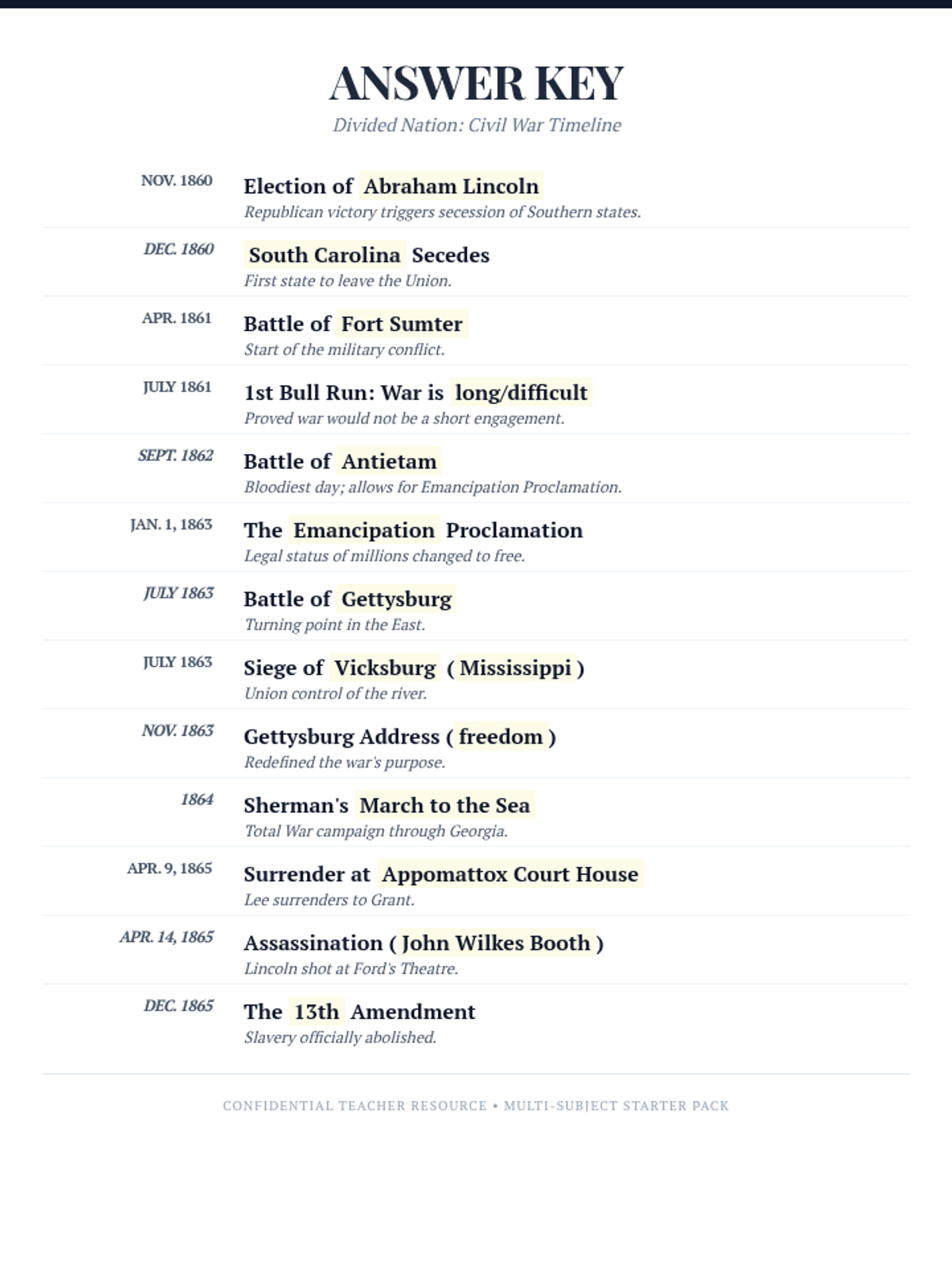
A concise 1-page teacher's answer key for the Divided Nation Civil War timeline worksheet.
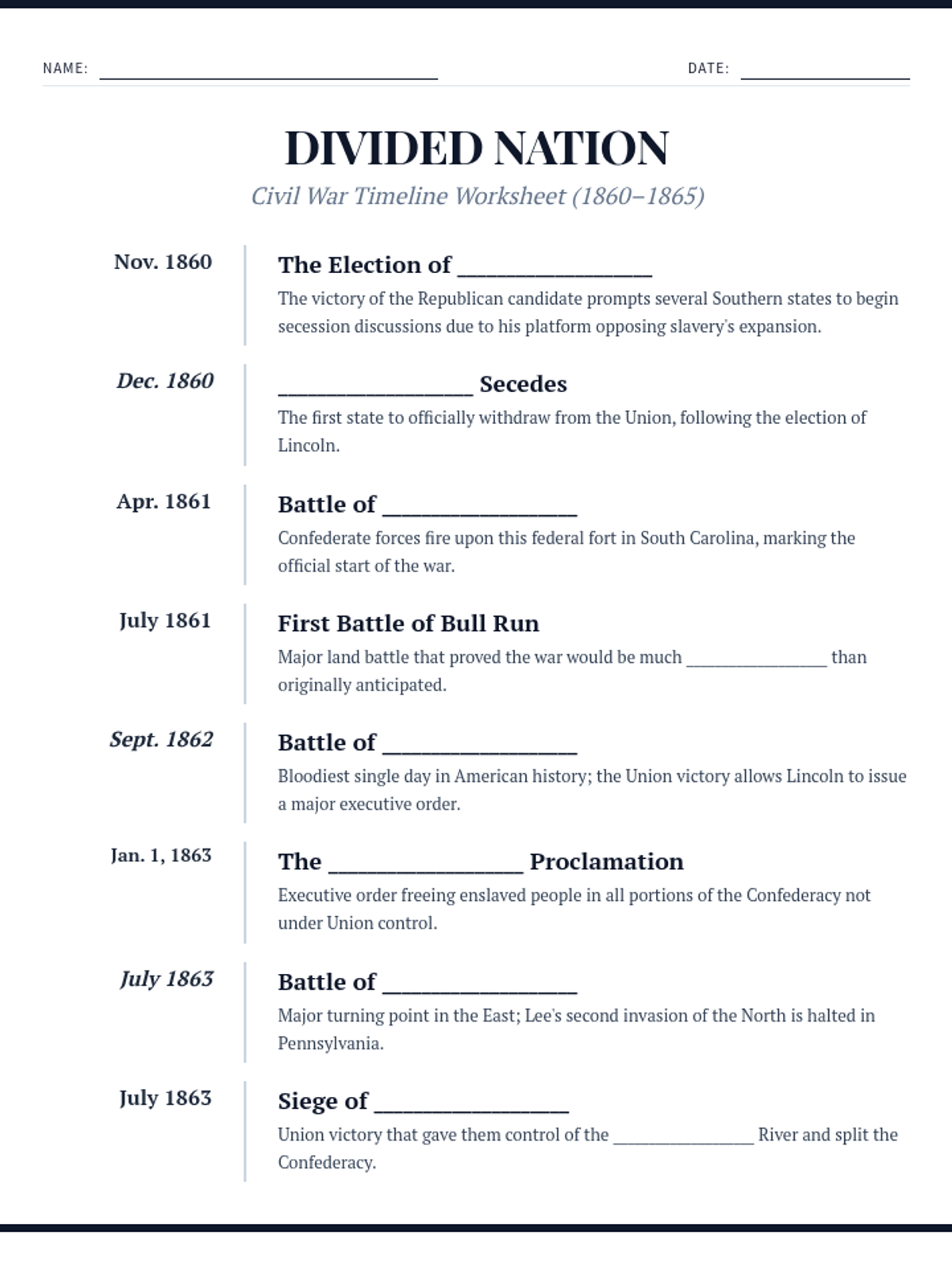
A condensed 2-page high school timeline worksheet for the American Civil War, featuring 13 key events with optimized spacing and page breaks.
A polished 10-slide presentation for 7th-grade science students explaining photosynthesis, featuring MathJax for chemical formulas and improved organelle diagrams.
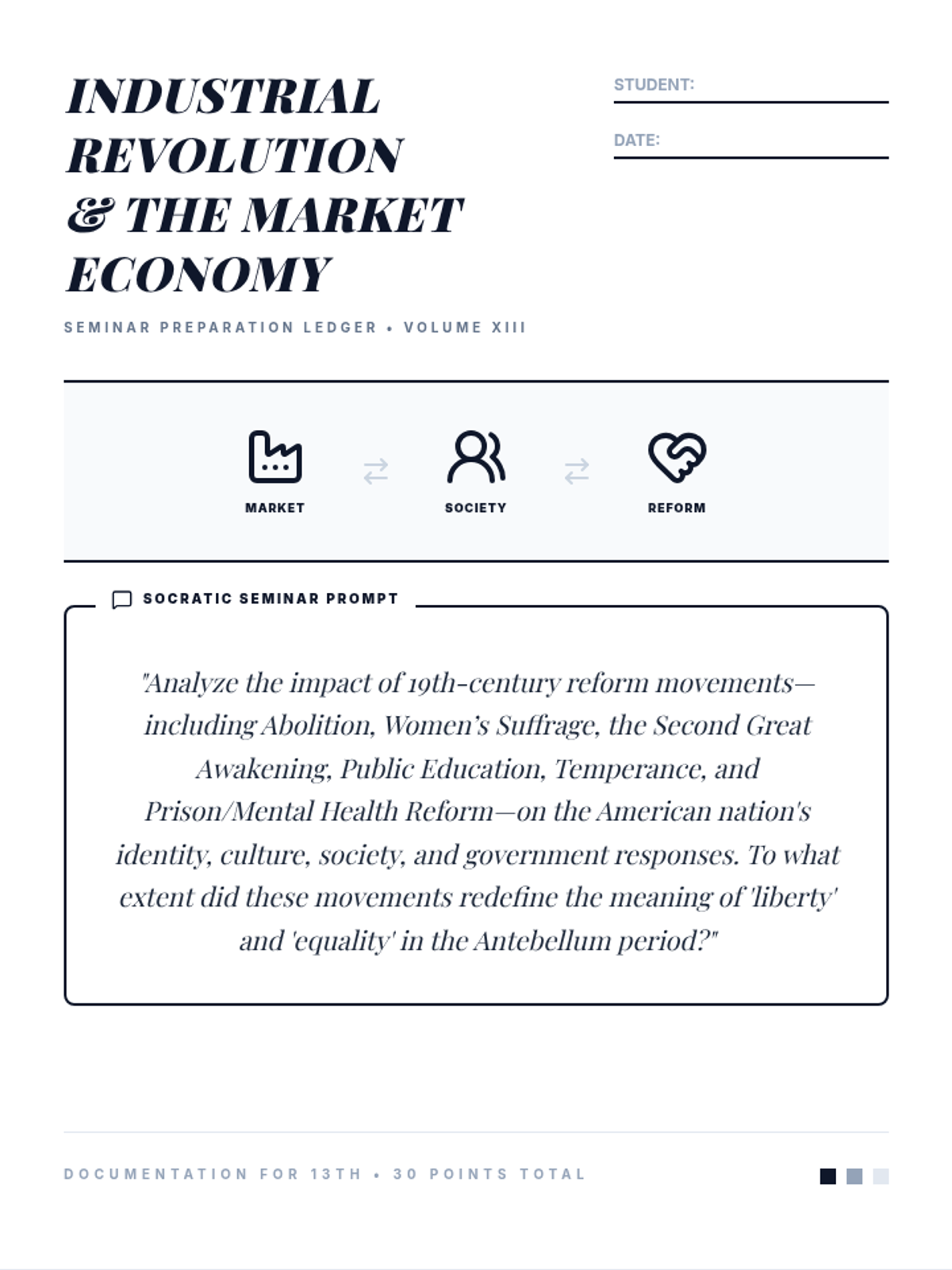
A detailed 5-page seminar preparation ledger for the Industrial Revolution and Market Economy lesson. Features a dedicated cover page with relevant historical icons and a prominent Socratic prompt, three separate article analysis pages, and a final synthesis evaluation. Writing lines are darkened for optimal print quality.
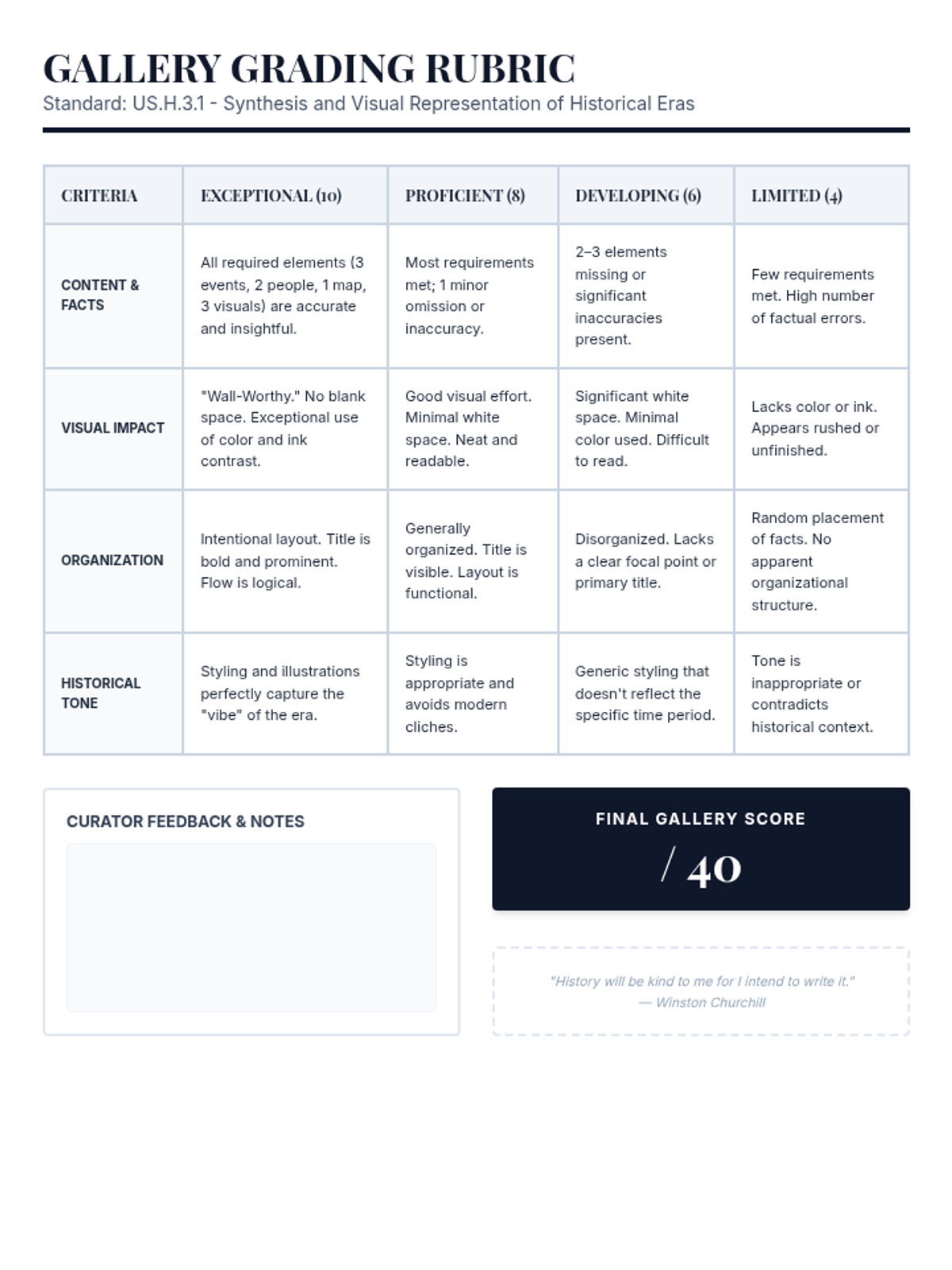
A grayscale, high-contrast rubric for evaluating student historical one-pagers, optimized for budget-friendly printing.
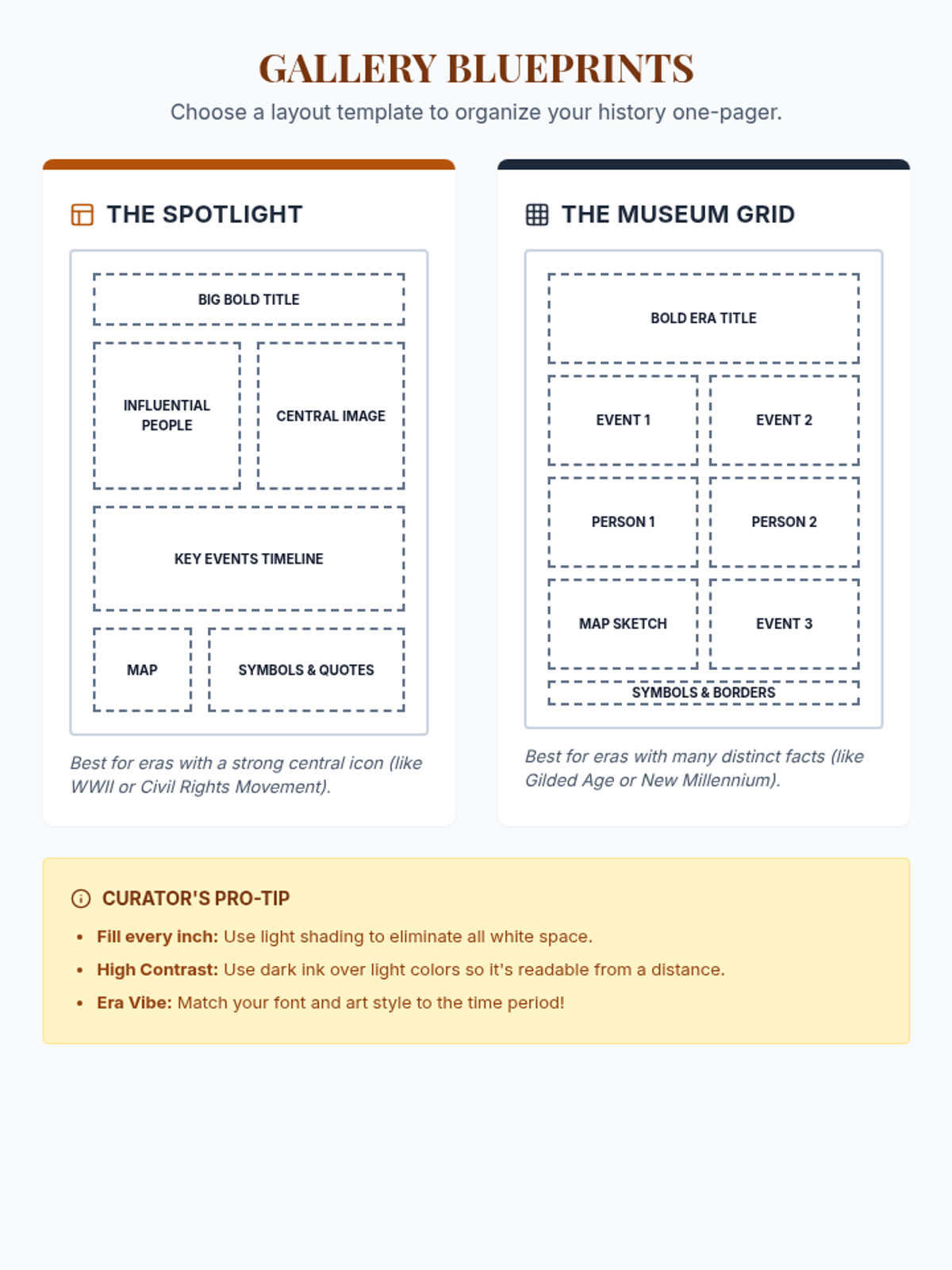
A grayscale visual layout guide providing two template options to help students organize their historical one-pager posters.
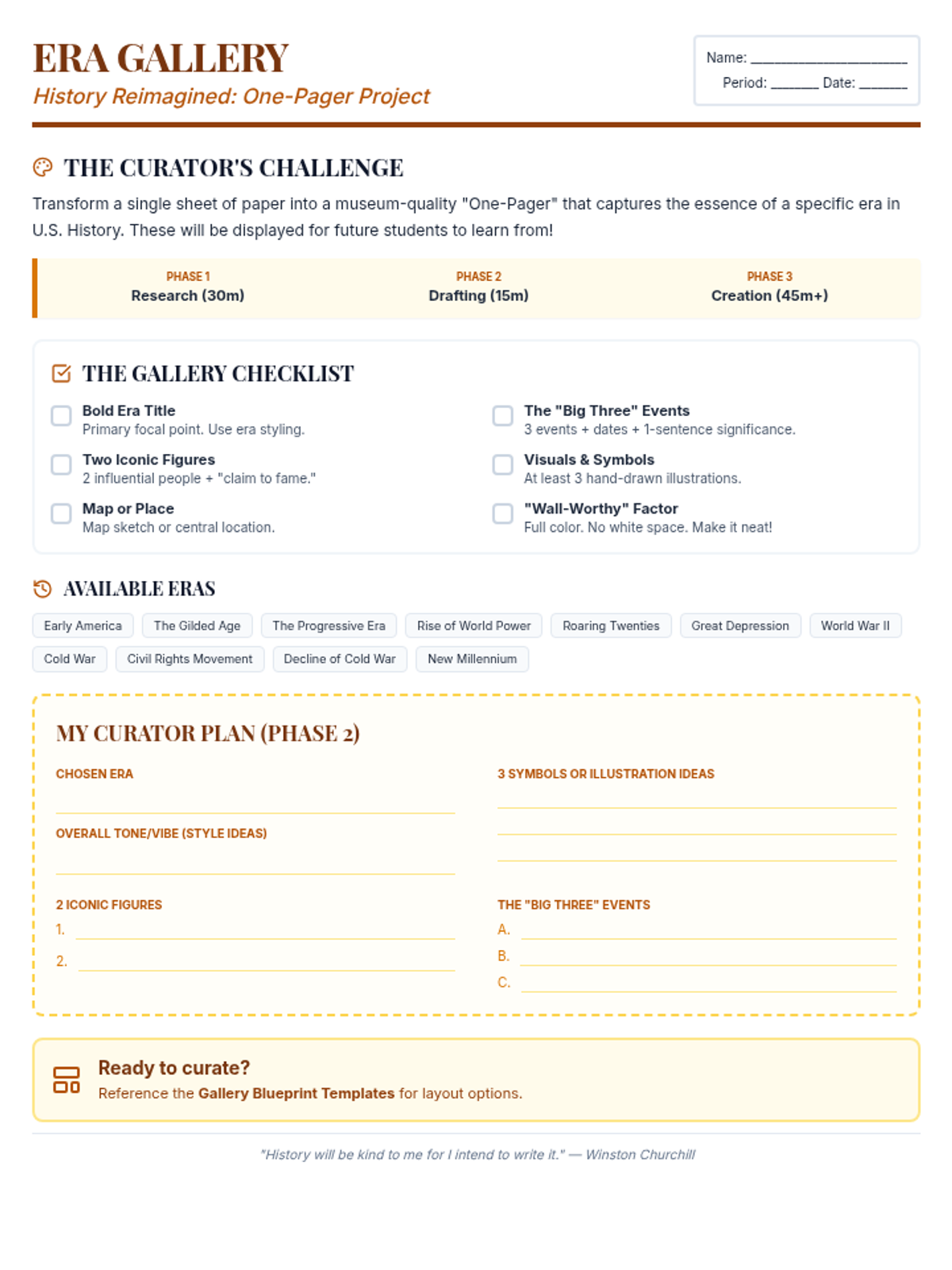
A grayscale, high-contrast project guide for US History students that outlines the requirements for creating a high-quality historical one-pager.
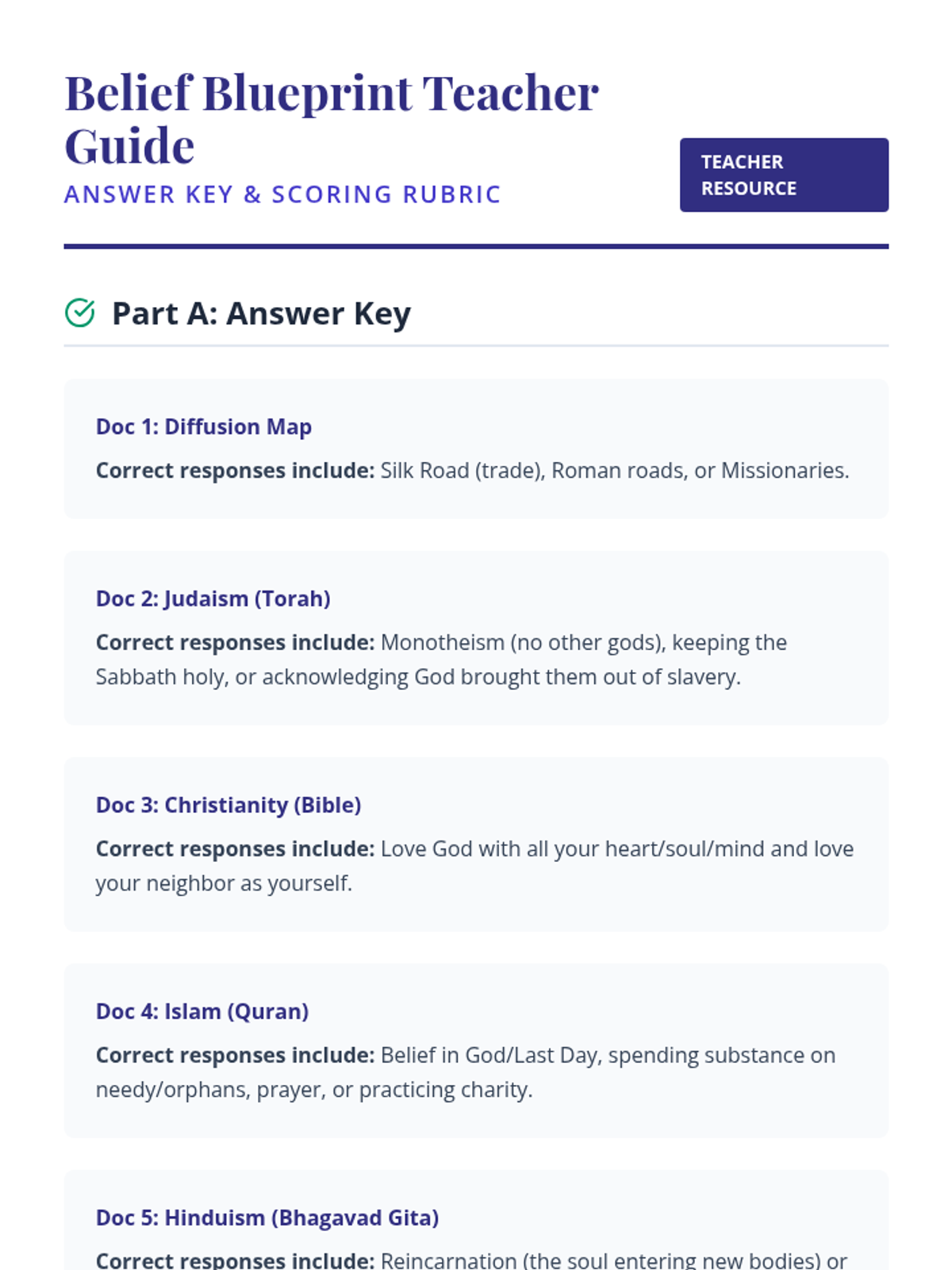
A comprehensive teacher's guide for the World Religions DBQ, including a detailed answer key for document analysis, an NYS-aligned 1-5 scoring rubric, and instructional strategies for guiding student writing.
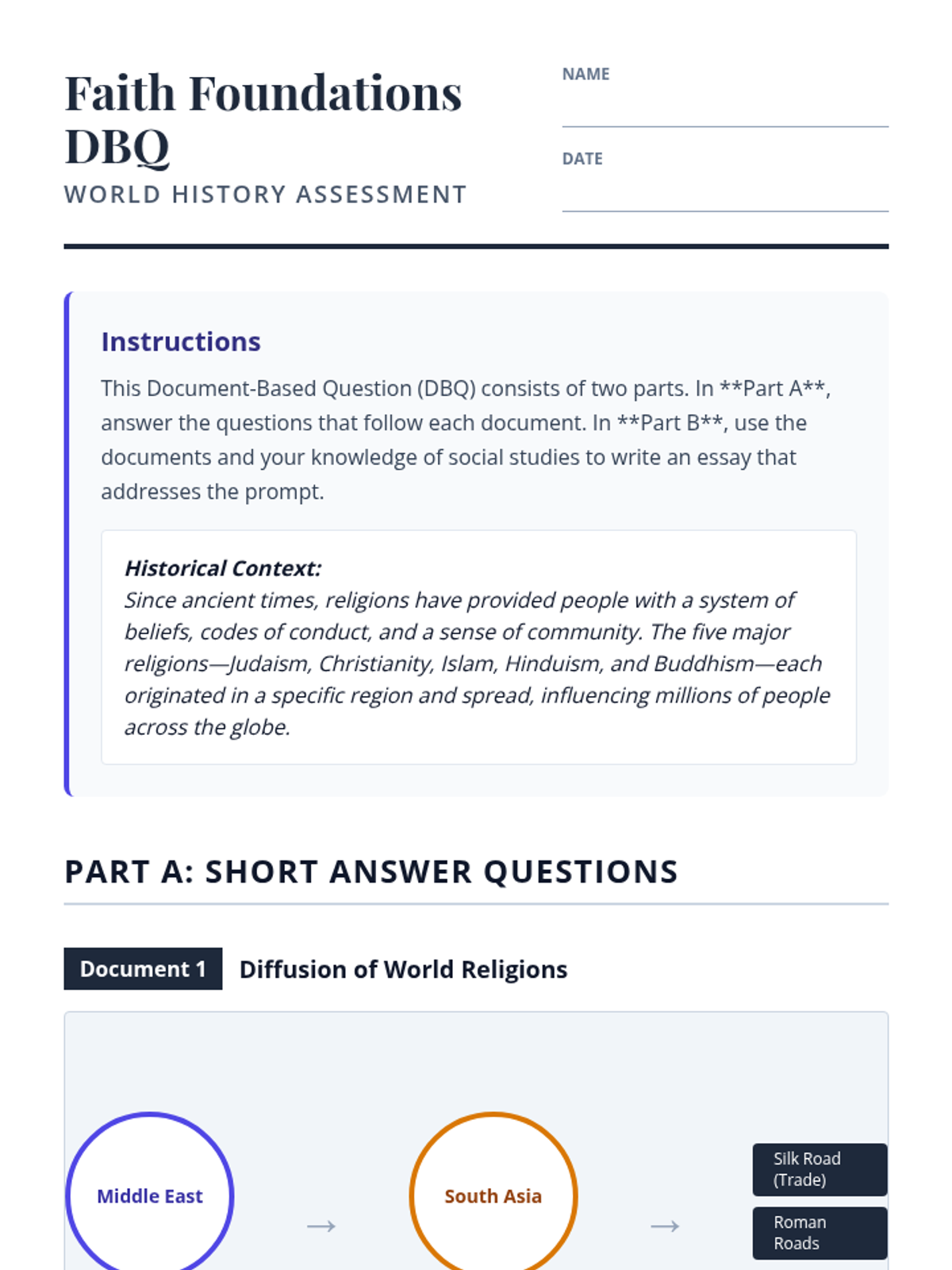
A formal 6th-grade NYS-style DBQ assessment on World Religions, featuring maps and sacred text excerpts for Hinduism, Buddhism, Judaism, Christianity, and Islam, followed by a document-based essay prompt.
A visually engaging presentation that introduces the 6th-grade World Religions DBQ assessment, outlining the mission, providing visual context for maps and sacred texts, and setting clear writing expectations for students.
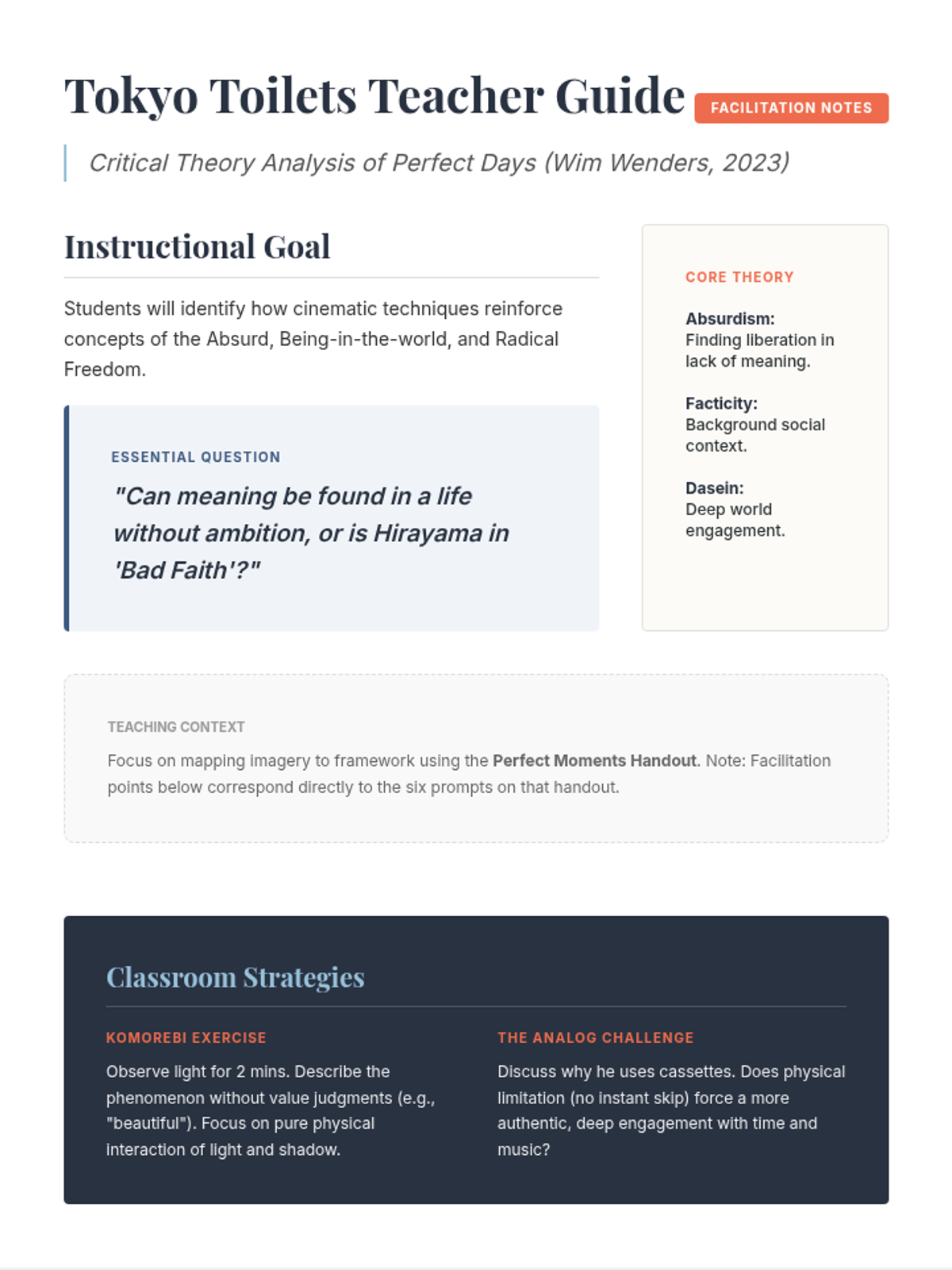
A comprehensive teacher facilitation guide for 'Perfect Days' featuring theoretical background, expected student responses, and instructional strategies for teaching existentialism through cinema.
A visually sophisticated presentation deck for analyzing 'Perfect Days' through existentialist lenses. Features key concepts from Camus, Sartre, and Heidegger with integrated film stills (placeholders) and discussion prompts.
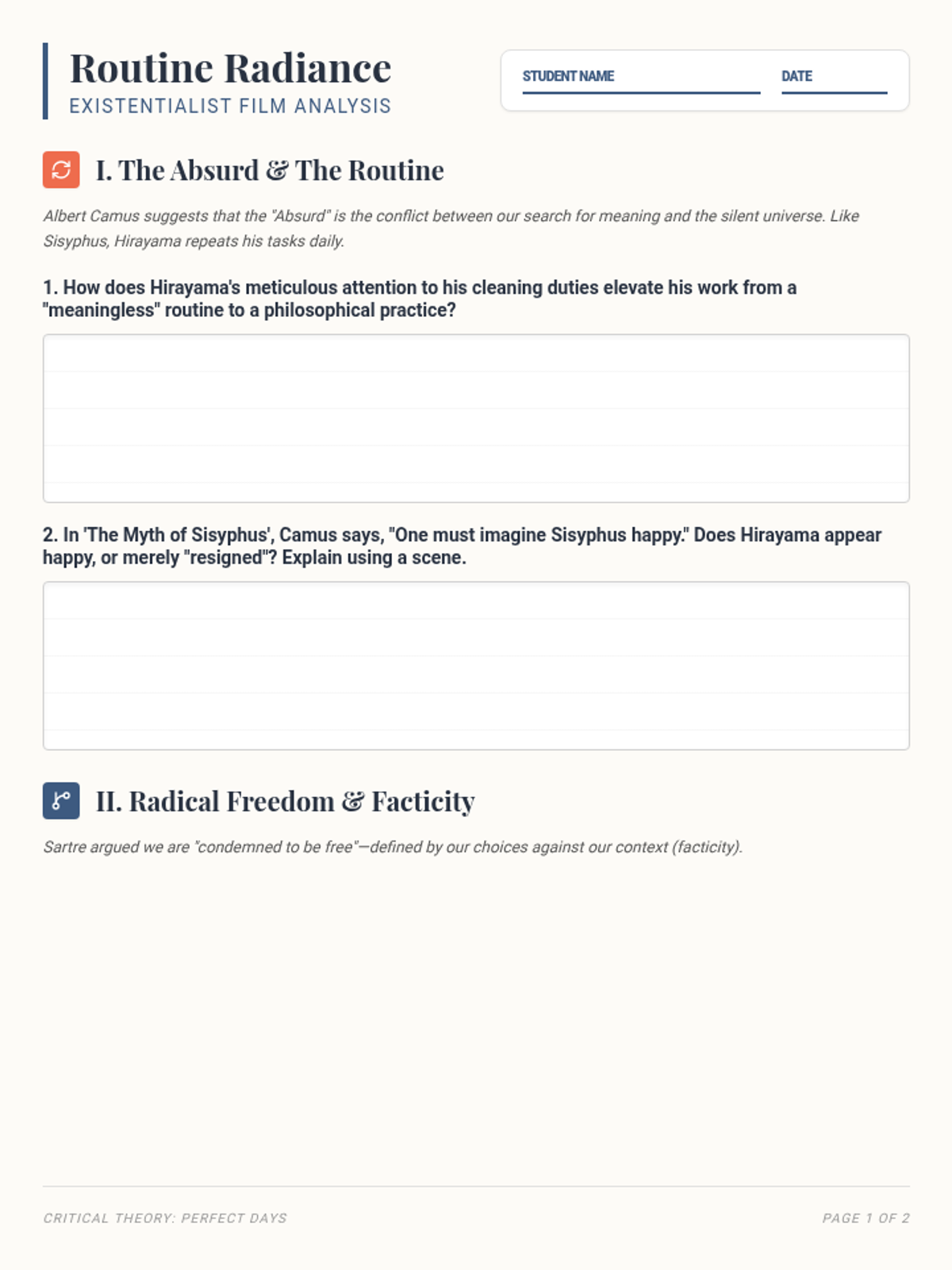
A structured student handout featuring discussion questions that analyze the film 'Perfect Days' through Camus's Absurdism, Sartre's Radical Freedom, and Heidegger's Being-in-the-World. Includes spacious response areas for critical writing.
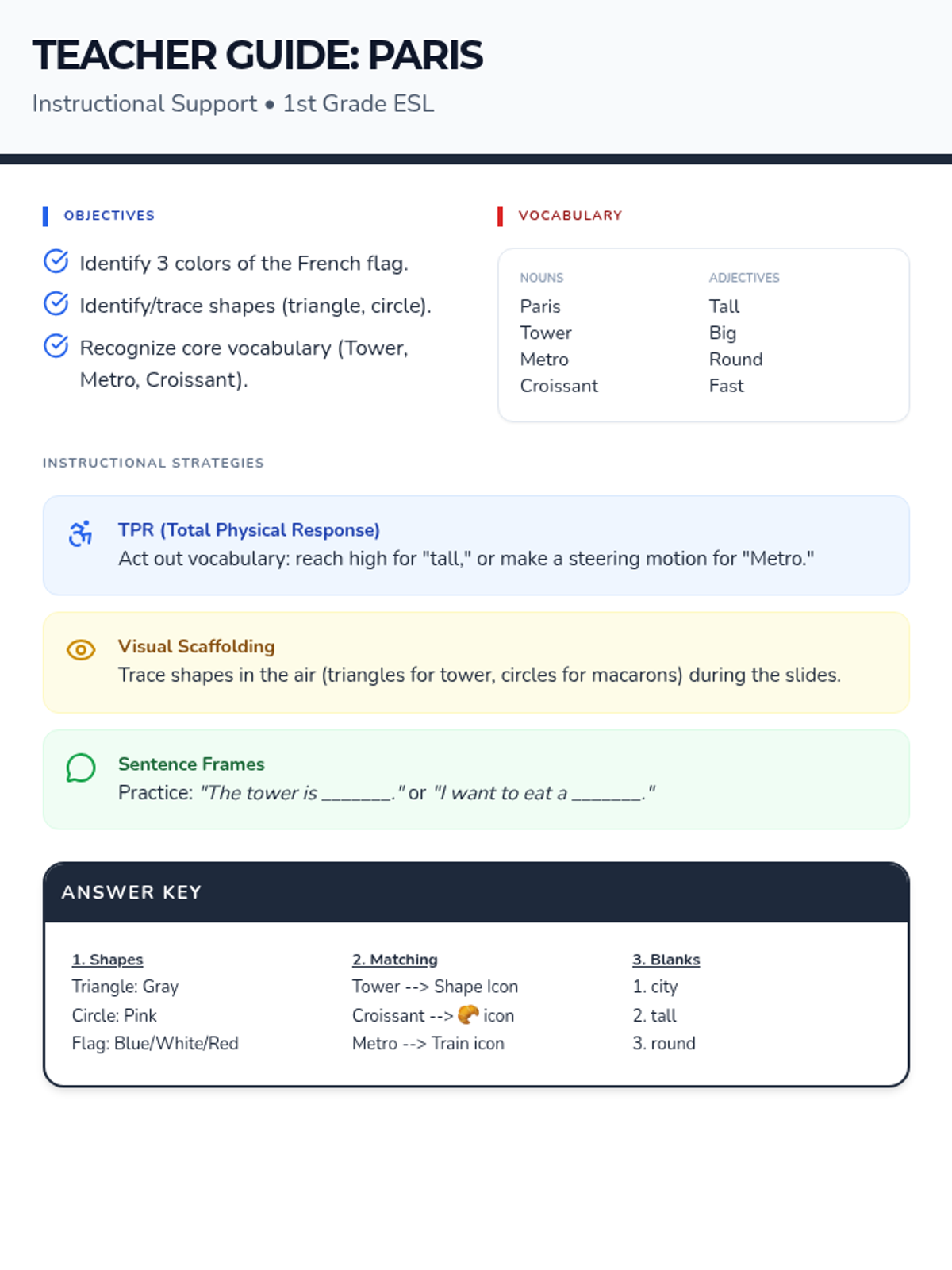
A comprehensive teacher guide for the Paris Explorer lesson. Includes learning objectives, key vocabulary, ESL teaching strategies (TPR, scaffolding), and an answer key for the student worksheet.
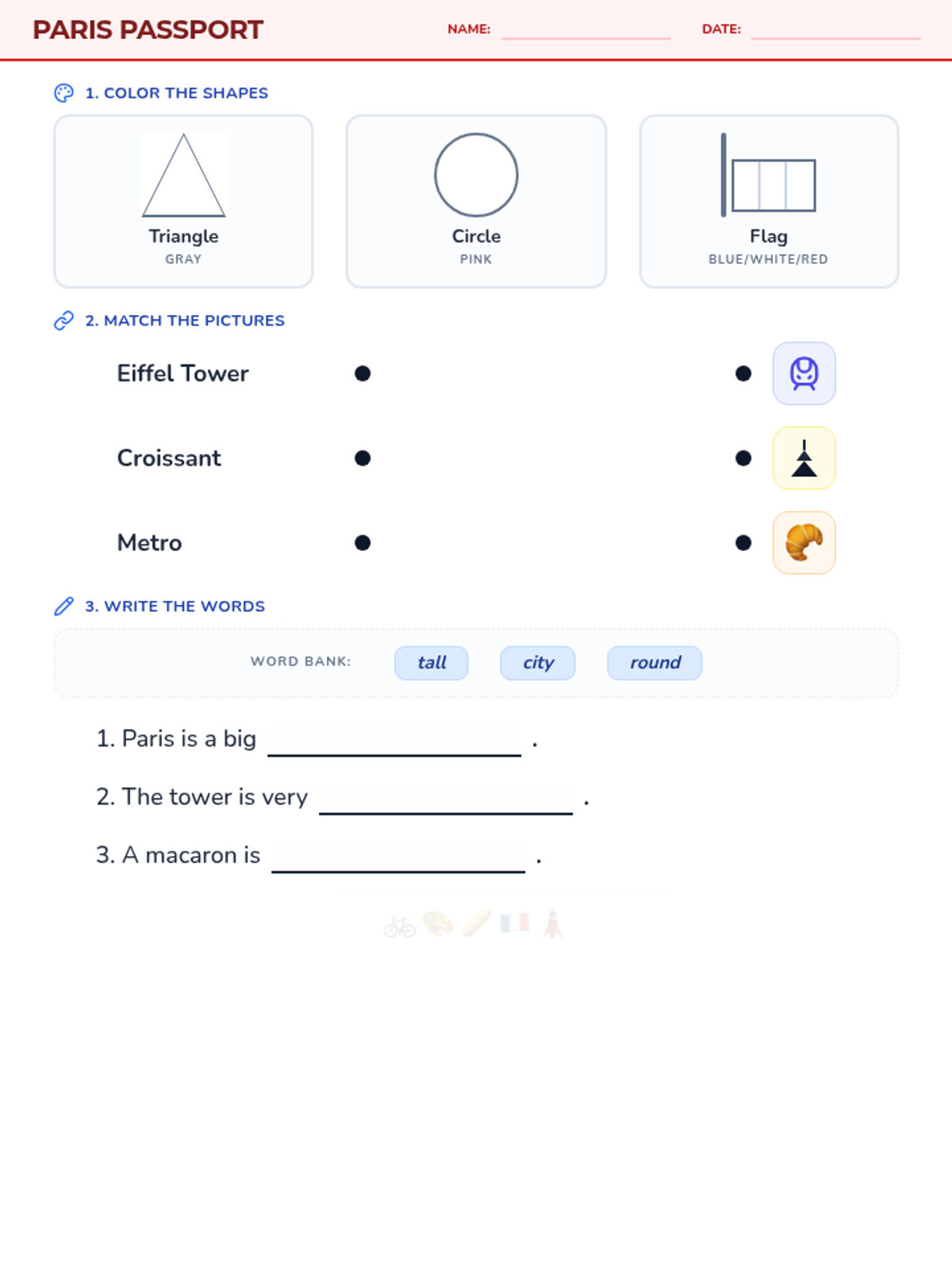
A follow-up activity worksheet for 1st-grade ESL students to practice vocabulary from the Paris reading. Includes shape coloring, matching, and simple fill-in-the-blank exercises.
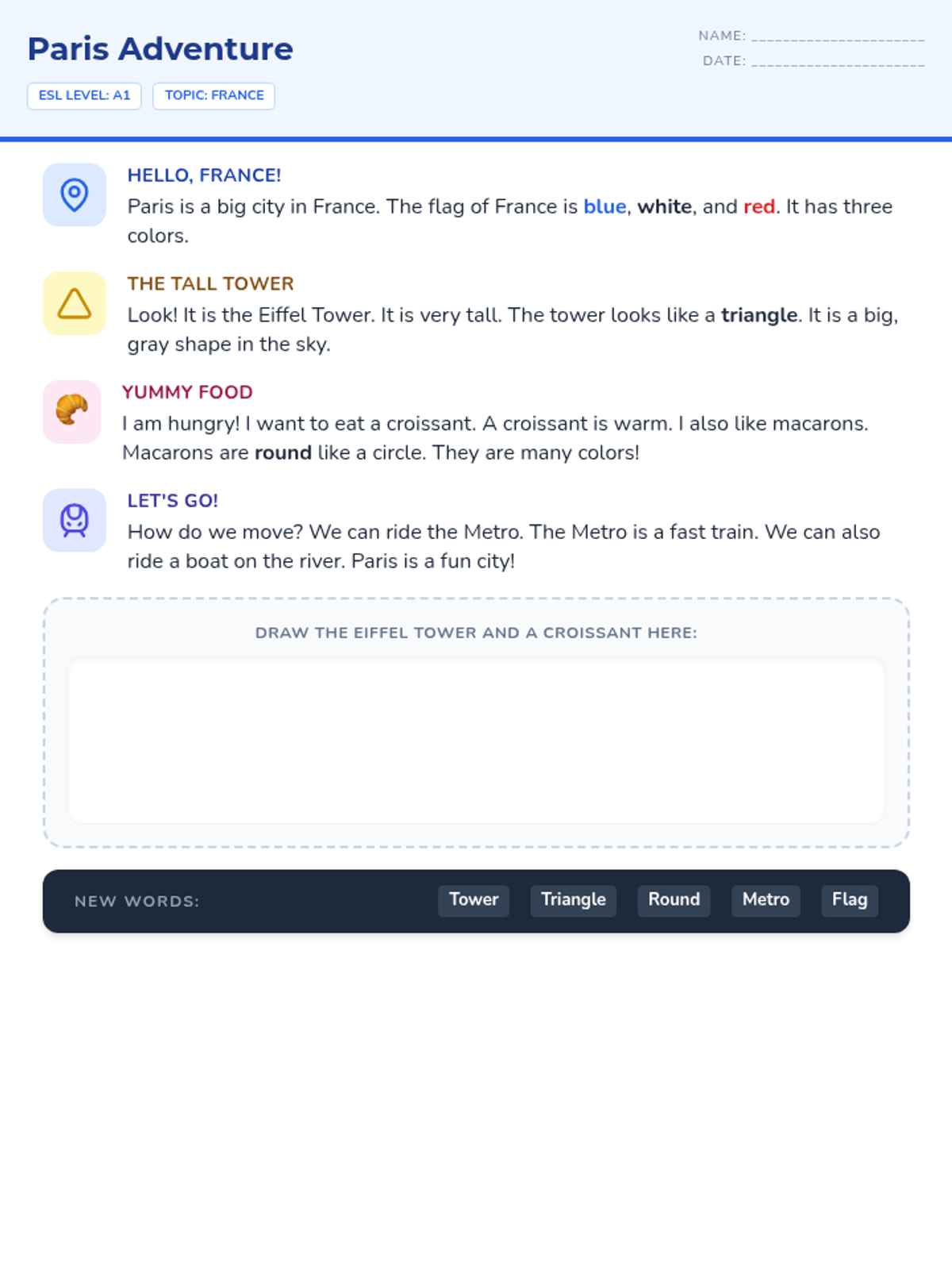
A simple, illustrated reading passage about Paris designed for 1st-grade ESL students. It introduces key vocabulary for landmarks, food, colors, shapes, and transportation in accessible language.
A visually engaging slide deck introducing Paris to 1st-grade ESL students. It uses simple language to explore the French flag, the Eiffel Tower, local foods, and transportation options.
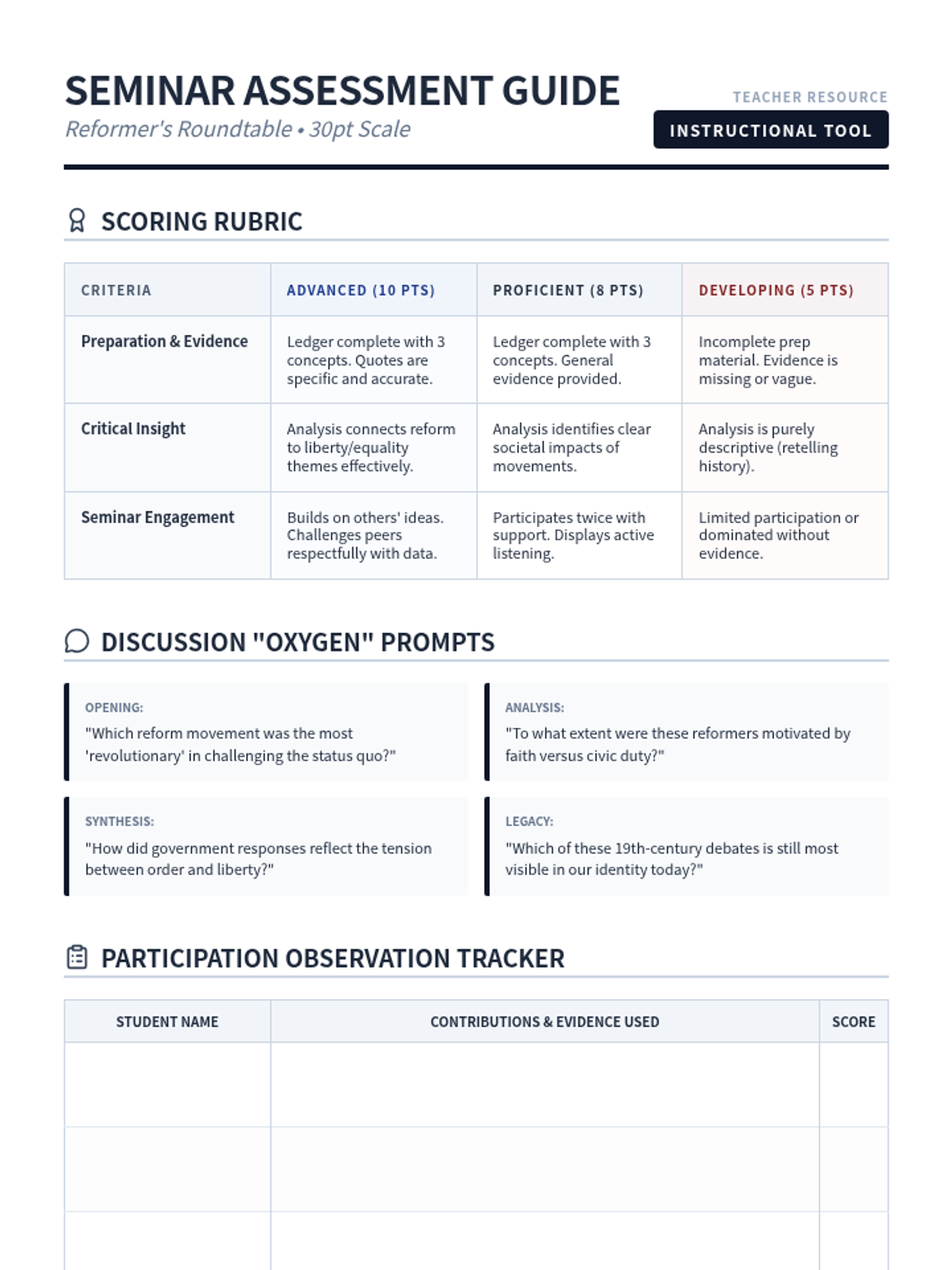
A teacher-facing guide for evaluating the Socratic Seminar, featuring a 30-point rubric, discussion prompts to guide student conversation, and an observation tracker.
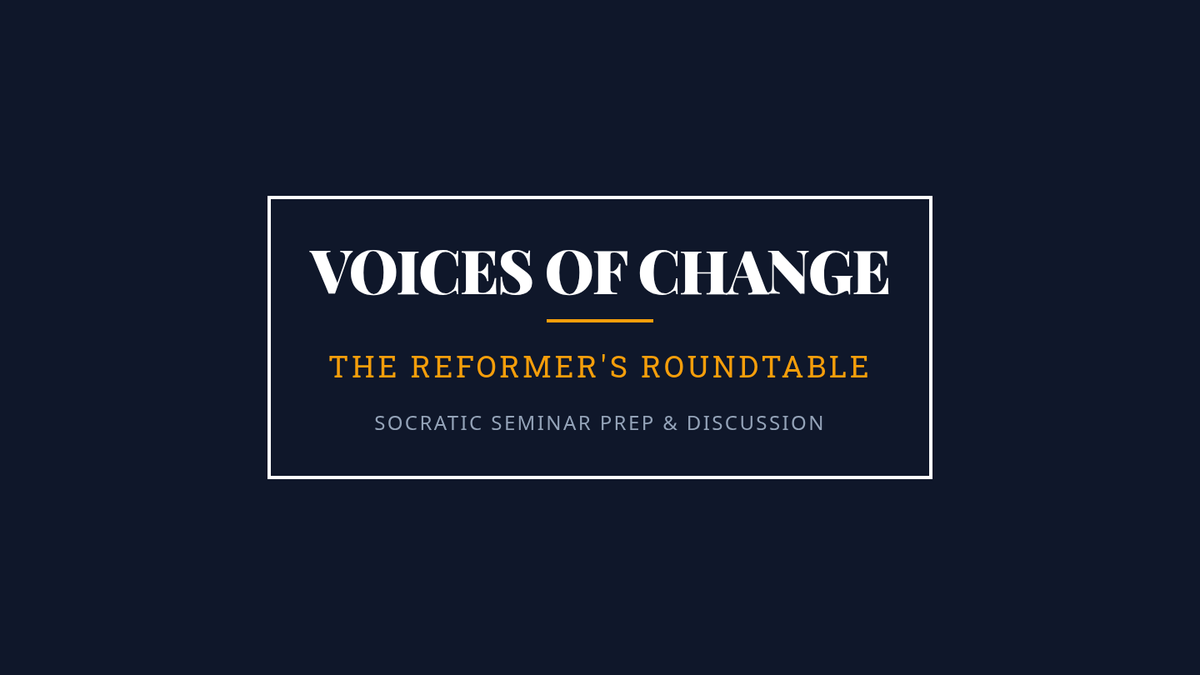
A visual presentation to introduce the Socratic Seminar prompt, the concept of 19th-century reform movements, and the double-entry journal preparation method. Includes discussion norms and expectations.
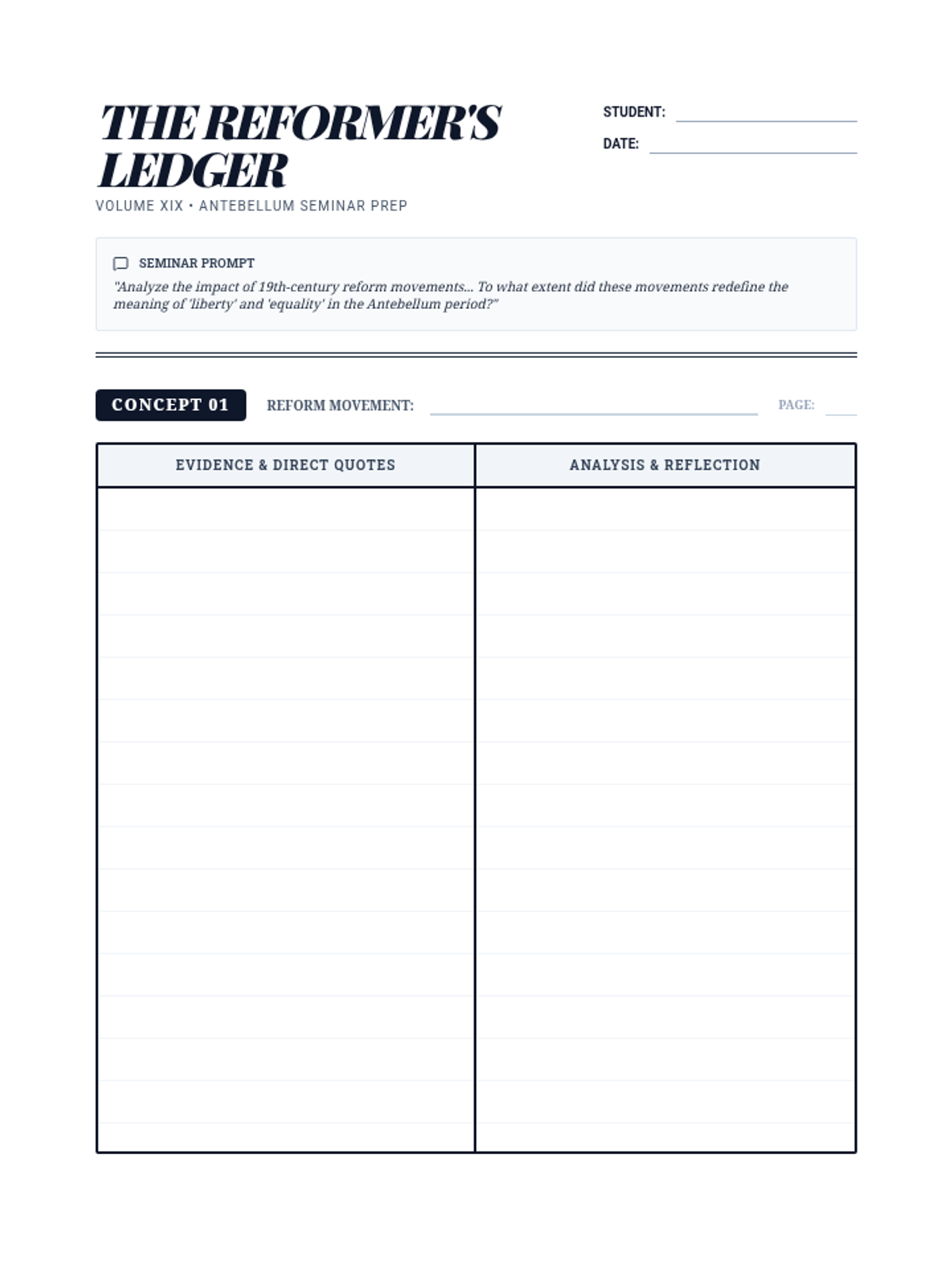
A multi-page double-entry journal for Socratic Seminar preparation. Each of the three reform movements has its own dedicated full-page ledger with guided columns for evidence and reflection, followed by a final synthesis page.
A comprehensive large-print resource containing the "Impact of Digital Technologies" report and a student analysis page. Features 26px (~20pt) text, bolded key terms, and high-contrast writing lines for accessibility. Layout is optimized for readability and ample response space.
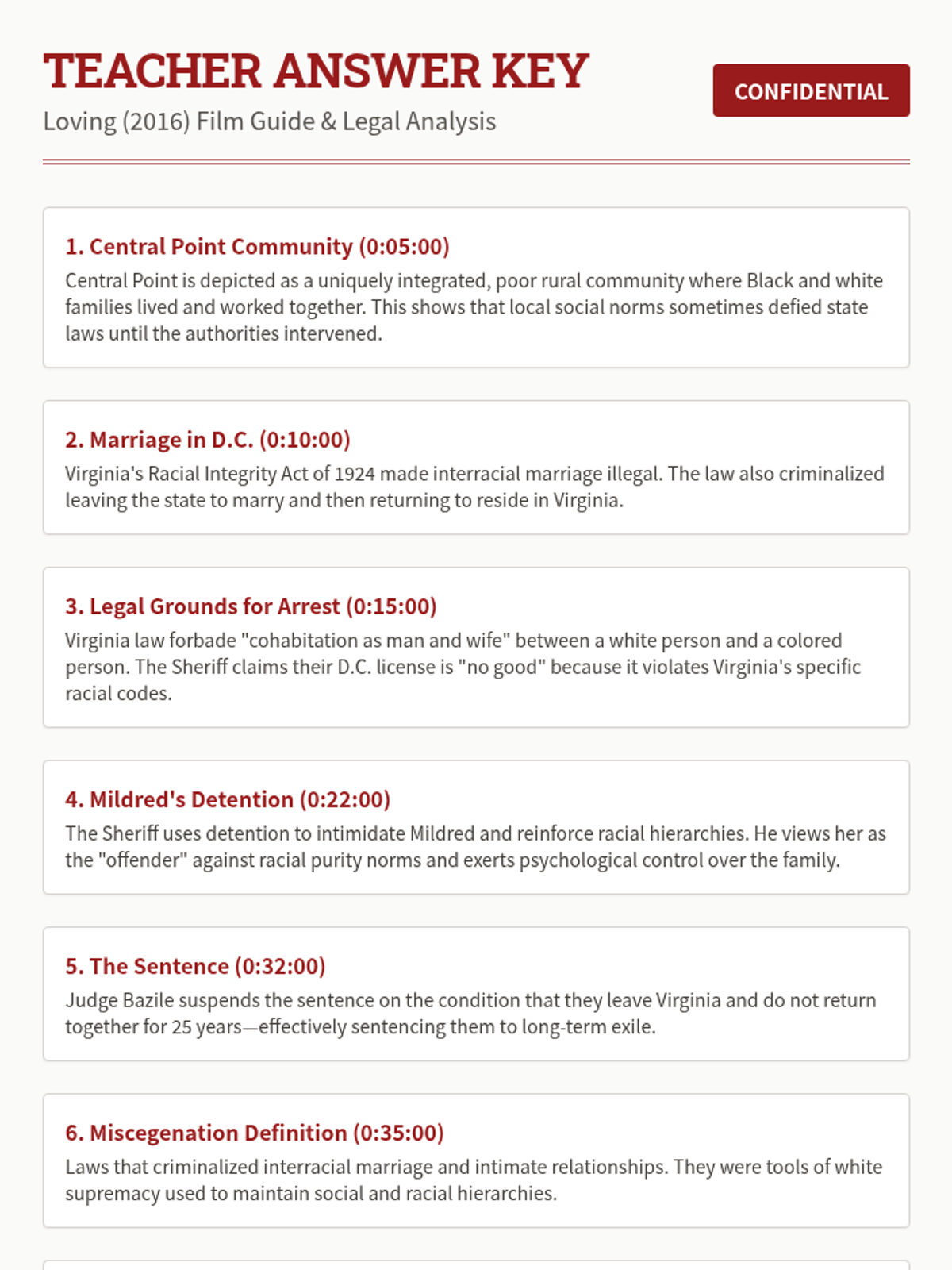
Teacher answer key for the Loving film worksheet, providing 17 detailed responses, legal context regarding the 14th Amendment, and instructional tips for high school educators.
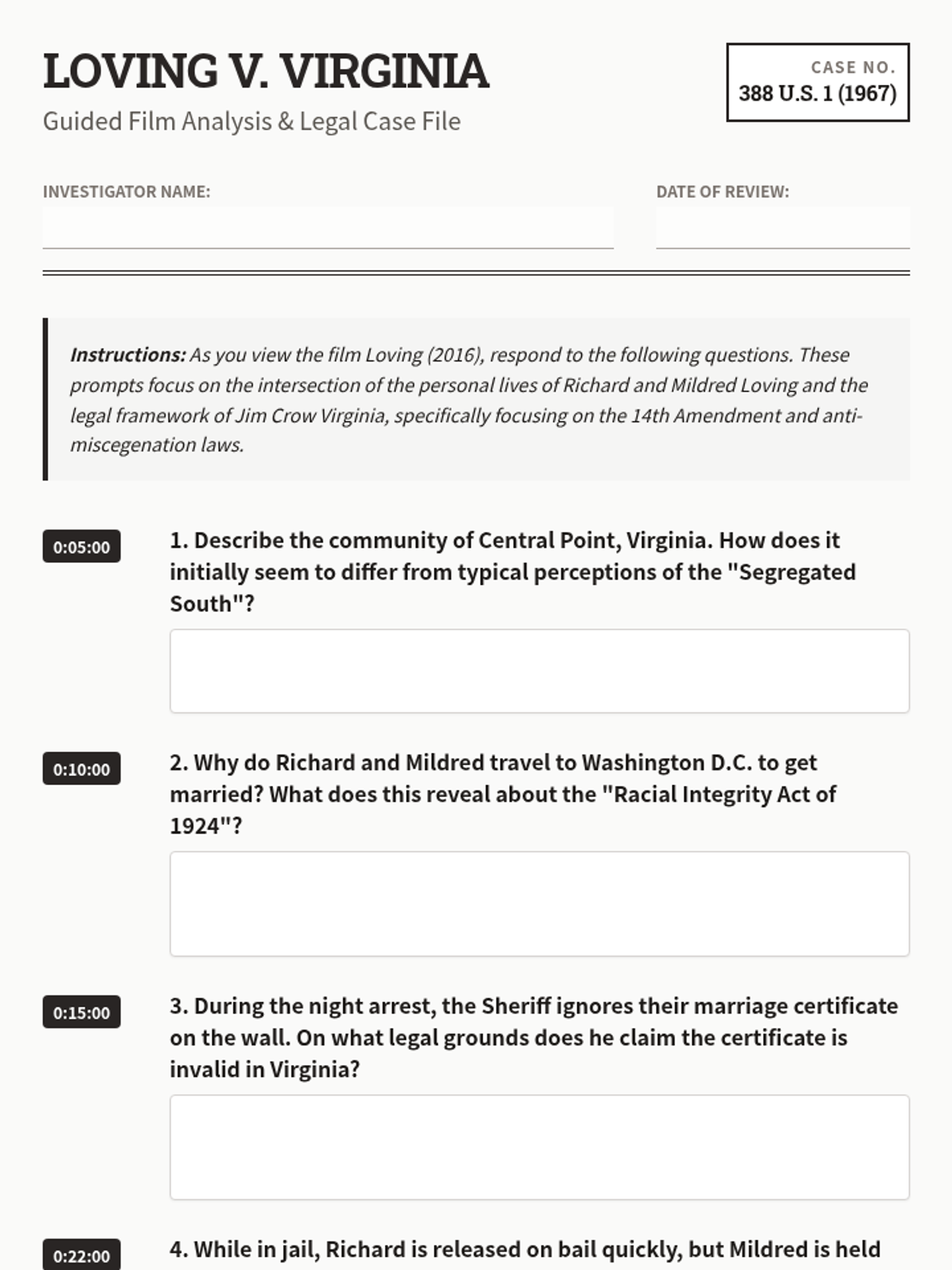
A 17-question film guide for the movie Loving (2016), featuring timestamps and focusing on legal themes like the 14th Amendment and Jim Crow laws. Includes a large critical reflection section for high school students.
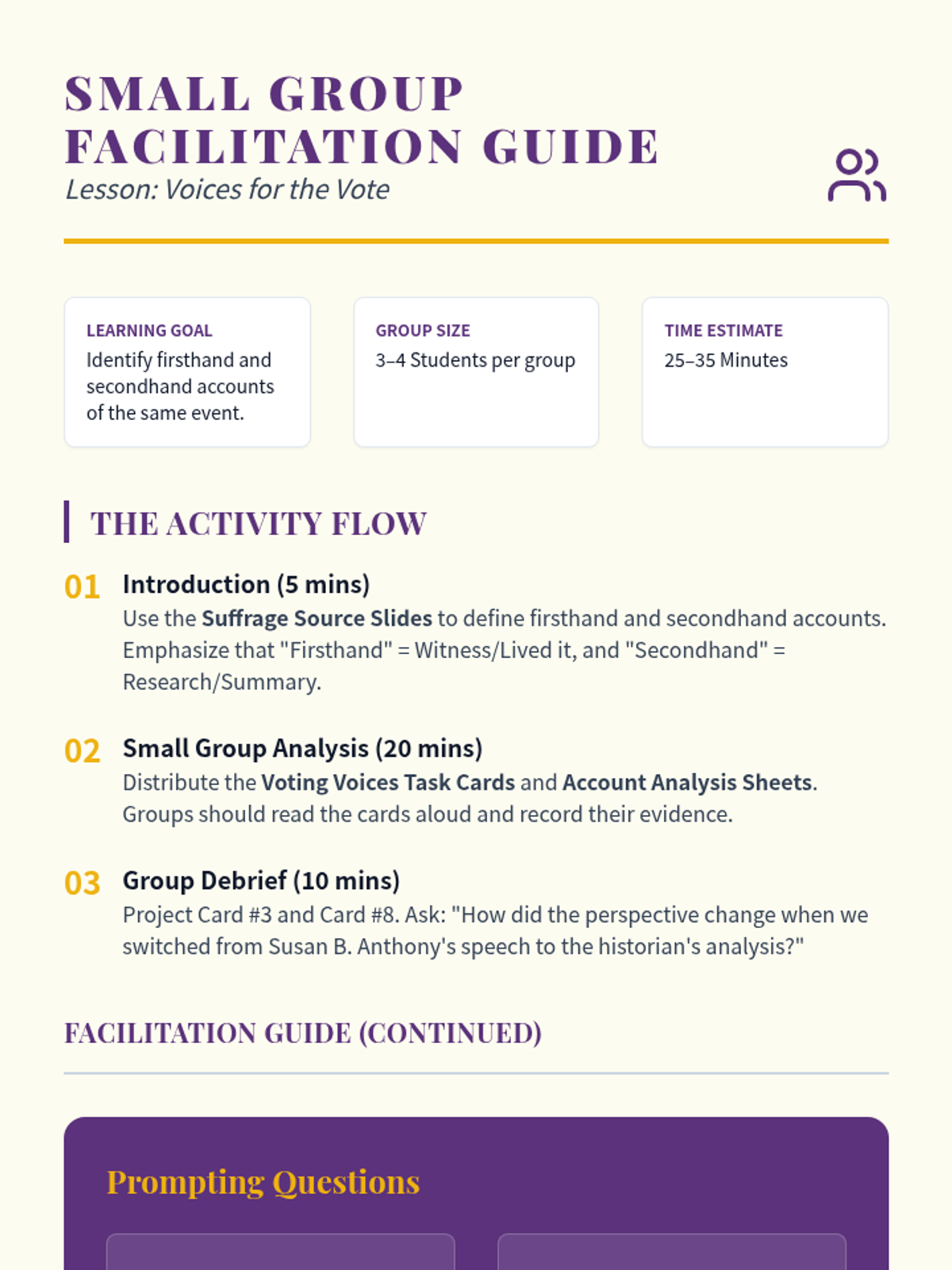
A facilitation guide for teachers to lead the "Voices for the Vote" small group activity. It includes pacing suggestions, discussion prompts, and differentiation strategies, with optimized layout for printing.
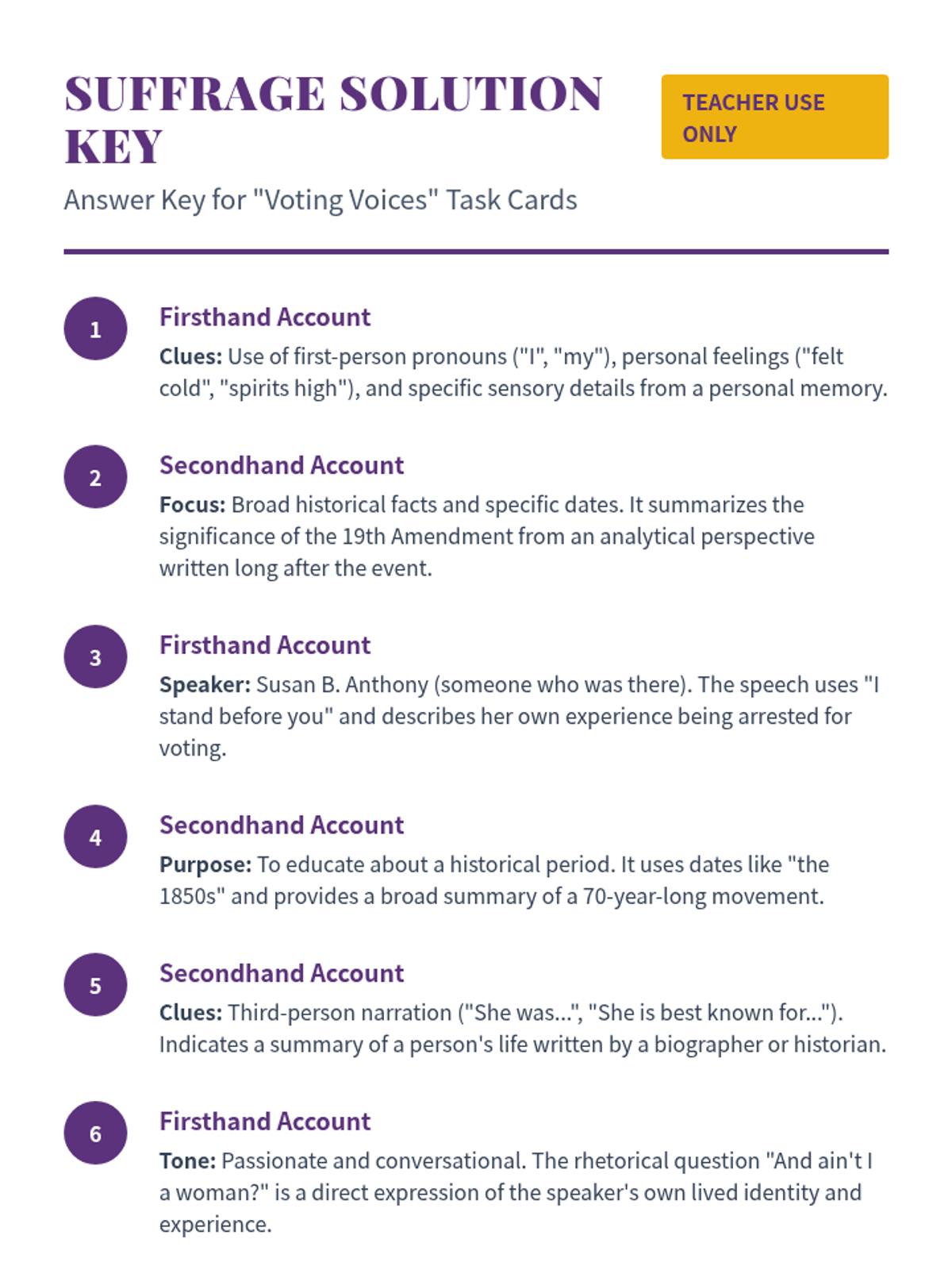
A complete answer key for the Voting Voices task cards, including explanations of clues and evidence for each account type to assist teachers in grading or facilitating discussion. Labels and formatting have been cleaned for clarity.
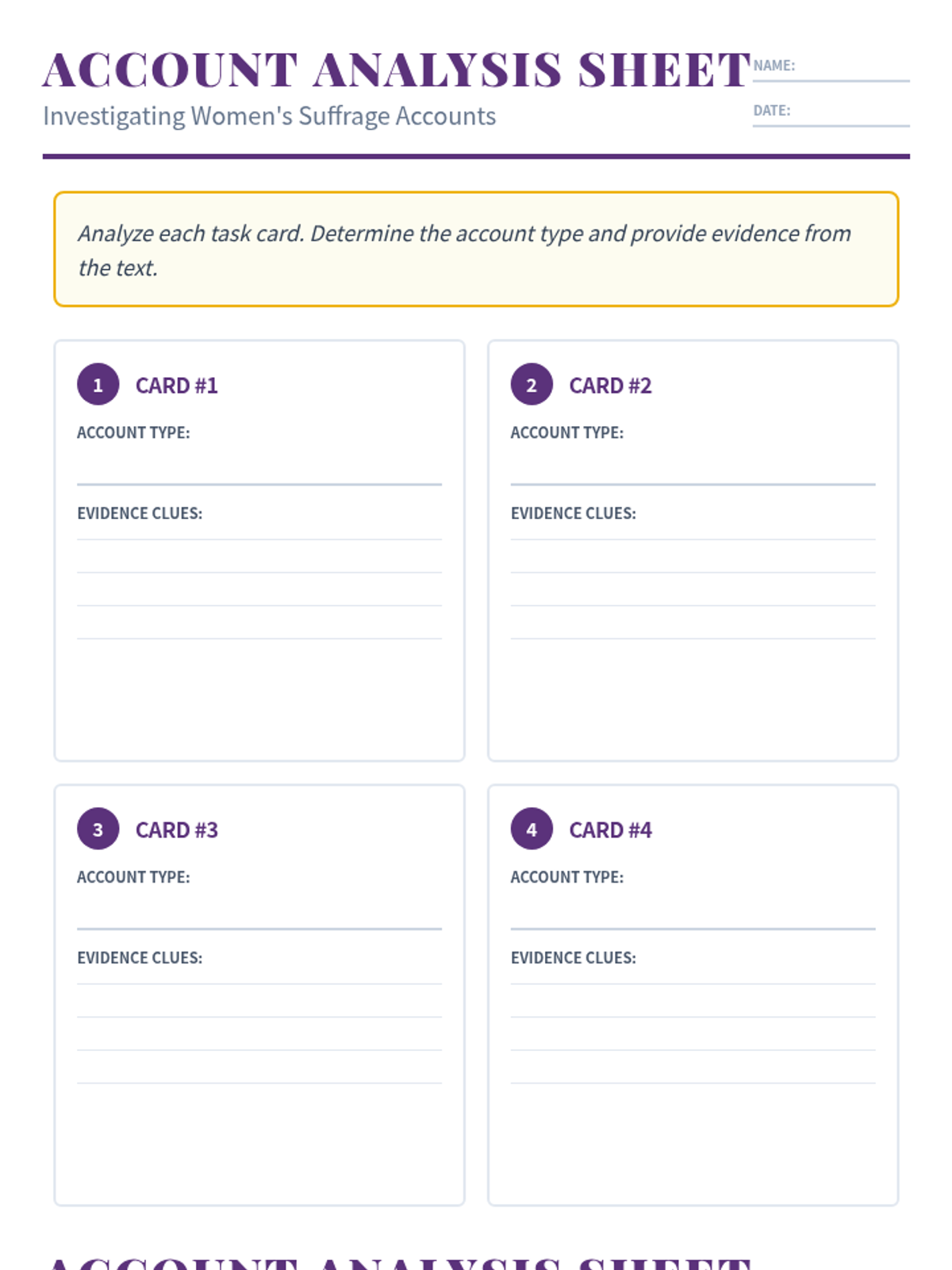
A student recording sheet for the Voting Voices task cards, providing structured space for students to identify the account type and provide detailed evidence for all 8 cards across two pages. Header and spacing optimized for printing.
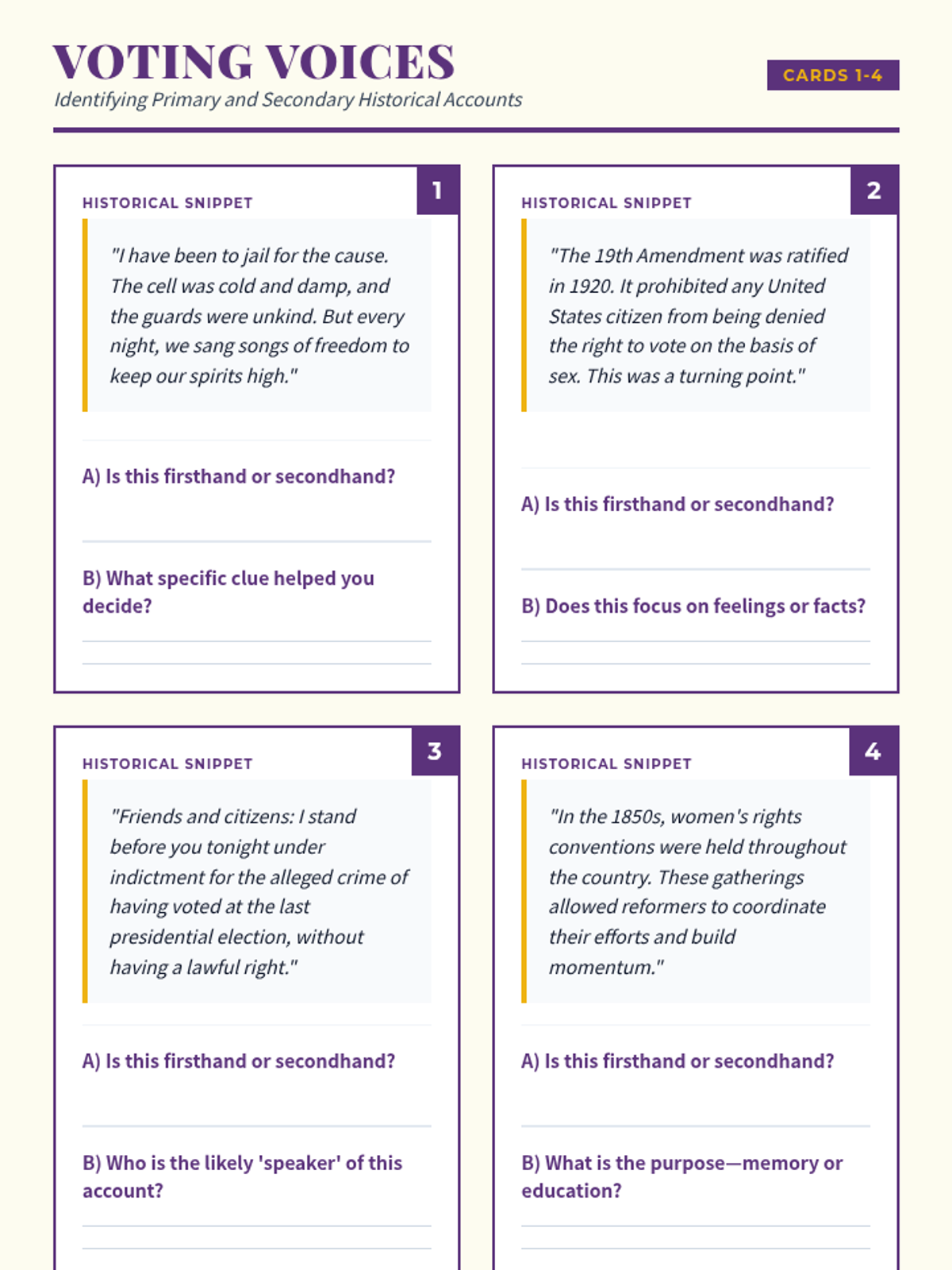
A set of 8 historical task cards featuring primary and secondary source snippets about the Women's Suffrage Movement, each with analysis questions and handwriting lines to help students identify the type of account. Card layout and text density have been optimized for printing.
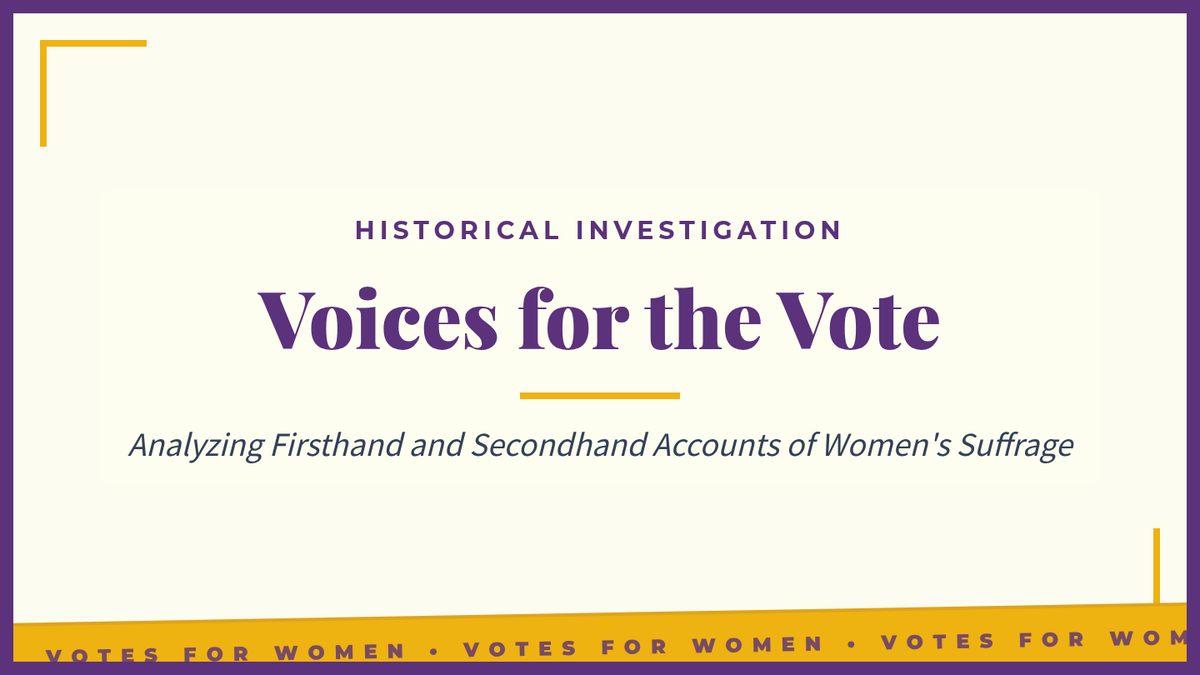
A 5-slide presentation introducing firsthand and secondhand accounts using the context of the Women's Suffrage Movement, featuring a case study comparison and clear definitions. Layout and text spacing have been optimized for clarity.
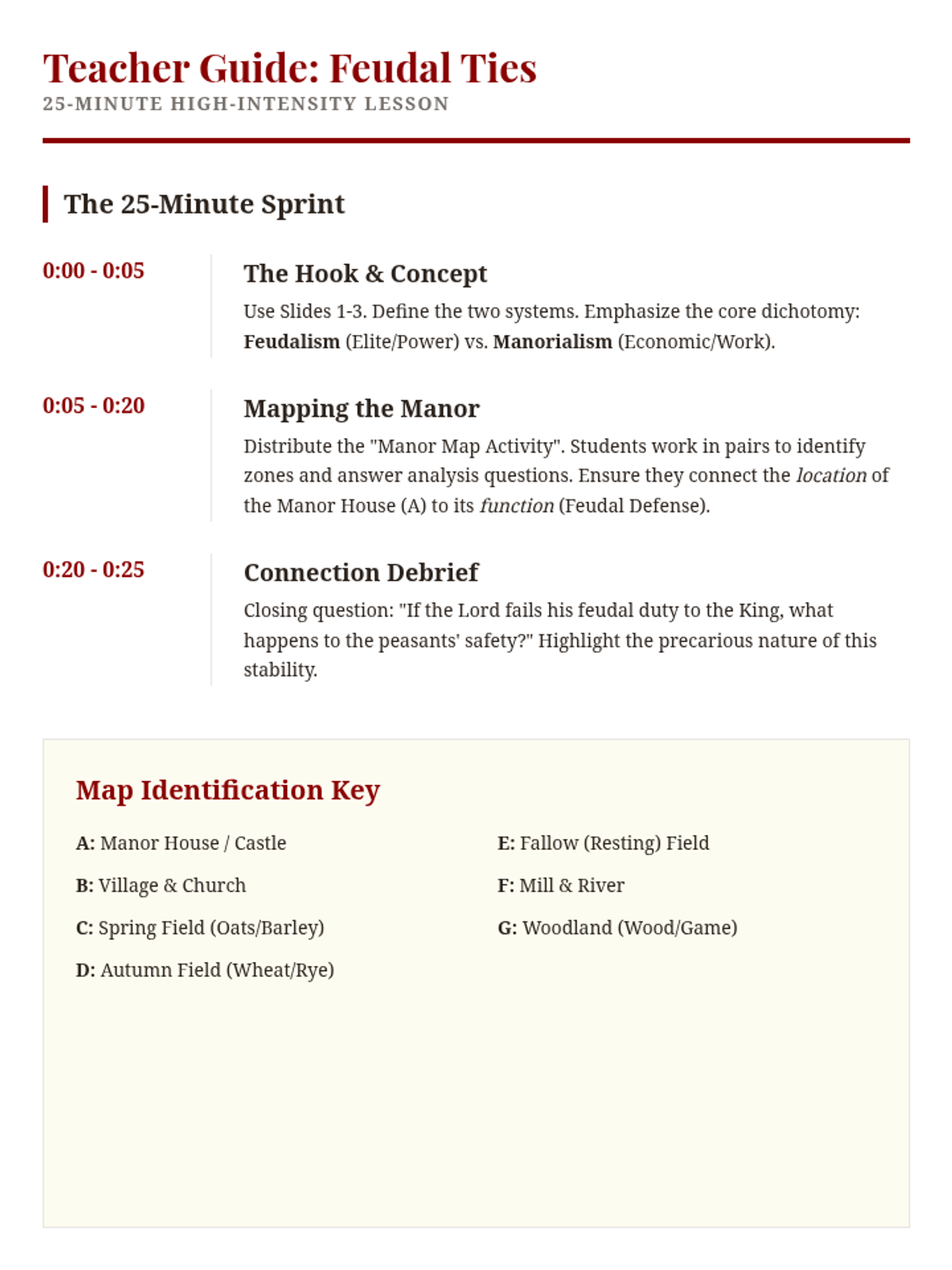
A teacher facilitation guide for the 25-minute Feudal Ties lesson, including a timeline, answer key, and discussion prompts.
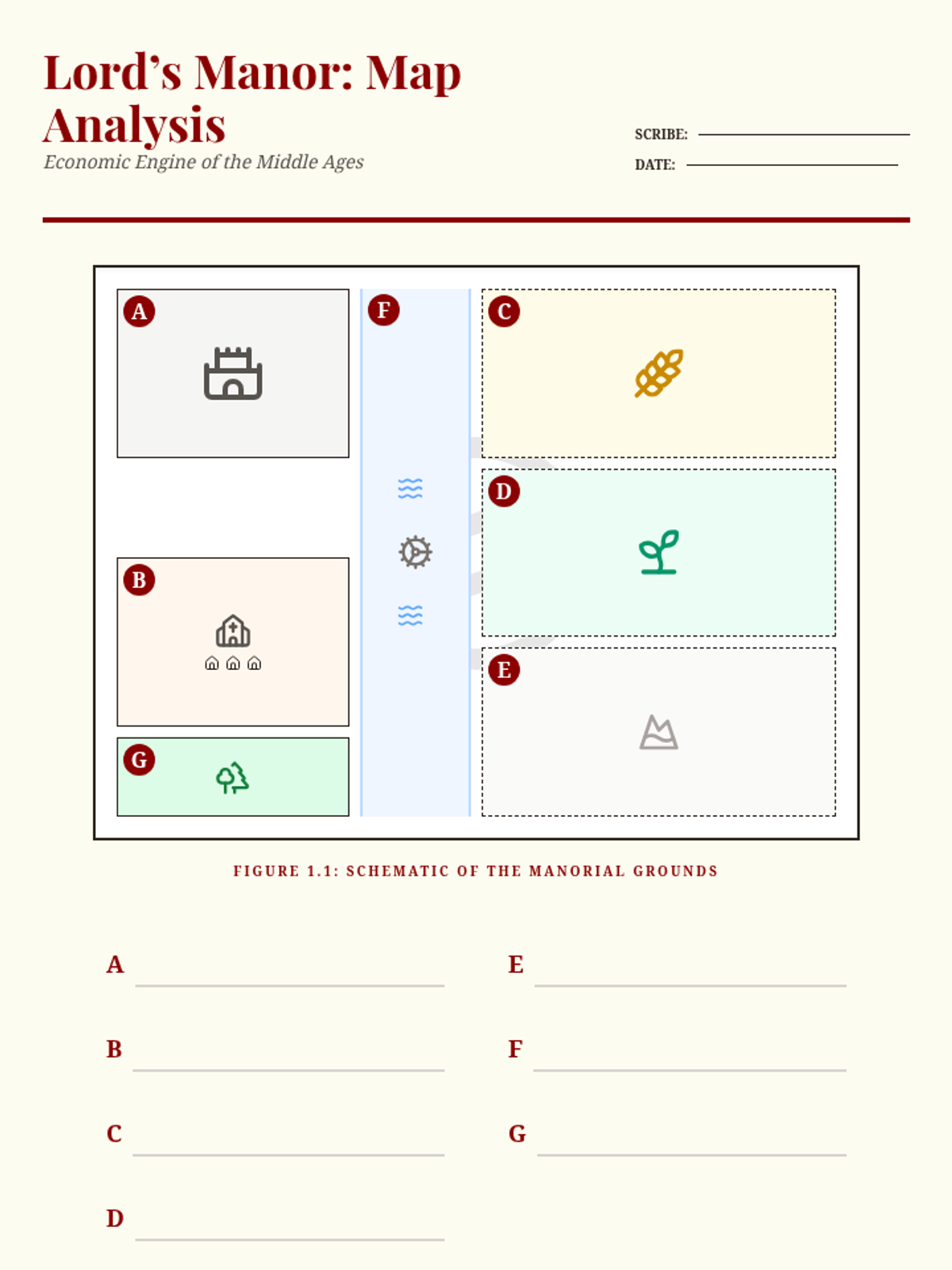
A mapping and analysis worksheet where students identify the parts of a medieval manor and explain the roles of Feudalism and Manorialism in its daily operation.
A 5-slide visual presentation contrasting the political system of Feudalism with the economic system of Manorialism. Includes diagrams of the feudal and manorial exchanges.
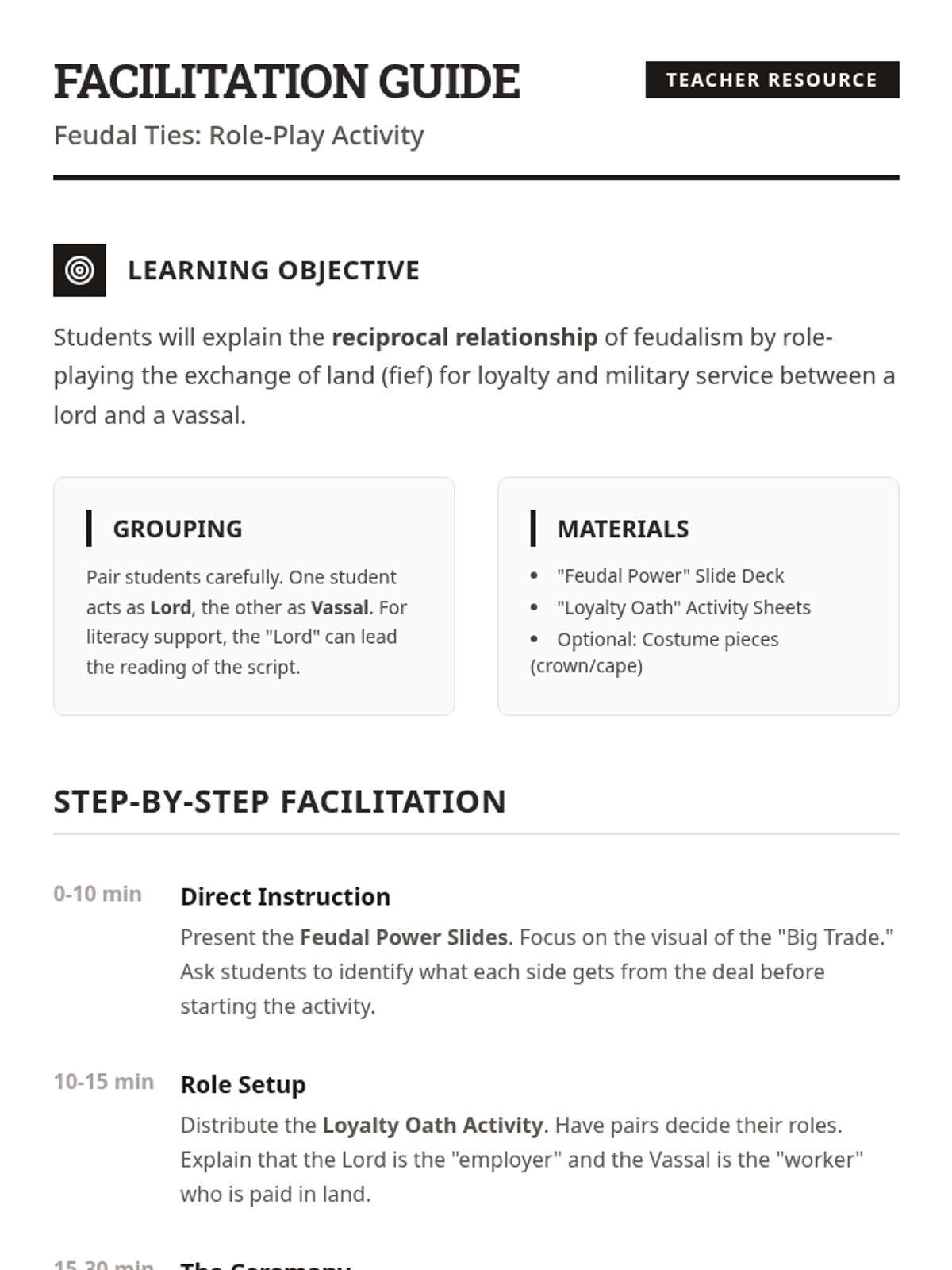
A teacher's guide for the Feudal Ties lesson, providing instructional strategies, grouping tips, and discussion prompts for facilitating the role-play activity with students reading below grade level.
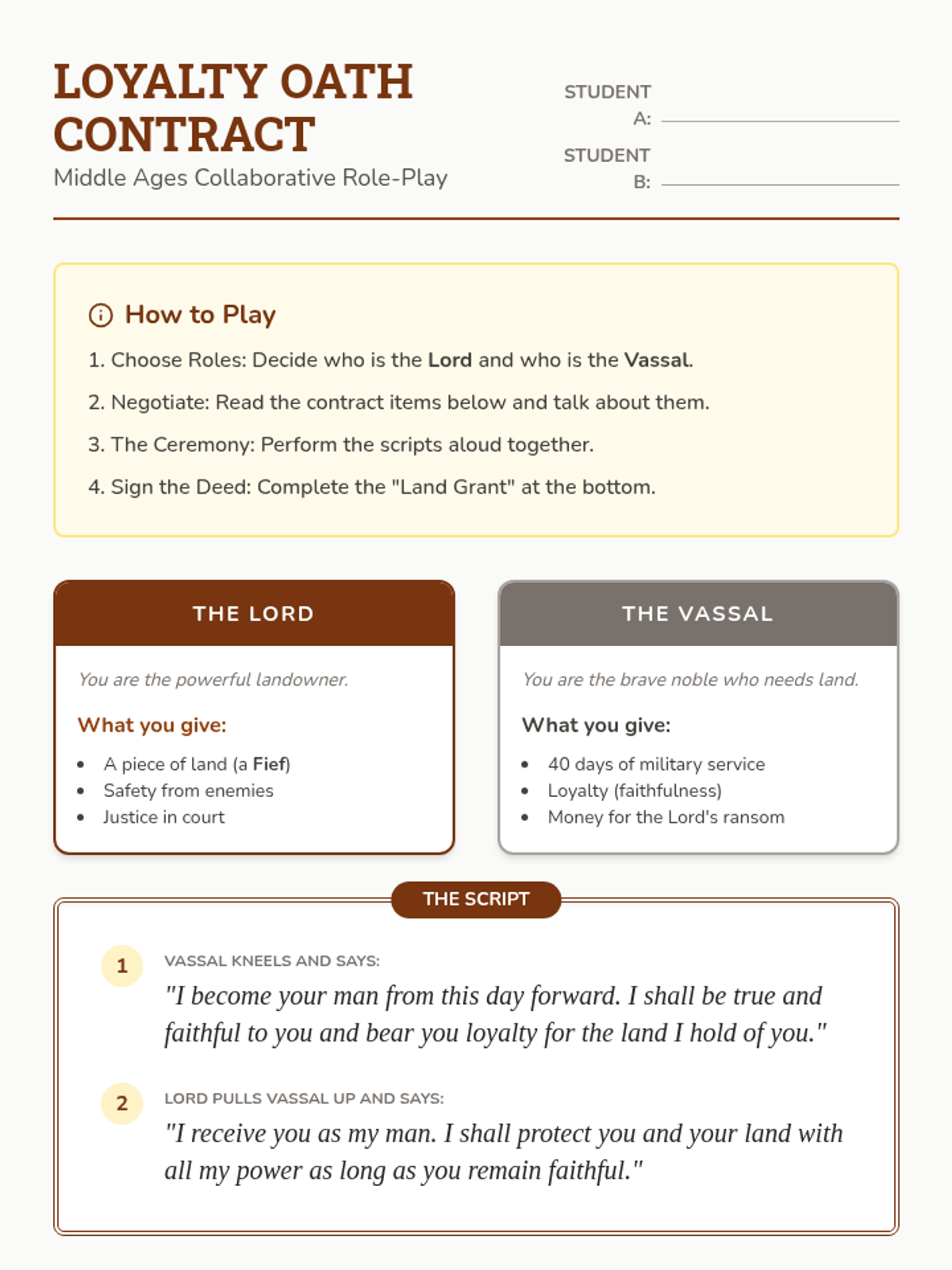
A collaborative role-play worksheet where two students act out a feudal ceremony. Includes role descriptions, a simple script for the oath of loyalty, and a "land grant" section for students to complete together.
A visual slide deck introducing the basic concepts of feudalism, specifically the roles of the Lord and Vassal, and the exchange of land for loyalty. Designed with simple text for students reading below grade level.
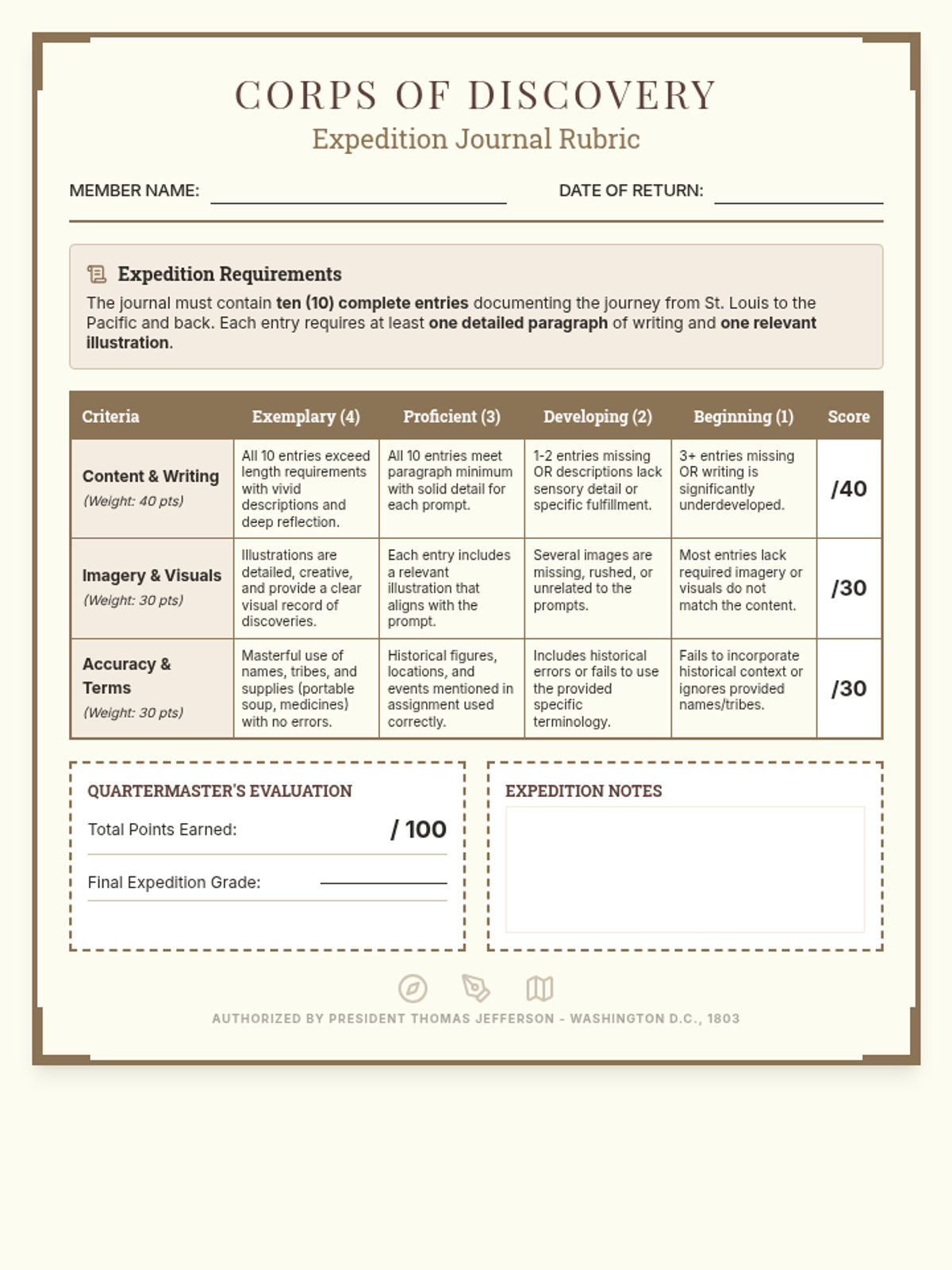
An analytic rubric for the Corps of Discovery journal assignment, featuring categories for content detail, imagery, and historical accuracy with a 100-point total. Revised to fit on a single page with improved teacher work areas and white background for legibility.