Student activity worksheet for Lesson 5, designed to be the final assessment where students apply the SIFT method and forensic skills to verify a piece of digital media.
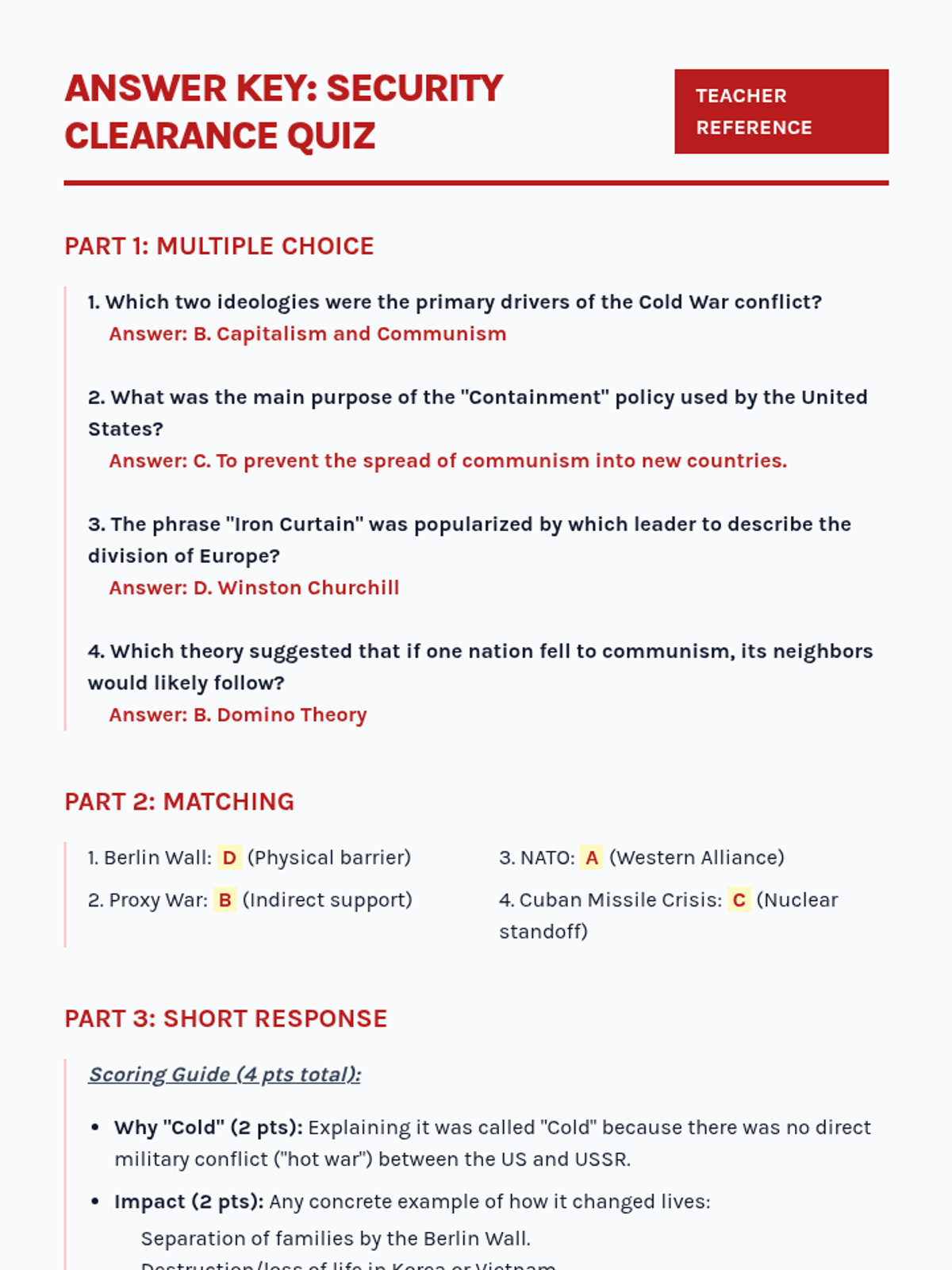
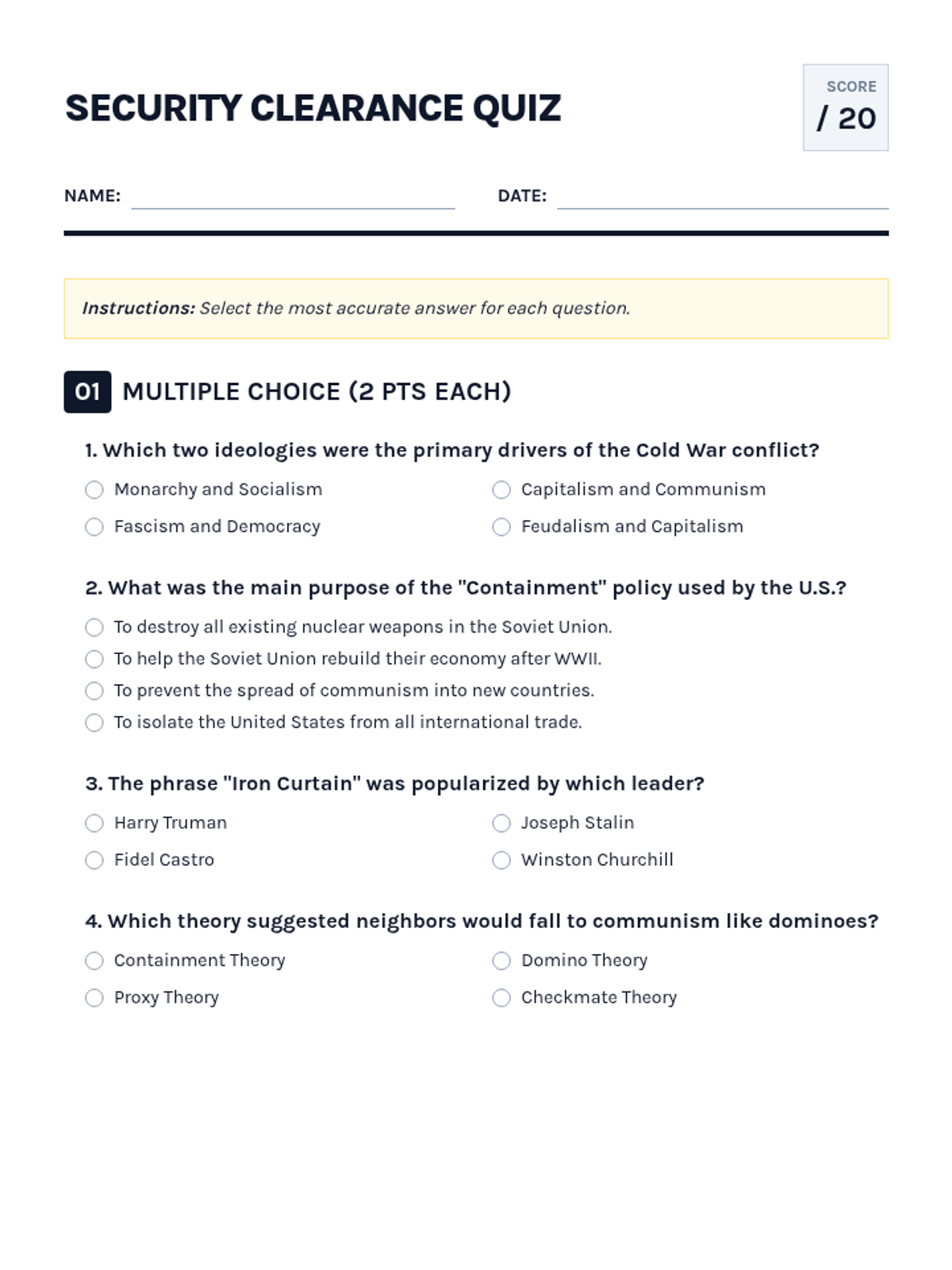
An answer key for the Security Clearance Quiz, providing correct answers for multiple choice and matching questions, plus a grading guide for the short response section. Revised to include full question stems and corrected question 4.
A summative assessment for the Cold War lesson. Includes multiple choice questions on ideologies and policies, matching for key events, and a short response section. Revised to improve question layout and provide more handwriting space. Condensed to fit on two pages.
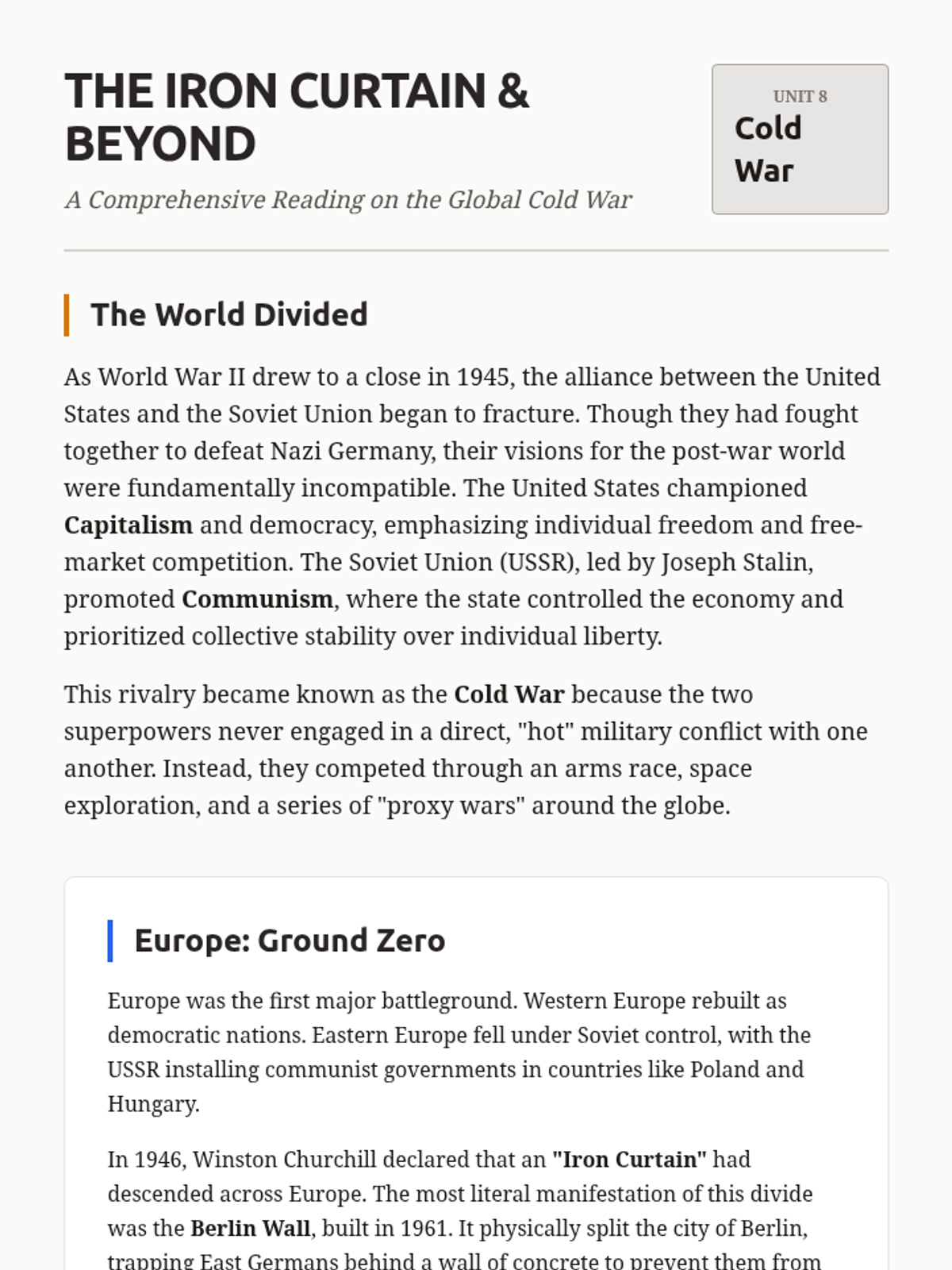
A detailed unit reading covering the origins of the Cold War, the Iron Curtain, the Berlin Wall, and major proxy wars in Korea, Vietnam, and Cuba. Revised to improve page breaks and provide student reflection space. Condensed for efficient printing.
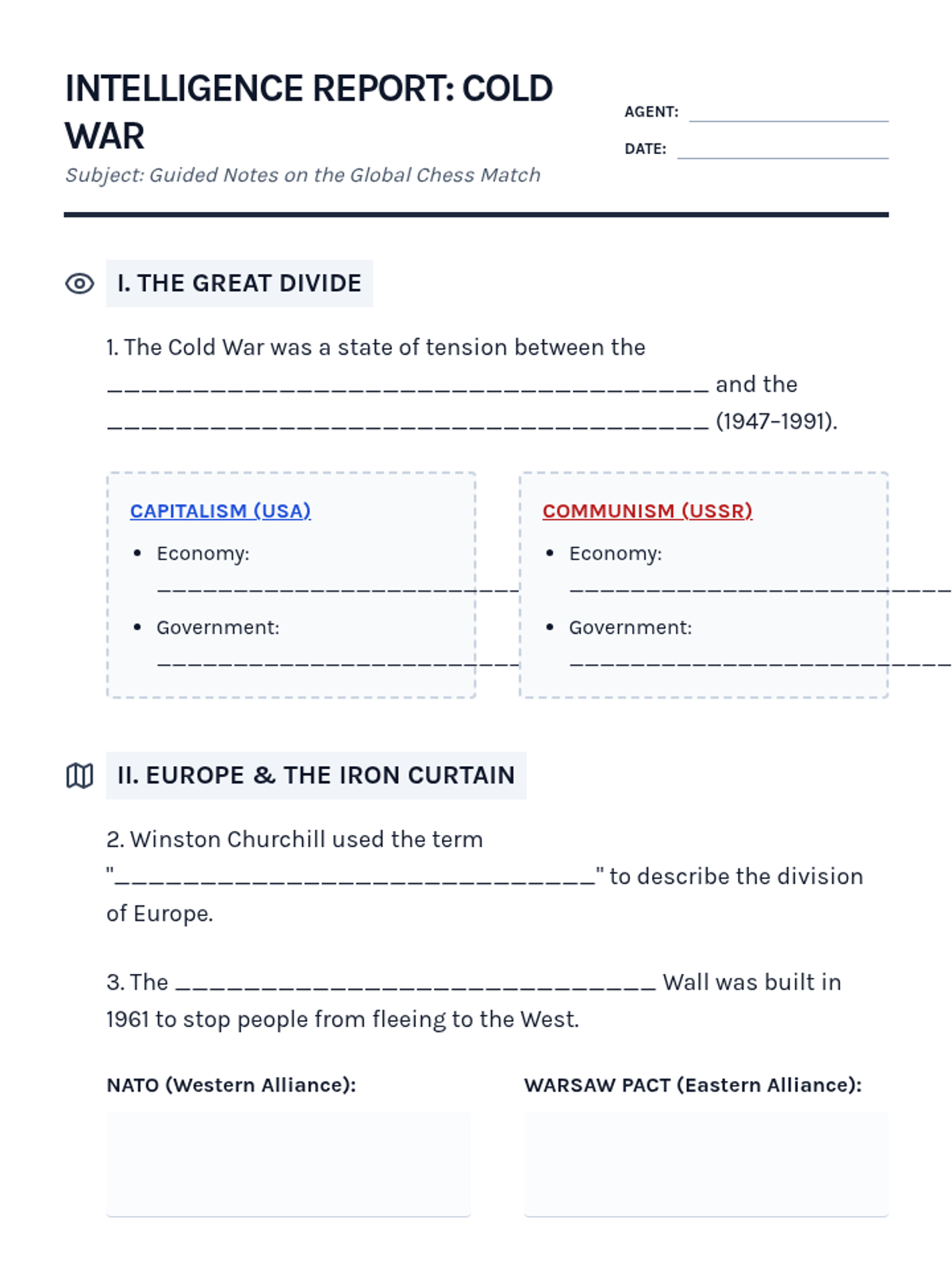
A guided notes worksheet for students to complete while following the presentation. Uses an "intelligence report" theme with fill-in-the-blanks and graphic organizers for key Cold War concepts. Revised to provide more handwriting space and cleaner page breaks.
A visually striking slide presentation on the Cold War's global impact. Features key concepts like proxy wars, the Iron Curtain, the Berlin Wall, and the Cuban Missile Crisis with a sleek "intelligence dossier" aesthetic. Replaced placeholder text with a visual schematic of divided Europe. Revised contrast for better legibility.
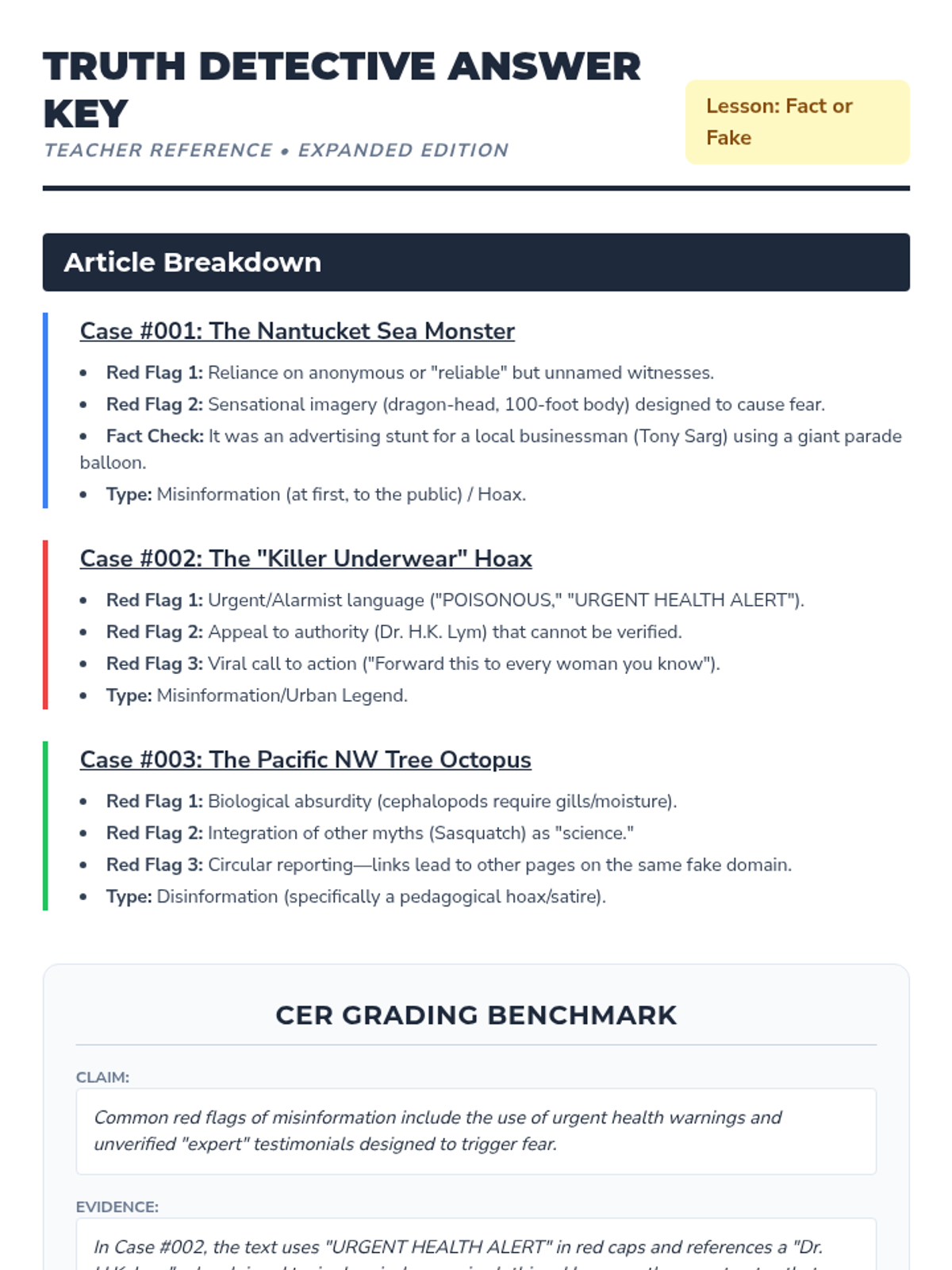
A teacher's answer key for the Truth Detective lesson, providing breakdown of the case studies and a sample CER response for grading and discussion.
Visual presentation to accompany the Truth Detective lesson, explaining the difference between misinformation and disinformation and highlighting digital red flags.
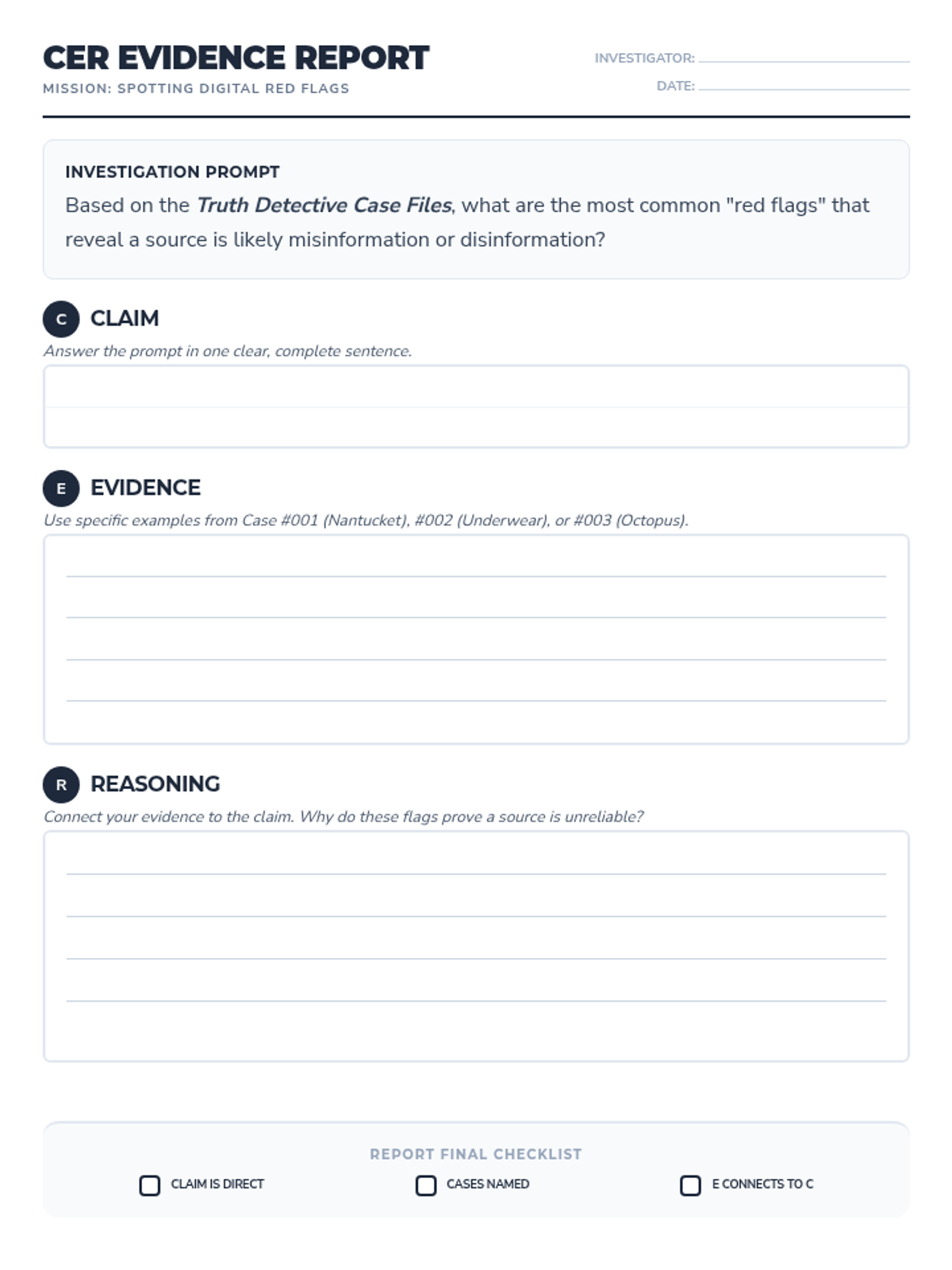
A graphic organizer for students to write a CER (Claim, Evidence, Reasoning) paragraph based on the Truth Detective Case Files, focusing on identifying red flags of fake information.
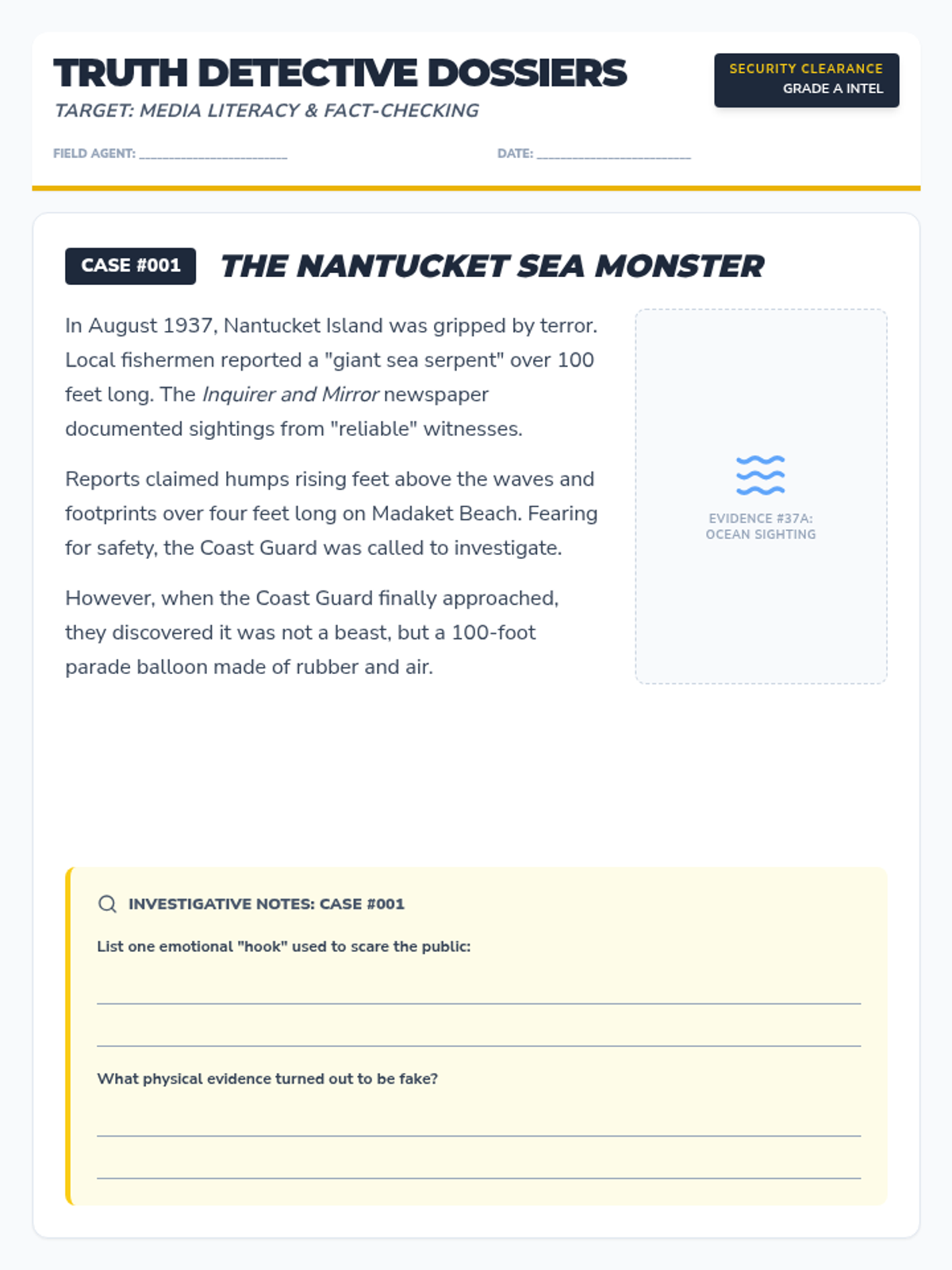
A collection of three short case studies—The Banana Shortage, The Tree Octopus, and Miracle Glow-Water—designed for students to practice identifying red flags of misinformation and disinformation.
An introductory slide defining family as a core social unit, updated with a professional navy blue theme.
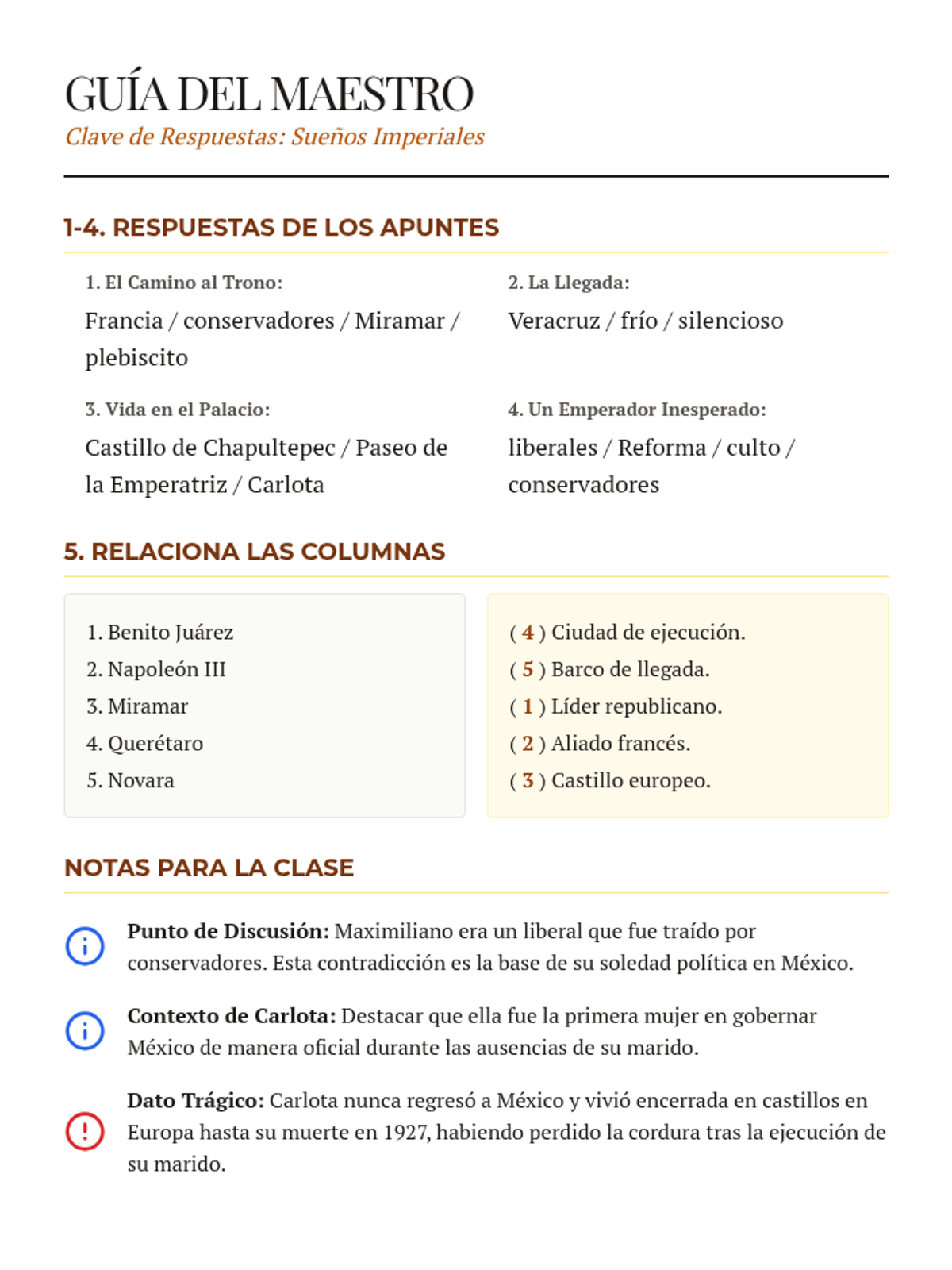
Answer key and teacher guide for the Imperial Dreams lesson. Provides all correct responses for the guided notes and additional discussion points for the instructor.
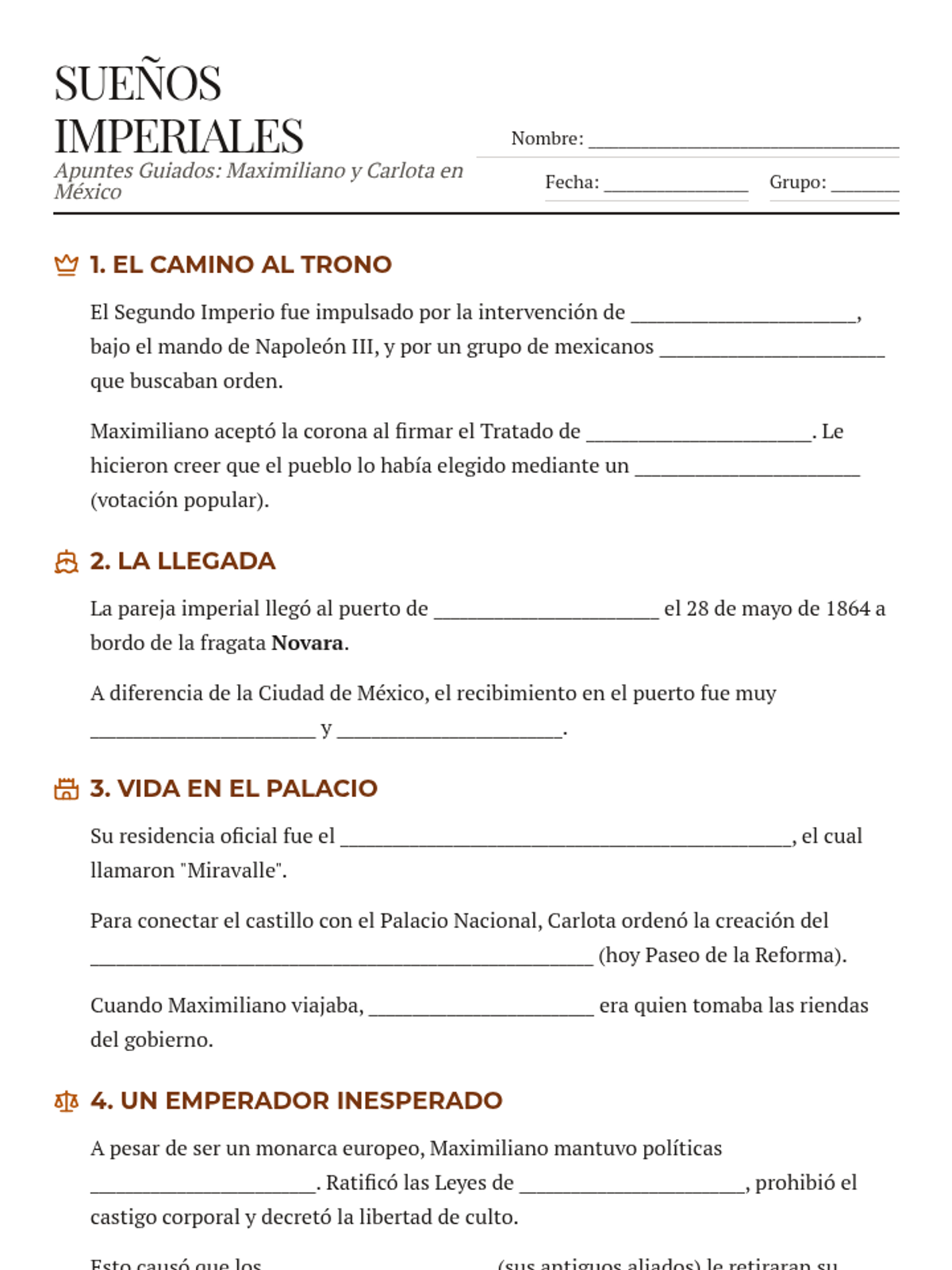
Guided notes for students to complete while watching the Imperial Dreams presentation. Includes fill-in-the-blank sections, a matching activity, and a final reflection prompt.
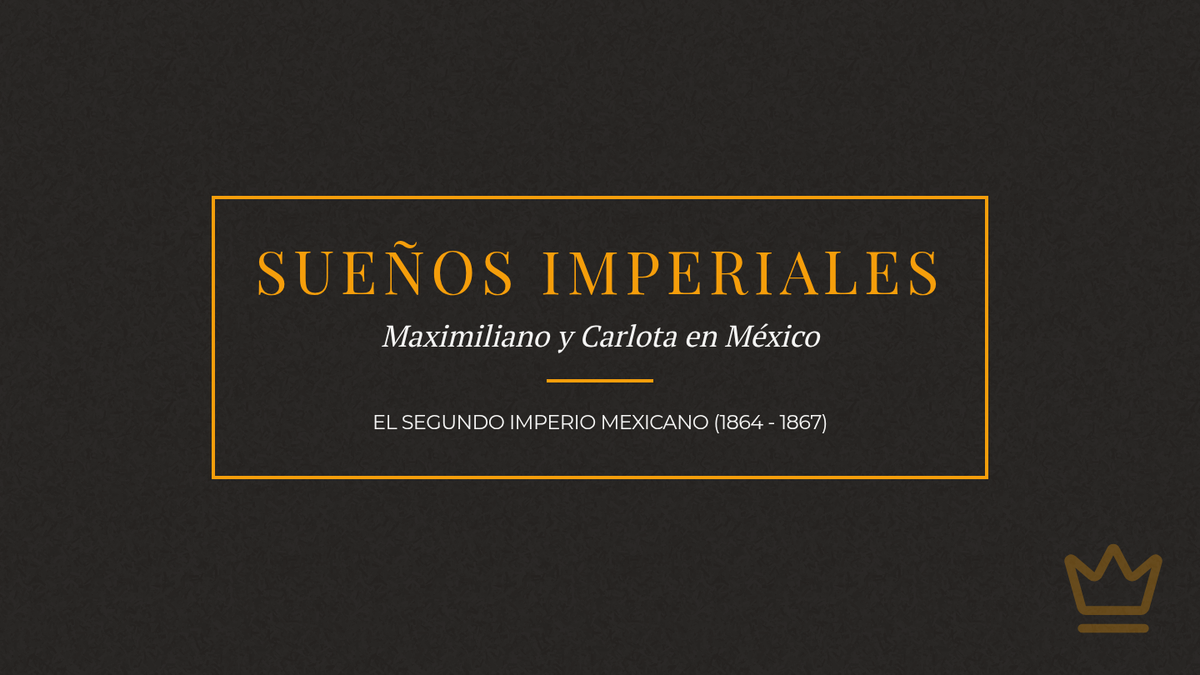
A visual presentation for students detailing the Second Mexican Empire, specifically the lives and reign of Maximilian and Carlota. It covers their arrival, life in Chapultepec, their liberal policies, and their eventual downfall.
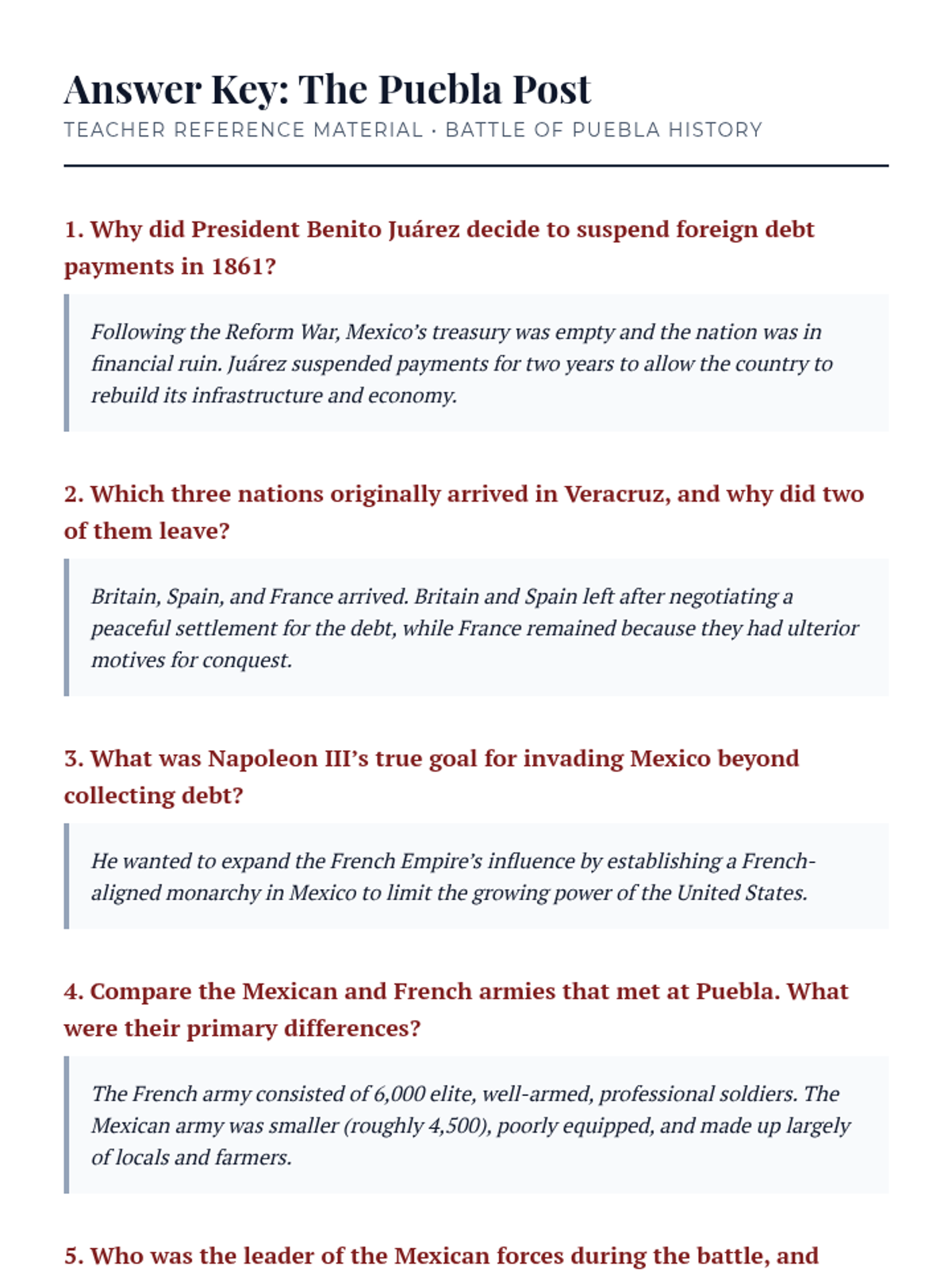
A teacher answer key for the Puebla Post reading comprehension worksheet, including suggested answers and instructional tips.
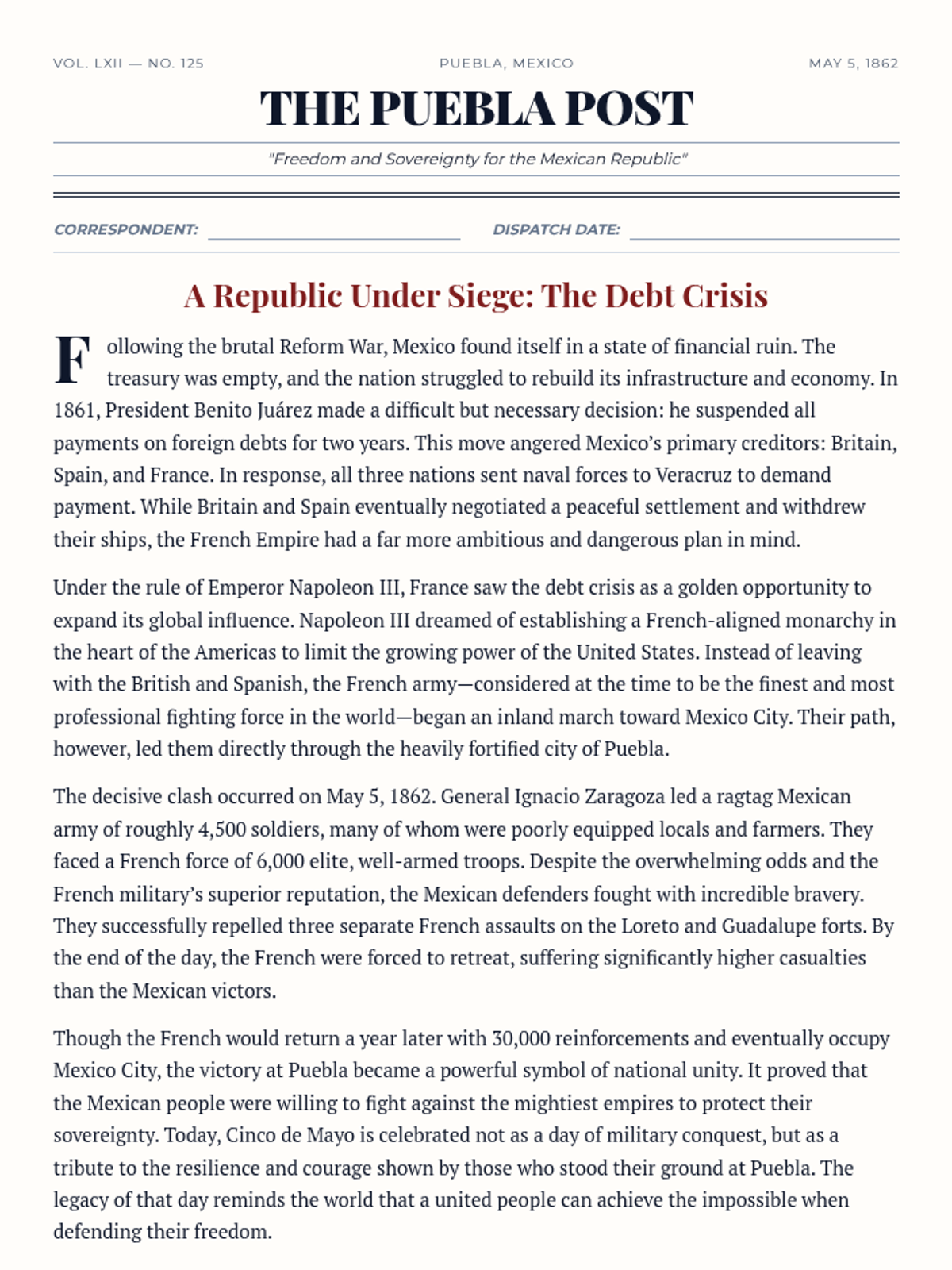
A reading comprehension worksheet styled as a 19th-century newspaper, telling the story of the debt crisis and the Battle of Puebla with seven analysis questions.
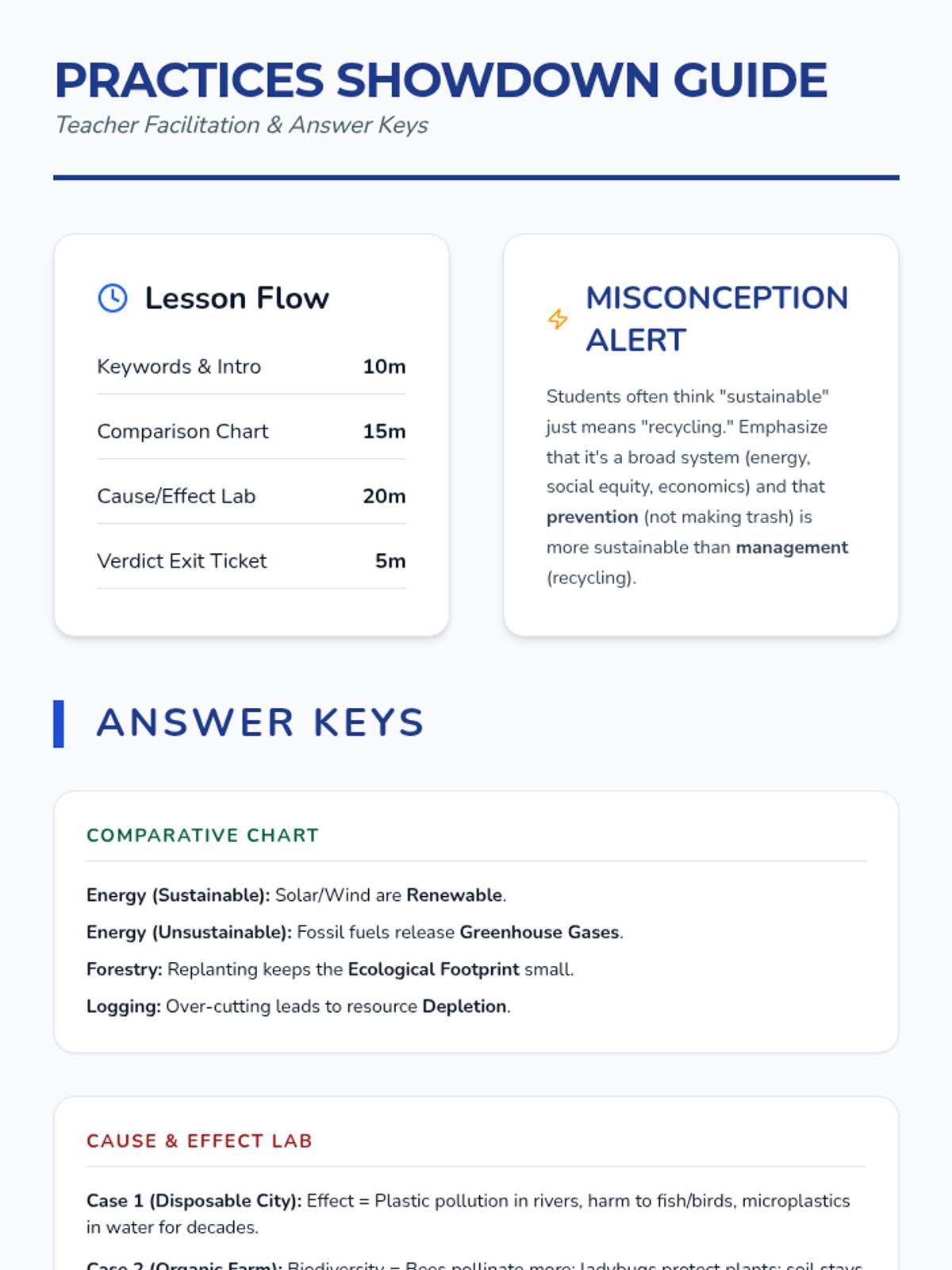
A teacher's facilitation guide for the Practices Showdown lesson, including answer keys, misconception alerts, and discussion prompts.
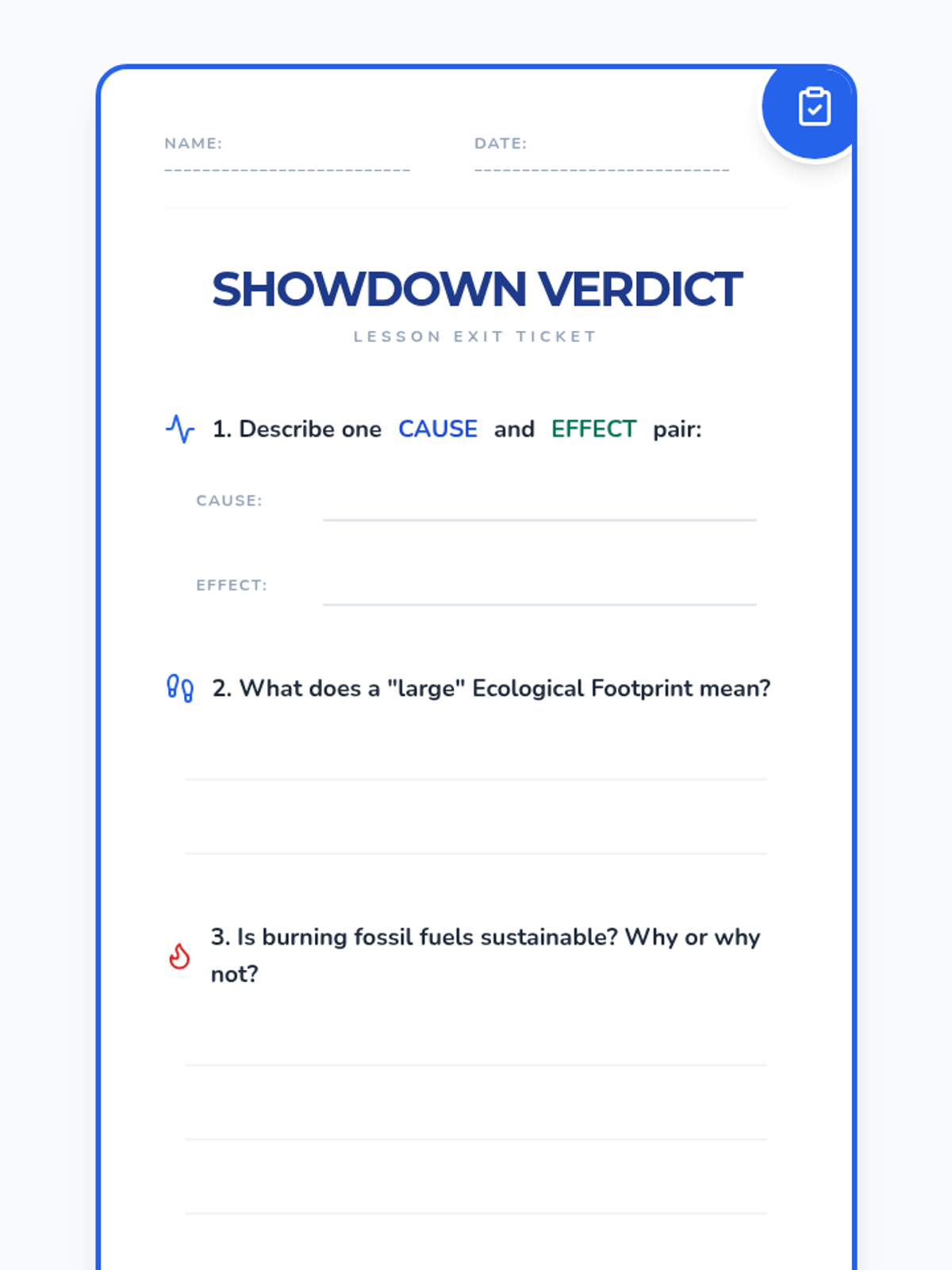
A clean exit ticket assessment focusing on cause and effect, ecological footprints, and the sustainability of fossil fuels.
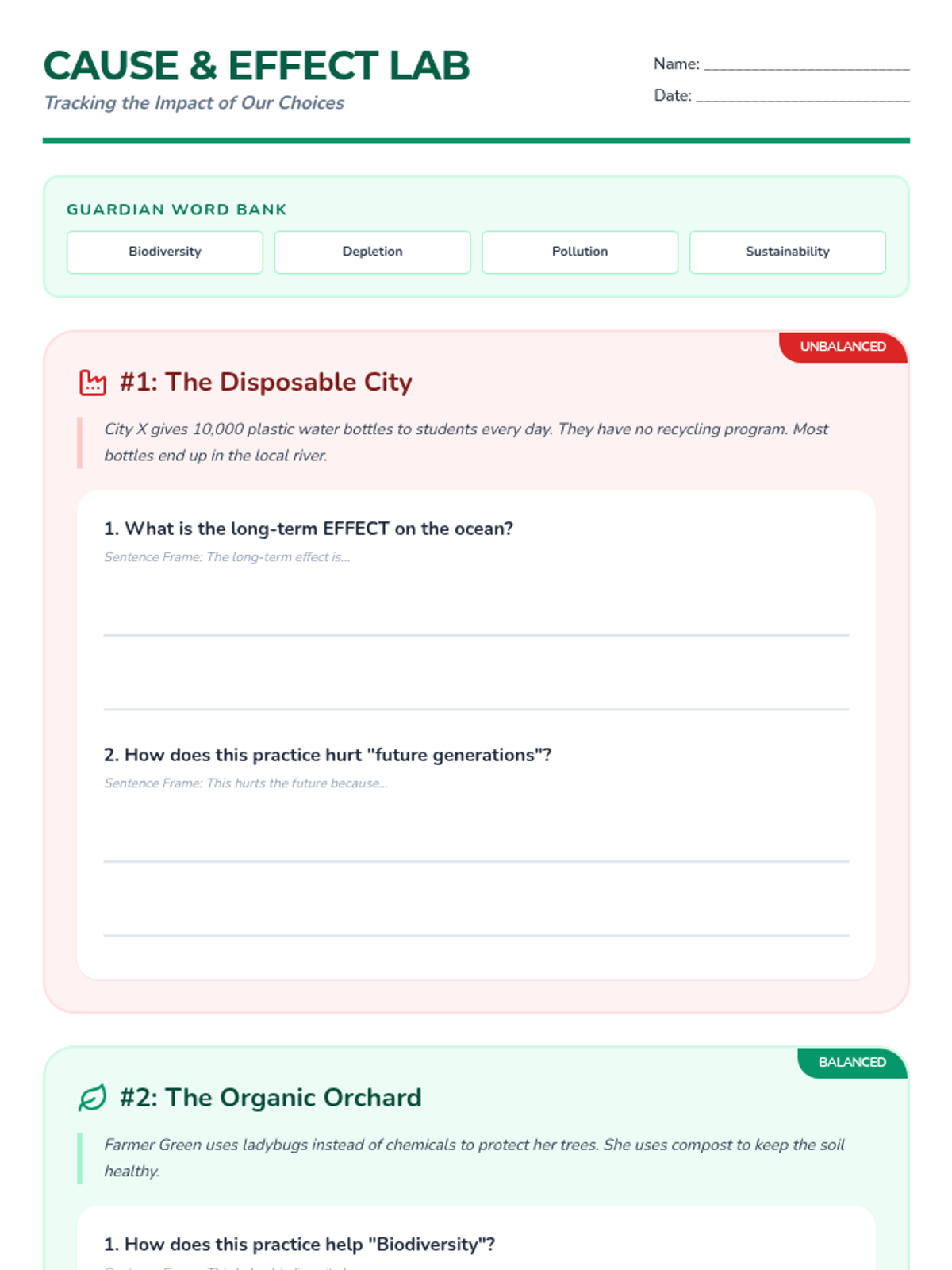
Two cause-and-effect case studies (one sustainable, one unsustainable) focusing on city waste and organic farming, with open-ended analysis questions.
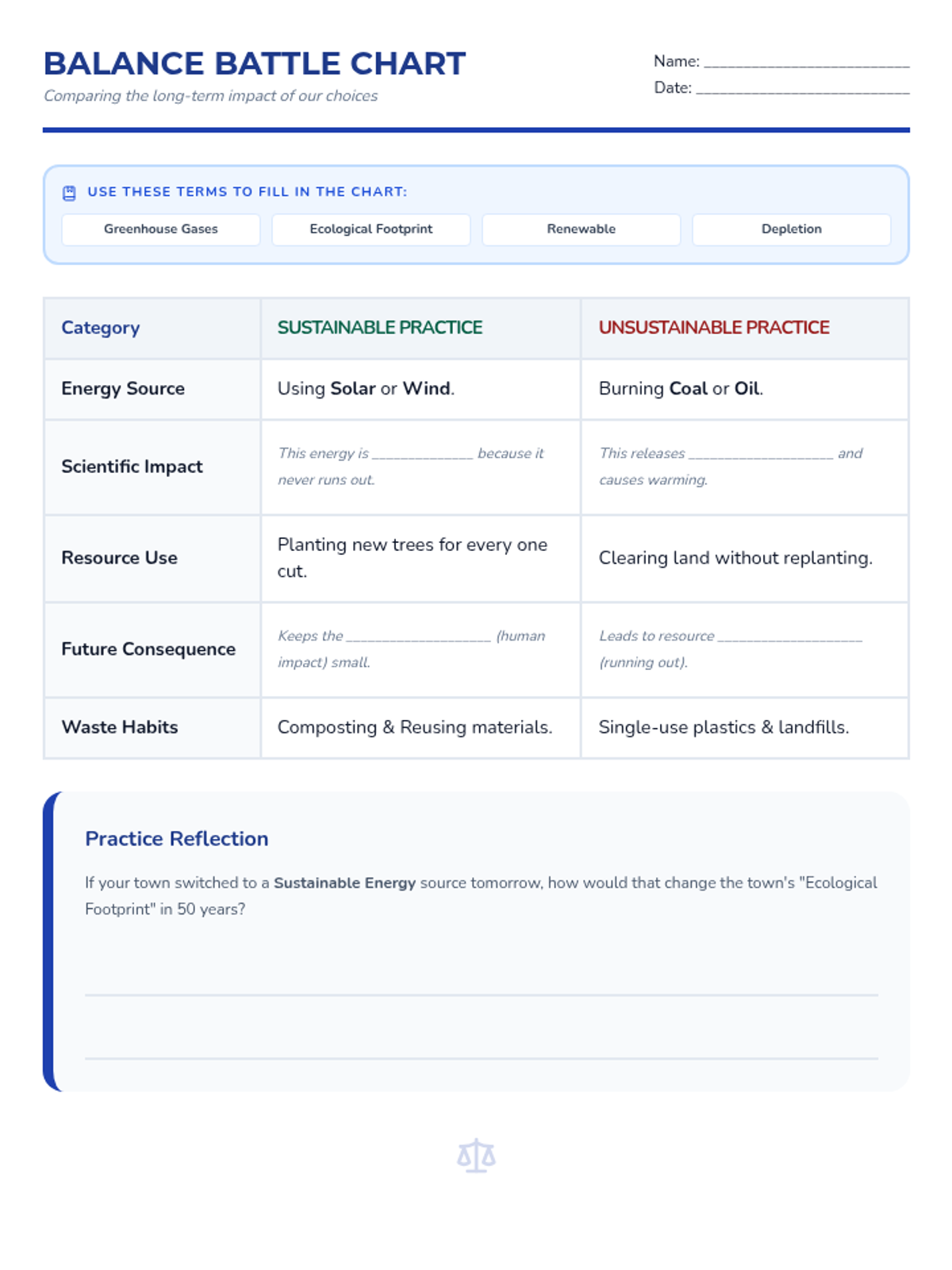
A comparative chart for students to analyze sustainable vs. unsustainable practices in energy and waste, including fill-in-the-blank impacts and a reflection area.
A visual presentation comparing sustainable vs. unsustainable practices, introducing new vocabulary like ecological footprint and greenhouse gases, and explaining cause and effect.
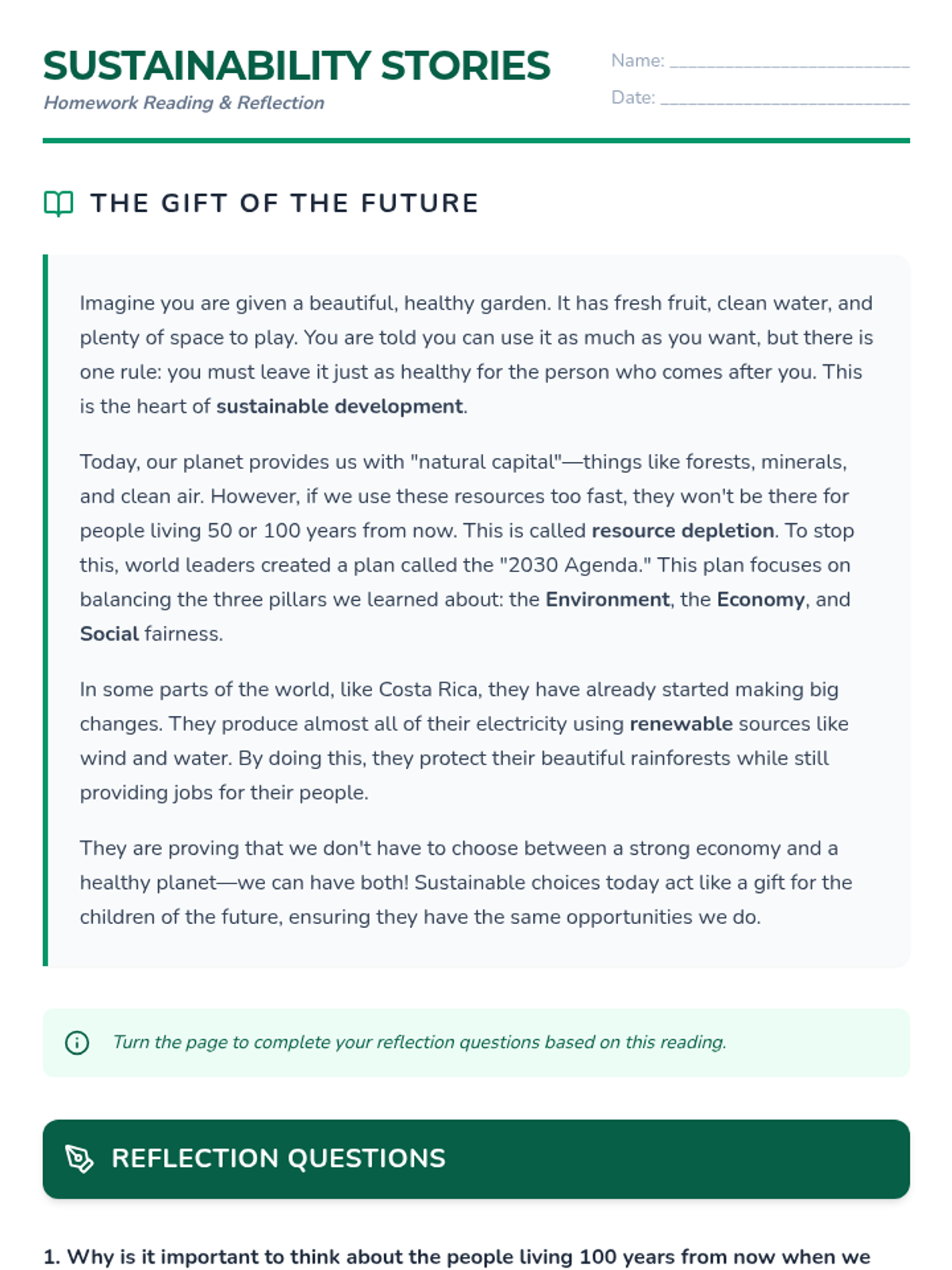
A homework reading passage about sustainable development and the example of Costa Rica, followed by reflection questions and a creative sketch task.
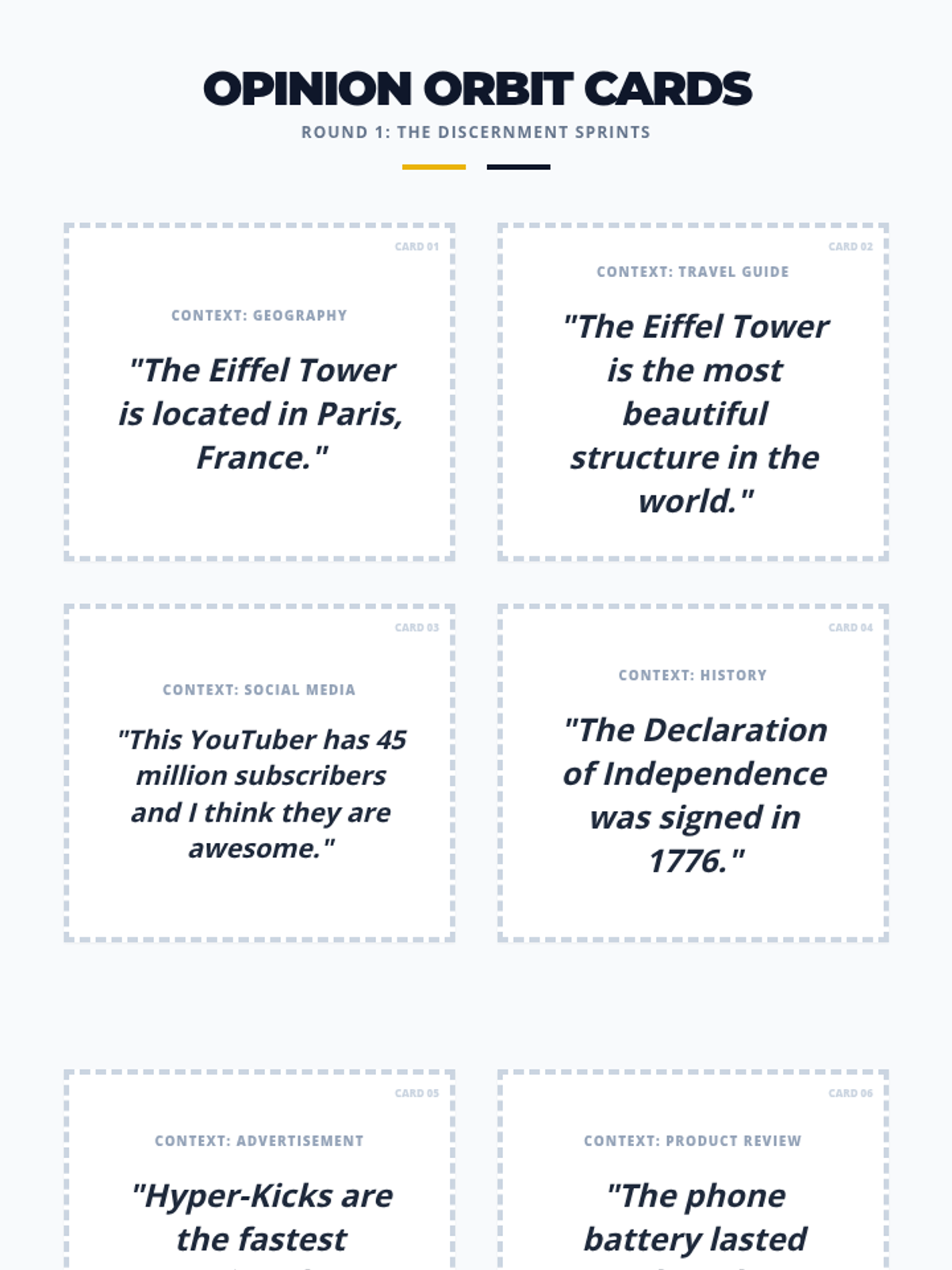
Activity cards for the 'Opinion Orbit' game, including fact/opinion discernment statements and 10 open-ended debate topics for student discussion.
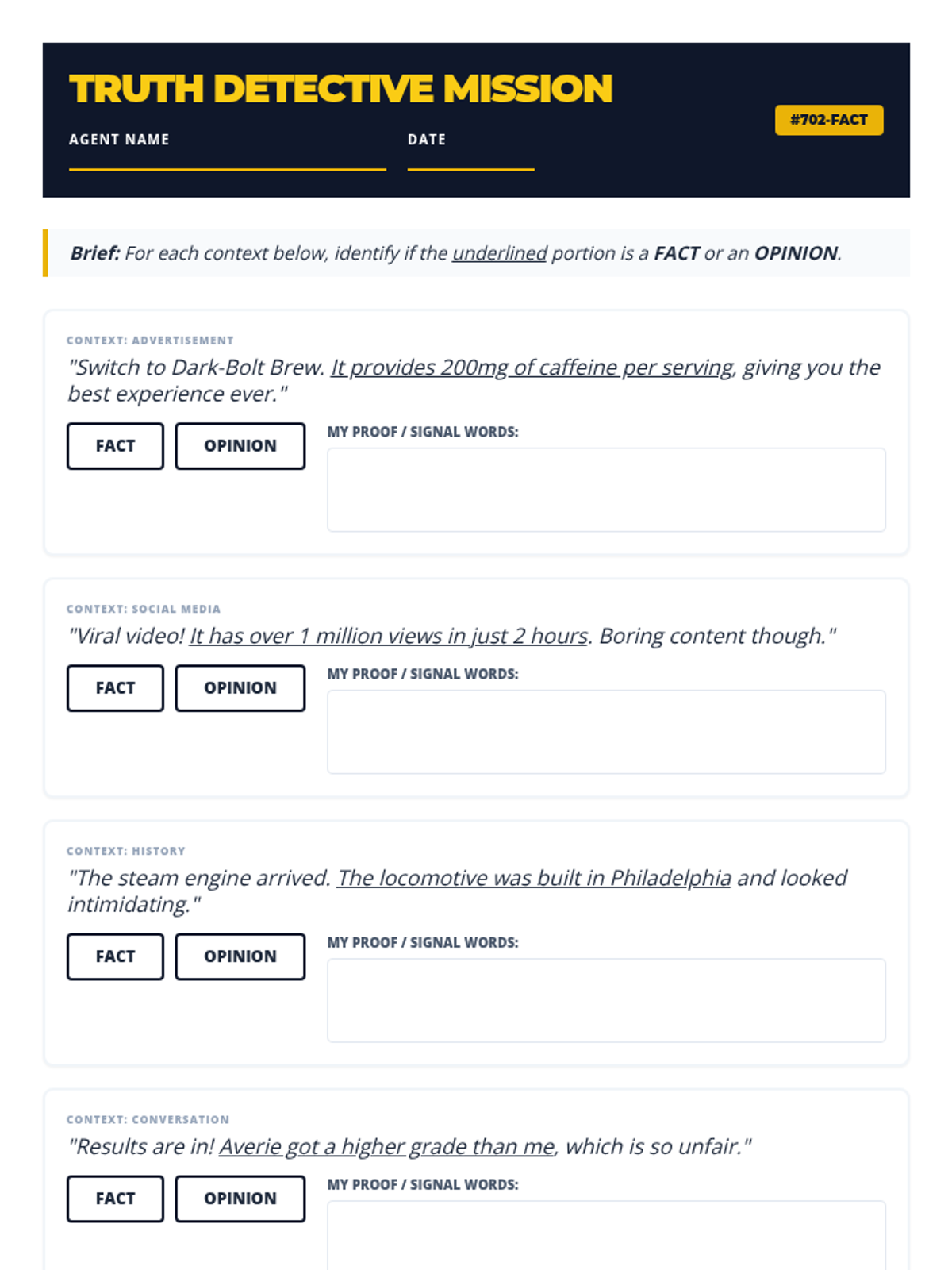
A student worksheet for practicing fact and opinion identification within advertisements, social media, historical texts, and conversations, now expanded to include 12 varied scenarios.
An instructional slide deck defining facts and opinions, analyzing context clues, and setting up the 'Opinion Orbit' classroom activity with 10 debate topics.