A workshop peer review sheet for students to give and receive feedback on their children's book projects, covering pitch, character growth, and narrative voice.
A teacher reference document containing 59 simple master words, one for each sound represented in the Grapheme Sound Check Tracker. Organised in a 3-column layout for easy reference during assessments or modeling. Updated "ough" to use the long o sound (though) and "u" long sound to "unite".
A set of six printable "Would You Rather" cards designed for quick-fire opinion writing practice, requiring students to make a claim and provide one supporting reason.
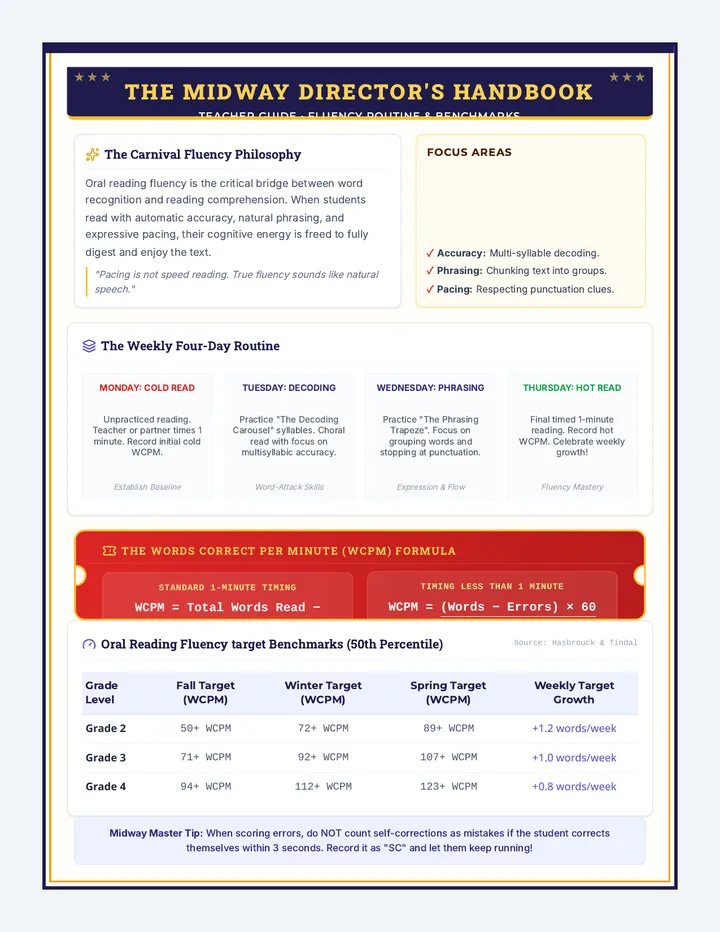
A teacher-facing resource providing a daily routine, teaching tips, and differentiation strategies for implementing the Opinion Odyssey exit tickets and practice sheets.
A comprehensive graphic organizer for 4th-grade students to plan their opinion writing, featuring sections for a claim, two supporting reasons, a conclusion, and a final self-check.
A set of three distinct exit tickets for daily opinion writing practice, covering superpowers, seasons, and school recess. Each ticket includes structured sections for a claim and two supporting reasons.
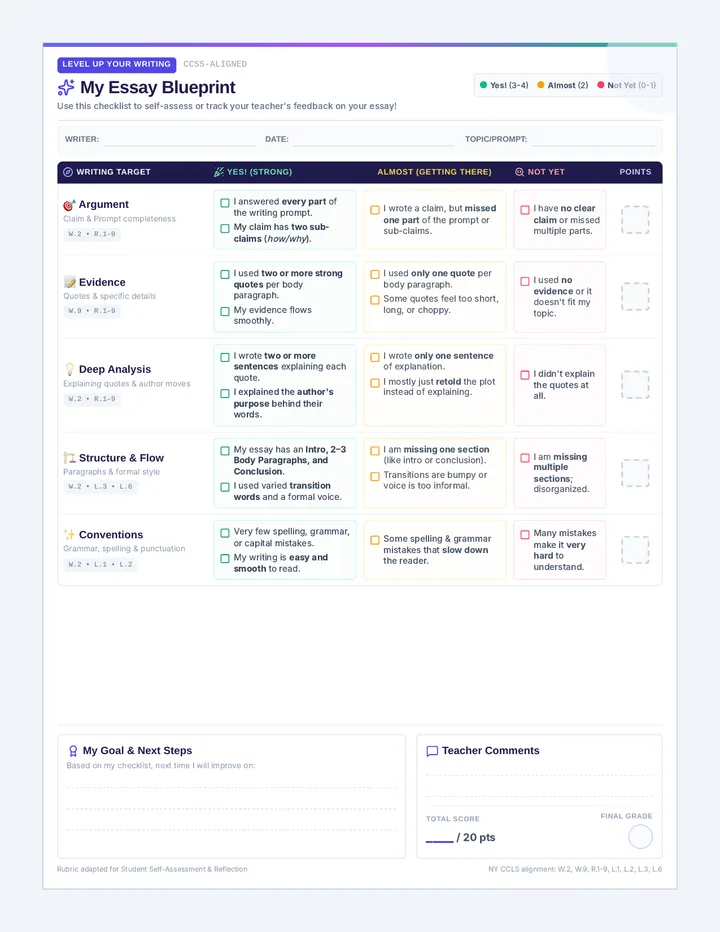
A professional, academic rubric for a fieldwork reflection writing assignment. It includes criteria for research inquiry, evidence coding, collaborative synthesis, and writing style, all aligned to CCSS Grade 11-12 standards. Polished for high contrast and 1-page layout.
A comprehensive teacher guide for managing trick word centers. Includes step-by-step instructions for "Trick Word Raceway" and "Wizard Duel," along with setup tips and differentiation strategies.
Printable flashcards for Level 1 Units 5-9 trick words. These cards can be used for a "Duel" partner game and include special action cards like "Magic Blast" and "Dark Cloud".
A wizard-themed board game for practicing Level 1 Units 5-9 trick words. Students roll a die and read words on the path to reach the crystal ball.
A teacher-facing guide that justifies the grades for the Olympian and Titan exemplars using the provided rubric, complete with discussion prompts for student analysis.
A low-achieving (D) exemplar presentation on the Greek god Hermes, featuring poor organization, lack of evidence, informal language, spelling errors, and minimal effort in design.
An updated high-achieving (A) exemplar presentation on Hermes, now including an embedded multimedia video summary to demonstrate mastery of digital tools.