A student worksheet for the 'Time Warp' lesson, providing space to record calculations from the 'Schedule Scramble' activity and a dedicated area for creating original elapsed time word problems.
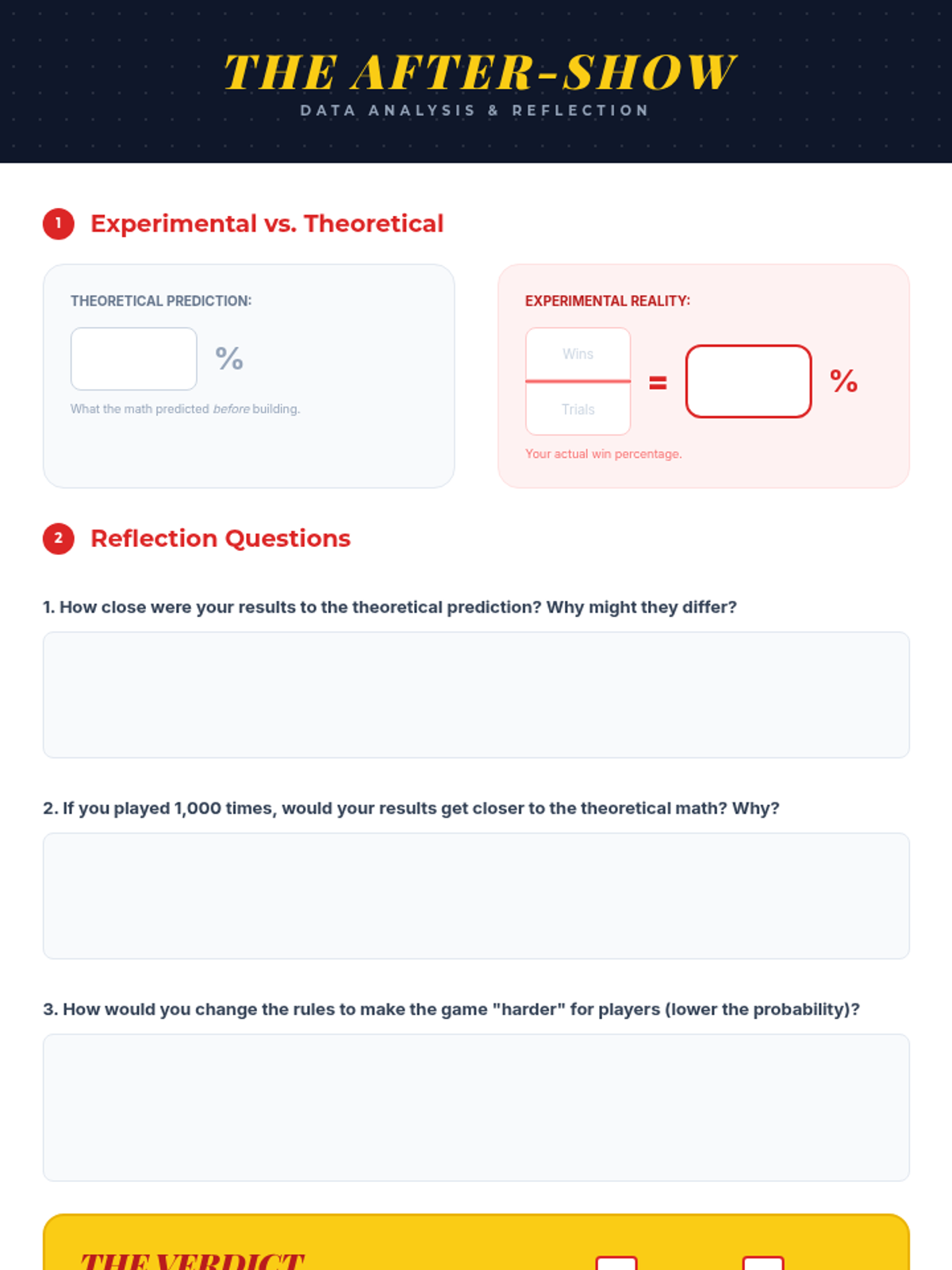
A final reflection activity where students compare their theoretical predictions to experimental results, analyze the difference, and reflect on the fairness of their carnival game.
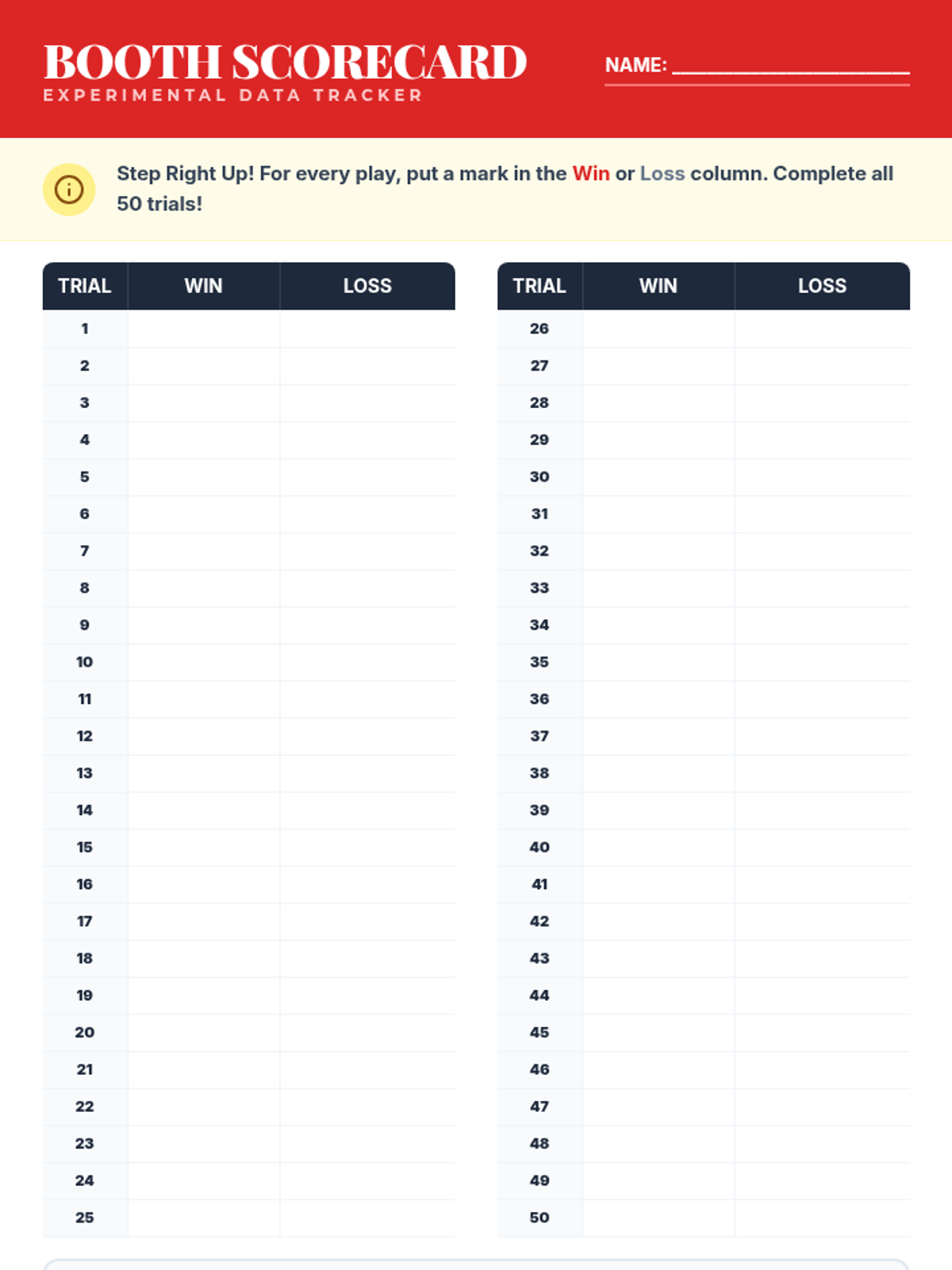
A scorecard worksheet for students to record outcomes (wins vs. losses) during their carnival gameplay, ensuring they collect enough experimental data for analysis.
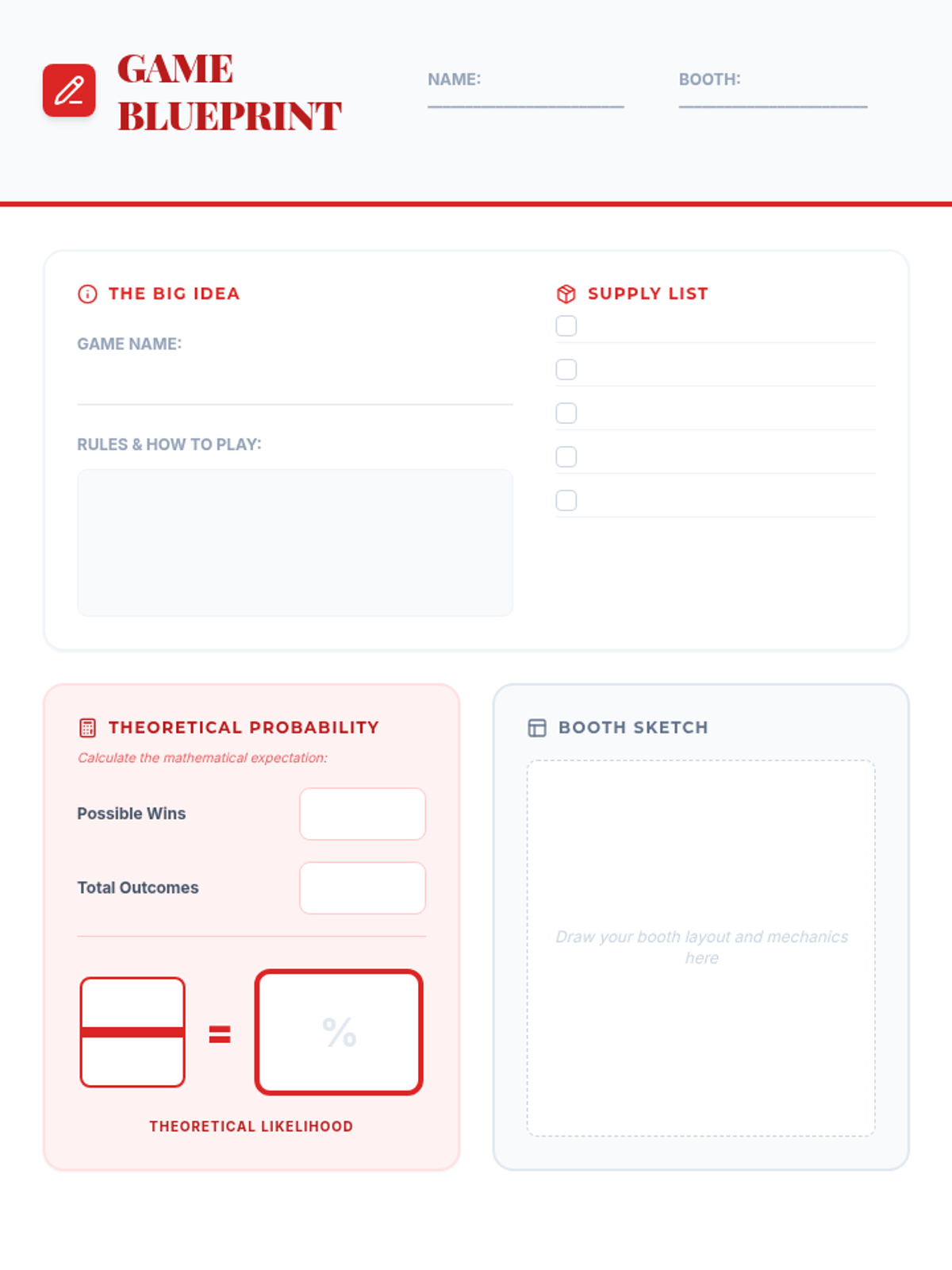
A design activity document where students plan their carnival game, list materials, and calculate the theoretical probability of winning before construction.
An engaging slide deck for 'The Chance Fair' introducing probability concepts, theoretical vs. experimental outcomes, and project rules.
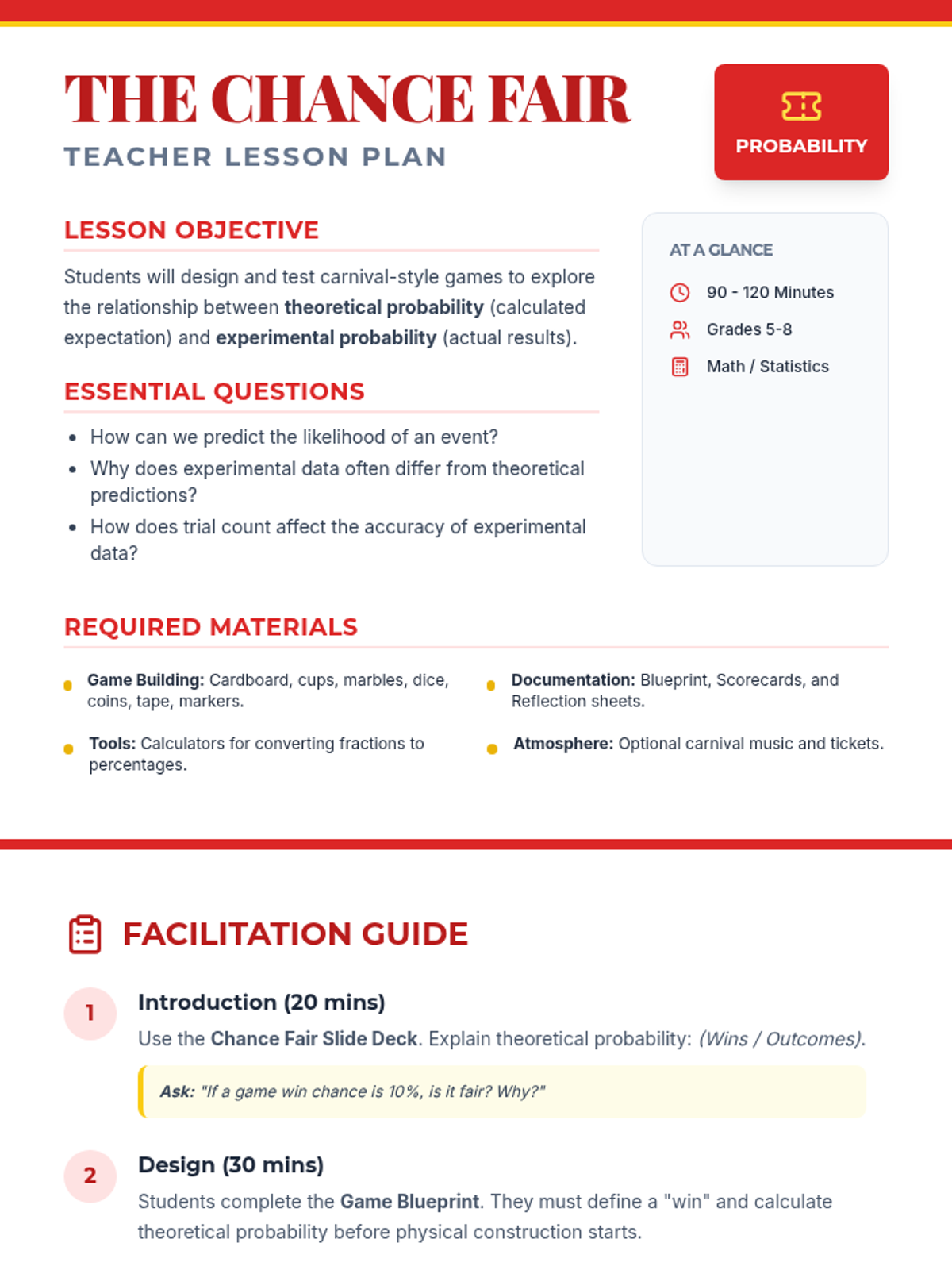
A comprehensive teacher lesson plan for 'The Chance Fair', including learning objectives, required materials, a step-by-step facilitation guide, and differentiation strategies.
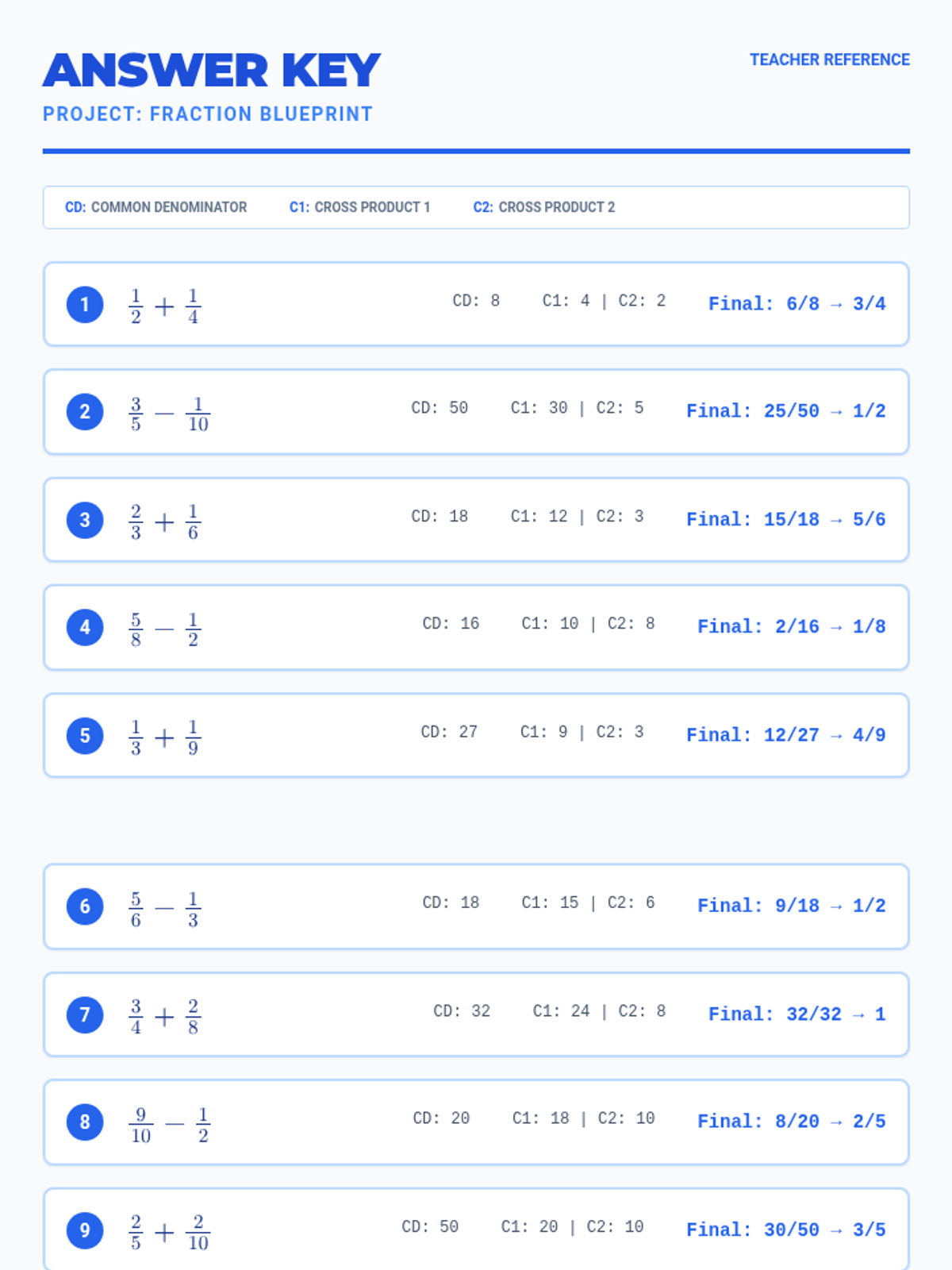
A revised answer key for the Fraction Blueprint Worksheet. Features explicit legend for notation, better space utilization, and page-break avoidance to keep problems intact.
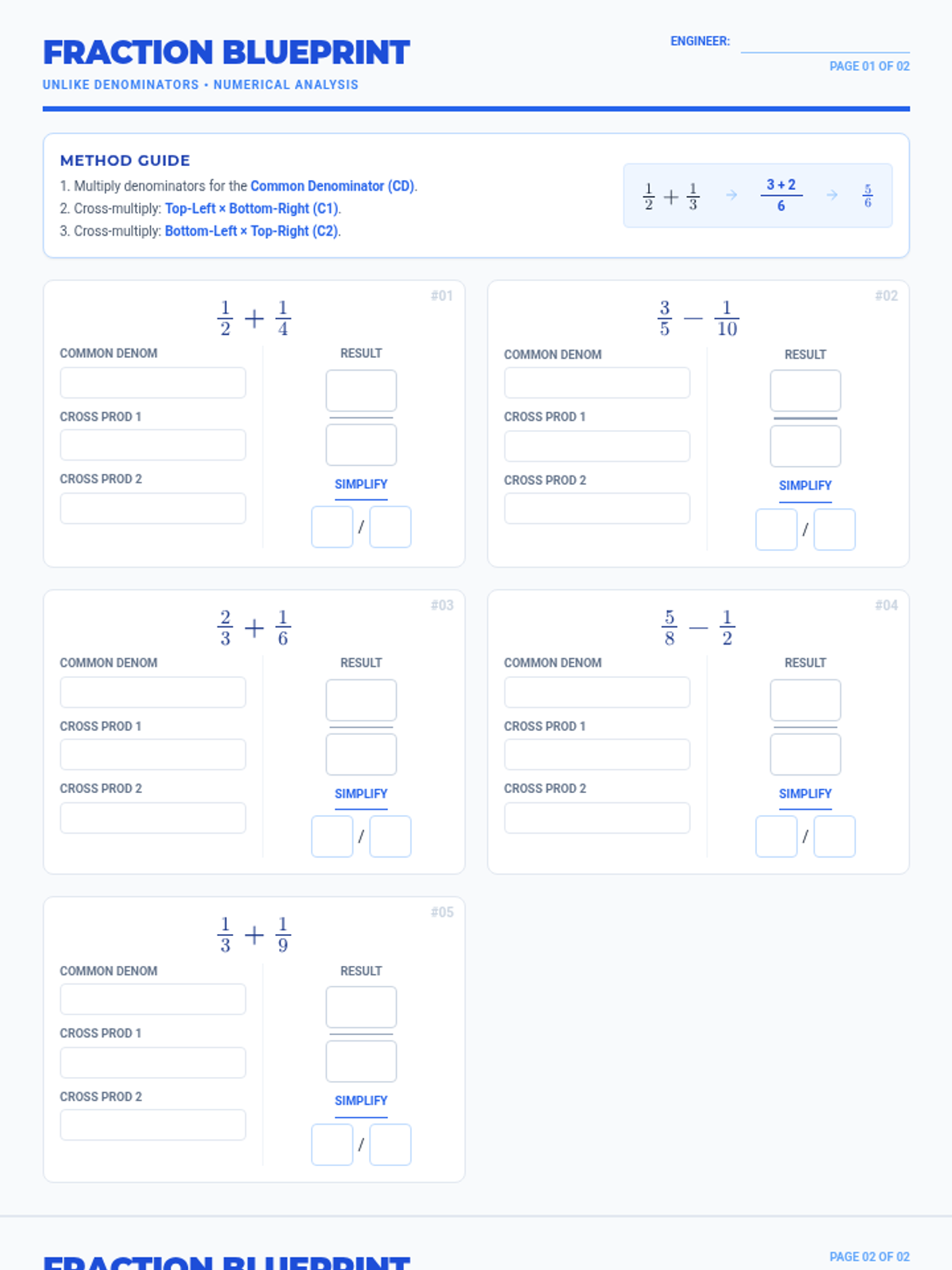
A revised structured worksheet for adding and subtracting fractions with unlike denominators. Improved layout with page-break avoidance, better problem distribution (5/5 split over 2 pages), and box-style student work areas for better organization and legibility.
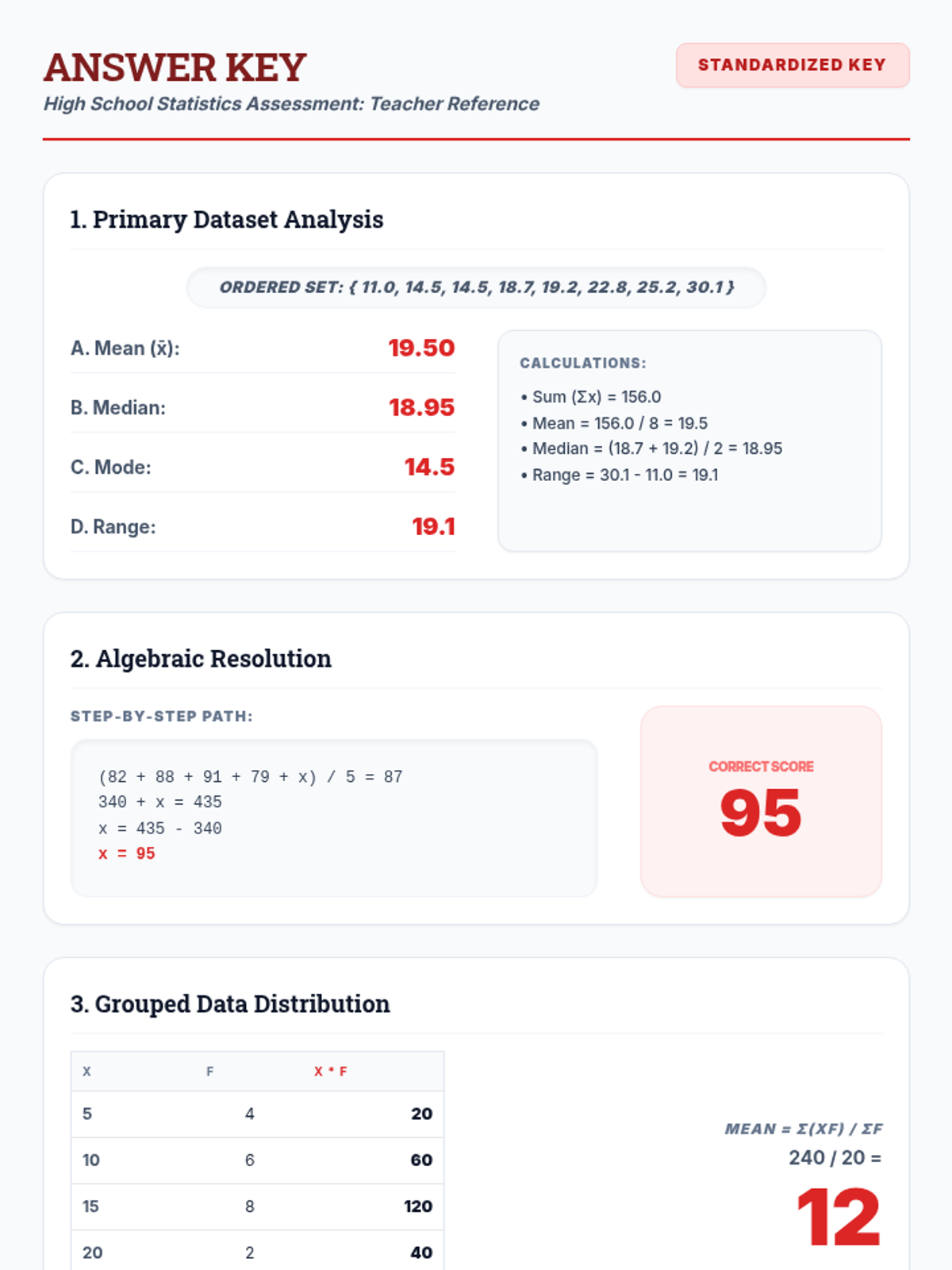
Answer key for the high-school statistics test, featuring detailed algebraic steps, frequency table summations, and conceptual justifications. Standardized layout for better teacher reference.
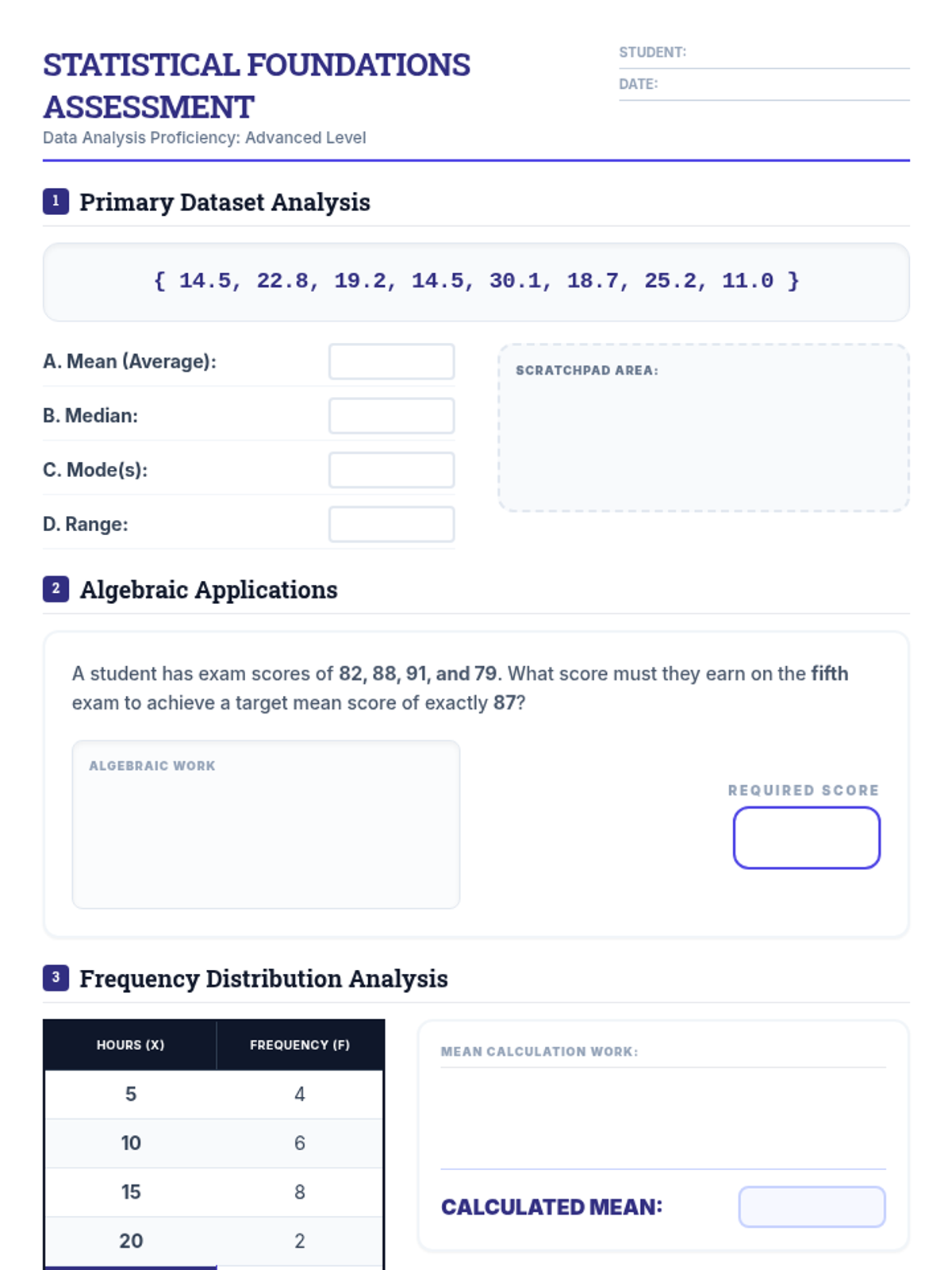
A comprehensive high-school level statistics assessment covering central tendency, algebraic solving, frequency tables, and outlier analysis with a professional academic aesthetic. Revised for improved layout and student writing space. Unicode mean symbol used for stability.
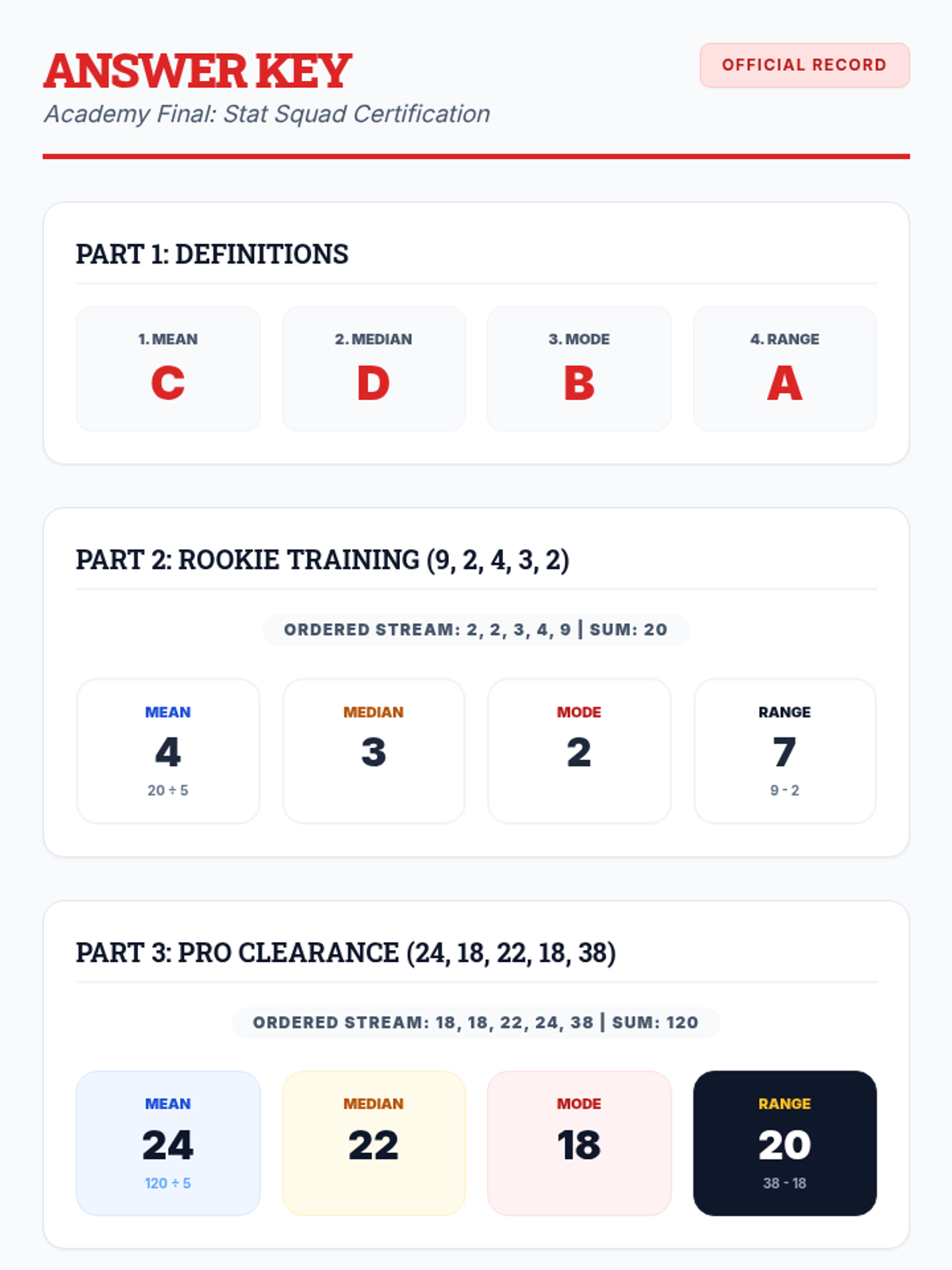
Answer key for the Academy Final Evaluation, featuring step-by-step solutions, correct extraction orders, and grading tips for the final assessment. Standardized layout for better teacher reference.
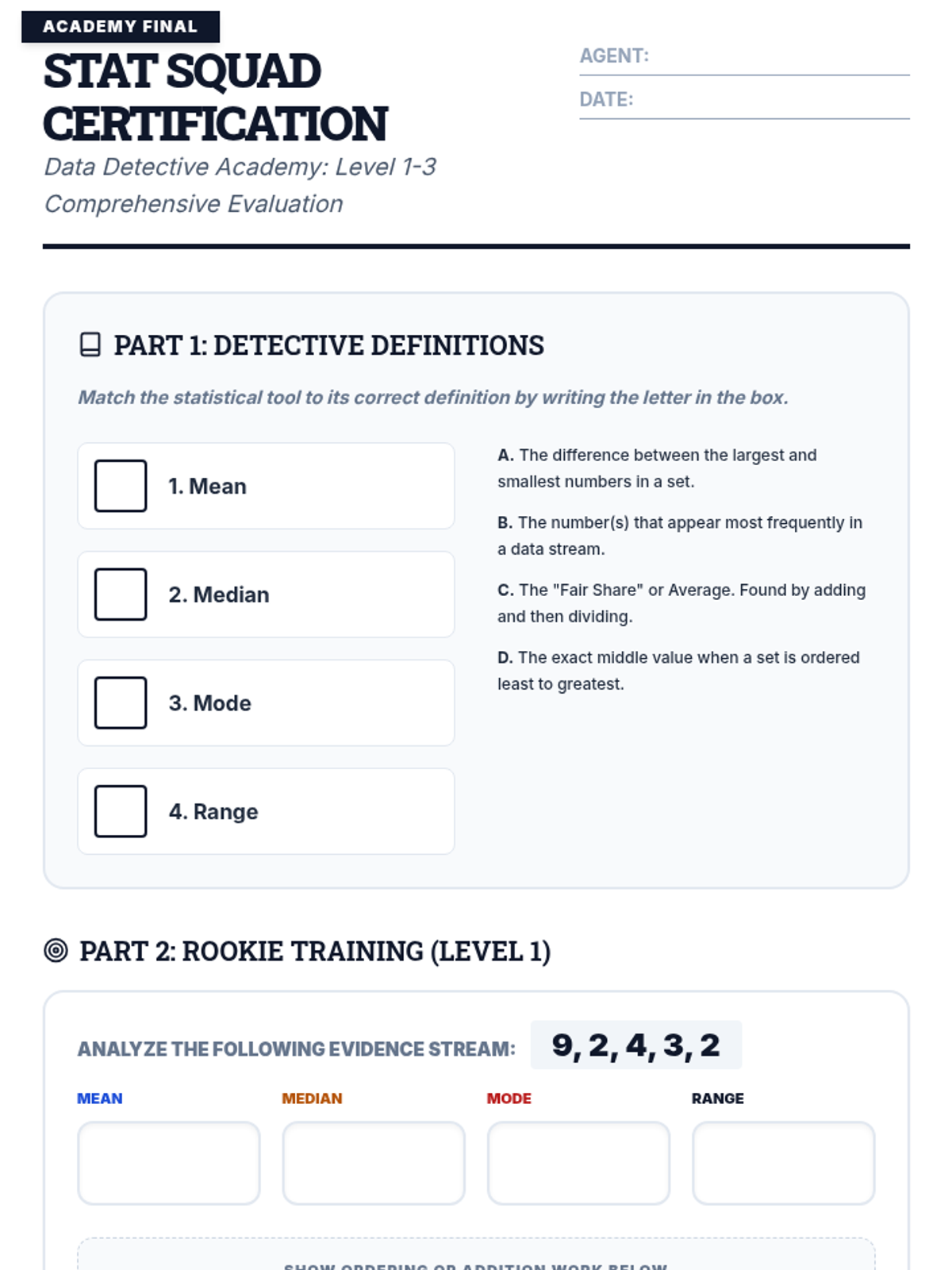
A comprehensive assessment covering Level 1, Level 2, and Level 3 data analysis, designed to evaluate mastery of mean, median, mode, and range in both numerical and narrative contexts. Improved layout for student handwriting.
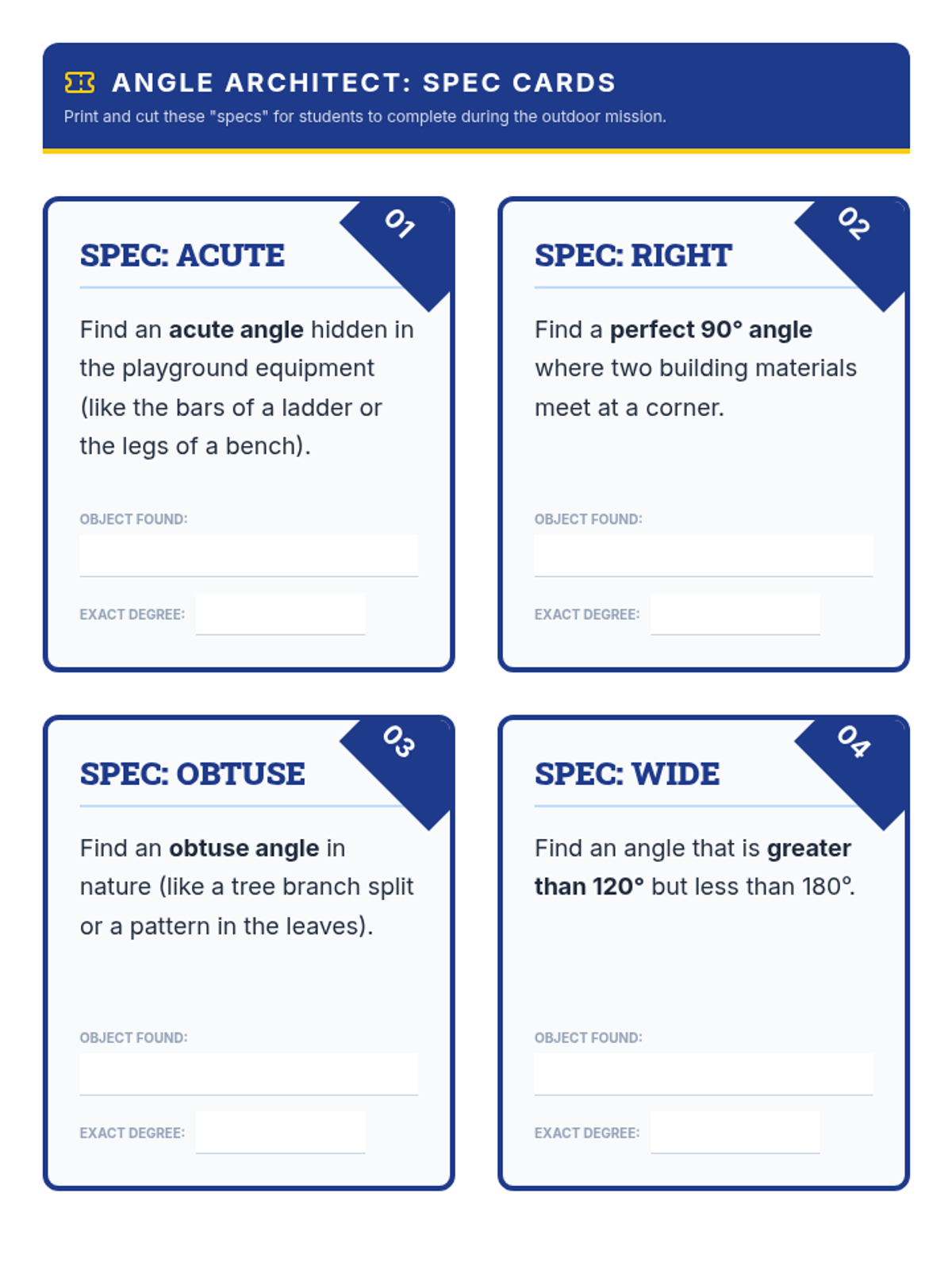
A set of printable "Spec Cards" for an angle scavenger hunt, challenging students to find and measure specific angle types in their environment.
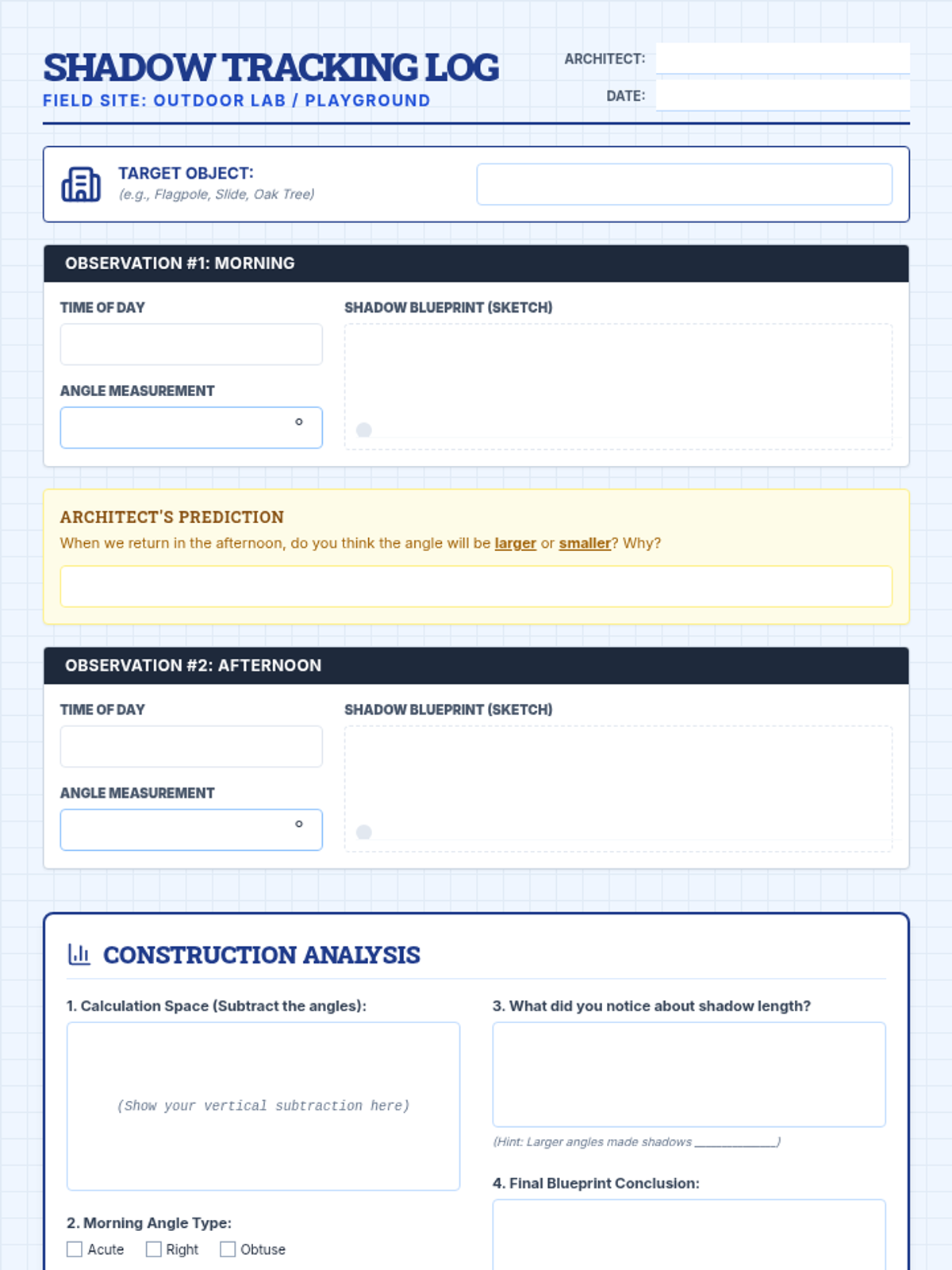
A student worksheet for recording shadow angle measurements at different times of day, including sketching areas and analysis questions.
An instructional slide deck for introducing angle measurement and the shadow investigation mission. Includes visual aids for protractor use and angle types.
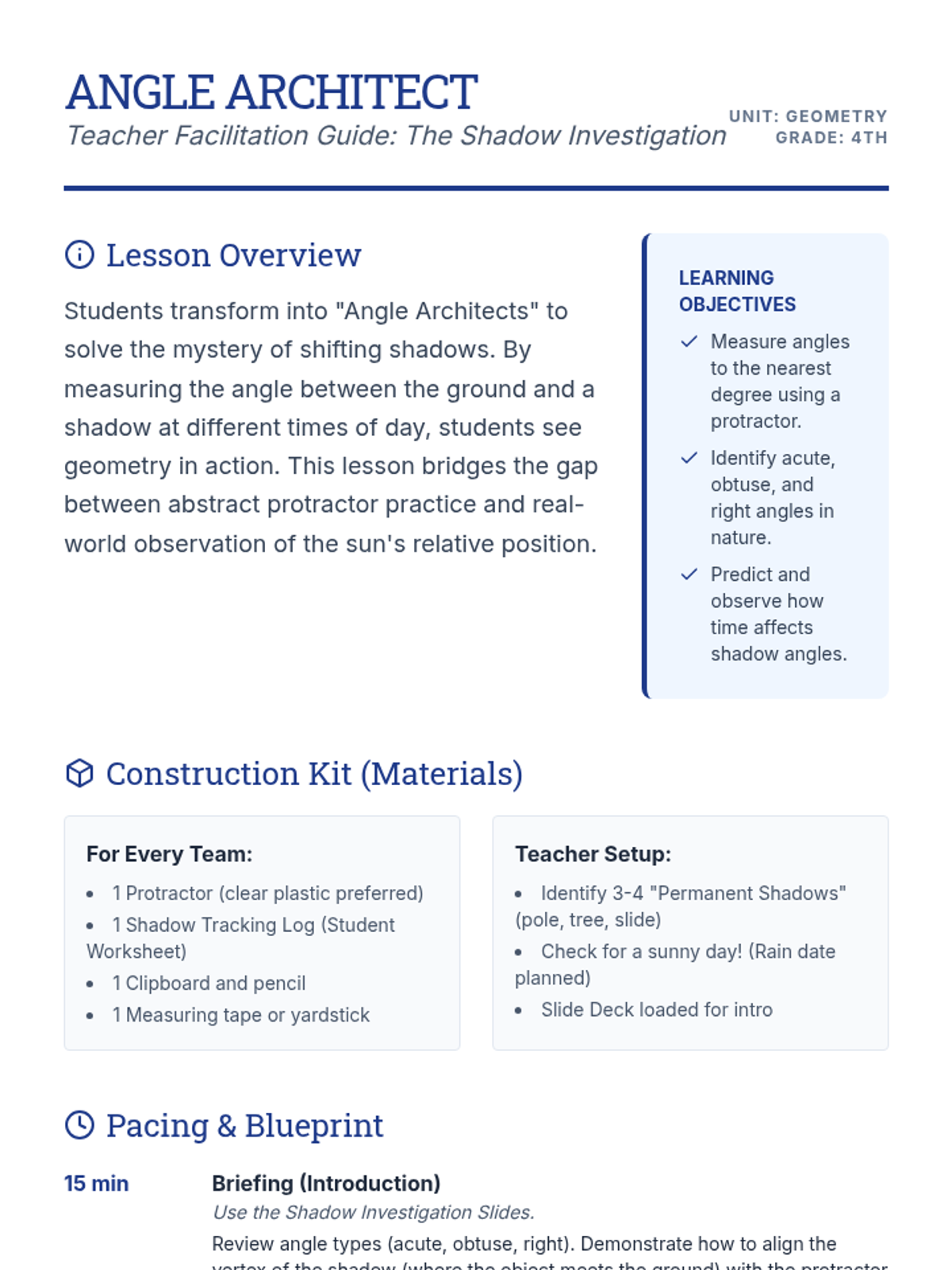
A comprehensive teacher facilitation guide for the 'Angle Architects' lesson, including pacing, materials, prep, and differentiation strategies.
Updated slide deck for SIFE students that moves beyond the 5/3 example to show halves (3/2), the concept of 'top = bottom' equaling one whole, and multiple number line examples. It maintains high-contrast visuals and minimal text.
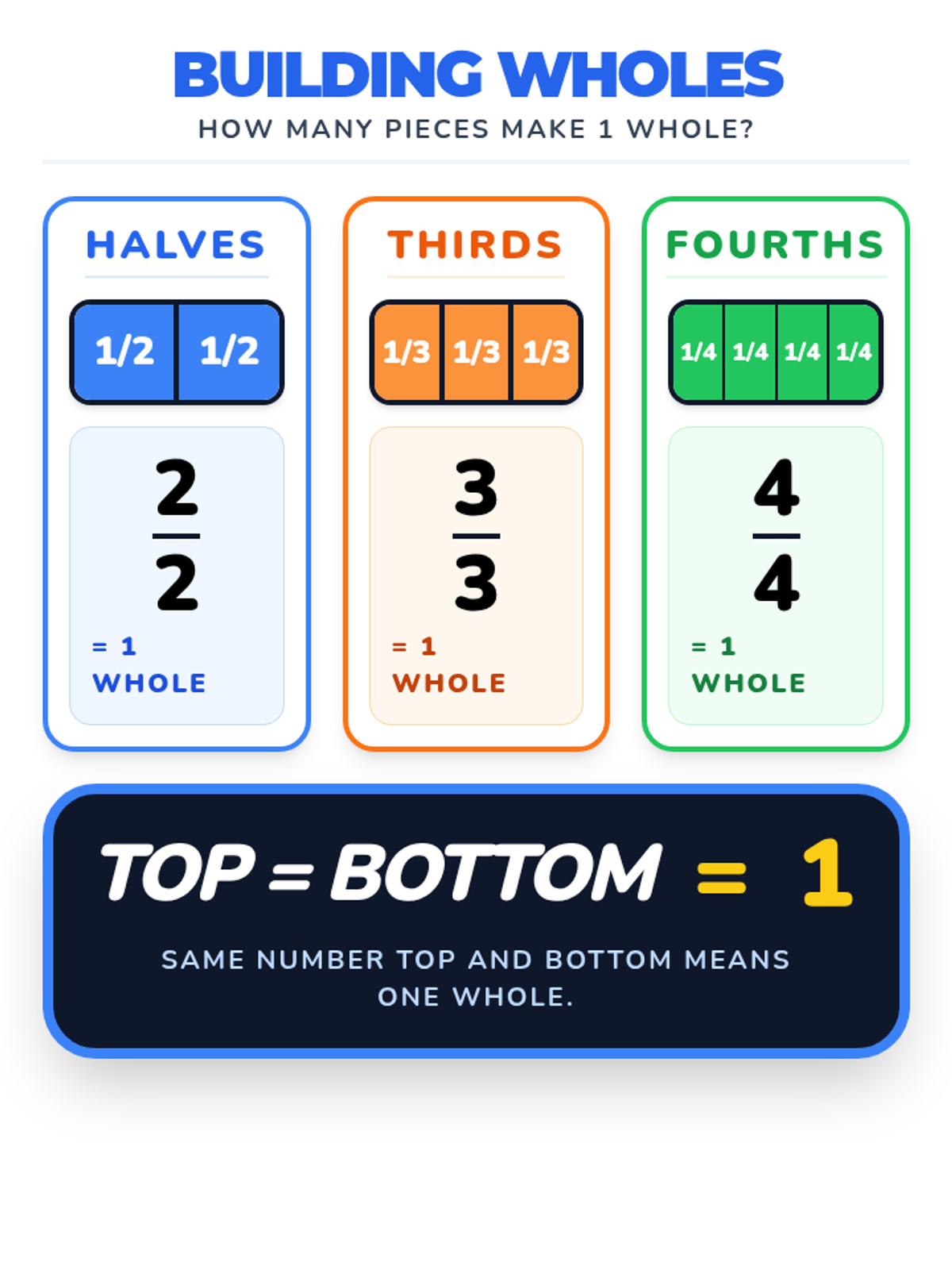
A visual anchor chart for SIFE students demonstrating that when the numerator and denominator are the same, the fraction equals one whole. It uses high-contrast models for halves, thirds, and fourths to show the pattern across different denominators.
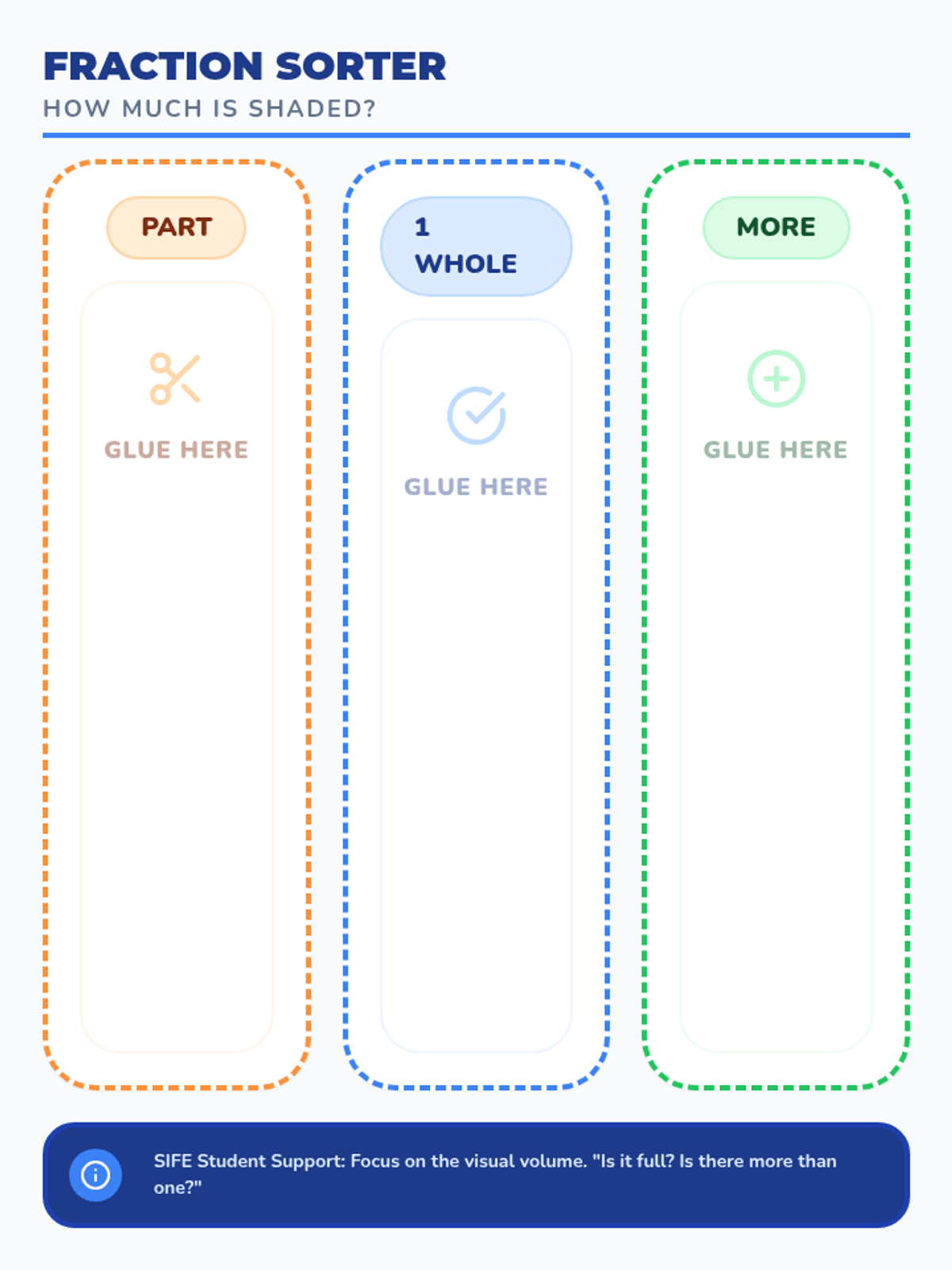
A visual sorting activity where SIFE students categorize visual fraction models into 'Part' (less than 1), '1 Whole' (exactly 1), and 'More' (greater than 1). The cards use variety in shapes (circles, strips, squares) and denominators (halves, thirds, fourths) to build conceptual understanding beyond a single example.
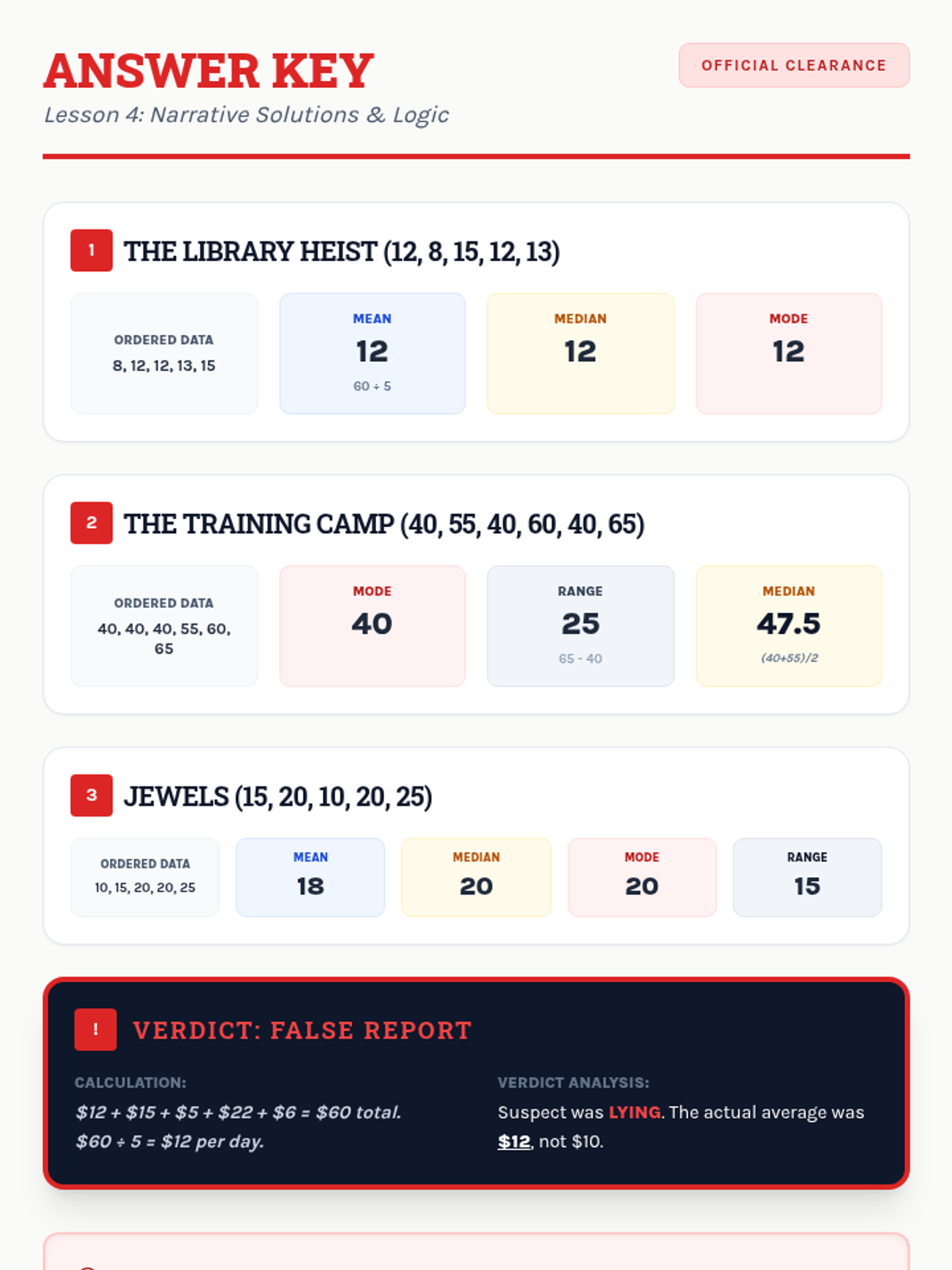
Answer key for the Mystery Logs worksheet, featuring step-by-step extraction logic, calculations, and analytical verdicts for the narrative problems. Standardized layout for better teacher reference.
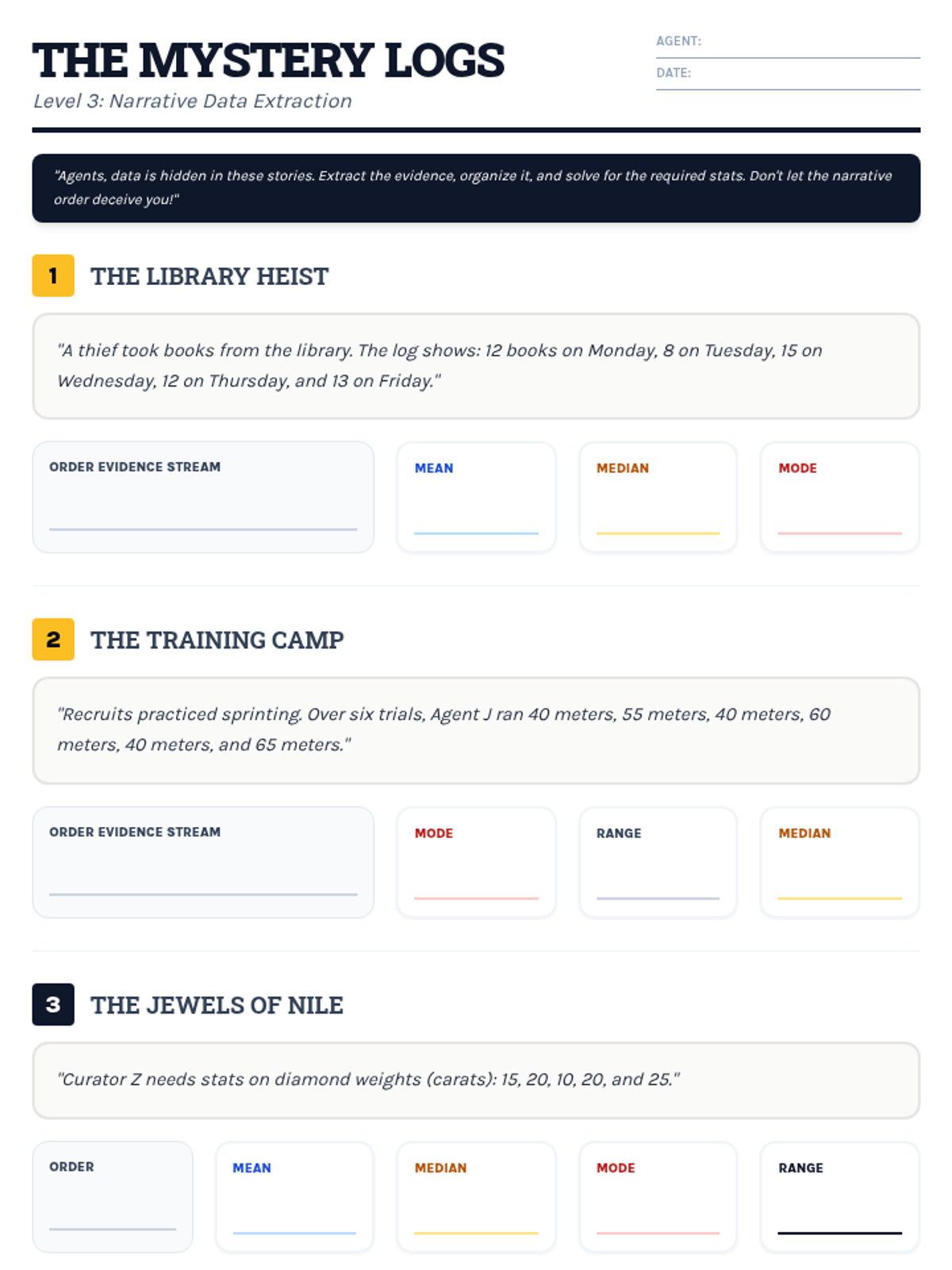
A series of narrative-based word problems themed as mystery investigations, requiring students to extract data sets from text and calculate central tendency and range. Standardized layout and improved work areas for better usability.
Instructional slides teaching students how to parse word problems for data, identify keywords like "average", and avoid common traps like selecting the median from unsorted narrative data. Now includes additional practice missions.
A visual slide presentation designed for SIFE students to understand fractions greater than one. It uses high-contrast visuals, minimal text (24px+), and clear step-by-step counting animations (implied layout) to show how 5/3 is built from unit fractions.
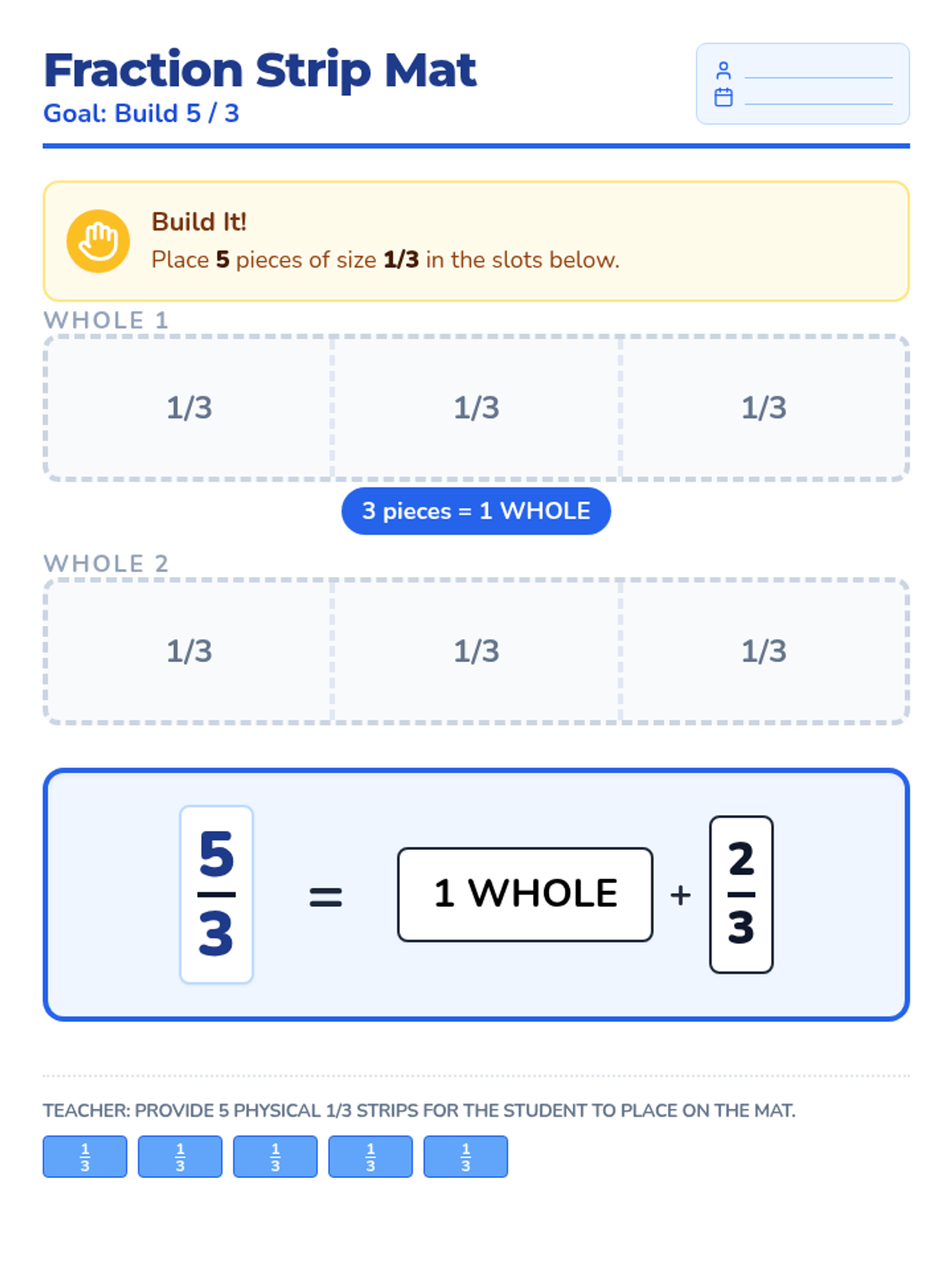
A large-format work mat for building fractions greater than one. It provides clear, dashed-line slots for physical fraction strips, helping SIFE students see how three 1/3 pieces make one whole, and how five 1/3 pieces require a second whole strip.
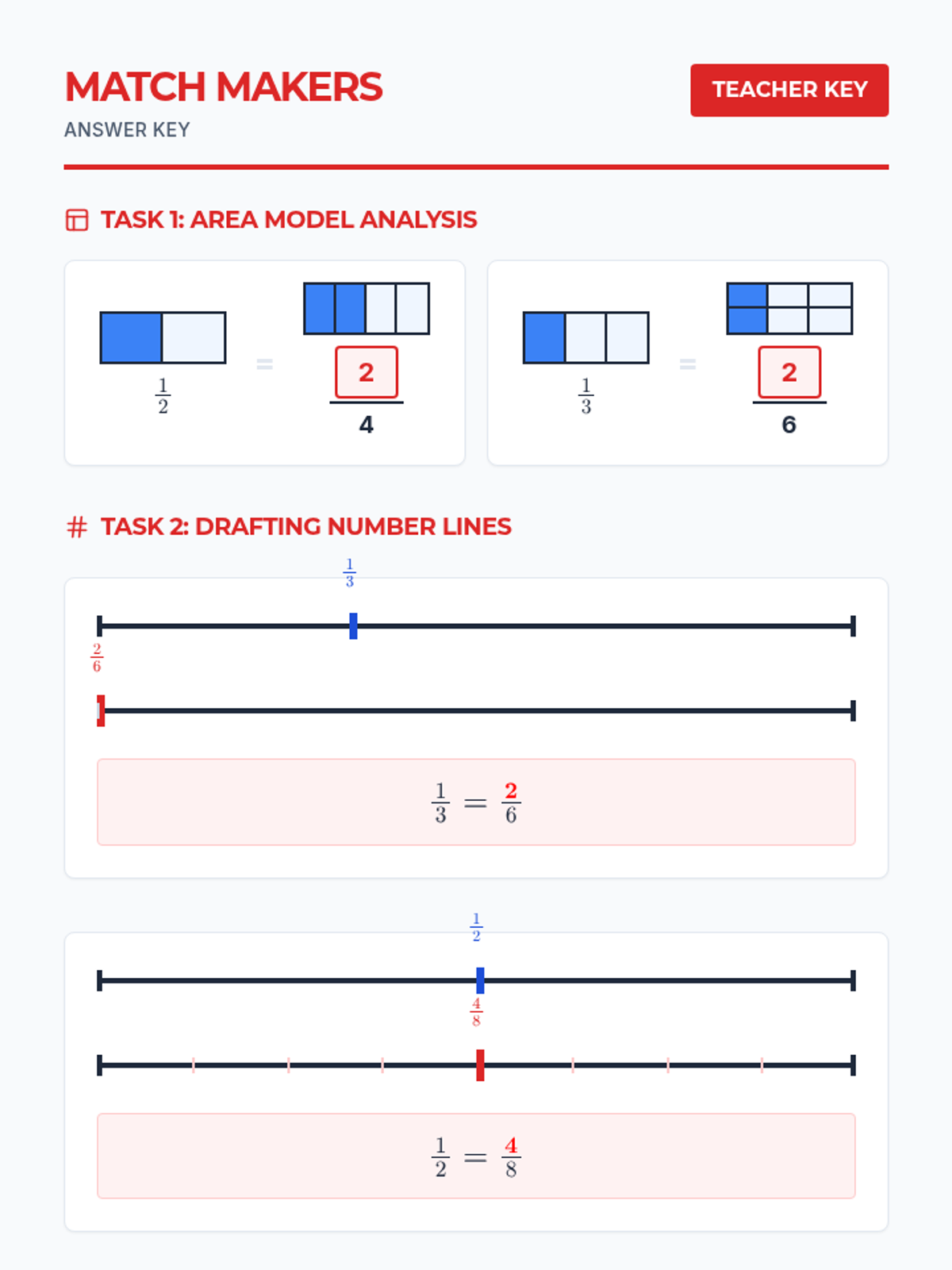
An answer key for the Match Makers Homework, providing correct solutions and visual markings for teachers. Revised to fix overlapping labels and layout issues.
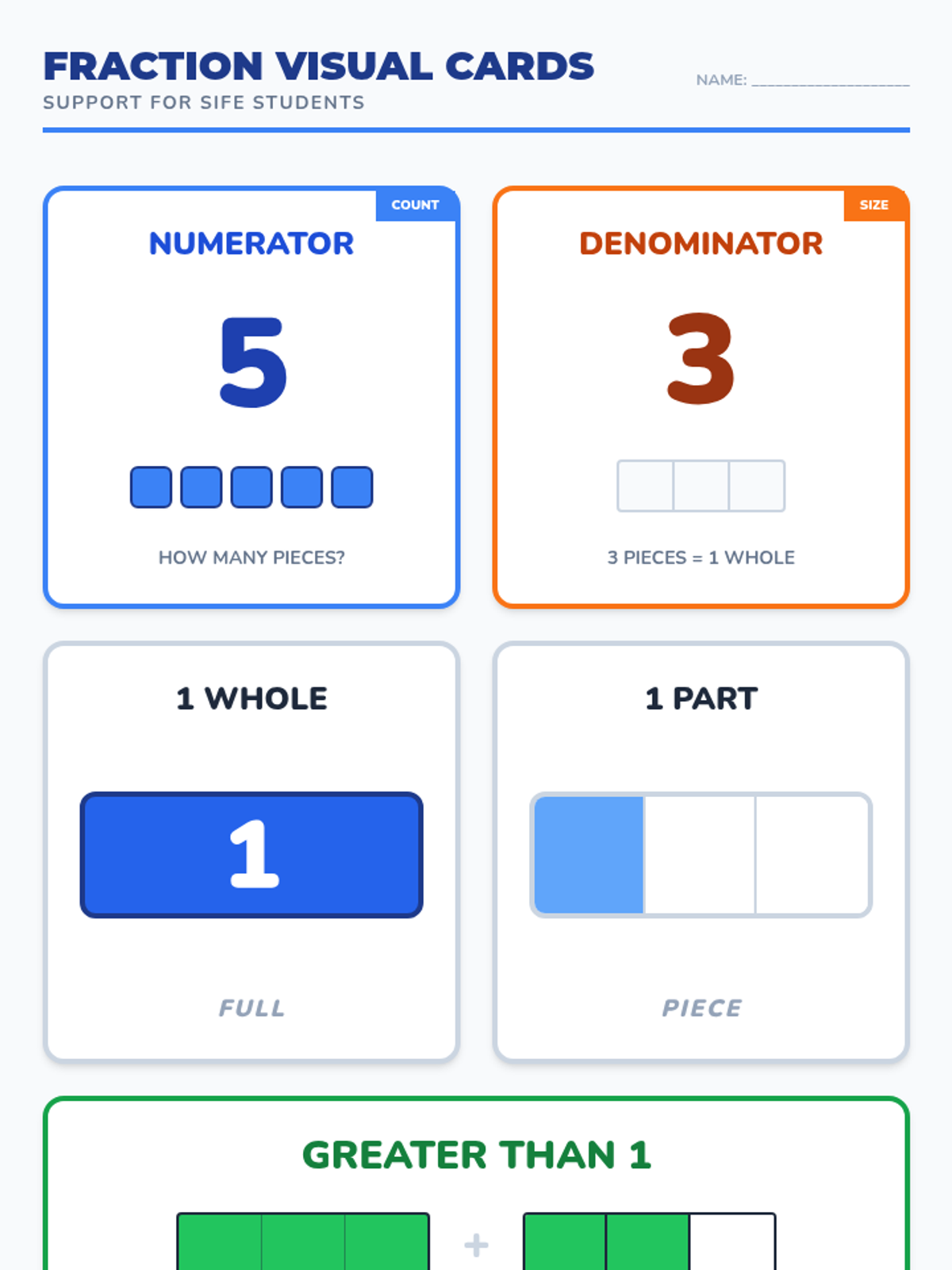
A set of high-contrast, visual vocabulary cards specifically designed for SIFE students. Each card features large numerals, clear geometric representations of fractions (like 5/3), and minimal English text to support conceptual understanding without relying on literacy.
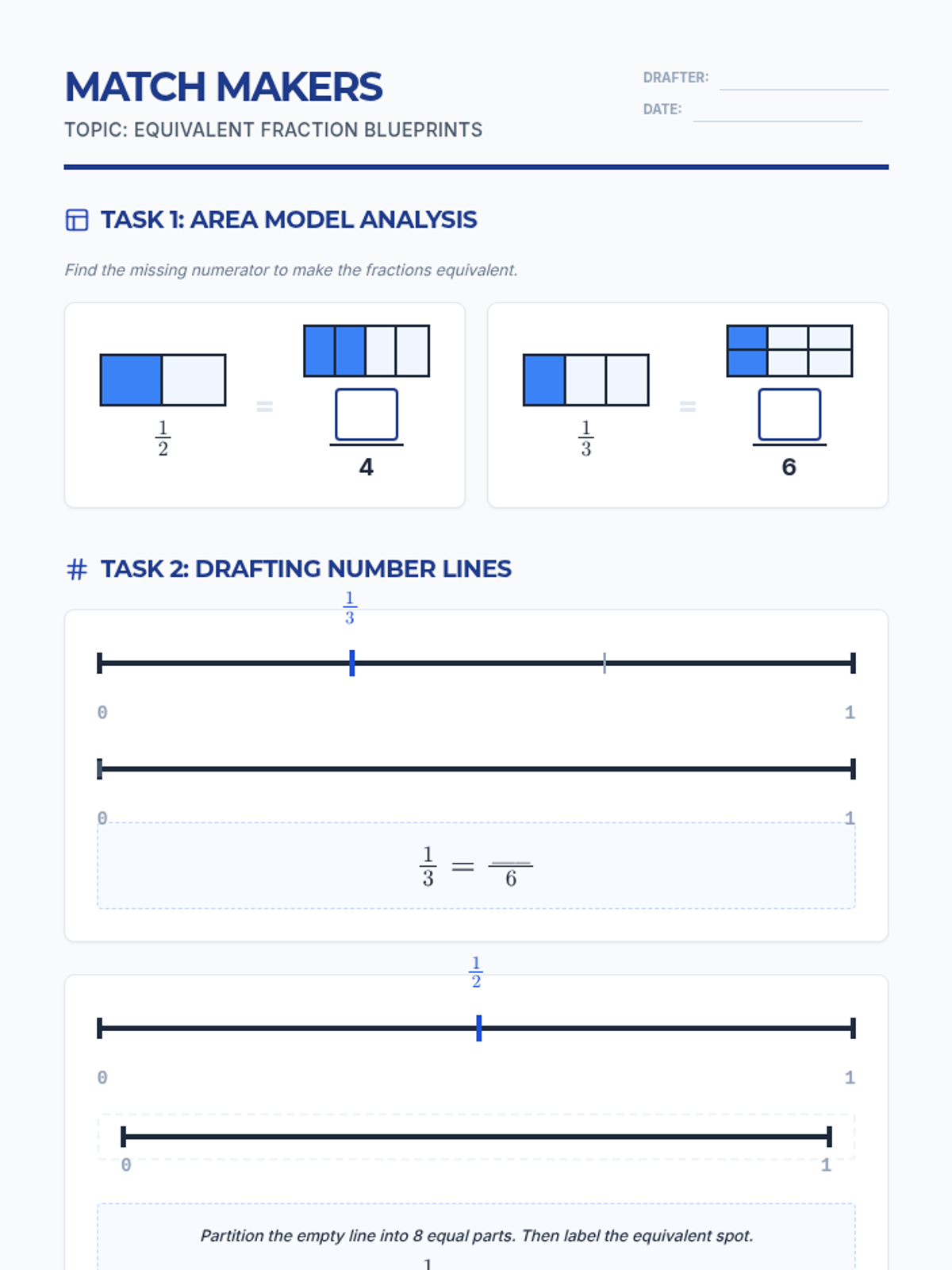
A student homework worksheet featuring area models and number lines for identifying and generating equivalent fractions, designed with an architectural blueprint aesthetic. Revised to fix LaTeX rendering, shading issues, and page breaks.
A set of instructional slides introducing equivalent fractions through area models and number lines with an architectural blueprint theme. Revised for better spacing, visual alignment, and includes new practice problems.
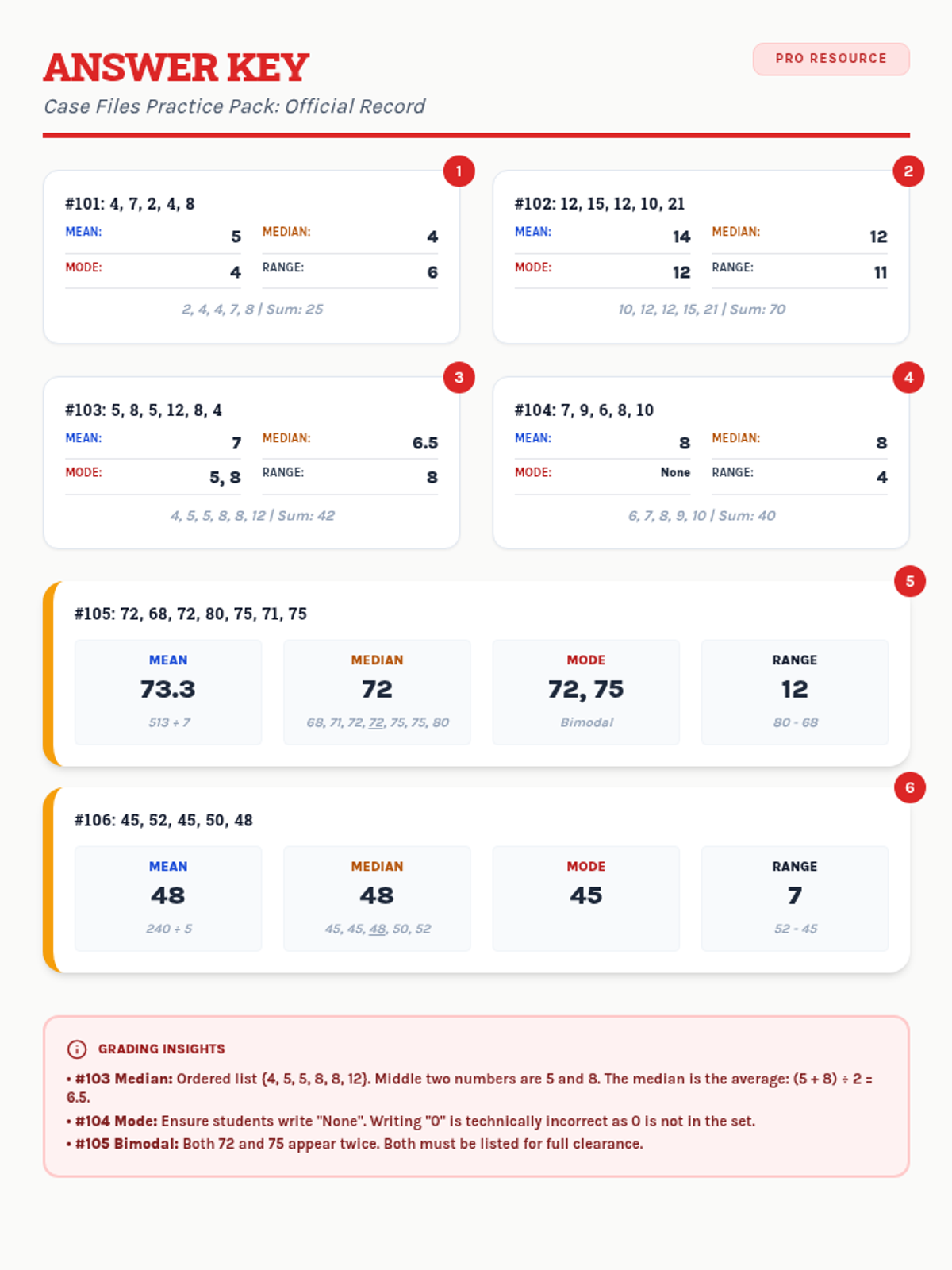
The official answer key for the Case Files Practice Pack, with detailed breakdowns and grading insights for all 6 cases. Updated for better readability and logic clarification.
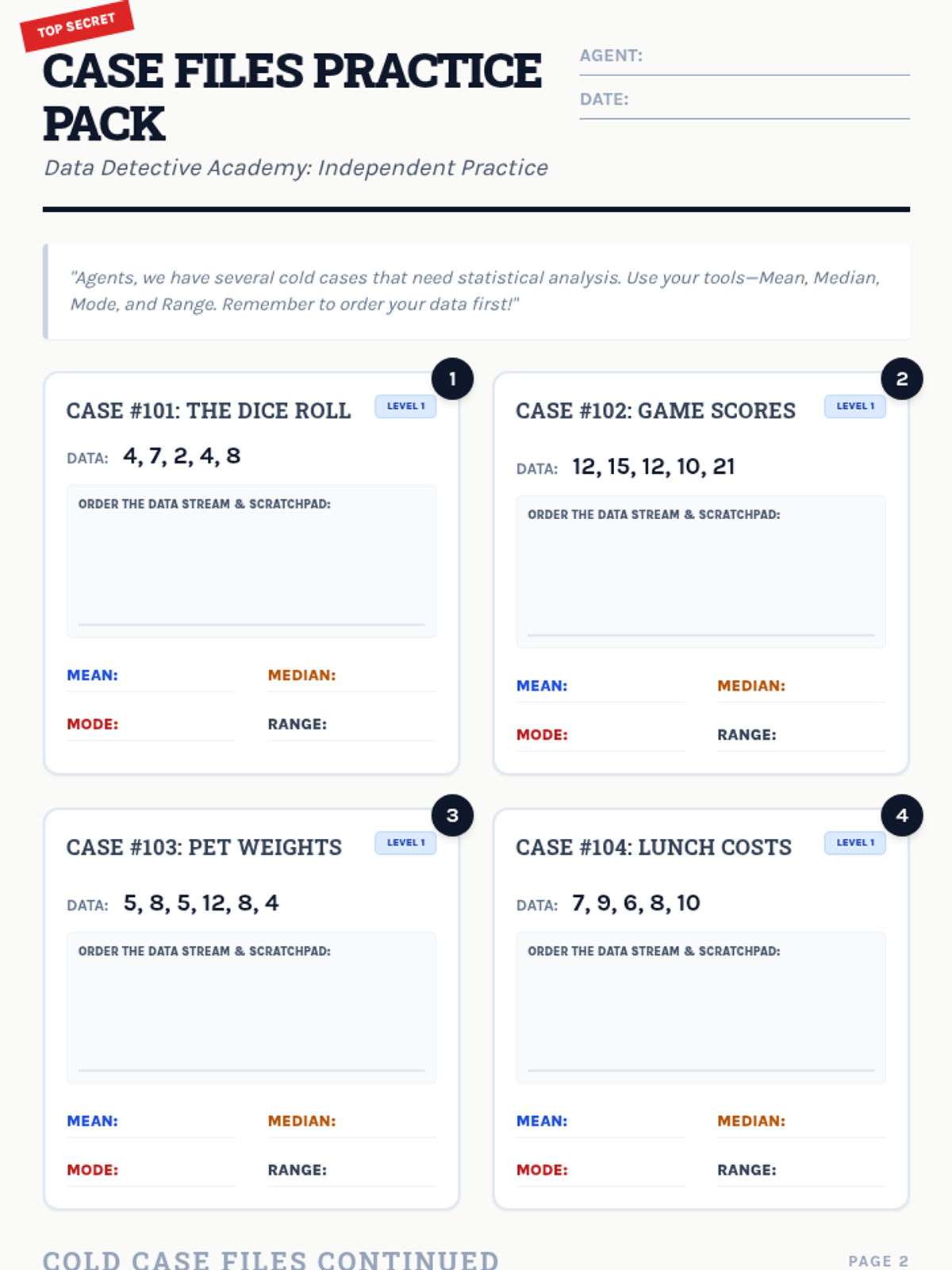
A 2-page practice worksheet with 6 detective-themed "cold cases" involving a mix of single and double-digit data sets for mean, median, mode, and range. Includes ordering scaffolds for all problems.
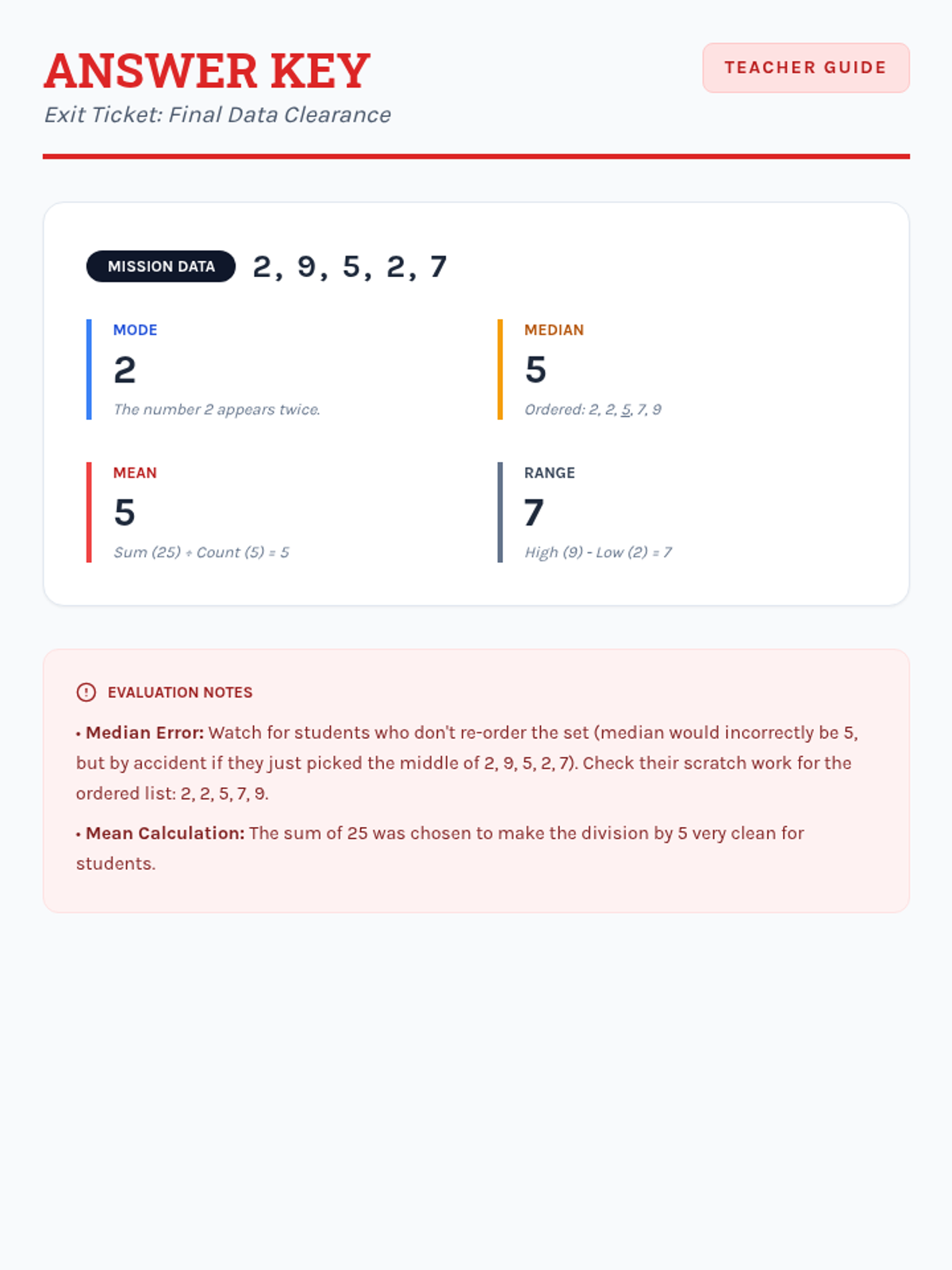
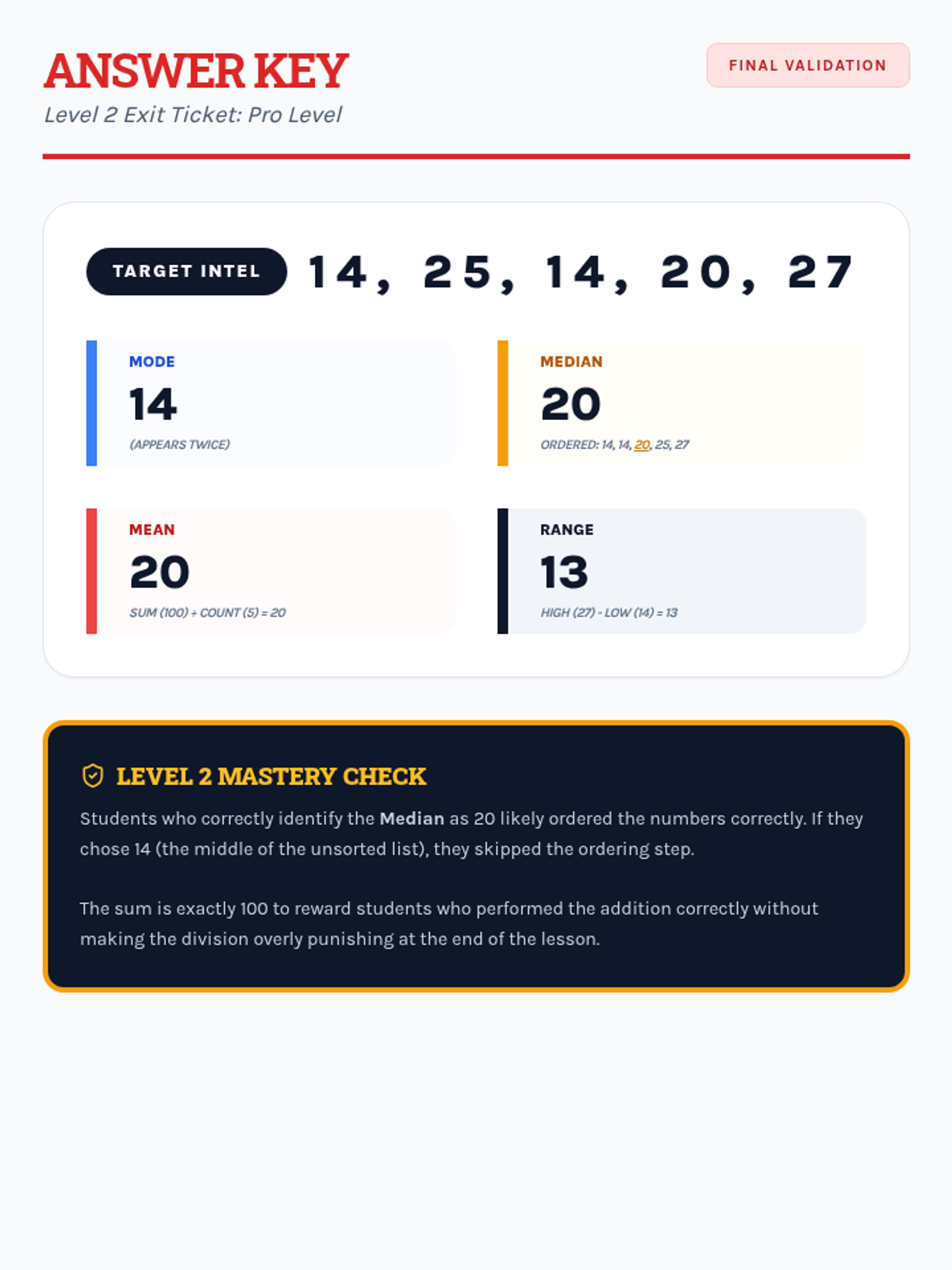
Answer key for the Level 2 Exit Ticket, with a breakdown of calculations and pedagogical notes for teachers.
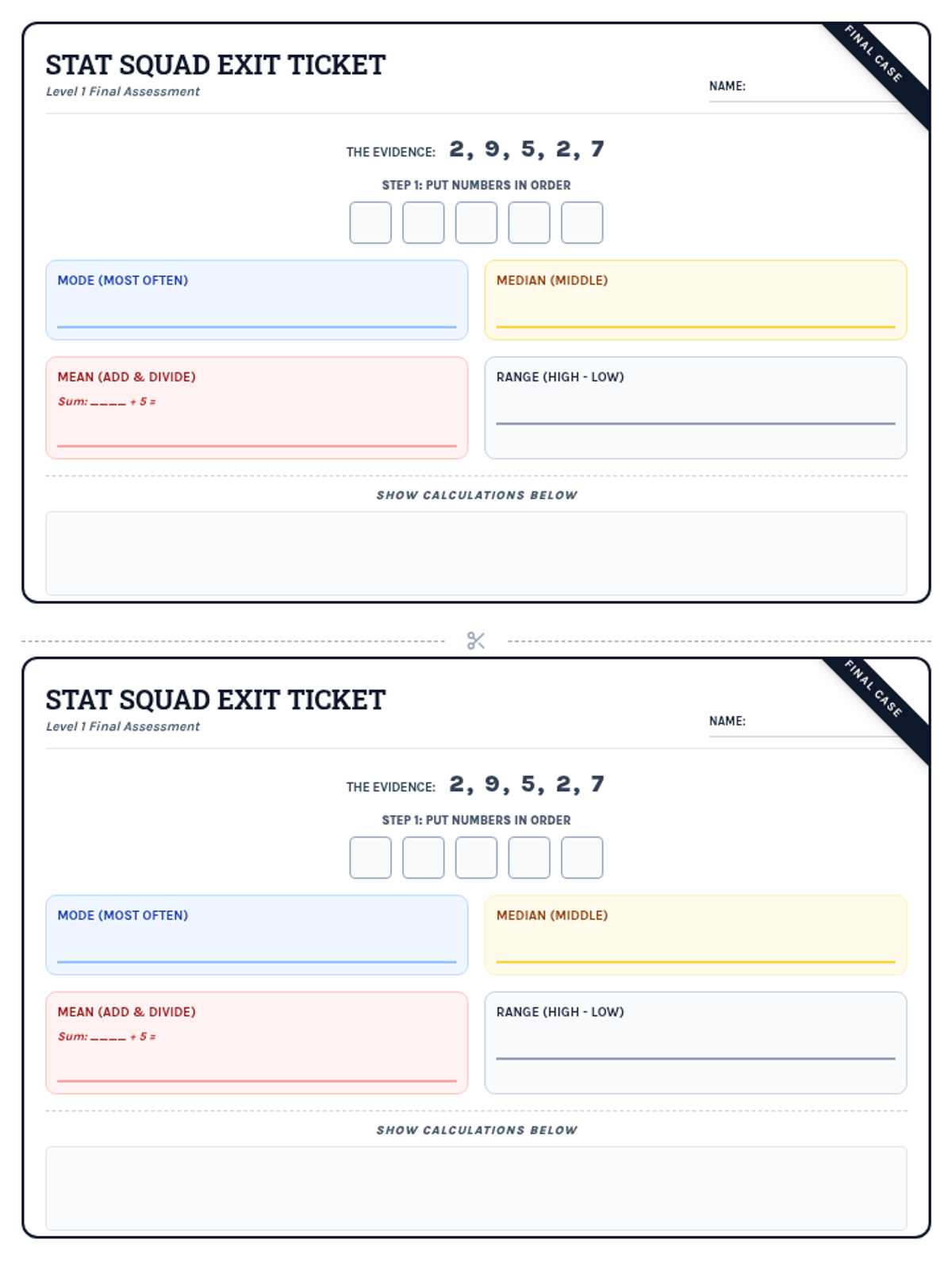
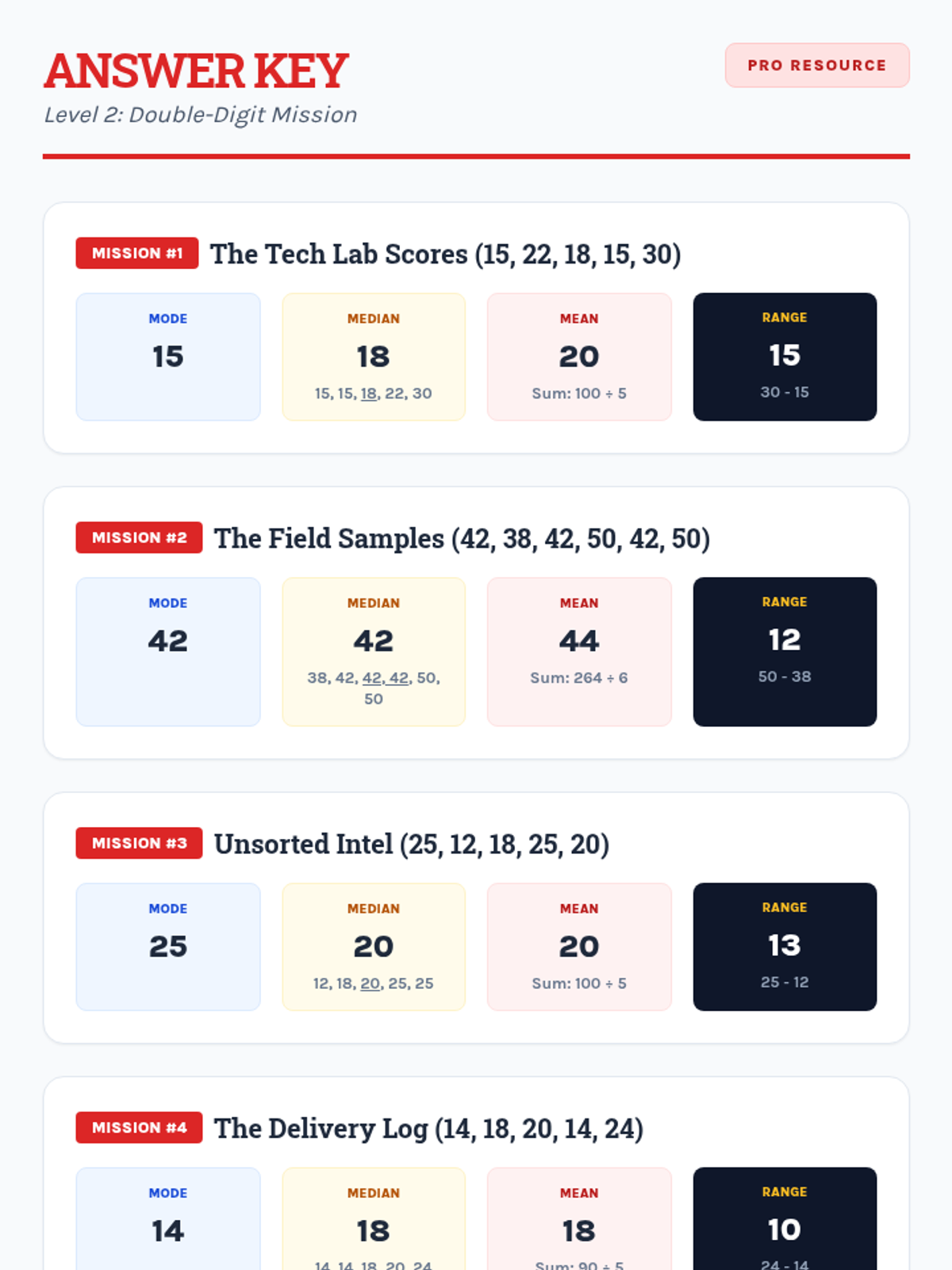
Level 2 exit ticket with double-digit numbers, duplicated on one page for paper saving. Scaffolding added to support double-digit calculations.
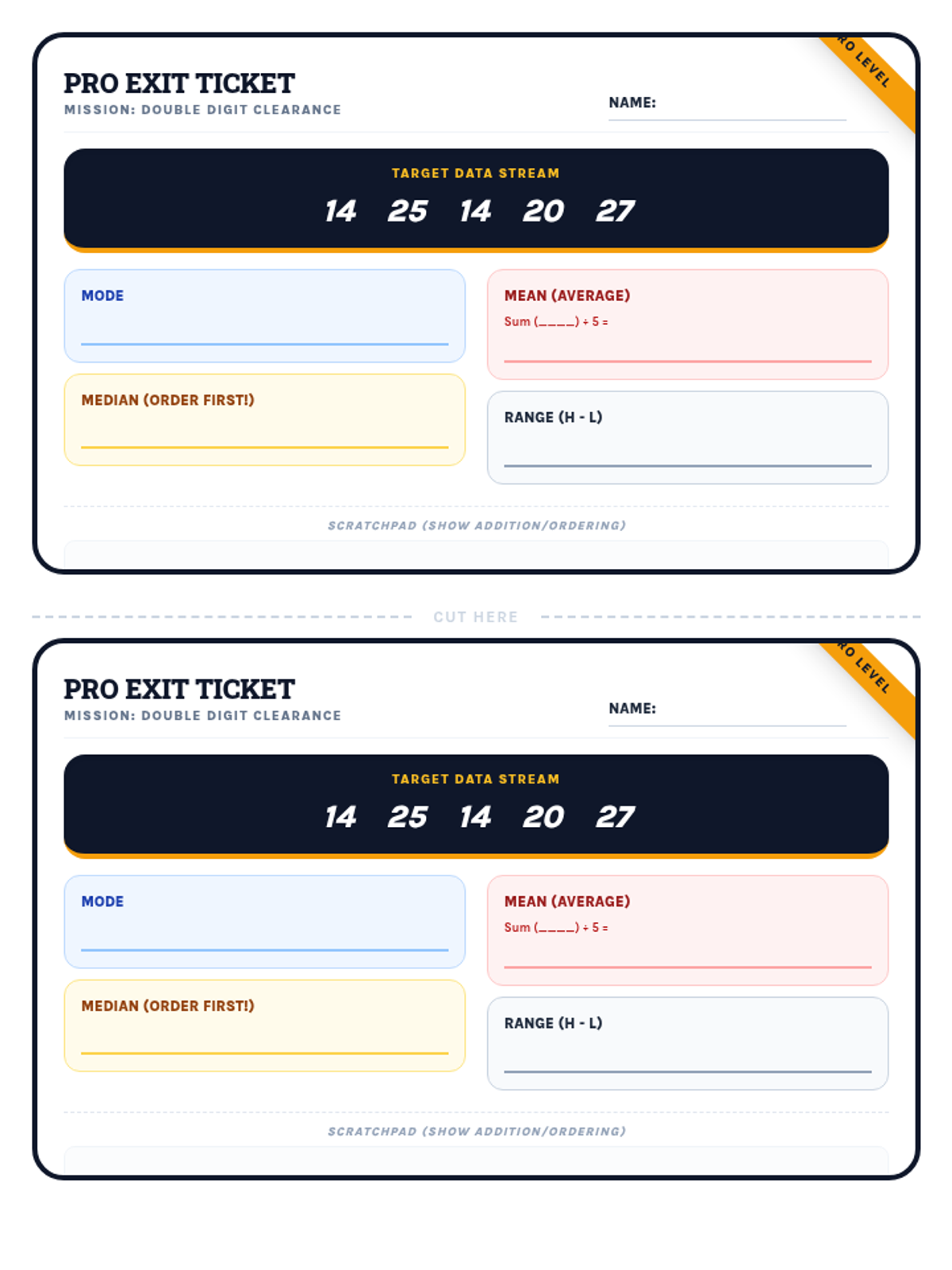
Answer key for the Level 2 worksheet, including detailed calculations for double-digit central tendency across all five missions.
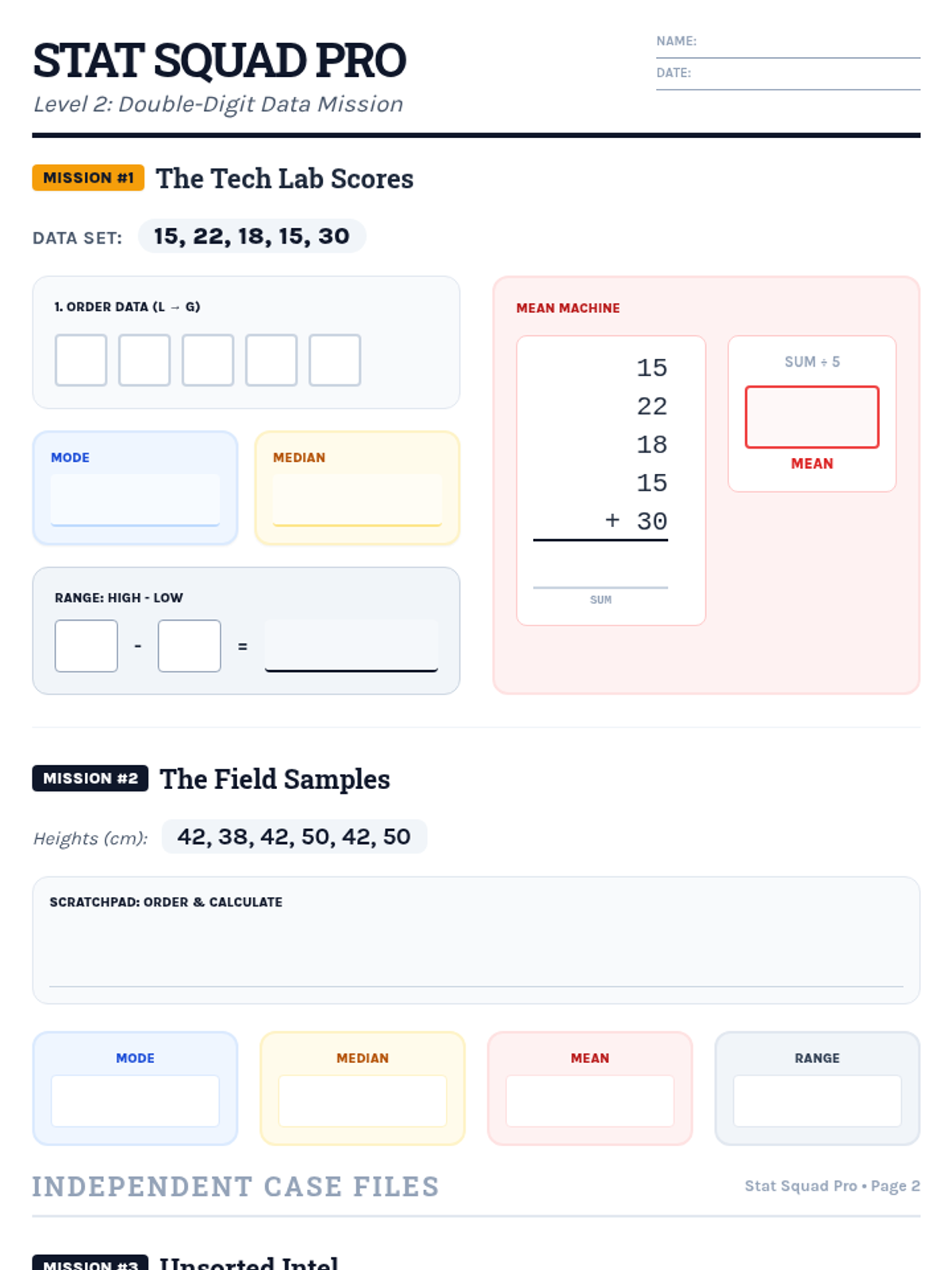
Level 2 worksheet focusing on double-digit data sets, expanded with five missions including guided practice and independent cases across two pages. Layout optimized for clean page breaks.
Instructional slides for Level 2 data analysis, focusing on the added complexity of multi-digit numbers while maintaining core statistical concepts.
Answer key for the Stat Squad Exit Ticket, featuring clear breakdowns of calculations and common error patterns.
A half-page exit ticket for a quick assessment of mean, median, mode, and range with a single-digit data set. Duplicate copies on one page to save paper.
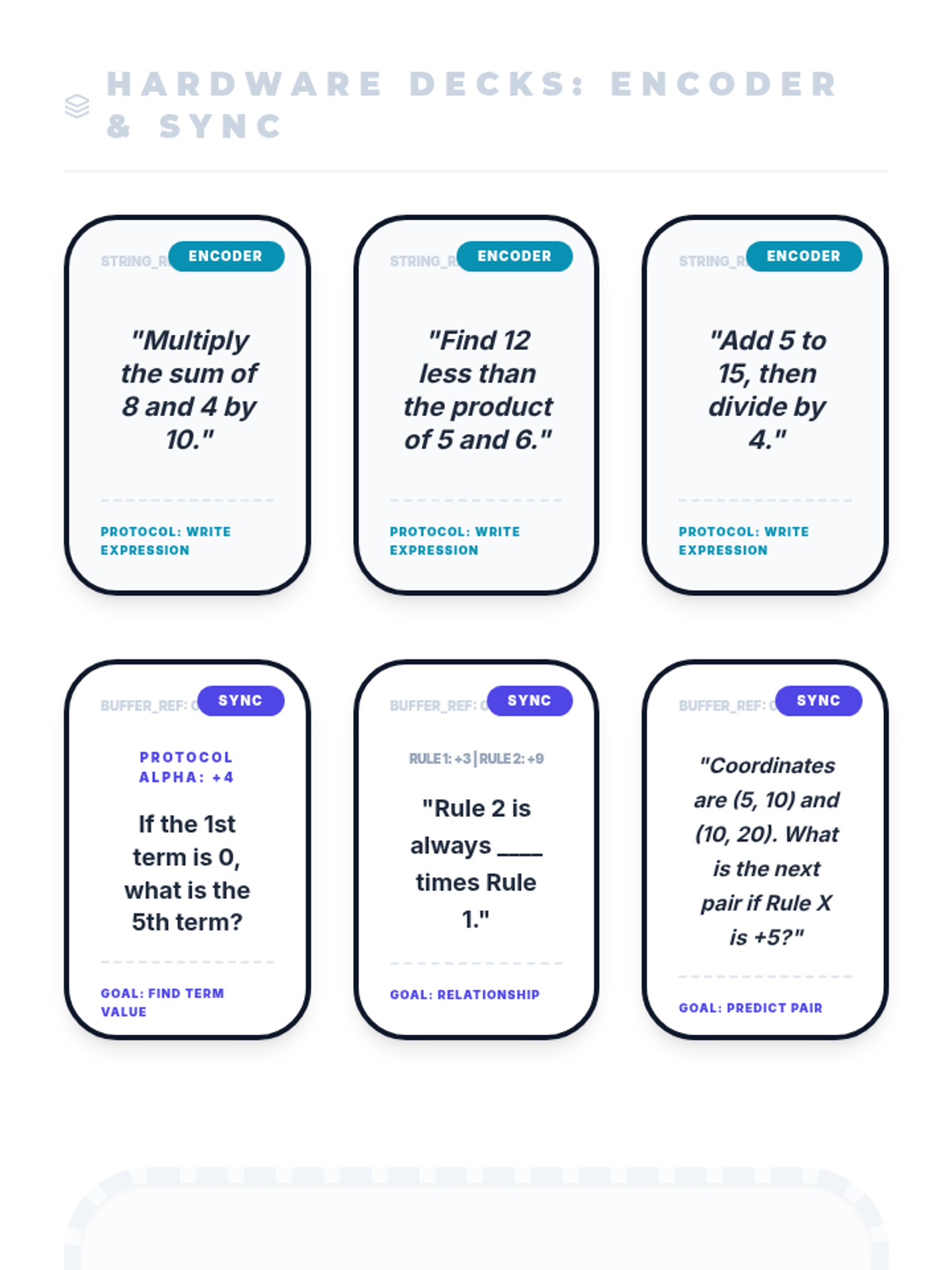
A printable set of challenge cards for the Protocol Pursuit board game, including Encoder (expressions) and Sync (patterns) tasks with an answer key on a separate page. Fixed layout for no-bleed printing.
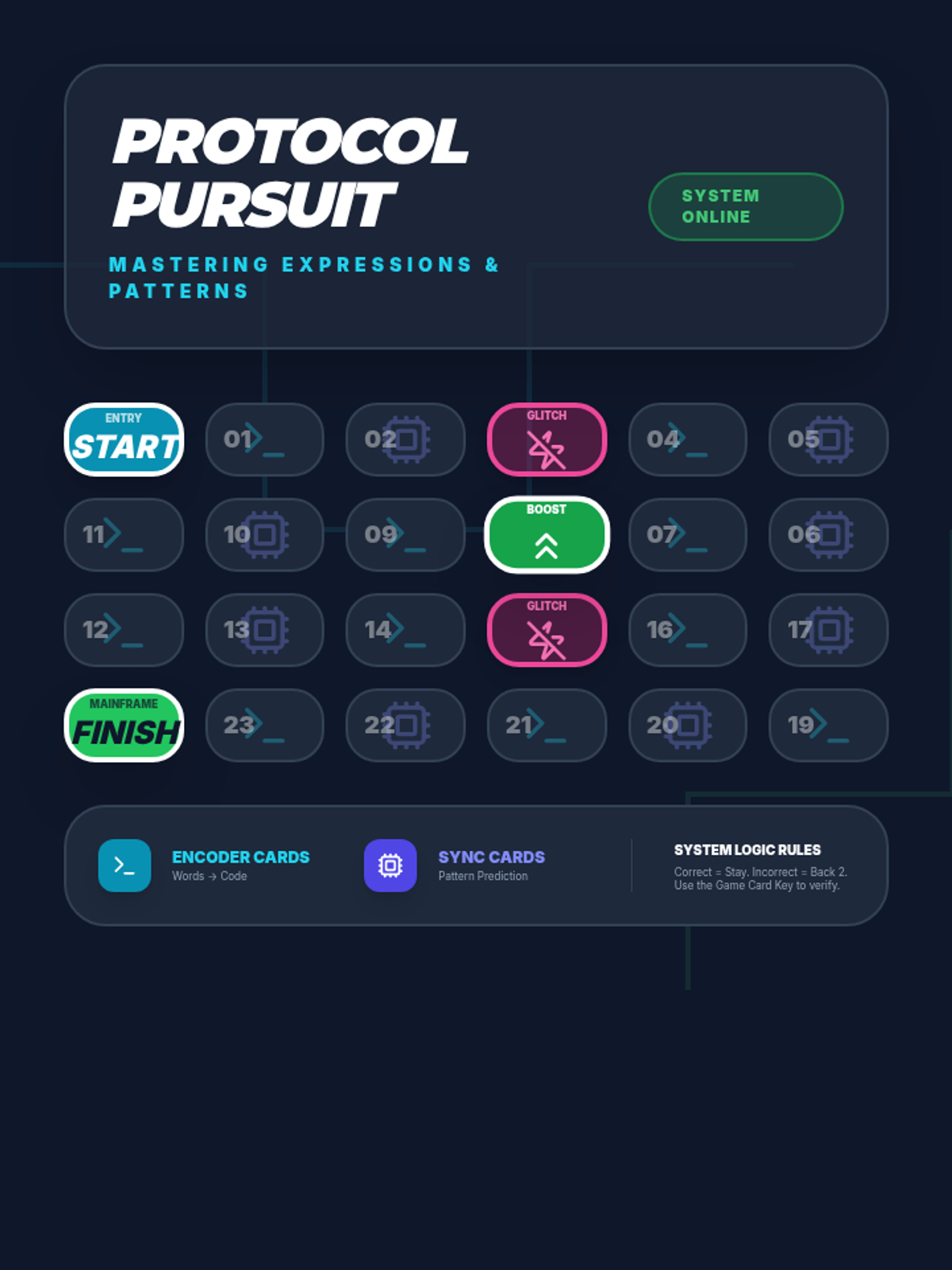
A printable circuit-themed board game for students to practice numerical expressions and patterns, featuring special 'Glitch' and 'Boost' spaces for added engagement. White-background theme for print efficiency.
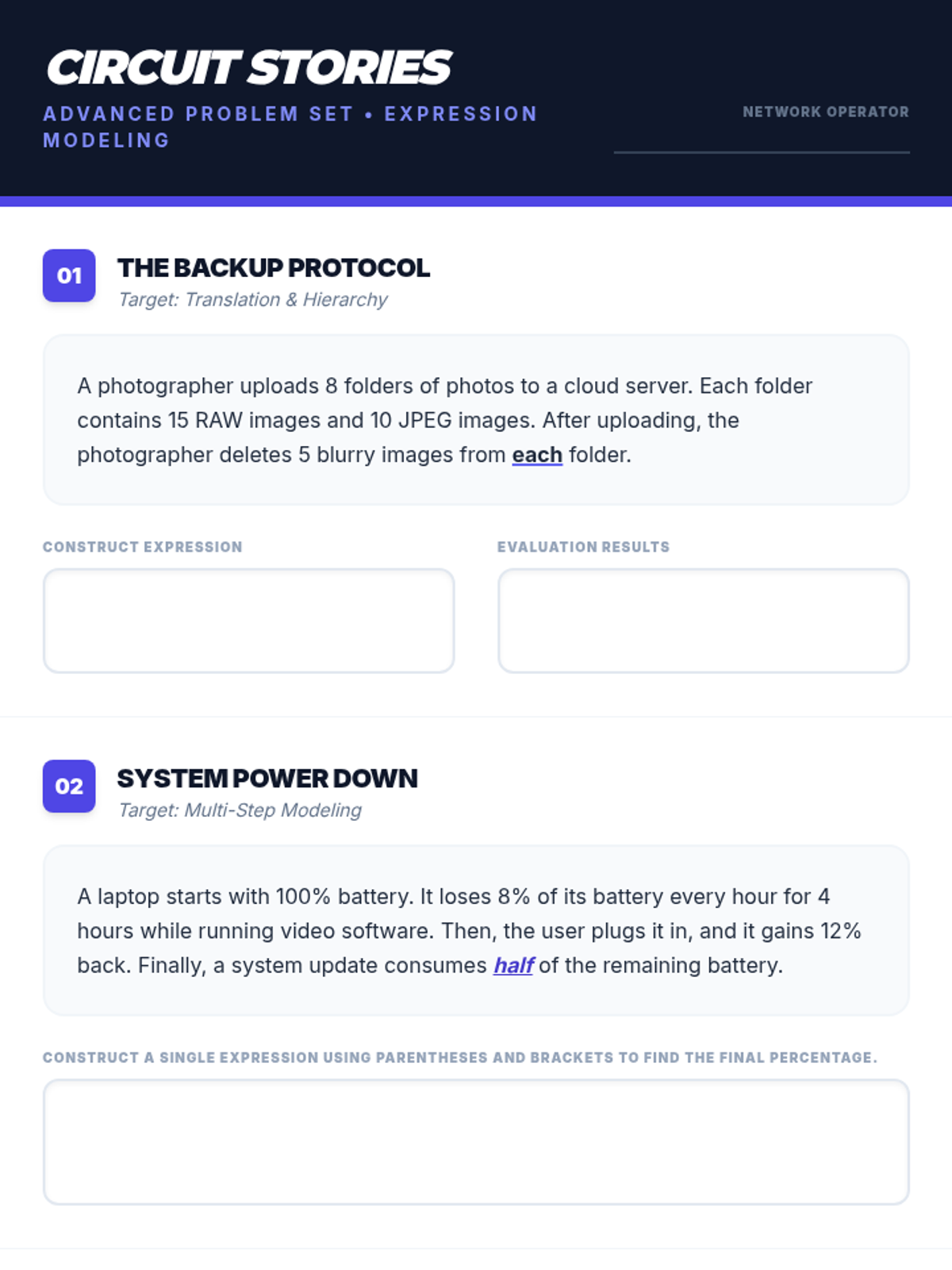
An advanced word problem set for the Pattern Protocol lesson, featuring complex scenarios involving cloud storage, battery management, and bandwidth comparison to master numerical expressions and pattern relationships. Corrected coordinate plane labels and empty work areas.
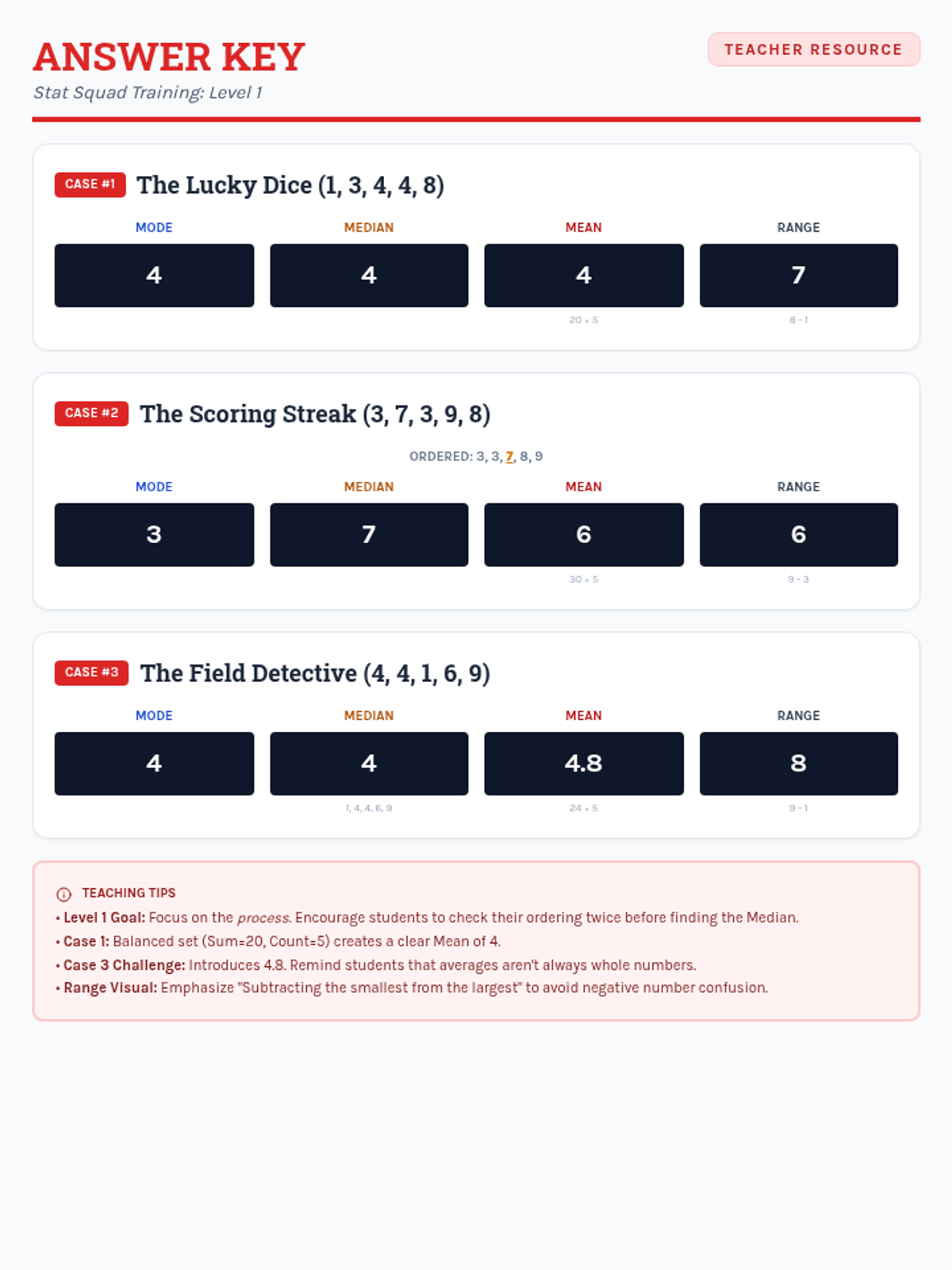
Answer key and teacher guide for the Stat Squad Training worksheet, including step-by-step solutions and common student misconceptions.
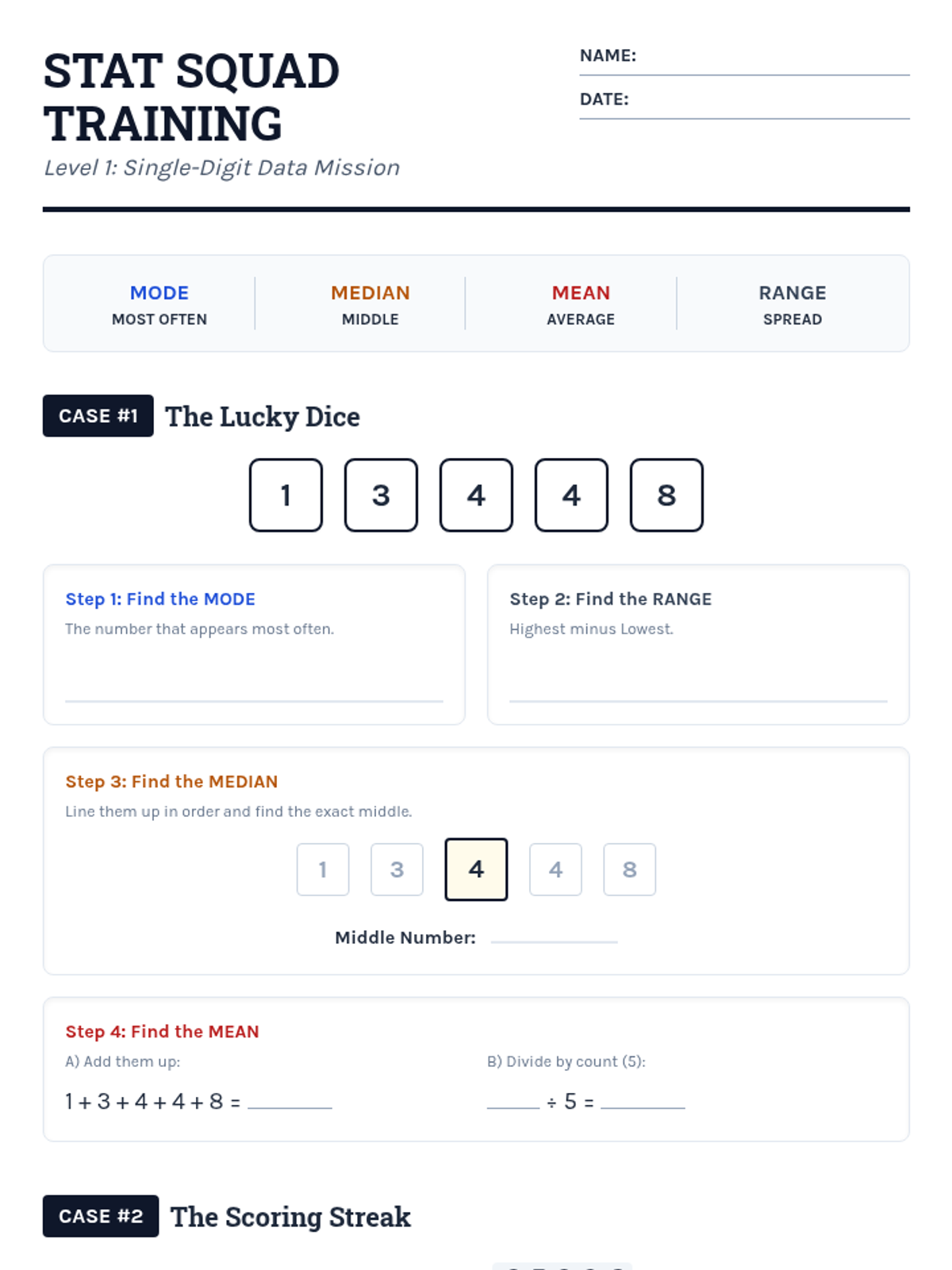
A guided practice worksheet for calculating mean, median, mode, and range with visual aids, step-by-step scaffolds, and single-digit data sets.
Instructional slides defining mean, median, mode, and range with visual examples and step-by-step logic for single-digit whole numbers.
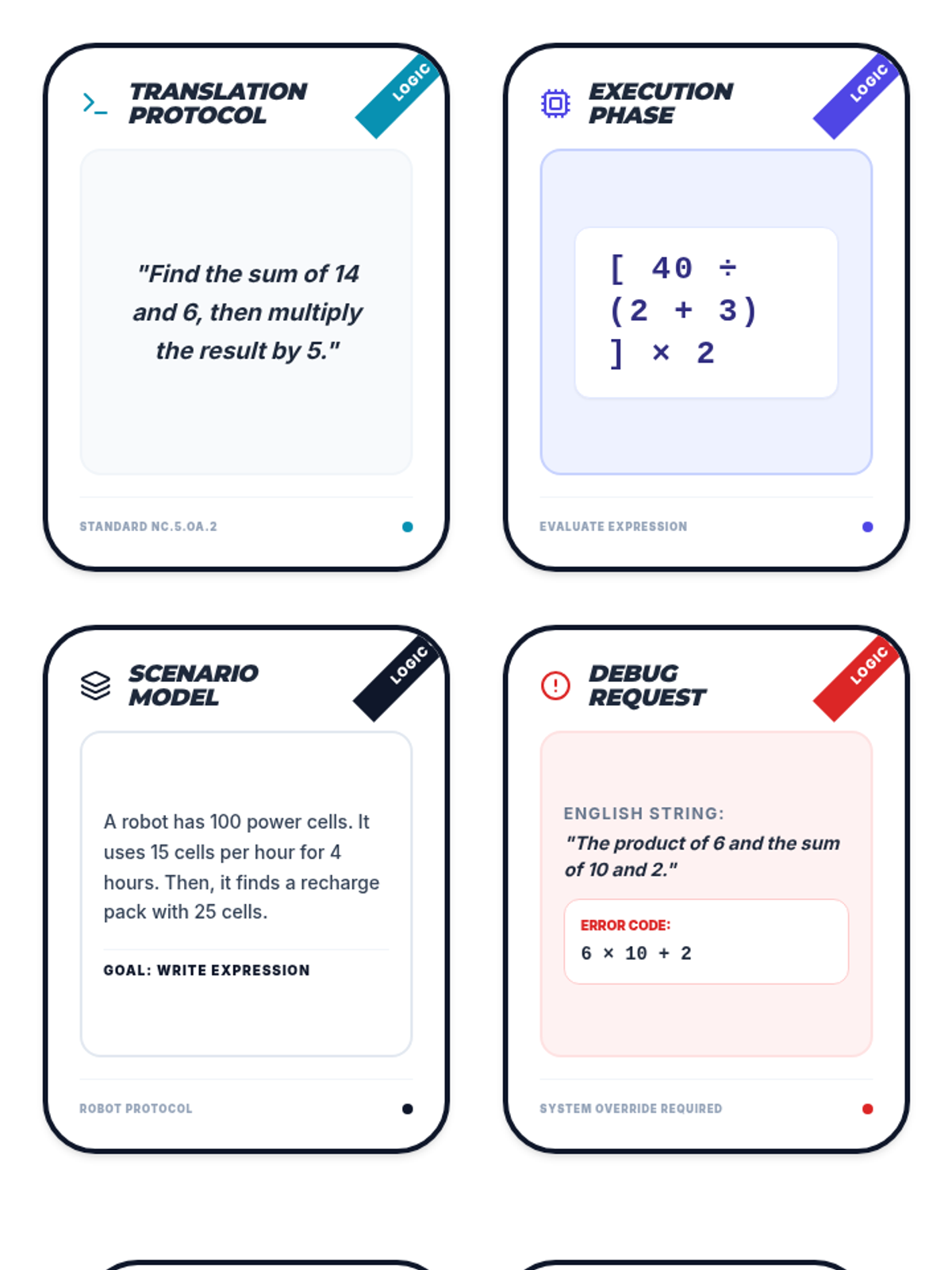
A set of 8 printable task cards designed for small group or station work, covering numerical expression writing and analyzing mathematical pattern relationships with a high-tech theme.
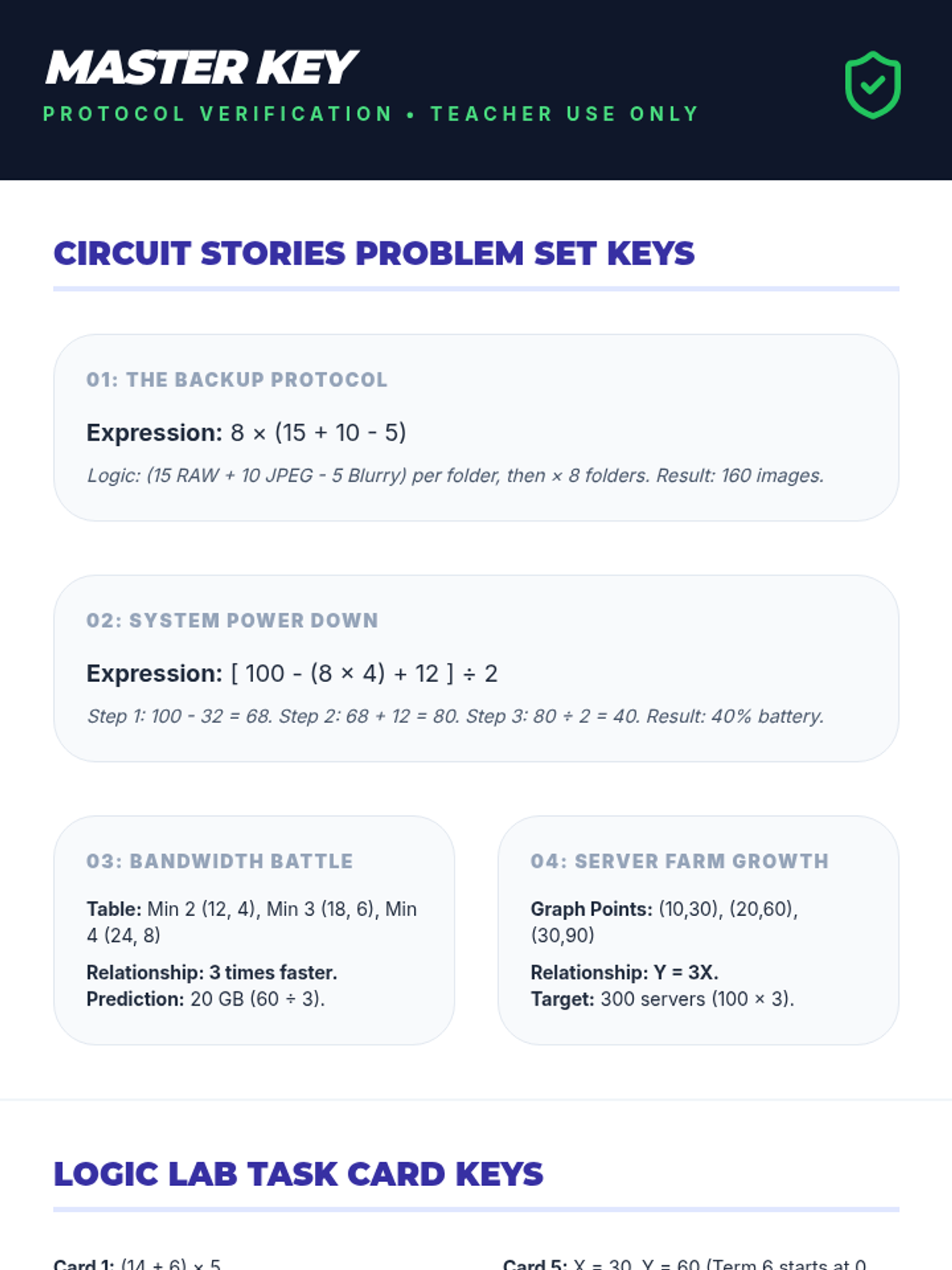
Comprehensive answer key for the Pattern Protocol lesson materials, including solutions for the Circuit Stories problem set, task cards, worksheet, and assessment. Corrected Task Card 5 values and logic contrast.
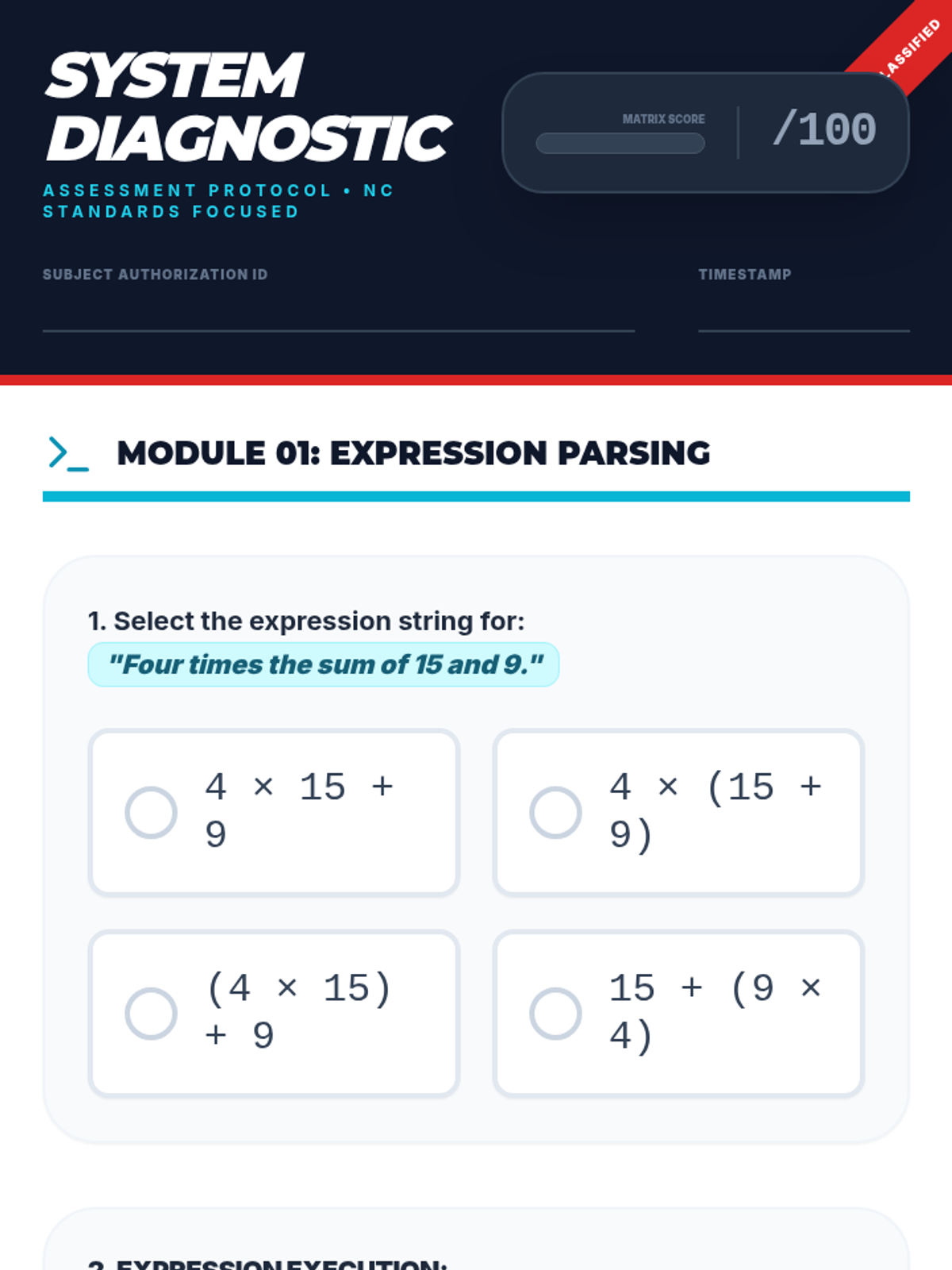
Final summative assessment for the Pattern Protocol lesson, testing students on numerical expression writing, pattern generation, coordinate pairs, and complex word problems with a high-tech diagnostic theme.
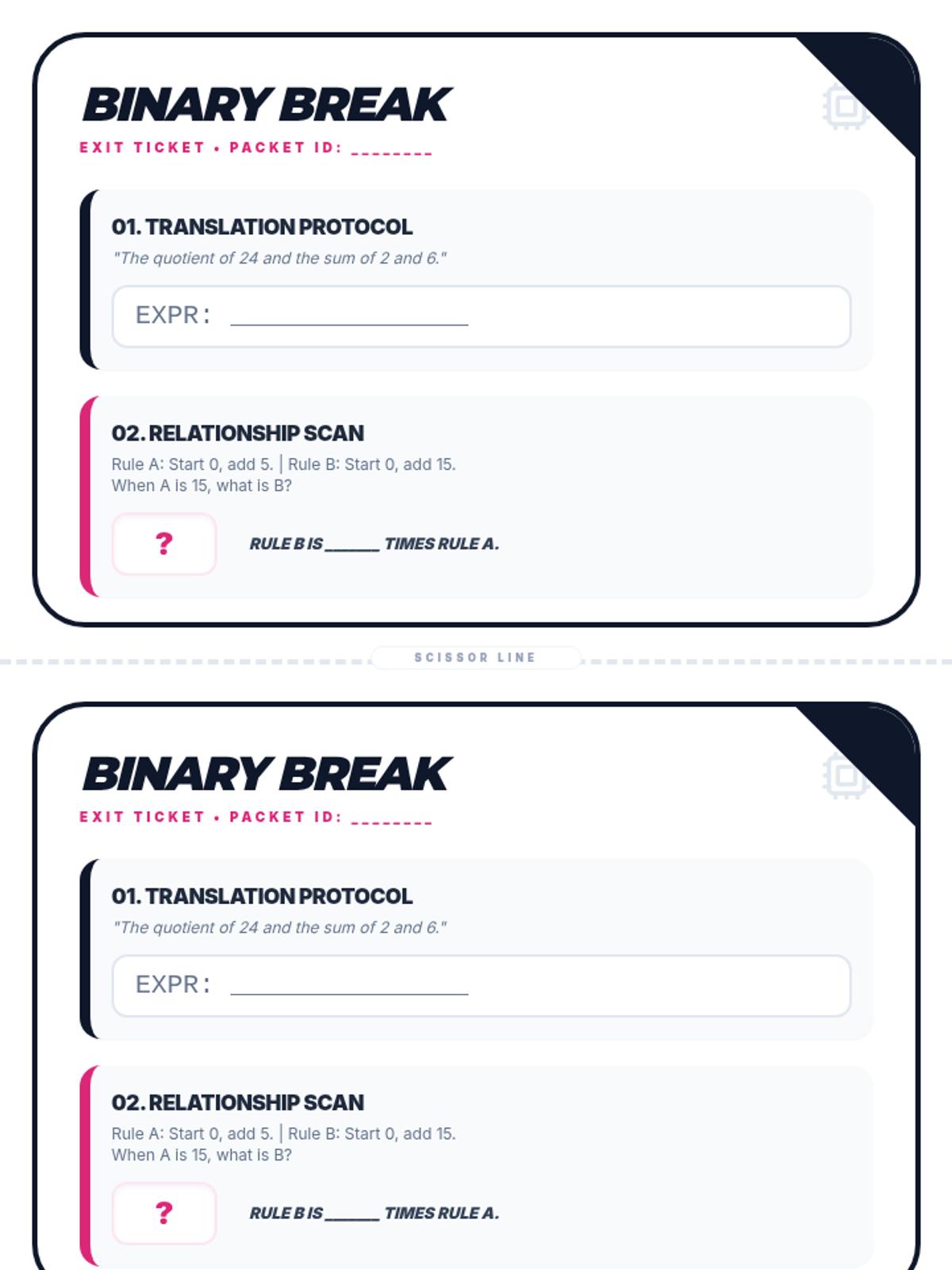
A compact exit ticket for quick assessment of expression writing and pattern relationships, designed with a clean digital theme and two-to-a-page layout for easy printing.