Day 2 Facilitation Guide for the Variety Vault session. Focuses on teaching students to distinguish between statistical questions (variety) and fact-based questions (single answer). Explicitly branded "Day 2".
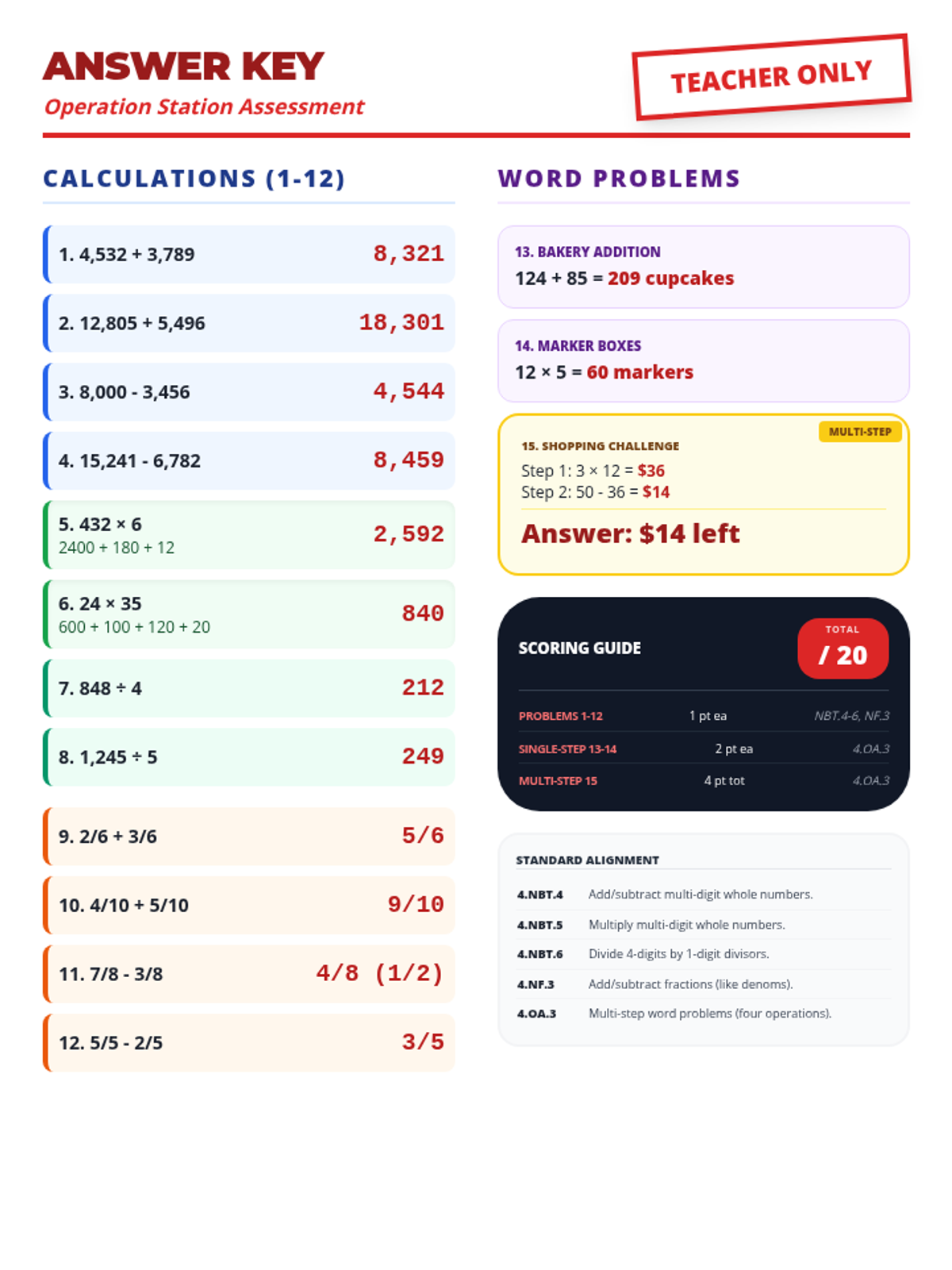
Complete answer key for the Operation Station Assessment. Includes worked-out solutions, a points breakdown, and a CCSS alignment rubric for teacher grading. Snippets for area models and multi-step word problems are included.
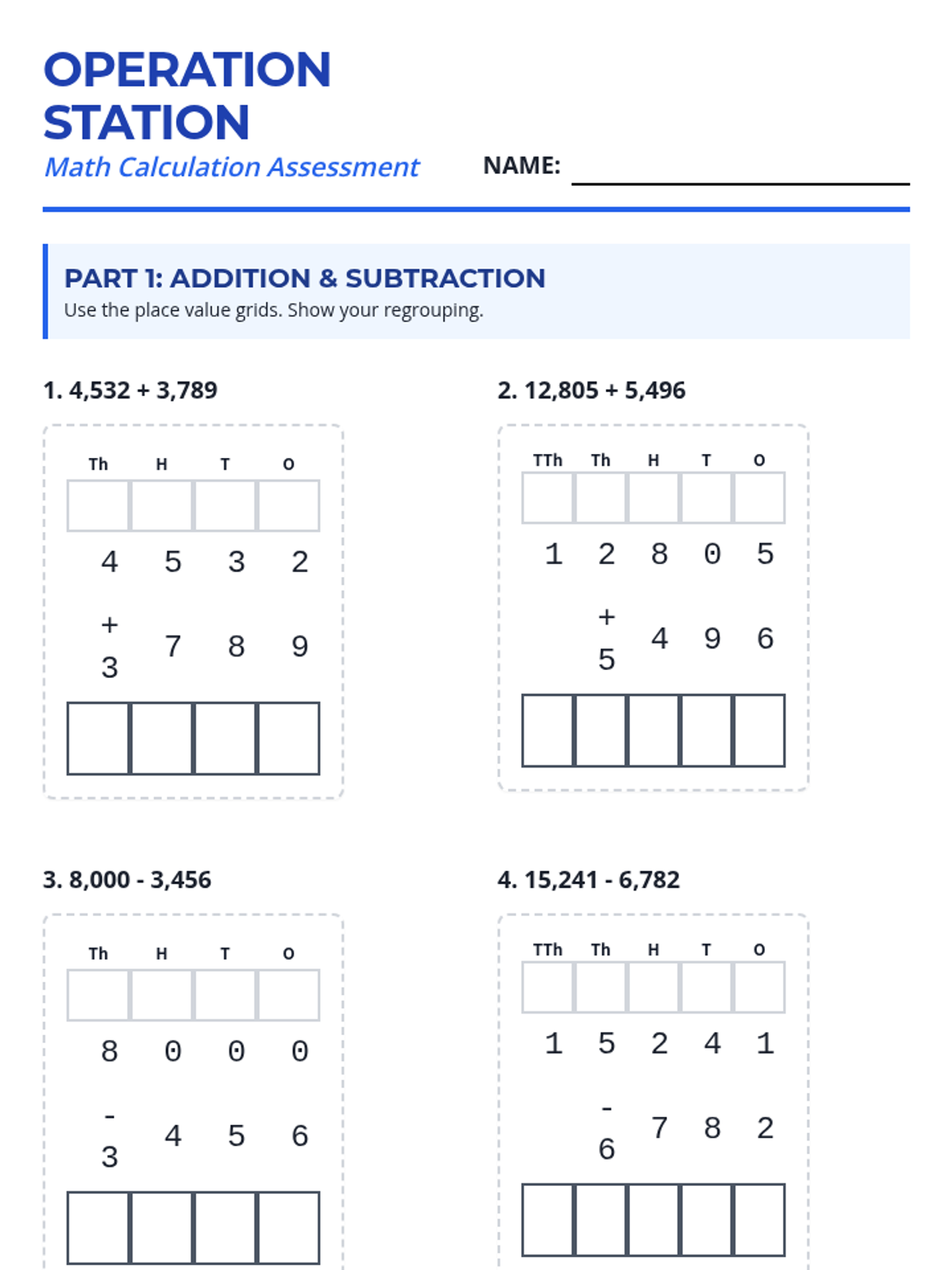
A student assessment for 4th-grade math calculations and word problems. Features large print, graphic organizers for multi-digit operations, and fraction models to support diverse learners.
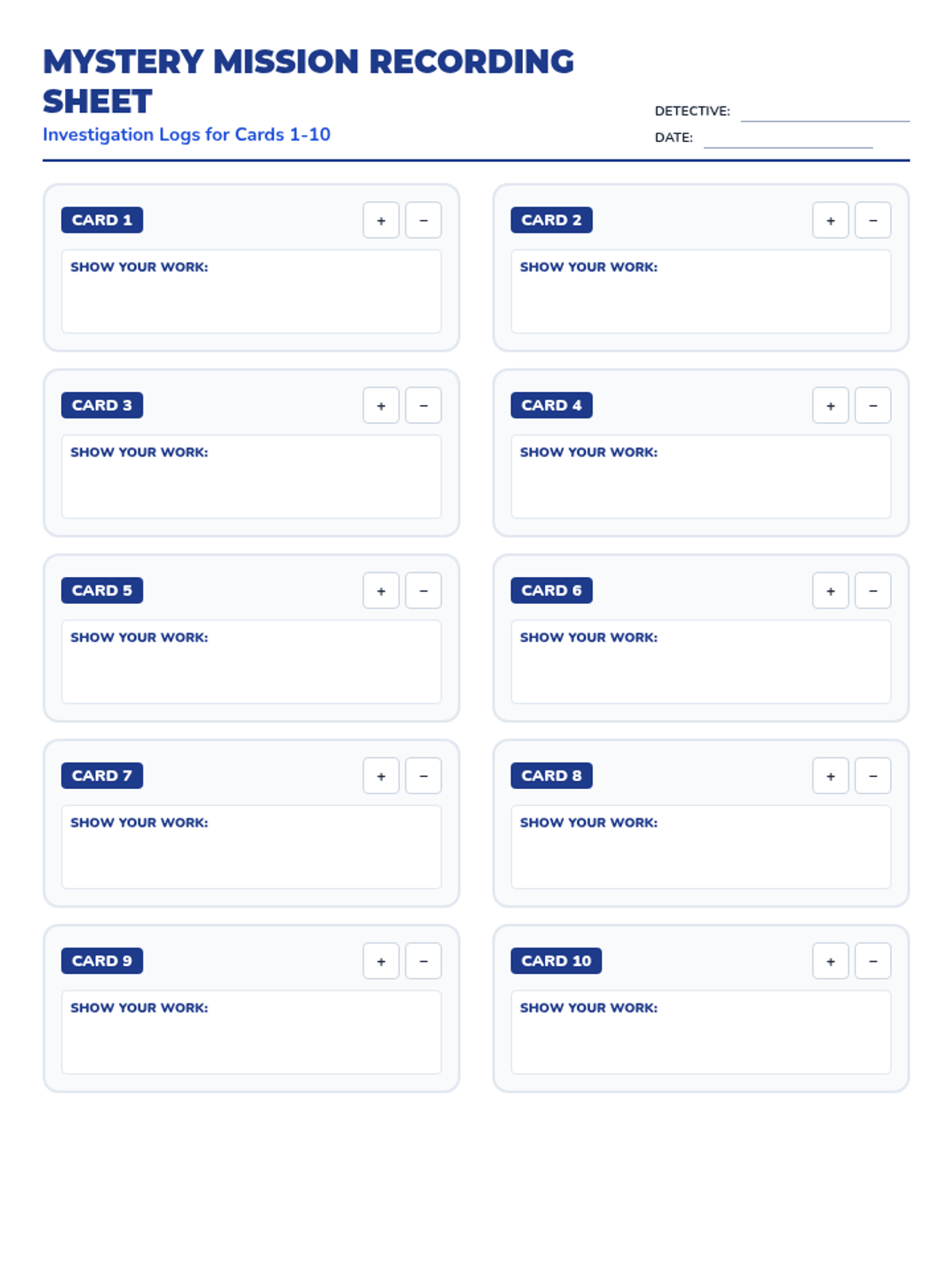
A student recording sheet for the Mystery Mission Task Cards (1-10), providing structured space for operation selection and computation for each problem.
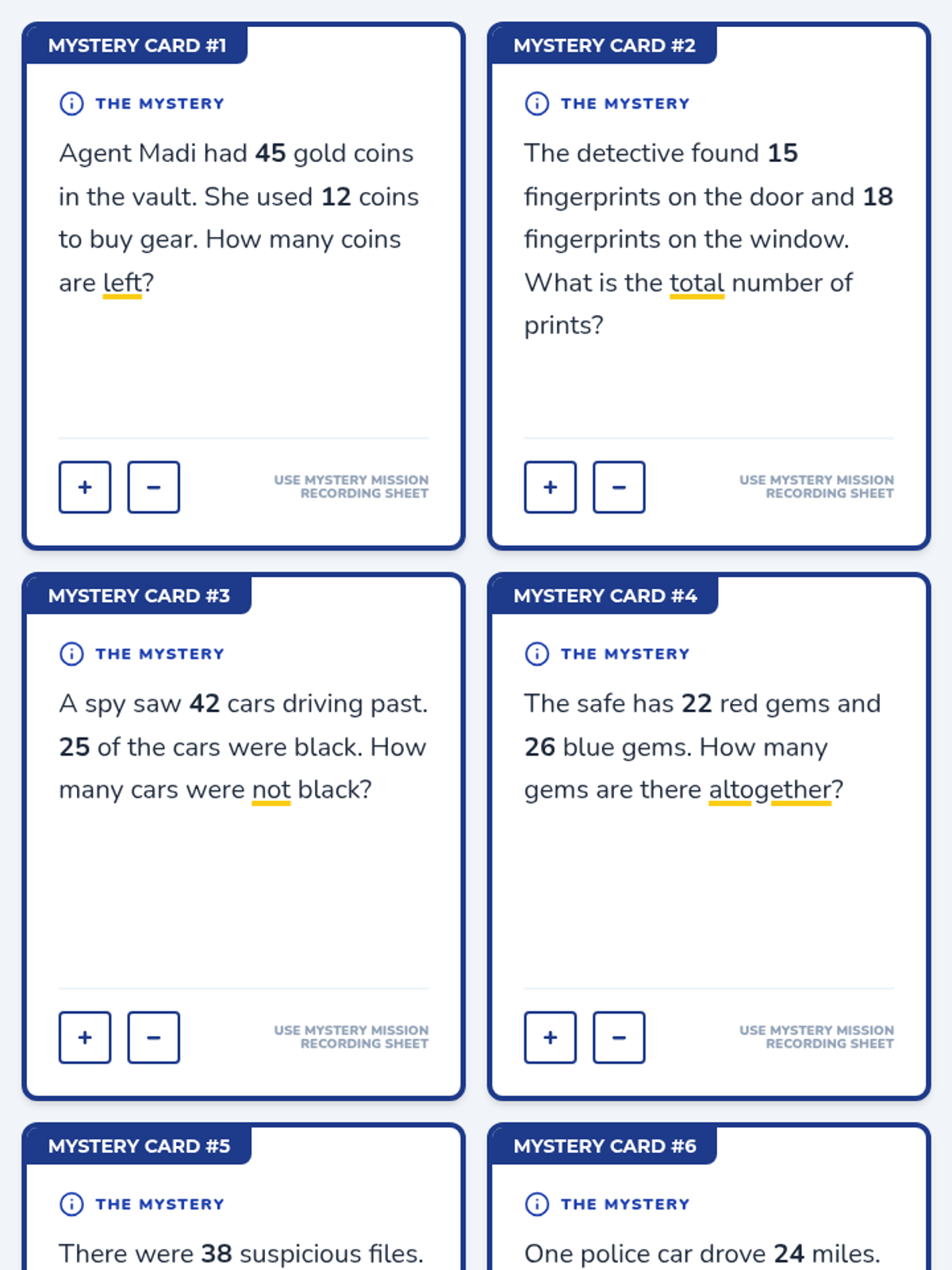
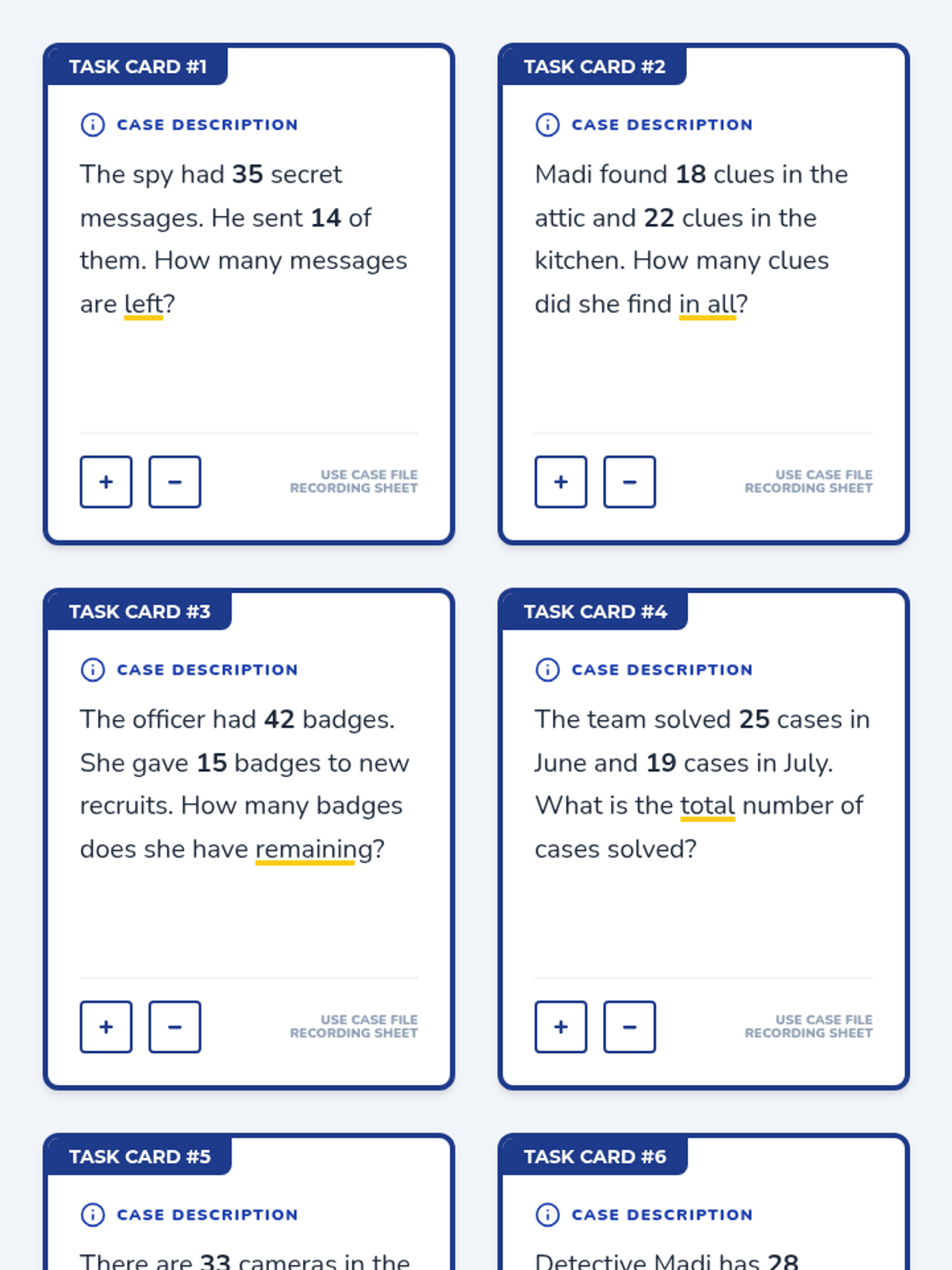
A second set of ten word problem task cards with a detective theme, providing additional practice for identifying operations and solving math problems within 50.
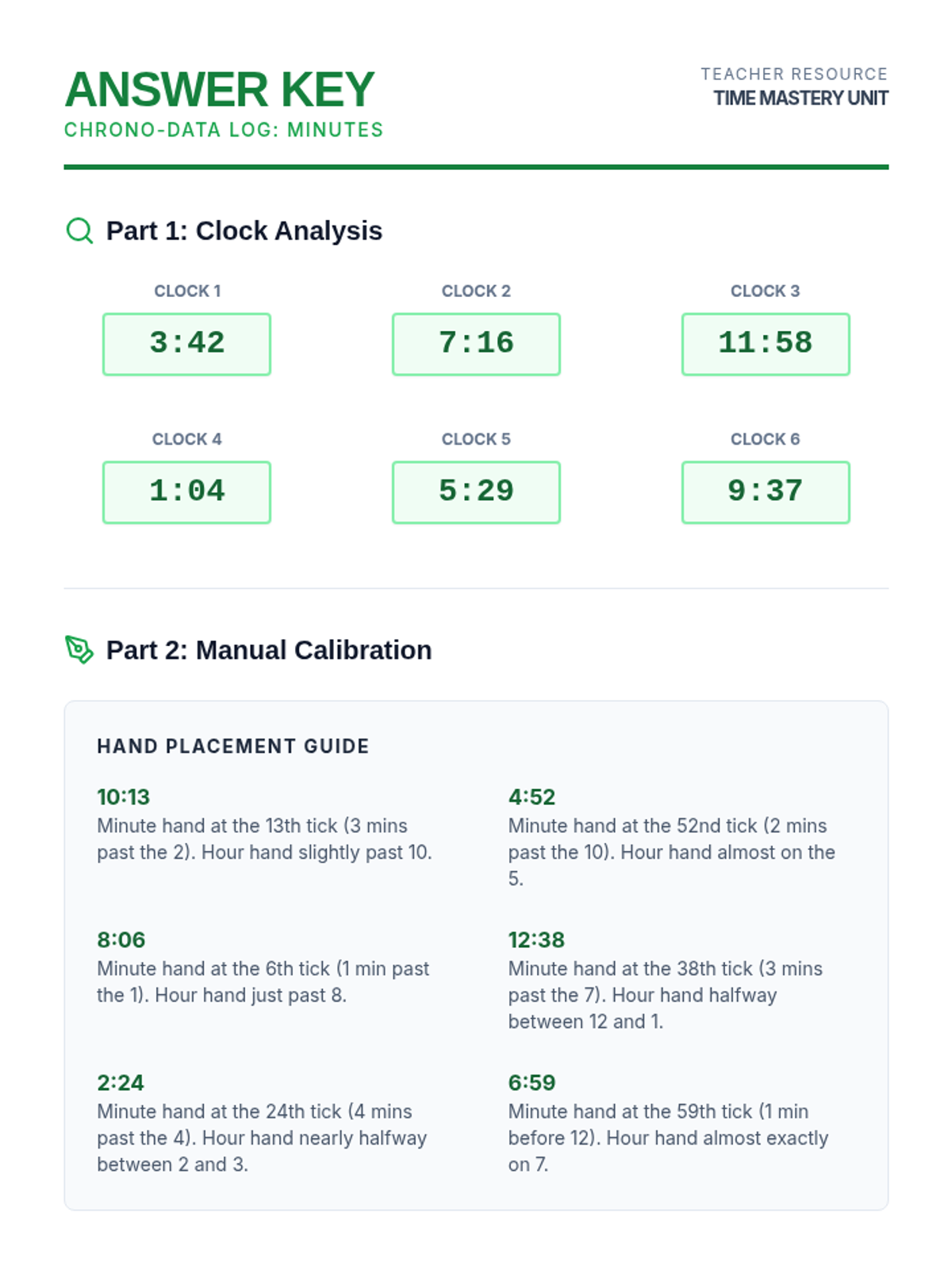
Teacher answer key for the Time Lab Worksheet, providing digital times for the reading section, specific tick-mark descriptions for hand placement, and solutions for word problems.
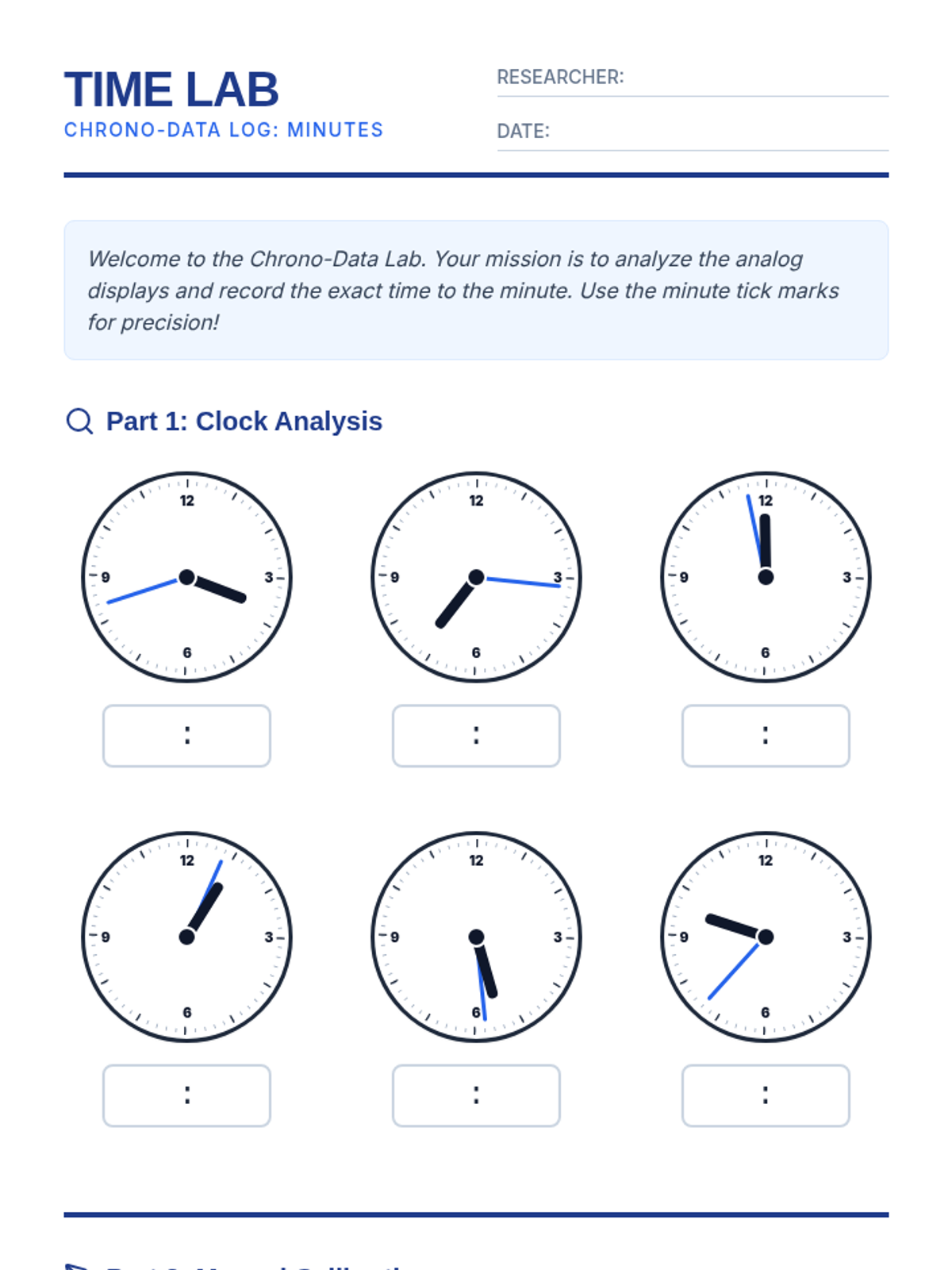
Revised Time Lab Worksheet with fixed page breaks, minute ticks for precision, and improved hand differentiation for better legibility.
A visual slide presentation to introduce the "Operation Detective" theme, teaching students how to identify addition and subtraction clue words in word problems.
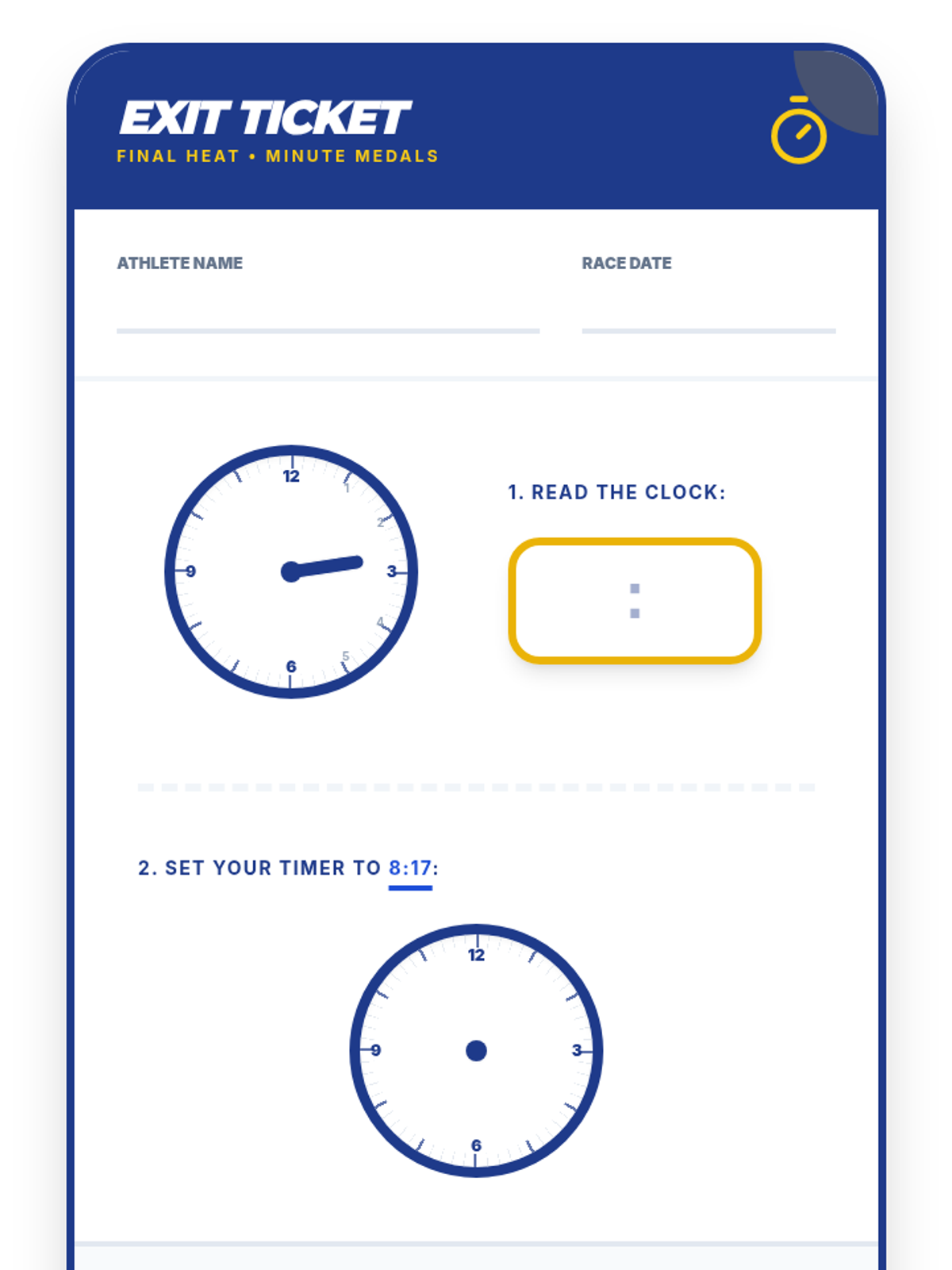
A brief exit ticket to assess student understanding of reading and setting analog clocks to the minute. Includes one reading problem and one hand-drawing problem, plus a student self-reflection section.
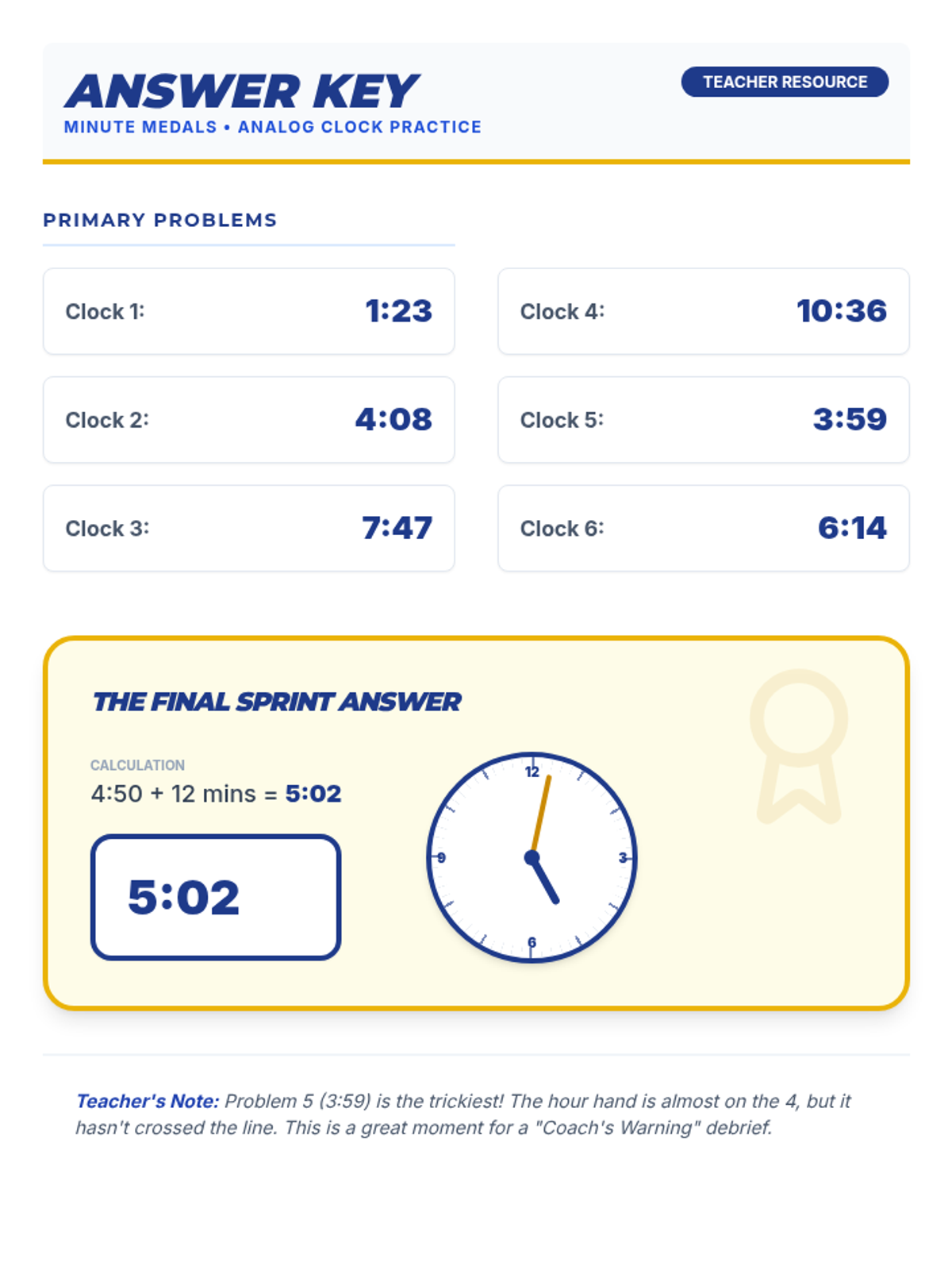
A clear, easy-to-use answer key for the Minute Medals Worksheet, including the solution to the "Final Sprint" challenge with both digital time and a clock hand diagram.
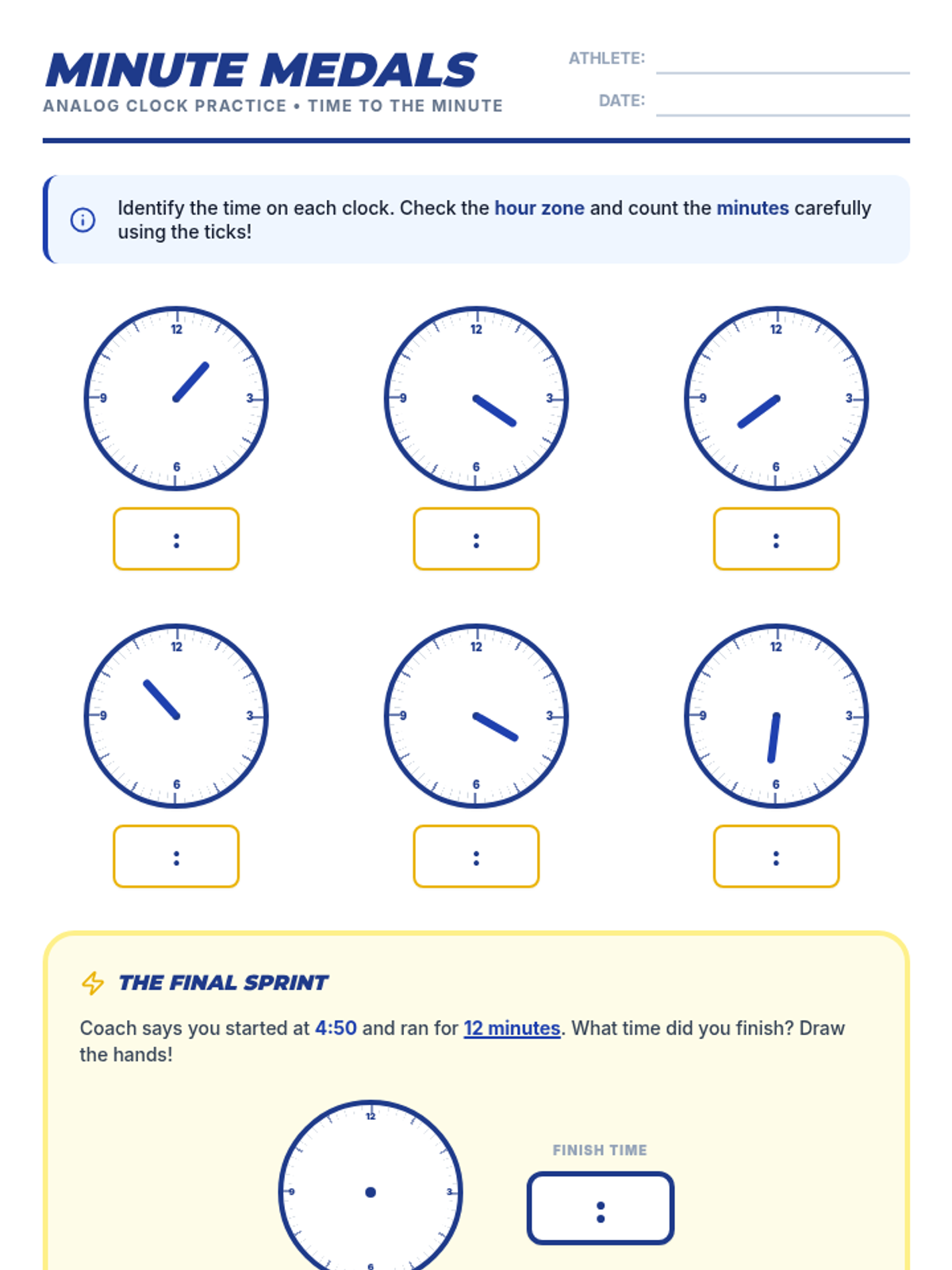
A student practice worksheet featuring six analog clocks with specific times to the minute for students to read and record. Includes a "Final Sprint" challenge question involving simple elapsed time.
A visually engaging slide presentation for teaching time to the minute. Features sports-themed graphics, clear instructional steps (Skip Counting and Counting On), and practice examples to build student confidence.
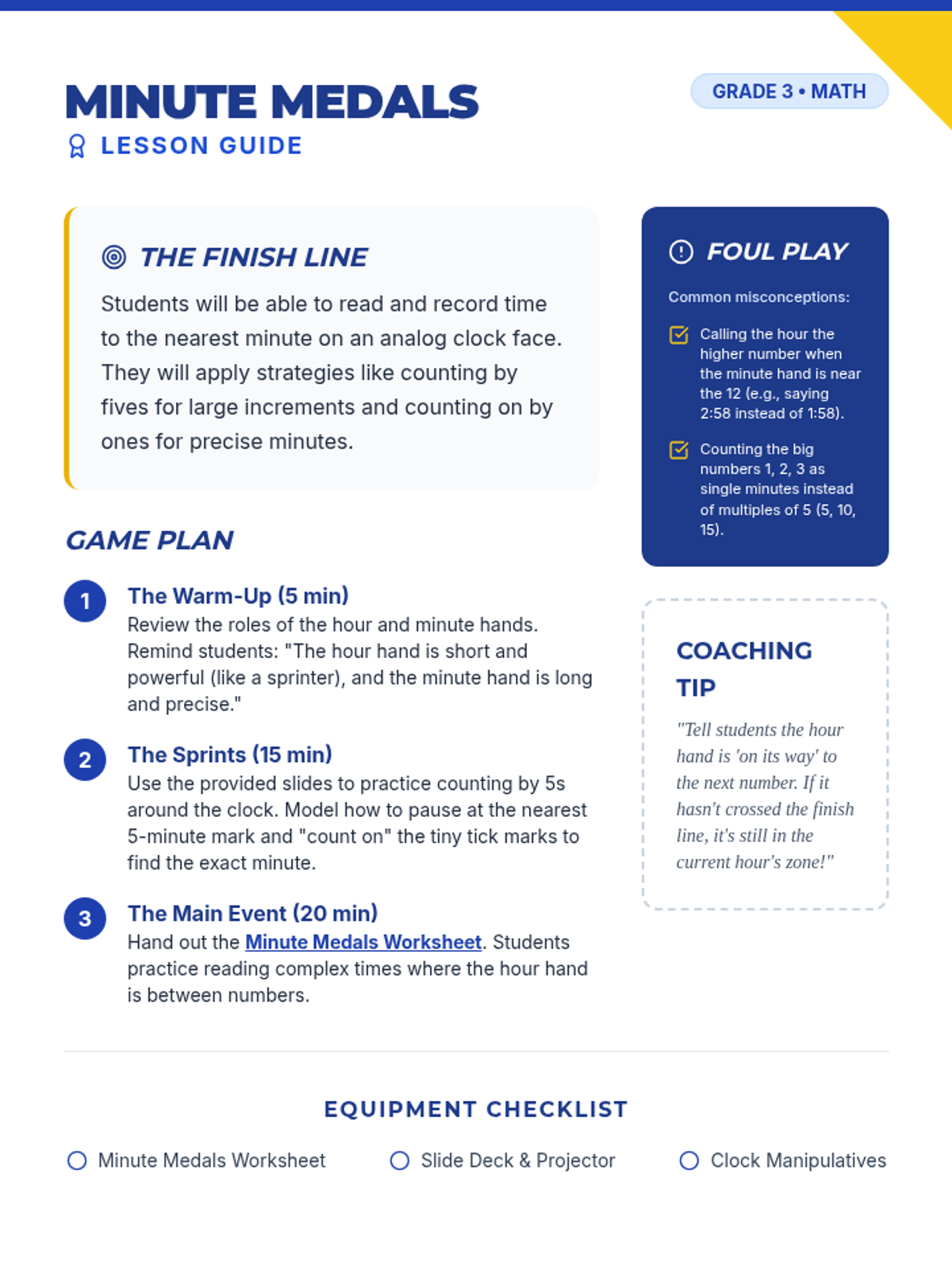
A detailed lesson guide for teachers, including instructional flow, common student misconceptions, vocabulary, and differentiation strategies for teaching time to the minute.
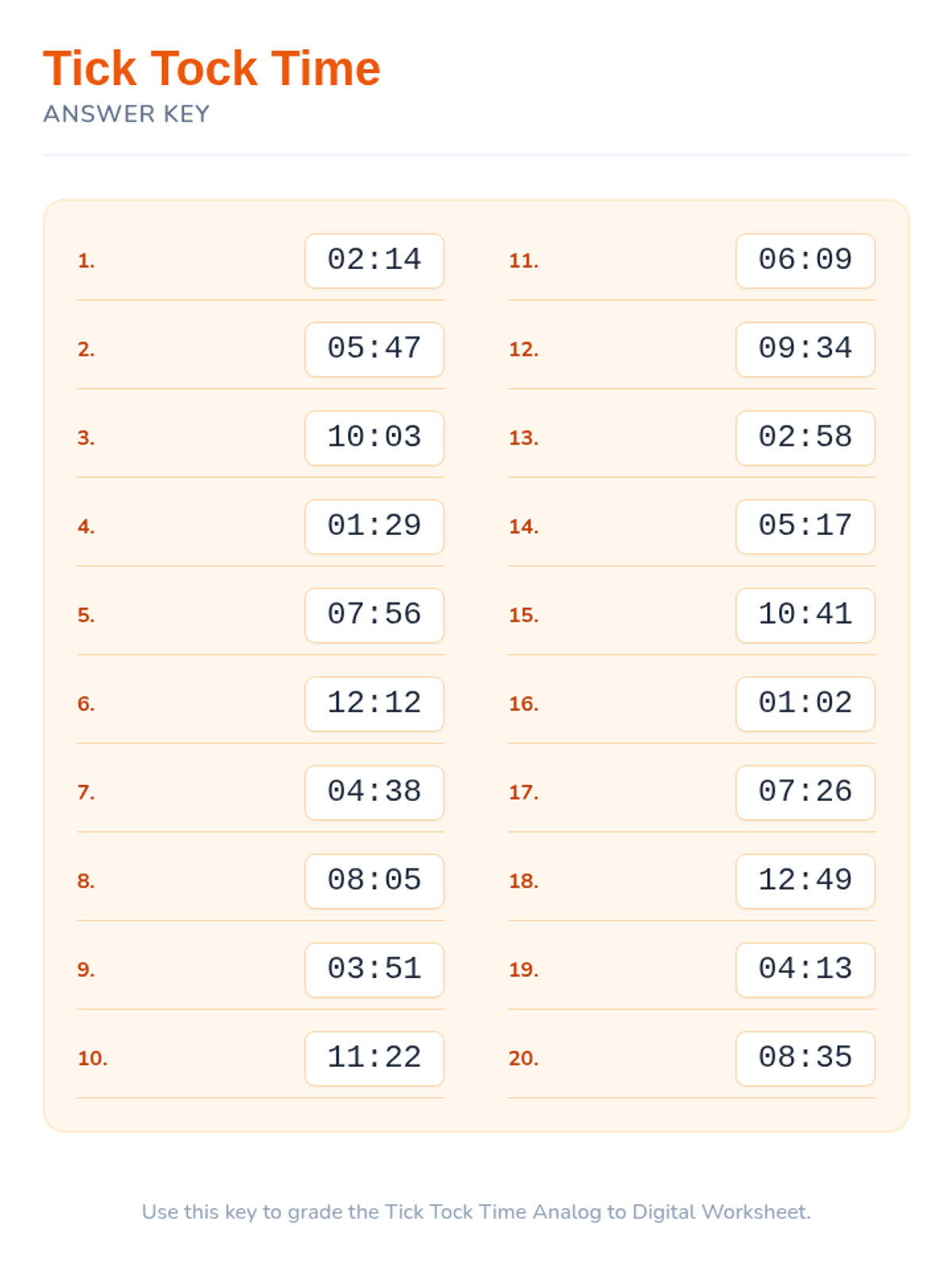
Teacher's answer key for the Tick Tock Time Worksheet, listing the 20 digital times corresponding to the analog clocks.
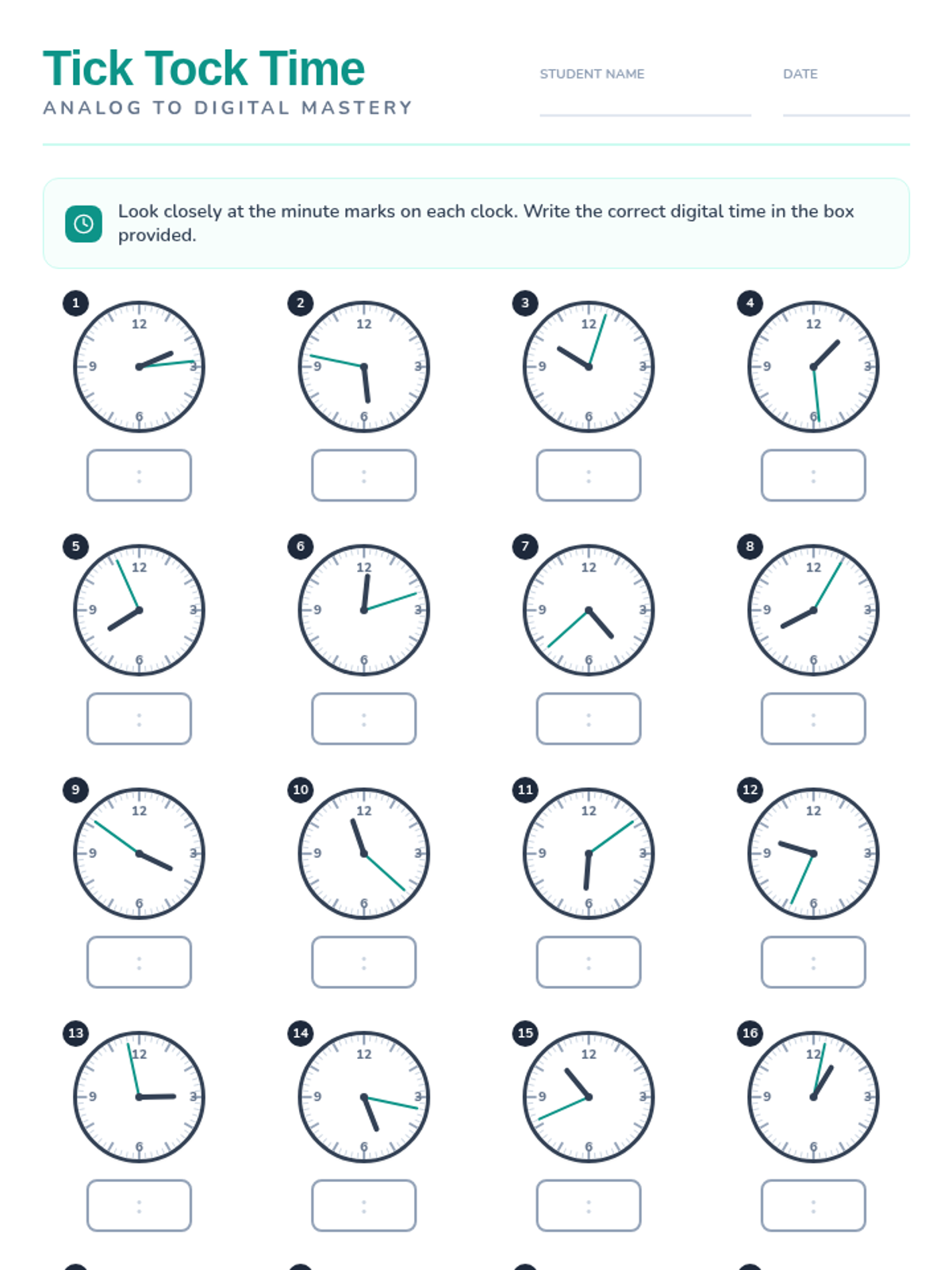
A clean, modern worksheet featuring 20 analog clock faces with clear minute marks and hour numbers for precise time reading practice.
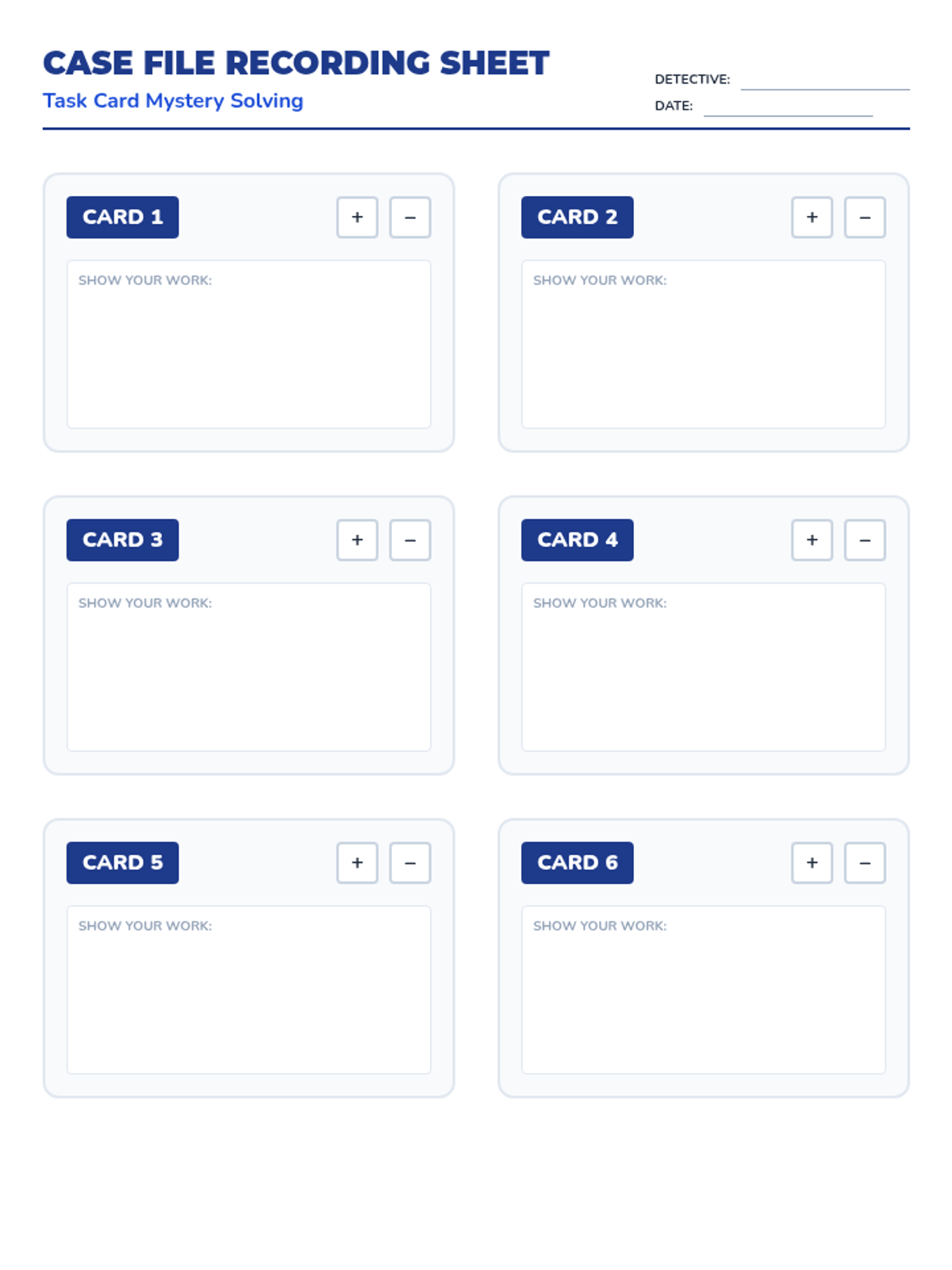
A student recording sheet to be used with the Case File Task Cards, providing designated areas for operation selection and calculation.
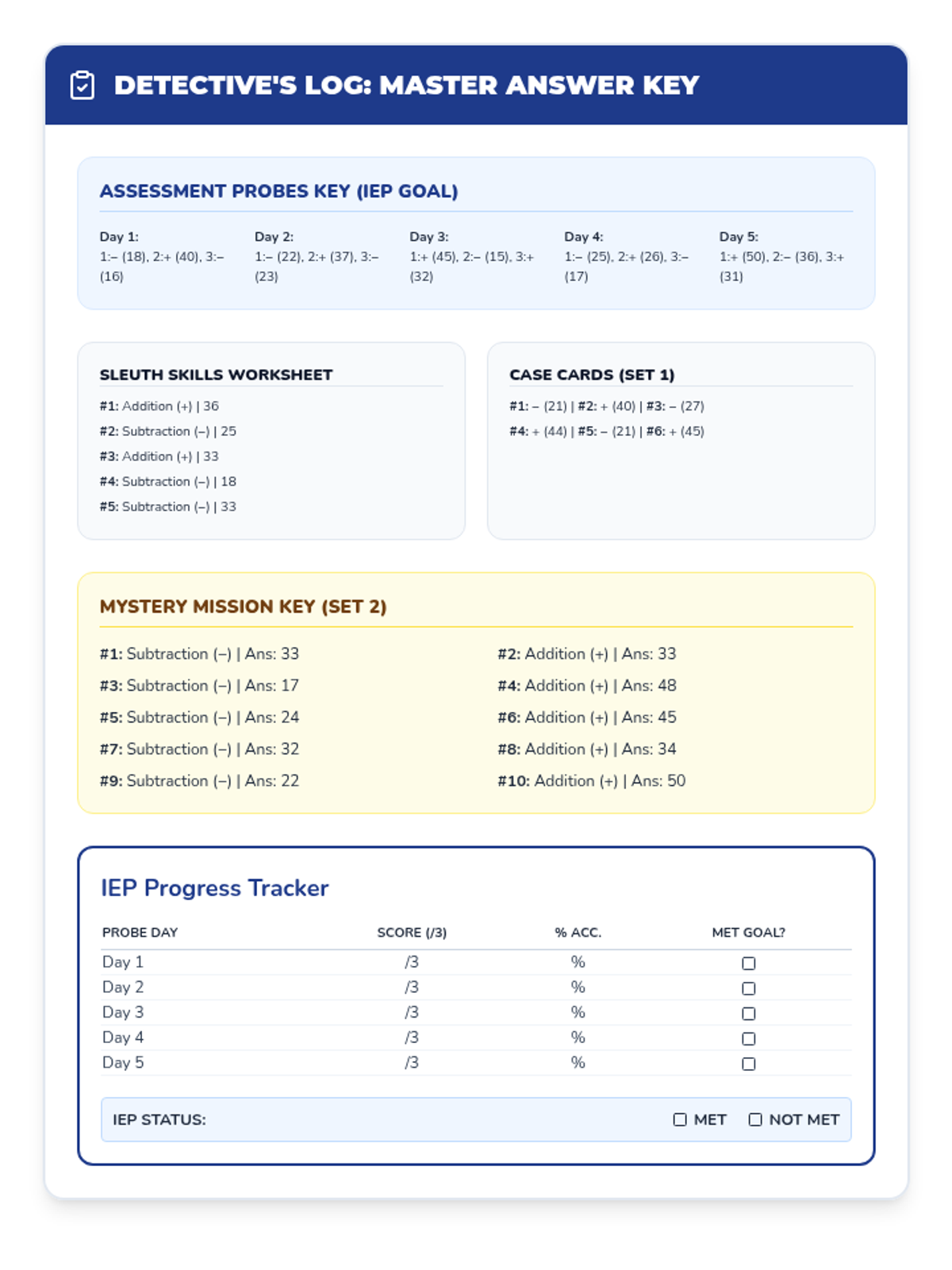
A comprehensive answer key and progress tracking sheet for the teacher, updated to include answers for the new Mystery Mission Task Cards and maintain IEP goal tracking.
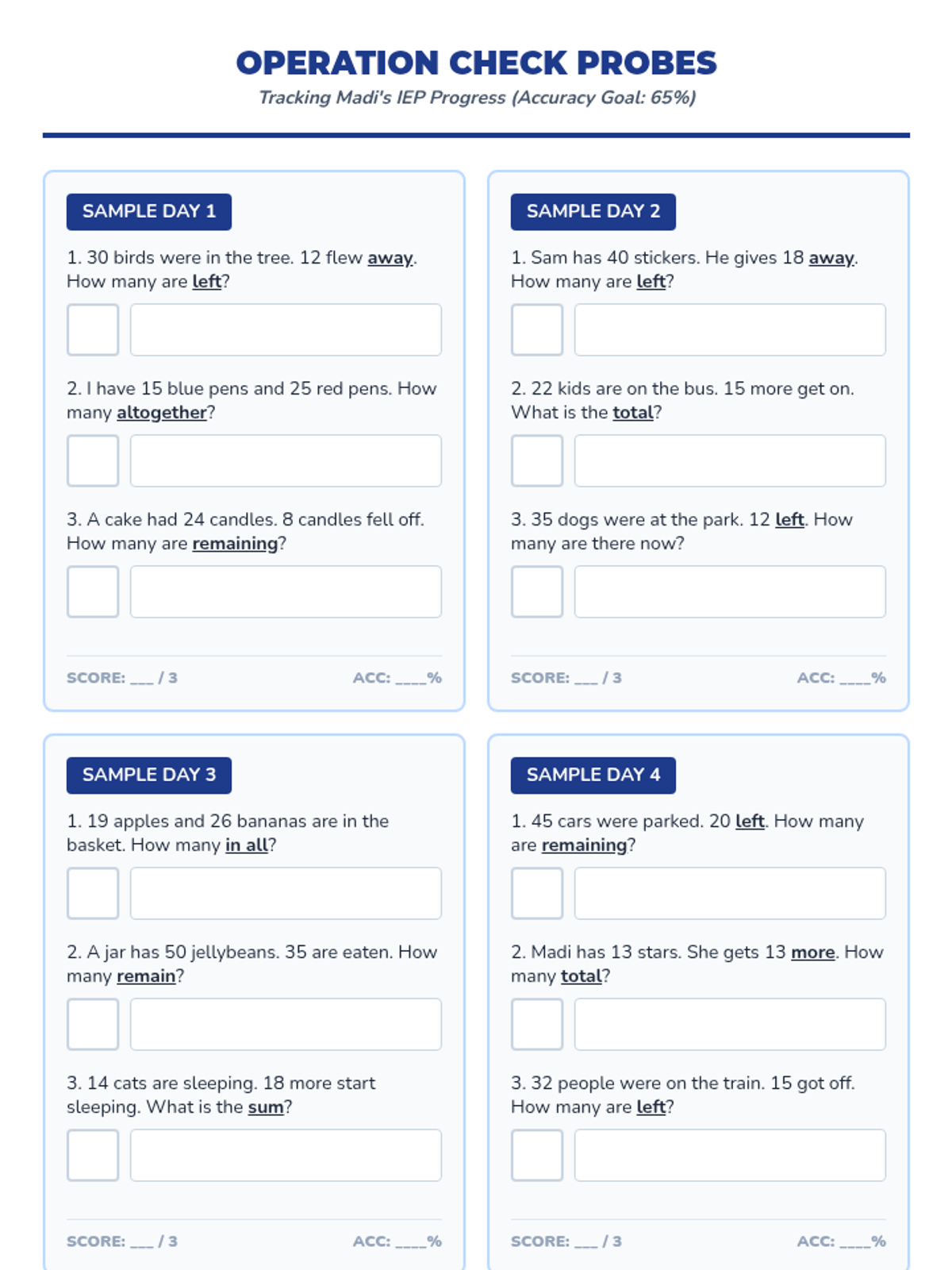
A set of five daily assessment probes designed to track Madi's progress toward her IEP goal of 65% accuracy in operation identification.
Hand-on word problem task cards with a detective theme for Madi to practice identifying operations in small groups or independent centers.
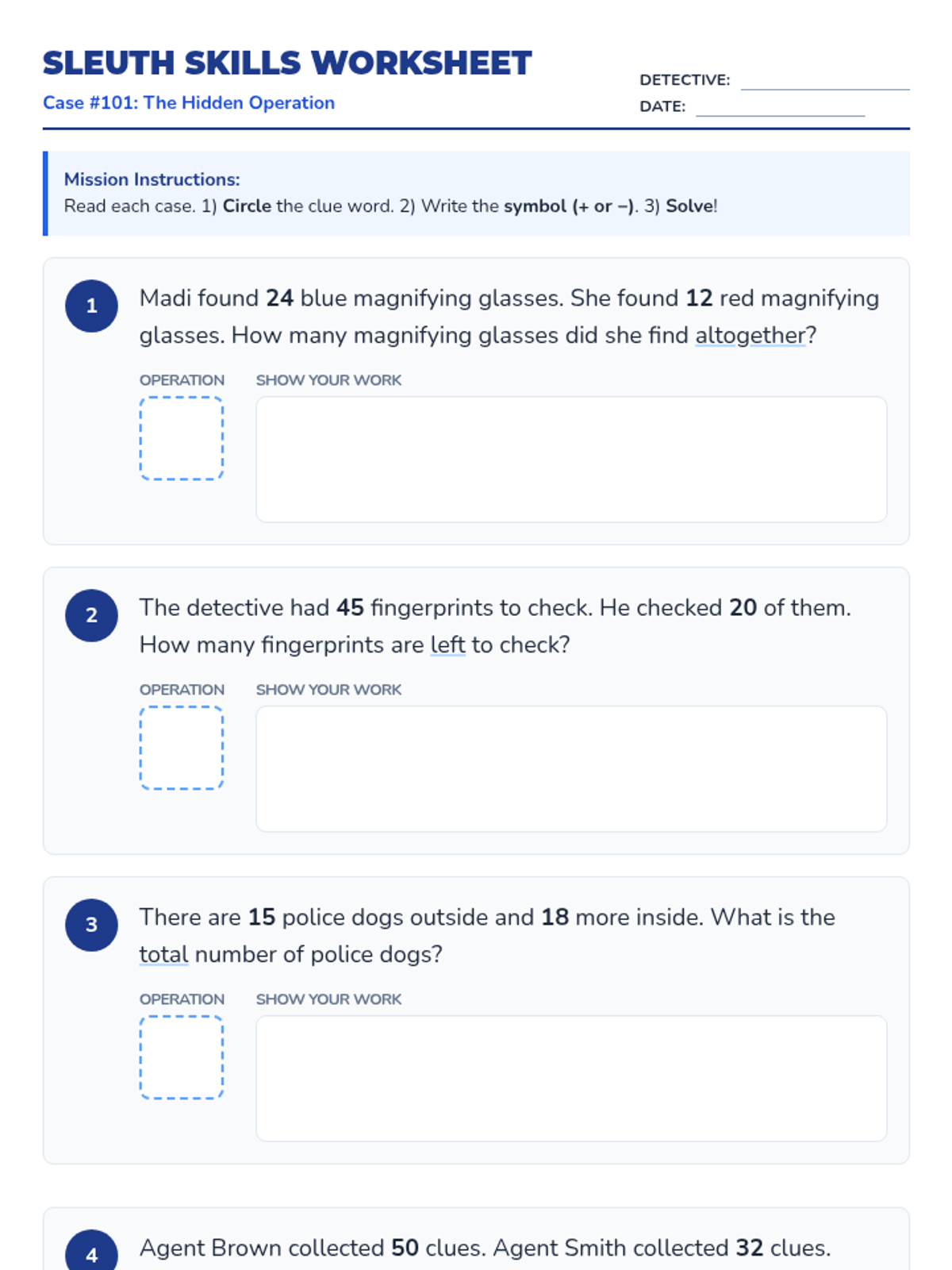
A math worksheet for Madi to practice identifying operations and solving word problems within 50, featuring clear "show your work" boxes and operation selection areas.
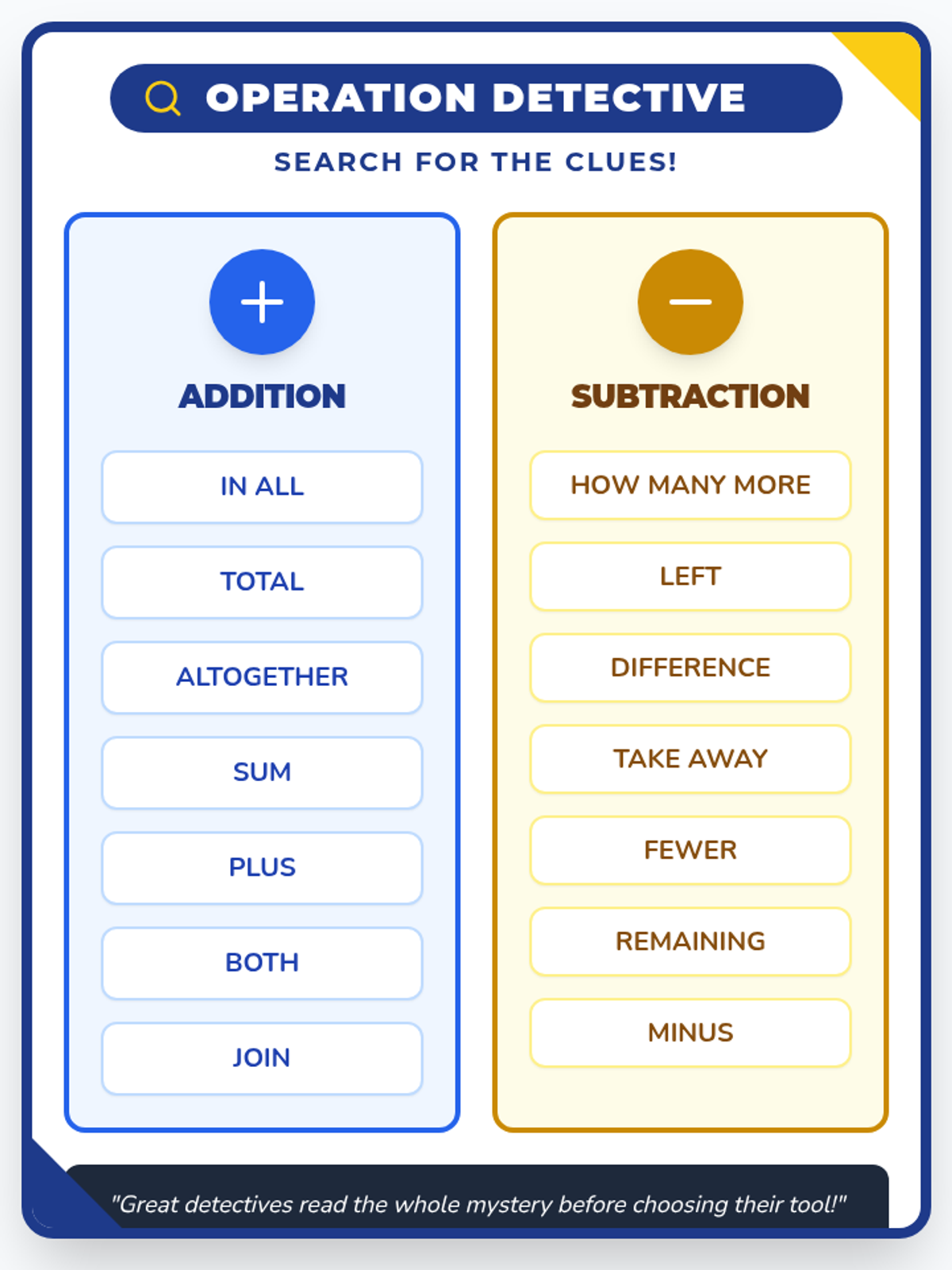
A visual anchor chart for Madi to use as a reference, highlighting key addition and subtraction vocabulary words with a detective theme.
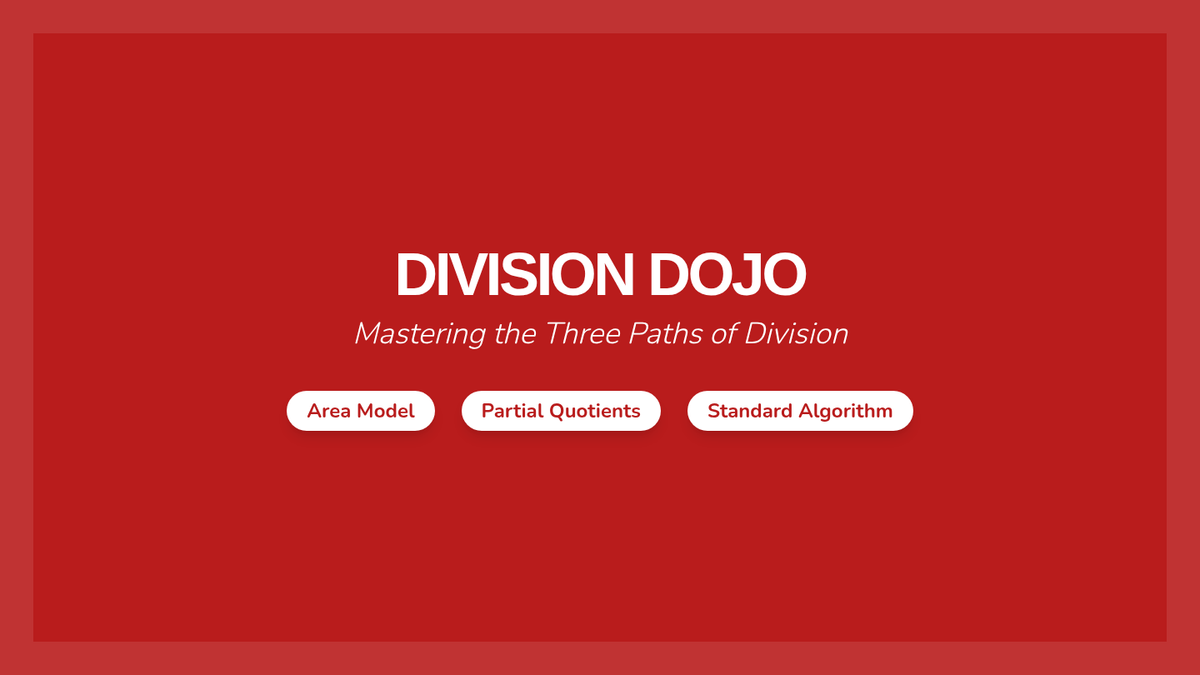
A comprehensive slide deck for teaching 4th-grade long division using the Area Model, Partial Quotients, and Standard Algorithm. Includes a warm-up, guided practice, independent ninja problems, and a full answer key.
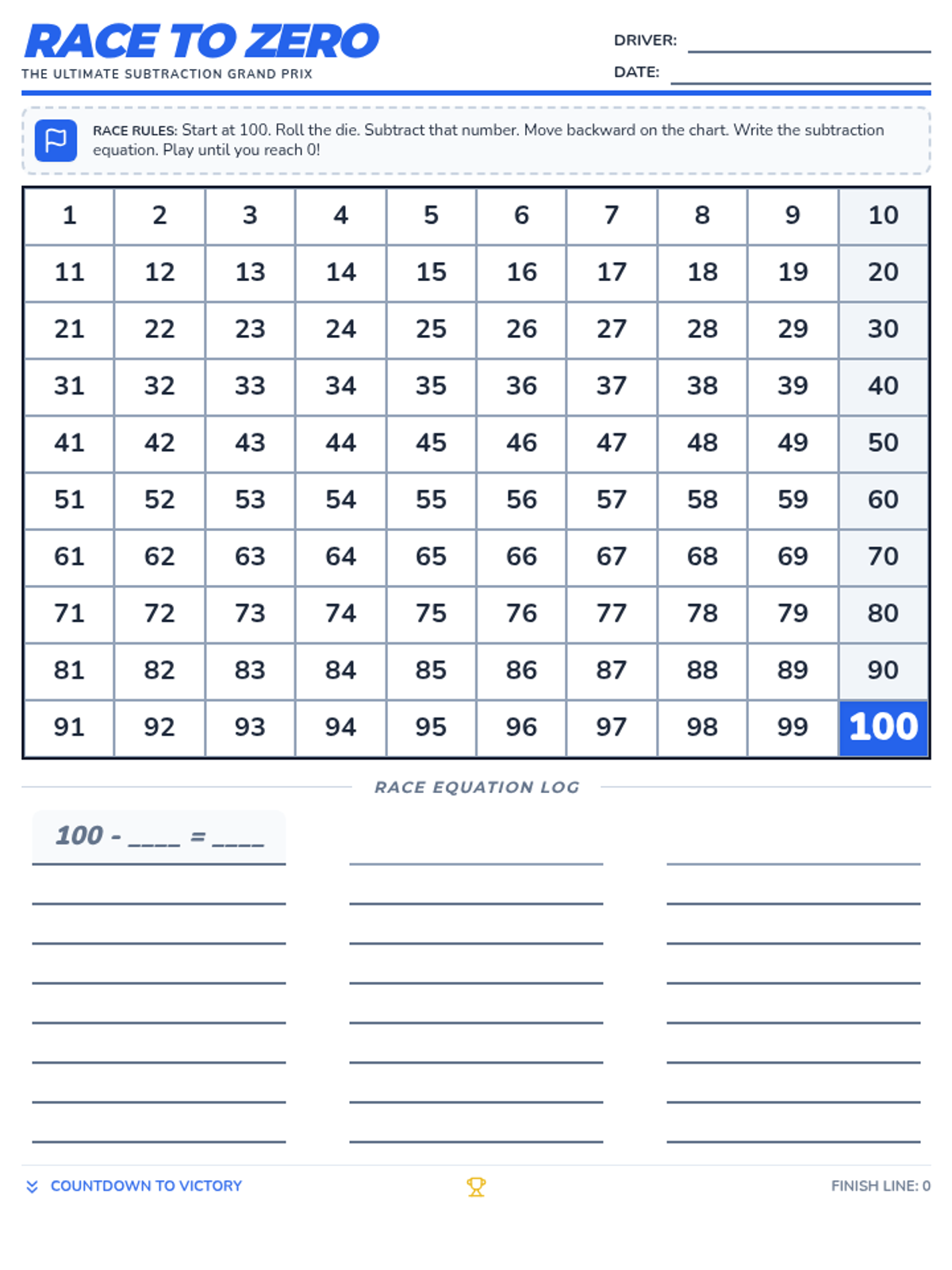
A racing-themed 'Race to Zero' game board where students start at 100 and subtract dice rolls to reach 0. It features a standard 100 chart (1-100) with darkened grid lines (slate-400) and equation lines (slate-500) for high-quality printing and photocopying. The trophy is perfectly centered in the footer.
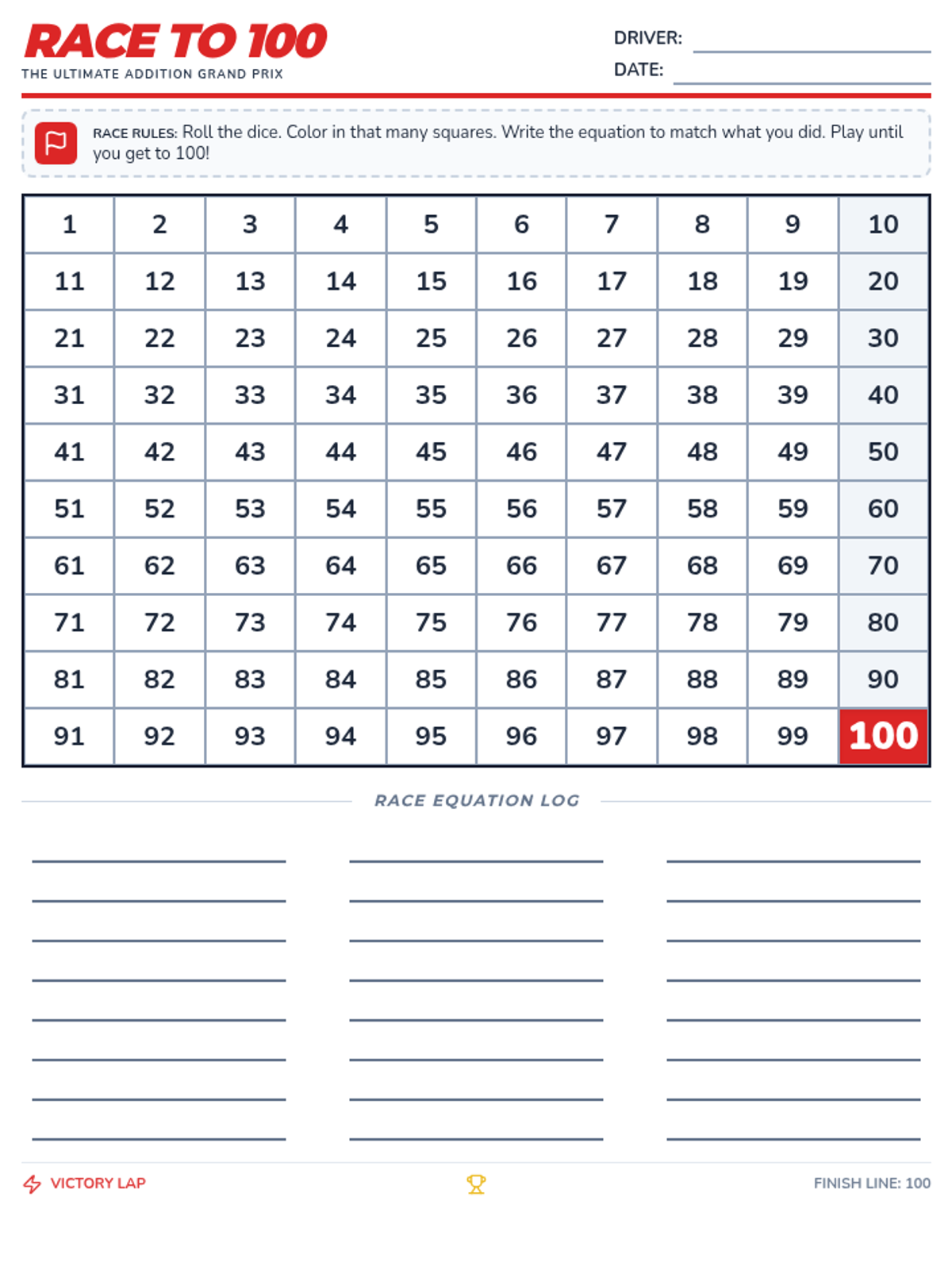
A racing-themed 'Race to 100' game board with a maximized 100 chart and ultra-slim 0.15-inch margins. This version features high-contrast numbers and darkened grid lines (slate-400) and equation lines (slate-500) to ensure high-quality printing and photocopying.
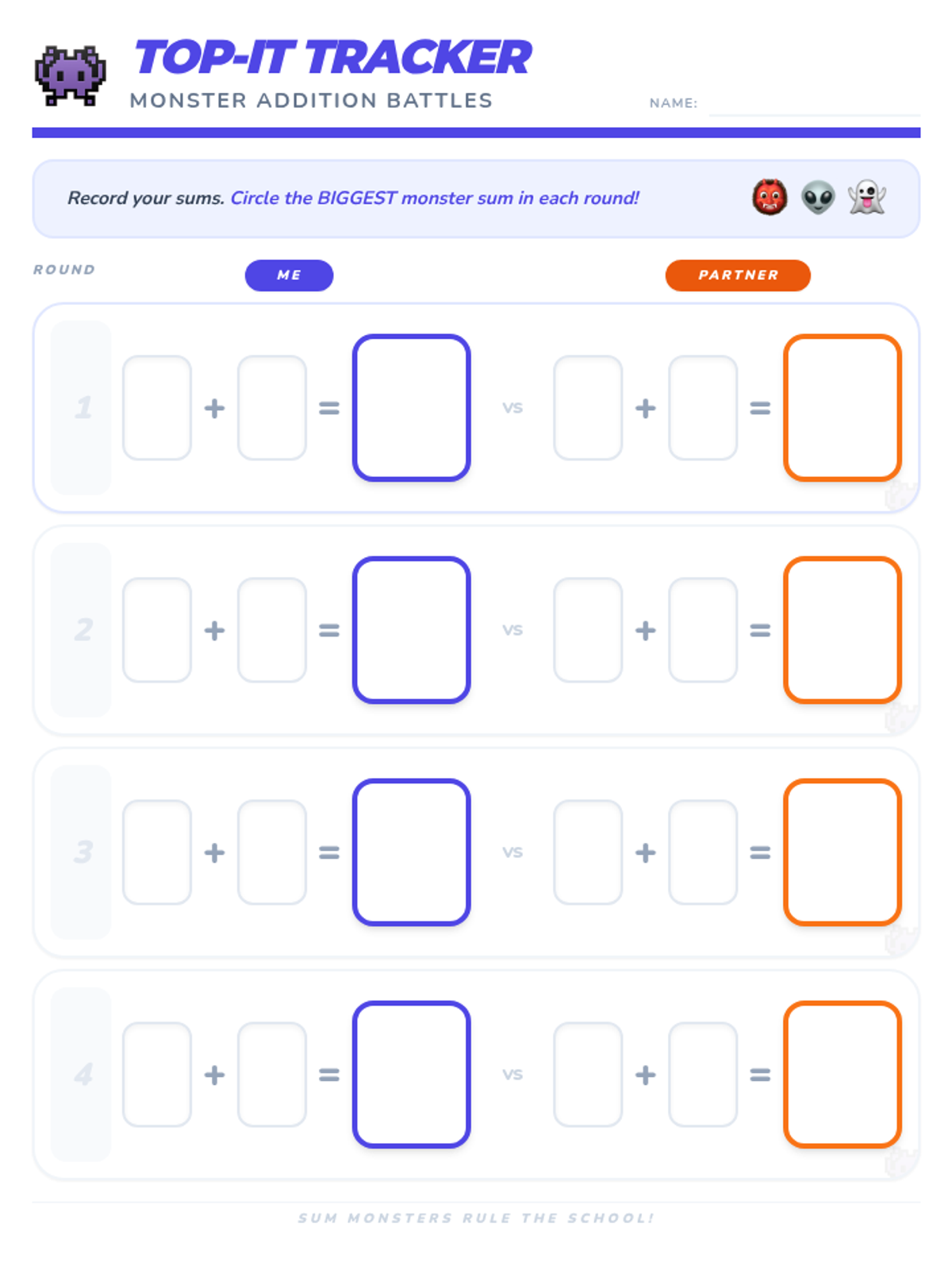
A student recording sheet for the Top-It addition game, redesigned to allow two players to record and compare their sums on a single page.
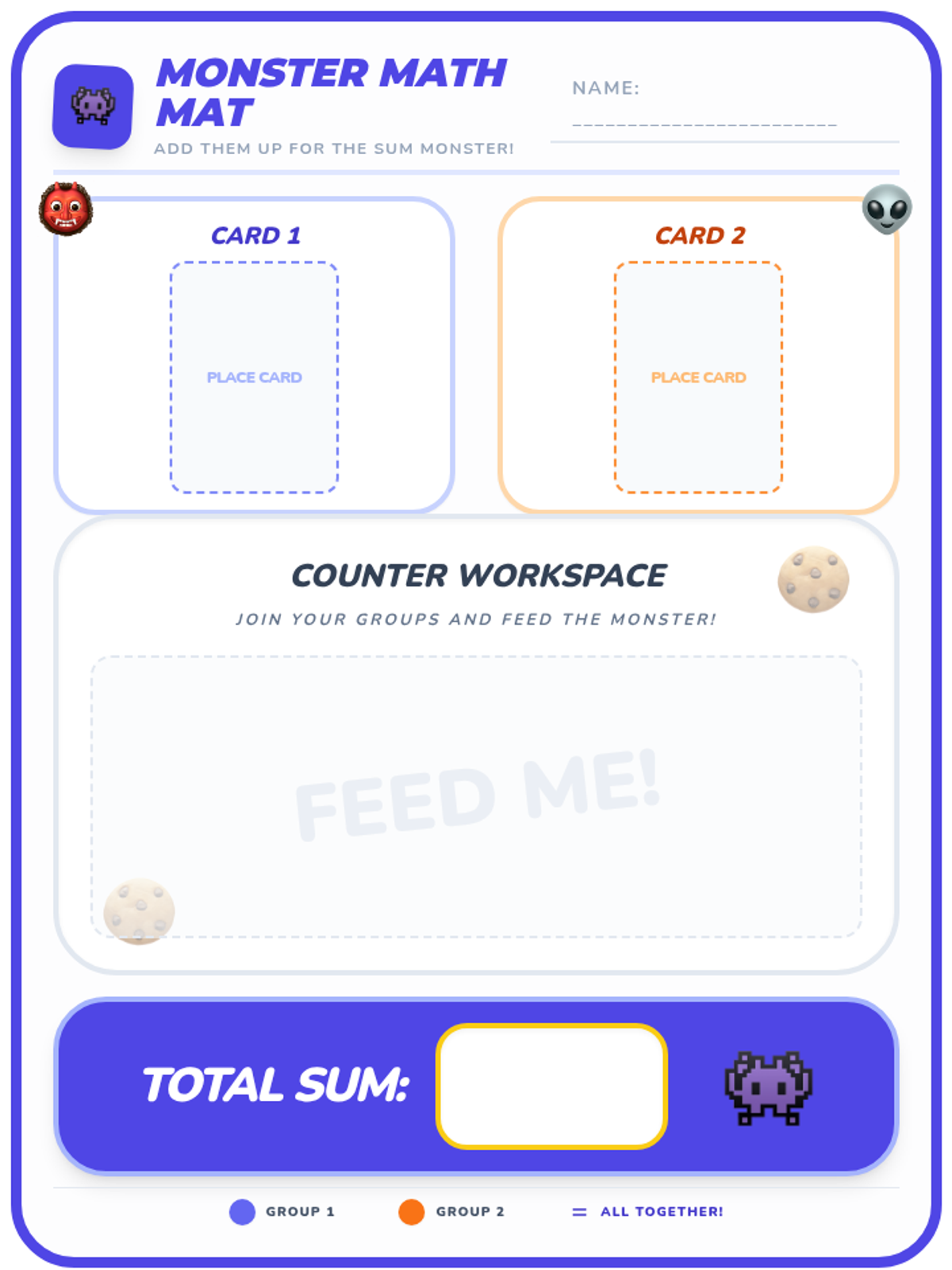
A printable math mat for students to organize their cards and counters during Top-It gameplay, featuring designated zones for two cards and a large counter workspace.
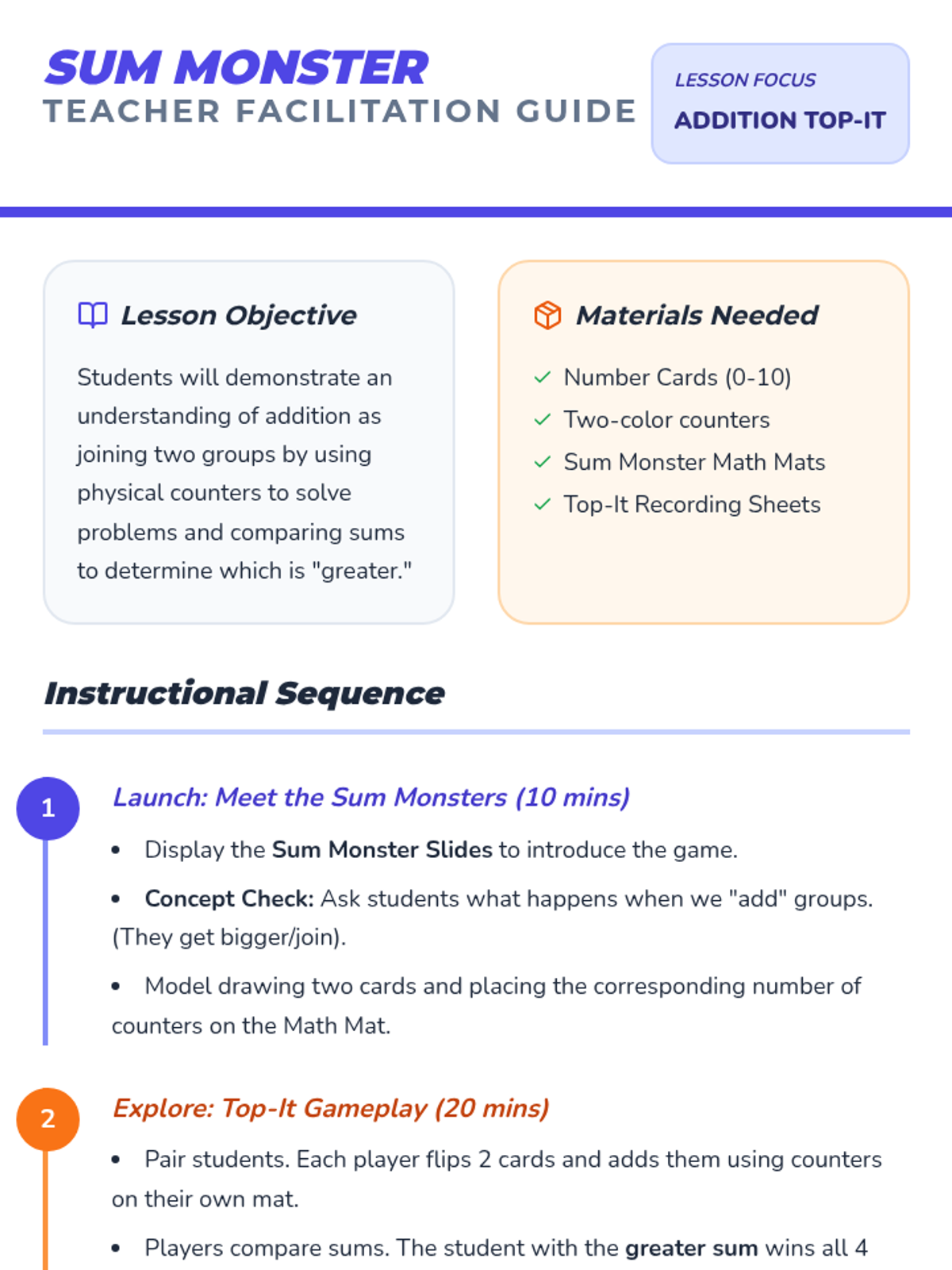
A comprehensive teacher guide for facilitating the Addition Top-It game, including step-by-step instructions, discussion prompts, and differentiation strategies for kindergarten learners.
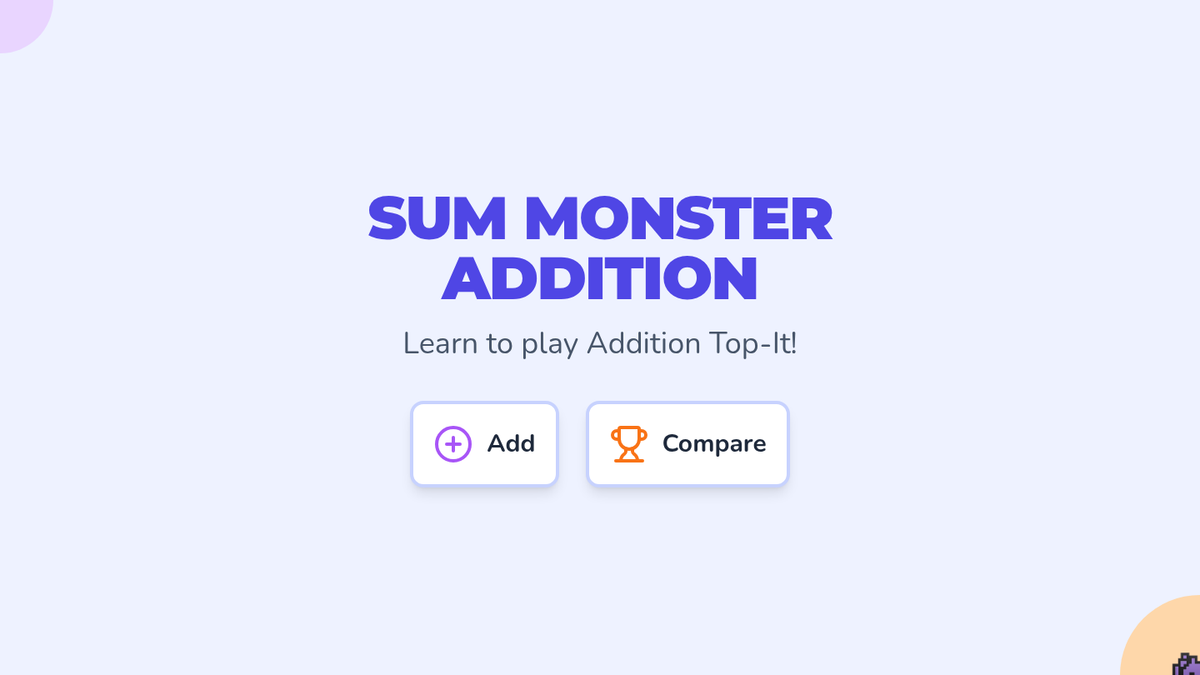
A vibrant slide deck introducing the Top-It addition game to kindergarteners, featuring friendly 'Sum Monsters' and clear visual steps for using counters to add and compare numbers.
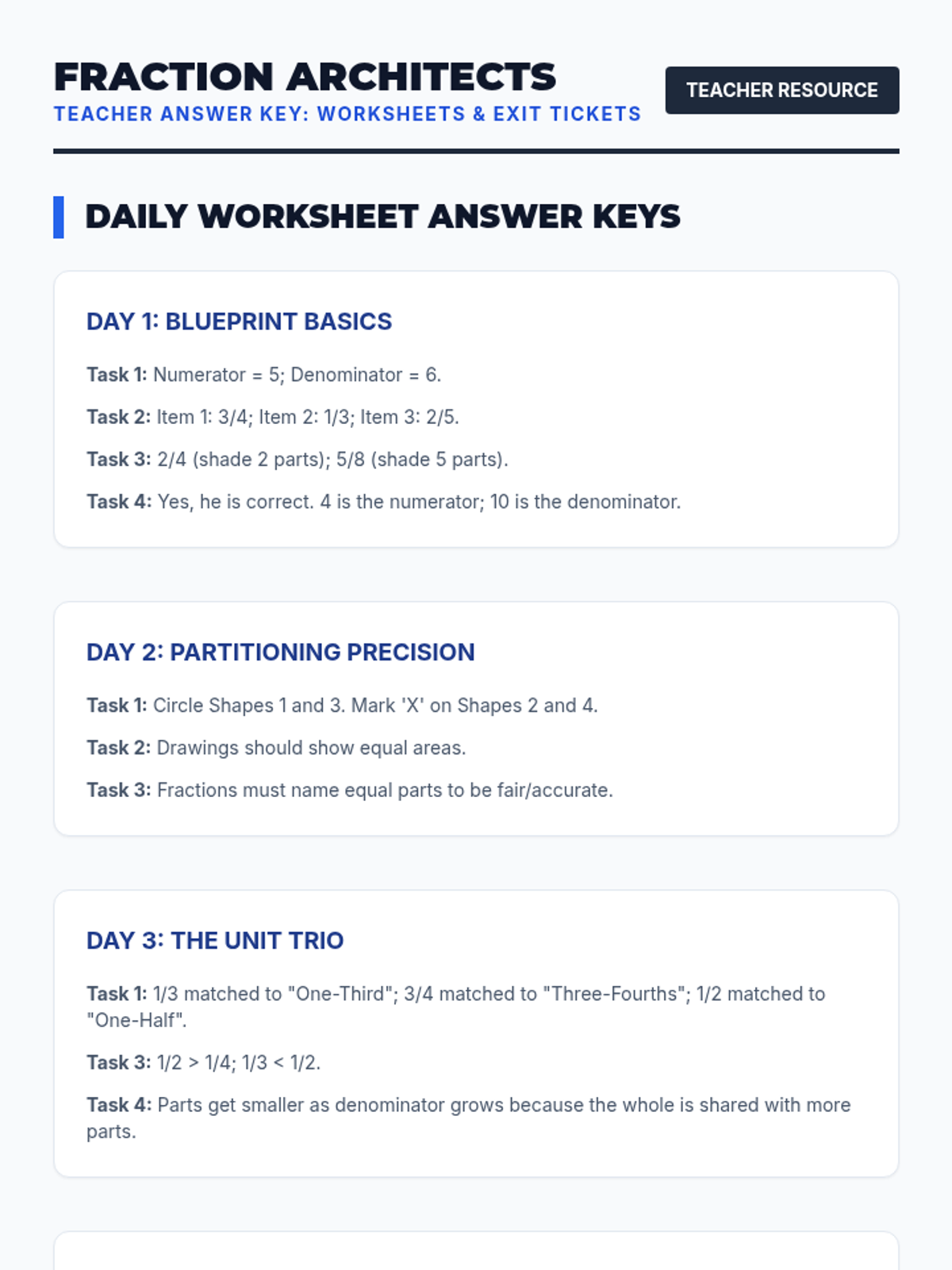
A comprehensive teacher answer key providing solutions for all 5 daily worksheets and exit tickets in the Fraction Architects unit. Updated to include answers for the new 2-question EOG-style exit tickets.
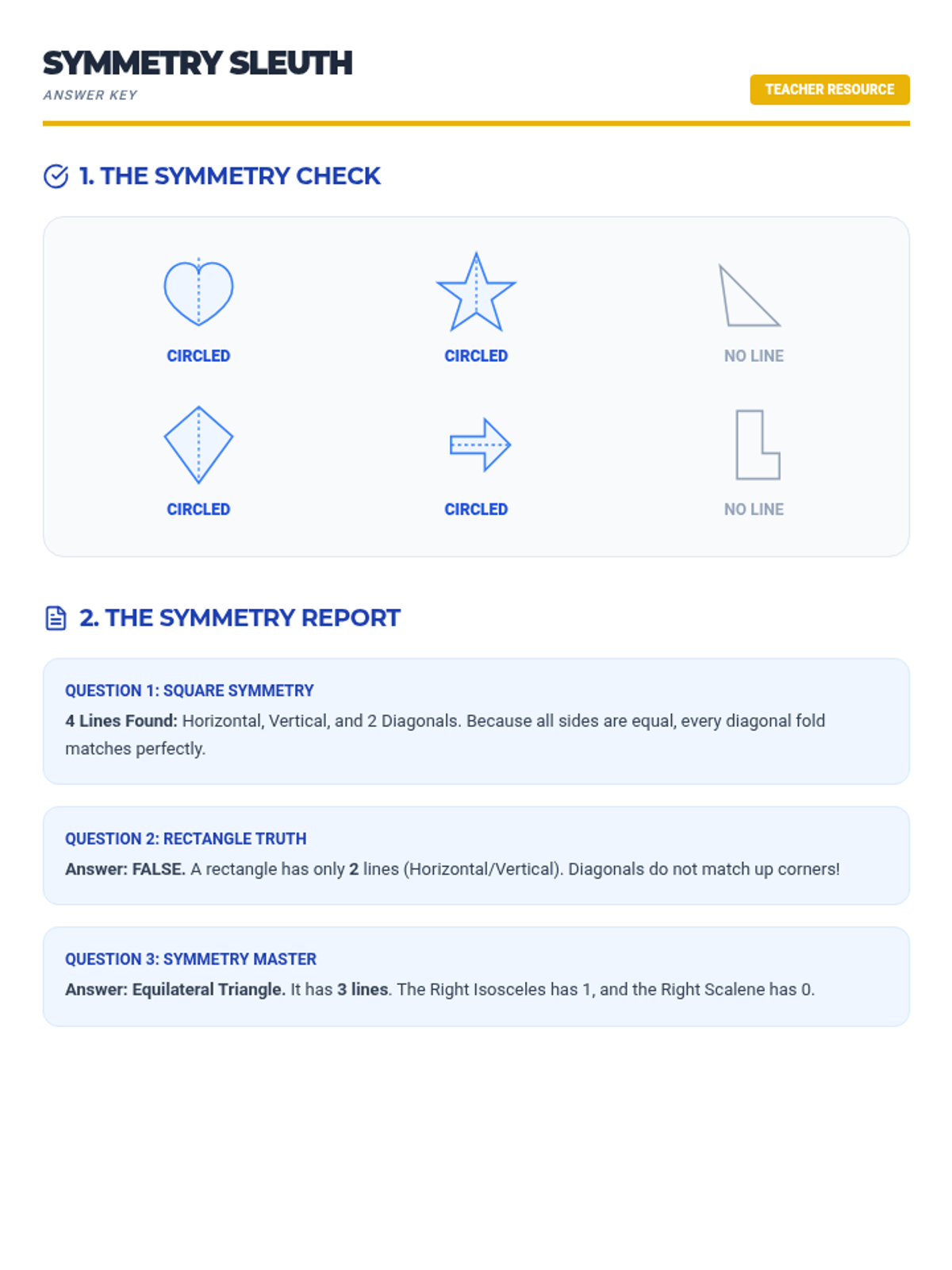
The teacher answer key for the Symmetry Sleuth worksheet, providing solutions and explanations for identifying and drawing lines of symmetry.
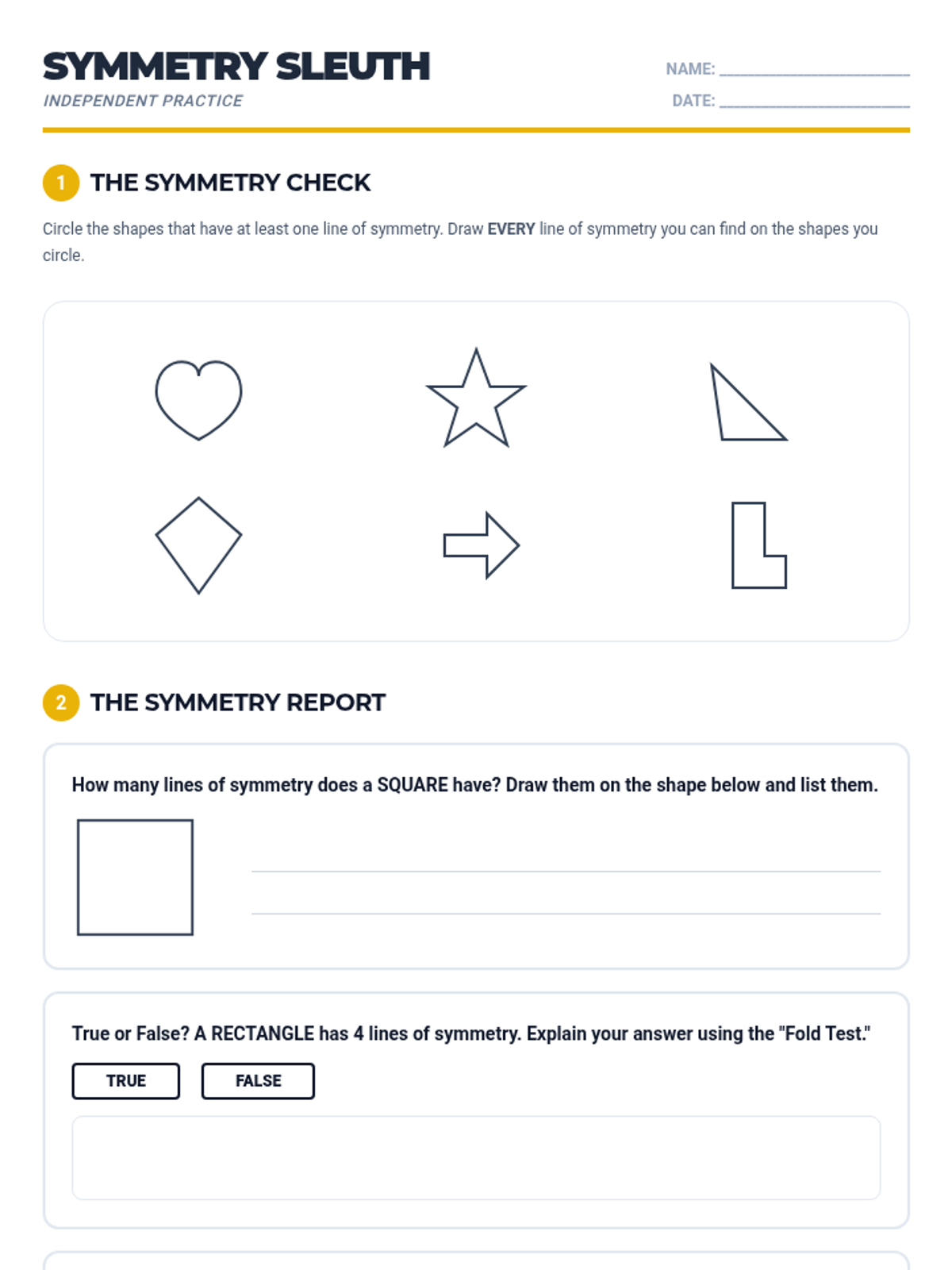
A practice worksheet for students to identify and draw lines of symmetry in various shapes, including common objects and geometric figures.
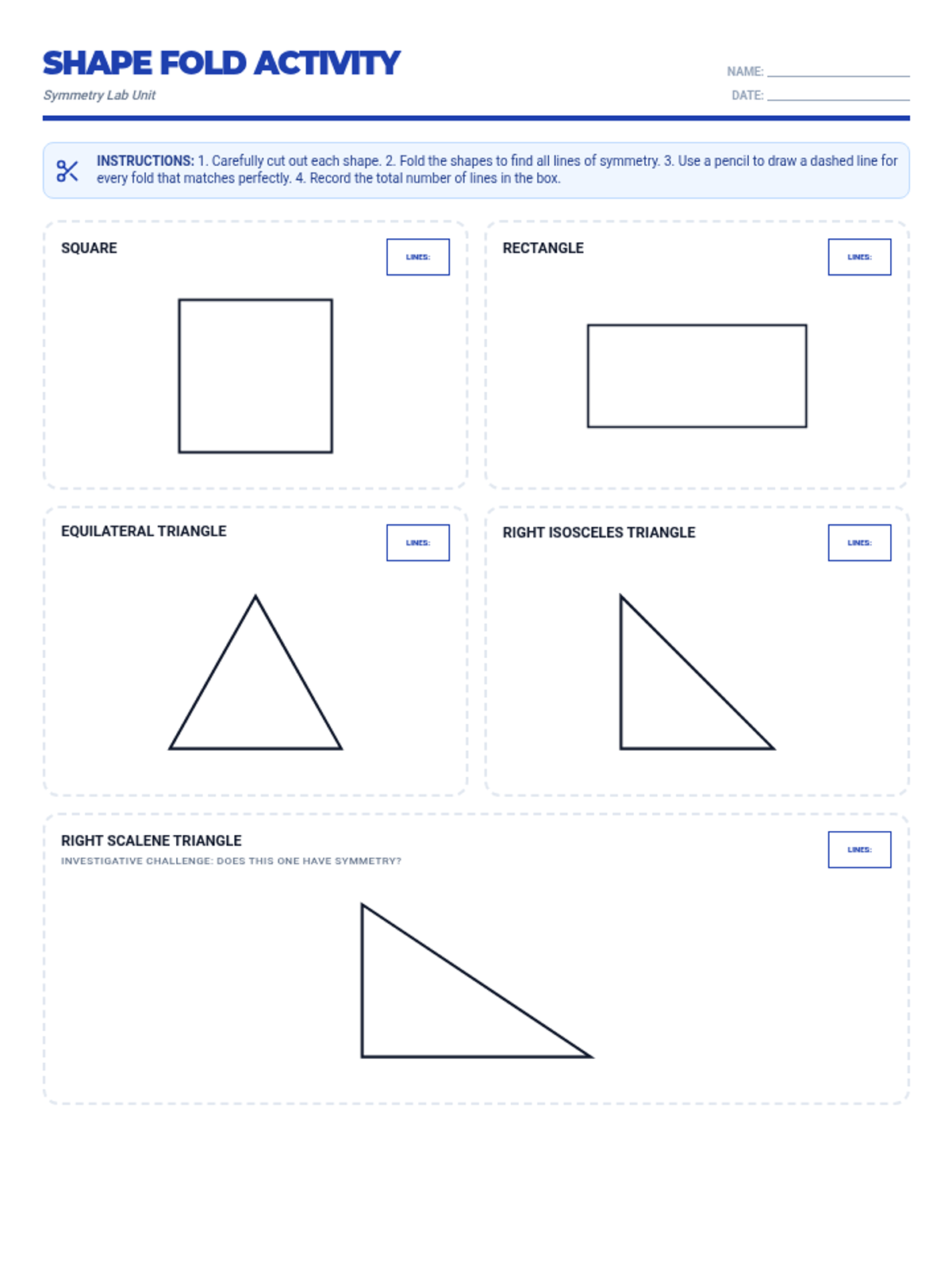
A hands-on activity sheet featuring various geometric shapes for students to cut out and fold to discover lines of symmetry.
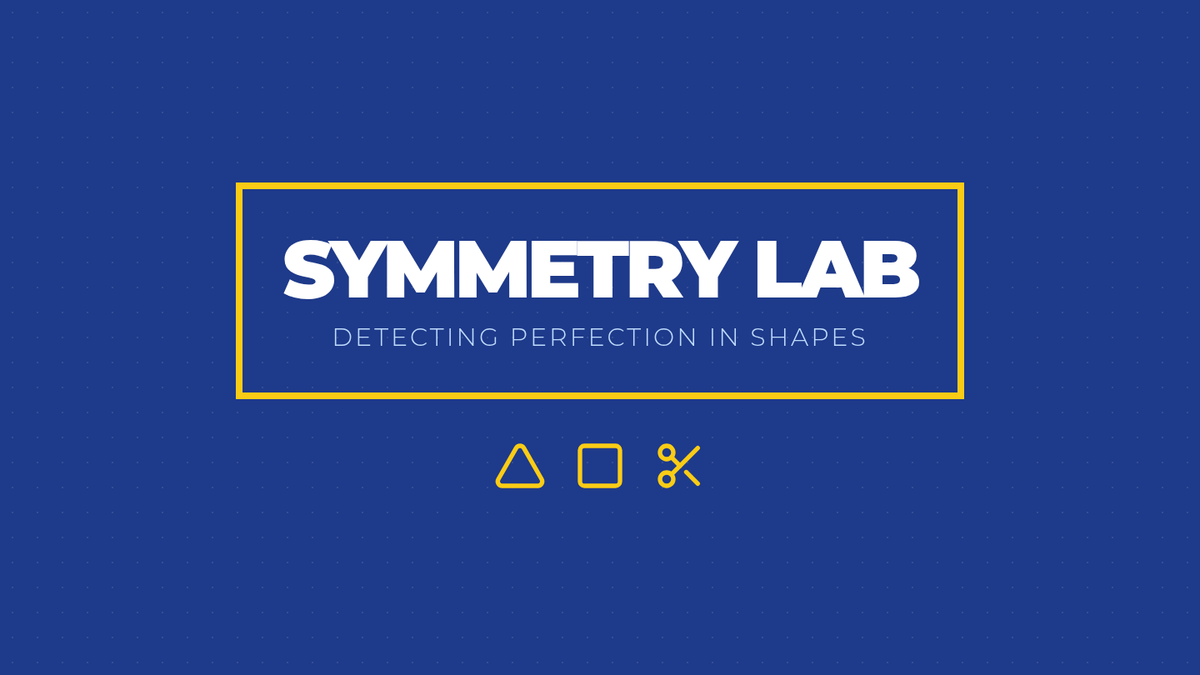
An engaging visual presentation for the Symmetry Lab lesson, featuring definitions, the 'fold test', and introductions to the shapes being investigated.
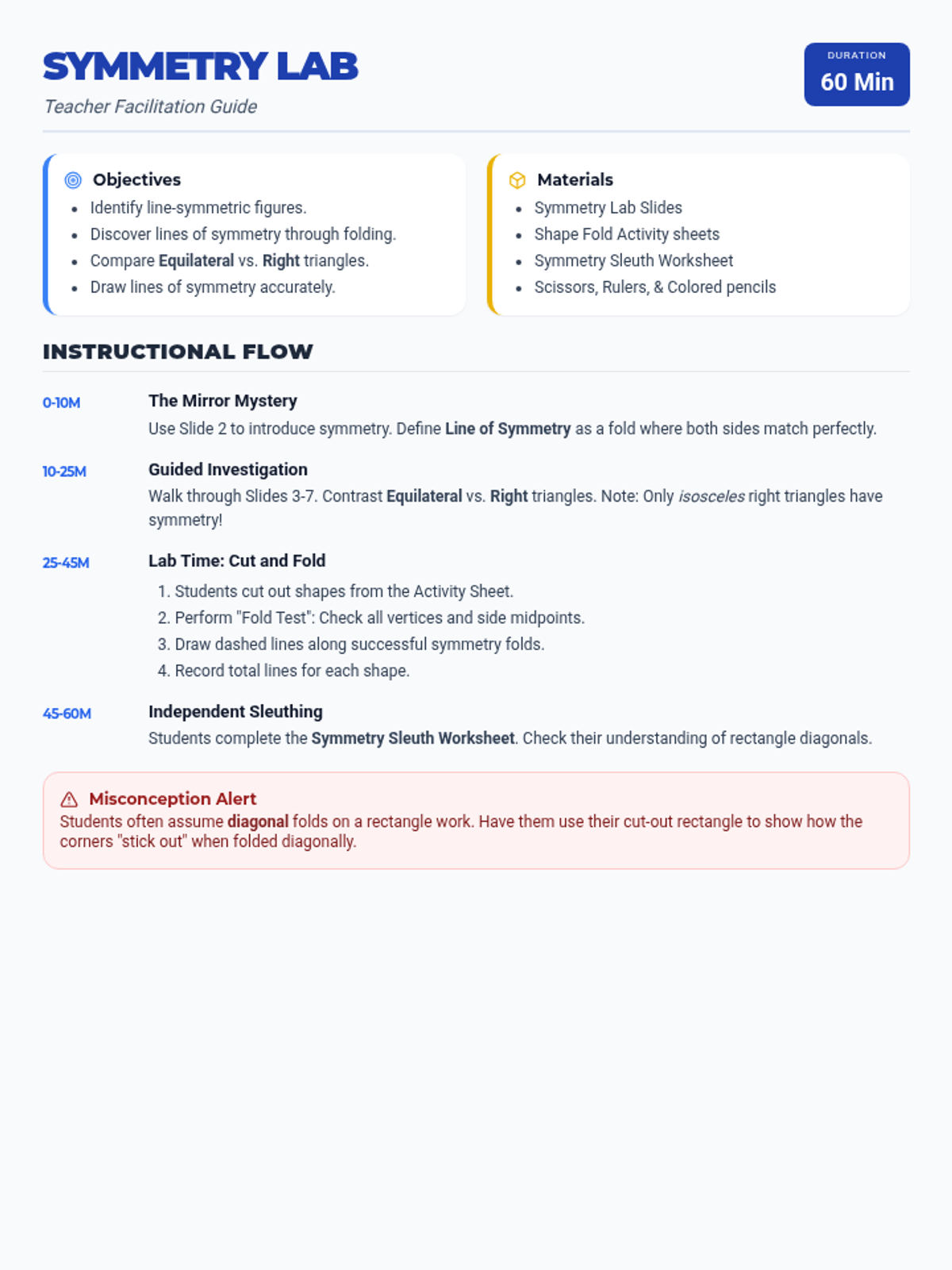
A comprehensive lesson plan for the Symmetry Lab, detailing objectives, materials, and a step-by-step instructional flow for teaching symmetry through hands-on folding.
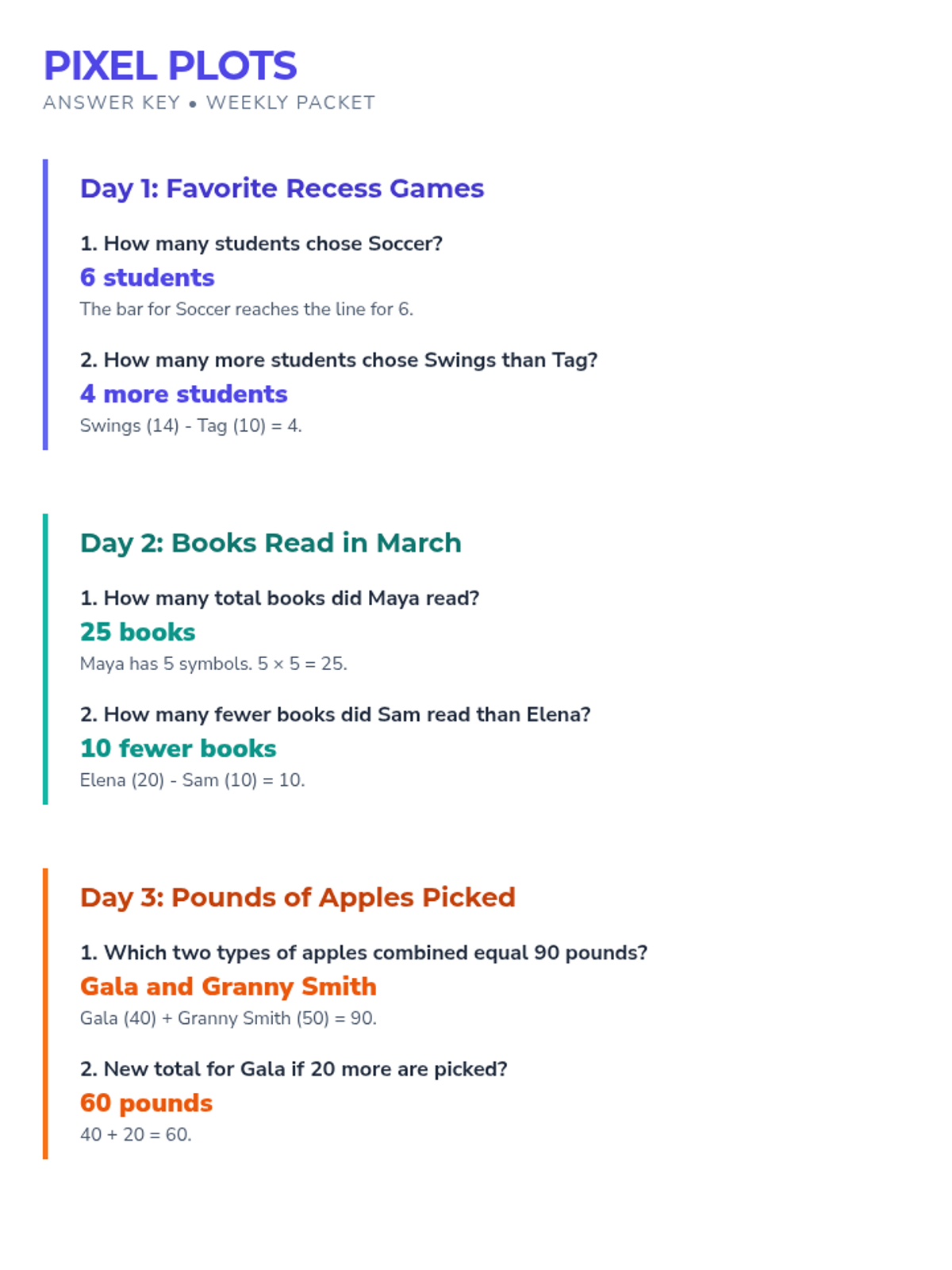
Teacher answer key for the Pixel Plots Do Now Packet, featuring step-by-step solutions and explanations for all 5 days of scaled graph problems.
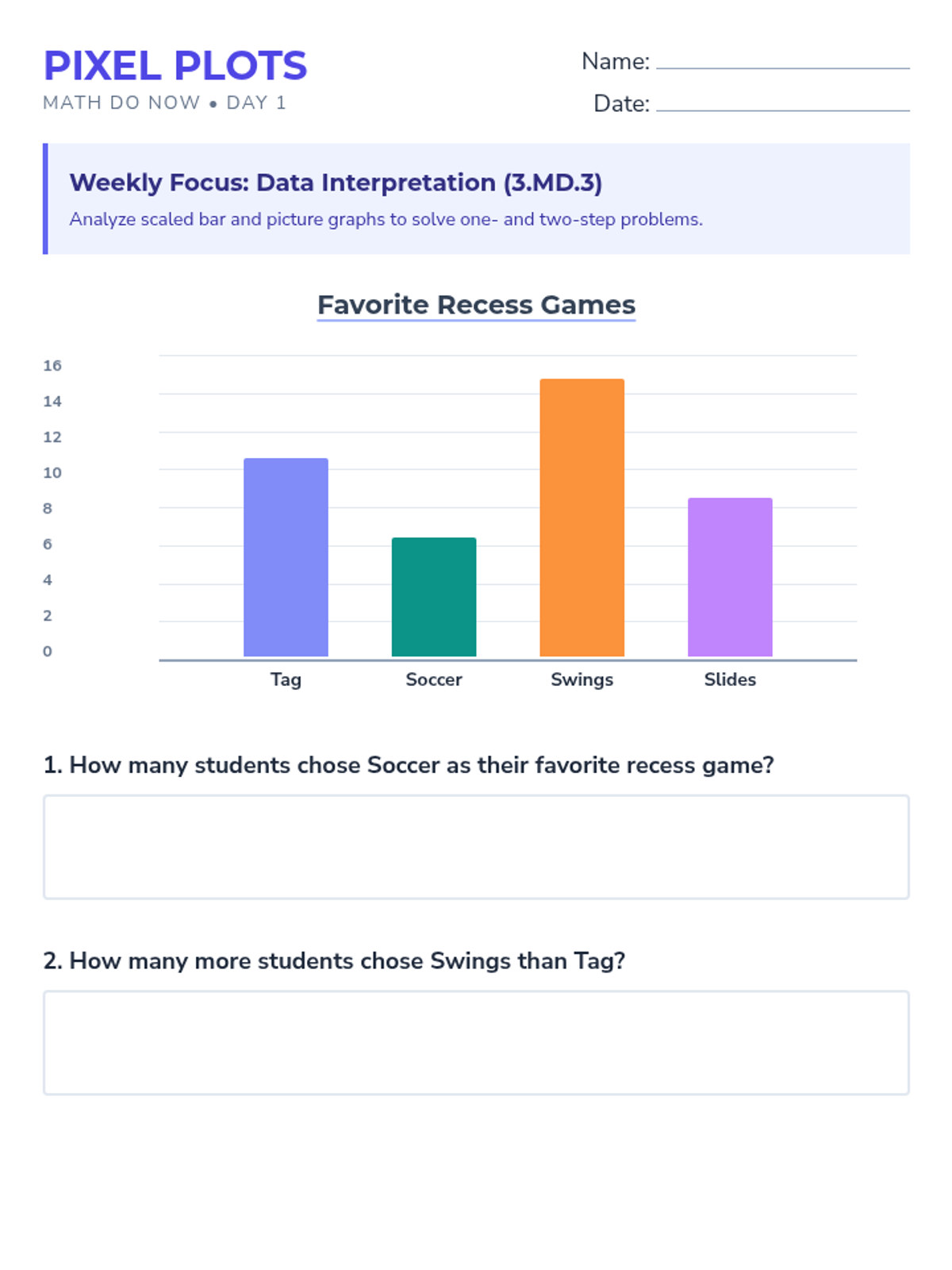
A 5-day math 'do now' packet focusing on standard 3.MD.3 (scaled bar and picture graphs). Each day provides a new dataset and two DOK 1-2 questions to assess and build graph interpretation skills.